AW | 2024 05 02 15:22 | AIRLINES / GOVERNMENT
Bruselas autoriza rescate aerolínea rumana Tarom
El Gobierno de Rumania aprueba la inyección de € 95 millones de Euros como parte de un plan de reestructuración de la aerolínea nacional TAROM Airlines. La Comisión Europea ha aprobado, bajo las normas de ayuda estatal de la UE, los planes de Rumanía para otorgar una ayuda de reestructuración de hasta 95,3 millones de euros a Tarom, la aerolínea de bandera estatal rumana. Esta medida permitirá a la compañía restaurar su viabilidad a largo plazo mientras minimiza las distorsiones de la competencia.
El 28 de Mayo de 2021, Rumania notificó a la Comisión Europea (CE) un plan para la reestructuración de TAROM. El plan de reestructuración establece un paquete de medidas para racionalizar las operaciones de TAROM, renovar su antigua flota y reducir costes. En Julio de 2021, la Comisión inició una investigación en profundidad para evaluar si las medidas de reestructuración rumanas a favor de Tarom estarían en línea con las normas de ayuda estatal de la Unión Europea (UE). Durante la investigación en profundidad, Rumanía actualizó el plan de reestructuración para abordar las preocupaciones planteadas en la decisión inicial.
Las medidas de reestructuración notificadas ahora incluyen una condonación de deuda de alrededor de € 49,5 millones de Euros, correspondiente al monto de ayuda de rescate, aprobado por la Comisión en Febrero de 2020, más intereses; y una inyección de capital de alrededor de € 45,7 millones de Euros.
La Comisión Europea evaluó las medidas bajo sus Directrices para el Rescate y Reestructuración de empresas no financieras en dificultades (Directrices R&R). En particular, encontró que la ayuda contribuye al objetivo de interés común de proporcionar conectividad regional a los ciudadanos y empresas rumanos al permitir que TAROM vuelva a ser viable mediante la implementación de su plan de reestructuración. Las medidas de reestructuración abordan los problemas que causaron las dificultades financieras de TAROM Airlines, en particular a través de la renovación de su antigua flota y la reducción de costes.
Las medidas son proporcionadas, pues TAROM hace una contribución propia significativa de alrededor de € 77,6 millones de Euros en forma de ingresos por la venta de aeronaves y un arrendamiento financiero concluido en términos de mercado. La ayuda viene con salvaguardias para limitar las distorsiones de la competencia en el Mercado Único. Estas incluyen la reducción del número de rutas que la aerolínea rumana opera, así como el número de aeronaves, y mantener esa capacidad reducida, limitando así su presencia en el mercado durante todo el período de reestructuración, es decir, hasta el 31 de Diciembre de 2026. Sobre esta base, la Comisión concluyó que las medidas rumanas están en línea con las normas de ayuda estatal de la Unión Europea.
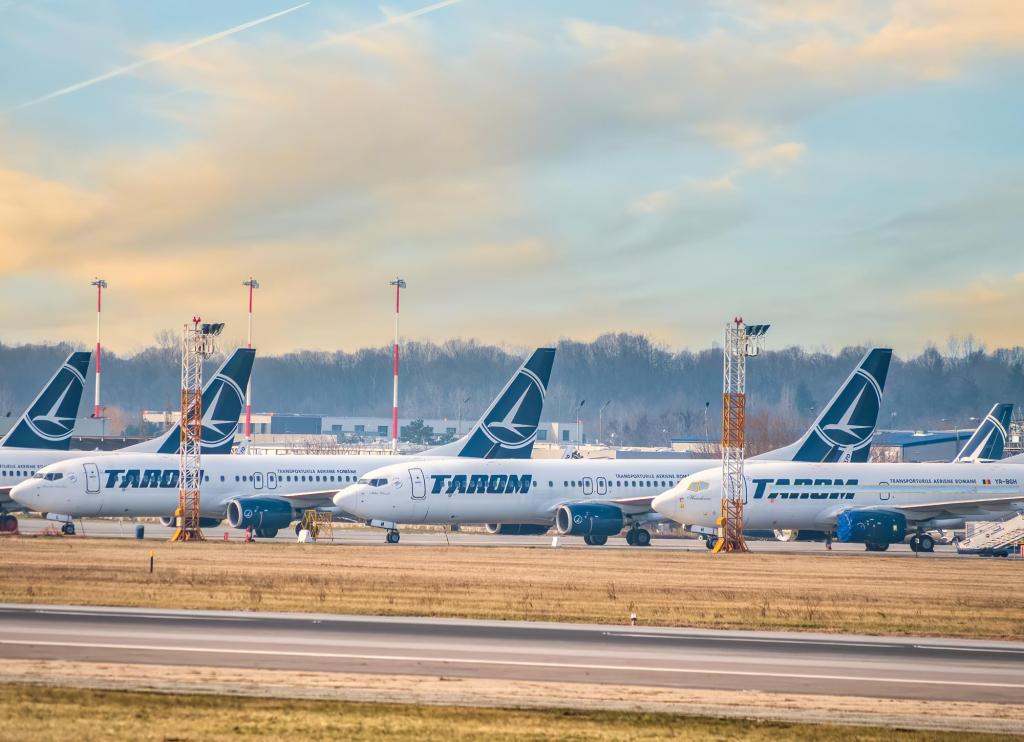
Tras años de inestabilidad y pérdidas, con una flota muy reducida con aviones Boeing 737 (7), Airbus 318 (1) y ATR 42/72 (6), perdía dinero hasta que actualmente el Gobierno de Bucarest, acosado por el caos generado durante la crisis sanitaria mundial, decidió inyectar dinero y salvar la compañía. Pero para eso necesitaba autorización de la Comunidad Europea (CE). Teniendo en cuenta que la compañía apenas compite, la decisión no fue controvertida.
Los objetivos de la compañía rumana representarán cambios modestos para alcanzar un saneamiento de la línea aérea y centrar sus vuelos y conexiones domésticas y regionales. Las exigencias de Bruselas para autorizar las ayudas están la reducción de flota y cierre de algunas rutas. Estas medidas se han de aplicar hasta Diciembre de 2026, cuando la compañía quedará liberada de estas obligaciones. Mientras tanto, el Gobierno de Rumania no estudia la idea de privatizar la compañía aérea. 

Historia de TAROM
La compañía aérea TAROM (Transporturi Aeriene Romano) nació en 1920, fruto de un acuerdo entre Francia y Rumania como CFRNA Compañía Franco-Română Pentru Navigație Aeriană. En 1928 la aerolínea cambió de nombre a SNNNA Serviciul Naţional de Navigaţie Aeriană , y en 1930 a LARES Liniile Aeriene Române Exploatate de Stat. En 1937 LARES tuvo una nueva competencia: SARTA Societatea Anonimă Română de Transporturi Aeriene. Después de la Segunda Guerra Mundial, cuando la Unión Soviética extendió sus influencias a través de Europa del Este se estableció en 1945 una nueva aerolínea: TARS Transporturi Aeriene Româno-Sovietice que era propiedad de los gobiernos rumano y soviético. Las operaciones domésticas comenzaron el 1 de Febrero de 1946 desde el Aeropuerto de Băneasa en Bucarest. La parte soviética de la compañía fue comprada por Rumania y el 18 de Septiembre de 1954, la aerolínea adoptó un nuevo nombre: TAROM Transporturi Aeriene Române.
Con el tiempo cambió de nombre y pasó toda la época de dominio comunista, con los Ceaucescu en el gobierno, hasta la llegada, en 1989, de la democracia. Pero TAROM, con prácticas internas imaginables, fue incapaz de sobrevivir al cambio de régimen y a una economía de mercado. De hecho, pocas aerolíneas del Este se adaptaron.
Government authorizes TAROM rescue

Brussels authorizes rescue of Romanian airline Tarom
The Government of Romania approves the injection of € 95 million Euros as part of a restructuring plan for the national airline TAROM Airlines. The European Commission has approved, under EU state aid rules, Romania’s plans to provide restructuring aid of up to €95.3 million to Tarom, the Romanian state flag carrier. This measure will allow the company to restore its long-term viability while minimizing distortions to competition.
On May 28, 2021, Romania notified the European Commission (EC) of a plan for the restructuring of TAROM. The restructuring plan establishes a package of measures to rationalize TAROM’s operations, renew its aging fleet, and reduce costs. In July 2021, the Commission launched an in-depth investigation to assess whether Romanian restructuring measures in favor of Tarom would be in line with European Union (EU) state aid rules. During the in-depth investigation, Romania updated the restructuring plan to address concerns raised in the initial decision.
The restructuring measures now notified include debt forgiveness of around € 49.5 million Euros, corresponding to the amount of rescue aid, approved by the Commission in February 2020, plus interest; and a capital injection of around € 45.7 million Euros.
The European Commission assessed the measures under its Guidelines for the Rescue and Restructuring of non-financial companies in difficulty (R&R Guidelines). In particular, it found that the aid contributes to the common interest objective of providing regional connectivity to Romanian citizens and businesses by allowing TAROM to become viable again through the implementation of its restructuring plan. The restructuring measures address the issues that caused TAROM Airlines’ financial difficulties, in particular through the renewal of its aging fleet and cost reduction.
The measures are proportionate, as TAROM makes a significant own contribution of around € 77.6 million Euros in the form of revenue from the sale of aircraft and a financial lease concluded on market terms. The aid comes with safeguards to limit distortions of competition in the Single Market. These include reducing the number of routes that the Romanian airline operates, as well as the number of aircraft, and maintaining that reduced capacity, thus limiting its presence in the market during the entire restructuring period, that is, until December 31, 2026. On this basis, the Commission concluded that the Romanian measures are in line with the European Union’s state aid rules.
After years of instability and losses, with a very reduced fleet with Boeing 737 (7), Airbus 318 (1), and ATR 42/72 (6) aircraft, it was losing money until the Bucharest Government, harassed by the chaos generated during the global health crisis, decided to inject money and save the company. But for that, it needed authorization from the European Community (EC). Considering that the company barely competes, the decision was not controversial.
The Romanian company’s objectives will represent modest changes to achieve a clean-up of the airline and focus on its domestic and regional flights and connections. Brussels’ demands to authorize aid are the reduction of the fleet and the closure of some routes. These measures must be applied until December 2026, when the company will be released from these obligations. Meanwhile, the Romanian Government is not studying the idea of privatizing the airline. 

History of TAROM
The airline TAROM (Transporturi Aeriene Romano) was born in 1920, the result of an agreement between France and Romania as CFRNA Compañía Franco-Română Pentru Navigație Aeriană. In 1928 the airline changed its name to SNNNA Serviciul Naţional de Navigaţie Aeriană, and in 1930 to LARES Liniile Aeriene Române Exploatate de Stat. In 1937 LARES had a new competition: SARTA Societatea Anonimă Română de Transporturi Aeriene. After World War II, when the Soviet Union extended its influences across Eastern Europe, a new airline was established in 1945: TARS Transporturi Aeriene Româno-Sovietice, which was owned by the Romanian and Soviet governments. Domestic operations began on February 1, 1946 from Băneasa Airport in Bucharest. The Soviet part of the company was bought by Romania and on September 18, 1954, the airline adopted a new name: TAROM Transporturi Aeriene Române.
Over time it changed its name and spent the entire era of communist rule, with the Ceaucescu in the government, until the arrival, in 1989, of democracy. But TAROM, with imaginable internal practices, was unable to survive the change of regime and a market economy. In fact, few Eastern airlines adapted.


PUBLISHER: Airgways.com
DBk: Tarom.ro / Commission.europa.eu / Airgways.com
AW-POST: 202405021522AR
OWNERSHIP: Airgways Inc.
A\W A I R G W A Y S ®
 airgways.com