Turkish Airlines inicia vuelos a Santiago de Chile
La compañía aérea Turkish Airlines confirmó que sumará un nuevo destino en Sudamérica, Santiago de Chile, marcando el destino número 26 dentro del continente americano y el 131º del mundo. Turkish Airlines operará la ruta Estambul/IST—São Paulo/GRU—Santiago de Chile/SCL con cuatro frecuencias semanales (4Frq/S).
Turkish Airlines ha ampliado su alcance en el continente americano con el lanzamiento de vuelos a Santiago, la capital de Chile. Con Santiago como destino número 26 en el continente americano, esta nueva ruta tiene una importancia significativa, ya que aumenta a 10 el número de países de la red de la aerolínea de bandera en la región y a 131 en el mundo.
“Como la aerolínea que vuela a más países del mundo, seguimos conectando continentes y culturas. El lanzamiento de nuestros vuelos a Santiago subraya una vez más nuestro compromiso de ofrecer a los viajeros opciones de conectividad sin parangón. Estos vuelos no sólo contribuirán al comercio y al turismo, sino que también mejorarán la interacción cultural entre dos naciones”, expresó Bilal Ekşi, Consejero Delegado de Turkish Airlines.
Por otra parte, Bilal Ekşi se vio esperanzado en aumentar la cantidad de pasajeros dentro en los próximos meses y permitir que más pasajeros puedan llegar a Turquía: “Esperamos dar la bienvenida a bordo a los pasajeros para que experimenten nuestros servicios de firma y nuestra hospitalidad turca de renombre mundial mientras descubren la cautivadora belleza de Chile», comentó.
Turkish Airlines ofrece una amplia gama de servicios privilegiados a sus huéspedes. Entre ellos, el programa Stopover, que proporciona alojamiento gratuito en hoteles a los pasajeros en tránsito con escalas de veinte horas o más en Estambul y el programa TourIstanbul, que ofrece visitas guiadas gratuitas a los lugares de interés histórico de Estambul para escalas de 6 a 24 horas.
Turkish launches flights to Santiago de Chile
Turkish Airlines begins flights to Santiago de Chile
Turkish Airlines has confirmed that it will add a new destination in South America, Santiago de Chile, marking the 26th destination within the Americas and the 131st in the world. Turkish Airlines will operate the Istanbul/IST—São Paulo/GRU—Santiago de Chile/SCL route with four weekly frequencies (4Frq/S).
Turkish Airlines has expanded its reach in the Americas with the launch of flights to Santiago, the capital of Chile. With Santiago as the 26th destination in the Americas, this new route has significant significance, as it increases the number of countries in the network of the flag carrier in the region to 10 and to 131 in the world.
“As the airline that flies to the most countries in the world, we continue to connect continents and cultures. The launch of our flights to Santiago once again underlines our commitment to offer travelers unparalleled connectivity options. These flights will not only contribute to trade and tourism, but will also enhance cultural interaction between the two nations”, said Bilal Ekşi, CEO of Turkish Airlines.
On the other hand, Bilal Ekşi was hopeful of increasing the number of passengers within the coming months and allowing more passengers to reach Turkey: “We look forward to welcoming passengers on board to experience our signature services and world-renowned Turkish hospitality while discovering the captivating beauty of Chile”, he said.
Turkish Airlines offers a wide range of privileged services to its guests. These include the Stopover program, which provides free hotel accommodation to transit passengers with stopovers of twenty hours or more in Istanbul, and the TourIstanbul program, which offers free guided tours to Istanbul’s historical sights for stopovers of 6 to 24 hours.
PUBLISHER: Airgways.com DBk: Turkishairlines.com / Airgways.com AW-POST: 202412301053AR OWNERSHIP: Airgways Inc. A\W A I R G W A Y S ®
AW | 2024 12 30 10:43 | AIR INVESTIGATION / AVIATION SAFETY / GOVERNMENT
Presidente Azerbaiján acusa Gobierno Rusia derribo vuelo J2-8243
Las investigaciones del vuelo J2-8243 de Azerbaijan Airlines señalaba que el derribo de su vuelo había sido por un motivo externo enfocando las miradas hacia la Federación Rusia. El Presidente de la República de Azerbaiján, Ilham Aliyev, acusa de la tragedia del avión Embraer E190 al Gobierno de Vladimir Putin.
«La Federación Rusia derribó al avión de Azerbaijan Airlines de forma accidental, mientras que el Gobierno ruso trató de encubrir su responsabilidad en la muerte de 38 personas y lo que provocó que la tragedia sucediera. Podemos decir con total claridad que el avión fue derribado por Rusia, no estamos diciendo que se hizo intencionalmente, pero se hizo», señala el Ejecutivo Nacional de Azerbaiján.
En su mensaje en cadena nacional, el Presidente también expresó su molestia por el silencio con el que se han manejado las autoridades rusas y las versiones que han dado para explicar lo que sucedió. El Presidente de Azerbaiján refuerza la versión que Ucrania ha difundido desde hace días sobre el accidente del avión de Azerbaiján Airlines, que éste fue alcanzado por un sistema de defensa aéreo de Rusia.
Según las autoridades rusas expresaron inicialmente que el avión de Azerbaiján Airlines cayó tras chocar con pájaros. Luego, corrigió y señaló que la aeronave trató de aterrizar en una región, mientras ésta estaba siendo atacada por drones ucraniano, el gobierno de Rusia le dio un par de opciones para un aterrizaje, pero el piloto acabó decidiendo aterrizar en el Aeropuerto de Aktau (SCO).
Ilham Aliyev señaló que le hubiera bastado con que Rusia admitiera que derribó el avión por accidente y diera una disculpa pública. Eso hacen los países amigos, que es lo que considera que son Azerbaiján y Rusia. “Desafortunadamente, durante los primeros tres días, no escuchamos nada de Rusia excepto algunas teorías absurdas”, lamentó el Presidente de Azerbaiján quien en dos ocasiones entabló comunicación con Vladimir Putin. En la primera llamada, hecha el Sábado 28 de Diciembre de 2024, el Presidente ruso lamentó los hechos y aseguró que la defensa aérea de Rusia estaba activa. El Domingo 29/12, hubo otra comunicación, pero no se sabe sobre qué hablaron los mandatarios, señala CNN con información del medio ruso TASS.
Antecedentes ataques Los antecedentes de ataques a aeronaves civiles por parte del ejército de la Federación Rusia no son nuevos. El país euroasiático enfrenta graves denuncias por el derribo del vuelo MH-017 en territorio ucraniano, cuando la aeronave Boeing 777-200ER de la aerolínea Malaysia Airlines fue alcanzado por un misil ruso derribando el avión el 17 de Julio de 2014, mientras sobrevolaba el Este de Ucrania. No hubo sobrevivientes de los 283 pasajeros y 15 tripulantes. El derribo se produjo durante la guerra en Donbás por territorio controlado por las fuerzas separatistas rusas.
El otro accidente que envuelve en un mante de misterio es el ocurrido el Miércoles, 23 de Agosto de 2023, cuando el mercenario más poderoso de Rusia, Yevgeny Prigozhin, estaba a bordo de un avión ejecutivo que se estrelló el Miércoles por la noche al norte de Moscú sin sobrevivientes, dijeron las autoridades rusas, dos meses después de que encabezó un motín fallido contra los altos mandos del Ejército. No hubo comentarios oficiales del Kremlin o del Ministerio de Defensa sobre el destino de Yevgeny Prigozhin, Jefe del grupo mercenario Wagner y enemigo declarado de la cúpula del ejército por lo que argumentó como su incompetente enjuiciamiento de la guerra de Rusia en Ucrania.
Declaraciones Gobierno ruso El Presidente de Rusia, Vladimir Putin, finalmente ha anunciado el 28/12 disculpas a su par de Azerbaiyán, Ilham Aliyev, por la caída de un avión comercial en espacio aéreo ruso ocurrida el Miércoles 25/12, en el que murieron 38 personas y otras 29 sobrevivieron.
El mandatario, sin embargo, no aceptó que la Federación Rusia haya tenido responsabilidad directa en lo ocurrido. En sus primeros comentarios sobre el accidente, Putin dijo que el trágico incidente ocurrió cuando los sistemas de defensa aérea rusos estaban activamente repeliendo drones ucranianos. Vladimir Putin detalló que a medida que el avión se acercaba a su destino previsto de Grozny, en el sur de Rusia, las defensas aéreas de ese país habían comenzado a repeler un ataque de aviones no tripulados ucranianos en esa zona, según la declaración emitida por el Kremlin.
Russia shot down Azerbaijan E190 plane
Azerbaijan accuses Russian government downing flight J2-8243
Investigations into Azerbaijan Airlines flight J2-8243 indicated that the downing of the flight had been due to an external motive, focusing attention on the Russian Federation. The President of the Republic of Azerbaijan, Ilham Aliyev, blames the government of Vladimir Putin for the tragedy of the Embraer E190 plane.
«The Russian Federation shot down the Azerbaijan Airlines plane accidentally, while the Russian government tried to cover up its responsibility for the death of 38 people and what caused the tragedy to happen. We can say with absolute clarity that the plane was shot down by Russia, we are not saying that it was done intentionally, but it was done», says the National Executive of Azerbaijan.
In his message on national television, the President also expressed his annoyance at the silence with which the Russian authorities have handled themselves and the versions they have given to explain what happened. The President of Azerbaijan reinforces the version that Ukraine has spread for days about the crash of the Azerbaijan Airlines plane, that it was hit by a Russian air defense system.
According to the Russian authorities, they initially said that the Azerbaijan Airlines plane fell after colliding with birds. Later, they corrected themselves and pointed out that the aircraft tried to land in a region, while it was being attacked by Ukrainian drones, the Russian government gave him a couple of options for landing, but the pilot ended up deciding to land at Aktau Airport (SCO).
Ilham Aliyev said that it would have been enough for him if Russia had admitted that it shot down the plane by accident and issued a public apology. That is what friendly countries do, which is what he considers Azerbaijan and Russia to be. “Unfortunately, during the first three days, we heard nothing from Russia except some absurd theories”, lamented the President of Azerbaijan who on two occasions established communication with Vladimir Putin. In the first call, made on Saturday, December 28, 2024, the Russian President regretted the events and assured that Russia’s air defense was active. On Sunday, December 29, there was another communication, but it is not known what the leaders talked about, CNN points out with information from the Russian media TASS.
Background attacks The history of attacks on civilian aircraft by the Russian Federation’s military is not new. The Eurasian country faces serious accusations for the downing of flight MH-017 in Ukrainian territory, when the Boeing 777-200ER of Malaysia Airlines was hit by a Russian missile, bringing down the plane on July 17, 2014, while flying over Eastern Ukraine. There were no survivors of the 283 passengers and 15 crew members. The downing occurred during the war in Donbas over territory controlled by Russian separatist forces.
The other accident shrouded in mystery is the one that occurred on Wednesday, August 23, 2023, when Russia’s most powerful mercenary, Yevgeny Prigozhin, was on board an executive plane that crashed on Wednesday night north of Moscow with no survivors, Russian authorities said, two months after he led a failed mutiny against the Army’s top brass. There were no official comments from the Kremlin or the Ministry of Defense on the fate of Yevgeny Prigozhin, head of the Wagner mercenary group and a declared enemy of the military leadership for what he argued was his incompetent prosecution of Russia’s war in Ukraine.
Statements by the Russian government Russian President Vladimir Putin has finally announced on 28/12 an apology to his Azerbaijani counterpart, Ilham Aliyev, for the crash of a commercial airliner in Russian airspace on Wednesday 25/12, in which 38 people died and 29 others survived.
The president, however, did not accept that the Russian Federation had direct responsibility for what happened. In his first comments on the accident, Putin said that the tragic incident occurred when Russian air defense systems were actively repelling Ukrainian drones. Vladimir Putin said that as the plane approached its intended destination of Grozny in southern Russia, Russian air defenses had begun repelling an attack by Ukrainian drones in that area, according to the statement issued by the Kremlin.
PUBLISHER: Airgways.com DBk: President.az / Government.ru / Airgways.com AW-POST: 202412301043AR OWNERSHIP: Airgways Inc. A\W A I R G W A Y S ®
AW | 2024 12 30 09:30 | AIR INVESTIGATION / AVIATION SAFETY
Gobierno ordena inspecciones línea Boeing 737-800 Otro Boeing 737-800 registra incidente
El Gobierno de Corea del Sur ha ordenado una inspección de los Boeing 737-800 que operan en el país tras el accidente del vuelo 7C2216 de la aerolínea Jeju Air y un nuevo incidente ocurrido el Lunes 30/12. Funcionarios de seguridad aérea de Estados Unidos y representantes del fabricante de aviones llegarán a Seúl en los próximos días para colaborar en las investigaciones.
Corea del Sur ordenó el Lunes 30/12 una inspección exhaustiva de todos los aviones Boeing 737-800 operados por aerolíneas nacionales, tras el trágico accidente del vuelo 7C2216 de Jeju Air, que dejó 179 fallecidos, considerado el peor desastre aéreo ocurrido en suelo surcoreano. El avión, que transportaba a 181 personas desde Tailandia hacia Corea del Sur, realizó un aterrizaje de emergencia en el Aeropuerto Internacional de Muan (MWX), donde chocó contra un muro y estalló en llamas. Solo dos asistentes de vuelo sobrevivieron al siniestro, siendo rescatados de los restos del aparato.
Las autoridades surcoreanas indicaron que funcionarios de seguridad aérea de Estados Unidos y representantes del fabricante The Boeing Company llegarán al país para colaborar en la investigación. Las cajas negras del avión, que incluyen el Registrador de Datos de Vuelo (FDR) y el Grabador de Voz de Cabina (CVR) fueron recuperadas y serán analizadas.
El Viceministro encargado de Aviación Civil, Joo Jong-wan, confirmó que los 101 aviones Boeing 737-800 operados por aerolíneas surcoreanas serán sometidos a inspecciones rigurosas, con especial atención a sistemas críticos como motores y trenes de aterrizaje. Asimismo, el Gobierno surcoreano implementará una revisión urgente del sistema general de operaciones aéreas para prevenir futuros desastres.
Hasta el momento, las autoridades han identificado a 146 víctimas mediante análisis de ADN y huellas dactilares. Familias de los pasajeros permanecieron durante la noche en tiendas especiales habilitadas en el Aeropuerto de Muan, esperando noticias de sus seres queridos.
El accidente también ha generado críticas hacia las condiciones de infraestructura en el Aeropuerto de Muan. Kim Kwang-il, Profesor de Aeronáutica en la Universidad de Silla y ex piloto, señaló que la presencia de un muro al final de la pista violaba estándares internacionales de seguridad aérea. “En un área como esa no debería haber estructuras sólidas. Normalmente, fuera de la pista solo hay cercas, que son blandas y no causarían daños significativos. El avión podría haber derrapado más allá y detenido su marcha naturalmente”, expresó Kim Kwang-il, calificando el muro como una estructura innecesaria que contribuyó a la magnitud del desastre aéreo.
El vuelo 7C2216 de Jeju Air partió de Bangkok, Tailandia, y emitió una señal de emergencia antes de aterrizar sin tren de aterrizaje en Muan el Domingo 29/12 por la mañana. Las primeras hipótesis apuntan a una colisión con aves como posible causa del fallo mecánico de motor.
Jeju Air, una de las aerolíneas de bajo costo más grandes de Corea del Sur, ofreció disculpas públicas en una conferencia de prensa en Seúl, con altos ejecutivos inclinándose profundamente en señal de arrepentimiento.
A medida que avanzan las investigaciones, tanto a nivel nacional como internacional, las autoridades surcoreanas buscan respuestas para evitar que tragedias similares vuelvan a ocurrir, mientras las familias de las víctimas claman por justicia.
Nuevo incidente aéreo La aerolínea de bajo costo Jeju Air enfrenta un escrutinio adicional después de que otro avión de su flota, Boeing 737-800, registrara un fallo en el tren de aterrizaje el Lunes 30/12. El vuelo, que partió del Aeropuerto Internacional de Gimpo hacia la Isla de Jeju, en Seúl, tuvo que regresar poco después del despegue sin reportar víctimas.
Corea del Sur ha declarado siete días de luto nacional, con banderas a media asta en todo el país. El Presidente interino, Choi Sang-mok, quien asumió el cargo el Viernes 27/12 tras la destitución de dos de sus predecesores, visitó el lugar del accidente en Muan y prometió hacer todos los esfuerzos para identificar a las víctimas y brindar apoyo a sus familias. En declaraciones a los medios, enfatizó la importancia de una investigación exhaustiva para determinar las causas del accidente y se comprometió a reforzar los estándares de seguridad aérea del país.
Corea del Sur, conocida por su sólido historial en aviación, enfrenta ahora preguntas sobre posibles factores que contribuyeron al siniestro.
El vuelo detectó un problema con su tren de aterrizaje poco después del despegue. La noticia fue comunicada a los pasajeros y posteriormente la aeronave regresó a Gimpo. Los pasajeros fueron transferidos a otra unidad, aunque 21 de ellos se negaron a embarcar argumentando ansiedad. La situación se da luego del terrible accidente ocurrido el Domingo 29/12 en Muan que dejó un total de 179 fallecidos. La compañía low cost coreana perdió más de 60.000 reservas en las últimas horas y además las acciones de Jeju Air cayeron el Lunes 30/12 en un contundente 8,65% en la Bolsa de Seúl, al tiempo que la compañía matriz, Aekyung Holdings, sus acciones se desplomaron un 12,12%.
South Korea orders inspection of 737
Government orders inspections of Boeing 737-800 line Another Boeing 737-800 records incident
The South Korean government has ordered an inspection of Boeing 737-800s operating in the country following the crash of Jeju Air flight 7C2216 and a new incident on Monday 30/12. U.S. aviation safety officials and representatives from the aircraft manufacturer will arrive in Seoul in the coming days to assist in the investigation.
South Korea ordered on Monday 30/12 an exhaustive inspection of all Boeing 737-800 aircraft operated by national airlines, following the tragic accident of Jeju Air flight 7C2216, which left 179 dead, considered the worst air disaster to have occurred on South Korean soil. The plane, carrying 181 people from Thailand to South Korea, made an emergency landing at Muan International Airport (MWX), where it crashed into a wall and burst into flames. Only two flight attendants survived the crash, having been rescued from the wreckage.
South Korean authorities said that US aviation safety officials and representatives from manufacturer The Boeing Company will arrive in the country to assist in the investigation. The plane’s black boxes, which include the Flight Data Recorder (FDR) and Cockpit Voice Recorder (CVR), were recovered and will be analyzed.
Vice Minister in charge of Civil Aviation Joo Jong-wan confirmed that all 101 Boeing 737-800 aircraft operated by South Korean airlines will undergo rigorous inspections, with special attention to critical systems such as engines and landing gear. The South Korean government will also implement an urgent review of the overall air operations system to prevent future disasters.
So far, authorities have identified 146 victims through DNA and fingerprint analysis. Families of the passengers stayed overnight in special tents set up at Muan Airport, awaiting news of their loved ones.
The accident has also sparked criticism of the infrastructure conditions at Muan Airport. Kim Kwang-il, a professor of aeronautics at Silla University and a former pilot, said the presence of a wall at the end of the runway violated international aviation safety standards. “In an area like that, there should not be any solid structures. Normally, outside the runway there are only fences, which are soft and would not cause significant damage. The plane could have skidded further and stopped naturally”, Kim Kwang-il said, calling the wall an unnecessary structure that contributed to the scale of the air disaster.
Jeju Air Flight 7C2216 departed from Bangkok, Thailand, and issued an emergency signal before landing without landing gear in Muan on Sunday morning. Early speculation points to a bird strike as the possible cause of the engine failure.
Jeju Air, one of South Korea’s largest low-cost airlines, offered a public apology at a press conference in Seoul, with top executives bowing deeply in a sign of regret.
As investigations continue, both domestically and internationally, South Korean authorities are seeking answers to prevent similar tragedies from happening again, while the families of the victims are clamoring for justice.
New air incident Low-cost carrier Jeju Air is facing additional scrutiny after another plane in its fleet, a Boeing 737-800, experienced a landing gear failure on Monday 30/12. The flight, which departed Gimpo International Airport for Jeju Island in Seoul, had to return shortly after takeoff with no casualties reported.
South Korea has declared seven days of national mourning, with flags at half-mast across the country. Acting President Choi Sang-mok, who took office on Friday following the ouster of two of his predecessors, visited the crash site in Muan and pledged to make every effort to identify the victims and provide support to their families. Speaking to the media, he stressed the importance of a thorough investigation to determine the cause of the crash and pledged to strengthen the country’s aviation safety standards.
South Korea, known for its strong aviation record, is now facing questions about possible contributing factors.
The flight detected a problem with its landing gear shortly after takeoff. The news was communicated to the passengers and the aircraft subsequently returned to Gimpo. The passengers were transferred to another aircraft, although 21 of them refused to board, citing anxiety. The situation occurs after the terrible accident that occurred on Sunday 29/12 in Muan, which left a total of 179 dead. The Korean low-cost company lost more than 60,000 reservations in the last few hours and in addition, Jeju Air shares fell on Monday 30/12 by a resounding 8.65% on the Seoul Stock Exchange, while the parent company, Aekyung Holdings, its shares plummeted by 12.12%.
PUBLISHER: Airgways.com DBk: Koka.go.kr / Airport.co.kr/muan / Airgways.com AW-POST: 202412300930AR OWNERSHIP: Airgways Inc. A\W A I R G W A Y S ®
AW | 2024 12 29 23:33 | AVIATION SAFETY / AIR INVESTIGATION
Accidente aéreo en Aeropuerto Mua, Korea del Sur
Un Boeing 737-800 de Jeju Air, matrícula HL8088 que realizaba el vuelo 7C-2216 de Bangkok (Tailandia) a Muan (Korea del Sur) con 175 pasajeros y 6 tripulantes, aterrizó en la Pista 19 de Muan alrededor de las 09:03L/00:03Z sin la configuración para el aterrizaje, invadió la pista deslizándose sobre el fuselaje y los motores, impactó contra una valla de hormigón a unos 300 metros/1000 pies más allá del final de la pista y estalló en una bola de fuego. Dos personas han sido rescatadas con vida, 120 cuerpos han sido recuperados, no hay esperanzas de más sobrevivientes.
Los bomberos de Muan informaron que el mal funcionamiento del tren de aterrizaje, probablemente causado por el impacto de un pájaro, provocó una maniobra. Luego, la aeronave intentó otro aterrizaje en condiciones climáticas adversas. Sin embargo, la causa exacta debe determinarse mediante una investigación conjunta posterior.
Las autoridades informaron que dos sobrevivientes, un hombre y una mujer, ambos tripulantes de cabina, fueron rescatados con vida con heridas leves a graves por la cola de la aeronave.
El Ministerio de Transporte de Korea del Sur informó que hubo varios problemas, incluido el impacto con aves y el mal funcionamiento del tren de aterrizaje, que investigarán a fondo para averiguar las causas. El ministerio agregó más tarde que se había emitido una advertencia de colisión de aves a las 08:57L unos 6 minutos antes del accidente, aproximadamente un minuto después de la advertencia de colisión de aves que la tripulación declaró Mayday a las 08:58L mientras que en la aproximación final a la Pista 01, la torre autorizó la aeronave para aterrizar en la pista opuesta, Pista 19, la aeronave se estrelló 5 minutos después de declarar Mayday. La Grabadora de Datos de Vuelo (FDR) ha sido recuperada, la Grabadora de Voz de la Cabina (CVR) aún no se ha recuperado.
Un observador en tierra informó que la aeronave voló a través de una bandada de pájaros, se escucharon dos o tres estallidos como si los pájaros hubieran sido ingeridos en los motores, se vieron llamas desde el motor derecho. El avión subió un poco, pero parecía incapaz de subir más y aterrizó en dirección opuesta. Cuando la aeronave sobrevoló al observador, tenía el tren de aterrizaje bajado.
El hospital informó que una de las azafatas sufrió una fractura de hombro y lesiones en la cabeza, pero estaba consciente y podía caminar.
Los datos ADS-B recibidos del avión cesaron a 900 pies a las 08:58L (23:58Z del 28 de Diciembre de 2024 mientras se aproximaba a la Pista 01 se recibieron vuelos anteriores hasta que el transpondedor se apagó en la plataforma. Los videos muestran que la aeronave estaba derrapando en la Pista 19 antes de impactar contra la valla de hormigón.
La EAIP de Korea del Sur afirma sobre la concentración de aves en las inmediaciones del aeropuerto: La orilla del mar y el humedal están situados cerca del Aeropuerto Internacional de Muan, y la orilla del mar y el humedal proporcionan un buen hábitat de anidación tanto para las aves residentes como la urraca de pico negro, el faisán de cuello anillado, la tórtola rufa, el gorrión arborícola, la gaviota maullera y las aves migratorias como el ánade real, la garza real, garza, golondrina común.
Los ánades reales habitan alrededor del aeropuerto durante la temporada de invierno, normalmente de octubre a marzo. Los ánades reales están activos durante la mañana y la noche, y vuelan a gran altitud. La garza real y la garza real habitan durante la temporada de verano, normalmente de agosto a septiembre, y están activas durante el día. La mayoría de las aves residentes son activas durante el día y vuelan a baja altitud.
El Aeropuerto Internacional de Muan se esfuerza por prevenir las colisiones con aves mediante la implementación de técnicas no letales, cañones de gas y reproducción de llamadas de socorro. y técnicas letales, disparos con munición real, durante el horario de funcionamiento de los aeropuertos.
Boeing 737-800 Jeju Air crash
Air crash at Muan Airport, South Korea
A Jeju Air Boeing 737-800, registration HL8088 operating flight 7C-2216 from Bangkok, Thailand to Muan, South Korea, with 175 passengers and 6 crew, landed on Muan’s Runway 19 at around 09:03L/00:03Z out of landing configuration, overran the runway by sliding on the fuselage and engines, struck a concrete fence about 300 metres/1000 feet beyond the end of the runway and exploded in a fireball. Two people have been rescued alive, 120 bodies have been recovered, there is no hope of further survivors.
Muan firefighters reported that a landing gear malfunction, likely caused by a bird strike, led to a maneuver. The aircraft then attempted another landing in adverse weather conditions. However, the exact cause is to be determined by a subsequent joint investigation.
Authorities reported that two survivors, a man and a woman, both cabin crew, were rescued alive with minor to serious injuries by the tail of the aircraft.
South Korea’s Ministry of Transport reported that there were several problems, including bird strike and landing gear malfunction, which they will investigate thoroughly to find out the causes. The ministry later added that a bird strike warning had been issued at 08:57L about 6 minutes before the crash, about a minute after the bird strike warning the crew declared Mayday at 08:58L while on final approach to Runway 01, the tower cleared the aircraft to land on the opposite runway, Runway 19, the aircraft crashed 5 minutes after declaring Mayday. The Flight Data Recorder (FDR) has been recovered, the Cockpit Voice Recorder (CVR) has not yet been recovered.
An observer on the ground reported that the aircraft flew through a flock of birds, two or three popping sounds were heard as if the birds had been ingested into the engines, flames were seen from the right engine. The aircraft climbed a little but seemed unable to climb any further and landed in the opposite direction. When the aircraft flew over the observer, it had its landing gear down.
The hospital reported that one of the flight attendants suffered a fractured shoulder and head injuries but was conscious and able to walk.
ADS-B data received from the aircraft ceased at 900 feet at 08:58L (23:58Z on 28 December 2024) while approaching Runway 01. Previous flights were received until the transponder was turned off on the apron. Videos show the aircraft was skidding on Runway 19 before impacting the concrete fence.
The South Korean EAIP states about the concentration of birds in the vicinity of the airport: The seashore and wetland are located near Muan International Airport, and the seashore and wetland provide good nesting habitat for both resident birds such as black-billed magpie, ring-necked pheasant, rufous dove, tree sparrow, mew gull and migratory birds such as mallard, grey heron, egret, Barn Swallow.
Mallards inhabit around the airport during the winter season, usually from October to March. Mallards are active during the morning and evening, and fly at high altitude. Grey Heron and Grey Heron inhabit during the summer season, usually from August to September, and are active during the day. Most resident birds are active during the day and fly at low altitude.
Muan International Airport strives to prevent bird strikes by implementing non-lethal techniques, gas cannons and playing distress calls, and lethal techniques, live ammunition shooting, during airport operating hours.
PUBLISHER: Airgways.com DBk: Jejuair.com / Airgways.com AW-POST: 202412292333AR OWNERSHIP: Airgways Inc. A\W A I R G W A Y S ®
Luego de varios meses de suspensiones y demoras, la aerolínea Flybondi atraviesa una de sus peores crisis operativas desde su puesta en marcha. A pesar de las presiones del Gobierno, la low cost no logró evitar una nueva ola de cancelaciones que afectarán a sus pasajeros durante las Fiestas de fin de año. Unos 13.000 pasajeros afrontan cambios en sus vuelos programados entre el 24 y el 31 de Diciembre 2024. La low cost fue intimada por la agencia ANAC obligando a presentar un plan para regularizar sus operaciones. Anteriormente, la Secretaría de Transporte, intimó a la aerolínea a no ofrecer servicios que no puede garantizar.
La situación de crisis de programación revelada por un documento presentado ante la Administración Nacional de Aviación Civil (ANAC), vuelve a poner en el foco a Flybondi tras meses de cuestionamientos por su falta de capacidad operativa.
Las rutas y horarios de los vuelos cancelados donde más repercuten son las operaciones en Aeroparque, Ezeiza y Mendoza, presentando los usuarios más perjudicados. A pesar de ello, Flybondi optó por realizar reprogramaciones masivas sin eliminar las cancelaciones, lo que generó críticas de diversos sectores vinculados al turismo. La decisión disparó la alarma en destinos clave para la industria turística, como Bariloche.
Representantes de las cámaras de Turismo, Comercio e Industria y la Asociación Empresaria Hotelera Gastronómica emitieron un comunicado expresando su profunda preocupación ante las reiteradas cancelaciones de vuelos hacia y desde esa región.
Las consecuencias no solo afectan a los pasajeros sino también al desarrollo económico de las zonas turísticas, especialmente en fechas de alta demanda.
Desde Flybondi, las explicaciones han sido que las cancelaciones y demoras responden a problemas operativos relacionados con la disponibilidad de su flota y que las últimas medidas tienen que ver, justamente, con la solicitud del plan solicitado por la ANAC.
Lucía Ginzo, Chief Corporate Affairs and Sustainability Officer de Flybondi, declaró que las reprogramaciones recientes forman parte de ese plan operativo presentado ante las autoridades y que busca estabilizar la situación. Los vuelos afectados no fueron cancelaciones imprevistas, sino ajustes preventivos realizados con antelación. Sin embargo, esta explicación no ha logrado disipar las críticas ni el malestar entre los pasajeros y sectores afectados.
El historial de dificultades operativas había llevado a la ANAC a emitir tres actas de infracción contra Flybondi, señalando reiterados incumplimientos de las normativas del sector de la aviación comercial, aunque no se aplicaron el pago de multas. Uno de los episodios más controvertidos en las últimas semanas fue la utilización por parte de Flybondi de un taller de mantenimiento suspendido por la ANAC en el Aeropuerto Internacional de Ezeiza.
La suspensión, vigente desde el 4 de Octubre de 2024, no fue acatada de inmediato por la aerolínea, que realizó tareas de mantenimiento en tres de sus aeronaves pese a la sanción. Este incumplimiento obligó al ente regulador a emitir una nueva intimación el 24/10. El taller de mantenimiento fue rehabilitado el 14 de Noviembre de 2024, pero con la condición de que Flybondi recertificara los aviones reparados durante el período de suspensión. Además, la ANAC planea realizar inspecciones adicionales para verificar el cumplimiento de las normativas vigentes.
Flybondi anunció en Noviembre 2024 la expansión de su flota, a partir de la incorporación de aeronaves Airbus A320ceo para paliar el déficit de aeronaves disponibles lo que le permitiría aumentar su capacidad de asientos a partir de la temporada de verano septentrional 2024-2025.
Flybondi cancellations continue
Airline canceled 71 scheduled flights
After several months of suspensions and delays, the airline Flybondi is going through one of its worst operational crises since its launch. Despite pressure from the Government, the low-cost company was unable to avoid a new wave of cancellations that will affect its passengers during the end-of-year holidays. Some 13,000 passengers face changes to their scheduled flights between December 24 and 31, 2024. The low-cost company was ordered by the ANAC agency to present a plan to regularize its operations. Previously, the Ministry of Transportation ordered the airline not to offer services that it cannot guarantee.
The scheduling crisis situation revealed by a document presented to the National Civil Aviation Administration (ANAC), puts Flybondi back in the spotlight after months of questions about its lack of operational capacity.
The routes and schedules of the cancelled flights where the impact is greatest are those in Aeroparque, Ezeiza and Mendoza, which are the most affected users. Despite this, Flybondi opted to carry out massive rescheduling without eliminating the cancellations, which generated criticism from various sectors linked to tourism. The decision set off alarm bells in key destinations for the tourism industry, such as Bariloche.
Representatives of the Chambers of Tourism, Commerce and Industry and the Hotel and Gastronomic Business Association issued a statement expressing their deep concern about the repeated cancellations of flights to and from that region.
The consequences not only affect passengers but also the economic development of tourist areas, especially on dates of high demand.
Flybondi has explained that the cancellations and delays are due to operational problems related to the availability of its fleet and that the latest measures have to do, precisely, with the request for the plan requested by the ANAC.
Lucía Ginzo, Chief Corporate Affairs and Sustainability Officer of Flybondi, stated that the recent rescheduling is part of the operational plan presented to the authorities and that it seeks to stabilize the situation. The affected flights were not unexpected cancellations, but preventive adjustments made in advance. However, this explanation has not managed to dispel criticism or discontent among passengers and affected sectors.
The history of operational difficulties had led ANAC to issue three infraction reports against Flybondi, pointing out repeated breaches of commercial aviation sector regulations, although no fines were applied. One of the most controversial episodes in recent weeks was Flybondi’s use of a maintenance workshop suspended by ANAC at Ezeiza International Airport.
The suspension, in force since October 4, 2024, was not immediately complied with by the airline, which carried out maintenance work on three of its aircraft despite the sanction. This failure forced the regulatory body to issue a new notice on 10/24. The maintenance workshop was rehabilitated on November 14, 2024, but on the condition that Flybondi recertify the aircraft repaired during the suspension period. In addition, ANAC plans to carry out additional inspections to verify compliance with current regulations.
Flybondi announced in November 2024 the expansion of its fleet, starting with the incorporation of Airbus A320ceo aircraft to alleviate the shortage of available aircraft, which would allow it to increase its seat capacity starting with the 2024-2025 northern summer season.
PUBLISHER: Airgways.com DBk: Flybondi.com / Argentina.gob.ar/anac / Airgways.com AW-POST: 202412271355AR OWNERSHIP: Airgways Inc. A\W A I R G W A Y S ®
Aerolíneas Argentinas introduce A330 en rutas regionales
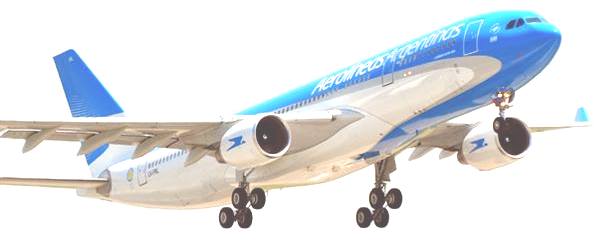
Aerolíneas Argentinas ha introducido el Airbus A330-200 en rutas regionales. La aerolínea ampliará su oferta desde el Aeropuerto Internacional Ministro Pistarini (Ezeiza), en Buenos Aires (EZE), hacia el Aeropuerto Internacional de Río de Janeiro/Antônio Carlos Jobim/Galeão (GIG). La aerolínea tiene previsto incrementar sus frecuencias, añadiendo tres vuelos semanales los días Lunes, Martes y Miércoles (3Frq/S). Estos vuelos serán operados en aeronaves Airbus A330-200, con una capacidad de 272 asientos, distribuidos en dos clases: 24 en clase ejecutiva y 248 en clase económica. De esta manera la aerolínea introduce aviones de fuselaje ancho en rutas regionales.
Los vuelos desde Ezeiza saldrán a las 10:50 a.m. y llegarán a Río de Janeiro a las 01:50 p.m., bajo el número de vuelo AR1264. El vuelo de regreso despegará de Río de Janeiro a las 03:20 p.m., con llegada a Buenos Aires a las 05:15 p.m., bajo el número de vuelo AR1265.
Con esta expansión, Aerolíneas Argentinas comenzará a competir con otras aerolíneas que operan en esta ruta que conectan Argentina y Brasil, como es el caso de Emirates, Flybondi, GOL, JetSMART y British Airways. Para más información sobre tarifas, disponibilidad y horarios, los pasajeros pueden consultar el portal oficial de la aerolínea.
Actualmente, Aerolíneas Argentinas opera vuelos con aeronaves A330 desde el Aeropuerto Internacional Jorge Newbery (AEP), con una frecuencia de entre 4 y 6 vuelos diarios, según el sistema de bases de datos aeronáuticas Cirium.
Aerolineas A330 regional routes
Aerolíneas Argentinas introduces A330 on regional routes
Aerolíneas Argentinas has introduced the Airbus A330-200 on regional routes. The airline will expand its offering from Ministro Pistarini International Airport (Ezeiza), in Buenos Aires (EZE), to Rio de Janeiro/Antônio Carlos Jobim/Galeão International Airport (GIG). The airline plans to increase its frequencies, adding three weekly flights on Mondays, Tuesdays, and Wednesdays (3Frq/S). These flights will be operated on Airbus A330-200 aircraft, with a capacity of 272 seats, distributed in two classes: 24 in business class and 248 in economy class. In this way, the airline introduces wide-body aircraft on regional routes.
Flights from Ezeiza will depart at 10:50 a.m. and will arrive in Rio de Janeiro at 01:50 p.m., under flight number AR1264. The return flight will take off from Rio de Janeiro at 03:20 p.m., arriving in Buenos Aires at 05:15 p.m., under flight number AR1265.
With this expansion, Aerolíneas Argentinas will begin to compete with other airlines that operate on this route connecting Argentina and Brazil, such as Emirates, Flybondi, GOL, JetSMART, and British Airways. For more information on fares, availability, and schedules, passengers can consult the airline’s official website.
Currently, Aerolíneas Argentinas operates flights with A330 aircraft from Jorge Newbery International Airport (AEP), with a frequency of between 4 and 6 flights per day, according to the Cirium aeronautical database system.
PUBLISHER: Airgways.com DBk: Aerolineas.com / Airgways.com AW-POST: 202412262050AR OWNERSHIP: Airgways Inc. A\W A I R G W A Y S ®
En el primer año de gestión de la Administración de Javier Milei, los subsidios a Aerolíneas Argentinas cayeron al nivel más bajo desde su estatización en 2008. Durante 2024, el Gobierno destinó US$ 64,2 millones de Dólares a la aerolínea, lo que representa una reducción del 50% en comparación con los US$ 136 millones en 2023, bajo la Administración de Alberto Fernández. Esta cifra contrasta aún más con los años del kirchnerismo, cuando, en 2012, Aerolíneas alcanzó un pico de US$ 904 millones de Dólares en subsidios.
En 2012, la aerolínea recibió 904 millones de dólares, mientras que en 2013 fueron US$ 704 millones y en 2014, US$ 619 millones. En 2015, último año de esa gestión, se destinaron US$ 553 millones de Dólares. Con el gobierno de Mauricio Macri, el gasto se redujo drásticamente, bajando a US$ 304 millones en 2016 y a US$ 181 millones en 2017. Sin embargo, los subsidios volvieron a subir en 2018 y 2019, alcanzando US$ 284 y US$ 490 millones de Dólares, respectivamente. Durante la administración de Fernández, el gasto se mantuvo alto, especialmente durante la pandemia. En 2020 se destinaron US$ 638 millones de Dólares, y en 2021, US$ 669 millones. A partir de 2022, el presupuesto comenzó a reducirse nuevamente, llegando a US$ 486 millones ese año y cayendo a US$ 136 millones en 2023.
Desde 2012 hasta 2023, el Estado destinó US$ 6.000 millones de Dólares en Aerolíneas Argentinas bajo la órbita de La Cámpora. Actualmente, recibe casi quince veces menos fondos que en la época de Cristina Kirchner.
La política de ajuste también impactó en el plantel de la compañía, que disminuyó en 1.341 puestos durante el último año, dejando a la aerolínea con 10.602 empleados. Según cifras de la Secretaría de Hacienda, el déficit operativo de Aerolíneas se redujo significativamente, pasando de US$ 513 millones de Dólares en 2023 a US$ 319 millones en 2024. Sin embargo, la compañía sostiene que su pérdida real, ajustada por inflación, es de US$ 83,2 millones de Dólares.
Los fondos transferidos a Aerolíneas se limitaron a un único desembolso en el primer semestre del año, con el objetivo de que la compañía operara durante todo el ejercicio fiscal con recursos propios provenientes de la venta de pasajes. Según relevamientos, el apoyo a la privatización ha crecido significativamente del 10% al 80% tras los conflictos gremiales.
Aerolíneas receive US$ 64 million in subsidies in 2024
Airline received half the contributions it received in 2023
In the first year of Javier Milei’s administration, subsidies to Aerolíneas Argentinas fell to the lowest level since its nationalization in 2008. During 2024, the Government allocated US$ 64.2 million to the airline, which represents a 50% reduction compared to US$ 136 million in 2023, under the Alberto Fernández administration. This figure contrasts even more with the years of Kirchnerism, when, in 2012, Aerolíneas reached a peak of US$ 904 million in subsidies.
In 2012, the airline received US$ 904 million, while in 2013 it was US$ 704 million, and in 2014, US$ 619 million. In 2015, the last year of that administration, US$ 553 million Dollars were allocated. Under Mauricio Macri’s government, spending was drastically reduced, falling to US$ 304 million in 2016 and US$ 181 million in 2017. However, subsidies rose again in 2018 and 2019, reaching US$ 284 and US$ 490 million Dollars, respectively. During the Fernández administration, spending remained high, especially during the pandemic. In 2020, US$ 638 million Dollars were allocated, and in 2021, US$ 669 million. Starting in 2022, the budget began to shrink again, reaching US$ 486 million that year and falling to US$136 million in 2023.
From 2012 to 2023, the State allocated US$ 6 billion to Aerolíneas Argentinas under the orbit of La Cámpora. Currently, it receives almost fifteen times less funds than during the time of Cristina Kirchner.
The adjustment policy also impacted the company’s staff, which decreased by 1,341 positions during the last year, leaving the airline with 10,602 employees. According to figures from the Ministry of Finance, Aerolíneas’ operating deficit was significantly reduced, from US$ 513 million in 2023 to US$ 319 million in 2024. However, the company maintains that its real loss, adjusted for inflation, is US$ 83.2 million.
The funds transferred to Aerolíneas were limited to a single disbursement in the first half of the year, with the aim of the company operating throughout the fiscal year with its own resources from ticket sales. According to surveys, support for privatization has grown significantly from 10% to 80% following the union conflicts.
PUBLISHER: Airgways.com DBk: Argentina.gob.ar / Aerolineas.com / Airgways.com AW-POST: 202412262048AR OWNERSHIP: Airgways Inc. A\W A I R G W A Y S ®
Gobierno rearma estrategias de privatización Aerolíneas Argentinas
De acuerdo a un decreto publicado en el Boletín Oficial, el Gobierno de Javier Milei volvió a postergar su plan de privatizaciones, pero no por haber reconsiderado la estrategia de fondo de desprenderse de numerosas empresas estatales sino porque no se llegaron a cumplimentar los procedimientos legales y administrativos requeridos. El esquema oficial prevé que las empresas estatales, antes de ser privatizadas, se transformen en Sociedades Anónimas, proceso para el que ampliaron los plazos en otros dos meses.
En el plan original del Gobierno de La Libertad Avanza se preveía que en los primeros seis meses de gestión iban a estar cumplidos estos requerimientos legales y técnicos para avanzar con el plan de privatizaciones, pero a fines del primer semestre el plazo se extendió hasta fin de año 2024, volviéndose a ampliar dos meses en esta semana.
«La gravedad de la situación exige su prórroga por el término de sesenta (60) días con el fin de contar con el tiempo suficiente para concretar lo establecido en el Inciso 2) del Artículo 77, en el Inciso 1) apartado b) del artículo 83 y en el artículo 88 de la Ley General de Sociedades Nº 19.550 (T.O. 1984) y sus modificatorias», expresa el Decreto Nº1120/2024.
Luego de avanzar con la conversión de las empresas estatales en sociedades anónimas, el Poder Ejecutivo podrá directamente ponerlas en venta por medio de un proceso licitatorio, para lo que necesita la aprobación del Congreso, lanzar una oferta pública inicial para sacar al mercado de capitales las acciones de las compañías en cuestión, ceder parte de las empresas a sus trabajadores, como se había planteado para el caso de Aerolíneas Argentinas, o directamente cerrarlas y poner a la venta sus terrenos por medio de la Agencia de Administración de Bienes del Estado (AABE).
Argentina sale strategies Aerolíneas
Government re-establishes Aerolíneas privatization strategies
According to a decree published in the Official Gazette, the Government of Javier Milei again postponed its privatization plan, but not because it had reconsidered the underlying strategy of divesting itself of numerous state-owned companies, but because the required legal and administrative procedures were not completed. The official scheme provides that state-owned companies, before being privatized, be transformed into Public Limited Companies, a process for which the deadlines were extended by another two months.
In the original plan of the Government of La Libertad Avanza it was foreseen that in the first six months of management these legal and technical requirements would be fulfilled to advance with the privatization plan, but at the end of the first semester the deadline was extended until the end of the year 2024, being extended again by two months this week.
«The seriousness of the situation requires its extension for a period of sixty (60) days in order to have sufficient time to implement what is established in Section 2) of Article 77, in Section 1) paragraph b) of Article 83, and in Article 88 of the General Law of Companies No. 19,550 (T.O. 1984) and its amendments», states Decree No. 1120/2024.
After moving forward with the conversion of state-owned companies into corporations, the Executive Branch may directly put them up for sale through a bidding process, for which it needs the approval of Congress, launch an initial public offering to take the shares of the companies in question to the capital market, transfer part of the companies to their workers, as had been proposed for the case of Aerolíneas Argentinas, or directly close them and put their land up for sale through the State Property Administration Agency (AABE).
PUBLISHER: Airgways.com DBk: Aerolineas.com / Argentina.gob.ar / Airgways.com AW-POST: 202412262033AR OWNERSHIP: Airgways Inc. A\W A I R G W A Y S ®
AW | 2024 12 26 15:07 | AIR INVESTIGATION / AVIATION SAFETY
Trágico accidente aéreo E190 Azerbaijan Airlines
Un Embraer E190 de Azerbaijan Airlines, matrícula 4K-AZ65 que realizaba el vuelo J2-8243 de Bakú (Azerbaiyán) a Grozny (Rusia) con 62 pasajeros y 5 tripulantes, se había desviado de Grozny a Aktau (Kazajstán) debido al clima, posteriormente intentó desviarse a Makhachkala (Rusia) pero abortó la aproximación a Makhachkala debido a la niebla antes de desviarse a Aktau, donde la aeronave intentó un aterrizaje de emergencia en la Pista 11 de Aktau a las 11:28L/06:28Z aproximadamente una hora después de la aproximación abortada a Grozny. La aeronave estaba girando hacia la aproximación final con el equipo bajado, pero perdió altura e impactó contra el suelo en una actitud cercana al aterrizaje, pero con la nariz hacia abajo e impactando contra el terreno.
Los servicios de rescate pudieron rescatar con vida a 29 personas, incluidos todos los tripulantes de cabina. Se recuperaron 38 cuerpos, incluidos los dos tripulantes de vuelo.
El Ministerio de Transporte de Kazajistán informó que 62 pasajeros y 5 tripulantes estaban a bordo de la aeronave, 32 fueron rescatados con vida. Se han recuperado 4 cuerpos.
La aerolínea informó que había 62 pasajeros: 37 azerbaiyanos, 16 rusos, 6 kazajos y 3 kirguises, y 5 tripulantes a bordo. La aeronave realizó un aterrizaje de emergencia a unos 3 km/1,6 millas náuticas del Aeropuerto de Aktau. Se ha establecido una línea telefónica directa para contacto. La aerolínea publicó una lista con los nombres de los ocupantes. Según los servicios de salud de Kazajistán, 28 supervivientes fueron trasladados a hospitales, 7 de ellos están en cuidados intensivos.
La Fiscalía General de Azerbaiyán confirmó que 32 personas sobrevivieron al accidente. Se ha abierto una investigación criminal, los expertos están estudiando todas las direcciones, están considerando varios escenarios y realizan los exámenes necesarios. La oficina colabora estrechamente con la Fiscalía de Kazajstán.
El Viceprimer Ministro de Kazajistán informó que 29 personas están hospitalizadas. 11 de ellos sufrieron heridas graves pero se encuentran estables, los demás sufrieron heridas leves. 38 personas han muerto en el accidente. Preguntado por los agujeros observados en los restos de la aeronave, afirmó que ni siquiera las conclusiones preliminares son posibles hasta el momento. Expertos forenses e investigadores de aviación han llegado a la escena. La investigación será llevada a cabo por los organismos encargados de hacer cumplir la ley de Kazajistán, de conformidad con el Código 344 de la Ley de Kazajistán, y contará con la participación de colegas de otros países.
El Viceministro de Transporte de Kazajstán declaró que la aeronave dio dos vueltas en la zona del aeropuerto después de entrar en el espacio aéreo kazajo y tocó tierra en el tercer giro.
El Ministerio de Situaciones de Emergencia de Kazajstán informó que el aeropuerto de Aktau informó a las 11:00 a.m. que un Embraer ERJ-190 de Azerbaijan Airlines se dirigía a Aktau después de haber declarado la emergencia y dirigirse a Aktau. El aterrizaje se estimó para las 11:25L. A las 11:30 se recibió información de que la aeronave había impactado contra el suelo a unos 3 km del aeropuerto. A las 11:45 L el fuego estaba contenido y a las 12:05 L extinguido. A las 14:10, 29 personas habían sido trasladadas a hospitales. Los rescatistas y los investigadores de Azerbaiyán ya han llegado a Aktau.
El 26 de Diciembre de 2024 se informó que la AAIID de Kazajstán está liderando la investigación, con el apoyo de investigadores de accidentes de Azerbaiyán y el organismo brasileño CENIPA. Al menos una de las cajas negras ha sido encontrada. En una conferencia de prensa, la Fiscalía General de Kazajistán informó que la caja negra ha sido recuperada.
A día de hoy, hay algunas agendas y propagandas políticas y militares que intentan culpar del accidente a un derribo de la defensa aérea en Rusia o a los atacantes en Rusia, explicando que los agujeros visibles en la cola vertical fueron causados por la metralla, sin embargo, sin identificar si esto debería haber sucedido en Grozny o Majachkalá. Debido a la interferencia y la suplantación de GPS en la región, los datos de radar existentes no indican la verdadera trayectoria de vuelo y no se pueden utilizar para analizar los problemas de la aeronave.
Posibles causas del desastre El avión regional de Azerbaiyán Airlines volaba desde la capital de Azerbaiyán, Bakú, a la ciudad rusa de Grozny en Chechenia, cuando se estrelló este Miércoles 25/12 en un campo cerca de Aktau en Kazajstán, tras desviarse cientos de millas de su ruta planificada.
«Era un vuelo regular. Tenía que volar a Grozni, pero debido a la niebla lo enviaron a Majachkalá y de allí, aparentemente, a Aktau», declaró un Portavoz del Aeropuerto de Grozny, la capital de Chechenia.
En rueda de prensa, el Portavoz de la Fiscalía General de Azerbaiyán, Kanan Zeinalov, aseguró que especialistas de Azerbaiyán y Kazajistán trabajan juntos para esclarecer las causas de la tragedia, a los que se incorporaron el Jueves 26/12 la agencia del CENIPA de Brasil, como parte de las investigaciones correspondientes por ser una aeronave de fabricación brasileña.
Dentro de las posibles causas del desastre aéreo figuran: el choque de la aeronave con una bandada de pájaros y la explosión de un balón de oxígeno a bordo del avión. Mientras tanto, Ucrania cree que fue la defensa aérea rusa la causal del derribo de la aeronave. Un funcionario de seguridad nacional ucraniano afirmó que el accidente fue causado por fuego de la defensa aérea rusa. El Jefe del Centro de Lucha contra la Desinformación del Consejo de Seguridad Nacional y Defensa de Ucrania, Andri Kovalenko, está seguro de que el avión fue derribado por Rusia.
«La explosión de un misil de defensa aérea dañó el avión de Azerbaiyán Airlines, y desactivó sus sistemas. Rusia tenía que cerrar el espacio aéreo sobre Grozni, pero no lo hizo. Todo lo que volaba fue derribado. El avión fue dañado por los rusos y enviado a Kazajistán, en lugar de realizar un aterrizaje de emergencia en Grozni y salvar vidas», escribió Andri Kovalenko en Telegram, refiriéndose a los riesgos creados por el ataque con drones que estaba ocurriendo en Grozni en ese mismo momento. La ciudad rusa fue atacada por drones el miércoles por la mañana, según confirmó el secretario del Consejo de Seguridad de Chechenia y sobrino del Jefe de la Región, Jamzat Kadirov.
Sólo la profesionalidad de los pilotos del avión impidió que Rusia «convirtiera esta historia en una provocación rusa contra Ucrania», señaló Andri Kovalenko, y advirtió que Rusia hará todo lo posible para ocultar su propia responsabilidad por el accidente aéreo y las muertes de personas.
Pronunciamiento Presidente de Azerbaiyán En una conferencia de prensa el Miércoles 25/12, el Presidente de Azerbaiyán, Ilham Aliyev, dijo que era demasiado pronto para especular sobre las razones del accidente. Hasta el momento, lo más claro es que el clima había obligado al avión a cambiar la ruta planeada.
«La información que me proporcionaron es que el avión cambió su curso entre Bakú y Grozni debido al empeoramiento de las condiciones meteorológicas y se dirigió al Aeropuerto de Aktau, donde se estrelló al aterrizar», afirmó.
La Federación Rusia, en cambio, se comprometió a colaborar para esclarecer los hechos. Sin embargo, el Jueves 26/12, por prevención a los ataques con drones, cerró temporalmente todos sus aeropuertos en señal de alarma ante un posible ataque masivo por parte de Ucrania.
Azerbaijan E190 accident
Tragic Azerbaijan Airlines E190 plane crash
An Azerbaijan Airlines Embraer E190, registration 4K-AZ65 operating flight J2-8243 from Baku (Azerbaijan) to Grozny (Russia) with 62 passengers and 5 crew, had diverted from Grozny to Aktau (Kazakhstan) due to weather, subsequently attempted to divert to Makhachkala (Russia) but aborted the approach to Makhachkala due to fog before diverting to Aktau, where the aircraft attempted an emergency landing on Aktau’s Runway 11 at 11:28L/06:28Z approximately one hour after the aborted approach to Grozny. The aircraft was turning towards final approach with the gear down, but lost altitude and hit the ground in a near-landing attitude, but with the nose down and hitting the ground.
Rescue services were able to rescue 29 people alive, including all cabin crew. 38 bodies were recovered, including the two flight crew.
The Ministry of Transport of Kazakhstan reported that 62 passengers and 5 crew were on board the aircraft, 32 were rescued alive. 4 bodies have been recovered.
The airline reported that there were 62 passengers: 37 Azerbaijanis, 16 Russians, 6 Kazakhs and 3 Kyrgyz, and 5 crew on board. The aircraft made an emergency landing about 3 km/1.6 nautical miles from Aktau Airport. A direct telephone line has been established for contact. The airline published a list with the names of the occupants. According to Kazakhstan’s health services, 28 survivors were taken to hospitals, 7 of them are in intensive care.
The Prosecutor General’s Office of Azerbaijan confirmed that 32 people survived the crash. A criminal investigation has been opened, experts are studying all directions, considering various scenarios, and conducting necessary examinations. The office is closely cooperating with the Prosecutor’s Office of Kazakhstan.
The Deputy Prime Minister of Kazakhstan reported that 29 people are hospitalized. 11 of them suffered serious injuries but are stable, the rest suffered minor injuries. 38 people have died in the crash. Asked about the holes seen in the wreckage of the aircraft, he stated that even preliminary conclusions are not possible so far. Forensic experts and aviation investigators have arrived at the scene. The investigation will be conducted by Kazakhstan law enforcement agencies in accordance with Code 344 of the Law of Kazakhstan and will involve colleagues from other countries.
The Deputy Minister of Transport of Kazakhstan stated that the aircraft circled twice in the airport area after entering Kazakh airspace and touched down on the third turn.
The Ministry of Emergency Situations of Kazakhstan reported that Aktau Airport reported at 11:00 a.m. that an Azerbaijan Airlines Embraer ERJ-190 was heading to Aktau after having declared an emergency and heading to Aktau. Landing was estimated at 11:25L. At 11:30 information was received that the aircraft had hit the ground about 3 km from the airport. At 11:45L the fire was contained and at 12:05L extinguished. By 14:10, 29 people had been taken to hospitals. Rescuers and Azerbaijani investigators have already arrived in Aktau.
On 26 December 2024, it was reported that Kazakhstan’s AAIID is leading the investigation, with support from Azerbaijani accident investigators and the Brazilian agency CENIPA. At least one of the black boxes has been found. At a press conference, the Kazakhstani Prosecutor General’s Office reported that the black box has been recovered.
To this day, there are some political and military agendas and propagandas that try to blame the accident on an air defense shoot-down in Russia or on attackers in Russia, explaining that the visible holes in the vertical tail were caused by shrapnel, however, without identifying whether this should have happened in Grozny or Makhachkala. Due to GPS interference and spoofing in the region, existing radar data does not indicate the true flight path and cannot be used to analyze aircraft problems.
Possible causes of the disaster The Azerbaijan Airlines regional plane was flying from the Azerbaijani capital Baku to the Russian city of Grozny in Chechnya when it crashed on Wednesday 25/12 in a field near Aktau in Kazakhstan, after deviating hundreds of miles from its planned route.
«It was a regular flight. It was supposed to fly to Grozny, but because of fog it was sent to Makhachkala and from there, apparently, to Aktau», said a spokesman for the airport in Grozny, the capital of Chechnya.
At a press conference, Azerbaijani Prosecutor General’s Office Spokesperson Kanan Zeinalov said that Azerbaijani and Kazakh specialists are working together to clarify the causes of the tragedy, and the Brazilian CENIPA agency joined them on Thursday 26/12 as part of the corresponding investigations, since the aircraft was of Brazilian manufacture.
Among the possible causes of the air disaster are: the collision of the aircraft with a flock of birds and the explosion of an oxygen tank on board the plane. Meanwhile, Ukraine believes that the Russian air defense was the cause of the downing of the aircraft. A Ukrainian national security official said that the accident was caused by fire from the Russian air defense. The head of the Center for Combating Disinformation of the National Security and Defense Council of Ukraine, Andri Kovalenko, is sure that the plane was shot down by Russia.
«The explosion of an air defense missile damaged the Azerbaijan Airlines plane, disabling its systems. Russia had to close the airspace over Grozny, but it did not. Everything that was flying was shot down. The plane was damaged by the Russians and sent to Kazakhstan, instead of making an emergency landing in Grozny and saving lives», Andri Kovalenko wrote on Telegram, referring to the risks created by the drone attack that was taking place in Grozny at that very moment. The Russian city was attacked by drones on Wednesday morning, as confirmed by the secretary of the Chechen Security Council and nephew of the Head of the Region, Jamzat Kadirov.
Only the professionalism of the plane’s pilots prevented Russia from «turning this story into a Russian provocation against Ukraine», Andri Kovalenko noted, warning that Russia will do everything to hide its own responsibility for the plane crash and the deaths of people.
Statement by Azerbaijani President At a press conference on Wednesday 25/12, Azerbaijani President Ilham Aliyev said it was too early to speculate on the reasons for the crash. So far, the clearest thing is that the weather had forced the plane to change its planned route.
«The information I was given is that the plane changed its course between Baku and Grozny due to worsening weather conditions and headed for Aktau Airport, where it crashed on landing», he said.
The Russian Federation, on the other hand, pledged to collaborate in clarifying the events. However, on Thursday 26/12, as a precaution against drone attacks, it temporarily closed all its airports in alarm of a possible massive attack by Ukraine.
PUBLISHER: Airgways.com DBk: Fab.mil.br / Gob.kz / Airgways.com AW-POST: 202412261507AR OWNERSHIP: Airgways Inc. A\W A I R G W A Y S ®
Avión de Aerolíneas que iba a Madrid tuvo que regresar por una falla
El vuelo de Aerolíneas Argentinas AR1132 realizaba la ruta Buenos Aires/EZE—Madrid/MAD tuvo un incidente de falla hidráulica en ruta cuando los pilotos retornaron a la altura de Río de Janeiro hacia Argentina. Ante una falla hidráulica, la tripulación accionó el protocolo de emergencia para retornar a Ezeiza. La aeronave un Airbus A330-202 realizó el protocolo de emergencia sobrevolando en círculos sobre La Plata, Provincia de Buenos Aires.
El vuelo AR1132 despegó a la 01:30 de la madrugada del 20/12 desde el Aeropuerto Ministro Pistarini teniendo como destino final la ciudad de Madrid, capital de España.
Desde Aerolíneas Argentinas informaron: «el avión no se declaró en emergencia y que la cabina no se despresurizó ni cayeron las máscaras. Los pasajeros no percibieron nada y fueron informados debidamente del motivo del regreso. El avión aterrizó normalmente, sin ningún tipo de protocolo como el que se utiliza cuando un avión sí se declara en emergencia. Los pasajeros aguardaron en el área de embarque a que se cargue el catering y se cambien las valijas hacia otro avión, y volvieron a despegar en una nueva aeronave».
Los comandantes del vuelo tuvieron que emprender el regreso a unas dos horas de haber despegado de Ezeiza y cuando sobrevolaban Río de Janeiro, en Brasil. Explicaron que la falla era un incidente menor, y se decidió volver de forma preventiva. El avión que tuvo que regresar, afirmaron, a lo largo de este Viernes 20/12 volvería a estar operativo. «Es importante destacar, que tal como indican los manuales y procedimientos de seguridad operacional se tomó la decisión de volver a la base y hacer la inspección». Finalmente, la aeronave A330-200 regresó a Ezeiza y aterrizó sin inconvenientes.
Aerolíneas flight AR1132 incident
Aerolíneas plane bound for Madrid had to return due to a fault
Aerolíneas Argentinas flight AR1132 was flying the Buenos Aires/EZE—Madrid/MAD route and had a hydraulic failure incident en route when the pilots returned to Argentina at the height of Rio de Janeiro. Due to a hydraulic failure, the crew activated the emergency protocol to return to Ezeiza. The aircraft, an Airbus A330-202, carried out the emergency protocol by flying in circles over La Plata, Province of Buenos Aires.
Flight AR1132 took off at 01:30 in the morning on 20/12 from Ministro Pistarini Airport with the final destination being the city of Madrid, capital of Spain.
Aerolíneas Argentinas reported: «The plane did not declare an emergency and the cabin did not depressurize nor did the masks fall. The passengers did not notice anything and were duly informed of the reason for the return. The plane landed normally, without any type of protocol such as that used when a plane does declare an emergency. The passengers waited in the boarding area for the catering to be loaded and the suitcases to be transferred to another plane, and took off again in a new aircraft».
The flight commanders had to undertake the return about two hours after taking off from Ezeiza and when they were flying over Rio de Janeiro, Brazil. They explained that the failure was a minor incident, and it was decided to return as a precaution. The plane that had to return, they stated, would be operational again throughout this Friday 20/12. «It is important to highlight that, as indicated by the operational safety manuals and procedures, the decision was made to return to base and carry out the inspection», Finally, the A330-200 aircraft returned to Ezeiza and landed without incident.
PUBLISHER: Airgways.com DBk: Aerolineas.com / Airgways.com AW-POST: 202412201544AR OWNERSHIP: Airgways Inc. A\W A I R G W A Y S ®














 airgways.com