AW | 2025 02 17 18:50 | AVIATION SAFETY / AIR INVESTIGATION
Vuelo DL4819 Delta Connection accidente durante aterrizaje
El vuelo DL4819 de Delta Connection, un Bombardier CRJ-900 operado por Endeavor Air, sufrió un accidente durante el aterrizaje en el Aeropuerto Internacional Toronto-Pearson (YYZ), Ontario. El vuelo de Delta se estrelló mientras aterrizaba en el Aeropuerto Internacional Toronto/Pearson el Lunes 17/02 volcándose boca arriba.
Un Canadair CRJ-900 de Endeavor Airlines en nombre de Delta Connection, matrícula N932XJ que realizaba el vuelo DL-4819 desde Minneapolis, MN (EE.UU.) a Toronto, ON (Canadá), aterrizó en la Pista 23 de Toronto, pero la aeronave regional se detuvo en la pista de forma invertida, con ambas alas separadas. No hubo víctimas mortales, sin embargo, varias personas fueron trasladadas a hospitales. Los 80 pasajeros y tripulantes del vuelo DL4819 han sido evacuados, según la Administración Federal de Aviación (FAA). El vuelo se originó en Minneapolis-St-Paul (MSP) con destino a Toronto/Pearson (YYZ). Los datos sobre las causas del accidente y el vuelco panza arriba no estaba claro de inmediato, pero la investigación se ha iniciado. La Junta de Seguridad en el Transporte de Canadá dirigirá la investigación, dijo la FAA. El Aeropuerto de Toronto ha sido cerrado hasta al menos las 04:30 p.m.
Si bien se desconoce la causa del accidente aéreo, se desarrolló durante la nieve y las fuertes ráfagas de viento en la región. Los vientos alcanzaron las 40 mph en tierra y fueron aún más fuertes a varios cientos de pies en el aire.
PUBLISHER: Airgways.com DBk: Tsb.gc.ca / Delta.com / Faa.gov / Airgways.com AW-POST: 202502171850AR OWNERSHIP: Airgways Inc. A\W A I R G W A Y S ®
AW | 2025 02 05 18:06 | AIR INVESTIGATION / AVIATION SAFETY / AVIATION ORGANISNS
Accidente Azerbaijan Airlines causado por derribo
El accidente mortal de Azerbaijan Airlines el 25 de Diciembre de 2024 fue consecuencia directa de los daños causados por objetos extraños en los principales sistemas de vuelo, según el Informe Preliminar publicado el Martes 04/02 por el Gobierno azerbaiyano. El informe detalla que el Ministerio de Transportes kazajo ha encontrado numerosos daños dentro y ocultos en el fuselaje, la sección de cola y la parte de popa del avión, incluidos sus estabilizadores. El vuelo J2-8243 de Azerbaijan Airlines fue derribado el 25 de Diciembre de 2024 por un misil de un sistema ruso Pantsir-S1, causando 38 muertos y 29 heridos.
Antes de la publicación del informe preliminar, algunas fuentes revelaron que se habían desplegado sistemas de guerra electrónica contra el avión azerbaiyano cuando se aproximaba para aterrizar en Grozni, seguidos de un ataque de un sistema ruso de defensa antiaérea Pantsir-S1, trasladado a Chechenia desde Siria.
Además, los investigadores recuperaron restos metálicos no identificados que causaron daños en los sistemas hidráulicos de la aeronave a raíz de dos ruidos externos. «Debido a las condiciones meteorológicas adversas, la aeronave intentó sin éxito aterrizar en Grozni dos veces, y entonces el capitán decidió regresar a Bakú. Tras esta decisión, el CVR registró dos ruidos externos, que se produjeron con 24 segundos de intervalo, sobre Grozni», dice el informe.
Se realizarán más pruebas forenses para determinar el origen de los objetos extraños, señala el informe, que no menciona indicios de impacto con aves. El vuelo J2-8243 de Azerbaijan Airlines, procedente de Bakú y con destino a Grozni, se estrelló al intentar un aterrizaje de emergencia cerca de Aktau, en Kazajistán.
Antes del accidente, el avión Embraer ERJ 190-100 perdió todos los controles de vuelo primarios, sufrió una despresurización de la cabina y la tripulación informó de la explosión de asientos en la cabina. El avión se estrelló a unos cinco kilómetros de la Pista 11 del Aeropuerto de Aktau, partiéndose en dos e incendiándose.
El vuelo accidentado ha reportado un total de 38 personas fallecidas a bordo, entre ellas el piloto, el copiloto, el auxiliar de vuelo principal y 35 pasajeros, mientras que otras 29 sobrevivieron con heridas de diferentes consideraciones.
Al día siguiente del accidente, fuentes gubernamentales azerbaiyanas declararon que un misil tierra-aire ruso había provocado el accidente del avión de Azerbaijan Airlines en Aktau. Según las fuentes, el misil fue disparado contra el vuelo 8432 durante una actividad aérea de drones sobre Grozni, y la metralla alcanzó a los pasajeros y a la tripulación de cabina al explotar junto al avión en pleno vuelo. Fuentes gubernamentales informaron que al avión siniestrado no se le permitió aterrizar en ningún aeropuerto ruso a pesar de las peticiones de los pilotos para realizar un aterrizaje de emergencia, y se le ordenó volar a través del mar Caspio en dirección a Aktau, en Kazajistán. Según los datos, los sistemas de navegación GPS del avión se atascaron durante toda la trayectoria de vuelo sobre el mar.
Tres días después del accidente, en un discurso a la nación, el Presidente de Azerbaiyán, Ilham Aliyev, declaró: «Podemos decir con total claridad que el avión fue derribado por Rusia. […] No decimos que se hiciera intencionadamente, pero se hizo». En aquel momento, el 29 de Diciembre de 2024, Ilham Aliyev dijo que Bakú había hecho tres peticiones a Rusia en relación con el accidente. «En primer lugar, la parte rusa debe disculparse ante Azerbaiyán. Segundo, debe admitir su culpabilidad. En tercer lugar, debe castigar a los culpables, exigirles responsabilidades penales y pagar indemnizaciones al Estado azerbaiyano, a los pasajeros heridos y a los miembros de la tripulación», subrayó Ilham Aliyev. Señaló que la primera exigencia se cumplido cuando el Presidente ruso, Vladímir Putin, le pidió disculpas el 28 de Diciembre de 2024. El ejecutivo ruso calificó el accidente de trágico incidente, aunque no llegó a reconocer la responsabilidad de Moscú. Ese mismo día, el Gobierno de Kazajistán declaró que había decidido enviar a Brasil los registros de vuelo del avión para contribuir a la revelación completa e inequívoca de los hechos en torno a la tragedia, una medida que indicaba que Kazajistán y Azerbaiyán estaban alineados en su búsqueda de una investigación transparente. El informe preliminar irá seguido de un informe final en el plazo de un año a partir del día del accidente, según la normativa internacional.
CRONOLOGÍA ACCIDENTE E190
Un Embraer ERJ-190 de Azerbaijan Airlines, matrícula 4K-AZ65 que realizaba el vuelo J2-8243 de Bakú (Azerbaiyán) a Grozny (Rusia) con 62 pasajeros y 5 tripulantes, se había desviado de Grozny a Aktau (Kazajstán) debido al clima, posteriormente intentó desviarse a Makhachkala (Rusia) pero abortó la aproximación a Makhachkala debido a la niebla antes de desviarse a Aktau, donde la aeronave intentó un aterrizaje de emergencia en la pista 11 de Aktau a las 11:28L/06:28Z aproximadamente una hora después de la aproximación abortada a Grozny. La aeronave estaba girando hacia la aproximación final con el equipo bajado, pero perdió altura e impactó contra el suelo de la pista en una actitud cercana al aterrizaje, pero con la nariz hacia abajo y se incendió. Los servicios de rescate pudieron rescatar con vida a 29 personas, incluidos todos los tripulantes de cabina. Se recuperaron 38 cuerpos, incluidos los dos tripulantes de vuelo.
El Ministerio de Transporte de Kazajistán informó que 62 pasajeros y 5 tripulantes estaban a bordo de la aeronave, 32 fueron rescatados con vida. Se han recuperado 4 cuerpos.
La aerolínea informó que había 62 pasajeros, 37 azerbaiyanos, 16 rusos, 6 kazajos y 3 kirguises, y 5 tripulantes a bordo. La aeronave realizó un aterrizaje de emergencia a unos 3 km/1,6 millas náuticas del aeropuerto de Aktau. Se ha establecido una línea telefónica directa. La aerolínea publicó una lista con los nombres de los ocupantes. Según los servicios de salud de Kazajistán, 28 supervivientes fueron trasladados a hospitales, 7 de ellos están en cuidados intensivos.
La Fiscalía General de Azerbaiyán confirmó que 32 personas sobrevivieron al accidente. Se ha abierto una investigación criminal, los expertos están estudiando todas las direcciones, están considerando varios escenarios y realizan los exámenes necesarios. La oficina colabora estrechamente con la Fiscalía de Kazajstán. El Viceprimer Ministro de Kazajistán informó que 29 personas están hospitalizadas. Once de ellos sufrieron heridas graves pero se encuentran estables, los demás sufrieron heridas leves. 38 personas han muerto en el accidente. Preguntado por los agujeros observados en los restos de la aeronave, afirmó que ni siquiera las conclusiones preliminares son posibles hasta el momento. Expertos forenses e investigadores de aviación han llegado a la escena. La investigación será llevada a cabo por los organismos encargados de hacer cumplir la ley de Kazajistán, de conformidad con el Código 344 de la Ley de Kazajistán, y contará con la participación de colegas de otros países.
El Viceministro de Transporte de Kazajstán declaró que la aeronave dio dos vueltas en la zona del aeropuerto después de entrar en el espacio aéreo kazajo y tocó tierra en el tercer giro.
El Ministerio de Situaciones de Emergencia de Kazajstán informó que el aeropuerto de Aktau informó a las 11:00 p.m. que un Embraer ERJ-190 de Azerbaijan Airlines se dirigía a Aktau después de haber declarado la emergencia y dirigirse a Aktau. El aterrizaje se estimó para las 11:25L. A las 11:30 se recibió información de que la aeronave había impactado contra el suelo a unos 3 km del aeropuerto. A las 11:45 L el fuego estaba contenido y a las 12:05 L extinguido. A las 14:10, 29 personas habían sido trasladadas a hospitales. Los rescatistas y los investigadores de Azerbaiyán ya han llegado a Aktau.
El 26 de Diciembre de 2024 se informó que la AAIID de Kazajstán está liderando la investigación, con el apoyo de investigadores de accidentes de Azerbaiyán y la Agencia de Seguridad de Aviación de Brasil, CENIPA. Al menos una de las cajas negras ha sido encontrada.
El Presidente de Azerbaiyán declaró en una conferencia de prensa que el mal tiempo obligó a la aeronave para desviarse.
En una conferencia de prensa, la Fiscalía General de Kazajistán informó que la caja negra ha sido recuperada.
El 27 de Diciembre de 2024 los investigadores de Brasil llegaron al lugar, las cajas negras serán leídas y decodificadas por CENIPA.
El 27 de Diciembre de 2024, la aerolínea informó que los datos preliminares sugieren que la aeronave fue sometida a impactos físicos y técnicos externos.
El 28 de Diciembre de 2024, el presidente de Kazajistán declaró que se llevará a cabo una investigación exhaustiva y objetiva. Es importante evitar la provocación de información y las falsificaciones.
El 28 de Diciembre de 2024, Turquía envió 8 investigadores a Bakú a petición de Azerbaiyán para ayudar en la investigación.
El 27 de Diciembre de 2024, Estados Unidos ofreció asistencia a la investigación. Un portavoz de la Casa Blanca declaró que Estados Unidos vio indicios iniciales que podrían indicar la posibilidad de que el avión fuera derribado por los sistemas de defensa aérea rusos.
El 28 de Diciembre de 2024, el Ministro de Transporte de Azerbaiyán dijo que las conclusiones preliminares apuntan hacia un impacto externo, el tipo de arma utilizada en el impacto se determinará durante la investigación.
El 29 de Diciembre de 2024, el Presidente de Azerbaiyán declaró que se puede decir con absoluta claridad que el avión fue derribado por Rusia, aunque no intencionalmente. Criticó a Rusia por tratar de silenciar el tema durante días y declaró que estaba sorprendido y molesto por las versiones de los hechos enviadas por Rusia. Declaró que quería una investigación internacional y rechazó categóricamente la sugerencia de Rusia de que el MAK investigara el accidente.
El 30 de Diciembre de 2024, el Ministerio de Transporte de Kazajistán declaró que las cajas negras de la aeronave se enviarán a Brasil para su lectura y análisis por parte de la CENIPA de Brasil.
El 30 de Diciembre de 2024, la IATA emitió un comunicado: «Las aeronaves civiles nunca deben ser el objetivo previsto o accidental de operaciones militares. La gran posibilidad de que el vuelo 8243 de Azerbaijan Airlines pudiera haber sido víctima de operaciones militares, como lo han indicado varios gobiernos, incluidos Rusia y Azerbaiyán, otorga la máxima prioridad a la realización de una investigación exhaustiva, transparente e imparcial. El mundo espera con impaciencia la publicación obligatoria del informe provisional en un plazo de 30 días, de conformidad con las obligaciones internacionales acordadas en el Convenio de Chicago. Y si se llega a la conclusión de que esta tragedia fue responsabilidad de los combatientes, los perpetradores deben rendir cuentas y ser llevados ante la justicia».
El 30 de Diciembre de 2024, el Ministerio de Transporte de Kazajistán se comprometió a publicar un informe preliminar dentro de los 30 días posteriores al accidente.
Debido a la interferencia y la suplantación de GPS en la región, los datos de radar existentes no indican la verdadera trayectoria de vuelo y no se pueden utilizar para analizar los problemas de la aeronave.
El 4 de febrero de 2025, la AAIID de Kazajstán publicó su informe preliminar en idioma ruso en el que afirmaba que la aeronave hizo dos intentos infructuosos de desembarcar en Grozny y decidió regresar a Bakú. Durante el regreso a Bakú a las 05:13:32z, los principales sistemas de control de la aeronave se perdieron. Por lo tanto, la tripulación decidió dirigirse al aeródromo alternativo de Aktau para un aterrizaje de emergencia. Sin embargo, la aeronave impactó contra el suelo a unos 5 km al noroeste del umbral de la Pista 11. Como resultado, 35 pasajeros, el capitán, el primer oficial y el auxiliar de vuelo superior murieron, 27 pasajeros y 2 asistentes de vuelo sufrieron lesiones de diversa consideración. La aeronave se incendió y fue destruida.
Antes de la salida de Bakú, la aeronave se encontraba en condiciones de vuelo. La aeronave procedió normalmente a Grozny, descendiendo a través de FL130, la tripulación informó a la Torre de Grozny que habían perdido ambos receptores GPS y solicitó una aproximación NDB. La aeronave fue autorizada para la llegada del REMKA 1X a la Pista 26, QFE 1005. La aeronave fue vectorizada para la aproximación, a 18 km de la pista, la aeronave fue autorizada para la aproximación de la Pista NDB V 26. La aeronave procedió a la aproximación, pero dio la vuelta informando de una aproximación inestable. La tripulación fue vectorizada para otra aproximación, Grozny los autorizó para una aproximación RNAV, la tripulación informó que ambos receptores GPS habían fallado, necesitaban la aproximación NDB y fueron autorizados para la aproximación NDB V nuevamente. Surgió una discusión sobre la altitud de la aeronave, informando que estaban a 330 metros cuando se despejaron a 500 metros. La tripulación inició una vuelta. Mientras subía a 3500 pies, la presión hidráulica #1 era de 3100 psi, la presión hidráulica #2 y #3 estaban a 3000 psi, ambos motores estaban funcionando, el engranaje estaba retraído, ambos GPS no recibieron ningún dato de los satélites, el DME no encontró ninguna estación terrestre. No se registraron fallos de ningún otro sistema aeronáutico en el FDR.
A las 05:31:13z, el CVR registró el sonido de un estampido sónico seguido inmediatamente por las alarmas de desconexión del piloto automático y del acelerador automático. La presión hidráulica y la cantidad del sistema #3 cayeron a 0. La posición de las superficies de control (elevador, timón, alerón) se fija en la posición 0 (neutro) y permanecen en esa posición durante el resto del vuelo. Se produjo una falla de ajuste, el capitán anunció que la puerta de servicio de popa estaba abierta. La cabina se despresurizó.
A las 05:31:47z se activó la alarma «HYD 2 LO PRESS». La presión hidráulica del sistema #1 bajó a 0 psi y la cantidad se redujo a 0. La presión del sistema #2 bajó a 4 psi.
El Capitán preguntó a la tripulación de cabina qué había sucedido, los Auxiliares de Vuelo informaron que dos asientos habían explotado, estaban volviendo a sentar a los pasajeros. La tripulación informó a Grozny que habían sufrido el impacto de un pájaro y que dos asientos de la cabina habían explotado. La tripulación preguntó sobre el clima en Mineralny Vody, la tripulación informó que no podían mantener el FL150 debido a la pérdida de presión en la cabina. ATC informó que Mineralny Vody estaba bajo un techo de nubosidad sólida de 180 metros. La tripulación informó que habían perdido todo el sistema hidráulico. La tripulación informó que se estaban desviando a Makhachkala, el ATC informó que había neblina y un techo de nubes de 750 metros con una visibilidad de 3 km. La tripulación decidió regresar a Bakú y avisó al ATC. La tripulación reiteró que habían perdido sus elevadores y alerones, los motores estaban funcionando. La tripulación preguntó sobre el clima en Aktau. La tripulación informó que se están quedando sin oxígeno sospechando que un cilindro de oxígeno había explotado, hay algo de olor a combustible, varios pasajeros se habían desmayado.
Cuando la tripulación informó sobre el Control de Aktau, informaron como Mayday Aircraft informando que habían perdido sus controles primarios, que estaban controlando la aeronave solo con los aceleradores. La aeronave fue autorizada a 1800 pies en QNH 1025, la tripulación fue autorizada para una aproximación visual a la Pista 11.
A las 06:22:20z la tripulación seleccionó los flaps 1, a las 06:22:24z se bajó el engranaje, a las 06:22:40z se seleccionaron los flaps a la posición 2, a las 06:23:30 los flaps se seleccionaron a la posición 3.
A las 06:24:52z la alarma GPWS «¡TERRAIN! ¡TERRENO! PULL UP!» activado, y volvió a ocurrir a las 06:25:25z.
A las 06:27:58z, la aeronave chocó con el suelo a 35 grados de inclinación hacia la derecha, inclinación de -5,8 grados, flaps extendidos en la posición 3, cambio hacia abajo con las puertas de engranajes abiertas, estabilizador 1,76 hacia arriba.
La AAIID declaró: «La Comisión de Investigación continúa realizando un examen detallado de los daños a las estructuras de la aeronave. La inspección inicial de los fragmentos supervivientes reveló numerosos daños de varios tamaños y formas en la sección de cola del fuselaje, el estabilizador vertical y el estabilizador, el elevador y el timón. Se encontraron daños similares en el motor izquierdo y el ala izquierda de la aeronave, así como en las unidades y componentes de la aeronave. En algunos lugares, los daños tienen una forma rectangular regular».
PUBLISHER: Airgways.com DBk: Azal.az / Caa.gov.kz / Fab.mil.br / Embraer.com / Airgways.com AW-POST: 202502051806AR OWNERSHIP: Airgways Inc. A\W A I R G W A Y S ®
AW | 2025 01 31 09:43 | AIR INVESTIGATION / AVIATION SAFETY
Recuperaron grabadoras aeronave CRJ-700
Investigadores de la Junta Nacional de Seguridad en el Transporte (NTSB) recuperaron el Jueves 30/01 la Grabadora de Voz de la Cabina (CVR) y el Registrador de Datos de Vuelo (FDR) del vuelos AA5342 del avión Bombardier CRJ-700 de PSA Airlines, operadora para American Airlines que colisionó con un helicóptero militar en Washington DC el Miércoles 29/01 por la noche. Las mismas fueron enviadas a los laboratorios del NTSB para su evaluación. Peter Knudson, el Portavoz de la agencia, indicó que los investigadores buscan ahora el registrador del helicóptero Black Hawk, con tres personas a bordo en el momento del accidente. Además, las autoridades investigan si la tripulación del helicóptero Black Hawk utilizaba gafas de visión nocturna en el momento del accidente, según informó Jonathan Koziol, Jefe de Gabinete de una división de Aviación del Ejército. Jonathan Koziol explicó que estos dispositivos mejoran la visibilidad en la oscuridad, especialmente sobre el agua, aunque los pilotos también pueden volar sin ellos durante la noche. Además, destacó la experiencia de la tripulación y señaló que el piloto tenía más de 1.000 horas de vuelo. La investigación también analizará la altitud de vuelo, debido a la cercanía con el aeropuerto y las rutas establecidas por la Administración Federal de Aviación (FAA).
Cronología accidente Un Canadair CRJ-700 de PSA Airlines al servicio como American Eagle, matrícula N709PS que realizaba el vuelo AA-5342 desde Wichita, KS a Washington National, DC (EEUU) con 60 pasajeros y 4 tripulantes, se había aproximado a la Pista 01 de National y la Torre de Control le preguntó si podían aterrizar en la Pista 33, a lo que la tripulación afirmó, la aeronave fue posteriormente autorizada a aterrizar en la Pista 33. La aeronave estaba en la aproximación final a la Pista 33 de National descendiendo a unos 200 pies AGL aproximadamente 0,6 millas náuticas antes del umbral de la pista cuando la aeronave chocó con un helicóptero militar Sikorsky UH-60 PAT25 con 3 ocupantes, ambas aeronaves cayeron en el río Potomac a las 20:46L/01:46Z. El Ejército de los Estados Unidos informó que un Blackhawk UH-60 que partía de Belvoir, VA (EEUU) para una misión de entrenamiento, estuvo involucrado en la colisión en el aire. De acuerdo con la información preliminar, había 3 personas a bordo del helicóptero. Fuentes actualizadas confirmaron que no existen sobrevivientes en ambas aeronaves incurridas en el accidente aéreo.
El siniestro ocurrió el Miércoles 29/01 a las 20:48 hora local, cuando un avión Bombardier CRJ-700 con 64 personas a bordo y un helicóptero militar Sikorsky UH-60 Black Hawk, colisionaron mientras la aeronave se aproximaba al Aeropuerto Nacional Washington/Ronald Reagan (DCA).
El Jueves 20/01, las autoridades confirmaron que no hay supervivientes y el aeropuerto, que fue cerrado tras el accidente, reabrió a las 11:00 hora local.
El Cuerpo de Ingenieros del Ejército USACE de Estados Unidos desplegó equipos para apoyar en la remoción de escombros en el Río Potomac, donde ocurrió la colisión. La agencia trabaja en coordinación con la Guardia Costera de Estados Unidos y la Supervisión de Salvamento y Buceo de la Marina estadounidense.
El Distrito de Baltimore del USACE activó su centro de operaciones de emergencia y envió dos embarcaciones a la Base Conjunta Anacostia-Bolling para recolectar restos de la colisión y remover hielo. Además, utilizará la embarcación The BUCK, equipada con sonares de haz único y múltiple, para realizar levantamientos hidrográficos en la zona. “El Cuerpo de Ingenieros del Ejército es responsable de encontrar soluciones de ingeniería para los desafíos más difíciles de nuestra nación”, afirmó el comandante del Distrito de Baltimore, el Coronel Francis Pera, quien aseguró que las evaluaciones se realizarán con prioridad en la seguridad.
Un nuevo video de una cámara de seguridad aeroportuaria captó el momento en que el helicóptero UH-60 Black Hawk del Ejército de Estados Unidos y el avión Bombardier CRJ-700 de American Eagle, filial de American Airlines, colisionaron en las inmediaciones del Aeropuerto Nacional Ronald Reagan, en Washington.
La grabación, de menos de 15 segundos, muestra la secuencia completa del impacto en el cielo oscuro de la capital estadounidense. En las imágenes, la aeronave comercial aparece como una bola difusa de luz blanca constante, aproximándose a la pista designada en lo que parecía una maniobra de aterrizaje habitual. En tierra, otro vuelo maniobraba cerca de una manga sin señales de irregularidad. Desde el costado izquierdo del cuadro, una tenue luz avanza a gran velocidad en dirección al avión. Se trata del helicóptero militar, que operaba con mínima iluminación y volaba a baja altitud. Según el análisis preliminar, el Black Hawk habría ingresado erróneamente en la trayectoria de la aeronave comercial, provocando la colisión.
PUBLISHER: Airgways.com DBk: Ntsb.gov / Airgways.com AW-POST: 2025013109:43AR OWNERSHIP: Airgways Inc. A\W A I R G W A Y S ®
AW | 2025 01 30 12:31 | AVIATION SAFETY / AIR INVESTIGATION
Accidente aéreo PSA Airlines y helicóptero militar en Washington
Un Bombardier Canadair CRJ-700 de PSA Airlines con matrícula N709PS que realizaba el vuelo AA5342 desde Wichita (KS) a Washington National, DC con 60 pasajeros y 4 tripulantes, se había aproximado a la Pista 01 del Washington National Airport (DCA), mientras la Torre de Control le preguntó si podían aterrizar en la Pista 33, a lo que la tripulación afirmó, la aeronave fue posteriormente autorizada a aterrizar en la Pista 33. La aeronave estaba en la aproximación final a la Pista 33 de National descendiendo a unos 200 pies AGL aproximadamente 0,6 millas náuticas antes del umbral de la pista cuando la aeronave chocó con un helicóptero militar Sikorsky UH-60 PAT25, ambas aeronaves cayeron en el río Potomac a las 20:46L/01:46Z. Se instruyó a todos los acercamientos posteriores de aeronaves en vuelo para dar la vuelta, se detuvieron las salidas. Unas 13 horas después, no se ha recuperado a ningún superviviente. El Ejército de los Estados Unidos informó que un Blackhawk UH-60 que partía de Belvoir, VA (EE.UU.) para una misión de entrenamiento estuvo involucrado en la colisión en el aire. De acuerdo con la información preliminar, había tres personas a bordo del helicóptero.
El Aeropuerto Washington National fue cerrado por el momento. La Torre de Control dijo a los aviones que esperaban las salidas que había habido una colisión en los finales de la Pista 33, que el aeródromo estaba cerrado y que debían regresar a la plataforma. Tower desvió varios helicópteros en la zona tras el accidente.
Comenzó una operación de rescate masiva, con varios helicópteros sobre el lugar del accidente y botes en la escena para búsqueda y rescate. Los servicios de emergencia declararon que, debido a las temperaturas actuales, las personas tendrían solo unos 15-30 minutos hasta que se establezca la hipotermia y alrededor de 30-90 minutos de tiempo de supervivencia. Los servicios de emergencia informaron que recibieron una alerta de la torre de la FAA sobre el accidente a las 20:48L/01:48Z, se inició una respuesta estatal y federal que involucró a unas 300 personas.
El 30 de Enero de 2025 alrededor de las 00:30L/05:30Z la policía local informó que se confirmaron las muertes, hasta el momento no se ha rescatado a ningún superviviente. En una conferencia de prensa en la mañana del 30 de Enero de 2025, las autoridades informaron que hasta ahora se han recuperado 28 cuerpos, y que la operación de búsqueda y rescate se ha convertido oficialmente en una operación de recuperación. Los servicios de emergencia no creen que haya supervivientes. Testigos presenciales informaron que de repente hubo chispas y la aeronave rodó más de 90 grados y boca arriba, posiblemente a unos 120 pies sobre el agua, y se sumergió en el agua. No pudieron ver un helicóptero.
La FAA y la NTSB iniciarán un proceso de investigación. La NTSB dirigirá la investigación. La FAA agregó posteriormente que el aeropuerto permanecerá cerrado hasta el Viernes 31 de Enero de 2025 a las 05:00L. La NTSB informó: «La NTSB ha lanzado un equipo de seguimiento al accidente de aviación que involucró a un avión Bombardier CRJ700 de PSA Airlines y un helicóptero militar Sikorsky H-60 cerca del Aeropuerto Nacional Ronald Reagan de Washington».
PSA Airlines opera como aerolínea feeder para la compañía aérea American Airlines, operando aeronaves regionale sen rutas domésticas. Tras las labores de rescates se informan algunos sobrevivientes que han sido rescatados del Río Potomac.
PUBLISHER: Airgways.com DBk: Faa.gov / Ntsb.gov / Airgways.com AW-POST: 202501302131AR OWNERSHIP: Airgways Inc. A\W A I R G W A Y S ®
AW | 2025 01 27 14:27 | AIR INVESTIGATION / AVIATION SAFETY
Boeing 737 atropella bandada pájaros antes accidente fatal
La Junta de Investigación de Accidentes Aéreos y Ferroviarios de Corea del Sur (ARAIB) ha publicado el Informe Preliminar sobre el Aire de Jeju accidente que cobró la vida de 179 personas a bordo del Boeing 737-800 de la aerolínea Jeju Air en Diciembre 2024, confirmando que ambas grabadoras se detuvieron minutos antes del accidente de la aeronave y que se descubrieron plumas de ave y manchas de sangre en ambos motores.
Desarrollo vuelo 7C2216 En una breve sinopsis de la historia del vuelo, ARAIB detalló que Vuelo 7C2216 de Jeju Air, operado por un Boeing 737-800, registrado como HL8088, despegó del Aeropuerto Suvarnabhumi de Bangkok (BKK) al Aeropuerto Internacional de Muan (MWX) alrededor de las 04:30 hora local (UTC +7) del 29 de diciembre de 2024. La aeronave transportaba 181 personas a bordo de la aeronave, divididas entre seis miembros de la tripulación y 175 pasajeros. A las 08:54:43 hora local (UTC +9), los pilotos del 737-800 se pusieron en contacto con el control de tráfico aéreo local (ATC), que autorizó el aterrizaje del avión de Jeju Air en la Pista 01. El Aeropuerto de Muan tiene una sola pista, la Pista 01/19.
Sin embargo, a las 8:57:50, el ATC advirtió a los pilotos de Jeju Air que debían tener cuidado durante su aproximación debido a la actividad de las aves en la zona. Apenas un minuto después de esa advertencia, tanto la Grabadora de Voz de la Cabina (CVR) como la Grabadora de Datos de Vuelo (FDR) dejaron de grabar, según la ARAIB, que no detalló el motivo de la interrupción.
A las 08:58:50, los dos pilotos hicieron una llamada de socorro de auxilio, informando al ATC sobre el impacto de un pájaro durante un vuelo. Dado que el 737-800 volaba sobre el lado izquierdo de la pista 01, giró a la derecha e intentó aterrizar en la Pista 19.
ARAIB señaló que los pilotos identificaron una bandada de aves mientras se acercaban a la Pista 01 en el Aeropuerto Internacional de Muan. Las imágenes de las cámaras de seguridad mostraron el Jeju Air 737-800 acercarse a una bandada de pájaros durante el recorrido, dijeron los investigadores. El avión aterrizó sin el tren de aterrizaje desplegado, invadió la pista y se estrelló contra el terraplén, incluidos los localizadores instalados, estallando en llamas. Ambos motores fueron examinados, y se encontraron plumas y manchas de sangre de ave en cada uno. Las muestras se enviaron a organizaciones especializadas para el análisis de ADN, y una organización nacional las identificó como pertenecientes a las cercetas del Baikal, una especie de ave que migra a Corea del Sur durante el invierno. Llega en masa en Octubre y se desplaza hacia el sur a medida que baja la temperatura.
Sin embargo, este fue el Informe Preliminar desarrollado por la ARAIB que declaró que continuaría investigando el accidente en el futuro. Esto incluye un desmontaje completo del motor, el examen de sus componentes, el análisis de los datos de CVR y FDR, y la investigación del terraplén, los localizadores y las pruebas de impactos con aves. Estas actividades de investigación total tienen como objetivo determinar la causa precisa del accidente. Además, se revisarán los problemas que se consideren necesarios para la seguridad o cualquier otra mejora y se espera que conduzcan a recomendaciones de seguridad urgentes.
La ARAIB concluyó que la Junta Nacional de Seguridad en el Transporte (NTSB) y la Oficina de Investigación y Análisis para la Seguridad de la Aviación Civil (Bureau d’Enquêtes et d’Analyses pour la Sécurité de l’Aviation Civile, BEA) están colaborando en la investigación.
Los investigadores también señalaron que el 737-800 involucrado en el incidente fue construido en 2009. Boeing entregó el fuselaje a Ryanair el 4 de Septiembre de 2009, y Jeju Air comenzó a operar vuelos con el 737-800 en cuestión en febrero de 2017. En 2008, la Administración Federal de Aviación (FAA) modificó las reglas con respecto a los registradores CVR y FDR digitales (DFDR), que afectaron a las aerolíneas, operadores y fabricantes de aeronaves.
La regla aumentó la duración de grabaciones específicas de CVR, aumentó la velocidad de grabación de datos para ciertos parámetros de DFDR, ordenó la separación física de los dos registradores y mejoró la confiabilidad de las fuentes de alimentación tanto para CVR como para DFDR. También ordenó que se registraran las comunicaciones específicas de enlace de datos recibidas en una aeronave si se instalaba equipo de apoyo.
La FAA detalló que durante muchos años, la NTSB había experimentado dificultades al investigar accidentes o incidentes aéreos debido a la insuficiencia de datos de la grabadora. Los problemas se derivaron de la duración limitada de las grabaciones de CVR antes de un incidente y la pérdida de energía tanto para CVR como para FDR. Faltan datos de la caja negra de los últimos 4 minutos antes del accidente aéreo de Jeju Air. El misterio que rodea el origen de la fatal catástrofe aérea en Corea del Sur el mes pasado se complica aún más por los datos faltantes. Los problemas con la grabadora dieron lugar a recomendaciones de seguridad. Según el regulador, habían surgido problemas en al menos ocho accidentes entre 1995 y 2000, lo que resultó en cinco recomendaciones de seguridad emitidas por la NTSB.
Para el 1 de Enero de 2005, modernizar todos los aviones que deben llevar un CVR y un FDR con un DCVR que […] está equipado con una fuente de alimentación independiente de 10 minutos que se encuentra con el CVR y que se activa automáticamente y proporciona 10 minutos de funcionamiento cada vez que cesa la alimentación de la grabadora, sea por apagado normal o por una pérdida de energía en el bus. En respuesta a estas recomendaciones, en Marzo de 2008, una de las propuestas de la FAA fue exigir que cada registrador recibiera su energía eléctrica del bus que proporciona la máxima fiabilidad para el funcionamiento de cada registrador sin poner en peligro otras funciones. Cada registrador también debe permanecer encendido durante el mayor tiempo posible sin poner en peligro la operación de emergencia de la aeronave. Estos requisitos se aplicarían a las aeronaves de nueva fabricación.
En respuesta a los comentarios de las partes interesadas sobre el Suministro de Energía Independiente del Registrador (RIPS) para los CVR, la FAA dijo que no podía exigir la modernización como un cambio rentable. Además, la NTSB y la Asociación de Industrias Aeroespaciales (AIA) recomendaron ampliar el requisito de no haber un solo fallo eléctrico para incluir las adaptaciones de los aviones ya entregados. La FAA consideró esta opción mientras desarrollaba el NPRM y descubrió que una actualización del cableado representa una carga económica significativa y podría requerir un extenso retrabajo de la aeronave para volver a cablear no solo los sistemas de grabación, sino también otros sistemas de la aeronave que se ven afectados por los cambios realizados en las grabadoras.
Por último, la fecha de entrada en vigor de la norma se fijó dos años después del 7 de Abril de 2008. La FAA agregó una nueva regla aplicable a los fabricantes de aeronaves que afectaban los requisitos de CVR y FDR, incluido el requisito de falla eléctrica única. Para tener en cuenta, Boeing propuso a la FAA que los cambios en las reglas con respecto a las grabadoras se aplicarían a todas las aeronaves que operan en los Estados Unidos, y el fabricante agregó que los accidentes o incidentes que involucran aeronaves no registradas en los Estados Unidos han sido objeto de investigaciones de la FAA y la NTSB. «Al igual que todos los países, la FAA tiene una autoridad limitada para exigir la instalación de equipos particulares en aeronaves que no están en nuestro registro, sino que simplemente vuelan en nuestro espacio aéreo. […] Nuestro análisis demuestra que el alcance de la regla final es suficiente para cumplir con el objetivo de seguridad de una información de vuelo más confiable a un costo aceptable», expresó la agencia d ela FAA.
PUBLISHER: Airgways.com DBk: Araib.molit.go.kr / Airgways.com AW-POST: 202501271427AR OWNERSHIP: Airgways Inc. A\W A I R G W A Y S ®
AW | 2024 12 30 10:43 | AIR INVESTIGATION / AVIATION SAFETY / GOVERNMENT
Presidente Azerbaiján acusa Gobierno Rusia derribo vuelo J2-8243
Las investigaciones del vuelo J2-8243 de Azerbaijan Airlines señalaba que el derribo de su vuelo había sido por un motivo externo enfocando las miradas hacia la Federación Rusia. El Presidente de la República de Azerbaiján, Ilham Aliyev, acusa de la tragedia del avión Embraer E190 al Gobierno de Vladimir Putin.
«La Federación Rusia derribó al avión de Azerbaijan Airlines de forma accidental, mientras que el Gobierno ruso trató de encubrir su responsabilidad en la muerte de 38 personas y lo que provocó que la tragedia sucediera. Podemos decir con total claridad que el avión fue derribado por Rusia, no estamos diciendo que se hizo intencionalmente, pero se hizo», señala el Ejecutivo Nacional de Azerbaiján.
En su mensaje en cadena nacional, el Presidente también expresó su molestia por el silencio con el que se han manejado las autoridades rusas y las versiones que han dado para explicar lo que sucedió. El Presidente de Azerbaiján refuerza la versión que Ucrania ha difundido desde hace días sobre el accidente del avión de Azerbaiján Airlines, que éste fue alcanzado por un sistema de defensa aéreo de Rusia.
Según las autoridades rusas expresaron inicialmente que el avión de Azerbaiján Airlines cayó tras chocar con pájaros. Luego, corrigió y señaló que la aeronave trató de aterrizar en una región, mientras ésta estaba siendo atacada por drones ucraniano, el gobierno de Rusia le dio un par de opciones para un aterrizaje, pero el piloto acabó decidiendo aterrizar en el Aeropuerto de Aktau (SCO).
Ilham Aliyev señaló que le hubiera bastado con que Rusia admitiera que derribó el avión por accidente y diera una disculpa pública. Eso hacen los países amigos, que es lo que considera que son Azerbaiján y Rusia. “Desafortunadamente, durante los primeros tres días, no escuchamos nada de Rusia excepto algunas teorías absurdas”, lamentó el Presidente de Azerbaiján quien en dos ocasiones entabló comunicación con Vladimir Putin. En la primera llamada, hecha el Sábado 28 de Diciembre de 2024, el Presidente ruso lamentó los hechos y aseguró que la defensa aérea de Rusia estaba activa. El Domingo 29/12, hubo otra comunicación, pero no se sabe sobre qué hablaron los mandatarios, señala CNN con información del medio ruso TASS.
Antecedentes ataques Los antecedentes de ataques a aeronaves civiles por parte del ejército de la Federación Rusia no son nuevos. El país euroasiático enfrenta graves denuncias por el derribo del vuelo MH-017 en territorio ucraniano, cuando la aeronave Boeing 777-200ER de la aerolínea Malaysia Airlines fue alcanzado por un misil ruso derribando el avión el 17 de Julio de 2014, mientras sobrevolaba el Este de Ucrania. No hubo sobrevivientes de los 283 pasajeros y 15 tripulantes. El derribo se produjo durante la guerra en Donbás por territorio controlado por las fuerzas separatistas rusas.
El otro accidente que envuelve en un mante de misterio es el ocurrido el Miércoles, 23 de Agosto de 2023, cuando el mercenario más poderoso de Rusia, Yevgeny Prigozhin, estaba a bordo de un avión ejecutivo que se estrelló el Miércoles por la noche al norte de Moscú sin sobrevivientes, dijeron las autoridades rusas, dos meses después de que encabezó un motín fallido contra los altos mandos del Ejército. No hubo comentarios oficiales del Kremlin o del Ministerio de Defensa sobre el destino de Yevgeny Prigozhin, Jefe del grupo mercenario Wagner y enemigo declarado de la cúpula del ejército por lo que argumentó como su incompetente enjuiciamiento de la guerra de Rusia en Ucrania.
Declaraciones Gobierno ruso El Presidente de Rusia, Vladimir Putin, finalmente ha anunciado el 28/12 disculpas a su par de Azerbaiyán, Ilham Aliyev, por la caída de un avión comercial en espacio aéreo ruso ocurrida el Miércoles 25/12, en el que murieron 38 personas y otras 29 sobrevivieron.
El mandatario, sin embargo, no aceptó que la Federación Rusia haya tenido responsabilidad directa en lo ocurrido. En sus primeros comentarios sobre el accidente, Putin dijo que el trágico incidente ocurrió cuando los sistemas de defensa aérea rusos estaban activamente repeliendo drones ucranianos. Vladimir Putin detalló que a medida que el avión se acercaba a su destino previsto de Grozny, en el sur de Rusia, las defensas aéreas de ese país habían comenzado a repeler un ataque de aviones no tripulados ucranianos en esa zona, según la declaración emitida por el Kremlin.
Russia shot down Azerbaijan E190 plane
Azerbaijan accuses Russian government downing flight J2-8243
Investigations into Azerbaijan Airlines flight J2-8243 indicated that the downing of the flight had been due to an external motive, focusing attention on the Russian Federation. The President of the Republic of Azerbaijan, Ilham Aliyev, blames the government of Vladimir Putin for the tragedy of the Embraer E190 plane.
«The Russian Federation shot down the Azerbaijan Airlines plane accidentally, while the Russian government tried to cover up its responsibility for the death of 38 people and what caused the tragedy to happen. We can say with absolute clarity that the plane was shot down by Russia, we are not saying that it was done intentionally, but it was done», says the National Executive of Azerbaijan.
In his message on national television, the President also expressed his annoyance at the silence with which the Russian authorities have handled themselves and the versions they have given to explain what happened. The President of Azerbaijan reinforces the version that Ukraine has spread for days about the crash of the Azerbaijan Airlines plane, that it was hit by a Russian air defense system.
According to the Russian authorities, they initially said that the Azerbaijan Airlines plane fell after colliding with birds. Later, they corrected themselves and pointed out that the aircraft tried to land in a region, while it was being attacked by Ukrainian drones, the Russian government gave him a couple of options for landing, but the pilot ended up deciding to land at Aktau Airport (SCO).
Ilham Aliyev said that it would have been enough for him if Russia had admitted that it shot down the plane by accident and issued a public apology. That is what friendly countries do, which is what he considers Azerbaijan and Russia to be. “Unfortunately, during the first three days, we heard nothing from Russia except some absurd theories”, lamented the President of Azerbaijan who on two occasions established communication with Vladimir Putin. In the first call, made on Saturday, December 28, 2024, the Russian President regretted the events and assured that Russia’s air defense was active. On Sunday, December 29, there was another communication, but it is not known what the leaders talked about, CNN points out with information from the Russian media TASS.
Background attacks The history of attacks on civilian aircraft by the Russian Federation’s military is not new. The Eurasian country faces serious accusations for the downing of flight MH-017 in Ukrainian territory, when the Boeing 777-200ER of Malaysia Airlines was hit by a Russian missile, bringing down the plane on July 17, 2014, while flying over Eastern Ukraine. There were no survivors of the 283 passengers and 15 crew members. The downing occurred during the war in Donbas over territory controlled by Russian separatist forces.
The other accident shrouded in mystery is the one that occurred on Wednesday, August 23, 2023, when Russia’s most powerful mercenary, Yevgeny Prigozhin, was on board an executive plane that crashed on Wednesday night north of Moscow with no survivors, Russian authorities said, two months after he led a failed mutiny against the Army’s top brass. There were no official comments from the Kremlin or the Ministry of Defense on the fate of Yevgeny Prigozhin, head of the Wagner mercenary group and a declared enemy of the military leadership for what he argued was his incompetent prosecution of Russia’s war in Ukraine.
Statements by the Russian government Russian President Vladimir Putin has finally announced on 28/12 an apology to his Azerbaijani counterpart, Ilham Aliyev, for the crash of a commercial airliner in Russian airspace on Wednesday 25/12, in which 38 people died and 29 others survived.
The president, however, did not accept that the Russian Federation had direct responsibility for what happened. In his first comments on the accident, Putin said that the tragic incident occurred when Russian air defense systems were actively repelling Ukrainian drones. Vladimir Putin said that as the plane approached its intended destination of Grozny in southern Russia, Russian air defenses had begun repelling an attack by Ukrainian drones in that area, according to the statement issued by the Kremlin.
PUBLISHER: Airgways.com DBk: President.az / Government.ru / Airgways.com AW-POST: 202412301043AR OWNERSHIP: Airgways Inc. A\W A I R G W A Y S ®
AW | 2024 12 30 09:30 | AIR INVESTIGATION / AVIATION SAFETY
Gobierno ordena inspecciones línea Boeing 737-800 Otro Boeing 737-800 registra incidente
El Gobierno de Corea del Sur ha ordenado una inspección de los Boeing 737-800 que operan en el país tras el accidente del vuelo 7C2216 de la aerolínea Jeju Air y un nuevo incidente ocurrido el Lunes 30/12. Funcionarios de seguridad aérea de Estados Unidos y representantes del fabricante de aviones llegarán a Seúl en los próximos días para colaborar en las investigaciones.
Corea del Sur ordenó el Lunes 30/12 una inspección exhaustiva de todos los aviones Boeing 737-800 operados por aerolíneas nacionales, tras el trágico accidente del vuelo 7C2216 de Jeju Air, que dejó 179 fallecidos, considerado el peor desastre aéreo ocurrido en suelo surcoreano. El avión, que transportaba a 181 personas desde Tailandia hacia Corea del Sur, realizó un aterrizaje de emergencia en el Aeropuerto Internacional de Muan (MWX), donde chocó contra un muro y estalló en llamas. Solo dos asistentes de vuelo sobrevivieron al siniestro, siendo rescatados de los restos del aparato.
Las autoridades surcoreanas indicaron que funcionarios de seguridad aérea de Estados Unidos y representantes del fabricante The Boeing Company llegarán al país para colaborar en la investigación. Las cajas negras del avión, que incluyen el Registrador de Datos de Vuelo (FDR) y el Grabador de Voz de Cabina (CVR) fueron recuperadas y serán analizadas.
El Viceministro encargado de Aviación Civil, Joo Jong-wan, confirmó que los 101 aviones Boeing 737-800 operados por aerolíneas surcoreanas serán sometidos a inspecciones rigurosas, con especial atención a sistemas críticos como motores y trenes de aterrizaje. Asimismo, el Gobierno surcoreano implementará una revisión urgente del sistema general de operaciones aéreas para prevenir futuros desastres.
Hasta el momento, las autoridades han identificado a 146 víctimas mediante análisis de ADN y huellas dactilares. Familias de los pasajeros permanecieron durante la noche en tiendas especiales habilitadas en el Aeropuerto de Muan, esperando noticias de sus seres queridos.
El accidente también ha generado críticas hacia las condiciones de infraestructura en el Aeropuerto de Muan. Kim Kwang-il, Profesor de Aeronáutica en la Universidad de Silla y ex piloto, señaló que la presencia de un muro al final de la pista violaba estándares internacionales de seguridad aérea. “En un área como esa no debería haber estructuras sólidas. Normalmente, fuera de la pista solo hay cercas, que son blandas y no causarían daños significativos. El avión podría haber derrapado más allá y detenido su marcha naturalmente”, expresó Kim Kwang-il, calificando el muro como una estructura innecesaria que contribuyó a la magnitud del desastre aéreo.
El vuelo 7C2216 de Jeju Air partió de Bangkok, Tailandia, y emitió una señal de emergencia antes de aterrizar sin tren de aterrizaje en Muan el Domingo 29/12 por la mañana. Las primeras hipótesis apuntan a una colisión con aves como posible causa del fallo mecánico de motor.
Jeju Air, una de las aerolíneas de bajo costo más grandes de Corea del Sur, ofreció disculpas públicas en una conferencia de prensa en Seúl, con altos ejecutivos inclinándose profundamente en señal de arrepentimiento.
A medida que avanzan las investigaciones, tanto a nivel nacional como internacional, las autoridades surcoreanas buscan respuestas para evitar que tragedias similares vuelvan a ocurrir, mientras las familias de las víctimas claman por justicia.
Nuevo incidente aéreo La aerolínea de bajo costo Jeju Air enfrenta un escrutinio adicional después de que otro avión de su flota, Boeing 737-800, registrara un fallo en el tren de aterrizaje el Lunes 30/12. El vuelo, que partió del Aeropuerto Internacional de Gimpo hacia la Isla de Jeju, en Seúl, tuvo que regresar poco después del despegue sin reportar víctimas.
Corea del Sur ha declarado siete días de luto nacional, con banderas a media asta en todo el país. El Presidente interino, Choi Sang-mok, quien asumió el cargo el Viernes 27/12 tras la destitución de dos de sus predecesores, visitó el lugar del accidente en Muan y prometió hacer todos los esfuerzos para identificar a las víctimas y brindar apoyo a sus familias. En declaraciones a los medios, enfatizó la importancia de una investigación exhaustiva para determinar las causas del accidente y se comprometió a reforzar los estándares de seguridad aérea del país.
Corea del Sur, conocida por su sólido historial en aviación, enfrenta ahora preguntas sobre posibles factores que contribuyeron al siniestro.
El vuelo detectó un problema con su tren de aterrizaje poco después del despegue. La noticia fue comunicada a los pasajeros y posteriormente la aeronave regresó a Gimpo. Los pasajeros fueron transferidos a otra unidad, aunque 21 de ellos se negaron a embarcar argumentando ansiedad. La situación se da luego del terrible accidente ocurrido el Domingo 29/12 en Muan que dejó un total de 179 fallecidos. La compañía low cost coreana perdió más de 60.000 reservas en las últimas horas y además las acciones de Jeju Air cayeron el Lunes 30/12 en un contundente 8,65% en la Bolsa de Seúl, al tiempo que la compañía matriz, Aekyung Holdings, sus acciones se desplomaron un 12,12%.
South Korea orders inspection of 737
Government orders inspections of Boeing 737-800 line Another Boeing 737-800 records incident
The South Korean government has ordered an inspection of Boeing 737-800s operating in the country following the crash of Jeju Air flight 7C2216 and a new incident on Monday 30/12. U.S. aviation safety officials and representatives from the aircraft manufacturer will arrive in Seoul in the coming days to assist in the investigation.
South Korea ordered on Monday 30/12 an exhaustive inspection of all Boeing 737-800 aircraft operated by national airlines, following the tragic accident of Jeju Air flight 7C2216, which left 179 dead, considered the worst air disaster to have occurred on South Korean soil. The plane, carrying 181 people from Thailand to South Korea, made an emergency landing at Muan International Airport (MWX), where it crashed into a wall and burst into flames. Only two flight attendants survived the crash, having been rescued from the wreckage.
South Korean authorities said that US aviation safety officials and representatives from manufacturer The Boeing Company will arrive in the country to assist in the investigation. The plane’s black boxes, which include the Flight Data Recorder (FDR) and Cockpit Voice Recorder (CVR), were recovered and will be analyzed.
Vice Minister in charge of Civil Aviation Joo Jong-wan confirmed that all 101 Boeing 737-800 aircraft operated by South Korean airlines will undergo rigorous inspections, with special attention to critical systems such as engines and landing gear. The South Korean government will also implement an urgent review of the overall air operations system to prevent future disasters.
So far, authorities have identified 146 victims through DNA and fingerprint analysis. Families of the passengers stayed overnight in special tents set up at Muan Airport, awaiting news of their loved ones.
The accident has also sparked criticism of the infrastructure conditions at Muan Airport. Kim Kwang-il, a professor of aeronautics at Silla University and a former pilot, said the presence of a wall at the end of the runway violated international aviation safety standards. “In an area like that, there should not be any solid structures. Normally, outside the runway there are only fences, which are soft and would not cause significant damage. The plane could have skidded further and stopped naturally”, Kim Kwang-il said, calling the wall an unnecessary structure that contributed to the scale of the air disaster.
Jeju Air Flight 7C2216 departed from Bangkok, Thailand, and issued an emergency signal before landing without landing gear in Muan on Sunday morning. Early speculation points to a bird strike as the possible cause of the engine failure.
Jeju Air, one of South Korea’s largest low-cost airlines, offered a public apology at a press conference in Seoul, with top executives bowing deeply in a sign of regret.
As investigations continue, both domestically and internationally, South Korean authorities are seeking answers to prevent similar tragedies from happening again, while the families of the victims are clamoring for justice.
New air incident Low-cost carrier Jeju Air is facing additional scrutiny after another plane in its fleet, a Boeing 737-800, experienced a landing gear failure on Monday 30/12. The flight, which departed Gimpo International Airport for Jeju Island in Seoul, had to return shortly after takeoff with no casualties reported.
South Korea has declared seven days of national mourning, with flags at half-mast across the country. Acting President Choi Sang-mok, who took office on Friday following the ouster of two of his predecessors, visited the crash site in Muan and pledged to make every effort to identify the victims and provide support to their families. Speaking to the media, he stressed the importance of a thorough investigation to determine the cause of the crash and pledged to strengthen the country’s aviation safety standards.
South Korea, known for its strong aviation record, is now facing questions about possible contributing factors.
The flight detected a problem with its landing gear shortly after takeoff. The news was communicated to the passengers and the aircraft subsequently returned to Gimpo. The passengers were transferred to another aircraft, although 21 of them refused to board, citing anxiety. The situation occurs after the terrible accident that occurred on Sunday 29/12 in Muan, which left a total of 179 dead. The Korean low-cost company lost more than 60,000 reservations in the last few hours and in addition, Jeju Air shares fell on Monday 30/12 by a resounding 8.65% on the Seoul Stock Exchange, while the parent company, Aekyung Holdings, its shares plummeted by 12.12%.
PUBLISHER: Airgways.com DBk: Koka.go.kr / Airport.co.kr/muan / Airgways.com AW-POST: 202412300930AR OWNERSHIP: Airgways Inc. A\W A I R G W A Y S ®
AW | 2024 12 29 23:33 | AVIATION SAFETY / AIR INVESTIGATION
Accidente aéreo en Aeropuerto Mua, Korea del Sur
Un Boeing 737-800 de Jeju Air, matrícula HL8088 que realizaba el vuelo 7C-2216 de Bangkok (Tailandia) a Muan (Korea del Sur) con 175 pasajeros y 6 tripulantes, aterrizó en la Pista 19 de Muan alrededor de las 09:03L/00:03Z sin la configuración para el aterrizaje, invadió la pista deslizándose sobre el fuselaje y los motores, impactó contra una valla de hormigón a unos 300 metros/1000 pies más allá del final de la pista y estalló en una bola de fuego. Dos personas han sido rescatadas con vida, 120 cuerpos han sido recuperados, no hay esperanzas de más sobrevivientes.
Los bomberos de Muan informaron que el mal funcionamiento del tren de aterrizaje, probablemente causado por el impacto de un pájaro, provocó una maniobra. Luego, la aeronave intentó otro aterrizaje en condiciones climáticas adversas. Sin embargo, la causa exacta debe determinarse mediante una investigación conjunta posterior.
Las autoridades informaron que dos sobrevivientes, un hombre y una mujer, ambos tripulantes de cabina, fueron rescatados con vida con heridas leves a graves por la cola de la aeronave.
El Ministerio de Transporte de Korea del Sur informó que hubo varios problemas, incluido el impacto con aves y el mal funcionamiento del tren de aterrizaje, que investigarán a fondo para averiguar las causas. El ministerio agregó más tarde que se había emitido una advertencia de colisión de aves a las 08:57L unos 6 minutos antes del accidente, aproximadamente un minuto después de la advertencia de colisión de aves que la tripulación declaró Mayday a las 08:58L mientras que en la aproximación final a la Pista 01, la torre autorizó la aeronave para aterrizar en la pista opuesta, Pista 19, la aeronave se estrelló 5 minutos después de declarar Mayday. La Grabadora de Datos de Vuelo (FDR) ha sido recuperada, la Grabadora de Voz de la Cabina (CVR) aún no se ha recuperado.
Un observador en tierra informó que la aeronave voló a través de una bandada de pájaros, se escucharon dos o tres estallidos como si los pájaros hubieran sido ingeridos en los motores, se vieron llamas desde el motor derecho. El avión subió un poco, pero parecía incapaz de subir más y aterrizó en dirección opuesta. Cuando la aeronave sobrevoló al observador, tenía el tren de aterrizaje bajado.
El hospital informó que una de las azafatas sufrió una fractura de hombro y lesiones en la cabeza, pero estaba consciente y podía caminar.
Los datos ADS-B recibidos del avión cesaron a 900 pies a las 08:58L (23:58Z del 28 de Diciembre de 2024 mientras se aproximaba a la Pista 01 se recibieron vuelos anteriores hasta que el transpondedor se apagó en la plataforma. Los videos muestran que la aeronave estaba derrapando en la Pista 19 antes de impactar contra la valla de hormigón.
La EAIP de Korea del Sur afirma sobre la concentración de aves en las inmediaciones del aeropuerto: La orilla del mar y el humedal están situados cerca del Aeropuerto Internacional de Muan, y la orilla del mar y el humedal proporcionan un buen hábitat de anidación tanto para las aves residentes como la urraca de pico negro, el faisán de cuello anillado, la tórtola rufa, el gorrión arborícola, la gaviota maullera y las aves migratorias como el ánade real, la garza real, garza, golondrina común.
Los ánades reales habitan alrededor del aeropuerto durante la temporada de invierno, normalmente de octubre a marzo. Los ánades reales están activos durante la mañana y la noche, y vuelan a gran altitud. La garza real y la garza real habitan durante la temporada de verano, normalmente de agosto a septiembre, y están activas durante el día. La mayoría de las aves residentes son activas durante el día y vuelan a baja altitud.
El Aeropuerto Internacional de Muan se esfuerza por prevenir las colisiones con aves mediante la implementación de técnicas no letales, cañones de gas y reproducción de llamadas de socorro. y técnicas letales, disparos con munición real, durante el horario de funcionamiento de los aeropuertos.
Boeing 737-800 Jeju Air crash
Air crash at Muan Airport, South Korea
A Jeju Air Boeing 737-800, registration HL8088 operating flight 7C-2216 from Bangkok, Thailand to Muan, South Korea, with 175 passengers and 6 crew, landed on Muan’s Runway 19 at around 09:03L/00:03Z out of landing configuration, overran the runway by sliding on the fuselage and engines, struck a concrete fence about 300 metres/1000 feet beyond the end of the runway and exploded in a fireball. Two people have been rescued alive, 120 bodies have been recovered, there is no hope of further survivors.
Muan firefighters reported that a landing gear malfunction, likely caused by a bird strike, led to a maneuver. The aircraft then attempted another landing in adverse weather conditions. However, the exact cause is to be determined by a subsequent joint investigation.
Authorities reported that two survivors, a man and a woman, both cabin crew, were rescued alive with minor to serious injuries by the tail of the aircraft.
South Korea’s Ministry of Transport reported that there were several problems, including bird strike and landing gear malfunction, which they will investigate thoroughly to find out the causes. The ministry later added that a bird strike warning had been issued at 08:57L about 6 minutes before the crash, about a minute after the bird strike warning the crew declared Mayday at 08:58L while on final approach to Runway 01, the tower cleared the aircraft to land on the opposite runway, Runway 19, the aircraft crashed 5 minutes after declaring Mayday. The Flight Data Recorder (FDR) has been recovered, the Cockpit Voice Recorder (CVR) has not yet been recovered.
An observer on the ground reported that the aircraft flew through a flock of birds, two or three popping sounds were heard as if the birds had been ingested into the engines, flames were seen from the right engine. The aircraft climbed a little but seemed unable to climb any further and landed in the opposite direction. When the aircraft flew over the observer, it had its landing gear down.
The hospital reported that one of the flight attendants suffered a fractured shoulder and head injuries but was conscious and able to walk.
ADS-B data received from the aircraft ceased at 900 feet at 08:58L (23:58Z on 28 December 2024) while approaching Runway 01. Previous flights were received until the transponder was turned off on the apron. Videos show the aircraft was skidding on Runway 19 before impacting the concrete fence.
The South Korean EAIP states about the concentration of birds in the vicinity of the airport: The seashore and wetland are located near Muan International Airport, and the seashore and wetland provide good nesting habitat for both resident birds such as black-billed magpie, ring-necked pheasant, rufous dove, tree sparrow, mew gull and migratory birds such as mallard, grey heron, egret, Barn Swallow.
Mallards inhabit around the airport during the winter season, usually from October to March. Mallards are active during the morning and evening, and fly at high altitude. Grey Heron and Grey Heron inhabit during the summer season, usually from August to September, and are active during the day. Most resident birds are active during the day and fly at low altitude.
Muan International Airport strives to prevent bird strikes by implementing non-lethal techniques, gas cannons and playing distress calls, and lethal techniques, live ammunition shooting, during airport operating hours.
PUBLISHER: Airgways.com DBk: Jejuair.com / Airgways.com AW-POST: 202412292333AR OWNERSHIP: Airgways Inc. A\W A I R G W A Y S ®
AW | 2024 12 26 15:07 | AIR INVESTIGATION / AVIATION SAFETY
Trágico accidente aéreo E190 Azerbaijan Airlines
Un Embraer E190 de Azerbaijan Airlines, matrícula 4K-AZ65 que realizaba el vuelo J2-8243 de Bakú (Azerbaiyán) a Grozny (Rusia) con 62 pasajeros y 5 tripulantes, se había desviado de Grozny a Aktau (Kazajstán) debido al clima, posteriormente intentó desviarse a Makhachkala (Rusia) pero abortó la aproximación a Makhachkala debido a la niebla antes de desviarse a Aktau, donde la aeronave intentó un aterrizaje de emergencia en la Pista 11 de Aktau a las 11:28L/06:28Z aproximadamente una hora después de la aproximación abortada a Grozny. La aeronave estaba girando hacia la aproximación final con el equipo bajado, pero perdió altura e impactó contra el suelo en una actitud cercana al aterrizaje, pero con la nariz hacia abajo e impactando contra el terreno.
Los servicios de rescate pudieron rescatar con vida a 29 personas, incluidos todos los tripulantes de cabina. Se recuperaron 38 cuerpos, incluidos los dos tripulantes de vuelo.
El Ministerio de Transporte de Kazajistán informó que 62 pasajeros y 5 tripulantes estaban a bordo de la aeronave, 32 fueron rescatados con vida. Se han recuperado 4 cuerpos.
La aerolínea informó que había 62 pasajeros: 37 azerbaiyanos, 16 rusos, 6 kazajos y 3 kirguises, y 5 tripulantes a bordo. La aeronave realizó un aterrizaje de emergencia a unos 3 km/1,6 millas náuticas del Aeropuerto de Aktau. Se ha establecido una línea telefónica directa para contacto. La aerolínea publicó una lista con los nombres de los ocupantes. Según los servicios de salud de Kazajistán, 28 supervivientes fueron trasladados a hospitales, 7 de ellos están en cuidados intensivos.
La Fiscalía General de Azerbaiyán confirmó que 32 personas sobrevivieron al accidente. Se ha abierto una investigación criminal, los expertos están estudiando todas las direcciones, están considerando varios escenarios y realizan los exámenes necesarios. La oficina colabora estrechamente con la Fiscalía de Kazajstán.
El Viceprimer Ministro de Kazajistán informó que 29 personas están hospitalizadas. 11 de ellos sufrieron heridas graves pero se encuentran estables, los demás sufrieron heridas leves. 38 personas han muerto en el accidente. Preguntado por los agujeros observados en los restos de la aeronave, afirmó que ni siquiera las conclusiones preliminares son posibles hasta el momento. Expertos forenses e investigadores de aviación han llegado a la escena. La investigación será llevada a cabo por los organismos encargados de hacer cumplir la ley de Kazajistán, de conformidad con el Código 344 de la Ley de Kazajistán, y contará con la participación de colegas de otros países.
El Viceministro de Transporte de Kazajstán declaró que la aeronave dio dos vueltas en la zona del aeropuerto después de entrar en el espacio aéreo kazajo y tocó tierra en el tercer giro.
El Ministerio de Situaciones de Emergencia de Kazajstán informó que el aeropuerto de Aktau informó a las 11:00 a.m. que un Embraer ERJ-190 de Azerbaijan Airlines se dirigía a Aktau después de haber declarado la emergencia y dirigirse a Aktau. El aterrizaje se estimó para las 11:25L. A las 11:30 se recibió información de que la aeronave había impactado contra el suelo a unos 3 km del aeropuerto. A las 11:45 L el fuego estaba contenido y a las 12:05 L extinguido. A las 14:10, 29 personas habían sido trasladadas a hospitales. Los rescatistas y los investigadores de Azerbaiyán ya han llegado a Aktau.
El 26 de Diciembre de 2024 se informó que la AAIID de Kazajstán está liderando la investigación, con el apoyo de investigadores de accidentes de Azerbaiyán y el organismo brasileño CENIPA. Al menos una de las cajas negras ha sido encontrada. En una conferencia de prensa, la Fiscalía General de Kazajistán informó que la caja negra ha sido recuperada.
A día de hoy, hay algunas agendas y propagandas políticas y militares que intentan culpar del accidente a un derribo de la defensa aérea en Rusia o a los atacantes en Rusia, explicando que los agujeros visibles en la cola vertical fueron causados por la metralla, sin embargo, sin identificar si esto debería haber sucedido en Grozny o Majachkalá. Debido a la interferencia y la suplantación de GPS en la región, los datos de radar existentes no indican la verdadera trayectoria de vuelo y no se pueden utilizar para analizar los problemas de la aeronave.
Posibles causas del desastre El avión regional de Azerbaiyán Airlines volaba desde la capital de Azerbaiyán, Bakú, a la ciudad rusa de Grozny en Chechenia, cuando se estrelló este Miércoles 25/12 en un campo cerca de Aktau en Kazajstán, tras desviarse cientos de millas de su ruta planificada.
«Era un vuelo regular. Tenía que volar a Grozni, pero debido a la niebla lo enviaron a Majachkalá y de allí, aparentemente, a Aktau», declaró un Portavoz del Aeropuerto de Grozny, la capital de Chechenia.
En rueda de prensa, el Portavoz de la Fiscalía General de Azerbaiyán, Kanan Zeinalov, aseguró que especialistas de Azerbaiyán y Kazajistán trabajan juntos para esclarecer las causas de la tragedia, a los que se incorporaron el Jueves 26/12 la agencia del CENIPA de Brasil, como parte de las investigaciones correspondientes por ser una aeronave de fabricación brasileña.
Dentro de las posibles causas del desastre aéreo figuran: el choque de la aeronave con una bandada de pájaros y la explosión de un balón de oxígeno a bordo del avión. Mientras tanto, Ucrania cree que fue la defensa aérea rusa la causal del derribo de la aeronave. Un funcionario de seguridad nacional ucraniano afirmó que el accidente fue causado por fuego de la defensa aérea rusa. El Jefe del Centro de Lucha contra la Desinformación del Consejo de Seguridad Nacional y Defensa de Ucrania, Andri Kovalenko, está seguro de que el avión fue derribado por Rusia.
«La explosión de un misil de defensa aérea dañó el avión de Azerbaiyán Airlines, y desactivó sus sistemas. Rusia tenía que cerrar el espacio aéreo sobre Grozni, pero no lo hizo. Todo lo que volaba fue derribado. El avión fue dañado por los rusos y enviado a Kazajistán, en lugar de realizar un aterrizaje de emergencia en Grozni y salvar vidas», escribió Andri Kovalenko en Telegram, refiriéndose a los riesgos creados por el ataque con drones que estaba ocurriendo en Grozni en ese mismo momento. La ciudad rusa fue atacada por drones el miércoles por la mañana, según confirmó el secretario del Consejo de Seguridad de Chechenia y sobrino del Jefe de la Región, Jamzat Kadirov.
Sólo la profesionalidad de los pilotos del avión impidió que Rusia «convirtiera esta historia en una provocación rusa contra Ucrania», señaló Andri Kovalenko, y advirtió que Rusia hará todo lo posible para ocultar su propia responsabilidad por el accidente aéreo y las muertes de personas.
Pronunciamiento Presidente de Azerbaiyán En una conferencia de prensa el Miércoles 25/12, el Presidente de Azerbaiyán, Ilham Aliyev, dijo que era demasiado pronto para especular sobre las razones del accidente. Hasta el momento, lo más claro es que el clima había obligado al avión a cambiar la ruta planeada.
«La información que me proporcionaron es que el avión cambió su curso entre Bakú y Grozni debido al empeoramiento de las condiciones meteorológicas y se dirigió al Aeropuerto de Aktau, donde se estrelló al aterrizar», afirmó.
La Federación Rusia, en cambio, se comprometió a colaborar para esclarecer los hechos. Sin embargo, el Jueves 26/12, por prevención a los ataques con drones, cerró temporalmente todos sus aeropuertos en señal de alarma ante un posible ataque masivo por parte de Ucrania.
Azerbaijan E190 accident
Tragic Azerbaijan Airlines E190 plane crash
An Azerbaijan Airlines Embraer E190, registration 4K-AZ65 operating flight J2-8243 from Baku (Azerbaijan) to Grozny (Russia) with 62 passengers and 5 crew, had diverted from Grozny to Aktau (Kazakhstan) due to weather, subsequently attempted to divert to Makhachkala (Russia) but aborted the approach to Makhachkala due to fog before diverting to Aktau, where the aircraft attempted an emergency landing on Aktau’s Runway 11 at 11:28L/06:28Z approximately one hour after the aborted approach to Grozny. The aircraft was turning towards final approach with the gear down, but lost altitude and hit the ground in a near-landing attitude, but with the nose down and hitting the ground.
Rescue services were able to rescue 29 people alive, including all cabin crew. 38 bodies were recovered, including the two flight crew.
The Ministry of Transport of Kazakhstan reported that 62 passengers and 5 crew were on board the aircraft, 32 were rescued alive. 4 bodies have been recovered.
The airline reported that there were 62 passengers: 37 Azerbaijanis, 16 Russians, 6 Kazakhs and 3 Kyrgyz, and 5 crew on board. The aircraft made an emergency landing about 3 km/1.6 nautical miles from Aktau Airport. A direct telephone line has been established for contact. The airline published a list with the names of the occupants. According to Kazakhstan’s health services, 28 survivors were taken to hospitals, 7 of them are in intensive care.
The Prosecutor General’s Office of Azerbaijan confirmed that 32 people survived the crash. A criminal investigation has been opened, experts are studying all directions, considering various scenarios, and conducting necessary examinations. The office is closely cooperating with the Prosecutor’s Office of Kazakhstan.
The Deputy Prime Minister of Kazakhstan reported that 29 people are hospitalized. 11 of them suffered serious injuries but are stable, the rest suffered minor injuries. 38 people have died in the crash. Asked about the holes seen in the wreckage of the aircraft, he stated that even preliminary conclusions are not possible so far. Forensic experts and aviation investigators have arrived at the scene. The investigation will be conducted by Kazakhstan law enforcement agencies in accordance with Code 344 of the Law of Kazakhstan and will involve colleagues from other countries.
The Deputy Minister of Transport of Kazakhstan stated that the aircraft circled twice in the airport area after entering Kazakh airspace and touched down on the third turn.
The Ministry of Emergency Situations of Kazakhstan reported that Aktau Airport reported at 11:00 a.m. that an Azerbaijan Airlines Embraer ERJ-190 was heading to Aktau after having declared an emergency and heading to Aktau. Landing was estimated at 11:25L. At 11:30 information was received that the aircraft had hit the ground about 3 km from the airport. At 11:45L the fire was contained and at 12:05L extinguished. By 14:10, 29 people had been taken to hospitals. Rescuers and Azerbaijani investigators have already arrived in Aktau.
On 26 December 2024, it was reported that Kazakhstan’s AAIID is leading the investigation, with support from Azerbaijani accident investigators and the Brazilian agency CENIPA. At least one of the black boxes has been found. At a press conference, the Kazakhstani Prosecutor General’s Office reported that the black box has been recovered.
To this day, there are some political and military agendas and propagandas that try to blame the accident on an air defense shoot-down in Russia or on attackers in Russia, explaining that the visible holes in the vertical tail were caused by shrapnel, however, without identifying whether this should have happened in Grozny or Makhachkala. Due to GPS interference and spoofing in the region, existing radar data does not indicate the true flight path and cannot be used to analyze aircraft problems.
Possible causes of the disaster The Azerbaijan Airlines regional plane was flying from the Azerbaijani capital Baku to the Russian city of Grozny in Chechnya when it crashed on Wednesday 25/12 in a field near Aktau in Kazakhstan, after deviating hundreds of miles from its planned route.
«It was a regular flight. It was supposed to fly to Grozny, but because of fog it was sent to Makhachkala and from there, apparently, to Aktau», said a spokesman for the airport in Grozny, the capital of Chechnya.
At a press conference, Azerbaijani Prosecutor General’s Office Spokesperson Kanan Zeinalov said that Azerbaijani and Kazakh specialists are working together to clarify the causes of the tragedy, and the Brazilian CENIPA agency joined them on Thursday 26/12 as part of the corresponding investigations, since the aircraft was of Brazilian manufacture.
Among the possible causes of the air disaster are: the collision of the aircraft with a flock of birds and the explosion of an oxygen tank on board the plane. Meanwhile, Ukraine believes that the Russian air defense was the cause of the downing of the aircraft. A Ukrainian national security official said that the accident was caused by fire from the Russian air defense. The head of the Center for Combating Disinformation of the National Security and Defense Council of Ukraine, Andri Kovalenko, is sure that the plane was shot down by Russia.
«The explosion of an air defense missile damaged the Azerbaijan Airlines plane, disabling its systems. Russia had to close the airspace over Grozny, but it did not. Everything that was flying was shot down. The plane was damaged by the Russians and sent to Kazakhstan, instead of making an emergency landing in Grozny and saving lives», Andri Kovalenko wrote on Telegram, referring to the risks created by the drone attack that was taking place in Grozny at that very moment. The Russian city was attacked by drones on Wednesday morning, as confirmed by the secretary of the Chechen Security Council and nephew of the Head of the Region, Jamzat Kadirov.
Only the professionalism of the plane’s pilots prevented Russia from «turning this story into a Russian provocation against Ukraine», Andri Kovalenko noted, warning that Russia will do everything to hide its own responsibility for the plane crash and the deaths of people.
Statement by Azerbaijani President At a press conference on Wednesday 25/12, Azerbaijani President Ilham Aliyev said it was too early to speculate on the reasons for the crash. So far, the clearest thing is that the weather had forced the plane to change its planned route.
«The information I was given is that the plane changed its course between Baku and Grozny due to worsening weather conditions and headed for Aktau Airport, where it crashed on landing», he said.
The Russian Federation, on the other hand, pledged to collaborate in clarifying the events. However, on Thursday 26/12, as a precaution against drone attacks, it temporarily closed all its airports in alarm of a possible massive attack by Ukraine.
PUBLISHER: Airgways.com DBk: Fab.mil.br / Gob.kz / Airgways.com AW-POST: 202412261507AR OWNERSHIP: Airgways Inc. A\W A I R G W A Y S ®
AW | 2024 09 07 19:00 | AIR INVESTIGATION / AVIATION SAFETY / AVIATION ORGANISMS
CENIPA publica informe accidente ATR 72-500
El 6 de septiembre de 2024 la aagencia de investigación brasileña CENIPA publicó el Informe Preliminar del accidente del vuelo Voepass 2283 que se estrelló en Vinhedo, Sao Paulo, Brasil.
A casi un més del accidente de la aeronave turboprop regional ATR 72-500, la agencia de investigación aeronáutica anuncia el inforome de la secuencia de los eventos. Con base en la información recopilada durante la acción inicial, así como las grabaciones del Registrador de Datos de Vuelo (FDR) y el Registrador de Voz de la Cabina (CVR), la Comisión Investigadora identificó la secuencia de eventos que precedió a la colisión de la aeronave con el suelo. Para registrar las horas descritas en este campo, se utilizó como referencia el Tiempo Universal Coordinado (UTC).
14:58:05 | La aeronave comenzó a despegar de la Pista 15 de Cascavel SBCA/CAC, con 58 pasajeros y 4 tripulantes a bordo.
15:12:40 | Se encendieron los Antihielos de las hélices Nº1 y Nº2.
15:14:56 | El Detector Electrónico de Hielo conectado al Sistema Centralizado de Alerta de la Tripulación (CCAS) mostró una señal de advertencia al cruzar FL130.
15:15:03 | Se activó el deshielo del fuselaje.
15:15:42 | Se escuchó una sola campanilla en la cabina. La tripulación informó entonces de que se había producido un mensaje de avería en el fuselaje de deshielo.
15:15:49 | Se desactivó el Deshielo del fuselaje.
15:16:25 | El Detector Electrónico de Hielo dejó de mostrar la señal de advertencia.
15:17:08 | El Detector Electrónico de Hielo mostró una señal de advertencia.
15:19:13 | El Detector Electrónico de Hielo dejó de mostrar la señal de advertencia.
15:23:43 | El Detector Electrónico de Hielo mostró una señal de advertencia.
15:30:05 | El Detector Electrónico de Hielo dejó de mostrar la señal de advertencia.
16:11:02 | El Detector Electrónico de Hielo mostró una señal de advertencia.
16:12:41 | El Detector Electrónico de Hielo dejó de mostrar la señal de advertencia.
16:12:55 | El Detector Electrónico de Hielo mostró una señal de advertencia.
16:15:16 | El Segundo al Mando (SIC) hizo contacto por radio con el despachador operativo de la aerolínea en el Aeropuero Sao Paulo/Guarulhos, con el fin de realizar las coordinaciones necesarias para su llegada.
16:16:25 | Al mismo tiempo que la coordinación con el despachador operativo, se llamó a una azafata por el intercomunicador. La SIC le pidió que esperara un momento y continuó la comunicación con el despachador;
16:17:20 | El Detector Electrónico de Hielo dejó de mostrar la señal de advertencia. En ese momento, la SIC estaba solicitando información a la azafata para transmitirla al despachador operativo.
16:17:32 | El Detector Electrónico de Hielo mostró una señal de advertencia. En este momento, el Piloto al Mando (PIC) estaba informando a los pasajeros sobre las condiciones y la hora estimada para el aterrizaje en Sao Paulo/Guarulhos (SBGR).
16:17:41 | Se activó el Deshielo del fuselaje.
El Capitán (ATPL) había acumulado un total de 5.248 horas y 665 horas en tipo, el primer oficial (ATPL) había acumulado un total de 5.143 horas y 3.543 horas en tipo. El informe dice: «Ambos pilotos habían completado la formación teórica y práctica y se habían sometido a exámenes de competencia en un simulador de vuelo, que incluían formación de emergencia y, en particular, gestión de vuelo en condiciones de hielo».
CENIPA también informó que la aeronave había sido despachada bajo los requisitos de la lista de equipo mínimo con el PACK 1 inoperativo, restringiendo la aeronave a FL170. El CENIPA declaró:
El procedimiento operativo incluyó lo siguiente: · Necesidad de calcular el combustible considerando el consumo de la aeronave a FL100. · No destacando que el par motor relacionado con el Pack inoperativo aumentaría; y el ajuste de la Palanca de Potencia (PL) requerido para el motor afectado.
El informe señala: «Además, de acuerdo con las transcripciones de las comunicaciones de audio entre el PS-VPB y los organismos de control, se encontró que no hubo declaración de emergencia».
ACCIDENTE VUELO VOEPASS 2283 VOEPASS LINHAS AÉREAS FECHA: 09/08/2024 VUELO: 2Z-2283 CASCAVEL/CAC—SAO PAULO/GRU AERONAVE: ATR AIRCRAFT ATR 72-500 LUGAR ACCIDENTE: VINHEDO, SAO PAULO, BRASIL.
Un Avions de Transport Regional ATR-72-212A, matrícula PS-VPB, de la aerolínea Voepass Linhas Aéreas que realizaba el vuelo 2Z-2283 desde Cascavel (PR) a São Paulo Guarulhos (SP), Brasil, con 58 pasajeros y 4 tripulantes, estaba en la aproximación inicial alrededor de FL170, cuando la aeronave perdió el control y se estrelló en una zona residencial en Vila Santa Fe, Vinhedo, SP (Brasil) a unas 7 millas náuticas al sureste del aeropuerto de Viracopos y a unas 40 millas náuticas al noroeste del aeropuerto de Guarulhos. coordenadas aproximadas S23.050 W47.020, alrededor de las 13:22L (16:22Z). La aeronave se rompió en varias partes y estalló en llamas. Todos los ocupantes perecieron en el accidente. Ninguna casa residencial fue alcanzada, no hubo heridos en el suelo.
La aerolínea confirmó que la aeronave que transportaba a 58 pasajeros y 4 tripulantes tuvo un accidente cerca de Vinhedo, SP (Brasil), las circunstancias del accidente, así como la situación de las personas a bordo, aún se desconocen. La aerolínea informó más tarde que en realidad había 57 pasajeros y 4 tripulantes a bordo, desafortunadamente todos murieron en el accidente. La aeronave había partido de Cascavel sin ninguna restricción de vuelo y con todos los sistemas listos para llevar a cabo la operación.
El 10 de Agosto de 2024, la aerolínea confirmó que había una persona número 62 a bordo, que no se había registrado debido a un problema técnico relacionado con la validación del check-in, la validación del embarque y el recuento de personas a bordo. Los hospitales de Vinhedo y Valinhos fueron puestos en alerta para recibir posibles heridos.Las autoridades locales informaron que aunque la aeronave se estrelló cerca de residencias con personas adentro, ninguna persona en tierra ha resultado herida.
FAB Brasil, proveedor de ATC, informó que el vuelo fue normal hasta las 16:20Z, sin embargo, a partir de entonces ya no hubo comunicación de la aeronave y la tripulación no respondió a las llamadas, tampoco hubo llamada de emergencia ni informe del piloto sobre condiciones climáticas adversas. El contacto con el radar se perdió a las 16:22Z.
La CENIPA de Brasil ha abierto una investigación. CENIPA anunció más tarde que han recuperado tanto los datos de vuelo como la grabadora de voz de la cabina, las cajas negras se están enviando a Brasilia, DF, donde serán leídas y analizadas. En conferencia de prensa, CENIPA confirmó que la aeronave que transportaba a 61 personas no había emitido una llamada de emergencia.
El 11 de Agosto de 2024, los servicios de emergencia informaron que habían completado sus tareas en el lugar del accidente, se habían recuperado todos los cuerpos, se habían retirado los motores y la cola para su examen, y el lugar de los restos se había entregado a CENIPA para su posterior remoción y análisis de los restos. Más tarde, el 11 de Agosto de 2024, CENIPA informó en conferencia de prensa, que ambas cajas negras han sido descargadas y validadas de manera exitosa y completa, los datos ahora están siendo analizados. Los motores de la aeronave están siendo examinados para determinar si estaban funcionando en el momento del impacto. Los investigadores de la BEA francesa han llegado al lugar para unirse a la investigación. Los investigadores de la TSB canadiense, los motores fueron fabricados en Canadá, se esperan en la sede de CENIPA en breve. Se puede esperar un informe preliminar 30 días después del accidente.
El 12 de Agosto de 2024, los medios de comunicación brasileños informaron que la aeronave había estado en problemas desde el 11 de marzo de 2024, cuando sufrió un golpe de cola que recibió daños estructurales. Tras su regreso al servicio cuatro meses después y un mes antes del accidente, los pasajeros reportaron que el sistema de aire acondicionado no funcionaba con un calor increíble a bordo.
Los datos de ADS-B muestran que la aeronave había estado en ruta a FL170 y estaba comenzando el descenso inicial a las 16:21Z cuando los datos de vuelo se volvieron erráticos coincidiendo con los videos de los observadores terrestres de un giro plano. La aeronave volvió a subir a FL172 antes de comenzar el rápido descenso final.
Preliminary Report Voepass 2283
CENIPA publishes ATR 72-500 accident report
On September 6, 2024, the Brazilian investigative agency CENIPA published the Preliminary Report of the accident of Voepass flight 2283 that crashed in Vinhedo, Sao Paulo, Brazil.
Almost a month after the accident of the ATR 72-500 regional turboprop aircraft, the aeronautical investigation agency announces the report of the sequence of events. Based on the information collected during the initial action, as well as the recordings of the Flight Data Recorder (FDR) and the Cockpit Voice Recorder (CVR), the Investigative Commission identified the sequence of events that preceded the collision of the aircraft with the ground. To record the times described in this field, Coordinated Universal Time (UTC) was used as a reference.
14:58:05 | The aircraft began to take off from Runway 15 of Cascavel SBCA/CAC, with 58 passengers and 4 crew on board.
15:12:40 | The Anti-Ice on propellers No. 1 and No. 2 were turned on.
15:14:56 | The Electronic Ice Detector connected to the Centralized Crew Alert System (CCAS) showed a warning signal when crossing FL130.
15:15:03 | The fuselage de-icing was activated.
15:15:42 | A single bell was heard in the cockpit. The crew then reported that a fuselage de-icing fault message had occurred.
15:15:49 | Airframe Deicing has been disabled.
15:16:25 | The Electronic Ice Detector stopped displaying the warning signal.
15:17:08 | The Electronic Ice Detector displayed a warning signal.
15:19:13 | The Electronic Ice Detector stopped displaying the warning signal.
15:23:43 | The Electronic Ice Detector displayed a warning signal.
15:30:05 | The Electronic Ice Detector stopped displaying the warning signal.
16:11:02 | The Electronic Ice Detector displayed a warning signal.
16:12:41 | The Electronic Ice Detector stopped displaying the warning signal.
16:12:55 | The Electronic Ice Detector displayed a warning signal.
16:15:16 | The Second in Command (SIC) made radio contact with the airline’s operational dispatcher at Sao Paulo/Guarulhos Airport, in order to make the necessary arrangements for his arrival.
16:16:25 | At the same time as the coordination with the operational dispatcher, a flight attendant was called by intercom. The SIC asked her to wait a moment and continued communication with the dispatcher;
16:17:20 | The Electronic Ice Detector stopped displaying the warning signal. At that time, the SIC was requesting information from the flight attendant to transmit to the operational dispatcher.
16:17:32 | The Electronic Ice Detector displayed a warning signal. At this time, the Pilot in Command (PIC) was briefing passengers on the conditions and estimated time for landing at Sao Paulo/Guarulhos (SBGR).
16:17:41 | Airframe De-Icing was activated.
The Captain (ATPL) had accumulated a total of 5,248 hours and 665 hours on type, the First Officer (ATPL) had accumulated a total of 5,143 hours and 3,543 hours on type. The report says: «Both pilots had completed theoretical and practical training and had undergone competency tests on a flight simulator, which included emergency training and in particular flight management in icing conditions.»
CENIPA also reported that the aircraft had been dispatched under the minimum equipment list requirements with PACK 1 inoperative, restricting the aircraft to FL170. CENIPA stated:
The operating procedure included the following: · Need to calculate fuel considering the aircraft’s consumption at FL100. · Not highlighting that the engine torque related to the inoperative Pack would increase; and the Power Lever (PL) adjustment required for the affected engine.
The report states: «In addition, according to the transcripts of the audio communications between the PS-VPB and the control agencies, it was found that there was no emergency declaration».
An ATR-72-212A Regional Transport Aircraft, registration PS-VPB, of the airline Voepass Linhas Aéreas that was operating flight 2Z-2283 from Cascavel (PR) to São Paulo Guarulhos (SP), Brazil, with 58 passengers and 4 crew members , was on initial approach around FL170, when the aircraft lost control and crashed in a residential area in Vila Santa Fe, Vinhedo, SP (Brazil) about 7 nautical miles southeast of Viracopos Airport and about 40 nautical miles northwest of Guarulhos Airport. approximate coordinates S23.050 W47.020, at around 13:22L (16:22Z). The aircraft broke into several parts and burst into flames. All occupants perished in the accident. No houses residential area was hit, there were no injuries on the ground.
The airline confirmed that the aircraft carrying 58 passengers and 4 crew members had an accident near Vinhedo, SP (Brazil), the circumstances of the accident, as well as the situation of the people on board, are still unknown. The airline later reported There were actually 57 passengers and 4 crew members on board, unfortunately all of whom died in the accident. The aircraft had departed Cascavel without any flight restrictions and with all systems ready to carry out the operation.
On August 10, 2024, The airline confirmed that there was a 62nd person on board, who had not registered due to a technical problem related to check-in validation, boarding validation and counting of people on board. The hospitals in Vinhedo and Valinhos were on alert for possible injuries. Local authorities reported that although the aircraft crashed near residences with people inside, no one on the ground was injured.
FAB Brasil, ATC provider, reported that the flight was normal until 16:20Z, however, from then on there was no communication from the aircraft and the crew did not respond to calls, there was no emergency call or report from the pilot in adverse weather conditions. Radar contact was lost at 16:22Z.
Brazil’s CENIPA has opened an investigation. CENIPA later announced that they have recovered both the flight data and the cockpit voice recorder, The black boxes are being sent to Brasilia, DF, where they will be read and analyzed. At a press conference, CENIPA confirmed that the aircraft carrying 61 people had not issued an emergency call.
On August 11, 2024, emergency services They reported that they had completed their tasks at the accident site, all bodies had been recovered, the engines and tail had been removed for examination, and the wreckage site had been turned over to CENIPA for further removal and analysis of the wreckage. remains. Later, on August 11, 2024, CENIPA reported at a press conference that both black boxes have been successfully and completely downloaded and validated, the data is now being analyzed. The aircraft’s engines are being examined to determine if were running at the time of impact. Investigators from the French BEA have arrived on site to join the investigation. Investigators from the Canadian TSB, the engines were manufactured in Canada, are expected at CENIPA headquarters shortly. a preliminary report is expected 30 days after the accident.
On August 12, 2024, Brazilian media reported that the aircraft had been in trouble since March 11, 2024, when it suffered a tail strike that received structural damage. After Upon its return to service four months later and a month before the accident, passengers reported that the air conditioning system was not working due to the incredible heat on board.
ADS-B data shows the aircraft had been en route to FL170 and was beginning the initial descent at 16:21Z when flight data became erratic coinciding with ground observer videos of a flat spin. The aircraft climbed back to FL172 before beginning the final rapid descent.
PUBLISHER: Airgways.com DBk: Fab.mil.br/cenipa / Atraircraft.com / Airgways.com AW-POST: 202409071900AR OWNERSHIP: Airgways Inc. A\W A I R G W A Y S ®






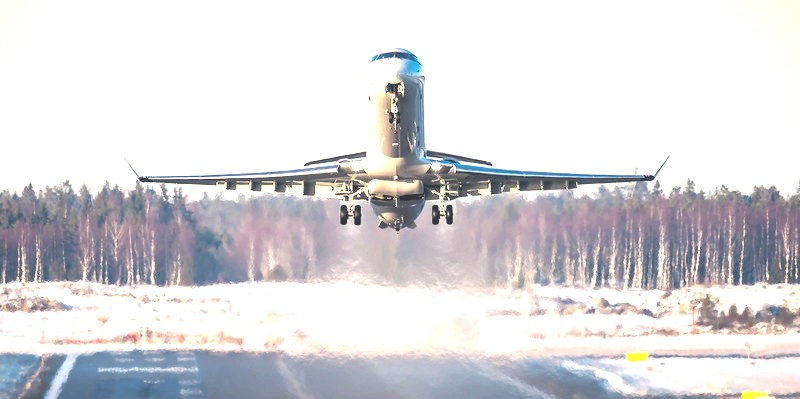







 airgways.com