Airgways, the concept of flying

AW | 2021 01 31 18:15 | AIRGWAYS
PUBLISHER: Airgways.com
DBk: Airgways.com
AW-POST: 202101311815AR
A\W A I R G W A Y S ®

AW | 2021 01 31 18:15 | AIRGWAYS
PUBLISHER: Airgways.com
DBk: Airgways.com
AW-POST: 202101311815AR
A\W A I R G W A Y S ®

AW | 2021 01 26 15:43 | AW AIRGWAYS

PUBLISHER: Airgways.com
DBk: Airgways.com / Shutterstock.com
AW-POST: 202101261543AR
A\W A I R G W A Y S ®

AW | 2021 01 19 12:33 | AIRGWAYS
PUBLISHER: Airgways.com
DBk: Airgways.com
AW-POST: 202101191233AR
A\W A I R G W A Y S ®

AW | 2020 12 30 23:23 | AW AIRGWAYS

PUBLISHER: Airgways.com
DBk: Airgways.com
AW-POST: 202012302323AR
A\W A I R G W A Y S ®

AW | 2020 12 23 01:24 | AW AIRGWAYS

PUBLISHER: Airgways.com
DBk: Airgways.com
AW-POST: 202012230124AR
A\W A I R G W A Y S ®

AW | 2020 11 28 18:18 | AW AIRGWAYS

PUBLISHER: Airgways.com
DBk: Airgways.com
AW-POST: 202011281818AR
A\W A I R G W A Y S ®
AW | 2020 11 27 09:17 | AW AIRGWAYS


PUBLISHER: Airgways.com
DBk: Airgways.com
AW-POST: 202011270917AR
A\W A I R G W A Y S ®
AW | 2020 11 27 00:10 | AW AIRGWAYS
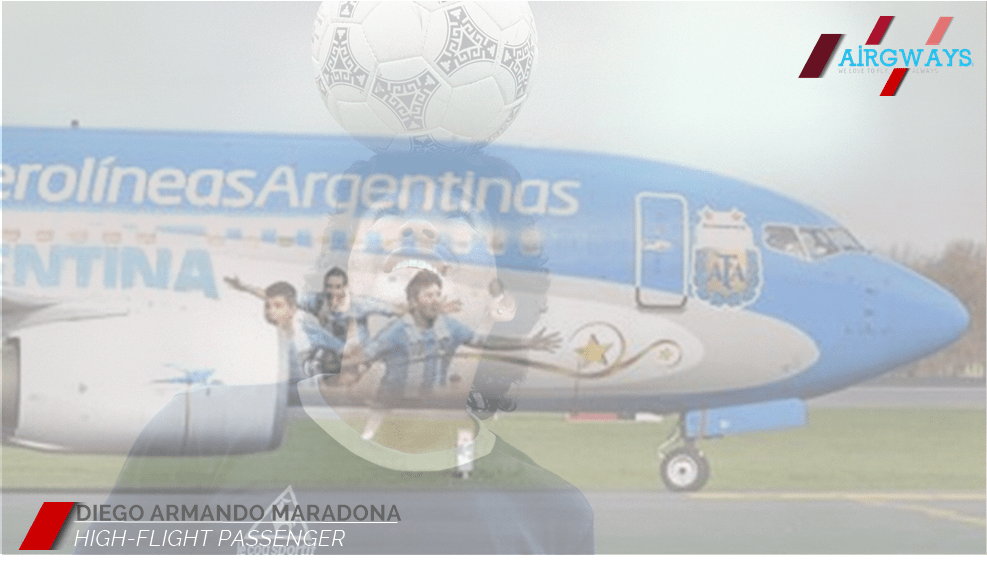
Argentina y el mundo despide a un gran jugador de una de las pasiones más representativas del deporte. Este modesto tributo a ese pequeño niño nacido en la Ciudad de Lanús y con tan solo tres años de edad cuando recibió su primer pelota, comenzaba a escribir una de las historias más fascinantes del mundo del deporte. Apodado «El pibe de oro», un nombre que se mantuvo con él a lo largo de su carrera, donde nacía la fantasía de un niño por un país grande, donde se nace de las raíces de un potrero de futbol, marcaría el comienzo del amor y la pasión por la pelota, la admiración por la dominación del balón que respondía a su amo disciplinadamente.

«Diego era capaz de cosas que nadie más podía igualar. Las cosas que podía hacer con un balón de fútbol, que podría hacer con una naranja». —Michel Platini
Desde un humilde potrero de futbol en Argentina, los sueños se convierten en realidad de la mano de la pasión, la tenacidad y el compromiso por el bien común. ¡Muchas gracias! Las grandes historias de aquellos son las que se escriben con pluma en tinta de oro.![]()

Argentina and the world say goodbye to a great player of one of the most representative passions of sport. This modest tribute to that little boy born in the city of Lanús and only three years old when he received his first ball, began to write one of the most fascinating stories in the world of sport. Nicknamed «El pibe de oro», a name that remained with him throughout his career, where a child’s fantasy for a large country was born, where it is born from the roots of a football pasture, would mark the beginning of the love and passion for the ball, admiration for the domination of the ball that responded to its master discipline.

«Diego was capable of things that no one else could match. The things that he could do with a soccer ball, that he could do with an orange». —Michel Platini
From a humble soccer field in Argentina, dreams become reality thanks to passion, tenacity and commitment to the common good. Thank you! The great stories of those are those that are written with a pen in gold ink.![]()


PUBLISHER: Airgways.com
DBk: Airgways.com / Jorge Durán/AFP/Gettyimages.com
AW-POST: 202011270010AR
A\W A I R G W A Y S ®

AW | 2020 11 26 01:42 | AW AIRGWAYS

PUBLISHER: Airgways.com
DBk: Airgways.com / Jorge Durán/AFP/Gettyimages.com
AW-POST: 202011260142AR
A\W A I R G W A Y S ®

AW | 2020 11 23 14:51 | AW AIRGWAYS

Airgways & Airgways.com rendimos sentido homenaje a cada uno de los autores y partícipes de la lucha frente a la pandemia al forjar el compromiso de continuar volando hacia una aviación cada vez mejor.
En la madrugada del Viernes 20 de Mayo de 1927, Charles Augustus Lindbergh despegó del Roosevelt Field Aerodrome, Long Island. Su monoplano fue cargado con 450 galones estadounidenses (1.704 litros) de combustible. El avión Ryan NYP, registro N-X-211 completamente cargado pesaba 2.329 kg, con un despegue entorpecido por una pista de aterrizaje lodosa y empapada por la lluvia. El monoplano de Lindbergh fue propulsado por un motor radial J-5C Wright Whirlwind y ganó velocidad muy lentamente durante su despegue de 7:52 a.m, pero despejó las líneas telefónicas en el otro extremo del campo por unos veinte pies [seis metros] con una justa reserva de velocidad de vuelo.

Durante el siguiente 33 1/2 horas, Charles Lindbergh y el Spirit of St. Louis se enfrentaron a muchos desafíos, que incluían desnatar sobre las nubes de tormenta a 10.000 pies (3.000 m) y olas hasta 10 pies (3,0 m). El avión luchó contra el engelamiento, voló ciego a través de la niebla durante varias horas, y Charles Lindbergh navegó sólo por el cálculo muerto (no era competente en la navegación por el sol y las estrellas y rechazó el equipo de navegación por radio como pesado y poco confiable). Tuvo la suerte de que los vientos sobre el Atlántico se cancelaron entre sí, dándole cero deriva de viento, y por lo tanto una navegación precisa durante el largo vuelo sobre el océano sin características. Aterrizó en el Aeródromo de Le Bourget a las 10:22 p.m. el Sábado 21 de Mayo de 1927. El aeródromo no estaba marcado en su mapa y Charles Lindbergh sólo sabía que estaba a unas siete millas al noreste de la ciudad; Inicialmente lo confundió con algún gran complejo industrial debido a las luces brillantes que se extienden en todas las direcciones, de hecho los faros de decenas de miles de coches de espectadores atrapados en el mayor atasco de tráfico en la historia de París en su intento de estar presentes para el aterrizaje de Lindbergh.
Una multitud estimada en 150.000 irrumpió en el campo, arrastró a Charles Lindbergh fuera de la cabina y lo llevó por encima de sus cabezas durante casi media hora. Algunos daños fueron causados al Spirit of St. Louis, especialmente al lino fino, tela pintada de plata en el fuselaje, por los cazadores de recuerdos antes de que el piloto y el avión alcanzaran la seguridad de un hangar cercano con la ayuda de pilotos militares franceses, soldados y policías. El vuelo de Charles Lindbergh fue certificado por la Asociación Nacional de Aeronáutica basado en las lecturas de un barógrafo sellado colocado en el avión Spirit. La hazaña aeronáutica ha representado un símbolo para la humanidad y un legado de la tenacidad para la posteridad.![]()

Airgways & Airgways.com pays heartfelt tribute to each one of the authors and participants in the fight against the pandemic by forging the commitment to continue to fly towards better and better aviation.

In the early morning of Friday, May 20, 1927, Charles Augustus Lindbergh took off from Roosevelt Field Aerodrome, Long Island. His monoplane was loaded with 450 US gallons (1,704 liters) of fuel. The fully loaded Ryan NYP, registration N-X-211 aircraft weighed 2,329 kg, with a takeoff hampered by a muddy, rain-soaked runway. Lindbergh’s monoplane was powered by a J-5C Wright Whirlwind radial engine and picked up speed very slowly during its 07:52 am takeoff, but cleared the phone lines at the other end of the field by about twenty feet [six meters] with a fair reserve of flight speed.

Over the next 33 1/2 hours, Charles Lindbergh and the Spirit of St. Louis faced many challenges, including skimming over storm clouds at 10,000 feet (3,000 m) and waves up to 10 feet (3.0 m). The plane fought the icing, flew blind through the fog for several hours, and Charles Lindbergh sailed only by dead reckoning (he was not proficient in navigation by the sun and stars and rejected radio navigation equipment as heavy and unreliable). He was fortunate that the winds over the Atlantic canceled each other out, giving him zero wind drift, and thus precise navigation during the long flight over the ocean without features. It landed at Le Bourget airfield at 10:22 p.m. Saturday May 21, 1927. The airfield was not marked on his map and Charles Lindbergh only knew that it was about seven miles northeast of the city; He initially mistook it for some large industrial complex because of the bright lights stretching out in all directions, in fact the headlights of tens of thousands of spectator cars caught in the biggest traffic jam in Paris history as they attempted to be present for the Lindbergh landing.
A crowd estimated at 150,000 stormed the field, dragging Charles Lindbergh out of the booth and carrying him over their heads for nearly half an hour. Some damage was done to the Spirit of St. Louis, especially to the fine linen, silver painted fabric on the fuselage, by souvenir hunters before the pilot and plane reached the safety of a nearby hangar with the help of military pilots. French, soldiers and policemen. Charles Lindbergh’s flight was certified by the National Aeronautical Association based on the readings from a sealed barograph placed on the Spirit aircraft. The aeronautical feat has represented a symbol for humanity and a legacy of tenacity for posterity.![]()

PUBLISHER: Airgways.com
DBk: Airgways.com / Mnhs.org
AW-POST: 202011231451AR
A\W A I R G W A Y S ®