
EgyptAir Flight 804’s final moments in 1 minute 01:09

Las familias de los seis tripulantes de cabina a bordo del vuelo siniestrado Malaysia Airlines MH17 demandó a la aerolínea el jueves por negligencia e incumplimiento de contrato, casi dos años después que el avión fue derribado sobre el este de Ucrania.
Vuelo MH17 estaba en ruta desde Ámsterdam hasta la capital malaya de Kuala Lumpur cuando fue derribado en julio de 2014, matando a los 298 pasajeros y la tripulación.
El avión fue derribado por un misil de fabricación rusa-tierra-aire, la Junta de Seguridad Holandesa concluyó en un informe del año pasado, pero no identificó a ningún partido o grupo responsable.
La demanda, presentada en el Tribunal Superior de Kuala Lumpur por 11 familiares de la tripulación, nombrados como acusados Malaysian Airline System (MAS) y Malaysia Airlines Berhad, que sustituyó MAS en un proceso de reestructuración del año pasado.
«Los estamos demandando por negligencia porque no pudieron tomar en serio las advertencias de los posibles peligros que pueden haber enfrentado,» abogado de las familias, Balan Nair, dijo a la prensa.
En la demanda, la cual Balan dijo que cree que es la primera presentada por las familias en Malasia, los familiares alegan la línea aérea estaba en incumplimiento de contrato por no garantizar la seguridad, la salud y el bienestar de su tripulación.
También alegan MAS fue negligente al no haber realizado una evaluación adecuada de los riesgos y para trazar un curso de vuelo a través de una zona de conflicto conocido.
La lucha estaba en su apogeo entre los separatistas apoyados por Rusia y las fuerzas del gobierno de Ucrania cuando el avión fue derribado sobre el territorio controlado por los rebeldes de Donetsk.
«Si hubieran sido más cuidadoso en la elección de qué camino tomar, que podrían haber evitado esto», agregó Balan.
Malaysia Airlines dijo que sería inapropiado hacer comentarios sobre un litigio en curso, y sin embargo, tuvo que ser servido con el traje.
«Nos gustaría reiterar la conclusión del informe de la Junta de Seguridad Holandesa, que establece que la forma en que el MAS preparado y operado el vuelo ha cumplido la normativa de la Organización de Aviación Civil Internacional,» se dijo a Reuters en un correo electrónico.
Uno de los familiares dijo su hermana, asistente de vuelo Chong Yee Pheng, había trabajado para la compañía aérea durante 18 años.
«Las familias de todas las víctimas de la MH17 merecen ser tratados con humanidad, compasión y respeto,» Chong Seng Sede dijo en un comunicado. «Espero MAS hará lo justo por ellos.» Más trajes se espera que antes de un plazo de dos años para la acción legal expira el 17 de julio.
El mes pasado, una empresa australiana presentó una demanda de la remuneración $ 330 millones contra Rusia, y su presidente, Vladimir Putin, en nombre de 33 familias de los pasajeros y la tripulación MH17. 
The families of six cabin crew aboard ill-fated Malaysia Airlines flight MH17 sued the airline on Thursday for negligence and breach of contract, nearly two years after the plane was downed over eastern Ukraine.
Flight MH17 was en route from Amsterdam to the Malaysian capital of Kuala Lumpur when it was shot down in July 2014, killing all 298 passengers and crew.
The aircraft was shot down by a Russian-made surface-to-air missile, the Dutch Safety Board concluded in a report last year, but did not identify any responsible party or group.
The suit, filed in the Kuala Lumpur High Court by 11 relatives of the crew, named as defendants Malaysian Airline System (MAS) and Malaysia Airlines Berhad, which replaced MAS in a restructuring exercise last year.
«We are suing them for negligence because they failed to take seriously the warnings of the possible dangers that they may have faced,» the families’ lawyer, Balan Nair, told reporters.
In the lawsuit, which Balan said he believed to be the first filed by families in Malaysia, the relatives allege the airline was in breach of contract for failing to ensure the safety, health and well-being of its crew.
They also allege MAS was negligent in failing to conduct an adequate risk assessment and for charting a flight course through a known conflict zone.
Fighting was raging between Russian-backed separatists and Ukrainian government forces when the aircraft was downed over the rebel-held territory of Donetsk.
«Had they been more careful in choosing what path to take, they could have avoided this,» Balan added.
Malaysia Airlines said it would be inappropriate to comment on ongoing litigation, and had yet to be served with the suit.
«We would like to reiterate the finding of the report by the Dutch Safety Board, which states that the way in which MAS prepared and operated the flight complied with International Civil Aviation Organization regulations,» it told Reuters in an emailed statement.
One of the relatives said his sister, flight attendant Chong Yee Pheng, had worked for the airline for 18 years.
«The families of all the victims of MH17 deserve to be treated with humanity, compassion and respect,» Chong Seng See said in a statement. «I hope MAS will do right by them.» More suits are expected before a two-year deadline for legal action expires on July 17.
Last month, an Australian firm filed a $330-million compensation claim against Russia, and its president, Vladimir Putin, on behalf of 33 families of MH17 passengers and crew. A\W

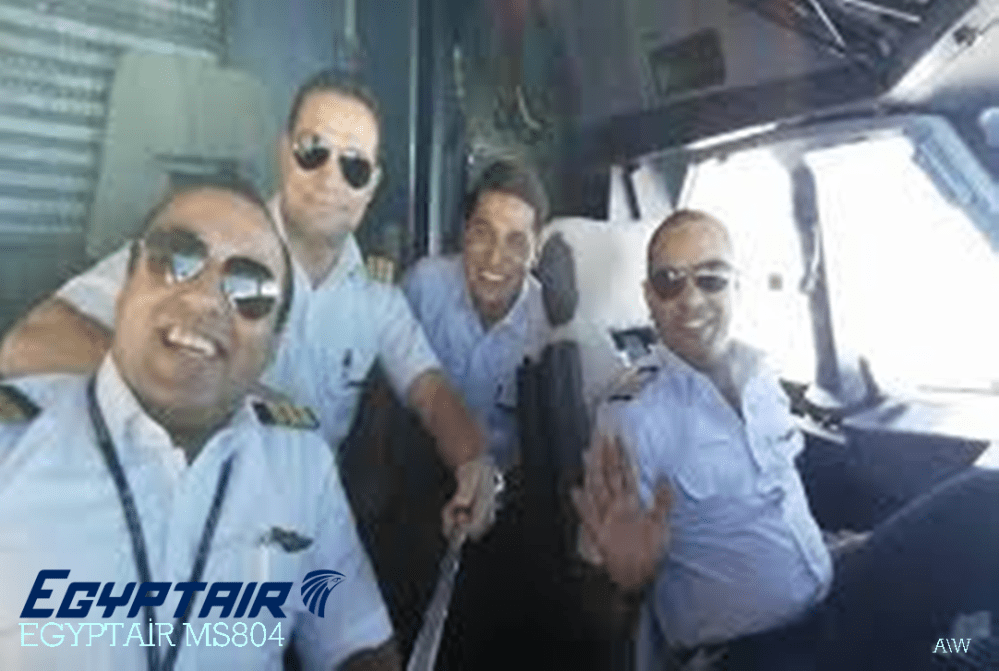
 EGYPTAIR MS804
Las señales de lo que es la caja negra del avión siniestrado ha sido detectado, dicen los investigadores franceses
Un buque de la marina francesa ha detectado señales submarinas de una de las denominadas cajas negras del vuelo 804 de EgyptAir, dijeron el miércoles investigadores. El equipo localizador especializado a bordo del buque francés La Place detecta las señales de los fondos marinos en el Mar Mediterráneo, dijo que el comité de investigación de Egipto en un comunicado.
El director de la BEA, la agencia de investigación de accidentes de Francia, luego dijo que había confirmado las señales eran de uno de los aparatos en el avión. «La señal de una baliza de un registrador de vuelo podría ser detectado. La detección de esta señal es un primer paso», dijo el director del BEA Remy Jouty en un comunicado, según un portavoz de la agencia.
El Airbus A320, que tenía 66 personas a bordo, se estrelló en el Mediterráneo el 19 de mayo en un vuelo de París a El Cairo. Desde entonces, las autoridades han estado buscando restos y los datos de vuelo del avión y grabadoras de voz de la cabina, lo que podría revelar la evidencia sobre la causa del accidente.
Las autoridades esperan para localizar los registradores de datos, por lo que un barco especializado gestionado por la empresa Búsqueda del océano profundo a continuación, pueden recuperarlos. Ese recipiente está configurado para unirse al equipo de búsqueda dentro de una semana, dijo que el comité de investigación. Hasta el momento, los equipos de búsqueda han encontrado pequeños trozos de escombros, restos de las víctimas y los efectos personales del avión. No han encontrado fuselaje de la aeronave.
La detección de la baliza es una señal de que los investigadores se están cerrando, dijo el analista de la aviación CNN María Schiavo. «Eso significa que son, probablemente, de uno a tres Miles (de las cajas negras),» dijo. «Esa es la distancia que estas balizas pueden transmitir, por lo que son, literalmente, casi encima de ellos.» Y lo más probable, dijo Schiavo, que los registradores estarán con la mayor parte de los restos del avión. «Espero que tienen finalmente obtuvo el faro derecho, la ubicación correcta, y pronto vamos a tener respuestas,» dijo ella.
Los informes contradictorios sobre los últimos momentos
Esta no es la primera vez los investigadores han dicho que detecta una señal desde el avión. La semana pasada un investigador principal en la búsqueda del avión Airbus dijo que el fabricante había detectado señales de transmisor localizador de emergencia del avión, un dispositivo que de forma manual o automática se puede activar en el impacto y por lo general se enviará una señal de socorro.
EGYPTAIR MS804 CRASH OBJECTS POSITION

A French naval vessel has detected underwater signals from one of EgyptAir Flight 804’s so-called black boxes, investigators said Wednesday.
 EGYPTAIR MS804
En su búsqueda para descubrir lo que provocó un desplome fatal de avión de EgyptAir en el Mar Mediterráneo de este mes, los investigadores están llevando a cabo una búsqueda costosa, requiere mucho tiempo para registradores de datos de la caja de negro del jet.
Pero en una época en que los datos digitales pueden ser transmitidos y almacenados de forma remota fácilmente, el uso de cajas negras para registrar los datos críticos de vuelo golpea cada vez más muchos expertos como anticuada. De hecho, ya existe la tecnología para transmitir la información de la aeronave a un equipo de tierra o «nube» virtual – es sólo que no ha sido ampliamente adoptado.
¿Por qué están poniendo obstáculos aerolíneas? La barrera más grande, observadores de la industria dicen, es el costo.

FLYHT Aerospace Solutions en Canadá ofrece un servicio de caja de transmisión por televisión en demanda negro en alrededor de $ 100.000 por avión, incluyendo el hardware y la instalación. La compañía dice que tiene más de 50 clientes y ya está instalado en cerca de 400 aviones. de Canadá First Air es la única aerolínea que decir públicamente que está utilizando el sistema FLYHT.
El sistema no envía continuamente los datos a los ordenadores basados en tierra.En lugar de ello, se activa en caso de un acontecimiento anormal, y rápidamente envía un torrente de datos para la línea aérea para el análisis y para aplicar una acción correctiva.
«En el caso de que algo va mal, podemos dar una idea rápida sobre lo que ocurrió», dijo Graham Ingham, un ex gerente de Skyservice las aerolíneas que ahora trabaja para FLYHT. «Podemos empezar a juntar las piezas del rompecabezas más rápido, por lo que (la aerolínea) podemos enterrar algunas de las conspiraciones que están ahí fuera.»
Los dispositivos de transmisión son similares al hardware recuadro negro que se ha utilizado en aviones, para décadas. Estos dispositivos consisten en una grabadora de voz de la cabina y un registrador de datos de vuelo – cada uno de los cuales puede proporcionar información indispensable, incluyendo ruidos de ambiente y velocidad del vuelo, altitud y dirección, en el caso de un accidente.
El programa de FLYHT – conocido como el Sistema de Información de Vuelo de Información Automatizado – duplica en esencia la información que se encuentra típicamente en el registrador de datos de vuelo.
Muchas líneas aéreas más comerciales están equipados con una tecnología llamada Comunicaciones Aeronáuticas Direccionamiento y Reporting System, que proporciona algunos datos – aunque menos que el sistema de FLYHT – a la tierra en tiempo real.
Durante una emergencia, el sistema de FLYHT enviará automáticamente los datos relativos al vuelo cruciales, así como proporcionar la posición del avión en tiempo real – especialmente útil si el vuelo está en un viaje transoceánico, donde los sistemas de control de vuelo pueden perder la pista de la misma.
Si un avión se estrella, los datos pueden ayudar a los usuarios señalar una ubicación de búsqueda más específica, dijo Ingham.
También podría ayudar a los investigadores a determinar si un evento catastrófico, como ocurrió una explosión, dijo, ya que los datos recibidos probable que mostrarían una pérdida de presión en la cabina. El avión continuará enviando los datos con tal de que la aeronave todavía tenía el poder, agregó.
Ingham hizo hincapié en que la transmisión de grandes cantidades de datos para ordenadores basados en tierra no tiene un costo prohibitivo de la tecnología. Las compañías aéreas también deben pagar «unos cuantos dólares por minuto» para acceder a los datos, sino que ascendería a un costo «mínimo», dijo, debido a una emergencia no suele durar mucho tiempo.
Y que no cree que las aerolíneas tendrían que pasar los costos a los consumidores.
«No es muy frecuente que una aeronave se encuentra en una posición que le obligaría a vivir Tráfico de la caja de negro», dijo Ingham. «Los viajes en avión es muy seguro en estos días y sigue mejorando.»
No se sabe cuántos aviones están equipados con la tecnología de streaming para proporcionar datos de calidad de recuadro negro para los equipos de la planta, pero se cree que es una pequeña fracción de la flota de aviones comerciales, según los observadores. Qatar Airways anunció el año pasado que introducir la tecnología a su flota a través de la empresa de telecomunicaciones por satélite británica Inmarsat.
Otras aerolíneas están teniendo que sopesar si la tecnología tiene sentido porque los accidentes son tan raras y han caído a su nivel más bajo en los últimos años.
En 2015, hubo un accidente por cada 3,1 millones de vuelos en todo el mundo – el año más seguro de la historia, según la Asociación Internacional de Transporte Aéreo.
Las compañías aéreas para América, el grupo comercial de las compañías aéreas de la nación, se negó a comentar sobre la necesidad de la transmisión en vivo de los datos, ya que no hay ninguna propuesta formal frente a la FAA para lo requieran.
Patrick Smith, un piloto de avión y autor de «Panel de Control: Confidencial», dijo el seguimiento en tiempo real de los aviones comerciales es útil, pero en tiempo real de transmisión de datos es «llena de complicaciones.»
«Sería … no es especialmente útil excepto en aquellos casos muy raros cuando las grabadoras de la caja de negro no se puede encontrar», dijo en un correo electrónico. «Usted tiene cerca de 16 millones de vuelos comerciales que operan cada año, prácticamente ninguno de los cuales desaparecen. Es esta realmente la mejor manera de gastar el dinero de nuestros seguridad aérea?»
Smith dijo que también hay preguntas sobre quién sería mantener los datos transmitidos y donde se mantendría. (En el caso de FLYHT, los datos se envían a un servidor seguro y pertenece a la compañía aérea, dijo Ingham.)
Jim Hall, que sirvió como el presidente de la Junta Nacional de Seguridad del Transporte desde 1994 y 2001 dichas cajas negras aún tienen un propósito, ya que pueden ser recuperados por los investigadores independientes sin la preocupación que serían manipulados o alterados.
«Si hay tanta información que se transmite, quién le da?» preguntó Hall. «Si se trata de un cuadro negro, se supone que debe estar en manos de los investigadores.»
Además de streaming, Hall ha sugerido conseguir cámaras dentro de las cabinas de los sindicatos, que se han opuesto piloto, y el uso de grabadoras ejectible que flotara, por lo que es más fácil de encontrar y recuperar en el caso de un accidente en el mar.
«El mayor problema con la caja de negro ahora es que pueden hundirse con el plano en el fondo del océano», dijo Hall. «Por lo tanto, puede tomar semanas y millones de dólares para encontrarlo.»
Los investigadores siguen buscando el fuselaje y negro cajas de EgyptAir vuelo 804 después de que se estrellara 19 de mayo con 66 personas a bordo.
Tampoco tienen los investigadores encontraron el fuselaje o negro cajas de Malaysia Airlines vuelo MH370 ya que desapareció en marzo de 2014. El coste de la operación de búsqueda del avión en una sección remota del Océano Índico se informa en $ 130 millones, lo que es la búsqueda más cara de la historia de la aviación.
La Asociación de Pilotos de Líneas Aéreas, Internacional, el mayor sindicato de pilotos del mundo, dijo a NBC News que los dos accidentes «ponen de relieve la importancia de dotar a todas las aeronaves con tecnología de seguimiento que puede determinar la ubicación en tiempo casi real.»
Estimulado por el misterio MH370, más aviones se deben a obtener esa tecnología después de la agencia de aviación de la ONU en marzo aprobó una propuesta para todas las aeronaves de nuevo diseño para llevar dispositivos de rastreo que pueden transmitir su ubicación al menos una vez por minuto en caso de emergencia. Eso no va a entrar en vigor hasta 2021.
El reciente aumento en los casos de aviones desaparecidos y cajas negras podría obligar a las compañías aéreas para volver a examinar los datos de transmisión en vivo más pronto que tarde, dijo el analista de la aviación Richard Aboulafia.
«Va a suceder», dijo. «El cambio de la tecnología está dejando atrás a los cambios normativos.»
In their quest to uncover what caused an EgyptAir jetliner’s fatal plunge into the Mediterranean Sea this month, searchers are conducting a costly, time-consuming hunt for the jet’s black box data recorders.
But in an age where digital data can be easily transmitted and stored remotely, the use of black boxes to record critical flight data increasingly strikes many experts as antiquated. In fact, the technology already exists to stream the aircraft’s information to a ground computer or virtual «cloud» — it just hasn’t been widely adopted.
Why are airlines balking? The biggest barrier, industry observers say, is cost.
FLYHT Aerospace Solutions in Canada provides an on-demand black box streaming service at about $100,000 per plane, including hardware and installation. The company says it has over 50 customers and is already installed in about 400 planes. Canada’s First Air is the only airline to say publicly it is using the FLYHT system.
The system doesn’t continuously send data to ground-based computers. Instead, it activates in the event of an abnormal occurrence, then quickly sends a torrent of data to the airline for analysis and to apply corrective action.
«In the event something goes wrong, we can provide quicker insight into what happened,» said Graham Ingham, a former Skyservice Airlines manager who now works for FLYHT. «We can start piecing the puzzle together quicker, so (the airline) can lay to rest some of the conspiracies that are out there.»
The streaming devices are similar to the black box hardware that has been used in aircraft for decades. Those devices consist of a cockpit voice recorder and a flight data recorder — each of which can provide indispensable information, including ambient noises and the flight’s airspeed, altitude and direction, in the event of an accident.
FLYHT’s program — dubbed the Automated Flight Information Reporting System — essentially duplicates the information that’s typically found in the flight data recorder.
Many more commercial airliners are equipped with a technology called Aircraft Communications Addressing and Reporting System, which provides some data — though less than FLYHT’s system — to the ground in real time.
During an emergency, FLYHT’s system will automatically send back crucial flight-related data as well as provide the plane’s position in real time — particularly helpful if the flight is on a transoceanic journey where flight control systems can lose track of it.
If a plane does crash, the data can help searchers pinpoint a more specific search location, Ingham said.
It also could help investigators determine whether a catastrophic event such as an explosion occurred, he said, as the data received would likely show a loss of cabin pressure. The plane would continue to send data just as long as the aircraft still had power, he added.
Ingham stressed that streaming copious amounts of data to ground-based computers does not make the technology cost-prohibitive. Airlines must also pay a «few dollars» per minute to access the data, but that would amount to a «minimal» cost, he said, because an emergency doesn’t typically last long.
And he doesn’t believe the airlines would need to pass the costs on to consumers.
«It is not very often that an aircraft is in a position that would require it to live stream the black box,» Ingham said. «Airline travel is very safe these days and continues to get better.»
It isn’t known how many planes are equipped with streaming technology to provide black box quality data to computers on the ground, but it’s believed to be a small fraction of the commercial aircraft fleet, observers say. Qatar Airways announced last year it would introduce the technology into its fleet via the British satellite telecom company Inmarsat.
Other airlines are having to weigh whether the technology makes sense because crashes are so rare and have fallen to their lowest levels in recent years.
In 2015, there was one crash for every 3.1 million flights worldwide — the safest year on record, according to the International Air Transport Association.
Airlines for America, the trade group for the nation’s air carriers, declined to comment on the need for live streaming of the data since there is no formal proposal in front of the FAA to require it.
Patrick Smith, an airline pilot and author of «Cockpit Confidential,» said real-time tracking of commercial jets is useful, but real-time streaming of data is «fraught with complications.»
«It’d be … not especially useful except in those very rare instances when the black box recorders can’t be found,» he said in an email. «You have about 16 million commercial flights operating each year, virtually none of which disappear. Is this really the best way to spend our air safety dollars?»
Smith said there are also questions about who would maintain the streamed data and where it would be kept. (In the case of FLYHT, the data is sent to a secure server and belongs to the airline, Ingham said.)
Jim Hall, who served as the National Transportation Safety Board chairman from 1994 to 2001, said black boxes still have a purpose because they can be retrieved by independent investigators without the worry they would be tampered with or altered.
«If there’s that much information being streamed, who gets it?» Hall asked. «If it’s a black box, it’s supposed to be in the hands of the investigators.»
In addition to streaming, Hall has suggested getting cameras inside cockpits, which pilot unions have opposed, and using ejectible recorders that would float, making it easier to find and recover them in the event of a crash at sea.
«The biggest problem with the black box now is that they can sink with the plane to the bottom of the ocean,» Hall said. «So it can take weeks and millions of dollars to find it.»
Investigators are still looking for the fuselage and black boxes of EgyptAir Flight 804 after it crashed May 19 with 66 people on board.
Nor have searchers found the fuselage or black boxes of Malaysia Airlines Flight MH370 since it went missing in March 2014. The cost of the search operation for the plane in a remote section of the Indian Ocean is reportedly at $130 million, making it the most-expensive search in aviation history.
The Air Line Pilots Association, International, the world’s largest pilot union, told NBC News that the two accidents «underscore the importance of equipping all aircraft with tracking technology that can pinpoint location in near real time.»
Spurred by the MH370 mystery, more planes are due to get such technology after the U.N.’s aviation agency in March approved a proposal for all newly designed aircraft to carry tracking devices that can transmit their location at least once a minute in an emergency. That won’t go into effect until 2021.
The recent uptick in instances of missing planes and black boxes could force airlines to re-examine live data streaming sooner than later, said aviation analyst Richard Aboulafia.
«It’ll happen,» he said. «The technology change is outpacing regulatory change.»A\W
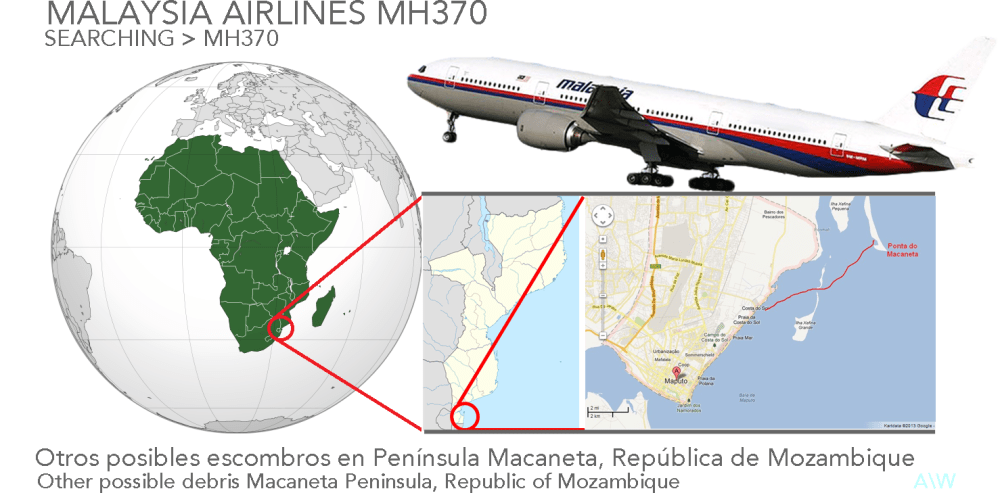
Después de tres nuevas piezas de escombros que se cree provienen del desaparecido vuelo MH370 de Malaysia Airlines, fueron descubiertos en las playas en el Océano Índico Occidental la semana pasada, esta semana cerró con la revelación de que otro cuarto fragmento del avión estrellado también había sido descubierto en la misma área.
Los nuevos descubrimientos, si todo se confirman como piezas de los desaparecidos del Boeing 777-200 de Malaysia Airlines, ahora traerían el número total de fragmentos de desechos que se encuentran a nueve, a pesar de lo que ocurrió con el avión de Malaysia Airlines y dónde, precisamente terminó, sigue siendo un completo misterio.
«Luca Kuhn von Burgsdorff en contacto con la BBC el jueves dijo que se encontró el fragmento de la Península Macaneta«, un informe de la BBC declaró el viernes. «Las autoridades han sido notificadas. La pieza debe ser examinado por el equipo de investigación oficial en Australia «.
La Península Macaneta es una estrecha franja de tierra que sobresale en el Océano Índico frente a la costa de Mozambique.
El descubrimiento repentino de tres posibles fragmentos de desechos del MH370 en una semana, todo en una región del Océano Índico de la costa del sudeste de África, ha generado esperanzas de que pueden estar ofreciendo aún más evidencia de lo que sucedió con el avión de Malaysia Airlines , que desapareció con 239 personas a bordo.
«Creo que esto califica como una tormenta de escombros», periodista y experto en vuelo MH370 independiente, Jeff Wise escribió en su blog el viernes.
A pesar de los descubrimientos repetidos de escombros en la región de la costa de Mozambique, el equipo de búsqueda oficial dirigido por Australia aún no ha enviado investigadores a peinar la zona de una manera sistemática. 
After three new pieces of debris believed to come from the missing flight MH370 of Malaysia Airlines, were discovered on beaches in the Western Indian Ocean last week, this week ended with the revelation that another quarter fragment of the crashed plane had also been discovered in the same area.
The new findings, if all are confirmed as pieces of the missing Malaysia Airlines Boeing 777-200, now would bring the total number of pieces of debris found nine, despite what happened to the plane of Malaysia Airlines and where, precisely finished, it remains a complete mystery.
«Luca Kuhn von Burgsdorff contacted the BBC on Thursday said the fragment was found Macaneta Peninsula,» a BBC report said Friday. «The authorities have been notified. The piece should be examined by the official investigation team in Australia».
The Macaneta Peninsula is a narrow strip of land that juts into the Indian Ocean off the coast of Mozambique.
The sudden discovery of three possible fragments of debris from MH370 in a week, all in a region of the Indian Ocean off the southeastern coast of Africa, has raised hopes that may still providing more evidence of what happened to the plane of Malaysia Airlines that disappeared with 239 people on board.
«I think this qualifies as a storm of debris,» journalist and expert in independent flight MH370, Jeff Wise wrote in his blog on Friday.
Despite repeated discoveries of debris in the region off the coast of Mozambique, the official search team led by Australia has not sent investigators to comb the area in a systematic way. A\W


A Korean Air Lines plane was evacuated at Tokyo’s Haneda airport after an engine caught fire on Friday.
All 302 passengers and 17 crew members disembarked and there were 19 people with injuries a spokesman for Japan’s transport ministry said on Friday. The extent of the injuries isn’t known yet, he said.
The Boeing 777 plane was about to depart to Seoul from Haneda when the fire was noticed.
The runway remained closed while three other runways had reopened. ANA Holdings Inc. and Japan Airlines Co., the nation’s largest carriers, cancelled 277 flights, affecting about 55,690 passengers.
«We got up to about 70 or 80 per cent of the speed required to take off and then they slammed on the brakes,» Jack Harrison, a 37-year-old student at the International Christian University west of Tokyo, who was on flight KE2708.
«For the next 20 seconds there was a little sliding left and right. There was a little bit of screaming and shouting, but nothing excessive.»
The fire was put out, Kyosuke Okada, a spokesman for Japan’s transport ministry said, and the remaining passengers returned to the terminal building.
Korean Air said it is investigating the cause of the fire, according to a statement from the Seoul-based company.
Korean Air’s most recent accident was in 2000 when a flap from a Boeing 747 freighter aircraft broke off and punctured the fuselage leaving a one-meter hole, according to the Aviation Safety Network website. There were no fatalities from that incident, Aviation Safety said.
«The only moment my heart rate went up was when the flight attendants started shouting for us to go down the chutes,» said Harrison, who was waiting to board a special flight put on by Korean Air to take the passengers to Seoul. «Apart from that it was relatively calm.» A\W


They are reported to have been detected signals from the EgyptAir plane that crashed in the Mediterranean last week.
Al Ahram, the state news agency of Egypt, said that the signals came from an emergency locator transmitter aircraft, which sends a distress signal on impact.
The reported discovery comes a week after the EgyptAir flight from Paris to Cairo crashed killing all 66 people on board, shortly after leaving the Greek airspace.
Initially it was believed that the plane was shot down by a bomb, but now researchers say they have an open mind about the causes of the accident.
Flight data collected from the final moments suggest the aircraft was an «internal explosion» which tore through the plane.
Although the signal is different from the black box, which will contain vital clues about the accident, the transmitter location will make it much easier for registrars to find it.
According to an estimate, it has led to the search area to a radius of 3.1 miles.
The black box, which records flight parameters of the aircraft and voice recordings will be decisive to clarify this accident, what trust can find reasonably soon. It took two years to find the black boxes of Air France Flight 447, an Airbus A330 that crashed off the coast of South America in June 2009, killing all 228 people on board.
According to investigators plane crash in Egypt, a French company, ALSEAMAR, joins the search.
A system of «smart» buoys, connected to listening devices underwater to locate the black boxes, which are believed to be up to 3,000 meters below the surface is used. A\W

Francia confirma que hubo alertas señalando humo dentro del Airbus A320 Turi Mendosa24 May 2016, 04:38 FacebookTwitterGoogle+EmailApp.net «Podemos confirmar que los sensores del aparato emitieron mensajes que indicaban que había humo en la cabina poco antes de que se interrumpieran las comunicaciones», señaló la dependencia. Así lo confirmó un portavoz de la BEA, que, no obstante, insistió en que la presencia de humo «no permite sacar por el momento ninguna conclusión sobre las causas del accidente».
Aviones y barcos egipcios y de otros cinco países -Grecia, Gran Bretaña, Francia, Estados Unidos y Chipre- buscaban en una amplia zona del Mediterráneo, un día después de que el ejército egipcio encontrara restos del Airbus 320 en el mar, unos 290 kilómetros (180 millas) al norte de Alejandría. «En este momento [.] todas las hipótesis están siendo examinadas y no se privilegia ninguna», declaró a la prensa el ministro francés de Relaciones Exteriores, Jean-Marc Ayrault, tras una reunión con las familias de las víctimas en París. Los mensajes Acars son datos generados y transmitidos automáticamente por el aparato durante el vuelo. Según los medios estadounidenses, este sistema emitió alertas durante dos minutos, una de ellas señalando humo de origen no determinado en la parte delantera de la cabina, y otra un fallo del sistema electrónico del control del avión, antes de que éste iniciara su caída.
«Todo ello empieza a demostrar que no se trata probablemente de un secuestro, que no hubo seguramente pelea en el cockpit, que se trató posiblemente de un incendio a bordo». El Ejército egipcio difundió las primeras imágenes de fragmentos del Airbus A320, perteneciente a la empresa EgyptAir, que se estrelló en el Mar Mediterráneo el pasado jueves. Mientras tanto, las patrullas de búsqueda buscaban el sábado nuevos restos del vuelo, incluidas las cajas negras del avión, que podrían proporcionar pistas clave sobre el suceso. El responsable negó, además, que su comisión haya recibido señales que indiquen el lugar donde se encuentran las cajas negras del avión. Un presunto ataque del Estado Islámico derribó un avión ruso después de despegar del aeropuerto de Sharm el-Sheikh a finales de octubre, matando a las 224 personas a bordo, y un avión de EgyptAir fue secuestrado en marzo por un hombre que llevaba un cinturón suicida falso.
France confirms that there were alerts indicating smoke within the Airbus A320 Turi Mendosa24 May 2016, 4:38 FacebookTwitterGoogle + EmailApp.net «We can confirm that the sensors of the device issued messages indicating that there was smoke in the cabin shortly before they interrupt the communications, «said the agency. This was confirmed by a spokesman for the BEA, which, however, insisted that the presence of smoke «can not get by no conclusion on the causes of the accident».
Aircraft and five Egyptians and other countries Greece, Britain, France, the United States and Cyprus ships sought in a wide area of the Mediterranean, one day after the Egyptian army found remains of the Airbus 320 in the sea, about 290 kilometers (180 miles) north of Alexandria. «Right now [.] All hypotheses are being examined and privileges not any,» he told reporters French Foreign Minister, Jean-Marc Ayrault, after a meeting with the families of the victims in Paris. ACARS messages are automatically transmitted data generated by the device during flight. According to US media, this system issued alerts for two minutes, one of them pointing smoke undetermined origin at the front of the cabin, and another a failure of the electronic system of control of the aircraft, before it started its fall.
«All this begins to show that it is probably not a kidnapping, surely there was no fight in the cockpit, which tried possibly a fire on board.» The Egyptian Army released the first images of fragments of the Airbus A320, belonging to the company EgyptAir, which crashed into the Mediterranean Sea last Thursday. Meanwhile, search patrols on Saturday sought new flying debris, including the plane’s black boxes, which could provide key clues about the event. The head also denied that his commission has received signals that indicate the place where the plane’s black boxes are found. An alleged attack by the Islamic State shot down a Russian plane after takeoff from Sharm el-Sheikh in late October, killing all 224 people on board and a plane EgyptAir was kidnapped in March by a man wearing a suicide belt false. ᴀᴡ


EgyptAir MS804: Satellite detected fuel spot where he disappeared plane. The radar Sentinel-1A satellite captured an image spot about two kilometers long.
A fuel slick has been detected by satellite on the surface of the sea in the Mediterranean area where the plane disappeared while flying from Paris Egyptair to Cairo, announced today the European Space Agency (ESA).
Mancha fuel. The radar satellite Sentinel-1A captured in a picture yesterday at 16.00 GMT spot about two kilometers long at a point 33 degrees and 32 minutes north latitude and 29 degrees 13 minutes west longitude, said the ESA in a statement.
Mancha moved. That means it was at forty kilometers southeast of the place where the track was lost to Airbus A320 of the Egyptian company in early Friday. In a second picture taken this morning at 4.00 GMT, the trace had moved about 5 kilometers.
Support agency. ESA, whose experts have been scrutinizing its satellites any information that could help clarify what happened to the plane, has transmitted this information to the authorities to help in the search efforts.
The search. He also pointed out that the available items are not a guarantee that the stain proceed Egyptair A320, in which 66 people were traveling. Since this morning, the Armed Forces of Egypt have pointed aircraft components have found in the Mediterranean, about 290 kilometers north of Alexandria, and even human remains.
On the satellite. The Sentinel-2A satellite (which forms part of European environmental monitoring program) must pass in its orbit above that area on Sunday, which will be used to try to obtain useful information for the investigation. ᴀᴡ


Some seats and aircraft parts. Personal belongings, including suitcases. And what’s described as body parts. That’s what EgyptAir and Greek officials say searchers have found so far in the effort to locate EgyptAir Flight 804, which is believed to have crashed early Thursday into the Mediterranean Sea while flying from Paris to Cairo.


 airgways.com