AW | 2024 07 12 20:44 | AIRLINES HISTORY / AIRLINES ROUTES
Spirit Airlines celebra 25 aniversarios Aeropuerto Los Ángeles
Spirit Airlines festeja su 25 aniversarios el 12 de Julio de 2024 de servicios ininterrumpidos del destino hacia el Aeropuerto Internacional de Los Ángeles (LAX). La aerolínea está invitando a los angelinos a celebrar el hito con tarifas de aniversario por tiempo limitado a partir de tan solo US$ 25* por trayecto para vuelos desde LAX. La oferta es válida para reservar el 12 de Julio de 2024 y es válida para viajar desde LAX entre el 13 de Agosto y el 10 de Octubre de 2024.
«Aterrizamos por primera vez en el Aeropuerto Internacional de Los Ángeles hace 25 años y estamos orgullosos de haber crecido hasta convertirnos en una de las aerolíneas de tarifas bajas más grandes de LAX, gracias al apoyo de nuestros huéspedes y socios a largo plazo en Los Angeles World Airports (LAWA). Esperamos continuar sirviendo a nuestros huéspedes de Los Ángeles con 40 vuelos sin escalas al día a 25 destinos en todo Estados Unidos e invirtiendo en la comunidad local a través de la Spirit Charitable Foundation», dijo Ted Christie, Presidente y Director Ejecutivo de Spirit Airlines.
Spirit Airlines aterrizó por primera vez en LAX en 1999 y actualmente sirve a veinticinco destinos sin escalas. En los últimos cinco años, la aerolínea ha realizado importantes inversiones en su servicio LAX. Más recientemente, Spirit lanzó un servicio diario sin escalas a Portland (PDX) y Seattle (SEA), y lanzará un servicio estacional sin escalas a Boston (BOS) el 14 de Agosto de 2024.
La aerolínea también ofrece a los miembros de su Free Spirit® Programa de lealtad 1.500 puntos de bonificación en vuelos de ida y vuelta y 750 puntos de bonificación en vuelos de ida hacia y desde Los Ángeles (LAX).*** El viaje debe reservarse antes del 15 de Agosto de 2024 y volar antes del 31 de Octubre de 2024.
Además, la Spirit Charitable Foundation conmemoró el aniversario con una donación de US$ 25.000 a la organización sin fines de lucro TreePeople, con sede en Los Ángeles. La considerable donación promoverá el apoyo de la organización a los ecosistemas urbanos sostenibles en el área metropolitana de Los Ángeles a través de la educación, la acción comunitaria voluntaria y la defensa.
Huéspedes de Spirit Spirit Airlines continúa con su compromiso de invertir en el Guest, lo que implica una serie de nuevas iniciativas destinadas a ofrecer el mejor valor en el cielo: · No hay cargos por cambios o cancelaciones para todos los huéspedes · Se aumentó la franquicia de peso de la maleta documentada a 50 libras · Vencimiento extendido de los vales de viaje futuro a doce meses (para vales emitidos a partir del 3 de Junio de 2024) · La flota FIT de Spirit es una de las flotas más jóvenes y eficientes en combustible de la industria. · Mejoras en la cabina con asientos más anchos, cojines adicionales, nuevos reposacabezas y mejoras en nuestro exclusivo asiento delantero grande. · Wi-Fi rápido a bordo que permite a los huéspedes ver contenido de servicios de transmisión.
Para calificar para la promoción de 1.500 o 750 puntos Free Spirit del 25 aniversario de Los Ángeles, debe (I) ser miembro de Free Spirit; (II) reservar un viaje en un Segmento de Vuelo Válido. Un «Segmento de vuelo elegible» es un vuelo comercial que se origina desde/hacia LAX en un vuelo operado por Spirit Airlines y se reserva antes de las 11:59 p. m. ET del 15 de Agosto de 2024 con un viaje completado antes del 31 de Octubre de 2024. Los puntos de bonificación Free Spirit se agregarán automáticamente a su cuenta después de completar un segmento de vuelo válido. Los puntos de bonificación obtenidos a través de la promoción de puntos Free Spirit del aniversario de Los Ángeles ofrecerían Puntos de Calificación de Estatus (SQP) estándar. La oferta está sujeta a cambios sin previo aviso. Pueden aplicarse otras restricciones y condiciones.
Acerca Spirit Airlines Spirit Airlines se compromete a ofrecer el mejor valor en el cielo. Somos el líder en ofrecer opciones de viaje personalizables a partir de una tarifa desagregada. Esto permite a nuestros Huéspedes pagar solo por las opciones que elijan, como maletas, asignación de asientos, refrigerios y Wi-Fi, algo que llamamos À La Smarte. Nuestra flota FIT es una de las más jóvenes y eficientes en combustible de los Estados Unidos. Servimos destinos en todo Estados Unidos, América Latina y el Caribe, lo que hace posible que nuestros huéspedes se aventuren más lejos y descubran más que nunca. Estamos comprometidos a inspirar un cambio positivo en las comunidades donde vivimos y trabajamos a través de la Spirit Charitable Foundation.
Spirit celebrates 25th at LAX
Spirit Airlines celebrates 25 anniversaries Los Angeles Airport
Spirit Airlines celebrates its 25th anniversary on July 12, 2024, of uninterrupted services from the destination to Los Angeles International Airport (LAX). The airline is inviting Angelenos to celebrate the milestone with limited-time anniversary fares starting at just US$ 25* each way for flights from LAX. The offer is valid for booking on July 12, 2024, and is valid for travel from LAX between August 13 and October 10, 2024.
«We first landed at Los Angeles International Airport 25 years ago and are proud to have grown to become one of LAX’s largest low-fare airlines, thanks to the support of our guests and long-term partners in Los Angeles. World Airports (LAWA). We look forward to continuing to serve our Los Angeles guests with 40 nonstop flights daily to 25 destinations across the United States and investing in the local community through the Spirit Charitable Foundation», said Ted Christie, President and CEO. CEO of Spirit Airlines.
Spirit Airlines first landed at LAX in 1999 and currently serves twenty-five destinations nonstop. Over the past five years, the airline has made significant investments in its LAX service. Most recently, Spirit launched daily nonstop service to Portland (PDX) and Seattle (SEA) and will launch seasonal nonstop service to Boston (BOS) on August 14, 2024.
The airline also offers members of its Free Spirit® Loyalty Program 1,500 bonus points on round-trip flights and 750 bonus points on one-way flights to and from Los Angeles (LAX).*** Travel must be booked before August 15, 2024, and fly before October 31, 2024.
Additionally, the Spirit Charitable Foundation commemorated the anniversary with a $25,000 donation to the Los Angeles-based nonprofit TreePeople. The substantial donation will further the organization’s support of sustainable urban ecosystems in the greater Los Angeles area through education, volunteer community action, and advocacy.
Spirit guests Spirit Airlines continues its commitment to investing in the Guest, which involves a series of new initiatives aimed at offering the best value in the sky: · No change or cancellation fees for all guests · The weight allowance for checked bags has been increased to 50 pounds · Extended expiration of future travel vouchers to twelve months (for vouchers issued on or after June 3, 2024) · Spirit’s FIT fleet is one of the youngest and most fuel-efficient fleets in the industry. · Cabin improvements with wider seats, additional cushions, new headrests, and improvements to our exclusive large front seat. · Fast onboard Wi-Fi allows guests to watch content from streaming services.
To qualify for the 1,500 or 750 Los Angeles 25th Anniversary Free Spirit Points promotion, you must (I) be a Free Spirit member; and (II) book travel on a Valid Flight Segment. An «Eligible Flight Segment» is a commercial flight that originates from/to LAX on a flight operated by Spirit Airlines and is booked before 11:59 p.m. m. ET on August 15, 2024, with travel completed before October 31, 2024. Free Spirit bonus points will automatically be added to your account after completing a qualifying flight segment. Bonus points earned through the Los Angeles Anniversary Free Spirit points promotion would offer standard Status Qualification Points (SQP). Offer is subject to change without notice. Other restrictions and conditions may apply.
About Spirit Airlines Spirit Airlines is committed to offering the best value in the sky. We are the leader in offering customizable travel options at an unbundled rate. This allows our Guests to pay only for the options they choose, such as bags, seating assignments, snacks, and Wi-Fi, something we call À La Smarte. Our FIT fleet is one of the youngest and most fuel-efficient in the United States. We serve destinations throughout the United States, Latin America, and the Caribbean, making it possible for our guests to venture further and discover more than ever before. We are committed to inspiring positive change in the communities where we live and work through the Spirit Charitable Foundation.
REFERENCIAS *Tarifas de ida sujetas a una compra anticipada de 21 días, válidas para reservar el 07/12/2024 y viajar del 08/13/2024 al 10/09/2024, sin restricciones de fechas, sujeto a disponibilidad. **Las tarifas de ida BOS/LAX están sujetas a una compra anticipada de 21 días, válidas para reservar el 07/12/2024 y viajar del 08/13/2024 al 09/03/2024, sin restricciones de fechas, sujetas a disponibilidad.
REFERENCES *One-way fares subject to a 21-day advance purchase, valid for booking on 12/07/2024 and travel from 13/08/2024 to 09/10/2024, without blackout dates, subject to availability. **One-way BOS/LAX fares are subject to a 21-day advance purchase, valid for booking 12/07/2024 and travel from 13/08/2024 to 03/09/2024, no blackout dates, subject to availability.
PUBLISHER: Airgways.com DBk: Spirit.com / Airgways.com AW-POST: 202407122044AR OWNERSHIP: Airgways Inc. A\W A I R G W A Y S ®
AW | 2023 03 13 15:05 | AVIATION ISTORY / INDUSTRY
Airbus celebra treinta años de producción A321 Realizó vuelo inaugural 11 Marzo 1993
El Airbus A321 fue el primer derivado del A320, también conocido como A320 estirado, A320-500 y A325. Su lanzamiento se produjo el 24 de Noviembre de 1988, casi al mismo tiempo que el A320 entró en servicio, después de que se aseguraran compromisos para 183 aviones de 10 clientes.
El vuelo inaugural del Airbus A321 se produjo el 11 de Marzo de 1993, cuando el prototipo registro F-WWIA voló con motores IAE V2500; el segundo prototipo, equipado con turboventiladores CFM56-5B, voló en Mayo de 1993. Lufthansa y Alitalia fueron los primeros en ordenar los Airbus estirados, con 20 y 40 aviones solicitados, respectivamente. El primero de los V2500 con motor V5-A321 de Lufthansa llegó el 27 de Enero de 1994, mientras que Alitalia recibió su primer avión con motor CFM56-5B el 22 de Marzo de 1994. El A321-100 entró en servicio en Enero de 1994 con Lufthansa.
El ensamblaje final del A321 se llevó a cabo en Alemania por primera vez para cualquier Airbus. Esto se produjo después de una disputa entre los franceses, que afirmaron que la medida incurriría en US$ 150 millones/€ 135 millones en gastos innecesarios asociados con la nueva planta, y los alemanes, que afirmaron que sería más productivo para Airbus a largo plazo. La segunda línea de producción se ubicó en Hamburgo, que más tarde produjo los Airbus A319 y A318 más pequeños. Por primera vez, Airbus entró en el mercado de bonos, a través del cual recaudó 480 millones de Dólares/€ 475 millones de Euros para financiar los costes de desarrollo. Se tomaron prestados US$ 180 millones de Dólares adicionales/€ 175 millones de Euros del Banco Europeo de Inversiones y de inversores privados.
El A321 es la variante más grande de la familia A320. La longitud del A321-200 supera los 44,5 m/146 pies, lo que aumenta el peso máximo de despegue a 93.000 kg/205.000 lb. La envergadura se mantuvo sin cambios, complementando varios dispositivos de punta de ala. Dos proveedores proporcionaron motores turbofan para el A321: CFM International con su CFM56 e International Aero Engines con el motor V2500, ambos en el rango de empuje de 133-147 kN/30,000-33,000 lbf.
Más de treinta años después de su lanzamiento, el peso máximo de despegue (MTOW) del A321 creció un 20% de las 83 t (183,000 lb) Serie 100 a las 101 t/223.000 lb A321XLR, los asientos se volvieron un 10% más densos con 244 asientos, un aumento de 24, y el alcance se duplicó de 2.300 a 4.700 nmi (4.300 a 8.700 km). Para 2019, se habían ordenado 4.200, una cuarta parte de todos los pasillos únicos de Airbus, incluidos 2.400 NEO Family, un tercio de todos los pedidos de A320neo.
El Airbus A321 surcó los cielos por primera vez en la historia, ofreciendo una alternativa en capacidad al Boeing 757 pero con costos mucho menores, aunque también con una autonomía menor. Pero las nuevas variantes denominadas A321NEO como el futuro A321XLR eclipsarán al Boeing 757 y marcará un punto de inflexión en las capacidades del constructor europeo para dominar el sector de rango medio ante la falta de respuesta de Boeing por un sustituto para el Boeing 757. El dominio de Airbus será absoluto al ofrecer un producto completo con la familia A320NEO para las aerolíneas en todo el mundo.
El primer avión A321 entró en servicio con Lufthansa German Airlines en Enero de 1994, seguido por Alitalia dos meses después. El operador más grande del avión es American Airlines con 288 unidades, muchas de las cuales heredó tras la fusión con US Airways, algunos de ellos provenían incluso de America West Airlines. El segundo operador es China Southern Airlines con 154 aviones, aunque Delta seguramente lo rebasará pronto pues tiene casi 150 unidades del A321neo pendientes de entrega. Tras treinta años operativos se han entregado 4.618 aviones A321 a aerolíneas alrededor del mundo y se tienen actualmente pedidos por otros 3.686.
Evolución A321 La razón por la que en un inicio no fue un avión muy exitoso fue que, al alargar el fuselaje pero no crecer el ala, se limitaba el alcance del A321, sobre todo si iba lleno. Con el tiempo la adición de los winglets, que agregan superficie alar, así como mejoras aerodinámicas y motores más potentes y de menor consumo, agregaron capacidad al avión para operar rutas cada vez más largas. La versión New Engine Option (NEO) se le agregaron, además, dos nuevas versiones con mayor alcance, una es la Longe Range (LR) y otra la pendiente de certificación la eXtra Longe Range (XLR), que está cambiando la manera de volar en el sector de aeronaves de rango medio, al ofrecer bajos costos para rutas de largo alcance cuya demanda no justifica un avión de cabina ancha.
A cambio de la mayor cantidad de combustible para llegar más lejos, estas versiones llevan menor carga pagada, por lo que su configuración tiende a ser más holgada que las versiones para rutas cortas y medias. La configuración típica de la primera versión del A321 era de 180 pasajeros en dos clases o hasta 220 pasajeros en alta densidad. Gracias a la adición de la configuración “Cabin Flex” en que se quitaron las puertas delante de las alas y se cambiaron por salidas de emergencia sobre las alas, más los baños traseros metidos al fondo del fuselaje, la capacidad creció hasta cerca de 200 pasajeros en 2 clases y hasta 244 asientos en configuración de alta densidad. Esto lo ha convertido en uno de los aviones preferidos por las aerolíneas de bajo costo, pues el costo por asiento es el mejor de su clase. Posee una ventaja adicional de que las tripulaciones pueden operar indistintamente toda la familia A319, A320 y A321 en las dos versiones CEO y NEO, lo que ofrece a los operadores mayor flexibilidad, mejor reducción de costos de capacitación para tripulaciones y reducción en costos de mantenimiento.
A esto se puede agregar que Boeing no tiene un competidor directo contra el A321neo, el 757, aunque tenía mayor rango de operación, es bastante más caro de operar porque es más pesado, y además dejó de fabricarse hace ya 20 años. El nuevo 737-10 MAX se queda corto en cuanto a lo que ofrece contra el A321neo, ya que no puede llevar tantos pasajeros a bordo porque el fuselaje es más corto, y no tiene por mucho el alcance de las versiones LR y XLR, por lo que no es adecuado para rutas de largo alcance. Hay que agregar, además, que por la falta de espacio bajo el ala, no puede llevar motores tan potentes como los del A321neo.
En 2017 se realizó la primera conversión de un A321 denominada A321P2F (Pasajeros a Carga) obteniendo una gran respuesta de por este tipo de aeronaves de las aerolíneas cargueras. Tras evaluaciones de mercado Airbus está considerando desarrollar un derivado A321F, una nueva versión vería la luz más allá de la década, mientras tanto existe mercado para potenciar las conversiones a A321P2F.
FAL A321NEO Toulouse Airbus instala su nueva línea de ensamblaje A321neo en Toulouse, Francia. El sitio Jean-Luc Lagardère en el sitio de Airbus en Toulouse es hoy un vasto sitio de construcción donde los diversos elementos de un rompecabezas industrial se ensamblan gradualmente, dando lugar a una línea de ensamblaje A321neo que incorpora una serie de innovaciones, mientras que al mismo tiempo incorpora a otros actualmente probados en los sitios de Saint-Nazaire y Hamburgo.
La FAL Jean-Luc Lagardère que albergaba el A380 en el sitio de Airbus en Toulouse, ha comenzado una nueva etapa de vida. La unidad se está organizando gradualmente para acomodar una nueva línea de ensamblaje dedicada al Airbus A321neo y sus diversas versiones. «El proyecto se lanzó en 2020, pero luego se suspendió debido a la pandemia, luego se relanzó en Mayo de 2021. Comenzamos a instalar la primera estación en Octubre pasado», dice Marion Smeyers, Jefe de la nueva línea de ensamblaje.
Este será un elemento clave en el aumento de las tasas de producción decididas por Airbus con el objetivo de lograr los 75 aviones de mediano distancia por mes a mediados de la década. «El primer avión terminado para salir de esta línea debe implementarse a fines de este año, y la línea estará a plena capacidad para 2025», dice Marion Smeyers, quien se niega a especificar el número de aviones que saldrán de la nueva línea cada año. Los primeros elementos del primer A321neo se encuentran en la Estación 42/43.Además, se encuentran los robots cuyo papel es levantar las plataformas de herramientas en las que se ubican las secciones de fuselaje para llevarlos a la Estación 41, donde se llevarán a cabo la unión de las dos secciones de la aeronave. El camino del robot se guía por líneas magnéticas. Airbus inauguró este tipo de equipo para la cuarta línea de ensamblaje de alojamiento medio en su sitio de Hamburgo y donde las plataformas son guiadas por láser en un ballet ordenado al centímetro.
«El principio es el mismo pero no el modelo. Porque, tenemos aquí en Toulouse, mucho espacio y, por lo tanto, hicimos algo muy simple, en línea», comenta Marion Smeyers. En Hamburgo, tuvimos que tener en cuenta un espacio mucho más limitado. En Toulouse, las plataformas móviles autónomas se utilizarán hasta la estación 40, donde se instalará el tren de aterrizaje mientras el trabajo continuará en la cabina de pasajeros lo que incluyen paredes, almacenamiento de equipaje, entre otros, que comenzará como de las Estaciones 42/43.
Aquí es donde los monumentos de la cabina se instalarán primero (galeras y baños), así como los elementos relacionados con el radomo y las antenas. La continuación tendrá lugar en la Estación 41, donde se llevará a cabo la unión de las secciones de fuselaje con el uso de los robots Flextrack para llevar a cabo la perforación en la parte más alta. Aquí también, Airbus está utilizando innovaciones tecnológicas introducidas en otros sitios para su nueva línea de ensamblaje A321neo en Toulouse. Notablemente en Saint-Nazaire, primero en el A330 desde 2015, luego en la sección A320 nariz en 2018. y en Hamburgo en 2019.
«La Flextrack llega a recoger el fuselaje con rieles ventilados y su cabezal electrificado viene a localizar los agujeros que se perforarán utilizando una cuadrícula digital. El robot está controlado por una tableta. La ganancia es importante en términos de calidad porque el metal tradicional Las cuadrículas de perforación no solo son agotador para el compañero, sino que también pueden crear rasguños, impactos», explica Cédric Le Roy, Jefe de Estructuras y Sistemas de Asamblea de Producción de la nueva línea A321neo.
La experiencia adquirida en los robots que perforan, luego Rivet no se repite en Toulouse. «Esto requiere instalar tanques con accesorios, lo que da como resultado cabezales eléctricos y robots que son demasiado grandes para unir a los rieles. Además, es la operación de perforación la más dolorosa. Y si tiene un problema con el robot, las averías o Otros eventos de producción imprevistos, el interés de tener solo la función de perforación le permite recurrir al manual con la red de perforación tradicional», subraya Cédric Le Roy.
Otros equipos innovadores ya probados que podrán ser utilizados por los compañeros de la nueva línea A321neo: teléfonos celulares seguros y cajas de herramientas inteligentes comunes. «Antes, todos tenían su propia caja personal y sus propias herramientas. Estamos utilizando la fórmula Smart Toolbox introducida en la línea A350. Todas las herramientas están equipadas con chips RFID. El Journeyman llega, desliza su insignia para desbloquear y toma las herramientas HE HE él necesita para su misión», concluyo Cédric Le Roy.
El Jefe de Producción expresó: “cuando el jornalero vuelve a ponerse las herramientas y si alguna vez falta una, salta una alarma. Esto permite detener las operaciones e ir a buscar la herramienta olvidada que falta. El feedback es muy positivo». En la línea A350, la caja de herramientas ha sido completamente aceptada. Los trabajadores también pueden consultar programas de montaje u operaciones a realizar en el avión en teléfonos móviles seguros donados por la compañía. Aquí, nuevamente, Saint-Nazaire sirvió como banco de pruebas.
Escaneo 3D preliminar Una de las novedades de la línea Toulouse A321neo es su escaneo 3D preliminar. «Esta es la primera vez que una cadena y sus marcos se digitalizan por completo. Esto nos permite aumentar la cantidad de pruebas de flujo, integración de herramientas y simulaciones de movimiento de plataformas. La otra ventaja de este gemelo digital es que podemos integrar trabajadores de otros líneas de montaje Pudieron participar en la fase de diseño, aportar su experiencia, destacando los riesgos potenciales de accidentes, las posibilidades de una mejor ergonomía», dice Cédric Le Roy.
Un gemelo digital que es tanto más crucial cuanto que la línea tendrá que gestionar simultáneamente personal y vehículos móviles autónomos. De ahí la necesidad de gestionar con seguridad los flujos de peatones y de vehículos. Además de los robots que se trasladarán de la Estación 42/43 a la Estación 40, habrá robots automáticos que alimentarán las piezas y el equipo colocados en carros a las puertas móviles de varias etapas que rodean la aeronave. Una primicia para una línea de montaje e inspirada en conceptos que existen en otras industrias.
«Un avión es una serie de gamas que se van a fabricar y cada gama requiere piezas. Los carros se cargarán desde el almacén principal de AirLog, donde toda la cadena de suministro entrega sus piezas, y luego llegarán en camión para dejarlos en la entrada del mercado. El robot transportador, equipado con los sensores y Cámaras 3D necesarias para sus movimientos, viene a recogerlo y lo guarda en un almacén intermedio», dice Philippe Lassus, Jefe de Despliegue Logístico Automático de la nueva línea A321neo.
«El grupo de producción, dependiendo del avance de la aeronave, enviará una señal al sistema de información, indicando su demanda de piezas, y la señal genera una misión para los robots transportadores que irán a recoger el carro adecuado para llevarlo. a la puerta de la tolva derecha de la estación desde la que partió la demanda», añade Philippe Lassus. El objetivo es reducir los movimientos del acompañante, lo que también evita el ir y venir por las escaleras, ya que las piezas se llevan directamente a la parte superior de la plataforma a través de las compuertas tolva o APG por «Puerta Automática de Paletas».
Los transportadores de robots, de los cuales finalmente habrá 24 unidades, se utilizarán hasta la Estación 25. Comenzando en la Estación 42/43, el viaje de la aeronave continúa hasta la Estación 41 (unión del fuselaje), luego a la Estación 40, donde funcionan algunas de las uniones de las alas. se realiza en paralelo con la instalación del tren de aterrizaje. La novedad industrial es suavizar las operaciones de unión de alas en dos etapas porque ahora están finalizadas en la Estación 37 donde también se instalan los planos de cola verticales y horizontales de la aeronave.
“En el resto de líneas de montaje, todo el trabajo de unión de las alas se realiza en el puesto 40, lo que requiere la organización de equipos en tres turnos (mañana/tarde/noche). Repartiendo las operaciones en dos puestos, el 40 y el 37, podemos conseguir en dos turnos. Esto les dará a los jornaleros un respiro y nos dará más flexibilidad si necesitamos trabajar horas extra. Esto inspiró la línea más cronometrada en nuestro sitio de Hamburgo y agregaron una estación para hacer lo mismo», explica Marion Smeyers.
En la Estación 35 comienza la alimentación eléctrica de la aeronave de la cual “encendemos todos los sistemas hidráulicos” con un ciclo de pruebas para su correcto funcionamiento. Al mismo tiempo, «estamos empezando a instalar algunos elementos de la cabina de pasajeros. Una vez que el avión sale de esta sala, está completamente terminado desde el punto de vista estructural y de sistemas, a excepción de los motores y góndolas que se instalan mucho más tarde. El avión puede entonces ir a la Estación 25 donde se instala toda la cabina», dice Marion Smeyers.
En la Estación 25 no hay innovaciones per se, pero principalmente teniendo en cuenta los comentarios de otras líneas de ensamblaje de alta distancia, de larga distancia, para facilitar no solo la fluidez de la producción sino también el trabajo de los compañeros. «En la estación 25 se llevan a cabo acabados como la instalación de tiburones y pruebas del sistema, pero la actividad principal es el acabado de la cabina de pasajeros, el acabado de las alfombras, la instalación de techos y los asientos», explica Yoann Baudin, quien está a cargo del fin del proceso de producción.
La Estación 25 alberga tres estaciones de aviones, cuyas se agrega un cuarto destinado a acomodar si necesitan los aviones más complejos en TERT de la cabina de pasajeros. «Un avión complejo es uno que se incorporó a muchas opciones, y si no llega al ciclo de producción promedio, lo pondremos en esta cuarta estación para tomarse el tiempo para terminarlo. No es necesario un avión complejo. El A321XLR. En términos generales, lo que hace que la sobrecarga de trabajo en un A321 en comparación con un A320 es la cabina de pasajeros y su personalización de acuerdo con los requisitos de los clientes, como la cantidad de asientos de clase ejecutiva, por ejemplo», explica Yoann Baudin.
Los elementos de OTER se ponen en su lugar para evitar cualquier cuello de botella y obtener la máxima fluidez: tiendas de piezas descentralizadas y una losa cubierta donde los asientos de pasajeros se alojarán a la altura de las puertas de la aeronave. «Estos son los comentarios de los operadores en el A330 y el A350 que tiene cabañas pesadas para manejar. Come y ensamble el asiento, prepáralo, lo pre-equiparlo. La decisión de equipar cada estación de avión con una tienda de piezas es parte de esta lógica de mayor eficiencia industrial. He continuado de manera caótica. Para nosotros, el final de la Estación 25 es cuando el cliente viene, nos inspecciona y nos dice: Estoy contento con la cabaña, no toque nada más», dice Yoann Baudin.
El avión es destinado a los dos talleres de pintura que Airbus tiene en Toulouse, mientras se efectúan pruebas de presurización para asegurarse de que su sello esté intacto. Luego se lleva a la avión a la Estación 21, donde recibe sus motores y góndolas. Aquí nuevamente, otra batería de pruebas de validación antes de las pruebas finales que definirán la lista confirmará su «Good to Fly», completada por las pruebas de vuelo y los vuelos de aceptación con los pilotos de la aerolínea que volverá a viva la aeronave.
La inmensa área de superficie total del Jean-Luc Lagardère permitirá desarrollar una segunda línea de ensamblaje de un solo pasillo. Pero, esta no es la prioridad de los equipos a cargo de instalar el primero. «Nuestros amigos en el sector de cuerpo ancho todavía están en posiciones aquí. Para cada estación que se abre, tenemos que asegurarnos de que hemos industrializado el avión y que hemos salido por el sistema Correctamente. Por lo tanto, el primer MSN pasará mucho tiempo en cada estación», dice Yoann Baudin.
Marion Smeyers, Jefe de la nueva línea, dice que hay que depurar todo el sistema industrial que se está instalando: «El ciclo de producción entre la llegada a la Estación 42/43 y la entrega al cliente eventualmente será de ocho semanas. Pero el ciclo para los primeros tres aviones será más largo, porque tienen una vida, mejoran y maduran el sistema industrial. Esto es crucial, porque de esa manera podemos sentar las bases correctas y lograr un aumento bastante fuerte». Así, los tiempos de instalaciones, puesta a punto, arranque y evolución de la nueva cadena de producción del A321neo en Toulouse llegará su tiempo de maduración.
Perspectivas A321 El Airbus A321 surcó los cielos por primera vez en la historia, ofreciendo una alternativa en capacidad al Boeing 757 pero con costos mucho menores, aunque también con una autonomía menor. Las nuevas variantes denominadas A321NEO como el futuro A321XLR eclipsarán al Boeing 757 y marcará un punto de inflexión en las capacidades del constructor europeo para dominar el sector de rango medio ante la falta de respuesta de Boeing por un sustituto para el Boeing 757. La nueva factoría en Toulouse para dar hogar a una nueva línea de ensamblaje del A321neo sustituyendo al A380 Superjumbo, permitirán potenciar la línea de producción a un nivel muy superior. El dominio de Airbus será absoluto al ofrecer un producto completo con la familia A320neo para las aerolíneas en todo el mundo.
Ξ 30th anniversaries a321 Ξ
Airbus celebrates thirty years of production A321 Made inaugural flight March 11 1993
The Airbus A321 was the first derivative of the A320, also known as A320 stretched, A320-500 and A325. Its launch occurred on November 24, 1988, almost at the same time that the A320 entered into service, after commitments for 183 aircraft of 10 clients were ensured.
The inaugural flight of the Airbus A321 occurred on March 11, 1993, when the F-WWIA registration prototype flew with IAE V2500 engines; The second prototype, equipped with CFM56-5B turbo vet, flew in May 1993. Lufthansa and Alitalia were the first to order the Airbus stretched, with 20 and 40 requested airplanes, respectively. The first of the V2500 with Lufthansa V5-A321 motor arrived on January 27, 1994, while Alitalia received its first CFM56-5B engine on March 22, 1994. The A321-100 entered service in January 1994 With Lufthansa.
The final assembly of the A321 was carried out in Germany for the first time for any Airbus. This occurred after a dispute between the French, who said that the measure would incur US$ 150 million/€ 135 million in unnecessary expenses associated with the new plant, and the Germans, who said it would be more productive for long-term Airbus . The second production line was located in Hamburg, which later produced the Airbus A319 and A318 smaller. For the first time, Airbus entered the bond market, through which it raised US$ 480 million Dollars/€ 475 million Euros to finance development costs. Additional US$ 180 million were borrowed/€ 175 million from the European Bank for Private Investments and Investors.
The A321 is the largest variant of the A320 family. The A321-200 length exceeds 44.5 m/146 feet, which increases the maximum takeoff weight to 93,000 kg/205,000 lb. The size remained unchanged, complementing several wing tip devices. Two suppliers provided Turbofan engines for A321: CFM International with its CFM56 and International Aero Engines with the V2500 engine, both in the thrust range of 133-147 Kn/30,000-33,000 lbf.
More than thirty years after its launch, the maximum takeoff weight (MTOW) of the A321 grew 20% of the 83 T (183,000 lb) Series 100 at 101 t/223,000 lb A321XLR, the seats became 10% more Dense with 244 seats, an increase of 24, and the scope doubled from 2,300 to 4,700 NMI (4,300 to 8,700 km). For 2019, 4,200 had been ordered, a quarter of all the unique Airbus halls, including 2,400 neo family, one third of all A320neo orders.
The Airbus A321 furrowed the heavens for the first time in history, offering an alternative in capacity to Boeing 757 but with much lower costs, although also with a minor autonomy. But the new variants called A321neo as the future A321XLR will eclipse the Boeing 757 and will mark a turning point in the capacities of the European builder to dominate the medium range sector in the absence of Boeing’s response to a substitute for the Boeing 757. The domain Airbus will be absolute by offering a complete product with the A320neo family for airlines worldwide.
The first A321 plane entered service with Lufthansa German Airlines in January 1994, followed by Alitalia two months later. The largest operator on the plane is American Airlines with 288 units, many of which inherited after the merger with US Airways, some of them even came from America West Airlines. The second operator is China Southern Airlines with 154 aircraft, although Delta will surely exceed it soon because it has almost 150 units of the A321neo pending delivery. After thirty operating years, 4,618 A321 airlines have been delivered to airlines around the world and orders are currently ordered by 3,686.
A321 evolution The reason why it was not a very successful plane was that, by lengthening the fuselage but the wing did not grow, the reach of the A321 was limited, especially if it was full. Over time the addition of the winglets, which add alar surface, as well as aerodynamic improvements and more powerful and lower consumption motors, added capacity to the plane to operate increasingly long routes. The New Engine Option version (NEO) was also added two new versions with the greatest scope, one is the Longe Range (LR) and another the Extra Longe Range (XLR) certification slope, which is changing the way to fly In the medium -ranking aircraft sector, offering low costs for long -range routes whose demand does not justify a wide caby.
In exchange for the greatest amount of fuel to get further, these versions have a lower paid load, so their configuration tends to be more comfortable than the versions for short and stocking routes. The typical configuration of the first version of the A321 was 180 passengers in two classes or up to 220 passengers in high density. Thanks to the addition of the “Cabin Flex” configuration in which the doors were removed in front of the wings and changed by emergency exits on the wings, plus the rear baths put to the bottom of the fuselage, the capacity grew to about 200 passengers in 2 classes and up to 244 seats in high density configuration. This has made it one of the planes preferred by low cost airlines, as the cost per seat is the best of its class. It has an additional advantage that crews can interchangeably operate the entire A319, A320 and A321 family in the two CEO and NEO versions, which offers the operators greater flexibility, better reduction in training costs for crews and reduction in maintenance costs .
To this it can be added that Boeing does not have a direct competitor against the A321neo, the 757, although it had a greater range of operation, it is much more expensive to operate because it is heavier, and it also stopped manufactured 20 years ago. The new 737-10 MAX falls short in what it offers against the A321neo, since it cannot carry so many passengers on board because the fuselage is shorter, and does not have much the scope of the LR and XLR versions, by which is not suitable for long-range routes. It must also be added that due to the lack of space under the wing, it cannot wear engines as powerful as those of the A321neo.
In 2017, the first conversion of an A321 called A321P2F (cargo passengers) was carried out obtaining a great response from this type of aircraft of the loading airlines. After market evaluations Airbus is considering developing an A321F derivative, a new version would see the light beyond the decade, meanwhile there is a market to enhance conversions to A321P2F.
FAL A321neo Toulouse Airbus installs its new A321neo assembly line in Toulouse, France. The Jean-Luc Lagardère site on the Airbus site in Toulouse is today a vast construction site where the various elements of an industrial puzzle are gradually assembled, giving rise to an A321neo assembly line that incorporates a series of innovations, while The same time incorporates others currently tested in the Saint-Nazaire and Hamburg sites.
The Fal Jean-Luc Lagardère that housed the A380 at the Airbus site in Toulouse, has begun a new stage of life. The unit is gradually organized to accommodate a new assembly line dedicated to Airbus A321neo and its various versions. «The project was launched in 2020, but then it was suspended due to the pandemic, then it relaunched in May 2021. We began to install the first station last October», says Marion Smeyers, head of the new assembly line.
This will be a key element in increasing production rates decided by Airbus with the aim of achieving the 75 medium distance aircraft per month in the mid decade. «The first plane finished to get out of this line must be implemented at the end of this year, and the line will be at full capacity for 2025», says Marion Smeyers, who refuses to specify the number of airplanes that will leave the new line every year . The first elements of the first A321neo are found in Station 42/43. In addition, there are robots whose role is to lift the tool platforms in which the fuselage sections are located to take them to Station 41, where they will take place the union of the two sections of the aircraft. The robot road is guided by magnetic lines. Airbus opened this type of equipment for the fourth medium accommodation assembly line in its Hamburg site and where the platforms are guided by laser on a ballet ordered to the centimeter.
«The beginning is the same but not the model. Because, we have here in Toulouse, a lot of space and, therefore, we did something very simple, online», says Marion Smeyers. In Hamburg, we had to take into account a much more limited space. In Toulouse, autonomous mobile platforms will be used until station 40, where the landing gear will be installed while the work will continue in the passenger cabin which includes walls, luggage storage, among others, which will begin as Stations 42/43.
This is where the monuments of the cabin will be installed first (galleys and bathrooms), as well as the elements related to the branch and the antennas. The continuation will take place at station 41, where the junction of the fuselage sections will be carried out with the use of flextrack robots to carry out the drilling in the highest part. Here too, Airbus is using technological innovations introduced in other places for its new A321neo assembly line in Toulouse. Notably in Saint-Nazaire, first at the A330 since 2015, then in section A320 Nose in 2018. and in Hamburg in 2019.
«Flextrack comes to collect the fuselage with ventilated rails and its electrified head comes to locate the holes that will be perforated using a digital grid. The robot is controlled by a tablet. The gain is important in terms of quality because the traditional metal the grids the grids of drilling are not only exhausting for the partner, but they can also create scratches, impacts», explains Cédric Le Roy, head of structures and production assembly systems of the new A321neo line.
The experience acquired in the robots that pierce, then Rivet is not repeated in Toulouse. «This requires installing tanks with accessories, which results Other unforeseen production events, the interest of having only the drilling function allows you to resort to the manual with the traditional drilling network», says Cédric Le Roy.
Other innovative equipment already tested that can be used by colleagues of the new A321neo line: safe cell phones and common smart toolbox. «Before, they all had their own personal box and their own tools. We are using the Smart Toolbox formula introduced into the A350 line. All tools are equipped with RFID chips. The journeyman arrives, slides its badge to unlock and take the tools I have He needs for his mission», concluded Cédric Le Roy.
The production chief said: “When the day laborer puts the tools again and if one is missing, he jumps an alarm. This allows to stop operations and go find the forgotten tool that is missing. The feedback is very positive. On line A350, the toolbox has been completely accepted. Workers can also consult assembly programs or operations to be carried out on the plane in safe mobile phones donated by the company. Here again, Saint-Nazaire served as a test bank».
Preliminary 3D scan One of the novelties of the Toulouse A321neo line is its preliminary 3D scan. «This is the first time that a chain and its frames are completely digitized. This allows us to increase the amount of flow tests, integration of tools and platform movement simulations. The other advantage of this digital twin is that we can integrate workers Other assembly lines were able to participate in the design phase, contribute their experience, highlighting the potential risks of accidents, the possibilities of better ergonomics», says Cédric Le Roy.
A digital twin that is all the more crucial that the line will have to manage simultaneously personal and autonomous mobile vehicles. Hence the need to safely manage pedestrians and vehicles. In addition to the robots that will be transferred from station 42/43 to station 40, there will be automatic robots that will feed the pieces and equipment placed in cars to the mobile doors of several stages that surround the aircraft. A scoop for a assembly line and inspired by concepts that exist in other industries.
«A plane is a series of ranges that are going to be manufactured and each range requires pieces. The cars will be loaded from the main warehouse of Airlog, where the entire supply chain delivers their pieces, and then they will arrive in a truck to leave them at the entrance of the market. The transporting robot, equipped with the 3D sensors and cameras necessary for their movements, comes to pick it up and keep it in an intermediate warehouse», says Philippe Lassus, head of automatic logistics deployment of the new A321neo line.
«The production group, depending on the advance of the aircraft, will send a signal to the information system, indicating its demand demand, and the signal generates a mission for transport robots that will go to collect the right car to take it. At the door From the right hopper of the station from which the demand left», adds Philippe lassus. The objective is to reduce the passenger’s movements, which also avoids coming and going down the stairs, since the pieces are taken directly to the upper part of the platform through the hopper or APG gates by «Automatic Palette Gate» .
The robots transporters, of which there will finally be 24 units, will be used until station 25. Starting at Station 42/43, the aircraft trip continues until Station 41 (junction of the fuselage), then to Station 40, where some of the wings unions work. It is done in parallel with the installation of the landing gear. The industrial novelty is to soften the binding of wings in two stages because they are now completed at Station 37 where the vertical and horizontal tail planes of the aircraft are also installed.
“In the rest of the assembly lines, all the work of union of the wings is carried out in the 40th place, which requires the organization of equipment in three shifts (morning/afternoon/night). Distributing operations in two Stations, 40 and 37, we can get in two shifts. This will give the day laborers a break and give us more flexibility if we need to work extra hours. This inspired the most timed line on our Hamburg site and added a station to do the same», explains Marion Smeyers.
In Station 35 the power supply of the aircraft begins from which “we turn on all the hydraulic systems with a cycle of tests for its correct operation. At the same time, we are starting to install some elements of the passenger cab Much later. The plane can then go to Station 25 where the entire cab is installed», says Marion Smeyers.
In Station 25 there are no innovations per se, but mainly taking into account the comments of other high distance, long distance assembly lines, to facilitate not only the fluidity of production but also the work of the companions. «At Station 25 finishes such as the installation of sharks and system tests are carried out, but the main activity is the passenger booth finish, the finishing of the carpets, the installation of roofs and the seats», explains Yoann Baudin, who is in charge of the end of the production process.
Station 25 houses three aircraft stations, whose room is added to accommodate if they need the most complex aircraft in TERT of the passenger cabin. «A complex plane is one that joined many options, and if it does not reach the average production cycle, we will put it in this fourth station to take the time to finish it. A complex plane is not necessary. The A321XLR. In general terms, What makes work overload in an A321 compared to an A320 is the passenger cabin and its customization according to customer requirements, such as the amount of executive class seats, for example», explains Yoann Baudin.
OTER elements are put in place to avoid any bottleneck and obtain maximum fluidity: decentralized parts stores and a covered slab where passenger seats will stay at the height of the aircraft doors. «These are the comments of the operators in the A330 and the A350 that has heavy cabins to handle. Eat and assemble the seat, prepare it, pre-prepare it. The decision to equip each plane station with a pie This logic of greater industrial efficiency. I have continued chaoticly. For us, the end of Station 25 is when the client comes, inspects and tells us: I am happy with the cabin, I don’t touch anything else.», says Yoann Baudin .
The plane is intended for the two paint workshops that Airbus has in Toulouse, while pressurization tests are carried out to ensure that its seal is intact. Then he takes the plane to station 21, where he receives his engines and gondolas. Here again, another battery of validation tests before the final tests that will define the list will confirm its «Good To Fy», completed by the flight tests and the acceptance flights with the pilots of the airline that will live the aircraft return to live.
The immense total area of the Jean-Luc Lagardère will allow developing a second assembly line of a single hall. But, this is not the priority of the equipment in charge of installing the first. «Our friends in the wide body sector are still in positions here. For each station that opens, we have to ensure that we have industrialized the plane and that we have left the system correctly. Therefore, the first MSN will spend a lot of time In each station», says Yoann Baudin.
Marion Smeyers, head of the new line, says that the entire industrial system that is being installed must be purified: «The production cycle between the arrival at Station 42/43 and the customer delivery will eventually be eight weeks. But the cycle for the first three aircraft will be longer, because they have a life, improve and mature the industrial system. This is It is crucial, because that way we can lay the correct bases and achieve a fairly strong increase». Thus, the times of facilities, tuning, starting and evolution of the new production chain of the A321neo in Toulouse will arrive its maturation time.
A321 perspectives The Airbus A321 furrowed the heavens for the first time in history, offering an alternative in capacity to Boeing 757 but with much lower costs, although also with a minor autonomy. The new variants called A321neo as the future A321XLR will eclipse the Boeing 757 and will mark a turning point in the capacities of the European builder to dominate the medium range sector in the absence of Boeing’s response to a substitute for the Boeing 757. The new factory In Toulouse to give home to a new assembly line of the A321NEO replacing the A380 Superjumbo, they will allow the production line to be enhanced at a much higher level. Airbus domain will be absolute by offering a complete product with the A320neo family for airlines worldwide.
PUBLISHER: Airgways.com DBk: Airbus.com / Wikipedia.org / Airgways.com AW-POST: 202303131505AR OWNERSHIP: Airgways Inc. A\W A I R G W A Y S ®
AW | 2023 03 10 14:43 | AVIATION SAFETY / AVIATION HISTORY
Cuarto aniversario tragedia Boeing 737 MAX en Etiopía
El 10 de Marzo de 2019, el vuelo ET302 de Ethiopian Airlines de un avión Boeing 737-8 MAX se estrelló solo seis minutos después de despegar del Aeropuerto Internacional Addis Abeba/Bole/ADD falleciendo todas las 157 personas a bordo. La tragedia envió ondas de choque en todo el mundo y generó preocupaciones sobre la seguridad del avión de línea Boeing 737 MAX, que también había estado involucrado en otro accidente fatal solo cinco meses antes del vuelo JT610 de Lion Air en Indonesia.
Reporte investigación La causa del accidente del vuelo ET302 de Ethiopian Airlines se reporta en una falla de software en el sistema de control de vuelo automatizado de la aeronave conocido como Sistema de Aumento de Características de Maniobra (MCAS). El sistema fue diseñado para evitar que la aeronave se detenga ajustando automáticamente el ángulo de la nariz del avión. Sin embargo, una lectura defectuosa del sensor hizo que el MCAS se activara repetidamente, empujando la nariz del avión hacia abajo y, finalmente, provocando una inmersión fatal.
El accidente del vuelo ET302 de Ethiopian Airlines ha sido el segundo accidente mortal que involucra a un Boeing 737 MAX donde experimentó similares problemas en condiciones de vuelo. El 29 de Octubre de 2018, el vuelo JT610 de Lion Air involucrando el mismo modelo de aeronave se estrelló en el Mar de Java pocos minutos después de despegar de Jakarta, Indonesia, matando a las 189 personas a bordo. Las investigaciones sobre el accidente de Lion Air revelaron que el MCAS había funcionado mal debido a un sensor defectuoso y había forzado al avión a caer en picada de la que los pilotos no pudieron recuperarse.
Puesta a tierra 737 MAX Tras el accidente de Ethiopian Airlines, las autoridades de aviación de todo el mundo dejaron en tierra todos los aviones de línea Boeing 737 MAX, y Boeing se vio obligado a suspender la producción de los aviones. La Administración Federal de Aviación (FAA) en los Estados Unidos, que inicialmente había tardado en actuar sobre las preocupaciones sobre la seguridad del Boeing 737 MAX, finalmente también dejó en tierra los aviones. La puesta a tierra del avión Boeing 737 MAX tuvo un impacto significativo en la industria de la aviación, ya que las aerolíneas tuvieron que cancelar miles de vuelos y ajustar sus horarios para acomodar la pérdida de aviones. También tuvo repercusiones financieras para Boeing, que enfrentó miles de millones de dólares en reclamos de compensación de aerolíneas y familias de las víctimas del accidente.
Reparaciones software En respuesta a los accidentes, Boeing realizó cambios en el software MCAS y agregó características de seguridad adicionales al 737 MAX, incluidos sensores que pueden detectar cuándo el MCAS está funcionando erróneamente y alertar a los pilotos. Boeing también implementó programas de capacitación de pilotos más rigurosos para garantizar que los pilotos estén mejor equipados para hacer frente a situaciones de emergencia. A pesar de estos cambios, el 737 MAX sigue siendo un avión controvertido, con algunos expertos en aviación y miembros del público que aún expresan su preocupación por su seguridad. En Noviembre de 2020, la FAA levantó la puesta a tierra del Boeing 737 MAX, permitiendo que la aeronave volara nuevamente, pero solo después de un riguroso proceso de recertificación y requisitos de seguridad adicionales. Adicionalmente, el Boeing 737 MAX ha presentado nuevamente problemas en el software denominado Option Selection Software (OSS) que es utilizado por Boeing para identificar el software instalado en los 737 MAX que deben reconfigurarse cuando los aviones realizan la transición de incorporación de una aerolínea a otra.
Perspectivas 737 MAX Los accidentes del vuelo ET302 de Ethiopian Airlines y el vuelo JT610 de Lion Air pusieron de relieve la necesidad de una mejor supervisión de la industria de la aviación y normas de seguridad más estrictas. Las tragedias provocaron una conversación más amplia sobre el papel de la automatización en la aviación y la importancia de garantizar que los pilotos estén debidamente capacitados para hacer frente a situaciones de emergencia.
En conclusión, el accidente del vuelo ET302 de Ethiopian Airlines fue un evento trágico que sacudió a la industria de la aviación y planteó serias preocupaciones sobre la seguridad del Boeing 737 MAX y la necesidad de fiscalizar más eficazmente a la industria de la aviación. La investigación sobre el accidente reveló un grave problema de software que también había estado presente en el accidente anterior de Lion Air. Si bien se han realizado cambios en los programas de entrenamiento de aeronaves y pilotos, la controversia que rodea al 737 MAX continúa hasta la actualidad y sirve como un recordatorio de la importancia de la seguridad en la aviación comercial.
Proyectos ONG En el cuarto aniversario de este trágico accidente, el Ministro de Transporte, el Honorable Omar Alghabra, anunció que el Gobierno de Canadá está brindando apoyo financiero para proyectos conmemorativos que honrarán y preservarán la memoria de las víctimas del vuelo ET302 de una manera duradera, visible y significativa. Diez organizaciones canadienses sin fines de lucro recibirán fondos para apoyar proyectos que conmemoran los diversos intereses y pasiones de las víctimas. Los proyectos conmemorativos contribuirán a causas centradas en los jóvenes, ambientales, humanitarias y comunitarias en Canadá y África y serán un tributo duradero a los esfuerzos e intereses de las víctimas.
4th ET302 Anniversary of Ethiopian Airlines
Fourth Anniversary Boeing 737 MAX in Ethiopia
On March 10, 2019, ET302 flight from Ethiopian Airlines of a Boeing 737-8 MAX plane crashed only six minutes after taking off the Addis Abeba/Bale/Add International Airport died all 157 people on board. The tragedy sent shock waves worldwide and generated concerns about the safety of the Boeing 737 MAX line, which had also been involved in another fatal accident only five months before the JT610 flight of Lion Air in Indonesia.
Report research The cause of the Ethiopian Airlines ET302 flight accident is reported in a software failure in the automated aircraft flight control system known as the system of increased maneuver characteristics (MCAS). The system was designed to prevent the aircraft from automatically adjusting the angle of the plane’s nose. However, a defective reading of the sensor caused the MCAS to be activated repeatedly, pushing the nose of the plane down and, finally, causing a fatal immersion.
Ethiopian Airlines’ ET302 Flight has been the second motor accident that involves a Boeing 737 MAX where experienced similar problems in flight conditions. On October 29, 2018, the JT610 flight of Lion Air involving the same aircraft model crashed into the Java Sea a few minutes after taking off from Jakarta, Indonesia, killing the 189 people on board. The investigations on the Lion Air accident revealed that the MCAS had worked badly due to a defective sensor and had forced the plane to bite from which the pilots could not recover.
Grounding 737 MAX After the accident of Ethiopian Airlines, the aviation authorities around the world left all the Boeing 737 MAX lines on land, and Boeing was forced to suspend the production of airplanes. The Federal Aviation Administration (FAA) in the United States, which had initially taken to act on concerns about the security of Boeing 737 MAX, finally also left the planes on the ground. The grounding of the Boeing 737 MAX plane had a significant impact on the aviation industry, since the airlines had to cancel thousands of flights and adjust their schedules to accommodate the loss of airplanes. He also had financial repercussions for Boeing, who faced billions of dollars in claims for compensation for airlines and families of the victims of the accident.
Software repairs In response to accidents, Boeing made changes to the MCAS software and added additional security features to 737 MAX, including sensors that can detect when the MCAS is erroneously working and alert the pilots. Boeing also implemented more rigorous pilot training programs to ensure that pilots are better equipped to deal with emergency situations. Despite these changes, the 737 MAX remains a controversial plane, with some aviation experts and public members who still express their concern for their safety. In November 2020, the FAA lifted the grounding of Boeing 737 MAX, allowing the aircraft to fly again, but only after a rigorous rectification process and additional security requirements. Additionally, the Boeing 737 MAX has again presented software problems called Option Selection Software (OSS) that is used by Boeing to identify the software installed in the 737 MAX that must be reconfigured when the airplanes carry out the transition of incorporation of one airline to another.
Perspectives 737 MAX Ethiopian Airlines ET302 flight accidents and Lion Air’s JT610 flight highlighted the need for better supervision of the most strict aviation industry and safety standards. The tragedies caused a broader conversation about the role of automation in aviation and the importance of ensuring that pilots are properly trained to deal with emergency situations.
In conclusion, Ethiopian Airlines’ ET302 Flight was a tragic event that shook the aviation industry and raised serious concerns about the security of Boeing 737 MAX and the need to inspect the aviation industry more effectively. The investigation into the accident revealed a serious software problem that had also been present in the previous accident of Lion Air. Although changes in aircraft and pilot training programs have been made, the controversy surrounding 737 MAX continues to the present and serves as a reminder of the importance of commercial safety.
NGO projects On the fourth anniversary of this tragic accident, the Minister of Transportation, the Honorable Omar Alghabra, announced that the Canada government is providing financial support for commemorative projects that will honor and preserve the memory of the victims of flight ET302 in a lasting, visible way and significant. Ten non-profit Canadian organizations will receive funds to support projects that commemorate the various interests and passions of the victims. Commemorative projects will contribute to causes focused on young, environmental, humanitarian and community in Canada and Africa and will be a durable tribute to the efforts and interests of the victims.
PUBLISHER: Airgways.com DBk: Airgways.com / Faa.gov / Boeing.com / Tc.canada.ca AW-POST: 202303101443AR OWNERSHIP: Airgways Inc. A\W A I R G W A Y S ®
AW | 2023 03 10 01:50 | INDUSTRY / AVIATION HISTORY
International Aero Engines celebra 40 aniversarios
El fabricante de motores International Aero Engines (IAE) celebra en Marzo de 2023 sus cuarenta aniversarios de existencia. La historia de IAE ha atravesado la sinergia de varios fabricantes de motores de avión que se unieron para formar una empresa con el objetivo de ofrecer un nuevo turbofan para aviones de fuselaje estrecho.
Cuarenta años después, IAE International Aero Engines sigue produciendo el renombrado motor V2500, incluidos turboventiladores para el nuevo transporte militar Embraer C-390, y sus talleres de mantenimiento están funcionando, apoyando a unos 3.000 aviones activos de la familia Airbus A2500ceo con motor V320. La compañía anticipa que tal demanda del mercado de accesorios no disminuirá pronto, diciendo que las aerolíneas se apoyan en gran medida en los veteranos V2500 en medio de retrasos en la entrega de nuevos aviones y problemas de mantenimiento que afectan a los motores más nuevos.
La compañía se unió como un esfuerzo conjunto de Fiat de Italia, Japanese Aero Engines, MTU Aero Engines de Alemania, P&W y Rolls-Royce. Los tres socios restantes incluyen el proveedor de secciones de ventilador Japanese Aero, el proveedor de turbinas de baja presión MTU y P&W, que produce turbinas de alta presión y, a través de su subsidiaria Pratt & Whitney Aero Engines International, compresores de alta presión.
El primer motor V2500 entró en servicio en 1989 en un Airbus A320 de Adria Airways. McDonnell Douglas también eligió V2500 para impulsar los MD-90, que entraron en servicio con Delta Air Lines en 1995. La gran victoria de IAE se produjo poco después de su fundación con un acuerdo para suministrar a Airbus V2500, que ahora generan hasta 33,000 lb (147kN) de empuje, para impulsar el A320 en desarrollo. Airbus también ofreció ese avión con CFM International CFM56. IAE perdió su lugar en el programa A320 cuando Airbus lanzó su familia de aviones A320NEO, que el fabricante ofrece con CFM LEAP-1A o P&W PW1100G. Posteriormente, la firma de motores obtuvo otra victoria cuando Embraer de Brasil eligió V2500 para impulsar su transporte militar C-390, que entró en servicio en 2019 con la fuerza aérea de Brasil.
IAE ha producido más de 7.800 V2500, que colectivamente han registrado más de 135 millones de vuelos y unos 255 millones de horas de vuelo del motor, según P&W. La gran mayoría de esos motores estaban colgados en las alas de los aviones de la familia A320ceo. P&W señala que los V2500 impulsaron solo 116 MD-90, y Embraer ha producido solo un puñado de C-390.
Earl Exum es Vicepresidente de motores comerciales maduros en Pratt & Whitney (P&W), socio de IAE, habló antes del 11 de Marzo de 2023, cuarenta años después de la fundación de IAE: «Después de cuarenta años, este programa es exactamente donde uno esperaría que pudiera estar un programa. Acabamos de entrar [en servicio] en un nuevo avión en 2019. Estamos sirviendo al mercado de carga y estamos en el mejor momento de nuestros ciclos de vida de productos en el mercado comercial», dice el Presidente de IAE.
«El V2500 es un caballo de batalla de la industria de la aviación, y se ha convertido en uno de los programas aeroespaciales comerciales más exitosos de todos los tiempos. Se están retirando a un ritmo relativamente bajo», expresó Earl Exum.
P&W dice que los V2500 todavía alimentan a casi 3.500 aviones en todo el mundo, con una edad promedio de 12,8 años. Alrededor de un tercio de los motores aún no se han sometido a sus primeras revisiones de mantenimiento importantes. Earl Exum señala que los A2500 con motor V321 han demostrado recientemente ser populares como cargueros convertidos: Elbe Flugzeugwerke y el especialista estadounidense 321 Precision Conversions ofrecen tales conversiones. También dice que IAE está trabajando para garantizar que los V2500 puedan funcionar de manera segura con combustible de aviación 100% sostenible. Los datos de las flotas de Cirium muestran que la flota activa de aviones con motor V2500 se acerca a los 3.000, incluidos unos 2.540 aviones en servicio y 440 almacenados, con una edad promedio de 14 años. Estos incluyen tres MD-90 y siete C-390, con el resto siendo aviones de la familia A320ceo, según muestran los datos.
IAE ahora produce alrededor de veinte nuevos V2500 al año, alimentando el programa C-390 de Embraer y suministrando repuestos a los operadores de Airbus, dice Exum. Espera que IAE se mantenga en la tasa de producción de aproximadamente 20 años durante al menos cinco años, aunque dice que la producción podría aumentar si Embraer obtiene más ventas de C-390. Los socios del IAE han prorrogado su acuerdo de colaboración hasta 2045.
Embraer lanzó el programa C-390 en 2009 con un pedido de Brasil para la variante KC-390, pero las ventas han sido modestas. Brasil ha recortado sus pedidos de 28 a 19, y ya opera cinco de ellos, que han registrado 8.000 horas de vuelo, a una tasa de finalización superior al 99%, dice Embraer. Portugal ordenó cinco de los aviones, Hungría ordenó dos y los Países Bajos han optado por comprar, pero aún no han pedido, cinco.
Embraer ha insistido en que los C-390 tienen un futuro prometedor, diciendo que la tensión geopolítica ha impulsado una nueva demanda de un reemplazo moderno de los transportes militares de décadas de antigüedad. Embraer también se asoció en 2022 con la firma estadounidense L3Harris para ofrecer la variante de reabastecimiento aéreo «Agile Tanker» a la Fuerza Aérea de los Estados Unidos.
IAE también espera que las aerolíneas probablemente sigan operando aviones de la familia A2500 con motor V320 durante años, citando la relativa juventud de la flota en servicio y señalando problemas de mantenimiento continuos que afectan a algunos motores de nueva generación. El 7 de Febrero de 2023, el Director Ejecutivo de Spirit Airlines, Ted Christie, lamentó que los problemas de mantenimiento con los PW1100G llevaron a Spirit a recortar su plan de capacidad para 2023. También señala que las entregas de nuevos aviones de Airbus y Boeing han sido difíciles de precisar. Ambos fabricantes no han logrado alcanzar los objetivos de entrega en medio de problemas en la cadena de suministro. Tales factores deberían llevar a las aerolíneas a continuar operando aviones Airbus con motor V2500 en el futuro, dice Earl Exum, calificando el rendimiento del motor como prácticamente garantizado con una confiabilidad de despacho del 99.97%. «Los clientes se van a sentar en programas que conocen», expresó el CEO de IAE.
Esa fuerte flota en servicio requiere cerca de 800 visitas a tiendas al año, generando fuertes ingresos del mercado de accesorios para la red de IAE de diecisiete instalaciones de mantenimiento, reparación y revisión. «Ahí es donde ganamos dinero en esta industria, cuando hacemos una visita a la tienda. Es donde están los márgenes. Estamos muy, muy satisfechos con el lugar donde estamos allí», concluye Earl Exum.
40th anniversaries of IAE
International Aero Engines celebrates 40 anniversaries
The Motor Manufacturer International Aero Engines (IAE) celebrates its four anniversaries of existence in March. The History of IAE has crossed the synergy of several manufacturers of EU plane engines that joined to form a company with the aim of offering a new turbofan for narrow fuselage aircraft.
Forty years later, IAE International Aero Engines continues to produce the renowned V2500 engine, including turboventilers for the new Embraer C-390 military transport, and its maintenance workshops are operating, supporting some 3,000 active aircraft of the Airbus A2500ceo family with V320 engine. The company anticipates that such demands the accessories market will not decrease soon, saying that airlines are largely supported by V2500 veterans in the midst of delays in the delivery of new airplanes and maintenance problems that affect the newest engines.
The company joined as a joint effort of FIAT of Italy, Japanese Aero Engines, MTU Aero Engines of Germany, P&W and Rolls-Royce. The remaining three partners include the Japanese Aero fan sections, the low pressure and P&W low pressure turbine provider, which produces high pressure turbines and, through its subsidiary Pratt & Whitney Aero Engines International, high pressure compressors.
The first V2500 engine went into service in 1989 in an Airbus A320 by Adria Airways. McDonnell Douglas also chose V2500 to boost the MD-90, which entered service with Delta Air Lines in 1995. IAE’s great victory occurred shortly after its foundation with an agreement to supply Airbus V2500, which now generates up to 33,000 lb (147kn) thrust, to boost the A320 in development. Airbus also offered that plane with CFM International CFM56. IAE lost its place in the A320 program when Airbus launched its family of A320neo aircraft, which the manufacturer offers with CFM LEAP-1A or P&W PW1100G. Subsequently, the motor firm won another victory when Embraer de Brazil chose V2500 to boost its C-390 military transport, which entered service in 2019 with the Brazilian Air Force.
IAE has produced more than 7,800 V2500, which have collectively registered more than 135 million flights and about 255 million motor flight hours, according to P&W. The vast majority of those engines were hung on the wings of the A320ceo family aircraft. P&W points out that the V2500 promoted only 116 MD-90, and Embraer has produced only a handful of C-390.
Earl Exum is vice president of mature commercial engines at Pratt & Whitney (P&W), a partner of IAE, spoke before March 11, 2023, forty years after the IAE Foundation: «After forty years, this program is exactly where one I would expect a program to be a program. IAE».
«The V2500 is a battle horse from the aviation industry, and has become one of the most successful commercial aerospace programs of all time. They are withdrawing at a relatively low rate», said Earl Exum.
P&W says that V2500 still feed almost 3,500 airplanes worldwide, with an average age of 12.8 years. Around a third of the engines have not yet undergone their first important maintenance reviews.
Earl Exum points out that the A2500 with V321 engine have recently demonstrated being popular as converted freighters: Elbe Flugzeugwerke and the American specialist 321 Precision Conversions offer such conversions. He also says that IAE is working to ensure that V2500 can work safely with 100% sustainable aviation fuel.
Cirium fleet data shows that the active aircraft fleet with V2500 motor is close to 3,000, including 2,540 service aircraft and 440 stored, with an average age of 14 years. These include three MD-90 and seven C-390, with the rest being aircraft A320ceo, as shown in the data.
IAE now produces about twenty new V2500 a year, feeding the C-390 program of Embraer and providing spare parts to Airbus operators, says Earl Exum. He expects IAE to stay at the production rate of approximately 20 years for at least five years, although he says that production could increase if Embraer obtains more C-390 sales. IAE members have extended their collaboration agreement until 2045.
Embraer launched the C-390 program in 2009 with a Brazilian request for the KC-390 variant, but sales have been modest. Brazil has trimmed its orders from 28 to 19, and operates five of them, which have registered 8,000 flight hours, at a end rate greater than 99%, says Embraer. Portugal ordered five of the airplanes, Hungary ordered two and the Netherlands have chosen to buy, but they have not yet asked for, five.
Embraer has insisted that C-390 have a promising future, saying that geopolitical tension has promoted a new demand for a modern replacement for military transport of decades of seniority. Embraer also associated in 2022 with the American firm L3harris to offer the «Agile Tanker» Air Force variant to the United States Air Force.
IAE also hopes that airlines probably continue to operate A2500 family aircraft with V320 motor for years, citing the relative youth of the fleet in service and pointing out continuous maintenance problems that affect some new generation engines. On February 7, 2023, Spirit Airlines Executive Director, Ted Christie, regretted that maintenance problems with the PW1100G led Spirit to cut their capacity plan for 2023. He also points out that the deliveries of new airbus and Boeing aircraft They have been difficult to specify. Both manufacturers have failed to achieve delivery objectives in the midst of problems in the supply chain. Such factors should take airlines to continue operating airbus aircraft with V2500 engine in the future, says Earl Exum, qualifying engine performance as practically guaranteed with a dispatch reliability of 99.97%. «Customers are going to sit in programs they know», said the IAE CEO.
This strong fleet in service requires about 800 store visits per year, generating strong income from the accessory market for the IAE of seventeen maintenance, repair and review facilities. «That’s where we earn money in this industry, when we visit the store. It is where the margins are. We are very, very satisfied with the place where we are there», concludes Earl Exum.
PUBLISHER: Airgways.com DBk: Prattwhitney.com / Airgways.com AW-POST: 202303100150AR OWNERSHIP: Airgways Inc. A\W A I R G W A Y S ®
AW | 2023 02 11 12:39 | AVIATION HISTORY / INDUSTRY
Embraer 50º aniversarios operaciones Bandeirante
Embraer ha celebrado el Jueves 09/02 el cincuenta aniversarios de operaciones del turbohélice bimotor EMB-110 Bandeirante. El modelo entró en servicio con la Força Aérea Brasileira (FAB/Fuerza Aérea Brasileña) el 9 de Febrero de 1973, marcando el inicio de la era de aviones civiles del fabricante brasileño. En total, se entregaron 498 EMB-110 a clientes en 36 países antes de que la producción terminara en 1990.
Autorizado por el Ministerio de Aeronáutica de Brasil en 1965, el Bandeirante fue desarrollado bajo el proyecto aeronáutico IPD/PAR 6504. El prototipo voló por primera vez el 22 de Octubre de 1968. Las versiones de la aeronave se han utilizado para misiones que incluyen servicio regional de pasajeros, transporte de carga, instrucción de vuelo, búsqueda y rescate, reconocimiento militar y apoyo humanitario.
«El avión fue un hito para el desarrollo de la aviación regional en todo el mundo y el primer éxito comercial de la industria aeronáutica brasileña en el extranjero. Robusto y versátil, resultado de un proyecto innovador para la época, el Bandeirante fue producido en versiones para uso civil y militar, y nos llena de orgullo saber que muchas unidades todavía están en funcionamiento hoy en día», dijo el Presidente y CEO de Embraer, Francisco Gomes Neto.
Historia del Bandeirante
El Embraer EMB-110 es un avión de transporte ligero biturbohélice brasileño de propósito general de 15-21 pasajeros diseñado por Embraer para uso militar y civil. El EMB 110 fue diseñado por el ingeniero francés Max Holste; había sido diseñado de acuerdo con las especificaciones emitidas por el Ministerio de Aeronáutica de Brasil en 1965. El objetivo era crear un avión de propósito general, adecuado para funciones civiles y militares con un bajo costo operativo y alta confiabilidad. El 26 de octubre de 1968, el prototipo YV-95 realizó su primer vuelo; otros dos aviones de desarrollo EMB 110 seguirían junto con un pedido inicial de 80 aviones de transporte para la Fuerza Aérea Brasileña en el año siguiente. La certificación de tipo fue recibida de las autoridades de aviación brasileñas a fines de 1972, permitiendo su entrada en servicio en abril de 1973 con la compañía aérea brasileña Transbrasil.
EMBRAER EMB-100
Los orígenes del EMB 110 Bandeirante se remontan a la emisión de una directiva por el Ministerio de Aeronáutica de Brasil en 1965; Esto requería la producción de un avión de transporte para operaciones civiles y militares que fuera confiable y poseyera bajos costos operativos. Debía estar equipado con motores turbohélice, un ala de montaje bajo, y tener capacidad suficiente para acomodar a ocho personas; estas estipulaciones se habían extraído de un estudio del tráfico aéreo comercial brasileño y tenían como objetivo producir un avión que se adaptara bien a la infraestructura aeroportuaria existente en el país en ese momento. La especificación resultante que se había generado bajo el programa IPD-6504 daría forma en gran medida a la futura aeronave.
Los primeros trabajos en lo que se convertiría en el EMB 110 en realidad son anteriores al establecimiento de su fabricante, Embraer, que fue fundado en agosto de 1969. El diseñador principal fue el ingeniero francés Max Holste. La construcción del prototipo fue supervisada por el ingeniero aeronáutico brasileño Ozires Silva, quien también jugaría un papel clave en la fundación y funcionamiento de Embraer. La compañía fue creada para llevar a cabo la comercialización de la aeronave y la producción en serie.
El 26 de Octubre de 1968, el primer prototipo, que llevaba la designación militar YC-95, realizó su primer vuelo desde el aeropuerto de São José dos Campos. Pilotado por José Mariotto Ferreira y acompañado por el ingeniero de vuelo Michel Cury, aterrizó después de aproximadamente 50 minutos. Antes de este punto, se habían trabajado un total de 110.000 horas de proyecto, produciendo 12.000 planos de fabricación, respaldados por 22.000 horas de cálculos estructurales y aerodinámicos; También se han gastado aproximadamente 282.000 horas de fabricación y herramientas de aeronaves. El prototipo fue presentado oficialmente ante varios funcionarios civiles y militares junto con miembros de la prensa en un evento celebrado cuatro días después, durante el cual se repitió su vuelo inaugural. El rendimiento positivo del prototipo llevó a la producción de la aeronave, y por lo tanto al establecimiento de Embraer, siendo aprobado a mediados de 1969; la empresa de nueva creación asumiría la responsabilidad de su producción el 2 de Enero de 1970.
Rediseño y producción en cantidad Se construyó un par adicional de prototipos, que fueron designados EMB 100. El 19 de Octubre de 1969, el segundo prototipo realizó su primer vuelo, mientras que el tercer prototipo siguió el 29 de Junio de 1970. Si bien estos prototipos arrojaron resultados positivos en las pruebas, se reconoció que las condiciones del mercado habían cambiado hasta el punto en que un avión de ocho asientos parecía ser menos viable de lo que parecía anteriormente; por lo tanto, se decidió rediseñar rápidamente el EMB 100 en el EMB 110 Bandeirante, que presentaba varios avances tecnológicos junto con una mayor capacidad.
En mayo de 1970, el programa fue reforzado por la Fuerza Aérea Brasileña (FAB) que decidió emitir a Embraer un pedido inicial de 80 aviones de producción. Cerca del final de 1972, el Bandeirante recibió su certificado de aeronavegabilidad brasileño. El 9 de Febrero de 1973, se realizó la primera entrega a la FAB.
En una configuración típica, el EMB 110 tenía entre 15 y 21 pasajeros, y fue volado por un par de pilotos. Varias configuraciones y personalizaciones fueron posibles para adaptarse a los diversos requisitos y condiciones de funcionamiento de los clientes. El modelo EMB 110P1A/41, que estaba equipado con 18 asientos, tenía una longitud de 15,1 metros, una altura de 4,92 metros y una envergadura de 15,33 metros. Tiene una velocidad máxima de crucero de 411 km/h (222 nudos), mientras que su velocidad de crucero más económica fue de 341 km/h (184 nudos), a cuya velocidad se puede lograr un alcance efectivo de 1.964 km (1.060 NM) incluso mientras se conservan los combustibles de reserva durante otros 45 minutos de vuelo. El EMB 110 tiene un techo de servicio de 21.490 pies.
Durante la década de 1970, Embraer optó por aprovechar el éxito del EMB 110 diseñando un derivado ampliado de la aeronave, designado como EMB 120 Brasilia; Además de ser lo suficientemente grande como para acomodar hasta 30 pasajeros, también era más rápido y estaba equipado con una cabina presurizada. Todo el desarrollo posterior del EMB 110 fue detenido por Embraer durante la década de 1980 para concentrar sus recursos en el desarrollo y producción del nuevo EMB 120.
Embraer has celebrated on Thursday 09/02 the fifty anniversaries of operations of the Bimotor EMB-110 Bandeirante. The model entered service with the Brazilian Air Força (FAB/Brazilian Air Force) on February 9, 1973, marking the beginning of the Civil Air age of the Brazilian manufacturer. In total, 498 EMB-110 were delivered to customers in 36 countries before production ended in 1990.
Authorized by the Ministry of Aeronautics of Brazil in 1965, the Bandeirante was developed under the IPD/PAR 6504 Aeronautical Project. The prototype flew for the first time on October 22, 1968. The versions of the aircraft have been used for missions that include service Regional passengers, cargo transport, flight, search and rescue instruction, military recognition and humanitarian support.
«The plane was a milestone for the development of regional aviation worldwide and the first commercial success of the Brazilian aeronautical industry abroad. Robust and versatile, the result of an innovative project for the time, the Bandoante was produced in versions For civil and military use, and we are proud to know that many units are still in operation today», said the president and Embraer CEO, Francisco Gomes Neto.
History of the Bandeirante
The Embraer EMB-110 is a lightweight light turbo-propeller transport plane of general purpose of 15-21 passengers designed by Embraer for military and civil use. EMB 110 was designed by the French engineer Max Holste; It had been designed according to the specifications issued by the Ministry of Aeronautics of Brazil in 1965. The objective was to create a general purpose plane, suitable for civil and military functions with a low operational cost and high reliability. On October 26, 1968, the YV-95 prototype made its first flight; Two other EMB 110 development aircraft would continue along with an initial order of 80 transport aircraft for the Brazilian Air Force in the following year. The type certification was received from the Brazilian aviation authorities at the end of 1972, allowing its entry into service in April 1973 with the Transbrasil Brazilian airline.
The origins of the EMB 110 Bandoante date back to the issuance of a directive by the Ministry of Aeronautics of Brazil in 1965; This required the production of a transport aircraft for civil and military operations that was reliable and possessed low operational costs. It should be equipped with turboheric engines, a low mounting wing, and have sufficient capacity to accommodate eight people; These stipulations had been extracted from a study of Brazilian commercial air traffic and aimed to produce a plane that adapted well to the existing airport infrastructure in the country at that time. The resulting specification that had been generated under the IPD-6504 program would greatly shape the future aircraft.
The first works in what would become the EMB 110 are actually prior to the establishment of its manufacturer, Embraer, which was founded in August 1969. The main designer was the French engineer Max Holste. The construction of the prototype was supervised by the Brazilian aeronautical engineer Ozires Silva, who would also play a key role in the foundation and operation of Embraer. The company was created to carry out the marketing of the aircraft and serial production.
On October 26, 1968, the first prototype, which carried the military designation YC-95, made its first flight from São José Dos Campos airport. Piloted by José Mariotto Ferreira and accompanied by flight engineer Michel Cury, landed after approximately 50 minutes. Before this point, a total of 110,000 hours of project had worked, producing 12,000 manufacturing planes, backed for 22,000 hours of structural and aerodynamic calculations; Approximately 282,000 hours of manufacturing and aircraft tools have also been spent. The prototype was officially presented to several civil and military officials along with members of the press at an event held four days later, during which its inaugural flight was repeated. The positive performance of the prototype led to the production of the aircraft, and therefore to the Embraer establishment, being approved in mid 1969; the newly created company would assume responsibility for its production on January 2, 1970.
Redesign and quantity production An additional pair of prototypes were built, which were designated EMB 100. On October 19, 1969, the second prototype made its first flight, while the third prototype continued on June 29, 1970. Although these prototypes showed positive results in The evidence was recognized that the market conditions had changed to the point where an eight -seat plane seemed to be less viable than it seemed before; therefore, it was decided to quickly redesign the EMB 100 in the EMB 110 Bandeirante, which presented several technological advances along with greater capacity.
In May 1970, the program was reinforced by the Brazilian Air Force (FAB) that decided to emit an initial order of 80 production aircraft. Near the end of 1972, the Bandeirante received his Brazilian aircraft certificate. On February 9, 1973, the first installment was made to the FAB.
In a typical configuration, EMB 110 had between 15 and 21 passengers, and was flown by a couple of pilots. Several configurations and customizations were possible to adapt to the various requirements and operating conditions of customers. The EMB 110P1A/41 model, which was equipped with 18 seats, had a length of 15.1 meters, a height of 4.92 meters and one wingspan of 15.33 meters. It has a maximum cruise speed of 411 km/h (222 knots), while its cheapest cruise speed was 341 km/h (184 knots), at whose speed an effective range of 1,964 km (1,060 nm) Even while reserve fuels are preserved for another 45 minutes of flight. EMB 110 has a 21,490 feet service roof.
During the 1970s, Embraer chose to take advantage of the success of EMB 110 designing an expanded derivative of the aircraft, designated as EMB 120 Brasilia; In addition to being large enough to accommodate up to 30 passengers, it was also faster and was equipped with a pressurized cabin. All subsequent development of EMB 110 was arrested by Embraer during the 1980s to concentrate its resources on the development and production of the new EMB 120.
PUBLISHER: Airgways.com DBk: Embraer.com / Airgways.com AW-POST: 202302111239AR OWNERSHIP: Airgways Inc. A\W A I R G W A Y S ®
Jumbo Jet finaliza era avión más emblemático del mundo Boeing culmina línea producción de la Reina de los Cielos Boeing 747 reinventó la manera de viajar a nivel mundial
El fabricante de aviones estadounidense The Boeing Company ha finalizado la producción de su famoso Boeing 747 apodado Jumbo Jet después de más de medio siglo de su primer vuelo el 9 de Febrero de 1969. La compañía anunció la decisión de dejar de producir la línea en 2022, cuando fueran entregadas a los clientes las últimas unidades en montaje. El último ejemplar salió de su línea de producción el 7 de Diciembre de 2022 con la entrega a la compañía aérea de carga Atlas Air el Martes 31 de Enero de 2023, culminando así 53 años ininterrumpidos de fabricación de la exitosa y más emblemática aeronave de Boeing.
El 31 de enero de 2023, termina una era glamorosa en la aviación después de su primer vuelo, la producción del Boeing 747 se ha detenido y se celebra la última entrega de aviones. Solo una pequeña calcomanía cerca de la nariz marca este como el último avión de la línea y representa al «padre del 747», el Ingeniero Jefe Joe Sutter, quien falleció en 2016 como una leyenda de la industria de la aviación.
El Boeing 747 logró el mayor salto cuántico en la historia de la aviación comercial. El 747 fue el primer avión apodado «Jumbo Jet» debido a su diseño de fuselaje ancho. Inicialmente fue certificado para hasta 550 pasajeros y más tarde capaz de transportar hasta 660 viajeros. Más de medio siglo después de que el Jumbo Jet original marcó el comienzo de una nueva era del jet, ha ayudado a las aerolíneas a llevar viajes aéreos asequibles a millones de pasajeros.
Ceremonia despedida
The Boeing Company y Atlas Air Worldwide se unieron a miles de personas, incluidos empleados actuales y anteriores, así como clientes y proveedores, para celebrar la entrega del 747 final a Atlas, poniendo fin a más de medio siglo de producción. Los empleados de Boeing que diseñaron y construyeron el primer 747, conocido como los «Increíbles», regresaron para ser honrados en la fábrica de Everett, donde comenzó el viaje del 747 en 1967. La fábrica produjo 1.574 aviones durante la vida del programa.
«Este día monumental es un testimonio de las generaciones de empleados de Boeing que dieron vida al avión que encogió el mundo y revolucionó los viajes y la carga aérea como el primer avión de fuselaje ancho. Es apropiado entregar este último 747-8 Freighter al mayor operador del 747, Atlas Air, donde el ‘Queen’ continuará inspirando y potenciando la innovación en la carga aérea», dijo Stan Deal, Presidente y Director Ejecutivo de Boeing Commercial Airplanes.
«Nos sentimos honrados de continuar nuestra larga historia de volar este avión icónico para nuestros clientes en todo el mundo. Atlas Air fue fundada hace más de 30 años con un solo carguero 747-200 convertido, y desde entonces, hemos abarcado todo el mundo operando casi todos los tipos de flota del 747, incluido el Dreamlifter, el 747 Large Cargo Carguero de Boeing, para el transporte de piezas del 787 Dreamliner. Estamos agradecidos a Boeing por su compromiso compartido con la seguridad, la calidad, la innovación y el medio ambiente, y por su asociación para garantizar el éxito continuo del programa 747 mientras operamos el avión en las próximas décadas», dijo John Dietrich, Presidente y Director Ejecutivo de Atlas Air Worldwide.
Como el primer avión de doble pasillo y Jumbo Jet, el Queen of the Skies permitió a las aerolíneas conectar a las personas a través de grandes distancias y proporcionar vuelos transoceánicos sin escalas. Su desarrollo solidificó el papel de Boeing como líder de la industria en la aviación comercial. El diseño central del avión con su joroba distintiva y asientos en la cubierta superior ha deleitado a generaciones de pasajeros y operadores por igual. Boeing continuó mejorando el diseño original con modelos como el 747-400 en 1988 y el modelo final 747-8 que se lanzó en 2005; En todos los modelos, el avión ha ofrecido una economía operativa y eficiencia inigualables a los mercados de viajes y carga aérea.
En una ceremonia transmitida en vivo en línea a las 04:00 p.m. hora del Este (EEUU), el avión es entregado en la Planta de Boeing en Everett, Washington, a su nuevo propietario, el operador de carga aérea estadounidense Atlas Air. Con el último 747, un Boeing 747-8F, el final de la carrera duradera del 747 ahora se acerca aún más, acelerado por las aerolíneas que cambian sus preferencias a aviones más pequeños y económicos.
La entrega del Martes 31/01 es un momento largamente esperado por la comunidad mundial de la aviación. Los entusiastas de los aviones expectantes han seguido cada paso de la construcción final del 747, desde que Boeing anunció en Julio de 2020 que cesaba la producción de su flamante buque insignia. El avión, registrado como N863GT, hizo su primera aparición pública en Diciembre 2022, cuando salió de la línea de ensamblaje de Boeing cubierto de pintura verde anticorrosiva. A principios de Enero 2023, aparecieron fotos en línea de la aeronave con la librea de Atlas Air.
El Boeing 747-8I o Boeing 747-8 Intercontinental), como se llama esta última variante del venerable jumbo jet, demostró ser un canto de cisne para los grandes aviones de cuatro motores. A pesar de que el A380 Superjumbo está disfrutando actualmente de un renacimiento, con las aerolíneas apresurándose a volver a poner en servicio los fuselajes almacenados en respuesta a la recuperación del tráfico aéreo posterior a Covid, estos gigantes de los cielos luchan por competir con la flexibilidad operativa y las economías de combustible de los aviones bimotores más pequeños.
Números del Jumbo Jet
A partir de Diciembre de 2022, solo hay 44 versiones de pasajeros del Boeing 747 aún en servicio, según la firma de análisis de aviación Cirium. Ese total es inferior a los más de 130 en servicio como aviones de pasajeros a fines de 2019, justo antes de que la pandemia paralizara la demanda de viajes aéreos, especialmente en rutas internacionales en las que se utilizaron principalmente el 747 y otros aviones de fuselaje ancho. La mayoría de esas versiones de pasajeros de los aviones fueron puestas en tierra durante los primeros meses de la pandemia y nunca volvieron al servicio.
Lufthansa German Airlines sigue siendo el mayor operador de la versión de pasajeros del Boeing 747-8, con diecinueve (19) unidades en su flota actual y compromisos potenciales para mantener a los pasajeros voladores de Jumbo durante años, posiblemente décadas por venir. Virgin Atlantic utilizó un 747-400 para realizar el primer vuelo comercial utilizando biocombustibles sostenibles en 2008. El vuelo de Londres/Heathrow a Amsterdam utilizó una mezcla de aceites de babasú y coco mezclados con combustible para aviones a base de queroseno. Hubo 171 versiones de pasajeros del Boeing 747 todavía en flotas de todo el mundo en 2020, según Cirium Fleets, pero la mayoría han sido puestas en tierra debido a Covid-19. El último Boeing 747 salió de la fábrica de fuselaje ancho de la compañía en Washington el 6 de Diciembre de 2022, antes de su entrega a Atlas Air a principios de 2023.
Edificio más grande del mundo
El Boeing 747 ha demostrado ser más popular entre los operadores de carga. Todavía hay 314 747 cargueros en uso, según Cirium, muchos de los cuales se utilizaron inicialmente como aviones de pasajeros antes de ser renovados en cargueros. Características como la capacidad distintiva de carga en la nariz y la posición elevada de la cabina, dejando toda la longitud del fuselaje inferior disponible para transportar artículos de gran volumen, lo han convertido en un favorito de la carga.
La instalación fue construida específicamente para el Boeing 747 y es, según la compañía, el edificio más grande del mundo por volumen. Desde entonces, ha servido como el principal lugar de producción para los aviones de fuselaje ancho de Boeing, el 767, 777 y 787. La entrega del Martes 31/01 del último Jumbo Jet dará lugar a más trabajo en la línea de la factoría en Everett (WA) para acomodar la cuarta línea de producción del Boeing 737 MAX.
Los desarrollos en los últimos años han estado desplazando el centro de gravedad industrial de la compañía a otros lugares. Además de perder el Boeing 747, Everett perdió recientemente la línea de producción del 787, después de que Boeing decidiera consolidar la producción en su planta en Charleston, Carolina del Sur. Boeing continúa fabricando el Boeing 767 en Everett, en una versión de logística-militar denominada KC-46, así como el Boeing 777, que actualmente está viendo bajas tasas de producción, en previsión de su nueva versión, el Boeing 777X. Este último, sin embargo, ha sufrido varios retrasos y actualmente está pasando por un proceso de certificación y desarrollo que está demostrando ser mucho más largo y complejo de lo esperado. Actualmente, la compañía finaliza trabajos atrasados de la línea 787 Dreamliner.
A pesar de la fanfarria del 31 de Enero de 2023, todavía hay dos entregas más de Boeing 747 pendientes, y de ninguna manera son ordinarias. Estos son los dos nuevos aviones presidenciales de los Estados Unidos, que técnicamente se llaman VC-25, incluso si se les conoce popularmente como «Air Force One», un distintivo de llamada que solo se usa cuando el presidente de los Estados Unidos está a bordo). Estos dos aviones ya han sido construidos, habiendo sido originalmente destinados a la aerolínea rusa Transaero, que quebró en 2015. Los dos futuros Air Force One están actualmente sometidos a un extenso programa de modificaciones para prepararlos para el servicio presidencial de los Estados Unidos. La finalización del Programa 747 de The Boeing Company marca el final de una era para la denominada «Reina de los Cielos» y con él despedimos a un coloso del aire.
Perspectivas Boeing
Actualmente, Boeing conserva tres líneas productivas: 737, 787 y 777, mientras que varios estudios de hoja limpia podrían salir a la luz muy pronto. Mientras tanto, la compañía aeroespacial estadounidense tiene una enorme carga de trabajo por delante para actualizarse con los tres programas vigentes que han sufrido un grado considerable de estrés.
El Jumbo Jet redefinió y revolucionó la manera de viajar en el mundo entero donde las mayores compañías aéreas hacían gala de incorporar el emblemático avión intercontinental evocando orgullosamente una red de servicios nunca antes alcanzada, marcando así una nueva manera de viajar donde cada pasajero y entusiasta mundialmente admiraba fascinado aquella bestia colosal que ha marcado más de cincuenta años de servicios en todo el mundo llamado Boeing 747, una maravilla de la creación humana.
Ξ End era Boeing 747 Ξ
Jumbo Jet ends era the most emblematic plane in the world Boeing culminates line production the Queens of the skies Boeing 747 reinvented the way to travel worldwide
The American aircraft manufacturer The Boeing Company has ended the production of its famous Boeing 747 nicknamed Jumbo Jet after more than half a century of its first flight on February 9, 1969. The company announced the decision to stop producing the line in 2022, when the last units in assembly were delivered to the customers. The last specimen left its production line on December 7, 2022 with the delivery to the Atlas Air cargo company on Tuesday, January 31, 2023, culminating thus culminating 53 years uninterrupted manufacturing of the successful and most emblematic Boeing aircraft.
On January 31, 2023, an glamorous era ends in aviation after its first flight, the production of Boeing 747 has stopped and the last delivery of airplanes is held. Only a small decal near the nose marks this as the last plane of the line and represents the «father of 747», the chief engineer Joe Sutter, who died in 2016 as a legend of the aviation industry.
The Boeing 747 achieved the greatest quantum leap in the history of commercial aviation. The 747 was the first plane nicknamed «Jumbo Jet» due to its wide fuselage design. Initially it was certified for up to 550 passengers and later capable of transporting up to 660 travelers. More than half a century after the original Jumbo Jet marked the beginning of a new era it has helped airlines to carry affordable air trips to millions of passengers.
Farewell ceremony
The Boeing Company and Atlas Air Worldwide joined thousands of people, including current and previous employees, as well as customers and suppliers, to celebrate the delivery of the final 747 to Atlas, ending more than half a century of production. Boeing employees who designed and built the first 747, known as the «Incredibles», returned to be honored in the Everett factory, where the 747 trip began in 1967. The factory produced 1,574 planes during the life of the program.
«This monumental day is a testimony of the generations of Boeing employees who gave life to the plane that shrunk the world and revolutionized travel and air load as the first wide fuselage plane. It is appropriate to deliver the latter 747-8 Freight The largest operator of 747, Atlas Air, where the Queen will continue to inspire and enhance innovation in the air load», said Stan Deal, president and executive director of Boeing Commercial Airplanes.
«We are honored to continue our long story to fly this iconic plane for our clients worldwide. Atlas Air was founded more than 30 years ago with a single 747-200 loading converted, and since then, we have covered everyone operating Almost all types of fleet of 747, including the Dreamlifter, the 747 long charge of Boeing loading, for the transport of 787 Dreamliner pieces. We are grateful to Boeing for its shared commitment to safety, quality, innovation and medium Environment, and for its association to guarantee the continuous success of the 747 program while we operate the plane in the coming decades», said John Dietrich, president and executive director of Atlas Air Worldwide.
Like the first double corridor and Jumo Jet plane, Queen of the Skies allowed airlines to connect people through large distances and provide transoceanic flights without scales. Its development solidified the role of Boeing as the leader of the industry in commercial aviation. The central design of the plane with its distinctive hump and seats on the upper cover has delighted generations of passengers and operators equally. Boeing continued to improve the original design with models such as 747-400 in 1988 and the final model 747-8 that was launched in 2005; In all models, the plane has offered an operational economy and unmatched efficiency to travel and air load markets.
In a ceremony broadcast live online at 04:00 p.m. Eastern time (USA), the plane is delivered at the Boeing plant in Everett, Washington, its new owner, the American air load operator Atlas Air. With the last 747, a Boeing 747-8F, the end of the lasting race of 747 is now even more, accelerated by the airlines that change their preferences to smaller and more economic airplanes.
The delivery of Tuesday 01/31 is a long-awaited moment by the world aviation community. The enthusiasts of the expectant airplanes have followed every step of the final construction of 747, since Boeing announced in July 2020 that the production of its brand new flagship ceased. The plane, registered as N863GT, made its first public appearance in December 2022, when it left the Boeing assembly line covered with anticorrosive green paint. At the beginning of January 2023, photos of the aircraft with the Atlas Air library appeared.
The Boeing 747-8i or Boeing 747-8 Intercontinental), as this last variant of the venerable Jumbo Jet is called, proved to be a swan song for the large aircraft of four engines. Although the A380 Superjumbo is currently enjoying a renaissance, with the airlines hurrying to put the fuselages stored again in response to the recovery of air traffic after Covid, these giants of the skies fight to compete with flexibility Operational and fuel economies of smaller bimonctors.
Jumbo Jet numbers
As of December 2022, there are only 44 versions of Boeing 747 passengers still in service, according to the Cirium aviation analysis firm. This total is lower than the more than 130 in service such as passenger aircraft at the end of 2019, just before the pandemia paralyzes the demand for air trips, especially on international routes in which 747 and other fuselage aircraft were mainly used broad. Most of those passenger versions of the aircraft were placed on land during the first months of the pandemic and never returned to service.
Lufthansa German Airlines remains the largest operator of the Boeing 747-8 passenger version, with nineteen (19) units in its current fleet and potential commitments to keep jumbo flying passengers for years, possibly decades to come. Virgin Atlantic used a 747-400 to make the first commercial flight using sustainable biofuels in 2008. The London/Heathrow flight to Amsterdam used a mixture of Babasú and coconut oils mixed with fuel for querosene-based aircraft. There were 171 versions of Boeing 747 passengers still in fleets around the world in 2020, according to Cirium Fleets, but most have been placed on land due to COVID-19. The last Boeing 747 left the company’s wide fuselage factory on Washington on December 6, 2022, before its delivery to Atlas Air in early 2023.
Largest building in the world
Boeing 747 has proven more popular among load operators. There are still 314,747 charges in use, according to Cirium, many of which were initially used as passenger aircraft before being renewed in freighters. Characteristics such as distinctive load capacity in the nose and the high position of the cabin, leaving the entire length of the lower fuselage available to transport large volume, have made it a favorite of the load.
The installation was built specifically for the Boeing 747 and is, according to the company, the largest building in volume. Since then, it has served as the main place of production for Boeing width fuselage aircraft, 767, 777 and 787. The delivery of Tuesday 31/01 of the last Jumbo Jet will lead to more work in the factoring line in factory in Everett (WA) to accommodate the fourth production line of Boeing 737 MAX.
The developments in recent years have been displacing the company’s industrial gravity center to other places. In addition to losing the Boeing 747, Everett recently lost the production line of 787, after Boeing decided to consolidate production in its plant in Charleston, South Carolina. Boeing continues to manufacture the Boeing 767 in Everett, in a version of logistics-military called KC-46, as well as the Boeing 777, which is currently seeing low production rates, in anticipation of its new version, the Boeing 777X. The latter, however, has suffered several delays and is currently going through a certification and development process that is demonstrating to be much longer and more complex than expected. Currently, the company ends backward works of line 787 Dreamliner.
Despite the fanfare of January 31, 2023, there are still two more deliveries of Boeing 747 earrings, and in no way are ordinary. These are the two new presidential planes of the United States, which are technically called VC-25, even if they are popularly known as «Air Force One», a call distinctive that is only used when the president of the United States is to board). These two aircraft have already been built, having originally destined for the Russian Transaero airline, which broke in 2015. The two future Air Force One are currently undergoing an extensive modifications program to prepare them for the presidential service of the United States. The end of the 747 program of The Boeing Company marks the end of an era for the so called «Queen of Skies» and with it we fired a colossus from the air.
Boeing perspectives
Currently, Boeing retains three productive lines: 737, 787 and 777, while several clean leaf studies could come to light very soon. Meanwhile, the American aerospace company has a huge workload ahead to update the three current programs that have suffered a considerable degree of stress.
Jumbo Jet redefined and revolutionized how to travel throughout the world where the greater air companies showed He admired fascinated that colossal beast that has marked more than fifty years of services worldwide called Boeing 747, a wonder of human creation.
The factory doors opened to display the last 747 to thousands of guests who had gathered for the celebration on Tuesday, January 31, 2023, at Boeing’s factory in Everett. KUOW Photo/Megan Farmer
EVERETT, Wash., Jan. 31, 2023— Boeing [NYSE: BA] and Atlas Air Worldwide [Nasdaq: AAWW] joined thousands of people – including current and former employees as well as customers and suppliers – to celebrate the delivery of the final 747 to Atlas, bringing to a close more than a half century of production.
Boeing employees and members of the media attend the delivery of the final 747 jet at their plant in Everett, Washington, U.S. January 31, 2023. REUTERS/David Ryder
EVERETT, Wash., Jan. 31, 2023— Boeing [NYSE: BA] and Atlas Air Worldwide [Nasdaq: AAWW] joined thousands of people – including current and former employees as well as customers and suppliers – to celebrate the delivery of the final 747 to Atlas, bringing to a close more than a half century of production. Shown here on stage: President and CEO of Atlas Air, John Dietrich.
PUBLISHER: Airgways.com DBk: Boeing.com / Atlasair.com / Cirium.com / Bloomberg.com / David Ryder / John Dietrich / Airgways.com AW-POST: 202301312124AR OWNERSHIP: Airgways Inc. A\W A I R G W A Y S ®
AW | 2023 01 25 00:57 | INDUSTRY / AVIATION HISTORY
Boeing y Atlas Air celebran 31 Enero 2023 final era Jumbojet
The Boeing Company presentará una transmisión en vivo de la ceremonia que marca la entrega del último Boeing 747 a la compañía carguera Atlas Air el Martes, 31 de Enero de 2023 a las 04:00 p.m. Este (1 p.m. Pacífico).
Miles de personas, incluidos empleados actuales y anteriores, así como clientes y proveedores, celebrarán la entrega final en la fábrica construida para producir el icónico fuselaje ancho con la joroba distintiva. El último avión, un Boeing 747-8 Freighter, es el 1.574º fabricado durante 55 años de producción.
Si bien el evento no está abierto al público, Boeing hará que esta transmisión en vivo esté disponible a nivel mundial en este enlace:
Después de que concluya el evento, una grabación de video estará disponible en Boeing.com.
Como compañía aeroespacial líder a nivel mundial, Boeing desarrolla, fabrica y da servicio a aviones comerciales, productos de defensa y sistemas espaciales para clientes en más de 150 países. Como uno de los principales exportadores de Estados Unidos, la compañía aprovecha los talentos de una base de proveedores global para promover las oportunidades económicas, la sostenibilidad y el impacto en la comunidad. El diverso equipo de Boeing está comprometido a innovar para el futuro, liderando con sostenibilidad y cultivando una cultura basada en los valores fundamentales de seguridad, calidad e integridad de la compañía.
Ξ Final was Boeing 747 Jumbojet Ξ
Boeing and Atlas Air celebrate January 31, 2023 was Jumbojet
The Boeing Company will present a live broadcast of the ceremony that marks the delivery of the last Boeing 747 to the company Carguera Atlas Air on Tuesday, January 31, 2023 at 04:00 p.m. This (01:00 p.m. Pacific).
Thousands of people, including current and previous employees, as well as customers and suppliers, will celebrate the final delivery in the factory built to produce the iconic wide fuselage with the distinctive hump. The last plane, a Boeing 747-8 Freight, is the 1,574º manufactured for 55 years of production.
While the event is not open to the public, Boeing will make this live broadcast available worldwide in this link:
After the event concludes, a video recording will be available on Boeing.com.
As a leading aerospace company worldwide, Boeing develops, manufactures and serves commercial airplanes, defense products and space systems for customers in more than 150 countries. As one of the main exporters of the United States, the company takes advantage of the talents of a global suppliers base to promote economic opportunities, sustainability and impact on the community. The diverse Boeing team is committed to innovating for the future, leading with sustainability and cultivating a culture based on the fundamental values of the company’s safety, quality and integrity.
PUBLISHER: Airgways.com DBk: Boeing.com / Airgways.com AW-POST: 202301250057AR OWNERSHIP: Airgways Inc. A\W A I R G W A Y S ®
AW | 2022 12 19 15:10 | INDUSTRY / AVIATION HISTORY
Aeronaves A320 treinta años servicios ininterrumpidos
La flota de algunos Airbus A320-200 de segunda generación, los A320-200CEO se encuentran alcanzando los treinta años ininterrumpidos de servicios bajo líneas aéreas en todo el mundo. El primer vuelo el 5 de Enero de 1989, acaba de convertirse en el primer A320 en alcanzar los treinta años en servicio la semana pasada. El Airbus A320 con matrícula JY-JAC, salido de fábrica como el vigésimo noveno avión en línea, perteneció inicialmente a Ansett Airlines, luego BH Air y Greece Airways. Actualmente vuela en Jordan Aviation. Según FlightRadar24, realiza vuelos en segmentos alrededor de Ammann, capital de Jordania casi todos los días.
Familia A320
La familia Airbus A320 es una serie de aviones de fuselaje estrecho (narrowbody) desarrollados y producidos por el consorcio europeo Airbus Group. El A320 fue lanzado en Marzo de 1984, voló por primera vez el 22 de Febrero de 1987 y fue introducido en Abril de 1988 por Air France. El primer miembro de la familia fue seguido por el A321 más largo, entregado por primera vez en Enero de 1994, el A319 más corto en Abril de 1996 y el A318, el miembro más pequeño en Julio de 2003. El montaje final tiene lugar en Toulouse, Francia; Hamburgo en Alemania; Tianjin en China desde 2009; y en Mobile, Alabama en los Estados Unidos desde Abril de 2016.
El próximo avión en romper la marca de los treinta años será el ZS-GAR y ZS-GAW de Kulula Airlines, una aerolínea con sede en Johannesburgo, Sudáfrica, como así también el A320 matrícula D-AIPA de Lufthansa German Airlines. Air Canada ha introducido aeronaves en 1989 alcanzando la edad de un A320-200 en treinta años a finales de este 2022.
A320 reach thirty years
Aircraft A320 thirty years uninterrupted services
The fleet of some second generation Airbus A320-200, the A320-200CEO are reaching thirty uninterrupted years of service under airlines around the world. First flight on January 5, 1989, it just became the first A320 to reach thirty years in service last week. The Airbus A320 with the registration JY-JAC, which left the factory as the twenty-ninth plane in line, initially belonged to Ansett Airlines, then BH Air and Greece Airways. He currently flies for Jordan Aviation. According to FlightRadar24, it flies in segments around Ammann, the capital of Jordan almost every day.
A320 Family
The Airbus A320 family is a series of narrow-body aircraft developed and produced by the European consortium Airbus Group. The A320 was launched in March 1984, first flew on February 22, 1987, and was introduced in April 1988 by Air France. The first member of the family was followed by the longer A321 first delivered in January 1994, the shorter A319 in April 1996 and the smaller A318 in July 2003. Final assembly takes place in Toulouse, France; Hamburg in Germany; Tianjin in China since 2009; and in Mobile, Alabama in the United States since April 2016.
The next aircraft to break the thirty-year mark will be the ZS-GAR and ZS-GAW of Kulula Airlines, an airline based in Johannesburg, South Africa, as well as the A320 registration D-AIPA of Lufthansa German Airlines. Air Canada has introduced aircraft in 1989 reaching the age of an A320-200 in thirty years at the end of this 2022.
PUBLISHER: Airgways.com DBk: Airbus.com / Airgways.com AW-POST: 202212191510AR OWNERSHIP: Airgways Inc. A\W A I R G W A Y S ®
AW | 2022 12 07 14:55 | INDUSTRY / AVIATION HISTORY
Último Boeing 747 sale de línea producción fábrica Everett Finaliza la era de la Reina de los cielos
El último Boeing 747 finalizó la producción mundial tras el último avión en la línea de producción Boeing 747-8 Freighter se entregará a Atlas Air a principios de 2023. El avión icónico transformó los viajes globales después de entrar en servicio en 1970. El último Boeing 747 apodado mundialmente como «Jumbo» salió de la fábrica de fuselaje ancho de la compañía antes de su entrega a Atlas Air a principios de 2023. «Durante más de medio siglo, decenas de miles de empleados dedicados de Boeing han diseñado y construido este magnífico avión que realmente ha cambiado el mundo. Estamos orgullosos de que este avión continúe volando por todo el mundo en los próximos años», dijo Kim Smith, Vicepresidente y Gerente General de Boeing para los Programas 747 y 767.
El 747 ha jugado un papel clave en la historia de liderazgo aeroespacial del constructor aeroespacial americano. La producción del 747, el primer avión de doble pasillo del mundo, comenzó en 1967 y abarcó 54 años, durante los cuales se construyeron un total de 1.574 aviones. Con 250 pies 2 pulgadas (76,2 m), el Boeing 747-8 es el avión comercial más largo en servicio. A velocidades de crucero típicas, el 747-8 viaja aproximadamente la longitud de tres campos de fútbol de la FIFA o campos de fútbol de la NFL, por segundo. El último avión en la línea de producción es un Boeing 747-8 Freighter. Este modelo tiene una carga útil de ingresos de 133,1 toneladas, suficiente para transportar 10.699 lingotes de oro macizo o aproximadamente 19 millones de pelotas de ping-pong o pelotas de golf.
El avión Boeing 747 Jumboliner se ha estado fabricando tras casi 52 años ininterrumpidos después de que el primer 747 entrara en servicio con Pan Am en Enero de 1970, marcando la entrada a una nueva era de vuelos. «Es una ocasión triste», dijo Jon Sutter, nieto del legendario diseñador de aviones Boeing Joe Sutter, apodado «padre del 747». Jon Sutter, que ahora trabaja en Boeing en el mismo edificio Boeing Field donde su abuelo diseñó el «Queen of the Skies», no había nacido cuando voló el primer 747. Su abuelo, quien falleció en 2016, no vivió para ver el final del programa con el que está más estrechamente asociado. Sin embargo, incluso con el final del Programa 747, el legado de Joe Sutter sigue vivo, dijo su nieto. «Su bebé, Boeing, todavía se va. Puedes ver su influencia en todos los demás aviones», dijo Jon Sutter.
Programa 747 Jumbo
El Boeing 747 era el plan B de la compañía aeroespacial. Muchas de las personas que vieron el primer vuelo derramaron lágrimas de alivio. Había mucho en juego en el primer vuelo. Boeing había apostado literalmente a la compañía por el 747, que había sido una especie de Plan B. Boeing tenía la intención de que el Transporte Supersónico, por el cual se nombró al difunto y gran equipo de baloncesto Seattle Supersonics, fuera su avión de pasajeros de vanguardia para la segunda mitad del siglo 20.
Había diseñado el 747 como un avión de carga de larga distancia: sus dimensiones de fuselaje estaban determinadas por la cantidad de espacio necesario para colocar dos filas de contenedores de carga de 20 pies uno al lado del otro. La cabina se elevó, creando el perfil icónico del ‘Four-Seven’, principalmente para elevarla por encima de la bodega de carga. Del mismo modo, Everett no fue la primera opción de Boeing para ser el hogar del programa 747, según TM Sell, Profesor de Economía Política en Highline College y autor de un libro, «Wings of Power», que analizó cómo la compañía ejerció influencia en su estado natal durante el siglo 20. No había espacio para ensamblar un avión Jumbo en la planta de Boeing en Renton, o en la Planta 2 en Seattle (WA), donde había construido bombarderos durante la Segunda Guerra Mundial. El nuevo avión era más del doble del tamaño del 707, y requeriría un nuevo edificio.
El equipo de selección de sitios de Boeing originalmente regresó con recomendaciones para poner el nuevo programa en Cleveland, Denver o San Diego. Moses Lake, Washington, fue otro fuerte contendiente. Boeing fue tan lejos como para tomar una opción en tierra cerca de Walnut Creek, California, en el actual Silicon Valley. Pero al final, la alta gerencia de Boeing se preocupó de no poder conseguir suficiente personal clave para reubicarse y decidió que no quería confiar su programa de aviones decisivos a un equipo inexperto de ingenieros, técnicos y mecánicos. Paine Field, que había estado muy abajo en la lista de sitios potenciales, fue la elección final.
El 747 fue el Plan B después de que SST fue cancelado. Los últimos 747 tienen una calcomanía especial en honor a Joe Sutter. El 747 sobrevivió más de cincuenta años de producción inigualables para un coloso del aire, concluyendo su producción con la variante Boeing 747-8F. El primer Boeing 747, apodado «Spirit of Everett», despega de Paine Field el 9 de Febrero de 1969. La mañana del primer vuelo, el 9 de febrero de 1969, fue fría y gris en Everett (WA). Nubes pesadas presionaron hacia abajo. A lo largo de la pista, la nieve que había caído unos días antes se había derretido en un granizado helado que empapaba los pies de miles de personas que habían venido a mirar: VIP, escolares, decenas de clientes de aerolíneas y largas filas de «Los Increíbles», incondicionales de Boeing que habían construido el avión más grande del mundo y la fábrica más grande del mundo casi simultáneamente. Había un buen número de personas que no creían que el gigante de 367 toneladas volaría. El legendario diseñador de Boeing, Joe Sutter, en una entrevista de 2004 con el Everett Herald, dijo que su esposa había sido detenida por personas en la tienda de comestibles que cuestionaron si su esposo había perdido la cabeza. Jon Sutter dijo que su abuelo había llevado a su abuela esa mañana al lugar junto a la Pista de Paine Field donde su equipo había calculado que el gigante «Spirit of Everett» abandonaría el suelo, a 4.200 pies de profundidad.
El despegue se retrasó por un tiempo. El copiloto Brian Wygle dijo que estaban esperando un descanso en las nubes porque no querían despegar por primera vez con instrumentos. Cuando el piloto Jack Waddell comenzó el enorme avión rodando por la pista, los observadores dijeron que parecía moverse lentamente, a pesar de que los registros muestran que iba a 184 mph cuando despegó. «Debe haber tomado media hora hasta que llegó al punto en que giró y despegó», dijo John Monroe, un Ingeniero Junior de Boeing.
Jack Waddell subió hasta 15.500 pies. Le entregó los controles a Brian Wygle, quien dijo que ambos estaban gratamente sorprendidos con la facilidad con la que el 747 se manejaba en el aire. De vuelta en tierra, Brian Waddell diría más tarde que era un «avión de dos dedos», lo que significa que podía volarlo con solo el índice y el pulgar en los controles. Los dos pilotos volaron el avión durante 110 minutos antes de aterrizar. Joe Sutter admitió más tarde que estaba preocupado por aterrizar el gran pájaro, pero «de alguna manera se hundió en el suelo. Cuando vi el primer aterrizaje, fue cuando supe que teníamos un buen avión». Después de que el avión aterrizó, Joe Sutter se escapó del área VIP para encontrar a su esposa. Ella estaba llorando, dijo: «Tuve que darle un abrazo».
Jon Sutter dijo que si bien su abuelo también podría enorgullecerse del éxito, eso fue mucho más allá de lo que nadie esperaba. Se suponía que la Reina de los Cielos era el 2707 de Boeing, el Transporte Supersónico, no el 747. El SST de 234 asientos con alas delta fue pensado como la respuesta de Estados Unidos al Concorde europeo. La propia FAA eligió el diseño sobre las propuestas de Lockheed y North American en 1966, y para 1971, el programa tenía 122 pedidos de 26 aerolíneas, incluidas Alitalia, Canadian Pacific Airlines, Delta Air Lines, Iberia Líneas Aéreas, KLM Airlines, Northwest Airlines y World Airways.
Pero el programa, que tenía dos años de retraso para entonces, dependía de fondos federales, y en 1971, el Congreso canceló ese flujo de efectivo, citando preocupaciones ambientales, incluido el ruido y economía marginal. Tambaleándose el programa debido a los recortes a los contratos militares cuando terminó la Guerra de Vietnam, los contratos perdidos de la NASA cuando terminó el programa Apolo y una caída en los pedidos comerciales durante una recesión, el fin de la financiación federal para el SST fue catastrófico para Boeing, lo que llevó al despido de dos tercios de su fuerza laboral, unas 60.000 personas.
El 747 ha tenido un éxito notable como avión de carga, según lo proyectado, pero su impacto en los pasajeros fue mayor. Las enormes alas necesarias para levantar el pesado avión podrían transportar suficiente combustible para cruzar los océanos, y empacar las bodegas de carga con personas en lugar de paletas redujo los costos de asiento-milla en un 30%. Por primera vez, los viajes transatlánticos y transpacíficos estaban al alcance de la clase media mundial.
Programa 747-8
El 747 ha sido renovado ocho veces a lo largo de su historia. La última iteración, el Boeing 747-8, fue construido para aprovechar los nuevos motores y aviónica desarrollados para el 787. El mayor empuje permitiría un tramo de 19 pies del fuselaje, la única vez que el diseño original de Sutter se hizo más largo. El 747 SP fue desarrollado en la década de 1970 como un avión de pasajeros de alcance extendido; era 48 pies más corto. Cuarenta y cinco de ellos fueron construidos.
El programa 747-8 se lanzó en 2004, y los ejecutivos de Boeing en ese momento esperaban que fuera un reacondicionamiento fácil, y pronosticaron un mercado para 300 aviones, divididos entre versiones de pasajeros y carga. Sin embargo, los innumerables retrasos en el programa 787 desviaron el talento de ingeniería del Dash 8. La producción no comenzó hasta agosto de 2008, y en febrero de 2009, el entonces CEO Jim McNerney dijo que la compañía estaba reevaluando si continuar con el programa, particularmente porque solo había ganado un pedido de aviones de pasajeros.
Al igual que Airbus, que luchó por encontrar compradores para su avión de pasajeros A380, Boeing descubrió que las aerolíneas no estaban interesadas en aviones con más de 400 asientos difíciles de llenar. Los 777 y 787 de Boeing y los A330 y A350 de Airbus tenían rangos similares a los 747 y A380, lo que les permitió servir pares de ciudades similares con más frecuencia.
Boeing terminó retrasando el programa otro año, asumiendo un cargo de mil millones de dólares contra las ganancias en el proceso. Pero los primeros clientes Cargolux y Lufthansa reafirmaron sus compromisos, y Korean Air Lines (KAL) realizó un pedido de modelos de cinco pasajeros. KAL agregaría más tarde dos aviones de carga al pedido.
BOEING 747-8F
En Febrero de 2010, el primer Boeing 747-8 realizaba su vuelo inaugural. Cargolux tomó el primero de sus aviones en 2011; Lufthansa tomó su primer modelo de pasajeros en 2012. Boeing vendió 155 Dash 8; con la versión carguera que venden más que los aviones de pasajeros en aproximadamente dos a uno. UPS terminó siendo el mayor comprador de Boeing 747-8, con 28 aviones de carga (8F). Atlas Air, Cargolux y Cathay Pacific tomaron cada uno 14 para sus flotas de carga. Lufthansa German Airlines opera la mayor flota de pasajeros 747-8, con 19 unidades. Korean Air Lines tiene 10 unidades del Boeing 747-8I, más siete versiones de carga 747-8F.
Últimos 747 honran a Joe Sutter
Los miembros de la familia están tristes de ver que el programa de aviones de su abuelo llega a su fin, y algunos piensan que es un error estratégico, dijo. Con todos los problemas que Boeing tuvo con los programas 737, 777 y 787, el 747 ha tenido un rendimiento confiable. «Están cerrando líneas en el avión que pueden entregar».
El avión será uno de los tres que llevarán un dibujo de dibujos animados al estilo de los años 60 de Joe Sutter y un 747 en su cola. Cargolux y UPS ya están volando las otras dos «Ediciones Joe Sutter». El último avión Boeing 747 Jumbo será remolcado a través de la Ruta 526 del Estado de Washington hasta la línea de vuelo, para pruebas de campo y trabajo para corregir cualquier graznido antes de las pruebas de vuelo. Atlas air tomará las llaves en una ceremonia de entrega en algún momento a principios del próximo año.
Difícil imaginar el mundo sin él
«Piensas en todo lo que ha hecho ese avión. Ha transportado el transbordador espacial, ha transportado por aire a mil refugiados a la vez», dijo Jon Sutter, y agregó que los 747 han sido equipados para la extinción de incendios, han llevado láseres y telescopios aerotransportados y, desde 1986, han transportado presidentes de Estados Unidos. «En realidad es difícil imaginar el mundo sin él. No hay mucho por ahí que pueda reemplazarlo», dijo Jon Sutter.
Boeing no planea reemplazar el 747 en el corto plazo. En la reciente sesión informativa de la compañía sobre sus proyecciones del mercado de carga aérea, el Vicepresidente de Marketing Comercial, Darren Hulst, dijo que Boeing espera que los 747-8F vuelen «hasta mediados de este siglo».
Boeing espera que los transportistas de carga se centren en los 777 cargueros y conversiones, que tienen mayores capacidades de carga útil que los modelos 747-400 más antiguos, dijo Darren Hulst. Boeing proporcionará soporte posventa para los 747 mientras estén volando, y cuando terminen esos días, «veremos qué sucede más allá de eso. Pero falta mucho tiempo», expresó Darren Hulst.
El largo legado de Sutter
Mientras que el avión más asociado con su abuelo fue el 747, Joe Sutter también fue un miembro senior del equipo que diseñó el 737, que es el avión que estableció el estándar para el diseño aeroespacial durante más de medio siglo. Con su cola convencional, ala colgante y motores montados en vainas, Jon Sutter dijo, «esa configuración básica de Tres-Siete es el cortador de galletas para cada avión que viene después».
Joe Sutter creía en el 737 incluso cuando las ventas eran tan pobres que la Gerencia consideró vender todo el programa a los intereses japoneses. A los 54 años, el 737 ha sobrevivido a la Reina de los Cielos.
Jon Sutter dijo que su abuelo fue uno de los grandes que definió lo que Boeing era y lo que podría ser la industria, enumerándolo junto a Ed Wells, quien diseñó el B-17 y el Boeing 707, y Malcolm Stamper, el Jefe de Sutter en el Programa 747, que pasaría a ser el Presidente más antiguo de Boeing. «Realmente puedes reducirlo a unos pocos ingenieros en Boeing y él era parte de ese grupo», dijo Jon Sutter.
El Boeing 747 Jumbo concluye una era en la compañía y la historia de la aviación comercial mundial. Con él, finaliza un programa colosal de la industria aeroespacial de un proyecto titánico que ha marcado profundamente la manera de volar en el mundo entero de la Reina de los cielos. Pero por sobre todo lo volado será «Difícil imaginar el mundo sin él», expresó Jon Sutter.
Ξ Boeing 747 production ends Ξ
Last Boeing 747 rolls off Everett factory production line The era of the Queen of heaven ends
The last Boeing 747 ended global production after the last aircraft on the Boeing 747-8 Freighter production line is due to be delivered to Atlas Air in early 2023. The iconic aircraft transformed global travel after entering service in 1970. The last Boeing 747 nicknamed globally as «Jumbo» rolled out of the company’s widebody factory ahead of delivery to Atlas Air in early 2023. «For more than half a century, tens of thousands of dedicated Boeing employees have designed and built this magnificent aircraft that has truly changed the world. We are proud that this aircraft will continue to fly around the world for years to come», said Kim Smith, Boeing’s vice president and general manager for the 747 and 767 Programs.
The 747 has played a key role in the American aerospace builder’s history of aerospace leadership. Production of the 747, the world’s first twin-aisle aircraft, began in 1967 and spanned 54 years, during which a total of 1,574 aircraft were built. At 250 ft 2 in (76.2 m), the Boeing 747-8 is the longest commercial airliner in service. At typical cruise speeds, the 747-8 travels roughly the length of three FIFA football fields, or NFL football fields, per second. The latest aircraft on the production line is a Boeing 747-8 Freighter. This model has a revenue payload of 133.1 tons, enough to carry 10,699 solid gold bars or approximately 19 million ping-pong balls or golf balls.
The Boeing 747 Jumboliner aircraft has been in production for nearly 52 uninterrupted years after the first 747 entered service with Pan Am in January 1970, ushering in a new era of flight. «It’s a sad occasion», said Jon Sutter, grandson of legendary Boeing aircraft designer Joe Sutter, nicknamed the «father of the 747». Jon Sutter, who now works at Boeing in the same Boeing Field building where his grandfather designed the «Queen of the Skies», was not born when he flew the first 747. His grandfather, who passed away in 2016, did not live to see the end of the program with which you are most closely associated. Yet even with the end of the 747 Program, Joe Sutter’s legacy lives on, his granddaughter said. «His baby of him, Boeing, is still going. You can see the influence of him in all the other planes», Jon Sutter said.
747 Jumbo Program
The Boeing 747 was the plan B of the aerospace company. Many of the people who saw the first flight shed tears of relief. The stakes were high on the first flight. Boeing had literally bet the company on the 747, which had been something of a Plan B. Boeing had intended the Supersonic Transport, for which the late, great Seattle Supersonics basketball team was named, to be its airliner. avant-garde for the second half of the 20th century.
He had designed the 747 as a long-haul cargo plane: its fuselage dimensions were determined by the amount of space needed to fit two rows of 20-foot cargo containers side by side. The cabin was raised, creating the iconic ‘Four-Seven’ profile, primarily to raise it above the cargo hold. Similarly, Everett was not Boeing’s first choice to be the home of the 747 program, according to TM Sell, Professor of Political Economy at Highline College and author of a book, «Wings of Power», which looked at how the company exerted influence in his home state during the 20th century. There was no room to assemble a jumbo jet at Boeing’s Renton plant, or at Plant 2 in Seattle, WA, where he had built bombers during World War II. The new aircraft was more than twice the size of the 707 and would require new building.
Boeing’s site selection team originally came back with recommendations to put the new program in Cleveland, Denver or San Diego. Moses Lake, Washington, was another strong contender. Boeing went so far as to take a land option near Walnut Creek, California, in present-day Silicon Valley. But in the end, Boeing’s top management became concerned that it could not get enough key personnel to relocate and decided that it did not want to entrust its mission-critical aircraft program to an inexperienced team of engineers, technicians and mechanics. Paine Field, which had been low on the list of potential sites, was the final choice.
The 747 was Plan B after SST was cancelled. The last 747s have a special decal honoring Joe Sutter. The 747 survived more than fifty years of production unmatched for an air colossus, concluding its production run with the Boeing 747-8F variant. The first Boeing 747, nicknamed the «Spirit of Everett», takes off from Paine Field on February 9, 1969. The morning of the first flight, February 9, 1969, was cold and gray in Everett, WA. Heavy clouds pressed down. Along the runway, the snow that had fallen a few days earlier had melted into an icy slush that drenched the feet of thousands of people who had come to watch: VIPs, schoolchildren, dozens of airline customers, and long lines of «The Incredibles», Boeing stalwarts who had built the world’s largest plane and the world’s largest factory almost simultaneously. There were quite a few people who did not believe that the 367-ton behemoth would fly. Legendary Boeing designer Joe Sutter, in a 2004 interview with the Everett Herald, said his wife had been stopped by people at the grocery store who questioned whether her husband had lost her mind. Jon Sutter said that his grandmother had taken his grandmother that morning to the spot next to the Paine Field Track where his team had calculated that the giant «Spirit of Everett» would leave the ground, 4,200 feet down.
Takeoff was delayed for a while. Co-pilot Brian Wygle said they were waiting for a break in the clouds because they didn’t want to take off for the first time with instruments. When pilot Jack Waddell started the huge plane rolling down the runway, observers said it appeared to be moving slowly, even though records show it was going 184 mph when it took off. «It must have taken half an hour to get to the point where it turned and took off», said John Monroe, a Boeing junior engineer.
Jack Waddell climbed up to 15,500 feet. He handed the controls over to Brian Wygle, who said they were both pleasantly surprised with the ease with which the 747 handled in the air. Back on the ground, Brian Waddell would later say that it was a «two-finger plane», meaning that he could fly it with just his thumb and forefinger on the controls. The two pilots flew the plane for 110 minutes before landing. Joe Sutter later admitted that he was worried about landing the big bird, but «it kind of sank to the ground. When I saw the first landing, that’s when I knew we had a good plane». After the plane landed, Joe Sutter slipped out of the VIP area to find his wife. She was crying, she said, «I had to give her a hug».
Jon Sutter said that while his grandfather could also take pride in the success, it was way beyond what anyone expected. The Queen of the Skies was supposed to be Boeing’s 2707 Supersonic Transport, not the 747. The 234-seat delta-winged SST was intended as America’s answer to the European Concorde. The FAA itself chose the design over proposals from Lockheed and North American in 1966, and by 1971, the program had 122 orders from 26 airlines, including Alitalia, Canadian Pacific Airlines, Delta Air Lines, Iberia Líneas Aéreas, KLM Airlines, Northwest Airlines and World Airways.
But the program, which was two years behind schedule by then, was dependent on federal funding, and in 1971, Congress cut off that cash flow, citing environmental concerns, including noise and marginal economics. With the program reeling due to cutbacks to military contracts when the Vietnam War ended, lost NASA contracts when the Apollo program ended, and a drop in commercial orders during a recession, the end of federal funding for SST was catastrophic for Boeing, leading to the layoff of two-thirds of its workforce, some 60,000 people.
The 747 has been remarkably successful as a cargo plane, as projected, but its impact on passengers was greater. The huge wings needed to lift the heavy plane could carry enough fuel to cross oceans, and packing cargo holds with people instead of pallets cut seat-mile costs by 30%. For the first time, transatlantic and transpacific travel was within the reach of the global middle class.
Program 747-8
The 747 has been facelifted eight times throughout its history. The latest iteration, the Boeing 747-8, was built to take advantage of new engines and avionics developed for the 787. The increased thrust would allow for a 19-foot span of the fuselage, the only time Sutter’s original design was made longer. The 747 SP was developed in the 1970s as an extended-range airliner; it was 48 feet shorter. Forty-five of them were built.
The 747-8 program launched in 2004, and Boeing executives at the time expected it to be an easy refit, forecasting a market for 300 aircraft, split between passenger and freighter versions. However, countless delays in the 787 program diverted engineering talent from the Dash 8. Production did not begin until August 2008, and in February 2009, then-CEO Jim McNerney said the company was reassessing whether to continue with the program, particularly as it had only won one order for airliners.
Like Airbus, which struggled to find buyers for its A380 jetliner, Boeing found that airlines weren’t interested in planes with more than 400 hard-to-fill seats. Boeing’s 777 and 787 and Airbus’ A330 and A350 had similar ranges to the 747 and A380, allowing them to serve similar city pairs more frequently.
Boeing ended up delaying the program for another year, taking a billion-dollar charge against profits in the process. But early customers Cargolux and Lufthansa reaffirmed their commitments, and Korean Air Lines (KAL) placed an order for five-passenger models. KAL would later add two cargo planes to the order.
In February 2010, the first Boeing 747-8 was making its maiden flight. Cargolux took the first of its aircraft in 2011; Lufthansa took its first passenger model in 2012. Boeing sold 155 Dash 8s; with the freighter version outselling passenger planes by approximately two to one. UPS ended up being the largest buyer of Boeing 747-8s, with 28 freighters (8Fs). Atlas Air, Cargolux and Cathay Pacific each took 14 for their cargo fleets. Lufthansa German Airlines operates the largest 747-8 passenger fleet, with 19 units. Korean Air Lines has 10 units of the Boeing 747-8I, plus seven 747-8F cargo versions.
Last 747 honor Joe Sutter
Family members are sad to see his grandfather’s aircraft program come to an end, and some think it’s a strategic mistake, he said. With all the problems Boeing had with the 737, 777 and 787 programs, the 747 has been a reliable performer. «They are closing lines on the plane that they can deliver».
The plane will be one of three to sport a 1960s-style cartoon drawing by Joe Sutter and a 747 on its tail. Cargolux and UPS are already flying the other two «Joe Sutter Editions». The final Boeing 747 Jumbo jet will be towed across Washington State Route 526 to the flight line for field testing and work to correct any squawk prior to flight testing. Atlas air will take the keys in a handover ceremony sometime early next year.
Hard to imagine the world without him
«You think about everything that plane has done. It’s carried the space shuttle, it’s airlifted a thousand refugees at a time», Jon Sutter said, adding that the 747s have been equipped for firefighting, have carried lasers and airborne telescopes and, since 1986, have carried US presidents. «It’s actually hard to imagine the world without it. There’s not much out there that can replace it», said Jon Sutter.
Boeing doesn’t plan to replace the 747 anytime soon. At the company’s recent briefing on its air cargo market projections, Vice President of Commercial Marketing Darren Hulst said Boeing expects the 747-8F to fly «through the middle of this century».
Boeing expects cargo carriers to focus on 777 freighters and conversions, which have higher payload capacities than older 747-400 models, Darren Hulst said. Boeing will provide post-sale support for the 747s while they’re in the air, and when those days are over, «we’ll see what happens beyond that. But it’s a long way off», Darren Hulst said.
Sutter’s long legacy
While the aircraft most associated with his grandfather was the 747, Joe Sutter was also a senior member of the team that designed the 737, which is the aircraft that set the standard for aerospace design for more than half a century. With its conventional tail, trailing wing, and pod-mounted engines, Jon Sutter said, «that basic Three-Seven configuration is the cookie cutter for every plane that comes after it».
Joe Sutter believed in the 737 even when sales were so poor that Management considered selling the entire program to Japanese interests. At 54 years old, the 737 has outlived the Queen of the Skies.
Jon Sutter said his grandfather was one of the greats who defined what Boeing was and what the industry could be, listing him alongside Ed Wells, who designed the B-17 and Boeing 707, and Malcolm Stamper, Sutter’s boss. in the 747 Program, who would go on to be Boeing’s longest-serving President. «You can really narrow it down to a few engineers at Boeing and he was part of that group», Jon Sutter said.
The Boeing 747 jumbo jet concludes an era in the company’s and world commercial aviation history. With it, a colossal program of the aerospace industry of a titanic project that has profoundly marked the way of flying in the entire world of the Queen of the skies ends. But above all else, it will be «Hard to imagine the world without him», said Jon Sutter.
The last @Boeing 747 ever built rolled out of factory tonight. Line #1574. Destined for @Atlasair. Image of designer Joe Sutter will be applied to starboard side. pic.twitter.com/MOYGZc9Hm8
Famoso hidroavión alemán celebra cien años existencia
El famoso hidroavión del fabricante Claude Dornier, Dornier Wal, celebra cien aniversarios este 06/11 desde su vuelo inaugural. El desarrollo de la aeronave supuso el reconocimiento mundial de Dornier en la década de 1920, explicó un portavoz del Museo Dornier de la ciudad alemana de Friedrichshafen, en el sur del país. Dornier Flugzeugwerke fue un fabricante de aviones alemán fundado en 1914 por Claude Dornier. A lo largo de su larga vida útil, la compañía produjo muchos diseños para los mercados c ivil y militar.
Se produjeron más de 300 hidroaviones «Wal», cuya particularidad es estar diseñado para despegar y aterrizar en el agua, señaló el experto. En aquella época, añadió, la mayoría de las ciudades eran accesibles por agua. Los hidroaviones «Wal» fueron utilizados para fines diversos, como por ejemplo para el correo, el entonces incipiente transporte de pasajeros, los vuelos de expedición y asimismo para uso militar. También fue con un modelo «Wal» que se realizó por primera vez un vuelo entre España y Sudamérica con destino Buenos Aires en la aeronave «Plus Ultra» en 1926.
AMERIZAJE DORNIER WAL EN BUENOS AIRES | 1926
El hidroavión bimotor tenía capacidad para nueve personas. Con una carga de tanque, el avión de cinco toneladas podía cubrir seis horas de vuelo a velocidades de hasta 180 kilómetros por hora. El Dornier Wal fue algo muy especial para aquella época, en la que la aviación estaba aún en pañales. La llamada «Ballena» también fue utilizada para las expediciones científicas y de exploración, como por el aventurero polar noruego Roald Amundsen, que la utilizó para avanzar hacia el Polo Norte en 1925.
El aviador naval alemán Wolfgang von Gronau (1893-1977) circunnavegó todo el planeta en su hidroavión en la década de 1930. Recorrió más de 40.000 kilómetros en menos de cuatro meses. El punto de despegue y aterrizaje hace unos 90 años fue List, en la isla de Sylt, ubicada en el extremo noroeste de Alemania.
El portavoz del museo aeronáutico explicó que el avión «Wal» batió en su momento decenas de récords. La serie fue sustituida en la década de 1930 por desarrollos más avanzados y novedosos. Una réplica del histórico hidroavión «Wal» (Ballena) en el Museo Dornier en Alemania. Una réplica del famoso «Wal N25» el hidroavión en el que Amundsen emprendió su expedición al Ártico también se encuentra en el Museo Dornier. El centro celebra el aniversario a partir de hoy con la exposición especial «Game Changer – 100 años del Wal de Dornier».
Ξ 100th anniversary Dornier Wal Ξ
Famous German seaplane celebrates one hundred years of existence
The famous seaplane of the manufacturer Claude Dornier, Dornier Wal, celebrates one hundred anniversaries this 06/11 since its inaugural flight. The development of the aircraft brought Dornier worldwide recognition in the 1920s, explained a spokesman for the Dornier Museum in the German city of Friedrichshafen, in the south of the country. Dornier Flugzeugwerke was a German aircraft manufacturer founded in 1914 by Claude Dornier. Throughout its long lifespan, the company produced many designs for the civil and military markets.
More than 300 «Wal» seaplanes were produced, whose particularity is to be designed to take off and land on the water, said the expert. At that time, he added, most cities were accessible by water. The «Wal» seaplanes were used for various purposes, such as for mail, the then incipient passenger transport, expedition flights and also for military use. It was also with a «Wal» model that a flight between Spain and South America – to Buenos Aires – was made for the first time in the «Plus Ultra» aircraft in 1926.
The twin-engine seaplane had a capacity for nine people. With a tank load, the five-ton aircraft could cover six hours of flight at speeds of up to 180 kilometers per hour. The Dornier Wal was something very special for that time, when aviation was still in its infancy. The so-called «Whale» was also used for scientific and exploration expeditions, suc as by the Norwegian polar adventurer Roald Amundsen, who used it to advance towards the North Pole in 1925.
German naval aviator Wolfgang von Gronau (1893-1977) circumnavigated the entire planet in his seaplane in the 1930s. He covered more than 40,000 kilometers in less than four months. The takeoff and landing point some 90 years ago was List, on the island of Sylt, located in the extreme northwest of Germany.
The spokesman for the aeronautical museum explained that the “Wal” plane broke dozens of records at the time. The series was superseded in the 1930s by more advanced and novel developments. A replica of the historic seaplane «Wal» (Whale) at the Dornier Museum in Germany. A replica of the famous «Wal N25» the seaplane in which Amundsen undertook his expedition to the Arctic is also in the Dornier Museum. The center celebrates the anniversary starting today with the special exhibition “Game Changer – 100 years of the Dornier Wal”.
PUBLISHER: Airgways.com DBk: Dorniermuseum.de / Dpa.com/Félix Kästle / Airgways.com AW-POST: 202211110018AR OWNERSHIP: Airgways Inc. A\W A I R G W A Y S ®







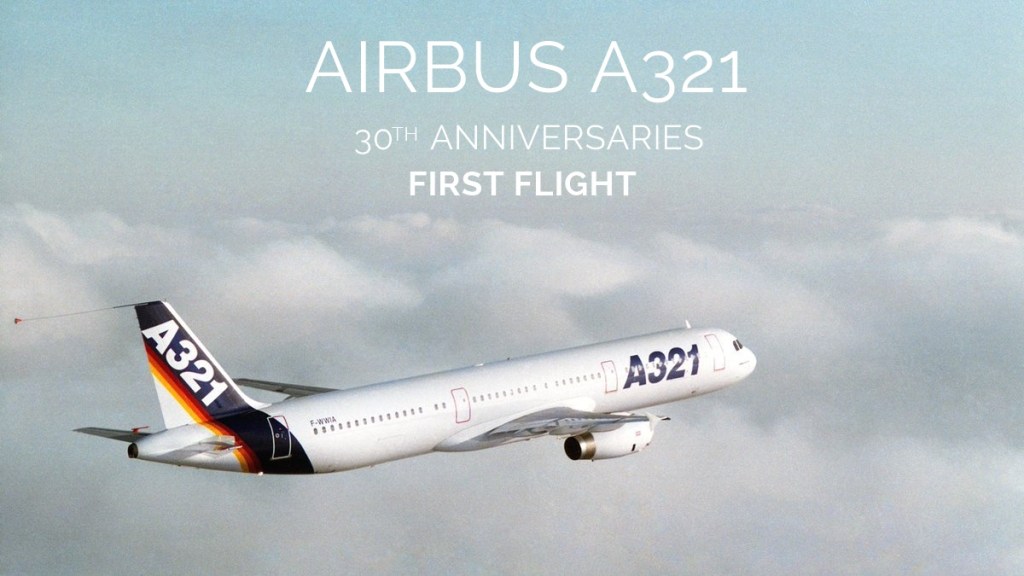
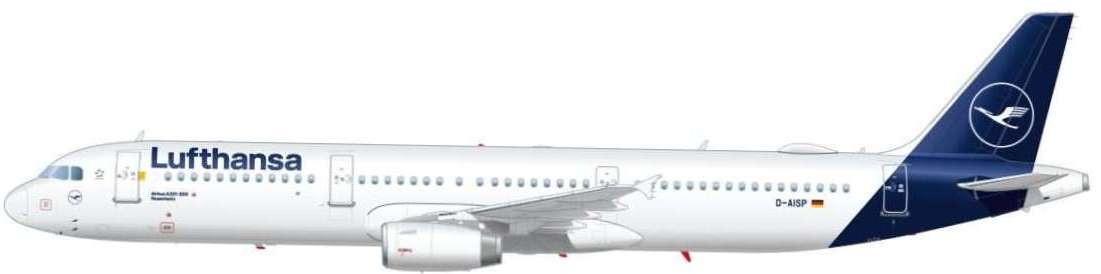

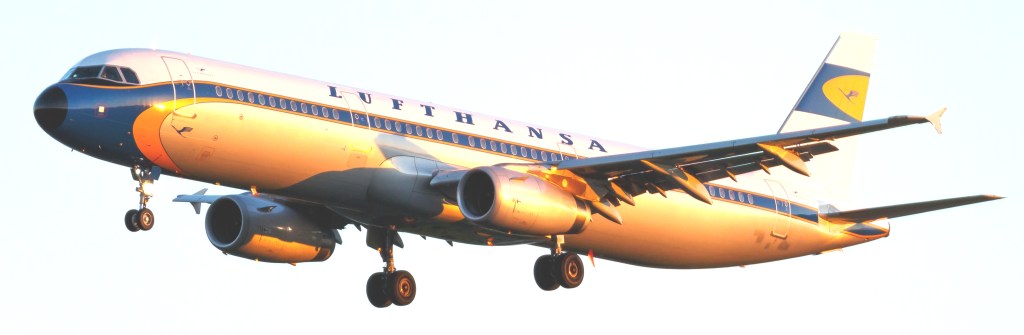

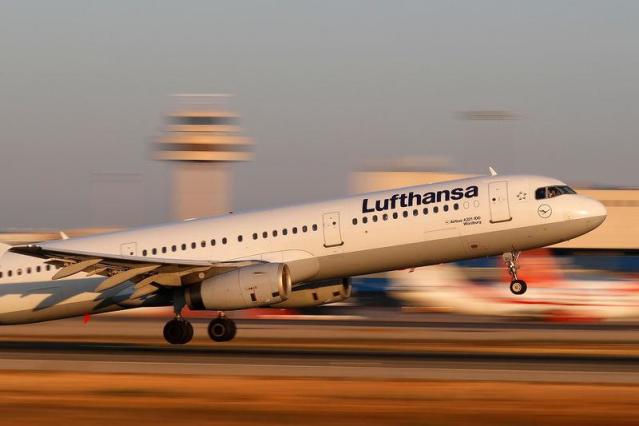
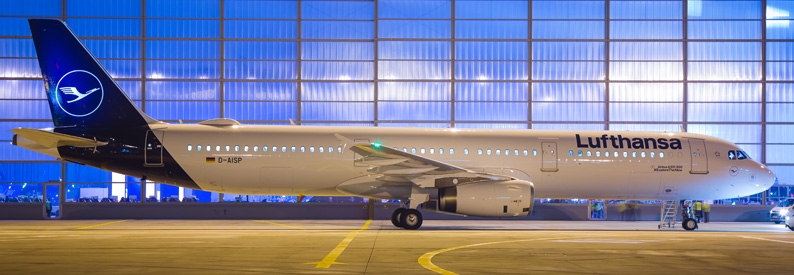
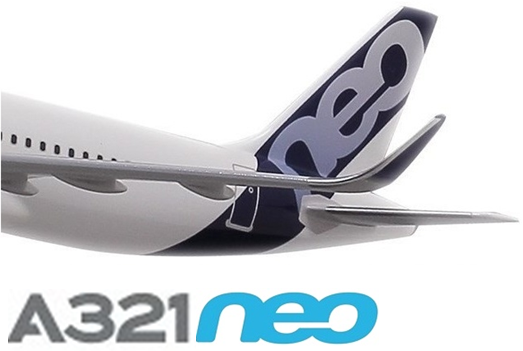
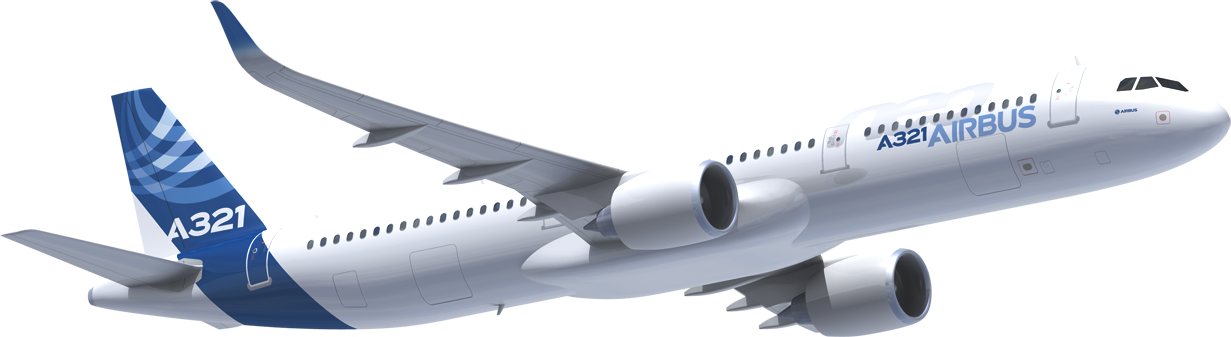


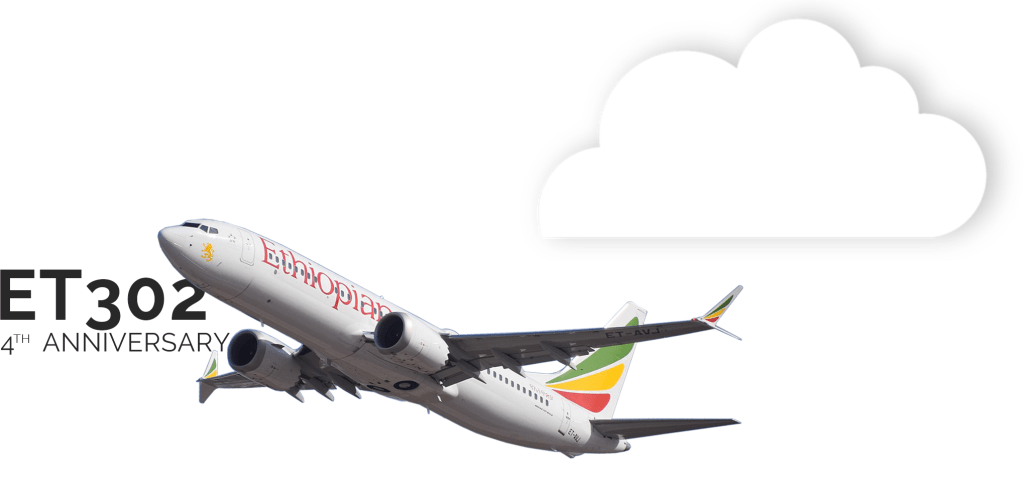

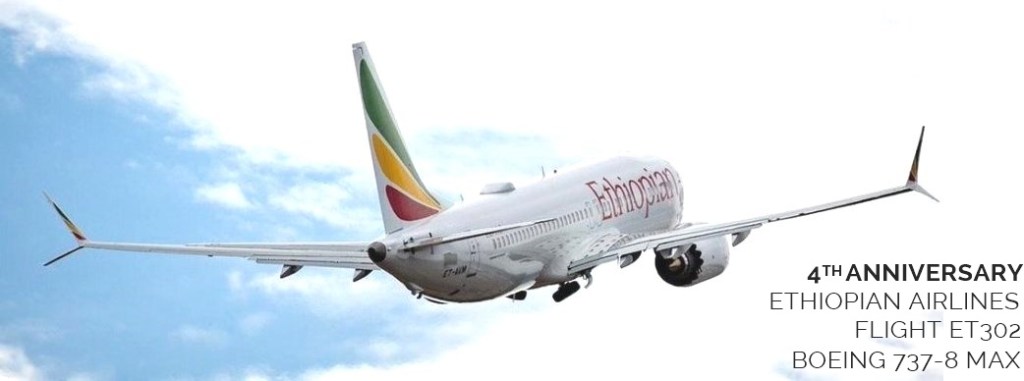




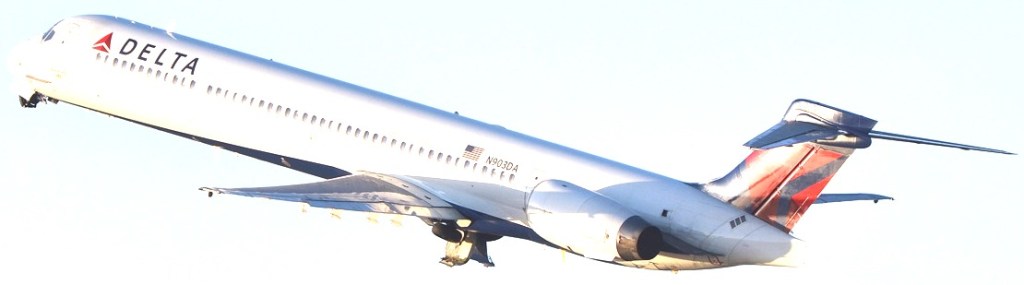
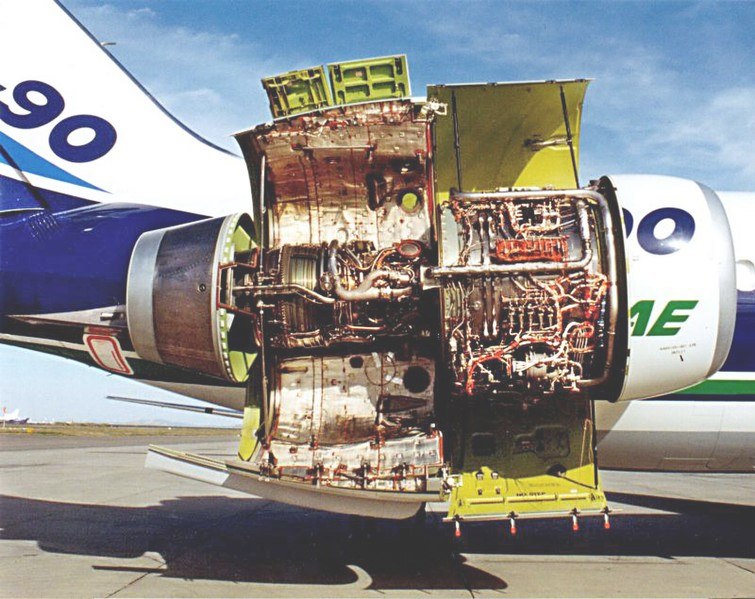
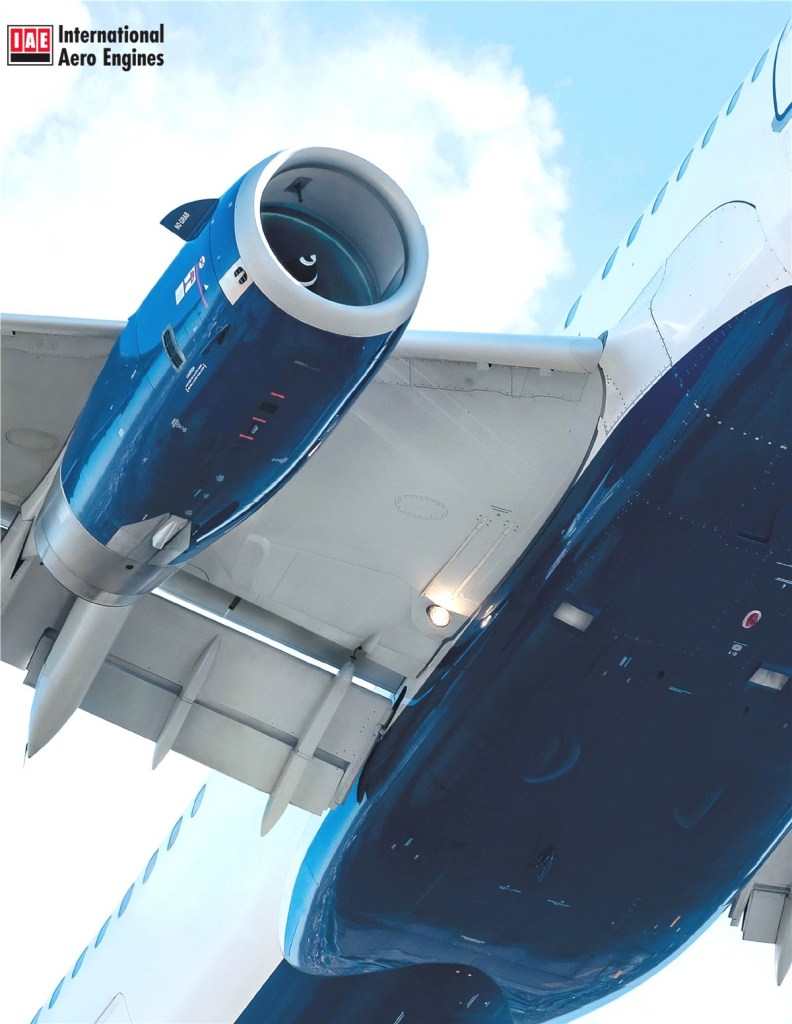
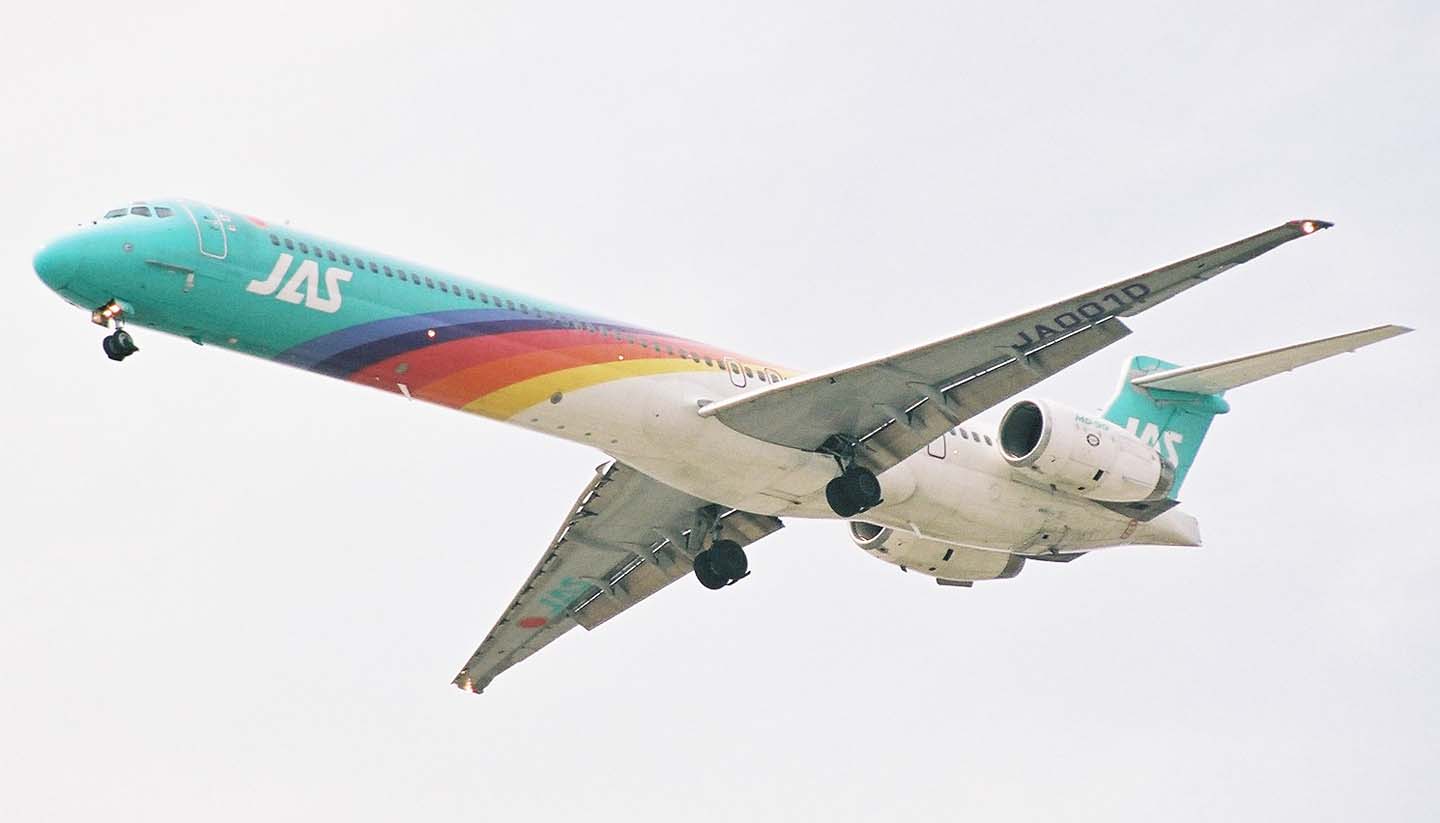

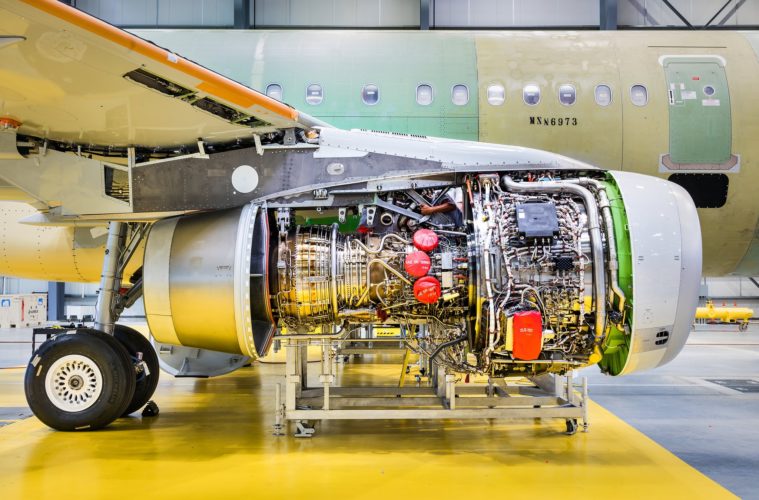


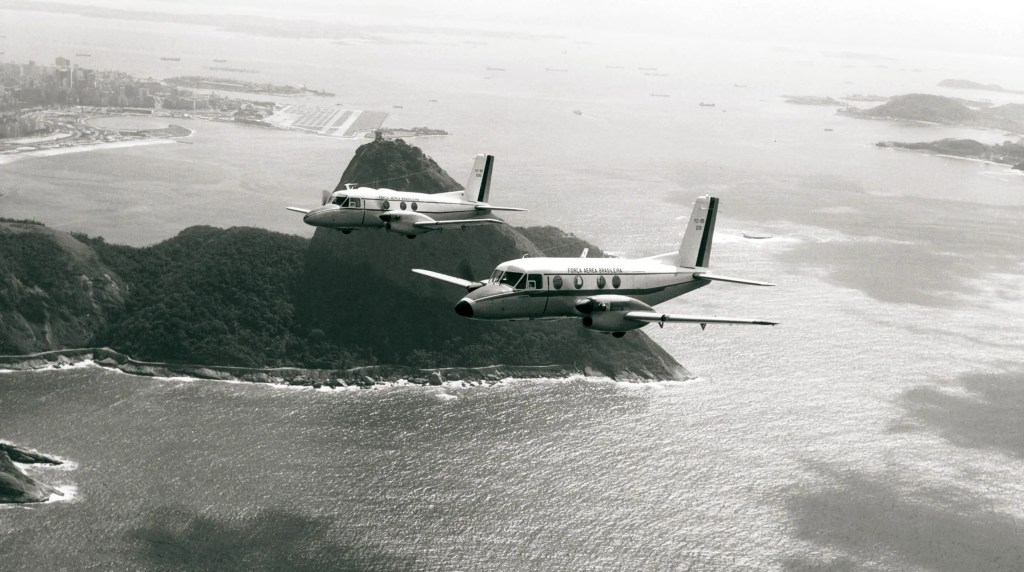

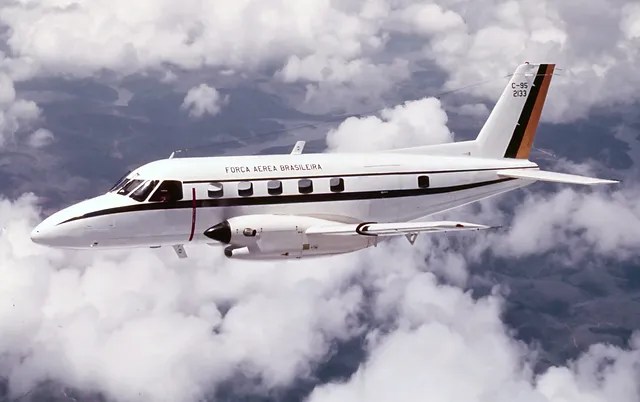
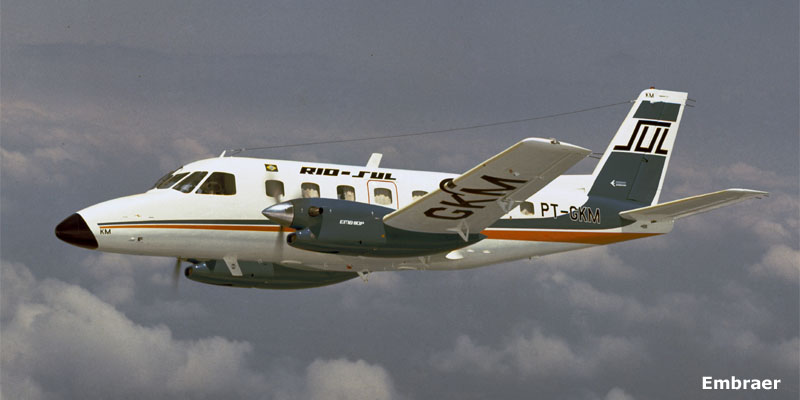


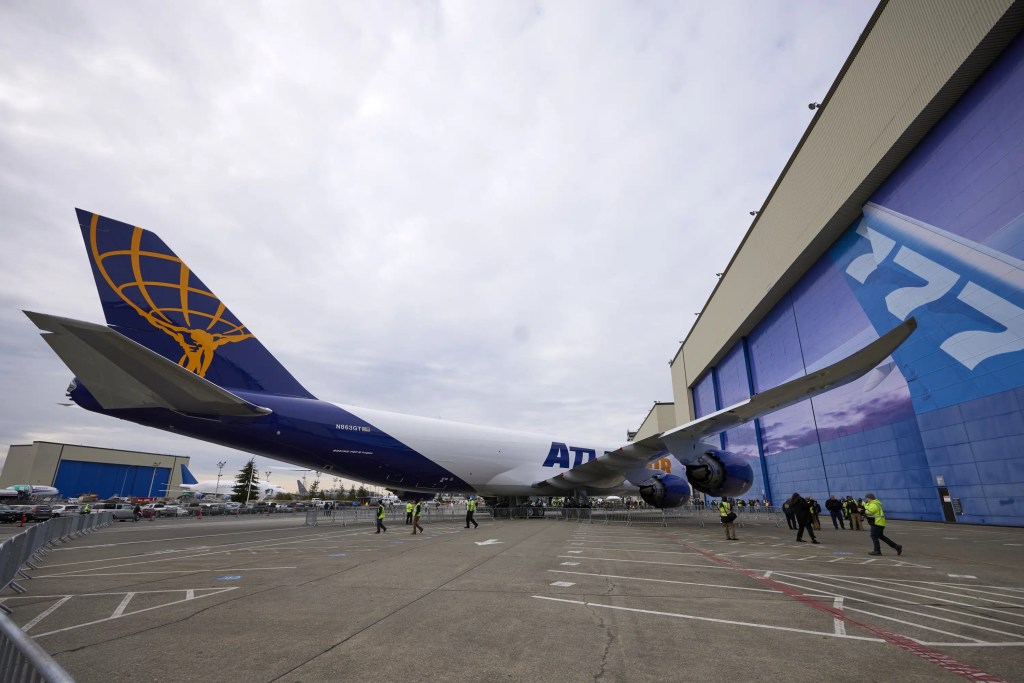
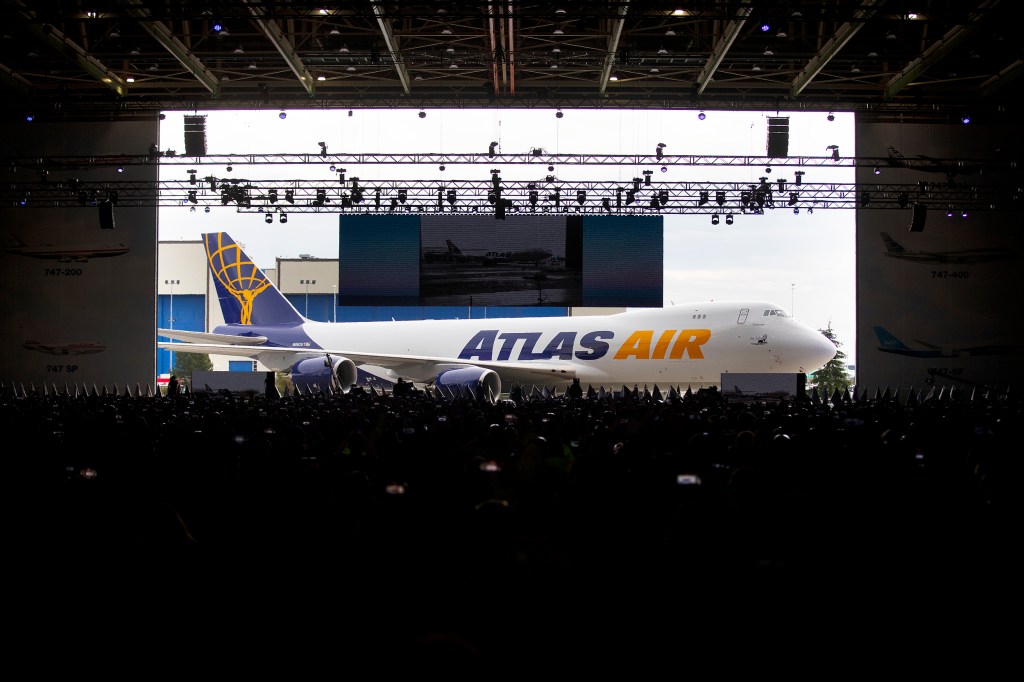
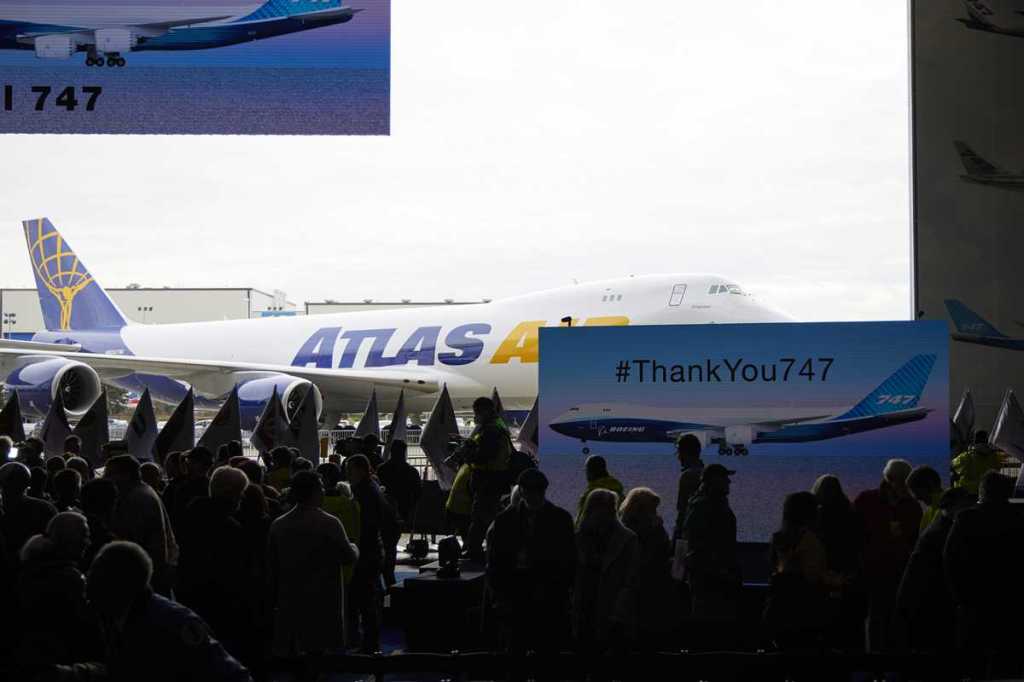







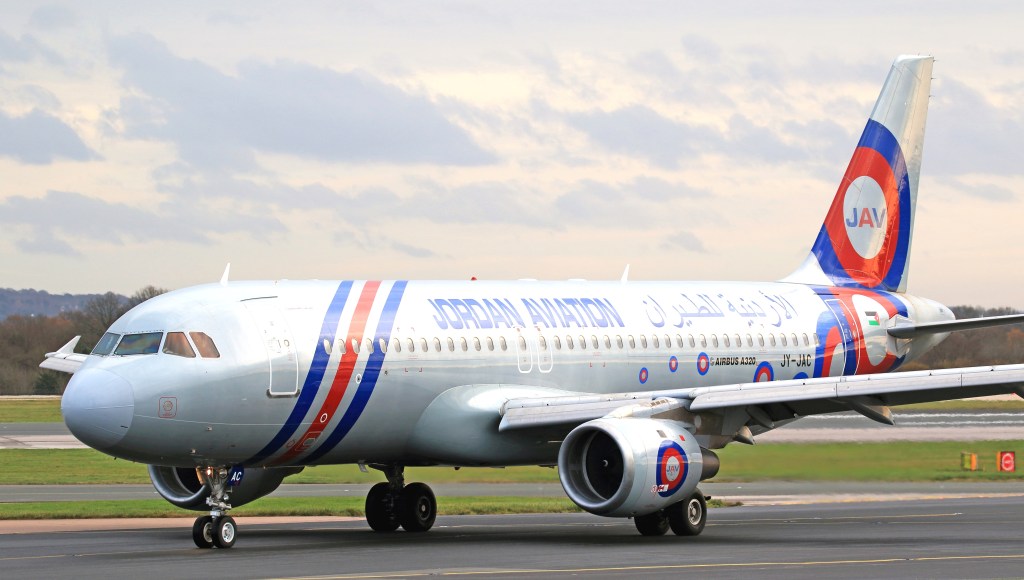






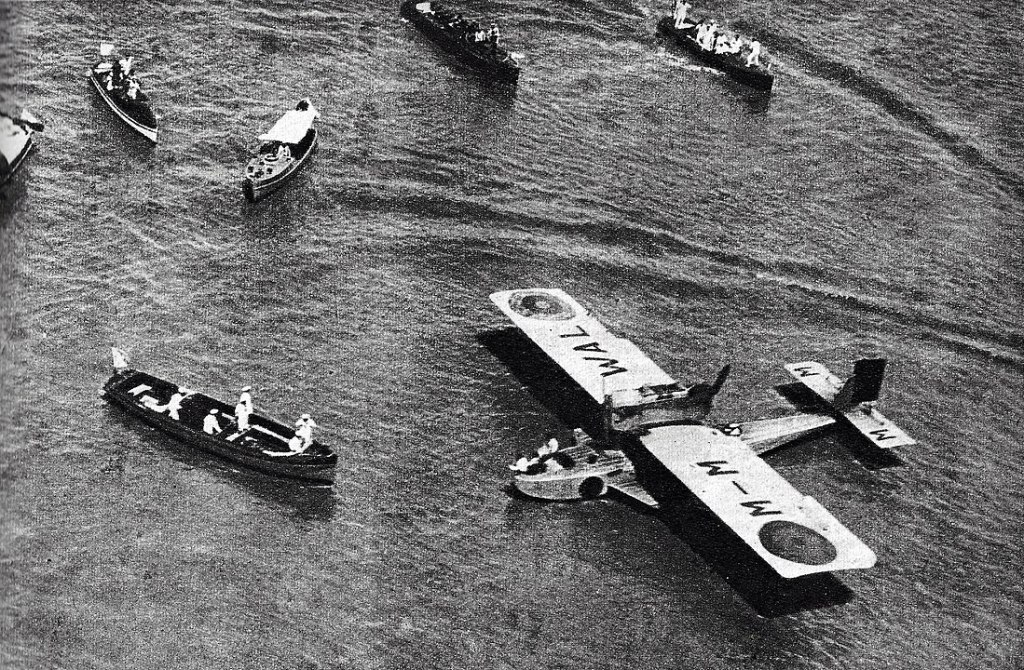




 airgways.com