Argentina apertura aerocomercial

AW | 2024 10 21 11:24 | AIRLINES MARKET / GOVERNMENT

Argentina emerge hacia apertura mercado aéreo

En el marco de la política de cielos abiertos y en medio del conflicto con Aerolíneas Argentinas, el Secretario de Transporte, Franco Mogetta, anunció que la empresa de vuelos chárter American Jet Líneas Aéreas sumará nueve aeronaves a partir de inicios del próximo año para hacer vuelos regionales regulares. Por su parte, el Ministro de Desregulación y Transformación del Estado, Federico Sturzenegger, agregó que una nueva aerolínea, que sería Humming Airways, conectará distintas ciudades del interior de la Provincia de Buenos Aires en las próximas semanas.

“Se siguen incrementando rutas que darán más conectividad a los argentinos y también nuevas fuentes de trabajo. La libre competencia con reglas claras hará grande al país. El monopolio que estamos destruyendo nada bueno ha generado”, afirmó Franco Mogetta vía la red social X, al compartir la búsqueda de personal iniciada por American Jet por el arribo de los nueve aviones.

“American Jet requerirá nuevas tripulaciones para la operación de nueve aeronaves nuevas de entre 50 y 100 asientos, que ingresarán a la flota de la compañía a partir de inicios de 2025. De acuerdo al plan de rutas aéreas regulares regionales a iniciar próximamente, abrimos el proceso de recepción de candidaturas para la convocatoria de selección de pilotos/tripulantes de cabina/mecánicos. Requisito mínimo de horas de vuelo para pilotos: 1500 horas/500 horas en multimotor”, dice el aviso.

Autoridades de la firma confirmaron los planes de expansión y dijeron que están en pleno desarrollo, por lo que por ahora no harán más comentarios hasta la llegada de las primeras aeronaves hacia fin de año. Los aviones regionales se utilizan para viajes cortos entre ciudades pequeñas o de una ciudad grande a otra más pequeña.

En el caso de American Jet, la empresa había realizado vuelos regionales en el pasado. Sin embargo, desde la pandemia de Covid-19 solo realizaba vuelos chárter, ejecutivos, sanitarios y de trabajo con bases en el Aeroparque Jorge Newbery, San Fernando, Neuquén y Mendoza.

Otra aerolínea toma forma, Humming Airways, la nueva empresa, con sede en Tandil, Provincia de Buenos Aires, uniría esa ciudad y otros destinos provinciales como Junín, Olavarría, Buenos Aires/Jorge Newbery, y Venado Tuerto, Provincia de Santa Fe.

Desde el Gobierno han manifestado el fuerte interés por recuperar el mercado doméstico. Las aéreas low cost han manifestado la incorporación de más capacidad aérea. Flybondi incorporará cinco aviones Boeing 737 Next Generation adicionales, mientras que JetSMART Argentina también sumaría nuevos aviones.

Flybondi traerá al país desde el exterior aviones alquilados bajo la modalidad ACMI (Aircraft, Crew, Maintenance and Insurance). La línea aérea de bajo costo ha presentado la documentación, aunque resta completar algo del contrato que luego deberá pasar por distintas instancias de aprobación por parte de la Administración Nacional de Aviación Civil (ANAC) de Argentina. Aunque habían informado la incorporación de cinco aviones finalmente incorporarían un número de siete aeronaves, dos de España y cinco de Lituania.

Mientras tanto, JetSMART Airlines Argentina ha tomado entrega el Domingo 20/10 del segundo avión de matrícula chilena que está incorporando a su flota de diez aviones, con los que ofrecerá más de 236 vuelos semanales en veinte rutas, tanto dentro de la Argentina como hacía cinco países de la región en Sudamérica.

Hace un mes, autoridades del Gobierno se reunieron con representantes de ambas compañías en busca de que operen más rutas en el país para disputarle participación de mercado a Aerolíneas Argentinas. La aerolínea de bandera representa actualmente casi el 70% del mercado doméstico y si dejara de operar por el conflicto paritario o por medidas de fuerza por una eventual privatización, unas 18 rutas quedarían sin conectividad.

LATAM Argentina
El Ministro de Desregulación y Transformación del Estado, Federico Sturzenegger dijo que LATAM Airlines Argentina podría volver a volar en la Argentina. En una reunión con empresarios de las pyme, el Ministro de Desregulación contó que la aerolínea, cuya filial local se fue del país en Febrero de 2021, debido a un fuerte conflicto de idiología política, le había planteado la posibilidad de cubrir destinos como Córdoba y Mendoza, ante la nueva normativa aeronáutica que autoriza a operar con matrícula extranjera.

El LATAM Group, de capitales chilenos-brasileños, podría volver a volar en el mercado de cabotaje argentino después de casi cuatro años. LATAM Argentina, la filial local del grupo, anunció definitivamente su partida del país en Febrero de 2021, luego de parar en Junio de 2020 en medio de tensiones con los gremios y dificultades para operar en un contexto que favorecía a Aerolíneas Argentinas, manejada en ese momento por la agrupación política militante de La Cámpora. Fastidiada por el conflicto y las trabas que generaban como por ejemplo cuando aterrizaban en los aeropuertos y sus pasajeros se veían obligados a esperar hasta 45 minutos o más arriba del avión porque el servicio de rampas, de la estatal Intercargo, se demoraba en acercar la escalera; mientras también tenían un frente de conflictos con el reclamo de los hangares de LATAM en Aeroparque, que Aerolíneas Argentinas detentaba para su adquisición. Además, habían sufrido la cancelación de la ruta Rosario/ROS—Lima/LIM con la filial LATAM Perú.

Tras la celebración de la reunión empresarial en la sede de la Cámara Argentina de la Mediana Empresa (CAME), donde lo escuchaban unos ciento veinte directivos, se sustenta en la Resolución Nº363 la Administración Nacional de Aviación Civil (ANAC) y que autoriza a empresas del sector a tener personal extranjero y operar con matrícula extranjera. “LATAM me dijo que, en esas condiciones, volvería a volar en la Argentina”, contó Federico Sturzenegger.

La sola mención del tema sin dudas agregará ruido en el conflicto entre el Gobierno y Aerolíneas Argentinas; mientras que la firma del convenio de cielos abiertos que firmaron en Abril 2024 la Argentina y Chile permitirá recíprocamente vuelos de cabotaje de las líneas aéreas entre ambos países, y la posibilidad de trabajar con matrícula extranjera flexibilizaría las condiciones de trabajo y darían por descontado el retorno de LATAM Airlines Argentina, mientras que esperan autorizaciones para iniciar vuelos entre Buenos Aires (AEP) y Mendoza (MDZ) y Córdoba (COR).

En la reunión del CAME, el Ministro de Desregulación y Transformación del Estado, Federico Sturzenegger, había adentrado en realidad en el tema mientras hablaba de algo más general, la necesidad de modernizar y desregular los diferentes sectores de la economía. Fue en ese momento que citó como ejemplo lo que pasaba en el mercado aerocomercial a través de una anécdota personal: dijo que estaba impresionado por el precio que había pagado días atrás su mujer cuando, ante la falta de vuelos locales, se tomó un taxi desde Río Gallegos a El Calafate. “¿Cómo puede ser que no haya más oferta?”, se preguntó, y ahí escuchó la objeción de Guillermo Polke, Secretario Gremial de CAME y Presidente de la Federación Económica de Santa Cruz, que le dijo que seguramente no era rentable utilizar un avión de 100 pasajeros para cubrir un trayecto tan corto. “Nadie dice un avión de 100 pasajeros; pero de 15 plazas, por ahí así”, insistió Sturzenegger, y enumeró varios puntos del país en los que, como consecuencia de la falta de cobertura aérea, los usuarios estaban obligados a trasladarse en auto.

Uno de ellos fue Campo de Piedra Pomes, en Catamarca. “Es uno de los lugares más lindos de la Argentina, parecido al Cañón del Colorado en Estados Unidos de América, y hay que hacer un viaje en auto de seis horas desde San Fernando, la capital de la provincia cuyana. Si hubiera vuelos, sería una explosión de turismo”, argumentó. Después, habló de la localidad de Villa Ángela, en la Provincia de Chaco, también alejada de la ciudad capital de Resistencia, y de Las Lomitas, Provincia de Formosa, distante a unas 5 horas de transporte terrestre de la capital de la provincia, permitiendo desarrollar vuelos con aviones de reducido porte en la región.

Argentina opens air trade

Argentina emerges towards opening air market

Within the framework of the open skies policy and in the midst of the conflict with Aerolíneas Argentinas, the Secretary of Transportation, Franco Mogetta, announced that the charter flight company American Jet Líneas Aéreas will add nine aircraft starting at the beginning of next year to make regular regional flights. For his part, the Minister of Deregulation and Transformation of the State, Federico Sturzenegger, added that a new airline, which would be Humming Airways, will connect different cities in the interior of the Province of Buenos Aires in the coming weeks.

“The routes that will give more connectivity to Argentines and also new sources of work continue to increase. Free competition with clear rules will make the country great. The monopoly that we are destroying has not generated anything good”, said Franco Mogetta via the social network X, when sharing the search for personnel initiated by American Jet for the arrival of the nine planes.

“American Jet will require new crews for the operation of nine new aircraft with between 50 and 100 seats, which will enter the company’s fleet starting in early 2025. In accordance with the regional scheduled air routes plan to be launched soon, we are opening the process of receiving applications for the call for selection of pilots/cabin crew/mechanics. Minimum flight hours requirement for pilots: 1,500 hours/500 hours on multi-engine”, the notice says.

Firm authorities confirmed the expansion plans and said that they are in full development, so for now they will not make any further comments until the arrival of the first aircraft towards the end of the year. Regional aircraft are used for short trips between small cities or from a large city to a smaller one.

In the case of American Jet, the company had operated regional flights in the past. However, since the Covid-19 pandemic, it only carried out charter, executive, health, and work flights with bases in Aeroparque Jorge Newbery, San Fernando, Neuquén, and Mendoza.

Another airline is taking shape, Humming Airways, the new company, based in Tandil, Province of Buenos Aires, would link that city and other provincial destinations such as Junín, Olavarría, Buenos Aires/Jorge Newbery, and Venado Tuerto, Province of Santa Fe.

The Government has expressed strong interest in recovering the domestic market. Low-cost airlines have expressed the incorporation of more air capacity. Flybondi will incorporate five additional Boeing 737 Next Generation aircraft, while JetSMART Argentina will also add new aircraft.

Flybondi will bring to the country from abroad aircraft rented under the ACMI (Aircraft, Crew, Maintenance and Insurance) modality. The low-cost airline has submitted the documentation, although some of the contract remains to be completed, which will then have to go through various approval stages by the National Civil Aviation Administration (ANAC) of Argentina. Although they had reported the incorporation of five aircraft, they would finally incorporate a number of seven aircraft, two from Spain and five from Lithuania.

Meanwhile, JetSMART Airlines Argentina has taken delivery on Sunday 20/10 of the second Chilean-registered aircraft that it is incorporating into its fleet of ten aircraft, with which it will offer more than 236 weekly flights on twenty routes, both within Argentina and to five countries in the region in South America.

A month ago, government authorities met with representatives of both companies in search of them operating more routes in the country to compete for market share with Aerolíneas Argentinas. The flag carrier currently represents almost 70% of the domestic market and if it were to stop operating due to the collective bargaining dispute or due to forceful measures for an eventual privatization, some 18 routes would be left without connectivity.

LATAM Argentina
The Minister of Deregulation and State Transformation, Federico Sturzenegger, said that LATAM Airlines Argentina could return to flying in Argentina. In a meeting with SME businessmen, the Minister of Deregulation said that the airline, whose local subsidiary left the country in February 2021, due to a strong conflict of political ideology, had raised the possibility of covering destinations such as Córdoba and Mendoza, given the new aeronautical regulations that authorize operating with foreign registration.

The LATAM Group, with Chilean-Brazilian capital, could return to flying in the Argentine domestic market after almost four years. LATAM Argentina, the group’s local subsidiary, definitively announced its departure from the country in February 2021, after stopping in June 2020 amid tensions with unions and difficulties in operating in a context that favored Aerolíneas Argentinas, managed at that time by the militant political group La Cámpora. Annoyed by the conflict and the obstacles that they generated, such as when they landed at airports and their passengers were forced to wait up to 45 minutes or more on the plane because the ramp service, from the state-owned Intercargo, took a long time to bring the stairs; while they also had a conflict front with the claim of the LATAM hangars in Aeroparque, which Aerolíneas Argentinas held for its acquisition. In addition, they had suffered the cancellation of the Rosario/ROS—Lima/LIM route with the subsidiary LATAM Perú.

After the business meeting held at the headquarters of the Argentine Chamber of Medium-sized Enterprises (CAME), where about one hundred and twenty executives were listening to him, he is based on Resolution No. 363 of the National Civil Aviation Administration (ANAC), and which authorizes companies in the sector to have foreign personnel and operate with foreign registration. «LATAM told me that, under those conditions, it would fly again in Argentina», said Federico Sturzenegger.

The mere mention of the issue will undoubtedly add noise to the conflict between the Government and Aerolíneas Argentinas; while the signing of the open skies agreement signed in April 2024 by Argentina and Chile will reciprocally allow domestic flights by airlines between both countries, and the possibility of working with foreign registration would make working conditions more flexible and would take for granted the return of LATAM Airlines Argentina, while they await authorizations to start flights between Buenos Aires (AEP) and Mendoza (MDZ) and Córdoba (COR).

At the CAME meeting, the Minister for Deregulation and State Transformation, Federico Sturzenegger, had actually delved into the subject while talking about something more general, the need to modernize and deregulate the different sectors of the economy. It was at that moment that he cited as an example what was happening in the commercial air market through a personal anecdote: he said that he was impressed by the price that his wife had paid a few days ago when, due to the lack of local flights, she took a taxi from Río Gallegos to El Calafate. “How can it be that there is no more supply?”, he asked himself, and there he heard the objection of Guillermo Polke, Trade Secretary of CAME and President of the Economic Federation of Santa Cruz, who told him that it was surely not profitable to use a 100-passenger plane to cover such a short journey. “Nobody says a 100-passenger plane; But with 15 seats, around there», insisted Sturzenegger, and listed several places in the country where, as a consequence of the lack of air coverage, users were forced to travel by car.

One of them was Campo de Piedra Pomes, in Catamarca. «It is one of the most beautiful places in Argentina, similar to the Colorado Canyon in the United States of America, and you have to make a six-hour car trip from San Fernando, the capital of the Cuyo province. If there were flights, it would be an explosion of tourism», he argued. Then, he spoke of the town of Villa Ángela, in the Province of Chaco, also far from the capital city of Resistencia, and of Las Lomitas, Province of Formosa, about 5 hours away by land transport from the capital of the province, allowing the development of flights with small planes in the region.

PUBLISHER: Airgways.com
DBk: Argentina.gob.ar / Redcame.org.ar / Airgways.com
AW-POST: 202410211124AR
OWNERSHIP: Airgways Inc.
A\W A I R G W A Y S ®

Argentina celebra aéreas privadas

AW | 2024 10 21 10:33 | GOVERNMENT / AIRLINES MARKET

Gobierno argentino celebra aerolíneas privadas compren aviones

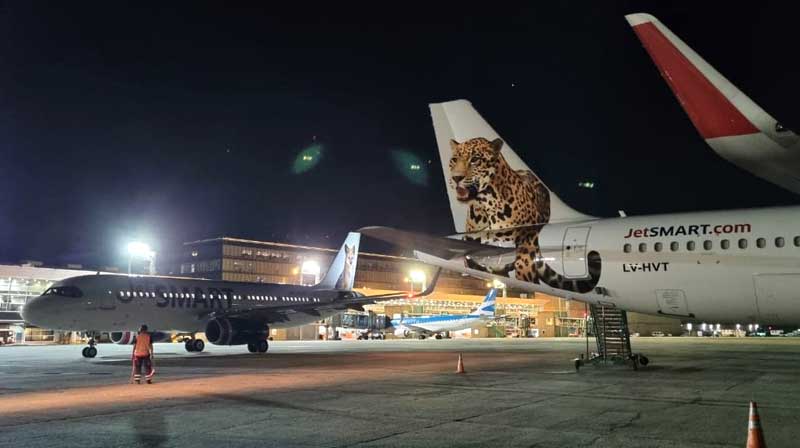
En medio de las disputas por la privatización y el futuro de Aerolíneas Argentinas, el Gobierno del Presidente Javier Milei celebró que varias competidoras de la línea de bandera en vuelos de cabotaje continúen ampliando sus flotas y sumando rutas.

El Secretario de Transporte de Argentina, Franco Mogetta, que republicó un comunicado de American Jet en el que la compañía solicita tripulaciones para nueve nuevos aviones de entre 50 y 100 asientos que comenzarán a volar a partir del 2025.

«En el marco de las políticas de cielos abiertos se siguen incrementando rutas que darán más conectividad a los argentinos y también nuevas fuentes de trabajo. La libre competencia con reglas claras harán grande al País, el monopolio que estamos destruyendo nada bueno ha generado», escribió el Secretario Franco Mogetta en su cuenta de X.

Ese mensaje fue replicado por su compañero de Gabinete, el Ministro de Desregulación y Transformación del Estado, Federico Sturzenegger, que al dato aportado por Franco Mogetta sumó otros incrementos de flota en dos compañías más. «Nueve aviones incorpora American Jet. En breve Flybondi suma cinco aviones y JetSMART [Airlines Argentina] sigue ampliando su flota. Y en solo semanas arrancan vuelos para tres ciudades del interior de la provincia de Buenos Aires en una nueva aerolínea VLLC!», escribió el Ministro Federico Sturzenegger.

Estos últimos dos anuncios del ministro estarían relacionados con un reclamo que venían haciendo ambas compañías: poder traer aviones de matrícula extranjera al país para realizar vuelos de cabotaje.

El Gobierno les dio el visto bueno y JetSMART Airlines Argentina anunció la incorporación de dos aviones, ambos de matrícula chilena (CC), para sumarse a los ocho de matrícula argentina (LV) que actualmente tienen en el país. En ese mismo sentido, su competidora Flybondi ha expresado por medio del CEO Mauricio Sana que quiere llegar a una flota de 20 aviones para la temporada alta 2024-2025.

Ambos mensajes desde el Ejecutivo llegan en la misma semana en la que el Presidente Javier Milei, ante el freno que sufren en el Congreso los proyectos de ley para privatizar Aerolíneas Argentinas más allá del decreto del Ejecutivo que declaró a la línea aérea sujeta a privatización, amenazó que «si la ley no pasa, se la vamos a entregar a los empleados».

Tras esa declaración del Martes 15/10, un día después se produjo otra novedad en el sector aeronáutico que se venía adelantando desde días antes. Fue la expulsión del sindicalista del gremio de pilotos APLA, Pablo Biró del Directorio de Aerolíneas Argentinas, durante una asamblea de accionistas que consideró que su comportamiento iba en contra de los intereses de la compañía aérea. Así, aunque el gremio podría impugnar judicialmente la situación, Pablo Biró deja de ser uno de los cinco directores de Aerolíneas Argentinas, cargo que hasta ahora ejercía en representación del Programa de Propiedad Participada (PPP) de los trabajadores. No se descarta que con el verano pueda llegar otra vez la alta conflictividad con los sindicatos, que tuvo un pico hace poco y que obligó a suspender vuelos en Aeroparque y Ezeiza.

Argentina celebrates private airlines

Argentine government celebrates private airlines buying planes

Amid the disputes over the privatization and future of Aerolíneas Argentinas, the Government of President Javier Milei celebrated that several competitors of the national airline in domestic flights continue to expand their fleets and add routes.

The Secretary of Transportation of Argentina, Franco Mogetta, republished a statement from American Jet in which the company requests crews for nine new planes of between 50 and 100 seats that will begin to fly starting in 2025.

«Within the framework of open skies policies, routes continue to increase that will provide more connectivity to Argentines and also new sources of work. Free competition with clear rules will make the country great, the monopoly that we are destroying has not generated anything good», wrote Secretary Franco Mogetta on his X account.

That message was replicated by his Cabinet colleague, the Minister of Deregulation and Transformation of the State, Federico Sturzenegger, who added other fleet increases in two more companies to the data provided by Franco Mogetta. «American Jet is adding nine planes. Soon Flybondi will add five planes and JetSMART [Airlines Argentina] continues to expand its fleet. And in just a few weeks, flights to three cities in the interior of the province of Buenos Aires will begin on a new VLLC airline!», wrote Minister Federico Sturzenegger.

These last two announcements by the minister would be related to a claim that both companies had been making: to be able to bring foreign-registered planes into the country to carry out domestic flights.

The Government gave them the go-ahead and JetSMART Airlines Argentina announced the addition of two planes, both with Chilean registration (CC), to join the eight with Argentine registration (LV) that they currently have in the country. In the same sense, its competitor Flybondi has expressed through CEO Mauricio Sana that it wants to reach a fleet of 20 planes for the 2024-2025 high season.

Both messages from the Executive come in the same week in which President Javier Milei, faced with the blockage in Congress of the bills to privatize Aerolíneas Argentinas beyond the Executive decree that declared the airline subject to privatization, threatened that «if the law does not pass, we will hand it over to the employees».

After that declaration on Tuesday 15/10, one day later another development occurred in the aeronautical sector that had been anticipated for days before. It was the expulsion of the union member of the APLA pilots’ union, Pablo Biró from the Board of Directors of Aerolíneas Argentinas, during a shareholders’ meeting that considered that his behavior went against the interests of the airline. Thus, although the union could challenge the situation in court, Pablo Biró is no longer one of the five directors of Aerolíneas Argentinas, a position that until now he held as a representative of the Participated Ownership Program (PPP) of the workers. It is not ruled out that summer could bring a new wave of conflict with unions, which peaked recently and forced the suspension of flights at Aeroparque and Ezeiza.

PUBLISHER: Airgways.com
DBk: Argentina.gob.ar / Airgways.com
AW-POST: 202410211033AR
OWNERSHIP: Airgways Inc.
A\W A I R G W A Y S ®

Wingo pagó apuesta a Flybondi

AW | 2024 10 21 10:26 | AIRLINES

Apuesta futbolera entre Wingo y Flybondi

Después de la victoria de Argentina en la Copa América Colombia 2024, la aerolínea low cost colombiana Wingo cumplió su promesa y le realizó un vuelo homenaje a la low cost argentina Flybondi en Colombia. La campaña, ideada por Havas Colombia junto a HOY by Havas Argentina, logró cuestionar a los fanáticos del fútbol y a los viajeros frecuentes de ambas aerolíneas, aprovechando la pasión futbolera que comparten los dos países.

El concepto de la apuesta consistía que si Argentina ganaba la Copa América Colombia 2024, Wingo le tenía que hacer un vuelo homenaje a Flybondi en suelo colombiano, y si ganaba Colombia, Flybondi le hacía un vuelo homenaje a Wingo en una ruta argentina. Con la victoria de la selección argentina, Wingo cumplió con su parte del trato y Flybondi obtuvo su primer vuelo de Bogotá a Medellín.

“Lo que hicimos con Wingo, Flybondi, Havas Colombia y HOY by Havas Argentina muestra cómo la colaboración entre marcas y agencias puede llevar la creatividad a otro nivel. Más que una simple apuesta, fue una forma entretenida de unir fuerzas y crear algo que conectara de verdad con la gente en tiempo real, además todos somos apasionados por el fútbol”, expresó Horacio Maggi CCO de Havas Colombia.

“Lo que realmente hizo especial esta acción fue la sinergia que se creó entre las marcas y los equipos creativos. Demostramos que, al colaborar, podemos generar ideas que conectan y tienen un impacto en toda la región”, dijeron Charlie Meza y Tatiana Dobosz directores creativos de HOY by Havas Argentina.

La acción no solo generó un gran impacto en redes, sino que también permitió que ambas aerolíneas conectaran de una manera innovadora y divertida con sus audiencias, siendo parte de la conversación futbolera y reforzando los lazos entre Argentina y Colombia. Nunca se había apostado una nueva ruta solo confiando en la selección de un país, bueno, siempre hay una primera vez, cosas del mundo de las aerolíneas.

Wingo paid Flybondi’s bet

Soccer bet between Wingo and Flybondi

After Argentina’s victory in the Copa América Colombia 2024, the Colombian low-cost airline Wingo kept its promise and made a tribute flight to the Argentine low-cost airline Flybondi in Colombia. The campaign, devised by Havas Colombia together with HOY by Havas Argentina, managed to question football fans and frequent travelers of both airlines, taking advantage of the passion for football that the two countries share.

The concept of the bet was that if Argentina won the Copa América Colombia 2024, Wingo had to make a tribute flight to Flybondi on Colombian soil, and if Colombia won, Flybondi would make a tribute flight to Wingo on an Argentine route. With the victory of the Argentine team, Wingo fulfilled its part of the deal and Flybondi obtained its first flight from Bogotá to Medellín.

“What we did with Wingo, Flybondi, Havas Colombia, and HOY by Havas Argentina shows how collaboration between brands and agencies can take creativity to another level. More than just a bet, it was an entertaining way to join forces and create something that really connected with people in real-time, and we are all passionate about football”, said Horacio Maggi, CCO of Havas Colombia.

“What really made this action special was the synergy that was created between the brands and the creative teams. We showed that, by collaborating, we can generate ideas that connect and have an impact throughout the region”, said Charlie Meza and Tatiana Dobosz, creative directors of HOY by Havas Argentina.

The action not only generated a great impact on social media, but also allowed both airlines to connect in an innovative and fun way with their audiences, being part of the football conversation and strengthening the ties between Argentina and Colombia. Never before had a new route been decided based solely on the selection of a country, well, there is always a first time, things in the world of airlines.

PUBLISHER: Airgways.com
DBk: Flybondi.com / Wingo.com / Airgways.com
AW-POST: 202410211026AR
OWNERSHIP: Airgways Inc.
A\W A I R G W A Y S ®

Emirates amplía flota 777F

AW | 2024 10 21 09:53 | AIRLINES / INDUSTRY

Emirates SkyCargo incorporará cinco Boeing 777 cargueros

The Boeing Company y Emirates SkyCargo anunciaronel Lunes 21/10 un pedido de cinco aviones Boeing 777F de carga, que representan los bimotores más grandes y de mayor alcance del mundo, que se suma a su compra anterior de cinco 777 Freighters. El último pedido, que se concretó en Septiembre 2024 y figura como no identificado en el sitio web de pedidos y entregas de Boeing, eleva la cartera de pedidos de Emirates a 249 aviones de fuselaje ancho de Boeing, incluidos 14 777 Freighters.

La transportadora anuncia un segundo pedido en 10/2024 para el carguero bimotor más eficiente y capaz de la industria Como división de carga de la aerolínea internacional más grande del mundo, Emirates SkyCargo planea operar 21 777 cargueros en los próximos años, casi duplicando su flota actual de 11 cargueros a medida que la aerolínea continúa expandiendo su capacidad.

«Estamos invirtiendo en nuevos aviones de carga para satisfacer la creciente demanda y ofrecer a nuestros clientes de todo el mundo aún más flexibilidad, conectividad y opciones para aprovechar las oportunidades del mercado. La demanda de los servicios de carga aérea de Emirates ha experimentado un auge. Esto refleja la creciente importancia de Dubái como centro logístico global de confianza y preferencia, y también el éxito de las soluciones a medida de Emirates SkyCargo, que abordan las necesidades de los transportistas en diferentes sectores industriales», afirmó Su Alteza el Jeque Ahmed bin Saeed Al Maktoum, Presidente y Director Ejecutivo de Emirates Airline and Group.

El 777 Freighter puede volar más lejos con una autonomía de 9.200 kilómetros/4.970 millas náuticas y transportar más carga 102 Tn toneladas que cualquier otro avión de carga bimotor actual. Esta capacidad permite a los operadores transportar más carga en más rutas sin escalas con una mejor economía operativa, conectando mercados de carga de alto valor como Oriente Medio con Estados Unidos y Europa .

«Emirates sigue marcando la dirección de nuestra industria y agradecemos profundamente la confianza que han depositado en la familia de aviones de fuselaje ancho de Boeing para que sirva como columna vertebral de su flota global. Estamos orgullosos de apoyar el crecimiento de Emirates SkyCargo, que confía en el rendimiento y la versatilidad de nuestro 777 Freighter para seguir conectando al mundo», afirmó Stephanie Pope, Presidenta y Consejera Delegada de Boeing Commercial Airplanes.

Boeing prevé que en los próximos 20 años entrarán en servicio 2.845 aviones de carga adicionales para satisfacer la creciente demanda del comercio mundial y el comercio electrónico. El 777 Freighter es el avión de carga más vendido de Boeing de todos los tiempos, con 275 entregados hasta la fecha. Como líder del mercado de aviones de carga, Boeing proporciona más del 90% de la capacidad mundial dedicada a aviones de carga, incluidos los aviones nuevos y los transformados.

Emirates expands 777F fleet

Emirates SkyCargo to add five Boeing 777 Freighters

The Boeing Company and Emirates SkyCargo announced on Monday 21/10 an order for five Boeing 777F freighters, representing the largest and longest-range twin-engine aircraft in the world, adding to its previous purchase of five 777 Freighters. The latest order, which was finalized in September 2024 and is listed as unidentified on Boeing’s orders and deliveries website, brings Emirates’ order book to 249 Boeing widebody aircraft, including 14 777 Freighters.

Carrier announces second order in 10/2024 for industry’s most efficient and capable twin-engine freighter As the cargo division of the world’s largest international airline, Emirates SkyCargo plans to operate 21,777 freighters in the coming years, nearly doubling its current fleet of 11 freighters as the airline continues to expand its capacity.

“We are investing in new freighter aircraft to meet growing demand and offer our customers around the world even more flexibility, connectivity and choice to take advantage of market opportunities. Demand for Emirates air freight services has boomed. This reflects Dubai’s growing importance as a trusted and preferred global logistics hub, and also the success of Emirates SkyCargo’s tailored solutions, which address the needs of shippers across different industry sectors”, said His Highness Sheikh Ahmed bin Saeed Al Maktoum, President and Chief Executive Officer, Emirates Airline and Group.

The 777 Freighter can fly further with a range of 9,200 kilometres/4,970 nautical miles and carry more cargo (102 tonnes) than any other twin-engine freighter aircraft today. This capability enables operators to carry more cargo on more non-stop routes with better operating economics, connecting high-value cargo markets such as the Middle East with the US and Europe.

“Emirates continues to set the direction for our industry and we deeply appreciate the trust they have placed in the Boeing family of widebody airplanes to serve as the backbone of their global fleet. We are proud to support the growth of Emirates SkyCargo, which relies on the performance and versatility of our 777 Freighter to continue connecting the world”, said Stephanie Pope, President and CEO of Boeing Commercial Airplanes.

Boeing anticipates that an additional 2,845 freighters will enter service over the next 20 years to meet the growing demand for global trade and e-commerce. The 777 Freighter is Boeing’s best-selling freighter of all time, with 275 delivered to date. As the freighter market leader, Boeing provides more than 90% of the world’s dedicated freighter capacity, including new and converted airplanes.

PUBLISHER: Airgways.com
DBk: Emirates.com / Boeing.com / Airgways.com
AW-POST: 202410210953AR
OWNERSHIP: Airgways Inc.
A\W A I R G W A Y S ®

Mandarin ordena un ATR-72

AW | 2024 10 21 09:45 | AIRLINES / INDUSTRY

Mandarin Airlines realiza pedido de un ATR 72-600

Mandarin Airlines, la filial regional de la aerolínea de bandera de Taiwán, China Airlines, y el fabricante de aviones regionales, ATR Aircraft, anunciaron la firma de un pedido en firme de un ATR 72-600, lo que subraya la confianza inquebrantable de la aerolínea en ATR como la plataforma óptima para las operaciones nacionales de la isla.

Este acuerdo estratégico se produce poco después del pedido de seis ATR 72-600 realizado en el Salón Aeronáutico de París del año pasado. La entrega de los aviones adicionales está programada para el primer trimestre de 2026, para satisfacer la demanda de temporada alta de Mandarin Airlines. Se han entregado tres de los seis aviones del pedido anterior, mientras que las entregas de los próximos tres se realizarán en el tercer y cuarto trimestre de 2025.

El turbohélice de última generación complementará la flota existente de la aerolínea de 12 ATR 72-600. Operando principalmente desde su centro de operaciones principal en el Aeropuerto Songshan de Taipei, Mandarin Airlines desempeña un papel fundamental en la red nacional de Taiwán, ofreciendo conexiones esenciales a ocho destinos clave, incluidas las islas de Kinmen, Penghu y Matsu. Los servicios aéreos confiables garantizan un acceso constante a bienes, servicios y transporte esenciales para residentes y empresas, además de estimular el crecimiento económico y fomentar la integración social.

El Presidente de Mandarin Airlines, Kao Shing-Hwang, expresó su entusiasmo por la expansión de la flota y afirmó: “La incorporación de este nuevo ATR 72-600 subraya nuestra confianza en ATR como la plataforma preferida para servir a los mercados nacionales de la isla de manera responsable. La excepcional eficiencia de combustible, los bajos costos operativos y la confiabilidad del turbohélice lo convierten en la opción perfecta para fortalecer nuestras rutas actuales y explorar nuevos servicios para estimular aún más la economía local y el sector turístico en todo Taiwán”.

Nathalie Tarnaud Laude, Directora Ejecutiva de ATR, agregó: “Mandarin Airlines ha estado abriendo constantemente nuevas oportunidades para las comunidades taiwanesas de manera responsable y rentable durante los últimos siete años. Estamos agradecidos por su continua confianza en las capacidades de ATR, lo que demuestra la relevancia de nuestro producto para sus operaciones, y estamos firmemente comprometidos a brindarles apoyo continuo, asegurando operaciones confiables y rentables a largo plazo”.

Mandarin Airlines orders ATR-72

Mandarin Airlines places order for ATR 72-600

Mandarin Airlines, the regional subsidiary of Taiwanese flag carrier China Airlines, and regional aircraft manufacturer ATR Aircraft announced the signing of a firm order for an ATR 72-600, underlining the airline’s unwavering confidence in ATR as the optimal platform for the island’s domestic operations.

This strategic agreement comes on the heels of the order for six ATR 72-600s placed at last year’s Paris Air Show. Delivery of the additional aircraft is scheduled for the first quarter of 2026, to meet Mandarin Airlines’ peak season demand. Three of the six aircraft from the previous order have been delivered, with deliveries of the next three due in Q3 and Q4 2025.

The state-of-the-art turboprop will complement the airline’s existing fleet of 12 ATR 72-600s. Operating primarily from its main hub at Taipei Songshan Airport, Mandarin Airlines plays a pivotal role in Taiwan’s domestic network, offering essential connections to eight key destinations including the islands of Kinmen, Penghu, and Matsu. Reliable air services ensure consistent access to essential goods, services, and transportation for residents and businesses, as well as stimulating economic growth and fostering social integration.

Mandarin Airlines President Kao Shing-Hwang expressed his excitement about the fleet expansion, saying: “The addition of this new ATR 72-600 underlines our confidence in ATR as the preferred platform to serve the island’s domestic markets responsibly. The turboprop’s exceptional fuel efficiency, low operating costs, and reliability make it the perfect choice to strengthen our current routes and explore new services to further stimulate the local economy and tourism sector across Taiwan”.

Nathalie Tarnaud Laude, CEO of ATR, added: “Mandarin Airlines has been consistently opening up new opportunities for Taiwanese communities in a responsible and profitable manner over the past seven years. We are grateful for their continued trust in ATR’s capabilities, which demonstrates the relevance of our product to their operations, and we are firmly committed to providing them with ongoing support, ensuring reliable and profitable operations in the long term”.

PUBLISHER: Airgways.com
DBk: Mandarin-airlines.com / Atraircraft.com / Airgways.com
AW-POST: 202410210945AR
OWNERSHIP: Airgways Inc.
A\W A I R G W A Y S ®