Boeing programa fecha lanzamiento segundo vuelo prueba Starliner
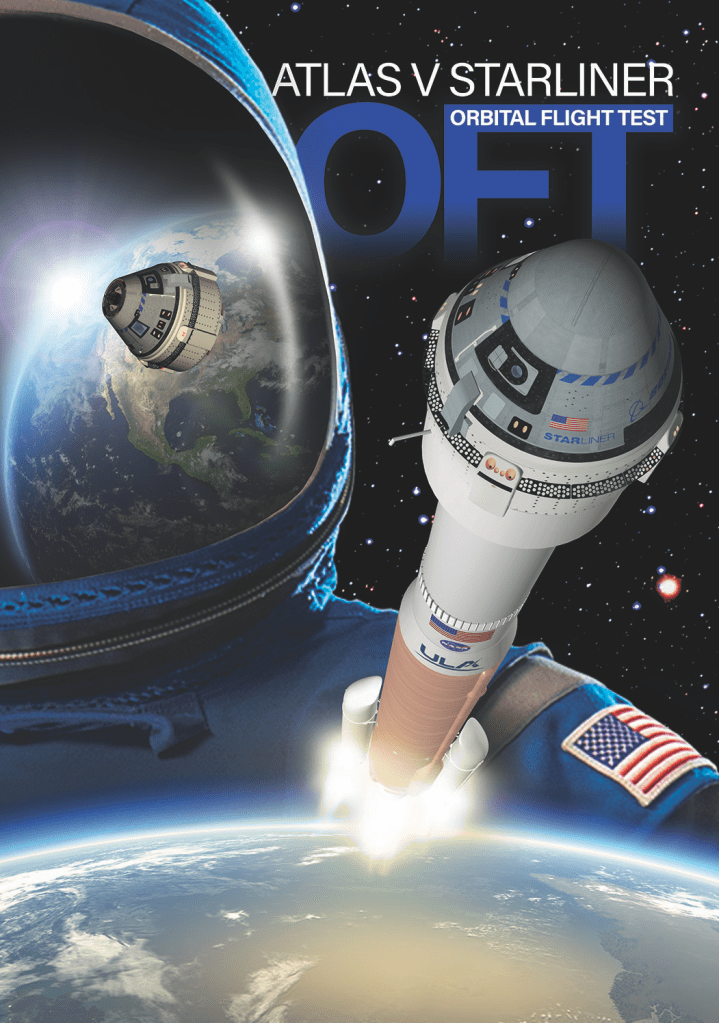
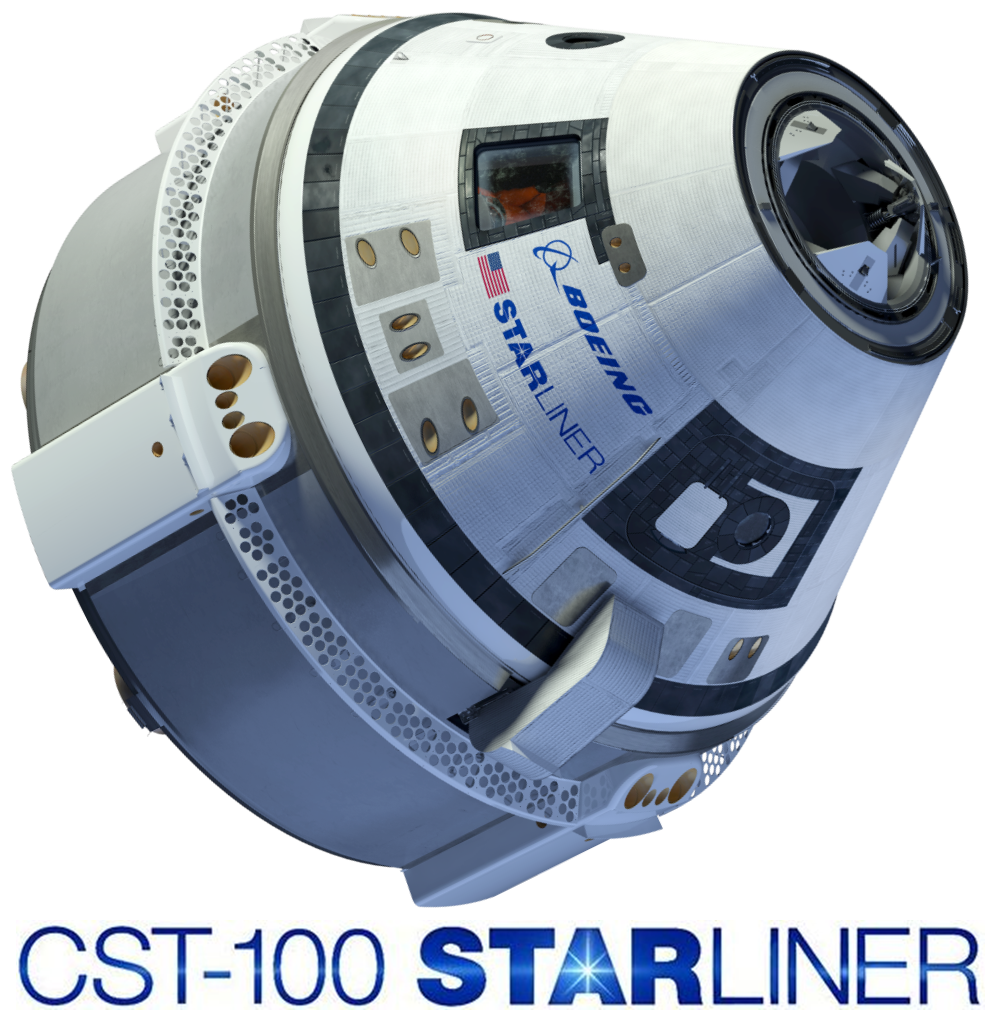
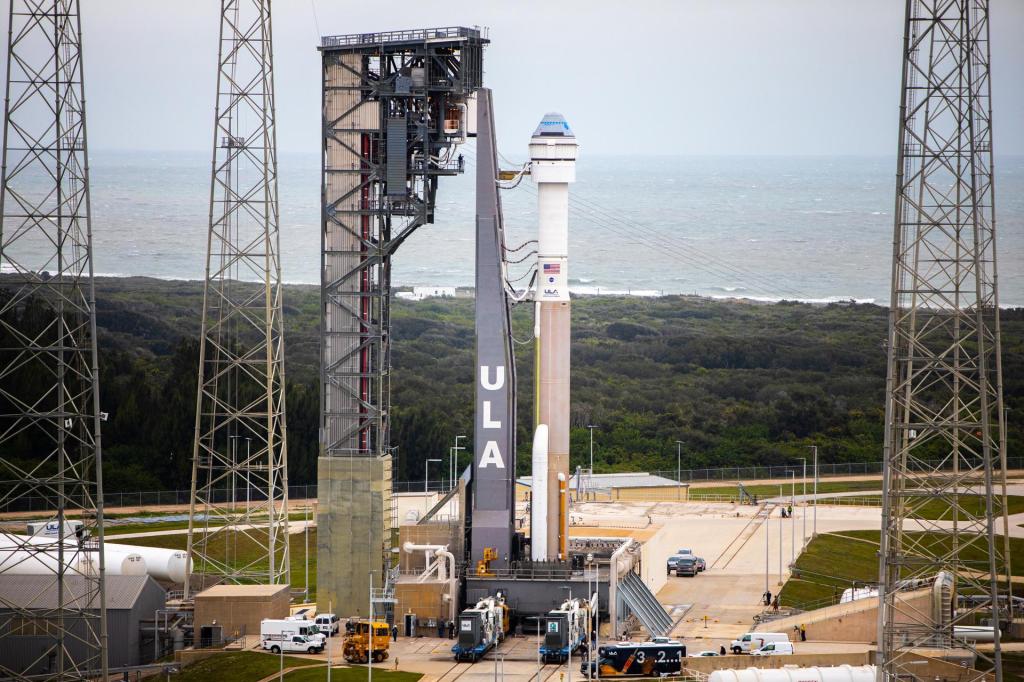
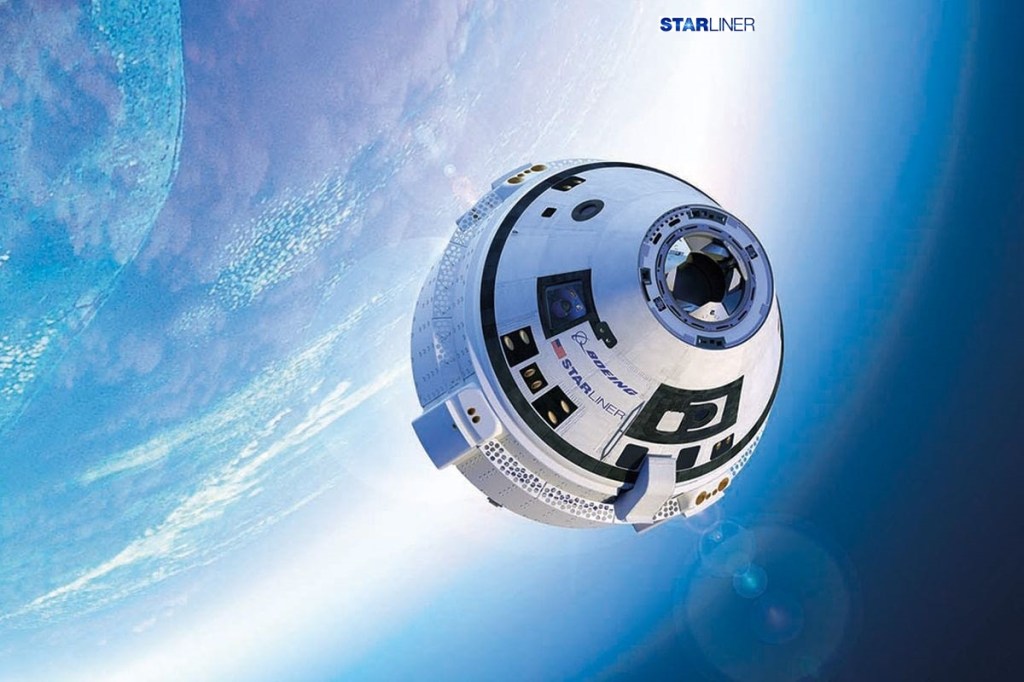
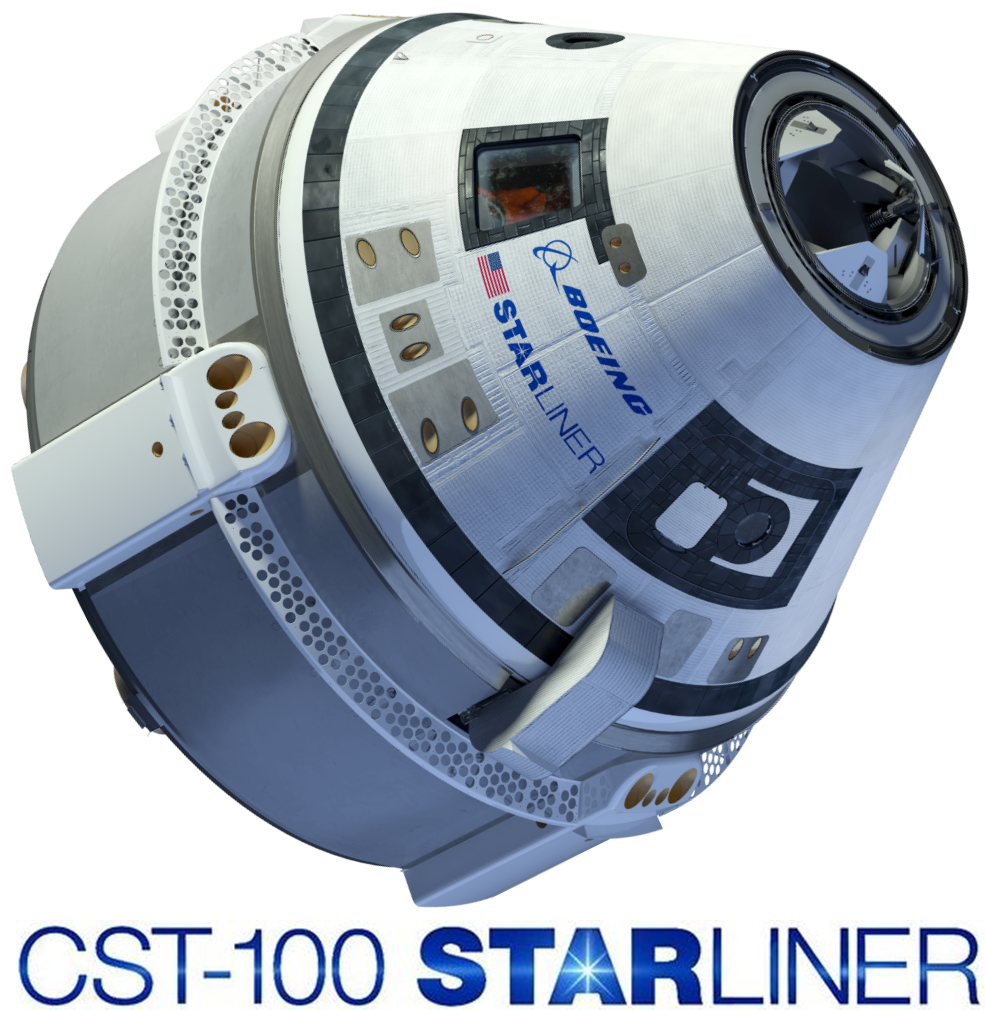
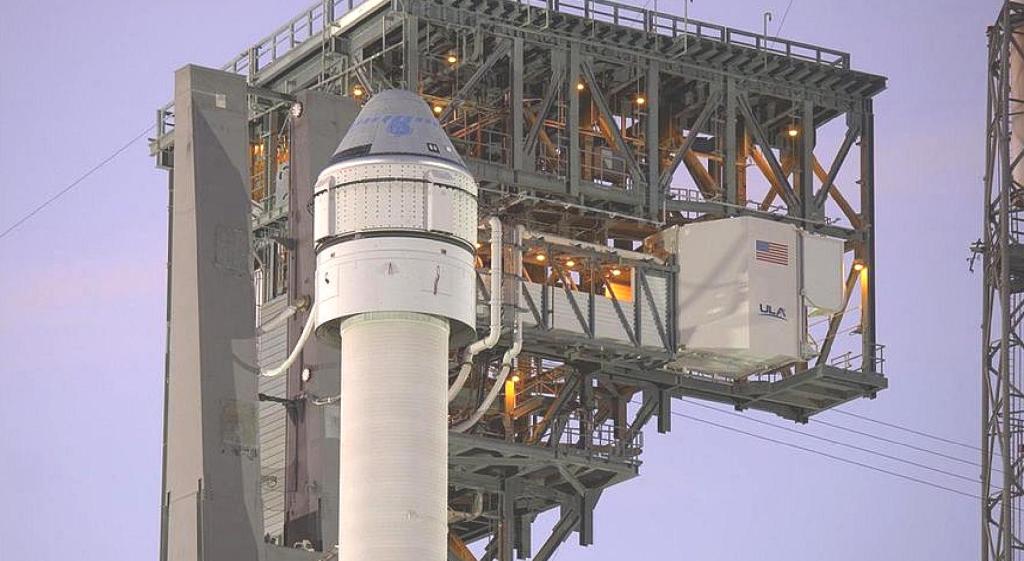
El segundo vuelo de prueba de StarlinerCST-100 tiene una fecha de lanzamiento oficial, según United Launch Alliance. Esto marcará la misión 145 para ULA y el lanzamiento 88th Atlas V. La nave espacial Crew Space Transportation CST-100 Starliner de The Boeing Company se lanzará el 30 de Julio a las 02:53 p.m. desde la Estación de la Fuerza Espacial de Cabo Cañaveral. «Este vuelo de prueba es el último paso importante antes de que el Atlas V y la cápsula Starliner de Boeing lleven a los astronautas estadounidenses a la Estación Espacial Internacional como parte del Programa de Tripulación Comercial de la NASA», dijo ULA en un comunicado de prensa.
El anuncio se produce después de un primer intento fallido en Diciembre de 2019. El Starliner fue lanzado originalmente el 20 de diciembre a bordo de un cohete Atlas V y se suponía que debía entregar suministros a la Estación Espacial Internacional. Unos 30 minutos después del vuelo, una anomalía envió a la nave espacial a la órbita equivocada, lo que le impidió llegar a la ISS. La NASA identificó tres preocupaciones principales durante el vuelo y ordenó una segunda prueba. Si bien la segunda prueba se fijó para Marzo de este año, el lanzamiento se retrasó después de que las tormentas de invierno en Houston y el reciente reemplazo de las cajas de aviónica retrasaron el programa, según la NASA.
2nd launch Starliner 07/30
Boeing schedules Starliner second test flight launch date
Starliner‘s CST-100 second test flight has an official launch date, according to the United Launch Alliance. This will mark mission 145 for ULA and the 88th Atlas V launch. The Boeing Company‘s Crew Space Transportation CST-100 Starliner spacecraft will launch on July 30 at 02:53 p.m. from Cape Canaveral Space Force Station. «This test flight is the last major step before Boeing’s Atlas V and Starliner capsule take American astronauts to the International Space Station as part of NASA’s Commercial Crew Program», ULA said in a statement from press.
The announcement comes after a failed first attempt in December 2019. The Starliner was originally launched on December 20 aboard an Atlas V rocket and was supposed to deliver supplies to the International Space Station. About 30 minutes after the flight, an anomaly sent the spacecraft into the wrong orbit, preventing it from reaching the ISS. NASA identified three main concerns during the flight and ordered a second test. While the second test was set for March this year, the launch was delayed after winter storms in Houston and the recent replacement of avionics boxes delayed the program, according to NASA.
AW | 2021 05 31 06:14 | INDUSTRY / AVIATION TECHNOLOGY / AEROSPACE
Comunicación digital cuántica para infraestructura europea
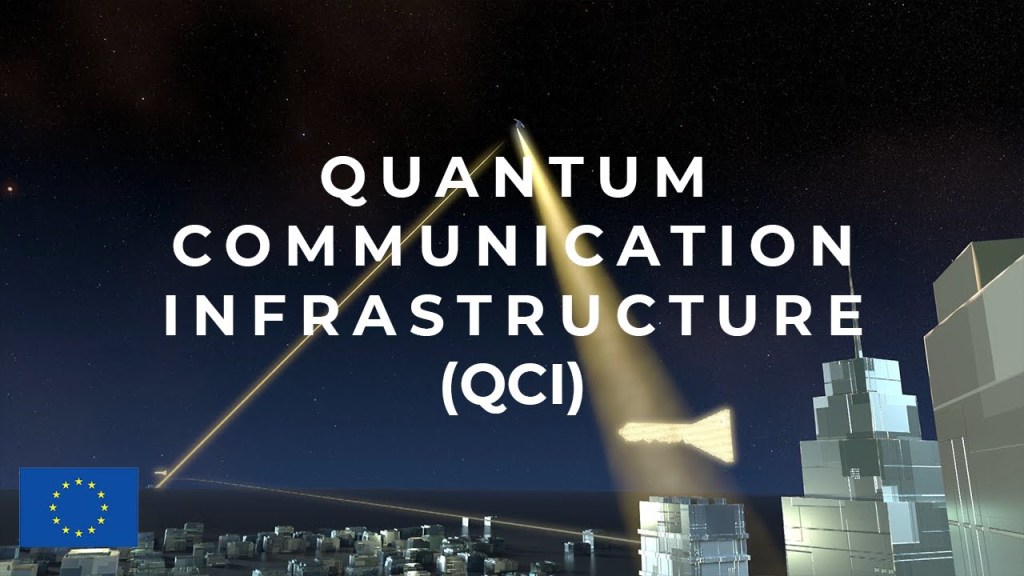
La Comisión Europea (CE) ha seleccionado un consorcio de empresas e institutos de investigación para estudiar el diseño de la futura red europea de comunicación cuántica, EuroQCI (infraestructura de comunicación cuántica). Permitirá una comunicación ultrasegura entre infraestructuras críticas e instituciones gubernamentales en toda la Unión Europea. El consorcio europeo liderado por Airbus Group está compuesto por Leonardo, Orange, PwC France and Maghreb, Telespazio (una empresa conjunta de Leonardo y Thales 67/33), el Consiglio Nazionale delle Ricerche (CNR) y el Istituto Nazionale di Ricerca Metrologica (INRiM).
El EuroQCI integrará tecnologías y sistemas cuánticos en redes de comunicación de fibra óptica terrestres e incluirá un segmento espacial que garantizará una cobertura total en la UE y otros continentes. En última instancia, esto permitirá proteger los sistemas de cifrado y las infraestructuras críticas de Europa, como las instituciones gubernamentales, el control del tráfico aéreo, las instalaciones sanitarias, los bancos y las redes eléctricas frente a las amenazas cibernéticas actuales y futuras.
Desde Junio de 2019, veintiséis Estados miembros han firmado la Declaración EuroQCI, acordando trabajar junto con la Comisión, con el apoyo de la Agencia Espacial Europea (EASA), hacia el desarrollo de una infraestructura de comunicación cuántica que cubra toda la UE. El plan a largo plazo es que EuroQCI se convierta en la base de una Internet cuántica en Europa, conectando computadoras cuánticas, simuladores y sensores a través de redes cuánticas para distribuir información y recursos con un método de seguridad de vanguardia.
El primer servicio en utilizarlo será la distribución de claves cuánticas (QKD). El servicio QKD transmitirá claves de cifrado a través de canales de comunicación cuántica en enlaces de fibra óptica terrestre y láser espacial. El uso de estados de fotones cuánticos hace que la distribución de claves sea inmune a las vulnerabilidades, a diferencia de los métodos actuales. El estudio de quince meses establecerá los detalles del sistema de extremo a extremo y diseñará el segmento terrestre que respalda el servicio QKD. Desarrollará una hoja de ruta de implementación detallada, incluido el costo y el cronograma de cada fase de implementación. Además, el estudio ayudará a la Comisión Europea a diseñar una infraestructura avanzada de validación y pruebas de QCI que incluya estándares. El objetivo es ejecutar un demostrador EuroQCI para 2024 y un servicio operativo inicial para 2027.
El consorcio se beneficiará de la complementariedad de sus miembros, que incluyen grandes integradores de sistemas, operadores de telecomunicaciones y Satcom y proveedores de servicios, además de institutos de investigación. El estudio aprovechará y fortalecerá las contribuciones existentes en varios proyectos cuánticos realizados por cada miembro del consorcio y se beneficiará de una amplia experiencia de campo de la columna vertebral cuántica italiana gracias a CNR e INRiM.
European Consortium for EuroQCI
Quantum digital communication for European infrastructure
The European Commission (EC) has selected a consortium of companies and research institutes to study the design of the future European quantum communication network, EuroQCI (quantum communication infrastructure). It will allow ultra-secure communication between critical infrastructures and government institutions throughout the European Union. The European consortium led by Airbus Group is made up of Leonardo, Orange, PwC France and Maghreb, Telespazio (a joint venture of Leonardo and Thales 67/33), the Consiglio Nazionale delle Ricerche (CNR) and the Istituto Nazionale di Ricerca Metrologica (INRiM).
The EuroQCI will integrate quantum technologies and systems in terrestrial fiber optic communication networks and will include a space segment that will ensure full coverage in the EU and other continents. Ultimately, this will help protect Europe’s encryption systems and critical infrastructures, such as government institutions, air traffic control, healthcare facilities, banks, and power grids from current and future cyber threats.
Since June 2019, twenty-six Member States have signed the EuroQCI Declaration, agreeing to work together with the Commission, with the support of the European Space Agency (EASA), towards the development of a quantum communication infrastructure covering the entire EU. The long-term plan is for EuroQCI to become the foundation of a quantum Internet in Europe, connecting quantum computers, simulators and sensors via quantum networks to distribute information and resources with a state-of-the-art security method.
The first service to use it will be quantum key distribution (QKD). The QKD service will transmit encryption keys over quantum communication channels on terrestrial fiber optic and space laser links. The use of quantum photon states makes the key distribution immune to vulnerabilities, unlike current methods. The fifteen-month study will establish the details of the end-to-end system and design the ground segment that supports the QKD service. You will develop a detailed implementation roadmap, including the cost and schedule for each implementation phase. In addition, the study will help the European Commission to design an advanced QCI testing and validation infrastructure that includes standards. The goal is to run a EuroQCI demonstrator by 2024 and an initial operational service by 2027.
The consortium will benefit from the complementarity of its members, which include large systems integrators, telecom and Satcom operators and service providers, as well as research institutes. The study will build on and strengthen existing contributions in various quantum projects carried out by each member of the consortium and benefit from extensive field experience of the Italian quantum backbone thanks to CNR and INRiM.
El despegue del Cohete Atlas V de United Launch Alliance con la cápsula Starliner CST-100 está dirigido a las 02:53 p.m. EDT del Viernes 30 de Julio de 2021, desde el Complejo de Lanzamiento Espacial-41 en la Estación de la Fuerza Espacial de Cabo Cañaveral en Florida (FL). La misión desenroscará las capacidades de extremo a extremo de la nave espacial Starliner y el cohete Atlas V desde el lanzamiento hasta el acoplamiento y el regreso a la Tierra en el desierto del oeste de estados Unidos. Después de una finalización exitosa de la misión OFT-2, la NASA y The Boeing Company están apuntando a finales de 2021 para la Boeing Crew Flight Test (CFT) de la NASA, el primer vuelo de Starliner con astronautas a bordo. OFT-2 y CFT proporcionarán valiosos datos a la NASA certificando el sistema de transporte de la tripulación de Boeing para vuelos regulares con astronautas hacia y desde la estación espacial.
Los medios de prensa pueden solicitar por separado una oportunidad fotográfica durante el despliegue de la nave espacial Starliner desde la Instalación Comercial de Carga y Procesamiento de Boeing en el Centro Espacial Kennedy de la NASA en Florida. La actividad operativa está dirigida aproximadamente a las 4 a.m. EDT el Sábado 17 de Julio de 2021.
La NASA continúa monitoreando los desarrollos relacionados con la pandemia del coronavirus (COVID-19) y Kennedy concederá acceso a un número limitado de medios para proteger la salud y la seguridad de los medios de comunicación y los empleados. Debido a las restricciones de seguridad Covid-19 en Kennedy, los medios internacionales procedentes del extranjero tendrán que seguir los requisitos de cuarentena. La agencia seguirá las directrices de los Centros para el Control y la Prevención de Enfermedades y el director de salud y medicina de la agencia y comunicará inmediatamente cualquier actualización que pueda afectar el acceso a los medios de comunicación para este lanzamiento.
El Programa de Tripulación Comercial de la NASA está trabajando con la industria aeroespacial estadounidense a través de una asociación público-privada para lanzar astronautas en cohetes y naves espaciales estadounidenses desde suelo estadounidense. El objetivo del programa es proporcionar un transporte seguro, confiable y rentable hacia y desde la estación espacial, lo que permitirá un tiempo de investigación adicional y aumentará la oportunidad de descubrimiento a bordo del banco de pruebas de la humanidad para la exploración. La estación espacial sigue siendo el trampolín del próximo gran salto de la NASA en la exploración espacial, incluyendo futuras misiones a la Luna y eventualmente a Marte. Para obtener la cobertura de lanzamiento y más información sobre la misión, puede visitar: https://www.nasa.gov/commercialcrew.
Boeing OFT-2 launch 30/05
Boeing Orbital Flight Test-2 launch announced
The liftoff of the United Launch Alliance Rocket Atlas V with the Starliner CST-100 capsule is aimed at 02:53 p.m. EDT on Friday, July 30, 2021, from Space Launch Complex-41 at Cape Canaveral Space Force Station in Florida (FL). The mission will unscrew the end-to-end capabilities of the Starliner spacecraft and Atlas V rocket from launch to docking and return to Earth in the western desert of the United States. Following a successful completion of the OFT-2 mission, NASA and The Boeing Company are targeting late 2021 for NASA’s Boeing Crew Flight Test (CFT), the first Starliner flight with astronauts on board. OFT-2 and CFT will provide valuable data to NASA certifying Boeing’s crew transportation system for regular flights with astronauts to and from the space station.
The media may separately request a photo opportunity during the deployment of the Starliner spacecraft from the Boeing Commercial Loading and Processing Facility at NASA’s Kennedy Space Center in Florida. Operational activity is directed at approximately 4 a.m. EDT on Saturday, July 17, 2021.
NASA continues to monitor developments related to the coronavirus (COVID-19) pandemic and Kennedy will grant access to a limited number of media to protect the health and safety of the media and employees. Due to Covid-19 security restrictions at Kennedy, international media coming from abroad will have to follow quarantine requirements. The agency will follow the guidelines of the Centers for Disease Control and Prevention and the agency’s director of health and medicine and will immediately communicate any updates that may affect media access for this release.
NASA’s Commercial Crew Program is working with the US aerospace industry through a public-private partnership to launch astronauts on US rockets and spacecraft from US soil. The goal of the program is to provide safe, reliable, and cost-effective transportation to and from the space station, which will allow additional research time and increase the opportunity for discovery aboard humanity’s test bed for exploration. The space station remains the springboard for NASA’s next great leap in space exploration, including future missions to the Moon and eventually to Mars. For launch coverage and more information about the mission, you can visit: https://www.nasa.gov/commercialcrew.
Primeras imágenes satelitales detalladas del Pléiades Neo 3
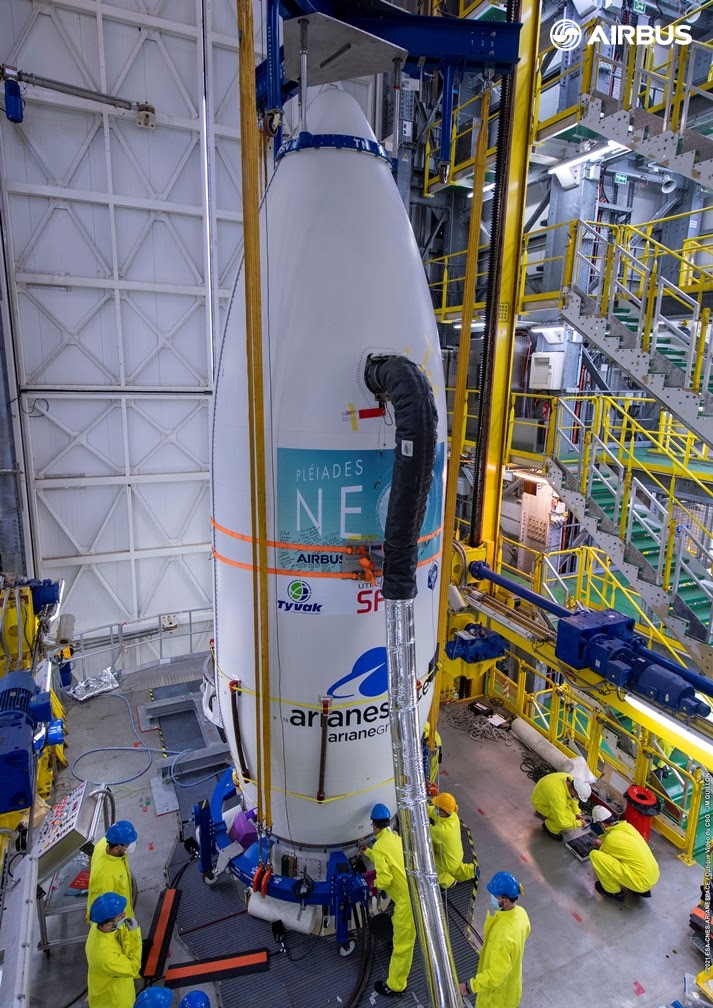
Airbus Group ha anunciado desde Toulouse, Francia, este 20 de Mayo de 2021 el lanzamiento de las primeras imágenes del Satélite Pléiades Neo 3, con una nueva era para las aplicaciones geoespaciales. Las imágenes de alta resolución nativa de 30 cm desde el satélite Pléiades Neo 3, recientemente lanzado de forma segura y asegurado en órbita. Las adquisiciones exitosas y la entrega de estas primeras imágenes son el comienzo de una nueva era para aplicaciones geoespaciales comerciales y gubernamentales que requieren un alto nivel de precisión y la capacidad de alta definición de resolución.
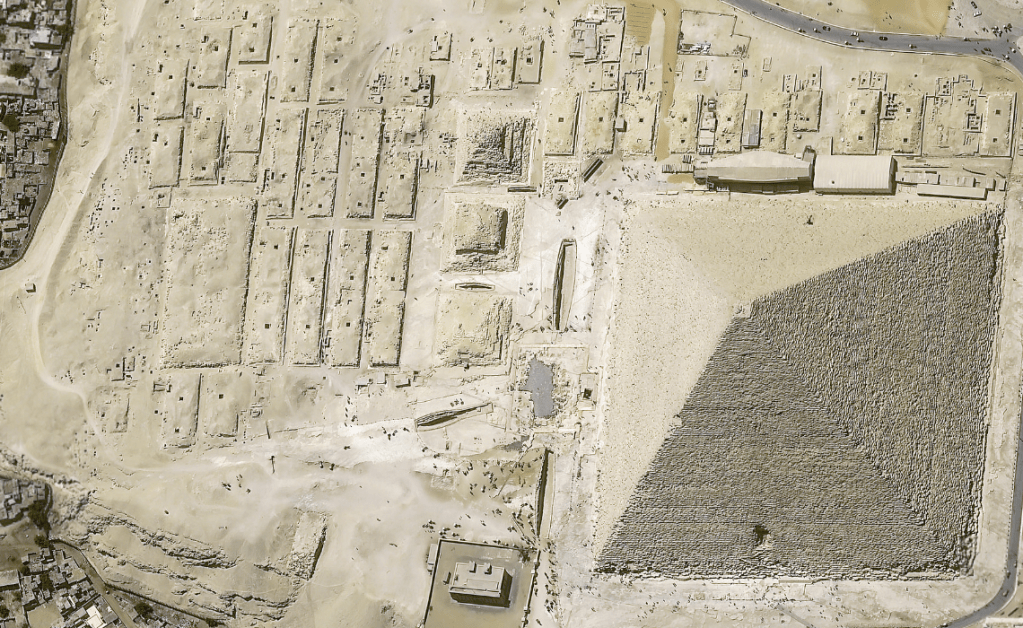
Las imágenes de Pléiades Neo 3, que cubren una variedad de ubicaciones globales y presentan diversos ángulos de adquisición, proporcionan un nivel de detalle impresionante. En uno es fácil contar todos y cada uno de los bloques de piedra caliza de las pirámides de Giza, e incluso el número de personas que lo visitan. La construcción de varias capas del Castel Sant’Angelo a lo largo de los años también se puede ver en detalle en otro. Las áreas urbanas y la arquitectura moderna, y su amplia diversidad, son claramente visibles en las imágenes de Shanghai, Dubai y Washington DC. Estas imágenes, que ya son muy nítidas, se adquirieron antes de las calibraciones radiométricas y del sistema completas, y la calidad continuará mejorando durante los próximos meses. Se espera que las imágenes de Pléiades Neo 3 estén disponibles comercialmente en el tercer trimestre de 2021, una vez que se completen estos pasos de calibración.
Con la capacidad total del satélite disponible para uso comercial, las imágenes de Pléiades Neo 3 de muy alta resolución y geometría consistente proporcionarán a los analistas un alto nivel de detalle, incluida una mayor visibilidad de objetos pequeños, como vehículos y marcas viales. Este nivel de detección, reconocimiento e identificación de objetos proporciona más verdad fundamental para los analistas de imágenes y mejora la confiabilidad de las capacidades de aprendizaje automático. La nueva constelación también proporcionará una mayor precisión de geolocalización e información de banda espectral más profunda, lo que permitirá obtener más información para diversas aplicaciones. La constelación Pléiades Neo estará compuesta por cuatro satélites idénticos y muy ágiles, que ofrecerán tareas reactivas y una revisión intradía de cualquier punto de la Tierra. Totalmente financiado, diseñado, fabricado, propiedad y operado por Airbus, cada satélite agregará medio millón de km² por día a una resolución nativa de 30 cm.
El siguiente hito del programa Pléiades Neo es el lanzamiento de Pléiades Neo 4, que ya se encuentra en el sitio de lanzamiento en Kourou, Guayana Francesa. Se espera que se lance este verano boreal, seguido del lanzamiento de Pléiades Neo 5 y 6, en 2022.
Pléiades Neo 3 projects images
First detailed satellite images of the Pléiades Neo 3
Airbus Group has announced from Toulouse, France, this May 20, 2021 the launch of the first images of the Pléiades Neo 3 Satellite, with a new era for geospatial applications. The 30 cm native high resolution images from the Pléiades Neo 3 satellite, recently launched safely and secured in orbit. The successful acquisitions and delivery of these first images are the beginning of a new era for commercial and government geospatial applications that require a high level of precision and high definition resolution capabilities.
The Pléiades Neo 3 images, covering a variety of global locations and featuring various acquisition angles, provide an impressive level of detail. In one it is easy to count each and every limestone block of the Giza pyramids, and even the number of people who visit it. The multi-layered construction of Castel Sant’Angelo over the years can also be seen in detail in another. Urban areas and modern architecture, and their wide diversity, are clearly visible in the images of Shanghai, Dubai, and Washington DC. These images, which are already very sharp, were acquired before the full radiometric and system calibrations, and the quality will continue to improve over the next several months. Images of Pléiades Neo 3 are expected to be commercially available in Q3 2021, once these calibration steps are completed.
With the full satellite capacity available for commercial use, Pléiades Neo 3’s images of very high resolution and consistent geometry will provide analysts with a high level of detail, including increased visibility of small objects such as vehicles and road markings. This level of object detection, recognition and identification provides more fundamental truth for image analysts and improves the reliability of machine learning capabilities. The new constellation will also provide higher geolocation accuracy and deeper spectral band information, allowing more information to be obtained for various applications. The Pléiades Neo constellation will be composed of four identical and very agile satellites, which will offer reactive tasks and an intra-day review of any point on Earth. Fully funded, designed, manufactured, owned and operated by Airbus, each satellite will add half a million km² per day at a native resolution of 30 cm.
The next milestone for the Pléiades Neo program is the launch of Pléiades Neo 4, which is already at the launch site in Kourou, French Guiana. It is expected to launch this summer, followed by the release of Pléiades Neo 5 and 6, in 2022.
CAA y EASA firman procedimientos técnicos aeroespaciales
La Autoridad de Aviación Civil del Reino Unido (CAA) y la Agencia de Seguridad Aérea de la Unión Europea (EASA) han concluido las negociaciones sobre los Procedimientos Técnicos de Aplicación (TIP), que se firmaron este Lunes 17/05.
La firma del TIP, que establece las medidas que el sector aeroespacial debe adoptar para diseñar y producir nuevas piezas aeroespaciales que se mueven entre el Reino Unido y la UE, indica la estrecha relación de trabajo continua entre las dos organizaciones ahora que el Reino Unido ha abandonado el sistema regulatorio europeo.
EASA/CAA agree on TIP procedures
CAA and EASA sign aerospace technical procedures
The United Kingdom Civil Aviation Authority (CAA) and the European Union Aviation Safety Agency (EASA) have concluded the negotiations on the Technical Application Procedures (TIP), which were signed this Monday 05/17.
The signing of the TIP, which sets out the steps that the aerospace industry must take to design and produce new aerospace parts that move between the UK and the EU, indicates the continued close working relationship between the two organizations now that the UK has abandoned the European regulatory system.
Cohete propulsor chino cae a Tierra cerca de Islas Maldivas
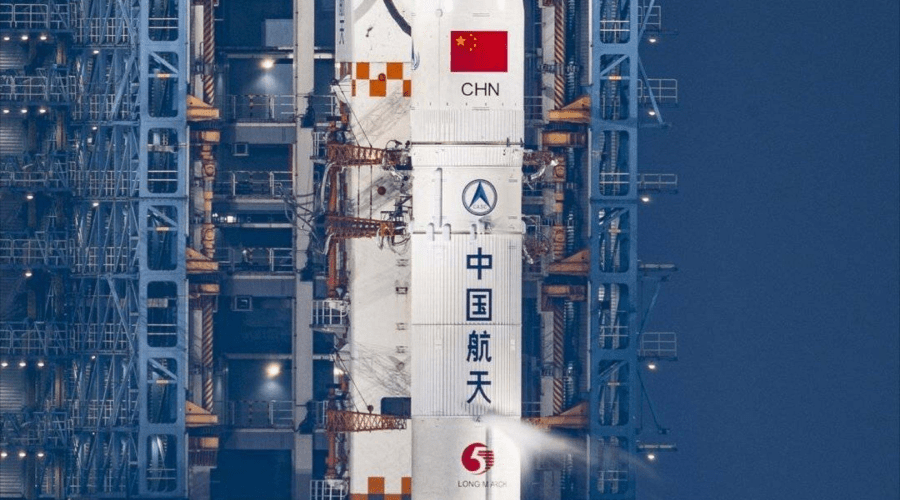
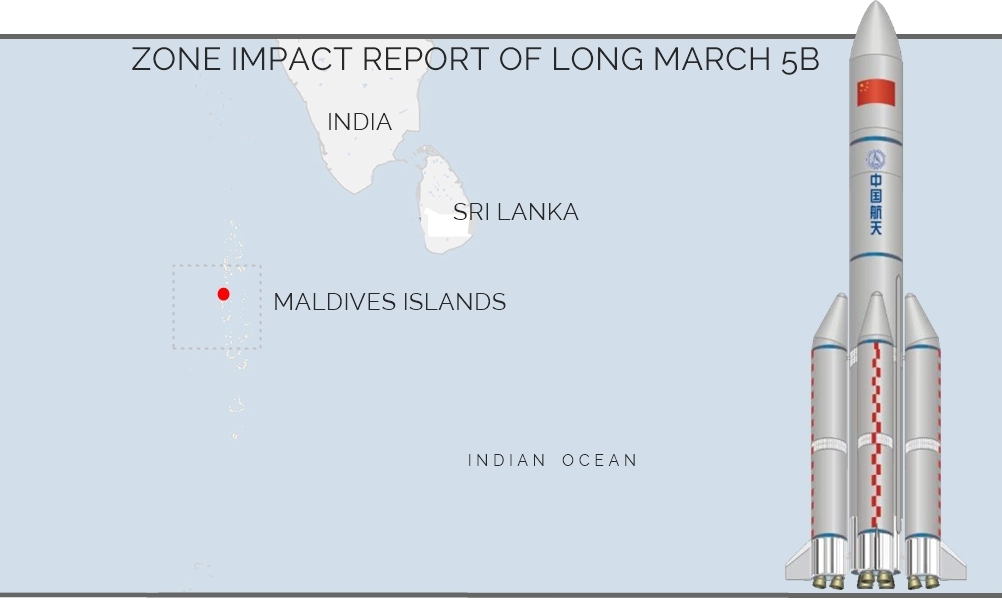
El gigante propulsor Long March 5B (LM-5), también denominado Chang Zheng 5 (CZ-5) de China ha impactado en el planeta Tierra este 08/05, luego de reingresar a la atmósfera cerca de las Islas Maldivas en el Océano Índico. La Etapa Central de 23 tonelada del propulsor Long March 5B se estrelló de nuevo en la Tierra el Sábado 8 de Mayo de 2021 por la noche, poniendo fin a diez días polémicos que captaron la atención del mundo e iniciaron una conversación más amplia sobre los desechos orbitales y la distancia espacial responsable.
El Long March 5B volvió a entrar en la atmósfera sobre la Península Arábiga alrededor de las 10:15 p.m. EDT del Sábado 08/05, 02:15 GMT del Domingo 9 de Mayo de 2021, según el Comando Espacial de Estados Unidos. «Se desconoce si los escombros impactaron tierra o agua», escribieron funcionarios del Comando Espacial en una breve actualización el Sábado 08/05 por la noche. El Long March 5B lanzó el Módulo Central para la nueva estación espacial de China el 28 de Abril de 2021. Sin embargo, en lugar de abandonar de forma segura el océano cuando se hizo su trabajo, la Primera Etapa del cohete alcanzó la órbita, convirtiéndose en un escombros espaciales después del arrastre atmosférico para luego estrellarse en el planeta Tierra.
Otros incidentes
El incidente no ha sido aislado, contando además lo sucedido el año pasado con un núcleo diferente de Long March 5B, que cayó incontrolado sobre el Océano Atlántico frente a la costa de África Occidental. Algunos grandes trozos de escombros de ese reingreso aparentemente llegaron al suelo en la nación de Costa de Marfil, aunque no se reportaron heridos. Además, el primer prototipo de laboratorio espacial de China, Tiangong 1, que fue diseñado para ayudar a allanar el camino para la nueva estación espacial, tuvo su propia fase de basura espacial después de completar su misión. La nave de 8 tonelada cayó a la Tierra sin control en Abril de 2018, ardiendo sobre el Océano Pacífico.
Sólo tres objetos más pesados han caído incontrolados desde el espacio, según el astrónomo y rastreador de satélites Jonathan McDowell, quien tiene su sede en el Centro Harvard-Smithsonian de Astrofísica. Esos tres objetos son la estación espacial Skylabde de 83 toneladas, que se estrelló sobre Australia en Julio de 1979; la Etapa Superior de 50 toneladas del cohete Saturno V que lanzó Skylab, que cayó sobre el Océano Atlántico al oeste de Madeira en Enero de 1975; y la estación espacial Salyut 7 de la Unión Soviética y el módulo adjunto Kosmos-1686, que juntos pesaron unas 43 toneladas y reingresó sobre Argentina en Febrero de 1991. El transbordador espacial Columbia también podría ser considerado en la lista. El orbitador de 117 tonelada se desintegró durante su reingreso en Febrero de 2003, matando a los siete astronautas a bordo.
Muchas personas en la comunidad espacial han criticado a China por los incidentes del Long March 5B, acusando al programa espacial de la nación de comportarse no solo descuidadamente, si también imprudentemente. Una de esas reprobaciones vino el Sábado 08/05 del nuevo Jefe de la NASA, Bill Nelson. «Las naciones espaciales deben minimizar los riesgos para las personas y la propiedad en la Tierra de reingresar objetos espaciales y maximizar la transparencia con respecto a esas operaciones. Está claro que China no está cumpliendo con las normas responsables con respecto a sus desechos espaciales. Es fundamental que China y todas las naciones y entidades comerciales espaciales actúen de manera responsable y transparente en el espacio para garantizar la seguridad, la estabilidad, la seguridad y la sostenibilidad a largo plazo de las actividades del espacio ultraterrestre», escribió Bill Nelson en un comunicado publicado antes de que el cohete se derribara.
Long March 5B hits the Indian Ocean
Chinese booster rocket falls to Earth near Maldives
China’s propellant giant Long March 5B (LM-5), also called Chang Zheng 5 (CZ-5) hit planet Earth on 05/08, after re-entering the atmosphere near the Maldive Islands in the Indian Ocean. The 23-ton Central Stage of the Long March 5B booster crashed back to Earth on Saturday night, May 8, 2021, ending ten controversial days that captured the world’s attention and started a broader conversation about debris. orbitals and responsible space distance.
Long March 5B re-entered the atmosphere over the Arabian Peninsula around 10:15 p.m. EDT on Saturday 05/08, 02:15 GMT on Sunday May 9, 2021, according to the United States Space Command. «It is unknown whether the debris impacted land or water», Space Command officials wrote in a brief update on Saturday night 05/08. The Long March 5B launched the Central Module for China’s new space station on April 28, 2021. However, instead of safely leaving the ocean when its work was done, the First Stage of the rocket reached orbit, becoming in a space debris after atmospheric drag and then crashing on planet Earth.
Other incidents
The incident has not been isolated, also counting what happened last year with a different nucleus of Long March 5B, which fell uncontrollably on the Atlantic Ocean off the coast of West Africa. Some large chunks of debris from that re-entry apparently hit the ground in the Ivory Coast nation, though no injuries were reported. Additionally, China’s first space laboratory prototype, Tiangong 1, which was designed to help pave the way for the new space station, had its own space junk phase after completing its mission. The 8-ton ship fell to Earth uncontrollably in April 2018, burning over the Pacific Ocean.
Only three heavier objects have fallen uncontrollably from space, according to astronomer and satellite tracker Jonathan McDowell, who is based at the Harvard-Smithsonian Center for Astrophysics. Those three objects are the 83-ton Skylabde space station, which crashed over Australia in July 1979; the 50-ton Upper Stage of the Saturn V rocket launched by Skylab, which fell over the Atlantic Ocean west of Madeira in January 1975; and the Soviet Union’s Salyut 7 space station and the attached Kosmos-1686 module, which together weighed about 43 tons and re-entered over Argentina in February 1991. The space shuttle Columbia could also be considered on the list. The 117-ton orbiter disintegrated during its re-entry in February 2003, killing all seven astronauts on board.
Many people in the space community have criticized China for the Long March 5B incidents, accusing the nation’s space program of behaving not only carelessly, but recklessly as well. One of those disapprovals came on Saturday 05/08 from the new Head of NASA, Bill Nelson. «Space nations must minimize the risks to people and property on Earth from re-entering space objects and maximize transparency regarding those operations. It is clear that China is not complying with responsible standards regarding its space debris. It is It is essential that China and all nations and commercial space entities act responsibly and transparently in space to ensure the security, stability, security and long-term sustainability of outer space activities», wrote Bill Nelson in a statement posted before the rocket was shot down.
Nasa y Boeing fijan nueva fecha lanzamiento Starliner a la ISS
Este Jueves 06/05 The Boeing Company ha anunciado una nueva fecha de lanzamiento prevista para el 30 de Julio, a las 11:53 a.m. PT, para el segundo vuelo de prueba no decretado del Starliner CST-100, bajo la misión denominada Orbital Flight Test-2 (OFT-2). El SpaceX y su nave espacial Crew Dragon han sido un punto brillante en el Programa de Tripulación Comercial de la NASA, que devolvió los lanzamientos de astronautas a suelo estadounidense en 2020. Boeing, el otro proveedor de tripulación comercial, todavía necesita probar la seguridad y funcionalidad de su nave espacial antes de enviar una tripulación de la NASA a la Estación Espacial Internacional (ISS).
Boeing había estado previamente mirando Agosto o Septiembre 2021 para el lanzamiento y atribuyó el retraso a trabajar alrededor de otras misiones de la estación espacial, junto con la disponibilidad del cohete Atlas V de united launch Alliance y la cordillera oriental donde se llevará a cabo el lanzamiento. «Boeing estará listo para la misión en mayo en caso de que surja otra oportunidad de lanzamiento», dijo la compañía en un comunicado. La oportunidad parece haber surgido ahora. La fecha de lanzamiento ya había sido retrasada antes, pero el desarrollo de naves espaciales es un desafío, y los obstáculos y retrasos son una parte normal del proceso.
La primera gran prueba de vuelo de CST-100 Starliner a finales de 2019 no salió como estaba previsto. La nave espacial no pudo llegar a la ISS, pero regresó a la Tierra sano y salvo. Una investigación presentó defectos de software y un problema de enlace de comunicaciones. Boeing prometió realizar una segunda prueba de vuelo orbital para probar la seguridad de la nave espacial antes de llevar humanos a bordo.
Boeing ha trabajado para abordar los problemas de la primera prueba de vuelo. «Los equipos llevaron a cabo una revisión completa del software y varias series de pruebas para verificar que el software de Starliner cumple con las especificaciones de diseño», dijo la NASA en un comunicado. Boeing también llevará a cabo una simulación completa del vuelo de prueba antes del lanzamiento.
Si el OFT-2 tiene éxito, entonces la NASA y Boeing buscarán lanzar una tripulación real a la ISS. Boeing apunta a un corto tiempo de respuesta entre OFT-2 y la prueba de vuelo de la tripulación (CFT). Eso pondría tanto a SpaceX como a Boeing en el negocio como proveedores de vuelos de la ISS. Ese es el objetivo final de un programa de la NASA que está destinado a poner fin a la dependencia estadounidense de las naves espaciales rusas para transportar astronautas a la estación espacial.
NASA / Boeing Starliner around 07/2021
NASA and Boeing set new Starliner launch date to ISS
This Thursday 05/06 The Boeing Company has announced a new launch date scheduled for July 30, at 11:53 a.m. PT, for the second non-decreed test flight of the Starliner CST-100, under the mission called Orbital Flight Test-2 (OFT-2). SpaceX and its Crew Dragon spacecraft have been a bright spot in NASA’s Commercial Crew Program, which brought astronaut launches back to US soil in 2020. Boeing, the other commercial crew provider, still needs to prove safety and functionality of your spacecraft before sending a NASA crew to the International Space Station (ISS).
Boeing had previously been looking at August or September 2021 for the launch and attributed the delay to working around other space station missions, along with the availability of the United Launch Alliance’s Atlas V rocket and the eastern ridge where the launch will take place. «Boeing will be mission-ready in May should another launch opportunity arise», the company said in a statement. The opportunity seems to have arisen now. The launch date had already been pushed back before, but spacecraft development is challenging, and obstacles and delays are a normal part of the process.
The first major flight test of the CST-100 Starliner in late 2019 did not go as planned. The spacecraft was unable to reach the ISS, but returned to Earth safely. An investigation revealed software defects and a communications link problem. Boeing promised to conduct a second orbital flight test to test the safety of the spacecraft before bringing humans on board.
Boeing has worked to address the problems from the first flight test. «The teams conducted a complete software review and several series of tests to verify that Starliner’s software meets design specifications», NASA said in a statement. Boeing will also conduct a full simulation of the test flight prior to launch.
If OFT-2 is successful, then NASA and Boeing will look to launch a real crew to the ISS. Boeing is aiming for a short response time between OFT-2 and the flight crew test (CFT). That would put both SpaceX and Boeing in business as ISS flight providers. That’s the ultimate goal of a NASA program that is meant to end America’s reliance on Russian spacecraft to transport astronauts to the space station.
Artemis I llega al SLS del Centro Espacial Kennedy
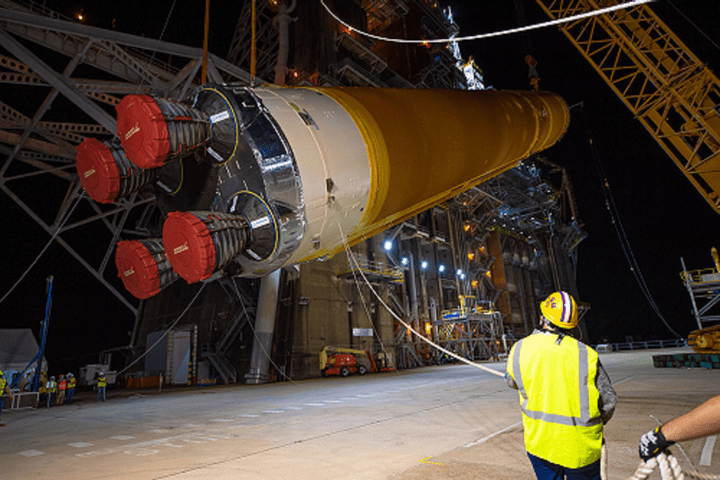
El cohete construido por The Boeing Company para el Space Launch System (SLS) de la NASA fue descargado de una barcaza este 29/04 en el Centro Espacial Kennedy y trasladado al Edificio de Ensamblaje de Vehículos. La Etapa Central de 212 pies (65 metros) se apilará con una etapa superior criogénica provisional de Boeing/United Launch Alliance, dos propulsores de cohetes sólidos, un adaptador de escenario de vehículo de lanzamiento y la nave espacial Orion. Los equipos prepararán el SLS para lanzar Orion en una misión desenroscada alrededor de la Luna y de retorno, llamada Artemis I.
La primera de una serie de misiones cada vez más complejas, Artemis I probará la nave espacial Orion y el cohete SLS como un sistema integrado antes de los vuelos tripulados a la Luna para una exploración sostenida. Sls es el único cohete que puede enviar Orión, astronautas y carga a la Luna en una sola misión.
Boeing es el contratista principal de la NASA para el núcleo SLS y las etapas superiores y la aviónica. La compañía se une a los principales elementos para la etapa central de Artemis II ahora en la Instalación de Ensamblaje Michoud de la NASA en Nueva Orleans, mientras fabrica elementos de etapa central para Artemis III. La compañía también está trabajando en capacidades evolubles para el sistema de cohetes como el Exploration Upper Stage, que está entrando en producción en la instalación de Michoud.
NASA SLS First Stage
Artemis I arrives at the SLS at Kennedy Space Center
The rocket built by The Boeing Company for NASA‘s Space Launch System (SLS) was unloaded from a barge on 04/29 at the Kennedy Space Center and transferred to the Vehicle Assembly Building. The 212-foot (65-meter) Center Stage will be stacked with a Boeing/United Launch Alliance interim cryogenic upper stage, two solid rocket boosters, a launch vehicle stage adapter and the Orion spacecraft. The teams will prepare the SLS to launch Orion on an uncoiled mission around the Moon and back, called Artemis I.
The first in a series of increasingly complex missions, Artemis I will test the Orion spacecraft and the SLS rocket as an integrated system prior to manned flights to the Moon for sustained exploration. Sls is the only rocket that can send Orion, astronauts and cargo to the Moon in a single mission.
Boeing is NASA’s prime contractor for the SLS core and upper stages and avionics. The company joins leading elements for the Artemis II center stage now at NASA’s Michoud Assembly Facility in New Orleans, while manufacturing center stage elements for Artemis III. The company is also working on scalable capabilities for the rocket system such as the Exploration Upper Stage, which is entering production at the Michoud facility.
Primer satélite Pléiades Neo entregado forma segura en órbita
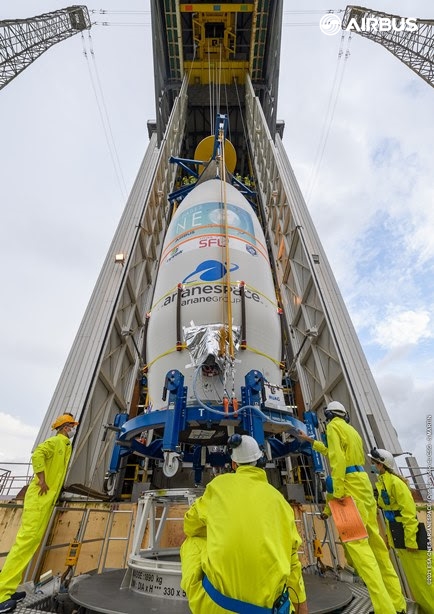
El primer satélite de la constelación Pléiades Neo fue entregado de forma segura en órbita por el lanzador europeo Vega de Arianespace, desde la Guayana Francesa este Miércoles 28/04. Este es el inicio de una nueva era para Airbus y aplicaciones geoespaciales. En esta mañana del Jueves 29/04 se recibieron las primeras señales de telemetría y se desplegaron los paneles solares. Las actividades de la fase de órbita temprana han comenzado, comandadas desde el centro de control de Airbus en Toulouse, para preparar la adquisición de la primera imagen la próxima semana. La fase de calibración en órbita seguirá antes de abrir el servicio comercial.
Totalmente financiado, diseñado, fabricado, propiedad y operado por Airbus, Pléiades Neo proporcionará a los clientes comerciales e institucionales información de alto nivel durante la próxima década. Cada satélite agregará medio millón de km² por día a una resolución nativa de 30 cm. Las imágenes serán fácilmente accesibles en la plataforma digital OneAtlas de Airbus, lo que permitirá a los clientes acceso inmediato a datos recién adquiridos y de archivo, así como a análisis exhaustivos. Compuesto por cuatro satélites idénticos, la constelación Pléiades Neo trabajará de la mano con los satélites Pléiades existentes y el resto de la flota de satélites de observación de la Tierra Airbus de una docena de efectivos. La nave espacial Pléiades Neo, altamente compacta, tiene un instrumento óptico de carburo de silicio de última generación de peso liviano, basado en la tecnología en la que Airbus fue pionera a principios de la década de 2000. También tienen enlaces entre satélites con satélites geoestacionarios SpaceDataHighway (EDRS) para permitir adquisiciones urgentes de 30 a 40 minutos después de la solicitud de tarea para responder rápidamente a las situaciones más críticas.
“El lanzamiento de este primer satélite Pléiades Neo allanará el camino hacia nuevos servicios y grandes oportunidades para nuestros clientes, gracias a su alta precisión y mayor reactividad. La constelación Pléiades Neo impulsará definitivamente el mercado de imágenes de 30 cm, aportando mucha innovación y capacidad de cobertura a los usuarios finales comerciales y gubernamentales”, dijo François Lombard, Jefe de Inteligencia de Airbus Defence and Space. Al satélite pronto se le unirá su gemelo, Pléiades Neo 4, ya en Kourou y listo para su lanzamiento este verano, también en un cohete Vega.
First Pléiades Neo satellite
First satellite Pléiades Neo constellation safely delivered into orbit
The first satellite of the Pléiades Neo constellation was safely delivered into orbit by Arianespace’s European launcher Vega, from French Guiana this Wednesday 04/28. This is the beginning of a new era for Airbus and geospatial applications. On this morning of Thursday 04/29, the first telemetry signals were received and the solar panels were deployed. The activities of the early orbit phase have started, commanded from the Airbus control center in Toulouse, to prepare for the acquisition of the first image next week. The in-orbit calibration phase will follow before opening commercial service.
Fully financed, designed, manufactured, owned and operated by Airbus, Pléiades Neo will provide commercial and institutional clients with high-level information for the next decade. Each satellite will add half a million km² per day at a native resolution of 30 cm. The images will be easily accessible on Airbus’ OneAtlas digital platform, allowing customers immediate access to newly acquired and archival data, as well as in-depth analysis. Comprised of four identical satellites, the Pléiades Neo constellation will work hand in hand with the existing Pléiades satellites and the rest of the Airbus Earth observation satellite fleet of a dozen. The highly compact Pléiades Neo spacecraft has a lightweight, next-generation silicon carbide optical instrument, based on technology pioneered by Airbus in the early 2000s. They also have inter-satellite links to geostationary satellites. SpaceDataHighway (EDRS) to enable urgent acquisitions 30-40 minutes after task request to quickly respond to the most critical situations.
“The launch of this first Pléiades Neo satellite will pave the way to new services and great opportunities for our customers, thanks to its high precision and greater reactivity. The Pléiades Neo constellation will definitely boost the 12-inch imaging market, bringing a lot of innovation and coverage capacity to commercial and government end users”, said François Lombard, Head of Intelligence at Airbus Defense and Space. The satellite will soon be joined by its twin, Pléiades Neo 4, already in Kourou and ready for launch this summer, also on a Vega rocket.
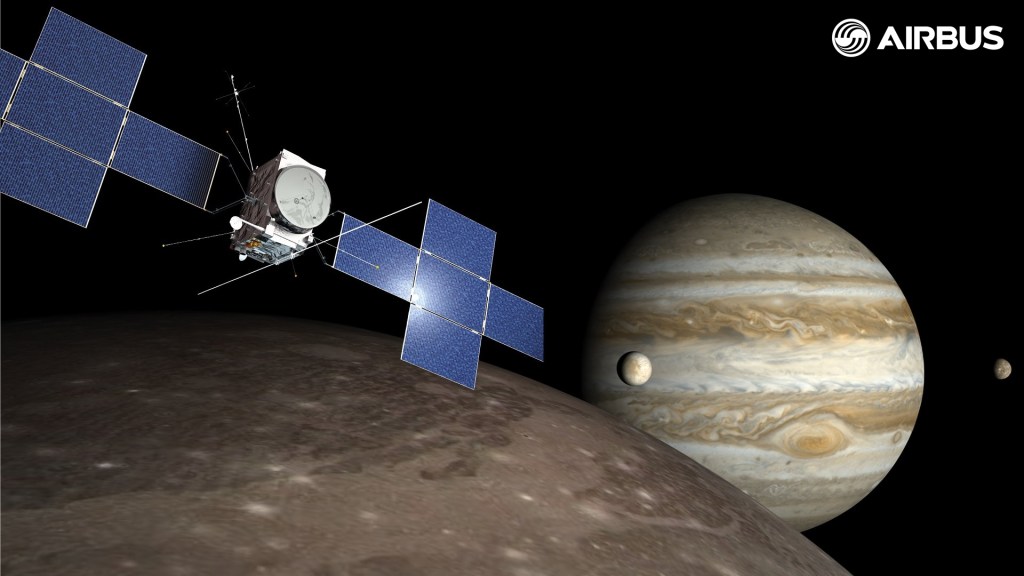
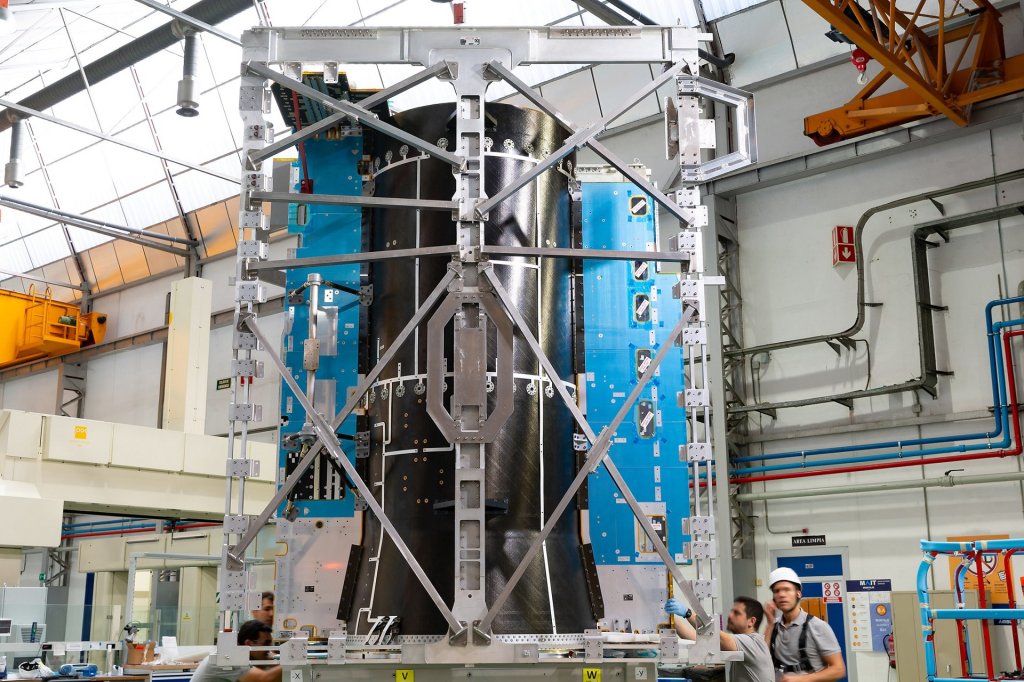
Airbus Group SE construyó un satélite para iniciar las pruebas medioambientales. JUICE, la misión JUpiter ICy moons Explorer, liderada por la Agencia Espacial Europea (ESA), ha abandonado el Centro de Integración de Satélites de Airbus en Friedrichshafen (Alemania) y ahora se dirige al Gran Simulador Espacial (LSS) de la cámara de la Agencia Espacial Europea (ESA) en Noordwijk (Países Bajos) para probar el espacio por primera vez. Durante los próximos 12 meses, comenzando con 31 días en la cámara de vacío en el LSS, la nave espacial estará expuesta a las condiciones ambientales del espacio y tendrá que demostrar que está lista para su viaje a través de Venus y Marte a Júpiter y su misión en el sistema joviano.
Desde su llegada hace doce meses al sitio de Airbus, JUICE ha sido equipado con sus componentes finales, incluidos el arnés, la electrónica de potencia, la computadora de a bordo, los sistemas de comunicación, los sensores de navegación, el hardware térmico y, fundamentalmente, sus instrumentos científicos. En el centro de pruebas de la ESA en ESTEC en Noordwijk, la nave espacial se someterá a una campaña de pruebas ambientales completa que incluye la verificación de su sistema de control térmico y sus elementos eléctricos. Junto con sus colegas de la ESA, un total de 120 ingenieros espaciales y subcontratistas de Airbus prepararán y llevarán a cabo las pruebas. En Julio de este año, la nave espacial se dirigirá a Airbus en Toulouse para el ensamblaje de la configuración de vuelo, antes de las pruebas ambientales finales que incluyen compatibilidad electromagnética (EMC), mecánica, despliegue y propulsión. Luego se enviará al sitio de lanzamiento en Kourou, Guayana Francesa.
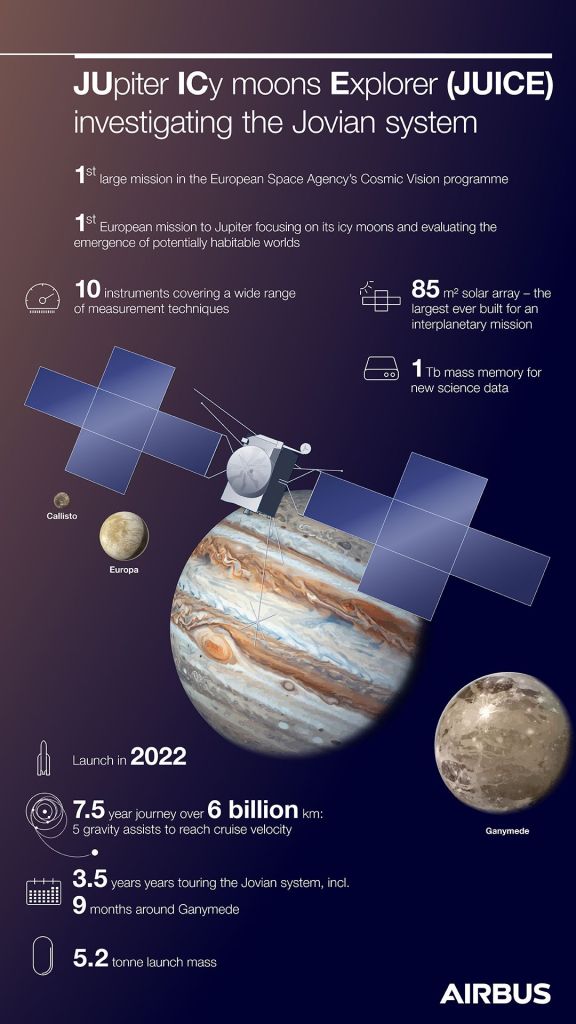
La nave espacial JUICE de 6.2 toneladas partirá en 2022 en su viaje de casi 600 millones de kilómetros a Júpiter. La nave espacial llevará 10 instrumentos científicos de última generación, que incluyen cámaras, espectrómetros, un radar que penetra en el hielo, un altímetro, un experimento de radiociencia y sensores para monitorear los campos magnéticos y las partículas cargadas en el sistema joviano. JUICE completará un recorrido único por el sistema de Júpiter que incluirá estudios en profundidad de tres lunas potencialmente oceánicas con agua líquida, Ganímedes, Europa y Calisto.
JUICE pasará más de tres años en el sistema de Júpiter, recopilando datos para proporcionar respuestas sobre las condiciones para la formación de planetas y el surgimiento de la vida. Pasará nueve meses orbitando la luna helada Ganímedes analizando su naturaleza y evolución, y su habitabilidad potencial. Como contratista principal, Airbus lidera un consorcio industrial de más de 80 empresas en toda Europa.
Airbus tests JUICE satellite
JUICE, first test of the Jupiter probe
Airbus Group SE built a satellite to start environmental testing. JUICE, the JUpiter ICy moons Explorer mission, led by the European Space Agency (ESA), has left the Airbus Satellite Integration Center in Friedrichshafen (Germany) and is now heading to the Large Space Simulator (LSS) of the chamber of the European Space Agency (ESA) in Noordwijk (Netherlands) to test space for the first time. Over the next 12 months, beginning with 31 days in the vacuum chamber at LSS, the spacecraft will be exposed to the environmental conditions of space and will have to demonstrate that it is ready for its journey through Venus and Mars to Jupiter and its mission in the jovian system.
Since arriving at the Airbus site twelve months ago, JUICE has been outfitted with its final components, including the harness, power electronics, on-board computer, communication systems, navigation sensors, thermal hardware, and, fundamentally, its scientific instruments. At ESA’s test center at ESTEC in Noordwijk, the spacecraft will undergo a comprehensive environmental testing campaign that includes verification of its thermal control system and its electrical elements. Together with their ESA colleagues, a total of 120 Airbus space engineers and subcontractors will prepare and carry out the tests. In July this year, the spacecraft will head to Airbus in Toulouse for assembly of the flight configuration, prior to final environmental tests that include electromagnetic compatibility (EMC), mechanics, deployment and propulsion. It will then be shipped to the launch site in Kourou, French Guiana.
The 6.2-ton JUICE spacecraft will depart in 2022 on its nearly 600 million kilometer journey to Jupiter. The spacecraft will carry 10 state-of-the-art science instruments, including cameras, spectrometers, an ice-penetrating radar, an altimeter, a radioscience experiment, and sensors to monitor magnetic fields and charged particles in the Jovian system. JUICE will complete a unique tour of the Jupiter system that will include in-depth surveys of three potentially oceanic moons with liquid water, Ganymede, Europa, and Callisto.
JUICE will spend more than three years in the Jupiter system, collecting data to provide answers about the conditions for planet formation and the emergence of life. It will spend nine months orbiting the icy moon Ganymede, analyzing its nature and evolution, and its potential habitability. As prime contractor, Airbus leads an industrial consortium of more than 80 companies across Europe.































 airgways.com