Bielorrusia anuncia restricciones
AW | 2021 12 07 08:28 | AIR TRAFFIC / GOVERNMENT

Bielorrusia anuncia sanciones a aerolíneas occidentales

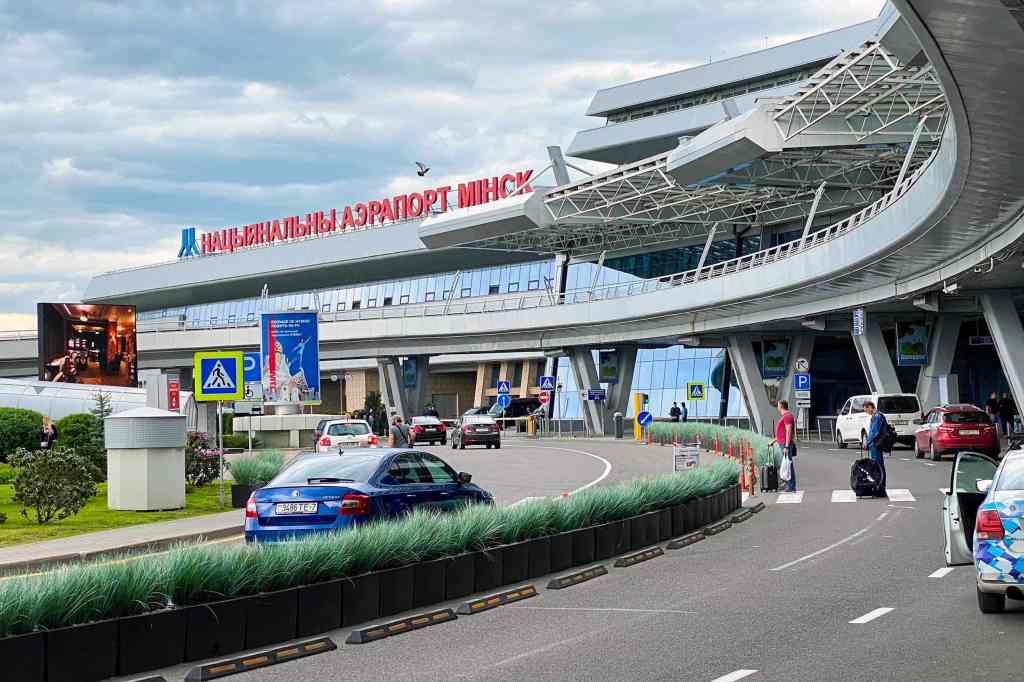
Bielorrusia ha anunciado este Lunes 6 de Diciembre de 2021 un embargo a los productos de los países occidentales que adoptaron sanciones contra Minsk y sanciones contra las aerolíneas de los miembros de la Unión Europea (UE) y el Reino Unido. Las medidas de respuesta contra la ilegal presión sancionadora externa de Occidente, mientras que el Gobierno busca defender los intereses nacionales, señala el comunicado de Exteriores.

Minsk considera que las ilegítimas restricciones contra el sector de aviación bielorruso están dictadas por la competencia desleal. “Medidas análogas serán adoptadas por nuestro país en relación a las aerolíneas de la UE y el Reino Unido”, indica el comunicado oficial. A su vez, con el fin de rebatir la presión occidental y fortalecer la seguridad económica, la antigua república soviética proseguirá la senda de la integración económica con Rusia. También ampliará la lista de individuos indeseables que no podrán acceder a territorio bielorruso, que incumbirá a los ciudadanos de países que discriminan a funcionarios, periodistas y representantes de organizaciones del Presidente Alexandr Lukashenko. Minsk también explicó que las medidas pueden ser anuladas si los países que adoptaron sanciones renuncian a la lógica de la Guerra Fría y retoman el camino de la cooperación constructiva.

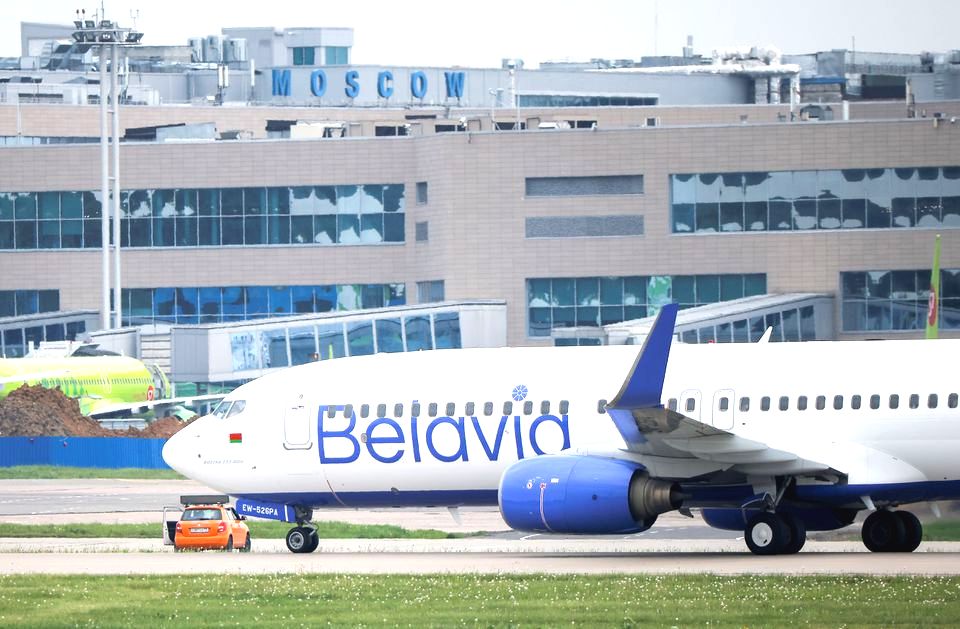
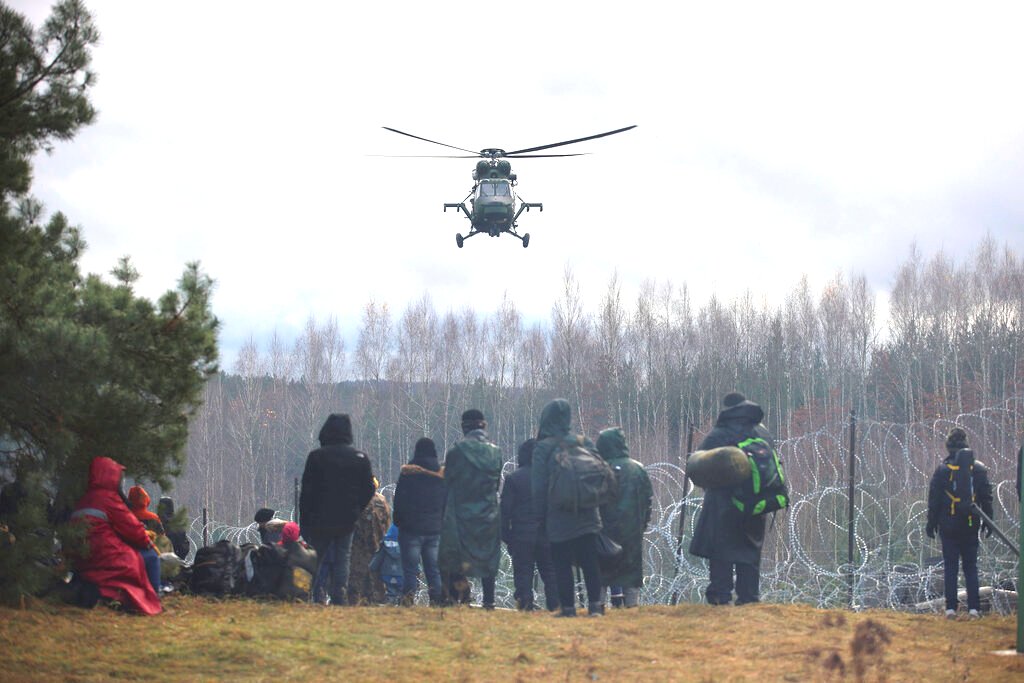
La pasada semana Minsk acusó a Bruselas de intentar estrangular su economía y de continuar la política de demonización del régimen por la decisión del Consejo de la UE de imponer las primeras sanciones relacionadas con la crisis de migrantes en su frontera, que han sido coordinadas con EEUU, Canadá y el Reino Unido. Las sanciones, que suponen la respuesta de Bruselas a la crisis que estalló el pasado 8 de Noviembre de 2021 con la concentración de varios miles de migrantes en la frontera entre Bielorrusia y Polonia, afectan a funcionarios de alto rango, prominentes miembros del poder judicial, así como a medios de propaganda y once entidades, entre ellas la aerolínea bielorrusa Belavia.

Esta es la quinta ronda de sanciones que la UE impone a Bielorrusia desde las elecciones presidenciales de Agosto de 2020, en las que volvió a imponerse Alexandr Lukashenko y que provocó medidas restrictivas europeas por la ola de represión que desató el régimen contra los manifestantes pacíficos.

Belarus announces restrictions
Belarus announces sanctions on western airlines

Belarus has announced this Monday, December 6, 2021, an embargo on the products of Western countries that adopted sanctions against Minsk and sanctions against the airlines of the members of the European Union (EU) and the United Kingdom. The response measures against the illegal external sanctioning pressure from the West, while the Government seeks to defend national interests, says the Foreign Ministry statement.

Minsk considers that the illegitimate restrictions against the Belarusian aviation sector are dictated by unfair competition. «Similar measures will be adopted by our country in relation to the airlines of the EU and the United Kingdom», indicates the official statement. In turn, in order to counter Western pressure and strengthen economic security, the former Soviet Republic will pursue the path of economic integration with Russia. It will also expand the list of undesirable individuals who will not be able to access Belarusian territory, which will concern citizens of countries that discriminate against officials, journalists and representatives of President Alexandr Lukashenko’s organizations. Minsk also explained that the measures can be canceled if the countries that adopted sanctions renounce the logic of the Cold War and return to the path of constructive cooperation.

Last week, Minsk accused Brussels of trying to strangle its economy and of continuing the policy of demonizing the regime due to the decision of the EU Council to impose the first sanctions related to the migrant crisis on its border, which have been coordinated with the United States, Canada and the United Kingdom. The sanctions, which represent Brussels’ response to the crisis that erupted on November 8, 2021 with the concentration of several thousand migrants on the border between Belarus and Poland, affect high-ranking officials, prominent members of the judiciary, as well as the propaganda media and eleven entities, including the Belarusian airline Belavia.

This is the fifth round of sanctions that the EU has imposed on Belarus since the presidential elections of August 2020, in which Alexandr Lukashenko prevailed again and which provoked European restrictive measures due to the wave of repression unleashed by the regime against peaceful protesters.

PUBLISHER: Airgways.com
DBk: Mfa.gov.by / Airgways.com
AW-POST: 202112070828AR

A\W   A I R G W A Y S ®
Países comenzarían cierre fronteras

AW | 2021 12 02 15:30 | AIR TRAFFIC / GOVERNMENT

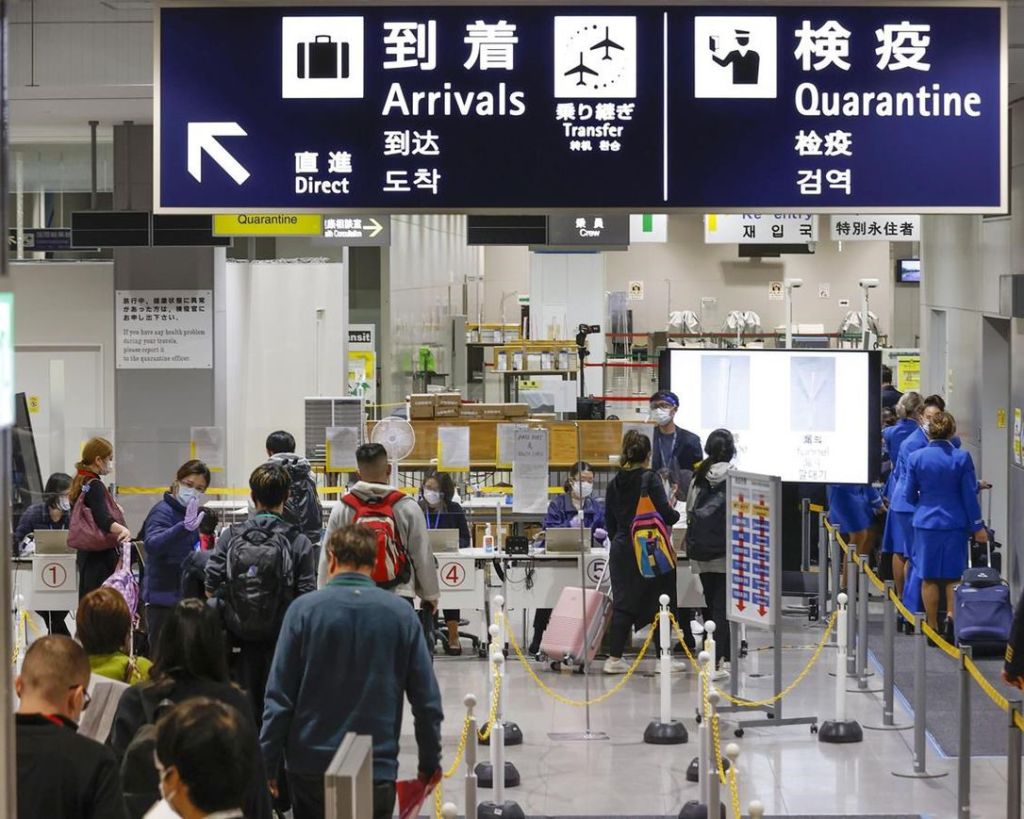
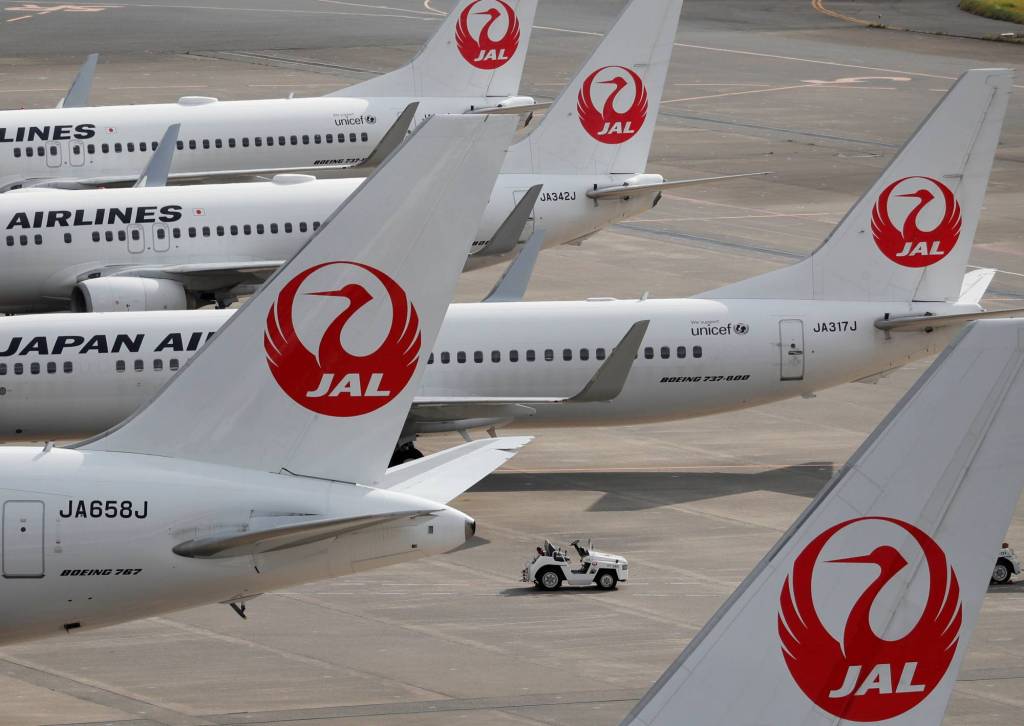
Japón cierra vuelos por variante Omicron de Coronavirus

Las compañías aéreas se encuentran expectantes acerca de los nuevos posibles cierres de fronteras y las complicaciones que derivan de los vuelos internacionales. El caso de Japón que a partir del Miércoles 1 de Diciembre de 2021 el Gobierno está solicitando a todas las aerolíneas que suspendan sus reservaciones nuevas de vuelos hacia el país hasta finales de año 2021. Esto crea un blindaje en el tráfico de pasajeros en caso de cierre total.

Junsuke Kajita, un Oficial en la división de vuelos internacionales en el Ministerio de Tierra, Infraestructura, Transporte y Turismo, dijo que se encuentran en estado de emergencia y que las medidas extraordinarias se tomaron debido a que se sabe poco al respecto de la nueva variante, pero que son de carácter temporal. Tanto aerolíneas japonesas como extranjeras han recibido la indicación de no aceptar reservaciones para vuelos que entren a Japón durante el mes de Diciembre 2021. Las restricciones llegaron poco tiempo después de que Japón confirmó su segundo caso de la variante Omicron, esta vez en un hombre procedente de Perú.

La variante Omicron del virus COVID-19 está generando nuevamente dificultades en el transporte aéreo de retroceder nuevamente a los cierres de fronteras después de dos años de pandemia.

Countries would begin closing borders

Japan closes flights due to Omicron variant of Coronavirus

The airlines are expectant about the new possible border closures and the complications that derive from the international flights. The case of Japan that as of Wednesday, December 1, 2021, the Government is requesting all airlines to suspend their new flight reservations to the country until the end of the year 2021. This creates a shield in passenger traffic in case of total closure.

Junsuke Kajita, an Officer in the international flights division at the Ministry of Land, Infrastructure, Transport and Tourism, said that they are in a state of emergency and that the extraordinary measures were taken because little is known about the new variant, but they are temporary. Both Japanese and foreign airlines have received the indication not to accept reservations for flights entering Japan during the month of December 2021. The restrictions came shortly after Japan confirmed its second case of the Omicron variant, this time in a man from from Peru.

The Omicron variant of the COVID-19 virus is again creating difficulties in air transport to backtrack again to border closures after two years of pandemic.

PUBLISHER: Airgways.com
DBk: Mlit.go.jp / Issei Kato / Airgways.com
AW-POST: 202112021530AR

A\W   A I R G W A Y S ®

Cepo argentino a viajes exterior

AW | 2021 11 27 23:17 | AIR TRAFFIC / GOVERNMENT

Argentina restringe uso de tarjeta de crédito

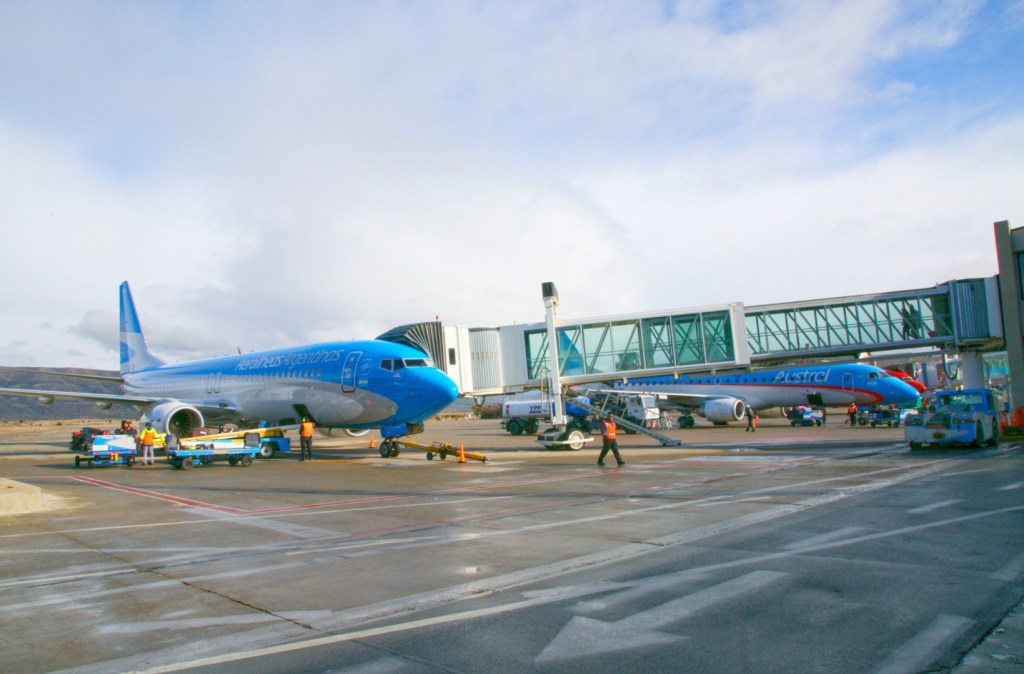
El Banco Central de la República Argentina (BCRA) restringió a partir de este Viernes 26 de Noviembre de 2021 la financiación a la compra de boletos aéreos a otros países y servicios turísticos en el exterior mediante tarjetas de crédito, una medida que se suma a otras orientadas a evitar una mayor caída de las reservas monetarias y que ha sido repudiada por agencias de viajes y líneas aéreas. Desde este Viernes 26/11 los argentinos no podrán comprar pasajes aéreos en cuotas, una polémica medida que busca disminuir la salida de Dólares del país y que podría afectar la llegada de turistas internacionales.

La resolución tomada por el Banco Central veda la posibilidad de que las compras con tarjetas de crédito de pasajes aéreos y servicios turísticos en el exterior se hagan en cuotas, una medida que en la práctica desalienta los viajes al exterior ya que muchos no tienen posibilidad de hacer ese gasto en un solo pago con tarjeta o en efectivo. La disposición establece que las entidades financieras y no financieras emisoras de tarjetas de crédito no deberán financiar en cuotas las compras efectuadas mediante tarjetas de crédito de sus clientes de pasajes al exterior y demás servicios turísticos en el exterior, como alojamiento o alquiler de autos, sea realizadas en forma directa o a través de agencia de viajes o plataformas web. La medida, que sorprendió al sector turístico, rige desde este Viernes 26/11, cuando muchas agencias de viajes, líneas aéreas y plataformas de venta de boletos y paquetes turísticos se disponían a lanzar fuertes ofertas en el marco del «Black Friday», un día de promociones en línea que muchos consumidores aprovechan para adquirir servicios de cara a las próximas vacaciones estivales en Argentina.

La resolución adoptada por el Banco Central se suma a otras medidas que restringen o desalientan el acceso a Dólares estadounidenses por parte de ciudadanos y empresas, sea para ahorro, viajes, importaciones o cancelación de dudas y giros de divisas al exterior. Estas restricciones buscan contener la salida de reservas monetarias del Banco Central.

Según datos de la autoridad monetaria, las reservas internacionales del Banco Central cerraron este Jueves 25/11 en US$ 42.237 millones de Dólares, pero consultores privados calculan que las reservas netas en realidad rondan los US$ 4.400 millones de Dólares y las liquidas se ubican cerca de los US$ 700 millones de Dólares, limitando las posibilidades de la entidad para intervenir en el mercado cambiario oficial con el objetivo de sostener el tipo de cambio. La salida de divisas de Argentina por la vía de los viajes al exterior fue en 2019, antes de la irrupción de la pandemia, de US$ 4.585 millones de Dólares, según datos del Instituto Nacional de Estadísticas y Censos.

Repudio generalizado

En un comunicado, la Federación Argentina de Asociaciones de Empresas de Viajes y Turismo repudió la nueva reglamentación que, advirtió, impacta directamente sobre el sector, golpeando especialmente a las agencias más pequeñas. La entidad, que representa a cerca de 5.000 agencias de viajes, aseveró que la medida intempestiva e inédita constituye un ataque sobre los consumidores de viajes y las empresas, que en su gran mayoría son pequeñas y medianas que aún no han podido recuperarse de las consecuencias económicas de la pandemia. Por su parte, la Cámara de Líneas Aéreas en Argentina (JURCA) manifestó en un comunicado su desconcierto, preocupación y repudio por la medida del Banco Central. «Si no hay pasajero emisivo la ecuación no funciona solo con receptivo. Simplemente no se sostiene una operación donde no exista un cierto equilibrio entre estos. Si había intención de atraer turismo o mejorar conectividad para atraer divisas, sin duda éste no es el camino», sostuvo Felipe Baravalle, Director Ejecutivo de JURCA, cámara que reúne veintena de líneas aéreas extranjeras que operan en Argentina.

Las medidas alcanzadas por el Gobierno de Argentina representan un verdadero cepo a los viajes que coartan la libertad de las personas invocando el Artículo 14 de la Constitución Nacional donde expresa: «Nadie podrá ser privado de la libertad o de sus propiedades, posesiones o derechos», que han sido establecidos dignamente.

El Ministro de Desarrollo de Argentina, Matías Kulfas, defendió la polémica medida. “La gente que viaja al exterior no es pobre, seamos claros, y la clase media tiene muchas opciones dentro del país para el verano. Quien se quiera ir al exterior que lo haga, pero que se lo pague”. Una explicación retrógrada y anticonstitucional, impresentable por donde se analice. El presente Gobierno de turno continúa sin comprender la verdadera herramienta de la política, que es una forma eficaz para solucionar los problemas de todos los argentinos, no un cepo a las libertades de los ciudadanos.

Argentine stocks to foreign travel

Argentina restricts credit card use

As of this Friday, November 26, 2021, the Central Bank of Republic of Argentina (BCRA) restricted the financing of the purchase of air tickets to other countries and tourist services abroad through credit cards, a measure that is added to others aimed at avoiding a greater fall in monetary reserves and that has been repudiated by travel agencies and airlines. From this Friday, 11/26, Argentines will not be able to buy air tickets in installments, a controversial measure that seeks to reduce the departure of dollars from the country and that could affect the arrival of international tourists.

The resolution taken by the Central Bank prohibits the possibility that purchases with credit cards of air tickets and tourist services abroad are made in installments, a measure that in practice discourages travel abroad since many do not have the possibility of make that expense in a single card or cash payment. The provision establishes that financial and non-financial entities issuing credit cards should not finance in installments the purchases made by means of credit cards of their clients of passages abroad and other tourist services abroad, such as accommodation or car rental, be it made directly or through a travel agency or web platforms. The measure, which surprised the tourism sector, has been in force since this Friday, 11/26, when many travel agencies, airlines and platforms for the sale of tickets and tourist packages were preparing to launch strong offers within the framework of «Black Friday», a day of online promotions that many consumers take advantage of to acquire services for the next summer holidays in Argentina.

The resolution adopted by the Central Bank joins other measures that restrict or discourage access to US dollars by citizens and companies, whether for savings, travel, imports or cancellation of doubts and foreign currency transfers abroad. These restrictions seek to contain the outflow of monetary reserves from the Central Bank.

According to data from the monetary authority, the Central Bank’s international reserves closed this Thursday, 11/25 at US$ 42,237 million, but private consultants calculate that net reserves are actually around US$ 4,400 million and the liquid ones are located close to US$ 700 million, limiting the entity’s possibilities to intervene in the official exchange market in order to sustain the exchange rate. The outflow of foreign currency from Argentina through travel abroad was in 2019, before the outbreak of the pandemic, of US$ 4,585 million dollars, according to data from the National Institute of Statistics and Censuses.

Widespread repudiation

In a statement, the Argentine Federation of Travel and Tourism Business Associations repudiated the new regulation that, it warned, has a direct impact on the sector, especially hitting smaller agencies. The entity, which represents nearly 5,000 travel agencies, asserted that the untimely and unprecedented measure constitutes an attack on travel consumers and companies, the vast majority of which are small and medium-sized companies that have not yet been able to recover from the consequences. economic consequences of the pandemic. For its part, the Chamber of Air Lines in Argentina (JURCA) expressed in a statement its confusion, concern and rejection by the Central Bank measure. «If there is no emissive passenger, the equation does not work only with receptive. It simply does not sustain an operation where there is not a certain balance between these. If there was an intention to attract tourism or improve connectivity to attract foreign currency, without a doubt this is not the way», said Felipe Baravalle, Executive Director of JURCA, a chamber that brings together twenty foreign airlines operating in Argentina.

The measures reached by the Government of Argentina represent a true trap for trips that restrict the freedom of people invoking Article 14 of the National Constitution where it states: «No one may be deprived of liberty or of their properties, possessions or rights», which have been established with dignity.

Argentina’s Development Minister, Matías Kulfas, defended the controversial measure. “People who travel abroad are not poor, let’s be clear, and the middle class has many options within the country for the summer. Whoever wants to go abroad, do it, but pay it”. A retrograde and unconstitutional explanation, unpresentable wherever it is analyzed. The current government of the day continues without understanding the true tool of politics, which is an effective way to solve the problems of all Argentines, not a trap for the freedoms of citizens.

PUBLISHER: Airgways.com
DBk: Jurca.org.ar / Argentina.gob.ar / Bcra.gov.ar / Airgways.com
AW-POST: 202111272317AR

A\W   A I R G W A Y S ®

Huelga SNA Brasil

AW | 2021 11 25 14:57 | AIR TRAFFIC / AVIATION ORGANISMS

Sindicato Nacional de Aeronáuticos ejercerá huelga 29/11

AW-SNA Brasil

El Sindicato Nacional de Aeronáuticos (SNA) de la República de Brasil emitió una nota al público confirmando que los comandantes, copilotos y comisionados de las compañías regulares de pasajeros y carga aéreas han decidido hacer huelga y asesorar al público sobre cómo proceder. El movimiento obtuvo el apoyo de varias entidades. El cierre de la tripulación será parcial y tendrá lugar a partir de las 0h hora de Brasilia del 29 de Noviembre de 2021, en todos los aeropuertos del país.

La acción se mantendrá en los días siguientes, indefinidamente, hasta que haya una respuesta positiva de las aerolíneas en la negociación de la renovación del Convenio Colectivo. Desde el inicio de la pandemia, la categoría nunca ha dejado de funcionar, enfrentando el riesgo de contaminación, y ha contribuido a la lucha contra el Covid-19 mediante el transporte de vacunas, insumos y equipos. Además, ha colaborado con la recuperación de las empresas aceptando reducciones salariales que persisten hasta el día de hoy y reclama en esta negociación solo la recomposición de pérdidas inflacionarias. En nombre de los aeronautas, la unión gremial subraya que la principal preocupación es el respeto de los pasajeros y la seguridad de todos. La SNA cuenta con el apoyo de la sociedad y el sentido común de las aerolíneas para que se eviten inconvenientes.

La Ifalpa (Federación Internacional de Asociaciones de Pilotos de Líneas Aéreas) publicó una carta, firmada por su Presidente, el Comandante Jack Netskar, expresando pleno apoyo al SNA y a todos los tripulantes brasileños debido a la huelga aprobada por la categoría que comenzará el 29/11. «En nombre de la comunidad de pilotos de todo el mundo, Ifalpa simpatiza con los colegas de SNA». El texto continúa expresando que también condena cualquier posible represalia y actitud antisindical contra los tripulantes que ejercen su derecho de huelga, además de ofrecer todo su apoyo. La ITF (Federación Internacional de los Trabajadores del Transporte) envió una carta al SCN en apoyo del movimiento huelguista aprobado por la tripulación brasileña programada para el inicio del 29 de Noviembre. La ITF dice que se solidariza con sus colegas en Brasil y brinda apoyo «para permanecer firmes en su misión de luchar por la garantía de sus derechos». La APLA (Asociación de Pilotos de Líneas Aéreas de Argentina) envió el miércoles (24) al SNA una carta expresando su apoyo al movimiento huelguista aprobado por la tripulación brasileña para comenzar el 29 de Noviembre de 2021. APLA señala que «la intransigencia de las empresas no solo es absolutamente inaceptable, sino que también ignora la importancia de nuestra profesión, como lo demuestran los pilotos y la tripulación de cabina en medio de la pandemia de COVID-19, transportando vacunas y suministros médicos a su país, y repatriando a miles de pasajeros».

SNA Brazil strike

National Aeronautical Union to strike 11/29

The National Aeronautical Union (SNA) of the Republic of Brazil issued a note to the public confirming that the commanders, co-pilots and commissioners of the regular passenger and air cargo companies have decided to strike and advise the public on how to proceed. The movement obtained the support of several entities. The closure of the crew will be partial and will take place from 0:00 a.m. Brasilia time on November 29, 2021, at all airports in the country.

The action will be maintained in the following days, indefinitely, until there is a positive response from the airlines in the negotiation of the renewal of the Collective Agreement. Since the beginning of the pandemic, the category has never stopped working, facing the risk of contamination, and has contributed to the fight against Covid-19 by transporting vaccines, supplies and equipment. In addition, it has collaborated with the recovery of companies by accepting salary reductions that persist to this day and claims in this negotiation only the recomposition of inflationary losses. On behalf of the aeronauts, the union stresses that the main concern is the respect of passengers and the safety of all. The SNA has the support of society and the common sense of the airlines to avoid inconveniences.

Ifalpa (International Federation of Airline Pilots Associations) published a letter, signed by its President, Commander Jack Netskar, expressing full support for the SNA and all the Brazilian crew members due to the strike approved by the category that will begin on 29/11. «On behalf of the pilot community around the world, Ifalpa sympathizes with SNA colleagues». The text goes on to state that it also condemns any possible retaliation and anti-union attitude against the crew members who exercise their right to strike, in addition to offering its full support. The ITF (International Transport Workers Federation) sent a letter to the SCN in support of the strike movement approved by the Brazilian crew scheduled for the start of November 29. The ITF says it stands in solidarity with its colleagues in Brazil and provides support «to remain steadfast in their mission to fight for the guarantee of their rights». The APLA (Association of Airline Pilots of Argentina) sent a letter to the SNA on Wednesday (24) expressing its support for the strike movement approved by the Brazilian crew to begin on November 29, 2021. APLA points out that «the intransigence of the companies is not only absolutely unacceptable, but also ignores the importance of our profession, as evidenced by pilots and cabin crew in the midst of the COVID-19 pandemic, transporting vaccines and medical supplies to their country, and repatriating thousands of passengers».

Greve SNA Brasil

União Aeronáutica Nacional fará greve em 29/11

A união Sindicato Nacional da Aeronáutica (SNA) da República do Brasil emitiu nota ao público confirmando que os comandantes, co-pilotos e comissários das empresas de passageiros regulares e de carga aérea decidiram fazer greve e orientar o público sobre como proceder. O movimento obteve o apoio de várias entidades. O encerramento da tripulação será parcial e ocorrerá a partir das 0h, horário de Brasília, do dia 29 de Novembro de 2021, em todos os aeroportos do país.

A ação será mantida nos dias subseqüentes, por tempo indeterminado, até que haja uma resposta positiva das empresas aéreas na negociação da renovação do Acordo Coletivo. Desde o início da pandemia, a categoria nunca parou de funcionar, correndo o risco de contaminação, e tem contribuído para o combate à Covid-19 com o transporte de vacinas, insumos e equipamentos. Além disso, tem colaborado com a recuperação das empresas ao aceitar reduções salariais que persistem até hoje e reivindica nessa negociação apenas a recomposição das perdas inflacionárias. Em nome dos aeronautas, o sindicato destaca que a principal preocupação é o respeito aos passageiros e a segurança de todos. O SNA conta com o apoio da sociedade e o bom senso das companhias aéreas para evitar transtornos.

A Ifalpa (Federação Internacional das Associações de Pilotos de Linhas Aéreas) publicou carta, assinada por seu Presidente, Comandante Jack Netskar, expressando total apoio à SNA e a todos os tripulantes brasileiros em função da greve aprovada pela categoria que terá início no dia 29/11. «Em nome da comunidade piloto em todo o mundo, Ifalpa simpatiza com os colegas da SNA». O texto prossegue afirmando que também condena qualquer eventual retaliação e atitude antissindical contra os tripulantes que exercem o seu direito à greve, além de oferecer todo o seu apoio. A ITF (Federação Internacional dos Trabalhadores em Transporte) enviou carta ao SCN em apoio ao movimento grevista aprovado pela tripulação brasileira prevista para o início de 29 de Novembro. A ITF se diz solidária com seus colegas no Brasil e oferece apoio «para permanecerem firmes em sua missão de lutar pela garantia de seus direitos». A APLA (Associação de Pilotos Aéreos da Argentina) enviou carta à SNA nesta Quarta-feira (24) manifestando seu apoio ao movimento grevista aprovado pela tripulação brasileira para começar no dia 29 de Novembro de 2021. O APLA destaca que “a intransigência dos empresas não só é absolutamente inaceitável, mas também ignora a importância da nossa profissão, conforme evidenciado por pilotos e tripulantes de cabine em meio à pandemia COVID-19, transportando vacinas e suprimentos médicos para seus países e repatriando milhares de passageiros».

PUBLISHER: Airgways.com
DBk: Aeronautas.org.br / Ifalpa.org / Iftglobal.org / Apla.org.ar / Airgways.com
AW-POST: 202111251457AR

A\W   A I R G W A Y S ®

Rosario/Neuquén corredores seguros

AW | 2021 11 21 15:55 | AIRPORTS / AIR TRAFFIC

Aeropuertos de Rosario y Neuquén corredores vuelos regionales

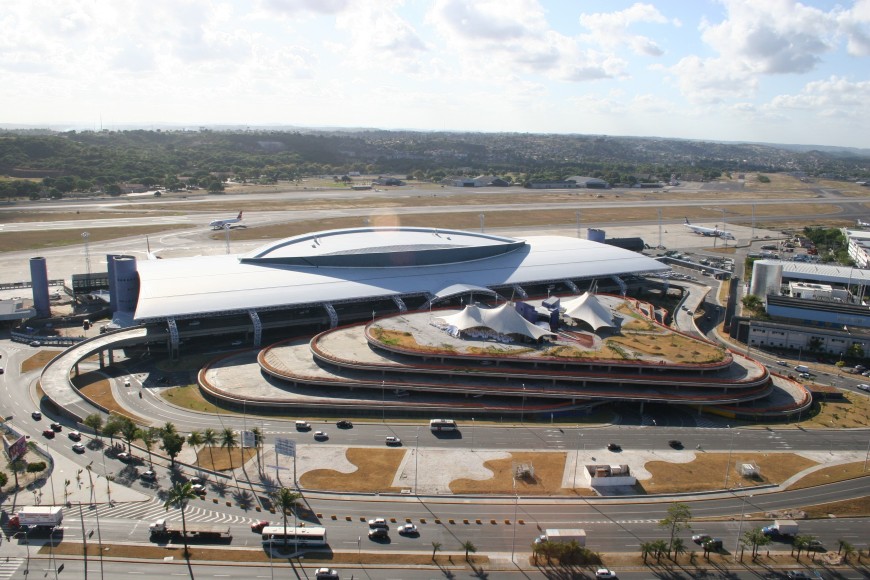
El Gobierno de la República Argentina dispuso la apertura de un Aeropuerto Internacional Rosario y el Aeropuerto Internacional Neuquén como corredores seguros para vuelos regionales. El Gobierno nacional formalizó este Sábado 20/11 su decisión de autorizar la apertura del Aeropuerto Internacional Rosario/SAAR y el Aeropuerto Internacional Neuquén/NQN a través de su publicación en el Boletín Oficial. Las habilitaciones fueron incluidas en las Decisiones Administrativas Número 1143 y 1144. De esta manera, el Gobierno dispuso la apertura del Aeropuerto Internacional Rosario/Islas Malvinas, en la Provincia de Santa Fe, como corredor seguro internacional para el ingreso a la Argentina. Asimismo. en otra normativa publicada también este Sábado 20/11 por la mañana en el Boletín Oficial, estableció la apertura de corredores seguros en la provincia de Neuquén y el Aeropuerto Internacional Neuquén/Juan Domingo Perón, el Aeropuerto San Martín de los Andes/Aviador Carlos Campos.

El Gobierno nacional definió a principios de Noviembre 2021 criterios para establecer corredores seguros de ingreso al país, tras flexibilizar las restricciones establecidas durante la pandemia del coronavirus. De esta manera, y para el ingreso al país, se deberá presentar un protocolo aprobado por la autoridad sanitaria provincial previendo, en su caso, los mecanismos para llevar adelante las medidas sanitarias de trazabilidad y rastreo de contactos, de traslado y aislamiento de los casos positivos, y las demás referidas a la alerta, mitigación y respuesta al Covid-19.

Esos protocolos deberán cumplir con las recomendaciones e instrucciones de la autoridad sanitaria nacional. Dentro de los corredores seguros autorizados, el ingreso de personas al territorio nacional quedará sujeto al cumplimiento de los requisitos migratorios vigentes, como haber completado el esquema de vacunación por lo menos 14 días antes del ingreso al país. También tendrán que contar con una prueba de PCR negativa realizada en el país de origen dentro de las 72 horas previas al viaje.

Rosario/Neuquén safe corridors

Airports in Rosario and Neuquén corridors regional flights

The Government of the Argentine Republic ordered the opening of a Rosario International Airport and the Neuquén International Airport as safe corridors for regional flights. The national government formalized this Saturday 11/20 its decision to authorize the opening of the Rosario/SAAR International Airport and the Neuquén/NQN International Airport through their publication in the Official Gazette. The authorizations were included in Administrative Decisions Number 1143 and 1144. In this way, the Government ordered the opening of the Rosario International Airport/Islas Malvinas, in the Province of Santa Fe, as an international safe corridor for entering Argentina. In addition. In another regulation also published this Saturday 11/20 in the morning in the Official Gazette, it established the opening of safe corridors in the province of Neuquén and the Neuquén/Juan Domingo Perón International Airport, the San Martín de los Andes Airport/Aviador Carlos Campos .

The national government defined criteria at the beginning of November 2021 to establish safe entry corridors to the country, after relaxing the restrictions established during the coronavirus pandemic. In this way, and for entry to the country, a protocol approved by the provincial health authority must be presented, providing, where appropriate, the mechanisms to carry out the health measures of traceability and contact tracing, transfer and isolation of cases. positive, and the others referred to the alert, mitigation and response to Covid-19.

These protocols must comply with the recommendations and instructions of the national health authority. Within the authorized safe corridors, the entry of people to the national territory will be subject to compliance with current immigration requirements, such as having completed the vaccination scheme at least 14 days before entering the country. They will also need to have a negative PCR test performed in the country of origin within 72 hours of travel.

PUBLISHER: Airgways.com
DBk: Argentina.gob.ar / Airgways.com
AW-POST: 202111211555AR

A\W   A I R G W A Y S ®

Crisis en Bielorrusia

AW | 2021 11 19 07:55 | AIRLINES / AIR TRAFFIC / GOVERNMENT

Aerolíneas bajo presión de sanciones

Las líneas aéreas de Bielorusia como las extranjeras podrían recibir sanciones que implican multas en el transpotre de migrantes a Bielorrusia. La presión de Bruselas ha hecho ceder rápidamente la postura de transportar migrantes entre países. La Unión Europea (UE) ha introducido en 48 horas atrás nuevas sanciones a raíz de la crisis fronteriza entre Polonia y Bielorrusia.

Un total de 600 aviones procedentes de Líbano, Irak, Siria, Emiratos Árabes Unidos y Turquía aterrizaron en Minsk desde principios de julio. La mayoría de estos vuelos fueron operados por la aerolínea estatal bielorrusa Belavia. Además, la Comisión de la UE también mantuvo intensas conversaciones con una docena de compañías aéreas que ofrecen vuelos a Minsk. Entre ellas están Flydubai, Turkish Airlines, Royal Air Maroc, Air Arabiya, Emirates, Qatar Airways, Etihad, MEA, Oman Air, Iraqi Airways y Egypt Air. El Ministerio de Transportes libanés declaró el Miércoles 17/11 por la noche que solo permitiría volar a Bielorrusia a sus propios ciudadanos con visados válidos o a ciudadanos extranjeros con permiso de residencia permanente. Le siguieron toda una serie de otras compañías aéreas y autoridades de aviación que han cedido a la presión de Bruselas en los últimos días. El Vicepresidente de la Comisión, Margaritis Schinas, y la Comisaria de Transportes de la Unión Europea, Adina Vălean, también mantuvieron estrechos intercambios con organizaciones internacionales de aviación como la IATA o la Organización de Transportistas Aéreos Árabes.

Las negociaciones de la Comisión Europea no tardaron en surtir efecto. Turkish Airlines ya había anunciado la semana pasada que dejaría de transportar pasajeros de Irak, Siria o Yemen a Bielorrusia. La mayoría de las demás compañías aéreas también acordaron suspender la venta de billetes de ida a Minsk para los emigrantes de Oriente Medio o cancelar por completo sus vuelos a Bielorrusia. Según el experto independiente en aviación Heinrich Großbongardt, todas estas compañías aéreas probablemente no habrían impulsado activamente estos vuelos por iniciativa propia. Sin embargo, podrían haber detectado antes las irregularidades que estaban surgiendo y haber dado la voz de alarma. Por otro lado, la situación económica de muchas compañías aéreas es muy tensa debido a los efectos globales de la pandemia del coronavirus. «Algunos de ellos hicieron la vista gorda ante este negocio», sospecha el experto en aviación.

La UE amenaza con retirar los derechos de sobrevuelo y aterrizaje a las compañías aéreas cuya participación en el transporte de migrantes haya quedado demostrada. La sola amenaza fue suficiente para que las compañías aéreas cedieran. «Europa es un mercado de aviación enorme, y las compañías aéreas son especialmente vulnerables allí. Si la UE dice ahora: no les vamos a dar más derechos de aterrizaje, las compañías aéreas tienen que preguntarse: ¿dónde está realmente nuestro negocio principal?», dijo Heinrich Großbongardt.

Incluso las compañías aéreas que no vuelan a Europa podrían verse sometidas a una presión indirecta. Porque Bruselas también tiene la palanca de los acuerdos de transporte aéreo, y estos ya no solo afectan a las compañías aéreas individuales. Se pactan entre la UE o Estados miembros individuales y terceros países. «Estos acuerdos regulan la organización del tráfico aéreo entre Estados. ¿Quién puede volar a dónde? ¿Quién puede llevar pasajeros o carga? ¿Quién puede hacer escala en la UE?» La UE podría suspender o rescindir esos acuerdos en caso de violaciones graves. «Esto afectaría entonces a todas las compañías aéreas de un país», Heinrich Großbongardt. El espacio aéreo europeo ya está cerrado a los aviones bielorrusos, y algunos Estados miembros de la UE ya han cancelado sus acuerdos bilaterales de servicios aéreos con Bielorrusia. Incluso los aviones de la UE ya no pueden cruzar el espacio aéreo bielorruso para realizar vuelos de larga distancia, lo que significa que el régimen de Minsk ya no puede cobrar las tasas de sobrevuelo.

Confiscación aeronaves

Otra forma en que la UE presiona a las compañías aéreas es el arrendamiento de aviones. Nueve de las diez mayores empresas de leasing tienen su sede en Irlanda, la décima es de Dinamarca. Para ahorrar costes, muchas compañías aéreas alquilan gran parte de su flota a estas empresas en lugar de comprar los aviones. Solo la bielorrusa Belavia ha alquilado 17 de sus 30 aviones a empresas irlandesas. Estos contratos de arrendamiento se terminarán tan pronto como la UE haya completado su nueva ronda de sanciones contra Bielorrusia, según anunció a principios de esta semana el Ministro de Asuntos Exteriores irlandés, Simon Coveney. Si las aeronaves no son devueltas voluntariamente, serán confiscadas en cuanto aterricen en un aeropuerto extranjero. En ese caso, Belavia se enfrentaría posiblemente al colapso total de sus operaciones de vuelo. Probablemente también por temor a este escenario, la aerolínea bielorrusa ha cedido ahora: a partir de este Viernes 19/11, la aerolínea anunció que los ciudadanos sirios, iraquíes o yemeníes también tendrían prohibido el acceso a sus aviones. En total, las posibles sanciones son suficientes para detener el tráfico de personas hacia Bielorrusia. «En las próximas semanas, veremos una disminución significativa de estos vuelos a Minsk», sostiene Heinrich Großbongardt.

Crisis in Belarus

Airlines under pressure of sanctions

AW-7000435

Both Belarusian and foreign airlines could face penalties involving fines for the transport of migrants to Belarus. Pressure from Brussels has quickly given way to transporting migrants between countries. The European Union (EU) has introduced new sanctions 48 hours ago as a result of the border crisis between Poland and Belarus.

A total of 600 planes from Lebanon, Iraq, Syria, the United Arab Emirates and Turkey have landed in Minsk since the beginning of July. Most of these flights were operated by the Belarusian state airline Belavia. In addition, the EU Commission also held intensive discussions with a dozen airlines offering flights to Minsk. Among them are Flydubai, Turkish Airlines, Royal Air Maroc, Air Arabiya, Emirates, Qatar Airways, Etihad, MEA, Oman Air, Iraqi Airways and Egypt Air. The Lebanese Ministry of Transport declared on Wednesday 11/17 evening that it would only allow its own citizens with valid visas or foreign nationals with permanent residence permits to fly to Belarus. It was followed by a whole host of other airlines and aviation authorities who have yielded to pressure from Brussels in recent days. The Vice-President of the Commission, Margaritis Schinas, and the European Union Commissioner for Transport, Adina Vălean, also had close exchanges with international aviation organizations such as IATA or the Arab Air Carriers Organization.

Negotiations in the European Commission were not long in coming into effect. Turkish Airlines had already announced last week that it would stop carrying passengers from Iraq, Syria or Yemen to Belarus. Most of the other airlines also agreed to suspend the sale of one-way tickets to Minsk for migrants from the Middle East or to cancel their flights to Belarus altogether. According to independent aviation expert Heinrich Großbongardt, all these airlines probably would not have actively promoted these flights on their own initiative. However, they could have detected the irregularities that were emerging earlier and sounded the alarm. On the other hand, the economic situation of many airlines is very tense due to the global effects of the coronavirus pandemic. «Some of them turned a blind eye to this business», suspects the aviation expert.

The EU is threatening to withdraw overflight and landing rights from airlines whose involvement in the transport of migrants has been demonstrated. The threat alone was enough to make the airlines give in. «Europe is a huge aviation market, and airlines are especially vulnerable there. If the EU says now: we are not going to give them more landing rights, airlines have to ask themselves: where is our core business really?», said Heinrich Großbongardt.

Even airlines that do not fly to Europe could come under indirect pressure. Because Brussels also has the lever of air transport agreements, and these no longer only affect individual airlines. They are agreed between the EU or individual Member States and third countries. «These agreements regulate the organization of air traffic between states. Who can fly where? Who can carry passengers or cargo? Who can make a stopover in the EU?» The EU could suspend or terminate these agreements in the event of serious violations. «This would then affect all airlines in a country», Heinrich Großbongardt. European airspace is already closed to Belarusian aircraft, and some EU member states have already canceled their bilateral air services agreements with Belarus. Even EU planes can no longer cross Belarusian airspace for long-haul flights, which means that the Minsk regime can no longer charge overflight fees.

Aircraft confiscation

Another way the EU is putting pressure on airlines is by leasing planes. Nine of the ten largest leasing companies are based in Ireland, the tenth is from Denmark. To save costs, many airlines lease a large part of their fleet to these companies instead of buying the planes. Only Belarusian Belavia has leased 17 of its 30 planes to Irish companies. These leases will be terminated as soon as the EU has completed its new round of sanctions against Belarus, Irish Foreign Minister Simon Coveney announced earlier this week. If the aircraft are not returned voluntarily, they will be confiscated as soon as they land at a foreign airport. In that case, Belavia would possibly face a total collapse of its flight operations. Probably also out of fear of this scenario, the Belarusian airline has now given in: as of this Friday 11/19, the airline announced that Syrian, Iraqi or Yemeni citizens would also be prohibited from accessing their planes. In total, the possible penalties are enough to stop human trafficking into Belarus. «In the coming weeks, we will see a significant decrease in these flights to Minsk», says Heinrich Großbongardt.

PUBLISHER: Airgways.com
DBk: Ec.europa.eu / Reuters.com/Maxim Shemetov / Airgways.com
AW-POST: 202111190755AR

A\W   A I R G W A Y S ®
Conflicto por sanciones a Aeroflot

AW | 2021 11 11 07:23 | GOVERNMENT / AIR TRAFFIC / AIRLINES

Rusia considerará prohibir vuelos occidente

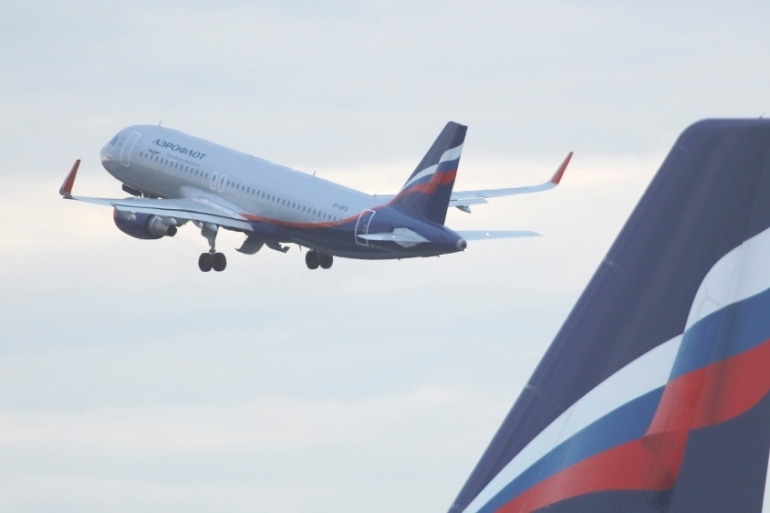
El Gobierno de la Federación Rusia ha anunciado este Jueves 11/11 que si se imponen sanciones a la aerolínea rusa Aeroflot Russian Airlines, Moscú podría considerar prohibir el paso de aerolíneas occidentales sobre el territorio ruso, dijo Vladimir Dzhabarov, el Primer Subdirector del Comité de Asuntos Internacionales de la Cámara Alta rusa.

El Miércoles 10/11 la Unión Europea se encontraba discutiendo sanciones contra Aeroflot y Turkish Airlines por su presunta participación en traer inmigrantes ilegales a Bielorrusia. «Aeroflot no tiene nada que ver con eso. Están tratando de morder a Rusia a cualquier costo. Si se imponen sanciones a Aeroflot, Rusia puede considerar prohibir los vuelos de las aerolíneas occidentales sobre el territorio de nuestro país», dijo Vladimir Dzhabarov. Si Occidente impone sanciones a Aeroflot, Rusia responderá con «sanciones similares contra sus empresas, que dependen en gran medida de Rusia debido a su ubicación geográfica», advirtió el legislador principal.

Dispute over sanctions against Aeroflot

Russia to consider banning western flights

The Government of the Russian Federation announced this Thursday 11/11 that if sanctions are imposed on the Russian airline Aeroflot Russian Airlines, Moscow could consider prohibiting the passage of Western airlines over Russian territory, said Vladimir Dzhabarov, the First Deputy Director of the Committee on International Affairs of the Russian Upper House.

On Wednesday 11/10 the European Union was discussing sanctions against Aeroflot and Turkish Airlines for their alleged involvement in bringing illegal immigrants to Belarus. «Aeroflot has nothing to do with it. They are trying to bite Russia at any cost. If sanctions are imposed on Aeroflot, Russia may consider banning the flights of Western airlines over the territory of our country», Vladimir Dzhabarov said. If the West imposes sanctions on Aeroflot, Russia will respond with «similar sanctions against its companies, which are highly dependent on Russia due to their geographic location», the lead lawmaker warned.

Спор о санкциях против Аэрофлот

Россия рассмотрит вопрос о запрете полетов на запад

Правительство Российской Федерации объявило в четверг 11/11, что в случае введения санкций в отношении российской авиакомпании Аэрофлот российские авиалинии Москва может рассмотреть вопрос о запрете пролета западных авиакомпаний над территорией России, сказал Владимир Джабаров, первый заместитель директора Комитета по безопасности. Международные отношения Верхней палаты России.

В среду 11.10 Европейский Союз обсуждал санкции против Аэрофлота и Turkish Airlines за их предполагаемое участие в доставке нелегальных иммигрантов в Беларусь. «Аэрофлот тут ни при чем. Они пытаются укусить Россию любой ценой. Если в отношении Аэрофлота будут введены санкции, Россия может рассмотреть вопрос о запрете полетов западных авиакомпаний над территорией нашей страны», сказал Владимир Джабаров. Если Запад наложит санкции на Аэрофлот, Россия ответит «аналогичными санкциями против своих компаний, которые сильно зависят от России из-за своего географического положения», предупредил ведущий законодатель.

PUBLISHER: Airgways.com
DBk: Government.ru / Airgways.com
AW-POST: 202111110723AR

A\W   A I R G W A Y S ®

CE nuevas sanciones a Bielorrusia

AW | 2021 11 09 12:33 | GOVERMENT / AIRLINES / AIR TRAFFIC

Comisión Europea nuevas sanciones a aerolíneas con rutas a Minsk

La presidenta de la Comisión Europea (CE), Ursula von der Leyen, ha llamado este Lunes 08/11 a la Unión Europea (UE) a agilizar la ampliación del régimen de sanciones contra la República de Bielorrusia en respuesta a su ataque híbrido facilitando el paso irregular de miles de migrantes hacia Polonia; y ha apuntado entre los posibles objetivos las aerolíneas de terceros países que mantienen rutas con Minsk. «La UE estudiará en particular cómo sancionar a las compañías aéreas de países terceros que participen en la trata de seres humanos, por ejemplo estableciendo una lista negra», ha indicado Von der Leyen en un comunicado en el que ha considerado inaceptable la instrumentalización por parte del régimen de Alexander Lukashenko de la migración.

La Comisaria de Interior, Ylva Johansson, ha ahondado en esta línea al afirmar a través de Twitter que la prioridad urgente del bloque comunitario debe ser cortar el suministro al Aeropuerto de Minsk, después de censurar que las autoridades bielorrusas atraigan a migrantes en vuelos a Bielorrusia y después los deje atrapados en la frontera con la Unión Europea. Además de Polonia, otros países vecinos de Bielorrusia como Lituania y Letonia denuncian que Lukashenko trata de chantajear a la Unión Europea aumentando la presión migratoria, facilitando vuelos desde terceros países como Irak o Turquía para llegar de manera ilegal a la frontera del bloque comunitario. «Las autoridades bielorrusas deben comprender que presionar a la Unión Europea con la instrumentalización cínica de migrantes no les ayudará en sus fines. La instrumentalización de migrantes con fines políticos por parte de Bielorrusia es inaceptable […]. Bielorrusia debe dejar de poner vidas en peligro», ha avisado Von der Leyen a última hora de este Lunes 08/11, tras la llegada de centenares de migrantes en la frontera entre Bielorrusia y Polonia. Ha mantenido contactos en las últimas horas con los primeros ministros de Polonia, Mateusz Morawiecki; Lituania, Ingrida Simonyte y Letonia, Arturs Krisjanis Karins. Además, la política alemana ha adelantado que el vicepresidente de la Comisión responsable de Migración, Margaritis Schinas, viajará en los próximos días a los países de origen y tránsito de estos migrantes para convencer a sus autoridades de que tomen medidas para evitar que caigan en la trampa tendida por las autoridades bielorrusas. La Comisión Europea estudiará también junto con la ONU y sus agencias especializadas cómo evitar las crisis humanitarias y garantizar que los migrantes puedan regresar de forma segura a sus países de origen.

El Gobierno de Polonia ha denunciado el avance de cientos de migrantes en territorio de Bielorrusia y ha acusado al Gobierno del presidente Alexander Lukashenko de orquestar este movimiento masivo y de desplegar a las fuerzas de seguridad para escoltar a los migrantes hasta la frontera con la UE. Además de la necesidad de endurecer la respuesta a Minsk, Bruselas también se ha dirigido a Polonia para pedirle que permita la entrada de agentes de las agencias europeas Frontex y Europol a su frontera para ayudar a controlar el paso irregular y asegurar una atención adecuada y digna de los demandantes de asilo y demás migrantes que lleguen. El Ejecutivo comunitario, que ha intentado sin éxito en las últimas semanas que Varsovia permitiera a expertos comunitarios desplazarse a la zona, ha recordado este lunes que el despliegue de agentes de Frontex y Europol ayudaría a las autoridades polacas a gestionar la presión migratoria, pero que no pueden desplazarse a la zona si no lo solicita formalmente el Gobierno polaco.

EC new sanctions on Belarus

European Commission new sanctions on airlines with routes to Minsk

The President of the European Commission (EC), Ursula von der Leyen, has called this Monday 08/11 to the European Union (EU) to expedite the expansion of the sanctions regime against the Republic of Belarus in response to its hybrid attack by facilitating the irregular passage of thousands of migrants to Poland; and she has pointed out among the possible targets the airlines of third countries that maintain routes with Minsk. «The EU will study in particular how to sanction third-country airlines that participate in trafficking in human beings, for example by establishing a black list», said Von der Leyen in a statement in which he considered unacceptable the instrumentalization by of Alexander Lukashenko’s regime of migration.

The Commissioner for the Interior, Ylva Johansson, has delved into this line by stating through Twitter that the urgent priority of the community bloc must be to cut the supply to the Minsk Airport, after censuring that the Belarusian authorities attract migrants on flights to Belarus and then I left them trapped at the border with the European Union. In addition to Poland, other neighboring countries of Belarus such as Lithuania and Latvia denounce that Lukashenko tries to blackmail the European Union by increasing migratory pressure, facilitating flights from third countries such as Iraq or Turkey to illegally reach the border of the community bloc. «The Belarusian authorities must understand that pressuring the European Union with the cynical instrumentalization of migrants will not help them in their ends. The instrumentalization of migrants for political purposes by Belarus is unacceptable (…). Belarus must stop putting lives away. in danger», Von der Leyen warned late on Monday 08/11, after the arrival of hundreds of migrants on the border between Belarus and Poland. She has maintained contacts in the last hours with the Prime Ministers of Poland, Mateusz Morawiecki; Lithuania, Ingrida Simonyte and Latvia, Arturs Krisjanis Karins. In addition, German policy has advanced that the vice president of the Commission responsible for Migration, Margaritis Schinas, will travel in the coming days to the countries of origin and transit of these migrants to convince their authorities to take measures to prevent them from falling into the trap set by the Belarusian authorities. The European Commission will also study together with the UN and its specialized agencies how to avoid humanitarian crises and ensure that migrants can return safely to their countries of origin.

The Government of Poland has denounced the advance of hundreds of migrants into Belarusian territory and has accused the Government of President Alexander Lukashenko of orchestrating this massive movement and of deploying security forces to escort migrants to the EU border. In addition to the need to tighten the response to Minsk, Brussels has also turned to Poland to ask it to allow agents from the European agencies Frontex and Europol to enter its border to help control irregular passage and ensure adequate and dignified care. of asylum seekers and other arriving migrants. The Community Executive, which has tried unsuccessfully in recent weeks to get Warsaw to allow community experts to travel to the area, recalled this Monday that the deployment of Frontex and Europol agents would help the Polish authorities to manage migratory pressure, but that They cannot travel to the area without formal request from the Polish Government.

PUBLISHER: Airgways.com
DBk: Ec.europa.eu / Airgways.com
AW-POST: 202111091233AR

A\W   A I R G W A Y S ®
EEUU aprueba viajes post-pandemia

AW | 2021 11 09 10:34 | AIR TRAFFIC / AIRLINES MARKET / GOVERNMENT

Estados Unidos levanta prohibiciones vuelos internacionales

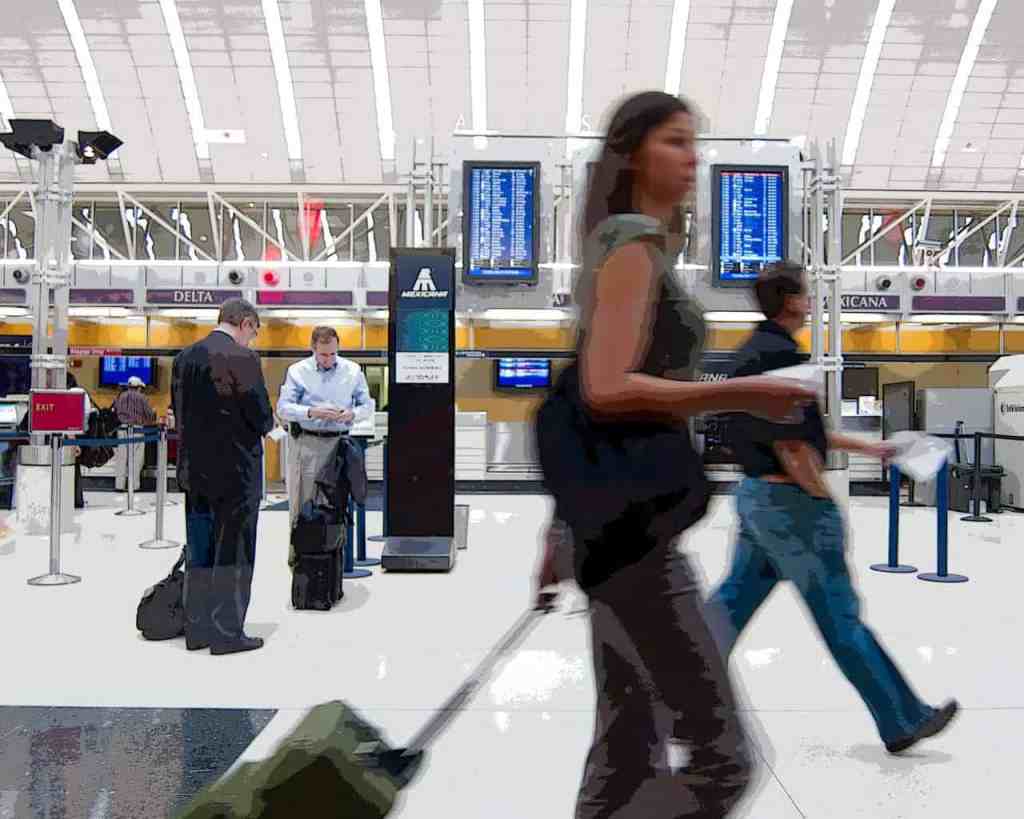
Estados Unidos levanta prohibición de viajes internacionales y las aerolíneas avanzan a recuperar niveles de vuelos pre-pandémicos reforzando así la recuperación de los viajes aéreos, justamente una de las tendencias que lleva a Bank of America a pensar que el petróleo Brent podría llegar a US$ 120 el barril a mediados del próximo año 2022 debido a la futura demanda.

Las prohibiciones de viajes de extranjeros a Estados Unidos que establecía hace 605 días la Administración de Donald Trump y luego amplió Joe Biden a principios de este año 2021, se levantan este Martes 09/11 hacia Reino Unido, Sudáfrica, India, Brasil y China, entre otros países designados. La reapertura de fronteras viene con nuevas reglas que deberán fiscalizar las aerolíneas entre sus viajeros, con multas de hasta US$ 35.000 por violación. Los visitantes deberán tener dos dosis de vacunas aprobadas o autorizadas por la Administración de Alimentos y Medicamentos (FDA) o enumeradas para su uso por la Organización Mundial de la Salud, entre las que se cuentan Johnson & Johnson, Pfizer/BioNTech, Moderna, AstraZeneca, Covishield, Sinopharm y Sinovac. Sin embargo, estos requisitos que serán fiscalizados en cada vuelo, no han impedido que las aerolíneas tengan motivos para celebrar.

Las aerolíneas anuncian un aumento considerado del tráfico aéreo. United Airlines anticipa un incremento de 50% en los pasajeros internacionales este lunes, en comparación con la semana anterior cuando transportaba a 20.000 personas. En tanto, Delta Air Lines espera que muchos de sus vuelos internacionales del lunes estén llenos y tengan una fuerte demanda en las próximas semanas. De esta manera, las aerolíneas avanzan decididas en su recuperación, viendo con nitidez el retorno a ritmos de vuelos prepandemicos. Se estima que la capacidad internacional de American Airlines sea más del doble que la de hace un año y solo un 28% menos que en 2019 para noviembre y diciembre. En el caso de United Airlines, los vuelos internacionales del próximo mes representarán un 69% en relación al mismo periodo de 2019, un aumento frente al 63% de noviembre, adicionalmente su horario transatlántico será restaurado en un 87% en Diciembre 2021.

Incremento petróleo

El West Texas Intermediate (WTI), se utiliza como referencia principal en el mercado petrolero de Estados Unidos. Este índice ha subido 71,42% y el Brent 64,18% en los que va del año 2021. Es justamente la intensificación de la tenencia del aumento de los vuelos aéreos, junto con el encarecimiento de los precios del gas, lo que ha llevado a Bank of America a aumentar el precio objetivo del petróleo para 2022. En el caso del barril de brent, el banco de inversiones estaba apuntando a que llegaría a US$ 100 desde los US$ 83,03 actuales, apuesta que sube hasta los US$ 120 a mediados del próximo año.

El petróleo seguirá su escalada y podría llegar a US$ 120 a mediados del próximo año. Los precios del petróleo han aumentado recientemente por encima de los US$ 80 el barril, impulsados por su uso para sustituir al gas que también va en alza y por un aumento en los viajes aéreos. En este escenario, hasta hace poco Bank of America apuntaba a un precio objetivo de US$ 100 en 2022, pero ante el fortalecimiento de esas tendencias ahora anticipan que el barril alcanzará los US$ 120 a mediado del próximo año 2022. También se ve reforzado gracias a que la capacidad disponible (de oferta) de la OPEP+ está disminuyendo debido a la falta de inversión, mientras que “la elasticidad precio de la oferta de esquisto de EE. UU. se ha reducido en más de la mitad. En ese marco, aseguran que si el potencial retorno de los barriles iraníes ayuda a mantener los precios bajo control en 2022, una combinación de rápido crecimiento de la demanda de gasolina y una recuperación en curso en los destilados medios, junto con las limitaciones de las refinerías, podrían presionar los precios del petróleo al alza en 2022.

US approves post-pandemic travel

United States lifts international flight bans

The United States lifts a ban on international travel and airlines advance to recover pre-pandemic flight levels, thus reinforcing the recovery of air travel, precisely one of the trends that leads Bank of America to think that Brent oil could reach US $ 120 a barrel in the middle of next year 2022 due to future demand.

The bans on foreign travel to the United States established 605 days ago by the Donald Trump Administration and then extended by Joe Biden at the beginning of this year 2021, are lifted this Tuesday 09/11 towards the United Kingdom, South Africa, India, Brazil and China, among other designated countries. The reopening of borders comes with new rules that airlines must monitor among their travelers, with fines of up to US$ 35,000 per violation. Visitors must have two doses of vaccines approved or authorized by the Food and Drug Administration (FDA) or listed for use by the World Health Organization, including Johnson & Johnson, Pfizer/BioNTech, Moderna, AstraZeneca , Covishield, Sinopharm and Sinovac. However, these requirements, which will be audited on each flight, have not prevented the airlines from having reason to celebrate.

Airlines announce a considerable increase in air traffic. United Airlines anticipates a 50% increase in international passengers this Monday, compared to the previous week when it carried 20,000 people. Meanwhile, Delta Air Lines expects many of its international flights on Monday to be full and in strong demand in the coming weeks. In this way, the airlines are making determined progress in their recovery, clearly seeing the return to prepandemic flight rates. American Airlines’ international capacity is estimated to be more than double that of a year ago and just 28% less than in 2019 for November and December. In the case of United Airlines, international flights next month will represent 69% in relation to the same period of 2019, an increase compared to 63% in November, additionally its transatlantic schedule will be restored by 87% in December 2021.

Oil increase

The West Texas Intermediate (WTI) is used as the main reference in the United States oil market. This index has risen 71.42% and Brent 64.18% so far in 2021. It is precisely the intensification of the increase in air flights, together with the rise in gas prices, which has led Bank of America to increase the target price for oil by 2022. In the case of a barrel of brent, the investment bank was aiming for it to reach US$ 100 from the current US$ 83.03, a bet that goes up to US$ 120 by the middle of next year.

Oil will continue to climb and could reach US$ 120 by the middle of next year. Oil prices have recently risen above US$ 80 a barrel, driven by its use to replace gas that is also on the rise and by an increase in air travel. In this scenario, until recently Bank of America was aiming for a target price of US$ 100 in 2022, but given the strengthening of these trends, they now anticipate that a barrel will reach US$ 120 in the middle of next year 2022. It is also reinforced thanks to the fact that OPEC+’s available (supply) capacity is declining due to lack of investment, while “the price elasticity of the US shale supply has been reduced by more than half. In that framework, they ensure that if the potential return of Iranian barrels helps to keep prices under control in 2022, a combination of rapid growth in gasoline demand and an ongoing recovery in middle distillates, together with the limitations of the refineries, could push oil prices higher in 2022.

PUBLISHER: Airgways.com
DBk: Usa.gov / Airgways.com
AW-POST: 202111091034AR

A\W   A I R G W A Y S ®

EEUU incrementa tráfico aéreo

AW | 2021 11 08 07:04 | AIR TRAFFIC

Impulso principales aerolíneas incremento viajes a EEUU

Las reservas de aerolíneas a Estados Unidos despegaron inmediatamente después de que la Casa Blanca anunciara que el país reabriría a todos los viajeros internacionales vacunados a partir de la próxima semana, lo que obligó a un giro de la industria, aunque desafiante en un período de aumento de la variante Delta de Coronavirus. La medida de Estados Unidos para dar la bienvenida a los viajeros internacionales, que entra en vigor el Lunes 15/11, sigue a dieciocho meses de restricciones para 33 países durante lo peor de la pandemia de Coronavirus que separó a las familias, impidió los viajes de negocios y frustró a los turistas.

Las grandes aerolíneas, incluidas Air France, United Airlines y Singapore Airlines, están luchando para satisfacer el repentino aumento de la demanda, agregando vuelos, cambiando aviones más grandes por otros más pequeños y redoblando los esfuerzos para contratar y retener personal. Justo después del anuncio de la Casa Blanca, British Airways vio un aumento del 900% en las búsquedas de vuelos y paquetes de vacaciones a destinos clave de Estados Unidos en comparación con la semana anterior. El día después del anuncio, American Airlines obtuvo un salto del 66% en las reservas de vuelos a Gran Bretaña, un 40% a Europa y un 74% a Brasil. Las aerolíneas están planeando un modesto retroceso en Enero y Febrero 2022 después de una fuerte temporada de vacaciones, pero anticipan una fuerte demanda en la primavera que se intensificará en el verano, tradicionalmente la temporada más concurrida.

USA increases air traffic

Boost for major airlines increased travel to the US

Airline bookings to the United States took off immediately after the White House announced that the country would reopen to all vaccinated international travelers starting next week, forcing an industry turnaround, albeit challenging in a period of surge. of the Delta variant of Coronavirus. The United States measure to welcome international travelers, which takes effect on Monday 11/15, follows eighteen months of restrictions for 33 countries during the worst of the Coronavirus pandemic that separated families, impeded travel business and frustrated tourists.

Big airlines, including Air France, United Airlines and Singapore Airlines, are struggling to keep up with the sudden surge in demand, adding flights, swapping larger planes for smaller ones, and redoubling efforts to recruit and retain staff. Right after the White House announcement, British Airways saw a 900% increase in searches for flights and vacation packages to key US destinations compared to the previous week. The day after the announcement, American Airlines saw a 66% jump in flight bookings to Great Britain, 40% to Europe and 74% to Brazil. Airlines are planning a modest pullback in January and February 2022 after a strong holiday season, but anticipate strong demand in the spring that will intensify in the summer, traditionally the busiest season.

PUBLISHER: Airgways.com
DBk: Usa.gov / Airgways.com
AW-POST: 202111080704AR

A\W   A I R G W A Y S ®