Unión Europea sanciona Irán

AW | 2024 10 15 09:11 | GOVERNMENT / AVIATION ORGANISMS / AIRLINES

Impone primeras sanciones a Irán por entregar misiles a Rusia
Incluye restricciones a tres aerolíneas

El Consejo de la Unión Europea (UE) aprobó el Lunes 14/10 las primeras sanciones contra la República Islámica de Irán por haber enviado misiles balísticos a la Federación Rusia. Los ministros comunitarios de Exteriores aprobaron medidas restrictivas contra siete personas y siete entidades iraníes, indicó en un comunicado el Consejo de la UE. Las nuevas sanciones aprobadas este Lunes 14/10 afectan a personas y entidades responsables del desarrollo y la transferencia de drones, misiles y tecnología conexa a Rusia para dar apoyo a su guerra de agresión contra Ucrania, así como a grupos armados y entidades que socavan la paz y la seguridad en Oriente Medio y la región del Mar Rojo. A la lista de sancionados se han incluido tres aerolíneas iraníes Saha Airlines, Mahan Air e Iran Air y dos empresas de adquisiciones que la UE considera responsables, respectivamente, de la transferencia y el suministro a Rusia, a través de redes transnacionales de compras, de drones de fabricación iraní y componentes y tecnologías relacionadas, para utilizarlos contra Ucrania.

Por otra parte, el Consejo ha decidido imponer medidas restrictivas al Viceministro de Defensa de Irán, Seyed Hamzeh Ghalandari, y a destacados funcionarios de la Fuerza Qods, el Cuartel General Central Khatam al-Anbiya y la División Espacial de la Fuerza Aeroespacial del Cuerpo de la Guardia Revolucionaria Islámica. También se sancionó a los directores generales de las empresas Iran Aircraft Manufacturing Industries (HESA) y Aerospace Industries Organization (AIO), que cotizan en la Unión Europea. A estas personas se les congelarán sus activos y se les prohibirá viajar a la Unión Europea, mientras que se prohibirá la provisión de fondos o recursos económicos, directa o indirectamente, a las personas físicas o jurídicas, entidades u organismos enumerados, o en su beneficio.

En Marzo 2024, los líderes comunitarios advirtieron a Irán, que ha sido sancionado por la UE por enviar a Rusia drones, transfería misiles balísticos y tecnología relacionada a Moscú para su uso contra Ucrania, la Unión Europea estaría dispuesta a responder rápidamente, incluyendo “nuevas e importantes medidas restrictivas”. En Septiembre 2024, la UE había condenado firmemente que Irán hubiera transferido misiles balísticos a Rusia, algo que consideró entonces como una amenaza directa a la seguridad europea y una escalada material sustantiva en la guerra de agresión de Rusia contra Ucrania. En Mayo 2024, el Consejo amplió el ámbito de aplicación del marco de la UE para la adopción de sanciones en vista del apoyo militar de Irán a la guerra de agresión de Rusia contra Ucrania, a fin de abarcar tanto los drones como los misiles. Ese marco legal se prorrogó posteriormente hasta el 27 de Julio de 2025 y seguirá revisándose anualmente, precisó el Consejo.

Insistieron en que el acceso de Rusia a artículos y tecnologías sensibles con relevancia en el campo de batalla debía “restringirse en la mayor medida posible”, incluso apuntando a entidades de terceros países que permitan esta elusión.

Respuesta Irán
La República de Irán ha condenado una serie de sanciones anunciadas por la Unión Europea (UE) y el Reino Unido (RU) como «injustificadas y contrarias al derecho internacional». Esmaeil Baghaei, Portavoz del Ministerio de Relaciones Exteriores iraní, afirmó que las sanciones impuestas contra individuos, aerolíneas y desarrolladores de misiles estaban diseñadas para «desviar la atención pública del genocidio de los palestinos».

El Portavoz rechazó específicamente la afirmación de la UE de que Irán ha transferido misiles y drones a Rusia para su uso contra Ucrania. «Desde el comienzo del conflicto, Irán se ha opuesto a la guerra y ha enfatizado el respeto por la integridad territorial y la soberanía nacional de todos los países, abogando por una solución diplomática a la disputa entre Rusia y Ucrania», dijo Esmaeil Baghaei.

Las nuevas sanciones de la UE, que también se introdujeron en respuesta a que Irán socavó la paz y la seguridad en Oriente Medio, incluyeron a Saha Airlines, Mahan Air e Iran Air, además de dos empresas de adquisición.

«Estos son respectivamente responsables de la transferencia y el suministro, a través de redes de adquisición transnacionales, de vehículos aéreos no tripulados fabricados en Irán y componentes y tecnologías relacionados a Rusia, para ser utilizados en su guerra de agresión contra Ucrania. También se incluyeron en la lista dos empresas involucradas en la producción de propelente utilizado para lanzar cohetes y misiles», dijo la UE el 14 de Octubre de 2024.

Además de la congelación de activos y las prohibiciones de viaje impuestas a las aerolíneas, también se sancionó a destacados funcionarios de defensa iraníes, incluido el Viceministro de Defensa Seyed Hamzeh Ghalandari. Las sanciones se extienden a los miembros del Cuerpo de la Guardia Revolucionaria Islámica (CGRI) y a los directivos de empresas aeroespaciales que cotizan en bolsa. La nueva ronda de sanciones del Reino Unido se dirigió a figuras y organizaciones militares iraníes de alto rango por su papel en el intento de desestabilizar Oriente Medio.

«A pesar de las repetidas advertencias, las peligrosas acciones de Irán y sus representantes están impulsando una mayor escalada en Oriente Medio. Tras su ataque con misiles balísticos contra Israel, estamos haciendo que Irán rinda cuentas y exponiendo a quienes facilitaron estos actos», dijo el Ministro de Relaciones Exteriores del Reino Unido, David Lammy.

Entre las personas y entidades sancionadas por el Reino Unido se encuentran altos cargos del Ejército de la República Islámica de Irán, la Fuerza Aérea de Irán y la Organización de Inteligencia del Cuerpo de los Guardianes de la Revolución Islámica. El paquete de sanciones también incluye la Oficina de Diseño de Sistemas de Propulsión Farzanegan (FPSDB), que diseña y fabrica piezas que se pueden usar en misiles de crucero, así como la Agencia Espacial Iraní, que desarrolla tecnologías que tienen aplicaciones en el desarrollo de misiles balísticos.

European Union sanctions Iran

Imposes first sanctions on Iran for delivering missiles to Russia
Includes restrictions on three airlines

The Council of the European Union (EU) approved on Monday 14/10 the first sanctions against the Islamic Republic of Iran for having sent ballistic missiles to the Russian Federation. The EU Foreign Ministers approved restrictive measures against seven Iranian individuals and seven entities, the EU Council said in a statement. The new sanctions approved on Monday 14/10 affect individuals and entities responsible for the development and transfer of drones, missiles, and related technology to Russia to support its war of aggression against Ukraine, as well as armed groups and entities that undermine peace and security in the Middle East and the Red Sea region. The sanctions list includes three Iranian airlines Saha Airlines, Mahan Air, Iran Air, and two procurement companies that the EU considers responsible, respectively, for the transfer and supply to Russia, through transnational procurement networks, of Iranian-made drones and related components and technologies for use against Ukraine.

In addition, the Council decided to impose restrictive measures on Iran’s Deputy Minister of Defence, Seyed Hamzeh Ghalandari, and senior officials of the Qods Force, the Khatam al-Anbiya Central Headquarters, and the Space Division of the Islamic Revolutionary Guard Corps Aerospace Force. The CEOs of the EU-listed companies Iran Aircraft Manufacturing Industries (HESA) and Aerospace Industries Organization (AIO) were also sanctioned. These individuals will have their assets frozen and be banned from travelling to the European Union, while the provision of funds or economic resources, directly or indirectly, to or for the benefit of the listed natural or legal persons, entities or bodies will be prohibited.

In March 2024, EU leaders warned that if Iran, which has been sanctioned by the EU for sending drones to Russia, was transferring ballistic missiles and related technology to Moscow for use against Ukraine, the European Union would be ready to respond swiftly, including “new and significant restrictive measures”. In September 2024, the EU had strongly condemned Iran’s transfer of ballistic missiles to Russia, which it then considered a direct threat to European security and a substantive material escalation in Russia’s war of aggression against Ukraine. In May 2024, the Council extended the scope of the EU framework for the adoption of sanctions in view of Iran’s military support for Russia’s war of aggression against Ukraine, to cover both drones and missiles. That legal framework was subsequently extended until 27 July 2025 and will continue to be reviewed annually, the Council said.

They insisted that Russia’s access to sensitive items and technologies with battlefield relevance should be “restricted to the greatest extent possible”, including by targeting third-country entities that enable this circumvention.

Iran Response
The Republic of Iran has condemned a series of sanctions announced by the European Union (EU) and the United Kingdom (UK) as “unjustified and contrary to international law”. Esmaeil Baghaei, Spokesman for the Iranian Foreign Ministry, claimed that the sanctions imposed against individuals, airlines, and missile developers were designed to “divert public attention from the genocide of the Palestinians”.

The Spokesman specifically rejected the EU’s claim that Iran has transferred missiles and drones to Russia for use against Ukraine. “Since the beginning of the conflict, Iran has opposed war and has emphasized respect for the territorial integrity and national sovereignty of all countries, advocating a diplomatic solution to the dispute between Russia and Ukraine”, Esmaeil Baghaei said.

The new EU sanctions, which were also introduced in response to Iran undermining peace and security in the Middle East, targeted Saha Airlines, Mahan Air, and Iran Air, in addition to two procurement companies.

«These are respectively responsible for the transfer and supply, through transnational procurement networks, of Iranian-made unmanned aerial vehicles and related components and technologies to Russia, to be used in its war of aggression against Ukraine. Two companies involved in the production of propellant used to launch rockets and missiles were also included on the list», the EU said on October 14, 2024.

In addition to asset freezes and travel bans imposed on airlines, senior Iranian defense officials were also sanctioned, including Deputy Defense Minister Seyed Hamzeh Ghalandari. The sanctions extend to members of the Islamic Revolutionary Guard Corps (IRGC) and executives of publicly listed aerospace companies. The new round of UK sanctions targeted senior Iranian military figures and organizations for their role in attempting to destabilize the Middle East.

“Despite repeated warnings, the dangerous actions of Iran and its proxies are driving further escalation in the Middle East. Following their ballistic missile attack on Israel, we are holding Iran to account and exposing those who facilitated these acts”, said UK Foreign Secretary David Lammy.

The individuals and entities sanctioned by the UK include senior figures in the Army of the Islamic Republic of Iran, the Iranian Air Force, and the Intelligence Organisation of the Islamic Revolutionary Guard Corps. The sanctions package also includes the Farzanegan Propulsion Systems Design Bureau (FPSDB), which designs and manufactures parts that can be used in cruise missiles, as well as the Iranian Space Agency, which develops technologies that have applications in the development of ballistic missiles.

PUBLISHER: Airgways.com
DBk: European-union.europa.eu / Airgways.com
AW-POST: 202410150911AR
OWNERSHIP: Airgways Inc.
A\W A I R G W A Y S ®

Boeing recortará 17.000 trabajadores

AW | 2024 10 14 20:24 | INDUSTRY / GOVERNMENT / AVIATION ORGANISMS

Golpe deja a expertos desconcertados por la estrategia
¿Dónde y quiénes serán despedidos en el reinicio de Boeing?
Boeing cerrará línea producción 767 Freighter

The Boeing Company dijo el Viernes 11/10 que recortaría el 10% de su fuerza laboral, aproximadamente 17.000 empleados, y que pondría fin a la producción de un avión de carga fabricado en el Estado de Washington. La medida se produce cuando los maquinistas de aviones en la región de Puget Sound y otras partes de la costa Oeste de Estados Unidos han estado en huelga durante casi un mes después de rechazar una oferta de contrato de la compañía en Septiembre 2024. Las negociaciones del contrato se estancaron a principios de esta semana y la fabricación sigue detenida en los sitios de Boeing en toda la región. Antes de la huelga, la empresa enfrentaba a pérdidas financieras y a una deuda creciente.

«Necesitamos tener los ojos claros sobre el trabajo que enfrentamos y ser realistas sobre el tiempo que llevará lograr hitos clave en el camino hacia la recuperación. También necesitamos enfocar nuestros recursos en el desempeño y la innovación en las áreas que son fundamentales para lo que somos, en lugar de dispersarnos en demasiados esfuerzos», dijo el Presidente y Director Ejecutivo de Boeing, Kelly Ortberg, en un mensaje a los empleados.

Cambios en el horizante
Boeing ha anunciado un inesperado recorte da la plantilla laboral elevando la suma de 17.000 empleados en los próximos meses e involucrarán a ejecutivos, gerentes y otros empleados. Además de los despidos, Boeing dijo que pondría fin a la producción de su avión comercial de carga 767 en 2027 después de entregar aviones pedidos en su línea de construcción en Everett (WA). La compañía también retrasará aún más su Programa 777X que se fabrica en Everett, y se esperan las primeras entregas en 2026.

Negociaciones Boeing-sindicatos
«La dirección de Boeing ha decidido perjudicar todos los aspectos de la empresa. El anuncio de Kelly Ortberg no inspira confianza en que haya un plan real para salvar a Boeing de sus heridas autoinfligidas. En lugar de resolver la huelga con los maquinistas»y concentrar los recursos de la compañía en reconstruir la confianza de los reguladores y los clientes, el liderazgo de Boeing ha decidido dañar todos los aspectos de la compañía», dice el representante sindical Ray Goforth, Director Ejecutivo de la Sociedad de Empleados Profesionales de Ingeniería en la Industria Aeroespacial, un sindicato que representa a los ingenieros y trabajadores técnicos de Boeing.

Mientras tanto, unos treinta miembros del Congreso de Estados Unidos, incluida la representante demócrata Pramila Jayapal de Washington, enviaron una carta a Kelly Ortberg y a Jon Holden, Presidente del Local 751 de la Asociación Internacional de Maquinistas, esta semana, instando a las partes a «negociar de buena fe para llegar a un contrato justo de manera oportuna».

Las conversaciones entre la compañía y la Asociación Internacional de Maquinistas y Trabajadores Aeroespaciales (IAM) se han llevado a cabo a través de un mediador federal desde que los aproximadamente 33.000 trabajadores se declararon en huelga en Septiembre 2024. El sindicato ha presionado por un aumento salarial del 40% y la restauración de un plan de pensiones de beneficios definidos.

Boeing hizo una nueva oferta el 23/09 que habría aumentado los salarios en un 30% en cuatro años. También habría duplicado un bono de ratificación a US$ 6.000 y restablecido un bono anual. Los trabajadores habrían recibido una contribución del 100% de las contribuciones al plan 401(k) de hasta el 8% del salario. La compañía dijo el Martes 07/10 que había retirado esa oferta y que nuevas negociaciones no tienen sentido en este momento.

Boeing ha indicado que no está abierto a restablecer el programa de pensiones. Esta semana, la compañía presentó una queja ante la Junta Nacional de Relaciones Laborales, alegando que el sindicato no estaba negociando de buena fe.

El Sindicato de Maquinistas ha calificado de infundadas las reclamaciones de la compañía presentadas ante la National Labor Relations Board (NLRB) y dice que Boeing sigue alejándose de la mesa. El sindicato dijo en un comunicado el Viernes 11/10 por la noche que la decisión de la compañía de poner fin a la producción del carguero comercial 767 «es muy preocupante, particularmente dado el estado actual de las negociaciones». Jon Holden, Presidente del Distrito 751 de IAM, dijo que Boeing está «tratando de negociar con la prensa».

El máximo ejecutivo de Boeing anunció en 09/2024 licencias temporales para los empleados, incluidos ejecutivos y gerentes, para preservar el efectivo en medio de la huelga. Dijo en su nota del viernes que, con los próximos recortes de empleos, la compañía no procedería con el próximo ciclo de licencias. «El estado de nuestro negocio y nuestra recuperación futura requieren acciones duras», expresó el CEO Kelly Ortberg.

El personal de Boeing de la Asociación Internacional de Maquinistas (IAM) y Trabajadores Aeroespaciales abandonaron el trabajo el 13 de Septiembre de 2024 después de rechazar abrumadoramente una oferta de contrato. A pesar de las negociaciones que comenzaron en Mayo 2024 y se intensificaron desde mediados de Septiembre 2024, el desacuerdo entre el sindicato de maquinistas de IAM y Boeing persiste, y las relaciones parecen estar en su punto más bajo.

Boeing planea reducir su fuerza laboral en alrededor de un 10 por ciento en los próximos meses. Empleaba a casi 171.000 personas a finales de 2023, incluidas 41.000 fuera de Estados Unidos.

El impacto financiero directo del primer mes de la huelga alcanzó los US$ 5.000 millones de Dólares, incluidos US$ 3.260 millones para Boeing, según Anderson Economic Group. El resto incluyó pérdidas en los salarios de la industria, los proveedores, los clientes de Boeing y el área de Seattle, más allá de las directamente afectadas por la huelga.

Resultados 3Q2024
El gigante aeroespacial registró una pérdida trimestral de más de US$ 1.400 millones de Dólares en los segundos tres meses del año y vio aumentar su deuda a casi US$ 58.000 millones de Dólares desde US$ 48.000 millones de Dólares durante ese tiempo. El Viernes 11/10, Boeing dijo que espera reconocer costos antes de impuestos de US$ 3.000 millones de Dólares relacionados con los programas 777X y 767 y otros US$ 2.000 millones de Dólares vinculados a programas de defensa, espacio y seguridad. Anticipa ingresos en el tercer trimestre de US$ 17.800 millones de Dólares, con US$ 1.300 millones en flujo de caja operativo negativo. La compañía planea informar los resultados financieros completos del Tercer Trimestre el 23 de Octubre de 2024.

La huelga ha dejado inactivas varias instalaciones en todo el noroeste, incluidas las de Renton, Everett, Auburn y Frederickson en Washington, y Gresham y Portland en Oregón. Debido a la huelga, se ha pausado el trabajo en varios modelos de aviones comerciales, incluidos el 737 MAX, el 767 y el 777, y algunos aviones militares.

Perspectivas Boeing
Una ronda histórica de medidas de reducción de costos en Boeing ha dejado a los expertos perplejos y preguntándose si el gigante de la aviación, afectado por una huelga de un mes, está sacrificando su futuro.

«No estoy seguro de ver el plan más grande aquí. Deshacerse de una gran cantidad de talento cuando hay una grave escasez de talento aeroespacial no parece ser la decisión más inteligente», dijo Richard Aboulafia, Consultor de AeroDynamic.

Según los analistas de TD Cowen, el grupo está llevando a cabo un «reinicio estratégico» para recaudar capital y llenar sus arcas en hasta US$ 10.000 millones de Dólares, ante la ausencia de entregas de aviones. Otra opción para recuperar efectivo fresco es vender activos no estratégicos, señaló TD Cowen, que identificó unos US$ 20.000 millones de Dólares en valor potencial.

Según Melius Research, un esfuerzo de recaudación de fondos «fortalecería la posición negociadora de Boeing», pues eliminaría la urgencia de encontrar un acuerdo para reiniciar la producción.

Boeing to cut 17,000 workers

Blow leaves experts baffled by strategy
Where and who will be laid off in Boeing’s restart?
Boeing to close 767 Freighter production line

The Boeing Company said Friday it would cut 10% of its workforce, roughly 17,000 employees, and end production of a cargo plane made in Washington State. The move comes as aircraft machinists in the Puget Sound region and elsewhere on the U.S. West Coast have been on strike for nearly a month after rejecting a contract offer from the company in September 2024. Contract negotiations stalled earlier this week and manufacturing remains halted at Boeing sites across the region. Before the strike, the company was facing financial losses and mounting debt.

«We need to be clear-eyed about the work we face and realistic about the time it will take to achieve key milestones on the road to recovery. We also need to focus our resources on performance and innovation in the areas that are core to who we are, rather than spreading ourselves thin across too many efforts», Boeing President and CEO Kelly Ortberg said in a message to employees.

Changes on the horizon
Boeing has announced an unexpected workforce cut of 17,000 employees in the coming months and will involve executives, managers and other employees. In addition to the layoffs, Boeing said it would end production of its 767 commercial freighter in 2027 after delivering aircraft ordered from its construction line in Everett, WA. The company will also further delay its 777X program that is manufactured in Everett, with first deliveries expected in 2026.

Boeing-union negotiations
«Boeing management has decided to hurt every aspect of the company. Kelly Ortberg’s announcement does not inspire confidence that there is a real plan to save Boeing from its self-inflicted wounds. Instead of resolving the strike with machinists and focusing the company’s resources on rebuilding the trust of regulators and customers, Boeing’s leadership has decided to hurt every aspect of the company», says union representative Ray Goforth, Executive Director of the Society of Professional Engineering Employees in the Aerospace Industry, a union representing Boeing engineers and technical workers.

Meanwhile, about thirty members of the U.S. Congress, including Democratic Representative Pramila Jayapal of Washington, sent a letter to Kelly Ortberg and Jon Holden, President of Local 751 of the International Association of Aerospace Engineers. Machinists, this week, urging the parties to “negotiate in good faith to reach a fair contract in a timely manner”.

Talks between the company and the International Association of Machinists and Aerospace Workers (IAM) have been conducted through a federal mediator since the roughly 33,000 workers went on strike in September 2024. The union has pushed for a 40% wage increase and restoration of a defined benefit pension plan.

Boeing made a new offer on 09/23 that would have increased wages by 30% over four years. It also would have doubled a signing bonus to US$ 6,000 and reinstated an annual bonus. Workers would have received a 100% match on 401(k) plan contributions of up to 8% of salary. The company said Tuesday 10/7 that it had withdrawn that offer and that further negotiations are pointless at this time.

Boeing has indicated that it is not open to reinstating the pension program. This week, the company filed a complaint with the National Labor Relations Board, alleging that the union was not bargaining in good faith.

The Machinists Union has called the company’s claims filed with the National Labor Relations Board (NLRB) baseless and says Boeing continues to walk away from the table. The union said in a statement Friday night that the company’s decision to end production of the 767 commercial freighter «is very concerning, particularly given the current state of negotiations», Jon Holden, IAM District 751 President, said Boeing is «trying to negotiate with the press».

Boeing’s top executive announced in 09/2024 temporary furloughs for employees, including executives and managers, to preserve cash amid the strike. He said in his Friday note that, with job cuts coming, the company would not proceed with the next furlough cycle. «The state of our business and our future recovery require tough action», said CEO Kelly Ortberg.

Boeing staff from the International Association of Machinists (IAM) and Aerospace Workers walked off the job on September 13, 2024 after overwhelmingly rejecting a contract offer. Despite negotiations that began in May 2024 and intensified since mid-September 2024, the disagreement between the IAM machinists union and Boeing persists, and relations appear to be at an all-time low.

Boeing plans to reduce its workforce by about 10 percent in the coming months. It employed nearly 171,000 people by the end of 2023, including 41,000 outside the United States.

The direct financial impact of the first month of the strike reached US$ 5 billion, including US$ 3.26 billion for Boeing, according to Anderson Economic Group. The remainder included losses in industry wages, suppliers, Boeing customers and the Seattle area beyond those directly affected by the strike.

3Q2024 Results
The aerospace giant posted a quarterly loss of more than US$ 1.4 billion in the second three months of the year and saw its debt rise to nearly US$ 58 billion from US$ 48 billion during that time. On Friday 11/10, Boeing said it expects to recognize pre-tax costs of US$ 3 billion related to the 777X and 767 programs and another US$ 2 billion tied to defense, space and security programs. It anticipates third-quarter revenue of US$ 17.8 billion, with US$ 1.3 billion in negative operating cash flow. The company plans to report full third-quarter financial results on October 23, 2024.

The strike has idled several facilities across the Northwest, including those in Renton, Everett, Auburn and Frederickson in Washington, and Gresham and Portland in Oregon. Because of the strike, work has been paused on several commercial airplane models, including the 737 MAX, 767 and 777, and some military aircraft.

Boeing outlook
A historic round of cost-cutting measures at Boeing has left experts perplexed and wondering whether the aviation giant, hit by a month-long strike, is sacrificing its future.

«I’m not sure I see the bigger plan here. Getting rid of a lot of talent when there’s a severe shortage of aerospace talent doesn’t seem like the smartest move», said Richard Aboulafia, Consultant at AeroDynamic.

According to TD Cowen analysts, the group is undertaking a «strategic reset» to raise capital and fill its coffers by as much as US$ 10 billion in the absence of aircraft deliveries. Another option to recover fresh cash is to sell non-core assets, TD Cowen said, identifying some US$ 20 billion in potential value.

According to Melius Research, a fundraising effort would «strengthen Boeing’s negotiating position» by removing the urgency of finding a deal to restart production.

PUBLISHER: Airgways.com
DBk: Boeing.com / Goiam.org / Airgways.com
AW-POST: 202410142024AR
OWNERSHIP: Airgways Inc.
A\W A I R G W A Y S ®

Reincorporan Pilotos Aerolíneas

AW | 2024 10 07 13:39 | AIRLINES / GOVERNMENT

Justicia ordena reincorporación Pilotos Aerolíneas Argentinas

Un fallo de la Justicia Nacional del Trabajo de Argentina ha ordenado la reincorporación de los tres Pilotos de Aerolíneas Argentinas que habían sido despedidos luego de que se negaran a volar a Estados Unidos un avión Embraer E190 alquilado que debía ser devuelto a la empresa propietaria, como parte de una medida de protesta del gremio de los pilotos. La resolución fue tomada por la jueza Stella Maris Vulcano, que hizo lugar a una medida cautelar solicitada por la Asociación de Pilotos de Líneas Aéreas (APLA), que dirige Pablo Biró, que reclamaba la reincorporación inmediata de los trabajadores cesanteados. La compañía aérea ha confirmado que apelarán la decisión judicial.

En un comunicado difundido por el gremio de APLA, destaca que el fallo «dispone que dicha reincorporación debe ser cumplida en la misma función que desempeñaban previo al despido, y que no sólo se protege de este modo el carácter alimentario de los salarios de los trabajadores despedidos, sino también por la necesaria protección del derecho de libertad sindical». En ese sentido, plantea que los despidos «aparecen como una respuesta a la adhesión de los trabajadores a las medidas de acción directa dispuestas por la asociación gremial, lo que transgrede el derecho fundamental», que están previstos en la Constitución Nacional y en los convenios de la Organización Internacional del Trabajo.

La Justicia deberá definir si hace lugar al pedido de apelación de la compañía y el futuro de los trabajadores cesanteados hasta que haya una sentencia definitiva. Los pilotos se negaron a volar un avión en régimen de alquiler para ser devuelto a su lessor devuelto, estuvo impulsada por el gremio APLA en medio del confllicto sinducal, han sostenido un achicamiento de Aerolíneas Argentinas, que han expresado: «Es parte de una acción sindical en el marco del conflicto salarial actual», confirmaron desde APLA a mediados de Septiembre 2024 cuando se conocieron los despidos.

Aerolíneas Argentina ha argumentado que la medida de los tres pilotos tenía un perjuicio potencial económico para la compañía. Fuentes de la empresa señalaron que el incidente fue a partir de la programación de un vuelo ferry que estaba programado para hacer entrega de una aeronave Embraer E190-100AR a la compañía de alquiler. La compañía debía desprogramar dos aviones regionales que vencía su acuerdo de alquiler y finalizado el contrato con la compañía de alquiler estadounidense, mientras que el incumplimiento de entrega fguera de los términos acarreaba multas de US$ 26.000 Dólares por día por las dos aeronaves.

Como una medida paliativa, Aerolíneas Argentinas concretó el 18 de Septiembre de 2024 el vuelo hacia Estados Unidos de uno de los aviones Embraer E190 matrícula LV-GBK con pilotos brasileños.

Aerolíneas Argentinas Pilots reinstated

Court orders reinstatement of Aerolíneas Argentinas Pilots

A ruling by the National Labor Court of Argentina has ordered the reinstatement of the three Aerolíneas Argentinas Pilots who had been fired after they refused to fly a rented Embraer E190 aircraft to the United States that was to be returned to the owner company, as part of a protest measure by the pilots’ union. The resolution was made by Judge Stella Maris Vulcano, who upheld a precautionary measure requested by the Association of Airline Pilots (APLA), led by Pablo Biró, which demanded the immediate reinstatement of the dismissed workers. The airline has confirmed that it will appeal the court decision.

In a statement released by the APLA union, it highlights that the ruling «stipulates that said reinstatement must be carried out in the same function that they performed prior to the dismissal, and that not only is the nutritional nature of the dismissed workers’ salaries protected in this way, but also the necessary protection of the right to freedom of association», In this sense, it states that the dismissals «appear as a response to the workers’ adherence to the direct action measures ordered by the union association, which violates the fundamental right», which is provided for in the National Constitution and in the conventions of the International Labor Organization.

The Court will have to decide whether to uphold the company’s request for appeal and the future of the dismissed workers until there is a final ruling. The pilots refused to fly a plane under a rental agreement to be returned to its lessor, was driven by the APLA union in the midst of the union conflict, they have supported a reduction of Aerolíneas Argentinas, which they have said: «It is part of a union action in the framework of the current salary conflict», confirmed APLA in mid-September 2024 when the dismissals were known.

Aerolíneas Argentina has argued that the measure of the three pilots had a potential economic damage to the company. Company sources indicated that the incident was from the scheduling of a ferry flight that was scheduled to deliver an Embraer E190-100AR aircraft to the rental company. The company had to deschedule two regional aircraft that their rental agreement expired and the contract with the American rental company ended, while failure to deliver the terms carried fines of US$ 26,000 per day for the two aircraft.

As a palliative measure, Aerolíneas Argentinas carried out on September 18, 2024 the flight to the United States of one of the Embraer E190 aircraft registered LV-GBK with Brazilian pilots.

PUBLISHER: Airgways.com
DBk: Pjn.gov.ar / Aerolineas.com / Airgways.com
AW-POST: 202410071339AR
OWNERSHIP: Airgways Inc.
A\W A I R G W A Y S ®

Aerolíneas sujeta a privatización

AW | 2024 10 02 12:35 | AIRLINES / GOVERNMENT

Gobierno declaró Aerolíneas Argentinas compañía sujeta a privatización

El Vocero Presidencial Manuel Adorni de Argentina había anunciado el Viernes 27/09 que el Presidente Javier Milei firmaría un decreto para declarar a Aerolíneas Argentinas «sujeta a privatización». Finalmente, esa acción se efecdtivizó el Miércoles 02/09 a través del Decreto Nº873/2024 que se publicó en el Boletín Oficial.

«Declárase sujeta a privatización, en los términos y con los efectos previstos en la Ley Nº23.696 y sus modificatorias, a la empresa Aerolíneas Argentinas S.A.», indica el Artículo 1 del decreto, preparando a la compañía para ser analizada y debatida en el Congreso Nacional para una próxima privatización, donde ambas Cámaras trabajan en la conformación de la Comisión Especial Bicameral de Seguimiento de las Privatizaciones, en donde se debatirán la venta o concesión de las empresas contempladas dentro de la Ley Bases.

Entre los motivos que designa el Gobierno para la privatización de Aerolíneas Argentinas corresponden a la trayectoria de déficit acumulado durante décadas las cuales fueron afrontadas a través del aporte del Tesoro Nacional con el fin de garantizar la continuidad operativa. Además, la aerolínea posee importantes beneficios para los empleados que contribuyen a no eficientizar la situación económica, entre tales beneficios se encuentran los pasajes gratis en Clase Ejecutiva que reciben los pilotos y su grupo familiar, la disponibilidad de pasajes sin costo a favor de dos familiares o de un acompañante para los días festivos en los que deban trabajar, el pago de suplementos en moneda Dólar estadounidenses a los pilotos y grandes descuentos para el personal jubilado, entre otros detalles. Aerolíneas Argentinas cuenta con una plantilla de 1.107 pilotos de línea para ochenta y un aeronaves operativas, lo que representa una relación de aproximadamente catorce pilotos por cada avión operativo, un número desproporcionadamente alto con relación a los estándares de la industria de aviación a nivel mundial.

Existen en la actualidad dos proyectos de privatización de Aerolíneas Argentinas presentados por el Partido PRO y por la Coalición Cívica (CC). De avanzar en el Congreso la privatización de la compañía, se analizarían ambos estudios para concluir si se enmarcan en los objetivos propuestos para la aerolínea a futuro.

Aerolíneas subject to privatization

Government declared Aerolíneas company subject to privatization

Presidential Spokesman Manuel Adorni of Argentina had announced on Friday 27/09 that President Javier Milei would sign a decree to declare Aerolíneas Argentinas «subject to privatization». Finally, that action was made effective on Wednesday 02/09 through Decree No. 873/2024 that was published in the Official Gazette.

«The company Aerolíneas Argentinas S.A. is declared subject to privatization, in the terms and with the effects provided for in Law No. 23,696 and its amendments», states Article 1 of the decree, preparing the company to be analyzed and debated in the National Congress for a future privatization, where both Chambers are working on the formation of the Special Bicameral Commission for the Monitoring of Privatizations, where the sale or concession of the companies contemplated within the Base Law will be debated.

Among the reasons that the Government designates for the privatization of Aerolíneas Argentinas correspond to the history of accumulated deficit for decades which were faced through the contribution of the National Treasury in order to guarantee operational continuity. In addition, the airline has important benefits for employees that contribute to not making the economic situation more efficient. Among these benefits are free tickets in Executive Class for pilots and their family group, the availability of free tickets for two family members or one companion for holidays when they must work, the payment of supplements in US dollars for pilots, and large discounts for retired personnel, among other details. Aerolíneas Argentinas has a staff of 1,107 line pilots for eighty-one operational aircraft, which represents a ratio of approximately fourteen pilots for each operational aircraft, a disproportionately high number in relation to the standards of the aviation industry worldwide.

There are currently two projects for the privatization of Aerolíneas Argentinas presented by the PRO Party and by the Civic Coalition (CC). If the privatization of the company goes ahead in Congress, both studies would be analyzed to conclude whether they fit into the objectives proposed for the airline in the future.

PUBLISHER: Airgways.com
DBk: Argentina.gob.ar / Boletinoficial.gob.ar / Aerolineas.com / Airgways.com
AW-POST: 202410021235AR
OWNERSHIP: Airgways Inc.
A\W A I R G W A Y S ®

Gobierno avanza privatización Aerolíneas

AW | 2024 09 30 11:58 | AIRLINES / GOVERNMENT

Aerolíneas Argentinas venta por decreto presidencial

El Gobierno de la República Argentina ha dado un paso crucial en su agenda de reformas con el anuncio de la privatización de Aerolíneas Argentinas, la línea aérea estatal que ha sido una carga significativa para las arcas del país. Este movimiento, que se llevará a cabo mediante un decreto presidencial, tiene como objetivo poner fin a los años de déficit acumulado y a los millonarios aportes estatales que han sido necesarios para mantener la operatividad de la aerolínea desde su reestatización en 2008.

El comunicado emitido desde la Oficina Presidencial por el Presidente Javier Milei resalta que desde que Aerolíneas Argentinas fue reestatizada por el kirchnerismo hace dieciséis años, no ha logrado cerrar un solo ejercicio fiscal con balance positivo. Los fondos desembolsados a través del tiempo alcanzan los US$ 8.000 millones de Dólares para cubrir el déficit de la compañía, recursos que según el Gobierno de Argentina deberían haber sido destinados a otros sectores con mayor urgencia. La Administración Milei argumenta que continuar financiando una empresa deficitaria es irresponsable e inadmisible.

El Gobierno ha sido enfático en señalar que la privatización de Aerolíneas Argentinas no es solo una cuestión de reducir el gasto público, sino también una medida necesaria para evitar el colapso de la empresa. En el comunicado oficial, el Ejecutivo subraya que la compañía está sumida en una serie de litigios derivados de lo que denominan una ilegal expropiación ocurrida en el procesos de enajenación de la aerolínea al grupo español Marsans, además de estar bajo presión constante por parte de una estructura sindical que desde la órbita nacional sostienen que defienden los privilegios en lugar de buscar soluciones para hacer a la empresa más competitiva.

La privatización es vista como la única vía para garantizar la supervivencia de la aerolínea y evitar que el Estado tenga que seguir asumiendo las pérdidas. «Es fundamental liberar al país de un gasto insostenible, y la privatización de Aerolíneas es un paso en esa dirección», destacó el Presidente Javier Milei. El decreto establece que la compañía será declarada como Empresa Pública Sujeta a Privatización, lo que implica que se iniciarán los procesos necesarios para que capitales privados asuman el control de la operativa.

Tratamiento en Congreso
A pesar de que la medida se formalizará a través de un decreto presidencial, la Administración Milei ha aclarado que el proyecto será enviado al Congreso de la Nación para su debate y aprobación. Actualmente, la ley vigente establece que cualquier privatización de una empresa estatal debe ser tratada por el Poder Legislativo, lo que abre la puerta a una confrontación política con sectores que, previsiblemente, se opondrán a la venta de Aerolíneas Argentinas. El proyecto buscará ser tratado con prioridad, pues el Ejecutivo considera que es una de las piezas clave en su plan para reformar y sanear las cuentas del Estado. Sin embargo, no se descartan obstáculos en el Congreso, donde la oposición política podría intentar frenar el avance de la privatización.

Uno de los puntos más controvertidos en la discusión sobre la privatización de Aerolíneas Argentinas ha sido el papel de los sindicatos que representan a los trabajadores de la empresa. Estos gremios, tradicionalmente influyentes en el sector, han mostrado una férrea oposición a cualquier intento de privatización. Desde su reestatización, los sindicatos han jugado un papel clave en la gestión de la aerolínea, siendo en muchos casos un actor determinante en la toma de decisiones. El Gobierno de Milei ha sido muy crítico con esta situación, argumentando que los sindicatos han utilizado su poder para mantener privilegios que no son sostenibles para la empresa ni para el Estado. Según el comunicado, uno de los mayores problemas de Aerolíneas Argentinas ha sido la «ineficiencia operativa derivada de una estructura sindical que se resiste a cualquier intento de modernización y ajuste».

Los gremios aeronáuticos, desde su posición han advertido que la privatización podría resultar en despidos masivos y una precarización de las condiciones laborales. En respuesta, el Gobierno ha asegurado que cualquier proceso de privatización incluirá medidas para proteger los derechos de los trabajadores, aunque no ha ofrecido detalles específicos sobre cómo planea hacerlo.

La privatización de Aerolíneas Argentinas ha generado un debate intenso en la sociedad argentina. Para muchos, la aerolínea representa un símbolo de soberanía y orgullo nacional, y su venta a manos privadas es vista como una pérdida de control sobre un activo estratégico. Sin embargo, otros sectores de la sociedad, cansados de los constantes aportes del Estado para mantener a flote una empresa deficitaria, apoyan la medida como una forma de aliviar la carga financiera que representa Aerolíneas para el país.

En este sentido, algunos economistas han salido a defender la privatización, argumentando que la experiencia de los últimos años demuestra que la gestión estatal no ha sido capaz de convertir a Aerolíneas en una empresa rentable. Sostienen que una administración privada, enfocada en la eficiencia y la competitividad, podría hacer que la aerolínea vuelva a ser viable sin recurrir a los recursos del Estado.

Aerolíneas Argentinas busca un nuevo capítulo para concretar su privatización abriendo una nueva etapa para el sector de la aviación en Argentina. Algunos expertos en la industria han señalado que esto podría traer consigo una mayor competencia en el mercado, con nuevas aerolíneas entrando al país y ofreciendo mejores servicios y tarifas más competitivas. Sin embargo, también existen preocupaciones sobre el futuro de las rutas no rentables, especialmente aquellas que conectan ciudades pequeñas y remotas, que históricamente han sido cubiertas por la aerolínea estatal; mientras que LADE podría continuar desarrollando un papel importante en la asistencia de rutas remotas o de baja intensidad como un instrumento para enlazar rutas secundarias.

La Administración libertaria de Javier Milei ha ha establecido políticas definidas acerca de la prioridad de garantizar la sostenibilidad de las finanzas públicas y que la privatización de Aerolíneas Argentinas es solo una de las muchas reformas estructurales que planea implementar.

Government advances privatization of Aerolíneas

Aerolíneas Argentinas sold by presidential decree

The Government of the Argentine Republic has taken a crucial step in its reform agenda with the announcement of the privatization of Aerolíneas Argentinas, the state airline that has been a significant burden on the country’s coffers. This move, which will be carried out by presidential decree, aims to put an end to the years of accumulated deficit and the millionaire state contributions that have been necessary to maintain the airline’s operations since its renationalization in 2008.

The statement issued by the Presidential Office by President Javier Milei highlights that since Aerolíneas Argentinas was renationalized by Kirchnerism sixteen years ago, it has not managed to close a single fiscal year with a positive balance. The funds disbursed over time reach US$ 8,000 million dollars to cover the company’s deficit, resources that according to the Government of Argentina should have been allocated to other sectors with greater urgency. The Milei administration argues that continuing to finance a company with a deficit is irresponsible and unacceptable.

The government has been emphatic in pointing out that the privatization of Aerolíneas Argentinas is not only a matter of reducing public spending, but also a necessary measure to avoid the collapse of the company. In the official statement, the executive underlines that the company is mired in a series of lawsuits derived from what they call an illegal expropriation that occurred in the process of selling the airline to the Spanish group Marsans, in addition to being under constant pressure from a union structure that from the national orbit maintains that it defends privileges instead of seeking solutions to make the company more competitive.

Privatization is seen as the only way to guarantee the survival of the airline and prevent the State from having to continue assuming the losses. «It is essential to free the country from unsustainable spending, and the privatization of Aerolíneas is a step in that direction», stressed President Javier Milei. The decree establishes that the company will be declared a Public Company Subject to Privatization, which implies that the necessary processes will be initiated so that private capital assumes control of the operation.

Treatment in Congress
Although the measure will be formalized through a presidential decree, the Milei Administration has clarified that the project will be sent to the National Congress for debate and approval. Currently, the current law establishes that any privatization of a state company must be treated by the Legislative Branch, which opens the door to a political confrontation with sectors that, foreseeably, will oppose the sale of Aerolíneas Argentinas. The project will seek to be treated with priority, since the Executive considers it to be one of the key pieces in its plan to reform and clean up the State accounts. However, obstacles are not ruled out in Congress, where the political opposition could try to stop the advance of privatization.

One of the most controversial points in the discussion about the privatization of Aerolíneas Argentinas has been the role of the unions that represent the company’s workers. These unions, traditionally influential in the sector, have shown a strong opposition to any attempt at privatization. Since its renationalization, the unions have played a key role in the management of the airline, being in many cases a determining actor in decision-making. Milei’s government has been very critical of this situation, arguing that the unions have used their power to maintain privileges that are not sustainable for the company or the State. According to the statement, one of the biggest problems of Aerolíneas Argentinas has been the «operational inefficiency derived from a union structure that resists any attempt at modernization and adjustment».

The airline unions have warned that privatization could result in mass layoffs and worsening working conditions. In response, the government has said that any privatization process will include measures to protect workers’ rights, although it has not offered specific details on how it plans to do so.

The privatization of Aerolíneas Argentinas has generated intense debate in Argentine society. For many, the airline represents a symbol of sovereignty and national pride, and its sale to private hands is seen as a loss of control over a strategic asset. However, other sectors of society, tired of the constant contributions from the State to keep a loss-making company afloat, support the measure as a way to alleviate the financial burden that Aerolíneas represents for the country.

In this sense, some economists have come out to defend privatization, arguing that the experience of recent years shows that state management has not been able to turn Aerolíneas into a profitable company. They argue that a private administration, focused on efficiency and competitiveness, could make the airline viable again without resorting to state resources.

Aerolíneas Argentinas is seeking a new chapter in its privatization, opening a new stage for the aviation sector in Argentina. Some industry experts have pointed out that this could bring with it greater competition in the market, with new airlines entering the country and offering better services and more competitive fares. However, there are also concerns about the future of unprofitable routes, especially those connecting small and remote cities, which have historically been covered by the state airline; while LADE could continue to play an important role in assisting remote or low-intensity routes as an instrument to link secondary routes.

The libertarian Administration of Javier Milei has established defined policies about the priority of guaranteeing the sustainability of public finances and that the privatization of Aerolíneas Argentinas is only one of the many structural reforms it plans to implement.

PUBLISHER: Airgways.com
DBk: Argentina.gob.ar / Aierolineas.com / Airgways.com
AW-POST: 202409301158AR
OWNERSHIP: Airgways Inc.
A\W A I R G W A Y S ®

Protestas privatización Aerolíneas

AW | 2024 09 25 09:47 | AIRLINES / GOVERNMENT / AVIATION ORGANISMS

Sindicatos marchan al Congreso contra proyecto privatización

Los sindicatos aeronáuticos marchan al Congreso contra el proyecto de privatización de Aerolíneas Argentinas que apoya el Gobierno de Milei. Los cinco sindicatos que nuclean a los trabajadores del sector aeronáutico convocaron el Miércoles 25/09 a una movilización frente al Congreso de la Nación Argentina para reclamar contra la iniciativa del Gobierno de privatizar Aerolíneas Argentinas, en la previa del comienzo del debate convocado por el oficialismo en el plenario de comisiones de Transporte y Presupuesto que acordaron el oficialismo y sus aliados.

La Asociación Argentina de Aeronavegantes, que nuclea al personal de Tripulación de Cabina, convocó a las distintas organizaciones del sector como la Asociación de Personal Aeronáutico (APA), la Asociación de Pilotos de Líneas Aéreas (APLA), la Unión del Personal Superior y Profesional de Empresas Aerocomerciales (UPSA), y ATE ANAC, para una concentración y manifestación frente al Congreso de la Nación que comenzará a las 10:00 horas, una hora antes del inicio del debate del proyecto oficialista para privatizar Aerolíneas Argentinas que acordaron el Gobierno y sus aliados. El lema de la convocatoria es «Todos al Congreso. Aerolíneas Argentinas no se vende, se defiende».

«No solo las fuentes de trabajo son las que están en peligro, sino también la interconectividad de los pueblos y sus economías regionales. Las experiencias de venta de la línea área de bandera fueron absolutamente perjudiciales, no solo para la aeronáutica, sino para el desarrollo de la industria en general», sostuvo el Secretario de Prensa de los Aeronavegantes, Alejandro Kogan, en un comunicado.

La discusión en el Congreso comenzará a las las 11:00 horas en el plenario de comisiones de Transporte y Presupuesto, que presiden la Radical mendocina Pamela Verasay y el oficialista José Luis Espert. Están citados el Vicejefe de Gabinete, José Rolandi; el Secretario de Transporte, Franco Mogetta; y el Presidente de Aerolíneas Argentinas, Fabián Lombardo.

Interesados por Aerolíneas Argentinas
La discusión de la privatización de Aerolíneas Argentinas no es un tema histórico, mientras en los períodos de gobiernos kirchneristas la aerolínea era una bandera que defendían a ultranza, actualmente con el cambio de Gobierno, ahora avanza el proyecto privatizador a pesar de haberse dado de baja el tema en la Ley Bases.

El panorama actual de fuertes críticas de los sindicatos aeronáuticos y los reclamos salariales ha profundizado el debate privatizador que ha beneficiado al Estado en pro de des-estatizar la compañía aérea que ha acarreado años de déficit y burocracia.

Ante el nuevo escenario privatizador impulsado por el Gobierno de Argentina, varias aerolíneas han mostrado interés por comprar la línea aérea emblema del país. En el pool de interesados en principio, estaban Avianca Airlines, LATAM Airlines Group, el empresario Germán Efromovich y Azul Linhas Aéreas, mientras que posteriormente el grupo LATAM negó hacer parte del interés de compra.

En contraste, un nuevo oferente ha emergido. El inteerés de GOL Linhas Aéreas Inteligentes SA, la línea aérea brasilera que en este momento se encuentra en proceso de reorganización en el Capítulo 11 en Estados Unidos. GOL, al igual que Avianca, son las aerolíneas que actualmente conforman el Grupo Abra, una unión que consolida un equipo de 28.000 profesionales de aviación y una flota de 300 aviones que sirve a quince países y 150 destinos.

Estas empresas tienen actualmente una relación con Aerolíneas Argentinas, celebrando en Octubre de 2023 con el Grupo Abra un Memorando de Entendimiento (MoU) con la aerolínea de Argentina para fortalecer la colaboración y explorar oportunidades entre las dos compañías aéreas.

Opinión IATA
La discusión alrededor a la privatización de Aerolíneas Argentinas es un tema que sigue estando en la agenda del Gobierno de Argentina y en el que cada vez intervienen indirectamente más actores interesados. El Vicepresidente regional para las Américas de la IATA, Peter Cerdá, ha expresado sobre la perspectiva de la agremiación y los principales puntos que hay que tener en cuenta para avanzar con ese propósito. El ejecutivo de la asociación ha expresado que es importante la coyuntura de Aerolíneas Argentinas, las pollíticas implementadas por el Gobierno en materia de regulaciones aeronáuticas que realmente están ayudando al crecimiento futuro del país a nivel aeronáutico. “Han implementado la eliminación de los monopolios, han abierto el mercado a nuevas líneas aéreas para operar internacionalmente y en el país y han implementado ocho acuerdos de cielos abiertos. Son decisiones que han tomado muy rápido, con mucha firmeza y creemos que van a ayudar la industria para que más argentinos viajen”, dijo Peter Cerdá.

Respecto a la posición que defiende la IATA, «Aerolíneas Argentinas tiene un futuro muy prometedor, pero que es necesario asegurarse de que los gremios y el Gobierno lleguen a un acuerdo para avanzar la línea aérea. Si por privatización o no, eso es otra discusión. Lo que tenemos que asegurarnos es de tener menos huelgas y que el sector pueda brindar el servicio que el consumidor está esperando”.

Los datos proporcionados por la Administración Nacional de Aviación Civil de la Argentina (ANAC) en 2023 Aerolíneas Argentinas ha transportado más once millones de pasajeros, lo que representó el 63,6 % del total del mercado.

El Vicepresidente para las Américas de la IATA dejó en claro que no tiene conocimiento sobre el estado de negociaciones. «Hay mucho por hacer en Aerolíneas Argentinas antes de hablar con otras compañías sobre el tema. Creo que lo primero es que el Gobierno, la gerencia de la empresa y el sindicato tienen que llegar a un acuerdo y avanzar hacia un futuro más beneficioso para todos y que esté saneada económicamente”, expresó Peter Cerdá acerca del futuro de la aerolínea.

Protests against Aerolíneas privatization

Aeronautical unions march to Congress against privatization project

aerolineas_argentinas_isologotype_icon

The aeronautical unions march to Congress against the privatization project of Aerolíneas Argentinas supported by the Milei Government. The five unions that represent the workers of the aeronautical sector called on Wednesday 25/09 to a mobilization in front of the Congress of the Argentine Nation to protest against the Government’s initiative to privatize Aerolíneas Argentinas, prior to the beginning of the debate called by the ruling party in the plenary session of the Transportation and Budget commissions that the ruling party and its allies agreed upon.

The Argentine Association of Flight Attendants, which represents Cabin Crew personnel, called on the various organizations of the sector such as the Association of Aeronautical Personnel (APA), the Association of Airline Pilots (APLA), the Union of Senior and Professional Personnel of Commercial Aeronautical Companies (UPSA), and ATE ANAC, for a rally and demonstration in front of the National Congress that will begin at 10:00 a.m., one hour before the start of the debate on the official project to privatize Aerolíneas Argentinas that the Government and its allies agreed upon. The slogan of the call is «Everyone to Congress. Aerolíneas Argentinas is not for sale, it is to be defended».

«Not only are jobs in danger, but also the interconnectivity of the peoples and their regional economies. The experiences of selling the flag airline were absolutely detrimental, not only for aeronautics, but for the development of the industry in general», said the Press Secretary of the Aeronavegantes, Alejandro Kogan, in a statement.

The discussion in Congress will begin at 11:00 a.m. in the plenary session of the Transportation and Budget commissions, chaired by the Mendoza Radical Pamela Verasay and the official José Luis Espert. The Deputy Chief of Cabinet, José Rolandi; the Secretary of Transportation, Franco Mogetta; and the President of Aerolíneas Argentinas, Fabián Lombardo, are cited.

Interested in Aerolíneas Argentinas
The discussion of the privatization of Aerolíneas Argentinas is not a historical issue. While during the Kirchnerist governments the airline was a flag that was staunchly defended, currently with the change of Government, the privatization project is now advancing despite the fact that the issue has been dropped from the Bases Law.

The current panorama of strong criticism from the aeronautical unions and wage claims has deepened the privatization debate that has benefited the State in favor of de-nationalizing the airline that has brought years of deficit and bureaucracy.

Given the new privatization scenario promoted by the Argentine Government, several airlines have shown interest in buying the country’s flagship airline. In the pool of interested parties at first, there were Avianca Airlines, LATAM Airlines Group, the businessman Germán Efromovich, and Azul Linhas Aéreas, while later the LATAM group denied being part of the purchase interest.

In contrast, a new bidder has emerged. The interest of GOL Linhas Aéreas Inteligentes SA, the Brazilian airline that is currently in the process of reorganization in Chapter 11 in the United States. GOL, like Avianca, are the airlines that currently make up the Abra Group, a union that consolidates a team of 28,000 aviation professionals and a fleet of 300 aircraft that serves fifteen countries and 150 destinations.

These companies currently have a relationship with Aerolíneas Argentinas, celebrating in October 2023 with the Abra Group a Memorandum of Understanding (MoU) with the Argentine airline to strengthen collaboration and explore opportunities between the two airlines.

IATA opinion
The discussion around the privatization of Aerolíneas Argentinas is an issue that continues to be on the agenda of the Argentine Government and in which more and more interested parties are indirectly intervening. The IATA Regional Vice President for the Americas, Peter Cerdá, has expressed his views on the association’s perspective and the main points that must be taken into account in order to move forward with this goal. The association’s executive has expressed that the situation of Aerolíneas Argentinas is important, as are the policies implemented by the Government in terms of aeronautical regulations that are really helping the future growth of the country at an aeronautical level. «They have implemented the elimination of monopolies, they have opened the market to new airlines to operate internationally and in the country and they have implemented eight open skies agreements. These are decisions that have been taken very quickly, very firmly and we believe that they will help the industry so that more Argentines travel», said Peter Cerdá.

Regarding the position defended by IATA, «Aerolíneas Argentinas has a very promising future, but it is necessary to ensure that the unions and the Government reach an agreement to advance the airline. Whether through privatization or not, that is another discussion. What we have to ensure is that we have fewer strikes and that the sector can provide the service that the consumer is expecting».

The data provided by the National Civil Aviation Administration of Argentina (ANAC) in 2023 Aerolíneas Argentinas has transported more than eleven million passengers, which represented 63.6% of the total market.

The Vice President for the Americas of IATA made it clear that he has no knowledge of the status of negotiations. «There is a lot to do at Aerolíneas Argentinas before talking to other companies about the issue. «I think the first thing is that the Government, the company’s management, and the union have to reach an agreement and move towards a more beneficial future for everyone and one that is financially healthy», said Peter Cerdá regarding the future of the airline.

PUBLISHER: Airgways.com
DBk: Argentina.gob.ar / Congreso.gob.ar / Aeronavegantes.org.ar / Apla.org.ar / Aeronauticosapa.org.ar / Upsa-ospea.com.ar / Ate.org.ar / Iata.org / Aerolineas.com / Clarin.com / Airgways.com
AW-POST: 202409250947AR
OWNERSHIP: Airgways Inc.
A\W A I R G W A Y S ®

GOL interés por Aerolíneas

AW | 2024 09 23 14:22 | AIRLINES / GOVERNMENT

GOL avanza interés compra de Aerolíneas Argentinas

La crisis gremio-Estado en Aerolíneas Argentinas ha acelerado el interés por la venta por parte del Gobierno de la República Argentina en aras de dar un giro definitivo al conflicto sindical histórico y al pasivo que atraviesa la aerolínea desde hace varias décadas.

El conflicto que ha sacudido a Aerolíneas Argentinas se debe en gran parte a las presiones de los gremios aeronáuticos, quienes han impulsado una serie de medidas de fuerza que han afectado las operaciones de la compañía. Este escenario de inestabilidad ha sido aprovechado por otras empresas del sector que buscan expandirse en el mercado argentino. Las negociaciones entre el Gobierno y los distintos actores de la industria se han intensificado, y uno de los protagonistas ha sido el Grupo Abra, dueño de Avianca y la brasileña GOL.

Varios oferentes han mostrado interés por adquirir la línea aérea de bandera argentina. LATAM Airlines Group, el grupo aéreo más desarrollado en América Latina había mostrado interés por adquirirla, mientras que posteriormente su posición se ha enfriado y ha decidido retirarse de las conversaciones en torno a la posible adquisición de Aerolíneas Argentinas. Esta decisión ha dejado el camino libre para otros interesados, como la brasileña GOL y el Grupo Abra, que buscan consolidar su presencia en el mercado regional, están dispuestos a asumir el control de la aerolínea de bandera argentina, si las condiciones gremiales y económicas lo permiten.

LATAM Group
A pesar de los rumores iniciales sobre el posible interés de LATAM Airlines Group en adquirir Aerolíneas Argentinas, la compañía chilena emitió un comunicado aclarando su posición. En el documento, el grupo aéreo con fuerte presencia en Latinoamérica negó estar involucrada en cualquier tipo de negociación relacionada con la compra de la aerolínea argentina. Esta aclaración fue hecha después de que varios medios especularan sobre una posible alianza entre LATAM Group y el Gobierno argentino para hacerse con el control de Aerolíneas.

“En relación a declaraciones divulgadas por distintos medios en diferentes países sobre el interés en la compra de Aerolíneas Argentinas, el grupo LATAM informa que no forma parte de estas conversaciones”, indicó la aerolínea chilena en su comunicado. A pesar de esta aclaración, LATAM continúa siendo un jugador clave en el mercado aeronáutico de la región, y recientemente firmó un acuerdo interlineal con Aerolíneas Argentinas que permite a los pasajeros de ambas compañías acceder a sus respectivas redes de conexión en determinados territorios.

GOL Linhas Aéreas
El Grupo Abra, que controla a Avianca Airlines y GOL Linhas Aéreas, ha sido uno de los principales interesados en la posible adquisición de Aerolíneas Argentinas. Según fuentes oficiales, las reuniones del Gobierno con representantes de GOL Linhas Aéreas Inteligentes SA tienen como objetivo encontrar soluciones a los problemas gremiales y diseñar un plan que permita reducir las tensiones y garantizar la operatividad de Aerolíneas Argentinas. La presencia en la Casa Rosada, sede del Gobierno nacional de Argentina, de Alberto Fajerman, Asesor del CEO de GOL, ha sido un indicio claro de que las negociaciones están avanzando y que la aerolínea brasileña podría asumir un rol más activo en el futuro de la aerolínea argentina.

La idea de que GOL asuma el control de Aerolíneas Argentinas no es nueva, pero ha ganado fuerza en los últimos meses debido a la creciente presión sindical y a la situación financiera de la aerolínea argentina. Ambas aerolíneas han firmado en el último tiempo acuerdos de alianza comercial que han permitido intercambiar ventajas competivivas.

Un avance en las negociaciones permite desarrollar puntos claves en las negociaciones ha sido la posibilidad de que GOL Linhas Aéreas implemente un plan de restructuración que permita reducir los costos operativos y mejorar la competitividad de Aerolíneas Argentinas en el mercado internacional. Las conversaciones con el gobierno argentino buscan precisamente encontrar soluciones que permitan resolver el conflicto gremial, garantizar la estabilidad laboral y, al mismo tiempo, fortalecer a la compañía.

Otros oferentes
Otros nombres han surgido como posibles interesados en adquirir la aerolínea de bandera. Entre ellos se encuentran Flybondi, JetSMART Airlines, Azul Linhas Aéreas y el empresario Germán Efromovich, quien ha mostrado su interés en el pasado por expandir su presencia en el sector aeronáutico argentino. Las low cost Flybondi y JetSmart, que operan en Argentina, también habrían sido contactadas por el Gobierno argentino como parte de los esfuerzos por diversificar la oferta de servicios en el mercado local.

Este interés por parte de aerolíneas de bajo costo refleja una tendencia creciente en la industria aérea argentina, donde las low cost han logrado ganar terreno frente a las compañías tradicionales, ofreciendo precios competitivos y rutas que conectan puntos estratégicos del país.

Conflicto gremial
El conflicto con los gremios aeronáuticos ha sido uno de los principales obstáculos para la normalización de las operaciones de Aerolíneas Argentinas. Las huelgas y medidas de fuerza han afectado tanto a los pasajeros como a la propia empresa, generando pérdidas millonarias y dañando la imagen de la aerolínea. Los sindicatos exigen mejores condiciones laborales y salariales, mientras que la compañía enfrenta dificultades financieras que complican la posibilidad de satisfacer estas demandas.

El Gobierno de Argentina ha intentado mediar en el conflicto, pero las negociaciones han sido complejas. La posibilidad de que una aerolínea extranjera asuma el control de Aerolíneas Argentinas podría abrir una nueva etapa en la historia de la compañía, aunque también genera resistencia entre algunos sectores que defienden la soberanía de la aerolínea de bandera.

El futuro de Aerolíneas Argentinas sigue siendo incierto. Mientras algunos ven en la posible adquisición por parte de GOL Linhas Aéreas parte del Grupo Abra una oportunidad para modernizar y hacer más eficiente a la aerolínea, otros temen que esto pueda significar una pérdida de control nacional sobre una de las empresas más emblemáticas del país. Las conversaciones entre el Gobierno y los interesados continúan, y las decisiones que se tomen en los próximos meses serán cruciales para definir el rumbo de la compañía.

La industria aeronáutica argentina está atravesando un momento de bisagra con Aerolíneas Argentinas como el principal transportador aéreo nacional, mientras las líneas aéreas y corporaciones pujan por el control de un mercado actualmente dominado por la compañía aérea de bandera.

Acciones Gobierno
Ante los paros sindicales de los Pilotos nucleados en APLA y de Aeronavegantes (AAA) de Aerolíneas Argentinas, el Gobierno de Argentina ha anunciado fuertes medidas de contingencia para paliar la situación de desamparo frente a la cancelación masiva de vuelos en el país. La contratación de tripulaciones extranjeras para Aerolíneas Argentinas es una medida que busca hacer frente la programación de vuelos de cabotaje en pleno conflicto gremial y el otorgamiento de permisos a aerolíneas privadas extranjeras para cubrir los vuelos de la aerolínea de bandera.

El Gobierno ha decretado la Desregulación Aviación Comercial mediante el cual desregula los vuelos de cabotaje en Argentina permitiendo que más aerolíneas incursionen en el desarrollo de la aviación de las líneas aéreas sin necesidad de matricular las aeronaves en el país ni certificar a su personal. El Poder Ejecutivo Nacional podrá autorizar un porcentaje de personal extranjero en los servicios aerocomerciales y la utilización de aeronaves de matrícula extranjera, pero con esta modificación es la ANAC quien podrá otorgar dichos permisos.

«Esta medida, sumada al paquete de desregulaciones que se vienen implementando, posibilitará que otras aerolíneas cubran rutas aéreas locales inmediatamente si [Pablo] Biró y compañía siguen haciendo paros extorsivos», expresó vía X.com, el Secretario de Transporte Franco Mogetta. Esta decisión había sido anticipada por el Jefe de Gabinete, Guillermo Francos, quien horas antes había indicado también que desde el Gobierno se estaban reuniendo con empresas privadas para que se hagan cargo de Aerolíneas Argentinas si continúa el conflicto con el personal aeronáutico, como sucedió la semana pasada.

La ANAC podrá autorizar operaciones con tripulaciones y aeronaves extranjeras a través del Decreto DNU Nº 844/2024, publicado en el Boletín Oficial, el Poder Ejecutivo encomienda en la Administración Nacional de Aviación Civil (ANAC) el otorgamiento de autorizaciones para que personal extranjero desempeñe funciones aeronáuticas en los servicios aerocomerciales, así como también para la utilización de aeronaves de matrícula extranjera a operar en nuestro país cuando una aerolínea lo requiera.

La nueva medida establece que la Autoridad Aeronáutica Nacional deberá reglamentar técnicamente los Artículos Nº106 y Nº107 del Código Aeronáutico, con el fin de establecer los procedimientos adecuados para el otorgamiento de autorizaciones relativas al personal extranjero y a las aeronaves con matrícula extranjera que operen en el territorio nacional, fomentando de esta manera las inversiones en la república Argentina y favoreciendo la conectividad federal. Además, la autoridad aeronáutica deberá dictar la reglamentación técnica correspondiente para el otorgamiento de las mismas, conforme a los estándares internacionales y regionales. El DNU Decreto N° 844/2024 se realiza en el marco del reordenamiento integral de la legislación aerocomercial, con el objetivo de agilizar las gestiones administrativas, promoviendo un mercado de entorno competitivo y flexible para que más personas puedan usar el transporte aéreo y así llegar a todas las ciudades argentinas.

«A su vez, la nueva medida conlleva la necesidad de adecuar y dictar una nueva reglamentación, de conformidad con los estándares internacionales en materia de comercio de bienes y servicios, procurando armonizar el régimen interno con el de los demás países de la Región y del mundo», expresó la Secretaría de Transporte.

Esta medida forma parte de las políticas desregulatorias llevadas adelante por el Gobierno Nacional, y desde el organismo aseguran que este paso «resulta necesario para reforzar los principios de libre acceso a los mercados», generando mayor competitividad y, por lo tanto, una oferta más diversa y conveniente para los pasajeros; garantizando la seguridad operacional y la eficiencia de todo el sistema de transporte aéreo.

Censo situación Aerolíneas
Entre los temas más debatidos en la coyuntura política reciente, la situación de Aerolíneas Argentinas y las universidades nacionales ocupan un lugar central. La discusión sobre la privatización de la aerolínea de bandera está profundamente dividida en la sociedad. Según los datos, la mitad de la población apoya la privatización, mientras que la otra mitad se opone, lo que revela un fuerte grado de polarización. Esta división es particularmente visible según el perfil del votante: el 90% de los votantes de Patricia Bullrich y el 78% de los votantes de Milei apoyan la privatización, mientras que el 90% de los votantes peronistas se opone.

GOL shows interest in Aerolíneas

GOL shows interest in buying Aerolíneas Argentinas

The union-state crisis at Aerolíneas Argentinas has accelerated the interest in the sale by the Government of the Argentine Republic in order to give a definitive turn to the historical union conflict and the liabilities that the airline has been experiencing for several decades.

The conflict that has shaken Aerolíneas Argentinas is largely due to pressure from the aeronautical unions, who have promoted a series of forceful measures that have affected the company’s operations. This scenario of instability has been taken advantage of by other companies in the sector that seek to expand in the Argentine market. Negotiations between the Government and the different actors in the industry have intensified, and one of the protagonists has been the Abra Group, owner of Avianca and the Brazilian GOL.

Several bidders have shown interest in acquiring the Argentine flag airline. LATAM Airlines Group, the most developed airline group in Latin America, had shown interest in acquiring it, but later its position has cooled and it has decided to withdraw from the talks regarding the possible acquisition of Aerolíneas Argentinas. This decision has left the way clear for other interested parties, such as the Brazilian GOL and the Abra Group, which seek to consolidate their presence in the regional market, and are willing to take control of the Argentine flag carrier, if union and economic conditions allow it.

LATAM Group
Despite initial rumors about the possible interest of LATAM Airlines Group in acquiring Aerolíneas Argentinas, the Chilean company issued a statement clarifying its position. In the document, the airline group with a strong presence in Latin America denied being involved in any type of negotiation related to the purchase of the Argentine airline. This clarification was made after several media outlets speculated about a possible alliance between LATAM Group and the Argentine government to take control of Aerolíneas.

“In relation to statements made by various media in different countries about the interest in the purchase of Aerolíneas Argentinas, the LATAM group informs that it is not part of these conversations”, the Chilean airline indicated in its statement. Despite this clarification, LATAM continues to be a key player in the aeronautical market in the region, and recently signed an interline agreement with Aerolíneas Argentinas that allows passengers of both companies to access their respective connection networks in certain territories.

GOL Linhas Aéreas
The Abra Group, which controls Avianca Airlines and GOL Linhas Aéreas, has been one of the main interested parties in the possible acquisition of Aerolíneas Argentinas. According to official sources, the Government’s meetings with representatives of GOL Linhas Aéreas Inteligentes SA are aimed at finding solutions to union problems and designing a plan to reduce tensions and guarantee the operation of Aerolíneas Argentinas. The presence of Alberto Fajerman, Advisor to the CEO of GOL, at the Casa Rosada, the seat of the Argentine national government, has been a clear indication that negotiations are moving forward and that the Brazilian airline could take on a more active role in the future of the Argentine airline.

The idea of ​​GOL taking control of Aerolíneas Argentinas is not new, but it has gained strength in recent months due to growing union pressure and the financial situation of the Argentine airline. Both airlines have recently signed commercial alliance agreements that have allowed them to exchange competitive advantages.

A breakthrough in the negotiations allows the development of key points in the negotiations has been the possibility of GOL Linhas Aéreas implementing a restructuring plan that allows it to reduce operating costs and improve the competitiveness of Aerolíneas Argentinas in the international market. The conversations with the Argentine government seek precisely to find solutions that allow them to resolve the union conflict, guarantee job stability and, at the same time, strengthen the company.

Other bidders
Other names have emerged as potential buyers of the flag carrier. Among them are Flybondi, JetSMART Airlines, Azul Linhas Aéreas and businessman Germán Efromovich, who has shown interest in the past in expanding his presence in the Argentine aeronautical sector. Low-cost airlines Flybondi and JetSMART, which operate in Argentina, have also reportedly been contacted by the Argentine government as part of efforts to diversify the service offering in the local market.

This interest on the part of low-cost airlines reflects a growing trend in the Argentine airline industry, where low-cost airlines have managed to gain ground against traditional companies, offering competitive prices and routes that connect strategic points in the country.

Union conflict
The conflict with the aeronautical unions has been one of the main obstacles to the normalization of Aerolíneas Argentinas’ operations. Strikes and strikes have affected both passengers and the company itself, generating million-Dollar losses and damaging the airline’s image. The unions demand better working conditions and salaries, while the company faces financial difficulties that complicate the possibility of meeting these demands.

The Argentine Government has tried to mediate in the conflict, but the negotiations have been complex. The possibility of a foreign airline taking control of Aerolíneas Argentinas could open a new stage in the company’s history, although it also generates resistance among some sectors that defend the sovereignty of the flag carrier.

The future of Aerolíneas Argentinas remains uncertain. While some see the possible acquisition of part of the Abra Group by GOL Linhas Aéreas as an opportunity to modernize and make the airline more efficient, others fear that this could mean a loss of national control over one of the country’s most emblematic companies. Talks between the government and the interested parties continue, and the decisions taken in the coming months will be crucial to defining the company’s direction.

The Argentine aeronautical industry is going through a turning point with Aerolíneas Argentinas as the main national air carrier, while airlines and corporations bid for control of a market currently dominated by the national airline.

Government actions
In response to the union strikes by the Pilots of APLA and Aeronavegantes (AAA) of Aerolíneas Argentinas, the Argentine Government has announced strong contingency measures to alleviate the situation of helplessness in the face of the massive cancellation of flights in the country. The hiring of foreign crews for Aerolíneas Argentinas is a measure that seeks to address the scheduling of domestic flights in the midst of a union conflict and the granting of permits to foreign private airlines to cover the flights of the flag carrier.

The Government has decreed the Deregulation of Commercial Aviation through which it deregulates domestic flights in Argentina, allowing more airlines to enter into the development of airline aviation without the need to register aircraft in the country or certify their personnel. The National Executive Power may authorize a percentage of foreign personnel in commercial air services and the use of foreign-registered aircraft, but with this modification it is the ANAC that may grant such permits.

«This measure, added to the package of deregulations that are being implemented, will allow other airlines to cover local air routes immediately if [Pablo] Biró and company continue to carry out extortionate strikes», said Secretary of Transportation Franco Mogetta via X.com. This decision had been anticipated by the Chief of Staff, Guillermo Francos, who hours before had also indicated that the Government was meeting with private companies to take over Aerolíneas Argentinas if the conflict with the aeronautical personnel continues, as happened last week.

ANAC may authorize operations with foreign crews and aircraft through Decree DNU No. 844/2024, published in the Official Gazette, the Executive Branch entrusts the National Civil Aviation Administration (ANAC) with the granting of authorizations for foreign personnel to perform aeronautical functions in commercial air services, as well as for the use of foreign-registered aircraft to operate in our country when an airline requires it.

The new measure establishes that the National Aeronautical Authority must technically regulate Articles No. 106 and No. 107 of the Aeronautical Code, in order to establish the appropriate procedures for granting authorizations related to foreign personnel and aircraft with foreign registration that operate in the national territory, thus promoting investments in the Argentine Republic and favoring federal connectivity. In addition, the aeronautical authority must issue the corresponding technical regulations for granting them, in accordance with international and regional standards. DNU Decree No. 844/2024 is carried out within the framework of the comprehensive reorganization of the commercial aviation legislation, with the aim of streamlining administrative procedures, promoting a competitive and flexible market environment so that more people can use air transport and thus reach all Argentine cities.

«At the same time, the new measure entails the need to adapt and issue new regulations, in accordance with international standards in the field of of trade in goods and services, seeking to harmonize the internal regime with that of other countries in the Region and the world», said the Secretary of Transportation.

This measure is part of the deregulatory policies carried out by the National Government, and the agency assures that this step «is necessary to reinforce the principles of free access to markets», generating greater competitiveness and, therefore, a more diverse and convenient offer for passengers; guaranteeing operational safety and efficiency of the entire air transport system.

Census situation of Aerolíneas
Among the most debated issues in the recent political situation, the situation of Aerolíneas Argentinas and national universities occupy a central place. The discussion on the privatization of the flag carrier is deeply divided in society. According to the data, half of the population supports privatization, while the other half is opposed, which reveals a strong degree of polarization. This division is particularly visible according to the voter profile: 90% of Patricia Bullrich’s voters and 78% of Milei’s voters support privatization, while 90% of Peronist voters oppose it.

PUBLISHER: Airgways.com
DBk: Argentina.gob.ar / Aerolineas.com / Airgways.com
AW-POST: 202409231422AR
OWNERSHIP: Airgways Inc.
A\W A I R G W A Y S ®
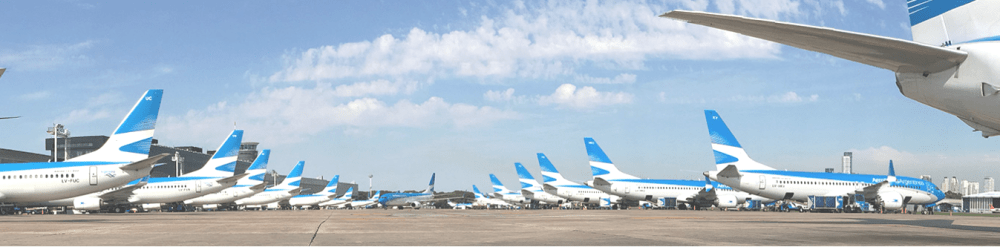
JetSMART cancela AEP-Montevideo

AW | 2024 09 23 12:06 | AIRLINES ROUTES / GOVERNMENT

JetSMART suprime ruta Buenos Aires—Montevideo

La aerolínea chilena de bajo coste JetSMART Airlines Chile anunció el 23/09 que suprimirá la ruta Buenos Aires/AEP—Montevideo/MVD con dos frecuencias diarias entre los aeropuertos Buenos Aires/Jorge Newbery y Montevideo/Carrasco. La aerolínea cancelará la ruta a partir del 1 de Octubre de 2024, debido al bajo resultado obtenido. El servicio fue inaugurado cuatro meses atrás.

La decisión de JetSMART ha sido una desagradable sorpresa, en declaraciones del Ministro de Relaciones Exteriores uruguayo, Omar Paganini. Al no salir las cosas como estaban previstas, JetSMART Airlines solicitó al Gobierno uruguayo una subvención de US$ 100.000 Dólares, mientras que Uruguay no ha concedido después de que las autoridades turísticas de Montevideo consideraran excesiva la cantidad.

La participación de la cuota de mercado en los vuelos trans-platense ha caído sustancialmente, mientras que se espera una respuesta por parte de Aerolíneas Argentinas para reajustar su cronograma de frecuencias entre Buenos Aires y Montevideo. El Gobierno Libertario del Presidente Javier Milei mantiene conversaciones para privatizar la compañía o algunos de sus servicios, en medio de crecientes protestas laborales que siguen afectando a los viajeros.

El CEO de JetSMART Airlines Group, Estuardo Ortíz, dijo al Embajador de Uruguay en Buenos Aires, Carlos Enciso, que la compañía no tenía un esquema de promoción específico ni incentivos suficientes para mantener el servicio que comenzó a fines de Mayo 2024. Ortiz reconoció que la aerolínea chilena había experimentado condiciones que no contribuyen a la sostenibilidad de la operación, lo que refuerza las dificultades que afrontan las aerolíneas cuando intentan establecer rutas en mercados altamente competitivas. La compañía había previsto 127.000 pasajeros durante su primer año de operación en esta ruta, pero la demanda se situó muy por debajo de esas cifras. JetSMART también citó la elevada presión fiscal y la competencia con otros medios de transporte como factores de la inviabilidad de la ruta.

Carlos Enciso afirmó que la conexión Buenos Aires—Montevideo había mostrado un desempeño acorde con las expectativas, lo que indicaba que había perspectivas optimistas para su futuro. El diplomático expresó asimismo su profunda preocupación, buscando abrir un canal de comunicación para analizar posibles alternativas que puedan revertir la situación. Sin embargo, Estuardo Ortíz se mostró escéptico dada la reticencia del Gobierno uruguayo. El ejecutivo también insistió en que la ayuda de los gobiernos a las aerolíneas era una práctica común en otros lugares porque las rutas dependían totalmente de factores estacionales y de la demanda específica, lo que puede llevar a la suspensión temporal o a la cancelación permanente de ciertos servicios considerados insostenibles.

Cuando JetSMART Airlines anunció la nueva ruta en Marzo 2024 durante una ceremonia en la residencia de Carlos Enciso, también había argumentado que el puente aéreo a Montevideo serviría como alimentador del servicio entre Aeroparque y Asunción del Paraguay. En ese entonces, se dijo que el Embajador uruguayo en Argentina ha sido un instrumento fundamental en la negociación desde 2021 para habilitar el servicio aéreo entre Buenos Aires y Montevideo.

JetSMART cancels AEP-Montevideo route

JetSMART cancels Buenos Aires-Montevideo route

The Chilean low-cost airline JetSMART Airlines Chile announced on 09/23 that it will cancel the Buenos Aires/AEP-Montevideo/MVD route with two daily frequencies between the Buenos Aires/Jorge Newbery and Montevideo/Carrasco airports. The airline will cancel the route as of October 1, 2024, due to the poor results obtained. The service was inaugurated four months ago.

JetSMART’s decision has been an unpleasant surprise, according to statements by the Uruguayan Minister of Foreign Affairs, Omar Paganini. When things did not go as planned, JetSMART Airlines requested a subsidy of US$ 100,000 from the Uruguayan Government, while Uruguay has not granted it after the tourist authorities of Montevideo considered the amount excessive.

The market share of trans-Plata flights has fallen substantially, while a response is expected from Aerolíneas Argentinas to readjust its frequency schedule between Buenos Aires and Montevideo. The Libertarian Government of President Javier Milei is in talks to privatize the company or some of its services, amid growing labor protests that continue to affect travelers.

JetSMART Airlines Group CEO Estuardo Ortíz told Uruguay’s Ambassador in Buenos Aires Carlos Enciso that the company did not have a specific promotion scheme or sufficient incentives to maintain the service that began at the end of May 2024. Ortiz acknowledged that the Chilean airline had experienced conditions that do not contribute to the sustainability of the operation, which reinforces the difficulties that airlines face when trying to establish routes in highly competitive markets. The company had anticipated 127,000 passengers during its first year of operation on this route, but demand was well below those figures. JetSMART also cited high tax pressure and competition with other means of transport as factors in the route’s unviability.

Carlos Enciso stated that the Buenos Aires-Montevideo connection had performed in line with expectations, indicating that there were optimistic prospects for its future. The diplomat also expressed his deep concern, seeking to open a channel of communication to analyze possible alternatives that could reverse the situation. However, Estuardo Ortíz was skeptical given the reluctance of the Uruguayan government. The executive also insisted that government aid to airlines was a common practice elsewhere because routes were totally dependent on seasonal factors and specific demand, which can lead to the temporary suspension or permanent cancellation of certain services considered unsustainable.

When JetSMART Airlines announced the new route in March 2024 during a ceremony at Carlos Enciso’s residence, he had also argued that the air bridge to Montevideo would serve as a feeder for the service between Aeroparque and Asunción del Paraguay. At that time, it was said that the Uruguayan Ambassador to Argentina has been a fundamental instrument in the negotiation since 2021 to enable air service between Buenos Aires and Montevideo.

PUBLISHER: Airgways.com
DBk: Jetsmart.com / Gub.uy / Airgways.com
AW-POST: 202409231206AR
OWNERSHIP: Airgways Inc.
A\W A I R G W A Y S ®

Continúan conflictos por Aerolíneas

AW | 2024 09 20 11:35 | AIRLINES / GOVERNMENT

Gobierno Argentina podría rescindir rutas a privados

El Gobierno del presidente Javier Milei anunció el Jueves 19/09 que cederá a manos privadas el control de las operaciones de la estatal Aerolíneas Argentinas en el caso de que los gremios continúen con sus protestas, que en las últimas semanas han causado la cancelación de cientos de vuelos. El Portavoz Presidencial Manuel Adorni ha anunciado a periodistas que el Gobierno «ha iniciado conversaciones con varias empresas privadas latinoamericanas para que se hagan cargo de la operación de Aerolíneas, en caso de que las extorsiones que están recibiendo los argentinos con este tipo de medidas continúen».

El pulso que mantiene el Gobierno con los gremios aeronáuticos de Pilotos (APLA) y de Aeronavegantes (AAA) de Aerolíneas Argentinas ha ido incrementándose en las últimas semanas en el marco del reclamo de subas salariales por parte de los trabajadores de la empresa y una protesta encubierta contra la privatización de la aerolínea. Los gremios sostienen que por la inflación los sueldos están desfasados en un 75% y han pedido 25% de aumento y seguir negociando. La empresa ofreció 11% en el marco de las políticas de reducción del gasto público implementadas por Milei, un ultraliberal que llegó al poder en Diciembre 2023. Además del reclamo salarial, los gremialistas acusan al Ejecutivo de buscar la desfinanciación de la aerolínea nacional para después avanzar con su privatización.

La semana pasada un paro de veinticuatro horas convocado por los gremios de pilotos y tripulantes de cabina de Aerolíneas dejó en tierra a unos 37.000 pasajeros de vuelos nacionales e internacionales, lo que generó pérdidas por valor de US$ 2.5 millones de Dólares. Otro reclamo anterior había afectado a unos 15.000 pasajeros. El Gobierno viene arremetiendo contra lo que considera los privilegios laborales de los empleados de la aerolínea nacional y afirma que ganan entre AR$ 3 y 20 millones de Pesos.

El Lunes 16/09 se publicó un Decreto del Ejecutivo que establece como Servico Esencial que quienes pretendan protestar deberán avisar a las autoridades correspondientes con al menos cinco días de anticipación a la fecha elegida. En caso de que las partes no se pongan de acuerdo sobre los servicios mínimos, no podrán ser inferiores al 50% de «la prestación normal y regular de los servicios».

Reestructuración rutas
Debido a la escalada del conflicto con los trabajadores de la aviación, el Gobierno nacional ha iniciado conversaciones con varias empresas privadas latinoamericanas para hacerse cargo de Aerolíneas en caso de que la extorsión continúe. «En virtud de las persistentes huelgas convocadas por el sindicato […] el Gobierno nacional ha iniciado conversaciones con varias empresas privadas latinoamericanas para que finalmente se hagan cargo de la operación de Aerolíneas Argentinas en caso de que continúen las extorsiones que están recibiendo los argentinos con este tipo de medidas», dijo el Portavoz Presidencial Manuel Adorni en conferencia de prensa.

En una línea dura pero efectiva, el Gobierno nacional no dará marcha atrás con el desmanejo de la clase sindical que por mucho tiempo ha manipulado al sector de la aviación: «Enterraremos los piquetes sindicales y los privilegios de una casta. Tomaremos medidas enérgicas contra los piquetes de los sindicatos de la aviación», declaró Manuel Adorni.

La privatización de la aerolínea estatal argentina es un deseo de larga data del Presidente Libertario Javier Milei, quien la incluyó en una lista de empresas estatales para ser vendidas en su mega proyecto de la Ley de Bases. Sin embargo, durante las negociaciones para asegurar la aprobación del proyecto de ley en el Congreso, la administración retiró a la empresa de la lista de empresas a la venta.

La amenaza del Gobierno se produce después de semanas de conflicto con sindicatos de pilotos, personal de seguridad aeroportuaria, Controladores Aéreos y otros sindicatos aeronáuticos.

Conflicts over Aerolíneas continue

Argentine government could cancel routes to private companies

The government of President Javier Milei announced on Thursday 19/09 that it will hand over control of the operations of the state-owned Aerolíneas Argentinas to private hands in the event that the unions continue with their protests, which in recent weeks have caused the cancellation of hundreds of flights. Presidential Spokesman Manuel Adorni announced to journalists that the government «has begun conversations with several private Latin American companies to take over the operation of Aerolíneas, in case the extortions that Argentines are receiving with this type of measures continue».

The fight between the Government and the aeronautical unions of Pilots (APLA) and Aeronautical Workers (AAA) of Aerolíneas Argentinas has been increasing in recent weeks within the framework of the demand for salary increases by the company’s workers and a covert protest against the privatization of the airline. The unions maintain that due to inflation, salaries are 75% out of date and have asked for a 25% increase and to continue negotiating. The company offered 11% within the framework of the public spending reduction policies implemented by Milei, an ultra-liberal who came to power in December 2023. In addition to the salary claim, the union members accuse the Executive of seeking to defund the national airline and then move forward with its privatization.

Last week, a twenty-four-hour strike called by the unions of pilots and cabin crew of Aerolíneas grounded some 37,000 passengers on national and international flights, causing losses of US$ 2.5 million. Another previous protest had affected some 15,000 passengers. The Government has been attacking what it considers the labor privileges of the employees of the national airline and claims that they earn between AR$ 3 and 20 million Pesos.

On Monday 16/09, an Executive Decree was published that establishes as an Essential Service that those who intend to protest must notify the corresponding authorities at least five days in advance of the chosen date. In the event that the parties do not agree on the minimum services, they cannot be less than 50% of «the normal and regular provision of services».

Restructuring routes
Due to the escalation of the conflict with aviation workers, the national government has begun talks with several private Latin American companies to take over Aerolíneas in case the extortion continues. «Due to the persistent strikes called by the union […] the national government has begun talks with several private Latin American companies to finally take over the operation of Aerolíneas Argentinas in case the extortions that Argentines are receiving with this type of measures continue», said Presidential Spokesperson Manuel Adorni in a press conference.

In a hard but effective line, the national government will not back down from the mismanagement of the union class that has long manipulated the aviation sector: «We will bury the union pickets and the privileges of a caste. We will take strong measures against the pickets of the aviation unions», declared Manuel Adorni.

Privatizing Argentina’s state-owned airline is a long-standing desire of Libertarian President Javier Milei, who included it on a list of state-owned companies to be sold in his mega Ley de Bases project. However, during negotiations to secure the bill’s approval in Congress, the administration removed the company from the list of companies for sale.

The government’s threat comes after weeks of conflict with unions of pilots, airport security personnel, Air Traffic Controllers, and other aeronautical unions.

PUBLISHER: Airgways.com
DBk: Argentina.gob.ar / Aerolñineas.com / Airgways.com
AW-POST: 202409201135AR
OWNERSHIP: Airgways Inc.
A\W A I R G W A Y S ®

Anuncian nuevo paro 19/09 Argentina

AW | 2024 09 18 10:45 | AIRLINES / AIR TRAFFIC / GOVERNMENT / AVIATION

Pilotos APLA anuncian nuevo paro general
Controladores aéreos adhieren acción gremial

Los Pilotos nucleados en APLA y los Controladores Aéreos de ATE anunciaron un fuerte y salvaje paro general para el próximo Jueves 19 de Septiembre de 2024. Los gremios aeronáuticos del sector tienen hoja de ruta mientras escala el conflicto por Aerolíneas Argentinas al no recibir respuestas a sus reclamos salariales, ni la apertura del dialogo entre el Sindicato APLA y el Gobierno. Mientras tanto, la Asociación de Pilotos de Líneas Aéreas (APLA) ha tomado medidas de demandas judiciales, como así también en reclamo y rechazo a los despidos en la línea argentina de bandera. Adicionalmente, la Asociación Trabajadores del Estado (ATE) y dependientes de la Administración Nacional de Aviación Civil (ANAC) confirmaron uno paro este Jueves 19/09 para reclamar una recomposición salarial en el sector. La acción sindical se llevará a cabo en dos partes: entre las 06:00 y las 12:00 horas y entre las 17:00 y las 22:00 horas. Durante ese período se garantizarán solo los vuelos sanitarios, humanitarios y aeronaves de Estado; mientras que se encuentra en vigencia la nueva normativa del Gobierno de garantización de vuelos mínimos para los pasajeros que deberían implementar a pesar del paro general.

Paralelamente, tras consultar con equipos jurídicos, la Asociación de Pilotos de Líneas Aéreas de Pablo Biró, a quien el Gobierno nacional expulsará del Directorio de la aerolínea estatal, anunció que recurrirán a la Justicia. Adelantó que la presentación apuntará contra el decreto Presidencial que declaró al transporte aerocomercial como servicio esencial, lo cual implica, entre otros tópicos, que las organizaciones gremiales cumplan prestaciones definidas, aún en conflicto.

Los sindicatos preparan una impugnación judicial contra el decreto que dictó la esencialidad de la actividad aeronáutica. Fuentes gremiales añadieron que solo se debería regular el derecho a huelga en situaciones donde peligre la vida, como lo establece la Organización Internacional del Trabajo (OIT). Tras aclarar que no hay ningún organismo internacional de derechos humanos que sustente esta postura en referencia a la esencialidad de vuelos que promueve el Gobierno, Pablo Biró apuntó que el objetivo del Gobierno es construir una sociedad absolutamente sometida y obediente. “El derecho de huelga es esencial. Es la única vía lícita, la única herramienta, para proteger nuestros intereses económicos y profesionales. Cuando la implementación tiene efecto nulo, la huelga termina siendo un simulacro de defensa. Lo que quieren son trabajadores sometidos, organizaciones obedientes, un pueblo totalmente dominado y quebrado. Un poco por el discurso, por el modelo”, dijo al respecto el titular de APLA.

El sindicalista de APLA expresó que existe un punto central. Para él, al Gobierno no lo asiste el derecho ni la razón. Por eso cada cosa que haga va a chocar con una defensa de los intereses a los que afecte y por el mismo motivo, consideró, que existen certezas de que el conflicto se incrementará.

Al conflicto en Aerolíneas Argentinas se suma el de los aeropuertos.

ATE-ANAC
La huelga se de los Controladores Aéreos se comunicó formalmente el pasado 11 de Septiembre de 2024, con un plazo de “cinco días hábiles de anticipación”. Desde las redes sociales, el sindicato señaló que “es responsabilidad del Gobierno generar un esquema de vuelos alternativos fuera de las franjas horarias de la medida de fuerza”, señalaron desde los ATC aeronáuticos.

Desde el sindicato de la ATE-ANAC de Controladores Aéreos justificaron una acción. «Al día de la fecha no hemos tenido ninguna comunicación con los distintos sectores del Gobierno nacional, ni con los de Transporte, y por ende la medida de fuerza del día 19 se mantiene vigente. Esta medida de fuerza se da en el marco de acciones de despidos, del proceso de transferencia de funciones y todo eso sin ningún marco de diálogo establecido que nos permita transitar esta etapa sin conflicto», explicó el Secretario General de ATE-ANAC, Marcelo Belelli.

Los Controladores Aéreos definieron hacer otro paro salvaje que podría afectar a veintisiete aeropuertos agravándose el conflicto aeronáutico. La medida de fuerza será en paralelo a las asambleas que realizarán los gremios de Pilotos APLA y Aeronavegantes AAA que continuarán con el plan de lucha en Aerolíneas Argentinas.

New strike announced 19/09 in Argentina

APLA pilots announce new general strike
Air traffic controllers join union action

The Pilots grouped in APLA and the Air Traffic Controllers of ATE announced a strong and savage general strike for next Thursday, September 19, 2024. The aeronautical unions of the sector have a roadmap while the conflict over Aerolíneas Argentinas escalates after not receiving responses to their salary claims, nor the opening of dialogue between the APLA Union and the Government. Meanwhile, the Association of Airline Pilots (APLA) has taken legal action, as well as in protest and rejection of the layoffs in the Argentine flag carrier. Additionally, the State Workers Association (ATE) and employees of the National Civil Aviation Administration (ANAC) confirmed a strike this Thursday, September 19, to demand a salary increase in the sector. The union action will take place in two parts: between 06:00 and 12:00 hours and between 17:00 and 22:00 hours. During this period, only sanitary and humanitarian flights and State aircraft will be guaranteed; while the new Government regulations guaranteeing minimum flights for passengers are in force, which should be implemented despite the general strike.

At the same time, after consulting with legal teams, the Association of Airline Pilots of Pablo Biró, whom the national Government will expel from the Board of Directors of the state airline, announced that they will resort to Justice. He announced that the presentation will target the Presidential decree that declared commercial air transport as an essential service, which implies, among other topics, that the union organizations comply with defined benefits, even in conflict.

The unions are preparing a legal challenge against the decree that established the essentiality of aeronautical activity. Union sources added that the right to strike should only be regulated in situations where life is at risk, as established by the International Labour Organization (ILO). After clarifying that there is no international human rights organization that supports this position in reference to the essentiality of flights promoted by the Government, Pablo Biró pointed out that the Government’s objective is to build an absolutely submissive and obedient society. «The right to strike is essential. It is the only legal way, the only tool, to protect our economic and professional interests. When the implementation has no effect, the strike ends up being a simulation of defense. What they want are submissive workers, obedient organizations, a totally dominated and broken people. A little bit because of the discourse, because of the model», said the head of APLA in this regard.

The APLA unionist expressed that there is a central point. For him, the Government is not assisted by law or reason. That is why everything that is done will clash with a defense of the interests that it affects and for the same reason, he considered, that there are certainties that the conflict will increase.

The conflict at Aerolíneas Argentinas is joined by that at the airports.

ATE-ANAC
The Air Traffic Controllers’ strike was formally announced on September 11, 2024, with a period of «five business days in advance». From social networks, the union pointed out that «it is the Government’s responsibility to generate an alternative flight scheme outside the time slots of the strike», said the aeronautical ATC.

The ATE-ANAC Air Traffic Controllers’ union, they justified an action. «To date, we have had no communication with the different sectors of the national Government, nor with those of Transport, and therefore the strike of the 19th remains in force. This strike is taking place in the context of dismissal actions, the process of transfer of functions, and all that without any established framework of dialogue that allows us to go through this stage without conflict», explained the Secretary General of ATE-ANAC, Marcelo Belelli.

The Air Traffic Controllers decided to carry out another wild strike that could affect twenty-seven airports, worsening the aeronautical conflict. The strike will be in parallel to the assemblies that will be held by the unions of Pilots APLA and Aeronavegantes AAA that will continue with the plan of struggle in Aerolíneas Argentinas.

PUBLISHER: Airgways.com
DBk: Apla.org.ar / Ate.org.ar / Aerolineas.com / Argentina.gob.ar / Daniel Vides / Airgways.com
AW-POST: 202409181045AR
OWNERSHIP: Airgways Inc.
A\W A I R G W A Y S ®