El repunte del mercado de Boeing

AW | 2017 05 07 20:23 | INDUSTRY
 Boeing comienza fuerte en pedidos y entregas en abril 2017
Los precios de las acciones de Boeing se mueven con el flujo de caja y actualmente la dirección del flujo de caja operativo está fuertemente apuntando hacia arriba con el Boeing 787 siendo el principal impulsor de ese flujo de caja en los próximos años.
A partir de 2019, Boeing aumentará los índices de producción del programa Boeing 737, que impulsará y compensará el menor flujo de caja en el programa Boeing 777. Simultáneamente, el perfil de caja de Boeing 787 seguirá creciendo hacia los márgenes tradicionales para la producción de aviones y el Boeing 787-10 será añadido a la mezcla de entrega.
Boeing 787
Con las tasas para el Boeing 777 bajando en los próximos años, el Boeing 787 tendrá que proporcionar el efectivo para realizar el crecimiento del flujo de caja. En sus ganancias, el gerente de finanzas de Boeing, Gregory D. Smith, dijo lo siguiente sobre el Boeing 787: «A largo plazo, seguiremos enfocados en mejorar la generación de efectivo 787, impulsada por una mezcla de entrega favorable, mejoras en la productividad interna y paso adicional del proveedor -precios».

Esto demuestra que el Boeing 787 impulsará el crecimiento sin necesidad de aumentar la producción. En el primer trimestre, Boeing mostró un buen desempeño para hacer que el Boeing 787 fuera más positivo en efectivo. Esta fuerte mejora es un buen augurio para la empresa y la posibilidad de aumentar las tasas debe considerarse un impulso por encima de las ya fuertes mejoras de costos en el programa.
Boeing también sigue observando el aumento de la tasa de producción de hasta 14 aviones al mes. Si bien esto sería un impulso adicional para el perfil de flujo de caja de Boeing, considero que es un poco arriesgado. A 12 por mes, Boeing continúa aumentando la eficiencia en el programa. Una indicación de la importancia del Boeing 787-10 se mostró en las palabras de CFO de Boeing durante la llamada de ganancias cuando dijo que el 3er Boeing 787-10 costos unitarios ya estaban en línea con los del Boeing 787-9.
Boeing 737 MAX
Otro controlador de efectivo debe ser aumentos de tarifas en el programa Boeing 737NG y la introducción del Boeing 737 MAX. La producción de Boeing 737 se incrementará a 47 por mes a finales de este año a 52 por mes en 2018 ya 57 por mes en 2019. Así antes de 2020, la producción se prevé que aumente en 45 aviones por trimestre. Además, a pesar de los mayores costos para los turbofans, el Boeing 737 MAX devuelve algo más de beneficio a Boeing en base a unidades.
Eficiencia del núcleo
Excluyendo los cargos, las ganancias de las operaciones de BCA [Boeing Commercial Airplanes] serían de $ 1,335 millones con un ingreso de $ 14,305 millones o un margen operativo de 9,3%, lo que sería una mejora año con año, excluyendo los artículos únicos.
Mover a los recambios y monitoreo
Boeing se ha fijado la meta de generar ingresos por 50.000 millones de dólares. Creo que es altamente aspiracional, pero con Boeing la creación de su división de servicios y piezas a finales de este año, espero que hagan las cosas al menos más eficientemente.
Impuestos corporativos más bajos
Algo que sostiene para la mayoría de las compañías que apuntan para ampliar beneficios es el esforzarse para impuestos corporativos más bajos. Actualmente, Boeing se ha guiado por una tasa impositiva efectiva del 31% para el año. La administración Trump quiere bajar esta tasa de impuestos al 15%. Empresas como Boeing se beneficiarán de esto, pero existe la posibilidad de que vendrá a costa de la deuda acumular aún más rápido para los EE.UU. El objetivo final de la tasa impositiva más baja es el crecimiento de las empresas y permitir que las empresas estadounidenses apoyen más empleos (estadounidenses), pero idealmente esto no debería aumentar el déficit de Estados Unidos.
Se requiere una reforma del sistema tributario, pero la reducción de las tasas en conjunto podría acabar con la economía estadounidense, lo que afectará a la defensa, así como las ventas comerciales a Boeing.
En 2016, cubrieron los pedidos y las entregas de Boeing y Airbus con informes mensuales. En 2017, continuaré esta cobertura, ya que da una idea de rendimiento actual, así como la capacidad de los respectivos fabricantes para crecer libros de pedidos y, posiblemente, las ganancias en el futuro en los libros de pedidos saludables. Además, el flujo de pedidos es un reflejo casi directo del entorno de mercado en el mercado de aviones comerciales. En este artículo, echaré un vistazo a los pedidos y entregas para el mes de abril.
Boeing ha comenzado el año con una nota fuerte con 226 pedidos en los primeros 3 meses. En marzo, el fabricante de aviones registró 147 pedidos, que fue significativamente mayor año tras año y también superior al promedio de varios años para marzo. En abril, la entrada de pedidos fue considerablemente menor con 15 pedidos; 2 aviones de cuerpo ancho y 13 jets de cuerpo estrecho:
Un cliente no identificado ordenó 2 aviones Boeing 787-9, marcando el séptimo mes consecutivo para Boeing con el flujo de pedidos para su avión Dreamliner. Si Boeing procesa la orden de WestJet en mayo, marcará el octavo mes consecutivo para el flujo de pedidos para el avión compuesto. Un cliente norteamericano no identificado ordenó 2 Boeing Business Jets. SMBC Aviation Capital ordenó 1 Boeing 737-800, probablemente parte de una orden anterior que colocó en marzo para 2 unidades. Dos clientes no identificados ordenaron 8 y 3 aviones Boeing 737 MAX, respectivamente. Las cancelaciones pasaron de 28 a 31, reflejando las cancelaciones en el programa Boeing 737.
Con 15 órdenes en abril de 2017, la entrada de pedidos se redujo en 19 unidades año tras año. Los promedios de 3 años y 5 años para la entrada de pedidos en abril ascienden a 47 y 38 pedidos respectivamente. Con eso en mente, la entrada de pedidos en abril fue un poco débil.
En lo que va de año, Boeing registró 241 pedidos en comparación con 112 pedidos en 2016. Boeing definitivamente comenzó el año más fuerte que el año pasado, pero esto no es garantía de un aumento en el orden de fin de año. El flujo de pedidos en los primeros 4 meses es 39 unidades más alto que el promedio de 3 años de 202 unidades, pero 15 unidades menos que el promedio de 256 unidades de los últimos 5 años. Esto puede explicarse en parte por el hecho de que en los últimos años las aerolíneas han realizado pedidos de MAX y Boeing 777X en grandes cantidades y actualmente están esperando la entrega de esas células antes de realizar cualquier pedido de seguimiento.
Entregas

Entregas Abril 2017 (Fuente: AeroAnalysis)
En 2016, Boeing entregó 748 aviones, un poco menos en comparación con su año récord en 2015. Para 2017, Boeing pretende entregar entre 760 y 765 aviones, lo que está más o menos en línea con las entregas en 2015.
En abril, Boeing entregó 52 aviones divididos entre 14 cuerpos anchos y 38 cuerpos estrechos:
Después de entregar 14 aviones Boeing 777 en marzo, Boeing entregó sólo 3 aviones en abril. Boeing no entregó ninguna fuselaje Boeing 767. Boeing 787 entregas fueron 3 unidades más bajas de lo que la tasa de producción sugeriría. Dos aviones Boeing 747 fueron entregados: un 8I a Korean Air y un 8F a AirBridge Cargo Airlines. Las entregas de Boeing 737 fueron 4 unidades más bajas en comparación con la tasa de producción, lo que refleja la acumulación de aviones Boeing 737 MAX que serán entregados a partir de mayo.
Las entregas más bajas fueron impulsadas principalmente por entregas más bajas de cuerpo. Espero que durante el trimestre las entregas repitan el ritmo. En comparación con el año anterior, las entregas se mantuvieron planas, por lo que el volumen de entrega inferior es inferior al que se esperaría en promedio, pero no fuera de línea. Las menores entregas en abril se pueden atribuir a un mayor volumen de entrega en marzo, lo que le dio a la avioneta menos aviones para entregar en el mes siguiente.
Relación libro a factura
Para el año completo, Boeing espera que las órdenes rutinariamente rastreen la entrada de pedidos del año pasado, lo que indicaría 660 pedidos netos o una relación libro a cuenta de 0,86. En abril, este cociente era .29, pero no tiene sentido conectar ninguna conclusión creíble a ése. En los primeros 4 meses, Boeing registró 241 pedidos y entregó 221 aviones. Esto implica una relación libro a cuenta de 1,09, que es más alta de lo que Boeing espera para el año completo. Esto, sin embargo, es sólo una confirmación de que Boeing está teniendo un comienzo fuerte del año. Queda por ver si Boeing puede mantener el ritmo de entrada de pedidos en los meses restantes de 2017.
Proyector del cliente
En la atención al cliente de este mes, tenemos Korean Air. La aerolínea fue fundada en 1946 como Korean National Airlines y fue reemplazada por Korean Air Lines tal y como la conocemos hoy. Las líneas aéreas comenzaron sus operaciones en marzo de 1969. Basada en Seúl, la aerolínea tiene un total de 127 destinos, la mayoría de los cuales son China, Japón y los EE.UU.
La aerolínea tiene una flota de 173 aviones, incluyendo 34 aviones de carga, con Boeing teniendo una participación en la flota de casi el 70%. La aerolínea tiene actualmente órdenes sin llenar para los 737 MAX, 787-9, 777 y 747 de Boeing, convirtiéndose en una de las pocas aerolíneas, de hecho la única junto con Deutsche Lufthansa en el mundo que opera el Boeing 747- 8I junto al A380.
Conclusión
Es prematuro sacar conclusiones basadas en las órdenes y entregas de este mes. Es interesante observar, sin embargo, que el Boeing 787 ha estado disfrutando de una entrada de pedidos constante durante algunos meses. Además, si nos fijamos en las cifras interanuales de los primeros cuatro meses, Boeing tuvo un fuerte comienzo y actualmente tiene una relación libro a factura superior a 1. 

The Boeing market rising
Boeing strong start in April orders and deliveries in 2017
Boeing’s stock prices move with cash flow and currently the direction of operating cash flow is strongly pointed upwards with the Boeing 787 being a main driver of that cash flow in the coming years.
Starting in 2019, Boeing will be increasing production rates for the Boeing 737 program which will drive and compensate for lower cash flow on the Boeing 777 program. Simultaneously the Boeing 787 cash profile will continue to grow towards traditional margins for the production of aircraft and the Boeing 787-10 will be added to the delivery mix.
Boeing 787
With rates for the Boeing 777 coming down in the coming years, the Boeing 787 will need to provide the cash to realize cash flow growth. In its earnings call Boeing’s CFO, Gregory D. Smith, said the following about the Boeing 787: «Over the long term, we continue to focus on improving 787 cash generation, driven by favorable delivery mix, internal productivity improvements, and additional supplier step-down pricing».

This shows that the Boeing 787 will be driving growth without the need to increase production. In the first quarter Boeing showed strong performance on turning the Boeing 787 more cash positive. This strong improvement bodes well for the company and the possibility of increasing rates should be considered a boost on top of the already strong cost improvements on the program.
Boeing is also still eyeballing bringing the production rate up to 14 aircraft per month. While this would be an additional boost for Boeing’s cash flow profile, I consider it to be a bit risky. At 12 per month, Boeing continues to increase efficiency on the program. An indication of the importance of the Boeing 787-10 was shown in the words of Boeing’s CFO during the earnings call when he said that the 3rd Boeing 787-10 unit costs were already in line with those of the Boeing 787-9.
Boeing 737 MAX
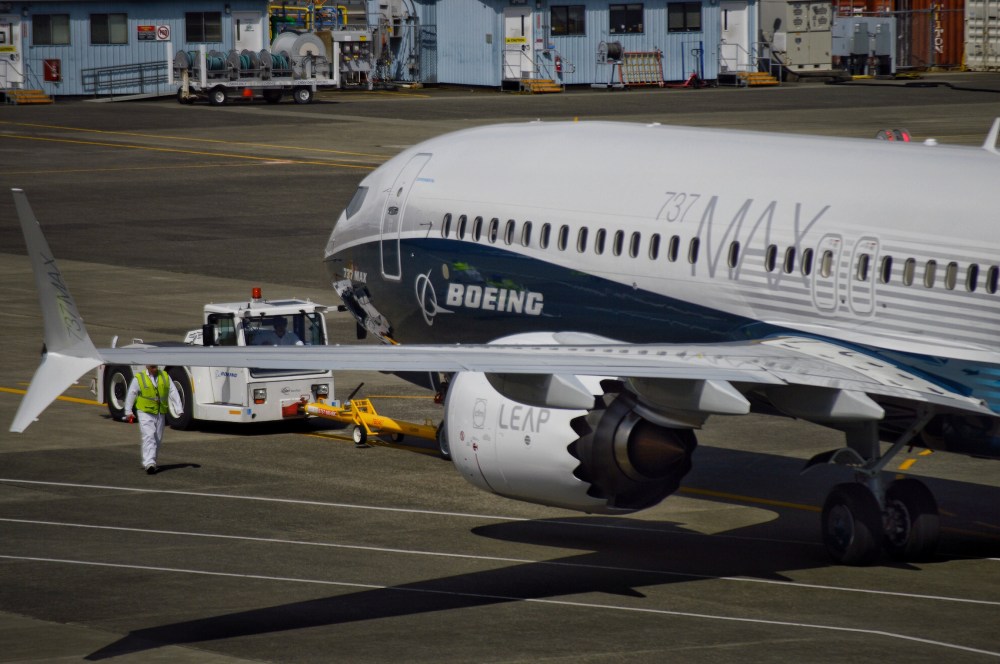
Another cash driver should be rate increases on the Boeing 737NG program and introduction of the Boeing 737 MAX. The Boeing 737 production will be increased to 47 per month later this year to 52 per month in 2018 and to 57 per month in 2019. So before 2020, production is set to increase by 45 aircraft per quarter.
Additionally, I expect that despite higher costs for the turbofans the Boeing 737 MAX will return some more profit to Boeing on a unit basis.
Core efficiency
In the first quarter Boeing’s operating margin was 8.5%, which is not a figure I was very happy with. One thing that should be mentioned is that the KC-46A tanker program applied pressure of $140 million during the quarter, which Boeing expects to be a one-off item. In light of Boeing considering this being a one-off item, it is worth to see where margins would have stood excluding the added tanker costs.
Excluding charges, BCA [Boeing Commercial Airplanes] earnings from operations would be $1,335 million on a revenue of $14,305 million or an operating margin of 9.3%, which would be an improvement year-over-year with one-off items are excluded.
For the Boeing Defense, Space & Security division the pressure was $20 million. Excluding this absorbed cost, the margins would be up 0.2 pts to 11.6%. So, if we strip the impact of one-off items, the underlying efficiency was strong and more indicative of Boeing’s targeted margins throughout the year.
Move into spares and monitoring
Boeing has set a goal to generate $50B in revenues. I think that is highly aspirational but with Boeing setting up its services and parts division later this year, I do expect them to do things at least more efficiently.
Lower corporate taxes
Something that holds for most companies aiming to expand profits is striving for lower corporate taxes. Currently Boeing has guided on an effective tax rate of 31% for the year. The Trump administration wants to lower this tax rate to 15%. Companies such as Boeing are to benefit from this, but there is the possibility that it will come at the cost of debt accumulating even faster for the US. The ultimate goal of the lower tax rate is to grow the companies and allow US companies to support more (American) jobs, but ideally this should not increase the US deficit.
A reform of the tax system is required, but slashing rates altogether could eventually cripple the US economy, which will affect defense as well as commercial sales to Boeing.
In 2016, I covered orders and deliveries for Boeing and Airbus with monthly reports. In 2017, I will continue this coverage as it gives somewhat of an idea of current performance as well as ability for the respective manufacturers to grow order books and possibly earnings in the future on healthy order books. Next to that the order inflow is an almost direct reflection of the market environment on the commercial aircraft market. In this article, I will have a look at the orders and deliveries for the month of April.
Boeing has started the year on a strong note with 226 orders in the first 3 months. In March, the jet maker booked 147 orders, which was significantly higher year-over-year and also higher than the multi-year average for March. In April, order inflow was considerably lower with 15 orders; 2 wide body aircraft were ordered and 13 narrow body jets:
An unidentified customer ordered 2 Boeing 787-9 jets, marking the 7th consecutive month for Boeing with order inflow for its Dreamliner aircraft. If Boeing processes the WestJet order in May, it will mark the 8th consecutive month for order inflow for the composite aircraft. An unidentified North American customer ordered 2 Boeing Business Jets. SMBC Aviation Capital ordered 1 Boeing 737-800, likely part of an earlier order it placed in March for 2 units.Two unidentified customers ordered 8 and 3 Boeing 737 MAX aircraft respectively. Cancellations rose from 28 to 31, reflecting cancellations on the Boeing 737 program.
With 15 orders in April 2017, order inflow shrunk by 19 units year-over-year. The 3-year and 5-year averages for the order inflow in April stand at 47 and 38 orders respectively. With that in mind, the order inflow in April was a bit weak.
Year to date, Boeing booked 241 orders versus 112 orders in 2016. Boeing definitely started the year stronger than last year, but this is no guarantee for a higher order tally by year-end. The order inflow in the first 4 months is 39 units higher than the 3-year average of 202 units, but 15 units lower than the 256 units average for the past 5 years. This can partly be explained by the fact that in the past years airlines have placed orders for the MAX and Boeing 777X in big numbers and currently are awaiting delivery of those airframes before placing any follow-up orders.
Deliveries
Deliveries April 2017 (Source: AeroAnalysis)
In 2016, Boeing delivered 748 aircraft, slightly less compared to its record breaking year in 2015. For 2017, Boeing aims to deliver between 760 and 765 aircraft which is more or less in line with the deliveries in 2015.
In April, Boeing delivered 52 aircraft divided between 14 wide bodies and 38 narrow bodies:
After delivering 14 Boeing 777 aircraft in March, Boeing delivered only 3 aircraft in April.Boeing delivered no Boeing 767 airframes. Boeing 787 deliveries were 3 units lower than the production rate would suggest. Two Boeing 747 aircraft were delivered: one 8I to Korean Air and one 8F to AirBridge Cargo Airlines. The Boeing 737 deliveries were 4 units lower compared to the production rate, reflecting accumulation of Boeing 737 MAX aircraft that will be delivered starting in May.
The lower deliveries were primarily driven by lower wide body deliveries. I expect that during the quarter the deliveries will pick up pace again. Year-over-year, deliveries remained flat so the lower delivery volume is lower than what would be expected on average but not out of line. The lower deliveries in April can be attributed to a higher delivery volume in March, which gave the jet maker fewer aircraft to deliver in the subsequent month.
Book-to-bill ratio
For the full year, Boeing expects orders to roughly trace last year’s order inflow, which would indicate 660 net orders or a book-to-bill ratio of .86. In April, this ratio was .29, but it is meaningless to connect any credible conclusion to that. In the first 4 months, Boeing booked 241 orders and delivered 221 aircraft. This implies a book-to-bill ratio of 1.09, which is higher than what Boeing expects for the full year. This, however, is only a confirmation that Boeing is having a strong start of the year. It remains to be seen whether Boeing can keep up the pace of order inflow in the remaining months of 2017.
Customer Spotlight
In this month’s customer spotlight, we have Korean Air. The airline was founded in 1946 as Korean National Airlines and was replaced by Korean Air Lines as we know it today. The airlines commenced operations in March 1969. Based in Seoul, the airline has a total of 127 destinations, most of which are China, Japan and the US.
The airline has a fleet of 173 aircraft including 34 cargo aircraft with Boeing having a share in the fleet of almost 70%. The airline currently has unfilled orders for Boeing’s 737 MAX, 787-9, 777 and the 747 making it one of the few airlines, in fact the only one together with Deutsche Lufthansa in the world that operates the Boeing 747-8I next to the A380.
Conclusion
Drawing any conclusions based on this month’s orders and deliveries is premature. Interesting to note, however, is that the Boeing 787 has been enjoying steady order inflow for some months. Also, if we look at the year-over-year figures for the first 4 months, Boeing had a strong start and currently has a book-to-bill ratio higher than 1. A \ W
Ξ A I R G W A Y S Ξ
SOURCE: Seekingalpha.com / Aeroanalysis
DBk: Boeing.com / Reddit.com / Forbes.com / Businessinsider.com
AW-POST: 201705072023AR
A \ W A I R G W A Y S ®



 airgways.com