
AW | 2017 05 21 23:50 |HISTORY
El piloto norteamericano Charles Lindbergh realiza la hazaña de cruzar el Atlántico en un vuelo sin escalas un 21 de mayo de 1927

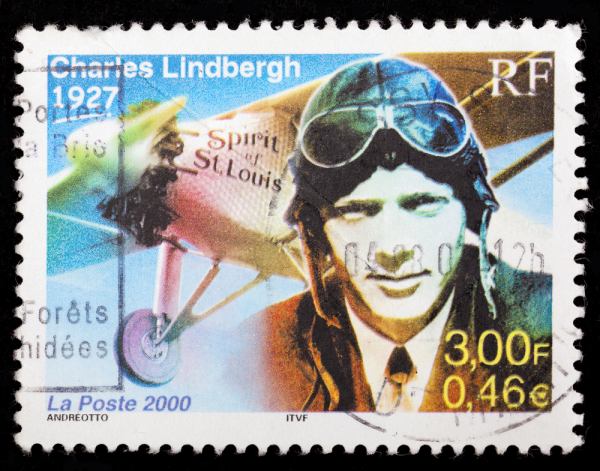
El joven piloto norteamericano cruza el Atlántico en un vuelo sin escalas y en solitario: Nueva York-París en tan solo 33 horas, 30 minutos y 30 segundos. América tenía un nuevo héroe. La aviación había cambiado para siempre
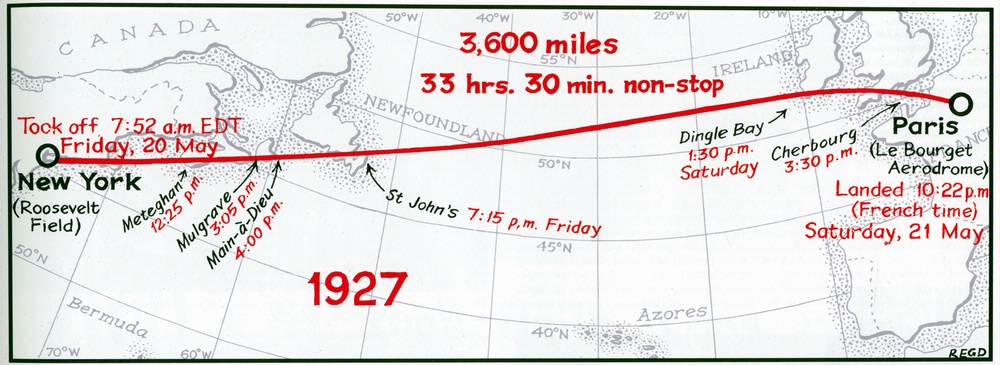
21 de mayo de 1927. El joven piloto norteamericano Charles Lindbergh aterriza en el aeropuerto de Le Bourget, a pocos kilómetros de París. 33 horas, 30 minutos y 30 segundos antes había partido del aeropuerto de Nueva York con un objetivo, cruzar el océano atlántico sin escalas y en solitario. Sus primeras palabras son: ‘Bueno, lo conseguí’.

Había nacido un héroe para América. Al tiempo, la aviación, un lujo al alcance de solo unos pocos, pasaba a contemplarse desde otro prisma. Con su vuelo, Lindbergh cambiaba la percepción de la gente sobre factibilidad de la aviación comercial, haciéndola mucho más cercana al mundo real. Pocos años después de su legendario vuelo, surgirían las primeras líneas aéreas que atravesarían el océano con pasaje.

CHARLES LINDBERGH, JOVEN AVIADOR QUE REALIZÓ LA PROEZA DE CRUZAR EL ATLÁNTICO
Nacido en Detroit en 1902, Charles Lindbergh era un joven intrépido y valiente con un sueño: volar. Por ello a los 20 años decide abandonar sus estudios de ingeniería mecánica y se inscribe en el programa de entrenamiento de una escuela de vuelo y mecánica, la Aircroft Corporation de Nebraska. Ese mismo año, el 1 de abril de 1922, realiza su primer vuelo como pasajero en un biplano y completamente seducido por la aviación, compra su propio avión, Jenny. Dos años después empieza a entrenar en el cuerpo aéreo de los Estados Unidos donde consigue el primer puesto de su promoción. Obtenida la titulación empieza a trabajar como piloto civil en la línea de correo postal de San Luis.
En 1927, Charles toma una decisión que cambiará su vida para siempre. Ocho años antes el filántropo francés Raymond B. Orteig había ofrecido una cuantiosa suma, 25.000 dólares de recompensa al piloto que lograse acometer una hazaña aeronáutica entonces inconcebible, cruzar el Atlántico sin escalas en solitario. Punto de partida, Nueva York, destino, París. El joven piloto, sin arredrarse ante la complejidad de la travesía decide optar al premio.
Fabricado por:
Ryan Airline Company
Diseñado por:
Donald A. Hall
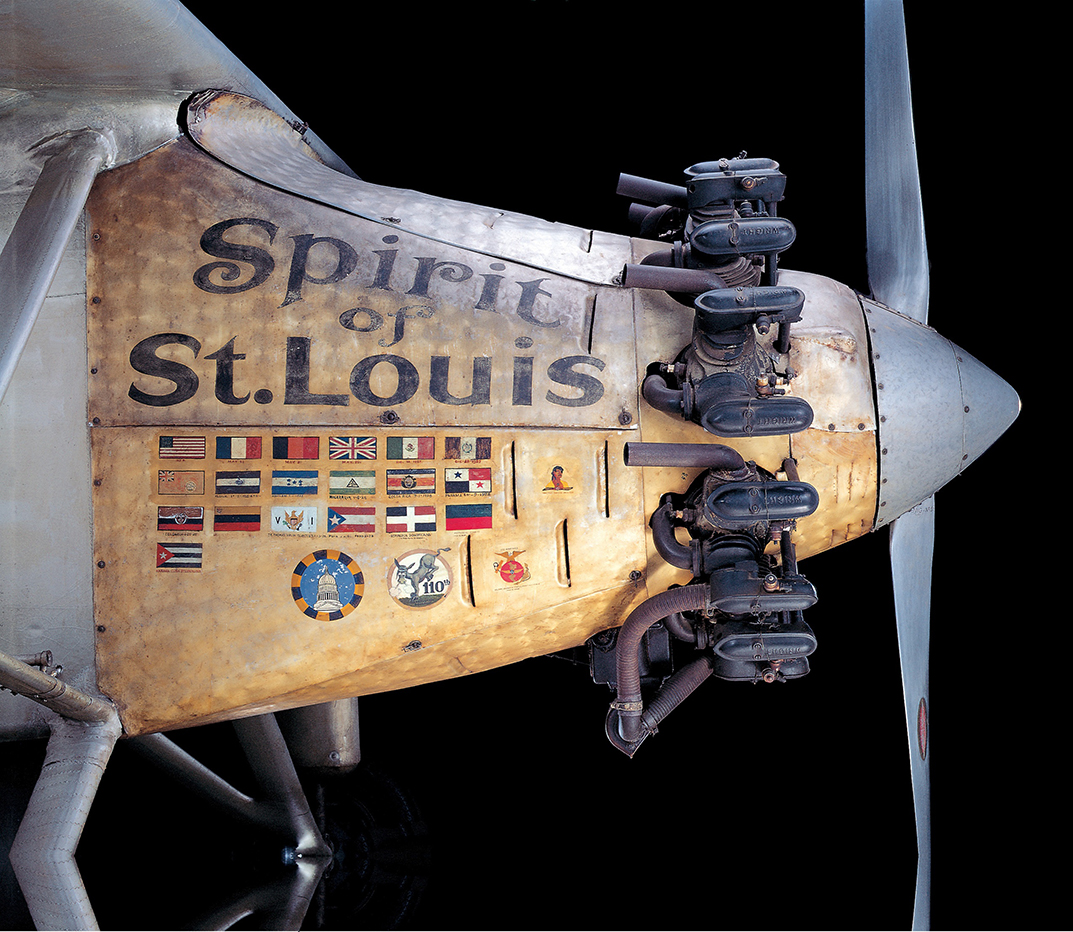
Su avión será el Spirit of St Louis llamado así en honor de los dos industriales luisianos que le permiten abordar el proyecto financiando el vuelo trasatlántico. Ellos consiguen un préstamo de 15.000 dólares. Lindbergh aporta otros 2.000 de su propio bolsillo, y Ryan Aeronautical Company pone otros 1.000. En total,, 18.000 dólares, una cantidad muy inferior a la de sus rivales en la prueba. Ryan acuerda fabricar un monoplano especial por 10.850 dólares. Se trata de un monomotor modelo Ryan NYP, fabricado en San Diego, California. Un avión con alas de implantación alta y estructura de madera. Su fuselaje lo integran tubos de acero y su revestimiento exterior es de tela. El propio Lindbergh colabora en el proyecto, a él se debe la decisión de incluir un solo motor, así como el sacrificio de la visibilidad frontal en pro de la ubicación del depósito del combustible lo que le obligaría al uso de un periscopio. El diseño del aparato obedece a un único objetivo, optimizar la aerodinámica ofreciendo la mínima resistencia al aire, para lo cual su peso debía de ser lo más bajo posible. En pro de ello se sacrifican el aparato de radio y el indicador del nivel de combustible así como el asiento del piloto que se reduce a una ligera silla de mimbre.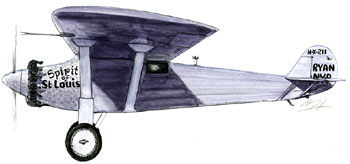
El aviador loco, modo en que se referían a él los medios de comunicación de la época estaba listo para despegar.
El viernes 20 de mayo de 1927, Lindbergh parte desde el aeropuerto neoyorquino de Garden City decidido a triunfar, son las 7 horas 25 minutos. El Spirit pesa dos toneladas en total, el depósito supone la parte más relevante de las mismas, cargado con 2.000 litros de gasolina, suficientes según el criterio del piloto para volar 7.000 kilómetros. Lindbergh ha limitado al mínimo su equipaje, como o bjetos de precisión sólo lleva compases magnéticos e indicadores de estabilidad y velocidad. Respondiendo a la prensa afirma que sencillamente navegaría por medio del compás y trataría de volar siempre en línea recta, siguiendo un arco de semicírculo máximo. Su despensa es parca: cinco bocadillos, cinco litros de agua, chocolate caliente, café y pastillas nutritivas. Lo mínimo para subsistir durante la travesía venciendo al sueño y el cansancio.
21 de mayo, Lindbergh aterriza en el aeropuerto de Le Bourget, a pocos kilómetros de París. Sus primeras palabras son: ‘Bueno, lo conseguí’.
América tenía un nuevo héroe. Lindbergh vuelve a Washington escoltado por un buque militar y recibido por el presidente Coolidge y una multitud exultante.
El resto ya es historia. Lindbergh recibe la Medalla de Honor del Congreso y la Cruz de Vuelo Distinguido pasando a engrosar el olimpo de los ídolos estadounidenses convertido en una leyenda de la aviación. 
90th anniversary transatlantic flight
The American pilot Charles Lindbergh accomplishes the feat of crossing the Atlantic in a nonstop flight a 21 of May of 1927
 The young American pilot crosses the Atlantic on a nonstop and solo flight: New York-Paris in just 33 hours, 30 minutes and 30 seconds. America had a new hero. Aviation had changed forever

May 21, 1927, Charles Lindbergh lands in Paris’ Le Bourget Field.
May 21, 1927. The young American pilot Charles Lindbergh lands at the airport of Le Bourget, a few kilometers from Paris. 33 hours, 30 minutes and 30 seconds earlier had departed New York airport with a goal, to cross the Atlantic ocean nonstop and alone. His first words are, ‘Well, I got it.’


A hero had been born for America. At the same time, aviation, a luxury within reach of only a few, came to be seen from another perspective. With his flight, Lindbergh changed people’s perception of commercial aviation’s feasibility, making it much closer to the real world. A few years after his legendary flight, the first airlines that would cross the ocean with passage would arise.
Born in Detroit in 1902, Charles Lindbergh was an intrepid and brave young man with a dream: to fly. That is why at age 20 he decides to drop his mechanical engineering studies and enrolls in the Aircroft Corporation of Nebraska training program for a flying and mechanical school. That same year, the 1 of April of 1922, realizes its first flight like passenger in a biplane and completely seduced by the aviation, it buys its own airplane, Jenny. Two years later he began to train in the United States air body where he achieved the first position of his promotion. Obtained the degree begins to work like civil pilot in the line of postal mail of San Luis.
In 1927, Charles makes a decision that will change his life forever. Eight years earlier the French philanthropist Raymond B. Orteig had offered a large sum of $ 25,000 to the pilot who could undertake an inconceivable aeronautical feat, to cross the Atlantic without a single stop. Starting point, New York, destination, Paris. The young pilot, without being discouraged by the complexity of the journey decides to opt for the prize.
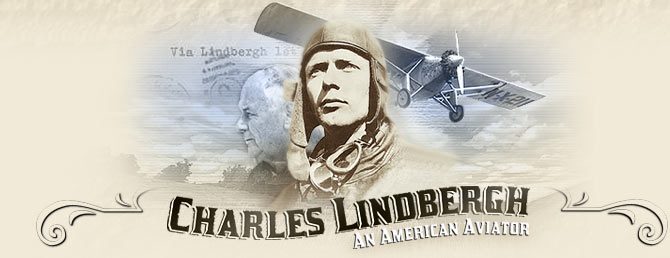
His plane will be the Spirit of St Louis named in honor of the two industrialists Luisis who allow him to approach the project financing the transatlantic flight. They get a loan of $ 15,000. Lindbergh contributes another 2,000 from his own pocket, and Ryan Aeronautical Company puts another 1,000. In total, $ 18,000, much less than their rivals in the test. Ryan agrees to manufacture a special monoplane for $ 10,850. This is a single-engine Ryan NYP model, manufactured in San Diego, California. An airplane with wings of high implantation and structure of wood. Its fuselage is made of steel tubes and its exterior cladding is made of cloth. Lindbergh himself collaborates in the project, he is due the decision to include a single engine, as well as the sacrifice of the frontal visibility in favor of the location of the fuel tank which would force him to use a periscope. The design of the device obeys a single objective, optimizing the aerodynamics offering the minimum resistance to air, for which its weight should be as low as possible. This is done by sacrificing the radio and the fuel level indicator as well as the driver’s seat which is reduced to a slight wicker chair. The flyer mad, way they referred to him the media of the time was ready to take off.
On Friday, May 20, 1927, Lindbergh leaves from the New York airport in Garden City determined to succeed, it is 7 hours 25 minutes. The Spirit weighs two tons in total, the deposit is the most relevant part of them, loaded with 2,000 liters of gasoline, sufficient according to the pilot’s criteria to fly 7,000 kilometers. Lindbergh has kept his luggage to a minimum, as he or she only has magnetic compasses and indicators of stability and speed. Responding to the press, he said he would simply sail through the compass and try to fly in a straight line, following a maximum semicircle arc. Their pantry is meager: five sandwiches, five liters of water, hot chocolate, coffee and nutritious pills. The minimum to survive during the voyage overcoming sleep and tiredness.
May 21, Lindbergh lands at the airport of Le Bourget, a few kilometers from Paris. His first words are, ‘Well, I got it.’
America had a new hero. Lindbergh returns to Washington escorted by a military vessel and received by President Coolidge and an exulting crowd.
The rest is history. Lindbergh receives the Congressional Medal of Honor and the Cross of Distinguished Flight passing to swell the olympic of the American idols become an aviation legend. A \ W

Ξ A I R G W A Y S Ξ
SOURCE: CharlesLindbergh.com / Lavanguardia.com
DBk: Usaradio.com / Acesflyinghigh.wordpress.com / Pinimg.com / Airandspace.si.edu / Emaze.com / Avalonrosedesign.net / Smithsonianmag.com / CharlesLindbergh.com
AW-POST: 201705212350AR
A \ W A I R G W A Y S ®
 airgways.com