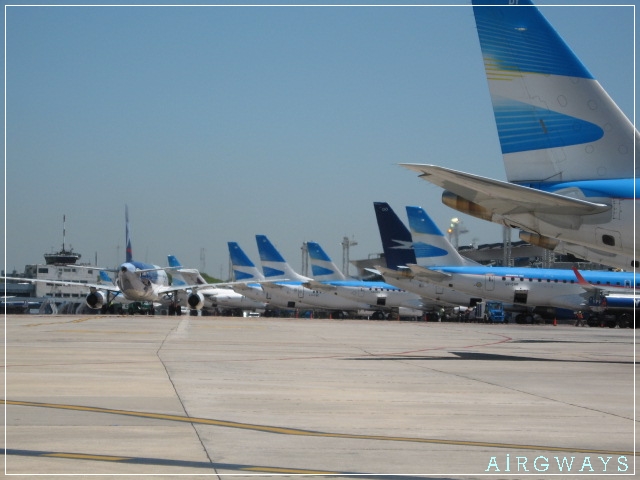
¡Bienvenidos a Airgways.com!

AW-7060078

AW | 2016 05 23 21:50 | ADVERTISING

A I R G W A Y S ® 005Estimados amigos:

El equipo de Airgways ® desea acercarles a ustedes nuestros profundos agradecimientos por su leal participación en nuestro website. ¡Una vez más les renovamos la bienvenida a bordo!

Un cambio de imagen
Queremos anunciarles, a usted estimado lector y entusiasta por la aviación comercial, que hemos incorporado una nueva plataforma de trabajo reasignando nuestro dominio web. Nuestro nuevo sitio web es: Airgways.com

Como parte de su incondicionable apoyo, nos hemos superamos y renovado contando desde ahora con una página web más dinámica y global. Usted irá notando algunos cambios estructurales, pero sin cambiar nuestra manera de trabajo. La migración de los contenidos es automática, por lo que usted no tendrá inconvenientes para localizar los contenidos anteriores y los nuevos de Airgways.

Estamos muy contentos por los logros alcanzados, y es gracias al apoyo de nuestros «pasajeros frecuentes» en el mundo. El equipo de Airgways les desea un renovado ¡bienvenidos a bordo! AIRGWAYS ® Icon-AW

AIRGWAYS ® Jet-Lynd

Airgways.com © ALL RIGHT RESERVED / TODOS LOS DERECHOS RESERVADOS
REGISTERED WEBSITE DOMAIN: https://www.airgways.com
CONSULTATIONS: airgways@outlook.com

Welcome to Airgways.com!

Dear Friends:

The Airgways ® team wishes to extend to you our deep thanks for your loyal participation in our website. Once again we welcome you on board!

A makeover
We want to announce to you dear reader and enthusiastic about commercial aviation that we have incorporated a new work platform reassigning our web domain. Our new website is: Airgways.com

As part of its unconditional support, we have surpassed and renewed from now on with a more dynamic and global website. You will notice some structural changes, but without changing our way of working. Content migration is automatic, so you will have no problem locating the previous contents and new Airgways.

We are very happy for the achievements, and it is thanks to the support of our «frequent passengers» in the world. The Airgways team wishes you a refreshment welcome on board! A\W

AIRGWAYS ® Jet-Lynd

Airgways.com © ALL RIGHT RESERVED / TODOS LOS DERECHOS RESERVADOS
REGISTERED WEBSITE DOMAIN: https://www.airgways.com
CONSULTATIONS: airgways@outlook.com

Ξ A I R G W A Y S Ξ
SOURCE: AIRGWAYS
DBk:  AIRGWAYS

AW-ADV Tittle: «Airgways.com»

AW-ADV20170523-0020
AW-POST: 201705232150AR

Aeropuerto Dublin podría incrementar tasas e impuestos

https://coreelectrical.com/wp-content/uploads/2014/12/Dublin-airport-T2.jpg

AW | 2017 05 23 18:53 | AIRPORTS

Operador DAA ha añadido nuevos puestos de aeronaves y áreas de embarque en el aeropuerto durante el año pasado

El Aeropuerto de Dublín podría buscar más dinero en efectivo de las aerolíneas para ayudar a pagar por mejoras adicionales a sus instalaciones, de acuerdo con su presidente ejecutivo, Kevin Toland.

El operador del aeropuerto, la compañía estatal DAA, ha añadido nuevos puestos de aeronaves y áreas de embarque desde el año pasado, y esta semana abrió una extensión al muelle, la zona de salida utilizada principalmente Ryanair.

El informe anual de la DAA, publicado el martes, muestra que ganó 108 millones de euros el año pasado con una facturación de 793 millones de euros. La compañía, responsable de los aeropuertos de Cork y Dublín, tenía una deuda neta de 523 millones de euros al 31 de diciembre.

Al publicar el informe, el Sr. Toland dijo que el aeropuerto de Dublín quería consultar sobre las posibles inversiones posibles con sus clientes más grandes, liderados por Ryanair y Aer Lingus, y la Comisión de Regulación de la Aviación (CAR), que determina lo que puede cobrar a los transportistas.

Sin embargo, indicó que, en última instancia, las compañías aéreas tendrían que cubrir el costo de las mismas a través de las tarifas de los pasajeros. «No vamos a hacer nada que los clientes no quieran, pero no podemos hacer nada a menos que se nos pague por ello», dijo Toland.


Pronósticos de pasajeros
Bajo los términos de una decisión del CAR, el aeropuerto de Dublín puede cobrar a las compañías aéreas hasta 9,45 € por pasajero este año. La decisión del regulador se remonta a 2014 y se basó en una predicción de que el número de pasajeros crecería a 24,9 millones en 2019. Dublín espera manejar cerca de 30 millones en 2017.

El Sr. Toland argumentó que no tenía sentido esperar a la próxima decisión del CAR sobre los cargos, que se debe en 2019, cuando las tarifas se reducirán a 8,68 euros. En cambio, el aeropuerto está buscando una revisión intermedia del régimen actual a la luz de la inesperada tasa de crecimiento de los pasajeros.

El regulador ha aceptado la revisión. El Sr. Toland dijo que si las compañías aéreas no participaran o decidieron que no buscarían mejoras adicionales, entonces DAA no añadiría nada más a sus instalaciones más allá de lo acordado en 2014.

https://i0.wp.com/glamox.com/upload/2011/08/26/dublin_airport_overview_t2_ir.jpg

VISTA PANORÁMICA DEL AEROPUERTO DE DUBLIN


Tanto él como el director financiero de DAA, Ray Gray, señalaron que el aeropuerto no podía pedir prestado dinero para pagar mejoras y usar los ingresos del crecimiento posterior para pagar la deuda, ya que las regulaciones requerían agregar este costo a sus cargos. «Lo que la fórmula reguladora significa es que si se aplica a la base de activos, en el largo plazo, tenemos que ser pagados por ello», dijo Gray.
Preocupaciones de aerolíneas

La DAA y las aerolíneas generalmente chocan cuando se presentan cargos para revisión y sobre el costo de nuevas instalaciones. Tanto Ryanair como Aer Lingus han expresado su preocupación por la factura estimada de 320 millones de euros para la nueva pista de Dublín.

El Sr. Toland no quiso hacer comentarios sobre tres recursos legales planteados contra la decisión del Consejo del Condado de Fingal de extender el permiso de planificación. Sin embargo, prometió que el aeropuerto seguiría consultando con los locales en el norte de Dublín para hacer frente a sus preocupaciones.

Él debe dejar el operador del aeropuerto en seis meses para el grupo de alimento Aryzta. El presidente de la DAA, Pádraig Ó Ríordáin, advirtió que las normas que limitan la remuneración de los altos ejecutivos de las empresas estatales a un máximo de 250.000 euros al año podrían dificultar la búsqueda de un sucesor.

«Kevin tenía mucha mente pública para haber tomado el trabajo y luego poner cada poco de energía que tenía en él», dijo. «Es evidente que el tope de la remuneración está muy por debajo del mercado. Realmente tiene que cambiar. «

Dublin Airport may increase rates

Operator DAA has added new aircraft stands and boarding areas at airport over past year

Dublin Airport could seek more cash from airlines to help pay for further improvements to its facilities, according to its chief executive, Kevin Toland.

The airport’s operator, State company DAA, has added new aircraft stands and boarding areas since last year, and this week opened an extension to pier one, the departure area used mostly be Ryanair.

Terminal 2 at Dublin Airport – further improvements would have to be paid for from airline fees. Photograph: Matt Kavanagh

Terminal 2 at Dublin Airport – further improvements would have to be paid for from airline fees. Photograph: Matt Kavanagh

The DAA’s annual report, published on Tuesday, shows that it earned profits of €108 million last year on a turnover of €793 million. The company, responsible for Cork and Dublin airports, had net debt of €523 million on December 31st.

Publishing the report, Mr Toland said that Dublin Airport wanted to consult about further possible investment with its biggest airline customers, led by Ryanair and Aer Lingus, and the Commission for Aviation Regulation (CAR), which determines what it can charge carriers.

However, he indicated that the airlines would ultimately have to cover the cost of this through passenger charges. “We are not going to do anything that customers do not want, but we can’t do anything unless we are paid for it,” Mr Toland said.
Passenger predictions

Under the terms of a CAR ruling, Dublin Airport can charge airlines up to €9.45 a passenger this year. The regulator’s ruling dates back to 2014 and was based on a prediction that passengers numbers would grow to 24.9 million by 2019. Dublin expects to handle about 30 million in 2017.

Mr Toland argued that it did not make sense to wait for the next CAR ruling on charges, which is due in 2019, when the fees will be cut to €8.68. Instead the airport is seeking a mid-term review of the current regime in light of the unexpected rate of growth in passengers.

The regulator has agreed to the review. Mr Toland said that if the airlines did not take part or decided that they would not seek further improvements, then DAA would not add anything more to its facilities beyond what was agreed in 2014.

Both he and DAA chief financial officer Ray Gray pointed out the airport could not borrow money to pay for improvements and use revenue from subsequent growth to repay the debt, as the regulations required it to add this cost to its charges. “What the regulatory formula means is that if it is put on to the asset base, in the long term, we have to be paid for it,” Mr Gray said.
Airline concerns

The DAA and the airlines generally clash when charges come up for review and over the cost of new facilities . Both Ryanair and Aer Lingus have raised concerns over the estimated €320 million bill for Dublin’s new runway.

Mr Toland would not comment on three legal challenges brought against Fingal County Council’s decision to extend planning permission. However, he pledged that the airport would continue to consult with locals in north Dublin to tackle their concerns.

He is due to leave the airport operator in six months for food group Aryzta. DAA chairman Pádraig Ó Ríordáin warned that rules limiting State company chief executives’ pay to a maximum of €250,000 a year could make it difficult to find a successor.

“Kevin was very public-minded to have taken the job and then put every bit of energy he had into it,” he said. “Clearly the cap on pay is way below the market. It really does have to change.” A \ W

Ξ A I R G W A Y S Ξ
SOURCE: Irishtimes.com
DBk: Math Kavanagh / Coreelectrical.com / Glamox.com
AW-POST: 201705231853AR

A \ W   A I R G W A Y S ®

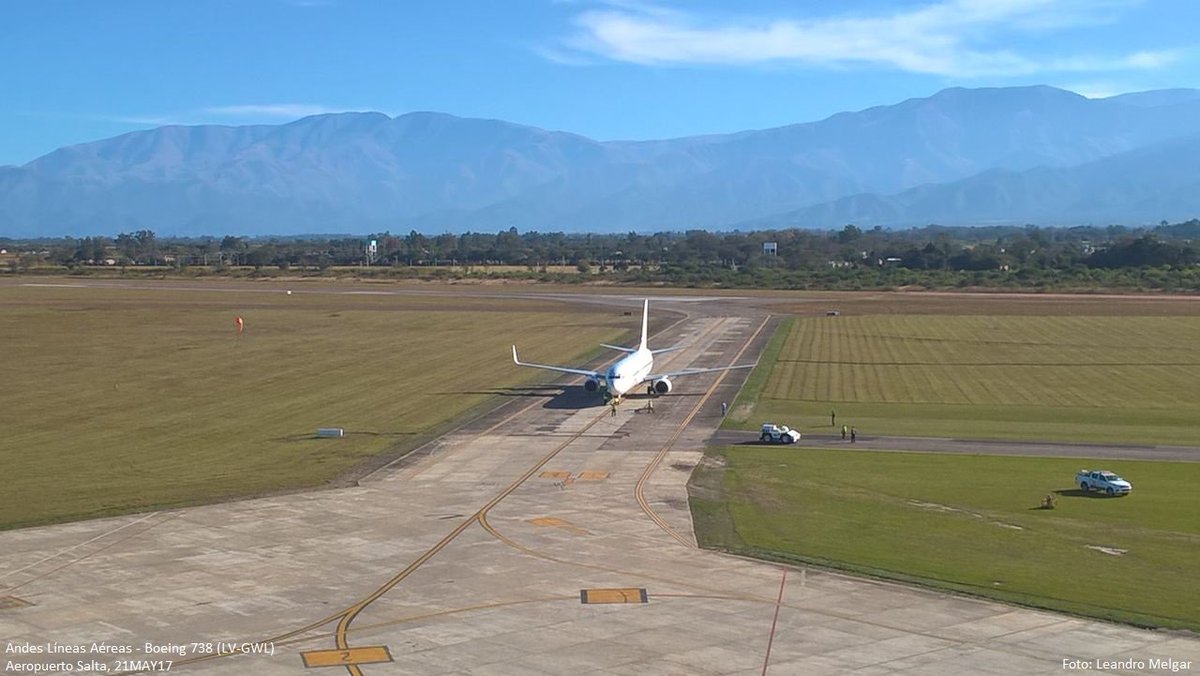
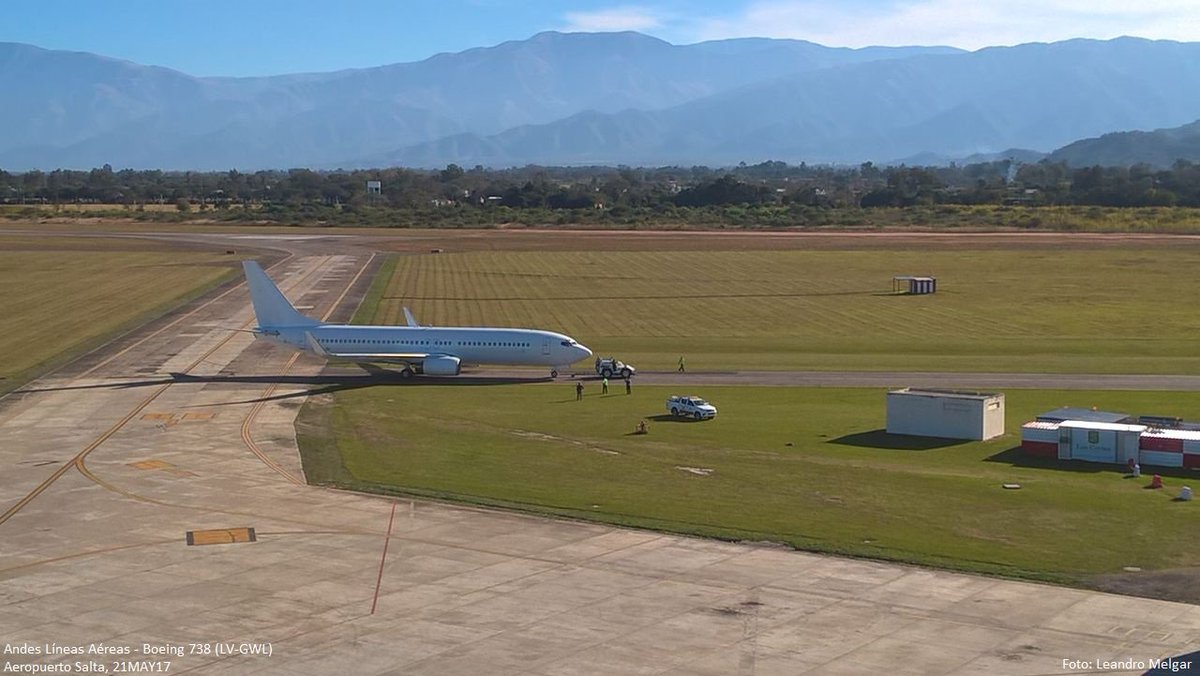
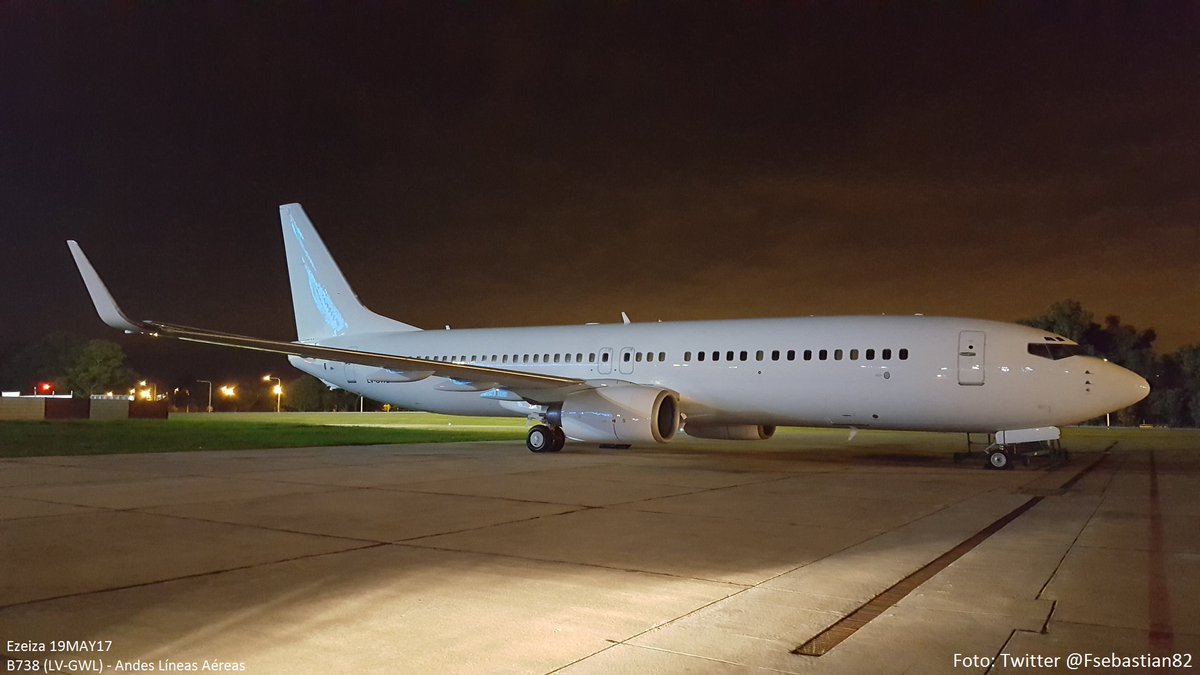
Andes recibe primer Boeing 737-800

AW | 2017 05 23 18:07 | AIRLINES

A I R G W A Y S ® 005El flamante Boeing 737-800 ya forma parte de la flota de Andes Líneas Aéreas

La aeronave estará operando en la primera quincena de Junio. Se suma a los cinco Resultado de imagen para Andes Líneas Aéreas logoMD 83 que la compañía de capitales nacionales posee. De esta manera, Andes Líneas Aéreas responde a la creciente demanda del mercado aerocomercial argentino.

El pasado sábado Andes Líneas Aéreas comenzó a escribir un nuevo capítulo en su historia de expansión y desarrollo con la llegada del primer Boeing 737-800. La aeronave cruzó el océano hasta arribar a Buenos Aires y posteriormente fue trasladada a la provincia de Salta, donde la compañía posee sus hangares y talleres propios. “La llegada del Boeing no hace otra cosa que ratificar nuestro compromiso con el país y los argentinos de ofrecer el mejor servicio al menor precio posible y aportar con calidad para que el mercado aerocomercial del país se desarrolle. Estamos felices con esta nueva etapa de la empresa, donde evolucionamos en todos los aspectos posibles”, expresó Horacio Preneste, gerente general de Andes Líneas Aéreas.

Con un peso máximo de despegue (MTOW) de 79 toneladas y motores CFM56-7B/27, este 737 es la versión de máxima potencia del motor que presentan estos aviones, lo que permite despegar en pistas más cortas, con obstáculos y alcanzar mayor altitud, maximizando el alcance o autonomía.

La capacidad máxima de la aeronave es de 189 asientos, pudiendo trasladar más gente y dividir los costos de vuelo. Esto resulta en una gran ventaja directamente proporcional para nuestros pasajeros ya que impacta en el costo de tarifas, haciéndolas más económicas y competitivas.

La llegada del Boeing está enmarcada en un momento crucial para la empresa con la ampliación de tres nuevas rutas en menos de dos meses y próximos al inicio de la temporada invernal. A ello se le suma la creciente demanda de vuelos y pasajes hacia y desde el interior del país, una tendencia que viene en alza desde el mes de diciembre.

El avión se incorpora a la flota de cinco McDonnell Douglas MD-83 que posee actualmente la compañía y se prevé el arribo del segundo Boeing para julio. Incluso, los directivos dejaron abierta la posibilidad de incorporar un tercer avión de estas características a fin de año para llegar a un mayor número de personas y seguir impulsando el crecimiento del mercado aerocomercial de transporte de pasajeros y cargas.

Con servicio de entretenimiento a bordo incluido, el Boeing se convierte en un gran aliado para operar vuelos chárter. Su fuerza de despegue y las 27,000 Lbs de empuje que caracterizan su motor, le da una gran capacidad para levantar más peso, y por lo tanto más pasajeros y combustible, algo imprescindible a la hora de mejorar el rendimiento de este tipo de vuelos, ampliando notablemente el abanico de posibilidades de destinos a los cuales se puede llegar. Cabe destacar que la compra del Boeing no es azarosa, pues permite obtener el soporte técnico de toda la flota por parte de un mismo fabricante, ya que, recordemos, McDonnell Douglas fue adquirida por Boeing hace diez años. Ello brinda un mayor grado de seguridad y confianza a la hora del mantenimiento interno y mecánico, lo que la compañía asigna una prioridad absoluta.  AIRGWAYS ® Icon-AW

https://pbs.twimg.com/media/DAX_XIKXcAAG_to.jpg

https://pbs.twimg.com/media/DAX_ZAgW0AIiPvh.jpg

https://pbs.twimg.com/media/DAXhf1DWsAA7mrB.jpg

Andes Airlines Receives First Boeing 737-800


The new Boeing 737-800 is already part of the fleet of Andes Airlines

The aircraft will be operating in the first half of June. It is added to the five MD 83 that the national capital company owns. In this way, Andes Líneas Aéreas responds to the growing demand of the Argentine airline market. Last Saturday, Andes Líneas Aéreas began writing a new chapter in its history of expansion and development with the arrival of the first Boeing 737-800.

The aircraft crossed the ocean until arriving at Buenos Aires and later it was transferred to the province of Salta, where the company owns its hangars and own workshops. «The arrival of Boeing does nothing but ratify our commitment to the country and the Argentines to offer the best service at the lowest possible price and provide quality for the country’s commercial airfield market. We are happy with this new stage of the company, where we evolve in all possible aspects,» said Horacio Preneste, general manager of Andes Líneas Aéreas.

https://pbs.twimg.com/media/DATPIwhXYAAPf58.jpg

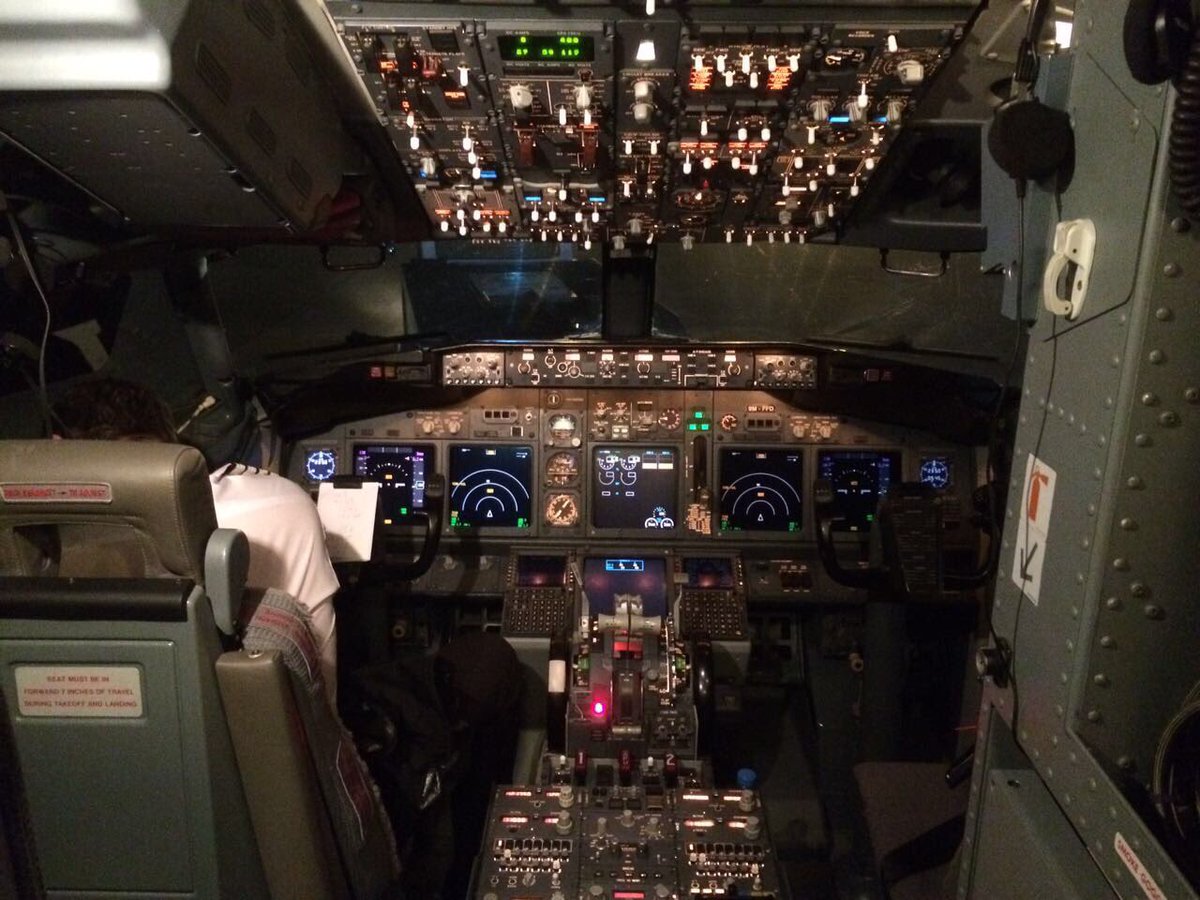
COCKPIT BOEING 737-800 OF ANDES LÍNEAS AÉREAS


With a maximum takeoff weight (MTOW) of 79 tons and engines CFM56-7B / 27, this 737 is the version of maximum power of the engine that present these planes, which allows taking off in tracks shorter, with obstacles and to reach greater altitude, Maximizing reach or autonomy.

The maximum capacity of the aircraft is of 189 seats, being able to transfer more people and to divide the costs of flight. This results in a great direct proportional advantage for our passengers as it impacts on the cost of fares, making them more economical and competitive.

The arrival of Boeing is framed in a crucial moment for the company with the extension of three new routes in less than two months and next to the beginning of the winter season. To this is added the growing demand for flights and tickets to and from the interior of the country, a trend that has risen since December.

The aircraft joins the company’s existing fleet of five McDonnell Douglas MD-83s and the second Boeing arrives for July. In addition, executives left open the possibility of incorporating a third aircraft of these characteristics by the end of the year to reach a larger number of people and continue to drive the growth of the air transport market for passenger and cargo transport.

With onboard entertainment service included, Boeing becomes a great ally to operate charter flights. Its take-off force and the 27,000 Lbs of thrust that characterize its engine, gives a great capacity to lift more weight, and therefore more passengers and fuel, something essential in improving the performance of this type of flights, expanding Notably the range of destinations that can be reached. It should be noted that the purchase of Boeing is not random, since it allows to obtain the technical support of the whole fleet from the same manufacturer, since, remember, McDonnell Douglas was acquired by Boeing ten years ago. This provides a greater degree of security and confidence in the internal and mechanical maintenance, which the company assigns an absolute priority. A \ W

Ξ A I R G W A Y S Ξ
SOURCE: Informatesalta.com.ar
DBk: LeandroMelgar / Twitter: @Fsebastien82
AW-POST: 201705231807AR

A \ W   A I R G W A Y S ®

Avianca inicia operaciones en julio 2017

https://airgways.com/wp-content/uploads/2016/11/7b07b-15710453659_646d8630d5_o.jpg

AW | 2017 05 23 15:12 | AIRLINES

A I R G W A Y S ® 005La apertura de las operaciones de Avianca Argentina S. A. (Avian Líneas Aéreas) para el 11 de julio de 2017 cubrirá la primera ruta comercial

El 11 de julio, la aerolínea que enfrentó denuncias por conflicto de interés comenzará a operar la primera ruta de 16 que les fue otorgada por audiencia pública, y comenzará con un vuelo diario desde Aeroparque hasta Reconquista, en el nordeste de Santa Fe.

Resultado de imagen para avianca logoAvianca ha pasado por un período un poco turbulento desde los primeros inicios de su presentación como nuevo operador aéreo. Aunque no hay conflictos de intereses en la conformación del directorio de Avian Líneas Aéreas S. A., sí están surgiendo otros reclamos gremiales para intentar socavar la apertura de nuevos jugadores en el mercado argentino.

Avianca avanzó en la diagramación del comienzo de las operaciones de vuelos regulares en las principales rutas que habían sido solicitadas.

La empresa planea contar con seis aviones turbohélice volando en 2017, con 500 empleados directos y más de 1.500 indirectos, con una inversión cercana a los USD 200 millones durante el primer año. «Vamos a transportar 125.000 pasajeros en el primer año y pediremos más rutas», adelantó Efremovich, en referencia a la próxima audiencia pública que organizará la ANAC, aún sin fecha confirmada. Allí también prevén pedir el hub de Tucumán.

Avianca Argentina, línea aérea tradicional

«No estoy de acuerdo con el término bajo costo o low cost. Son empresas de eficiencia mayor sacrificando el servicio. Se dedican a rutas donde la demanda es alta. No tengo nada contra los bajos costos, nosotros daremos precios accesibles al cliente y el servicio completo», aseguró. Y luego, buscó ser polémico: «No creemos que la diferencia sea el sándwich o las niñitas que les den el beso a los clientes. La diferencia está en el servicio. Usted ahí vuela en posición fetal».  AIRGWAYS ® Icon-AW

https://i0.wp.com/www.infobae.com/new-resizer/IAEuj3peAr4yPxqTrfFgX9a6F38%3D/1200x0/s3.amazonaws.com/arc-wordpress-client-uploads/infobae-wp/wp-content/uploads/2017/03/17215807/Aviaca-1920-3.jpg

Avianca starts operations in July 2017


Resultado de imagen para avianca logoThe opening of Avianca Argentina S.A. (Avian Airlines) operations for July 11, 2017 will cover the first commercial route


On July 11, the airline that faced complaints of conflict of interest will begin operating the first route of 16 that was granted by public hearing, and will begin with a daily flight from Aeroparque to Reconquista, in the northeast of Santa Fe.

Avianca has gone through a somewhat turbulent period since the very beginning of its presentation as a new air carrier. Although there are no conflicts of interest in the formation of the board of Avian Linhas Aereas S., other trade union claims are emerging to try to undermine the opening of new players in the Argentine market.

Avianca advanced in the layout of the beginning of the operations of regular flights in the main routes that had been requested.

The company plans to have six turboprop aircraft flying in 2017, with 500 direct employees and more than 1,500 indirect, with an investment close to USD 200 million during the first year. «We are going to transport 125,000 passengers in the first year and we will ask for more routes,» said Efremovich, referring to the next public hearing to be organized by ANAC, with no confirmed date. There they also plan to order the Tucumán hub.

Avianca Argentina, traditional airline

«I do not agree with the term low cost or low cost. They are high efficiency companies sacrificing the service, they are dedicated to routes where the demand is high, I have nothing against low costs, we will give affordable prices to the customer and the service Complete», he said. «We do not think the difference is the sandwich or the little girls who give the kiss to the customers, the difference is in the service, you fly there in a fetal position.» A \ W

AIRGWAYS ® Jet-Lynd

Ξ A I R G W A Y S Ξ
SOURCE: AIRGWAYS
DBk: Atr.com /
AW-POST: 201705231512AR

A \ W   A I R G W A Y S ®

Easyjet compra treinta Airbus A321NEO

AW | 2017 05 23 11:55 | AIRLINES

Resultado de imagen para easyjet logoSu radio de vuelo es extraordinariamente largo y permite cubrir el Atlántico de un salto como hará Norwegian

Easyjet es una aerolínea que tradicionalmente operaba con aviones pequeños. Toda su flota estaba compuesta por Airbus 319, de 156 asientos, hasta que compró GB Airways, la aerolínea de Gibraltar, que le aportó una miniflota de A320. Desde entonces, ha ido aumentando sobre todo sus 320, para aumentar su capacidad.

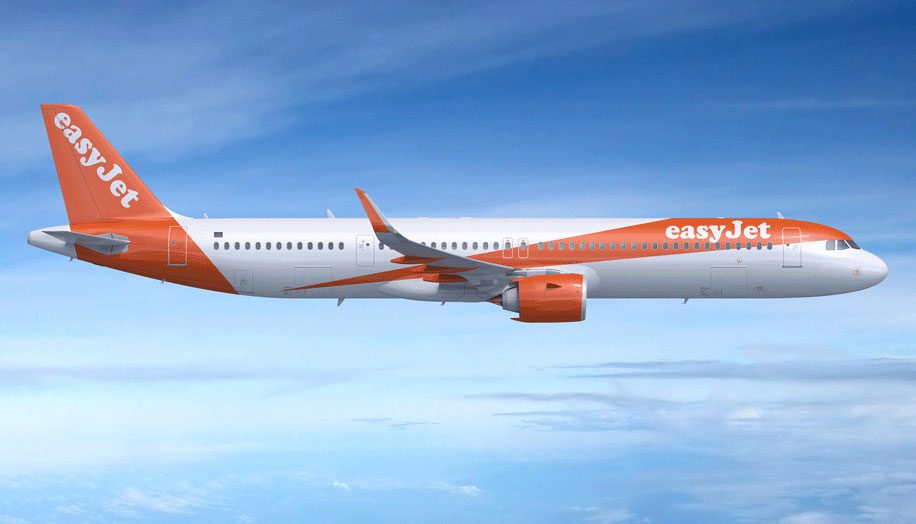
Pero ahora ha dado un paso más, cambiando treinta de sus pedidos de Airbus 320NEO por treinta A321NEO. El Airbus 321NEO, con capacidad para 235 pasajeros, está siendo uno de los aviones con más éxito comercial del fabricante europeo, no sólo porque es capaz de transportar más pasajeros, sino porque su radio de vuelo es extraordinariamente largo y permite cubrir el Atlántico de un salto. Es el avión que ha comprado Norwegian para enlazar Irlanda con Estados Unidos y con el que quiere cambiar el modelo de operaciones de los vuelos transoceánicos.

Easyjet comunicó este cambio a Airbus, pero se limita a indicar que lo hace porque así aumenta un 26 por ciento su capacidad de transporte –por el número de viajeros que caben en el aparato. Igualmente, el coste de operaciones de este avión es un 8 o un 9 por ciento inferior a sus rivales, fundamentalmente el Boeing 737 MAX.

“Estos nuevos aviones –explicó la directora general, Carolyn McCall– nos permitirán cumplir los objetivos de nuestra estrategia en muchos aeropuertos europeos en los que hay limitaciones de slots”.

Ahora, los pedidos que tiene que recibir Easyjet en los próximos meses, a partir de este verano, quedan así: 100 aviones A320NEO que serán entregados entre este verano y julio de 2022, 30 aviones A321NEO (estos últimos fabricados en Estados Unidos) y 27 aviones A320CEO, que es la última versión de la familia. AIRGWAYS ® Icon-AW

Easyjet buys thirty Airbus A321NEO

Its radius of flight is extraordinarily long and allows to cover the Atlantic of a jump as it will do Norwegian

Resultado de imagen para easyjet logoEasyjet is an airline that traditionally operated with small aircraft. His entire fleet consisted of Airbus 319, 156 seats, until he bought GB Airways, the Gibraltar airline, which provided him with a miniflop of A-320. Since then, it has been increasing mainly its 320, to increase its capacity.

But now it has gone one step further, changing thirty of its orders from Airbus 320NEO for thirty A321NEO. The 235-passenger Airbus 321NEO is one of the most successful commercial aircraft of the European manufacturer, not only because it is capable of carrying more passengers, but because its radius of flight is extraordinarily long and allows the Atlantic to cover a jump. It is the plane Norwegian has bought to link Ireland with the United States and with which it wants to change the model of operations of the transoceanic flights.

Easyjet communicated this change to Airbus, but merely indicates that it does so because it increases its transport capacity by 26 percent – by the number of passengers that fit the device. Equally, the cost of operations of this aircraft is 8 or 9 percent lower than its rivals, mainly the Boeing 737 MAX.

«These new aircraft,» explained General Manager Carolyn McCall, «will allow us to meet the objectives of our strategy in many European airports where there are slots limitations.»

Now, the orders that have to receive Easyjet in the coming months, as of this summer, are: 100 A320NEO aircraft to be delivered between this summer and July 2022, 30 A321NEO (the latter manufactured in the United States) and 27 Avioens A320CEO, which is the latest version of the family. A \ W


Ξ A I R G W A Y S Ξ
SOURCE: Preferente.com
DBk: Airbus.com / Imgeuropapress.akamaized.net
AW-POST: 201705231155AR

A \ W A I R G W A Y S ®

Modificaciones Ley de Aviación Civil en Mexico

Cambios en ley de aviación, benefician a usuarios de aerolíneas

AW | 2017 05 23 10:53 | AIRLINES MARKET

Cambios en ley de aviación, benefician a usuarios de aerolíneas

La Paz, Baja California Sur, Mexico   El delegado de la Profeco, Isaías González Nava, dijo que las modificaciones que se hicieron a la Ley de Aviación Civil se traducen en un mejor servicio a los usuarios del servicio de transporte aéreo, y explicó que entre otros aspectos estos cambios contemplan una compensación por retraso, la cual se aplicará mediante la indemnización no menor del 7.5% del costo del boleto, siempre y cuando se determine que la demora fue responsabilidad de la aerolínea.

El apartado en cuestión refiere que la indemnización deberá incluir descuentos para vuelos en fecha posterior hacia el destino contratado y/o alimentos y bebidas, pero si la demora es mayor de 4 horas, el pasajero podrá requerir la indemnización, que no será inferior al 25% del precio del boleto o de la parte no realizada del viaje; “Las aerolíneas también deberán poner a disposición de sus clientes llamadas telefónicas y el envío de correos electrónicos durante su espera”.

“El Senado de la República aprobó las modificaciones a la Ley de Aviación Civil y a la Ley Federal de Protección al Consumidor, lo que en conjunto representa 10 nuevos derechos que fueron concedidos a los usuarios”.

El funcionario refirió que en los meses de enero y febrero las quejas recibidas en contra de las aerolíneas tuvieron un aumento del 42.6% en comparación con el mismo lapso del 2016 y, en tres de cada 10 casos, los reclamos se dieron por negativas para otorgar el servicio.

Explicó que en lo que respecta a la venta de boletos ahora las aerolíneas deberán presentar, desde el primer momento, el costo total del pasaje; esto quiere decir que los impuestos deberán estar incluidos y no se podrá condicionar la venta a cambio de servicios extras.

“Los niños menores de dos años de edad podrán viajar gratis y sin que haya un costo extra por la documentación de la carriola y, en lo que respecta al equipaje, se permitirá que todos lleven al menos una maleta de 25 kilos y hasta dos piezas de equipaje de mano, medida que ya es aplicada por algunas compañías”.

Cuando el vuelo sea cancelado por responsabilidad de la empresa, las personas tendrán derecho a que se le restituya el precio del boleto, que se les ofrezca transporte sustituto en el primer vuelo disponible, recibir alimentos, alojamiento en hotel y transporte en la ciudad en la que se encuentre.

Cuando se tenga un caso de sobreventa la aerolínea deberá solicitar voluntarios que renuncien al vuelo a cambio de beneficios que se acuerden directamente con el pasajero y tendrán preferencia para abordar las personas con alguna discapacidad, adultos mayores, los menores de edad no acompañados y mujeres embarazadas.

Finalmente, dijo que también se hizo obligatoria la indemnización por daños o pérdida del equipaje, lo que es un problema muy común que afecta a muchos pasajeros.  AIRGWAYS ® Icon-AW

Modifications Civil Aviation Law in Mexico

Changes in aviation law, benefit airlines users

La Paz, Baja California Sur, Mexico.  Profeco delegate Isaías González Nava said that the amendments made to the Civil Aviation Law translate into better service to users of the air transport service, and explained that among other things, these changes contemplate compensation for Delay, which shall be applied by means of compensation of not less than 7.5% of the cost of the ticket, provided that the delay was determined to be the responsibility of the airline.

The section in question refers that the compensation must include discounts for flights at a later date towards the destination contracted and / or food and beverages, but if the delay is more than 4 hours, the passenger may require compensation, which will not be less than 25 % Of the ticket price or the unrealized portion of the trip; «Airlines should also make telephone calls and e-mails available during their waiting time.»

«The Senate of the Republic approved the amendments to the Civil Aviation Act and the Federal Consumer Protection Law, which together represent 10 new rights that were granted to users.»

The official said that in January and February the complaints received against the airlines had an increase of 42.6% compared to the same period in 2016 and, in three of every 10 cases, the claims were denied to grant the service.

He explained that with regard to the sale of tickets now airlines must present, from the outset, the total cost of the ticket; This means that taxes must be included and the sale can not be conditioned in exchange for extra services.

«Children under two years of age will be able to travel for free and without any extra cost for the documentation of the stroller and, in regard to luggage, everyone will be allowed to carry at least one 25-kilogram suitcase and up to two pieces Of hand luggage, a measure that is already being applied by some companies.»

When the flight is canceled due to responsibility of the company, people will have the right to be refunded the ticket price, offered substitute transport on the first available flight, receive food, hotel accommodation and transportation in the city in the that is.

When there is an oversold case, the airline should request volunteers to give up the flight in exchange for benefits that are agreed directly with the passenger and will have preference for dealing with persons with disabilities, older adults, unaccompanied minors and pregnant women.

Finally, he said that compensation for damage or loss of luggage was also made mandatory, which is a very common problem affecting many passengers. A \ W


Ξ A I R G W A Y S Ξ
SOURCE: Elsudcaliforniano.com.mx
DBk: Elsudcaliforniano.com.mx
AW-POST: 201705231053AR

A \ W   A I R G W A Y S ®

Frente de tormenta para Aerolíneas y Austral

aeropuertocordoba-blogspot-com-ar-jpg068

AW | 2017 05 23 10:13 | AIRLINES MARKET

Los cinco gremios aeronáuticos emitieron un comunicado por medio de un documento en contra de las políticas aeronauticas del govierno argentino

“La viabilidad y la existencia de la línea de bandera están en grave riesgo”, sostiene la denuncia de un frente sindical con todos los actores del sector. Advierte por la baja de subsidios y la llegada de las low cost.

Aerolíneas Argentinas y Austral están en peligro, denunciaron ayer los gremios aeronáuticos en un extenso comunicado con duras críticas a la política aerocomercial oficial. Los cinco sindicatos del sector, por primera vez unidos en un mismo reclamo, alertaron sobre el riesgo que enfrenta la línea de bandera frente al recorte de subsidios por parte del gobierno nacional y la cesión de mercado a manos de competidores extranjeros. En el documento denuncian que el Ministerio de Transporte y la Agencia Nacional de Aviación Civil (Anac) “auspician de manera poco clara la asignación de rutas a operadores de dudosa o ninguna capacidad operativa”. También remarcan los efectos que podrían tener “un forzado ingreso al mercado nacional de operadores extranjeros a través de acuerdos bilaterales, sin ejercer la reciprocidad que los mismos deberían mantener, poniendo en evidencia la falta de políticas aéreas que protejan a la actual industria”. Esto afectara directamente y en el corto plazo a todos los operadores y trabajadores.

El gobierno de Cambiemos inauguró un proceso de flexibilización del negocio aerocomercial a partir de la asignación de rutas a empresas para que operen en el segmento de low cost (bajo costo) y acuerdos de código compartido. En el caso de las low cost, las autoridades reguladoras, como la Anac, están siendo denunciadas por otorgar rutas a compañías sin respaldo patrimonial suficiente, como Flybondi y Alas del Sur, o con irregularidades contractuales, como Avianca, que adquirió McAir, propiedad de la familia Macri.

El titular de la Anac, Juan Pedro Irigoin, fue denunciado penalmente por algunos gremios por no cumplir con sus deberes de funcionario público en el marco del Código Aeronáutico. Ayer todos los sindicatos emitieron un documento donde alertan sobre el desmanejo oficial en Aerolíneas y el incumplimiento de normas aerocomerciales y de los convenios colectivos de trabajo en la actividad. El texto fue rubricado por Ricardo Cirielli, secretario general de la Asociación del Personal Técnico Aeronáutico (APTA); Edgardo Llano, del Personal Aeronáutico (APA); Rubén Fernández, de Unión Personal Superior Aeronáutico (UPSA); Pablo Biró, de Asociación de Pilotos de Líneas Aéreas (APLA), y Genaro Trucco, de Unión de Aviadores de Líneas Aéreas (UALA).

Línea de bandera
“Su viabilidad y existencia están siendo puestas en grave riesgo, por dos acciones simultáneas del gobierno nacional”, sostiene el comunicado. El gobierno de Cambiemos redujo el año pasado 60 por ciento, a 320 millones de dólares, el subsidio a Aerolíneas y para este año lo recortará otro 30 por ciento (a 180 millones). “A la vez, desde el inicio de la actual gestión se les quitó mercados y posibilidades de aumentar sus ingresos permitiendo, primero, que compañías extranjeras (Latam, SKY, COPA, AIR Europa) capten pasajeros desde ciudades del interior para trasladarlos regional e internacionalmente y, luego, ampliando la participación en nuestro mercado a otras empresas sin ninguna regulación”, agrega el texto del comunicado conjunto.

La cartera de transporte y la Anac autorizaron ya a cinco líneas aéreas un total de 135 rutas. Entre ellas Avian (16 autorizaciones) por la que sigue imputado judicialmente el presidente Macri y el ex gerente de MacAir y actual CEO de Avian, Carlos Colunga, y Flybondi (78 autorizaciones), con un capital social declarado de sólo 6000 dólares, de la cual se desconocen sus accionistas reales y no posee aviones. Las nuevas rutas autorizadas se superponen en más de un 95 por ciento con las de cabotaje que actualmente operan AA y Austral. Se espera además otra audiencia en la que habrá 14 presentaciones entre líneas aéreas de pasajeros y carga para vuelos domésticos e internacionales.

“Es imposible, con el escenario creado de apertura irrestricta de nuestro mercado aéreo a un aluvión de operadores, y el drástico ajuste de subsidios, que en el futuro inmediato Aerolíneas y Austral se fortalezcan y crezcan”, consideran los sindicatos, quienes comparan la actual situación con las de los años 90.

Degradación de normas

Las autoridades de la Anac impulsan políticas y planes de acción para imponer el reemplazo de las actuales regulaciones aeronáuticas (RAAC), por las latinoamericanas (LAR), que son menos exigentes en cuanto al control efectivo y de fiscalización, como así también en los requisitos y resguardos para la formación, habilitaciones, calidad del mantenimiento, auditoria y el ejercicio profesional de pilotos y técnicos aeronáuticos. “Si dicho cambio de normas se concreta, se degradará sin dudas la seguridad aérea de las empresas que operan en el país, con los costos y perjuicios irreparables”, destacan.

En ese sentido, el arribo de las low cost, un modelo que se originó en Estados Unidos y se desarrolló en Europa, se basa en reducir al máximo todos los costos para aumentar al máximo la ganancia empresarial. Esos costos no son solo el confort en vuelo, el tipo de equipaje o la homogenización de la flota. Invierten menos que las empresas tradicionales en lo que hace a la seguridad (capacitación de su personal, combustible mínimo, mantenimiento aeronáutico), trabajando siempre al límite. “Son múltiples las denuncias por cuestiones que afectan la seguridad en vuelo realizadas por parte de los trabajadores y las autoridades aeronáuticas de los países donde operan”, destacan los gremios en el comunicado. Al entrar masivamente en un país, éstas devalúan toda su seguridad aérea, porque obligan a las demás empresas a imitar el modelo para poder competir.

“Estas también degradan los convenios laborales en la actividad aerocomercial. No son sólo los derechos legítimamente adquiridos desde el inicio de nuestra industria, sino que en muchos de sus puntos afectan y garantizan directamente la seguridad en vuelo”, aseguran. Los mismos preservan al trabajador para que esté en condiciones óptimas de realizar tareas, y en muchos casos protegen directamente la vida de los usuarios del transporte aerocomercial. “Nuestros Convenios Colectivos de Trabajo son por empresas, no por actividad. Siempre han diferenciado en sus condiciones a las pequeñas y medianas compañías, para promover su crecimiento, de la gran industria, resguardando en todos los casos los más altos estándares de seguridad”, concluye. El modelo laboral de Cambiemos homogeneiza y flexibiliza el convenio laboral. AIRGWAYS ® Icon-AW

A I R G W A Y S-AeroparqueSABE-AEP

Storm front for Airlines and Austral

The five aeronautical guilds issued a statement by means of a document against the aeronautical policies of the Argentine government

«The viability and the existence of the flag line are in serious danger», maintains the denunciation of a union front with all the actors of the sector. He warns of low subsidies and the arrival of low cost.

Aerolíneas Argentinas and Austral are in danger, denounced yesterday the aeronautical guilds in an extensive communication with harsh criticisms to the official aerial commercial policy. As anticipated by PageI12, the five trade unions in the sector, for the first time united in the same complaint, warned about the risk facing the flag line in front of the cut of subsidies by the national government and the transfer of the market to foreign competitors . The document denounces that the Ministry of Transport and the National Civil Aviation Agency (ANAC) «unequivocally sponsor the allocation of routes to operators of doubtful or no operational capacity.» They also highlight the effects that could have «forced entry into the domestic market of foreign operators through bilateral agreements, without exercising the reciprocity that they should maintain, highlighting the lack of air policies to protect the current industry.» This will affect directly and in the short term all operators and workers.

The government of Cambiemos inaugurated a process of flexibilization of the aerial commercial business from the allocation of routes to companies to operate in the low cost segment and codeshare agreements. In the case of low cost, regulatory authorities, such as Anac, are being denounced for granting routes to companies without sufficient patrimonial backing, such as Flybondi and Alas del Sur, or with contractual irregularities such as Avianca, which acquired McAir, owned by The Macri family.

The owner of the Anac, Juan Pedro Irigoin, was denounced by some guild for failing to fulfill his duties as a civil servant within the framework of the Aeronautical Code. Yesterday all the unions issued a document where they warn about the official breakdown in Aerolíneas and the noncompliance with aerocomercial norms and of the collective agreements of work in the activity. The text was initialed by Ricardo Cirielli, secretary general of the Association of Technical Aeronautical Personnel (APTA); Edgardo Llano, of the Aeronautical Personnel (APA); Rubén Fernández, from Unión Superior Aeronáutico (UPSA); Pablo Biró, Association of Airline Pilots (APLA), and Genaro Trucco, Union of Airline Aviators (UALA).

Flag line
«Its viability and existence are being put at serious risk by two simultaneous actions of the national government,» the statement said. The government of Cambiemos reduced last year 60 percent, to 320 million dollars, the subsidy to Airlines and for this year it will cut another 30 percent (to 180 million). «At the same time, since the beginning of the current administration, markets and possibilities of increasing their revenues have been removed, allowing foreign companies (Latam, SKY, COPA, AIR Europa) to catch passengers from cities in the interior to transfer them regionally and internationally And then expanding participation in our market to other companies without any regulation, » added the text of the joint statement.

The transport portfolio and Anac already authorized five routes to a total of 135 routes. Including Avian (16 authorizations), which continues to be judicially prosecuted by President Macri and former MacAir manager and current CEO Avian, Carlos Colunga, and Flybondi (78 authorizations), with a declared share capital of only $ 6,000. Which is unknown to its real shareholders and does not have airplanes. New authorized routes overlap by more than 95 percent with cabotage currently operated by AA and Austral. A further hearing is expected in which there will be 14 presentations between passenger and cargo airlines for domestic and international flights.

«It is impossible, with the scenario created by unrestricted opening of our air market to a barrage of operators, and the drastic adjustment of subsidies, that in the immediate future, Aerolíneas and Austral will strengthen and grow,» the unions consider, Situation with those of the 90s.

Degradation of standards
The ANAC authorities are promoting policies and action plans to impose the replacement of the current aeronautical regulations (RAAC), by Latin American (LAR), which are less demanding in terms of effective control and control, as well as requirements And safeguards for training, qualifications, quality of maintenance, auditing and the professional practice of pilots and aeronautical technicians. «If such a change of rules is specified, it will undoubtedly degrade the air safety of companies operating in the country, with irreparable costs and damages,» they point out.

In this sense, the arrival of the low cost, a model that originated in the United States and developed in Europe, is based on reducing all costs to maximize the maximum corporate profit. These costs are not just the comfort in flight, the type of luggage or the homogenization of the fleet. They invest less than traditional companies in terms of safety (training of their personnel, minimum fuel, aeronautical maintenance), always working to the limit. «There are multiple complaints about issues affecting flight safety by workers and aeronautical authorities in the countries where they operate,» the guilds said in the statement. When entering a country massively, they devalue all their air safety, because they force the other companies to imitate the model in order to be able to compete.

«These also degrade the labor agreements in the aerial commercial activity. It is not only the rights legitimately acquired from the beginning of our industry, but in many of its points they affect and guarantee directly the safety in flight «, they affirm. They preserve the worker so that he is in optimal conditions to perform tasks, and in many cases directly protect the life of the users of the aerial commercial transport. «Our collective bargaining agreements are by companies, not by activity. They have always differentiated in their conditions from small and medium-sized companies, to promote their growth, the great industry, safeguarding in all cases the highest safety standards», he concludes. The labor model of Cambiemos homogenizes and flexibilizes the labor agreement. A \ W

Ξ A I R G W A Y S Ξ
SOURCE: Pagina12.com.ar
DBk: AIRGWAYS / Aeropuertocordoba.blogspot.com.ar
AW-POST: 201705231013AR

A \ W   A I R G W A Y S ®

Dinacia se apresta a autorizar a Azul como aerolínea uruguaya

AW | 2017 05 23 05:32 | AIRLINES

La empresa está próxima a obtener el permiso para empezar el proceso de certificación de sus aviones

La aerolínea brasileña Azul tiene por objetivo comenzar a operar como empresa aérea uruguaya en el menor plazo posible, y entre otros destinos poder volar el puente aéreo entre Montevideo y Buenos Aires.

La semana pasada la compañía terminó de presentar la totalidad de la documentación solicitada para su análisis por la Dirección Nacional de Aviación Civil e Infraestructura Aeronáutica (Dinacia). Eso habilita a que el expediente pase ahora a la Junta Aeronáutica que es la encargada de otorgar el permiso provisorio como aerolínea de bandera.

Con ese permiso, que se estima se librará en cuestión de días, la empresa podrá hacer de manera formal la solicitud de rutas y comenzar el proceso de certificación de sus aeronaves, según supo El Observador en base a fuentes del sector aeronáutico.

La aerolínea que llevará el nombre de Azul Uruguay tiene en sus planes operar con aviones modelo ATR 72-600, que llegarán directo desde Francia.

Según se explicó, el proceso de certificación de los aviones dependerá de la celeridad con que lleguen las aeronaves al país y del estado de las mismas. En ese caso, por tratarse de aviones nuevos el trámite de certificación no tendría grandes demoras.

El pedido del grupo brasileño incluye la solicitud para operar el puente aéreo entre Montevideo y Buenos Aires, una ruta codiciada y disputada por varios jugadores de la región, dado su potencial durante todo el año. En la actualidad ese tramo entre la capital uruguaya y la capital argentina tiene servicios de Amaszonas Uruguay y de Aerolíneas Argentinas.

Hasta octubre pasado esa ruta había tenido frecuencias de Alas Uruguay, la aerolínea autogestionada que dejó de volar por graves problemas financieros que la llevaron a presentarse al concurso de acreedores.

La aerolínea Azul, negocia desde hace varios meses con el gobierno uruguayo para instalar un hub (centro de conexión) en el Aeropuerto de Carrasco con entre seis y ocho aviones.

En sus planes también está la incorporación de parte de la plantilla de la extinta aerolínea Alas Uruguay a su operativa local. Se estima que la operativa de la nueva aerolínea podría comenzar en el segundo semestre del año

El grupo brasileño también aspira a cubrir la ruta Montevideo-Porto Alegre y Montevideo-San Pablo como aerolínea de bandera, además de otros destinos, entre ellos, Cordoba en Argentina. Azul es la tercera aerolínea más importante de Brasil, tiene 11.000 empleados y llega a más de 80 destinos en el país norteño.

Por otro lado, hasta ahora las autoridades aeronáuticas locales no recibieron comunicación alguna de sus pares argentinos sobre la posibilidad que alguna aerolínea low cost (de bajo costo) proyecte volar hacia y desde Uruguay.

Hace un par de meses el gobierno argentino autorizó a la empresa Alas del Sur a operar la ruta entre Buenos Aires y Montevideo por 15 años, inicialmente con una frecuencia por día.

La otra firma autorizada a ofrecer conexiones con Uruguay es American Jet S.A para la ruta Neuquén-Rosario-Buenos Aires-Punta del Este. Otra de las empresas interesadas en iniciar la operativa en Uruguay con modalidad 100% low cost es la cordobesa Alas Mediterráneas. Por ahora la única empresa que está operando en el país bajo este modelo comercial es Sky Airline que une la ruta entre Montevideo y Santiago de Chile.

A diferencia de lo que ocurre con Chile –país con el cual existe un tratado de cielos abiertos que libera rutas, frecuencias y empresas para operar a partir de estar autorizadas como aerolíneas comerciales–, con Argentina hay un tratado restrictivo, lo que hace que las rutas y frecuencias sean mucho más limitadas.

Mercosur buscará aumentar turistas

Los ministros de Turismo del Mercosur se reunieron el viernes pasado en Buenos Aires para analizar políticas conjuntas tendientes a aumentar el flujo de turistas provenientes de países lejanos, como por ejemplo China, India, Japón y los países escandinavos. «Analizamos cómo podemos participar juntos en algunas ferias del sector y avanzar en materia de conectividad aérea y visas», dijo al portal de Presidencia la ministra de Turismo, Liliam Kechichian. «La estrategia en estos destinos es que los integrantes del Mercosur trabajemos en forma conjunta para posicionar la región», porque «son países caros para llegar individualmente con nuestra promoción», añadió. La primera presentación regional se hará en noviembre. AIRGWAYS ® Icon-AW

https://upload.wikimedia.org/wikipedia/commons/b/bc/ATR_ATR-72-600_%28ATR-72-212A%29%2C_Azul_-_Linhas_Aereas_Brasileiras_AN2298854.jpg

Dinacia prepares to authorize Azul as Uruguayan airline


The company is about to get permission to begin the process of certification of its aircraft


The Brazilian airline Azul intends to start operating as an Uruguayan airline in the shortest possible time, and among other destinations it will be able to fly the air bridge between Montevideo and Buenos Aires.
 

Last week the company finished presenting all the documentation requested for analysis by the National Directorate of Civil Aviation and Aeronautical Infrastructure (Dinacia). That enables the file to now pass to the Aeronautical Board which is responsible for granting the provisional permit as a flag airline. 

With this permission, which is estimated to be released in a matter of days, the company will be able to formally request the routes and begin the process of certification of its aircraft, according to El Observador, based on sources from the aeronautical sector. 

The airline that will carry the name of Azul Uruguay has in its plans to operate with airplanes model model ATR 72-600, that will arrive direct from France. 

As explained, the process of certification of airplanes will depend on how quickly the aircraft arrive in the country and the state of the aircraft. In that case, as new aircraft, the certification process would not be long delays. 

The order of the Brazilian group includes the request to operate the air bridge between Montevideo and Buenos Aires, a coveted route and disputed by several players of the region, given its potential throughout the year. At the moment that section between the Uruguayan capital and the Argentine capital has services of Amaszonas Uruguay and Aerolíneas Argentinas. 

Until last October, that route had frequencies of Alas Uruguay, the self-managed airline that stopped flying because of serious financial problems that led to the presentation of the creditors. 

Blue airline has been negotiating with the Uruguayan government for several months to install a hub at Carrasco Airport with between six and eight aircraft. 

In its plans is also the incorporation of part of the workforce of the former airline Alas Uruguay to its local operations. It is estimated that the operation of the new airline could begin in the second half of the year 

The Brazilian group also aims to cover the route Montevideo-Porto Alegre and Montevideo-San Pablo as a flag airline, as well as other destinations, including Cordoba in Argentina. Azul is the third largest airline in Brazil, has 11,000 employees and reaches more than 80 destinations in the northern country. 

On the other hand, so far the local aeronautical authorities have not received any communication from their Argentine counterparts about the possibility that some low cost airlines will fly to and from Uruguay. 

A couple of months ago the Argentine government authorized the company Alas del Sur to operate the route between Buenos Aires and Montevideo for 15 years, initially with a frequency per day. 

The other firm authorized to provide connections with Uruguay is American Jet S.A for the route Neuquén-Rosario-Buenos Aires-Punta del Este. Another of the companies interested in starting the operation in Uruguay with 100% low cost modality is the Cordovan Alas Mediterráneas. For now the only company that is operating in the country under this commercial model is Sky Airline that joins the route between Montevideo and Santiago de Chile. 

Unlike Chile, where there is a treaty of open skies that frees routes, frequencies and companies to operate from being authorized as commercial airlines, with Argentina there is a restrictive treaty, which makes the Routes and frequencies are much more limited. 

Mercosur will seek to increase tourists 

Mercosur tourism ministers met last Friday in Buenos Aires to discuss joint policies aimed at increasing the flow of tourists from distant countries, such as China, India, Japan and the Scandinavian countries. «We analyze how we can participate together in some fairs in the sector and make progress in terms of aerial connectivity and visas,» Tourism Minister Liliam Kechichian told the Presidency website. «The strategy in these destinations is for Mercosur members to work together to position the region,» because «they are expensive countries to reach individually with our promotion,» he added. The first regional presentation will be in November.A \ W


Ξ A I R G W A Y S Ξ
SOURCE: Elobservador.com.uy
DBk: Wikipedia.org
AW-POST: 201705230532AR

A \ W   A I R G W A Y S ®