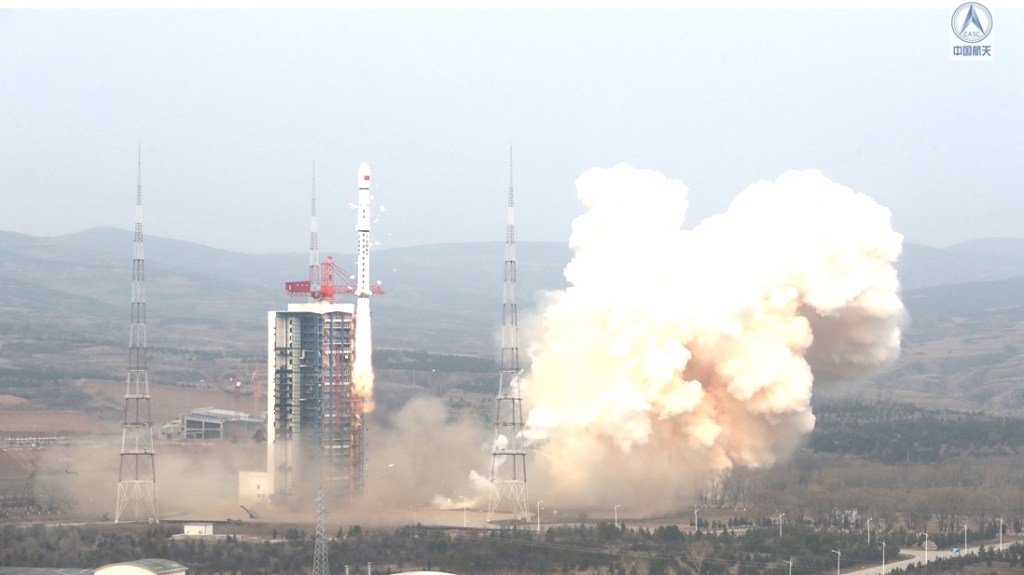
El último lanzamiento espacial de China envió un tercer satélite experimental Shiyan 6 en órbita mientras lucía un nuevo revestimiento ultra-negro para ayudar a mejorar el rendimiento de los sensores ópticos. El satélite Shiyan 6 botado el 7 de Abril de 2021 sobre un cohete Long March 4B desde el Centro de Lanzamiento de Satélites taiyuan en el norte de China a las 07:01 p.m. EDT (2301 GMT, o 07:01 a.m. 8 de Abril hora local).
Al igual que con los anteriores satélites Shiyan 6, China no publicó ninguna imagen de la nave espacial. Esta es una práctica estándar para los países que lanzan satélites para misiones clasificadas relacionadas con la defensa nacional. Los medios chinos sólo afirman que el satélite se utilizará para llevar a cabo encuestas del entorno espacial y experimentos sobre tecnologías relacionadas. Shiyan significa literalmente experimento en chino. Los datos de seguimiento espacial militar de Estados Unidos indican que el satélite está a 1.002 kilómetros (622 millas) sobre la Tierra y completa una órbita cada 105 minutos. Su inclinación orbital de 99,5 grados al ecuador significa que está en una órbita casi polar. Mientras Shiyan 6 (03) se lanzaba desde Taiyuan, los dos satélites Shiyan 6 anteriores lanzados en cohetes Long March 2D desde Jiquan, en el noroeste. Los satélites anteriores se lanzaron en Noviembre de 2018 y Julio de 2020 respectivamente y operan en órbitas inferiores.
El último lanzamiento espacial de China envió un tercer satélite experimental Shiyan 6 en órbita mientras lucía un nuevo revestimiento ultra-negro para ayudar a mejorar el rendimiento de los sensores ópticos. Al igual que con los anteriores satélites Shiyan 6, China no publicó ninguna imagen de la nave espacial. Esta es una práctica estándar para los países que lanzan satélites para misiones clasificadas relacionadas con la defensa nacional. Los medios chinos sólo afirman que el satélite se utilizará para llevar a cabo encuestas del entorno espacial y experimentos sobre tecnologías relacionadas. Shiyan significa literalmente «experimento» en chino.
Los datos de seguimiento espacial militar de Estados Unidos indican que el satélite está a 1.002 kilómetros (622 millas) sobre la Tierra y completa una órbita cada 105 minutos. Su inclinación orbital de 99,5 grados al ecuador significa que está en una órbita casi polar. Mientras Shiyan 6 (03) se lanzaba desde Taiyuan, los dos satélites Shiyan 6 anteriores lanzados en cohetes Long March 2D desde Jiquan, en el noroeste. Los satélites anteriores se lanzaron en noviembre de 2018 y julio de 2020 respectivamente y operan en órbitas inferiores.
Shiyan 6 space launch
China launches experimental satellite in polar orbit
China’s latest space launch sent a third experimental Shiyan 6 satellite into orbit while sporting a new ultra-black coating to help improve the performance of optical sensors. The Shiyan 6 satellite launched on April 7, 2021 on a Long March 4B rocket from the Taiyuan Satellite Launch Center in north China at 07:01 p.m. EDT (2301 GMT, or 07:01 a.m. April 8 local time).
As with previous Shiyan 6 satellites, China did not release any images of the spacecraft. This is standard practice for countries launching satellites for classified missions related to national defense. Chinese media only claim that the satellite will be used to carry out surveys of the space environment and experiments on related technologies. Shiyan literally means experiment in Chinese. US military space tracking data indicates that the satellite is 1,002 kilometers (622 miles) above Earth and completes one orbit every 105 minutes. Its 99.5 degree orbital inclination to the equator means that it is in a near polar orbit. While Shiyan 6 (03) was launched from Taiyuan, the previous two Shiyan 6 satellites launched on Long March 2D rockets from Jiquan in the northwest. The above satellites were launched in November 2018 and July 2020 respectively and operate in lower orbits.
China’s latest space launch sent a third experimental Shiyan 6 satellite into orbit while sporting a new ultra-black coating to help improve the performance of optical sensors. As with previous Shiyan 6 satellites, China did not release any images of the spacecraft. This is standard practice for countries launching satellites for classified missions related to national defense. Chinese media only claim that the satellite will be used to carry out surveys of the space environment and experiments on related technologies. Shiyan literally means «experiment» in Chinese.
US military space tracking data indicates that the satellite is 1,002 kilometers (622 miles) above Earth and completes one orbit every 105 minutes. Its 99.5 degree orbital inclination to the equator means that it is in a near polar orbit. While Shiyan 6 (03) was launched from Taiyuan, the previous two Shiyan 6 satellites launched on Long March 2D rockets from Jiquan in the northwest. The above satellites were launched in November 2018 and July 2020 respectively and operate in lower orbits.
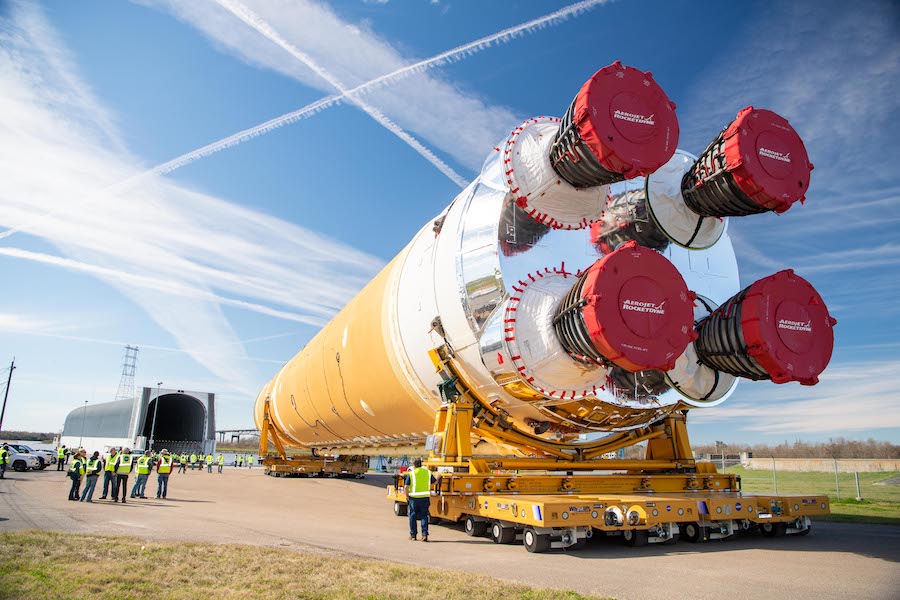
The Boeing Company ha comenzado este Miércoles 21 de Abril de 2021 la entrega de la etapa central criogénica del Space Launch System (SLS) a la NASA, desde el Stennis Space Center en Mississippi, en preparación para el lanzamiento de la misión Artemis I, la primera misión lunar en casi 50 años.
Boeing renovó el escenario después de que completó con éxito las pruebas de fuego caliente el mes pasado en el Centro Espacial Stennis de la NASA, cerrando la campaña Green Run en el puesto de pruebas B-2. El hardware de vuelo ahora irá al Centro Espacial Kennedy en Florida para su integración con la nave espacial de la tripulación Orion, la etapa superior de propulsión criogénica provisional y los propulsores de cohetes sólidos en preparación para el lanzamiento. SLS lanzará la misión Artemis I de la NASA que enviará un vehículo de la tripulación Orion desenroscado alrededor de la Luna y de vuelta. Ese vuelo de prueba será seguido por Artemis II, el primer vuelo lunar tripulado para el programa Artemis.
«Agradecemos a la NASA su asociación, ya que entregamos la primera de las etapas centrales de Artemis que lanzará una nueva era de exploración del espacio profundo humano. Boeing comparte este logro con los cientos de empresas y miles de trabajadores altamente calificados que contribuyen a este programa y forman la columna vertebral de esta industria», dijo John Shannon, vicepresidente de SLS y director de programas de Boeing.
Boeing es el contratista principal de la NASA para el núcleo SLS y las etapas superiores y la aviónica. La compañía se une a los principales elementos para la etapa central de Artemis II ahora en la Instalación de Ensamblaje Michoud de la NASA en Nueva Orleans. «Los datos de las pruebas green run validaron el funcionamiento exitoso de la etapa central y se utilizarán para ayudar a certificar la etapa de vuelo, así como para informar a nuestro sistema de producción para futuras etapas», dijo John Shannon.
Boeing también está trabajando en capacidades evolubles para el sistema de cohetes, como la Etapa Superior de Exploración (EUS), que está entrando en producción en Michoud. El SLS más potente con EUS será capaz de elevar tres veces más masa al espacio profundo que cualquier otro cohete, lo que permitirá misiones de exploración, ciencia y seguridad sostenibles, tripuladas y desenroscadas. La capacidad desarrollada de SLS para transportar cargas útiles masivas en un solo lanzamiento reduce la complejidad y el riesgo de la misión al tiempo que aumenta la seguridad, la fiabilidad y la probabilidad de éxito. Basándose en un legado de liderazgo aeroespacial, Boeing continúa liderando la tecnología y la innovación, entregando a sus clientes e invirtiendo en su gente y crecimiento futuro.
Stage 1 SLS launch
First stage SLS ready for launch
The Boeing Company has begun this Wednesday, April 21, 2021, the delivery of the cryogenic core stage of the Space Launch System (SLS) to NASA, from the Stennis Space Center in Mississippi, in preparation for the launch of the Artemis I mission, the first lunar mission in nearly 50 years.
Boeing revamped the stage after it successfully completed hot-fire tests last month at NASA’s Stennis Space Center, closing out the Green Run campaign at test stand B-2. The flight hardware will now go to the Kennedy Space Center in Florida for integration with the Orion crew spacecraft, interim cryogenic propulsion upper stage and solid rocket boosters in preparation for launch. SLS will launch NASA’s Artemis I mission that will send an unscrewed Orion crew vehicle around the Moon and back. That test flight will be followed by Artemis II, the first manned lunar flight for the Artemis program.
«We thank NASA for their partnership as we delivered the first of Artemis core stages that will launch a new era of human deep space exploration. Boeing shares this achievement with the hundreds of companies and thousands of highly skilled workers who contribute to this. program and form the backbone of this industry, «said John Shannon, vice president of SLS and director of programs for Boeing.
Boeing is NASA’s prime contractor for the SLS core and upper stages and avionics. The company joins the main elements for the Artemis II core stage now at NASA’s Michoud Assembly Facility in New Orleans. «Green run test data validated successful core stage operation and will be used to help certify the flight stage as well as inform our production system for future stages», said John Shannon.
Boeing is also working on scalable capabilities for the rocket system, such as the Upper Exploration Stage (EUS), which is entering production at Michoud. The most powerful SLS with EUS will be capable of lifting three times more mass into deep space than any other rocket, enabling sustainable manned and unscrewed exploration, science and security missions. The SLS’s developed ability to transport massive payloads in a single launch reduces mission complexity and risk while increasing safety, reliability, and likelihood of success. Building on a legacy of aerospace leadership, Boeing continues to lead technology and innovation, delivering to its customers and investing in its people and future growth.
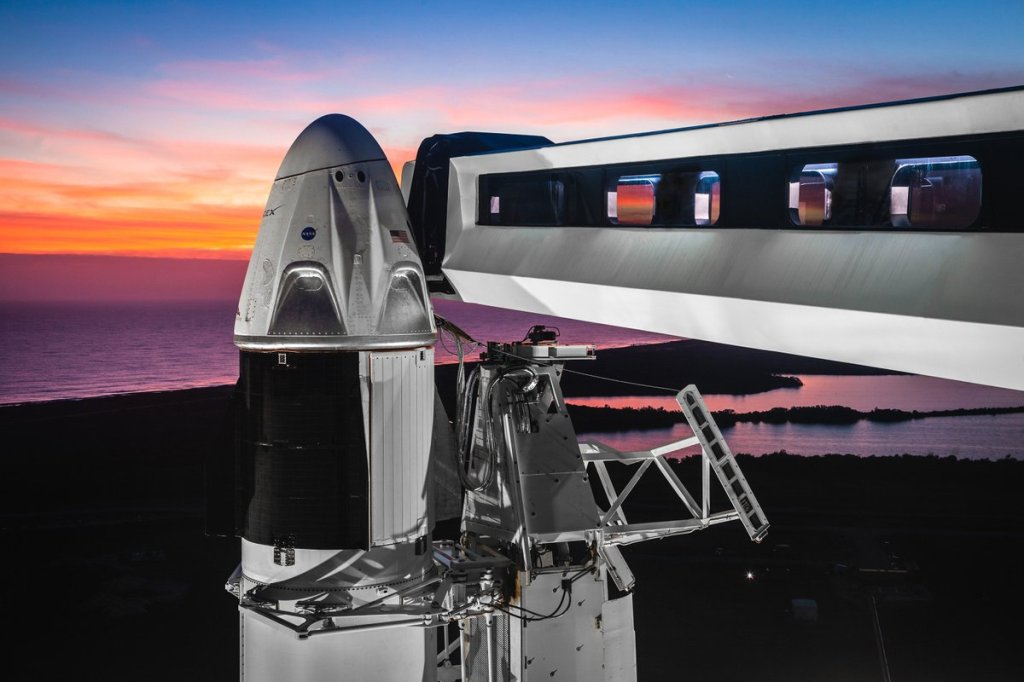
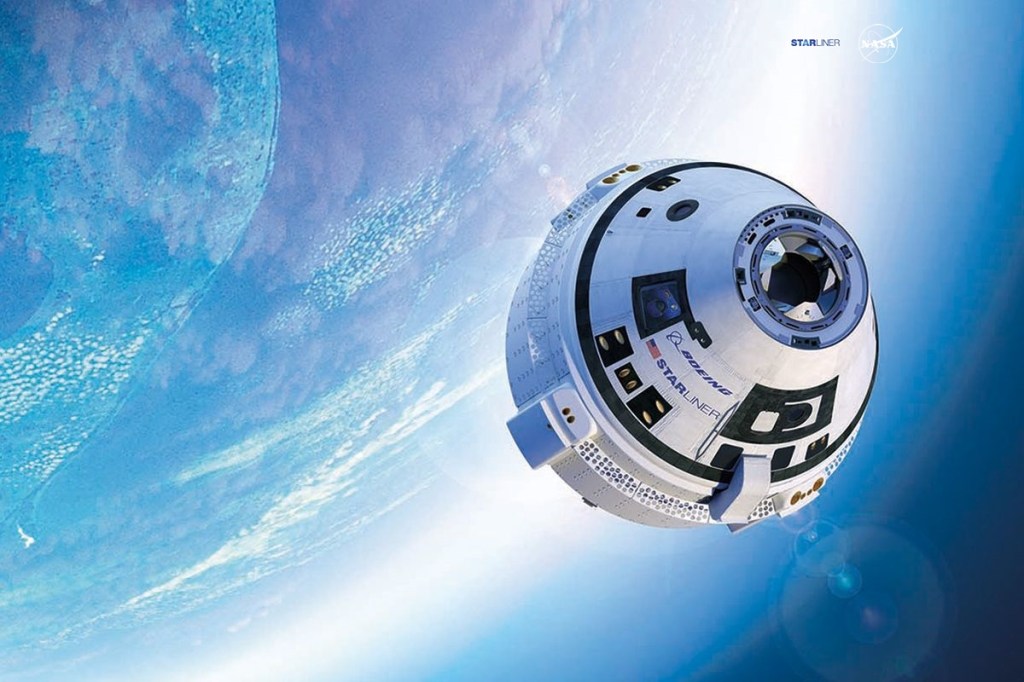
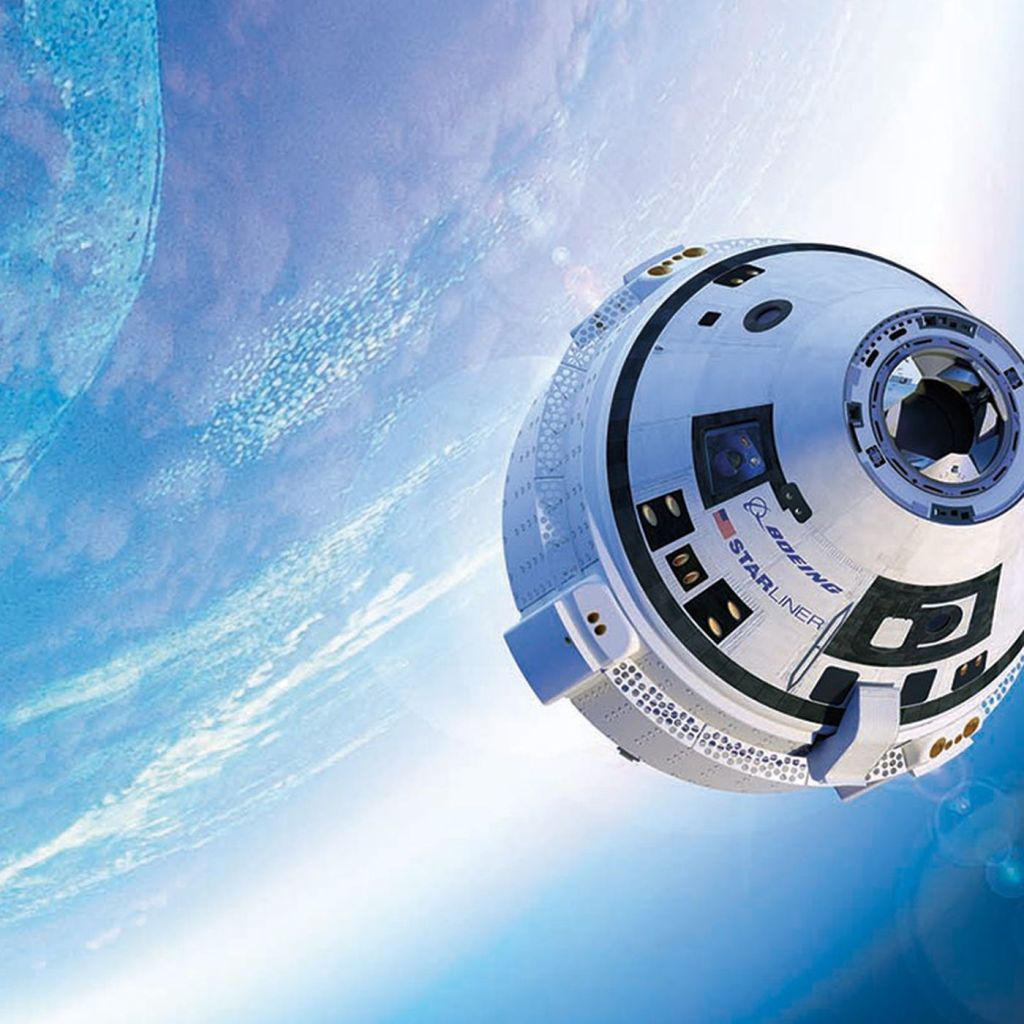
Starliner se retrasa aún más debido atasco de tráfico en Estación ISS
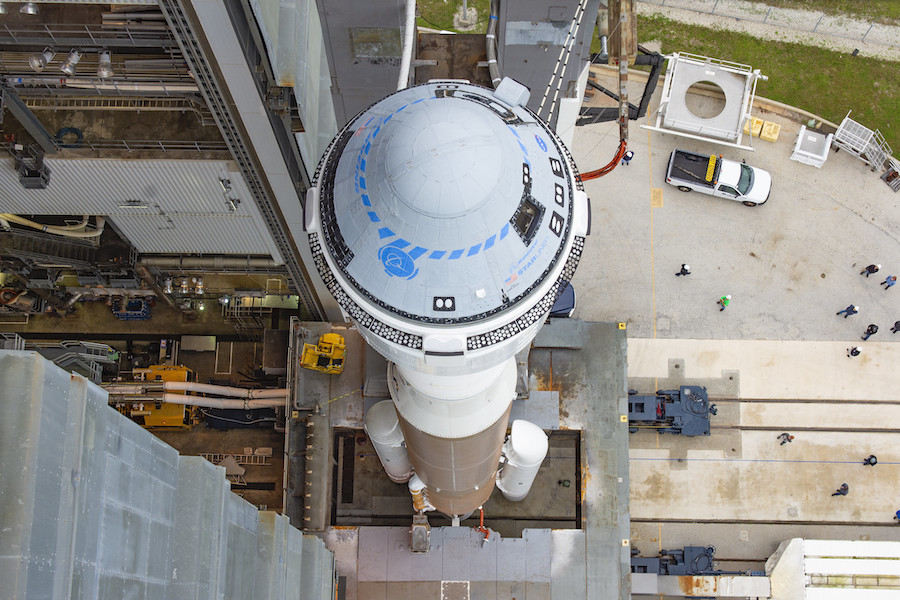
SpaceX posee una apretada agenda de operaciones espaciales que está obstaculizando y demorando el esfuerzo de The Boeing Company para ponerse al día con la programación del lanzamiento espacial del Starliner. SpaceX tiene tantas misiones programadas para llegar a la Estación Espacial Internacional en los próximos meses que no hay puertos de acoplamiento disponibles para que Boeing para llevar a cabo vuelos de prueba.
SpaceX y Boeing son ambos contratistas bajo el Commercial Crew Program de la NASA, encargado de construir un sistema reutilizable de cohetes y naves espaciales para transportar astronautas y cargas útiles a la ISS. El sistema de SpaceX consiste en su propulsor Falcon 9 y una nueva cápsula llamada Dragon, y Boeing está construyendo una cápsula llamada Starliner para ser lanzada sobre un cohete Atlas V de United Launch Alliance.
SpaceX entregó la cápsula Dragon en mayo pasado y ha volado con éxito seis astronautas a la estación espacial a través de dos misiones. Boeing, en cambio, todavía está luchando para levantar Starliner CST-100 de la esfera terrestre. Una próxima prueba clave es lanzar una cápsula delineador de estrellas CST-100 desenroscada a la ISS, tenerla atracada en uno de los puertos de la estación durante una semana y volarla de vuelta a la Tierra. La prueba, llamada OFT-2, estaba programada para este mes. Pero Boeing puede tener que empujarlo de nuevo a Julio o Agosto 2021 debido a un atasco de tráfico cerca de los puertos de acoplamiento de la ISS en las próximas semanas.
El Starliner de Boeing tiene que ser atracado en un puerto con un adaptador de acoplamiento internacional. Sólo hay dos puertos de este tipo en la estación espacial. Uno de ellos está actualmente ocupado por la cápsula Dragon utilizada en la misión Crew-1 de SpaceX, lanzada en noviembre pasado. El otro puerto será ocupado por otra cápsula Dragon el 22 de abril cuando SpaceX lance su misión Crew-2 con cuatro astronautas. El vehículo Crew-2 permanecerá conectado a la estación espacial durante seis meses. Y poco después de que la Tripulación-1 regrese a la Tierra el 28 de Abril, una misión de carga de SpaceX se lanzará el 3 de Junio y ocupará el puerto desalojado hasta mediados de Julio 2021. Eso deja a Boeing alrededor de un mes de plazo en Mayo para llevar a cabo la prueba del Starliner. De lo contrario, tendrá que esperar hasta Julio 2021.
Un lanzamiento en Mayo parece poco probable, ya que Boeing no ha proporcionado ninguna actualización sobre la prueba desde principios de Marzo. Dos fuentes de la NASA dijeron que el Starliner está cerca de estar listo, con sólo unas pequeñas pruebas restantes para certificar la nave espacial para el vuelo. «Basándose en el tráfico actual en la estación espacial, la NASA no prevé que oft-2 se pueda lograr a finales de Abril. La NASA y Boeing están trabajando para encontrar la fecha de lanzamiento más temprana posible», dijo Boeing en un comunicado fechado el 4 de Marzo de 2021. El último intento de Boeing de probar Starliner fue en Diciembre de 2019. Un Starliner desenroscado no pudo llegar a la ISS y regresó a la Tierra en un vuelo de prueba acortado.
Starliner launch delay
Boeing Starliner further delayed due to traffic jam at ISS Station
SpaceX has a busy space operations schedule that is hampering and delaying The Boeing Company‘s effort to catch up with the Starliner space launch schedule. SpaceX has so many missions scheduled to reach the International Space Station in the coming months that there are no docking ports available for Boeing to conduct test flights.
SpaceX and Boeing are both contractors under NASA’s Commercial Crew Program, tasked with building a reusable rocket and spacecraft system to transport astronauts and payloads to the ISS. SpaceX’s system consists of its Falcon 9 thruster and a new capsule called the Dragon, and Boeing is building a capsule called the Starliner to be launched on a United Launch Alliance Atlas V rocket.
SpaceX delivered the Dragon capsule last May and has successfully flown six astronauts to the space station through two missions. Boeing, on the other hand, is still struggling to lift the Starliner CST-100 from the Earth’s sphere. A key next test is to launch an unscrewed CST-100 star delineator capsule at the ISS, have it docked at one of the station’s ports for a week, and fly it back to Earth. The test, called OFT-2, was scheduled for this month. But Boeing may have to push it back to July or August 2021 due to a traffic jam near the ISS docking ports in the coming weeks.
The Boeing Starliner has to be docked in a port with an international docking adapter. There are only two such ports on the space station. One of them is currently occupied by the Dragon capsule used in SpaceX’s Crew-1 mission, launched last November. The other port will be occupied by another Dragon capsule on April 22 when SpaceX launches its Crew-2 mission with four astronauts. The Crew-2 vehicle will remain connected to the space station for six months. And shortly after Crew-1 returns to Earth on April 28, a SpaceX cargo mission will launch on June 3 and occupy the vacated port until mid-July 2021. That leaves Boeing about a month away. deadline in May to carry out the Starliner test. Otherwise, you will have to wait until July 2021.
A May launch seems unlikely, as Boeing hasn’t provided any updates on the test since early March. Two NASA sources said the Starliner is close to being ready, with only a few small tests remaining to certify the spacecraft for flight. «Based on current space station traffic, NASA does not anticipate that oft-2 can be achieved by the end of April. NASA and Boeing are working to find the earliest possible launch date», Boeing said in a dated statement. on March 4, 2021. Boeing’s last attempt to test Starliner was in December 2019. An unscrewed Starliner failed to reach the ISS and returned to Earth on a shortened test flight.
Airbus Group y la Organización Neerlandesa de Investigación Científica Aplicada (TNO) han puesto en marcha un programa para desarrollar un demostrador de terminales de comunicación láser para aeronaves, conocido como UltraAir. El proyecto, cofinanciado por Airbus, TNO y la Oficina Espacial neerlandesa (NSO), forma parte del programa ScyLight (Tecnología de comunicación segura y láser) de la Agencia Espacial Europea (ESA). Cubre el diseño, construcción y pruebas del demostrador de tecnología. Las tecnologías de comunicación láser son la próxima revolución en las comunicaciones por satélite Satcom, trayendo mayores tasas de transmisión, seguridad de datos y resiliencia para satisfacer las necesidades comerciales en la próxima década.
El terminal UltraAir será capaz de conexiones láser entre un avión y un satélite en órbita geoestacionaria a 36.000 km sobre la Tierra, con tecnología que incluye un sistema mecatrónico óptico altamente estable y preciso. El demostrador de tecnología allanará el camino para un futuro producto UltraAir con el que las velocidades de transmisión de datos podrían alcanzar varios gigabits por segundo mientras proporciona anti-jamming y baja probabilidad de interceptación. De esta manera UltraAir no sólo permitirá que aviones militares y UAV (vehículos aéreos no tripulados) se conecten dentro de una nube de combate, sino que también a largo plazo permitirán a los pasajeros de las aerolíneas establecer conexiones de datos de alta velocidad gracias a la constelación spacedatahighway de Airbus. Desde su posición en órbita geoestacionaria, los satélites SpaceDataHighway (EDRS) transmiten datos recogidos por satélites de observación a la Tierra en casi tiempo real, un proceso que normalmente tomaría varias horas.
Airbus lidera el proyecto y aporta su experiencia única en comunicaciones por satélite láser, desarrolladas con el programa SpaceDataHighway. Coordinará el desarrollo de la terminal y las pruebas en tierra y en el aire. Como socio clave del proyecto, TNO proporciona su experiencia en opto-mecatrónica de alta precisión, con el apoyo de la industria holandesa de alta tecnología y espacio. Airbus Defence and Space en los Países Bajos será responsable de la producción industrial de las terminales. Tesat, filial de Airbus, aporta su experiencia técnica en sistemas de comunicación láser y participará en todas las actividades de pruebas.
Las primeras pruebas se llevarán a cabo a finales de 2021 en condiciones de laboratorio en Tesat. En una segunda fase, las pruebas en tierra comenzarán a principios de 2022 en Tenerife (España), donde se establecerá la conectividad entre un demostrador UltraAir y el terminal láser embarcado en el satélite Alphasat utilizando la Estación Terrestre Óptica de la ESA. Para la verificación final, el demostrador UltraAir se integrará en un avión para pruebas de vuelo a mediados de 2022.
A medida que la demanda de servicios satelitales está creciendo, las bandas tradicionales de radiofrecuencia Satcom están experimentando cuellos de botella. Los enlaces láser también tienen el beneficio de evitar interferencias y detección, ya que en comparación con las frecuencias de radio ya llenas, la comunicación láser es extremadamente difícil de interceptar debido a un haz mucho más estrecho. Por lo tanto, los terminales láser pueden ser más ligeros, consumir menos energía y ofrecer aún mejor seguridad que la radio.
TNO-Airbus develop laser link
Airbus-TNO will develop aircraft laser communication terminal
Airbus Group and the Netherlands Organization for Applied Scientific Research (TNO) have launched a program to develop a demonstrator for aircraft laser communication terminals, known as UltraAir. The project, co-funded by Airbus, TNO and the Netherlands Space Office (NSO), is part of the European Space Agency (ESA) ScyLight (Safe Communication Technology and Laser) program. Covers the design, construction and testing of the technology demonstrator. Laser communication technologies are the next revolution in Satcom satellite communications, bringing higher transmission rates, data security, and resilience to meet business needs in the next decade.
The UltraAir terminal will be capable of laser connections between an aircraft and a satellite in geostationary orbit 36,000 km above the Earth, with technology that includes a highly stable and precise optical mechatronic system. The technology demonstrator will pave the way for a future UltraAir product with which data transmission speeds could reach several gigabits per second while providing anti-jamming and low probability of interception. In this way UltraAir will not only allow military aircraft and UAVs (Unmanned Aerial Vehicles) to connect within a combat cloud, but also in the long term will allow airline passengers to establish high-speed data connections thanks to the constellation spacedatahighway from Airbus. From their position in geostationary orbit, the SpaceDataHighway (EDRS) satellites transmit data collected by observing satellites to Earth in near real time, a process that would normally take several hours.
Airbus is leading the project and brings its unique expertise in laser satellite communications, developed with the SpaceDataHighway program. It will coordinate the development of the terminal and the tests on the ground and in the air. As a key project partner, TNO provides its expertise in high-precision opto-mechatronics, supported by the Dutch high-tech and space industry. Airbus Defense and Space in the Netherlands will be responsible for the industrial production of the terminals. Airbus subsidiary Tesat brings its technical expertise in laser communication systems and will participate in all testing activities.
The first tests will be carried out at the end of 2021 in laboratory conditions at Tesat. In a second phase, ground tests will begin in early 2022 in Tenerife (Spain), where connectivity will be established between an UltraAir demonstrator and the laser terminal on board the Alphasat satellite using ESA’s Optical Ground Station. For final verification, the UltraAir demonstrator will be integrated into an aircraft for flight tests in mid-2022.
As the demand for satellite services is growing, traditional satcom radio frequency bands are experiencing bottlenecks. Laser links also have the benefit of avoiding interference and detection, as compared to already full radio frequencies, laser communication is extremely difficult to intercept due to a much narrower beam. Therefore, laser terminals can be lighter, consume less power and offer even better security than radio.
La NASA ha expresado la invitación al público a participar en actividades virtuales y eventos antes de la misión SpaceX Crew-2 de la agencia. El despegue de la nave espacial Crew Dragon y el Cohete Falcon 9 con astronautas está dirigido no antes de las 06:11 a.m. EDT del Jueves 22 de Abril de 2021, desde el Complejo de Lanzamiento 39A en el Centro Espacial Kennedy de la NASA en Florida.
La misión SpaceX Crew-2 de la NASA llevará a los astronautas de la NASA Shane Kimbrough y Megan McArthur – que servirán como comandante y piloto de naves espaciales de la misión, respectivamente – junto con el astronauta de la Agencia de Exploración Aeroespacial de Japón (JAXA) Akihiko Hoshide y el astronauta de la ESA (Agencia Espacial Europea) Thomas Pesquet, que fungirán como especialistas en misiones. Está previsto que la tripulación trabaje a bordo de la Estación Espacial Internacional hasta el otoño de 2021, llevando a cabo investigaciones científicas en áreas como tecnología médica, salud humana y materiales para beneficiar la vida en la Tierra.
La cobertura en vivo y los comentarios de cuenta regresiva comenzarán a las 02:00 a.m. EDT en NASA Television (NASA TV) y el sitio web de la agencia, así como en YouTube, Twitter, Facebook, LinkedIn, Twitch, Daily Motiony Theta TV. Los miembros del público pueden asistir virtualmente al lanzamiento, recibiendo actualizaciones de misión y oportunidades normalmente reservadas para los huéspedes en el lugar. La experiencia virtual de la NASA para Crew-2 incluye recursos de lanzamiento seleccionados, una mirada tras bambalinas a la misión, notificaciones sobre las interacciones sociales de la NASA y la oportunidad de un sello de pasaporte de lanzamiento virtual después de un lanzamiento exitoso.
También se anima a las organizaciones que organizan eventos centrados en el lanzamiento a registrarse y hacerle saber a la NASA que lo está haciendo. ¡Esto incluiría grupos escolares, museos o incluso colegas observando juntos! ¿Planea reunirte en persona con otras personas para ver el lanzamiento?, la NASA recomienda seguir todas las directrices de los Centros para el Control y la Prevención de Enfermedades y las reglas locales con respecto al COVID-19.
Los miembros del público y las organizaciones pueden compartir el viaje a través de una variedad de actividades, incluyendo: Pasaporte de lanzamiento virtual que serán emitidos y enviados por correo electrónico a través de Eventbrite. También se podrá participar en las redes sociales en Twitter, Facebook e Instagram usando el hashtag #LaunchAmerica.
Para seguir el lanzamiento espacial etiquete las siguientes cuentas: Twitter: @NASA, @Commercial_Crew, @Space_Station, @NASAKennedy Facebook: NASA, NASACommercialCrew, ISS Facebook, Centro Espacial Kennedy Instagram: NASA, ISS Instagram, NASAKennedy
NASA has invited the public to participate in virtual activities and events ahead of the agency’s SpaceX Crew-2 mission. The liftoff of the Crew Dragon spacecraft and the Falcon 9 Rocket with astronauts is directed no earlier than 06:11 a.m. EDT on Thursday, April 22, 2021, from Launch Complex 39A at NASA’s Kennedy Space Center in Florida.
NASA’s SpaceX Crew-2 mission will carry NASA astronauts Shane Kimbrough and Megan McArthur – who will serve as the mission’s spacecraft commander and pilot, respectively along with Japan Aerospace Exploration Agency astronaut (JAXA) Akihiko Hoshide and ESA (European Space Agency) astronaut Thomas Pesquet, who will serve as mission specialists. The crew is scheduled to work aboard the International Space Station until fall 2021, conducting scientific research in areas such as medical technology, human health, and materials to benefit life on Earth.
Live coverage and countdown commentary will begin at 02:00 a.m. EDT on NASA Television (NASA TV) and the agency’s website, as well as YouTube, Twitter, Facebook, LinkedIn, Twitch, Daily Motion, and Theta TV. Members of the public can attend the launch virtually, receiving mission updates and opportunities normally reserved for on-site guests. NASA’s virtual Crew-2 experience includes select launch assets, a behind-the-scenes look at the mission, notifications about NASA social interactions, and the opportunity for a virtual launch passport stamp after a successful launch.
Organizations hosting launch-focused events are also encouraged to register and let NASA know that you are doing so. This would include school groups, museums, or even colleagues observing together! Planning to meet others in person to watch the launch, NASA recommends following all Centers for Disease Control and Prevention guidelines and local rules regarding COVID-19.
Members of the public and organizations can share the journey through a variety of activities, including: Virtual Launch Passport that will be issued and emailed through Eventbrite. You can also participate in social networks on Twitter, Facebook and Instagram using the hashtag #LaunchAmerica.
To track the space launch tag the following accounts: Twitter: @NASA, @Commercial_Crew, @Space_Station, @NASAKennedy Facebook: NASA, NASACommercialCrew, ISS Facebook, Kennedy Space Center Instagram: NASA, ISS Instagram, NASAKennedy
Completan Hot Fire etapa central lanzamiento espacial Artemis I
La campaña de prueba «Green Run» de tapones de motor de más de ocho minutos de duración completa que ayuda a certificar la etapa central para el lanzamiento espacial del Ártemis I. El Escenario que se renovará y entregará al Centro Espacial Kennedy para apilarse con otros componentes SLS.
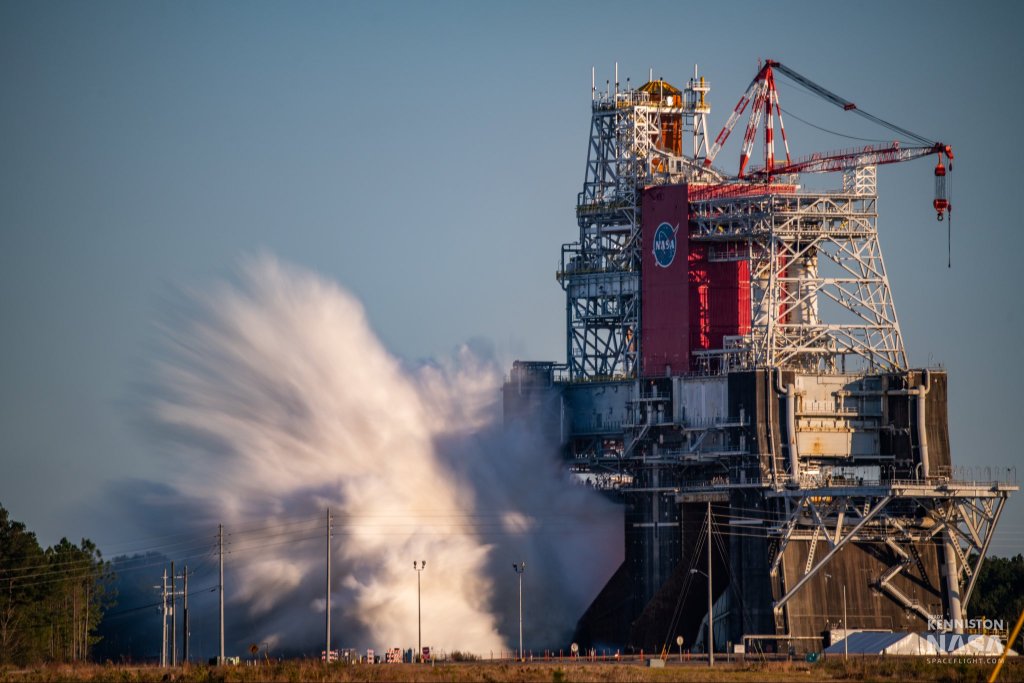
El escenario central criogénico construido por The Boeing Company para el primer cohete del Sistema de Lanzamiento Espacial (SLS) de la NASA completó las pruebas de fuego caliente este 18/03 en el Centro Espacial Stennis de la NASA como parte de la campaña de pruebas Green Run del Cohete SLS en el Puesto de Pruebas B-2. Los datos de la prueba validaron el funcionamiento exitoso de la etapa central y se utilizarán para ayudar a certificar la etapa de vuelo.
«La exploración del espacio profundo dio un importante paso adelante hoy. Los avances realizados en la nueva etapa central del SLS son positivos para la NASA y la cadena de suministro nacional. El equipo está utilizando el conocimiento obtenido de Green Run para avanzar en nuestro nuevo sistema de producción y etapas futuras mientras entrega la primera etapa para el vuelo de prueba», dijo John Shannon, Vicepresidente de SLS y Director de Programas de la compañía.
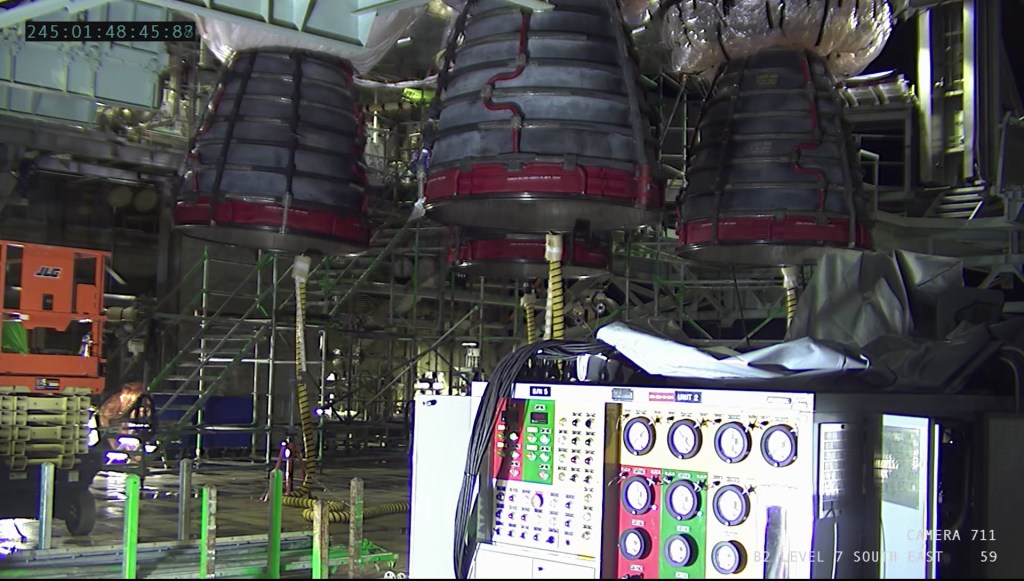
La etapa central SLS construida por Boeing está alimentada por tanques líquidos de hidrógeno y oxígeno que alimentan cuatro motores RS-25 construidos por Aerojet Rocketdyne, produciendo juntos 1,6 millones de libras de empuje durante la prueba y en el lanzamiento. Durante una misión, los motores de la etapa producen 2,2 millones de libras de empuje. Los motores ardieron durante una duración completa de 499,6 segundos, por el espacio de ocho minutos y 19 segundos (8min./19seg.), durante la prueba, proporcionando datos críticos de verificación. Después de las salidas posteriores a la prueba, la etapa central irá al Centro Espacial Kennedy de la NASA en Florida para su integración con la nave espacial de la tripulación Orion, la etapa superior de propulsión criogénica provisional y los propulsores de cohetes sólidos, y luego estará preparado para el lanzamiento. Ese vehículo completo volará la primera misión del programa Artemis de la NASA, llamado Artemis I, que será un vuelo de prueba desenroscado de Orión alrededor de la Luna para prepararse para misiones tripuladas. Sólo el SLS tiene el poder de lanzar Orión, tripulación y carga a la Luna y permitir la exploración lunar sostenible. Boeing es el contratista principal de la NASA para el núcleo SLS y las etapas superiores y la aviónica. «Quiero agradecer a nuestros equipos de la NASA, Aerojet Rocketdyne y Boeing que superaron tormentas y una pandemia para demostrar la capacidad y seguridad de la etapa central de SLS», dijo John Shannon.
El SLS continuará evolucionando más allá de Artemis III, que está previsto que sea el aterrizaje de la primera mujer y el próximo hombre en la Luna. Boeing ya está trabajando en capacidades girables para el sistema de cohetes como la Etapa Superior de Exploración, con potencia adicional que será clave para la exploración humana significativa de la Luna y Marte.
Boeing/NASA complete Hot Fire Green Run
Hot Fire completed core stage of Artemis I space launch system
The «Green Run» test campaign of engine plugs of more than eight minutes in duration that helps to certify the center stage for the Artemis I space launch. The Scenario to be renovated and delivered to the Kennedy Space Center to be stacked with others SLS components. The cryogenic center stage built by The Boeing Company for NASA‘s first Space Launch System (SLS) rocket completed hot fire tests this 03/18 at NASA’s Stennis Space Center as part of the Green test campaign. Run of the SLS Rocket at Test Station B-2. The test data validated the successful operation of the central stage and will be used to help certify the flight stage.
«Deep space exploration took an important step forward today. The progress made in the new SLS core stage is positive for NASA and the national supply chain. The team is using the knowledge gained from Green Run to advance our new production system and future stages while delivering the first stage for the test flight», said John Shannon, Vice President of SLS and Director of Programs for the company.
The Boeing-built SLS center stage is powered by liquid hydrogen and oxygen tanks that power four RS-25 engines built by Aerojet Rocketdyne, together producing 1.6 million pounds of thrust during testing and at launch. During a mission, the stage engines produce 2.2 million pounds of thrust. The engines burned for a full duration of 499.6 seconds, for the space of eight minutes and 19 seconds (8min/19sec), during the test, providing critical verification data. Following post-test departures, the center stage will go to NASA’s Kennedy Space Center in Florida for integration with the Orion crew spacecraft, interim cryogenic propulsion upper stage, and solid rocket boosters, and then it will be ready for launch. That complete vehicle will fly the first mission of NASA’s Artemis program, called Artemis I, which will be an Orion unscrewed test flight around the Moon to prepare for manned missions. Only the SLS has the power to launch Orion, crew and cargo to the Moon and enable sustainable lunar exploration. Boeing is NASA’s prime contractor for the SLS core and upper stages and avionics. «I want to thank our teams at NASA, Aerojet Rocketdyne and Boeing that weathered storms and a pandemic to demonstrate the capability and safety of the SLS core stage», said John Shannon.
The SLS will continue to evolve beyond Artemis III, which is slated to be the landing of the first woman and the next man on the Moon. Boeing is already working on rotatable capabilities for the rocket system such as the Upper Exploration Stage, with additional power that will be key to meaningful human exploration of the Moon and Mars.
Misión Orbital Flight Test-2 de Starliner retrazada
El segundo vuelo de prueba espacial Boeing Starliner para la NASA se ha reprogramado nuevamente por cuestiones meteorológicas, no se lanzará el 2 de Abril de 2021. El Jueves 4 de Marzo de 2021, la NASA y Boeing anunciaron conjuntamente planes para retrasar el lanzamiento de la Misión Orbital Flight Test-2 (OFT-2) de Starliner desde un despegue a principios de Abril 2021. El vuelo se había retrasado dos semanas desde un objetivo del 25 de Marzo de 2021 debido a las tormentas invernales en Houston y la necesidad de reemplazar algunas cajas de aviónica. Ahora parece que Starliner no podrá llegar al espacio hasta finales de Abril 2021.
«La NASA también está sopesando el volumen de verificación y análisis de validación requerido antes del vuelo de prueba y el horario del vehículo visitante en la Estación Espacial Internacional», expresa el comunicado conjunto. Abril 2021 ya es un momento ocupado en el complejo en órbita, con un lanzamiento de la tripulación rusa Soyuz y la misión de astronautas SpaceX Crew-2 de la NASA. Tal como están las cosas, no hay espacio para que Boeing reprograme desde el 2 de Abril 2021 hasta más tarde en en el mes, agregó el comunicado, pero aún no se ha fijado una nueva fecha de lanzamiento.
La Misión OFT-2 será un hito crucial en el Programa Starliner, ya que Boeing busca recuperarse de una misión defectuosa en Diciembre de 2019, que vio un lanzamiento truncado al no alcanzar su destino de la estación espacial. La NASA identificó 80 elementos para su corrección antes de que pudiera tener lugar un nuevo lanzamiento, y Boeing pasó varios meses abordando todo. «La compañía ha estado llevando a cabo carreras en seco antes de un ensayo de misión de extremo a extremo que permitirá al equipo de operaciones practicar», según el comunicado de la NASA. El equipo de la agencia espacial también observará el ocmportamiento durante toda una misión simulada. «Además, las pruebas de encendido y las cajas del vehículo OFT-2, con nuevas cajas de aviónica instaladas, se han completado con éxito», continuó la actualización, agregando que las naves espaciales que alimentan y apilan o ensamblan con el cohete están listas para comenzar pronto.
La NASA planea utilizar el SpaceX Crew Dragon y el Boeing Starliner para llevar a la mayoría de los astronautas estadounidenses a la estación espacial, reemplazando en gran medida su dependencia de la cápsula rusa Soyuz que ha llevado a todos al espacio entre 2011 y 2020, después de la retirada del programa de transbordadores espaciales. La nueva nave espacial de la tripulación comercial tiene capacidad para cuatro personas cada una, en lugar de tres asientos en una Soyuz, lo que permite a la estación buscar más oportunidades científicas y comerciales con futuras tripulaciones más grandes.
Starliner launch delayed
Starliner’s Orbital Flight Test-2 mission delayed
The second Boeing Starliner space test flight for NASA has been rescheduled again due to weather issues, it will not launch on April 2, 2021. On Thursday, March 4, 2021, NASA and Boeing jointly announced plans to delay the launch of the Starliner’s Orbital Flight Test-2 (OFT-2) mission from a takeoff in early April 2021. The flight had been delayed for two weeks from a target on March 25, 2021 due to winter storms in Houston and the need to replace some avionics boxes. Now it seems that Starliner will not be able to reach space until the end of April 2021.
«NASA is also weighing the volume of verification and validation analysis required before the test flight and the visiting vehicle schedule on the International Space Station». the joint statement said. April 2021 is already a busy time in the orbiting complex, with a Russian Soyuz crew launch and NASA’s SpaceX Crew-2 astronaut mission. As it stands, there is no room for Boeing to reschedule from April 2, 2021 until later in the month, the statement added, but a new launch date has not yet been set.
The OFT-2 Mission will be a crucial milestone in the Starliner Program, as Boeing seeks to recover from a failed mission in December 2019, which saw a truncated launch failing to reach its space station destination. NASA identified 80 items for correction before a new launch could take place, and Boeing spent several months tackling everything. «The company has been conducting dry runs ahead of an end-to-end mission rehearsal that will allow the operations team to practice», according to the NASA statement. The space agency team will also observe behavior during an entire simulated mission. «In addition, the ignition tests and the boxes of the OFT-2 vehicle, with new avionics boxes installed, have been completed successfully», the update continued, adding that the spacecraft that power and stack or assemble with the rocket are ready. to start soon.
NASA plans to use the SpaceX Crew Dragon and Boeing Starliner to get the majority of American astronauts to the space station, largely replacing its reliance on the Russian Soyuz capsule that has taken everyone into space between 2011 and 2020, after of the withdrawal of the space shuttle program. The new commercial crew spacecraft accommodates four people each, rather than three seats in a Soyuz, allowing the station to pursue more scientific and commercial opportunities with future larger crews.
Hanwha Aerospace Company Ltd., el principal productor de motores aeronáuticos en Corea del Sur, está intensificando los esfuerzos para expandir su negocio espacial. Como filial de Hanwha Group, es una empresa industrial aeroespacial fundada en 1977 como Samsung Precision, con sede en Changwon, Corea del Sur.
En el último movimiento, Hanwha Aerospace ha arribado a un acuerdo de ₩ 109.000 millones de Wones/US$ 96,8 millones de Dólares en Enero 2021 para ganar una participación de control del 30 por ciento en el fabricante nacional de satélites Satrec Initiative (SI), a finales de Abril 2020. Fundada en 1999 por ingenieros que contribuyeron a hacer el primer satélite de la nación KITSAT-1, Satrec Iniciative se atribuye el desarrollo de tecnologías básicas para producir satélites pequeños y medianos de observación de la Tierra, sistemas terrestres y cargas útiles electroópticas en suelo coreano.
Hanwha dijo que si bien Satrec Iniciative sería administrado de forma independiente, Kim Dong-kwan, el primer hijo del Presidente del Grupo Hanwha Kim Seung-youn y Presidente de la filial química del grupo, Hanwha Solutions, se uniría a Satrec Iniciative como Director Ejecutivo no permanente para facilitar la cooperación entre las dos compañías. En un comunicado, Hanwha Aerospace dijo que su inversión en Satrec Iniciative es «poseer tecnologías básicas relacionadas con la industria de satélites espaciales, que se espera que crezca en la era del Nuevo Espacio, y a medio y largo plazo, anticipar el avance tecnológico a través de sinergias con la compañía para asegurar la capacidad de la tecnología de desarrollo de satélites».
En una declaración separada, el presidente de Satrec Iniciative, Kim Ee-eul, dijo que el acuerdo «proporciona los recursos financieros y la asociación estratégica que podemos aprovechar para un mayor crecimiento. Expandirá sus negocios para responder proactivamente a las crecientes demandas nacionales e internacionales sobre radares de apertura sintética y sistemas de satélites infrarrojos, así como sistemas ópticos de satélites». Después de que se anunció el acuerdo, Satrec Iniciative contrató a unos 20 nuevos ingenieros experimentados en diseño de satélites y desarrollo de Synthetic Aperture Radar (SAR). Dong-kwan es el arquitecto de la estrategia de negocio espacial de Hanwha Aerospace, que ha conformado un grupo de trabajo espacial a finales de 2020 en el que participaron unos diez funcionarios de Hanwha Aerospace, Hanwha Systems y Hanwha Corporation. Bajo su supervisión, Hanwha Aerospace, asociado con Satrec Iniciative, avanzará su tecnología para satélites y cohetes propulsores, Sistemas Hanwha para equipos satelitales clave para la observación de la Tierra, como sar y antenas, Hanwha Defensa para plataformas de lanzamiento y Hanwha Corporation para combustible sólido.
Corea del Sur ganó el permiso estadounidense en Julio 2020 para llevar a cabo investigaciones y desarrollar cohetes propulsores sólidos. Antes de esto, el país tenía prohibido desarrollar vehículos de lanzamiento de combustible sólido mediante un acuerdo bilateral de no proliferación con Estados Unidos centrado en misiles balísticos. «Se espera que el acuerdo [entre Hanwha y SI] traiga consigo una sinergia [de Hanwha] en todo el grupo [en términos de negocio espacial]», indicó un informe de análisis del 13 de Enero de 2021 coescrito por Lee Dong-heon y Lee Tae-hwan en Daishin Securities.
Anteriormente, Hanwha Systems se hizo cargo del desarrollador británico de antenas satelitales Phasor Solutions en Junio de 2020 a un precio no revelado. Hanwha Aerospace dijo que el acuerdo añadió tecnología de antenas de comunicación por satélite de vanguardia a su cartera, incluyendo «antenas de dirección electrónica de banda ancha, que permiten comunicaciones de alta velocidad en vuelo, en el mar o en tierra». Las tecnologías patentadas de Phasor incluyen la dirección de haz de antena plana y la tecnología de diseño de chips semiconductores necesaria para los controles de transmisión/recepción, según Hanwha Aerospace.
En Diciembre 2020, Hanwha Systems formó una asociación estratégica con la compañía estadounidense de comunicaciones por satélite Kymeta que pide invertir US$ 30 millones de Dólares para respaldar el desarrollo de las soluciones de próxima generación de Kymeta a cambio de hacerse un hueco en el creciente mercado de antenas de órbita terrestre baja. «El objetivo de nuestra inversión en Kymeta es entrar en el mercado de antenas satelitales LEO desde el principio, y diversificar nuestra cartera de tecnología», dijo el CEO de Hanwha Systems, Kim Youn-chul, en un comunicado.
Danny Oh, un Gerente del Equipo de comunicaciones de Hanwha Aerospace, dijo que «los principales actores de la industria espacial comenzaron a moverse rápidamente con la llegada de New Space. Estamos haciendo todo lo posible para tener la mejor posición en el juego». En tanto, Hanwha Aerospace reportó el 26 de Febrero de 2021 un beneficio neto de ₩ 164.700 millones de Wones/US$ 146,6 millones de Dólares, un 1,4% más que un año antes. Su beneficio operativo se situó en ₩ 243.900 millones de Wones, frente a los ₩ 165.200 millones ganados en 2019. Los ingresos anuales aumentaron 1.1 por ciento a ₩ 5.32 billones de Wones.
Hanwha Aerospace Insights
Hanwha Aerospace space business expansion
Hanwha Aerospace Company Ltd., the leading producer of aeronautical engines in South Korea, is stepping up efforts to expand its space business. As a subsidiary of Hanwha Group, it is an aerospace industrial company founded in 1977 as Samsung Precision, based in Changwon, South Korea.
In the latest move, Hanwha Aerospace has struck a ₩ 109 billion Won/US$ 96.8 million deal in January 2021 to win a 30 percent controlling stake in national satellite maker Satrec Initiative (SI), at the end of April 2020. Founded in 1999 by engineers who contributed to making the nation’s first satellite KITSAT-1, Satrec Initiative is credited with developing basic technologies to produce small and medium Earth observation satellites, terrestrial systems and electro-optical payloads on Korean soil.
Hanwha said that while Satrec Initiative would be managed independently, Kim Dong-kwan, the first son of Hanwha Group Chairman Kim Seung-youn and Chairman of the group’s chemical subsidiary, Hanwha Solutions, would join Satrec Initiative as Chief Executive Officer. not permanent to facilitate cooperation between the two companies. In a statement, Hanwha Aerospace said that its investment in Satrec Initiative is to «possess basic technologies related to the space satellite industry, which is expected to grow in the era of New Space, and in the medium and long term, anticipate technological advancement through of synergies with the company to ensure the capacity of the satellite development technology».
In a separate statement, Satrec Initiative President Kim Ee-eul said the agreement «provides the financial resources and strategic partnership that we can leverage for further growth. It will expand its businesses to proactively respond to growing national and international demands. on synthetic aperture radars and infrared satellite systems, as well as optical satellite systems». After the deal was announced, Satrec Initiative hired some 20 new engineers experienced in satellite design and Synthetic Aperture Radar (SAR) development. Dong-kwan is the architect of Hanwha Aerospace’s space business strategy, which has formed a space working group in late 2020 that included about ten officials from Hanwha Aerospace, Hanwha Systems and Hanwha Corporation. Under his supervision, Hanwha Aerospace, partnered with Satrec Initiative, will advance its technology for satellites and rocket boosters, Hanwha Systems for key Earth observation satellite equipment such as sar and antennas, Hanwha Defense for launch pads and Hanwha Corporation for fuel. solid.
South Korea won US permission in July 2020 to carry out research and develop solid rocket boosters. Prior to this, the country was prohibited from developing solid-fuel launch vehicles through a bilateral non-proliferation agreement with the United States focused on ballistic missiles. «The agreement [between Hanwha and SI] is expected to bring about [Hanwha’s] synergy across the group [in terms of space business]», stated an analytical report from January 13, 2021 co-written by Lee Dong-heon. and Lee Tae-hwan at Daishin Securities.
Previously, Hanwha Systems took over from British satellite dish developer Phasor Solutions in June 2020 at an undisclosed price. Hanwha Aerospace said the deal added state-of-the-art satellite communication antenna technology to its portfolio, including «broadband electronically steered antennas, which enable high-speed communications in flight, at sea or on land». Phasor’s proprietary technologies include flat antenna beam steering and semiconductor chip design technology required for transmit/receive controls, according to Hanwha Aerospace.
In December 2020, Hanwha Systems formed a strategic partnership with the US satellite communications company Kymeta asking to invest US$ 30 million to support the development of Kymeta’s next-generation solutions in exchange for gaining a foothold in the growing market. low-earth orbit antennas. «The objective of our investment in Kymeta is to enter the LEO satellite antenna market from the beginning, and to diversify our technology portfolio», Hanwha Systems CEO Kim Youn-chul said in a statement.
Danny Oh, un Gerente del Equipo de comunicaciones de Hanwha Aerospace, dijo que «los principales actores de la industria espacial comenzaron a moverse rápidamente con la llegada de New Space. Estamos haciendo todo lo posible para tener la mejor posición en el juego». En tanto, Hanwha Aerospace reportó el 26 de Febrero de 2021 un beneficio neto de ₩ 164.700 millones de Wones / US $ 146,6 millones de Dólares, un 1,4% más que un año antes. Su beneficio operativo se situó en ₩ 243.900 millones de Wones, frente a los ₩ 165.200 millones ganados en 2019. Los ingresos anuales aumentaron 1.1 por ciento a ₩ 5.32 billones de Wones.
한화 에어로 스페이스 인사이트
한화 항공 우주 사업 확장
대한민국 항공 엔진의 선두 주자 인 한화 항공 우주 (주)가 우주 사업 확대에 박차를 가하고있다. 한화 그룹의 자회사로 1977 년 대한민국 창원에 본사를 둔 삼성 정밀로 설립 된 항공 우주 산업 기업입니다.
최근 한화 에어로 스페이스는 2021 년 1 월 1,090 억 원 / 미화 9680 만 달러 계약을 체결하여 2020 년 4 월 말 국가 위성 제조업체 인 Satrec Initiative (SI)의 지분 30 %를 확보했습니다. 1999 년에 설립되었습니다. 국내 최초의 위성 KITSAT-1 제작에 공헌 한 엔지니어들로부터 Satrec Initiative는 한국 토양에 중소형 지구 관측 위성, 지상 시스템 및 전기 광학 탑재 하중을 생산하기위한 기초 기술을 개발 한 공로를 인정 받았습니다.
한화는 사 트렉 이니셔티브가 독립적으로 운영되는 반면, 한화 그룹 김승연 회장의 장남이자 그룹 화학 자회사 인 한화 솔루션의 회장 인 김동관이 CEO로 사 트렉 이니셔티브에 합류 할 것이라고 밝혔다. 두 회사 간의 협력을 촉진합니다. 한화 에어로 스페이스는 성명을 통해“새 우주 시대에 성장할 것으로 예상되는 우주 위성 산업 관련 기초 기술을 보유하고 중장기 적으로 기술 발전을 기대하기 위해 Satrec Initiative에 투자하는 것”이라고 밝혔다. 위성 개발 기술의 역량을 확보하기 위해 회사와 시너지 효과를 거두었습니다. «
사 트렉 이니셔티브 김 이을 사장은 별도의 성명에서 «이 협정은 우리가 더 성장할 수있는 재정적 자원과 전략적 파트너십을 제공하며, 증가하는 국내 및 국제 수요에 능동적으로 대응할 수 있도록 사업을 확장 할 것«이라고 말했다. 및 적외선 위성 시스템 및 광학 위성 시스템 «. 거래가 발표 된 후 Satrec Initiative는 위성 설계 및 SAR (Synthetic Aperture Radar) 개발 경험이있는 약 20 명의 새로운 엔지니어를 고용했습니다. 동관은 2020 년 말 한화 에어로 스페이스, 한화 시스템, 한화의 관계자 10여 명으로 구성된 우주 실무 그룹을 구성한 한화 에어로 스페이스의 우주 사업 전략 설계 자다. 한화 에어로 스페이스는 Satrec Initiative와 손 잡고 위성 및 로켓 부스터, 한화 시스템 (sar 및 안테나 등 주요 지구 관측 위성 장비), 한화 디펜스 (발사대), 한화 (주) 연료에 대한 기술을 발전시킬 것입니다.
한국은 2020 년 7 월 미국의 허가를 받아 견고한 로켓 부스터를 연구하고 개발했습니다. 그 이전에는 탄도 미사일에 초점을 맞춘 미국과의 양자 간 비확산 협정을 통해 고체 연료 발사체 개발이 금지되었습니다. 이동헌과 이동헌이 공동 집필 한 2021 년 1 월 13 일 분석 보고서는 «[한화와 SI 간의] 합의로 [한화의] 그룹 전체에 [우주 사업 측면에서] 시너지 효과를 가져올 것으로 예상된다. 대신 증권의 태환.
앞서 한화 시스템은 2020 년 6 월 영국 위성 접시 개발 업체 페이저 솔루션을 미공개 가격으로 인수했다. 한화 에어로 스페이스는 이번 계약에 «비행, 해상 또는 육상에서 고속 통신을 가능하게하는 광대역 전자 조종 안테나»를 포함한 최첨단 위성 통신 안테나 기술이 포트폴리오에 추가되었다고 밝혔다. 한화 에어로 스페이스에 따르면 Phasor의 독자적인 기술에는 송수신 제어에 필요한 평면 안테나 빔 스티어링 및 반도체 칩 설계 기술이 포함됩니다.
한화 시스템은 2020 년 12 월 미국 위성 통신 회사 인 키 메타와 전략적 파트너십을 맺고 성장하는 시장에서 발판을 마련하는 대가로 키 메타의 차세대 솔루션 개발을 지원하기 위해 3 천만 달러를 투자 할 것을 요청했습니다. 한화 시스템 김연철 대표는 성명에서 «Kymeta에 대한 투자의 목적은 처음부터 LEO 위성 안테나 시장에 진입하고 기술 포트폴리오를 다각화하는 것»이라고 말했다.
한화 에어로 스페이스 홍보 팀장 대니 오씨는 «우주 산업의 주요 업체들은 뉴스 페이스의 도래와 함께 빠르게 움직이기 시작했다. 게임에서 최고의 자리를 차지하기 위해 최선을 다하고있다»고 말했다. 한편 한화 에어로 스페이스는 2021 년 2 월 26 일 순이익 1,647 억 원 / 1 억 4660 만 달러로 전년 대비 1.4 % 증가했다고보고했다. 영업 이익은 2019 년 1,653 억원에서 2,439 억원으로 증가했다. 연매출은 53 억원으로 1.1 % 증가했다.
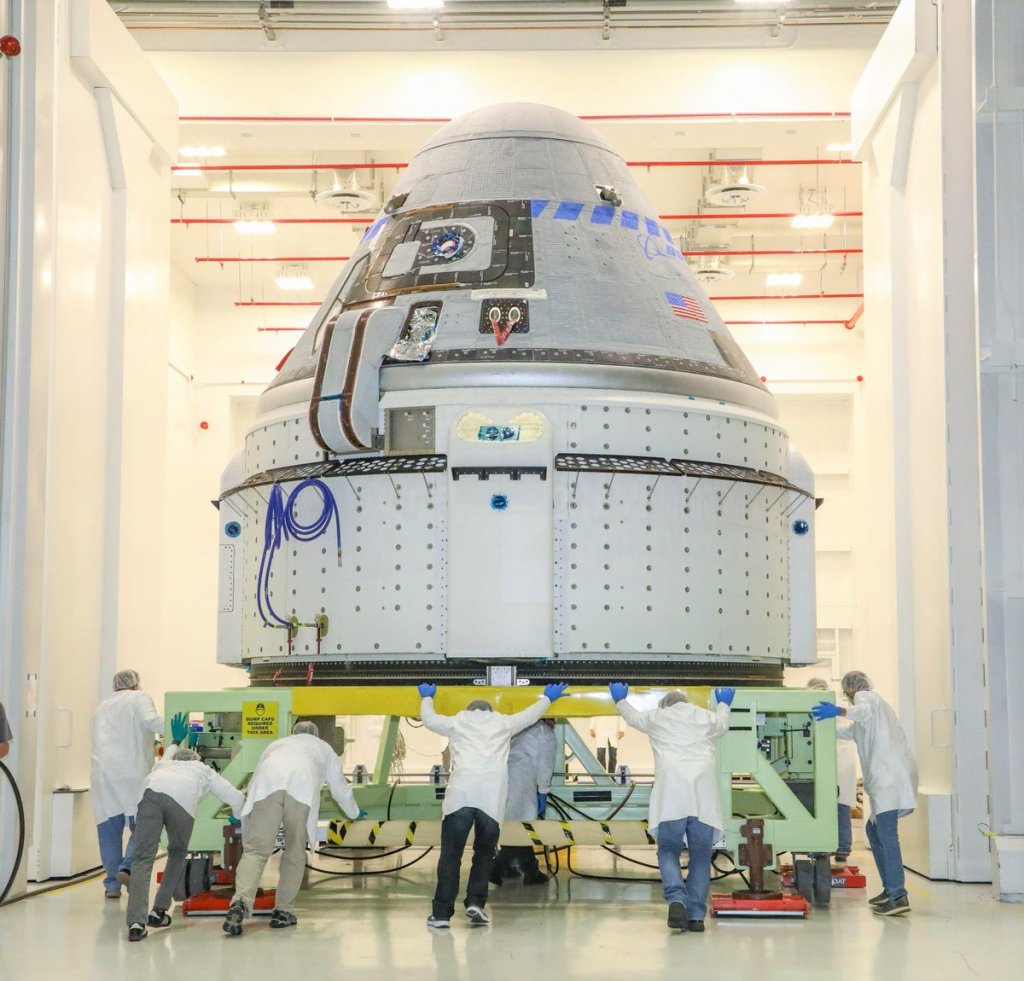
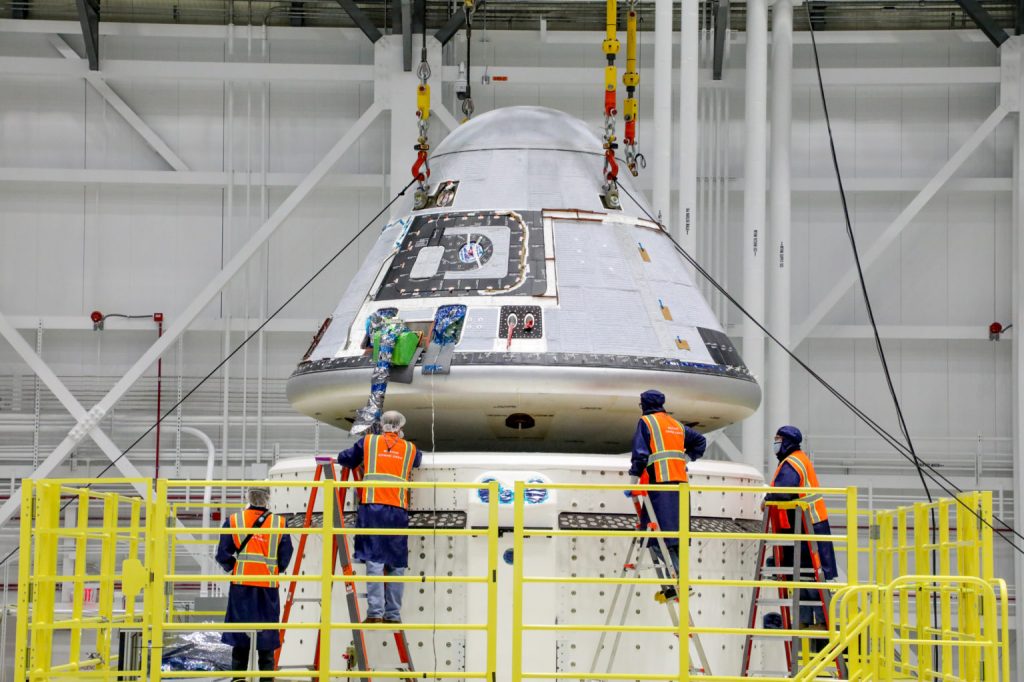
Después de un retraso en la misión militar para la United States Space Force, las tormentas invernales cubrieron el Estado de Texas y la necesidad de tiempo de procesamiento de naves espaciales y hardware, la NASA y The Boeing Company ahora están apuntando al 2 de Abril de 2021 para el lanzamiento de la segunda prueba de vuelo desenroscado de Starliner como parte del Programa de Tripulación Comercial (CCP) de la agencia. «La NASA continúa trabajando junto a Boeing para prepararse para esta primera misión de 2021. El trabajo en equipo de Boeing y la NASA en todos los aspectos de la preparación de vuelos, incluida la certificación final, el análisis de riesgos y las pruebas de software, es extraordinario. A pesar de que esta prueba de vuelo desenroscada a la Estación Espacial Internacional es un hito clave en el camino hacia la primera misión tripulada starliner planeada para finales de este año, volaremos cuando estemos listos», dijo Steve Stich, Gerente del Programa de Tripulación Comercial de la NASA.
The Boeing Company está desarrollando el Starliner para funcionar como un taxi espacial astronauta como un vehículo comercial bajo contrato de la NASA para transportar tripulaciones hacia y desde la Estación Espacial Internacional (ISS). La United Launch Alliance (ULA) tenía la intención de lanzar el STP-3 para la Fuerza Espacial de los Estados Unidos en el próximo lanzamiento del Atlas V programado para despegar este mes de la Plataforma 41 en la Estación de la Fuerza Espacial de Cabo Cañaveral, Florida. Con la explosión STP-3 ahora pospuesta indefinidamente para evaluar la preparación de lanzamiento del satélite de seguridad nacional, ULA ha cambiado su enfoque a apilar el Atlas V designado para la misión Starliner OFT-2 para la NASA en el Complejo de Lanzamiento Espacial-41. Al mismo tiempo, Boeing está haciendo progresos constantes en la preparación del nuevo vehículo de la tripulación Starliner y el módulo de servicio para la misión.
El objetivo de un segundo vuelo de prueba desenroscado OFT-2 es verificar que el taxi espacial comercial Starliner CST-100 sea lo suficientemente seguro y confiable como para ser confiado para lanzar astronautas de la NASA en el futuro a la Estación Espacial Internacional (ISS). El vuelo de prueba original de la OFT no atracó en la ISS como estaba previsto después del lanzamiento el 20 de Diciembre de 2019, cuando un error de sincronización transcurrido por la misión hizo que el propulsor de maniobra disparara más tiempo del previsto y gastara el exceso de combustible precioso y colocara la nave en la órbita equivocada. La cápsula de la tripulación Starliner de Boeing se eleva al espacio después de despegar sobre un cohete ULA Atlas V del Complejo de Lanzamiento Espacial 41 en la Estación de la Fuerza Aérea de Cabo Cañaveral en Florida la mañana del 20 de Diciembre de 2019. Un percance en el propulsor Starliner que disparó fregó el acoplamiento a la Estación Espacial Internacional (ISS). Boeing también completó recientemente la recalificación formal del software de vuelo OFT-2 de Starliner. Los equipos llevaron a cabo una revisión completa del software y varias series de pruebas para verificar que el software de Starliner cumple con las especificaciones de diseño. Boeing también completará una simulación de extremo a extremo del vuelo de prueba OFT-2 utilizando hardware de vuelo y versiones finales del software de vuelo de Starliner para modelar el comportamiento esperado del vehículo antes del vuelo.
Los equipos han completado alrededor del 95% de las recomendaciones identificadas por el equipo conjunto de revisión independiente de la NASA y Boeing, formado a raíz de las anomalías durante la primera prueba de vuelo orbital desenroscado de la compañía en Diciembre de 2019. «Apreciamos el importante trabajo que la NASA está llevando a cabo antes del lanzamiento. Estamos plenamente involucrados en el proceso de revisión de la agencia como una valiosa inversión de nuestro tiempo para asegurar la confianza en la nave espacial», dijo John Vollmer, Vicepresidente de Starliner y Director de Programas de The Boeing Company.
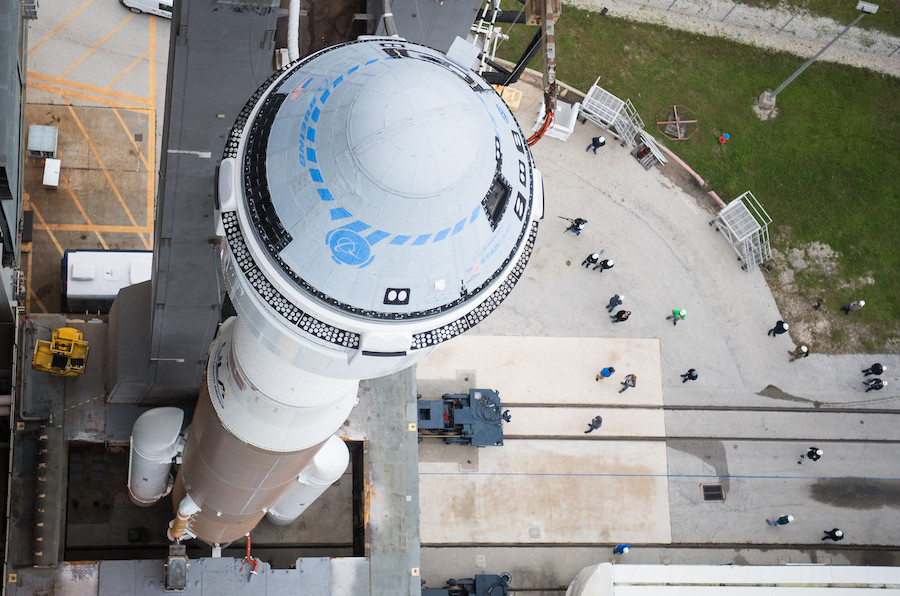
El Starliner se lanzará en la isión OFT-2 en un Cohete Atlas V de la United Launch Alliance aumentado con dos cohetes propulsores sólidos desde el Complejo de Lanzamiento Espacial-41 en la Estación de la Fuerza Espacial de Cabo Cañaveral en Florida. Al igual que con el vuelo de prueba anterior, el objetivo es atracar a la ISS y regresar a tierra en el oeste de los Estados Unidos aproximadamente una semana más tarde como parte de un vuelo de prueba de extremo a extremo para demostrar que el sistema está listo para volar a la tripulación.
Los fallos en la misión original de la OFT han dado lugar a un retraso de aproximadamente un año hasta ahora con el objetivo de volar una tripulación de tres astronautas de la NASA en la misión inaugural tripulada a la ISS apodada CFT (Crew Flight Test). Si todo va bien CFT volará tan pronto como este verano en un ULA Atlas V desde la plataforma 41 para una misión de aproximadamente una o dos semanas acoplada en la estación espacial orbital.
Starliner Flight Test second
Next Starliner flight test for April 2, 2021
After a delay in the military mission for the United States Space Force, winter storms covered the State of Texas and the need for processing time for spacecraft and hardware, NASA and The Boeing Company are now targeting April 2, 2021 for the launch of the second Starliner unscrewed flight test as part of the agency’s Commercial Crew Program (CCP). «NASA continues to work with Boeing to prepare for this first mission in 2021. The teamwork of Boeing and NASA in all aspects of flight preparation, including final certification, risk analysis and software testing , it is extraordinary. Although this unscrewed flight test to the International Space Station is a key milestone on the way to the first manned starliner mission planned for later this year, we will fly when we are ready», said Steve Stich, Manager of the NASA Commercial Crew Program.
The Boeing Company is developing the Starliner to function as an astronaut space taxi as a commercial vehicle under contract from NASA to transport crews to and from the International Space Station (ISS). The United Launch Alliance (ULA) intended to launch the STP-3 for the United States Space Force on the next Atlas V launch scheduled to take off this month from Platform 41 at Cape Canaveral Space Force Station. , Florida. With the STP-3 explosion now postponed indefinitely to assess national security satellite launch readiness, ULA has shifted its focus to stacking the designated Atlas V for the Starliner OFT-2 mission for NASA at Space Launch Complex-41. At the same time, Boeing is making steady progress in preparing the new Starliner crew vehicle and service module for the mission.
THE STARLINER SPACECRAFT IS BEING PREPARED FOR BOEING’S SECOND ORBITAL FLIGHT TEST (OFT-2). AS PART OF THE AGENCY’S COMMERCIAL CREW PROGRAM, OFT-2 IS A CRITICAL DEVELOPMENTAL MILESTONE ON THE COMPANY’S PATH TO FLY CREW MISSIONS FOR NASA
The objective of a second OFT-2 unscrewed test flight is to verify that the Starliner CST-100 commercial space taxi is safe and reliable enough to be trusted to launch NASA astronauts in the future to the International Space Station (ISS). The original OFT test flight did not dock at the ISS as planned after launch on December 20, 2019, when a mis-timing during the mission caused the maneuvering thruster to fire longer than anticipated and wasted excess. of precious fuel and put the ship in the wrong orbit. The Boeing Starliner crew capsule soars into space after taking off on a ULA Atlas V rocket from Space Launch Complex 41 at Cape Canaveral Air Force Station in Florida on the morning of December 20, 2019. A mishap on the Starliner booster that fired scoured the dock to the International Space Station (ISS). Boeing also recently completed the formal requalification of Starliner’s OFT-2 flight software. The teams conducted a comprehensive software review and several series of tests to verify that Starliner software meets design specifications. Boeing will also complete an end-to-end simulation of the OFT-2 test flight using flight hardware and final versions of Starliner flight software to model the expected behavior of the vehicle before flight.
The teams have completed about 95% of the recommendations identified by NASA and Boeing’s joint independent review team, formed in the wake of anomalies during the company’s first unscrewed orbital flight test in December 2019. «We appreciate the important work NASA is undertaking prior to launch. We are fully involved in the agency’s review process as a valuable investment of our time to ensure confidence in the spacecraft», said John Vollmer, Starliner Vice President and Chief Executive Officer. of The Boeing Company Programs.
The Starliner will be launched in the OFT-2 ision on a United Launch Alliance Atlas V Rocket augmented with two solid rocket boosters from Space Launch Complex-41 at Cape Canaveral Space Force Station in Florida. As with the previous test flight, the goal is to dock the ISS and return to land in the western United States about a week later as part of an end-to-end test flight to demonstrate that the system is ready to fly crew.
The failures in the original OFT mission have led to a delay of about a year so far with the goal of flying a crew of three NASA astronauts on the inaugural manned mission to the ISS dubbed CFT (Crew Flight Test). If all goes well CFT will fly as early as this summer in a ULA Atlas V from platform 41 for a mission of about a week or two docked on the orbiting space station.
Rover Perseverance envía imágenes del marsianizaje en Marte
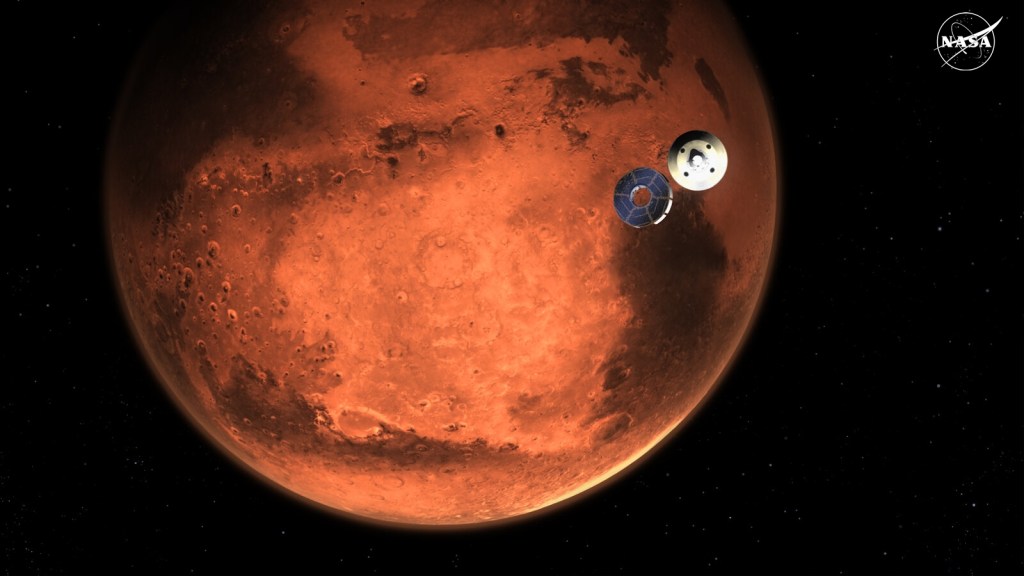
El rover Perseverancia de la NASA envía un adelanto del aterrizaje en Marte. Menos de un día después de que el rover Mars 2020 Perseverance de la NASA aterrizara con éxito en la superficie de Marte, ingenieros y científicos del Laboratorio de Propulsión a Chorro de la agencia en el sur de California estaban trabajando duro, a la espera de las próximas transmisiones de Perseverancia. A medida que los datos llegaban gradualmente, transmitidos por varias naves espaciales que orbitaban alrededor del Planeta Rojo, el equipo de Perseverancia se sintió aliviado al ver los informes de salud del rover, que mostraron que todo parecía estar funcionando como se esperaba. A la emoción se sumó una imagen de alta resolución tomada durante el aterrizaje del rover. Mientras que el rover Mars Curiosity de la NASA envió de vuelta una película stop-motion de su descenso,las cámaras de Perseverance están destinadas a capturar video de su touchdown y esta nueva imagen fija fue tomada de ese metraje, que todavía está siendo transmitido a la Tierra y procesado.
A diferencia de los rovers anteriores, la mayoría de las cámaras de Perseverancia capturan imágenes en color. Después del aterrizaje, dos de las Cámaras de Peligro (Hazcams) capturaron vistas desde la parte delantera y trasera del rover, mostrando una de sus ruedas en la tierra marciana. Perseverancia también obtuvo un primer plano del ojo de la NASA en el cielo: el Reconocimiento de Marte de la NASA. Orbiter, que utilizó una cámara especial de alta resolución para capturar la nave espacial navegando hacia el cráter Jezero, con su paracaídas detrás. La cámara de experimento de cámara de alta resolución (HiRISE) hizo lo mismo con Curiosity en 2012. JPL lidera la misión del orbitador, mientras que el instrumento HiRISE está dirigido por la Universidad de Arizona.
Se espera que varias cargas pirotécnicas se disparen más tarde el viernes, liberando el mástil de Perseverance (la cabeza del rover) desde donde se fija en la cubierta del rover. Las cámaras de navegación (Navcams), que se utilizan para la conducción, comparten espacio en el mástil con dos cámaras científicas: la mastcam-Z ampliable y un instrumento láser llamado SuperCam. El mástil está programado para ser levantado el sábado, 20 de Febrero de 2021, después de lo cual se espera que los Navcams tomen panormas de la cubierta del rover y sus alrededores.
En los próximos días, los ingenieros analizarán los datos del sistema del rover, actualizando su software y empezando a probar sus diversos instrumentos. En las próximas semanas, Perseverancia pondrá a prueba su brazo robótico y tomará su primer y corto viaje. Pasarán al menos uno o dos meses hasta que Perseverance encuentre una ubicación plana para dejar Ingenuity, el mini-helicóptero unido al vientre del rover, e incluso más tiempo antes de que finalmente salga a la carretera, comenzando su misión científica y buscando su primera muestra de roca y sedimentos marcianos.
Más información sobre la misión
Un objetivo principal para la misión de Perseverancia en Marte es la investigación de astrobiología, incluyendo la búsqueda de signos de la vida microbiana antigua. El rover caracterizará la geología del planeta y el clima pasado y será la primera misión para recoger y almacenar en caché rocas y regolitos marcianos, allanando el camino para la exploración humana del Planeta Rojo.
Las misiones posteriores de la NASA, en cooperación con la ESA (Agencia Espacial Europea), enviarán naves espaciales a Marte para recoger estas muestras almacenadas en caché de la superficie y devolverlas a la Tierra para su análisis en profundidad.
La misión Mars 2020 Perseverance es parte del enfoque de exploración de Luna a Marte de la NASA, que incluye misiones Artemis a la Luna que ayudarán a prepararse para la exploración humana del Planeta Rojo. JPL, una división de Caltech en Pasadena, California, administra la misión Mars 2020 Perseverance y la demostración de tecnología Ingenuity Mars Helicopter para la NASA.
First images on Mars
Rover Perseverance sends images of Mars landing on Mars
NASA‘s Perseverance rover sends a preview of the landing on Mars. Less than a day after NASA‘s Mars 2020 Perseverance rover successfully landed on the surface of Mars, engineers and scientists at the agency’s Jet Propulsion Laboratory in Southern California were hard at work, awaiting the Upcoming Perseverance broadcasts. As the data poured in gradually, relayed by various spacecraft orbiting the Red Planet, the Perseverance team was relieved to see health reports from the rover, which showed that everything appeared to be working as expected. Added to the excitement was a high-resolution image taken during the rover’s landing. While NASA’s Mars Curiosity rover sent back a stop-motion movie of its descent, Perseverance’s cameras are meant to capture video of its touchdown and this new still image was taken from that footage, which is still being streamed to the Earth and processed.
Unlike previous rovers, most Perseverance cameras capture color images. After landing, two of the Danger Chambers (Hazcams) captured views from the front and rear of the rover, showing one of its wheels on Martian land. Perseverance also got a close-up of NASA’s eye in the sky: NASA’s Recon of Mars. Orbiter, which used a special high-resolution camera to capture the spacecraft sailing towards Jezero crater, with its parachute behind. The High Resolution Camera Experiment Chamber (HiRISE) did the same with Curiosity in 2012. JPL is leading the orbiter mission, while the HiRISE instrument is led by the University of Arizona.
Several pyrotechnic charges are expected to be fired later on Friday, releasing the Perseverance mast (the rover’s head) from where it is attached to the rover’s deck. The navigation cameras (Navcams), which are used for driving, share space on the mast with two scientific cameras: the expandable mastcam-Z and a laser instrument called the SuperCam. The mast is scheduled to be raised on Saturday, February 20, 2021, after which the Navcams are expected to take panoramic views of the rover’s deck and its surroundings.
In the coming days, engineers will analyze the rover’s system data, update its software and begin testing its various instruments. In the coming weeks, Perseverance will put his robotic arm to the test and take his first short trip. It will take at least a month or two for Perseverance to find a flat location to drop off Ingenuity, the mini-helicopter attached to the rover’s belly, and even longer before it finally hits the road, beginning its science mission and searching for its first sample. of Martian rock and sediments.
More information about the mission
A primary goal for the Perseverance mission on Mars is astrobiology research, including searching for signs of ancient microbial life. The rover will characterize the planet’s geology and past climate and will be the first mission to collect and cache Martian rocks and regoliths, paving the way for human exploration of the Red Planet.
Subsequent NASA missions, in cooperation with ESA (European Space Agency), will send spacecraft to Mars to collect these cached samples from the surface and return them to Earth for further analysis.
The Mars 2020 Perseverance mission is part of NASA’s Moon-to-Mars exploration approach, which includes Artemis missions to the Moon that will help prepare for human exploration of the Red Planet. JPL, a division of Caltech in Pasadena, California, manages the Mars 2020 Perseverance mission and the Ingenuity Mars Helicopter technology demonstration for NASA.































 airgways.com