Sanciones de Irán y negocios con Boeing

AW | 2018 01 12 17:15 | AIRLINES MARKET

Boeing-Logo.svgLa República Islámica de Irán podría recibir un bloqueo para futuras ventas por parte de empresas de Estados Unidos

Irán está acusada de utilizar aviones comerciales para facilitar el tráfico de armas. El constructor Boeing se mantiene expectando en la puja con Airbus para competir en el mercado persa. El competidor de tecnología militar Lockheed Martin opta por no tratar con la República de Irán.

La administración Trump decidirá si certifica o no el cumplimiento iraní del acuerdo nuclear de 2015. El resultado tiene el potencial de arruinar un par de acuerdos multimillonarios con Iran Air e Iran Aseman Airlines por la compra de 110 aviones que, según Boeing, apoyarían hasta 118,000 empleos en Estados Unidos.

El ojo de la crítica

Los críticos dicen que Irán sigue usando jets comerciales para facilitar el tráfico ilícito de armas, un comportamiento que ganó las sanciones del régimen iraní en 2011.

Boeing afirma que la compañía sigue el liderazgo del gobierno de los EEUU con respecto a los negocios con Irán, eso no significa que Boeing se retire del proceso legislativo en el Congreso cuando los posibles clientes sean examinados por los legisladores. Los informes sobre actividades de cabildeo presentadas por Boeing (a través de Open Secrets) indican que la compañía pagó a los lobistas por actividad en al menos dos proyectos de ley recientes que involucran a Irán: S.722 contrarrestar la Ley de actividades desestabilizadoras de Irán de 2017 y HR 5711, la ley No Financiamiento de los Estados Unidos para Irán. El último proyecto de ley fue aprobado por la Cámara en 2016, pero no fue más allá. Después de trabajar con la Cámara, el proyecto de ley del Senado fue incorporado a la ley firmada por el presidente Trump en agosto de 2017, Contra la Ley de Adversarios a través de Sanciones de Estados Unidos, que incluía acciones contra Corea del Norte y Rusia, así como contra Irán. Otra firma aeroespacial estadounidense, Lockheed Martin, tiene una posición pública similar, pero ha llegado a la conclusión opuesta de Boeing. Lockheed emitió una declaración muy breve en junio de 2016: «De conformidad con la política del gobierno de EEUU, Lockheed Martin no está buscando oportunidades comerciales en Irán». Las decisiones de la administración de Obama de restablecer la elegibilidad de Iran Air para hacer negocios con compañías estadounidenses y de otorgar licencias a Boeing y a Airbus de Europa para acuerdos con Irán no cambiaron la política actual de Lockheed.

En mayo de 2017, el secretario del Tesoro Steve Mnuchin le dijo al Congreso que las licencias para la venta del avión a Irán estaban siendo revisadas, pero desde entonces no se ha tomado ninguna decisión. El Departamento del Tesoro no respondió a una solicitud de actualización sobre el proceso de revisión.

La relación Boeing-Trump

La relación entre el Presidente Donald Trump y la Boeing ha experimentado algunas turbulencias. Enla campaña de Donald Trump, Boeing fue patrocinador corporativo. Posteriormente, Donald Trump llamó a Boeing en Twitter por los altos costos en la renovación de Air Force One por parte de la compañía, lo que amenazada su cancelación. Pero una giro retomó el trato y suavizó las cosas. Luego, menos de un mes después de tomar posesión de su cargo, el Presidente se cruzó de nuevo con el CEO Muilenburg cuando visitó la planta de Boeing en Carolina del Sur para hablar de empleos. El 787 Dreamliner de Boeing se produce en la planta, pero este verano pasado, Boeing anunció despidos tuvieron lugar debido a ventas más lentas de lo esperado. AIRWAYS® AW-Icon TXT

Iran sanctions and business with Boeing

The Islamic Republic of Iran could receive a blockade for future sales by US companies

Resultado de imagen para Iran Air pngIran is accused of using commercial aircraft to facilitate arms trafficking. The Boeing constructor keeps waiting in the bid with Airbus to compete with the Persian market. The military technology competitor Lockheed Martin chooses not to deal with the Republic of Iran.

The Trump administration will decide whether or not to certify Iranian compliance with the 2015 nuclear agreement. The result has the potential to ruin a pair of billionaire deals with Iran Air and Iran Aseman Airlines for the purchase of 110 aircraft that, according to Boeing, would support up to 118,000 jobs in the United States.

The eye of criticism

Resultado de imagen para Iran Air pngCritics say Iran continues to use commercial jets to facilitate the illicit arms trade, a behavior that won sanctions by the Iranian regime in 2011.

Boeing says that the company follows the leadership of the US government with respect to business with Iran, that does not mean that Boeing withdraws from the legislative process in Congress when prospective clients are examined by lawmakers. The reports on lobbying activities submitted by Boeing (through Open Secrets) indicate that the company paid the lobbyists for activity on at least two recent bills involving Iran: S.722 Counter Iran’s destabilizing activities law of 2017 and HR 5711, the Non-Financing Act of the United States for Iran. The last bill was approved by the Chamber in 2016, but it went no further. After working with the House, the Senate Bill was incorporated into the law signed by President Trump in August of 2017, Against the Law of Adversaries through Sanctions of the United States, which included actions against North Korea and Russia. , as well as against Iran. Another US aerospace firm, Lockheed Martin, has a similar public position, but has come to the opposite conclusion of Boeing. Lockheed issued a very short statement in June 2016: «In accordance with US government policy, Lockheed Martin is not looking for business opportunities in Iran». The Obama administration’s decisions to reinstate Iran Air’s eligibility to do business with US companies and to license Boeing and Airbus Europe for agreements with Iran did not change Lockheed’s current policy.

In May 2017, Treasury Secretary Steve Mnuchin told Congress that licenses for the sale of the plane to Iran were being reviewed, but no decision has been made since then. The Treasury Department did not respond to a request for an update on the review process.

The Boeing-Trump relationship

The relationship between President Donald Trump and Boeing has experienced some turbulence. In the Donald Trump campaign, Boeing was a corporate sponsor. Later, Donald Trump called Boeing on Twitter for the high costs of renewing Air Force One by the company, which threatened its cancellation. But a turn took over the deal and softened things. Then, less than a month after taking office, the President crossed again with CEO Muilenburg when he visited the Boeing plant in South Carolina to discuss jobs. The Boeing 787 Dreamliner is produced at the plant, but this past summer, Boeing announced layoffs took place due to sales slower than expected. A \ W


Ξ A I R G W A Y S Ξ
SOURCE:  Airgways.com
DBk: Wikimedia.org / Homasa.com
AW-POST: 201801121715AR

A\W   A I R G W A Y S ®

Lufthansa aerolínea líder en Europa

AW | 2018 01 11 05:40 | AIRLINES MARKET

Resultado de imagen para Lufthansa AGLufthansa se ha convertido en la aerolínea líder en Europa transportando 130 millones de viajeros en 2017

La aerolínea alemana del grupo Lufthansa AG se ha convertido en el primer grupo de Europa por número de pasajeros tras superar a la aerolínea irlandesa de bajo coste Ryanair, que el año pasado le había arrebatado el liderazgo.

Según los datos publicados por la compañía las aerolíneas del Grupo Lufthansa AG transportaron en 2017 un total de 130 millones de viajeros, un incremento del 18,6% que el año anterior, mientras que Ryanair transportó a 129 millones de pasajeros el pasado año, un 10% adicional. Lufthansa anunció este miércoles que sus aerolíneas transportaron 130 millones de pasajeros en 2017, con lo que alcanzaron un máximo histórico, y que la ocupación de sus 1,1 millones de vuelos se incrementó en un 1,8% hasta el 80,9%, lo que supuso también un nuevo récord. El transporte de carga se incrementó un 3,3% y las ventas un 7,4%, lo que representa un crecimiento del factor de carga del 2,7%.

Las aerolíneas miembros que integra el Grupo Lufthansa AG la conforman Lufthansa, Swiss, Austrian Airlines y las low-cost Eurowings y Brussel Airlines, se ha visto beneficiado por la quiebra de Air Berlin, que ha incrementado la demanda de sus vuelos, especialmente los de bajo precio. Eurowings y Austrian Airlines expandieron sus ofertas de servicios debido al espacio dejado por Air Berllin.

Ryanair adelantó en 2016 por primera vez a Lufthansa por número de pasajeros, al transportar ese año 117 millones frente a los 109,67 millones que viajaron con el grupo alemán. AIRWAYS® AW-Icon TXT

Lufthansa leading airline in Europe

Resultado de imagen para Lufthansa AGLufthansa has become the leading airline in Europe transporting 130 million passengers in 2017

The German airline of the group Lufthansa AG has become the first group in Europe by number of passengers after overtaking the low-cost Irish airline Ryanair, which last year had snatched the leadership.

According to the data published by the company, the airlines of the Lufthansa AG Group transported a total of 130 million passengers in 2017, an increase of 18.6% compared to the previous year, while Ryanair transported 129 million passengers last year, a 10% additional. Lufthansa announced on Wednesday that its airlines transported 130 million passengers in 2017, reaching a record high, and that the occupancy of its 1.1 million flights increased by 1.8% to 80.9%, which also meant a new record. Cargo transportation increased by 3.3% and sales by 7.4%, which represents a growth of the load factor of 2.7%.

The member airlines that make up the Lufthansa AG Group are made up of Lufthansa, Swiss, Austrian Airlines and the low-cost Eurowings and Brussel Airlines, benefiting from the bankruptcy of Air Berlin, which has increased the demand for its flights, especially those of low price. Eurowings and Austrian Airlines expanded their service offerings due to the space left by Air Berllin.

Ryanair in 2016 for the first time advanced to Lufthansa by number of passengers, when transporting that year 117 million compared to the 109.67 million that traveled with the German group. A \ W


Ξ A I R G W A Y S Ξ
SOURCE:  Airgways.com
DBk: Lufthansa.com / Wsj.net
AW-POST: 201801110540AR

A\W   A I R G W A Y S ®

Re-evolucionando la aviación Argentina

AW-70089771

AW | 2018 01 04 18:18 | AIRLINES MARKET

El mercado aéreo de Argentina está experimentando un auge de la aviación comercial, junto al desarrollo de nuevas infraestructuras en un nuevo escenario denominado la «Revolución de los Aviones»

Las inversiones de nuevos capitales en las líneas aéreas y las rápidas mejoras introducidas en la aviación comercial en Argentina están produciendo una especie de cuello de botella en los procesos de puesta a punto de las star-ups.

Audiencias Públicas de Rutas Aéreas

Las dos Audiencias Públicas de Rutas Aéreas ha permitido la apertura del mercado aéreo en Argentina, después de muchos años de un mercado casi monopólico y restringido que sufría la aviación comercial. El Gobierno ha establecido reglas claras para que las star-ups comiencen a definir sus operaciones y ha salido a establecer un período para que las nuevas aerolíneas empiecen a volar. En muchos casos, ni siquiera hubo avances en el desarrollo institucional de varias aerolíneas ante la Administración Nacional de Aviación Civil (ANAC). Las compañía con la salvedad de algunos casos, el resto, si se decide a volar, lo hará de las nuevas líneas aéreas podría iniciar sus operaciones casi al final del vencimiento del plazo otorgado.

El proceso de la Revolución de los Aviones está comenzando a sentir sus atrazos o demoras producto del rápido cambio experimentado en Argentina. Era de observarse que el comienzo de la apertura de nuevas líneas aéreas traería aparejado retrazos en los plazos establecidos para el comienzo de las operaciones y de las rutas observadas en los planes operativos de cada líne aérea.

Entre el grupo de aerolíneas en proceso de inicio de operaciones están Flybondi, Norwegian Air Argentina, Avianca, Just Flight, Buenos Aires International Airlines, Alas Mediterráneas, Sapsa Líneas Aéreas, Polar Líneas Aéreas, LASA Líneas Aéreas, Flyest Líneas Aéreas, Servicios y Emprendimientos Aeronáuticos (SEA) y entre el grupo de líneas aéreas en expansión se encuentran Andes Líneas Aéreas y American Jet Líneas Aéreas.

Dentro de los procesos del grupo de aerolíneas que han solicitado permisos para operar o expandir sus operaciones tanto Avianca como Andes Líneas Aéreas ha permitido avanzar con mayor rapidez a los requerimientos del mercado aéreo argentino.

Avianca Líneas Aéreas

Avianca_Logo_2013El desembarco de Avianca (Avian Líneas Aéreas) es una de las compañías en mejor posición desde la constitución como sociedad de capital privado. Aunque se ha retrasado un poco el inicio de sus operaciones, pudo cumplir su star-up dentro de los plazos previstos.

A pesar de los vaivenes que ha sufrido acusaciones legales por los «supuestos favoritismos» en el ámbito gubernamental otorgados a Avianca, ha permitido capear la tormenta de manera magistral. La aerolínea ha conseguido cumplir con los plazos pautados de procesos de star-up. Las etapas establecidas han otorgado una rápida consecución de las planificaciones, disponibilidad de aeronaves y puesta en marcha de las rutas Buenos Aires-Rosario y Buenos Aires-Mar del Plata en Noviembre 2017. De esta manera Avianca comenzó a unir algunos destinos y conformó una oferta atractiva. La aerolínea informó en la actualidad tiene operativas desde su base en Aeroparque, dos frecuencias a Rosario y cuatro a Mar del Plata. Avianca tiene intenciones de incorporar Aeroparque-Villa Gesell, pero recién para Marzo 2018, casi al finalizar la temporada estival.

El promedio de ocupación es del orden del 75%. La ruta a Mar del Plata tiene un mayor requerimiento que a Rosario. Las ventas de pasajes de Avianca ha sido positiva, cubriendo su oferta de vuelos Buenos Aires-Mar del Plata hasta fin de Febrero 2018. La ruta a Rosario tiene un perfil corporativo. Pero se está dando que el nivel de ocupación es mayor en el vuelo de regreso a Buenos Aires.

Avianca pretende tener operativos para mediados de 2018 un total de cinco ATR 72-600 del constructor franco-italiano ATR Aircraft. Dentro de los planes de expansión de nuevas rutas aéreas está enlazar Buenos Aires-Villa Gesell para Marzo 2018. La línea aérea está planificando el desarrollo de una ruta que unirá Rosario-Mar del Plata sin pasar por Buenos Aires. Como parte del plan también está previsto un servicio entre Buenos Aires-Puerto Madryn-Viedma para este año 2018.

En el segundo Hub de operaciones de Tucumán, Avianca comenzaría a unir destinos como Sao Paulo (Brasil), Bogotá (Colombia) y Lima (Perú) desde los Aeropuertos de Tucumán y Córdoba. Para iniciar los vuelos internacionales, se incorporarán aviones de mayor porte, los Airbus A320CEO.

bui053h3 (1)Norwegian Air Argentina

Norwegian Air Argentina ha anunciado comenzar sus operaciones en Junio 2018. Lleva un retrazo de 12 meses desde su planificación inicial para comenzar a volar.
En el mes de Enero 2018 llega el primer avión Boeing 737-800. Comenzaría a operar las rutas tradicionales como Córdoba, Mendoza, Bariloche, entre otras. Pero los detalles finos de la puesta a punto ha llevado una demora considerable. La compañía de capitales noruego ha informado una fuerte inversión en el sector aéreo, proyectando ser una de las más colosas en el mercado argentino.

large_logoFlybondi Líneas Aéreas

La línea aérea de capitales abierto, Flybondi, es la primera low-cost que intenta despegar den esta nueva etapa en Argentina. Tenía proyectado incorporar cuatro Boeing 737-800 e iniciar sus operaciones en 2017. Ha sufrido una demora considerable, asumiendo el compromiso incorporando el primer Boeing 737-800 a principio de Diciembre 2017.

Desde la compañía todavía no han puesto a la venta los ticket aéreos. Flybondi proyecta iniciar sus operaciones en Enero 2018, peero todavía no existe novedad alguna.

Flybondi comenzaría a operar las rutas desde Córdoba hacia Mendoza e Iguazú a la brevedad. A partir de Febrero 2018 incorporaría el Hub de el Aeropuerto El Palomar uniendo Córdoba, Bariloche, Tucumán, Jujuy y Mendoza.

En cuanto a la incorporación de aeronaves, FlyBondi establece incorporar un total de nueve aeronaves Boeing 737-800, pero ahora corriendo los plazos para 2019.

Just Flight Líneas Aéreas

Es una nueva línea aérea de Royal Class, empresa ejecutiva de aviación de Buenos Aires. Just Flight es la apuesta de Miguel Livi para los vuelos regulares. La empresa incorporará tres turbohélices Fairchild Metro III con los que iniciará sus operaciones. Estiman comenzar con laapertura de ventas en Febrero 2018. El plan de negocios contempla inversiones por hasta U$D8 millones de dólares.

Desde la aerolínea informan: «Estamos en reuniones con el Ministerio de Transporte para especificar con qué aviones vamos a operar. Ni bien tengamos las aprobaciones, iniciaremos la comercialización. Para empezar, volaremos a Reconquista, Sunchales y Villa Gesell desde Aeroparque».

SAPSA Líneas Aéreas

Vía Bariloche, es la matriz que controla Servicios Aéreos Patagónicos SA (SAPSA) que es otra de las líneas aéreas sque se unió a la apertura de rutas aéreas.

No se conocen novedades en el avance de las operaciones. En principio, tenía previsto iniciar operciones con aviones Bombardier CRJ200, pero en las últimas semanas cambió su propuesta y ahora la firma parece encaminada a operar con Boeing 737-800, un gran salto cuantitativo. La indefinición en torno a las características finales de la flota a utilizar terminó alargando el plazo para el inicio de actividades: con suerte, los primeros viajes tendrán lugar a mediados de 2018.

Ricardo Rosso, Gerente General de SAPSA, indicó que la puesta en star-up está demorada. Estiman comenzar a operar para mediados de 2018. Dentro de los plazos obtenidos por el Ministerio de Transporte, proyectan una base de operaciones con sede en El Palomar, a Neuquén, Bariloche, Iguazú y Córdoba. La estructura de logística y servicios de Vía Bariloche permitirán que la aerolínea opere a toda máquina desde su primer vuelo. «Contamos con 750 agencias propias para la venta de tickets, planta de catering y movimientos de cargas. Vamos a combinar servicios aéreos con nuestra propuesta terrestre. Ni bien nos habiliten una espacio en El Palomar, comenzaremos a construir el hangar», afirmó Ricardo Rosso.

Buenos Aires International Airlines

El grueso de las demás líneas aéreas no han reportado un movimiento de los procesos de star-up. El caso más destacado es Buenos Aires International Airlines, vinculada a los hermanos Juan y Christian Maggio, ex-propietarios de Southern Winds. Hasta el momento, ni siquiera lleva desarrollado su sitio institucional en Internet.

Servicios y Emprendimientos Aeronáuticos (SEA)

Entre las que se encuentran a medio camino figura Servicios y Emprendimientos Aeronáuticos (SEA), desprendimiento de la compañía de vuelos privados Flyzar. Uno de sus representantes, Felipe Carmona, ha informado que la firma está en tratativas para adquirir un Embraer 135, y que la intención comercial se ajustará al desarrollo de una oferta de vuelos charter. «Pedimos habilitación para contar con un avión, luego veremos el tema de las rutas. Igualmente, estaremos más en el negocio de los chárter», señaló. El plan de la compañía pasa por posicionarse como aquella que ofrece un servicio intermedio entre el vuelo privado y el comercial: «Notamos que ese nicho no está explotado en la Argentina. El Embraer 135 es un avión que puede trasladar hasta 40 pasajeros y se ajusta a nuestra intención de negocios. Contamos con la experiencia de Flyzar en vuelos comerciales no convencionales», detallaron desde la empresa.

Resultado de imagen para lasa lineas aereas logoLASA Líneas Aéreas

El Grupo LASA tes otra compañía que si bien ha avanzado en algunos detalles, se ha retrazado en la implementación y puesta a punto de la línea aérea. En principio iba a iniciar operaciones con aeronaves Bombardier CRJ-200, luego decidió que comenzaría a volar con Embraer E-145. La compañía indicó que aún resta definir aviones, rutas y tarifas., pero pronostican comenzar en Marzo 2018, algo poco probable.

Polar Líneas Aéreas

Polar Líneas Aéreas es otra de las aerolíneas que ha anunciado operaciones para Diciembre de 2017, pero está demorada su star-up. No se obtiene información al respecto. iniciaría operaciones desde la región puntana como centro de operaciones en Merlo enlazando con Aeroparque en Diciembre 2017. En el avance de la fecha, la línea aérea no posee oficina comercial ni contacto corporativo.

AW-70080007Flyest Líneas Aéreas

Flyest Líneas Aéreas tiene una participación del Grupo ILAI de España, que a su vez es propiedad de la aerolínea regional española Air Nostrum, y posee capital privado en laas aerolíneas Amaszones Bolivia, Amaszonas Paraguay y Amaszonas Uruguay. El avance de las operaciones con las aeronaves Bombardier CRJ-200 para vuelos regulares están próximo a materializarse, pero todavía no existen definiciones concretas.

Andes_Lineas_Aereas.pngAndes Líneas Aéreas

Andes Líneas Aéreas a permitido beneficiarse del boom de la Revolución de los Aviones. Ha incorporado su segundo Boeing 737-800 a su flota. Es una de las compañías aéreas ya constituidas de más rápido crecimiento.

Resultado de imagen para american jet lineas aereas logoAmerican Jet Líneas Aéreas

La aerolínea posee un ATR 42-500 y estima iniciar sus operciones regulares pronto, uniendo la Paragonia con la Región Pampeana y Chile.

AAEAAQAAAAAAAAf6AAAAJGRmOGJmMjVkLTI1NGItNDgyYS04YWFiLWU1ZGYzODFhMjRmYgAlas Mediterráneas Líneas Aéreas

La aerolínea tiene un website pero todavía no existen novedades concretas ni información disponible.

La «Revolución de los Aviones» está causando una «revolución» en las aerolíneas por concretar la meta de ponerse a volar. El tiempo nos permitirá conocer los aciertos y los fracasos de este maravilloso mundo de la aviación comercial. AIRWAYS® AW-Icon TXT

AW-70086444.png

Re-evolving Argentine aviation

Argentina’s air market is experiencing a boom in commercial aviation, along with the development of new infrastructures in a new scenario called the «Aircraft Revolution»

The investments of new capital in the airlines and the rapid improvements introduced in commercial aviation in Argentina are producing a kind of bottleneck in the processes of set-up of the star-ups.

Public Hearings of Air Routes

The two Public Audiences of Air Routes has allowed the opening of the air market in Argentina, after many years of an almost monopolistic and restricted market suffered by commercial aviation. The government has established clear rules for star-ups to begin defining their operations and has set out to establish a period for new airlines to start flying. In many cases, there was not even progress in the institutional development of several airlines before the National Civil Aviation Administration (ANAC). The companies with the exception of some cases, the rest, if you decide to fly, will do so from the new airlines could start operations almost at the end of the expiration of the term granted.

The process of the Aircraft Revolution is beginning to feel its delays or delays due to the rapid change experienced in Argentina. It was observed that the beginning of the opening of new airlines would bring with it delays in the terms established for the beginning of operations and of the routes observed in the operational plans of each airline.

Among the group of airlines in the process of starting operations are Flybondi, Norwegian Air Argentina, Avianca, Just Flight, Buenos Aires International Airlines, Alas Mediterraneas, Sapsa Líneas Aéreas, Polar Líneas Aéreas, LASA Líneas Aéreas, Flyest Líneas Aereas, Servicios y Emprendendimientos Aeronautics (SEA) and among the group of expanding airlines are Andes Líneas Aéreas and American Jet Líneas Aéreas.

Within the processes of the group of airlines that have requested permits to operate or expand their operations, both Avianca and Andes Líneas Aéreas have made it possible to move faster with the requirements of the Argentine air market.

Avianca Líneas Aéreas

The disembarkation of Avianca (Avian Líneas Aéreas) is one of the companies in the best position since the constitution as a private equity partner. Although the beginning of its operations has been delayed a bit, it was able to fulfill its star-up within the foreseen terms.

In spite of the swings that have suffered legal accusations for the «alleged favoritism» in the governmental sphere granted to Avianca, it has allowed us to weather the storm in a masterly manner. The airline has managed to comply with the set deadlines for star-up processes. The established stages have granted a rapid achievement of the planning, availability of aircraft and start-up of the Buenos Aires-Rosario and Buenos Aires-Mar del Plata routes in November 2017. In this way Avianca began to unite some destinations and made an offer attractive The airline reported today has operating from its base in Aeroparque, two frequencies to Rosario and four to Mar del Plata. Avianca intends to incorporate Aeroparque-Villa Gesell, but only for March 2018, almost at the end of the summer season.

The average occupation is of the order of 75%. The route to Mar del Plata has a greater requirement than to Rosario. Avianca’s ticket sales have been positive, covering its offer of Buenos Aires-Mar del Plata flights until the end of February 2018. The route to Rosario has a corporate profile. But it is happening that the level of occupation is higher on the flight back to Buenos Aires.

Avianca intends to have a total of five ATR 72-600 by the French-Italian constructor ATR Aircraft by mid-2018. Within the plans of expansion of new air routes is to link Buenos Aires-Villa Gesell for March 2018. The airline is planning the development of a route that will link Rosario-Mar del Plata without going through Buenos Aires. As part of the plan, a service is also planned between Buenos Aires-Puerto Madryn-Viedma for this year 2018.

In the second operations Hub of Tucumán, Avianca would begin to unite destinations such as Sao Paulo (Brazil), Bogotá (Colombia) and Lima (Peru) from the Airports of Tucumán and Córdoba. To start international flights, larger aircraft will be incorporated, the Airbus A320CEO.

Norwegian Air Argentina

Norwegian Air Argentina has announced that it will start operations in June 2018. It has been delayed for 12 months from its initial planning to start flying.

In the month of January 2018, the first Boeing 737-800 aircraft arrives. It would begin to operate traditional routes such as Cordoba, Mendoza, Bariloche, among others. But the fine details of the set-up has taken a considerable delay. The Norwegian capital company has reported a strong investment in the airline sector, projected to be one of the most colossal in the Argentine market.

Flybondi Líneas Aéreas

The open capital airline, Flybondi, is the first low-cost airline that intends to take off in this new stage in Argentina. It had planned to incorporate four Boeing 737-800 and start operations in 2017. It has suffered a considerable delay, assuming the commitment incorporating the first Boeing 737-800 at the beginning of December 2017.

The airline ticket has not been put up for sale yet. Flybondi plans to start operations in January 2018, but there is still no news.

Flybondi would begin operating the routes from Córdoba to Mendoza and Iguazú as soon as possible. As of February 2018, it would incorporate the hub of El Palomar Airport linking Córdoba, Bariloche, Tucumán, Jujuy and Mendoza.

Regarding the incorporation of aircraft, FlyBondi establishes to incorporate a total of nine Boeing 737-800 aircraft, but now running the deadlines for 2019.

Just Flight Líneas Aéreas

It is a new airline of Royal Class, executive aviation company of Buenos Aires. Just Flight is Miguel Livi’s bet for regular flights. The company will incorporate three Fairchild Metro III turboprops with which it will start operations. They expect to begin with the opening of sales in February 2018. The business plan contemplates investments of up to US $ 8 million.

From the airline, they report: «We are in meetings with the Ministry of Transport to specify which aircraft we are going to operate in. As soon as we have the approvals, we will begin commercialization». To begin, we will fly to Reconquista, Sunchales and Villa Gesell from Aeroparque.

SAPSA Líneas Aéreas

Vía Bariloche, is the parent company that controls Servicios Aéreos Patagónicos SA (SAPSA) which is another of the airlines that joined the opening of air routes.

No news is known in the progress of operations. Initially, he had planned to start operations with Bombardier CRJ200 aircraft, but in recent weeks he changed his proposal and now the firm seems to be working with Boeing 737-800, a quantitative leap. The lack of definition regarding the final characteristics of the fleet to be used ended up extending the deadline for the start of activities: with luck, the first trips will take place in mid-2018.

Ricardo Rosso, General Manager of SAPSA, indicated that the start-up is delayed. They estimate to start operating by mid-2018. Within the terms obtained by the Ministry of Transportation, they project a base of operations based in El Palomar, Neuquén, Bariloche, Iguazú and Córdoba. The logistics and services structure of Vía Bariloche will allow the airline to operate at full speed from its first flight. «We have 750 own agencies for the sale of tickets, catering and load movements, we are going to combine air services with our terrestrial proposal, as soon as we have a space in El Palomar, we will begin to build the hangar», said Ricardo Rosso.

Buenos Aires International Airlines

The bulk of the other airlines have not reported a movement of the star-up processes. The most prominent case is Buenos Aires International Airlines, linked to brothers Juan and Christian Maggio, former owners of Southern Winds. So far, he has not even developed his institutional site on the Internet.

Aeronautical Services and Ventures (SEA)

Among those that are halfway there are Services and Aeronautical Enterprises (SEA), detachment of the private flight company Flyzar. One of its representatives, Felipe Carmona, has informed that the firm is in talks to acquire an Embraer 135, and that the commercial intention will be adjusted to the development of a supply of charter flights. «We ask for authorization to have an airplane, then we will see the issue of routes, and we will be more in the charter business», he said. The company’s plan is to position itself as one that offers an intermediate service between private and commercial flights: «We note that this niche is not exploited in Argentina, the Embraer 135 is an aircraft that can transport up to 40 passengers and adjusts to our business intention, we have the experience of Flyzar in unconventional commercial flights», detailed from the company.

LASA Líneas Aéreas

The LASA Group is another company that although it has advanced in some details, has been delayed in the implementation and tuning of the airline. Initially he was going to start operations with Bombardier CRJ-200 aircraft, then decided that he would start flying with Embraer E-145. The company indicated that it still remains to define airplanes, routes and tariffs, but forecast to start in March 2018, something that is not very profitable.

Polar Líneas Aéreas

Polar Líneas Aéreas is another airline that has announced operations for December 2017, but its star-up is delayed. No information is obtained about it. it would start operations from the puntana region as a center of operations in Merlo, linking with Aeroparque in December 2017. In advance of the date, the airline does not have a commercial office or corporate contact.

Flyest Líneas Aéreas

Flyest Líneas Aéreas has a stake in the ILAI Group in Spain, which in turn is owned by the Spanish regional airline Air Nostrum, and has private capital in the airlines Amaszones Bolivia, Amaszonas Paraguay and Amaszonas Uruguay. The progress of operations with Bombardier CRJ-200 aircraft for regular flights is about to materialize, but there are still no concrete definitions.

Andes Líneas Aéreas

Andes Líneas Aéreas has allowed to benefit from the boom of the Aircraft Revolution. He has added his second Boeing 737-800 to his fleet. It is one of the fastest growing airlines.

American Jet Líneas Aéreas

The airline owns an ATR 42-500 and expects to start its regular operations soon, joining the Paragonia with the Pampean Region and Chile.

Alas Mediterráneas Líneas Aéreas

The airline has a website but there are still no specific news or information available.

The «Aircraft Revolution» is causing a «revolution» in the airlines to realize the goal of getting to fly. Time will allow us to know the successes and failures of this wonderful world of commercial aviation. A \ W

 

AW-Airgways.com-Jet

AW-Airgways Icon-webΞ A I R G W A Y S Ξ
SOURCE:  Airgways.com
DBk: Airgways.com
AW-POST: 201801041818AR

A\W   A I R G W A Y S ®

Crecimiento aviación en Indonesia

Hang_Nadim_2015

AW | 2017 12 28 16:40 | AIRLINES MARKET

Indonesia pronostica un crecimiento de pasajeros para 2018

La industria de la aviación comercial en la República de Indonesia pronostica un incremento sustancial de tráfico de pasajeros debido a un esperado auge de la demanda, según funcionarios gubernamentales y de la industria.

El director del Aeropuerto del Ministerio de Transporte, Bintang Hidayat, dijo que predijo que la cantidad de pasajeros aumentaría un 29,6 por ciento a 140 millones en 2018, mucho más que la cifra proyectada para este año de 108 millones de pasajeros. La cifra de 2017 también será un 12.45 por ciento más que el año anterior. «El crecimiento de la industria de la aviación depende del crecimiento económico. Espero que la economía siga creciendo», dijo recientemente. El gobierno de Indonesia se ha fijado un objetivo del 5,4% para el crecimiento económico en 2018. Alcanzó el 5,06% en el tercer trimestre de este año.

Bayu Sutanto, Jefe de la división de vuelos programada de la Asociación Nacional de Aerolíneas Aéreas de Indonesia (INACA), expresó opiniones similares sobre el crecimiento de dos dígitos previsto para el próximo año, con un crecimiento de la industria de la aviación de 2,5 veces el crecimiento económico. También señaló la agitada carrera hacia las elecciones presidenciales de abril de 2019 que provocó viajes adicionales. «Somos optimistas. El próximo año es el año político, por lo que habrá mucha gente que tomará vuelos», dijo, y agregó que el crecimiento de 2018 probablemente supere el crecimiento del 12 por ciento proyectado este año.

Resultado de imagen para Soekarno-Hatta International Airport JakartaEl aeropuerto más concurrido del país, el Aeropuerto Internacional Soekarno-Hatta en Yakarta, por ejemplo, solo puede manejar alrededor de 43 millones de pasajeros hasta el próximo año, aunque este año solo manejará 60 millones de pasajeros. El aeropuerto está pasando por un importante programa de expansión de la terminal, con planes para agregar una tercera pista también.
El transporte aéreo es la principal forma en que muchos indonesios viajan a través de una nación con alrededor de 17.500 islas. A medida que la economía crece, más personas pueden pagar los viajes aéreos.

Entre Enero-Septiembre 2017, el número de pasajeros nacionales creció un 11,36 por ciento a 66 millones en comparación con el mismo período del año pasado, según la Agencia Central de Estadísticas (BPS). Mientras tanto, los pasajeros aéreos internacionales aumentaron en un 14.47 por ciento a 12.5 millones.

Las aerolíneas indonesas
La INACA observa preocupada por la tarifa base para vuelos de clase económica, que el gobierno no ha aumentado a pesar de los crecientes costos operativos. La organización había sugerido anteriormente un aumento de la tarifa base, desde el 30 por ciento actual de la tarifa máxima para cada ruta hasta el 40 por ciento. Se sugirió la medida para mejorar la situación financiera de las aerolíneas indonesias, a pesar de las críticas de las aerolíneas de bajo costo Lion Air e Indonesia AirAsia (IAA). El precio mínimo se revisó el año pasado para amortiguar el impacto de los crecientes costos del combustible y la fluctuación en el valor de cambio de la rupia.

marquee.jpg

Resultado de imagen para citilink airlines pngAl comentar sobre el asunto, la presidenta Juliandra Nurtjahjo, directora de la aerolínea de bajo costo Citilink, dijo que la aerolínea también esperaba un crecimiento del 10 por ciento el próximo año con la expansión de nuevas rutas. La aerolínea ha superado hasta ahora el objetivo de 12 millones de pasajeros para fin de año a principios de este mes, y espera que la cifra real de fin de año llegue a 12,5 millones de pasajeros. Sin embargo, la aerolínea no aumentará su flota el año próximo, dijo Juliandro, redondeando el total de la flota restante a 50 aviones. Su grupo matriz, Garuda rotate42Indonesia, ha pospuesto la entrega de su avión con el objetivo de reducir costos en medio de problemas financieros. «Aumentaremos el número de pasajeros a 14 millones de pasajeros, sin ninguna flota adicional, pero aumentaremos la utilización», dijo y agregó que abrirá nuevas rutas en el este de Indonesia y dos ciudades en el sudeste. Asia.

Lion Air, el operador de bajo costo más grande del país, ha mencionado la posibilidad de agregar 17 nuevos aviones el próximo año si el crecimiento puede alcanzar el 10 por ciento. «Veremos la situación del mercado. El próximo año es el año político, por lo que habrá crecimiento, basado en algunas predicciones», dijo el director presidente de Lion Air Group, Edward Sirait.  AIRWAYS® AW-Icon TXT

Aviation growth in Indonesia

Indonesia forecasts passenger growth for 2018

The commercial aviation industry in the Republic of Indonesia forecasts a substantial increase in passenger traffic due to an expected boom in demand, according to government and industry officials.

The director of the Airport of the Ministry of Transport, Bintang Hidayat, said he predicted that the number of passengers would increase 29.6 percent to 140 million in 2018, much more than the figure projected for this year of 108 million passengers. The figure for 2017 will also be 12.45 percent more than the previous year. «The growth of the aviation industry depends on economic growth, I hope the economy continues to grow», he said recently. The government of Indonesia has set a target of 5.4% for economic growth in 2018. It reached 5.06% in the third quarter of this year.

Bayu Sutanto, Head of the scheduled flights division of the National Association of Airlines of Indonesia (INACA), expressed similar views on the double-digit growth expected for next year, with a growth of the aviation industry of 2, 5 times economic growth. He also pointed to the hectic race towards the presidential elections of April 2019 that triggered additional travel. «We are optimistic, next year is the political year, so there will be many people who will take flights», he said, adding that the growth of 2018 will probably exceed the 12 percent growth projected this year.

Soekarno-Hatta_International_Airport_Terminal_3_apron.jpg

The busiest airport in the country, the Soekarno-Hatta International Airport in Jakarta, for example, can only handle around 43 million passengers until next year, although this year it will only handle 60 million passengers. The airport is undergoing a major terminal expansion program, with plans to add a third runway as well.

Air travel is the main way many Indonesians travel through a nation with around 17,500 islands. As the economy grows, more people can pay for air travel.

Between January-September 2017, the number of domestic passengers grew by 11.36 percent to 66 million compared to the same period last year, according to the Central Bureau of Statistics (BPS). Meanwhile, international air passengers increased by 14.47 percent to 12.5 million.

Indonesian airlines
INACA is concerned about the base fare for economy class flights, which the government has not increased despite rising operating costs. The organization had previously suggested an increase in the base rate, from the current 30 percent of the maximum fare for each route to 40 percent. The move was suggested to improve the financial situation of Indonesian airlines, despite criticism from low-cost airlines Lion Air and Indonesia AirAsia (IAA). The minimum price was revised last year to cushion the impact of rising fuel costs and the fluctuation in the exchange value of the rupee.

Commenting on the matter, President Juliandra Nurtjahjo, director of the low-cost airline Citilink, said the airline also expected growth of 10 percent next year with the expansion of new routes. The airline has so far exceeded the target of 12 million passengers by the end of the year earlier this month, and expects the actual end-of-year figure to reach 12.5 million passengers. However, the airline will not increase its fleet next year, said Juliandro, rounding the total remaining fleet to 50 aircraft. Its parent group, Garuda Indonesia, has postponed the delivery of its aircraft in order to reduce costs in the midst of financial problems. «We will increase the number of passengers to 14 million passengers, without any additional fleet, but we will increase utilization», he said, adding that it will open new routes in eastern Indonesia and two cities in the southeast. Asia.

Lion Air, the country’s largest low-cost carrier, has mentioned the possibility of adding 17 new aircraft next year if growth can reach 10 percent. «We will see the market situation, next year is the political year, so there will be growth, based on some predictions», said Lion Air Group President and CEO Edward Sirait. A \ W

Garuda_Indonesia-Soekarno-Hatta_Airport

Pertumbuhan penerbangan di Indonesia

Indonesia memperkirakan pertumbuhan penumpang untuk tahun 2018

Industri penerbangan komersial di Republik Indonesia meramalkan peningkatan lalu lintas penumpang yang cukup besar karena adanya permintaan yang diperkirakan akan terjadi, menurut pejabat pemerintah dan industri.

Direktur Bandara Kementerian Perhubungan, Bintang Hidayat, mengatakan dia memperkirakan jumlah penumpang akan meningkat 29,6 persen menjadi 140 juta di tahun 2018, jauh lebih banyak dari angka yang diproyeksikan untuk tahun ini yang berjumlah 108 juta penumpang. Angka 2017 juga akan menjadi 12,45 persen dibanding tahun sebelumnya. «Pertumbuhan industri penerbangan bergantung pada pertumbuhan ekonomi, saya harap ekonomi terus tumbuh», katanya baru-baru ini. Pemerintah Indonesia telah menetapkan target pertumbuhan ekonomi 5,4% pada tahun 2018. Angka ini mencapai 5,06% pada kuartal ketiga tahun ini.

Bayu Sutanto, Kepala divisi penerbangan terjadwal Asosiasi Maskapai Penerbangan Nasional Indonesia (INACA), mengungkapkan pandangan serupa mengenai pertumbuhan dua digit yang diharapkan untuk tahun depan, dengan pertumbuhan industri penerbangan 2, 5 kali pertumbuhan ekonomi. Ia juga menunjuk pada kesibukan menjelang pemilihan presiden bulan April 2019 yang memicu tambahan perjalanan. «Kami optimis, tahun depan adalah tahun politik, jadi akan banyak orang yang akan melakukan penerbangan», katanya, seraya menambahkan bahwa pertumbuhan 2018 mungkin akan melampaui proyeksi 12 persen yang diproyeksikan tahun ini.

Bandara tersibuk di dalam negeri, Bandara Internasional Soekarno-Hatta di Jakarta, misalnya, hanya bisa menangani sekitar 43 juta penumpang hingga tahun depan, meski tahun ini hanya akan menangani 60 juta penumpang. Bandara tersebut sedang menjalani program ekspansi terminal utama, dengan rencana untuk menambahkan landasan pacu ketiga juga.

Perjalanan udara adalah cara utama banyak orang Indonesia melakukan perjalanan melalui sebuah negara dengan sekitar 17.500 pulau. Seiring pertumbuhan ekonomi, lebih banyak orang bisa membayar perjalanan udara.

Antara Januari-September 2017, jumlah penumpang domestik tumbuh sebesar 11,36 persen menjadi 66 juta dibandingkan periode yang sama tahun lalu, menurut Biro Pusat Statistik (BPS). Sementara, penumpang udara internasional meningkat 14,47 persen menjadi 12,5 juta.

Maskapai penerbangan indonesia
INACA prihatin dengan tarif dasar untuk penerbangan kelas ekonomi, dimana pemerintah tidak meningkat meski biaya operasional meningkat. Organisasi tersebut sebelumnya menyarankan kenaikan tarif dasar, dari 30 persen dari tarif maksimum untuk masing-masing rute sampai 40 persen. Langkah tersebut disarankan untuk memperbaiki situasi keuangan maskapai penerbangan Indonesia, meski mendapat kritik dari maskapai bertarif rendah Lion Air dan Indonesia AirAsia (IAA). Harga minimum direvisi tahun lalu untuk melindungi dampak kenaikan biaya bahan bakar dan fluktuasi nilai tukar rupee.

Garuda_Indonesia_Plane_On_Remote_Area_of_Jakarta-Soekarno-Hatta_International_Airport_Terminal_2F

Mengomentari hal tersebut, Presiden Juliandra Nurtjahjo, direktur maskapai penerbangan murah Citilink, mengatakan bahwa perusahaan penerbangan tersebut juga memperkirakan pertumbuhan 10 persen tahun depan dengan perluasan rute baru. Maskapai ini sejauh ini telah melampaui target 12 juta penumpang pada akhir tahun awal bulan ini, dan mengharapkan angka akhir tahun yang sebenarnya mencapai 12,5 juta penumpang. Namun, maskapai ini tidak akan menambah armadanya tahun depan, kata Juliandro, membulatkan total armada yang tersisa ke 50 pesawat. Kelompok induknya, Garuda Indonesia, telah menunda pengiriman pesawatnya untuk mengurangi biaya di tengah masalah keuangan. «Kami akan menambah jumlah penumpang menjadi 14 juta penumpang, tanpa armada tambahan, tapi kami akan meningkatkan utilisasi», katanya, menambahkan bahwa pihaknya akan membuka rute baru di kawasan timur Indonesia dan dua kota di tenggara. Asia.

Lion Air, maskapai bertarif rendah terbesar di negara itu, telah menyebutkan kemungkinan menambahkan 17 pesawat baru tahun depan jika pertumbuhannya bisa mencapai 10 persen. «Kami akan melihat situasi pasar, tahun depan adalah tahun politik, jadi akan ada pertumbuhan, berdasarkan beberapa prediksi,» kata Presiden dan CEO Lion Air Group Edward Sirait. A \ W


Ξ A I R G W A Y S Ξ
SOURCE:  Airgways.com
DBk: Straitstimes.com.sg / Wikimedia.org
AW-POST: 201712281640AR

A\W   A I R G W A Y S ®

Creciente violencia afecta México

AW | 2017 12 28 15:31 | AIRLINES MARKET / TOURISM

A pesar aumento violencia en México, aerolíneas confían que turistas seguirán volando a Cancún

Los vuelos adicionales sugieren un crecimiento estable en el turismo de Estados Unidos. Las aerolíneas estadounidenses están apostando a que los turistas estadounidenses seguirán acudiendo al destino Cancún a pesar de la creciente violencia en México y una advertencia del Departamento de Estado.

Las aerolíneas comentan

Southwest Airlines Co., Spirit Airlines Inc. y Delta Air Lines Inc. están agregando vuelos. United Continental Holdings Inc. está utilizando uno de sus aviones más grandes una vez a la semana para realizar la ruta Chicago-Cancún.

«Se ha convertido rápidamente en nuestro mercado internacional más grande», dijo Steven Swan, director de planificación internacional de Southwest Airlines, sobre Cancún. Es común que el tráfico rebote después de sumergirse brevemente en las advertencias de viaje, dijo.

Desde la perspectiva de las aerolíneas, los vuelos de Cancún son un buen negocio debido a sus costos más bajos, el alto número de pasajeros y las fuertes ventas de alcohol, dijo Mark Drusch, consultor y ex ejecutivo de aerolíneas. American Airlines Group Inc. tiene más vuelos a Cancún que cualquier otro destino internacional, dijo la portavoz estadounidense Kristen Foster.

Aumento del tráfico

El tráfico internacional de pasajeros a Cancún ha aumentado en contraposición a la advertencia de viaje del 22 de Agosto 2017 del Departamento de Estado de los Estados Unidos. Aumentó 6.3% en noviembre respecto al año anterior y ha aumentado más de 8% este año, según el operador del Aeropuerto de Cancún.

Quintana Roo recibe alrededor de 10 millones de turistas al año y representa un tercio de los visitantes internacionales de México.Las aerolíneas que expandieron sus vuelos a la región en los últimos meses incluyen Southwest, que en Noviembre anunció dos nuevas rutas estacionales hacia la ciudad turística mexicana de Cancún desde Pittsburgh y Raleigh-Durham, Carolina del Norte, y Spirit Airlines, que está agregando servicios todo el año desde Baltimore-Washington y Chicago. Delta Air Lines agregó este mes un tercer vuelo diario desde el Aeropuerto Internacional John F. Kennedy de Nueva York a Cancún, y Boston-Cancún.  AIRWAYS® AW-Icon TXT

Growing violence affects Mexico

Despite increased violence in Mexico, airlines trust that tourists will continue to fly to Cancun

The additional flights suggest stable growth in US tourism. US airlines are betting that US tourists will continue to flock to the destination of Cancun despite the growing violence in Mexico and a warning from the State Department.

Airlines comment

Southwest Airlines Co., Spirit Airlines Inc. and Delta Air Lines Inc. are adding flights. United Continental Holdings Inc. is using one of its largest aircraft once a week for the Chicago-Cancun route.

«It has quickly become our largest international market», said Steven Swan, director of international planning for Southwest Airlines, on Cancun. It is common for traffic to bounce after briefly submerging in travel warnings, he said.

From an airline perspective, Cancun flights are good business due to their lower costs, high passenger numbers and strong alcohol sales, said Mark Drusch, consultant and former airline executive. American Airlines Group Inc. has more flights to Cancun than any other international destination, said US spokeswoman Kristen Foster.

Increase in traffic

International passenger traffic to Cancun has increased as opposed to the travel warning on August 22, 2017 from the United States Department of State. It increased 6.3% in November compared to the previous year and has increased more than 8% this year, according to the operator of the Cancun Airport.

Quintana Roo receives around 10 million tourists a year and represents a third of the international visitors from Mexico. The airlines that have expanded their flights to the region in recent months include Southwest, which in November announced two new seasonal routes to the tourist city Mexicana de Cancún from Pittsburgh and Raleigh-Durham, North Carolina, and Spirit Airlines, which is adding year-round services from Baltimore-Washington and Chicago. Delta Air Lines added a third daily flight this month from the John F. Kennedy International Airport in New York to Cancun, and Boston-Cancun. A \ W


Ξ A I R G W A Y S Ξ
SOURCE:  Airgways.com
DBk: Tourist-destinations.com
AW-POST: 201712281531AR

A\W   A I R G W A Y S ®

El Palomar incorporado al SNA

AW | 2017 12 26 12:31 | AIRLINES MARKET / AIRPORTS

El Aeropuerto El Palomar fue formalmente incorporado al Sistema Nacional de Aeropuertos (SNA) de Argentina

El Aeropuerto El Palomar fue formalmente incorporado al Sistema Nacional de Aeropuertos (SNA), indica el decreto 1092/2017, que se publicó en el Boletín Oficial este Martes, 26 de Diciembre 2017 con la firma del presidente Mauricio Macri y del jefe de Gabinete Marcos Peña.

En el Aeropuerto Palomar del oeste del Gran Buenos Aires planean operar empresas low cost como FlyBondi y Norwegian Air Argentina, que este año fueron habilitadas por el Gobierno de Argentina para volar en territorio argentino.

La Administración Nacional de Aviación Civil (ANAC) pidió la incorporación de la Base Aérea «a los fines de que pueda ser objeto de la modernización de la infraestructura aeroportuaria necesaria para afrontar las recientes políticas relativas a la expansión del mercado aerocomercial» y que la documentación técnica que se adjuntó fue analizada por el Organismo Regulador del Sistema Nacional de Aeropuertos (ORSNA), que determinó la «no objeción definitiva» a la integración.

El Ministerio de Transporte avanza en estos días con las tareas de renovación del aeropuerto militar, que una de las compañías pretendía utilizar a partir de enero. El Palomar será para cualquier empresa que quiera volar, sea low cost o no, había asegurado Guillermo Dietrich cuando confirmó que la obra contaría con inversión estatal.

La empresa Flybondi fue la primera interesada en operar 100% en el aeropuerto, incluso lo nombra como centro de operaciones desde el año pasado. Norwegian Air Argentina, también se suma a las aerolíneas que operarán desde El Palomar. Obtuvo la aprobación de 152 rutas para operar y en Junio 2018 comenzará a volar en servicios de cabotaje. Así lo había manifestado Matías Maciel, director de Comunicaciones y Asuntos Públicos de la compañía: «Si efectivamente prospera, Norwegian considerará nuevos destinos que no contemplamos con el esquema actual. Así que es una iniciativa cambiaría mucho el escenario, y (sería) una gran oportunidad para nosotros. Para ello sería imprescindible una pista más larga en El Palomar, de 3 mil metros».  AIRWAYS® AW-Icon TXT


El Palomar incorporated into the National Airport System

El Palomar Airport was formally incorporated into the National Airport System (SNA) of Argentina

El Palomar Airport was formally incorporated into the National Airport System (SNA), decree 1092/2017, which was published in the Official Gazette this Tuesday, December 26, 2017 with the signature of President Mauricio Macri and the chief of Cabinet Marcos Peña.

At Palomar Airport in western Greater Buenos Aires, they plan to operate low cost companies such as FlyBondi and Norwegian Air Argentina, which this year were authorized by the Government of Argentina to fly in Argentine territory.

The National Administration of Civil Aviation (ANAC) requested the incorporation of the Air Base «so that it can be object of the modernization of the airport infrastructure necessary to face the recent policies related to the expansion of the commercial air market» and that the documentation The technique that was attached was analyzed by the Regulatory Body of the National Airport System (ORSNA), which determined the «no definitive objection» to the integration.

The Ministry of Transport is moving forward these days with the tasks of renovating the military airport, which one of the companies intended to use from January. El Palomar will be for any company that wants to fly, whether low cost or not, Guillermo Dietrich had assured when he confirmed that the work would have state investment.

The Flybondi company was the first interested in operating 100% at the airport, even naming it as a center of operations since last year. Norwegian Air Argentina also joins the airlines that will operate from El Palomar. It obtained the approval of 152 routes to operate and in June 2018 it will start flying in cabotage services. This was stated by Matías Maciel, Director of Communications and Public Affairs of the company: «If it really thrives, Norwegian will consider new destinations that we do not contemplate with the current scheme, so it is an initiative that would change the scenario a lot, and (would be) a great This is an opportunity for us, which would require a longer track at El Palomar, of 3,000 meters». A \ W


Ξ A I R G W A Y S Ξ
SOURCE:  Airgways.com
DBk: Infobae.com / Airgways.com
AW-POST: 201712261231AR

A\W   A I R G W A Y S ®

Crecimiento de la aviación en Argentina

AW-GlobeArgentina-001.jpg

AW | 2017 12 26 00:37 | AIRLINES MARKET

Paper-plane-iconLa aviación argentina ha tenido un incremento interanual del 11% en vuelos domésticos y 14% en internacional
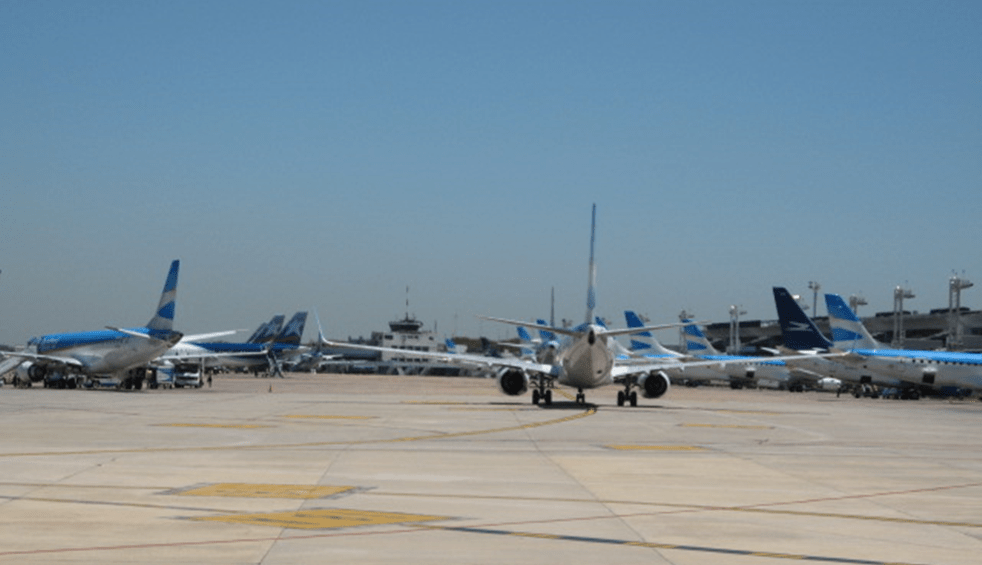
El mercado aerocomercial en Argentina ha tenido un repunte después de la apertura de rutas aéreas y mejoras en las políticas aerocomerciales. Este 2017 el mercado aéreo ha aumentado un 11% interanual en el segmento de cabotaje, transportando unos 15 millones de pasajeros, y una suba del 14% interanual en en mercado internacional, con un tráfico de 16 millones de pax.

El Ministerio de Transporte de la Nación estiman con la nueva «Revolución de los Aviones» duplicar el número de pasajeros domésticos en Argentina para el 2019. Este ambicioso proyecto contempla la incorporación de nuevos operadores aéreos al mercado nacional, como así también el aumento de obras de infraestructura en 19 aeropuertos del país, tecnología y logístiva para adecuarse al incremento de tráfico. Las inversiones rondan los AR$ 22.000 millones que se extenderán por un plazo de dos años.

Las Audiencias Públicas están derivando iun impacto sobre los consumidores que reportará un atendencia positiva. Catorce empresas se presentaron solicitando autorización para operar en vuelos de cabotaje, regionales e internacionales, cinco en la primera audiencia y nueve en la segunda. De las cinco que se presentaron en la primera, solamente dos, Andes Líneas Aéreas y Avianca iniciaron sus operaciones. Flybondi Líneas Aéreas, Norwegian Air Argentina entre otras, comenzarán en el 2018.

Más mercado abierto, más opciones para elegir y mayor competitividad en el mercado aéreo. Un mercado alertargado desde hace doce años ha permitido mostrar signos de crecimiento y cierto grado de madurez. Argentina comienza a despegar mostrando una verdadera «revolución de los aviones». AIRWAYS® AW-Icon TXT

AW-70086444.png

The growth of aviation in Argentina

The Argentine aviation has had an interannual increase of 11% in domestic flights and 14% in international

The commercial market in Argentina has seen a rebound after the opening of air routes and improvements in commercial air traffic policies. This 2017 the airline market has increased 11% year-on-year in the cabotage segment, transporting some 15 million passengers, and an increase of 14% year-on-year in the international market, with a traffic of 16 million pax.

The Ministry of Transportation of the Nation estimated with the new «Revolution of the Aircraft» double the number of domestic passengers in Argentina for 2019. This ambitious project includes the incorporation of new air operators to the national market, as well as the increase of works of infrastructure in 19 airports of the country, technology and logistics to adapt to the increase in traffic. The investments are around AR $ 22,000 million, which will be extended over a period of two years.

The Public Hearings are deriving an impact on the consumers that will report a positive attention. Fourteen companies applied for authorization to operate on cabotage, regional and international flights, five at the first hearing and nine at the second. Of the five that were presented in the first, only two, Andes Líneas Aéreas and Avianca began operations. Flybondi Líneas Aéreas, Norwegian Air Argentina among others, will begin in 2018.

More open market, more options to choose from and greater competitiveness in the air market. A market alerted for twelve years has allowed to show signs of growth and a certain degree of maturity. Argentina begins to take off showing a true «aircraft revolution». A \ W


Ξ A I R G W A Y S Ξ
SOURCE:  Airgways.com
DBk: Airgways.com
AW-POST: 201712200037AR

A\W   A I R G W A Y S ®

Las Big-3 y el proteccionismo recurrente

AW | 2017 12 22 17:35 | AIRLINES MARKET

Las aerolíneas líderes estadounidenses fuerzan por desalentar la competencia

Las tres grandes aerolíneas de Estados Unidos conocidas como las Big-3’s, American Airlines, Delta Air Lines y United Airlines están desalentando la competencia al querer permitir que el Estado brinde más proteccionismo al mercado estadounidense.

Es la competitividad una herramienta eficaz para establecer un mercado claro y ventajoso para los consumidores, pues impulsa la innovación y el espíritu empresarial, y en el proceso ofrece un gran valor para los consumidores que proviene de nuevos y mejores productos, menores costos operativos, entre otras ventajas. La competencia es lo que ha hecho grande a los Estados Unidos. Desafortunadamente, ahora hay algunas empresas estadounidenses que están dando la espalda a la fuerza que fomentó su nacimiento, crecimiento y dominio global.

Cielos Abiertos vs Proteccionismo

Las grandes líneas aéreas de Estados Unidos como American Airlines, Delta Air Lines, United Airlines y otras que han quedado atrás como Northwest Airlines (NWA), Trans World Airlines (TWA), US Airways, Eastern Air Lines, Pan Am Airways, entre otras han construido algunas de las redes de servicios más extensas y permitieron dominar el mercado de EEUU y en algunas rutas internacionales como resultado directo del liderazgo de los Estados Unidos en los acuerdos de cielos abiertos. Estos acuerdos, que Estados Unidos comenzó a negociar a principios de la década de 1990, abrieron la puerta a una mayor competencia global en la industria de la aviación y prepararon el escenario para que los transportistas estadounidenses aumentaran significativamente su expansión en el mundo. Las aerolíneas Big-3’s y sus socias de la alianza ostentan más del 80% del mercado transatlántico Americano-Europeo. Las mayores aerolíneas de EEUU se encontraban entre las principales defensoras del «Open Skies» y de un mercado competitivo global.

El mismo mercado competitivo de cielos abiertos con Estados Unidos ha hecho que se abriesen la puerta al éxito de las mayores compañías americanas, pero también abrieron la puerta a las ágiles aerolíneas del Golfo Pérsico. La nueva competencia de Medio Oriente ha estado eclipsando a las compañías de EEUU.

El nuevo escenario de las líneas aéreas estadounidenses están librando una batalla comercial, como sucede a menudo cuando las empresas se convierten en oligopolios atrincherados, éstas están luchando para limitar la competencia. En lugar de competir en un escenario de libre mercado, están presionando al gobierno para que les brinde un manto de protección del mecado de Medio Oriente, donde se acusa a las aerolíneas árabes de subvenciones estatales deshonestas y competencia desleal. En otras palabras están reclamando que la administración de Donald Trump renegocie los acuerdos de cielos abiertos de EEUU con los Estados del Golfo.

Existen varios escenarios en el proteccionismo heredado de las aerolíneas. En primer lugar las Big-3’s no han especificado ninguna violación de los acuerdos existentes de Open Skies. De hecho, los tratados bilaterales mencionan la palabra «subsidio» solo una vez, con respecto a «pasajes aéreos artificialmente bajos», que las Big-3’s no han alegado. En segundo lugar, las Big-3’s no tienen problemas con las inversiones de gobiernos extranjeros en embolsos profundos cuando los propios operadores nacionales son los beneficiarios de dicha influencia del gobierno. En conjunto, American, Delta y United tienen sociedades de código compartido con 28 aerolíneas estatales y con inversión estatal, muchas de las cuales reciben subsidios gubernamentales, incluidas Air China, Aeroflot y South African Airways. Además, Delta Airlines no se opuso a los generosos subsidios del gobierno cuando ordenó 75 aviones Bombardier CS100 del fabricante de aviones con sede en Canadá con un descuento tan grande que el precio de Delta es un 50% inferior al costo real de producción. En tercer lugar, los Big 3 no tienen pruebas para respaldar las afirmaciones de que estos subsidios «injustos» les están causando algún daño económico. Están experimentando ganancias récord y el crecimiento del empleo en la industria es robusto. Los tres operadores heredados colectivamente ganaron más de $ 5 mil millones en los últimos dos trimestres más recientes, que son casi $ 30 millones en ganancias todos los días . Además, los datos del gobierno muestran que los empleos en la industria aérea estadounidense superaron los 700,000 en octubre por primera vez desde septiembre de 2001. Durante el año pasado, los empleos a tiempo completo en la industria aérea crecieron casi un 3 por ciento en comparación con el crecimiento laboral de menos del 2 por ciento. trabajadores a tiempo completo en general. Esta no es una imagen de una industria sdeficiente.

Efectos del proteccionismo

El escenario más oneroso de las Big-3’s podría presentarse al utililzar la política como un instrumento para evitar la competencia. Esta acción tendría un impacto negativo en la economía de los EEUU, la industria de los viajes y el turismo en general.

Un estudio de la Asociación de Viajes de EEUU ha descubierto que si los EEUU hubieran congelado los vuelos de las aerolíneas del Golfo según lo solicitado por las Big-3’s, se habrían perdido más de 7.000 empleos en los Estados Unidos en 2015 y 2016. Estas pérdidas de empleos serán triviales en comparación con lo que podría suceder si la administración Trump responde a las exigencias de Big-3’s.

Los acuerdos de reapertura de las negociaciones sobre el mercado de cielos abiertos con Emiratos Árabes Unidos y Qatar podrían conducir a un menor acceso para las aerolíneas estadounidenses no solo en esos mercados sino también con otros socios donde reclamen un trato más justo y equitativo con los transportistas estadounidenses.

El objetivo principal de los acuerdos de cielos abiertos es sacar a los gobiernos del escenario de los cielos y dejar que el mercado y la competencia elijan lo más saludable para el consumidor. Los acuerdos de cielos abiertos son un mercado de aviación internacional competitivo y amigable. Durante décadas, American Airlines, Delta Air Lines y United Airlines han sido ganadores exitosos y rentables en un mercado global competitivo. Las Big-3’s necesitarán seguir ganando dinero, pero para eso deberían dejar de recurrir al gobierno para buscar innecesariamente proteccionismo y mostrar signos de verdadera competitividad, volando con reglas claras. AIRWAYS® AW-Icon TXT

Big-3 and recurrent protectionism

Leading US airlines force by discouraging competition

Resultado de imagen para Big 3 airlines USThe three major US airlines known as the Big-3’s, American Airlines, Delta Air Lines and United Airlines are discouraging competition by wanting to allow the state to provide more protection to the US market.

Competitiveness is an effective tool to establish a clear and advantageous market for consumers, as it promotes innovation and entrepreneurship, and in the process offers great value to consumers that comes from new and better products, lower operating costs, between other advantages Competition is what has made the United States great. Unfortunately, now there are some American companies that are turning their backs on the force that fostered their birth, growth and global dominance.

Open Skies vs. Protectionism

The major airlines of the United States such as American Airlines, Delta Air Lines, United Airlines and others that have been left behind such as Northwest Airlines (NWA), Trans World Airlines (TWA), US Airways, Eastern Air Lines, Pan Am Airways, among others they have built some of the most extensive service networks and allowed them to dominate the US market and some international routes as a direct result of the United States’ leadership in open skies agreements. These agreements, which the United States began to negotiate in the early 1990s, opened the door to greater global competition in the aviation industry and set the stage for US carriers to significantly increase their expansion in the world. Big-3’s airlines and their alliance partners hold more than 80% of the American-European transatlantic market. The largest US airlines were among the main defenders of the «Open Skies» and a global competitive market.

The same competitive open skies market with the United States has opened the door to the success of the largest American companies, but they also opened the door to agile Gulf Arabian airlines. The new Middle East competition has been eclipsing US companies.

The new scenario of US airlines are waging a commercial battle, as often happens when companies become entrenched oligopolies, they are struggling to limit competition. Instead of competing in a free market scenario, they are pressuring the government to provide them with a blanket of protection from the Middle East market, where Arab airlines are accused of dishonest state subsidies and unfair competition. In other words, they are demanding that the Donald Trump administration renegotiate US open skies agreements with the Gulf States.

There are several scenarios in the protectionism inherited from the airlines. First of all, the Big-3’s have not specified any violation of existing Open Skies agreements. In fact, bilateral treaties mention the word «subsidy» only once, with respect to «artificially low air tickets», which the Big 3 have not claimed. Second, the Big-3’s have no problems with the investments of foreign governments in deep pockets when the national operators themselves are the beneficiaries of such government influence. Together, American, Delta and United have code-share partnerships with 28 state-owned and state-owned airlines, many of which receive government subsidies, including Air China, Aeroflot and South African Airways. In addition, Delta Airlines did not oppose the generous government subsidies when it ordered 75 Bombardier CS100 aircraft from the Canadian-based aircraft manufacturer at such a large discount that Delta’s price is 50% lower than the actual cost of production. Third, the Big 3 have no evidence to support claims that these «unfair» subsidies are causing them some economic damage. They are experiencing record profits and the growth of employment in the industry is robust. The three legacy operators collectively earned more than $ 5 billion in the last two most recent quarters, which are almost $ 30 million in profits every day. In addition, government data shows that jobs in the US airline industry exceeded 700,000 in October for the first time since September 2001. Over the past year, full-time jobs in the airline industry grew by almost 3 percent compared with labor growth of less than 2 percent. full-time workers in general. This is not an image of a deficient industry.

Effects of protectionism

The most onerous scenario of the Big-3’s could be presented when using politics as an instrument to avoid competition. This action would have a negative impact on the US economy, the travel industry and tourism in general.

A study by the US Travel Association has found that if the US had frozen Gulf airlines’ flights as requested by the Big-3’s, more than 7,000 jobs would have been lost in the United States in 2015 and 2016. Job losses will be trivial compared to what could happen if the Trump administration responds to Big-3’s demands.

The agreements to reopen negotiations on the open skies market with the United Arab Emirates and Qatar could lead to less access for US airlines not only in those markets but also with other partners where they claim fairer and more equitable treatment with carriers. Americans

The main objective of open skies agreements is to take governments out of the skies and let the market and the competition choose the healthiest for the consumer. Open skies agreements are a competitive and friendly international aviation market. For decades, American Airlines, Delta Air Lines and United Airlines have been successful and profitable winners in a competitive global market. The Big-3’s will need to keep making money, but for that they should stop using the government to unnecessarily seek protectionism and show signs of true competitiveness, flying with clear rules. A \ W


Ξ A I R G W A Y S Ξ
SOURCE:  Airgways.com
DBk: Cnbc.com / Npr.org
AW-POST: 201712221735AR

A\W   A I R G W A Y S ®

Aumento tráfico en Islas Canarias

Imagen relacionada

AW | 2017 12 17 16:11 | AIRLINES MARKET

Resultado de imagen para Air Europa express logoLas islas del Archipiélago de las Canarias está experimentando una revolución en la aviación regional

Resultado de imagen para Binter canarias logoCon la llegada de del nuevo competidor Air Europa como aerolínea regional las Islas Canarias está atravesando un período de expansión aérea. Binter Canarias era la aerolínea que dominaba el mercado aéreo interinsular. Posteriormente Canaryfly, la otra aerolínea de transporte entre las Resultado de imagen para Canaryfly logoislas está manteniendo una cuota de mercado modesta, aun cuando el mercado parecía completar la demanda.

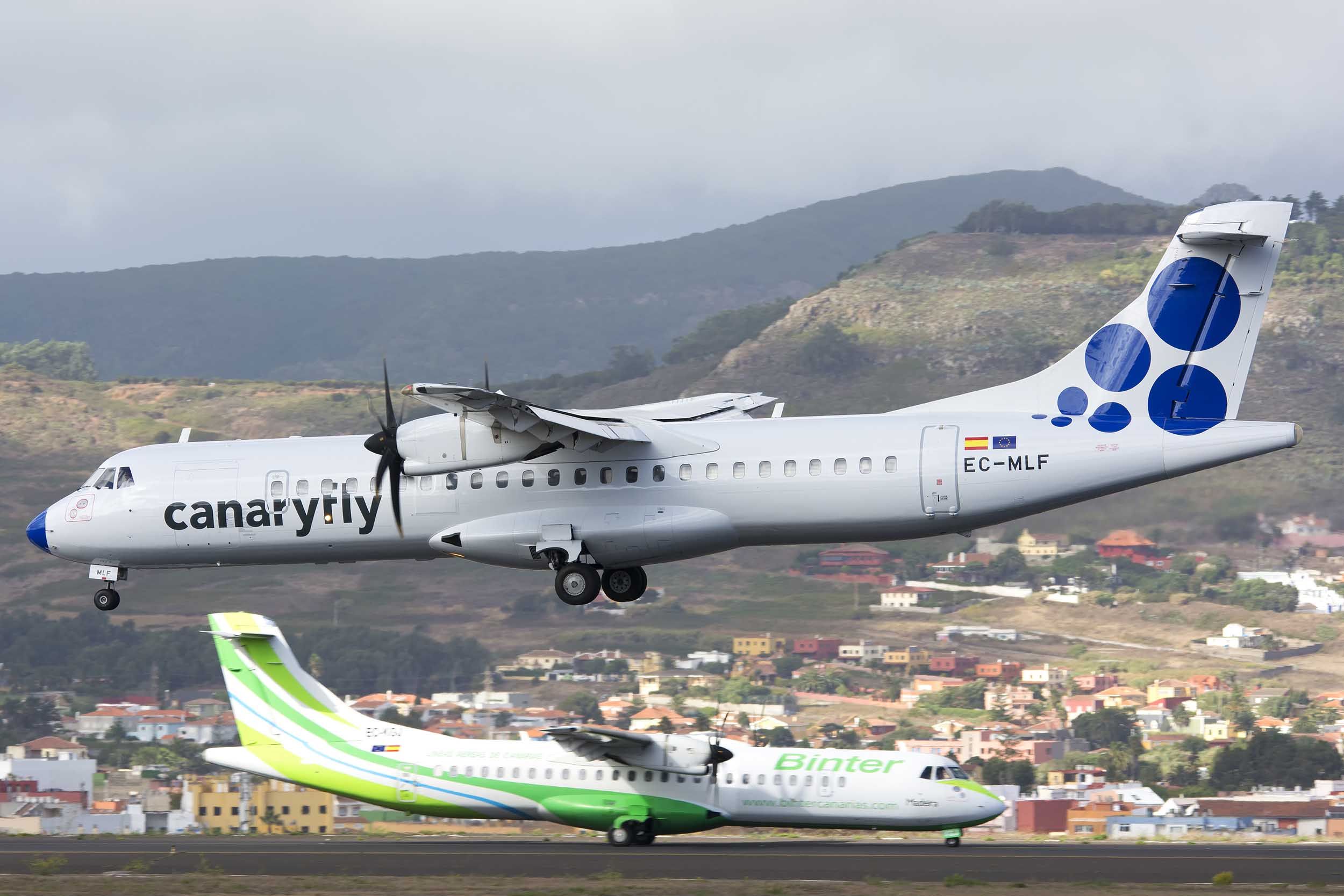
El escenario ha cambiado ha prontamente el mercado duopolio en Canarias desde que la firma aeronáutica Globalia aterrizara a finales de octubre 2017 con su flota de Air Europa.

Por otro lado, las compañías aéreas canarias Binter y Canaryfly han formalizado un acuerdo compartido de colaboración por el que se comprometen a tramitar el cambio de vuelo de una a otra aerolínea, sin costes ni penalizaciones para el usuario, con el fin de que sus clientes ganen en flexibilidad y servicio al beneficiarse de la multitud de vuelos que ambas suman de forma diaria entre las islas. Este acuerdo solo se aplicará a los pasajeros que hayan comprado una tarifa completa en ambas aerolíneas.

Binter Canarias y Canaryfly se alían para mejorar su posicionamiento en el mercado con la entrada de un nuevo operador al archipiélago, mejorar las opciones de sus clientes y favorecer la conectividad entre las islas. AIRWAYS® AW-Icon TXT

Increase traffic in Canary Islands

The islands of the Canary Islands Archipelago is experiencing a revolution in regional aviation

With the arrival of the new competitor Air Europa as a regional airline, the Canary Islands is going through a period of aerial expansion. Binter Canarias was the airline that dominated the inter-island air market. Later Canaryfly, the other transport airline between the islands is maintaining a modest market share, even though the market seemed to complete the demand.

The scenario has quickly changed the duopoly market in the Canary Islands since the aeronautical firm Globalia landed at the end of October 2017 with its Air Europa fleet.

On the other hand, the Canarian airlines Binter and Canaryfly have formalized a shared collaboration agreement whereby they commit to process the change of flight from one airline to another, without costs or penalties for the user, so that their customers gain in flexibility and service by benefiting from the multitude of flights that both add daily between the islands. This agreement will only apply to passengers who have purchased a full fare on both airlines.

Binter Canariasfly and Canaryfly team up to improve their positioning in the market with the entry of a new operator to the archipelago, improve the options of their customers and promote connectivity between the islands. A \ W


Ξ A I R G W A Y S Ξ
SOURCE:  Airgways.com
DBk: Canaryfly.es / Aireuropa.com / Comunicae.com
AW-POST: 201712171611AR

A\W   A I R G W A Y S ®

Oferentes para adquirir FlyNiki

AW | 2017 12 15 23:23 | AIRLINES MARKET

Resultado de imagen para FlyNikiSalieron ofertas públicas para la adquisición de la aerolínea austríaca FlyNiki
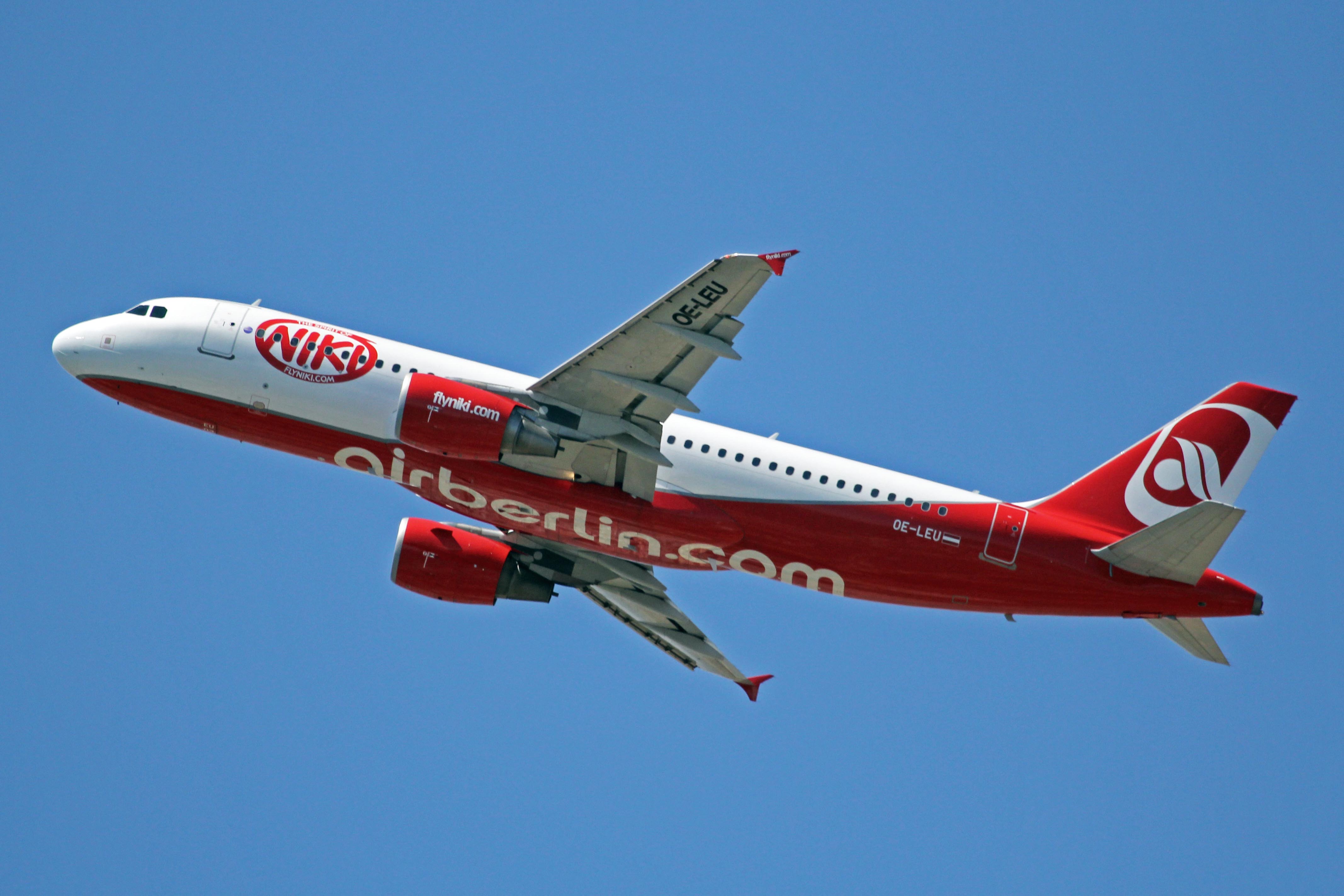
Después de la quiebra de otra aerolínea europea low-cost, FlyNiki parecería correr con otros vientos un tanto más favorables que otras líneaaas aéreas que han fracasado.

El interés para la adquisición de la aerolínea en proceso de quiebra tienen como interesados a tres oferentes: el operador turístico y aerolínea británica Thomas Cook, la low cost irlandesa Ryanair y el empresatio y ex campeón de la Fórmula Uno, Niki Lauda, han mostrado su interés en adquirir la recién quebrada aerolínea austríaca Niki.

La aerolínea austríaca FlyNiki este miércoles decidió declararse insolvente, siguiendoel rumbo de su matriz, la alemana airberlin; después de que Grupo Lufthansa retirara una oferta de compra, tras el rechazo de la Comisión Europea (CE) a sus planes de integrarla a su filial low cost Eurowings por los efectos que tanta concentración en el grupo alemán pudiera tener en la competencia.

La opción alemana era la única que quedaba sobre la mesa, ya que, según la administración del proceso de quiebra, no fueron satisfactorias las ofertas presentadas por International Airlines Group (IAG), holding de British Airways, Iberia, Vueling, Aer Lingus y Level; y la alemana Condor, controlada por el grupo Thomas Group.

Los oferentes tras FlyNiki
Thomas Cook y su aerolínea alemana, Condor, habían estado entre los primeros en apostar por Niki, filial austríaca de la aerolínea alemana quebrada casi cuatro meses antes, airberlin, pero perdieron frente a Lufthansa.

Thomas Cook también está considerando la adquisición de Niki, según un portavoz del grupo británico: «Planeamos aumentar nuestra capacidad en el mercado alemán a la luz de la mayor demanda. Estamos considerando nuestras opciones, incluida la adquisición de Niki o la compra de partes de la aerolínea».

Ryanair ha informado que ha iniciado contactos para estudiar la compra de activos de Niki. La low cost irlandesa señala que a través de esa operación contempla la posibilidad de hacerse con los «activos restantes» de Niki Luftfahrt, que es gestionada en estos momentos por un administrador externo. «Ryanair se ha puesto en contacto con los administradores de Niki Luftfahrt GmbH en relación con el proceso de insolvencia y la compra potencial de los activos restantes de Niki», explicó la aerolínea irlandesa en la nota.

Otro de los interesados en adquirir la aerolínea es su propio fundador, el ex corredor austríaco tricampeón de Fórmula Uno y posteriormente empresario del sector de la aviación Andreas Nikolaus Lauda, Niki Lauda, que vendió la aerolínea a airberlin en noviembre de 2011, afirmó que tiene intención es hacerse en solitario, sin socios, con su antigua compañía. Lauda fundó Niki en 2003 y la vendido años después a Airberlin Group.  AIRWAYS® AW-Icon TXT

Bidders to acquire FlyNiki

Public offers for the acquisition of the Austrian airline FlyNiki

After the bankruptcy of another European low-cost airline, FlyNiki would seem to run with other winds that are a bit more favorable than other airline lines that have failed.

The interest for the acquisition of the airline in process of bankruptcy have three bidders as interested: the tour operator and British airline Thomas Cook, the Irish low cost Ryanair and the entrepreneur and former Formula One champion, Niki Lauda, ​​have shown their interest in acquiring the newly broken Austrian airline Niki.

The Austrian airline FlyNiki on Wednesday decided to declare itself insolvent, following the course of its parent, the German airberlin; after Lufthansa Group withdrew an offer to buy, after the European Commission (EC) rejected its plans to integrate it into its low cost Eurowings subsidiary for the effects that so much concentration in the German group could have on the competition.

The German option was the only one left on the table, since, according to the administration of the bankruptcy process, the bids submitted by International Airlines Group (IAG), holding of British Airways, Iberia, Vueling, Aer Lingus and Level were not satisfactory. ; and the German Condor, controlled by the Thomas Group.

The bidders after FlyNiki
Thomas Cook and his German airline, Condor, had been among the first to bet on Niki, an Austrian subsidiary of the German airline that had been broken almost four months earlier, airberlin, but lost to Lufthansa.

Thomas Cook is also considering the acquisition of Niki, according to a spokesman for the British group: «We plan to increase our capacity in the German market in light of the increased demand. We are considering our options, including the acquisition of Niki or the purchase of parts of the airline Niki».

Ryanair has reported that it has initiated contacts to study the purchase of assets of Niki. The Irish low cost indicates that through that operation contemplates the possibility of taking control of the «remaining assets» of Niki Luftfahrt, that is managed at the moment by an external administrator. «Ryanair has contacted the administrators of Niki Luftfahrt GmbH regarding the insolvency process and the potential purchase of Niki’s remaining assets», the Irish airline explained in the note.

Another interested in acquiring the airline is its own founder, the former Austrian triple-champion runner of Formula One and later entrepreneur of the aviation sector Andreas Nikolaus Lauda, ​​Niki Lauda, ​​who sold the airline to airberlin in November 2011, said he has intention is to be done alone, without partners, with your old company. Lauda founded Niki in 2003 and sold it years later to Airberlin Group. A \ W


Ξ A I R G W A Y S Ξ
SOURCE:  Airgways.com
DBk: Wikimedia.org / Telegraph.co.uk
AW-POST: 201712152323AR

A\W   A I R G W A Y S ®