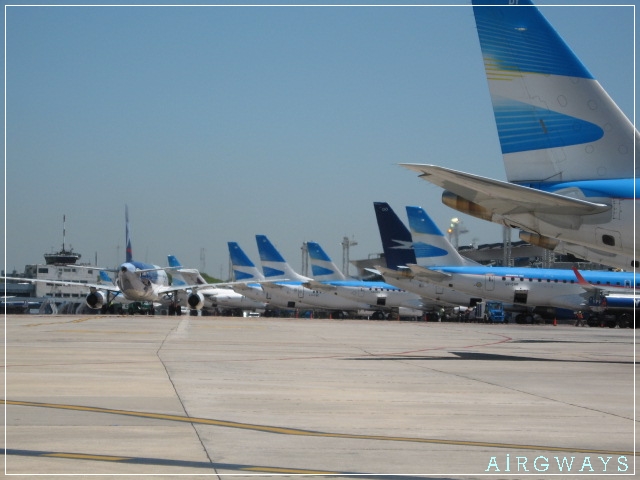
Expansión de aerolíneas en Argentina

https://i0.wp.com/mensajeroweb.com.ar/upload/img/th/aeroparque-2017-13_5356_1600x900_th.jpg

AW | 2017 06 01 09:57 | AIRLINES MARKET

Gigante del negocio aerocomercial, adelantó que pedirá autorización para operar 34 rutas de cabotaje y 17 internacionales

Un total de catorce empresas iniciaron expedientes ante la Administración Nacional de Aviación Civil (Anac) para operar servicios aerocomerciales, pero por ahora solo cuatro están en condiciones técnicas de presentar propuestas en la audiencia pública para la adjudicación de rutas aéreas, prevista para julio próximo.

Se trata de Norwegian, Polar Líneas Aéreas (ex empresa Cata), Lasa (Líneas Aéreas Sociedad Anónima) y Buenos Aires International Airlines SA, indicaron fuentes vinculadas al ente regulador del mercado aerocomercial.

Norwegian aparece como la propuesta más fuerte, ya que en materia de cabotaje solicitó 34 rutas a operar desde el Aeroparque Jorge Newbery, 17 desde Córdoba, 5 desde Mendoza, 4 desde Bariloche, 3 desde Comodoro Rivadavia, 3 desde El Calafate, dos desde Puerto Iguazú, 2 desde Mar del Plata, 2 desde Salta, 2 desde San Rafael (Mendoza), una desde Jujuy, una desde Rosario, una desde Santa Rosa (La Pampa) y una también desde Trelew.

También solicitó 53 rutas internacionales a operar desde el Aeropuerto de Ezeiza, con destinos clásicos regionales a Brasil, Chile y Uruguay y otros de largo rango como Roma, Madrid, Barcelona, París, Nueva York, Los Ángeles y Londres.

Pero también pidió la apertura de algunos destinos menos frecuentados desde Argentina, como Fort Lauderdale, Málaga, Copenhague, Tel Aviv, Point A Pitre, Cape Town, Papeete y San José, de Costa Rica.

Entre las previsiones además se cuentan 14 servicios internacionales desde Córdoba, entre los que se destacan destinos como Fort De France, La Habana y Point A Prite; dos servicios desde Mendoza, a San Pablo y Santiago de Chile y uno desde Rosario a Fort Lauderdale.

A su vez , Polar Líneas Aéreas SA con base en el aeropuerto de Merlo (San Luis) solicitó 44 rutas de cabotaje, ocho partiendo desde Merlo, seis desde Villa Mercedes, tres desde la ciudad de San Luis, dos desde Mendoza, cinco desde La Plata, diez desde Córdoba y diez desde Aeroparque.

En lo que hace a vuelos regionales o de largo rango, tres vuelos operarían desde La Plata, 16 desde Córdoba, entre ellos uno a Auckland y Sydney; diez desde Aeroparque, entre ellos uno con destino a Perth (Australia) y Singapur con escala previa en Ushuaia y 6 desde Ezeiza.

Por su parte, Lasa solicitó 5 rutas, tres con partida desde Comodoro Rivadavia con destino a ciudades como Río Gallegos, El Calafate, Río Grande, Ushuaia, Esquel, Bariloche, Viedma, Trelew, Mar del Plata y Neuquén, además de dos con partidas Neuquén hacia similares destinos pero sumando también regionales como Temuco y Puerto Montt en Chile.

Buenos Aires International Airlines SA, cuya figura visible es el abogado Eduardo Loioco, que solicitó 178 rutas entre cabotaje, regionales e internacionales. Esta empresa también requirió autorización para algunos destinos poco frecuentes como Las Vegas, Nueva Orleans, Seattle, San Francisco, Montreal, Vancouver, Nassau, Aruba, Saint Thomas, Luxemburgo, Saint Maarten, Las Palmas, Ibiza, Praga, Marsella o Isla de Sal (Cabo Verde), desde Ezeiza. También incluyó los destinos de Curazao, Saint Maarten, Isla de Sal, Milán, Los Ángeles, Orlando, Cancún y Aruba, desde Córdoba o Rosario.

A estas cuatro compañías se pueden sumar en las próximas horas Vía Bariloche y Flecha Bus, que actualmente prestan servicios en el transporte automotor de pasajeros de larga distancia.  AIRGWAYS ® Icon-AW

https://i0.wp.com/www.aviacionline.com/wp-content/uploads/2016/03/Categoria-LineasAereasArgentinas-1024x683.jpg

Expansion of airlines in Argentina


Giant of the commercial airline business, he said he will ask for authorization to operate 34 cabotage routes and 17 international


A total of fourteen companies started files before the National Civil Aviation Administration (ANAC) to operate commercial air services, but for now only four are in a position to submit proposals at the public hearing for air route awarding scheduled for July.

They are Norwegian, Polar Líneas Aéreas (formerly Cata company), Lasa (Líneas Aéreas Sociedad Anónima) and Buenos Aires International Airlines SA, according to sources linked to the regulator of the aerial commercial market.

Norwegian appears as the strongest proposal, since in the matter of cabotage it requested 34 routes to operate from Aeroparque Jorge Newbery, 17 from Córdoba, 5 from Mendoza, 4 from Bariloche, 3 from Comodoro Rivadavia, 3 from El Calafate, two from Puerto Iguazú, 2 from Mar del Plata, 2 from Salta, 2 from San Rafael (Mendoza), one from Jujuy, one from Rosario, one from Santa Rosa (La Pampa) and one from Trelew.

It also requested 53 international routes to operate from Ezeiza Airport, with classic regional destinations to Brazil, Chile and Uruguay and others of long range like Rome, Madrid, Barcelona, ​​Paris, New York, Los Angeles and London.

But it also called for the opening of some less frequented destinations from Argentina such as Fort Lauderdale, Malaga, Copenhagen, Tel Aviv, Point A Pitre, Cape Town, Papeete and San Jose, Costa Rica.

Among the forecasts are also 14 international services from Cordoba, among which stand out destinations such as Fort De France, Havana and Point A Prite; Two services from Mendoza, to San Pablo and Santiago de Chile and one from Rosario to Fort Lauderdale.

At the same time, Polar Líneas Aéreas SA, based at Merlo (San Luis) airport, requested 44 cabotage routes, eight departing from Merlo, six from Villa Mercedes, three from San Luis, two from Mendoza, five from La Silver, ten from Cordoba and ten from Aeroparque.

As far as regional or long-range flights are concerned, three flights would operate from La Plata, 16 from Córdoba, including one to Auckland and Sydney; Ten from Aeroparque, including one bound for Perth (Australia) and Singapore with a previous stopover in Ushuaia and six from Ezeiza.

On the other hand, Lasa requested 5 routes, three starting from Comodoro Rivadavia to cities like Rio Gallegos, El Calafate, Rio Grande, Ushuaia, Esquel, Bariloche, Viedma, Trelew, Mar del Plata and Neuquén, as well as two with departures Neuquén to similar destinations but also adding regional ones such as Temuco and Puerto Montt in Chile.

Buenos Aires International Airlines SA, whose visible figure is lawyer Eduardo Loioco, who requested 178 routes between cabotage, regional and international. This company also required authorization for some infrequent destinations such as Las Vegas, New Orleans, Seattle, San Francisco, Montreal, Vancouver, Nassau, Aruba, Saint Thomas, Luxembourg, Saint Maarten, Las Palmas, Ibiza, Prague, Marseille or Isla de Sal (Cape Verde) from Ezeiza. It also included the destinations of Curacao, Saint Maarten, Sal Island, Milan, Los Angeles, Orlando, Cancun and Aruba, from Cordoba or Rosario.

These four companies can be added in the next few hours Via Bariloche and Flecha Bus, which currently provide services in the long-distance passenger automotive transport. A \ W

Ξ A I R G W A Y S Ξ
SOURCE: Puntobiz.com.ar / Airgways.com
DBk: Mensajeroweb.com.ar / Aviacionline.com
AW-POST: 201706010857AR

A \ W   A I R G W A Y S ®

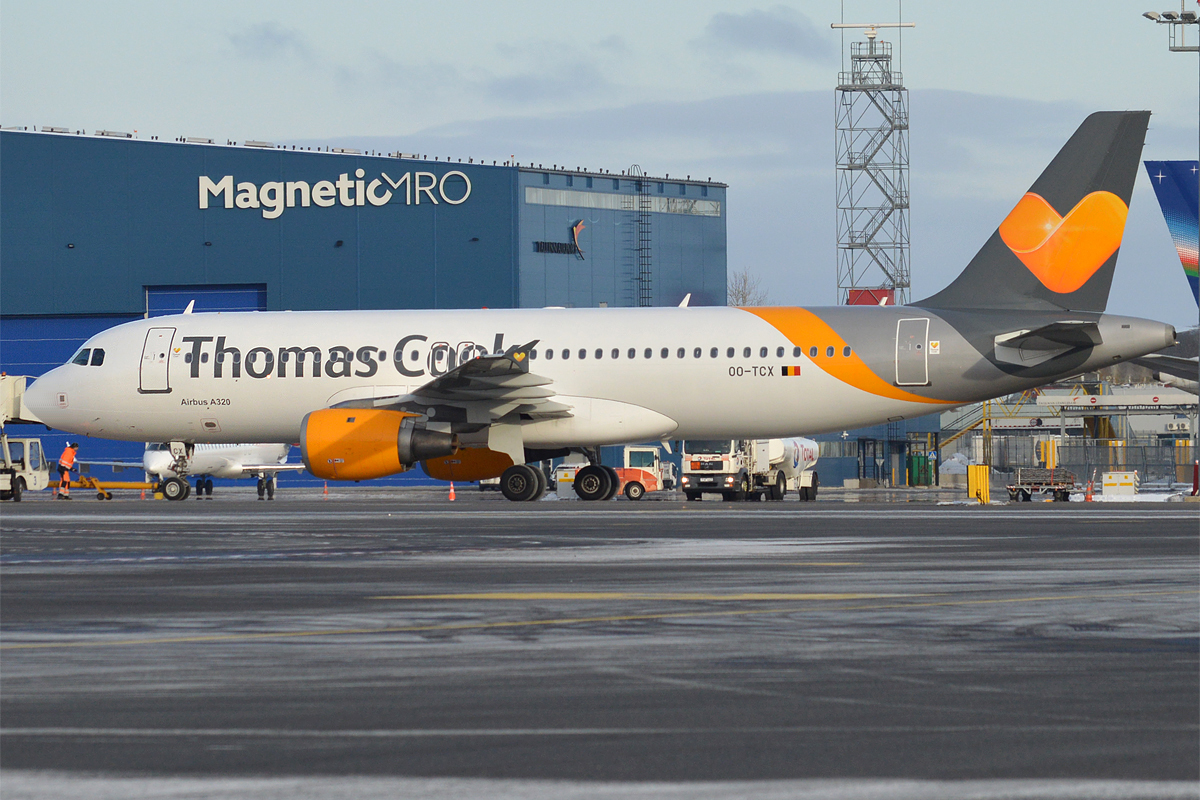
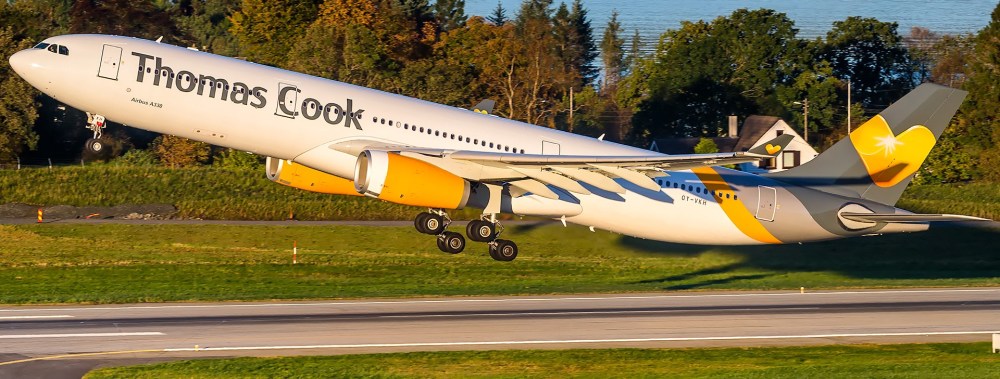
VLM toma licencia Thomas Cook Airlines

Resultado de imagen para Thomas Cook Belgium

AW | 2017 05 31 12:31 | AIRLINES MARKET

SHS Aviación, el comprador quebrada de la aerolínea belga VLM, las partes restantes de Thomas Cook Airlines Belgium se hace cargo


A finales de marzo la aerolínea belga Brussels Airlines anunció que en noviembre se hacía cargo de las actividades de su competidor Thomas Cook Airlines Belgium. Brussels Airlines tiene 160 pilotos más tripulación de cabina, más dos aviones de Thomas Cook Airlines Belgium. Por lo tanto, Thomas Cook Airlines debe entregar su autorización de vuelo y 40 puestos de trabajo de personal de tierra desaparecerían.

SHS Aviación se hará cargo de las restantes actividades y el personal de tierra. El procedimiento de renuncia colectiva está sin efecto. «El anuncio de hoy es una buena noticia para nuestros colegas de Thomas Cook Airlines Belgium,» dice el director Jean-Christophe Degen. «El acuerdo con SHS Aviación todos los miembros del personal de tierra puede seguir trabajando.»

La licencia
Sin embargo, la adquisición se ejecuta realmente por Thomas Cook Airlines para volar con licencia. VLM ha estado esperando meses para la licencia de una OAC para FOD Mobiliteit. Pero el caso es difícil debido a la débil situación financiera de la quiebrade  VLM. SHS se adapte a la adquisición. «SHS Aviación espera utilizar el AOC y el permiso de operación de volar Thomas Cook Airlines», dice.

Las encuestas muestran que las dos empresas, por tanto, tienen que presentar una nueva solicitud con la FOD Moviliteit. «SHS y Thomas Cook Airlines han de todos modos otra pasarnos», dijo el portavoz de la Movilidad FPS. La licencia puede ser aprobada «un par de semanas».

Amberes
SHS hace hincapié en que su solicitud de licencia belga continúa funcionando. La compañía holandesa ha recibido recientemente otra licencia de piloto de AOC en Eslovenia. SHS a finales de este año oferta los vuelos programados desde el Aeropuerto de Amberes bajo la marca VLM Airlines. Los detalles sobre el número de aeronaves, rutas y horarios aún no se conocen. AIRGWAYS ® Icon-AW

https://upload.wikimedia.org/wikipedia/commons/0/05/Thomas_Cook_Airlines_Belgium%2C_OO-TCX%2C_Airbus_A320-212_%2825260022760%29.jpg

 VLM takes flight license Thomas Cook Airlines


SHS Aviation, the acquirer of the failed Belgian airline VLM, takes over the remaining parts of Thomas Cook Airlines Belgium


At the end of March, the Belgian airline announced that Brussels Airlines took over the activities of its competitor Thomas Cook Airlines Belgium since November. Brussels Airlines takes over 160 pilots and cabin crew members, all slots and two aircraft from Thomas Cook Airlines Belgium. Thomas Cook Airlines had to hand in his flight permit and disappeared 40 ground jobs.

As a result of the deal with SHS, those plans have now been terminated. SHS Aviation takes over the remaining activities and the 40 ground staff members. The collective redundancy procedure will be suspended. «Today’s announcement is good news for our colleagues at Thomas Cook Airlines Belgium,» says Jean-Christophe Degen, Director. «Thanks to the agreement with SHS Aviation, all staff of ground staff can get started.»

License
But the acquisition is actually about Thomas Cook Airlines’s license. VLM has been waiting for an ‘AOC’ license from FOD Mobiliteit for months. But the file is difficult due to the weak financial situation of the bankruptcy of the VLM. That’s what SHS fits through the acquisition. ‘SHS Aviation expects to use the AOC flight permit and Thomas Cook Airlines’ operating license,’ it sounds.

Inquiry teaches that both companies must submit a new application file to FOD Mobiliteit. «SHS and Thomas Cook Airlines have to pass by again,» said the spokesman for the FPS Mobility. The license can be approved in a few weeks.


Antwerp
SHS emphasizes that its Belgian license application continues to run. The Dutch company recently received another AOC flight license in Slovenia. SHS will offer scheduled flights later this year from the airport of Antwerp under the brand name VLM Airlines. Details about the number of aircraft, routes and timetables are not known yet.  A \ W

790425.jpg

VLM neemt vlieglicentie Thomas Cook Airlines over

SHS Aviation, de overnemer van de failliete Belgische luchtvaartmaatschappij VLM, neemt de overblijvende delen van Thomas Cook Airlines Belgium over

Eind maart kondigde de Belgische luchtvaartmaatschappij Brussels Airlines aan dat ze vanaf november de activiteiten van haar concurrent Thomas Cook Airlines Belgium overneemt. Brussels Airlines neemt 160 piloten en cabinepersoneelsleden, alle slots en twee vliegtuigen van Thomas Cook Airlines Belgium over. Thomas Cook Airlines moest daardoor zijn vliegvergunning inleveren en 40 jobs bij het grondpersoneel zouden verdwijnen.

Door de deal met SHS zijn die plannen nu stopgezet. SHS Aviation neemt de resterende activiteiten en de 40 grondpersoneelsleden over. De collectieve ontslagprocedure wordt stilgelegd. ‘De aankondiging van vandaag is goed nieuws voor onze collega’s bij Thomas Cook Airlines Belgium’, zegt directeur Jean-Christophe Degen. ‘Dankzij de overeenkomst met SHS Aviation kunnen alle medewerkers van het grondpersoneel aan de slag blijven.’

Licentie

Maar de overname draait eigenlijk om de vlieglicentie van Thomas Cook Airlines. VLM wacht al maanden op een ‘AOC’-licentie van de FOD Mobiliteit. Maar het dossier ligt moeilijk door de zwakke financiële situatie van het failliete VLM. Daar past SHS een mouw aan door de overname. ‘SHS Aviation verwacht de AOC-vliegvergunning en de exploitatievergunning van Thomas Cook Airlines te kunnen gebruiken‘, klinkt het.

Navraag leert dat beide bedrijven daarvoor wel een nieuw aanvraagdossier moeten indienen bij de FOD Mobiliteit. ‘SHS en Thomas Cook Airlines moeten sowieso nog eens bij ons passeren’, zegt de woordvoerder van de FOD Mobiliteit. De licentie kan op ‘een aantal weken’ goedgekeurd worden.

Antwerpen

SHS beklemtoont dat zijn Belgische licentieaanvraag blijft lopen. Het Nederlandse bedrijf kreeg onlangs nog een AOC-vlieglicentie in Slovenië. SHS zal later dit jaar vanop de luchthaven van Antwerpen lijnvluchten aanbieden onder de merknaam VLM Airlines. Details over het aantal vliegtuigen, routes en dienstregelingen zijn nog niet bekend. A \ W

Ξ A I R G W A Y S Ξ
SOURCE: Tijd.be
DBk: Luchtzak.be / Wikipedia.org / Alexander M. Ellingsen
AW-POST: 201705311231AR

A \ W   A I R G W A Y S ®

India necesita regular aviación comercial

https://i0.wp.com/www.ainonline.com/sites/default/files/styles/ain30_fullwidth_large_2x/public/uploads/2015/05/aijet.jpg

AW | 2017 05 31 11:52 | AIRLINES MARKET / GOVERNMENT

 India ha expandido el volumende tráfico de pax en estos tiempo por lo que se han incrementado los abusos de las aerolíneas

El reglamento de la Dirección General de Aviación Civil (DGCA) de la India tiene poco de regulaciones y sanciones ante los abusos de las líneas aéreas indúes qu ele permitieran accionar para castigar a las aerolíneas y los funcionarios aéreos por infracciones, aunque el regulador tiene el poder de suspender o terminar las licencias, esto es injustificado en casos de infracciones menores de cumplimiento. Es bueno que el regulador ahora pueda imponer multas.

La mayoría de las naciones imponen sanciones monetarias a las aerolíneas por violar las normas, la India es una de las pocas que aún no tiene tales disposiciones. La implementación todavía no está definida, poco se sabe cómo el país planea llevarlo a cabo. Un buen ejemplo a seguir sería la Unión Europea, no sólo para sancionar las violaciones, sino también para compensar a los pasajeros, lo que ha sido otro punto de dolor para la industria aerocomercial. AIRGWAYS ® Icon-AW

https://qzprod.files.wordpress.com/2016/10/air-india-india-air-travel.jpg?quality=80&strip=all&w=1600

https://i0.wp.com/www.bizbilla.com/countrywise-airports/airport-image/kushok-bakula-rimpochhe-airport-india-1.jpg

India needs to regulate commercial aviation


India has expanded the volume of traffic of pax in these times by what has increased the abuses of the airlines


The regulations of the General Directorate of Civil Aviation (DGCA) of India have little regulations and sanctions against the abuses of Indian airlines that allow action to punish airlines and air officials for infractions, although the regulator has the Power to suspend or terminate licenses, this is unjustified in cases of minor breaches of compliance. It is good that the regulator can now impose fines.

Most nations impose monetary sanctions on airlines for violating the rules, India is one of the few that does not yet have such provisions. The implementation is not yet defined, little is known how the country plans to carry it out. A good example to follow would be the European Union, not only to sanction violations, but also to compensate passengers, which has been another point of pain for the airline industry. A \ W


Ξ A I R G W A Y S Ξ
SOURCE: Airgways.com
DBk: Washingtonpost.com / Qz.com / Ainonline.com
AW-POST: 201705311152AR

A \ W   A I R G W A Y S ®

Disminución mercado aéreo alemán

https://fortunedotcom.files.wordpress.com/2015/03/457588206.jpg

AW | 2017 05 30 12:00 | AIRLINES MARKET

Cuota de mercado de las aerolíneas alemanas cae por debajo del 60 por ciento


La cuota de mercado de las compañías aéreas alemanas en el espacio aéreo local está disminuyendo, según una encuesta BDF durante años. Ahora, su cuota de caer por debajo de la marca de 60 por ciento. Básica había aumentado los costes.

Desde 2012, las compañías aéreas alemanas pierden cuota de mercado de forma continua en el espacio aéreo nacional. Esta tendencia continuó durante el año pasado y el primer trimestre de este año. Al mismo tiempo, las cuotas de mercado de las compañías aéreas extranjeras crecieron. Esto es evidente a partir de cálculos de la Asociación Federal de Aerolíneas Alemanas (BDF).

Mientras que las compañías aéreas extranjeras a su disponibilidad de asientos en los vuelos hacia, desde y aumentó a Alemania el año pasado, de acuerdo BDF 10,1 por ciento, las compañías aéreas alemanas fueron capaces de ampliar su gama en sólo aproximadamente un 1,3 por ciento.

Como resultado, los operadores extranjeros en 2016 alcanzaron una cuota de mercado superior al 40 por ciento del tráfico aéreo local, mientras que la cuota de mercado de las compañías aéreas alemanas en el último año cayó por debajo de la marca de 60 por ciento. Incluso en los primeros meses del año en curso y esta tendencia continuó:

Foto: © BDF

Desde 2012, las compañías aéreas alemanas por lo tanto pierden 6,7 puntos porcentuales, lo que representa una pérdida de alrededor de 15 millones de pasajeros. «Esto corresponde a la capacidad de toda una compañía aérea alemana con cerca de 80 aviones y 6.400 empleados,» dijo el CEO BDF Michael Engel. Esto se debe sobre todo al aumento de los gastos de control de tráfico aéreo, tasas y cánones.
«Tasas distorsionan la competencia»

«Estos cargos ahora representan el 30 por ciento del costo total de una compañía aérea alemana,» dijo Engel «y distorsiona la competencia entre las compañías aéreas alemanas y extranjeras.» Él por lo tanto reafirmar un reproche muy conocido. Los transportistas extranjeros generan sus ingresos por ventas, con salidas desde su casa al aeropuerto, donde no hay ningún ejemplo de control del tráfico aéreo. «Este competidores extranjeros tienen un mayor margen de maniobra en su política de precios, que utilizan en la feroz competencia en Alemania.»

La situación competitiva es poco probable que sea más fácil para las compañías aéreas alemanas en el futuro. Así podría ser la desaparición de Air Berlin, según los expertos muchos atractivos derechos de aterrizaje (slots) de las acciones y así sucesivamente abriendo el mercado alemán en los principales aeropuertos para aerolíneas de bajo coste. Mientras tanto, Ryanair tiene pronto también vuelos de larga distancia para la venta. AIRGWAYS ® Icon-AW

https://i0.wp.com/www.gtp.gr/MGfiles/travel/image38364%5B8027%5D.jpg

Decrease in German air travel

Market share of German airlines falls below 60 percent


According to a BDF survey, the market share of German airlines in local airspace has been declining for years. Now their share falls below the 60 percent mark. This is due to increased costs.

Since 2012, the German airlines have been losing market shares in domestic airspace. This trend continued in the past year and in the first quarter of this year. At the same time the market shares of foreign airlines grew. This is the result of calculations by the Federal Association of German Airlines (BDF).

While the foreign airlines increased their seat offer for flights to and from Germany last year according to BDF by 10.1 per cent, the German airlines could expand their offer by only 1.3 per cent.

As a result, the foreign carriers achieved a market share of more than 40 percent in local air traffic in 2016, while the market share of German airlines dropped below the 60 percent mark last year. This trend also continued in the first months of the current year:

Photo: © BDF

Since 2012 the German airlines lost a total of 6.7 percentage points, which corresponds to a loss of about 15 million passengers. «This corresponds to the capacity of a whole German airline with about 80 aircraft and 6400 employees,» says BDF’s managing director Michael Engel. This is mainly due to the increase in charges from air transport taxes, fees and charges.


«Charges distort competition»

«These burdens now account for 30 percent of the total costs of a German airline,» Engel said, «and distort competition between German and foreign airlines.» He thus confirms a well-known accusation. Foreign carriers earned their sales primarily with departures from Heimatairports, where, for example, there was no air transport tax. «As a result, foreign competitors have larger margins in their pricing, which they use in the tough repression competition in Germany.»

The competition situation will not be easier for German airlines in the future. For example, the disappearance of Air Berlin, according to experts, could release many attractive slots (slots) and thus open the German market even at central airports for low-cost airlines. Meanwhile Ryanair also offers long-haul flights for sale. A \ W

https://global.handelsblatt.com/wp-content/uploads/2017/03/75537469-e1490704269700.jpg

Deutsch luftfahrt marktrückgang

Marktanteil deutscher Airlines fällt unter 60 Prozent

Der Marktanteil deutscher Airlines am hiesigen Luftraum ist laut einer BDF-Erhebung seit Jahren rückläufig. Nun fällt ihr Anteil unter die 60-Prozent-Marke. Grund seien gestiegene Kosten.

Die deutschen Fluggesellschaften verlieren seit 2012 kontinuierlich Marktanteile im heimischen Luftraum. Dieser Trend setzte sich auch im vergangenen Jahr und im ersten Quartal dieses Jahres fort. Gleichzeitig wuchsen die Marktanteile ausländischer Airlines. Dies geht aus Berechnungen des Bundesverbands der Deutschen Fluggesellschaften (BDF).

Während die ausländischen Airlines ihr Sitzplatzangebot für Flüge in, von und nach Deutschland im vergangenen Jahr laut BDF um 10,1 Prozent steigerten, konnten die deutschen Fluggesellschaften ihr Angebot nur um rund 1,3 Prozent ausbauen.

In der Folge erreichten die ausländischen Carrier 2016 einen Marktanteil von über 40 Prozent am hiesigen Luftverkehr, wohingegen der Marktanteil der deutschen Fluggesellschaften im vergangenen Jahr unter die 60-Prozent-Marke sank. Auch in den ersten Monaten des laufenden Jahres setzte sich diese Entwicklung fort:

Foto: © BDF

Seit 2012 verloren die deutschen Fluggesellschaften damit insgesamt 6,7 Prozentpunkte, was einem Verlust von rund 15 Millionen Passagieren entspricht. «Dies entspricht der Kapazität einer ganzen deutschen Fluggesellschaft mit etwa 80 Flugzeugen und 6400 Beschäftigten», so BDF-Geschäftsführer Michael Engel. Dies liege vor allem am Anstieg der Belastungen aus Luftverkehrssteuer, Gebühren und Entgelten.

«Gebühren verzerren Wettbewerb»

«Diese Belastungen machen mittlerweile 30 Prozent der Gesamtkosten einer deutschen Fluggesellschaft aus», sagte Engel, «und verzerren den Wettbewerb zwischen deutschen und ausländischen Airlines.» Er bekräftige damit einen bekannten Vorwurf. Ausländische Carrier erwirtschafteten ihre Umsätze vor allem mit Abflügen von Heimatairports, an denen es beispielsweise keine Luftverkehrssteuer gebe. «Dadurch haben ausländische Wettbewerber größere Spielräume in ihrer Preiskalkulation, die sie im harten Verdrängungswettbewerb in Deutschland nutzen.»

Die Wettbewerbssituation dürfte für die deutschen Airlines in Zukunft nicht einfacher werden. So könnte gerade das Verschwinden der Air Berlin laut Experten viele attraktive Landerechte (Slots) freigeben und so den deutschen Markt auch an zentralen Flughäfen weiter für Billigflieger öffnen. Derweil bietet Ryanair bald auch Langstreckenflüge zum Verkauf an. A \ W


Ξ A I R G W A Y S Ξ
SOURCE: Airliners.de
DBk: Dpa, Arne Dedert / Fortune.com / Gtp.gr / Handelsblatt.com
AW-POST: 201705301200AR

A \ W   A I R G W A Y S ®

La fusión Air India—Indian Airlines

https://upload.wikimedia.org/wikipedia/commons/a/a8/Indian_Airlines_Airbus_in_Hyderabad_Airport.JPG

AW | 2017 05 29 14:17 | AIRLINES MARKET

Resultado de imagen para air india and indian airlines mergerCBI investigará irregularidades en la fusión de Air India y Indian Airlines

La CBI ha alegado que la fusión de las dos compañías aéreas propiedad del gobierno causó pérdidas de miles de crores de rupias

La Oficina Central de Investigación (CBI) ha registrado una investigación preliminar para investigar irregularidades en la fusión de Air India e Indian Airlines. La CBI ha Resultado de imagen para indian airlines logoalegado que la fusión de las dos compañías aéreas propiedad del gobierno causó pérdidas de miles de crores de rupias. También se han presentado tres primeros informes de información (FIR) sobre la compra de 111 aeronaves, el arrendamiento de aviones y la renuncia de rutas rentables de Air India.

La agencia también investigará los asuntos del ministerio de aviación civil durante el anterior régimen de la UPA. Los temas incluyen la compra de 50 aviones Boeing para Air India y la entrega de lucrativas rutas aéreas internacionales a aerolíneas privadas.

Fuentes de la agencia dijeron que los casos se basan en un informe del CAG presentado al Parlamento en 2011 y más tarde al Comité de Cuentas Parlamentarias. Ambos informes señalaron irregularidades en el proceso de adquisición que pudieron haber conducido a pérdidas. A principios de este año, la Corte Suprema también había pedido a la CBI que completara la investigación en junio.  AIRGWAYS ® Icon-AW

https://upload.wikimedia.org/wikipedia/commons/0/05/Air_India_and_Indian_Airlines_A319s_at_Rajiv_Gandhi_Airport%2C_Jan_2012.jpg

The Air India—Indian Airlines merger

CBI to probe irregularities in merger of Air India and Indian AirlinesImagen relacionada

The CBI has alleged that the merger of the two government-owned airlines caused losses of thousands of crores of rupees

The Central Bureau of Investigation (CBI) has registered a preliminary enquiry to probe irregularities in the merger of Air India and Indian Airlines. The CBI has alleged that the merger of the two government-owned airlines caused losses of thousands of crores of rupees. Three first information reports (FIRs) to enquire about the purchase of 111 aircrafts, leasing of planes and the giving up of profit-making routes by Air India have also been filed.

The agency will also probe affairs of the civil aviation ministry during the earlier UPA regime. Issues include purchase of 50 Boeing aircraft for Air India and handing over of lucrative international airline routes to private airlines.

Agency sources said the cases are built around a CAG report submitted to the Parliament in 2011 and later to Parliamentary Accounts Committee. Both reports pointed out irregularities in the acquisition process which may have led to losses.Earlier this year the Supreme Court had also asked the CBI to complete the probe by June. A \ W

Ξ A I R G W A Y S Ξ
SOURCE: Indiatoday.in
DBk: Wikipedia.org
AW-POST: 201705291417AR

A \ W   A I R G W A Y S ®

Nueva Audiencia Pública Aérea Argentina

AW-7013737

AW | 2017 05 26 05:48 | AIRLINES MARKET

El Gobierno argentino espera que al menos 14 empresas pidan rutas aéreas en julio

En la nueva audiencia que hará para recibir las ofertas habrá varias low cost, algunas firmas grandes, otras que regresan y líneas de ómnibus que se reconvierten.

Cuando el Gobierno llame a una nueva audiencia pública para entregar más rutas aéreas, en julio próximo, habrá al menos 14 nuevas empresas que pedirán sus permisos. Entre esa cantidad de pedidos hay algunas perlas: las grandes que llegan, las que se reconvierten y algunos regresos.

El ingreso más rutilante es, sin duda, el de Norwegian, la empresa low cost (bajo costo) de origen noruego que revolucionó el mundo de los vuelos baratos con sus servicios de largo alcance a precios bajos. La compañía ya decidió la apuesta argentina. Lo aprobó el comité de dirección en Oslo hace pocas semanas, y en la Administración Nacional de Aviación Civil (ANAC) se acumulan los expedientes de la empresa con los pedidos y las autorizaciones pendientes. Antes, quizás en diciembre, iniciará su servicio Buenos Aires/Londres.

La decisión de esta empresa ya desencadenó la llegada de otra aerolínea de bajo costo internacional. Se trata de Level, la compañía que formaron Iberia y British Airways para competir con la noruega en distintas rutas. También empezará a volar y llegará al país con un vuelo desde Barcelona. Hay que esperarlos para cerca de fin de año.

De regreso al cabotaje, otra de las que suenan siempre es Ryanair. Si bien no ha presentado los papeles a la ANAC, siempre se la nombra como candidata a volar en el país, sea por medio de la creación de una empresa nueva o a través de la compra de alguna de las existentes.

De las 14 que pidieron permiso para volar, hay varias que van por el camino de la reconversión. Los empresarios dueños de ómnibus de larga distancia ya han escuchado el mensaje del ministro de Transporte, Guillermo Dietrich. «El transporte de larga distancia será distinto al que existe actualmente. El rol de los ómnibus será otro», repite el funcionario cuando se le pregunta sobre el tema.

En julio del año pasado, las empresas de ómnibus perdieron el Repro, un beneficio del Estado que surgió en la crisis de 2009 y que les subsidiaba una parte del sueldo de los empleados. Poco más tarde, el último 1° de enero, les quitaron los subsidios. Los grupos más grandes entendieron el mensaje. Vía Bariloche, la compañía de la familia Trappa con el corazón en la Patagonia, ya armó un expediente en la ANAC y pidió rutas para una empresa que ya tienen. Se llama Sapsa, y por ahora es una empresa de chárteres que funciona en Río Negro con el gobierno provincial como uno de sus principales clientes

Eso no es todo en el revolucionado mundo de los ómnibus de larga distancia. El grupo Flecha Bus, dueño de más del 40% del mercado de pasajeros en el autotransporte, confecciona un plan de negocios. La puerta de los hermanos Derudder, dueños de Flecha Bus, fue golpeada por varias de las empresas que quieren participar del mercado aéreo. Pero los entrerrianos prefirieron armar su propio proyecto. Por ahora no presentaron nada, pero lo estudian cada vez con más interés. Hay un grupo que trabaja para desarrollar el plan de negocios y ya circularon, además, algunos nombres. Polar, a firma del ex dueño de CATA hará vuelos de pasajeros y de carga y operará en el aeropuerto Valle del Conlara, en Merlo, San Luis.

Tanto Vía Bariloche como Flecha Bus tienen su principal activo en los pasajeros que hoy transportan por tierra y, además, en la red de venta que tienen armada para ese negocio.

Otra de las reconvertidas es Royal Class. La empresa de vuelos ejecutivos de Miguel Livi, que se la compró a Pablo Yabrán (hijo de Alfredo), es la más importante del país en el mercado de chárter. Tiene varios de los aviones de lujo más importantes del país y un activo escaso: un hangar en el aeroparque Jorge Newbery. «Es un paso que tenemos que dar. Estamos entusiasmados», dijo. Ahora se presentará para hacer vuelos regulares también.

Un regreso

Hay algún regreso de viejos conocidos del mercado local. Ricardo Barbosa, ex presidente de CATA Líneas Aéreas, volverá a la Argentina con un desarrollo nuevo. Se trata de Polar Líneas Aéreas. El empresario pasó 10 años a la espera de una respuesta a su pedido de rutas durante el kirchnerismo, cuando aún estaba en pie CATA. Pidió rutas, pero la decisión del anterior gobierno era no abrir la competencia para que Aerolíneas Argentinas mantuviera su lugar en un mercado concentrado y quieto. La empresa llegó a tener 10 aviones de pocas plazas y jamás pudo dar el salto a los de gran porte. El tema era que las rutas que tenía asignadas no eran viables para aviones grandes. No llegó nunca la autorización y la empresa perdió posibilidades de mantenerse.

https://lh6.googleusercontent.com/-_sf9vG5nVv0/TXL6LQG6fWI/AAAAAAAAI8c/vVdcxjTYec8/s1600/LV-AZW.jpg

Así, concentró su negocio en el transporte de cargas y el mantenimiento de aeronaves ajenas. «Vamos a hacer una empresa también basada en las tres cosas que sabemos hacer: transportar pasajeros y carga y mantener aviones», dijo Barbosa.

El empresario, que tiene un negocio de cargas en Estados Unidos, ya cerró la contratación de algunos aviones, a los que sumará al menos uno propio. Su plan de negocios tiene en mente hacer corredores de carga en la Argentina y llevarlos de Buenos Aires a Miami, donde ya tiene operaciones. Además, hay otra particularidad. «Cerramos un contrato con el aeropuerto Valle del Conlara, en Merlo, San Luis. Es un contrato por 10 años donde vamos a instalar la base y la mantención de aviones, propios o ajenos», dice Barbosa. Se trata de un aeropuerto provincial que, por ahora, opera vuelos no regulares y chárter. Fue inaugurado en 2002 y tiene una gran infraestructura. Además, hay varias empresas de carga (una de ellas es sólo carga y tendrá base en Córdoba) y otros proyectos que aún están en estudio.

De las que ya pidieron rutas, Alas del Sur aún está en medio de negociaciones y Flybondi acaba de presentar los contratos de leasing (alquiler) de los aviones que va a utilizar, requisitos que le pedía el Gobierno para poder entregarle las rutas. Avianca ya anunció esta semana que empezará a volar en julio y Andes, que ya opera desde hace tiempo, mantiene su plan de incorporación de aeronaves y de nuevos destinos. AIRGWAYS ® Icon-AW

imagen-068

New Air Public Hearing in Argentina


The Argentine government expects at least 14 companies to request air routes in July


In the new audience that will make to receive the offers will be several low cost, some big firms, others that return and bus lines that are reconverted.


When the government calls a new public hearing to deliver more air routes, next July, there will be at least 14 new companies that will ask for their permits. Among this number of orders are some pearls: large ones that arrive, those that are reconverted and some returns.

The brightest income is undoubtedly that of Norwegian, the Norwegian low cost company that revolutionized the world of cheap flights with its long range services at low prices. The company has already decided the Argentine bet. It was approved by the steering committee in Oslo a few weeks ago, and the National Civil Aviation Administration (ANAC) accumulates the company’s files with pending orders and authorizations. Before, perhaps in December, he will begin his Buenos Aires / London service.

The decision of this company has already triggered the arrival of another airline of low international cost. It is Level, the company that formed Iberia and British Airways to compete with Norway on different routes. It will also start flying and arrive in the country with a flight from Barcelona. We have to wait for them by the end of the year.

On the way back to cabotage, another of the ones that sound is always Ryanair. Although she has not presented the papers to the ANAC, she is always nominated as a candidate to fly in the country, either through the creation of a new company or through the purchase of any of the existing ones.

Of the 14 who asked for permission to fly, there are several that are on the path of reconversion. Long-distance bus owners have already heard the message from Transport Minister Guillermo Dietrich. «The long-distance transport will be different than the one that exists today. The role of the bus will be different,» repeats the official when asked about the issue.

In July last year, bus companies lost Repro, a state benefit that emerged in the 2009 crisis and subsidized a portion of their salaries. Shortly afterwards, the last January 1, the subsidies were taken away. The larger groups understood the message. Via Bariloche, the company of the Trappa family with heart in Patagonia, has already set up a file in the ANAC and asked for routes for a company they already have. It is called Sapsa, and for now it is a charter company that operates in Rio Negro with the provincial government as one of its main clients.

That’s not all in the revolutionized world of long-distance buses. The Flecha Bus group, which owns more than 40% of the passenger market in the car, makes a business plan. The door of the brothers Derudder, of Flecha Bus,  was hit by several of the companies that want to participate in the air market. But the entrerrianos preferred to put together their own project. For now they did not present anything, but they study it with more and more interest. There is a group that works to develop the business plan and some names already circulated. Polar, the former owner of CATA will make passenger and cargo flights and will operate at Valle del Conlara airport in Merlo, San Luis.

Both Vía Bariloche and Flecha Bus have their main asset in the passengers that today they transport by land and, in addition, in the network of sale that they have armada for that business.

Another of the reconverted is Royal Class. The executive flight company of Miguel Livi, who bought it from Pablo Yabrán (son of Alfredo), is the most important in the country in the charter market. It has several of the most important luxury planes of the country and a scarce asset: a hangar in the airport Jorge Newbery. «It’s a step we have to take. We’re excited,» Livi said. You will now be introduced to make regular flights as well.

A return

There is some return of old acquaintances of the local market. Ricardo Barbosa, former president of CATA Líneas Aéreas, will return to Argentina with a new development. These are Polar Líneas Aéreas. The businessman spent 10 years waiting for a response to his request for routes during Kirchnerism, while CATA was still standing. He asked for routes, but the decision of the previous government was not to open the competition so that Aerolineas Argentinas maintained its place in a concentrated and quiet market. The company came to have 10 planes of few places and never could give the jump to the great ones. The issue was that the routes it had assigned were not viable for large airplanes. The authorization never arrived and the company lost its chances of sustaining itself.

DMi 1057

Thus, it concentrated its business in the transport of loads and the maintenance of foreign aircraft. «We are going to make a company based on the three things we know how to do: transporting passengers and cargo and maintaining aircraft,» Barbosa said.

The businessman, who has a cargo business in the United States, has already closed the hiring of some aircraft, to which will add at least one own. His business plan has in mind to make cargo brokers in Argentina and take them from Buenos Aires to Miami, where he already has operations. In addition, there is another particularity. «We are closing a contract with Valle del Conlara airport in Merlo, San Luis. It is a 10-year contract where we are going to install the base and the maintenance of our own or others’ aircraft,» says Barbosa. It is a provincial airport that, for now, operates non-scheduled flights and charter. It was inaugurated in 2002 and has a great infrastructure. In addition, there are several freight companies (one of them is only freight and will have base in Cordoba) and other projects that are still under study.

https://i0.wp.com/www.aviacionline.com/wp-content/uploads/2017/05/Avianca-Argentina-Aeroparque-30.jpg

Alas del Sur is still in the middle of negotiations and Flybondi has just presented the leasing contracts for the planes to be used, requirements that the government asked to be able to deliver the routes. Avianca already announced this week that it will start flying in July and Andes, which has been operating for some time, maintains its plan to incorporate aircraft and new destinations. A \ W

Ξ A I R G W A Y S Ξ
SOURCE: Lanacion.com.ar
DBk: Airgways.com / Aeropuertocordoba.blogspot.com.ar / Loudandclearisnotenought.blogspot.com / Aviacionline.com, Gimenez Mazó
AW-POST: 201705260548AR

A \ W A I R G W A Y S ®

Modificaciones Ley de Aviación Civil en Mexico

Cambios en ley de aviación, benefician a usuarios de aerolíneas

AW | 2017 05 23 10:53 | AIRLINES MARKET

Cambios en ley de aviación, benefician a usuarios de aerolíneas

La Paz, Baja California Sur, Mexico   El delegado de la Profeco, Isaías González Nava, dijo que las modificaciones que se hicieron a la Ley de Aviación Civil se traducen en un mejor servicio a los usuarios del servicio de transporte aéreo, y explicó que entre otros aspectos estos cambios contemplan una compensación por retraso, la cual se aplicará mediante la indemnización no menor del 7.5% del costo del boleto, siempre y cuando se determine que la demora fue responsabilidad de la aerolínea.

El apartado en cuestión refiere que la indemnización deberá incluir descuentos para vuelos en fecha posterior hacia el destino contratado y/o alimentos y bebidas, pero si la demora es mayor de 4 horas, el pasajero podrá requerir la indemnización, que no será inferior al 25% del precio del boleto o de la parte no realizada del viaje; “Las aerolíneas también deberán poner a disposición de sus clientes llamadas telefónicas y el envío de correos electrónicos durante su espera”.

“El Senado de la República aprobó las modificaciones a la Ley de Aviación Civil y a la Ley Federal de Protección al Consumidor, lo que en conjunto representa 10 nuevos derechos que fueron concedidos a los usuarios”.

El funcionario refirió que en los meses de enero y febrero las quejas recibidas en contra de las aerolíneas tuvieron un aumento del 42.6% en comparación con el mismo lapso del 2016 y, en tres de cada 10 casos, los reclamos se dieron por negativas para otorgar el servicio.

Explicó que en lo que respecta a la venta de boletos ahora las aerolíneas deberán presentar, desde el primer momento, el costo total del pasaje; esto quiere decir que los impuestos deberán estar incluidos y no se podrá condicionar la venta a cambio de servicios extras.

“Los niños menores de dos años de edad podrán viajar gratis y sin que haya un costo extra por la documentación de la carriola y, en lo que respecta al equipaje, se permitirá que todos lleven al menos una maleta de 25 kilos y hasta dos piezas de equipaje de mano, medida que ya es aplicada por algunas compañías”.

Cuando el vuelo sea cancelado por responsabilidad de la empresa, las personas tendrán derecho a que se le restituya el precio del boleto, que se les ofrezca transporte sustituto en el primer vuelo disponible, recibir alimentos, alojamiento en hotel y transporte en la ciudad en la que se encuentre.

Cuando se tenga un caso de sobreventa la aerolínea deberá solicitar voluntarios que renuncien al vuelo a cambio de beneficios que se acuerden directamente con el pasajero y tendrán preferencia para abordar las personas con alguna discapacidad, adultos mayores, los menores de edad no acompañados y mujeres embarazadas.

Finalmente, dijo que también se hizo obligatoria la indemnización por daños o pérdida del equipaje, lo que es un problema muy común que afecta a muchos pasajeros.  AIRGWAYS ® Icon-AW

Modifications Civil Aviation Law in Mexico

Changes in aviation law, benefit airlines users

La Paz, Baja California Sur, Mexico.  Profeco delegate Isaías González Nava said that the amendments made to the Civil Aviation Law translate into better service to users of the air transport service, and explained that among other things, these changes contemplate compensation for Delay, which shall be applied by means of compensation of not less than 7.5% of the cost of the ticket, provided that the delay was determined to be the responsibility of the airline.

The section in question refers that the compensation must include discounts for flights at a later date towards the destination contracted and / or food and beverages, but if the delay is more than 4 hours, the passenger may require compensation, which will not be less than 25 % Of the ticket price or the unrealized portion of the trip; «Airlines should also make telephone calls and e-mails available during their waiting time.»

«The Senate of the Republic approved the amendments to the Civil Aviation Act and the Federal Consumer Protection Law, which together represent 10 new rights that were granted to users.»

The official said that in January and February the complaints received against the airlines had an increase of 42.6% compared to the same period in 2016 and, in three of every 10 cases, the claims were denied to grant the service.

He explained that with regard to the sale of tickets now airlines must present, from the outset, the total cost of the ticket; This means that taxes must be included and the sale can not be conditioned in exchange for extra services.

«Children under two years of age will be able to travel for free and without any extra cost for the documentation of the stroller and, in regard to luggage, everyone will be allowed to carry at least one 25-kilogram suitcase and up to two pieces Of hand luggage, a measure that is already being applied by some companies.»

When the flight is canceled due to responsibility of the company, people will have the right to be refunded the ticket price, offered substitute transport on the first available flight, receive food, hotel accommodation and transportation in the city in the that is.

When there is an oversold case, the airline should request volunteers to give up the flight in exchange for benefits that are agreed directly with the passenger and will have preference for dealing with persons with disabilities, older adults, unaccompanied minors and pregnant women.

Finally, he said that compensation for damage or loss of luggage was also made mandatory, which is a very common problem affecting many passengers. A \ W


Ξ A I R G W A Y S Ξ
SOURCE: Elsudcaliforniano.com.mx
DBk: Elsudcaliforniano.com.mx
AW-POST: 201705231053AR

A \ W   A I R G W A Y S ®

Frente de tormenta para Aerolíneas y Austral

aeropuertocordoba-blogspot-com-ar-jpg068

AW | 2017 05 23 10:13 | AIRLINES MARKET

Los cinco gremios aeronáuticos emitieron un comunicado por medio de un documento en contra de las políticas aeronauticas del govierno argentino

“La viabilidad y la existencia de la línea de bandera están en grave riesgo”, sostiene la denuncia de un frente sindical con todos los actores del sector. Advierte por la baja de subsidios y la llegada de las low cost.

Aerolíneas Argentinas y Austral están en peligro, denunciaron ayer los gremios aeronáuticos en un extenso comunicado con duras críticas a la política aerocomercial oficial. Los cinco sindicatos del sector, por primera vez unidos en un mismo reclamo, alertaron sobre el riesgo que enfrenta la línea de bandera frente al recorte de subsidios por parte del gobierno nacional y la cesión de mercado a manos de competidores extranjeros. En el documento denuncian que el Ministerio de Transporte y la Agencia Nacional de Aviación Civil (Anac) “auspician de manera poco clara la asignación de rutas a operadores de dudosa o ninguna capacidad operativa”. También remarcan los efectos que podrían tener “un forzado ingreso al mercado nacional de operadores extranjeros a través de acuerdos bilaterales, sin ejercer la reciprocidad que los mismos deberían mantener, poniendo en evidencia la falta de políticas aéreas que protejan a la actual industria”. Esto afectara directamente y en el corto plazo a todos los operadores y trabajadores.

El gobierno de Cambiemos inauguró un proceso de flexibilización del negocio aerocomercial a partir de la asignación de rutas a empresas para que operen en el segmento de low cost (bajo costo) y acuerdos de código compartido. En el caso de las low cost, las autoridades reguladoras, como la Anac, están siendo denunciadas por otorgar rutas a compañías sin respaldo patrimonial suficiente, como Flybondi y Alas del Sur, o con irregularidades contractuales, como Avianca, que adquirió McAir, propiedad de la familia Macri.

El titular de la Anac, Juan Pedro Irigoin, fue denunciado penalmente por algunos gremios por no cumplir con sus deberes de funcionario público en el marco del Código Aeronáutico. Ayer todos los sindicatos emitieron un documento donde alertan sobre el desmanejo oficial en Aerolíneas y el incumplimiento de normas aerocomerciales y de los convenios colectivos de trabajo en la actividad. El texto fue rubricado por Ricardo Cirielli, secretario general de la Asociación del Personal Técnico Aeronáutico (APTA); Edgardo Llano, del Personal Aeronáutico (APA); Rubén Fernández, de Unión Personal Superior Aeronáutico (UPSA); Pablo Biró, de Asociación de Pilotos de Líneas Aéreas (APLA), y Genaro Trucco, de Unión de Aviadores de Líneas Aéreas (UALA).

Línea de bandera
“Su viabilidad y existencia están siendo puestas en grave riesgo, por dos acciones simultáneas del gobierno nacional”, sostiene el comunicado. El gobierno de Cambiemos redujo el año pasado 60 por ciento, a 320 millones de dólares, el subsidio a Aerolíneas y para este año lo recortará otro 30 por ciento (a 180 millones). “A la vez, desde el inicio de la actual gestión se les quitó mercados y posibilidades de aumentar sus ingresos permitiendo, primero, que compañías extranjeras (Latam, SKY, COPA, AIR Europa) capten pasajeros desde ciudades del interior para trasladarlos regional e internacionalmente y, luego, ampliando la participación en nuestro mercado a otras empresas sin ninguna regulación”, agrega el texto del comunicado conjunto.

La cartera de transporte y la Anac autorizaron ya a cinco líneas aéreas un total de 135 rutas. Entre ellas Avian (16 autorizaciones) por la que sigue imputado judicialmente el presidente Macri y el ex gerente de MacAir y actual CEO de Avian, Carlos Colunga, y Flybondi (78 autorizaciones), con un capital social declarado de sólo 6000 dólares, de la cual se desconocen sus accionistas reales y no posee aviones. Las nuevas rutas autorizadas se superponen en más de un 95 por ciento con las de cabotaje que actualmente operan AA y Austral. Se espera además otra audiencia en la que habrá 14 presentaciones entre líneas aéreas de pasajeros y carga para vuelos domésticos e internacionales.

“Es imposible, con el escenario creado de apertura irrestricta de nuestro mercado aéreo a un aluvión de operadores, y el drástico ajuste de subsidios, que en el futuro inmediato Aerolíneas y Austral se fortalezcan y crezcan”, consideran los sindicatos, quienes comparan la actual situación con las de los años 90.

Degradación de normas

Las autoridades de la Anac impulsan políticas y planes de acción para imponer el reemplazo de las actuales regulaciones aeronáuticas (RAAC), por las latinoamericanas (LAR), que son menos exigentes en cuanto al control efectivo y de fiscalización, como así también en los requisitos y resguardos para la formación, habilitaciones, calidad del mantenimiento, auditoria y el ejercicio profesional de pilotos y técnicos aeronáuticos. “Si dicho cambio de normas se concreta, se degradará sin dudas la seguridad aérea de las empresas que operan en el país, con los costos y perjuicios irreparables”, destacan.

En ese sentido, el arribo de las low cost, un modelo que se originó en Estados Unidos y se desarrolló en Europa, se basa en reducir al máximo todos los costos para aumentar al máximo la ganancia empresarial. Esos costos no son solo el confort en vuelo, el tipo de equipaje o la homogenización de la flota. Invierten menos que las empresas tradicionales en lo que hace a la seguridad (capacitación de su personal, combustible mínimo, mantenimiento aeronáutico), trabajando siempre al límite. “Son múltiples las denuncias por cuestiones que afectan la seguridad en vuelo realizadas por parte de los trabajadores y las autoridades aeronáuticas de los países donde operan”, destacan los gremios en el comunicado. Al entrar masivamente en un país, éstas devalúan toda su seguridad aérea, porque obligan a las demás empresas a imitar el modelo para poder competir.

“Estas también degradan los convenios laborales en la actividad aerocomercial. No son sólo los derechos legítimamente adquiridos desde el inicio de nuestra industria, sino que en muchos de sus puntos afectan y garantizan directamente la seguridad en vuelo”, aseguran. Los mismos preservan al trabajador para que esté en condiciones óptimas de realizar tareas, y en muchos casos protegen directamente la vida de los usuarios del transporte aerocomercial. “Nuestros Convenios Colectivos de Trabajo son por empresas, no por actividad. Siempre han diferenciado en sus condiciones a las pequeñas y medianas compañías, para promover su crecimiento, de la gran industria, resguardando en todos los casos los más altos estándares de seguridad”, concluye. El modelo laboral de Cambiemos homogeneiza y flexibiliza el convenio laboral. AIRGWAYS ® Icon-AW

A I R G W A Y S-AeroparqueSABE-AEP

Storm front for Airlines and Austral

The five aeronautical guilds issued a statement by means of a document against the aeronautical policies of the Argentine government

«The viability and the existence of the flag line are in serious danger», maintains the denunciation of a union front with all the actors of the sector. He warns of low subsidies and the arrival of low cost.

Aerolíneas Argentinas and Austral are in danger, denounced yesterday the aeronautical guilds in an extensive communication with harsh criticisms to the official aerial commercial policy. As anticipated by PageI12, the five trade unions in the sector, for the first time united in the same complaint, warned about the risk facing the flag line in front of the cut of subsidies by the national government and the transfer of the market to foreign competitors . The document denounces that the Ministry of Transport and the National Civil Aviation Agency (ANAC) «unequivocally sponsor the allocation of routes to operators of doubtful or no operational capacity.» They also highlight the effects that could have «forced entry into the domestic market of foreign operators through bilateral agreements, without exercising the reciprocity that they should maintain, highlighting the lack of air policies to protect the current industry.» This will affect directly and in the short term all operators and workers.

The government of Cambiemos inaugurated a process of flexibilization of the aerial commercial business from the allocation of routes to companies to operate in the low cost segment and codeshare agreements. In the case of low cost, regulatory authorities, such as Anac, are being denounced for granting routes to companies without sufficient patrimonial backing, such as Flybondi and Alas del Sur, or with contractual irregularities such as Avianca, which acquired McAir, owned by The Macri family.

The owner of the Anac, Juan Pedro Irigoin, was denounced by some guild for failing to fulfill his duties as a civil servant within the framework of the Aeronautical Code. Yesterday all the unions issued a document where they warn about the official breakdown in Aerolíneas and the noncompliance with aerocomercial norms and of the collective agreements of work in the activity. The text was initialed by Ricardo Cirielli, secretary general of the Association of Technical Aeronautical Personnel (APTA); Edgardo Llano, of the Aeronautical Personnel (APA); Rubén Fernández, from Unión Superior Aeronáutico (UPSA); Pablo Biró, Association of Airline Pilots (APLA), and Genaro Trucco, Union of Airline Aviators (UALA).

Flag line
«Its viability and existence are being put at serious risk by two simultaneous actions of the national government,» the statement said. The government of Cambiemos reduced last year 60 percent, to 320 million dollars, the subsidy to Airlines and for this year it will cut another 30 percent (to 180 million). «At the same time, since the beginning of the current administration, markets and possibilities of increasing their revenues have been removed, allowing foreign companies (Latam, SKY, COPA, AIR Europa) to catch passengers from cities in the interior to transfer them regionally and internationally And then expanding participation in our market to other companies without any regulation, » added the text of the joint statement.

The transport portfolio and Anac already authorized five routes to a total of 135 routes. Including Avian (16 authorizations), which continues to be judicially prosecuted by President Macri and former MacAir manager and current CEO Avian, Carlos Colunga, and Flybondi (78 authorizations), with a declared share capital of only $ 6,000. Which is unknown to its real shareholders and does not have airplanes. New authorized routes overlap by more than 95 percent with cabotage currently operated by AA and Austral. A further hearing is expected in which there will be 14 presentations between passenger and cargo airlines for domestic and international flights.

«It is impossible, with the scenario created by unrestricted opening of our air market to a barrage of operators, and the drastic adjustment of subsidies, that in the immediate future, Aerolíneas and Austral will strengthen and grow,» the unions consider, Situation with those of the 90s.

Degradation of standards
The ANAC authorities are promoting policies and action plans to impose the replacement of the current aeronautical regulations (RAAC), by Latin American (LAR), which are less demanding in terms of effective control and control, as well as requirements And safeguards for training, qualifications, quality of maintenance, auditing and the professional practice of pilots and aeronautical technicians. «If such a change of rules is specified, it will undoubtedly degrade the air safety of companies operating in the country, with irreparable costs and damages,» they point out.

In this sense, the arrival of the low cost, a model that originated in the United States and developed in Europe, is based on reducing all costs to maximize the maximum corporate profit. These costs are not just the comfort in flight, the type of luggage or the homogenization of the fleet. They invest less than traditional companies in terms of safety (training of their personnel, minimum fuel, aeronautical maintenance), always working to the limit. «There are multiple complaints about issues affecting flight safety by workers and aeronautical authorities in the countries where they operate,» the guilds said in the statement. When entering a country massively, they devalue all their air safety, because they force the other companies to imitate the model in order to be able to compete.

«These also degrade the labor agreements in the aerial commercial activity. It is not only the rights legitimately acquired from the beginning of our industry, but in many of its points they affect and guarantee directly the safety in flight «, they affirm. They preserve the worker so that he is in optimal conditions to perform tasks, and in many cases directly protect the life of the users of the aerial commercial transport. «Our collective bargaining agreements are by companies, not by activity. They have always differentiated in their conditions from small and medium-sized companies, to promote their growth, the great industry, safeguarding in all cases the highest safety standards», he concludes. The labor model of Cambiemos homogenizes and flexibilizes the labor agreement. A \ W

Ξ A I R G W A Y S Ξ
SOURCE: Pagina12.com.ar
DBk: AIRGWAYS / Aeropuertocordoba.blogspot.com.ar
AW-POST: 201705231013AR

A \ W   A I R G W A Y S ®

Optimizaciones competencia multimodal

http://www.bombardier.com/content/dam/Websites/bombardiercom/Projects/zefiro-electric-multiple-unit-4627.jpg/_jcr_content/renditions/original

AW | 2017 05 22 16:40 | AIRLINES

Un modelo matemático ayuda a las aerolíneas a competir con trenes de alta velocidad

Un equipo internacional de científicos, con participación española, ha desarrollado un modelo para optimizar la toma de decisiones de las compañías aéreas frente a sus competidores. Este nuevo sistema permite estimar la distribución modal de la demanda de pasajeros, elaborar la asignación de la flota de aviones y generar los horarios de los vuelos.

En el estudio se ha desarrollado un modelo de competencia, considerando la competencia multimodal entre el transporte aéreo y el tren de alta velocidad y la competencia aérea entre líneas de bandera y de bajo coste.

Investigadores de la Universidad Politécnica de Madrid (UPM), de la Universidad Rey Juan Carlos (URJC) y del Instituto Tecnológico de Massachusetts (MIT) han elaborado un modelo matemático que analiza la competencia entre líneas aéreas, tanto de bandera como de bajo coste, y el ferrocarril de alta velocidad. El modelo consigue estimar la distribución modal de la demanda de pasajeros, elaborar la asignación de la flota de aviones y generar los horarios de los vuelos. Esta herramienta matemática proporciona información muy valiosa y útil que ayudará a las compañías aéreas a enfrentarse eficazmente con la competencia de los trenes de alta velocidad.

Las líneas aéreas y el tren de alta velocidad están compitiendo cada vez más en muchas partes de Europa y Asia, especialmente en los mercados de corto y medio radio. Este tipo de tren a menudo compite proporcionando una frecuencia de servicio similar o incluso mayor que el ofrecido por las aerolíneas y una mejor conectividad con los centros de la ciudad.

Además, a menudo se percibe como un modo más seguro y más cómodo de viajar, lo que genera una redistribución de pasajeros entre alternativas aéreas y ferroviarias. El impacto de esta situación en el transporte aéreo regular es bastante incierto y, para abordar el estudio de ese impacto, se reunió un grupo de investigadores entre los que se encuentra Ángel Marín, catedrático en la Escuela Técnica Superior de Ingeniería Aeronáutica y del Espacio de la UPM.


<p>En el estudio se ha desarrollado un modelo de competencia, considerando la competencia multimodal entre el transporte aéreo y el tren de alta velocidad y la competencia aérea entre líneas de bandera y de bajo coste / pixabay.com y Renfe.com | UPM</p>
<p>

Los resultados computacionales se realizaron sobre casos de problemas usando datos de la aerolínea española IBERIA

En el estudio se ha desarrollado un modelo de competencia −considerando la competencia multimodal entre el transporte aéreo y el tren de alta velocidad y la competencia aérea entre líneas de bandera y de bajo coste− usando un modelo logit anidado que captura los impactos de las decisiones de las compañías aéreas sobre la demanda de pasajeros.

En el núcleo del enfoque se encuentra un modelo integrado de optimización que incluye la planificación de frecuencias de los vuelos, el desarrollo aproximado del horario, la asignación de la flota y el comportamiento de los pasajeros en la elección del modo de viaje. Los resultados computacionales se realizaron sobre casos de problemas usando datos de la aerolínea española IBERIA. Las pruebas muestran la validez del modelo puesto que los horarios actuales de las líneas aéreas se encuentran razonablemente cerca de los horarios generados por el modelo.

También se utilizó este enfoque de modelización de optimización bajo competencia multimodal, para evaluar múltiples escenarios que implican la entrada de trenes de alta velocidad en nuevos mercados, teniendo en cuenta la estimulación de la demanda como resultado de los nuevos servicios. El modelo se validó utilizando datos de mercados que tuvieron una entrada de ferrocarriles de alta velocidad en el pasado.

Los resultados de validación muestran una estrecha concordancia entre las soluciones del modelo y la realidad y muestran su utilidad para predecir los impactos de la entrada futura del ferrocarril de alta velocidad en nuevos mercados.

En consecuencia, el marco de modelización propuesto resulta de utilidad desde la perspectiva de los operadores de líneas aéreas ya que les permite planificar mejor su actividad frente a otros competidores mediante el ajuste de horarios, flotas y tarifas.

Como señala Ángel Marín, uno de los investigadores implicados en este estudio, “el marco facilitado posibilita la evaluación cuidadosa de varios escenarios –tales como acciones de los competidores, cambios en la flota, cambios de tarifas, etc.– lo que permite a la aerolínea estar mejor preparada para adaptarse al cambiante entorno competitivo”.

Esta investigación se ha desarrollado en el marco del proyecto “Robustez, eficiencia y recuperación de sistemas de transporte publico”, proyecto de investigación TRA2014-52530-C3-1-P, del Ministerio de Economía y Competitividad.

Referencia bibliográfica:
Cardazo, Luis; Vaze, Vikrant; Barnhart, Cynthia; Marin, Ángel. Integrated Airline Scheduling: Considering Competition Effects and the Entry of the High Speed Rail. Transportation Science 51 (1): 132-154. Febrero de 2017.


https://qzprod.files.wordpress.com/2014/03/train.jpg?quality=80&strip=all

Optimizations in multimodal competences


A mathematical model helps airlines compete with high-speed trains


An international team of scientists, with Spanish participation, has developed a model to optimize the decision making of the airlines against their competitors. This new system makes it possible to estimate the modal distribution of passenger demand, to develop the allocation of the fleet of aircraft and to generate flight schedules.

The study has developed a model of competition, considering the multimodal competition between air transport and high-speed train and air competition between flag lines and low cost.

Researchers at the Universidad Politécnica de Madrid (UPM), Universidad Rey Juan Carlos (URJC) and the Massachusetts Institute of Technology (MIT) have developed a mathematical model that analyzes competition between airlines, both flag and low cost, And high-speed rail. The model is able to estimate the modal distribution of passenger demand, develop the allocation of the fleet of aircraft and generate flight schedules. This math tool provides valuable and useful information that will help airlines cope effectively with the competition of high-speed trains.

Airlines and high-speed train are increasingly competing in many parts of Europe and Asia, especially in the short and medium-haul markets. This type of train often competes providing a frequency of service similar or even greater than that offered by airlines and better connectivity with city centers.

In addition, it is often perceived as a safer and more comfortable way of traveling, which generates a redistribution of passengers between air and rail alternatives. The impact of this situation on regular air transport is quite uncertain and, in order to address the study of this impact, a group of researchers was gathered, among them Ángel Marín, professor at the Higher Technical School of Aeronautical Engineering and Space The UPM.

The computational results were made on problem cases using data from the Spanish airline IBERIA

The study has developed a competition model – considering the multimodal competition between air transport and high-speed train and air competition between flag lines and low cost – using a nested logit model that captures the impacts of decisions Of airlines on passenger demand.

At the core of the approach is an integrated optimization model that includes flight frequency planning, approximate schedule development, fleet allocation, and passenger behavior in the choice of travel mode. The computational results were made on problem cases using data from the Spanish airline IBERIA. The tests show the validity of the model since the current schedules of the airlines are reasonably close to the schedules generated by the model.

This multimodal optimization modeling approach was also used to evaluate multiple scenarios involving the entry of high speed trains into new markets, taking into account the stimulation of demand as a result of the new services. The model was validated using data from markets that had a high speed railroad entry in the past.

The validation results show a close agreement between the model and reality solutions and show their usefulness in predicting the impacts of the future entry of high speed rail into new markets.

As a result, the proposed modeling framework is useful from the perspective of airline operators as it allows them to better plan their activity vis-à-vis other competitors by adjusting schedules, fleets and tariffs.

As Ángel Marín, one of the researchers involved in this study, points out, «the facilitated framework allows the careful evaluation of various scenarios – such as competitors’ actions, changes in the fleet, changes in fares, etc. Airline to be better prepared to adapt to the changing competitive environment. «

This research was carried out within the framework of the project «Robustness, efficiency and recovery of public transport systems», research project TRA2014-52530-C3-1-P, of the Ministry of Economy and Competitiveness. A \ W

Bibliographic reference:
Cardazo, Luis; Vaze, Vikrant; Barnhart, Cynthia; Marin, Angel. Integrated Airline Scheduling: Considering Competition Effects and the Entry of the High Speed ​​Rail. Transportation Science 51 (1): 132-154. February 2017.

Ξ A I R G W A Y S Ξ
SOURCE: Agenciasinc.es
DBk: Bombardier.com / Qzprod.wordpress.com
AW-POST: 201705022640AR

A \ W   A I R G W A Y S ®

Latam inicia modelo lowcost en Chile

https://airgways.com/wp-content/uploads/2017/05/143a4-a320_fwwbv_160816sl.jpg

AW | 2017 05 22 15:57 | AIRLINES MARKET

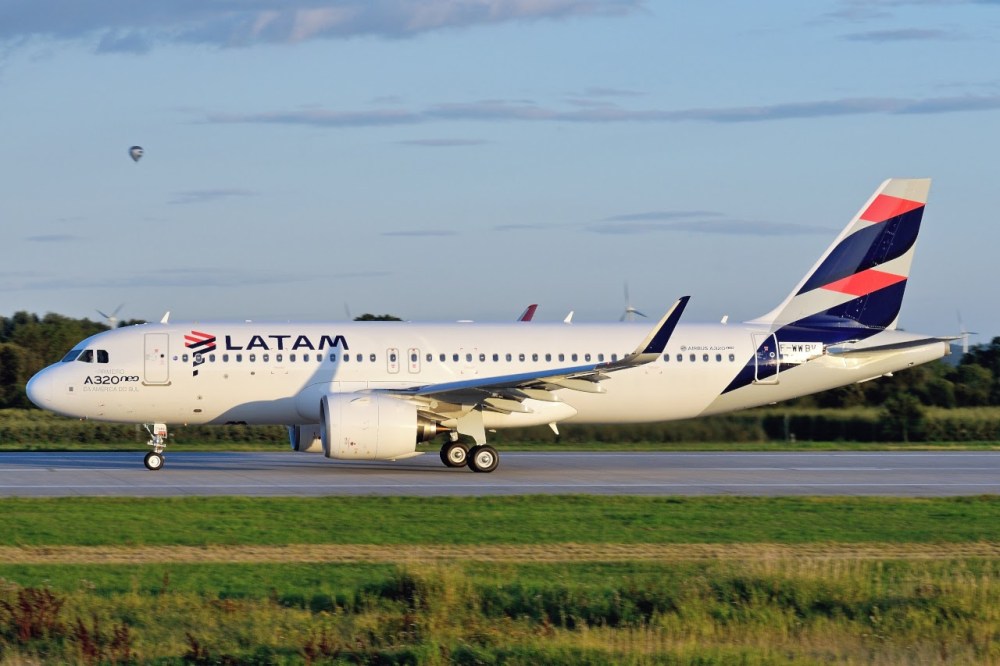
Latam Airlines inicia su nuevo modelo en Chile para vuelos locales

Resultado de imagen para Latam logoLa aerolínea Latam Airlines inició su nuevo modelo low cost en Chile para vuelos locales, donde ofrece tarifas más baratas, permitiendo al pasajero escoger entre cuatro categorías de tarifas por un valor fijo, incluyendo o no servicios.

Latam ofrece durante el año pasajes 20% y 40% más baratos, fuera de las promociones. Cada una de las tarifas tiene opciones, de acuerdo al tipo de viaje que escoja el pasajero con relación a los servicios como transportar la maleta en la bodega sin costo adicional, reservar el asiento con anticipación, tener flexibilidad para cambios o reembolso de pasaje, entre otros servicios. “Entendimos que (los pasajeros) valoran pagar sólo por los servicios que utilizan”, dijo José Luis Rodríguez, gerente general de Latam Airlines Chile, así lo informa La República.

El esquema del nuevo modelo de la aerolínea Latam, se ha ido implementando de manera progresiva en países como Colombia, Argentina, Perú y Brasil. A finales de 2016 como parte de la implementación de un nuevo modelo de viajar en la operación doméstica, lanzó en febrero “Mercado Latam” en Colombia, la nueva tienda a bordo que permite a los pasajeros encontrar una oferta de alimentos y bebidas.

“A poco más de tres meses de haber lanzado el nuevo servicio de compra a bordo, hemos visto que los pasajeros que probaron Mercado Latam han estado muy satisfechos con el servicio y con la variedad y calidad de los productos. Con el nuevo modelo de viajar en nuestros vuelos domésticos, el cual se implementará en el primer semestre del año, seguiremos consolidándonos como la aerolínea líder en América Latina, con la mayor red de destinos, conectando a millones de personas, quienes con más alternativas pagarán por lo que realmente valoran”, indicó en su momento Poitevin. AIRGWAYS ® Icon-AW

Latam starts lowcost model in Chile


Latam Airlines launches new model in Chile for local flights

Imagen relacionadaLatam Airlines has launched its new low cost model in Chile for local flights, where it offers cheaper rates, allowing passengers to choose between four categories of rates for a fixed amount, including services.

Latam offers during the year passes 20% and 40% cheaper, outside the promotions. Each of the rates has options, according to the type of travel chosen by the passenger in relation to services such as transporting the suitcase in the hold without additional cost, reserve the seat in advance, have flexibility to change or reimbursement of passage, between other services. «We understand that the passengers value paying only for the services they use,» said José Luis Rodríguez, general manager of Latam Airlines Chile, as reported by La República.

The scheme of the new model of the airline Latam, has been progressively implemented in countries like Colombia, Argentina, Peru and Brazil. At the end of 2016 as part of the implementation of a new model of traveling in the domestic operation, in February it launched «Latam Market» in Colombia, the new onboard store that allows passengers to find an offer of food and beverages.

«A little more than three months after launching the new onboard purchase service, we have seen that the passengers who tried Mercado Latam have been very satisfied with the service and with the variety and quality of the products. With the new model of travel on our domestic flights, which will be implemented in the first half of the year, we will continue to consolidate ourselves as the leading airline in Latin America, with the largest network of destinations, connecting millions of people, who with more alternatives will pay For what they really value, « Poitevin said at the time. A \ W

Ξ A I R G W A Y S Ξ
SOURCE: Reportur.com
DBk: Airbus.com
AW-POST: 201705221557AR

A \ W   A I R G W A Y S ®