AW | 2021 07 27 15:17 | AVIATION ORGANISMS / GOVERNMENT
APLA analiza medidas de fuerza en la Provincia de Chubut
El Sindicato de la Asociación de Pilotos de Líneas Aéreas (APLA) ha anunciado posibles medidas de fuerza por dos cesantías que se hicieron efectivas jornadas atrás, una de ellas contra un trabajador que es delegado del sindicato aeronáutico APLA que podrían determinar la interrupción de los vuelos en la Provincia de Chubut en la Región Patagonia. Los pilotos no descartan incluso que el conflicto pueda escalar a nivel nacional. El Presidente de APLA, Pablo Biró, ha precisado que uno de los despedidos es delegado de la Asociación. El representante de los pilotos ha manifestado en defensa de los pilotos que se desempeñan en la Dirección de Aeronáutica de Chubut, advirtiendo que tal organización se encuentra en estado de alerta y pronta a adoptar medidas gremiales que podrán afectar la regularidad de los vuelos a la provincia patagónica. El comunicado oficial emitido en la noche de este Lunes 26/07 remite a las denuncias del sindicato sobre lo que consideró un “proceso de persecución y despidos. Mientras que días atrás se inició la persecución sindical y laboral contra los pilotos afiliados a APLA, despidiéndolos y suplantándolos con pilotos de menor licencia”, al tiempo que reclamaron la urgente reincorporación de dos pilotos que fueran cesanteados.
Entre las medidas que podría definir ese sindicato sobre la situación descripta no se descartó la eventual afectación de vuelos en la provincia o hasta alcanzarlos a nivel nacional. «Esperemos que se revierta esta inmoralidad, que el Gobernador tenga un instructor privado volando estos aviones, porque hay un límite», remarcó el Secretario General de APLA apuntando al mandatario patagónico Mariano Arcioni.
APLA pilots force measurements
APLA analyzes force measures in the Province of Chubut
The Union of the Airline Pilots Association (APLA) has announced possible measures of force for two layoffs that took place days ago, one of them against a worker who is a delegate of the aeronautical union APLA that could determine the interruption of flights in the Province of Chubut in the Patagonia Region. The pilots do not even rule out that the conflict could escalate to the national level. The President of APLA, Pablo Biró, has specified that one of the dismissed is a delegate of the Association. The representative of the pilots has declared in defense of the pilots who work in the Directorate of Aeronautics of Chubut, warning that such organization is in a state of alert and ready to adopt union measures that may affect the regularity of flights to the province Patagonian. The official statement issued on the night of this Monday 07/26 refers to the union’s complaints about what it considered a “process of persecution and dismissals. While days ago the union and labor persecution began against the pilots affiliated to APLA, firing them and supplanting them with pilots with less licenses”, while demanding the urgent reinstatement of two pilots who were laid off.
Among the measures that this union could define on the described situation, the eventual impact on flights in the province or even at the national level was not ruled out. «Let’s hope this immorality is reversed, that the Governor has a private instructor flying these planes, because there is a limit», remarked the Secretary General of APLA, pointing to the Patagonian president Mariano Arcioni.
México firma convenio con EEUU para recuperar Categoría 1
México ha firmado un convenio con la Administración Federal de Aviación (FAA) de Estados Unidos para recuperar el grado de su seguridad aérea, degradada a Categoría 2 en Mayo pasado, informó este Domingo 25/07 la Secretaría de Comunicaciones y Transportes (SCT). La Secretaría de Comunicaciones y Transportes reiteró que es prioridad la recuperación de la Categoría 1 (CAT1) para establecer los nieves de seguridad idóneos anteriores a la pandemia.
La FAA anunció el 25 de Mayo de 2021 que rebajaría la calificación a México de Categoría 1 a Categoría 2 en seguridad aérea, con lo cual prohíbe a los transportistas mexicanos ofrecer nuevos servicios o rutas en Estados Unidos. Según su evaluación, el país latinoamericano no cumple con los estándares de la Organización de Aviación Civil Internacional (OACI), la entidad de las Naciones Unidas que regula la aeronáutica mundial. La medida también impide a las aerolíneas estadounidenses comercializar y vender boletos con aerolíneas asociadas mexicanas, aunque no afecta el servicio existente de las aerolíneas mexicanas a Estados Unidos. El Gobierno de los Estados Unidos había expresado sus preocupaciones de seguridad con respecto al sistema de aviación en México. La FAA “identificó varias áreas de incumplimiento de los estándares mínimos de seguridad de la OACI”. La OACI es la Organización de Aviación Civil Internacional, un organismo asociado con las Naciones Unidas que conecta a los reguladores de la aviación de todo el mundo.
Los expertos de la FAA “realizarán visitas a nuestro país que comenzarán el próximo mes de Agosto, a través de las cuales proporcionarán la asistencia técnica necesaria”, anunció la Agencia Federal de Aviación Civil (AFAC) de la SCT en un comunicado. La dependencia dijo que la Enmienda al Memorándum de Entendimiento (MoU) entró en vigor desde el Viernes 23/07. La SCT detalló que los trabajos durante la visita de los expertos estadounidenses implican “una revisión técnica, para determinar si la supervisión de la seguridad operacional a cargo de la AFAC cumple con los estándares mínimos”.
El Gobierno mexicano señaló que los especialistas darán a la autoridad aeronáutica de México un informe de sus hallazgos y sus recomendaciones de mejora. La Secretaría de Comunicaciones y Transportes reiteró que es prioridad la recuperación de la Categoría 1, en el menor tiempo posible, por lo que no se han detenido “bajo ninguna circunstancia las acciones de mejora que permitan solventar lo observado por la FAA”.
Actualmente, las tres compañías aéreas mexicanas cumplen con los estándares de seguridad de la Asociación Internacional de Transporte Aéreo (IATA), mientras que trabajan en conjunto para solucionar lo antes posible esta situación. “Aseguramos a nuestros pasajeros que, cuando vuelan con pilotos de la Asociación ASPA, viajan con pilotos que han cumplido los más altos estándares internacionales en materia de seguridad”, señalaron. Asimismo, ASPA dijo que pone a disposición de la AFAC su experiencia, conocimiento y expertos en materia técnica para ayudar en la solución de los hallazgos que existan en la auditoría.
Aeroméxico mencionó en un comunicado que sus operaciones desde y hacia Estados Unidos no tendrán afectaciones. Además de que la seguridad de sus pasajeros es la máxima prioridad y por ello continuará operando bajo los más altos estándares internacionales. “Todos los boletos, reservaciones, vouchers electrónicos, Puntos Premier y beneficios del programa de lealtad, continuarán vigentes […] Estamos en la mejor disposición de apoyar a las autoridades aeronáuticas de nuestro país para que recuperen la Categoría 1 en beneficio de la industria”, expresaron desde la aerolínea.
Mexico seeks to recover CAT1
Mexico signs an agreement with the US to recover Category 1
Mexico has signed an agreement with the Federal Aviation Administration (FAA) of the United States to recover the degree of its air safety, downgraded to Category 2 last May, reported this Sunday 07/25 the Secretary of Communications and Transportation (SCT). The Ministry of Communications and Transportation reiterated that the recovery of Category 1 (CAT1) is a priority to establish the ideal safety snows prior to the pandemic.
The FAA announced on May 25, 2021 that it would lower Mexico’s rating from Category 1 to Category 2 in air safety, thereby prohibiting Mexican carriers from offering new services or routes in the United States. According to their assessment, the Latin American country does not meet the standards of the International Civil Aviation Organization (ICAO), the United Nations entity that regulates global aeronautics. The measure also prevents US airlines from marketing and selling tickets with Mexican partner airlines, although it does not affect the existing service of Mexican airlines to the United States. The United States Government had expressed its security concerns regarding the aviation system in Mexico. The FAA «identified several areas of non-compliance with ICAO minimum safety standards». ICAO is the International Civil Aviation Organization, a body associated with the United Nations that connects aviation regulators from around the world.
FAA experts «will make visits to our country that will begin next August, through which they will provide the necessary technical assistance», announced the Federal Civil Aviation Agency (AFAC) of the SCT in a statement. The agency said that the Amendment to the Memorandum of Understanding (MoU) entered into force on Friday 07/23. The SCT detailed that the work during the visit of the US experts involves «a technical review, to determine if the safety supervision by the AFAC complies with the minimum standards».
The Mexican government indicated that the specialists will provide the Mexican aeronautical authority with a report of their findings and recommendations for improvement. The Ministry of Communications and Transportation reiterated that the recovery of Category 1 is a priority, in the shortest possible time, so they have not stopped «under any circumstances the improvement actions that allow solving what is observed by the FAA».
Currently, the three Mexican airlines comply with the safety standards of the International Air Transport Association (IATA), while working together to solve this situation as soon as possible. «We assure our passengers that, when they fly with ASPA Association pilots, they are traveling with pilots who have met the highest international safety standards», they said. Likewise, ASPA said that it makes its experience, knowledge and experts in technical matters available to the AFAC to help in solving the findings that exist in the audit.
Aeroméxico mentioned in a statement that its operations to and from the United States will not be affected. In addition to the fact that the safety of its passengers is the highest priority and therefore it will continue to operate under the highest international standards. «All tickets, reservations, electronic vouchers, Premier Points and loyalty program benefits will continue to be valid […] We are in the best position to support the aeronautical authorities of our country to recover Category 1 for the benefit of the industry”, they expressed from the airline.
AW | 2021 07 27 09:47 | AVIATION / GOVERNMENT / AVIATION ORGANISMS
Bruselas modifica reglas de reducción slots para aerolíneas
La Comisión Europea (CE) ha anunciado este 23/07 la propuesta de enmendar la regulación de slots y extendió las reglas de alivio que se adoptaron en Febrero de 2021. A medida que la industria de la aviación comienza a recuperarse del impacto de la crisis de Covid-19, la Comisión Europea sigue determinada a mantener la relajación de las reglas ordinarias de asignación de franjas horarias para las aerolíneas. El alivio se ampliará a la próxima temporada de programación de invierno boreal europeo, que se extiende desde el 31 de Octubre de 2021 hasta el 27 de Marzo de 2022. En lugar de la obligación ordinaria de utilizar al menos el 80% de una serie de slots determinados para conservar derechos históricos de esta última, las aerolíneas solo podrán utilizar el 50% de una serie de slots determinados.
La Comisaria de Transporte, Adina Vălean, dijo que “estoy convencida de que una tasa de utilización de slots del 50% es adecuada para que todas las partes interesadas garanticen un uso eficiente de la capacidad del aeropuerto y al mismo tiempo beneficien a los consumidores. Aún afrontamos incertidumbres en la crisis del Covid-19 y la excepción de ‘no uso justificado de slots’, cuando las medidas impuestas por el estado obstaculizan gravemente la capacidad de los pasajeros para viajar, permanece vigente. Para hacer frente a circunstancias futuras imprevistas sin bloquear indebidamente el aeropuerto”.
IATA, en contra
La Asociación de Transporte Aéreo Internacional (IATA) ha calificado la decisión de la Comisión Europea de establecer el umbral de uso de slots de invierno en el 50% como fuera de contacto con la realidad y argumentó que la CE había ignorado el consejo y la evidencia presentados por los estados miembros de la Unión Europea y la industria de las aerolíneas, que habían defendido un umbral mucho más bajo. “El anuncio de la Comunidad Europea significa que, de Noviembre a Abril, las aerolíneas que operan en aeropuertos con slots regulados deben utilizar al menos la mitad de todas las series que tienen. No hay ningún alivio para devolver los espacios al comienzo de la temporada, lo que permite a las aerolíneas ajustar su horario a la demanda realista o permitir que otras aerolíneas operen. Además, la regla sobre fuerza mayor, por la cual la regla de los slots se suspende si existen circunstancias excepcionales relacionadas con la pandemia de Covid, se ha desactivado para las operaciones dentro de la Unión Europea. El resultado de estos cambios será restringir la capacidad de las aerolíneas para operar con la agilidad necesaria para responder a una demanda impredecible y que cambia rápidamente, lo que genera vuelos innecesarios y que afectan al medio ambiente. También debilitará aún más la estabilidad financiera de la industria y obstaculizará la recuperación de la red mundial de transporte aéreo”, ha dicho la IATA.
CE establishes new slot rules
Brussels modifies rules for reducing slots for airlines
The European Commission (EC) has announced this 07/23 the proposal to amend the slot regulation and extended the relief rules that were adopted in February 2021. As the aviation industry begins to recover from the impact of the crisis of Covid-19, the European Commission remains determined to maintain the relaxation of the ordinary rules of allocation of slots for airlines. The relief will be extended to the next European boreal winter programming season, which runs from October 31, 2021 to March 27, 2022. Instead of the ordinary obligation to use at least 80% of a series of Certain slots to retain historical rights of the latter, airlines will only be able to use 50% of a number of determined slots.
Transport Commissioner Adina Vălean said that “I am convinced that a 50% slot utilization rate is adequate for all stakeholders to ensure efficient use of airport capacity while benefiting consumers at the same time. We still face uncertainties in the Covid-19 crisis and the exception of ‘no justified use of slots’, when the measures imposed by the state seriously impede the ability of passengers to travel, remains in force. To deal with unforeseen future circumstances without unduly blocking the airport”.
IATA, against
The International Air Transport Association (IATA) has described the European Commission’s decision to set the threshold for the use of winter slots at 50% as out of touch with reality and argued that the EC had ignored the advice and the evidence. submitted by the member states of the European Union and the airline industry, who had advocated a much lower threshold. “The announcement of the European Community means that, from November to April, airlines that operate in airports with regulated slots must use at least half of all the series they have. There is no relief to return the slots at the beginning of the season, allowing airlines to adjust their schedule to realistic demand or allowing other airlines to operate. Additionally, the force majeure rule, whereby the slot rule is suspended if there are exceptional circumstances related to the Covid pandemic, has been deactivated for operations within the European Union. The result of these changes will be to restrict the ability of airlines to operate with the agility necessary to respond to unpredictable and rapidly changing demand, resulting in unnecessary and environmentally damaging flights. It will also further weaken the financial stability of the industry and hamper the recovery of the global air transport network”, IATA said.
Avanza el proceso de certificación de Asas Linhas Aéreas. La nueva startup busca un Certificado de Operador Aéreo (AOC) bajo la normativa de RBAC 121 en Brasil para realizar vuelos como aerolínea cargueras. La compañía comenzará sus operaciones con aeronaves Boeing 727-200F. El primer avión, matrícula PR-IOC, se encuentra en Curitiba, Estado de Paraná, bajo mantenimiento del equipo Digex MRO.
Las rutas asignadas estarían enfocadas en regiones mal atendidas o con demanda reprimida en Brasil, aunque no se han dado detalles de estas conexiones. Otro plan de la compañía es entrar en la línea de la Red Postal Nocturna (RPN) de la Oficina de Correos, actualmente servida por Total Linhas Aéreas y Sideral Linhas Aéreas. Los planes de la compañía incluyen la llegada de dos aviones adicionales para finales de año 2021, sin confirmar modelo.
Asas next air certification
Asas Linhas Aéreas approaches AOC certification
The Asas Linhas Aéreas certification process advances. The new startup seeks an Air Operator Certificate (AOC) under the RBAC 121 regulations in Brazil to perform flights as a cargo airline. The company will begin its operations with Boeing 727-200F aircraft. The first aircraft, registration PR-IOC, is located in Curitiba, State of Paraná, under maintenance by the Digex MRO team.
The assigned routes would be focused on regions that are poorly served or with repressed demand in Brazil, although details of these connections have not been given. Another plan of the company is to enter the Nocturnal Postal Network (RPN) line of the Post Office, currently served by Total Linhas Aéreas and Sideral Linhas Aéreas. The company’s plans include the arrival of two additional aircraft by the end of the year 2021, without confirming the model.
Asas com a próxima certificação aérea
Asas Linhas Aéreas aproxima-se da certificação AOC
O processo de certificação da Asas Linhas Aéreas avança. A nova startup busca um Certificado de Operador Aéreo (AOC) sob a regulamentação RBAC 121 no Brasil para realizar vôos como uma companhia aérea de carga. A empresa iniciará suas operações com aeronaves Boeing 727-200F. A primeira aeronave, com o registro PR-IOC, está localizada em Curitiba, Estado do Paraná, em manutenção pela equipe Digex MRO.
As rotas atribuídas seriam focadas em regiões mal servidas ou com demanda reprimida no Brasil, embora os detalhes dessas conexões não tenham sido fornecidos. Outro plano da empresa é entrar na linha da Rede Postal Noturna (RPN) dos Correios, hoje atendida pela Total Linhas Aéreas e pela Sideral Linhas Aéreas. Os planos da empresa incluem a chegada de mais duas aeronaves até o final do ano de 2021, sem a confirmação do modelo.
Exámen 737 debido a un interruptor de presión aire defectuoso
La Administración Federal de Aviación (FAA) instruyó el 15 de Julio de 2021 a las aerolíneas que operan la línea Boeing 737 en todo el mundo a realizar inspecciones de interruptores defectuosos que podrían afectar la presión de altitud en las cabinas de los aviones. Las instrucciones obligaron a quienes operaban aviones Boeing 737 a realizar inspecciones de interruptores y asegurar sus reemplazos. Un total de 2.502 aeronaves matriculadas en los Estados Unidos, así como 9.315 aeronaves en todo el mundo, están comprendidas en esta instrucción. Esta decisión se produjo poco después de que dos presostatos fallaran durante los controles de las estructuras de las alas por parte de un operador durante septiembre, según los informes, en tres modelos diferentes del avión 737, lo que incluyen a todos los aviones 737 MAX entran en el marco de esta directiva.
La agencia de la FAA indicó que el mal funcionamiento de los interruptores podría llevar a la falla en la activación del sistema de advertencia de altitud de la cabina en caso de que el avión supere los 10.000 pies, tiempo durante el cual los niveles de oxígeno podrían caer peligrosamente. La presurización en las cabinas de los aviones tiene como objetivo simular la presión experimentada a 8.000 pies.
Los funcionarios de Boeing dijeron que apoyan «la dirección de la FAA, que hace obligatorio el intervalo de inspección que emitimos a la flota en Junio [2021]». Las sondas y los exámenes realizados posteriormente, tanto en la FAA como en Boeing, han concluido que «la tasa de fallos de ambos interruptores es mucho mayor de lo estimado inicialmente y, por lo tanto, plantea un problema de seguridad». Sin embargo, Boeing no proporcionó información sobre la tasa de fallos.
Directive 737 air pressure switch
Exam 737 due to a faulty air pressure switch
The Federal Aviation Administration (FAA) instructed airlines operating the Boeing 737 line around the world on July 15, 2021 to conduct inspections for faulty switches that could affect altitude pressure in aircraft cabins. The instructions forced those who operated Boeing 737 aircraft to conduct switch inspections and secure their replacements. A total of 2,502 aircraft registered in the United States, as well as 9,315 aircraft worldwide, are covered by this instruction. This decision came shortly after two pressure switches failed during an operator’s checks of the wing structures during September, reportedly on three different models of the 737 aircraft, including all 737 MAX aircraft entering within the framework of this directive.
The FAA agency indicated that the malfunction of the switches could lead to the failure in the activation of the cabin altitude warning system in case the plane exceeds 10,000 feet, during which time the oxygen levels could fall dangerously. Pressurization in aircraft cabins is intended to simulate the pressure experienced at 8,000 feet.
Boeing officials said they support «the direction of the FAA, which makes mandatory the inspection interval we issue to the fleet in June [2021]». Probes and subsequent testing at both the FAA and Boeing have concluded that «the failure rate for both switches is much higher than initially estimated and therefore poses a safety concern». However, Boeing did not provide information on the failure rate.
Start up paquistaní Alvir Airways en busca de ERJs
La nueva aerolínea paquistaní Alvir Airways ha obtenido la licencia de operación de Promoción Turística e Integración Regional (TPRI) por parte de la Autoridad de Aviación Civil de Pakistán (PCAA). El comunicado emitido por el portavoz de PCCA, Saad Bin Ayub, indicó que bajo la Política Nacional de Aviación de 2019, la licencia TPRI proporcionada a Alvir Airways sería válida por cinco años hasta Junio de 2026. El Director General Khaqan Murtaza y otras autoridades de la PCAA presentaron la licencia a Alvir Airways, Tehseen Awan, la Gerente General Syeda Huma Batool y el Director de Operaciones Shahzaib Mahmood en una ceremonia en la Sede de Aviación Civil, Karachi, el 12 Julio de 2021. Alvir Airways planea operar desde tres ubicaciones en Pakistán, Karachi, Lahore, Islamabad Quaid-e-Azam, tres aeropuertos principales de Pakistán para gwadar, Skardu y turbat turismo de las regiones y ampliar el horizonte del acceso aéreo regional.
Se espera que la operación TRPI de las aerolíneas facilite tanto a los nativos como a los extranjeros explorar Pakistán a través de un modo de transporte aéreo seguro y cómodo, presentando una mejor imagen de Pakistán al mundo. Incluso las Aerolíneas Internacionales de Pakistán contribuyeron a la promoción del turismo del país, las aerolíneas internacionales comenzaron los vuelos de Faisalabad a Skardu, llevando a 129 pasajeros en su primer vuelo el 7 Julio de 2021. Además de promover el turismo interno en el país, el Aeropuerto Internacional de Pakistán también proporcionó un nuevo modo de transporte aéreo e instalaciones de carga en la ruta de Faisalabad y Skardu, satisfaciendo finalmente la demanda de larga data de las comunidades de negocios y los residentes de las principales ciudades.
Alvir, seleccionando Embraer
La aerolínea Alvir Airways planea arrendar dos aviones Embraer E195-E2 y E145, en su flota para comenzar el servicio y tiene la intención de agregar más del tipo en su servicio más adelante. En la primera fase de su servicio, Alvir Airways pretende cubrir vuelos nacionales solo antes de comprar más aviones. Promoviendo el turismo local, la compañía aérea también tiene la intención de crear oportunidades de empleo en el sector de la aviación y asegurar una posición importante en el segmento de la aviación de Pakistán.
Los E-Jets de nueva generación están construidos con la tasa de operación de aeronaves más baja posible para que puedan llevar las cargas útiles más altas que generan ingresos. Enfatizando la proporción de consumo de combustible con respecto a la variable de peso de la aeronave, Embraer diseñó los jetliners del segmento E con una línea de base de ahorro de costos más ligera, lo que ha convertido a los E-Jets en los líderes en la mejor categoría de costo por viaje. Además, las características sostenibles y ecológicas de estos aviones los hacen excepcionales, la integración de nuevos materiales fonoabsorbentes, la producción más ligera y un sistema más silencioso, por lo que estos E-Jets pueden funcionar sin compromisos y de manera eficiente incluso en los aeropuertos sensibles al ruido.
La variante E195-E2 del popular segmento E-Jets tiene ajustes de cabina de doble clase, puede transportar 116 pasajeros. La aeronave tiene un peso máximo de despegue de 52.290 kg, un peso máximo de aterrizaje de 45.800 kg y una carga útil máxima de 13.917 kg. E195-E2 propulsado por los motores CF34, el avión puede transportar pasajeros completamente cargados hasta una distancia de 2,300 millas en un solo vuelo. Del mismo modo, otro de los principales contendientes en el segmento, E145 ofrece el equilibrio adecuado entre frecuencia y capacidad; el ERJ145 está diseñado para suavizar la demanda de vuelos durante todo el día. Este popular avión del segmento regional con la capacidad de tamaño adecuado ha estado dando un gran rendimiento durante más de 20 años, cubriendo más de 26 millones de horas de vuelo, y actualmente está en servicio con 36 aerolíneas de 26 países en todo el mundo.
La construcción inicial para funcionar en el mercado sin explotar permite a las aerolíneas operar una forma de bajo riesgo de abrir servicios en el nuevo mercado potencial. El E145 tiene un peso máximo de despegue de 22.000 kg, un peso máximo de aterrizaje de 19.300 kg y una carga útil máxima de 5.786 kg. Los aviones regionales que pueden acomodar hasta 50 pasajeros y pueden cubrir una distancia de hasta 1.550 millas con la versión de largo alcance (LR) y hasta 2.000 millas con la versión extra range (XR).
Albir Airways will select Embraer
Pakistani startup Alvir Airways looking for ERJs
The new Pakistani airline Alvir Airways has obtained the Tourism Promotion and Regional Integration (TPRI) operating license from the Pakistan Civil Aviation Authority (PCAA). The statement issued by PCCA spokesperson Saad Bin Ayub indicated that under the 2019 National Aviation Policy, the TPRI license provided to Alvir Airways would be valid for five years until June 2026. Director General Khaqan Murtaza and other authorities of The PCAA presented the license to Alvir Airways, Tehseen Awan, General Manager Syeda Huma Batool and Director of Operations Shahzaib Mahmood at a ceremony at Civil Aviation Headquarters, Karachi, on July 12, 2021. Alvir Airways plans to operate from three locations in Pakistan, Karachi, Lahore, Islamabad Quaid-e-Azam, Pakistan’s three main airports for gwadar, Skardu and turbat tourism regions and expand the horizon of regional air access.
The airlines’ TRPI operation is expected to make it easier for both locals and foreigners to explore Pakistan through a safe and comfortable mode of air transportation, presenting a better image of Pakistan to the world. Even Pakistan International Airlines contributed to promoting the country’s tourism, international airlines began flights from Faisalabad to Skardu, carrying 129 passengers on their first flight on July 7, 2021. In addition to promoting domestic tourism in the country, Pakistan International Airport also provided a new mode of air transportation and cargo facilities on the Faisalabad and Skardu route, finally meeting the long-standing demand from business communities and residents of major cities.
Alvir, selecting Embraer
The airline Alvir Airways plans to lease two Embraer aircraft, E195-E2 and E145, in its fleet to begin service and intends to add more of the type in its service later on. In the first phase of its service, Alvir Airways intends to cover domestic flights only before purchasing more aircraft. By promoting local tourism, the airline also intends to create job opportunities in the aviation sector and secure an important position in the Pakistani aviation segment.
Next-generation E-Jets are built with the lowest possible aircraft operating rate so they can carry the highest revenue-generating payloads. Emphasizing the ratio of fuel consumption to aircraft weight variable, Embraer designed E-segment jetliners with a lighter cost-saving baseline, which has made E-Jets the leaders in the best category of cost per trip. In addition, the sustainable and ecological characteristics of these aircraft make them exceptional, the integration of new sound absorbing materials, the lighter production and a quieter system, so these E-Jets can operate without compromise and efficiently even in airports. sensitive to noise.
The E195-E2 variant of the popular E-Jets segment has double-class cabin settings, it can carry 116 passengers. The aircraft has a maximum takeoff weight of 52,290 kg, a maximum landing weight of 45,800 kg, and a maximum payload of 13,917 kg. E195-E2 powered by CF34 engines, the aircraft can carry fully loaded passengers up to a distance of 2,300 miles in a single flight. Similarly, another top contender in the segment, E145 offers the right balance between frequency and capacity; The ERJ145 is designed to smooth the demand for flights throughout the day. This popular regional segment aircraft with the right size capacity has been performing well for more than 20 years, covering more than 26 million flight hours, and is currently in service with 36 airlines from 26 countries around the world.
Initial construction to operate in the untapped market allows airlines to operate a low-risk way of opening services in the new potential market. The E145 has a maximum takeoff weight of 22,000 kg, a maximum landing weight of 19,300 kg, and a maximum payload of 5,786 kg. Regional aircraft that can accommodate up to 50 passengers and can cover a distance of up to 1,550 miles with the long-range version (LR) and up to 2,000 miles with the extra range (XR) version.
ستختار ألبير إيرويز إمبراير
شركة طيران باكستانية ناشئة تبحث عن ERJs
حصلت شركة الطيران الباكستانية الجديدة Alvir Airways على رخصة تشغيل الترويج السياحي والتكامل الإقليمي (TPRI) من هيئة الطيران المدني الباكستانية (PCAA). وأشار البيان الصادر عن المتحدث باسم PCCA سعد بن أيوب إلى أنه بموجب سياسة الطيران الوطنية لعام 2019 ، ستكون رخصة TPRI المقدمة إلى Alvir Airways صالحة لمدة خمس سنوات حتى يونيو 2026. قدم المدير العام خاقان مرتضى وسلطات أخرى في PCAA الترخيص إلى Alvir الخطوط الجوية ، تحسين أوان ، المدير العام سيدا هوما بتول ومدير العمليات شهزيب محمود في حفل أقيم في مقر الطيران المدني ، كراتشي ، في 12 يوليو 2021. تخطط شركة ألفير للطيران للعمل من ثلاثة مواقع في باكستان ، كراتشي ، لاهور ، إسلام أباد كويد- e-Azam ، المطارات الرئيسية الثلاثة في باكستان لمناطق السياحة جوادر وسكاردو وتربات وتوسيع أفق الوصول الجوي الإقليمي.
من المتوقع أن تسهل عملية TRPI الخاصة بشركات الطيران على السكان المحليين والأجانب على حد سواء استكشاف باكستان من خلال وسيلة نقل جوي آمنة ومريحة ، مما يقدم صورة أفضل عن باكستان للعالم. حتى الخطوط الجوية الباكستانية الدولية ساهمت في الترويج للسياحة في البلاد ، بدأت الخطوط الجوية الدولية رحلات من فيصل أباد إلى سكاردو ، تحمل 129 راكبًا في أول رحلة لها في 7 يوليو 2021. بالإضافة إلى الترويج للسياحة الداخلية في البلاد ، قدم مطار باكستان الدولي أيضًا رحلة جديدة طريقة النقل الجوي ومرافق الشحن على طريق فيصل أباد وسكاردو ، مما أدى أخيرًا إلى تلبية الطلب طويل الأمد من مجتمعات الأعمال وسكان المدن الكبرى.
ألفير ، واختيار امبراير
تخطط شركة الطيران Alvir Airways لاستئجار طائرتين من طراز Embraer ، E195-E2 و E145 ، في أسطولها لبدء الخدمة وتعتزم إضافة المزيد من هذا النوع في خدمتها لاحقًا. في المرحلة الأولى من خدمتها ، تنوي ألفير إيرويز تغطية الرحلات الداخلية فقط قبل شراء المزيد من الطائرات. من خلال الترويج للسياحة المحلية ، تعتزم شركة الطيران أيضًا خلق فرص عمل في قطاع الطيران وتأمين مكانة مهمة في قطاع الطيران الباكستاني.
تم تصميم الجيل التالي من الطائرات الإلكترونية بأقل معدل تشغيل ممكن للطائرات حتى تتمكن من حمل أعلى حمولات مدرة للدخل. تأكيدًا على نسبة استهلاك الوقود إلى وزن الطائرة المتغير ، صممت شركة Embraer طائرات نفاثة من الفئة E مع خط أساس أخف موفرًا للتكلفة ، مما جعل E-Jets رائدة في فئة أفضل تكلفة لكل رحلة. بالإضافة إلى ذلك ، فإن الخصائص المستدامة والبيئية لهذه الطائرات تجعلها استثنائية ، ودمج مواد جديدة لامتصاص الصوت ، وإنتاج أخف ونظام أكثر هدوءًا ، لذلك يمكن لهذه الطائرات الإلكترونية أن تعمل دون تنازلات وبكفاءة حتى في المطارات. حساسة للضوضاء.
يحتوي متغير E195-E2 من فئة E-Jets الشهيرة على إعدادات مقصورة من الدرجة المزدوجة ، ويمكن أن تحمل 116 راكبًا. يبلغ الحد الأقصى لوزن الإقلاع للطائرة 52.290 كجم ، ويبلغ أقصى وزن هبوط 45.800 كجم ، وحمولة قصوى تبلغ 13917 كجم. يمكن للطائرة E195-E2 التي تعمل بمحركات CF34 أن تحمل ركابًا محملين بالكامل لمسافة تصل إلى 2300 ميل في رحلة واحدة. وبالمثل ، فإن المنافس الرئيسي الآخر في هذا القطاع ، E145 يوفر التوازن الصحيح بين التردد والسعة ؛ تم تصميم ERJ145 لتسهيل الطلب على الرحلات الجوية على مدار اليوم. تعمل هذه الطائرة الإقليمية الشهيرة ذات السعة المناسبة الحجم بشكل جيد لأكثر من 20 عامًا ، وتغطي أكثر من 26 مليون ساعة طيران ، وهي حاليًا في الخدمة مع 36 شركة طيران من 26 دولة حول العالم.
يسمح البناء الأولي للعمل في السوق غير المستغلة لشركات الطيران بتشغيل طريقة منخفضة المخاطر لفتح الخدمات في السوق المحتملة الجديدة. يبلغ وزن الإقلاع الأقصى للطائرة E145 22000 كجم ، ووزن الهبوط الأقصى 19300 كجم ، والحمولة القصوى البالغة 5786 كجم. الطائرات الإقليمية التي يمكن أن تستوعب ما يصل إلى 50 راكبًا ويمكن أن تغطي مسافة تصل إلى 1550 ميلًا مع الإصدار بعيد المدى (LR) وما يصل إلى 2000 ميل مع الإصدار الإضافي (XR).
AW | 2021 07 18 17:37 | AIRLINES MARKET / AVIATION ORGANISMS / GOVERNMENT
INAC establece reactivación de operaciones aéreas
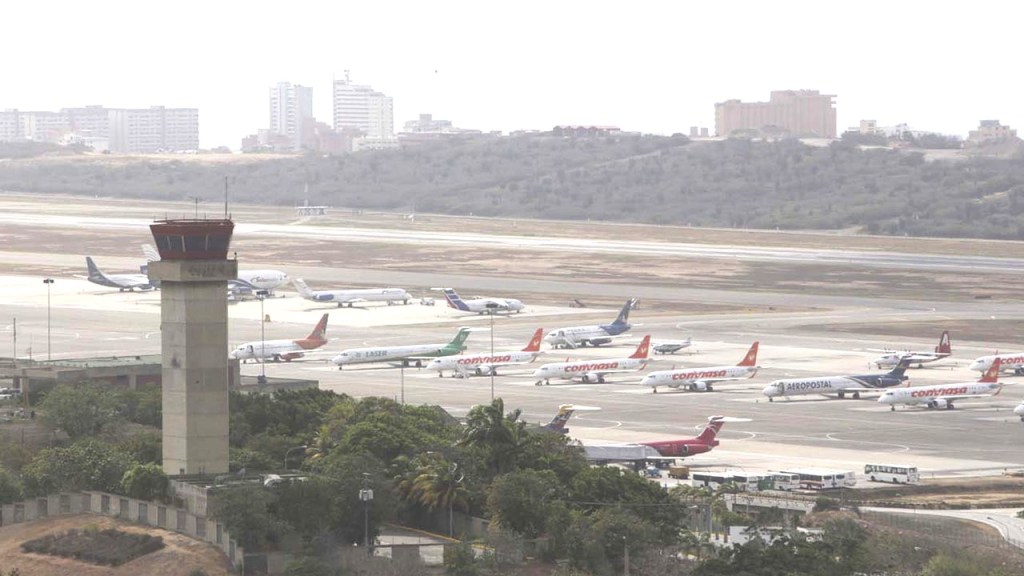
El documento que ha publicado el organismo de control de la aviación en la República de Venezuela, el Instituto Nacional de Aeronáutica Civil (INAC), reemplazará las acciones tomadas por la máxima autoridad aeronáutica el 12 de Marzo de 2020. El nuevo instructivo para la reactivación de las operaciones aéreas que debe cumplirse en los próximos treinta días pondrá a disposición la reactivación de la red aérea.
La autoridad aeronáutica diseñó un nuevo protocolo de inspecciones de las aeronaves para la revisión de certificaciones, capacitaciones de tripulaciones, entre otros ítems. El procedimiento establece una serie de condiciones operacionales y de mantenimiento que se deben cumplir en un lapso de treinta días a partir de la publicación del instructivo. Las compañías aéreas deberán presentar el control actualizado de mantenimiento, esto incluye: servicios, inspecciones de corrosión, inspecciones estructurales, procedimientos requeridos, seguro vigente de las aeronaves, el certificado por la gerencia general de transporte aéreo y las licencias vigentes.
Esta medida reemplazaría las acciones tomadas por la máxima autoridad aeronáutica, que fueron declaradas el 12 de Marzo de 2020, para hacer frente a la pandemia por Covid-19. Las líneas aéreas podrán prestar servicio aerocomercial solo en las semanas de flexibilización. Pero, es importante recordar que este Lunes 19/07, el Gobierno de Venezuela anunciará si este esquema se mantiene o si se modificará hacia una flexibilización permanente regulada y vigilada, pero sin confinamientos generalizados.
Venezuela reactivation air operations
INAC establishes reactivation of air operations
The document published by the aviation control body in the Republic of Venezuela, the National Institute of Civil Aeronautics (INAC), will replace the actions taken by the highest aeronautical authority on March 12, 2020. The new instructions for reactivation of the air operations that must be completed in the next thirty days will make available the reactivation of the air network.
The aeronautical authority designed a new aircraft inspection protocol for the review of certifications, crew training, among other items. The procedure establishes a series of operational and maintenance conditions that must be met within a period of thirty days from the publication of the instructions. The airlines must present the updated maintenance control, this includes: services, corrosion inspections, structural inspections, required procedures, current aircraft insurance, the certificate by the general air transport management and current licenses.
This measure would replace the actions taken by the highest aeronautical authority, which were declared on March 12, 2020, to face the Covid-19 pandemic. The airlines will be able to provide commercial air service only in the weeks of relaxation. But, it is important to remember that this Monday 07/19, the Government of Venezuela will announce if this scheme is maintained or if it will be modified towards a permanent regulated and monitored flexibility, but without generalized confinements.
La aerolínea nigeriana Cardinal Airlines Limited continúa con el proceso del Certificado de Operador Aéreo (AOC) con la Autoridad de Aviación Civil de Nigeria (NCAA) con planes de comenzar las operaciones domésticas desde Abuja a finales del tercer trimestre de 2021. La compañía ha solicitado el uso de aviones Embraer y turbohélices Avions de Transport Régional Aircraft (ATR) debido a su rentabilidad en rutas nacionales y regionales. Su solicitud de Licencia de Transporte Aéreo (ATL) se encuentra en una etapa avanzada, según los informes. La compañía fue registrada en Abuja el 15 de Julio de 2019.
Según los informes, el fundador y Presidente de Cardinal Airlines, Alhaji Masud Bashir, que tiene experiencia en bienes raíces, lanzó la empresa para ofrecer pasajes aéreos más asequibles a los nigerianos. La aerolínea tendrá su base operativa en Abuja, pero operará en todos los aeropuertos del país, reveló, y agregó que planea despegar con cuatro aviones y luego aumentar la flota a medida que avancen las operaciones.
Pluralidad aerolíneas
A pesar de los reveses económicos relacionados por la pandemia, Nigeria está viendo un auge en los nuevos operadores. Green Africa Airways esperaba comenzar en Junio de 2021, pero esto se retrasó a Julio 2021, pues su AOC no estaba disponible antes de esa fecha debido a circunstancias imprevistas, anunció la compañía en las redes sociales. Desde entonces se han abierto reservas para vuelos a partir del 1 de Agosto de 2021. Esto sigue a Ibom Air que comenzó a operar en 2019, seguido de United Nigeria, en Febrero de 2021. Chanchangi Airlines está tratando de hacer una reaparición después de haber obtenido un AOC en Abril de 2021. También espera en las alas está NG Eagle Airlines que se encuentra en las etapas finales de certificación de su AOC, ha confirmado la NCAA, así como Binani Air, Obike Air y ahora Cardinal Airlines.
El ex Director Ejecutivo de Aero Contractors, Ado Sanusi, dijo que la aparición de nuevas aerolíneas estaba siendo posible gracias a que el Gobierno Federal estaba creando un entorno más propicio mediante la introducción de políticas para estimular nuevas inversiones en la industria de la aviación, como la eliminación de los derechos de importación y el impuesto al valor agregado sobre las aeronaves y repuestos importados. La industria también ha estado anticipando un mejor acceso a las divisas. Más aerolíneas no significan necesariamente una dilución del mercado existente, dijo, ya que muchas desarrollarán rutas secundarias.
Cardinal Airlines seeks certification
Nigerian startup to launch ops in 3Q2021
Nigerian airline Cardinal Airlines Limited is continuing the Air Operator Certificate (AOC) process with the Nigerian Civil Aviation Authority (NCAA) with plans to start domestic operations from Abuja by the end of the third quarter of 2021. The company has applied the use of Embraer aircraft and Avions de Transport Régional Aircraft (ATR) turboprops due to their profitability on national and regional routes. His application for an Air Transport License (ATL) is in an advanced stage, according to reports. The company was registered in Abuja on July 15, 2019.
Cardinal Airlines founder and Chairman Alhaji Masud Bashir, who has a background in real estate, reportedly launched the company to offer more affordable airfare to Nigerians. The airline will have its operational base in Abuja, but will operate in all airports in the country, he revealed, adding that it plans to take off with four planes and then increase the fleet as operations progress.
Airlines plurality
Despite the economic setbacks related to the pandemic, Nigeria is seeing a boom in new entrants. Green Africa Airways expected to start in June 2021, but this was delayed to July 2021 as its AOC was not available before then due to unforeseen circumstances, the company announced on social media. Since then they have opened bookings for flights as of August 1, 2021. This follows Ibom Air which started operating in 2019, followed by United Nigeria, in February 2021. Chanchangi Airlines is trying to make a comeback after having obtained an AOC in April 2021. Also waiting in the wings is NG Eagle Airlines which is in the final stages of certifying its AOC, the NCAA has confirmed, as well as Binani Air, Obike Air and now Cardinal Airlines.
Former Aero Contractors CEO Ado Sanusi said the emergence of new airlines was being made possible by the Federal Government creating a more conducive environment by introducing policies to stimulate new investment in the aviation industry, such as the elimination of import duties and the value added tax on imported aircraft and spare parts. The industry has also been anticipating better access to foreign exchange. More airlines do not necessarily mean dilution of the existing market, he said, as many will develop secondary routes.
La Cámara de Líneas Aéreas de Argentina JURCA señaló que con la normativa que rige desde el Viernos 09/07, que establece los límites de cupos de vuelos, también se autoriza una menor cantidad de pasajeros por avión poniendo en riesgo la continuidad de los vuelos, señaló la agrupación aérea. De esta manera, enfáticamente JURCA reclamó al Gobierno evaluar y reconsiderar la manera en que fueron renovadas las restricciones a los vuelos provenientes desde el exterior, en el marco de las medidas sanitarias contra la pandemia, que según la asociación que nuclea a las líneas aéreas internacionales, con la modalidad que rige desde el 09/07, ahora se autorizan vuelos con un tope de pasajeros por avión que no tiene en cuenta «la pérdida económica que implica operar los escasos vuelos autorizados. A la fecha ya se han retirado de nuestro país cuatro líneas aéreas y hoy diez las que han suspendido sus operaciones por los cierres de fronteras. Debido a la falta de previsibilidad y planificación, otros asociados están analizando que, de mantenerse las condiciones de operatividad actuales, deberían definir la suspensión de su actividad en nuestro país», sostiene en el comunicado, que firma el Director Ejecutivo de Jurca, Felipe Baravalle.
Mercado diezmado
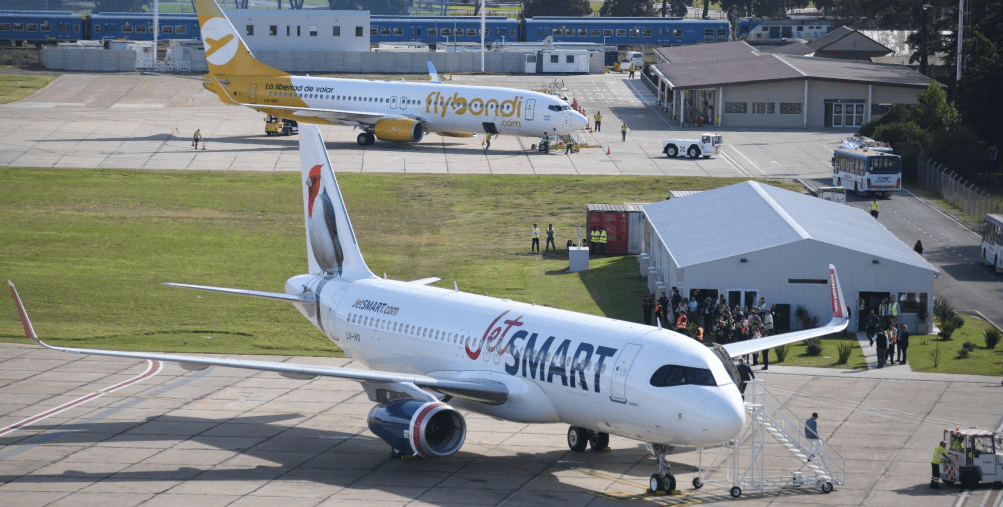
Según el listado de la cámara JURCA, han dejado de volar hacia el mercado argentino Qatar Airways, Air New Zealand y Norwegian International Airlines; mientras que otras han suspendido sus operaciones a raíz de las restricciones por la pandemia: British Airways, Cubana de Aviación, Emirates Airline, Ethiopian Airlines, Alitalia, Air Canada, Sky Airline, Gol Linhas Aéreas, Azul Linhas Aéreas y Level Airlines. En el mercado local doméstico, han desaparecido del mapa de cabotaje aerolíneas como Austral Líneas Aéreas absorbida por presión sindical por parte de Aerolíneas Argentinas, Latam Airlines Argentina, perseguida históricamente por parte del la agrupación kirchnerista La Cámpora, y otras afectadas gravemente por la situación económica-pandémica como Flyest Líneas Aéreas, LASA Líneas Aéreas. Actualmente, Aerolíneas Argentinas detenta un 75-80% del mercado de cabotaje, mientras que apenas sobreviven en los papeles compañías como Andes Líneas Aéreas cuyo futuro continúa en el anonimato. Las low cost JetSmart Airlines Argentina y Flybondi Líneas Aéreas continúan volando gracias a la cintura económica brindada por sus matrices, pero afrontando déficit financiero que buscan revertir en un ambiente aeronáutico dominado por la desidia política y la falta de determinación a los estímulos a la aviación comercial.
El 26 de Junio de 20221, la cantidad de pasajeros que pueden llegar a Ezeiza fue reducida del tope que regía desde Abril 2021 era menor a 2.000 pasajeros por día a un tope máximo de 600. En ese contexto, la cámara que agrupa a las líneas extranjeras en el país solicitó una reunión con el Jefe de Gabinete, Santiago Cafiero. También lo hizo la Asociación Internacional de Líneas Aéreas (IATA), cuyos directivos finalmente fueron recibidos, vía zoom, por la titular de la Agencia Nacional de Aviación Civil (ANAC), Paola Tamburelli. Luego de aquella reunión, desde el Gobierno se aseguró que el cepo a los vuelos sería flexibilizado. Pero tras la publicación de la Decisión Administrativa 683/2021, publicada el viernes de la semana pasada, la ANAC comenzó a emitir más autorizaciones de vuelos, pero con una menor cantidad de pasajeros por avión, según señaló JURCA: «En virtud de las aprobaciones de vuelos recibidas desde ANAC por nuestras asociadas, encontramos con sorpresa que, a pesar de haberse incrementado la cantidad de vuelos, en muchos casos se ha reducido aún más la capacidad de ocupación de las aeronaves. Eso es no medir ni cuantificar la pérdida económica que implica operar los escasos vuelos autorizados, al punto de poner en riesgo la continuidad de los mismos y la conectividad actual de nuestro país con el resto del mundo. Aún más, la industria aeronáutica no ha participado en la planificación, distribución y asignación de las nuevas frecuencias, realizándose una implementación sin coordinación previa ni trabajo conjunto de las autoridades locales y los organismos de aviación (ANAC) con las compañías aéreas en Argentina». De esta manera, se aprueban vuelos pero se limita la cantidad de pasajeros que pueden abordarlos a un número menor aún que con la norma anterior.
JURCA, planteó que la ANAC sigue sin autorizar nuevos vuelos más allá de las fechas inmediatas: «A los ciudadanos y residentes argentinos imposibilitados de regresar a su país no se le puede informar una fecha cierta de regreso, ya que sólo se han autorizado vuelos y capacidades hasta el 31 de Julio, desconociendo la industria qué se va a autorizar o denegar con posterioridad a dicha fecha». Además, señaló que aun con las nuevas ampliaciones del cupo, que sube de manera progresiva hasta comienzos de agosto, es insuficiente para traer a todos los argentinos varados en el exterior: «La norma publicada el 9 de Julio ahora menciona un cupo de pasajeros semanales y lleva el mismo a 742 diarios para la primera semana de aplicación, y a 900 y 1000 pasajeros en las semanas subsiguientes. Está claro que estos montos siguen siendo insuficientes para resolver el problema ocasionado».
Según la IATA, sólo hasta la semana pasada había 14.000 argentinos varados en el exterior, a causa de las nuevas restricciones aplicadas desde fines de Junio 2021. Esa cifra podría trepar ahora a alrededor de 20.000 pasajeros.
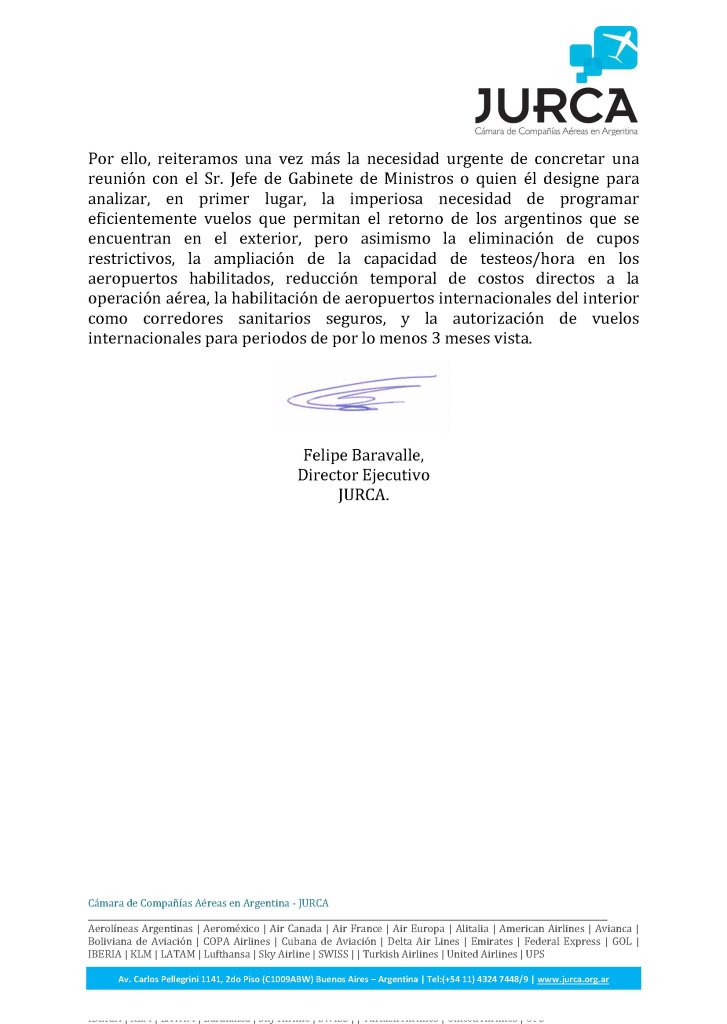
Las restricciones que se aplican a nivel local son un caso único. «La industria aérea requiere contar con un marco de funcionamiento de mayor previsibilidad, como sucede incluso en esta época de pandemia en los más de 1.500 destinos a los que se vuela hoy alrededor del mundo. Reiteramos una vez más la necesidad urgente de concretar una reunión con el Sr. Jefe de Gabinete de Ministros o quien él designe para analizar, en primer lugar, la imperiosa necesidad de programar eficientemente vuelos que permitan el retorno de los argentinos que se encuentran en el exterior», señaló el organismo de la JURCA. También enumeró una serie de reclamos adicionales, tanto en cuestiones operativas como económicas, entre ellas, «la eliminación de cupos restrictivos, la ampliación de la capacidad de testeos/hora en los aeropuertos habilitados, reducción temporal de costos directos a la operación aérea, la habilitación de aeropuertos internacionales del interior como corredores sanitarios seguros, y la autorización de vuelos internacionales para periodos de por lo menos tres meses vista».
Airlines in Argentina against restrictions
Strong statement from JURCA to the Argentine Government
The Chamber of Air Lines of Argentina JURCA pointed out that with the regulations that have been in force since Winters 09/07, which establishes the limits of flight quotas, a lower number of passengers per plane is also authorized, putting the continuity of flights at risk, noted the aerial grouping. In this way, JURCA emphatically demanded that the Government evaluate and reconsider the way in which the restrictions on flights from abroad were renewed, within the framework of health measures against the pandemic, which according to the association that brings together international airlines With the modality in force since 07/09, flights are now authorized with a maximum number of passengers per plane that does not take into account «the economic loss involved in operating the few authorized flights. To date, they have already been withdrawn from our country four airlines and today ten those that have suspended their operations due to border closures. Due to the lack of predictability and planning, other associates are analyzing that, if current operating conditions are maintained, they should define the suspension of their activity in our country», says the statement, signed by the Executive Director of Jurca, Felipe Baravalle.
Decimated market
According to the JURCA camera listing, Qatar Airways, Air New Zealand and Norwegian International Airlines have stopped flying to the Argentine market; While others have suspended their operations due to restrictions due to the pandemic: British Airways, Cubana de Aviación, Emirates Airline, Ethiopian Airlines, Alitalia, Air Canada, Sky Airline, Gol Linhas Aéreas, Azul Linhas Aéreas and Level Airlines. In the domestic local market, airlines such as Austral Líneas Aéreas, absorbed by union pressure from Aerolíneas Argentinas, Latam Airlines Argentina, historically persecuted by the Kirchnerist group La Cámpora, and others seriously affected by the economic situation have disappeared from the cabotage map pandemic such as Flyest Líneas Aéreas, LASA Líneas Aéreas. Currently, Aerolíneas Argentinas holds 75-80% of the cabotage market, while companies such as Andes Líneas Aéreas, whose future remains anonymous, barely survive on paper. The low cost JetSmart Airlines Argentina and Flybondi Líneas Aéreas continue to fly thanks to the economic waistline provided by their parent companies, but facing financial deficits that seek to reverse in an aeronautical environment dominated by political laziness and lack of determination to stimulate commercial aviation.
On June 26, 20221, the number of passengers that can reach Ezeiza was reduced from the limit that had been in force since April 2021 was less than 2,000 passengers per day to a maximum limit of 600. In this context, the chamber that groups the lines foreigners in the country requested a meeting with the Chief of Cabinet, Santiago Cafiero. So did the International Airline Association (IATA), whose directors were finally received, via zoom, by the head of the National Civil Aviation Agency (ANAC), Paola Tamburelli. After that meeting, the Government made sure that the flight trap would be made more flexible. But after the publication of Administrative Decision 683/2021, published on Friday of last week, the ANAC began to issue more flight authorizations, but with fewer passengers per plane, according to JURCA: «By virtue of the flight approvals received from ANAC by our associates, we found to our surprise that, despite the increase in the number of flights, in many cases the occupancy capacity of the aircraft has been further reduced. That is not to measure nor quantify the economic loss involved in operating the few authorized flights, to the point of jeopardizing their continuity and the current connectivity of our country with the rest of the world. Furthermore, the aeronautical industry has not participated in the planning, distribution and assignment of the new frequencies, carrying out an implementation without prior coordination or joint work of the local authorities and the aviation organizations (ANAC) with the airlines in Argentina». In this way, flights are approved but the number of passengers who can board them is limited to an even smaller number than with the previous rule.
JURCA, stated that the ANAC still does not authorize new flights beyond the immediate dates: «Argentine citizens and residents unable to return to their country cannot be informed of a certain date of return, since only flights have been authorized and capacities until July 31, the industry not knowing what will be authorized or denied after that date». In addition, he pointed out that even with the new extensions of the quota, which increases progressively until the beginning of August, it is insufficient to bring all Argentines stranded abroad: «The norm published on July 9 now mentions a weekly passenger quota and it carries the same to 742 daily for the first week of application, and to 900 and 1000 passengers in the subsequent weeks. It is clear that these amounts are still insufficient to solve the problem caused».
According to the IATA, only until last week there were 14,000 Argentines stranded abroad, due to the new restrictions applied since the end of June 2021. That figure could now climb to around 20,000 passengers.
Restrictions that apply locally are unique. «The airline industry requires a more predictable operating framework, as is the case even in this time of pandemic in the more than 1,500 destinations that are flown around the world today. We reiterate once again the urgent need to hold a meeting with the Chief of the Cabinet of Ministers or whoever he designates to analyze, in the first place, the imperative need to efficiently schedule flights that allow the return of Argentines who are abroad, «said the JURCA body. He also listed a series of additional claims, both in operational and economic matters, among them, «the elimination of restrictive quotas, the expansion of the testing capacity / hour in the authorized airports, temporary reduction of direct costs to the air operation, the qualification of international airports in the interior as safe health corridors, and authorization of international flights for periods of at least three months ahead».
AW | 2021 07 12 23:30 | AVIATION ORGANISMS / GOVERNMENT / AIRLINES ROUTES
Compañías informan frecuencias internacionales
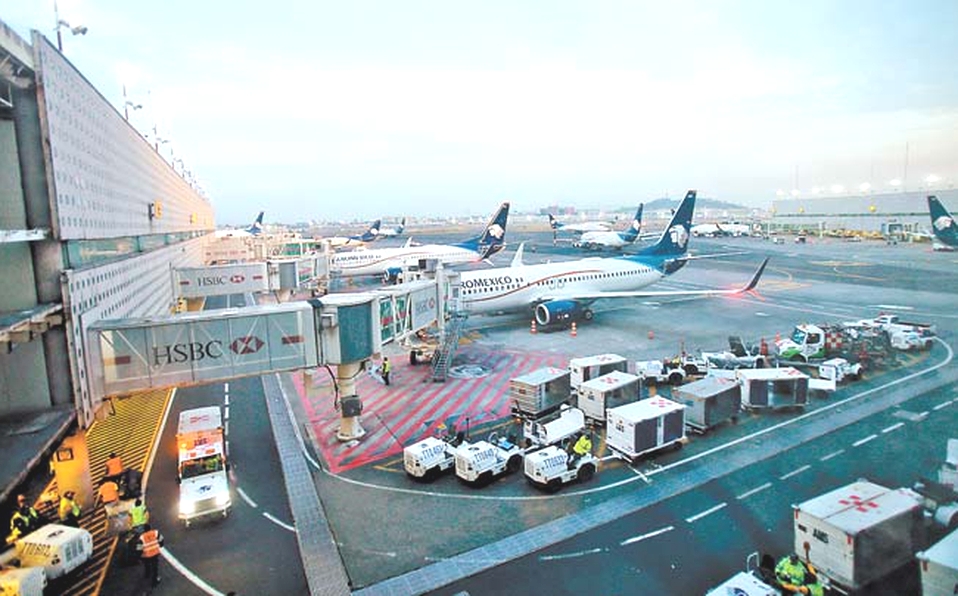
Las líneas aéreas extranjeras y argentinas con operaciones internacionales han iniciado a informar este Lunes 12/07 los vuelos internacionales aprobados por la Administración Nacional de Aviación Civil (ANAC), a partir de la nueva Decisión Administrativa Nº 683/2021 que comienza a flexibilizar el número de pasajeros diarios que pueden ingresar al país. En una primera etapa el cupo subirá de 600 pasajeros diarios o 4.200 semanales a 5.200 por semana; luego se ampliará a 6.300 en la semana del 17 al 23 de Julio y, en la última etapa hasta el 6 de Agosto de 2021, se llegará a 7.000 cada siete días. Además, la ANAC les confirmó a las líneas aéreas que no habría vuelos especiales de repatriación para los argentinos que se encuentran varados en el exterior. Ante este nuevo escenario, las aerolíneas empezaron a adecuar sus cronogramas de itinerarios de vuelos y sus respectivas frecuencias de acuerdo con las aprobaciones del organismo regulador de la ANAC Argentina.
Aerolíneas Argentinas
Aerolíneas Argentinas publicó este 12/07 la lista de vuelos internacionales que realizará desde este Martes 13/07 hasta el 30/07 con las correspondientes aprobaciones de la ANAC, que incluye trece vuelos de ida y vuelta Miami y dos a Nueva York, dos de los destinos más buscados en las vacaciones de invierno. También habrá cinco vuelos a Madrid en esas fechas. De Ezeiza a Miami están confirmados los días 13, 15, 16, 19, 21, 22, 23, 26, 28, 29, 30 y 31/07. En tanto, de Miami a Ezeiza: 13, 14, 15, 16, 17, 20, 22, 23, 24, 27, 29, 30 y 31/07. De Ezeiza a Nueva York/JFK habrá servicios el 19 y 26/07; y de Nueva York/JFK a Ezeiza, el 21 y 28/07. De Ezeiza a Madrid están autorizados los vuelos del 12, 14, 21, 24 y 28/07; y de Madrid a Ezeiza 16,17, 19, 23, 26 y 30/07. De Buenos Aires/AEP a Lima: 17, 22, 23 y 29/07; y de Lima a Buenos Aires/AEP: 18, 22, 23 y 30/07. De Ezeiza a Bogotá: 16, 23 y 30/07; y de Bogotá a Ezeiza: 17, 24 y 31/07. De Buenos Aires/AEP a Asunción: 15, 22 y 29/07, y las mismas fechas para el retorno a Buenos Aires/AEP.
Aerolíneas Argentinas anunció modificaciones en su política comercial, otorgando tarifas de cambio de fecha libre de cargos y penalidades hasta el 30 de Abril de 2022. De esa forma, los pasajeros podrán cambiar la fecha de los pasajes aéreos internacionales para volar hasta el 30 de Abril del 2022, quedando sin efecto la fecha anterior del 15 de Diciembre de 2021 por cambio de temporada, y respetando la temporada original del pasaje emitido.
Air Europa
Air Europa tiene confirmados los siguientes vuelos: de Ezeiza a Madrid, los días 13, 25 y 27/07 y el 1 de Agosto de 2021. En tanto, de Madrid a Ezeiza: 12, 25, 27 y 31/07, con capacidad limitada de entre 140 y 160 pasajeros. La compañía precisó que tuvo que cancelar las siguientes operaciones, producto de las restricciones dispuestas por las autoridades sanitarias de Argentina: 15, 17, 22 y 29/07 (Ezeiza-Madrid), y 14, 16, 19, 21 y 28/07 (Madrid-Ezeiza).
Air France
Por el momento, Air France solamente tiene autorizado el vuelo de este lunes 12 de Julio de 2021 entre Buenos Aires y París.
Avianca Airlines
Avianca Airlines confirmó dos vuelos ida y vuelta para la segunda quincena de Julio 2021: el 18, 25/07 vuela Bogotá-Ezeiza. De Ezeiza a Bogotá vuela el 19, 26/07, con capacidad limitada a 130 pasajeros.
Boliviana de Aviación (BoA)
La aerolínea de Bolivia posee aprobados los vuelos 708 y 709 del 20 y el 27 de Julio de 2021 de Santa Cruz a Buenos Aires y de Buenos Aires a Santa Cruz. Los vuelos que llegan a nuestro país tienen una limitación de 130 pasajeros.
Delta Air Lines
Delta Air Lines tendrá una frecuencia el 18/07 Atlanta y Ezeiza; y el del 19 de Julio de 2021 de Ezeiza a Atlanta.
Iberia Líneas Aéreas
Iberia volará a Madrid el 13, 15, 16, 17, 18, 19, 20, 21, 22, 24, 25, 26, 27, 28, 29 y 31/07. Y de Madrid a Ezeiza, el 18, 23, 26 y 30/07.
JetSmart Airlines Argentina
Durante Julio 2021 y en la ruta Buenos Aires-Santiago de Chile, la línea aérea tiene planificado realizar un vuelo por semana con matrícula argentina, sujetos a la aprobación de la autoridad.
KLM Royal Dutch Airlines
La aerolínea holandesa tiene aprobados los vuelos entre Buenos Aires y Amsterdam del 12 y 14 de Julio de 2021. Con respecto a los que unen Amsterdam con Buenos Aires, solo el 13 de Julio de 2021.
Latam Airlines
La aerolínea informó que los vuelos autorizados para la segunda quincena de julio a Perú, con una limitación de 130 pasajeros para el arribo en Argentina, son: 17, 24 y 31 de Julio de 2021 la ruta Lima-Buenos Aires. A su vez, de Buenos Aires a Lima: 17, 25 y 31/07. Los dos últimos vuelos están sujetos a aprobación de DGAC Perú por el cambio de horario exigido por la autoridad argentina. «Latam cancelará los vuelos no aprobados de Argentina entre el 12 al 31 de Julio desde y hacia Lima, Santiago de Chile y San Pablo. La información estará disponible en nuestros sistemas entre el 12 y 14 de Julio», señaló la compañía aérea.
Level Airlines
Level tiene cuatro vuelos confirmados desde el aeropuerto de Ezeiza hasta el de Barcelona, pero no cuenta por el momento con vuelos de regreso. Los vuelos son los días 15, 18, 22 y 29 de Julio de 2021.
Lufthansa German Airlines
Lufthansa tendrá frecuencias desde Frankfurt a Ezeiza el 14, 21 y 28 de Julio de 2021. De Ezeiza a Frankfurt: 17, 24 y 31/07.
Turkish Airlines
Turkish Airlines vuelve a tener vuelos hacia Argentina desde Estambul, pero solamente uno de entrada y tres de salida. De Ezeiza a Estambul: 13, 20 y 27 de Julio de 2021 y de Estambul a Ezeiza: Martes 27 de Julio de 2021, con capacidad limitada. Como no hay derecho a tráfico entre Argentina y Brasil, el avión puede hacer escala en San Pablo pero no podrán subir ni bajar los pasajeros que hayan subido o que bajen en Ezeiza.
United Airlines
La compañía aérea United Airlines ha anunciado la confirmación de su programación de vuelos desde el Aeropuerto Houston/IAH hasta Ezeiza, las frecuencias confirmadas son los de los días 13, 17, 20 y 27 de Julio de 2021, con número de vuelo UA819. En tanto, de Ezeiza a Houston UA818 habrá cinco frecuencias semanales entre 13 y el 30 de julio: 13, 14, 16, 18, 19, 20, 21, 23, 25, 26, 27, 28 y 30 de Julio de 2021. La aerolínea no opera los jueves y sábados desde Ezeiza.
Otras compañías aéreas consultadas continúan esperando las confirmaciones por parte de la ANAC Argentina para difundir sus cronogramas de vuelos de las próximas semanas.
Argentine air rescheduling
Companies report international frequencies
Foreign and Argentine airlines with international operations have begun to report this Monday 07/12 the international flights approved by the National Civil Aviation Administration (ANAC), based on the new Administrative Decision No. 683/2021 that begins to make the number of daily passengers more flexible. who can enter the country. In a first stage, the quota will rise from 600 passengers per day or 4,200 per week to 5,200 per week; then it will be expanded to 6,300 in the week of July 17 to 23 and, in the last stage until August 6, 2021, it will reach 7,000 every seven days. In addition, the ANAC confirmed to the airlines that there would be no special repatriation flights for Argentines who are stranded abroad.
Faced with this new scenario, the airlines began to adapt their flight itinerary schedules and their respective frequencies in accordance with the approvals of the ANAC Argentina regulatory body.
Aerolíneas Argentinas
Aerolíneas Argentinas published on 07/12 the list of international flights that will be carried out from this Tuesday 07/13 to 07/30 with the corresponding ANAC approvals, which includes thirteen round-trip flights to Miami and two to New York, two from the most sought after destinations on winter holidays. There will also be five flights to Madrid on those dates. From Ezeiza to Miami they are confirmed on July 13, 15, 16, 19, 21, 22, 23, 26, 28, 29, 30 and 31/07. Meanwhile, from Miami to Ezeiza: 13, 14, 15, 16, 17, 20, 22, 23, 24, 27, 29, 30 and 31/07. From Ezeiza to New York/JFK there will be services on 07/19 and 07/26; and from New York/JFK to Ezeiza, on 07/21 and 28/28. From Ezeiza to Madrid the flights of 07/12, 14, 21, 24 and 28 are authorized; and from Madrid to Ezeiza 16,17, 19, 23, 26 and 30/07. From Buenos Aires/AEP to Lima: 17, 22, 23 and 29/07; and from Lima to Buenos Aires/AEP: 18, 22, 23 and 30/07. From Ezeiza to Bogotá: 07/16, 23 and 30; and from Bogotá to Ezeiza: 17, 24 and 31/07. From Buenos Aires/AEP to Asunción: 07/15, 22 and 29, and the same dates for the return to Buenos Aires/AEP.
Aerolíneas Argentinas announced modifications in its commercial policy, granting date change rates free of charges and penalties until April 30, 2022. In this way, passengers will be able to change the date of international air tickets to fly until April 30 of 2022, leaving the previous date of December 15, 2021 without effect due to a change of season, and respecting the original season of the ticket issued.
Air Europe
Air Europa has confirmed the following flights: from Ezeiza to Madrid, on 07/13, 25 and 27 and on August 1, 2021. Meanwhile, from Madrid to Ezeiza: 07/12, 25, 27 and 31/07, with capacity limited to between 140 and 160 passengers. The company specified that it had to cancel the following operations, as a result of the restrictions established by the Argentine health authorities: 07/15, 17, 22 and 29/07 (Ezeiza-Madrid), and 07/14, 16, 19, 21 and 28 (Madrid-Ezeiza).
Air France
At the moment, Air France only has authorized the flight of this Monday, July 12, 2021 between Buenos Aires and Paris.
Avianca Airlines
Avianca Airlines confirmed two roundtrip flights for the second half of July 2021: on 07/18, Bogotá-Ezeiza flies. From Ezeiza to Bogotá, it flies on 07/26/19, with a limited capacity of 130 passengers.
Bolivian Aviation (BoA)
The Bolivian airline has approved flights 708 and 709 of July 20 and 27, 2021 from Santa Cruz to Buenos Aires and from Buenos Aires to Santa Cruz. The flights that arrive in our country have a limitation of 130 passengers.
Delta Air Lines
Delta Air Lines will have a frequency on 07/18 Atlanta and Ezeiza; and that of July 19, 2021 from Ezeiza to Atlanta.
Iberia Airlines
Iberia will fly to Madrid on July 13, 15, 16, 17, 18, 19, 20, 21, 22, 24, 25, 26, 27, 28, 29 and 31. And from Madrid to Ezeiza, on July 18, 23, 26 and 30.
JetSmart Airlines Argentina
During July 2021 and on the Buenos Aires-Santiago de Chile route, the airline plans to carry out one flight per week with Argentine registration, subject to the approval of the authority.
KLM Royal Dutch Airlines
The Dutch airline has approved flights between Buenos Aires and Amsterdam on July 12 and 14, 2021. With respect to those that link Amsterdam with Buenos Aires, only on July 13, 2021.
Latam Airlines
The airline reported that the authorized flights for the second half of July to Peru, with a limitation of 130 passengers for arrival in Argentina, are: July 17, 24 and 31, 2021, the Lima-Buenos Aires route. In turn, from Buenos Aires to Lima: 17, 25 and 31/07. The last two flights are subject to the approval of DGAC Peru due to the time change required by the Argentine authority. «Latam will cancel unapproved flights from Argentina between July 12 and 31 to and from Lima, Santiago de Chile and São Paulo. The information will be available in our systems between July 12 and 14», the airline said.
Level Airlines
Level has four confirmed flights from Ezeiza airport to Barcelona, but does not currently have return flights. Flights are on July 15, 18, 22 and 29, 2021.
Lufthansa German Airlines
Lufthansa will have frequencies from Frankfurt to Ezeiza on July 14, 21 and 28, 2021. From Ezeiza to Frankfurt: 07/17, 24 and 31/07.
Turkish Airlines
Turkish Airlines once again has flights to Argentina from Istanbul, but only one inbound and three outbound. From Ezeiza to Istanbul: July 13, 20 and 27, 2021 and from Istanbul to Ezeiza: Tuesday, July 27, 2021, with limited capacity. As there is no right to traffic between Argentina and Brazil, the plane can make a stopover in São Paulo but passengers who have gotten on or off in Ezeiza cannot get on or off.
United Airlines
The airline United Airlines has announced the confirmation of its flight schedule from Houston/IAH Airport to Ezeiza, the confirmed frequencies are those of July 13, 17, 20 and 27, 2021, with flight number UA819. Meanwhile, from Ezeiza to Houston UA818 there will be five weekly frequencies between July 13 and 30: July 13, 14, 16, 18, 19, 20, 21, 23, 25, 26, 27, 28 and 30, 2021. The airline does not operate on Thursdays and Saturdays from Ezeiza.
Other airlines consulted continue to await confirmations from ANAC Argentina to disseminate their flight schedules for the coming weeks.



















 airgways.com