Pruebas vuelos Barcelona y Nueva York/JFK hacia París/CDG
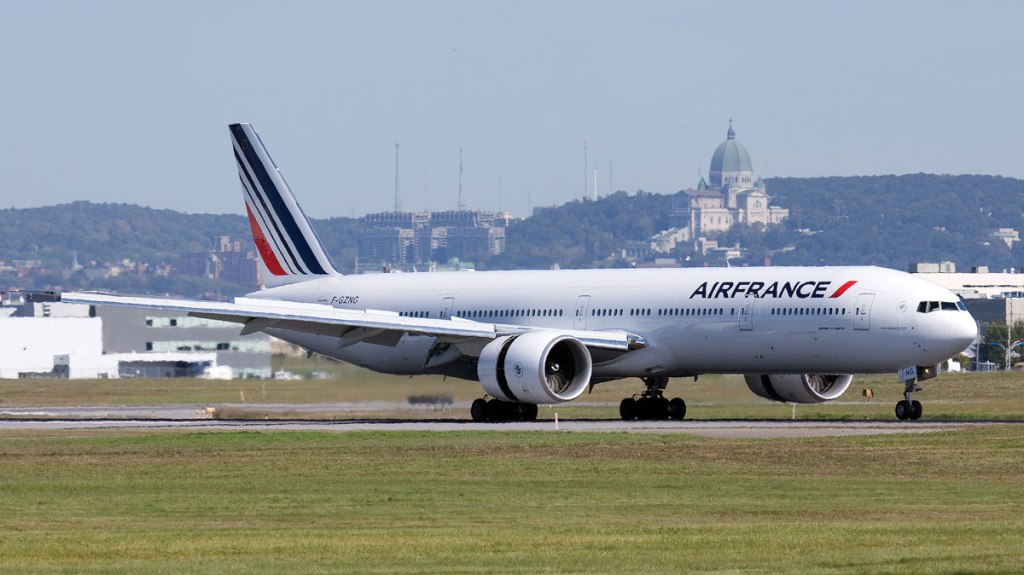
Air France puso en marcha el pasado 17 de Junio de 2021 un programa de pruebas del IATA Travel Pass en los vuelos desde Barcelona y Nueva York/JFK hacia el Aeropuerto de París/Charles de Gaulle. Con esta prueba, la aerolínea quiere ofrecer a sus clientes un viaje más fluido, facilitando la verificación de los resultados de las pruebas COVID.
Disponible para smartphones, la aplicación IATA Travel Pass permite a los viajeros: Comprobar los últimos requisitos de entrada relacionados con la COVID-19 impuestos por su país de destino; recibir directamente en la aplicación los resultados de sus tests de COVID emitidos por un laboratorio asociado; guardar estos documentos de forma segura en la aplicación, para poder demostrar a las compañías aéreas y a las autoridades pertinentes que cumplen con los requisitos de entrada de su destino, sin tener que revelar información sanitaria personal. Se espera que el uso del IATA Travel Pass aporte también más rapidez y fluidez en los controles aeroportuarios. Esta prueba es gratuita para los clientes y se ofrece de forma voluntaria. Está abierta a los pasajeros que viajen a París como destino final en vuelos operados por Air France desde Barcelona hasta el 30 de Junio de 2021, y, desde Nueva York-JFK, hasta el 8 de Julio de 2021.
El IATA Travel Pass cumple con las exigencias más estrictas de protección de datos personales. Todos los datos relacionados con la salud del usuario permanecen almacenados en la aplicación, sin ninguna transmisión ni centralización. Esto garantiza al usuario un control total sobre su información personal. Esta prueba marca una nueva etapa en la simplificación y fiabilidad de los viajes e ilustra el compromiso de Air France de explorar las mejores opciones disponibles para ofrecer a sus clientes el máximo nivel de seguridad sanitaria. Estos esfuerzos se han visto recompensados con una calificación de 4 estrellas en el ranking de seguridad de las aerolíneas de Skytrax Covid-19 Airline Safety y, más recientemente, con un premio Diamante en la clasificación APEX Health Safety realizado por SimpliFlying.
Alain-Hervé Bernard, Director General adjunto de Operaciones y Cargo de Air France, declaró: «Tras un año marcado por los confinamientos y las restricciones de viaje, son muchas las personas que desean viajar y reunirse con sus seres queridos. Para ofrecerles un viaje fluido y seguro, seguimos pidiendo una coordinación y armonización de las normas sanitarias a nivel mundial, así como una estandarización de los documentos de viaje. La digitalización completa del viaje del cliente es una condición esencial para la reanudación de los viajes internacionales. El IATA Travel Pass es un ejemplo de lo que podría convertirse en la norma para la verificación de los documentos de viaje, y estamos encantados de probar esta solución».
Nick Careen, SVP de Operaciones, Seguridad y Protección de IATA, comentó: «Nos complace que Air France esté probando el IATA Travel Pass. Para reabrir sus fronteras, los gobiernos deben primero asegurarse de que están limitando el riesgo de importación de COVID-19. La solución es el control de los testeos o comprobantes de vacunación. El IATA Travel Pass actuará como un tercero confiable entre los gobiernos, las compañías aéreas, los laboratorios y los viajeros para verificar estos documentos de forma segura, garantizando así una información fiable sobre el estado de salud de los viajeros».
Air France programs IATA Travel Pass tests
Barcelona and New York/JFK flights tests to Paris/CDG
On June 17, 2021, Air France launched an IATA Travel Pass test program on flights from Barcelona and New York/JFK to Paris/Charles de Gaulle Airport. With this test, the airline wants to offer its customers a smoother journey, making it easier to verify the results of COVID tests.
Available for smartphones, the IATA Travel Pass app allows travelers to: Check the latest COVID-19 related entry requirements imposed by their destination country; receive directly on the application the results of your COVID tests issued by an associated laboratory; save these documents safely in the application, to be able to demonstrate to the airlines and the relevant authorities that they comply with the entry requirements of their destination, without having to reveal personal health information. The use of the IATA Travel Pass is also expected to bring more speed and fluidity to airport controls. This trial is free to customers and is offered on a voluntary basis. It is open to passengers traveling to Paris as their final destination on flights operated by Air France from Barcelona until June 30, 2021, and, from New York-JFK, until July 8, 2021.
The IATA Travel Pass complies with the strictest requirements for the protection of personal data. All data related to the user’s health remains stored in the application, without any transmission or centralization. This guarantees the user full control over their personal information. This test marks a new stage in travel simplification and reliability and illustrates Air France’s commitment to exploring the best options available to offer its customers the highest level of health security. These efforts have been rewarded with a 4-star rating on the Skytrax Covid-19 Airline Safety airline safety ranking and, more recently, a Diamond award on the APEX Health Safety ranking by SimpliFlying.
Alain-Hervé Bernard, Air France Deputy General Director of Operations and Cargo, stated: «After a year marked by lockdowns and travel restrictions, many people want to travel and reunite with their loved ones. To offer them a trip fluid and safe, we continue to call for global coordination and harmonization of health standards, as well as standardization of travel documents. Full digitization of the customer’s trip is an essential condition for resuming international travel. IATA Travel Pass is an example of what could become the norm for verification of travel documents, and we are delighted to test this solution».
Nick Careen, SVP Operations, Security and Safety at IATA, commented: «We are pleased that Air France is testing the IATA Travel Pass. To reopen their borders, governments must first ensure that they are limiting the import risk of COVID-19. The solution is the control of tests or vaccination vouchers. The IATA Travel Pass will act as a reliable third party between governments, airlines, laboratories and travelers to verify these documents in a secure way, thus guaranteeing reliable information on the health status of travelers».
AW | 2021 06 14 20:37 | INDUSTRY / AVIATION TECHNOLOGY
Airbus iniciará producción tanques criogénicos de hidrógeno
Airbus Group abrirá dos plantas, llamadas «Centros de Desarrollo de Cero Emisiones», en Bremen, Alemania, y Nantes, Francia, para fabricar tanques criogénicos utilizados para almacenar hidrógeno. El objetivo es fabricar tanques criogénicos a costos competitivos para «lanzar con éxito el avión ZEROe (cero emisiones de carbono) en el mercado y acelerar el desarrollo de tecnologías de propulsión por hidrógeno».
En Septiembre de 2020, Airbus dio a conocer tres conceptos impulsados por hidrógeno, con nombre en código ZEROe, en los que el fabricante estaba trabajando. Pero para ser almacenado de forma segura en un avión, el hidrógeno debe mantenerse a -250°C, la temperatura necesaria para su licuefacción. Por lo tanto, Airbus necesita integrar tanques criogénicos en los próximos aviones de pasajeros. «Para la aviación comercial, el desafío es desarrollar un componente que pueda soportar los ciclos térmicos y de presión repetidos que exige una aplicación de aeronave», explicó el fabricante.
En Junio de 2021, el Gobierno francés anunció que se invertirían casi € 1,5 mil millones de Euros en ayuda pública durante tres años para participar en «la descarbonización del tráfico aéreo mundial». El ministro francés de Economía, Bruno Le Maire, dijo que esperaba que el sector «lograra un avión neutro en carbono en 2035», mientras que los expertos de la industria generalmente pronostican que esto aparecerá alrededor de 2050. La fecha límite de 2035 fue descrita en su momento como ambiciosa pero factible por Eric Trappier, el CEO de Dassault Aviation y Presidente de la Asociación francesa de Industrias Aeroespaciales (GIFAS).
Las dos nuevas instalaciones están programadas para construir sus primeros tanques de hidrógeno líquido en 2023, con una primera prueba de vuelo programada para 2025. Airbus dijo que eligió la ubicación de Bremen por su experiencia pasada en la experimentación con hidrógeno con Airbus Defense and Space y ArianeGroup. En cuanto a Nantes, fue seleccionado por sus habilidades con la integración de estructuras metálicas vinculadas a la caja central del ala, como los tanques centrales de combustible.
El cronograma previsto de Airbus para el desarrollo de aviones de hidrógeno fue revelado recientemente. En una sesión informativa con funcionarios de la Unión Europea hecha pública el 10 de junio de 2021, el fabricante dijo que si bien su objetivo era desarrollar el primer avión comercial de cero emisiones del mundo para 2035, la mayoría de los aviones de pasajeros confiarían en los motores a reacción tradicionales hasta al menos 2050. «Los aviones de hidrógeno de cero emisiones se centrarán principalmente en aviones regionales y de menor alcance a partir de 2035, lo que significa que las iteraciones actuales y futuras de turbinas de gas altamente eficientes seguirán siendo necesarias a medida que avanzamos hacia 2050, especialmente para las operaciones de larga distancia».
Airbus bets on ZEROe
Airbus opens two plants to produce cryogenic hydrogen tanks
Airbus Group will open two plants, called «Zero Emission Development Centers», in Bremen, Germany, and Nantes, France, to manufacture cryogenic tanks used to store hydrogen. The goal is to manufacture cost-competitive cryogenic tanks to «successfully launch the ZEROe (zero carbon) aircraft on the market and accelerate the development of hydrogen propulsion technologies».
In September 2020, Airbus unveiled three hydrogen-powered concepts, codenamed ZEROe, that the manufacturer was working on. But to be safely stored on an airplane, hydrogen must be kept at -250°C, the temperature necessary for its liquefaction. Therefore, Airbus needs to integrate cryogenic tanks in the next passenger planes. «For commercial aviation, the challenge is to develop a component that can withstand the repeated pressure and thermal cycling that an aircraft application demands», explained the manufacturer.
In June 2021, the French government announced that almost € 1.5 billion euros would be invested in public aid over three years to participate in «the decarbonization of global air traffic». French Economy Minister Bruno Le Maire said he expected the sector to «achieve a carbon-neutral aircraft by 2035», while industry experts generally predict this will appear around 2050. The 2035 deadline was outlined. at the time as ambitious but doable by Eric Trappier, the CEO of Dassault Aviation and President of the French Association of Aerospace Industries (GIFAS).
The two new facilities are scheduled to build their first liquid hydrogen tanks in 2023, with a first flight test scheduled for 2025. Airbus said it chose the Bremen location for its past experience in hydrogen experimentation with Airbus Defense and Space and Ariane Group. As for Nantes, he was selected for his skills with the integration of metal structures linked to the central wing box, such as central fuel tanks.
Airbus’ planned timeline for the development of hydrogen aircraft was recently revealed. In a briefing with European Union officials made public on June 10, 2021, the manufacturer said that while its goal was to develop the world’s first zero-emission commercial aircraft by 2035, most passenger aircraft would rely on traditional jet engines until at least 2050. «Zero-emission hydrogen aircraft will focus primarily on regional and shorter-range aircraft from 2035, which means that current and future iterations of highly efficient gas turbines will continue to be necessary as we move into 2050, especially for long-haul operations».
AW | 2021 06 11 06:54 | INDUSTRY / AVIATION TECHNOLOGY
Franceses volarán combustible alternativo hacia 4Q2021
Airbus Group, Safran, Dassault Aviation, ONERA y el Ministerio de Transporte de Francia están lanzando conjuntamente un estudio en vuelo, a finales de 2021, para analizar la compatibilidad del Combustible de Aviación Sostenible (SAF) sin mezclar con motores y sistemas de combustible de aeronaves de pasillo y comerciales, así como con motores de helicópteros. Este vuelo se realizará con el apoyo del “Plan de relance aéronautique”, un plan de recuperación de la aviación del Gobierno francés gestionado por Jean Baptiste Djebbari, Ministro de Transporte de Francia. Conocido como proyecto VOLCAN (VOL avec Carburants Alternatifs Nouveaux), este proyecto es la primera vez que las emisiones en vuelo se medirán utilizando 100% SAF en un avión de pasillo único.
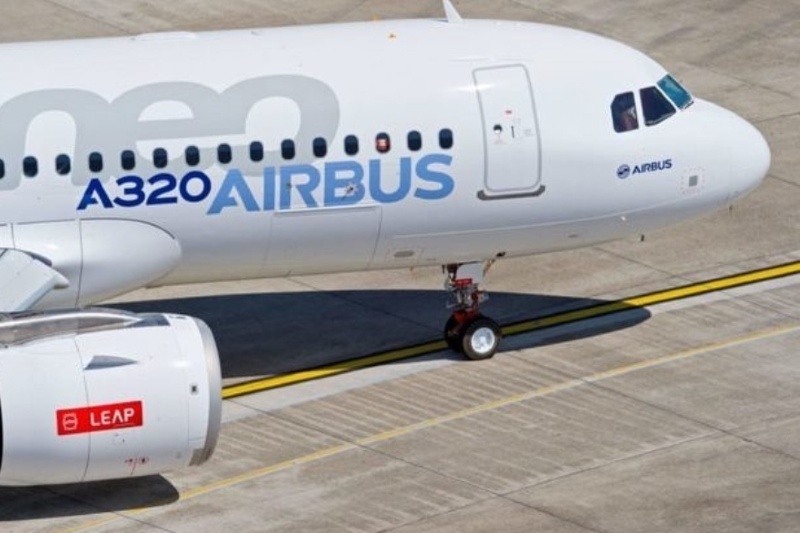
Airbus es responsable de caracterizar y analizar el impacto de las emisiones 100% SAF en tierra y en vuelo utilizando un avión de prueba A320neo propulsado por un motor CFM LEAP-1A. Safran se centrará en los estudios de compatibilidad relacionados con el sistema de combustible y la adaptación del motor para aviones comerciales y helicópteros y su optimización para varios tipos de combustibles 100% SAF. ONERA apoyará a Airbus y Safran en el análisis de la compatibilidad del combustible con los sistemas de la aeronave y se encargará de preparar, analizar e interpretar los resultados de las pruebas para el impacto del 100% SAF en las emisiones y la formación de estelas de condensación. Además, Dassault Aviation contribuirá a los estudios de compatibilidad de materiales y equipos y verificará la susceptibilidad de biocontaminación 100% SAF. Los distintos SAF utilizados para el proyecto VOLCAN serán proporcionados por Total Energies.
Además, este estudio respaldará los esfuerzos que se están llevando a cabo actualmente en Airbus y Safran para garantizar que el sector de la aviación esté listo para el despliegue y uso a gran escala de SAF como parte de una iniciativa más amplia para descarbonizar la industria. También contribuirá al objetivo final de lograr la certificación 100% SAF en aviones comerciales de pasillo único y la nueva generación de jets ejecutivos.
French aviation 100% alternative fuel
French aeronautical developers to fly alternative fuel by 4Q2021
Airbus Group, Safran, Dassault Aviation, ONERA and the French Ministry of Transport are jointly launching an in-flight study, in late 2021, to analyze the compatibility of unblended Sustainable Aviation Fuel (SAF) with engines and fuel systems from aisle and commercial aircraft, as well as helicopter engines. This flight will be carried out with the support of the “Plan de relance aéronautique”, an aviation recovery plan of the French Government managed by Jean Baptiste Djebbari, Minister of Transport of France. Known as the VOLCAN project (VOL avec Carburants Alternatifs Nouveaux), this project is the first time that in-flight emissions will be measured using 100% SAF in a single-aisle aircraft.
Airbus is responsible for characterizing and analyzing the impact of 100% SAF emissions on the ground and in flight using an A320neo test aircraft powered by a CFM LEAP-1A engine. Safran will focus on fuel system compatibility studies and engine tuning for commercial aircraft and helicopters and their optimization for various types of 100% SAF fuels. ONERA will support Airbus and Safran in the analysis of the compatibility of the fuel with the aircraft systems and will be in charge of preparing, analyzing and interpreting the results of the tests for the impact of 100% SAF on emissions and the formation of contrails. condensation. Additionally, Dassault Aviation will contribute to material and equipment compatibility studies and verify 100% SAF biocontamination susceptibility. The different SAFs used for the VOLCAN project will be provided by Total Energies.
Additionally, this study will support current efforts at Airbus and Safran to ensure that the aviation sector is ready for large-scale deployment and use of SAFs as part of a broader initiative to decarbonize the industry. It will also contribute to the ultimate goal of achieving 100% SAF certification on single aisle commercial aircraft and the new generation of executive jets.
AW | 2021 06 09 23:00 | INDUSTRY / AVIATION TECHNOLOGY
Airbus sostiene que hidrógeno no e emplearía ampliamente antes 2050
El fabricante de aviones europea Airbus Group se ha convertido en el principal defensor de la industria para la propulsión por hidrógeno, diciendo que planea desarrollar el primer avión comercial de cero emisiones del mundo para 2035. La mayoría de los aviones de pasajeros dependerán de los motores a reacción tradicionales hasta al menos 2050, con la introducción de hidrógeno de cero emisiones limitada a los aviones regionales y de corto alcance, dijo Airbus a funcionarios de la Unión Europea en una sesión informativa publicada el Jueves 03/06.
La compañia no ha expresado públicamente si la tecnología estará lista a tiempo para el próximo gran hito de la industria europea el reemplazo de la línea narrowbody A320 en la década de 2030, pero la sesión informativa de Febrero 2021 a los funcionarios de la UE pareció descartar esto. «Los aviones de hidrógeno de cero emisiones se centrarán principalmente en aviones regionales y de menor alcance a partir de 2035. Lo que significa que las iteraciones actuales y futuras de turbinas de gas altamente eficientes seguirán siendo necesarias a medida que avanzamos hacia 2050, especialmente para las operaciones de larga distancia», dijo el consorcio europeo. Las diapositivas de la presentación a la oficina del Vicepresidente de la Comisión Europea, Frans Timmermans, fueron publicadas por InfluenceMap, un organismo de control de cabildeo climático liderado por inversores que dijo que las obtuvo a través de una solicitud de libertad de información. «Aún no se ha decidido a qué segmento de mercado se dirigirá el primer avión de cero emisiones», dijo un portavoz de Airbus el Jueves 03/06.
Aunque la investigación se mantiene en una etapa temprana, los posibles caminos para el reemplazo del A320 ya son un importante foco de debate como rival de la compañía americana Boeing que reflexiona sobre cómo apuntalar el 737 MAX de la competencia y los fabricantes de motores se centran en la evolución de las turbinas de gas. El Director Ejecutivo de The Boeing Company, David Calhoun, descartó la semana pasada el uso de hidrógeno a una escala significativa antes de 2050.
El hidrógeno también ha ocupado el centro de las conversaciones sobre el apoyo de los gobiernos europeos a la aviación durante la crisis del COVID-19. En Junio 2020, Francia anunció un aumento en la financiación para el organismo de investigación de aviación CORAC, que incluye € 1,5 mil millones de Euros en tres años para tecnología como el hidrógeno, rescatando 500 de los 15.000 empleos amenazados por una reestructuración de Airbus. El Ministerio de Finanzas enumeró cinco objetivos clave para la inversión, incluido un sucesor del caballo de batalla A320, que dijo que usaría hidrógeno en lugar de las turbinas de gas actuales y entraría en servicio entre 2033 y 2035.
Decisión conceptual hacia 2022
Los funcionarios de la industria han minimizado la posibilidad de un cambio al hidrógeno para el reemplazo de la familia A320 debido al tamaño y el alcance de la aeronave, y la infraestructura necesaria a nivel mundial. Airbus dice que un A320 despega o aterriza cada 1,6 segundos. Los funcionarios de Airbus dicen que la investigación, en cualquier caso, sembrará tecnología disruptiva que probablemente desempeñará un papel en la próxima generación de aviones. Como medida provisional, Airbus y otros han pedido un uso más generalizado de combustibles sostenibles en los aviones existentes. En la presentación de 02/2021, Airbus mostró pronósticos de la industria que sugieren que la categoría de medio alcance del A320 de 150-250 asientos estaría impulsada primero por combustible de aviación sostenible (SAF) y potencialmente algo de hidrógeno a partir de 2050. Un nicho más pequeño entre 100-150 asientos, que incluye su A220 y Embraer E2Jets, usaría energía eléctrica, hidrógeno y/o SAF a partir de 2040, mientras que solo los asientos regionales de 50-100 estarían listos para el hidrógeno en la década de 2030.
Airbus actualmente sirve a ese mercado a través de su co-empresa turbohélice ATR de 50-70 asientos con Leonardo de Italia. En Septiembre 2020, Airbus presentó tres conceptos para que un avión de hidrógeno entre en servicio en 2035, incluido un turbohélice, un avión bimotor de aspecto tradicional propulsado por motores híbridos de hidrógeno y un avión de carrocería de ala mixta más radical. Airbus ha dicho que elegirá el producto final para un nuevo avión descarbonizado en 2025. La sesión informativa dijo que también reduciría la elección del concepto amplio ya a mediados de 2022.
Airbus vasculating for hydrogen
Airbus says hydrogen would not be widely used before 2050
European aircraft manufacturer Airbus Group has become the industry’s leading advocate for hydrogen propulsion, saying it plans to develop the world’s first zero-emission commercial aircraft by 2035. Most passenger jets will rely on engines. traditional jet engines until at least 2050, with the introduction of zero-emission hydrogen limited to regional and short-range aircraft, Airbus told European Union officials in a briefing published on Thursday 03/06.
The company has not publicly stated whether the technology will be ready in time for the next major European industry milestone the replacement of the narrowbody A320 line in the 2030s, but the February 2021 briefing to EU officials appeared to rule this. «Zero-emission hydrogen aircraft will focus primarily on regional and shorter-range aircraft starting in 2035. Which means that current and future iterations of highly efficient gas turbines will continue to be necessary as we move into 2050, especially for long-distance operations, «said the European consortium. The slides of the presentation to the office of European Commission Vice President Frans Timmermans were released by InfluenceMap, an investor-led climate lobby watchdog that said it obtained them through a freedom of information request. «It has not yet been decided which market segment the first zero-emission aircraft will target», an Airbus spokesman said on Thursday 03/06.
Although the investigation remains at an early stage, the possible paths for the replacement of the A320 are already a major focus of debate as a rival to the American company Boeing pondering how to prop up the 737 MAX from the competition and the engine manufacturers focus. in the evolution of gas turbines. The Boeing Company CEO David Calhoun last week ruled out the use of hydrogen on a significant scale before 2050.
Hydrogen has also been at the center of talks about European governments’ support for aviation during the COVID-19 crisis. In June 2020, France announced an increase in funding for the aviation research body CORAC, including € 1.5 billion over three years for technology such as hydrogen, rescuing 500 of the 15,000 jobs threatened by a restructuring of Airbus. The Finance Ministry listed five key goals for the investment, including a successor to the A320 workhorse, which it said would use hydrogen instead of current gas turbines and enter service between 2033 and 2035.
Conceptual decision towards 2022
Industry officials have downplayed the possibility of a switch to hydrogen for the A320 family replacement due to the size and scope of the aircraft, and the infrastructure required globally. Airbus says that an A320 takes off or lands every 1.6 seconds. Airbus officials say the investigation will, in any event, sow disruptive technology that is likely to play a role in the next generation of aircraft. As an interim measure, Airbus and others have called for a more widespread use of sustainable fuels in existing aircraft. At the 02/2021 filing, Airbus showed industry forecasts suggesting that the 150-250-seat A320 mid-range category would be powered first by Sustainable Aviation Fuel (SAF) and potentially some hydrogen starting in 2050. A smaller niche between 100-150 seats, including your A220 and Embraer E2Jets, would use electric power, hydrogen and/or SAF starting in 2040, while only regional seats of 50-100 would be hydrogen ready in the decade. 2030.
Airbus currently serves that market through its 50-70 seat ATR turboprop co-company with Italian Leonardo. In September 2020, Airbus unveiled three concepts for a hydrogen aircraft to enter service in 2035, including a turboprop, a traditional-looking twin-engine aircraft powered by hydrogen hybrid engines, and a more radical mixed-wing bodywork aircraft. Airbus has said it will choose the final product for a new decarbonized aircraft in 2025. The briefing said it would also narrow down the choice of the broad concept as early as mid-2022.
AW | 2021 06 09 22:44 | INDUSTRY / AVIATION TECHNOLOGY
Liebherr suministrará inversor estático cabina para A320/A330
Liebherr-Aerospace ha sido seleccionado por Airbus Group para suministrar el inversor estático de cabina para las familias Airbus A320 y A330. El inversor estático de cabina reemplazará a la versión actual. Ofrece una solución más fiable, ligera y totalmente digital y se basa en la tecnología de banda ancha junto con funciones de conexión mejoradas. Dos compañías han desarrollado el inversor estático de cabina: Liebherr-Elektronik, con sede en Lindau, Alemania, centro de excelencia de Liebherr para la electrónica y un jugador importante en su campo, es responsable de todas las actividades relacionadas con el hardware, incluida la producción, y Liebherr-Aerospace Toulouse, el centro de excelencia de Liebherr para sistemas de gestión de aire en Toulouse, Francia, proporciona el software del inversor. Ambas compañías tienen una vasta experiencia en electrónica de potencia y unieron fuerzas para ofrecer a Airbus la última tecnología.
Francis Carla, Director General y Director de Tecnología de Liebherr-Aerospace &Transportation, comentó: «Airbus y Liebherr han estado cooperando desde los inicios de Airbus. Todos los modelos civiles de aviones Airbus vuelan con tecnología Liebherr a bordo. Ahora, estamos muy contentos de añadir la electrónica de potencia independiente a nuestra ya amplia cartera de sistemas y componentes, y estamos deseando ampliar aún más nuestra colaboración con Airbus en tecnologías Power-on-Board».
Liebherr supply for A320/A330
Liebherr to supply cabin static inverter for A320/A330
Liebherr-Aerospace has been selected by Airbus Group to supply the cabin static inverter for the Airbus A320 and A330 families. The cabin static inverter will replace the current version. It offers a more reliable, lightweight and fully digital solution and is based on broadband technology along with enhanced connection capabilities. Two companies have developed the static cabin inverter: Liebherr-Elektronik, based in Lindau, Germany, Liebherr’s center of excellence for electronics and a major player in its field, is responsible for all hardware-related activities, including production, and Liebherr-Aerospace Toulouse, Liebherr’s center of excellence for air management systems in Toulouse, France, provides the inverter software. Both companies have vast experience in power electronics and have joined forces to bring Airbus the latest technology.
Francis Carla, Managing Director and Chief Technology Officer of Liebherr-Aerospace & Transportation, commented: «Airbus and Liebherr have been cooperating since Airbus inception. All civil Airbus aircraft models fly with Liebherr technology on board. Now, we are very happy to have them. adding standalone power electronics to our already broad portfolio of systems and components, and we look forward to further expanding our collaboration with Airbus on Power-on-Board technologies».
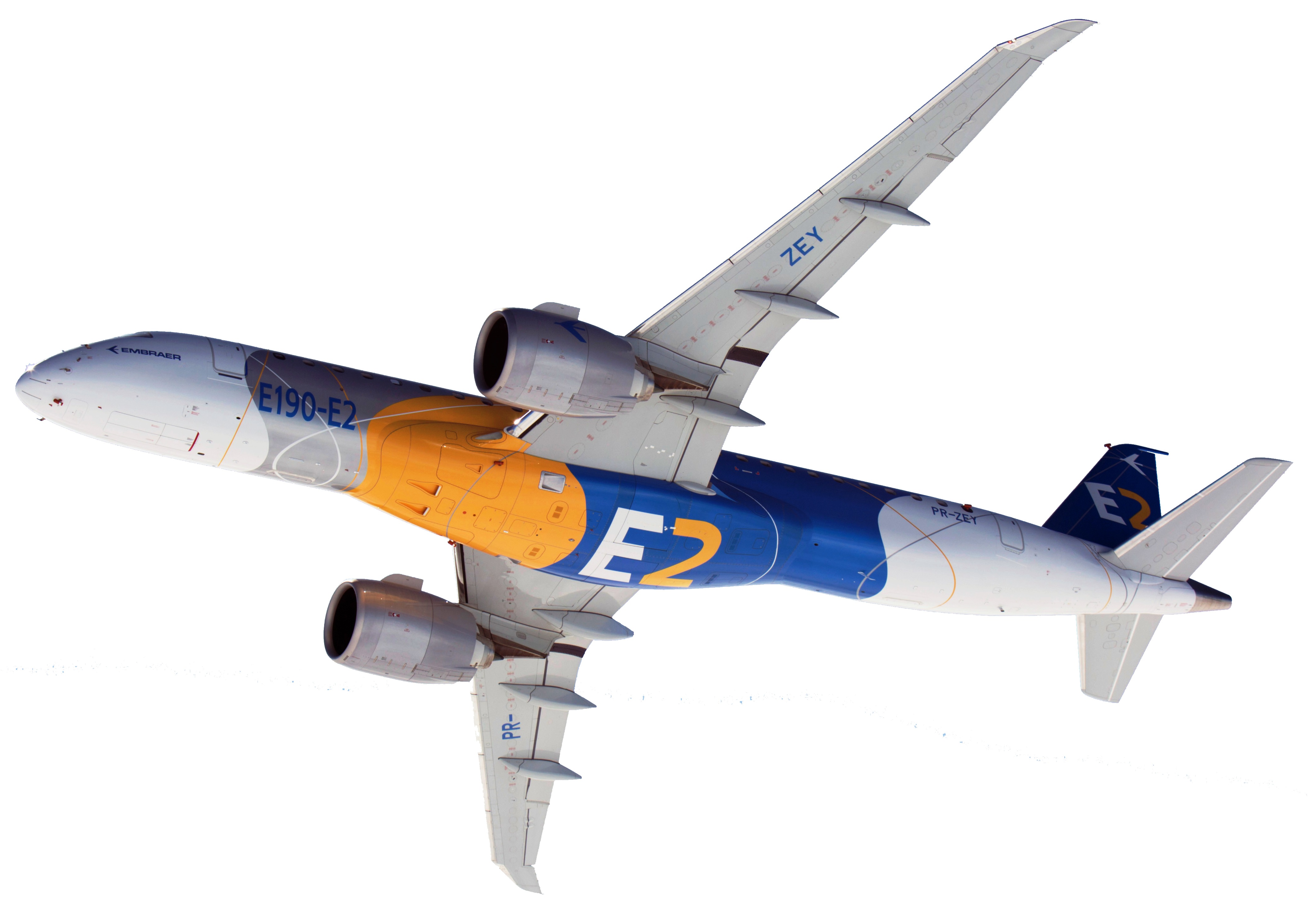
Embraer E190-E2 recibe certificación ops en London City
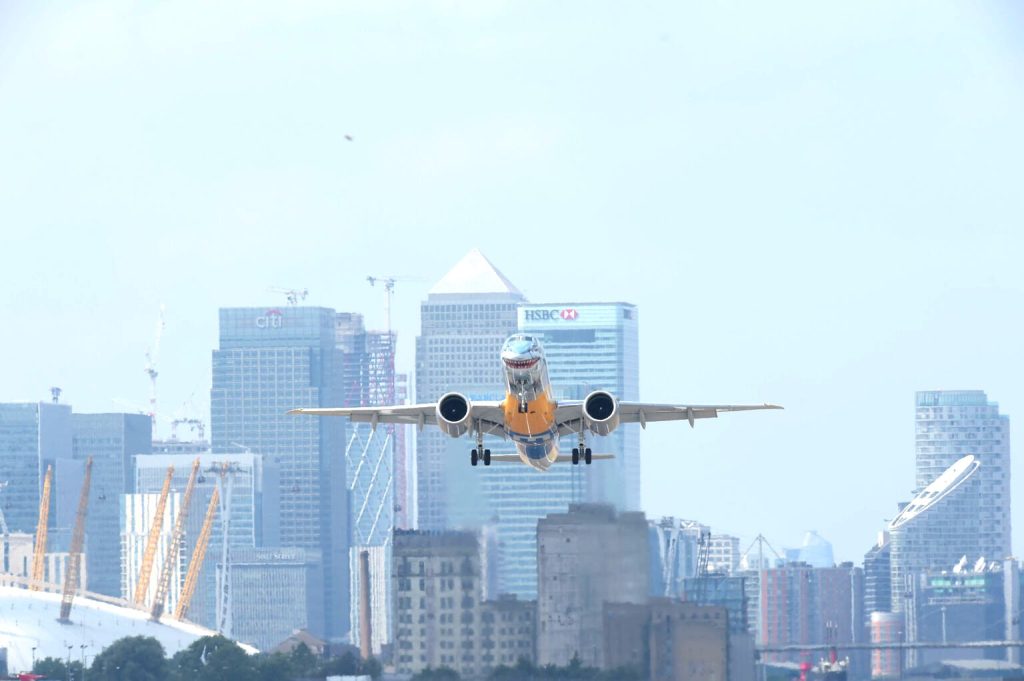
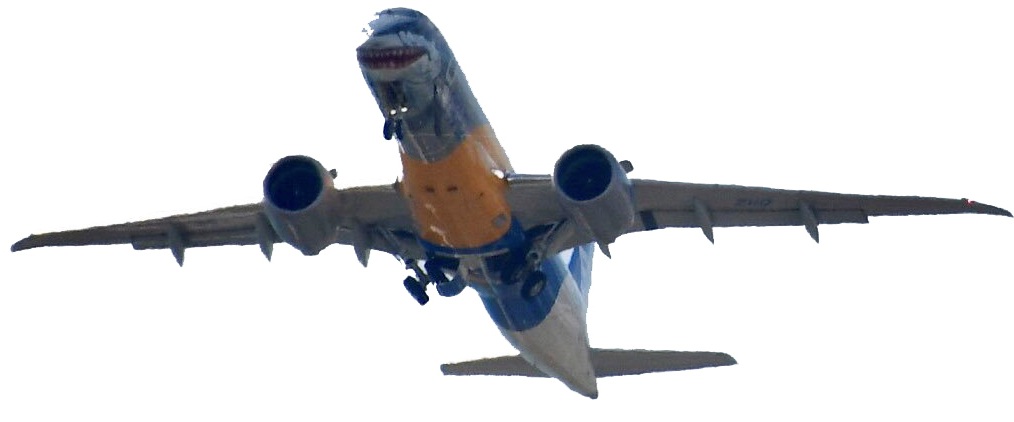
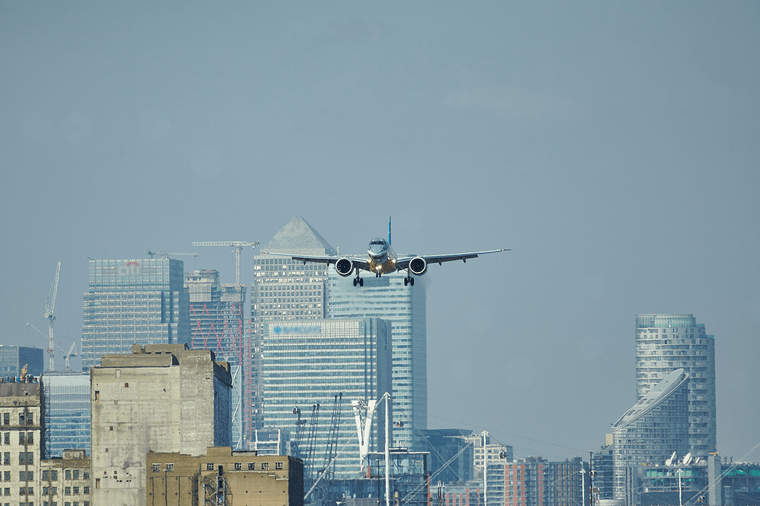
El Embraer E190-E2 ha recibido la certificación de aproximación empinada de EASA. En 2018, algo interesante sucedió en el Aeropuerto de London City. Un avión con librea de tiburón aterrizó en las instalaciones del centro de Londres a las 10:41 de la mañana. El vuelo destacó, no solo por la librea sino también porque era la primera vez que el Embraer E190-E2 aterrizaba en el aeropuerto. La visita fue parte del proceso para obtener la certificación E190-E2 para aproximaciones empinadas, un requisito para aterrizar en el Aeropuerto de la Ciudad de Londres. Los aviones que vuelan al aeropuerto también deben aterrizar en la pista corta (1,508m de 4,948ft) mientras cumplen con los estrictos estándares de ruido debido a la ubicación del centro de la ciudad.
Actualmente, EASA ha certificado que el E190-E2 marca todas estas casillas, otorgando la certificación a la aeronave el 11 de Mayo de 2021. La empresa Embraer, el aeropuerto de Londres y las aerolíneas operadores han recibido una excelente noticia para las operaciones. Como parte de las aprobaciones para el aterrizaje del E190-E2, el Ayuntamiento de Londres ha invertido en la construcción de ocho nuevas gradas junto a una nueva calle de rodaje eliminando la necesidad de dar marcha atrás en la pista. Según Alison FitzGerald, COO de London City, estos ocho nuevos stands fueron construidos con la perspectivas operativas del Embraer E2jets.
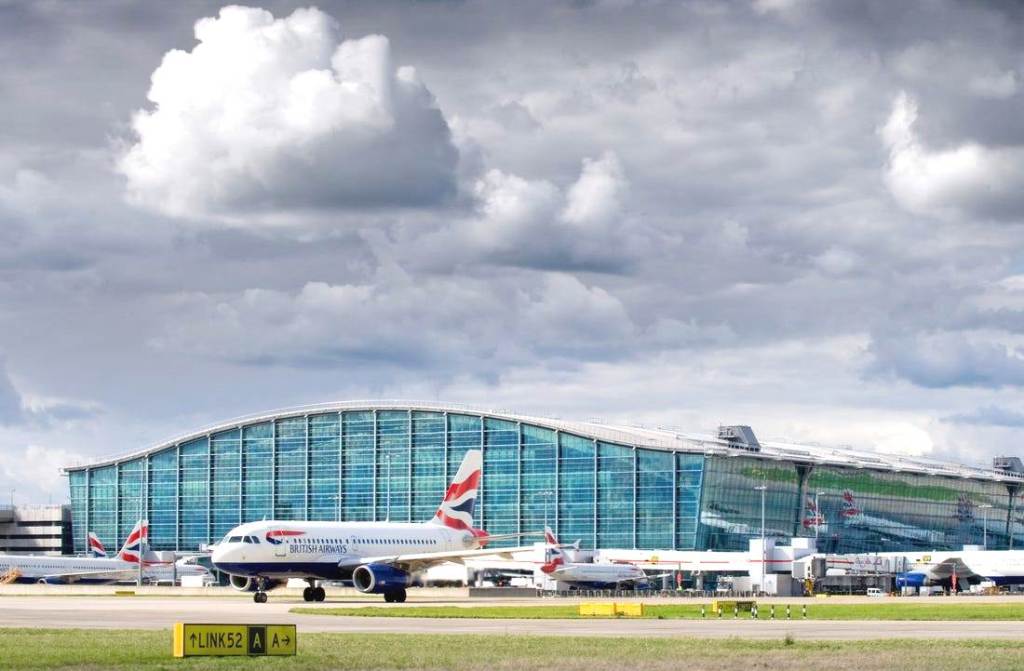
London City
La posición estratégica e interesante ubicación en el centro de la ciudad limita el número de aviones capaces de volar al aeropuerto de la ciudad de Londres, pero representa una practicidad para aquellos usuarios que desean una conexión segura y rápida con la gran urbe del Reino Unido. El aeropuerto tiene aproximaciones y salidas inusualmente empinadas, lo que significa que los tipos de aeronaves deben recibir una certificación específica para usar el aeropuerto. Ahora, casi tres años después de su visita, el Embraer E190-E2 ha recibido dicha certificación.
El Embraer E190 ha representado para el aeropuerto un avión clave de la ciudad de Londres. Aunque la actual crisis de la aviación actualmente limita a los operadores enel London City, la familia Embraer es una parte crucial de las operaciones del aeropuerto. BA Cityflyer, KLM Cityhopper, LOT Polish Airlines, Alitalia y Portugalia eran operadores regulares de Embraer al Aeropuerto de la Ciudad de Londres. Al comentar sobre la certificación, Cesar Pereira, Vicepresidente emea, Embraer Commercial Aviation, dijo: «Los aviones Embraer representan el 70% de los movimientos de aviones en este icónico aeropuerto, en el corazón de una de las ciudades más grandes del mundo. Esta es una fuente de gran orgullo para Embraer, London City se siente como en casa. Esperamos que los E190-E2 se unan a los aviones Embraer que ya vuelan desde la ciudad de Londres».
E190-E2 certified for London City
Embraer E190-E2 receives ops certification in London City
The Embraer E190-E2 has received steep approach certification from EASA. In 2018, something interesting happened at London City Airport. A shark-liveried plane landed at the central London facility at 10:41 a.m. The flight stood out, not only because of the livery but also because it was the first time the Embraer E190-E2 had landed at the airport. The visit was part of the process to obtain E190-E2 certification for steep approaches, a requirement for landing at London City Airport. Airplanes flying to the airport must also land on the short runway (1,508m by 4,948ft) while meeting strict noise standards due to the city center location.
Currently, EASA has certified that the E190-E2 marks all these boxes, granting the certification to the aircraft on May 11, 2021. The Embraer company, the London airport and the operating airlines have received excellent news for operations. As part of the E190-E2 landing approvals, London City Council has invested in the construction of eight new bleachers alongside a new taxiway eliminating the need to backtrack on the runway. According to Alison FitzGerald, COO of London City, these eight new stands were built with the operational perspectives of Embraer E2jets.
London city
The strategic position and interesting location in the city center limits the number of aircraft capable of flying to London City Airport, but represents a practicality for those users who want a safe and fast connection with the great city of the United Kingdom. The airport has unusually steep approaches and departures, which means that aircraft types must receive specific certification to use the airport. Now, almost three years after your visit, the Embraer E190-E2 has received such certification.
The Embraer E190 has represented a key aircraft for the city of London for the airport. Although the current aviation crisis currently limits operators in London City, the Embraer family is a crucial part of the airport’s operations. BA Cityflyer, KLM Cityhopper, LOT Polish Airlines, Alitalia and Portugalia were regular Embraer carriers to London City Airport. Commenting on the certification, Cesar Pereira, emea Vice President, Embraer Commercial Aviation, said: «Embraer aircraft account for 70% of aircraft movements at this iconic airport, in the heart of one of the world’s largest cities. is a source of great pride for Embraer, London City feels like home. We look forward to the E190-E2 joining the Embraer aircraft already flying from London City».
CERTIFICACIÓN ENFOQUE EMPINADO La certificación de enfoque empinado es exactamente lo que parece. Por lo general, los aviones se acercan a una pista en un ángulo de alrededor de tres grados. En el aeropuerto de la ciudad de Londres, esto es casi el doble, registrando en 5.5 grados. Según Embraer, el enfoque más empinado tiene como objetivo reducir la contaminación acústica de las áreas circundantes. Para aterrizar en el aeropuerto, las aeronaves necesitan certificación y modificación adicionales, mientras que la tripulación también debe obtener más capacitación. En el caso del E190-E2, Embraer modificó el software en el avión para permitir una aproximación tan empinada mientras agregaba un interruptor de aproximación empinada en la cabina para evitar que el sistema se activara cuando no fuera necesario.
STEEP APPROACH CERTIFICATION The steep approach certification is exactly what it sounds like. Typically, airplanes approach a runway at an angle of about three degrees. At London City Airport, this is almost double, registering at 5.5 degrees. According to Embraer, the steepest approach aims to reduce noise pollution from surrounding areas. To land at the airport, aircraft need additional certification and modification, while the crew must also undergo further training. In the case of the E190-E2, Embraer modified the software on the plane to allow such a steep approach while adding a steep approach switch in the cockpit to prevent the system from activating when not needed.
AW | 2021 05 31 06:14 | INDUSTRY / AVIATION TECHNOLOGY / AEROSPACE
Comunicación digital cuántica para infraestructura europea
La Comisión Europea (CE) ha seleccionado un consorcio de empresas e institutos de investigación para estudiar el diseño de la futura red europea de comunicación cuántica, EuroQCI (infraestructura de comunicación cuántica). Permitirá una comunicación ultrasegura entre infraestructuras críticas e instituciones gubernamentales en toda la Unión Europea. El consorcio europeo liderado por Airbus Group está compuesto por Leonardo, Orange, PwC France and Maghreb, Telespazio (una empresa conjunta de Leonardo y Thales 67/33), el Consiglio Nazionale delle Ricerche (CNR) y el Istituto Nazionale di Ricerca Metrologica (INRiM).
El EuroQCI integrará tecnologías y sistemas cuánticos en redes de comunicación de fibra óptica terrestres e incluirá un segmento espacial que garantizará una cobertura total en la UE y otros continentes. En última instancia, esto permitirá proteger los sistemas de cifrado y las infraestructuras críticas de Europa, como las instituciones gubernamentales, el control del tráfico aéreo, las instalaciones sanitarias, los bancos y las redes eléctricas frente a las amenazas cibernéticas actuales y futuras.
Desde Junio de 2019, veintiséis Estados miembros han firmado la Declaración EuroQCI, acordando trabajar junto con la Comisión, con el apoyo de la Agencia Espacial Europea (EASA), hacia el desarrollo de una infraestructura de comunicación cuántica que cubra toda la UE. El plan a largo plazo es que EuroQCI se convierta en la base de una Internet cuántica en Europa, conectando computadoras cuánticas, simuladores y sensores a través de redes cuánticas para distribuir información y recursos con un método de seguridad de vanguardia.
El primer servicio en utilizarlo será la distribución de claves cuánticas (QKD). El servicio QKD transmitirá claves de cifrado a través de canales de comunicación cuántica en enlaces de fibra óptica terrestre y láser espacial. El uso de estados de fotones cuánticos hace que la distribución de claves sea inmune a las vulnerabilidades, a diferencia de los métodos actuales. El estudio de quince meses establecerá los detalles del sistema de extremo a extremo y diseñará el segmento terrestre que respalda el servicio QKD. Desarrollará una hoja de ruta de implementación detallada, incluido el costo y el cronograma de cada fase de implementación. Además, el estudio ayudará a la Comisión Europea a diseñar una infraestructura avanzada de validación y pruebas de QCI que incluya estándares. El objetivo es ejecutar un demostrador EuroQCI para 2024 y un servicio operativo inicial para 2027.
El consorcio se beneficiará de la complementariedad de sus miembros, que incluyen grandes integradores de sistemas, operadores de telecomunicaciones y Satcom y proveedores de servicios, además de institutos de investigación. El estudio aprovechará y fortalecerá las contribuciones existentes en varios proyectos cuánticos realizados por cada miembro del consorcio y se beneficiará de una amplia experiencia de campo de la columna vertebral cuántica italiana gracias a CNR e INRiM.
European Consortium for EuroQCI
Quantum digital communication for European infrastructure
The European Commission (EC) has selected a consortium of companies and research institutes to study the design of the future European quantum communication network, EuroQCI (quantum communication infrastructure). It will allow ultra-secure communication between critical infrastructures and government institutions throughout the European Union. The European consortium led by Airbus Group is made up of Leonardo, Orange, PwC France and Maghreb, Telespazio (a joint venture of Leonardo and Thales 67/33), the Consiglio Nazionale delle Ricerche (CNR) and the Istituto Nazionale di Ricerca Metrologica (INRiM).
The EuroQCI will integrate quantum technologies and systems in terrestrial fiber optic communication networks and will include a space segment that will ensure full coverage in the EU and other continents. Ultimately, this will help protect Europe’s encryption systems and critical infrastructures, such as government institutions, air traffic control, healthcare facilities, banks, and power grids from current and future cyber threats.
Since June 2019, twenty-six Member States have signed the EuroQCI Declaration, agreeing to work together with the Commission, with the support of the European Space Agency (EASA), towards the development of a quantum communication infrastructure covering the entire EU. The long-term plan is for EuroQCI to become the foundation of a quantum Internet in Europe, connecting quantum computers, simulators and sensors via quantum networks to distribute information and resources with a state-of-the-art security method.
The first service to use it will be quantum key distribution (QKD). The QKD service will transmit encryption keys over quantum communication channels on terrestrial fiber optic and space laser links. The use of quantum photon states makes the key distribution immune to vulnerabilities, unlike current methods. The fifteen-month study will establish the details of the end-to-end system and design the ground segment that supports the QKD service. You will develop a detailed implementation roadmap, including the cost and schedule for each implementation phase. In addition, the study will help the European Commission to design an advanced QCI testing and validation infrastructure that includes standards. The goal is to run a EuroQCI demonstrator by 2024 and an initial operational service by 2027.
The consortium will benefit from the complementarity of its members, which include large systems integrators, telecom and Satcom operators and service providers, as well as research institutes. The study will build on and strengthen existing contributions in various quantum projects carried out by each member of the consortium and benefit from extensive field experience of the Italian quantum backbone thanks to CNR and INRiM.
London/Heathrow recurre Rohde & Schwarz para mejorar seguridad
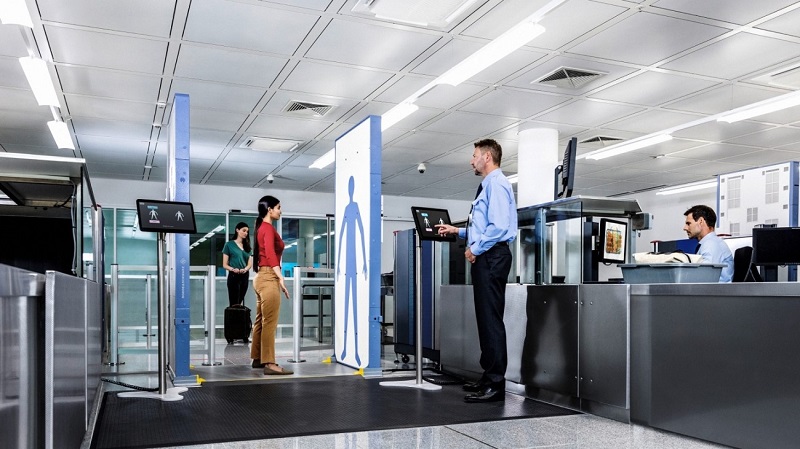
El Aeropuerto London/Heathrow/LHR ha seleccionado los scanners Quick Personnel Security (QPS) de la compañía Rohde & Schwarz para mejorar sus puntos de control de seguridad y minimizar el tiempo de espera de los pasajeros. Los escáneres R&S QPS201 se desplegarán en todo el aeropuerto de Heathrow y escanearán a todos los viajeros, personal y contratistas que se dirijan a los lugares de la parte aérea a la entrada. Con la ayuda de algoritmos de software entrenados por máquina, el escáner R&S QPS201 puede detectar todo tipo de sustancias potencialmente inseguras.
El Vicepresidente de Ventas de Rohde &Schwarz Europe, Frank Mackel, dijo: «El aeropuerto de Heathrow es el último aeropuerto internacional líder en adoptar el R&S QPS201, reforzando nuestra posición como solución de referencia para los aeropuertos de todo el mundo. Este escáner aborda los tres requisitos clave del aeropuerto, alta precisión de la detección de amenazas, baja frecuencia de falsas alarmas para minimizar los cambios manuales que consumen mucho tiempo y el rápido rendimiento para reducir los tiempos de espera de los pasajeros incluso en períodos ocupados».
El aeropuerto estaba buscando una solución integral que fuera capaz de satisfacer las necesidades de seguridad y rendimiento existentes y también pudiera actualizarse de acuerdo con los requisitos futuros. El escáner QPS201 de Rohde &Schwarz fue seleccionado debido a su capacidad para mejorarse con nuevos algoritmos después de la instalación. Habilitando una postura de manos abajo, estos escáneres llevan a cabo un escaneo de cuerpo entero en cuestión de segundos, indicando elementos sospechosos en una imagen para la privacidad de los pasajeros. Estos escáneres están equipados con tecnología que mejora la detección de amenazas al tiempo que minimiza el tiempo de procesamiento y las falsas alarmas.
A través de estas ganancias de rendimiento, los escáneres QPS201 reducen las comprobaciones manuales posteriores a la alarma, lo que garantiza el distanciamiento social durante la pandemia. Además, estos escáneres ayudan a evadir las colas excesivas, restaurando la paridad a los tiempos de análisis de equipaje y personal. El objetivo es proporcionar una experiencia positiva de los pasajeros manteniendo la seguridad en el aeropuerto. A principios de este año, Rohde &Schwarz anunció que el escáner QPS201 fue desplegado en el aeropuerto de Kerry (KIR), que se encuentra en Farranfore, Irlanda.
Heathrow selects Rohde & Schwarz
London/Heathrow uses Rohde & Schwarz to improve safety
London/Heathrow/LHR Airport has selected Rohde & Schwarz company Quick Personnel Security (QPS) scanners to enhance its security checkpoints and minimize passenger waiting time. The R&S QPS201 scanners will be deployed throughout Heathrow Airport and will scan all travelers, staff and contractors heading to the airside locations at the entrance. With the help of machine-trained software algorithms, the R&S QPS201 scanner can detect all kinds of potentially unsafe substances.
Rohde & Schwarz Europe Vice President of Sales Frank Mackel said: «Heathrow Airport is the latest leading international airport to adopt the R&S QPS201, reinforcing our position as the reference solution for airports around the world. This scanner addresses the three key airport requirements, high accuracy of threat detection, low frequency of false alarms to minimize time-consuming manual changes, and fast throughput to reduce passenger wait times even in busy periods».
The airport was looking for a comprehensive solution that was capable of meeting existing security and performance needs and could also be upgraded according to future requirements. The Rohde & Schwarz QPS201 scanner was selected due to its ability to be upgraded with new algorithms after installation. Enabling a hands-down pose, these scanners perform a full-body scan in seconds, indicating suspicious elements in an image for the privacy of passengers. These scanners are equipped with technology that improves threat detection while minimizing processing time and false alarms.
Through these performance gains, the QPS201 scanners reduce manual post-alarm checks, ensuring social distancing during the pandemic. In addition, these scanners help avoid excessive queues, restoring parity to baggage and personnel scan times. The goal is to provide a positive passenger experience while maintaining security at the airport. Earlier this year, Rohde & Schwarz announced that the QPS201 scanner was deployed at Kerry Airport (KIR), which is located in Farranfore, Ireland.
Arquitectura de aviación hacia concepto de modernización
La arquitectura de la aviación se ha transformado radicalmente. Mientras que los propios aeropuertos han crecido para dar cabida a innumerables programas y volúmenes de tráfico cada vez más altos cada año, los proyectos de construcción modernos van más allá de esta tipología familiar para explorar la naturaleza de los hangares, la taxonomía de los aeródromos y la reutilización. Mientras que los aeropuertos realmente sólo han surgido en el último siglo, la aviación ha capturado la imaginación de los diseñadores durante siglos.
Actualmente, los diseños de aviación contemporánea se están conceptualizando como obras explorativas y creativas. Diseñados en la intersección de personas, la arquitectura y el cielo, los siguientes proyectos muestran nuevos proyectos de aviación. Examinando las relaciones entre las nuevas tecnologías y los avances históricos, cada proyecto se realizó con diferentes escalas, programas y ensamblajes de materiales. Juntos, comienzan a mostrar cómo la arquitectura de la aviación contemporánea va más allá del aeropuerto para fomentar la contemplación y la conexión.
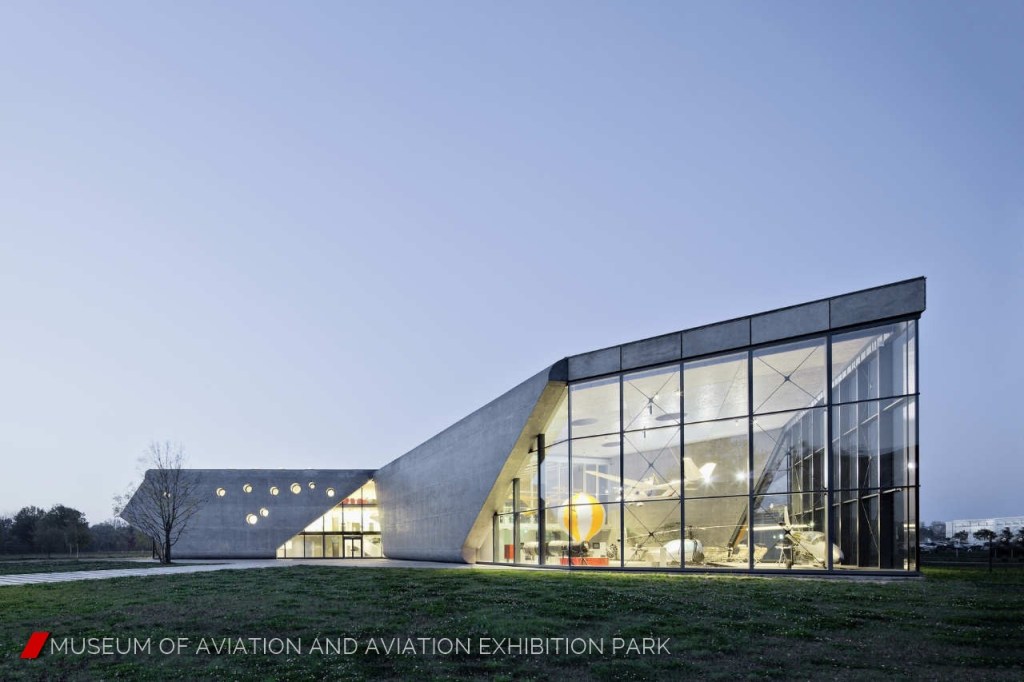
El Muzeum Lotnictwa es uno de los museos de aviación más grandes del mundo. Se encuentra en edificios y hangares históricamente pre-servidos del antiguo aeródromo histórico de Rakowice-Cyzyny en Cracovia, el primer aeródromo en terreno pulido, construido en 1912 para la flota aérea número 7 del Imperio austriaco-húngaro. En 2005 se lanzó un concurso para el nuevo edificio principal, el primer concurso paneuropeo para arquitectos, después de la adhesión de Polonia a la UE.
A lo largo de las orillas del río Huangpu de Shanghái, cinco tanques de combustible de aviación dados de baja una vez fueron abandonados en un sitio industrial vacío. Hoy en día, estos tanques y el sitio circundante, reliquias olvidadas del antiguo Aeropuerto longhua de la ciudad, han recibido nueva vida y relevancia por open architecture. En el transcurso de muchos años, los cinco tanques se convirtieron de contenedores de residuos a un vibrante centro de arte contemporáneo.
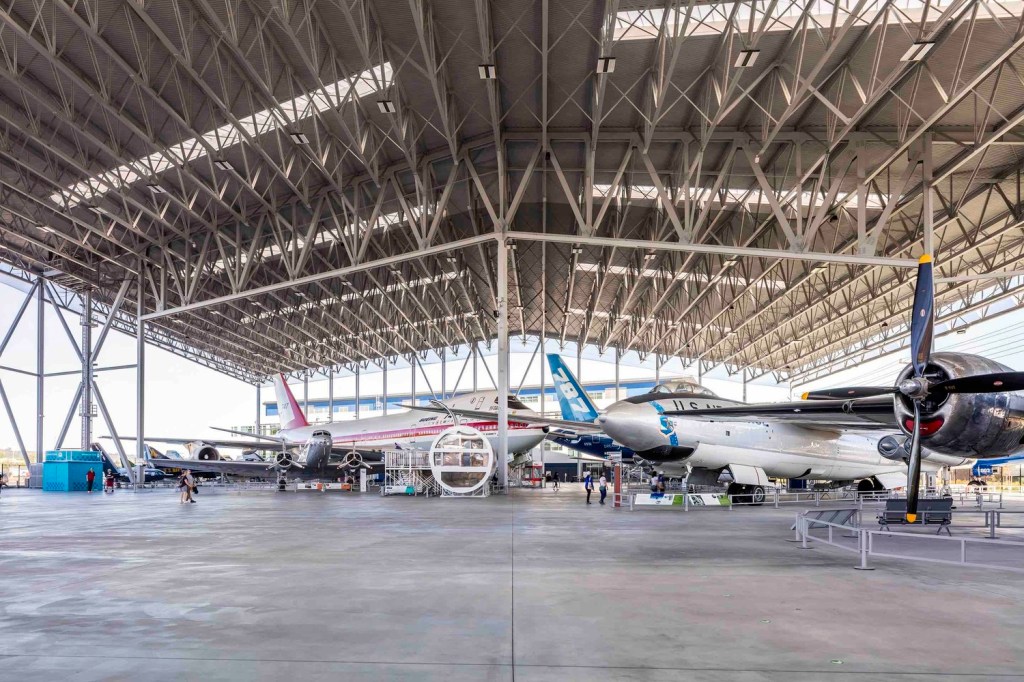
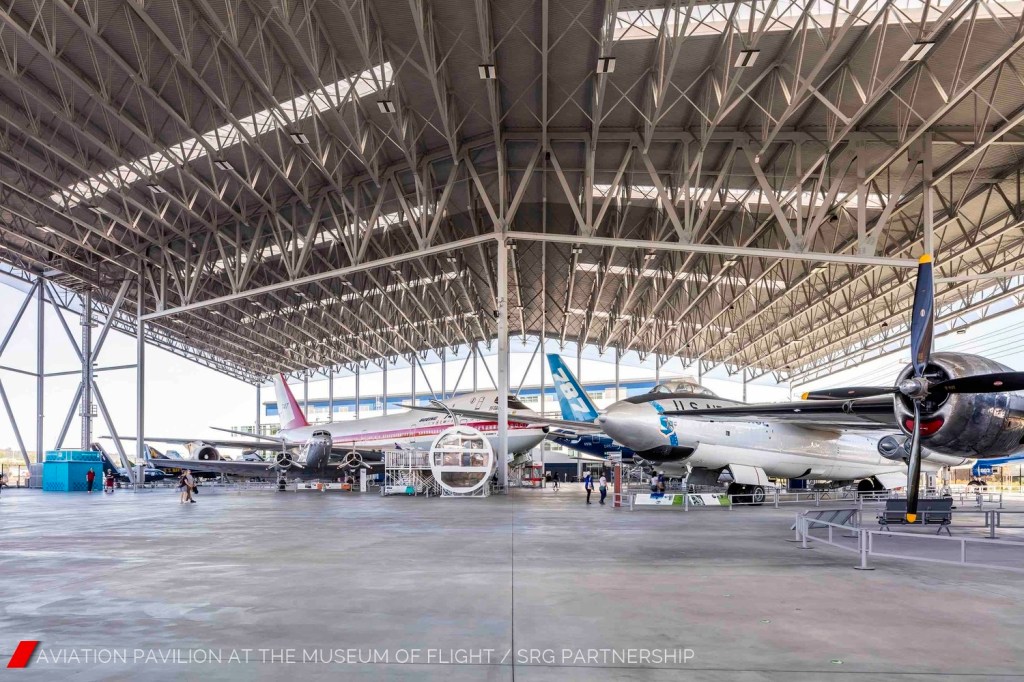
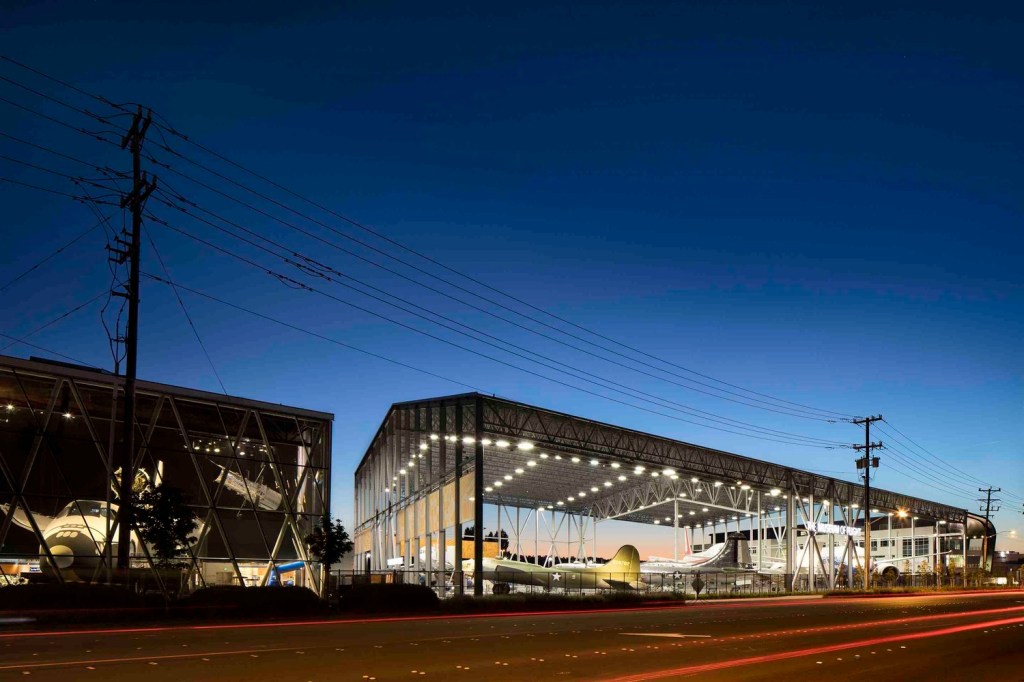
El Pabellón de Aviación del Museo del Vuelo es un techo de 135.000 pies cuadrados apoyado por columnas de acero y marcos de ortodoncia con una losa de pavimentación de hormigón de doce pulgadas. Alberga veinte aviones para una protección aumentada de los elementos y el acceso del cliente. Los aviones exhibidos incluyen los icónicos prototipos de Boeing 747 y 787, el Air Force One, el Concorde y otros aviones militares y comerciales históricos.
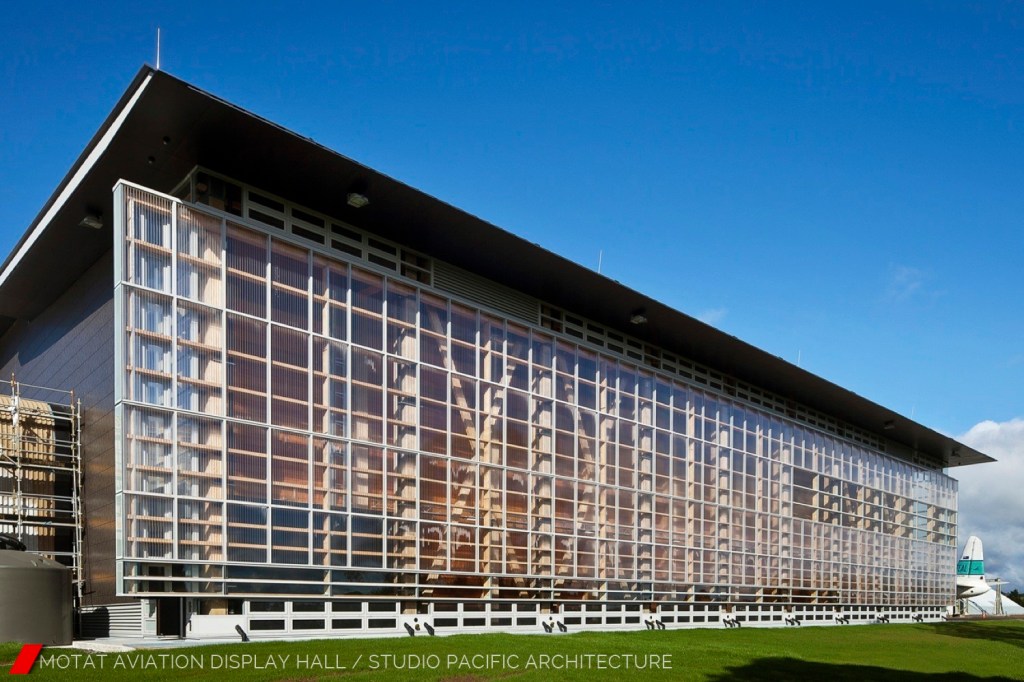
El Aviation Display Hall es una de las principales instalaciones museísticas de la colección de aviones históricos del Museo del Transporte y la Tecnología (MOTAT). Fue diseñado para ampliar el edificio de aviación existente en el sitio del museo Meola Road en Auckland. A 3300m2, la extensión permitirá a MOTAT albergar todas sus exhibiciones de aviación, algunas de las cuales son los únicos ejemplos restantes en el mundo, en un entorno protegido por primera vez.
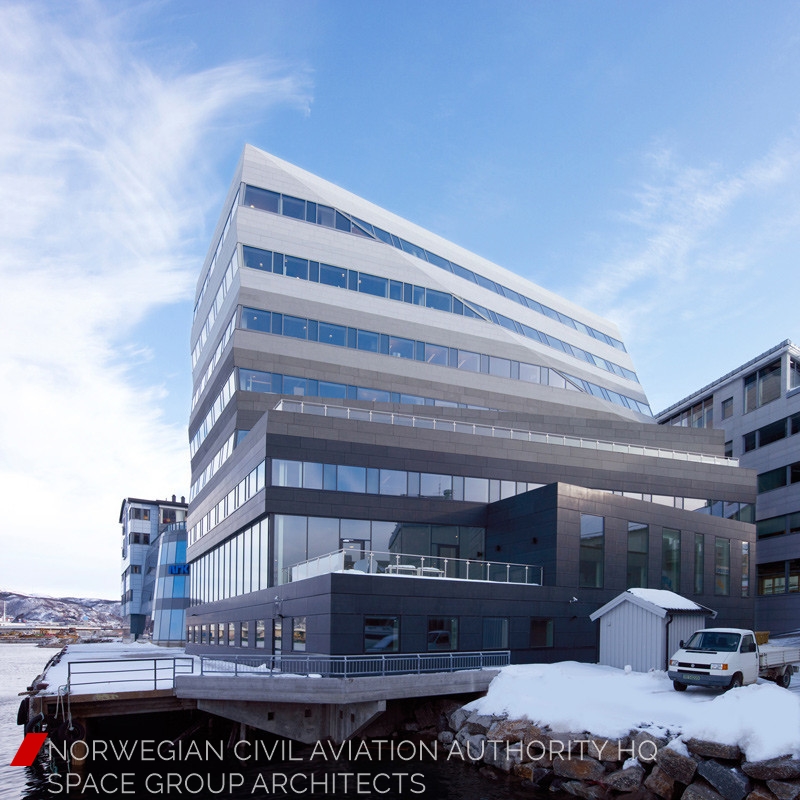
La construcción de una nueva sede para Luftfartstilsynet fue un desafío en la creación de un lugar para una organización desarraigada, trasplantada de Oslo a Bodø, y al hacerlo, la construcción de una nueva cultura de oficina. El sitio, una propiedad compacta frente al mar, está oculto de su dirección de la calle por el edificio NAV recientemente terminado. Aprovechando la diferencia de una historia entre el nivel clave y el nivel de la calle, el equipo perforó el edificio NAV con un túnel que se convierte en un puente programado (de recepción), conectando con el luftfartstilsynet independiente.
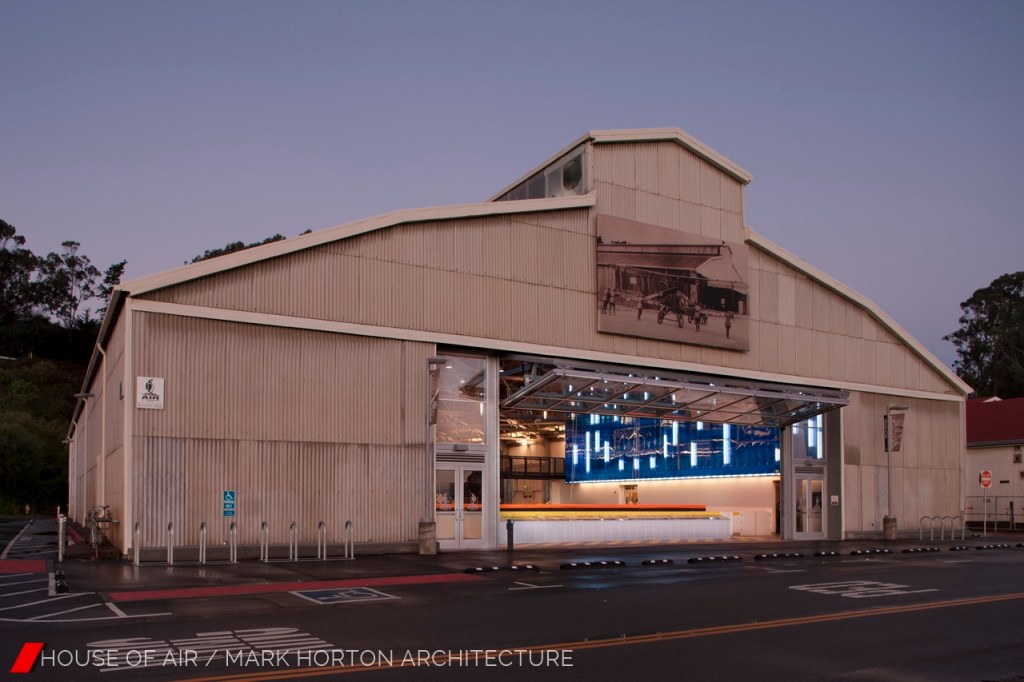
House of Air, iniciada en 2010 por dos jóvenes emprendedores interesados en el mundo del deporte de acción, es una instalación de trampolín que atiende a la población joven, enérgica y próspera de san Francisco activo. El sitio está al pie del puente Golden Gate y en el Parque Nacional Golden Gate, con amplias vistas a la bahía de San Francisco que se hacen aún más evidentes cuando se abre la puerta de la percha acristalada de 45′ de ancho.
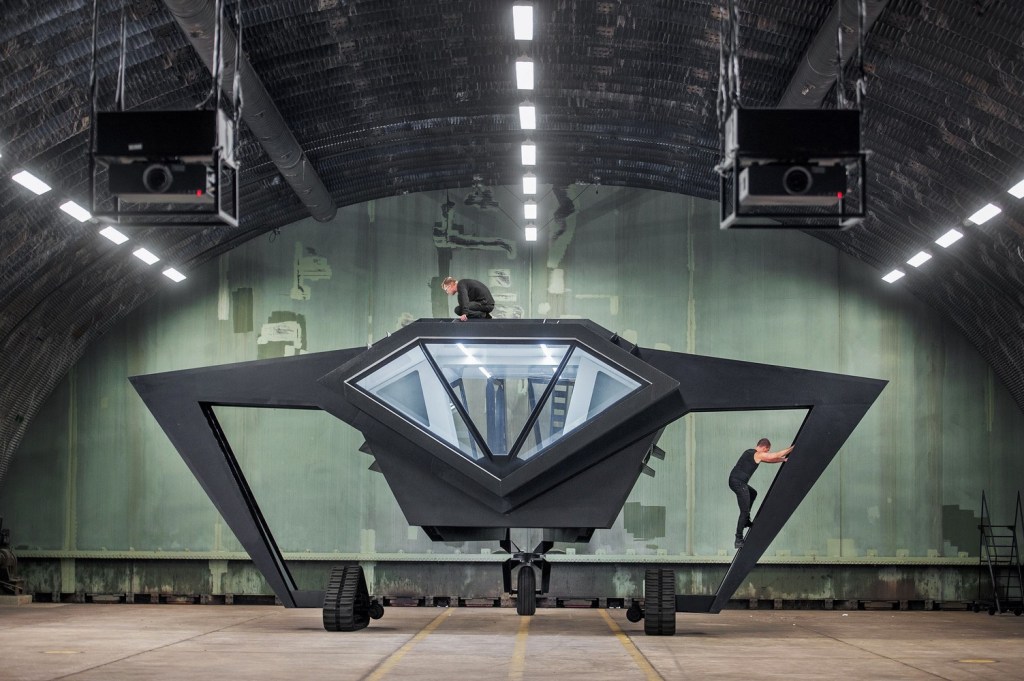
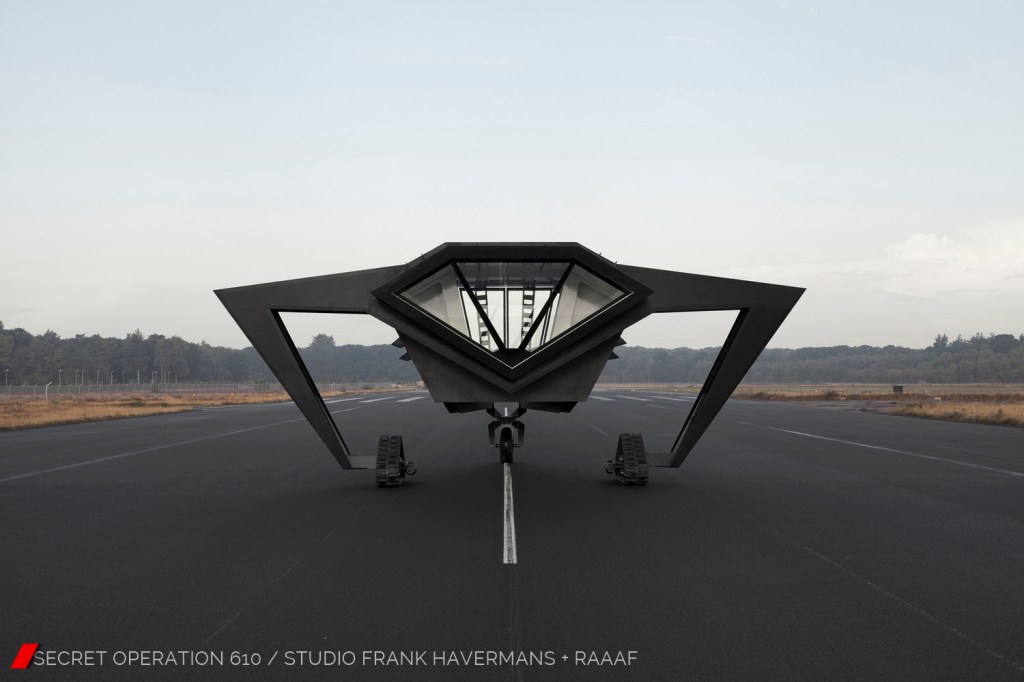
El Operación Secreta 610 es una solución móvil radical para el desafío de regeneración de transformar el búnker de aviones Shelter 610 en la antigua base aérea estadounidense de la OTAN Soesterberg de un hangar de aviones de combate F15 en un desafiante espacio de trabajo experimental para equipos más pequeños. El robusto objeto negro que hace referencia a las imágenes místicas militares de la Guerra Fría contiene un interior de trabajo funcional «básico» para un máximo de 10 personas.
Aviation architecture perspective
Aviation architecture towards modernization concept
The architecture of aviation has been radically transformed. While airports themselves have grown to accommodate myriad schedules and ever-increasing traffic volumes each year, modern construction projects go beyond this familiar typology to explore the nature of hangars, the taxonomy of airfields, and reuse. While airports have only really emerged in the last century, aviation has captured the imagination of designers for centuries.
Today, contemporary aviation designs are being conceptualized as explorative and creative works. Designed at the intersection of people, architecture, and the sky, the following projects showcase new aviation projects. Examining the relationships between new technologies and historical advances, each project was carried out with different scales, schedules, and material assemblies. Together, they begin to show how contemporary aviation architecture goes beyond the airport to encourage contemplation and connection.
The Muzeum Lotnictwa is one of the largest aviation museums in the world. It is housed in historically pre-served buildings and hangars of the former historic Rakowice-Cyzyny Airfield in Krakow, the first airfield on polished terrain, built in 1912 for the Austrian-Hungarian Empire’s number 7 air fleet. In 2005 a competition was launched for the new main building, the first pan-European competition for architects, after Poland’s accession to the EU.
Along the banks of Shanghai’s Huangpu River, five decommissioned aviation fuel tanks were once abandoned on an empty industrial site. Today these tanks and the surrounding site, forgotten relics of the city’s former longhua Airport, have been given new life and relevance by open architecture. Over the course of many years, the five tanks were converted from waste bins to a vibrant center for contemporary art.
The Museum of Flight Aviation Pavilion is a 135,000-square-foot ceiling supported by steel columns and orthodontic frames with a twelve-inch concrete paving slab. It houses twenty aircraft for increased protection from the elements and customer access. Aircraft on display include the iconic Boeing 747 and 787 prototypes, Air Force One, Concorde, and other historic military and commercial aircraft.
The Aviation Display Hall is one of the main museum facilities in the Museum of Transportation and Technology (MOTAT) collection of historic aircraft. It was designed to expand the existing aviation building on the site of the Meola Road museum in Auckland. At 3300m2, the extension will allow MOTAT to host all of its aviation exhibits, some of which are the only remaining examples in the world, in a protected environment for the first time.
Building a new headquarters for Luftfartstilsynet was a challenge in creating a place for an uprooted organization, transplanted from Oslo to Bodø, and in doing so, building a new office culture. The site, a compact beachfront property, is hidden from your street address by the recently completed NAV building. Taking advantage of the difference of a story between the key level and the street level, the team drilled the NAV building with a tunnel that becomes a programmed (reception) bridge, connecting to the independent luftfartstilsynet.
House of Air, started in 2010 by two young entrepreneurs interested in the world of action sports, is a trampoline facility serving the young, energetic and prosperous population of active San Francisco. The site is at the foot of the Golden Gate Bridge and in Golden Gate National Park, with expansive views of the San Francisco Bay that become even more apparent when the 45 ‘wide glass hanger door is opened.
Secret Operation 610 is a radical mobile solution to the regeneration challenge of transforming the Shelter 610 aircraft bunker into the former US NATO Soesterberg airbase from an F15 fighter aircraft hangar into a challenging experimental workspace for more teams. little ones. The sturdy black object that references Cold War military mystical imagery contains a «basic» functional working interior for up to 10 people.
Soesterberg -op de vooralige vliegbasis soesterberg wordt 14,15 sept en 21,22 sept het festival de basis gehouden. Met theather kunst en muziek. tussen bomen bunkers en landingsbanen. Hier wordt het kunstproject secret operations 610 klaargemaakt voor de opening. foto raymond rutting / de volkskrant
PUBLISHER: Airgways.com DBk: Archdaily.com / Raymond Rutting / Ethan Kaplan / Jens Willebrand / Jeroen Musch / Michiel de Cleene / Patrick Reynols / Airgways.com AW-POST: 202105201711AR
Grupo aéreo primer vuelo larga distancia con biocombustible
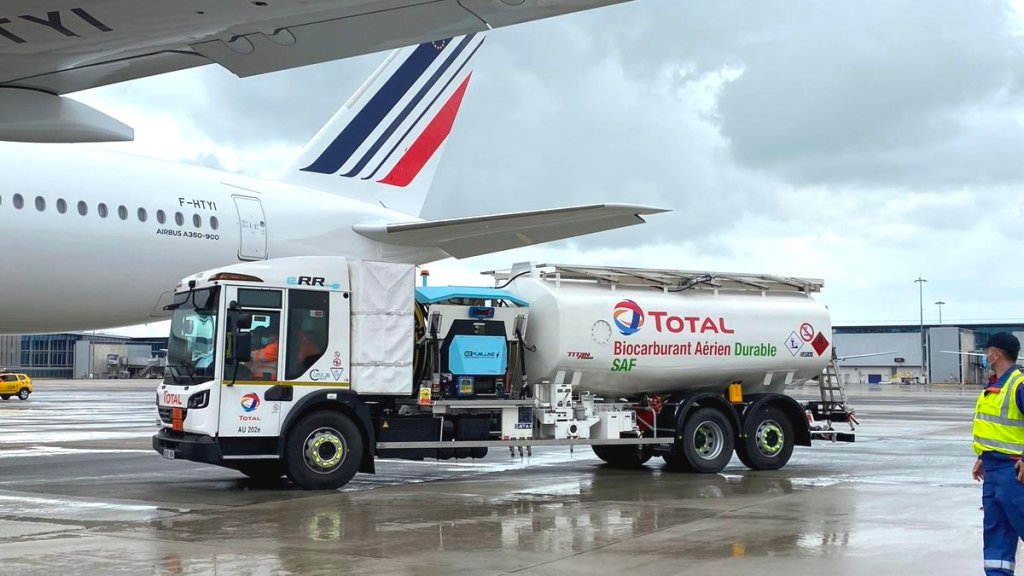
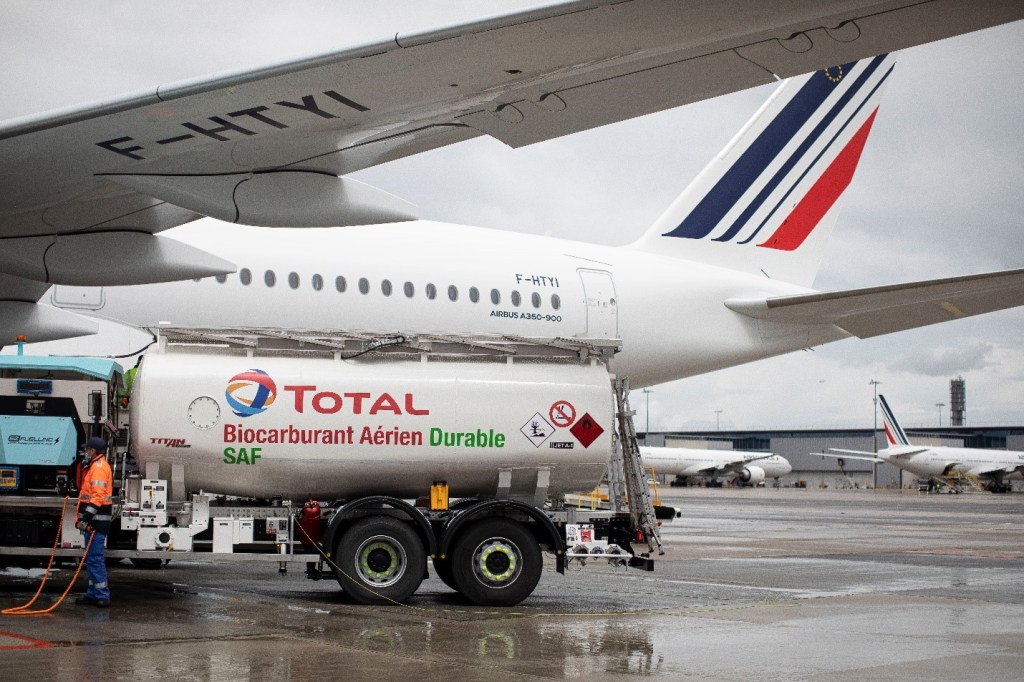
Air France-KLM Group, Total SE, ADP Group y Airbus Group unieron fuerzas para realizar el primer vuelo de larga distancia con Combustible de Aviación Sostenible (SAF*) producido en Francia. El vuelo AF342 despegó ayer a las 15:40 horas de la Terminal 2E del Aeropuerto Paris/Charles de Gaulle con destino a Montreal, Canadá, llevando por primera vez en sus depósitos combustible de aviación sostenible producido por la compañía de hidrocarburos Total SE en sus plantas francesas. Este vuelo hace realidad la ambición común de los cuatro grupos de descarbonizar el transporte aéreo y de desarrollar una industria francesa de producción de combustibles de aviación sostenibles, condición indispensable para la generalización de su uso en los aeropuertos franceses.
Los biocombustibles pueden incorporarse sin necesidad de modificar las infraestructuras logísticas de almacenamiento y distribución, ni los aviones, ni los motores. Su uso progresivo a escala mundial debería permitir reducir significativamente las emisiones de CO2 del transporte aéreo, en consonancia con los Objetivos de Desarrollo Sostenible de las Naciones Unidas. El biocombustible utilizado para este vuelo fue realizado con desechos y residuos provenientes de la economía circular. Total produjo este combustible a partir de aceite de cocina usado en su biorrefinería de La Mède, en la región de Bouches-du-Rhône, y en su planta de Oudalle, en la región de Seine-Maritime, sin utilizar aceite vegetal virgen.
Este primer SAF Made in France fue certificado ISCC-EU por la International Sustainability & Carbon Certification, una organización independiente que garantiza su sostenibilidad. Su incorporación en una proporción del 16% en este vuelo permitió evitar la emisión de 20 toneladas de CO2. Al desarrollar y apoyar de esta manera la primera etapa de una industria francesa de combustibles aéreos sostenibles, Air France-KLM, Total, el Grupo ADP y Airbus están marcando el camino para hacer de Francia un país motor de innovación, al servicio de la transición energética y medioambiental. La legislación francesa prevé en la actualidad la incorporación de un 1% de este tipo de biocombustible en todos los vuelos iniciados en Francia a partir de 2022, adelantándose a la ambición de incorporación gradual (2% en 2025 y 5% en 2030) que se realizará en el marco del «Green Deal» europeo. En respuesta a este cambio de legislación, Total también producirá biocombustibles sostenibles para la aviación a partir de 2024 desde su plataforma sin petróleo en Grandpuits, cerca de París.
Este vuelo ilustra asimismo la complementariedad de las diferentes acciones para la reducción de la huella medioambiental: combustible aéreo sostenible, aviones de última generación y electrificación de las operaciones en tierra. El vuelo se realizó con un Airbus A350, un avión que consume un 25% menos de combustible que el avión al que sustituye. El combustible fue suministrado al avión con el primer camión de reabastecimiento 100% eléctrico, desarrollado en Francia con la experiencia de Total, y todo el equipamiento de pista utilizado por Air France también fue enteramente alimentado de electricidad.
Air France-KLM es uno de los pioneros en la experimentación con combustibles de aviación sostenibles. En 2009, KLM realizó su primer vuelo con SAF. Desde entonces, el Grupo ha multiplicado sus programas innovadores, en particular realizando 78 vuelos de Air France entre 2014 y 2016 con un 10% de SAF en colaboración con una filial de Total. Esta experimentación demostró que el uso de combustible sostenible no tiene ningún impacto en la fiabilidad de las operaciones de las aerolíneas. El Grupo Air France-KLM pretende reforzar su liderazgo en materia de combustible de aviación sostenible en los próximos años, al tiempo que se suma a la investigación sobre los aviones del futuro. Paralelamente a esta operación, Airbus está realizando varias series de pruebas con el fin de certificar en vuelo los aviones de línea con un 100% de biocombustible de aviación sostenible en las próximas décadas. También, se han instalado estaciones específicas de reabastecimiento de SAF en sus centros industriales, lo que permite a Airbus utilizar este tipo de combustible en sus operaciones de producción, así como durante las entregas de aviones. Estas instalaciones forman parte de la ambición del grupo Airbus de descarbonizar todas sus actividades industriales.
Con motivo de este primer vuelo, Benjamin Smith, Director General de Air France-KLM, declaró: «El Grupo Air France-KLM está comprometido desde hace mucho tiempo con la reducción de su huella medioambiental. Junto con la renovación de nuestra flota, los combustibles aéreos sostenibles (SAF) son la principal acción a mediano plazo que podemos implementar para reducir a la mitad nuestras emisiones de CO2 por pasajero/km para 2030. Por lo tanto, el SAF está en el centro de nuestra estrategia, junto con el eco-pilotaje y la neutralidad de carbono en nuestras operaciones en tierra. Francia tiene hoy en día la oportunidad de posicionarse como líder en la producción y utilización de combustibles sostenibles, y estamos haciendo todo lo posible para contribuir a ello junto a nuestros socios. Hacer emerger una industria francesa económicamente viable para todos los actores es una prioridad estratégica para el país y para el Grupo».
Patrick Pouyanné, CEO de Total, también declaró: «El desarrollo de los biocombustibles es uno de los elementos clave de la estrategia multienergías de Total para afrontar el reto de la descarbonización del sector del transporte. Tras iniciar con éxito la producción de biocombustibles sostenibles para la aviación en nuestros centros de producción de Francia el pasado mes de marzo, seguimos adaptando nuestras instalaciones industriales para satisfacer la creciente demanda del sector de la aviación en la próxima década. Al reducir directamente la intensidad de carbono de los productos energéticos utilizados por nuestros clientes del transporte aéreo, estamos colaborando activamente con ellos para lograr nuestra ambición de alcanzar la neutralidad de carbono para 2050, junto con la sociedad».
Augustin de Romanet, CEO del Grupo Aeropuertos de París, comentó: «Este primer vuelo desde el aeropuerto de París-Charles de Gaulle es un símbolo de nuestra ambición de descarbonizar el transporte aéreo, mediante la integración de nuevos combustibles aéreos sostenibles en los aviones. La hoja de ruta del transporte aéreo europeo tiene como objetivo las emisiones netas cero para 2050, y nosotros, como operadores de aeropuertos, estamos dispuestos a acompañar esta transición energética y a emprender, sin demora, el camino de la transformación de nuestras operaciones e infraestructuras».
Finalmente, Guillaume Faury, CEO de Airbus, agregó: «Los combustibles sostenibles son un elemento fundamental para alcanzar nuestros objetivos de descarbonización del sector de la aviación, y Airbus apoya todas las iniciativas que contribuyan a su desarrollo y uso en los vuelos comerciales. Es necesario que todas las partes interesadas actúen de forma coordinada para aumentar el porcentaje de estos combustibles sostenibles, que ahora pueden utilizarse hasta en un 50% en nuestros aviones, sin ninguna modificación ni impacto operativo, reduciendo en la misma proporción su huella medioambiental”.
Air France-KLM 1st flight SAF
Air group first long-haul flight with biofuel
Air France-KLM Group, Total SE, ADP Group and Airbus Group joined forces for the first long-haul flight with Sustainable Aviation Fuel (SAF*) produced in France. Flight AF342 took off yesterday at 3:40 p.m. from Terminal 2E of the Paris/Charles de Gaulle Airport bound for Montreal, Canada, carrying for the first time in its tanks sustainable aviation fuel produced by the hydrocarbon company Total SE in its French plants. This flight fulfills the common ambition of the four groups to decarbonise air transport and to develop a French industry for the production of sustainable aviation fuels, a prerequisite for its widespread use at French airports.
Biofuels can be incorporated without the need to modify the logistics storage and distribution infrastructures, neither the airplanes, nor the engines. Its progressive use on a global scale should make it possible to significantly reduce CO2 emissions from air transport, in line with the United Nations Sustainable Development Goals. The biofuel used for this flight was made with waste and residues from the circular economy. Total produced this fuel from used cooking oil at its La Mède biorefinery, in the Bouches-du-Rhône region, and at its Oudalle plant, in the Seine-Maritime region, without using virgin vegetable oil.
This first SAF Made in France was certified ISCC-EU by the International Sustainability & Carbon Certification, an independent organization that guarantees its sustainability. Its incorporation in a proportion of 16% in this flight made it possible to avoid the emission of 20 tons of CO2. By developing and supporting in this way the first stage of a French sustainable aviation fuel industry, Air France-KLM, Total, the ADP Group and Airbus are leading the way to make France a driving force for innovation, serving the transition energy and environmental. French legislation currently provides for the incorporation of 1% of this type of biofuel in all flights started in France from 2022, anticipating the ambition of gradual incorporation (2% in 2025 and 5% in 2030) that will be will be held within the framework of the European «Green Deal». In response to this change in legislation, Total will also produce sustainable biofuels for aviation starting in 2024 from its oil-free platform in Grandpuits, near Paris.
This flight also illustrates the complementarity of the different actions to reduce the environmental footprint: sustainable air fuel, state-of-the-art aircraft and electrification of ground operations. The flight was carried out with an Airbus A350, an aircraft that consumes 25% less fuel than the aircraft it replaces. Fuel was supplied to the aircraft with the first 100% electric refueling truck, developed in France with Total’s expertise, and all runway equipment used by Air France was also entirely powered by electricity.
Air France-KLM is one of the pioneers in experimentation with sustainable aviation fuels. In 2009, KLM made its first flight with SAF. Since then, the Group has multiplied its innovative programs, in particular by carrying out 78 Air France flights between 2014 and 2016 with a 10% SAF in collaboration with a Total subsidiary. This experimentation showed that the use of sustainable fuel has no impact on the reliability of airline operations. The Air France-KLM Group intends to strengthen its leadership in sustainable aviation fuel in the coming years, while also adding to the research on the aircraft of the future. Parallel to this operation, Airbus is conducting several series of tests in order to certify aviation aircraft in flight with 100% sustainable aviation biofuel in the coming decades. Also, specific SAF refueling stations have been installed in its industrial centers, allowing Airbus to use this type of fuel in its production operations, as well as during aircraft deliveries. These facilities are part of the Airbus group’s ambition to decarbonise all its industrial activities.
On the occasion of this first flight, Benjamin Smith, Managing Director of Air France-KLM, stated: «The Air France-KLM Group has a long-standing commitment to reducing its environmental footprint. Together with the renewal of our fleet, the Sustainable Aviation Fuels (SAF) are the main medium-term action that we can implement to cut our CO2 emissions per passenger/km in half by 2030. Therefore, SAF is at the center of our strategy, along with the eco-pilot and carbon neutrality in our operations on land. France today has the opportunity to position itself as a leader in the production and use of sustainable fuels, and we are doing everything possible to contribute to this together with our partners. an economically viable French industry for all players is a strategic priority for the country and for the Group».
Patrick Pouyanné, CEO of Total, also stated: «The development of biofuels is one of the key elements of Total’s multi-energy strategy to meet the challenge of decarbonising the transport sector. After successfully starting the production of sustainable biofuels for aviation at our production sites in France last March, we continued to adapt our industrial facilities to meet the growing demand from the aviation sector over the next decade, by directly reducing the carbon intensity of energy products used by our customers of air transport, we are actively working with them to achieve our ambition to achieve carbon neutrality by 2050, together with society».
Augustin de Romanet, CEO of the Paris Airports Group, commented: «This first flight from Paris-Charles de Gaulle airport is a symbol of our ambition to decarbonize air transport, by integrating new sustainable air fuels into airplanes. The European air transport roadmap aims at net zero emissions by 2050, and we, as airport operators, are ready to accompany this energy transition and to embark, without delay, on the path of transforming our operations and infrastructures».
Finally, Guillaume Faury, Airbus CEO, added: «Sustainable fuels are a fundamental element in achieving our decarbonisation goals in the aviation sector, and Airbus supports all initiatives that contribute to their development and use on commercial flights. It is necessary for all interested parties to act in a coordinated manner to increase the percentage of these sustainable fuels, which can now be used by up to 50% in our aircraft, without any modification or operational impact, reducing their environmental footprint in the same proportion”.
(*) SAF: El combustible de aviación sostenible (SAF) es una mezcla de combustible aéreo convencional (JET-A1) y de biocombustible de aviación sostenible, producido a partir de desechos y residuos provenientes de la economía circular (grasas animales, aceites de cocina usados, etc.). Este último tiene propiedades similares a las del JET-A1 y ofrece una reducción de hasta el 90% de las emisiones de CO2 durante todo el ciclo de vida en comparación con su equivalente fósil.
(*) SAF: Sustainable aviation fuel (SAF) is a mixture of conventional aviation fuel (JET-A1) and sustainable aviation biofuel, produced from waste and residues from the circular economy (animal fats, used kitchen, etc.). The latter has properties similar to those of JET-A1 and offers a reduction of up to 90% in CO2 emissions over the entire life cycle compared to its fossil equivalent.


























 airgways.com