Aerolíneas reducción de flota

AW | 2024 07 18 12:25 | AIRLINES / GOVERNMENT / AVIATION ORGANISMS

Gremio APLA denuncia achicamiento Aerolíneas Argentinas

Aerolíneas Argentinas_Isologotype 2010_Tx

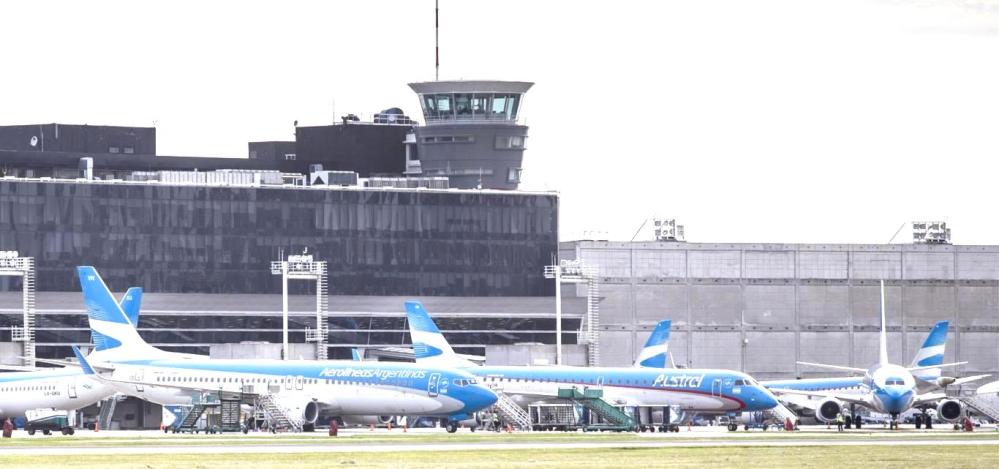
El Gobierno de la República Argentina continúa con la reducción de Aerolíneas Argentinas y dará de baja a diez aeronaves. El gremio de la Asociación de Pilotos de Líneas Aéreas (APLA). El nuevo Presidente de Argentina, Javier Milei, continua estableciendo un Gobierno en procura avanzar con el saneamiento de Aerolíneas Argentinas. La aerolínea estuvo incluida entre aquellas compañías sujetas a privatización dentro de la Ley Bases.

La Asociación Pilotos de Líneas Aéreas (APLA) emitió hoy un comunicado en el que cuestiona la aplicación del plan de Retiros Voluntarios por parte de Aerolíneas Argentinas. Sin embargo, la empresa estatal defiende su decisión, afirmando que busca mejorar la eficiencia y productividad de su personal sin afectar su capacidad operacional. Nicolás Capella, Secretario de Interior de APLA, describió lo que significa este nuevo avance: “Diez aviones menos, representa menos conectividad para el país y menos ingresos para las provincias […]». Fabio Basteiro, ex-Secretario de la Central de Trabajadores de la Argentina (CTA) dijo: “Lo que vemos es que el levantamiento de escalas, la reducción de las conexiones de los vuelos federales y la estructura de retiros que están planificando junto con la desafectación de la flota de Aerolíneas Argentinas no es más ni menos que un eslabón más de la cadena planificada para que Aerolíneas se reduzca a la mínima expresión”, señaló el ex-legislador porteño y ex-titular de APLA.

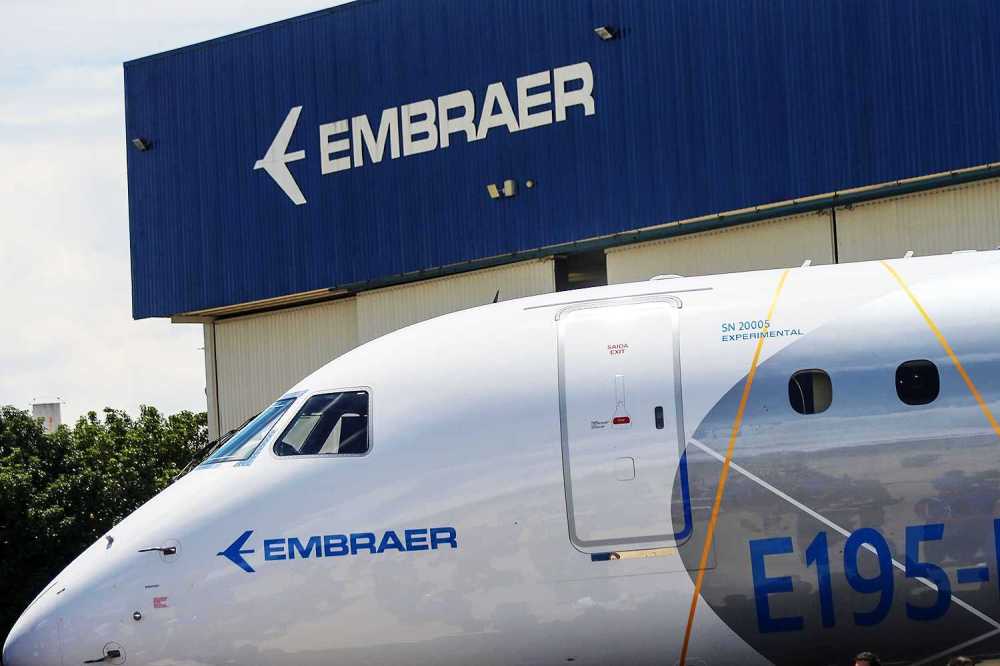
AEROLÍNEAS ARGENTINAS EMBRAER E190-100AR

La aerolínea ha comunicado que comenzarán la desprogramación de dos aeronaves E-190-100AR (2), dos Airbus A330-200 (2) y seis Boeing 737-700 (6) en el mediano plazo. Pero desde la empresa aseguran que no hay un plan de reducción de flota y que estos cambios se deben al vencimiento de los leasings, lo que no significa que no se renueven en el futuro.

Retiros voluntarios
Aerolíneas y los gremios aeronáuticos mantienen posturas contrapuestas sobre el impacto del plan de Retiros Voluntarios en Aerolíneas Argentinas y la situación general de la línea aérea.

Los gremios aeronáuticos remarcan que el achicamiento se da en el contexto de una nueva embestida oficial que busca imponer más retiros voluntarios y que tiene congelada la discusión paritaria por los salarios del personal. “La semana pasada impidieron medidas de Pilotos y Aeronavegantes por medio de una conciliación obligatoria dictada por la Secretaría de Trabajo”, recuerda el comunicado de la Asociación APLA.

“Todo esto está acompañada de la desregulación del mercado aerocomercial, el cambio de código aeronáutico y la entrega de los cielos a mega traders internacionales”, refuerza Fabio Basteiro para graficar el cuadro de situación que atraviesa a la aerolínea.

Aerolíneas fleet reduction

APLA Guild denounces shrinking Aerolíneas Argentinas

The Government of the Argentine Republic continues with the reduction of Aerolíneas Argentinas and will decommission ten aircraft. The union of the Air Line Pilots Association (APLA). The new President of Argentina, Javier Milei, continues to establish a Government seeking to advance the restructuring of Aerolíneas Argentinas. The airline was included among those companies subject to privatization within the Bases Law.

The Pilots Association of Airlines (APLA) today issued a statement in which it questions the application of the Voluntary Retirement plan by Aerolíneas Argentinas. However, the state company defends its decision, stating that it seeks to improve the efficiency and productivity of its personnel without affecting its operational capacity. Nicolás Capella, Secretary of the Interior of APLA, described what this new advance means: “Ten fewer planes represents less connectivity for the country and less income for the provinces […]». Fabio Basteiro, former Secretary of the Central of Workers of Argentina (CTA) said: “What we see is that the lifting of stopovers, the reduction of federal flight connections, and the retirement structure that they are planning along with the disaffection of the Aerolíneas Argentinas fleet is not more nor less than one more link in the chain planned for Aerolíneas to be reduced to a minimum”, said the former Buenos Aires legislator and former head of APLA.

The airline has announced that they will begin the deprogramming of two E-190-100AR aircraft (2), two Airbus A330-200 (2), and six Boeing 737-700 (6) in the medium term. However, the company assures that there is no fleet reduction plan and that these changes are due to the expiration of the leases, which does not mean that they will not be renewed in the future.

Voluntary withdrawals
Airlines and aeronautical unions maintain opposing positions on the impact of the Voluntary Retirement plan on Aerolíneas Argentinas and the general situation of the airline.

The aeronautical unions emphasize that the reduction occurs in the context of a new official attack that seeks to impose more voluntary retirements and that has frozen the joint discussion on staff salaries. “Last week they prevented measures for Pilots and Aircraft Workers through a mandatory conciliation dictated by the Ministry of Labor”, recalls the APLA Association statement.

“All this is accompanied by the deregulation of the commercial airline market, the change of aeronautical code and the delivery of the skies to international mega traders”, reinforces Fabio Basteiro to graph the situation that the airline is going through.

aw-aerolineas_boeing-737-8-max_0003

PUBLISHER: Airgways.com
DBk: Aerolineas.com / Apla.org.ar / Airgways.com
AW-POST: 202407181225AR
OWNERSHIP: Airgways Inc.
A\W A I R G W A Y S ®
10º Aniversarios MH017

AW | 2024 07 17 12:17 | AVIATION HISTORY / GOVERNMENT

Familiares de fallecidos vuelo MH17 conmemoran décimo aniversarios

Logo Malaysia Airlines 1[1]

Familiares de pasajeros y tripulantes que murieron cuando el vuelo MH-017 de Malaysia Airlines fue derribado sobre territorio de la República de Ucrania se reunieron el Miércoles 17/07 para conmemorar el décimo aniversario de la tragedia que cobró la vida de 298 personas, más de la mitad de las cuales eran holandesas. Las familias de las víctimas culparon a los rebeldes respaldados por la Federación Rusia por el misil que derribó el avión, pero Moscú ha negado repetidamente su responsabilidad. En 2022, un Tribunal holandés condenó en rebeldía a dos rusos y a un separatista ucraniano por su papel en el derribo del avión.

Los servicios conmemorativos se llevaron a cabo en los Países Bajos, Australia y el lugar del accidente en la parte controlada por Rusia de la Región de Donetsk, mientras la guerra en Ucrania continuaba. Cientos de familiares, que leerán los nombres de todas las víctimas, se unieron al rey holandés, políticos y diplomáticos en un evento en un memorial en los Países Bajos cerca del Aeropuerto Schiphol (AMS), desde despegó el Boeing 777-200ER con destino a Kuala Lumpur el 17 de Julio de 2014.

Ceremonia 10 aniversarios
La ceremonia en Australia se llevó a cabo en la Casa del Parlamento en Canberra. El Fiscal General de Australia, Mark Dreyfus, representó a su país en el memorial holandés, donde se plantaron 298 árboles para conmemorar a cada víctima y se sembraron girasoles, como los que crecieron en el lugar del accidente. Muchas de las familias que llegaron para el servicio también llevaron girasoles, colocándolos junto a los árboles. Las banderas de los países que perdieron ciudadanos colgaban a media asta junto a un campo de girasoles en flor. El Primer Ministro holandés, Dick Schoof, citó un poema sobre la pérdida llamado «Come Back» de Toon Tellegen y se comprometió a seguir luchando para que los responsables rindan cuentas: «Y yo también lo sé: la justicia lleva tiempo. Pero tenemos tiempo. Y la paciencia. Y la perseverancia. Ese es mi mensaje para los culpables y mi promesa para ustedes».

En el lugar del accidente en la aldea de Hrabov, varias docenas de residentes locales llevaron flores, animales de peluche e incluso un modelo de avión a una pequeña lápida conmemorativa instalada en un campo cerca de donde se encontraron algunos de los restos. Algunos lucharon por contener las lágrimas, recordando la explosión que rompió las ventanas de sus casas y los cuerpos que cayeron del cielo. En ese momento, un misil tierra-aire Buk de la era soviética fue lanzado fatídicamente desde una región fronteriza controlada por los rebeldes pro-rrusos. Gran parte de los escombros cayeron en campos que actualmente están bajo el control del ejército ruso. «Aunque el Tribunal declaró formalmente culpables a los títeres rusos, las autoridades del Kremlin lideradas por Vladimir Putin y sus cómplices están detrás de este crimen», dijo el Estado Mayor de Ucrania en un comunicado publicado en Facebook.

La Federación Rusia sigue siendo perseguida en virtud del derecho internacional por los Países Bajos ante el Tribunal Europeo de Derechos Humanos y por Australia y los Países Bajos conjuntamente a través del Consejo de la Organización de Aviación Civil Internacional (OACI) por su presunto papel en el derribo del vuelo MH-017. La Ministra de Relaciones Exteriores de Australia, Penny Wong, dijo el miércoles en Canberra que estaba horrorizada de que Rusia se hubiera retirado de los procedimientos de la OACI en Junio 2024.

El Portavoz del Kremlin, Dmitry Peskov, se negó a comentar sobre los acontecimientos por el décimo aniversario del derribo del vuelo MH-017, alegando que: «No se tuvieron en cuenta los argumentos de la parte rusa, no participamos en la investigación y, por lo tanto, nuestra actitud ante estas conclusiones es bien conocida», dijo Dmitry Peskov.

El analista político ruso Dmitry Oreshkin dijo que en Rusia, el derribo del MH17 fue al principio objeto de un «juego propagandístico sin escrúpulos y desenfrenado, con mentiras descaradas, y ahora tratan de no hablar de ello en absoluto. Han pasado diez años, y en Rusia, creo, no se dice nada sobre esto», dijo Dmitry Oreshkin a The Associated Press en una entrevista desde Riga, Letonia.

Los Países Bajos albergaron a 196 de las víctimas, mientras que 38 procedían de Australia. Las víctimas también procedían de Malasia, Indonesia, Reino Unido, Bélgica, Alemania, Filipinas, Canadá, Nueva Zelanda, Vietnam, Israel, Italia, Rumania, Estados Unidos y Sudáfrica.

Una investigación internacional iniciada en el Consejo de Seguridad de la ONU por los Países Bajos, Malasia y Australia concluyó que el sistema de misiles Buk que destruyó el MH17 pertenecía a la 53ª Brigada de Misiles Antiaéreos de Rusia. La investigación concluyó que el misil fue conducido a Ucrania desde una base militar rusa cerca de la ciudad de Kursk y devuelto allí después de que el avión fuera derribado.

El Gobierno de Malasia reiteró su compromiso de buscar justicia y hacer rendir cuentas a los responsables de la tragedia. «El Gobierno de Malasia está decidido a que el proceso debe buscar la verdad, la justicia y la rendición de cuentas», dijo el Ministerio de Transporte de Malasia en un comunicado.

10th Anniversaries MH017

Relatives of deceased flight MH17 commemorate tenth anniversaries

Relatives of passengers and crew who died when Malaysia Airlines flight MH-017 was shot down over the territory of the Republic of Ukraine gathered on Wednesday 07/17 to commemorate the tenth anniversary of the tragedy that claimed the lives of 298 people, more than half of which were Dutch. The victims’ families blamed Russian-backed rebels for the missile that downed the plane, but Moscow has repeatedly denied responsibility. In 2022, a Dutch court convicted two Russians and a Ukrainian separatist in absentia for their role in the downing of the plane.

Memorial services were held in the Netherlands, Australia and the crash site in the Russian-controlled part of the Donetsk Region, as the war in Ukraine continued. Hundreds of relatives, who will read the names of all the victims, joined the Dutch king, politicians, and diplomats at an event at a memorial in the Netherlands near Schiphol Airport (AMS), from which the Boeing 777-200ER took off bound for Kuala Lumpur on July 17, 2014.

10th anniversary ceremony
The ceremony in Australia took place at Parliament House in Canberra. Australian Attorney General Mark Dreyfus represented his country at the Dutch memorial, where 298 trees were planted to commemorate each victim, and sunflowers, like those that grew at the crash site, were planted. Many of the families who arrived for the service also brought sunflowers, placing them next to the trees. Flags of countries that lost citizens hung at half-mast next to a field of blooming sunflowers. Dutch Prime Minister Dick Schoof quoted a poem about the loss called «Come Back» by Toon Tellegen and pledged to continue fighting to hold those responsible accountable: «And I know it too: justice takes time. But we have time «And patience. And perseverance. That is my message to the guilty and my promise to you».

At the crash site in the village of Hrabov, several dozen local residents brought flowers, stuffed animals, and even a model airplane to a small memorial tablet set up in a field near where some of the wreckage was found. Some fought back tears, remembering the explosion that broke the windows of their homes and the bodies that fell from the sky. At that time, a Soviet-era Buk surface-to-air missile was fatefully launched from a border region controlled by pro-Russian rebels. Much of the debris fell in fields currently under the control of the Russian army. «Although the Court formally declared the Russian puppets guilty, the Kremlin authorities led by Vladimir Putin and his accomplices are behind this crime», the Ukrainian General Staff said in a statement posted on Facebook.

The Russian Federation continues to be persecuted under international law by the Netherlands before the European Court of Human Rights and by Australia and the Netherlands jointly through the Council of the International Civil Aviation Organization (ICAO) for its alleged role in the downing of flight MH-017. Australian Foreign Minister Penny Wong said on Wednesday in Canberra that she was horrified that Russia had withdrawn from ICAO proceedings in June 2024.

Kremlin Spokesman Dmitry Peskov refused to comment on the events marking the 10th anniversary of the downing of flight MH-017, saying: «The arguments of the Russian side were not taken into account, we did not participate in the investigation and, Therefore, our attitude towards these conclusions is well known», said Dmitry Peskov.

Russian political analyst Dmitry Oreshkin said that in Russia, the downing of MH17 was at first the subject of an «unscrupulous and unbridled propaganda game, with outright lies, and now they try not to talk about it at all. Ten years have passed, and in Russia, I think, nothing is said about this», Dmitry Oreshkin told The Associated Press in an interview from Riga, Latvia.

The Netherlands housed 196 of the victims, while 38 came from Australia. The victims also came from Malaysia, Indonesia, the United Kingdom, Belgium, Germany, the Philippines, Canada, New Zealand, Vietnam, Israel, Italy, Romania, the United States and South Africa.

An international investigation launched by the UN Security Council by the Netherlands, Malaysia, and Australia concluded that the Buk missile system that destroyed MH17 belonged to Russia’s 53rd Anti-Aircraft Missile Brigade. The investigation concluded that the missile was driven to Ukraine from a Russian military base near the city of Kursk and returned there after the plane was shot down.

The Government of Malaysia reiterated its commitment to seeking justice and holding those responsible for the tragedy accountable. «The Government of Malaysia is determined that the process must seek truth, justice, and accountability», Malaysia’s Transport Ministry said in a statement.

PUBLISHER: Airgways.com
DBk: Government.nl / Ap.org / Airgways.com
AW-POST: 202407171217AR
OWNERSHIP: Airgways Inc.
A\W A I R G W A Y S ®

Aerolíneas abre proceso retiros

AW | 2024 07 16 11:17 | AIRLINES / GOVERNMENT

Aerolíneas Argentinas vuelve a abrir retiros voluntarios

aerolineas-argentinas_alta

Aerolíneas Argentinas ha anunciado un nuevo llamado de reducción de plantilla de personal como parte del plan del Gobierno para recortar gastos y facilitar una privatización. A pesar de haber quedado afuera de la lista de empresas a privatizar en la Ley Bases, el Gobierno no abandona la intención de vender la línea aérea. Con este fin, se busca eficientizar la compañía y se abrirán nuevos retiros voluntarios.

Anteriormente, en Marzo 2024 se había abierto el primer plan de retiro gratificado de esta naturaleza en los últimos quince años y habían adherido apenas 200 empleados de los 8.000 que estaban en condiciones de hacerlo.

Según fuentes de Aerolíneas, en la actualidad la compañía tiene alrededor de 11.500 empleados y con este retiro voluntario se busca reducir la nómina en 500 personas como mínimo. Sin embargo, esperan que haya más inscriptos. No existe un sector específico donde se busque hacer foco para reducir la cantidad de empleados sino que se busca la reducción en sectores administrativo como en las áreas técnicas de tierra y vuelo. Por este motivo, cualquier empleado que forme parte de la empresa podrá inscribirse desde el Martes 16/07 hasta el 2 de Agosto de 2024 pero luego cada área operativa decidirá si aceptar o no los retiros para no resentir la operación.

“Cada dirección deberá aprobar la adhesión, dependiendo de las necesidades operativas del sector, con el objetivo de garantizar la capacidad operativa de la compañía y cumplir con los altos estándares de calidad y seguridad que nos caracterizan de cara al pasajero”, señala la nota enviada a los empleados.

Las ofertas son individuales y dependerá de factores tales como el salario y la edad. Desde Aerolíneas aseguran que esta oferta es mucho mejor que la anterior en términos del monto y del plazo. En la anterior se abonaba lo acordado en varias cuotas y esta vez será en un solo pago. En el comunicado se señala que no habrá nuevas propuestas de retiros en el corto o mediano plazo. Se agrega que “quienes ya sean elegibles para el Plan de Acuerdo Prejubilable/Jubilable podrán acceder a esta nueva y mejorada oferta. La idea siempre es buscar que la empresa funcione un poco mejor, que tenga indicadores más parecidos a los que tienen otras compañías de la industria. Todo lo que se está haciendo es para que la compañía sea más atractiva para un eventual comprador, más allá de que hoy legislativamente no esté el instrumento”, aseguraron.

La nueva oferta es mucho mejor que la anterior en términos del monto y del plazo. El Jefe de Gabinete, Guillermo Francos, dijo recientemente que “hay dando vueltas empresas interesadas en Aerolíneas Argentinas y que también hay capitales importantes interesados. No están interesados en cómo está la empresa hoy, sino en una empresa que funcione con razonabilidad y en su potencial».

Aerolíneas Argentinas ha establecido un plan para reducir su déficit operativo en un 50%, que en 2023 fue de US$ 390 millones. De ese monto, alrededor de US$ 190 millones se perdieron entre Abril a Junio 2024, pues se mantenía constante la oferta de vuelos sin ajustar por demanda. Además de resolver esta cuestión, se están intentando aumentar ingresos sumando nuevas rutas rentables.

El Jefe de Gabinete de Ministros, Guillermo Francos, hizo hincapié en que no existen obstáculos para retomar el intento de privatizar la aerolínea luego de que haya sido excluida de la Ley Bases. “Lo que no se aprobó fue una propuesta de que Aerolíneas Argentinas estuviera entre las empresas a privatizar. Hoy no está. Lo que no quiere decir que si hubiera una oferta sobre Aerolíneas Argentinas, el Poder Ejecutivo no pueda volver al Congreso. Volveremos al Congreso, donde hay una Comisión de Privatizaciones, y se hará el procedimiento que sea”, aseguró el funcionario.

Aerolíneas open withdrawal process

Aerolíneas Argentinas reopens voluntary withdrawals

Aerolíneas Argentinas has announced a new call for staff reduction as part of the Government’s plan to cut expenses and facilitate privatization. Despite having been left out of the list of companies to be privatized in the Base Law, the Government does not abandon the intention to sell the airline. To this end, the company seeks to make the company more efficient, and new voluntary withdrawals will be opened.

Previously, in March 2024, the first rewarded retirement plan of this nature in the last fifteen years had been opened and only 200 employees of the 8,000 who were able to do so had joined.

According to Aerolíneas sources, the company currently has around 11,500 employees and with this voluntary retirement, it seeks to reduce the payroll by at least 500 people. However, they hope there will be more registered. There is no specific sector where the focus is sought to reduce the number of employees, but instead, the reduction is sought in administrative sectors such as the ground and flight technical areas. For this reason, any employee who is part of the company will be able to register from Tuesday 07/16 to August 2, 2024, but then each operational area will decide whether or not to accept the withdrawals so as not to resent the operation.

“Each management must approve the accession, depending on the operational needs of the sector, with the aim of guaranteeing the operational capacity of the company and complying with the high quality and safety standards that characterize us for the passenger”, states the note sent. to the employees.

Offers are individual and will depend on factors such as salary and age. Aerolíneas assures that this offer is much better than the previous one in terms of the amount and the term. In the previous one, what was agreed was paid in several installments and this time it will be in a single payment. The statement states that there will be no new withdrawal proposals in the short or medium term. It is added that “those who are already eligible for the Preretirement/Retirement Agreement Plan will be able to access this new and improved offer. The idea is always to look for the company to perform a little better, and to have indicators more similar to those of other companies in the industry. Everything that is being done is to make the company more attractive to a potential buyer, regardless of the fact that the instrument is not present legislatively today”, they stated.

The new offer is much better than the previous one in terms of the amount and the term. The Chief of Staff, Guillermo Francos, recently said that “there are companies interested in Aerolíneas Argentinas and that there are also important capitals interested. They are not interested in how the company is today, but in a company that operates reasonably and in its potential».

Aerolíneas Argentinas has established a plan to reduce its operating deficit by 50%, which in 2023 was US$ 390 million. Of that amount, around US$ 190 million was lost between April and June 2024, as the supply of flights remained constant without adjusting for demand. In addition to resolving this issue, attempts are being made to increase revenue by adding new profitable routes.

The Chief of the Cabinet of Ministers, Guillermo Francos, emphasized that there are no obstacles to resuming the attempt to privatize the airline after it has been excluded from the Base Law. “What was not approved was a proposal that Aerolíneas Argentinas be among the companies to be privatized. Today he is not there. This does not mean that if there is an offer on Aerolíneas Argentinas, the Executive Branch cannot return to Congress. We will return to Congress, where there is a Privatization Commission, and whatever procedure will be carried out”, said the official.

PUBLISHER: Airgways.com
DBk: Argentina.gob.ar / Aerolineas.com / Airgways.com
AW-POST: 202407161117AR
OWNERSHIP: Airgways Inc.
A\W A I R G W A Y S ®

Transporte ilegal pasajeros a Nicaragua

AW | 2024 07 16 10:43 | AIR INVESTIGATION / AIRLINES / GOVERNMENT

Libia ordena detención directivo Ghadames Airlines

La Justicia de la República de Libia ha ordenado detener a un directivo de la aerolínea Ghadames Airlines por transportar migrantes a Nicaragua. La Fiscalía considera que la actividad supone «una actividad lesiva a los intereses del país».

La Fiscalía de Libia, con sede en Trípoli, ordenó este Lunes 15/07 el ingreso en prisión del Director Comercial de la aerolínea privada libia Ghadames Airlines por facilitar la migración irregular a territorio estadounidense a través de Nicaragua. La Fiscalía libia indicó en un comunicado: «La aerolínea operaba vuelos que transportaban a cientos de migrantes procedentes de Asia en violación de las normas migratorias aplicables. Supone una actividad lesiva a los intereses del país. Personas deseaban ingresar al territorio de Estados Unidos a través del territorio de la República de Nicaragua y que la empresa llevaba a cabo la actividad sin tener en cuenta las obligaciones de la compañía aérea y la legislación nacional en materia de inmigración, así como los requisitos emanados de los instrumentos internacionales ratificados, especialmente el Protocolo contra el Tráfico Ilícito de Migrantes por Tierra, Mar y Aire, que complementa la Convención de las Naciones Unidas contra la Delincuencia Organizada Transnacional».

Ghadames Airlines, que tiene su centro de operaciones en el Aeropuerto Internacional de Mitiga, fue fundada en 2021 y opera vuelos de pasajeros en países de Oriente Próximo, África y Europa, si bien en su página web no constan países centroamericanos.

El pasado 13 de Junio de 2024, el Departamento de Estado de Estados Unidos anunció restricciones de visado al ejecutivo de una aerolínea acusado de facilitar la migración de forma irregular. Aunque Washington no precisó, por temas legales, el nombre del sancionado, la prensa nicaragüense ha concluido que se trataba de Mohamed Ben Ayad, un empresario libio que hasta hace poco era el propietario de Ghadames Airlines.

A finales de Junio 2024, fuentes periodísticas de 14ymedio en el país nordafricano afirmaron que la empresa acababa de ser vendida a uno de los hijos del mariscal Jalifa Haftar, líder de la parte oriental de Libia y reciente nuevo propietario, también, de la aerolínea, Berniq Air. Las dos compañías están registradas, según esas fuentes, a nombre de testaferros de la familia Haftar, cuyo patriarca es aliado del Presidente ruso Vladímir Putin.

La prensa libia e italiana sospechaban de los viajes a Managua de Ghadames Airlines, llegando a afirmar que probablemente fueran «una de las formas de Moscú de empujar a los inmigrantes hacia la frontera estadounidense para socavar la campaña electoral de Joe Biden; o un mensaje a la Casa Blanca sobre el daño que Rusia podría causar a través de sus aliados».

Los datos de navegación aérea reflejan, como contó este diario, que al menos cinco vuelos de la compañía aterrizaron en Managua desde finales de Febrero 2024, con cada uno entre 300 y 400 pasajeros, en su mayoría indios. Según fuentes del Aeropuerto de Managua, la compañía cobra entre US$ 230.000 y 250.000 Dólares por cada vuelo operado y cada billete ronda los US$ 10.000 Dólares, dejando enormes beneficios.

En los últimos años, el Gobierno de Nicaragua ha utilizado el Aeropuerto de Managua como puerta de entrada a miles de migrantes de distintos países mediante la exención de visados, una operación que comenzó en Noviembre de 2021 con los cubanos y que supone un doble beneficio para el régimen nicaragüense, pues es un mecanismo de presión a Estados Unidos y deja beneficios económicos dentro del país.

Desde que Washington comenzó a presionar con amenaza de sanciones a las aerolíneas que trasladaban a migrantes caribeños y centroamericanos, el flujo se ha contenido, pero empezó a aflorar una nueva migración: la procedente de Asia, India y África a través de compalías como Ghademes Airlines, Legend Airlines, Universal Sky Carrier, Aruba Airlines, Conviasa, Sky High Aviation Services y Air Century.

Las sanciones al empresario libio y su posterior detención son el primer paso de la ofensiva de Washington a este nuevo perfil de migrantes.

Illegal transportation of passengers to Nicaragua

Libya orders arrest of Ghadames Airlines executive

The Justice of the Republic of Libya has ordered the arrest of a director of the Ghadames Airlines airline for transporting migrants to Nicaragua. The Prosecutor’s Office considers that the activity represents «an activity harmful to the interests of the country».

The Libyan Prosecutor’s Office, based in Tripoli, ordered this Monday, 07/15, the imprisonment of the Commercial Director of the Libyan private airline Ghadames Airlines for facilitating irregular migration to US territory through Nicaragua. The Libyan Prosecutor’s Office indicated in a statement: «The airline operated flights that transported hundreds of migrants from Asia in violation of the applicable immigration regulations. It represents an activity harmful to the interests of the country. People wanted to enter the territory of the United States through of the territory of the Republic of Nicaragua and the company carried out the activity without taking into account the obligations of the airline and the national legislation on immigration, as well as the requirements emanating from ratified international instruments, especially the Protocol against Smuggling of Migrants by Land, Sea and Air, which complements the United Nations Convention against Transnational Organized Crime».

Ghadames Airlines, which has its operations center at Mitiga International Airport, was founded in 2021 and operates passenger flights in countries in the Middle East, Africa, and Europe, although Central American countries are not listed on its website.

On June 13, 2024, the United States Department of State announced visa restrictions on an airline executive accused of facilitating irregular migration. Although Washington did not specify, for legal reasons, the name of the sanctioned person, the Nicaraguan press has concluded that it was Mohamed Ben Ayad, a Libyan businessman who until recently was the owner of Ghadames Airlines.

At the end of June 2024, 14ymedio journalistic sources in the North African country stated that the company had just been sold to one of the sons of Marshal Khalifa Haftar, leader of the eastern part of Libya and recent new owner, also, of the airline. Berniq Air. The two companies are registered, according to these sources, in the name of frontmen of the Haftar family, whose patriarch is an ally of Russian President Vladimir Putin.

The Libyan and Italian press were suspicious of Ghadames Airlines’ trips to Managua, going so far as to claim that they were probably «one of Moscow’s ways of pushing migrants towards the US border to undermine Joe Biden’s election campaign; or a message to the White House about the damage Russia could cause through its allies».

Air navigation data reflects, as this newspaper reported, that at least five company flights have landed in Managua since the end of February 2024, with each one carrying between 300 and 400 passengers, mostly Indians. According to sources at the Managua Airport, the company charges between US$ 230,000 and 250,000 Dollars for each flight operated and each ticket is around US$ 10,000 Dollars, leaving enormous benefits.

In recent years, the Government of Nicaragua has used the Managua Airport as a gateway for thousands of migrants from different countries through visa exemptions, an operation that began in November 2021 with Cubans and that represents a double benefit for the Nicaraguan regime since it is a mechanism of pressure on the United States and leaves economic benefits within the country.

Since Washington began to put pressure with the threat of sanctions on the airlines that transported Caribbean and Central American migrants, the flow has been contained, but a new migration began to emerge: that from Asia, India, and Africa through companies such as Ghademes Airlines, Legend Airlines, Universal Sky Carrier, Aruba Airlines, Conviasa, Sky High Aviation Services and Air Century.

The sanctions on the Libyan businessman and his subsequent arrest are the first step in Washington’s offensive against this new profile of migrants.

PUBLISHER: Airgways.com
DBk: Airgways.com
AW-POST: 202407161043AR
OWNERSHIP: Airgways Inc.
A\W A I R G W A Y S ®

Mexicana inyecta mas inversiones

AW | 2024 07 15 12:03 | AIRLINES / GOVERNMENT

Mexicana de Aviación inversiones MX$ 6.000 millones
Busca consolidarse frente a otras aerolíneas

Mexicana de Aviación ha inyectado recursos por cerca de MX$ 6.000 millones de Pesos mexicanos, entre el costo de la compra, subsidios y las aeronaves prestadas en comodato por parte de la Secretaría de la Defensa Nacional (SEDENA). Además, de la solicitud de más de MX$ 20.000 millones para la compra de aeronaves.

A más de un año de su restablecimiento como línea aérea, la aerolínea sigue sin despegar, pues en los primeros cinco meses de este año 2024 no ha alcanzado los 100.000 pasajeros transportados, mientras que competidores como Volaris, Aeroméxico y Viva Aerobus contabilizan entre 6 y 9 millones usuarios.

Mexicana de Aviación se constituyó formalmente el 16 de Junio de 2023, pero inició operaciones hasta el 26 de Diciembre de 2023. La empresa fue adquirida por el Gobierno Federal a un valor de MX$ 815 millones de Pesos establecida bajo el control del SEDENA, dependencia que le ayudó a emprender el vuelo con la donación de tres aeronaves entregadas en comodato, cuyo costo en conjunto alcanza los MX$ 3.744.273 Pesos. Los contratos fueron firmados el 16 de noviembre de 2023 y tienen vigencia de dos años. En ese periodo, Mexicana de Aviación podrá hacer “uso y goce temporal y gratuito” de las aeronaves, lo que implica no pagar un solo peso, ni siquiera por concepto de renta o alquiler, pero con el objetivo sin obligación de que el 16 de Noviembre de 2025, con la existencia de presupuesto, se compraría aeronaves completamente nuevas para la SEDENA, con la finalidad de adquirir los Boeing 737-800 u otros aviones en le futuro próximo. El contrato establece: ”En virtud que el presente contrato de comodato por el uso de la aeronave otorgada a la A.E.M. es a título gratuito, las partes acuerdan que […] en caso de que cuente con suficiencia presupuestal, la A.E.M. se compromete a someter a consideración de su órgano de gobierno, la adquisición y entrega de la propiedad de una aeronave nueva para la SEDENA, en cuyo caso, SEDENA procederá a transmitir la propiedad de la aeronave otorgada en comodato mediante el presente contrato a favor de la A.E.M.».

Adicionalmente, en 2024, el Gobierno Federal le ha inyectado recursos subsidiados por más de MX$ 1.000 millones de Pesos. En este último caso, destaca que el dinero fue entregado a Mexicana a través de ajustes presupuestales, pues su gasto inicial fue de MX$ 119 millones de Pesos, pero en los primeros meses del año fiscal se realizaron modificaciones para darle a la aerolínea un total de MX$ 353.300.000 de Pesos mexicanos anuales, un incremento de más de 1.000%. De acuerdo con el informe del avance físico de los programas presupuestarios aprobados en el PEF 2024, que la Secretaría de Hacienda de México envió a la Cámara de Diputados el pasado 28 de Junio de 2024, de ese total en subsidios, al mes de Mayo 2024 se han erogado MX$ 603.500.000 Pesos.

Al respecto, el Diputado Saúl Téllez, Secretario de la Comisión de Presupuesto, aseguró que Mexicana de Aviación no es rentable: ”El subsidio creció enormemente en razón de que los números de esa aerolínea son completamente deficitarios y se tienen que cubrir los gastos operativos, los gastos de nómina, los gastos de combustible, y obviamente no es autosustentable. Esta aerolínea es un despilfarro de recursos, es un negocio deficitario y lo que debería de ser una ganancia para el gobierno y para los mexicanos, se ha convertido en una carga a la que se le tiene que estar inyectando dinero porque no está funcionando, y ahí van los recursos de los ciudadanos”, detalló el funcionario.

El propio Gobierno Federal ha reconocido que los costos de operación de Mexicana de Aviación se estiman en MX$ 8.340.000 millones de Pesos, y aunque han asegurado que 99% de ellos serán obtenidos de sus ingresos por la prestación de servicios, principalmente a través de la venta de boletos de avión, la realidad es que la empresa sigue sin despegar.

De acuerdo con cifras de la Agencia Federal de Aviación Civil (AFAC), los vuelos nacionales en servicio regular de Mexicana de Aviación sumaron 1.200 de Enero a Mayo 2024, mientras que en el mismo periodo, Aeroméxico registró más de 58.190, Volaris 47.734, y Viva Aerobus con 54.700 vuelos. En lo que respecta al número de pasajeros, Mexicana contabiliza 98.016 pasajeros trasladados de Enero a Mayo de 2024, mientras que Aeroméxico supera los 6 millones, Volaris 8 millones, y Viva Aerobus contabiliza 9.065.000 pasajeros trasladados en el mismo periodo. Adicional a los costos de la aerolínea, recientemente el Grupo Aeroportuario, Ferroviario, de Servicios Auxiliares y Conexos, Olmeca-Maya-Mexica, solicitó recursos por un total de MX$ 20.871.700 millones Pesos para la adquisición de aeronaves, equipo de apoyo en tierra y herramientas necesarias para la operación de la aerolínea del Estado mexicano.

Mexican injects more investments

Mexicana de Aviación investments MX$ 6,000 million
Seeks to consolidate itself compared to other airlines

Mexicana de Aviación has injected resources for nearly MX$ 6,000 million Mexican Pesos, including the cost of the purchase, subsidies, and the aircraft loaned on loan by the Secretariat of National Defense (SEDENA). In addition, the request for more than MX$ 20,000 million for the purchase of aircraft.

More than a year after its reestablishment as an airline, the airline still has not taken off, since in the first five months of this year 2024 it has not reached 100,000 passengers transported, while competitors such as Volaris, Aeroméxico and Viva Aerobus account for between 6 and 9 million users.

Mexicana de Aviación was formally established on June 16, 2023, but began operations until December 26, 2023. The company was acquired by the Federal Government at a value of MX$ 815 million Pesos established under the control of SEDENA, a department which helped him take flight with the donation of three aircraft delivered on loan, whose combined cost reaches MX$ 3,744,273 Pesos. The contracts were signed on November 16, 2023 and are valid for two years. During this period, Mexicana de Aviación will be able to make “temporary and free use and enjoyment” of the aircraft, which implies not paying a single peso, not even for rent or rental, but with the objective without obligation that on December 16 November 2025, with the budget available, completely new aircraft would be purchased for SEDENA, with the aim of acquiring Boeing 737-800 or other aircraft in the near future. The contract establishes: «By virtue of this loan contract for the use of the aircraft granted to the A.E.M. is free of charge, the parties agree that if it has a sufficient budget, the A.E.M. undertakes to submit to the consideration of its governing body, the acquisition, and delivery of ownership of a new aircraft for SEDENA, in which case, SEDENA will proceed to transfer ownership of the aircraft granted on loan through this contract in favor of the A.E.M.».

Additionally, in 2024, the Federal Government has injected subsidized resources of more than MX$ 1,000 million Pesos. In this last case, it stands out that the money was delivered to Mexicana through budget adjustments, since its initial expenditure was MX$ 119 million Pesos, but in the first months of the fiscal year modifications were made to give the airline a total of MX$ 353,300,000 Mexican Pesos annually, an increase of more than 1,000%. According to the report on the physical progress of the budget programs approved in the PEF 2024, which the Ministry of Finance of Mexico sent to the Chamber of Deputies on June 28, 2024, of that total in subsidies, as of May 2024 MX$ 603,500,000 Pesos have been spent.

In this regard, Deputy Saúl Téllez, Secretary of the Budget Commission, assured that Mexicana de Aviación is not profitable: ”The subsidy grew enormously because the numbers of that airline are completely in deficit and operating expenses have to be covered. payroll expenses, fuel expenses, and obviously it is not self-sustaining. This airline is a waste of resources, it is a loss-making business and what should be a profit for the government and for Mexicans has become a burden into which money must be injected because it is not working, and that’s where citizens’ resources go”, the official explained.

The Federal Government itself has recognized that the operating costs of Mexicana de Aviación are estimated at MX$8,340,000 million Pesos, and although they have assured that 99% of them will be obtained from their income from the provision of services, mainly through of the sale of plane tickets, the reality is that the company is still not taking off.

According to figures from the Federal Civil Aviation Agency (AFAC), Mexicana de Aviación’s domestic flights in regular service totaled 1,200 from January to May 2024, while in the same period, Aeroméxico registered more than 58,190, Volaris 47,734, and Long live Aerobus with 54,700 flights. Regarding the number of passengers, Mexicana counts 98,016 passengers transferred from January to May 2024, while Aeroméxico exceeds 6 million, Volaris 8 million, and Viva Aerobus counts 9,065,000 passengers transferred in the same period. In addition to the airline’s costs, recently the Airport, Railway, Auxiliary and Related Services Group, Olmeca-Maya-Mexica, requested resources for a total of MX$ 20,871,700 million Pesos for the acquisition of aircraft, support equipment on land, and tools necessary for the operation of the Mexican State Airline.

PUBLISHER: Airgways.com
DBk: Mexicana.gob.mx / Gob.mx/sedena / Airgways.com
AW-POST: 202407151203AR
OWNERSHIP: Airgways Inc.
A\W A I R G W A Y S ®

Nueva aviación en Argentina

AW | 2024 07 10 14:47 | AVIATION MARKET / GOVERNMENT

Asoman cambios profundos aviación comercial
Nueva normativa aeronáutica en Argentina

El Gobierno de la República Argentina comenzó con la desregulación del sector aerocomercial. A través del Decreto Nº599/2024, publicado oficialmente el Miércoles 10 de Julio de 2024 en el Boletín Oficial, el Poder Ejecutivo aprobó la reglamentación que establece el acceso a los mercados aerocomerciales, deroga normas y modifica el Código Aeronáutico. El objetivo es continuar fomentando la competencia y eliminar trabas que están vigentes desde mediados del siglo pasado. La medida impacta en las autorizaciones aerocomerciales para operar en territorio argentino. Las mismas serán otorgadas para realizar las actividades de transporte aéreo interno e internacional de pasajeros y/o de cargas, para servicios regulares o no regulares, realizados con aeronaves; para el trabajo aéreo y para los servicios aeroportuarios operacionales y de rampa en general.

El Gobierno de Argentina publicó el Miércoles 10 de Junio de 2024 el Decreto destinado a abrir el sector de la aviación del país, que invita a las aerolíneas extranjeras a ingresar al mercado dominado durante mucho tiempo por la estatal Aerolíneas Argentinas. La reforma debería aumentar el número de rutas, frecuencias de vuelos y atraer más competidores, dijo la Secretaría de Transporte en un comunicado. Las empresas ahora pueden solicitar operar tantas rutas y frecuencias como quieran, un pedido que quedará sujeto a la aprobación de seguridad, según el decreto. Las aerolíneas también tienen ahora control total sobre cuánto cobran por los billetes, afirma el decreto, eliminando una regulación que permitía al Gobierno fijar un precio mínimo. Además, finaliza el monopolio de Intercargo, permitiendo que otras compañías puedan competir en la prestación de servicios en tierra.

La nueva introducción a la aviación comercial permitirá quitar barreras de ingreso a las nuevas líneas aéreas par ainiciar operaciones en Argentina y desregular las frecuencias aéreas y las tarifas.

Respecto a las operaciones logísticas, se terminará el monopolio de Intercargo, la empresa pública que realiza todos los servicios para las compañías aéreas, locales e internacionales a costos directos en moneda internacional Dólar, lo que representaba una desventaja para las aerolíneas en vuelos de cabotaje, donde tales tarifas no alcanzaban a Aerolíneas Argentinas, pues poseía autorizado un manejo de operaciones propio con AeroHandling.

El Reglamento de Acceso a los Mercados que se publica como anexo enumera las condiciones que, de cumplirse, sería un verdadero cambio radical del sistema vigente: “La actividad regulada se regirá por los siguientes principios. Libre acceso al mercado de nuevos explotadores a través de procedimientos administrativos breves y ágiles; estímulo a la competencia leal entre los distintos explotadores; desregulación tarifaria; resguardo de la seguridad operacional; vigilancia operacional continua de los servicios autorizados; libertad en la fijación de frecuencias, en su caso, declarándolas inicialmente en su plan de negocios, para su análisis sujeto a estrictos criterios operativos y a la necesidad de que el tráfico aéreo se desarrolle de manera segura y ordenada y, finalmente, intervenciones de la Administración Pública Nacional limitadas y eficientes, de carácter digital/electrónico, tendientes exclusivamente a la preservación de los principios enunciados precedentemente y transparencia en la medición, asignación y utilización de la capacidad aeroportuaria”.

Aparecen varios lineamientos que cambiarán el sector. Además del compromiso de reducir la intervención del Estado a un mero papel en materias operacional y de seguridad, la norma define la desregulación tarifaria, un sistema que la Argentina perdió desde que el kirchnerismo llegó al poder. De hecho, en aquellos años, el Estado decidía cuál era el valor mínimo del boleto y también el máximo. Se llamó banda tarifaria y era el Poder Ejecutivo el que fijaba el precio de cada tramo.

Con la llamada “Revolución de los Aviones” que impulsaba Guillermo Dietrich en el Gobierno de Mauricio Macri, se quitó la mínima, con lo que aparecieron las low cost que ofrecían precios más baratos, pero no se avanzó con el máximo permitido. Pero, en 2021, la gestión de Alberto Fernández volvió a aquel esquema de bandas, utilizado en muy pocos mercados en el mundo.

Cielos Abiertos
La administración del Presidente libertario Javier Milei, quien asumió el cargo en Diciembre 2023, ha firmado una serie de Acuerdos de Cielos Abiertos con otros países en los últimos meses, permitiendo a sus aerolíneas operar rutas domésticas en Argentina bajo algunas condiciones. En la actualidad, Brasil, Chile, Perú, Ecuador, Panamá, Uruguay y Canadá han firmado acuerdos abriendo potencialmente el mercado argentino a operadores como GOL Linhas Aéreas, LATAM Airlines y Air Canadá. La Secretaría de Transporte dijo el Miércoles 10/07 que se deberían firmar más acuerdos de este tipo en los próximos meses.

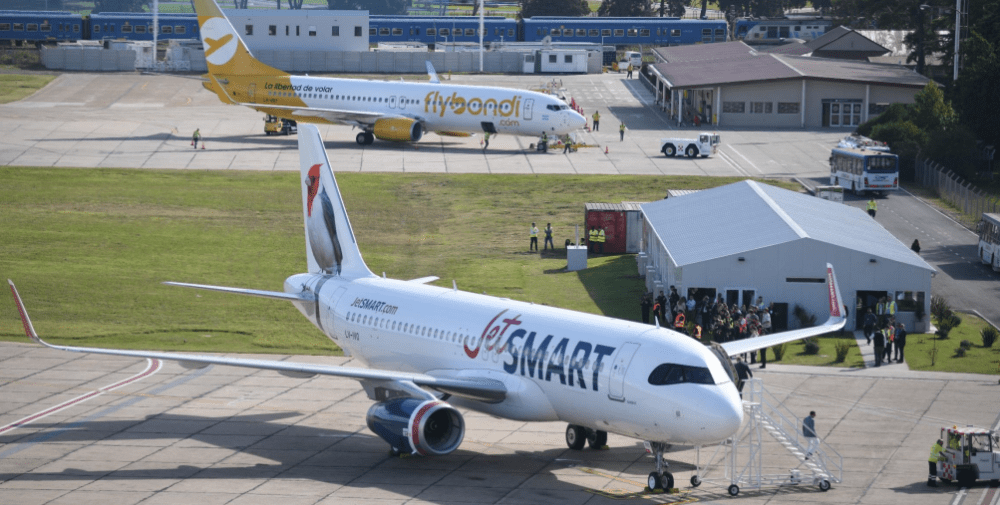
Aerolíneas Argentinas operó el 62% de los vuelos domésticos en Mayo 2024, siguen la aerolínea local de bajo costo Flybondi con el 26% del mercado interno y la aerolínea JetSMART Airlines Argentina con el 11% de la cuota de mercado dooméstico, según los últimos datos disponibles del regulador del ORSNA.

Reglamentación Artículo 110
La reglamentación del Artículo 110 del Código Aeronáutico de argentina permitirá introducir nuevas normativas para aplicarsse en el mercado aéreo argentino en el corto plazo.

El primero de los capítulos del Decreto Nº599/2024, borrará de los requisitos para operar en el país la solicitud de Audiencias Públicas. Es decir, no habrá que tramitar ese permiso necesario, aunque discrecional, que entregaba el Estado. De hecho, la última se celebró durante el Gobierno de Mauricio Macri, que fue la que entregó las licencias con las que vuelan JetSMART Airlines Argentina y Flybondi. Sin audiencias, las rutas se solicitarán por un sistema digital y mucho más ágil, tal como repite la norma en varios pasajes.

Las nuevas normas incluyen un cambio fundamental en el negocio aeronáutico. Cuando estén plenamente en vigencia, tras las reglamentaciones correspondientes, se podrán prestar servicios de cabotaje con aeronaves de matrícula extranjera y hasta tripulación de otra nacionalidad. Es algo muy novedoso para el segmento.

El Certificado de Explotador de Trabajo Aéreo (CETA), uno de los documentos fundamentales para empezar a volar, se dará a la Administración Pública quince días hábiles para que se exprese. Si no lo hace, el solicitante puede pedir un Pronto Despacho y, transcurridos cinco días más, la autoridad deberá emitir en forma automática/digital el CETA.

Operaciones logísticas
La apertura necesaria de liberalización de las operaciones logísticas en los aeropuertos permitirá incorporar nuevos operadores que compitan con Intercargo, anteriormente encargada casi en exclusividad de los servicios de rampa, asistencia y equipaje para todas las líneas aéreas que operan en el país, con excepción de Aerolíneas Argentinas, Flybondi y American Airlines, que operan su propia prestación. Los gremios aeronáuticos del sector tienen capacidad de fuego como para realizar medidas de fuerza que paralicen la operación. Habrá que estar atento a los movimientos gremiales cuando avance la liberalización.

De acuerdo a la regulación vigente hasta que salga el decreto, las aerolíneas tienen la obligación de contratar a Intercargo salvo que se presten ellas mismas el servicio. American Airlines siempre tuvo su personal de tierra. Aerolíneas Argentinas emplea a Aerohandling, una sociedad del grupo que le da servicios a sus aviones. Actuamente, con las operaciones de Intercargo representaban para las demás líneas aéreas desventajas operativas a costos en moneda Dólar en lugar de la moneda nacional Pesos Argentinos. Con el ingreso de nuevos operadores, incluyendo a Intercargo y Aerohandling, tendrían la posibilidad de ofrecer sus servicios a otras líneas.

Ley Defensa Competencia
El segundo título de los tres tiene que ver con la reglamentación del Artículo 110 del Código Aeronáutico, habla de los requisitos para presentar acuerdos de cooperación interempresaria o comerciales, y establece la implementación de la Ley de Defensa de la Competencia para todas las cuestiones que se sucedan. Es decir, si eventualmente hay planteos de monopolio, por caso, ya no intervendrán los varios entes públicos del sector, sino el Tribunal que lo hace con todas las actividades de la economía.

El tercero, finalmente, apunta a igualar los derechos de utilización de las estaciones aeroportuarias, especialmente, en horas pico. Así las cosas, le encomienda a la autoridad la confección de un “Reglamento Transitorio de Asignación de Capacidad y/o Frecuencias para servicios nacionales o internacionales”, a la espera de uno definitivo para el que le otorga 180 días.

Básicamente, se terminarán algunos privilegios que tiene la línea aérea estatal para disponer de los aeropuertos a su antojo. De hecho, se deroga el Decreto Nº879/21, un reglamento hecho a medida de la empresa pública en épocas de manejo de la agrupación de La Cámpora, no solo de la compañía sino del sector aerocomercial. “Se determinará la capacidad y/o frecuencias disponibles deduciendo los servicios presentados ante la Autoridad Aeronáutica por Aerolíneas Argentinas”, decía un artículo relevante de aquella norma. En otras palabras, en la práctica, la aerolínea estatal disponía los slots necesarios para acaparar el mercado en los aeropuertos y el resto era distribuido entre los pocos operadores nacionales.

Perspectivas aviación Argentina
La intruducción de la nueva normativa permitirá cambios estructurales en la aviación comercial avanzando en más libertad e igualdad entre los operadores aéreos. La cultura kichnerista se encuentra bien arraigada en las metodologías y prácticas en la aviación, con su máximo representante Aerolíneas Argentinas. Pero un cambio de cultura de trabajo está cambiando radicalmente, mientras el futuro permitirá conocer las mejoras de los procesos que generarán el atractivo para un mercado golpeado durante décadas y menos desarrollados de América Latina.

New aviation in Argentina

Deep changes in commercial aviation are looming
New aeronautical regulations in Argentina

The Government of the Argentine Republic began deregulating the commercial aviation sector. Through Decree No. 599/2024, officially published on Wednesday, July 10, 2024 in the Official Gazette, the Executive Branch approved the regulations that establish access to commercial aviation markets, repeal regulations and modify the Aeronautical Code. The objective is to continue promoting competition and eliminate obstacles that have been in force since the middle of the last century. The measure impacts commercial aviation authorizations to operate in Argentine territory. These will be granted to carry out internal and international air transport activities for passengers and/or cargo, for regular or non-regular services, carried out with aircraft; for aerial work and for operational airport and ramp services in general.

Argentina’s government on Wednesday published the decree aimed at opening up the country’s aviation sector, inviting foreign airlines to enter the market long dominated by state-owned Aerolíneas Argentinas. The reform should increase the number of routes, flight frequencies and attract more competitors, the Ministry of Transport said in a statement. Companies can now apply to operate as many routes and frequencies as they want, a request that will be subject to security approval, according to the decree. Airlines also now have full control over how much they charge for tickets, the decree states, eliminating a regulation that allowed the government to set a minimum price. In addition, it ends Intercargo’s monopoly, allowing other companies to compete in providing ground services.

The new introduction to commercial aviation will remove barriers to entry for new airlines to start operations in Argentina and deregulate air frequencies and fares.

Regarding logistics operations, the monopoly of Intercargo, the public company that performs all services for local and international airlines at direct costs in international currency (Dollar), will end. This represented a disadvantage for airlines on domestic flights, where such rates were not available to Aerolíneas Argentinas, since it had authorized its own operations management with AeroHandling.

The Market Access Regulations published as an annex list the conditions that, if met, would be a true radical change in the current system: “The regulated activity will be governed by the following principles: Free access to the market for new operators through brief and agile administrative procedures; encouragement of fair competition between the different operators; tariff deregulation; safeguarding operational safety; continuous operational surveillance of authorized services; freedom in the setting of frequencies, if applicable, initially declaring them in their business plan, for analysis subject to strict operational criteria and the need for air traffic to develop in a safe and orderly manner and, finally, limited and efficient interventions by the National Public Administration, of a digital/electronic nature, aimed exclusively at preserving the principles stated above and transparency in the measurement, assignment and use of airport capacity”.

Several guidelines appear that will change the sector. In addition to the commitment to reduce the State’s intervention to a mere role in operational and security matters, the norm defines tariff deregulation, a system that Argentina lost since Kirchnerism came to power. In fact, in those years, the State decided what the minimum and maximum ticket price was. It was called the tariff band and it was the Executive Branch that set the price of each section.

With the so-called “Airplane Revolution” promoted by Guillermo Dietrich in Mauricio Macri’s government, the minimum limit was removed, giving rise to low-cost airlines offering cheaper prices, but no progress was made with the maximum limit allowed. However, in 2021, Alberto Fernández’s administration returned to that band scheme, used in very few markets in the world.

Open Skies
The administration of Libertarian President Javier Milei, who took office in December 2023, has signed a series of Open Skies Agreements with other countries in recent months, allowing their airlines to operate domestic routes in Argentina under some conditions. Currently, Brazil, Chile, Peru, Ecuador, Panama, Uruguay and Canada have signed agreements potentially opening the Argentine market to operators such as GOL Linhas Aéreas, LATAM Airlines and Air Canada. The Ministry of Transport said on Wednesday 10/07 that more such agreements should be signed in the coming months.

Aerolíneas Argentinas operated 62% of domestic flights in May 2024, followed by local low-cost carrier Flybondi with 26% of the domestic market and carrier JetSMART Airlines Argentina with 11% of the domestic market share, according to the latest available data from regulator ORSNA.

Regulation Article 110
The regulation of Article 110 of the Argentine Aeronautical Code will allow the introduction of new regulations to be applied in the Argentine air market in the short term.

The first of the chapters of Decree No. 599/2024 will remove the request for Public Hearings from the requirements to operate in the country. That is, it will not be necessary to process that necessary, although discretionary, permit that the State granted. In fact, the last one was held during the Government of Mauricio Macri, which was the one that granted the licenses with which JetSMART Airlines Argentina and Flybondi fly. Without hearings, the routes will be requested through a digital and much more agile system, as the rule repeats in several passages.

The new rules include a fundamental change in the aeronautical business. When they are fully in force, after the corresponding regulations, cabotage services can be provided with foreign-registered aircraft and even crew of another nationality. This is something very new for the segment.

The Certificate of Operator of Aerial Work (CETA), one of the fundamental documents to start flying, will be given to the Public Administration fifteen working days to express itself. If it does not do so, the applicant can request a Prompt Dispatch and, after five more days, the authority must automatically/digitally issue the CETA.

Logistics operations
The necessary opening of the liberalization of logistics operations at airports will allow the incorporation of new operators that compete with Intercargo, previously almost exclusively in charge of ramp, assistance and baggage services for all airlines operating in the country, with the exception of Aerolíneas Argentinas, Flybondi and American Airlines, which operate their own services. The aeronautical unions of the sector have the firepower to carry out forceful measures that paralyze the operation. We will have to be attentive to the union movements when liberalization advances.

According to the current regulations until the decree is issued, airlines are required to hire Intercargo unless they provide the service themselves. American Airlines always had its own ground staff. Aerolíneas Argentinas employs Aerohandling, a company in the group that provides services to its aircraft. Currently, Intercargo’s operations represented operational disadvantages for other airlines at costs in dollars instead of the national currency, Argentine pesos. With the entry of new operators, including Intercargo and Aerohandling, they would have the possibility of offering their services to other airlines.

Competition Defense Law
The second of the three titles has to do with the regulation of Article 110 of the Aeronautical Code, it speaks of the requirements for presenting inter-company or commercial cooperation agreements, and establishes the implementation of the Competition Defense Law for all issues that arise. That is to say, if there are eventually claims of monopoly, for example, the various public entities of the sector will no longer intervene, but the Court that does so with all the activities of the economy.

The third, finally, aims to equalize the rights of use of the airport stations, especially during peak hours. Thus, it entrusts the authority with the preparation of a «Transitional Regulation of Capacity and/or Frequencies Assignment for national or international services», awaiting a definitive one for which it grants 180 days.

Basically, some privileges that the state airline has to use the airports as it pleases will end. In fact, Decree No. 879/21 is repealed, a regulation made to measure for the public company in times of management of the La Cámpora group, not only of the company but of the commercial aviation sector. “The capacity and/or available frequencies will be determined by deducting the services presented to the Aeronautical Authority by Aerolíneas Argentinas”, said a relevant article of that regulation. In other words, in practice, the state airline had the slots necessary to corner the market at the airports and the rest was distributed among the few national operators.

Perspectives on Argentine aviation
The introduction of the new regulation will allow structural changes in commercial aviation, moving towards more freedom and equality among air operators. The Kirchnerist culture is well rooted in the methodologies and practices in aviation, with its most representative Aerolíneas Argentinas. But a change in work culture is radically changing, while the future will allow us to learn about the improvements in the processes that will generate the appeal for a market that has been hit for decades and is less developed in Latin America.

PUBLISHER: Airgways.com
DBk: Argentina.gob.ar / Airgways.com
AW-POST: 202407101447AR
OWNERSHIP: Airgways Inc.
A\W A I R G W A Y S ®
Boeing declara culpabilidad

AW | 2024 07 08 13:38 | GOVERNMENT / INDUSTRY

Declaración de Boeing culpable fraude FAA

Boeing_Isologo.svg

The Boeing Company acordó declararse culpable de un cargo de conspiración para defraudar a la Federal Aviation Administration (FAA) y al Gobierno de Estados Unidos por su papel en dos accidentes fatales del 737 MAX, dijo el Departamento de Justicia (DOJ) en una presentación judicial el Domingo 07/07 por la noche. El acuerdo evita lo que podrían haber sido consecuencias más graves. Las multas ascienden a UA$ 487 millones de Dólares, una fracción de los US$ 24.800 millones de Dólares que las familias de las víctimas del accidente querían que pagara el fabricante de aviones. Las familias de las víctimas de dos accidentes fatales del 737 MAX se oponen al acuerdo, dijo el DOJ.

La declaración de culpabilidad es un duro golpe a la reputación de Boeing, una compañía que alguna vez fue conocida por la calidad y seguridad de sus aviones comerciales. Más allá de los accidentes fatales de los aviones 737 MAX, la compañía se ha enfrentado a una serie de preguntas sobre la seguridad y la calidad de sus aviones. En enero, un tapón de la puerta de un 737 MAX volado por Alaska Airlines explotó al principio de un vuelo, dejando un enorme agujero en el costado del avión y dañando aún más la reputación de Boeing.

El acuerdo estipula que Boeing tendrá que operar bajo la supervisión de un monitor independiente, una persona elegida por el gobierno, durante un período de tres años. Pero ese descuido y la multa no satisficieron a las familias de las víctimas, según uno de sus abogados.

«Este acuerdo no reconoce que debido a la conspiración de Boeing, 346 personas murieron. Este acuerdo engañoso y generoso claramente no es de interés público», dijo un comunicado de Paul Cassell, Profesor de derecho de la Universidad de Utah que representa a muchos familiares del accidente de Lion Air de 2018 y de las víctimas del accidente de Ethiopian Air de 2019. Las familias buscan un juicio público por los cargos.

DOJ defiende acuerdo
El Departamento de Justicia argumenta que las sanciones que aceptó The Boeing Company fueron las más graves disponibles. Argumentó que también obtuvo otras mejoras, incluida la supervisión de un monitor y la demanda de que Boeing gaste más en seguridad y cumplimiento de las reglas al construir aviones. «Esta resolución protege al público estadounidense. Boeing deberá realizar inversiones históricas para fortalecer e integrar sus programas de cumplimiento y seguridad. Esta condena penal demuestra el compromiso del departamento de responsabilizar a Boeing por su mala conducta», dijo el comunicado del Departamento de Justicia.

La declaración también planteó la posibilidad de más problemas legales para Boeing y sus ejecutivos. Dijo que si bien ninguna persona enfrenta cargos penales como resultado de este acuerdo: «El Departamento de Justicia está resolviendo solo con la compañía, y no proporciona inmunidad a ningún empleado individual, incluidos los ejecutivos corporativos, por ninguna conducta. El Departamento de Justicia está resolviendo con Boeing solo por mala conducta que precedió a los accidentes del 737 MAX, y no proporciona inmunidad para ninguna otra conducta corporativa, incluido el incidente del 1282 de Alaska Airlines».

Los familiares de las víctimas de los dos accidentes aéreos fatales criticaron el acuerdo de culpabilidad el Lunes 08/07 por la mañana.

En Enero de 2021, los Fiscales Federales y Boeing llegaron a un acuerdo para resolver los cargos penales y aplazar cualquier enjuiciamiento sobre el asunto. Durante un período de prueba de tres años que siguió, Boeing acordó mejorar sus problemas de calidad y transparencia con el gobierno. Pero el incidente de Alaska Airlines se produjo pocos días antes de que terminara ese período de prueba, lo que llevó a una serie de investigaciones federales sobre sus prácticas.

En Mayo 2024, el Departamento de Justicia dijo que estaba estudiando la posibilidad de presentar cargos penales contra Boeing una vez más debido a una posible violación de ese acuerdo de Enero de 2021. Boeing había argumentado en sus propios documentos judiciales que no violó el acuerdo y que debería evitarse el enjuiciamiento. La declaración de culpabilidad del domingo por la noche, que se produjo justo antes de la fecha límite de medianoche establecida por el Departamento de Justicia, resolvió ese problema.

Costo Declaración de culpabilidad
Según el acuerdo original de 2021, Boeing había acordado pagar US$ 2.500 millones de Dólares. Pero alrededor del 70% de esa cantidad representaba pagos que Boeing ya había acordado hacer a sus clientes de aerolíneas como compensación por los 20 meses de inmovilización de los aviones. Otros US$ 500 millones de Dólares fueron un fondo para compensar a las víctimas de accidentes. Solo US$ 243,6 millones de Dólares representaban una multa penal para el Gobierno, que se duplicaría después de la nueva declaración de culpabilidad.

Boeing también acordó gastar US$ 455 millones de Dólares en sus programas de cumplimiento y seguridad durante los próximos tres años, lo que, según el Gobierno, representará un aumento del 75% sobre lo que la compañía gastaba anualmente en esos programas.

Los diversos problemas de la compañía han causado profundas pérdidas financieras desde el segundo accidente fatal del 737 MAX. Ha registrado pérdidas operativas básicas de US$ 31.900 millones de Dólares desde el inicio de la inmovilización de veinte meses. También corre el riesgo de perder su calificación crediticia de grado de inversión por primera vez en su historia.

La compañía ahora tiene casi US$ 47.000 millones de Dólares en deuda a largo plazo, y si su calificación de deuda se rebaja a la categoría de bono basura, su costo de pedir dinero prestado se disparará. Pero una multa adicional de cientos de millones, en lugar de miles de millones, sigue siendo asequible para la compañía, a pesar de sus problemas financieros.

Contratos gubernamentales
La compañía evitó otra sanción grave: la pérdida del derecho a hacer negocios con el Gobierno. Tal sanción habría sido un golpe devastador para el fabricante de aviones. Alrededor del 37% de sus ingresos en 2023 provinieron de contratos federales.

Según Richard Aboulafia, Director Gerente de AeroDynamic Advisory, una consultora de gestión aeroespacial y de defensa, la posibilidad de tal sanción era mínima, ya que tanto Boeing como el Gobierno Federal dependen en gran medida el uno del otro.

A pesar de sus problemas en los últimos cinco años, Boeing sigue siendo un componente clave de la economía estadounidense. Sigue siendo el mayor exportador del país y cuenta con casi 150.000 empleados estadounidenses. La compañía estima su impacto económico en US$ 79.000 millones de Dólares, respaldando 1,6 millones de puestos de trabajo directos e indirectos en más de 9.900 proveedores repartidos por los 50 estados. Su único rival importante para aviones comerciales, el fabricante europeo Airbus, tiene una cartera de pedidos de más de 8.000 aviones, lo que significa que cualquier cliente de Boeing que haga un pedido de un avión Airbus hoy en día tendría que esperar casi una década para que se entregue.

Boeing pleads guilty

Boeing pleads guilty to FAA fraud

Department Justice US_Isologotype

The Boeing Company has agreed to plead guilty to one count of conspiracy to defraud the Federal Aviation Administration (FAA) and the U.S. government for its role in two fatal 737 MAX crashes, the Department of Justice (DOJ) said in a court filing Sunday night. The agreement avoids what could have been more serious consequences. The fines amount to US$ 487 million, a fraction of the US$ 24.8 billion that the families of the crash victims wanted the aircraft manufacturer to pay. The families of the victims of two fatal 737 MAX crashes oppose the agreement, the DOJ said.

The guilty plea is a major blow to the reputation of Boeing, a company once known for the quality and safety of its commercial aircraft. Beyond the fatal crashes of 737 MAX planes, the company has faced a number of questions about the safety and quality of its planes. In January, a door stopper on a 737 MAX flown by Alaska Airlines exploded early in a flight, leaving a gaping hole in the side of the plane and further damaging Boeing’s reputation.

The settlement stipulates that Boeing will have to operate under the supervision of an independent monitor —a person chosen by the Government— for a period of three years. But that oversight and the fine did not satisfy the victims’ families, according to one of their lawyers.

«This settlement fails to recognize that because of Boeing’s conspiracy, 346 people died. This deceptive and generous settlement is clearly not in the public interest», said a statement from Paul Cassell, a University of Utah law professor who represents many family members of the 2018 Lion Air crash and victims of the 2019 Ethiopian Air crash. The families are seeking a public trial on the charges.

DOJ defends settlement
The Justice Department argues that the penalties The Boeing Company agreed to were the most severe available. It argued that it also won other improvements, including oversight by a monitor and a demand that Boeing spend more on safety and compliance with rules when building planes. “This resolution protects the American public. Boeing will be required to make historic investments to strengthen and integrate its compliance and safety programs. This criminal conviction demonstrates the department’s commitment to holding Boeing accountable for its misconduct”, the Justice Department statement said.

The statement also raised the possibility of further legal trouble for Boeing and its executives. It said that while no one faces criminal charges as a result of this settlement, “the Department of Justice is settling only with the company, and is not providing immunity to any individual employees, including corporate executives, for any conduct. The Department of Justice is settling with Boeing only for misconduct that preceded the 737 MAX crashes, and is not providing immunity for any other corporate conduct, including the Alaska Airlines 1282 incident”.

AW-Boeing 737 MAX_png (43)

Relatives of victims of the two fatal plane crashes criticized the plea agreement Monday morning.

In January 2021, U.S. Attorneys and Boeing reached an agreement to resolve criminal charges and defer any prosecution over the matter. During a three-year probationary period that followed, Boeing agreed to improve its quality and transparency issues with the Government. But the Alaska Airlines incident came just days before that probationary period ended, leading to a series of federal investigations into its practices.

In May 2024, the Justice Department said it was looking into filing criminal charges against Boeing once again over a potential violation of that January 2021 agreement. Boeing had argued in its own court filings that it did not violate the agreement and should be spared prosecution. Sunday night’s guilty plea, which came just before a midnight deadline set by the Justice Department, settled that issue.

Cost of the plea
Under the original 2021 agreement, Boeing had agreed to pay US$ 2.5 billion. But about 70% of that amount represented payments Boeing had already agreed to make to its airline customers as compensation for the 20-month grounding of the planes. Another US$ 500 million was a fund to compensate crash victims. Only US$ 243.6 million represented a criminal fine for the Government, which would double after the new plea.

Boeing also agreed to spend US$ 455 million on its compliance and safety programs over the next three years, which the Government says will represent a 75% increase over what the company spent annually on those programs.

The company’s various problems have caused deep financial losses since the second fatal 737 MAX crash. It has posted core operating losses of US$ 31.9 billion since the start of the 20-month grounding. It also risks losing its investment-grade credit rating for the first time in its history.

The company now has nearly US$ 47 billion in long-term debt, and if its debt rating is downgraded to junk status, its cost of borrowing money will skyrocket. But an additional fine of hundreds of millions, rather than billions, is still affordable for the company, despite its financial troubles.

Government Contracts
The company avoided another serious penalty: the loss of the right to do business with the Government. Such a penalty would have been a devastating blow to the aircraft maker. About 37% of its revenue in 2023 came from federal contracts.

According to Richard Aboulafia, managing director of AeroDynamic Advisory, an aerospace and defense management consultancy, the chance of such a penalty was slim, as both Boeing and the Federal Government are heavily dependent on each other.

Despite its troubles over the past five years, Boeing remains a key component of the U.S. economy. It remains the country’s largest exporter and employs nearly 150,000 American employees. The company estimates its economic impact at US$ 79 billion, supporting 1.6 million direct and indirect jobs at more than 9,900 suppliers spread across all 50 states. Its only major rival for commercial aircraft, European manufacturer Airbus, has an order book of more than 8,000 planes, meaning that any Boeing customer placing an order for an Airbus plane today would have to wait nearly a decade for it to be delivered.

PUBLISHER: Airgways.com
DBk: Justice.gov / Boeing.com / Airgways.com
AW-POST: 202407081338AR
OWNERSHIP: Airgways Inc.
A\W A I R G W A Y S ®

Argentina firma Cielos Abiertos

AW | 2024 07 07 13:13 | GOVERNMENT / AIRLINES MARKET

Argentina reforma desregulación Aviación Comercial

La República Argentina ha anunciado que firmará el Lunes 8 de Julio de 2024 la reforma de la Aviación Comercial que desarrollará grandes cambios en las políticas aéreas. El borrador del decreto que enmarcará la política de cielos abiertos establecido en el DNU Nº70/2023 está siendo analizado por el Presidente Javier Milei.

El nuevo Ministerio de Desregulación y Transformación del Estado de la Nación Argentina, a cargo de Federico Sturzenegger pone en marcha su primera gran medida y el Lunes 08/07 firmará la reforma del sector aerocomercial que comenzará la modificación del Código Aeronáutico que incluye la reducción de las rutas de Aerolíneas Argentinas que no sean rentables. Esta es una de las primeras grandes medidas que Federico Sturzenegger tiene planeado implementar.

Modificación del Código Aeronáutico
El borrador del decreto que enmarcará la política de cielos abiertos establecido en el DNU 70/2023 está siendo analizado por el Presidente Javier Milei y contiene una serie de modificaciones del Código Aeronáutico como la apertura del acceso a mercados hasta ahora no cubiertos. También se propone la eliminación de la Audiencia Pública, la incorporación de un nuevo régimen de autorizaciones de rutas, cambios en el registro de aeronaves y contratos y la digitalización de trámites. Además, incluye modificaciones sobre la atención al pasajero y en las infracciones aeronáuticas sobre los planes de vuelo y el accionar de los pilotos, así como de los regímenes de capacidad y frecuencias para servicios aéreos, cuestiones sobre la remoción de aeronaves, equipaje y carga y más libertad para operar drones en el ámbito privado.

Las reformas incluidas en el borrador fueron redactadas por Federico Sturzenegger junto a una comisión presidida por Hernán Gómez, Subsecretario de Transporte Aéreo y los juristas Mara Di Loreto y Eduardo Cartasso, además de grupos empresarios, universitarios y autoridades de Nación, entre otros.

Uno de los puntos importantes que incluye la reforma, es la reducción de rutas que considera no rentables en Aerolíneas Argentinas. El Gobierno sostiene que la única forma de mantener estos trayectos es a través de convenios de financiamiento de las provincias interesadas en mantenerlos. Además, se plantea el reordenamiento del Aeropuerto Jorge Newbery y el Aeropuerto Internacional de Ezeiza: se establecerá con qué capacidad cuentan, cuántos pasajeros por hora pueden albergar y cuántos aviones deben ser removidos. En ese sentido, trascendió que Aerolíneas Argentinas deberá dejar cuatro posiciones en Aeroparque, en respuesta a un pedido que realizan desde hace tiempo las empresas low cost, que no podían traer aviones al país por falta de espacio (slots).

Flybondi sostiene que su intención es traer entre cinco y diez aviones, mientras que JetSMART Airlines Argentina buscaría ingresar seis nuevas aeronaves. Ambas aerolíneas continúan con los reclamos para superar las trabas de su operación en Aeroparque.

Los decretos complementan de alguna manera a los acuerdos que el Gobierno denomina cielos abiertos. Hasta ahora se firmaron memorandos con Brasil, Chile, Perú, Ecuador, Uruguay, Canadá y Panamá y el próximo país sería Paraguay, que tendría una empresa interesada en operar cabotaje en el país, lo cual les abriría la puerta a Aerolíneas Argentinas, JetSMART y Flybondi para hacer lo mismo en terreno paraguayo.

Gremios aeronáuticos
Atentos a los cambios aplicados a la actividad, los gremios del ámbito aerocomercial expusieron su oposición a Cielos Abiertos, pues en la instancia del acuerdo firmado por el Gobierno de Javier Milei con su par de Chile. A través de un comunicado emitido a mediados de Mayo 2024, la Asociación de Pilotos de Líneas Aéreas (APLA) que encabeza Pablo Biró no dudó en definir a la política de cielos abiertos como otra muestra más de pérdida de soberanía. «Esta entrega de un recurso público como lo es el control de la actividad aérea en el país tiene graves efectos concretos, perjudicando tanto a trabajadores como a pasajeros. Por un lado, abren los cielos a empresas extranjeras cuyo interés es operar destinos rentables de nuestro país o buscar subsidios para cubrir aquellos puntos que no lo son. Por otro, reducen frecuencias, desfinancian y vacían Aerolíneas Argentinas imposibilitándola de aprovechar este nuevo escenario y comprometiendo su existencia», dijo la organización sindical.

Perspectivas aviación
La profundización de los cambios en la aviación comercial de Argentina permitirá desarrollar un nuevo escenario en el mercado de más capacidad de líneas aéreas y un incremento de las ofertas de rutas a destinos en el país y el exterior que permitirá beneficiar al usuario del transporte aéreo.

Argentina signs Open Skies

Argentina reforms deregulation of Commercial Aviation

The Argentine Republic has announced that it will sign on Monday, July 8, 2024, the reform of Commercial Aviation that will develop major changes in air policies. The draft decree that will frame the open skies policy established in DNU No. 70/2023 is being analyzed by President Javier Milei.

The new Ministry of Deregulation and Transformation of the State of the Argentine Nation, headed by Federico Sturzenegger, is launching its first major measure and on Monday, July 8, it will sign the reform of the commercial aviation sector that will begin the modification of the Aeronautical Code that includes the reduction of Aerolíneas Argentinas routes that are not profitable. This is one of the first major measures that Federico Sturzenegger plans to implement.

Modification of the Aeronautical Code
The draft decree that will frame the open skies policy established in DNU 70/2023 is being analyzed by President Javier Milei and contains a series of modifications to the Aeronautical Code such as the opening of access to markets not covered until now. The elimination of the Public Hearing, the incorporation of a new regime of route authorizations, changes in the registration of aircraft and contracts, and the digitalization of procedures are also proposed. In addition, it includes modifications on passenger service and aeronautical infractions on flight plans and the actions of pilots, as well as capacity and frequency regimes for air services, issues on the removal of aircraft, luggage, and cargo, and more freedom to operate drones in the private sector.

The reforms included in the draft were written by Federico Sturzenegger together with a commission chaired by Hernán Gómez, Undersecretary of Air Transport, and the lawyers Mara Di Loreto and Eduardo Cartasso, as well as business groups, university students, and national authorities, among others.

One of the important points included in the reform is the reduction of routes that it considers unprofitable for Aerolíneas Argentinas. The Government maintains that the only way to maintain these routes is through financing agreements with the provinces interested in maintaining them. In addition, the reorganization of the Jorge Newbery Airport and the Ezeiza International Airport is proposed: their capacity will be established, how many passengers per hour they can accommodate, and how many planes must be removed. In this regard, it was revealed that Aerolíneas Argentinas will have to leave four positions in Aeroparque, in response to a request made for some time by low-cost companies, which could not bring planes to the country due to lack of space (slots).

Flybondi maintains that its intention is to bring between five and ten aircraft, while JetSMART Airlines Argentina would seek to bring in six new aircraft. Both airlines continue with their claims to overcome the obstacles to their operation in Aeroparque.

The decrees complement in some way the agreements that the Government calls open skies. So far, memoranda have been signed with Brazil, Chile, Peru, Ecuador, Uruguay, Canada, and Panama and the next country would be Paraguay, which would have a company interested in operating domestic flights in the country, which would open the door for Aerolíneas Argentinas, JetSMART and Flybondi to do the same on Paraguayan soil.

Aeronautical unions
Attentive to the changes applied to the activity, the unions of the aero-commercial sector expressed their opposition to Open Skies, since in the instance of the agreement signed by the Government of Javier Milei with his counterpart from Chile. Through a statement issued in mid-May 2024, the Association of Airline Pilots (APLA) headed by Pablo Biró did not hesitate to define the open skies policy as yet another example of loss of sovereignty. «This surrender of a public resource such as the control of air activity in the country has serious concrete effects, harming both workers and passengers. On the one hand, they open the skies to foreign companies whose interest is to operate profitable destinations in our country or seek subsidies to cover those points that are not. On the other hand, they reduce frequencies, defund and empty Aerolíneas Argentinas, making it impossible for it to take advantage of this new scenario and compromising its existence», said the union organization.

Aviation Perspectives
The deepening of changes in Argentina’s commercial aviation will allow the development of a new scenario in the market of more airline capacity and an increase in the offers of routes to destinations in the country and abroad that will benefit the user of air transport.

PUBLISHER: Airgways.com
DBk: Argentina.gob.ar / Airgways.com
AW-POST: 202407071313AR
OWNERSHIP: Airgways Inc.
A\W A I R G W A Y S ®
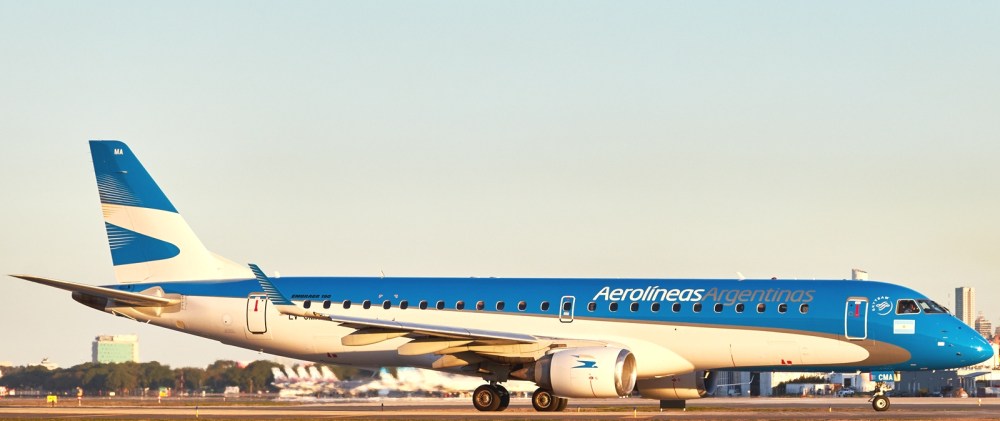
Desafíos futuros de Boeing

AW | 2024 07 07 12:45 | GOVERNMENT / INDUSTRY

Peligros si se declara culpable de cargos penales
Boeing enfrentaría revoque protecciones legales

Boeing_Isologo.svg

The Boeing Company enfrenta nuevos peligros si la Justicia Federal de estados Unidos reviven un cargo penal contra el gigante aeroespacial y la compañía decide declararse culpable, un proceso que aparentemente se suponía que se resolvería este fin de semana.

El gigante de la aviación había estado en la fecha límite del Viernes 05/07 por la noche para aceptar o rechazar una propuesta del Departamento de Justicia (DOJ) que le exigiría declararse culpable de fraude durante la certificación de los aviones de línea 737 MAX. Más de cinco años después de dos accidentes fatales del 737 MAX, Boeing enfrenta un nuevo ajuste de cuentas legal ahora que los fiscales han concluido que la compañía incumplió un acuerdo anterior que abordaba los desastres.

Un Acuerdo de Culpabilidad podría ser rechazado por un juez. Aunque podría pagar multas exhorbitantes, quizás el mayor peligro es el efecto que una condena puede tener en los resultados económicas de Boeing y el futuro comprometido con la relación con los negocios con el Estado. Las condenas penales pueden excluir o suspender el derecho de una empresa a contratar con el gobierno federal y frustrar su capacidad para obtener préstamos, según Eddie Jauregui, Abogado defensor de Holland & Knight y ex-fiscal federal. Esas consecuencias tienen un significado particular para Boeing, que cuenta con el Gobierno Federal como su mayor cliente. La compañía aeroespacial es el mayor exportador de Estados Unidos.

El asunto podría terminar en manos de una agencia ejecutiva conocida como el Comité Interinstitucional de Suspensión e Inhabilitación (ISDC), que tiene el poder de discutir suspensiones e inhabilitaciones en todo el gobierno que pueden poner fin o interrumpir los negocios de una empresa con el Gobierno de los Estados Unidos.

«Las consideraciones son muchas, y son de peso. Creo que el trabajo de los contratos del gobierno es probablemente un componente extremadamente importante para Boeing», dijo Eddie Jáuregui.

La pregunta que se resolverá el Domingo 07/07 es si las acciones de Boeing que condujeron a la explosión de un tapón de puerta de un Boeing 737-9 MAX de Alaska Airlines en Enero 2024 hacen que altos funcionarios del Departamento de Justicia (DOJ) revoquen oficialmente las protecciones legales extendidas a Boeing en un acuerdo de Enjuiciamiento Diferido de Enero de 2021.

Después de las investigaciones sobre dos accidentes de los Boeing 737-8 MAX en 2018 y 2019 que mataron a 346 personas, la compañía de aviación con sede en Arlington, Virginia (VA) admitió que dos de sus antiguos pilotos de prueba del 737 MAX engañaron a la Federal Aviation Administration (FAA) sobre las fallas del Sistema de Control de Vuelo llamado Sistema de Aumento de Características de Maniobra (MCAS).

Los fiscales acordaron presentar una acusación alegando que Boeing conspiró para defraudar al Gobierno Federal siempre y cuando Boeing pasara tres años diseñando, implementando y haciendo cumplir un programa de cumplimiento y ética para prácticas de fabricación y supervisión más seguras.

Acciones del DOJ
Los fiscales estadounidenses han recomendado que el Departamento de Justicia (DOJ) presente cargos penales contra Boeing. Esto se produce tras una reclamación del Departamento de Justicia de que el fabricante de aviones había violado un acuerdo relacionado con dos accidentes mortales que involucraron a su avión 737 MAX y que mataron a 346 personas. Boeing ha negado haber violado el Acuerdo de Enjuiciamiento Diferido.

El Departamento de Justicia tiene hasta el 7 de Julio de 2024 para tomar una decisión final sobre si procesa a la empresa. El Departamento de Justicia se ha negado a hacer comentarios. La recomendación no es una decisión final y se desconocen los detalles de cualquier posible acción penal.

«Esta es una decisión realmente crítica que se avecina. Hay problemas con estos aviones. Estamos viendo problemas con estos aviones y estoy hablando de 737 MAX, 787 y es un reflejo del liderazgo», dijo Ed Pierson, Director Ejecutivo de la Fundación para la Seguridad de la Aviación y ex-Gerente Senior de The Boeing Company.

Los accidentes aéreos, ambos con aviones 737 MAX de Boeing, ocurrieron con seis meses de diferencia. El accidente que involucró a Lion Air de Indonesia ocurrió en Octubre de 2018, seguido de un vuelo de Ethiopian Airlines en Marzo de 2019.

La semana pasada, los familiares de las víctimas instaron a los fiscales a solicitar una multa contra Boeing de US$ 25.000 millones de Dólares y a iniciar un proceso penal. En virtud de un acuerdo alcanzado en 2021, Boeing dijo que pagaría un acuerdo de US$ 2.500 millones de dólares y los fiscales acordaron pedir al Tribunal de Justicia que retirara un cargo penal después de tres años si la compañía cumplía con ciertas estipulaciones establecidas en el Acuerdo de Enjuiciamiento Diferido. Pero en Junio 2024, el Departamento de Justicia dijo que Boeing estaba incumpliendo el acuerdo, afirmando que no había «diseñado, implementado y hecho cumplir un programa de cumplimiento y ética para prevenir y detectar violaciones de las leyes de fraude de Estados Unidos en todas sus operaciones».

La semana pasada, el Presidente Ejecutivo de The Boeing Company, Dave Calhoun, se enfrentó a un interrogatorio de los Senadores estadounidenses. El CEO de Boeing testificó que la compañía había aprendido de los errores del pasado y que el proceso para los denunciantes de los empleados funciona, pero los legisladores aún lo acusaron de no hacer lo suficiente para rectificar una cultura de represalias.

Como parte de una investigación en curso, los denunciantes de Boeing dijeron al Senado en Abril 2024 que los modelos 737 MAX, 787 Dreamliner y 777 tenían serios problemas de producción. La compañía se puso recientemente en el centro de atención cuando el panel de una puerta se cayó de un nuevo avión 737 MAX durante un vuelo de Alaska Airlines en Enero 2024, dejando un enorme agujero.

Dave Calhoun dejará el cargo de Director Ejecutivo a finales de 2024 después de menos de cinco años en el cargo con un paquete salarial de US$ 33 millones de Dólares. También permanecerá en el Consejo de Administración de Boeing. Dave alhoun asumió el cargo de Dennis Muilenburg, quien fue despedido después de los dos accidentes.

Ed Pearson dijo que los cambios en la cúpula de Boeing eran superficiales e incluso cuando Dave Calhoun fue nombrado Director Ejecutivo en 2019, llevaba una década en la compañía. «Están tomando esas decisiones que están afectando a millones y millones de personas durante muchos, muchos años», dijo.

The Boeing Company podría ser procesado penalmente por los accidentes del 737 MAX.

Boeing’s future challenges

Perils if it pleads guilty to criminal charges
Boeing could face revocation of legal protections

The Boeing Company faces new perils if the US Federal Court revives a criminal charge against the aerospace giant and the company decides to plead guilty, a process that was apparently supposed to be resolved this weekend.

The aviation giant had been at the Friday night deadline to accept or reject a proposal from the Department of Justice (DOJ) that would require it to plead guilty to fraud during the certification of the 737 MAX airliners. More than five years after two fatal 737 MAX crashes, Boeing faces a new legal reckoning now that prosecutors have concluded that the company breached an earlier agreement that addressed the disasters.

A Plea Deal could be rejected by a judge. While it could pay exorbitant fines, perhaps the biggest danger is the effect a conviction can have on Boeing’s bottom line and the future compromised relationship with the state’s business. Criminal convictions can preclude or suspend a company’s right to contract with the federal government and thwart its ability to obtain loans, according to Eddie Jauregui, a defense attorney at Holland & Knight and a former federal prosecutor. Those consequences have particular significance for Boeing, which counts the federal government as its largest customer. The aerospace company is the largest U.S. exporter.

The matter could end up in the hands of an executive agency known as the Interagency Suspension and Debarment Committee (ISDC), which has the power to discuss government-wide suspensions and debarments that can end or disrupt a company’s business with the U.S. government.

«The considerations are many, and they are weighty. I think government contract work is probably an extremely important component for Boeing», Eddie Jauregui said.

The question that will be resolved on Sunday 07/07 is whether Boeing’s actions that led to the explosion of a door stopper on an Alaska Airlines Boeing 737-9 MAX in January 2024 caused senior officials at the Department of Justice (DOJ) to officially revoke the legal protections extended to Boeing in a January 2021 Deferred Prosecution Agreement.

Following investigations into two Boeing 737-8 MAX crashes in 2018 and 2019 that killed 346 people, the Arlington, Virginia (VA)-based aviation company admitted that two of its former 737 MAX test pilots misled the Federal Aviation Administration (FAA) about failures in the Flight Control System called the Maneuvering Characteristics Augmentation System (MCAS).

Prosecutors agreed to file an indictment alleging that Boeing conspired to defraud the federal government so long as Boeing spent three years designing, implementing, and enforcing a compliance and ethics program for safer manufacturing and oversight practices.

DOJ actions
US prosecutors have recommended that the Department of Justice (DOJ) bring criminal charges against Boeing. This follows a claim by the DOJ that the aircraft manufacturer had breached an agreement related to two deadly crashes involving its 737 MAX aircraft that killed 346 people. Boeing has denied breaching the Deferred Prosecution Agreement.

The DOJ has until July 7, 2024, to make a final decision on whether to prosecute the company. The DOJ has declined to comment. The recommendation is not a final decision and details of any potential criminal action are unknown.

«This is a really critical decision coming up. There are issues with these airplanes. We’re seeing issues with these airplanes and I’m talking about 737 MAX, 787 and it’s a reflection of leadership», said Ed Pierson, Executive Director of the Aviation Safety Foundation and former Senior Manager at The Boeing Company.

The plane crashes, both involving Boeing 737 MAX jets, occurred six months apart. The crash involving Indonesia’s Lion Air occurred in October 2018, followed by an Ethiopian Airlines flight in March 2019.

Last week, victims’ families urged prosecutors to seek a US$ 25 billion fine against Boeing and to begin criminal proceedings. Under a deal reached in 2021, Boeing said it would pay a US$ 2.5 billion settlement and prosecutors agreed to ask the court to drop a criminal charge after three years if the company complied with certain stipulations set out in the Deferred Prosecution Agreement. But in June 2024, the Justice Department said Boeing was in breach of the agreement, stating that it had failed to “design, implement and enforce a compliance and ethics program to prevent and detect violations of U.S. fraud laws across its operations”.

Last week, The Boeing Company Chief Executive Dave Calhoun faced questioning from U.S. Senators. The Boeing CEO testified that the company had learned from past mistakes and that the process for employee whistleblowers works, but lawmakers still accused him of not doing enough to rectify a culture of retaliation.

As part of an ongoing investigation, Boeing whistleblowers told the Senate in April 2024 that the 737 MAX, 787 Dreamliner, and 777 models had serious production problems. The company was recently thrust into the spotlight when a door panel fell off a new 737 MAX aircraft during an Alaska Airlines flight in January 2024, leaving a gaping hole.

Dave Calhoun will step down as CEO at the end of 2024 after less than five years in the role with a US$ 33 million pay package. He will also remain on Boeing’s Board of Directors. Dave Calhoun took over for Dennis Muilenburg, who was fired after the two crashes.

Ed Pearson said the changes at the top of Boeing were superficial and even when Dave Calhoun was named CEO in 2019, he had been with the company for a decade. «They’re making these decisions that are affecting millions and millions of people for many, many years», he said.

The Boeing Company could be criminally prosecuted for the 737 MAX crashes.

PUBLISHER: Airgways.com
DBk: Justice.gov / Boeing.com / Airgways.com
AW-POST: 2024071245AR
OWNERSHIP: Airgways Inc.
A\W A I R G W A Y S ®

DOJ aproxima sentencia Boeing

AW | 2024 07 05 20:37 | GOVERNMENT / AVIATION ORGANISMS / INDUSTRY

Departamento Justicia EEUU plazo a Boeing por culpabilidad

Boeing_Isologo.svg

El Departamento de Justicia (DOJ) de Estados Unidos ha informado el plazo de acuerdo con The Boeing Company antes del Domingo, 7 de Julio de 2024 por el caso 737 MAX. La Justicia quiere una declaración de culpabilidad por parte del fabricante de aviones The Boeing Company como parte de un acuerdo con la compañía. De lo contrario, el Departamento de Justicia debe presentar cargos penales contra la empresa después del 07/07, que acarrearía un proceso pleno judicial.

Según los abogados que representan a las familias de las víctimas de los dos accidentes fatales del 737 MAX, Lion Air JT601 y Ethiopian Airlines ET302, el Departamento de Justicia está cerca de llegar a un acuerdo con Boeing. Incluye una declaración de culpabilidad a cargos penales, una multa y un monitor corporativo. Las familias de las víctimas dicen que es un tirón de orejas para Boeing. No hay noticias del Departamento de Justicia sobre la posible declaración de culpabilidad. Boeing declinó hacer comentarios.

AW-Boeing 737 MAX_png (43)

Cronología 737 MAX
Estas son las fechas clave en el caso penal del Departamento de Justicia de Estados Unidos contra The Boeing Company por la deficitaria seguridad del 737 MAX luego de los accidentes mortales en 2018 y 2019.

· 29 Octubre 2019: Un Boeing 737-8 MAX operado por Lion Air con vuelo JT601/LNI610 se estrella en el Mar de Java después de doce minutos de despegar, matando a las 189 personas a bordo.

· 10 Marzo 2020: Un Boeing 737-8 MAX operado por Ethiopian Airlines con vuelo ET302 se estrella unos seis minutos después de despegar, matando a las 157 personas a bordo.

· 4 Abril 2020: The Boeing Company reconoce que las fallas en un programa de software llamado Sistema de Aumento de Características de Maniobra (MCAS) jugaron un papel en los accidentes.

· 16 Septiembre 2020: Una investigación del Congreso sobre los accidentes del 737 MAX señala «fallas repetidas y graves por parte de la compañía y los funcionarios de seguridad aérea que involucraron suposiciones técnicas defectuosas por parte de los ingenieros de Boeing, una falta de transparencia por parte de la gerencia de Boeing y una supervisión extremadamente insuficiente por parte de la Administración Federal de Aviación».

· 7 Enero 2021: El Departamento de Justicia (DOJ) anuncia un Acuerdo de Enjuiciamiento Diferido (DPA) con The Boeing Company en el que el fabricante de aviones se compromete a pagar US$ 2.500 millones de Dólares en multas y restitución y a mejorar sus esfuerzos de cumplimiento y control de calidad. El acuerdo está diseñado para expirar en tres años si Boeing cumple con las condiciones.

· 18 Marzo 2022: El Departamento de Justicia comienza un juicio contra el ex piloto de Boeing Mark Forkner, quien fue acusado de engañar a los reguladores de aviación de Estados Unidos durante el proceso de certificación del Boeing 737 MAX. Mark Forkner, el único funcionario de Boeing acusado de un delito, fue absuelto cinco días después.

· 26 Enero 2023: Boeing se declara inocente en una Audiencia Federal en Texas, ya que las familias de las víctimas del 737 MAX argumentan que la DPA debería revisarse y reforzarse a la luz de lo que los abogados de las víctimas llamaron el «crimen corporativo más mortífero en la historia de Estados Unidos».

· 10 Febrero 2023: El Juez de distrito de Estados Unidos, Reed O’Connor, rechazó los argumentos para fortalecer la DPA, concluyendo que el Tribunal carece de autoridad legal para supervisar o revisar sustancialmente el acuerdo entre Boeing y el Departamento de Justicia (DOJ).

· 5 Enero 2024: Un panel de una puerta posterior de un Boeing 737-9 MAX recientemente entregado explota durante el vuelo AS1282 de Alaska Airlines, lo que resulta en un aterrizaje de emergencia y vuelve a poner a Boeing en escrutinio.

: 14 Mayo 2024: El Departamento de Justicia (DOJ) concluye que Boeing incumplió sus obligaciones en virtud de la DPA de 2021, lo que expone a la empresa a un posible enjuiciamiento. Boeing se defiende diciendo que cree que cumple con el acuerdo.

· 12 Junio 2024: Boeing responde a la declaración del Departamento de Justicia, impugnando oficialmente el hallazgo de que violó el acuerdo de 2021.

· 30 Junio 2024: Representantes del Departamento de Justicia informan a las familias sobre un nuevo acuerdo de culpabilidad propuesto que incluye una declaración de culpabilidad de la compañía.

· 5 Julio 2024: Fecha límite para que The Boeing Company acepte la oferta del Departamento de Justicia (DOJ) o se enfrente a un juicio penal.

· 7 Julio 2024: El Departamento de Justicia (DOJ) debe informar al Juez Reed O’Connor, del Estado de Texas, sobre los próximos pasos en el caso de incumplimiento del Acuerdo de Enjuiciamiento Diferido (DPA).

Más de cinco años después de dos accidentes fatales del 737 MAX, The Boeing Company enfrenta un nuevo ajuste legal ahora que los fiscales han concluido que la compañía incumplió un acuerdo anterior que abordaba los desastres. El asediado gigante de la aviación debe decir si acepta un acuerdo propuesto por el Departamento de Justicia (DOJ) que le exigiría declararse culpable de fraude durante la certificación de los aviones 737 MAX, o asumir un proceso judicial que colocaría a la compañía en graves aprietos económicos y de confiabilidad corporativa.

DOJ sets Boeing sentencing deadline

US Justice Department sets Boeing plea deal deadline

Department Justice US_Isologotype

The US Department of Justice (DOJ) has announced the settlement deadline with The Boeing Company by Sunday, July 7, 2024, for the 737 MAX case. The Justice Department wants a guilty plea from aircraft manufacturer The Boeing Company as part of a deal with the company. Otherwise, the Justice Department must file criminal charges against the company after 07/07, which would lead to a full trial.

According to attorneys representing the families of the victims of the two fatal 737 MAX crashes, Lion Air JT601 and Ethiopian Airlines ET302, the Justice Department is close to reaching an agreement with Boeing. It includes a guilty plea to criminal charges, a fine, and a corporate monitor. The victims’ families say it is a slap in the face for Boeing. There is no word from the Justice Department on the possible guilty plea. Boeing declined to comment.

Boeing Safety Timeline
These are the key dates in the US Department of Justice’s criminal case against The Boeing Company over the 737 MAX’s poor safety following fatal crashes in 2018 and 2019.

· October 29, 2019: A Boeing 737-8 MAX operated by Lion Air with flight JT601/LNI610 crashes into the Java Sea twelve minutes after takeoff, killing all 189 people on board.

· March 10, 2020: A Boeing 737-8 MAX operated by Ethiopian Airlines with flight ET302 crashes about six minutes after takeoff, killing all 157 people on board.

· April 4, 2020: The Boeing Company acknowledges that flaws in a software program called the Maneuvering Characteristics Augmentation System (MCAS) played a role in the crashes.

· September 16, 2020: A congressional investigation into the 737 MAX crashes points to «repeated and serious failures by the company and aviation safety officials involving faulty technical assumptions by Boeing engineers, a lack of transparency by Boeing management, and grossly insufficient oversight by the Federal Aviation Administration.»

· January 7, 2021: The Department of Justice (DOJ) announces a Deferred Prosecution Agreement (DPA) with The Boeing Company in which the aircraft manufacturer agrees to pay US$ 2.5 billion in fines and restitution and to improve its compliance and quality control efforts. The agreement is designed to expire in three years if Boeing meets the conditions.

· March 18, 2022: The Justice Department begins a trial against former Boeing pilot Mark Forkner, who was accused of misleading U.S. aviation regulators during the Boeing 737 MAX certification process. Mark Forkner, the only Boeing official charged with a crime, was acquitted five days later.

· January 26, 2023: Boeing pleads not guilty at a federal hearing in Texas, as families of 737 MAX victims argue that the DPA should be reviewed and strengthened in light of what victims’ attorneys called the «deadliest corporate crime in American history».

· February 10, 2023: U.S. District Judge Reed O’Connor rejected arguments to strengthen the DPA, concluding that the Court lacks legal authority to oversee or substantially review the agreement between Boeing and the Department of Justice (DOJ).

· January 5, 2024: A rear door panel on a recently delivered Boeing 737-9 MAX explodes during Alaska Airlines flight AS1282, resulting in an emergency landing and putting Boeing back under scrutiny.

: May 14, 2024: The Department of Justice (DOJ) finds that Boeing breached its obligations under the 2021 DPA, exposing the company to potential prosecution. Boeing defends itself by saying it believes it is in compliance with the agreement.

· June 12, 2024: Boeing responds to the DOJ’s statement, officially contesting the finding that it violated the 2021 agreement.

· June 30, 2024: DOJ representatives inform families of a new proposed plea agreement that includes a guilty plea from the company.

· July 5, 2024: Deadline for The Boeing Company to accept the Department of Justice (DOJ) offer or face criminal prosecution.

· July 7, 2024: The Department of Justice (DOJ) must inform Judge Reed O’Connor of the State of Texas about the next steps in the Deferred Prosecution Agreement (DPA) breach case.

More than five years after two fatal 737 MAX crashes, The Boeing Company faces a new legal reckoning now that prosecutors have concluded that the company breached an earlier agreement addressing the disasters. The embattled aviation giant must say whether it accepts a proposed deal from the Department of Justice (DOJ) that would require it to plead guilty to fraud during the certification of the 737 MAX aircraft or take on a lawsuit that would put the company in serious financial and corporate reliability straits.

AW-Boeing 737 MAX_png (755)

PUBLISHER: Airgways.com
DBk: Justice.gov / Boeing.com / Airgways.com
AW-POST: 202407052037AR
OWNERSHIP: Airgways Inc.
A\W A I R G W A Y S ®