Estrategia Boeing: recuperar confianza

Resultado de imagen para Boeing 737 MAX

AW | 2019 04 15 01:18 | INDUSTRY

Boeing-Logo.svgBoeing podría lanzar nuevo modelo aeronave para recuperar la confianzaFK,4923,36,737-max-round-pin

The Boeing Company podría desarrollar un nuevo avión de pasajeros para reemplazar el mercado del Boeing 737-8 MAX, cuya reputación se vio gravemente dañada luego de dos accidentes aéreos en el espacio de cinco meses que dejaron un saldo de 346 personas muertas.

La semana pasada, Boeing admitió que un sistema de piloto automático recién instalado fue responsable de la caída del vuelo JT-610 de Lion Air el 29 Octubre 2018 y la caída del vuelo ET-302 de Ethiopian Airlines el 10 Marzo 2019. El CEO de Boeing, Dennis Muilenburg, reconoció, por primera vez, que la mala alimentación de datos en un sistema de vuelo automatizado en el avión de pasajeros MAX 8 tuvo un papel en dos accidentes luego de que los oficiales de aviación de Etiopía dijeron que su investigación no encontró ningún error piloto en el accidente del vuelo ET-302 de Ethiopian Airlines. «Pero con la publicación del informe preliminar de la investigación del accidente del vuelo ET-302 de Ethiopian Airlines, es evidente que en ambos vuelos, el Sistema de Aumento de Características de Maniobra (MCAS), se activó en respuesta a un ángulo erróneo de información de ataque. Es nuestra responsabilidad eliminar este riesgo. Lo tenemos y sabemos cómo hacerlo», dijo Muilenberg en un comunicado.

Buscando remplazo mercado

Boeing anticipa su certificación e implementación en las próximas semanas. Dennis Muilenburg dijo que Boeing sigue confiando en la seguridad fundamental del 737 MAX. Sin embargo, algunos expertos de la industria de la aviación afirman que Boeing podría necesitar un reemplazo para la serie 737 MAX, que consiste en el MAX 8 y el MAX 9 para recuperar la confianza de las personas. Hacer esto podría no ser factible para Boeing dado que el 737 MAX es el avión más vendido en la historia de Boeing.

Resultado de imagen para Boeing 737 MAXFLOTA DE BOEING 737 MAX PARALIZADA EN RENTON, WASHINGTON

La familia de aviones de pasajeros 737 de Boeing representa el 80% de la cartera de pedidos con 5.800 órdenes fijas. Va a ser una batalla cuesta arriba para que Boeing restaure la confianza en el chorro a tierra. «No se puede ocultar al 737, hoy en día hay miles de ellos de todo tipo que vuelan en todo el mundo para las aerolíneas», dijo a Business Insider Henry Harteveldt, analista de la industria de viajes y fundador de Atmosphere Research Group.

Boeing no puede cambiar el nombre del avión porque la gente verá rápidamente este engaño. Boeing, por lo tanto, tendrá que convencer a la gente de volar el 737 MAX o construir un reemplazo. Esto significa que el avión que reemplaza al 737 tendrá que ser un diseño de hoja limpia, un concepto totalmente nuevo.

Escollos por el MAX

Boeing también enfrenta un tsunami de demandas derivadas del 737 MAX que ascenderá a miles de millones de dólares. La semana pasada, los inversionistas de Boeing presentaron una demanda colectiva en Chicago alegando que Boeing defraudó a sus accionistas al no revelar las posibles fallas de seguridad del 737 MAX luego de los dos accidentes fatales. Muchas de las familias de las 346 víctimas del Vuelo JT-610 de Lion Air y del Vuelo ET-302 de Ethiopian Airlines han presentado múltiples demandas contra Boeing. Por otro lado, las aerolíneas cuyos 371 con conexión a tierra con 737 MAX permanecen en tierra han iniciado un procedimiento de compensación para cobrar los daños de Boeing. Los analistas de la industria esperan que los gigantescos problemas legales y regulatorios de Boeing empeoren antes de mejorar.

Escándalo denominado MAX

En los últimos seis meses, dos aviones se cayeron del aire y se estrellaron poco después del despegue. Ambos vuelos operaban el mismo avión: el Boeing 737-8 MAX. El 29 Octubre 2018, el vuelo JT-610 de Lion Air se estrelló en Indonesia, matando a 189 personas y el 10 Marzo 2019, el vuelo ET-302 de Ethiopian Airlines se estrelló en Bishoftu, Etiopía, matando a 157 personas.

Al principio, la historia que Boeing intentó contar era que se trataba de un problema de software. El sistema automatizado de prevención de bloqueo MCAS estaba funcionando mal y los informes preliminares de los accidentes parecen apoyar esta afirmación. Pero hay una historia mucho más profunda y escandalosa sobre cómo llegó este avión al mercado, y comienza con la feroz rivalidad de Boeing con Airbus, y su carrera por poner un nuevo motor en sus aviones. El video muestra cómo esos problemas comerciales llevaron a problemas técnicos y, finalmente, a dos terribles tragedias.AW-Icon-TXT-01

Resultado de imagen para Boeing 737 MAX Boeing’s strategy to recover confidence

Boeing could launch new model aircraft to restore confidence

The Boeing Company could develop a new passenger plane to replace the Boeing 737-8 MAX market, whose reputation was seriously damaged after two plane crashes in the space of five months that left a total of 346 people dead.

Last week, Boeing admitted that a newly installed autopilot system was responsible for the fall of Lion Air’s JT-610 flight on October 29, 2018 and the fall of Ethiopian Airlines flight ET-302 on March 10, 2019. The CEO of Boeing, Dennis Muilenburg, acknowledged, for the first time, that poor data feeds in an automated flight system in the passenger plane MAX 8 had a role in two accidents after Ethiopian aviation officials said their investigation was not found no pilot error in the crash of ET-302 flight from Ethiopian Airlines. «But with the publication of the preliminary report of the investigation of the accident of the ET-302 flight of Ethiopian Airlines, it is evident that in both flights, the Maneuver Characteristics Increase System (MCAS), was activated in response to an erroneous angle of Attack information It is our responsibility to eliminate this risk We have it and we know how to do it», Muilenberg said in a statement.

Seeking market replacement

Boeing anticipates its certification and implementation in the coming weeks. Dennis Muilenburg said Boeing continues to rely on the fundamental safety of the 737 MAX. However, some experts in the aviation industry claim that Boeing may need a replacement for the 737 MAX series, which consists of the MAX 8 and the MAX 9 to regain the trust of the people. Doing this may not be feasible for Boeing since the 737 MAX is the best-selling aircraft in Boeing’s history.

Boeing’s 737 passenger aircraft family represents 80% of the order book with 5,800 fixed orders. It’s going to be an uphill battle for Boeing to restore confidence in the jet stream. «You can not hide from 737, today there are thousands of them of all kinds flying around the world for airlines», Henry Harteveldt, travel industry analyst and founder of Atmosphere Research Group, told Business Insider.

Boeing can not change the name of the plane because people will quickly see this deception. Boeing, therefore, will have to convince people to fly the 737 MAX or build a replacement. This means that the plane that replaces the 737 will have to be a clean sheet design, a totally new concept.

Pitfalls by the MAX

Boeing also faces a tsunami of claims derived from the 737 MAX that will amount to billions of dollars. Last week, Boeing investors filed a class-action lawsuit in Chicago alleging that Boeing defrauded its shareholders by failing to disclose the possible security flaws of the 737 MAX after the two fatal crashes. Many of the families of the 346 victims of Flight JT-610 of Lion Air and Flight ET-302 of Ethiopian Airlines have filed multiple lawsuits against Boeing. On the other hand, airlines whose 371 with a ground connection with 737 MAX remain on the ground have initiated a compensation procedure to collect Boeing’s damages. Industry analysts expect Boeing’s gigantic legal and regulatory problems to worsen before improving.

Scandal called MAX

In the last six months, two planes fell out of the air and crashed shortly after takeoff. Both flights operated the same plane: the Boeing 737-8 MAX. On October 29, 2018, Lion Air’s JT-610 flight crashed in Indonesia, killing 189 people and on March 10, 2019, Ethiopian Airlines flight ET-302 crashed in Bishoftu, Ethiopia, killing 157 people.

At first, the story that Boeing tried to tell was that it was a software problem. The automated MCAS blocking prevention system was malfunctioning and preliminary accident reports seem to support this claim. But there is a much more profound and scandalous story about how this plane got to market, and it begins with Boeing’s fierce rivalry with Airbus, and his race to put a new engine in his aircraft. The video shows how these commercial problems led to technical problems and, finally, to two terrible tragedies. A \ W


Ξ A I R G W A Y S Ξ
SOURCE: Airgways.com
DBk: Boeing.com / Businessinsider.com / Airgways.com
AW-POST: 201904160118AR

A\W   A I R G W A Y S ®

Relaciones escabrosas FAA-Boeing

Resultado de imagen para FAA Boeing

AW | 2019 04 14 21:42 | AVIATION SAFETY / INDUSTRY

descargaFAA impulsa una mayor delegación de supervisión a The Boeing Company

En 2012, el Inspector General del Departamento de Transporte envió investigadores para entrevistar al personal técnico de la Administración Federal de Aviación (FAA) en Renton, donde los ingenieros que trabajaban bajo el Gerente Ali Bahrami fueron responsables de certificar los nuevos aviones desarrollados por Boeing. La investigación confirmó las alegaciones de los empleados de que los gerentes de la FAA no siempre apoyaron los esfuerzos de sus FAA.jpgexpertos técnicos para garantizar que Boeing cumpliera con las normas de seguridad. Encontró «un ambiente de trabajo negativo» donde los ingenieros de seguridad temían represalias «por intentar responsabilizar a Boeing».

En la actualidad los accidentes aéreos que involucran a los 737 MAX de Boeing han traído un nuevo escrutinio a las relaciones estrechas entre la agencia reguladora y la industria, a la práctica de la FAA de delegar la mayor parte del análisis de seguridad para los nuevos aviones de Boeing y al déficit en la FAA. Con la crisis del 737 MAX que sacude a la opinión pública, tanto en Boeing como en la FAA, Alí Bahrami ahora el ejecutivo en la sede de la FAA en Washington DC, encargada específicamente de garantizar la seguridad de la aviación, enfrenta la abrumadora tarea de restaurar la confianza en su agencia y en el proceso de certificación de aeronaves como seguro.

Relaciones peligrosas

El ex-Director de Operaciones de la FAA, Hank Krakowski, dice: «Ali, proveniente de la sucursal de certificación en Seattle, tiene una calificación única para administrar esta situación actual». Pero Michael Collins, un ingeniero de seguridad aeroespacial recién jubilado que trabajó bajo Ali Bahrami aquí, lo ve como un representante de lo que salió mal en la FAA. «Ayudó a fomentar una cultura entre la administración en Seattle de delegar más de lo que los especialistas técnicos de la FAA se sentían cómodos. Cuando los ingenieros de seguridad de la FAA tuvieron una opinión diferente a la de Boeing, él se puso del lado de Boeing».

Bahrami encabezó en Boeing los esfuerzos para delegar más trabajos de inspección y certificación a la industria, y específicamente para subcontratar gran parte del análisis de seguridad de los nuevos aviones Boeing a Boeing. En 2013, Bahrami hizo un movimiento que refleja la relación estrechamente entrelazada entre el regulador y la industria. Apenas unos meses después de que las baterías sobrecalentadas en vuelo causaron la puesta a tierra de Boeing en el 787 Dreamliner, un avión que Bahrami había lanzado recientemente a través de la certificación, dejó la FAA para un trabajo de cabildeo lucrativo como Vicepresidente de la Asociación de Industrias Aeroespaciales.

En 2017, regresó a las clasificaciones ejecutivas de la FAA en solo un nivel por debajo del nivel más alto: basado en la sede de la FAA, ahora es administrador asociado para la seguridad de la aviación, supervisa 7.200 empleados y un presupuesto de US$ 1.3 mil millones. El ex presidente de la Junta Nacional de Seguridad del Transporte (NTSB), Jim Hall, resumió sucintamente su visión de Bahrami: «Ha sido el agente de la autocertificación de Boeing».

Bahrami, en respuestas a preguntas enviadas por correo electrónico, defendió la delegación de análisis de seguridad a Boeing y otras compañías privadas, y cuestionó la caracterización de Hall. «La delegación no es una auto certificación», dijo. «Nuestro personal sigue comprometido a lo largo del proceso de certificación». El sistema de aviación estadounidense, insistió, «nunca ha estado más seguro».

Certificación controles Boeing

La realidad de hoy es que cuando Boeing diseña un nuevo avión, casi todas las evaluaciones y pruebas prácticas de seguridad las realizan los empleados de los proveedores de Boeing o Boeing que están autorizados para representar a la FAA.AW-Icon-TXT-01

Resultado de imagen para FAA BoeingRough relationships FAA-Boeing

Boeing IsotypeFAA encourages greater oversight delegation to The Boeing Company

In 2012, the Inspector General of the Department of Transportation sent investigators to interview the technical personnel of the Federal Aviation Administration (FAA) in Renton, where engineers working under Manager Ali Bahrami were responsible for certifying the new aircraft developed by Boeing. The investigation confirmed the employees’ allegations that FAA managers did not always support the efforts of their technical experts to ensure that Boeing complied with safety standards. He found «a negative work environment» where security engineers feared retaliation «for trying to hold Boeing accountable».

Currently air accidents involving the Boeing 737 MAX have brought new scrutiny to close relationships between the regulatory agency and industry, to the FAA’s practice of delegating most of the safety analysis for new aircraft of Boeing and the deficit in the FAA. With the 737 MAX crisis shaking public opinion, both at Boeing and the FAA, Ali Bahrami now the executive at the FAA headquarters in Washington DC, specifically charged with ensuring aviation security, faces the daunting task to restore confidence in your agency and in the aircraft certification process as insurance.

Dangerous relationships

Former FAA Director of Operations, Hank Krakowski, says: «Ali, from the certification branch in Seattle, has a unique qualification to manage this current situation». But Michael Collins, a newly retired aerospace security engineer who worked under Ali Bahrami here, sees him as a representative of what went wrong in the FAA. «It helped foster a culture among the administration in Seattle of delegating more than FAA technical specialists felt comfortable in. When the FAA security engineers had a different opinion from Boeing, he sided with the other Boeing».

Bahrami led efforts in Boeing to delegate more inspection and certification work to the industry, and specifically to outsource much of the safety analysis of the new Boeing aircraft to Boeing. In 2013, Bahrami made a move that reflects the closely intertwined relationship between the regulator and the industry. Just a few months after the overheated batteries in flight caused the grounding of Boeing in the 787 Dreamliner, a plane that Bahrami had recently launched through certification, left the FAA for a lucrative lobbying job as Vice President of the Association of Aerospace Industries.

In 2017, he returned to the FAA executive classifications at only one level below the highest level: based at the FAA headquarters, he is now an associate administrator for aviation security, oversees 7,200 employees and a budget for US$ 1.3 billion. Former Chairman of the National Transportation Safety Board (NTSB), Jim Hall, succinctly summarized his vision of Bahrami: «He has been the agent of Boeing’s self-certification».

Bahrami, in response to questions sent by email, defended the delegation of security analysis to Boeing and other private companies, and questioned Hall’s characterization. «The delegation is not a self certification», he said. «Our staff remains committed throughout the certification process». The American aviation system, he insisted, «has never been more secure».

Certification of Boeing controls

The reality today is that when Boeing designs a new airplane, almost all evaluations and practical safety tests are performed by employees of Boeing or Boeing suppliers who are authorized to represent the FAA. A \ W


Ξ A I R G W A Y S Ξ
SOURCE: Airgways.com
DBk: Transportation.gov / Faa.gov / Nstb.gov / Seattletimes.com / Latimes.com / Airgways.com
AW-POST: 201904142142AR

A\W   A I R G W A Y S ®

Negociaciones sindicales en Bombardier

Imagen relacionada

AW | 2019 04 13 11:44 | INDUSTRY

Bombardier_old.svgTurbulencia llega a negociaciones de contrato con Bombardier y Airbus

Las negociaciones parecen haber afectado a algunas turbulencias en los esfuerzos por renovar un contrato entre los empleados sindicalizados y la sociedad limitada controlada por Bombardier y Airbus del Programa A220.

Un boletín interno de la Asociación Internacional de Maquinistas y Trabajadores Aeroespaciales dice que la oferta del empleador presentada esta semana estaba a años luz de distancia de las expectativas del sindicato. Según el sindicato, la Logo_Airbus_2014.svgpropuesta incluye la eliminación del plan de pensiones de beneficios definidos, aumentos salariales por debajo del costo de la vida y la división de la certificación sindical.

Esta negociación es diferente de la anterior porque las conversaciones son con Bombardier y Airbus al mismo tiempo debido al acuerdo firmado hace poco más de un año para el control del Programa A220, anteriormente denominado CSeries. Además de unos 1.000 trabajadores que ensamblan el A220, las negociaciones involucran a más de 3.000 trabajadores de Bombardier asignados al programa de aviones CRJ en Mirabel y otros en el área de Montreal.

Airbus y Bombardier se negaron a comentar sobre el estado de las conversaciones, pero el portavoz de Bombardier, Olivier Marcil, dijo que las difíciles negociaciones para renovar un contrato laboral son comunes y no solo en el negocio aeroespacial.AW-Icon-TXT-01

Resultado de imagen para Bombardier Mirabel factoryTrade union negotiations Bombardier contracts

Turbulence reaches contract negotiations with Bombardier and Airbus

The negotiations seem to have affected some turbulence in the efforts to renew a contract between the unionized employees and the limited company controlled by Bombardier and Airbus of the A220 Program.

An internal bulletin from the International Association of Machinists and Aerospace Workers says the employer’s offer presented this week was light years ahead of the union’s expectations. According to the union, the proposal includes the elimination of the defined benefit pension plan, wage increases below the cost of living and the division of union certification.

This negotiation is different from the previous one because the talks are with Bombardier and Airbus at the same time due to the agreement signed a little over a year ago for the control of the A220 Program, previously called CSeries. In addition to some 1,000 workers who assemble the A220, the negotiations involve more than 3,000 Bombardier workers assigned to the CRJ aircraft program in Mirabel and others in the Montreal area.

Airbus and Bombardier declined to comment on the status of the talks, but Bombardier spokesman Olivier Marcil said difficult negotiations to renew a labor contract are common and not just in the aerospace business. A \ W

Négociations syndicales Contrats Bombardier-Airbus

Resultado de imagen para International Association of Machinists and Aerospace WorkersTurbulence conclut des négociations contractuelles avec Bombardier et Airbus

Les négociations semblent avoir provoqué des turbulences dans les efforts de renouvellement d’un contrat entre les employés syndiqués et la société anonyme contrôlée par Bombardier et Airbus du programme A220.

Un bulletin interne de l’Association internationale des machinistes et des travailleurs de l’aérospatiale indique que l’offre de l’employeur présentée cette semaine était à des années-lumière des attentes du syndicat. Selon le syndicat, la proposition inclut l’élimination du régime de retraite à prestations définies, l’augmentation des salaires en deçà du coût de la vie et la division de l’accréditation syndicale.

Cette négociation est différente de la précédente car les discussions ont lieu simultanément avec Bombardier et Airbus en raison de l’accord signé il y a un peu plus d’un an pour le contrôle du programme A220, précédemment appelé CSeries. Outre les quelque 1 000 travailleurs qui assemblent l’A220, les négociations impliquent plus de 3 000 travailleurs de Bombardier affectés au programme d’avions CRJ à Mirabel et d’autres dans la région de Montréal.

Airbus et Bombardier ont refusé de commenter l’état d’avancement des négociations, mais le porte-parole de Bombardier, Olivier Marcil, a déclaré que les négociations difficiles en vue de renouveler un contrat de travail sont courantes et pas seulement dans le secteur de l’aérospatiale. A \ W


Ξ A I R G W A Y S Ξ
SOURCE: Airgways.com
DBk: Goiam.org / Bombardier.com / Vancouversun.com / Cbc.ca
AW-POST: 201904131144AR

A\W   A I R G W A Y S ®

Norwegian Air pospone A320NEO/A321LR

A321-Norwegian.jpg

AW | 2019 04 12 19:48 | AIRLINES / INDUSTRY

Logo_Airbus_2014.svgNorwegian Air Shuttle posterga las adquisiciones lote aeronaves Airbus A320/321NEO

La filial Arctic Aviation Assets Ltd. junto con Norwegian Air Shuttle y el constructor europeo Airbus han llegado a un acuerdo para posponer las entregas de aviones de Airbus A320NEO y A321NEO LR.

bui053h3 (1)La postergación de los compromisos de Norwegian Air en aproximadamente US$ 570 millones de dólares para el período 2019-2020 tienen como objetivo reducir los gastos de capital. En 2012, la aerolínea firmó un pedido en firme de 100 aviones Airbus A320NEO con entregas que se espera que comiencen en 2019 y más tarde decidió convertir 30 aviones a la versión más grande de Airbus A321NEO LR. Sin embargo, la aerolínea ya ha firmado acuerdos para la venta de un total de siete aviones Airbus A320NEO en 2018 y principios de 2019, respectivamente, que fueron arrendados a otras aerolíneas. Además, doce A320NEO serán arrendados a la aerolínea HK Express con sede en Hong Kong. Cinco de los doce aviones A320NEO mencionados anteriormente ya se han entregado al transportista asiático.

La aerolínea de bajo costo Norwegian opera una flota de Boeing 787 y 737 en la actualidad, de los cuales posee en tierra la flota de seis Boeing 737-8 MAX, afectada por los problemas relacionados con el Sistema Anti-Stall de la MCAS.AW-Icon-TXT-01

Norwegian_A320neo_NAX_Erik Bye.jpgNorwegian Air postpones Airbus A320 / 321LR deliveries

Norwegian Air Shuttle postpones procurement of Airbus A320 / 321NEO aircraft

Norwegianairshuttlelogo2013The subsidiary Arctic Aviation Assets Ltd. together with Norwegian Air Shuttle and the European manufacturer Airbus have reached an agreement to postpone deliveries of Airbus A320NEO and A321NEO LR aircraft.

The postponement of Norwegian Air’s commitments of approximately US $ 570 million for the period 2019-2020 is aimed at reducing capital expenditures. In 2012, the airline signed a firm order for 100 Airbus A320NEO aircraft with deliveries expected to start in 2019 and later decided to convert 30 aircraft to the larger version of Airbus A321NEO LR. However, the airline has already signed agreements for the sale of a total of seven Airbus A320NEO aircraft in 2018 and early 2019, respectively, which were leased to other airlines. In addition, twelve A320NEOs will be leased to the HK Express airline based in Hong Kong. Five of the twelve A320NEO aircraft mentioned above have already been delivered to the Asian carrier.

The low-cost airline Norwegian operates a fleet of Boeing 787 and 737 at present, of which it owns on the ground the fleet of six Boeing 737-8 MAX, affected by the problems related to the Anti-Stall System of the MCAS. A \ W


Ξ A I R G W A Y S Ξ
SOURCE: Airgways.com
DBk: Airbus.com / Norwegian.com
AW-POST: 201904121948AR

A\W   A I R G W A Y S ®

Boeing 737 MAX el legado del pasado

Resultado de imagen para Boeing 737-100 737 MAX

AW | 2019 04 12 15:41 | INDUSTRY

B737-8MAX.jpgBoeing-Logo.svg.pngLos problemas del Boeing 737 MAX son un legado de su pasado

El Boeing 737 MAX, es uno de las aeronaves comerciales más nuevas y sofisticadas del mercado. La línea Boeing 737 ha tenido a lo largo de su historia diferencias básicas para su pilotaje con algunas diferencias en sus versiones, pero emplean los mismos siete pasos que se usaron en el primer 737-100 hace casi 52 años: apagan al aire acondicionado de la cabina, redirigen el flujo de aire, encienden el motor, abren el paso de combustible, revierten el flujo de aire, vuelven a encender el aire acondicionado y prenden un generador.

El 737 MAX es un legado de su pasado, basado en sistemas de hace décadas, muchos de los cuales datan de la versión original. La estrategia, seguir actualizando el avión en vez de comenzar desde cero, pues proporcionaba ventajas competitivas. Los pilotos se sentían cómodos al mando del avión, mientras que las aerolíneas no tenían que invertir en costosos cursos de capacitación para sus pilotos y mecánicos. Para Boeing, también fue más rápido y barato volver a diseñar y certificar este modelo que hacerlo diseñar y fabricar una aeronave totalmente nueva.

Vicios redhibitorios

Después de dos accidentes aéreos que involucraron dos aeronaves Boeing 737-8 MAX en menos de cinco meses, la estrategia dejó en crisis a la empresa. El Boeing 737 forzó el diseño en su cuarta generación, y creó un avión con un sistema parchado que les quitó a los pilotos algunas de las funciones de seguridad que podrían ser importantes en una crisis, las mismas que han sido parte de otros aviones durante años. Es el único Boeing moderno que no tiene un sistema electrónico de alerta que explique qué está fallando y cómo resolverlo. Para contrarrestar esta falta, los pilotos tienen que revisar el manual de operaciones.

El Boeing 737 MAX también requería soluciones improvisadas para mantener el avión en el aire como sus antecesores, métodos alternativos que quizá hayan puesto en peligro la seguridad. «En ese entonces era lo más moderno, pero eso fue hace cincuenta años. No es un buen avión para el entorno actual», dijo Rick Ludtke, ingeniero que trabajaba en Boeing y que ayudó a diseñar la cabina del 737 MAX.

Aunque los hallazgos no son definitivos, los investigadores sospechan que una solución alternativa, un sistema de prevención de entrada en pérdida diseñado para compensar los motores más grandes, fue crucial en los accidentes del vuelos JT-610 de Lion Air y el vuelo ET-302 de Ethiopian Airlines.

El 737 MAX, el modelo de Boeing que más se ha vendido, con más de cinco mil pedidos, de pronto es una amenaza a la reputación de la compañía. Podrían pasar semanas o meses antes de que los reguladores de todo el mundo dejen de vetar este avión, después de que se retrasó la corrección del software que se esperaba de parte de Boeing. Southwest Airlines y American Airlines cancelaron algunos vuelos hasta mitad de año aproximadamente debido a la puesta en tierra mundial. La empresa suspendió la producción del avión, lo cual ha ejercido presión en sus ganancias, y algunos compradores están reconsiderando sus pedidos.

Boeing-737-Max-demo[1].jpg

Fiabilidad a través del tiempo

El Boeing 737 desde su primer vuelo ha sido un avión confiable, pues ha volado durante décadas con relativamente pocos problemas. Gordon Johndroe, portavoz de Boeing, defendió el desarrollo del 737 MAX, y dijo que las aerolíneas querían un 737 actualizado en vez de un nuevo avión con un solo pasillo y que los pilotos estaban involucrados en su diseño.

En una fábrica cerca de Seattle el 17 Enero 1967, los sobrecargos bautizaron el primer Boeing 737, y estrellaron botellas de espumoso en su ala. Boeing anunció el avión como una alternativa más pequeña a sus aviones más grandes, por lo que comenzaron a apodarlo el «Baby Boeing». Al principio, las ventas se quedaron rezagadas en comparación con las del más grande competidor de Boeing, en aquel entonces la McDonnell Douglas Corporation que fabricaba el DC-9. En 1972, Boeing había entregado solo catorce de los aviones, y consideró venderle el programa a un fabricante japonés, dijo Peter Morton, Gerente de Mercadotecnia del 737 a principios de la década de los setenta. «Tuvimos que decidir si íbamos a dejar de producirlo o invertir en él», comentó Morton.

Boeing decidió invertir. El 737 finalmente comenzó a venderse, después de verse impulsado por la desregulación de las aerolíneas en 1978. Seis años después, Boeing actualizó el 737 con su serie de «Classic» en 1984, seguida de la «Next Generation» en 1997, y el «MAX» en 2017. Ahora casi uno de cada tres vuelos nacionales en Estados Unidos se realiza en un 737, más que cualquier otra línea de aeronaves.

Cada uno de los tres rediseños llegó con un nuevo motor, actualizaciones a la cabina y otros cambios. Sin embargo, Boeing evitó renovar el avión para tranquilizar a las aerolíneas, de acuerdo con ejecutivos actuales y anteriores de Boeing, pilotos e ingenieros, algunos de los cuales hablaron con la condición de mantener su anonimato debido a las investigaciones abiertas. Las aerolíneas querían que los nuevos 737 fueran iguales a sus predecesores para que los pilotos no tuvieran que someterse a una capacitación costosa en simuladores de vuelo y pudieran adoptar fácilmente los nuevos aviones. La estrategia de Boeing funcionó. La Administración Federal de Aviación jamás requirió capacitación con simuladores para los pilotos que pasaban de un 737 a otro.

Forzando la célula

Para 2011, los ejecutivos de Boeing estaban comenzando a preguntarse si el diseño del 737 había llegado al final de su camino. La empresa quería crear un avión de un solo pasillo completamente nuevo. Entonces, Airbus, el rival de Boeing, agregó un nuevo motor con consumo eficiente de combustible a su línea de aviones de un solo pasillo, el A320, y Boeing rápidamente decidió actualizar el avión de nuevo.

«Todos pusimos los ojos en blanco al pensar: Aquí vamos. El 737 de nuevo. Quizá nadie estaba dispuesto a decir que no era seguro, pero de verdad sentimos que habíamos llegado al límite», dijo Ludtke, el exdiseñador de cabina del 737 MAX que trabajó diecinueve años en Boeing.

Algunos ingenieros se sentían frustrados de que otra vez tendrían que pasar años actualizando el mismo avión, teniendo cuidado de limitar cualquier cambio, en vez de comenzar de nuevo e incorporar avances tecnológicos importantes, dijeron los ingenieros y los pilotos actuales y anteriores. El 737 MAX aún tiene casi la misma disposición original de la cabina y el sistema hidráulico de cables y poleas para controlar el avión, que no se usa en diseños modernos. Las computadoras integradas tienen el poder de procesamiento de las computadoras domésticas de los años noventa. Un portavoz de Boeing dijo que el avión estaba diseñado con un nivel apropiado de tecnología para asegurar su seguridad.

Cuando los ingenieros hicieron cambios, a veces provocaron efectos en cadena en la manera en que se manejaba el avión, lo cual obligó a Boeing a ser creativo. La empresa agregó un nuevo sistema que mueve placas en el ala en parte para reducir el estrés que sufre el avión debido al peso añadido. Boeing recreó los medidores físicos de hace décadas en pantallas digitales.

Mientras Boeing presionaba a sus ingenieros para averiguar cómo implementar motores más grandes y con un consumo de combustible más eficiente, el peso de nuevo fue un problema. Simplemente alargar el tren de aterrizaje para hacer que el avión fuera más alto pudo haber violado las reglas para salir del avión en una emergencia. En cambio, los ingenieros fueron capaces de agregar tan solo algunos centímetros al tren de aterrizaje frontal y poner los motores más adelante en el ala. Los motores encajaron, pero el 737 MAX tenía un ángulo ligeramente irregular cuando estaba estacionado.

Aunque el diseño resolvió un problema, generó otro. El tamaño más grande y la nueva ubicación de los motores le dieron al Boeing 737 MAX la tendencia de inclinarse durante ciertas maniobras de vuelo, potencialmente a un ángulo peligroso. Para compensarlo, los ingenieros de Boeing crearon el Sistema de Aumento de las Características de Maniobra (MCAS), un software de control del vuelo automatizado, que descendía el morro del avión si estaba demasiado alto. El software tenía el propósito de operar en el fondo para que el 737 MAX volara igual que su predecesor. Boeing no mencionó el sistema en sus materiales de capacitación para el MAX. Boeing también diseñó el sistema para que dependiera de un solo sensor, algo extraordinario en la aviación, donde es común la redundancia. Varios ingenieros que trabajaron en Boeing y que no participaron directamente en el diseño del sistema dijeron que sus colegas seguramente optaron por ese enfoque debido a que depender de dos sensores podría crear otros problemas. Si uno de los dos sensores se averiaba, el sistema podría tener problemas para saber cuál estaba en lo correcto.

La mayoría de los nuevos aviones Boeing tienen sistemas electrónicos con los que los pilotos pueden revisar una lista de verificación de las medidas que deben tomar antes del vuelo, con lo cual se aseguran de no saltarse ningún paso ni ignorar alguna parte que no esté funcionando bien. En el 737 MAX, los pilotos aún completan esas listas de manera manual en un libro. Un segundo sistema electrónico que se encuentra en otros aviones Boeing también alerta a los pilotos acerca de situaciones inusuales o peligrosas durante el vuelo y despliega medidas recomendadas para resolverlos. En los 737, una luz generalmente indica el problema y los pilotos deben revisar sus manuales impresos para encontrar los pasos a seguir. En el vuelo de Indonesia que sufrió el accidente, mientras los pilotos del Lion Air tenían problemas con el MCAS para controlar el avión, los pilotos consultaron el manual momentos antes de que el avión se desplomara en el Mar de Java, lo que causó la muerte de las 189 personas que se encontraban a bordo. «Mientras estoy volando el avión. En vez de aparecer en tu pantalla, te dice: Este ese el problema y esta es la lista de medidas que se recomiendan», dijo Tajer, un capitán del 737 de American Airlines. Al 737 MAX también le faltaban funciones más modernas de seguridad. Boeing decidió no agregar ese sistema al 737 MAX porque podría haber provocado que los reguladores requirieran un nuevo programa de capacitación de pilotos, de acuerdo con dos exempleados de Boeing involucrados en la decisión.

El 737 MAX también funciona con una compleja red de cables y poleas que, cuando los pilotos estiran los controles, transfiere el movimiento a la cola. En comparación, los jets más modernos de Airbus y Boeing, como el 777 y el 787, los movimientos que los pilotos ejercen sobre los controles de vuelo se alimentan a una computadora que dirige al avión. El diseño permite más automatización, incluidos sistemas que previenen que el jet entre en situaciones peligrosas, como volar demasiado rápido o demasiado bajo. Algunos pilotos de 737 dijeron que preferían el sistema de cables y poleas por encima del de sistema automatizado porque creían que les daba más control.

En el accidente del vuelo ET-302, los investigadores creen que el MCAS tuvo un mal funcionamiento que movió el estabilizador horizontal, inclinando el avión hacia el suelo. En el malogrado vuelo de Ethiopian Airlines, los pilotos intentaron combatir el sistema apagando la energía del estabilizador del motor, de acuerdo con un reporte preliminar del accidente. Una vez que cortaron la energía, los pilotos intentaron recobrar el control de forma manual girando un timón junto a su asiento. El 737 es el último jet de Boeing que usa un timón manual como sistema de reserva. Pero hace tiempo que Boeing sabe que, a gran velocidad, es difícil hacer girar el timón y es posible que los dos pilotos hayan debido trabajar en conjunto. En los momentos finales del vuelo de Ethiopian Airlines, el primer oficial dijo que el método no estaba funcionando, según el reporte preliminar del accidente. Aproximadamente un minuto y 49 segundos más tarde el avión se estrelló, matando a 157 personas.AW-Icon-TXT-01

maxresdefault (14).jpgBoeing 737 MAX the legacy of the past

Boeing Isotype.pngThe problems of the Boeing 737 MAX are a legacy of its past

The Boeing 737 MAX, is one of the newest and most sophisticated commercial aircraft on the market. The Boeing 737 line has had basic differences throughout its history for its piloting with some differences in its versions, but they use the same seven steps that were used in the first 737-100 almost 52 years ago: they turn off the air conditioning of the cabin, redirect the air flow, start the engine, open the fuel passage, reverse the air flow, turn on the air conditioner and turn on a generator.

The 737 MAX is a legacy of its past, based on decades-old systems, many of which date back to the original version. The strategy, keep updating the airplane instead of starting from scratch, because it provided competitive advantages. The pilots felt comfortable commanding the plane, while the airlines did not have to invest in expensive training courses for their pilots and mechanics. For Boeing, it was also faster and cheaper to redesign and certify this model than to design and manufacture an entirely new aircraft.

Redhibitory vices

After two plane crashes involving two Boeing 737-8 MAX aircraft in less than five months, the strategy left the company in crisis. The Boeing 737 forced the design into its fourth generation, and created an aircraft with a patched system that took away from the pilots some of the safety functions that could be important in a crisis, the same ones that have been part of other aircraft for years. . It is the only modern Boeing that does not have an electronic alert system that explains what is failing and how to solve it. To counter this lack, pilots have to review the operations manual.

The Boeing 737 MAX also required improvised solutions to keep the plane in the air like its predecessors, alternative methods that may have compromised safety. «It was the most modern back then, but that was fifty years ago, it’s not a good plane for the current environment», said Rick Ludtke, an engineer who worked at Boeing and helped design the 737 MAX’s cockpit.

Although the findings are not definitive, the researchers suspect that an alternative solution, a stall prevention system designed to compensate for larger engines, was crucial in Lion Air’s JT-610 plane crashes and flight ET-302 of Ethiopian Airlines.

The 737 MAX, the best-selling Boeing model with more than five thousand orders, is suddenly a threat to the company’s reputation. It could be weeks or months before regulators around the world cease to veto this aircraft, after the correction of the software that was expected from Boeing was delayed. Southwest Airlines and American Airlines canceled some flights until about mid-year due to global grounding. The company suspended production of the aircraft, which has put pressure on its profits, and some buyers are reconsidering their orders.

Reliability through time

The Boeing 737 since its first flight has been a reliable aircraft, having flown for decades with relatively few problems. Boeing spokesman Gordon Johndroe defended the development of the 737 MAX, saying the airlines wanted an updated 737 instead of a new single-aisle aircraft and that the pilots were involved in its design.

In a factory near Seattle on January 17, 1967, the flight attendants named the first Boeing 737, and smashed sparkling bottles on its wing. Boeing announced the plane as a smaller alternative to its larger aircraft, so they began to nickname it the «Baby Boeing». At first, sales lagged behind those of Boeing’s biggest competitor, then the McDonnell Douglas Corporation that made the DC-9. In 1972, Boeing had delivered only fourteen of the aircraft, and considered selling the program to a Japanese manufacturer, said Peter Morton, 737’s Marketing Manager in the early 1970s. «We had to decide if we were going to stop producing it or investing in it», Morton said.

Boeing decided to invest. The 737 finally began to be sold, after being driven by the deregulation of the airlines in 1978. Six years later, Boeing updated the 737 with its «Classic» series in 1984, followed by the «Next Generation» in 1997, and the «MAX» in 2017. Now almost one out of three domestic flights in the United States is done in a 737, more than any other line of aircraft.

Each of the three redesigns came with a new engine, cabin upgrades and other changes. However, Boeing avoided renewing the plane to reassure airlines, according to Boeing’s current and former executives, pilots and engineers, some of whom spoke on condition of anonymity due to open investigations. The airlines wanted the new 737s to be the same as their predecessors so pilots would not have to undergo expensive flight simulator training and could easily adopt the new aircraft. Boeing’s strategy worked. The Federal Aviation Administration never required training with simulators for pilots passing from one 737 to another.
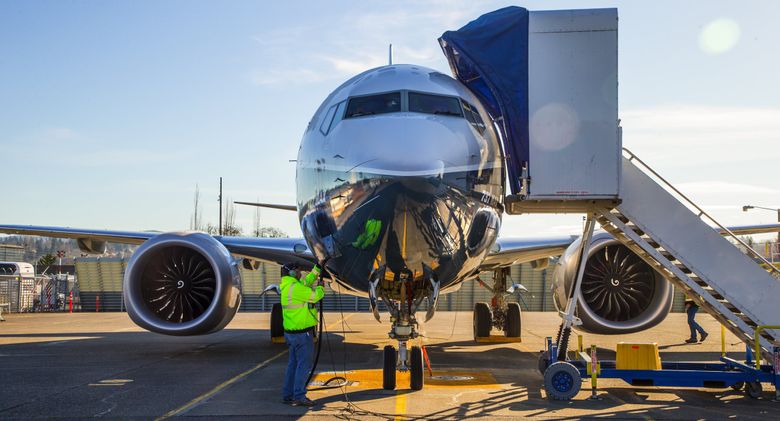
Resultado de imagen para Boeing 737 line design

Forcing the cell

By 2011, Boeing executives were beginning to wonder if the design of the 737 had reached the end of its path. The company wanted to create a completely new single-aisle aircraft. Then, Boeing’s rival Airbus added a new fuel-efficient engine to its single-aisle aircraft line, the A320, and Boeing quickly decided to upgrade the aircraft again.

«We all rolled our eyes at the thought: Here we go, the 737 again, maybe nobody was willing to say it was not safe, but we really felt that we had reached the limit», said Ludtke, the former 737 Max cabin designer. who worked nineteen years at Boeing.

Some engineers were frustrated that they would again have to spend years updating the same plane, being careful to limit any changes, instead of starting over and incorporating important technological advances, said current and former engineers and pilots. The 737 MAX still has almost the same original layout of the cab and the hydraulic system of cables and pulleys to control the aircraft, which is not used in modern designs. The integrated computers have the processing power of the domestic computers of the nineties. A spokesman for Boeing said the plane was designed with an appropriate level of technology to ensure its safety.

When the engineers made changes, they sometimes caused chain effects in the way the aircraft was handled, forcing Boeing to be creative. The company added a new system that moves wing plates partly to reduce the stress the plane suffers due to the added weight. Boeing recreated the physical meters of decades ago on digital screens.

While Boeing was pressuring its engineers to figure out how to implement larger engines with more efficient fuel consumption, the weight again was a problem. Simply lengthening the landing gear to make the plane higher could have violated the rules to get off the plane in an emergency. Instead, the engineers were able to add just a few centimeters to the front landing gear and put the engines later on the wing. The engines fitted, but the 737 MAX had a slightly uneven angle when parked.

Although the design solved one problem, it generated another. The larger size and new location of the engines gave the Boeing 737 MAX the tendency to tilt during certain flight maneuvers, potentially at a dangerous angle. To compensate for this, Boeing engineers created the Maneuvering Feature Enhancement System (MCAS), an automated flight control software that would descend the nose of the plane if it was too high. The software was intended to operate in the background so that the 737 MAX would fly just like its predecessor. Boeing did not mention the system in its training materials for the MAX. Boeing also designed the system to depend on a single sensor, something extraordinary in aviation, where redundancy is common. Several engineers who worked at Boeing and did not participate directly in the design of the system said that their colleagues probably opted for this approach because relying on two sensors could create other problems. If one of the two sensors broke down, the system could have problems to know which one was correct.

Most of the new Boeing aircraft have electronic systems with which pilots can check a checklist of the measures they must take before the flight, making sure not to skip any steps or ignore any part that is not working well. In the 737 MAX, pilots still complete those lists manually in a book. A second electronic system found on other Boeing aircraft also alerts pilots to unusual or dangerous situations during the flight and displays recommended measures to resolve them. In the 737, a light usually indicates the problem and pilots should review their printed manuals to find the steps to follow. On the Indonesian flight that suffered the accident, while the Lion Air pilots had problems with the MCAS to control the plane, the pilots consulted the manual just before the plane collapsed in the Java Sea, causing death of the 189 people who were on board. «While I’m flying the plane, instead of appearing on your screen, it says, This is the problem and this is the list of recommended measures», said Tajer, a captain of American Airlines 737. The 737 MAX also lacked more modern security features. Boeing decided not to add that system to the 737 MAX because it could have caused regulators to require a new pilot training program, according to two former Boeing employees involved in the decision.

The 737 MAX also works with a complex network of cables and pulleys that, when the pilots stretch the controls, transfers the movement to the tail. By comparison, the most modern Airbus and Boeing jets, like the 777 and the 787, the movements that the pilots exercise over the flight controls are fed to a computer that directs the plane. The design allows for more automation, including systems that prevent the jet from entering dangerous situations, such as flying too fast or too low. Some 737 pilots said they preferred the cable and pulley system over the automated system because they thought it gave them more control.

In the accident of flight ET-302, investigators believe that the MCAS had a malfunction that moved the horizontal stabilizer, tilting the plane towards the ground. In the ill-fated flight of Ethiopian Airlines, the pilots tried to fight the system by turning off the power of the engine’s stabilizer, according to a preliminary accident report. Once they cut off the power, the pilots tried to regain control manually by turning a rudder next to their seat. The 737 is the latest Boeing jet that uses a manual rudder as a backup system. But Boeing has known for a long time that, at high speed, it is difficult to turn the rudder and it is possible that the two riders had to work together. In the final moments of the Ethiopian Airlines flight, the first officer said the method was not working, according to the preliminary accident report. Approximately one minute and 49 seconds later the plane crashed, killing 157 people. A \ W


Ξ A I R G W A Y S Ξ
SOURCE: Airgways.com
DBk: Boeing.com / Airgways.com / Infobae.com / Seattletimes.com
AW-POST: 201904121541AR

A\W   A I R G W A Y S ®

Asume nuevo CEO en Airbus

Resultado de imagen para guillaume faury Airbus

AW | 2019 04 12 13:18 | INDUSTRY

Logo_Airbus_2014.svg.pngJunta de Airbus aprueba a Guillaume Faury como nuevo CEO
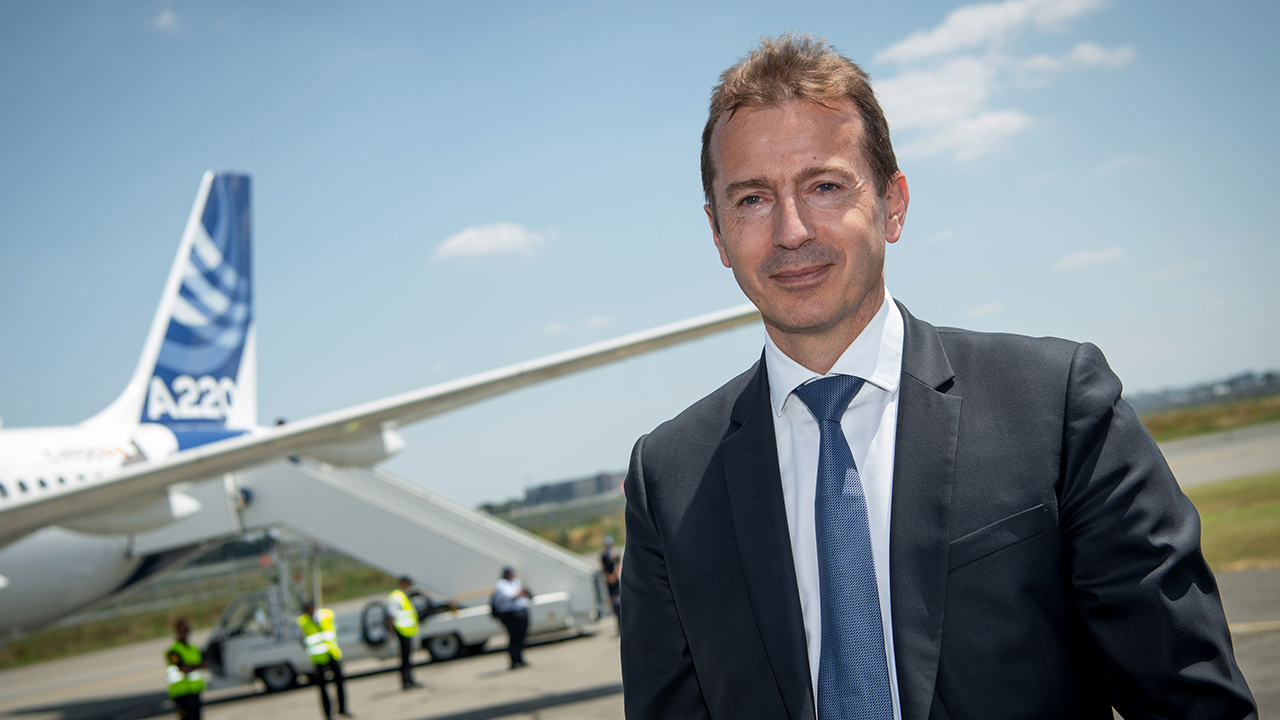
Los accionistas de Airbus han aprobado en su Junta General Anual (JGA) de 2019 el nombramiento de Guillaume Faury como miembro ejecutivo del Consejo de Administración por un periodo de tres años y, posteriormente, en la primera reunión del nuevo Consejo, ha sido ratificado en el cargo de CEO del grupo aeronáutico, en sustitución de Tom Enders.

Airbus anunció en Octubre 2018 que su Consejo había elegido como futuro CEO, cuando saliera Enders, a Faury, hasta entonces presidente de Airbus Commercial Aircraft. “Es un auténtico privilegio tomar el relevo como CEO de Airbus y dirigir esta excepcional compañía hacia la próxima década. Estoy deseando trabajar con nuestros excelentes equipos y dar forma al Airbus del futuro para brindar un mejor servicio a nuestros clientes, aumentar nuestra competitividad y crecer de modo sostenible”, ha afirmado Guillaume Faury.

Por recomendación del Comité de Remuneración, Nombramientos y Gobernanza (RNGC), el Consejo ha designado a René Obermann para que suceda a Denis Ranque como Chairman del Consejo de Administración de Airbus cuando expire su actual mandato al cierre de la JGA de 2020.

La nueva cúpula ejecutiva

El Comité Ejecutivo apoya al CEO en su gestión diaria de las operaciones del negocio de Airbus y constituye la cúpula ejecutiva de la compañía. Lo componen los máximos responsables de las divisiones y de las principales funciones. “Nos encontramos en un periodo excepcional de cambios en nuestro sector y necesitamos preparar a Airbus para las oportunidades y los desafíos que nos esperan”, ha destacado el CEO Guillaume Faury.

El nuevo Comité Ejecutivo de Airbus está integrado por: Dominik Asam, director Financiero (CFO), Thierry Baril, director de Recursos Humanos (CHRO), Jean-Brice Dumont, Vicepresidente (VP) Eecutivo de Ingeniería, Bruno Even, CEO de Airbus Helicópteros, John Harrison, Consejero General, Dirk Hoke, CEO de Airbus Defensa y Espacio, Julie Kitcher, VP Ejecutivo de Comunicaciones y Asuntos Corporativos, Philippe Mhun, VP de Programas y Servicios, Christian Scherer, Director Comercial (CCO), Michael Schöllhorn, Director de Operaciones (COO), Grazia Vittadini, Director de Tecnología (CTO).AW-Icon-TXT-01

Resultado de imagen para guillaume faury AirbusAssumes new CEO at Airbus

Airbus Board approves Guillaume Faury as new CEO

The shareholders of Airbus have approved at the Annual General Meeting (JGA) of 2019 the appointment of Guillaume Faury as executive member of the Board of Directors for a period of three years and, subsequently, at the first meeting of the new Board, it has been ratified in the position of CEO of the aeronautical group, replacing Tom Enders.

Airbus announced in October 2018 that its Board had chosen as future CEO, when Enders left, Faury, until then president of Airbus Commercial Aircraft. «It is a real privilege to take over as CEO of Airbus and lead this exceptional company into the next decade. I look forward to working with our excellent teams and shaping the Airbus of the future to provide better service to our customers, increase our competitiveness and grow in a sustainable way», said Guillaume Faury.

On the recommendation of the Remuneration, Appointments and Governance Committee (RNGC), the Board has appointed René Obermann to succeed Denis Ranque as Chairman of the Board of Directors of Airbus when his current term expires at the close of the 2020 JGA.

The new executive dome

The Executive Committee supports the CEO in his daily management of Airbus business operations and constitutes the executive leadership of the company. It is made up of the heads of the divisions and the main functions. «We are in an exceptional period of changes in our sector and we need to prepare Airbus for the opportunities and challenges that await us», said CEO Guillaume Faury.

The new Airbus Executive Committee is composed of: Dominik Asam, Chief Financial Officer (CFO), Thierry Baril, Director of Human Resources (CHRO), Jean-Brice Dumont, Executive Vice President (VP) of Engineering, Bruno Even, CEO of Airbus Helicopters, John Harrison, General Counsel, Dirk Hoke, CEO of Airbus Defense and Space, Julie Kitcher, Executive VP of Communications and Corporate Affairs, Philippe Mhun, VP of Programs and Services, Christian Scherer, Commercial Director (CCO), Michael Schöllhorn, Director of Operations (COO), Grazia Vittadini, Director of Technology (CTO). A \ W

Resultado de imagen para guillaume faury AirbusAssume le nouveau directeur général chez Airbus

Logo_Airbus_2014.svg.pngAirbus Board approuve la nomination de Guillaume Faury en tant que nouveau directeur général

Les actionnaires d’Airbus ont approuvé lors de l’Assemblée générale ordinaire (JGA) de 2019 la nomination de Guillaume Faury en tant que membre exécutif du Conseil d’administration pour une période de trois ans. Par la suite, lors de la première réunion du nouveau Conseil, il a été ratifié le poste de PDG du groupe aéronautique, en remplacement de Tom Enders.

En octobre 2018, Airbus avait annoncé que son conseil d’administration avait été choisi comme futur directeur général. Enders avait quitté Faury, alors président d’Airbus Commercial Aircraft. «C’est un réel privilège d’assumer les fonctions de PDG d’Airbus et de diriger cette entreprise exceptionnelle au cours de la prochaine décennie. Je suis impatient de travailler avec nos excellentes équipes et de façonner l’Airbus de demain afin de fournir un meilleur service à nos clients et d’accroître notre compétitivité. et croître de manière durable», a déclaré Guillaume Faury.

Sur recommandation du Comité de rémunération, de nomination et de gouvernance (RNGC), le Conseil a nommé René Obermann à la place de Denis Ranque à la présidence du Conseil d’administration d’Airbus à l’expiration de son mandat à la fin de la JGA 2020.

Le nouveau dôme exécutif

Le comité de direction assiste le PDG dans sa gestion quotidienne des opérations commerciales d’Airbus et constitue le leadership exécutif de la société. Il est composé des chefs de divisions et des principales fonctions. «Nous vivons une période exceptionnelle de changements dans notre secteur et nous devons préparer Airbus aux opportunités et aux défis qui nous attendent», a déclaré le directeur général, Guillaume Faury.

Le nouveau comité exécutif d’Airbus est composé de: Dominik Asam, directeur financier, Thierry Baril, directeur des ressources humaines (CHRO), Jean-Brice Dumont, vice-président directeur (ingénierie), Bruno Even, directeur général d’Airbus Helicopters, John Harrison, avocat général, Dirk Hoke, PDG d’Airbus Defence and Space, Julie Kitcher, vice-présidente exécutive des Communications et des Affaires générales, Philippe Mhun, vice-président des programmes et services, Christian Scherer, directeur commercial (CCO), Michael Schöllhorn, directeur Opérations (COO), Grazia Vittadini, Directeur de la technologie (CTO). A \ W


Ξ A I R G W A Y S Ξ
SOURCE: Airgways.com
DBk: Airbus.com / Cnbc.com
AW-POST: 201904121318AR

A\W   A I R G W A Y S ®


Qazaq Air recibe Bombardier Q400

Resultado de imagen para Q400 Qazaq AirAW | 2019 04 12 11:18 | AIRLINES / INDUSTRY

Bombardier_old.svg.pngBombardier celebra la entrega del avión Q400 a Qazaq Air

Bombardier Commercial Aircraft celebró hoy la entrega del primero de los dos aviones Q400 pedidos por Qazaq Air JSC de Kazajstán en 2017. El pedido siguió al exitoso lanzamiento de Qazaq Air de Servicio doméstico en Kazajstán en Julio 2015, utilizando tres aviones Q400 arrendados.

Resultado de imagen para qazaq air logoEl Director Ejecutivo interino de Qazaq Air, Adel Dauletbek, y el Jefe de Relaciones Públicas de la aerolínea, Sergey Khetsuriani, se unieron al equipo de vuelo y aceptación de la aerolínea durante una ceremonia de entrega especial en el sitio de Bombardier en Toronto, donde se fabrica el avión Q400. El Sr. Akylbek Kamaldinov, Embajador de Kazajstán en Canadá, estuvo presente, así como el equipo de Bombardier Commercial Aircraft, que incluyó a Ross Mitchell, Vicepresidente de Operaciones Comerciales y Mark Gilbert, Director de Ventas.

«Estamos encantados con el rendimiento de nuestra flota de turbopropulsores Q400 y estamos encantados de dar la bienvenida a la aeronave adicional a nuestra operación. Con nuestra flota más grande, nuestros clientes se beneficiarán de la expansión de nuestra red de rutas dentro de Kazajstán, así como a las ciudades cercanas en la región de Asia Central», dijo el Sr. Dauletbek.

«Felicitamos a Qazaq Air por el crecimiento de sus operaciones y la expansión de su red. El avión Q400 continúa demostrando su valía en algunos de los lugares más desafiantes del mundo. La velocidad, el alcance y la eficiencia del combustible del avión, y especialmente su certificación para operaciones de hasta -54 ° C lo hacen ideal para las operaciones en las largas rutas de Qazaq Air en el mercado kazajo», dijo el Sr. Mitchell.

Acerca de Qazaq Air

Qazaq Air es una aerolínea regional joven y de crecimiento dinámico en Kazajstán, cuyo 100% es propiedad del Fondo de Bienestar Social «Samruk-Kazyna».

Acerca de la aeronave Q400

Diseñada como un moderno turbopropulsor del siglo XXI, la aeronave Q400 es el desarrollo más reciente en la familia de aviones de la QSeries. Proporciona un rendimiento inigualable, flexibilidad operativa y comodidad para el pasajero. Además de la configuración estándar de clase única, los aviones Q400 están disponibles con un interior de clase dual opcional para mayor comodidad del pasajero; en una configuración opcional de capacidad adicional que ofrece hasta 90 asientos para mercados de mayor densidad; y en una configuración combi de carga y pasajero.

Bombardier-Q400.jpg

Gracias a su combinación de atributos de turbohélices, características de avión, experiencia de pasajeros líder en la industria y huella ambiental, la aeronave Q400 es excepcionalmente versátil y puede adaptarse a una variedad de modelos de negocios. Al ofrecer una reducción del 30 por ciento en la quema de combustible en comparación con los reactores que a menudo reemplaza, la aeronave Q400 reduce radicalmente las emisiones de carbono y aumenta la eficiencia de costos. Su crucero de alta velocidad, 160 km/h más rápido que los turbohélices convencionales, ubica el tiempo de vuelo de la aeronave a minutos de los horarios de los aviones a reacción, al mismo costo que los aviones más grandes de un solo pasillo. Sus hélices grandes funcionan a una velocidad menor, generando más energía con menos ruido y convirtiéndola en una opción amigable para los centros urbanos.

Con más de 1,250 aviones entregados, los turbopropulsores de la QSeries Dash 8 continúan brindando costos operativos excepcionales, junto con los beneficios de los elementos comunes dentro de la familia de aviones de la QSeries.

Acerca de Bombardier

Con más de 68.000 empleados en cuatro segmentos de negocios, Bombardier es un líder global en la industria del transporte, creando aviones y trenes innovadores que cambian el juego. Nuestros productos y servicios brindan experiencias de transporte de clase mundial que establecen nuevos estándares en cuanto a la comodidad de los pasajeros, la eficiencia energética, la confiabilidad y la seguridad.

Con sede en Montreal, Canadá, Bombardier tiene centros de producción e ingeniería en 28 países en los segmentos de Transporte, Aviones de Negocios, Aviones Comerciales y Aeroestructuras y Servicios de Ingeniería. Las acciones de Bombardier se negocian en la Bolsa de Valores de Toronto (BBD). En el año fiscal que terminó el 31 Diciembre 2018, Bombardier registró ingresos por US$ 16.2 mil millones.AW-Icon-TXT-01

Resultado de imagen para Q400 Qazaq AirQazaq Air receives Bombardier Q400

q400_dash_8_128587.jpgBombardier celebrates the delivery of the Q400 aircraft to Qazaq Air

Bombardier Commercial Aircraft today celebrated the delivery of the first of the two Q400 aircraft ordered by Qazaq Air JSC of Kazakhstan in 2017. The order followed the successful launch of Qazaq Air Domestic Service in Kazakhstan in July 2015, using three leased Q400 aircraft.

Acting Executive Director of Qazaq Air, Adel Dauletbek, and the airline’s Head of Public Relations, Sergey Khetsuriani, joined the flight team and acceptance of the airline during a special delivery ceremony at the Bombardier site in Toronto, where the Q400 aircraft is manufactured. Mr. Akylbek Kamaldinov, Ambassador of Kazakhstan in Canada, was present, as well as the Bombardier Commercial Aircraft team, which included Ross Mitchell, Vice President of Commercial Operations and Mark Gilbert, Director of Sales.

«We are delighted with the performance of our Q400 turboprop fleet and we are delighted to welcome the additional aircraft to our operation.With our largest fleet, our customers will benefit from the expansion of our route network within Kazakhstan, as well as to nearby cities in the Central Asian region», said Mr. Dauletbek.

«We congratulate Qazaq Air for the growth of its operations and the expansion of its network, the Q400 aircraft continues to prove its worth in some of the most challenging places in the world. The speed, range and fuel efficiency of the aircraft, and especially its certification for operations up to -54 ° C make it ideal for operations on the long routes of Qazaq Air in the Kazakh market», said Mr. Mitchell.

About Qazaq Air

Qazaq Air is a young and dynamic regional airline in Kazakhstan, 100% owned by the Social Welfare Fund «Samruk-Kazyna».

About the Q400 aircraft

Designed as a modern 21st century turboprop, the Q400 aircraft is the most recent development in the QSeries aircraft family. It provides unrivaled performance, operational flexibility and passenger comfort. In addition to the standard single-class configuration, the Q400 aircraft are available with an optional dual-class interior for passenger comfort; in an optional additional capacity configuration that offers up to 90 seats for higher density markets; and in a combination cargo and passenger configuration.

Thanks to its combination of turbo-fuel attributes, airplane characteristics, industry-leading passenger experience and environmental footprint, the Q400 aircraft is exceptionally versatile and can be adapted to a variety of business models. By offering a 30 percent reduction in fuel burn compared to the reactors it often replaces, the Q400 aircraft radically reduces carbon emissions and increases cost efficiency. Its high-speed cruise, 160 km/h faster than conventional turboprops, locates the aircraft’s flight time within minutes of jet aircraft schedules, at the same cost as larger single-aisle aircraft. Its large propellers operate at a lower speed, generating more energy with less noise and making it a friendly option for urban centers.

With more than 1,250 aircraft delivered, the turboprops of the QSeries Dash 8 continue to provide exceptional operating costs, along with the benefits of common elements within the QSeries aircraft family.

About Bombardier

With more than 68,000 employees in four business segments, Bombardier is a global leader in the transportation industry, creating innovative aircraft and trains that change the game. Our products and services provide world-class transportation experiences that set new standards in passenger comfort, energy efficiency, reliability and safety.

Headquartered in Montreal, Canada, Bombardier has production and engineering centers in 28 countries in the Transportation, Business Aircraft, Commercial Aircraft and Aerostructures and Engineering Services segments. Bombardier shares are traded on the Toronto Stock Exchange (BBD). In the fiscal year ended December 31, 2018, Bombardier recorded revenues of US$ 16.2 billion. A \ W

Resultado de imagen para Q400 Qazaq AirQazaq Air reçoit le Bombardier Q400

Bombardier-logo-7447580EF7-seeklogo.com.pngBombardier célèbre la livraison de l’avion Q400 à Qazaq Air

Bombardier Avions Commerciaux a célébré aujourd’hui la livraison de la première des deux commandes d’avions Q400 par Air Qazaq JSC du Kazakhstan en 2017. L’ordre a suivi le lancement réussi du service domestique Air Qazaq au Kazakhstan en Juillet 2015, en utilisant trois avions Q400 loués.

Le directeur exécutif par intérim de Qazaq Air, Adel Dauletbek, et le chef des relations publiques de la compagnie aérienne, Sergey Khetsuriani, a rejoint l’équipage de conduite et l’acceptation de la compagnie aérienne lors d’une cérémonie spéciale de livraison sur le site de Bombardier à Toronto, où l’avion Q400 est fabriqué. M. Akylbek Kamaldinov, Ambassadeur du Kazakhstan au Canada, était présent, ainsi que l’équipe commerciale d’avion Bombardier, qui comprenait Ross Mitchell, vice-président des opérations commerciales et Mark Gilbert, directeur des ventes.

«Nous sommes ravis de la performance de notre flotte de biturbopropulseurs Q400 et nous sommes ravis d’accueillir plus de nos avions de fonctionnement. Avec notre flotte plus importante, nos clients bénéficieront de l’expansion de notre réseau de routes à l’intérieur du Kazakhstan et quant aux villes voisines de la région d’Asie centrale», a déclaré M. Dauletbek.

«Nous tenons à féliciter Air Qazaq par la croissance de ses activités et l’expansion de son réseau. L’avion Q400 continue de faire ses preuves dans certains des endroits les plus difficiles dans le monde. L’efficacité vitesse, la portée et le carburant des avions et en particulier certifié pour les opérations jusqu’à -54 ° C, il est idéal pour les opérations sur de longues routes d’Air Qazaq sur le marché kazakh», a déclaré M. Mitchell.

À propos de Qazaq Air

Qazaq Air est une compagnie aérienne régionale jeune et dynamique au Kazakhstan, détenue à 100% par le Fonds de protection sociale «Samruk-Kazyna».

A propos de l’avion Q400

Conçu comme un turbopropulseur moderne du 21ème siècle, l’avion Q400 est le développement le plus récent de la famille des avions QSeries. Il offre des performances, une flexibilité opérationnelle et un confort inégalés. En plus de la configuration standard à classe unique, les avions Q400 sont disponibles avec un intérieur à double classe en option pour le confort des passagers; dans une configuration de capacité supplémentaire optionnelle offrant jusqu’à 90 sièges pour les marchés à forte densité; et dans une configuration mixte cargo et passagers.

Merci à sa combinaison d’attributs turbopropulseurs, dispose d’une expérience des passagers des avions et de l’industrie de pointe empreinte environnementale, l’avion Q400 est exceptionnellement polyvalent et peut être adapté à une variété de modèles d’affaires. En offrant une réduction de la consommation de carburant de 30% par rapport aux réacteurs qu’il remplace souvent, l’avion Q400 réduit radicalement les émissions de carbone et augmente la rentabilité. Sa vitesse de croisière, à 160 km/h supérieure à turbopropulseurs classiques, recherchez le temps de vol de l’aéronef en quelques minutes des horaires des jets, le même coût que le plus gros avion monocouloir. Ses grandes hélices fonctionnent à une vitesse plus lente, générant plus d’énergie avec moins de bruit, ce qui en fait une option avantageuse pour les centres urbains.

Avec plus de 1 250 avions livrés, les QSeries turbopropulseurs Dash 8 continuer à fournir des coûts d’exploitation exceptionnels, ainsi que les avantages des éléments communs au sein de la famille des QSeries d’avions.

À propos de Bombardier

Bombardier, qui emploie plus de 68 000 personnes dans quatre secteurs d’activité, est un leader mondial du secteur des transports, qui crée des avions et des trains innovants qui révolutionnent le jeu. Nos produits et services fournissent des expériences de transport de classe mondiale qui établissent de nouvelles normes en matière de confort des passagers, d’efficacité énergétique, de fiabilité et de sécurité.

Dont le siège est à Montréal, au Canada, Bombardier a des centres de production et d’ingénierie dans 28 pays dans les secteurs des transports, des avions d’affaires, avions commerciaux et des services d’ingénierie et Aérostructure. Les actions de Bombardier sont négociées à la Bourse de Toronto (BBD). Au cours de l’exercice clos le 31 décembre 2018, Bombardier a réalisé un chiffre d’affaires de US$ 16,2 milliards. A \ W


Ξ A I R G W A Y S Ξ
SOURCE: Airgways.com
DBk: Bombardier.com / Globenewswire.com / Aikyn.qz / Inalmaty.kz
AW-POST: 201904121118AR

A\W   A I R G W A Y S ®

Pruebas software Boeing 737 MAX

Resultado de imagen para test Boeing 737 MAX

AW | 2019 04 12 02:13 | INDUSTRY / AVIATION SAFETY

Boeing-Company-LogoBoeing dice que la solución de software MAX está funcionando

Boeing continua con pruebas adicionales para las próximas semanas a medida que el fabricante trabaja para recuperar la confianza de sus clientes y del público. El Director Ejecutivo de The Boeing Company dice que una actualización de software del MCAS está funcionando.

rotate7.pngEn su primer discurso público después del accidente aéreo del vuelo ET-302 de Ethiopian Airlines a bordo del Boeing 737 MAX, el CEO de Boeing, Dennis Muilenburg, dijo el jueves que se esperan pruebas adicionales en las próximas semanas a medida que el constructor trabaja para finiquitar las pruebas para ser fiscalizadas por la Federal Aviation Administration (FAA). El nuevo software Anti-Stall System en los aviones 737 Boeing MAX ha completado con éxito las pruebas en 96 vuelos de prueba, dijo el presidente ejecutivo de Boeing, Dennis Muilenburg, en un discurso en el Centro Presidencial George W. Bush.
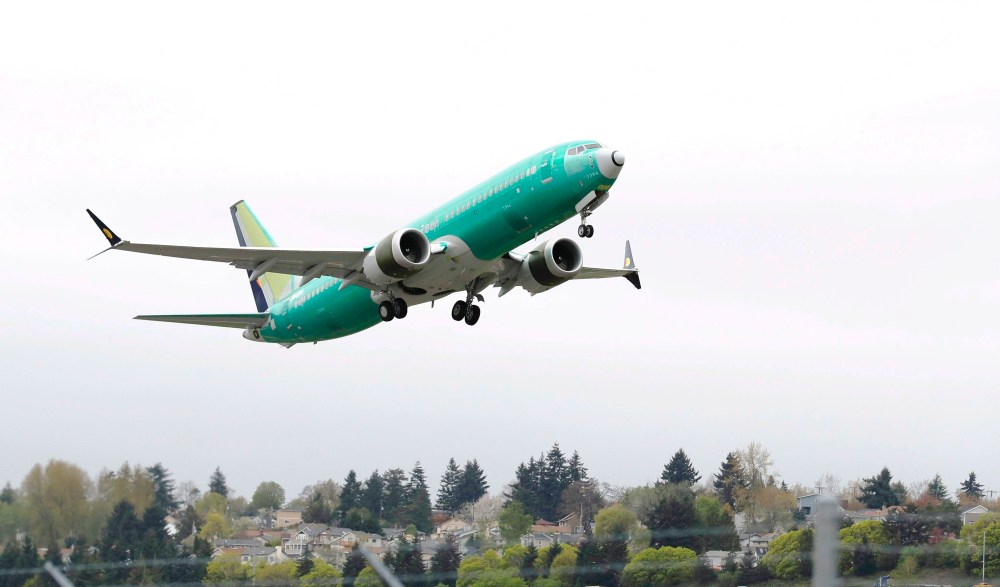
El fabricante de aeronaves más grande del mundo está bajo presión para convencer a los operadores del 737 MAX y a los reguladores globales de que la aeronave, que fue puesta a tierra en todo el mundo en Marzo 2019, es segura para volar de nuevo. Muilenburg dijo que recientemente se unió a uno de los 96 vuelos de prueba durante los cuales la tripulación de Boeing realizó diferentes escenarios que ejercieron los cambios de software en múltiples condiciones de vuelo durante 159 horas de vuelo. «La actualización del software funcionó como fue diseñada», dijo, sin indicar cuándo Boeing entregará la solución a los reguladores internacionales para su revisión, que se espera que dure alrededor de 90 días.

Accidentes del 737 MAX

Los informes iniciales de investigación de accidentes muestran que un sistema antibloqueo 737 desencadenado por datos erróneos de un sensor de flujo de aire clave fue «un eslabón en una cadena más larga de eventos» en los dos choques, dijo Muilenburg en un foro de líderes en Dallas. La semana pasada, Boeing redujo su producción mensual de 737 en casi un 20%, lo que indica que no esperaba que las autoridades de aviación permitieran que el avión volviera a volar pronto.

Boeing, con sede en Chicago, no ha recibido ningún pedido nuevo para el 737 MAX desde el accidente en marzo, ni pudo realizar entregas del avión en tierra. El 737 MAX ha sido considerado como el mejor caballo de batalla para las aerolíneas globales en las próximas décadas. Había más de 300 aviones de pasajeros 737 MAX en operación en el momento del accidente de Lion Air y cerca de 4.600 en orden. Muilenburg se unió a Boeing en 1985, se convirtió en CEO en Julio 2015 y presidente de la junta en marzo de 2016.

Las pruebas Boeing mejoraron el software Anti-Stall del Boeing 737 MAX. «En general, nuestro equipo ha realizado 96 vuelos que totalizan un poco más de 159 horas de tiempo de transmisión con el software actualizado.Llevarán a cabo vuelos de prueba y producción adicionales en las próximas semanas, ya que continuamos demostrando que hemos identificado y cumplido con todos los requisitos de certificación», dijo Muilenburg el jueves.

La Administración Federal de Aviación de los Estados Unidos (FAA) y otros reguladores de las líneas aéreas nacionales conectaron a tierra el 737 MAX luego de la muerte de todos los pasajeros y la tripulación en dos accidentes, en Indonesia y Etiopía. Boeing de Estados Unidos busca apoyo de la UE y de China en medio de temores de inseguridad máxima de 737.

Muilenburg dijo que la actualización del software haría que el 737 MAX fuera seguro al evitar que la lectura errónea del sensor active un sistema anticolisión conocido como el Sistema de Aumento de Características de Maniobra (MCAS). Las investigaciones preliminares han identificado el MCAS como la posible causa de ambos accidentes. Boeing también ha entrenado a pilotos de dos tercios de más de 50 aerolíneas con los jets MAX hasta el momento en simuladores con el nuevo software, dijo Muilenburg.

ET-302 Ethiopian

Los datos publicados la semana pasada del vuelo de Ethiopian Airlines indicaron que los pilotos no redujeron la velocidad del avión 737 Max 8 después del despegue cuando deberían hacerlo. El informe preliminar sobre el desastre dijo que el sistema antibloqueo del avión empujó la nariz del avión hacia abajo en menos de dos minutos en el vuelo debido a un mal funcionamiento del sensor. Los pilotos lucharon por controlar el avión mientras se lanzaba hacia el suelo a 575 millas por hora. «Cuanto más rápido avanza el avión, más fuerza de aire hay en sus alas y en las superficies de control, lo que requiere más fuerza por parte de los pilotos para tirar del control», dijo Robert Mark, un piloto comercial y editor senior de Flying Magazine.

Boeing citó el desempeño del 737-8 MAX en un caso presentado ante la Comisión de Comercio Internacional de los Estados Unidos en 2017. Boeing denunció que la competencia desleal de Bombardier, que venció a Boeing por una gran orden de Delta Air Lines, amenazó a su Boeing 737-7 MAX, el más pequeño de sus reactores de un solo pasillo mejorados. Al señalar las limitaciones del MAX 8, el planificador buscó preservar la participación de mercado para el 700 NG y el MAX 7.

El consultor de aviación Bob Mann dijo que las aerolíneas generalmente usan una versión más pequeña y anterior del avión de Boeing, el 737-700, en elevaciones más altas porque ese avión generalmente tiene una «mejor velocidad de ascenso» que el MAX 8.

Aeropuerto altos

Boeing ha llamado 737-8 MAX no adecuado para aeropuertos altos y calientes. El gigante aeroespacial de Chicago dijo en un documento legal que los 737 grandes y mejorados «no se pueden usar en lo que se conoce como aeropuertos altos/calientes».

A una altura de 7.657 pies, o más de una milla de altura, el Aeropuerto Internacional Bole de Addis Abeba se encuentra dentro de esa categoría. Las elevaciones altas requieren pistas más largas y velocidades más rápidas para el despegue. La altitud del aeropuerto de Etiopía no se ha citado como un factor en el derribo del Vuelo 302 y probablemente no causó el accidente. Pero podría haber exacerbado la situación porque el desempeño de un avión se degrada a mayores alturas, dijo un piloto 737 que vuela a aeropuertos de gran altitud como Denver y aceptó hablar sobre los antecedentes, ya que no está autorizado para hablar con los medios.

Los documentos en el caso comercial se referían al menos 16 aeropuertos de los Estados Unidos considerados altos y, por lo tanto, inadecuados para el Boeing 737-8 MAX, aunque los nombres de esas instalaciones no se hicieron públicos. Cuando se le preguntó en una audiencia de la comisión de comercio que especificara qué aeropuertos, un testigo experto de Boeing respondió que «a veces Denver calificaría así». El experto, Jerry Nickelsburg, profesor adjunto de economía en UCLA, agregó que «la Ciudad de México ciertamente califica como tal”. Tanto los aeropuertos de Denver como los de la Ciudad de México se encuentran en elevaciones más bajas que Addis Abeba y tienen pistas más largas que el aeropuerto de Etiopía, donde se extienden más de 12.000 pies, o 3.700 metros.

El Aeropuerto Denver es más de 2.000 pies más bajo que Addis y tiene cinco pistas que miden 12.000 pies y una que es 16.000 pies (4.800 metros). El Aeropuerto Ciudad de México es 300 pies más bajo que el de Addis Abeba y tiene cuatro pistas que son 13.000 pies (4.000 metros) y dos que son 15.000 pies (4.600 metros).

Los aeródromos calientes como el aeropuerto de Yakarta, desde donde despegó el avión Lion Air el pasado octubre, producen densidades de aire similares a las elevaciones elevadas, que requieren velocidades de despegue más rápidas. El calor, la densidad del aire y la velocidad rápida no han sido citados como factores en ese accidente.

El desempeño de todos los aviones se deteriora a altas temperaturas o elevaciones, y todos los pilotos lo tienen en cuenta antes de despegar, dijo Steve Wallace, ex director de la rama de investigación de accidentes de la Administración de Aviación de la Federación. Incluso las aerolíneas que operan desde el Condado de Orange, California, que está casi al nivel del mar, ocasionalmente tienen que reducir el peso en sus aviones debido a las altas temperaturas, dijo Wallace. Es posible que la altitud y el calor no hayan desempeñado ningún papel en el accidente del 737-8, pero los abogados de los demandantes todavía pueden aprovechar la redacción del caso comercial de Boeing en 2017.AW-Icon-TXT-01

AW-70089-Canadian.jpgSoftware testing Boeing 737 MAX

Boeing-Logo.svgBoeing says that the MAX software solution is working

Boeing continues with additional tests for the coming weeks as the manufacturer works to regain the trust of its customers and the public. The Executive Director of The Boeing Company says that an MCAS software update is working.

In his first public address after the plane crash of Ethiopian Airlines flight ET-302 aboard the Boeing 737 MAX, Boeing CEO Dennis Muilenburg said on Thursday that additional tests are expected in the coming weeks as the builder works. to finalize the tests to be inspected by the Federal Aviation Administration (FAA). The new Anti-Stall System software on 737 Boeing MAX aircraft has successfully completed tests on 96 test flights, said Boeing Chief Executive Dennis Muilenburg in a speech at the George W. Bush Presidential Center.

The world’s largest aircraft manufacturer is under pressure to convince operators of the 737 MAX and global regulators that the aircraft, which was grounded worldwide in March 2019, is safe to fly again. Muilenburg said he recently joined one of the 96 test flights during which the Boeing crew performed different scenarios that brought software changes to multiple flight conditions during 159 flight hours. «The software update worked as designed», he said, without indicating when Boeing will deliver the solution to international regulators for review, which is expected to last about 90 days.

Accidents of the 737 MAX

Initial accident investigation reports show that an anti-lock 737 system triggered by erroneous data from a key airflow sensor was «a link in a longer chain of events» in the two crashes, Muilenburg said in a forum of leaders in Dallas Last week, Boeing reduced its monthly output by 737 by almost 20%, which indicates that it did not expect the aviation authorities to allow the plane to fly again soon.

Boeing, based in Chicago, has not received any new orders for the 737 MAX since the accident in March, nor could deliver the plane on the ground. The 737 MAX has been considered the best workhorse for global airlines in the coming decades. There were more than 300 737 MAX passenger aircraft in operation at the time of the Lion Air crash and about 4,600 in order. Muilenburg joined Boeing in 1985, became CEO in July 2015 and chairman of the board in March 2016.

The Boeing tests improved the Boeing 737 MAX’s Anti-Stall software. «In general, our team has made 96 flights totaling a little more than 159 hours of transmission time with the updated software. They will carry out additional test and production flights in the coming weeks, as we continue to demonstrate that we have identified and fulfilled with all the certification requirements», said Muilenburg on Thursday.

The Federal Aviation Administration of the United States (FAA) and other regulators of the national airlines connected to the ground the 737 MAX after the death of all the passengers and the crew in two accidents, in Indonesia and Ethiopia. US Boeing seeks support from the EU and China amid fears of maximum insecurity of 737.

AW-700944345.jpg

Muilenburg said that updating the software would make the 737 MAX safe by preventing erroneous sensor reading from activating an anti-collision system known as the Maneuver Characteristics Enhancement System (MCAS). Preliminary investigations have identified the MCAS as the possible cause of both accidents. Boeing has also trained two-thirds pilots of more than 50 airlines with MAX jets so far in simulators with the new software, said Muilenburg.

ET-302 Ethiopian

The data published last week of the Ethiopian Airlines flight indicated that the pilots did not reduce the speed of the 737-8 MAX aircraft after takeoff when they should. The preliminary report on the disaster said that the aircraft’s anti-lock system pushed the nose of the plane down in less than two minutes on the flight due to sensor malfunction. The pilots struggled to control the plane as it launched toward the ground at 575 miles per hour. «The faster the aircraft advances, the more air force there is on its wings and on the control surfaces, which requires more force on the part of the pilots to pull the control», said Robert Mark, a commercial pilot and senior editor at Flying Magazine.

Boeing cited the performance of the 737-8 MAX in a case filed with the US International Trade Commission in 2017. Boeing reported that Bombardier’s unfair competition, which beat Boeing for a large Delta Air Lines order, threatened its Boeing 737-7 MAX, the smallest of its improved single-aisle reactors. By pointing out the limitations of the MAX 8, the planner sought to preserve the market share for the 700 NG and the MAX 7.

Aviation consultant Bob Mann said that airlines generally use a smaller, earlier version of Boeing’s 737-700 aircraft at higher elevations because that aircraft generally has a «better ascent rate» than the MAX 8.

High airport

Boeing has called 737-8 MAX not suitable for high and hot airports. The Chicago aerospace giant said in a legal document that the large and improved 737 «can not be used in what are known as high / hot airports».

At a height of 7,657 feet, or more than a mile in height, the Bole International Airport in Addis Ababa falls into that category. High elevations require longer runways and faster speeds for takeoff. The altitude of the Ethiopian airport has not been cited as a factor in the downing of Flight 302 and probably did not cause the accident. But it could have exacerbated the situation because the performance of an airplane degrades to greater heights, said a 737 pilot who flies to high-altitude airports such as Denver and agreed to talk about the background, since he is not authorized to speak with the media.

The documents in the commercial case referred to at least 16 airports in the United States considered high and, therefore, unsuitable for the Boeing 737-8 MAX, although the names of those facilities were not made public. When asked at a trade commission hearing to specify which airports, a Boeing expert witness responded that «Denver would sometimes qualify as such». The expert, Jerry Nickelsburg, assistant professor of economics at UCLA, added that «Mexico City certainly qualifies as such». Both Denver and Mexico City airports are at lower elevations than Addis Ababa and have tracks longer than the Ethiopian airport, where they stretch more than 12,000 feet, or 3,700 meters.

The Denver Airport is more than 2,000 feet shorter than Addis and has five lanes that measure 12,000 feet and one that is 16,000 feet (4,800 meters). The Mexico City Airport is 300 feet shorter than that of Addis Ababa and has four tracks that are 13,000 feet (4,000 meters) and two that are 15,000 feet (4,600 meters).

Hot airfields such as the Jakarta airport, from where the Lion Air aircraft took off last October, produce air densities similar to high elevations, which require faster takeoff speeds. Heat, air density and fast speed have not been cited as factors in that accident.

The performance of all aircraft deteriorates at high temperatures or elevations, and all pilots take it into account before taking off, said Steve Wallace, former director of the accident investigation arm of the Federation Aviation Administration. Even airlines that operate from Orange County, California, which is almost at sea level, occasionally have to reduce the weight on their planes due to high temperatures, Wallace said. Altitude and heat may not have played any role in the 737-8 accident, but the plaintiffs’ attorneys can still take advantage of Boeing’s business case in 2017. A \ W


Ξ A I R G W A Y S Ξ
SOURCE: Airgways.com
DBk: Boeing.com / Airgways.com / Chicagobusiness.com / Times.com / King5.com
AW-POST: 201904120213AR

A\W   A I R G W A Y S ®

Boeing enfrenta problemas internos

Image result for boeing headquarters

AW | 2019 04 10 21:53 | INDUSTRY

Boeing-Company-LogoBoeing enfrenta demanda de accionistas por ocultamiento de seguridad

The Boeing Company continúa con las dificultades después de la crisis con respecto al 737 MAX. La compañía ahora fue demandada el Martes 9 Marzo 2019, acusada de estafar a los accionistas al ocultar deficiencias de seguridad en la línea de fabricación del Boeing 737 MAX.

Un accionista de Boeing presentó una demanda colectiva contra el fabricante de aviones estadounidense por un supuesto encubrimiento de problemas de seguridad relacionados con los aviones 737 MAX, informaron los medios el miércoles. La demanda, presentada el martes por el accionista de Boeing Richard Seeks, afirma que la compañía puso «la rentabilidad y el crecimiento por delante de la seguridad y la honestidad de los aviones. La demanda reclama daños y perjuicios por supuestas violaciones de fraude de valores, alegando que los inversionistas sufrieron pérdidas económicas como resultado de la falla de Boeing en revelar los problemas de seguridad del avión, según el informe.

La semana pasada, el CEO de la compañía, Dennis Muilenberg, anunció que Boeing reducirá temporalmente la tasa de producción de sus 737 aviones MAX en casi un 20% para enfocarse en entregar una solución de software prometida que eliminará la posibilidad de una acción no intencionada por parte del Sistema de Aumento de Características de Maniobra (MCAS).

Este es solo uno de los múltiples casos judiciales que Boeing debe enfrentar, dado que las familias de las víctimas también han demandado a la compañía, y también se está llevando a cabo una investigación criminal. Los expertos legales comentan que el accidente aéreo de Etiopía podría ser aún más perjudicial para la empresa, ya que el fabricante debería haber sido advertido de la catástrofe de Lion Air y que sus aviones deberían haberse reparado.

Airbus confía Boeing solucionará problemas

El Director Ejecutivo saliente de Airbus, Tom Enders, expresó la esperanza de que Boeing y la Administración Federal de Aviación de los Estados Unidos pronto resuelvan una crisis por la conexión a tierra del 737 MAX y dijeron que están juntos en la seguridad. «Accidentes como el de Etiopía crean dudas para la seguridad, no solo con respecto a un fabricante de aeronaves sino a todos los fabricantes, para el público. Nunca competimos por la seguridad. Aprendemos de ello pero no competimos», dijo Enders a los accionistas el miércoles en una reunión anual de accionistas.

Su sucesor designado, el Jefe de Planeación Guillaume Faury fue elegido miembro de la junta directiva con el 99,99% de los votos en la Junta General. Expresó en respuesta a la pregunta de un accionista que el Boeing 737 MAX tenía una arquitectura diferente a la del Airbus A320NEO, pero agregó: «Seguimos observando muy seriamente nuestras propias prácticas de seguridad. Estamos tomando todas las lecciones que podemos, ya sea de aviones de Airbus o no, y tenemos que hacer esto para seguir mejorando todos los registros de seguridad».AW-Icon-TXT-01

Image result for boeing headquartersBoeing faces internal problems

Boeing-Logo.svgBoeing faces shareholder demand for security concealment

The Boeing Company continues the difficulties after the crisis with respect to the 737 MAX. The company was now sued on Tuesday 9 March 2019, accused of defrauding shareholders by hiding security deficiencies in the Boeing 737 MAX’s manufacturing line.

A Boeing shareholder filed a class action lawsuit against the US aircraft manufacturer for alleged cover-up of safety issues related to the 737 MAX aircraft, media reported Wednesday. The suit, filed Tuesday by Boeing shareholder Richard Seeks, said the company put «profitability and growth ahead of aircraft safety and honesty». The lawsuit claims damages for alleged securities fraud violations, alleging that investors suffered economic losses as a result of Boeing’s failure to reveal the plane’s safety problems, according to the report.

Last week, company CEO Dennis Muilenberg announced that Boeing will temporarily reduce the production rate of its 737 MAX aircraft by almost 20% to focus on delivering a promised software solution that will eliminate the possibility of unintended action. by the Maneuver Characteristics Increase System (MCAS).

This is just one of the many court cases that Boeing must face, since the families of the victims have also sued the company, and a criminal investigation is also under way. Legal experts comment that the Ethiopian plane crash could be even more damaging to the company, since the manufacturer should have been warned of the Lion Air disaster and that its aircraft should have been repaired.

Airbus confident Boeing will solve problems

The outgoing Executive Director of Airbus, Tom Enders, expressed the hope that Boeing and the Federal Aviation Administration of the United States will soon resolve a crisis over the grounding of the 737 MAX and said they are together in safety. «Accidents like the one in Ethiopia create doubts for safety, not only with respect to an aircraft manufacturer but to all manufacturers, for the public, we never compete for safety, we learn from it but we do not compete», Enders told shareholders. Wednesday at an annual shareholders meeting.

His appointed successor, Chief Planning Officer Guillaume Faury was elected a member of the board of directors with 99.99% of the votes in the General Board. He expressed in response to a shareholder’s question that the Boeing 737 MAX had an architecture different from that of the Airbus A320NEO, but added: «We continue to look very seriously at our own safety practices, we are taking all the lessons we can, whether from aircraft of Airbus or not, and we have to do this to continue to improve all security records». A \ W


Ξ A I R G W A Y S Ξ
SOURCE: Airgways.com
DBk: Boeing.com / Reuters.com
AW-POST: 201904102153AR

A\W   A I R G W A Y S ®

Embraer designará nuevo CEO

Image result for Embraer sede sao jose dos camposAW | 2019 04 10 21:05 | INDUSTRY

embraer logoEmpresa brasileña Embraer nombrará nuevo presidente

Embraer anuncia que la nominación de Francisco Gomes Neto que se presentará al Consejo de Administración para el cargo de Presidente y CEO, que sucederá a Paulo Cesar de Souza e Silva. La elección se llevará a cabo durante la reunión de la Junta, después de la Asamblea General de Accionistas programada para el 22 Abril 2019.

Francisco Gomes Neto, con una licenciatura en Ingeniería Eléctrica, una especialización en Administración de Empresas y un MBA en Contraloría y Finanzas, desarrolló su carrera en la industria automotriz, ocupando cargos de CEO en los últimos 20 años, tanto en Brasil como en Estados Unidos. En los últimos tres años, se ha desempeñado como CEO de Marcopolo, en el que lideró con éxito la transformación de la compañía, generando un fuerte crecimiento en las ventas y un valor de mercado para el negocio. Anteriormente, fue Director Ejecutivo para América de Mann + Hummel y Presidente de Knorr Bremse (líder mundial en sistemas de control para vehículos comerciales), entre otras posiciones de liderazgo. «Con una vasta experiencia internacional y un enfoque en la gestión del sector industrial, estoy seguro de que Francisco Gomes Neto tiene el perfil y las competencias correctas para guiar a Embraer en este período de transformación de la empresa y del sector aeroespacial mundial», dijo Alexandre Silva, Presidente de Consejo de Administración de Embraer, sobre la nominación.

Después de la Junta General de Accionistas, que se celebrará el 22 Abril 2019, Paulo Cesar de Souza e Silva asumirá el cargo de asesor principal del Consejo de Administración, durante la incorporación del nuevo Presidente y CEO y durante toda la segregación de activos y Recursos del negocio de aviación comercial, hasta la finalización de la asociación con Boeing.AW-Icon-TXT-01

Image result for Embraer sedeEmbraer will appoint new CEO

1280px-Embraer_logo.svgBrazilian company Embraer will name new president

Embraer announces that the nomination of Francisco Gomes Neto will be presented to the Board of Directors for the position of President and CEO, which will succeed Paulo Cesar de Souza e Silva. The election will take place during the meeting of the Board, after the General Assembly of Shareholders scheduled for April 22, 2019.

Francisco Gomes Neto, with a degree in Electrical Engineering, a specialization in Business Administration and an MBA in Comptroller and Finance, developed his career in the automotive industry, occupying positions of CEO in the last 20 years, both in Brazil and the United States . In the last three years, he has served as CEO of Marcopolo, where he successfully led the transformation of the company, generating strong growth in sales and market value for the business. Previously, he was Executive Director for America of Mann + Hummel and President of Knorr Bremse (world leader in control systems for commercial vehicles), among other leadership positions. «With a vast international experience and a focus on the management of the industrial sector, I am sure that Francisco Gomes Neto has the profile and the right skills to guide Embraer in this period of transformation of the company and the global aerospace sector», he said. Alexandre Silva, chairman of Embraer’s Board of Directors, on the nomination.

After the General Shareholders’ Meeting, which will be held on April 22, 2019, Paulo Cesar de Souza e Silva will assume the position of principal advisor to the Board of Directors, during the incorporation of the new Chairman and CEO and throughout the segregation of assets and Resources. from the business of commercial aviation, until the end of the partnership with Boeing. A \ W

Image result for Embraer sedeEmbraer indicará novo CEO

embraer logo (1).jpgEmpresa brasileira Embraer vai nomear novo presidente

Embraer anuncia que a nomeação de Francisco Gomes Neto para ser apresentado ao Conselho para o cargo de Presidente e CEO, vai acontecer com Paulo Cesar de Souza e Silva. A eleição ocorrerá durante a reunião do Conselho, após a Assembléia Geral de Acionistas marcada para 22 de abril de 2019.

Francisco Gomes Neto, com uma licenciatura em Engenharia Elétrica, com especialização em Administração de Empresas e MBA em Controladoria e Finanças, desenvolveu sua carreira na indústria automobilística, ocupando cargos de CEO ao longo dos últimos 20 anos, tanto no Brasil e nos Estados Unidos. Nos últimos três anos, atuou como CEO da Marcopolo, onde liderou com sucesso a transformação da empresa, gerando forte crescimento em vendas e valor de mercado para o negócio. Anteriormente, ele foi Diretor Executivo para a América da Mann + Hummel e Presidente da Knorr Bremse (líder mundial em sistemas de controle para veículos comerciais), entre outras posições de liderança. «Com uma vasta experiência internacional e foco na gestão do sector industrial, tenho certeza de que Francisco Gomes Neto tem o perfil e as competências adequadas para orientar Embraer neste período de transformação da sociedade ea indústria aeroespacial global», disse ele Alexandre Silva, presidente do Conselho de Administração da Embraer, sobre a nomeação.

Após a Assembleia Geral, a ser realizada em 22 de abril de 2019 Paulo Cesar de Souza e Silva vai assumir como o principal assessor do Conselho de Administração, durante a incorporação do novo Presidente e CEO e durante todo a segregação dos ativos e recursos dos negócios da aviação comercial, até o final da parceria com a Boeing. A \ W


Ξ A I R G W A Y S Ξ
SOURCE: Airgways.com
DBk: Embraer.com
AW-POST: 201904102105AR

A\W   A I R G W A Y S ®