El repunte del mercado de Boeing

AW | 2017 05 07 20:23 | INDUSTRY

Resultado de imagen para Boeing logoBoeing comienza fuerte en pedidos y entregas en abril 2017


Los precios de las acciones de Boeing se mueven con el flujo de caja y actualmente la dirección del flujo de caja operativo está fuertemente apuntando hacia arriba con el Boeing 787 siendo el principal impulsor de ese flujo de caja en los próximos años.

A partir de 2019, Boeing aumentará los índices de producción del programa Boeing 737, que impulsará y compensará el menor flujo de caja en el programa Boeing 777. Simultáneamente, el perfil de caja de Boeing 787 seguirá creciendo hacia los márgenes tradicionales para la producción de aviones y el Boeing 787-10 será añadido a la mezcla de entrega.

Boeing 787

Con las tasas para el Boeing 777 bajando en los próximos años, el Boeing 787 tendrá que proporcionar el efectivo para realizar el crecimiento del flujo de caja. En sus ganancias, el gerente de finanzas de Boeing, Gregory D. Smith, dijo lo siguiente sobre el Boeing 787: «A largo plazo, seguiremos enfocados en mejorar la generación de efectivo 787, impulsada por una mezcla de entrega favorable, mejoras en la productividad interna y paso adicional del proveedor -precios».

https://blogs-images.forbes.com/tedreed/files/2017/02/koreanair.jpb_.jpg

Esto demuestra que el Boeing 787 impulsará el crecimiento sin necesidad de aumentar la producción. En el primer trimestre, Boeing mostró un buen desempeño para hacer que el Boeing 787 fuera más positivo en efectivo. Esta fuerte mejora es un buen augurio para la empresa y la posibilidad de aumentar las tasas debe considerarse un impulso por encima de las ya fuertes mejoras de costos en el programa.

Boeing también sigue observando el aumento de la tasa de producción de hasta 14 aviones al mes. Si bien esto sería un impulso adicional para el perfil de flujo de caja de Boeing, considero que es un poco arriesgado. A 12 por mes, Boeing continúa aumentando la eficiencia en el programa. Una indicación de la importancia del Boeing 787-10 se mostró en las palabras de CFO de Boeing durante la llamada de ganancias cuando dijo que el 3er Boeing 787-10 costos unitarios ya estaban en línea con los del Boeing 787-9.

Boeing 737 MAX

Otro controlador de efectivo debe ser aumentos de tarifas en el programa Boeing 737NG y la introducción del Boeing 737 MAX. La producción de Boeing 737 se incrementará a 47 por mes a finales de este año a 52 por mes en 2018 ya 57 por mes en 2019. Así antes de 2020, la producción se prevé que aumente en 45 aviones por trimestre. Además, a pesar de los mayores costos para los turbofans, el Boeing 737 MAX devuelve algo más de beneficio a Boeing en base a unidades.

Eficiencia del núcleo
Excluyendo los cargos, las ganancias de las operaciones de BCA [Boeing Commercial Airplanes] serían de $ 1,335 millones con un ingreso de $ 14,305 millones o un margen operativo de 9,3%, lo que sería una mejora año con año, excluyendo los artículos únicos.

Mover a los recambios y monitoreo
Boeing se ha fijado la meta de generar ingresos por 50.000 millones de dólares. Creo que es altamente aspiracional, pero con Boeing la creación de su división de servicios y piezas a finales de este año, espero que hagan las cosas al menos más eficientemente.
Impuestos corporativos más bajos

Algo que sostiene para la mayoría de las compañías que apuntan para ampliar beneficios es el esforzarse para impuestos corporativos más bajos. Actualmente, Boeing se ha guiado por una tasa impositiva efectiva del 31% para el año. La administración Trump quiere bajar esta tasa de impuestos al 15%. Empresas como Boeing se beneficiarán de esto, pero existe la posibilidad de que vendrá a costa de la deuda acumular aún más rápido para los EE.UU. El objetivo final de la tasa impositiva más baja es el crecimiento de las empresas y permitir que las empresas estadounidenses apoyen más empleos (estadounidenses), pero idealmente esto no debería aumentar el déficit de Estados Unidos.

Se requiere una reforma del sistema tributario, pero la reducción de las tasas en conjunto podría acabar con la economía estadounidense, lo que afectará a la defensa, así como las ventas comerciales a Boeing.

En 2016, cubrieron los pedidos y las entregas de Boeing y Airbus con informes mensuales. En 2017, continuaré esta cobertura, ya que da una idea de rendimiento actual, así como la capacidad de los respectivos fabricantes para crecer libros de pedidos y, posiblemente, las ganancias en el futuro en los libros de pedidos saludables. Además, el flujo de pedidos es un reflejo casi directo del entorno de mercado en el mercado de aviones comerciales. En este artículo, echaré un vistazo a los pedidos y entregas para el mes de abril.

Boeing ha comenzado el año con una nota fuerte con 226 pedidos en los primeros 3 meses. En marzo, el fabricante de aviones registró 147 pedidos, que fue significativamente mayor año tras año y también superior al promedio de varios años para marzo. En abril, la entrada de pedidos fue considerablemente menor con 15 pedidos; 2 aviones de cuerpo ancho y 13 jets de cuerpo estrecho:

Un cliente no identificado ordenó 2 aviones Boeing 787-9, marcando el séptimo mes consecutivo para Boeing con el flujo de pedidos para su avión Dreamliner. Si Boeing procesa la orden de WestJet en mayo, marcará el octavo mes consecutivo para el flujo de pedidos para el avión compuesto. Un cliente norteamericano no identificado ordenó 2 Boeing Business Jets. SMBC Aviation Capital ordenó 1 Boeing 737-800, probablemente parte de una orden anterior que colocó en marzo para 2 unidades. Dos clientes no identificados ordenaron 8 y 3 aviones Boeing 737 MAX, respectivamente. Las cancelaciones pasaron de 28 a 31, reflejando las cancelaciones en el programa Boeing 737.

Con 15 órdenes en abril de 2017, la entrada de pedidos se redujo en 19 unidades año tras año. Los promedios de 3 años y 5 años para la entrada de pedidos en abril ascienden a 47 y 38 pedidos respectivamente. Con eso en mente, la entrada de pedidos en abril fue un poco débil.

En lo que va de año, Boeing registró 241 pedidos en comparación con 112 pedidos en 2016. Boeing definitivamente comenzó el año más fuerte que el año pasado, pero esto no es garantía de un aumento en el orden de fin de año. El flujo de pedidos en los primeros 4 meses es 39 unidades más alto que el promedio de 3 años de 202 unidades, pero 15 unidades menos que el promedio de 256 unidades de los últimos 5 años. Esto puede explicarse en parte por el hecho de que en los últimos años las aerolíneas han realizado pedidos de MAX y Boeing 777X en grandes cantidades y actualmente están esperando la entrega de esas células antes de realizar cualquier pedido de seguimiento.


Entregas

9932311-14941867219897323


Entregas Abril 2017 (Fuente: AeroAnalysis)

En 2016, Boeing entregó 748 aviones, un poco menos en comparación con su año récord en 2015. Para 2017, Boeing pretende entregar entre 760 y 765 aviones, lo que está más o menos en línea con las entregas en 2015.

En abril, Boeing entregó 52 aviones divididos entre 14 cuerpos anchos y 38 cuerpos estrechos:
Después de entregar 14 aviones Boeing 777 en marzo, Boeing entregó sólo 3 aviones en abril. Boeing no entregó ninguna fuselaje Boeing 767. Boeing 787 entregas fueron 3 unidades más bajas de lo que la tasa de producción sugeriría. Dos aviones Boeing 747 fueron entregados: un 8I a Korean Air y un 8F a AirBridge Cargo Airlines.
Las entregas de Boeing 737 fueron 4 unidades más bajas en comparación con la tasa de producción, lo que refleja la acumulación de aviones Boeing 737 MAX que serán entregados a partir de mayo.

Las entregas más bajas fueron impulsadas principalmente por entregas más bajas de cuerpo. Espero que durante el trimestre las entregas repitan el ritmo. En comparación con el año anterior, las entregas se mantuvieron planas, por lo que el volumen de entrega inferior es inferior al que se esperaría en promedio, pero no fuera de línea. Las menores entregas en abril se pueden atribuir a un mayor volumen de entrega en marzo, lo que le dio a la avioneta menos aviones para entregar en el mes siguiente.

Relación libro a factura
Para el año completo, Boeing espera que las órdenes rutinariamente rastreen la entrada de pedidos del año pasado, lo que indicaría 660 pedidos netos o una relación libro a cuenta de 0,86. En abril, este cociente era .29, pero no tiene sentido conectar ninguna conclusión creíble a ése. En los primeros 4 meses, Boeing registró 241 pedidos y entregó 221 aviones. Esto implica una relación libro a cuenta de 1,09, que es más alta de lo que Boeing espera para el año completo. Esto, sin embargo, es sólo una confirmación de que Boeing está teniendo un comienzo fuerte del año. Queda por ver si Boeing puede mantener el ritmo de entrada de pedidos en los meses restantes de 2017.


Proyector del cliente
En la atención al cliente de este mes, tenemos Korean Air. La aerolínea fue fundada en 1946 como Korean National Airlines y fue reemplazada por Korean Air Lines tal y como la conocemos hoy. Las líneas aéreas comenzaron sus operaciones en marzo de 1969. Basada en Seúl, la aerolínea tiene un total de 127 destinos, la mayoría de los cuales son China, Japón y los EE.UU.

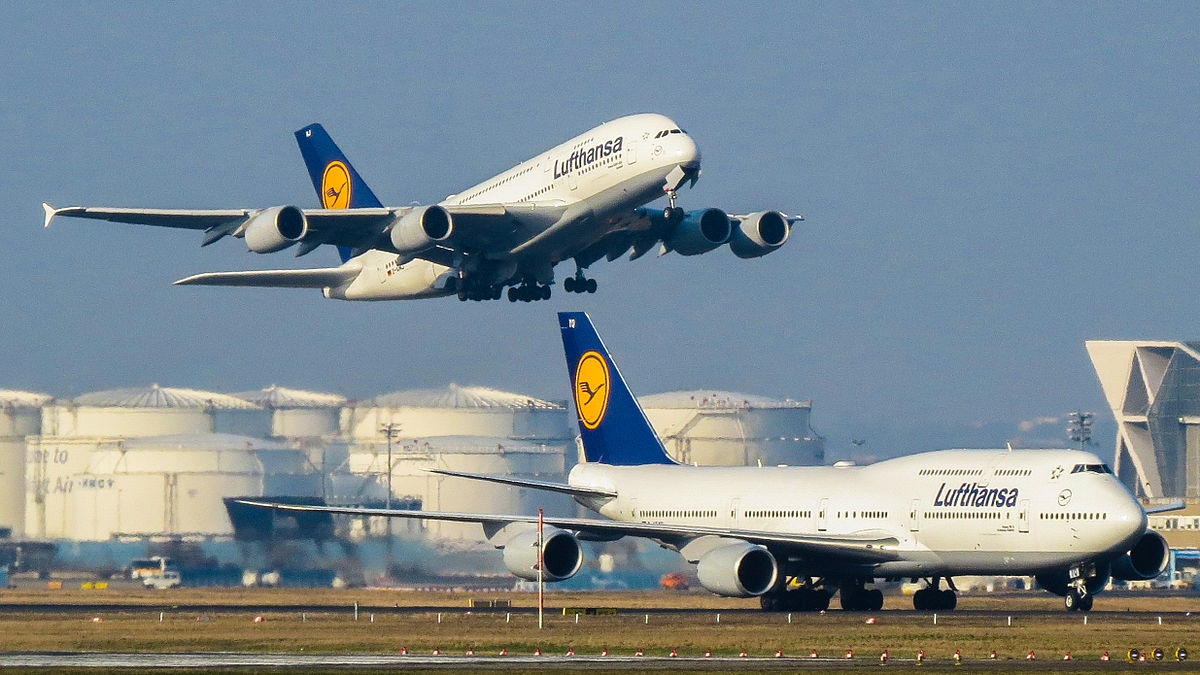
La aerolínea tiene una flota de 173 aviones, incluyendo 34 aviones de carga, con Boeing teniendo una participación en la flota de casi el 70%. La aerolínea tiene actualmente órdenes sin llenar para los 737 MAX, 787-9, 777 y 747 de Boeing, convirtiéndose en una de las pocas aerolíneas, de hecho la única junto con Deutsche Lufthansa en el mundo que opera el Boeing 747- 8I junto al A380.


Conclusión
Es prematuro sacar conclusiones basadas en las órdenes y entregas de este mes. Es interesante observar, sin embargo, que el Boeing 787 ha estado disfrutando de una entrada de pedidos constante durante algunos meses. Además, si nos fijamos en las cifras interanuales de los primeros cuatro meses, Boeing tuvo un fuerte comienzo y actualmente tiene una relación libro a factura superior a 1. AIRGWAYS ® Icon-AW

https://i0.wp.com/www.boeing.com/resources/boeingdotcom/commercial/787/assets/images/787-10_marquee.jpg

The Boeing market rising

Resultado de imagen para Boeing logo

Boeing strong start in April orders and deliveries in 2017

Boeing’s stock prices move with cash flow and currently the direction of operating cash flow is strongly pointed upwards with the Boeing 787 being a main driver of that cash flow in the coming years.

Starting in 2019, Boeing will be increasing production rates for the Boeing 737 program which will drive and compensate for lower cash flow on the Boeing 777 program. Simultaneously the Boeing 787 cash profile will continue to grow towards traditional margins for the production of aircraft and the Boeing 787-10 will be added to the delivery mix.

Boeing 787

With rates for the Boeing 777 coming down in the coming years, the Boeing 787 will need to provide the cash to realize cash flow growth. In its earnings call Boeing’s CFO, Gregory D. Smith, said the following about the Boeing 787: «Over the long term, we continue to focus on improving 787 cash generation, driven by favorable delivery mix, internal productivity improvements, and additional supplier step-down pricing».

https://i0.wp.com/static3.businessinsider.com/image/5799015d88e4a779638bacff-1360/17007224615_5ada419a5e_k.jpg

This shows that the Boeing 787 will be driving growth without the need to increase production. In the first quarter Boeing showed strong performance on turning the Boeing 787 more cash positive. This strong improvement bodes well for the company and the possibility of increasing rates should be considered a boost on top of the already strong cost improvements on the program.

Boeing is also still eyeballing bringing the production rate up to 14 aircraft per month. While this would be an additional boost for Boeing’s cash flow profile, I consider it to be a bit risky. At 12 per month, Boeing continues to increase efficiency on the program. An indication of the importance of the Boeing 787-10 was shown in the words of Boeing’s CFO during the earnings call when he said that the 3rd Boeing 787-10 unit costs were already in line with those of the Boeing 787-9.

Boeing 737 MAX

Snapseed-20

Another cash driver should be rate increases on the Boeing 737NG program and introduction of the Boeing 737 MAX. The Boeing 737 production will be increased to 47 per month later this year to 52 per month in 2018 and to 57 per month in 2019. So before 2020, production is set to increase by 45 aircraft per quarter.

Additionally, I expect that despite higher costs for the turbofans the Boeing 737 MAX will return some more profit to Boeing on a unit basis.

Core efficiency

In the first quarter Boeing’s operating margin was 8.5%, which is not a figure I was very happy with. One thing that should be mentioned is that the KC-46A tanker program applied pressure of $140 million during the quarter, which Boeing expects to be a one-off item. In light of Boeing considering this being a one-off item, it is worth to see where margins would have stood excluding the added tanker costs.

Excluding charges, BCA [Boeing Commercial Airplanes] earnings from operations would be $1,335 million on a revenue of $14,305 million or an operating margin of 9.3%, which would be an improvement year-over-year with one-off items are excluded.

For the Boeing Defense, Space & Security division the pressure was $20 million. Excluding this absorbed cost, the margins would be up 0.2 pts to 11.6%. So, if we strip the impact of one-off items, the underlying efficiency was strong and more indicative of Boeing’s targeted margins throughout the year.

Move into spares and monitoring

Boeing has set a goal to generate $50B in revenues. I think that is highly aspirational but with Boeing setting up its services and parts division later this year, I do expect them to do things at least more efficiently.

Lower corporate taxes

Something that holds for most companies aiming to expand profits is striving for lower corporate taxes. Currently Boeing has guided on an effective tax rate of 31% for the year. The Trump administration wants to lower this tax rate to 15%. Companies such as Boeing are to benefit from this, but there is the possibility that it will come at the cost of debt accumulating even faster for the US. The ultimate goal of the lower tax rate is to grow the companies and allow US companies to support more (American) jobs, but ideally this should not increase the US deficit.

A reform of the tax system is required, but slashing rates altogether could eventually cripple the US economy, which will affect defense as well as commercial sales to Boeing.

In 2016, I covered orders and deliveries for Boeing and Airbus with monthly reports. In 2017, I will continue this coverage as it gives somewhat of an idea of current performance as well as ability for the respective manufacturers to grow order books and possibly earnings in the future on healthy order books. Next to that the order inflow is an almost direct reflection of the market environment on the commercial aircraft market. In this article, I will have a look at the orders and deliveries for the month of April.

Boeing has started the year on a strong note with 226 orders in the first 3 months. In March, the jet maker booked 147 orders, which was significantly higher year-over-year and also higher than the multi-year average for March. In April, order inflow was considerably lower with 15 orders; 2 wide body aircraft were ordered and 13 narrow body jets:

An unidentified customer ordered 2 Boeing 787-9 jets, marking the 7th consecutive month for Boeing with order inflow for its Dreamliner aircraft. If Boeing processes the WestJet order in May, it will mark the 8th consecutive month for order inflow for the composite aircraft. An unidentified North American customer ordered 2 Boeing Business Jets. SMBC Aviation Capital ordered 1 Boeing 737-800, likely part of an earlier order it placed in March for 2 units.Two unidentified customers ordered 8 and 3 Boeing 737 MAX aircraft respectively. Cancellations rose from 28 to 31, reflecting cancellations on the Boeing 737 program.

With 15 orders in April 2017, order inflow shrunk by 19 units year-over-year. The 3-year and 5-year averages for the order inflow in April stand at 47 and 38 orders respectively. With that in mind, the order inflow in April was a bit weak.

Year to date, Boeing booked 241 orders versus 112 orders in 2016. Boeing definitely started the year stronger than last year, but this is no guarantee for a higher order tally by year-end. The order inflow in the first 4 months is 39 units higher than the 3-year average of 202 units, but 15 units lower than the 256 units average for the past 5 years. This can partly be explained by the fact that in the past years airlines have placed orders for the MAX and Boeing 777X in big numbers and currently are awaiting delivery of those airframes before placing any follow-up orders.

Deliveries

9932311-14941867219897323

Deliveries April 2017 (Source: AeroAnalysis)

In 2016, Boeing delivered 748 aircraft, slightly less compared to its record breaking year in 2015. For 2017, Boeing aims to deliver between 760 and 765 aircraft which is more or less in line with the deliveries in 2015.

In April, Boeing delivered 52 aircraft divided between 14 wide bodies and 38 narrow bodies:

After delivering 14 Boeing 777 aircraft in March, Boeing delivered only 3 aircraft in April.Boeing delivered no Boeing 767 airframes. Boeing 787 deliveries were 3 units lower than the production rate would suggest. Two Boeing 747 aircraft were delivered: one 8I to Korean Air and one 8F to AirBridge Cargo Airlines. The Boeing 737 deliveries were 4 units lower compared to the production rate, reflecting accumulation of Boeing 737 MAX aircraft that will be delivered starting in May.

The lower deliveries were primarily driven by lower wide body deliveries. I expect that during the quarter the deliveries will pick up pace again. Year-over-year, deliveries remained flat so the lower delivery volume is lower than what would be expected on average but not out of line. The lower deliveries in April can be attributed to a higher delivery volume in March, which gave the jet maker fewer aircraft to deliver in the subsequent month.

Book-to-bill ratio

For the full year, Boeing expects orders to roughly trace last year’s order inflow, which would indicate 660 net orders or a book-to-bill ratio of .86. In April, this ratio was .29, but it is meaningless to connect any credible conclusion to that. In the first 4 months, Boeing booked 241 orders and delivered 221 aircraft. This implies a book-to-bill ratio of 1.09, which is higher than what Boeing expects for the full year. This, however, is only a confirmation that Boeing is having a strong start of the year. It remains to be seen whether Boeing can keep up the pace of order inflow in the remaining months of 2017.

Customer Spotlight

In this month’s customer spotlight, we have Korean Air. The airline was founded in 1946 as Korean National Airlines and was replaced by Korean Air Lines as we know it today. The airlines commenced operations in March 1969. Based in Seoul, the airline has a total of 127 destinations, most of which are China, Japan and the US.

The airline has a fleet of 173 aircraft including 34 cargo aircraft with Boeing having a share in the fleet of almost 70%. The airline currently has unfilled orders for Boeing’s 737 MAX, 787-9, 777 and the 747 making it one of the few airlines, in fact the only one together with Deutsche Lufthansa in the world that operates the Boeing 747-8I next to the A380.

Conclusion

Drawing any conclusions based on this month’s orders and deliveries is premature. Interesting to note, however, is that the Boeing 787 has been enjoying steady order inflow for some months. Also, if we look at the year-over-year figures for the first 4 months, Boeing had a strong start and currently has a book-to-bill ratio higher than 1. A \ W

Ξ A I R G W A Y S Ξ
SOURCE: Seekingalpha.com / Aeroanalysis
DBk: Boeing.com / Reddit.com / Forbes.com / Businessinsider.com
AW-POST: 201705072023AR

A \ W   A I R G W A Y S ®

VUELO INAUGURAL COMAC C919

Comac-c919-jet-maiden-flight-20170505

AW | 2017 05 05 20:10 | INDUSTRY

8fa76-comac_logoEl C919 hace su primer vuelo inaugural completando sus exitosas pruebas con su motor CFM LEAP-1CResultado de imagen para COMAC C919 png


El Comac C919 se estrechó desde la cuarta pista del aeropuerto internacional de Shanghai Pudong a las 14:00 hora local, marcando su salida maiden siete años en su desarrollo.

El primer COMAC C919, propulsado por el avanzado sistema de propulsión integrado LEAP-1C de CFM International, completó con éxito un primer vuelo de 79 minutos y marcó el lanzamiento del programa de prueba de vuelo de certificación para el avión de 150 pasajeros. Los motores funcionaban perfectamente.

El avión a bordo con registro B-001A, que despegó en un día nublado de Shanghai con un equipo de cinco personas a bordo. En la cabina están el piloto de prueba de vuelo Cai Jun, el copiloto Wuxi y el observador de vuelo Qian Jun. En la cabina son dos ingenieros de prueba de vuelo – Zhang Da Wei y Ma Fei.

El primer vuelo tuvo una duración aproximada de 1,5 horas, durante la cual el tren de aterrizaje del avión motorizado con el CFM International Leap-1C, no será retraido, dijo el gerente de prueba de vuelo de Comac, You Li Yan, a periodistas en Shanghai. El avión alcanzó una altitud de 10.000 pies.

El primer vuelo fue testigo de más de 2.000 invitados, personal y periodistas. El evento, celebrado por políticos chinos, también fue transmitido en las principales cadenas de televisión del país.

«Este es un gran día para todos nosotros», dijo He Dongfang, presidente de COMAC. «Estamos muy contentos con el motor LEAP-1C y hemos estado encantados de trabajar con CFM en este programa. Los motores funcionaron maravillosamente durante el vuelo de hoy y creemos que traerán a nuestros clientes los niveles de la eficacia de combustible y de la confiabilidad que requerirán en sus operaciones diarias. «

«Este es un momento épico», dijo Gaël Méheust, presidente y CEO de CFM International. «En nombre de todos en el CFM, expreso nuestras más sinceras felicitaciones a todos en COMAC por lograr este gran hito. Nuestra relación con la industria de la aviación en China se remonta a más de 30 años y es un honor formar parte del equipo COMAC, ya que lanza la próxima y emocionante era en la historia de la aviación del país «.

Hasta la fecha, más de 5.000 motores CFM han sido pedidos / comprometidos en China, incluyendo órdenes para más de 1.000 sistemas de propulsión integrados LEAP-1C. El sistema de propulsión integrado LEAP-1C recibió simultáneamente Certificados de Tipo tanto por la Agencia Europea de Seguridad Aérea (EASA) como por la Administración Federal de Aviación de Estados Unidos (FAA) en diciembre de 2016. Desde entonces, COMAC ha realizado una serie de pruebas de tierra, Velocidad y pruebas de taxi de alta velocidad que conducen al vuelo de hoy.

El motor LEAP fue lanzado oficialmente en diciembre de 2009 cuando COMAC seleccionó el LEAP-1C como la única central eléctrica occidental para su avión C919 de 150 pasajeros. El motor incorpora un sistema de propulsión totalmente integrado (IPS), que incluye el motor, la góndola y el inversor de empuje. El IPS, junto con el pilón desarrollado por COMAC, fueron diseñados en conjunto con el otro, dando por resultado una aerodinámica mejorada, un peso más bajo, y un mantenimiento más fácil.

El inversor de empuje compuesto O-Duct del LEAP-1C fue desarrollado por Nexcelle, con su única configuración de una sola pieza que contribuye a un peso estructural total reducido y una superficie de tratamiento acústico más grande.

Además del IPS, el motor LEAP-1C cuenta con algunas de las tecnologías más avanzadas de la industria, incluyendo palas de ventilador compuestas de fibra de carbono tejida en 3-D y caja de ventilador; Un sistema único de rechazo de escombros; Diseños aerodinámicos tridimensionales de la cuarta generación; La cámara de combustión gemela-anular, pre-remolino (TAPS) que ofrece inyectores de combustible fabricados aditivamente; Cubiertas compuestas de matriz de cerámica en la turbina de alta presión; Y alúmina de titanio (Ti-Al) en la turbina de baja presión.

El motor LEAP entró en servicio comercial en agosto de 2016 y actualmente está en operación con más de 10 aerolíneas en todo el mundo. Los motores están proporcionando a los operadores un 15 por ciento de mejora en la eficiencia de combustible y las emisiones de CO2 en comparación con el mejor motor CFM de hoy, junto con reducciones dramáticas en el ruido del motor y las emisiones gaseosas de gases de escape. Toda esta tecnología trae consigo la legendaria fiabilidad y los bajos costes de mantenimiento de CFM.

Comac-C919

Los pilotos han sido encargados de comprobar 15 parámetros durante el despegue. Estos incluyen la prueba de la respuesta de control de vuelo de la aeronave, la verificación de la funcionalidad de los diferentes sistemas, y para comprobar que los equipos de prueba están proporcionando datos precisos e información.

Más importante aún, añade, los pilotos llegarán a «tener un sentido de control de vuelo», para una sensación del jet de 158 asientos. El avión ha sido equipado con equipo de prueba, pero las imágenes lanzadas por Comac también muestran asientos de pasajeros en el cabina.

El fabricante chino ha asignado 4.200 horas de prueba en vuelo para el programa de pruebas del C919 y está apuntando a que la aeronave entre en servicio dentro de tres años. Comac ha asegurado hasta ahora compromisos para 570 aeronaves de este tipo, con Shanghai Eastern Airlines como su cliente de lanzamiento. AIRGWAYS ® Icon-AW

https://www.welt.de/img/wirtschaft/mobile164285522/8992504817-ci102l-w1024/C919-Lands-After-Its-Maiden-Flight-In-Shanghai-2.jpg

https://i0.wp.com/www.elespectador.com/sites/default/files/000_o46na.jpg

https://cdn.lopezdoriga.com/wp-content/uploads/2017/05/avion-chino-5.jpg

https://i0.wp.com/www.ainonline.com/sites/default/files/styles/ain30_fullwidth_large_2x/public/uploads/2017/05/c919ff.png

https://i0.wp.com/estaticos.elperiodico.com/resources/jpg/9/2/avion-chino-comac-c919-primer-vuelo-1493979203229.jpg

https://fortunedotcom.files.wordpress.com/2017/05/678991366.jpg

INAUGURAL FLIGHT COMAC C919

Comac-c919-jet-maiden-flight-20170505

The C919 makes its first inaugural flight completing its successful tests with its CFM LEAP-1C engineResultado de imagen para COMAC C919 png

The Comac C919 narrowbody lifted off from Shanghai Pudong International airport’s fourth runway at 14:00 local time, marking its maiden sortie seven years into its development.

The first COMAC C919, powered by CFM International’s advanced LEAP-1C integrated propulsion system, successfully completed a 79-minute first flight, marking the launch of the certification flight test program for the 150-passenger aircraft. The engines performed flawlessly.

Onboard aircraft B-001A as it took off on an overcast Shanghai day are a team of five. In the cockpit are flight test captain Cai Jun, co-pilot Wuxi and flight observer Qian Jun. In the cabin are two flight test engineers – Zhang Da Wei and Ma Fei.

The first flight will lasts about 1.5 hours, during which the CFM International Leap-1C-powered aircraft’s landing gear will not be retracted, Comac’s flight test manager You Li Yan told reporters in Shanghai. The plane reached an altitude of 10,000 feet.

The first flight was witnessed by more than 2,000 guests, staff and journalists. The event, graced by Chinese politicians, was also broadcasted on the country’s main television networks.

“This is a great day for all of us,” said He Dongfang, president of COMAC. “We are very happy with the LEAP-1C engine and have been pleased to work with CFM on this program. The engines performed beautifully during today’s flight and we believe they will bring our customers the levels of fuel efficiency and reliability they will require in their daily operations.”

“This is an epic moment,” said Gaël Méheust, president and CEO of CFM International. “On behalf of everyone at CFM, I expend our warmest congratulations to everyone at COMAC on achieving this great milestone. Our relationship with the aviation industry in China goes back more than 30 years and it is an honor to be part of the COMAC team as it launches the next exciting era in the country’s aviation history.”

https://i0.wp.com/content.presspage.com/uploads/1406/comac-c919-2.png

To date, more than 5,000 CFM engines have been ordered/committed in China, including orders for more than 1,000 LEAP-1C integrated propulsion systems. The LEAP-1C integrated propulsion system was simultaneously awarded Type Certificates by both the European Aviation Safety Agency (EASA) and the U.S. Federal Aviation Administration (FAA) in December 2016. Since then, COMAC has performed a series of ground tests, including low-speed and high-speed taxi tests leading up to today’s flight.

The LEAP engine was officially launched in December 2009 when COMAC selected the LEAP-1C as the sole Western powerplant for its 150-passenger C919 airplane. The engine incorporates a unique fully-integrated propulsion system (IPS), which includes the engine, nacelle, and thrust reverser. The IPS, along with the pylon developed by COMAC, were designed in conjunction with each other, resulting in improved aerodynamics, lower weight, and easier maintenance.

The LEAP-1C’s composite O-Duct thrust reverser was developed by Nexcelle, with its unique one-piece configuration contributing to a reduced overall structural weight and larger acoustic treatment surface.

In addition to the IPS, the LEAP-1C engine features some of the industry’s most advanced technologies, including 3-D woven carbon fiber composite fan blades and fan case; a unique debris rejection system; 4th generation three dimensional aerodynamic designs; the Twin-Annular, Pre-Swirl (TAPS) combustor featuring additively manufactured fuel nozzles; ceramics matrix composite shrouds in the high-pressure turbine; and titanium aluminide (Ti-Al) blades in the low-pressure turbine.

The LEAP engine entered commercial service in August 2016 and is currently in operation with more than 10 airlines worldwide. The engines are providing operators with a 15 percent improvement in fuel efficiency and CO2 emissions compared to today’s best CFM engine, along with dramatic reductions in engine noise and exhaust gaseous emissions. All this technology is bringing with it CFM’s legendary reliability and low maintenance costs.

Comac-C919

The pilots have been tasked to check 15 parameters during the maiden sortie. These include testing the aircraft’s flight control response, verifying the functionality of various systems, and to cross-check that the test equipment are providing accurate data and information.

Most importantly, he adds, the pilots will get to «have a sense of flight control», for a feel of the 158-seater jet.The aircraft has been fitted with test equipment, but pictures released by Comac also show passenger seats in the cabin.

The Chinese manufacturer has allocated 4,200 flight test hours for the C919’s test programme, and is targeting for the aircraft to enter into service within three years. Comac has so far secured commitments for 570 of the type, with Shanghai-based China Eastern Airlines as its launch customer. A \ W

中國自主研發的 Comac C919 客機成功首飛

中國第一架現代化的「大型」客機。

研製的 C919 客機,是中國繼 1970 年代計畫中止的「運-10」之後,第一架「大客機」。不過說是「大」,其實 C919 瞄準的是中短程窄體客機市場,與波音 737-800 或空巴 A320 同一等級。

https://i0.wp.com/www.publico.es/uploads/2017/05/05/590c5a2132f2d.jpg

C919 的 C 代表 Comac 或 China,但也隱含與 A(Airbus)、和 B(Boeing)共組成 ABC,互別苗頭的意思。第一個 9 是中國傳統上「久」的諧音,也有數之極的意思;後面的 19 則是表示了它的載客量最大約為 190 名乘客(分艙等後實際約為 158-168 座)。C919 機體寬 3.96m、高 4.16m,裡面是窄體客機標準的 3-3 座椅配置,中間有一條長走道,總航程約為 4075-5555 公里,適合城際的中短程航線。

不過說是自主研製,實際上也就是機體是中國自己設計、製造的,其他從引擎、到翼面制動、航電設備、電力系統、供油系統、起落架等,都依然是由美國或法國公司提供。可以說除了一層殼之外,現代飛機最重要的關鍵系統都依然掌握在歐美手中。再者,正因為市場龐大,無論空巴、波音都在持續改進這個級別的機種,俄羅斯和加拿大也有同級飛機準備加入競爭,C919 除了佔有價格優勢之外,想在技術上超歐趕美、分食大餅並不容易。

C919 由 2008 年開始研發,第一架飛機於 2015 年 11 月出廠,今日進行首飛,未來還將進行約三年的各種測試,如果一切順利的話,2020 年應該可以交機。目前 C919 共有至少 570 架的訂單(其中 99 架是確定訂單),但大多來自中國國內的航空公司與租賃公司。想要真正與空巴、波音平起平坐,還有很長的路要走啊!A\ W

Ξ A I R G W A Y S Ξ
SOURCE: Flightglobal.com / AIRGWAYS / Aviationpros.com / Chinese.engadget.com
DBk: Comac.com / News.cn / Ainonline.com / Twimg.com / Fortune.com / Presspage.com
AW-POST: 201705052010AR

A \ W   A I R G W A Y S ®

Rolls-Royce quiere poner sus motores en el Boeing 797

https://i0.wp.com/fly-news.es/wp-content/uploads/boeing-797.jpg

AW | 2017 05 04 20:23 | MRO / INDUSTRY

Boeing-Company-Logo

Boeing está estudiando un modelo de avión comercial para competir con el Airbus A321NEO/LR. Rolls-Roys ofrece su motorización


Rolls-Royce Holdings Plc hará una oferta para impulsar un nuevo avión de corto alcance diseñado por The Boeing Co. como fabricante de motores de Reino Unido busca volver a entrar en un mercado que dejó en 2011.

Rolls está preparando un lanzamiento para Boeing, ya que el fabricante estadounidense trabaja en el caso de negocios para un llamado avión de mediano nivel, dijo el presidente ejecutivo Warren East en comentarios después de la junta general anual de la compañía.

«La respuesta es que lo estamos persiguiendo», dijo East el jueves en la reunión de accionistas cerca de su principal centro de fabricación en Derby, Inglaterra. «El motor estaría disponible para el 2025, cuando el avión Boeing esté programado para entrar en servicio», dijo.

Rolls ha estado estudiando las maneras de volver a entrar en el mercado para impulsar los aviones de corto alcance, con el proyecto de Boeing presentándolo con la oportunidad de hacerlo varios años antes de la probable sustitución de los actuales modelos 737 y Airbus SE A321 de pasillo único.

AW-700656

Mientras que el fabricante de motores europeo ha agarrado una parte importante del lucrativo sector de motores de largo alcance con su serie de motores Trent y también es proveedor de aviones regionales y corporativos, los aviones de corta distancia representan la columna vertebral de la industria aérea, con las ventas empequeñeciendo Para modelos más grandes.

El motor que se diseña para el jet de Boeing se basa en los dos principales programas de tecnología en marcha en Rolls-Royce, Paul Stein, director de tecnología de la compañía, dijo a los periodistas en la AGM. Esos son el núcleo de motor Advance que se construirá para el año 2020 y el diseño UltraFan con una nueva «caja de engranajes de potencia» y una mejora de la eficiencia del 25 por ciento sobre los actuales modelos Rolls.

Todavía no está claro si Rolls-Royce seguirá el proyecto con un socio, aunque la compañía está dispuesta a hacerlo en principio si las condiciones del negocio son correctas, dijo East. «Lo hemos hecho antes», dijo el CEO. «Si esa es la manera práctica de hacerlo, entonces podríamos hacerlo bien». Agregó que las decisiones sobre asociaciones industriales pueden llegar «a los años del proceso, en lugar de meses».

Rolls tenía anteriormente una participación del 33 por ciento en el pacto internacional de Aero Engines AG con Pratt & Whitney, dándole una presencia importante en el mercado de corto alcance. Salió en 2011, en parte debido a un desacuerdo sobre la tecnología futura para el segmento con Pratt que empuja su desarrollo engranado-turbofan para las mejoras de A320NEO y de 737 MAX.

Tras la salida de IAE Rolls exploró un nuevo acuerdo de 50:50 con Pratt, antes de abandonar el plan en 2013 en medio de preocupaciones antimonopolio. Un retorno solo al sector lo enfrentaría contra la unidad de United Technologies Corp. y la alianza CFM International de General Electric Co. y Safran SA.

Stein dijo que el turbofan ultrafan y geared no son en última instancia diseños compatibles. El motor Rolls se está desarrollando con un rango de empuje de 25.000 a 110.000 libras, lo que lo hace adecuado para toda la gama de aviones Boeing y Airbus, incluyendo el nuevo avión de mediano en el mercado, que podría requerir de 40.000 a 50.000 libras de empuje.

El avión, que probablemente será nombrado el Boeing 797, tendrá un asiento entre 225 y 260 pasajeros, colocándolo entre el 737 más grande y el 787 Dreamliner más pequeño. Inicialmente considerado como el sucesor del 757, el avión de más estrecha carrocería, que dejó de producirse en 2004, el avión está ahora concebido como un pequeño modelo de pasillo doble más cercano en proporción al 767.

Boeing 767-757-737MAX range

El rango operativo del nuevo Boeing 797 estaría entre las 3500nm a los 4000nm. (6400-7000 KM) dependiendo de las variantes a fabricar. Tal como recordamos al Boeing 757-200 y Boeing 757-200ER (Rango Extendido), la Boeing estaría planificando diferentes variantes para distintas demandas.

El Boeing 797, tendría prestaciones parecidas o aproximadas al Boeing 757, que aún en la actualidad, este avión no tiene un competidor directo, a pesar de que su fabricación ya ha terminado.

El objetivo de la Boeing es poder recuperar el mercado perdido del Boeing 757 y hacer frente a la competencia de los cielos frente al Airbus A321NEO LR. Las capacidades del Boeing 797 pondría en ventaja a la industria americana. AIRGWAYS ® Icon-AW

Rolls-Royce wants to put Its engines in the Boeing 797

Boeing-Company-Logo

Boeing is studying a commercial aircraft model to compete with the Airbus A321NEO / LR. Rolls-Royce offers its motorization

Rolls-Royce Holdings Plc will bid to power a new short-haul jetliner being designed by The Boeing Co. as the U.K. engine maker seeks to re-enter a market it quit in 2011.

Rolls is preparing a pitch to Boeing as the U.S. manufacturer works on the business case for a so-called middle-of-market plane, Chief Executive Officer Warren East said in comments after the company’s annual general meeting.

B737MAX-LEAP-1B

MOTORIZATION OF BOEING 737 MAX, LEAP 1B

“The answer is that we are pursuing it,” East said Thursday at the shareholder gathering near its main manufacturing site in Derby, England. “It’s not ‘will we be pursuing it.’ We are pursuing it.” The engine would be available by 2025, when the Boeing jet is slated to enter service, he said.

Rolls has been mulling ways of getting back into the market for powering short-haul jets, with the Boeing project presenting it with an opportunity to do so several years before the likely replacement of the existing 737 and Airbus SE A321 single-aisle models.

AW-700656

While the European engine maker has grabbed a major slice of the lucrative long-haul engine sector with its Trent engine series and is also a supplier to regional and corporate planes, short-haul jets represent the backbone of the airline industry, with sales dwarfing those for bigger models.

The engine being designed for the Boeing jet draws on the two main technology programs underway at Rolls-Royce, Paul Stein, the company’s chief technology officer, told reporters at the AGM. Those are the Advance engine core due to be built by 2020, and the UltraFan design featuring a new “power gearbox” and targeting a 25 percent efficiency improvement over current Rolls models.

It’s not yet clear whether Rolls-Royce will pursue the project with a partner, though the company is open to doing so in principle if the business conditions are right, East said. “We’ve done it before,” the CEO said. “If that’s the practical way of doing it, then we might well.” He added that decisions on industrial partnerships can come “years into the process, rather than months.”

Rolls previously had a 33 percent stake in the International Aero Engines AG pact with Pratt & Whitney, giving it a major presence in the short-haul market. It exited in 2011, partly because of a disagreement over future technology for the segment with Pratt pushing its geared-turbofan development for the A320NEO and 737 MAX upgrades.

Following the exit from IAE Rolls explored a new 50:50 deal with Pratt, before abandoning the plan in 2013 amid antitrust concerns. A solo return to the sector would pit it against both the United Technologies Corp. unit and the CFM International alliance of General Electric Co. and Safran SA.

Stein said that the ultrafan and geared turbofan aren’t ultimately compatible designs. The Rolls engine is being developed with a thrust range of 25,000 pounds to 110,000, making it suitable for the entire span of Boeing and Airbus jetliners, including the new middle-of-market plane, which could require 40,000 to 50,000 pounds of thrust.

The aircraft, likely to be named the Boeing 797, would seat between 225 and 260 passengers, placing it between the biggest 737 and the smallest 787 Dreamliner. Initially envisaged as a successor to the 757, the longest-ever narrow-body plane, which ceased production in 2004, the aircraft is now conceived as a small twin-aisle model closer in proportions to the 767.

Boeing 767-757-737MAX range

The operating range of the new Boeing 797 would be between 3500nm to 4000nm. (6400-7000 KM) depending on the variants to be manufactured. As we remember the Boeing 757-200 and Boeing 757-200ER (Extended Range), Boeing would be planning different variants for different demands.

The Boeing 797, would have similar or approximate benefits to the Boeing 757, which even today, this aircraft does not have a direct competitor, despite the fact that its manufacture is finished.

The objective of Boeing is to be able to recover the lost market of the Boeing 757 and to face the competition of the skies against Airbus A321NEO LR. The capabilities of the Boeing 797 would put american industry at an advantage. A \ W

Ξ A I R G W A Y S Ξ
SOURCE: Bloomberg.com / AIRGWAYS
DBk: AIRGWAYS
AW-POST: 201705042023AR

A \ W   A I R G W A Y S ®

Boeing revela más detalles sobre diseño del Boeing 737-10 MAX

https://i0.wp.com/www.ainonline.com/sites/default/files/styles/ain30_fullwidth_large_2x/public/uploads/2017/03/max10.jpg

AW | 2017 05 02 19:38 | INDUSTRY

Boeing-Company-LogoMientras que Boeing Co. sigue siendo tímido en sus planes para lanzar una cuarta versión de su nueva familia 737 MAX, la compañía ha revelado su pensamiento en quizás el problema más espino que enfrenta la compañía mientras que viene a la decisión en el nuevo 737- 10. El avión sería el más grande de la familia 737 MAX y se espera que asiente a 189 pasajeros en una cabina convencional de doble clase y que tenga un alcance de 3.000 a 3.300 millas náuticas.

La cuestión con la que la empresa lucha es un diseño para un nuevo tren de aterrizaje. El 737-10 sería 66 pulgadas más largo que el 737-9. Esas pulgadas adicionales requieren que Boeing modifique el tren de aterrizaje principal del avión propuesto para asegurar una holgura adecuada del cuerpo más largo para despegues y aterrizajes. Puede sonar simple, pero aparentemente no lo es.

Resultado de imagen para Boeing 737 MAX 10 png

Boeing tiene varios objetivos para el 737-10. Primero entre ellos un retador fuerte al Airbus A321NEO, un plano diseñado para llevar 193 pasajeros sobre una gama similar. Dicho esto, Boeing quiere limitar el costo del nuevo avión y ponerlo en el mercado tan pronto como sea posible.

Muchos analistas esperan que Boeing lance el avión este verano con una fecha de entrega de 2020. Algunos clientes potenciales para el 737-10 creen que el avión tiene que cumplir una primera fecha de entrega en 2019. El diseño de un tren de aterrizaje viable es probablemente la clave para mantener el avión Costo y cumplir con el plazo de 2019 para las primeras entregas.

El gerente general de Boeing para el programa 737 MAX, Keith Leverkuhn, dijo a Aviation Week cómo la compañía prevé que el tren de aterrizaje funcione:

«[Boeing está enfocado] la parte superior del engranaje cuando se integra con el actuador. [Nuestro nuevo diseño incluirá] doblar inteligente usando un mecanismo de enlace en la parte superior. [La parte inferior de la pata de engranaje incluirá] un amortiguador adicional que encaja dentro de la misma forja. Esto mueve el punto de contacto a popa un poco. Eso es fundamentalmente lo que estamos haciendo y sí, se verá como un trailing link gear. Queremos mantenerlo confiable, y vamos a necesitar ese equipo para obtener el rendimiento que queremos de los -10, pero estoy seguro de que el conjunto de soluciones».

Boeing ve un mercado de alrededor de 1.000 para el 737-10. ¿Es eso realmente suficiente para construir un nuevo avión que puede ser sólo una solución provisional para el «medio del mercado» problema de la compañía está buscando resolver con un nuevo reemplazo de doble pasillo para el 767 que ha sido doblado el 797? AIRGWAYS ® Icon-AW

2da2c-15625295_612478595619573_8794558421803204608_n

Boeing reveals more details on planned design of the Boeing 737-10 MAX

While Boeing Co.  remains coy on its plans to launch a fourth version of its new 737 MAX family, the company has revealed its thinking on perhaps the thorniest problem facing the company as it comes to decision on the new 737-10. The plane would be the largest in the 737 MAX family and is expected to seat 189 passengers in a conventional dual-class cabin and to have a range of 3,000 to 3,300 nautical miles.

The issue the company is wrestling with is a design for a new landing gear. The 737-10 would be 66 inches longer than the 737-9. Those extra inches require Boeing to modify the proposed plane’s main landing gear to ensure adequate clearance of the longer body for takeoffs and landings. It may sound simple, but apparently it is not.

Boeing has a number of goals for the 737-10. First among them a strong challenger to the Airbus A321NEO, a plane designed to carry 193 passengers over a similar range. That said, Boeing wants to limit both the cost of the new plane and get it to market as soon as possible.

Many analysts expect Boeing to launch the plane this summer with a delivery date of 2020. Some potential customers for the 737-10 believe the aircraft has to meet a first delivery date in 2019. Designing a workable landing gear is probably the key to keeping the cost down and meeting a 2019 deadline for first deliveries.

Boeing’s general manager for the 737 MAX program, Keith Leverkuhn, told Aviation Week how the company envisions the landing gear to work:

«[Boeing is focused] the upper portion of the gear as it integrates with the actuator. [Our new design will include] clever folding using a link mechanism at the top. [The lower part of the gear leg will include] an additional shock strut that fits inside the same forging. This moves the contact point aft a little bit. That’s fundamentally what we are doing and yes, it will look like a trailing link gear. We want to make it maintainable, reliable, and we are going to need that gear to get the performance we want out of the -10 but I’m confident in the solution set».

Boeing sees a market of about 1,000 for the 737-10. Is that really enough to build a new plane that may be just an interim solution to the “middle of the market” problem the company is looking at solving with an all-new dual-aisle replacement for the 767 that has been dubbed the 797? A \ W

Ξ A I R G W A Y S Ξ
SOURCE: 247wallst.com
DBk: Boeing.com
AW-POST: 201705021938AR

A \ W   A I R G W A Y S ®

Boeing denuncia a Bombardier por competencia desleal

AW | 2017 04 29 21:23 | INDUSTRY

El fabricante aeronáutico estadounidense Boeing presentó recientemente una denuncia contra su competidor canadiense Bombardier, acusándolo de vender su último avión CSeries bajo los costos de producción, queja rechazada enérgicamente por el Gobierno de Canadá.

Boeing pidió a la Comisión de Comercio Internacional estadounidense (Usitc) investigar las prácticas comerciales de Bombardier e imponerle derechos de compensación y anti-dumping por esos aviones de 100 a 150 asientos.

Esta denuncia afecta a dos aviones CSeries, el CS100 y el CS300, que compiten frontalmente con los Boeing 737 del fabricante estadounidense y con la familia de los Airbus A320. La puesta en servicio comercial de los más aparatos pequeños comenzó en julio pasado.

Hace exactamente un año, Bombardier se adjudicó una orden de compra de 75 aviones CSeries de la compañía estadounidense Delta Air Lines, por un valor de 5,600 millones de dólares estadounidenses sobre la base de sus precios de catálogo. Los aparatos son ofrecidos a un precio de entre 79.5 y 89.5 millones de dólares.

En la firma del contrato, el presidente de Bombardier, Alain Bellemare, había destacado que las negociaciones fueron duras ya que todos los «jugadores estaban en la mesa», en referencia a Airbus y Boeing.

«Bombardier estructura sus operaciones comerciales de manera de asegurar el respeto de leyes y reglamentos de jurisdicciones en las que ejercemos nuestras actividades, incluidos los casos planteados por Boeing», reaccionó este jueves el grupo canadiense en un comunicado.

Por su lado, el Gobierno de Canadá anunció que prepara «una enérgica respuesta a esas acusaciones y defenderá con firmeza los empleos de la industria aeroespacial a ambos lados de la frontera».

La denuncia de Boeing viene a complicar las ya tensas relaciones entre el gobierno de Donald Trump y Canadá.

El grupo Bombardier dijo que emplea a «casi 7,000 personas en decenas de instalaciones» en 17 estados estadounidenses y hace compras del orden de «3,000 millones de dólares a proveedores estadounidenses en 48 estados».  AIRGWAYS ® Icon-AW

Boeing denounces Bombardier for unfair competition

US aircraft maker Boeing recently filed a complaint against Canadian competitor Bombardier, accusing it of selling its latest CSeries aircraft under production costs, a complaint strongly rejected by the Government of Canada.

Boeing called on the US International Trade Commission (Usitc) to investigate Bombardier’s business practices and impose countervailing and anti-dumping duties on those 100 to 150 seat aircraft.

This complaint concerns two CSeries aircraft, the CS100 and the CS300, which compete head-on with the US manufacturer’s Boeing 737 and the Airbus A320 family. Commercial commissioning of the most small appliances began last July.

Exactly one year ago, Bombardier was awarded a purchase order for 75 CSeries aircraft from US company Delta Air Lines, worth US $ 5.6 billion based on its catalog prices. The devices are offered at a price between 79.5 and 89.5 million dollars.

At the signing of the contract, Bombardier President Alain Bellemare had stressed that negotiations were harsh as all «players were at the table», referring to Airbus and Boeing.

«Bombardier structures its commercial operations to ensure compliance with laws and regulations of jurisdictions in which we operate, including cases raised by Boeing,» the Canadian group said in a statement on Thursday.

For its part, the Government of Canada announced that it is preparing «a strong response to these allegations and will firmly defend the jobs of the aerospace industry on both sides of the border.»

Boeing’s denunciation complicates the already tense relations between the government of Donald Trump and Canada.

The Bombardier group said it employs «nearly 7,000 people in dozens of facilities» in 17 US states and makes purchases of «$ 3 billion to US suppliers in 48 states.» A\W


Ξ A I R G W A Y S Ξ
SOURCE: Elnuevodiario.com.ni
DBk: Airwaysmag.com / Flyinginireland.com / Businessinsider.com
AW-POST: 201704292123AR

A \ W   A I R G W A Y S ®

Airbus vende 20 A350-900 China Southern

https://i0.wp.com/www.navjot-singh.com/uploads/3/1/7/4/3174873/3339833_orig.jpg

AW | 2017 04 27 19:00 | INDUSTRY

Airbus recibe nuevo pedido de 20 Airbus A350-900 de China Southern Airlines

Con una de las mayores flotas de Airbus en el mundo China Southern Airlines ha firmado un contrato de compra que asciende a 20 aviones Airbus A350-900.

La incorporación de los nuevos aviones A350 supondrá para la aerolínea fortalecer su posición internacional. Actualmente cuenta en su flota con 300 aviones del fabricante europeo, que integran modelos A320, A330 y cinco Airbus A380.La flota total de aviones supera los 500 aviones.

Los nuevos A350-900 aportarán a China Southern Airlines, la capacidad de realizar rutas de largo alcance con un consumo inferior. Con este nuevo pedido Airbus mantiene a fecha de hoy unos pedidos de 841 A350 XWB, de un total de 45 operadores.

China Southern Airlines ha concretado su pedido con la opción del motor Rolls-Royce Trent XWB, el cual ha sido ya una opción seleccionada por 40 clientes.

Motor Rolls-Royce Trent XWB

Motor Rolls-Royce Trent XWB

El número de pedidos de estos propulsores ascienden a 1.600, por lo que se convierte en uno de los motores con mayores ventas.

Para la aerolínea china la relación con Rolls-Royce es conocida, por cuanto la flota de los Airbus A330, Airbus A380 y Boeing 757, cuentan con las motorizaciones del fabricante.

El pasado mes de noviembre, la aerolínea también un pedido para la motorización de diez aviones Airbus A330 cuya opción de motor ha sido el Trent 700 con la opción TotalCare que incluye soporte a largo plazo y cuyo valor ha ascendido a 700 millones de dólares. AIRGWAYS ® Icon-AW

https://upload.wikimedia.org/wikipedia/commons/9/9f/China_Southern_Airlines_Airbus_A330-300%3B_B-6086%40SYD%3B31.07.2012_666cw_%287863201786%29.jpg

Airbus sells 20 A350-900 to China Southern Airlines


Airbus receives new order for 20 Airbus A350-900 from China Southern Airlines


With one of the largest Airbus fleets in the world, China Southern Airlines has signed a purchase agreement amounting to 20 Airbus A350-900 aircraft.

The addition of the new A350 will mean for the airline to strengthen its international position. Currently it has in its fleet with 300 aircraft of the European manufacturer, that integrate models A320, A330 and five Airbus A380. The total fleet of airplanes surpasses the 500 airplanes.

The new A350-900 will give China Southern Airlines the ability to conduct long-haul routes with lower fuel consumption. With this new order Airbus maintains today orders of 841 A350 XWB, out of a total of 45 operators.

China Southern Airlines has placed its order with the Rolls-Royce Trent XWB engine option, which has already been selected by 40 customers.

Motor Rolls-Royce Trent XWBRolls-Royce Trent XWB Engine

The number of orders of these propellers amounted to 1,600, reason why it becomes one of the motors with greater sales.

For the Chinese airline the relationship with Rolls-Royce is known, because the fleet of Airbus A330, Airbus A380 and Boeing 757, have the engine of the manufacturer.

Last November, the airline also requested an engine for 10 Airbus A330s with a Trent 700 engine option with the TotalCare option which includes long-term support valued at 700 million dollars. A \ W

Ξ A I R G W A Y S Ξ
SOURCE: Noticiasaereas.com
DBk: Navjot-singh.com / Wikipedia.org
AW-POST: 201704271900AR

A \ W   A I R G W A Y S ®

Boeing, decisión de lanzar B737-10 MAX

https://i0.wp.com/www.b737.org.uk/images/max10.jpg

AW | 2017 04 25 22:28 | INDUSTRY

The Boeing Co. se acerca a la decisión de lanzar una versión más grande de su jet 737 en dos meses para contrarrestar las fuertes ventas del Airbus A321NEO, tras un avance en el diseño de una de sus partes, dijeron fuentes de la industria.

El 737 MAX 10 reduciría la brecha entre el asiento 178-220 737-9, que primero voló este mes, y el asiento 185-240 A321NEO, que domina el extremo superior de un mercado para los jets estrecho del cuerpo digno de $ 2 trillón sobre 20 años.

Boeing ha estado estudiando cómo solucionar un problema complicado con el diseño del tren de aterrizaje del avión, sin añadir costes ni retrasar el objetivo 2020 para las primeras entregas.

AW-7304437

Las fuentes dijeron que se había encontrado una solución y que Boeing estaba hablando más deliberadamente a las aerolíneas sobre el lanzamiento del 737-10 MAX en el Airshow de París en junio. Se dice que Boeing anticipa un mercado total de 1.000 de los aviones.

«Boeing está participando activamente en discusiones con los clientes sobre el 737 MAX 10X», dijo un portavoz. «No se ha tomado ninguna decisión sobre el avión y cualquier discusión sobre el momento de un posible lanzamiento sería especulativa».

El 737-10 marca una respuesta táctica a la A321NEO, mientras que Boeing trabaja en planes estratégicos para un jet de mediano y doble asientos de 220-260 asientos.

Pero ha producido un rompecabezas tan complicado que Boeing ha pedido ayuda a sus expertos en aviones de combate para diseñar un equipo de ahorro de espacio para el 737-10.

Se necesita una solución porque el 737-10 será más largo que el 737-9 para dar cabida a unos 12 asientos adicionales. El tren de aterrizaje debe llegar a ser más alto también o la cola podría raspar la pista.

Ansioso por evitar cambios costosos en el resto del avión y mantenerse dentro del horario, Boeing pretende hacer que la aeronave sea más larga sólo cuando sea necesario, pero lo suficientemente pequeña como para caber en el compartimento la rueda del tren de aterrizaje existente del 737.

No ha tomado las decisiones finales, pero está probando una propuesta avanzada para permitir que el 737 efectivamente se sienta en sus talones cuando salga de la pista.

Esto es lo que los ingenieros aeroespaciales llaman un diseño «semi-paliado» y es un guiño a dos aviones más grandes: el 777 y el 787-10.

En un giro adicional, el engranaje se alargaría telescópicamente para el 737-10 para cargar la pista. Después, se encogía de nuevo para retraerse en el mismo espacio.

Impacto de la competencia

Las decisiones como estas se alimentan directamente en la batalla por las ventas de aviones. Un engranaje más largo permite a los pilotos usar el mismo ángulo de despegue en lugar de disminuir para evitar golpear la pista con la cola del jet más largo. Los despegues más bajos necesitan más pista, limitando el número de aeropuertos servidos y restringiendo las ventas.

Airbus, que declinó sus comentarios, tratará de persuadir a los potenciales compradores 737-10 de que es poco diferente de la venta lenta del 737-9. Mientras tanto, se dice que está trabajando en sus propias mejoras a la familia A320 bajo el código nombrado A320NEO «Plus».

Fuentes del mercado dicen que Boeing ofrece 5 por ciento menos costos por asiento que el A321NEO para el 737-10. Algunos expertos son más cautelosos en los costos de operación, dejando a los jetmakers un análisis de conductos importantes: gama y funcionamiento.

Boeing ha decidió no usar un motor más grande para impulsar esas características y está apostando que algunas líneas aéreas preferirán asientos adicionales y volarán el 737-10 principalmente en rutas cortas.

Aunque los informes se han centrado en el choque entre el A321NEO y 737-9 / 10, fuentes de la industria dicen que no es sólo el extremo superior del mercado de los estrechos que impulsa el nuevo diseño.

Debido a que la mayoría de los transportistas se adhieren a una familia de aviones, dicen que Boeing parece preocupado de que el éxito de A321NEO podría impulsar decisiones de la flota que debilitan el 737 MAX 8. El 737-10 sería más una fortaleza para defender la mayor vaca de efectivo de Boeing.

«Es un movimiento defensivo, Boeing quiere impedir que el A321NEO sea un caballo de Troya en su propia flota«, dijo un estratega. AIRGWAYS ® Icon-AW

ETYyIvY.png

Boeing, decision to launch 737-10 MAX

The Boeing Co. is nearing a decision to launch a larger version of its 737 workhorse jet within two months to counter strong sales of the Airbus A321NEO, after a breakthrough on the design for one of its parts, industry sources said.

The 737 MAX 10 would narrow the gap between the 178-220 seat 737-9, which first flew this month, and the 185-240 seat A321NEO, which dominates the top end of a market for narrowbody jets worth $2 trillion over 20 years.

Boeing has been studying how to solve a tricky problem with the design of the plane’s landing gear, without adding cost or delaying a 2020 target for first deliveries.

AW-7304437

The sources said a solution had been found and that Boeing was talking more deliberately to airlines about launching the 737-10 MAX at the Paris Airshow in June. Boeing is said to anticipate a total market of 1,000 of the planes.

«Boeing is actively engaged in discussions with customers about the 737 MAX 10X,» a spokesman said. «No decision has been made on the airplane and any discussion on timing of a possible launch would be speculative.»

The 737-10 marks a tactical response to the A321NEO, while Boeing works on strategic plans for a 220-260-seat twin-aisle, mid-market jet.

But it has produced a puzzle so tricky that Boeing has asked for help from its combat jet experts to design a space-saving gear for the 737-10.

A solution is needed because the 737-10 will be longer than the 737-9 to make room for about 12 extra seats. The landing gear must become taller too or the tail could scrape the runway.

Anxious to avoid costly changes to the rest of the plane and stay on schedule, Boeing aims to make the gear longer only when needed, but small enough to fit in the 737’s existing wheel bay.

It has not made final decisions but is testing an advanced proposal to allow the 737 to effectively sit back on its heels as it leaves the runway.

This is what aerospace engineers call a «semi-levered» design and is a nod to two bigger jets: the 777 and 787-10.

In a further twist, the gear would lengthen telescopically for the 737-10 to charge down the runway. Afterwards, it would shrink again to retract into the same space.

Competition impact

Drawing-board decisions like these feed directly into the battle for jet sales. A longer gear allows pilots to use the same take-off angle rather than easing off to avoid striking the runway with the tail of the longer jet. Shallower take-offs need more runway, limiting the number of airports served and restricting sales.

Airbus, which declined comment, will try to persuade potential 737-10 buyers that it is little different from the slow-selling 737-9. It is meanwhile said to be working on its own improvements to the A320 family codenamed A320neo-plus.

Market sources say Boeing is offering 5 percent lower costs per seat than the A321NEO for the 737-10. Some experts are more cautious on operating costs, leaving jetmakers to slug it out over two other important drivers: range and performance.

Boeing decided against using a bigger engine to boost those features and is gambling that some airlines will prefer extra seats and fly the 737-10 mainly on short routes.

Although reports have focused on the clash between the A321NEO and 737-9/10, industry sources say it’s not just the top end of the narrowbody market that drives the new design.

Because most carriers stick to one jet family, they say Boeing seems worried the A321NEO’s success could prompt fleet decisions that weaken the smaller 737 MAX 8. The 737-10 would thus be an extra rampart to defend Boeing’s biggest cash cow.

«It’s a defensive move. Boeing wants to prevent the A321NEO being a Trojan Horse in its own fleet,» one strategist said. A \ W

Ξ A I R G W A Y S Ξ
SOURCE: Usnews.com
DBk: Airgways / Boeing.com
AW-POST: 201704252228AR

A \ W   A I R G W A Y S ®

C919 puesta a punto para su rollout

https://pbs.twimg.com/media/C9wrwx7W0AEQn8b.jpg

AW | 2017 04 24 05:33 | INDUSTRY

Resultado de imagen para Comac logoEl tan esperado avión comercial de pasajeros hecho en China, el C919, se acerca a su estreno al completar su cuarta prueba de alta velocidad en pista el domingo en Shanghai

El C919, realizó su cuarta prueba de alta velocidad en pista el domingo en Shanghai. El ensayo se realizó por primera vez con el tren de aterrizaje delantero suspendido ligeramente a manera de despegue. La nave de un solo pasillo, 168 asientos y doble motor se encuentra a un paso de su primer vuelo, según la Corporación de Aviación Comercial, una empresa estatal con base en Shanghai. Un día antes, la nave recibió su permiso de vuelo otorgado por la Administración de Aviación Civil de China y ya tiene en su poder todos los certificados necesarios de cara a su debut.

El editor en jefe de la revista Aerospace Knowledge, Wang Yanan, indicó que dichas pruebas por lo general se realizan a una velocidad de 230 a 260 kilómetros por hora. De acuerdo con los progresos en el tema, el C919 podría necesitar solo de unos cuantos ensayos más en tierra, recalcó Wang.

«Cada prueba en el terreno se da usualmente aumentando la velocidad hasta llegar a simular condiciones reales de despegue. Si todo sale bien y no hay faltas técnicas graves, la aprobación es rápida”, agregó el editor.

El investigador de un medio especializado en aviación afiliado a la Fuerza Aérea del Ejército Popular de Liberación, Fu Qianshao, señaló que la aerolínea posee una serie de diseños y tecnología innovadoras basadas en la investigación de sus pares internacionales, en especial del Boeing B737 y el Airbus A320.

Por ejemplo, el parabrisas delantero consiste en solo 4 piezas, un diseño que al parecer es más eficiente en cuestión de combustible y más resistente que el que utiliza paneles.

«No hay que subestimar la importancia de los parabrisas”, recalcó Fu. «En comparación con los tradicionales 6 paneles del Boeing 737, es una gran mejora en cuanto a la fortaleza de su estructura, la resistencia del aire y la eficiencia en el uso de combustible”. Además para acomodar motores de mayor potencia, se requirió reforzar el tren de aterrizaje del avíón y aumentar su tamaño.

La nave, de producción china, utiliza una gran cantidad de materiales compuestos y por eso se espera que sea relativamente más ligero y eficiente frente a sus competidores, incluido el renovado A320 y la nueva generación B737, los cuales actualmente dominan el mercado.

https://engtechmag.files.wordpress.com/2015/11/china-c919-jetliner.jpg

Hasta el momento, la corporación ha recibido 570 órdenes de compra de 23 clientes, incluidas empresas nacionales como Air China, Aerolíneas del Sur de China, Aerolíneas del Este de China, Aerolíneas Hainán y la Compañía Aérea de Sichuan. En cuanto a los pedidos internacionales, estos representan el 10% del total procedente de Alemania, Tailandia y de las regiones del Asia-Pacífico y África. AIRGWAYS ® Icon-AW

https://i0.wp.com/www.flyorbitnews.com/wp-content/uploads/2017/04/2017-01-09-Le-C919-pr%C3%A9pare-son-vol-inaugural-pour-fin-F%C3%A9vrier-2017-01.jpg

COMAC C919 set-up for your rollout


The long-awaited commercial passenger plane made in China, the C919, is approaching its premiere by completing its fourth test of high-speed track on Sunday in Shanghai


The C919, made its fourth test of high speed track on Sunday in Shanghai. The test was performed for the first time with the front landing gear suspended slightly to take off. The single-aisle, 168-seat, twin-engine spacecraft is one step away from its first flight, according to Shanghai-based State Commercial Aviation Corporation. A day earlier, the ship received its flight permit issued by the Civil Aviation Administration of China and already has in its possession all necessary certificates in the face of its debut.

The editor-in-chief of Aerospace Knowledge magazine, Wang Yanan, said such tests are usually run at a speed of 230 to 260 kilometers per hour. According to progress on the issue, the C919 may need only a few more tests on the ground, Wang said.

http://read.html5.qq.com/image?src=forum&q=5&r=0&imgflag=7&imageUrl=http://mmbiz.qpic.cn/mmbiz/rN7H07icc3pztsZgOoskTwuqV6jmD149ZgTX4Gz92VLbTJUzpK1hJgVBIsknRfejGQFojcibXa6fOnU7OicqbaEBQ/0?wx_fmt=jpeg

«Every test in the field is usually given increasing speed to simulate actual takeoff conditions. If everything goes well and there are no serious technical faults, approval is quick,» added the editor.

Fu Qianshao, a researcher in a specialized aviation industry affiliated with the People’s Liberation Army Air Force, said the airline has a number of innovative designs and technology based on research from its international peers, especially the Boeing B737 and Airbus A320.

For example, the front windshield consists of only 4 pieces, a design that seems to be more fuel efficient and more resistant than the one that uses panels.

«We should not underestimate the importance of windshields,» Fu said. «Compared to the traditional Boeing 737 panels, it is a great improvement on the strength of its structure, air resistance and efficiency in use made out of fuel». In addition to accommodate larger power engines, the gear was required to reinforce the gear and increase its size.

The Chinese production vessel uses a lot of composite materials and is expected to be relatively lighter and more efficient compared to its competitors, including the refurbished A320 and the new generation B737, which currently dominate the market.

So far, the corporation has received 570 purchase orders from 23 customers, including domestic companies such as Air China, Southern China Airlines, Eastern China Airlines, Hainan Airlines and Sichuan Airline. For international orders, these represent 10% of the total from Germany, Thailand and the Asia-Pacific and Africa regions. A \ W

Ξ A I R G W A Y S Ξ
SOURCE: China.org.cn
DBk: Flyorbitnews.com / Twimg.com / Graphic News / Comac
AW-POST: 201704240533AR

A \ W   A I R G W A Y S ®

ARJ-21 optimiza su diseño

201704160846463880

AW | 2017 04 21 17:11 | INDUSTRY

ARJ21 hace nuevas pruebas de vuelo después de la optimización del diseño

El avión regional ARJ21-700 ha hecho nuevas pruebas de vuelo después de una optimización del diseño de la aeronave, dice Comac.

Estos incluyen pruebas de viento cruzado, pruebas de un software actualizado del sistema de control de vuelo, así como una evaluación de la vibración de la antena VHF durante el vuelo.

El fabricante chino dice que la aeronave ha completado con éxito pruebas de viento cruzado, que tomó cinco rondas durante 13 días.

Añade que las diversas pruebas se llevaron a cabo simultáneamente, mejorando en gran medida la utilización de los recursos. Anteriormente, sólo se hacía un solo módulo cada vez.
201702271126558380
La aeronave #103 pasó 25 días realizando las pruebas en los aeropuertos de Dongying y Xilinhot. El avión ha vuelto desde entonces a Shangai.

En septiembre pasado, Comac dijo que el ARJ21 aún necesita ser optimizado en áreas como reducir el ruido de la cabina, simplificar los sistemas de advertencia de la aeronave, resolver un problema de presión de la puerta y asegurar que la aeronave sea segura para operaciones incluso bajo fuertes lluvias.

Comac está apuntando a que estos cambios estén terminados para fines de 2017, luego trabajará para mejorar los sistemas y funciones de la aeronave y reducir su peso.

El ARJ21 recibió la certificación de tipo de la Administración de Aviación Civil de China en diciembre de 2015, pero aún no ha recibido un certificado de producción. Fuentes dicen que el regulador le ha dado a Comac una lista de siete u ocho mejoras que debe hacer al avión antes de proporcionar un certificado de producción para el tipo.

Flight Fleets Analyzer muestra que Comac ha entregado tres ARJ21 para lanzar al cliente Chengdu Airlines. AIRGWAYS ® Icon-AW

http://read.html5.qq.com/image?src=forum&q=5&r=0&imgflag=7&imageUrl=http://mmbiz.qpic.cn/mmbiz/EwGiczNdLt0L5Tg4xClCiarYuVpDFFKW5nhloa1SX5K3hkkc6I20P3nANeadjdYp5DCTGKEOsXb3WWZibmfxiaWngw/0?wx_fmt=jpeg

ARJ-21 optimizes your design

ARJ21 makes new flight tests following design optimisation

The ARJ21-700 regional jet has made new flight tests following some design optimisation of the aircraft, says Comac.

These include crosswind tests, testing of an upgraded flight control system software, as well as an evaluation of the VHF antenna’s vibration during flight.

The Chinese manufacturer says the aircraft has since successfully completed crosswind tests, which took five rounds over 13 days.

It adds that the various tests were conducted concurrently, greatly improving utilisation of resources. Previously, only a single module was done each time.

The aircraft #103 spent 25 days making the tests at Dongying and Xilinhot airports. The aircraft has since returned to Shanghai.

Last September, Comac told that the ARJ21 still needs to be optimised in areas including reducing cabin noise, simplify the aircraft’s warning systems, resolving a door pressure issue as well as to ensure that the aircraft is safe for operations even in heavy rain.

Comac is targeting for these changes to be completed by the end of 2017, thereafter it will work to upgrade the aircraft’s systems and functions, and reduce its weight.

The ARJ21 received type certification from the Civil Aviation Administration of China in December 2015, but has yet to receive a production certificate. Sources tell that the regulator has given Comac a list of seven or eight improvements it must make to the jet before it will provide a production certificate for the type.

Flight Fleets Analyzer shows that Comac has delivered three ARJ21 to launch customer Chengdu Airlines. A \ W

Ξ A I R G W A Y S Ξ
SOURCE: Flightglobal.com
DBk: Chuansong.me / Carnoc.com
AW-POST: 201704211711AR

A \ W   A I R G W A Y S ®

Boeing planea más despidos en área de ingeniería

https://www.aopa.org/-/media/images/aopa-main/news-and-media/2016/june/0608_boeing3480/0608_boeing3480_16x9.jpg?mw=880&mh=495&as=1&hash=BB1573C9D634549F02FE1858E7706D19833335B8

AW | 2017 04 18 10:40 | INDUSTRY

Los nuevos despidos, que comenzarán a finales de junio, afectarán a «cientos de empleados».

Boeing ha anunciado este lunes a sus trabajadores que planea una nueva serie de despidos que afectarán al área de ingeniería de su unidad de aviones comerciales.

«Estamos avanzando con una segunda fase de despidos involuntarios para algunas tareas selectivas en el estado de Washington y en otras localizaciones», indica el texto. «Anticipamos que esto impactará a cientos de empleados», agrega.

Los nuevos despidos, que comenzarán el 23 de junio, seguirán a otra reducción de 245 puestos de trabajo planificada para el 19 de mayo. En la actualidad, el fabricante estadounidense está haciendo frente a una mayor competencia y a una reducción de las ventas de aviones. AIRGWAYS ® Icon-AW

https://i0.wp.com/www.airlinereporter.com/wp-content/uploads/2013/11/Aerial_Paine_Field_August_2009.jpg

Boeing plans more layoffs in engineering area


The new layoffs, which will begin at the end of June, will affect «hundreds of employees.»

Boeing has announced to its workers that it plans a new series of layoffs that will affect the engineering area of its commercial aircraft unit.

«We are moving forward with a second phase of unintentional layoffs for some selective tasks in Washington State and other locations,» the text said. «We anticipate that this will impact hundreds of employees,» he adds.

The new layoffs, which will begin on June 23, will follow another reduction of 245 jobs planned for May 19. Currently, the US manufacturer is facing increased competition and reduced sales of aircraft. A\W

Ξ A I R G W A Y S Ξ
SOURCE: Expansion.com
DBk: Airlinereporter.com / Aopa.org
AW-POST: 201704181040AR

A\W   A I R G W A Y S ®