VUELO INAUGURAL COMAC C919
AW | 2017 05 05 20:10 | INDUSTRY
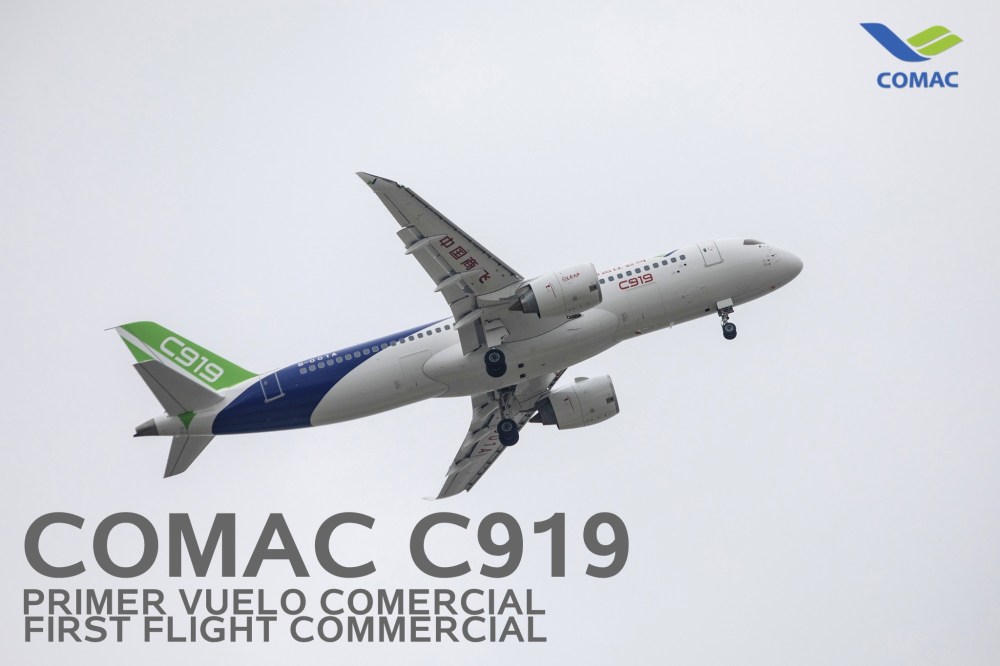
 El C919 hace su primer vuelo inaugural completando sus exitosas pruebas con su motor CFM LEAP-1C
El Comac C919 se estrechó desde la cuarta pista del aeropuerto internacional de Shanghai Pudong a las 14:00 hora local, marcando su salida maiden siete años en su desarrollo.
El primer COMAC C919, propulsado por el avanzado sistema de propulsión integrado LEAP-1C de CFM International, completó con éxito un primer vuelo de 79 minutos y marcó el lanzamiento del programa de prueba de vuelo de certificación para el avión de 150 pasajeros. Los motores funcionaban perfectamente.
El avión a bordo con registro B-001A, que despegó en un día nublado de Shanghai con un equipo de cinco personas a bordo. En la cabina están el piloto de prueba de vuelo Cai Jun, el copiloto Wuxi y el observador de vuelo Qian Jun. En la cabina son dos ingenieros de prueba de vuelo – Zhang Da Wei y Ma Fei.
El primer vuelo tuvo una duración aproximada de 1,5 horas, durante la cual el tren de aterrizaje del avión motorizado con el CFM International Leap-1C, no será retraido, dijo el gerente de prueba de vuelo de Comac, You Li Yan, a periodistas en Shanghai. El avión alcanzó una altitud de 10.000 pies.
El primer vuelo fue testigo de más de 2.000 invitados, personal y periodistas. El evento, celebrado por políticos chinos, también fue transmitido en las principales cadenas de televisión del país.
«Este es un gran día para todos nosotros», dijo He Dongfang, presidente de COMAC. «Estamos muy contentos con el motor LEAP-1C y hemos estado encantados de trabajar con CFM en este programa. Los motores funcionaron maravillosamente durante el vuelo de hoy y creemos que traerán a nuestros clientes los niveles de la eficacia de combustible y de la confiabilidad que requerirán en sus operaciones diarias. «
«Este es un momento épico», dijo Gaël Méheust, presidente y CEO de CFM International. «En nombre de todos en el CFM, expreso nuestras más sinceras felicitaciones a todos en COMAC por lograr este gran hito. Nuestra relación con la industria de la aviación en China se remonta a más de 30 años y es un honor formar parte del equipo COMAC, ya que lanza la próxima y emocionante era en la historia de la aviación del país «.
Hasta la fecha, más de 5.000 motores CFM han sido pedidos / comprometidos en China, incluyendo órdenes para más de 1.000 sistemas de propulsión integrados LEAP-1C. El sistema de propulsión integrado LEAP-1C recibió simultáneamente Certificados de Tipo tanto por la Agencia Europea de Seguridad Aérea (EASA) como por la Administración Federal de Aviación de Estados Unidos (FAA) en diciembre de 2016. Desde entonces, COMAC ha realizado una serie de pruebas de tierra, Velocidad y pruebas de taxi de alta velocidad que conducen al vuelo de hoy.
El motor LEAP fue lanzado oficialmente en diciembre de 2009 cuando COMAC seleccionó el LEAP-1C como la única central eléctrica occidental para su avión C919 de 150 pasajeros. El motor incorpora un sistema de propulsión totalmente integrado (IPS), que incluye el motor, la góndola y el inversor de empuje. El IPS, junto con el pilón desarrollado por COMAC, fueron diseñados en conjunto con el otro, dando por resultado una aerodinámica mejorada, un peso más bajo, y un mantenimiento más fácil.
El inversor de empuje compuesto O-Duct del LEAP-1C fue desarrollado por Nexcelle, con su única configuración de una sola pieza que contribuye a un peso estructural total reducido y una superficie de tratamiento acústico más grande.
Además del IPS, el motor LEAP-1C cuenta con algunas de las tecnologías más avanzadas de la industria, incluyendo palas de ventilador compuestas de fibra de carbono tejida en 3-D y caja de ventilador; Un sistema único de rechazo de escombros; Diseños aerodinámicos tridimensionales de la cuarta generación; La cámara de combustión gemela-anular, pre-remolino (TAPS) que ofrece inyectores de combustible fabricados aditivamente; Cubiertas compuestas de matriz de cerámica en la turbina de alta presión; Y alúmina de titanio (Ti-Al) en la turbina de baja presión.
El motor LEAP entró en servicio comercial en agosto de 2016 y actualmente está en operación con más de 10 aerolíneas en todo el mundo. Los motores están proporcionando a los operadores un 15 por ciento de mejora en la eficiencia de combustible y las emisiones de CO2 en comparación con el mejor motor CFM de hoy, junto con reducciones dramáticas en el ruido del motor y las emisiones gaseosas de gases de escape. Toda esta tecnología trae consigo la legendaria fiabilidad y los bajos costes de mantenimiento de CFM.
Los pilotos han sido encargados de comprobar 15 parámetros durante el despegue. Estos incluyen la prueba de la respuesta de control de vuelo de la aeronave, la verificación de la funcionalidad de los diferentes sistemas, y para comprobar que los equipos de prueba están proporcionando datos precisos e información.
Más importante aún, añade, los pilotos llegarán a «tener un sentido de control de vuelo», para una sensación del jet de 158 asientos. El avión ha sido equipado con equipo de prueba, pero las imágenes lanzadas por Comac también muestran asientos de pasajeros en el cabina.
El fabricante chino ha asignado 4.200 horas de prueba en vuelo para el programa de pruebas del C919 y está apuntando a que la aeronave entre en servicio dentro de tres años. Comac ha asegurado hasta ahora compromisos para 570 aeronaves de este tipo, con Shanghai Eastern Airlines como su cliente de lanzamiento. 


INAUGURAL FLIGHT COMAC C919
The C919 makes its first inaugural flight completing its successful tests with its CFM LEAP-1C engine
The Comac C919 narrowbody lifted off from Shanghai Pudong International airport’s fourth runway at 14:00 local time, marking its maiden sortie seven years into its development.
The first COMAC C919, powered by CFM International’s advanced LEAP-1C integrated propulsion system, successfully completed a 79-minute first flight, marking the launch of the certification flight test program for the 150-passenger aircraft. The engines performed flawlessly.
Onboard aircraft B-001A as it took off on an overcast Shanghai day are a team of five. In the cockpit are flight test captain Cai Jun, co-pilot Wuxi and flight observer Qian Jun. In the cabin are two flight test engineers – Zhang Da Wei and Ma Fei.
The first flight will lasts about 1.5 hours, during which the CFM International Leap-1C-powered aircraft’s landing gear will not be retracted, Comac’s flight test manager You Li Yan told reporters in Shanghai. The plane reached an altitude of 10,000 feet.
The first flight was witnessed by more than 2,000 guests, staff and journalists. The event, graced by Chinese politicians, was also broadcasted on the country’s main television networks.
“This is a great day for all of us,” said He Dongfang, president of COMAC. “We are very happy with the LEAP-1C engine and have been pleased to work with CFM on this program. The engines performed beautifully during today’s flight and we believe they will bring our customers the levels of fuel efficiency and reliability they will require in their daily operations.”
“This is an epic moment,” said Gaël Méheust, president and CEO of CFM International. “On behalf of everyone at CFM, I expend our warmest congratulations to everyone at COMAC on achieving this great milestone. Our relationship with the aviation industry in China goes back more than 30 years and it is an honor to be part of the COMAC team as it launches the next exciting era in the country’s aviation history.”

To date, more than 5,000 CFM engines have been ordered/committed in China, including orders for more than 1,000 LEAP-1C integrated propulsion systems. The LEAP-1C integrated propulsion system was simultaneously awarded Type Certificates by both the European Aviation Safety Agency (EASA) and the U.S. Federal Aviation Administration (FAA) in December 2016. Since then, COMAC has performed a series of ground tests, including low-speed and high-speed taxi tests leading up to today’s flight.
The LEAP engine was officially launched in December 2009 when COMAC selected the LEAP-1C as the sole Western powerplant for its 150-passenger C919 airplane. The engine incorporates a unique fully-integrated propulsion system (IPS), which includes the engine, nacelle, and thrust reverser. The IPS, along with the pylon developed by COMAC, were designed in conjunction with each other, resulting in improved aerodynamics, lower weight, and easier maintenance.
The LEAP-1C’s composite O-Duct thrust reverser was developed by Nexcelle, with its unique one-piece configuration contributing to a reduced overall structural weight and larger acoustic treatment surface.
In addition to the IPS, the LEAP-1C engine features some of the industry’s most advanced technologies, including 3-D woven carbon fiber composite fan blades and fan case; a unique debris rejection system; 4th generation three dimensional aerodynamic designs; the Twin-Annular, Pre-Swirl (TAPS) combustor featuring additively manufactured fuel nozzles; ceramics matrix composite shrouds in the high-pressure turbine; and titanium aluminide (Ti-Al) blades in the low-pressure turbine.
The LEAP engine entered commercial service in August 2016 and is currently in operation with more than 10 airlines worldwide. The engines are providing operators with a 15 percent improvement in fuel efficiency and CO2 emissions compared to today’s best CFM engine, along with dramatic reductions in engine noise and exhaust gaseous emissions. All this technology is bringing with it CFM’s legendary reliability and low maintenance costs.
The pilots have been tasked to check 15 parameters during the maiden sortie. These include testing the aircraft’s flight control response, verifying the functionality of various systems, and to cross-check that the test equipment are providing accurate data and information.
Most importantly, he adds, the pilots will get to «have a sense of flight control», for a feel of the 158-seater jet.The aircraft has been fitted with test equipment, but pictures released by Comac also show passenger seats in the cabin.
The Chinese manufacturer has allocated 4,200 flight test hours for the C919’s test programme, and is targeting for the aircraft to enter into service within three years. Comac has so far secured commitments for 570 of the type, with Shanghai-based China Eastern Airlines as its launch customer. A \ W

中國自主研發的 Comac C919 客機成功首飛
中國第一架現代化的「大型」客機。
研製的 C919 客機,是中國繼 1970 年代計畫中止的「運-10」之後,第一架「大客機」。不過說是「大」,其實 C919 瞄準的是中短程窄體客機市場,與波音 737-800 或空巴 A320 同一等級。

C919 的 C 代表 Comac 或 China,但也隱含與 A(Airbus)、和 B(Boeing)共組成 ABC,互別苗頭的意思。第一個 9 是中國傳統上「久」的諧音,也有數之極的意思;後面的 19 則是表示了它的載客量最大約為 190 名乘客(分艙等後實際約為 158-168 座)。C919 機體寬 3.96m、高 4.16m,裡面是窄體客機標準的 3-3 座椅配置,中間有一條長走道,總航程約為 4075-5555 公里,適合城際的中短程航線。
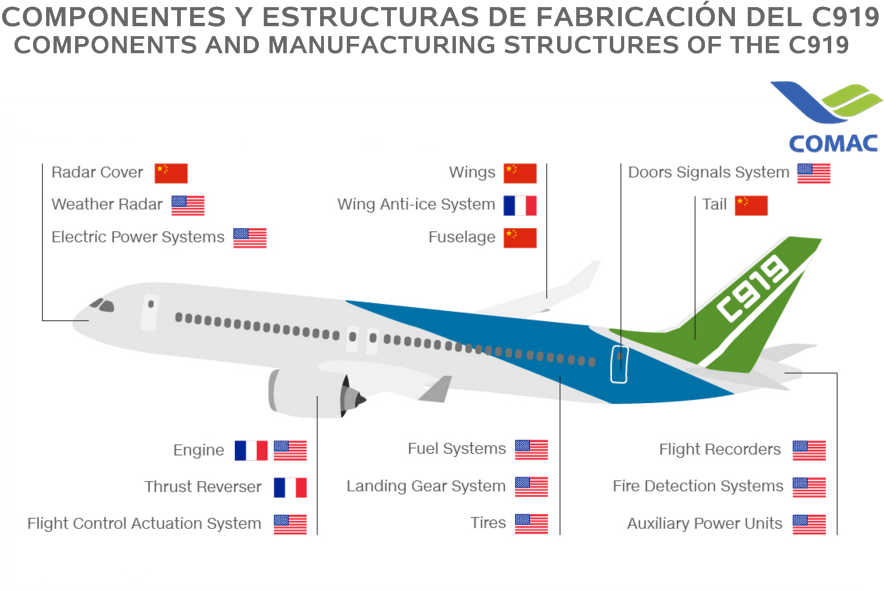
不過說是自主研製,實際上也就是機體是中國自己設計、製造的,其他從引擎、到翼面制動、航電設備、電力系統、供油系統、起落架等,都依然是由美國或法國公司提供。可以說除了一層殼之外,現代飛機最重要的關鍵系統都依然掌握在歐美手中。再者,正因為市場龐大,無論空巴、波音都在持續改進這個級別的機種,俄羅斯和加拿大也有同級飛機準備加入競爭,C919 除了佔有價格優勢之外,想在技術上超歐趕美、分食大餅並不容易。
C919 由 2008 年開始研發,第一架飛機於 2015 年 11 月出廠,今日進行首飛,未來還將進行約三年的各種測試,如果一切順利的話,2020 年應該可以交機。目前 C919 共有至少 570 架的訂單(其中 99 架是確定訂單),但大多來自中國國內的航空公司與租賃公司。想要真正與空巴、波音平起平坐,還有很長的路要走啊!A\ W
Ξ A I R G W A Y S Ξ
SOURCE: Flightglobal.com / AIRGWAYS / Aviationpros.com / Chinese.engadget.com
DBk: Comac.com / News.cn / Ainonline.com / Twimg.com / Fortune.com / Presspage.com
AW-POST: 201705052010AR
A \ W A I R G W A Y S ®





 El Gobierno italiano atajó la crisis que vive la aerolínea Alitalia con el nombramiento de tres comisarios que deberán elaborar un plan industrial que la salve de la quiebra y con un préstamo de 600 millones de euros para garantizar su operatividad en los próximos seis meses.


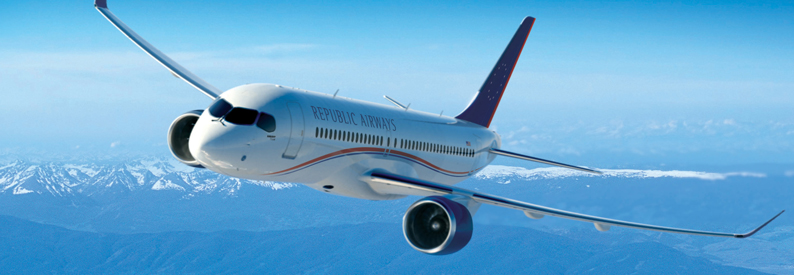
 Republic Airlines de la firma matriz Republic Airways Holdings (RAH) ha anunciado que a partir del 30 de abril ha salido del Capítulo 11 procedimientos de quiebra.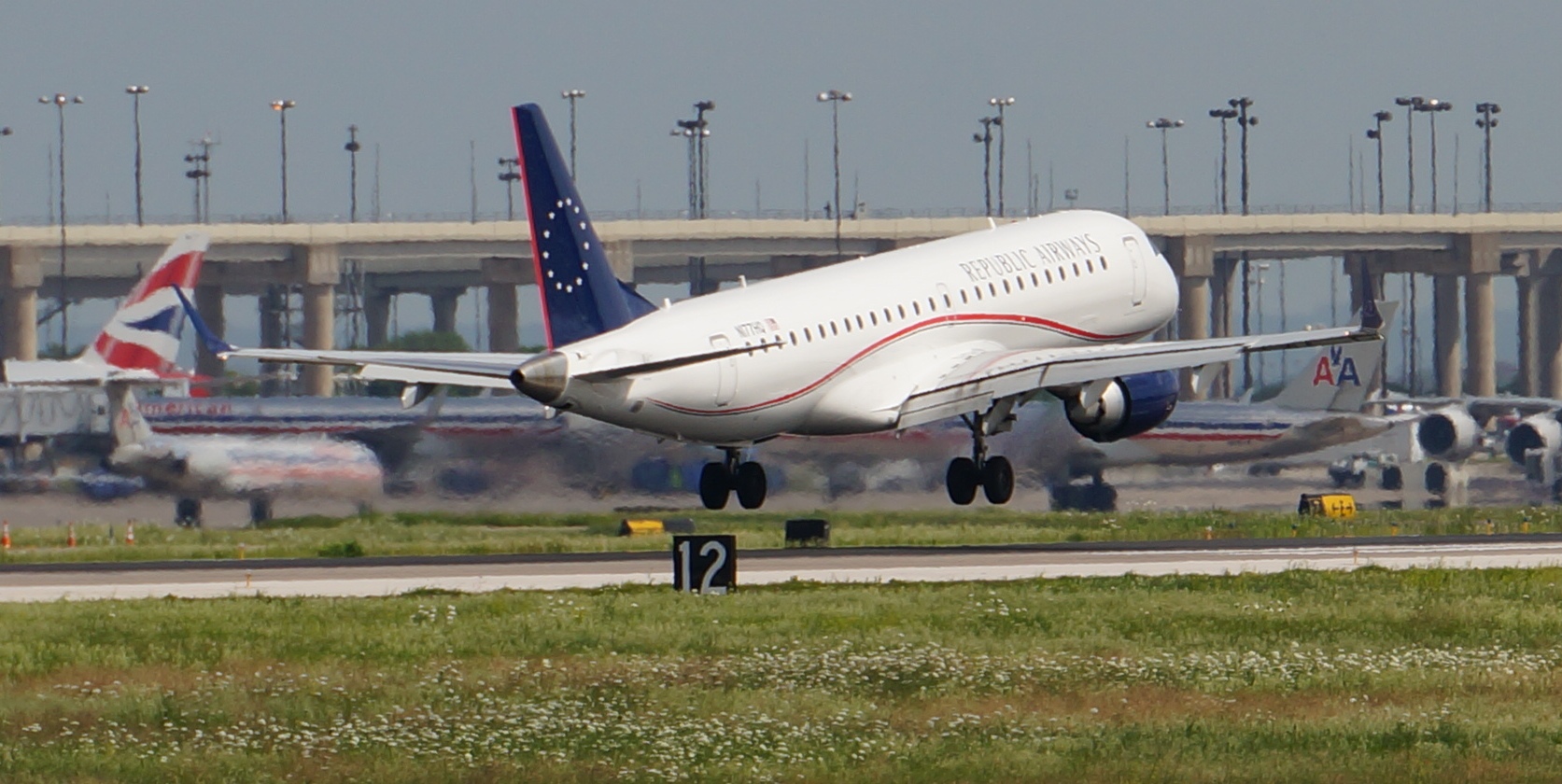

 Mientras que Boeing Co. sigue siendo tímido en sus planes para lanzar una cuarta versión de su nueva familia 737 MAX, la compañía ha revelado su pensamiento en quizás el problema más espino que enfrenta la compañía mientras que viene a la decisión en el nuevo 737-


 airgways.com