Incendio avión FedEx en Fort Lauderdale

Resultado de imagen para fedex 910

AW | 2016 10 29 09:40 | AIR INVESTIGATION

Un avión de carga de FedEx se incendió en la pista del Aeropuerto Internacional de Fort Lauderdale-Hollywood el viernes por la tarde, haciendo que el aeropuerto se apague durante varias horas, según la Administración Federal de Aviación.

El piloto y el copiloto se salvó utilizando una escala de cuerda en el lado derecho de la aeronave, de acuerdo con Mike Jachles de Broward Sheriff del rescate del fuego. No hay miembros de los equipos de tierra resultaron heridos, añadió. Se ha producido el fuego después del tren de aterrizaje del avión se desplomó al tocar tierra, dijo la FAA. El Boeing MD-10 estaba operando como vuelo 910 de Memphis, Tennessee, en el que se basa FedEx.

La mayor parte del daño de fuego se produjo en el exterior del avión cerca del ala izquierda y el motor, dijo Jachles. El interior del avión parecía ser sin daños
El avión transportaba a los envíos de FedEx y correo de los EE.UU., dijo. FedEx Servicios para Personas Mayores Especialista en Comunicaciones Davina Cole dijo que la compañía estaba cooperando con las autoridades. Boeing aún no ha respondido a una solicitud de comentarios.

pista sur del aeropuerto de Florida volvió a abrir al tráfico aéreo a las 7 p.m. según la cuenta de Twitter del aeropuerto. La pista norte permanece cerrada mientras la investigación del incendio de avión de FedEx continúa. El accidente se produjo horas después de que un Boeing 767 de American Airlines se vio obligado a abortar su despegue en el aeropuerto internacional O’Hare de Chicago, debido a un mal funcionamiento relacionado con el motor. airgways-icon-aw

Resultado de imagen para fedex 910

FedEx cargo plane burns at Fort Lauderdale airport

A FedEx cargo plane caught fire on the runway at Fort Lauderdale-Hollywood International Airport on Friday afternoon, causing the airport to shut down for several hours, the Federal Aviation Administration said.

The pilot and copilot escaped harm using a rope ladder on the right side of the aircraft, according to Mike Jachles of Broward Sheriff Fire Rescue. No members of the ground crews were hurt, he added. The fire occurred after the plane’s landing gear collapsed as it touched ground, the FAA said. The Boeing MD-10 was operating as Flight 910 from Memphis, Tennessee, where FedEx is based.

Most of the fire damage occurred on the plane’s exterior near the left wing and engine, Jachles said. The interior of the plane appeared to be undamaged. The plane was carrying FedEx shipments and US Mail, he said. FedEx Services Senior Communications Specialist Davina Cole said the company was cooperating with authorities. Boeing has not yet responded to a request for comment.

The Florida airport’s south runway reopened for air traffic at 7 p.m., according to the airport’s Twitter account. The north runway remains closed while the investigation of the FedEx plane fire continues. The accident came hours after an American Airlines Boeing 767 was forced to abort its takeoff at Chicago’s O’Hare International Airport because of an engine-related malfunction. A\W

Ξ A I R G W A Y S Ξ
SOURCE: cnn.com
DBk: Photographic © NBC6.com / Gettropical.com
AW-POST: 201610290940AR
A\W A I R G W A Y S ®

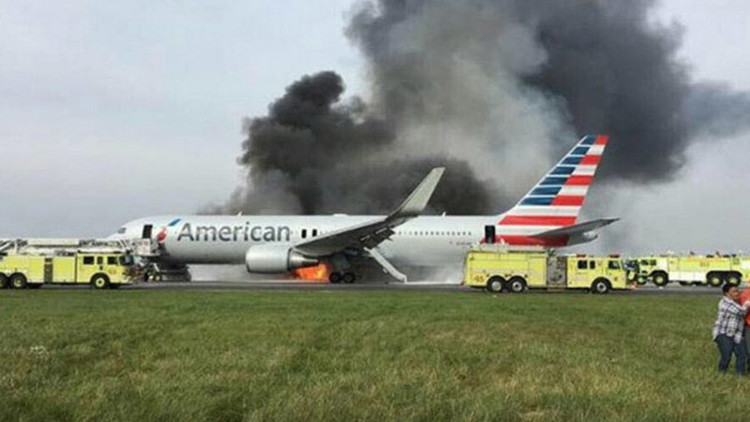
American AA383 se incendia en Chicago

Resultado de imagen para American Airlines AA383

AW | 2016 10 28 19:58 | AIR INVESTIGATION / SAFETY / SECURITY

El vuelo AA383 se incendió en la pista del aeropuerto internacional de Chicago cuando iba a despegar hacia Miami

Un avión de American Airlines se ha incendiado la tarde de este viernes en el momento en que iba a despegar del aeropuerto internacional O’Hare de Chicago, EE.UU., informa ABC News.

Según la información disponible, uno de los neumáticos del avión, un Boeing 767 con 171 personas a bordo, explotó cuando iba a despegar, causando serios daños en uno de los motores, lo que provocó el incendio.

Afortunadamente todos los ocupantes del vuelo AA383 con destino a Miami (EE.UU.) han sido evacuados, sin embargo, ocho de ellos han resultado heridos.

En las imágenes publicadas en las redes sociales se puede observar una gran columna de humo y fuego emanando de la aeronave en medio de la pista. airgways-icon-aw

Resultado de imagen para American Airlines AA383

American AA383 ignites in Chicago

The flight AA383 caught fire on the runway at Chicago International Airport when he was about to take off for Miami

An American Airlines plane has caught fire Friday afternoon when he was about to take off from O’Hare International Airport in Chicago, USA, reports ABC News.

Reportedly, one of the tires of the plane, a Boeing 767 with 171 people on board, exploded when he went off, causing serious damage to one of the engines, causing the fire.

Fortunately all occupants of flight AA383 to Miami (USA) have been evacuated, however, eight of them were injured.

In the images posted on social networks you can see a large column of smoke and fire emanating from the aircraft in the middle of the track. A\W

Ξ A I R G W A Y S Ξ
SOURCE: rt.com
DBk: Photographic © rt.com / scarymommy.com
AW-POST: 201610281958AR
A\W A I R G W A Y S ®

Airbus A300 de Sterna Linhas Aéreas continúa cabecera de pista de Recife

Resultado de imagen para sterna linhas aereas recife

AW | 2016 10 22 05:09 | SAFETY / SECURITY / AIR INVESTIGATION

Sólo ocho vuelos que llegarían en Recife alternan a Joao Pessoa, Aracaju, Maceió y Fortaleza a causa del accidente

El Airbus A300, la compañía Sterna Airlines, todavía en la cabecera de la pista del aeropuerto internacional de Recife / Guararapes – Gilberto Freyre, en Recife. El avión, procedente de Guarulhos (SP), aterrizó a las 7:51 am (GMT) y salió de la carretera bloqueando el funcionamiento del aeropuerto durante casi dos horas. Sólo a las 9:55 am, se normalizaron los despegues y aterrizajes.

El avión de carga derrapa en la pista del aeropuerto internacional de Guararapes. Según Infraero, los técnicos han conseguido eliminar la carga manual del avión 20 toneladas incluido el combustible. Ahora, se realizarán los procedimientos para la eliminación del Airbus con el uso de los instrumentos necesarios y cabrestantes.

En promedio, el aeropuerto de Recife recibe 116 despegues y aterrizajes por día. De este total, el 96% se mantuvo. Sólo ocho vuelos que llegarían en Recife alternan a Joao Pessoa, Aracaju, Maceió y Fortaleza a causa del accidente. Cinco partidos fueron cancelados. airgways-icon-aw

Resultado de imagen para sterna linhas aereas recife

Airbus Sterna Airlines continues at the head of the airport runway

Only eight flights that would arrive in Recife alternated to Joao Pessoa, Aracaju, Maceio and Fortaleza because of the accident

The Airbus A300, the company Sterna Airlines, still at the head of the runway of the International Airport of Recife / Guararapes – Gilberto Freyre in Recife. The aircraft, coming from Guarulhos (SP), landed at 7:51 a.m. (GMT) and went off the road blocking the operations of the airport for almost two hours. Only at 9:55 a.m., takeoffs and landings were normalized.

Cargo plane skids on the runway from Guararapes International Airport. According to Infraero, technicians have managed to remove manually load of 20 tons plane including fuel. Now, the procedures will be made for removal of the Airbus with the use of the instruments necessary and winch.

On average, the Recife Airport receives 116 takeoffs and landings per day. Of this total, 96% were kept. Only eight flights that would arrive in Recife alternated to Joao Pessoa, Aracaju, Maceio and Fortaleza because of the accident. Five matches were canceled. A\W

Resultado de imagen para sterna linhas aereas recife

Airbus da Sterna Linhas Aéreas continua na cabeceira da pista do aeroporto

Apenas oito voos que chegariam ao Recife alternaram para João Pessoa, Aracaju, Maceió e Fortaleza por conta do acidente

O Airbus A300, da empresa Sterna Linhas Aéreas, continua na cabeceira da pista do Aeroporto Internacional do Recife/Guararapes – Gilberto Freyre, no Recife. A aeronave, que vinha de Guarulhos (SP), pousou às 7h51 (horário de Brasília) e saiu da pista bloqueando as operações do aeroporto por quase duas horas. Somente às 9h55, pousos e decolagens foram normalizados.

Avião de carga derrapa na pista do Aeroporto Internacional dos Guararapes. De acordo com a Infraero, os técnicos já conseguiram remover, manualmente, 20 toneladas de carga do avião, incluindo o combustível. Agora, serão feitos os procedimentos para a remoção do Airbus, com o uso dos instrumentos necessários e guincho.

Em média, o Aeroporto do Recife recebe 116 pousos e decolagens por dia. Desse total, 96% foram mantidos. Apenas oito voos que chegariam ao Recife alternaram para João Pessoa, Aracaju, Maceió e Fortaleza por conta do acidente. Cinco partidas foram canceladas. A\W


Ξ A I R G W A Y S Ξ
SOURCE: diariodepernambuco.com.br
DBk: Photographic © diariodepernambuco.com.br / journalcruzeiro.com.br
AW-POST: 201610220509AR
A\W A I R G W A Y S ®

Nueva táctica de caza MH370 después de los contactos de sonda del fondo marino

Resultado de imagen para search MH370

AW | 2016 10 20 05:15 | AIR INVESTIGATION

MALAYSIA AIRLINES MH370

Sydney, Australia · Un buque involucrado en la búsqueda de un sonar de alta mar para la falta del vuelo MH370 de Malaysia Airlines, está equipado con un avión no tripulado que examinará varios contactos del sonar de interés en el lecho marino a distancia al oeste de Australia, se informó el miércoles.

Ninguno de los contactos de sonar posean las características de un típico restos de avión de campo, dijo la Oficina de Seguridad del Transporte de Australia, que está dirigiendo la caza para el Boeing 777 en un desolado tramo del Océano Índico.Pero algunos de los contactos sí exhiben propiedades hechas por el hombre y por lo tanto deben ser investigados antes de que puedan ser eliminados como realizadas por el avión, dijo la agencia en un comunicado.

Funcionarios han dicho previamente que más de 20 contactos de sonar que las tripulaciones han aumentado en los últimos meses requieren un examen más detenido por un avión no tripulado bajo el agua sonar equipada. Ellos son entre 2.700 y 1.900 kilómetros kilómetros del puerto australiano de Fremantle, donde se encuentran los barcos de búsqueda.

El mal tiempo durante el invierno del hemisferio sur, hasta ahora, impidió que las naves de desplegar el avión no tripulado. Con la mejora del clima, el barco chino Dong Hai Jiu 101 está equipado con un vehículo de control remoto equipado cámara de vídeo que va a escrutar los contactos de sonar.

Las tripulaciones han recogido cientos de contactos del sonar de interés a través de la caza de dos años. Los contactos se agrupan en tres niveles de clasificación en función de su probabilidad de estar vinculados al plano. Contactos doblados «clasificación 1» son considerados los más probabilidades de haber venido de la aeronave. Ninguno de los recientes contactos de sonar que el avión va a investigar son la clasificación 1. Sólo ha habido dos contactos que encajan en esa categoría hasta la fecha; uno resultó ser un antiguo naufragio, y el otro era un campo de roca.

Los equipos de búsqueda han llegado hasta ahora con las manos vacías en su intento de encontrar el principal restos bajo el agua del avión, que desapareció el 8 de marzo de 2014, durante un vuelo de Kuala Lumpur a Pekín con 239 personas a bordo. Los barcos tienen menos de 10.000 kilómetros cuadrados de izquierda a recorrer de la zona de búsqueda kilómetro 120.000 metros cuadrados.

Funcionarios previamente dijo que la búsqueda se terminó en diciembre. El miércoles, la Dirección de transporte dijo que es probable que ahora tomar hasta enero o febrero para completar, debido a la larga franja de mal tiempo de invierno que ha obstaculizado los esfuerzos de búsqueda. airgways-icon-aw

New tactic in MH370 hunt after sonar contacts from seabed

Sydney, Australia · A ship involved with the deep-sea sonar search for missing Malaysia Airlines Flight 370 is being fitted with a drone that will examine several sonar contacts of interest on the remote seabed west of Australia, officials said Wednesday.

None of the sonar contacts exhibit the characteristics of a typical aircraft debris field, said the Australian Transport Safety Bureau, which is heading up the hunt for the Boeing 777 in a desolate stretch of the Indian Ocean. But some of the contacts do exhibit man-made properties and therefore must be investigated before they can be eliminated as having come from the plane, the agency said in a statement.

Resultado de imagen para search MH370

Officials have previously said that more than 20 sonar contacts that crews have picked up in recent months require closer examination by a sonar-equipped underwater drone. They are between 2,700 kilometers and 1,900 kilometers from the Australian port of Fremantle where the search ships are based.

Poor weather during the southern hemisphere winter has, until now, prevented the ships from deploying the drone. With the weather improving, the Chinese vessel Dong Hai Jiu 101 is being fitted with a video camera-equipped remotely operated vehicle that will scrutinize the sonar contacts.

Crews have picked up hundreds of sonar contacts of interest throughout the two-year hunt. The contacts are grouped into three classification levels based on their likelihood of being linked to the plane. Contacts dubbed “classification 1” are considered the most likely to have come from the aircraft. None of the recent sonar contacts that the drone will investigate are classification 1. There have only been two contacts that fit into that category thus far; one turned out to be an old shipwreck, and the other was a rock field.

Search crews have so far come up empty in their attempt to find the main underwater wreckage of the plane, which vanished on March 8, 2014, during a flight from Kuala Lumpur to Beijing with 239 people on board. The ships have less than 10,000 square kilometers left to scour of the 120,000-square kilometer search zone.

Officials previously said the search would be finished by December. On Wednesday, the transport bureau said it is now likely to take until January or February to complete, due to the long stretch of poor winter weather that has hampered search efforts. A\W

Ξ A I R G W A Y S Ξ
SOURCE: cbsnews.com
DBk: Photographic © Defence.gov.au
AW-POST: 201610200515AR
A\W A I R G W A Y S ®

Especialista en seguridad ofrece teoría sobre el vuelo MH370

Resultado de imagen para mh370

AW | 2016 10 01 16:47 | AIR INVESTIGATION

mhMALAYSIA AIRLINES MH-370

Resultado de imagen para the weekend australian logo¿Qué pasó con MH370 después de este mensaje final de la cabina? Un especialista en seguridad aérea ofrece una teoría

La noche sin luna era cálida y oscura con un cielo parcialmente nublado cuando el vuelo de Malaysia Airlines MH-370 despegó del Aeropuerto Internacional de Kuala Lumpur en la 12:41a.m.  el 8 de marzo de 2014. A bordo del vuelo de noche a Beijing fueron 12 miembros de la tripulación y 227 pasajeros. Hubo viajeros de negocios, turistas y estudiantes. Había familias, parejas y solteros de Indonesia, Malasia, China, los EE.UU., Australia y otros nueve países; una comunidad global común en los vuelos internacionales.

Debido a que Kuala Lumpur y Pekín están en la misma zona horaria y el vuelo era llegar al amanecer, muchos viajeros probablemente estaban durmiendo cuando las cosas empezaron a ir mal.

En el despegue, el primer oficial Fariq Abdul Hamid fue a hacer las llamadas de radio, por lo que podemos suponer el capitán Zaharie Ahmad Shah volaba el Boeing 777. Un empleado de 33 años en la empresa, Zaharie, de 53 años, tenía 18.000 horas de vuelo y había pasado más  tiempo de vuelo a su simulador de vuelo construido en casa. Tomó tanto placer en esta actividad que hizo los vídeos y los publicó en su página de Facebook, que ofrece consejos e instrucciones a otros entusiastas del simulador. También era dueño y voló aviones controlados por radio. Simplemente no era lo suficientemente un vuelo, en lo que se refiere a Zaharie.

Profesionalmente hablando, Fariq, de 27 años, había estado volando para Malaysia durante cuatro años. De 2010 a 2012, él era un copiloto en aviones Boeing 737. Fue trasladado al Airbus A330, donde voló como un primer oficial durante 15 meses hasta que comenzó su transición a la más grande de Boeing 777. El vuelo a Beijing traería sus horas totales en el avión a 39.

Resultado de imagen para mh370

Veinte minutos después del despegue, a las 1.01am, el avión alcanzó su altitud asignada, 35.000 pies, y Fariq notificó controladores: «El mantenimiento de Malasia de tres siete cero nivel de vuelo tres cinco cero». Poco tiempo después, el avión de 12 años de antigüedad, transmite una rutina un informe de situación a través de ACARS, las comunicaciones de los aviones de direccionamiento y Reporting System; dichos informes se pueden hacer de forma manual si los pilotos quieren pedir o enviar información a la compañía aérea, y también están controlados por un nuevo estado en el avión que requiera notificación inmediata. En ausencia de cualquiera de estos, un informe de estado automático se transmite en un horario establecido por la línea aérea. En Malasia, era cada 30 minutos. Ni Zaharie ni Fariq tenían algo que añadir a la 1.07am de programado el  informe ACARS, y se notaba nada fuera de lugar.

Alrededor del momento en que se envió el informe ACARS, parece ser el control del vuelo fue transferido al primer oficial, porque ahora se estaba Zaharie las llamadas de radio. Se confirmó que el control del tráfico aéreo que el avión estaba volando a altitud de crucero:   «Ehh … siete tres siete cero [un error, ya que el vuelo era de tres siete cero] mantener el nivel tres cinco cero» Once minutos más tarde, cuando el avión se acercaba al final del espacio aéreo de Malasia, el controlador emite una última instrucción a los pilotos, dándoles la frecuencia de radio para su uso a cruzar en el espacio aéreo de Vietnam. Malaysia Tres Siete contacto Cero Ho Chi Minh decimal niner uno dos cero, buenas noches.»

«Buenas noches, Malasia,» dijo Zaharie. Fue 1.19am. Su voz era tranquila, según un analista de estrés que escucharon la grabación como parte de la investigación. No había ninguna indicación de problemas.

Zaharie

Zaharie había sido en su asiento desde alrededor de las 11, supervisando Fariq, ordenando combustible, la introducción de información en los ordenadores de a bordo, sistemas de armamento, comprobar el tiempo y discutir el vuelo con los auxiliares de vuelo. El avión estaba ahora en la altitud de crucero, volar un curso pre-programados. Había muy poca diferencia en este punto entre el Boeing 777 y cualquier otro avión de pasajeros de Fariq había volado. Por lo tanto, en el escenario visualizo en Malasia 370, esto habría sido el momento perfecto para decirle a Zaharie Fariq, «Su avión», dejando el 777 en las manos del primer oficial para que pudiera ir al baño.

Solamente en la cubierta de vuelo, Fariq debe haber disfrutado estos momentos. Él estaba en el mando único de uno de los aviones más grandes del mundo. Siete años antes, se había graduado de la universidad y ha aceptado en el programa piloto cadete de Malaysia Airline en el Centro de Formación Aerospacial de Langkawi. Su futuro profesional estaba lleno de promesas y así fue su vida personal. Durante el entrenamiento que había caído en el amor con una compañera de estudios, Nadira Ramli, quien se convirtió en el primer oficial en AirAsia, una compañía de bajo coste. En marzo de 2014, Fariq y Ramli estaban comprometidos.

Mientras Zaharie estaba fuera de la cabina del piloto, sería el trabajo de Fariq para sintonizar la radio a la frecuencia de control del tráfico aéreo Ho Chi Minh. Una vez que se establece el contacto, él cambiaría de cuatro dígitos «código transpondedor» del transpondedor de la utilizada en Malasia a uno para transitar al espacio aéreo de Vietnam.

Un transpondedor es crítico para los aviones. Enlaza altitud, dirección, velocidad, y, sobre todo, la identidad de lo que de otro modo sería un punto anónimo en una pantalla de control del tráfico aéreo. Controladores necesitan el transpondedor para mantener los aviones para que no colisionen. Las aerolíneas lo utilizan para seguir el progreso de los vuelos. Los pilotos dependen de él para una advertencia oportuna si otro avión termina en su trayectoria de vuelo. Al girar el mando en el dispositivo hacia la izquierda – a modo de «espera» – cierra efectivamente el transpondedor. En espera se utiliza sobre todo mientras los aviones están en rodaje en el aeropuerto, por lo que todos los aviones no activan el sistema de prevención de colisiones. Para todos los efectos, en espera es «off».

Zaharie había salido de la cabina para lo que se conoce como una «ruptura biológica». Tal vez se habría detenido por la cocina para una taza de café o un aperitivo. Es un largo vuelo a altitud de crucero, por lo que no habría habido ninguna prisa por volver a la cabina de vuelo.

Esto es sobre el momento en que, creo, una rápida descompresión pasó cerca o en la cabina. Hubiera hecho un ruido sorprendente, como un aplauso o el sonido de una botella de champán descorchado, sólo que mucho, mucho más fuerte y más cortante. Esto habría sido seguida por una ráfaga de aire y las cosas arremolinándose en todas partes. Bolígrafos, papeles sueltos – todo – habrían sido rechazado en todas partes, incluyendo los tirantes del sujetador del asiento de Fariq, que habría abrochado para la comodidad, no mucho después del despegue. Una niebla blanca habría llenado el espacio que el descenso de la temperatura volvió el aire de la cabina en la niebla. El primer oficial se habría dado cuenta de inmediato, esta es una situación de emergencia. Hubiera sido una luz de neón en su cerebro, sino que también han estado compitiendo con otras luces y sonidos de alarma que deben haber sido desconcertante y abrumador.

Fariq

El aire más denso dentro del cuerpo de Fariq se habría precipitado a cabo a través de cada orificio, un efecto que puede ser especialmente dolorosa en los oídos. Sus dedos, manos y brazos habrían comenzado a moverse espasmódicamente. Emergencia, tiene que bajar, tiene que saber a alguien. Lo primero? Él habría alcanzado más al transpondedor para entrar en 7700, los cuatro dígitos que alertarán a todos en el suelo y en el aire que algo ha ido mal con el avión. Sus dedos aún habrían sido temblaban mientras se agarraba la pequeña perilla redonda en el dispositivo y lo convirtió en Stand-by. No es lo que él hubiera deseado, pero él ya habría comenzado a perder su ventaja mental. En un intento de transmitir un mensaje de angustia, se habría cortado inadvertidamente el único medio controladores aéreos tenían de identificar su avión y los detalles de su vuelo. Era media un minuto pasado 1,20 de la mañana.

Sólo una pequeña parte de los pilotos ha experimentado la peligrosa seducción de la hipoxia. Aviadores militares de muchos países están entrenados para reconocer los síntomas de la privación de oxígeno al pasar tiempo en una simulación de 25.000 pies en cámaras de gran altitud. Sin embargo, aún no se someten a la clase de descompresión rápida que podría haber sucedido en MH370. El inicio de la hipoxia por encima de 25.000 pies es demasiado rápida, y los riesgos de salud demasiado alto, para duplicarlo en una cámara de gran altitud. Habría sido aturdido cerebro de Fariq. Cuando la presión en el avión cayó repentinamente, el joven piloto quizá hizo las cosas mal como su estado mental rápidamente decreciente le estaba diciendo que estaba haciendo las cosas correctas. Él no habría sido consciente de sus errores: víctimas de hipoxia pensar que están llevando a cabo de manera brillante.

Recuerdo ver un video de YouTube de un aviador del ejército en una sesión de entrenamiento cámara de altitud. Está flanqueada por otros dos utilizan oxígeno suplementario, pero él tiene su propio regulador fuera con el fin de experimentar la hipoxia. Posee una baraja de cartas y le ha pedido que voltear a través de ellos uno por uno, anunciando el número y el traje antes de pasar a la siguiente carta. La altitud simulada es de 25.000 pies. «Me siento muy bien en este momento», dice mientras comienza a anunciar, «Seis de espadas», mostrando un seis de picas a la cámara. «No hay síntomas todavía.» En 24 segundos se informa sensación de hormigueo «en mis dedos de los pies y en los dedos del pie». A en minuto, se identifica un cinco de picas como un cuatro de picas. Tras ser preguntado dos veces para mirar de nuevo y hacer la corrección, que llama a cada tarjeta de los cuatro de espadas. Después de dos minutos, con su pensamiento cada vez más descuidado, se le pregunta: «Señor, ¿qué haría usted si se trataba de un avión?» Él responde: «Cuatro de espadas, cuatro de espadas.» Noventa segundos más tarde, después de que hace caso omiso de las peticiones a se puso el regulador, que ha hecho por él.

Al igual que el borracho que está convencido de que es el tipo más divertido en la sala, un piloto que sufre de hipoxia puede sentir un mayor sentido de la competencia y el bienestar. Las víctimas deben estar tratando de obtener oxígeno suplementario, pero a menudo no lo hacen. La hipoxia crea un estado de felicidad idiota.


Máscara de oxígeno de Fariq se almacenó en una cámara del tamaño de una guantera, por debajo de su brazo. Sus movimientos pueden haber sido lento, confundido por la dificultad de ajustar la máscara correctamente. Cuando todo está funcionando bien, la máscara debe rejuvenecer un piloto. Sin embargo, cualquier número de problemas puede haber impedido Fariq obtenga suficiente oxígeno. Algo mal con la máscara, el suministro de oxígeno, o la conexión entre los dos podría explicar por qué él todavía podría ser incapaz de pensar con claridad. Aún así, él debe haber preguntado: ¿Por qué no ha regresado Zaharie?

Todo estaba en el caos, la alarma de advertencia de altitud sonido metálico. Me parece lógico suponer que Zaharie visitó el baño de clase de negocios, cerca de la cabina de vuelo que también es utilizado por la tripulación de vuelo. En este y en todos los cuartos de baño 777 de la línea aérea, una máscara desplegable está ahí para proporcionar oxígeno en el caso de despresurización. Imagínese lo que habría sido para Zaharie para ver la copa sacudida de plástico amarillo abajo. Él habría sido momentáneamente hizo temblar, pero se habría dado cuenta inmediatamente de lo que había sucedido y lo que había que hacer. Sin embargo, tenía que hacer una elección: tratar de volver a la cabina sin oxígeno, o permanecer en el cuarto de baño y esperar a que Fariq llegar el avión a una altitud más baja y luego reunirse con él en la cabina de vuelo. Supongo Zaharie no confiaba en la capacidad de Fariq para manejar la emergencia y optó por la primera línea de acción. Pero el efecto de la privación de oxígeno habría sido agobiante para Zaharie, también. Aire habría sido la explosión de su aparato respiratorio y digestivo. Sus extremidades se habrían temblando. Él habría tenido dificultades para salir del cuarto de baño.

La distancia entre el baño y la cabina se encuentra a sólo unos pasos, pero al igual que Fariq, Zaharie era un fumador y, probablemente, más susceptibles a los efectos de la privación de oxígeno. Si él salió del baño, el pasillo estrecho y hasta la puerta de la cabina sin perder la conciencia o la función cognitiva, otro reto lo habría esperado.

La puerta de la cabina se desbloquea automáticamente cuando se pierde la presión de la cabina. Sería Zaharie haber recordado que? O él, por la fuerza de la costumbre, se detiene delante de la puerta y tratar de introducir el código?Qué perdió unos segundos preciosos luchando por recordar un código de acceso que no necesitaba? O lo que acaba de agarrar la manija y abrir la puerta, pero sucumbió a la falta de oxígeno antes de entrar en su asiento? Los pilotos de Malaysia Airlines me dicen que en una rápida descompresión que habría sido muy difícil para Zaharie para volver a la cubierta de vuelo. Los casos anteriores de la rápida despresurización de aviones han demostrado que el ejercicio físico corroe los demasiado pocos segundos de conciencia útil. El capitán, creo, fue incapaz de recuperar el mando del avión. Si lo hubiera hecho, las cosas podrían haber sido muy diferente.

(FMS) se encuentra entre los dos asientos de los pilotos, por encima de los aceleradores, donde es fácilmente accesible a cualquier piloto que está programando. El FMS tiene muchas funciones, incluyendo la tripulación que permite enviar mensajes de texto a la mesa de operaciones de la aerolínea. Sabemos que no hay mensajes fueron enviados. Sin embargo, en una emergencia, el FMS proporciona información de navegación para los aeropuertos más cercanos, por lo que en cuestión de segundos los pilotos pueden seleccionar un destino y la cabeza allí.

Desde donde el 777 estaba volando, entre el Golfo de Tailandia y el Mar del Sur de China, si Fariq giró en torno al plano, los aeropuertos de desvío incluirían Penang y Langkawi, de acuerdo con los pilotos que vuelan en la región. Estas opciones se habrían aparecido en la pantalla en una lista, esperando a que el piloto para seleccionar uno. ¿Quién sabe cuánto pensamiento real Fariq fue capaz de lograr, pero por alguna razón él seleccionó Penang, el tercer aeropuerto más ocupado de Malasia, con una pista de 10.000 pies. La siguiente opción apareció en la pantalla: ? Desviar ahora Fariq selecciona Ejecutar. El avión comenzó una lenta, a su vez orquestada, y por 1:30 de la madrugada se dirigió hacia el sur-suroeste a Malasia una vez más.

El período en el que una persona puede permanecer consciente y pensando en altitudes elevadas se denomina tiempo de la conciencia útil. Mientras que el tiempo varía dependiendo de muchos factores, entre ellos la salud, la edad y la predisposición genética, la cifra aproximada de cuánto tiempo Fariq tenía antes de perder la capacidad de pensar con claridad sería de 15 a 30 segundos.Sabemos quien estaba en la cabina mantiene la suficiente capacidad intelectual para convertir el avión alrededor y seleccionar un curso hacia Penang. Sin embargo, que estas maniobras se hicieron sin una llamada de radio y después del transpondedor se convirtió en inoperante me lleva a concluir que el manejo del avión piloto se vio comprometida hasta tal punto que, si bien podía tomar decisiones simples acerca de la dirección del avión, no mucho más sensato que podría haberse esperado de él. A juzgar por lo que ocurrió después, no volvió a sus sentidos. El principal indicador de ello es que el avión no comenzó a descender.

Por 1.52am, Fariq había tomado el avión de regreso a través de Malasia y de Penang. Aquí él hizo otra decisión sólo explicable por un estado inducido por hipoxia.

Se cambió el curso de nuevo. Tal vez él tenía la intención de aterrizar en el aeropuerto internacional de Langkawi, al norte de Penang, donde había aprendido a volar. Sin duda, el campo de aviación era tan familiar para él como su propio camino, y la pista estaba casi 2000 pies más largo que en Penang. Él iba a venir en pesado, con gran parte del combustible todavía en los tanques. Si Fariq hizo ningún proceso mental en absoluto, que puede haber llegado a la conclusión de la pista de aterrizaje más, mejor, y Langkawi tenido una gran cantidad de ella. Sin embargo, creo que ya no estaba haciendo mucho razonamiento – su capacidad para hacer que se había ido de largo.

MH370 continuó volando. No había ningún esfuerzo para descender o para iniciar una aproximación al aeropuerto. Fariq había estado volando durante 32 minutos desde la despresurización. Aún en la altitud de crucero, el avión pasó sobre VAMPI – uno de los muchos puntos de ruta de navegación en el cielo, todos los cuales tienen cinco nombres de las letras. A continuación, el avión voló al norte de la siguiente, Mekar, desapareciendo para siempre en algún lugar en la parte más septentrional de Sumatra.

El avión que desapareció con 239 pasajeros a bordo

Incapacitación mental de Fariq explica una serie de eventos desconcertantes que comenzaron con una aparición súbita y catastrófica que provocó la rápida despresurización. Algunos han teorizado que estaba relacionado con la carga de las baterías de iones de litio del avión transportaba.Esa es una teoría dudoso para mí; un incendio de la batería de iones de litio es una cosa espantosa y en tal circunstancia los pilotos habría comprendido la necesidad de conseguir el avión está en tierra rápidamente. Por otra parte, se había producido un incendio, es poco probable que hubiera desactivado la tripulación sin causar daños significativos en el plano, y sabemos que continuó volando durante horas después de que el problema inicial.

¿Qué pasó con Vuelo 370 probablemente causado tanto la despresurización y que abarca un fallo en el sistema eléctrico del avión. No se puede saber si Fariq accidentalmente apagó el transpondedor o si no logra por sí solo. Lo mismo es cierto para la pérdida del sistema ACARS, que envía informes de estado desde el avión a la compañía aérea por satélite: qué falló o fue intencionalmente desconecta por alguna razón? Sin embargo, una idea aún más intrigante es la pérdida de las transmisiones regulares desde el avión al satélite en algún momento entre 1.07am y 1.37am, con el retorno de la señal en 2.25am. Incluso aquellos prestar atención a la historia MH370 han escuchado poco sobre este peculiar lapso.

Durante la cobertura de noticias en curso, la gente aprendió que aviones transmiten regularmente un mensaje de estado: un «ping» o «apretón de manos» de la misma manera que un teléfono móvil está encendido envía señales a las torres celulares cercanas. Un teléfono podría dejar de hacer esto sólo si estuviera apagado o en modo avión. Esta es la analogía utilizada por los ingenieros de la compañía de satélites Inmarsat británica para explicar lo que sucedió el MH370, al mismo tiempo se estaban produciendo tantos otros hechos inexplicables. La señal del avión al satélite se detuvo, y se devuelve solamente cuando el avión registra de nuevo en a 2.25am, como si el encendido al comienzo de un vuelo.

Sólo hay unas pocas maneras en que esto se puede explicar: había un corte de energía en el avión, el fallo del software, o algo interfiere con la conexión entre la antena y el satélite, tales como el avión volando boca abajo para que el fuselaje fue entre la antena y el satélite. Las tres posibilidades son extremadamente remotas. Algunas pistas, sin embargo, no se han perseguido.


Cabina de un 777

El 7 de enero de 2008, un Boeing 747 de Qantas fue el acercamiento a Bangkok desde Londres con 365 personas a bordo. Era una tarde clara y soleada – la cual fue una suerte, porque como Qantas vuelo 2 pasa a través de 10.000 pies se pierde la energía eléctrica. El mando automático de gases, piloto automático, radar meteorológico y muchos otros sistemas simplemente dejaron. Sólo pantalla de vuelo del capitán trabajó, aunque en «modo degradado». El avión aterrizó sin problemas, pero una vez en el suelo sus puertas no se pudo abrir porque las válvulas, no podían liberar la presión de la cabina.

En el Boeing 747 y otros aviones Boeing, incluyendo el 777 y el 767, hay una galera encima de la electrónica y los equipos de la sala llamada la bahía de E & E. Con Qantas vuelo 2, una inundación de la cocina por encima causó que el agua fluya en esta área. Esto no fue un evento de una sola vez. Durante su investigación, la Oficina de Seguridad del Transporte de Australia descubrió que los equipos electrónicos en la bahía había sido «sometido repetidamente» a líquido más allá de lo que fue diseñado para manejar. Cuando la ATSB se propuso encontrar eventos similares que se presentó en cinco grandes aviones de pasajeros, cuatro en Boeing y uno en un Airbus A300 – y los que eran sólo los suficientemente graves como para haber causado un evento de seguridad en vuelo.

He aprendido que en los aviones con galeras situadas por encima de los equipos eléctricos, mecánicos menudo vemos fugas. «El 777 tiene una bahía de aviónica por debajo de la galera de primera clase. Cuando un equipo informa de agua, que es requerido por el manual para inspeccionar la bahía de aviónica si hay fugas en la penetración del agua, «Me dijeron que por un mecánico para una importante aerolínea de Estados Unidos; unos días después de que él me dijo esto, envió un video en el que pude ver claramente que gotea agua sobre el suelo de una sala de equipos pequeña y ruidosa. «¿De dónde has sacado esto?», Le pregunté, pensando que había encontrado las imágenes en un servicio similar a YouTube para los mecánicos de aviones. Pero no, que había disparado él mismo, en un Boeing 767 que quedó bajo el cuidado de su llave poco después de nuestra conversación inicial sobre el vuelo de Qantas 2.

Empecé a pensar que tal vez algún problema eléctrico intermitente por causa del agua podría haber producido los diversos fallos en MH370, incluyendo la baja potencia desconcertante y la posterior restauración de la comunicación en 2.25am que hasta ahora nadie ha sido capaz de explicar.

Así que le pregunté a la ATSB: cuando Qantas vuelo 2 perdió la mayor parte de su poder el 7 de enero de 2008, no se produce una terminación en el enlace con el satélite? Podría este problema con el agua dañar la electrónica afectar la comunicación por satélite? La ATSB no lo sabía. «Soy incapaz de proporcionarle una respuesta definitiva en cuanto nos lo necesario para establecer una comprensión detallada de los acuerdos de compartición de carga en el avión, la interacción con el AC BUS 4, por no hablar de la instalación eléctrica que soporta el SATCOM,» Julian Walsh, actuando comisario jefe, respondió en un correo electrónico. «Esto no era un aspecto de la investigación original.» No sé si es parte de la investigación de Malasia de lo sucedido a MH370, porque el equipo que hace que la investigación no responde a las preguntas.

Una vez último ping de MH370 desvaneció – la que muestra que en el extremo norte de Sumatra – Fariq hizo una vuelta final. No hay datos sugieren cuando, pero el avión giró hacia el sur y voló durante cinco horas más hasta que se quedó sin combustible. Este giro final es el punto en el que creo cerebro privado de Fariq llegó a su límite. Al igual que Número 14 fija en el cuatro de espadas, Fariq fue bloqueado en algún pensamiento.

Le pregunté a un amigo, capitán de vuelo Pete Frey, para tratar de explicar última acción de Fariq. «¿Quién sabe lo que está haciendo? Él no sabe lo que está haciendo «, dijo Frey después de considerar mi pregunta. «Ha perdido el sentido del tiempo, por lo que ahora piensa que es volver allí. Tal vez él está pensando, ‘Tengo que dirigirse hacia el norte, y ¿dónde estoy? Voy a ir de esta manera. » En el momento en que se da cuenta que ha perdido, él dice: «Ahora voy a dar la vuelta y volver, pero no sé dónde voy a volver, así que voy a hacia el sur. Estoy demasiado al norte. ‘ «

Cuando se tiene en cuenta la forma en la mente de confusa Fariq debe haber sido, se puede ver muchas formas de explicar la trayectoria de vuelo extraña.»Todo lo que tienes que decir es que en este momento él está luchando con capacidades intermitentes,» Frey me dijo, «y no es suficiente.» airgways-icon-aw

Resultado de imagen para mh370

Security specialist offers theory on MH370

What happened to MH370 after this final message of the cabin? A specialist in aviation security offers a theory

The moonless night was warm and dark with mostly cloudy skies when Malaysia Airlines Flight 370 lifted off from Kuala Lumpur International Airport at 12.41am on March 8, 2014. On board the overnight flight to Beijing were 12 crew members and 227 passengers. There were business travellers, vacationers and students. There were families, couples and singles from Indonesia, Malaysia, China, the US, Australia and nine other countries; a global community common on international flights.

Because Kuala Lumpur and Beijing are in the same time zone and the flight was to arrive at dawn, many travellers were probably sleeping when things started to go wrong.

Resultado de imagen para mh370

At takeoff, First Officer Fariq Abdul Hamid was making the radio calls, so we can assume Captain Zaharie Ahmad Shah was flying the Boeing 777. A 33-year employee of the company, Zaharie, 53, had 18,000 flight hours and had spent more untallied time flying his home-built flight simulator. He took so much pleasure in this activity that he made videos and posted them on his Facebook page, offering tips and instructions to other simulator enthusiasts. He also owned and flew radio-controlled airplanes. There just wasn’t enough flying, as far as Zaharie was concerned.

Professionally speaking, Fariq, 27, was everything Zaharie was not. He had been flying for Malaysia for four years. From 2010 to 2012, he was a co-pilot on Boeing 737s. He was moved to the Airbus A330, where he flew as a first officer for 15 months until he began his transition to the bigger Boeing 777. The flight to Beijing would bring his total hours on the aircraft to 39.

Twenty minutes after takeoff, at 1.01am, the plane reached its assigned altitude, 35,000 feet, and Fariq notified controllers: “Malaysia Three Seven Zero maintaining flight level three five zero.” Shortly afterwards, the 12-year-old plane transmitted a routine status report via ACARS, the Aircraft Communications Addressing & Reporting System; such reports can be done manually if the pilots want to request or send information to the airline, and are also triggered by a novel condition on the plane requiring immediate notice. In the absence of either of these, an automatic status report is transmitted on a schedule set by the airline. At Malaysia, it was every 30 minutes. Neither Zaharie nor Fariq had anything to add to the 1.07am scheduled ACARS report, and it showed nothing amiss.

Around the time the ACARS report was being sent, it appears control of the flight was transferred to the first officer because Zaharie was now making the radio calls. He confirmed to air traffic control that the plane was flying at cruise altitude: “Ehh … Seven Three Seven Zero [an error, as the flight was Three Seven Zero] maintaining level three five zero.” Eleven minutes later, as the plane neared the end of Malaysian airspace, the controller issued a last instruction to the pilots, giving them the radio frequency to use upon crossing into Vietnam’s airspace. “Malaysian Three Seven Zero contact Ho Chi Minh one two zero decimal niner, good night.”

Good night, Malaysian,” Zaharie said. It was 1.19am. His voice was calm, according to a stress analyst who listened to the recording as part of the investigation. There was no indication of trouble.

Zaharie

Zaharie had been in his seat since around 11pm, supervising Fariq, ordering fuel, entering information in the onboard computers, arming systems, checking the weather and discussing the flight with the cabin attendants. The airliner was now at cruise altitude, flying a pre-programmed course. There was very little difference at this point between the Boeing 777 and every other jetliner Fariq had flown. So, in the scenario I envision on Malaysia 370, this would have been the perfect time for Zaharie to tell Fariq, “Your airplane,” leaving the 777 in the first officer’s hands so he could go to the bathroom.

Alone on the flight deck, Fariq must have enjoyed these moments. He was in sole command of one of the world’s largest airliners. Seven years earlier, he had graduated from college and been accepted into Malaysia Airline’s pilot cadet program at the Langkawi Aerospace Training Centre. His professional future was full of promise and so was his personal life. During training he’d fallen in love with a fellow student, Nadira Ramli, who became a first officer with AirAsia, a low-cost carrier. In March 2014, Fariq and Ramli were engaged.

While Zaharie was out of the cockpit, it would be Fariq’s job to tune the radio to the Ho Chi Minh air traffic control frequency. Once he established contact, he would change the transponder’s fourdigit “squawk code” from the one used in Malaysia to one for transiting to Vietnam’s airspace.

A transponder is critical for airliners. It links altitude, direction, speed, and, most significantly, identity to what otherwise would be an anonymous dot on an air traffic control screen. Controllers need the transponder to keep planes from colliding. Airlines use it to track the progress of flights. Pilots depend on it for a timely warning if another plane winds up in their flight path. Turning the knob on the device to the left – to “standby” mode – effectively shuts off the transponder. Standby is used mostly while airliners are taxiing at the airport, so all the planes don’t trigger the collision avoidance system. For all intents and purposes, Standby is “off”.

Zaharie had left the cockpit for what’s known as a “biological break”. Perhaps he would have stopped by the galley for a cup of coffee or a snack. It’s a long flight at cruise altitude, so there would have been no rush to get back to the flight deck.

This is about the time when, I think, a rapid decompression happened near or in the cockpit. It would have made a startling noise, like a clap or the sound of a champagne bottle uncorking, only much, much louder and sharper. This would have been followed by a rush of air and things swirling everywhere. Pens, papers – everything loose – would have been tossed around, including the shoulder straps of Fariq’s seat restraint, which he would have unfastened for comfort not long after takeoff. A white fog would have filled the space as the drop in temperature turned the cabin air into mist. The first officer would have realised immediately, This is an emergency. It would have been a neon light in his brain, but it would also have been competing with other lights and alarm sounds that must have been disconcerting and overwhelming.

Fariq

The denser air inside Fariq’s body would have rushed out through every orifice, an effect that can be particularly painful in the ears. His fingers, hands and arms would have started to move spastically. Emergency, have to get down, have to let someone know. What first? He would have reached over to the transponder to enter 7700, the four digits that will alert everyone on the ground and in the air that something has gone wrong with the plane. His fingers would still have been trembling as he clutched the small round knob on the device and turned it to Standby. It is not what he would have intended, but he would already have begun to lose his mental edge. In an attempt to transmit a message of distress, he would have inadvertently severed the only means air controllers had of identifying his airplane and the details of his flight. It was half a minute past 1.20 in the morning.

Only a small portion of pilots has experienced the dangerous seduction of hypoxia. Military aviators in many countries are trained to recognise the symptoms of oxygen deprivation by spending time at a simulated 25,000 feet in high-altitude chambers. Yet even they are not subjected to the kind of rapid decompression that could have happened on MH370. The onset of hypoxia above 25,000 feet is too quick, and the health risks too high, to duplicate it in a high-altitude chamber. Fariq’s brain would have been befuddled. When the pressure in the plane suddenly dropped, the young pilot perhaps did the wrong things as his rapidly diminishing mental state was telling him he was doing the right things. He wouldn’t have been aware of his errors: hypoxia victims think they are performing brilliantly.

I recall watching a YouTube video of an army aviator in an altitude chamber training session. He’s flanked by two others using supplemental oxygen, but he has his own regulator off in order to experience hypoxia. He holds a deck of cards and has been asked to flip through them one by one, announcing the number and suit before moving on to the next card. The simulated altitude is 25,000 feet. “I feel really good right now,” he says as he begins announcing, “Six of spades,” showing a six of spades to the camera. “No symptoms yet.” In 24 seconds he reports feeling tingling “in my toes and in my toes”. A minute in, he identifies a five of spades as a four of spades. After being asked twice to look again and making the correction, he calls every card the four of spades. After two minutes, with his thinking increasingly sloppy, he is asked, “Sir, what would you do if this was an aircraft?” He replies, “Four of spades, four of spades.” Ninety seconds later, after he ignores requests to put on his regulator, it’s done for him.

Like the drunk who’s convinced he’s the funniest guy in the room, a pilot suffering from hypoxia can feel a heightened sense of competence and wellbeing. Sufferers ought to be trying to get supplementary oxygen, but they often don’t. Hypoxia creates a state of idiotic bliss.

Fariq’s oxygen mask was stored in a chamber the size of a glove compartment, below his armrest. His movements may have been sluggish, confounded by the difficulty of fitting the mask correctly. When all is working well, the mask should rejuvenate a pilot. But any number of problems may have prevented Fariq from getting enough oxygen. Something wrong with the mask, the oxygen supply, or the connection between the two could explain why he might still be unable to think clearly. Still, he must have wondered: Why hasn’t Zaharie returned?

Everything was in chaos, the altitude warning alarm clanging. I find it logical to assume that Zaharie visited the business-class bathroom near the flight deck that is also used by the flight crew. In this and all the airline’s 777 bathrooms, a dropdown mask is there to provide oxygen in the case of depressurisation. Imagine what it would have been like for Zaharie to see the yellow plastic cup bob down. He would have been momentarily rattled, but he would have realised immediately what had happened and what needed to be done. Still, he had to make a choice: try to get back to the cockpit without oxygen, or remain in the bathroom and wait for Fariq to get the plane to a lower altitude and then rejoin him on the flight deck. I’m guessing Zaharie wasn’t confident in Fariq’s ability to handle the emergency and chose the former course of action. But the effect of oxygen deprivation would have been crippling for Zaharie, too. Air would have been exploding from his respiratory and digestive systems. His extremities would have been shaking. He would have struggled to get out of the bathroom.

The distance between the bathroom and the cockpit is just a few steps, but like Fariq, Zaharie was a smoker and probably more susceptible to the effects of oxygen deprivation. If he got out of the bathroom, down the narrow corridor and to the door of the cockpit without losing consciousness or cognitive function, another challenge would have awaited him.

The cockpit door unlocks automatically when cabin pressure is lost. Would Zaharie have remembered that? Or did he, by force of habit, stop outside the door and try to enter the code? Did he lose precious seconds struggling to remember a passcode he did not need? Or did he just grab the handle and open the door, but succumb to the lack of oxygen before getting into his seat? Pilots at Malaysia Airlines tell me that in a rapid decompression it would have been very difficult for Zaharie to get back onto the flight deck. Previous cases of rapid depressurisation on airliners have shown how physical exertion eats away at the too-few seconds of useful consciousness.

The captain, I believe, was unable to regain command of the airplane. If he had, things might have turned out very differently.

The control panel for the flight management system (FMS) is located between the two pilot seats, above the throttles, where it is easily accessible to whichever pilot is programming it. The FMS has many functions, including allowing the crew to send text messages to the airline’s operations desk. We know no messages were sent. Yet in an emergency, the FMS supplies navigational information for the closest airports, so that in seconds the pilots can select a destination and head there.

From where the 777 was flying, between the Gulf of Thailand and the South China Sea, if Fariq turned the plane around, the divert airports would include Penang and Langkawi, according to pilots who fly in the region. These choices would have appeared on the screen in a list, waiting for the pilot to select one. Who knows how much actual thinking Fariq was able to accomplish, but for some reason he selected Penang, Malaysia’s third-busiest airport, with a 10,000-foot runway. The next choice appeared on the screen: Divert now?Fariq selected Execute. The plane began a slow, orchestrated turn, and by 1.30am it was headed south-southwest to Malaysia once again.

The period when a person can remain conscious and thinking at high altitudes is called the time of useful consciousness. While that time varies depending on many factors, including health, age and a genetic predisposition, the ballpark figure for how long Fariq had before he lost his ability to think clearly would be 15 to 30 seconds. We know whoever was in the cockpit maintained sufficient intellectual capacity to turn the plane around and select a course toward Penang. Yet that these manoeuvres were made without a radio call and after the transponder became inoperative leads me to conclude that the pilot handling the airplane was compromised to such an extent that while he could make simple decisions about the direction of the airplane, not much more sensible action could have been expected of him. Judging from what happened next, he did not return to his senses. The primary indicator of that is that the plane did not start to descend.

By 1.52am, Fariq had taken the plane back across Malaysia and to Penang. Here he made yet another decision explicable only by a hypoxia-induced state. He changed course again. Perhaps he had the intention of landing at Langkawi International Airport, north of Penang, where he’d learnt to fly. Surely the airfield was as familiar to him as his own driveway, and the runway was nearly 2000 feet longer than that at Penang. He would be coming in heavy, with much of the fuel still in the tanks. If Fariq did any mental processing at all, he may have concluded the more runway, the better, and Langkawi had a lot of it. Yet I think he was no longer doing much reasoning – his ability to do that was long gone.

MH370 continued to fly. There was no effort to descend or to begin an approach to the airport. Fariq had been flying for 32 minutes since the depressurisation. Still at cruise altitude, the plane passed over VAMPI – one of the many navigational waypoints in the sky, all of which have five letter names. Then the plane flew north of the next one, MEKAR, disappearing for good somewhere at the northernmost part of Sumatra.

The aircraft that went missing with 239 passengers on board

Fariq’s mental incapacitation explains a series of perplexing events that began with a sudden, catastrophic occurrence that caused the rapid depressurisation. Some have theorised it was related to the load of lithium-ion batteries the plane was carrying. That’s an iffy theory to me; a lithium-ion battery fire is a frightening thing and in such a circumstance the pilots would have understood the need to get the airplane on the ground quickly. Moreover, had there been a fire, it is unlikely it would have disabled the crew without causing significant damage to the plane, and we know it continued to fly for hours after the initial problem.

Whatever happened to Flight 370 probably caused both the depressurisation and an encompassing failure in the airplane’s electrical system. It is not knowable if Fariq accidentally turned off the transponder or if it failed on its own. The same is true for the loss of the ACARS system, which sends status reports from the plane to the airline via satellite: did it fail or was it intentionally switched off for some reason? Yet an even more intriguing clue is the loss of regular transmissions from the plane to the satellite sometime between 1.07am and 1.37am, with the return of the signal at 2.25am. Even those paying attention to the MH370 story have heard little about this peculiar lapse.

During the ongoing news coverage, people learnt that airliners regularly transmit a status message: a “ping” or “handshake” in the same way a mobile phone that is powered on sends out signals to nearby cell towers. A phone would stop doing this only if it were turned off or in aircraft mode. This is the analogy used by the engineers at British satellite company Inmarsat to explain what happened on MH370 at the same time so many other inexplicable events were occurring. The airplane’s signal to the satellite stopped, and returned only when the airplane logged back on at 2.25am, as if powering on at the beginning of a flight.

There are only a few ways this can be explained: there was a power failure on the airplane, the software failed, or something interfered with the connection between the antenna and the satellite, such as the plane flying upside down so that the fuselage was between the antenna and the satellite. All three possibilities are extremely remote. Some clues, however, have not been pursued.


A 777’s cockpit

On January 7, 2008, a Qantas Boeing 747 was on approach to Bangkok from London with 365 people on board. It was a clear and sunny afternoon – which was fortunate, because as Qantas Flight 2 passed through 10,000 feet it lost electrical power. The auto-throttle, autopilot, weather radar and many other systems simply stopped. Only the captain’s flight display worked, albeit in “degraded mode”. The plane landed safely, but once on the ground its doors couldn’t be opened because the valves failed to release the cabin pressure.

On the Boeing 747 and other Boeing jetliners including the 777 and the 767, there is a galley above the electronics and equipment room called the E&E bay. On Qantas Flight 2, a flood from the galley above caused water to flow into this area. This was not a one-time event. During its investigation, the Australian Transport Safety Bureau discovered that electronics equipment in the bay had been “repeatedly subjected” to liquid beyond what it was designed to handle. When the ATSB set out to find similar events it turned up five on large jetliners, four on Boeings and one on an Airbus A300 – and those were just the ones serious enough to have caused a safety event in flight.

I’ve learnt that on airplanes with galleys located above electrical equipment, mechanics often see leaking. “The 777 has an avionics bay below the first-class galley. When a crew reports water, it is required by the manual to inspect the avionics bay for leaks from water penetration,” I was told by a mechanic for a major US airline; a few days after he told me this, he sent a video in which I could clearly see water dripping onto the floor of a cramped and noisy equipment room. “Where did you get this?” I asked, thinking he’d found the footage on a YouTube-like service for aircraft mechanics. But no, he’d shot it himself, on a Boeing 767 that came under the care of his wrench shortly after our initial conversation about Qantas Flight 2.

I started to think that maybe some water-induced intermittent electrical problem could have produced the various failures on MH370, including the puzzling power down and subsequent restoration of communication at 2.25am that no one has yet been able to explain.

So I asked the ATSB: when Qantas Flight 2 lost most of its power on January 7, 2008, did it cause a termination in the link to the satellite? Could this issue with water damaging the electronics affect satellite communication? The ATSB did not know. “I am unable to provide you with a definitive answer as we would need to establish a detailed understanding of the loadsharing arrangements on the aircraft, interaction with AC BUS 4, not to mention the electrical system that supports the SATCOM,” Julian Walsh, the acting chief commissioner, replied in an email. “This was not an aspect of the original investigation.” I do not know if it is part of the Malaysian investigation into what happened to MH370, because the team doing that investigation does not answer questions.

Once MH370’s last ping faded – the one showing it at the northern tip of Sumatra – Fariq made a final turn. No data suggests when, but the plane turned south and flew on for five hours more until it ran out of fuel. This final turn is the point where I believe Fariq’s deprived brain reached its limit. Like Number 14 fixed on the four of spades, Fariq was locked onto some thought.

I asked a friend, airline captain Pete Frey, to try to explain Fariq’s last action. “Who knows what he’s doing? He doesn’t know what he’s doing,” Frey said after considering my question. “He’s lost sense of time, so now he thinks he’s back there. Maybe he’s thinking, ‘I’ve got to head north, and where am I? I’ll go this way.’ By the time he realises he’s lost, he says, ‘Now I’ll turn around and go back, but I don’t know where I’m going back to, so I’ll just head south. I’m too far north.’”

When you consider how muddled Fariq’s mind must have been, you can see many ways to explain the bizarre flight path. “All you really have to say is that at this point he’s struggling with intermittent abilities,” Frey told me, “and it’s not enough.” A\W

Ξ A I R G W A Y S Ξ
SOURCE: theaustralian.com.au
DBk: Photographic © AFP / Inquisitr
AW-POST: 201610011647AR
A\W A I R G W A Y S ®

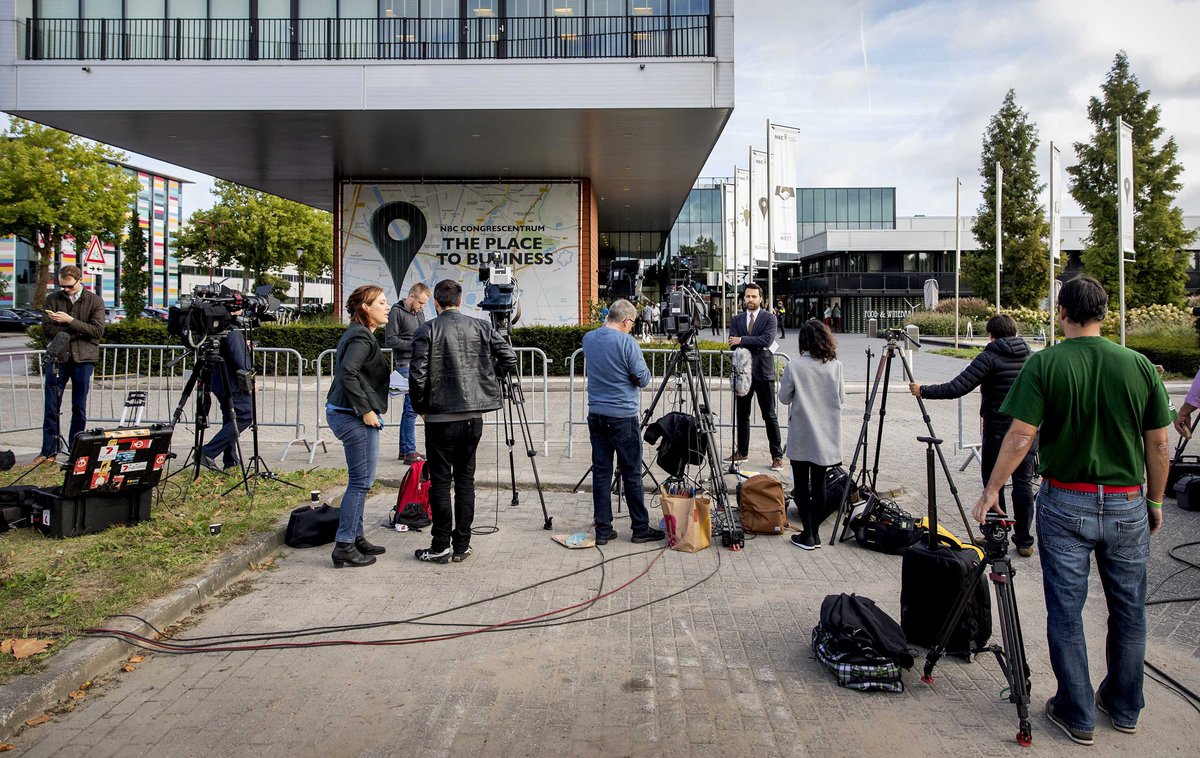
Misil ruso derribó al MH017

Resultado de imagen para mh17 misil rusia jit

AW | 2016 09 28 16:51 | SAFETY / SECURITY

El misil que derribó el vuelo MH17 «llegó desde Rusia», concluye investigación internacional

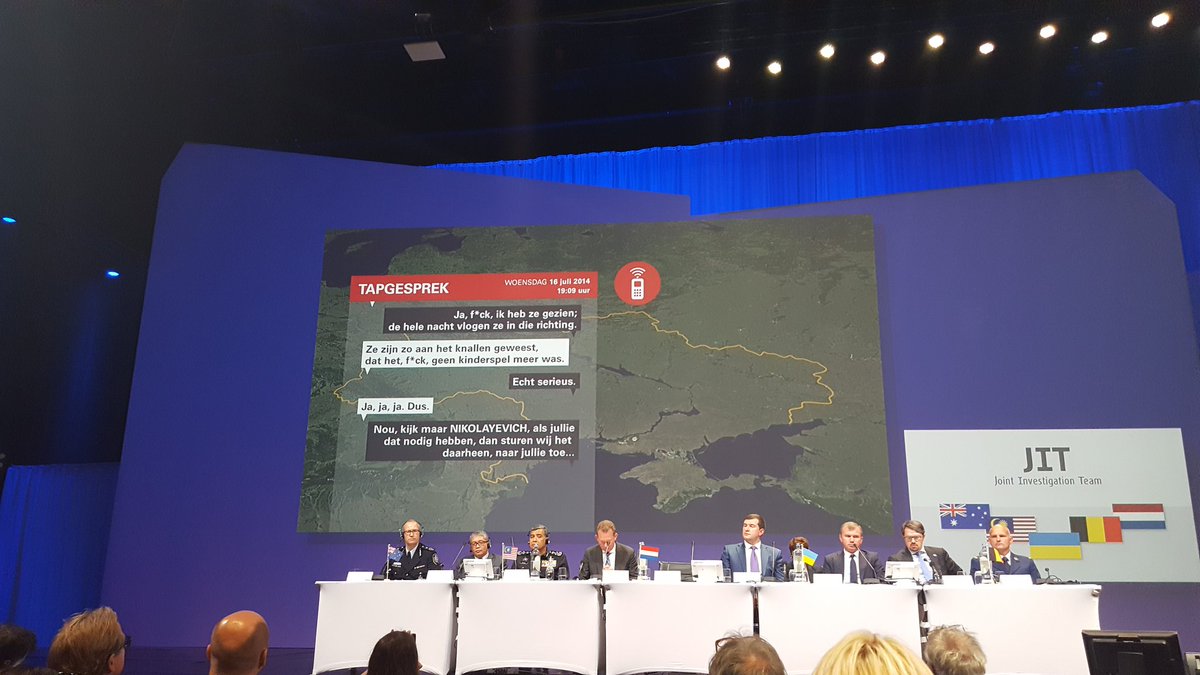
Los expertos internacionales que investigan el derribo del vuelo MH17 en el este de Ucrania, han concluido que el misil que derribó el avión fue lanzado desde territorio controlado por rebeldes prorrusos.

Los 298 pasajeros que iban a bordo del vuelo de Malaysia Airlines entre Ámsterdam y Kuala Lumpur murieron al partirse el aviónen pleno vuelo el 17 de julio de 2014.

Al hacer públicos los resultados preliminares de sus investigaciones este miércoles, el equipo también dijo que el misil y la lanzadera fueron transportados desde Rusia y posteriormente volvieron a territorio de la Federación.

Resultado de imagen para mh17 misil rusia jit

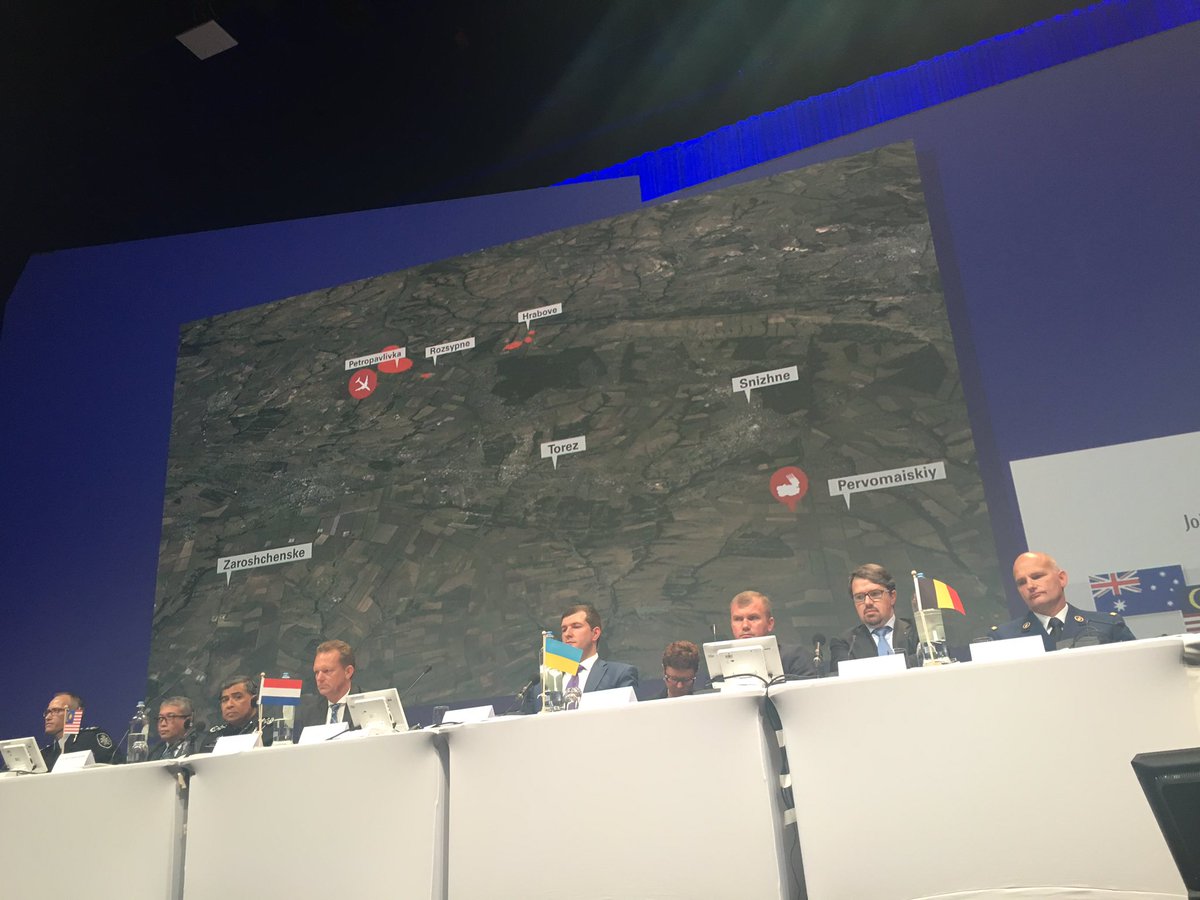
«En base a nuestra investigación criminal, hemos concluido que el vuelo MH17 fue derribado por un misil Buk de la serie 9M83 que llegó desde Rusia», afirmó el investigador policial jefe de Holanda, Wilbert Paulissen.

Rusia calificó las conclusiones de «extremadamente políticas» y dijo que sus mísiles Buk «nunca derribaron» el avión. «Estas conclusiones buscan solo un objetivo: marginalizar aun más la imagen de Rusia en el espacio global político y de información», declaró Leonid Slutsky, director del comité parlamentario ruso para Comunidad de Estados Independientes.

El equipo está liderado por Holanda pero cuenta con miembros de Australia, Bélgica, Malasia y Ucrania. Los investigadores han analizado conversaciones telefónicas, fotos, material de video y otras pruebas para llegar a una conclusión sobre las circunstancias del incidente.

Negativa rebelde
La intención de la investigación es preparar el terreno para un posterior juicio criminal, y en ese contexto los investigadores identificaron a unas 100 personas «vinculadas con el incidente o el transporte del Buk», pero todavía tienen que determinar quién puede ser acusado criminalmente.

Entre otras cosas, deben establecer quién dio la orden de mover la lanzadera hasta esa zona en el este de Ucrania, y quién dió la orden de lanzamiento.

Los investigadores publicaron algunas de las llamadas interceptadas y dijeron que «muchos» testigos vieron cómo la lanzadera llegaba a Ucrania procedente de territorio ruso. También identificaron el lugar de su lanzamiento como un campo ubicado cerca de la aldea de Pervomaiskiy.

Los rebeldes separatistas, que durante esos días se enfrentaban militarmente contra el gobierno de Ucrania, han negado su participación en los hechos.

«Nunca hemos tenido estos sistemas de defensa aérea, ni la gente para operarlos», declaró Eduard Basurin, vicecomandante operativo militar de la rebelde República Popular de Donetsk, a la agencia Interfax.

Mapa

A principios de esta semana, Rusia afirmó poseer datos de radar que mostraban que el misil no se había lanzado desde territorio rebelde, pero los investigadores dijeron no haber tenido acceso a esos datos.

Investigación previa
Una investigación previa, liderada por el Consejo de Seguridad de Holanda, ya había demostrado que fue un misil el que causó el incidente. Lo que se sabe y lo que sigue sin saberse sobre la caída del vuelo MH17 de Malaysia Airlines. Rusia, por su parte, ha ofrecido distintas hipótesis sobre lo ocurrido.

Cuatro días después de la tragedia, presentó fotos de satélite y otras imágenes que sugerían que el avión fue derribado por un misil o un avión militar ucraniano.

El fabricante de misiles Almaz-Antey dijo posteriormente que el avión fue derribado por un Buk, pero uno antiguo que ya no está en manos rusas.

Y este mes de septiembre, el ministerio de defensa ruso publicó supuestos datos procedentes de un radar que sugieren que el avión fue derribado por un misil, pero no uno disparado por los rebeldes.

Resultado de imagen para mh17 misil rusia jit

Russian missile shot down the MH017

The missile that brought down the flight MH17 «came from Russia,» concludes international research

International experts investigating the downing of Flight MH17 in eastern Ukraine, have concluded that the missile that downed the plane was launched from territory controlled by pro-Russian rebels.

The 298 passengers aboard Malaysia Airlines flight between Amsterdam and Kuala Lumpur died snapping aviónen full flight on July 17, 2014.

By making public the preliminary results of his research on Wednesday, the team also said the missile and the shuttle were transported from Russia and subsequently returned to the territory of the Federation.

«Based on our criminal investigation, we have concluded that the flight MH17 was shot down by a Buk missile 9M83 series came from Russia,» said chief police investigator Netherlands, Wilbert Paulissen.

Russia called the findings «very political» and said its missiles Buk «never tore down» the plane. «These conclusions seek only one goal: marginalize further the image of Russia in the global political and information space,» said Leonid Slutsky, director of the Russian parliamentary committee for Commonwealth of Independent States.

The team is led by the Netherlands but has members from Australia, Belgium, Malaysia and Ukraine. The researchers analyzed telephone conversations, pictures, video and other material evidence to reach a conclusion about the circumstances of the incident.

Rebel negative
The intent of the research is to prepare the ground for a subsequent criminal trial, and in that context the researchers identified 100 people «related to the incident or transporting Buk», but have yet to determine who can be charged criminally.

Resultado de imagen para mh17 misil rusia jit

Among other things, they must establish who gave the order to move the shuttle to that area in the east of Ukraine, and who gave the order to launch.

The researchers published some of the intercepted calls and said that «many» witnesses saw the shuttle came to Ukraine from Russian territory.
They also identified the place of its launch as a field located near the village of Pervomaiskiy.

The separatist rebels, who during those days faced militarily against the Ukrainian government, have denied involvement in the events.

«We have never had these air defense systems or people to operate them,» said Eduard Basurin, deputy commander of the military operation rebel Donetsk People’s Republic, told Interfax.

Earlier this week, Russia have said radar data showing that the missile had not launched from rebel territory, but investigators said they have had access to that data.

Previous research
Previous research, led by the Security Council of the Netherlands, had already shown that it was a missile that caused the incident.

What is known and what remains unknown about the fall flight MH17 Malaysia Airlines
Russia, meanwhile, has offered various hypotheses about what happened.

Four days after the tragedy, he presented satellite photos and other images that suggested that the plane was shot down by a missile or a Ukrainian military plane.

The manufacturer Almaz-Antey missiles later said the plane was shot down by a Buk, but an old one that is not already in Russian hands.

And this September, the Russian Defense Ministry published alleged data from a radar suggesting that the plane was shot down by a missile, but not one shot by the rebels. A\W


Ξ A I R G W A Y S Ξ
SOURCE: BCC.com
DBk: Photographic © BCC.com / unian.info
AW-POST: 201609281651AR
A\W A I R G W A Y S ®

Ala Flap confirmada pertenece al vuelo MH-370 de Malaysia Airlines

Resultado de imagen para mh370 wing flap

AW | 2016 09 15 13:23 | AIR INVESTIGATION

MALAYSIA AIRLINES MH370

Resultado de imagen para wsj.com logoLos investigadores han concluido que la pieza que se encuentre fuera de Tanzania en junio es del avión MH370, que desapareció en 2014

SINGAPURE · Un trozo de ala de avión que se encuentra en una isla de Tanzania en junio del vuelo Malasysia MH-370, dijo que los investigadores australianos.

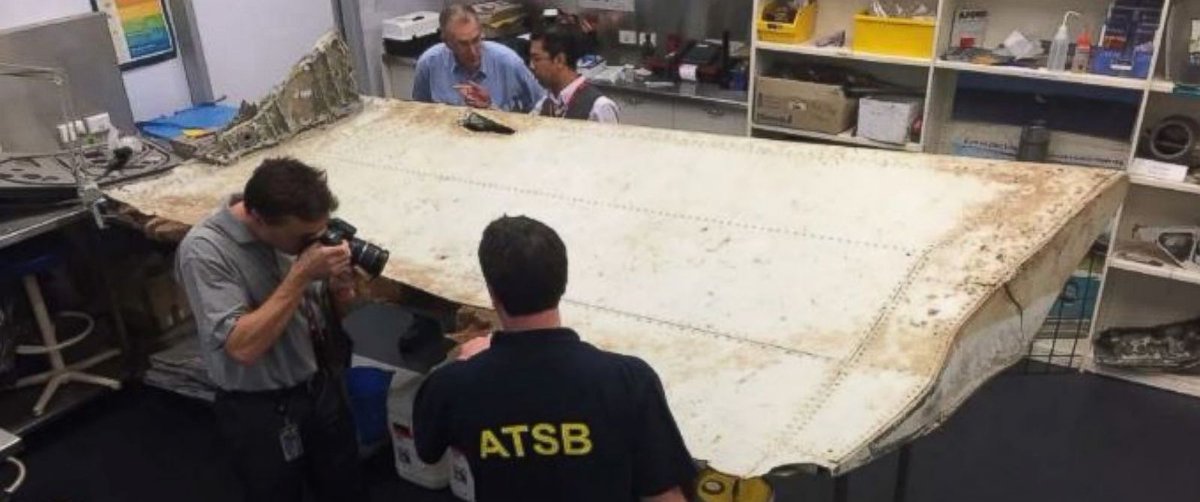
Los expertos de la Oficina de Seguridad del Transporte de Australia han llegado a la conclusión de que la aleta del ala, que se encuentró en la isla de Pemba el 20 de junio, se originó a partir del avión Boeing 777-200ER registrado como 9M-MRO, dijo el ministro de Transporte de Malasia Liow Tiong Lai en un comunicado el jueves.

Investigadores australianos habían dicho anteriormente la solapa, si se confirma que desde el vuelo 370, que ofrecen la mejor nueva pista para los momentos finales del chorro , incluyendo si estaba bajo control del piloto cuando se hundió.

Aparte de algunos escombros, algunas pistas han surgido sobre el paradero del avión, que desaparecieron en el camino de Pekín a Kuala Lumpur el 8 de marzo de 2014, llevando 239 pasajeros y la tripulación.

los datos vía satélite de comunicación sugiere que los vuelos terminado miles de millas fuera de curso en el Océano Índico meridional, donde se está buscando más de 46.000 millas cuadradas (120.000 kilómetros cuadrados) de fondo del océano. Sin embargo, no hay ninguna explicación aún para las aparentes curvas cerradas hechas por el plano alrededor de una hora en lo que a ese punto que aparentemente era un vuelo de rutina.

La búsqueda del avión perdido puede ser suspendido por el final del año si el área actual no da resultados, Australia, Malasia y China dijeron en un comunicado conjunto el 22 de julio.

El Sr. Liow dijo que varios números de parte, además de la apariencia física, las dimensiones y la construcción confirmaron la pieza encontrada en Tanzania es una sección interior del flap exterior de la falta Boeing 777 de chorro.

«Un examen más detallado de los restos continuará, con la esperanza de que una prueba más posible que se descubran que pueden proporcionar nuevos conocimientos sobre las circunstancias del vuelo 370», dijo.

La aleta principal es significativa porque el análisis de daño puede determinar la forma en que se interrumpió el avión, según Peter Foley, director del programa para la búsqueda operacional para el vuelo 370 en la ATSB. A diferencia de algunas otras partes recuperaron hasta el momento, la aleta principal se despliega manualmente. Anteriormente se recuperaron piezas incluyen otra parte del ala denomina flaperon. Se encuentra en la isla de la Reunión el año pasado y está siendo examinado en Francia .

Los investigadores creen que el avión no estaba bajo control humano en el momento de su accidente, sobre la base de las comunicaciones entre la aeronave y un Inmarsat satélite PLC. Sin embargo, otra teoría: que el avión estaba en un deslizamiento controlado después de una pérdida de potencia del motor-hasn’t sido descartada, aunque las autoridades consideran que es menos probable.

Mientras que una u otra teoría llevaría a gran parte de la misma área de búsqueda, los bordes variarían; una simulación muestra la aeronave, a partir de 40.000 pies, podría haber ido un extra de 140 millas si bajo control.

Los expertos dice que el descubrimiento de restos miles de millas de distancia del lugar del accidente probable en el Océano Índico meridional es consistente con el modelado del océano de corriente, lo que demuestra que algunos escombros podría haber desplazado tan lejos de la zona de búsqueda. AIRGWAYS ® Icon-AW

Resultado de imagen para mh370 9M-mro

Wing Flap Confirmed as From Malaysia Airlines Flight 370

Investigators have concluded that part found off Tanzania in June is from jet that disappeared in 2014

SINGAPORE · A piece of aircraft wing found on an island off Tanzania in June came from the missing Malaysia Airlines Flight MH-370, Australian investigators said.

Resultado de imagen para mh370 wing flap

Experts from the Australian Transport Safety Bureau have concluded that the wing flap, found on Pemba island on June 20, originated from the Boeing 777-200ER jet registered as 9M-MRO, Malaysian Transport Minister Liow Tiong Lai said in a statement on Thursday.

Australian investigators had earlier said the flap, if confirmed to be from Flight 370, would offer the best new clue to the jet’s final moments, including whether it was under pilot control when it went down.

Apart from some debris, few clues have emerged as to the whereabouts of the plane, which disappeared en route from Beijing to Kuala Lumpur on March 8, 2014, carrying 239 passengers and crew.

Satellite-communication data suggests the flight ended thousands of miles off course in the Southern Indian Ocean, where more than 46,000 square miles (120,000 square kilometers) of ocean floor is being searched. However, there is no explanation yet for the apparent sharp turns made by the plane about an hour into what to that point was apparently a routine flight.

Resultado de imagen para mh370 wing flap
The search for the missing jet may be suspended by the end of the year if the current area doesn’t yield results, Australia, Malaysia and China said in a joint statement on July 22.

Mr. Liow said several part numbers, along with physical appearance, dimensions, and construction confirmed the piece found in Tanzania is an inboard section of the missing Boeing 777 jet’s outboard flap.

“Further examination of the debris will continue, in hopes that further evidence may be uncovered which may provide new insight into the circumstances surrounding Flight 370,” he said.

The main flap is significant because damage analysis may determine how it broke off the plane, according to Peter Foley, program director for the Operational Search for Flight 370 at the ATSB. Unlike some other parts recovered so far, the main flap is deployed manually. Previously recovered pieces include another wing part called a flaperon. It was found on Réunion Island last year and is being examined in France.

Investigators believe the plane wasn’t under human control at the time of its crash, based on communications between the aircraft and an Inmarsat PLC satellite. However, another theory—that the plane was in a controlled glide following a loss of engine power—hasn’t been ruled out, though authorities consider it less likely.

While either theory would lead to largely the same search area, the edges would vary; a simulation shows the aircraft, starting from 40,000 feet, could have gone an extra 140 miles if under control.

Experts says the discovery of debris thousands of miles away from the likely crash site in the Southern Indian Ocean is consistent with ocean-current modeling, which shows that some debris could have drifted that far from the search area. A\W

Ξ A I R G W A Y S Ξ
SOURCE: wsj.com
DBk: Photographic © brunchnews.com / raischstudios.com
AW-POST: 201609151323AR
A\W A I R G W A Y S ®

Aparecen en Madagascar cinco posibles piezas del MH370 de Malaysia Airlines

Resultado de imagen para mh370  searching

AW | 2016 09 12 11:23 | AIR INVESTIGATION

MALAYSIA AIRLINES MH370

mh

Cinco piezas que podrían pertenecer al vuelo MH370 de Malaysia Airlines han aparecido en Madagascar. Dos presentan quemaduras, la primera vez que se ven este tipo de marcas en los restos de este avión, si es que finalmente se confirma la autenticidad de las mismas.

El vuelo MH370 que cubría la ruta de Kuala Lumpur-Pekín desapareció en marzo de 2014 con 239 personas a bordo. Aún no se sabe qué ocurrió pero las investigaciones apuntan a que podría haberse estrellado en el sur del océano Índico tras haber variado su rumbo.

Resultado de imagen para mh370 puzzle pieces

PIEZA ENCONTRADA EN LA ISLA DE MADAGASCAR

Las cinco nuevas piezas fueron encontradas por el buscador Blaine Gibson, que ha remarcado la importancia de que dos de ellas tengan quemaduras, aunque ha apuntado que no está claro si las marcas se produjeron antes de estrellarse o son posteriores al impacto.

Piezas del puzzle

Varias piezas de la aeronave han aparecido en las costas de Asia y África y han sido reconocidas como parte del MH370 aunque no han servido para esclarecer el incidente.

«Aun teniendo en cuenta la importancia de los hallazgos, ninguno de ellos ha proporcionado información que pudiera ser usada para conocer la localización precisa de la aeronave», han asegurado las autoridades responsables de la búsqueda, según informa BBC. En la búsqueda, de más de dos años, no se ha encontrado ninguna parte principal del avión.

Algunos de los investigadores que llevan a cabo la búsqueda submarina han apuntado que creen que el avión no se desplomó sobre el mar sino que se deslizó hasta hundirse, lo que significaría que la búsqueda se ha hecho en una zona errónea y confirmaría que alguien estaba a los mandos.

Las familias de las víctimas, en su mayoría de nacionalidad china, han estado presionando a las autoridades en busca de respuestas desde que desapareció el avión. Por su parte, en julio, las autoridades de Malasia, China y Australia informaron en un comunicado conjunto de que dejarían de buscar si el avión no aparece en la actual zona de búsqueda. AIRGWAYS ® Icon-AW

Madagascar appear in a possible five pieces flying Malaysia Airlines MH370

Five pieces that could belong to Malaysia Airlines flight MH370 have appeared in Madagascar. Two with burns, the first time that such brands are the remains of the aircraft, if finally the authenticity of the same is confirmed.

The flight MH370 that covered the route Kuala Lumpur-Beijing disappeared in March 2014 with 239 people on board. Still it does not know what happened but research suggests that may have crashed in southern Indian Ocean after having changed its course.

The five new pieces were found by the search Blaine Gibson, who has emphasized the importance of two of them have burns, but pointed out that it is unclear whether the marks were produced before crashing or postdate the impact.

Puzzle pieces

Several pieces of the aircraft have appeared on the coasts of Asia and Africa and have been recognized as part of MH370 but have failed to clarify the incident.

«Even taking into account the importance of the findings, none of them have provided information that could be used to know the precise location of the aircraft,» have ensured the authorities responsible for the search, reports BBC. In the search for more than two years, it has not found any principal of the plane.

Some of the researchers who conducted the underwater search have suggested that believe that the plane crashed over the sea but slipped to sink, which would mean that the search has been done in the wrong area and confirm that someone was controls.

The families of the victims, mostly Chinese nationals, have been pressing the authorities for answers since the plane disappeared. Meanwhile, in July, authorities in Malaysia, China and Australia reported in a joint statement that would stop searching if the plane does not appear in the current search area. A\W

Resultado de imagen para telegraaf.com logo

Mogelijk brand aan boord MH370

Nieuwe wrakstukken, die mogelijk afkomstig zijn van vlucht MH370 van Malaysia Airlines, zijn gevonden voor de kust van Madagaskar. Op de stukken zijn duidelijk sporen van verbranding te zien.

Mochten de stukken afkomstig zijn van het toestel dat in maart 2014 verdween, dan wordt duidelijk dat het toestel in brand stond voordat het in zee stortte. Onduidelijk blijft dan nog steeds of de brand de oorzaak is van de crash, of dat de brand pas ontstond nádat het misging.

Amateur-onderzoeker Blaine Gibson, die de taak op zich heeft genomen om het mysterie achter de verdwijning te ontrafelen, heeft al zeker dertien mogelijk wrakstukken gevonden. In totaal werden er 27 gevonden. Aan boord zaten 239 personen. A\W

Ξ A I R G W A Y S Ξ
SOURCE: telegraaf.nl / cuatro.com
DBk: plo.vn  / Airline Ratings, Youtube.com
AW-POST: 201609121123AR
A\W A I R G W A Y S ®

La «Ground Zero» de Manhattan

AW | 2016 09 11 11:48 | AIR INVESTIGATION

ATTACK 11S

El ataque contra el WTC fue un trauma que sumió al mundo entero en las espesuras del miedo: en la primera semana después de la tragedia, las líneas aéreas de los EE. UU. y europeas disminuyeron 70.000 puestos de trabajo. American Airlines y United Airlines, las aerolíneas cuyos aviones fueron utilizados en los ataques, cancelaron 20.000 puestos cada uno. British Airways registró 7000 pérdidas de trabajo y la Virgin Atlántic 1200. El consejo de Turismo mundial (World Travel and Tourism Council) estimó que la demanda de viajes y turismo bajó un 10 % en todo el mundo.

Sin embargo, como lo señaló Raymond Kelly, exdirector de la Policía de New York, la ciudad le enseñó al mundo el significado del concepto de resiliencia. “La ciudad se recuperó de muchas cosas ese mismo año. Para mí fue alucinante ver cómo enseguida la vida continuaba por encima de Canal Street (calle que va de Manhattan a New Jersey). Era una sensación buena, era un “eh, vamos a superar esto”, “vamos a mantener Nueva York tal y como el mundo entero lo ha conocido…”.

Con la reconstrucción del Bajo Manhattan, área donde se ubicaba el WTC, 511 empresas empezaron a mudarse a la zona desde el 2005, entre ellas Conde Nast Publications, Harper Collins, GroupM y Time. En noviembre de 2014 fue inaugurado el edificio Torre de la Libertad – 104 pisos y 542 metros de altura, a donde se han instalado más de 800 compañías de tecnología, publicidad y medios de comunicación e información. En total, ya trabajan allí 310.000 personas en más de 8700 firmas y se espera que ambas cifras sigan subiendo.

La zona, por otro lado, ha dejado de ser exclusivamente comercial, como lo fue hasta el 11-S, cuando el sector era percibido como un lugar exclusivo para el trabajo. Según datos oficiales de la ciudad de New York, de los 25.000 residentes que había en el 2001, se pasó a 61.000 para 2015 y se proyecta un mayor crecimiento.

Por otra parte, el Battery Park y el corredor de la explanada se han convertido en espacios perfectos para practicar deporte. La zona, por supuesto, se ha transformado en un sector residencial en el cual el arriendo de un apartamento no cuesta menos de US$3.000 y su compra no es inferior a los US$600.000.

Al sector, además, llegan más de 9 millones de turistas cada año, y el memorial en honor a las víctimas, que incluye un museo inaugurado en 2014, es el segundo sitio más visitado de Nueva York, después de Times Square.

El bajo Manhattan ha resurgido en contra del terrorismo y el deseo de imponer el miedo de los extremistas.

La gran manzana se blinda
Estados Unidos y las potencias europeas dieron paso a un vertiginoso aumento de sus gastos en defensa luego de los atentados del 11-S. No era para menos: los ataques al WTC demostraban al mundo la capacidad que tenían los grupos terroristas de actuar, básicamente, contra cualquier ciudad en cualquier lugar del mundo.

De acuerdo con cifras del Institituto Internacional de Estudios para la Paz de Estocolmo, Sipri, EE. UU. pasó de tener un gasto de US$312.743 millones en 2001, a US$356.720 millones en 2002. Para 2003 la cifra ascendió a US$415.223 millones y, en 2011, cuando el gasto militar estadounidense alcanzó su punto máximo, fue de US$711.338 millones.

Michael Bloomsberg, alcade de New York entre 2002 y 2013, ordenó la creación de un servicio de inteligencia adscrito a una nueva agencia antiterrorista dentro del Departamento de Policía de la ciudad.

Durante esos años, la agencia pudo desarticular 16 tramas terroristas planeadas por grupos radicales islamistas, que buscaban derribar el puente de Brooklyn, atentar contra el Times Square o la Estatua de la Libertad e inundar el sur de Manhattan.

Además de eso, la Policía de New York se convirtió en la más numerosa del mundo con alrededor de 50.000 uniformados para prestar servicios a una ciudad de 8 millones de habitantes. Es decir, la tasa de policías de New York por cada 100.000 habitantes es de 562, muy por encima del estándar de la ONU que recomienda 300.

Nueva York, además, es escenario de fuertes despliegues de operativos de seguridad en días especiales como el 4 de julio, día de la Independencia de Estados Unidos o el 11 de septiembre.

“Los operativos son de verdad impresionantes y uno puede ver militares y policías en las calles vigilando. Dejar una maleta tirada en cualquier lugar es un acto impensable”, dice Margarita Strong, una caleña que vive en Queens.

La posibilidad de un ataque, por otro lado, ha hecho que los habitantes de New York desarrollen el hábito de denunciar todo comportamiento extraño y sospechoso que vean en la calle. Es la doctrina del “if you see something, say something” (si vez algo, di algo), que se ha ahondado en la conducta de los neoyorquinos.

“Ya es una costumbre. Las personas que vivimos en Nueva York sabemos que a la menor sospecha llamamos a la Policía para que se haga cargo”.

Nueva York, la llamada capital del mundo y la ciudad por excelencia del ‘American way of life’, trata de convertirse todos los días en una gran manzana blindada. AIRGWAYS ® Icon-AW

Ground Zero Manhattan

The attack on the WTC was a trauma that plunged the world into the thickets of fear: in the first week after the tragedy, the airlines of the United States. UU. and they decreased 70,000 European jobs. American Airlines and United Airlines, the airlines whose planes were used in the attacks, canceled 20,000 seats each. British Airways registered 7000 job losses and Virgin Atlantic 1200. The World Tourism Council (World Travel and Tourism Council) estimated that the demand for travel and tourism fell by 10% worldwide.

However, as noted Raymond Kelly, former director of the New York Police, the city taught the world the meaning of the concept of resilience. «The city recovered many things that year. For me it was amazing to see how quickly life went above Canal Street (street which runs from Manhattan to New Jersey). It was a good feeling, was a «hey, let’s get through this», «we will keep New York as the whole world has known …».

With the rebuilding of Lower Manhattan area where the WTC stood, 511 companies started moving into the area since 2005, including Condé Nast, Harper Collins, GroupM and Time. In November 2014 it was inaugurated the building of Freedom Tower – 104 floors and 542 meters high, where they have installed more than 800 technology companies, advertising and media and information. In total, 310,000 people already work there in more than 8,700 signatures and is expected to continue to rise both figures.

The area, on the other hand, has ceased to be purely commercial, as it was until 11-S, when the sector was perceived as a unique place to work. According to official data of the City of New York, of the 25,000 residents who had in 2001, it went to 61,000 by 2015 and further growth is projected.

Moreover, the Battery Park Esplanade corridor have become perfect spaces for sport. The area, of course, has been transformed into a residential area in which the lease of an apartment does not cost less than US $ 3,000 and your purchase is not less than $ 600,000.

The sector also reach more than 9 million tourists each year, and the memorial to honor the victims, including a museum opened in 2014, is the second most visited site in New York, after Times Square.

Lower Manhattan has resurged against terrorism and the desire to impose fear of extremists.

The Big Apple is shielded
United States and European powers gave way to a rapid increase in defense spending after the attacks of 11-S. It was no wonder: the WTC attacks showed the world the ability of terrorist groups had to act basically against any city anywhere in the world.

According to figures from the International Institituto of Peace Studies Stockholm SIPRI, USA. UU. went from an expense of US $ 312,743 million in 2001 to US $ 356,720 million in 2002. By 2003 the figure rose to US $ 415,223 million and in 2011, when US military spending peaked, was US $ 711,338 million.

Michael Bloomsberg, mayor of New York between 2002 and 2013, ordered the creation of an intelligence service attached to a new anti-terrorism agency within the Department of City Police.
During those years, the agency could dismantle 16 terrorist plots planned by Islamic radical groups seeking to topple the Brooklyn Bridge, attacking the Times Square and the Statue of Liberty and flood lower Manhattan.

Besides that, the New York Police became the largest in the world with about 50,000 soldiers to serve a city of 8 million people. That is, the rate of police of New York per 100,000 inhabitants is 562, well above the standard 300 UN recommends.

New York also is the scene of heavy deployments of security operations on special days like July 4th, Independence Day US or 11 September.

«The operations are really impressive and one can see soldiers and police on the streets watching. Leave a roll suitcase anywhere is an unthinkable act, «says Margarita Strong a caleña who lives in Queens.

 «The possibility of an attack, on the other hand, has made the people of New York to develop the habit of denouncing all strange and suspicious behavior they see on the street. It is the doctrine of «if you see something, say something» (if you see something, say something), which has delved into the conduct of New Yorkers.

«It’s a habit. People who live in New York know that inkling call the police to take charge. «

New York, the so-called capital of the world and the city par excellence of the ‘American way of life’, is becoming every day a large armored apple. A\W

Ξ A I R G W A Y S Ξ
SOURCE: elpais.com.co
DBk: Photographic © elpais.com.co
AW-POST: 201609111148AR
A\W A I R G W A Y S ®

15º ANIVERSARIO DEL 11S

maxresdefault

AW | 2016 09 11 01:00 | AIR INVESTIGATION

INFORME ESPECIAL DE LOS ATENTADOS TERRORISTAS DEL 11S QUE CAMBIARON AL MUNDO

Un 11 de septiembre de 2001 el mundo se estremecía con los secuestros de aviones comerciales con el fin terrorista de impactarlos en diferentes blancos, entre ellos el WTC y el Pentágono. Los atentados terrorista del 11S dieron un giro a los acontecimientos del mundo para siempre

Planificación de los atentados terroristas del 11S

Investigaciones oficiales, posteriores a los atentados del 11S permitieron buscar la trama siniestra del peor atentado del mundo.

Cuatro jóvenes universitarios de Hamburgo, de buena familia, cultos y con recursos, emprenden un proceso de radicalización que termina con ellos en un campo de entrenamiento afgano y tramitando un visado a EEUU para cometer la mayor masacre imaginada. Al mismo tiempo, 15 chicos de la Península Arábiga se dejan llevar para hacer la ‘guerra santa’ y acaban siendo reclutados para secuestrar aviones. Y sobre sus cabezas, dirigiéndolo todo, los hilos de los líderes de Al Qaeda, personas inteligentes y maquiavélicas, capaces de convencer a alguien de que se suicide y mate por ellos.

Para llegar a entender sus procesos mentales hay que distinguir entre los terroristas que se formaron en Europa y los que no habían salido del mundo árabe. Los primeros, personas de alto nivel, cultas e indispensables para la acción; carne de cañón, los segundos. Miguel Ángel Cano, experto en terrorismo islámico, ha estudiado a fondo la evolución de esos jóvenes que se radicalizaron en Hamburgo. Él mismo era universitario en Alemania cuando se prepararon los atentados. «Eran inmigrantes de primera generación en Europa que habían venido a estudiar. No llegaron ni mucho menos con la intención de atentar. Ni siquiera tenían antecendentes penales ni estaban en situación irregular. Se fueron radicalizando en Alemania». Su líder fue el egipcio Mohammed Atta, que llegó a Hamburgo en 1992 y estrelló un avión contra las Torres Gemelas casi 10 años después. Una década tuvo que transcurrir para que este alumno brillante, retraído y religioso se radicalizara así.

Según los expertos, los problemas de integración estuvieron en la base de su radicalización. «Se sentían solos en la sociedad de acogida y buscaron el apoyo de los que consideraban sus iguales», afirma Cano. Así, los responsables del 11-S formaron el grupo Sociedad Islámica dentro de la Universidad Técnica de Hamburgo, en la que estudiaban, y se reunían para rezar y discutir la situación del mundo árabe. Fue allí donde tomó fuerza Ramzi bin al Shinbh, compañero de piso de Atta y fuente de propaganda yihadista para el resto —su familia estaba vinculada a Al Qaeda y él se convertiría en organizador de los atentados—.

«Poco a poco, el grupo se aisló del resto de la sociedad alemana, cambiando incluso su aspecto físico. La mezquita de Al-Quds fue otra clave en su conversión. Allí conocieron a Mohammed Haydar Zammar, un sirio-alemán con pasado muyaidín que actuaba como reclutador de Al-Qaeda. Fue él quien se encargó de seleccionar al grupo que viajaría a los campos afganos», explica Miguel Ángel Cano.

Estos reclutadores sí tenían en la cabeza la idea de atentar. Y obsesionaron a sus acólitos con ella, leyendo sus problemas sociales en términos religiosos: Occidente no les admite porque quiere exterminar el Islam. «Entienden la vida en categorías y en su cabeza, Occidente se reduce a cristianismo o cruzada. Se sienten víctimas de una conspiración contra los musulmanes», afirma Javier Jordán, experto de la Universidad de Granada.

«La insatisfacción social, el sentimiento de injusticia y la vinculación de la realidad que viven sus países de origen con ataques de Occidente les lleva a ser blanco fácil para los reclutadores. Sólo en el grupo se sienten integrados», añade Amparo Tortosa, experta en política internacional y terrorismo.

Miguel Ángel Cano advierte de que el caso no fue aislado. Hay miles de ideólogos del yihadismo en Europa. «Actúan como una secta y se aprovechan de la situación de desarraigo de muchos musulmanes. Se aproximan a grupos de jóvenes, se interesan por ellos, organizan reuniones, les ponen vídeos… Poco a poco se van aislando, hasta que acaban cambiando su forma de ver la vida. Cuando ya han asumido esa ideología extrema, terminan de radicalizarse en campos de entrenamiento de Pakistán o Afganistán, como ocurrió con los pilotos del 11-S».

Todo el proceso se cumplió con ellos: el adoctrinamiento en Alemania funcionó y Mohammed Atta, Marwan al Shehhi y Ziad Jarrah —futuros pilotos en los atentados— quisieron ir a Chechenia para hacer la Yihad (guerra santa), pero sus reclutadores les convencieron de que serían más útiles en una acción suicida. Era finales de 1999 cuando los tres jóvenes de Hamburgo llegaron a los campos afganos. Los líderes de Al Qaeda, controlados por Bin Laden, sabían que no podían desperdiciar a aquellos universitarios que hablaban inglés y tenían facilidad para obtener visados. Les contaron el atentado que llevaban años planeando y a, principios del verano de 2000, se mudaron a EEUU para empezar su instrucción de vuelo. Estaban dispuestos a morir por el Islam. Ranzi bin Asid también quiso sumarse a la acción, pero tuvo problemas con el visado y le sustituyó Hani Hanjour, el cuarto piloto, ajeno a Hamburgo.

Estuvieron más de un año en EEUU. ¿Cómo aguantaron tanto tiempo sabiendo que iban a morir? ¿No flaquearon en ningún momento? «Intentaban pasar desapercibidos, no tenían contacto con mezquitas radicales, se afeitaron y cambiaron su vestuario para parecer lo más occidentalizados posible… Sólo se relacionaban entre ellos y ese ‘factor-grupo’ influyó en su fortaleza. La amistad y el compañerismo pesan mucho en situaciones tan extremas. La idea de ‘si ellos lo hacen, cómo no lo voy a hacer yo’, el deseo de no quedar como un cobarde… Es una mentalidad parecida a la del Ejército. Pesa incluso más que la ideología, que era un factor muy importante en Atta —el líder, el más fuerte mentalmente—, pero no tanto en el resto», explica Javier Jordán.

Ziar Rayad fue el único que dudó. «En las cartas que envió a su novia en Alemania se ve que estuvo a punto de abandonar, pero Atta le convenció de que lo que iba a hacer era mucho más importante que cualquier otra cosa que pudiese hacer en su vida», cuenta Cano. Curiosamente, su avión fue el único que no logró su objetivo, estrellándose en Pensilvania. Ziar Rayad era el miembro del grupo que había vivido una transformación más llamativa. Provenía de una acomodada familia libanesa y había tenido una educación liberal. Asiduo a las juergas y a la noche, en 1996 se fue a Alemania para estudiar y llevó una vida occidental. Pero Atta y Bin Asid se cruzaron en su camino.

Al tiempo que los pilotos recibían clases de vuelo en Florida, los dirigentes de Al Qaeda, con Jalid Sheij Mohamed a la cabeza, seleccionaban en Arabia Saudí a los operativos que secuestrarían los aviones, lo que el Gobierno americano llamó el «músculo» de la operación. «Para los pilotos era fundamental la formación, la fortaleza mental, la firmeza y la fidelidad. Eran gente muy seleccionada, pero los secuestradores requerían un perfil menos especializado, por lo que su reclutamiento fue más simple. Eran jóvenes maleables, en la veintena, de diversos perfiles sociales —la mayoría no tenía estudios ni hablaba inglés— y les convencieron de que estaban en guerra con Occidente y debían actuar. Algunos ya habían estado en campos de entrenamiento en Afganistán, ellos sí habrían servido para luchar en Chechenia o cualquier otra misión», explica Javier Jordán.

Una vez reclutados, les dieron cursos para secuestrar los aviones, que incluían el manejo de arma blanca —degollaban corderos para practicar— y les enviaron a EEUU sólo unos meses antes del 11-S —viajaron de dos en dos a partir de finales de abril de 2001—. Sabían que tenían que secuestrar aviones, pero no que iban a usarlos como proyectiles. Dos meses antes de los atentados, los 19 reclutas estaban ya en EEUU. La planificación fue perfecta.

Vuelo 11 American Airlines

Boston – Los Ángeles. Estrellado contra la Torre Norte del WTC

Mohamed Atta, piloto y líder del grupo. 33 años. Nació en Kafr el Sheikh (Egipto). Piloto y líder del grupo. Creció en una familia rica. Desde 1992 estudió en la Universidad de Hamburgo. Estuvo en un campo en Afganistán en 1999. Recibió clases de vuelo en la Escuela de Aviación Huffman (Miami, Florida).

Vuelo 175 United Airlines

Boston – Los Ángeles. Estrellado contra la Torre Sur del WTC

Marwan al-Shehhi. 23 años. Nació en Ras al Khaimah (Emiratos Árabes Unidos). Llegó a Europa en 1996. Muy unido a Mohamed Atta, era uno de los miembros de la célula de Hamburgo. Recibió clases vuelo en Florida, tras ser reclutado en los campos afganos.

Vuelo 77 American Airlines

Dulles (Virginia) – Los Ángeles. Fue estrellado contra el Pentágono

Hani Hanjour. 29 años. Nació en Taif (Arabia Saudí). Piloto. Tenía licencia de conducir expedida en Arizona, donde también recibió clases de vuelo. No integraba la célula de Hamburgo como el resto de pilotos. Había estado antes en EEUU y tenía licencia de vuelo desde años atrás.

Vuelo 93 United Airlines

Nueva Jersey – San Francisco. Se estrelló en Pensilvania

Ziad Samir Jarrah, piloto 26 años. Nació en Al Marj (El Líbano). Familia de clase alta. Su radicalización se aceleró cuando en 1999 viajó a Afganistán con el resto de los de Hamburgo. Mantuvo contacto con su familia y por las cartas a su novia se supo que había tenido dudas.

Los líderes

Jalid Sheij Mohamed, el cerebro

Nació en 1965 en Kuwait. Sobrino de Ramzi Yousef, cerebro de los atentados contra las Torres en 1993. Estudios universitarios en EEUU. Conoció a Bin Laden en Afganistán. Capturado en 2003 en Pakistán y transferido a EEUU; a la espera de juicio en Guantánamo.

Secuencia de los atentados terroristas del 11 de septiembre de 2001

Estados Unidos fue víctima el 11 de septiembre de 2001 del mayor ataque terrorista de su historia. Según el informe final de la Comisión del 11-S, constituida en noviembre de 2002, el número de personas muertas se elevó a 2.973, aunque en el décimo aniversario de la matanza las autoridades homenajearon a 2.977 victimas de los atentados.

Resultado de imagen para 11S

Según el informe final de la Comisión del 11-S, constituida en noviembre de 2002, el número de personas muertas se elevó a 2.973, aunque en el décimo aniversario de la matanza las autoridades homenajearon a 2.977 victimas de los atentados.

A esta cifra hay que añadir los 19 terroristas que secuestraron los aviones y que también murieron en los ataques.

Esta es la secuencia de los hechos más destacados de esa trágica jornada a raíz de los atentados contra las Torres Gemelas de Nueva York y el Pentágono, en Washington.

– 8.45 hora local (12.45 GMT): Un Boeing 767 de American Airlines se estrella contra una de las torres gemelas de Nueva York, sede del emblemático centro financiero World Trade Center, donde trabajan alrededor de 50.000 personas. El avión llevaba 81 pasajeros a bordo y 11 tripulantes. El impacto provocó un espectacular agujero en los últimos pisos del edificio, de 110 plantas, y un enorme incendio.

– 9.03 local (13.03 GMT): Se produce un segundo atentado. Un segundo avión de United Airlines, un boeing 757 de Boston a Los Angeles con 56 pasajeros y 9 tripulantes se estrella contra la torre sur, la otra de las «Twin Towers».

– 9.30 local (13.30 GMT): El presidente de Estados Unidos, George Bush, desde el Estado de Florida, dice que el país ha sufrido «un ataque terrorista».

– 9.43 local (13.43 GMT): Otro avión de American Airlines se estrella en el Pentágono. Cubría la ruta Washington-Los Angeles con 58 pasajeros y 6 tripulantes. Con posterioridad se sabrá que el objetivo de este aparato era la Casa Blanca. Aviación civil decide cerrar todas las operaciones aéreas en los aeropuertos de EEUU.

– 9.45 local (13.45 GMT): La Casa Blanca es evacuada.

– Se decide el cierre de las bolsas estadounidenses.

– 10.05 local (14.05 GMT): La torre sur del complejo World Trade Center se derrumba sobre las calles.

– 10.10 local (14.10 GMT): Se produce un cuarto atentado. Un vuelo de United Arilines de Newark a San Francisco se estrella en Somerset (Pennsilvania), con 38 pasajeros y 7 tripulantes.

– 10.28 local (14.28 GMT): La torre norte se derrumba. Fue la primera en ser atacada. El pánico se extiende por la isla de Manhattan.

– 13.04 local (17.05 GMT): El presidente Bush asegura desde la base aérea de Barksdale (Luisiana) que el Ejército norteamericano se halla en estado de máxima alerta en todo el mundo.

– Las bolsas europeas registran fortísimas pérdidas al término de la jornada. Mientras, el euro se revaloriza frente al dólar y el barril de petróleo eleva su cotización.

– 15.25 local (21.25 GMT): El edificio número 7 del complejo World Trade Center, con 47 pisos de altura, se derrumba a causa de la onda expansiva de los atentados contra las Torres Gemelas.

– 18.05 local (22.05 GMT): Kabul, capital de Afganistán, es atacada por misiles en plena noche. Un portavoz del Pentágono desmiente que Estados Unidos esté detrás de esta operación.

– 19.00 local (23.00 GMT): El presidente Bush llega a la Casa Blanca después de permanecer por motivos de seguridad en bases militares de Luisiana y Nebraska.

– 20.30 local (00.30 GMT): El presidente Bush transmite un mensaje a la nación en el que avisa que Estados Unidos «no distinguirá entre los terroristas que cometieron estos actos y quienes les amparan».

SECUENCIA FOTOGRÁFICA DEL SEGUNDO IMPACTO CONTRA EL WTC

Resultado de imagen para 11S

Resultado de imagen para 11S

Resultado de imagen para 11S

Resultado de imagen para 11S

Resultado de imagen para 11SResultado de imagen para 11S

Resultado de imagen para 11S

PORTADAS DE DIARIOS DEL MUNDO ANUNCIANDO EL ATAQUE TERRORISTA DEL 11S

Resultado de imagen para 11S

Resultado de imagen para 11S

IMÁGENES SATELITAL DE LOS IMPACTOS EN EL WTC
Resultado de imagen para 11SResultado de imagen para 11S

Publican las páginas secretas del informe clasificado sobre el 11S

Los documentos secretos sobre el ataque terrorista más cruel de la historia han sido desclasificados.

El Congreso estadounidense ha publicado las 28 páginas secretas del reporte bipartidista sobre los atentados de 2001 en Estados Unidos. La información estuvo guardada en secreto desde el año 2002.

Una sección del informe indica que miembros destacados del gobierno de Arabia Saudita estuvieron involucrados en la planificación y la financiación de los ataques terroristas.

Los documentos desclasificados confirmaron las sospechas de que los terroristas implicados en los ataques del 11 de Septiembre ―15 de 19 de los cuales eran ciudadanos saudíes― probablemente recibieron apoyo de oficiales de inteligencia saudíes de alto rango.

«En Estados Unidos, algunos de los secuestradores del 11 de septiembre estaban en contacto y recibieron el apoyo o asistencia de individuos que pueden haber estado en contacto con el gobierno de Arabia Saudita», reza el informe.

«Hay información, principalmente de fuentes del FBI, de que al menos dos de esos individuos supuestamente eran agentes de inteligencia de Arabia Saudita», se desprende de las página recién publicadas.

Sin embargo, el documento revela también que «en sus testimonios, ni los testigos de la CIA ni del FBI fueron capaces de identificar definitivamente el grado de apoyo de Arabia Saudita a la actividad terrorista a nivel mundial o dentro de Estados Unidos».

El informe explica que la magnitud de la participación de Arabia Saudita no está clara debido a que el gobierno de Estados Unidos comenzó a «investigar agresivamente» solo después del atentado. Sin embargo, sí enumera a varios destacados saudíes sospechados de haber estado involucrados con el terrorismo.

El periodista Pedro González Munné considera que ocultar dichos datos de la población es parte de la estrategia de la administración estadounidense.

El informe da un resumen detallado sobre el sospechoso oficial de inteligencia Omar Al Bayoumi. El informe cita los archivos del FBI que indican que Al Bayoumi proporcionó «asistencia sustancial» a los secuestradores del 11S, Khalid Al Midhar y Nawaf Al Hazmi, dos de los cinco terroristas que estrellaron el vuelo 77 de American Airlines contra el Pentágono.

Según el informe, Al Bayoumi se reunió con los secuestradores en un lugar público en San Diego «poco después de su encuentro con una persona en el consulado de Arabia Saudita» en 2000.

El sospechoso tuvo «amplios contactos» con establecimientos del gobierno de Arabia Saudita en EE.UU. en este mismo período, y recibió apoyo financiero de una compañía saudí cercana al Ministerio de Defensa de Arabia Saudita.

El papel de Irán en los atentados del 11-S no puede ser ignorado

Es de una ironía escalofriante: el 11 de septiembre conmemoramos la muerte de 3.000 inocentes, cuyas vidas fueron arrebatadas en el peor atentado cometido en nuestra patria. Y, justo al mismo tiempo, nuestro presidente y una minoría del Congreso están a punto de lograr que se apruebe un acuerdo que proporcionará cientos de miles de millones de dólares y camino expedito a las armas nucleares al mismo régimen iraní que planeó y facilitó el horror perpetrado en nuestro territorio el 11 de septiembre de 2001. En vez de aprender de nuestra reciente y dolorosa historia, estamos a punto de firmar un acuerdo que conducirá a más 11-S.

Durante todo este verano, mientras el Congreso ha estado revisando el acuerdo nuclear, nadie ha mencionado siquiera la complicidad de Irán en el 11-S. Debemos contemplarla ahora.

El papel decisivo de Irán en los atentados del 11-S fue expuesto detalladamente en las conclusiones del Tribunal del Distrito en el caso Havlish vs. Ben Laden y otros, una demanda presentada por las víctimas del 11-S contra Al Qaeda, la República Islámica de Irán, Hezbolá y diversas entidades iraníes o respaldadas por Irán. El caso supuso la culminación de años de investigación originada a raíz de la información revelada inicialmente por la comisión del 11-S. La abrumadora evidencia de la complicidad iraní incluía el testimonio de expertos y de un informante que había sido alto cargo del régimen iraní, además de diversos documentos condenatorios, como un memorando de mayo de 2001 en nombre del líder supremo iraní, Alí Jamenei, en el que se discutían informaciones sobre el entonces próximo atentado de Al Qaeda.

Irán comenzó a planear el 11-S ya a mediados de los 80. En esa época los líderes iraníes crearon una fuerza terrorista compuesta por miembros de élite de la Guardia Revolucionaria (CGRI) y del servicio secreto (MOIS) para planear ataques no convencionales contra Estados Unidos. La fuerza terrorista iraní trazó el plan para estrellar aviones Boeing de pasajeros contra el World Trade Center, el Pentágono y la Casa Blanca, además de otros planes para atentar contra la red eléctrica estadounidense y para atacar el país con bombas sucias.

Irán tituló a esos planes Shaitan dar Atash, que en farsi quiere decir “Satán en llamas” o “Satán en el infierno”. Según el régimen iraní, Estados Unidos es Satán.
Al Qaeda se unió a Irán para planear el 11-S al menos una década después de que la fuerza terrorista diseñara el plan. En 1993 los líderes de AQ, Osama ben Laden y Aymán al Zawahiri, se reunieron con el cerebro terrorista iraní, Imad Mugniyah, autoridades del régimen y oficiales de la Guardia Revolucionaria en Jartum (Sudán) para establecer una alianza entre Irán, Hezbolá y Al Qaeda de cooperación y apoyo mutuo en actividades terroristas. La alianza tripartita colaboró para perpetrar una serie de atentados contra Estados Unidos durante los años 90, entre ellos los cometidos contra las torres Khobar, las embajadas estadounidenses en Kenya y Tanzania y el U.S.S. Cole.

Entre otras cosas, Irán compró un simulador de vuelo de un Boeing 757-767 para entrenar a los terroristas del 11-S.

Irán y su peón, Hezbolá, también prepararon el viaje de los terroristas, les proporcionaron visados y pasaportes y los acompañaron en vuelos. Asimismo, organizaron campamentos de entrenamiento para terroristas de Al Qaeda, que incluían unas instalaciones aparte para los miembros saudíes de la organización.

Además, tras el 11-S Irán ayudó a las familias de los líderes operativos de Al Qaeda, incluidos los hijos de Ben Laden, a huir de Afganistán. Irán les dio refugio en el país, que AQ empleó entonces como base de operaciones para dirigir atentados contra las tropas estadounidenses en Irak. Cientos de norteamericanos murieron en esos atentados.

Como señaló el tribunal del caso Havlish, basándose en una declaración de prensa del Departamento del Tesoro estadounidense de 28 de julio de 2011, la Administración Obama llegó a la conclusión de que Irán había ayudado materialmente a Al Qaeda facilitando el transporte de dinero y terroristas.

Aparte del 11-S, Irán planeó otros atentados en suelo estadounidense. En 2011 el régimen fue sorprendido cuando intentaba contratar a un cártel mexicano de la droga para que asesinara al embajador saudí (en un restaurante en el que habrían muerto norteamericanos inocentes) y para atentar contra las embajadas saudí e israelí en Washington D.C.

Si el Congreso no vota en contra del acuerdo con Irán, es probable que Norteamérica sufra muchos más atentados, peores incluso que el horror que sufrimos hace 14 años. Sin duda, Irán empleará al menos una fracción de los cientos de miles de millones que recibirá conforme al acuerdo para llevar a cabo más planes de “Satán en llamas”.

Tenemos muy poco tiempo antes de que el Congreso vote el acuerdo. Cada uno de nosotros debe rogar a cada senador y a cada congresista que vote en contra del mismo. Debemos recordar al Congreso el papel destacado de Irán en los terribles atentados del 11-S cometidos en nuestro país. No podemos permitirnos proporcionar a Irán los medios para que nos vuelva a atacar.

El avión olvidado de American Airlines que se impactó en el Pentágono

Cuatro aviones secuestrados por la red Al Qaeda fueron utilizados para atentar contra EU, uno de ellos se impacto contra el Pentágono, sede del departamento de Inteligencia

IMPACTO DEL VUELO AA77 DEL BOEING 757-200 DE AMERICAN AIRLINES CONTRA EL PENTÁGONO

Boeing 757 con 64 personas a bordo fue secuestrado por cinco saudíes, cuando llevaba 35 minutos de vuelo. Piloteado por Hani Hanjour de Arabia Saudí se impactó el 11 de septiembre contra el Pentágono en Virginia.

Se trataba del vuelo 77 de American Airlines que volaba desde el aeropuerto internacional Washington-Dulles hacia el de Los Ángeles.

El entonces mandatario de Estados Unidos, George Bush, se encontraba en una primaria en Sarasota, Florida, cuando recibió la noticia del impacto de dos aviones en el World Trade Center de Nueva York.

Para el momento en el que el tercer avión, el vuelo 77 de American Airlines, se estrelló contra la fachada occidental del Pentágono, sede del departamento de inteligencia de Estados Unidos, ya habían sido perpetrados dos ataques terroristas contra las torres gemelas del WTC.

Dichos actos obligaron a que todos los vuelos hacía Estados Unidos fueran suspendidos y aquellos que se encontraban volando sobre territorio norteamericano fueran obligados a hacer aterrizaje forzoso.

189 personas murieron en aquel funesto suceso, 64 pasajeros del vuelo 77 de American Airlines y 125 personas del edificio. Mismas que son recordadas en el Pentagon Memorial, un parque que alberga 189 bancos, uno por víctima.

Amenazan con demandar en EU por el 11S

La iniciativa para que las familias de las víctimas del atentado demanden a Arabia Saudita debe ser aprobada por el presidente Barack Obama

Las familias y allegados de víctimas de los atentados del 11 de septiembre de 2001 podrán demandar ante la justicia estadunidense a otros países, como Arabia Saudita, según una ley aprobada ayer por el Congreso de Estados Unidos.

Al menos 15 de los 19 secuestradores que ejecutaron los ataques terroristas en Nueva York, Washington y Pensilvania eran de origen saudita, aunque el gobierno de ese país ha negado cualquier tipo de papel en los atentados en Estados Unidos.

El proyecto de ley, rechazado por Riad, debe ser todavía revisado por el presidente estadunidense, Barack Obama, quien ya había expresado su oposición a tal medida, puesto que contradice el principio de inmunidad.

Aunque el Presidente no ha emitido una amenaza formal de veto, la Casa Blanca había señalado después de la votación del Senado en mayo pasado que el proyecto de ley difícilmente sería promulgado por Obama, debido a que Arabia Saudita es visto como un aliado clave en la región.

A pesar de la oposición del presidente estadunidense, una iniciativa de ley idéntica había sido aprobada de manera unánime por el Senado, por lo que el destino final dependerá del mandatario, que tiene la opción de vetar la propuesta de legislación.

Si Obama veta la llamada Ley de Justicia contra los Patrocinadores del Terrorismo, se requieren dos terceras partes de los miembros de la Cámara de Representantes y del Senado para invalidar el veto presidencial.

Bajo la ley actual, las víctimas de terrorismo pueden demandar solamente a los países designados por el Departamento de Estado como patrocinadores del terrorismo, como Irán y Siria.

No se ha probado la existencia de una complicidad oficial de Arabia Saudita en los ataques y el reino nunca ha sido implicado formalmente.

Si Obama promulga la iniciativa, los tribunales de Estados Unidos podrían aceptar demandas de familiares de las casi tres mil víctimas mortales y los más de seis mil heridos que causaron los ataques.

Candidata a presidencia de EE.UU. pide nueva investigación sobre 11-S

La aspirante a la Casa Blanca criticó al entonces presidente de EE.UU., George W. Bush, por considerar innecesaria una investigación en un principio.

 La propuesta de Stein se produce en vísperas de los atentados del 11-S en ese país.

La propuesta de Stein se produce en vísperas de los atentados del 11-S en ese país. | Foto: Getty Images

La candidata a la presidencia de Estados Unidos por el Partido Verde, Jill Stein, ha señalado este viernes a través de un comunicado que considera necesaria una nueva investigación sobre los atentados del 11 de septiembre de 2001, y que «no esté dominada por intereses en proteger la reputación y las carreras de las comunidades diplomáticas y de inteligencia».

Asimismo, en su comunicado, la candidata criticó al entonces presidente de EE.UU., George W. Bush, por considerar innecesaria una investigación en un principio y cuando la ordenó esta fue «blanqueada como un servicio público».

De igual forma, la aspirante a la Casa Blanca tachó de «una estafa a la nación», en el documento, haciendo referencia a un reportaje sobre la comisión de investigación en una revista de periodismo en profundidad de ese país.

En este sentido, Stein resaltó que los codirectores de la comisión que investigó los atentados del 11-S escribieron un libro donde aseguraban que desde la Administración de EE.UU. no se destinaron los fondos ni el tiempo, ni se les dio acceso a información clasificada.

«Bajo nuestra administración una nueva comisión tendría acceso a las considerables investigaciones independientes que han surgido en los últimos 15 años. Queremos crear una comisión independiente, no una dominada por miembros con interés en proteger la reputación y la carrera de la comunidad diplomática y de inteligencia», aseguró la candidata.

La propuesta de Stein se produce en vísperas de los atentados del 11-S, en la misma jornada en que el Congreso estadounidense aprobó la llamada Ley de Justicia contra los Patrocinadores del Terrorismo (JASTA, por sus siglas en inglés), que permite a las familias de las víctimas de dichos atentados demandar a Arabia Saudita, país cuya ciudadanía ostentaban 15 de los 19 supuesto terroristas que perpetraron los ataques.

Por último, la candidata dijo que, «el Gobierno de Estados Unidos ha develado finalmente el informe de 28 páginas que ha suscitado cuestiones sobre la inteligencia saudí y su relación con el 11-S». Esto en referencia al informe que fue revelado el pasado mes de julio, de igual forma, agregó que los terroristas del 11-S durante su estancia en Estados Unidos «estuvieron en contacto, recibieron apoyo o asistencia de personas relacionadas con el Gobierno de Arabia Saudí».

En contexto
El Senado de Estados Unidos dio un paso más para abonar el camino de tensiones con Arabia Saudita, tras aprobar el pasado martes por unanimidad un proyecto de ley que permitirá demandar a la nación árabe por su posible responsabilidad en los atentados del 11 de septiembre de 2001.

El 11 de septiembre de 2001, Pensilvania, Washington y Nueva York fueron víctimas de atentados terrorista perpetrados por Al Qaeda, pero fue esta última ciudad la que sufrió las peores consecuencias con más de 2 mil muertos, entre los que se encontraban en las Torres Gemelas del World Trade Center, los aviones que impactaron contra ellas y los bomberos y rescatistas que acudieron al lugar del ataque.

Fuerte amenaza de Al Qaeda a EE.UU: «Habrá miles de 11-S»

En un nuevo aniversario del atentado que cambió al mundo, el jefe de la organización terrorista, Ayman Al Zawahiri, señaló que el 11 de septiembre «se repetirá miles de veces».

El jefe de Al Qaeda, Ayman Al Zawahiri, amenazó este viernes a Estados Unidos con repetir los ataques del 11 de septiembre «miles de veces», en un video difundido con ocasión del 15º aniversario de los mortales atentados de Nueva York.

El 11 de septiembre es «el resultado de vuestros crímenes contra nosotros», afirmó Ayman Al Zawahiri en un video difundido en cuentas yihadistas de internet y dirigiéndose a Estados Unidos.

Según él, si los «crímenes» continúan, el 11 de septiembre «se repetirá miles de veces».

El 11 de septiembre de 2001, dos aviones comerciales fueron desviados y precipitados contra las torres gemelas del World Trade Center de Nueva York, acabando con la vida de 2.753 personas. El mismo día, un tercer avión se estrelló en Pensilvania y otro en el Pentágono, en las afueras de Washington.

En el video, Zawahiri menciona la política de Estados Unidos hacia los países árabes y musulmanes, denunciando su «ocupación» de tierras en estos países y su apoyo a gobiernos «criminales y corruptos».

Si bien, después del 11 de septiembre, Estados Unidos concentró su lucha antiterrorista contra Al Qaeda y los talibanes afganos, en la actualidad combate prioritariamente al grupo yihadista Estado Islámico (EI), gran rival de Al Qaeda, que ocupa grandes extensiones de territorio en Siria e Irak.

ThinThread, el programa secreto que podría haber evitado los atentados del 11S

La NSA desmontó tres semanas antes de los ataques un proyecto que podría haber detectado lo que iba a ocurrir para apostar por otro menos efectivo, más caro y externalizado

3016 fallecidos. Dos guerras cuyos dramáticos efectos todavía se sienten desde Mosul hasta Niza. La pérdida, quizás para siempre, de la privacidad de nuestras comunicaciones. Ese es el catastrófico balance de los atentados del 11S . Pero, ¿fue Osama Bin Laden el único responsable de la tragedia? Según sostiene el exanalista de la Agencia Nacional de Seguridad (NSA) William “Bill” Binney, los atentados del 11 de septiembre podrían haberse evitado, pero una combinación de negligencia e intereses espurios impidieron ver las señales.

No se trata de una nueva teoría de la conspiración de las muchas que circulan a cerca de los ataques. Mucho antes que Edward Snowden, Binney ya dio la voz de alarma sobre las dudosas prácticas de la archipoderosa agencia. Este experto en desencriptación de datos, considerado uno de los mejores matemáticos de la historia de la NSA, protagoniza el documental austriaco A good american , en el que explica cómo los datos estaban ahí, sobre la mesa, pero nadie hizo nada por interpretarlos.

No se trata de una nueva teoría de la conspiración de las muchas que circulan a cerca de los ataques

Durante los años 90, Binney desarrolló un sofisticado programa llamado ThinThread para recopilar datos que era capaz de proporcionar pistas en tiempo real de posibles amenazas terroristas. El programa era capaz de rastrear absolutamente todas las comunicaciones mundiales y establecer relaciones entre ellas. Habían creado el Gran Hermano perfecto, pero conscientes de los peligros para la privacidad de los ciudadanos, decidieron encriptar las comunicaciones de tal manera que el sistema sólo recopilara información sobre sospechosos.

ThinThread recogía datos de forma legal, efectiva y barata, no obstante, la dirección de la NSA decidió desmontar el proyecto tres semanas antes de los atentados. ¿El motivo? El General Michael Hayden, por entonces director de la agencia, decidió dar un giro a sus prioridades y apostar por un nuevo programa, el Trailblazer, desarrollado por contratistas externos (muchos de ellos agentes de la NSA retirados), mucho más caro, sin filtros para la privacidad de los ciudadanos y cuyos resultados, según los resultados de un informe del Congreso publicado años después de los atentados, dejaban mucho que desear. Mucha gente se hizo rica con aquel proyecto fallido.

ThinThread recogía datos de forma legal, efectiva y barata, no obstante, la NSA decidió desmontar el proyecto
Esta decisión, muy contestada desde el primer momento por miembros del Congreso como Diane Roark, tuvo consecuencias catastróficas. Días después del 11S, Binney y su equipo demostraron que si se hubiera utilizado el ThinThrean, se hubieran detectado datos que podrían haber puesto a las agencias de inteligencia sobre la pista de Osama Bin Laden. Los resultados de aquella prueba todavía están clasificados y no son accesibles al público.

Binney y su equipo aceptaron su ‘jubilación’ de la NSA poco después, pero presentaron una queja ante el Inspector General del Departamento de Defensa por el despilfarro, el fraude y los abusos del programa Trailblazer, y por el hecho de que ya existía un prototipo exitoso, pero se ignoró deliberadamente. La denuncia fue aceptada y se inició una investigación que duró hasta mediados de 2005. Los resultados de aquella pesquisa siguen siendo secretos en su mayoría, ya que sólo se hizo público un informe en el que faltaba el 90% de la información, que se consideró clasificada por los peligros para la seguridad nacional.

En 2007 agentes armados del FBI irrumpieron en los domicilios de las cuatro personas que habían registrado aquella queja – William Binney, J. Kirk Wiebe, Ed Loomis y Diane Roark-, a los que se les requisó toda la información que tenían a cerca de la NSA.

Con el proyecto Trailblazer, los ciudadanos perdieron el derecho a la privacidad de sus comunicaciones

Con la puesta en marcha del proyecto Trailblazer, y en el nombre de la seguridad y la lucha contra el terrorismo, los ciudadanos de todo el mundo perdieron el derecho a la privacidad de sus comunicaciones. Uno de los pilares de la democracia se sacrificó por un supuesto bien común. En 2013, un joven exanalista de la NSA, Edward Snowden, revelaba al mundo el espionaje masivo de las comunicaciones que el gobierno de los Estados Unidos realizaba con la ayuda de empresas de comunicación y gobiernos europeos.

William Binney y sus excolegas trataron de montar una consultoría de inteligencia, pero la NSA siempre evitó que les contrataran. Edward Snowden vive exiliado en Rusia desde sus revelaciones. El General Michael Hayden es desde 2005 el director de la CIA.

Las aerolíneas europeas continúan sufriendo el impacto del terrorismo

Las aerolíneas europeas siguen sufriendo el impacto de los recientes ataques terroristas en Francia y Bélgica, de acuerdo con las cifras de tráfico aéreo internacional divulgadas por la Asociación Internacional de Transporte Aéreo (IATA) correspondientes a julio. El tráfico creció un 4,1%, el menor de todas las regiones y tres puntos porcentuales por debajo del incremento mundial que fue de un 7,1% en comparación con julio de 2015.

«La demanda se ha visto afectada por los recientes atentados terroristas, así como la inestabilidad política en algunas partes de la región. Asimismo, la demanda de viajes de largo radio a Europa ha bajado, manteniendo la tendencia después de los ataques terroristas, dijo el director general de y CEO IATA, Alexandre de Juniac.

Los datos publicados por IATA sobre el tráfico mundial de pasajeros en julio muestran una aceleración de la demanda respecto a los últimos cinco meses. La cifra de pasajeros por kilómetro transportados (RPK, por sus siglas en inglés) creció un 5,9% interanual. Todas las regiones registraron valores positivos de crecimiento. La capacidad aérea ofertada medida en asientos por kilómetro disponibles (ASK por sus siglas en inglés) aumentó un 6%, y el factor de ocupación se situó en el 83,7%, un 0,1 punto porcentual por debajo del nivel de julio de 2015.

“Tras el descenso de junio, y favorecida por unas tarifas más bajas y el abaratamiento del combustible, la demanda pasajeros internacionales se fortaleció en julio. Y aunque la ocupación aérea −casi en récords históricos− refleja el deseo de viajar, existen algunos factores subyacentes que debemos atender. El impacto negativo del terrorismo en Europa sobre los viajes de larga distancia, el estancamiento de los mercados domésticos maduros o su contracción en Brasil y Rusia son algunos aspectos que empañan la demanda”, señaló Alexandre de Juniac, consejero delegado de la IATA.

Mercado internacional de pasajeros

En concreto, la demanda internacional de pasajeros en julio subió un 7,1% respecto a julio de 2015, por encima del 5,0% registrado en junio. Las aerolíneas de todas las regiones registraron crecimiento. La capacidad total subió 7,3%, y el factor de ocupación se contrajo 0,2% puntos porcentuales, hasta el 83,5%.

Las aerolíneas de Oriente Próximo lideraron el crecimiento con un incremento del 13,1% interanual, dejando atrás el descenso de junio por el impacto del Ramadán. La capacidad aumentó un 15,5% y provocó la caída del factor de ocupación en 1,7 puntos porcentuales, hasta el 78,6%.

Las aerolíneas asiáticas registraron un aumento del 9,8% interanual. La capacidad creció un 8,6% y el factor de ocupación subió 0,9 puntos porcentuales, hasta el 81,7%. Los ataques terroristas en Europa han cambiado las preferencias de los viajeros internacionales asiáticos, que han sustituido los destinos europeos por viajes intrarregionales. Según los datos más recientes, el tráfico entre Asia y Europa cayó en junio un 0,9%, mientras que el tráfico internacional en el interior de Asia alcanzó un 8,1% tras cuatro meses de continuo crecimiento. AIRGWAYS ® Icon-AW

OLYMPUS DIGITAL CAMERA

15TH ANNIVERSARY OF THE 11S

SPECIAL REPORT OF 11S THE TERRORIST ATTACKS THAT CHANGED THE WORLD

A September 11, 2001 the world was shocked by the kidnapping of commercial aircraft with the terrorist to impact them in different targets, including the WTC and the Pentagon. The terrorist attacks of September 11 gave a twist to the events of the world forever

Planning terrorist attacks of September 11

The officers, following the attacks of September 11 investigations allowed to seek the sinister plot of the worst attack in the world.

Four university students in Hamburg, from a good family, cultured and resourceful, undertake a process of radicalization that ends with them in an Afghan training camp and filing a visa to the US to commit the greatest slaughter imagined. At the same time, 15 boys of the Arabian Peninsula are driven to make the ‘holy war’ and end up being recruited to hijack airplanes. And overhead, directing all the threads of the leaders of Al Qaeda, clever and Machiavellian people who can convince someone to commit suicide and kill them.

To get to understand their mental processes must distinguish between the terrorists who were trained in Europe and those who had not left the Arab world. The former high-level people, educated and indispensable for action; cannon fodder, seconds. Miguel Angel Cano, an expert on Islamic terrorism, has thoroughly studied the evolution of these young people who were radicalized in Hamburg. He himself was a university in Germany when the attacks were prepared. «They were first-generation immigrants in Europe who had come to study. They did not get far with the intention of attacking. Even they had criminal antecedents or were illegally. They were radicalized in Germany. » Their leader was the Egyptian Mohammed Atta, who arrived in Hamburg in 1992 and crashed a plane into the Twin Towers almost 10 years later. A decade had to pass before this brilliant, withdrawn and religious and radicalized student.

According to experts, integration issues were at the base of his radicalization. «They were alone in the host society and sought the support of those who considered their peers,» says Cano. Thus, those responsible 11-S formed the Islamic Society group within the Technical University of Hamburg, where they were studying, and gathered to pray and discuss the situation in the Arab world. It was there that took force Ramzi bin al Shinbh, roommate of Atta and source of jihadist propaganda for the rest Her family was linked to Al Qaeda and he would become atentados- organizer.

«Gradually, the group was isolated from the rest of German society, even changing their physical appearance. The Al-Quds was another key in his conversion. There they met Mohammed Haydar Zammar, a Syrian-German with last mujahedeen who acted as a recruiter for Al-Qaeda. It was he who was responsible for selecting the group to travel to the Afghan camps, «explains Miguel Angel Cano.

These recruiters did have in mind the idea of attacking. And his acolytes obsessed with her, reading her social problems in religious terms: the West does not support them because he wants to exterminate Islam. «They understand life in categories and in his head, the West is reduced to Christianity or cross. victims of a conspiracy against Muslims feel, «says Javier Jordan, an expert from the University of Granada.

«The social dissatisfaction, the sense of injustice and linking the reality that their home countries living with attacks from the West leads them to be easy for recruiters white. Only in the group feel integrated, «adds Amparo Tortosa, an expert in international politics and terrorism.

Miguel Angel Cano warns that the case was not isolated. There are thousands of ideologues of jihadism in Europe. «They act as a cult and take advantage of the rootlessness of many Muslims. Approach to youth groups, care for them, organize meetings, put them videos … Little by little they are isolating, until just changing the way they see life. When they have already taken this extreme ideology, end of radicalized in training camps in Pakistan or Afghanistan, as happened with the pilots of 11-S «.

The whole process was fulfilled with them indoctrination in Germany worked and Mohammed Atta, Marwan al Shehhi and Ziad Jarrah -futures pilots in atentados- wanted to go to Chechnya for jihad (holy war), but their recruiters convinced them that would be more useful in a suicidal action. It was late 1999 when three young Hamburg reached the Afghan camps. The leaders of Al Qaeda, controlled by Bin Laden, knew they could not waste those college students who spoke English and had ease of obtaining visas. They told the attack that had spent years planning and, early summer of 2000, moved to the US to begin their flight training. They were willing to die for Islam. Ranzi bin Asid also wanted to join the action, but had visa problems and replaced him with Hani Hanjour, the fourth driver, oblivious to Hamburg.

They were more than a year in the US. How long they endured knowing they were going to die? They did not wavered at any time? «They were trying to go unnoticed, they had no contact with radical mosques, shaved and changed her wardrobe to look more westernized as possible … only related to each other and that ‘factor-group’ influenced his strength. Friendship and companionship weigh much in such extreme situations. The idea of ‘if they do, how they will not do’, the desire not to be a coward … It’s like the Army mentality. Weighs even more than ideology, which was a very important factor in Atta, the leader, the strongest mentally, but not the rest, «explains Javier Jordan.

Ziar Rayad was the only one who doubted. «In the letters he sent to his girlfriend in Germany is that he was about to leave, but Atta convinced him that what he was doing was more important than anything else he could do in his life», says Cano. Interestingly, his plane was the only one not achieved its target, crashing in Pennsylvania. Ziar Rayad was the member who had lived a most striking transformation. He came from a wealthy Lebanese family and had had a liberal education. Assiduous sprees and night, in 1996 went to Germany to study and led a western life. But Atta and bin Asid crossed his path.

While the pilots received flying lessons in Florida, the leaders of Al Qaeda, with KSM to the head, they selected in Saudi Arabia to the operatives would hijack the planes, which the US government called the «muscle» of the operation. «For pilots was essential training, mental strength, steadfastness and fidelity. They were selected people, but the kidnappers required a less specialized profile, so that his recruitment was simpler. Malleable were young, in their twenties, various social profiles -most had no education or speak English-and convinced them that were at war with the West and had to act. Some had already been in training camps in Afghanistan, they themselves would have served to fight in Chechnya or any other mission, «explains Javier Jordan.

Once recruited, they were given courses to hijack aircraft, including handling Stab -degollaban practicar- lambs and sent them to the US just a few months before 11-S -viajaron two at a time from the end of April 2001-. They knew they had to hijack airplanes, but they would not use them as projectiles. Two months before the attacks, the 19 recruits were already in the US. The planning was perfect.

Sequence of the terrorist attacks of September 11, 2001

The United States was victim September 11, 2001 the biggest terrorist attack in its history. According to the final report of the Commission of 11-S, established in November 2002, the number of people killed rose to 2,973, although the tenth anniversary of the massacre authorities paid tribute to the 2,977 victims of the attacks.

According to the final report of the Commission of 11-S, established in November 2002, the number of people killed rose to 2,973, although the tenth anniversary of the massacre authorities paid tribute to the 2,977 victims of the attacks.

To this figure must be added the 19 terrorists who hijacked the airplanes and who also died in the attacks.

This is the sequence of the most important events of that tragic day following the attacks on the Twin Towers of New York and the Pentagon in Washington.

– 8.45 local time (12.45 GMT): An American Airlines Boeing 767 crashes into one of the twin towers in New York, home to the financial center landmark World Trade Center, where around 50,000 people work. The plane was carrying 81 passengers and 11 crew. The impact caused a spectacular hole on the top floors of the building, 110 plants and a huge fire.

– Local 9.03 (13.03 GMT): A second attack occurs. A second plane of United Airlines, a Boeing 757 from Boston to Los Angeles with 56 passengers and 9 crew crashes into the south tower, the other of the «Twin Towers».

– Local 9.30am (13.30 GMT): US President, George Bush, from the State of Florida, he says the country has suffered «a terrorist attack».

– Local 9.43 (13.43 GMT): Another American Airlines plane crashes into the Pentagon. Covered the Washington-Los Angeles route with 58 passengers and 6 crew. Later we will know that the purpose of this device was the White House. Civil Aviation decided to close all air operations at US airports.

– Local 9.45 (1345 GMT): The White House is evacuated.

– The closure of US exchanges is decided.

– Local 10.05 (14.05 GMT): The south tower of the World Trade Center collapses on the streets.

– Local 10.10 (14.10 GMT): A fourth attack occurs. Arilines a United flight from Newark to San Francisco crashes in Somerset (Pennsylvania), with 38 passengers and 7 crew.

– Local 10.28 (14.28 GMT): The North Tower collapses. It was the first to be attacked. Panic spreads around the island of Manhattan.

– Local 13.04 (17.05 GMT): President Bush says from Barksdale Air Force Base (Louisiana) that the US military is on high alert worldwide.

– European shares recorded very strong losses at the end of the day. Meanwhile, the euro strengthens against the dollar and oil barrel raises its price.

– Local 15.25 (21.25 GMT): The Building 7 World Trade Center, with 47 stories high, collapses because of the shock wave of the attacks on the Twin Towers.

– Local 18.05 (22.05 GMT): Kabul, capital of Afghanistan, is attacked by missiles in the night. A Pentagon spokesman denies that the US is behind this operation.

– Local 19.00 (23.00 GMT): President Bush arrives at the White House after staying for security at military bases in Louisiana and Nebraska.

– Local 20.30 (00.30 GMT): President Bush sends a message to the nation in which warns that the US «will not distinguish between the terrorists who committed these acts and those who Amparan them.»

Publish the secret pages of classified report on the 11S

The secret documents about the cruelest terrorist attack in history have been declassified.

The US Congress has released 28 pages of secret bipartisan report on the 2001 attacks in the United States. The information was kept secret since 2002.

A section of the report indicates that senior members of the Saudi government were involved in the planning and funding of terrorist attacks.

The declassified documents confirmed suspicions that the terrorists involved in the attacks of September 11 -15 19 of whom were Saudis citizens probably were supported by Saudi intelligence officers of high rank.

«In the US, some of the Sept. 11 hijackers were contacted and received support or assistance from individuals who may have been in contact with the government of Saudi Arabia,» reads the report.

«There is information, mainly from FBI sources, that at least two of these individuals were allegedly intelligence agents Saudi Arabia,» it is clear from the newly published page.

However, the document also reveals that «on their testimonies, the witnesses nor the CIA nor the FBI were able to definitively identify the degree of support from Saudi Arabia to terrorist activity globally or within the United States.»

The report explains that the extent of the participation of Saudi Arabia is unclear because the US government began to «aggressively investigate» only after the attack. However, it lists several prominent Saudis suspected of being involved with terrorism.

Pedro Gonzalez Munne journalist believes that hide the data of the population is part of the strategy of the US administration.

The report gives a detailed intelligence official suspected of Omar Al Bayoumi summary. The report cites FBI files indicating that Al Bayoumi provided «substantial assistance» to the September 11th hijackers, Khalid Al Mihdhar and Nawaf al-Hazmi, two of the five terrorists who flew on American Airlines Flight 77 into the Pentagon.

According to the report, Al Bayoumi met with the kidnappers in a public place in San Diego «shortly after his encounter with a person at the consulate of Saudi Arabia» in 2000.

The suspect had «extensive contacts» with local government of Saudi Arabia in US During the same period, and received financial support from a nearby Saudi company to the Ministry of Defense of Saudi Arabia.

Iran’s role in the attacks of 11-S can not be ignored

It is a chilling irony: September 11, 3000 commemorating the death of innocent people whose lives were seized in the worst attack in our country. And just at the same time, our president and a minority of Congress are about to reach an agreement that will provide hundreds of billions of dollars and expeditious way to nuclear weapons at the same Iranian regime planned to be approved and facilitated the horror perpetrated in our territory on 11 September 2001. instead of learning from our recent and painful history, we are about to sign an agreement that will lead to plus 11-S.

Throughout this summer, while Congress has been reviewing the nuclear deal, no one has even mentioned Iran’s complicity in 11-S. We must contemplate now.

The decisive role of Iran in the 11-S was exposed in detail the findings of the District Court in the case Havlish vs. Ben Laden and others, a lawsuit filed by the victims of 11-S against Al Qaeda, the Islamic Republic of Iran, Hezbollah and various Iranian or Iranian-backed entities. The case was the culmination of years of research originated following the information initially revealed by the commission of 11-S. The overwhelming evidence of Iranian complicity included expert testimony and an informant who had been senior official in the Iranian regime, as well as several damning documents, including a memorandum of May 2001 on behalf of Iran’s supreme leader, Ali Khamenei, in the that information over then next attack Al Qaeda were discussed.

Iran began planning 11-S and the mid-80s at that time Iranian leaders created a terrorist force composed of elite members of the Revolutionary Guards (IRGC) and the secret service (MOIS) to plan unconventional attacks U.S. Iranian terrorist force drew up the plan to crash Boeing airliners into the World Trade Center, the Pentagon and the White House, airplanes and other plans to attack the US electrical grid and to attack the country with dirty bombs.

Iran titled Shaitan those plans to Atash, which in Persian means «Satan in flames» or «Satan in hell.» According to the Iranian regime, America is Satan.

Al Qaeda joined Iran to plan 11-S at least a decade after the terrorist force design the plan. In 1993 the leaders of AQ, Osama bin Laden and Ayman al Zawahiri, met with the official Iranian terrorist mastermind, Imad Mughniyah, officials of the regime and the Revolutionary Guard in Khartoum (Sudan) to establish an alliance between Iran, Hezbollah and Al Qaeda cooperation and mutual support in terrorist activities. The tripartite alliance helped to perpetrate a series of attacks against the United States during the 90s, including those committed against the Khobar towers, the US embassies in Kenya and Tanzania and U.S.S. Cole.

Among other things, Iran bought a flight simulator of a Boeing 757-767 to train terrorists of 11-S.

Iran and its pawn, Hezbollah, also made the trip terrorists, they provided them with visas and passports and accompanied them on flights. They organized training camps for al Qaeda terrorists, including a separate facility for Saudi members of the organization.

In addition, after 11-S Iran they helped families operating Qaeda leaders, including bin Laden’s children, to flee Afghanistan. Iran gave them refuge in the country, AQ then used as a base to conduct attacks against US troops in Iraq. Hundreds of Americans were killed in those attacks.

As noted by the court in the case Havlish, based on a press statement the US Treasury Department from July 28, 2011, the Obama administration concluded that Iran had materially helped al Qaeda facilitating the transport of money and terrorists.

Aside from 11-S, Iran planned other attacks on US soil. In 2011 the regime was caught when he tried to hire a Mexican drug cartel to assassinate the Saudi ambassador (in a restaurant that would have killed innocent Americans) and to attack the Saudi and Israeli embassies in Washington D.C.

If Congress does not vote against the deal with Iran, it is likely that America suffers many more attacks, worse even than the horror that we suffered 14 years ago. Undoubtedly, Iran will use at least a fraction of the hundreds of billions that will receive under the agreement to carry out more plans «Satan in flames.»

We have very little time before Congress votes on the agreement. Each of us should pray to every senator and every congressman to vote against it. Congress must remember the important role of Iran in the terrible attacks of 11-S committed in our country. We can not afford to provide Iran the means to attack us again.

The forgotten American Airlines plane that hit the Pentagon

Four planes hijacked by al Qaeda were used to attack the US, one of them crashed into the Pentagon, headquarters of the Department of Intelligence

 Boeing 757 with 64 people aboard was hijacked five Saudis, when he had 35 minutes of flight. He piloted by Saudi Arabian Hani Hanjour crashed on Sept. 11 against the Pentagon in Virginia.

It was the American Airlines Flight 77 flying from Washington-Dulles International Airport towards Los Angeles.

The then US president, George Bush, was in an elementary school in Sarasota, Florida, when he received the news of the impact of two airplanes into the World Trade Center in New York.

For the moment the third plane, American Airlines Flight 77, crashed into the west facade of the Pentagon, headquarters of the department of US intelligence, had already been perpetrated two terrorist attacks on the twin towers of the WTC.

Such acts forced all flights to the United States were suspended and those who were flying over US territory were forced to make emergency landing.

189 people died in that fateful incident, 64 passengers of American Airlines Flight 77 and 125 people in the building. Same that they are remembered in the Pentagon Memorial, a park that is home to 189 banks, one victim.

They threaten to sue in the US by the 11S

The initiative for the families of the bombing victims to sue Saudi Arabia must be approved by President Barack Obama

Families and relatives of victims of the attacks of September 11, 2001 may sue in the US justice to other countries, such as Saudi Arabia, under a law passed yesterday by the US Congress.

At least 15 of the 19 hijackers who carried out the terrorist attacks in New York, Washington and Pennsylvania were Saudi-born, although the government of that country has denied any role in the attacks in the United States.

The bill, rejected by Riyadh, must still be reviewed by the US President Barack Obama, who had already expressed opposition to such a measure, since it contradicts the principle of immunity.

Although the President has not issued a formal veto threat, the White House had said after the Senate vote last May that the bill would hardly be promulgated by Obama, because Saudi Arabia is seen as a key ally in the region.

Despite the opposition of the US President, an initiative of the same law it had been passed unanimously by the Senate, so that the final destination depends on the president, who has the option to veto the proposed legislation.

If Obama vetoes the so-called Law of Justice against state sponsors of terrorism, two-thirds of the members of the House of Representatives and the Senate are required to override a presidential veto.

Under current law, victims of terrorism can only sue the countries designated by the State Department as sponsors of terrorism, such as Iran and Syria.

It has not proved the existence of an official Saudi complicity in the attacks and the kingdom has never been formally involved.

If Obama enacts the initiative, US courts could accept demands from relatives of the nearly three thousand deaths and more than six thousand wounded that caused the attacks.

US presidential candidate New research calls for 11-S

The aspirant to the White House criticized the then US president, George W. Bush, considering an investigation unnecessary at first.

The presidential candidate US Green Party, Jill Stein, said Friday through a press release that a new investigation into the attacks of September 11, 2001 considered necessary, and that «it is not dominated by interests protect the reputations and careers of diplomatic and intelligence communities. «

Also in his statement, the candidate criticized the then US president, George W. Bush, considering unnecessary investigation initially ordered and when this was «bleached as a public service».

Similarly, the aspirant to the White House branded as «a scam to the nation» in the document, referring to a report on the commission of inquiry in a magazine journalism depth of that country.

In this sense, Stein noted that the co-chairs of the commission that investigated the attacks of 11-S wrote a book that claimed that since the US Administration no funds were allocated neither time nor given access to classified information.

«Under our administration a new commission would have access to considerable independent investigations that have emerged in the last 15 years. We want to create an independent commission, not one dominated by members with an interest in protecting the reputation and career of the diplomatic community and intelligence «said the candidate.

The proposal Stein comes on the eve of the 11-S, on the same day that the US Congress passed the so-called Law of Justice Sponsors of Terrorism (JASTA, for short), which allows families of the victims of such attacks sue Saudi Arabia, a country whose citizenship sported 15 of the 19 terrorists who perpetrated the attacks of course.

Finally, the candidate said that «the US government has finally unveiled the 28-page report that has raised questions about Saudi intelligence and its relationship with 11-S». This in reference to the report that was unveiled last July, likewise, said that terrorists of 11-S during their stay in the United States «were in contact, received support and assistance from people associated with the government of Saudi Arabia «.

In context
The US Senate took a step to pave the way tensions with Saudi Arabia, after passing last Tuesday unanimously a bill that will allow sue the Arab nation for their possible responsibility in the attacks of September 11, 2001 .

On September 11, 2001, Pennsylvania, Washington and New York were the victims of terrorist attacks by Al Qaeda, but it was the latter city that suffered the worst consequences with more than 2,000 deaths, including those who were in the Twin Towers World Trade Center, the planes hit them and firefighters and rescue workers who rushed to the scene of the attack.

Strong threat from Al Qaeda to the US: «There will be thousands of 11-S»
10/09/2016 | 6:30 | Within hours of a new anniversary of the attack that changed the world, the head of the terrorist organization, Ayman Al Zawahiri said the September 11 «will be repeated thousands of times.»

The head of Al Qaeda, Ayman Al Zawahiri, threatened Friday to the United States with repeated attacks of September 11 «a thousand times» in a video released on the occasion of the 15th anniversary of the deadly attacks in New York.

September 11 is «the result of your crimes against us,» said Ayman Al Zawahiri in a video released on jihadist Internet accounts and heading to the United States.

According to him, if the «crimes» continue, on September 11 «will be repeated thousands of times.»

On September 11, 2001, two commercial planes were diverted and precipitated into the twin towers of the World Trade Center in New York, claiming the lives of 2,753 people. The same day, a third plane crashed in Pennsylvania and one into the Pentagon outside Washington.

In the video, Zawahiri mentions the US policy towards the Arab and Muslim countries, denouncing its «occupation» of land in these countries and their governments support «criminal and corrupt».

While, after 11 September, the United States concentrated its anti-terrorism fight against al Qaeda and the Afghan Taliban, now primarily combat the jihadist group Islamic State (EI), main rival of Al Qaeda, occupying large tracts of territory in Syria and Iraq.

ThinThread, the secret program that could have prevented the September 11 attacks

The NSA dismantled three weeks before the attacks a project that could have detected what would happen to bet on other less effective, more expensive and externalized

3016 deceased. Two wars whose dramatic effects are still felt from Mosul to Nice. Lost, perhaps forever, the privacy of our communications. That is the catastrophic balance of the September 11 attacks. But was Osama Bin Laden solely responsible for the tragedy? According holding exanalista of the National Security Agency (NSA) William «Bill» Binney, the attacks of Sept. 11 could have been avoided, but a combination of negligence and spurious interests prevented see the signs.

This is not a new conspiracy theory of many that circulate about the attacks. Long before Edward Snowden, Binney and gave the alarm about the dubious practices of the agency archipoderosa. This expert in decrypting data, considered one of the best mathematicians in the history of the NSA, stars Austrian documentary A good American, which explains how the data were there, on the table, but no one did anything to interpret.

This is not a new conspiracy theory of many that circulate about attacks

During the 90s, Binney developed a sophisticated program called ThinThread to collect data that could provide clues in real time of possible terrorist threats. The program was able to completely track all global communications and relationships between them. They had created the perfect Big Brother, but aware of the dangers to privacy of citizens, decided to encrypt communications so that the system will only gather information on suspects.

ThinThread data collected legal, effective and inexpensive way, however, the direction of the NSA decided to dismantle the project three weeks before the attacks. The reason? General Michael Hayden, then director of the agency, decided to turn to your priorities and go for a new program, the Trailblazer, developed by outside contractors (many NSA agents removed), much more expensive, unfiltered for the privacy of citizens and whose results, according to the results of a congressional report published years after the attacks, they left much to be desired. Many people became rich with this failed project.

ThinThread collected legal data, effective and inexpensive way, however, the NSA decided to dismantle the project.

This decision, very contested from the outset by members of Congress as Diane Roark, had catastrophic consequences. Days after September 11th, Binney and his team showed that if we had used the ThinThrean, data have been detected that could have put intelligence agencies on the trail of Osama Bin Laden. The results of that test are still classified and not accessible to the public.

Binney and his team accepted his ‘retirement’ from the NSA shortly after, but filed a complaint with the Inspector General of the Department of Defense for waste, fraud and abuse of the Trailblazer program, and the fact that there was already a prototype successful, but it was ignored deliberately. The complaint was accepted and an investigation that lasted until mid 2005. The results of that investigation remain secret mostly began, as they only made public a report missing 90% of the information, which was considered classified by the dangers to national security.

In 2007 armed FBI agents raided the homes of the four people who had registered that complaint – William Binney, J. Kirk Wiebe, Ed Loomis and Diane Roark, who were seized all the information they had about the NSA.

With the Trailblazer project, citizens lost their right to privacy of communications

With the launch of the Trailblazer project, and in the name of security and combating terrorism, citizens around the world lost the right to privacy of their communications. One of the pillars of democracy is sacrificed for a common course. In 2013, a young exanalista NSA, Edward Snowden, revealed to the world the massive spying communications that the government of the United States carried out with the help of media companies and European governments.

William Binney and his former colleagues tried to mount a consulting intelligence, but always prevented the NSA hired them. Edward Snowden lives in exile in Russia since his revelations. General Michael Hayden is since 2005 the director of the CIA.

European airlines continue to suffer from the impact of terrorism

European airlines continue to suffer the impact of the recent terrorist attacks in France and Belgium, according to figures released by international air traffic for July the International Air Transport Association (IATA). Traffic grew by 4.1%, the lowest of all regions and three percentage points below the global increase was 7.1% compared to July 2015.
«Demand has been affected by the recent terrorist attacks and political instability in some parts of the region. In addition, demand for travel long haul to Europe has gone down, maintaining the trend after the terrorist attacks, he said CEO and CEO of IATA, Alexandre de Juniac.

Data released by IATA worldwide passenger traffic in July show an acceleration of demand for the last five months. The number of transported passengers per kilometer (RPK, for its acronym in English) grew by 5.9% yoy. All regions posted positive growth values. Air capacity offered measured in available seat kilometers (ASK for its acronym in English) increased by 6%, and passenger load factor stood at 83.7%, 0.1 percentage point below the level of July 2015.

European airlines continue to suffer from the impact of terrorism

«After the decline in June, helped by lower fares and cheaper fuel, international passenger demand was strengthened in July. And although almost historical-air occupation records reflects the desire to travel, there are some underlying factors that we must address. The negative impact of terrorism in Europe on long-distance travel, stagnant domestic markets mature or contraction in Brazil and Russia are some aspects that tarnish demand, «Alexandre de Juniac, CEO of IATA said.

International passenger market

Specifically, international passenger demand in July rose 7.1% compared to July 2015, up from 5.0% in June. Airlines from all regions recorded growth. Total capacity rose 7.3%, and passenger load factor shrank 0.2% percentage points to 83.5%.

Middle East carriers led the growth with an increase of 13.1% yoy, outpacing the decline in June by the impact of Ramadan. Capacity increased by 15.5% and brought down the load factor by 1.7 percentage points to 78.6%.

Asian airlines recorded an increase of 9.8% yoy. Capacity increased by 8.6% and the load factor rose 0.9 percentage points to 81.7%. The terrorist attacks in Europe have changed the preferences of Asian international travelers, which have replaced European destinations for intra-regional travel. According to the latest data traffic between Asia and Europe it fell in June by 0.9%, while international traffic within Asia reached 8.1% after four months of continuous growth.

Resultado de imagen para 11S WTC

Resultado de imagen para 11S WTC

European airlines continue to suffer from the impact of terrorism

European airlines recorded the worst performance in the sector with an increase in demand of 4.1% yoy, affected by the negative impact of terrorist attacks and political instability in some parts of the region. Traffic is annual growth rate of just 1.4% since March. Capacity increased 4.7%, which brought down the load factor by 0.5 percentage points to 86.7%, which continued to lead the first position.

North American carriers recorded an increase in demand of 4.8%, surpassed by capacity, which grew by 5.1%. As a result, passenger load factor shrank 0.3 percentage points, to 86.1%. International passenger demand grows from March to an annual rate of 8% (seasonally adjusted), favored by the transpacific routes and tourist trips to Central America and the Caribbean.

Demand for Latin American airlines grew by 7.5% year on year, continuing the positive trend of growth following the slowdown in the first quarter. Capacity increased by 4.2% and boosted passenger load factor by 2.6 percentage points to 85.3%.

African airlines saw an increase of 7.4% year relative to the strong upward trend in the seasonally adjusted traffic during the second half of 2015. Capacity grew by 5.9% and load factor climbed 1.0 point percentage to 72.4%, the lowest of all regions.

De Juniac concluded that passenger demand grows in line with the average of the last 10 years, «but the industry faces significant challenges as the impact of terrorist attacks or the weak economic outlook. The aviation develops in a dynamic and volatile stage, where the speed of change is a permanent challenge. We must cope with an innovative vision to successfully solve the great challenges and seize the great opportunities, «he pointed out. A\W

EL DETRÁS DEL ATAQUE TERRORISTA DEL 11S
Después que los sucesos del 11S llenaron las noticias del mundo, mucho se dijo de ello: de armado escénico hasta conspiraciones.

BEHIND THE TERRORIST ATTACK 11S
After the events of 11 September filled world news, much is said about it: armed stage to conspiracies.

Resultado de imagen para 11S WTC

11S, 15 años de una herida sin cerrar   |   11S, 15 years without closing a wound

Resultado de imagen para 11S

Ξ MUSEO MEMORIAL DEL 11S Ξ

Ξ A I R G W A Y S Ξ
SOURCE: A I R G W A Y S / Expansion.mx / Reuters.com
DBk: Photographic © Reuters.com
AW-POST: 201609110100AR
A\W A I R G W A Y S ®