Perspectivas aviación Argentina

AW | 2024 08 04 22:15 | AIRLINES MARKET

Proyecciones low cost aumento de servicio

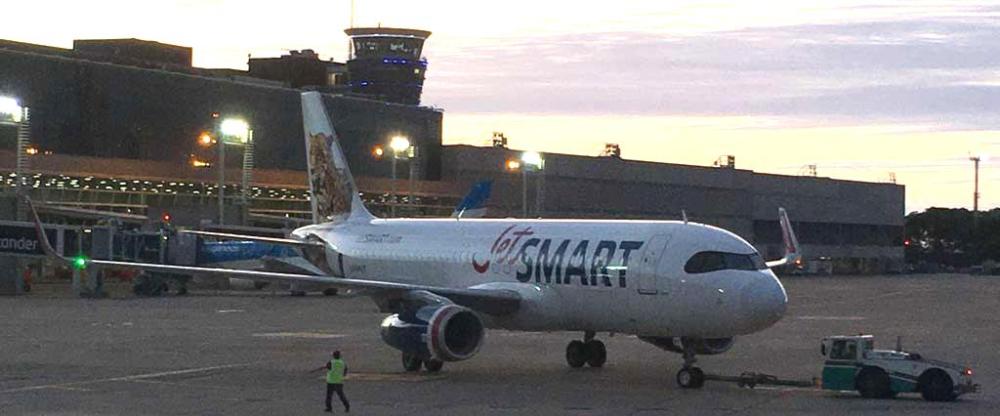
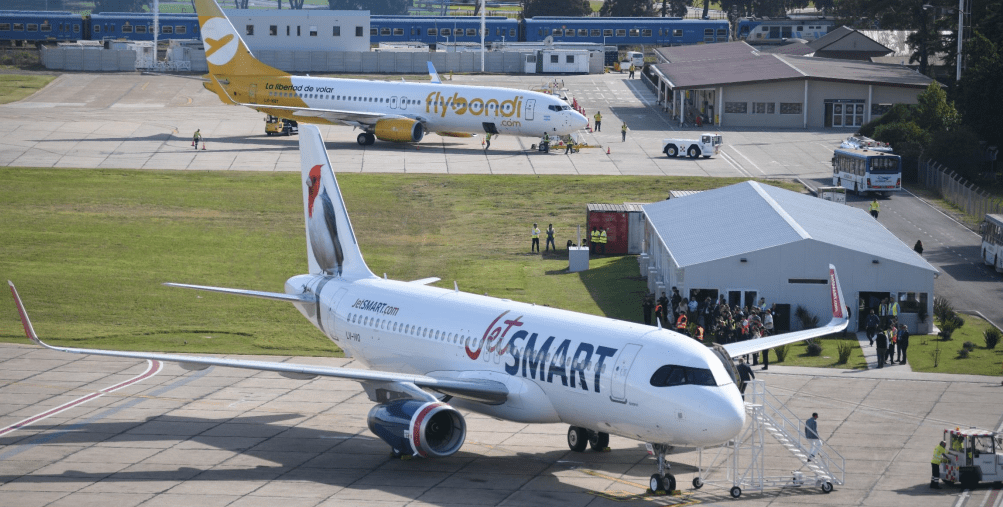
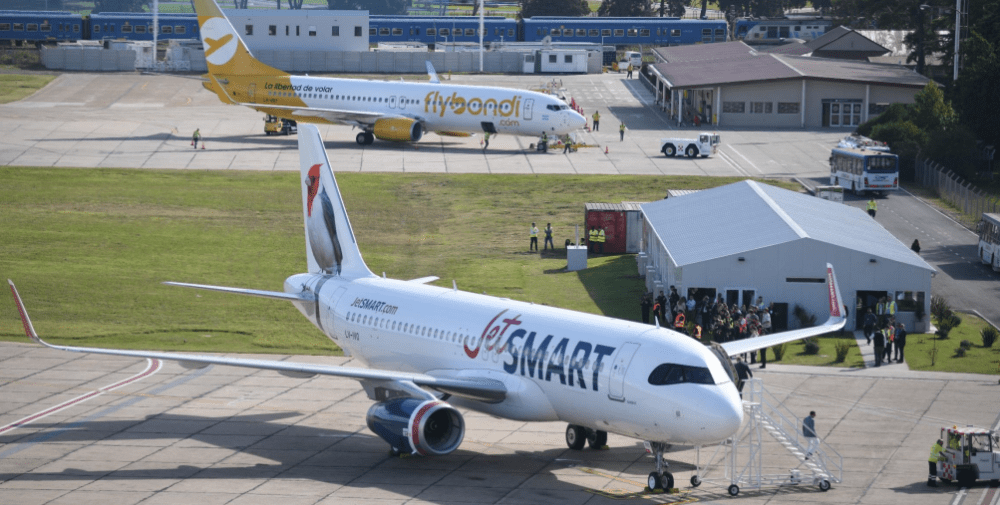
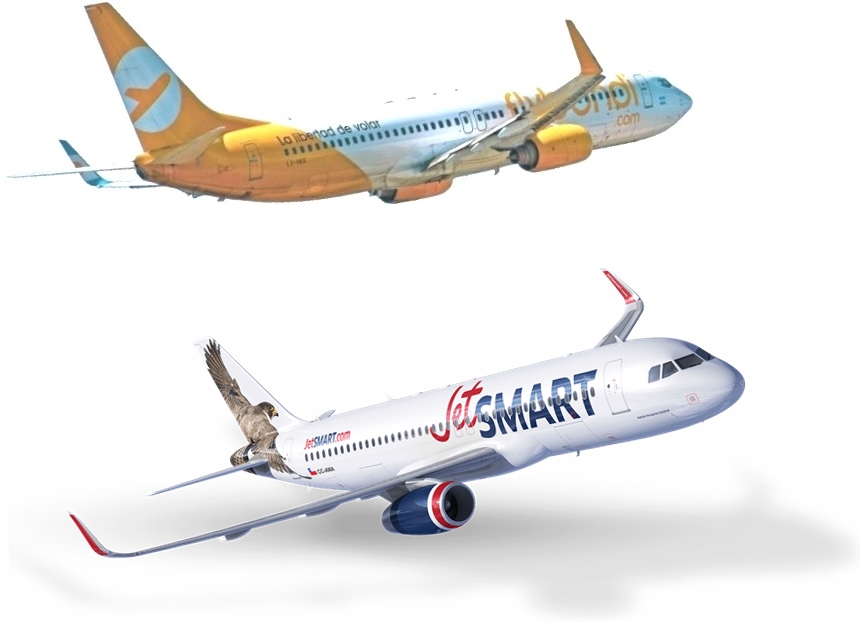
La política de Cielos Abiertos establecida en Argentina continua atrayendo nuevas noticias. Las aerolíneas JetSMART Airlines Argentina sumará dos aviones adicionales, mientras que Flybondi incorporaría cinco aviones en régimen de alquiler.

La aerolínea JetSMART Argentina se encuentra estudiando ampliar el tráfico doméstico en el país, alentados por los cambios en las políticas aéreas en Argentina. Los dos aviones Airbus A320 se sumarán a los ocho que actualmente tiene en el país y la idea es que operen, uno en el Aeropuerto Jorge Newbery (AEP) y el otro en el Aeropuerto Ezeiza (EZE). Los dos nuevos Airbus A320 que traerá JetSMART implican una inversión de US$ 160 millones de Dólares.

El ejecutivo destacó que la Argentina esté poniéndose al día con la regulación de la región y del mundo, y resaltó que el hecho de que aviones de matrícula extranjera puedan hacer cabotaje es algo que ya estaba permitido en todos los países. “Es importante porque los activos de la aviación son costosos y nuestros mercados no son tan grandes, falta desarrollarlos. Una flota única que pueda usarse en todos los países da mayor flexibilidad”, explicó el CEO del grupo JetSMART. Las dos aeronaves Airbus A320 que llegarán son de matrícula chilena y lo que resta para que estén operativos para hacer cabotaje es un acuerdo de doble vigilancia con Chile. Se firmará próximamente entre la Administración Nacional de Aviación Civil (ANAC) y la Dirección General de Aeronáutica Civil de Chile.

JetSMART Argentina ha anunciado que consolida el Hub Mendoza (MDZ) en detrimento de Córdoba (COR) como potencial segundo hub. Regresan los vuelos directos a Salta (SLA) y Bariloche (BRC). “Vamos a traer dos aeronaves en Octubre y Noviembre próximos y vamos a sumar empleos y conectividad. Vamos a reestructurar nuestra oferta y, en Enero de 2025, vamos a estar en el doble de asientos de lo que volamos en Junio y adicionalmente tendremos tres rutas nuevas: Mendoza/MDZ—Salta/SLA, Mendoza/MDZ—Bariloche/BRC y Buenos Aires/AEP—Comodoro Rivadavia/CRD”, dijo Estuardo Ortiz, CEO de JetSMART Airlines.

El JetSMART Airlines Group continúa la expansión de la compañía que opera en Chile, Argentina, Perú y Colombia con cuarenta equipos en 81 rutas, incluyendo 26 rutas internacionales y 55 domésticas en presencia en ocho países.

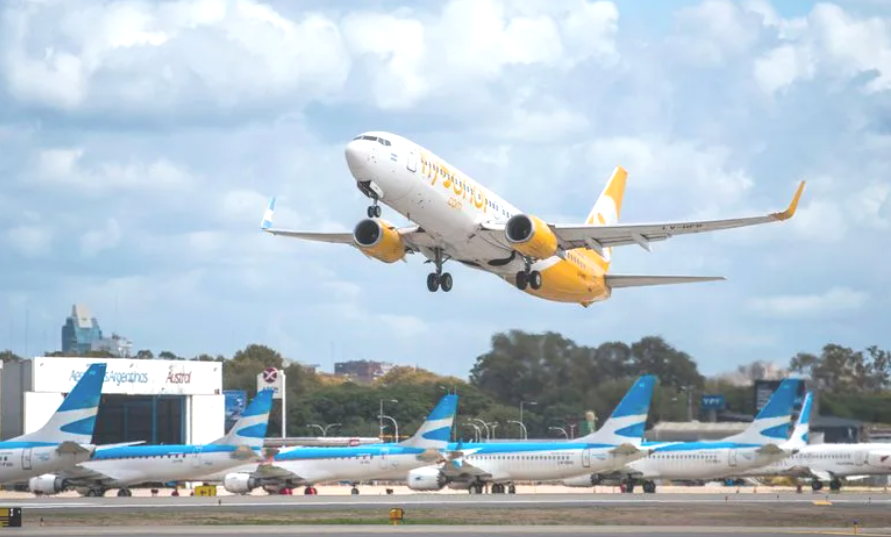
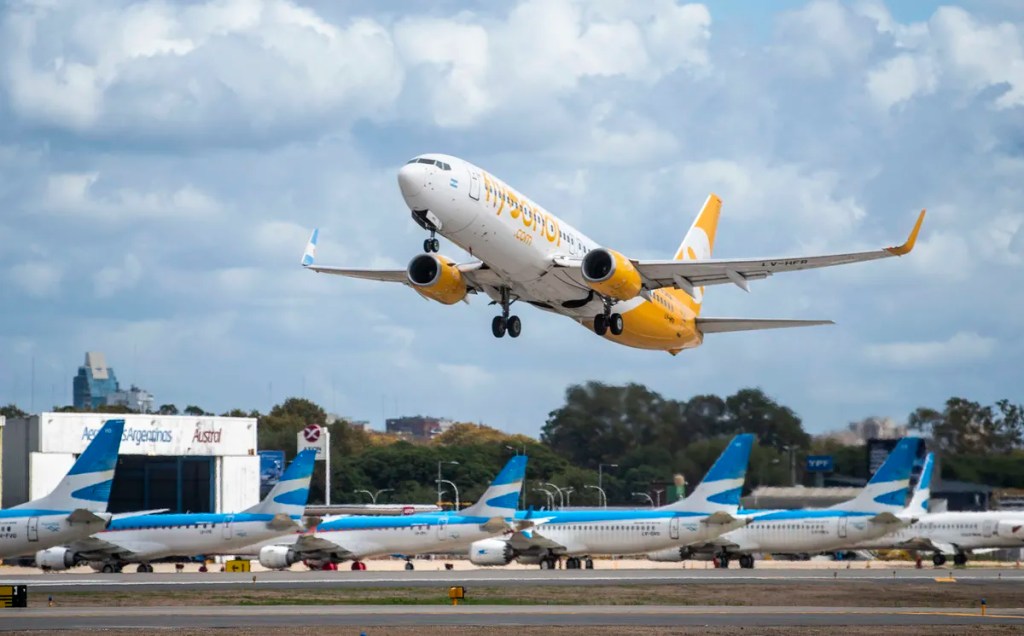
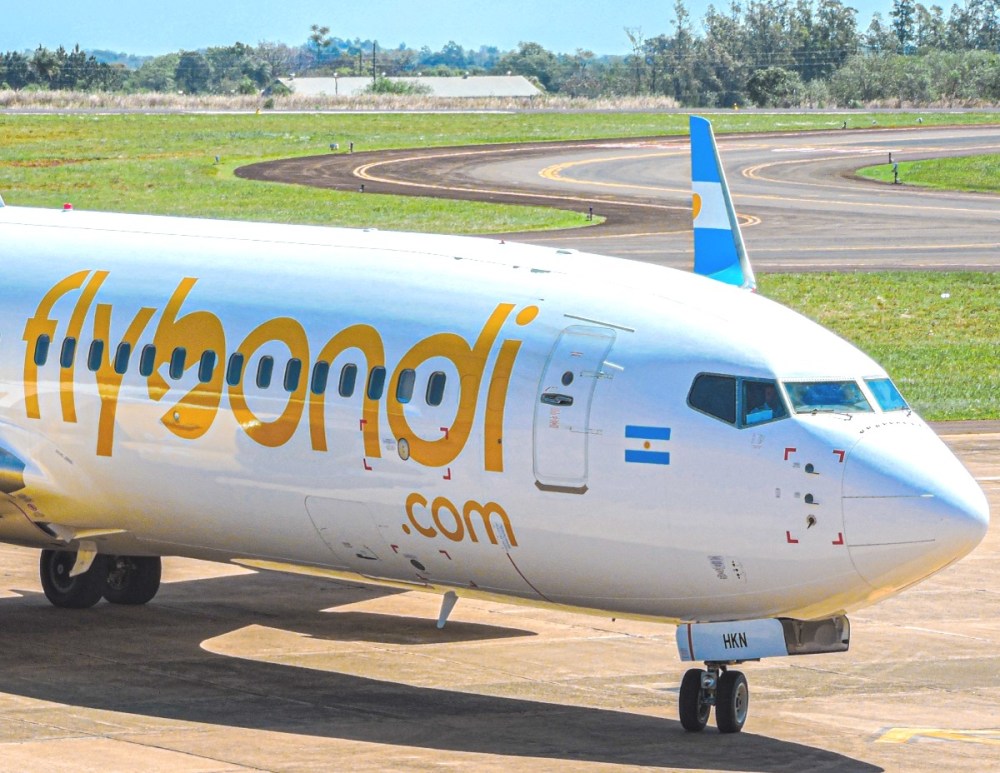
La low cost argentina Flybondi también prevé traer cinco aeronaves Boeing 737-800 al país procedentes de Lituania con tripulación de ese origen, según fuentes oficiales.

“Más que cielos abiertos, nuestra idea es ir camino a cielos únicos. Que en toda Sudamérica se vuele como si fueran vuelos de cabotaje. Para eso, ya firmamos acuerdos con seis países de la región y dos extra región y pronto estaremos anunciando nuevos entendimientos. Esto no es anuncio, es una realidad, la competencia resulta en mejores servicios y mejores costos. Donde JetSMART compite la tarifa baja a la mitad. Buenos Aires—Montevideo bajó de US$ 800 a US$ 400 y con la ruta Buenos Aires—Asunción pasó algo similar”, dijo el Secretario de Transporte, Franco Mogetta.

El Ministro de Desregulación y Transformación del Estado, Federico Sturzenegger ha expresado: «Es el resultado de perderle el miedo a la liberta. El empresario está para servir, no para perjudicar. Los países no son ricos porque no quieran, sino porque hay papelitos que dicen que hay cosas que no se pueden hacer porque a alguien se le ocurrió. Son restricciones a la competencia. Nuestro trabajo es ir sacando esos papelitos. Esperamos que este círculo virtuoso continúe y se vaya profundizando”.

Perspectivas aéreas
La Secretaría de Transporte como la ANAC Argentina empezaron a desregular el mercado y liberar espacios en Aeroparque (AEP) pero no hay una hoja de ruta clara sobre cómo ordenar las dos principales estaciones aéreas del país.

El retorno a operaciones del Aeropuerto El Palomar continúa en la agenda nacional. El Secretario de Transporte Franco Mogetta ha expresado que se encuentran haciendo mantenimientos y obras. El Palomar es siempre una alternativa si lo solicitan las aerolíneas.

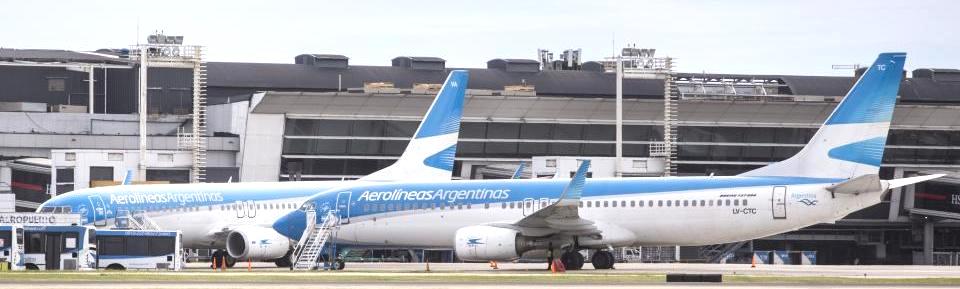
Las líneas aéreas poseen sus respectivas flotas actuales: Aerolíneas Argentinas (84), Flybondi (15), JetSMART Argentina (10), aunque varias aeronaves se encuentran en mantenimiento. Las nuevas regualciones aéreas permitirán incrementar nuevas rutas, más aeronaves y un aumento de participación de más líneas aéreas en el mercado doméstico.

Argentina aviation outlook

Low cost projections increase service

The Open Skies policy established in Argentina continues to attract new news. The airlines JetSMART Airlines Argentina will add two additional aircraft, while Flybondi would incorporate five aircraft on a rental basis.

The airline JetSMART Argentina is studying the possibility of expanding domestic traffic in the country, encouraged by changes in air policies in Argentina. The two Airbus A320 aircraft will be added to the eight that it currently has in the country and the idea is that they will operate, one at Jorge Newbery Airport (AEP) and the other at Ezeiza Airport (EZE). The two new Airbus A320 that JetSMART will bring imply an investment of US$ 160 million Dollars.

The executive highlighted that Argentina is catching up with the regulations of the region and the world, and stressed that the fact that foreign-registered aircraft can do domestic traffic is something that was already allowed in all countries. “It is important because aviation assets are expensive and our markets are not that big, they need to be developed. A single fleet that can be used in all countries gives greater flexibility”, explained the CEO of the JetSMART group. The two Airbus A320 aircraft that will arrive are Chilean-registered and what remains to be operational for domestic flights is a double surveillance agreement with Chile. It will be signed soon between the National Civil Aviation Administration (ANAC) and the General Directorate of Civil Aeronautics of Chile.

JetSMART Argentina has announced that it is consolidating the Mendoza Hub (MDZ) to the detriment of Córdoba (COR) as a potential second hub. Direct flights to Salta (SLA) and Bariloche (BRC) are returning. “We are going to bring two aircraft in October and November and we are going to add jobs and connectivity. We are going to restructure our offer and, in January 2025, we will have twice as many seats as we flew in June and we will also have three new routes: Mendoza/MDZ—Salta/SLA, Mendoza/MDZ—Bariloche/BRC and Buenos Aires/AEP—Comodoro Rivadavia/CRD”, said Estuardo Ortiz, CEO of JetSMART Airlines.

The JetSMART Airlines Group continues the expansion of the company that operates in Chile, Argentina, Peru, and Colombia with forty aircraft on 81 routes, including 26 international routes and 55 domestic routes in eight countries.

The Argentine low-cost company Flybondi also plans to bring five Boeing 737-800 aircraft to the country from Lithuania with crew from that origin, according to official sources.

“More than open skies, our idea is to go towards unique skies. That all of South America is flown as if they were domestic flights. To this end, we have already signed agreements with six countries in the region and two outside the region, and we will soon be announcing new agreements. This is not an announcement, it is a reality: competition results in better services and better costs. Where JetSMART competes, the fare drops by half. Buenos Aires-Montevideo dropped from US$ 800 to US$ 400, and something similar happened with the Buenos Aires-Asunción route”, said the Secretary of Transportation, Franco Mogetta.

The Minister of Deregulation and Transformation of the State, Federico Sturzenegger, has expressed: «It is the result of losing the fear of freedom. The businessman is there to serve, not to harm. Countries are not rich because they do not want to, but because there are pieces of paper that say that there are things that cannot be done because someone thought of it. They are restrictions to competition. Our job is to remove those pieces of paper. We hope that this virtuous circle continues and deepens».

Air perspectives
The Ministry of Transportation and ANAC Argentina began to deregulate the market and free up space in Aeroparque (AEP) but there is no clear roadmap on how to organize the two main air stations in the country.

The return to operations of El Palomar Airport continues on the national agenda. The Secretary of Transportation, Franco Mogetta, has expressed that they are doing maintenance and works. El Palomar is always an alternative if requested by the airlines.

The airlines have their respective current fleets: Aerolíneas Argentinas (84), Flybondi (15), JetSMART Argentina (10), although several aircraft are under maintenance. The new air regulations will allow for the increase of new routes, more aircraft and an increase in the participation of more airlines in the domestic market.

PUBLISHER: Airgways.com
DBk: Argentina.gob.ar / Jetsmart.com / Flybondi.com / Airgways.com
AW-POST: 202408042215AR
OWNERSHIP: Airgways Inc.
A\W A I R G W A Y S ®
Aéreas Paraguay incursionarán Argentina

AW | 2024 08 01 11:55 | AIRLINES MARKET

Aerolíneas paraguayas vuelos internos en territorio de Argentina

Las aerolíneas paraguayas han solicitado pista para hacer vuelos en territorio argentino como parte de la desregulación aérea en el país. El proceso de Cielos Abierto continúa estimulando la pluralidad en un mercado más competitivo. Las líneas aéreas de Paraguay podrán iniciar el proceso de Certificación de Operador Aéreo (AOC) en Argentina incorporándose como nuevos operadores domésticos. Esto permitirá a las compañías aéreas competir en el mercado de cabotaje con las aerolíneas, y permitir mayor integración con Paraguay y Sudamérica.

Paraguay se sumó a la política de Cielos Abiertos impulsado por el Gobierno de Argentina y mediante un acuerdo liderado por la Dirección Nacional de Aeronáutica Civil (DINAC) de Paraguay se desregula el sector aéreo, que promete ventajas para ambos países.

El Director de Aeronáutica de la DINAC, José Luis Chávez, explicó el alcance del convenio que permite vuelos de cabotaje de las líneas aéreas del otro Estado, tanto de pasajeros como de cargas, así como la adopción de un sistema de frecuencias ilimitado. “Habilita a las empresas paraguayas a realizar vuelos de cabotaje dentro del territorio argentino, sin que ese vuelo parta desde Paraguay, la misma oportunidad tendrán las empresas argentinas que deseen hacer lo mismo en nuestro territorio”, expresó José Chávez.

El Director de la DINAC ha dicho de los beneficios que tendrán las compañías aéreas paraguayas como Paranair y LATAM Paraguay. A partir del presente, estas aerolíneas podrán volar desde cualquier punto del país, hacer vuelos internos en Argentina, sin necesidad de despegar desde Paraguay. “Es muy importante, porque desregula un poco la situación que anteriormente se estaban dando a través de tratados bilaterales. Se fijaba la cantidad de vuelos, los puntos, hoy con este acuerdo, se libera todo eso, se amplía la posibilidad de vuelos entre Argentina y Paraguay, queda libre, no hay alguna restricción, pueden volar las veces que soliciten, también las empresas paraguayas pueden aumentar su capacidad de vuelo hacia la Argentina, y eso hace que sea para el turismo especialmente bastante interesante y también para atraer inversiones al país”, expresó José Chávez acerca de los beneficios de la desregulación aérea en Argentina

El acuerdo de Cielos Abierto permitirá estimular la industria del transporte aéreo com más ofertas, a la vez que permitiría alcanzar valores de pasajes más competitivos para el sector de las líneas aéreas y una mayor oferta de vuelos y destinos. Aunque las tarifas dependen de la oferta y la demanda, para Chávez existe la posibilidad de que bajen los costos de pasajes a medida que el servicio gane competitividad. Estos cambios alentarán el tráfico de pasajeros entre Paraguay y Argentina entre los aeropuertos Silvio Pettirossi (ASU) y Guaraní (AGT), en Minga Guazú.

Paraguayan airlines will enter Argentina

Paraguayan airlines will operate domestic flights in Argentina

Paraguayan airlines have requested a runway to operate flights in Argentina as part of the country’s air deregulation. The Open Skies process continues to stimulate diversity in a more competitive market. Paraguayan airlines will be able to begin the Air Operator Certification (AOC) process in Argentina by joining as new domestic operators. This will allow airlines to compete in the domestic market with airlines, and allow for greater integration with Paraguay and South America.

Paraguay joined the Open Skies policy promoted by the Government of Argentina and through an agreement led by the National Directorate of Civil Aeronautics (DINAC) of Paraguay, the air sector is deregulated, which promises advantages for both countries.

The Director of Aeronautics at DINAC, José Luis Chávez, explained the scope of the agreement that allows domestic flights by airlines from the other State, both for passengers and cargo, as well as the adoption of an unlimited frequency system. “It enables Paraguayan companies to carry out domestic flights within Argentine territory, without the flight having to depart from Paraguay. Argentine companies that wish to do the same in our territory will have the same opportunity”, said José Chávez.

The Director of DINAC has spoken of the benefits that Paraguayan airlines such as Paranair and LATAM Paraguay will have. From now on, these airlines will be able to fly from any point in the country, make internal flights in Argentina, without having to take off from Paraguay. “It is very important, because it deregulates a little the situation that was previously taking place through bilateral treaties. The number of flights and points was set, and today with this agreement, all of that is freed up, the possibility of flights between Argentina and Paraguay is expanded, it is free, there are no restrictions, they can fly as many times as they request, Paraguayan companies can also increase their flight capacity to Argentina, and that makes it especially interesting for tourism and also for attracting investments to the country”, said José Chávez about the benefits of air deregulation in Argentina

The Open Skies agreement will allow the stimulation of the air transport industry with more offers, while allowing for more competitive ticket prices for the airline sector and a greater offer of flights and destinations. Although the rates depend on supply and demand, for Chávez there is the possibility that ticket costs will go down as the service gains competitiveness. These changes will encourage passenger traffic between Paraguay and Argentina between the Silvio Pettirossi (ASU) and Guaraní (AGT) airports in Minga Guazú.

PUBLISHER: Airgways.com
DBk: Dinac.gov.py / Argentina.gob.ar / Airgways.com
AW-POST: 202408011155AR
OWNERSHIP: Airgways Inc.
A\W A I R G W A Y S ®
Lowcost argentinas a Brasil

AW | 2024 07 29 10:30 | AIRLINES MARKET

Flybondi/JetSMART buscan ampliar mercado brasileño

Las aerolíneas lowcost argentinas Flybondi y JetSMART Airlines Argentina continúan examinando las oportunidades de crecimiento hacia Brasil buscando ampliar rutas a medida que se abre el mercado, dijeron ejecutivos de ambas empresas.

“¿Es cierto que a Brasil le falta una aerolínea de ultra bajo costo? Probablemente”, dijo el Director Ejecutivo de la aerolínea chilena JetSMART Airlines, Estuardo Ortiz. La firma, que actualmente opera nueve rutas dentro y fuera de Brasil, considera al país como un mercado instrumental para sus operaciones.

Flybondi también está analizando la ampliación de rutas a Brasil, dijo el Director General Mauricio Sana. Hace dos años atrás, la compañía low cost analizaba incurrir en operaciones de cabotaje en Brasil, mientras que esperaba una mejora en las condiciones de mercado para ingresar como un nuevo operador doméstico.

En los últimos meses, Argentina firmó una serie de acuerdos de Cielos Abiertos con Uruguay, Chile, incluido Brasil. El acuerdo con Brasil aumenta el número de frecuencias de vuelo permitidas entre las naciones. Sin embargo, con Chile y Uruguay, las aerolíneas de esos países pueden operar vuelos domésticos en Argentina y viceversa. “El acuerdo firmado con Brasil de frecuencias todavía no incluye vuelos domésticos. Pero el Gobierno (argentino) quiere permitirlo. Las tarifas son muy altas y carece de conectividad. Brasil tiene GOL y Azul, que no son aerolíneas de bajo costo”, dijeron fuentes de Flybondi. La Secretaría de Transportes de Argentina espera que se pudiera firmar tal acuerdo.

Flybondi continúa analizando la posibilidad de operar vuelos domésticos en Brasil. Mientras tanto, JetSMART se está centrando sólo en vuelos internacionales por el momento. El ejecutivo Estuardo Ortíz dijo que las regulaciones en Brasil, como la estricta protección al consumidor y una propuesta para incluir automáticamente el equipaje en los costos de los boletos, afectaron la viabilidad de operar allí, como así tembién los altos costos del combustible para la aviación comercial.

Argentine low-cost airlines to Brazil

Flybondi/JetSMART seek to expand Brazilian market

Argentine low-cost airlines Flybondi and JetSMART Airlines Argentina continue to examine growth opportunities in Brazil by seeking to expand routes as the market opens, executives from both companies said.

“Is it true that Brazil lacks an ultra-low-cost airline? Probably”, said the CEO of Chilean airline JetSMART Airlines, Estuardo Ortiz. The firm, which currently operates nine routes in and out of Brazil, considers the country as an instrumental market for its operations.

Flybondi is also analyzing the expansion of routes to Brazil, said CEO Mauricio Sana. Two years ago, the low-cost company was considering incurring in domestic operations in Brazil, while waiting for an improvement in market conditions to enter as a new domestic operator.

In recent months, Argentina signed a series of Open Skies agreements with Uruguay, Chile, including Brazil. The agreement with Brazil increases the number of flight frequencies allowed between the nations. However, with Chile and Uruguay, airlines from those countries can operate domestic flights in Argentina and vice versa. “The agreement signed with Brazil on frequencies still does not include domestic flights. But the (Argentine) government wants to allow it. The fares are very high and it lacks connectivity. Brazil has GOL and Azul, which are not low-cost airlines”, Flybondi sources said. Argentina’s Ministry of Transport hopes that such an agreement could be signed.

Flybondi continues to analyze the possibility of operating domestic flights in Brazil. Meanwhile, JetSMART is focusing only on international flights for the moment. Executive Estuardo Ortiz said that regulations in Brazil, such as strict consumer protection and a proposal to automatically include baggage in ticket costs, affected the viability of operating there, as well as high fuel costs for commercial aviation.

PUBLISHER: Airgways.com
DBk: Flybondi.com / Jetsmart.com / Airgways.com
AW-POST: 202407291030AR
OWNERSHIP: Airgways Inc.
A\W A I R G W A Y S ®
Nueva aviación en Argentina

AW | 2024 07 10 14:47 | AVIATION MARKET / GOVERNMENT

Asoman cambios profundos aviación comercial
Nueva normativa aeronáutica en Argentina

El Gobierno de la República Argentina comenzó con la desregulación del sector aerocomercial. A través del Decreto Nº599/2024, publicado oficialmente el Miércoles 10 de Julio de 2024 en el Boletín Oficial, el Poder Ejecutivo aprobó la reglamentación que establece el acceso a los mercados aerocomerciales, deroga normas y modifica el Código Aeronáutico. El objetivo es continuar fomentando la competencia y eliminar trabas que están vigentes desde mediados del siglo pasado. La medida impacta en las autorizaciones aerocomerciales para operar en territorio argentino. Las mismas serán otorgadas para realizar las actividades de transporte aéreo interno e internacional de pasajeros y/o de cargas, para servicios regulares o no regulares, realizados con aeronaves; para el trabajo aéreo y para los servicios aeroportuarios operacionales y de rampa en general.

El Gobierno de Argentina publicó el Miércoles 10 de Junio de 2024 el Decreto destinado a abrir el sector de la aviación del país, que invita a las aerolíneas extranjeras a ingresar al mercado dominado durante mucho tiempo por la estatal Aerolíneas Argentinas. La reforma debería aumentar el número de rutas, frecuencias de vuelos y atraer más competidores, dijo la Secretaría de Transporte en un comunicado. Las empresas ahora pueden solicitar operar tantas rutas y frecuencias como quieran, un pedido que quedará sujeto a la aprobación de seguridad, según el decreto. Las aerolíneas también tienen ahora control total sobre cuánto cobran por los billetes, afirma el decreto, eliminando una regulación que permitía al Gobierno fijar un precio mínimo. Además, finaliza el monopolio de Intercargo, permitiendo que otras compañías puedan competir en la prestación de servicios en tierra.

La nueva introducción a la aviación comercial permitirá quitar barreras de ingreso a las nuevas líneas aéreas par ainiciar operaciones en Argentina y desregular las frecuencias aéreas y las tarifas.

Respecto a las operaciones logísticas, se terminará el monopolio de Intercargo, la empresa pública que realiza todos los servicios para las compañías aéreas, locales e internacionales a costos directos en moneda internacional Dólar, lo que representaba una desventaja para las aerolíneas en vuelos de cabotaje, donde tales tarifas no alcanzaban a Aerolíneas Argentinas, pues poseía autorizado un manejo de operaciones propio con AeroHandling.

El Reglamento de Acceso a los Mercados que se publica como anexo enumera las condiciones que, de cumplirse, sería un verdadero cambio radical del sistema vigente: “La actividad regulada se regirá por los siguientes principios. Libre acceso al mercado de nuevos explotadores a través de procedimientos administrativos breves y ágiles; estímulo a la competencia leal entre los distintos explotadores; desregulación tarifaria; resguardo de la seguridad operacional; vigilancia operacional continua de los servicios autorizados; libertad en la fijación de frecuencias, en su caso, declarándolas inicialmente en su plan de negocios, para su análisis sujeto a estrictos criterios operativos y a la necesidad de que el tráfico aéreo se desarrolle de manera segura y ordenada y, finalmente, intervenciones de la Administración Pública Nacional limitadas y eficientes, de carácter digital/electrónico, tendientes exclusivamente a la preservación de los principios enunciados precedentemente y transparencia en la medición, asignación y utilización de la capacidad aeroportuaria”.

Aparecen varios lineamientos que cambiarán el sector. Además del compromiso de reducir la intervención del Estado a un mero papel en materias operacional y de seguridad, la norma define la desregulación tarifaria, un sistema que la Argentina perdió desde que el kirchnerismo llegó al poder. De hecho, en aquellos años, el Estado decidía cuál era el valor mínimo del boleto y también el máximo. Se llamó banda tarifaria y era el Poder Ejecutivo el que fijaba el precio de cada tramo.

Con la llamada “Revolución de los Aviones” que impulsaba Guillermo Dietrich en el Gobierno de Mauricio Macri, se quitó la mínima, con lo que aparecieron las low cost que ofrecían precios más baratos, pero no se avanzó con el máximo permitido. Pero, en 2021, la gestión de Alberto Fernández volvió a aquel esquema de bandas, utilizado en muy pocos mercados en el mundo.

Cielos Abiertos
La administración del Presidente libertario Javier Milei, quien asumió el cargo en Diciembre 2023, ha firmado una serie de Acuerdos de Cielos Abiertos con otros países en los últimos meses, permitiendo a sus aerolíneas operar rutas domésticas en Argentina bajo algunas condiciones. En la actualidad, Brasil, Chile, Perú, Ecuador, Panamá, Uruguay y Canadá han firmado acuerdos abriendo potencialmente el mercado argentino a operadores como GOL Linhas Aéreas, LATAM Airlines y Air Canadá. La Secretaría de Transporte dijo el Miércoles 10/07 que se deberían firmar más acuerdos de este tipo en los próximos meses.

Aerolíneas Argentinas operó el 62% de los vuelos domésticos en Mayo 2024, siguen la aerolínea local de bajo costo Flybondi con el 26% del mercado interno y la aerolínea JetSMART Airlines Argentina con el 11% de la cuota de mercado dooméstico, según los últimos datos disponibles del regulador del ORSNA.

Reglamentación Artículo 110
La reglamentación del Artículo 110 del Código Aeronáutico de argentina permitirá introducir nuevas normativas para aplicarsse en el mercado aéreo argentino en el corto plazo.

El primero de los capítulos del Decreto Nº599/2024, borrará de los requisitos para operar en el país la solicitud de Audiencias Públicas. Es decir, no habrá que tramitar ese permiso necesario, aunque discrecional, que entregaba el Estado. De hecho, la última se celebró durante el Gobierno de Mauricio Macri, que fue la que entregó las licencias con las que vuelan JetSMART Airlines Argentina y Flybondi. Sin audiencias, las rutas se solicitarán por un sistema digital y mucho más ágil, tal como repite la norma en varios pasajes.

Las nuevas normas incluyen un cambio fundamental en el negocio aeronáutico. Cuando estén plenamente en vigencia, tras las reglamentaciones correspondientes, se podrán prestar servicios de cabotaje con aeronaves de matrícula extranjera y hasta tripulación de otra nacionalidad. Es algo muy novedoso para el segmento.

El Certificado de Explotador de Trabajo Aéreo (CETA), uno de los documentos fundamentales para empezar a volar, se dará a la Administración Pública quince días hábiles para que se exprese. Si no lo hace, el solicitante puede pedir un Pronto Despacho y, transcurridos cinco días más, la autoridad deberá emitir en forma automática/digital el CETA.

Operaciones logísticas
La apertura necesaria de liberalización de las operaciones logísticas en los aeropuertos permitirá incorporar nuevos operadores que compitan con Intercargo, anteriormente encargada casi en exclusividad de los servicios de rampa, asistencia y equipaje para todas las líneas aéreas que operan en el país, con excepción de Aerolíneas Argentinas, Flybondi y American Airlines, que operan su propia prestación. Los gremios aeronáuticos del sector tienen capacidad de fuego como para realizar medidas de fuerza que paralicen la operación. Habrá que estar atento a los movimientos gremiales cuando avance la liberalización.

De acuerdo a la regulación vigente hasta que salga el decreto, las aerolíneas tienen la obligación de contratar a Intercargo salvo que se presten ellas mismas el servicio. American Airlines siempre tuvo su personal de tierra. Aerolíneas Argentinas emplea a Aerohandling, una sociedad del grupo que le da servicios a sus aviones. Actuamente, con las operaciones de Intercargo representaban para las demás líneas aéreas desventajas operativas a costos en moneda Dólar en lugar de la moneda nacional Pesos Argentinos. Con el ingreso de nuevos operadores, incluyendo a Intercargo y Aerohandling, tendrían la posibilidad de ofrecer sus servicios a otras líneas.

Ley Defensa Competencia
El segundo título de los tres tiene que ver con la reglamentación del Artículo 110 del Código Aeronáutico, habla de los requisitos para presentar acuerdos de cooperación interempresaria o comerciales, y establece la implementación de la Ley de Defensa de la Competencia para todas las cuestiones que se sucedan. Es decir, si eventualmente hay planteos de monopolio, por caso, ya no intervendrán los varios entes públicos del sector, sino el Tribunal que lo hace con todas las actividades de la economía.

El tercero, finalmente, apunta a igualar los derechos de utilización de las estaciones aeroportuarias, especialmente, en horas pico. Así las cosas, le encomienda a la autoridad la confección de un “Reglamento Transitorio de Asignación de Capacidad y/o Frecuencias para servicios nacionales o internacionales”, a la espera de uno definitivo para el que le otorga 180 días.

Básicamente, se terminarán algunos privilegios que tiene la línea aérea estatal para disponer de los aeropuertos a su antojo. De hecho, se deroga el Decreto Nº879/21, un reglamento hecho a medida de la empresa pública en épocas de manejo de la agrupación de La Cámpora, no solo de la compañía sino del sector aerocomercial. “Se determinará la capacidad y/o frecuencias disponibles deduciendo los servicios presentados ante la Autoridad Aeronáutica por Aerolíneas Argentinas”, decía un artículo relevante de aquella norma. En otras palabras, en la práctica, la aerolínea estatal disponía los slots necesarios para acaparar el mercado en los aeropuertos y el resto era distribuido entre los pocos operadores nacionales.

Perspectivas aviación Argentina
La intruducción de la nueva normativa permitirá cambios estructurales en la aviación comercial avanzando en más libertad e igualdad entre los operadores aéreos. La cultura kichnerista se encuentra bien arraigada en las metodologías y prácticas en la aviación, con su máximo representante Aerolíneas Argentinas. Pero un cambio de cultura de trabajo está cambiando radicalmente, mientras el futuro permitirá conocer las mejoras de los procesos que generarán el atractivo para un mercado golpeado durante décadas y menos desarrollados de América Latina.

New aviation in Argentina

Deep changes in commercial aviation are looming
New aeronautical regulations in Argentina

The Government of the Argentine Republic began deregulating the commercial aviation sector. Through Decree No. 599/2024, officially published on Wednesday, July 10, 2024 in the Official Gazette, the Executive Branch approved the regulations that establish access to commercial aviation markets, repeal regulations and modify the Aeronautical Code. The objective is to continue promoting competition and eliminate obstacles that have been in force since the middle of the last century. The measure impacts commercial aviation authorizations to operate in Argentine territory. These will be granted to carry out internal and international air transport activities for passengers and/or cargo, for regular or non-regular services, carried out with aircraft; for aerial work and for operational airport and ramp services in general.

Argentina’s government on Wednesday published the decree aimed at opening up the country’s aviation sector, inviting foreign airlines to enter the market long dominated by state-owned Aerolíneas Argentinas. The reform should increase the number of routes, flight frequencies and attract more competitors, the Ministry of Transport said in a statement. Companies can now apply to operate as many routes and frequencies as they want, a request that will be subject to security approval, according to the decree. Airlines also now have full control over how much they charge for tickets, the decree states, eliminating a regulation that allowed the government to set a minimum price. In addition, it ends Intercargo’s monopoly, allowing other companies to compete in providing ground services.

The new introduction to commercial aviation will remove barriers to entry for new airlines to start operations in Argentina and deregulate air frequencies and fares.

Regarding logistics operations, the monopoly of Intercargo, the public company that performs all services for local and international airlines at direct costs in international currency (Dollar), will end. This represented a disadvantage for airlines on domestic flights, where such rates were not available to Aerolíneas Argentinas, since it had authorized its own operations management with AeroHandling.

The Market Access Regulations published as an annex list the conditions that, if met, would be a true radical change in the current system: “The regulated activity will be governed by the following principles: Free access to the market for new operators through brief and agile administrative procedures; encouragement of fair competition between the different operators; tariff deregulation; safeguarding operational safety; continuous operational surveillance of authorized services; freedom in the setting of frequencies, if applicable, initially declaring them in their business plan, for analysis subject to strict operational criteria and the need for air traffic to develop in a safe and orderly manner and, finally, limited and efficient interventions by the National Public Administration, of a digital/electronic nature, aimed exclusively at preserving the principles stated above and transparency in the measurement, assignment and use of airport capacity”.

Several guidelines appear that will change the sector. In addition to the commitment to reduce the State’s intervention to a mere role in operational and security matters, the norm defines tariff deregulation, a system that Argentina lost since Kirchnerism came to power. In fact, in those years, the State decided what the minimum and maximum ticket price was. It was called the tariff band and it was the Executive Branch that set the price of each section.

With the so-called “Airplane Revolution” promoted by Guillermo Dietrich in Mauricio Macri’s government, the minimum limit was removed, giving rise to low-cost airlines offering cheaper prices, but no progress was made with the maximum limit allowed. However, in 2021, Alberto Fernández’s administration returned to that band scheme, used in very few markets in the world.

Open Skies
The administration of Libertarian President Javier Milei, who took office in December 2023, has signed a series of Open Skies Agreements with other countries in recent months, allowing their airlines to operate domestic routes in Argentina under some conditions. Currently, Brazil, Chile, Peru, Ecuador, Panama, Uruguay and Canada have signed agreements potentially opening the Argentine market to operators such as GOL Linhas Aéreas, LATAM Airlines and Air Canada. The Ministry of Transport said on Wednesday 10/07 that more such agreements should be signed in the coming months.

Aerolíneas Argentinas operated 62% of domestic flights in May 2024, followed by local low-cost carrier Flybondi with 26% of the domestic market and carrier JetSMART Airlines Argentina with 11% of the domestic market share, according to the latest available data from regulator ORSNA.

Regulation Article 110
The regulation of Article 110 of the Argentine Aeronautical Code will allow the introduction of new regulations to be applied in the Argentine air market in the short term.

The first of the chapters of Decree No. 599/2024 will remove the request for Public Hearings from the requirements to operate in the country. That is, it will not be necessary to process that necessary, although discretionary, permit that the State granted. In fact, the last one was held during the Government of Mauricio Macri, which was the one that granted the licenses with which JetSMART Airlines Argentina and Flybondi fly. Without hearings, the routes will be requested through a digital and much more agile system, as the rule repeats in several passages.

The new rules include a fundamental change in the aeronautical business. When they are fully in force, after the corresponding regulations, cabotage services can be provided with foreign-registered aircraft and even crew of another nationality. This is something very new for the segment.

The Certificate of Operator of Aerial Work (CETA), one of the fundamental documents to start flying, will be given to the Public Administration fifteen working days to express itself. If it does not do so, the applicant can request a Prompt Dispatch and, after five more days, the authority must automatically/digitally issue the CETA.

Logistics operations
The necessary opening of the liberalization of logistics operations at airports will allow the incorporation of new operators that compete with Intercargo, previously almost exclusively in charge of ramp, assistance and baggage services for all airlines operating in the country, with the exception of Aerolíneas Argentinas, Flybondi and American Airlines, which operate their own services. The aeronautical unions of the sector have the firepower to carry out forceful measures that paralyze the operation. We will have to be attentive to the union movements when liberalization advances.

According to the current regulations until the decree is issued, airlines are required to hire Intercargo unless they provide the service themselves. American Airlines always had its own ground staff. Aerolíneas Argentinas employs Aerohandling, a company in the group that provides services to its aircraft. Currently, Intercargo’s operations represented operational disadvantages for other airlines at costs in dollars instead of the national currency, Argentine pesos. With the entry of new operators, including Intercargo and Aerohandling, they would have the possibility of offering their services to other airlines.

Competition Defense Law
The second of the three titles has to do with the regulation of Article 110 of the Aeronautical Code, it speaks of the requirements for presenting inter-company or commercial cooperation agreements, and establishes the implementation of the Competition Defense Law for all issues that arise. That is to say, if there are eventually claims of monopoly, for example, the various public entities of the sector will no longer intervene, but the Court that does so with all the activities of the economy.

The third, finally, aims to equalize the rights of use of the airport stations, especially during peak hours. Thus, it entrusts the authority with the preparation of a «Transitional Regulation of Capacity and/or Frequencies Assignment for national or international services», awaiting a definitive one for which it grants 180 days.

Basically, some privileges that the state airline has to use the airports as it pleases will end. In fact, Decree No. 879/21 is repealed, a regulation made to measure for the public company in times of management of the La Cámpora group, not only of the company but of the commercial aviation sector. “The capacity and/or available frequencies will be determined by deducting the services presented to the Aeronautical Authority by Aerolíneas Argentinas”, said a relevant article of that regulation. In other words, in practice, the state airline had the slots necessary to corner the market at the airports and the rest was distributed among the few national operators.

Perspectives on Argentine aviation
The introduction of the new regulation will allow structural changes in commercial aviation, moving towards more freedom and equality among air operators. The Kirchnerist culture is well rooted in the methodologies and practices in aviation, with its most representative Aerolíneas Argentinas. But a change in work culture is radically changing, while the future will allow us to learn about the improvements in the processes that will generate the appeal for a market that has been hit for decades and is less developed in Latin America.

PUBLISHER: Airgways.com
DBk: Argentina.gob.ar / Airgways.com
AW-POST: 202407101447AR
OWNERSHIP: Airgways Inc.
A\W A I R G W A Y S ®

Argentina firma Cielos Abiertos

AW | 2024 07 07 13:13 | GOVERNMENT / AIRLINES MARKET

Argentina reforma desregulación Aviación Comercial

La República Argentina ha anunciado que firmará el Lunes 8 de Julio de 2024 la reforma de la Aviación Comercial que desarrollará grandes cambios en las políticas aéreas. El borrador del decreto que enmarcará la política de cielos abiertos establecido en el DNU Nº70/2023 está siendo analizado por el Presidente Javier Milei.

El nuevo Ministerio de Desregulación y Transformación del Estado de la Nación Argentina, a cargo de Federico Sturzenegger pone en marcha su primera gran medida y el Lunes 08/07 firmará la reforma del sector aerocomercial que comenzará la modificación del Código Aeronáutico que incluye la reducción de las rutas de Aerolíneas Argentinas que no sean rentables. Esta es una de las primeras grandes medidas que Federico Sturzenegger tiene planeado implementar.

Modificación del Código Aeronáutico
El borrador del decreto que enmarcará la política de cielos abiertos establecido en el DNU 70/2023 está siendo analizado por el Presidente Javier Milei y contiene una serie de modificaciones del Código Aeronáutico como la apertura del acceso a mercados hasta ahora no cubiertos. También se propone la eliminación de la Audiencia Pública, la incorporación de un nuevo régimen de autorizaciones de rutas, cambios en el registro de aeronaves y contratos y la digitalización de trámites. Además, incluye modificaciones sobre la atención al pasajero y en las infracciones aeronáuticas sobre los planes de vuelo y el accionar de los pilotos, así como de los regímenes de capacidad y frecuencias para servicios aéreos, cuestiones sobre la remoción de aeronaves, equipaje y carga y más libertad para operar drones en el ámbito privado.

Las reformas incluidas en el borrador fueron redactadas por Federico Sturzenegger junto a una comisión presidida por Hernán Gómez, Subsecretario de Transporte Aéreo y los juristas Mara Di Loreto y Eduardo Cartasso, además de grupos empresarios, universitarios y autoridades de Nación, entre otros.

Uno de los puntos importantes que incluye la reforma, es la reducción de rutas que considera no rentables en Aerolíneas Argentinas. El Gobierno sostiene que la única forma de mantener estos trayectos es a través de convenios de financiamiento de las provincias interesadas en mantenerlos. Además, se plantea el reordenamiento del Aeropuerto Jorge Newbery y el Aeropuerto Internacional de Ezeiza: se establecerá con qué capacidad cuentan, cuántos pasajeros por hora pueden albergar y cuántos aviones deben ser removidos. En ese sentido, trascendió que Aerolíneas Argentinas deberá dejar cuatro posiciones en Aeroparque, en respuesta a un pedido que realizan desde hace tiempo las empresas low cost, que no podían traer aviones al país por falta de espacio (slots).

Flybondi sostiene que su intención es traer entre cinco y diez aviones, mientras que JetSMART Airlines Argentina buscaría ingresar seis nuevas aeronaves. Ambas aerolíneas continúan con los reclamos para superar las trabas de su operación en Aeroparque.

Los decretos complementan de alguna manera a los acuerdos que el Gobierno denomina cielos abiertos. Hasta ahora se firmaron memorandos con Brasil, Chile, Perú, Ecuador, Uruguay, Canadá y Panamá y el próximo país sería Paraguay, que tendría una empresa interesada en operar cabotaje en el país, lo cual les abriría la puerta a Aerolíneas Argentinas, JetSMART y Flybondi para hacer lo mismo en terreno paraguayo.

Gremios aeronáuticos
Atentos a los cambios aplicados a la actividad, los gremios del ámbito aerocomercial expusieron su oposición a Cielos Abiertos, pues en la instancia del acuerdo firmado por el Gobierno de Javier Milei con su par de Chile. A través de un comunicado emitido a mediados de Mayo 2024, la Asociación de Pilotos de Líneas Aéreas (APLA) que encabeza Pablo Biró no dudó en definir a la política de cielos abiertos como otra muestra más de pérdida de soberanía. «Esta entrega de un recurso público como lo es el control de la actividad aérea en el país tiene graves efectos concretos, perjudicando tanto a trabajadores como a pasajeros. Por un lado, abren los cielos a empresas extranjeras cuyo interés es operar destinos rentables de nuestro país o buscar subsidios para cubrir aquellos puntos que no lo son. Por otro, reducen frecuencias, desfinancian y vacían Aerolíneas Argentinas imposibilitándola de aprovechar este nuevo escenario y comprometiendo su existencia», dijo la organización sindical.

Perspectivas aviación
La profundización de los cambios en la aviación comercial de Argentina permitirá desarrollar un nuevo escenario en el mercado de más capacidad de líneas aéreas y un incremento de las ofertas de rutas a destinos en el país y el exterior que permitirá beneficiar al usuario del transporte aéreo.

Argentina signs Open Skies

Argentina reforms deregulation of Commercial Aviation

The Argentine Republic has announced that it will sign on Monday, July 8, 2024, the reform of Commercial Aviation that will develop major changes in air policies. The draft decree that will frame the open skies policy established in DNU No. 70/2023 is being analyzed by President Javier Milei.

The new Ministry of Deregulation and Transformation of the State of the Argentine Nation, headed by Federico Sturzenegger, is launching its first major measure and on Monday, July 8, it will sign the reform of the commercial aviation sector that will begin the modification of the Aeronautical Code that includes the reduction of Aerolíneas Argentinas routes that are not profitable. This is one of the first major measures that Federico Sturzenegger plans to implement.

Modification of the Aeronautical Code
The draft decree that will frame the open skies policy established in DNU 70/2023 is being analyzed by President Javier Milei and contains a series of modifications to the Aeronautical Code such as the opening of access to markets not covered until now. The elimination of the Public Hearing, the incorporation of a new regime of route authorizations, changes in the registration of aircraft and contracts, and the digitalization of procedures are also proposed. In addition, it includes modifications on passenger service and aeronautical infractions on flight plans and the actions of pilots, as well as capacity and frequency regimes for air services, issues on the removal of aircraft, luggage, and cargo, and more freedom to operate drones in the private sector.

The reforms included in the draft were written by Federico Sturzenegger together with a commission chaired by Hernán Gómez, Undersecretary of Air Transport, and the lawyers Mara Di Loreto and Eduardo Cartasso, as well as business groups, university students, and national authorities, among others.

One of the important points included in the reform is the reduction of routes that it considers unprofitable for Aerolíneas Argentinas. The Government maintains that the only way to maintain these routes is through financing agreements with the provinces interested in maintaining them. In addition, the reorganization of the Jorge Newbery Airport and the Ezeiza International Airport is proposed: their capacity will be established, how many passengers per hour they can accommodate, and how many planes must be removed. In this regard, it was revealed that Aerolíneas Argentinas will have to leave four positions in Aeroparque, in response to a request made for some time by low-cost companies, which could not bring planes to the country due to lack of space (slots).

Flybondi maintains that its intention is to bring between five and ten aircraft, while JetSMART Airlines Argentina would seek to bring in six new aircraft. Both airlines continue with their claims to overcome the obstacles to their operation in Aeroparque.

The decrees complement in some way the agreements that the Government calls open skies. So far, memoranda have been signed with Brazil, Chile, Peru, Ecuador, Uruguay, Canada, and Panama and the next country would be Paraguay, which would have a company interested in operating domestic flights in the country, which would open the door for Aerolíneas Argentinas, JetSMART and Flybondi to do the same on Paraguayan soil.

Aeronautical unions
Attentive to the changes applied to the activity, the unions of the aero-commercial sector expressed their opposition to Open Skies, since in the instance of the agreement signed by the Government of Javier Milei with his counterpart from Chile. Through a statement issued in mid-May 2024, the Association of Airline Pilots (APLA) headed by Pablo Biró did not hesitate to define the open skies policy as yet another example of loss of sovereignty. «This surrender of a public resource such as the control of air activity in the country has serious concrete effects, harming both workers and passengers. On the one hand, they open the skies to foreign companies whose interest is to operate profitable destinations in our country or seek subsidies to cover those points that are not. On the other hand, they reduce frequencies, defund and empty Aerolíneas Argentinas, making it impossible for it to take advantage of this new scenario and compromising its existence», said the union organization.

Aviation Perspectives
The deepening of changes in Argentina’s commercial aviation will allow the development of a new scenario in the market of more airline capacity and an increase in the offers of routes to destinations in the country and abroad that will benefit the user of air transport.

PUBLISHER: Airgways.com
DBk: Argentina.gob.ar / Airgways.com
AW-POST: 202407071313AR
OWNERSHIP: Airgways Inc.
A\W A I R G W A Y S ®

Expansión tráfico en India

AW | 2024 06 14 11:18 | AIRLINES MARKET

Aerolíneas globales apuestan por boom viajes a la India

Las líneas aéreas globales están lanzando nuevos vuelos y ampliando sus horarios en India, apostando a que el gigante del sur de Asia se convertirá en uno de los mercados de viajes más populares en la próxima década, dijeron funcionarios y analistas de aerolíneas. India, uno de los principales mercados de aviación de más rápido crecimiento, ocupó un lugar central en la reunión más grande de la industria de directores ejecutivos de aerolíneas globales y compañías de arrendamiento de aeronaves en Dubai la semana pasada, con un aumento de los viajes aéreos nacionales e internacionales.

Se espera que el mercado de viajes aéreos nacionales en India se duplique a 300 millones de pasajeros desde un récord de 152 millones en 2023, según datos del Gobierno de la India. Las proyecciones del tráfico internacional se incrementarían más rápido, alcanzando los 160 millones de pasajeros para 2030 desde los 64 millones del año pasado, según estimaciones del grupo de investigación de aviación CAPA India.

Aerolíneas, mercado indio
Para aprovechar ese crecimiento, Turkish Airlines, abre una nueva pestaña está evaluando vuelos entre su ciudad costera de Antalya, en el sur del país, y la India, dijo el Presidente Ahmet Bolat en la cumbre de la Asociación Internacional de Transporte Aéreo (IATA). Turkish Airlines puede operar la ruta a través de Sun Express, una aerolínea que opera conjuntamente con Lufthansa German Airlines, abre una nueva pestaña, o a través de su socio indio de código compartido IndiGo, dijo. La aerolínea de bajo coste con sede en Hungría Wizz Air, abre un nuevo destino, su objetivo es lanzar sus primeros vuelos al país el próximo año, dijo el Director Ejecutivo Jozsef Varadi en una conferencia de aviación separada en Nueva Delhi la semana pasada, organizada por CAPA India. La sólida perspectiva ha llevado a las dos aerolíneas más grandes de la India: la aerolínea de bajo costo IndiGo, abre una nueva pestaña y Air India, del Grupo Tata, para realizar pedidos récord de cientos de nuevos aviones, que se entregarán en gran medida a lo largo de 10 años.

Impresionante crecimiento flota
Se espera que la flota total de aviones de la India aumente a más de 1.500 para 2030 desde los alrededor de 700 actuales, y que la mayoría de los aviones se financien a través de acuerdos de venta y arrendamiento posterior, lo que hace que el país sea atractivo para los arrendadores de aviones. «El crecimiento de la demanda es diferente a lo que vemos en cualquier otra jurisdicción. Si dices que la disciplina de precios (de las tarifas) es buena y que la demanda está en una tendencia alcista secular, entonces creo que es un mercado en el que nosotros, como comunidad de arrendadores, querremos ser parte de ese crecimiento», dijo en Dubái Firoz Tarapore, Director Ejecutivo de la compañía de arrendamiento de aviones Dubai Aerospace Enterprise.

El Gobierno de la India está respaldando este crecimiento con una inversión de alrededor de US$ 12.000 millones de Dólares en aeropuertos nuevos y mejorados.

«India está ocupando su lugar en el escenario mundial», dijo el Director Ejecutivo de IndiGo, Pieter Elbers, hablando con periodistas al margen de la reunión de la IATA. Pieter Elbers se mudó a la India hace dos años, dejando su puesto como CEO de la aerolínea holandesa KLM.

Tal es el revuelo en torno a la India, que algunas grandes aerolíneas internacionales se sienten frustradas por la falta de acceso al mercado. Emirates y Turkish Airlines quieren más derechos de capacidad de vuelo en India, pero el gobierno del primer ministro Narendra Modi está dando prioridad a las aerolíneas nacionales. «Al final, están comprometiendo la fortaleza de su economía al restringir el acceso no solo de Emirates, sino de todas las aerolíneas extranjeras», dijo el Presidente de Emirates Airline, Tim Clark, en la conferencia de Dubai.

Se espera que gran parte del crecimiento de los viajes de la India provenga de su enorme diáspora de 35 millones de personas, que en su mayoría viven en América del Norte, Europa y Sudáfrica, así como de una creciente cosecha de jóvenes viajeros indios aventureros con ingresos crecientes. «Esta próxima década es la década de crecimiento de la India. La India podría experimentar el tipo de aumento de viajes que China presenció en la década anterior a la pandemia de COVID», dijo el Analista de Aviación independiente Brendan Sobie.

Traffic expansion in India

Global airlines bet on travel boom to India

Global airlines are launching new flights and expanding their schedules in India, betting that the South Asian giant will become one of the most popular travel markets in the next decade, airline officials and analysts said. India, one of the fastest-growing major aviation markets, took center stage at the industry’s largest meeting of CEOs of global airlines and aircraft leasing companies in Dubai last week, with travel surging national and international flights.

The domestic air travel market in India is expected to double to 300 million passengers from a record 152 million in 2023, according to Government of India data. International traffic projections would rise faster, reaching 160 million passengers by 2030 from 64 million last year, according to estimates by aviation research group CAPA India.

Airlines, Indian market
To take advantage of that growth, Turkish Airlines is evaluating flights between its southern coastal city of Antalya and India, President Ahmet Bolat said at the International Air Transport Association (IATA) summit. Turkish Airlines can operate the route through Sun Express, an airline it jointly operates with Lufthansa German Airlines, opens a new tab, or through its Indian codeshare partner IndiGo, he said. Hungary-based low-cost airline Wizz Air, opening a new destination, aims to launch its first flights to the country next year, CEO Jozsef Varadi said at a separate aviation conference in New Delhi last week, organized by CAPA India. The strong outlook has led India’s two largest airlines, low-cost carrier IndiGo, to open a new tab and Tata Group’s Air India, to place record orders for hundreds of new aircraft, which will largely be delivered over 10 years.

Impressive fleet growth
India’s total aircraft fleet is expected to rise to more than 1,500 by 2030 from around 700 currently, with the majority of aircraft to be financed through sale and leaseback deals, making the country attractive to aircraft lessors. «The growth in demand is different than what we see in any other jurisdiction. If you say that the price discipline (of tariffs) is good and that demand is in a secular upward trend, then I think it is a market in which we, as a leasing community, will want to be part of that growth», Firoz Tarapore, CEO of aircraft leasing company Dubai Aerospace Enterprise, said in Dubai.

The Government of India is supporting this growth with an investment of around US$ 12 billion in new and upgraded airports.

«India is taking its place on the world stage», said IndiGo CEO Pieter Elbers, speaking to reporters on the sidelines of the IATA meeting. Pieter Elbers moved to India two years ago, leaving his position as CEO of Dutch airline KLM.

Such is the buzz around India that some large international airlines are frustrated by the lack of access to the market. Emirates and Turkish Airlines want more flight capacity rights in India, but Prime Minister Narendra Modi’s government is giving priority to domestic airlines. «In the end, they are compromising the strength of their economy by restricting access not just for Emirates, but for all foreign airlines», Emirates Airline Chairman Tim Clark said at the Dubai conference.

Much of India’s travel growth is expected to come from its huge diaspora of 35 million people, mostly living in North America, Europe, and South Africa, as well as a growing crop of young, adventurous Indian travelers with increasing income. «This next decade is India’s growth decade. India could see the kind of travel surge that China witnessed in the decade before the COVID pandemia», said independent Aviation Analyst Brendan Sobie.

PUBLISHER: Airgways.com
DBk:India.gov.in / Iata.org / Dubaiaerospace.com / Airgways.com
AW-POST: 202406141118AR
OWNERSHIP: Airgways Inc.
A\W A I R G W A Y S ®
México contra aéreas extranjeras

AW | 2023 03 14 10:30 | AIRLINES MARKET / GOVERNMENT

Aerolíneas mexicanas cierran filas contra cabotaje de extranjeras

Aeroméxico, Volaris Airlines y la Cámara Nacional de Aerotransportes (CANAERO) de México emitieron distintos posicionamientos sobre los cambios a la ley que permitirían a aerolíneas extranjeras operar rutas nacionales. El sector aéreo nacional cerró filas el Lunes 13/03 para pronunciarse en contra de los cambios a la Ley de Aviación Civil que permitirían el cabotaje aéreo en el país, con lo cual las empresas extranjeras podrían operar vuelos nacionales, algo que actualmente sólo pueden hacer las aerolíneas mexicanas.

Uno de los argumentos del Presidente Andrés Manuel López Obrador para impulsar su iniciativa enviada en Diciembre 2022, donde la normativa establece que un operador aeroportuario pueda tener su propia aerolínea de cabotaje, como así también cualquier línea aérea de otro país podría desembarcar en México y operar rutas domésticas; sin embargo, la industria advierte que la iniciativa podría ser contraproducente en términos de costos para el consumidor.

“Si se permite a empresas extranjeras operar vuelos domésticos, éstas necesitarían atender las rutas más rentables, bajando quizá sus precios inicialmente y después, una vez depredadas las aerolíneas nacionales, tendrían el control de las rutas y fijarían altos precios para recuperar las pérdidas que les haya generado su ingreso”, dijo la Cámara Nacional de Aerotransportes en un comunicado. Incluso, el organismo gremial aseguró que la propuesta implica un riesgo de debilitamiento financiero que podría llevar a la quiebra a las aerolíneas nacionales.

Aeroméxico emitió un comunicado donde coincide plenamente con lo expresado por la CANAERO, que también ha pedido poner el ojo en las Tarifas de Uso de Aeropuerto (TUA), que “siguen en aumento con la autorización del Gobierno”. Según expertos de la industria, la Tarifa de Uso de Aeropuerto representa entre 39% y hasta el 65% del costo total del boleto del avión en un vuelo doméstico, dependiendo de la ruta. “La iniciativa de ley que se analiza en la Cámara de Diputados debe excluir el término de cabotaje, y tendría que enfocarse en los cambios necesarios para que la autoridad aeronáutica mexicana recupere la Categoría 1 de seguridad de la aviación”, dijo Aeroméxico en un comunicado refiriéndose a la degradación de las autoridades aéreas mexicanas a Categoría 2, que les impide abrir nuevas rutas e incrementar capacidades hacia Estados Unidos, tras casi dos años de no alcanzar los objetivos.

Volaris Airlines exigió igualdad de oportunidades en cuanto a poder realizar cabotaje en los países de origen de las aerolíneas que quieran operar en México con este modelo. “Volaris reitera su negativa a que se ceda unilateralmente participación en el mercado mexicano a aerolíneas extranjeras. Hoy en día el mercado aéreo mexicano cuenta con una oferta amplia y suficiente, vuelos a precios competitivos y accesibles, por lo que no hay necesidad de abrir los cielos mexicanos a operadores extranjeros”, expresó en su comunicado.

Los cambios a la Ley de Aviación Civil y de Aeropuertos se discutirán en la Cámara de Diputados en el transcurso de las siguientes semanas. Legisladores de la comisión de infraestructura han referido que el dictamen se aplazaría para tener un entendimiento más puntual de las consecuencias de los cambios que se buscan hacer, por lo cual se buscaría emitir un dictamen a más tardar para el próximo 30 de Abril de 2023.

Mexico against foreign airlines

Mexican airlines close rows against foreigners’

Aeromexico, Volaris Airlines and the National Airborne Chamber (CANAERO) of Mexico issued different positions on the changes to the law that would allow foreign airlines to operate national routes. The national air sector closed ranks on Monday 03/13 to pronounce against the changes to the Civil Aviation Law that would allow air cabotage in the country, with which foreign companies could operate national flights, something that they can only do only Mexican airlines.

One of the arguments of President Andrés Manuel López Obrador to boost his initiative sent in December 2022, where the regulations establish that an airport operator can have its own cabotage airline, as well as any airline from another country could disembark in Mexico and operate domestic routes; However, the industry warns that the initiative could be counterproductive in terms of consumer costs.

“If foreign companies are allowed to operate domestic flights, they would need to attend the most profitable routes, perhaps lowering their prices and then, once the national airlines once pretended, they would have control of the routes and set high prices to recover the losses they He has generated his income”, said the National Airborne Chamber in a statement. Even the union agency assured that the proposal implies a risk of financial weakening that could lead to bankruptcy to national airlines.

Aeromexico issued a statement where it fully coincides with what is expressed by the CANAERO, which has also asked to put the eye on the Airport Use Rates (TUA), which «are still increasing with the authorization of the Government». According to industry experts, the airport use rate represents between 39% and up to 65% of the total cost of the plane ticket on a domestic flight, depending on the route. «The law initiative that is analyzed in the Chamber of Deputies must exclude the cabotage term, and would have to focus on the necessary changes so that the Mexican aeronautical authority recovers the category 1 of aviation security», said Aeromexico in a statement referring to the degradation of Mexican air authorities to category 2, which prevents them from opening new routes and increasing capacities to the United States, after almost two years of not achieving the objectives.

Volaris Airlines demanded equal opportunities in order to be able to carry out a cabotage in the countries of origin of the airlines that want to operate in Mexico with this model. “Volaris reiterates its refusal to unilaterally assigned participation in the Mexican market to foreign airlines. Today the Mexican air market has a wide and sufficient offer, flights at competitive and accessible prices, so there is no need to open Mexican skies to foreign operators”, he said in his statement.

The changes to the Civil Aviation and Airports Law will be discussed in the Chamber of Deputies during the following weeks. Legislators of the Infrastructure Commission have referred that the opinion would be postponed to have a more punctual understanding of the consequences of the changes to be made, so it would seek to issue an opinion at the latest for April 30, 2023.

PUBLISHER: Airgways.com
DBk: Canaero.org.mx / Aeromexico.com / Volaris.com / Airgways.com
AW-POST: 202303141030AR
OWNERSHIP: Airgways Inc.
A\W A I R G W A Y S ®

Aerolíneas decrece vuelos cabotaje

AW | 2023 03 06 14:49 | AIRLINES MARKET

Aerolíneas Argentinas pierde participación mercado doméstico

Aerolíneas Argentinas viene perdiendo participación en el mercado domestico resultado de la falta de adecuación a la competitividad. Una aerolínea administrada por el Estado e inmersa en la política de dominio de mercado y auxiliada por las ayudas económicas gubernamentales continúa perdiendo cuota en vuelos domésticos. Los índices de tráfico muestras números en descenso favoreciendo la productividad de las aerolíneas low cost como Flybondi y JetSMART Airlines Argentina que continúan administrando eficientemente las ofertas de vuelos, pese a la ley de topes mínimos-máximos a los pasajes aéreos que el Gobierno ha impuesto para frenar a los aerolíneas de presupuesto y evitar una caída abrupta del mercado de cabotaje de Aerolíneas Argentinas.

Los datos interanuales oficiales comparables de Enero 2023, la cantidad de pasajeros transportados superó el volumen de movimiento del mismo mes del 2019, el último año del Gobierno de Mauricio Macri, lo que representó un 1% de incremento. Hasta ese momento, la actividad de los vuelos domésticos de la gestión de Cambiemos mostraba indicadores superiores a los actuales. Según los números que se conocieron en el último informe del organismo que regula la aviación aerocomercial, la Agencia Nacional de Aviación Civil (ANAC), en Febrero 2023 se repitió la mejora interanual del movimiento de pasajeros contra el 2019. Esta vez fue más modesta y sólo representó una suba de 0,8%. En Febrero del 2021, poseía un 76% de cuota aérea de pasajeros domésticos. En 2022, cayó a 71%.

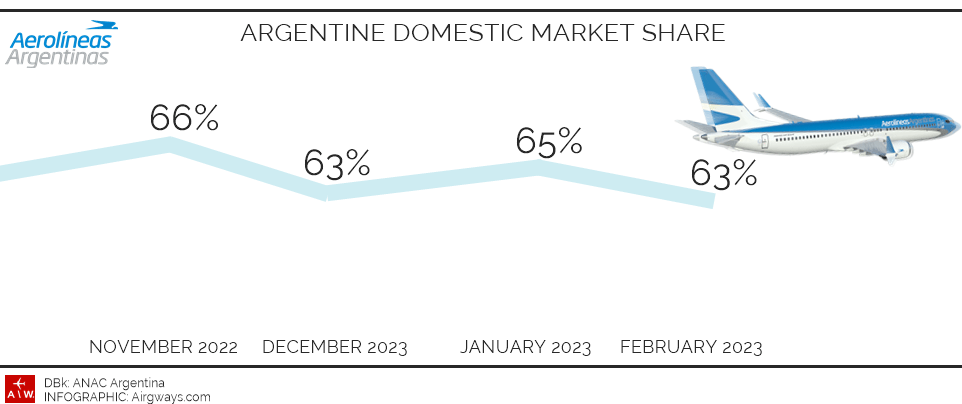
Los datos específicos actuales muestran que Aerolíneas Argentinas viene perdiendo participación de mercado aéreo. Los índices actuales confirman en Enero 2023 una participación del 65%, mientras que en Febrero 2023 se redujo a 63%.

Desde los despachos oficiales se habla de crecimiento del sector, pero sólo eso es categórico si se lo compara con Febrero del 2022 o 2021, un mercado que estaba todavía con restricciones por la crisis sanitaria. Un punto a tener en cuenta es que esta paridad de actividad que existe hoy contra el 2019 se produce con una fuerte baja de los pasajeros en el segmento internacional como consecuencia del encarecimiento impositivo de los pasajes y gastos en el exterior como el impuesto PAIS, Dólar Qatar entre otros ítems y la prohibición de comprar servicios internacionales en cuotas con tarjeta de crédito. Con tales restricciones, gran parte de la gente que planeaba viajar al exterior actualmente no tiene otra opción que volcarse al mercado doméstico, lo que ha beneficiado a las aerolíneas low cost.

Pese al cambio de política del Gobierno de Alberto Fernández en materia aérea, con medidas que buscaron frenar el avance de las low cost, la realidad muestra que eso no estaría sucediendo. El cierre del Aeropuerto El Palomar, en el conurbano bonaerense y símbolo de la gestión macrista, fue el hecho más contundente. A esto se sumaron distintas medidas técnicas que complicaron la operatoria de las compañías de bajo costo, sumando la salida del mercado de LATAM Airlines Argentina, la principal competidora de la línea de bandera.

En campaña, el entonces candidato a Presidente había prometido a los gremios aeronáuticos “todos los cielos para Aerolíneas Argentinas”, en una clara advertencia para las low cost y en un claro mensaje de favoritismo a la empresa estatal. Sin embargo, no se logra persibir si es por un cambio de opinión de Gobierno o por imposibilidad técnica de hacerlo. De todas maneras, ha quedado demostrado que Aerolíneas Argentinas no está en condiciones técnicas de atender la fuerte demanda interna, mientras que además, no resulta competitiva con los precios de pasajes aéreos, puntos que contrarrestran la operatividad de Aerolíneas.

Para tener una referencia, Aerolíneas Argentinas está apenas por arriba de su participación respecto a Febrero del 2020, antes de la pandemia y cuando todavía las medidas del Gobierno nacional contra las low cost no estaban del todo implementadas. En ese momento, Aerolíneas Argentinas/Austral tenían 60% del mercado de cabotaje. En ese momento, aún operaba LATAM Argentina con 16,7% de participación, Flybondi con un 8,8%, JetSMART Argentina un 7% y Norwegian Air Argentina con un 6,9%, aerolínea que ha sido absorbida por JetSMART.

La pérdida paulatina de mercado doméstico de Aerolíneas Argentinas obedece a una deficiente planificación tras la sinergia Aerolíneas-Austral y la salida de la crisis de la pandemia global, pero además, el problema radica en la falta de competitividad y los altos costos operativos producto de una estructura arcaica.

Aerolíneas decreases cabotage participation

Aerolineas Argentinas loses domestic market participation

Aerolineas Argentinas has been losing participation in the domestic market resulting from the lack of adaptation to competitiveness. An airline administered by the State and immersed in the market domain policy and assisted by government economic aid continues to lose quota in domestic flights. Traffic indices samples numbers in descent favoring the productivity of low-cost airlines such as Flybondi and Jetsmart Airlines Argentina that continue to efficiently manage flight offers, despite the minimum-minimum limit law to the air tickets that the government has imposed for stop budget airlines and avoid abrupt fall in the Aerolineas Argentinas cabotage market.

The comparable interannual data of January 2023, the amount of transported passengers exceeded the volume of movement of the same month of 2019, the last year of the Government of Mauricio Macri, which represented a 1% increase. Until that time, the activity of the domestic flights of the management of Cambiemos showed indicators superior to the current ones. According to the numbers that were known in the last report of the agency that regulates aerocomercial aviation, the National Civil Aviation Agency (ANAC), in February 2023 the interannual improvement of the passenger movement against 2019 was repeated. This time it was more modest and It only represented a rise of 0.8%. In February 2021, it had a 76% air quota of domestic passengers. In 2022, it fell to 71%.

Current specific data show that Aerolíneas Argentinas has been losing air market share. The current indices confirm in January 2023 a 65% participation, while in February 2023 it was reduced to 63%.

From the official offices there is talk of growth of the sector, but only that is categorical if compared to February 2022 or 2021, a market that was still restricted by the health crisis. A point to keep in mind is that this parity of activity that exists today against 2019 occurs with a strong decline in passengers in the international segment as a result of the tax increase in passages and expenses abroad such as the country tax, dollar Qatar among other items and the prohibition of buying international services in quotas with credit card. With such restrictions, much of the people who planned to travel abroad currently have no choice but to turn to the domestic market, which has benefited the low cost airlines.

Despite Alberto Fernández’s government policy in aerial matters, with measures that sought to stop the advance of low cost, reality shows that this would not be happening. The closure of the El Palomar airport, in the Buenos Aires Conurbano and symbol of macrista management, was the most forceful fact. To this were added different technical measures that complicated the operation of low cost companies, adding the departure of the LATAM Airlines Argentina market, the main competitor of the flag line.

In the campaign, the then candidate for president had promised the aeronautical guilds «all heavens for Aerolíneas Argentinas», in a clear warning for low cost and in a clear message of favoritism to the state company. However, it is not possible to persevere whether for a change of government opinion or by technical impossibility of doing so. In any case, it has been demonstrated that Aerolineas Argentinas is not in technical conditions to meet strong domestic demand, while in addition, it is not competitive with air ticket prices, points that counteract the operability of Aerolíneas.

To have a reference, Aerolíneas Argentinas is barely above its participation with respect to February 2020, before the pandemic and when the national government measures against the low costs were still entirely implemented. At that time, Aerolíneas Argentinas/Austral had 60% of the cabotage market. At that time, LATAM Argentina was still operating with 16.7% participation, Flybondi with 8.8%, JetSMART Argentina 7% and Norwegian Air Argentina with 6.9%, airline that has been absorbed by JetSMART.

The gradual loss of the domestic market of Aerolíneas Argentinas is due to poor planning after airline-austral synergy and the exit of the global pandemic crisis, but in addition, the problem lies in the lack of competitiveness and high operating costs product of a archaic structure

PUBLISHER: Airgways.com
DBk: Argentina.gob.ar/anac / Hernán Van Norden / Airgways.com
AW-POST: 202303061449AR
OWNERSHIP: Airgways Inc.
A\W A I R G W A Y S ®
Fuerte repunte mercado argentino

AW | 2023 03 04 17:04 | AIRLINES MARKET

Incremento de mercado aéreo argentino

El mercado aéreo de Argentina ha estado en sintonía con los grandes cambios a nivel global, permitiendo aumentar sus operaciones aéreas en su temporada estival 2022-2023. Un gran impulso ha estado marcado en el país austral tras la crisis sanitaria, potenciando los recursos y flota para aumentar las frecuencias de vuelos domésticos.

Las aerolíneas ultra bajo costo Flybondi y JetSMART Airlines Argentina, como así también Aerolíneas Argentinas buscan incrementar sus participaciones estimulando el mercado de aviación en franca recuperación. Un informe, desarrollado por CAPA, señala que los operadores del país continúan manteniendo perspectivas alcistas a medida que crecen y restablecen sus servicios aéreos.

Aunque Argentina ha sido uno de los países con más tiempo que otros países en América Latina sujeto a las restricciones de vuelos durante la pandemia, el restablecimiento del mercado finalmente está desarrollando oportunidades principalmente para las aerolíneas low cost de Argentina. Las aerolíneas de bajo coste del país están registrando un sólido crecimiento constante, al igual que Aerolíneas Argentinas, cita una sólida recuperación en sus operaciones. La recuperación en la demanda de vuelos internacionales se encuentra letargado debido a los impuestos que se gravan a los pasajes aéreos. Con un panorama positivo hacia finales a 2023, las líneas aéreas podrían tener in aumento en la evolución del mercado al exterior.

Las ULCC de Argentina trabajan para capitalizar la recuperación del mercado en Argentina. Según datos de la Agencia Nacional de Aviación Civil (ANAC) de Argentina muestran que los trece millones de pasajeros nacionales transportados por las aerolíneas del país en 2022 estuvieron aproximadamente un 13% por debajo de los niveles de 2019 en cifras. La participación de pasajeros de Flybondi en Diciembre de 2022 aumentó 6% año tras año, mientras que la participación de Aerolíneas Argentinas cayó en la misma cantidad. JetSMART Argentina mantuvo su participación del 15%.

Las perspectivas de Flybondi continuarán aumentando tras una flota de doce Boeing 737 -800, con planes de incorporar cinco aviones adicionales. La compañía prevé una facturación de US$ 500 millones de Dólares para 2023. La aerolínea está aumentando su capacidad a un ritmo acelerado para este 2023. JetSMART Argentina, también está planeando un crecimiento significativo en 2023.

Tracción aérea

La trayectoria de capacidad de Aerolíneas Argentinas es un poco más lenta, pero Flybondi y JetSMART Airlines Argentina parten de una base mucho más pequeña.

Las low cost se encuentran aprovechando las oportunidades tanto para capitalizar la recuperación continua en Argentina como para estimular el tráfico a medida que el modelo de bajo costo gana más tracción. Flybondi ha estimado que el 20% de sus clientes viajan por aire por primera vez. La aerolínea transportó en términos generales 2,3 millones de pasajeros que incluyen vuelos nacionales e internacionales en 2022, en comparación con 1,5 millones en 2019.

Aerolíneas Argentinas también se mantiene alcista en su recuperación, transportado un 11% más de pasajeros en Enero de 2023 en comparación con el mismo período de 2020. Los 11,4 millones de pasajeros que transportó la aerolínea en 2022 se mantienen por debajo de los 13,3 millones de clientes que transportó Aerolíneas Argentinas en 2019. Aunque en el sector de la aviación internacional, todavía se encuentra muy atrás con respecto al tráfico pre-pandemia. Los ocho millones de pasajeros internacionales que viajaron a Argentina en 2022 ha tenido una caída del 44% frente a los 14,3 millones de pasajeros transportados en 2019, muestran datos de la ANAC.

Aerolíneas Argentinas sigue siendo la aerolínea más grande de Argentina medida por frecuencias de salida, por un amplio margen. Los ASK domésticos de Argentina crecerán más allá de los niveles previos a la pandemia en el primer semestre de 2023, pero las oportunidades para los operadores de aerolíneas parecen justificar ese crecimiento. Durante el segundo semestre de 2022, tanto Flybondi como Aerolíneas Argentinas han definido que la demanda interna estaba superando la oferta, por lo que los números estadísticos reportados marcan un cambio positivo en la aviación comercial.

Strong Argentine market rebound

Argentine air market increase

The Argentine air market has been in tune with the great changes globally, allowing to increase its air operations in its summer season 2022-2023. A great impulse has been marked in the southern country after the health crisis, enhancing resources and floats to increase domestic flights.

Ultra low costs Airlines Flybondi and JetSMART Airlines Argentina, as well as Aerolineas Argentinas seek to increase their participations stimulating the aviation market in firm recovery. A report, developed by Capa, indicates that the country’s operators continue to maintain bullish perspectives as their air services grow and restore.

AW-7000069

Although Argentina has been one of the countries with more time than other countries in Latin America subject to flight restrictions during pandemic, market restoration is finally developing opportunities mainly for Low Cost airlines in Argentina. The low cost airlines of the country are registering a solid constant growth, as well as Aerolineas Argentinas, cites a solid recovery in their operations. The recovery in the demand for international flights is lethargated due to taxes that are taxed at aerial tickets. With a positive panorama towards the end of 2023, the airlines could have an increase in the evolution of the market abroad.

Argentina’s ULCC work to capitalize on the recovery of the market in Argentina. According to data from the National Civil Aviation Agency (ANAC) of Argentina, they show that the thirteen million national passengers transported by the country’s airlines in 2022 were approximately 13% below the 2019 levels in figures. Flybondi passenger participation in December 2022 increased 6% year after year, while the participation of Aerolineas Argentinas fell into the same amount. JetSMART Argentina maintained its participation of 15%.

Flybondi’s prospects will continue to increase after a fleet of twelve Boeing 737-800, with plans to incorporate five additional planes. The company foresees a turnover of US$ 500 million by 2023. The airline is increasing its capacity at an accelerated rate for this 2023. JetSMART Argentina, is also planning significant growth in 2023.

Air traction

The capacity trajectory of Aerolineas Argentinas is a bit slower, but Flybondi and JetSMART Airlines Argentina start from a much smaller base.

The low costs are taking advantage of the opportunities both to capitalize on continuous recovery in Argentina and to stimulate traffic as the low -cost model gains more traction. Flybondi has estimated that 20% of its customers travel for the first time. The airline transported 2.3 million passengers in general terms that include national and international flights in 2022, compared to 1.5 million in 2019.

Aerolineas Argentinas also remains bullish in its recovery, transported 11% more passengers in January 2023 compared to the same period of 2020. The 11.4 million passengers transported by the airline in 2022 are maintained below 13 , 3 million customers transported by Aerolineas Argentinas in 2019. Although in the international aviation sector, it is still very lethargated with respect to pre-pandemic traffic. The eight million international passengers who traveled to Argentina in 2022 has had a 44% drop compared to 14.3 million passengers transported in 2019, show data from the ANAC.

Aerolineas Argentinas remains the largest airline in Argentina measured by exit frequencies, by a wide margin. The domestic ASK of Argentina will grow beyond the levels prior to the pandemic in the first semester of 2023, but the opportunities for airline operators seem to justify that growth. During the second semester of 2022, both Flybondi and Aerolineas Argentinas have defined that the internal demand was exceeding the offer, so the statistical numbers reported mark a positive change in commercial aviation.

PUBLISHER: Airgways.com
DBk: Argentina.gob.ar/anac / Airgways.com / Aerolineas.com / Flybondi.com / Jetsmart.com
AW-POST: 202303041704AR
OWNERSHIP: Airgways Inc.
A\W A I R G W A Y S ®

Colombia 40% mercado lowcost

AW | 2023 03 01 15:00 | AIRLINES MARKET

Aerolíneas low cost dominan 40% mercado en Colombia

De las ocho aerolíneas domésticas que operan en la República de Colombia tres son de bajo costo: Viva air, Ultra Air, Wingo Air, mientras que la aerolínea dominicana Arajet realiza vuelos de cabotaje en Colombia, continúan todas avanzando para captar más mercado. Más de 50% de las ofertas de asientos que se ofrecen en Europa, Estados Unidos y África pertenecen a aerolíneas de bajo costo. Éstas han empezado a ganar terreno en mercados internacionales.

El mapa de mercado aéreo doméstico de aerolíneas clásicas muestra que Avianca, LATAM Airlines Colombia o Easyfly, cuentan con más de la mitad del mercado a la fecha en rutas de cabotaje, una prueba de la vigencia de este modelo. Mientras que el low cost contempla alrededor de 40% del mercado aéreo en el país.

Las principales diferencias, en el low cost radica en que los clientes pagan por el equipaje que llevarán, el asiento, los snacks y demás servicios que deseen agregar a sus paquetes, mientras que en el tradicional se paga un valor por todos los servicios contratados.

Por su parte, desde Easyfly consideran que los paquetes completos siguen siendo apetecidos por los usuarios y las líneas tradicionales no desaparecerán, por el contrario, tendrán nuevas formas de competir. “Naturalmente hay un cambio porque la presión de precios de combustible, la devaluación y la inflación hacen que las aerolíneas, necesariamente, tengan que reinventar su estructura de ingresos para compensar el efecto de los sobre costos que se dan por volatilidad e incertidumbres macroeconómicas. Pero en Easyfly somos fiel al modelo tradicional, conectando la gente de forma ágil, directa y sin escalas”, dice Felipe Gutiérrez, Gerente General de Easyfly.

Sin embargo, algunas líneas tradicionales han abierto paquetes de compra por tamaño de equipaje con los que compiten a las de bajo costo. “El pasajero siempre va a buscar el precio más económico. Cuando Viva empezó en 2012 había 14 millones de viajeros y en 2019 eran 32 millones. Eso no lo pueden contar muchos países”, dijo William Shaw, CEO de Ultra Air, empresa que tiene alrededor de 11% del mercado.

En el caso de Arajet, en cinco meses que lleva operando en las rutas domésticas, ofrecen 48.010 asientos, y este año proyectan ofrecer a Colombia 150,000 asientos. «Somos la aerolínea que más destinos ofrece a Colombia desde Santo Domingo. Llegar a destinos como México, Cancún, Guatemala, San Salvador, San José de Costa Rica y Colombia, costaba más de 1,000 Dólares, y con la aparición de las bajo costo, los competidores impusieron costos por 300 Dólares, siendo esto lo que se conoce como el efecto de ayer”, dijo Víctor Pacheco, CEO de Arajet.

El mercado de aerolíneas de bajo costo utilizan nuevas aeronaves que garantizan mayor eficiencia de los costos directos de las operaciones permitiendo ahorrar gastos y desarrollar un mejor servicio en un mercado colombiano cada vez más competitivo, mientras que las aerolíneas clásicas buscan reinventarse para ofrecer un servicio diferencial y conveniente.

Colombia 40% market lowcost

Low Cost airlines dominate 40% market in Colombia

Of the eight domestic airlines that operate in the Republic of Colombia, three are low cost: Viva Air, Ultra Air, Wing Air, while the Dominican airline Arajet performs cabotage flights in Colombia, they all continue advancing to capture more market. More than 50% of seat offers offered in Europe, the United States and Africa belong to low -cost airlines. These have begun to gain ground in international markets.

AW-Ultra Air__A320220C

The classic airlines domestic airline map shows that Avianca, LATAM Airlines Colombia or Easyfly, have more than half of the market to date on cabotage routes, a proof of the validity of this model. While the Low Cost includes about 40% of the air market in the country.

The main differences, in the low cost is that customers pay for the luggage they will carry, the seat, the snacks and other services that they wish to add to their packages, while in the traditional one is paid a value for all the contracted services.

On the other hand, from Easyfly they consider that the complete packages are still appetized by users and traditional lines will not disappear, on the contrary, they will have new ways to compete. “Naturally there is a change because the fuel price pressure, devaluation and inflation make airlines necessarily have to reinvent their income structure to compensate for the effect of costs that occur due to volatility and macroeconomic uncertainties. But in Easyfly we are faithful to the traditional model, connecting people agilely, directly and without scales”, says Felipe Gutiérrez, general manager of Easyfly.

However, some traditional lines have opened purchase packages due to luggage size with those who compete with lowcost. “The passenger will always look for the most economical price. When Viva started in 2012 there were 14 million travelers and in 2019 there were 32 million. That cannot be counted by many countries”, said William Shaw, CEO of Ultra Air, a company that has about 11% of the market.

In the case of Arajet, in five months that it has been operating on domestic routes, they offer 48,010 seats, and this year they project to offer Colombia 150,000 seats. «We are the airline that offers more destinations to Colombia from Santo Domingo. Arriving in destinations such as Mexico, Cancun, Guatemala, San Salvador, San José de Costa Rica and Colombia, cost more than US$ 1,000, and with the appearance of low cost, competitors imposed costs for US$ 300, this being what is known As yesterday’s effect”, said Víctor Pacheco, CEO of Arajet.

The low cost airline market use new aircraft that guarantee greater efficiency of the direct costs of the operations allowing expenses to save and develop a better more and more competitive Colombian service, while classic airlines seek to reinvent themselves to offer a differential and convenient service .

PUBLISHER: Airgways.com
DBk: Airgways.com / Aerocivil.gov.co
AW-POST: 202303011500AR
OWNERSHIP: Airgways Inc.
A\W A I R G W A Y S ®