Lufthansa entra contacto Norwegian Air

4170813

AW | 2018 06 18 11:02 | AIRLINES MARKET

bui053h3 (1)La aerolínea alemana ha entrado en contacto para ofertar por Norwegian Air Shuttle ASA

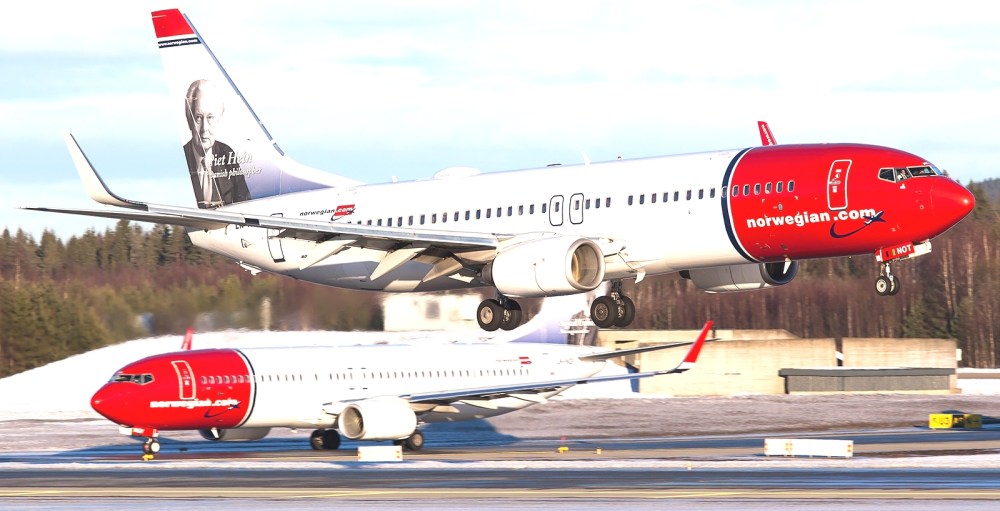
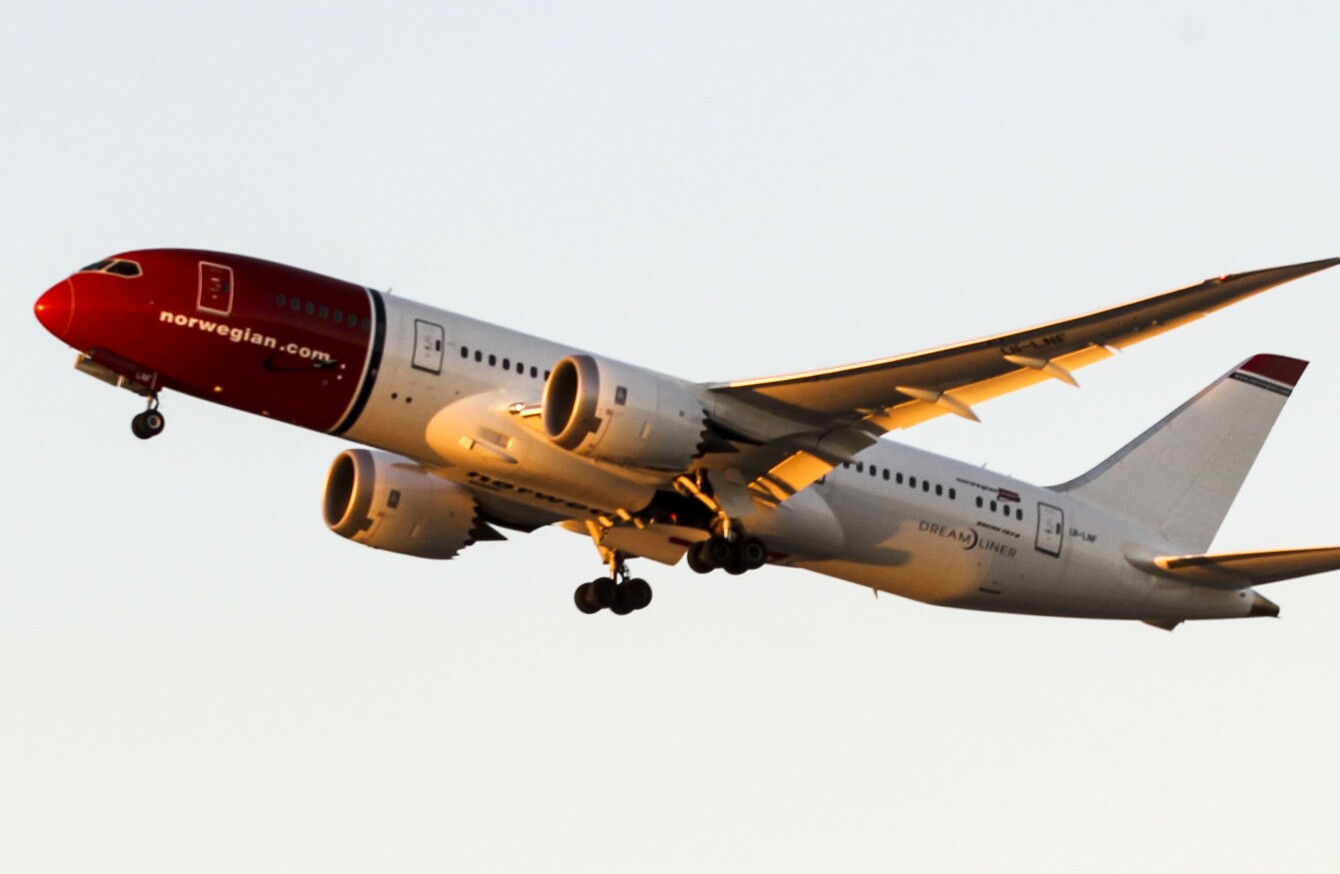
Lufthansa está en contacto con Norwegian Air Shuttle ASA, que también es objeto de una oferta por parte del propietario de British Airways IAG, ya que la aerolínea alemana busca involucrarse en una esperada ola de acuerdos en el sector, dijo su director general a un periódico.

«En Europa, todos están hablando con todos. Se acerca una nueva ola de consolidación. Eso significa que también estamos en contacto con Norwegian. Las adquisiciones siempre son una cuestión de valor estratégico, precio y antimonopolio. No hay respuestas fáciles», expresó Carsten Spohr, Jefe de Lufthansa.

Norwegian reiteró el lunes que compradores potenciales e inversionistas se pusieron en contacto con ellos después de que en Abril 2018 se anunciara que IAG había adquirido una participación del 4,6% en el operador.

Las partes involucradas han expresado interés indicativo y preliminar en adquisiciones de acciones, fusiones, transacciones estructuradas, financiamiento del grupo y varias formas de cooperación operativa y financiera.

Después de los fracasos de Air Berlin y Monarch Airlines en el 2017, los ejecutivos de las líneas aéreas han pronosticado una mayor consolidación este año en Europa, especialmente porque los precios del petróleo hacen la vida más difícil para los operadores con finanzas más débiles.

Lufhansa Group

Lufthansa obtendría más oportunidades de adquisición si surgieran y que los transportistas estuvieran en contacto entre sí. Estratégicamente hablando, Norwegian encajaría bien con Eurowings, la marca de bajo costo de Lufthansa.

Después de hacerse cargo de partes de Air Berlin el año pasado y adquirir la participación restante en Brussels Airlines para expandir su marca Eurowings, Lufthansa también ha mirado a Alitalia, aunque el proceso de venta se ve frenado por la agitación política.

Lufthansa había estado interesado previamente en la compañía escandinava SAS Airlines, pero hace dos años dijo que había decidido no invertir.

El CEO de IAG ha dicho que no participará en una guerra de ofertas por Norwegian, y repitió a los accionistas la semana pasada que Norwegian Air no era un acuerdo que el grupo tuviera prioridad. AIRWAYS® AW-Icon TXT

Resultado de imagen para Lufthansa Norwegian Air

Lufthansa enters into contact with Norwegian Air

The German airline has contacted to bid for Norwegian Air Shuttle ASA

Lufthansa is in contact with Norwegian Air Shuttle ASA, which is also the subject of an offer by the owner of British Airways IAG, as the German airline seeks to get involved in an expected wave of deals in the sector, its CEO told a newspaper.

«In Europe, everyone is talking to everyone, a new wave of consolidation is coming in. That means we’re also in touch with Norwegian, acquisitions are always a matter of strategic value, price and antitrust there are no easy answers», said Carsten Spohr, Chief of Lufthansa.

Norwegian-air-shuttle-argentina-12102016

Norwegian reiterated on Monday that potential buyers and investors contacted them after it was announced in April 2018 that IAG had acquired a 4.6% stake in the operator.

The parties involved have expressed indicative and preliminary interest in acquisitions of shares, mergers, structured transactions, group financing and various forms of operational and financial cooperation.

After the failures of Air Berlin and Monarch Airlines in 2017, airline executives have predicted further consolidation this year in Europe, especially as oil prices make life more difficult for operators with weaker finances.

Lufhansa Group

Lufthansa would obtain more acquisition opportunities if they arose and carriers were in contact with each other. Strategically speaking, Norwegian would fit in well with Eurowings, Lufthansa’s low-cost brand.

After taking over parts of Air Berlin last year and acquiring the remaining stake in Brussels Airlines to expand its Eurowings brand, Lufthansa has also looked to Alitalia, although the sales process is held back by political turmoil.

Lufthansa had previously been interested in the Scandinavian company SAS Airlines, but two years ago said it had decided not to invest.

The CEO of IAG has said he will not participate in a bidding war for Norwegian, and he repeated to shareholders last week that Norwegian Air was not an agreement that the group had priority. A \ W

Resultado de imagen para Lufthansa Norwegian Air

Lufthansa tritt mit Norwegian Air in Kontakt

Die deutsche Fluggesellschaft hat Kontakt aufgenommen, um für Norwegian Air Shuttle ASA zu bieten

Lufthansa steht in Kontakt mit der Norwegian Air Shuttle ASA, die auch Gegenstand eines Angebots des Eigentümers von British Airways IAG ist, da die deutsche Fluggesellschaft versucht, sich auf eine erwartete Welle von Geschäften in der Branche einzulassen, sagte der CEO einer Zeitung.

«In Europa spricht jeder mit jedem, eine neue Welle der Konsolidierung kommt hinzu. Das heißt, wir sind auch in Kontakt mit Norwegisch, Akquisitionen sind immer eine Frage von strategischem Wert, Preis und Kartellrecht es gibt keine einfachen Antworten», sagte Carsten Spohr, Leiter der Lufthansa.

Norwegian bekräftigte am Montag, dass potenzielle Käufer und Investoren Kontakt mit ihnen aufgenommen haben, nachdem im April 2018 bekannt gegeben wurde, dass IAG 4,6% der Anteile an dem Betreiber erworben hatte.

Die beteiligten Parteien haben ein indikatives und vorläufiges Interesse an Aktienkäufen, Fusionen, strukturierten Transaktionen, Gruppenfinanzierungen und verschiedenen Formen der operativen und finanziellen Zusammenarbeit bekundet.

Nach den Misserfolgen von Air Berlin und Monarch Airlines im Jahr 2017 haben die Verantwortlichen der Fluggesellschaften eine weitere Konsolidierung in diesem Jahr in Europa prognostiziert, zumal die Ölpreise das Leben der schwächeren Finanziers erschweren.

Lufhansa Gruppe

Lufthansa würde mehr Akquisitionsmöglichkeiten erhalten, wenn sie entstehen und Carrier miteinander in Kontakt treten. Strategisch passt Norwegisch gut zu Eurowings, der Low-Cost-Marke von Lufthansa.

Nach der Übernahme von Teilen von Air Berlin im vergangenen Jahr und dem Erwerb der restlichen Anteile an Brussels Airlines für den Ausbau der Marke Eurowings hat Lufthansa auch auf Alitalia gesetzt, obwohl der Verkaufsprozess durch politische Unruhen gebremst wird.

Lufthansa hatte sich zuvor für das skandinavische Unternehmen SAS Airlines interessiert, sagte aber vor zwei Jahren, es habe sich entschieden, nicht zu investieren.

Der CEO von IAG sagte, er werde nicht an einem Bieterkrieg für Norweger teilnehmen, und er wiederholte letzte Woche den Aktionären, dass Norwegian Air keine Vereinbarung sei, der die Gruppe Vorrang hätte. A \ W


Ξ A I R G W A Y S Ξ
SOURCE:  Airgways.com
DBk: Norwegian.com / Reuters.com / Ft.com / Thejournal.ie / Kas van Zonneveld
AW-POST: 201806181102AR

A\W   A I R G W A Y S ®

Flair Airlines extiende su red doméstica

Resultado de imagen para Flair Airlines

AW | 2018 06 16 16:04 | AIRLINES MARKET

Resultado de imagen para Flair AirlinesLa aerolínea ULCC, Flair Airlines extiende su red de vuelos domésticos

La canadiense ULCC Flair Airlines lanzó el 15 Junio 2018 vuelos desde tres nuevos aeropuertos: Calgary International, Halifax Stanfield y Victoria International, extendiendo su red doméstica de costa a costa y estableciendo una competencia más directa con otros operadores.

Las nuevas rutas y las frecuencias añadidas aumentan inmediatamente los vuelos semanales de la aerolínea de 90 a 188. También agrega la sede central de Calgary de WestJet a una red de rutas que se superpone cada vez más con los competidores actuales y futuros. El principal centro de conexión de Flair Airlines es el Aeropuerto Internacional de Edmonton (YEG), y los vuelos existentes entre la ciudad y varios otros, incluidos Toronto, Vancouver (YVR) y Winnipeg (YWG), enfrentan al ex contratista contra Air Canada, LCC WestJet, y en algunos casos, Air Transat . Cada uno de los destinos sin escalas de Flair fuera de YYC-Kelowna, YVR y YWG-son atendidos por al menos dos competidores. También está agregando YEG-Victoria, que es atendida tanto por Air Canada como por WestJet.

Mercado canadiense

La aceleración de Flair llega en un momento en que el mercado doméstico de Canadá parece estar listo para absorber un aumento en los vuelos de ULCC. Tres aerolíneas, Air Canada, WestJet y Porter Airlines, se combinan para tener alrededor del 85% del mercado nacional. Un informe de Conference Board of Canada emitido a principios de este año sugirió que alrededor del 25% del mercado interno del país podría ser respaldado por ULCC flying. Sin embargo, Flair está lejos de ser el único que persigue la oportunidad. «En apenas un año, Flair ha tenido un tremendo impacto en la reducción del precio del transporte aéreo en Canadá y confiamos en que estas nuevas ubicaciones no serán diferentes», dijo el presidente ejecutivo de Flair, David Tait.

La filial rouge de Air Canada ya está bien establecida. La filial Swoop de WestJet se lanzará el 20 Junio 2018 con seis rutas, incluidas cinco que ahora forman parte de la red de Flair. Mientras tanto, la aspirante a startup ULCC Jetlines, que ha estado trabajando durante años, parece lista para despegar a principios de 2019.

Fundada en 2005 como operador de Boeing 727 Flair Air, la compañía compró el año pasado NewLeaf Travel y realizó la transición a las operaciones programadas, renombrando como Flair Airlines. La aerolínea opera siete aviones 737-400 y a fines de 2017, dijo que serían dos aviones este año, dos 737-800 y cuatro más en 2019 como parte de sus planes de expansión.

El mercado canadiense de pasajeros aéreos ha crecido durante ocho años consecutivos, incluido un aumento del 5,4% en 2017. Los aeropuertos canadienses alcanzaron un récord de 139,4 millones de pasajeros en 2017, la mitad de ellos en itinerarios domésticos.

Flair Airlines expands home network

The airline ULCC, Fair Airlines extends its network of domestic flights

The Canadian ULCC Flair Airlines launched 15 June 2018 flights from three new airports: Calgary International, Halifax Stanfield and Victoria International, extending its domestic network from coast to coast and establishing more direct competition with other operators.

The new routes and added frequencies immediately increase the airline’s weekly flights from 90 to 188. It also adds the Calgary headquarters of WestJet to a route network that is increasingly superimposed on current and future competitors. The main connection center of Flair Airlines is the Edmonton International Airport (YEG), and existing flights between the city and several others, including Toronto, Vancouver (YVR) and Winnipeg (YWG), face the former contractor against Air Canada, LCC WestJet, and in some cases, Air Transat. Each of Flair’s non-stop destinations outside of YYC-Kelowna, YVR and YWG-are served by at least two competitors. It is also adding YEG-Victoria, which is serviced by both Air Canada and WestJet.

Canadian market

Flair’s acceleration comes at a time when Canada’s domestic market seems ready to absorb an increase in ULCC flights. Three airlines, Air Canada, WestJet and Porter Airlines, combine to have around 85% of the national market. A Conference Board of Canada report issued earlier this year suggested that about 25% of the country’s domestic market could be supported by ULCC flying. However, Flair is far from being the only one to pursue the opportunity. «In just one year, Flair has had a tremendous impact on reducing the price of air travel in Canada and we are confident that these new locations will not be different», said Flair Chief Executive David Tait.

The affiliate rouge of Air Canada is already well established. WestJet’s Swoop subsidiary will launch on June 20, 2018 with six routes, including five that are now part of the Flair network. Meanwhile, aspiring startup ULCC Jetlines, which has been working for years, looks set to take off early in 2019.

Founded in 2005 as operator of Boeing 727 Flair Air, the company purchased NewLeaf Travel last year and made the transition to scheduled operations, renaming Flair Airlines. The airline operates seven 737-400 aircraft and, at the end of 2017, said it would be two planes this year, two 737-800 and four more in 2019 as part of its expansion plans.

The Canadian air passenger market has grown for eight consecutive years, including an increase of 5.4% in 2017. Canadian airports reached a record 139.4 million passengers in 2017, half of them in domestic itineraries. A \ W


Ξ A I R G W A Y S Ξ
SOURCE:  Airgways.com
DBk: Flairair.ca
AW-POST: 201806161604AR

A\W   A I R G W A Y S ®

Expansión mercado aéreo en India

Resultado de imagen para airlines of India

AW | 2018 06 10 09:56 | AIRLINES MARKET

El tráfico aéreo de pasajeros de la India se dispara, las aerolíneas se apresuran a expandir su flota

Los operadores privados de aerolíneas están luchando por expandir sus flotas en los próximos años para sacar provecho del creciente mercado de aviación de la India. Se estima que el número de aeronaves aumentará aproximadamente un 150 por ciento en los próximos cinco a siete años. Según fuentes del Ministerio de Aviación Civil, muchas aerolíneas privadas están preparadas para la expansión y otras como Jet Airways, SpiceJet, IndiGo y AirAsia India planean agregar nuevos aviones a sus flotas. Mientras que la India ahora cuenta con alrededor de 600 aviones, los funcionarios dicen que los operadores privados agregarán alrededor de 900 aviones en los próximos cinco a siete años.

El plan de expansión tentativo de Go Airlines (GoAir) e Interglobe Aviation (Indigo) desean agregar 119 y 448 aviones en los próximos siete u ocho años. La fuerza de la flota se encuentra en 32 y 155 aviones, respectivamente. Los operadores aéreos como SpiceJet, Jet Airways y Vistara planean expandir sus negocios agregando más aviones. SpiceJet planea agregar 107 Boeing 737-800 y 50 Bombarderos a su flota existente de 57 aviones para 2018-23. Jet Airways agregará 86 aviones en comparación con la potencia existente de 111 aviones.

Resultado de imagen para airlines of India

El Ministro de Estado de la Unión para Aviación Civil, Jayant Sinha, dijo que el sector de la aviación india, que actualmente crece en casi un 28 por ciento, verá una inversión de casi 1 lakh crore en los próximos cinco años para aumentar la capacidad y desarrollar aeropuertos nuevos. Señaló que el mercado de la aviación de la India superaría a los Estados Unidos y China al cruzar un billón de viajes de pasajeros por año en los próximos 10 a 15 años.

Dado el plan de expansión, las empresas fabricantes de aviones también ven un gran potencial en el mercado de aviación de la India. Como resultado, India se convertirá en uno de los mercados de venta más selectivos para los fabricantes de aviones Airbus y Boeing.

Airbus, que tiene la huella más grande en India, predice que el tráfico interno de la India crecerá cinco veces y media en los próximos 20 años, lo que lo convierte en el principal mercado de aviación de más rápido crecimiento del mundo. Un portavoz de Airbus dice que la compañía espera que India ordene más de 1.320 aviones de pasillo único y casi 430 de fuselaje ancho en los próximos 20 años. «Nuestra cartera de pedidos para India nos permitirá entregar un avión en promedio cada semana durante los próximos 10 años; más de 45 compañías indias son parte de nuestra cadena de suministro global; y Airbus ampliará pronto su contribución a la capacitación con su primer centro de capacitación de propiedad absoluta en Asia para pilotos e ingenieros de mantenimiento».

Sin embargo, el fabricante de la aeronave observa que la India necesita una inversión sustancial en infraestructura y desarrollo de habilidades para mantener estos niveles de crecimiento. Agrega que iniciativas como UDAN pueden acelerar los servicios de aviación y contribuir al crecimiento económico general de la India porque la conectividad aérea es un multiplicador de la fuerza para las inversiones y el empleo.

El Ministro de Aviación Civil Suresh Prabhu visitó las instalaciones de Airbus en Francia. Prabhu dijo que si Airbus decide fabricar aviones en la India, se generará empleo y se convertirá en una situación de beneficio mutuo para ambos países.

Los funcionarios del ministerio dicen que el gobierno ha tomado muchas iniciativas para mejorar la facilidad de hacer negocios. La DGAC ha revisado el Requisito de Aviación Civil (CAR), Sección 3, Serie F, Parte I, con respecto a los requisitos para la emisión de autorizaciones de vuelo no programadas para aeronaves de matrícula india. Después de que las reglamentaciones revisadas entraron en vigor en diciembre de 2017, los operadores de aeronaves de la India con permisos para realizar operaciones internacionales no requieren permiso previo de la Dirección General de Aviación Civil para realizar vuelos internacionales no regulares desde o hacia aeropuertos con instalaciones de Aduanas e Inmigración.  AIRWAYS® AW-Icon TXT

Resultado de imagen para airlines of India

Air market expansion in India

India’s passenger air traffic skyrockets, airlines rush to expand their fleet

Private airline operators are struggling to expand their fleets in the coming years to take advantage of India’s growing aviation market. It is estimated that the number of aircraft will increase approximately 150 percent in the next five to seven years. According to sources from the Ministry of Civil Aviation, many private airlines are prepared for expansion and others such as Jet Airways, SpiceJet, IndiGo and AirAsia India plan to add new aircraft to their fleets. While India now has around 600 aircraft, officials say private operators will add about 900 aircraft in the next five to seven years.

The tentative expansion plan of Go Airlines (GoAir) and Interglobe Aviation (Indigo) is to add 119 and 448 aircraft in the next seven or eight years. The strength of the fleet is found in 32 and 155 aircraft, respectively. Air operators such as SpiceJet, Jet Airways and Vistara plan to expand their businesses by adding more aircraft. SpiceJet plans to add 107 Boeing 737-800 and 50 Bombers to its existing fleet of 57 aircraft for 2018-23. Jet Airways will add 86 aircraft compared to the existing power of 111 aircraft.

The State Minister of the Union for Civil Aviation, Jayant Sinha, said that the Indian aviation sector, which currently grows by almost 28 percent, will see an investment of almost 1 lakh crore in the next five years to increase capacity. and develop new airports. He pointed out that India’s aviation market would overtake the United States and China by crossing one trillion passenger trips per year in the next 10 to 15 years.

AW-70447773.png

Given the expansion plan, aircraft manufacturers also see great potential in the Indian aviation market. As a result, India will become one of the most selective sales markets for Airbus and Boeing aircraft manufacturers.

Airbus, which has the largest footprint in India, predicts that India’s domestic traffic will grow five and a half times in the next 20 years, making it the world’s fastest growing aviation market. A spokesman for Airbus says the company expects India to order more than 1,320 single-aisle aircraft and almost 430 wide-body aircraft in the next 20 years. «Our order book for India will allow us to deliver an aircraft on average every week for the next 10 years, more than 45 Indian companies are part of our global supply chain, and Airbus will soon expand its contribution to training with its first customer service center. absolute ownership training in Asia for pilots and maintenance engineers».

However, the manufacturer of the aircraft notes that India needs a substantial investment in infrastructure and skills development to maintain these levels of growth. He adds that initiatives such as UDAN can accelerate aviation services and contribute to overall economic growth in India because air connectivity is a force multiplier for investment and employment.

The Minister of Civil Aviation Suresh Prabhu visited the Airbus facilities in France. Prabhu said that if Airbus decides to manufacture aircraft in India, it will generate employment and become a win-win situation for both countries.

Ministry officials say the government has taken many initiatives to improve the ease of doing business. The DGAC has revised the Civil Aviation Requirement (CAR), Section 3, Series F, Part I, with respect to the requirements for the issuance of unscheduled flight authorizations for Indian registered aircraft. After the revised regulations came into effect in December 2017, aircraft operators in India with permits to carry out international operations do not require prior permission from the General Directorate of Civil Aviation to make non-scheduled international flights to or from airports with facilities of Customs and Immigration. A \ W


Ξ A I R G W A Y S Ξ
SOURCE:  Airgways.com
DBk: Thenational.ae / Qz.com / Wikimedia.org / Newindianexpress.com
AW-POST: 201806100956AR

A\W   A I R G W A Y S ®

Acciones bajan por aumento combustible en Estados Unidos

AW-70083771.png

AW | 2018 05 30 20:30 | AIRLINES MARKET

El aumento en los precios del petróleo causa que las acciones de las aerolíneas desciendan

Las acciones de las aerolíneas están sufriendo debido a los altos precios del combustible. El aumento de los precios del gas está empezando a afectar a las aerolíneas. El miércoles 30 de mayo, las acciones de las aerolíneas cayeron debido a que el petróleo superó los $ 67 por barril. Los precios más altos del combustible podrían afectar la capacidad de las aerolíneas para aumentar la capacidad en el corto plazo, señaló Delta Airlines en una conferencia el miércoles.

El índice de aerolíneas, que se muestra a continuación, muestra cuán volátil ha sido el mercado para los inversionistas de aerolíneas. En efecto, el índice ha bajado desde fines de febrero.   AIRWAYS® AW-Icon TXT

Shares down on US fuel increase

The increase in oil prices causes airline shares to fall

The shares of airlines are suffering due to high fuel prices. The increase in gas prices is beginning to affect airlines. On Wednesday, May 30, airline shares fell as oil surpassed $ 67 per barrel. Higher fuel prices could affect airlines’ ability to increase capacity in the short term, Delta Airlines said at a conference on Wednesday.

The airline index, shown below, shows how volatile the market has been for airline investors. In effect, the index has fallen since the end of February. A \ W


Ξ A I R G W A Y S Ξ
SOURCE:  Airgways.com
DBk:  Airgways.com / Thestreet.com
AW-POST: 201805302030AR

A\W   A I R G W A Y S ®

Pronostican aumento tráfico en EEUU

Resultado de imagen para dallas airports US

AW | 2018 05 23 11:09 | AIRLINES MARKET

Este verano será más activo para los viajes aéreos en Estados Unidos

Las aerolíneas esperan el verano más activo en la historia de los viajes aéreos de Estados Unidos y estiman que 246.1 millones de pasajeros volarán con aerolíneas estadounidenses entre el 1 de junio y el 31 de agosto de 2018.

Eso promedia a 2,68 millones de pasajeros por día durante el período, según el pronóstico de verano emitido el miércoles por el grupo comercial Airlines for America (A4A). El grupo señaló una economía fuerte y «tarifas aéreas históricamente bajas» para ayudar a impulsar lo que se espera sea un verano récord para viajar. «A medida que la economía crece junto con el patrimonio neto de los hogares, los pasajeros aprovechan las bajas tarifas aéreas para sus planes de viaje de verano», dijo John Heimlich, economista jefe de A4A, en un comunicado.

El número de pasajeros de verano previsto por A4A sería un aumento del 3,7% respecto del año pasado, cuando 237,3 millones de viajeros volaron en ese momento en las líneas aéreas de los EE. UU. Colectivamente, A4A dice que las aerolíneas de los EE. UU. Han agregado 116,000 asientos adicionales a sus horarios de verano en anticipación al pico de pasajeros en 2018. Por otra parte, A4A dijo que las tarifas promedio se mantuvieron bajas para este verano.

Mirando solo los últimos años, A4A dijo que si se ajustaba a la inflación anual, el precio del transporte aéreo nacional, incluidas las tarifas, había caído un 12,5% desde 2014. AIRWAYS® AW-Icon TXT

Resultado de imagen para airports passengers US

Forecast traffic increase in the US

This summer will be more active for air travel in the United States

Airlines expect the busiest summer in the history of air travel in the United States and estimate that 246.1 million passengers will fly with US airlines between June 1 and August 31, 2018.

That averages 2.68 million passengers per day during the period, according to the summer forecast issued Wednesday by the commercial group Airlines for America (A4A). The group pointed to a strong economy and «historically low air fares» to help boost what is expected to be a record summer to travel. «As the economy grows along with the net worth of households, passengers take advantage of low airfares for their summer travel plans,» said John Heimlich, chief economist at A4A, in a statement.

The number of summer passengers envisaged by A4A would be an increase of 3.7% over last year, when 237.3 million passengers flew at that time on US airlines. UU Collectively, A4A says US airlines. UU They have added an additional 116,000 seats to their summer schedules in anticipation of the peak of passengers in 2018. On the other hand, A4A said average rates were kept low for this summer.

Looking only in recent years, A4A said that if adjusted for annual inflation, the price of domestic air transport, including tariffs, had fallen by 12.5% ​​since 2014. A \ W


Ξ A I R G W A Y S Ξ
SOURCE:  Airgways.com
DBk: 360gsp.com / Businessinsider.com
AW-POST: 2018052311090AR

A\W   A I R G W A Y S ®

Aumento petróleo podría matar a aerolíneas más pequeñas o vulnerables

Resultado de imagen para Berlin airport

AW | 2018 05 21 15:15 | AIRLINES MARKET

La industria aeronáutica se encamina a un aumento en los costos del combustible

A medida que aumentan los precios del petróleo crudo podría afectar a las líneas aéreas más pequeñas o más vulnerables. Ante una situación económica comprometida, las más débiles o indefensas aerolíneas europeas podrían no pasar el invierno, dijo el lunes Michael O’Leary, Presidente Ejecutivo de la mayor aerolínea de bajo coste de Europa, Ryanair. «Los precios al contado cercanos a los 80 dólares por barril llevarán a una importante reestructuración en la industria este invierno. Algunas de esas aerolíneas con pérdidas que no podían ganar dinero cuando el petróleo estaba a 40 dólares por barril ciertamente no pueden sobrevivir», dijo Michael O’Leary, luego de que Ryanair informara un aumento de 10% en sus ganancias del año fiscal 2017/2018.

Las aerolíneas europeas se encuentran ante un panorama un tanto sombrío. Alrededor de US$ 58 es el precio por barril en comparación con el precio spot de casi US$ 80 por barril. Si bien la producción de shale de Estados Unidos sigue siendo fuerte, la demanda mundial de petróleo está creciendo, y una serie de factores políticos a corto plazo en Venezuela, Libia e Irán, sugiere que los precios seguirán siendo elevados para el próximo año. Las tarifas aéreas tienden a seguir los precios del petróleo, pero con un retraso de hasta 12 meses antes de que los precios del petróleo se incrementen a tarifas aéreas más altas.

El mercado del petróleointroducirá cambios en el panorama de la competencia en Europa. Algunas de esas aerolíneas que no pudieron ganar dinero cuando el petróleo estaba a US$40 dólares por barril el año pasado,tendrían un escaso margen para atravezar el invierno boreal. Según datos de Platts y la Asociación Internacional de Transporte Aéreo (IATA), a partir del 11 Mayo 2018, los precios de los viajes a nivel mundial fueron un 54,2% más altos que en el mismo momento del año pasado, un 5,4% más que hace un mes y un 3,7% que la semana anterior.  AIRWAYS® AW-Icon TXT.png

Resultado de imagen para london airport

Oil increase could kill small airlines

The aeronautical industry is heading for an increase in fuel costs

As oil prices rise, it could affect smaller or more vulnerable airlines. In the face of a compromised economic situation, the weakest or most defenseless European airlines may not winter, Michael O’Leary, Executive Chairman of Europe’s largest low-cost airline, Ryanair, said on Monday. «Spot prices close to $ 80 per barrel will lead to major restructuring in the industry this winter,» O’Leary said. Some of those airlines with losses that could not make money when the oil was at $ 40 per barrel certainly can not survive, «said Michael O’Leary, after Ryanair reported a 10% increase in its profits for fiscal year 2017 / 2018

European airlines are facing a somewhat bleak picture. Around US $ 58 is the price per barrel compared to the spot price of almost US $ 80 per barrel. While US shale production remains strong, global oil demand is growing, and a series of short-term political factors in Venezuela, Libya and Iran suggest that prices will remain high for next year. Air fares tend to follow oil prices, but with a delay of up to 12 months before oil prices increase to higher air fares.

The oil market will introduce changes in the competitive landscape in Europe. Some of those airlines that could not make money when oil was at $ 40 per barrel last year, would have little room to go through the winter. According to data from Platts and the International Air Transport Association (IATA), as of 11 May 2018, the prices of travel worldwide were 54.2% higher than at the same time last year, a 5, 4% more than a month ago and 3.7% the previous week. A \ W


Ξ A I R G W A Y S Ξ
SOURCE:  Airgways.com
DBk: Iata.org / Londontopia.net /  Airportwroclawtransfer.com
AW-POST: 201805211515AR

A\W   A I R G W A Y S ®

Aumento competibidad en China

Imagen relacionada

AW | 2018 05 17 15:36 | AIRLINES MARKET

Las aerolíneas de China están preparadas para una guerra de precios en vuelos de larga distancia

Las aerolíneas chinas están listas para competir después de haber liberado a los transportistas locales para aumentar las tarifas en China, ahora les permitirá competir en trayectos largos a destinos en el extranjero. Una guerra de precios para servir a los destinos populares internacionales se proyectan sobre las mayores compañías como China Eastern Airlines, China Southern Airlines y Air China competirán entre ellas.

La Administración de Aviación Civil de China ha dado algunos pasos en la dirección correcta este año. En Enero 2018, eliminó los topes a las tarifas para 300 rutas nacionales, lo que podría impulsar las ganancias promedio en alrededor del 7%, según las estimaciones de la consultora Crucial Perspective. Esta semana, CAAC dijo que eliminaría una regla de «una ruta, una línea aérea» de larga data que ha impedido que las aerolíneas chinas compitan en rutas internacionales costosas para servir. Los dos movimientos probablemente estén relacionados: los márgenes más altos en el hogar permitirán una expansión agresiva en el exterior.

Las acciones de las aerolíneas han tenido un desempeño superior en respuesta, especialmente China Eastern y China Southern, que también se beneficiarán de un centro en el nuevo aeropuerto internacional de 13 mil millones de dólares de Pekín. Las acciones en China Oriental han aumentado un 18% hasta la fecha en Hong Kong.

Los viajes internacionales representan entre el 20-25% del tráfico, medido por el ingreso de pasajeros por kilómetro, en las aerolíneas chinas. Eso es cinco puntos porcentuales por debajo del promedio de los Estados Unidos, por lo que hay espacio para ponerse al día. Los transportistas chinos han aumentado sus rutas internacionales a un promedio aproximado de 18% anual desde 2012, y eso solo aumentará.

Las marcas extranjeras que han estado aprovechando con satisfacción el auge de los viajes de salida de China durante años ahora se enfrentarán a más competidores respaldados por el Estado. Con las ganancias ya presionadas por los altos costos del combustible y los rivales de bajo costo, esto apenas será una buena noticia.

El regulador de aviación de China dijo el 14 Mayo 2018 que aliviaría su política de «una ruta, una línea aérea», que ha restringido a las aerolíneas chinas de competir en rutas internacionales de larga distancia. Dijo que el cambio fue en respuesta a un mercado cambiante y la apertura de un segundo aeropuerto internacional en Beijing en 2019. Las nuevas reglas de la Administración de Aviación Civil de China entrarán en vigencia el 1 Octubre 2018. AIRWAYS® AW-Icon TXT

Resultado de imagen para shanghai airport airliners

Increased competitiveness in China

Chinese airlines are prepared for a price war on long-haul flights

Chinese airlines are ready to compete after having freed local carriers to increase fares in China, now allowing them to compete on long trips to destinations abroad. A price war to serve international popular destinations is projected over major carriers such as China Eastern Airlines, China Southern Airlines and Air China will compete with each other.

The Civil Aviation Administration of China has taken some steps in the right direction this year. In January 2018, it eliminated tariff ceilings for 300 domestic routes, which could boost average earnings by around 7%, according to the estimates of the consultant Crucial Perspective. This week, CAAC said it would eliminate a long-standing «one route, one airline» rule that has prevented Chinese airlines from competing on costly international routes to serve. The two movements are probably related: the higher margins in the home will allow aggressive expansion abroad.

The shares of the airlines have performed better in response, especially China Eastern and China Southern, which will also benefit from a hub at Beijing’s new $ 13 billion international airport. Shares in East China have increased by 18% to date in Hong Kong.

International travel accounts for 20-25% of traffic, measured by passenger revenue per kilometer, on Chinese airlines. That’s five percentage points below the average for the United States, so there’s room to catch up. Chinese carriers have increased their international routes to an approximate annual average of 18% since 2012, and that will only increase.

Foreign brands that have been taking advantage of China’s outbound travel boom for years now will face more state-backed competitors. With the gains already pressured by high fuel costs and low-cost rivals, this will hardly be good news.

China’s aviation regulator said on May 14, 2018 that it would ease its policy of «one route, one airline», which has restricted Chinese airlines from competing on international long-haul routes. He said the change was in response to a changing market and the opening of a second international airport in Beijing in 2019. The new rules of the Civil Aviation Administration of China will take effect on October 1, 2018. A \ W


Ξ A I R G W A Y S Ξ
SOURCE:  Airgways.com
DBk: Asiatraveltips.com / Wikimedia.org
AW-POST: 201805171536AR

A\W   A I R G W A Y S ®

Acuerdo EEUU-Emiratos Árabes Unidos

Etihad-Emitares.jpg

AW | 2018 05 15 09:17 | AIRLINES MARKET

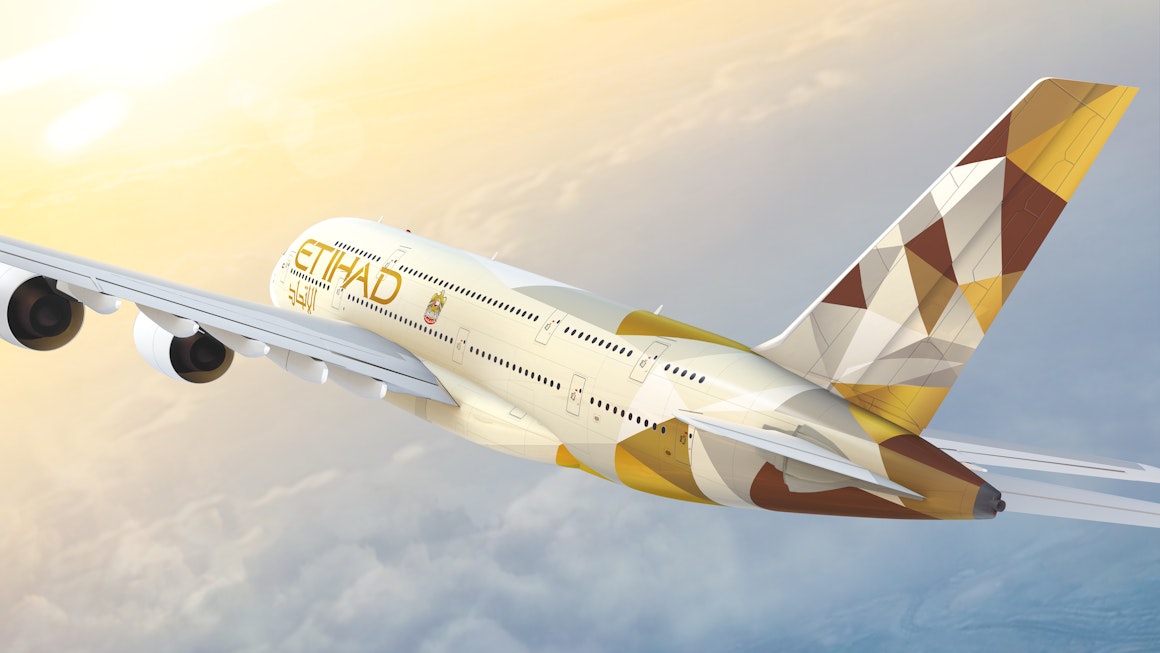
Estados Unidos y los Emiratos Árabes Unidos han formalizado un acuerdo para poner fin la las disputas sobre subsidios a las aerolíneas del Golfo

Estados Unidos y los Emiratos Árabes Unidos (EAU) anunciaron ayer, 14 Mayo 2018 un acuerdo para poner fin a su prolongada disputa sobre el reclamo de las aerolíneas de Estados Unidos que alegan subsidios injustos proporcionados por el Estado de Emiratos Árabes Unidos a sus dos las principales aerolíneas.

Los representantes estadounidenses afirmaron que los EAU habían admitido que habían subvencionado injustamente a sus transportistas de bandera y habían acordado no agregar más vuelos denominados de quinta libertad, que son rutas a los Estados Unidos que no se originan en los EAU. Mientras tanto, el embajador de los EAU en los Estados Unidos argumentó esencialmente lo contrario, afirmando que estaba muy contento de que las aerolíneas emiratíes pudieran seguir añadiendo quinta libertad vuelos.

Al analizar la verdadera esencia del acuerdo, está claro que las aerolíneas estadounidenses no obtuvieron lo que querían. Lo principal que buscaron fue poner fin a esos vuelos de quinta libertad, que cortaron sus negocios cuando Emirates Airlines y Etihad Airways, los transportistas de bandera de los estados de Dubai y Abu Dhabi en los Emiratos Árabes Unidos, vuelan desde sus bases hasta el Reino Unido, y desde allí vuelan a Estados Unidos. El reclamo estadounidense es parcial porque no hay nada que evite que Emirates Airlines y Etihad Airways hagan tales planes en el futuro.

Los estadounidenses también reclamaron alas aerolíneas de los EAU para que se comprometieran a publicar informes anuales sobre sus finanzas que cumplen con los estándares internacionales. Las aerolíneas estadounidenses esperan que esto los obligue a confesar los injustos subsidios del gobierno que los estadounidenses creen que mantienen a flote a sus rivales emiratíes. Pero no está claro que Emirates y Etihad tengan que revelar mucho más de lo que ya hacen. Emirates, por ejemplo, ya publica informes anuales que están preparados de acuerdo con las Normas Internacionales de Información Financiera y son auditados por PwC, una firma de contabilidad británica.

Acuerdo EEUU-Qatar

El acuerdo es similar al acordado entre Estados Unidos y Qatar en Enero 2018, que también evitó el curso de acción que temían las aerolíneas del Golfo, es decir, una renegociación total de los tratados de cielos abiertos que les permiten volar libremente entre sus estados de origen y Estados Unidos. Pero en realidad, a pesar de defenderse durante años, las aerolíneas estadounidenses no tenían muchas esperanzas de un mejor resultado en estas negociaciones, porque siempre ha faltado la esencia de su reclamo contra los transportistas del Golfo. Las aerolíneas en Estados Unidos también han disfrutado de miles de millones de dólares en diversos subsidios del gobierno en los últimos años y siempre ha sonado a hipocresía de que están apuntando a los transportistas del Golfo. El trato de los Emiratos Árabes Unidos les dio a los estadounidenses lo suficiente como para permitirles declarar la victoria y seguir adelante. Pero si esto es lo que se ve del éxito de las aerolíneas estadounidenses, es fácil entender por qué el servicio que ofrecen sigue siendo tan pobre.  AIRWAYS® AW-Icon TXT

Resultado de imagen para Etihad Airways

USA-UAE Agreement

The United States and the United Arab Emirates have signed an agreement to end disputes over subsidies to Gulf airlines

The United States and the United Arab Emirates (UAE) announced yesterday, May 14, 2018, an agreement to end its long-running dispute over the claim of United States airlines alleging unfair subsidies provided by the UAE to their two states. main airlines.

The US representatives claimed that the UAE had admitted that they had unfairly subsidized their flag carriers and had agreed not to add more so-called fifth freedom flights, which are routes to the United States that do not originate in the UAE. Meanwhile, the UAE Ambassador to the United States argued essentially the opposite, stating that he was very happy that the UAE airlines could continue to add fifth freedom flights.

In analyzing the true essence of the agreement, it is clear that US airlines did not get what they wanted. The main thing they sought was to put an end to these fifth freedom flights, which cut their business when Emirates Airlines and Etihad Airways, the flag carriers of the states of Dubai and Abu Dhabi in the United Arab Emirates, fly from their bases to the United Kingdom. United, and from there they fly to the United States. The American claim is partial because there is nothing to prevent Emirates Airlines and Etihad Airways from making such plans in the future.

The Americans also called on the UAE airlines to commit to publishing annual reports on their finances that meet international standards. US airlines hope that this will force them to confess unfair government subsidies that Americans believe keep their Emirati rivals afloat. But it is not clear that Emirates and Etihad have to reveal much more than they already do. Emirates, for example, already publishes annual reports that are prepared in accordance with the International Financial Reporting Standards and are audited by PwC, a British accounting firm.

US-Qatar Agreement

The agreement is similar to that agreed between the United States and Qatar in January 2018, which also avoided the course of action feared by Gulf airlines, that is, a total renegotiation of open skies treaties that allow them to fly freely between their states of origin and the United States. But in reality, despite defending themselves for years, US airlines did not have much hope for a better outcome in these negotiations, because the essence of their claim against Gulf carriers has always been lacking. Airlines in the United States have also enjoyed billions of dollars in various government subsidies in recent years and it has always sounded hypocritical that they are targeting Gulf carriers. The UAE deal gave the Americans enough to allow them to declare victory and move on. But if this is what you see from the success of US airlines, it is easy to understand why the service they offer is still so poor. A \ W


Ξ A I R G W A Y S Ξ
SOURCE: Airgways.com
DBk: Econommist.com / Airgways.com
AW-POST: 201805150917AR

A\W   A I R G W A Y S ®

Record inversiones en navegación aérea en la República Argentina

AW-70022837.png

AW | 2018 05 09 11:27 | AIRLINES MARKET / AIR TRAFFIC

Resultado de imagen para EANA LOGOInvierten 140 millones de dólares para mejorar los sistemas de navegación aérea

Avanza la compra de nueva tecnología que mejore la eficiencia en las operaciones de aeropuertos de la Capital y del interior del país. Forma parte del plan de modernización de aeropuertos que desde el 2016 lleva adelante el gobierno nacional en el marco de la Revolución de los Aviones.

En el marco de la Revolución de los Aviones, el Ministerio de Transporte de la Nación, a través de la Empresa Argentina de Navegación Aérea (EANA) lleva adelante un plan de inversiones en tecnología de navegación aérea, que compromete erogaciones del orden de los U$S 140 millones de dólares. Este plan de inversiones arrancó este año y se extenderá hasta 2023. Comprende en 2018 nuevo equipamiento en la torre de control del Aeroparque Jorge Newbery, en la Capital, con una inversión de unos cuatro millones de dólares; y un nuevo sistema de aterrizaje por Instrumentos (ILS/DME) en el Aeropuerto Presidente Perón, de la ciudad de Neuquén (€ 900.000 euros), entre otras acciones.

Este mes produjo la apertura de las primeras licitaciones públicas correspondientes al plan de inversiones, destinadas a la adquisición de ocho sistemas ILS/DME, catorce radio-ayudas de navegación VOR, y equipamiento de comunicaciones para la actualización de la Red de Telecomunicaciones Aeronáuticas (ATN). Por dicha red circula toda la información aeronáutica, como señales de datos radar, comunicaciones entre centros de control y torres de control, información meteorológica, planes de vuelo y notificaciones aeronáuticas (NOTAM).

La red ATN actual no permite administrar la calidad de su servicio, ni priorizar la circulación de datos críticos. La inversión a realizarse apunta a dotarla de mayor capacidad y disponibilidad, para mejorar la eficiencia de los servicios asociados a ella. EANA está definiendo además los detalles de la licitación por la cual adquirirá 31 unidades AWOS (Sistema Automático de Observación Meteorológica), destinadas a sendos aeropuertos.

También este año se invertirán AR$70 millones en la instalación de un Sistema Avanzado de Guiado y Control de Movimientos en Superficie (A-SMGCS) en el Aeropuerto Internacional de Ezeiza Ministro Pistarini. Este sistema contribuye a mantener el aeropuerto en estado operativo en cualquier condición meteorológica y dentro de los parámetros de seguridad operacional requeridos; evitar colisiones entre aeronaves y vehículos en condiciones de visibilidad degradada; y mantener la agilidad de las operaciones aéreas. En dicho aeropuerto funcionará asimismo un simulador de control de tránsito aéreo, a un costo de AR$23 millones de pesos.

Por otra parte, EANA ha dado pasos muy importantes para la modernización de los Servicios de Navegación Aérea en los últimos dos años. En 2017, se instaló un nuevo sistema de Aterrizaje por Instrumentos (ILS/DME) para el Aeropuerto Internacional de Rio Grande, con una inversión aproximada de € 900.000 euros; se equipó la nueva torre de control del Aeropuerto de Cataratas del Iguazú, con una inversión de un millón de dólares contando sólo los equipos de moderna tecnología instalados; se reubicaron las antenas del sistema ILS del Aeropuerto Tte. Benjamín Matienzo, de la Ciudad de Tucumán (debido a la extensión de su pista); se actualizó el radar del Aeropuerto El Plumerillo, de la Ciudad de Mendoza; se instaló un radar secundario móvil Mamboretá (INVAP, de fabricación nacional) en Ezeiza como solución a potenciales contingencias, y se instaló el AWOS del Aeropuerto de Ing. Taravella, de la Ciudad de Córdoba.

En tanto, en 2016 se puso en servicio un nuevo Sistema de Aterrizaje por Instrumentos (ILS/DME) en el Aeropuerto Domingo Faustino Sarmiento, de la ciudad de San Juan, con una inversión aproximada de € 900.000 euros.

La modernización de la navegación aérea del país pasa también por nuevas maneras de operar. EANA desarrolla una intensa labor de rediseño de procedimientos instrumentales en los aeropuertos, empleando la tecnología de navegación basada en la performance (PBN según su sigla en inglés), de amplia difusión en todo el mundo.

La tecnología PBN permite elevar la eficiencia de los vuelos con trayectorias simplificadas y abreviadas y reducir el consumo de combustible, y con ello también las emisiones atmosféricas. Con PBN aumenta la operatividad de los aeropuertos en condiciones meteorológicas desfavorables. Menores cancelaciones y desvíos generan mayores beneficios para las comunidades de referencia de los aeropuertos.

En 2017, EANA implementó 55 procedimientos PBN. En el transcurso del 2018 lleva implementados 28 y al finalizar el año agregará otros 109. Para 2019 estima introducir 90 procedimientos PBN más. También introdujo 22 nuevos procedimientos instrumentales convencionales en 2017 y 20 en lo que va de 2018 (estimándose un total de 60 sólo en 2018).

“El Plan de Inversiones en materia de navegación aérea anunciado por el Ministro Guillermo Dietrich en agosto del año pasado es una realidad palpable, y si bien nos gustaría que todo transcurra más rápidamente, tenemos el compromiso de implementarlo de manera profesional y con gran responsabilidad en la asignación de los recursos públicos, en el marco de los compromisos que emanan del Programa de Integridad y Transparencia (PIT), impulsado por la Empresa” dijo Agustín Rodríguez Grellet, Presidente de EANA. “La renovación de nuestros sistemas de navegación aérea, la intensa labor de capacitación de nuestro personal y las mejoras medibles en la calidad de nuestro servicio contribuyen de manera estratégica al avance sostenido de la Revolución de los Aviones que impulsa el Ministerio de Transporte”.

Incremento flujo pax cabotaje Argentina

En Abril volaron más de un millón de personas, un 10% más respecto del mismo mes de 2017. Con este nuevo registro, el acumulado para el período Enero–Abril alcanza un 11% contra el primer cuatrimestre del año pasado. El Aeropuerto de Mar del Plata creció un 83%, con 17.000 pasajeros en el mes.

En el marco del plan la Revolución de los Aviones que está impulsando el Ministerio de Transporte de la Nación, el sector aerocomercial argentino continúa creciendo. Según los datos estadísticos elaborados por la Empresa Argentina de Navegación Aérea (EANA) a partir del Sistema Integrado de Aviación (SIAC), durante el mes de Abril 2018 viajaron 1.037.000 pasajeros en vuelos comerciales de cabotaje, lo que representa un 10% más respecto del mismo mes del año pasado. En tanto, si se contabiliza los vuelos de cabotaje e internacionales, hubo en total de 2,30 millones de pasajeros, un 10,5% más respecto del mismo mes de 2017.Dab2fceW4AA54q9Durante el fin de semana largo (27-30 Abril), se transportaron 309.500 pasajeros. De los cuales, el 41% volaron en servicios de cabotaje. Flybondi cerró abril habiendo superado los 100.000 pasajeros llegando a 128.000 en lo que va del año. Analizando las variaciones por aeropuerto, en pasajeros de cabotaje hubo un incremento del 83% para Mar del Plata, donde volaron 17 mil pasajeros en el mes; seguido por Paraná con un crecimiento del 77%; Bariloche con el 31%, Corrientes, con el 30% y Córdoba ocupando el quinto lugar con un incremento interanual del 29%

Siguiendo la tendencia vista en meses anteriores, se registraron importantes crecimientos en la cantidad de pasajeros en rutas de cabotaje que no pasan por los aeropuertos de Ezeiza ni Aeroparque. Por ejemplo, la conexión Córdoba – Tucumán tuvo un incremento del 153%; Córdoba–Jujuy, del 143%; Córdoba–Bariloche, 99% y Córdoba–Neuquén, del 82%; entre otras (todas en ambos sentidos). A la vez, se siguen reforzando conexiones que utilizan al Aeropuerto de El Palomar, por el cual transitaron 28 mil pasajeros en Abril.

En el plano internacional, el total de pasajeros creció un 11% contra abril del 2017. Adicionalmente, en el mes, 210 mil pasajeros volaron desde/hacia el exterior desde los aeropuertos del interior del país, lo que marca un crecimiento del 33% vs igual período del año pasado (157 mil pasajeros). Entre ellas, las rutas más utilizadas son las que unen las ciudades de Córdoba y Mendoza con Santiago de Chile: con 30 y 28 mil pasajeros, respectivamente.

El desarrollo del crecimiento aerocomercial que impulsa el Ministerio de Transporte de la Nación con el plan «La Revolución de los Aviones» incluye la modernización de la infraestructura en 19 aeropuertos del país, la incorporación de nueva tecnología de navegación aérea, nuevo equipamiento para la operación logística y otras obras complementarias para mejorar la aviación civil. En total, se invertirán 22.000 millones de pesos durante los próximos dos años para todo el sector aéreo. AIRWAYS® AW-Icon TXT

Record air navigation investments Argentina

Resultado de imagen para EANA Argentina logoThey invest 140 million dollars to improve air navigation systems

Advances the purchase of new technology that improves the efficiency of airport operations in the capital and in the interior of the country. It is part of the airport modernization plan that since 2016 has been carried out by the national government within the framework of the Aircraft Revolution.

In the framework of the Aircraft Revolution, the Ministry of Transportation of the Nation, through the Argentine Air Navigation Company (EANA) carries out an investment plan in air navigation technology, which commits disbursements of the order of the U$S 140 million dollars. This investment plan started this year and will continue until 2023. It includes 2018 new equipment in the control tower of Aeroparque Jorge Newbery, in the Capital, with an investment of about four million dollars; and a new instrument landing system (ILS/DME) at Presidente Perón Airport, in the city of Neuquén (€ 900,000), among other actions.

Resultado de imagen para EANA Argentina JORGE NEWBERY AIRPORT

This month saw the opening of the first public tenders corresponding to the investment plan, aimed at the acquisition of eight ILS/DME systems, fourteen radio navigation aids VOR, and communications equipment for the updating of the Aeronautical Telecommunications Network (ATN). All the aeronautical information circulates through this network, such as radar data signals, communications between control centers and control towers, meteorological information, flight plans and aeronautical notifications (NOTAMs).

The current ATN network does not allow to manage the quality of its service, nor to prioritize the circulation of critical data. The investment to be made aims to provide it with greater capacity and availability, to improve the efficiency of the services associated with it. EANA is also defining the details of the tender for which it will acquire 31 AWOS (Automatic Meteorological Observation System) units, destined to both airports.

Also this year, AR$ 70 million will be invested in the installation of an Advanced System of Guidance and Control of Surface Movements (A-SMGCS) at the Ezeiza International Airport Ministro Pistarini. This system contributes to keep the airport in an operational state in any meteorological condition and within the required safety parameters; avoid collisions between aircraft and vehicles in conditions of degraded visibility; and maintain the agility of air operations. In this airport, an air traffic control simulator will also operate, at a cost of AR$ 23 million pesos.

On the other hand, EANA has taken very important steps for the modernization of Air Navigation Services in the last two years. In 2017, a new instrument landing system (ILS/DME) was installed for the Rio Grande International Airport, with an approximate investment of € 900,000; the new control tower of the Iguazú Falls Airport was equipped, with an investment of one million dollars, counting only the modern technology equipment installed; the antennas of the ILS system of the Tte Airport were relocated Benjamín Matienzo, from the City of Tucumán (due to the extension of his track); the radar of El Plumerillo Airport, of the City of Mendoza, was updated; a Mamboretá mobile secondary radar (INVAP, of national manufacture) was installed in Ezeiza as a solution to potential contingencies, and the AWOS of Ing. Taravella Airport, of the City of Córdoba, was installed.

Meanwhile, in 2016 a new Instrument Landing System (ILS/DME) was put into service at Domingo Faustino Sarmiento Airport, in the city of San Juan, with an approximate investment of € 900,000.

The modernization of air navigation in the country also involves new ways of operating. EANA develops an intense task of redesigning instrumental procedures at airports, using performance-based navigation technology (PBN), widely disseminated throughout the world.

PBN technology makes it possible to increase the efficiency of flights with simplified and abbreviated trajectories and reduce fuel consumption, and thus also atmospheric emissions. With PBN increases the operation of airports in unfavorable weather conditions. Less cancellations and diversions generate greater benefits for the reference communities of the airports.

In 2017, EANA implemented 55 PBN procedures. In the course of 2018 it has implemented 28 and at the end of the year it will add another 109. By 2019 it estimates to introduce 90 more PBN procedures. It also introduced 22 new conventional instrumental procedures in 2017 and 20 so far in 2018 (a total of 60 is estimated only in 2018).

AW-7023471.pngINTEGRITY AND TRANSPARENCY PROGRAM (PIT)

«The Air Navigation Investment Plan announced by Minister Guillermo Dietrich in August of last year is a tangible reality, and although we would like everything to happen more quickly, we are committed to implementing it professionally and with great responsibility in the allocation of public resources, within the framework of the commitments that emanate from the Integrity and Transparency Program (PIT), promoted by the company» said Agustín Rodríguez Grellet, President of EANA. «The renewal of our air navigation systems, the intense training of our personnel and measurable improvements in the quality of our service contribute strategically to the sustained progress of the Aircraft Revolution promoted by the Ministry of Transport».

Pax cabotage flow increase Argentina

In April, more than one million people flew, 10% more than the same month of 2017. With this new record, the accumulated for the period January-April reaches 11% against the first quarter of last year. The Mar del Plata Airport grew by 83%, with 17,000 passengers in the month.

In the framework of the plan the Revolution of the Airplanes that is impelling the Ministry of Transport of the Nation, the Argentine commercial aviation sector continues growing. According to statistical data prepared by the Argentine Air Navigation Company (EANA) from the Integrated Aviation System (SIAC), during the month of April 2018 1,037,000 passengers traveled on commercial cabotage flights, representing 10% more regarding the same month of last year. Meanwhile, if domestic and international flights are counted, there were a total of 2.30 million passengers, 10.5% more than in the same month of 2017.

During the long weekend (27-30 April), 309,500 passengers were transported. Of which, 41% flew in cabotage services. Flybondi closed April having exceeded 100,000 passengers, reaching 128,000 so far this year. Analyzing the variations by airport, in passengers of cabotage there was an increase of 83% for Mar del Plata, where 17 thousand passengers flew in the month; followed by Paraná with a growth of 77%; Bariloche with 31%, Corrientes, with 30% and Córdoba occupying the fifth place with an interannual increase of 29%

Following the trend seen in previous months, there were significant growth in the number of passengers on cabotage routes that do not pass through Ezeiza or Aeroparque airports. For example, the Córdoba – Tucumán connection had an increase of 153%; Córdoba-Jujuy, of 143%; Córdoba-Bariloche, 99% and Córdoba-Neuquén, 82%; among others (all in both directions). At the same time, connections continue to be reinforced that use El Palomar Airport, through which 28 thousand passengers traveled in April.

At the international level, the total number of passengers grew by 11% compared to April 2017. Additionally, in the month, 210 thousand passengers flew from / to the outside from the airports of the interior of the country, which marks a growth of 33% vs same period last year (157 thousand passengers). Among them, the most used routes are those that connect the cities of Córdoba and Mendoza with Santiago de Chile: with 30 and 28 thousand passengers, respectively.

The development of aero commercial growth promoted by the Ministry of Transportation of the Nation with the plan «The Revolution of the Aircraft» includes the modernization of infrastructure in 19 airports in the country, the incorporation of new air navigation technology, new equipment for the operation logistics and other complementary works to improve civil aviation. In total, 22,000 million pesos will be invested over the next two years for the entire aviation sector. A \ W

DATA > FOR MORE INFORMATION: https://www.eana.com.ar/media/1756/informe-mensual-201804-online-1.pdf

Ξ A I R G W A Y S Ξ
SOURCE:  Airgways.com
DBk: Eana.com.ar / Ramtv.aero
AW-POST: 201805091127AR

A\W   A I R G W A Y S ®

Rápido crecimiento aéreo indonesio

Resultado de imagen para indonesia airlines  market

AW | 2018 04 30 20:22 | AIRLINES MARKET

Indonesia está teniendo uno de los índices más altos de crecimiento en la aviación comercial en el mundo

Indonesia tiene uno de los mercados nacionales más grandes y dinámicos del mundo. El tráfico nacional en Indonesia se ha más que triplicado en los últimos 12 años, de menos de 30 millones en 2005 a casi 97 millones en 2017.

La composición del mercado ha cambiado considerablemente. En 2005, el sector de las aerolíneas de Indonesia estaba muy fragmentado, ya que ninguna aerolínea o grupo contabilizaba más del 25% de las acciones.

El mercado actual está dominado por los grupos Garuda y Lion. Lion es el líder del mercado y su participación en el mercado interno programado de Indonesia superó el 50% por primera vez en 2017.

La participación de Garuda se redujo en la última década cuando Lion se expandió, pero Garuda pudo recuperar participación de mercado durante la primera mitad de esta década, debido en parte a la consolidación, ya que varias aerolíneas más pequeñas dejaron de operar. Garuda obtuvo una participación del 33% en el mercado interno de Indonesia en 2017, una caída del 38% en 2015 pero aún significativamente por encima del 19% en 2010.

Indonesia es el quinto mercado de aviación nacional más grande del mundo. El mercado nacional de pasajeros de Indonesia creció un 8% en 2017, a 96,9 millones de pasajeros, según datos de la DGAC de Indonesia. En 2016, el crecimiento interno fue más rápido, con un 17%.

Indonesia tiene actualmente el quinto mercado interno más grande del mundo después de los EE.UU., China, India y Japón. Indonesia superó a Brasil en 2016, pero India superó a Indonesia en 2015.

Indonesia podría superar a Japón en 2018. Japón tenía 101.8 millones de pasajeros nacionales en 2017, según datos de MLIT de Japón . Brasil, el sexto mercado nacional más grande del mundo, tenía 90,6 millones de pasajeros nacionales, según datos de ANAC de Brasil.

Crecimiento interno de Indonesia

El mercado interno de Indonesia se ha más que triplicado en tamaño desde 2005, pero la curva de crecimiento apenas ha sido lineal. El mercado se expandió particularmente rápido en 2009 hasta 2012, casi se duplicó en solo cuatro años, con un crecimiento anual de entre 16% y 20% anual.

Sin embargo, el crecimiento fue lento antes de 2009 y nuevamente ha sido relativamente lento desde 2013. El crecimiento se redujo a menos del 5% en 2013 y a menos del 1% en 2014 y 2015. El crecimiento se ha acelerado en los últimos dos años, pero en el pasado cinco años de viajes aéreos nacionales en Indonesia han aumentado en un 28% relativamente modesto.

Los otros cinco principales mercados nacionales en el sudeste asiático han crecido más rápido en los últimos cinco años, en algunos casos mucho más rápido. En 2017, Indonesia tuvo un crecimiento interno más lento que Myanmar y Vietnam, pero un crecimiento más rápido que Tailandia, Filipinas y Malasia.

Indonesia afectada por un entorno reglamentario desfavorable y un exceso de capacidad. El crecimiento interno relativamente lento en Indonesia en los últimos cinco años se debe en parte a una economía que ha sido lenta en comparación con la mayoría de sus pares de la ASEAN . El crecimiento del PIB fue superior al 6% en 2010, 2011 y 2012, pero desde entonces ha sido inferior al 6%. La demanda local también se ha visto afectada por la depreciación de la rupia indonesia.

En 2014, el crecimiento interno se vio obstaculizado por la inestabilidad política en el período previo a las elecciones presidenciales. En 2015, el crecimiento interno se vio obstaculizado por la imprudente imposición de un piso de precios por parte del nuevo gobierno en respuesta a la crisis del 28 de diciembre de 2014 en Indonesia AirAsia . El precio mínimo impactó particularmente a los LCC ya que no podían ofrecer sus tarifas más baratas, y la demanda sufrió en consecuencia.

El mercado mejoró en 2016 y 2017, desde una perspectiva de demanda. Sin embargo, el exceso de capacidad ha sido un desafío, presionando los rendimientos, la rentabilidad y los factores de carga.

El factor de carga doméstica promedio en Indonesia en 2017 fue solo del 78%, lo que representa un mínimo de 10 años. El factor de carga doméstica promedio ha disminuido durante cuatro años consecutivos, contrarrestando la tendencia general del aumento del factor de carga en el sudeste asiático y en todo el mundo.

Batik Air crece rápidamente

La competencia entre los dos principales grupos de aerolíneas de Indonesia, Lion y Garuda, se ha intensificado de manera significativa en los últimos años, lo que afecta los factores de carga y la rentabilidad. Garuda ha estado compitiendo más agresivamente contra Lion al expandir rápidamente su filial de LCC Citilink mientras que Lion comenzó a atacar el mercado medio y alto del mercado mediante la búsqueda de una expansión rápida en la subsidiaria de servicio completo Batik Air.

Batik lanzó operaciones a fines de 2013 y desde entonces ha sido, con mucho, la aerolínea de más rápido crecimiento en Indonesia. El tráfico doméstico de pasajeros de Batik creció un 35% en 2017, a 10,1 millones, según datos de la DGAC de Indonesia. Batik es principalmente un operador doméstico; transportó menos de 500,000 pasajeros internacionales en 2017.

Batik rápidamente ha capturado más del 10% del mercado interno de Indonesia. Sin embargo, la participación de su matriz, Lion Air , ha disminuido debido a que su tráfico ha sido constante en los últimos cinco años. Lion Air transportó solo un 2% más de pasajeros en 2017 en comparación con 2013.

Lion Group

La cuota de mercado de Lion Group supera el 50% por primera vez en 2017. Lion inició operaciones en 2000 y en sus primeros 13 años creció rápidamente, convirtiéndose en la aerolínea doméstica más grande de Indonesia en 2008. Sobrepasó los 10 millones de pasajeros nacionales anuales en 2009 y superó los 20 millones de pasajeros nacionales en 2011. Fue el principal impulsor de los rápidos nacionales indonesios. crecimiento de 2008 a 2012, triplicando su tamaño de solo 6,5 millones de pasajeros en 2008 a 29,4 millones en 2012.

La cuota de mercado de Lion Air alcanzó un máximo histórico del 43% en 2013, pero desde entonces ha caído al 34%. Sin embargo, como grupo, la participación de Lion en el mercado nacional aumentó del 49% en 2013 al 51% en 2017.

La participación de mercado de Lion Group cayó en 2014 y 2015 antes de recuperarse en 2016 y superar el 50% por primera vez en 2017. Este es un gran logro para Lion, que ha estado luchando por alcanzar el 50% de la cuota de mercado durante varios años, pero competencia intensa y condiciones de mercado relativamente desfavorables.

La participación del 51% de Lion Group para 2017 incluye un 6% para su filial regional de bajo costo Wings Air. Wings ha estado operando desde 2003, pero ha acelerado la expansión en los últimos dos años, aumentando el tráfico en más del 70% a medida que expandió su flota de turbohélice ATR 72.

El mercado de Garuda comparte nuevamente en declive. El Grupo Garuda perdió su posición como líder del mercado en 2005, pero lanzó un ataque importante en el mercado nacional en 2011 al perseguir un rápido crecimiento en Citilink y la aerolínea matriz. Citilink se lanzó en 2001 como una unidad de Garuda pero era muy pequeña hasta 2012, cuando se convirtió en su propia compañía y comenzó a operar bajo su propio AOC.

Garuda mainline registró un crecimiento de dos dígitos en el número de pasajeros nacionales en 2011, 2012, 2013, 2014 y 2015. El crecimiento entre 2013 y 2015 fue particularmente impresionante, ya que el mercado interno general apenas creció.

En 2015, la participación en el mercado interno de Garuda volvió al 26%, en comparación con solo el 19% en 2010. Mientras tanto, la cuota de mercado de Citilink aumentó del 2% en 2012 (el primer año bajo su propio certificado de operador) al 12% en 2015. Como Como resultado, la participación general del mercado interno del Grupo Garuda Indonesia se duplicó en solo cinco años, del 19% en 2010 al 38% en 2015.

Sin embargo, Garuda ha dejado de buscar crecimiento interno en los últimos dos años. El tráfico doméstico de pasajeros de la aerolínea matriz fue relativamente estable en 2016 y 2017, ya que el crecimiento en el mercado interno general se volvió a acelerar.

Citilink ha seguido expandiéndose en los últimos dos años, pero a un ritmo más lento, y solo un poco más rápido que el promedio general del mercado. Con la aerolínea matriz deteniendo el crecimiento, la participación del Grupo Garuda Indonesia en el mercado nacional cayó a 35% en 2016 y 33% en 2017.

Sriwijaya Air gana cuota mercado aéreo

El tercero de los principales grupos de aerolíneas en Indonesia, Sriwijaya Air, capturó una participación del 13% en el mercado nacional en 2017. El cuarto mayor competidor, Indonesia AirAsia, capturó solo un 2% de participación. Sriwijaya es principalmente una aerolínea nacional, mientras que Indonesia AirAsia se centra principalmente en el mercado internacional.

Indonesia AirAsia nunca ha capturado más del 5% del mercado interno y ha aumentado su enfoque en el mercado internacional en los últimos años como parte de una reestructuración. El tráfico nacional de Indonesia AirAsia ha disminuido durante cuatro años consecutivos, lo que ha provocado una caída en la cuota de mercado del 4% en 2013 al 2% en 2017. (Algunos de los vuelos nacionales de Indonesia AirAsia han sido operados por su aerolínea hermana Indonesia AirAsia X desde 2015; Los pasajeros nacionales de AirAsia X están incluidos en las cifras de participación de mercado de Indonesia AirAsia).

Sriwijaya ha ganado cuota de mercado en los últimos dos años, impulsada en parte por la expansión en la filial regional Nam Air. Sriwijaya también se ha beneficiado de la consolidación ya que muchas otras líneas aéreas nacionales de segundo nivel han dejado de operar.

La consolidación deja tres grandes jugadores

Ha habido varias rondas de consolidación en Indonesia esta década. Esto permitió ganancias en la participación de mercado tanto para Garuda Group como para Lion Group de 2010 a 2015.

Batavia, Merpati y Mandala fueron jugadores relativamente grandes que dejaron de operar en 2013 y 2014. En su punto máximo en 2008, estas tres aerolíneas combinadas representaron el 29% del mercado interno de Indonesia.

Batavia fue la tercera aerolínea doméstica más grande de Indonesia entre 2006 y 2010, cuando fue superada por Sriwijaya. La propiedad del gobierno Merpati fue la quinta aerolínea nacional más grande en 2007 (detrás de Garuda, Lion, Batavia y Sriwijaya), pero redujo significativamente en los últimos años antes de cerrar por completo. Mandala, que inicialmente suspendió sus operaciones en 2011 pero relanzó en 2012 como afiliado de Tigerair, tenía casi un 10% de participación en el mercado nacional en un punto a fines de la década pasada.

Otros competidores más pequeños que han dejado de operar en los últimos años son Kalstar, Pelita y Sky. Todavía quedan varias aerolíneas pequeñas, pero ahora representan menos del 2% del mercado doméstico total programado. Los operadores de taxi aéreo que prestan servicio a pequeñas comunidades aisladas y los operadores de chárter están excluidos de estas cifras.

Los grupos Garuda, Lion y Sriwijaya ahora dominan el mercado interno de Indonesia y están mejor posicionados para crecer a medida que crece el mercado general. Lion se prepara para mayores ganancias de cuota de mercado en 2018. Es probable que Lion incremente su participación en el mercado en 2018, ya que tanto Garuda como Sriwijaya han interrumpido la expansión de sus flotas.

Las cuatro aerolíneas en los grupos Garuda y Sriwijaya no planean expandir sus flotas en 2018 (habrá un pequeño número de entregas de aviones que se compensarán con las jubilaciones). Sin embargo, es probable que haya un crecimiento del tráfico nacional para los grupos Garuda y Sriwijaya a través de mejoras en la utilización, particularmente para Citilink.

No se espera que Lion Air y Wings Air busquen una rápida expansión de la flota, luego de una desaceleración significativa en 2017. La flota de aviones de Lion Air aumentó en solo un avión en 2017, mientras que Wings agregó solo dos aviones. Se prevé un crecimiento similar en Lion Air y Wings Air (neto de jubilaciones) para 2018.

Sin embargo, Batik amplió su flota en 10 aviones en 2017 y planea expandir su flota en al menos siete aviones en 2018. Batik debería ser capaz de capturar al menos 13% de cuota de mercado en 2018, empujando la participación de Lion Group hasta cerca del 55% .

Cuán rápido crecerá el mercado interno de Indonesia es siempre difícil de predecir, como lo demuestran las amplias fluctuaciones en las tasas de crecimiento en los últimos 12 años. Sin embargo, con el tiempo, el mercado seguramente continuará expandiéndose rápidamente, beneficiando a los dos o tres principales competidores. AIRWAYS® AW-Icon TXT

Resultado de imagen para indonesia airlines  market

Rapid growth Indonesian air market

Indonesia is having one of the highest growth rates in commercial aviation in the world

Indonesia has one of the largest and most dynamic national markets in the world. Domestic traffic in Indonesia has more than tripled in the last 12 years, from less than 30 million in 2005 to almost 97 million in 2017.

The composition of the market has changed considerably. In 2005, the airline industry in Indonesia was very fragmented, as no airline or group accounted for more than 25% of the shares.

The current market is dominated by the Garuda and Lion groups. Lion is the market leader and its share in Indonesia’s scheduled domestic market exceeded 50% for the first time in 2017.

Garuda’s share declined in the last decade when Lion expanded, but Garuda was able to regain market share during the first half of this decade, due in part to consolidation, as several smaller airlines stopped operating. Garuda obtained a 33% share in the Indonesian domestic market in 2017, a fall of 38% in 2015 but still significantly above 19% in 2010.

Indonesia is the fifth largest national aviation market in the world. The national passenger market of Indonesia grew by 8% in 2017, to 96.9 million passengers, according to data from the Indonesian DGAC. In 2016, internal growth was faster, with 17%.

Indonesia currently has the fifth largest domestic market in the world after the USA, China, India and Japan. Indonesia overtook Brazil in 2016, but India overtook Indonesia in 2015.

Indonesia could surpass Japan in 2018. Japan had 101.8 million domestic passengers in 2017, according to MLIT data from Japan. Brazil, the sixth largest national market in the world, had 90.6 million domestic passengers, according to ANAC data from Brazil.

Internal growth of Indonesia

Indonesia’s domestic market has more than tripled in size since 2005, but the growth curve has barely been linear. The market expanded particularly fast in 2009 until 2012, almost doubled in just four years, with annual growth of between 16% and 20% per year.

However, growth was slow before 2009 and again has been relatively slow since 2013. Growth fell to less than 5% in 2013 and to less than 1% in 2014 and 2015. Growth has accelerated in the last two years, but in the past five years of domestic air travel in Indonesia have increased by a relatively modest 28%.

The other five major national markets in Southeast Asia have grown faster in the last five years, in some cases much faster. In 2017, Indonesia had slower domestic growth than Myanmar and Vietnam, but faster growth than Thailand, the Philippines and Malaysia.

Indonesia affected by an unfavorable regulatory environment and excess capacity. The relatively slow domestic growth in Indonesia over the past five years is partly due to an economy that has been slow compared to most of its ASEAN peers. GDP growth was over 6% in 2010, 2011 and 2012, but since then it has been less than 6%. Local demand has also been affected by the depreciation of the Indonesian rupiah.

In 2014, internal growth was hampered by political instability in the run-up to the presidential elections. In 2015, domestic growth was hampered by the reckless imposition of a price floor by the new government in response to the December 28, 2014 crisis in Indonesia AirAsia. The minimum price had a particular impact on the LCCs since they could not offer their cheaper rates, and the demand suffered accordingly.

The market improved in 2016 and 2017, from a demand perspective. However, overcapacity has been a challenge, putting pressure on yields, profitability and load factors.

The average domestic load factor in Indonesia in 2017 was only 78%, which represents a minimum of 10 years. The average domestic load factor has decreased for four consecutive years, counteracting the general trend of the load factor increase in Southeast Asia and around the world.

Batik Air grows quickly

The competition between the two main groups of airlines in Indonesia, Lion and Garuda, has intensified significantly in recent years, which affects the load factors and profitability. Garuda has been competing more aggressively against Lion by rapidly expanding its LCC subsidiary Citilink while Lion began to attack the medium and high market market by pursuing rapid expansion at full service subsidiary Batik Air.

Batik launched operations in late 2013 and has since been by far the fastest growing airline in Indonesia. Domestic passenger traffic in Batik grew by 35% in 2017 to 10.1 million, according to the Indonesian DGAC. Batik is mainly a domestic operator; transported less than 500,000 international passengers in 2017.

Batik has quickly captured more than 10% of Indonesia’s domestic market. However, the participation of its parent, Lion Air, has decreased due to the fact that its traffic has been constant in the last five years. Lion Air transported only 2% more passengers in 2017 compared to 2013.

Lion Airlines

Lion Group‘s market share exceeds 50% for the first time in 2017. Lion started operations in 2000 and in its first 13 years grew rapidly, becoming the largest domestic airline in Indonesia in 2008. It surpassed 10 million national passengers per year in 2009 and exceeded 20 million domestic passengers in 2011. It was the main promoter of the Indonesian national rapids. growth from 2008 to 2012, tripling its size from only 6.5 million passengers in 2008 to 29.4 million in 2012.

Lion Air’s market share reached an all-time high of 43% in 2013, but since then it has fallen to 34%. However, as a group, Lion’s share in the national market increased from 49% in 2013 to 51% in 2017.

Lion Group’s market share fell in 2014 and 2015 before recovering in 2016 and exceeding 50% for the first time in 2017. This is a great achievement for Lion, who has been struggling to achieve 50% market share for several years, but intense competition and relatively unfavorable market conditions.

The 51% stake of Lion Group for 2017 includes 6% for its low-cost regional subsidiary Wings Air. Wings has been operating since 2003, but has accelerated expansion in the past two years, increasing traffic by more than 70% as it expanded its ATR 72 turboprop fleet.

The Garuda market shares again in decline

The Garuda Group lost its position as market leader in 2005, but launched a major attack on the domestic market in 2011 by pursuing rapid growth in Citilink and the parent carrier. Citilink was launched in 2001 as a unit of Garuda but was very small until 2012, when it became its own company and started operating under its own AOC.

Garuda mainline recorded double-digit growth in the number of domestic passengers in 2011, 2012, 2013, 2014 and 2015. The growth between 2013 and 2015 was particularly impressive, as the overall domestic market hardly grew.

In 2015, Garuda’s domestic market share returned to 26%, compared to only 19% in 2010. Meanwhile, Citilink’s market share increased from 2% in 2012 (the first year under its own certificate). operator) to 12% in 2015. As a result, the overall market share of the Garuda Indonesia Group doubled in just five years, from 19% in 2010 to 38% in 2015.

However, Garuda has stopped looking for internal growth in the last two years. The domestic passenger traffic of the parent airline was relatively stable in 2016 and 2017, as growth in the general domestic market accelerated again.

Citilink has continued to expand in the last two years, but at a slower pace, and only a little faster than the overall market average. With the parent carrier halting growth, the participation of the Garuda Indonesia Group in the domestic market fell to 35% in 2016 and 33% in 2017.

Sriwijaya Air wins air market quota

The third of the major airlines groups in Indonesia, Sriwijaya, captured a 13% market share in the national market in 2017. The fourth largest competitor, Indonesia AirAsia, captured only a 2% stake. Sriwijaya is mainly a national airline, while Indonesia AirAsia is mainly focused on the international market.

Indonesia AirAsia has never captured more than 5% of the domestic market and has increased its focus on the international market in recent years as part of a restructuring. Indonesia’s domestic AirAsia traffic has declined for four consecutive years, which has led to a decline in market share from 4% in 2013 to 2% in 2017. (Some of Indonesia AirAsia’s domestic flights have been operated by its airline sister Indonesia AirAsia X since 2015; AirAsia X domestic passengers are included in Indonesia’s market share figures AirAsia).

Sriwijaya has gained market share in the last two years, driven in part by the expansion in the regional subsidiary Nam Air. Sriwijaya has also benefited from the consolidation as many other second-tier national airlines have stopped operating.

Consolidation leaves three great players

There have been several rounds of consolidation in Indonesia this decade. This allowed gains in market share for both Garuda Group and the Lion Group from 2010 to 2015.

Batavia, Merpati and Mandala were relatively large players that stopped operating in 2013 and 2014. At their peak in 2008, these three airlines combined accounted for 29% of Indonesia’s domestic market.

Batavia was the third largest domestic airline in Indonesia between 2006 and 2010, when it was overtaken by Sriwijaya. The government property Merpati was the fifth largest national airline in 2007 (behind Garuda, Lion, Batavia and Sriwijaya), but significantly reduced in recent years before closing completely. Mandala, which initially suspended operations in 2011 but relaunched in 2012 as a Tigerair affiliate, had almost a 10% share in the domestic market at one point at the end of the last decade.

Other smaller competitors that have stopped operating in recent years are Kalstar, Pelita and Sky. There are still several small airlines, but now they represent less than 2% of the total programmed domestic market. Air taxi operators that serve small isolated communities and charter operators are excluded from these figures.

The Garuda, Lion and Sriwijaya groups now dominate Indonesia’s domestic market and are better positioned to grow as the general market grows. Lion prepares for greater market share gains in 2018. It is likely that Lion will increase its market share in 2018, as both Garuda and Sriwijaya have interrupted the expansion of their fleets.

The four airlines in the Garuda and Sriwijaya groups do not plan to expand their fleets by 2018 (there will be a small number of aircraft deliveries that will be offset by retirements). However, there is likely to be a growth in national traffic for the Garuda and Sriwijaya groups through improvements in utilization, particularly for Citilink.

Lion Air and Wings Air are not expected to seek rapid fleet expansion after a significant slowdown in 2017. The Lion Air aircraft fleet increased by only one aircraft in 2017, while Wings added only two aircraft. A similar growth is expected in Lion Air and Wings Air (net of pensions) for 2018.

However, Batik expanded its fleet by 10 aircraft in 2017 and plans to expand its fleet by at least seven aircraft by 2018. Batik should be able to capture at least 13% market share in 2018, pushing Lion Group’s stake to close 55%

How fast the Indonesian domestic market will grow is always difficult to predict, as demonstrated by wide fluctuations in growth rates over the past 12 years. However, over time, the market will surely continue to expand rapidly, benefiting the two or three major competitors. A \ W


Ξ A I R G W A Y S Ξ
SOURCE:  Airgways.com
DBk: Centreforaviation.com / Airgwyas.com
AW-POST: 201804011550AR

A\W   A I R G W A Y S ®