Lion Air JT-610 | Día 20

Image result for Boeing 737 MAX FAA cockpit

AW | 2018 11 17 21:40 | AIR INVESTIGATION / AVIATION SAFETY

AW-7007378Identificado 98 ​​víctimas del vuelo JT-610 del accidente Boeing 737-8 MAX

El Equipo de Identificación de Víctimas de Desastres (DVI) de la Policía Nacional (Polri) dio los resultados de la identificación de tres cuerpos de víctimas del avión JT 610 del vuelo Lion Air que se estrelló. Danang Mandala, Director de Comunicaciones Corporativas de Lion Air, explicó que la confirmación se entregó a las 5 pm después de la reconciliación y la comparación de los resultados de las pruebas forenses y datos de ADN que los familiares habían entregado previamente al equipo DVI de la Policía. «En nombre de Lion Air, expreso mis más profundas condolencias a todos los familiares y amigos. Hasta ahora, se han identificado un total de 98 cuerpos, 72 hombres y 26 mujeres». Lion Air esta tarde había entregado los restos a la familia a través de una ceremonia que tuvo lugar en el Hospital R. Said Sukanto (Hospital Polri), Jakarta. La presentación de Lion Air estuvo representada por el Director de Operaciones de Lion Air, Capt. Zwingly Silalahi. El equipo de DVI de Police también está llevando a cabo un proceso de identificación en profundidad que cubre el análisis forense y el análisis de ADN.

Se espera que el examen de ADN de las víctimas de Lion Air JT-610 se complete el 23 Noviembre 2018. El examen de muestra de ADN de las víctimas del avión JT-610 de Lion Air con un número de registro PK-LQP que se estrelló en el Mar de Java Occidental el Lunes, 29 Octubre 2018 se completará el 23 Noviembre 2018. La Jefa de la Policía de Indonesia, la Comisionada de Policía de Indonesia, Lisda Cancer, dijo que el Equipo DVI terminaría de examinar el ADN de las víctimas de Lion Air JT-610 el 23 de noviembre de 2018. «Se espera que los resultados de toda la muestra de ADN se completen el 23 de noviembre. Después de que todas las muestras de ADN hayan sido examinadas, volveremos a identificar a los pasajeros que están identificados, quiénes y quiénes no», dijo Lisda en Jakarta. Además, Lisda dijo que a partir de los resultados de la inspección de ADN, el equipo DVI de la Policía Nacional pudo registrar el número de pasajeros no identificados.

El equipo de la Agencia Nacional de SAR (Basarnas) envió 195 bolsas de cadáveres desde el lugar del accidente en las aguas de Tanjung Pakis de Karawang Regency, Java Occidental. De las 195 bolsas para cadáveres, el equipo de DVI logró tomar 666 muestras de ADN de varias partes del cuerpo que se encontraron.

Boeing confiado en 737 MAX

Después de examinar un defecto en uno de sus aviones más vendidos, el fabricante estadounidense de aviones Boeing dijo que confiaba en la seguridad del 737 MAX, del cual miles se han vendido en todo el mundo.

Lion Air JT-610, que usaba un Boeing 737-8 MAX, se estrelló en el Mar de Java minutos después del despegue del Aeropuerto Internacional Soekarno-Hatta en Tangerang, Banten, trece minutos posteriores al decolara alcanzado velocidades de 965,6 kilómetros por hora, inesperadamente se precipitara en el mar.

Primer accidente 737 MAX

El Boeing 737-8 MAX con serie de fabricación MSN:43000 LN:7058, inició su primer vuelo de pruebas el 30/07/2018. Lion Air toma entrega de esta aeronave el 13/08/2018 volando solamente algunos meses hasta el 29/10/2018 accidentándose en el Mar de Java. Esta aeronave es el primer Boeing 737-8 MAX en accidentarse en el mundo, lo que ha generado inquietudes acerca del popular modelo, que está equipado con la última tecnología, incluido un control de vuelo automatizado que permite movimientos de la cola hacia abajo.

Investigaciones del 737 MAX

El Comité Nacional de Seguridad del Transporte (KNKT) de Indonesia, que investiga el accidente del vuelo JT-610 de Lion Air, encontró que el avión había experimentado una entrada errónea de uno de sus sensores de Ángulo de Ataque (AOA), que se sospecha es el resultado del control de vuelo automatizado, característica, que no había sido incorporada en los modelos anteriores.

La Administración Federal de Aviación de los Estados Unidos (FAA) está investigando una posible falla de diseño de la aeronave Boeing 737 MAX en el Sistema MCAS automático que está generando dudas y temores después del accidente del primer Boeing 737-8 MAX. Los chequeos y revisiones necesarias se aplicarán a todos los Boeing 737-8, 737-9 y posteriormente las versiones 737-7 y 737-10 que todavía no se han entregado a ninguna aerolínea porque se encuentran en fase final y de desarrollo, respectivamentes.

Boeing más tarde emitió un Boletín Manual para notificar a los pilotos sobre la posible entrada falsa de los sensores y cómo responder a ellos. Esto solo ha alimentado la controversia que rodea a la aeronave, y los sindicatos de pilotos argumentan que deberían haber sido notificados anteriormente. La portavoz de Boeing, Caroline Hutcheson, dijo que la compañía estaba tomando todas las medidas para comprender completamente todos los aspectos del accidente de Lion Air, ya que estaba trabajando estrechamente con el equipo de investigación y todas las autoridades reguladoras involucradas. “Confiamos en la seguridad del 737 MAX. La seguridad sigue siendo nuestra principal prioridad y es un valor fundamental para todos en Boeing».

El CEO Dennis Muilenburg le dijo que la aeronave era segura para volar, ya que la compañía había pasado «miles de horas de prueba, evaluación y simulación. Como las autoridades indonesias han señalado, inicialmente hubo algunos indicios de una señal de Ángulo de Ataque (AOA) inexacta que se estaba enviando al avión. Por supuesto, el avión tiene la capacidad de manejar eso y tenemos los procedimientos establecidos».AW-Icon-TXT-01

Image result for Boeing 737 MAX FAA

Lion Air JT-610 | Day 20

Identified 98 victims of flight JT-610 of the Boeing 737-8 MAX accident

AW-77000021

The Disaster Victim Identification Team (DVI) of the National Police (Polri) gave the results of the identification of three bodies of victims of the JT-610 plane of the Lion Air flight that crashed. Danang Mandala, Director of Corporate Communications at Lion Air, explained that the confirmation was delivered at 5 pm after the reconciliation and comparison of the results of the forensic tests and DNA data that the relatives had previously delivered to the DVI team of the Police. «On behalf of Lion Air, I express my deepest condolences to all the family and friends, so far a total of 98 bodies, 72 men and 26 women have been identified». Lion Air this afternoon had delivered the remains to the family through a ceremony that took place at the R. Said Sukanto Hospital (Polri Hospital), Jakarta. The presentation of Lion Air was represented by the Lion Air Operations Director, Capt. Zwingly Silalahi. The Police DVI team is also conducting an in-depth identification process that covers forensic analysis and DNA analysis.

The DNA test of the victims of Lion Air JT-610 is expected to be completed on November 23, 2018. The DNA sample examination of the victims of the Lion Air JT-610 airplane with a PK-LQP registration number that is crash in the West Java Sea on Monday, 29 October 2018 will be completed on 23 November 2018. The Indonesian Police Chief, the Indonesian Police Commissioner, Lisda Cancer, said that the DVI Team would finish examining the DNA of the victims of Lion Air JT-610 on November 23, 2018. «The results of the entire DNA sample are expected to be completed on November 23. After all the DNA samples have been examined, we will identify the passengers who are identified, who and who not. In addition, Lisda said that from the results of the DNA inspection, the DVI team of the National Police was able to register the number of unidentified passengers», said Lisda. The National SAR Agency (Basarnas) team sent 195 bags of corpses from the accident site in the waters of Tanjung Pakis of Karawang Regency, West Java. Of the 195 body bags, the DVI team managed to take 666 DNA samples from various body parts that were found. To date, the DVI team has successfully identified 98 passengers, consisting of 72 men and 26 women.

Boeing confident in 737 MAX

After examining a defect in one of its top-selling aircraft, US aircraft maker Boeing said it was confident in the safety of the 737 MAX, of which thousands have been sold around the world.

Lion Air JT-610, which used a Boeing 737-8 MAX, crashed in the Java Sea minutes after takeoff from the Soekarno-Hatta International Airport in Tangerang, Banten, thirteen minutes after the decolara reached speeds of 965.6 kilometers hour, unexpectedly it will plunge into the sea.

First accident 737 MAX

The Boeing 737-8 MAX with manufacturing series MSN: 43000 LN: 7058, started its first test flight on 07/30/2018. Lion Air takes delivery of this aircraft on 08/13/2018 flying only a few months until 10/29/2018, crashing in the Java MAr. This aircraft is the first Boeing 737-8 MAX to crash in the world, which has raised concerns about the popular model, which is equipped with the latest technology, including an automated flight control that allows tail movements down.

Ingestions of the 737 MAX

The National Committee on Transport Safety (KNKT) of Indonesia, which investigates Lion Air’s JT-610 flight accident, found that the plane had experienced an erroneous entry of one of its Attack Angle Sensors (AOA), which Suspicion is the result of automated flight control, characteristic, which had not been incorporated in the previous models.

The Federal Aviation Administration of the United States (FAA) is investigating a possible design flaw in the Boeing 737 MAX aircraft in the automatic MCAS System that is raising doubts and fears after the crash of the first Boeing 737-8 MAX. The necessary checks and inspections will be applied to all Boeing 737-8, 737-9 and later versions 737-7 and 737-10 that have not yet been delivered to any airline because they are in the final phase and development, respectively.

Boeing later issued a Manual Bulletin to notify pilots about possible fake input from sensors and how to respond to them. This has only fueled the controversy surrounding the aircraft, and the pilot unions argue that they should have been notified previously. Boeing spokeswoman Caroline Hutcheson said the company was taking all measures to fully understand all aspects of the Lion Air accident, as it was working closely with the investigation team and all regulatory authorities involved. «We trust in the safety of the 737 MAX. Safety remains our top priority and is a fundamental value for everyone at Boeing».

CEO Dennis Muilenburg told him that the aircraft was safe to fly, since the company had spent «thousands of hours of testing, evaluation and simulation, as the Indonesian authorities have pointed out, initially there were some indications of an Angle of Attack signal (AOA) inaccurate that it was being sent to the plane, of course, the plane has the ability to handle that and we have established procedures». A\W


Ξ A I R G W A Y S Ξ
SOURCE: Airgways.com
DBk: Faa.gov / Boeing.com / Thejakartapost.com / Seattletimes.com / Lionair.co.id / Airgways.com
AW-POST: 201811172140AR

A\W   A I R G W A Y S ®

Lion Air JT-610| Día 19

AW-77000021

AW | 2018 11 16 23:59 | AIR INVESTIGATION / AVIATION SAFETY

Disputa entre pilotos de Estados Unidos acerca seguridad del Boeing 737 MAX

Lion_Air_logoEl liderazgo de los pilotos de United Airlines en una brusca ruptura con sus pares en American Airlines y Southwest Airlines, rechazó las críticas a Boeing por no revelar a las aerolíneas la existencia de un nuevo sistema de control de vuelo automático en el Boeing 737 MAX.

Los sindicatos de pilotos de líneas aéreas esta semana protestaron en voz alta por el hecho de que Boeing no les había proporcionado información durante el entrenamiento sobre un nuevo sistema de control de vuelo automático en el MAX que posiblemente esté relacionado con el choque de un accidente mortal de Lion Air JT-610 en Indonesia. Pero el liderazgo de los pilotos de United Airlines, en una brusca ruptura con sus compañeros en las otras dos aerolíneas estadounidenses que vuelan en el 737 MAX, rechazó las críticas a Boeing.

Posición de United

El nuevo sistema está diseñado para activarse sin acción piloto en condiciones extremas de vuelo. En una entrevista el jueves, el Capitán Todd Insler, presidente de la sucursal de ALPA (Sindicato de la Asociación de Pilotos de Línea Aérea) en United Airlines, rompió filas con sus homólogos de American Airlines y Southwest Airlines, quienes a principios de esta semana se quejaron públicamente de que esto no fue revelado a los pilotos Durante el entrenamiento o incluido en los manuales de 737 MAX pilotos.

Insler dijo que muchos sistemas en un avión funcionan en segundo plano sin el conocimiento del piloto. Lo comparó con ver la televisión: «No necesito saber cómo funciona. En los jets de Airbus, que a diferencia de los de Boeing están diseñados para una filosofía que otorga más autonomía a los sistemas de control de vuelo automatizados y menos a los pilotos, hay docenas de sistemas que funcionan constantemente en segundo plano sin el conocimiento directo del piloto», dijo.

Insler dijo que es prematuro decir algo sobre la causa del accidente de Lion Air. «No saco conclusiones», dijo. «Añadió que si bien el manual del piloto 737 no describe específicamente el nuevo sistema, sí incluye un procedimiento estándar para apagar el comportamiento de control de vuelo que induce, ya sea el nuevo sistema que lo está causando o algo más, y los pilotos de Lion Air debería haber sido consciente de ello. La historia aquí no es por qué no sabíamos del nuevo sistema, más bien, es por qué los pilotos no volaron el avión», dijo Insler.

Esa visión obtuvo una fuerte respuesta el viernes por parte del Capitán Dennis Tajer, presidente del comité de comunicaciones de la Asociación de Pilotos Aliados (APA), que representa a los pilotos de American Airlines. «Los pilotos de American Airlines, y también confío en Southwest Airlines, quieren saber todo acerca de todos los sistemas en sus aviones con el fin de garantizar que nuestros pasajeros estén seguros en todo momento, ya sea en operaciones normales o durante procedimientos de emergencia. Claramente, este sistema no solo funciona en segundo plano. Cada vez que el nuevo sistema está en efecto, no está oculto; es bastante activo y el avión no hace lo que hizo en el modelo 737 anterior. Cambia las características de manejo y los controles de vuelo, citando la información enviada a American Airlines por Boeing».

Los comentarios de Insler se produjeron durante una entrevista el jueves cuando disgustó enojado con el Presidente de ALPA, su propio sindicato, por haber enviado una carta que hacía eco de la preocupación de los otros dos sindicatos piloto, APA en American y SWAPA en Southwest, sobre la falta de información sobre El nuevo sistema de control de vuelo del MAX antes del choque de Lion Air JT610.

El sistema llamado MCAS, para el Sistema de Aumento de Características de Maniobra, se activa cuando un sensor en el lado del fuselaje indica un ángulo de ataque peligrosamente alto (AOA), el ángulo entre el flujo de aire y el ala. Si el avión se encuentra en un giro anormalmente pronunciado que ejerce mucha presión sobre el cuadro de aire, o cuando su velocidad desciende tanto que está a punto de detenerse, el MCAS pateará y girará la cola horizontal para empujar la nariz del avión hacia abajo en un esfuerzo para evitar el peligro. Pero la investigación del Comité Nacional de Seguridad del Transporte de Indonesia (KNKT) sobre el accidente de Lion Air encontró indicios de que las computadoras de vuelo del avión recibieron lecturas falsas de AOA que podrían haber activado el MCAS, lo que habría empujado la nariz de la aeronave hacia abajo y continuaría haciéndolo mientras el sistema estuviera activo.

El avión Lion Air durante su vuelo de 11 minutos el 29 Octubre 2018 perdió varias veces y luego recuperó la altitud antes de sumergirse profundamente en el mar de Java, matando a las 189 personas a bordo. Boeing había entregado ese jet MAX en particular en Renton solo 11 semanas antes. Hasta finales de octubre, se habían entregado 241 MAX en todo el mundo. La Administración Federación de Aviación  (FAA) dijo esta semana que está evaluando si se requiere que Boeing corrija una posible falla en el diseño y si se debe proporcionar más información técnica y capacitación a los pilotos.

Tim Canoll, Presidente de ALPA, envió una carta el jueves a la Administración Federal de Aviación (FAA, por sus siglas en inglés) y a la Junta Nacional de Seguridad del Transporte (NTSB, por sus siglas en inglés) y dijo: «Nos preocupa que exista una posible deficiencia de seguridad en el sistema de aviación. La información sobre el funcionamiento normal y no normal de este sistema no se proporcionó a los empleados de las líneas aéreas de primera línea, las tripulaciones de vuelo y los técnicos de mantenimiento. Parece que hay una importante brecha de información, y queremos asegurarnos de que los pilotos que operan estas aeronaves tengan toda la información que necesitan para hacerlo de manera segura». Al expresar esta preocupación, Canoll estaba simplemente siguiendo el liderazgo de los otros sindicatos en American y Southwest. Pero Insler en United, la única aerolínea de Estados Unidos que volaba el MAX cuyos pilotos están representados por ALPA, no había sido consultado y estaba furioso por la iniciativa de Canoll.

Insler dijo que uno de sus pilotos realizó vuelos de prueba en el MAX y que todos los pilotos de United Airlines son muy capaces de volar el avión de forma manual si fallan los sistemas automáticos. “Si el avión no hace lo que quiero que haga, lo hago. Si no responde, lo hago responder. Hay muchos comentarios sobre cómo vuela este avión, más que suficientes insumos y oportunidades para recuperarse», expresó Insel. Desestimó como «especulación» la gran discusión en los medios de comunicación, basada principalmente en un boletín de advertencia de seguridad enviado a todas las aerolíneas por Boeing y una directiva de aeronavegabilidad de seguimiento por parte de la FAA, en cuanto a si el sistema MCAS está implicado en el León. Accidente aéreo. Dijo que la gente debería esperar a que la investigación diera una cuenta definitiva de lo que causó el accidente.

La sugerencia de Insler de que Boeing no necesariamente tenía que proporcionar información sobre pilotos específicamente sobre MCAS respalda el argumento declarado por el fabricante, como se citó a los pilotos de Southwest el fin de semana pasado.

En una sesión de preguntas y respuestas, Bob Walz, Director de Operaciones de Southwest, dijo a sus pilotos que Boeing no había incluido ninguna descripción de MCAS en el manual de vuelo porque un piloto «nunca debería ver la operación de MCAS» en vuelo normal.

La posición de Insler también está en línea con la de la gerencia en United. La compañía dijo a principios de esta semana que la información más reciente que tiene de Boeing y de la FAA «no indica que sea necesaria una capacitación adicional» en el MAX. En contraste, el Tajer de APA en American Airlines no está de acuerdo con la decisión de Boeing de no proporcionar información a los pilotos sobre el MCAS.

Después de la Directiva de la FAA, American envió un boletín a todos sus pilotos recordándoles el procedimiento estándar utilizado para detener los movimientos automáticos de la cola. Tajer señala que el boletín también destacó una diferencia de manejo clave entre el MAX y los modelos 737 anteriores: cuando el sistema MCAS del MAX se activa y empuja la nariz hacia abajo, la primera reacción natural de un piloto al tirar del yugo de control no detendrá la acción, como lo haría en los 737 más antiguos. «Es importante saber eso por la seguridad de nuestros pasajeros. El conocimiento es clave», dijo Tajer.aw-icon-txt-01

Image result for Boeing 737 MAX 8 front viewLion Air JT-610| Day 19

AW-7007378Dispute between US pilots about the safety of the Boeing 737 MAX

The leadership of United Airlines pilots in a sharp break with their peers on American Airlines and Southwest Airlines, rejected criticism of Boeing for not revealing to airlines the existence of a new automatic flight control system on the Boeing 737 MAX.

The airline pilots’ unions this week protested loudly over the fact that Boeing had not provided them with information during training on a new automatic flight control system at the MAX that is possibly related to the crash of a fatal accident of Lion Air JT-610 in Indonesia. But the leadership of United Airlines pilots, in a sharp break with their peers on the other two US airlines flying the 737 MAX, rejected criticism of Boeing.

United’s position

The new system is designed to be activated without pilot action in extreme flight conditions. In an interview on Thursday, Captain Todd Insler, president of the branch of ALPA (Union of Airline Pilots Association) on United Airlines, broke ranks with his counterparts of American Airlines and Southwest Airlines, who earlier this week they publicly complained that this was not revealed to the pilots during training or included in the manuals of 737 MAX pilots.

Insler said that many systems in an airplane operate in the background without the pilot’s knowledge. He compared it to watching television: «I do not need to know how it works». In Airbus jets, which unlike those of Boeing are designed for a philosophy that gives more autonomy to automated flight control systems and less to pilots, there are dozens of systems that operate constantly in the background without direct knowledge of the pilot, he said.

Insler said it is premature to say anything about the cause of the Lion Air accident. «I do not draw conclusions», he said. He added that while the 737 pilot manual does not specifically describe the new system, it does include a standard procedure to shut down the flight control behavior it induces, whether it’s the new system that is causing it or something else, and the Lion pilots. Air should have been aware of it. «The story here is not why we did not know about the new system, rather, it’s why the pilots did not fly the plane», Insler said.

That vision got a strong response on Friday from Captain Dennis Tajer, chairman of the communications committee of the Allied Pilots Association (APA), which represents American Airlines pilots. «American Airlines pilots, and I also trust Southwest Airlines, want to know everything about all the systems on their aircraft to ensure that our passengers are safe at all times, whether in normal operations or during emergency procedures. Clearly, this system not only works in the background, every time the new system is in effect, it is not hidden, it is quite active and the aircraft does not do what it did in the previous model 737. It changes the operating characteristics and the controls of flight, citing the information sent to American Airlines by Boeing».

Insler’s comments came during an interview on Thursday when he angrily angered the ALPA President, his own union, for sending a letter echoing the concerns of the other two pilot unions, APA at American and SWAPA at Southwest, about the lack of information on the new MAX flight control system before the Lion Air JT-610 crash.

The system called MCAS, for the Maneuvering Feature Enhancement System, is activated when a sensor on the fuselage side indicates a dangerously high angle of attack (AOA), the angle between the air flow and the wing. If the aircraft is in an abnormally steep turn that exerts a lot of pressure on the airframe, or when its speed drops so low that it is about to stop, the MCAS will kick and turn the horizontal tail to push the nose of the aircraft down into an effort to avoid danger. But the Indonesian National Transportation Safety Committee’s (KNKT) investigation of the Lion Air crash found indications that the aircraft’s flight computers received false readings of AOA that could have activated the MCAS, which would have pushed the nose of the aircraft down and continue to do so while the system is active.

The Lion Air plane during its 11-minute flight on 29 October 2018 lost several times and then regained altitude before plunging deep into the Java Sea, killing the 189 people on board. Boeing had delivered that particular MAX jet in Renton just 11 weeks earlier. Until the end of October, 241 MAX had been delivered worldwide. The Federal Administration Aviation (FAA) said this week that it is evaluating whether Boeing is required to correct a possible design failure and whether more technical information and training should be provided to the pilots.

Tim Canoll, President of ALPA, sent a letter on Thursday to the Federal Aviation Administration (FAA) and the National Transportation Safety Board (NTSB) and said: «We are concerned that there is a possible safety deficiency in the aviation system Information on the normal and non-normal functioning of this system was not provided to the employees of the frontline airlines, the flight crews and the maintenance technicians. that there is a significant information gap, and we want to make sure that the pilots who operate these aircraft have all the information they need to do it safely». In expressing this concern, Canoll was simply following the lead of the other unions in American and Southwest. But Insler on United, the only US airline. UU Flying the MAX whose pilots are represented by ALPA, had not been consulted and was furious at the initiative of Canoll.

Insler said one of his pilots conducted test flights in the MAX and that all United Airlines pilots are very capable of flying the plane manually if automatic systems fail. «If the plane does not do what I want it to do, I do it. If he does not answer, I make him respond. There are many comments on how this plane flies, more than enough inputs and opportunities to recover», said Insel, dismissing as «speculation» the great discussion in the media, based mainly on a security warning bulletin sent to all airlines by Boeing and an airworthiness directive by the FAA, as to whether the MCAS system is involved in the Leon Air Accident, he said that people should wait for the investigation to give a definitive account of what caused the accident.

Insler’s suggestion that Boeing did not necessarily have to provide information about pilots specifically on MCAS supports the argument made by the manufacturer, as cited by Southwest pilots last weekend.

In a question and answer session, Bob Walz, Director of Operations at Southwest, told his pilots that Boeing had not included any description of MCAS in the flight manual because a pilot «should never see the MCAS operation» in normal flight .

Insler’s position is also in line with that of management at United. The company said earlier this week that the latest information it has from Boeing and the FAA «does not indicate that additional training is needed» at MAX. In contrast, APA’s Tajer on American Airlines does not agree with Boeing’s decision not to provide information to pilots about the MCAS.

After the FAA Directive, American sent a bulletin to all its pilots reminding them of the standard procedure used to stop automatic tail movements. Tajer notes that the bulletin also highlighted a key driving difference between the MAX and previous 737 models: when the MCAS system of the MAX is activated and pushes the nose down, the first natural reaction of a pilot to pull the control yoke is not it will stop the action, as it would in the older 737. «It is important to know that for the safety of our passengers, knowledge is key», said Tajer. A \ W


Ξ A I R G W A Y S Ξ
SOURCE: Airgways.com
DBk: Faa.gov / Ntsb.gov / Boeing.com / Seattletimes.com / Airgways.com
AW-POST: 201811162359AR

A\W   A I R G W A Y S ®

Lion Air JT-610 | Día 18

AW-77000021

AW | 2018 11 15 22:43 | AI INVESTIGATION / AVIATION SAFETY

FAA posible defecto de diseño línea 737 MAX

AW-7007378La Administración Federal de Aviación (FAA) evalúa un posible defecto de diseño en el Boeing 737 MAX después del accidente del vuelo JT-610 de Lion Air. Los analistas, incluidos los antiguos expertos en control de vuelo de Boeing, están preocupados de que un nuevo sistema de control de vuelo automatizado en el 737 MAX de Boeing pueda tener fallos y que la forma en que cambió el manejo del avión pueda haber generado confusión en la cabina del vuelo JT610 de Lion Air.

20150215-logo-faa_1.jpgLa Administración Federal de Aviación (FAA) informó el miércoles que está evaluando si debe exigir a Boeing que corrija una posible falla en el diseño de un nuevo sistema de control de vuelo automatizado introducido para el 737 MAX. También se está investigando si los datos técnicos y la capacitación brindada a los pilotos que hicieron la transición al nuevo modelo de avión fueron los adecuados. Los expertos en control de vuelo creen que la falta de información sobre el nuevo sistema probablemente confundió a los pilotos que volaron el avión Lion Air que se estrelló el 29 Octubre 2018 en Indonesia, matando a las 189 personas a bordo. La agencia de seguridad aérea dijo el miércoles que «la FAA y Boeing continúan evaluando la necesidad de software u otros cambios de diseño en la aeronave, incluidos los procedimientos operativos y la capacitación».

AW-70076888

AOA del vuelo JT610

La investigación del accidente ya ha establecido que las lecturas falsas de un sensor que mide el Ángulo de Ataque del avión (AOA), el ángulo entre el ala y el flujo de aire que se aproxima, podrían haber activado un nuevo sistema de control de vuelo en el Boeing 737-8 MAX que empujó implacablemente la nariz. de la aeronave hacia abajo. El portavoz de la FAA, Greg Martin, dijo que «el ángulo de los valores de ataque utilizados por varios sistemas, incluidos los datos aéreos, los controles de lucha, la advertencia de pérdida, etc., el análisis de seguridad para cada uno de estos sistemas se está revisando actualmente».

Los expertos en control de vuelo dicen que el nuevo sistema podría haber cambiado la sensación del control del avión por lo que los pilotos habían experimentado entrenamiento en simuladores, posiblemente sembrando confusión a bordo del vuelo JT-610.

En una directiva de aeronavegabilidad, la FAA citó un análisis realizado por Boeing de que «si el sistema de control de vuelo recibe una entrada erróneamente alta del sensor de Ángulo de Ataque (AOA), existe la posibilidad de que se repitan los comandos de ajuste de nariz abajo» que girarán el estabilizador horizontal del avión para inclinar la nariz hacia abajo.

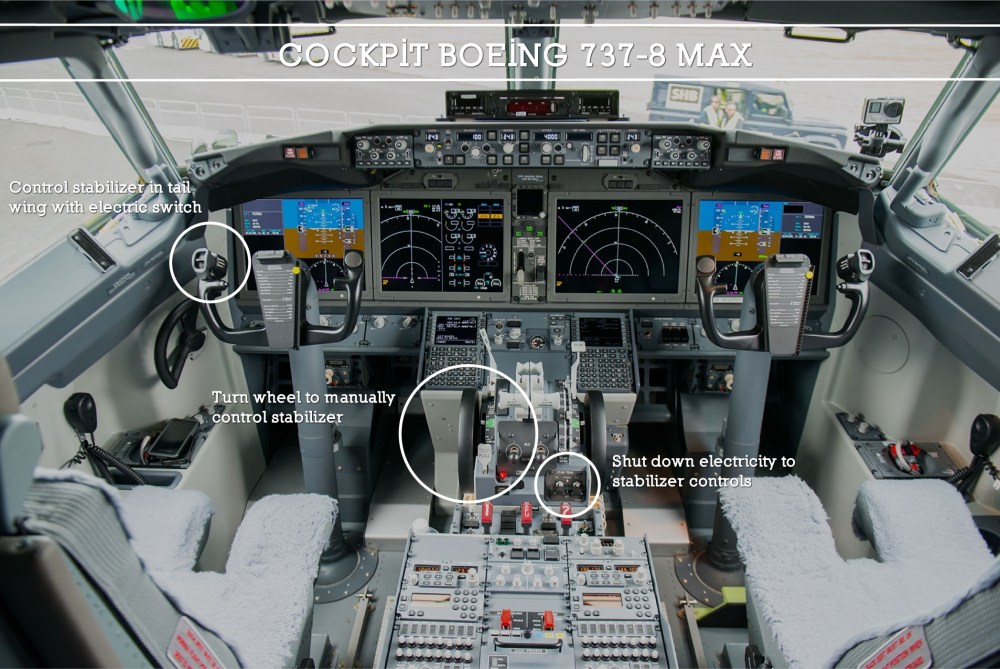
Los pilotos de American Airlines y Southwest Airlines, que el lunes expresaron su preocupación por no haber recibido información previa sobre el nuevo sistema de control de vuelo, continúan volando el avión. Se les ha asegurado que un procedimiento estándar que Boeing destacó después del accidente de JT-610 de Lion Air, aconsejan a apagar el sistema si falla y volver rápidamente el avión al vuelo manual.

Aun así, aunque no sea más que un elemento en una serie de eventos que llevaron a la catástrofe del JT-610, el nuevo Sistema de Control de Vuelo del Boeing 737-8 MAX se ha convertido en un tema de gran controversia.

Boeing & Seguridad

El hecho de que la nariz del avión pudiera ser empujada hacia abajo de forma automática y repetida debido a una falsa señal sorprendió a Peter Lemme, un ex ingeniero de Control de Vuelo de Boeing, quien dijo que parece un defecto de diseño.

Boeing insiste en que la generación del Boeing 737 MAX es seguro para volar. El Director Ejecutivo Dennis Muilenburg dijo que «el MAX es muy seguro y dijo que Boeing proporciona toda la información que se necesita para volar de forma segura nuestros aviones».

Del mismo modo, Dwight Schaeffer, un ex ingeniero electrónico de Boeing y Gerente Senior que supervisó el desarrollo de sistemas, incluida la computadora de gestión de paradas del 737, dijo que la breve descripción en la Directiva de Aeronavegabilidad de la FAA lo sorprende. «Por lo general, nunca tiene una sola falla que pueda ponerlo en peligro. Nunca he visto un sistema así», señaló Schaeffer.

Un ex vicepresidente de Boeing que comenzó como ingeniero de aviónica, quien pidió el anonimato, porque como ex ejecutivo dijo que le preocupa que la empresa lo demandara por críticas públicas, dijo que también está sorprendido por la sugerencia en la redacción de la FAA de un solo punto de falla que podría derribar un avión. Pero agregó que no necesariamente lo llamaría un defecto de diseño en sí mismo, siempre que las tripulaciones de vuelo tengan la capacidad de reconocer lo que está sucediendo y entrenar para enfrentarlo.

Boletín Informativo, un punto de controversia

Boeing lanzó un boletín la semana pasada para informar a los pilotos de todo el mundo sobre el nuevo sistema de control de vuelo y exactamente qué hacer para apagarlo si se vuelve loco. Pero la tripulación de Lion Air no tenía esa información y puede haber estado confundida por una diferencia de manejo clave que el sistema podría haber causado durante el vuelo.

Controles del MCAS

Björn Fehrm, un ex piloto de aviones de combate y un ingeniero aeronáutico que ahora es analista de Leeham.net, dijo que la descripción técnica del nuevo sistema de control de vuelo 737 MAX, llamado MCAS (Sistema de Aumento de Características de Maniobra), que Boeing dio a conocer a las aerolíneas. el fin de semana pasado deja en claro que está diseñado para activarse solo en situaciones extremas, cuando el avión está haciendo giros pronunciados que ejercen una gran presión en la estructura del avión o cuando está volando a velocidades tan bajas que está a punto de detenerse. Björn Fehrm dijo que Boeing debe haber agregado este sistema al MAX porque cuando el ángulo de ataque es alto, este modelo es menos estable en comparación con las 737 variantes anteriores. Esto se debe a que el MAX tiene motores más grandes y pesados ​​que también están en voladizo más hacia adelante en el ala para proporcionar más distancia al suelo. Eso cambia el centro de gravedad.

Pero en las circunstancias extremas donde se activa el sistema, cuando el Ángulo de Ataque (AOA) alcanza el rango de 10 a 12% haciendo girar el estabilizador horizontal para inclinar la nariz hacia abajo. Si el alto ángulo de ataque persiste, el sistema repite el comando cada 10 segundos.

El escenario temido en el caso de Lion Air es que el sensor AOA envió señales falsas que engañaron a la computadora para que pensara que el avión estaba en una posición de parada peligrosa, por lo que se activó el MCAS.

La gerencia de Southwest Airlines dijo a sus pilotos que Boeing no incluyó ninguna descripción de MCAS en el manual de vuelo porque un piloto «nunca debería ver el funcionamiento de MCAS» en vuelo normal.

Simulando el Vuelo JT-610

La reacción natural de cualquier piloto cuando la nariz de un avión comienza a inclinarse hacia abajo sin control es tirar del comando de mando hacia atrás y levantar la nariz. En el modo de vuelo normal, eso funcionaría, ya que al jalar el mando de control se activan los interruptores de arranque que detienen cualquier movimiento automático de la cola que tiende a mover la punta del avión hacia abajo. Pero con el MCAS activado, esos interruptores de arranque no funcionarían. El MCAS asume que el comando de mando ya está retrocedido agresivamente y no permitirá que más retroceso contrarreste su acción, que es mantener la nariz hacia abajo. El análisis de Björn Fehrm se confirma en las instrucciones que Boeing envió a los pilotos el fin de semana pasado. El boletín enviado a los pilotos de American Airlines enfatiza que retirar la columna de control no detendrá la acción.

Los pilotos de Lion Air se habrían entrenado en simuladores 737 y habrían aprendido a lo largo de muchos años de experiencia que al tirar hacia atrás del y comando de mando se detiene cualquier maniobra automática de la cola que empuja la nariz hacia abajo. «Encaja en tu memoria sensorial», dijo Fehrm sobre esta forma física de aprendizaje. Pero en el vuelo de Lion Air, si el MCAS estaba activo debido a un sensor defectuoso, los pilotos se habrían retirado y encontrado que el movimiento de la nariz hacia abajo no se detuvo. Björn Fehrm está convencido de que esto llevó a la confusión en la cabina que contribuyó a la pérdida de control. Existe un procedimiento estándar para apagar cualquier control de tono automático, pero de alguna manera los pilotos no reconocieron que eso era lo que estaba sucediendo. El MCAS tenía la información incorrecta y los pilotos reaccionaron a eso. El culpable es el MCAS. Sin embargo, advierte que aún no hay suficiente información para saber que la falla del sensor AOA solo provocó todo lo que sucedió, y que la secuencia completa de eventos que llevó al desastre no estará clara hasta que se complete la investigación. «Puede que no sea tan simple como un solo sensor», sentenció el ingeniero aeronáutico Björn Fehrm. Mientras tanto, Fehrm dijo que la notificación mundial a los pilotos sobre el MCAS y el énfasis en el procedimiento a seguir si el recorte de la nariz sale mal, significa que el Boeing 737 MAX está hoy perfectamente seguro para volar.

Sentimiento en Boeing

Esta semana, en Seattle, alrededor de 400 profesionales de la aviación de todo el mundo se reunieron para la Cumbre Internacional de Seguridad Aérea anual organizada por la Fundación de Seguridad de Vuelo (FSF). Cuando el Presidente de la junta de la FSF, John Hamilton, Vicepresidente de Ingeniería en Boeing Commercial Airplanes y ex ingeniero Jefe de Proyectos para el 737, dio un discurso de apertura el lunes, recordó su propia experiencia personal de profundo temor por un accidente de avión y lo utilizó para enfatizar cómo reacciona la gente en Boeing. La esposa de Hamilton es una azafata de Alaska Airlines que, el 31 Enero 2000, salía de Puerto Vallarta en México. Cuando Hamilton escuchó que el vuelo AS261 de un MD-83 rumbo a Seattle se había estrellado, temió que ella estuviera entre los 88 muertos. Más tarde descubrió que ella estaba en un vuelo diferente. Pero después de su alivio personal, dijo que vio cómo ese accidente resonó en Seattle y en la comunidad de aviación. “Lo que hacemos todos los días importa. El trabajo que hacemos toca tantas vidas. Todo el mundo en Boeing está profundamente triste por la pérdida del vuelo JT-610 de Lion Air», expresó John Hamilton.

Recordó que cuando se dirigió al Departamento de Ingeniería del Programa 737, «yo fui la persona responsable en última instancia de la seguridad de ese producto. En cada decisión que tomé, tuve que pensar con cuidado ya que tantas vidas dependen de ese resultado». Dijo que Boeing, junto con los reguladores de seguridad, investigará minuciosamente el accidente del vuelo JT-610 de Lion Air y aprenderá lo que podemos hacer para asegurarnos de que nunca vuelva a suceder.AW-Icon-TXT

Resultado de imagen para LIon Air Boeing 737 MAX 8 PK-LQP

Lion Air JT-610 | Day 18

FAA possible design flaw line 737 MAX

The Federal Aviation Administration (FAA) assesses a possible design flaw in the Boeing 737 MAX after the crash of Lion Air‘s JT-610 flight. Analysts, including Boeing’s former flight control experts, are concerned that a new automated flight control system on the Boeing 737 MAX may have failures and that the way the aircraft’s handling changed may have caused confusion. in the cockpit of Lion Air’s JT610 flight.

The Federal Aviation Administration (FAA) reported Wednesday that it is evaluating whether to require Boeing to correct a possible flaw in the design of a new automated flight control system introduced for the 737 MAX. It is also being investigated whether the technical data and the training provided to the pilots who made the transition to the new aircraft model were adequate. Flight control experts believe that the lack of information about the new system probably confused the pilots who flew the Lion Air plane that crashed on 29 October 2018 in Indonesia, killing the 189 people on board. The air safety agency said Wednesday that «the FAA and Boeing continue to assess the need for software or other design changes to the aircraft, including operating procedures and training».

AW-70076887

AOA of flight JT610

The accident investigation has already established that false readings from a sensor that measures the plane’s attack angle (AOA), the angle between the wing and the approaching air flow, could have triggered a new flight control system in the Boeing 737-8 MAX that pushed the nose relentlessly. of the aircraft down. FAA spokesman Greg Martin said that «the angle of attack values ​​used by various systems, including air data, wrestling controls, loss warning, etc., safety analysis for each of these systems are currently being reviewed».

Flight control experts say that the new system could have changed the feeling of airplane control so the pilots had experienced simulator training, possibly sowing confusion aboard the JT-610 flight.

In an airworthiness directive, the FAA cited an analysis by Boeing that «if the flight control system receives an erroneously high input from the Attack Angle Sensor (AOA), there is a possibility that the adjustment commands will be repeated nose down» that will rotate the plane’s horizontal stabilizer to tilt the nose down.

The pilots of American Airlines and Southwest Airlines, who on Monday expressed concern about not having received prior information about the new flight control system, continue to fly the plane. They have been assured that a standard procedure that Boeing highlighted after the JT-610 accident of Lion Air, advise to shutdown the system if it fails and quickly return the aircraft to manual flight.

Even so, although it is only one element in a series of events that led to the catastrophe of the JT-610, the new Flight Control System of the Boeing 737-8 MAX has become a subject of great controversy.

Boeing & Security

The fact that the nose of the plane could be pushed down automatically and repeated due to a false signal surprised Peter Lemme, a former Boeing Flight Control engineer, who said it looks like a design flaw.

Boeing insists that the generation of the Boeing 737 MAX is safe to fly. Executive Director Dennis Muilenburg said that «MAX is very safe and said that Boeing provides all the information it takes to fly our planes safely».

Similarly, Dwight Schaeffer, a former Boeing electronics engineer and Senior Manager who oversaw system development, including the 737’s stop management computer, said the brief description in the FAA’s Airworthiness Directive surprises him. «Usually, he never has a single fault that could put him in danger, I’ve never seen such a system», Schaeffer said.

A former vice president of Boeing who began as an avionics engineer, who requested anonymity, because as a former executive he said he was worried that the company would sue him for public criticism, said he was also surprised by the suggestion in the FAA’s editorial office of a only point of failure that could knock down an airplane. But he added that he would not necessarily call it a design flaw in itself, as long as the flight crews have the ability to recognize what is happening and to train to face it.

Informative Bulletin, a point of controversy

Boeing launched a newsletter last week to inform pilots around the world about the new flight control system and exactly what to do to turn it off if it goes crazy. But the Lion Air crew did not have that information and may have been confused by a key driving difference that the system could have caused during the flight.

MCAS controls

Björn Fehrm, a former fighter aircraft pilot and an aeronautical engineer who is now an analyst at Leeham.net, said the technical description of the new 737 MAX flight control system, called MCAS (Maneuvering Feature Enhancement System), that Boeing announced to the airlines. last weekend makes it clear that it is designed to activate only in extreme situations, when the plane is making sharp turns that exert a great pressure on the structure of the plane or when it is flying at such low speeds that it is about to stop. Björn Fehrm said that Boeing must have added this system to MAX because when the angle of attack is high, this model is less stable compared to the previous 737 variants. This is because the MAX has larger and heavier engines that are also cantilevered further forward in the wing to provide more ground clearance. That changes the center of gravity.

But in the extreme circumstances where the system is activated, when the Attack of Angle (AOA) reaches the range of 10 to 12% by turning the horizontal stabilizer to tilt the nose down. If the high angle of attack persists, the system repeats the command every 10 seconds.

The dreaded scenario in the case of Lion Air is that the AOA sensor sent false signals that tricked the computer into thinking that the aircraft was in a dangerous stopping position, so the MCAS was activated.

Southwest Airlines management told its pilots that Boeing did not include any description of MCAS in the flight manual because a pilot «should never see the operation of MCAS» in normal flight.

Resultado de imagen para LIon Air JT 610

Simulating the Flight JT-610

The natural reaction of any pilot when the nose of a plane begins to tilt down without control is to pull the command command back and raise the nose. In normal flight mode, that would work, since pulling the control knob activates the start switches that stop any automatic movement of the tail that tends to move the tip of the plane down. But with the MCAS activated, those start switches would not work. The MCAS assumes that the command command is already aggressively backed down and will not allow further recoil to counteract its action, which is to keep the nose down. Björn Fehrm’s analysis is confirmed in the instructions that Boeing sent to pilots last weekend. The bulletin sent to American Airlines pilots emphasizes that removing the control column will not stop the action.

The Lion Air pilots would have trained in 737 simulators and would have learned over many years of experience that when pulling back the command command stops any automatic maneuvering of the tail that pushes the nose down. «It fits your sensory memory», Fehrm said of this physical form of learning. But in the Lion Air flight, if the MCAS was active due to a faulty sensor, the pilots would have retreated and found that the nose down movement did not stop. Björn Fehrm is convinced that this led to confusion in the cabin that contributed to the loss of control. There is a standard procedure for turning off any automatic tone control, but somehow the pilots did not recognize that that was what was happening. The MCAS had the wrong information and the pilots reacted to that. The culprit is the MCAS. However, he cautions that there is not enough information yet to know that the AOA sensor failure alone caused everything that happened, and that the entire sequence of events that led to the disaster will not be clear until the investigation is complete. «It may not be as simple as a single sensor», said aeronautical engineer Björn Ferhm. Meanwhile, Fehrm said that the worldwide notification to pilots about the MCAS and the emphasis on the procedure to follow if nose trimming goes wrong means that the Boeing 737 MAX is perfectly safe to fly today.

Feeling in Boeing

This week, in Seattle, around 400 aviation professionals from around the world gathered for the annual International Air Safety Summit organized by the Flight Safety Resultado de imagen para alaska MD-83 Foundation (FSF). When the Chairman of the FSF board, John Hamilton, Vice President of Engineering at Boeing Commercial Airplanes and former Chief Project Engineer for the 737, gave an opening speech on Monday, he recalled his own personal experience of deep fear of an accident plane and used it to emphasize how people react in Boeing. Hamilton’s wife is an Alaska Airlines stewardess who, on January 31, 2000, left Puerto Vallarta in Mexico. When Hamilton heard that the AS261 flight of an MD-83 bound for Seattle had crashed, he feared that she was among the 88 dead. Later he discovered that she was on a different flight. But after his personal relief, he said he saw how that accident resonated in Seattle and in the aviation community. «What we do every day matters. The work we do touches so many lives. Everyone at Boeing is deeply saddened by the loss of Lion Air’s JT-610 flight», said John Hamilton.

He recalled that when he addressed the Engineering Department of Program 737, «I was the person ultimately responsible for the safety of that product, and in every decision I made, I had to think carefully since so many lives depend on that result», he said Boeing, along with safety regulators, will thoroughly investigate the crash of Lion Air’s JT-610 flight and learn what we can do to make sure it never happens again. A \ W


Ξ A I R G W A Y S Ξ
SOURCE: Airgways.com
DBk: Faa.gov / Ntsb.gov / Boeing.com / Seattletimes.com / Ctpost.com / Airgways.com
AW-POST: 201811152243AR

A\W   A I R G W A Y S ®

Audiencia NTSB por vuelo SW1380

Imagen relacionada

AW | 2018 11 15 12:14 | AIR INVESTIGATION / AVIATION SAFETY

Seal_of_the_United_States_National_Transportation_Safety_Board.svgLa audiencia de seguridad de la NTSB revela nuevos detalles sobre los daños al motor del vuelo SW1380 de Southwest Airlines

Los inspectores de la Junta Nacional de Seguridad del Transporte (NTSB) identificaron 16 aspas del ventilador del motor CFM CFM56-7B con signos similares de resquebrajarse en el accidente del vuelo SW1380 de April 2018 en Filadelfia de Southwest Airlines que dejó a un pasajero muerto luego de que una aspa se rompiera y dañara la aeronave.

Investigaciones del SW1380

La investigaciones de la NTSB ha estudiado otro vuelo de Southwest Airlines en 2016 que realizó un aterrizaje de emergencia en Pensacola, Florida. Unas seis cuchillas en el motor del vuelo de Pensacola tenían signos de agrietamiento: Otros ocho incidentes en otras aerolíneas, incluidas cuatro en Southwest Airlines, se identificaron durante los años siguientes, según Mark Habedank, un líder de ingeniería de CFM International, que fabrica los motores.

AW-70083651.png

Aunque el número total de aspas agrietadas puede parecer pequeño en comparación con los aproximadamente 15.000 motores CFM56-7B actualmente en servicio, cada uno con 24 aspas, llamó la atención de los funcionarios de la NTSB que supervisaron una audiencia de investigación en Washington, DC, el Miércoles, 14 Noviembre 2018.

A la NTSB llama la atención los incidentes reiterados de fatiga de productos en las aspas de los motores que CFM. «Eso es un montón de cuchillas que se están agrietando.¿Es esto una sorpresa ver que las cuchillas se retiran del servicio mucho antes de la vida de fatiga esperada?», dijo el investigador principal de seguridad de la aviación de la NTSB, John DeLisi.

La audiencia se produjo cuando los investigadores continúan concentrándose en la secuencia de eventos que llevaron a la rotura de una lámina de un fans que dañó la cubierta del motor circundante del Boeing 737-700 durante el vuelo SW1380  de Southwest Airlines de Nueva York a Dallas el 17 Abril 2018.

AW-NTSB70051.jpeg

Los escombros creados por la falla del motor CFM56-7B impactaron sobre el fuselaje, causando la rotura de una ventanilla y la muerte de la pasajera Jennifer Riordan, quien sufrió heridas severas cuando fue succionada parcialmente fuera del avión. Fue la primera muerte en un avión comercial de Estados Unidos desde 2009.

Las entrevistas con la tripulación de vuelo publicadas el miércoles brindaron nuevos detalles sobre los momentos caóticos inmediatamente después de la falla del motor, así como el esfuerzo desesperado de las azafatas y dos pasajeros cercanos para que la pasajera vuelva al avión y realice la respiración cardiopulmonar (RCP). Una azafata describió una cabina «ruidosa y ventosa» que estaba llena de humo y pedazos de escombros cuando ella agarró las manos de los pasajeros y les dijo «que iban a llegar», según un resumen de la entrevista publicado por la NTSB. El avión hizo un aterrizaje de emergencia en Filadelfia, con otros ocho pasajeros que reportaron lesiones menores.

La audiencia es un paso en el proceso de investigación que aún está a unos meses de finalización y tenía como objetivo recopilar más información técnica sobre el diseño, la certificación y el historial de funcionamiento de las aspas, la entrada y los carenados del ventilador del motor que fallaron en el accidente de Abril 2018. La NTSB no ha publicado su informe final sobre la falla del motor del vuelo Southwest del 2016.

Se cree que la hoja que se rompió durante el vuelo SW1380 de Southwest Airlines comenzó a agrietarse ya en 2012, pero la grieta, que mide aproximadamente un dieciseisavo de pulgada, era demasiado pequeña para ser detectada por las pruebas utilizadas en ese momento, según el ingeniero Mark Habedank.

Desde el incidente del vuelo SW1380, las autoridades federales han requerido inspecciones más frecuentes utilizando métodos de corriente eléctrica o ultrasonidos mejorados.

Un representante de CFM dijo que la mayor cantidad de cuchillas agrietadas en la flota de Southwest podría explicarse en parte por la gran cantidad del tipo de motor en la flota de Southwest: el operador de Boeing tiene alrededor del 10 por ciento de los 15.000 motores CFM56-7B en servicio y el hecho de que Southwest tomó muchas de las primeras entregas del motor, que entró en servicio en la década de 1990.

Los investigadores enviaron a representantes del fabricante de aviones Boeing y al fabricante de motores CFM con preguntas sobre los motores que fueron diseñados y certificados hace más de 20 años. La Administración Federal de Aviación (FAA) y Southwest también estuvieron representados en la audiencia.

Los motores de los aviones están diseñados para evitar que los desechos perforen el lado de la carcasa si una pala del ventilador se rompe durante el vuelo, una de las varias condiciones que deben cumplirse durante las pruebas para recibir la certificación. Los investigadores cuestionaron el miércoles si esas pruebas representan adecuadamente el daño potencial causado por los desechos en las estructuras de la entrada y la cubierta que rodean el núcleo del motor y ayudan a dirigir el flujo de aire durante las operaciones normales.

Otros temas abordados incluyeron las fuentes de tensión en las aspas del ventilador, cómo se lubrican y si las piezas deben tener una vida útil máxima antes de ser reemplazadas, algo que no es requerido por las regulaciones actuales. La audiencia del miércoles no tocó otros factores en el accidente, incluido el diseño y el rendimiento de la ventanilla o las acciones de las tripulaciones y los pasajeros después de la despresurización de la cabina.aw-icon-txt-01

AW-GettyImages-910279198.jpg

Hearing per flight SW1380

The NTSB security hearing reveals new details about the damage to the engine of Southwest Airlines flight SW1380

Inspectors from the National Transportation Safety Board (NTSB) identified 16 blades of the CFM engine fan CFM56-7B with similar signs of cracking in the April 2018 Philadelphia accident of flight SW1380 of Southwest Airlines that left a passenger dead after a blade would break and damage the aircraft.

Investigations of the SW1380

The NTSB investigations have studied another Southwest Airlines flight in 2016 that made an emergency landing in Pensacola, Florida. About six blades in the Pensacola flight engine had signs of cracking: Other eight incidents on other airlines, including four on Southwest Airlines, were identified during the following years, according to Mark Habedank, an engineering leader at CFM International, which manufactures the engines.

Although the total number of cracked blades may seem small compared to the approximately 15,000 CFM56-7B engines currently in service, each with 24 blades, it caught the attention of NTSB officials who oversaw a research hearing in Washington, DC, On Wednesday, November 14, 2018.

The NTSB draws attention to the repeated fatigue incidents of products on the blades of the engines that CFM. «That’s a bunch of blades that are cracking. Is this a surprise to see that the blades are removed from service long before the expected fatigue life?», said NTSB Senior Aviation Safety Researcher John DeLisi.

Resultado de imagen para SW 1380 Southwest

The hearing came as researchers continued to focus on the sequence of events that led to the breaking of a fan blade that damaged the engine cover surrounding the Boeing 737-700 during SW1380 Southwest Airlines flight from New York to Dallas on the 17th April 2018.

The debris created by engine failure CFM56-7B impacted the fuselage, causing a window break and the death of passenger Jennifer Riordan, who suffered severe injuries when she was partially sucked out of the plane. It was the first death on a commercial aircraft in the United States since 2009.

The flight crew interviews published on Wednesday provided new details on the chaotic moments immediately after engine failure, as well as the desperate effort of flight attendants and two nearby passengers for the passenger to return to the plane and perform cardiopulmonary breathing (PCB). A stewardess described a «noisy and windy» cabin that was filled with smoke and bits of debris when she grabbed the passengers’ hands and told them «they were going to arrive», according to a summary of the interview published by the NTSB. The plane made an emergency landing in Philadelphia, with eight other passengers reporting minor injuries.

The hearing is a step in the research process that is still a few months to completion and aimed to gather more technical information on the design, certification and operating history of the blades, the intake and the engine fan cowls that failed in the April 2018 accident. The NTSB has not published its final report on the engine failure of the Southwest flight of 2016.

It is believed that the sheet that broke during the SW1380 flight of Southwest Airlines began to crack already in 2012, but the crack, which measures approximately one sixteenth of an inch, was too small to be detected by the tests used at that time, according to the engineer Mark Habedank.

Since the incident of flight SW1380, federal authorities have required more frequent inspections using improved electric current or ultrasonic methods.

A CFM representative said that the greater number of cracked blades in Southwest’s fleet could be explained in part by the large amount of engine type in Southwest’s fleet: the Boeing operator has about 10 percent of the 15,000 CFM56 engines -7B in service and the fact that Southwest took many of the first deliveries of the engine, which entered service in the 1990s.

The researchers sent representatives of the aircraft manufacturer Boeing and the CFM engine manufacturer with questions about the engines that were designed and certified more than 20 years ago. The Federal Aviation Administration (FAA) and Southwest were also represented at the hearing.

Aircraft engines are designed to prevent debris from piercing the side of the carcass if a fan blade breaks during the flight, one of several conditions that must be met during testing to receive certification. The researchers questioned on Wednesday whether those tests adequately represent the potential damage caused by debris in the entrance and roof structures surrounding the engine’s core and help direct airflow during normal operations.

Other topics addressed included sources of tension on the fan blades, how they are lubricated and whether the parts should have a maximum service life before being replaced, something that is not required by current regulations. Wednesday’s hearing did not touch on other factors in the accident, including the design and performance of the window or the actions of crews and passengers after depressurization of the cabin. A\W


Ξ A I R G W A Y S Ξ
SOURCE: Airgways.com
DBk: Ntsb.gov / Dallasnews.com / Usatoday.com / Gettyimages.com
AW-POST: 201811151214AR

A\W   A I R G W A Y S ®

Lion Air JT-610 | Día 17

AW-77000021

AW | 2018 11 14 21:37 | AIR INVESTIGATION / AVIATION SAFETY

AW-7007378.jpgFAA y Boeing estudian la necesidad de cambios en el software 737 MAX después del accidente de Lion Air

La Administración Federal de Aviación de Estados Unidos (FAA) y Boeing están evaluando la necesidad de cambios en el diseño o el software de los 737 MAX. El estudio Boeing-Company-Logose produce tras el mortal accidente del vuelo JT-610 de Lion Air del mes pasado en Indonesia. Los investigadores indonesios dijeron que el sistema de vuelo no describía un sistema diseñado para enfrentar el escenario del accidente. Pidieron más entrenamiento para los pilotos del Boeing 737-8 MAX.

Investigadores indonesios dijeron el lunes que un sistema diseñado para enfrentar el escenario del accidente no se describió en el Manual de Vuelo del nuevo avión Boeing 20150215-logo-faa_1737 MAX. Los procedimientos operativos y la capacitación para el Boeing 737 MAX también podrían cambiar a medida que la FAA y Boeing aprendan más de la investigación, dijo el regulador en un comunicado. Los sindicatos de pilotos de Estados Unidos dijeron más tarde que no estaban al tanto del nuevo sistema antibloqueo.

Seal_of_the_United_States_National_Transportation_Safety_Board.svgLos investigadores se están preparando para publicar su informe preliminar sobre el accidente el 28 o 29 Noviembre 2018, un mes después de que el avión Boeing 737-8 MAX Lion Air se estrellara a gran velocidad en el Mar de Java. Hasta ahora, la atención pública se ha centrado principalmente en los posibles problemas de mantenimiento, incluido un sensor defectuoso denominado Ángulo de Ataque (AOA), un dato vital que se necesita para ayudar a la aeronave a volar en el ángulo correcto a las corrientes de aire y evitar un bloqueo.

Continúan investigaciones JT-610

AW-7765645444El enfoque de la investigación parece estar expandiéndose a la claridad de los procedimientos aprobados por los Estados unidos para ayudar a los pilotos a evitar que el 737 MAX reaccione en exceso ante tal pérdida de datos y los métodos para capacitarlos.

La información recuperada del registrador de datos del avión la semana pasada llevó a la FAA a emitir una advertencia de emergencia a los pilotos de que una computadora en el 737 MAX podría forzar al avión a descender bruscamente durante hasta 10 segundos, incluso en vuelo manual, lo que dificulta que un piloto pueda controlar la aeronave. Los pilotos pueden detener esta respuesta automática presionando dos botones si el sistema se comporta de manera inesperada. Pero se han planteado preguntas acerca de qué tan bien preparados están los pilotos para una reacción tan automática y cuánto tiempo tienen para responder. La FAA negó el martes el informe de que había lanzado una nueva investigación sobre los análisis de seguridad realizados por Boeing en el 737 MAX.

El Presidente Ejecutivo de Boeing, Dennis Muilenburg, dijo el martes que Boeing proporciona «toda la información que se necesita para volar con seguridad nuestros aviones y que el 737 MAX es un avión muy seguro. Esto se debe a miles de horas de pruebas, evaluaciones, simulaciones y el suministro de la información que nuestros pilotos necesitan para operar nuestros aviones de manera segura. En ciertos modos de falla, si hay un ángulo incorrecto de la información de alimentación del sensor de ataque al avión, hay un procedimiento para manejar eso».

La cantidad de Boeing 737 entregados bajó ligeramente de las 61 entregadas en Septiembre 2018 a 43 en Octubre 2018 debido a los problemas persistentes de los proveedores, señalados por un ejecutivo de Boeing la semana pasada.

Presiones sobre Boeing

Boeing enfrentaba una creciente presión el miércoles por el desastre del avión en Indonesia cuando el fabricante no advirtió a los pilotos sobre los peligros potenciales de una nueva característica de seguridad implicada en el Boeing 737 MAX.

El Director de Operaciones de la aerolínea Lion Air, Zwingli Silalahi, dijo: «El manual no les decía a los pilotos que, en ciertas situaciones, el sistema de prevención de pérdida del avión podría provocar automáticamente una respuesta, como bajar la nariz del avión, para evitar o salir de una parada. No tenemos eso en el manual del Boeing 737-8 MAX. Por eso no tenemos la capacitación especial para esa situación específica. El Boletín de Seguridad de Boeing no sugirió capacitación adicional para los pilotos que operan ese avión. No recibimos ninguna información de Boeing ni del regulador sobre la capacitación adicional para nuestros pilotos», dijo.

El resultado de la investigación en curso, realizada por la Comisión Nacional de Transporte de Indonesia (KNKT), la Junta Nacional de Seguridad del Transporte de los Estados Unidos (NTSB) y Boeing, determinaron que era necesaria una capacitación adicional.

Un portavoz de Boeing dijo este miércoles que no podía «discutir detalles específicos de una investigación en curso» y que la compañía «había proporcionado dos actualizaciones para nuestros operadores en todo el mundo que vuelven a enfatizar los procedimientos existentes para estas situaciones. Confiamos en la seguridad del 737 MAX. La seguridad sigue siendo nuestra principal prioridad y es un valor fundamental para todos en Boeing», dijo el vocero.

El Jefe de la Dirección de Aeronavegabilidad y Operaciones Aéreas (DOAAO) del Ministerio de Transporte de Indonesia dijo que la agencia estaba en un proceso de intensas discusiones sobre la capacitación adicional para los pilotos que vuelan los aviones Boeing 737 MAX, pero no dio detalles sobre qué entrenamiento adicional implicaría.

Sensor de Aire

El Boletín Operacional de Boeing, publicado la semana pasada, señaló a las aerolíneas los procedimientos existentes de la tripulación de vuelo para abordar cualquier lectura errónea relacionada con los sensores de Ángulo de Ataque (AOA). Un sensor AOA es un instrumento, similar a una pequeña veleta, que se encuentra fuera del avión justo debajo de la cabina y envía información a sus computadoras sobre el ángulo de la nariz del avión con respecto al aire que se aproxima. El sensor ayuda a determinar en qué ángulo se encuentra respecto al horizonte.

La Administración Federal de Aviación de los Estados Unidos (FAA) emitió posteriormente su propia directiva que aconsejaba a los pilotos sobre cómo responder a problemas similares.

Falta la grabadora de voz

Más de dos semanas después del accidente, las autoridades todavía están buscando la Grabadora de Voz de la Cabina (CVR), que se cree está enterrada bajo un profundo lodo. Si se encuentra, debería revelar lo que sucedió en la cabina en los últimos segundos del vuelo.

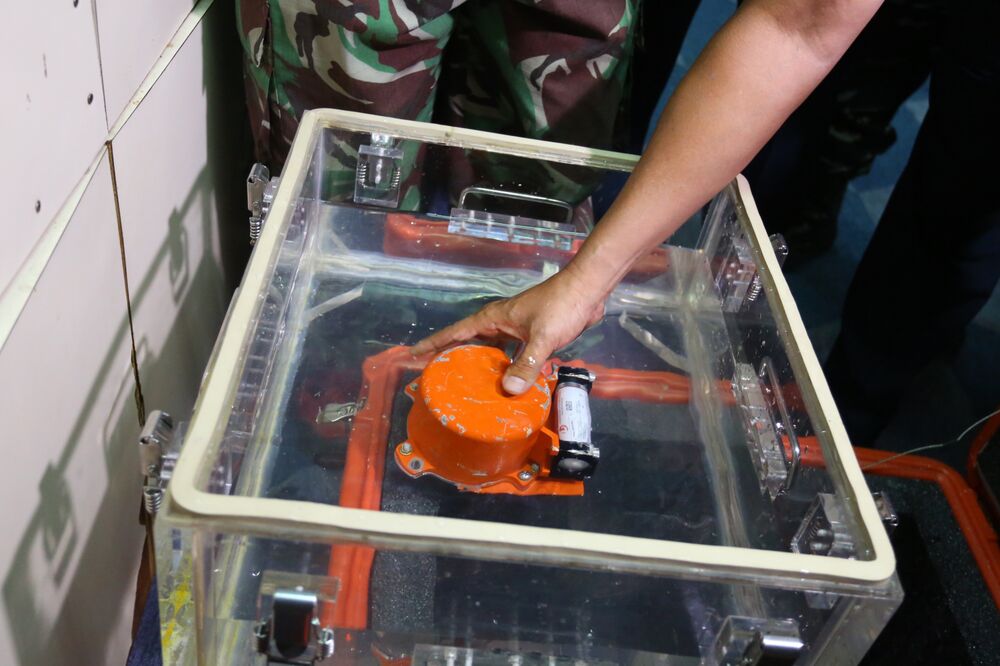
Los investigadores ya están examinando el Registrador de Datos de Vuelo (FDR) que fue retirado del lecho marino, unos 30 metros bajo el agua, el 1 de noviembre. Los hallazgos preliminares sugirieron que hubo problemas con el indicador de velocidad del aire en los últimos tres vuelos antes del accidente.

El MCAS del Boeing 737 MAX

Cuando Boeing se dispuso a desarrollar el Boeing 737 MAX, los ingenieros tuvieron que encontrar la manera de de instalar un motor mucho más grande debajo del plano alar. El diseño del nuevo motor LEAP-1B ha obligado al constructor americano mover ligeramente la unidad de potencia principal hacia adelante y arriba y extender el tren de nariz en ocho pulgadas. Esto ha cambiado ligeramente cómo se pilotea el nuevo Boeing 737 MAX.

La reubicación de los motores, más el mayor empuje ha obligado a Boeing a realizar ajustes para corregir la actitud ascendente de la nariz. Boeing introdujo silenciosamente un nuevo sistema para compensar algunas características únicas de vuelos de la generación 737 MAX, la Certificación Parte 25, para ayudar a los pilotos a corregir el Ángulo de Ataque (AOA) de la aeronave cuando de opera manualmente.

AW-MCAS Sys-B737MAX.png

El Maneuvering Characteristics Augmentation System (MCAS) se ha diseñado para abordar el problema, según han detallado ingenieros y pilotos de Boeing. El procedimiento de acción del MCAS es activado sin entrada del piloto y ordena al Estabilizador de Cola actuar contrario a las agujas del reloj para que la aeronave corrija la nariz arriba.

El sistema MCAS se activa cuando el Ángulo de Ataque (AOA) detectado supera un umbral basado en la velocidad y la altitud, eso inclina el Estabilizador Horizontal del Boeing 737 MAX a una velocidad de 27º por segundo. El movimiento del Estabilizador Horizontal dependerá del número de Mach (velocidad): a mayor Mach se mueve más lento, a menor Mach, más rápido.

Las acciones concluyentes en el comportamiento de los Boeing 737 MAX determinan que si el Ángulo de Ataque (AOA) es alto, o si los sensores creen erróneamente que lo está, la función MCAS ordena otro comando de estabilizador incremental de la nariz hacia abajo.

La existencia del Sistema MCAS ha sorprendido a pilotos y sindicatos de aerolíneas. El sistema MCAS no se menciona en el Manual de Operaciones de la Tripulación de Vuelo (FCOM) que representa la carta descriptiva para las operaciones de vuelo y es la base de la documentación para las capacitaciones de los pilotos.aw-icon-txt-01

Resultado de imagen para Lion Air JT 610

Lion Air JT-610 | Day 17

Lion_Air_logoFAA and Boeing study the need for changes in the 737 MAX software after the Lion Air accident

The Federal Aviation Administration of the United States (FAA) and Boeing are evaluating the need for changes in the design or software of the 737 MAX. The study comes after the deadly accident of JT-610 flight of Lion Air last month in Indonesia. Indonesian researchers said the flight system did not describe a system designed to cope with the accident scenario. They asked for more training for the Boeing 737-8 MAX pilots.

Indonesian researchers said on Monday that a system designed to deal with the accident scenario was not described in the Flight Manual of the new Boeing 737 MAX aircraft. Operational procedures and training for the Boeing 737 MAX may also change as the FAA and Boeing learn more from the investigation, the regulator said in a statement. The pilot unions in the United States said later that they were not aware of the new anti-blocking system.

Investigators are preparing to publish their preliminary report on the accident on November 28 or 29, 2018, one month after the Boeing 737-8 MAX Lion Air crashed at high speed in the Java Sea. So far, public attention has focused mainly on possible maintenance issues, including a faulty sensor called the Attack Angle (AOA), a vital piece of information needed to help the aircraft fly at the correct angle to the currents. air and avoid a blockage.

Continues JT-610 investigations

The focus of the investigation seems to be expanding to the clarity of procedures approved by the United States to help pilots avoid the 737 MAX from overreacting to such data loss and methods to train them.

Information retrieved from the plane’s data logger last week prompted the FAA to issue an emergency warning to pilots that a computer on the 737 MAX could force the plane to drop abruptly for up to 10 seconds, even in manual flight, which makes it difficult for a pilot to control the aircraft. Pilots can stop this automatic response by pressing two buttons if the system behaves unexpectedly. But questions have been raised about how well prepared the pilots are for such an automatic reaction and how much time they have to respond. The FAA on Tuesday denied the report that it had launched a new investigation into the safety analyzes conducted by Boeing on the 737 MAX.

Boeing Executive Chairman Dennis Muilenburg said on Tuesday that Boeing provides «all the information needed to safely fly our aircraft and that the 737 MAX is a very safe aircraft this is due to thousands of hours of testing, evaluations , simulations and the provision of the information our pilots need to operate our airplanes safely. In certain failure modes, if there is an incorrect angle of power input information from the aircraft attack sensor, there is a procedure to handle that».

The number of Boeing 737 delivered dropped slightly from the 61 delivered in September 2018 to 43 in October 2018 due to persistent supplier problems, signaled by a Boeing executive last week.

Pressures on Boeing

Boeing faced mounting pressure on Wednesday for the plane crash in Indonesia when the automaker failed to warn pilots of the potential dangers of a new safety feature involved in the Boeing 737 MAX.

The Director of Operations of the Lion Air airline, Zwingli Silalahi, said: «The manual did not tell the pilots that, in certain situations, the aircraft loss prevention system could automatically trigger an answer, such as lowering the nose of the plane , to avoid or leave a stop. We do not have that in the manual of the Boeing 737-8 MAX. That’s why we do not have the special training for that specific situation. The Boeing Safety Bulletin did not suggest additional training for the pilots operating that plane. We did not receive any information from Boeing or the regulator about additional training for our pilots», he said.

The result of the ongoing investigation, conducted by the National Transport Commission of Indonesia (KNKT), the National Transportation Safety Board of the United States (NTSB) and Boeing, determined that additional training was necessary.

A Boeing spokesman said Wednesday that he could not «discuss specific details of an ongoing investigation» and that the company «had provided two updates to our operators around the world that re-emphasize existing procedures for these situations. security of the 737 MAX Security is still our top priority and is a fundamental value for everyone at Boeing», the spokesperson said.

The head of the Directorate of Airworthiness and Air Operations (DOAAO) of the Ministry of Transport of Indonesia said that the agency was in the process of intense discussions about additional training for pilots flying the Boeing 737 MAX aircraft, but did not elaborate on what additional training would it involve?

Air Sensor

The Boeing Operational Bulletin, released last week, signaled to the airlines the «existing flight crew procedures to address any erroneous reading related to the Attack Angle Sensors (AOA). An AOA sensor is an instrument, similar to a small weather vane, that is located outside the plane just below the cockpit and sends information to your computers about the angle of the nose of the plane with respect to the approaching air. The sensor helps determine at what angle it is in relation to the horizon.

The Federal Aviation Administration of the United States (FAA) subsequently issued its own directive advising pilots on how to respond to similar problems.

The voice recorder is missing

More than two weeks after the accident, authorities are still looking for the Voice of the Cabinet Recorder (CVR), which is believed to be buried in deep mud. If found, you should reveal what happened in the cockpit in the last seconds of the flight.

Researchers are already examining the Flight Data Recorder (FDR) that was removed from the seabed, about 30 meters under water, on November 1. Preliminary findings suggested that there were problems with the airspeed indicator on the last three flights before the accident.

The MCAS of the Boeing 737 MAX

When Boeing set out to develop the Boeing 737 MAX, the engineers had to find a way to install a much larger engine below the wing plane. The design of the new LEAP-1B engine has forced the American builder to move the main power unit slightly forward and up and extend the nose train by eight inches. This has changed slightly how the new Boeing 737 MAX is piloted.

The relocation of the engines, plus the greater thrust has forced Boeing to make adjustments to correct the rising attitude of the nose. Boeing quietly introduced a new system to compensate for some unique characteristics of generation 737 MAX flights, the Part 25 Certification, to help pilots correct the Attack Angle (AOA) of the aircraft when operating manually.

The Maneuvering Characteristics Augmentation System (MCAS) has been designed to address the problem, according to detailed Boeing engineers and pilots. The MCAS action procedure is activated without pilot input and commands the Tail Stabilizer to act counterclockwise so that the aircraft corrects the nose up.

boeing-737-max-service-bulletin-AOA.jpegFLIGHT CREW OPERATIONS MANUAL (FCOM) OF BOEING 737-8/9 MAX

The MCAS system is activated when the detected Angle of Attack (AOA) exceeds a threshold based on speed and altitude, that tilts the Horizontal Stabilizer of the Boeing 737 MAX at a speed of 27º per second. The movement of the Horizontal Stabilizer will depend on the Mach number (speed): the higher Mach moves slower, amenor Mach, faster.

The conclusive actions in the behavior of the Boeing 737 MAX determine that if the Attack Angle (AOA) is high, or if the sensors mistakenly believe that it is, the MCAS function orders another incremental stabilizer command from the nose down.

The existence of the MCAS System has surprised airline pilots and unions. The MCAS system is not mentioned in the Flight Crew Operations Manual (FCOM) which represents the descriptive letter for flight operations and is the basis of the documentation for the pilots’ trainings. A \ W

Ξ A I R G W A Y S Ξ
SOURCE: Airgways.com
DBk: Faa.gov / Ntsb.gov / Theaircurrent.com / Boeing.com / Dephub.go.id / Cnn.com / Airgways.com
AW-POST: 201811142137AR

A\W   A I R G W A Y S ®

Incidente AR1324 Aerolíneas B737-8 MAX

AW-B737MAX8LVHKW-001.jpg

AW | 2018 11 14 09:37 | AIR INVESTIGATION / AVIATION SAFETY

aerolineas-argentinas-logoAlerta mundial por incidente Boeing 737-8 MAX de Aerolíneas Argentinas

El vuelo AR1324 de Aerolíneas Argentinas que había despegado del Aeropuerto de Ezeiza a las 01:15 hs. del 13 Octubre 2018, con destino a Punta Cana, República Dominicana. Después de dos horas de vuelo la tripulación se declaró en emergencia por una falla en un motor y solicitó permiso para aterrizar en el Aeropuerto Internacional de Resistencia para una revisión.

Se detectó una anomalía en el funcionamiento de un motor LEAP-1B del Boeing 737-8 MAX, matrícula LV-HKW, E082D6, que la aerolínea de bandera tiene en su flota. El Boeing 737-8 MAX LV-HKW tiene una antigüedad de ocho meses volando para Aerolíneas Argentinas.

Una anomalía en una de sus turbinas obligó a la tripulación a descender en el Aeropuerto Resistencia, Argentina. Los pasajeros de un vuelo de Aerolíneas Argentinas con destino a la ciudad caribeña de Punta Cana vivieron momentos de incertidumbre y miedo cuando el avión que los trasladaba debió aterrizar en la ciudad chaqueña de Resistencia por una falla mecánica. Desde la compañía informaron que están enviando un avión de reemplazo para que los pasajeros continúen hoy mismo su viaje.

Preocupación mundial Boeing 737 MAX

Tras la tragedia del accidente del Boeing 737-8 MAX del vuelo JT-610 de Lion Air el 29 Octubre 2018 en el Mar de Java, Indonesia, la FAA ha emitido circulares AD a todas las compañías operadoras de este avión.

La Junta de Investigaciones de Accidentes de Aviación Civil (JIAAC) de Argentina ha comunicado que está interviniendo en el caso de la aeronave Boeing 737-8 MAX LV-HKW reportado a 04:15 hs UTC del 13/11/18. De momento, se trata sólo de una «intervención, no genera aviso inicial por accidente/incidente», según expresaron desde el organismo. Lo cierto es que cualquier anomalía representa un incidente en la navegación aerocomercial.

El reciente incidente de la aeronave Boeing 737-8 MAX de Aerolíneas Argentinas activas las alertas para el constructor Boeing para una urgente revisión de los sistemas de las aeronaves en vuelo y los chequeos de las unidades próximas a salir de la cadena de producción en Renton, Washington.aw-icon-txt-01

AW-79000332.jpg


Incident AR1324 Aerolíneas Boeing 737-8 MAX

Global alert for Boeing 737-8 MAX incident of Aerolíneas Argentinas

The AR1324 flight of Aerolíneas Argentinas that had taken off from the Ezeiza Airport at 01:15 hs. of 13 October 2018, to Punta Cana, Dominican Republic. After two hours of flight, the crew declared an emergency due to an engine failure and requested permission to land at the Resistencia International Airport for a check.

An anomaly was detected in the operation of a LEAP-1B engine of the Boeing 737-8 MAX, license plate LV-HKW, E082D6, which the flag carrier has in its fleet. The Boeing 737-8 MAX LV-HKW is eight months old flying for Aerolíneas Argentinas.

An anomaly in one of its turbines forced the crew to descend at the Resistencia Airport, Argentina. Passengers on an Aerolineas Argentinas flight to the Caribbean city of Punta Cana experienced moments of uncertainty and fear when the plane that moved them had to land in the Chaco city of Resistencia due to mechanical failure. From the company they informed that they are sending a replacement plane so that the passengers continue their trip today.

Global concern Boeing 737 MAX

Following the tragedy of the Boeing 737-8 MAX accident of Lion Air’s JT-610 flight on October 29, 2018 in the Java Sea, Indonesia, the FAA has issued AD circulars to all operating companies of this aircraft.

The Civil Aviation Accident Investigation Board (JIAAC) of Argentina has announced that it is intervening in the case of the Boeing 737-8 MAX LV-HKW aircraft reported at 04:15 a.m. UTC on 11/13/18. At the moment, it is only an «intervention, does not generate initial notice by accident / incident», as expressed by the agency. The truth is that any anomaly represents an incident in the commercial air navigation.

The recent incident of the Boeing 737-8 MAX aircraft of Aerolíneas Argentinas activates the alerts for the Boeing constructor for an urgent review of the systems of the aircraft in flight and the checks of the units next to exit the production line in Renton, Washington. A\W


Ξ A I R G W A Y S Ξ
SOURCE: Airgways.com
DBk: Aerolíneas.com / Argentina.gob.ar/jiaac / Airgways.com / Losandes.com.ar
AW-POST: 201811140937AR

A\W   A I R G W A Y S ®

Gremio Southwest cuestiona 737-MAX

Resultado de imagen para Boeing 737 MAX Southwest takeoff

AW | 2018 11 13 15:07 | AVIATION SAFETY / INDUSTRY / AIRLINES

PNGPIX-COM-Southwest-Airlines-Logo-PNG-TransparentEl Sindicato de Pilotos de Southwest Airlines ha cuestionado el Technical Guide de los Boeing 737 MAX

El Sindicato de Pilotos estadounidenses de la aerolínea Southwest Airlines cuestionan la documentación del Technical Guide de la flota del Boeing 737 MAX después del accidente del vuelo JT-610 de Lion Air en Indonesia.

Dos sindicatos de pilotos estadounidenses afirman que los riesgos potenciales de una característica de seguridad en el avión Boeing 737 MAX que se ha relacionado con un accidente mortal en Indonesia no se explicaron lo suficiente en sus manuales o capacitación.

Boeing y la Administración Federal de Aviación (FAA) emitieron directivas la semana pasada informando a las tripulaciones de vuelo sobre el sistema, que está diseñado para brindar protección adicional contra la pérdida de control de los pilotos. Eso llevó a los aviadores, sindicatos y departamentos de capacitación a darse cuenta de que ninguno de los documentos de la aeronave MAX incluía una explicación del sistema, dijeron los líderes sindicales.

12851Crítica del Sindicato

«No nos gusta que no nos notifiquen», dijo Jon Weaks, presidente de la Asociación de Pilotos de Southwest Airlines. Dennis Tajer, 737 capitán y portavoz de la Asociación de Pilotos Aliados en American Airlines Group Inc., dijo que los miembros de su sindicato también estaban preocupados. Las quejas de los líderes sindicales piloto en Southwest Airlines y American Airlines son importantes debido al tamaño de las flotas de Boeing 737 MAX. Southwest es el operador más grande del 737 MAX y tiene la mayor cantidad en pedidos, con 257 de los jets aún por entregar. American, la aerolínea más grande del mundo, tiene pedidos pendientes de 85 aviones.

Voces de Boeing

Boeing dijo que confía en la seguridad de la familia de aviones 737 MAX. «Estamos tomando todas las medidas para comprender completamente todos los aspectos de este incidente, trabajando estrechamente con el equipo investigador y todas las autoridades reguladoras involucradas. La seguridad sigue siendo nuestra principal prioridad y es un valor fundamental para todos en Boeing», dijo la compañía en un comunicado por correo electrónico.

Vuelo JT-610 Lion Air

Se han publicado pocos detalles sobre las causas subyacentes del accidente de Lion Air JT-610 el 29 Octubre 2018 en el Mar de Java, pero los investigadores indonesios dicen que un sensor erróneo provocó que las computadoras del avión empujaran el avión a una inmersión empinada. Una nueva medida de seguridad agregada en los modelos MAX para evitar que los pilotos pierdan el control es lo que hizo que el avión apunte hacia abajo, de acuerdo con la FAA y Boeing. Según el regulador y el fabricante, un procedimiento de larga data que se enseñó a los pilotos podría haber detenido la inmersión. La FAA ordenó a las aerolíneas agregar una explicación en los manuales de vuelo.

El Comité Nacional de Seguridad en el Transporte de Indonesia (KNKT) continúa buscando la grabadora de voz de la cabina del piloto, Cockpit Voice Recorder (CVR), dijo el lunes. La agencia de investigación planea publicar un informe preliminar entre el 28 y el 29 Noviembre 2018, un mes después del accidente, según lo estipula el tratado internacional.

Regulaciones FAA

La FAA, que certificó el avión, dijo en un comunicado que no podía comentar sobre el asunto, mientras que la investigación en Indonesia sigue abierta. La directiva de emergencia de la FAA requería que los transportistas estadounidenses revisaran los manuales de vuelo y dijo que la agencia «tomará medidas adicionales si los hallazgos de la investigación del accidente lo justifican».

Si bien el diseño del MAX ha estado bajo un foco de atención desde el accidente, otros factores en el accidente podrían eclipsar su importancia. Incluyen preguntas sobre cómo se realizó el mantenimiento después de que surgieran problemas en al menos tres vuelos anteriores de la aeronave Boeing 737-8 MAX de Lion Air y las acciones de los pilotos en su último vuelo.

Cuando Boeing diseñó su última versión del 737, agregó la nueva característica de seguridad para combatir la pérdida de sustentación, que es un contribuyente principal a los accidentes de pérdida de control que con mucho causan la mayoría de las muertes por accidentes en el mundo. Conocido como el Sistema de aumento de características de maniobra, se agregó «para compensar algunas características únicas de manejo de aeronaves», según un boletín enviado por la división de operaciones de vuelo de Southwest a sus pilotos el 10 Noviembre 2018.

Cuando el sistema detecta que el avión está cerca de perder la elevación en las alas, automáticamente ordena una bajada de la nariz para contrarrestar el riesgo. Sin embargo, el sensor principal utilizado para predecir una pérdida de sustentación, conocida como una paleta de ángulo de ataque, estaba funcionando mal en el vuelo de Lion Air. Básicamente, engañó al sistema para que ordenara una inmersión fuerte.

Los pilotos están entrenados sobre cómo reducir la energía al llamado Sistema de Compensación si el avión comienza a bucear o trepar solo, pero ese procedimiento nunca se vinculó directamente a un sensor de Ángulo de Ataque (AOA) que funciona mal en el entrenamiento o la documentación.

«En la actualidad, no hemos encontrado ningún caso de anomalías de AOA con nuestro 737-8 MAX. Esa es una noticia positiva, pero no es garantía de que el sistema no falle», dijo el boletín de APA, refiriéndose al ángulo de ataque como AOA.

Debido a que el sistema solo está diseñado para operar en condiciones excepcionales mientras los pilotos vuelan manualmente, «los pilotos nunca deben ver» el sistema en funcionamiento, de acuerdo con la nota de Southwest Airlines. Como resultado, Boeing optó por no incluir una descripción en los extensos manuales que preparó para los modelos Max, dice la nota. Ese razonamiento no tiene sentido, dijo Roger Cox, un ex-piloto y ex-investigador retirado de la Junta Nacional de Seguridad del Transporte de los Estados Unidos (NTSB). Las tripulaciones de vuelo tienen el derecho de preocuparse de los detalles sobre el nuevo sistema que no se incluyeran en los manuales y los cursos cortos de capacitación que debían tomar antes de volar el Boeing 737 MAX.AW-Icon-TXT

AW-BIZ-J707867.jpgGuild Southwest questions Boeing 737 MAX

The Union of Pilots of Southwest Airlines has questioned the Technical Guide of the Boeing 737 MAX

The US Airline Union of Southwest Airlines questions the Technical Guide documentation of the Boeing 737 MAX fleet after the crash of Lion Air’s JT-610 flight in Indonesia.

rotate7.pngTwo US pilot unions claim that the potential risks of a safety feature on the Boeing 737 MAX aircraft that has been linked to a fatal accident in Indonesia were not sufficiently explained in their manuals or training.

Boeing and the Federal Aviation Administration (FAA) issued directives last week informing flight crews about the system, which is designed to provide additional protection against loss of control by pilots. That led the aviators, unions and training departments to realize that none of the documents on the MAX aircraft included an explanation of the system, union leaders said.

Criticism of the Syndicate

«We do not like that they do not notify us», said Jon Weaks, president of the Southwest Airlines Pilots Association. Dennis Tajer, 737 captain and spokesperson for the Allied Pilots Association at American Airlines Group Inc., said members of his union were also concerned. Complaints from pilot union leaders on Southwest Airlines and American Airlines are important due to the size of the Boeing 737 MAX fleets. Southwest is the largest operator of the 737 MAX and has the most orders, with 257 of the jets still to be delivered. American, the world’s largest airline, has pending orders for 85 aircraft.

Voices of Boeing

Boeing said he is confident in the safety of the 737 MAX aircraft family. «We are taking all measures to fully understand all aspects of this incident, working closely with the investigative team and all regulatory authorities involved. Safety remains our top priority and is a fundamental value for everyone at Boeing», the company said in an email statement.

Flight JT-610 Lion Air

Few details have been published about the underlying causes of the Lion Air JT-610 crash on October 29, 2018 in the Java Sea, but Indonesian researchers say that an erroneous sensor caused the plane’s computers to push the plane into a steep dive. A new safety measure added in MAX models to prevent pilots from losing control is what caused the plane to point down, according to the FAA and Boeing. According to the regulator and the manufacturer, a long-standing procedure that was taught to the pilots could have stopped the dive. The FAA ordered the airlines to add an explanation in the flight manuals.

The National Transport Security Committee of Indonesia (KNKT) continues to search for the cockpit voice recorder, Cockpit Voice Recorder (CVR), said Monday. The research agency plans to publish a preliminary report between November 28 and 29, 2018, one month after the accident, as stipulated in the international treaty.

MAX8FF_K66500-01.jpgFAA regulations

The FAA, which certified the plane, said in a statement it could not comment on the matter, while the investigation in Indonesia remains open. The FAA emergency directive required US carriers to review the flight manuals and said the agency «will take additional action if the accident investigation findings justify it».

While the design of the MAX has been under a spotlight since the accident, other factors in the accident may overshadow its importance. They include questions about how the maintenance was performed after problems arose on at least three previous flights of the Lion Air Boeing 737-8 MAX aircraft and the actions of the pilots on their last flight.

When Boeing designed its latest version of the 737, it added the new safety feature to combat the loss of lift, which is a major contributor to loss of control accidents that by far cause the most deaths from accidents in the world. Known as the maneuvering feature enhancement system, it was added «to compensate for some unique aircraft handling characteristics», according to a bulletin sent by Southwest’s flight operations division to its pilots on November 10, 2018.

When the system detects that the aircraft is close to losing the elevation in the wings, it automatically orders a descent of the nose to counteract the risk. However, the main sensor used to predict a loss of lift, known as an angle of attack paddle, was malfunctioning in the Lion Air flight. Basically, he tricked the system into ordering a strong dive.

Pilots are trained on how to reduce energy to the so-called Compensation System if the aircraft starts to dive or climb alone, but that procedure was never directly linked to an Attack Angle Sensor (AOA) that malfunctions in training or documentation.

«At present, we have not found any cases of AOA anomalies with our 737-8 MAX, that’s positive news, but it’s not a guarantee that the system will not fail», said the APA bulletin, referring to the Angle of Attack (AOA).

Because the system is only designed to operate in exceptional conditions while pilots fly manually, «pilots should never see» the system in operation, according to the Southwest Airlines note. As a result, Boeing opted not to include a description in the extensive manuals it prepared for the Max models, the note says. That reasoning makes no sense, said Roger Cox, a former pilot and former retired researcher with the National Transportation Safety Board of the United States (NTSB). Flight crews have the right to worry about the details of the new system that would not be included in the manuals and short training courses they should take before flying the Boeing 737 MAX. A \ W


Ξ A I R G W A Y S Ξ
SOURCE: Airgways.com
DBk: Boeing.com / Faa.gov / Ntsb.gov / Dallasnews.com / Bizjournals.com / Southwest.com / Robertgraves.com / Airgways.com
AW-POST: 201811131507AR

A\W   A I R G W A Y S ®

FAA y la seguridad en asientos pasajeros

Resultado de imagen para FAA seat size airlineAW | 2018 11 12 22:52 | AVIATION SAFETY

20150215-logo-faa_1.jpgLa FAA deberá regular el tamaño y dimensiones de los asientos de pasajeros

El Gobierno Federal de Estados Unidos se está moviendo muy lentamente para hacer frente al espacio reducido para los pasajeros del avión, el Senador Chuck Schumer acusó el domingo. Los federales deben hacer más para evitar que las aerolíneas reduzcan el tamaño de los asientos para que se atasquen tantos pasajeros como sea posible..

La Administración Federal de Aviación (FAA) está obligada a establecer criterios de tamaño mínimo de asiento según una disposición presentada por Schumer en septiembre. Según esa disposición, la FAA tiene un año para abordar el problema de la reducción de asientos y notificar al público para que exprese sus opiniones sobre el tema.

Resultado de imagen para FAA size seat aircraftLA FAA DEBERÁ APROBAR REGULACIONES ACERCA DEL TAMAÑO DE LOS ASIENTOS EN LAS AEROLÍNEAS

FAA debe hacer un estudio serio, implementar la ley para ponerla en práctica. La cantidad promedio de espacio para las piernas entre las filas de asientos ha disminuido de 35 pulgadas en la década de 1970 a 31 en la actualidad. Además, el ancho del asiento se redujo de 18.5 pulgadas en la década de 1990 a 17 hoy.

La FAA tiene 10 meses para elaborar las nuevas regulaciones sobre el tamaño de los asientos. Pero la agencia ni siquiera ha iniciado el proceso, dijo Schumer, y señaló que los viajeros en el Día de Acción de Gracias estarán atrapados en espacios pequeños.

El cronograma de la FAA para abordar este problema se está haciendo cada vez más pequeño con cada día que pasa. Actualmente, no hay leyes en los libros sobre cuánto espacio deben ofrecer las aerolíneas a los viajeros entre asientos, aparte de las filas de salida debido a posibles emergencias. A medida que la FAA trabaja en las nuevas regulaciones, muchas aerolíneas continúan cobrando a los pasajeros tarifas adicionales por asientos con espacio adicional.AW-Icon-TXT

Resultado de imagen para FAA size seat aircraft

FAA and safety in passenger seats

The FAA should regulate the size and dimensions of passenger seats

The Federal Government of the United States is moving very slowly to face the reduced space for the passengers of the airplane, the Senator Chuck Schumer accused Sunday. Federals must do more to prevent airlines from reducing the size of seats so that as many passengers as possible get stuck.

The Federal Aviation Administration (FAA) is required to establish minimum seat size criteria according to a provision presented by Schumer in September. Under that provision, the FAA has one year to address the problem of reducing seats and notify the public to express their views on the issue.


FAA must make a serious study, implement the law to put it into practice. The average amount of legroom between the rows of seats has decreased from 35 inches in the 1970s to 31 today. In addition, the width of the seat was reduced from 18.5 inches in the 1990s to 17 today.

The FAA has 10 months to develop the new regulations on the size of seats. But the agency has not even started the process, Schumer said, noting that travelers on Thanksgiving will be stuck in small spaces.

The FAA’s schedule to address this problem is getting smaller and smaller with each passing day. Currently, there are no laws in the books on how much space airlines must offer travelers between seats, apart from the exit rows due to possible emergencies. As the FAA works on the new regulations, many airlines continue to charge passengers additional fees for seats with additional space. A \ W

Ξ A I R G W A Y S Ξ
SOURCE: Airgways.com
DBk: Faa.gov / Flyingmag.com / Travelweekly.com / Ncconsumer.org
AW-POST: 201811122252AR

A\W   A I R G W A Y S ®

Emergencia E190LR Air Astana

Resultado de imagen para Air Astana E190

AW | 2018 11 12 15:12 | AVIATION SAFETY

Un Embraer E190LR de Air Astana se declara en emergencia en Portugal

El vuelo KC1388 de la aerolínea de Kazajistán, Air Astana se declaró en emergencia después de despegar del Aeropuerto Beja de Portugal. La aeronave un Embraer E190LR, matrícula P4-KCJ, se desvió al Aeropuerto de Beja, Portugal, luego de sufrir problemas de control luego de la salida de la Base Aérea de Alverca, Portugal.

Un avión de pasajeros de Air Astana, una compañía aérea de Kazajstán, aterrizó de emergencia este domingo a las 15:28 hs, en la pista de la Base aérea de Beja. El avión llegó a Lisboa el 2 Octubre 20108 y se sometió a mantenimiento en las instalaciones de OGMA, ubicadas en la Base Aérea de Alverca. KC1388 fue el primer vuelo posterior al mantenimiento. El avión despegó a las 13:31 horas UTC. Poco después de la salida, aproximadamente a las 13:34 hs UTC, el vuelo emitió un Mayday al Controlador de Enfoque de Lisboa, indicando que tenían problemas de control. El vuelo solicitó regresar a Alverca. Alrededor de las 13:37 UTC, el vuelo solicitó subir a FL100, nuevamente declarando que tenían problemas de control de vuelo. A las 13:45 hs el vuelo solicitó vectores hacia el mar para una zanja. La aeronave continuó dando vueltas al noreste de Lisboa mientras solicitaba vectores desde el Enfoque de Lisboa hacia el mar.

A medida que la aeronave continuaba dando vueltas en el área, dos aviones F-16 Fighting Falcon de la Fuerza Aérea Portuguesa fueron revueltos desde la Base Aérea de Monte Real. KC1388 fue interceptado a las 14:48 con un F-16 en el ala izquierda. El F-16 acompañó y guió el vuelo al aeropuerto de Beja (LPBJ) donde se realizó un aterrizaje alrededor de las 15:10 UTC. Después de haber sido objeto de reparaciones en los talleres de la OGMA, en Alverca, la aeronave despegó con destino Minsk, República de Bielorrusia. AW-Icon-TXT


Emergency E190LR Air Astana

An Embraer E190LR of Air Astana declares emergency in Portugal

The flight KC1388 of the airline of Kazakhstan, Air Astana declared itself in emergency after taking off from the Airport Beja of Portugal. The aircraft, an Embraer E190LR, license plate P4-KCJ, was diverted to the Beja Airport, Portugal, after suffering control problems after the departure of the Alverca Air Base, Portugal.

A passenger plane of Air Astana, a Kazakh airline, landed on Sunday at 3:28 p.m. on the runway at Beja Air Base. The plane arrived in Lisbon on 2 October 20108 and underwent maintenance at the OGMA facilities, located at the Alverca Air Base. KC1388 was the first post-maintenance flight. The plane took off at 1:31 PM UTC. Shortly after the departure, at approximately 13:34 a.m. UTC, the flight issued a Mayday to the Lisbon Focus Controller, indicating that they had control problems. The flight requested to return to Alverca. Around 13:37 UTC, the flight requested to go up to FL100, again stating that they had return control problems. At 13:45 the flight requested vectors to the sea for a trench. The aircraft continued circling northeast of Lisbon while requesting vectors from the Lisbon Focus to the sea.

As the aircraft continued to circle the area, two F-16 Fighting Falcon aircraft of the Portuguese Air Force were scrambled from the Monte Real Air Base. KC1388 was intercepted at 14:48 with an F-16 on the left wing. The F-16 accompanied and guided the flight to Beja airport (LPBJ) where a landing was made at around 15:10 UTC. After having been repaired at the OGMA workshops in Alverca, the aircraft takeoff  bound for Minsk, Republic of Belarus. A \ W


Ξ A I R G W A Y S Ξ
SOURCE: Airgways.com
DBk: Aviation-safety.net / Dn.pt
AW-POST: 201811121512AR

A\W   A I R G W A Y S ®

Lion Air JT-610 | Día 14

AW-700066668

AW | 2018 11 11 20:20 | AIR INVESTIGATION / AVIATION SAFETY

Seal_of_the_United_States_National_Transportation_Safety_Board.svgDetalles del Flight Data Record (FDR) del vuelo JT-610

El vuelo JT-610 de Lion Air a bordo del Boeing 737-800 MAX, registro PK-LQP realiza la ruta Jakarta-Pangkal Pinang (Indonesia) con 181 pasajeros y 8 tripulantes, estaba saliendo de Jakarta cuando la aeronave alcanzó una altitud máxima de unos 5.400 pies, luego pierde altura. El contacto por radar se perdió a 35 nm al noreste de Jakarta sobre el Mar de Java a las 06:33L (23:33Z, 28 Octubre 2018).

AW-7765645444Los registros de las conversaciones del piloto Capt. Bhavye Suneja se revelaron después de que se descubrieron casi dos semanas del accidente del vuelo de Lion Air al analizar el Flight Data Record (FDR). La señal de la caja negra de la grabadora de voz de cabina (CVR) de Lion Air PK-LQP ya no se detecta. Pero la búsqueda de CVR continuó a pesar de que Basarnas terminó la búsqueda de víctimas.

Esta afirmación fue transmitida por el Presidente del Comité Nacional de Seguridad Nacional (NTSC), Soerjanto Tjahjono. La búsqueda de la caja negra del CVR continuó para completar la investigación de la caída de Lion Air JT610 en aguas de Karawang el lunes (29/10). «Nuestro equipo continuará buscando las cajas negras lo mejor que podamos. No sabemos cuánto tiempo podemos hacer esta búsqueda», dijo Soerjanto en JICT 2, Tanjung Priok, norte de Jakarta, el Sábado 10 Noviembre 2018. Según él, la búsqueda de CVR se realiza en el área de la caída de Lion Air con una cobertura máxima de 1 kilómetro de radio. «No sabemos cuánto durará la búsqueda, pero haremos todo lo posible para encontrar CVR», dijo Soerjanto.

En esta búsqueda, NTSC usa una herramienta adicional, el buscador del localizador de ping. Además, el vehículo operado a distancia (ROV) estará equipado con nuevos elementos. «Así que usaremos barcos, algunos barcos equipados con ROV más grandes y sofisticados. Hay 4 cámaras, y en el ROV habrá un sonar de exploración, también el más importante aquí es el nuevo equipo en bote en el ROV es un perfil de fondo que puede detectar objetos en el lodo a una profundidad de 4 metros», explicó Soerjanto. Según él, la señal no fue detectada porque el pinker fue dañado por un fuerte impacto. Entonces, cuando haces un sonido, el sonido no es óptimo.

Datos Preliminares del FDR

NTSC actualmente está analizando los datos de la caja negra de Flight Data Record (FDR). Varios resultados fueron revelados en la investigación interina. Hay hallazgos del indicador de velocidad del aire del Boeing 737-8 MAX de Lion Air PK-LQP que se dañó en los últimos cuatro vuelos. Sin embargo, los hallazgos no se pueden concluir como la causa del accidente del vuelo JT-610. La NTSC continúa con la investigación.

Incluye daño del sensor AOA (Ángulo de Ataque). AOA es una medida del ángulo de la aeronave con respecto al flujo de aire. El sensor AOA muestra la diferencia cuando se vuela la ruta anterior Bali-Jakarta con el avión Boeing 737-8 MAX PK-LQP. El registro de vuelo detecta que la aeronave tiene un comportamiento en el AOA izquierdo con una diferencia de 20º grados diferente del lado derecho.

«Tal vez con esta investigación solo con los datos del FDR, quizás tengamos alrededor del 70-80% de lo que podemos saber. Necesitamos ser perfectos al 100% de la causa del accidente, por eso necesitamos encontrar el CVR», dijo Soerjanto Tjahjono. AIRWAYS® AW-Icon TXT

Resultado de imagen para JT610 black box FDR

Lion Air JT-610 | Day 14

Details of the Flight Data Record (FDR) of flight JT-610 are advanced

The JT-610 flight of Lion Air aboard the Boeing 737-800 MAX, registration PK-LQP performs the route Jakarta-Pangkal Pinang (Indonesia) with 181 passengers and 8 crew, was leaving Jakarta when the aircraft reached a maximum altitude of about 5,400 feet, then it loses height. The radar contact was lost at 35 nm northeast of Jakarta over the Java Sea at 06: 33L (23:33Z, 28 October 2018).

Records of conversations of Capt. Bhavye Suneja were revealed after almost two weeks of the Lion Air flight accident were discovered when analyzing the Flight Data Record (FDR). The black box signal from Lion Air PK-LQP’s cockpit voice recorder (CVR) is no longer detected. But the CVR search continued despite the fact that Basarnas ended the search for victims.

This statement was transmitted by the President of the National Committee of National Security (NTSC), Soerjanto Tjahjono. The search for the CVR black box continued to complete the investigation of the fall of Lion Air JT610 in Karawang waters on Monday (10/29). «Our team will continue to look for the black boxes as best we can, we do not know how long we can do this search», said Soerjanto at JICT 2, Tanjung Priok, north of Jakarta, on Saturday, November 10, 2018. According to him, the search for CVR is done in the area of ​​the fall of Lion Air with a maximum coverage of 1 kilometer radius. «We do not know how long the search will last, but we will do everything possible to find CVR», said Soerjanto.

In this search, NTSC uses an additional tool, the ping locator search engine. In addition, the remotely operated vehicle (ROV) will be equipped with new elements. «So we will use boats, some boats equipped with larger and more sophisticated ROVs, there are 4 cameras, and in the ROV there will be an exploration sonar, also the most important here is the new boat equipment in the ROV is a bottom profile that can detect objects in the mud at a depth of 4 meters», explained Soerjanto. According to him, the signal was not detected because the pinker was damaged by a strong impact. Then, when you make a sound, the sound is not optimal.

Preliminary data of the FDR

NTSC is currently analyzing data from the Flight Data Record (FDR) black box. Several results were revealed in the interim investigation. There are findings from the Air Speed ​​Indicator of the Lion Air PK-LQP Boeing 737-8 MAX that was damaged in the last four flights. However, the findings can not be concluded as the cause of the JT-610 flight accident. The NTSC continues with the investigation.

Includes AOA sensor damage (Attack Angle). AOA is a measure of the angle of the aircraft with respect to the air flow. The AOA sensor shows the difference when flying the previous Bali-Jakarta route with the Boeing 737-8 MAX PK-LQP aircraft. The flight log detects that the aircraft has a behavior in the left AOA with a difference of 20 degrees different from the right side.

«Maybe with this research only with the FDR data, we may have about 70-80% of what we can know, we need to be 100% perfect for the cause of the accident, so we need to find the CVR», said Soejanto Tjahjono. A \ W


Lion Air JT-610 | Hari ke 14

Rincian Catatan Data Penerbangan (FDR) penerbangan JT-610 sudah lanjut

Penerbangan JT-610 Lion Air di atas Boeing 737-800 MAX, registrasi PK-LQP melakukan rute Jakarta-Pangkal Pinang (Indonesia) dengan 181 penumpang dan 8 awak, meninggalkan Jakarta ketika pesawat mencapai ketinggian maksimum sekitar 5.400 kaki, kemudian kehilangan tinggi badan. Kontak radar hilang di 35 nm timur laut Jakarta di atas Laut Jawa di 06: 33L (23: 33Z, 28 Oktober 2018).

Rekaman percakapan Kapten Bhavye Suneja terungkap setelah hampir dua minggu kecelakaan penerbangan Lion Air ditemukan ketika menganalisis Catatan Data Penerbangan (FDR). Sinyal kotak hitam dari perekam suara kokpit Lion Air PK-LQP (CVR) tidak lagi terdeteksi. Namun pencarian CVR berlanjut meskipun fakta bahwa Basarnas mengakhiri pencarian korban.

Pernyataan ini disampaikan oleh Presiden Komite Nasional Keamanan Nasional (NTSC), Soerjanto Tjahjono. Pencarian kotak hitam CVR terus menyelesaikan penyelidikan jatuhnya Lion Air JT610 di perairan Karawang pada hari Senin (29/10). «Tim kami akan terus mencari kotak hitam sebaik mungkin, kami tidak tahu berapa lama kami bisa melakukan pencarian ini,» kata Soerjanto di JICT 2, Tanjung Priok, sebelah utara Jakarta, Sabtu, 10 November 2018. Menurutnya, pencarian CVR dilakukan di daerah jatuhnya Lion Air dengan jangkauan maksimum radius 1 kilometer. «Kami tidak tahu berapa lama pencarian akan berlangsung, tetapi kami akan melakukan segala kemungkinan untuk menemukan CVR», kata Soerjanto.

Dalam pencarian ini, NTSC menggunakan alat tambahan, mesin pencari pencari ping. Selain itu, kendaraan yang dioperasikan dari jarak jauh (ROV) akan dilengkapi dengan elemen-elemen baru. «Jadi kita akan menggunakan perahu, beberapa kapal dilengkapi dengan ROVs yang lebih besar dan lebih canggih, ada 4 kamera, dan di ROV akan ada sonar eksplorasi, juga yang paling penting di sini adalah peralatan perahu baru di ROV adalah profil dasar yang bisa mendeteksi benda di lumpur pada kedalaman 4 meter», jelas Soerjanto. Menurut dia, sinyal itu tidak terdeteksi karena merah muda rusak oleh dampak yang kuat. Kemudian, ketika Anda membuat suara, suaranya tidak optimal.

Data awal dari FDR

NTSC saat ini menganalisis data dari kotak hitam Flight Data Record (FDR). Beberapa hasil terungkap dalam penyelidikan sementara. Ada temuan dari Indikator Kecepatan Udara Lion Air PK-LQP Boeing 737-8 MAX yang rusak dalam empat penerbangan terakhir. Namun, temuan tersebut tidak dapat disimpulkan sebagai penyebab kecelakaan penerbangan JT-610. NTSC melanjutkan penyelidikan.

Termasuk kerusakan sensor AOA (Attack Angle). AOA adalah ukuran sudut pesawat sehubungan dengan aliran udara. Sensor AOA menunjukkan perbedaan saat menerbangi rute Bali-Jakarta sebelumnya dengan pesawat Boeing 737-8 MAX PK-LQP. Log penerbangan mendeteksi bahwa pesawat memiliki perilaku di AOA kiri dengan perbedaan 20 derajat berbeda dari sisi kanan.

«Mungkin dengan penelitian ini hanya dengan data FDR, kita mungkin memiliki sekitar 70-80% dari apa yang bisa kita ketahui, kita perlu 100% sempurna untuk penyebab kecelakaan, jadi kita perlu menemukan CVR», kata Soejanto. Tjahjono. A \ W


Ξ A I R G W A Y S Ξ
SOURCE: Airgways.com
DBk: Ntsb.gov / Dephub.go.id / Teknologi.id / Airgways.com
AW-POST: 201811112020AR

A\W   A I R G W A Y S ®