 AW | 2018 11 28 21:33 | AIR INVESTIGATION / AVIATION SAFETY
 Reporte Preliminar Vuelo JT-610 Lion Air
El 28 Noviembre de 2018, el Komite Nasional Keselamatan Transportasi (KNKT) de Indonesia publicó su informe preliminar, publicando los siguientes hallazgos hasta el momento. De acuerdo con información objetiva durante la investigación, el KNKT identificó los hallazgos de la siguiente manera:
– El 28 Octubre 2018, un Boeing 737-8 MAX la aeronave registrada PK-LQP fue operada como un vuelo de pasajeros programado desde Denpasar a Yakarta. Antes del vuelo, el sensor del ángulo de ataque (AoA) había sido reemplazado y probado.
– El DFDR mostró el agitador de palos activado durante la rotación y permaneció activo durante todo el vuelo. Alrededor de 400 pies, el PIC notó en la pantalla principal de vuelo (PFD) que apareció la advertencia IAS DISAGREE.
– El PIC cruzó ambos PFD con el instrumento de reserva y determinó que el PFD izquierdo tenía el problema. El vuelo fue manejado por el SIC.
– El PIC notó que tan pronto como el SIC detuvo la entrada de recorte, la aeronave estaba recortando automáticamente la aeronave hacia abajo (AND). Después de tres apariciones automáticas de recorte AND, el SIC comentó que la columna de control era demasiado pesada para contenerla. El PIC movió los conmutadores STAB TRIM a CUT OUT.
– El piloto realizó tres listas de verificación no normales (NNC) que constan de velocidad de aire no confiable, ALT DESACUERDO y estabilizador de runa. Ninguna de las NNC realizadas contenía la instrucción «Plan para aterrizar en el aeropuerto adecuado más cercano».
– Después de estacionar en Yakarta, el PIC informó al ingeniero sobre el problema de la aeronave e ingresó el problema de la luz IAS (Velocidad del aire indicada) y ALT (altitud) En desacuerdo y SENTIRSE DIFF PRESS (Presión diferencial) en el Registro de mantenimiento de vuelo de la aeronave (AFML).
– El PIC también informó la condición del vuelo a través del sistema de notificación electrónica de la compañía A-SHOR.
– El ingeniero realizó el lavado del módulo de datos de aire de Pitot (ADM) izquierdo y el ADM estático para corregir el IAS y ALT en desacuerdo, seguido de una prueba de operación en el suelo y se encontró satisfecho. La presión diferencial de la sensación se rectificó mediante una conexión limpia limpia del conector de la computadora de detección del elevador. La prueba en tierra encontró que el problema había sido resuelto.
– A las 2320 UTC, (29 Octubre 2018, 0620 LT), la aeronave partió de Yakarta utilizando la pista 25L y el destino previsto Pangkal Pinang. El DFDR registró una diferencia entre el ángulo de ataque izquierdo y derecho (AoA) de aproximadamente 20° y continuó hasta el final de la grabación. Durante la rotación, la columna de control izquierdo se activó y continuó durante la mayor parte del vuelo.
– Según el peso y el balance, a bordo del avión había dos pilotos, cinco auxiliares de vuelo y 181 pasajeros, con 178 adultos, un niño y dos bebés. El informe del viaje mostró que el número de auxiliares de vuelo a bordo era de seis auxiliares de vuelo.
– Durante el vuelo, el SIC LNI610 solicitó al controlador TE que confirme la altitud de la aeronave y luego también le preguntó la velocidad como se muestra en la pantalla del radar del controlador TE. El SIC LNI610 informó un ‘problema de control de vuelo’ experimentado.
– Después de que las aletas se retrajeran, el FDR registró el ajuste automático de nariz abajo (AND) de la aeronave durante 10 segundos, seguido de un corte de nariz arriba (ANU) comandado por la tripulación de vuelo. Las aletas se extendieron a 5 y el ajuste automático AND se detuvo.
– A las 23:25:18 UTC, los flaps se retrajeron a 0 y varios segundos después, el ajuste automático AND y la tripulación de vuelo al mando de ANU comenzaron nuevamente y continuaron durante el resto del vuelo.
– El PIC de LNI610 informó al controlador que la altitud de la aeronave no se pudo determinar debido a que todos los instrumentos de la aeronave indicaron diferentes altitudes y solicitó al controlador que bloquee la altitud a 3,000 pies por encima y por debajo para evitar el tráfico.
– La tripulación de vuelo y las azafatas tenían licencias y certificados médicos válidos y estaban certificados para operar Boeing 737.
– El registro de mantenimiento de vuelo de la aeronave (AFML) registró que desde el 26 Octubre 2018 hasta la fecha de ocurrencia, ocurrieron varios problemas relacionados con la velocidad y la bandera de altitud aparecieron tres veces en la pantalla principal de vuelo (PFD) del Capitán (izquierda), la iluminación de la FALLA DE RECORTE DE VELOCIDAD y MACH TRIM FAIL la iluminación de la luz dos veces y IAS (velocidad del aire indicada) y ALT (altitud) en desacuerdo que se muestran en el vuelo de Denpasar a Yakarta el día antes del vuelo del accidente. El KNKT ya lanzó dos recomendaciones de seguridad para LionAir que básicamente indicaban que el avión no estaba en condiciones de vuelo en el vuelo de Denpasar a Yakarta, el vuelo no debería haber continuado a Jakarta:
04.O-2018-35.1
Consulte la Parte 91.7 de CASR. Aeronavegabilidad de la aeronave civil y la Parte A del Manual de operación. Subcapítulo 1.4.2, el piloto al mando interrumpirá el vuelo cuando ocurran condiciones mecánicas, eléctricas o estructurales que no estén en condiciones de aeronavegabilidad.
El vuelo de Denpasar a Jakarta experimentó la activación del agitador durante la rotación de despegue y se mantuvo activo durante todo el vuelo. Esta condición se considera como condición no aeronavegable y el vuelo no se continuará.
KNKT recomienda asegurar la implementación de la Parte A del Manual de Operación subcapítulo 1.4.2 para mejorar la cultura de seguridad y permitir que el piloto tome la decisión correcta de continuar el vuelo.
04.O-2018-35.2
Según el peso y el balance, a bordo del avión había dos pilotos, cinco auxiliares de vuelo y 181 pasajeros, con 178 adultos, un niño y dos bebés. El informe del viaje mostró que el número de auxiliares de vuelo a bordo era de seis auxiliares de vuelo. Esto indicó que el peso y el balance no contenían información real.
KNKT recomienda asegurarse de que todos los documentos de operación estén debidamente rellenados y documentados.
El KNKT resumió los eventos en el último vuelo completado desde Denpasar a Jakarta, que de acuerdo con las recomendaciones de seguridad ya estaba volando con el avión en una «condición de no aeronavegable»:
El 28 Octubre 2018, una aeronave Boeing 737-8 MAX registrada PK-LQP estaba siendo operada por PT. Lion Mentari Airlines (Lion Air) como un vuelo de pasajeros programado desde el Aeropuerto Internacional I Gusti Ngurah Rai (WADD), desde Denpasar a Jakarta como LNI043. Durante la verificación previa al vuelo, el PIC discutió con el ingeniero las acciones de mantenimiento que se realizaron, incluido el reemplazo del sensor de AoA y se probaron en consecuencia.
La aeronave partió a las 1420 UTC (2220 LT) durante la noche, el DFDR mostró que el agitador de palos se activó durante la rotación y permaneció activo durante todo el vuelo. Alrededor de 400 pies, el PIC notó en el PFD que apareció la advertencia IAS DISAGREE. El PIC entregó el control al SIC y verificó los PFD con el instrumento de reserva y determinó que el PFD izquierdo tenía el problema. El PIC notó que el avión estaba recortando automáticamente Y. El PIC movió los interruptores STAB TRIM a CUT OUT y el SIC continuó el vuelo con ajuste manual sin piloto automático hasta el final del vuelo.
El PIC declaró «PAN PAN» al controlador Denpasar Approach debido a una falla del instrumento y solicitó mantener el rumbo de la pista. El PIC realizó tres listas de verificación no normales y ninguna contenía la instrucción «Plan para aterrizar en el aeropuerto adecuado más cercano».
El resto del vuelo transcurrió sin incidentes y el avión aterrizó en Jakarta alrededor de 1556 UTC. Después de estacionar, el PIC informó al ingeniero sobre el problema de la aeronave e ingresó el problema IAS y ALT en desacuerdo y SENTIRSE DIFERENCIA DE PRENSA en el AFML.
El ingeniero realizó el lavado del módulo de datos de aire de Pitot (ADM) izquierdo y el ADM estático para rectificar el IAS y el ALT en desacuerdo, seguido de una prueba de operación en el suelo y se encontró satisfecho. La presión diferencial de la sensación se rectificó mediante una conexión limpia limpia del conector de la computadora de detección del elevador. La prueba en tierra encontró que el problema había sido resuelto.
El KNKT luego resumió el vuelo del accidente:
A las 2320 UTC, (0620 el 29 de octubre de 2018 LT), el avión partió de Yakarta con el destino previsto de Pangkal Pinang. El DFDR registró una diferencia entre la AoA izquierda y derecha de aproximadamente 20 ° y continuó hasta el final de la grabación. Durante la rotación, la columna de control izquierdo se activó y continuó durante la mayor parte del vuelo.
Durante el vuelo, el SIC solicitó al controlador que confirme la altitud de la aeronave y luego también le preguntó la velocidad como se muestra en la pantalla del radar del controlador. El SIC reportó un ‘problema de control de vuelo’ experimentado.
Después de que las aletas se retrajeran, el DFDR grabó el ajuste automático Y activo del trimado seguido por el ajuste ANU comandado por la tripulación de vuelo. El ajuste automático AND se detuvo cuando las aletas se extendieron. Cuando las aletas se retrajeron a 0, el ajuste automático AND y la tripulación de vuelo ordenaron que el ajuste ANU comenzara nuevamente y continuó durante el resto del vuelo. A las 23:31:54 UTC, el DFDR dejó de grabar.
Hasta la publicación de este Informe preliminar, el CVR no se ha recuperado, la búsqueda de CVR continúa. La investigación llevará a cabo varias pruebas, incluida la prueba del sensor AoA y los ejercicios de simulación de avión en el simulador de ingeniería Boeing. La investigación ha recibido los datos QAR para el vuelo para su análisis.
El KNKT informó que un remolcador encontró los primeros escombros flotantes en la posición N5.8156 E107.1231 aproximadamente 35 minutos después de que el registrador de datos de vuelo dejó de grabar.
El avión fue volado por un capitán (31, ATPL, 6.028 horas en total, 5.176 horas en el tipo) y un primer oficial (41, CPL, 5.174 horas en total, 4.286 horas en el tipo). El avión de ocurrencia había volado 895 horas y 433 ciclos desde nuevo.
El 26 Octubre 2018, luego de un vuelo de Tianjin Binhai a Manado, la tripulación observó las siguientes fallas: «El indicador de velocidad y altitud se muestra en la pantalla principal de vuelo del capitán (sin indicación de velocidad y altitud)» y «la luz de mantenimiento se ilumina después del aterrizaje», el mantenimiento se realizó a continuación para la primera entrada del registro técnico: «Comprobación realizada Función de mantenimiento a bordo (OMF), mensaje de mantenimiento encontrado 27-31000. Consulte el Manual de aislamiento de fallas interactivo (IFIM) 27-31000, prueba de sistema de Stall Management and Yaw Damper (SMYD) número 1 llevado a cabo, resultado normal». y para la segunda nota: «Comprobado realizado OMF, se encontró el mensaje 27-31-000. El aviso de borrado realizado para verificar el mantenimiento se apaga».
El indicador de velocidad y altitud se muestra en la pantalla principal de vuelo del capitán (sin indicación de velocidad y altitud):
– Se enciende la luz SPEED TRIM FAIL y la luz MACH TRIM FAIL se enciende
– Desconexión automática del brazo del acelerador, durante el despegue del avión
Mantenimiento realizado para todas las entradas del registro: «Consulte la tarea IFIM 27-32-00-810-816 rev. Octubre 2018. Realice la comprobación del mensaje de estado de OMF encontrado» STALL WARNING SYS L». Evaluación inicial realizada SMYD número 1 mensaje de error de resultado de autoprueba 27-31-12 (datos AD no válidos) y 27-31015 (datos ADIRU no válidos). Verifique que el error existente de OMF (34) encontró el mensaje 34-21107 (AIR DATA SIGNAL INVALID) y 34-21123 (AOA SIGNAL OUT OF RANGE). «BITE ADIRS L a través de CDU encontró el mensaje 34-21023 (AOA SEÑAL FALLA). Reinicie CB ADIRU L AC y DC y ADIRU L ejecutados. Prueba del sistema paso. DFCS BITE resultado PASO. Borre el mensaje de estado realizado y verifique que el mensaje no esté activo.» Además el mantenimiento decidió: «Para la solución de problemas debido a problemas repetitivos, realice el reemplazo del ángulo del sensor de ataque de acuerdo con la Tarea 34-21-05-000-001 del Manual de mantenimiento de aeronaves y la tarea 34-21-05-400-801 realizada. La prueba de instalación y el resultado de la prueba del sistema del calentador son buenos». (Nota editorial: el texto no se identifica directamente, se reemplazó el AoA izquierdo o derecho, las tareas de AMM son genéricas tanto para el sensor AoA izquierdo como para el derecho, por lo que tampoco permiten identificar cuál El sensor de AoA fue reemplazado, gracias a un amistoso seguimiento por parte de un ingeniero de mantenimiento de aeronaves con licencia, un segundo AME nos avisó, sin embargo, que el código de error 34-21123 se refiere únicamente al sensor AoA de la mano izquierda.
El 28 Octubre 2018, después del vuelo de Denpasar a Jakarta, la tripulación anotó en el registro técnico de la aeronave:
– IAS y ALT no están de acuerdo después de despegar
– sentir la luz de la luz de la presión del dif.
Mantenimiento anotó como actividad de mantenimiento para la primera entrada: (Consulte a la tarea IFIM 34-20-00-810-801 REV 15 de junio de 2018). Se realizó el lavado del módulo de datos de aire de Pitot izquierdo (ADM) y el ADM estático. y para la segunda entrada: «Consulte IFIM 27-31-00-810-803 Rev. 15 de junio de 2018, se realizó una conexión limpia del conector eléctrico de la computadora del sensor del elevador realizada. la prueba en el suelo se encontró en Aceptar».
El KNKT informa que ha obtenido el sensor de AoA que fue reemplazado en Denpasar, el sensor «se someterá a más pruebas y análisis bajo la supervisión del KNKT».
Como resultado de la investigación hasta el momento, Boeing emitió el Boletín del Manual del operador y, posteriormente, la FAA, su Directiva de aeronavegabilidad de emergencia (ya informada anteriormente).
El 10 Noviembre 2018, Boeing envió mensajes de múltiples operadores informando a los operadores sobre el MCAS (Sistema de Aumento de Características de Maniobra) que declara:
Una función del sistema de aumento de tono llamada ‘Sistema de aumento de características de maniobra’ (MCAS) se implementa en el 737-8, -9 (MAX) para mejorar las características de tono con las aletas hacia arriba y en ángulos de ataque elevados. La función MCAS ordena un estabilizador de punta hacia abajo para mejorar las características del tono durante los giros pronunciados con factores de carga elevados y oscurecimiento de los flaps en vuelo a velocidades del aire que se aproximan a la parada. El MCAS se activa sin entrada piloto y solo funciona en vuelo manual, flaps up. El sistema está diseñado para permitir que la tripulación de vuelo utilice los interruptores de corte de la columna tnm o del soporte del pasillo del estabilizador para anular la entrada del MCAS. La función es comandada por la computadora de control de vuelo que usa datos de entrada de sensores y otros sistemas de aviones.
La función MCAS se activa cuando el ángulo de ataque del avión supera un umbral basado en la velocidad y la altitud. Los comandos incrementales del estabilizador están limitados a 2.5 grados y se proporcionan a una velocidad de 0.27 grados por segundo. La magnitud de la entrada del estabilizador es menor en el número de Mach alto y mayor en los números de Mach bajo. La función se restablece una vez que el ángulo de ataque cae por debajo del umbral del ángulo de ataque o si la tripulación de vuelo proporciona los comandos del estabilizador manual. Si la condición original de AOA elevada persiste, la función MCAS ordena otro comando de estabilización incremental de nariz hacia abajo de acuerdo con el número de Mach de la aeronave actual en el momento de la activación.
Distribución de restos (Gráficos: KNKT):
Por Simon Hradecky, creado el lunes 29 Octubre 2018 03:16Z, última actualización el miércoles 28 de noviembre de 2018 08:28Z
Un Boeing 737-800 MAX de Lion Air, registro PK-LQP que realiza el vuelo JT-610 desde Yakarta a Pangkal Pinang (Indonesia) con 181 pasajeros y 8 tripulantes, estaba saliendo de Yakarta cuando la aeronave alcanzó una altitud máxima de unos 5400 pies, luego altura perdida, el contacto por radar se perdió a unos 35nm al noreste de Yakarta sobre el Mar de Java a las 06:33L (23:33Z, 28 Octubre 2018). Los servicios de rescate se dirigen hacia el lugar del que se sospecha que se estrelló, los primeros barcos llegaron al lugar del accidente y localizaron manchas de petróleo, así como también restos de la aeronave, incluidos teléfonos móviles y primeras partes del cuerpo. Posteriormente se recuperaron los 6 cuerpos del día. Las autoridades afirman que no hay esperanza para los sobrevivientes. El 1 Noviembre 2018 se recuperó una de las cajas negras. El 3 Noviembre 2018, uno de los buzos involucrados en la recuperación de cuerpos murió en acción.
Las autoridades indonesias informaron que es cierto que el avión se estrelló al norte de la zona de Karawang en las aguas del mar de Java. Los primeros barcos llegaron al lugar del accidente, la profundidad del agua en el sitio es de unos 30-35 metros. En la superficie había manchas de petróleo y escombros de la aeronave. No se han encontrado sobrevivientes ni cuerpos hasta el momento.
El Ministerio de Transporte de Indonesia informó que un remolcador vio un avión que se estrellaba en el mar de Java. El contacto por radar con la aeronave que transportaba 178 pasajeros, 2 bebés y un bebé, así como dos pilotos y cinco auxiliares de vuelo se perdió en la posición S5.8156 E107.1231. El avión accidentado se registró el 15 Agosto 2018 y recibió su certificado de aeronavegabilidad también el 15 Agosto 2018. Los BASARNAS de Indonesia están a cargo de la operación de rescate y recuperación y están enviando sus unidades al sitio del presunto accidente.
El 30 Octubre 2018, el Ministerio informó que se realizó una inspección no programada de las aeronaves Lion Air e indicó que habrá sanciones. La naturaleza de las sanciones se está coordinando con el KNKT. Una primera instrucción para inspeccionar todos los aviones ya ha sido emitida a Lionair.
El 31 Octubre 2018, el Ministerio informó que el Director Técnico de la aerolínea Lion Air ha sido suspendido por 120 días (no fue despedido).
La Autoridad de Aviación Civil de Indonesia informó que la aeronave solicitó regresar a Jakarta.
Basarnas informa que actualmente hay intentos de bucear a la aeronave en las aguas a unos 30-35 metros de profundidad. Los primeros residuos se recogieron de la superficie del agua, incluidos los teléfonos móviles y las primeras partes del cuerpo. El sitio del accidente se encuentra a menos de 2 nm de la última posición del radar conocida. No se recibió señal ELT. El equipo subacuático ha sido trasladado al sitio del accidente, los buzos están intentando localizar a las víctimas y las cajas negras. Más tarde el día se recuperaron seis cuerpos. Se detectó la posición de las cajas negras (nota editorial: obviamente a través de pingers), las cajas negras aún no se han recuperado.
A principios del 30 Octubre 2018, Basarnas informó que había 181 pasajeros, 2 pilotos y 6 tripulantes de cabina a bordo. Las lanchas rápidas entregaron 4 bolsas de cadáveres con partes del cuerpo recolectadas de la superficie del agua, así como escombros que incluyen identidades y pertenencias de los pasajeros al puesto de mando. Sin embargo, los restos principales aún no se han localizado. Un vehículo submarino operado a distancia (ROV) se ha desplegado en el lugar del accidente. Se han enviado equipos de iluminación al lugar del accidente para permitir una búsqueda continua de 24 horas.
En la tarde del 30 Octubre 2018, Basarnas informó que un total de 34 barcos y 837 empleados están ocupados en la búsqueda del fuselaje y las cajas negras, que se ha ampliado para cubrir 400 millas náuticas cuadradas. Se han llevado 26 bolsas de cadáveres al puesto de mando, 24 ya están en camino al hospital para su identificación.
El 31 Octubre 2018, Basarnas informó que varios objetos grandes, de tamaño indeterminado, se habían ubicado en el fondo marino. En este punto no se puede determinar si estos objetos pertenecen a JT-610. Los buzos han sido enviados. TNI (el Ejército de Indonesia) informa que se cree que una gran pieza de 22 metros de largo es parte del fuselaje.
El 1 Noviembre 2018, Basarnas informó que una de las cajas negras fue recuperada. La caja negra se entregó a KNKT para su posterior procesamiento y lectura. La caja estaba ubicada en la posición S5.8128 E107.1269, 400 metros al noreste de la última posición de radar conocida de la aeronave. Se ubicó una segunda señal de pinger desde aproximadamente la posición S5.8133 E107.1271.
El 3 Noviembre 2018, la Marina de Indonesia informó que un buzo voluntario que recuperaba partes del cuerpo murió, probablemente debido a la descompresión. El buceador había servido en el accidente de AirAsia Indonesia QZ-8501 hace cuatro años, vea Crash: Indonesia Asia A320 sobre el mar de Java el 28 Diciembre 2014, la aeronave perdió altura y afectó las aguas, perdió el limitador de viaje del timón debido a mantenimiento , y en Palu después del Septiembre 2018 terremoto y tsunami.
El 3 Noviembre 2018, Basarnas informó que 73 bolsas de cadáveres han sido llevadas al puesto de comando hasta el momento. La parte más grande recuperada hasta ahora, parte del tren de aterrizaje, así como otros escombros recolectados hasta ahora, fueron entregados a KNKT. La señal de ping del localizador, que se cree que se originó en el CVR, se había extinguido, posiblemente el CVR está cubierto por lodo o corrientes de agua en el área que mueve el pinger, se está trayendo un equipo especializado más sensible para encontrar los pings nuevamente. Las operaciones de búsqueda y recuperación continúan dentro de un radio de 500 metros alrededor de la ubicación donde se encontró la primera caja negra.
El 4 Noviembre 2018, Basarnas informó que la segunda señal de ping débil fue re-detectada exitosamente, la fuente parece estar enterrada en lodo a menos de 1 metro de escombros de aviones a unos 50 metros del centro del área de búsqueda principal. La caja en sí todavía no se ha encontrado. 104 bolsas de cadáveres han sido llevadas al puesto de mando hasta el momento. La operación de búsqueda se ha extendido por 3 días adicionales.
El 8 Noviembre 2018, Basarnas informó que la búsqueda del CVR aún está en curso con el ROV, el sonar lateral de escaneo, el localizador de ping y las sondas de eco de haz múltiple desplegadas. Basarnas escribió: «Como se explicó anteriormente, el localizador de ping pudo detectar la señal de la caja negra, pero era débil. La fuente de la señal es difícil de determinar su posición considerando que el fondo marino es de lodo con una profundidad de más de 1 metro». Hasta el 7 Noviembre 2018 20:00L 187 bolsas de cadáveres fueron recolectadas y llevadas al puesto de comando y luego al hospital para su identificación.
El 10 de noviembre de 2018, Basarnas anunció que la búsqueda de cuerpos ha finalizado, la búsqueda se ha rebajado a supervisión. Se han llevado 196 bolsas de cadáveres al puesto de mando y, además, al hospital para su identificación, hasta el momento se han identificado 77 víctimas. La búsqueda del CVR continúa. El CVR se describe como crítico para comprender los eventos a bordo del vuelo, el KNKT indica que actualmente comprende alrededor del 70-80% de lo que sucedió, el CVR ayudaría a comprender el 100%.
La aerolínea informó que la aeronave encontró un problema técnico, la tripulación estaba a punto de regresar a Jakarta. También hubo un problema técnico en el vuelo anterior, sin embargo, este problema se solucionó (nota editorial: la aeronave permaneció en tierra en Jakarta durante la noche durante 8 horas antes del vuelo del accidente, solo hay un informe que circula en Internet). afirmando que la aeronave había experimentado una velocidad aérea y una altitud poco fiables en el vuelo anterior, los instrumentos del capitán se identificaron como defectuosos, el control se entregó al primer oficial y el vuelo continuó a su destino por debajo del espacio aéreo RVSM; eliminamos este escrito repetidamente de nuestro panel de comentarios del lector porque de su naturaleza no verificada y porque supuestamente contiene los nombres de la tripulación de vuelo). El capitán había acumulado 6.000 horas de experiencia de vuelo total, todas las aeronaves bajo supervisión del Ministerio están en marcha. El 31 de octubre de 2018, la aerolínea declaró que despidió al director técnico y le asignó un nuevo director técnico.
El 1 Noviembre 2018, la aerolínea confirmó que uno de sus ingenieros de mantenimiento estaba a bordo del avión durante el vuelo del accidente. Esta fue una «medida anticipatoria» en caso de problemas técnicos con el nuevo avión. Como tal, «la presencia del técnico no tiene nada que ver con la condición de la aeronave antes de despegar».
El KNKT de Indonesia (también conocido como NTSC) informó que la tripulación solicitó regresar a Yakarta poco después del despegue, cuando la aeronave subió a 2000-3000 pies MSL aproximadamente 3 minutos después del despegue, la solicitud fue otorgada por ATC. El KNKT todavía está investigando las causas de la solicitud de devolución. Unos 8 minutos después se perdió el contacto del radar. Las cajas negras se encuentran a una profundidad estimada de 30 metros, los intentos de alcanzar y recuperar las cajas negras están en marcha.
A fines del 30 Octubre 2018, el KNKT informó en una conferencia de prensa que escucharon las grabaciones de audio del ATC y escucharon la solicitud de regresar. Sin embargo, el KNKT primero se comparará con las cajas negras y verificará que la grabación coincida con lo que le sucedió a la aeronave antes de liberar dicha información.
El 31 Octubre 2018, el KNKT informó en una conferencia de prensa, que están cerca del 70% de que los pings recibidos desde el 29 Octubre provienen de las cajas negras del avión. La ubicación parece estar a 3 kilómetros del área de búsqueda actual. Se están desplegando recursos para examinar y recuperar la fuente de los pings.
El 2 Noviembre 2018, el KNKT informó que la caja negra recuperada el 1 Noviembre 2018 era la Unidad de memoria de supervivencia (CSMU) del registrador de datos de vuelo que almacenaba 25 horas de datos de vuelo. Sin embargo, como el registrador de datos de vuelo se ha dividido, se necesita trabajo adicional para leer los datos. La unidad se está limpiando y recuperando en el laboratorio de grabadoras de KNKT en Jakarta.
El 4 Noviembre 2018, el KNKT informó que el FDR se ha leído con éxito. Contenía 1800 parámetros que abarcaban 19 vuelos, incluido el vuelo accidentado. El análisis de los datos ha comenzado. El KNKT se compromete a publicar los resultados preliminares lo antes posible.
El 5 Noviembre 2018, el KNKT informó que la señal de ping del CVR no se ha recibido desde hace dos días. Hay otros medios para encontrar el CVR sin embargo. Una primera evaluación de los datos del FDR reveló que durante los últimos 4 vuelos (incluido el vuelo del accidente) hubo un daño en el indicador de velocidad del aire.
El 8 Noviembre 2018, el KNKT informó que un ángulo de sensor de ataque había sido reemplazado el 28 Octubre 2018 después del vuelo JT-775 de Manado a Denpasar (la aeronave completó el vuelo subsiguiente JT-43 a Jakarta y sufrió el accidente del siguiente vuelo JT- 610). Posteriormente el avión voló a Jakarta, sin embargo, la tripulación informó que todavía había problemas. La búsqueda del CVR se ve obstaculizada por lodo espeso.
El 22 Noviembre 2018, el KNKT hizo una presentación al Parlamento de Indonesia sobre los hallazgos hasta el momento. El KNKT le dijo al parlamento que el FDR contenía 1790 parámetros que abarcaban 19 vuelos. Los dos últimos vuelos, el vuelo de Denpasar a Jakarta y el vuelo por accidente, mostraban el mismo problema, la velocidad de la mano derecha (IAS del primer oficial) significativamente más alta que la velocidad de la mano izquierda (velocidad del capitán). La AoA del capitán indicó unos 20 grados más que la AoA del primer oficial. Como resultado, el shaker izquierdo se activó inmediatamente después del despegue y funcionó, con un breve período en el que se detuvo durante un descenso poco después del despegue, de manera continua durante todo el vuelo. Cuando la aeronave se niveló a 5.000 pies, se produjeron entradas automáticas de recorte de punta hacia abajo que fueron contrarrestadas por las entradas de recorte manual de la tripulación. Las entradas de recorte de nariz abajo fueron creadas por el Sistema de Aumento de Características de Maniobra (MCAS), una herramienta que bajará la nariz de la aeronave para evitar un bloqueo. Hasta el final del vuelo, la tripulación contrarrestó las entradas automáticas de ajuste de nariz abajo. Durante el final de la grabación, las entradas automáticas de recorte de la nariz hacia abajo aumentaron, los pilotos todavía recortaron la nariz aunque fuera más corto. En general, la posición de ajuste del estabilizador se mueve cada vez más hacia abajo hacia abajo hasta que ya no es posible contrarrestar el momento de inclinación hacia abajo a través del yugo. A lo largo del vuelo no hubo problemas con los motores. En el vuelo anterior de Denpasar a Yakarta, existía el mismo problema, pero las entradas de ajuste automáticas no ocurrieron. La tripulación debe haber hecho algo para evitar que el sistema MCAS produzca las entradas de recorte de nariz abajo.
Tras la presentación del KNKT liberado.Primera información en indonesio incluyendo algunos gráficos FDR. AirNav Indonesia, proveedor de ATC, informó que la tripulación solicitada para regresar a Jakarta, sin embargo, no declaró la emergencia. La aeronave no giró siguiendo la autorización para regresar, posteriormente se perdió el contacto con el radar.
Boeing informó que el Ministerio de Transporte de Indonesia ha confirmado que los restos del 737-8 MAX se han ubicado en la conducción del vuelo JT-610. Boeing está triste por la pérdida del vuelo JT-610 y expresa sus condolencias a las familias. Boeing está dispuesto a proporcionar asistencia técnica para la investigación del accidente.
El 7 Noviembre 2018, Boeing emitió un Boletín del Manual de Operaciones (OMB, por sus siglas en inglés) a todos los operadores de Boeing 737 MAX que indicaron que la investigación sobre el choque de PK-LQP encontró que uno de los sensores de ángulo de ataque había proporcionado lecturas incorrectas, lo que podría causar que el sistema de equipamiento del avión sin recortar la nariz para evitar un bloqueo durante el vuelo manual. La OMB dirige a «los operadores a los procedimientos existentes de la tripulación de vuelo para abordar las circunstancias en las que hay una entrada errónea de un sensor AOA». La OMB reitera la lista de verificación no normal de Estabilizador Runaway.
El boletín TBC-19 del Manual de operaciones de la tripulación de vuelo dice:
El Comité Nacional de Seguridad del Transporte de Indonesia ha indicado que el vuelo JT-610 de Lion Air experimentó datos AOA erróneos.durante el vuelo manual solamente.
Este boletín dirige a las tripulaciones de vuelo a los procedimientos existentes para abordar esta condición. En el caso de datos AOA erróneos, el sistema de recorte de tono puede recortar la punta del estabilizador en incrementos que duran hasta 10 segundos. El movimiento de ajuste del estabilizador de punta hacia abajo se puede detener y revertir con el uso de los interruptores de ajuste del estabilizador eléctrico, pero puede reiniciarse 5 segundos después de que se liberen los interruptores de ajuste del estabilizador eléctrico. Los ciclos repetitivos de estabilizador de punta hacia abajo sin mandar continúan ocurriendo a menos que el sistema de ajuste del estabilizador se desactive mediante el uso de ambos interruptores STAB TRIM CUTOUT de acuerdo con los procedimientos existentes en el Estabilizador de Runaway NNC. Es posible que el estabilizador alcance el límite de inclinación hacia abajo a menos que las entradas del sistema se contrarresten completamente con las entradas de ajuste del piloto y ambos interruptores STAB TRIM CUTOUT se muevan a CUTOUT.
Además, se recuerda a los pilotos que un AOA erróneo puede causar algunas o todas las siguientes indicaciones y efectos:
– Agitador de varilla continuo o intermitente en el lado afectado solamente.
– Barra de velocidad mínima (rojo y negro) solo en el lado afectado.
– Aumentar las fuerzas de control de nariz abajo.
– Incapacidad para activar el piloto automático.
– Desactivación automática del piloto automático.
– Alerta IAS DISAGREE.
– Alerta ALT DISAGREE.
– Alerta AOA DESACUERDO (si la opción del indicador AOA está instalada)
– Se enciende la luz FEEL DIFF PRESS.
En el caso de que se experimente un ajuste estabilizador de nariz abajo sin control en el 737-8/9, junto con una o más de las indicaciones o efectos anteriores, haga el Estabilizador de Runaway NNC asegurándose de que los interruptores STAB TRIM CUTOUT estén en CUTOUT y Permanezca en la posición de RECORTE durante el resto del vuelo.
A finales del 7 Noviembre 2018, la FAA publicó la Directiva de Aeronavegabilidad de Emergencia (EAD) 2018-23-51 relativa a todas las lecturas del avión Boeing 737 MAX:
Este AD de emergencia fue motivado por un análisis realizado por el fabricante que muestra que si el sistema de control de vuelo recibe una entrada erróneamente alta del sensor de ángulo de ataque único (AOA), existe la posibilidad de que se repitan comandos de recorte de punta abajo del estabilizador horizontal. Esta condición, si no se aborda, podría hacer que la tripulación de vuelo tenga dificultades para controlar el avión y conlleve una excesiva actitud de inclinación hacia abajo, una pérdida significativa de altitud y un posible impacto en el terreno.
El EAD requiere que los operadores actualicen los procedimientos en los Manuales de vuelo de la aeronave dentro de los 3 días de acuerdo con el Boletín de servicio de Boeing (ver el texto anterior), sin embargo, incluye la posibilidad de que el recorte se mueva incluso después de que los interruptores de corte se ajustaron al corte. El texto del estabilizador fuera de control obligatorio dice:
En el caso de que se experimente un ajuste de estabilizador de punta hacia abajo sin control en el 737-8/9, junto con una o más de las indicaciones o efectos que se enumeran a continuación, realice el procedimiento anterior del estabilizador de fuga de AFM anterior, asegurándose de que los interruptores STAB TRIM CUTOUT están configurados en RECORTE y permanecen en la posición RECORTADO durante el resto del vuelo.
Una entrada AOA errónea puede causar algunas o todas las siguientes indicaciones y efectos:
– Agitador de varilla continuo o intermitente en el lado afectado solamente.
– Barra de velocidad mínima (rojo y negro) solo en el lado afectado.
– Aumentar las fuerzas de control de nariz abajo.
– Alerta IAS DISAGREE.
– Alerta ALT DISAGREE.
– Alerta AOA DESACUERDO (si la opción está instalada).
– SENTIRSE DIFEREN PRENSA luz.
– El piloto automático puede desconectarse.
– Incapacidad para activar el piloto automático.
Inicialmente, es posible que se necesiten mayores fuerzas de control para superar cualquier estabilización de punta del estabilizador ya aplicada. El ajuste del estabilizador eléctrico se puede usar para neutralizar las fuerzas de inclinación de la columna de control antes de mover los interruptores STAB TRIM CUTOUT a CUTOUT. El ajuste del estabilizador manual se puede usar antes y después de que los interruptores STAB TRIM CUTOUT se muevan a CUTOUT.
El 31 Octubre 2018, un pescador local informó que (él y sus amigos) estaban en el Mar de Java para pescar camarones cuando observaron un avión blanco con un patrón naranja en alguna distancia, el avión volaba inusualmente bajo. La aeronave pareció rodar para dar un giro cuando se sacudió y se inclinó bruscamente e impactó las aguas del mar. Inmediatamente después se produjo un sonido de trueno o explosión. Tenían miedo de acercarse a la fuente del sonido y decidieron regresar a la costa, que estaba a unas 3 horas de distancia. Después de llegar a la costa, vieron que la costa estaba llena con muchos residentes mirando hacia las aguas, había vehículos de emergencia y policías en la multitud. Hablaron con un policía y le contaron sobre su observación, la policía les pidió que les mostraran el lugar del accidente. Después de un viaje de aproximadamente 3 horas al lugar, encontraron escombros, partes del cuerpo y manchas de aceite en la superficie del agua. Poco después llegaron muchos más barcos a la escena.
El 5 Noviembre 2018, luego del lanzamiento de KNKT que confirmó los problemas del indicador de velocidad del aire durante los últimos 4 vuelos de la aeronave, un tweet publicado el 29 Octubre 2018 a las 07:07Z por Razaan Botutihe ganó suficiente peso para ser calificado como un hecho. El tweet indica sobre el vuelo JT-43 de Denpasar (Indonesia) a Jakarta, el último vuelo que completó la aeronave: «La velocidad del aire no es confiable y se muestra en desacuerdo altísimo después del despegue. El STS también corría en la dirección equivocada, sospechoso debido a la diferencia de velocidad. Identificado ese instrumento CAPT no era confiable y el control de traspaso a FO. Continuar NNC de Airspeed Unreliable y ALT en desacuerdo». (Notas editoriales: STS: sistema de ajuste de velocidad. Por lo que se sabe hasta ahora, el equipo de accidentes logró controlar la aeronave durante 12 minutos desde el despegue hasta el mantenimiento de 5000 pies a aproximadamente 290-310 nudos sobre el suelo entre 5000 y 5400 pies, lo que sugiere que estaban volando en tono y potencia durante ese tiempo. Por lo tanto, parece que algo más allá de una velocidad aerodinámica poco fiable y la altitud debe haber contribuido a la pérdida de control en el minuto 13.) Además, se filtraron a Internet tres versiones diferentes de un libro de registro de mantenimiento, después de un análisis más detallado, todos parecían mostrar el mismo registro. Libro en otro punto en el tiempo. Además de la observación de la velocidad aérea y la altitud poco confiables, lo que provocó el enrojecimiento de los puertos estáticos del capitán, la tripulación de vuelo del JT-93 anotó una entrada para la sensación de la luz del ascensor iluminada (probablemente un error tipográfico y se cree que es JT-43). El mantenimiento abrió y limpió un conector de bujías de cañón para la computadora del elevador, los chequeos de Aviation Herald con AME y los Manuales de mantenimiento relacionados confirmaron que el libro de registro parecía auténtico, la actividad de mantenimiento de ese tapón no pudo haber cambiado las fuerzas en el control de inclinación El yugo, solo los mensajes de estado y de error relacionados con el sistema podrían haber sido afectados por la actividad de mantenimiento. La computadora de sensación de elevador tiene sus propios puertos estáticos y dinámicos ubicados en la cola del avión, es puramente mecánico y no tiene componentes electrónicos, excepto algunos controles de estado, depende de los sistemas hidráulicos A y B disponibles y no depende de la instrumentación / Datos aéreos Referencias utilizadas para instrumentación piloto. Las comprobaciones realizadas por Aviation Herald con AME y los Manuales de mantenimiento relacionados confirmaron que el libro de registro parecía auténtico. Sin embargo, la actividad de mantenimiento concerniente a ese tapón no pudo haber cambiado las fuerzas en el control de inclinación del yugo, solo el estado y los mensajes de error relacionados con el sistema Ha sido afectado por la actividad de mantenimiento. La computadora de sensación de elevador tiene sus propios puertos estáticos y dinámicos ubicados en la cola del avión, es puramente mecánico y no tiene componentes electrónicos, excepto algunos controles de estado, depende de los sistemas hidráulicos A y B disponibles y no depende de la instrumentación / Datos aéreos Referencias utilizadas para instrumentación piloto. Las comprobaciones realizadas por Aviation Herald con AME y los Manuales de mantenimiento relacionados confirmaron que el libro de registro parecía auténtico. Sin embargo, la actividad de mantenimiento concerniente a ese tapón no pudo haber cambiado las fuerzas en el control de inclinación del yugo, solo el estado y los mensajes de error relacionados con el sistema Ha sido afectado por la actividad de mantenimiento. La computadora de sensación de elevador tiene sus propios puertos estáticos y dinámicos ubicados en la cola del avión, es puramente mecánico y no tiene componentes electrónicos, excepto algunos controles de estado, depende de los sistemas hidráulicos A y B disponibles y no depende de la instrumentación / Datos aéreos Referencias utilizadas para instrumentación piloto. Sin embargo, la actividad de mantenimiento concerniente a ese tapón no pudo haber cambiado las fuerzas en el control de inclinación del yugo, solo los mensajes de estado y de error concernientes al sistema podrían haber sido afectados por la actividad de mantenimiento. La computadora de sensación de elevador tiene sus propios puertos estáticos y dinámicos ubicados en la cola del avión, es puramente mecánico y no tiene componentes electrónicos, excepto algunos controles de estado, depende de los sistemas hidráulicos A y B disponibles y no depende de la Instrumentación/Datos Aéreos Referenciales utilizados para instrumentación piloto.
La computadora de sensación de elevador tiene sus propios puertos estáticos y dinámicos ubicados en la cola del avión, es puramente mecánico y no tiene componentes electrónicos, excepto algunos controles de estado, depende de los sistemas hidráulicos A y B disponibles y no depende de la instrumentación/Datos Aéreos Referenciales utilizadas para instrumentación piloto. Sin embargo, la actividad de mantenimiento concerniente a ese tapón no pudo haber cambiado las fuerzas en el control de inclinación del yugo, solo los mensajes de estado y de error concernientes al sistema podrían haber sido afectados por la actividad de mantenimiento. La computadora de sensación de elevador tiene sus propios puertos estáticos y dinámicos ubicados en la cola del avión, es puramente mecánico y no tiene componentes electrónicos, excepto algunos controles de estado, depende de los sistemas hidráulicos A y B disponibles y no depende de la instrumentación / Datos aéreos Referencias utilizadas para instrumentación piloto.
De acuerdo con los datos ADS-B transmitidos por el transpondedor de la aeronave, la aeronave salió de la pista 25L de Jakarta a las 06:21L (23: 21Z el 28 de octubre), nunca subió por encima de los 5400 pies restantes entre 5200 y 5400 pies durante aproximadamente 6 minutos antes de perder altitud y desaparecer radar unos 12 minutos después de la salida, aproximadamente a las 06: 33L (23: 33Z), a unos 35 nm al noreste del Aeropuerto Internacional de Jakarta.
METARS:
WIII 290130Z VRB04KT 8000 SCT020 29/25 Q1011 NOSIG =
WIII 290100Z VRB03KT 8000 SCT020 28/25 Q1011 NOSIG =
WIII 290030Z VRB03KT 8000 SCT020 27/25 Q1011 NOSIG =
WIII 290000Z VRB03KT 8000 SCT020 27/25 Q1011 NOSIG =
WIII 282330Z 16003KT 8000 SCT020 27/25 Q1010 NOSIG =
WIII 282300Z VRB02KT 8000 BKN022 26/25 Q1009 NOSIG =
WIII 282230Z VRB04KT 8000 SCT020 26/25 Q1009 NOSIG =
WIII 282200Z VRB04KT 9000 SCT020 26/25 Q1009 NOSIG =
WIII 282130Z 17004KT 9000 SCT020 26/25 Q1009 NOSIG =
WIII 282100Z 13004KT 9000 SCT020 26/25 Q1009 NOSIG =
WIII 282030Z VRB02KT 9000 SCT020 26 / 25 Q1009 NOSIG =
WIII 282000Z 16002KT 9000 SCT020 26/25 Q1009 NOSIG =
Los datos FDR publicados por KNKT el 23 de noviembre de 2018 (Gráficos: KNKT):

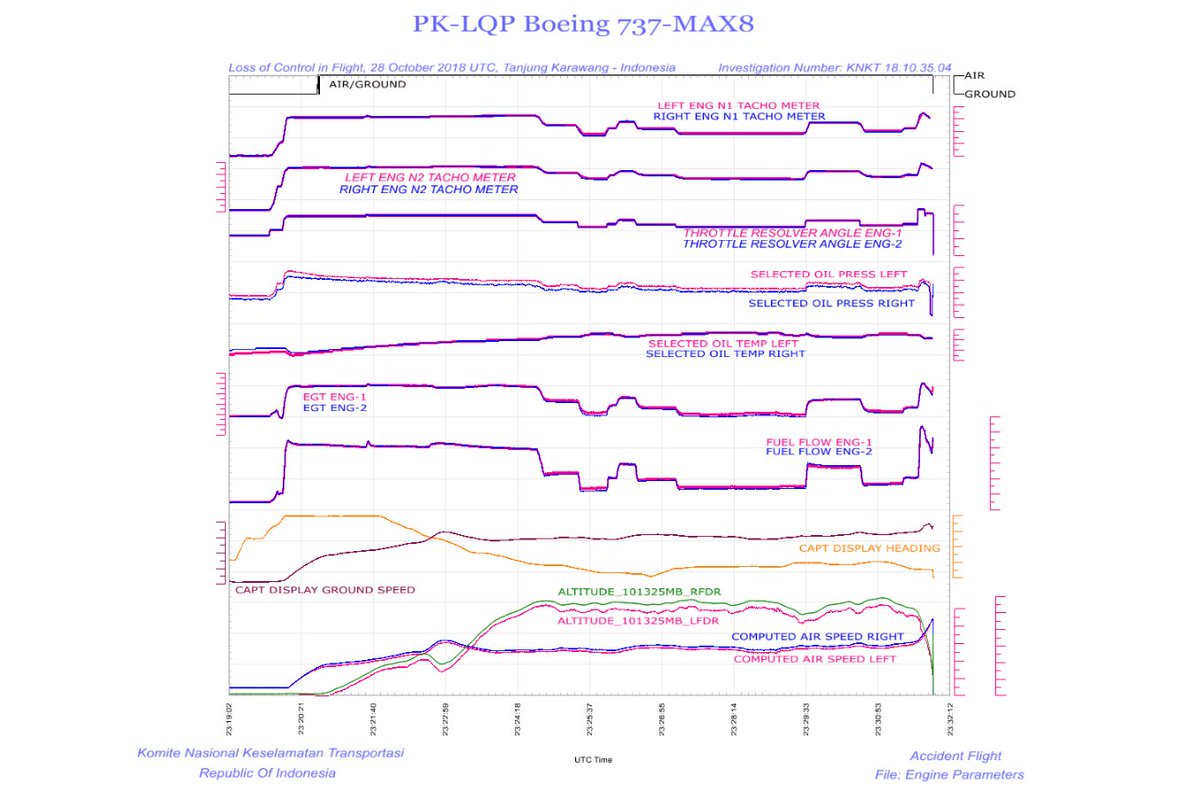
Detalle de los datos FDR, escala izquierda cosida al detalle de la secuencia del accidente (Gráficos: AVH / KNKT):


Lion Air JT-610 | Preliminary Report
Preliminary Report Flight JT-610 Lion Air
On November 28, 2018, Komite Nasional Keselamatan Transportasi (KNKT) of Indonesia published its preliminary report, publishing the following findings so far. According to objective information during the investigation, the KNKT identified the findings as follows:
– On October 28, 2018, a Boeing 737-8 MAX registered aircraft PK-LQP was operated as a scheduled passenger flight from Denpasar to Jakarta. Before the flight, the angle of attack (AoA) sensor had been replaced and tested.
– The DFDR showed the stick agitator activated during the rotation and remained active throughout the flight. Around 400 feet, the PIC noticed on the main flight screen (PFD) that the IAS DISAGREE warning appeared.
– The PIC crossed both PFDs with the reserve instrument and determined that the PFD had the problem. The flight was handled by the SIC.
– The PIC noted that as soon as the SIC stopped the trim entry, the aircraft was automatically cutting the aircraft down (AND). After three automatic trimming occurrences, the SIC commented that the control column was too heavy to contain. The PIC moved the STAB TRIM switches to CUT OUT.
– The pilot made three non-normal checklists (NNC) consisting of unreliable air speed, ALT DISAGREE, and rune stabilizer. None of the NNC carried out the content of the instruction «Plan to land at the nearest adequate airport».
– After parking in Jakarta, the PIC informed the engineer about the problem of the aircraft and entered the problem of the light IAS (Air Velocity indicated) and ALT (altitude) Disagree and FEEL DIFF PRESS (Differential Pressure) in the Registry of flight maintenance of the aircraft (AFML).
– The PIC also reported the flight condition through the electronic notification system of the company A-SHOR.
– The engineer performed the washing of the left Pitot air data module (ADM) and the static ADM to correct the IAS and ALT in disagreement, followed by an operation test on the ground and he is satisfied. The differential pressure of the sensation was rectified by a clean clean connection of the connector of the elevator sensing computer. The test on earth found that the problem had been solved.
– At 2320 UTC, (October 29, 2018, 0620 LT), the aeronautical part of Jakarta using runway 25L and the intended destination Pangkal Pinang. The DFDR is a difference between the left and right angle of attack (AoA) of approximately 20 ° and continues until the end of the recording. During the rotation, the left control column was activated and continued for most of the flight.
– According to the weight and balance, on board the plane there were two pilots, five flight attendants and 181 passengers, with 178 adults, one child and two babies. The trip report showed the number of flight attendants aboard the time of six flight attendants.
– During the flight, SIC LNI610 requested the controller TE to confirm the altitude of the aircraft and also the speed shown on the radar screen of the controller TE. The SIC LNI610 reported an ‘experienced flight control problem’.
– After the fins retracted, the FDR registered the automatic nose-down adjustment (AND) of the aircraft for 10 seconds, followed by a nose-up cut (ANU) commanded by the flight crew. The fins were extended to 5 and the automatic adjustment AND stopped.
– At 23:25:18 UTC, the flaps retracted to 0 and several seconds later, the automatic adjustment AND and the flight crew commanded by ANU started again and continued for the rest of the flight.
– The LNI610 PIC informed the controller that the altitude of the aircraft could not be determined because all the aircraft’s instruments indicated different altitudes and requested the controller to block the altitude to 3,000 feet above and below to avoid traffic .
– Flight crew and flight attendants had valid licenses and medical certificates and were certified to operate Boeing 737.
– The flight maintenance record of the aircraft (AFML) recorded that from October 26, 2018 to the date of occurrence, several problems related to the speed and the altitude flag appeared three times on the main flight screen (PFD) of the Captain (left), the illumination of the SPEED TRIP FAILURE and MACH TRIM FAIL the illumination of the light twice and IAS (air speed indicated) and ALT (altitude) in disagreement that are shown on the flight from Denpasar to Jakarta the day before the accident flight.
The KNKT already released two safety recommendations for LionAir that basically indicated that the plane was not in flight condition on the flight from Denpasar to Jakarta, the flight should not have continued to Jakarta:
04.O-2018-35.1
See Part 91.7 of CASR. Airworthiness of the civil aircraft and Part A of the Operation Manual. Subchapter 1.4.2, the pilot in command will interrupt the flight when mechanical, electrical or structural conditions occur that are not in airworthiness conditions.
The flight from Denpasar to Jakarta experienced the activation of the agitator during takeoff rotation and remained active throughout the flight. This condition is considered a non-airworthy condition and the flight will not continue.
KNKT recommends ensuring the implementation of Part A of the Operation Manual subchapter 1.4.2 to improve the safety culture and allow the pilot to make the correct decision to continue the flight.
04.O-2018-35.2
According to the weight and the balance, on board the plane there were two pilots, five flight attendants and 181 passengers, with 178 adults, one child and two babies. The trip report showed that the number of flight attendants on board was six flight attendants. This indicated that the weight and balance did not contain real information.
KNKT recommends making sure that all operating documents are duly completed and documented.
The KNKT summarized the events on the last completed flight from Denpasar to Jakarta, which according to the safety recommendations was already flying with the aircraft in a «non-airworthy condition»:
On October 28, 2018, a Boeing 737-8 MAX registered PK-LQP aircraft was being operated by PT. Lion Mentari Airlines (Lion Air) as a scheduled passenger flight from the I Gusti Ngurah Rai International Airport (WADD), from Denpasar to Jakarta as LNI043. During the pre-flight check, the PIC discussed with the engineer the maintenance actions that were performed, including the replacement of the AoA sensor and were tested accordingly.
The aircraft left at 1420 UTC (2220 LT) during the night, the DFDR showed that the stick agitator was activated during the rotation and remained active throughout the flight. Around 400 feet, the PIC noticed in the PFD that the IAS DISAGREE warning appeared. The PIC delivered the control to the SIC and verified the PFDs with the reserve instrument and determined that the left PFD had the problem. The PIC noticed that the aircraft was automatically trimming Y. The PIC moved the STAB TRIM to CUT OUT switches and the SIC continued the flight with manual adjustment without autopilot until the end of the flight.
The PIC declared «PAN PAN» to the Denpasar Approach controller due to an instrument failure and requested to maintain the runway heading. The PIC made three checklists that were not normal and none contained the instruction «Plan to land at the nearest suitable airport».
The rest of the flight was uneventful and the plane landed in Jakarta around 1556 UTC. After parking, the PIC informed the engineer about the problem of the aircraft and entered the problem IAS and ALT in disagreement and FEEL DIFFERENCE FROM PRESS in the AFML.
The engineer performed the washing of the left Pitot air data module (ADM) and the static ADM to rectify the IAS and the ALT in disagreement, followed by an operation test on the ground and he was satisfied. The differential pressure of the sensation was rectified by a clean clean connection of the connector of the elevator sensing computer. The ground test found that the problem had been solved.
The KNKT then summarized the flight of the accident:
At 2320 UTC, (0620 on October 29, 2018 LT), the plane departed from Jakarta with the intended destination of Pangkal Pinang. The DFDR recorded a difference between the left and right AoA of approximately 20 ° and continued until the end of the recording. During the rotation, the left control column was activated and continued for most of the flight.
During the flight, the SIC requested the controller to confirm the altitude of the aircraft and then also asked for the speed as shown on the controller’s radar screen. The SIC reported an experienced ‘flight control problem’.
After the fins retracted, the DFDR recorded the automatic adjustment and active trim, followed by the ANU setting commanded by the flight crew. The automatic adjustment AND stopped when the fins were extended. When the wings were retracted to 0, the automatic adjustment AND and the flight crew ordered the ANU setting to begin again and continued for the remainder of the flight. At 23:31:54 UTC, the DFDR stopped recording.
Until the publication of this preliminary Report, the CVR has not recovered, the CVR search continues. The investigation will carry out several tests, including the AoA sensor test and the airplane simulation exercises in the Boeing engineering simulator. The investigation has received the QAR data for the flight for analysis.
The KNKT reported that a tugboat found the first floating debris at position N5.8156 E107.1231 approximately 35 minutes after the flight data recorder stopped recording.
The plane was flown by a captain (31, ATPL, 6,028 hours in total, 5,176 hours in the type) and a first officer (41, CPL, 5,174 hours in total, 4,286 hours in the type). The plane of occurrence had flown 895 hours and 433 cycles since new.
On October 26, 2018, after a flight from Tianjin Binhai to Manado, the crew observed the following faults: «The speed and altitude indicator is displayed on the captain’s main flight screen (without indication of speed and altitude)» and » the maintenance light is illuminated after landing», the maintenance was carried out for the first entry of the technical log:» Check carried out On-board maintenance function (OMF), maintenance message found 27-31000. See the Isolation Manual Fault Interactive (IFIM) 27-31000, Stall Management and Yaw Damper system test (SMYD) number 1 carried out, normal result «. and for the second note: «Checked OMF performed, message 27-31-000 was found. The deletion notice made to verify maintenance is turned off».
The speed and altitude indicator is displayed on the main flight screen of the captain (without indication of speed and altitude)
– The SPEED TRIM FAIL light comes on and the MACH TRIM FAIL light comes on
– Automatic disconnection of the accelerator arm, during take-off of the plane
Maintenance performed for all registry entries: «Refer to IFIM task 27-32-00-810-816 rev October 2018. Check the OMF status message found» STALL WARNING SYS L «Initial evaluation performed SMYD number 1 self-test result error message 27-31-12 (invalid AD data) and 27-31015 (invalid ADIRU data) Verify that the existing OMF error (34) encountered message 34-21107 (AIR DATA SIGNAL) INVALID) and 34-21123 (AOA SIGNAL OUT OF RANGE). «BITE ADIRS L through CDU found message 34-21023 (AOA SIGNAL FAIL). Restart CB ADIRU L AC and DC and ADIRU L executed. Test of the system step. DFCS BITE result STEP. Delete the completed status message and verify that the message is not active. «In addition the maintenance decided:» For the solution of problems due to repetitive problems, perform the replacement of the angle of the attack sensor according to Task 34-21- 05-000-001 of the Aircraft Maintenance Manual and task 34-21-05-400-801 carried out. The installation test and the heater system test result are good. «(Editorial note: the text is not directly identified, the left or right AoA was replaced, the AMM tasks are generic for both the left AoA sensor and For the right, so they can not identify which AoA sensor was replaced, thanks to a friendly follow-up by a licensed aircraft maintenance engineer, a second AME warned us, however, that the error code 34 -21123 refers only to the AoA sensor of the left hand.
On October 28, 2018, after the flight from Denpasar to Jakarta, the crew recorded in the aircraft’s technical record:
– IAS and ALT do not agree after takeoff
– feel the light of the light of the pressure of the dif.
Maintenance noted as maintenance activity for the first entry: (Refer to IFIM task 34-20-00-810-801 REV June 15, 2018). The left Pitot air data module (ADM) and the static ADM were washed. and for the second entry: «Refer to IFIM 27-31-00-810-803 Rev. June 15, 2018, a clean connection of the electrical connector of the elevator sensor computer was performed. in accept».
The KNKT informs that it has obtained the sensor of AoA that was replaced in Denpasar, the sensor «will undergo more tests and analysis under the supervision of the KNKT».
As a result of the investigation so far, Boeing issued the Bulletin of the Operator’s Manual and, subsequently, the FAA, its Emergency Airworthiness Directive (previously reported).
On November 10, 2018, Boeing sent messages from multiple operators informing operators about the MCAS (Maneuver Characteristics Increase System) that states:
A function of the tone enhancement system called ‘Maneuver characteristics enhancement system’ (MCAS) is implemented in the 737-8, -9 MAX to improve the tone characteristics with the fins up and at angles of attack elevated. The MCAS function commands a downward tip stabilizer to improve tone characteristics during sharp turns with high load factors and darkening of the flaps in flight at air speeds approaching stop. The MCAS is activated without pilot input and only works in manual flight, flaps up. The system is designed to allow the flight crew to use the cut switches on the tnm column or on the stabilizer aisle support to override the MCAS input. The function is commanded by the flight control computer that uses input data from sensors and other aircraft systems.
The MCAS function is activated when the plane’s attack angle exceeds a threshold based on speed and altitude. The incremental commands of the stabilizer are limited to 2.5 degrees and are provided at a speed of 0.27 degrees per second. The magnitude of the stabilizer input is lower in the high Mach number and higher in the low Mach numbers. The function is restored once the angle of attack falls below the angle of attack angle or if the flight crew provides the manual stabilizer commands. If the original high AOA condition persists, the MCAS command orders another incremental nose-down stabilization command according to the Mach number of the current aircraft at the time of activation.
Distribution of remains (Graphics: KNKT):
By Simon Hradecky, created on Monday 29 October 2018 03: 16Z, last update on Wednesday, November 28, 2018 08: 28Z
A Lion Air Boeing 737-800 MAX, registration PK-LQP that performs flight JT-610 from Jakarta to Pangkal Pinang (Indonesia) with 181 passengers and 8 crew, was leaving Jakarta when the aircraft reached a maximum altitude of about 5400 feet, then lost height, the radar contact was lost at about 35nm northeast of Jakarta over the Java Sea at 06: 33L (23: 33Z, 28 October 2018). The rescue services are headed to the place where it is suspected that it crashed, the first ships arrived at the accident site and located oil slicks, as well as remnants of the aircraft, including mobile phones and first parts of the body. Afterwards, the 6 bodies of the day were recovered. The authorities say there is no hope for the survivors. On November 1, 2018, one of the black boxes was recovered. On November 3, 2018, one of the divers involved in the recovery of bodies died in action.
The Indonesian authorities reported that it is true that the plane crashed north of the Karawang area in the waters of the Java Sea. The first boats arrived at the crash site, the water depth at the site is about 30-35 meters. On the surface there were oil slicks and debris from the aircraft. No survivors or bodies have been found so far.
The Ministry of Transport of Indonesia reported that a tug saw a plane crashing in the Java Sea. The radar contact with the aircraft carrying 178 passengers, 2 babies and one baby, as well as two pilots and five flight attendants was lost at position S5.8156 E107.1231. The accident aircraft was registered on August 15, 2018 and received its certificate of airworthiness also on August 15, 2018. The BASARNAS of Indonesia are in charge of the rescue and recovery operation and are sending their units to the site of the alleged accident.
On October 30, 2018, the Ministry reported that an unscheduled inspection of Lionair aircraft was conducted and indicated that there will be sanctions. The nature of the sanctions is being coordinated with the KNKT. A first instruction to inspect all aircraft has already been issued to Lionair.
On October 31, 2018, the Ministry reported that the Technical Director of the airline Lion Air has been suspended for 120 days (he was not dismissed).
The Indonesian Civil Aviation Authority reported that the aircraft requested to return to Jakarta.
Basarnas reports that there are currently attempts to dive the aircraft in the waters at about 30-35 meters deep. The first residues were collected from the surface of the water, including mobile phones and the first parts of the body. The accident site is less than 2 nm from the last known radar position. No ELT signal was received. The underwater equipment has been moved to the accident site, the divers are trying to locate the victims and the black boxes. Later in the day six bodies were recovered. The position of the black boxes was detected (editorial note: obviously through pingers), the black boxes have not yet recovered.
At the beginning of October 30, 2018, Basarnas reported that there were 181 passengers, 2 pilots and 6 cabin crew on board. The speedboats delivered 4 bags of corpses with body parts collected from the surface of the water, as well as debris that includes identities and belongings of the passengers to the command post. However, the main remains have not yet been located. A remotely operated submarine vehicle (ROV) has been deployed at the accident site. Lighting equipment has been sent to the accident site to allow a 24-hour continuous search.
On the afternoon of October 30, 2018, Basarnas reported that a total of 34 ships and 837 employees are busy searching for the fuselage and black boxes, which has been expanded to cover 400 square nautical miles. They have taken 26 bags of corpses to the command post, 24 are already on their way to the hospital for identification.
On October 31, 2018, Basarnas reported that several large objects, of undetermined size, had been located on the seabed. At this point it can not be determined if these objects belong to JT-610. The divers have been sent. TNI (the Indonesian Army) reports that it is believed that a large piece 22 meters long is part of the fuselage.
On November 1, 2018, Basarnas reported that one of the black boxes was recovered. The black box was delivered to KNKT for further processing and reading. The box was located at position S5.8128 E107.1269, 400 meters northeast of the last known radar position of the aircraft. A second pinger signal was located from approximately position S5.8133 E107.1271.
On November 3, 2018, the Indonesian Navy reported that a volunteer diver recovering body parts died, probably due to decompression. The diver had served in the accident of AirAsia Indonesia QZ-8501 four years ago, see Crash: Indonesia Asia A320 over the Java Sea on December 28, 2014, the aircraft lost height and affected the waters, lost the rudder travel limiter due to maintenance, and in Palu after September 2018 earthquake and tsunami.
On November 3, 2018, Basarnas reported that 73 bags of corpses have been taken to the command post so far. The largest part recovered so far, part of the landing gear, as well as other debris collected so far, were delivered to KNKT. The locator’s ping signal, which is believed to have originated in the CVR, was extinguished, possibly the CVR is covered by mud or water currents in the area that moves the pinger, it is bringing a more sensitive specialized equipment to find the pings again. The search and recovery operations continue within a radius of 500 meters around the location where the first black box was found.
On November 4, 2018, Basarnas reported that the second weak ping signal was successfully re-detected, the source appears to be buried in mud at less than 1 meter of aircraft debris about 50 meters from the center of the main search area. The box itself has not yet been found. 104 bags of corpses have been taken to the command post so far. The search operation has been extended for 3 additional days.
On November 8, 2018, Basarnas reported that the CVR search is still ongoing with the ROV, the lateral scanning sonar, the ping locator and the multiple beam echo probes deployed. Basarnas wrote: «As explained above, the ping locator was able to detect the signal from the black box, but it was weak.The source of the signal is difficult to determine its position considering that the seafloor is mud with a depth of more of 1 meter «. Until November 7, 2018 20: 00L 187 bags of corpses were collected and taken to the command post and then to the hospital for identification.
On November 10, 2018, Basarnas announced that the search for bodies has ended, the search has been reduced to supervision. 196 bags of corpses have been taken to the command post and, in addition, to the hospital for identification, so far 77 victims have been identified. The CVR search continues. The CVR is described as critical to understanding the events on board the flight, the KNKT indicates that it currently comprises about 70-80% of what happened, the CVR would help to understand 100%.
The airline reported that the aircraft encountered a technical problem, the crew was about to return to Jakarta. There was also a technical problem on the previous flight, however, this problem was solved (editorial note: the aircraft remained on the ground in Jakarta during the night for 8 hours before the accident flight, there is only one report circulating on the Internet). stating that the aircraft had experienced unreliable airspeed and altitude on the previous flight, the captain’s instruments were identified as defective, the control was handed over to the first officer and the flight continued to its destination below the RVSM airspace; we eliminate this writing repeatedly from our panel of reader comments because of its unverified nature and because it supposedly contains the names of the flight crew). The captain had accumulated 6,000 hours of total flight experience, all aircraft under the supervision of the Ministry are underway. On October 31, 2018, the airline declared that it dismissed the technical director and assigned him a new technical director.
On November 1, 2018, the airline confirmed that one of its maintenance engineers was on board the plane during the accident flight. This was an «anticipatory measure» in case of technical problems with the new aircraft. As such, «the presence of the technician has nothing to do with the condition of the aircraft before takeoff.»
The KNKT of Indonesia (also known as NTSC) reported that the crew requested to return to Jakarta shortly after takeoff, when the aircraft rose to 2000-3000 feet MSL approximately 3 minutes after takeoff, the request was granted by ATC. The KNKT is still investigating the causes of the return request. About 8 minutes later the radar contact was lost. The black boxes are at an estimated depth of 30 meters, attempts to reach and recover the black boxes are underway.
At the end of October 30, 2018, the KNKT informed in a press conference that they listened to the ATC audio recordings and listened to the request to return. However, the KNKT will first be compared to the black boxes and will verify that the recording matches what happened to the aircraft before releasing that information.
On October 31, 2018, the KNKT informed in a press conference that they are close to 70% of the pings received since October 29 come from the plane’s black boxes. The location seems to be 3 kilometers from the current search area. Resources are being deployed to examine and retrieve the source of the pings.
On November 2, 2018, KNKT reported that the black box recovered on November 1, 2018 was the Survival Memory Unit (CSMU) of the flight data recorder that stored 25 hours of flight data. However, as the flight data recorder has been split, additional work is needed to read the data. The unit is being cleaned and recovered in the KNKT recorder laboratory in Jakarta.
On November 4, 2018, the KNKT reported that the FDR has been read successfully. It contained 1800 parameters that included 19 flights, including the accident flight. The analysis of the data has begun. The KNKT undertakes to publish the preliminary results as soon as possible.
On November 5, 2018, the KNKT reported that the CVR ping signal has not been received for two days. There are other ways to find the CVR though. A first evaluation of the FDR data revealed that during the last 4 flights (including the accident flight) there was damage to the air speed indicator.
On November 8, 2018, the KNKT reported that an attack sensor angle had been replaced on October 28, 2018 after flight JT-775 from Manado to Denpasar (the aircraft completed the subsequent flight JT-43 to Jakarta and suffered the following accident) flight JT- 610). Later the plane flew to Jakarta, however, the crew reported that there were still problems. The search for the CVR is hampered by thick mud.
On November 22, 2018, the KNKT made a presentation to the Indonesian Parliament on the findings so far. The KNKT told the parliament that the FDR contained 1790 parameters covering 19 flights. The last two flights, the flight from Denpasar to Jakarta and the flight by accident, showed the same problem, the speed of the right hand (IAS of the first officer) significantly higher than the speed of the left hand (speed of the captain). The captain’s AoA indicated about 20 degrees more than the first officer’s AoA. As a result, the left shaker was activated immediately after takeoff and worked, with a brief period in which it stopped during a descent shortly after takeoff, continuously throughout the flight. When the aircraft was leveled at 5,000 feet, automatic tip-down trimming entries were produced that were counteracted by the crew’s manual trim entries. The nose down trimming entries were created by the Maneuver Characteristics Increase System (MCAS), a tool that will lower the nose of the aircraft to avoid a blockage. Until the end of the flight, the crew counteracted the automatic adjustment of the nose down. During the end of the recording, the automatic trimming of the nose downwards increased, the pilots still cut the nose even shorter. In general, the adjustment position of the stabilizer moves more and more downwards until it is no longer possible to counteract the moment of inclination downwards through the yoke. Throughout the flight there were no problems with the engines. On the previous flight from Denpasar to Jakarta, the same problem existed, but the automatic adjustment inputs did not occur. The crew must have done something to prevent the MCAS system from producing the nose trimming entries down.
After the presentation of the KNKT released. First information in Indonesian including some FDR graphics. AirNav Indonesia, supplier of ATC, reported that the crew requested to return to Jakarta, however, did not declare the emergency. The aircraft did not turn following the authorization to return, later the contact with the radar was lost.
Boeing reported that the Ministry of Transport of Indonesia has confirmed that the remains of the 737-8 MAX have been located in the JT-610 flight. Boeing is saddened by the loss of flight JT-610 and expresses his condolences to the families. Boeing is willing to provide technical assistance for the accident investigation.
On November 7, 2018, Boeing issued an Operations Manual Bulletin (OMB) to all Boeing 737 MAX operators that indicated that the investigation into the PK-LQP crash found that one of the angle sensors attack had provided incorrect readings, which could cause the airplane’s equipment system without trimming the nose to avoid a blockage during manual flight. The OMB directs «operators to the existing procedures of the flight crew to address the circumstances in which there is an erroneous entry of an AOA sensor». The OMB repeats the non-normal Runaway Stabilizer checklist.
Bulletin TBC-19 of the Flight Crew Operations Manual says:
The National Transport Safety Committee of Indonesia has indicated that Lion Air flight JT-610 experienced erroneous AOA data during manual flight only.
This bulletin directs flight crews to existing procedures to address this condition. In the case of erroneous AOA data, the tone trimming system can trim the tip of the stabilizer in increments that last up to 10 seconds. The adjustment movement of the tip stabilizer downwards can be stopped and reversed with the use of the adjustment switches of the electric stabilizer, but can be reset 5 seconds after the adjustment switches of the electric stabilizer are released. Repetitive cycles of downward-pointing, unsecured stabilizer continue to occur unless the stabilizer adjustment system is deactivated by using both STAB TRIM CUTOUT switches according to the existing procedures in the Runaway NNC Stabilizer. It is possible for the stabilizer to reach the downward tilt limit unless the system inputs are fully counterbalanced with the pilot adjustment inputs and both STAB TRIM CUTOUT switches are moved to CUTOUT.
In addition, pilots are reminded that an erroneous AOA can cause some or all of the following indications and effects:
– Continuous or intermittent rod agitator on the affected side only.
– Minimum speed bar (red and black) only on the affected side.
– Increase the nose control forces below.
– Inability to activate the autopilot.
– Automatic deactivation of the autopilot.
– IAS DISAGREE alert.
– ALT DISAGREE alert.
– AOA Alert DISAGREE (if the option of the AOA indicator is installed)
– The FEEL DIFF PRESS light comes on.
In the event that you experience a nose down stabilizer adjustment without control on the 737-8 / 9, along with one or more of the above indications or effects, do the Runaway NNC Stabilizer making sure that the STAB TRIM CUTOUT switches are in CUTOUT and remain in the CUT position for the rest of the flight.
At the end of November 7, 2018, the FAA published the Emergency Airworthiness Directive (EAD) 2018-23-51 regarding all readings of the Boeing 737 MAX aircraft:
This emergency AD was motivated by an analysis carried out by the manufacturer that shows that if the flight control system receives an erroneously high input from the single attack angle sensor (AOA), there is a possibility that the clipping commands will be repeated. point down the horizontal stabilizer. This condition, if not addressed, could make the flight crew difficult to control the aircraft and entail an excessive attitude of downward tilt, a significant loss of altitude and a possible impact on the ground.
The EAD requires operators to update the procedures in the aircraft Flight Manuals within 3 days in accordance with the Boeing Service Bulletin (see previous text), however, it includes the possibility of the clipping moving even after the cut switches were adjusted to the cut. The text for a mandatory out-of-control stabilizer says:
In the event that a downward tip stabilizer adjustment is experienced without control in the 737-8 / 9, along with one or more of the indications or effects listed below, perform the above procedure of the leak stabilizer in the Previous AFM, making sure that the STAB TRIM CUTOUT switches are set to TRIM and remain in the TRIM position for the remainder of the flight.
A wrong AOA entry can cause some or all of the following indications and effects:
– Continuous or intermittent rod agitator on the affected side only.
– Minimum speed bar (red and black) only on the affected side.
– Increase the nose control forces below.
– IAS DISAGREE alert.
– ALT DISAGREE alert.
– AOA Alert DISAGREE (if the option is installed).
– FEEL DIFFEREN PRESS light.
– The autopilot can be disconnected.
– Inability to activate the autopilot.
Initially, it is possible that greater control forces are needed to overcome any stabilization of tip of the stabilizer already applied. The adjustment of the electric stabilizer can be used to neutralize the tilt forces of the control column before moving the STAB TRIM CUTOUT to CUTOUT switches. The manual stabilizer setting can be used before and after the STAB TRIM CUTOUT switches are moved to CUTOUT.
On October 31, 2018, a local fisherman reported that (he and his friends) were in the Java Sea to catch shrimp when they observed a white plane with an orange pattern at some distance, the plane flying unusually low. The aircraft seemed to roll for a turn when it jerked and bent sharply and impacted the waters of the sea. Immediately afterwards there was a sound of thunder or explosion. They were afraid to approach the source of the sound and decided to return to the coast, which was about 3 hours away. After arriving at the coast, they saw that the coast was full with many residents looking towards the waters, there were emergency vehicles and policemen in the crowd. They spoke with a policeman and told him about his observation, the police asked them to show them where the accident occurred. After a trip of about 3 hours to the place, they found debris, body parts and oil stains on the surface of the water. Soon after, many more boats arrived on the scene.
On November 5, 2018, after the launch of KNKT that confirmed the problems of the air speed indicator during the last 4 flights of the aircraft, a tweet published on October 29, 2018 at 07: 07Z by Razaan Botutihe gained enough weight to be qualified as a fact. The tweet indicates on JT-43 flight from Denpasar (Indonesia) to Jakarta, the last flight that completed the aircraft: «The air speed is not reliable and it shows a very high disagreement after the takeoff.» The STS also ran in the direction wrong, suspicious due to the difference in speed, identified that CAPT instrument was not reliable and the transfer control to FO, continue NNC of Airspeed Unreliable and ALT in disagreement «. (Editorial notes: STS: speed adjustment system.) As far as is known, the accident team managed to control the aircraft for 12 minutes from take-off to maintenance of 5000 feet at approximately 290-310 knots above the ground between 5000 and 5400 feet, suggesting that they were flying in pitch and power during that time.Therefore, it seems that something beyond an unreliable airspeed and altitude must have contributed to the loss of control in the 13th minute. ) In addition, three different versions of a maintenance record book were leaked to the Internet, after a more detailed analysis, they all seemed to show the same record. Book at another point in time. In addition to the observation of unreliable airspeed and altitude, which caused the reddening of the captain’s static ports, the flight crew of the JT-93 scored an entry for the illuminated elevator light sensation (probably an error typographic and it is believed to be JT-43). ) the maintenance opened and cleaned a canister plug connector for the elevator computer, the Aviation Herald checks with AME and the related maintenance manuals confirmed that the logbook seemed authentic, the maintenance activity of that plug could not have changed the forces in the tilt control The yoke, only the status and error messages related to the system could have been affected by the maintenance activity. Elevator sensing computer has its own static and dynamic ports located in the tail of the aircraft, it is purely mechanical and has no electronic components, except some state controls, it depends on the available hydraulic systems A and B and does not depend on the instrumentation / Aerial data References used for pilot instrumentation. Checks made by Aviation Herald with AME and related maintenance manuals confirmed that the logbook seemed authentic. However, the maintenance activity concerning that plug could not have changed the forces in the tilt control of the yoke, only the status and the error messages related to the system have been affected by the maintenance activity. Elevator sensing computer has its own static and dynamic ports located in the tail of the aircraft, it is purely mechanical and has no electronic components, except some state controls, it depends on the available hydraulic systems A and B and does not depend on the instrumentation / Aerial data References used for pilot instrumentation. Checks made by Aviation Herald with AME and related maintenance manuals confirmed that the logbook seemed authentic. However, the maintenance activity concerning that plug could not have changed the forces in the tilt control of the yoke, only the status and the error messages related to the system have been affected by the maintenance activity. Elevator sensing computer has its own static and dynamic ports located in the tail of the aircraft, it is purely mechanical and has no electronic components, except some state controls, it depends on the available hydraulic systems A and B and does not depend on the instrumentation / Aerial data References used for pilot instrumentation. However, the maintenance activity concerning that plug could not have changed the forces in the tilt control of the yoke, only the status and error messages concerning the system could have been affected by the maintenance activity. Elevator sensing computer has its own static and dynamic ports located in the tail of the aircraft, it is purely mechanical and has no electronic components, except some state controls, it depends on the available hydraulic systems A and B and does not depend on the Instrumentation / Reference Aerial Data used for pilot instrumentation.
Elevator sensing computer has its own static and dynamic ports located in the tail of the aircraft, it is purely mechanical and has no electronic components, except some state controls, it depends on the available hydraulic systems A and B and does not depend on the instrumentation / Referential Air Data used for pilot instrumentation. However, the maintenance activity concerning that plug could not have changed the forces in the tilt control of the yoke, only the status and error messages concerning the system could have been affected by the maintenance activity. Elevator sensing computer has its own static and dynamic ports located in the tail of the aircraft, it is purely mechanical and has no electronic components, except some state controls, it depends on the available hydraulic systems A and B and does not depend on the instrumentation / Aerial data References used for pilot instrumentation.
According to the ADS-B data transmitted by the transponder of the aircraft, the aircraft left runway 25L of Jakarta at 06: 21L (23: 21Z on October 28), never climbing above the remaining 5400 feet between 5200 and 5400 feet for about 6 minutes before losing altitude and disappearing radar about 12 minutes after departure, at approximately 06: 33L (23: 33Z), about 35 nm northeast of the Jakarta International Airport. A \ W
METARS:
WIII 290130Z VRB04KT 8000 SCT020 29/25 Q1011 NOSIG =
WIII 290100Z VRB03KT 8000 SCT020 28/25 Q1011 NOSIG =
WIII 290030Z VRB03KT 8000 SCT020 27/25 Q1011 NOSIG =
WIII 290000Z VRB03KT 8000 SCT020 27/25 Q1011 NOSIG =
WIII 282330Z 16003KT 8000 SCT020 27/25 Q1010 NOSIG =
WIII 282300Z VRB02KT 8000 BKN022 26/25 Q1009 NOSIG =
WIII 282230Z VRB04KT 8000 SCT020 26/25 Q1009 NOSIG =
WIII 282200Z VRB04KT 9000 SCT020 26/25 Q1009 NOSIG =
WIII 282130Z 17004KT 9000 SCT020 26/25 Q1009 NOSIG =
WIII 282100Z 13004KT 9000 SCT020 26/25 Q1009 NOSIG =
WIII 282030Z VRB02KT 9000 SCT020 26/25 Q1009 NOSIG =
WIII 282000Z 16002KT 9000 SCT020 26/25 Q1009 NOSIG =
The FDR data published by KNKT on November 23, 2018 (Graphics: KNKT):
Detail of the FDR data, left scale stitched to the detail of the accident sequence (Graphics: AVH / KNKT):

DATA > Report Preliminaly Flight JT-610 Lion Air

http://knkt.dephub.go.id/knkt/ntsc_home/ntsc.htm
Ξ A I R G W A Y S Ξ
SOURCE: Airgways.com
DBk: Dephub.go.id / Airgways.com
AW-POST: 201811282133AR
A\W A I R G W A Y S ®



 A PIECE OF FLOOR PANELLING WITH A SERIAL NUMBER, ALMOST CERTAINLY FROM MH370


 La FAA requiere que las aerolíneas reemplacen los colectores de combustible GEnx-2B
 FAA regulations on GEnx-2B engines
 Un temblor de 3,8º escala Richter se ha desarrollado en la Provincia de Buenos Aires, Argentina
 Área influencia
 Cumbre G20 Argentina
 Earthquake 3.8º in Buenos Aires
 Air space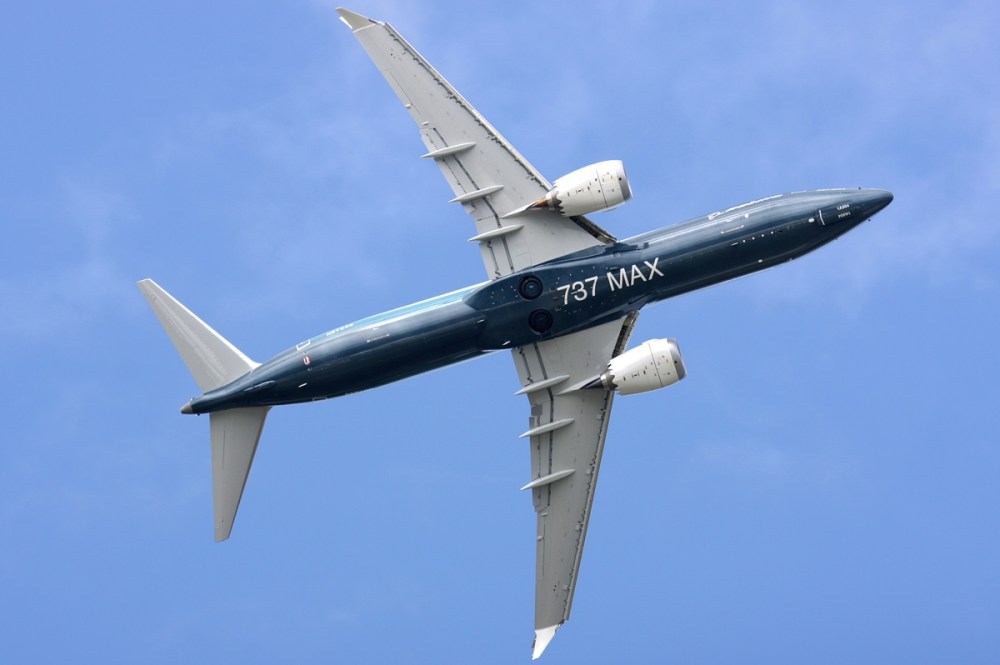

 Boeing aborda problemática crítica de la tecnología aplicada al Boeing 737 MAX
 CABINA DE PILOTAJE DEL BOEING 737 MAX
 El Boeing 737-8 de la aerolínea Lion Air había experimentado un problema en el vuelo anteriores al accidente en el que las pantallas para el piloto y el copiloto mostraban información diferente, según un informe preliminar publicado esta semana por investigadores indonesios. Ese problema el día anterior al vuelo fatal fue abordado por los ingenieros durante la noche, pero aparentemente no se resolvió.
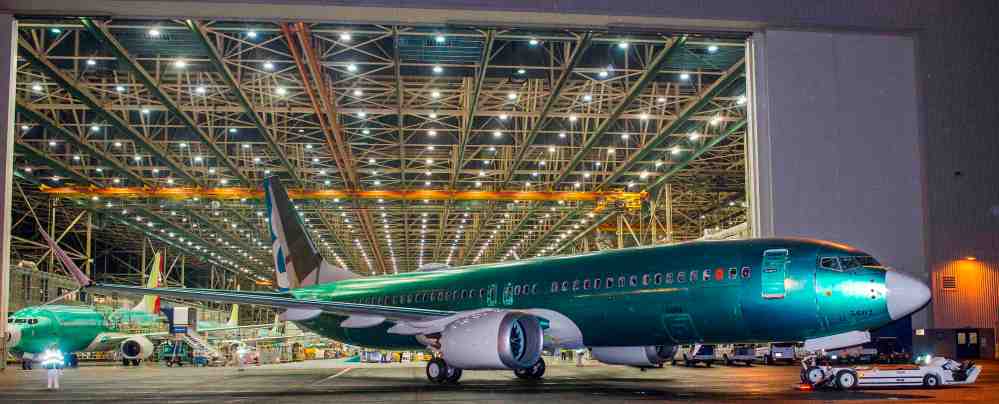 Boeing tackles the 737 MAX situation
 THE ASSOCIATIONS OF PILOTS HAVE WARNED TO BOEING THAT THE DUE INFORMATION AND TRAINING OF THE MCAS SYSTEM FOR THE OPERATIONAL SAFETY HAS NOT BEEN PROVIDED
 Máxima seguridad del espacio aéreo de la FIR EZE por la Cumbre G20 Argentina

 Maximum security of the airspace of the FIR EZE by the G20 Summit Argentina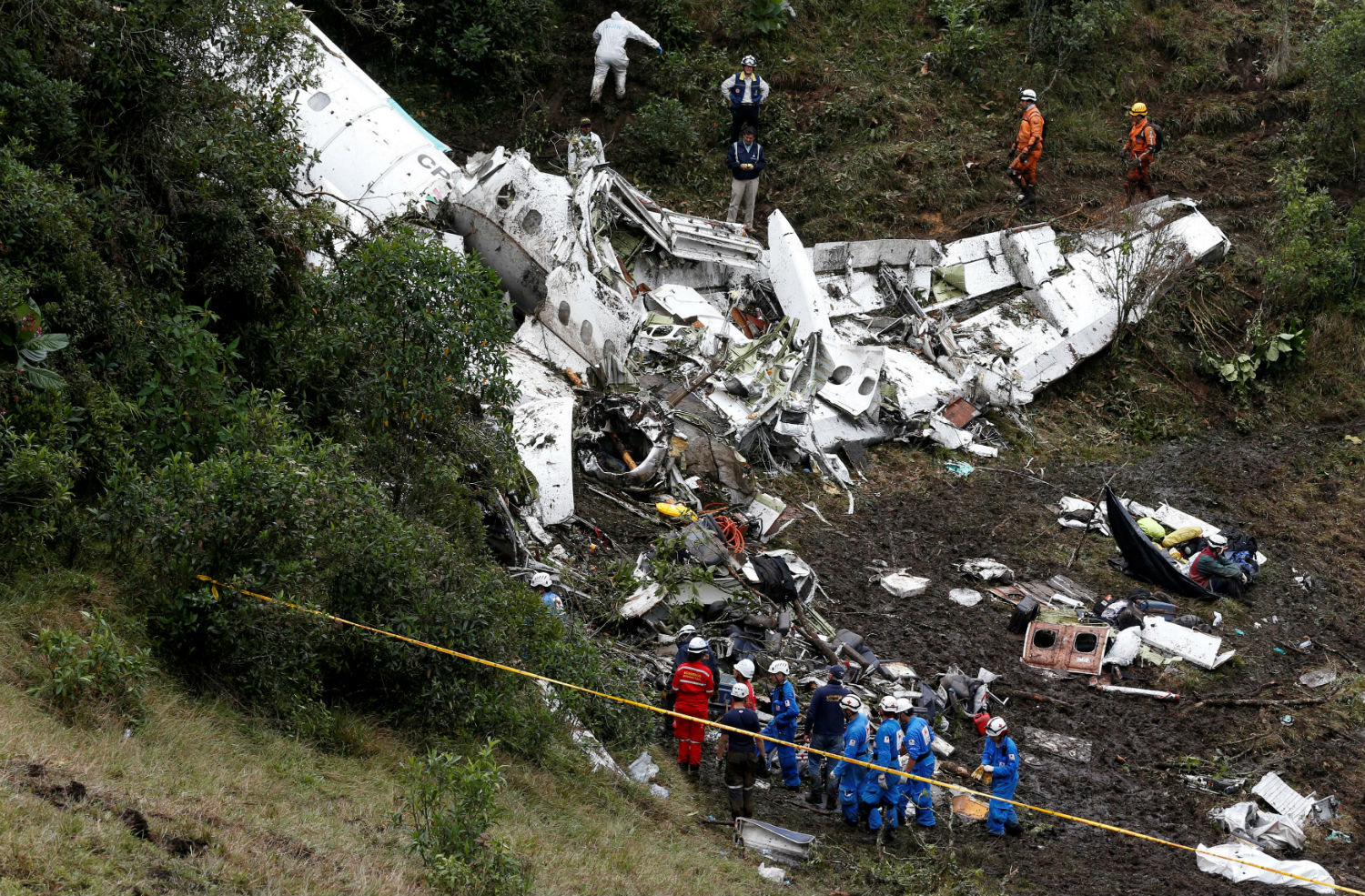
 Empresario venezolano demanda a LaMia a dos años del accidente vuelo LMI-2933
 Venezuelan businessman sued LaMia two years after the accident, flight LMI-2933
 Empresário venezuelano processou LaMia
 O processo foi apresentado perante a Justiça da República da Bolívia e uma seguradora por US$ 13 milhões. O Sr. Ricardo Albacete Vidal, empresário venezuelano, processou por esse montante antes da justiça boliviana à companhia aérea LaMia Airlines e a uma seguradora devido ao acidente de vôo LMI-2933 da aeronave AVRO RJ-85. O vôo foi libertado pela equipe de futebol do clube brasileiro Chapecoense há dois anos para a Colômbia.
 Primeras lecturas del accidente del vuelo JT-610 del Boeing 737-8 MAX de la aerolínea Lion Air
 Lion Air JT-610 | Day 30
 First readings of the JT-610 flight accident of the Lion Air airline Boeing 737-8 MAX
 and of the flight of the same day of the previous day, raise questions on three factors that seem to have contributed to the accident.

