Lion Air JT-610 | Día 13

AW-78880876.jpg

AW | 2018 11 10 21:18 | AIR INVESTIGATION / AVIATION SAFETY
Finalizan búsqueda de víctimas del vuelo JT-610

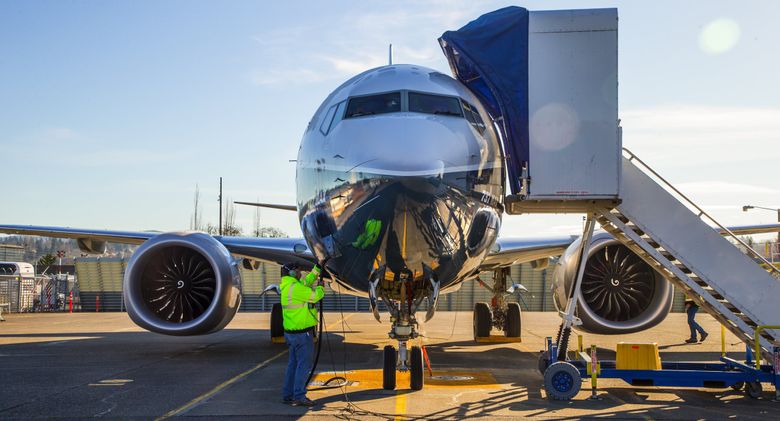
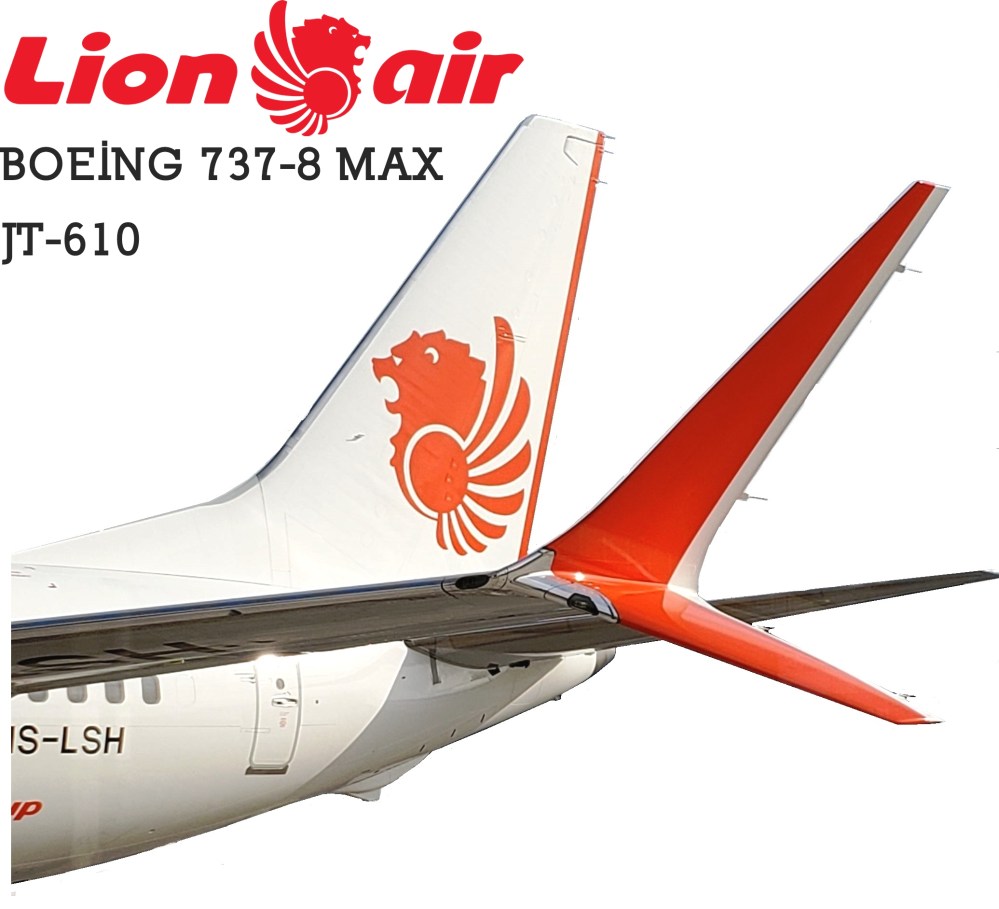
AW-77000021.jpgUn Boeing 737-800 MAX, registro PK-LQP de la aerolínea Lion Air que realiza el vuelo JT-610 desde Jakarta a Pangkal Pinang (Indonesia) con 181 pasajeros y 8 tripulantes, estaba saliendo del Aeropuerto Jakarta cuando la aeronave alcanzó una altitud máxima de unos 5400 pies, perdiendo contacto por radar a 35 nm al noreste de Jakarta sobre el Mar de Java a las 06:33L (23:33Z, 28 Octubre 2018).

El 10 Noviembre 2018, Basarnas anunció que la búsqueda de cuerpos ha finalizado. La búsqueda se ha rebajado a supervisión. Han recogido 189 cadáveres y enviados al hospital para su identificación, hasta el momento se han identificado 77 víctimas. «No queda ningún lugar para buscar y hemos dejado de encontrar los cuerpos de las víctimas. Limitaremos nuestras operaciones al monitoreo», dijo a los medios Muhammad Syaugi, Jefe de la Agencia Nacional de Búsqueda y Rescate (Basarnas).

FUNCIONARIOS DE LA JUNTA NACIONAL DE SEGURIDAD DEL TRANSPORTE DE EEUU EXAMINAN LOS RESTOS RECUPERADOS DEL VUELO JT-610 DE LION AIR EN EL PUERTO DE JAKARTA EL 1 DE NOVIEMBRE DE 2018

Búsqueda del CVR

La búsqueda del CVR continúa. El CVR se describe como crítico para comprender los eventos a bordo del vuelo, el KNKT indica que actualmente comprende alrededor del 70-80% de lo que sucedió en la tragedia aérea del vuelo JT-610. Por separado, un nuevo localizador subacuático con una mejor sensibilidad para detectar el ping del llamado cuadro negro está listo para la implementación para ayudar a la búsqueda.

«El sonido de ping se está volviendo difícil de detectar y está desapareciendo. Sospechamos que la grabadora de voz de la cabina del piloto está cubierta de barro porque la grabadora de datos de vuelo, cuando se encontró, tenía aproximadamente medio metro de profundidad enterrada en el barro», dijo Haryo Satmiko, Subjefe del Comité Nacional de Seguridad del Transporte de Indonesia, este sábado. Si el nuevo localizador falla, el comité de seguridad desplegará un barco con capacidad de succión de lodo para intentar recuperar la grabadora de voz.

La recuperación de la grabadora de voz ayudaría a los investigadores a armar los últimos momentos antes de que el vuelo JT-610 se sumergiera en el mar con 189 personas a bordo el 29 Octubre 2018. Los hallazgos preliminares basados ​​en la información del registrador de datos, que se ha recuperado, indicaron un inconveniente técnico relacionado con la lectura de velocidad de aire defectuosa. Eso llevó a Boeing, el fabricante del avión, a alertar a los operadores de la aeronave 737 MAX en todo el mundo de que el sensor de flujo de aire puede proporcionar lecturas falsas en ciertas circunstancias.

Evaluaciones Preliminares

En el timón del vuelo de Lion Air, los pilotos pueden haber sido abrumados en segundos. Los últimos momentos del Vuelo 610 de Lion Air, que se precipitó poco después del amanecer desde un tranquilo cielo indonesio a las aguas del Mar.

El avión Boeing de un solo pasillo, ensamblado en el estado de Washington y entregado a Lion Air hace menos de tres meses, parece haberse hundido por primera vez en el agua, sus avanzados motores a reacción dirigían el avión hacia las olas a una velocidad de hasta 400 mph. menos de un minuto. La aeronave se estrelló contra el mar con tal fuerza que algunos accesorios de metal a bordo se redujeron a polvo, y el registrador de datos de vuelo de la aeronave se desprendió de su caja blindada, impulsado hacia el lodo marino fangoso.

A medida que los investigadores de los Estados Unidos y de Indonesia se confunden a través de pistas sobre lo que salió mal, se están enfocando no en un solo lapso sino en una cascada de problemas que terminaron con la muerte de las 189 personas a bordo.

Ese es casi siempre el caso en los accidentes aéreos, en los que los desastres rara vez pueden ser detectados en un factor. Si bien los investigadores aún no han llegado a la conclusión de qué fue lo que hizo que el vuelo JT-610 se hundiera en el mar, saben que en los días previos al accidente, el avión sufrió repetidos problemas en algunos de los mismos sistemas que podrían haber llevado al avión a bucear.

Los segundos finales

Cuando comenzó el minuto 11 del vuelo JT-610, el avión todavía estaba en vuelo casi nivelado a una altura de aproximadamente 5.000 pies. Para el final de ese minuto, se había roto en un caleidoscopio de piezas en el agua, después de lanzarse primero a la tierra a unas 400 mph, según las mediciones del servicio de datos en línea Flightradar24.

Lo que causó que la aeronave se incline hacia abajo tan bruscamente en ese último minuto es el mayor enigma. Durante los últimos dos días, los investigadores han estado investigando si fue una falla de mantenimiento o una posible deficiencia en el Boeing 737-8 MAX que podría afectar a otras flotas que operan en el popular avión. Los investigadores también están explorando la posibilidad de que los pilotos no estuvieran adecuadamente entrenados en cómo el avión difería de los modelos anteriores.

Las versiones anteriores del Boeing 737 tienen una reputación entre los pilotos por ser fáciles de ajustar el ángulo de la nariz del avión en caso de que surja un problema, dijo John Cox, ex presidente ejecutivo de seguridad aérea de la Asociación de Pilotos de Línea Aérea en los Estados Unidos y ahora Jefe Ejecutivo de Safety Operating Systems, una consultora. Pero en la nueva versión, Boeing introdujo un sistema de emergencia que corrige automáticamente el ángulo de la nariz para evitar que el avión se detenga. En su boletín de seguridad, Boeing dijo que el sistema podría presionar la nariz hacia abajo durante 10 segundos completos sin la autorización del piloto. El nuevo sistema de Boeing estaba destinado a protegerse contra lo que algunos estudios han sugerido que es la causa más frecuente de los accidentes de avión una parada en vuelo.

Pero si los datos introducidos en el sistema eran inexactos, lo que los investigadores están analizando, en teoría podría haber hecho que el avión avanzara, presentando incluso a los pilotos más experimentados una situación difícil. «La capacitación es todo en estas situaciones, y la experiencia es crucial», dijo Peter Marosszeky, un ingeniero aeronáutico de larga data y ex alto directivo de Qantas Airways, la compañía aérea australiana. Qantas aprendió eso en 2008 en un Airbus, que tiene un sistema similar.

Después de recibir lecturas incorrectas que parecían indicar una parada falsa, un Airbus que viajaba desde Singapur a Perth, Australia, se lanzó violentamente dos veces en inmersiones automáticas. Decenas de pasajeros y tripulantes que no llevaban cinturones de seguridad fueron arrojados hacia arriba y algunos se rompieron los huesos. En la cabina del piloto, el capitán, un ex piloto de caza de la Marina de los Estados Unidos, luchó contra el avión y finalmente logró un aterrizaje de emergencia en una pista de aterrizaje remota en el noroeste de Australia. «Era como una computadora que se volvió loca, y los pilotos estaban luchando contra ella», dijo Geoffrey Thomas, el editor en jefe australiano de AirlineRatings.com. Dijo que la habilidad de la tripulación de vuelo salvó el día.

Los pilotos del Vuelo 610 de Lion Air también parecen haber encontrado una falla, pero con un final diferente. La respuesta recomendada emitida por Boeing y la FAA esta semana no sería la reacción natural de un piloto. Se instruye a la tripulación de vuelo para que apague los estabilizadores de alimentación eléctrica en la cola de la aeronave que están impulsando la inclinación descendente de la nariz.

Pero sin entrenamiento específico sobre esta anomalía, ¿qué piloto pensaría apagar parte del avión? Cuando las tripulaciones de vuelo aprenden a controlar un nuevo modelo de aeronave, normalmente estudian las diferencias entre los modelos más antiguos y los más nuevos. A los expertos en aviación les preocupa que los pilotos de los transportistas de conducción dura como Lion Air no tengan tiempo suficiente para tal entrenamiento. Además, las diferencias entre los modelos a veces se manifiestan solo después de meses o años de operación. El Boeing 737-8 MAX entró en servicio el año pasado. A pesar de que el piloto era un aviador experimentado para su edad, no habría tenido tiempo de familiarizarse completamente con la última versión del avión de 737 MAX.

Las preguntas sobre esos problemas y cómo se manejaron constituyen un recordatorio aleccionador de la confianza que mostramos cada vez que nos abrochamos los cinturones de seguridad y tomamos vuelo hacia el cielo. AIRWAYS® AW-Icon TXT

Image result for Lion Air takeoff Boeing 737 MAX

Lion Air JT-610 | Day 13

Finalize search of victims of flight JT-610

A Boeing 737-800 MAX, registration PK-LQP of the airline Lion Air that makes flight JT-610 from Jakarta to Pangkal Pinang (Indonesia) with 181 passengers and 8 crew, was leaving Jakarta Airport when the aircraft reached a maximum altitude of about 5400 feet, losing radar contact at 35 nm northeast of Jakarta over the Java Sea at 06: 33L (23: 33Z, 28 October 2018).

On November 10, 2018, Basarnas announced that the search for bodies has ended. The search has been reduced to supervision. They have collected 189 corpses and sent them to the hospital for identification, so far 77 victims have been identified. «There is no place to look and we have stopped finding the bodies of the victims, we will limit our operations to monitoring,» Muhammad Syaugi, head of the National Search and Rescue Agency (Basarnas), told the media.

Search of the CVR

The CVR search continues. The CVR is described as critical to understanding the events on board the flight, the KNKT indicates that it currently comprises about 70-80% of what happened in the air tragedy of flight JT-610. Separately, a new underwater locator with better sensitivity to detect the ping of the so-called black box is ready for implementation to help the search.

«The ping sound is becoming difficult to detect and is disappearing.We suspect that the voice recorder in the cockpit is covered in mud because the flight data recorder, when it was found, was about half a meter deep buried in the mud», said Haryo Satmiko, Deputy Chief of Indonesia’s National Transportation Security Committee, on Saturday. If the new locator fails, the safety committee will deploy a vessel with suction capacity of mud to try to recover the voice recorder.

The recovery of the voice recorder would help the researchers to put together the last moments before the JT-610 flight was submerged in the sea with 189 people on board on October 29, 2018. The preliminary findings based on the information of the recorder Data, which has been recovered, indicated a technical drawback related to the reading of defective air velocity. That led Boeing, the aircraft manufacturer, to alert operators of the 737 MAX aircraft worldwide that the airflow sensor can provide false readings in certain circumstances.

Preliminary Evaluations

At the helm of the Lion Air flight, pilots may have been overwhelmed in seconds. The last moments of Flight 610 of Lion Air, which rushed shortly after dawn from a calm Indonesian sky to the waters of the Sea.

The single-aisle Boeing aircraft, assembled in Washington State and delivered to Lion Air less than three months ago, appears to have sunk for the first time in the water, its advanced jet engines directing the plane toward the waves at a speed of up to 400 mph. less than a minute. The aircraft crashed into the sea with such force that some metal accessories on board were reduced to dust, and the flight data recorder of the aircraft came off its armored box, propelled into the muddy muddy sea.

As researchers from the United States and Indonesia get confused through clues about what went wrong, they are focusing not on a single lapse but on a cascade of problems that ended with the deaths of the 189 people on board.

That is almost always the case in air accidents, in which disasters can rarely be detected in one factor. While researchers have not yet come to the conclusion of what caused the JT-610 flight to sink into the sea, they know that in the days before the accident, the plane suffered repeated problems in some of the same systems that They could have taken the plane to dive.

The final seconds

When the 11th minute of flight JT-610 began, the plane was still in near-level flight at a height of approximately 5,000 feet. By the end of that minute, it had broken into a kaleidoscope of pieces in the water, after first launching itself to the ground at about 400 mph, according to measurements from the online data service Flightradar24.

What caused the aircraft to tilt down so abruptly in that last minute is the biggest enigma. During the past two days, researchers have been investigating whether it was a maintenance failure or a possible deficiency in the Boeing 737-8 MAX that could affect other fleets operating on the popular aircraft. Researchers are also exploring the possibility that pilots were not properly trained in how the airplane differed from previous models.

Earlier versions of the Boeing 737 have a reputation among pilots for being easy to adjust the nose angle of the aircraft should a problem arise, said John Cox, former chief executive of air safety for the Airline Pilots Association. in the United States and now Chief Executive of Safety Operating Systems, a consultancy. But in the new version, Boeing introduced an emergency system that automatically corrects the angle of the nose to prevent the plane from stopping. In his safety bulletin, Boeing said the system could press the nose down for 10 full seconds without the pilot’s authorization. The new Boeing system was meant to protect against what some studies have suggested is the most frequent cause of plane crashes a flight stop.

But if the data entered into the system were inaccurate, what the researchers are analyzing, in theory could have made the plane move forward, presenting even the most experienced pilots a difficult situation. «Training is everything in these situations, and experience is crucial», said Peter Marosszeky, a long-serving aeronautical engineer and former senior manager of Qantas Airways, the Australian airline. Qantas learned that in 2008 in an Airbus, which has a similar system.

After receiving incorrect readings that seemed to indicate a false stop, an Airbus traveling from Singapore to Perth, Australia, was violently launched twice in automatic dives. Dozens of passengers and crew who were not wearing safety belts were thrown up and some broke their bones. In the cockpit, the captain, a former fighter pilot for the United States Navy, battled the plane and finally landed an emergency landing on a remote airstrip in northwest Australia. «It was like a computer that went crazy, and the pilots were fighting it», said Geoffrey Thomas, the Australian editor of AirlineRatings.com. He said the skill of the flight crew saved the day.

The pilots of Flight 610 of Lion Air also seem to have found a fault, but with a different ending. The recommended response issued by Boeing and the FAA this week would not be the natural reaction of a pilot. The flight crew is instructed to turn off the power outriggers in the tail of the aircraft that are driving the downward slope of the nose.

But without specific training on this anomaly, what pilot would think of turning off part of the plane? When flight crews learn to control a new aircraft model, they usually study the differences between older and newer models. Aviation experts are concerned that pilots of hard driving carriers such as Lion Air do not have enough time for such training. In addition, differences between models sometimes manifest themselves only after months or years of operation. The Boeing 737-8 MAX entered service last year. Even though the pilot was an experienced aviator for his age, he would not have had time to fully familiarize himself with the latest version of the 737 MAX aircraft.

The questions about those problems and how they were handled constitute a sobering reminder of the confidence we show every time we buckle up and take flight to heaven. A \ W


Ξ A I R G W A Y S Ξ
SOURCE: Airgways.com
DBk: Dephup.go.id / Basarnas.go.id / Bloomberg.com / Airlineratings.com / Deskgram.com
AW-POST: 201811102118AR

A\W   A I R G W A Y S ®

Emergencia FO-5300 Flybondi

Resultado de imagen para FO-5300 Flybondi

AW | 2018 11 10 09:37 | AVIATION SAFETY

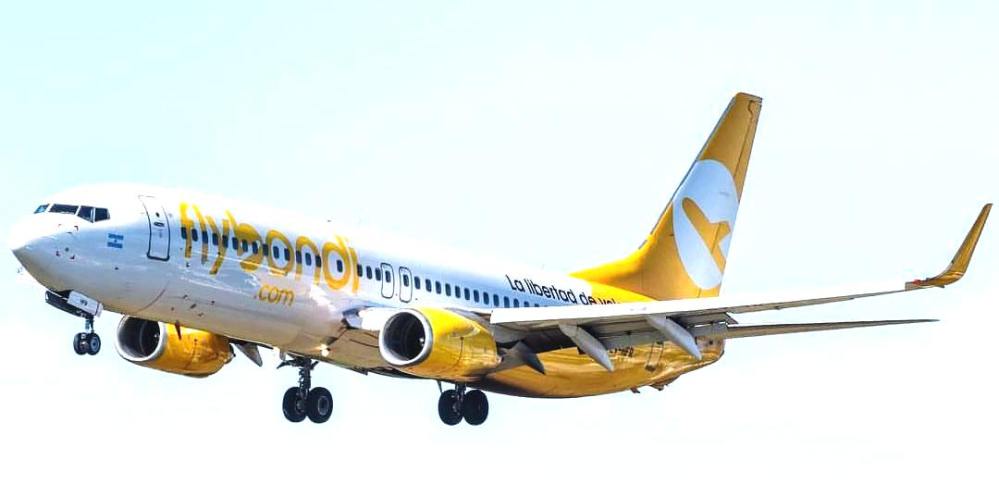
Flybondi-logo.pngEmergencia en el aterrizaje de un avión de Flybondi en Neuquén, Argentina

La aeronave presentó inconvenientes en los flaps y reportó problemas de control de vuelo a la torre. El vuelo FO-5300 de la aerolínea argentina Flybondi, que había partido en la mañana del Viernes, 9 Noviembre 2018 uniendo la ruta El Palomar-Neuquén, sufrió una falla técnica antes de aterrizar en el Aeropuerto Neuquén y la tripulación tuvo que activar el protocolo de emergencia.

El Boeing 737-800 con matrícula LV-HKR reportó un incidente aéreo y la tripulación del vuelo FO-5300 se comunicó con la torre de control y reportó problemas de control de vuelo por un inconveniente en los flaps. Desde la empresa confirmaron el incidente y detallaron que se dio aviso por prevención y para respetar los protocolos. «Tenemos un problema en los flaps y decidimos declarar una emergencia», se lo escucha decir al piloto tras establecer comunicación con la torre de control para informar lo que estaba sucediendo durante el vuelo. Entre el miedo por la emergencia y el desconcierto, los pasajeros pudieron llegar hasta el hall del aeropuerto y retirar su equipaje pasadas las 8:30 horas.

«El Boeing 737-800 con matrícula LV-HKR aterrizó correctamente a las 08:30 hs. en el Aeropuerto Internacional Presidente Perón. De manera preventiva se dio aviso a los servicios de emergencia, de acuerdo a lo que indica el protocolo de seguridad. Tanto los pasajeros como nuestra tripulación descendieron sin inconvenientes una vez finalizado el proceso», explicaron desde la aerolínea en un comunicado.

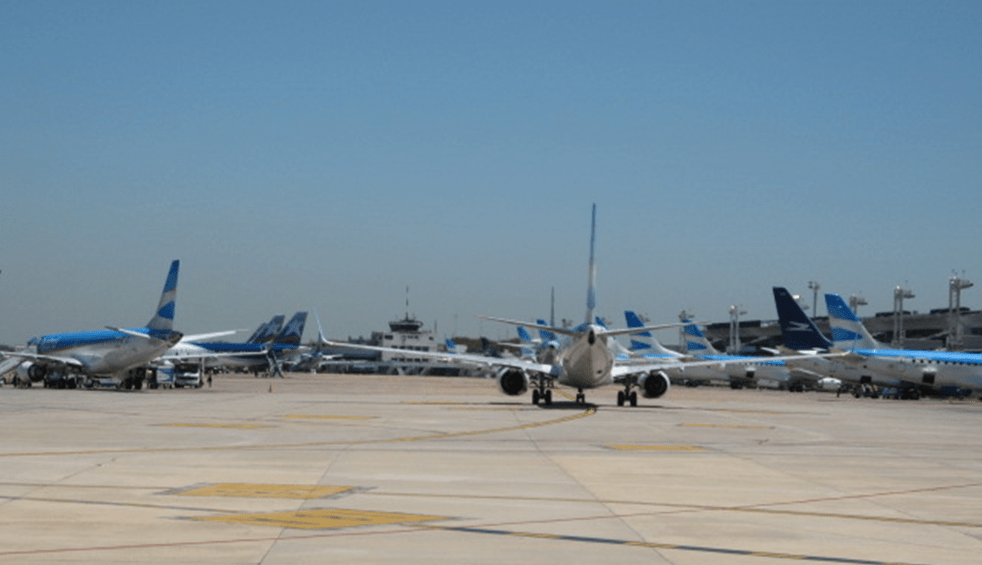
La aeronave aterrizó sin inconvenientes mayores y quedó varada en la cabecera Este de la pista y los pasajeros debieron descender allí y caminar por el pasto hasta la sala de embarque.

La Junta de Investigación de Accidentes de Aviación Civil (JIAAC) investiga si hubo un problema hidráulico que provocó el fallo en los flaps. La nave continuaba detenida en el lugar del aterrizaje en revisión.  AIRWAYS® AW-Icon TXT

Resultado de imagen para FO-5300 Flybondi

Emergency FO5300 Flybondi

Emergency in the landing of a Flybondi plane in Neuquén, Argentina

The aircraft presented problems in the flaps and reported flight control problems to the tower. The flight FO-5300 of the Argentine airline Flybondi, which had departed on the morning of Friday, November 9, 2018 joining the route El Palomar-Neuquén, suffered a technical failure before landing at the Neuquén Airport and the crew had to activate the protocol of emergency.

The Boeing 737-800 with license plate LV-HKR reported an air incident and the crew of flight FO-5300 communicated with the control tower and reported flight control problems due to an inconvenience in the flaps. From the company they confirmed the incident and detailed that warning was given for prevention and to respect the protocols. «We have a problem in the flaps and decided to declare an emergency», the pilot is told after communicating with the control tower to report what was happening during the flight. Between the fear of the emergency and the bewilderment, the passengers were able to reach the airport hall and collect their luggage after 8:30 am.

«The Boeing 737-800 with license plate LV-HKR landed correctly at 08:30 a.m. at the Presidente Perón International Airport, and the emergency services were notified in a preventive manner, according to the safety protocol. Both the passengers and our crew descended without problems once the process was completed», they explained from the airline in a statement.

The aircraft landed without major inconveniences and was stranded at the eastern end of the runway and passengers had to descend there and walk through the grass to the departure lounge.

The Civil Aviation Accident Investigation Board (JIAAC) investigates if there was a hydraulic problem that caused the failure of the flaps. The ship was still stopped at the landing site under review. A \ W


Ξ A I R G W A Y S Ξ
SOURCE: Airgways.com
DBk: Jiaac.gob.ar / Lmneuquen.com / Infobae.com / Flybondi.com
AW-POST: 201811100937AR

A\W   A I R G W A Y S ®

JT610 Lion Air | Día 12

Resultado de imagen para JT610

AW | 2018 11 09 19:27 | AIR INVESTIGATION / AVIATION SAFETY

AW-70007378MAXLion Air JT610 datos erróneos en AoA

El Boeing 737-8 MAX PK-LQP, MSN43000, de la aerolínea Lion Air accidentado en el Mar de Java el 29 Octubre 2018, la aeronave perdió altura y se estrelló contra el Mar de Java, emitía datos erróneos de Ángulo de Ataque (AoA).

El Boeing 737-8 MAX realiza el vuelo JT-610 desde Jakarta a Pangkal Pinang (Indonesia) con 181 pasajeros y 8 tripulantes, estaba saliendo de Yakarta cuando la aeronave alcanzó una altitud máxima de unos 5400 pies, luego altura perdida, el contacto por radar se perdió a unos 35nm al noreste de Jakarta sobre el Mar de Java a las 06:33L (23:33Z, 28 Octubre 2018).

Avances de informaciones

El 7 Noviembre 2018, Boeing emitió un Boletín del Manual de Operaciones (OMB) a todos los operadores de Boeing 737 MAX que indicaron que la investigación sobre el choque de PK-LQP encontró que uno de los sensores de ángulo de ataque había proporcionado lecturas incorrectas, lo que podría causar que el sistema de equipamiento de la aeronave sin recortar la nariz para evitar un bloqueo durante el vuelo manual. La OMB dirige a «los operadores a los procedimientos existentes de la tripulación de vuelo para abordar las circunstancias en las que hay una entrada errónea de un sensor AOA». La OMB reitera la lista de verificación no normal de Estabilizador Runaway.

El 8 Noviembre 2018, Basarnas informó que la búsqueda del CVR aún está en curso con el ROV, el sonar lateral de escaneo, el localizador de ping y las sondas de eco de haz múltiple desplegadas. Basarnas escribió: «Como se explicó anteriormente, el localizador de ping pudo detectar la señal de la caja negra, pero era débil. La fuente de la señal es difícil de determinar su posición considerando que el fondo marino es de lodo con una profundidad de más de 1 metro». Hasta el 7 Noviembre 2018 20:00L 187 bolsas de cadáveres fueron recolectadas y llevadas al puesto de comando y luego al hospital para su identificación.

El KNKT informó que un ángulo de sensor de ataque había sido reemplazado el 28 de octubre de 2018 después del vuelo JT-775 de Manado a Denpasar (la aeronave completó el vuelo subsiguiente JT-43 a Jakarta y sufrió el accidente del siguiente vuelo JT-610). Posteriormente el avión voló a Jakarta, sin embargo, la tripulación informó que todavía había problemas. La búsqueda del CVR se ve obstaculizada por lodo espeso. AIRWAYS® AW-Icon TXT


AW-70087600Resultado de imagen para JT610 debrisAW-70087601Resultado de imagen para JT610 debris

JT610 Lion Air | Day 12

Lion Air JT610 erroneous data in AoA

The Boeing 737-8 MAX PK-LQP, MSN43000, of the Lion Air airline crashed in Java Sea on 29 October 2018, the aircraft lost altitude and crashed into the Java Sea, issuing erroneous Angle of Attack data (AoA) .

The Boeing 737-8 MAX performs the JT-610 flight from Jakarta to Pangkal Pinang (Indonesia) with 181 passengers and 8 crew, it was leaving Jakarta when the aircraft reached a maximum altitude of about 5400 feet, then lost height, contact by radar was lost at about 35nm northeast of Jakarta over the Java Sea at 06: 33L (23:3Z, 28 October 2018).

Advances of information

On November 7, 2018, Boeing issued an Operations Manual Bulletin (OMB) to all Boeing 737 MAX operators who indicated that the investigation into the PK-LQP collision found that one of the attack angle sensors had provided incorrect readings, which could cause the aircraft’s equipment system without trimming the nose to avoid a blockage during manual flight. The OMB directs «operators to the existing procedures of the flight crew to address the circumstances in which there is an erroneous entry of an AOA sensor». The OMB repeats the non-normal Runaway Stabilizer checklist.

On November 8, 2018, Basarnas reported that the CVR search is still ongoing with the ROV, the lateral scanning sonar, the ping locator and the multiple beam echo probes deployed. Basarnas wrote: «As explained above, the ping locator was able to detect the signal from the black box, but it was weak.The source of the signal is difficult to determine its position considering that the seafloor is mud with a depth of more of 1 meter». Until November 7, 2018 20: 00L 187 bags of corpses were collected and taken to the command post and then to the hospital for identification.

The KNKT reported that an attack sensor angle had been replaced on October 28, 2018 after flight JT-775 from Manado to Denpasar (the aircraft completed the subsequent flight JT-43 to Jakarta and suffered the accident of the next flight JT- 610). Later the plane flew to Jakarta, however, the crew reported that there were still problems. The search for the CVR is hampered by thick mud. A \ W

VIDEO > LION AIR JT-610 FLIGHT ANIMATION 

video-camera_318-50337


Ξ A I R G W A Y S Ξ
SOURCE: Airgways.com
DBk: Avherald.com / Nst.com.my / Paperdabba.com / Radarbogor.id / Filmcutter.it
AW-POST: 201811091927AR

A\W   A I R G W A Y S ®

MH17 Familiares exigen respuesta

AW-7000777.jpg

AW | 2018 11 09 18:50 | AIR INVESTIGATION / AVIATION SAFETY

Logo Malaysia Airlines 1[1]AW-70083667Los familiares de las víctimas del atentado aéreo del vuelo MH-017 exigen respuesta de los gobiernos

Los familiares de las víctimas del vuelo MH-017 de Malaysia Airlines exigen respuestas ante los reclamos del atentado del Boeing 777-200ER de la aerolínea malaya cuando un misil Buk impactó sobre la aeronave en el cielo por encima de Ucrania en 2014. La solicitud del reclamo fue peticionada al Presidente de Estados Unidos, Donald Trump para presionar al Gobierno de Rusia, el Presidente Vladimir Putin para proporcionar respuestas acerca del derribo.

En una carta a Trump publicada el viernes en Twitter, familiares de aproximadamente 30 de los 298 pasajeros y la tripulación que murieron el 17 Julio 2014, dicen «tenemos el derecho de saber qué pasó con nuestros seres queridos». La carta fue publicada en Twitter por Thomas Schansman, cuyo hijo de 18 años, Quinn, doble ciudadano holandés-estadounidense, estaba entre los pasajeros muertos.

Trump y Putin estarán en París este fin de semana para conmemorar el Centenario del fin de la Primera Guerra Mundial, pero no se espera que celebren una cumbre bilateral. Planean mantener conversaciones en una Cumbre del Grupo de los 20 en Argentina a fines de mes.

Los Países Bajos y Australia anunciaron en Mayo 2018 que creen que el misil que derribó el vuelo MH17 fue transportado a Ucrania desde una unidad militar en la ciudad rusa de Kursk. Rusia ha negado con vehemencia su participación y, a lo largo de los años, ha presentado varias teorías sobre la causa del accidente, y ha culpado al lado ucraniano.

En la carta a Trump, fechada el 28 Octubre 2017, las familias dicen que ningún país se ha responsabilizado por el derribo. Dirigiéndose directamente a Trump, las familias dicen: «El presidente Putin tiene respuestas que tenemos derecho a escuchar. Le pedimos que lo intente y lo convenza de que nunca es demasiado tarde para la redención. Se han hecho varios intentos obvios para encubrir lo que realmente sucedió en el horrible día de verano. Los intentos de los funcionarios de la Federación de Rusia, respaldados y repetidos por el presidente Putin», dice la carta.  AIRWAYS® AW-Icon TXT

Resultado de imagen para MH17 Boeing 777

MH17 Relatives demand a response

The relatives of the victims of the air attack of flight MH-017 demand a response from the governments

The relatives of the victims of MH-017 of Malaysia Airlines demand answers to the claims of the Boeing 777-200ER attack of the Malaysian airline when a Buk missile hit the aircraft in the sky above Ukraine in 2014. The request of the claim was petitioned to the President of the United States, Donald Trump to pressure the Government of Russia, President Vladimir Putin to provide answers about the demolition.

In a letter to Trump posted on Twitter on Friday, relatives of approximately 30 of the 298 passengers and crew who died on July 17, 2014, say «we have the right to know what happened to our loved ones». The letter was posted on Twitter by Thomas Schansman, whose 18-year-old son, Quinn, double Dutch-American citizen, was among the dead passengers.

LETTER OF CLAIM BY FAMILY OF FLIGHT MH-017 FROM MALAYSIA AIRLINES TO THE PRESIDENT OF THE UNITED STATES

Trump and Putin will be in Paris this weekend to commemorate the centenary of the end of World War I, but they are not expected to hold a bilateral summit. They plan to hold talks at a Group of 20 summit in Argentina at the end of the month.

The Netherlands and Australia announced in May that they believe that the missile that shot MH17 was transported to Ukraine from a military unit in the Russian city of Kursk. Russia has vehemently denied their participation and, over the years, has presented several theories about the cause of the accident, and has blamed the Ukrainian side.

In the letter to Trump, dated October 28, 2017, families say that no country has been responsible for the demolition. Addressing Trump directly, the families say: «President Putin has answers that we have the right to hear, we ask him to try and convince him that it is never too late for redemption. Several obvious attempts have been made to cover up what really It happened on the horrible summer day, the attempts of the officials of the Russian Federation, backed and repeated by President Putin», the letter says. A \ W

Resultado de imagen para MH17

MH17 Verwanten vragen om een ​​reactie

De nabestaanden van de slachtoffers van de luchtaanval van vlucht MH-017 eisen een reactie van de regeringen

Familieleden van de slachtoffers van Flight MH-017 Malaysia Airlines eisen antwoorden op de eisen van de Boeing 777-200ER bombardementen van de Maleisische luchtvaartmaatschappij wanneer een Buk raket hit op het vliegtuig in de lucht boven de Oekraïne in 2014. Het verzoek vordering werd een petitie de president van de Verenigde Staten, Donald Trump aan de regering van de Russische president Vladimir Poetin druk te zetten om antwoorden over de sloop te bieden.

In een brief aan Trump vrijdag gepubliceerd op Twitter, familieleden van ongeveer 30 van de 298 passagiers en bemanningsleden die op 17 juli 2014 stierf, zeggen: ,,we hebben het recht om te weten wat er gebeurd met onze geliefden». De brief werd gepost op Twitter door Thomas Schansman, wiens 18-jarige zoon, Quinn, dubbele Nederlands-Amerikaanse staatsburger, tot de dode passagiers behoorde.

Trump en Poetin zal in Parijs dit weekend om de honderdste verjaardag van het einde van de Tweede Wereldoorlog te herdenken, maar wordt niet verwacht dat een bilaterale top te organiseren. Ze zijn van plan om aan het eind van de maand een bijeenkomst te houden in een Groep van 20 in Argentinië.

Nederland en Australië in mei aangekondigd dat ze geloven dat de raket die naar beneden de vlucht MH17 werd vervoerd naar Oekraïne uit een militaire eenheid in de Russische stad Koersk gebracht. Rusland heeft ontkende betrokkenheid en in de loop der jaren heeft een aantal theorieën gepresenteerd over de oorzaak van het ongeval, en heeft de Oekraïense kant de schuld.

In de brief aan Trump, gedateerd 28 oktober 2017, zeggen families dat geen enkel land verantwoordelijk was voor de sloop. spreken rechtstreeks naar Trump, families zeggen: ,,President Putin heeft antwoorden die we hebben het recht om te horen vroeg hem om te proberen en u te overtuigen dat het is nooit te laat voor de verlossing is gedaan verschillende voor de hand liggende pogingen om te verdoezelen wat er werkelijk Het gebeurde op de vreselijke zomerdag, de pogingen van de functionarissen van de Russische Federatie, gesteund en herhaald door president Putin», zegt de brief. A \ W

Resultado de imagen para MH17

Родственники MH17 требуют ответа

Родственники жертв воздушной атаки полета MH-017 требуют ответа от правительств

Родственники жертв MH-017 авиакомпании Malaysia Airlines требуют ответов на претензии атаки Boeing 777-200ER малайзийской авиакомпании, когда ракета Buk попала в самолет в небе над Украиной в 2014 году. Запрос требование было подано в суд Президенту Соединенных Штатов Дональду Трампу, чтобы оказать давление на правительство России, президента Владимира Путина, чтобы дать ответы на вопрос о сносе.

В письме к Трампу, опубликованном в Twitter в пятницу, родственники примерно 30 из 298 пассажиров и экипажа, которые умерли 17 июля 2014 года, говорят: «Мы имеем право знать, что случилось с нашими близкими». Письмо было опубликовано в Твиттере Томасом Шэнсманом, чей 18-летний сын, Куинн, двойной голландско-американский гражданин, был среди мертвых пассажиров.

Трамп и Путин будут в Париже в эти выходные, чтобы отметить столетие окончания Первой мировой войны, но ожидается, что они не проведут двусторонний саммит. Они планируют провести переговоры на саммите Группы 20 в Аргентине в конце месяца.

В мае Нидерланды и Австралия объявили, что считают, что ракета, которая выстрелила MH17, была доставлена ​​в Украину из воинской части в российском городе Курске. Россия решительно отрицала свое участие и на протяжении многих лет представляла несколько теорий о причинах аварии и обвинила украинскую сторону.

В письме к Трампе, датированном 28 октября 2017 года, семьи говорят, что ни одна страна не несет ответственности за снос. Обращаясь непосредственно к Трампу, семьи говорят: «У президента Путина есть ответы, которые мы имеем право услышать, мы просим его попытаться убедить его, что никогда не поздно для искупления». Было сделано несколько очевидных попыток скрыть то, что действительно Это случилось в ужасный летний день, попытки чиновников Российской Федерации, поддержанные и повторяемые президентом Путиным», говорится в письме. A \ W


Ξ A I R G W A Y S Ξ
SOURCE: Airgways.com
DBk: Abcnews.go.com / Reuters.com / Twitter.com/thomasschansman
AW-POST: 201811091850AR

A\W   A I R G W A Y S ®

Accidente Boeing 757 Fly Jamaica

Resultado de imagen para Fly Jamaica air crash

AW | 2018 11 09 17:39 | AIR INVESTIGATION / AVIATION SAFETY

Un Boeing 757-200 de Fly Jamaica Airways efectúa aterrizaje forzoso en Georgetown

El 9 Noviembre 2018, un Boeing 757-200 de Fly Jamaica Airways efectúa un aterrizaje forzoso en el Aeropuerto Internacional de Georgetown, República de Guyana, a raíz de una falla hidráulica fue la causa una excursión en la pista en el aterrizaje.

Un Boeing 757-200 de Fly Jamaica Airways, con registro N524AT que realizaba el vuelo OJ-256 desde Georgetown (Guyana) a Toronto (Canadá) con 120 pasajeros y 8 tripulantes, estaba saliendo de Georgetown cuando la tripulación detuvo el ascenso en FL200 debido a Una falla hidráulica y decidió regresar a Georgetown. El avión aterrizó en la pista 06 de Georgetown a las 02: 53L (06: 53Z), pero viró a la derecha de la pista y se detuvo a la derecha de la pista justo antes del final de la pista. El avión fue evacuado a través de toboganes. Hubo seis lesiones menores, la aeronave sufrió daños sustanciales con el engranaje principal derecho colapsado, el motor derecho separado del ala y el daño del ala derecha. Los heridos fueron trasladados a un hospital.

El ministro de infraestructura pública de Guyana informó que la aeronave transportaba a 118 pasajeros, dos bebés y 8 tripulantes. La tripulación se declaró de emergencia y regresó a Georgetown. 6 personas recibieron heridas leves y fueron trasladadas al hospital local. La aerolínea informó que el avión regresó a Georgetown con un problema técnico y sufrió un accidente al aterrizar. AIRWAYS® AW-Icon TXT

Resultado de imagen para Fly Jamaica air crashResultado de imagen para Fly Jamaica air crashResultado de imagen para Fly Jamaica air crashResultado de imagen para Fly Jamaica air crash

Accident Boeing 757 Fly Jamaica

A Boeing 757-200 of Fly Jamaica Airways affects crash landing  in Georgetown

On November 9, 2018, a Boeing 757-200 from Fly Jamaica Airways made a forced landing at the international airport in Georgetown, Republic of Guyana, following a hydraulic failure was the cause of a runway excursion at the landing.

A Boeing 757-200 from Fly Jamaica Airways, with registration N524AT that was flying OJ-256 from Georgetown (Guyana) to Toronto (Canada) with 120 passengers and 8 crew members, was leaving Georgetown when the crew stopped the climb at FL200 due to a Hydraulic failure and decided to return to Georgetown. The plane landed on runway 06 of Georgetown at 02:53 L (06:53Z), but it veered to the right of the runway and stopped to the right of the runway just before the end of the runway. The plane was evacuated through slides. There were six minor injuries, the aircraft suffered substantial damage with the collapsed right main gear, the right engine separated from the wing and the right wing damage. The wounded were taken to a hospital.

The Minister of Public Infrastructure of Guyana reported that the aircraft was carrying 118 passengers, two babies and 8 crew members. The crew declared an emergency and returned to Georgetown. 6 people received minor injuries and were transferred to the local hospital. The airline reported that the plane returned to Georgetown with a technical problem and suffered an accident upon landing. A\W


DATA: La información procesada puede actualizarse debido al tipo de datos cambiantes, por lo que le sugerimos consultar periódicamente esta información.
DATA: The processed information can be updated due to the type of changing data, so we suggest you consult this information periodically.


Ξ A I R G W A Y S Ξ
SOURCE: Airgways.com
DBk: Av-herald.com / Independent.co.uk / Foxbusiness.com / Dpi.gov.gy / Newsinflight.com
AW-POST: 201811091739AR

A\W   A I R G W A Y S ®

Aeropuerto Tahití desaceleran controles de seguridad aeroportuarias

Resultado de imagen para Tahiti Faa'a International Airport

AW | 2018 11 09 17:04 | AIRPORTS / AVIATION SAFETY

Resultado de imagen para Tahiti islands globe map pngEl Aeropuerto Internacional de Tahití podría sufrir una huelga en controles de seguridad

Una huelga podría comenzar este viernes en la compañía South Pacific Security (SPS) y en Tahiti Sureté, dos empresas que brindan controles de identidad para los pasajeros en la entrada de las salas de embarque en el Aeropuerto Internacional de Tahití Faa’a.

El sindicato CSIP presentó una notificación de huelga, que representa a parte del personal de las compañías South Pacific Security (SPS) y Tahiti Sureté, quienes garantizan los controles de identidad de los pasajeros en las entradas de las puertas de embarque, con A partir de este viernes a medianoche, anuncia Air Tahiti. Si la huelga se hace efectiva, se esperarán retrasos en las estaciones de inspección (PIF) de los pasajeros en el Aeropuerto de Tahiti-Faa’a. La compañía Air Tahití, por lo tanto, pide a los pasajeros que respeten el horario de convocatoria de su vuelo, o 1:30 hs antes del despegue previsto.  AIRWAYS® AW-Icon TXT

AW-700019187.jpg

Tahiti Airport slows down security controls

The Tahiti International Airport could suffer a strike in security controls

A strike could begin this Friday at the company South Pacific Security (SPS) and at Tahiti Sureté, two companies that provide identity checks for passengers at the entrance of boarding rooms at the Tahiti Faa’a International Airport.

The CSIP union filed a notice of strike, which represents part of the staff of the companies South Pacific Security (SPS) and Tahiti Sureté, who guarantee the identity checks of passengers at the entrances of the boarding gates, with this Friday at midnight, announces Air Tahiti. If the strike becomes effective, delays will be expected at the inspection stations (PIF) of the passengers at the Tahiti-Faa’a Airport. The company Air Tahiti, therefore, asks passengers to respect the time of call of their flight, or 1:30 hs before the planned takeoff. A \ W


L’Aéroport de Tahiti ralentit les contrôles de sécurité

tahiti-tourisme.pngL’aéroport international de Tahiti pourrait subir une grève des contrôles de sécurité

Une grève pourrait commencer ce vendredi à la compagnie South Pacific Security (SPS) et à Tahiti Sureté, deux sociétés qui vérifient l’identité des passagers à l’entrée des salles d’embarquement de l’aéroport international Tahiti Faa’a.

Le syndicat CSIP a déposé un avis de grève représentant une partie du personnel des sociétés South Pacific Security (SPS) et Tahiti Sureté qui garantissent les contrôles d’identité des passagers aux entrées des portes d’embarquement. ce vendredi à minuit, annonce Air Tahiti. Si la grève entre en vigueur, des retards seront attendus aux postes de contrôle (PIF) des passagers de l’aéroport de Tahiti-Faa’a. La société Air Tahiti demande donc aux passagers de respecter l’heure d’appel de leur vol, soit 1h30 avant le décollage prévu. A\W


Ξ A I R G W A Y S Ξ
SOURCE: Airgways.com
DBk: Tahita-aeroport.pf / Tntv.pf / Airport-data.com
AW-POST: 201811091704AR

A\W   A I R G W A Y S ®

Avances Lion Air JT610

Resultado de imagen para jt610 debris

AW | 2018 11 07 23:54 | AIR INVESTIGATION / AVIATION SAFETY

AW-70007378MAXLion Air JT610 segundo motor del Boeing 737-8 MAX recuperado

El avión Boeing 737-8 MAX Reg: PK-LQP, MSN46000 de Lion Air se estrelló en la mañana del 29 Octubre 2018, mientras se dirigía desde el Aeropuerto Internacional de Jakarta Soekarno-Hatta hacia el Aeropuerto Depati Amir en Pangkalpinang, Islas Bangka Belitung, con 189 personas a bordo, compuesto por: pasajeros (181), pilotos (2) y tripulantes (6).

Secciones del Boeing 737-8 MAX

Se ha encontrado el segundo motor LEAP-1B del vuelo JT-610 de Lion Air, que se estrelló en el Mar de Java el 20/10/2018. Un oficial de la Flota I de la Marina, el Coronel Bambang Trijanto, dijo que la turbina principal del motor fue descubierta durante una búsqueda el martes a una profundidad de 30 metros. Se informó que la turbina no estaba intacta al momento del descubrimiento.

Además del motor, el equipo de búsqueda también ha encontrado otras partes del avión derribado, como tubos, baterías, un registrador y una fuente de alimentación. Los equipos de buceo se han enviado a la ubicación donde encontraron el motor, para buscar y recuperar más partes.

Un equipo de buzos descubrió que la cabina del avión Lion Air JT-610 había sido destruida al impactar el lecho marino en Tanjung Karawang, el Miércoles 7 Noviembre 2018. Los hallazgos finalmente suspendieron el plan para traerlo a la superficie ese día. «La carlinga resultó ser destruida, ya era escombros», dijo el comandante de la Unidad de Barcos Eskorta (Dansatkor) del Coronel de Marina I (P) Isswarto en JICT, Tanjung Priok.

El equipo conjunto de SAR planeaba levantar los fragmentos de la cabina del Boeing 737-8 MAX. Pero con la situación destruida, el plan fue suspendido. Incluso si todavía se levanta, se obtendrá escombros. Isswarto señaló ejemplos de partes de ala de avión. «Lo mismo que el anterior, en realidad hay alas, tan pronto como lo tomamos, pero ya son escombros», dijo.

Esa consideración hizo que Isswarto no pudiera determinar si el equipo de búsqueda levantaría la cabina del avión. Mientras que anteriormente, a partir de la cita programada de la sección de cabina de pilotaje, había esperanza de encontrar la caja negra de Voice Cockpit Recorder.

El equipo DVI de la Policía Nacional ha identificado a 44 víctimas de los restos recuperados del agua. Las autoridades recolectaron las partes de cuerpos descubiertas en la Terminal Internacional de Contenedores de Jakarta (JICT) 2 en el Puerto de Tanjung Priok, en el norte de Jakarta, antes de ser entregadas al Comité Nacional de Seguridad del Transporte (KNKT) para investigar el accidente.  AIRWAYS® AW-Icon TXT

Resultado de imagen para basarnas jt610 debrisResultado de imagen para basarnas jt610Resultado de imagen para basarnas jt610Resultado de imagen para basarnas jt610

Advances Lion Air JT610

Lion Air JT610 second engine Boeing 737-8 MAX recovered

The Boeing 737-8 MAX Reg Reg: PK-LQP, Lion Air MSN46000 crashed on the morning of 29 October 2018, while driving from the Jakarta Soekarno-Hatta International Airport to the Depati Amir Airport in Pangkalpinang, Bangka Belitung Islands , with 189 people on board, composed of: passengers (181), pilots (2) and crew (6).

Sections of the Boeing 737-8 MAX

It has found the second LEAP-1B engine of flight JT-610 of Lion Air, which crashed in the Java Sea on 10/20/2018. An officer from Navy Fleet I, Colonel Bambang Trijanto, said the engine’s main turbine was discovered during a search on Tuesday at a depth of 30 meters. It was reported that the turbine was not intact at the time of discovery.

In addition to the engine, the search team has also found other parts of the plane downed, such as pipes, batteries, a recorder and a power supply. The diving equipment has been sent to the location where they found the engine, to find and recover more parts.

A team of divers discovered that the cabin of the Lion Air JT-610 aircraft had been destroyed by the impact of the seabed at Tanjung Karawang on Wednesday, November 7, 2018. The findings finally suspended the plan to bring it to the surface that day. «The cockpit turned out to be destroyed, it was already rubble», said Commander of the Eskorta Ship Unit (Dansatkor) of Marine Colonel I (P) Isswarto at JICT, Tanjung Priok.

Previously, the joint SAR team planned to lift the boom fragments of the Boeing 737-8 MAX. But with the situation destroyed, the plan was suspended. Even if you still get up, you will get debris. Isswarto pointed to examples of airplane wing parts. «The same as the previous one, there are actually wings, as soon as we take them, but they are already debris», he said.

That consideration caused Isswarto could not determine if the search team would lift the cabin of the plane. Whereas previously, from the scheduled appointment of the cockpit section, there was hope of finding the black box of Voice Cockpit Recorder.

The DVI team of the National Police has identified 44 victims of the remains recovered from the water. The authorities collected the parts of bodies discovered at the International Container Terminal of Jakarta (JICT) 2 at the Port of Tanjung Priok, in the north of Jakarta, before being turned over to the National Transportation Security Committee (KNKT) to investigate the accident. A \ W


Ξ A I R G W A Y S Ξ
SOURCE: Airgways.com
DBk: Basarnas.go.id / Ntsb.gov / Dephup.go.id / Saudigazette.com.sa / Thestraittimes.com / Breakingnews.co.id / Reuters.com / Thejakartapost.com / Nst.com.my
AW-POST: 201811072354AR

A\W   A I R G W A Y S ®

Boeing emite advertencias en 737 MAX

max8ff_k66500-01.jpg

AW | 2018 11 07 17:45 | AIR INVESTIGATION / AVIATION SAFETY

Boeing-Logo.svgBoeing emitió alertas de seguridad para inspección de los Boeing 737 MAX

El 7 Noviembre 2018, Boeing emitió un Boletín del Manual de Operaciones (OMB) a todos los operadores de Boeing 737 MAX, que indicaron que la Seal_of_the_United_States_National_Transportation_Safety_Board.svginvestigación sobre el accidente aéreo del Boeing 737-8 MAX SMN43000 con matrícula PK-LQP encontró que uno de los sensores de ángulo de ataque había proporcionado lecturas incorrectas, lo que podría causar que el sistema de equipamiento de la aeronave sin recortar la nariz para evitar un bloqueo durante el vuelo manual. La OMB dirige a «los operadores a los procedimientos existentes de la tripulación de vuelo para abordar las circunstancias en las que hay una entrada errónea de un sensor AOA». La OMB reitera la lista de verificación no normal de Runaway Stabilizer.

20150215-logo-faa_1El Boletín TBC-19 del Manual de operaciones de la tripulación de vuelo dice:
El Comité Nacional de Seguridad del Transporte de Indonesia ha indicado que el vuelo 610 de Lion Air experimentó datos AOA erróneos.durante el vuelo manual solamente.

capo-copy.jpgEste boletín dirige a las tripulaciones de vuelo a los procedimientos existentes para abordar esta condición. En el caso de datos AOA erróneos, el sistema de recorte de tono puede recortar la punta del estabilizador en incrementos que duran hasta 10 segundos. El movimiento de ajuste del estabilizador de punta hacia abajo se puede detener y revertir con el uso de los interruptores de ajuste del estabilizador eléctrico, pero puede reiniciarse 5 segundos después de que se liberen los interruptores de ajuste del estabilizador eléctrico. Los ciclos repetitivos de estabilizador de punta hacia abajo sin mandar continúan ocurriendo a menos que el sistema de ajuste del estabilizador se desactive mediante el uso de ambos interruptores STAB TRIM CUTOUT de acuerdo con los procedimientos existentes en el Estabilizador de Runaway NNC. Es posible que el estabilizador alcance el límite de inclinación hacia abajo a menos que las entradas del sistema se contrarresten completamente con las entradas de ajuste del piloto y ambos interruptores STAB TRIM CUTOUT se muevan a CUTOUT.

Además, se recuerda a los pilotos que un AOA erróneo puede causar algunas o todas las siguientes indicaciones y efectos:
– Agitador de varilla continuo o intermitente en el lado afectado solamente.
– Barra de velocidad mínima (rojo y negro) solo en el lado afectado.
– Aumentar las fuerzas de control de nariz abajo.
– Incapacidad para activar el piloto automático.
– Desactivación automática del piloto automático.
– Alerta IAS DISAGREE.
– Alerta ALT DISAGREE.
– Alerta AOA DESACUERDO (si la opción del indicador AOA está instalada)
– Se enciende la luz FEEL DIFF PRESS.

En el caso de que se experimente un ajuste estabilizador de nariz abajo sin control en el Boeing 737-8/9 MAX, junto con una o más de las indicaciones o efectos anteriores, haga el Estabilizador de Runaway NNC asegurándose de que los interruptores STAB TRIM CUTOUT estén ajustados en CUTOUT y Permanezca en la posición de RECORTE durante el resto del vuelo.

El boletín informaba a los operadores de las aerolíneas sobre qué hacer si reciben lecturas falsas del software de control de vuelo que mide el ángulo del avión y alertaron a las tripulaciones de vuelo sobre el procedimiento que deben seguir.

El boletín de Boeing fue el primer indicio de que un error en los sistemas de la aeronave pudo haber causado problemas en el vuelo de Lion Air, que despegó de Jakarta. En lugar de un despegue suave, la altitud del avión fluctuó dramáticamente, y el avión aumentó su velocidad antes de sumergirse en el mar de Java 13 minutos después.

Continúan búsquedas: Día 9

Las operaciones de búsqueda continúan en el mar de Java frente a la costa de Yakarta. El miércoles por la mañana, los miembros del equipo nacional de búsqueda y rescate de Indonesia utilizaron helicópteros y botes mientras buscaban la grabadora de voz de la cabina, más restos y cuerpos. Los funcionarios han recuperado piezas del avión, incluido el motor izquierdo y el tren de aterrizaje derecho, pero aún no han localizado el fuselaje principal.

Un barco de la ciudad portuaria de Balikpapan, en la isla de Borneo, con equipo para excavar en el fangoso fondo marino en un esfuerzo por encontrar la grabadora de voz de la cabina del piloto pronto será enviado a la escena del accidente, dijeron los investigadores.  AIRWAYS® AW-Icon TXT


Resultado de imagen para lion air png

Vuelo JT-633

Un Boeing 737-900 de la aerolínea Lion Air con número de vuelo JT-633, golpeó un palo con su ala izquierda en el Aeropuerto Bengkulu-Fatmawati Soekarno, Indonesia.
El incidente ocurrió en la oscuridad cuando la aeronave estaba maniobrando en la plataforma frente al edificio de la terminal. La aeronave Boeing 737-900 con registro PK-LGY tenía la trayectoria de vuelo desde el Aeropuerto de Bengkulu-Fatmawati Soekarno (BKS/WIGG) hacia el Aeropuerto Internacional de Jakarta-Soekarno-Hatta (CGK/WIII). En el vuelo JT-633 iban a bordo 143 pasajeros, todos sin lesiones. El vuelo, rumbo a Jakarta, fue posteriormente realizado por un avión de reemplazo. A\W

Resultado de imagen para lion air jt610

Flight JT-633

A Boeing 737-900 of the airline Lion Air with flight number JT-633, hit a stick with its left wing at the Bengkulu-Fatmawati Soekarno Airport, Indonesia.
The incident occurred in the dark when the aircraft was maneuvering on the platform in front of the terminal building. The Boeing 737-900 aircraft with registration PK-LGY had the flight path from the Bengkulu-Fatmawati Soekarno Airport (BKS/WIGG) to the Jakarta-Soekarno-Hatta International Airport (CGK/WIII). On flight JT-633, passengers aboard 143 passengers, all without injuries. The flight, bound for Jakarta, was subsequently carried out by a replacement aircraft. A \ W


Resultado de imagen para lion air jt610 Operations Manual Bulletin (OMB)

Boeing issues warnings at 737 MAX

Boeing issued security alerts for inspection of the Boeing 737 MAX

On November 7, 2018, Boeing issued an Operations Manual Bulletin (OMB) to all operators of Boeing 737 MAX, which indicated that the investigation into the Boeing 737-8 MAX SMN43000 plane crash with PK-LQP registration found that one of The attack angle sensors had provided incorrect readings, which could cause the aircraft’s trim system without trimming the nose to avoid a blockage during manual flight. The OMB directs «operators to the existing procedures of the flight crew to address the circumstances in which there is an erroneous entry of an AOA sensor». The OMB reiterates the non-normal checklist of Runaway Stabilizer.

Bulletin TBC-19 of the Flight Crew Operations Manual says:

The National Transport Safety Committee of Indonesia has indicated that Lion Air Flight 610 experienced erroneous AOA data during manual flight only.

This bulletin directs flight crews to existing procedures to address this condition. In the case of erroneous AOA data, the tone trimming system can trim the tip of the stabilizer in increments that last up to 10 seconds. The adjustment movement of the tip stabilizer downwards can be stopped and reversed with the use of the adjustment switches of the electric stabilizer, but can be reset 5 seconds after the adjustment switches of the electric stabilizer are released. Repetitive cycles of downward-pointing, unsecured stabilizer continue to occur unless the stabilizer adjustment system is deactivated by using both STAB TRIM CUTOUT switches according to the existing procedures in the Runaway NNC Stabilizer. It is possible for the stabilizer to reach the downward tilt limit unless the system inputs are fully counterbalanced with the pilot adjustment inputs and both STAB TRIM CUTOUT switches are moved to CUTOUT.

In addition, pilots are reminded that an erroneous AOA can cause some or all of the following indications and effects:

– Continuous or intermittent rod agitator on the affected side only.
– Minimum speed bar (red and black) only on the affected side.
– Increase the nose control forces below.
– Inability to activate the autopilot.
– Automatic deactivation of the autopilot.
– IAS DISAGREE alert.
– ALT DISAGREE alert.
– AOA Alert DISAGREE (if the option of the AOA indicator is installed)
– The FEEL DIFF PRESS light comes on.

In the event that you experience a nose down stabilizer adjustment without control on the Boeing 737-8/9, along with one or more of the above indications or effects, do the Runaway NNC Stabilizer making sure that the STAB TRIM CUTOUT switches are adjusted in CUTOUT and remain in the TRIM position for the rest of the flight.

The bulletin informed airline operators of what to do if they receive false readings of flight control software that measures the angle of the aircraft and alerted flight crews to the procedure they should follow.

The Boeing newsletter was the first indication that an error in the aircraft’s systems could have caused problems on the Lion Air flight, which took off from Jakarta. Instead of a smooth takeoff, the plane’s altitude fluctuated dramatically, and the plane increased its speed before diving into the Java Sea 13 minutes later.

Continue searches: Day 9

Search operations continue in the Java Sea off the coast of Jakarta. On Wednesday morning, members of the Indonesian national search and rescue team used helicopters and boats while searching for the cockpit voice recorder, plus debris and bodies. Officials have recovered parts of the plane, including the left engine and the right landing gear, but have not yet located the main fuselage.

A ship from the port city of Balikpapan, on the island of Borneo, with equipment to dig into the muddy seabed in an effort to find the voice recorder from the cockpit will soon be sent to the scene of the accident, researchers said.  A \ W


Ξ A I R G W A Y S Ξ
SOURCE: Airgways.com
DBk: Boeing.com / Ntsb.gov / Faa.gov / Dephub.go.id /  Nst.com.my / Beritahati.com / Airgways.com
AW-POST: 201811071745AR

A\W   A I R G W A Y S ®

Cuestionan índice dB al Airbus A220

AW-70001116.jpg

AW | 2018 11 07 16:24 | INDUSTRY / AVIATION SAFETY / ENGINEERING

Advierten altos niveles sonoros en Aeropuerto de Zurich del A220

AW-70090221.jpgLa aerolínea Swiss Air Lines recibió la llegada de su último avión regional Airbus A220, bautizado «Whisperjet», prometiendo a los vecindarios alrededor del Aeropuerto de Zurich que sería un 50% más silencioso que los aviones más convencionales.

El Aeropuerto de Zúrich ha recibido quejas en su línea telefónica de ruidos de sonidos inusuales cuando el A220 pasa por encima del vecindario. Un reclamo de los lugareños cercano al Aeropuerto de Zurich, Suiza, se han quejado por el alto nivel de ruido en la aproximación final al aeropuerto. La unidad filial de Lufthansa ha traído preocupación por el reclamo de la gente que expresan un «extraño aullido» cuando llega a tierra, enfureciendo a las personas que viven en la trayectoria de vuelo. «Es incluso más fuerte que otras máquinas que vuelan. Lo han estado describiendo como temporal mientras hacen evaluaciones, pero durante nueve meses no ha desaparecido», dijo Klaus Stoehlker, portavoz de la Fundación Contra el Ruido de Aeronaves con sede en Zurich.

Estudio al A220

El avión, desarrollado por Bombardier y ahora parte de la línea de Airbus, no infringe las reglas y el sonido en los estudio de sonoridad (dB), que dura unos segundos, no ha generado tarifas más altas que se aplican a los aviones más ruidosos.

Airbus y Swiss Air Lines dijeron que están al tanto de la situación y que están en contacto cercano con el fabricante de motores Pratt & Whitney, que analiza el ruido, comparado por algunos con la «llamada de apareamiento de una orca», para determinar su causa. El portavoz de Pratt & Whitney expresó: «El sonido ocurre ocasionalmente durante los movimientos del acelerador cuando el A220 tiene poca potencia. La huella de ruido total del avión aún representa una mejora del 75% en los aviones más antiguos».

Reputación del Whisperjet

El problema, que afecta a los modelos A220 aparentemente al azar, corre el riesgo de manchar las credenciales del avión como ideal para aeropuertos con ruido limitado. Los centros que incluyen Frankfurt operan estrictos toques de queda nocturnos, mientras que London City, que Swiss también sirve con el avión, restringe los vuelos de fin de semana.

El nombre de Whisperjet se ha aplicado a una variedad de aviones durante décadas, incluidos el BAE-146 y el Boeing 727 de Eastern Airlines, cuyos motores montados en la cola hicieron que la parte delantera de la cabina fuera silenciosa, pero la parte trasera especialmente ruidosa.

Airbus y Bombardier anunciaron su asociación para buscar una solución a una disputa comercial en la que Estados Unidos amenazaba con aranceles de hasta el 300% en los aviones CSeries. Las tarifas amenazadas siguieron a una queja formal presentada por Boeing que alegaba subsidios injustos para el avión de fabricación canadiense, que fue impulsado por una gran orden de Delta Air Lines con sede en Atlanta. Estados Unidos finalmente confirmó los subsidios injustos, pero retiró los aranceles porque dijo que Boeing no podía probar el daño de ellos. Sin embargo, eso no sucedió antes de que Bombardier buscara refugio en un acuerdo con el gran rival de Boeing, Airbus, que permitiría el ensamblaje de aviones CSeries con destino a Estados Unidos en la línea de ensamblaje de Airbus en Alabama.

El acuerdo terminó dándole a Airbus una participación mayoritaria en la línea CSeries. Desde entonces, Boeing ha seguido los planes para consolidar su propia sociedad con el rival brasileño de Bombardier, Embraer, extendiendo aún más la rivalidad entre Boeing y Airbus.

Bombardier y Embraer se han centrado tradicionalmente en jets regionales, pero cada uno ha introducido nuevas líneas de aviones que pueden acomodar de 100 a 150 pasajeros, según el modelo y la configuración. Las alianzas Boeing-Embraer y Airbus-Bombardier potenciaran las demandas de más aviones regionales, pero deberán afilar las sinergias para estar a la altura de la demanda actual. AIRWAYS® AW-Icon TXT

Resultado de imagen para A220 Zurich Airport

They question the dB index to the Airbus A220

High sound levels are warned in Zurich Airport of A220

The airline Swiss Air Lines received the arrival of its latest regional aircraft Airbus A220, baptized «Whisperjet», promising neighborhoods around Zurich Airport that it would be 50% quieter than more conventional aircraft.

Zurich Airport has received complaints on its telephone line for unusual sound noises when the A220 passes over the neighborhood. A complaint from the locals near the Zurich Airport, Switzerland, have complained about the high noise level in the final approach to the airport. The subsidiary unit of Lufthansa has brought concern for the claim of people who express a «strange howl» when it reaches the ground, infuriating people who live in the flight path. «It’s even stronger than other flying machines, they’ve been describing it as temporary while doing evaluations, but for nine months it has not disappeared», said Klaus Stoehlker, spokesman for the Zurich-based Aircraft Noise Foundation.

Studio A220

LX_A220-300_Klein_Dach.pngThe aircraft, developed by Bombardier and now part of the Airbus line, does not violate the rules and sound in the study of loudness (dB), which lasts a few seconds, has not generated higher rates that apply to noisier aircraft.

Airbus and Swiss Air Lines said they are aware of the situation and are in close contact with the engine manufacturer Pratt & Whitney, which analyzes the noise, compared by some with the «mating call of an orca», to determine its cause. Pratt & Whitney spokesman said: «The sound occurs occasionally during throttle movements when the A220 has low power, the total noise footprint of the aircraft still represents a 75% improvement in older aircraft».

Reputation of the Whisperjet

The problem, which affects A220 models apparently at random, runs the risk of staining the credentials of the aircraft as ideal for airports with limited noise. Centers that include Frankfurt operate strict nighttime curfews, while London City, which Swiss also serves with the plane, restricts weekend flights.

Whisperjet’s name has been applied to a variety of aircraft for decades, including the BAE-146 and the Eastern Airlines Boeing 727, whose tail-mounted engines made the front of the cab silent, but the rear especially noisy.

Airbus and Bombardier announced their partnership to seek a solution to a commercial dispute in which the United States threatened tariffs of up to 300% on CSeries aircraft. The threatened tariffs followed a formal complaint filed by Boeing alleging unfair subsidies for the Canadian-made aircraft, which was driven by a large order of Delta Air Lines based in Atlanta. The United States finally confirmed the unfair subsidies, but withdrew the tariffs because it said that Boeing could not prove the damage of them. However, that did not happen before Bombardier sought refuge in an agreement with Boeing’s big rival, Airbus, which would allow the assembly of CSeries aircraft bound for the United States on the Airbus assembly line in Alabama.

The agreement ended up giving Airbus a majority stake in the CSeries line. Since then, Boeing has followed plans to consolidate its own partnership with Bombardier’s Brazilian rival, Embraer, further extending the rivalry between Boeing and Airbus.

Bombardier and Embraer have traditionally focused on regional jets, but each has introduced new lines of aircraft that can accommodate from 100 to 150 passengers, depending on the model and configuration. The Boeing-Embraer and Airbus-Bombardier alliances will boost the demands of more regional aircraft, but they will have to sharpen the synergies to keep pace with current demand. A \ W


Ξ A I R G W A Y S Ξ
SOURCE: Airgways.com
DBk: Airbus.com / Airgways.com / Zurich-airport.com
AW-POST: 201811071624AR

A\W   A I R G W A Y S ®


Lion Air JT-610, Indicador de Velocidad


AW-70007378MAX.jpg

AW | 2018 11 06 21:35 | AIR INVESTIGATION / AVIATION SAFETY

El accidente del vuelo JT610 de Lion Air apunta a problemas con el indicador de velocidad del aire

De acuerdo con el análisis de las informaciones preliminares, el Registrador de Datos de Vuelo (FDR) recuperado, ha arrojado detalles de los últimos cuatro vuelos del avión de pasajeros del Boeing 737-8 MAX de Lion Air. El informe apunta en principio a problemas con el nuevo indicador de velocidad del aire de la nueva aeronave de Boeing. Sin embargo, los investigadores dijeron que aún no habían llegado a la conclusión de que el dispositivo era responsable de la caída del primer Boeing 737-8 MAX y todavía tienen que investigar la altitud y otras informaciones del registrador.

Análisis Preliminares

Se descubrió que el fallido vuelo JT-610 de Lion Air que se estrelló en el Mar de Java, matando a 189 pasajeros el 29/10/2018, tenía un Indicador de Velocidad de Aire defectuoso, según los registros analizados en sus últimos cuatro vuelos comunicó el jefe del Comité Nacional de Seguridad del Transporte de Indonesia (KNKT).

AW-7109998

El 5 Noviembre 2018, luego del lanzamiento de KNKT que confirmó los problemas del Indicador de Velocidad del Aire durante los últimos 4 vuelos de la aeronave, un tweet publicado el 29 Octubre 2018 a las 07:07Z por Razaan Botutihe ganó suficiente peso para ser calificado como un hecho. El tweet indica sobre el vuelo JT-043 de Denpasar—Jakarta, el último vuelo que completó la aeronave: «La velocidad del aire no es confiable y se muestra en desacuerdo altísimo después del despegue». El STS también corría en la dirección equivocada, con dudosa confiabilidad debido a la diferencia de velocidad. Identificado ese instrumento que no era confiable por el Capitán (CAPT) efectúa el control de traspaso al Primer Oficial (FO). Continúa el NNC Airspeed Unreliable y ALT en desacuerdo.

El Sistema de Ajuste de Velocidad (STS), por el momento se sabe hasta ahora, el equipo de accidentes logró controlar la aeronave durante 12 minutos desde el despegue hasta el mantenimiento de 5.000 pies a aproximadamente 290-310 nudos sobre el suelo entre 5.000 y 5.400 pies, lo que sugiere que estaban volando en tono y potencia durante ese tiempo. Por lo tanto, parece que algo más allá de una velocidad aerodinámica poco fiable y la altitud debe haber contribuido a la pérdida de control en el minuto trece (’13). Además, se filtraron a Internet tres versiones diferentes de un libro de registro de mantenimiento, después de un análisis más detallado, todos parecían mostrar el mismo registro.

Además de la observación de la velocidad aérea y la altitud poco confiables, lo que provocó el enrojecimiento de los puertos estáticos del capitán, la tripulación de vuelo del JT-093 anotó una entrada para la sensación de la luz del ascensor iluminada (probablemente un error tipográfico y se cree es del vuelo JT-043). El área de Mantenimiento abrió y limpió un conector de bujías de cañón para la computadora del elevador, los chequeos de los Manuales de mantenimiento relacionados confirmaron que el libro de registro parecía auténtico, pero la actividad de mantenimiento de ese tapón no pudo haber cambiado las fuerzas en el control de inclinación del yugo, solo los mensajes de estado y de error relacionados con el sistema podrían haber sido afectados por la actividad de mantenimiento. La computadora de sensación de elevador tiene sus propios puertos estáticos y dinámicos ubicados en la cola del avión, es puramente mecánico y no tiene componentes electrónicos, excepto algunos controles de estado, depende de los sistemas hidráulicos A y B disponibles y no depende de la instrumentación/Datos Aéreos Referenciales utilizados para instrumentación del piloto.

La KNKT de Indonesia informó: «Estamos formulando, junto a la NTSB y el fabricante Boeing, inspecciones detalladas sobre el indicador de velocidad aérea», según Soerjanto Tjahjono, Jefe del Comité de investigaciones. «Encontramos una falla en un instrumento Indicador de Velocidad del Aire en los últimos cuatro vuelos, incluido el vuelo de emergencia. Le pedimos a NTSB y Boeing que trabajen en esto para evitar que ocurra el mismo accidente en el futuro», dijo el Capitán Nurcahyo Utomo, del Comité Nacional de Seguridad en el Transporte (KNKT).  AIRWAYS® AW-Icon TXT

Resultado de imagen para JT610 Lion AirResultado de imagen para JT610 Lion AirResultado de imagen para JT610 Lion Air

Lion Air JT610, Speed Indicator

The accident of Lion Air flight JT610 points to problems with the air speed indicator

According to the analysis of the preliminary information, the recovered Flight Data Recorder (FDR) has provided details of the last four flights of the passenger aircraft of the Lion Air Boeing 737-8 MAX. The report points in principle to problems with the new air speed indicator of the new Boeing aircraft. However, the researchers said they had not yet reached the conclusion that the device was responsible for the fall of the first Boeing 737-8 MAX and they still have to investigate the altitude and other information from the recorder.

Preliminary analysis

It was discovered that the failed JT-610 flight of Lion Air that crashed in the Java Sea, killing 189 passengers on 10/29/2018, had a defective Air Speed Indicator, according to the records analyzed in its last four flights reported the head of the National Transport Security Committee of Indonesia (KNKT).

AW-7109999

On November 5, 2018, after the launch of KNKT that confirmed the problems of the Air Speed ​​Indicator during the last 4 flights of the aircraft, a tweet published on October 29, 2018 at 07: 07Z by Razaan Botutihe gained enough weight to be qualified as a fact. The tweet indicates on JT-043 Denpasar-Jakarta flight, the last flight that completed the aircraft: «The air speed is not reliable and it shows a very high disagreement after the takeoff». The STS also ran in the wrong direction, with Doubtful reliability due to speed difference Identified that instrument that was not reliable by the Captain (CAPT) carries out the transfer control to the First Officer (FO) Continues the NNC Airspeed Unreliable and ALT in disagreement.

The Speed ​​Adjustment System (STS), for the time being is known until now, the accident team managed to control the aircraft for 12 minutes from takeoff to maintenance of 5,000 feet at approximately 290-310 knots above ground between 5,000 and 5,400 feet, suggesting that they were flying in pitch and power during that time. Therefore, it seems that something beyond an unreliable airspeed and altitude must have contributed to the loss of control at the thirteenth minute (’13). In addition, three different versions of a maintenance record book were leaked to the Internet, after a more detailed analysis, they all seemed to show the same record.

In addition to the observation of unreliable airspeed and altitude, which caused the reddening of the captain’s static ports, the JT-093 flight crew scored an entry for the illuminated elevator light sensation (probably an error typographic and it is believed to be from flight JT-043). The Maintenance area opened and cleaned a canister plug connector for the elevator computer, the checks in the related Maintenance Manuals confirmed that the logbook seemed authentic, but the maintenance activity of that plug could not have changed the forces in the tilt control of the yoke, only the status and error messages related to the system could have been affected by the maintenance activity. Elevator sensing computer has its own static and dynamic ports located in the tail of the aircraft, it is purely mechanical and has no electronic components, except some state controls, it depends on the available hydraulic systems A and B and does not depend on the instrumentation / Reference Aerial Data used for pilot instrumentation.

AW-70083333.pngTRIBUTE FOR THE PASSENGER OF THE LION AIR JT-610 FLIGHT

The KNKT of Indonesia reported: «We are developing, together with the NTSB and the manufacturer Boeing, detailed inspections on the airspeed indicator», according to Soerjanto Tjahjono, Head of the Investigation Committee. «We found a fault in an Air Speed Indicator instrument on the last four flights, including the emergency flight, and we asked NTSB and Boeing to work on this to prevent the same accident happening in the future», said Captain Nurcahyo. Utomo, of the National Transport Safety Committee (KNKT). A \ W

video-camera_318-50337

BUZOS BASARNAS BAJO LAS AGUAS DEL MAR DE JAVA. EL BOEING 737-8 MAX PK-LQP SE HA DESINTEGRADO
ASARNAS DIVERS UNDER THE SEA WATERS OF JAVA. THE BOEING 737-8 MAX PK-LQP HAS BEEN DISINTEGRATED

DATA: LAS SIGUIENTES IMÁGENES PUEDEN HERIR LA SUSCEPTIBILIDAD DE LAS PERSONAS.
DATA: THE FOLLOWING IMAGES CAN HURT PERSONS ‘SUSCEPTIBILITY.

Ξ A I R G W A Y S Ξ
SOURCE: Airgways.com
DBk: Avherald.com / Ntsb.gov / Knkt.dephub.go.id / Faa.gov / Straittimes.com / Malaysiagazette.com / Chinadaily.com.cn / Beritagar.id / Airgways.com
AW-POST: 201811062135AR

A\W   A I R G W A Y S ®