Reclamos gremios lowcost argentina

AW | 2022 12 30 11:19 | AIRLINES / AVIATION ORGANISMS / GOVERNMENT

Sindicatos aerolíneas low cost rechazaron un nuevo convenio laboral
Fuertes críticas contra organismos oficiales/APLA/AAA

AW-Flybondi-JetSMART__Banner

Los sindicatos aeronáuticos de low cost acusan al Ministerio de Trabajo de cercenar sus derechos laborales. Las comisiones directivas apuntaron contra Kelly Olmos, a quien acusan de buscar dejarlos sin trabajo atendiendo al expreso pedido de los gremios aeronáuticos tradicionales. Flybondi Líneas Aéreas y JetSMART Airlines Argentina son las dos aerolíneas low cost con sindicatos propios.

Los sindicatos de las low cost argentinas, la Asociación Trabajadores Aeronáuticos de Flybondi (ATAF) de Flybondi Líneas Aéreas y la Asociación Sindical Trabajadores de JetSMART Airlines Argentina (ASTJ) rechazan el acuerdo aprobado por el Ministerio de Trabajo. El Gobierno, Aerolíneas Argentinas, la cámara aeronáutica CLARA y el gremio Asociación Argentina de Aeronavegantes (AAA) firmaron un Convenio Colectivo de Trabajo que procura regular la actividad de todos los tripulantes de cabina que trabajan en la Argentina, estén o no afiliados a ese gremio. La iniciativa entra en conflicto con los sindicatos de las aerolíneas low cost, que salieron a rechazar el acuerdo. El convenio, firmado el Jueves 29/12 en el Ministerio de Trabajo, establece que incluye “a todo el personal que reviste como Tripulante de Cabina de Pasajeros de Empresas de Transporte Aéreo Regulares” que operan en el país. También señala que para la actividad laboral de los tripulantes de cabina “se reconoce a la Asociación Argentina de Aeronavegantes (AAA), a la luz de su Personería Gremial 236, como la única entidad sindical representativa de las/los Tripulantes de Cabina de Pasajeros”.

Este convenio es el segundo de este tipo que el Gobierno impulsa con los gremios aeronáuticos convencionales, en claro detrimento de los gremios por empresa que el Gobierno Nacional anterior de Cambiemos autorizó entre 2018 y 2019 para agrupar a los empleados de las aerolíneas low cost.

Ahora, las comisiones directivas de las empresas Flybondi y JetSMART Argentina, las únicas del tipo low cost que operan en la Argentina, rechazaron el acuerdo en un comunicado donde acusan al Gobierno de buscar «cercenar los derechos sindicales y dejarlos sin trabajo atendiendo al expreso pedido de los gremios aeronáuticos tradicionales».

Los gremios de las low cost sostuvieron que Kelly Olmos desafía a los trabajadores de las aerolíneas de bajo costo. “La Ministro se niega a recibir a los representantes sindicales de los trabajadores de las aerolíneas low cost, quienes fueron elegidos democráticamente en elecciones libres, ignorando nuestro pedido de audiencia y el de homologación de los convenios colectivos de empresa. Con una celeridad inusitada, convoca a negociaciones paritarias a gremios que carecen de toda representatividad en el ámbito low cost. Así, la Ministro ignora la realidad, violenta el marco legal de libertad sindical, y asigna a los trabajadores low cost un encuadre convencional y una representación sindical que ellos mismos rechazan. Nuestros derechos están siendo vulnerados por quienes deberían protegerlos y defenderlos… esa es la paradoja de la Argentina…. ¡¡¡Lamentable!!!”, subrayaron en el comunicado.

En el comunicado, los representantes de los trabajadores de las low cost también tuvieron palabras para la Administración Nacional de Aviación Civil (ANAC) y el Organismo Regulador del Sistema Nacional de Aeropuertos (ORSNA). En ese sentido, tildaron a los organismos oficiales de “cajas políticas de La Cámpora” que en el pasado “dispusieron el cierre del Aeropuerto de El Palomar” para intentar destruir las fuentes laborales; mientras que actualmente, el Aeropuerto Jorge Newbery solo sirve a Aerolíneas Argentinas, cunado la realidad debería tener más inclusión de las aerolíneas regulares de Argentina, una promesa política que no se ha cumplido.

En otro pasaje con fuertes críticas a los sindicatos tradicionales, subrayaron que “las asociaciones de pilotos y aeronavegantes, que parasitan la línea de bandera estatal y esquilman al estado con inmorales subsidios, pretenden poner de rodillas a las low cost, imponiendo condiciones laborales disparatadas en complicidad con el Gobierno Nacional. Lejos de luchar por el sostenimiento y crecimiento de las fuentes laborales tanto Ministerio como sindicatos tradicionales se han ocupado de cerrar aerolíneas, una tras otra: LATAM, Andes, Avianca (Argentina), Norwegian Air Argentina, LAPA, SOL, DINAR, Southern Winds, y podemos seguir contando….”, expusieron, al tiempo que plantearon que los trabajadores de Flybondi y JetSmart no seguiremos ese camino y resistiremos.

Por último, los gremios de las low-cost advirtieron que se convocan en estado de asamblea y movilización “en repudio a los CCT de APLA y AAA, exigiendo el reconocimiento de nuestra personería gremial y la homologación de nuestros propios convenios colectivos de trabajo”.

Perspectivas aéreas

En vista de las acciones implementadas unilateralmente por los organismos oficiales de la ANAC, el Gobierno Nacional, Aerolíneas Argentinas, la cámara aeronáutica CLARA y el gremio de la Asociación Argentina de Aeronavegantes (AAA), han establecido pautas para el lineamiento contra los sindicatos y las aerolíneas low cost, donde no deja lugar a dudas que continúan con una política de agresión hacia la libre competencia y mostrando un claro favoritismo hacia Aerolíneas Argentinas.

Las low cost Flybondi y JetSMART Argentina continuarán en pie de guerra provocado por la estructura de un Gobierno que intenta fastidiar al mercado aeronáutico atentando al libre mercado, mientras que las aerolíneas de presupuesto continuarán más fuertes que nunca para presentar todos los recursos judiciales necesarios a fin de garantizar la libertad de volar. Pero por sobre todo hay que recordar que la política de turno termina, con la posibilidad de pensar en un cambio más plural para la aviación comercial.

Claims unions lowcost argentina
Low cost airlines unions rejected a new labor agreement
Strong criticism against official organizations/APLA/AAA

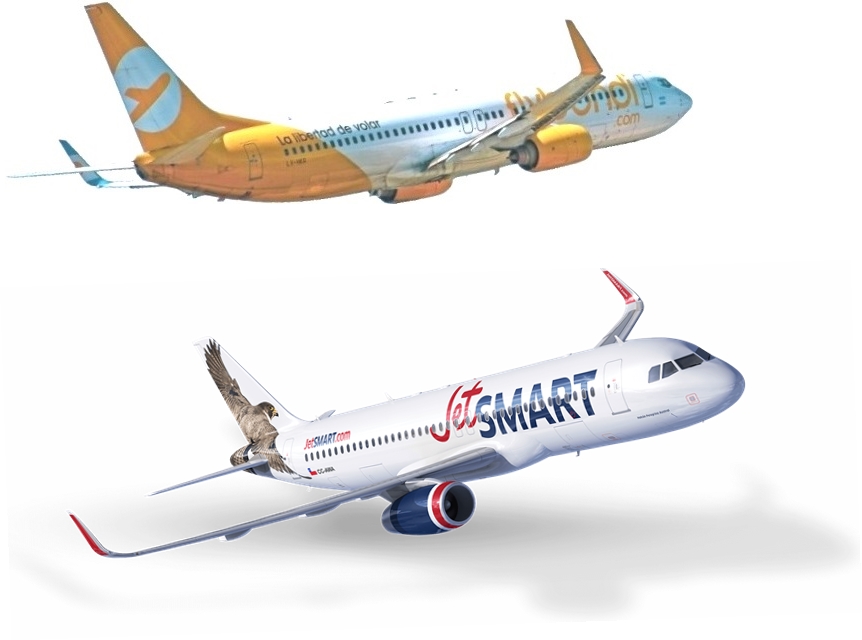
The low cost aeronautical unions accuse the Ministry of Labor of curtailing their labor rights. The board of directors targeted Kelly Olmos, whom they accuse of seeking to put them out of work at the express request of the traditional aeronautical unions. Flybondi Líneas Aéreas and JetSMART Airlines Argentina are the two low-cost airlines with their own unions.

The Argentine low-cost unions, the Flybondi Aeronautical Workers Association (ATAF) of Flybondi Líneas Aéreas and the JetSMART Airlines Workers Union Association of Argentina (ASTJ) reject the agreement approved by the Ministry of Labor. The Government, Aerolíneas Argentinas, the CLARA aeronautical chamber and the Argentine Aircraft Association (AAA) union signed a Collective Bargaining Agreement that seeks to regulate the activity of all cabin crew who work in Argentina, whether or not they are affiliated with that union . The initiative comes into conflict with the unions of the low cost airlines, which came out to reject the agreement. The agreement, signed on Thursday 12/29 at the Ministry of Labor, establishes that it includes «all the personnel who are Cabin Crew Members of Regular Air Transport Companies» that operate in the country. It also points out that for the work activity of cabin crew «the Argentine Aircraft Association (AAA) is recognized, in light of its Trade Union Personería 236, as the only representative union entity of the Passenger Cabin Crew» .

This agreement is the second of this type that the Government promotes with the conventional aeronautical unions, to the clear detriment of the unions by company that the previous National Government of Cambiemos authorized between 2018 and 2019 to group the employees of low cost airlines.

Now, the board of directors of the Flybondi and JetSMART Argentina companies, the only low-cost companies that operate in Argentina, rejected the agreement in a statement accusing the government of seeking to «curtail union rights and leave them without work in response to the express request of the traditional aeronautical guilds”.

The unions of the low cost maintained that Kelly Olmos challenges the workers of the low cost airlines. “The Minister refuses to receive the union representatives of the low-cost airline workers, who were democratically elected in free elections, ignoring our request for a hearing and the approval of the company’s collective agreements. With unusual speed, she summons unions that lack any representation in the low-cost sphere to parity negotiations. Thus, the Minister ignores reality, violates the legal framework of freedom of association, and assigns low cost workers a conventional framework and union representation that they themselves reject. Our rights are being violated by those who should protect and defend them… that is the paradox of Argentina… Regretable!!!”, they stressed in the statement.

In the statement, the representatives of the low cost workers also had words for the National Civil Aviation Administration (ANAC) and the Regulatory Body of the National Airport System (ORSNA). In this sense, they branded the official organizations as «political funds of La Cámpora» that in the past «ordered the closure of the El Palomar Airport» to try to destroy the sources of employment; while currently, Jorge Newbery Airport only serves Aerolíneas Argentinas, when reality should have more inclusion of regular Argentine airlines, a political promise that has not been fulfilled.

In another passage with strong criticism of the traditional unions, they underlined that «the pilots and airships associations, which parasitize the state flag line and deplete the state with immoral subsidies, intend to bring the low cost companies to their knees, imposing disparate working conditions in complicity with the National Government. Far from fighting for the maintenance and growth of labor sources, both the Ministry and traditional unions have taken care of closing airlines, one after another: LATAM, Andes, Avianca (Argentina), Norwegian Air Argentina, LAPA, SOL, DINAR, Southern Winds, and we can keep counting…”, they stated, while stating that the Flybondi and JetSmart workers will not follow that path and will resist.

Finally, the low-cost unions warned that they are convening in a state of assembly and mobilization «in repudiation of the CCTs of APLA and AAA, demanding the recognition of our union status and the approval of our own collective labor agreements».

Aerial perspectives

In view of the actions implemented unilaterally by the official bodies of ANAC, the National Government, Aerolíneas Argentinas, the CLARA aeronautical chamber and the union of the Argentine Association of Aeronavigators (AAA), have established guidelines for guidelines against unions and low cost airlines, where there is no doubt that they continue with a policy of aggression towards free competition and showing clear favoritism towards Aerolíneas Argentinas.

The low cost Flybondi and JetSMART Argentina will continue on a war footing caused by the structure of a Government that tries to annoy the aeronautical market by attacking the free market, while the budget airlines will continue stronger than ever to present all the necessary judicial resources in order to guarantee the freedom to fly. But above all it must be remembered that the politics of the day ends, with the possibility of thinking of a more plural change for commercial aviation.

PUBLISHER: Airgways.com
DBk: Twitter.com/sjetsmart / Twitter.com/tflybond / Jetsmart.com / Flybondi.com / Airgways.com
AW-POST: 202212301119AR
OWNERSHIP: Airgways Inc.
A\W A I R G W A Y S ®
Aerolíneas dudan restablecer China

AW | 2022 12 29 14:35 | AIR TRAFFIC / GOVERNMENT

Incertidumbre reinicio vuelos a China a pesar reglas más flexibles

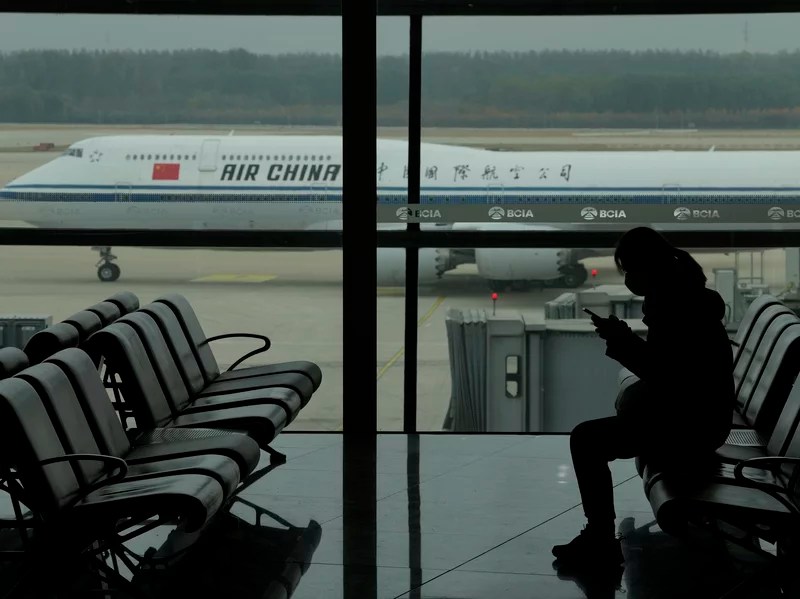
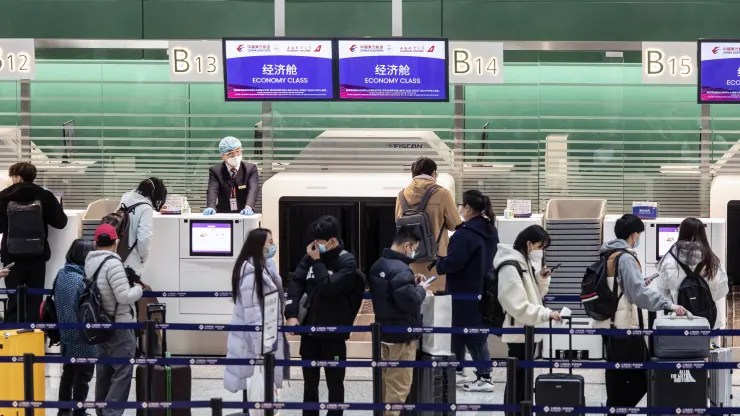
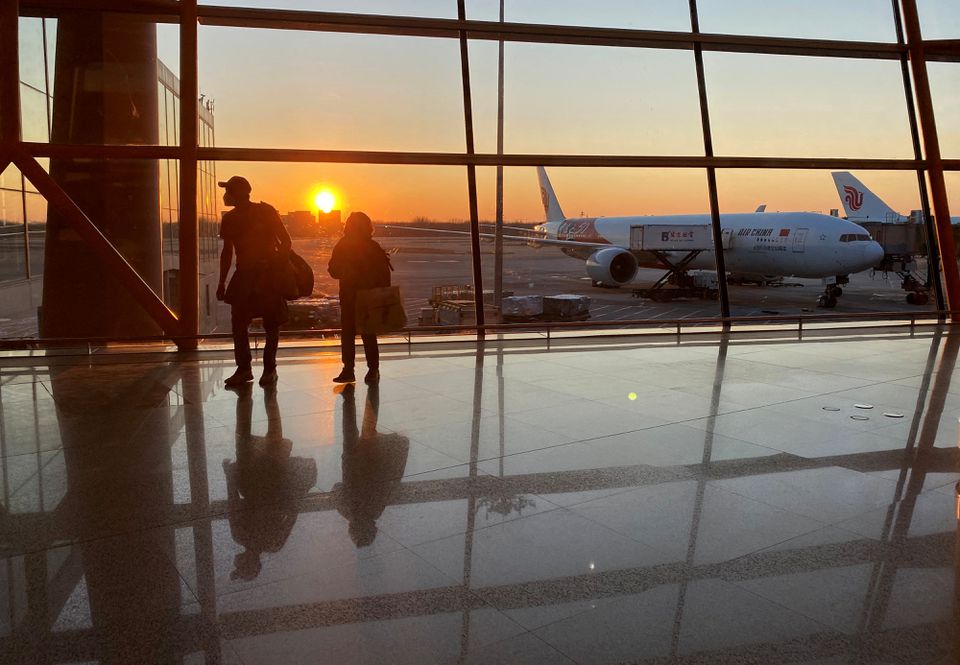
La República de China ha reabierto sus fronteras después de poner fin a su política COVID-cero, pero la industria de la aviación sigue dudando en reanudar los vuelos al país, lo que afecta las perspectivas de un rápido reinicio de los viajes significativos hacia y el país asiático. China comenzó a relajar las restricciones de COVID a principios de Diciembre 2022, y ha visto un aumento en los casos de Coronavirus que han abrumado a los hospitales de la nación. A partir de Enero 2023, los ciudadanos chinos, los titulares de visas de trabajo y la carga importada podrán ingresar a China sin necesidad de cuarentena, pero aún no está claro si los aeropuertos y las aerolíneas de la nación están listos para hacer frente a la afluencia.

El aumento continuo de Covid en el país ha provocado cautela en muchos países para restablecer sus rutas aéreas. China está reportando alrededor de 5.000 casos por día, pero los analistas dicen que tales números están muy subestimados, y la carga diaria de casos puede estar más cerca de un millón. Los hospitales están abrumados y los residentes están luchando por encontrar medicamentos básicos.

La Administración Nacional de Inmigración de China volverá a aceptar solicitudes de ciudadanos chinos que buscan pasaportes de turista a partir del 8 de enero, una práctica que se detuvo a principios de 2020 tras el cierre de la frontera internacional debido a la pandemia de COVID-19. Los vuelos programados a China en los próximos tres meses han aumentado en menos del 3 por ciento desde la semana pasada, según el proveedor de datos de aviación Cirium, a pesar de que el país anunció el Martes 27/12 que pondría fin a la cuarentena y reanudaría la emisión de pasaportes turísticos para los ciudadanos.

El Ministerio de Relaciones Exteriores de China dijo el Miércoles 28/12 que «actualmente el desarrollo de la situación epidémica de China es en general predecible y está bajo control». Sin embargo, se desconoce el verdadero número de casos y muertes diarias en China, ya que los funcionarios han dejado de exigir que se informen los casos y han cambiado las clasificaciones de las muertes por Covid. El Domingo 25/12, las autoridades dijeron que también dejarían de publicar los recuentos diarios de casos. Después de tres años de estar cerrada al mundo, China permitirá que las personas viajen más libremente a partir del 8 de Enero de 2023.

Muchos países se han pronunciado respecto al levantamiento de las restricciones de COVID-19 hacia el el 8 de Enero de 2023 en la República Popular de China. Estados de todo el mundo como Italia, Japón, Malaysia, India, Australia, Taiwán, Francia, Reino unido, Estados Unidos, entre otros han sopesado la apertura de las fronteras poniendo en duda la seguridad de las mismas ante el aumento de los casos no registrados de contagios. La industria de las líneas aéreas han manifestado su beneplácito por la reapertura, pero han manifestado precaución al tiempo de retomar sus rutas aéreas.

Italia, un Estado miembro de la UE y epicentro del virus a fines de 2019 y 2020, dijo que se estaba moviendo primero para «garantizar la vigilancia e identificación» de cualquier nueva variante del virus. Los vuelos que llegaron a Milán esta semana ya estaban probando a los pasajeros de China. Las autoridades encontraron que el 52% de los pasajeros estaban infectados con Covid en un vuelo que aterrizó el 26 de Diciembre de 2022. Las pruebas iniciales de los viajeros positivos de Covid que llegaban de China mostraron que quince de ellos tenían variantes de Omicron que ya estaban presentes en Italia, dijo la Primera Ministra Giorgia Meloni. Ella describió la noticia como bastante tranquilizadora. Italia es uno de los 26 países europeos en la zona Schengen sin fronteras y Meloni está pidiendo pruebas en toda la UE de pasajeros chinos, argumentando que las propias medidas de Italia podrían ser ineficaces. La Comisión Europea (CE) dijo que su comité de seguridad sanitaria se reuniría el Jueves 29/12 para discutir «posibles medidas para un enfoque coordinado de la UE» ante el aumento de Covid en China.

En India, las personas que viajan desde China y otros cuatro países asiáticos deben presentar una prueba de Covid negativa antes de llegar. Los pasajeros positivos también serán puestos en cuarentena. Taiwán dice que las personas que lleguen en vuelos desde China, así como en barco a dos islas, tendrán que someterse a pruebas de Covid a su llegada del 1 al 31 de Enero de 2023. Aquellos que den positivo podrán aislarse en casa. Mientras tanto, Malasia ha implementado medidas adicionales de seguimiento y vigilancia.

Japón, a partir del Viernes 30/12, los viajeros de China se someterán a la prueba de Covid a su llegada. Aquellos que den positivo tendrán que ponerse en cuarentena por hasta siete días. El número de vuelos hacia y desde China también estará restringido.

Australia se ha pronunciado al respecto. El Primer Ministro Anthony Albanese dijo el Jueves 29/12 que no haría ningún cambio inmediato en las reglas del país sobre permitir que los viajeros de China ingresen al país, pues países como Estados Unidos se mueven para imponer pruebas obligatorias de COVID-19 a las llegadas chinas. «No hay cambios en los consejos de viaje en este momento, pero continuamos monitoreando la situación, ya que continuamos monitoreando el impacto de COVID aquí en Australia, así como en todo el mundo», dijo Anthony Albanese.

Qantas Airways, la aerolínea más grande de Australia y la única aerolínea local con servicios a China, dio la bienvenida a la noticia de que el país estaba abriendo sus fronteras, pero no se comprometió a cuándo reanudará los vuelos. «Mantendremos a los clientes actualizados sobre cualquier plan que tengamos para reiniciar los vuelos a China», dijo un portavoz de Qantas.

Un portavoz de la aerolínea de bandera de Hong Kong, Cathay Pacific Airways, que ha luchado por mantenerse a flote en los últimos dos años debido a la ausencia de su mayor mercado, dijo que la aerolínea «continuará comunicándose con las autoridades pertinentes y aumentará nuestra capacidad de pasajeros hacia y desde China continental tanto como sea posible». Cathay Pacific está operando a aproximadamente el 30 por ciento de su capacidad anterior a la pandemia debido a la escasez desenfrenada de personal y otras limitaciones operativas, incluido el cierre de China. Cathay tiene un par de servicios a la semana programados en enero desde Hong Kong a ciudades del continente, incluyendo Beijing, Chengdu, Chongqing, Fuzhou. El calendario actual aumenta ligeramente en Febrero 2023 con un aumento en los servicios a Beijing, pero no está claro cuándo se reanudarán los servicios diarios.

Singapur ha reemplazado a Hong Kong como el mayor centro de viajes de la región en los últimos dos años. Singapore Airlines apunta al 80 por ciento de su capacidad de asientos antes de COVID para fin de año, pero no se apresura a aumentar sus servicios a China, diciendo en un comunicado que «continuará monitoreando la demanda de viajes aéreos y ajustará la capacidad en consecuencia».

Korean Air actualmente opera nueve vuelos semanales a siete ciudades en China continental y aumentará eso a quince vuelos a nueve ciudades a partir del próximo mes de Enero 2023, con las dos ciudades adicionales siendo Shenzhen y Xiamen además de Shenyang, Shanghai, Guangzhou, Dalian, Qingdao, Tianjin y Nanjing.

El Reino Unido y Francia dijeron el Jueves 29/12 por la mañana que actualmente no tenían planes de reintroducir pruebas obligatorias de Covid-19 o requisitos adicionales para los viajeros que llegan al país. El Ministro de Defensa del Reino Unido, Ben Wallace, dijo el Jueves 29/12 por la tarde que esperaba ver alguna aclaración el 29/12 o 30/12 del Departamento de Transporte del país sobre cualquier nueva regla para las llegadas.

Estados Unidos se ha convertido en el último país en imponer pruebas de Covid-19 a los visitantes de China, después de que Beijing anunciara reabrir las fronteras la próxima semana. El Miércoles 28/12, Estados Unidos dijo que la falta de datos adecuados y transparentes de Covid-19 en China había contribuido a la decisión de exigir pruebas de Covid a partir del 5 de Enero de 2023 para los viajeros que ingresan al país desde China, Hong Kong y Macao.

La Asociación Internacional de Transporte Aéreo (IATA), que representa a 290 de las aerolíneas del mundo, dijo que las pruebas COVID-19 previas a la partida de China deben eliminarse para garantizar que la industria pueda hacer frente cuando se reanuden los viajes desde el país más densamente poblado. «También es crucial que toda la cadena de valor de la aviación en China esté bien preparada y cuente con los recursos adecuados para manejar el aumento esperado de viajeros aéreos, a fin de evitar las interrupciones y problemas de viaje que se ven en otras partes del mundo cuando se reabrieron las fronteras», dijo Xie Xingquan, Vicepresidente Regional de IATA para el Norte de Asia.

Airlines hesitate to restore China

Uncertainty restart flights to China despite looser rules

The China has reopened its borders after ending its COVID-zero policy, but the aviation industry remains hesitant to resume flights to the country, weighing on prospects for a quick restart of significant travel to and from China. asian country. China began easing COVID restrictions in early December 2022, and has seen a spike in Coronavirus cases that have overwhelmed the nation’s hospitals. Starting in January 2023, Chinese citizens, work visa holders and imported cargo will be able to enter China without the need for quarantine, but it is not yet clear whether the nation’s airports and airlines are ready to deal with the pandemic influx.

The continuous increase of Covid in the country has caused caution in many countries to restore their air routes. China is reporting around 5,000 cases a day, but analysts say such numbers are grossly underestimated, and the daily caseload may be closer to 1 million. Hospitals are overwhelmed and residents are struggling to find basic medicine.

China’s National Immigration Administration will resume accepting applications from Chinese citizens seeking tourist passports starting January 8, a practice that was halted in early 2020 following the closure of the international border due to the COVID-19 pandemic. . Scheduled flights to China in the next three months have increased by less than 3 percent since last week, according to aviation data provider Cirium, despite the fact that the country announced on Tuesday 12/27 that it would end the quarantine. and would resume the issuance of tourist passports for citizens.

The Chinese Foreign Ministry said on Wednesday 12/28 that «currently the development of China’s epidemic situation is generally predictable and under control». However, the true number of daily cases and deaths in China is unknown, as officials have stopped requiring case reporting and have changed the classifications of Covid deaths. On Sunday 12/25, authorities said they would also stop publishing daily case counts. After three years of being closed to the world, China will allow people to travel more freely from January 8, 2023.

Many countries have spoken out regarding the lifting of COVID-19 restrictions on January 8, 2023 in the People’s Republic of China. States around the world such as Italy, Japan, Malaysia, India, Australia, Taiwan, France, the United Kingdom, the United States, among others, have considered opening their borders, questioning their security given the increase in non-violent cases. contagion records. The airline industry has expressed its approval of the reopening, but has expressed caution when resuming its air routes.

Italy, an EU member state and epicenter of the virus in late 2019 and 2020, said it was moving first to «ensure surveillance and identification» of any new virus variants. Flights arriving in Milan this week were already testing passengers from China. Authorities found that 52% of passengers were infected with Covid on a flight that landed on December 26, 2022. Initial tests of Covid-positive travelers arriving from China showed that fifteen of them had Omicron variants that were already were present in Italy, Prime Minister Giorgia Meloni said. She described the news as quite reassuring. Italy is one of 26 European countries in the border-free Schengen zone and Meloni is calling for EU-wide tests of Chinese passengers, arguing that Italy’s own measures could be ineffective. The European Commission (EC) said its health security committee would meet on Thursday 12/29 to discuss «possible measures for a coordinated EU approach» to the rise of Covid in China.

In India, people traveling from China and four other Asian countries must present a negative Covid test before arrival. Positive passengers will also be quarantined. Taiwan says that people arriving on flights from China, as well as by boat to two islands, will have to undergo Covid tests upon arrival from January 1 to 31, 2023. Those who test positive will be able to isolate at home. Meanwhile, Malaysia has implemented additional monitoring and surveillance measures.

Japan, from Friday 12/30, travelers from China will be tested for Covid upon arrival. Those who test positive will have to quarantine for up to seven days. The number of flights to and from China will also be restricted.

Australia has ruled on the matter. Prime Minister Anthony Albanese said on Thursday 12/29 that he would not make any immediate changes to the country’s rules on allowing travelers from China to enter the country as countries like the United States move to impose mandatory COVID-19 testing on Chinese arrivals. «There are no changes to travel advice at this time, but we continue to monitor the situation as we continue to monitor the impact of COVID here in Australia, as well as around the world», Anthony Albanese said.

Qantas Airways, Australia’s largest airline and the only local carrier with services to China, welcomed the news that the country was opening its borders but did not commit to when it will resume flights. «We will keep customers updated on any plans we have to restart flights to China», a Qantas spokesperson said.

A spokesman for Hong Kong’s flag carrier Cathay Pacific Airways, which has struggled to stay afloat in the past two years due to the absence of its biggest market, said the airline «will continue to communicate with the relevant authorities and increase our passenger capacity to and from mainland China as much as possible». Cathay Pacific is operating at approximately 30 percent of its pre-pandemic capacity due to rampant staff shortages and other operational constraints, including the China lockdown. Cathay has a couple of services a week scheduled in January from Hong Kong to mainland cities including Beijing, Chengdu, Chongqing, Fuzhou. The current schedule increases slightly in February 2023 with an increase in services to Beijing, but it is unclear when daily services will resume.

Singapore has replaced Hong Kong as the region’s largest travel hub in the past two years. Singapore Airlines is targeting 80 per cent of its pre-COVID seat capacity by the end of the year, but is not rushing to increase its services to China, saying in a statement that it will «continue to monitor air travel demand and adjust capacity accordingly».

Korean Air currently operates nine weekly flights to seven cities in mainland China and will increase that to fifteen flights to nine cities starting next January 2023, with the two additional cities being Shenzhen and Xiamen in addition to Shenyang, Shanghai, Guangzhou, Dalian, Qingdao, Tianjin and Nanjing.

The UK and France said Thursday morning 12/29 that they currently had no plans to reintroduce mandatory Covid-19 testing or additional requirements for travelers arriving in the country. UK Defense Minister Ben Wallace said Thursday afternoon 12/29 that he expected to see some clarification on 12/29 or 12/30 from the UK Department for Transport on any new rules for arrivals.

The United States has become the latest country to impose Covid-19 tests on visitors from China, after Beijing announced to reopen the borders next week. On Wednesday 12/28, the United States said that the lack of adequate and transparent Covid-19 data in China had contributed to the decision to require Covid tests from January 5, 2023 for travelers entering the country from China, Hong Kong and Macao.

The International Air Transport Association (IATA), which represents 290 of the world’s airlines, said pre-departure COVID-19 testing from China must be phased out to ensure the industry can cope when travel resumes from the most densely populated country. «It is also crucial that the entire aviation value chain in China is well prepared and adequately resourced to handle the expected increase in air travellers, in order to avoid the disruptions and travel problems seen in other parts of the world when the borders were reopened», said Xie Xingquan, IATA Regional Vice President for North Asia.

PUBLISHER: Airgways.com
DBk: Fmprc.gov.cn/mfa_eng / Wu Huiyuan / Tingshu Wang / Cirium.com / Airgways.com
AW-POST: 202212291435AR
OWNERSHIP: Airgways Inc.
A\W A I R G W A Y S ®
Portugal completa rescate de TAP

AW | 2022 12 29 10:47 | AIRLINES / GOVERNMENT

Gobierno inyecta € 980 Euros para rescate aerolínea portuguesa

TAP_Portugal_Logo.svg

El Gobierno de Portugal completa el plan de rescate de TAP Air Portugal aprobando una inyección monetaria de € 980 millones Euros para recapitalizar la aerolínea. Se trata del último cheque estatal previsto en el plan de reestructuración que autorizó la Unión Europea en 2021, con un monto total que asciende a € 3.200 millones de Euros. En un comunicado remitido a la Comisión del Mercado de Valores Mobiliarios (CMVM), TAP Airlines informó de la reducción del capital social de € 904,3 millones de Euros a cero para la cobertura parcial de las pérdidas.

Renuncias en Portugal

El Ministro de Infraestructuras de Portugal, Pedro Nuno Santos, ha dimitido tras la controversia que involucra a la aerolínea de bandera del país, TAP Air Portugal. La controversia se produce después de que un ex miembro de la Junta Directiva de la aerolínea recibió una indemnización sustancial por despido en medio de una crisis de costo de vida. La situación surgió cuando Alexandra Reis, ex Secretaria de Estado del Tesoro, recibió € 500.000 en indemnización por despido después de renunciar como miembro de la Junta Directiva de la aerolínea propiedad del Gobierno. Sin embargo, los opositores afirmaron que como Alexandra Reis renunció a la aerolínea, no tenía derecho a una indemnización por despido. Tras la reacción posterior, Alexandra Reis renunció al cargo de Secretaria de Estado del Tesoro el Miércoles 28/12, y ahora Nuno Santos, quien había sido Ministro de infraestructura del país desde 2015, ha presentado su renuncia. En un comunicado, Nuno Santos dijo que su renuncia se produjo como resultado de la percepción pública del caso durante la actual crisis del costo de vida: «Asumí la responsabilidad política y presentó su renuncia al primer ministro». El secretario de Estado de infraestructura, Hugo Mendes, también ha presentado la renuncia.

Acciones en TAP Air Portugal

El Gobierno portugués posee una participación del 72,5% en TAP Air Portugal, y para ayudar a su supervivencia y recuperación de la pandemia, la aerolínea recibió un plan de rescate total por € 3.200 millones de Euros/US$ 3.400 millones de Dólares de la Unión Europea. Como parte del plan, en un intento por volver a la rentabilidad, la aerolínea ha tomado una serie de medidas drásticas, incluida la reducción del tamaño de su flota, el recorte de miles de empleos y la disminución de los salarios. Sin embargo, estos ajustes no han sido bien recibidos por la fuerza laboral de la aerolínea y han llevado a una acción industrial, incluida una huelga del Sindicato SNPVAC de dos días de la Tripulación de Cabina a principios de Diciembre 2022 donde exigen salarios más altos y mejores condiciones de trabajo. La huelga ha llevado a cientos de vuelos cancelados desde los centros de operaciones de la aerolínea en el Aeropuerto de Lisboa/LIS y el Aeropuerto de Oporto/OPO.

Perspectivas TAP Portugal

La aerolínea busca retornar a la estabilidad y beneficiarse del plan de salvataje provisto por la Unión Europea. La semana pasada, TAP Air Portugal aumentó su oferta transatlántica al agregar más vuelos a los Estados Unidos, Brasil y Venezuela para el próximo verano septentrional, que serán operados por Airbus A321LR y Airbus A330-900. TAP Air Portugal fue el cliente de lanzamiento del Airbus A330-900 en Diciembre de 2018. La aerolínea posee actualmente diecinueve A350-900NEO (19) con dos órdenes adicionales.

Tras la finalización del proceso de rescate, el Gobierno portugués estimulará la privatización de la aerolínea, donde se perfilan varias aerolíneas en disputa entre ellas figuran Air France-KLM Group, Lufthansa Airlines Group, Iberia Líneas Aéreas e International Airlines Group (IAG).

Portugal completes rescue of TAP

Government inject € 980 euros for Portuguese airline rescue

The Portugal government completes the rescue plan of TAP Air Portugal approving a monetary injection of € 980 million euros to recapitize the airline. This is the last state check planned in the restructuring plan authorized by the European Union in 2021, with a total amount that amounts to € 3.2 billion euros. In a statement sent to the Commission of the Transfer of Movable Securities (CMVM), Tap Airlines reported the reduction of the share capital of € 904.3 million to zero for the partial coverage of the losses.

Resignations in Portugal

The Minister of Infrastructure of Portugal, Pedro Nuno Santos, has resigned after the controversy that involves the country’s flag airline, Tap Air Portugal. The controversy occurs after a former member of the Board of Directors of the airline received substantial compensation for dismissal amid a cost of life crisis. The situation arose when Alexandra Reis, former Secretary of State of the Treasury, received € 500,000 in compensation for dismissal after resigning as a member of the Board of Directors of the airline owned by the Government. However, the opponents said that as Alexandra Reis resigned from the airline, he had no right to compensation for dismissal. After the posterior reaction, Alexandra Reis resigned from the position of Secretary of State of the Treasury on Wednesday 12/28, and now Nuno Santos, who had been Minister of Infrastructure of the country since 2015, has presented his resignation. In a statement, Nuno Santos said that his resignation occurred as a result of the public perception of the case during the current crisis of the cost of living: «I assumed political responsibility and presented his resignation to the prime minister», The Secretary of State for Infrastructure, Hugo Mendes, also resigned.

Shareholders Tap Air Portugal

The Portuguese government has a 72.5% participation in TAP Air Portugal, and to help its survival and recovery of the pandemic, the airline received a total rescue plan for € 3.2 billion Euros/US$ 3.4 billion Dollars the European Union. As part of the plan, in an attempt to return to profitability, the airline has taken a series of drastic measures, including the reduction of the size of its fleet, the cut of thousands of jobs and the decrease in wages. However, these adjustments have not been well received by the workforce of the airline and have led to an industrial action, including a two-day SNPVAC union strike of the cabin crew in early December 2022 where they demand higher wages and higher wages and Better work conditions. The strike has taken hundreds of canceled flights from the airline operations centers at the Lisbon Airport/LIS and the Oporto airport/OPO.

Tap Portugal perspectives

The airline seeks to return to stability and benefit from the Salvage Plan provided by the European Union. Last week, TAP Air Portugal increased its transatlantic offer by adding more flights to the United States, Brazil and Venezuela for next northern summer, which will be operated by Airbus A321LR and Airbus A330-900. TAP Air Portugal was the Airbus A330-900 launch customer in December 2018. The airline currently has nineteen A350-900NEO (19) with two additional orders.

After the completion of the rescue process, the Portuguese government will stimulate the privatization of the airline, where several airlines are outlined in dispute between them are Air France-KLM Group, Lufthansa Airlines Group, Iberia Airlines and International Airlines Group (IAG).

Portugal completa o resgate TAP

Governo injeta € 980 Euros para resgate de TAP Air Portugal

TAP Portugal

O Governo de Portugal conclui o plano de resgate de TAP Air Portugal, que aprovava uma injeção monetária de € 980 milhões de Euros para recapitizar a companhia aérea. Esta é a última verificação estadual planejada no plano de reestruturação autorizado pela União Europeia em 2021, com um valor total que equivale a 3,2 bilhões de euros. Em comunicado enviado à Comissão de Transferência de Valores Mobiliários (CMVM), a TAP Airlines relatou a redução do capital social de € 904,3 milhões para zero para a cobertura parcial das perdas.

Demissões em Portugal

O Ministro da Infraestrutura de Portugal, Pedro Nuno Santos, renunciou após a controvérsia que envolve a companhia aérea de bandeira do país, TAP Air Portugal. A controvérsia ocorre depois que um ex-membro do Conselho de Administração da companhia aérea recebeu uma compensação substancial por demissão em meio a uma crise de custo da vida. A situação surgiu quando Alexandra Reis, ex-Secretário de Estado do Tesouro, recebeu € 500.000 em compensação por demissão após a renúncia como membro do Conselho de Administração da companhia aérea de propriedade do governo. No entanto, os oponentes disseram que, quando Alexandra Reis renunciou à companhia aérea, ele não tinha o direito de compensar a demissão. Após a reação posterior, Alexandra Reis renunciou ao cargo de Secretário de Estado do Tesouro na Quarta-feira, 28/12, e agora Nuno Santos, que era ministro da Infraestrutura do país desde 2015, apresentou sua demissão. Em um comunicado, Nuno Santos disse que sua renúncia ocorreu como resultado da percepção pública do caso durante a crise atual do custo de vida: «Assumi a responsabilidade política e apresentei sua renúncia ao Primeiro Ministro». O Secretário de Estado da Infraestrutura, Hugo Mendes, também renunciou.

Ações no Tap Air Portugal

O Governo português tem uma participação de 72,5% na TAP Air Portugal e, para ajudar sua sobrevivência e recuperação da pandemia, a companhia aérea recebeu um plano total de resgate por € 3,2 bilhões de euros/US$ 3,4 bilhões em dólares na União Europeia. Como parte do plano, na tentativa de retornar à lucratividade, a companhia aérea adotou uma série de medidas drásticas, incluindo a redução do tamanho de sua frota, o corte de milhares de empregos e a diminuição dos salários. No entanto, esses ajustes não foram bem recebidos pela força de trabalho da companhia aérea e levaram a uma ação industrial, incluindo uma greve da União SNPVAC de dois dias da tripulação de cabine no início de Dezembro de 2022, onde exigem salários mais altos e mais altos salários e melhor trabalho condições. A greve levou centenas de vôos cancelados dos centros de operações das companhias aéreas no Aeroporto de Lisboa/LIS e no Aeroporto de Oporto/OPO.

TAP Portugal Perspectives

A companhia aérea busca retornar à estabilidade e se beneficiar do plano de salvamento provisto pela União Europeia. Na semana passada, a TAP Air Portugal aumentou sua oferta transatlântica adicionando mais vôos aos Estados Unidos, Brasil e Venezuela para o próximo verão do Norte, que será operado pela Airbus A321LR e Airbus A330-900. A TAP Air Portugal foi o cliente de lançamento da Airbus A330-900 em Dezembro de 2018. Atualmente, a companhia aérea possui dezenove A350-900NEO (19) com dois pedidos adicionais.

Após a conclusão do processo de resgate, o Governo português estimulará a privatização da companhia aérea, onde várias companhias aéreas são descritas em disputa entre elas são o Air France-KLM Group, o Lufthansa Airlines Group, o Iberia Airlines e o International Airlines Group (IAG).

AW-79990008

PUBLISHER: Airgways.com
DBk: Flytap.com / Portugal.gov.pt / Airgways.com
AW-POST: 202212291047AR
OWNERSHIP: Airgways Inc.
A\W A I R G W A Y S ®

China suprime cuarentena internacional

AW | 2022 12 27 08:48 | AIR TRAFFIC / GOVERNMENT / AIRLINES

Gobierno levanta cuarentena vuelos desde exterior a partir 08/01

El Gobierno de la República Popular de China ha anunciado que a partir del 8 de Enero de 2023 suprimirá la cuarentena para los pasajeros que arriben al país así como otras restricciones impuestas a las compañías aéreas. La supresión de la cuarentena se produce cuando China pasa de los controles de Clase A a los de Clase B, según la Comisión Nacional de Sanidad de China. Aunque los pasajeros no tendrán que pasar la cuarentena al entrar en China, deberán someterse a una prueba PCR en las 48 horas siguientes a su salida. Los pasajeros también deberán llevar mascarilla en los vuelos con destino a China.

Pekín abandonó recientemente la política de Cero Covid que se caracterizaba por cierres masivos y rondas interminables de pruebas de Covid-19, y que tuvo un coste económico devastador. Los informes de China, sin embargo, sugieren tasas de infección extremadamente altas y un creciente número de muertes. Algunos gobiernos han expresado su preocupación por que la brusca apertura de China pueda dar lugar a nuevas y peligrosas variantes. La apertura de China sigue a una reapertura más amplia del norte de Asia a finales de 2022, que vio cómo países vecinos del norte de Asia como Japón, Corea del Sur y Taiwán eliminaban las restricciones de viaje.

En la 66ª Asamblea de Presidentes de la Asociación de Líneas Aéreas de Asia y el Pacífico, celebrada a mediados de Noviembre 2022, los directores ejecutivos de las aerolíneas consideraban en general que las restricciones de viaje a China continuarían hasta bien entrado 2023. Ninguno predijo una reapertura repentina.

El movimiento de Pekín hacia la apertura también se produce cuando las aerolíneas de Asia-Pacífico luchan por restablecer la capacidad a medida que el repunte de los viajes en 2022 sigue ganando fuerza. Los datos de Cirium muestran que las aerolíneas ofrecieron 550.000 asientos entrantes a China en Noviembre de 2022, un 93,3% menos que los 16,5 millones de asientos de Noviembre de 2019, antes de que surgiera la pandemia de Coronavirus en la ciudad china de Wuhan. En Noviembre de 2019, las cinco principales ciudades con tráfico de salida hacia China fueron Seúl (710.000 asientos), Hong Kong (616.000 asientos), Osaka (444.000 asientos), Bangkok (440.000 asientos) y Taipéi (366.0000 asientos).

La mayor parte de la capacidad hacia China continental en Noviembre de 2019 fue proporcionada por las tres grandes aerolíneas chinas Air China, China Eastern Airlines y China Southern Airlines, así como por aerolíneas chinas más pequeñas como Spring Airlines y Xiamen Airlines. Las principales aerolíneas internacionales que anteriormente desplegaron una capacidad considerable en China fueron Korean Air, Asiana Airlines, Thai Lion y Thai AirAsia.

China lifts international quarantine

Government lifts quarantine flights from abroad as of 01/08

The Government of the People’s Republic of China has announced that as of January 8, 2023, it will abolish the quarantine for passengers arriving in the country as well as other restrictions imposed on airlines. The lifting of the quarantine comes as China moves from Class A to Class B controls, according to China’s National Health Commission. Although passengers will not have to undergo quarantine upon entering China, they must undergo a PCR test within 48 hours of departure. Passengers must also wear a mask on flights to China.

Beijing recently abandoned the Zero Covid policy that was characterized by massive lockdowns and endless rounds of Covid-19 testing, and which came at a devastating economic cost. Reports from China, however, suggest extremely high infection rates and a rising number of deaths. Some governments have expressed concern that China’s abrupt opening could give rise to new and dangerous variants. China’s opening follows a broader reopening of North Asia in late 2022, which saw neighboring North Asian countries like Japan, South Korea and Taiwan remove travel restrictions.

At the 66th Asia Pacific Airlines Association Presidents’ Meeting, held in mid-November 2022, airline CEOs generally considered that travel restrictions to China would continue well into 2023. None predicted a sudden reopening.

Beijing’s move to open up also comes as Asia-Pacific airlines struggle to restore capacity as the 2022 travel rebound continues to gain steam. Cirium data shows that airlines offered 550,000 inbound seats to China in November 2022, down 93.3% from the 16.5 million seats in November 2019, before the Coronavirus pandemic broke out in the Chinese city. from Wuhan. As of November 2019, the top five cities with outbound traffic to China were Seoul (710,000 seats), Hong Kong (616,000 seats), Osaka (444,000 seats), Bangkok (440,000 seats) and Taipei (366,000 seats).

Most of the capacity to mainland China in November 2019 was provided by the big three Chinese airlines Air China, China Eastern Airlines and China Southern Airlines, as well as smaller Chinese carriers such as Spring Airlines and Xiamen Airlines. The major international airlines that previously deployed significant capacity in China were Korean Air, Asiana Airlines, Thai Lion, and Thai AirAsia.

中國解除國際檢疫

政府自 01/08 起取消來自國外的檢疫航班

中華人民共和國政府宣布,自 2023 年 1 月 8 日起,取消對入境旅客的隔離以及對航空公司實施的其他限制。 根據中國國家衛生委員會的說法,隨著中國從 A 類控制轉為 B 類控制,檢疫解除之際。儘管旅客入境時無需接受隔離,但必須在出發後 48 小時內接受 PCR 檢測。 乘客在飛往中國的航班上也必須戴口罩。

北京最近放棄了以大規模封鎖和無休止的 Covid-19 測試為特徵的零 Covid 政策,並為此付出了毀滅性的經濟代價。 然而,來自中國的報告表明感染率極高,死亡人數也在上升。 一些政府擔心中國的突然開放可能會產生新的危險變種。中國的開放是在北亞於 2022 年底更廣泛地重新開放之後進行的,日本、韓國和台灣等鄰近的北亞國家取消了旅行限制。

在 2022 年 11 月中旬舉行的第 66 屆亞太航空協會主席會議上,航空公司首席執行官普遍認為對中國的旅行限制將持續到 2023 年。沒有人預計會突然重新開放。

隨著 2022 年旅遊反彈繼續增強,亞太地區的航空公司正努力恢復運力,北京也採取了開放舉措。 Cirium 數據顯示,航空公司在 2022 年 11 月向中國提供了 550,000 個入境座位,比 2019 年 11 月冠狀病毒大流行爆發前的 1650 萬個座位下降了 93.3%。 截至2019年11月,中國出境客流量排名前五位的城市依次為首爾(71萬座席)、香港(61.6萬座席)、大阪(44.4萬座席)、曼谷(44萬座席)和台北(36.6萬座席)。

2019 年 11 月,飛往中國大陸的大部分運力由中國三大航空公司國航、東航和南航以及春秋航空和廈門航空等規模較小的中國航空公司提供。 此前在中國部署了大量運力的主要國際航空公司是大韓航空、韓亞航空、泰國獅航和泰國亞航。

PUBLISHER: Airgways.com
DBk: Gov.cn / En.nhc.gov.cn / Qilai Shen / Ng Han Guan / Toby Melville / Airgways.com
AW-POST: 202212270848AR
OWNERSHIP: Airgways Inc.
A\W A I R G W A Y S ®

Argentina homologa Convenio aéreo

AW | 2022 12 24 15:13 | AVIATION ORGANISMS / GOVERNMENT / AIRLINES

Gobierno y gremios aeronáuticos clásicos acuerdan unilateralmente
Aeronavegantes firma convenio laboral

El Gobierno de Argentina, Aerolíneas Argentinas, la Cámara aeronáutica CLARA y el gremio Asociación Argentina de Aeronavegantes (AAA) firmaron un Convenio Colectivo de Trabajo que procura regular la actividad de todos los Tripulantes de Cabina que trabajan en la Argentina, independientemente del sindicato afiliado.

El Convenio Colectivo de Trabajo firmado el Jueves 22/12 en el Ministerio de Trabajo, establece que incluye a todo el personal que reviste como Tripulante de Cabina de Pasajeros de Empresas de Transporte Aéreo Regulares que operan en el país. También señala que para la actividad laboral de los Tripulantes de Cabina “se reconoce a la Asociación Argentina de Aeronavegantes (AAA), a la luz de su Personería Gremial 236, como la única entidad sindical representativa de los Tripulantes de Cabina de Pasajeros”. Este convenio es el segundo de este tipo que el Gobierno impulsa con los gremios aeronáuticos convencionales, en detrimento de los «gremios por empresa” que el anterior Gobierno de Cambiemos autorizó entre 2018 y 2019 para agrupar a los empleados de las aerolíneas low cost.

El primero de esos convenios se realizó en Octubre 2022 con el Sindicato de Pilotos APLA. Al igual que ahora, aquel acuerdo estableció que todos los pilotos que operan en aviones de matrícula argentina se deben regir según ese convenio colectivo de trabajo, estén o no afiliados al gremio que encabeza Pablo Biró. En el caso de Aeronavegantes, el nuevo convenio tiene una duración de dos años en sus condiciones de trabajo y de un año en lo salarial. Establece un sueldo base de AR$ 150.000 Pesos mensuales para todos los Tripulantes de Cabina, a partir de los cuales se suman adicionales por función, categoría, cargo y otros ítem.

Jun Pablo Brey, representante de Aeronavegantes, quien políticamente es cercano a Facundo Moyano, ha expresado indirectamente que las aerolíneas low cost y sus entidades gremiales, llamadas “sindicatos amarillos”, en referencia al color que identifica al macrismo, deberían adecuarse al actual Convenio Colectivo de Trabajo. “La homologación de este Convenio impide la precarización y flexibilización de los trabajadores de la industria aeronáutica por parte de aquellas compañías aerocomerciales que quieran establecerse en el país, sin priorizar la seguridad operacional”, dijo Juan Pablo Brey.

El acuerdo fueron suscriptos hasta la fecha por APLA, Aeronavegantes (AAA), también se incorpora la cámara CLARA, agrupación que nuclea a Andes Líneas Aéreas, que dejó de volar a partir de la pandemia y busca restablecer sus operaciones con vuelos charters, como así también nuclea a las extintas Avian Líneas Aéreas y Flyest Líneas Aéreas.

Argentina Aeronautical agreement

Classic Aeronautical Government and Guilds agree unilaterally
Labor Agreement Signature Airbagers

The Government of Argentina, Aerolíneas Argentinas, the CLARA Aeronautical Chamber and the Argentine Association of Airnavigators (AAA) signed a collective work agreement that seeks to regulate the activity of all cabin crew working in Argentina, regardless of the affiliated union.

The Collective Labor Agreement signed on Thursday, 12/22 at the Ministry of Labor, establishes that it includes all the personnel who are as a passenger cabin crew of regular air transport companies that operate in the country. He also points out that for the work activity of the cabin crew “the Argentine Airbag Association (AAA) is recognized, in the light of its union status 236, as the only representative union entity of the passenger cabin crew members”. This agreement is the second of this type that the Government promotes with the conventional aeronautical unions, to the detriment of the «guilds per company» that the previous government of Cambiemos authorized between 2018 and 2019 to group the employees of the Low Cost airlines.

The first of these agreements was made in October 2022 with the Pilot Union APA. Like now, that agreement established that all pilots operating in Argentine registration aircraft must be governed according to this collective work agreement, whether or not they are affiliated with the guild headed by Pablo Biró. In the case of aircraft, the new agreement lasts two years in its working conditions and one year in the salary. It establishes a base salary of AR$ 150,000 pesos per month for all cabin crew, from which additional are added by function, category, position and other item.

Jun Pablo Brey, representative of Aeronavegantes, who is politically close to Facundo Moyano, has indirectly expressed that Low Costa airlines and their union entities, called “yellow unions”, in reference to the color that identifies the macrismo, they should adapt to the current collective agreement of work. «The homologation of this agreement prevents the precariousness and flexibility of workers in the aeronautical industry by those aerocomercial companies that want to establish themselves in the country, without prioritizing operational security», said Juan Pablo Brey.

The agreement were signed to date by APLA, aircraft (AAA), the clear camera is also incorporated, a group that brings together airlines, which stopped flying from the pandemic and seeks to restore its operations with charters flights, as well as It also brings together the extinct Avian Líneas Aéreas and Flyst Líneas Aéreas.

PUBLISHER: Airgways.com
DBk: Aeronavegantes.org.ar / Argentina.gob.ar/trabajo / Airgways.com
AW-POST: 202212241513AR
OWNERSHIP: Airgways Inc.
A\W A I R G W A Y S ®

EEUU posterga cert. 737-7/10 MAX

AW | 2022 12 23 01:07 | INDUSTRY / GOVERNMENT / AVIATION ORGANISMS

Gobierno renuncia fecha límite de seguridad de aeronaves

Boeing 737 MAX_Isologotype

Seal_of_the_United_States_Congress

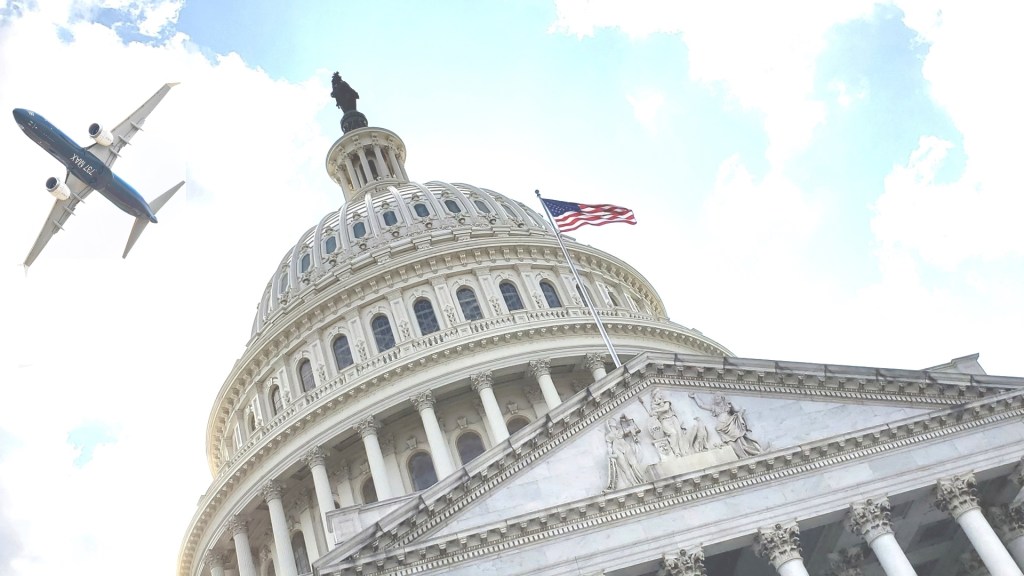
Ubicado dentro de la revelación del Martes 20/12 del proyecto de Ley de Gastos Gubernamentales de 4.000 páginas de US$ 1.7 billones, el Congreso de Estados Unidos anuló una fecha límite crítica de seguridad del 27 de Diciembre de 2022 que habría requerido que The Boeing Company actualizara los sistemas de alerta de la tripulación en su serie Boeing 737 MAX. La fecha límite provino de la Ley de Certificación, Seguridad y Responsabilidad de Aeronaves de 2020, que habría requerido que todos los aviones certificados por la Administración Federal de Aviación después del 27 de Diciembre de 2022 estuvieran equipados con los últimos estándares de seguridad.

Varios aviones de la familia 737 MAX se encuentran en diferentes etapas de aprobación regulatoria. Actualmente, el MAX 8 y MAX 9 son parte de la flota existente de la compañía, y sus sistemas de alerta de tripulación se actualizarán con lo que la compañía llama un sistema preferible de comunalidad. El MAX 8 fue el modelo de avión involucrado en los accidentes de Indonesia y Etiopía que dejaron 346 personas muertas en conjunto. En el momento de los accidentes, el Defensor de los Derechos del Consumidor Ralph Nader pidió un retiro total del MAX 8; entre los muertos estaba su sobrina nieta, una pasajera en el vuelo etíope ET-302.

La insistencia de Boeing de que tiene un mejor medio para garantizar la seguridad de los aviones se desmiente por el hecho de que otros fabricantes de aviones han cumplido con la fecha límite del 27 de Diciembre de 2022. El impulso de Boeing para una extensión del plazo, impulsado por millones de Dólares en cabildeo, vuelve a las mismas presiones comerciales que llevaron a la compañía a retener los cambios de software en los aviones 737 MAX originales de los reguladores. Aunque el MAX 7 no es parte de la flota existente de Boeing, el MAX 7 tendrá el mismo sistema de similitud que el MAX 8 y MAX 9. Mientras tanto, el MAX 10 está siendo probado con los últimos estándares de seguridad.

Boeing tenía alrededor de 1.000 pedidos de aviones presentados para sus modelos MAX 7 y MAX 10, equivalentes a un valor de US$ 50.000 millones en ingresos. La compañía afirmó que sin una exención de fecha límite, es probable que hubiera tenido que cancelar esos pedidos. Esos US$ 50.000 millones equivalen a las ventas totales de la compañía en aviones comerciales y militares y servicios del año anterior.

Con una extensión de plazo adjunta en el Proyecto de Ley de Gastos del Gobierno que se espera que se apruebe de alguna forma, Boeing ahora tiene tres años para cumplir con los últimos estándares de seguridad. A Boeing se le concedió la extensión a cambio de incluir dos mejoras de seguridad: Estos incluyen actualizaciones al Sistema de Ángulo de Ataque» (AOA) y cambios en su Sistema de Agitador de Palos. Estas disposiciones fueron planteadas originalmente por la Senadora Maria Cantwell (D-WA). Sin embargo, Michael Stumo, el padre de una de las víctimas del accidente de Boeing, calificó las medidas de débiles porque ya fueron implementadas por las autoridades de aviación extranjeras. La compañía actualmente dice que espera la aprobación de la FAA para el MAX 7 a principios de 2023 y el MAX 10 a fines de 2023.

Mientras eso se desarrolla entre Boeing y la FAA en el próximo año, el Representante del Senado Sam Graves (R-MO) se hará cargo del Comité de Transporte e Infraestructura de la Cámara de Representantes del representante Peter DeFazio (D-OR). La Senadora Maria Cantwell permanecerá como Presidente del Comité de Comercio del Senado, con el Senador Ted Cruz (R-TX) como miembro de mayor rango. A los ojos de Boeing, esta es una situación en la que todos ganan. La Senadora Maria Cantwell aprobó otorgar un plazo extendido con requisitos de seguridad adicionales; mientras tanto, Ted Cruz apoyó una extensión del plazo sin ninguno. Y aunque Peter DeFazio dirigió la investigación que llevó al Congreso a aprobar nuevos estándares de seguridad y rechazó cualquier forma de extensión del plazo, Sam Graves apoyó dar un indulto a Boeing.

Aparte de la negligencia de Boeing, otro hilo de esta historia es el fracaso sistemático de la FAA. William McGee, miembro principal del Proyecto Estadounidense de Libertades Económicas, explicó al Prospect que correspondía a la FAA reconstruir su reputación. A raíz de los accidentes fatales, las autoridades de aviación de todo el mundo comenzaron a realizar sus propias inspecciones, una desviación de cómo operaban anteriormente las autoridades de aviación. «La FAA era el estándar de oro. Pero ese ya no es el caso. Ahora [los países extranjeros] dicen: ‘No, vamos a hacer nuestras propias inspecciones. Eso no tiene precedentes», expresó William McGee.

Esto es cierto. A principios de este mes, incluso cuando el equivalente europeo de la FAA, la Agencia de Seguridad Aérea de la Unión Europea (EASA), dijo a The Seattle Times que no tenía comentarios sobre la «acción del Congreso de los Estados Unidos», los mandatos regulatorios de la EASA superarían los estándares de seguridad de los Estados Unidos.

USA postpones cert. 737-7/10 MAX

Government waives aircraft safety deadline

Nestled within the Tuesday 12/20 disclosure of the US$ 1.7 trillion, 4,000-page Government Spending Bill, the United States Congress struck down a critical safety deadline of December 27, 2022 that would have required The Boeing Company will upgrade the crew alert systems on its Boeing 737 MAX series. The deadline came from the Aircraft Certification, Safety and Liability Act of 2020, which would have required all aircraft certified by the Federal Aviation Administration after December 27, 2022 to be equipped with the latest safety standards.

Several aircraft in the 737 MAX family are in different stages of regulatory approval. Currently, the MAX 8 and MAX 9 are part of the company’s existing fleet, and their crew alert systems will be upgraded with what the company calls a preferable commonality system. The MAX 8 was the aircraft model involved in the accidents in Indonesia and Ethiopia that left 346 people dead together. At the time of the accidents, Consumer Rights Advocate Ralph Nader called for a full recall of the MAX 8; Among the dead was his great-niece, a passenger on Ethiopian flight ET-302.

AW-Boeing-737-71000MAX_Cert.

Boeing’s insistence that it has a better means of ensuring aircraft safety is belied by the fact that other aircraft manufacturers have met the December 27, 2022 deadline. Boeing’s push for a deadline extension , fueled by millions of dollars in lobbying, returns to the same commercial pressures that led the company to withhold software changes on the original 737 MAX aircraft from regulators. Although the MAX 7 is not part of Boeing’s existing fleet, the MAX 7 will have the same similarity system as the MAX 8 and MAX 9. Meanwhile, the MAX 10 is being tested to the latest safety standards.

Boeing had about 1,000 plane orders filed for its MAX 7 and MAX 10 models, equivalent to US$ 50 billion worth of revenue. The company claimed that without a deadline waiver, it likely would have had to cancel those orders. That US$ 50 billion equals the company’s total sales in commercial and military aircraft and services for the prior year.

With a deadline extension attached in the Government Spending Bill expected to pass in some form, Boeing now has three years to meet the latest safety standards. Boeing was granted the extension in exchange for including two safety enhancements: These include updates to the Angle of Attack (AOA) system and changes to its Stick Shaker System. These provisions were originally raised by Senator Maria Cantwell ( D-WA). However, Michael Stumo, the father of one of the Boeing crash victims, called the measures weak because they were already implemented by foreign aviation authorities.The company currently says it is awaiting FAA approval for the MAX 7 in early 2023 and the MAX 10 in late 2023.

While that plays out between Boeing and the FAA in the coming year, Senate Rep. Sam Graves (R-MO) will take over the House Transportation and Infrastructure Committee from Rep. Peter DeFazio (D-OR). The Senator Maria Cantwell will remain as Chairman of the Senate Commerce Committee, with Senator Ted Cruz (R-TX) as the ranking member. In Boeing’s eyes, this is a win-win situation. Senator Maria Cantwell approved granting an extended deadline with additional security requirements; meanwhile, Ted Cruz supported a deadline extension with none. And while Peter DeFazio led the investigation that led Congress to pass new safety standards and rejected any form of extension of the deadline, Sam Graves supported giving Boeing a pardon.

Aside from Boeing’s negligence, another thread to this story is the systematic failure of the FAA. William McGee, a senior fellow at the American Economic Freedoms Project, told the Prospect that it was up to the FAA to rebuild its reputation. In the aftermath of the fatal accidents, aviation authorities around the world began conducting their own inspections, a departure from how aviation authorities previously operated. «The FAA used to be the gold standard. But that’s not the case anymore. Now [foreign countries] are saying, ‘No, we’re going to do our own inspections. That’s unprecedented», William McGee said.

This is true. Earlier this month, even as the FAA’s European equivalent, the European Union Aviation Safety Agency (EASA), told The Seattle Times it had no comment on «action by the United States Congress», the EASA regulatory mandates would exceed US safety standards.

PUBLISHER: Airgways.com
DBk: Senate.gov / Faa.gov / Boeing.com / Airgways.com
AW-POST: 202212230107AR
OWNERSHIP: Airgways Inc.
A\W A I R G W A Y S ®

México aproxima 8va y 9na. libertades

AW | 2022 12 21 23:38 | AIRLINES MARKET / GOVERNMENT

Gobierno profundiza aplicación octava/novena libertades México

El Gobierno de México ha presentado una reforma legislativa que autorizaría a las aerolíneas extranjeras a operar servicios domésticos en el país. El Presidente mexicano, Andrés Manuel López Obrador, presentó una reforma en la Legislatura para aprobar en la práctica que las aerolíneas extranjeras puedan operar servicios domésticos en territorio mexicano, pero la industria de la aviación comercial ha instado a detener esta reforma porque generaría un impacto para las líneas aéreas locales y la plantilla de empleados, pues generaría uan feroz competencia que arrastraría a la quiebra de las aéreas locales.

La Octava y Novena Libertades son herramientas de doble filo sino se emplean de manera adecuada. La Octava Libertad permite a una aerolínea transportar pasajeros entre dos puntos en un país extranjero, siempre que el destino final sea el país donde tiene su sede la aerolínea. La Novena Libertad permite a una compañía aérea extranjera prestar servicios nacionales en un país diferente, independientemente del origen de la aerolínea.

La industria aérea mexicana está en contra de la implementación de esta nueva normativa, mientras que los sindicatos aéreos mexicanos han manifestado su oposición a la nueva medida del Gobierno, quien intenta presionar para que más aerolíneas mexicanas operen en el nuevo Aeropuerto Felipe Ángeles/NLU.

Mexico approaches 8th and 9th. liberties

Government deepens application eighth/ninth freedoms in Mexico

The Government of Mexico has presented a legislative reform that would authorize foreign airlines to operate domestic services in the country. The Mexican President, Andrés Manuel López Obrador, presented a reform in the Legislature to approve in practice that foreign airlines can operate domestic services in Mexican territory, but the commercial aviation industry has urged to stop this reform because it would generate an impact for the local airlines and the staff, as it would generate fierce competition that would lead to the bankruptcy of the local airlines.

The Eighth and Ninth Freedoms are double-edged tools if not used properly. The Eighth Freedom allows an airline to carry passengers between two points in a foreign country, as long as the final destination is the country where the airline is based. The Ninth Freedom allows a foreign airline to provide domestic services in a different country, regardless of the origin of the airline.

The Mexican airline industry is against the implementation of this new regulation, while the Mexican airline unions have expressed their opposition to the new measure of the Government, which is trying to pressure more Mexican airlines to operate at the new Felipe Ángeles Airport/NLU.

PUBLISHER: Airgways.com
DBk: Gob.mx / Airgways.com
AW-POST: 202212212338AR
OWNERSHIP: Airgways Inc.
A\W A I R G W A Y S ®

Ley pago ticket anticipado Alemania

AW | 2022 12 21 10:07 | AIRLINES / AVIATION / GOVERNMENT

Quejas usuarios transporte por fracaso ley pago anticipado

Las aerolíneas han informado que están aliviadas por el fracaso de la «Ley de pago de billetes en el check in”. En Alemania se barajaba la posibilidad de prohibir el cobro de los billetes aéreos por adelantado. Las numerosas quejas por parte de los clientes ante la demora en los reembolsos por vuelos cancelados y las trabas a las que tienen que hacer frente —agravadas este verano por el caos en los aeropuertos— llevaron al estado de Baja Sajonia a proponer en el Bundesrat, Consejo Federal, una votación para abolir el pago por adelantado de los billetes de avión.

Esta propuesta, apoyada por la Asociación de Viajes de Negocios VDR, abogaba por que los pasajeros solo pagasen en el momento del ‘check in’ y no con días, semanas o meses de antelación, como ocurre actualmente. Sin embargo, tras ser sometida a votación el pasado 16 de Diciembre de 2022, no ha logrado la mayoría necesaria para salir adelante, por lo que las aerolíneas pueden respirar aliviadas. En caso de haberse aprobado, habría supuesto una fuerte amenaza para las compañías aéreas —así como tour-operadores y grupos turísticos verticalmente integrados—, ya que las remesas de las reservas adelantadas son fundamentales para hacer frente a los costes operativos de los vuelos. También habría supuesto una serie de inconvenientes y retos adicionales: se generarían más colas en los mostradores de facturación, problemas con el pago podrían dejar al pasajero en tierra.

Marija Linnhoff, Presidenta de la Asociación de Agencias de Viajes Independientes de Alemania (VUSR), han lamentado la decisión del Bundesrat y han adelantado que seguirán haciendo campaña para que se “abandone el modelo de prepago”. Esgrimen que, con el modelo actual, los pasajeros otorgan un “préstamo a las aerolíneas” y ponen como ejemplo lo sucedido durante la pandemia, cuando se pagaba con anterioridad por un servicio que aún no se podía prestar. “Si se introdujera una nueva regulación en el futuro, los pasajeros aéreos ya no tendrían que pagar el precio total del billete directamente al hacer la reserva. Proponemos un depósito de entre el 30% y el 50% del precio del billete. En ninguna industria se pagaría el precio completo con meses de anticipación», expresó en declaraciones a Touristik Aktuell.

Acting payment Law Germany

Complaints Users Transport by Failure Law Advance Payment

The airlines have reported that they are relieved by the failure of the «bill of tickets in the check in». In Germany, the possibility of prohibiting the collection of air tickets in advance was shuffled. The numerous complaints by customers before The delay in reimbursements for canceled flights and the obstacles they have to face scheduled this summer by chaos in airports – took the state of Low Saxony to propose in the Bundesrat, Federal Council, a vote to abolish payment In advance of the plane tickets.

This proposal, supported by the VDR Business Travel Association, advocated that passengers only pay at the time of ‘Check in’ and not with days, weeks or months in advance, as is currently the case. However, after being voted on December 16, 2022, it has not achieved the majority necessary to get ahead, so airlines can breathe relieved. In case of having approved, it would have meant a strong threat to airlines – as well as tour operators and vertically integrated tour groups – since the remittances of advanced reserves are fundamental to deal with the operating costs of the flights. It would also have meant a series of inconveniences and additional challenges: more queues would be generated in billing counters, payment problems could leave the passenger on the ground.

Marija Linnhoff, president of the Association of Independent Travel Agencies of Germany (VUSR), have lamented the Bundesrat decision and have advanced that they will continue to campaign to «abandon the prepaid model.» He said that, with the current model, passengers grant a “loan to airlines” and give as an example what happened during the pandemic, when it was previously paid for a service that could not yet be provided. “If a new regulation was introduced in the future, aerial passengers would no longer have to pay the total price of the ticket directly when making the reservation. We propose a deposit between 30% and 50% of the price of the ticket. In any industry the full price would be paid months in advance», he told Touristik Aktuell.

Schauspiel Zahlungsrecht Deutschland

Beschwerden Benutzer transportieren nach Vorauszahlungsgesetz

Die Fluggesellschaften haben berichtet, dass sie durch das Versäumnis der «Tickets für den Einchecken» entlastet sind. In Deutschland wurde die Möglichkeit, die Sammlung von Flugtickets im Voraus zu verbieten Für stornierte Flüge und die Hindernisse, mit denen sie sich ausgesetzt sind geplant in diesem Sommer durch Chaos auf Flughäfen, nahmen den Bundesstaat niedriger Sachsen im Bundesrat, Bundesrat vor, eine Abstimmung zur Abschaffung der Zahlung vor den Flugtickets.

Dieser von der VDR Business Travel Association unterstützte Vorschlag befürwortete, dass Passagiere nur zum Zeitpunkt des „Eincheckens“ und nicht mit den Tagen, Wochen oder Monaten im Voraus zahlen, wie dies derzeit der Fall ist. Nachdem er am 16. Dezember 2022 gewählt wurde, hat es jedoch nicht die Mehrheit erreicht, die notwendig ist, um voranzukommen, sodass Fluggesellschaften erleichtert werden können. Im Falle einer Genehmigung hätte dies eine starke Bedrohung für Fluggesellschaften sowie Reiseveranstalter und vertikal integrierte Reisegruppen bedeuten, da die Überweisungen von fortgeschrittenen Reserven von grundlegender Bedeutung für die Betriebskosten der Flüge sind. Es hätte auch eine Reihe von Unannehmlichkeiten und zusätzlichen Herausforderungen bedeuten: Es würden mehr Warteschlangen in Abrechnungszähler generiert, Zahlungsprobleme könnten den Passagier am Boden lassen.

Marija Linnhoff, Präsidentin der Association of Independent Travel Agencies of Deutschland (VUSR), beklagte die Bundesrat Entscheidung und hat sich weiterentwickelt, dass sie weiterhin um «das Prepaid Modell aufzugeben» werden. Er sagte, dass Passagiere mit dem aktuellen Modell einen „Darlehen an Fluggesellschaften“ gewähren und als Beispiel das geben, was während der Pandemie passiert ist, als es zuvor für einen Dienst bezahlt wurde, der noch nicht erbracht werden konnte. „Wenn in Zukunft eine neue Verordnung eingeführt würde, müssten Luftfahrer bei der Reservierung nicht mehr direkt den Gesamtpreis des Tickets zahlen. Wir schlagen eine Kaution zwischen 30% und 50% des Tickets vor. In jeder Branche würde der volle Preis Monate im Voraus gezahlt», sagte er zu Touristik Aktuell.

PUBLISHER: Airgways.com
DBk: Vurs.de / Bundesrat.de / Airgways.com
AW-POST: 202212211007AR
OWNERSHIP: Airgways Inc.
A\W A I R G W A Y S ®

Congreso prórroga Cert. 737 MAX

AW | 2022 12 20 17:10 | GOVERNMENT / AVIATION ORGANISMS / INDUSTRY

Legisladores respaldarán extensión certificación Boeing 737 MAX

Seal_of_the_United_States_House_of_Representatives.svg

Boeing 737 MAX_Isologotype

The Boeing Company está listo para obtener el respaldo del Congreso de Estados Unidos para una extensión de un plazo inminente que impone un nuevo estándar de seguridad para las alertas modernas de cabina para dos nuevas versiones del avión Boeing 737 MAX más vendido del fabricante de aviones estadounidense. La compañía con sede en Arlington (VA) ha estado presionando intensamente durante meses para convencer a los legisladores de que renuncien a la fecha límite del 27 de Diciembre de 2022 que afecta a sus nuevas versiones MAX 7 y MAX 10 que fue impuesta por el Congreso en 2020 después de que dos accidentes fatales de Boeing 737 MAX mataron a 346 personas en Indonesia y Etiopía.

Los líderes del Congreso acordaron adjuntar la extensión a un proyecto de ley para financiar las operaciones del gobierno de Estados Unidos y exigir nuevas mejoras de seguridad para los aviones 737 MAX existentes propuestos por la Senadora estadounidense Maria Cantwell, Presidenta del Comité de Comercio del Senado. Ese proyecto de ley de gastos masivos aún debe aprobarse en los próximos días. Maria Cantwell propuso el 30/11 exigir la modernización de los aviones Boeing 737 MAX existentes con un Ángulo de Ataque (AOA) mejorado y un medio para apagar las Advertencias de Pérdida y las Alertas de Exceso de Velocidad, para todos los aviones MAX.

Los datos defectuosos de un solo sensor que activó erróneamente una función de software llamada MCAS para activarse repetidamente desempeñaron un papel crítico en los accidentes fatales del 737 MAX. La Administración Federal de Aviación (FAA) en 2020 requirió que Boeing modernizara los aviones para garantizar que el MCAS pudiera activarse solo si recibía datos de dos sensores AOA. Boeing declinó hacer comentarios, pero el Presidente Ejecutivo de Boeing Commercial Airplanes, Stan Deal, dijo la semana pasada que el fabricante de aviones apoyaba la propuesta de modernización de seguridad de Maria Cantwell.

Después del 27 de Diciembre de 2022, todos los aviones deberían tener sistemas modernos de alerta de cabina para ser certificados por la FAA, lo que podría poner en peligro el futuro de los MAX 7 y MAX 10 o significar retrasos significativos para el despliegue de los nuevos aviones, a menos que el Congreso apruebe una legislación para extender los plazos de homologación. El requisito de alerta no se aplica a los aviones en servicio previamente certificados por la FAA.

Boeing dijo en Octubre 2022 que espera que el Boeing 737-7 MAX sea certificado en 2023 y la semana pasada Boeing dijo que cree que el Boeing 737-10 MAX podría recibir la certificación a fines de 2023 o principios de 2024.

Michael Stumo, cuya hija murió en el accidente del Boeing 737-8 MAX de Ethiopian Airlines, criticó la decisión de agregar la disposición, señalando que el Congreso no había celebrado audiencias sobre la solicitud de Boeing de extender el plazo. «Sin datos, sin examen. Así es como la gente muere en los aviones», dijo Michael Stumo el Lunes 19/12.

Boeing obtuvo el apoyo clave de los sindicatos de aviación la semana pasada, según cartas no reportadas. El presidente de la Asociación Internacional de Maquinistas y Trabajadores Aeroespaciales, Robert Martínez, dijo a los líderes del Congreso en cartas del 14 de Diciembre de 2022 que la «fecha límite amenaza con cancelar los programas de aviones MAX 10 y MAX 7, lo que resultaría en impactos devastadores en miles de trabajadores y sus comunidades en todo Estados Unidos, así como en el futuro de la industria aeroespacial de Estados Unidos».

Congress supports Cert extension. 737MAX

US Lawmakers will support Boeing 737 MAX Certification extension

The Boeing Company is poised to win US Congressional backing for an extension to an impending deadline that imposes a new safety standard for modern cabin alerts for two new versions of the American planemaker’s best-selling Boeing 737 MAX aircraft. The Arlington (VA)-based company has been lobbying hard for months to convince lawmakers to waive the December 27, 2022 deadline for its new MAX 7 and MAX 10 versions that was imposed by Congress. in 2020 after two fatal Boeing 737 MAX crashes killed 346 people in Indonesia and Ethiopia.

Congressional leaders agreed to attach the extension to a bill to fund US government operations and require new safety improvements for existing 737 MAX aircraft proposed by US Senator Maria Cantwell, Chair of the Senate Commerce Committee. That massive spending bill still needs to pass in the next few days. Maria Cantwell proposed on 11/30 to require retrofitting existing Boeing 737 MAX aircraft with improved Angle of Attack (AOA) and a means to turn off Stall Warnings and Overspeed Alerts, for all MAX aircraft.

Faulty data from a single sensor that mistakenly triggered a software feature called MCAS to activate repeatedly played a critical role in the fatal 737 MAX crashes. The Federal Aviation Administration (FAA) in 2020 required Boeing to modernize the planes to ensure that MCAS could only activate if it received data from two AOA sensors. Boeing declined to comment, but Boeing Commercial Airplanes CEO Stan Deal said last week that the planemaker supported Maria Cantwell’s safety upgrade proposal.

After December 27, 2022, all aircraft would need to have modern cockpit alert systems to be certified by the FAA, which could jeopardize the future of the MAX 7 and MAX 10 or mean significant delays for the deployment of the aircraft. new aircraft, unless Congress passes legislation to extend type approval deadlines. The alert requirement does not apply to in-service aircraft previously certified by the FAA.

Boeing said in October 2022 that it expects the Boeing 737-7 MAX to be certified in 2023 and last week Boeing said it believes the Boeing 737-10 MAX could receive certification in late 2023 or early 2024.

Michael Stumo, whose daughter died in the Ethiopian Airlines Boeing 737-8 MAX crash, criticized the decision to add the provision, noting that Congress had not held hearings on Boeing’s request to extend the deadline. «No data, no examination. This is how people die on planes», said Michael Stumo on Monday 12/19.

Boeing won key support from aviation unions last week, according to unreported letters. International Association of Machinists and Aerospace Workers President Robert Martinez told congressional leaders in letters dated December 14, 2022 that the «deadline threatens to cancel the MAX 10 and MAX 7 aircraft programs, which would result in devastating impacts on thousands of workers and their communities across the United States, as well as the future of America’s aerospace industry».

DATA
La compañía con sede en Chicago ha estado presionando intensamente durante meses para convencer a los legisladores de que renuncien a la fecha límite del 27 de Diciembre de 2022 que afecta a sus aviones MAX 7 y MAX 10.
Los datos defectuosos de un solo sensor que activó erróneamente una función de software llamada MCAS para activarse repetidamente desempeñaron un papel crítico en los accidentes fatales del 737 MAX.
La Administración Federal de Aviación en 2020 requirió que Boeing modernizara los aviones para garantizar que el MCAS pudiera activarse solo si recibía datos de dos sensores AOA.

DATA
The Chicago-based company has been lobbying hard for months to convince lawmakers to waive the December 27, 2022 deadline affecting its MAX 7 and MAX 10 aircraft.
Faulty data from a single sensor that mistakenly triggered a software feature called MCAS to activate repeatedly played a critical role in the fatal 737 MAX crashes.
The Federal Aviation Administration in 2020 required Boeing to retrofit the planes to ensure that MCAS could only activate if it received data from two AOA sensors.

PUBLISHER: Airgways.com
DBk: Congress.gov / Faa.gov / Boeing.com / Airgways.com
AW-POST: 202212201710AR
OWNERSHIP: Airgways Inc.
A\W A I R G W A Y S ®

Venezuela autoriza vuelos Colombia

AW | 2022 12 16 13:26 | GOVERNMENT / AIRLINES ROUTES

Gobierno autoriza aerolíneas para operar vuelos a Colombia

El Gobierno de Venezuela autorizó a todas las aerolíneas del país para tener operaciones aéreas con Colombia. Las aerolíneas que tienen el aval por Maduro son Laser Airlines, Avior Airlines y Conviasa Airlines, que se unirán a Turpial Airlines que actualmente vuela al vecino país desde el 7 de Noviembre de 2022. Enfatizó que la idea es que todas las aerolíneas tengan frecuencia todos los días entre ambos países.

El Embajador de Colombia en Venezuela, Armando Benedetti, aseguró que “Satena debe empezar a volar en una o dos semanas a Venezuela porque ya adquirió una flota diferente. Ese fue el punto más duro para mí porque fue Venezuela la que puso el freno, lo que se habló y creo que lo más importante es que Maduro ya autorizó para que todas las aerolíneas de Venezuela viajen a Colombia y suban más días y más frecuencias. Satena debe empezar a volar en una o dos semanas, porque ya adquirió una flota diferente”, señaló el diplomático. En el caso de la aerolínea Satena, el embajador Benedetti aseguró que ya está en condiciones de cumplir la ruta a territorio venezolano porque se le hizo la inversión para que sus aviones fueran rentables.

Venezuela authorizes flights Colombia

Government authorizes airlines to operate flights to Colombia

The Venezuela Government authorized all the country’s airlines to have air operations with Colombia. The airlines that have the endorsement of Maduro are Laser Airlines, Avior Airlines and Conviasa Airlines, which will join Turpial Airlines that currently flies to the neighboring country since November 7, 2022. He emphasized that the idea is that all airlines have frequency all the days between both countries.

The Colombian Ambassador to Venezuela, Armando Benedetti, assured that “Satena must start flying to Venezuela in one or two weeks because it has already acquired a different fleet. That was the hardest point for me because it was Venezuela that put the brakes on, what was discussed and I think the most important thing is that Maduro has already authorized all Venezuelan airlines to travel to Colombia and increase more days and more frequencies. Satena should start flying in one or two weeks, because it has already acquired a different fleet», said the diplomat. In the case of the Satena airline, Ambassador Benedetti assured that it is already in a position to complete the route to Venezuelan territory because the investment was made to make its planes profitable.

PUBLISHER: Airgways.com
DBk: Presidencia.gob.ve / Aeropuerto-maiquetia.com.ve / Airgways.com
AW-POST: 202212161326AR
OWNERSHIP: Airgways Inc.
A\W A I R G W A Y S ®