ANA lanza vuelos sostenibles ruta Tokio—San Francisco
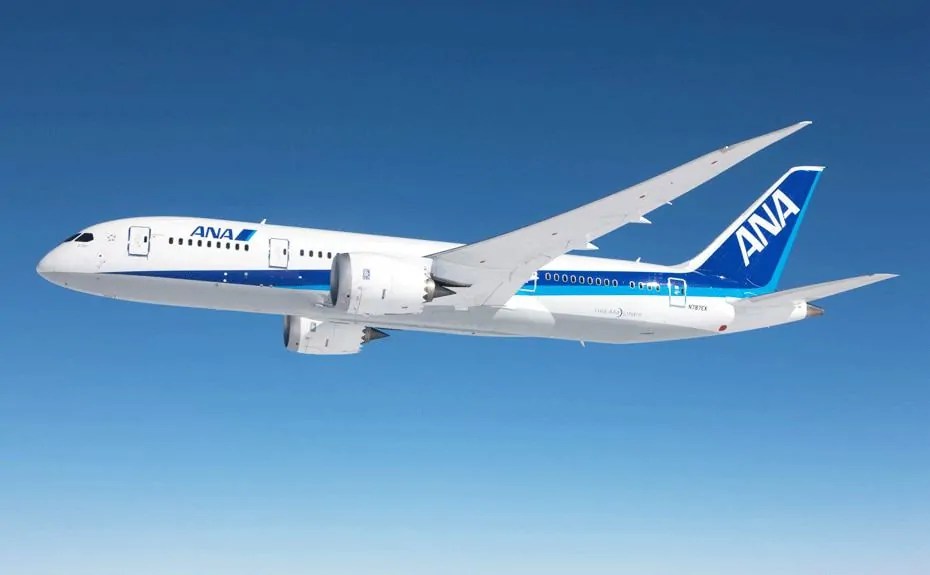
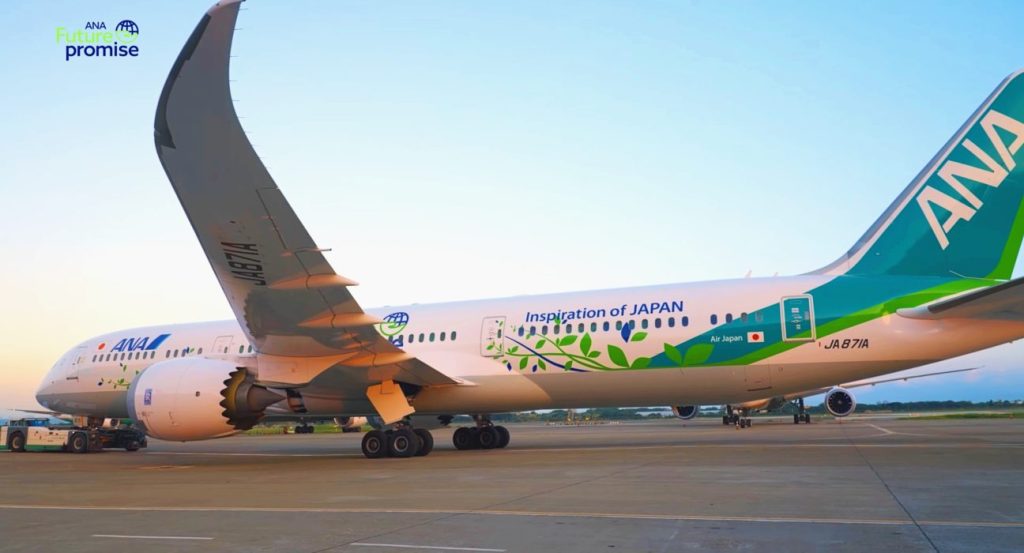
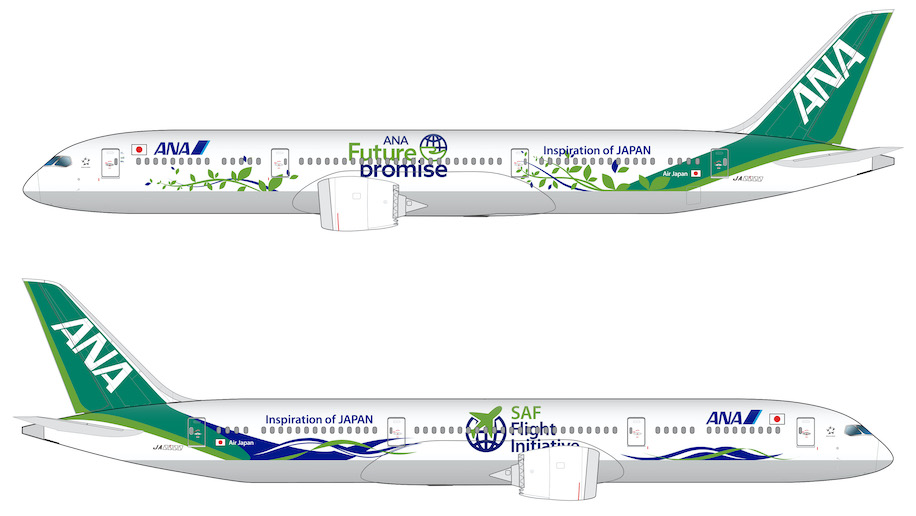
All Nippon Airways (ANA) comenzará a operar en su avión ‘Green Jet’, comenzando con la ruta Tokio/Haneda/HND—San Francisco/SFO el 5 de Octubre de 2022. Los planes para dos aviones Boeing 787 de temática sostenible cuentan con una librea ‘ANA Future Promise’, que lleva el nombre de su Programa Ambiental, de Responsabilidad Social y Gobernanza (ESG), con el logotipo de la Iniciativa de Vuelo SAF y el motivo de agua en el lado derecho del fuselaje.
El número de avión JA871A entrará en servicio en rutas internacionales mañana, con un segundo avión para servir rutas nacionales a partir de Noviembre 2022. La superficie de la aeronave cuenta con un material especial de película de costilla efecto aleta de tiburón, desarrollado por Nikon Corporation, que está diseñado para contribuir a la reducción de las emisiones de CO2 a través de la disminución de la resistencia a la fricción del aire durante el vuelo. En el interior, los asientos contarán con fundas de reposacabezas hechas con dos materiales de cuero vegano. El primero es de la start-up Appcycle, que ha desarrollado cuero sintético a partir del residuo de jugo de manzanas cultivadas en la prefectura de Aomori, y el segundo es el cuero artificial granulado ‘Ultrasuede’ de Toray Industries. También habrá iluminación verde y música de fondo que evoca la riqueza de la naturaleza, y las azafatas lucirán delantales diseñados con hojas y motivos de agua.
El Presidente y CEO de ANA, Shinichi Inoue, comentó: «Nuestro objetivo es crear una sociedad más sostenible, al tiempo que ayudamos a nuestras comunidades locales y mejoramos el valor corporativo y hemos dedicado este avión para ayudar a promover estos esfuerzos. Utilizando los avances tecnológicos actualmente disponibles e invirtiendo en nuevas soluciones, ANA está trabajando arduamente para crear una operación segura, eficiente y sostenible».
ANA Airways también tiene iniciativas sostenibles en sus rutas regulares y aviones, como vasos de papel respetuosos con el medio ambiente, cubiertos de madera y nuevas comidas a bordo. El Grupo ANA ha lanzado varias iniciativas sostenibles en los últimos meses, incluido un esquema de reciclaje de recursos con Sojitz Pla-Net Corporation mediante el cual la película plástica (polietileno) que cubre la carga aérea se reutiliza en nuevos productos de plástico utilizados por la aerolínea. Además, la aerolínea amplió su opción de combustible de aviación sostenible a los viajes corporativos a principios de año.
ANA launches Tokyo—San Francisco
ANA launches sustainable flights between Tokyo and San Francisco
All Nippon Airways (ANA) will begin service on its ‘Green Jet’ aircraft, beginning with the Tokyo/Haneda/HND—San Francisco/SFO route on October 5, 2022. Plans for two sustainable-themed Boeing 787 aircraft feature an ‘ANA Future Promise’ livery, named after its Environmental, Social Responsibility and Governance (ESG) Program, with the SAF Flight Initiative logo and water motif on the right side of the fuselage.
Aircraft number JA871A will enter service on international routes tomorrow, with a second aircraft to serve domestic routes from November 2022. The surface of the aircraft features a special shark fin effect rib film material, developed by Nikon Corporation, which is designed to contribute to the reduction of CO2 emissions through decreased frictional resistance of the air during the flight. Inside, the seats will feature headrest covers made from two vegan leather materials. The first is from start-up Appcycle, which has developed synthetic leather from the juice residue of apples grown in Aomori prefecture, and the second is Toray Industries’ ‘Ultrasuede’ grained artificial leather. There will also be green lighting and background music that evokes the richness of nature, and the hostesses will wear aprons designed with leaves and water motifs.
ANA President and CEO Shinichi Inoue commented: «Our goal is to create a more sustainable society, while helping our local communities and enhancing corporate value, and we have dedicated this aircraft to help further these efforts. technology currently available and investing in new solutions, ANA is working hard to create a safe, efficient and sustainable operation».
ANA Airways also has sustainable initiatives on its scheduled routes and aircraft, such as eco-friendly paper cups, wooden cutlery, and new on-board meals. The ANA Group has launched several sustainable initiatives in recent months, including a resource recycling scheme with Sojitz Pla-Net Corporation whereby the plastic film (polyethylene) that covers air cargo is reused in new plastic products used by the airline. Additionally, the airline expanded its sustainable aviation fuel option to corporate travel earlier in the year.
ANA 社長兼 CEO の井上真一は次のように述べています。 ANAは、安全で効率的かつ持続可能な運航を実現するために懸命に取り組んでいます。」
ANA はまた、環境に配慮した紙コップ、木製のカトラリー、新しい機内食など、定期路線と航空機で持続可能な取り組みを行っています。 ANAグループはここ数カ月、航空貨物を覆うプラスチックフィルム(ポリエチレン)を航空会社が使用する新しいプラスチック製品に再利用するという、双日プラネット株式会社との資源循環スキームなど、いくつかの持続可能なイニシアチブを開始しました。さらに、航空会社は今年初めに、持続可能な航空燃料の選択肢を法人旅行に拡大しました。
PUBLISHER: Airgways.com DBk: Ana.co.jp / Airgways.com AW-POST: 202210121412AR OWNERSHIP: Airgways Inc. A\W A I R G W A Y S ®
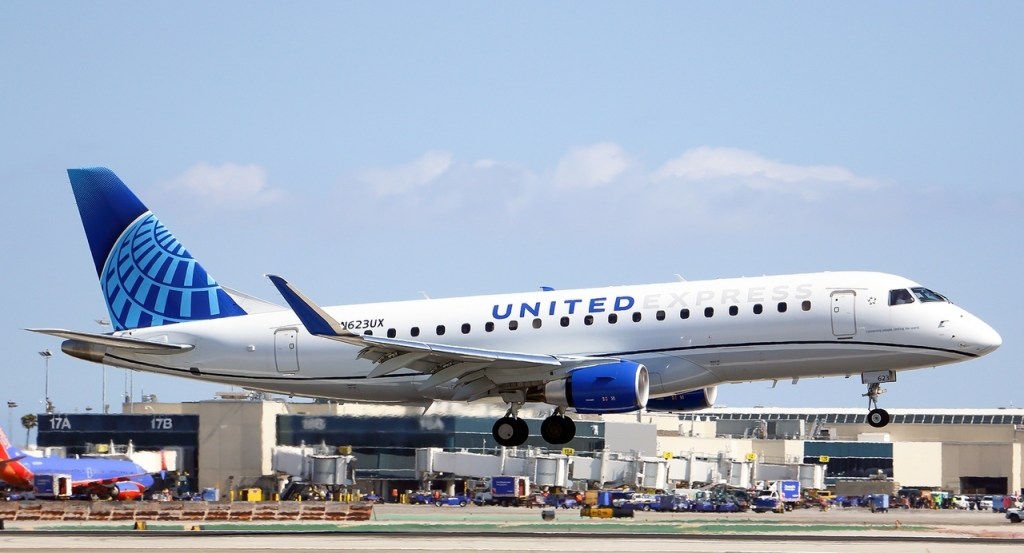
Embraer confirma acuerdo financiamiento brasileño para SkyWest
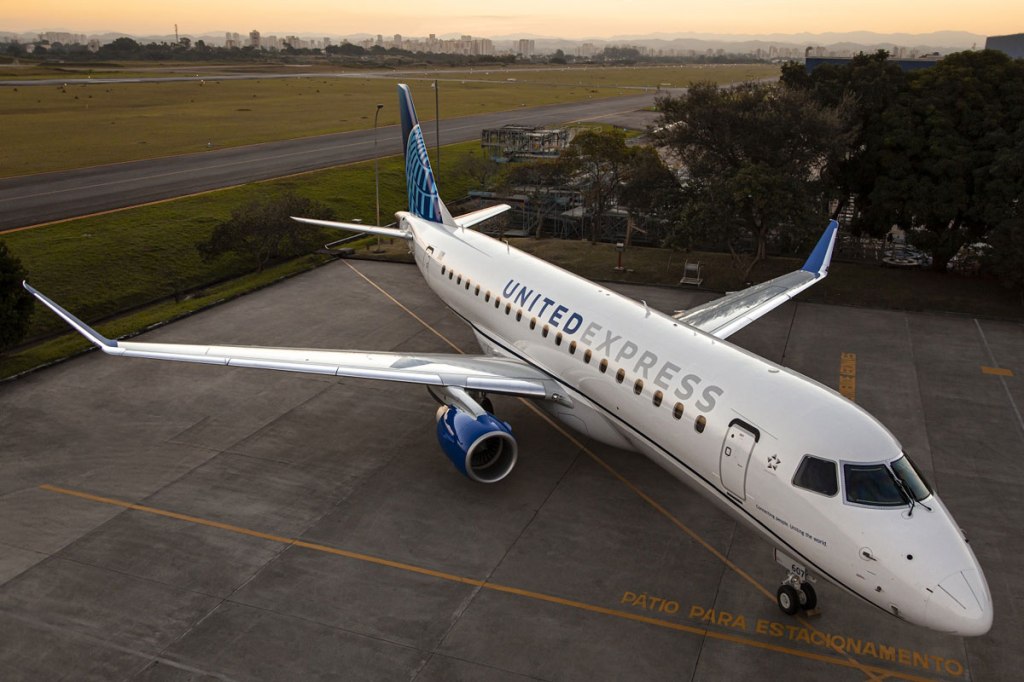
SkyWest Airlines, Inc. está esperando ansiosamente sus últimas incorporaciones a su flota gracias a un acuerdo financiero con el gobierno brasileño. Embraer anunció recientemente que el Banco Nacional de Desarrollo Económico y Social (BNDES) de Brasil aprobó el financiamiento para la exportación de seis aviones comerciales Embraer E175 (6) a la aerolínea regional norteamericana. El avión se entregará hasta finales de año bajo los pedidos existentes previamente anunciados con Embraer. Este es un gran momento para la aerolínea, que se encuentra trabajando duro para mantenerse al día con los horarios de vuelo cada vez más exigentes.
Esto también es una victoria para Embraer y el país de Brasil, ya que el financiamiento de R$ 670 millones, aproximadamente USD$ 128,3 millones, se realizará a través de desembolsos realizados en Brasil. El compromiso de SkyWest de pagar al BNDES en moneda en Dólares ayuda a estimular aún más las transacciones de divisas en Brasil, algo que el país está muy interesado. Este es el segundo acuerdo de financiamiento con BNDES para la venta de exportaciones de aviones Embraer a SkyWest Airlines. La primera transacción se ejecutó en diciembre de 2020, por un monto de R$ 400 millones (alrededor de US$ 76,6 millones a los tipos de cambio actuales).
El BNDES es el principal agente de financiamiento para el desarrollo en Brasil y ha desempeñado un papel fundamental en el estímulo de la expansión de la industria y la infraestructura en el país, centrándose en el financiamiento de la expansión de las empresas nacionales mucho más allá de las fronteras del país. Al igual que con Embraer, BNDES busca diversificar las fuentes de sus recursos en el mercado internacional.
EMB E175 se adapta a una necesidad creciente. Diseñado para vuelos de corto a medio alcance, el E175 presenta un diseño de cabina comparable a los aviones de línea principal más pequeños, pero sin los asientos centrales. Los asientos de clase dual ofrecen un diseño para 76 asientos o 10 asientos en una sola clase (dependiendo del diseño de la aerolínea individual). Los compartimentos superiores de equipaje de mano son un poco cómodos para equipaje de mano de gran tamaño, pero de nuevo, esto es común para aviones de su tamaño. A los pasajeros les suele gustar el E175 debido a la falta de asientos centrales, pero también a la gran proporción de asientos de primera clase.
Una de las características clave del E175 es su gran sensación de jet. Simplemente no se siente estrecho, y las grandes ventanas ofrecen una gran vista al tiempo que proporcionan mucha iluminación natural para mejorar la sensación de amplitud. El jet ofrece una velocidad de crucero máxima de Mach 0.82, un rango de 2,200 nm y un techo de servicio de 41,000 pies. Los vuelos de Delta Connection utilizan el E175SC, que cuenta con puntas de ala especialmente diseñadas y otros dispositivos de ahorro de combustible que proporcionan un rendimiento económico mejorado. Embraer afirma que estos dispositivos reducen las emisiones de CO2 en un 6,4 por ciento.
Embraer-SkyWest deal for E175
Embraer confirms Brazilian financing agreement for SkyWest
SkyWest Airlines, Inc. is eagerly awaiting its latest additions to its fleet thanks to a financial agreement with the Brazilian government. Embraer recently announced that Brazil’s National Bank for Economic and Social Development (BNDES) has approved financing for the export of six Embraer E175 (6) commercial aircraft to the North American regional airline. The aircraft will be delivered until the end of the year under previously announced existing orders with Embraer. This is a big time for the airline, which is working hard to keep up with increasingly demanding flight schedules.
This is also a victory for Embraer and the country of Brazil, since the financing of R$ 670 million, approximately US$ 128.3 million, will be made through disbursements made in Brazil. SkyWest’s commitment to pay the BNDES in Dollar currency helps to further stimulate foreign exchange transactions in Brazil, something the country is very interested in. This is the second financing agreement with BNDES for the sale of Embraer aircraft exports to SkyWest Airlines. The first transaction was executed in December 2020, for an amount of R$ 400 million (around US$ 76.6 million at current exchange rates).
The BNDES is the main financing agent for development in Brazil and has played a fundamental role in stimulating the expansion of industry and infrastructure in the country, focusing on financing the expansion of national companies far beyond the borders of the country. As with Embraer, BNDES seeks to diversify the sources of its resources in the international market.
EMB E175 fits a growing need. Designed for short- to medium-range flights, the E175 features a cabin layout comparable to smaller mainline airliners, but without the center seats. Dual class seating offers a layout for 76 seats or 10 seats in a single class (depending on individual airline layout). Overhead carry-on bins are a bit snug for large carry-ons, but again, this is common for planes of their size. Passengers tend to like the E175 due to the lack of center seats, but also the large proportion of first class seats.
One of the key features of the E175 is its great jet feel. It just doesn’t feel cramped, and the large windows offer a great view while providing plenty of natural lighting to enhance the feeling of spaciousness. The jet offers a maximum cruise speed of Mach 0.82, a range of 2,200nm, and a service ceiling of 41,000ft. Delta Connection flights use the E175SC, which features specially designed wingtips and other fuel-saving devices that provide improved economic performance. Embraer claims that these devices reduce CO2 emissions by 6.4 percent.
PUBLISHER: Airgways.com DBk: Embraer.com / Skywest.com / Airgways.com AW-POST: 202210121103AR OWNERSHIP: Airgways Inc. A\W A I R G W A Y S ®
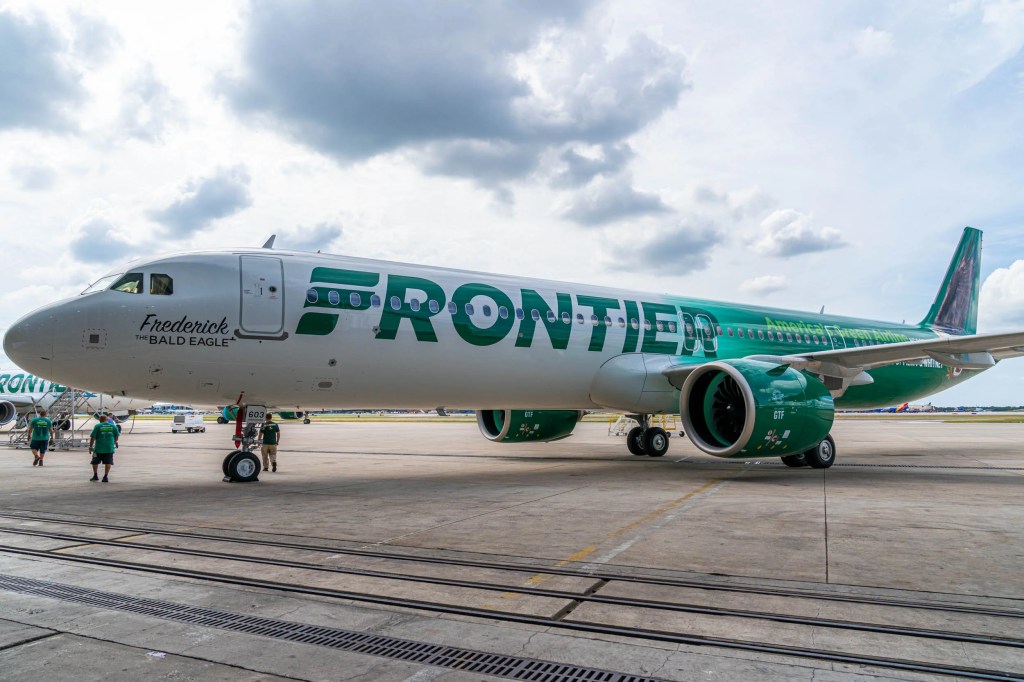
Frontier presenta avión comercial más eficiente en combustible
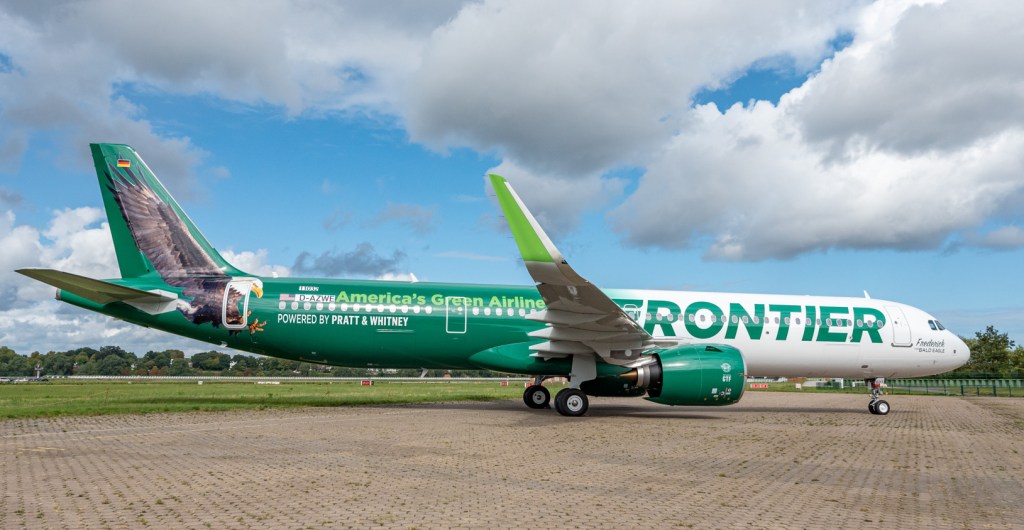
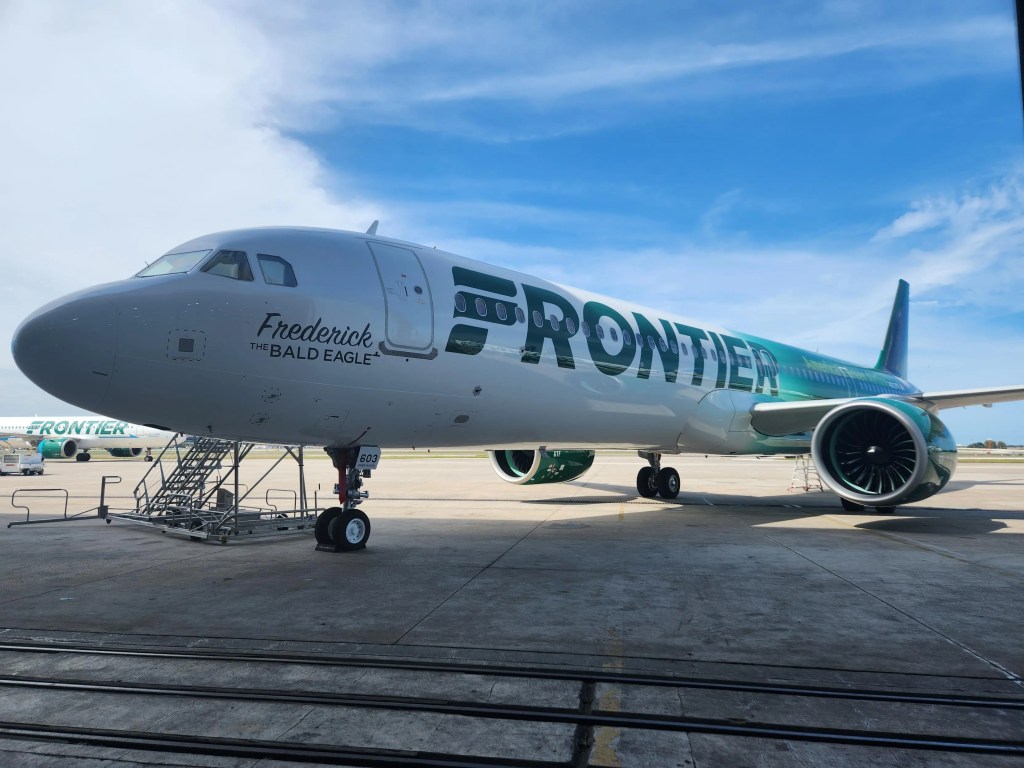
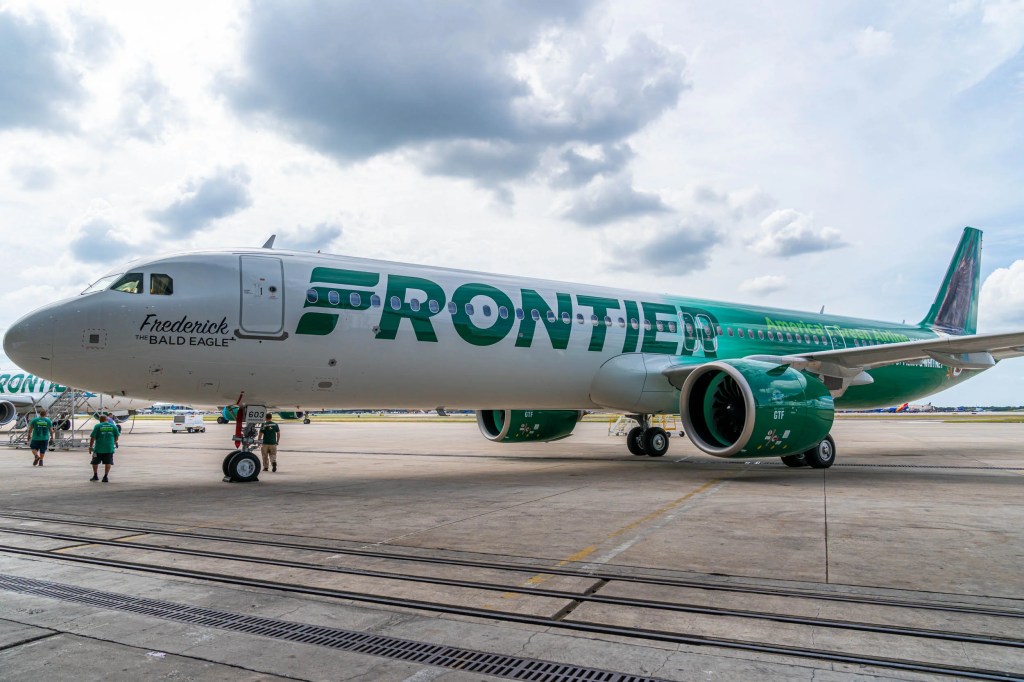
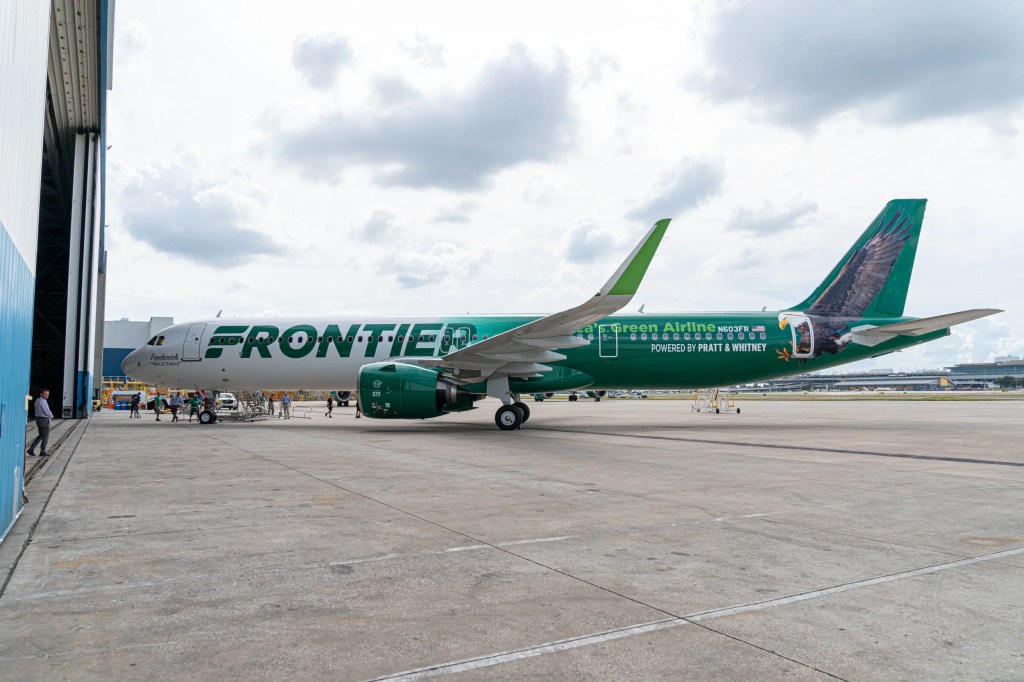
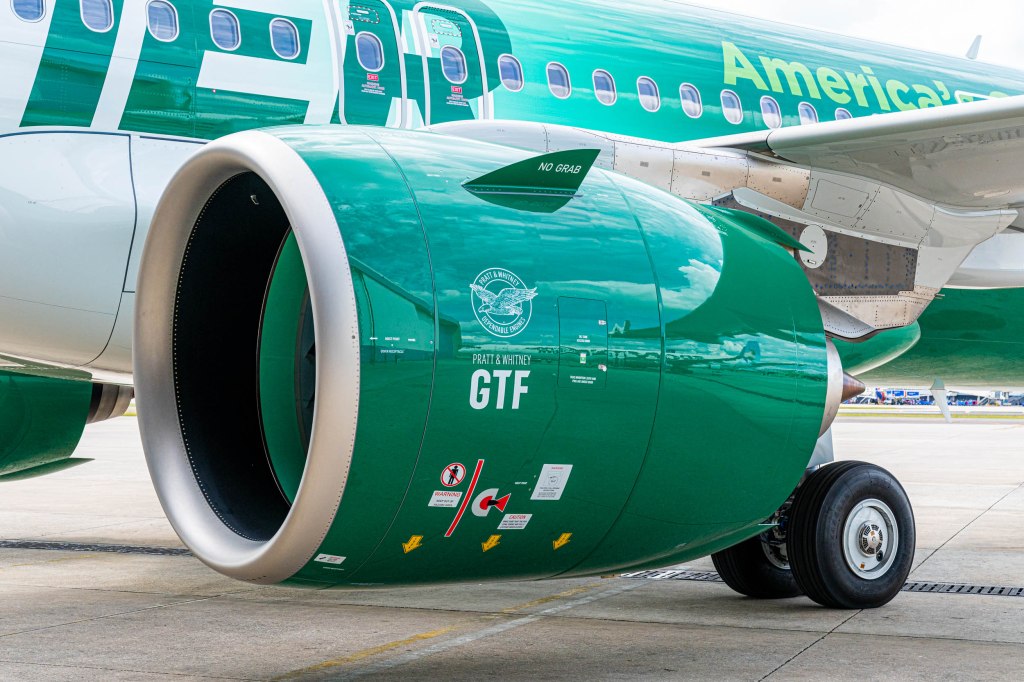
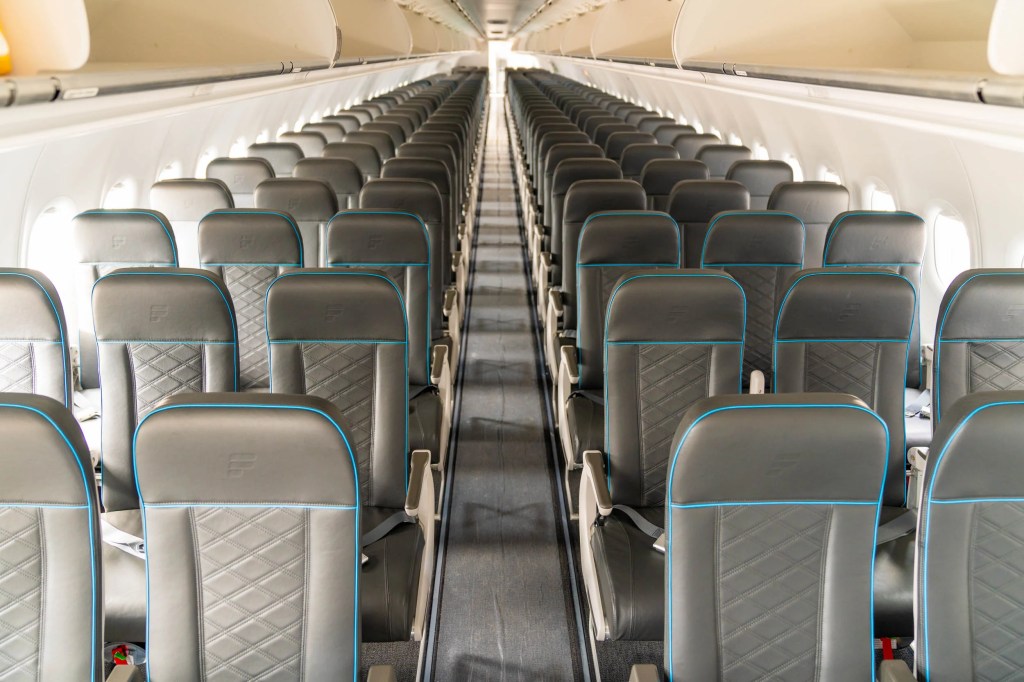
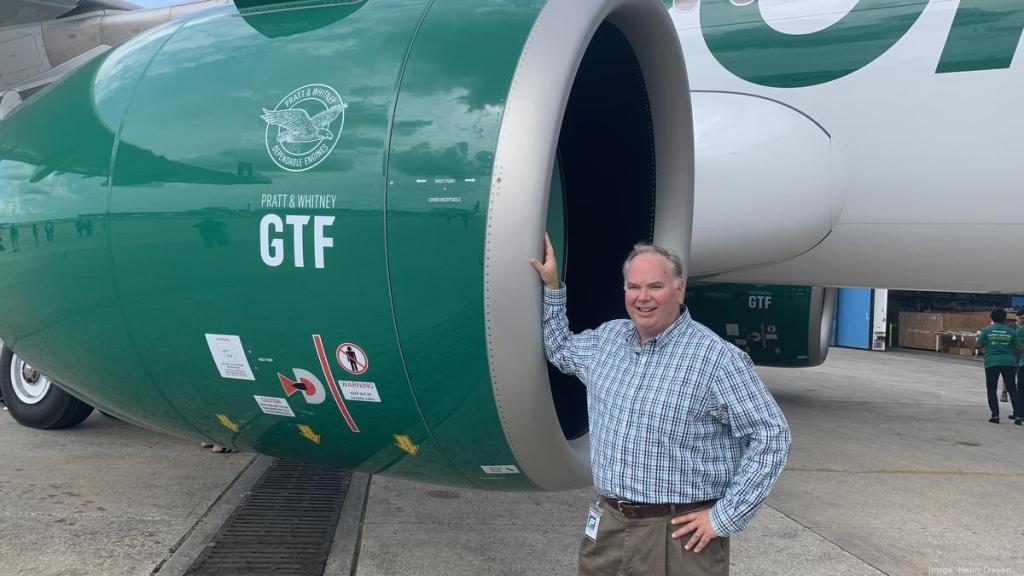
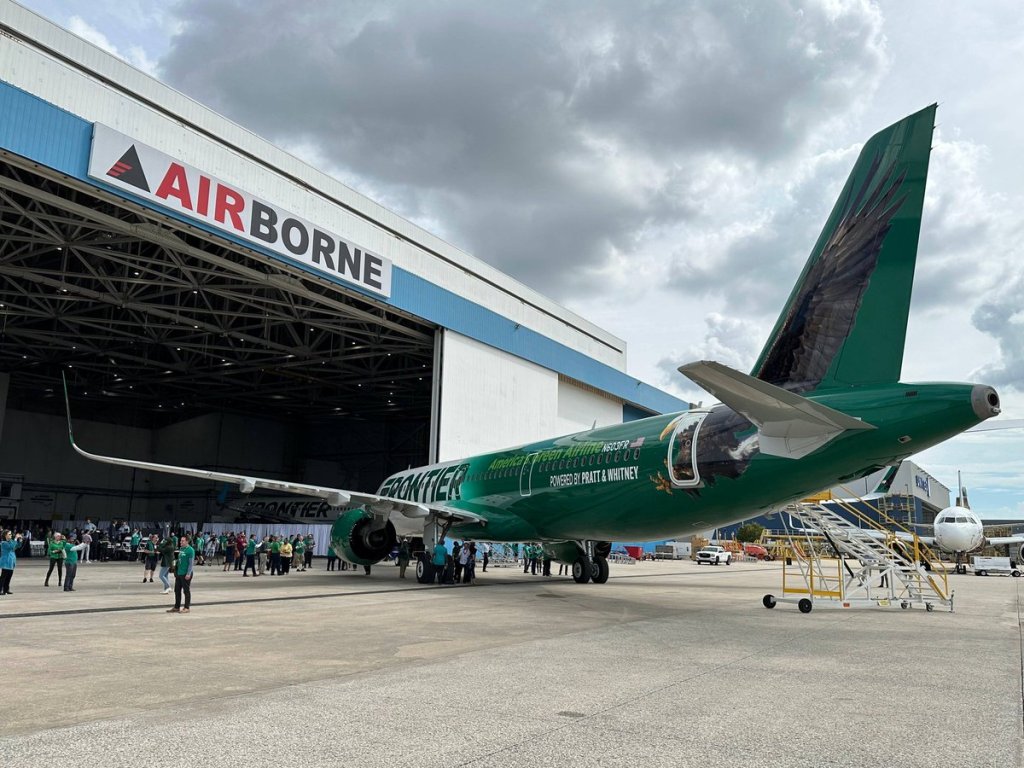
Frontier Airlines ha presentado oficialmente el Martes 11/10 su primer avión Airbus A321NEO ultra eficiente en combustible en un evento en el Aeropuerto Internacional de Tampa/TPA. El A321NEO posee una configuración de 240 asientos, impulsado por los innovadores motores GTF de Pratt & Whitney, será el avión comercial más eficiente en combustible entre cualquier aerolínea estadounidense. Los A321NEO de Frontier generarán emisiones de carbono y ruido de motor significativamente más bajos, promoviendo los esfuerzos de la aerolínea más ecológica americana para reducir su huella ambiental. El avión es el primero de los 158 A321NEO que se entregarán a la aerolínea de ultra bajo costo por el fabricante líder de aviones Airbus de aquí a 2029. Frontier actualmente tiene 226 aviones en total en pedido, lo que casi triplicará el tamaño de su flota para fines de la década.
«La incorporación de estos nuevos A321NEO a nuestra flota hará que la aerolínea más ecológica de los Estados Unidos sea aún más ecológica con estos aviones capaces de alcanzar las 120 millas por galón por asiento. Son los aviones más eficientes en combustible en operación entre las principales aerolíneas de los Estados Unidos y son capaces de ofrecer reducciones inmediatas y tangibles en el consumo de combustible, las emisiones de carbono y el ruido del motor. Frontier continúa liderando el camino para reducir el consumo de combustible y disminuir nuestra huella ambiental y la adición del A321NEO a nuestra flota es otro paso en ese viaje», dijo Barry Biffle, presidente y CEO de Frontier Airlines.
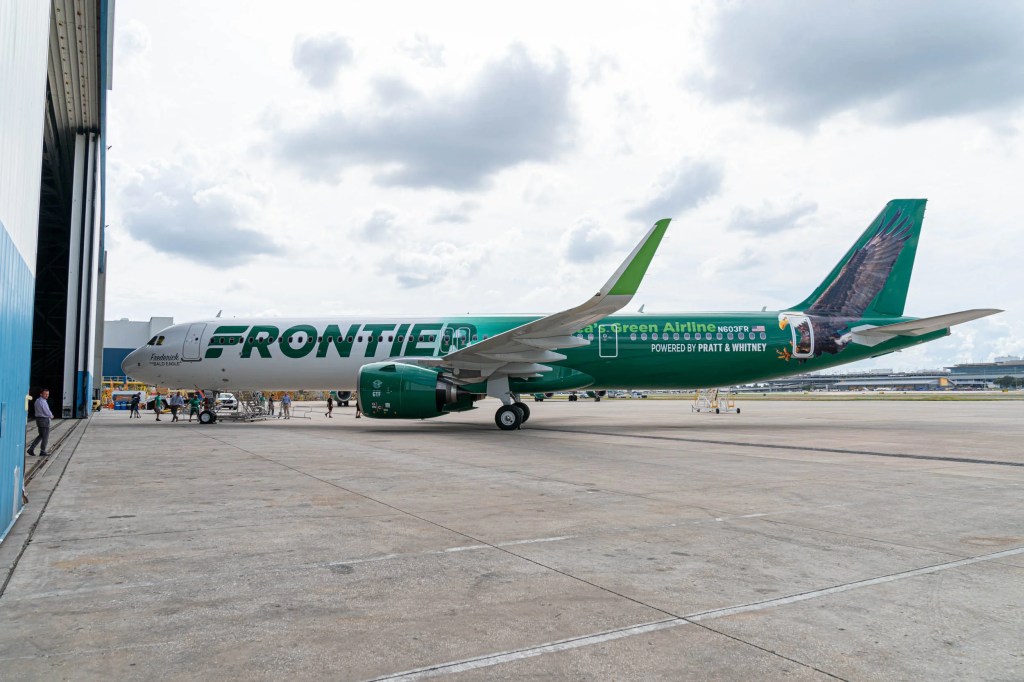
El evento debut en Tampa también incluyó la presentación de una llamativa librea de avión de edición especial, junto con el animal que aparece en la cola del avión: Frederick the Bald Eagle, inspirado en Pratt & Whitney y llamado así por su fundador Frederick B. Rentschler. Rentschler fue un pionero en la aviación, diseñando motores que eran dramáticamente más ligeros y más eficientes en el consumo de combustible que sus predecesores. Todos los aviones Frontier cuentan con un animal en su cola, muchos de ellos especies en peligro de extinción y amenazadas.
«Frederick Rentschler transformó la aviación con los motores más eficientes y confiables de su tiempo. Nuestros empleados, que votaron para nombrar este avión en su honor, continúan su visión con nuevas tecnologías como el revolucionario ventilador de engranajes en el corazón de nuestros motores GTF. Con hasta un 20 por ciento de ahorro, los motores GTF son los más eficientes en el consumo de combustible con las emisiones de gases de efecto invernadero más bajas para la familia Airbus A320NEO. Estos aviones con motor GTF vuelan más pasajeros, más lejos, de manera más sostenible y con menores costos operativos, lo que ayuda a Frontier a agregar nuevas rutas y mantener las tarifas bajas», dijo Rick Deurloo, presidente de Commercial Engines en Pratt & Whitney.
«Frontier tiene la mayor cartera de pedidos de A321NEO en América del Norte, un ejemplo concreto de su enfoque central en la eficiencia y el medio ambiente. Con su menor consumo de combustible, emisiones y huella de ruido, el A321NEO llevará a Frontier profundamente al futuro ‘verde’, complaciendo a los pasajeros mientras se concentra en la sostenibilidad, prioridades que en Airbus admiramos y compartimos», dijo Jeff Knittel, Presidente y CEO de Airbus Americas.
El evento de presentación tuvo lugar en las instalaciones de Airborne Maintenance and Engineering Services en TPA. Frontier opera una base de tripulación en TPA y es la tercera aerolínea más grande del aeropuerto según los destinos servidos. El evento incluyó un gran contingente de miembros del equipo de Frontier, Airbus, Pratt & Whitney y TPA que se reunieron para celebrar el hito especial.
«La introducción del A321NEO en nuestra flota es un paso importante en los objetivos de sostenibilidad de nuestra compañía y en el crecimiento continuo. La eficiencia de combustible ofrecida por este avión también proporciona ahorros que se pueden transferir a nuestros clientes, ayudándonos a continuar cumpliendo con nuestra misión de proporcionar ‘Tarifas bajas bien hechas’ en todo Estados Unidos y más allá», expresó Barry Biffle.
Frontier Airlines está comprometida con «Tarifas bajas bien hechas». Con sede en Denver, Colorado (CO), la compañía opera más de 110 aviones de la familia A320 y tiene la flota familiar A320NEO más grande de los Estados Unidos. El uso de estos aviones, la configuración de asientos de Frontier, las tácticas de ahorro de peso y el proceso de equipaje han contribuido a la capacidad continua de Frontier para ser el más eficiente en combustible de todos los principales transportistas de los Estados Unidos cuando se mide por Millas de Asiento Disponibles (ASM) por galón de combustible consumido. Con más de 230 nuevos aviones Airbus en pedido, Frontier continuará creciendo para cumplir con la misión de proporcionar viajes asequibles en todo Estados Unidos.
Frontier Unveils A321NEO
Frontier unveils most fuel-efficient commercial aircraft
Frontier Airlines officially unveiled its first ultra-fuel-efficient Airbus A321NEO aircraft at an event at Tampa/TPA International Airport on Tuesday 10/11. The A321NEO in a 240-seat configuration, powered by Pratt & Whitney’s innovative GTF engines, will be the most fuel-efficient commercial aircraft of any US airline. Frontier’s A321NEOs will generate significantly lower carbon emissions and engine noise, furthering America’s Greenest Airline’s efforts to reduce its environmental footprint. The aircraft is the first of 158 A321NEOs to be delivered to the ultra-low-cost carrier by leading aircraft manufacturer Airbus between now and 2029. Frontier currently has 226 total aircraft on order, which will nearly triple the size of its fleet. by the end of the decade.
«The addition of these new A321NEOs to our fleet will make America’s Greenest Airline even greener with these aircraft capable of 120 miles per gallon per seat. They are the most fuel efficient aircraft in operation among the major airlines in the United States and are able to deliver immediate and tangible reductions in fuel consumption, carbon emissions and engine noise. Frontier continues to lead the way in reducing fuel consumption and lowering our environmental footprint and adding the A321NEO to our fleet is another step in that journey», said Barry Biffle, President and CEO of Frontier Airlines.
The debut event in Tampa also included the unveiling of an eye-catching special-edition aircraft livery, along with the animal featured on the plane’s tail: Frederick the Bald Eagle, inspired by Pratt & Whitney and named for its founder Frederick B. Rentschler. Rentschler was a pioneer in aviation, designing engines that were dramatically lighter and more fuel efficient than his predecessors. Every Frontier aircraft features an animal on its tail, many of them endangered and threatened species.
«Frederick Rentschler transformed aviation with the most efficient and reliable engines of their time. Our employees, who voted to name this aircraft after him, continue his vision with new technologies like the revolutionary gear-driven fan at the heart of our GTF engines. With up to 20 percent savings, GTF engines are the most fuel efficient with the lowest greenhouse gas emissions for the Airbus A320NEO family. These GTF-powered aircraft fly more passengers, farther, than more sustainably and with lower operating costs, helping Frontier add new routes and keep fares low», said Rick Deurloo, president of Commercial Engines at Pratt & Whitney.
«Frontier has the largest A321NEO order book in North America, a concrete example of its core focus on efficiency and the environment. With its lower fuel burn, emissions and noise footprint, the A321neo will take Frontier deep into the ‘green’ future, pleasing passengers while focusing on sustainability, priorities that we at Airbus admire and share», said Jeff Knittel, President and CEO of Airbus Americas.
The launch event took place at the Airborne Maintenance and Engineering Services facility at TPA. Frontier operates a crew base at TPA and is the airport’s third-largest airline based on destinations served. The event included a large contingent of team members from Frontier, Airbus, Pratt & Whitney and TPA who came together to celebrate the special milestone.
«The introduction of the A321NEO to our fleet is an important step in our company’s sustainability goals and continued growth. The fuel efficiency offered by this aircraft also provides savings that can be passed on to our customers, helping us continue to meet our our mission to provide ‘Low Fares Done Right’ throughout the United States and beyond», said Barry Biffle.
Frontier Airlines is committed to «Low Fares Done Right». Headquartered in Denver, Colorado (CO), the company operates more than 110 A320 Family aircraft and has the largest A320NEO family fleet in the United States. The use of these aircraft, Frontier’s seating configuration, weight-saving tactics, and baggage processing have all contributed to Frontier’s continued ability to be the most fuel efficient of all major United States carriers when measured by Available Seat Miles (ASM) per gallon of fuel consumed. With more than 230 new Airbus aircraft on order, Frontier will continue to grow to fulfill its mission of providing affordable travel across the United States.
PUBLISHER: Airgways.com DBk: Flyfrontier.com / Airgways.com AW-POST: 202210121055AR OWNERSHIP: Airgways Inc. A\W A I R G W A Y S ®
Retorno a los cielos de China después de casi cuatro años
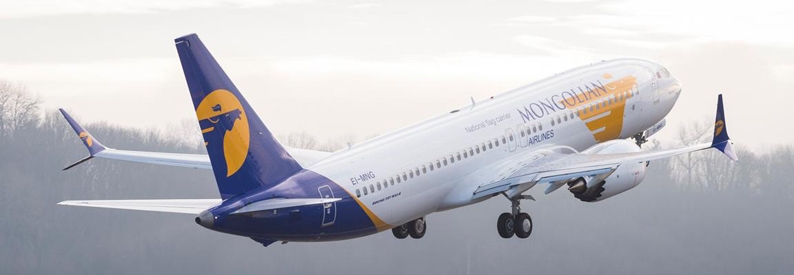
El primer vuelo comercial Boeing 737 MAX parece haber reanudado el vuelo a China por primera vez en casi cuatro años. Un vuelo de MIAT Mongolian Airlines desde Ulán Bator aterrizó en Guangzhou, China, a las 08:18 a.m. hora local del Lunes 11/10, según el informe de FlightRadar24. La aerolínea mongola tiene el vuelo programado y listado para ir próximamente, utilizando el 737 MAX, el 17 y 24 de Octubre de 2022.
Funcionarios de Boeing se reunieron con el regulador de aviación de China, la Administración de Aviación Civil de China (CAAC) el mes pasado de Septiembre 2022 para revisar los criterios de capacitación de pilotos para sus aviones 737 MAX, a medida que la compañía se acerca a obtener todas las aprobaciones necesarias para reanudar los vuelos en China, el último mercado importante de la aviación que aún no ha permitido la reanudación de los vuelos.
Las aerolíneas chinas aún no han volado el avión comercialmente desde dos accidentes fatales que involucraron al modelo en 2018 y 2019. El sindicato que representa a los pilotos de Southwest Airlines, SWAPA, dijo el Viernes 07/10 que apoya la solicitud de Boeing de extender la fecha límite de Estados Unidos para certificar a las variantes MAX 10 y MAX 7.
737 MAX returns to Chinese skies
Return to the skies of China after almost four years
The first commercial Boeing 737 MAX flight appears to have resumed flying to China for the first time in nearly four years. A MIAT Mongolian Airlines flight from Ulaanbaatar landed in Guangzhou, China, at 08:18 a.m. local time on Monday 10/11, according to the FlightRadar24 report. The Mongolian airline has the flight scheduled and listed to go soon, using the 737 MAX, on October 17 and 24, 2022.
Boeing officials met with China’s aviation regulator, the Civil Aviation Administration of China (CAAC) last September 2022 to review pilot training criteria for its 737 MAX aircraft, as the company moves closer. to obtain all the necessary approvals to resume flights in China, the last major aviation market that has not yet allowed the resumption of flights.
Chinese airlines have not yet flown the plane commercially since two fatal accidents involving the model in 2018 and 2019. The union that represents Southwest Airlines pilots, SWAPA, said on Friday 07/10 that it supports Boeing’s request to extend the United States deadline to certify the MAX 10 and MAX 7 variants.
PUBLISHER: Airgways.com DBk: Boeing.com / Miat.com / Flightradar24.com / Airgways.com AW-POST: 202210110840AR OWNERSHIP: Airgways Inc. A\W A I R G W A Y S ®
Airbus anuncia órdenes y entregas aeronaves 09/2022
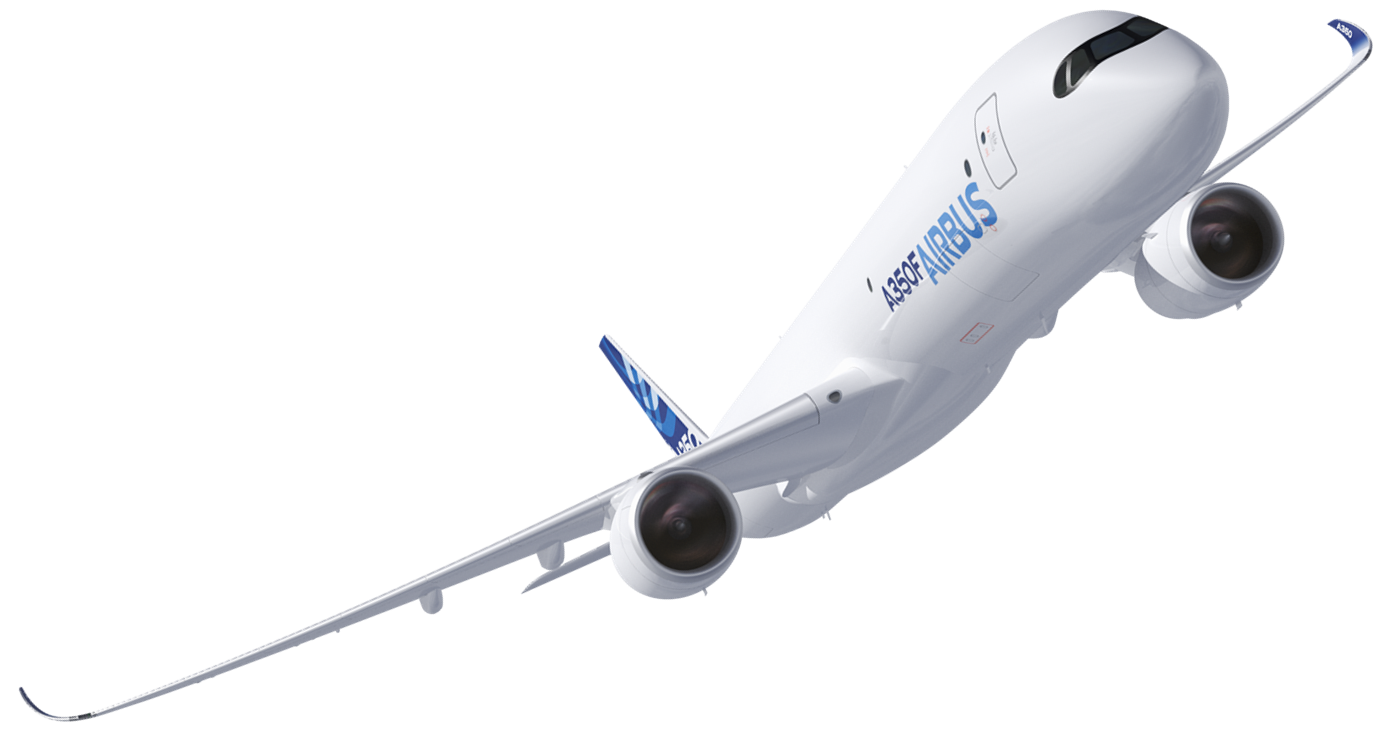
Los pedidos y entregas de aviones comerciales de Airbus Group para el mes de Septiembre de 2022 se han publicado en airbus.com.
Las entregas Septiembre 2022 corresponden a: 55 entregas a 31 clientes en todo el mundo. Septiembre 2022 pedidos: 13. Entregas en 2022 hasta la fecha : 437 entregas a 66 clientes en el año.
El número de entregas netas hasta la fecha de 435 refleja una reducción de dos (2) entregas registradas en Diciembre de 2021 (2 A350-900 Aeroflot Russian Airlines) para las que no fue posible realizar una transferencia debido a sanciones internacionales.
Airbus O&D 09/2022
Airbus announces aircraft orders and deliveries 09/2022
Airbus Group commercial aircraft orders and deliveries for the month of September 2022 have been published on airbus.com.
September 2022 deliveries correspond to: 55 deliveries to 31 customers worldwide. September 2022 orders: 13. Deliveries in 2022 to date: 437 deliveries to 66 clients in the year.
The number of net deliveries to date of 435 reflects a reduction of two (2) deliveries recorded in December 2021 (2 A350-900 Aeroflot Russian Airlines) for which a transfer was not possible due to international sanctions.
PUBLISHER: Airgways.com DBk: Airbus.com / Airgways.com AW-POST: 202210110822AR OWNERSHIP: Airgways Inc. A\W A I R G W A Y S ®
Víctimas y familiares demandan reparaciones a aseguradoras
Las víctimas y familiares del accidente aéreo del vuelo LMI2933 buscan reparaciones por daños por valor de US$ 844 millones de las aseguradoras a través de una demanda en el Tribunal Supremo de Brasil. Los demandantes presentaron una demanda ante el Tribunal Superior en 09/2022 contra las aseguradoras Aon y Tokio Marine Kiln en busca de conceptos de compensación por el desastre aéreo ocurrido el 28 de Noviembre de 2016 que causó la muerte de 19 miembros del equipo de fútbol Chapecoense de Brasil. Las víctimas del accidente de LaMia Airlines que mató a 71 personas de las 77 personas a bordo, han presentado una demanda en el Tribunal Superior contra las aseguradoras, buscando anular una orden judicial que les impedía perseguir a los corredores de seguros para obtener una compensación a través de los tribunales estadounidenses.
El accidente aéreo de la aeronave AVRO RJ85 ocurrido en las proximidades de Medellín, Colombia el 28 de Noviembre de 2016 con un vuelo fletado por el fútbol profesional Chapecoense que se estrelló durante un viaje de Viru-Viru/VVI, Bolivia hacia Medellín/MDE, Colombia, después de que el vuelo de LaMia Airlines se quedara sin combustible. Posteriormente, los sobrevivientes del accidente llevaron a cabo una campaña de litigios que buscaba US$ 844 millones en daños de los operadores de aerolíneas LaMia y Kite Air a través de los tribunales de Miami, Estados Unidos. Las aseguradoras dijeron previamente que no pagarían una póliza proporcionada a LaMia, por reclamos de que la aerolínea no había pagado la segunda cuota de su prima en la póliza de US$ 25 millones y que había actuado negligentemente al no repostar el avión. En 2019, las aseguradoras ofrecieron a las familias de las víctimas US$ 225.000 en compensación cada una como un gesto de buena voluntad, en un acuerdo que 23 miembros de la familia aceptaron.
Las víctimas del accidente aéreo ahora están tratando de revocar una orden judicial del Tribunal Superior que les impide entablar un litigio contra las aseguradoras en los tribunales de los Estados Unidos, con el fin de cobrar la suma total de US$ 844 millones. La demanda del Tribunal Superior se produjo después de que las víctimas presentaron una moción para agregar a las aseguradoras al reclamo original de Florida.
Las aseguradoras están tratando de argumentar que el acuerdo de US$ 844 millones de Florida no es razonable, considerando que la póliza original valía solo US$ 25 millones. También afirman que no tienen conexión con Florida, aparte del hecho de que la demanda original contra los aviones se presentó allí, y que cualquier caso debe ser escuchado en los Tribunales británicos.
LaMia 2933 accident sued
Victims and relatives demand reparations from insurers
The victims and relatives of the plane crash of flight LMI2933 seek reparations for damages worth US$844 million from insurers through a lawsuit in the Supreme Court of Brazil. The plaintiffs filed a lawsuit in the Superior Court on 09/2022 against the insurers Aon and Tokio Marine Kiln seeking compensation for the air disaster that occurred on November 28, 2016 that caused the death of 19 members of the Chapecoense soccer team. from Brazil. Victims of the LaMia Airlines crash that killed 71 of the 77 people on board have filed a lawsuit in Superior Court against the insurers, seeking to overturn an injunction that prevented them from going after insurance brokers for compensation. through the US courts.
The plane crash of the AVRO RJ85 aircraft occurred in the vicinity of Medellín, Colombia on November 28, 2016 with a flight chartered by the Chapecoense professional soccer team that crashed during a trip from Viru-Viru/VVI, Bolivia to Medellín/MDE, Colombia, after the LaMia Airlines flight ran out of fuel. Subsequently, the survivors of the accident carried out a litigation campaign seeking US$ 844 million in damages from the airline operators LaMia and Kite Air through the courts of Miami, United States. Insurers previously said they would not pay for a policy provided to LaMia, over claims the airline had failed to pay its second installment of its US$ 25 million premium on the policy and had been negligent in not refueling the plane. In 2019, insurers offered victims’ families US$ 225,000 in compensation each as a goodwill gesture, in a settlement that 23 family members accepted.
The victims of the plane crash are now seeking to overturn a High Court injunction that prevents them from suing the insurers in US courts, in order to collect the full sum of US$ 844 million. The Superior Court lawsuit came after the victims filed a motion to add the insurers to the original Florida claim.
Insurers are trying to argue that Florida’s US$ 844 million settlement is unreasonable, considering the original policy was worth just US$ 25 million. They also claim that they have no connection to Florida, apart from the fact that the original lawsuit against the planes was filed there, and that any case must be heard in British Courts.
PUBLISHER: Airgways.com DBk: Stj.jus.br / Airgways.com AW-POST: 202210110005AR OWNERSHIP: Airgways Inc. A\W A I R G W A Y S ®
AW | 2022 10 10 23:37 | AIR TRAFFIC / AVIATION SAFETY
Fallo afectó aeropuertos Ezeiza/Aeroparque/San Fernando
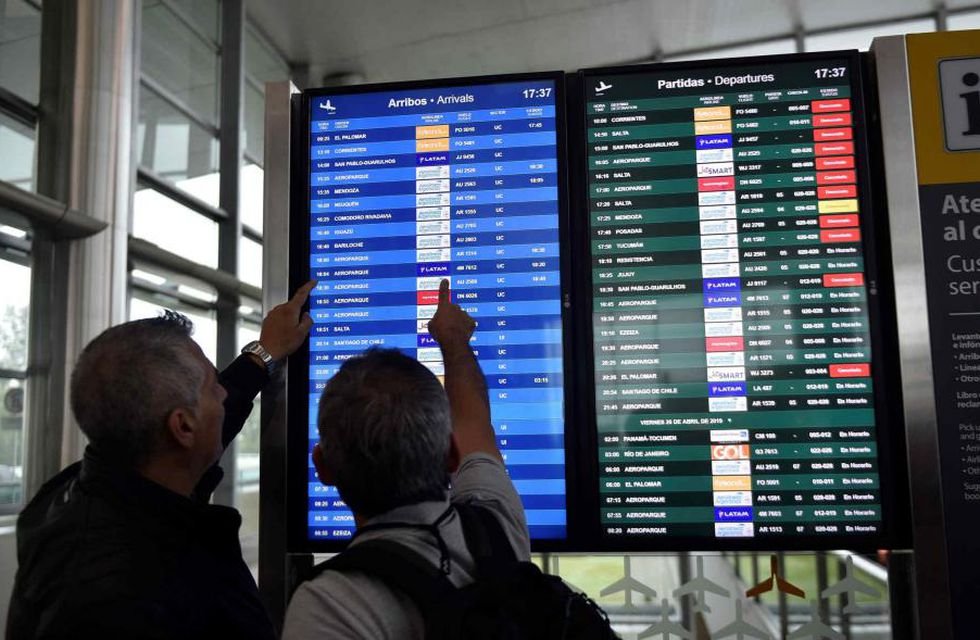
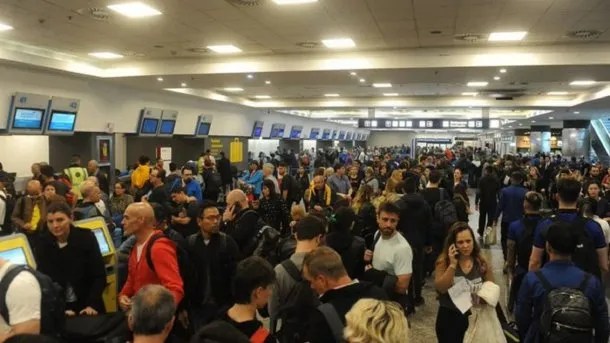
Un fallo en el Sistema de Radar Aeroportuario ha ocurrido el 10 de Octubre de 2022 afectando los aeropuertos Buenos Aires/Ezeiza/EZE, Buenos Aires/Jorge Newbery/AEP y San Fernando/SDO produciendo demoras en los vuelos comerciales. Por fallas en un radar del Aeropuerto Internacional de Ezeiza, la operación del Aeroparque Jorge Newbery y el Aeropuerto Internacional de San Fernando se vio afectada en la tarde del 10/10 “Vamos a tener demoras”, anticiparon fuentes de Aeropuertos Argentina 2000.
El problema, que comenzó pasadas las 16:00 hs se solucionó minutos antes de las 19:00 hs. “Por fallas en un radar de Ezeiza vamos a operar por procedimiento. Damos prioridad al Aeropuerto Internacional de Ezeiza y a Aeroparque”, informaron, al tiempo que precisaron que los vuelos más afectados serán los de San Fernando.
El radar en cuestión opera los tres aeropuertos del Área Metropolitana de Buenos Aires (AMBA), eso es lo que motivó que se vean afectados. En particular, según advirtieron desde la compañía que está a cargo de las sedes aeroportuarias, mientras un equipo de expertos de la Empresa Argentina de Navegación Aérea (EANA) trabaja en la solución de la falla, los aeropuertos operan por procedimiento manual. “Separan más los vuelos entre 8 a 10 minutos”, explicaron.
La falla se dio en el radar secundario que asiste al Centro Control de Ezeiza y que se usa como referencia también en la torre de Aeroparque de y del Aeropuerto Internacional de San Fernando. “Es el radar que sirve para los fines de control aéreo, control militar usa radares primarios y nosotros radares secundarios. Hubo un problema de transmisión de datos, que fue lo que complicó la operatoria que por el momento continúa”, indicaron fuentes cercanas a Administración Nacional de Aviación Civil (ANAC).
Minutos antes de las 19:00 hs, la EANA confirmó la normalización del radar. “Ya se encuentra totalmente normalizado el servicio luego de que a las 16.45 se presentara una disrupción en un módulo de software de procesamiento radar, por lo cual se pasó a operar por procedimientos aplicando medidas de control de tránsito aéreo. Gracias a que el equipamiento dispone de redundancia pudo restablecerse el servicio a los pocos minutos”.
El problema se dio en pleno cierre de fin de semana extralargo, cuando 3,2 millones de turistas recorrieron el país, de acuerdo a un informe de la Confederación Argentina de la Mediana Empresa (CAME). Respecto de los turistas, la fecha concluyó con un total 1.320.000 turistas, lo que representó un 20% menos que en el mismo feriado del año pasado. Sin embargo, este año tuvo un mayor volumen la presencia del turista internacional.
Radar system failures Argentina
Failure affected Ezeiza/Aeroparque/San Fernando airports
A failure in the Airport Radar System occurred on October 10, 2022, affecting the Buenos Aires/Ezeiza/EZE, Buenos Aires/Jorge Newbery/AEP and San Fernando/SDO airports, causing delays in commercial flights. Due to failures in a radar at the Ezeiza International Airport, the operation of the Jorge Newbery Airport and the San Fernando International Airport was affected on the afternoon of 10/10 “We are going to have delays”, sources from Aeropuertos Argentina 2000 anticipated.
The problem, which started after 04:00 p.m., was solved minutes before 07:00 p.m. “Due to failures in an Ezeiza radar, we are going to operate by procedure. We give priority to the Ezeiza International Airport and Aeroparque”, they reported, while specifying that the most affected flights will be those from San Fernando.
The radar in question operates the three airports of the Metropolitan Area of Buenos Aires (AMBA), that is what caused them to be affected. In particular, as warned by the company that is in charge of the airport headquarters, while a team of experts from the Argentine Air Navigation Company (EANA) works on the solution of the failure, the airports operate by manual procedure. «They separate the flights between 8 to 10 minutes», they explained.
The failure occurred in the secondary radar that assists the Ezeiza Control Center and is also used as a reference in the Aeroparque tower and the San Fernando International Airport. “It is the radar that serves the purposes of air control, military control uses primary radars and we use secondary radars. There was a data transmission problem, which was what complicated the operation that continues for the time being”, sources close to the National Civil Aviation Administration (ANAC) indicated.
Minutes before 07:00 p.m., the EANA confirmed the normalization of the radar. “The service is already fully normalized after a disruption occurred in a radar processing software module at 04:45 p.m., for which it began to operate by procedures applying air traffic control measures. Thanks to the fact that the equipment has redundancy, the service could be restored in a few minutes”.
The problem occurred in the middle of the extra-long weekend, when 3.2 million tourists toured the country, according to a report by the Argentine Confederation of Medium-sized Enterprises (CAME). Regarding tourists, the date concluded with a total of 1,320,000 tourists, which represented 20% less than the same holiday last year. However, this year the presence of international tourists had a greater volume.
PUBLISHER: Airgways.com DBk: Eana.com.ar / Anac.gov.ar / Aa2000.com.ar / Lanacion.com.ar / Airgways.com AW-POST: 202210102337AR OWNERSHIP: Airgways Inc. A\W A I R G W A Y S ®
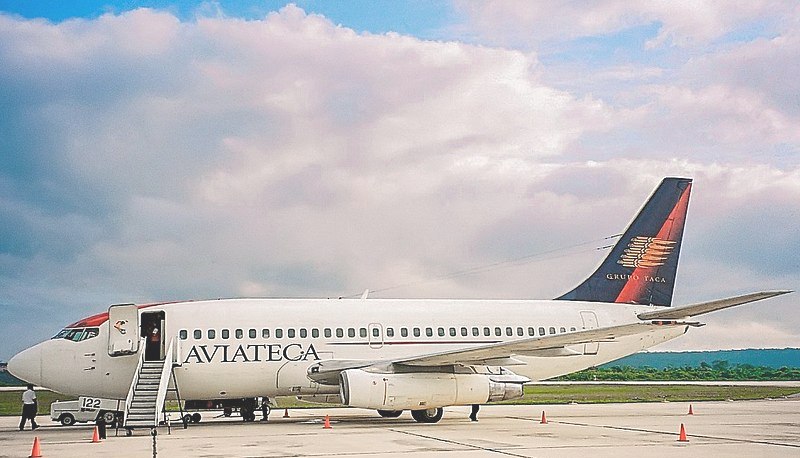
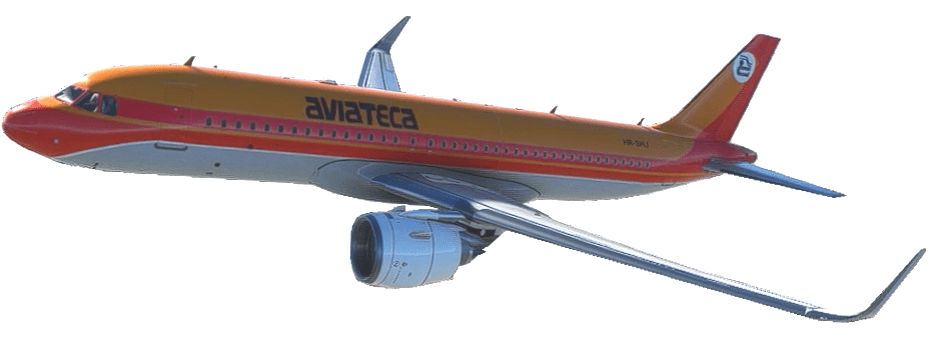
Avianca Airlines ha anunciado la reactivación de la aerolínea guatemalteca Aviateca. La aerolínea iniciará vuelos nacionales e internacionales a partir de Diciembre 2022 con aeronaves Airbus A320 con capacidad para 180 pasajeros. Las rutas iniciales serán Ciudad de Guatemala—Flores, Ciudad de Guatemala—Tegucigalpa/Palmerola y Ciudad de Guatemala—Salvador.
“Guatemala es un mercado importante para Avianca en el que vemos un gran potencial para desarrollar nuestro modelo de negocio con un operador local. En lo que va del año más de 350.000 pasajeros han volado con nosotros en más de 3.500 vuelos a cerca de 60 destinos en todo el continente. Hoy retribuimos esa confianza con una nueva operación nacional e internacional con lo que estaremos incrementando más de 2.500 sillas semanales en 14 vuelos a la semana”, dijo Frederico Pedreira, Jefe de Operaciones de Avianca.
Aviateca S.A. con la marca Avianca Guatemala fue una aerolínea regional con sede en la Ciudad de Guatemala. Aviateca estaba bajo propiedad del Gobierno guatemalteco y permaneció así hasta 1989, cuando se unió a la Alianza de Aerolíneas de Centroamérica organizada por TACA y fue privatizada. Se integró totalmente a TACA, operando bajo la bandera regional de TACA, que luego se fusionó con Avianca. De 2006 a 2007, Aviateca operó un Airbus A319 con el logotipo de Aviateca estilo TACA en los motores. Cinco de los ATR 42-300 de TACA fueron registrados para Aviateca en Guatemala. Debido a las medidas de reorganización en Avianca Holdings, Aviateca pasó a llamarse Avianca Guatemala en 2013. La aerolínea cesó sus operaciones en 2021 después de retirar todos sus aviones y terminar sus destinos y transfirió sus operaciones a Avianca Airlines.
Avianca will reactivate Aviateca
Reactivation of the Aviateca brand in Guatemala
Avianca Airlines has announced the reactivation of the Guatemalan airline Aviateca. The airline will start national and international flights from December 2022 with Airbus A320 aircraft with capacity for 180 passengers. The initial routes will be Guatemala City—Flores, Guatemala City—Tegucigalpa/Palmerola, and Guatemala City—Salvador.
“Guatemala is an important market for Avianca in which we see great potential to develop our business model with a local operator. So far this year, more than 350,000 passengers have flown with us on more than 3,500 flights to nearly 60 destinations throughout the continent. Today we repay that trust with a new national and international operation with which we will be increasing more than 2,500 weekly seats in 14 flights a week”, said Frederico Pedreira, Avianca’s Chief of Operations.
Aviateca S.A. with the Avianca Guatemala brand, it was a regional airline based in Guatemala City. Aviateca was owned by the Guatemalan government and remained so until 1989, when it joined the Alliance of Central American Airlines organized by TACA and was privatized. It was fully integrated into TACA, operating under the regional banner of TACA, which later merged with Avianca. From 2006 to 2007, Aviateca operated an Airbus A319 with the TACA-style Aviateca logo on the engines. Five of the TACA ATR 42-300 were registered to Aviateca in Guatemala. Due to reorganization measures at Avianca Holdings, Aviateca was renamed Avianca Guatemala in 2013. The airline ceased operations in 2021 after withdrawing all of its aircraft and ending its destinations and transferred its operations to Avianca Airlines.
PUBLISHER: Airgways.com DBk: Avianca.com / Airgways.com AW-POST: 202210101153AR OWNERSHIP: Airgways Inc. A\W A I R G W A Y S ®
La aerolínea regional británica Loganair está buscando nuevos propietarios. La aerolínea es actualmente propiedad de Stephen y Peter Bond, pero después de veinticinco años de invertir en la aerolínea, incluidos los últimos diez como propietarios únicos, han decidido encontrar un nuevo management para la aerolínea, ha expresado el CEO Jonathan Hinkles el 9 de Octubre de 2022: «Es por la mejor de las razones: Stephen ahora tiene 72 años de edad y desea dar un paso atrás en los negocios cotidianos. Ese es realmente el principio, la mitad y el final de la historia allí mismo».
La aerolínea regional Loganair fue fundada el 1 de Febrero de 1962, en Glasgow/GLA, Escocia, Reino Unido con sesenta años de servicio. Opera otras bases operativas como Dundee, Edimburgo, Glasgow, Derry, Inverness, Isla de Man, Newcastle upon Tyne y Teesside. Loganair es una aerolínea regional escocesa con base en el Aeropuerto de Glasgow, cerca de Paisley, Escocia. Es la aerolínea regional más grande del Reino Unido por número de pasajeros y tamaño de flota. Loganair tiene una flota de 46 aviones regionales principalmente Embraer ERJ-145, Saab 340 y ATR 42/72 empleados en rutas regionales a través del Reino Unido y a Noruega.
«Con Loganair desempeñándose fuertemente como la aerolínea regional más grande del Reino Unido, nuestro programa de renovación de flota entra en la recta final y pronto publicará resultados anuales que superan los de cualquier otra aerolínea del Reino Unido que haya informado hasta ahora, nuestra aerolínea está firmemente establecida en el camino más positivo para el futuro», dijo el CEO de Loganair.
Loganair, airline for sale
Owners propose sale of British regional airline
British regional airline Loganair is looking for new owners. The airline is currently owned by Stephen and Peter Bond, but after twenty-five years of investing in the airline, including the last ten as sole proprietors, they have decided to find new management for the airline, CEO Jonathan Hinkles said on October 9. 2022: «It’s for the best of reasons: Stephen is now 72 years old and wants to take a step back from everyday business. That’s really the beginning, middle and end of the story right there».
Loganair regional airline was founded on February 1, 1962, in Glasgow/GLA, Scotland, United Kingdom with sixty years of service. It operates other operational bases such as Dundee, Edinburgh, Glasgow, Derry, Inverness, Isle of Man, Newcastle upon Tyne and Teesside. Loganair is a Scottish regional airline based at Glasgow Airport, near Paisley, Scotland. It is the largest regional airline in the UK by number of passengers and fleet size. Loganair operates a fleet of 46 regional aircraft mainly Embraer ERJ-145s, Saab 340s and ATR 42/72s used on regional routes across the UK and to Norway.
«With Loganair performing strongly as the UK’s largest regional airline, as our fleet renewal program enters the home stretch and will soon post annual results that outperform any other UK airline reported so far, our airline is firmly established on the most positive path for the future», said the CEO of Loganair.
PUBLISHER: Airgways.com DBk: Loganair.co.uk / Airgways.com AW-POST: 202210100031AR OWNERSHIP: Airgways Inc. A\W A I R G W A Y S ®
AW | 2022 10 09 14:37 | AIR INVESTIGATION / AVIATION SAFETY
Corte francesa continúa juicio accidente AF447
La Justicia de Francia parece avanzar contra las compañías Air France y Airbus Group por el accidente del vuelo AF447 que se estrelló en el Océano Atlántico con un saldo de 228 personas muertas el 1 de Junio de 2009 cuando el vuelo de Air France despegaba de Río de Janeiro/GIG, Brasil rumbo a París/CDG, Francia.
Después de más de una década de batallas legales, los familiares de los pasajeros finalmente tienen una oportunidad de justicia. Airbus y Air France están acusados de homicidio involuntario en un juicio que comienza el Lunes 10/10 por el accidente del vuelo AF447. El peor accidente aéreo en la historia de Air France mató a personas de 33 nacionalidades y tuvo un impacto duradero, lo que llevó a cambios en las regulaciones de seguridad aérea, cómo se entrena a los pilotos y el uso de sensores de velocidad aérea.
Pero la demanda casi no llegó a juicio. Las compañías insisten en que no son penalmente responsables, y Air France ha compensado a las familias. Los investigadores argumentaron a favor de abandonar el caso, pero inusualmente, los jueces los anularon y enviaron el caso a la Corte Suprema. Se espera que el juicio se centre en dos factores clave: la formación de hielo de los sensores externos denominados Tubos Pitot y el error del piloto, el factor humano.
«Hicimos una promesa a nuestros seres queridos de tener la verdad para ellos y asegurarnos de que no murieran por nada», dijo a Ophelie Touillou, cuyo hermano Nicolas, de 27 años, murió en el accidente aéreo. Dijo que las compañías se presentan como intocables y que Airbus no hizo ningún esfuerzo para abordar las preocupaciones de las familias. «Para ellos, no somos nada. No perdieron 228 personas. Perdieron un avión». Pocas familias en Brasil, que perdieron a 59 ciudadanos en el accidente, pueden permitirse viajar a Francia para el juicio. Algunos sienten que el sistema de justicia francés ha sido demasiado blando con Airbus y Air France, dos gigantes industriales en los que el Gobierno francés tiene una participación en la propiedad.
La aeronave Airbus A300-200 desapareció de los radares sobre el Océano Atlántico entre Brasil y Senegal con 216 pasajeros y 12 miembros de la tripulación a bordo. Los primeros escombros solo fueron vistos en el mar cinco días después. No fue hasta 2011 que el avión, y sus grabadoras Voice Cockpit Recorder (VCR) y la Flight Data Recorder (FDR), fueron localizados en el fondo del océano, en un esfuerzo de búsqueda sin precedentes a profundidades de más de 13.000 pies.
La agencia de investigación de accidentes aéreos de Francia, la Bureau d’Enquêtes et Analyses (BEA), descubrió que el accidente involucró una serie de eventos en cascada o en cadena, sin una causa única. Cuando una tormenta azotó el avión, los cristales de hielo presentes a grandes altitudes desactivaron los tubos pitot, bloqueando la información de velocidad y altitud. El Piloto Automático desconectado. La tripulación reanudó el pilotaje manual, pero con datos de navegación erróneos. El avión entró en un estancamiento aerodinámico, su nariz se inclinó hacia arriba, posteriormente se hundió. Los pilotos «no entendían lo que les estaba pasando, manteniendo la dificultad de interpretación, en un avión totalmente digital como todos los aviones del mundo de hoy, bueno, es fácil equivocarse», dijo Gerard Feldzer, ex-Piloto y Entrenador de Pilotos de Air France. Tanto él y los Pilotos de todo el mundo se preguntaron después: «Si hubiera sido yo, ¿habría actuado de la misma manera? Ha sido una pregunta muy difícil de responder».
Nadie corre el riesgo de ser encarcelado en este caso; solo las empresas están siendo juzgadas. Cada uno se enfrenta a multas potenciales de hasta € 225.000 Euros, una fracción de sus ingresos anuales, pero podrían sufrir daños a la reputación si se los encuentra penalmente responsables.
Air France está acusada de no haber implementado entrenamiento en caso de formación de hielo de las sondas pitot a pesar de los riesgos. En un comunicado, la compañía dijo que demostraría en el tribunal «que no ha cometido una falta penal en el origen del accidente» y pediría la absolución. Airbus culpa al error del piloto y dijo a los investigadores que la formación de hielo es un problema inherente a todos estos sensores.
Desde entonces, Air France ha cambiado sus manuales de entrenamiento y simulaciones. También proporcionó una compensación a las familias, que tuvieron que aceptar no revelar las sumas. Airbus Group está acusado de haber sabido que el modelo de Tubos Pitot en el vuelo AF447/AFR447 era defectuoso, y no hacer lo suficiente para informar urgentemente a las aerolíneas y sus tripulaciones al respecto y garantizar la capacitación para mitigar el riesgo resultante.
Según una investigación en ese momento se encontró que Airbus había sabido desde al menos 2002 sobre problemas con los Tubos Pitots, pero no los reemplazó hasta después del accidente. El modelo en cuestión, un Pitot Thales AA, fue posteriormente prohibido y reemplazado.
Familiares del AF447
Nelson Marinho, cuyo hijo Nelson Jr. fue muerto, está enojado porque ningún ejecutivo de la compañía será juzgado. «Han cambiado varios directores, tanto en Airbus como en Air France, así que ¿a quién arrestarán? Nadie. No habrá justicia. Lamentablemente, esa es la verdad», dijo Nelson Marinho, un mecánico retirado que dirige un grupo de apoyo para las familias de las víctimas.
«Ellos sabían y no hicieron nada. Los pilotos nunca deberían haberse encontrado en tal situación, nunca entendieron la causa de la avería y el avión se había vuelto impilotable. El avión había enviado mensajes a tierra sobre el problema, pero no había advertido a los pilotos. Es como si estuvieras conduciendo un automóvil a 130 (kph, aproximadamente 80 mph), tus frenos ya no funcionaban, pero el automóvil envió la alerta al mecánico y no al conductor», dijo Danièle Lamy, Presidenta de una asociación de familias de víctimas que presionó para un juicio. Danièle Lamy perdió a su hijo Eric unos días antes de cumplir 38 años. Ella ha luchado desde entonces para descubrir la verdad. Ella está entre las 489 partes civiles en el juicio, que está programado para durar hasta Diciembre 2022.
El accidente obligó a Airbus y Air France a ser más transparentes y reactivos señalando que la prueba será importante para la industria de la aviación, así como para las familias. «La historia de la seguridad de la aviación está hecha de esto, de los accidentes«, dijo Gerard Feldzer.
Air France/Airbus trial
French court continues trial of accident AF447
The Justice of France seems to advance against the companies Air France and Airbus Group for the accident of flight AF447 that crashed into the Atlantic Ocean with a balance of 228 people dead on June 1, 2009 when the Air France flight was taking off from Rio de Janeiro /GIG, Brazil en route to Paris/CDG, France.
After more than a decade of legal battles, the families of the passengers finally have a chance at justice. Airbus and Air France are accused of involuntary manslaughter in a trial that begins on Monday 10/10 for the accident of flight AF447. The worst plane crash in Air France’s history killed people of 33 nationalities and had a lasting impact, leading to changes in aviation safety regulations, how pilots are trained and the use of airspeed sensors.
But the lawsuit almost never went to trial. The companies insist they are not criminally liable, and Air France has compensated the families. The investigators argued in favor of dropping the case, but unusually, the judges overruled them and sent the case to the Supreme Court. The trial is expected to focus on two key factors: icing from external sensors called Pitot Tubes and pilot error, the human factor.
«We made a promise to our loved ones to have the truth for them and make sure they didn’t die for nothing», he told Ophelie Touillou, whose 27-year-old brother Nicolas was killed in the plane crash. He said the companies present themselves as untouchable and that Airbus made no effort to address the families’ concerns. «To them, we are nothing. They didn’t lose 228 people. They lost a plane». Few families in Brazil, who lost 59 citizens in the accident, can afford to travel to France for the trial. Some feel the French justice system has been too soft on Airbus and Air France, two industrial giants in which the French government has an ownership stake.
The Airbus A300-200 aircraft disappeared from radar over the Atlantic Ocean between Brazil and Senegal with 216 passengers and 12 crew members on board. The first debris was only seen in the sea five days later. It wasn’t until 2011 that the plane, and its Voice Cockpit Recorder (VCR) and Flight Data Recorder (FDR), were located on the ocean floor in an unprecedented search effort at depths of more than 13,000 feet.
France’s air accident investigation agency, the Bureau d’Enquêtes et Analyzes (BEA), found that the crash involved a series of cascading or chain events, with no single cause. When a storm hit the plane, ice crystals present at high altitudes disabled the pitot tubes, blocking speed and altitude information. Autopilot off. The crew resumed manual piloting, but with erroneous navigation data. The plane entered an aerodynamic stall, its nose pitched up, then it sank. The pilots «didn’t understand what was happening to them, maintaining the difficulty of interpretation, in a fully digital aircraft like all aircraft in the world today, well, it’s easy to get it wrong», said Gerard Feldzer, former Pilot and Pilot Trainer of Air France. Both he and Drivers around the world wondered afterwards: «If it had been me, would I have acted in the same way? It was a very difficult question to answer».
No one is at risk of being jailed in this case; only the companies are being judged. They each face potential fines of up to €225,000, a fraction of their annual income, but could suffer reputational damage if found criminally liable.
Air France is accused of failing to implement pitot icing training despite the risks. In a statement, the company said it would prove in court «that it did not commit criminal misconduct at the origin of the accident» and seek acquittal. Airbus blames pilot error, telling investigators that icing is an inherent problem with all of these sensors.
Since then, Air France has changed its training manuals and simulations. It also provided compensation to the families, who had to agree not to disclose the amounts. Airbus Group is accused of knowing that the Pitot Tube model on flight AF447/AFR447 was defective, and not doing enough to urgently inform airlines and their crews about it and ensure training to mitigate the resulting risk.
An investigation at the time found that Airbus had known since at least 2002 about problems with the Pitots Tubes, but did not replace them until after the accident. The model in question, a Pitot Thales AA, was later banned and replaced.
Relatives of AF447
Nelson Marinho, whose son Nelson Jr. was killed, is angry that no company executives will stand trial. «Several directors have changed, both at Airbus and Air France, so who will they arrest? No one. There will be no justice. Unfortunately, that is the truth», said Nelson Marinho, a retired mechanic who runs a support group for airlines. families of the victims.
«They knew and they did nothing. The pilots should never have been in such a situation, they never understood the cause of the failure and the plane had become unpilotable. The plane had sent messages to the ground about the problem, but had not warned the pilots. It’s as if you were driving a car at 130 (kph, approximately 80 mph), your brakes no longer worked, but the car sent the alert to the mechanic and not the driver», said Danièle Lamy, President of an association of families of victims who pressed for a trial. Danièle Lamy lost her son Eric a few days before her 38th birthday. She has struggled ever since to discover the truth. She is among 489 civil parties in the trial, which is scheduled to last until December 2022.
The accident forced Airbus and Air France to be more transparent and reactive, pointing out that the test will be important for the aviation industry, as well as for families. «The history of aviation safety is made of this, of accidents», said Gerard Feldzer.
PUBLISHER: Airgways.com DBk: Bea.aero / Airbus.com / Airfrance.com / Airgways.com AW-POST: 202210091434AR OWNERSHIP: Airgways Inc. A\W A I R G W A Y S ®

























 airgways.com