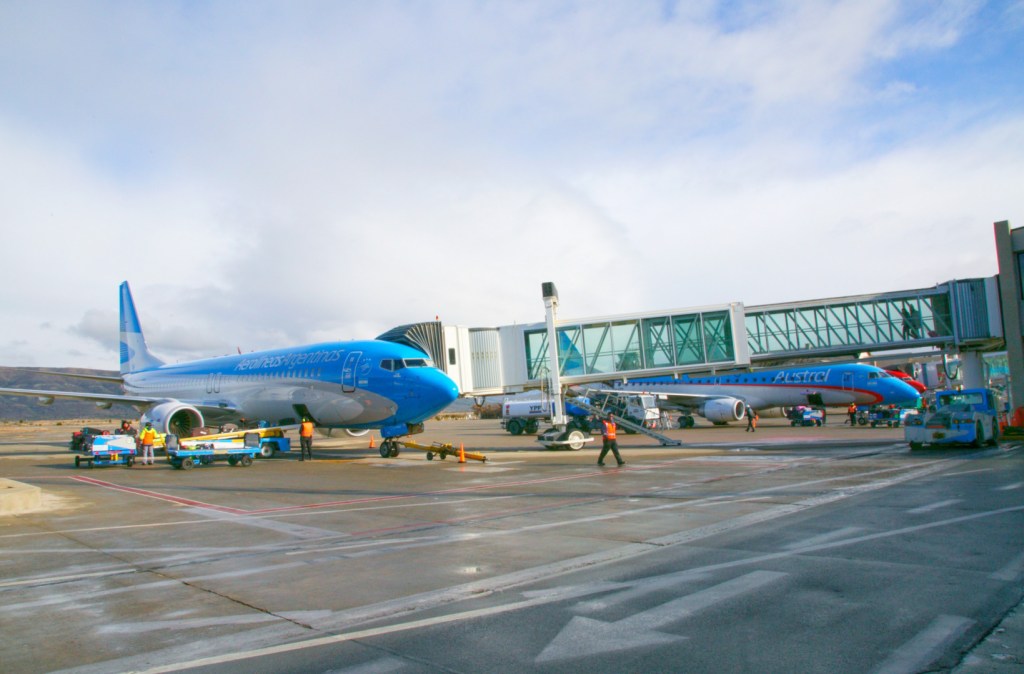
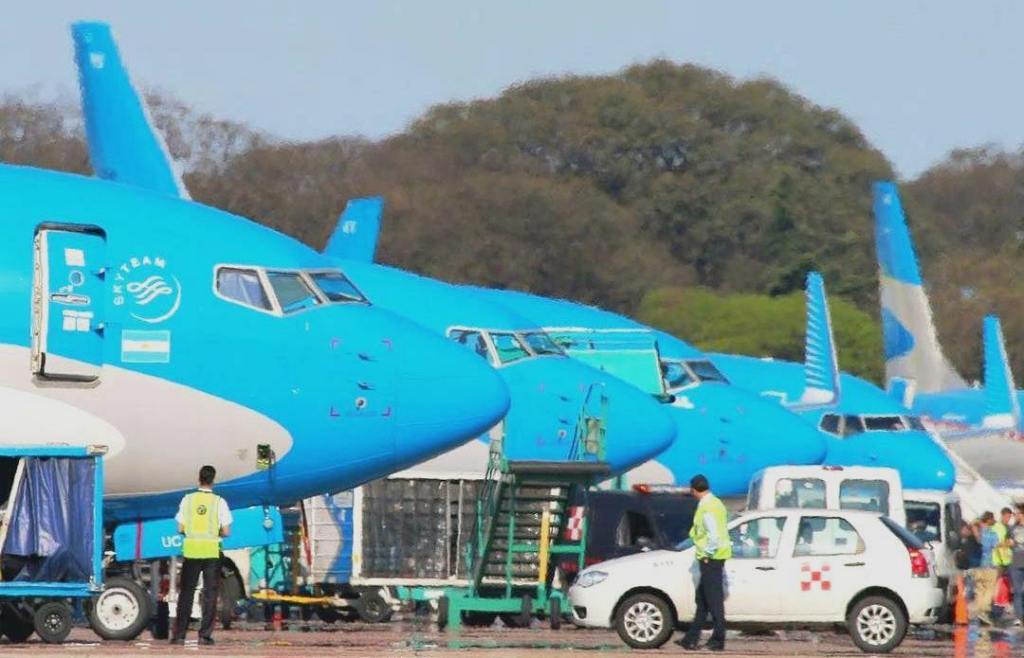
Aerolíneas Argentinas ha realizado el vuelo inaugural de la ruta Rosario-San Martín de los Andes, Argentina. El vuelo desde el Aeropuerto Internacional Rosario hacia San Martín de los Andes partió a las 10:25 hs. de este Viernes 09/07. El Boeing 737-700 decorado con librea especial de la Alianza Skyteam posee una configuración para 127 pasajeros y arribó a las 12:45 hs. tras 02:20 hs de viaje. La frecuencia estacional operará todos los Viernes del mes de Julio 2021. El vuelo retorna a la ciudad de Rosario hacia las 15:45 hs.
El Presidente del Directorio del Aeropuerto Internacional Rosario SAAR/ROS, Eduardo Romagnoli, había destacado en Junio 2021 «potenciar la conectividad de nuestro aeropuerto de Rosario y la región por eso estamos muy satisfechos con la decisión de Aerolíneas de sumar un nuevo destino directo como será San Martín de los Andes. El aumento de las frecuencias a la ciudad de Bariloche, que pasará de una a cinco semanales”.
Aerolíneas inaugurates Rosario-S.M. Andes
Aerolíneas inaugural flight Rosario-S.M. Andes
Aerolíneas Argentinas has made the inaugural flight of the Rosario-San Martín de los Andes route, Argentina. The flight from Rosario International Airport to San Martín de los Andes left at 10:25 am. of this Friday 09/07. The Boeing 737-700 decorated with a special Skyteam Alliance livery has a configuration for 127 passengers and arrived at 12:45 pm. after 02:20 hours of travel. The seasonal frequency will operate every Friday of the month of July 2021. The flight returns to the city of Rosario at around 3:45 pm.
The Chairman of the Board of the Rosario SAAR/ROS International Airport, Eduardo Romagnoli, had highlighted in June 2021 «to enhance the connectivity of our Rosario airport and the region, that is why we are very satisfied with the decision of Aerolíneas to add a new direct destination as it will be San Martín de los Andes. The increase in frequencies to the city of Bariloche, which will go from one to five a week».
Aerolíneas extiende a 30 Abril 2022 tarifas cambio vuelos exterior
Aerolíneas Argentinas anunció este Jueves 08/07 modificaciones en su política comercial, en los que contempla la posibilidad de que los pasajeros puedan acceder a un cambio de fecha de viaje libre de cargos y penalidades hasta el 30 de Abril de 2022, siempre que se respete la temporada original. Los pasajeros deberán definir su nueva fecha y cambiar sus tickets antes del vencimiento del pasaje, que es de un año a partir de la fecha de emisión.
La política comercial superflex establecida por la empresa consiste en poder realizar un único cambio libre de cargos por diferencias de tarifa y penalidades para todos los tickets de la red internacional/regional emitidos hasta el 1 de Junio de 2021 inclusive que aun no hayan realizado ningún cambio, precisaron fuentes de la compañía. La modificación introducida permitirá a los pasajeros cambiar la fecha de ticket para volar hasta el 30 de Abril del 2022 dejando sin efecto la fecha anterior del 15 de Diciembre de 2021 y respetando siempre la temporada original. Esta modificación no aplica a los tickets domésticos, para ellos la última fecha de viaje permitida para no abonar diferencias de tarifa ni penalidades sigue siendo 15 de Diciembre 2021. Desde el año pasado, Aerolíneas Argentinas ha llevado adelante una política flexible permitiendo a los pasajeros cambiar voluntariamente la fecha de su viaje sin costos adicionales.
Aerolíneas extends rates changes
Aerolíneas extends to April 30, 2022 foreign flight change rates
Aerolíneas Argentinas announced this Thursday 08/07 modifications in its commercial policy, in which it contemplates the possibility that passengers can access a change of travel date free of charges and penalties until April 30, 2022, provided that it is respected the original season. Passengers must define their new date and change their tickets before the expiration of the ticket, which is one year from the date of issue.
The superflex commercial policy established by the company consists of being able to make a single change free of charges due to fare differences and penalties for all tickets of the international/regional network issued until June 1, 2021 inclusive that have not yet made any changes, they specified company sources. The modification introduced will allow passengers to change the ticket date to fly until April 30, 2022, leaving the previous date of December 15, 2021 without effect and always respecting the original season. This modification does not apply to domestic tickets, for them the last date of travel allowed to not pay differences in fare or penalties is still December 15, 2021. Since last year, Aerolíneas Argentinas has carried out a flexible policy allowing passengers to change voluntarily the date of your trip without additional costs.
Los funcionarios de la Civil Aviation Administration of China (CAAC) han señalado que están abiertos a realizar pruebas de vuelo en línea Boeing 737 MAX, un paso hacia el levantamiento de la puesta en tierra del avión en esa nación asiática después de más de dos años de prohibiciones de vuelos. Los detalles de un vuelo de validación para el 737 MAX en China aún se están trabajando, pero las discusiones son una señal de posible progreso en lo que se ha convertido en un largo enfrentamiento sobre el avión, dijeron las personas, que pidieron no ser identificadas porque las discusiones son privadas. The Boeing Company se está preparando para enviar una delegación de alrededor de 35 pilotos e ingenieros para reunirse con los reguladores a fines de julio después de que se sometan a semanas de cuarentena, dijo una de las personas. Todavía podrían pasar muchos meses después de ese vuelo antes de que los reguladores aéreos de China concluyan su trabajo y levanten la prohibición de volar, particularmente si no hay una interrupción en las crecientes tensiones comerciales entre las dos economías más grandes del mundo.
Los reguladores de aviación de China dijeron en Marzo 2021 que tenían grandes preocupaciones sobre el avión, incluidos los cambios de diseño, la capacitación de nuevos pilotos y las causas de los dos accidentes del MAX. Pero han dicho poco sobre por qué están tardando tanto en evaluar el rediseño y despejar el avión que los reguladores en Estados Unidos, Europa y Canadá. Su larga revisión ha avivado la especulación de que la política es un factor ahora que el avión ha sido despejado por más de 170 países. «No tiene nada que ver con la aviación, la seguridad o la seguridad de la aviación. Está muy por encima de nuestros grados salariales, muy por encima de nuestras cabezas. Es geopolítica», Richard Aboulafia, un observador de larga data de la industria aeroespacial en el Teal Group.
El destino del avión no solo está enredado en las relaciones entre Estados Unidos y China, sino que también se ve como una posible moneda de cambio en las negociaciones entre los dos países sobre temas comerciales de aviación y nuevos pedidos de aviones. China depende en gran medida de la tecnología estadounidense para su nuevo avión insignia, que se espera que haga su debut comercial a finales de este año. Además, China necesitará la aprobación de Estados Unidos si alguna vez exporta el avión C919, mientras que los fabricantes estadounidenses como General Electric Company se beneficiarán a medida que la contraparte del 737 MAX avance.
Las implicaciones son enormes para Boeing, que se apoya en el regreso comercial del 737 MAX para financiar el giro financiero de la compañía y ayudar a pagar su deuda de US$ 64 mil millones de Dólares. Una interrupción prolongada de la producción estadounidense de los aviones podría pesar en la promesa del presidente Joe Biden de avivar el empleo doméstico.
Una persona familiarizada con las discusiones dijo que las autoridades de China están en conversaciones sobre la realización de sesiones de simulador para el Boeing 737 MAX, pero se negó a decir cuáles son las perspectivas de un vuelo real. Tanto las carreras de simuladores como las pruebas de vuelo precedieron a la decisión de levantar la prohibición en Estados Unidos y Europa, pero algunas naciones no las han requerido antes de permitir que el avión reanude sus operaciones normales. Un portavoz de la Administración de Aviación Civil de China dijo que la agencia no tenía ninguna actualización que proporcionar sobre el progreso hacia el retorno del 737 de cuarta generación al servicio en el país. Boeing no se dirigió específicamente a China cuando se le preguntó sobre el potencial de un vuelo de prueba, diciendo solo que estaba trabajando con reguladores de aviación de todo el mundo.
China fue la primera nación en dejar en tierra el Boeing 737 MAX, actuando a las pocas horas de un accidente fatal en Etiopía el 10 de Marzo de 2019, y no ha permitido que el caballo de batalla de pasillo único vuele desde entonces, lo que engarza las ventas de aviones en el mercado extranjero más grande de Boeing. La Administración Federal de Aviación de los Estados Unidos levantó la puesta a tierra en Noviembre 2020, y el Agencia Europea de Seguridad Aérea y Transport Canada le siguió en Enero 2021.
Bajo los acuerdos del tratado de aviación, la Federal Aviation Administration (FAA) asumió el papel principal en la recertificación del MAX, trabajando en estrecha colaboración con el puñado de naciones que tienen sectores de fabricación de aviones de pasajeros existentes. Como ha ocurrido con otras naciones, China tiene la opción de validar el trabajo de la FAA bajo el tratado. La FAA ha proporcionado a China sesiones informativas técnicas sobre el trabajo, según las personas. Normalmente, uno de los pasos finales antes de una certificación es un vuelo de prueba. Los pilotos de la FAA, la EASA y Transport Canada realizaron dichos vuelos poco antes de levantar sus prohibiciones de vuelo. Boeing ha enviado delegaciones previamente a China desde la puesta en tierra y no hay garantía de que las recientes conversaciones resulten en el levantamiento de la prohibición de volar.
El Boeing 737 MAX estuvo en tierra durante 18 meses en los Estados Unidos después del segundo de dos accidentes aéreos; 346 personas murieron en los dos accidentes. Ambos accidentes fueron causados al menos en parte por un sistema de control de vuelo que funcionó mal, lo que provocó repetidamente que el avión se sumergieran por su cuenta. Desde entonces, el sistema ha sido rediseñado para evitar que se active repetidamente y para agregar redundancia para que sea menos probable que funcione mal, entre otros cambios.
El Director Ejecutivo de Boeing, Dave Calhoun, ha advertido de que un prolongado estancamiento comercial amenaza sus planes de aumentar la producción el próximo año del 737 MAX, la principal fuente de ingresos de la compañía con sede en Chicago. El papel de larga data del fabricante como campeón industrial de Estados Unidos y el mayor exportador también está en peligro. Si a la compañía no se le permite servir al mercado de China, «cederá el liderazgo global. Nunca me rendiré en eso. Pero nos va a crear problemas reales en los próximos dos años si no podemos descongelar parte de la estructura comercial», dijo David Calhoun el mes pasado.
Estados Unidos está absolutamente trabajando en presionar a China para que avance en el MAX, dijo la Secretaria de Comercio, Gina Raimondo, el mes pasado. Los planes de entrega de Airbus y Boeing para 2021 dependen principalmente de la recuperación de China.
China approaches Boeing 737 MAX inspections
Boeing 737 MAX approaches test flights in China
Officials from the Civil Aviation Administration of China (CAAC) have indicated that they are open to conducting flight tests on the Boeing 737 MAX line, a step towards lifting the grounding of the plane in that Asian nation after more than two years. of flight bans. Details of a validation flight for the 737 MAX in China are still being worked out, but the discussions are a sign of possible progress in what has become a lengthy showdown over the plane, said the people, who asked not to be identified. because the discussions are private. The Boeing Company is preparing to send a delegation of about 35 pilots and engineers to meet with regulators in late July after they undergo weeks of quarantine, one of the people said. It could still be many months after that flight before China’s aviation regulators wrap up their work and lift the ban on flying, particularly if there is no disruption in the growing trade tensions between the world’s two largest economies.
China’s aviation regulators said in March 2021 that they had major concerns about the plane, including design changes, new pilot training and the causes of the two MAX crashes. But they have said little about why it is taking so long to evaluate the redesign and clear the plane than regulators in the United States, Europe and Canada. Its lengthy review has fueled speculation that politics is a factor now that the plane has been cleared by more than 170 countries. «It has nothing to do with aviation, security or aviation safety. It is way above our salary grades, way above our heads. It is geopolitical», Richard Aboulafia, a longtime observer of the industry aerospace at the Teal Group.
Not only is the fate of the plane tangled in U.S.-China relations, it is also seen as a potential bargaining chip in negotiations between the two countries on aviation trade issues and new aircraft orders. China relies heavily on American technology for its new flagship aircraft, which is expected to make its commercial debut later this year. Additionally, China will need US approval if it ever exports the C919 aircraft, while US manufacturers like General Electric Company will benefit as the 737 MAX counterpart moves forward.
The implications are enormous for Boeing, which relies on the commercial return of the 737 MAX to finance the company’s financial turnaround and help pay off its US$ 64 billion dollar debt. A prolonged halt in US aircraft production could weigh on President Joe Biden’s promise to boost domestic employment.
A person familiar with the discussions said Chinese authorities are in talks about holding simulator sessions for the Boeing 737 MAX, but declined to say what the prospects are for an actual flight. Both simulator races and flight tests preceded the decision to lift the ban in the United States and Europe, but some nations have not required them before allowing the plane to resume normal operations. A spokesman for the Civil Aviation Administration of China said the agency had no update to provide on progress towards returning the fourth-generation 737 to service in the country. Boeing did not specifically address China when asked about the potential for a test flight, saying only that it was working with aviation regulators around the world.
China was the first nation to ground the Boeing 737 MAX, acting within hours of a fatal accident in Ethiopia on March 10, 2019, and has not allowed the single-aisle workhorse to fly since then, which enshrines aircraft sales in Boeing’s largest foreign market. The United States Federal Aviation Administration lifted the grounding in November 2020, and the European Aviation Safety Agency and Transport Canada followed in January 2021.
Under the aviation treaty agreements, the Federal aviation Administration (FAA) took the lead role in the recertification of the MAX, working closely with the handful of nations that have existing airliner manufacturing sectors. As has happened with other nations, China has the option of validating the FAA’s work under the treaty. The FAA has provided China with technical briefings on the job, according to the people. Typically one of the final steps before certification is a test flight. Pilots from the FAA, EASA and Transport Canada conducted these flights shortly before lifting their flight bans. Boeing has previously sent delegations to China since the grounding and there is no guarantee that the recent talks will result in the lifting of the flying ban.
The Boeing 737 MAX was grounded for 18 months in the United States after the second of two plane crashes; 346 people died in the two accidents. Both accidents were caused at least in part by a malfunctioning flight control system, repeatedly causing the plane to submerge on its own. Since then, the system has been redesigned to prevent it from being triggered repeatedly and to add redundancy to make it less likely to malfunction, among other changes.
Boeing Chief Executive Officer Dave Calhoun has warned that a prolonged trade stagnation threatens his plans to increase production next year of the 737 MAX, the Chicago-based company’s main source of revenue. The manufacturer’s long-standing role as America’s industrial champion and largest exporter is also in jeopardy. If the company is not allowed to serve the China market, «it will give up global leadership. I will never give up on that. But it will create real problems for us in the next two years if we cannot unfreeze part of the business structure», he said. David Calhoun last month.
The United States is absolutely working to pressure China to advance on the MAX, Commerce Secretary Gina Raimondo said last month. Airbus and Boeing delivery plans for 2021 are primarily dependent on China’s recovery.
Entregas de aviones incrementaron 52% en primer semestre 2021
Airbus Group ha comunicado que ha entregado 297 aviones en la primera mitad del año después de un aumento de la actividad de traspaso en Junio 2021, dijo el Jueves 08/07 el fabricante de aviones europeo. Las entregas, que se han estado recuperando de una recesión relacionada con la pandemia, aumentaron un 52% en los primeros seis meses desde 196 unidades a mediados de 2020, y se comparan con un total de 389 en el primer semestre de 2019 antes de que la crisis sanitaria paralizara el transporte aéreo mundial. Además, Airbus había ganado 165 pedidos brutos en la primera mitad, cayendo a un total neto de 38 pedidos después de cancelaciones.
La actualización mensual que a anunciado el fabricante demuestra un fuerte repunte en Junio 2021 después de que se informara a principios de esta semana que Airbus había entregado más de 70 aviones ese mes para dejar las entregas de la primera mitad a una distancia de la marca de casi 300 unidades entregadas. Las entregas pusieron a Airbus en vuelo para cumplir con el objetivo para 2021 de al menos igualar las entregas del año anterior, expresaron los analistas del sector. «En términos de entregas generales, Airbus parece estar cómodamente en camino de al menos igualar la orientación de alrededor de los 566 aviones reportados en 2020, y probablemente se acerque a 600», dijo el analista de Agency Partners Sash Tusa.
En un movimiento inusual, un pedido de cinco aviones A350 previamente atribuidos a IAG Group, la unidad del grupo que contempla a Aer Lingus fue eliminada de la columna de pedidos de esa aerolínea y parecía haber sido colocada en una columna para aerolíneas cuyos nombres no han sido revelados. Una fuente de la industria dijo que tal medida podría crear flexibilidad para ajustar parte del pedido, aunque los datos mensuales de Airbus mostraron que el pedido no se ha cancelado hasta ahora. IAG, que previamente había transferido pedidos de A350 de la aerolínea irlandesa a otras partes del grupo de aerolíneas europeas, no estuvo disponible de inmediato para hacer comentarios. Además, Macquarie Airfinance, una unidad del Grupo Macquarie de Australia, que ha estado reduciendo gradualmente los pedidos del avión A220, canceló en Junio 2021 otros dos de lasa aeronaves ordenadas.
Airbus increases deliveries 52% 1H2021
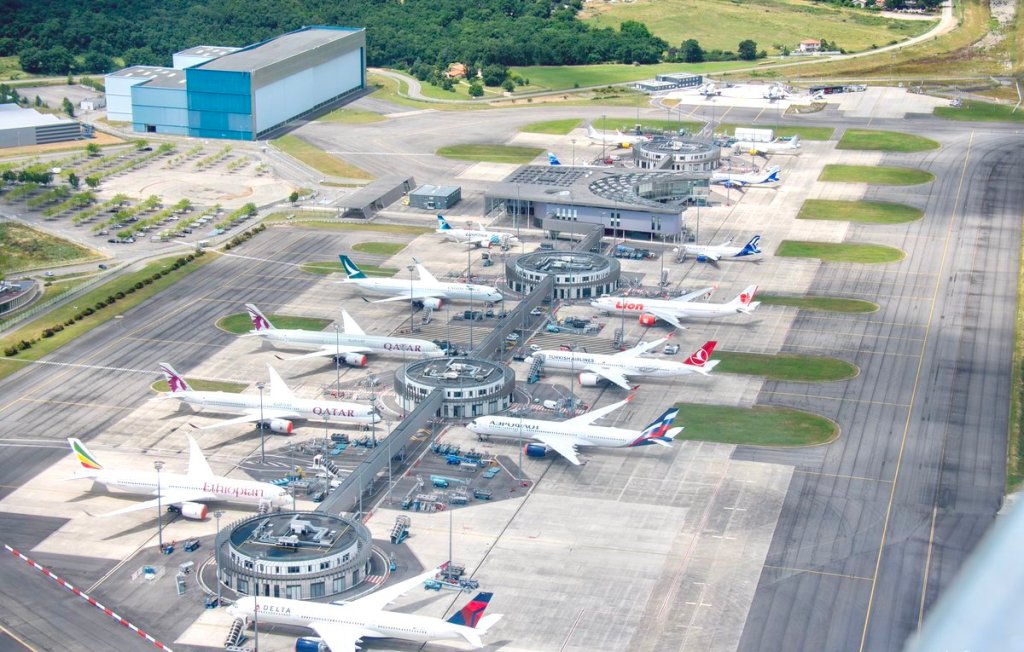
Centre de Livraison AIRBUS
Aircraft deliveries increased 52% in the first half of 2021
Airbus Group has announced that it has delivered 297 aircraft in the first half of the year after an increase in handover activity in June 2021, the European aircraft manufacturer said on Thursday 08/07. Deliveries, which have been recovering from a pandemic-related recession, were up 52% in the first six months from 196 units in mid-2020, compared to a total of 389 in the first half of 2019 before the health crisis paralyzed world air transport. In addition, Airbus had gained 165 gross orders in the first half, falling to a net total of 38 orders after cancellations.
The manufacturer’s announced monthly update shows a strong rebound in June 2021 after it was reported earlier this week that Airbus had delivered more than 70 aircraft that month to bring first-half deliveries within the mark of almost 300 units delivered. The deliveries put Airbus in flight to meet the 2021 goal of at least matching the previous year’s deliveries, industry analysts said. «In terms of overall deliveries, Airbus appears to be comfortably on track to at least match the guidance of around 566 aircraft reported in 2020, and is likely to approach 600», said Agency Partners analyst Sash Tusa.
In an unusual move, an order for five A350 aircraft previously attributed to IAG Group, the group unit that contemplates Aer Lingus was removed from that airline’s order column and appeared to have been placed in a column for airlines whose names have not been revealed. An industry source said such a move could create flexibility to adjust part of the order, although monthly data from Airbus showed that the order has not been canceled so far. IAG, which had previously transferred A350 orders from the Irish airline to other parts of the European airline group, was not immediately available for comment. In addition, Macquarie Airfinance, a unit of Australia’s Macquarie Group, which has been gradually reducing orders for the A220 aircraft, canceled two more of the aircraft ordered in June 2021.
Corte Suprema Uruguay confirma condena a ex-CEO de BROU
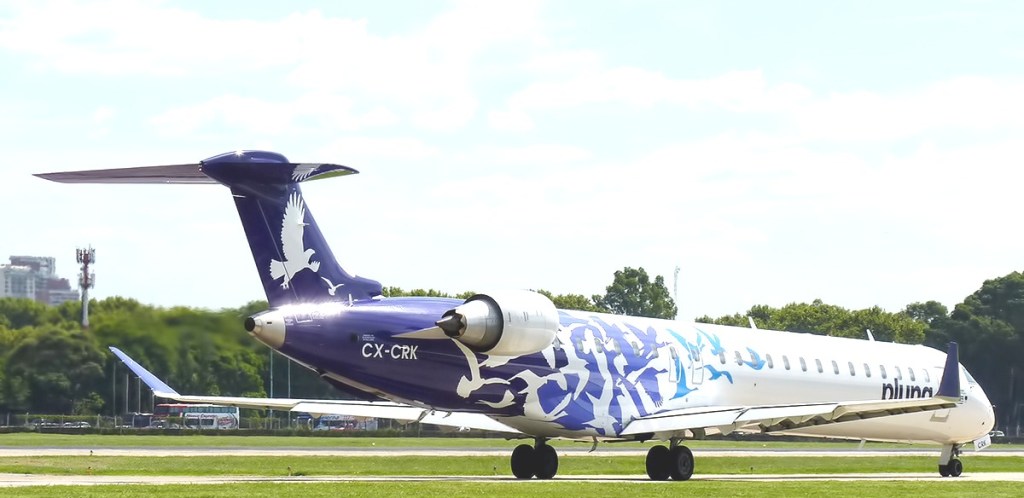
La sentencia de veinte meses de cárcel del ex-Director Ejecutivo del Banco República de Uruguay (BROU), Fernando Calloia, fue confirmada el Martes 06/07 por la Corte Suprema de Uruguay, extinguiendo así la cadena de apelaciones disponibles para el acusado involucrado en escándalo para comprar aviones a la aerolínea uruguaya PLUNA Líneas Aéreas.
Fernando Calloia fue hallado culpable de abuso de funciones al otorgar una garantía de US$ 12 millones a la firma Cosmo Líneas Aéreas, para la adquisición de la aeronave perteneciente a la antigua aerolínea de bandera PLUNA. La sentencia también incluye una multa de UY$ 1.337.000 Pesos Uruguayos/US$ 30.560 y la inhabilitación para ocupar cargos públicos por dos años. Pero Fernando Calloia no tendrá que cumplir ningún tiempo real de prisión porque se le ha concedido la libertad condicional. Fernando Calloia fue Presidente del BROU durante el Gobierno de José Mujica.
En el momento de su liquidación, en 2012, PLUNA acumuló un pasivo de US$ 300 millones, y en un intento por recuperar algo, los siete aviones de la compañía fueron puestos a subasta. El 1 de Octubre de 2012, durante la subasta, Hernán Calvo Gómez, en representación de Cosmo Líneas Aéreas, quiso comprar los aviones. Calvo Gómez era el padrino de los nietos de Juan Carlos López Mena, propietario de Buquebús, que quería hacerse cargo de los aviones y actuaba a través de esta otra empresa.
El fallo de la Corte Suprema de Uruguay del Martes 06/07 fue respaldado por unanimidad por sus cinco miembros. La Corte de Apelaciones había indicado que Fernando Calloia actuó deliberada y conscientemente para hacer viable de manera claramente abusiva y arbitraria la presentación de la empresa Cosmo, que luego se demostró que estaba vinculada al propietario de Buquebus, Juan Carlos López Ore.
Fernando Calloia ordenó al entonces Gerente de la división de negocios del BROU, Raúl García, otorgar el aval tras recibir la llamada del entonces Ministro de Economía, Fernando Lorenzo, por lo que los servicios técnicos del banco se saltaron todas y cada una de las más elementales reglas de prudencia que debe tener la actividad bancaria. Raúl García había testificado que había informado a Calloia que no se cumplían las condiciones para la garantía. «Calloia me dice que fue un asunto de interés nacional […] que contaba con el consentimiento de los directores de bancos necesarios para ello». También ha expresado que López Mena fue quien informara que emitiera los documentos a nombre de Cosmo Líneas Aéreas, una firma que notoriamente sirvió como fachada, según la fiscalía.
Supreme Court PLUNA case
Uruguay Supreme Court confirms conviction of ex-CEO of BROU
The sentence of twenty months in prison of the former Executive Director of the Banco República de Uruguay (BROU), Fernando Calloia, was confirmed on Tuesday 06/07 by the Supreme Court of Uruguay, thus extinguishing the chain of appeals available to the accused involved in scandal to buy planes from the Uruguayan airline PLUNA Líneas Aéreas.
Fernando Calloia was found guilty of abuse of functions by granting a guarantee of US$ 12 million to the firm Cosmo Lineas Aereas, for the acquisition of the aircraft belonging to the former flag carrier PLUNA. The sentence also includes a fine of UY$ 1,337,000 Uruguayan Pesos/US$ 30,560 and the disqualification from holding public office for two years. But Fernando Calloia will not have to serve any actual prison time because he has been granted parole. Calloia was president of the BROU during the government of José Mujica.
At the time of its liquidation, in 2012, PLUNA accumulated a liability of US$ 300 million, and in an attempt to recover something, the company’s seven aircraft were put up for auction. On October 1, 2012, during the auction, Hernán Calvo Gómez, representing Cosmo Lineas Aereas, wanted to buy the planes. Calvo Gómez was the godfather of the grandchildren of Juan Carlos López Mena, owner of Buquebús, who wanted to take charge of the planes and acted through this other company.
The ruling of the Supreme Court of Uruguay on Tuesday 06/07 was unanimously supported by its five members. The Court of Appeals had indicated that Fernando Calloia acted deliberately and consciously to make the presentation of the Cosmo company viable in a clearly abusive and arbitrary manner, which was later shown to be linked to the owner of Buquebus, Juan Carlos López Ore.
Fernando Calloia ordered the then Manager of the BROU business division, Raúl García, to grant the endorsement after receiving the call from the then Minister of Economy, Fernando Lorenzo, so the bank’s technical services skipped each and every one of the most elementary rules of prudence that banking activity should have. Raúl García had testified that he had informed Calloia that the conditions for the guarantee were not met. «Calloia tells me that it was a matter of national interest […] that he had the consent of the bank directors necessary to do so». He has also stated that López Mena was the one who reported that he issued the documents in the name of Cosmo Líneas Aéreas, a firm that notoriously served as a front, according to the prosecution.
Seguiría el cupo de tráfico de 600 ingresos por día al país
El Gobierno de Argentina anunciaría al acercarse el vencimiento de las restricciones de los cupos de 600 pasajeros a los viajes al internacionales, planea extender las limitaciones hasta finales de Julio 2021. Las autoridades de los ministerios de Salud, Interior y Transporte mantuvieron una reunión virtual para evaluar la continuidad de la medida, y concluyeron que se inclinarían por mantener la polémica restricción al menos durante una semana, pero la decisión final recaería sobre el Ejecutivo nacional.
En el Gobierno se mantenían firmes en mantener la restricción en el ingreso de argentinos al país, pero se había evaluado la posibilidad de modificar el alcance. Se evaluaba relajar la prohibición, para que pudiera ingresar una cantidad mayor, en medio de los fuertes cuestionamientos que llegaron desde las empresas de líneas aéreas.
La decisión de restringir aún más el ingreso de argentinos se había establecido inicialmente en 4.500 pasajeros por día, luego a 2.000 y actualmente a 600, lo que ha producido una avalancha de reclamos y fuerte polémica de los pasajeros varados en el exterior y de aquellos que necesitan salir del país.
Costo de volver a casa
Los pasajeros varados en el exterior siguen redefiniendo estrategias para concretar el retorno en el corto plazo. Los usuarios del transporte aéreo agrupados en redes sociales, dan por descontado que el Gobierno mantendrá el cupo acotado por lo menos hasta fines de Julio 2021, por lo que continúan analizando una estrategia de coordinar vuelos privados con destino al Aeropuerto de San Fernando, un aeropuerto de aviación ejecutiva, aunque los costos de transporte para retornar a Argentina se elevarían considerablemente. Otros analizan otras opciones de retornar vía aérea a Paraguay y desde allí por vía terrestre. Otra alternativa es arriesgarse a volar hasta Montevideo, Uruguay, para luego abordar el cruce hacia Buenos Aires a través del sistema de navegación pluvial por medio de la empresa Buquebus.
La terminal aérea del Aeropuerto Internacional San Fernando continúa abierta para las operaciones internacionales de vuelos ejecutivos. Mientras que en Ezeiza el promedio diario de vuelos de pasajeros que ingresan está en el orden de las tres frecuencias por compañía aérea, mientras que San Fernando aproxima el orden de los cincuenta con aeronaves jet ejecutivas. Las compañías Baires Fly, Flyzer, Aerorutas y Pacific Ocean, son las empresas que comenzaron a acumular consultas y contrataciones tras las limitaciones impuestas por la Administración Nacional de Aviación Civil (ANAC). Estas firmas ya venían intensificando sus operaciones por efecto de la vacunación masiva habilitada en los Estados Unidos. Actualmente, la demanda de algunos pasajeros varados en el exterior perfilan arribar a Argentina eantes que esperar los vuelos reprogramados para Septiembre, Octubre e, incluso, Noviembre 2021, según las ofertas de las compañías aéreas en concepto de reprogramaciones. Viajar en vuelos privados alcanzaría valores cercanas entre US$ 1.500 y US$ 3.500 Dólares. «El costo por pasajero en un servicio privado desde Uruguay a San Fernando está entre 2.500 y 3.500 Dólares. El precio varía de acuerdo al tipo y modelo de avión. Por lo general, son unidades que tienen de 5 a 7 lugares», dijo una fuente ligada a las empresas que hacen chárter. La fuente consultada ha sostenido que no hay inconvenientes en volar Miami-Montevideo y luego despegar hacia Argentina dado que se trata de pasajeros en tránsito. Dicha figura permite una estadía de hasta 24 horas en Uruguay. «Están llegando vuelos todos los días desde el exterior. Hasta el momento, la ANAC (Administración Nacional de la Aviación Civil) no ha suspendido ningún servicio a diferencia de lo que ocurre en Ezeiza, aunque hay que tomar en cuenta que las autorizaciones para cada vuelo hacia San Fernando demoran hasta 96 horas», aseguró la compañía ejecutiva consultada.
Argentina would extend foreign restrictions
Traffic quota of 600 admissions per day to the country would continue
The Government of Argentina would announce when the expiration of the restrictions of the 600 passenger quotas for international trips approaches, it plans to extend the limitations until the end of July 2021. The authorities of the Ministries of Health, Interior and Transport held a virtual meeting to evaluate the continuity of the measure, and concluded that they would be inclined to maintain the controversial restriction for at least a week, but the final decision would fall on the national Executive.
The government remained firm in maintaining the restriction on the entry of Argentines to the country, but the possibility of modifying the scope had been evaluated. It was evaluated to relax the ban, so that a greater amount could enter, amid the strong questions that came from the airline companies.
The decision to further restrict the entry of Argentines had been established initially at 4,500 passengers per day, then at 2,000 and currently at 600, which has produced an avalanche of complaints and strong controversy from passengers stranded abroad and those who they need to leave the country.
Cost of going home
Passengers stranded abroad continue to redefine strategies to achieve their return in the short term. Air transport users grouped in social networks, take for granted that the Government will maintain the limited quota at least until the end of July 2021, so they continue to analyze a strategy to coordinate private flights to the San Fernando Airport, an airport of executive aviation, although transportation costs to return to Argentina would rise considerably. Others are analyzing other options to return by air to Paraguay and from there by land. Another alternative is to risk flying to Montevideo, Uruguay, and then board the crossing to Buenos Aires through the rainwater navigation system through the Buquebus company.
The San Fernando International Airport air terminal remains open for international executive flight operations. While in Ezeiza the daily average of incoming passenger flights is in the order of the three frequencies per airline, while San Fernando approaches the order of fifty with executive jet aircraft. The companies Baires Fly, Flyzer, Aerorutas and Pacific Ocean, are the companies that began to accumulate consultations and contracts after the limitations imposed by the National Civil Aviation Administration (ANAC). These firms had already been intensifying their operations due to the mass vaccination enabled in the United States. Currently, the demand of some passengers stranded abroad are emerging to arrive in Argentina before waiting for the flights rescheduled for September, October and even November 2021, according to the offers of the airlines for rescheduling. Traveling in private flights would reach values close to between US$ 1,500 and US$ 3,500 Dollars. «The cost per passenger in a private service from Uruguay to San Fernando is between US$ 2,500 and US$ 3,500 Dollars. The price varies according to the type and model of airplane. In general, they are units that have from 5 to 7 places», said one source linked to charter companies. The source consulted has argued that there are no inconveniences in flying Miami-Montevideo and then taking off for Argentina since they are passengers in transit. This figure allows a stay of up to 24 hours in Uruguay. «Flights are arriving every day from abroad. So far, the ANAC (National Civil Aviation Administration) has not suspended any service unlike what happens in Ezeiza, although it must be taken into account that the authorizations for each flight to San Fernando takes up to 96 hours», said the executive company consulted.
Boeing publicará resultados segundo trimestre 28/07
The Boeing Company ha anunciado que publicará sus resultados financieros para el segundo trimestre de 2021 el Miércoles 28 de Julio de 2021. El Presidente y Director Ejecutivo David Calhoun y el Director Financiero interino Dave Dohnalek discutirán los resultados y las perspectivas de la compañía durante una conferencia telefónica ese día a las 10:30 a.m. ET.
El evento será transmitido por internet en http://services.choruscall.com/links/ba210728.html. También se puede acceder al evento marcando 1-877-692-8955 dentro de los EE. UU. y marcando 234-720-6979 fuera de los EE. UU. El código de acceso para ambos es 8930033. Las personas deben revisar el sitio de transmisión por Internet antes de la sesión para asegurarse de que sus computadoras puedan acceder a la transmisión de audio y la presentación de diapositivas. Las instrucciones para obtener el software descargable gratuito requerido se publicarán en el sitio. El comunicado de prensa de Boeing y los materiales de presentación se publicarán en la sección de Inversores de www.boeing.com antes del evento.
Boeing to publish 2Q20221 results
Boeing to Publish Second Quarter Results 07/28
The Boeing Company has announced that it will release its financial results for the second quarter of 2021 on Wednesday, July 28, 2021. President and CEO David Calhoun and Acting Chief Financial Officer Dave Dohnalek will discuss the company’s results and outlook during a conference call. phone that day at 10:30 am ET.
The event will be webcast at http://services.choruscall.com/links/ba210728.html. The event can also be accessed by dialing 1-877-692-8955 within the US and by dialing 234-720-6979 outside the US The access code for both is 8930033. People should check out the site webcast before the session to ensure their computers can access the audio stream and slide show. Instructions for obtaining the required free downloadable software will be posted on the site. The Boeing press release and presentation materials will be posted on the Investors section of www.boeing.com prior to the event.
La República Argentina ha sufrido una reducción drástica del tráfico aéreo doméstico. El mercado aéreo post-pandemia ha disminuido en una proporción a uno de cada cuatro vuelos que existían en 2019. La situación económica y la crisis sanitaria provocaron una fuerte baja de la demanda aérea interna, mientras que varias compañías han abandonado el mercado o dejaron de existir aumentando la concentración monopólica del sector.
Según los últimos datos elaborados por la agencia de aviación ANAC, en Junio 2019 se había desarrollado 11.239 vuelos, mientras que en Junio 2021 fueron 2.695, lo que representa el 24% de las operaciones del 2019. Los pasajeros bajaron de 1.191.000 a 168.000. El nivel de ocupación de los vuelos va de 40% a 70%, según cada empresa.
Ante el inicio de las vacaciones de invierno septentrional, las perspectivas para el sector turístico no son las mejores. Las demoras en autorizar la temporada invernal, el retraso en el plan de vacunación y la situación económica, no generan un marco propicio para decidir viajar. El titular de la Cámara Argentina de Turismo, Aldo Elías, estimó que el nivel de ocupación general del sector rondará el 40%.
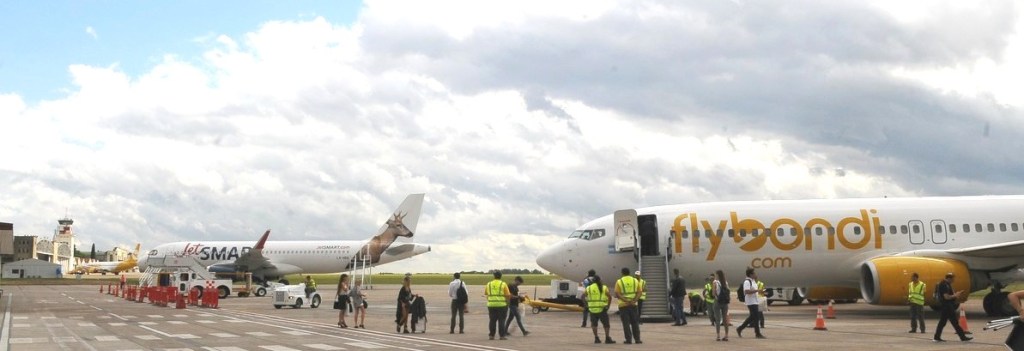
Argentina también ha sufrido una drástica disminución de la cantidad de líneas aéreas que operan en el mercado interno. Hace dos años, por la política apertura aérea que impulsó el gobierno anterior, había mayor competencia, estimulada principalmente por el arribo de las aéreas low cost. En Junio del 2019 los operadores aéreos del país representaban: Aerolíneas Argentinas, Austral Líneas Aéreas, Latam Airlines Argentina, Flybondi Líneas Aéreas, Norwegian Air Argentina, JetSmart Airlines Argentina, Andes Líneas Aéreas, Flyest Líneas Aéreas, Avianca Airlines Argentina, entre otros pequeños operadores. Tras el impacto de la pandemia y la falta de asistencia del Estado, hacia el mes de Junio 2021, el mercado ha alcanzado una concentracón histórica con solamente los principales operadores aéreos como Aerolíneas Argentinas, Flybondi, American Jet, JetSmart Argentina y la aerolínea de fomento LADE Líneas Aéreas. En estos dos años, la participación de la línea de bandera pasó del 63% de total de los servicios al 70%, dominando el sector aéreo que es poco regulado por el Gobierno actual.
Un aspecto positivo de la recomposición de la malla aérea es que algunas aerolíneas han estado abriendo nuevas rutas, permitiendo observar una oferta que no ha sido tan abrupta respecto a los datos prepandemia. Por ejemplo, JetSmart Airlines Argentina anunció hacia Agosto 2021 el restablecimiento de la ruta Rosario-Neuquén y los destinos de Corrientes y Posada.
Al acercarse la temporada invernal, la demanda de los viajes continúa sin reaccionar, permitiendo entender que la situación sanitaria desalienta la movilidad dentro del país. No sucede lo mismo en los vuelos al exterior, donde la demanda es superior a la oferta de vuelos y el nivel de ocupación de los vuelos es, en general, al máximo de su capacidad, pero con los contratiempos de que muchos pasajeros continúan varados en el extranjero.
El turismo es otra área paralela que ha impactado en su economía, aunque busca recuperarse de los efectos negativos de la pandemia y las restricciones, las agencias y las líneas aéreas ofrecen tickets a bajo costo.
Perspectivas aviación
Las líneas aéreas, agencias turísticas ven hacia el verano 2022 como un punto de despegue para la reactivación, alentados con el aumento de los procesos de vacunación en el país. Aunque las perspectivas sean un tanto alentadores, el duro impacto que ha dejado al mercado de la aviación comercial y el turismo se refleja y se observará en las tarifas aéreas y en las concentración del mercado.
Argentina air market reduction
Drastic reduction in domestic air traffic
The Argentine Republic has suffered a drastic reduction in domestic air traffic. The post-pandemic air market has decreased in a proportion to one of every four flights that existed in 2019. The economic situation and the health crisis caused a sharp drop in domestic air demand, while several companies have advanced the market or stopped operating. exist increasing the monopoly concentration of the sector.
According to the latest data prepared by the aviation agency ANAC, in June 2019 there were 11,239 flights, while in June 2021 there were 2,695, which represents 24% of the operations in 2019. Passengers fell from 1,191,000 to 168,000. The level of occupancy of the flights ranges from 40% to 70%, depending on each company.
With the start of the northern winter holidays, the outlook for the tourism sector is not the best. The delays in authorizing the winter season, the delay in the vaccination plan and the economic situation do not create a favorable framework to decide to travel. The head of the Argentine Chamber of Tourism, Aldo Elías, estimated that the general occupancy level in the sector will be around 40%.
Argentina has also suffered a drastic decrease in the number of airlines operating in the domestic market. Two years ago, due to the air opening policy promoted by the previous government, there was greater competition, stimulated mainly by the arrival of low cost airlines. In June 2019, the country’s air operators represented: Aerolíneas Argentinas, Austral Líneas Aéreas, Latam Airlines Argentina, Flybondi Líneas Aéreas, Norwegian Air Argentina, JetSmart Airlines Argentina, Andes Líneas Aéreas, Flyest Líneas Aéreas, Avianca Airlines Argentina, among other small operators. After the impact of the pandemis and the lack of assistance from the State, towards the month of June 2021, the market has reached a historical concentration with only the main air operators such as Aerolíneas Argentinas, Flybondi, American Jet, JetSmart Argentina and the promotion airline LADE Airlines. In these two years, the participation of the flag line went from 63% of total services to 70%, dominating the air sector that is little regulated by the current Government.
A positive aspect of the recomposition of the air mesh is that some airlines have been opening new routes, allowing us to observe an offer that has not been so abrupt compared to the prepandemic data. For example, JetSmart Airlines Argentina announced by August 2021 the reestablishment of the Rosario-Neuquén route and the destinations of Corrientes and Posada.
As the winter season approaches, the demand for travel continues without reacting, allowing us to understand that the health situation discourages mobility within the country. The same does not happen on flights abroad, where the demand is higher than the supply of flights and the level of occupation of the flights is, in general, at maximum capacity, but with the setbacks that many passengers remain stranded in abroad.
Tourism is another parallel area that has impacted its economy, although it seeks to recover from the negative effects of the pandemic and restrictions, agencies and airlines offer low-cost tickets.
Aviation perspectives
The airlines and tourist agencies see the summer of 2022 as a take-off point for reactivation, encouraged by the increase in the vaccination processes in the country. Although the outlook is somewhat encouraging, the harsh impact it has left on the commercial aviation and tourism market is reflected and will be seen in airfare and market concentration.
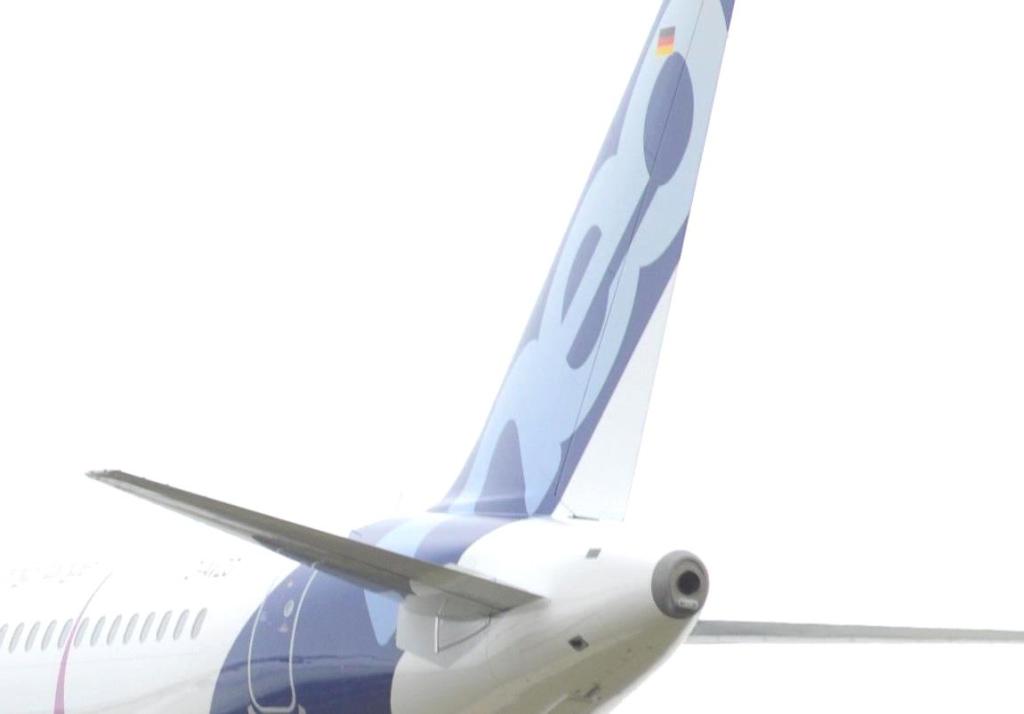
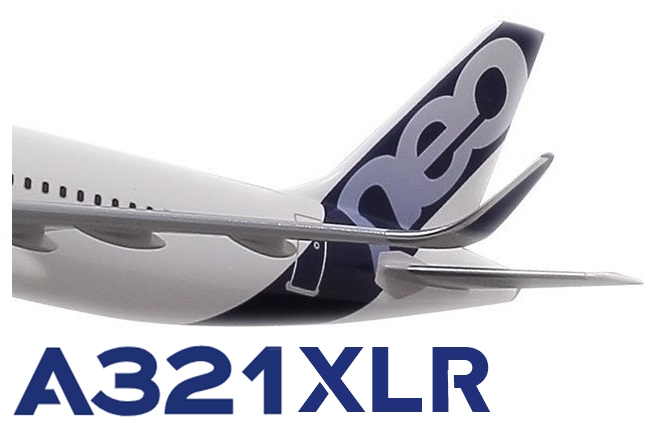
El constructor europeo Airbus Group planea que el A321XLR tendrá un alcance un 15% más largo que el A321LR, entre en servicio durante 2023. Desde el lanzamiento oficial del Programa A321XLR (eXtra Long Range) en el Paris Air Show de 2019, ha habido más de 420 pedidos y compromisos de más de veinte clientes, incluidas compañías aéreas heredadas y de bajo costo, así como arrendadores líderes para la versión de largo alcance adicional del avión de fuselaje más largo de la familia A320NEO. Tal demanda subraya claramente su atractivo como puente entre las ofertas de aviones de pasillo único y doble de Airbus. Su alcance adicional y un 30% menos de consumo de combustible por asiento que los aviones de la generación anterior permitirán a las aerolíneas operar un avión de pasillo único de menor costo de hasta 4.700 nm en rutas más largas y menos transitadas, muchas de las cuales ahora solo pueden ser servidas por aviones de cuerpo ancho más grandes y menos eficientes.
A pesar de estar diseñado para maximizar la similitud general con el A321LR y el resto de la familia A320NEO, incorporando los mismos motores P&W o CFM que ahorran combustible y dispositivos de punta de ala sharklet, el A321XLR cuenta con varias características únicas y distintivas. «Las principales diferencias son el tanque central trasero integrado en el fuselaje de popa, el tanque de aguas residuales más grande, un tren de aterrizaje de nariz reforzado y el tren de aterrizaje principal, incluidos los frenos, lo que permite un aumento de MTOW de 97t a 101t», dice Gary O’Donnell, Jefe del Programa A321XLR. En particular, el tanque central trasero optimizado (RCT) contiene más combustible que varios tanques centrales adicionales opcionales anteriormente, mientras que ocupa menos espacio en la bodega de carga, liberando así bajo el volumen del piso para carga y equipaje adicionales en rutas de largo alcance. Por su parte, las mejoras aerodinámicas incluyen un nuevo flap de una sola ranura y mejoras en la limpieza aerodinámica de las superficies de la aeronave, así como nuevas configuraciones de flap/slat adaptadas a las características del A321XLR. Para proporcionar comodidad adicional en vuelos más largos, el A321XLR utilizará la última cabina de Espacio Aéreo de Airbus, que cuenta con iluminación ambiental mejorada, conectividad a bordo y contenedores más grandes que ofrecen un 40% más de capacidad instalada como equipo equipado con el proveedor. «La cabina ofrece a los pasajeros la mejor experiencia de viaje, incluidos asientos similares a los utilizados en un avión de cuerpo ancho. El espacio aéreo ya está en servicio en los aviones A350 y A330NEO y estará totalmente disponible para el A321XLR», dice Gary O’Donnell.
Línea Programa A321XLR
La industrialización y la producción de piezas para el primer A321XLR está en marcha en las plantas de Airbus y su cadena de suministro, con el ensamblaje de componentes importantes de las primeras secciones delanteras del fuselaje, el fuselaje central y trasero y las alas que se espera que ocurran antes de finales de este año. Airbus tiene como objetivo una entrada en servicio para el A321XLR de 2023, aunque esto puede retrasarse dependiendo de cómo se procedan las pruebas y la certificación del tanque de combustible. «La producción de componentes y sistemas para el primer avión de prueba de vuelo A321XLR está progresando en sitios de todo el mundo. En paralelo, muchas piezas ya se están probando y demostrando, tanto en la estructura de la aeronave como en el lado de los sistemas, para validar la funcionalidad de todos esos primeros componentes de la aeronave», dice Gary O’Donnell.
Airbus tiene demostradores para la estructura, el sistema, el equipo y la cabina repartidos en sus instalaciones en Hamburgo en Alemania, St. Nazaire en Francia y Broughton, Reino Unido, así como en los principales sitios de proveedores. «Estos van desde cupones de material detallados hasta demostradores de sección completa. El sistema de producción en particular está cobrando vida, con nuestros equipos recibiendo los dibujos de diseño tanto internamente como de socios clave y llevándolos a la realidad física. Esto está permitiendo a nuestras fábricas en Europa y el Reino Unido preparar sus operaciones piloto para la fase de ensamblaje de componentes principales que comenzará a finales de este año y, a su vez, para la posterior inducción del primer ensamblaje de componentes principales completado en la línea de montaje final en Hamburgo en la segunda parte del año», expresa Gary O’Donnell.
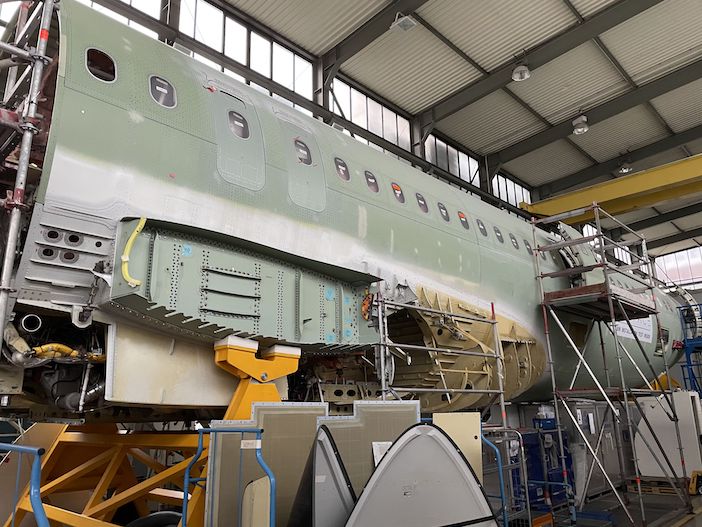
Si bien todas las secciones principales del A321XLR contienen cambios de diseño significativos en comparación con los aviones actuales A321NEO/A321LR, el fuselaje central y de popa del XLR se desvía más debido al RCT integral y los sistemas de gestión de combustible asociados. En un intento por evitar cualquier interrupción en las tasas de producción existentes de pasillo único, se ha construido una línea piloto de estructura separada dedicada a ensamblar las secciones centrales y traseras del fuselaje central y trasero del A321XLR en la planta de producción de Hamburg Finkenwerder en Alemania.
La línea piloto ha sido completamente diseñada en 3D, con datos de diseño A321XLR utilizados para validar digitalmente la ergonomía, las operaciones y la logística de antemano. «La línea piloto en Hamburgo significa que podemos tener una fábrica estable. Nos permitirá comenzar a aumentar la producción del conjunto de componentes principales del fuselaje de popa del A321XLR utilizando tiempos de ciclo más largos para empezar y con un mayor nivel de ingeniería y soporte, para garantizar la integración sin problemas del nuevo tanque central trasero y sus nuevos sistemas de combustible. Es importante destacar que también evitará que pongamos en riesgo el resto de la producción de un solo pasillo. Y luego, una vez que estamos contentos de que todo esté lo suficientemente maduro, podemos transferirlo con confianza al sistema de producción principal», detalla Gary O’Donnell.
Mientras tanto, el ciclo de producción del fuselaje central y de popa del A321XLR continúa progresando, con el trabajo dividido en varios sitios clave. La fabricación del subensamblaje de la caja del ala central comenzó a mediados de Noviembre de 2020 en Nantes y pronto se entregará e integrará en la sección de ensamblaje de componentes principales del fuselaje de popa en Hamburgo.
Al mismo tiempo, Premium Aerotec Group en Augsburgo, Alemania, está completando las piezas finales para el RCT y está preparando las herramientas y el piso de producción para el ensamblaje del tanque de combustible. En otros emplazamientos de Premium Aerotec Group en Nordenham y Varel en Alemania, también se están empezando a producir varios componentes grandes del fuselaje central y de popa.
La producción de piezas para la sección de nariz y fuselaje delantero de la aeronave está en marcha en Stelia Aerospace. Una vez completados, serán transportados a Saint-Nazaire, Francia, para la etapa de montaje de componentes principales de la nariz y el fuselaje delantero.
Otra estructura clave de ensamblaje de componentes importantes es el conjunto de alas de la aeronave, para el cual el enfoque particular del equipo de Broughton, Reino Unido, es la configuración de flap del A321XLR. Con este fin, se están realizando las pruebas de herramientas asociadas para los nuevos flaps internos y fuera de borda, que se están realizando en conjunto con Spirit AeroSystems en Malasia y FACC en Austria, respectivamente.
Los componentes fijos más convencionales del ala, como las palas y los largueros, están tomando forma en Broughton y en la cadena de suministro asociada. Del mismo modo, la producción está en marcha para los componentes del tren de aterrizaje en Safran, Collins y Triumph, los sistemas de combustible e inerción en Collins y Parker Aerospace y los pilones de motor en la planta de producción dedicada de Airbus en St. Eloi, Toulouse. Los sistemas de cabina y carga se encuentran actualmente en fase de prueba para validar los elementos de confort para pasajeros de alcance extralargaje del A321XLR.
Airbus está utilizando demostradores dedicados para validar los procesos de diseño y montaje antes de la fabricación final. Los mismos demostradores de tamaño completo también se utilizan para pre-entrenar al personal de la línea de producción en la instalación de ensamblaje final en Hamburgo, donde se construirá el primer A321XLR.
«Hemos estado utilizando una mezcla de realidad virtual y aumentada [VR y AR] para demostrar el modelo digital 3D desde hace algún tiempo. También hemos estado utilizando los primeros demostradores físicos, maquetas de madera y piezas impresas en 3D. Más recientemente, hemos desarrollado los demostradores de producción a gran escala que vemos cada vez más hoy en día, principalmente en Saint Nazaire y Hamburgo. Los primeros demostradores físicos y los demostradores virtuales nos permiten validar nuestras decisiones de diseño. La mayor parte de eso se completó en 2020. Los demostradores de producción apoyan principalmente la capacitación, la madurez del proceso industrial y ayudan a asegurar nuestro aumento, porque los ejecutamos a la tasa de producción. Esto está sucediendo en todas las áreas de ensamblaje. Luego estamos ejecutando demostradores para equipos de mantenimiento, reparación y atención al cliente, para que puedan crear los documentos de la aerolínea, otros documentos técnicos y manuales de reparación. Utilizamos demostradores físicos con VR y AR para que los equipos puedan probar cómo cambian y arreglan las piezas, ya sea en un hangar o en el delantal, para que cuando estén escribiendo documentos técnicos, ya hayan podido verificar estas referencias virtuales», dice Gary O’Donnell.
Esta atención al detalle está diseñada para garantizar que Airbus pueda mantener sus objetivos de entrega agresivos para un avión que continúa ganando pedidos. «Actualmente, estamos en una tasa de 40 para la familia A320 en general con un plan para aumentar a 45 a finales de este año», revela Gary O’Donnell. Las dos grandes estructuras de fuselaje y demostradores de sistemas ubicados en Hamburgo, Alemania y en Saint Nazaire, Francia, son el foco actual. Respectivamente, estas maquetas físicas (PMUs) son el Acelerador de Sistemas Preindustriales (PISA) para la sección central y de popa del fuselaje (CAF), y la sección de nariz y fuselaje delantero (NFF). «En el demostrador PMU para la sección delantera nos centramos en el refuerzo de la estructura del XLR debido a las diferentes cargas, y también en la mejora de los nuevos sistemas para la comodidad de la cabina», dice Martin Schnoor, líder del fuselaje del A321XLR en Airbus. «El PMU nos da la oportunidad de reunir todas las modificaciones del fuselaje, los sistemas y la cabina para confirmar las interfaces industriales. Mientras tanto, el PMU en Hamburgo se está centrando en los principales componentes del XLR, incluida la integración del tanque central trasero, la integración del tanque de agua, el sistema de combustible extendido y el sistema hidráulico modificado. Aquí, aprovechamos al máximo la proximidad del PMU del fuselaje trasero a la línea de montaje final para proporcionar capacitación a los operadores de producción antes de que entren en el primer avión producido en serie», continúa detallando el Jefe del Programa A321XLR.
Airbus planea mantener y actualizar los demostradores de PMU durante la vida útil del programa XLR, para perfeccionar las modificaciones futuras también para fines de capacitación en el taller. «Todos estos demostradores nos ayudan a observar los sistemas, las actividades y los flujos de trabajo en condiciones reales holísticas en una etapa temprana antes del inicio de la producción. Los demostradores, junto con la capacitación en el aula y la capacitación en VR / AR, serán una parte integral de la capacitación y la incorporación de nuestros empleados en el futuro. Proporcionan un espacio protegido para el aprendizaje y el desarrollo posterior y permiten aprender de los errores, sin poner en peligro la producción o la seguridad», dice Hauke Delmas, Jefe de Equipamiento XLR de pasillo único en las instalaciones de Airbus en Hamburgo Finkenwerder.
Montaje estructural
A finales de Junio 2021, la producción del A321XLR había comenzado en la línea piloto de estructura dedicada dentro del Hangar 260 en la planta de Airbus en Hamburgo, responsable del montaje estructural de los fuselajes centrales y traseros. Paralelamente, el montaje estructural de la sección 15 había comenzado a mediados de abril con la integración de los proyectiles de RUAG, así como la caja del ala central de Airbus Nantes, y el módulo de viga de quilla y brida trasera suministrado por Premium Aerotec.
En las próximas semanas, los equipos finalizarán la integración del módulo RCT en la Sección 17, con el montaje estructural del segundo avión de prueba de vuelo. La fase de montaje del equipo de la primera aeronave está prevista en el otoño, seguida de un período dedicado a la instalación de equipos de prueba de vuelo.
Premium Aerotec en Augsburgo, Alemania, es responsable de la producción del tanque central trasero (RCT) del A321XLR, un tanque de combustible de alta capacidad instalado permanentemente que hace el máximo uso volumétrico del fuselaje inferior de la aeronave. La estructura RCT, que está integrada en las secciones 15 y 17 del fuselaje, se encuentra detrás de la bahía principal del tren de aterrizaje y contiene hasta 13.100 litros de combustible.
Sin embargo, Boeing recientemente planteó preocupaciones a la EASA de que la integración del nuevo tanque de combustible en el fuselaje «presenta muchos peligros potenciales», lo que sugiere que tal diseño proporciona menos redundancia que los tanques de combustible estructuralmente separados y ofrece menos protección contra la interrupción estructural debido a un evento de falla fuera de la pista o del tren de aterrizaje que de otra manera podría sobrevivir.
Para garantizar la seguridad, la AESA ha impuesto condiciones especiales para proteger la mitad inferior del fuselaje alrededor del tanque central de combustible de la penetración de incendios. En Mayo 2021, Premium Aerotec entregó el primer RCT totalmente equipado a las instalaciones de Airbus en Hamburgo, anunciando el inicio del ensamblaje del fuselaje trasero de la aeronave y el fuselaje central en la línea de pilotos dedicada del fabricante de aviones. «Es un hito importante para el programa A321XLR. Los equipos pueden estar orgullosos de este logro y de la velocidad general de la industrialización. Estamos en el buen camino con nuestra planificación y la línea piloto dedicada al A321XLR está lista y a la espera de operar las fases de montaje para el primer avión de prueba de vuelo, hasta la entrada en servicio», dice Martin Schnoor, Jefe del Programa de Desarrollo de Fuselajes del Programa A321XLR en Airbus.
A321XLR test program update
Airbus A321XLR service entry prospects 2023
European manufacturer Airbus Group plans that the A321XLR will have a 15% longer range than the A321LR, entering service during 2023. Since the official launch of the A321XLR (eXtra Long Range) Program at the 2019 Paris Air Show, there have been more 420 orders and commitments from more than twenty customers, including low-cost and legacy airlines, as well as leading lessors for the additional long-range version of the longest-body aircraft in the A320NEO family. Such demand clearly underscores its appeal as a bridge between Airbus’ single and dual aisle aircraft offerings. Its additional range and 30% less fuel consumption per seat than previous generation aircraft will allow airlines to operate a lower-cost single-aisle aircraft of up to 4,700 nm on longer, less-traveled routes, many of which they can now only be served by larger and less efficient widebody aircraft.
Despite being designed to maximize overall similarity to the A321LR and the rest of the A320NEO family, incorporating the same fuel-saving P&W or CFM engines and sharklet wingtip devices, the A321XLR boasts several unique and distinctive features. «The main differences are the rear center tank integrated into the aft fuselage, the larger sewage tank, a reinforced nose landing gear and the main landing gear, including brakes, allowing an MTOW increase of 97t to 101t», says Gary O’Donnell, A321XLR Program Manager. In particular, the optimized rear center tank (RCT) holds more fuel than several optional additional center tanks previously, while taking up less space in the cargo hold, thus freeing up under floor volume for additional cargo and luggage on long-haul routes. Aerodynamic improvements include a new single-slot flap and improvements in the aerodynamic cleaning of the aircraft surfaces, as well as new flap / slat configurations adapted to the characteristics of the A321XLR. To provide additional comfort on longer flights, the A321XLR will utilize Airbus’ latest Aerospace cabin, featuring improved ambient lighting, inflight connectivity and larger containers offering 40% more installed capacity as vendor-equipped equipment. «The cabin offers passengers the best travel experience, including seats similar to those used in a wide-body aircraft. The airspace is already in service on the A350 and A330NEO aircraft and will be fully available for the A321XLR», says Gary O’Donnell.
Progama A321XLR Line
Industrialization and production of parts for the first A321XLR is underway at Airbus plants and its supply chain, with the assembly of important components of the first forward fuselage sections, the central and rear fuselage and the wings expected. that occur before the end of this year. Airbus is targeting entry into service for the 2023 A321XLR, although this may be delayed depending on how fuel tank testing and certification proceeds. «Production of components and systems for the first A321XLR flight test aircraft is progressing at sites around the world. In parallel, many parts are already being tested and demonstrated, both on the aircraft frame and on the aircraft side systems, to validate the functionality of all those early aircraft components», says Gary O’Donnell.
Airbus has demonstrators for the structure, system, equipment and cabin spread across its facilities in Hamburg in Germany, St. Nazaire in France and Broughton, UK, as well as at major supplier sites. «These range from detailed material coupons to full-section demonstrators. The production system in particular is coming to life, with our teams receiving the design drawings both internally and from key partners and bringing them to physical reality. This is enabling our factories in Europe and the UK prepare their pilot operations for the main component assembly phase which will start later this year and, in turn, for the subsequent induction of the first completed main component assembly on the final assembly line in Hamburg in the second part of the year», says Gary O’Donnell.
While all major sections of the A321XLR contain significant design changes compared to the current A321NEO/ A321LR aircraft, the XLR’s center and aft fuselage deviates further due to the comprehensive RCT and associated fuel management systems. In an attempt to avoid any disruption to existing single aisle production rates, a separate structure pilot line dedicated to assembling the A321XLR center and rear fuselage center and rear sections has been built at the Hamburg Finkenwerder production facility in Germany.
The pilot line has been completely designed in 3D, with A321XLR design data used to digitally validate ergonomics, operations and logistics in advance. «The pilot line in Hamburg means we can have a stable factory. It will allow us to start increasing production of the A321XLR aft fuselage core component set using longer cycle times to start with and with a higher level of engineering and support, to ensure the seamless integration of the new rear center tank and its new fuel systems. Importantly, it will also prevent us from putting the rest of the single-aisle production at risk. And then once we’re happy that everything is mature enough, we can confidently transfer it to the main production system», details Gary O’Donnell.
Meanwhile, the A321XLR’s aft and center fuselage production cycle continues to progress, with work divided into several key sites. Manufacturing of the mid-wing box sub-assembly started in mid-November 2020 in Nantes and will soon be delivered and integrated into the main component assembly section of the aft fuselage in Hamburg.
At the same time, Premium Aerotec Group in Augsburg, Germany, is completing the final parts for the RCT and preparing the tooling and shop floor for the fuel tank assembly. At other Premium Aerotec Group locations in Nordenham and Varel in Germany, several large aft and central fuselage components are also starting to be produced.
Production of parts for the nose and forward fuselage section of the aircraft is underway at Stelia Aerospace. Once completed, they will be transported to Saint-Nazaire, France, for the assembly stage of the main components of the nose and forward fuselage.
Another key important component assembly structure is the aircraft’s wing assembly, for which the particular focus of the team from Broughton, UK, is the flap configuration of the A321XLR. To this end, associated tool tests are underway for the new inboard and outboard flaps, which are being conducted in conjunction with Spirit AeroSystems in Malaysia and FACC in Austria, respectively.
More conventional fixed wing components, such as blades and spars, are taking shape at Broughton and the associated supply chain. Similarly, production is underway for landing gear components at Safran, Collins and Triumph, fuel and inert systems at Collins and Parker Aerospace, and engine pylons at Airbus’ dedicated production facility in St. Eloi, Toulouse. The cabin and cargo systems are currently undergoing testing to validate the extra long reach passenger comfort features of the A321XLR.
Airbus is using dedicated demonstrators to validate the design and assembly processes prior to final fabrication. The same full-size demonstrators are also used to pre-train production line personnel at the final assembly facility in Hamburg, where the first A321XLR will be built.
«We have been using a mixture of virtual and augmented reality [VR and AR] to demonstrate the 3D digital model for some time. We have also been using the first physical demonstrators, wooden models and 3D printed parts. More recently, we have developed the large-scale production demonstrators that we see more and more today, mainly in Saint Nazaire and Hamburg. The first physical demonstrators and virtual demonstrators allow us to validate our design decisions. Most of that was completed in 2020. The Production demonstrators mainly support training, industrial process maturity and help ensure our increase, because we run them at production rate. This is happening in all areas of assembly. Then we are running demonstrators for maintenance, repair and equipment equipment. customer support, so they can create airline documents, other technical documents s and repair manuals. We use physical demonstrators with VR and AR so that teams can test how they change and arrange parts, either in a hangar or on the apron, so that when they are writing technical documents, they have already been able to verify these virtual references», says Gary O ‘Donnell.
This attention to detail is designed to ensure that Airbus can maintain its aggressive delivery targets for an aircraft that continues to win orders. «We are currently at a rate of 40 for the overall A320 Family with a plan to increase to 45 by the end of this year», reveals Gary O’Donnell. The two large fuselage structures and system demonstrators located in Hamburg, Germany and Saint Nazaire, France, are the current focus. Respectively, these physical mock-ups (PMUs) are the Pre-Industrial Systems Accelerator (PISA) for the central and aft section of the fuselage (CAF), and the nose and forward fuselage section (NFF). «In the PMU demonstrator for the forward section we focused on strengthening the XLR structure due to different loads, and also on improving the new systems for cabin comfort», says Martin Schnoor, Airframe Leader for the A321XLR at Airbus. «The PMU gives us the opportunity to bring together all the modifications to the airframe, systems and the cockpit to confirm the industrial interfaces. Meanwhile, the PMU in Hamburg is focusing on the main components of the XLR, including the integration of the rear center tank, the integration of the water tank, the extended fuel system and the modified hydraulic system. Here, we take full advantage of the proximity of the rear fuselage PMU to the final assembly line to provide training to production operators before they go into operation. the first series-produced aircraft», continues the A321XLR Program Manager.
Airbus plans to maintain and upgrade the PMU demonstrators for the life of the XLR program, to refine future modifications also for in-shop training purposes. «All of these demonstrators help us to observe systems, activities, and workflows in holistic real-world conditions at an early stage before production starts. The demonstrators, along with classroom training and VR/AR training , will be an integral part of the training and onboarding of our employees in the future. They provide a protected space for learning and further development and allow learning from mistakes, without compromising production or safety», says Hauke Delmas , Head of Single Aisle XLR Equipment at the Airbus facility in Hamburg Finkenwerder.
Structural assembly
By the end of June, production of the A321XLR had started on the dedicated structure pilot line inside Hangar 260 at the Airbus plant in Hamburg, responsible for the structural assembly of the central and rear fuselages. In parallel, the structural assembly of section 15 had started in mid-April with the integration of the RUAG projectiles, as well as the Airbus Nantes central wing box, and the keel girder and rear flange module supplied by Premium Aerotec.
In the coming weeks, the teams will finalize the integration of the RCT module in Section 17, with the structural assembly of the second flight test aircraft. The equipment assembly phase for the first aircraft is scheduled for the fall, followed by a period dedicated to the installation of flight test equipment.
Premium Aerotec in Augsburg, Germany, is responsible for the production of the A321XLR’s Rear Center Tank (RCT), a permanently installed high-capacity fuel tank that makes maximum volumetric use of the aircraft’s lower fuselage. The rct structure, which is integrated into sections 15 and 17 of the fuselage, is located behind the main landing gear bay and contains up to 13,100 liters of fuel.
However, Boeing recently raised concerns with EASA that the integration of the new fuel tank into the fuselage «presents many potential hazards», suggesting that such a design provides less redundancy than structurally separate fuel tanks and offers less protection against structural disruption due to an otherwise surviving off-runway or landing gear failure event.
To ensure safety, EASA has imposed special conditions to protect the lower half of the fuselage around the central fuel tank from fire penetration. In May 2021, Premium Aerotec delivered the first fully equipped RCT to the Airbus facility in Hamburg, announcing the start of assembly of the aircraft’s rear fuselage and central fuselage in the aircraft manufacturer’s dedicated pilot line. «It is an important milestone for the A321XLR program. Teams can be proud of this achievement and the overall speed of industrialization. We are on the right track with our planning and the dedicated A321XLR pilot line is ready and waiting to operate. assembly phases for the first flight test aircraft, until entry into service», says Martin Schnoor, head of the airframe development program for the A321XLR program at Airbus.
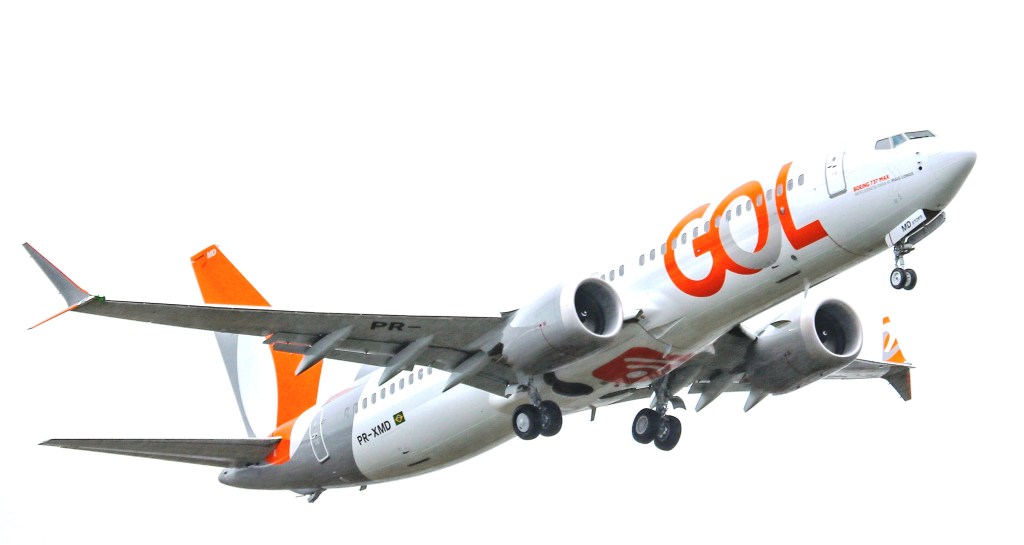
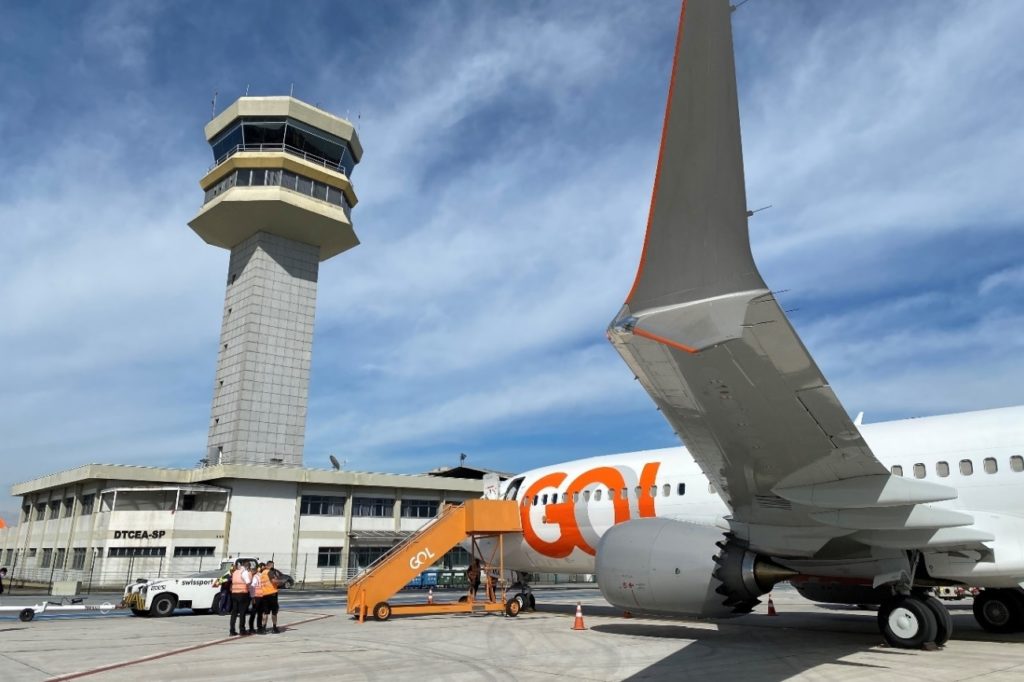
GOL estrena aeronave Boeing 737-8 MAX en Congonhas
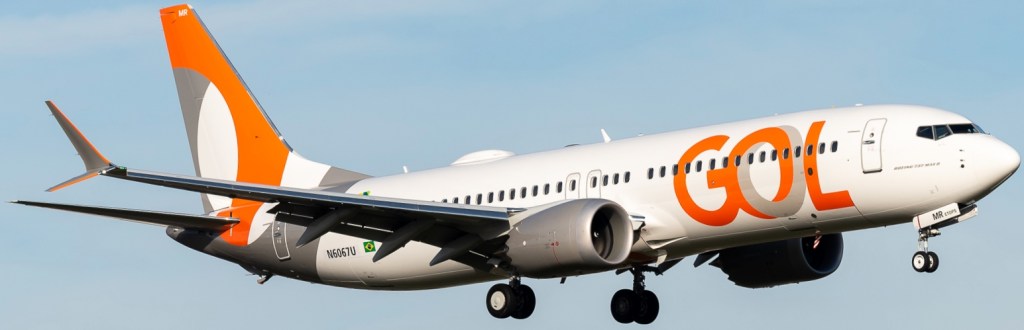
GOL Linhas Aéreas ha iniciado operaciones con la nueva aeronave a estrenar Boeing 737-8 MAX en el Aeropuerto São Paulo/Congonhas el Sábado 3 de Julio de 2021. La introducción de la moderna aeronave permitirá posicionar mejor tecnología, mejor servicio y respaldo al medio ambiente en uno de los aeropuertos más concurridos de Brasil.
La serie MAX posee operaciones más amigables con el entorno ambiental, permitiendo reducir la huella de ruido, un 15% menos de consumo de combustible, menor índice de emisiones contaminantes del orden del 15%, permitiendo sostener políticas de buenas prácticas de sostenibilidad de cero emisiones netas de carbono para el 2050. El Boeing 737 MAX permite un mejor rendimiento para vuelos largos en la pista del Aeropuerto Congonhas, asegurando el transporte sin restricciones de pasajeros y carga.
Las operaciones en el Aeropuerto São Paulo/Congonhas han permitido a GOL desde Marzo 2021 ser certificada como la primer aerolínea brasileña por la ANAC (Agencia Nacional de Aviación Civil) bajo operaciones de rendimiento de fricción en la nueva pista de Congonhas para operaciones con aeronaves Boeing 737-700 y 737-800 y 737-8 MAX, bajo condiciones climáticas adversas. Actualmente, GOL Linhas Aéreas posee en su flota diez aviones Boeing 737-8, mientras tiene pendiente de entregas de ocho aviones adicionales hacia finales de 2021, permitiendo asumir el compromiso de renovación de su flota más moderna, eficiente y menos contaminantes.
GOL launches 737 MAX in Congonhas
GOL launches Boeing 737-8 MAX aircraft in Congonhas
GOL Linhas Aéreas has started operations with the brand new Boeing 737-8 MAX aircraft at São Paulo/Congonhas Airport on Saturday, July 3, 2021. The introduction of the modern aircraft will allow better technology, better service and respect for the environment. at one of the busiest airports in Brazil.
The MAX series has operations that are more environmentally friendly, allowing a noise footprint to be reduced, 15% less fuel consumption, a lower rate of pollutant emissions of the order of 15%, allowing to sustain policies of good sustainability practices of zero emissions. carbon net by 2050. The Boeing 737 MAX enables better performance for long flights on the Congonhas Airport runway, ensuring unrestricted transportation of passengers and cargo.
Operations at São Paulo/Congonhas Airport have allowed GOL since March 2021 to be certified as the first Brazilian airline by ANAC (National Civil Aviation Agency) under friction performance operations on the new Congonhas runway for operations with Boeing aircraft. 737-700 and 737-800 and 737-8 MAX, under adverse weather conditions. Currently, GOL Linhas Aéreas has ten Boeing 737-8 aircraft in its fleet, while it has pending deliveries of eight additional aircraft by the end of 2021, allowing it to assume the commitment to renew its more modern, efficient and less polluting fleet.
GOL lança 737 MAX em Congonhas
GOL lança aeronave Boeing 737-8 MAX em Congonhas
A GOL Linhas Aéreas iniciou as operações com as novíssimas aeronaves Boeing 737-8 MAX no Aeroporto de São Paulo/Congonhas no Sábado, 3 de Julho de 2021. A introdução das modernas aeronaves permitirá melhor tecnologia, melhor atendimento e respeito ao meio ambiente um dos aeroportos mais movimentados do Brasil.
A série MAX tem operações mais ecológicas, permitindo reduzir a pegada sonora, 15% menos consumo de combustível, menor índice de emissão de poluentes da ordem de 15%, permitindo sustentar políticas de boas práticas de sustentabilidade de emissão zero. rede de carbono até 2050. O Boeing 737 MAX possibilita melhor desempenho em voos longos na pista do Aeroporto de Congonhas, garantindo transporte irrestrito de passageiros e cargas.
As operações no Aeroporto de São Paulo/Congonhas permitem que a GOL, desde março de 2021, seja certificada como a primeira companhia aérea brasileira pela ANAC (Agência Nacional de Aviação Civil) em operações de desempenho de atrito na nova pista de Congonhas para operações com aeronaves Boeing. 800 e 737-8 MAX, sob condições climáticas adversas. Atualmente, a GOL Linhas Aéreas conta com dez aeronaves Boeing 737-8 em sua frota, enquanto a entrega de oito aeronaves adicionais está pendente até o final de 2021, o que lhe permite assumir o compromisso de renovar sua frota mais moderna, eficiente e menos poluente.








 airgways.com