La FAA retira 1.000 pilotos, podría traer perjuicio para aerolíneas regionales

AW | 2017 10 21 14:46 | AIRLINES MARKET

Las aerolíneas regionales enfrentarán más competencia para las tripulaciones ya que la Fuerza Aérea planea retirar 1,000 pilotos

El plan de la Fuerza Aérea de Estados Unidos (FAA) ha anunciado el viernes retirar 1.000 pilotos, esto podría perjudicar a las aerolíneas más pequeñas en la competencia para contratar tripulaciones capacitadas para volar sus aviones. «Anticipamos que el Secretario de Defensa delegará la autoridad al Secretario de la Fuerza Aérea para retirar hasta 1,000 pilotos retirados por hasta 3 años», dijo el Pentágono en un comunicado.

Las aerolíneas han advertido durante años sobre la escasez de pilotos que se avecina, con la amenaza de que las líneas aéreas más pequeñas puedan perder el servicio regular de las aerolíneas. Pero el debate es polémico porque los sindicatos de pilotos sostienen que si las aerolíneas regionales ofrecieran mejores salarios, más candidatos se embarcarían en la costosa capacitación para unirse a la industria.

«Hay una escasez de pilotos, por lo que tendrá algún efecto. Pero las principales aerolíneas todavía están llenando sus clases. Son las regionales las que están luchando un poco, y algunas de las máquinas tragamonedas de aviación comercial están resultando difíciles de llenar», dijo John Cox, un ex piloto de línea aérea que ahora es consultor como presidente de Safety Operating Systems.

Boeing proyectó en julio que las aerolíneas necesitarán 637,000 nuevos pilotos en los próximos 20 años, incluidos 117,000 en América del Norte, para el crecimiento anticipado en pasajeros.

Mientras tanto, el número de licencias de piloto de FAA en manos de personas de entre 20 y 59 años ha disminuido casi un 20% desde 2009 hasta el año pasado, según un análisis de la Regional Airline Association, un grupo comercial para operadores más pequeños. El número de licencias de piloto de transporte aéreo de primer nivel creció ligeramente durante ese lapso, a 126.070 el año pasado. Pero el número de licencias comerciales y licencias privadas de menor nivel, cuyos pilotos podrían alimentar a las aerolíneas, ha disminuido de un total combinado de 283,339 en 2009 a 198,551 el año pasado. «Este es un desajuste entre oferta y demanda», dijo el general David Goldfein, jefe de gabinete de la Fuerza Aérea, en abril para describir los desafíos del reclutamiento. «La nación en su conjunto está produciendo menos pilotos de los que necesitamos para dar servicio a la aviación comercial, comercial y de negocios».

Horizon Air es uno de los operadores que sintió la peor parte de la competencia, forzado a cortar miles de vuelos de su calendario este año por falta de pilotos, según The Seattle Times. Alaska Airlines y SkyWest Airlines han tomado el relevo.

«Creo que vas a ver un mayor impacto en las aerolíneas regionales y en el taxi aéreo o, en algunos casos, en la aviación de negocios que en las principales aerolíneas», dijo Cox.

Para impulsar su contratación, la principal aerolínea JetBlue Airways comenzó un programa para entrenar a sus propios pilotos. Los primeros seis miembros del programa Gateway Select terminaron el primer año del programa de cuatro años en septiembre. La aerolínea estaba reclutando a otros 24 candidatos a fines del mes pasado.

Los pilotos principiantes podrían intercambiar capacitación en el aula para volar bajo el proyecto de ley del Senado. La escasez también se está debatiendo en el Congreso. La Asociación Regional de Aerolíneas, que representa a las aerolíneas más pequeñas con la mitad de los vuelos del país, ha argumentado durante años que una norma de 2013 de la Administración Federal de Aviación hizo que sea más difícil contratar pilotos principiantes.

La regla requería que los primeros oficiales hicieran coincidir a los capitanes con al menos 1,500 horas de experiencia de vuelo, en comparación con las 250 horas anteriores. Se hicieron excepciones para pilotos militares con 750 horas de experiencia o graduados de universidades de cuatro años con 1,000 horas. El sindicato de pilotos sostiene que las aerolíneas regionales tendrían muchos pilotos iniciales si pagaban un promedio de más de $ 30,000.

La legislación de la FAA pendiente en el Senado permitiría que las lecciones en el aula cuenten durante algunas de las horas. Pero los pilotos y familiares de las víctimas del último accidente fatal de una aerolínea estadounidense de pasajeros han luchado contra el cambio, argumentando que la seguridad no debe verse comprometida.

«Actualmente existen más pilotos totalmente calificados en los Estados Unidos que puestos disponibles, y el transporte aéreo es el modo de transporte más seguro del mundo debido a nuestro compromiso de programar con seguridad. Sin embargo, debemos asegurarnos de tener un suministro futuro adecuado de pilotos calificados, que ganen buenos salarios, y protegernos contra los esfuerzos para reducir la seguridad, especialmente en lo que se refiere a la capacitación y calificaciones de los pilotos», dijo el sinicato en un comunicado. declaración.  AIRWAYS® AW-Icon TXT

FAA withdraws 1,000 pilots, could bring injury to regional airlines

The regional airlines will face more competition for the crews as the Air Force plans to withdraw 1,000 pilots

The US Air Force plan announced on Friday that 1,000 pilots will be withdrawn, this could hurt smaller airlines in the competition to hire capable crews to fly their planes. «We anticipate that the Secretary of Defense will delegate authority to the Secretary of the Air Force to withdraw up to 1,000 retired pilots for up to 3 years,» the Pentagon said in a statement.

Airlines have warned for years about the shortage of pilots ahead, with the threat that smaller airlines may miss scheduled airline service. But the debate is controversial because pilot unions argue that if regional airlines offered better wages, more candidates would embark on costly training to join the industry.

«There is a shortage of pilots, so it will have some effect. But the main airlines are still filling their classes, the regional ones are struggling a bit, and some of the commercial aviation slot machines are proving difficult to fill», said John Cox, a former airline pilot who is now a consultant as president of Safety Operating Systems.

Boeing projected in July that airlines will need 637,000 new pilots in the next 20 years, including 117,000 in North America, for anticipated passenger growth.

Meanwhile, the number of FAA pilot licenses in the hands of 20-59 year olds has declined by almost 20 percent from 2009 to last year, according to an analysis by the Regional Airline Association, a trade group for smaller operators . The number of first-level air transport pilot licenses grew slightly during that time, to 126,070 last year. But the number of low-level commercial licenses and private licenses, whose pilots could feed airlines, has declined from a combined total of 283,339 in 2009 to 198,551 last year. «This is a mismatch between supply and demand,» General David Goldfein, the Air Force chief of staff, said in April to describe recruitment challenges. «The nation as a whole is producing fewer pilots than we need to serve commercial, commercial, and business aviation.»

Horizon Air is one of the operators that felt the worst part of the competition, forced to cut thousands of flights from its calendar this year for lack of pilots, according to The Seattle Times. Alaska Airlines and SkyWest Airlines have taken over. «I think you’re going to see a greater impact on regional airlines and on air taxi or, in some cases, on business aviation than on major airlines,» Cox said.

To boost its hiring, the main airline JetBlue Airways began a program to train its own pilots. The first six members of the Gateway Select program completed the first year of the four-year program in September. The airline was recruiting another 24 candidates late last month.

Beginner pilots could exchange classroom training to fly under the Senate bill. Scarcity is also being debated in Congress. The Regional Airlines Association, which represents smaller airlines with half the nation’s flights, has argued for years that a 2013 Federal Aviation Administration rule made it more difficult to hire novice pilots.

The rule required that the first officers match the captains with at least 1,500 hours of flight experience, compared to the previous 250 hours. Exceptions were made for military pilots with 750 hours of experience or graduates from four-year universities with 1,000 hours. The pilots’ union maintains that regional airlines would have many initial pilots if they paid an average of more than $ 30,000.

The pending FAA legislation in the Senate would allow classroom lessons to count for some of the hours. But pilots and relatives of the victims of the latest fatal crash of a US passenger airline have fought the change, arguing that safety should not be compromised.

«There are currently more fully qualified pilots in the United States than available positions, and air transport is the safest mode of transportation in the world because of our commitment to safety programming, but we must make sure we have an adequate future supply of pilots qualified, earning good wages, and protect us against efforts to reduce safety, especially with regard to driver training and qualifications», the synod said in a statement. declaration. A \ W


Ξ A I R G W A Y S Ξ
SOURCE:  Airgways.com
DBk:  Thenypost.com / Armytimes.com
AW-POST: 201710211446AR

A\W   A I R G W A Y S ®
México experimenta mayor competencia

AW | 2017 10 20 15:17 | AIRLINES MARKET

La desaceleración en demanda es el origen de la competencia entre aerolíneas

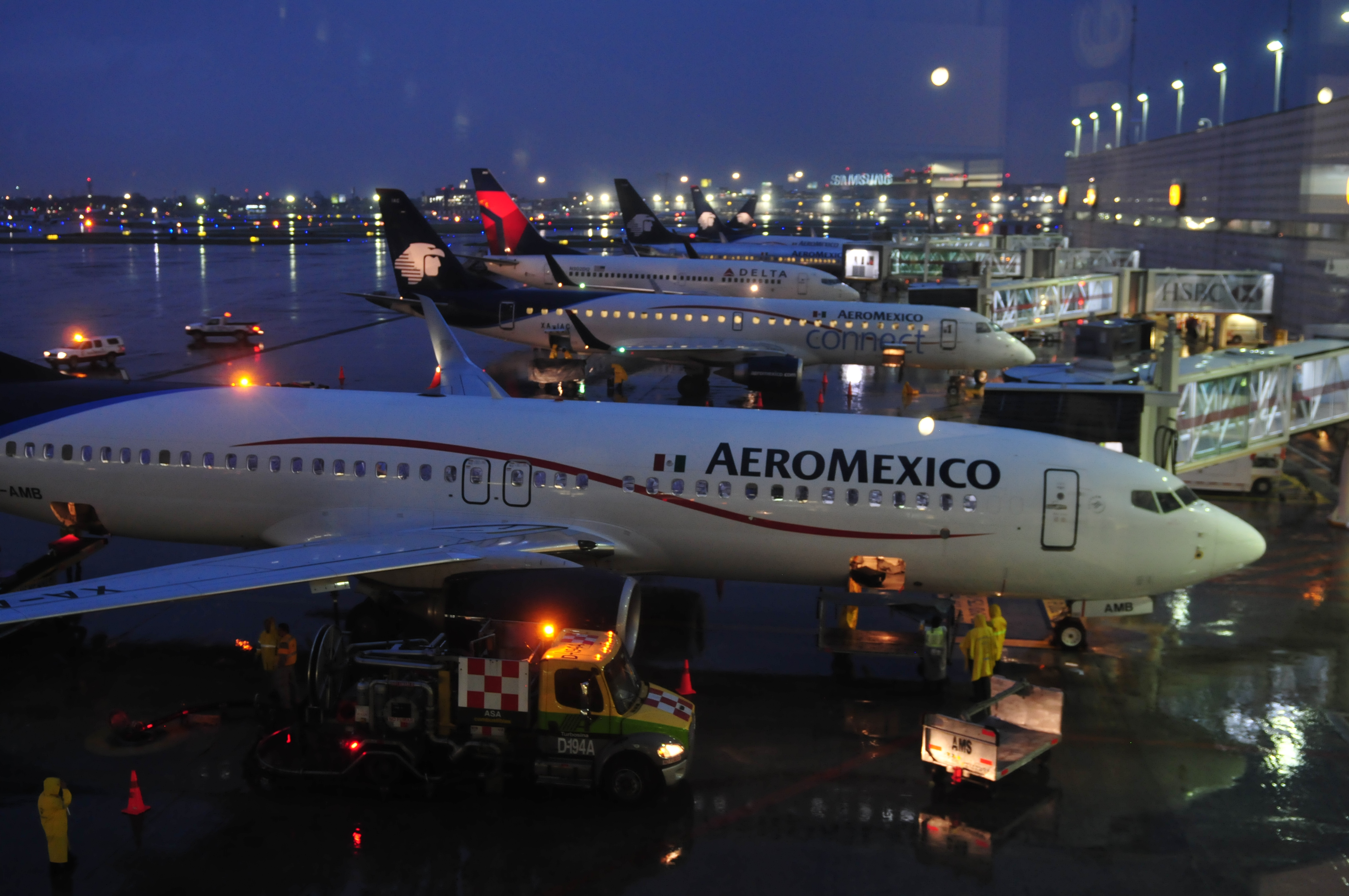
Las aerolíneas mexicanas Aeroméxico, Interjet, VivaAerobus y Volaris, enfrentan una especie de ‘tormenta perfecta’ 2017. A inicios de 2017, la debilidad del peso frente al dólar elevó sus costos en la divisa del dolar estadounidense; a partir agosto empezaron a resentir el encarecimiento del combustible y más reciente la desaceleración del crecimiento del pasaje y la agudización de la guerra de tarifas en el mercado doméstico.

Según el Instituto Nacional de Estadística y Geografía (INEGI), los precios de la transportación aérea en México acumularon en los primeros 9 meses de 2017 una caída de 30 por ciento, casi el doble que en igual lapso de 2016 de 16.4 %. Según cálculos de análisis de costo un vuelo de la Ciudad de México a Cancún, que en 2016 por VivaAerobus se cotizaba en $ 1.253 pesos y Volaris lo mejoró a $ 1.098 pesos, una reducción de más de 12 %. Pero la primera no se quedó atrás y lo bajó a $ 498 pesos.

Esto es reflejo, coinciden expertos, de los esfuerzos de las empresas para incrementar su flujo de pasajeros, mejorar ingresos y diluir costos de operación. “La guerra con las demás empresas está durísima, pero no nos vamos a dejar”, dijo Roberto Alcántara, dueño de VivaAerobus, en una entrevista reciente con medios.

Lo que se observa es una fuerte competencia de las aerolíneas. Cuando una línea aérea empieza a bajar el precio del ticket aéreo, luego le sigue otra, lo que genera un círculo vicioso. El último que se sienta en la mesa de remates es el que se quedará con menos pasajeros. Lo que buscan con esto es ganar participación de mercado o en su defecto conservarla pues hay una ligera desaceleración en la demanda.

Los números de la aviación mexicana
Tal es el caso de la México-Cancún, donde el flujo de viajeros subió 14.9 % en los primeros ocho meses de 2017, respecto a igual lapso de 2016; la México-Guadalajara con 10.8 %; la Tijuana-México 12.7 %; la Tijuana-Guadalajara 20.5 % y la Monterrey-Cancún con 16.1 %. Al primer semestre de 2017 el tráfico de pasaje creció 12.1 % anual, en el bimestre Julio-Agosto promedió un alza de 6.2 %, revelan datos de la Dirección General de Aeronáutica Civil (DGAC).

La demanda del transporte se ve afectada por la baja calidad de la relación entre México y Estados Unidos, que afecta el mercado de familiares y parientes, la depreciación del peso aún con la recuperación vista hasta el inicio de las renegociaciones del TLCAN y la demanda interna afectada porque es un año con alta inflación.

Especialistas coincidieron en que la baja en tarifas incentiva a los viajeros a comprar boletos de avión. Según la DGAC, el volumen de pasaje atendido por las aerolíneas en el país se elevó 62 % entre los primeros ocho meses de 2017 y el mismo lapso de 2012.

“Volaris tiene su efecto en el mercado, ofrecemos desde hace 5 años tarifas más baratas, logramos el crecimiento de la compañía y hacemos que más gente viaje en avión y deje el bus”, dijo Holger Blankenstein, director comercial de Volaris.

Expertos y representantes del sector han coincidido que la competencia se ha vuelto más importante en las rutas con mayor densidad.  AIRWAYS® AW-Icon TXT

Mexico experiences greater competition

The slowdown in demand is the source of competition between airlines

Mexican airlines Aeroméxico, Interjet, VivaAerobus and Volaris face a kind of ‘perfect storm’ 2017. In early 2017, the weakness of the peso against the dollar raised its costs in the US dollar currency; as of August began to resent the increase of the fuel and more recently the slowing of the growth of the passage and the worsening of the war of tariffs in the domestic market.

According to the National Institute of Statistics and Geography (INEGI), air transport prices in Mexico accumulated in the first 9 months of 2017 a drop of 30 percent, almost double that of 16.4% in the same period of 2016. According to calculations of cost analysis a flight from Mexico City to Cancun, which in 2016 by VivaAerobus was quoted at $ 1,253 pesos and Volaris improved it to $ 1,098 pesos, a reduction of more than 12%. But the first was not far behind and lowered it to $ 498 pesos.

This reflects, experts say, the efforts of companies to increase their flow of passengers, improve revenues and dilute operating costs. «The war with the other companies is very hard, but we are not going to leave», said Roberto Alcántara, owner of VivaAerobus, in a recent media interview.

What is seen is strong competition from airlines. When an airline begins to lower the price of the air ticket, then another one follows, which generates a vicious circle. The last one who sits at the auction table is the one with fewer passengers. What they are looking for with this is gaining market share or failing to keep it because there is a slight slowdown in demand.

The numbers of Mexican aviation
Such is the case of the Mexico-Cancun, where the flow of travelers rose 14.9% in the first eight months of 2017, compared to the same period of 2016; the Mexico-Guadalajara with 10.8%; the Tijuana-Mexico 12.7%; the Tijuana-Guadalajara 20.5% and the Monterrey-Cancun with 16.1%. In the first half of 2017 passenger traffic increased by 12.1% per year, in the July-August period, it averaged a 6.2% increase, according to data from the Directorate General of Civil Aeronautics (DGAC).

The demand for transportation is affected by the low quality of the relationship between Mexico and the United States, which affects the market of relatives and relatives, the depreciation of the peso even with the recovery seen until the start of the NAFTA renegotiations and domestic demand affected because it is a year with high inflation.

Experts agreed that low fares encourage travelers to buy plane tickets. According to the DGAC, the volume of passengers served by the airlines in the country rose 62% between the first eight months of 2017 and the same period of 2012.

«Volaris has its effect on the market, we have been offering cheaper fares for five years now, we have been able to grow the company and have more people fly and leave the bus», said Holger Blankenstein, Volaris commercial director.

Experts and representatives of the sector have agreed that competition has become more important on routes with greater density. A\W


Ξ A I R G W A Y S Ξ
SOURCE:  Airgways.com
DBk:  Wikimedia.org / Inegi.org.mx
AW-POST: 201710201517AR

A\W   A I R G W A Y S ®

Mejoras de las aerolíneas en EEUU

Imagen relacionada

AW | 2017 10 18 16:00 | AIRLINES MARKET

El Departamento de Transporte de EEUU (DOT) ha informado que las aerolíneas cancelaron más vuelos y hubo un mejor tratamientode los equipajes en Agosto 2017

Las aerolíneas cancelaron más vuelos en Agosto 2017, registraron menos pasajeros y se reportó un mejor manejo de equipaje, según un informe del Departamento de Transporte (DOT) de Estados Unidos.

Cancelaciones vs puntualidad
La docena de aerolíneas informantes cancelaron el 2,2% de sus vuelos domésticos programados, lo que duplicó la tasa del 1,1% en julio y subió desde la tasa del 1,4% en agosto de 2016, según el informe de Air Travel Consumer Report. Delta Air Lines, Hawaiian Airlines y Virgin America tienen el menor número de vuelos cancelados. La mayoría de las cancelaciones fueron en ExpressJet Airlines, United Airlines y Spirit Airlines.

Las aerolíneas informaron que el 77.1% de los vuelos llegó dentro de los 15 minutos de sus horarios, según el informe de la Oficina de Estadísticas de Transporte. Eso fue mejor que el 76.9% en julio, pero peor que el 77.6% en el mismo mes del año anterior. Hawaiian Airlines, Delta Air Lines y Alaska Airlines tuvieron las mejores puntualidades. Las impuntualidades más bajas fueron para Virgin Airlines, JetBlue Airways y Southwest Airlines.

El Departamento de Transporte de EEUU está investigando 11 largas demoras en asfalto en agosto, con multas potenciales en los peores casos. Los nueve retrasos de al menos tres horas para los vuelos nacionales en comparación con 16 en julio. Los dos retrasos de al menos cuatro horas para vuelos internacionales en comparación con seis en Julio. Tres de los largos retrasos internos y uno de los retrasos internacionales se produjeron en Filadelfia. Los vuelos domésticos el 22 de agosto incluyeron un vuelo de Air Wisconsin a Louisville retrasado tres horas y 26 minutos, un vuelo de PSA Airlines a St. Louis demoró tres horas y 18 minutos y un vuelo de Air Wisconsin a Milwaukee demoró tres horas y cuatro minutos. El vuelo internacional el 18 de agosto fue un vuelo de American Airlines desde Cancún que se desvió a Norfolk, Virginia, y se demoró cuatro horas y dos minutos.

Manejo de equipajes
Los equipajes llegaron a sus destinos con un mejor tratamiento. Se reportó mal manejo de 2.45 bolsas de cada 1,000 pasajeros en Agosto 2017. Eso marcó una mejora con respecto a la tasa de 2.79 en Julio o la tasa de 3.15 en Agosto de 2016. En general, las 1.907 quejas de los consumidores al departamento sobre aerolíneas se redujeron ligeramente de las 1.914 de julio y disminuyeron significativamente de las 2.251 del mismo mes del año anterior.

Buentrato vs maltrato
Las aerolíneas tuvieron menos enfrentamientos con pasajeros durante los primeros seis meses del año, después de que la protesta de un hombre de 69 años arrastraron a un vuelo de United en Abril 2017. Las aerolíneas informaron que negaron el embarque a 0.52 pasajeros de 10.000 durante los primeros seis meses del año, que fue la tasa más baja desde que el departamento comenzó a seguir el rastro en 1995. El segundo trimestre fue incluso mejor que el primero, con una tasa de 0,44 pasajeros , que bajó desde 0.62 en el primer trimestre o en el mismo trimestre del año anterior.  AIRWAYS® AW-Icon TXT

US Airline Improvements

The US Department of Transportation (DOT) has reported that airlines canceled more flights and there was better baggage handling in August 2017

Airlines canceled more flights in August 2017, posted fewer passengers and reported better baggage handling, according to a US Department of Transportation (DOT) report.

Cancellations vs. punctuality
The dozen reporting airlines canceled 2.2% of their scheduled domestic flights, doubling the rate of 1.1% in July and rising from the 1.4% rate in August 2016, according to the Air Travel report Consumer Report. Delta Air Lines, Hawaiian Airlines and Virgin America have the lowest number of canceled flights. Most cancellations were on ExpressJet Airlines, United Airlines and Spirit Airlines.

Airlines reported that 77.1% of flights arrived within 15 minutes of their schedules, according to the Bureau of Transportation Statistics report. That was better than 76.9% in July, but worse than 77.6% in the same month of the previous year. Hawaiian Airlines, Delta Air Lines and Alaska Airlines had the best punctualities. The lowest postponements were for Virgin Airlines, JetBlue Airways and Southwest Airlines.

The US Department of Transportation is investigating 11 long asphalt delays in August, with potential fines in the worst cases. The nine delays of at least three hours for domestic flights compared to 16 in July. The two delays of at least four hours for international flights compared to six in July. Three of the long internal delays and one of the international delays occurred in Philadelphia. Domestic flights on August 22 included an Air Wisconsin flight to Louisville delayed three hours and 26 minutes, a flight from PSA Airlines to St. Louis took three hours and 18 minutes and an Air Wisconsin flight to Milwaukee took three hours and four minutes. The international flight on August 18 was an American Airlines flight from Cancun that was diverted to Norfolk, Virginia, and delayed four hours and two minutes.

Handling of luggage
The luggage arrived at their destinations with a better treatment. Bad handling of 2.45 bags per 1,000 passengers was reported in August 2017. This marked an improvement from the 2.79 rate in July or the 3.15 rate in August 2016. Overall, the 1,907 consumer complaints to the department about airlines declined slightly from 1,914 in July and decreased significantly from 2,251 in the same month of the previous year.

Good treatment vs mistreatment
The airlines had fewer clashes with passengers during the first six months of the year, after a 69-year-old man’s protest dragged a United flight in April 2017. Airlines reported that they denied boarding to 0.52 passengers of 10,000 during the first six months of the year, which was the lowest rate since the department began tracking in 1995. The second quarter was even better than the first, with a rate of 0.44 passengers, which fell from 0.62 in the first quarter or in the same quarter of the previous year. A \ W


Ξ A I R G W A Y S Ξ
SOURCE:  Airgways.com
DBk: Shutterstock.com / Flydealfare.com 
AW-POST: 201710181600AR

A\W   A I R G W A Y S ®

Expansión aerolíneas en España

AW | 2017 10 17 18:35 | AIRLINES MARKET

El incremento de pasajeros en España fue en líneas aéreas de bajo costo

El incremento del uso de las aerolíneas low cost por los turistas internacionales en los nueve primeros meses del año 2017 en España, ha tenido un aumento del 19,8 % llegando a los 6,2 millones de pasajeros.

Aerolíneas clásicas vs low cost
El incremento del uso de las aerolíneas de bajo costo por los turistas internacionales en los nueve primeros meses del año en Baleares ha sido del 19,8 % en comparación con el mismo periodo de 2016, hasta los 6,2 millones de pasajeros. La entrada de pasajeros en los aeropuertos españoles a bordo de aerolíneas «low cost» hasta septiembre fue de 36,2 millones de personas, el 52,5 % del total vía aérea, según la estadística difundida por el Ministerio de Energía, Turismo y Agenda Digital.

España ha tenido un incremento del uso de las aerolíneas de bajo coste por los turistas internacionales en los nueve primeros meses del año 2017 del 14,5 % frente al aumento del 3,8 % de las compañías tradicionales en comparación con el mismo periodo de 2016.

Por comunidades autónomas, Cataluña lidera el ránking de aterrizajes de vuelos de bajo coste entre enero y septiembre, con 9,6 millones de pasajeros registrados, un 8,4 % más que en el mismo periodo de 2016. Baleares, con 6,2 millones de turistas llegados vía «low cost» y un incremento del 19,8 % con respecto a las cifras de los nueve primeros meses del año pasado. En septiembre, entre Cataluña y Baleares acapararon casi la mitad del tráfico de pasajeros en «low cost»: el 26 % la primera y el 20,4 % el destino insular del Mediterráneo. Canarias fue la región con un mayor incremento de pasajeros «low cost», con un 23,4 % más, hasta los 4,5 millones de turistas.

Por aeropuertos de destino, Barcelona El Prat recibió uno de cada cuatro aparatos de compañías de bajo coste en el periodo enero-septiembre, con 8,6 millones de pasajeros y una mejora interanual del 7%. Los aeropuertos de Gran Canaria, Lanzarote y Baleares registraron en el periodo analizado desde enero aumentos de más del 20 % en cuanto al número de turistas a bordo de vuelos «low cost». En el caso del de Gran Canaria, el incremento rozó el 30 %

Más de una tercera parte de los usuarios extranjeros de este tipo de vuelos fueron británicos: un 37,3 % del total, hasta 13,5 millones de entradas registradas desde el Reino Unido entre enero y septiembre. En segundo y el tercer mercados emisores, Alemania e Italia, ambos con algo más de 4 millones de visitantes a falta de un trimestre para cerrar 2017.

Solo en septiembre aterrizaron 4,7 millones de turistas en vuelos de low cost, un 14,9 % más que en el mismo mes del año pasado, frente a los 4,3 millones que compraron billetes en compañías tradicionales, un 2,9 % más. AIRWAYS® AW-Icon TXT

Expansion of airlines in Spain

The increase of passengers in Spain was in low-cost airlines

The increase in the use of low cost airlines by international tourists in the first nine months of 2017 in Spain, has increased by 19.8% to 6.2 million passengers.

Classic vs low cost airlines
The increase in the use of low-cost airlines by international tourists in the first nine months of the year in the Balearics was 19.8% compared to the same period in 2016, to 6.2 million passengers. Passenger arrival at Spanish airports on low-cost airlines until September was 36.2 million people, 52.5% of the total air route, according to the statistics released by the Ministry of Energy, Tourism and Agenda Digital.

Spain has had an increase in the use of low-cost airlines by international tourists in the first nine months of 2017 of 14.5% compared to a 3.8% increase in traditional airlines compared to the same period in 2016 .

By autonomous communities, Catalonia leads the ranking of low-cost flights landings between January and September, with 9.6 million registered passengers, 8.4% more than in the same period of 2016. Baleares, with 6.2 million of tourists arriving via low cost and an increase of 19.8% compared to the figures for the first nine months of last year. In September, between Catalonia and the Balearic Islands they captured almost half of the low-cost passenger traffic: 26% the first and 20.4% the island’s Mediterranean destination. The Canary Islands was the region with a greater increase of passengers low cost, with a 23.4% more, to the 4.5 million tourists.

By destination airports, Barcelona El Prat received one of every four units of low-cost carriers in the January-September period, with 8.6 million passengers and a year-on-year improvement of 7%. The airports of Gran Canaria, Lanzarote and the Balearic Islands registered increases of more than 20% in terms of the number of tourists on low-cost flights in the period analyzed since January. In the case of Gran Canaria, the increase was around 30%

More than a third of foreign users of this type of flights were British: 37.3% of the total, up 13.5 million tickets registered from the UK between January and September. Second and third issuer markets, Germany and Italy, both with slightly more than 4 million visitors in the absence of a quarter to close 2017.

In September alone, 4.7 million tourists landed on low-cost flights, 14.9% more than in the same month last year, compared to 4.3 million who bought tickets at traditional companies, 2.9% plus. A \ W


Ξ A I R G W A Y S Ξ
SOURCE:  Airgways.com
DBk:  Rtve.es / Wikimedia.org
AW-POST: 201710171835AR

A\W   A I R G W A Y S ®

Austrian Airlines contratará a 100 pilotos de la aerolínea alemana Airberlin

AW | 2017 10 16 16:16 | AIRLINES MARKET

Resultado de imagen para Austrian Airlines logoAustrian Airlines contratará 100 nuevos pilotos de la insolvente aerolínea Air Berlin

Una selección rápida especial está diseñada para acelerar la reubicación de pilotos. Los solicitantes deberán comprometerse a trabajar para Austrian Airlines por al menos tres años. La oferta se dirige a los pilotos que han trabajado activamente con airberlin en los últimos seis meses y que han sido revalidados en los últimos 12 meses. Además la aerolínea está ampliando su cartera de nuevos pilotos «ad initios», aquellos que ingresan por primera vez a una línea aérea.

Austrian Airlines cuenta con una plantilla de 6,700 empleados, de los cuales 1,140 son pilotos. La flota comprende Boeing: 5 Boeing 777, 6 Boeing 767, Airbus: 6 A321, 23 A320, 7 A319, Bombardier: 2 CRJ-900, 18 Bombardier Dash 8 Q400, Embraer: 17 Embraer E195-200 y Fokker: 5 Fokker 100, 2 Fokker 70. Austrian aIrlines tiene planificado la ampliación de aeronaves a su flota.

Airberlin en agosto pasado sufrió la retirada de su principal accionista, Etihad Airways, que se convirtió en el mayor accionista del operador alemán en 2012 cuando compró una participación del 29,2%, retiró ahora las garantías financieras.

En un acuerdo anunciado el 12 de octubre 2017, Lufthansa espera tomar más de 81 aviones airberlin, emplear a 3,000 personas e invertir un total de € 1,500 millones ($ 1,800 millones) o € 500,000 por trabajo ahorrado.  AIRWAYS® AW-Icon TXT

Austrian Airlines to Hire 100 Airberlin Pilots

Resultado de imagen para Austrian Airlines logoAustrian Airlines to hire 100 new pilots from insolvent airline Air Berlin

A special quick pick is designed to accelerate pilot relocation. Applicants must undertake to work for Austrian Airlines for at least three years. The offer is aimed at pilots who have worked actively with airberlin in the last six months and who have been revalidated in the last 12 months. In addition the airline is expanding its portfolio of new pilots «ad initios», that sque entered for the first time to an airline.

Austrian Airlines has a workforce of 6,700 employees, of which 1,140 are pilots. The fleet comprises Boeing: 5 Boeing 777, 6 Boeing 767, Airbus: 6 A321, 23 A320, 7 A319, Bombardier: 2 CRJ-900, 18 Bombardier Dash 8 Q400, Embraer: 17 Embraer E195-200 and Fokker: 5 Fokker 1002 Fokker 70. Next year, the airline plans to integrate 777 more into its fleet. totaling a fleet of 91 aircraft.

Airberlin filed for bankruptcy in August after its major shareholder, Etihad Airways, which became the largest shareholder of the German operator in 2012 when it bought a 29.2% stake, withdrew its financial guarantees.

In an agreement announced on October 12, Lufthansa expects to take more than 81 airberlin aircraft, employ 3,000 people and invest a total of € 1,500 million ($ 1,800 million) or € 500,000 for labor saved. A \ W


Ξ A I R G W A Y S Ξ
SOURCE:  Airgways.com
DBk:  Kurier.at / Travelandtourworld.com
AW-POST: 201710161616AR

A\W   A I R G W A Y S ®


Nuevo escenario de la aviación Argentina

AW-70086444

AW | 2017 10 15 11:57 | AIRLINES MARKET

La «Revolución de los Aviones» marca una nueva etapa en la aviación comercial Argentina

El 2017 marcará una nueva etapa en la aviación comercial en Argentina con la apertura de rutas aéreas y la aprobación de más líneas aéreas al mercado doméstico e internacional.

Con todo «La revolución de los Aviones» muestra que Argentina tiene un potencial impresionante para abrirse al mercado nacional y extranjero para mejorar sus tarifas aéreas como así sus conexiones. Junto con esta apertura, se suma las aceleradas obras para poner a todos los aeropuertos en condiciones, una tarea que se ha estado realizando con bastante éxito.

Pero, el rápido crecimiento exponencial que experimentará la aviación comercial de Argentina, tendrá nuevos desafíos que ya se están sintiendo. La falta de personal idóneo está trayendo problemas. Los controladores aéreos están cada vez más saturados. Por ejemplo, el Aeropuerto Internacional El Plumerillo de Mendoza está teniendo problemas en este asunto por el incremento de los vuelos domésticos e internacionales. Los principales aeropuertos del país tendrán un aumento considerable con respecto a años anteriores. Se estima que para el 2018 no solo estarán volando en el mercado argentino Aerolíneas Argentinas, Austral Líneas Aéreas, Latam Airlines Argentina y Andes Líneas Aéreas, sino que además ingresarán al mercado más de una docena de líneas aéreas y otras compañías aéreas más pequeñas incrementarán sus servicios.

El mercado aéreo en Argentina
En febrero de 2017, la ANAC autorizó en la 1º Audiencia Pública de Rutas Aéreas a volar 135 nuevas rutas aéreas (77 de cabotaje y 58 internacionales). Éstas fueron otorgadas a las empresas Andes Líneas Aéreas, American Jet, Alas del Sur, Flybondi y Avian Líneas Aéreas.

En setiembre de 2017, en la 2º Audiencia Pública, se sumaron las propuestas de otras líneas aéreas. Formalizaron los pedidos de otorgamientos de rutas aéreas a siete aerolíneas que presentaron sus pedidos para efectuar vuelos regulares de pasajeros, carga y encomiendas, son: Buenos Aires International Airlines (178), Norwegian Air Argentina (155), Polar Líneas Aéreas (83), Grupo Lasa, Just Flight, Servicios Aéreos Patagónicos y la ampliación de solicitud de más vuelos para Avianca (Avian Líneas Aéreas). AIRWAYS® AW-Icon TXT

AW-70088871

The new scenario of aviation Argentina

The «Aircraft Revolution» marks a new stage in commercial aviation Argentina

2017 will mark a new stage in commercial aviation in Argentina with the opening of air routes and the approval of more airlines to the domestic and international market.

«The Aircraft Revolution» shows that Argentina has an impressive potential to open up to the domestic and foreign markets to improve its air fares as well as its connections. Along with this opening, the accelerated works are added to put all the airports in conditions, a task that has been realized with enough success.

But, the rapid exponential growth that will be experienced by commercial aviation in Argentina, will have new challenges that are already felt. The lack of suitable personnel is causing problems. Air traffic controllers are increasingly saturated. For example, El Plumerillo International Airport in Mendoza is having problems in this matter due to the increase in domestic and international flights. The main airports of the country will have a considerable increase compared to previous years. It is estimated that by 2018, not only will Aerolíneas Argentinas, Austral Líneas Aéreas, Latam Airlines Argentina and Andes Líneas Aéreas be flying in the Argentine market, but more than a dozen airlines will enter the market and other smaller airlines will increase their services.

The air market in Argentina
In February 2017, ANAC authorized at the First Public Hearing of Air Routes to fly 135 new air routes (77 of cabotage and 58 international). These were granted to companies Andes Líneas Aéreas, American Jet, Alas del Sur, Flybondi and Avian Líneas Aéreas.

In September 2017, at the 2nd Public Hearing, the proposals of other airlines were added. Air routes awarded to seven airlines that submitted their orders for regular flights, cargo and parcels, are: Buenos Aires International Airlines (178), Norwegian Air Argentina (155), Polar Líneas Aéreas (83), Grupo Lasa, Just Flight, Servicios Aéreos Patagónicos and the request for more flights to Avianca (Avian Airlines). A \ W

AW-70083777

AW-Airgways.com-Jet

AW-Airgways Icon-webΞ A I R G W A Y S Ξ
SOURCE:  Airgways.com
DBk:  Airgways.com
AW-POST: 201710151157AR

A\W   A I R G W A Y S ®

Transformación low cost en Europa

AW | 2017 10 14 21:47 | AIRLINES MARKET

AW70087La quiebra de las aerolíneas Air Berlin o Monarch Airlines son señales de los vaivenes del mercado de low cost en Europa
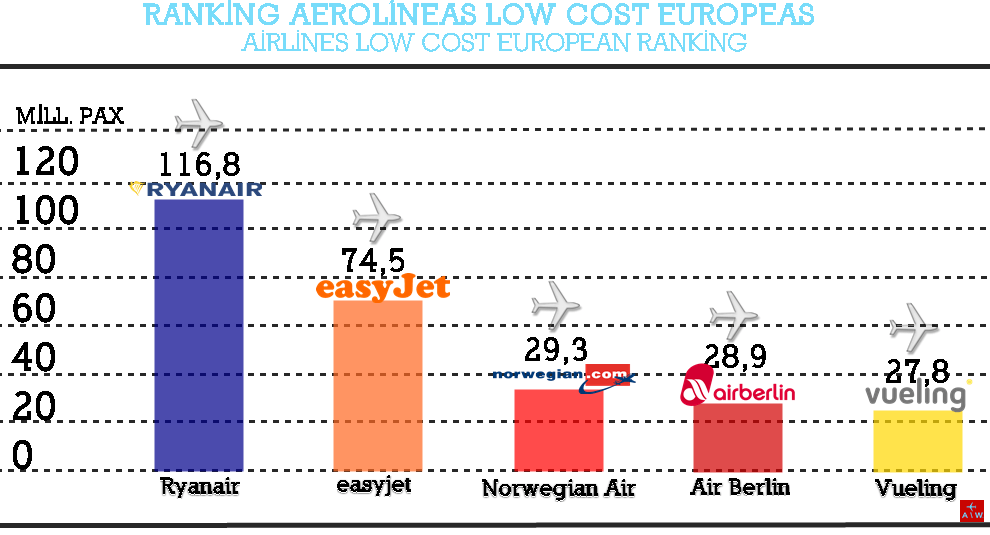
Los bajos márgenes, la gran competencia y contratiempo afectan a todo el mercado de la aviación comercialñ del mundo, y el sector europeo no es la excepción. Las líneas aéreas con menos recursos son asfixiadas por un mercado altamente competitivo y la supervivencia es más difícil de volar.

Las consolidaciones de mercado, fusiones entre empresas, había sido una opción de dominio de mercado, pero la realidad actual es que en la mayoría de casos las situaciones son forzadas por crisis económicas de las aerolíneas viéndose imposibilitadas a continuar volando, producto de la asfixia aérea. El efecto de asfixia es un mercado de 500 millones de habitantes, donde es difícil que haya sitio para casi treinta aerolíneas low cost. «Al final lo que está pasando en Europa es lo que ya vivió EEUU: un mercado que se concentra porque solo los más fuertes o los que lo hacen muy bien pueden sobrevivir en el largo plazo», explica la profesora de la escuela de negocios EADA, Athina Sismanidou.

Los dos últimos casos de aeorlíneas low cost que han cesado o cesarán su actividad no son de firmas con pocos aviones como había pasado en los últimos años, sino de empresas importantes. Air Berlin con una fllota de 144 aviones cesará su actividad a finales de mes. Monarch Airlines con 35 aviones, anunció el cese de operaciones el pasado 2 de octubre 2017. ¿Existe un mercado europeo altamente saturado?

AW-70080077.png

Concentración del mercado aéreo europeo

«Por un lado, es lógico que haya concentración. En EEUU las tres primeras aerolíneas concentran el 90% del mercado; en Europa hay varias aerolíneas solo en cada país. Además, hay importantes razones económicas: en los últimos años el petróleo ha bajado mucho, y las aerolíneas han apostado por crecer y crecer. Eso ha aumentado la demanda, provocado una guerra de precios y tensado las tesorerías. A la que ha habido problemas en algunas mercados importantes para algunas firmas (Turquía, Norte de África), estas han quedado muy tocadas«, agrega la profesora Athina Sismanidou.

La guerra de precios, además, ha afectado a los márgenes operativos, que son los que marcan en buena parte el futuro de las empresas. «O tienes mucha fuerza de balance, como Ryanair, que incluso ha podido capear miles de cancelaciones, o corres el peligro de acabar como Monarch Airlines. Muchas aerolíneas incluso en los años de bonanza o con el petróleo en mínimos tenían pérdidas no es sostenible», agrega Athina Sismanidou.

La consolidación del mercado europeo tiene sus peculiaridades. Por un lado, recuerdan otras fuentes del sector, «por mucho que quieras comprar, la Comisión Europea puede frenar operaciones por razones de competencia». Por el otro, hay otra alternativa a la consolidación: las alianzas, códigos compartidos, etcétera.

Durante los próximos meses y años, centenares de aviones nuevos se sumarán a las flotas de las compañías low cost europeas, lo que multiplicará la oferta de rutas y vuelos y, por tanto, se intensificará la guerra comercial. Eso puede acabar dañando a más aerolíneas low cost, pero también a las grandes empresas. Porque, de hecho, la consolidación afecta a todos los tipos de aerolíneas. AIRWAYS® AW-Icon TXT

The transformation of the low cost airlines in Europe

The bankruptcy of the airlines Air Berlin or Monarch Airlines are signs of the swings of the market of low cost in Europe

airberlin-silo

Low margins, high competition and setbacks affect the entire commercial aviation market in the world, and the European sector is no exception. Airlines with fewer resources are driven by a highly competitive market and survival is more difficult to fly.

Resultado de imagen para european airlines low cost

Market consolidations, mergers between companies, had been an option of market dominance, but the reality today is that in most cases situations are forced by economic crises of airlines becoming unable to continue flying, as a result of aerial asphyxiation . The asphyxiation effect is a market of 500 million inhabitants, where it is difficult to have room for almost thirty low cost airlines. «In the end what is happening in Europe is what the US has already experienced: a market that concentrates because only the strongest or those who do it very well can survive in the long term,» explains EADA business school professor , Athina Sismanidou.

The last two cases of low cost airlines that have ceased or will cease their activity are not from firms with few aircraft as it had in recent years but from major companies. Air Berlin with a flotilla of 144 aircraft will cease its activity at the end of the month. Monarch Airlines with 35 aircraft, announced the cessation of operations on October 2, 2017. Is there a highly saturated European market?

AW-70080077.png

Concentration of the European air market

«In the United States, the first three airlines concentrate 90% of the market, in Europe there are several airlines in each country, and there are important economic reasons: in recent years oil has dropped a lot , and airlines have opted to grow and grow.That has increased demand, caused a price war and tightened the treasuries.There have been problems in some important markets for some firms (Turkey, North Africa), these have were very touched», adds Professor Athina Sismanidou.

The price war, moreover, has affected the operating margins, which are the ones that mark the good part of the future of the companies. «Or you have a lot of balance, like Ryanair, that has even been able to drive thousands of cancellations, or you run the risk of ending up like Monarch Airlines. Many airlines even in the boom years or with oil at lows had losses is not sustainable», adds Athina Sismanidou.

The consolidation of the European market has its peculiarities. On one hand, other sources in the sector recall, «however much you want to buy, the European Commission can stop operations for reasons of competition.» On the other, there is another alternative to consolidation: alliances, shared codes, and so on.

Over the next few months and years, hundreds of new aircraft will join the fleets of European low-cost airlines, which will increase the number of routes and flights and thus intensify the commercial war. That may end up hurting more low-cost airlines, but also big companies. Because, in fact, consolidation affects all types of airlines. A \ W


AW-Airgways.com-Jet

AW-Airgways Icon-web.pngΞ A I R G W A Y S Ξ
SOURCE:  Airgways.com
DBk:  Airgways.com / Spirelsmagazine.co.uk / Ibtimes.com / Usatoday.com
AW-POST: 201710142147AR

A\W   A I R G W A Y S ®


La IATA informa moderación general en rentabilidad de la industria aeronáutica


iata

AW | 2017 10 13 14:21 | AIRLINES MARKET

Resultado de imagen para IATA building montreal1200px-IATAlogo.svgIATA ha informado el 12 de octubre de 2017 las estadísticas financieras de aerolíneas globales para Septiembre de 2017

Los datos financieros de las aerolíneas para 2Q2017 muestran que la disminución interanual de los márgenes de ganancia fue «bastante pequeña para la industria en general» y enmascaró fuertes aumentos en el caso de los operadores europeos y latinoamericanos .

En Norte América las aerolíneas alcanzaron los márgenes de beneficios más amplios, aunque ligeramente más estrecho que 2016. Los RPK de toda la industria crecieron un 7,2% interanual en agosto de 2017. 2017 está en camino a ser otro año de crecimiento RPK por encima de la tendencia. La tendencia alcista desestacionalizada (SA) en RPK se ha moderado. El factor de carga de pasajeros de SA se mantiene en un nivel históricamente alto. Las ASK de toda la industria aumentaron un 6,3%.

Los volúmenes globales de fletes registraron un crecimiento anual de dos dígitos por quinta vez en seis meses en agosto de 2017 (+ 12,1%). Los AFTK aumentaron un 4,7% y el factor de carga de SA se elevó a un máximo de tres años.

Los rendimientos de pasajeros en toda la industria registraron un crecimiento positivo, aunque muy modesto, en términos interanuales en julio de 2017. Este es el segundo mes consecutivo de crecimiento del rendimiento. Los rendimientos de los pasajeros han seguido su tendencia más alta a una tasa anualizada de alrededor del 3.5%.

Los precios mundiales de las acciones de las aerolíneas aumentaron un 0,9% en septiembre de 2017, impulsados ​​por una recuperación gradual en el índice de América del Norte luego de dos caídas sostenidas mensuales. Por el contrario, las acciones aéreas de Europa y Asia Pacífico cayeron modestamente.

Los precios del petróleo han tenido una tendencia mayor en los últimos meses, lo que refleja la restricción de la oferta por parte de la OPEP y Rusia , así como un debilitamiento del dólar estadounidense . El precio del crudo Brent subió a un máximo de 26 meses de USD58.50 por barril durante septiembre de 2017.

Las condiciones comerciales globales más fuertes están ayudando a respaldar la demanda de viajes de clase superior, en particular hacia / desde Asia. La participación de Premium en los ingresos de pasajeros aumentó a 26.3% en los primeros siete meses de 2017, desde 26.0% hace un año.  AIRWAYS® AW-Icon TXT

IATA reports general moderation in the profitability of the aeronautics industry

1200px-IATAlogo.svg

IATA has reported on October 12, 2017 the global airline financial statistics for September 2017

Imagen relacionadaAirline financial data for 2Q2017 show that the year-on-year decline in profit margins was «rather small for industry in general» and masked strong increases in the case of European and Latin American operators.

In North America, airlines achieved broader profit margins, albeit slightly narrower than 2016. Industry-wide RPKs grew 7.2% year-on-year in August 2017. 2017 is on track to be another year of RPK growth by above the trend. The seasonally adjusted upward trend (SA) in RPK has moderated. The passenger load factor of SA remains at a historically high level. Industry-wide ASKs increased by 6.3%.

Global freight volumes registered double-digit annual growth for the fifth time in six months in August 2017 (+ 12.1%). The AFTK increased by 4.7% and the load factor of SA increased to a maximum of three years.

Passenger yields across the industry posted positive, albeit modest, growth in year-on-year terms in July 2017. This is the second consecutive month of performance growth. Passenger yields have continued their highest trend at an annualized rate of around 3.5%.

Global airline share prices rose 0.9% in September 2017, driven by a gradual recovery in the North American index after two monthly declines. By contrast, air shares in Europe and Asia Pacific fell modestly.

Oil prices have trended higher in recent months, reflecting a tightening of supply by OPEC and Russia as well as a weakening US dollar. The price of Brent crude rose to a 26-month high of USD58.50 per barrel during September 2017.

Stronger global trading conditions are helping to support demand for higher-class travel, particularly to / from Asia. Premium’s share of passenger revenues increased to 26.3% in the first seven months of 2017, from 26.0% a year ago. A \ W


Ξ A I R G W A Y S Ξ
SOURCE:  Airgways.com
DBk:  Iata.org / Centreforaviation.com / Pinterest.com
AW-POST: 201710131421AR

A\W   A I R G W A Y S ®

Norwegian Air volando en la cúspide

AW | 2017 10 11 12:38 | AIRLINES MARKET

Resultado de imagen para Norwegian Air Ireland UK

La aerolínea noruega Norwegian Air está creciendo vertiginosamente su flota de aviones

El Jefe de ventas en el Reino Unido e Irlanda, Dominic Tucker dijo que la compañía estaba aumentando el tamaño de su flota por ‘crazy number’, o número loco. Pero confirmó que la aerolínea tiene un fuerte flujo de efectivo y es rentable.


5022.png

NORWEGIAN AIR INCORPORARÁ 260 AVIONES ADICIONALES

Se han planteado preocupaciones sobre el futuro de Norwegian Air debido a su política de rápida expansión en Irlanda y Reino Unido. La aerolínea, cuya red de rutas incluye Londres Gatwick, Belfast, Birmingham, Manchester y Edimburgo, tiene alrededor de 130 aviones y más de 260 por encargo. Norwegian Air sirve a más de 150 destinos en Europa, Norte de África, Oriente Medio, Tailandia, Caribe y EE.UU., con una política de ofrecer tarifas bajas.

El Sr. Tucker fue interrogado sobre la estrategia de crecimiento de la aerolínea en la convención anual de la organización comercial de viajes ABTA en las Islas Azores, Portugal. Cuando se le preguntó si noruego está creciendo demasiado rápido, él respondió: «Si soy honesto, estamos probablemente en la cúspide. Es realmente difícil como una línea aérea cuando tenemos muchos aviones porque queremos poner los aviones en servicio tan pronto como sea posible».

El Sr. Tucker aceptó que la entrega de 19 nuevos aviones este año fue «un número loco que estamos manejando para hacer malabares». Dijo que la aerolínea estaba teniendo que hacer un rompecabezas para dónde debe volar porque carecía de los datos históricos de rivales de larga data. Después de que se dijera que 140 pilotos se habían trasladado de Ryanair a Norwegian Air, el Sr. O’Leary escribió a su tripulación de vuelo restante la semana pasada, instándoles a no unirse a aerolíneas que eran «menos seguras financieramente» y «desafiadas por Brexit». El Sr. Tucker afirmó que no había «base real para sus comentarios», insistiendo en que Norwegian Air era «menos desafiada por Brexit que ellos. Desde un punto financiero, dado que 140 de sus pilotos vinieron a nosotros, yo diría que hemos tenido 10 años de rentabilidad como una línea aérea. Tenemos un flujo de caja fuerte, no hay base real para sus comentarios». El Sr. Tucker también desechó cualquier comparación a la línea aérea fallada Monarch, diciendo que tenía un modelo de negocio «muy diverso»AIRWAYS® AW-Icon TXT

norwegian-plane-f

Norwegian Air flying on the cuspid

Resultado de imagen para Norwegian Air Ireland UKNorwegian Airline is skyrocketing its fleet of aircraft

UK sales chief Dominic Tucker said the company was increasing the size of its fleet by ‘crazy number’. But he confirmed that the airline has a strong cash flow and is profitable.

Resultado de imagen para Norwegian Air pngConcerns have been raised about the future of Norwegian Air due to its policy of rapid expansion in Ireland and the United Kingdom. The airline, whose network of routes includes London Gatwick, Belfast, Birmingham, Manchester and Edinburgh, has about 130 aircraft and more than 260 to order. Norwegian Air serves more than 150 destinations in Europe, North Africa, the Middle East, Thailand, the Caribbean and the US, with a policy of offering low fares.
Mr. Tucker was questioned about the airline’s growth strategy at the annual convention of the ABTA commercial travel organization in the Azores, Portugal. When asked if Norwegian is growing too fast, he replied, «If I’m honest, we’re probably on the cusp. It’s really difficult as an airline when we have a lot of planes because we want to get the planes up and running as soon as possible.»

Mr. Tucker accepted that the delivery of 19 new planes this year was «a crazy number we are driving to juggle.» He said the airline was having to make a puzzle for where to fly because it lacked historical data from longtime rivals. After 140 pilots were said to have moved from Ryanair to Norwegian Air, Mr. O’Leary wrote to his remaining flight crew last week, urging them not to join airlines that were «less financially secure» and «challenged by Brexit». Mr Tucker stated that there was no «real basis for his comments», insisting that Norwegian Air was «less challenged by Brexit than they. From a financial point of view, since 140 of its pilots came to us, I would say that we have had 10 years of profitability as an airline. We have a strong cash flow, there is no real basis for your comments.» Mr. Tucker also dismissed any comparison to the failed Monarch airline, saying it had a «very diverse» business model. A \ W


Ξ A I R G W A Y S Ξ
SOURCE:  Airgways.com
DBk:  Thesun.co.uk / Irishpost.co.uk
AW-POST: 201710111238AR

A\W   A I R G W A Y S ®

Aerolíneas chinas expanden servicios internacionales


Resultado de imagen para airlines chinese airport

AW | 2017 10 11 11:57 | AIRLINES MARKET

Las aerolíneas chinas expanden servicios internacionales

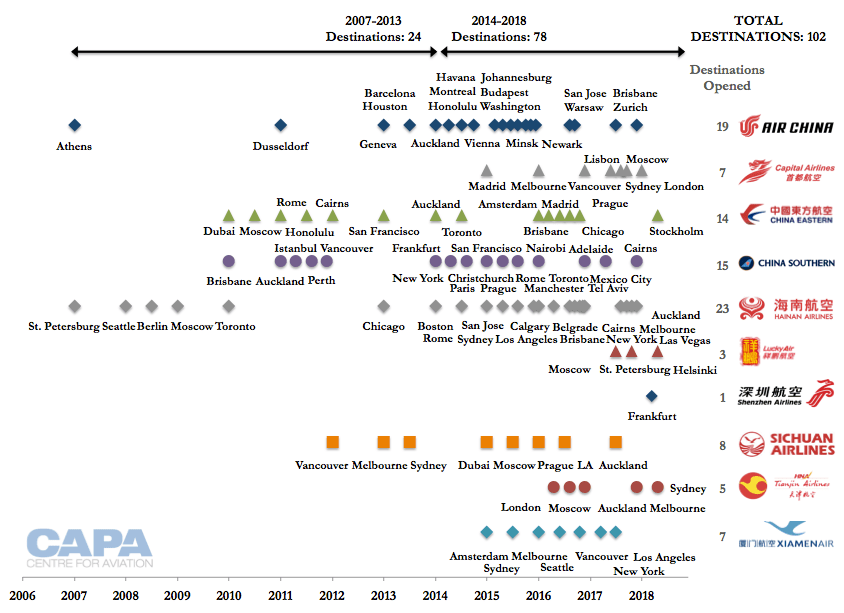
Las aerolíneas de Asia continúan embarcando en lo que consideran ser un crecimiento a largo plazo. En ninguna parte es más fuerte que en la China continental, cuyas aerolíneas han abierto 102 destinos intercontinentales desde 2006. Hainan Airlines y Air China lideran la expansión, con 23 y 19 nuevos mercados respectivamente.

El crecimiento de China está moderando, ya que los derechos de tráfico y las franjas horarias están impidiendo el crecimiento. Los cambios en el subsidio, el crecimiento de las líneas aéreas, el otorgamiento de más rutas aéreas podrían alterar el crecimiento. Tras un amplio crecimiento operacional, las aerolíneas de toda Asia deben tener un crecimiento estratégico, mejorar las asociaciones, las transferencias internacionales y la experiencia a bordo y los aeropuertos.

Las líneas aéreas de China han abierto, estimando 102 destinos intercontinentales. Esto está muy por encima de los 75 destinos que tuvieron cuando por última vez los en Junio 2016. El crecimiento a largo plazo de las líneas aéreas de China inclina el equilibrio de poder en Asia, mientras que el sudeste de Asia se contrae. AIRWAYS® AW-Icon TXT

china_destinations.png

Chinese airlines expand international services

Chinese airlines continue to expand international services

Asian airlines continue to embark on what I consider to be long-term growth. In several parts is very strong that in mainland China, whose airlines have opened 102 intercontinental destinations since 2006. Hainan Airlines and Air China lead the expansion, with 23 and 19 new markets respectively.

China’s growth is moderating, as traffic rights and slots are impeding growth. The changes in the subsidy, the growth of the airlines, the granting of bad air routes to which to change the growth. Following extensive operational growth, airlines across Asia have strategic growth, upgrades, international transfers and on-board and airport experience.

China’s airlines have opened, estimating 102 intercontinental destinations. The long-term growth of China’s airlines tilts the balance of power in Asia, while Southeast Asia shrinks. A \ W

Resultado de imagen para airlines chinese

中国航空公司扩大国际业务

中国航空公司继续扩大国际业务

亚洲航空公司继续开展我认为是长期增长。中国大陆的航空公司自2006年以来已经开通了102个洲际航线,几个方面非常强大。海南航空和国航分别扩大了23个和19个新市场。

中国的增长是缓和的,因为交通权和渠道阻碍了增长。补贴的变化,航空公司的增长,给予改变增长的不良空中路线。经过广泛的业务增长,亚洲的航空公司有战略增长,升级,国际转移和机上和机场经验。

中国的航空公司开通了102个洲际目的地。中国航空公司的长期增长倾向于亚洲的权力平衡,东南亚则缩小。 A \ W


Ξ A I R G W A Y S Ξ
SOURCE:  Airgways.com
DBk:  Centreforaviation.com / Businesstimes.com.sg / Navjot-singh.com
AW-POST: 201710111157AR

A\W   A I R G W A Y S ®