Otorgan permisos a aerolíneas de EEUU para volar hacia México


Resultado de imagen para Mexico Airport

AW | 2016 12 13 15:48 | AIRLINES MARKET / ROUTES

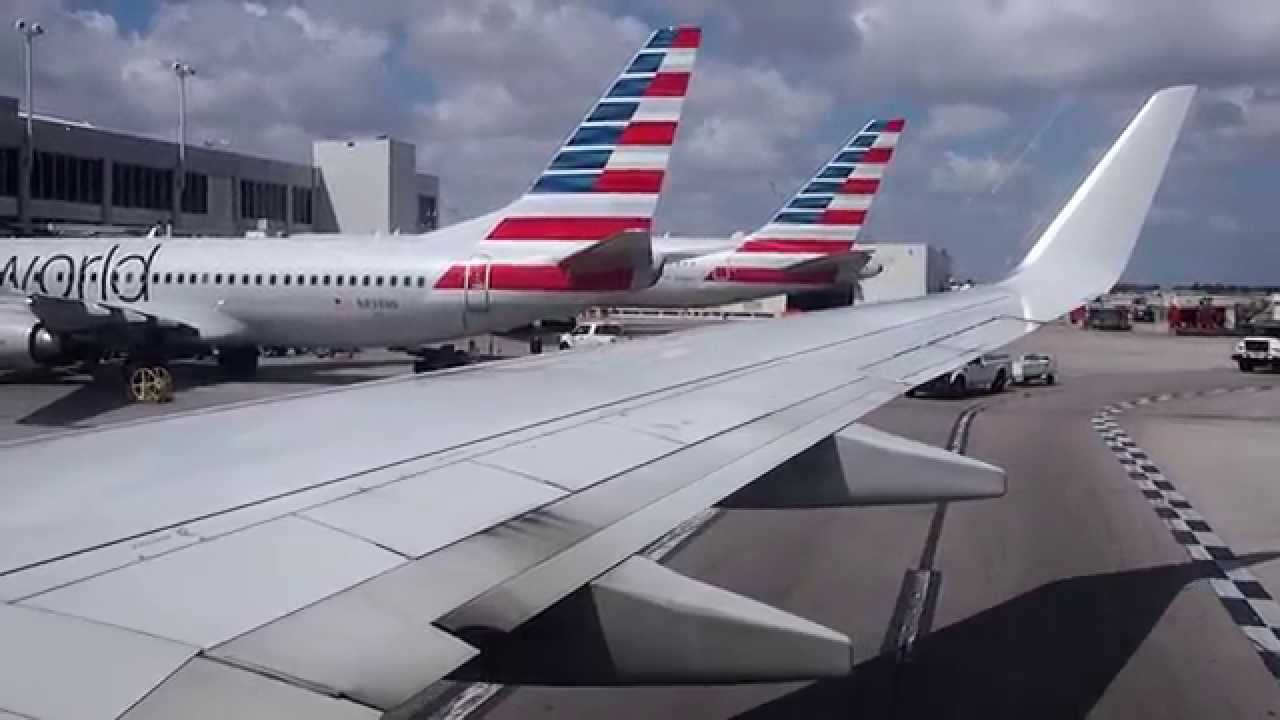
American Airlines, Delta, Southwest y Hawaiian son las primeras aerolíneas que bajo el nuevo acuerdo bilateral aéreo entre Estados Unidos y México solicitaron rutas para volar entre ambos países y a las que ya se les autorizaron sus permisos

American Airlines, Delta, Southwest y Hawaiian son las primeras aerolíneas que bajo el nuevo acuerdo bilateral aéreo entre Estados Unidos y México solicitaron rutas para volar entre ambos países y a las que ya se les autorizaron sus permisos.

La subsecretaría de Transportes de la Secretaría de Comunicaciones y Transportes (SCT), Yuriria Mascott, comentó que existe una más que está por aprobar el permiso.

“Han llegado cinco solicitudes, de las cuales hay entre tres y seis rutas por cada una de las aerolíneas; ya se han otorgado permiso a cuatro y estamos en otorgar uno más, aunque resuelto son cuatro”, precisó.

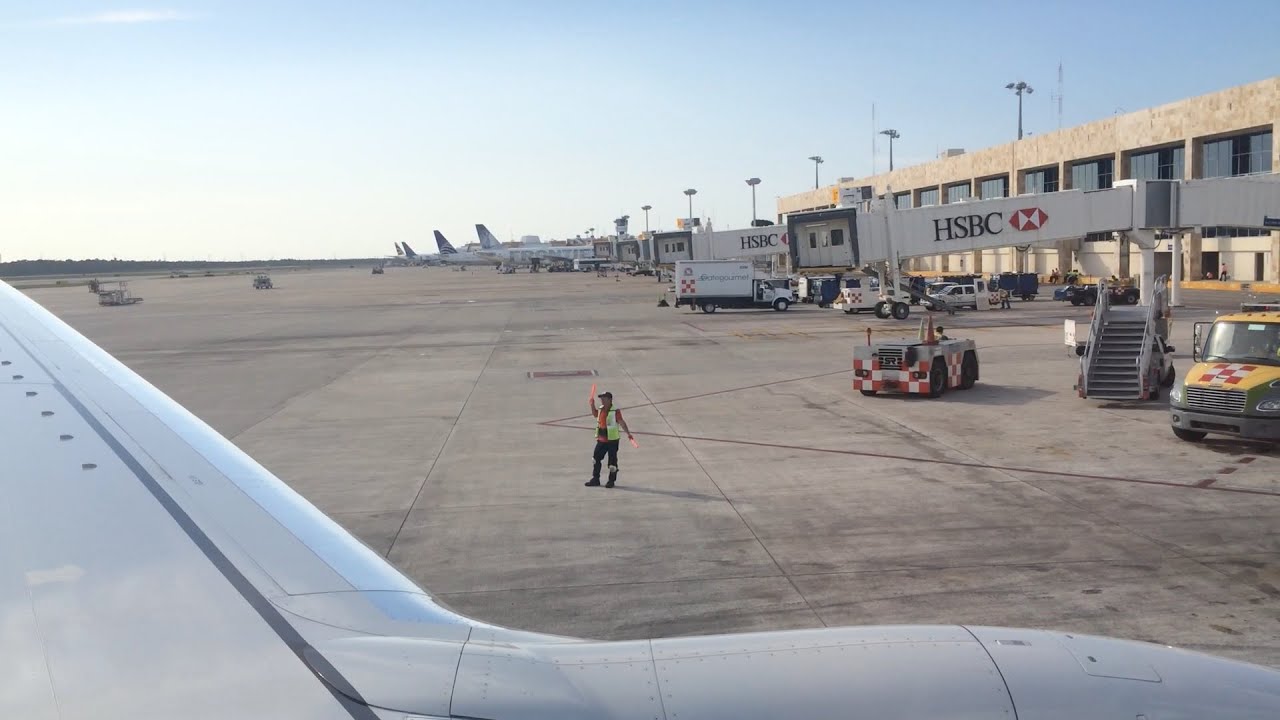
Entrevistada al término de la reunión con representantes de medios de comunicación con el titular de la SCT, Gerardo Ruiz Esparza, la funcionaria comentó que los destinos a aterrizar en el país son Monterrey, Los Cabos, Puerto Vallarta, Cancún y Mérida, por mencionar algunos. “Hasta el día de hoy, no tenemos ninguna solicitud para el Aeropuerto Internacional de la Ciudad de México”, mencionó.

El acuerdo, que entró en vigor el pasado 21 de agosto, sustituye al que rigió desde 1960 y cuya más reciente actualización se realizó hace 11 años.

El nuevo acuerdo genera las condiciones para que las aerolíneas mexicanas puedan competir con las estadounidenses de manera efectiva, preserva el mercado doméstico para la industria nacional y promueve más y mejores alternativas para los usuarios, además abre para la aviación de carga un mercado de más de 500 mil millones de dólares al año.

Por lo que, desde la fecha mencionada, las aerolíneas estadounidense que deseen operar nuevas rutas o frecuencias en México bajo el nuevo acuerdo podrán presentar su solicitud a la Dirección General de Aeronáutica Civil (DGAC), que de acuerdo con la Ley de Aviación Civil cuenta con un plazo de hasta 90 días para resolver cada solicitud, a partir de que ésta se presente debidamente integrada. airgways-icon-aw

Resultado de imagen para airlines american in Mexico

Give permits to US airlines to fly to Mexico

American Airlines, Delta, Southwest and Hawaiian are the first airlines that under the new bilateral air agreement between the United States and Mexico requested routes to fly between both countries and those that have already been authorized their permits


American Airlines, Delta, Southwest and Hawaiian are the first airlines that under the new bilateral air agreement between the United States and Mexico requested routes to fly between both countries and those that have already been authorized their permits.

The undersecretary of Transport of the Ministry of Communications and Transportation (SCT), Yuriria Mascott, said there is one more that is about to approve the permit.

«Five applications have arrived, of which there are between three and six routes for each one of the airlines; Already have been granted permission to four and we are in granting one more, although solved are four «, it specified.

Resultado de imagen para airlines american in Mexico

Interviewed at the end of the meeting with representatives of the media with the head of the SCT, Gerardo Ruiz Esparza, the official said that the destinations to land in the country are Monterrey, Los Cabos, Puerto Vallarta, Cancun and Mérida, to mention a few . «To this day, we have no request for the Mexico City International Airport,» he said.

The agreement, which entered into force on August 21, replaces the one that had been in force since 1960 and whose most recent update was made 11 years ago.

The new agreement creates the conditions for Mexican airlines to effectively compete with the US, preserve the domestic market for the domestic industry and promote more and better alternatives for users, as well as open a cargo market for more than 500 billion dollars a year.

Therefore, since the date mentioned, US airlines wishing to operate new routes or frequencies in Mexico under the new agreement may submit their request to the Directorate General of Civil Aviation (DGAC), which according to the Civil Aviation Act With a deadline of up to 90 days to resolve each request, once it is duly integrated. A\W


Ξ A I R G W A Y S Ξ
SOURCE: eleconomista.com.mx
DBk: Photographic © Cyberspaceandtime.com
AW-POST: 201612131548AR

A\W   A I R G W A Y S ®

Venezuela bloquea repatriación U$s 3.8M

abc-islands-460

AW | 2016 12 08 13:06 | AIRLINES MARKET

La Asociación de Transporte Aéreo señaló que prevé una mejora económica para el año 2017 en Latinoamérica. Sin embargo, destacan problemáticas para sus operaciones como ocurre con el caso venezolano

La Asociación Internacional del Transporte Aéreo (IATA) recordó, en su más reciente informe, que el gobierno venezolano no permite la repatriación de 3.8 millones de dólares, que las aerolíneas ganaron en sus operaciones en el país.Para IATA el caso venezolano representa una regulación y es una violación a las obligaciones internacionales que el Estado venezolano debe cumplir.

En su comunicado de previsiones para el año 2017, las aerolíneas esperan tener unas ganancias netas de 200 millones de dólares en Latinoamérica. Sin embargo, las condiciones operacionales en Venezuela, y el resto de las naciones del continente, representan “auténticos desafíos” para las aerolíneas.

Entre otras deficiencias que destaca IATA se encuentran problemas de infraestructura, altos impuestos y falta de seguridad. Sin embargo, consideran que la economía mejorará.

«Las aerolíneas latinoamericanas han afrontado un entorno duro, con mercados domésticos y de divisas débiles, pero ello está comenzando a revertir y alguna mejora habrá en 2017», afirmó la asociación en la presentación de su análisis del sector.

abc-islands-461

Venezuela blocks repatriation of 3.8 billion dollars

The Air Transport Association said that it foresees an economic improvement for the year 2017 in Latin America. However, they highlight problems for their operations as in the Venezuelan case

Más de 4 millardos de dólares es la deuda del gobierno con el sector | Foto Archivo El Nacional
The International Air Transport Association (IATA) recalled in its most recent report that the Venezuelan government does not allow the repatriation of 3.8 million dollars, which the airlines earned in their operations in the country. For IATA the Venezuelan case represents a regulation And is a violation of the international obligations that the Venezuelan State must comply with.

In its forecast release for 2017, airlines are expected to have net earnings of $ 200 million in Latin America. However, the operational conditions in Venezuela, and the rest of the nations of the continent, represent «real challenges» for the airlines.

Other deficiencies highlighted by IATA include infrastructure problems, high taxes and lack of security. However, they believe that the economy will improve.

«Latin American airlines have faced a tough environment with weak domestic and foreign markets but this is starting to reverse and some improvement will take place in 2017,» the association said in presenting its analysis of the sector. A\W


Ξ A I R G W A Y S Ξ
SOURCE: el-nacional.com
DBk: Photographic © A I R G W A Y S / el-nacional.com
AW-POST: 201612081306AR
A\W A I R G W A Y S ®


Avianca busca inversionistas

Resultado de imagen para avianca holdings sa

AW | 2016 12 08 12:27 | AIRLINES MARKET

Resultado de imagen para avianca holdings sa

A mitad de año, entre los pasillos de Avianca corrían versiones sobre un grupo inversor chino interesado en invertir en la aerolínea colombiana, el HNA Group miraba atento a Sinergy Group.

En el presente Avianca Holdings es un grupo poderoso en América Latina. Las aerolíneas estadounidenses United Continental Holdings Inc y Delta Air Lines Inc, así como la panameña Copa Airlines, también mostraron interés por Avianca, de acuerdo con fuentes del sector.

“Estas propuestas están siendo objeto de análisis por la compañía y sus asesores para decantar los términos y condiciones de las mismas, así como para determinar su viabilidad y los pasos a seguir”, dijo Avianca.

“La administración no ha tomado a la fecha ninguna decisión sobre las propuestas recibidas que impliquen una obligación de la compañía de continuar negociaciones en firme, o finiquitar negocio alguno con algunas de las entidades que enviaron propuestas”, precisó Avianca.

El Avianca Holding Group está integrado por las aerolíneas Avianca y Tampa Cargo S.A, de la República de Colombia; y Aerolíneas Galápagos S.A (Aerogal) de Ecuador; el Grupo TACA y Avianca Brasil.

Avianca Holdings, que transportó 28.3 millones de pasajeros en el 2015, tiene más de 21,000 empleados y atiende 105 destinos en 28 países de América y Europa con 177 aeronaves. airgways-icon-aw


Resultado de imagen para avianca holdings sa

Avianca seeks investors

Mid-year, Avianca corridors were running on a Chinese investor group interested in investing in the Colombian airline, the HNA Group watched Sinergy Group.

In the present Avianca Holdings is a powerful group in Latin America. US airlines United Continental Holdings Inc and Delta Air Lines Inc, as well as Panamanian Copa Airlines, also showed interest in Avianca, according to industry sources.

«These proposals are being analyzed by the company and its advisers to decant the terms and conditions of the same, as well as to determine their feasibility and the steps to follow,» said Avianca.

«The administration has not taken any decision to date on proposals received that imply an obligation of the company to continue negotiations firm, or finalize any business with some of the entities that sent proposals,» said Avianca.

The Avianca Holding Group is made up of the airlines Avianca and Tampa Cargo S.A, of the Republic of Colombia; And Galapagos Airlines S.A (Aerogal) of Ecuador; The TACA Group and Avianca Brasil.

Avianca Holdings, which carried 28.3 million passengers in 2015, has more than 21,000 employees and serves 105 destinations in 28 countries in America and Europe with 177 aircraft. A\W


Ξ A I R G W A Y S Ξ
SOURCE: A I R G W A Y S
DBk: Photographic © Avianca.com
AW-POST: 201612081227AR
A\W A I R G W A Y S ®

Auge de la aviación comercial Argentina

AW | 2016 12 07 02:22 | AIRLINES MARKET

La aviación comercial argentina a comenzado a reflotar. Cinco aerolíneas pidieron rutas de cabotaje e internacionales. Las solicitudes se debatirán en audiencia pública a fin de mes. Dos de las empresas tendrán base en el interior

Desde el año 2005, la ANAC no dio otorgamiento y ni concesión de nuevas rutas aéreas significativas para el beneficio de la libre competencia. Un caso ejemplar fue el de AirPampas que había solicitado reiteradamente la concesión de rutas aéreas pero desde el gobierno kirchnerista nunca fueron escuchadas. Aún para peores,entre pasillos se acusaba al gobierno argentino de corrupción por pedido de coimas.

Con un nuevo capítulo y aires de cambio, el cambio político hizo despertar el avispero aerocomercial. Será la primera vez, desde 2005, que se concretará una audiencia pública para la adjudicación de rutas y en caso de cumplir con todos los requisitos técnicos y operativos, las empresas podrían comenzar a cubrir las rutas solicitadas en unos seis meses.
aviation-argentina-new-companiesaw-700348

La apertura aerocomercial en Argentina

Las aéreas se lanzan a la competencia por la porción de mercado doméstico y regional

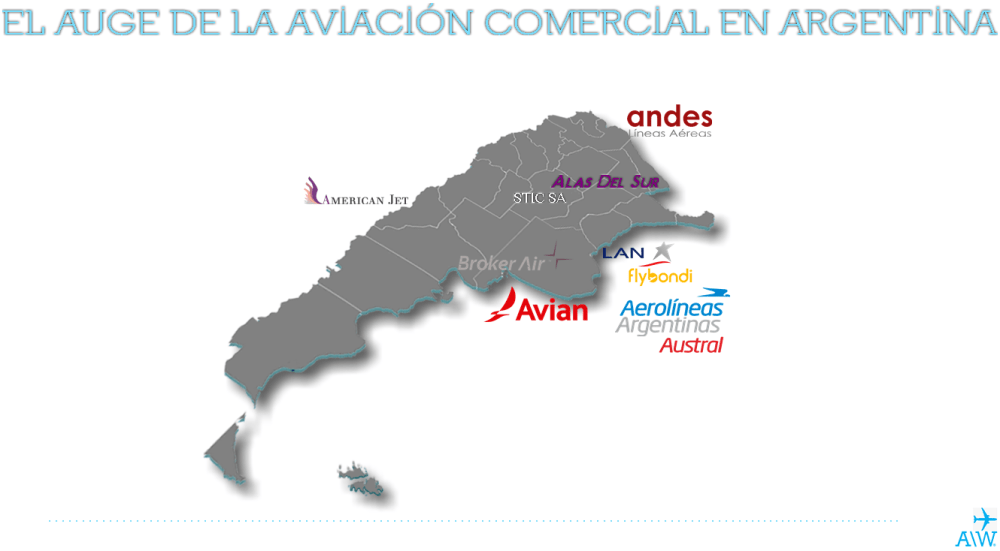
Según el edicto de la Administración Nacional de Aviación Civil (ANAC) que se publica este martes el Boletín Oficial, la empresas son Alas del Sur (21 rutas); American Jet S.A. (13 rutas); Andes Líneas Aéreas S.A. (23 rutas) y Avian Líneas Aréas (16 rutas) y FlyBondi, FB Líneas Aéreas, (99 rutas), con el Aeropuerto de El Palomar como base en Buenos Aires. La línea aérea Broker Air solicitó (1 ruta), la compañía conectará Buenos Aires-Tandil.

Dando el primer golpe, Ryanair solicitó pista para aterrizar «haciendo mucho ruido y pocas nueces». Luego de la mano de Air Norwegian se solicitan permisos para explotar rutas domésticas y transatlánticas despertando el interés colectivo de los argentinos por volar a Europa a un precio muy conveniente.

En la Provincia de San Luis se está gestando una nueva aerolínea bajo la firma Stic S.A. con capitales locales con base en el Aeropuerto de Merlo. La línea aérea planea incorporar aviones SAAB 340 a su flota.

En curso, cinco compañías aéreas solicitaron formalmente autorización para operar rutas de cabotaje e internacionales, pedidos que serán debatidos en una audiencia pública a fines de mes.

Latam Airlines va a cobrar tarifas «low cost». Habrá que pagar por la valija de mano, una tendencia en EE.UU. un poco delicada, ya que muchas compañias aéreas, como el caso de United Airlines están teniendo problemas. A esto se agrega que muchas estadounidenses quieren cobrar «todo», hasta la comida o la eliminación de muchos servicios básicos o elementales.

La única de ellas que ya realiza vuelos regulares de cabotaje es Andes Líneas Aéreas, que solicitó cuatro rutas dentro del país y tres internacionales, a Lima (Perú), Santiago (Chile) y San Pablo (Brasil).

Avian Líneas Aéreas, filial local de la colombiana Avianca, solicitó rutas a ciudades del Litoral, del sur y del centro del país, todas con base en Buenos Aires y dos internacionales: a Porto Alegre (Brasil) y Montevideo (Uruguay). La firma no solicitó rutas con origen o destino en Tucumán, pese a que el titular de la misma, Germán Efromovich firmó un acuerdo con el gobernador de Tucumán, Juan Manzur, para operar con base en esa provincia con una inversión de u$s 80 millones, en tanto que el gobierno tucumano le garantiza el 65% de ocupación de esos vuelos. El pedido oficial se trata de 16 rutas que parten desde Buenos Aires y que no pasan por Córdoba capital; sólo dos rutas pasan por Río Cuarto y San Luis y por Sunchales y Villa María.

Alas del Sur es una empresa patagónica que solicitó operar vuelos no regulares y 21 rutas regulares, todas con Córdoba como origen y varias escalas en ciudades intermedias para unir diferentes puntos de cabotaje. De las 21 rutas solicitadas, 9 son internacionales: a Miami (EE.UU.), vía Lima; Miami con escala en Asunción (Paraguay); Miami vía Santiago de Chile; Santa Cruz de la Sierra (Bolivia); a Río de Janeiro (Brasil), vía Porto Alegre y San Pablo; Punta del Este, con escala en Montevideo; Roma (Italia), con escala en Barcelona; y, la más ambiciosa, Shangai (China), vía Los Ángeles (EE.UU.).

En tanto, American Jet pidió 13 rutas con base en Neuquén, siete internacionales, a Bolivia, Chile, Brasil, Uruguay y Paraguay. Y a un destino argentino para el cual es necesario un acuerdo negociado con el Reino Unido: las Islas Malvinas.

FlyBondi o FB Líneas Aéreas, cuyo proyecto es operar como aerolínea de bajo costo y solicitó 99 rutas, con base en el Aeropuerto de El Palomar. La compañía, que todavía está a la búsqueda de inversores para equiparse, adelantó que establecerá su base de operaciones en el aeropuerto de El Palomar, en Buenos Aires, a unos 30 kilómetros de la capital. Esto le permitirá reducir costos. De estas 99 rutas, 56 de ellas corresponden a destinos en el país como Córdoba, Rosario, Salta y Mendoza y 43 a internacionales que incluye a diversas ciudades de América del Sur, la mayoría de Brasil, pero también algunas de Bolivia, Ecuador, Perú, Uruguay, Chile, Venezuela.

Todas las compañías piden concesiones por 15 años a excepción de American Jet y Andes Líneas Aéreas, sobre las cuales la Anac no especifica el período.

Esto generó mucho ruido en Aerolíneas Argentinas. Aerolíneas le marca la pista a la llegada de los vuelos low-cost por lo que enfatizó que peleará por un trato igualitario en el tarifario aeroportuario.

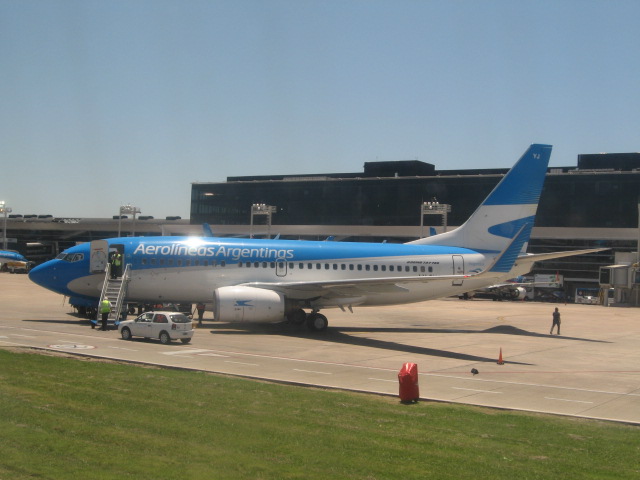
Aerolíneas sale con las garras afiladas

Para enfrentar a las líneas de bajo costo, Aerolíneas anunció cómo serán los vuelos en 2017

A partir del primero de enero pondrá en marcha una nuevo esquema de operaciones que contemplará, entre otras cuestiones, el fin del tradicional snack que se ofrece abordo de los vuelos de menos de dos horas.

Además se implementarán a partir del mes de abril del año próximo, mejoras en el sistema de entretenimiento abordo, ya que “la empresa viene trabajando en una mejora sustancial del sistema de entretenimiento abordo, que será renovado paulatinamente en toda la flora entre diciembre de 2016 y abril de 2017. Los cambios introducen un nuevo layout con imágenes de nuestro país, nuevas funcionalidades e iconos y un 65% más de contenido con más películas, más series, y más y mejor entretenimiento, que se renovará cada tres meses.

De la misma manera habrá mejoras en el sistema de acumulación y uso de millas con ARPLUS porque a partir del 5 de diciembre, Aerolíneas habilita a los socios Aerolíneas Plus residentes en Argentina a transferir sus millas con otros socios del programa, vía la página web.

También se prevé mejoras en el uso de la tarjeta ARPlus que incluirán la posibilidad de sumar doble millaje en el acceso a salas VIP del país y de Uruguay. También tendrán más beneficios los socios ARPlus en 2017 para comprar con descuento su asistencia al viajero, alquilar un auto y compras vía la plataforma ShopGallery, que comercializa productos en los Duty Free.

Los pedidos de ruta que no completaron la documentación y requisitos pertinentes serán incluidos en un próximo llamado a Audiencia Pública, en marzo.

El martes 27 de diciembre, en la primera audiencia pública del sector tras once años de negaciones, comenzará a definirse el nuevo escenario y un nuevo capítulo comenzará a escribirse en las páginas de la aviación comercial argentina. airgways-icon-aw

Resultado de imagen para Aeroparque aviones

The rise of airlines in Argentina

Argentine commercial aviation has begun to reflotar. Five airlines called for cabotage and international routes. Applications will be discussed at a public hearing at the end of the month. Two of the companies will be based in the interior

Since 2005, the ANAC has not granted any new significant air routes for the benefit of free competition. An exemplary case was the one of AirPampas that had repeatedly requested the concession of aerial routes but from the kirchnerista government never they were listened to. Even worse, between corridors the Argentine government was accused of corruption by requesting fines.

With a new chapter and airs of change, the political change awoke the aerial commercial hornet. It will be the first time, since 2005, that a public hearing for the adjudication of routes will take place and in case of fulfilling all the technical and operational requirements, the companies could begin to cover the routes requested in about six months.

Resultado de imagen para Aeroparque aviones

The opening of aerocomercial in Argentina

The airs are launched to the competition by the portion of domestic and regional market

According to the National Civil Aviation Administration (ANAC) edict published on Tuesday by the Official Gazette, the companies are Alas del Sur (21 routes); American Jet S.A. (13 routes); Andes Líneas Aéreas S.A. (23 routes) and Avian Líneas Aéreas (16 routes) and FlyBondi, FB Líneas Aéreas, (99 routes), with the Airport of El Palomar as base in Buenos Aires. The airline Broker Air requested (1st route), the line would connect Buenos Aires-Tandil.

Giving the first blow, Ryanair requested a runway to land «making a lot of noise and few nuts». After the hand of Air Norwegian are asked for permits to exploit domestic and transatlantic routes arousing the collective interest of the Argentines to fly to Europe at a very convenient price.

In the Province of San Luis a new airline is being developed under the signature Stic S.A. With local capitals based at Merlo Airport. The airline plans to incorporate SAAB 340 aircraft into its fleet.

In progress, five airlines formally requested authorization to operate cabotage and international routes, which will be discussed at a public hearing at the end of the month.

The routes were requested by Andes Líneas Aéreas, American Jet, Alas del Sur, Avian Líneas Aéreas and FB Líneas Aéreas – known as FlyBondi -, published the National Civil Aviation Administration (ANAC) in the Official Gazette.

Latam Airlines will charge «low cost» rates. You will have to pay for the handbag, a trend in the US. A bit delicate, as many airlines, such as the case of United Airlines are having problems. To this it is added that many Americans want to charge «everything», until the food or the elimination of many basic or elementary services.

The only one that already does regular cabotage flights is Andes Líneas Aéreas, which requested four routes within the country and three international ones, to Lima (Peru), Santiago (Chile) and San Pablo (Brazil).

Avian Líneas Aéreas, a local subsidiary of the Colombian Avianca, requested routes to cities in the Litoral, the south and the center of the country, all based in Buenos Aires and two international ones: Porto Alegre (Brazil) and Montevideo (Uruguay). The firm did not request routes with origin or destination in Tucumán, although the holder of the same, German Efromovich signed an agreement with the governor of Tucumán, Juan Manzur, to operate based in that province with an investment of u $ s 80 Millions, while the government of Tucuman guarantees the 65% of occupancy of those flights. The official order is about 16 routes that depart from Buenos Aires and do not pass through Córdoba capital; Only two routes pass through Río Cuarto and San Luis and through Sunchales and Villa María.

Alas del Sur is a Patagonian company that requested to operate non regular flights and 21 regular routes, all with Córdoba as origin and several stopovers in intermediate cities to unite different points of cabotage. Of the 21 routes requested, 9 are international: to Miami (USA) via Lima; Miami with stopover in Asunción (Paraguay); Miami via Santiago de Chile; Santa Cruz de la Sierra (Bolivia); To Rio de Janeiro (Brazil) via Porto Alegre and São Paulo; Punta del Este, with stopover in Montevideo; Rome (Italy), with stopover in Barcelona; And, most ambitiously, Shanghai (China), via Los Angeles (USA).

Meanwhile, American Jet ordered 13 routes based in Neuquén, seven international, to Bolivia, Chile, Brazil, Uruguay and Paraguay. And to an Argentine destination for which a negotiated agreement with the United Kingdom is required: the Malvinas Islands (Falkland Islands).

FlyBondi or FB Líneas Aéreas, whose project is to operate as a low cost airline and requested 99 routes, based at El Palomar Airport. The company, which is still looking for investors to equip itself, said it will establish its base of operations at El Palomar airport in Buenos Aires, about 30 kilometers from the capital. This will allow you to reduce costs. Of these 99 routes, 56 of them correspond to destinations in the country such as Cordoba, Rosario, Salta and Mendoza and 43 international routes that includes several cities in South America, most of Brazil, but also some in Bolivia, Ecuador, Peru , Uruguay, Chile, Venezuela.

All companies ask for concessions for 15 years with the exception of American Jet and Andes Airlines, over which Anac does not specify the period.

This generated a lot of noise in Aerolíneas Argentinas. Aerolíneas marks the track to him when the arrival of the flights low-cost for which he emphasized that will fight for an equal treatment in the airport tariff.

Aerolíneas leave with sharp claws
dmi-716

To address the low-cost airlines, Aerolíneas announced how flights will be in 2017

Starting January 1, it will launch a new operations plan that will include, among other things, the end of the traditional snack offered on board flights of less than two hours.

In addition, improvements in the onboard entertainment system will be implemented starting next April, as «the company has been working on a substantial improvement of the onboard entertainment system, which will be gradually renewed throughout the flora between December 2016 And April 2017. The changes introduce a new layout with images of our country, new features and icons and 65% more content with more movies, more series, and more and better entertainment, which will be renewed every three months.

In the same way there will be improvements in the system of accumulation and use of miles with ARPLUS because as of December 5, Aerolíneas enables the members Aerolíneas Plus residents in Argentina to transfer their miles with other partners of the program via the website.

Improvements are also expected in the use of the ARPlus card, which will include the possibility of adding double mileage in the access to the lounges of the country and Uruguay. ARPlus partners will also have more benefits in 2017 to discount their travel assistance, rent a car and shop via the ShopGallery platform, which markets Duty Free products.

Route requests that did not complete the relevant documentation and requirements will be included in an upcoming Public Hearing in March.

On Tuesday, December 27, in the first public hearing of the sector after eleven years of denials, the new scenario will begin to be defined and a new chapter will begin to be written on the pages of Argentine commercial aviation. A\W

Ξ A I R G W A Y S Ξ
SOURCE: A I R G W A Y S / Clarin.com
DBk: Photographic © DyN / A I R G W A Y S / Aviacionargentina.net / Mendozapost.com
AW-POST: 201612070222AR
A\W A I R G W A Y S ®

Fusión de low-cost en Francia

Resultado de imagen para xl airways la compagnie

AW | 2016 12 06 11:48 | AIRLINES MARKET

Las líneas aéreas XL Airways y La Compagnie efectivizaron su fusión para trabajar conjuntamente en el mercado de low-cost

Las aerolíneas francesas XL Airways y La Compagnie se unieron para ofrecer servicios de largo recorrido a bajo costo reforzando el liderazgo en este sector con propósito de incrementar su participación en el mercado europeo y competir con el gigante Air France. Ambas aerolíneas funcionarán como un sólo grupo llamado XL Airways-La Compagnie Group.

La sinergia de ambas líneas aéreas está enfocada en la reducción de los costos a través de la unión de operaciones. La nueva sociedad estará bajo el control de DreamJet Participations, holding de La Compagnie, pero ambas aéreas mantendrán sus identidades separadas.

XL Airways, tiene sede en el aeropuerto Charles De Gaulle (CDG), de París, vuela en el segmento de bajo costo hacia destinos en América del Norte, el Caribe y el Océano Índico, y opera una pequeña flota de Airbus A330 200 y 300. Por su parte, La Compagnie es una aerolínea business class que opera dos Boeing 757-200 de 74 plazas entre CDG y el Aeropuerto Internacional Liberty de Newark.

La dirección general del grupo estará a cargo de Laurent Magnin, actual CEO de XL Group, luego de la dimisión de Frantz Yvelin, CEO y fundador de La Compagnie y principal impulsor de la fusión. Se espera que la empresa combinada genere 800 empleos y 400 millones de euros en ingresos anuales. El segmento de mercado de XL Airways seguirá centrado en viajes económicos, mientras que La Compagnie continuará siendo sólo de negocios. airgways-icon-aw

Resultado de imagen para xl airways la compagnie

Low-cost merger in France

Airlines XL Airways and La Compagnie made their merger to work together in the low-cost market

French airlines XL Airways and La Compagnie have joined forces to offer low-cost long-haul services by strengthening their leadership in this sector with the aim of increasing their share of the European market and competing with the giant Air France. Both airlines will operate as a single group called XL Airways-La Compagnie Group.

The synergy of both airlines is focused on the reduction of costs through the union of operations. The new partnership will be under the control of DreamJet Participations, holding company of La Compagnie, but both airlines will keep their identities separate.

XL Airways, based at Paris Charles De Gaulle Airport (CDG), flies in the low-cost segment to destinations in North America, the Caribbean and the Indian Ocean, and operates a small fleet of Airbus A330 200 and 300 La Compagnie is a business class airline that operates two 74-seat Boeing 757-200s between CDG and Newark Liberty International Airport.

The general management of the group will be led by Laurent Magnin, current CEO of XL Group, following the resignation of Frantz Yvelin, CEO and founder of La Compagnie and the main promoter of the merger. The combined company is expected to generate 800 jobs and 400 million euros in annual revenue. The market segment of XL Airways will continue to focus on cheap travel, while La Compagnie will continue to be business only. A\W


Ξ A I R G W A Y S Ξ
SOURCE: A I R G W A Y S
DBk: Photographic © ch-aviation.com
AW-POST: 201612061148AR
A\W A I R G W A Y S ®

Air Berlin vende el 49,8% participación de Niki a Etihad Airways por U$s 300M

Resultado de imagen para flyniki

AW | 2016 12 05 15:30 | AIRLINES MARKET

La desinversión del Grupo Air Berlin se enmarca dentro del plan de reestructuración de la compañía

Air Berlin venderá su participación en la aerolínea Niki a Etihad Airways, su primer accionista con el 29,21% del capital, por 300 millones de euros, según ha anunciado hoy la compañía alemana.

El consejo de administración de Etihad Aviation Group (EAG), matriz de Etihad Airways, ha aprobado este lunes los planes para crear un nuevo grupo europeo de aerolíneas de ocio en una empresa conjunta con TUI Group.

La nueva aerolínea contará con una flota de alrededor de 60 aviones, con una capacidad de 15 millones de plazas por año, y conectará los principales mercados turísticos europeos. La transacción está sujeta a las aprobaciones de los organismos reguladores de la aviación y las autoridades antimonopolio.

TUI Group tendrá el 24,8% de las acciones de la empresa conjunta, mientras que Etihad controlará el 25%. El 50,2% restante seguirá siendo propiedad de la fundación privada NIKI Privatstiftung.

La venta del 49,8% de Niki, también sujeta a aprobaciones regulatorias, no supondrá que Etihad tenga la mayoría, ni el control efectivo de esta compañía, que se integrará en el nuevo grupo. airgways-icon-aw

Resultado de imagen para flyniki

Air Berlin sells 49.8% of Niki to Etihad Airways for U$s 300 million

The divestiture of the Air Berlin Group is part of the restructuring plan of the company

Air Berlin will sell its stake in the airline Niki to Etihad Airways, its first shareholder with 29.21% of the capital, for 300 million euros, according to the German company announced today.

The board of Etihad Aviation Group (EAG), the parent company of Etihad Airways, has approved plans to create a new European group of leisure airlines in a joint venture with the TUI Group.

The new airline will have a fleet of around 60 aircraft, with a capacity of 15 million seats per year, and will connect the main European tourist markets. The transaction is subject to approvals from aviation regulators and antitrust authorities.

TUI Group will hold 24.8% of the shares of the joint venture, while Etihad will control 25%. The remaining 50.2% will remain the property of the private foundation NIKI Privatstiftung.

The 49.8% sale of Niki, also subject to regulatory approvals, will not mean that Etihad has the majority or effective control of this company, which will be integrated into the new group. A\W


Ξ A I R G W A Y S Ξ
SOURCE: expansion.com
DBk: Photographic © Trend.at
AW-POST: 201612051530AR
A\W A I R G W A Y S ®

Avianca despegue con subsidio estatal

Resultado de imagen para atr 72 avianca

AW | 2016 12 05 08:45 | AIRLINES MARKET

La aerolínea colombiana que aterrizará en Argentina cerró un acuerdo con el gobierno tucumano que le garantizará un piso de pasajeros en sus vuelos a la provincia

A la Argentina generar negocios de transporte que sean privados de pura cepa. Tarde o temprano, con una figura o con otra, algún Estado se hace presente. Algo de eso pasó con el plan de negocios que presentó Avianca, la aerolínea colombiana que compró MacAir, la empresa de la familia Macri. Fue hace unos días en Tucumán, cuando le informó al gobierno provincial que iba a operar algunos aviones basados en la capital tucumana y, obviamente, aumentar las frecuencias desde esa terminal aérea.

Pero, como sucedió con otras empresas del sector, para despegar y aterrizar en una provincia la compañía que en la Argentina funcionará como Avian Líneas Aéreas se aseguró de que el gobierno provincial le garantice un piso del 65% de ocupación en cada uno de los vuelos que tocan suelo tucumano. Será una compensación provincial y no nacional.

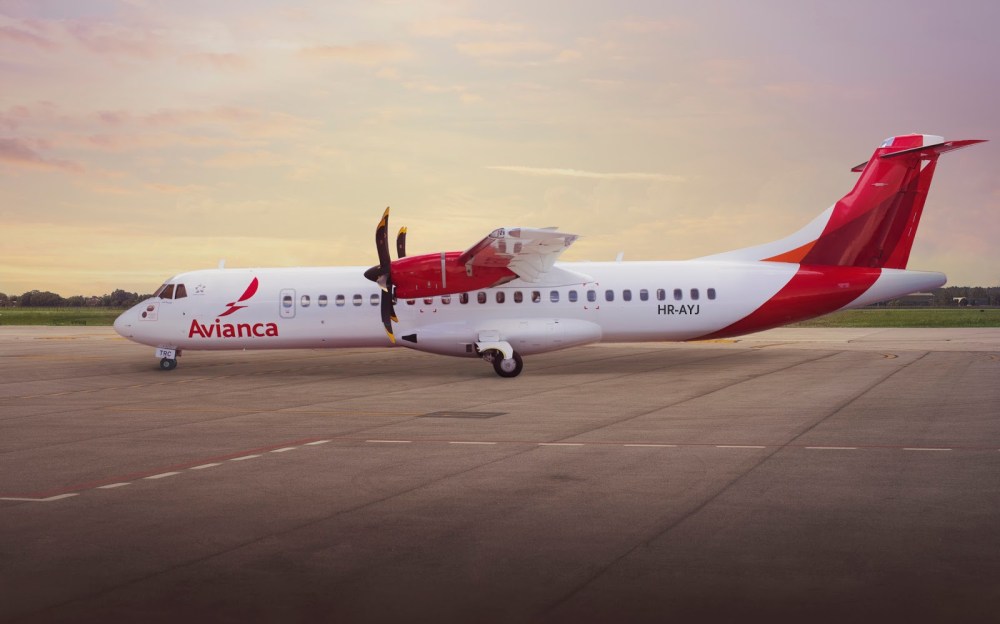
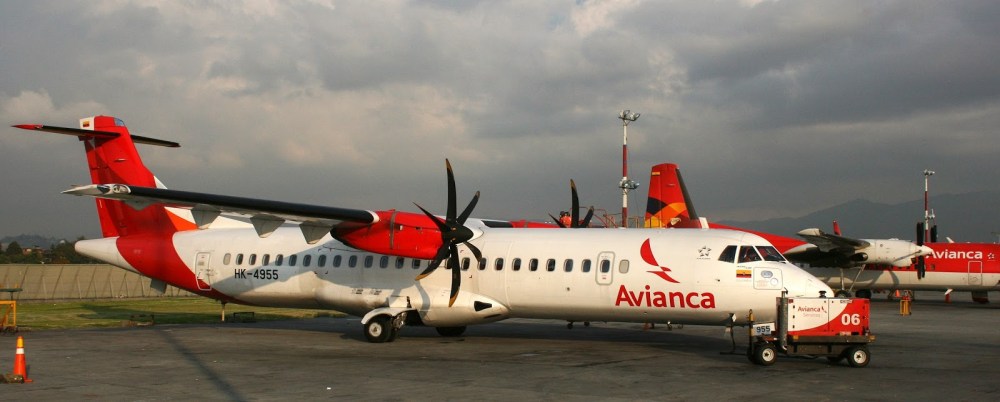
El dueño del holding, Germán Efromovich, fue el que le presentó el proyecto al gobernador tucumano, Juan Manzur. Según el plan de negocios, de los 12 aviones que la empresa compró ATR’s 72-600, con 72 asientos, cuatro estarían basados en Tucumán. Además, mantendrá una ruta que une San Miguel del Tucumán con Lima y que se sirve con un Embraer 190. La idea de la línea aérea es volar de ese centro de distribución a Salta, Santiago del Estero, La Rioja, Catamarca, Resistencia, Córdoba, San Juan, Mendoza, Rosario e Iguazú.

La aerolínea colombiana cerró un acuerdo con el gobierno tucumano que le garantizará un piso de pasajeros en sus vuelos a la provincia

Según sus planes, Tucumán, que actualmente tiene seis vuelos diarios de Aerolíneas y cuatro de Latam a Buenos Aires, pasará a tener 25 frecuencias cada 24 horas. Avianca comercializaría tres vuelos por día a Córdoba, cinco a Salta y uno a cada destino de cabotaje previsto. Además, se sumarán, con la internacional Avianca, un vuelo a Asunción, Santa Cruz de la Sierra, Lima, Iquique y Florianópolis, en Brasil.

Entonces es cuando ingresa la billetera estatal, en este caso, provincial. La cuenta que sacan en Avianca es que el factor de ocupación que necesitan para encontrar el punto de equilibrio es del 65%. ¿Cómo llegar a ese número? Será el gobierno de Tucumán el que asuma esa suerte de seguro que se gatillará sólo cuando las ventas no llegaran a cubrir ese porcentaje.

En Avianca consideran que en julio de 2017, cuando empiece la operación, el factor de ocupación estará en alrededor del 60%. Pero la novedad no es eterna. Entre agosto y noviembre del año próximo, se ocuparán entre 35 y 55 asientos de cada 100 que se pongan a la venta. Los meses de verano, la ocupación subirá y para fines del invierno de 2018 ese 65% estará asegurado. Hasta entonces se mantendrá el subsidio tucumano.

El esquema encendió la polémica. Por un lado, por tratarse de la continuadora de la empresa del Presidente. Pero por otro sucedieron críticas en Tucumán, ya que no todos están de acuerdo con apostar a la industria aerocomercial. En el gobierno de Manzur dicen que la inversión se recupera rápido con los puestos de trabajo directos que se abrirían, con los indirectos y con el movimiento que generará la mayor conectividad.

La empresa y el gobierno de Tucumán dicen que la instalación de la aerolínea va a generar 790 pasajeros nuevos por día (23.000 por mes) y que la operación demandará 250 empleados calificados directos, además de 400 que se sumará en forma indirecta. Pero la polémica por los subsidios al transporte, en este caso provincial y no nacional, está lejos de zanjarse.

El 27 de este mes será un día clave para los planes de la empresa que compró la aerolínea de la familia Macri. Después de más de 10 años, el Gobierno llamará a una audiencia para entregar rutas a las empresas que lo soliciten. En principio, Avianca y Flybondi, una empresa low cost que quiere empezar a volar el año próximo, son las candidatas a solicitar rutas. Será la línea de partida, ya que después de ese encuentro público, se inicia un plazo de seis meses para empezar a volar.

Ambas empresas han iniciado un proceso de búsqueda de empleados, entre ellos pilotos y copilotos. Avianca lleva acá la delantera por una sencilla razón: ya eligió el modelo de avión con el que volará, cosa que hasta ahora Flybondi no ha hecho.

Ese día no sólo estarán las líneas aéreas. Los empresarios de ómnibus de larga distancia pasarán por ahí. Consideran que son los grandes perdedores de la apuesta aerocomercial del Gobierno. Van a poner sobre la mesa sus argumentos, ya que dicen que no queda más remedio que una reingeniería de las empresas. Eso significa discontinuar algunas rutas, especialmente las que compitan con el avión, y la consecuencia será la disminución de la planta de trabajadores.

Las audiencias no son vinculantes y ellos lo saben, pero igual harán el intento de mostrar los padecimientos en los que entrarán pocos días después, cuando efectivamente el gobierno nacional deje de subsidiar a los ómnibus de larga distancia. airgways-icon-aw


Resultado de imagen para atr 72 avianca

Avianca a takeoff with state subsidy

The Colombian airline that will land in Argentina closed an agreement with the Tucuman government that will guarantee a flat of passengers in their flights to the province

To Argentina to generate businesses of transport that are deprived of pure strain. Sooner or later, with one figure or another, some state becomes present. Something of that happened with the business plan presented by Avianca, the Colombian airline that bought MacAir, the company of the Macri family. It was a few days ago in Tucuman, when he informed the provincial government that he was going to operate some planes based in the Tucuman capital and obviously increase the frequencies from that air terminal.

But, as with other companies in the sector, to take off and land in a province the company that in Argentina will operate as Avian Líneas Aéreas ensured that the provincial government guarantees a floor of 65% occupancy in each of the flights Which touch tucumano soil. It will be a provincial rather than a national compensation.

The owner of the holding, German Efromovich, was the one who presented the project to the Tucuman governor, Juan Manzur. According to the business plan, of the 12 aircraft that the company bought ATR’s 72-600, with 72 seats four would be based in Tucumán. In addition, it will maintain a route linking San Miguel del Tucumán with Lima and served with an Embraer 190. The idea of the airline is to fly from that distribution center to Salta, Santiago del Estero, La Rioja, Catamarca, Resistencia, Córdoba , San Juan, Mendoza, Rosario and Iguazú.

The Colombian airline closed an agreement with the Tucuman government that will guarantee a flat of passengers in their flights to the province

According to its plans, Tucumán, which currently has six daily flights from Aerolíneas and four from Latam to Buenos Aires, will have 25 frequencies every 24 hours. Avianca would market three flights per day to Córdoba, five to Salta and one to each planned cabotage destination. In addition, with the international Avianca, a flight to Asunción, Santa Cruz de la Sierra, Lima, Iquique and Florianópolis will be added in Brazil.

That’s when you enter the state wallet, in this case, provincial. The bill they get in Avianca is that the factor of occupation they need to find the break-even point is 65%. How to get to that number? It will be the government of Tucuman that assumes that sort of insurance that will be triggered only when the sales do not cover that percentage.

In Avianca they consider that in July 2017, when the operation begins, the load factor will be around 60%. But the novelty is not eternal. Between August and November of the next year, they will occupy between 35 and 55 seats of each 100 that are put on sale. The summer months, occupation will rise and by the end of the winter of 2018 that 65% will be insured. Until then the tucumano subsidy will be maintained.

The scheme ignited the controversy. On the one hand, because it is the continuation of the company of the President. But on the other, there were criticisms in Tucumán, since not everyone agrees to bet on the commercial airline industry. In the Manzur government they say that the investment recovers quickly with the direct jobs that would be opened, with the indirect ones and with the movement that will generate the greater connectivity.

The company and the government of Tucumán say that the installation of the airline will generate 790 new passengers per day (23,000 per month) and that the operation will demand 250 direct qualified employees, in addition to 400 that will be added indirectly. But the controversy over transport subsidies, in this case provincial and non-national, is far from settled.

The 27 of this month will be a key day for the plans of the company that bought the airline of the Macri family. After more than 10 years, the Government will call a hearing to deliver routes to companies that request it. In principle, Avianca and Flybondi, a low cost company that wants to start flying next year, are the candidates to request routes. It will be the starting line, since after that public meeting, it starts a period of six months to start flying.

Both companies have started a search process for employees, including drivers and co-drivers. Avianca takes the lead here for a simple reason: already chose the model airplane with which it will fly, something that so far Flybondi has not done.

That day will not only be the airlines. Business long-distance buses will pass by. They consider that they are the great losers of the aerocomercial bet of the Government. They are going to put their arguments on the table, since they say that there is no choice but a reengineering of the companies. That means discontinuing some routes, especially those that compete with the airplane, and the consequence will be the decrease of the workers’ plant.

The hearings are not binding and they know it, but they will also try to show the ailments in which they will enter a few days later, when effectively the national government stops subsidizing the long distance buses. A\W

Ξ A I R G W A Y S Ξ
SOURCE: lanacion.com.ar
DBk: Photographic © Javier O. Figueiral / ATR Aircraft
AW-POST: 201612050845AR
A\W A I R G W A Y S ®
Argentina licitará rutas aéreas

Resultado de imagen para avianca lineas aereas

AW | 2016 11 24 11:50 | AIRLINES MARKET

Se acelera la llegada de nuevas aerolíneas de cabotaje: el Gobierno licitará nuevas rutas aéreas en diciembre

No se realizan estas reuniones desde 2005; Flybondi y Avian fueron las empresas más activas; una vez asignadas, deben comenzar a volar en seis meses

la última semana del año, el Gobierno llamará a una audiencia para otorgar rutas aéreas a las empresas que quieran empezar a volar en el país o que quieran ampliar su operación. Será un regalo de fin de año para el sector que desde 2005 jamás celebró una reunión de este tipo. Allí se definirá cuál es el verdadero interés de nuevas aerolíneas por ofrecer sus servicios en la Argentina y la posibilidad que prosperen los seis proyectos que presentarán.

Resultado de imagen para flybondi
El encuentro se celebrará entre los días 26 y 27 de diciembre, según confirmaron fuentes del Gobierno, que precisaron además que la iniciativa surgió tras un pedido de la compañía low cost Flybondi y de Avian Líneas Aéreas, la filial local de Avianca que compró en marzo MacAir, la empresa de la familia Macri.

«La audiencia opera como línea de largada para el despegue ya que seis meses después las aerolíneas adjudicatarias deberán empezar a operar»

La audiencia, además del acto administrativo de entrega de rutas y certificados, opera como línea de largada para el despegue ya que seis meses después las aerolíneas adjudicatarias deberán empezar a operar.

Las aerolíneas interesadas

Justamente las dos empresas que pidieron rutas, Avian y Flybondi, se han mostrado muy activas en las últimas semanas. Las dos ya han iniciado la búsqueda que de pilotos y Avian ya tiene una delegación en Toulouse, ciudad francesa donde se fabrican los aviones ATR de 68 plazas que utilizará para volar cabotaje en el país.

Avian compró a la empresa francesa 12 aeronaves turbohélices para volar en el país, cuya primera unidad se entregará antes de fin de año. Cada avión tiene un costo de aproximadamente 18 millones de dólares y una autonomía para volar entre tres y cuatro horas. El trámite para que operen no es tan sencillo ya que estos aviones no están certificados en el país, aunque sí unos más pequeños de la misma familia que alguna vez voló la desaparecida LAER.

La operación de la orden de compra fue confirmada por el propio fabricante mediante un comunicado en el que los principales ejecutivos de la compañía daban cuenta de la operación. Según trascendió, Germán Efromovich, número uno de Avianca, estaría en la Argentina esta semana para comentar la operación. Se especula que la compañía basaría su operación en Córdoba aunque en las últimas horas surgió la posibilidad también de Tucumán.

Flybondi convocó además a pilotos aunque aún no decidió que tipo de aviones utilizará. Además, la compañía low cost, que se quiere afincar en el país, estaba por estas semanas terminando la rueda de inversiones que había iniciado hace tiempo.

A estas empresas se suman otros interesados que también pasaron por el país. El proyecto de Declan Ryan, uno de los integrantes de la familia Ryan dueños de Ryan Air también mantiene su interés y habrá que ver si se anota en el llamado de fin de año, al igual que los dueños de Norwegian Air, que recorrieron la Argentina en busca de oportunidades para su compañía.

No son los únicos. En los últimos días trascendió que además de Andes, una compañía que opera aviones MD anunció que también pedirá nuevas rutas para ampliar su oferta e incorporaría a su flota tres Airbus 319.

A fin de año se celebrará la audiencia y entonces será cuestión de esperar si nuevas líneas aéreas volarán en el país. La cuenta regresiva ya comenzó.  airgways-icon-aw

Uno de los aviones de Avianca

Argentina to bid for air routes

Resultado de imagen para flybondiThe arrival of new cabotage airlines is accelerating: the Government will tender new air routes in December

These meetings have not taken place since 2005; Flybondi and Avian were the most active companies; Once assigned, should start flying in six months

 The last week of the year, the government will call a hearing to grant air routes to companies that want to start flying in the country or want to expand their operation. It will be a year-end gift for the sector that has not held such a meeting since 2005. There will be defined the true interest of new airlines to offer their services in Argentina and the possibility that they will prosper the six projects that will present.

The meeting will be held between December 26 and 27, according to government sources, who also said that the initiative came after a request from the low-cost carrier Flybondi and Avian Airlines, the local subsidiary of Avianca, which it bought in March MacAir, the company of the Macri family.

 «The hearing operates as a starting line for take-off since six months later the winning airlines will have to start operating»

The hearing, in addition to the administrative act of delivery of routes and certificates, operates as a start-up line for take-off since six months later the winning airlines will have to start operating.

Interested airlines

Just the two companies that requested routes, Avian and Flybondi, have been very active in recent weeks. The two have already begun the search for pilots and Avian already has a delegation in Toulouse, French city where they manufacture the 68-seater ATR aircraft that will use to fly cabotage in the country.

Avian bought from the French company 12 turboprop aircraft to fly in the country, whose first unit will be delivered before the end of the year. Each plane has a cost of approximately 18 million dollars and a range to fly between three and four hours. The procedure for them to operate is not so simple as these planes are not certified in the country, although some smaller ones of the same family that once flew the disappeared LAER.

The operation of the purchase order was confirmed by the manufacturer himself in a statement in which the company’s top executives reported on the transaction. As it transcendió, German Efromovich, number one of Avianca, would be in Argentina this week to comment the operation. It is speculated that the company would base its operation in Cordoba although in the last hours the possibility also emerged of Tucumán.

Flybondi also called on pilots but he still did not decide what type of aircraft to use. In addition, the low cost company, that wants to settle in the country, was by these weeks finishing the investment wheel that had initiated long ago.

These companies are joined by other stakeholders who also passed through the country. The project of Declan Ryan, one of the members of the Ryan family owners of Ryan Air also maintains its interest and will have to see if it is written in the call of year-end, like the owners of Norwegian Air, that crossed Argentina Looking for opportunities for your company.

They are not the only ones. In the last few days, it transpired that in addition to Andes, a company that operates MD aircraft announced that it will also request new routes to expand its offer and incorporate to its fleet three Airbus 319.

At the end of the year the hearing will be held and then it will be a matter of waiting if new airlines will fly in the country. The countdown has already begun. A\W

Ξ A I R G W A Y S Ξ
SOURCE: lanacion.com.ar
DBk: Photographic © Avianca.com / Flybondi
AW-POST: 2016112411150AR
A\W A I R G W A Y S ®

El Grupo Viva planea iniciar vuelos en Chile, Venezuela y Argentina

Resultado de imagen para Viva Air Group

AW | 2016 11 18 20:55 | AIRLINES MARKET

Según el presidente de VivaColombia, William Shaw, tras la decisión del grupo aéreo controlado por Irelandia Aviation, fundadores de Ryanair, de lanzar Viva Air Perú en el primer semestre de 2017, también tienen planes de llegar con su modelo de bajo costo a Chile, Venezuela y Argentina.

Los dueños de VivaAerobús y Viva Colombia, que son Irelandia Aviation y el Grupo IAMSA, decidieron crear un holding, que basado en Panamá y al que querían llamar Grupo Viva, pretendía maximizar sinergias y preparar su desembarco en países como Perú, Ecuador o Costa Rica (El Grupo Viva se basa en Panamá para lanzar más aerolíneas latinas).

No obstante, desde VivaColombia admitieron hace un año tendrán que desacelerar su crecimiento debido a la trepada que ha tenido el dólar, pues “en las últimas semanas ha sido mayor el perjuicio del impacto de la devaluación, que el beneficio del precio del combustible”. “El combustible en Colombia se paga en pesos, pero en realidad la factura llega en dólares, a la tasa del día, por lo tanto, más del 60% de los costos está tasado en dólares y eso nos afecta en varios rubros”, dijeron (VivaColombia admite problemas: 60% de sus costos son en dólares).

La aerolínea de bajo costo, sin embargo, se mostró orgullosa del “Efecto Viva” que se ha expandido en Panamá, Ecuador y Perú, que no es más que reducciones de tarifas del 60% al 75% (VivaColombia presiona a la baja tarifas de Panamá, Ecuador y Perú).

Cabe recordar que Copa Airlines lanzó también Wingo, una filial de la corporación panameña que competirá en el mercado de bajos precios desde diciembre de este año, mientras Latam se mostró interesada en competir en el segmento ‘low cost’ a partir del próximo año, y ofrecer vuelos locales a seis países. La estrategia no solo se plantea para Colombia, sino que se ejecutaría en Chile, Perú, Ecuador, Argentina y Brasil, para aumentar en un 50% el número de pasajeros en los próximos cuatro años.

En el caso de la low cost estadounidense Southwest Airlines, luego de recibir hace año y medio la aprobación de Estados Unidos para iniciar vuelos hacia Ciudad de México, estaría planeando ampliar sus operaciones a Perú, Argentina, Brasil y Chile, ya que su prioridad sería apuntar al “mercado latinoamericano en auge” (La low cost Southwest llegaría a Perú, Argentina, Brasil y Chile). airgways-icon-aw

Resultado de imagen para Viva Air Group

Viva Group plans to fly in Chile, Venezuela and Argentina

According to the president of VivaColombia, William Shaw, following the decision of the airline group controlled by Irelandia Aviation, founders of Ryanair, to launch Viva Air Peru in the first half of 2017, also have plans to arrive with its low cost model to Chile, Venezuela and Argentina.

The owners of VivaAerobús and Viva Colombia, which are Irelandia Aviation and the IAMSA Group, decided to create a holding company based in Panama and the one they wanted to call Grupo Viva, intended to maximize synergies and prepare Its disembarkation in countries like Peru, Ecuador or Costa Rica (Viva Group is based in Panama to launch more Latin Airlines).

However, since VivaColombia admitted a year ago they will have to slow their growth due to the climb the dollar has had, because «in recent weeks has been greater the impact of the impact of devaluation, than the benefit of the price of fuel.» «Fuel in Colombia is paid in pesos, but in reality the invoice arrives in dollars at the rate of the day, therefore more than 60% of the costs are priced in dollars and that affects us in several items,» they said. (VivaColombia admits problems: 60% of its costs are in dollars).

The low-cost airline, however, was proud of the «Living Effect» that has expanded in Panama, Ecuador and Peru, which is nothing more than reductions in rates from 60% to 75% (VivaColombia pushes low Panama, Ecuador and Peru).

Copa Airlines also launched Wingo, a subsidiary of the Panamanian corporation that will compete in the low-priced market since December of this year, while Latam was interested in competing in the low cost segment starting next year, and Offer local flights to six countries. The strategy is not only for Colombia, but would be implemented in Chile, Peru, Ecuador, Argentina and Brazil, to increase the number of passengers by 50% in the next four years.

In the case of the US low-cost Southwest Airlines, after receiving a year and a half of US approval to start flights to Mexico City, it would be planning to expand its operations to Peru, Argentina, Brazil and Chile, since its priority would be Target the «booming Latin American market» (the Southwest low cost would reach Peru, Argentina, Brazil and Chile). A\W

Ξ A I R G W A Y S Ξ
SOURCE: Reportur.com
DBk: Photographic © Ticotimes.net / Vivacolombia.co
AW-POST: 201611182055AR
A\W A I R G W A Y S ®

Las subvenciones EE.UU. a las aerolíneas

Resultado de imagen para Delta Airlines Atlanta

AW | 2016 11 18 20:07 | AIRLINES MARKET

El mes pasado, con sede en Atlanta, Delta Airlines se quejó de los contratos de viajes del gobierno otorgados a JetBlue Airways. Estos contratos permiten a Jetblue transportar empleados federales entre Nueva York y Dubai y entre Nueva York e Italia. Sin embargo, debido a que Jetblue, con su flota de aviones de corto alcance, no tiene los aviones de largo alcance necesarios para volar esas rutas, serán operados por su socio de código compartido, Emirates, con sede en Dubai. Delta se opone a este arreglo porque Emirates supuestamente «explota una ventaja indebida sobre las compañías de bandera de Estados Unidos al recibir subsidios masivos de su gobierno local».

Resultado de imagen para United American Airlines

Delta no está solo. United y American Airlines también afirman que las compañías del Golfo, específicamente Emirates, Etihad y Qatar Airways, no tienen que preocuparse de ser rentables porque los gobernantes ricos en petróleo con bolsillos profundos los poseen. Esto permite que el Golfo tres inunden el mercado con exceso de capacidad que reduce las tarifas y pone a los competidores fuera del negocio. Delta ha cancelado su ruta Atlanta-Dubai por esta razón. El avión utilizado en esa ruta fue redistribuido en el mercado transatlántico, donde, según Delta, podría «competir en condiciones equitativas y no distorsionadas por las compañías aéreas estatales subvencionadas».

En primer lugar, muchas compañías estatales sirven a los mercados estadounidenses. Estos incluyen Surinam Airways, Caribbean Airlines y Kuwait Airways. ¿Por qué no ir tras ellos también? La respuesta es la competencia. Mientras las líneas aéreas extranjeras no amenazan los balances de sus contrapartes americanas, todo está bien. Una vez que lo hacen, el último llora mal. Emirates, por ejemplo, inició vuelos a Nueva York en 2004. El Acuerdo de Cielos Abiertos -el marco legal que permite a Emirates hacerlo- se firmó en 1999. Desde entonces, y durante casi una década, Oeste. Las subvenciones del Golfo fueron, al menos públicamente, una no cuestión. Ellos «misteriosamente» se convirtieron en un problema después de que los transportistas estadounidenses comenzaron a perder pasajeros (e ingresos) a gente como Emirates.

En segundo lugar, y lo que es más importante, Delta y sus contrapartes se asocian libremente con compañías aéreas que están subvencionadas, particularmente en China. Un informe de aviación del Centro para la Aviación (CAPA, por sus siglas en inglés) señala que los transportistas chinos -a diferencia de sus homólogos del Golfo- han documentado los subsidios del gobierno que están etiquetados como tales en sus propios libros. En 2014, unos 865 millones de dólares en subsidios fueron para China Eastern y China Southern, ambos socios de Delta. $ 162 millones se destinaron a Air China, un aliado de United Airlines, y $ 82 millones a Hainan Airlines que comparten código con la estadounidense American Airlines. Como apunta Peter Harbison de CAPA, cuando se trata de subsidios, «ninguna aerolínea tiene manos limpias».

Después de retirarse de Dubai, Delta declaró que las aerolíneas no cancelan rutas rentables. Esta afirmación es engañosa. Las aerolíneas tienen un número limitado de aviones. Una buena gestión implica desplegar esos aviones en rutas que generan beneficios. Gran gestión significa hacerlo en las rutas que generan más beneficios. Si las cifras del 2015 son algo para pasar, el equipo directivo de Delta podría estar entre los mejores. La aerolínea reportó casi $ 6 mil millones en ingresos antes de impuestos durante el año. $ 2.6 mil millones de esto fueron a los accionistas y $ 1.5 mil millones fueron repartidos a los 80.000 empleados de Delta en lo que sigue siendo el pago más grande de distribución de beneficios en la historia. airgways-icon-aw

Resultado de imagen para Delta Airlines Atlanta

The US grants To airlines

Last month saw Atlanta-based Delta Airlines complain about government travel contracts awarded to JetBlue Airways. These contracts allow Jetblue to ferry federal employees between New York and Dubai and between New York and Italy. However, because Jetblue, with its short-haul airplane fleet, does not have the long-haul airplanes needed to fly those routes, they will be operated by code-share partner, Dubai-based Emirates. Delta opposes this arrangement because Emirates allegedly, “exploits an improper advantage over U.S. flag carriers by receiving massive subsidies from its home government.”

Resultado de imagen para Delta Airlines Atlanta city

Delta doesn’t stand alone. United and American Airlines also claim that Gulf carriers, specifically Emirates, Etihad and Qatar Airways, don’t have to worry about being profitable because oil-rich rulers with deep pockets own them. This allows the Gulf three to flood the market with excess capacity that drives down fares and puts competitors out of business. Delta’s reportedly cancelled its Atlanta-Dubai route for this reason. The airplane used on that route was redeployed on the transatlantic market where it could, according to Delta, “compete on a level playing field that’s not distorted by subsidized state-owned airlines.”

Firstly, many state-owned carriers serve American markets. These include Surinam Airways, Caribbean Airlines and Kuwait Airways. Why not go after them as well? The answer is competition. As long foreign airlines don’t threaten the balance sheets of their American counterparts, all is well. Once they do, the latter cries foul. Emirates, for example, started flights to New York in 2004. The Open Skies Agreement—the legal framework that allows Emirates to do so—was signed in 1999. Since then, and for the better part of a decade, there was silence from the West. Gulf subsidies were, at least publicly, a non-issue. They “mysteriously” became an issue after U.S. carriers began losing passengers (and revenue) to the likes of Emirates.

Second and more importantly, Delta and its counterparts freely partner with carriers that are subsidized, particularly in China. A report from aviation think tank Centre for Aviation (CAPA) report notes that Chinese carriers—unlike their Gulf counterparts—have documented government subsidies that are labeled as such in their own books. In 2014, some $865 million in subsidies went to China Eastern and China Southern, both of which partner with Delta. $162 million went to Air China, a United Airlines ally, and $82 million to Hainan Airlines that code-shares with Dallas-based American Airlines. As CAPA’s Peter Harbison aptly notes, when it comes to subsidies, “no airline has clean hands.”

After withdrawing from Dubai, Delta stated that airlines don’t cancel profitable routes. This claim is somewhat misleading. Airlines have a limited number of airplanes. Good management entails deploying those airplanes on routes that generate a profit. Great management means doing so on routes that generate the most profit. If 2015 figures are anything to go by, Delta’s management team may well be among the best. The airline reported nearly $6 billion in pre-tax income during the year. $2.6 billion of that went to shareholders and $1.5 billion was doled out to Delta’s 80,000 employees in what remains the largest profit-sharing payout in history. A\W

Ξ A I R G W A Y S Ξ
SOURCE: forbes.com
DBk: Photographic © Vosizneias.com / I1os.com
AW-POST: 201611182007AR
A\W A I R G W A Y S ®