Transporte anunció inversiones por AR$ 56.700 millones
El titular de la cartera del Ministerio de Transporte de Argentina, Alexis Guerrera, ha anunciado que el monto de inversión en obras para el año en curso 2022 es de AR$ 16.700 millones de Pesos aproximadamente. El ministro informó este lunes que el Gobierno prevé invertir en infraestructura aeroportuaria mediante el Plan de Desarrollo Federal, mientras que para el 2023 el monto de inversiones superará los AR$ 40.000 millones de Pesos, a lo que se suma también la inversión directa por parte del concesionario Aeropuertos Argentina 2000 (AA2000) de aproximadamente AR$ 28.700 millones de Pesos.
Los anuncios en el marco de la inauguración de la Asamblea y Conferencia Anual 2022 del Consejo Internacional de Aeropuertos de América Latina y el Caribe (ACI-LAC), que se inició el Lunes 03/10 en Buenos Aires con la participación de las principales autoridades, ejecutivos y expertos en aviación de diferentes países y que culmina el Martes 04/10. El funcionario destacó el rol importantísimo que tiene el sistema de aeropuertos, y apuntó que «allí por mediados de 2019, las dificultades socioeconómicas de la Argentina, los efectos de malas decisiones políticas y económicas habían interrumpido la cadena de pagos para la obra pública. Al mismo tiempo que por la coyuntura macroeconómica de ese momento, a las empresas se les dificultaba el acceso al crédito y al financiamiento. Esto generó una crisis singular en la que todas las obras del sector aeroportuario fueron perdiendo impulso hasta detenerse. El ejemplo más evidente, más simbólico y tal vez más doloroso, no solamente a nosotros como Estado sino también a Aeropuertos Argentina 2000, es la nueva terminal de partidas del aeropuerto internacional de Ezeiza, una obra que se paralizó en septiembre de 2019. Sin embargo, a pesar de las dificultades, y de los tiempos que nos han tocado vivir, tomamos la decisión de retomar esa obra y muchas otras en un contexto de fuerte recuperación del mercado interno. Por supuesto que esta recuperación es clave para garantizar la conectividad del país con las regiones y con el mundo. Tal vez, lo único positivo en el sistema de aviación y aeroportuario que nos dejó la pandemia, fue haber podido trabajar en el Aeroparque Jorge Newbery, donde llevamos adelante el mayor hito del sector aeroportuario en los últimos 50 años», expresó el Ministro de Transporte Alexis Guerrera.
Además, destacó que hay obras en ejecución en los aeropuertos de Posadas, Santa Rosa, San Juan, San Rafael y Jujuy. «Durante el periodo que abarca lo que resta del año en curso y todo el 2023 se llevarán a cabo grandes obras en quince terminales de pasajeros, en nueve pistas, diez calles de rodajes, trece plataformas, ejecutándose también una cantidad de dieciséis nuevos balizamientos», puntualizó Transporte.
Argentina airport investments
Transportation announced investments for AR$ 56,700 million
The head of the portfolio of the Ministry of Transportation of Argentina, Alexis Guerrera, has announced that the amount of investment in works for the current year 2022 is approximately AR$ 16,700 million pesos. The minister reported this Monday that the Government plans to invest in airport infrastructure through the Federal Development Plan, while by 2023 the amount of investment will exceed AR$ 40,000 million pesos, to which is also added direct investment by the concessionaire Aeropuertos Argentina 2000 (AA2000) of approximately AR$ 28,700 million pesos.
The announcements in the framework of the inauguration of the 2022 Annual Assembly and Conference of the Airports Council International of Latin America and the Caribbean (ACI-LAC), which began on Monday 10/03 in Buenos Aires with the participation of the main authorities, executives and aviation experts from different countries and which ends on Tuesday 10/04. The official highlighted the very important role that the airport system has, and pointed out that «back in mid-2019, the socioeconomic difficulties of Argentina, the effects of bad political and economic decisions had interrupted the chain of payments for public works. At the same time, due to the macroeconomic situation at that time, it was difficult for companies to access credit and financing. This generated a unique crisis in which all the works in the airport sector were losing momentum until they stopped. The most obvious example, the most symbolic and perhaps most painful, not only for us as a State but also for Aeropuertos Argentina 2000, is the new departure terminal at the Ezeiza international airport, a project that was stopped in September 2019. However, despite the difficulties, and of the times that we have had to live, we made the decision to resume that work and many others in a context of strong recovery of the domestic market. Of course, this recovery is key to guaranteeing the country’s connectivity with the regions and with the world. Perhaps the only positive thing in the aviation and airport system that the pandemic left us was having been able to work at the Jorge Newbery Airport, where we carried out the biggest milestone in the airport sector in the last 50 years», said the Minister of Transportation. Alexis Guerrero.
In addition, he highlighted that there are works underway at the Posadas, Santa Rosa, San Juan, San Rafael and Jujuy airports. «During the period that covers the remainder of the current year and all of 2023, major works will be carried out in fifteen passenger terminals, on nine runways, ten taxiways, thirteen platforms, also executing a number of sixteen new beacons», Transportation pointed out.
PUBLISHER: Airgways.com DBk: Argentina.gob.ar/transporte / Airgways.com AW-POST: 202210041415AR OWNERSHIP: Airgways Inc. A\W A I R G W A Y S ®
El impacto devastador del Huracán Ian en el Estado de Florida y la aviación han tenido consecuencias de magnitudes considerables. El área de Miami-Fort Lauderdale se ha librado de lo peor del fenómeno meteorológico, la extensa metrópoli subtropical ha sentido su fuerza en forma de intensas bandas de lluvia que se extienden por casi 200 millas desde el centro del huracán.
El sureste de Florida es un centro de aviación general para los Estados Unidos y el Caribe. Esta industria vital se vio fuertemente afectada el Martes 27/09 por la noche cuando fuertes células de tormenta eléctrica generaron tornados en el área de Miami-Dade y el Condado de Broward. Aparte de los impactos residenciales, el condado fue particularmente afectado con un tornado que tocó tierra en el Aeropuerto North Perry/HWO. El Aeropuerto North Perry es un aeropuerto público en la ciudad de Pembroke Pines, a 5 millas al oeste del distrito central de negocios de Hollywood, en el condado de Broward, Florida, Estados Unidos. También es conocido como Hollywood North Perry Airport, de ahí los códigos HWO. Es un aeródromo de alto tráfico que generalmente está lleno de actividad de entrenamiento de vuelo y operaciones de remolque de pancartas. El daño es irregular pero sustancial de las instalaciones y la aviación general.
El Aeropuerto de Sarasota/SRQ ha sido el más afectado por el Huracán Ian. Los tornados producidos por la banda de lluvia eran solo una pista de lo que otras partes del Estado de Florida estaban a punto de experimentar. El Miércoles a las 03:05 pm, el huracán Ian tocó tierra cerca de Cayo Costa, en la costa del Golfo del suroeste de Florida, produciendo vientos de 150 millas por hora y una marejada ciclónica de más de 7 pies de altura en las comunidades cercanas antes de llegar a tierra. Como resultado, las evaluaciones iniciales indicaron daños sustanciales a la infraestructura, y los aeropuertos se vieron nuevamente afectados. El Aeropuerto Internacional Sarasota-Bradenton, ha reportado daños en una sección de la membrana del techo y muchas de las tejas del techo de la terminal cayendo. Rick Piccolo, Presidente y CEO del aeropuerto, ha expresado que la sección de la membrana del techo desprendida mide aproximadamente 100 pies X 100 pies y el daño a la terminal se contuvo en un área específica cerca de los mostradores de facturación de Sun Country Airlines. Él y otros miembros del equipo operativo pasaron la noche en el aeropuerto cubriendo computadoras y otros equipos vitales con láminas de plástico antes de que llegara la pared del ojo. Los esfuerzos de limpieza ya están en marcha.
Huracán Ian
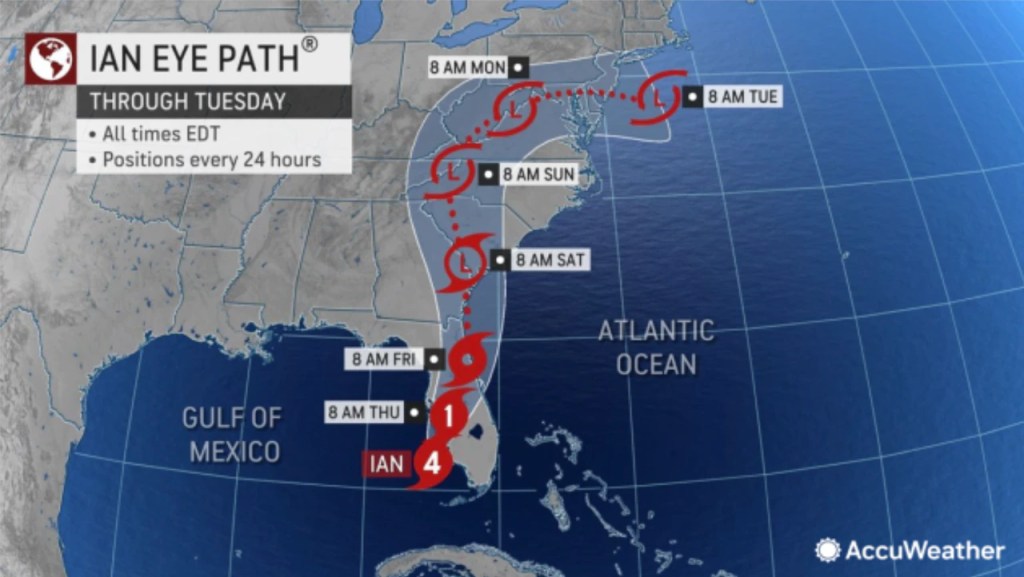
El huracán Ian golpeó a Cuba como un huracán fortalecido el 27/09 antes de convertirse en un huracán de Categoría 4 (CAT4) mientras cruzaba el Golfo de México, trayendo ráfagas de viento de más de 150 mph al suroeste de Florida. Ian luego rastreó el océano Atlántico occidental el Jueves 29/09 antes de desviarse hacia el noroeste de regreso a Carolina del Sur. Vientos racheados de más de 50 mph se registraron en partes del centro y sur de los Apalaches el Sábado 01/10 antes de que Ian se debilitara y disipara cerca de la frontera de Carolina del Norte y Virginia esa noche.
La cuarta tormenta más poderosa que azota el territorio continental de Estados Unidos ha matado al menos a 32 personas en Florida y los estados de Carolina en la última semana. El Huracán Ian dejaba el Estado de Florida para darse paso al Estado de Carolina del Sur disminuyendo su intensidad. Los observadores meteorológicos experimentados fueron tomados por sorpresa con la intensidad de del fenómeno meteorológico.
Post-Hurricane Ian aviation
Airports affected by the hurricane
The devastating impact of Hurricane Ian on the State of Florida and aviation have had consequences of considerable magnitude. The Miami-Fort Lauderdale area has been spared the worst of the weather phenomenon, the sprawling subtropical metropolis has felt its force in the form of intense rain bands stretching nearly 200 miles from the center of the hurricane.
Southeast Florida is a general aviation hub for the United States and the Caribbean. This vital industry was hit hard Tuesday night 9/27 when strong thunderstorm cells spawned tornadoes in the Miami-Dade and Broward County area. Aside from residential impacts, the county was particularly hard hit with a tornado that touched down at North Perry/HWO Airport. North Perry Airport is a public airport in the city of Pembroke Pines, 5 miles west of the central business district of Hollywood, in Broward County, Florida, United States. It is also known as Hollywood North Perry Airport, hence the HWO codes. It is a high-traffic airfield that is usually bustling with flight training activity and banner towing operations. Patchy but substantial damage to facilities and general aviation.
Sarasota/SRQ Airport has been the hardest hit by Hurricane Ian. The tornadoes produced by the rainband were just a hint of what other parts of the State of Florida were about to experience. On Wednesday at 03:05 pm, Hurricane Ian made landfall near Key Costa on the Gulf Coast of southwestern Florida, producing 150 mph winds and a storm surge of more than 7 feet in the communities nearby before reaching land. As a result, initial assessments indicated substantial damage to infrastructure, and airports were once again affected. Sarasota-Bradenton International Airport has reported damage to a section of the roof membrane and many of the terminal’s roof tiles falling off. Rick Piccolo, President and CEO of the airport, has stated that the detached roof membrane section is approximately 100ft X 100ft and the damage to the terminal was contained to a specific area near the Sun Country Airlines check-in counters. He and other members of the operational team spent the night at the airport covering computers and other vital equipment with plastic sheeting before the eyewall arrived. Cleanup efforts are already underway.
Hurricane Ian
Hurricane Ian struck Cuba as a strengthened hurricane on 09/27 before becoming a Category 4 (CAT4) hurricane as it crossed the Gulf of Mexico, bringing wind gusts of over 150 mph to Southwest Florida. Ian then tracked the western Atlantic Ocean on Thursday 09/29 before drifting northwest back to South Carolina. Gusty winds in excess of 50 mph were reported across portions of the central and southern Appalachians on Saturday 10/01 before Ian weakened and dissipated near the North Carolina/Virginia border that evening.
The fourth most powerful storm to hit the continental United States has killed at least 32 people in Florida and the Carolina states in the past week. Hurricane Ian left the State of Florida to make way for the State of South Carolina, decreasing its intensity. Experienced weather watchers were caught off guard by the intensity of the weather phenomenon.
PUBLISHER: Airgways.com DBk: Noaa.gov / Accuweather.com / Airgways.com AW-POST: 202210030927AR OWNERSHIP: Airgways Inc. A\W A I R G W A Y S ®
El Aeropuerto Trelew/Almirante Marco André Zar/REL dispone de un nuevo Sistema Automático de Observación Meteorológica (AWOS). La Empresa Argentina de Navegación Aérea (EANA), del Ministerio de Transporte de Argentina, instaló y puso en servicio la tecnología de última generación que aporta significativas mejoras en la previsibilidad de las operaciones aéreas y en la Seguridad Operacional. El sistema posee la autorización pertinente de la Administración Nacional de Aviación Civil (ANAC) y la homologación de su correcto funcionamiento por parte del Servicio Meteorológico Nacional. La puesta en servicio de este flamante Sistema Automático de Observación Meteorológica mejorará la previsibilidad de las operaciones aéreas y la conectividad de la ciudad chubutense.
Este nuevo sistema AWOS, instalado en el marco del Plan de Modernización del Transporte promovido por el Ministerio de Transporte de la Nación, gracias a su nueva tecnología brinda información meteorológica más precisa, que permite continuar operando aun con una visibilidad menor a la anterior.
Un AWOS consta de múltiples sensores que registran de manera constante datos de visibilidad distribuidos en puntos específicos del aeropuerto, que aportan información sobre el alcance visual en la pista, valor de suma importancia ya que es la que tiene una tripulación desde su cabina. También genera datos sobre la altura de la base de las nubes, el nivel de precipitación, la dirección y velocidad de viento, la temperatura y la presión atmosférica, entre otros parámetros fundamentales. Además, cuenta con un sensor que registra las condiciones del viento en la cabecera opuesta a la empleada para los aterrizajes instrumentales. Este cúmulo de datos, precisos e instantáneos, permite mejorar la toma de decisiones y la Seguridad Operacional, tanto del personal de los servicios de navegación aérea y de meteorología, como de las empresas aéreas que operan en el aeropuerto.
La puesta en servicio de este nuevo Sistema Automático de Observación Meteorológica en el aeropuerto de Trelew se traducirá en menos desvíos y cancelaciones de vuelos, lográndose así una mayor disponibilidad del servicio con beneficios para la conectividad de toda la región. Además del AWOS en Trelew, EANA ha puesto en servicio estos nuevos sistemas en los aeropuertos de Córdoba/COR, San Fernando/FDO, Buenos Aires/AEP, Rosario/ROS, Comodoro Rivadavia/CRD, Jujuy/JUJ, Salta/SLA, Tucumán/TUC, Bahía Blanca/BHI, Iguazú/IGR, Río Grande/RGA y Ushuaia/USH.
Trelew/Almirante Marco André Zar/REL Airport has a new Automatic Meteorological Observation System (AWOS). The Argentine Air Navigation Company (EANA), of the Argentine Ministry of Transport, installed and put into service the latest generation technology that provides significant improvements in the predictability of air operations and in Operational Safety. The system has the pertinent authorization from the National Civil Aviation Administration (ANAC) and the homologation of its correct operation by the National Meteorological Service. The commissioning of this brand new Automatic Meteorological Observation System will improve the predictability of air operations and the connectivity of the city of Chubut.
This new AWOS system, installed within the framework of the Transportation Modernization Plan promoted by the National Ministry of Transportation, thanks to its new technology provides more precise weather information, which allows it to continue operating even with lower visibility than before.
An AWOS consists of multiple sensors that constantly record visibility data distributed at specific points on the airport, which provide information on the visual range on the runway, a value of the utmost importance since it is what a crew has from their cabin. It also generates data on the height of the cloud base, the level of precipitation, the direction and speed of the wind, the temperature and the atmospheric pressure, among other fundamental parameters. In addition, it has a sensor that records the wind conditions at the head opposite the one used for instrument landings. This accumulation of precise and instantaneous data enables decision-making and operational safety to be improved, both for air navigation and meteorology service personnel, and for the airlines operating at the airport.
The commissioning of this new Automatic Meteorological Observation System at the Trelew airport will result in fewer flight diversions and cancellations, thus achieving greater service availability with benefits for connectivity throughout the region. In addition to the AWOS in Trelew, EANA has put these new systems into service at the airports of Córdoba/COR, San Fernando/FDO, Buenos Aires/AEP, Rosario/ROS, Comodoro Rivadavia/CRD, Jujuy/JUJ, Salta/SLA, Tucumán /TUC, Bahía Blanca/BHI, Iguazú/IGR, Río Grande/RGA and Ushuaia/USH.
PUBLISHER: Airgways.com DBk: Eana.com.ar / Airgwways.com AW-POST: 202209231008AR OWNERSHIP: Airgways Inc. A\W A I R G W A Y S ®
Este Lunes 19/09 se confirmó que el Aeropuerto de Posadas/PSS comenzaría a operar el próximo 5 de Octubre de 2022. La información fue comunicada por los organismos nacionales, quienes aseguraron que las obras avanzan a buen ritmo, por lo que se podrá culminar en tiempo de acuerdo con la última fecha pautada. La Administración Nacional de Aviación Civil (ANAC) de Argentina mantiene firme la fecha del 04/10 como último día de cierre del aeropuerto misionero, habilitando la aeroestación para el día Miércoles 05/10.
El Aeropuerto Posadas iniciaba obras de acondicionamiento a partir del 15 de Junio de 2022 como parte de las obras de remodelamiento de Pista y Torre de Control que el Gobierno de Argentina y Aeropuertos Argentina 2000 (AA2000) llegan a cabo. El regreso de la terminal aérea después de casi cuatro meses permitirá al Aeropuerto Posadas/Libertador General José de San Martín/PSS estar acondicionado para ser más competitivo en la región Mesopotamia y ser un referente en el Mercosur. En principio las obras debían terminar el 16/09 pasado, pero por distintos inconvenientes la fecha pasó para este 05/10.
Las líneas aéreas que operan en la terminal aérea resaltaron que la demanda de vuelos es alto. Las compañías Aerolíneas Argentinas, Flybondi y JetSmart Argentina operan la ruta a la capital de la Provincia de Misiones.
Posadas Airport operational 05/10
Posadas will reactivate from October 5, 2022
This Monday, 09/19, it was confirmed that the Posadas Airport/PSS would begin operating on October 5, 2022. The information was communicated by the national agencies, who assured that the works are advancing at a good pace, so it can be completed on time according to the last scheduled date. The National Administration of Civil Aviation (ANAC) of Argentina maintains the date of 04/10 as the last day of closure of the missionary airport, enabling the air station for Wednesday 05/10.
Posadas Airport began refurbishment works as of June 15, 2022 as part of the Runway and Control Tower remodeling works that the Government of Argentina and Aeropuertos Argentina 2000 (AA2000) carry out. The return of the air terminal after almost four months will allow the Posadas/Libertador General José de San Martín/PSS Airport to be conditioned to be more competitive in the Mesopotamia region and be a benchmark in Mercosur. In principle, the works were to end on 09/16, but due to various inconveniences the date was passed to this 10/05.
The airlines that operate in the air terminal highlighted that the demand for flights is high. The companies Aerolíneas Argentinas, Flybondi and JetSmart Argentina operate the route to the capital of the Province of Misiones.
PUBLISHER: Airgways.com DBk: Argentina.gob.ar / Aa2000.com.ar / Airgways.com AW-POST: 202209201649AR OWNERSHIP: Airgways Inc. A\W A I R G W A Y S ®
Instalación y puesta operación nuevo Radiofaro VOR
La Empresa Argentina de Navegación Aérea (EANA SE) instaló y puso en servicio un nuevo Radiofaro Omnidireccional VHF VOR en el Aeropuerto Internacional Ezeiza/EZE, localizado en la Provincia de Buenos Aires, Argentina. Esta obra en uno de los aeropuertos más importantes del país, forma parte del Plan de Modernización del Transporte que lleva adelante el Ministerio de Transporte de la Nación a cargo de Alexis Guerrera, y representa un importante avance en la tecnología del equipamiento que permite brindar mayor disponibilidad de servicio y fortalecer la Seguridad Operacional. La renovación de esta radioayuda significa un adelanto tecnológico que se traduce en mayor disponibilidad, fortalece la Seguridad Operacional y beneficia la conectividad del aeropuerto y la región.
La instalación del flamante VOR, que reemplaza al equipamiento anterior, de más de 32 años de servicio, se realizó dentro del mismo predio del aeropuerto e implicó la demolición de la vieja caseta de ladrillos, el reacondicionamiento de las bases de hormigón, la provisión de un nuevo shelter (habitáculo con temperatura controlada donde se alojan los equipos electrónicos con sus sistemas de energía de emergencia), y la instalación de nuevas antenas. Para reforzar la conectividad, se le incorporó a la radioayuda un robusto sistema de comunicaciones interconectado con fibra óptica y radioenlaces. Asimismo, se instalaron nuevos equipos en la torre de control y en la sala técnica, a través de los cuales el personal técnico y de control de tránsito aéreo puede realizar diferentes configuraciones y comprobaciones a distancia.
Una vez finalizada la instalación y comprobado el correcto funcionamiento del nuevo VOR, se procedió a su verificación aérea. Ésta consistió en una serie de aproximaciones realizadas por aviones dotados del instrumental específico para establecer fehacientemente la estabilidad, precisión y calidad de las señales radioeléctricas. Esta nueva puesta en servicio en el aeropuerto de Ezeiza se suma a los nuevos equipamientos que EANA ya instaló en Bariloche, La Rioja, Tucumán, San Luis, San Juan, San Fernando, Mar del Plata y Córdoba.
VOR
El VOR es un radiofaro omnidireccional que está conformado por un conjunto de transmisores de señales de navegación, de guiado en el plano horizontal, que brindan a las aeronaves una referencia respecto a la ubicación del sistema y del norte magnético. Esta información permite a los pilotos ubicarse espacialmente respecto de una ruta o de un aeródromo. Además, este nuevo sistema incorpora transmisores de señales DME, las cuales permiten a las tripulaciones en vuelo conocer con exactitud su distancia del aeropuerto. En pocas palabras, podemos decir que el VOR permite a las aeronaves volar de un punto a otro siguiendo una trayectoria trazada por el sistema.
EANA Ezeiza VOR facility
Installation and start-up of the new VOR radio beacon
The Argentine Air Navigation Company (EANA SE) installed and put into service a new VHF VOR Omnidirectional Radiobeacon at the Ezeiza International Airport/EZE, located in the Province of Buenos Aires, Argentina. This work in one of the most important airports in the country is part of the Transportation Modernization Plan carried out by the Ministry of Transportation of the Nation in charge of Alexis Guerrera, and represents an important advance in the technology of the equipment that allows to provide greater service availability and strengthen Operational Safety. The renewal of this radio aid means a technological advance that translates into greater availability, strengthens Operational Safety and benefits the connectivity of the airport and the region.
The installation of the brand new VOR, which replaces the previous equipment, with more than 32 years of service, was carried out within the same airport premises and involved the demolition of the old brick shed, the reconditioning of the concrete foundations, the provision of a new shelter (room with controlled temperature where the electronic equipment is housed with its emergency power systems), and the installation of new antennas. To reinforce connectivity, a robust communications system interconnected with fiber optics and radio links was incorporated into the radio aid. Likewise, new equipment was installed in the control tower and in the technical room, through which the technical and air traffic control personnel can carry out different configurations and checks remotely.
Once the installation was completed and the correct operation of the new VOR was verified, its aerial verification was carried out. This consisted of a series of approaches carried out by aircraft equipped with specific instruments to reliably establish the stability, precision and quality of the radio signals. This new start-up at the Ezeiza airport adds to the new equipment that EANA has already installed in Bariloche, La Rioja, Tucumán, San Luis, San Juan, San Fernando, Mar del Plata and Córdoba.
VOR
The VOR is an omnidirectional radio beacon that is made up of a set of navigation signal transmitters, guiding in the horizontal plane, which provide aircraft with a reference regarding the location of the system and magnetic north. This information allows pilots to locate themselves spatially with respect to a route or an aerodrome. In addition, this new system incorporates DME signal transmitters, which allow flight crews to know exactly their distance from the airport. In a nutshell, we can say that the VOR allows aircraft to fly from one point to another following a path drawn by the system.
PUBLISHER: Airgways.com DBk: Eana.com.ar / Airgways.com AW-POST: 202209151050AR OWNERSHIP: Airgways Inc. A\W A I R G W A Y S ®
Avelo Airlines establece su cuarta base en Fort Myers
Avelo Airlines ha comunicado que el Southwest Florida Airport/RSW en Fort Myers, Florida (FL) será su cuarto centro de operaciones. El Aeropuerto Internacional Florida Suroccidental es un importante aeropuerto propiedad del Condado en la región de South Fort Myers del condado no incorporado de Lee, Florida, Estados Unidos, localizado a más de 250 kilómetros al noroeste de Miami.
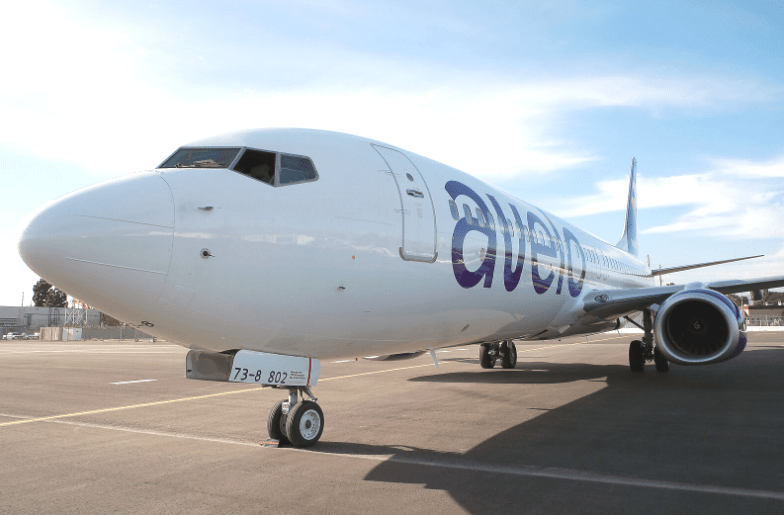
Avelo Airlines anunció el Jueves 08/09 que ofrecerá vuelos desde el Aeropuerto Internacional del Suroeste de Florida en Noviembre 2022, mientras continúa acelerando la expansión de la aerolínea en Estados Unidos con la apertura de una cuarta base este otoño boreal en Fort Myers, Florida. A partir de Noviembre 2022, Avelo Airlines basará un avión Boeing 737-800 Next Generation de 189 asientos en Southwest Florida/RSW para las operaciones de la nueva base. Actualmente opera vuelos varios días a la semana entre Fort Myers y New Haven, Connecticut.
Avelo actualmente opera bases en el Aeropuerto Hollywood-Burbank/BUR de Los Ángeles (CA), el Aeropuerto Tweed-New Haven/HVN del Sur de Connecticut (CT) y el Aeropuerto Internacional Orlando/MCO en Florida (FL).
Avelo fourth base Fort Myers
Avelo Airlines establishes its fourth base in Fort Myers
Avelo Airlines has announced that the Southwest Florida Airport/RSW in Fort Myers, Florida (FL) will be its fourth hub. Southwest Florida International Airport is a major County-owned airport in the South Fort Myers region of unincorporated Lee County, Florida, United States, located more than 250 kilometers northwest of Miami.
Avelo Airlines announced on Thursday 09/08 that it will offer flights from Southwest Florida International Airport in November 2022, while continuing to accelerate the airline’s expansion in the United States with the opening of a fourth base this fall in Fort Myers, Florida. Beginning in November 2022, Avelo Airlines will base a 189-seat Boeing 737-800 Next Generation aircraft at Southwest Florida/RSW for operations from the new base. It currently operates flights several days a week between Fort Myers and New Haven, Connecticut.
Avelo currently operates bases at Los Angeles Hollywood-Burbank/BUR Airport (CA), Southern Connecticut Tweed-New Haven/HVN Airport (CT) and Orlando/MCO International Airport in Florida (FL).
PUBLISHER: Airgways.com DBk: Aveloair.com / Airgways.com AW-POST: 202209001047AR OWNERSHIP: Airgways Inc. A\W A I R G W A Y S ®
El CEO de United Airlines, Scott Kirby, ha enviado una solicitud al Administrador de la Federal Aviation Administration (FAA), Billy Nolen, para solicitarle que se aumente la capacidad del Aeropuerto Nueva York/John F. Kennedy/JFK y les asigne nuevos slots para varias temporadas, caso contrario, la aerolínea abandonaría su operación en la terminal a finales de Octubre 2022. “Si no podemos obtener slots adicionales para múltiples temporadas, deberemos suspender el servicio en JFK a fines de Octubre. Este sería un paso duro y frustrante, y uno que trabajamos fuertemente para evitar. Si nuestro último pedido es aprobado y la FAA puede ofrecerle a United una distribución temporal que contemple varias temporadas, estamos preparados para expandirnos y brindar a los clientes una oferta más competitiva en JFK”, señaló el CEO Scott Kirby.
En los últimos meses las aerolíneas estadounidenses han hecho algunos recortes de vuelos, que posiblemente extenderán hasta la temporada de fin de año para así ser más eficientes con el personal disponible. Sin embargo, esto provocará que se disparen las tarifas pues las compañías aéreas tendrán una demanda limitada y sin rentabilidad.
United claims New York/JFK slots
United claims more slots at New York/JFK
The CEO of United Airlines, Scott Kirby, has sent a request to the Administrator of the Federal Aviation Administration (FAA), Billy Nolen, asking him to increase the capacity of the New York/John F. Kennedy/JFK Airport and assign them new slots for several seasons, otherwise, the airline would abandon its operation in the terminal at the end of October 2022. “If we cannot obtain additional slots for multiple seasons, we will have to suspend service at JFK at the end of October. This would be a hard and frustrating step, and one we worked hard to avoid. If our latest order is approved and the FAA is able to offer United a temporary, multi-season distribution, we are ready to expand and provide customers with a more competitive offering at JFK”, said CEO Scott Kirby.
In recent months, US airlines have made some flight cuts, possibly extending until the end of the year season in order to be more efficient with the available personnel. However, this will cause fares to skyrocket as airlines will have limited demand and no profitability.
PUBLISHER: Airgways.com DBk: United.com / Airgways.com AW-POST: 202209091031AR OWNERSHIP: Airgways Inc. A\W A I R G W A Y S ®
Posible cierre temporal de aeropuerto regional londinense
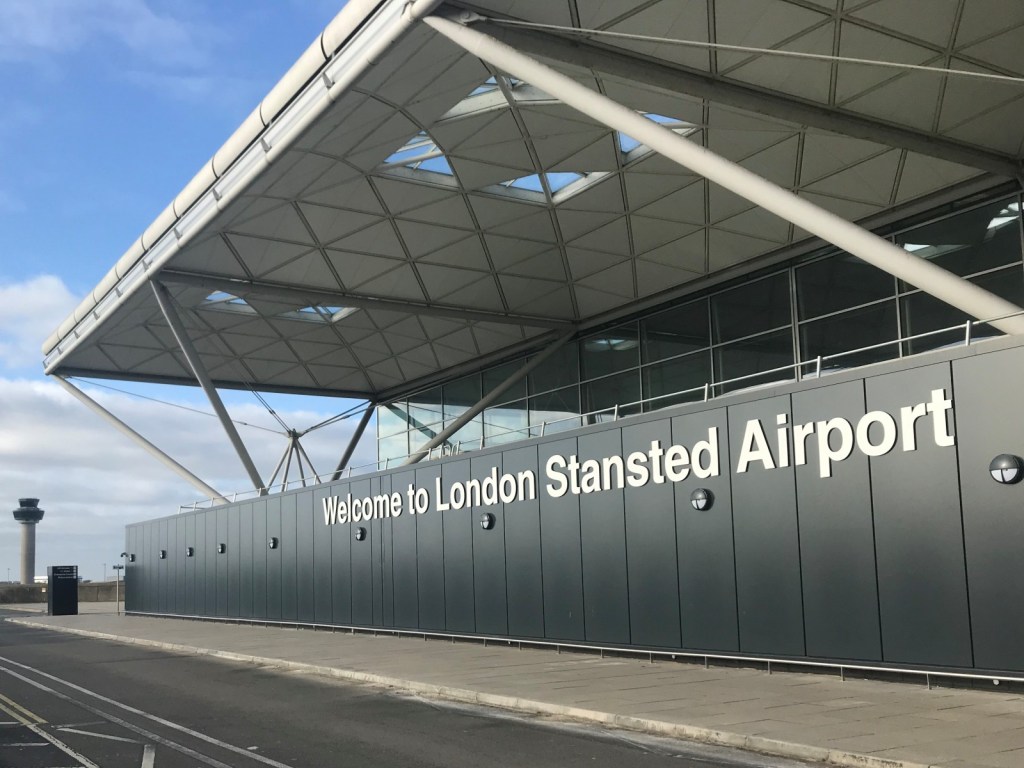
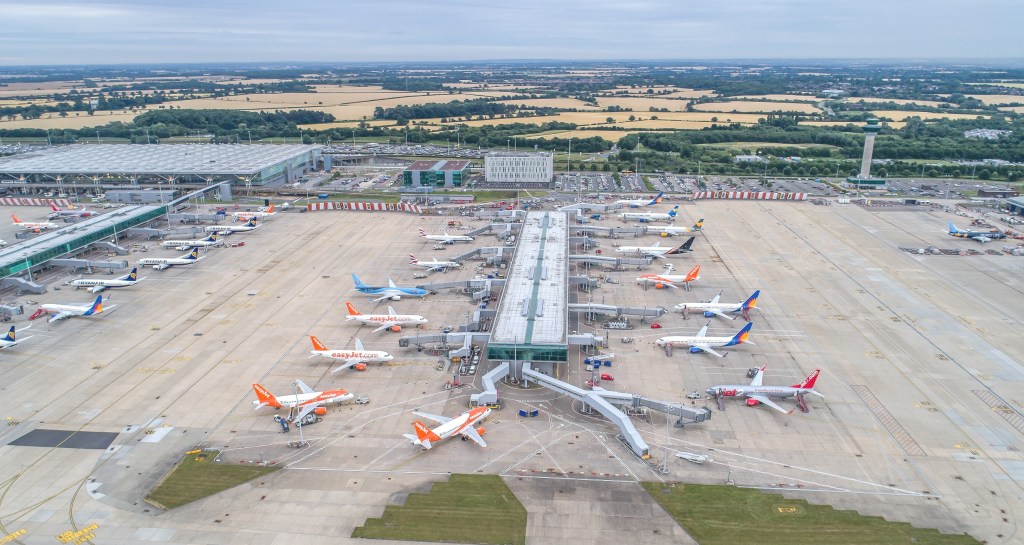
El Aeropuerto London/Stansted/STN se encuentra al borde del cierre, por lo que afectaría a agentes de seguridad, limpiadores, bomberos, personal de mantenimiento y profesionales dedicados a la asistencia de los pasajeros. La dirección ha realizado una primera oferta que ha sido rechazada de forma mayoritaria por los trabajadores que irían a la huelga. El caos sigue azotando al sector aéreo británico. El Aeropuerto Stansted podría estar cerca de un cierre temporal en caso de que la amenaza de huelga de su personal se materialice.
El sindicato aeronáutico Unite ha llevado a votación la medida, que afectaría a agentes de seguridad, limpiadores, bomberos, así como personal de mantenimiento y de asistencia del aeropuerto. Los empleados disponen hasta el 19 de Septiembre de 2022 para tomar una decisión. El motivo no es otro que los recortes salariales que han sufrido durante la pandemia. El aeropuerto ha realizado una primera oferta que ha sido rechazada con rotundidad. Ha propuesto un crecimiento del 7,5% más un pago único de £ 250 Libras, algo insignificante teniendo en cuenta que el salario de los ejecutivos se incrementó en un 23%. “Se espera que todo el mundo se apriete el cinturón, excepto los ricos ejecutivos de Manchester Airports Group (MAG). Nuestros miembros recibirán todo el apoyo en su lucha por un aumento salarial justo”, ha manifestado la Secretaria General de Unite, Sharon Graham.
Mientras tanto, el Aeropuerto de Stansted se muestra abierto a negociar. En declaraciones recogidas por Hertfordshiremercury, uno de sus portavoces ha destacado que “seguimos totalmente comprometidos a trabajar con nuestros sindicatos. Explicaremos los detalles de lo que consideramos una oferta justa y competitiva, teniendo en cuenta los graves desafíos que aún enfrentamos». Pese a este compromiso, todo apunta a que sufrirán gravemente el efecto de la huelga. Las propias autoridades ya han avisado a los pasajeros de que se preparen para un caos aún mayor, ya que, de no haber un acuerdo, más de un millar de trabajadores votarán a favor de los paros.
London/Stansted threatens strike
Possible temporary closure of London regional airport
London/Stansted Airport/STN is on the verge of closure, which would affect security officers, cleaners, firefighters, maintenance personnel and professionals dedicated to passenger assistance. The management has made a first offer that has been rejected by the majority of the workers who were going on strike. Chaos continues to plague the British aviation sector. Stansted Airport could be close to a temporary closure should the threatened strike by its staff materialize.
The aeronautical union Unite has put the measure to a vote, which would affect security agents, cleaners, firefighters, as well as maintenance and assistance personnel at the airport. Employees have until September 19, 2022 to make a decision. The reason is none other than the salary cuts they have suffered during the pandemic. The airport has made a first offer that has been roundly rejected. He has proposed growth of 7.5% plus a one-time payment of £250, which is paltry considering executive pay has risen by 23%. “Everyone is expected to tighten their belts except the wealthy executives of Manchester Airports Group (MAG). Our members will be fully supported in their fight for a fair wage increase”, said Unite General Secretary Sharon Graham.
Meanwhile, Stansted Airport is open to negotiations. In statements collected by Hertfordshiremercury, one of its spokespersons has highlighted that “we remain fully committed to working with our unions. We will explain the details of what we consider a fair and competitive offer, taking into account the serious challenges we still face». Despite this commitment, everything indicates that they will suffer seriously the effect of the strike. The authorities themselves have already warned passengers that they prepare for even greater chaos, since, if there is no agreement, more than a thousand workers will vote in favor of strikes.
PUBLISHER: Airgways.com DBk: Stanstedairport.com / Unitetheunion.org / Airgways.com AW-POST: 202208300955AR OWNERSHIP: Airgways Inc. A\W A I R G W A Y S ®
Avanza modernización nueve aeropuertos en Argentina Licitación obras ampliación Plataforma Norte Jorge Newbery
El Ministerio de Transporte de la República Argentina continúa modernizando los aeropuertos del sistema nacional: Bariloche, Esquel, La Rioja, Ezeiza, San Juan, San Salvador de Jujuy, Santa Rosa, Posadas y Ushuaia. A partir de la ejecución de obras e implementación de mejoras al sistema de vigilancia de tránsito aéreo, avanza el Plan de Modernización del Transporte Aéreo en todo el país. Avanzan las obras en distintos aeropuertos del sistema nacional, en el marco del Plan de Modernización del Transporte Aéreo del Ministerio de Transporte, a cargo de Alexis Guerrera.
De esta manera, el Organismo Regulador del Sistema Nacional de Aeropuertos (ORSNA), bajo la presidencia de Carlos Lugones Aignasse, conjuntamente con Aeropuertos Argentina 2000 (AA2000), se encargan de los proyectos que se encuentran en ejecución de los aeropuertos de Bariloche, Esquel, La Rioja, Ezeiza, San Salvador de Jujuy y San Juan. Además, la Empresa Argentina de Navegación Aérea (EANA), a cargo de Gabriela Logatto, ejecuta acciones para la modernización del Sistema de Vigilancia de Tránsito Aéreo, destacándose actualmente también nuevas implementaciones en la modernización de la infraestructura tecnológica en los aeropuertos de Santa Rosa, Posadas y Ushuaia. El Ministro de Transporte, Alexis Guerrera, aseguró: “Estamos reactivando obras para potenciar el sistema aerocomercial con una mirada federal, mejorando la infraestructura de nuestros aeropuertos y dotándolos de tecnología de última generación para conectar mejor a las provincias por aire y mejorar la seguridad operacional. La obra pública es una gran dinamizadora de la economía y con estas obras, además de mejorar la conectividad aérea, estamos llevando inversiones, desarrollo y empleo a las provincias argentinas”.
Obras por aeropuertos
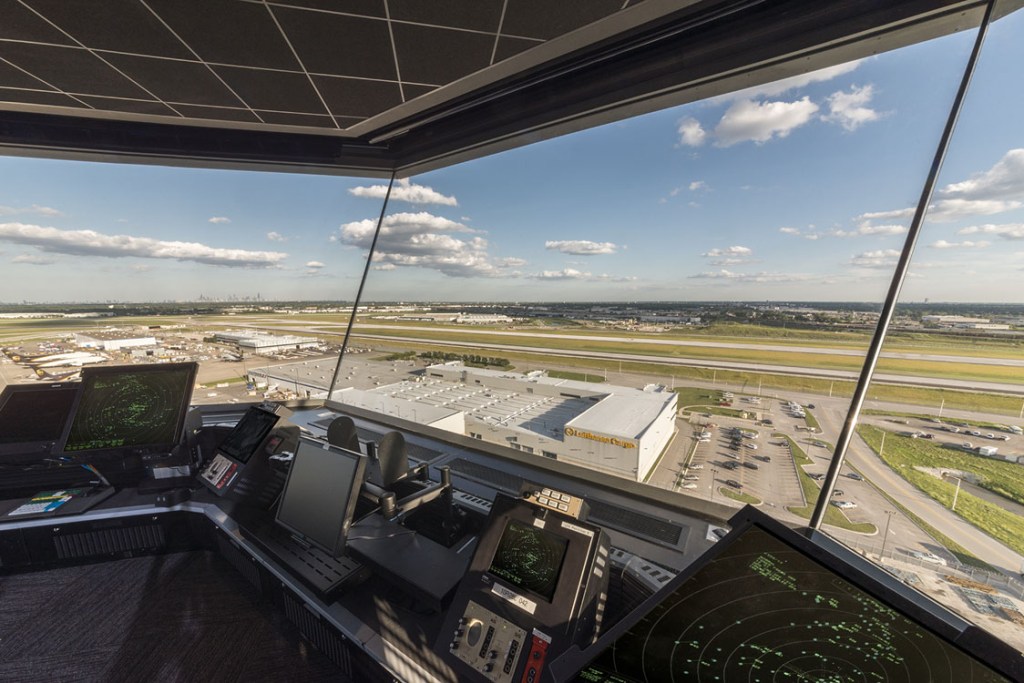
En el Aeropuerto Internacional de Ezeiza/EZE, con una inversión de más de mil millones de pesos, avanzan las obras del nuevo rodaje a la Cabecera 35. Permitirán incrementar la capacidad operativa de la pista 17-35 un 105%, superando en un 16,6% la capacidad actual de la pista principal, y evitando además el cierre de las operaciones por obras de mantenimiento rutinarias u otra contingencia operacional. También se avanza en la construcción de la nueva torre de control aérea, cuyo proyecto había sido abandonado en agosto de 2019 por la gestión anterior. La obra, ejecutada por la Subsecretaría de Gestión Administrativa del Ministerio de Transporte, consta de un edificio de centro de control área, y además la renovación de los accesos y el sector de estacionamiento. Con esta obra, que se encuentra en más del 65% de avance, se incrementará la seguridad operativa al poder visualizar tanto desde el acceso de autopista Ricchieri como desde la totalidad de la terminal aérea.
En el Aeropuerto de Bariloche/BRC, con una ejecución del 90%, continúan las obras de la última etapa de la ampliación y modernización de la terminal de pasajeros. El proyecto incluye la ampliación y modernización de la infraestructura edilicia, la renovación del hall público de partidas y ampliación del área de embarque con dos nuevas posiciones, 24 nuevos puestos de check-in, un nuevo sistema de equipajes, un nuevo hall de control de seguridad, la renovación de oficinas operativas y núcleos sanitarios, la construcción de dos nuevos puentes de embarques y la puesta en funcionamiento de dos nuevas mangas telescópicas, elevando a tres el total de las mismas. Además, se renueva la oferta de locales comerciales, gastronómicos y Sala VIP. Próximamente estará saliendo el llamado a licitación para la obra de la plataforma operativa.
En el Aeropuerto La Rioja/IRJ también se reanudaron las obras en el aeropuerto cuyano. Está en construcción una nueva terminal de pasajeros y un nuevo estacionamiento vehicular. Se trata de 2.400 metros cuadrados en un solo nivel, que contempla un área central del hall, 6 puestos de check-in, salas de pre-embarque con sus respectivos controles, una sala de retiro de equipajes y un nuevo parking para 200 vehículos cuyas obras se encuentran promediando la ejecución.
El Aeropuerto Esquel/EQS, se iniciaron las obras de construcción de una nueva terminal de pasajeros de 4.200 m² y una nueva torre de control con una inversión superior a los AR$ 1.800 millones de Pesos, generando más de 150 puestos de trabajo. El proyecto contempla también un nuevo puesto de ingreso vehicular y edificios complementarios de salas técnicas y oficinas.
Se realizó un nuevo llamado a licitación para la continuación de la obra de la terminal de pasajeros del Aeropuerto San Juan/UAQ. Se trata de una nueva superficie cubierta total de 5.000 m², distribuidos en dos niveles, con la incorporación de dos nuevos puentes fijos con sus correspondientes mangas, lo que resultará en un salto cualitativo significativo teniendo en cuenta que durante la temporada de verano las temperaturas en la plataforma alcanzan valores extremos con impacto directo en la operación, mejorando la accesibilidad. La obra generará 180 puestos de empleo directos y 450 indirectos e incorporará a la terminal la mejor tecnología y los servicios necesarios para brindar la mayor eficiencia a usuarios y pasajeros.
El Aeropuerto San Salvador de Jujuy/JUJ las obras se encuentran en un 90% de ejecución. Las mismas constan de una nueva torre de control que tiene como objetivo principal la mejora de las condiciones de operación, visibilidad, seguridad y confort, a la vez que constituye un nuevo icono de atractivo visual en el conjunto de la terminal, ya que se emplazará como un edificio independiente de la nueva terminal, ubicada sobre el borde de la plataforma, a diferencia de la torre ya existente. Todas las obras mencionadas son financiadas con fondos del Estado Nacional, a través del Fideicomiso para el Fortalecimiento del Sistema Nacional de Aeropuertos.
Modernización SNA
En el Plan de Modernización del Transporte aéreo, la EANA S.E. a cargo de Gabriela Logatto, ha instalado y próximo a ponerse en servicio un nuevo Sistema de Aterrizaje por Instrumentos (ILS) en el Aeropuerto de Santa Rosa/RSA, Provincia de La Pampa. Este recambio tecnológico incrementa la previsibilidad de las operaciones gracias a la mayor disponibilidad y continuidad de servicio que brinda el nuevo equipamiento. Sumado al nuevo equipamiento en la terminal aérea de Santa Rosa, la empresa dependiente del Ministerio de Transporte abarcó durante este año la renovación integral de los sistemas ILS en el Aeroparque Jorge Newbery y los aeropuertos de Córdoba, Posadas, Resistencia y Corrientes.
En los próximos meses se seguirá con el reemplazo de estas radioayudas en los aeropuertos de Ushuaia/USH, Bariloche/BRC y Esquel/EQS, lo que significa un avance tecnológico con el cual se logra previsibilidad en la operación, asegurando índices de disponibilidad y confiabilidad mayores a los actuales, además de garantizar la continuidad del servicio.
Además, se ha realizado el llamado a licitación pública para las obras de refacción integral de la Torre de Control (TWR) y el nuevo edificio operativo del Aeropuerto Posadas/PSS. Se trata de la refacción integral de la Torre de Control y el nuevo edificio operativo de EANA S.E., que tiene como objetivo brindar un mejor servicio de seguridad aérea a todos los pasajeros y pasajeras.
Licitación obras Aeroparque
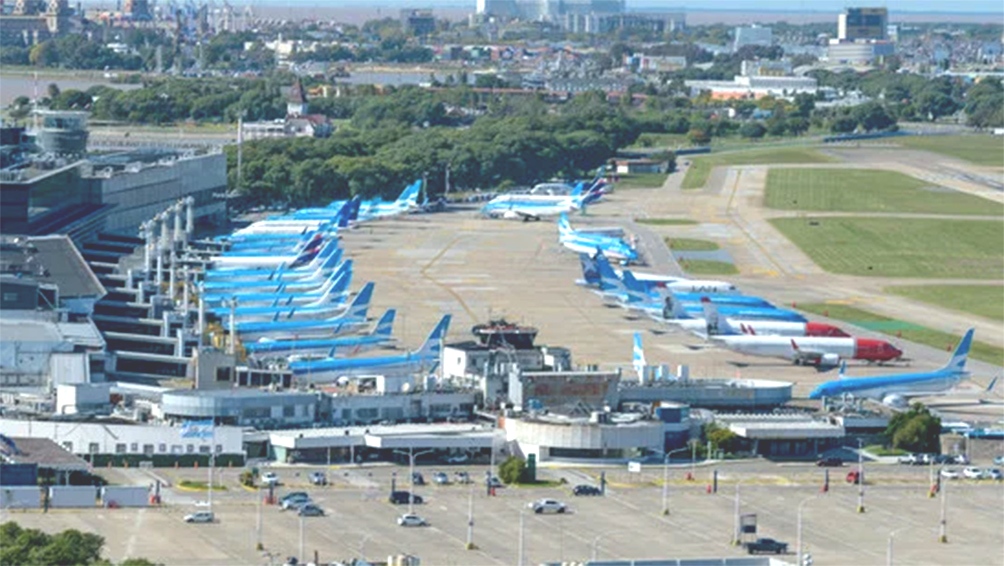
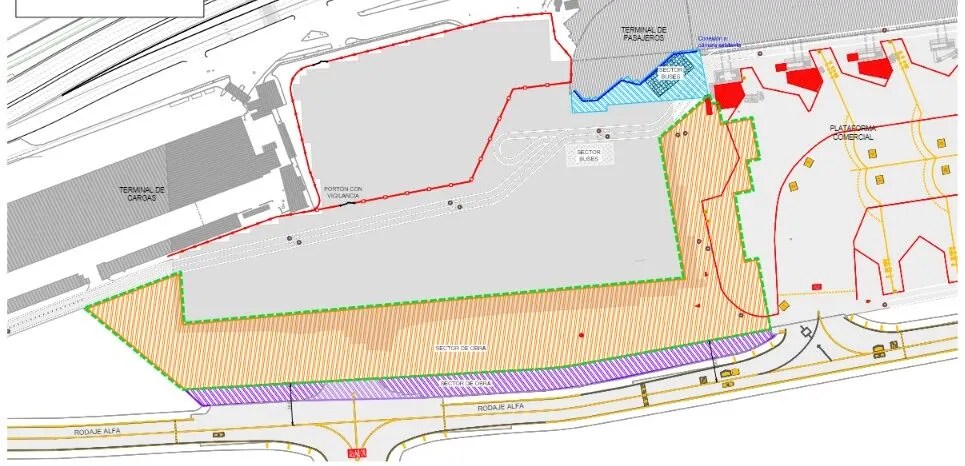
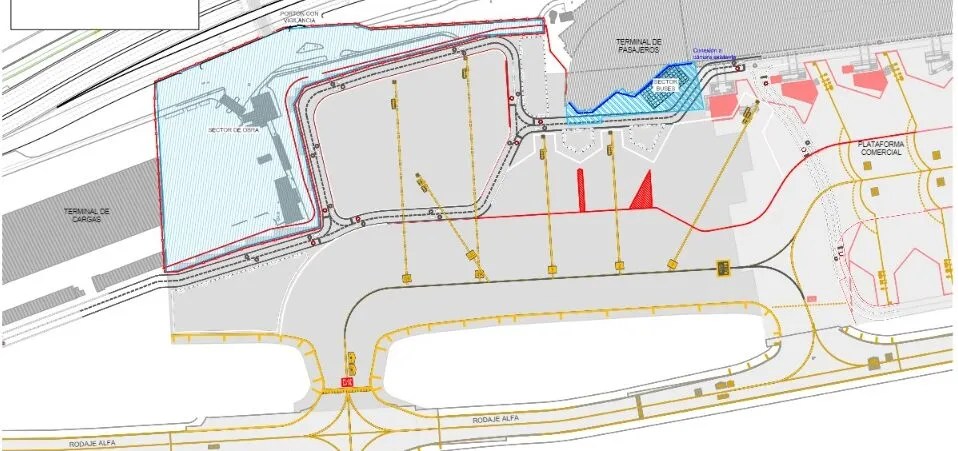
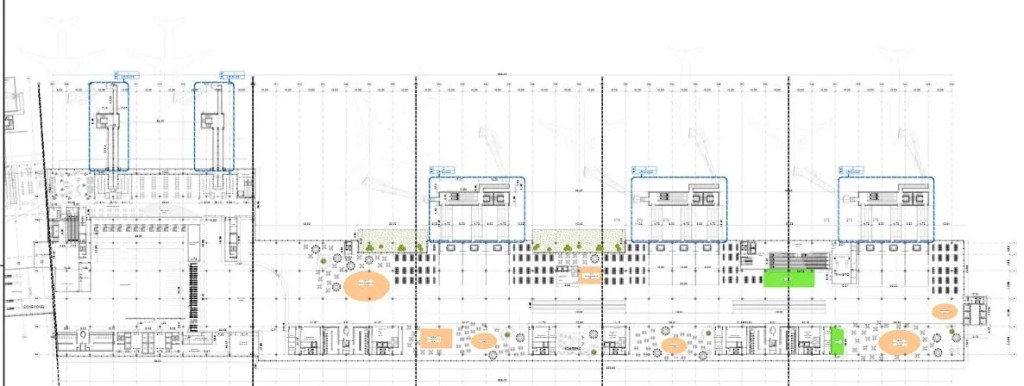
Se ha llamado a licitación pública para las obras en el área de Plataforma Norte, que incluyen balizamiento de la plataforma nueva, ampliación de la Terminal Internacional, que implicaría la demolición parcial de la Terminal de Carga actual, ampliar el relleno costero del Río de la Plata y el reposicionamiento de la Avenida Costanera. La licitación tiene un costo de AR$ 1.696.897.894,90 Pesos/US$ 12.475.355,76 Dólares.
El proyecto de mejoras y ampliación busca como objetivo la construcción de una nueva plataforma con capacidad para dos aeronaves Clase E (widebody) o cuatro de Clase C (narrowbody), más dos posiciones adicionales que reemplazarían las actuales posiciones 1 y 2 de Aeroparque. La Plataforma Norte se realizará con pavimento rígido, conformado en tres sectores: Plataforma de Rodaje, conexión Rosaje Fortrot y área de posicionamiento de aeronaves del tren de proa y sector vehicular. Estos sectores se encuentran divididos para establecer diferentes pesos para la resistencia de las aeronaves y vehículos.
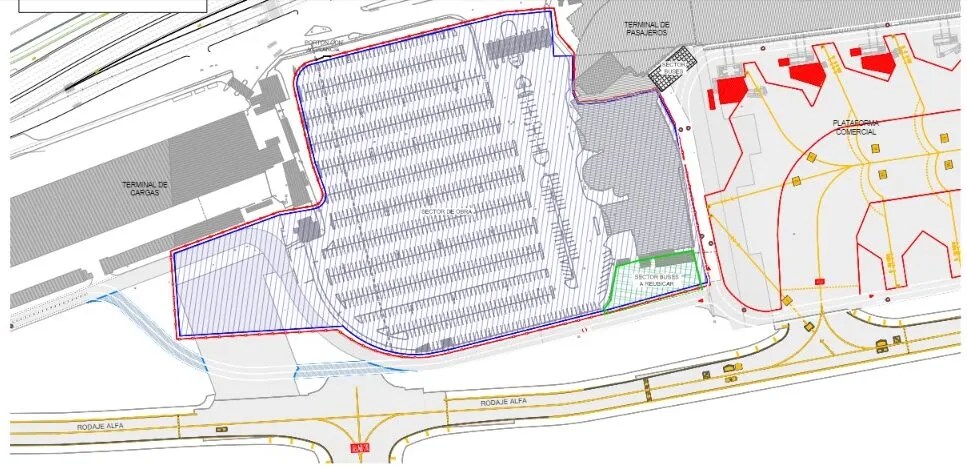
La asignación de una segunda etapa para la nueva Terminal Internacional contará con pasarela telescópica (mangas) para el arribo de vuelos provenientes del exterior (regionales). Para las obras se requerirá la intervención del área de pastizales para la cobertura con hormigón, la demolición del cerco perimetral, demolición de la vieja Terminal C, Torre de Control antigua, parte de la Terminal de Cargas. Estas obras se complementarán con la readecuación de la Plataforma Sur, que permitirá mayor comodidad y seguridad entre la Calle de Rodaje y las posiciones de aeronaves.
Las obras se iniciarán en Enero de 2023 en dos etapas con fecha de finalización para Agosto 2023 con la culminación de las obras de la nueva Plataforma Norte, mientras la nueva terminal se realizará en un plazo futuro. La Etapa 1A, actualmente en desarrollo comprende la demolición de la Terminal C y la vieja Torre de Control/TWR, mientras que se modificará el sector de buses, la calle de servicio aeroportuario, el estacionamiento norte. La Etapa 1B constituirá la pavimentación de las posiciones actuales de aeronaves 1, 2 y 3. Se modificará la franja del rodaje ALFA. El rodaje MIKE no se verá afectado en las obras de ampliación. Tras la finalización de la Etapa 1B, la plataforma se habilitará para su operación con una nueva plataforma con dos nuevas posiciones para aeronaves de fuselaje angosto o una de fuselaje ancho que corresponderán a las posiciones 31A y 31B, la reubicación de las posiciones 1, 2 y temporalmente la posición 3 para aeronave de fuselaje ancho. La Etapa 2 y la Etapa Final, corresponde a la demolición parcial de la Terminal B para reubicar las posiciones 1 y 2. También se finalizarán las obras de la nueva Plataforma Norte con las nuevas posiciones 32A y 32B.
Argentina airport modernization
Modernization of nine airports in Argentina advances Tender works for the expansion of North Platform Jorge Newbery
The Ministry of Transport of the Argentine Republic continues to modernize the airports of the national system: Bariloche, Esquel, La Rioja, Ezeiza, San Juan, San Salvador de Jujuy, Santa Rosa, Posadas and Ushuaia. Based on the execution of works and implementation of improvements to the air traffic surveillance system, the Air Transport Modernization Plan advances throughout the country. The works in different airports of the national system are advancing, within the framework of the Air Transport Modernization Plan of the Ministry of Transport, in charge of Alexis Guerrera.
In this way, the Regulatory Body of the National Airport System (ORSNA), under the presidency of Carlos Lugones Aignasse, together with Aeropuertos Argentina 2000 (AA2000), are in charge of the projects that are being executed at the airports of Bariloche, Esquel , La Rioja, Ezeiza, San Salvador de Jujuy and San Juan. In addition, the Argentine Air Navigation Company (EANA), in charge of Gabriela Logatto, executes actions for the modernization of the Air Traffic Surveillance System, currently also highlighting new implementations in the modernization of the technological infrastructure in the airports of Santa Rosa, Inns and Ushuaia. The Minister of Transport, Alexis Guerrera, assured: “We are reactivating works to strengthen the commercial air system with a federal perspective, improving the infrastructure of our airports and equipping them with the latest technology to better connect the provinces by air and improve operational safety. Public works are a great driver of the economy and with these works, in addition to improving air connectivity, we are bringing investment, development and employment to the Argentine provinces”.
Works for airports
At the Ezeiza International Airport/EZE, with an investment of more than one billion pesos, the works of the new taxiway to Header 35 are advancing. They will allow the operational capacity of runway 17-35 to be increased by 105%, exceeding by 16 .6% the current capacity of the main runway, and also avoiding the closure of operations due to routine maintenance works or other operational contingencies. Progress is also being made in the construction of the new air control tower, whose project had been abandoned in August 2019 by the previous administration. The work, carried out by the Undersecretary of Administrative Management of the Ministry of Transportation, consists of an area control center building, and also the renovation of the accesses and the parking sector. With this work, which is more than 65% complete, operational safety will be increased by being able to view both from the Ricchieri motorway access and from the entire air terminal.
At the Bariloche/BRC Airport, with an execution of 90%, the works of the last stage of the expansion and modernization of the passenger terminal continue. The project includes the expansion and modernization of the building infrastructure, the renovation of the public departure hall and expansion of the boarding area with two new positions, 24 new check-in stations, a new baggage system, a new check-in hall security, the renovation of operational offices and health centers, the construction of two new boarding bridges and the commissioning of two new telescopic sleeves, bringing the total to 3. In addition, the offer of commercial, gastronomic and VIP lounges is renewed. The call for tenders for the work of the operating platform will be coming out soon.
At the La Rioja/IRJ Airport, works were also resumed at the Cuyo airport. A new passenger terminal and a new vehicle parking lot are under construction. It is 2,400 square meters on a single level, which includes a central area of the hall, 6 check-in stations, pre-boarding rooms with their respective controls, a baggage reclaim room and a new parking lot for 200 vehicles whose works will be found by averaging the run.
At the Esquel/EQS Airport, construction work began on a new 4,200 m² passenger terminal and a new control tower with an investment of more than AR$ 1,800 million pesos, generating more than 150 jobs. The project also contemplates a new vehicle entry point and complementary buildings for technical rooms and offices.
A new call for bids was made for the continuation of the work on the passenger terminal at the San Juan/UAQ Airport. It is a new total covered area of 5,000 m², distributed on two levels, with the addition of two new fixed bridges with their corresponding sleeves, which will result in a significant qualitative leap considering that during the summer season temperatures in the platform reach extreme values with a direct impact on the operation, improving accessibility. The work will generate 180 direct jobs and 450 indirect jobs and will incorporate the best technology and the services necessary to provide the highest efficiency to users and passengers.
The San Salvador de Jujuy/JUJ Airport works are 90% complete. They consist of a new control tower whose main objective is to improve operating conditions, visibility, safety and comfort, while at the same time constituting a new icon of visual appeal in the terminal as a whole, since it will be located as a separate building from the new terminal, located on the edge of the platform, unlike the existing tower. All the aforementioned works are financed with funds from the National State, through the Trust for the Strengthening of the National Airport System.
SNA Modernization
In the Air Transport Modernization Plan, the EANA S.E. led by Gabriela Logatto, has installed and is about to put into service a new Instrument Landing System (ILS) at the Santa Rosa/RSA Airport, Province of La Pampa. This technological replacement increases the predictability of operations thanks to the greater availability and continuity of service provided by the new equipment. In addition to the new equipment in the Santa Rosa air terminal, the company dependent on the Ministry of Transportation included during this year the complete renovation of the ILS systems in the Jorge Newbery Airport and the airports of Córdoba, Posadas, Resistencia and Corrientes.
In the coming months, the replacement of these navaids will continue at the Ushuaia/USH, Bariloche/BRC and Esquel/EQS airports, which means a technological advance with which predictability in the operation is achieved, ensuring availability and reliability rates. higher than the current ones, in addition to guaranteeing the continuity of the service.
In addition, the call for public tenders has been made for the comprehensive renovation works of the Control Tower (TWR) and the new operational building of the Posadas/PSS Airport. This is the comprehensive renovation of the Control Tower and the new EANA S.E. operating building, which aims to provide a better aviation security service to all passengers.
Aeroparque works tender
A public tender has been called for the works in the North Platform area, which include beaconing of the new platform, expansion of the International Terminal, which would imply the partial demolition of the current Cargo Terminal, expansion of the coastal landfill of the Río de la Plata and the repositioning of Avenida Costanera. The tender has a cost of AR$ 1,696,897,894.90 Pesos/US$ 12,475,355.76 Dollars.
The objective of the improvement and expansion project is to build a new platform with capacity for two Class E (widebody) or four Class C (narrowbody) aircraft, plus two additional positions that would replace the current positions 1 and 2 of Aeroparque. The North Platform will be made with rigid pavement, made up of three sectors: Taxiway, Rosaje Fortrot connection and aircraft positioning area of the nose gear and vehicle sector. These sectors are divided to establish different weights for the resistance of aircraft and vehicles.
The allocation of a second stage for the new International Terminal will have a telescopic gangway (sleeves) for the arrival of flights from abroad (regional). The works will require the intervention of the pasture area for concrete coverage, the demolition of the perimeter fence, demolition of the old Terminal C, old Control Tower, part of the Cargo Terminal. These works will be complemented by the readjustment of the South Platform, which will allow greater comfort and safety between the Taxiway and the aircraft positions.
The works will begin in January 2023 in two stages with a completion date for August 2023 with the completion of the works on the new North Platform, while the new terminal will be built in the future. Stage 1A, currently under development, includes the demolition of Terminal C and the old Control Tower/TWR, while the bus sector, the airport service road, and the north parking lot will be modified. Stage 1B will constitute the paving of the current positions of aircraft 1, 2 and 3. The ALFA taxi strip will be modified. The MIKE shoot will not be affected by the expansion works. After the completion of Stage 1B, the platform will be enabled for operation with a new platform with two new positions for narrow-body aircraft or one for wide-body aircraft that will correspond to positions 31A and 31B, the relocation of positions 1, 2 and temporarily position 3 for wide-body aircraft. Stage 2 and the Final Stage correspond to the partial demolition of Terminal B to relocate positions 1 and 2. The works of the new North Platform will also be completed with the new positions 32A and 32B.
PUBLISHER: Airgways.com DBk: Aa2000.com.ar / Argentina.gob.ar / Airgways.com AW-POST: 202208221213AR OWNERSHIP: Airgways Inc. A\W A I R G W A Y S ®
AW | 2022 08 20 21:07 | AVIATION HISTORY / AIRPORTS
Celebración 100 años fundamento navegación aérea
En 1933 todo el espacio aéreo cercano a los aeropuertos importantes estaba controlado por un centro de Control de Tráfico Aéreo (ATC). Pero, antes de su existencia los primeros pilotos se orientaban por faros y flechas pintadas en el suelo para encontrar los aeropuertos. Un campo, ni siquiera asfaltado y dos luces, una verde y una roja, era todo lo necesario para que un avión volara antes de 1922. En 1919, sin embargo, parecía evidente que aquello había que regularlo, sobre todo entre Francia, Alemania, Holanda y Gran Bretaña. Para ello se creó en Julio de 1922 la Comisión International de Navegación Aérea (ICAN), cuyo tratado fue ratificado por apenas diez países, año en que se pusieron los fundamentos para el control aéreo. Por coincidencia, también en 1922 tuvo lugar en Normandía la primera colisión de dos aviones en vuelo, lo cual finalmente puso en marcha el control con más resolución, si cabe.
Tras la Primera Guerra Mundial aparecieron cientos de pilotos civiles y muchas pequeñas aerolíneas empezaron a volar. La primera decisión de la Comisión CINA fue obligar a todos los aviones, por entonces capaces de transportar hasta doce pasajeros, a llevar radio, pese a lo que se seguían usando señales visuales para despegar. Sólo en vuelo, comenzaba a operar la radio. El aeródromo de partida se tenía que poner en comunicación con el de llegada para darle datos. Se estableció que se volaba en ciertos sentidos y se fijó una distancia vertical de 300 metros, nunca menos de 150.
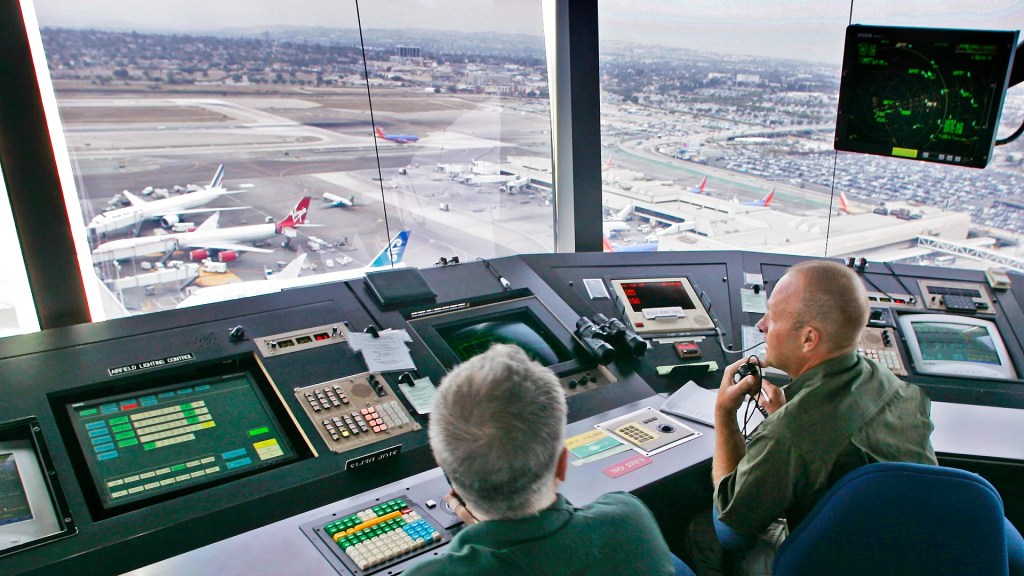
Estados Unidos introdujo normas desde 1926, con la Ley de la Aviación Comercial, pero aún se necesitaron dos años más para que el aeropuerto de Sant Louis usara el primer controlador, Archie League, para supervisar los aterrizajes y despegues. Los años 30 fueron los del desarrollo rápido del control aéreo. En 1933 todo el espacio aéreo cercano a los aeropuertos importantes estaba ya controlado, con la necesidad de permisos para volar. También se introdujeron las radio balizas, situadas en las rutas más importantes. Pero no fue hasta la llegada del Douglas DC-3 que se revolucionó el transporte aéreo, aunque esto es historia para otro día porque no han pasado aún los cien años.
ICAN 100º anniversaries
Celebration 100 years air navigation foundation
In 1933 all airspace near major airports was controlled by an Air Traffic Control (ATC) center. But, before its existence, the first pilots were guided by lighthouses and arrows painted on the ground to find the airports. A field, not even paved, and two lights, one green and one red, was all that was necessary for a plane to fly before 1922. In 1919, however, it seemed clear that this had to be regulated, especially between France, Germany, Holland and Great Britain. For this, the International Air Navigation Commission (ICAN) was created in July 1922, whose treaty was ratified by just ten countries, the year in which the foundations for air control were laid. By coincidence, also in 1922, the first collision of two planes in flight took place in Normandy, which finally triggered the control with even more resolution.
After the First World War, hundreds of civilian pilots appeared and many small airlines began to fly. The first decision of the CINA Commission was to force all planes, then capable of carrying up to twelve passengers, to carry a radio, despite the fact that visual signals were still used to take off. Only in flight, the radio began to operate. The departure aerodrome had to be in communication with the arrival aerodrome to give it data. It was established that it was flown in certain directions and a vertical distance of 300 meters was established, never less than 150.
The United States introduced regulations as early as 1926, with the Commercial Aviation Act, but it took another two years for the St. Louis airport to use the first controller, Archie League, to oversee landings and takeoffs. The 1930s were the years of rapid development of air traffic control. In 1933 all the air space near the important airports was already controlled, with the need for permits to fly. Radio beacons were also introduced, located on the most important routes. But it was not until the arrival of the Douglas DC-3 that air transport was revolutionized, although that is history for another day because the hundred years have not yet passed.
PUBLISHER: Airgways.com DBk: Icao.int / Airgways.com AW-POST: 202208202107AR OWNERSHIP: Airgways Inc. A\W A I R G W A Y S ®


























 airgways.com