FAA aprueba test tecnología 5G

AW | 2022 01 09 17:37 | AVIATION ORGANISMS / AVIATION SAFETY / AVIATION TECHNOLOGY

FAA empleará zonas amortiguamiento en 50 aeropuertos

FAA-Isologotype

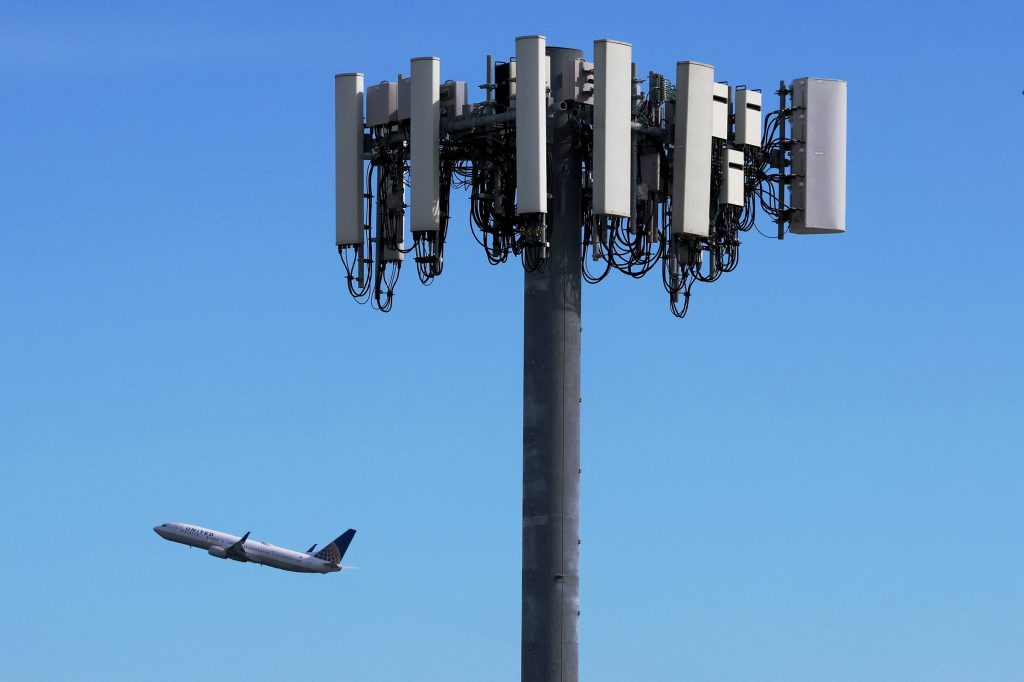
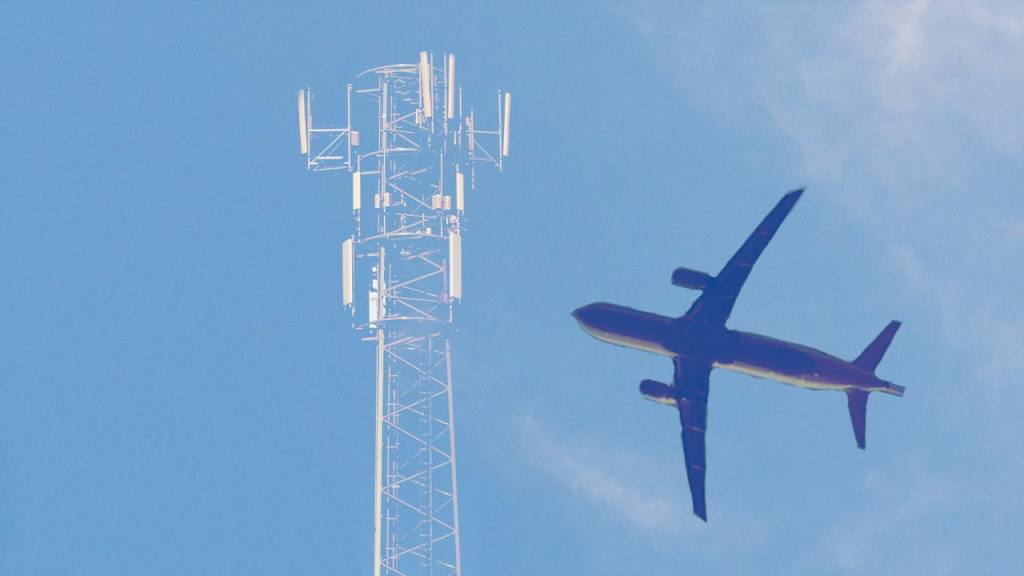
La Administración Federal de Aviación (FAA) de Estados Unidos ha anunciado que empleará la nueva tecnología 5G en unos cincuenta aeropuertos estadounidenses en zonas denominadas de amortiguamiento. El organismo regulador de aviación estadounidense ha expresado este Viernes 07/01 la publicación de una lista de cincuenta aeropuertos de Estados Unidos que tendrán zonas de amortiguamiento, o áreas donde las compañías de tecnología AT&T y Verizon acordaron limitar las señales 5G durante seis meses como lapso de pruebas.

AW-7033446

La Administración Federal de Aviación dijo que trabajó con la comunidad de aviación para identificar zonas de amortiguamiento que reducirían los riesgos de interrupción, teniendo en cuenta factores como el volumen de tráfico, la cantidad de días de baja visibilidad y la ubicación geográfica. La agencia dijo que muchos aeropuertos actualmente no se ven afectados por el despliegue de AT&T y el próximo 5G de Verizon, un servicio que los operadores inalámbricos activarán el 19 de enero después de varios retrasos. Las zonas de amortiguamiento están destinadas a reducir la posible interferencia de las antenas 5G con los instrumentos de altímetros de las aeronaves.

Los aeropuertos que se incluyeron en la lista corresponden a Dallas/Love Field (TX), que es un importante centro de pasajeros de Southwest Airlines, y Chicago/O’Hare (IL), que es un importante centro de distribución de United Airlines y American Airlines. Instalaciones que actúan como centros de Carga y jets privados, como los aeropuertos de Indianápolis/IND, el norte de Nueva Jersey y el Aeropuerto Nueva York/JKF, también fueron parte de los seleccionados. Además, la lista incluye aeropuertos en Austin/AUS, Nashville/BNA, Houston/IAH, Los Angeles/LAX, Miami/MIA, Seattle/SEA, San Francisco/SFO, entre otros.

El anuncio de la FAA se produce en medio de un alto el fuego temporal entre los reguladores de transporte y los grupos de aviación, a quienes les preocupa que las antenas 5G cerca de algunos aeropuertos puedan afectar la precisión de las lecturas de los altímetros, y los reguladores de telecomunicaciones y las empresas inalámbricas, que sostienen que la tecnología 5G no planteará problemas con seguridad.

AT&T y Verizon acordaron una pausa para implementar la tecnología 5G por dos semanas adicionales a pedido de las agencia federal de aviación. Este movimiento fue un cambio rápido por parte de las compañías inalámbricas. AT&T y Verizon compraron casi todo el espectro inalámbrico de banda C subastado por la FCC en 2021, gastando un total combinado de caso US$ 70 mil millones de Dólares para mejorar sus redes tecnológicas 5G.

Sobre el los próximos seis meses, durante ese tiempo, AT&T y Verizon acordaron mantener las barreras alrededor en cincuenta aeropuertos, la FAA trabajará con los fabricantes de aerolíneas y las aerolíneas para confirmar si los aviones pueden operar de manera segura después de que se active el servicio 5G para los operadores inalámbricos.

FAA approves 5G technology test

FAA to use buffer zones at 50 airports

AW-5G-Mobil Technology

The Federal Aviation Administration (FAA) of the United States has announced that it will use the new 5G technology in about fifty American airports in so-called buffer zones. The US aviation regulatory body has expressed this Friday 01/07 the publication of a list of fifty airports in the United States that will have buffer zones, or areas where technology companies AT&T and Verizon agreed to limit 5G signals for a period of six months. of tests.

The Federal Aviation Administration said it worked with the aviation community to identify buffer zones that would reduce disruption risks, taking into account factors such as traffic volume, number of days of low visibility and geographic location. The agency said many airports are currently unaffected by the rollout of AT&T and Verizon’s upcoming 5G, a service that wireless carriers will activate on January 19 after several delays. Buffer zones are intended to reduce possible interference from 5G antennas with aircraft altimeter instruments.

The airports included in the list are Dallas/Love Field (TX), which is a major passenger hub for Southwest Airlines, and Chicago/O’Hare (IL), which is a major distribution hub for United Airlines and American Airlines. Facilities that act as Freight hubs and private jets, such as the Indianapolis/IND, Northern New Jersey, and New York/JKF Airport were also among those selected. Additionally, the list includes airports in Austin/AUS, Nashville/BNA, Houston/IAH, Los Angeles/LAX, Miami/MIA, Seattle/SEA, San Francisco/SFO, among others.

The FAA’s announcement comes amid a temporary ceasefire between transportation regulators and aviation groups, who are concerned that 5G antennas near some airports could affect the accuracy of altimeter readings, and telecom regulators and wireless companies, who argue that 5G technology will pose no problems for sure.

AT&T and Verizon agreed to a pause to implement 5G technology for an additional two weeks at the request of the federal aviation agencies. This move was a quick change on the part of the wireless companies. AT&T and Verizon bought nearly all of the C-band wireless spectrum auctioned by the FCC in 2021, spending a combined US$ 70 billion case to upgrade their 5G technology networks.

Over the next six months, during that time, AT&T and Verizon agreed to keep barriers around fifty airports, the FAA will work with airline manufacturers and airlines to confirm whether the planes can operate safely after the 5G service for wireless carriers.

PUBLISHER: Airgways.com
DBk: Faa.gov / Att.com / Verizon.com / Airgways.com
AW-POST: 202201091737AR
OWNERSHIP: Airgways Inc.
A\W A I R G W A Y S ®

EANA digitalización Córdoba

AW | 2021 12 31 08:58 | AIRPORTS / AVIATION TECHNOLOGY

Digitalización Aeropuerto Córboba/FIR Córdoba

EANA_Isologotype

La Empresa Argentina de Navegación Aérea S.E., EANA, completó en Córdoba, Argentina, la instalación y puesta en servicio del nuevo Sistema de Conmutación de Voz de la torre de control del Aeropuerto Internacional Ingeniero Aeronáutico Ambrosio Taravella y del Centro de Control de Área Córdoba. La empresa del Ministerio de Transporte da un paso más en el avance hacia la modernización y digitalización total de sus sistemas de comunicaciones aeronáuticas en todo el país.

El Voice Communications System (VCS), la instalación del nuevo sistema forma parte del Plan Estratégico de EANA 2020-2024 con el que se avanza en la digitalización plena de los sistemas en todo el país. El VCS es el elemento central de la infraestructura de comunicaciones tanto de la torre de control como del centro de control de área. Los enlaces terrestres de comunicaciones (MPLS) dispondrán ahora de respaldo satelital VSAT, provisto por ARSAT, lográndose así la necesaria redundancia total del sistema. Asimismo, EANA implementó un sistema de comunicación de respaldo por IP, que brinda al control de tránsito aéreo una alternativa de comunicación ante un eventual inconveniente en la operación del VCS. El nuevo sistema es de última generación y fue adquirido a la empresa austríaca Frequentis.

Con esta implementación, enmarcada en el Plan de Modernización del Transporte impulsado por el Ministerio de Transporte de la Nación, se logra la redundancia plena que garantiza una mayor disponibilidad del sistema aún ante la salida de servicio de alguno de sus componentes. Debido a la importancia central del VCS en la operación de los servicios de navegación aérea, el reemplazo del sistema antiguo por el nuevo se llevó a cabo sin afectar el normal funcionamiento del control de tránsito aéreo.

A través del nuevo VCS, el personal del control de tránsito aéreo puede acceder y utilizar los equipos de VHF tanto locales como remotos, a la vez que podrá integrar hasta 63 líneas telefónicas, esenciales para la coordinación operativa entre distintas dependencias de la región y el país, tanto en la red de telecomunicaciones aeronáuticas (ATN) como en la red pública (PSTN).

El nuevo equipamiento cuenta con 42 puestos de operación totalmente equipados de acuerdo a estándares internacionales y gestiona hasta 78 equipos de radio. La capacidad de almacenamiento de registros de audio, provenientes ahora de hasta 236 canales, es de un total de 60 días.

Las comunicaciones de voz para el Control de Tránsito Aéreo en ruta se establecen mediante enlaces de VHF-AM. Debido a su alcance limitado, de algunos cientos de km, y con el objetivo de garantizar la cobertura de las comunicaciones en todas las Flight Information Regions (FIR) del espacio aéreo argentino, EANA cuenta con la denominada Red de Avanzada de Estaciones de VHF Aeronáuticas (REAVA). La REAVA consta de estaciones remotas distribuidas dentro del vasto territorio que abarca una FIR, y sus respectivas estaciones principales. En cada FIR, las estaciones remotas se encuentran interconectadas con la estación principal mediante enlaces terrestres y satelitales. Esto permite establecer comunicaciones entre el personal que opera desde la estación principal de una FIR y las aeronaves ubicadas en las inmediaciones de cualquier estación remota, de forma transparente.

EANA digitization Córdoba

Digitization of Córboba Airport/Córdoba FIR

EANA_Isologotype

The Argentine Air Navigation Company S.E., EANA, completed in Córdoba, Argentina, the installation and commissioning of the new Voice Switching System of the control tower of the Ambrosio Taravella Aeronautical Engineer International Airport and the Córdoba Area Control Center. The company of the Ministry of Transport takes another step in the advance towards the modernization and total digitization of its aeronautical communications systems throughout the country.

The Voice Communications System (VCS), the installation of the new system is part of the EANA 2020-2024 Strategic Plan with which progress is being made in the full digitization of systems throughout the country. The VCS is the central element of the communications infrastructure of both the control tower and the area control center. The terrestrial communications links (MPLS) will now have VSAT satellite backup, provided by ARSAT, thus achieving the necessary total redundancy of the system. Likewise, EANA implemented a backup communication system over IP, which provides air traffic control with a communication alternative in the event of a possible inconvenience in the operation of the VCS. The new system is state-of-the-art and was purchased from the Austrian company Frequentis.

With this implementation, framed in the Transportation Modernization Plan promoted by the Ministry of Transportation of the Nation, full redundancy is achieved that guarantees greater availability of the system even when some of its components go out of service. Due to the central importance of the VCS in the operation of air navigation services, the replacement of the old system by the new one was carried out without affecting the normal operation of air traffic control.

Through the new VCS, air traffic control personnel can access and use both local and remote VHF equipment, while also being able to integrate up to 63 telephone lines, essential for operational coordination between different dependencies in the region and the country, both in the aeronautical telecommunications network (ATN) and in the public network (PSTN).

The new equipment has 42 fully equipped operating stations in accordance with international standards and manages up to 78 radio sets. The storage capacity for audio records, now coming from up to 236 channels, is a total of 60 days.

Voice communications for Air Traffic Control en route are established through VHF-AM links. Due to its limited range, of a few hundred km, and in order to guarantee communication coverage in all Flight Information Regions (FIR) of the Argentine airspace, EANA has the so-called Advanced Network of Aeronautical VHF Stations (REAVA). The REAVA consists of remote stations distributed within the vast territory covered by a FIR, and their respective main stations. In each FIR, the remote stations are interconnected with the main station through terrestrial and satellite links. This allows establishing communications between the personnel operating from the main station of an FIR and the aircraft located in the vicinity of any remote station, in a transparent way.

PUBLISHER: Airgways.com
DBk: Eana.com.ar / Airgways.com
AW-POST: 202112310858AR

A\W   A I R G W A Y S ®

EANA digitalización Comodoro Rivadavia

AW | 2021 12 30 09:48 | AIRPORTS / AVIATION TECHNOLOGY

Aeropuerto Comodoro Rivadavia incorpora digitalización

La Empresa Argentina de Navegación Aérea S.E. (EANA), del Ministerio de Transporte de Argentina, completó e inauguró la digitalización plena del Sistema de Conmutación de Voz (Voice Switching System/VCS), del Aeropuerto Internacional Comodoro Rivadavia/Gral. Enrique Mosconi. El denominado VCS, representa el centro neurálgico del equipamiento de comunicaciones de la torre de control y del centro de control de área. Esta implementación representa una importante mejora tecnológica y de servicio. Previo a su instalación se disponía únicamente de una sola frecuencia de comunicación, con tecnología y enlaces analógicos, los cuales estaban próximos al límite de su vida útil. Ahora los enlaces terrestres MPLS dispondrán además de una alternativa satelital VSAT, provista por ARSAT, por lo que el sistema ofrecerá una redundancia total. La actualización del VCS, incluida en el Plan Estratégico de EANA 2020-2024, permitió a la empresa habilitar una segunda frecuencia IP en todas las estaciones remotas de comunicación (EAVAS) de la región de información de vuelo (FIR). A partir de ahora, todas sus comunicaciones serán del tipo voz sobre IP (VOIP).

Debido a su importancia central en la operación de los servicios de navegación aérea, la renovación del VCS, en un trabajo coordinado por el personal técnico de EANA, se llevó a cabo sin alteración del servicio del control de tránsito aéreo. El nuevo VCS de Comodoro Rivadavia permite, al centralizar las comunicaciones aeronáuticas, manejar hasta 50 equipos de radio, que el personal de control de tránsito aéreo opere los equipos de radio VHF locales y remotos, y que pueda efectuar llamadas telefónicas tanto en la red de comunicaciones aeronáuticas (ATN) como en la red pública (PSTN).

Al finalizar estos trabajos de modernización y migración tecnológica, incluidos en el Plan de Modernización del Transporte Aéreo que lleva adelante el Ministerio de Transporte de la Nación, Comodoro Rivadavia cuenta ahora con 17 puestos de operador, totalmente equipados de acuerdo a estándares internacionales. El sistema permite integrar hasta 28 líneas telefónicas y 30 radios analógicos/IP, grabar hasta 100 canales de audio de manera digital, y almacenar hasta 60 días de grabaciones. Además, el VCS digitalizado cuenta con acceso remoto para su mantenimiento desde las instalaciones de los fabricantes del sistema (Frequentis). Asimismo, EANA implementó un sistema de comunicación de respaldo (backup) por IP. Ante una eventual falla o problema en el VCS, el control de tránsito aéreo dispondrá de una alternativa de comunicación que garantiza la continuidad de las operaciones.

Las comunicaciones de voz para el Control de Tránsito Aéreo en ruta se establecen mediante enlaces de VHF-AM. Debido a su alcance limitado, de algunos cientos de km, y con el objetivo de garantizar la cobertura de las comunicaciones en todas las Regiones de Información de Vuelo (FIR) del espacio aéreo argentino, EANA cuenta con la denominada Red de Avanzada de Estaciones de VHF Aeronáuticas (REAVA). Una REAVA consta de estaciones remotas distribuidas dentro del vasto territorio que abarca una FIR, y sus respectivas estaciones principales. En cada FIR, las estaciones remotas se encuentran interconectadas con la estación principal mediante enlaces terrestres y satelitales. Esto permite establecer comunicaciones entre el personal que opera desde la estación principal de una FIR y las aeronaves ubicadas en las inmediaciones de cualquier estación remota, de forma transparente.

EANA digitization Comodoro Rivadavia

Comodoro Rivadavia Airport incorporates digitization

The Argentine Air Navigation Company S.E. (EANA), of the Argentine Ministry of Transportation, completed and inaugurated the full digitization of the Voice Switching System (VCS) of the Comodoro Rivadavia / Gral. Enrique Mosconi. The so-called VCS represents the nerve center of the communications equipment of the control tower and the area control center. This implementation represents a significant technological and service improvement. Prior to its installation, there was only a single communication frequency, with technology and analog links, which were close to the limit of their useful life. Now the MPLS terrestrial links will also have a VSAT satellite alternative, provided by ARSAT, so the system will offer total redundancy. The VCS update, included in the EANA Strategic Plan 2020-2024, allowed the company to enable a second IP frequency in all remote communication stations (EAVAS) in the flight information region (FIR). From now on, all your communications will be voice over IP (VOIP).

Due to its central importance in the operation of air navigation services, the renovation of the VCS, in a work coordinated by EANA technical staff, was carried out without alteration of the air traffic control service. The new VCS of Comodoro Rivadavia allows, by centralizing aeronautical communications, to manage up to 50 radio equipment, for air traffic control personnel to operate local and remote VHF radio equipment, and to be able to make telephone calls both in the network of aeronautical communications (ATN) and the public network (PSTN).

At the end of these modernization and technological migration works, included in the Air Transport Modernization Plan carried out by the Ministry of Transportation of the Nation, Comodoro Rivadavia now has 17 operator positions, fully equipped according to international standards. The system allows integrating up to 28 telephone lines and 30 analog/IP radios, recording up to 100 audio channels digitally, and storing up to 60 days of recordings. In addition, the digitized VCS has remote access for maintenance from the system manufacturers’ facilities (Frequentis). Likewise, EANA implemented a backup communication system over IP. In the event of a possible failure or problem in the VCS, air traffic control will have a communication alternative that guarantees the continuity of operations.

Voice communications for Air Traffic Control en route are established through VHF-AM links. Due to its limited range, of a few hundred km, and in order to guarantee communication coverage in all Flight Information Regions (FIR) of the Argentine airspace, EANA has the so-called Advanced Network of Flight Stations. VHF Aeronáuticas (REAVA). A REAVA consists of remote stations distributed within the vast territory encompassed by a FIR, and their respective main stations. In each FIR, the remote stations are interconnected with the main station through terrestrial and satellite links. This allows establishing communications between the personnel operating from the main station of an FIR and the aircraft located in the vicinity of any remote station, in a transparent way.

PUBLISHER: Airgways.com
DBk: Eana.com.ar / Airgways.com
AW-POST: 202112300948AR

A\W   A I R G W A Y S ®

S7 primer vuelo ecológico

AW | 2021 12 23 08:40 | AIRLINES / AVIATION TECHNOLOGY

Primera aerolínea rusa vuelo combustible ecológico

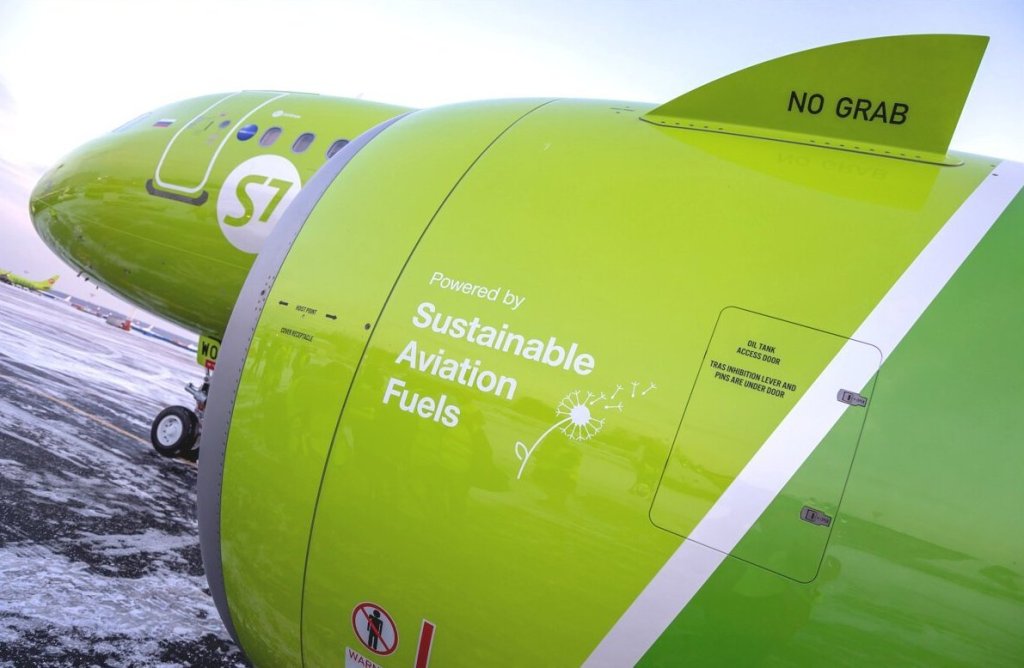
AW-SAF__Sustainable Aviation Fuel

S7 Airlines_new_Isologotype.svg

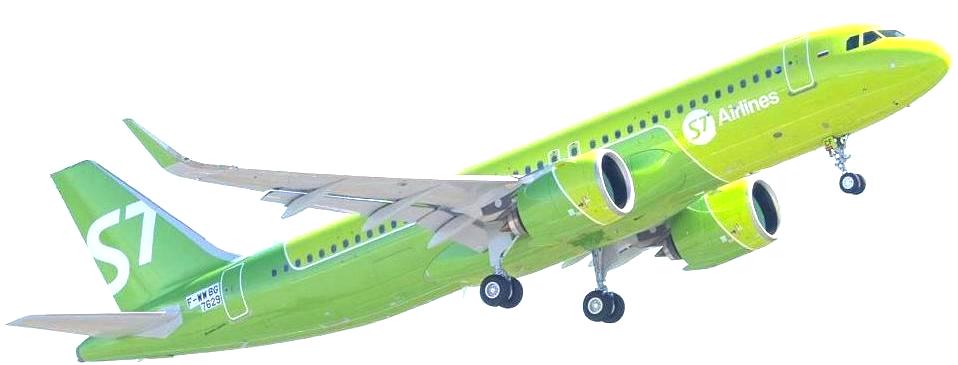
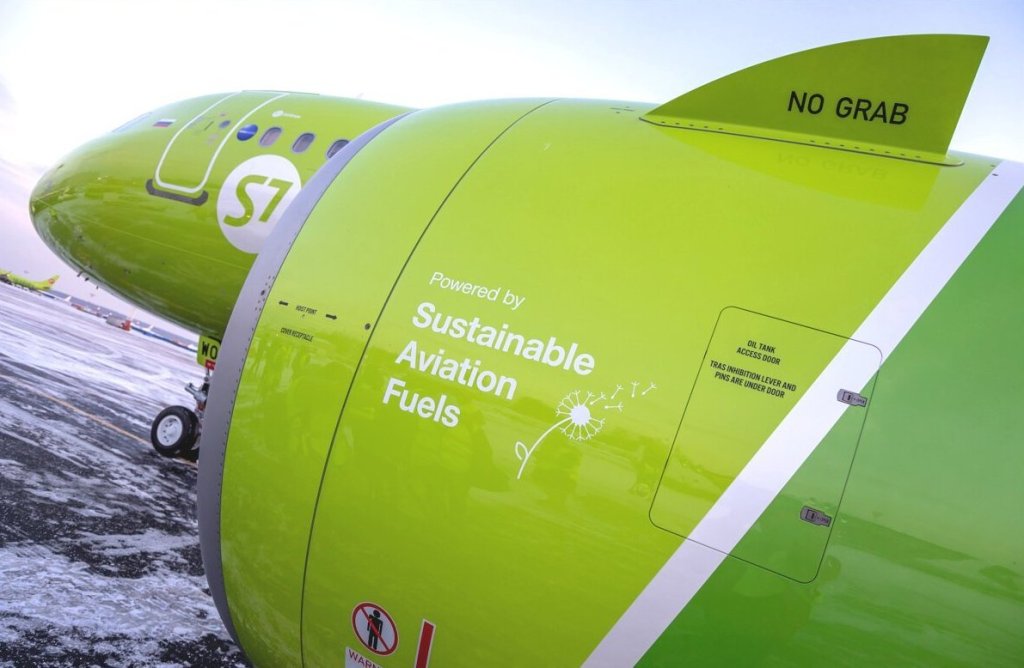
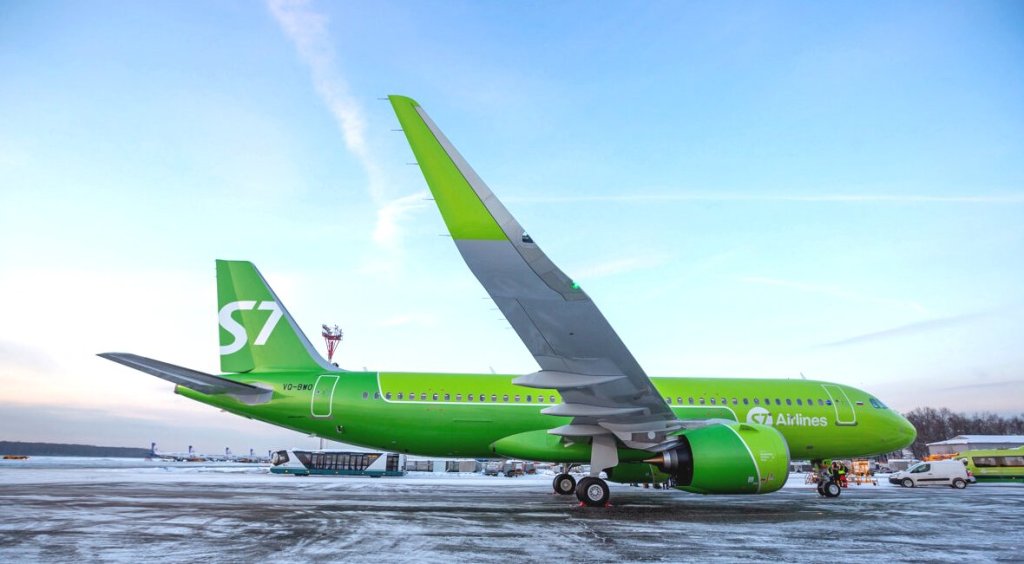
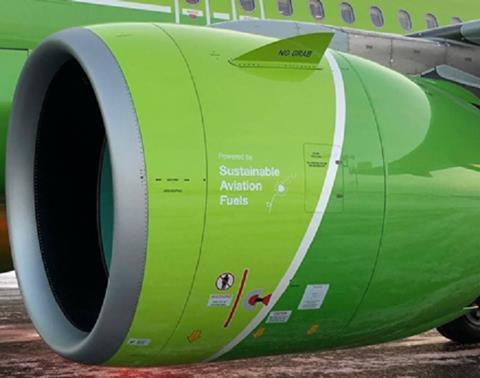
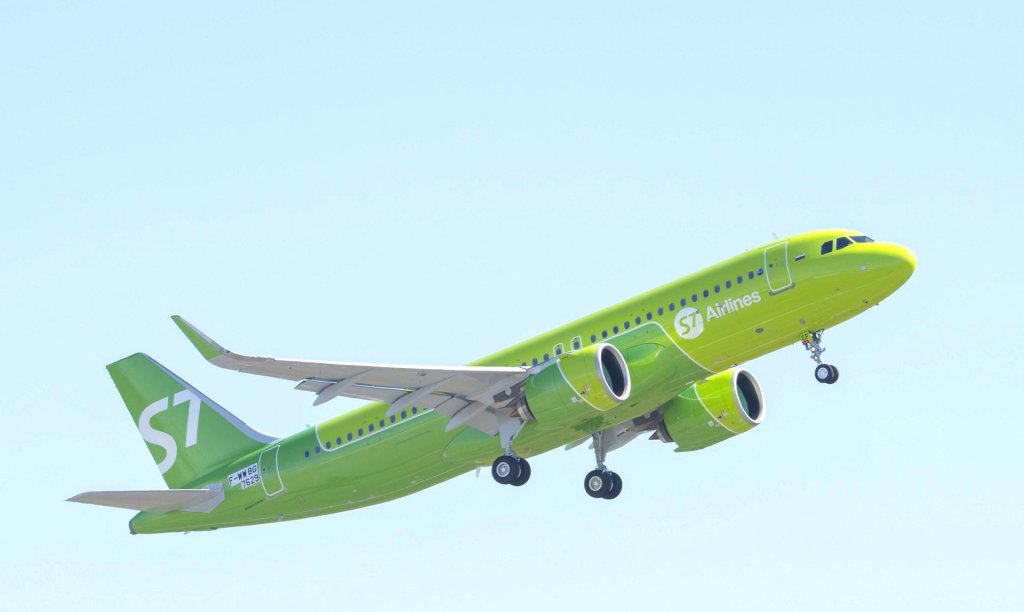
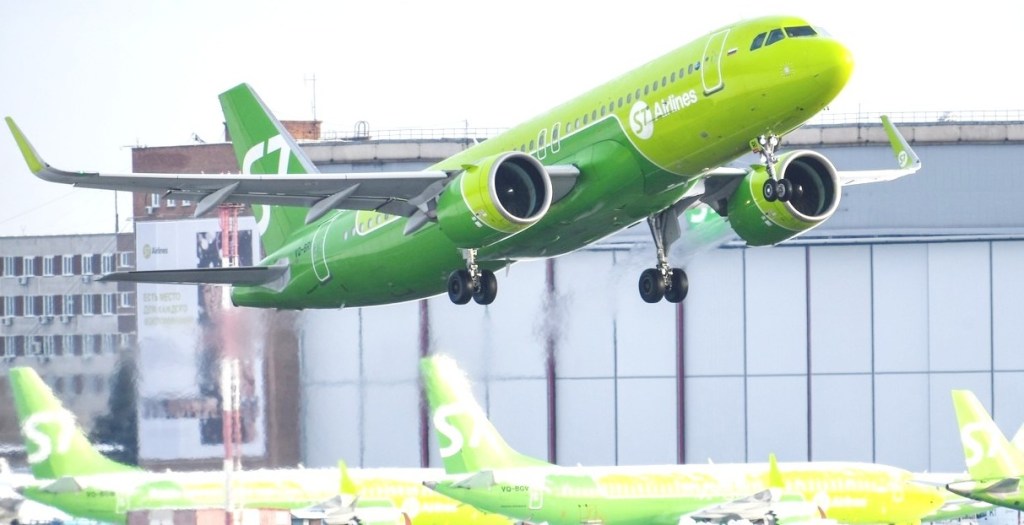
La aerolínea rusa S7 Airlines se convierte en la primera aerolínea en el país en realizar un vuelo con Combustible Sustentable para Aviación (SAF), según reveló la empresa en un comunicado. El vuelo fue realizado por un nuevo avión de la familia A320NEO, que despegó este 22 de Diciembre de 2021 de la fábrica en Toulouse (Francia) con una mezcla de biocombustible y combustible tradicional y aterrizó en el Aeropuerto Moscú/Domodedovo a las 15:30 (hora local). «Es el primer vuelo de una aerolínea rusa realizado con biocombustible en la historia. Para nosotros es una oportunidad para demostrar que los vuelos de ese tipo son posibles y representan el futuro de la aviación ecológica», dijo Tatiana Filiova, Directora General de S7 Airlines.

La aerolínea rusa ha comunicado que la proporción de biocombustible en la mezcla fue de 10%, el porcentaje máximo determinado por la empresa de combustible en Toulouse. Aunque limitada, esa cantidad permitió reducir las emisiones de dióxido de carbono en 7%, lo equivalente a 1,7 toneladas.

En Septiembre 2021, junto con la alianza Oneworld, S7 Airlines hizo público su objetivo de lograr la neutralidad de carbono para 2050. La semana pasada, S7 Group firmó una declaración que prevé la creación de una alianza eurasiática de SAF y estipula el inicio de vuelos con biocombustible en Rusia para 2024. La empresa subrayó la importancia de crear una base legislativa que permita obtener en Rusia una licencia para SAF y utilizarla en vuelos de pasajeros.

Actualmente, cuarenta y cinco aerolíneas han realizado vuelos con SAF en el mundo, lo que representa un porcentaje total de uso del 0,03%, lo que permite avanzar en la tendencia hacia un hidrocarburo más respetuoso con el medio ambiente, permitiendo en el sector de la aviación comercial dar adelanto en el cuidado ecológico del planeta.

S7 first green flight

First Russian airline flight green fuel

The Russian airline S7 Airlines becomes the first airline in the country to fly with Sustainable Aviation Fuel (SAF), the company revealed in a statement. The flight was carried out by a new aircraft of the A320NEO family, which took off this December 22, 2021 from the factory in Toulouse (France) with a mixture of biofuel and traditional fuel and landed at Moscow/Domodedovo Airport at 15:30. (local time). «It is the first flight of a Russian airline made with biofuel in history. For us it is an opportunity to show that flights of this type are possible and represent the future of green aviation», said Tatiana Filiova, CEO of S7 Airlines .

The Russian airline has reported that the proportion of biofuel in the mixture was 10%, the maximum percentage determined by the fuel company in Toulouse. Although limited, this amount allowed reducing carbon dioxide emissions by 7%, the equivalent of 1.7 tons.

In September 2021, together with the Oneworld alliance, S7 Airlines made public its goal of achieving carbon neutrality by 2050. Last week, S7 Group signed a declaration providing for the creation of a Eurasian SAF alliance and stipulating the start of flights. with biofuel in Russia by 2024. The company underlined the importance of creating a legislative basis for obtaining a license for SAF in Russia and using it on passenger flights.

Currently, forty-five airlines have made flights with SAF in the world, which represents a total percentage of use of 0.03%, which allows advancing in the trend towards a more environmentally friendly hydrocarbon, allowing in the sector of commercial aviction to advance the ecological care of the planet.

Первый зеленый рейс S7

Первый рейс российской авиакомпании с экологически чистым топливом

AW-S7 Airlines__Airbus A3202004N

Российская авиакомпания S7 Airlines становится первой авиакомпанией в стране, летающей на экологически чистом авиационном топливе (SAF), говорится в сообщении компании. Рейс выполнялся на новом самолете семейства A320NEO, который 22 декабря 2021 года вылетел с завода в Тулузе (Франция) на смеси биотоплива и традиционного топлива и приземлился в аэропорту Москва/Домодедово в 15:30. (местное время). «Это первый в истории рейс российской авиакомпании на биотопливе. Для нас это возможность показать, что полеты такого типа возможны и представляют будущее зеленой авиации», сказала Татьяна Филиова, генеральный директор S7 Airlines.

Российская авиакомпания сообщила, что доля биотоплива в смеси составляет 10%, максимальный процент установлен топливной компанией в Тулузе. Этот объем, хотя и ограниченный, позволил снизить выбросы углекислого газа на 7%, что эквивалентно 1,7 тонны.

В сентябре 2021 года S7 Airlines совместно с альянсом Oneworld обнародовала свою цель по достижению углеродной нейтральности к 2050 году. На прошлой неделе S7 Group подписала декларацию, предусматривающую создание евразийского альянса SAF и предусматривающую начало полетов с биотопливом в России. Россия к 2024 году. Компания подчеркнула важность создания законодательной базы для получения лицензии на SAF в России и ее использования на пассажирских рейсах.

В настоящее время сорок пять авиакомпаний в мире совершили полеты с SAF, что представляет собой общий процент использования 0,03%, что позволяет продвигаться в направлении более экологически чистых углеводородов, позволяя в секторе коммерческой авиации продвигать экологические забота о планете.

S7 Airlines, más ecológica medio ambiente

En los últimos seis años, la aerolínea rusa S7 Airlines ha adquirido veinticuatro nuevos Airbus A320NEO (24) con un mejor desempeño ambiental, que le permitirá proyectarse en unos niveles eficientes en consumo de combustibles y el cuidado del medio ambiente.

Estrategia de eficiencia de combustible
Perseguimos una estrategia de eficiencia de combustible que ayuda a ahorrar combustible durante el vuelo y en todas las etapas de preparación: durante la planificación del vuelo, durante el rodaje, el despegue, la marcación del escalón, el vuelo de crucero, el descenso del escalón, durante la aproximación al aterrizaje y el aterrizaje en sí.

Optimización de la red de rutas
Optimizamos regularmente nuestra red de rutas para reducir el consumo de combustible por pasajero. Para ello, construimos rutas para que la aeronave vuele con una alta carga de vuelo. Todo ello reduce las emisiones y la huella de carbono. La aerolínea realiza un 45% de sus vuelos operados en flota Airbus A320NEO ecológicos.

S7 Airlines, greener with the environment

In the last six years, the Russian airline S7 Airlines has acquired twenty-four new Airbus A320NEOs (24) with better environmental performance, which will allow it to project itself at efficient levels in fuel consumption and caring for the environment.

Fuel efficiency strategy
We pursue a fuel efficiency strategy that helps to save fuel during flight and at all stages of preparation: during flight planning, during taxi, take off, step marking, cruise flight, step descent , during the landing approach and the landing itself.

Route network optimization
We regularly optimize our route network to reduce fuel consumption per passenger. To do this, we build routes for the aircraft to fly with a high flight load. All this reduces emissions and the carbon footprint. The airline operates 45% of its flights operated in the green Airbus A320NEO fleet.

S7 Airlines экологичнее

За последние шесть лет российская авиакомпания S7 Airlines приобрела двадцать четыре новых самолета Airbus A320NEO (24) с лучшими экологическими характеристиками, что позволит ей достичь эффективных уровней потребления топлива и заботы об окружающей среде.

Стратегия топливной эффективности
Мы придерживаемся стратегии экономии топлива, которая помогает экономить топливо во время полета и на всех этапах подготовки: во время планирования полета, во время руления, взлета, разметки ступеней, крейсерского полета, ступенчатого снижения, во время захода на посадку и самой посадки.

Оптимизация маршрутной сети
Мы регулярно оптимизируем нашу маршрутную сеть, чтобы снизить расход топлива на пассажира. Для этого мы строим маршруты полета самолета с большой полетной нагрузкой. Все это снижает выбросы и углеродный след. 45% рейсов авиакомпании выполняются в зеленом парке Airbus A320NEO.

PUBLISHER: Airgways.com
DBk: S7airlines.ru / Airgways.com
AW-POST: 202112230840AR

A\W   A I R G W A Y S ®

Avelo inaugura PreCheck

AW | 2021 12 21 10:51 | AIRLINES / AVIATION TECHNOLOGY

Avelo Airlines implementa TSA PreCheck

Avelo_Airlines_Isologotype

Avelo Airlines ha inaugurado el sistema de embarque PreCheck de la TSA de Estados Unidos. Los usuarios de la compañía aérea ahora tienen una manera más fácil de pasar por el control de seguridad. El PreCheck se encuentra disponible en Avelo en los diecinueve destinos entre ellos New Haven (HVN), Connecticut, Orlando (MCO).

El TSA PreCheck permite a los viajeros pre-autorizados y de bajo riesgo usar carriles de detección acelerados, mantener líquidos y productos electrónicos en su bolso y mantener los zapatos puestos.
«Proporcionar a los clientes de Avelo una experiencia aeroportuaria más rápida, fluida y relajante es una gran parte del tipo diferente y mejor de aerolínea que estamos construyendo. La disponibilidad de TSA PreCheck es una mejora importante en el viaje conveniente y sin problemas que nuestros clientes aprecian cuando vuelan en Avelo», dijo el CEO de Avelo, Andrew Levy, en un comunicado de prensa.

Avelo Airlines, con sede en Houston, Texas, lanzó sus primeros vuelos desde Hollywood/Burbank/BUR en Abril 2020 y ha continuado su expansión con una nueva base de la costa Este de Estados Unidos en New Haven/HVN en Noviembre 2021. A diferencia de Breeze Airways, que lanzó vuelos un mes después con PreCheck, Avelo Airlines comienza sus operaciones sin ser parte del programa de viajeros de confianza. PreCheck cuesta US$ 85 por cinco años. También viene con Global Entry, un programa de viajero de confianza para aduanas e inmigración, que cuesta US$ 100 por cinco años. Varias tarjetas de crédito premium y de nivel medio ofrecen un crédito de tarifa para TSA PreCheck. Con Avelo Airlines ahora parte de TSA PreCheck, los viajeros que participan en el programa ahora tienen un viaje mucho más fácil a través de la seguridad para esperar.

Avelo opens PreCheck

Avelo Airlines implements TSA PreCheck

Avelo Airlines has launched the US TSA PreCheck boarding system. Airline users now have an easier way to go through security. PreCheck is available from Avelo in all nineteen destinations including New Haven (HVN), Connecticut, Orlando (MCO).

Avelo Airlines_000007A

The TSA PreCheck allows pre-authorized and low-risk travelers to use expedited detection lanes, keep liquids and electronics in their bag, and keep shoes on. «Providing Avelo customers with a faster, smoother and more relaxing airport experience is a big part of the different and better kind of airline we are building. The availability of TSA PreCheck is a major enhancement to the convenient and hassle free travel our customers have. they appreciate when they fly Avelo», Avelo CEO Andrew Levy said in a press release.

Avelo Airlines, based in Houston, Texas, launched its first flights from Hollywood/Burbank/BUR in April 2020 and has continued its expansion with a new US East Coast base at New Haven/HVN in November 2021. Unlike from Breeze Airways, which launched flights a month later with PreCheck, Avelo Airlines begins operations without being part of the trusted traveler program. PreCheck costs US$ 85 for five years. It also comes with Global Entry, a trusted traveler program for customs and immigration, which costs US$ 100 for five years. Several premium and mid-tier credit cards offer a TSA PreCheck rate credit. With Avelo Airlines now part of TSA PreCheck, travelers participating in the program now have a much easier journey through security to wait.

AW-Avelo Airlines_7378003332

PUBLISHER: Airgways.com
DBk: Aveloair.com / Tsa.gov / Airgways.com
AW-POST: 202112211051AR

A\W   A I R G W A Y S ®
Boeing perspectiva diseño digital

AW | 2021 12 17 23:03 | INDUSTRY / AVIATION TECHNOLOGY

Boeing metaverso para su próxima revolución digital

Boeing_Isologotype

The Boeing Company anunció el Viernes 17/12 que quiere construir su próximo avión en el mundo virtual. El constructor americano continúa con una nueva y ambiciosa estrategia para unificar las operaciones de diseño, producción y servicios aéreos en expansión bajo un solo ecosistema digital, en tan solo dos años. Los críticos dicen que Boeing ha hecho repetidamente promesas audaces similares sobre una revolución digital, con resultados mixtos. Pero los expertos dicen que los objetivos generales de mejorar la calidad y la seguridad han adquirido una mayor urgencia e importancia a medida que la compañía aborda múltiples amenazas.

AW-Boeing 737 MAX_png (43)

El fabricante de aviones está entrando en 2022 luchando por reafirmar su dominio de la ingeniería después de la crisis del Boeing 737 MAX mientras sienta las bases para un futuro programa de aviones durante la próxima década, una apuesta de US$ 15 mil millones. También tiene como objetivo prevenir futuros problemas de fabricación, como los defectos estructurales que han afectado a su línea Boeing 787 Dreamliner durante el año pasado y en el presente. «Se trata de fortalecer la ingeniería Estamos hablando de cambiar la forma en que trabajamos en toda la empresa», dijo el Ingeniero Jefe de Boeing, Greg Hyslop, en su primera entrevista en casi dos años.

Después de años de salvaje competencia en el mercado de la aviación, la necesidad de cumplir con las abultadas carteras de pedidos ha abierto un nuevo frente en la guerra desde las fábricas de Boeing en Estados Unidos y con Airbus en Europa. Una enorme cartera backlog de aeronaves han agrandado los tiempos de espera para las entregas a los clientes en todo el mundo.

El Presidente Ejecutivo de Airbus, Guillaume Faury se ha comprometido a inventar nuevos sistemas de producción y aprovechar el poder de los datos para optimizar su sistema industrial. El enfoque de Boeing hasta ahora ha estado marcado por avances incrementales dentro de programas o herramientas específicas de aviones, en lugar de la revisión sistémica que caracteriza el impulso de Greg Hyslop en la actualidad. El impulso simultáneo de ambos gigantes del avión es emblemático de una revolución digital que está ocurriendo a nivel mundial, mientras que los fabricantes de automóviles como Ford Motor Company y las compañías de redes sociales como Meta Platforms Inc., matriz de Facebook, cambian el trabajo y juegan en un mundo virtual inmersivo a veces llamado el metaverso. Entonces, ¿cómo funciona el metaverso? Es un espacio digital compartido que a menudo utiliza realidad virtual o realidad aumentada y accesible a través de Internet, en la aviación. Al igual que Airbus, Boeing buscará para su próximo nuevo avión construir y vincular réplicas virtuales 3D de gemelos digitales del avión y el sistema de producción capaz de ejecutar simulaciones. Las maquetas digitales están respaldadas por un hilo digital que une cada pieza de información sobre la aeronave desde su infancia, desde los requisitos de las aerolíneas hasta millones de piezas y miles de páginas de documentos de certificación, que se extiende profundamente en la cadena de suministro.

La revisión de las prácticas anticuadas basadas en papel podría traer un cambio poderoso. Más del 70% de los problemas de calidad en Boeing se remontan a algún tipo de problema de diseño, dijo Greg Hyslop. Boeing cree que tales herramientas serán fundamentales para llevar un nuevo avión desde su inicio al mercado en tan solo cuatro o cinco años. «Obtendrá velocidad, obtendrá una mejor calidad, una mejor comunicación y una mejor capacidad de respuesta cuando ocurran problemas. Cuando la calidad de la base de suministro es mejor, cuando la construcción del avión se combina de manera más fluida cuando se minimiza el retrabajo, el rendimiento financiero se derivará de eso», expresó Greg Hyslop

Enorme desafío

Los escépticos apuntan a problemas técnicos en el mini-jumbo 777X de Boeing y el avión de entrenamiento militar T-7A RedHawk, que se desarrollaron utilizando herramientas digitales. Boeing también ha puesto demasiado énfasis en los rendimientos de los accionistas a expensas del dominio de la ingeniería, y continúa recortando el gasto en investigación y desarrollo (I+D), dijo el analista de Teal Group Richard Aboulafia. «¿Vale la pena perseguirlo? Por supuesto. ¿Resolverá todos sus problemas? No», expresó Richard Aboulafia.

Gigantes como el fabricante de piezas de aviones Spirit AeroSystems han invertido en tecnología digital. Los principales fabricantes de aviones tienen asociaciones con el fabricante francés de software Dassault Systemes, pero cientos de proveedores más pequeños repartidos por todo el mundo carecen del capital o los recursos humanos para dar grandes saltos. Muchos se han visto debilitados por las crisis del Boeing 737 MAX y la pandemia, que siguieron a una década de presión sobre los precios de Boeing o Airbus. «No solo nos dicen qué hardware podemos comprar, sino que ahora van a especificar toda esta basura digital de lujo que va encima de ella», dijo un ejecutivo de la cadena de suministro.

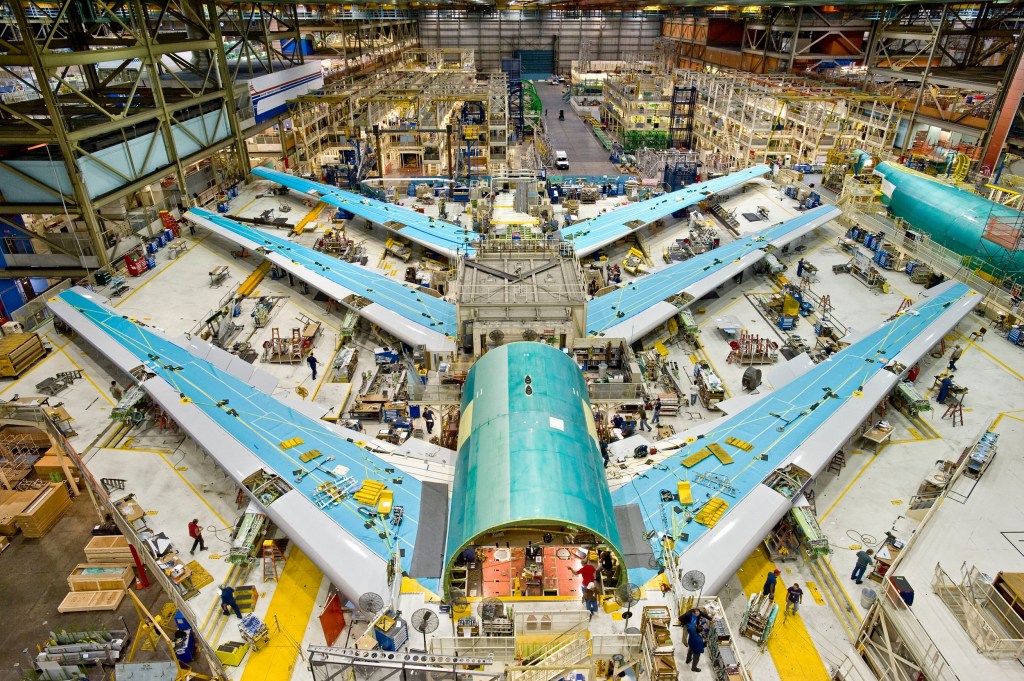
Boeing se ha dado cuenta de que la tecnología digital por sí sola no es una panacea. Debe venir con cambios organizacionales y culturales en toda la empresa, dicen fuentes de la industria. El constructor americano recientemente contrató a la veterana ingeniera Linda Hapgood para supervisar la «transformación digital», que una fuente de la industria dijo que estaba respaldada por más de cien ingenieros. Linda Hapgood es mejor conocida por convertir dibujos en papel en blanco y negro de los paquetes de cableado del avión cisterna Boeing 767 en imágenes 3D y luego equipar a los mecánicos con tabletas y auriculares de realidad aumentada HoloLens. La calidad mejoró en un 90%, dijo un informante. En su nuevo cargo, Linda Hapgood contrató ingenieros que trabajaron en un gemelo digital para un avión de mercado medio ahora desguazado conocido como NMA. También se basa en las lecciones aprendidas del avión no tripulado de reabastecimiento aéreo MQ-25 y el T-7A Red Hawk. Boeing construyó los primeros aviones T-7A en simulación, siguiendo un diseño basado en modelos. El T-7A fue lanzado al mercado en solo 36 meses. Aun así, el programa está lidiando con la escasez de piezas, retrasos en el diseño y requisitos de prueba adicionales.

Boeing tiene un comienzo en funcionamiento con su fábrica de alas del Boeing 777X en el Estado de Washington, donde el diseño y la optimización del robot se realizaron por primera vez digitalmente. Pero el programa más amplio tiene años de retraso y está sumido en desafíos de certificación. «Este es un juego largo. Cada uno de estos esfuerzos estaba abordando parte del problema. Pero ahora lo que queremos hacer es hacerlo de punta a punta», concluye Greg Hyslop.

Boeing perspective digital design

Boeing metaverse for its next digital revolution

The Boeing Company announced on Friday 12/17 that it wants to build its next airplane in the virtual world. The American builder continues with an ambitious new strategy to unify expanding design, production and air service operations under a single digital ecosystem, in just two years. Critics say Boeing has repeatedly made similar bold promises about a digital revolution, with mixed results. But experts say the overarching goals of improving quality and safety have grown in urgency and importance as the company tackles multiple threats.

AW-Boeing 787_0001

The aircraft maker is entering 2022 struggling to reassert its engineering dominance after the Boeing 737 MAX crisis while laying the groundwork for a future aircraft program over the next decade, a US$ 15 billion gamble. It also aims to prevent future manufacturing problems, such as the structural defects that have plagued its Boeing 787 Dreamliner line over the past year and present. «It’s about strengthening engineering. We’re talking about changing the way we work across the company», Boeing Chief Engineer Greg Hyslop said in his first interview in nearly two years.

After years of fierce competition in the aviation market, the need to fulfill bulging order books has opened a new front in the war from Boeing’s factories in the United States and with Airbus in Europe. A huge aircraft backlog portfolio has increased lead times for deliveries to customers around the world.

Airbus Chief Executive Officer Guillaume Faury is committed to inventing new production systems and harnessing the power of data to optimize his industrial system. Boeing’s approach thus far has been marked by incremental advancements within aircraft-specific programs or tools, rather than the systemic overhaul that characterizes Greg Hyslop’s drive today. The simultaneous push by both aircraft giants is emblematic of a digital revolution happening globally, as automakers like Ford Motor Company and social media companies like Facebook parent Meta Platforms Inc. change the job. and they play in an immersive virtual world sometimes called the metaverse. So how does the metaverse work? It is a shared digital space that often uses virtual reality or augmented reality and accessible through the Internet, in aviation. Like Airbus, Boeing will be looking for its next new aircraft to build and link virtual 3D replicas of the aircraft’s digital twins and the production system capable of running simulations. The digital mockups are backed by a digital thread that ties together every piece of information about the aircraft from its infancy, from airline requirements to millions of pieces and thousands of pages of certification documents, extending deep into the supply chain.

The revision of outdated paper-based practices could bring powerful change. More than 70% of quality problems at Boeing can be traced back to some kind of design problem, Greg Hyslop said. Boeing believes that such tools will be critical in getting a new aircraft to market from inception in just four to five years. «You get speed, you get better quality, better communication, and better responsiveness when problems occur. When the supply base quality is better, when the aircraft construction blends more seamlessly, when rework is minimized, financial performance will come from that, «said Greg Hyslop

Huge challenge

Skeptics point to technical problems in Boeing’s 777X mini-jumbo and the T-7A RedHawk military training aircraft, which were developed using digital tools. Boeing has also put too much emphasis on shareholder returns at the expense of engineering dominance, and continues to cut spending on research and development (R&D), said Teal Group analyst Richard Aboulafia. «Is it worth pursuing? Of course. Will it solve all your problems? No», said Richard Aboulafia.

Giants like aircraft parts maker Spirit AeroSystems have invested in digital technology. Major aircraft manufacturers have partnerships with French software maker Dassault Systemes, but hundreds of smaller vendors around the world lack the capital or human resources to make big leaps. Many have been weakened by the Boeing 737 MAX crises and the pandemic, which followed a decade of price pressure from Boeing or Airbus. «They’re not just telling us what hardware we can buy, but now they’re going to specify all this fancy digital junk that goes on top of it», said one supply chain executive.

Boeing has realized that digital technology alone is not a panacea. It must come with organizational and cultural changes throughout the company, say industry sources. The American builder recently hired veteran engineer Linda Hapgood to oversee the «digital transformation,» which an industry source said was backed by more than 100 engineers. Linda Hapgood is best known for turning black and white paper drawings of Boeing 767 tanker wiring packages into 3D images and then outfitting mechanics with HoloLens augmented reality tablets and headsets. Quality improved by 90%, said one informant. In her new role, Linda Hapgood hired engineers who worked on a digital twin for a now scrapped mid-market aircraft known as the NMA. She also draws on lessons learned from the MQ-25 aerial refueling drone and the T-7A Red Hawk. Boeing built the first T-7A aircraft in simulation, following a model-based design. The T-7A was launched on the market in just 36 months. Still, the program is dealing with parts shortages, design delays, and additional testing requirements.

Boeing has a running start with its Boeing 777X wing factory in Washington State, where the design and optimization of the robot was first done digitally. But the broader program is years behind and mired in certification challenges. «This is a long game. Each of these efforts was addressing part of the problem. But now what we want to do is do it end-to-end», concludes Greg Hyslop.

PUBLISHER: Airgways.com
DBk: Boeing.com / Airbus.com / Airgways.com
AW-POST: 202112172303AR

A\W   A I R G W A Y S ®

Aerolíneas vs tecnología 5G

AW | 2021 12 16 09:22 | AVIATION TECHNOLOGY / AVIATION SAFETY

Advierten tecnología inalámbrica 5G peligrosa

AW-5G_001

Las principales compañías aéreas de Estados Unidos advirtieron el Miércoles 15/12 que los planes de AT&T y Verizon Communications para usar espectro para servicios inalámbricos 5G podrían ser altamente perjudiciales para los viajes aéreos y costar a los pasajeros aéreos US$ 1.600 millones de Dólares anuales en retrasos de vuelos programados.

El grupo comercial Airlines for America (A4A) dijo que si una nueva directiva de la Administración Federal de Aviación (FAA) para abordar la posible interferencia de las transmisiones inalámbricas hubiera estado en vigor en 2019 «aproximadamente 345.000 vuelos de pasajeros, 32 millones de pasajeros y 54.00 vuelos de carga se habrían visto afectados en forma de vuelos retrasados, desvíos o cancelaciones», expresó la asociación A4A.

En una audiencia el Miércoles 15/12, el Senado de Estados Unidos ha instado a las aerolíneas a trabajar para encontrar una resolución. El CEO de United Airlines, Scott Kirby, dijo que el problema inalámbrico 5G «es el problema potencial más grande y dañino que enfrentamos. No queremos nada más que trabajar para encontrar una solución». El Presidente Ejecutivo de Southwest Airlines, Gary Kelly, dijo que la directiva de la FAA «afectaría significativamente nuestras operaciones una vez que se implemente el 5 de Enero [de 2022]».

Los operadores inalámbricos están listos para comenzar a usar el espectro en solo tres semanas. La semana pasada, la FAA emitió nuevas Directivas de Aeronavegabilidad (AD) advirtiendo que la interferencia del espectro inalámbrico 5G podría resultar en desviaciones de vuelo. La industria de la aviación y la FAA han planteado preocupaciones significativas sobre la posible interferencia de 5G con la electrónica sensible de las aeronaves, como los altímetros de radio.

En Noviembre 2021, AT&T y Verizon acordaron retrasar el lanzamiento comercial del servicio inalámbrico de Banda C hasta el 5 de Enero de 2022 después de que la FAA planteara preocupaciones. También adoptaron medidas cautelares durante seis meses para limitar las interferencias. Los grupos de la industria de la aviación dijeron que eran insuficientes para abordar las preocupaciones de seguridad aérea.

Cellular Telecommunications and Internet Association (CTIA), un grupo de comercio inalámbrico, dijo que «el alarmismo de la industria de la aviación se basa en información completamente desacreditada y distorsiones deliberadas de los hechos». Agregó que 5G opera de manera segura y sin causar interferencias dañinas a las operaciones de aviación en casi 40 países de todo el mundo.

A4A dijo que la directiva de la FAA interrumpiría materialmente las operaciones de las aerolíneas, que los operadores de carga estiman que la directiva les habría costado US$ 400 millones de Dólares anuales. El grupo dijo que el costo de impacto anual para los pasajeros es de aproximadamente US$ 1.59 mil millones de retrasos en los viajes.

Los operadores inalámbricos no han mostrado interés en nuevos retrasos del espectro y la industria pagó más de US$ 80 mil millones para adquirirlo.

La presidenta de la Comisión Federal de Comunicaciones (FCC), Jessica Rosenworcel, quien no comentó de inmediato sobre el análisis de las aerolíneas, ha dicho que cree que los problemas se pueden resolver y usar el espectro de manera segura.

«Los clientes de las aerolíneas confían en las aerolíneas para transportar productos perecederos sensibles al tiempo, como productos farmacéuticos, vacunas, órganos, piezas críticas de la cadena de suministro y muchos otros artículos de alto valor. La falta de mitigaciones serias por parte de las compañías de telecomunicaciones 5G para abordar los problemas de interferencia interrumpirá y dañará significativamente la economía», dijo la asociación A4A.

Las directivas de la FAA ordenan revisar los manuales de vuelo de aviones y helicópteros para prohibir algunas operaciones que requieren datos de radio altímetro cuando se encuentran en presencia de señales de banda ancha inalámbrica C 5G. La FAA sigue en conversaciones con la FCC, la Casa Blanca y funcionarios de la industria sobre los contornos precisos de cualquier limitación.

Airlines vs 5G technology

Dangerous 5G wireless technology warned

Major U.S. airlines warned on 12/15 Wednesday that AT&T and Verizon Communications’ plans to use spectrum for 5G wireless services could be highly detrimental to air travel and cost air passengers US$ 1.6 billion annually in scheduled flight delays.

The Airlines for America (A4A) trade group said that if a new Federal Aviation Administration (FAA) directive to address potential interference from wireless transmissions had been in effect in 2019, «approximately 345,000 passenger flights, 32 million passengers and 54.00 cargo flights would have been affected in the form of delayed flights, diversions or cancellations», said the A4A association.

In a hearing on Wednesday 12/15, the US Senate has urged airlines to work to find a resolution. United Airlines CEO Scott Kirby said the 5G wireless problem «is the biggest and most damaging potential problem we face. We want nothing more than to work to find a solution». Southwest Airlines Chief Executive Gary Kelly said the FAA directive «would significantly affect our operations once it is implemented on January 5 [2022]».

Wireless operators are ready to start using spectrum in just three weeks. Last week, the FAA issued new Airworthiness Directives (AD) warning that interference from the 5G wireless spectrum could result in flight deviations. The aviation industry and the FAA have raised significant concerns about possible 5G interference with sensitive aircraft electronics, such as radio altimeters.

In November 2021, AT&T and Verizon agreed to delay the commercial launch of C-Band wireless service until January 5, 2022 after the FAA raised concerns. They also took precautionary measures for six months to limit interference. Aviation industry groups said they were insufficient to address aviation safety concerns.

Cellular Telecommunications and Internet Association (CTIA), a wireless trade group, said that «the aviation industry scaremongering is based on completely discredited information and deliberate distortions of the facts». It added that 5G operates safely and without causing harmful interference to aviation operations in nearly 40 countries around the world.

A4A said the FAA directive would materially disrupt the airlines’ operations, which freight operators estimate the directive would have cost them US$ 400 million annually. The group said the annual impact cost to passengers is about US$ 1.59 billion of travel delays.

Wireless operators have shown no interest in further spectrum delays and the industry paid more than US$ 80 billion to acquire it.

Federal Communications Commission (FCC) chair Jessica Rosenworcel, who did not immediately comment on the airlines’ analysis, has said that she believes the issues can be safely resolved and spectrum used.

«Airline customers rely on airlines to transport time-sensitive perishables such as pharmaceuticals, vaccines, organs, critical parts of the supply chain, and many other high-value items. The lack of serious mitigations by airlines 5G telecommunications companies to address interference problems will disrupt and significantly damage the economy», said the A4A association.

FAA directives mandate revision of aircraft and helicopter flight manuals to prohibit some operations that require radio altimeter data when in the presence of C 5G wireless broadband signals. The FAA remains in discussions with the FCC, the White House and industry officials on the precise outlines of any limitations.

PUBLISHER: Airgways.com
DBk: Faa.gov / Fcc.gov / Ctia.org / Airlines.org / Airgways.com
AW-POST: 202112160922AR

A\W   A I R G W A Y S ®

Primer vuelo 100% SAF

AW | 2021 12 11 10:33 | AVIATION TECHNOLOGY

Primer vuelo histórico combustible 100% sostenible
United Airlines realiza primer vuelos SAF

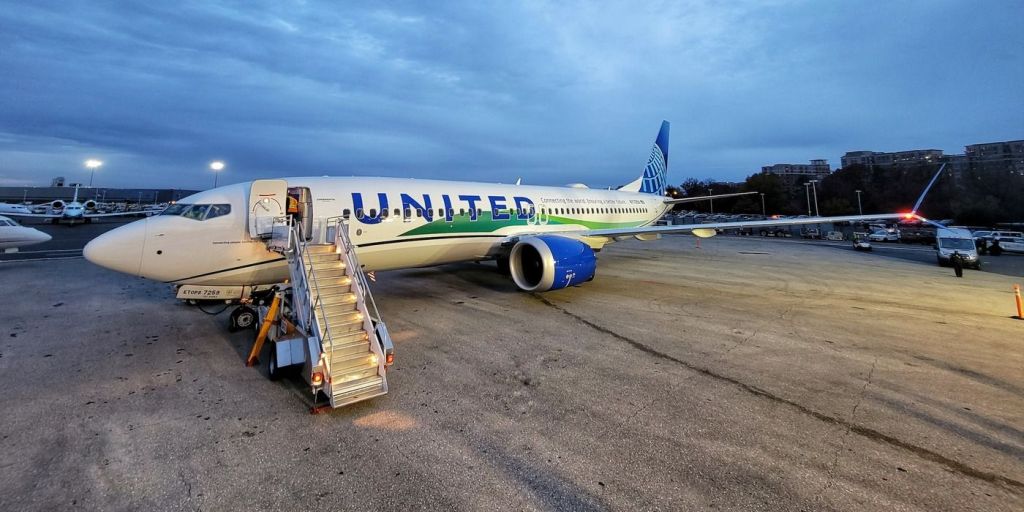
Un vuelo de United Airlines ha inaugurado desde Chicago a Washington DC con más de 100 pasajeros el primer vuelo empleando SAF (Sustainable Aviation Fuel) un combustible de aviación fabricado a partir de 60 materias primas como aceites vegetales. El avión utilizado, un Boeing 737-8 MAX de United Airlines utilizó 1.892,71 litros de SAF en un motor y la misma cantidad de combustible convencional para aviones en el otro, con el fin de seguir demostrando que no hay diferencias operativas entre ambos. Esto fue posible gracias a que los motores de GE, CFM y Engine Alliance pueden funcionar con este combustible amigable con el ambiente.

En 2021, las aerolíneas comerciales utilizaron alrededor de 215.768 millones de litros de combustible. Cambiando el petróleo por SAF, tomando en cuenta todo el ciclo de vida del combustible, la industria de la aviación podría reducir su contribución de carbono por combustible hasta en un 80%, según asociaciones de la industria como el Grupo de Acción del Transporte Aéreo (ATAG) y la Asociación Internacional de Transporte Aéreo (IATA).

Actualmente, las compañías aéreas sólo pueden utilizar un máximo del 50% de SAF a bordo. El combustible sostenible utilizado en el vuelo de este Viernes 10/12 está listo para su uso y es compatible con las flotas de aviones existentes. El avión hizo historia al ser impulsado por motores LEAP-1B desarrollados por CFM International, una empresa de GE Aviation y Safran Aircraft Engines. En paralelo, GE también ha estado investigando el uso de SAF en sus motores: Etihad Airways y British Airways han usado una mezcla que contenía este combustible en sus vuelos recientes. A su vez, la unidad de aviación de GE también está trabajando con Emirates en planes para volar utilizando 100% SAF en 2022.

SAF es un combustible de aviación sostenible que puede fabricarse a partir de 60 materias primas diferentes, entre ellas aceites vegetales, algas, grasas, flujos de residuos, alcoholes, azúcares, CO2 capturado y otras fuentes y procesos alternativos.

“Fue un paso importante en el camino de la industria de la aviación para alcanzar cero emisiones de carbono. Estoy orgulloso del rol de GE que hizo posible este vuelo”, explicó John Slattery, CEO de GE Aviation y uno de los pasajeros a bordo. De esta forma, lo que a simple vista parecía un vuelo más rumbo a Washington se convirtió en un hito para el futuro de la aviación y un gran paso para combatir el cambio climático.

First flight 100% SAF

First historic flight 100% sustainable fuel
United Airlines makes first SAF flights

A United Airlines flight has inaugurated the first flight from Chicago to Washington DC with more than 100 passengers using SAF (Sustainable Aviation Fuel), an aviation fuel made from 60 raw materials such as vegetable oils. The aircraft used, a United Airlines Boeing 737-8 MAX, used 1,892.71 liters of SAF in one engine and the same amount of conventional jet fuel in the other, in order to further demonstrate that there are no operational differences between the two. This was made possible because GE, CFM and Engine Alliance engines can run on this environmentally friendly fuel.

In 2021, commercial airlines used about 215,768 million liters of fuel. By swapping oil for SAF, taking into account the entire life cycle of fuel, the aviation industry could reduce its contribution of carbon per fuel by up to 80%, according to industry associations such as the Air Transport Action Group ( ATAG) and the International Air Transport Association (IATA).

Currently, airlines can only use a maximum of 50% SAF on board. The sustainable fuel used on this Friday 12/10 flight is ready for use and is compatible with existing aircraft fleets. The aircraft made history by being powered by LEAP-1B engines developed by CFM International, a GE Aviation company, and Safran Aircraft Engines. In parallel, GE has also been investigating the use of SAF in its engines: Etihad Airways and British Airways have used a mixture containing this fuel on their recent flights. In turn, GE’s aviation unit is also working with Emirates on plans to fly using 100% SAF in 2022.

SAF is a sustainable aviation fuel that can be manufactured from 60 different raw materials, including vegetable oils, algae, fats, waste streams, alcohols, sugars, captured CO2 and other alternative sources and processes.

“It was an important step on the aviation industry’s path to achieving zero carbon emissions. I am proud of GE’s role in making this flight possible”, explained John Slattery, CEO of GE Aviation and one of the passengers on board. In this way, what at first glance seemed like one more flight to Washington became a milestone for the future of aviation and a great step towards combating climate change.

PUBLISHER: Airgways.com
DBk: United.com / Airgways.com
AW-POST: 202112111033AR

A\W   A I R G W A Y S ®

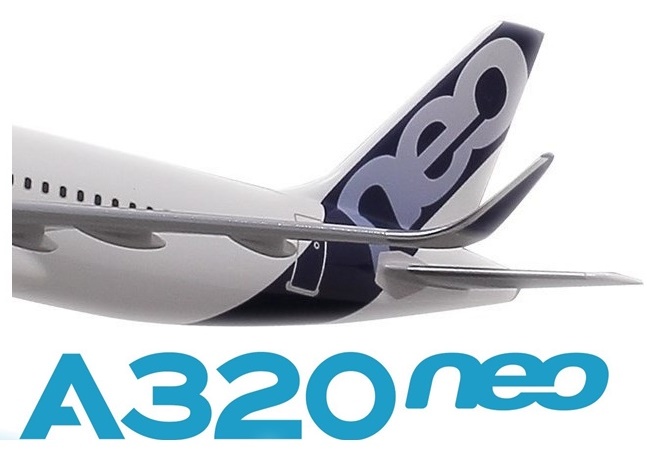
PW actualización motor para A320NEO

AW | 2021 12 03 13:16 | INDUSTRY / AVIATION TECHNOLOGY

Pratt & Whitney GTP construye nuevo motor para línea A320

AW-P&W_Isologotype

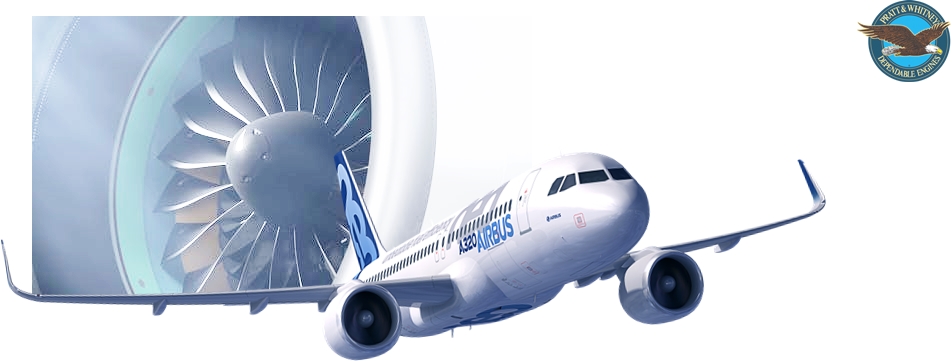
Pratt & Whitney (P&W) está construyendo una nueva versión de su motor a reacción de próxima generación a medida que Airbus Group mira hacia un futuro post-pandemia. El fabricante de motores a reacción Pratt & Whitney dijo el Jueves 02/11 que está lanzando una nueva versión de su motor turbofan GTF Advantage con engranajes de próxima generación para la familia Airbus A320NEO, su mayor cliente comercial, mientras el fabricante de aviones europeo se proyecta con un aumento de la producción en línea.

AW-A320NEO_Isologotype_001

El GTF Advantage se basa en el motor turbofan con engranajes que ha estado en servicio durante cinco años y aumenta el ahorro de combustible en un 1%, a una reducción del 17% en el consumo de combustible y las emisiones de CO2 en comparación con los motores de la generación anterior, dijo la compañía a los periodistas en una reunión de medios en su sitio de East Hartford.

Pratt & Whitney registra un aumento de ventas del 25% en el tercer trimestre a medida que la aviación comercial se recupera de los efectos de la pandemia. Las aerolíneas están bajo presión para reducir las emisiones de carbono. Desde su lanzamiento en 2016, los motores GTF han ahorrado más de 600 millones de galones de combustible al tiempo que reducen las emisiones de carbono en más de 6 millones de toneladas métricas, dijo Pratt & Whitney. «Esto continuará multiplicándose y GTF Advantage es el siguiente paso para nosotros», dijo Tom Pelland, Vicepresidente Senior de GTF Programs.

El motor, que estará disponible hacia Enero de 2024, será compatible con combustible de aviación 100% sostenible cuando comience a servicio. La industria ha establecido un cronograma para 2050 para lograr cero emisiones netas. La aviación mundial genera alrededor del 2% de todas las emisiones de dióxido de carbono inducidas por el hombre, según el Air Transport Action Group, una asociación de la industria. La aviación es responsable del 12% de las emisiones de CO2 de todas las fuentes de transporte, en comparación con el 74% de los automóviles y camiones, dijo el grupo.

AW-Airbus-line_000

Airbus dijo a los proveedores en Mayo 2021 que está buscando producir 45 de sus populares aviones de fuselaje estrecho A320 al mes a fines de este año y pidió una tasa de 64 para mediados de 2023. Está pidiendo a los proveedores 70 al mes para principios de 2024. «A más largo plazo, Airbus está investigando oportunidades para tasas tan altas como 75 para 2025», dijo el fabricante de Toulouse, Francia. «El sector de la aviación está comenzando a recuperarse de la crisis de COVID-19. El mensaje a nuestra comunidad de proveedores proporciona visibilidad a todo el ecosistema industrial para asegurar las capacidades necesarias y estar listos cuando las condiciones del mercado lo requieren», dijo el Director Ejecutivo Guillaume Faury en Mayo 2021.

United Technologies Corp., la anterior empresa matriz de Pratt & Whitney, invirtió US$ 10 mil millones en veinte años para diseñar y construir el motor turbofan con engranajes que se instaló por primera vez en las flotas de aerolíneas en 2016. Christopher Calio, Presidente de Pratt & Whitney, dijo que la compañía no está revelando cuánto se ha gastado para desarrollar GTF Advantage. United Technologies se renombró el año pasado como Raytheon Technologies Corp., un fabricante de aviación y defensa con sede en Massachusetts, Estados Unidos.

Pratt & Whitney compite con CFM International, co-propiedad de la francesa Safran SA y General Electric Company, que lidera la cuota de mercado en el programa A320. Pratt & Whitney espera que GTF Advantage ayude a aumentar la cartera de pedidos del fabricante y mantenga o mejore su cuota de entrega, dijo el Director de Clientes Rick Deurloo.

«Pratt & Whitney no anticipa que la aviación comercial regrese a los niveles de 2019 hasta 2023 o 2024. Con las vacunas generalizadas y el uso de máscaras, esa perspectiva no ha cambiado a pesar de la variante Delta y la amenaza de Omicron más reciente. Independientemente de las noticias sobre esta variante y su virulencia, creo que estamos en un lugar mucho mejor como industria y sociedad para manejar nuestro camino a través de ella», expresó Christofer Calio.

A largo plazo, se proyecta que la flota global de aerolíneas crecerá anualmente en un 4,5%, dijo Geoff Hunt, Ingeniero Jefe de Pratt & Whitney. «La tecnología en la que invertimos hoy va a ser fundamental para el rendimiento de esa flota a mediados de la próxima década. Y, por supuesto, esa flota seguirá en servicio durante 20 años más allá de eso, por lo que es realmente importante que continuemos esta progresión de la tecnología», dijo Geoff Hunt.

PW powerplant upgrade for A320NEO

Pratt & Whitney GTP builds new engine for A320 line

Airbus_Isologotype_svg

Pratt & Whitney (P&W) is building a new version of its next-generation jet engine as Airbus Group looks to a post-pandemic future. Jet engine maker Pratt & Whitney said Thursday 11/02 that it is rolling out a new version of its next-generation geared GTF Advantage turbofan engine for Airbus A320NEO-family, its largest commercial customer, as the European aircraft maker projects a surge. of online production.

The GTF Advantage is based on the geared turbofan engine that has been in service for five years and increases fuel economy by 1%, to a 17% reduction in fuel consumption and CO2 emissions compared to the Previous-generation engines, the company told reporters at a media meeting at its East Hartford site.

Pratt & Whitney posted a 25% sales increase in the third quarter as commercial aviation recovers from the effects of the pandemic. Airlines are under pressure to cut carbon emissions. Since their launch in 2016, GTF engines have saved more than 600 million gallons of fuel while reducing carbon emissions by more than 6 million metric tons, said Pratt & Whitney. «This will continue to multiply and GTF Advantage is the next step for us», said Tom Pelland, Senior Vice President, GTF Programs.

The engine, which will be available by January 2024, will be compatible with 100% sustainable aviation fuel when it enters service. The industry has set a schedule for 2050 to achieve net zero emissions. Global aviation generates about 2% of all human-induced carbon dioxide emissions, according to the Air Transport Action Group, an industry association. Aviation is responsible for 12% of CO2 emissions from all transportation sources, compared to 74% from cars and trucks, the group said.

Airbus told suppliers in May 2021 that it is looking to produce 45 of its popular A320 narrow-body jets a month by the end of this year and asked for a rate of 64 by mid-2023. It is asking suppliers for 70 a month by the beginning of 2024. «In the longer term, Airbus is investigating opportunities for rates as high as 75 by 2025», said the Toulouse, France-based manufacturer. «The aviation sector is beginning to recover from the COVID-19 crisis. The message to our supplier community provides visibility to the entire industrial ecosystem to secure the necessary capabilities and be ready when market conditions call for it», he said Executive Director Guillaume Faury in May 2021.

United Technologies Corp., the former parent company of Pratt & Whitney, invested US$ 10 billion over twenty years to design and build the geared turbofan engine that was first installed in airline fleets in 2016. Christopher Calio, President of Pratt & Whitney, said the company is not disclosing how much has been spent to develop GTF Advantage. United Technologies rebranded itself last year as Raytheon Technologies Corp., an aviation and defense manufacturer based in Massachusetts, United States.

Pratt & Whitney competes with CFM International, co-owned by France’s Safran SA and General Electric Company, which leads the market share in the A320 program. Pratt & Whitney expects GTF Advantage to help grow the manufacturer’s order book and maintain or improve its delivery quota, said Chief Customer Officer Rick Deurloo.

«Pratt & Whitney does not anticipate that commercial aviation will return to 2019 levels until 2023 or 2024. With widespread vaccines and the use of masks, that perspective has not changed despite the Delta variant and the more recent Omicron threat. Regardless of the news about this variant and its virulence, I think we are in a much better place as an industry and society to handle our way through it», said Christofer Calio.

In the long term, the global airline fleet is projected to grow 4.5% annually, said Geoff Hunt, Chief Engineer at Pratt & Whitney. «The technology we invest in today is going to be critical to the performance of that fleet by the middle of the next decade. And of course, that fleet will remain in service for 20 years beyond that, so it’s really important that Let’s continue this progression of technology», said Geoff Hunt.

PUBLISHER: Airgways.com
DBk: Prattwhitney.com / Airgways.com
AW-POST: 202112031316AR

A\W   A I R G W A Y S ®
SpaceX Wi-Fi satelital a bordo

AW | 2021 12 02 14:05 | AVIATION TECHNOLOGY / AEROSPACE / AIRLINES

AW-Starlink__Isologotype

El Jefe de SpaceX, Elon Musk, prometió recientemente que ofrecería una velocidad Wi-Fi de medio gigabit en los aviones permitiendo acceder a la Internet transmitida por los satélites Starlink. SpaceX ha comenzado a probar su servicio Wi-Fi en vuelo proporcionado por la división Starlink para aerolíneas comerciales, con el objetivo de transmitir Internet desde su constelación de satélites a los aviones. En Junio 2021 SpaceX anunció que estaba en conversaciones con varias aerolíneas para proporcionar la red de Internet satelital de Starlink para una experiencia Wi-Fi más rápida en vuelo. Sin embargo, la compañía no ofreció ningún detalle sobre el cronograma de comercialización del proyecto.

SpaceX tiene por objetivo ofrecer conectividad a Internet de baja latencia con una salida de medio gigabit en el aire. En este momento, dos de los nombres más importantes de la industria son Viasat e Intelsat, que sirven como proveedores de banda ancha satelital para Wi-Fi a bordo. Sin embargo, dos de los rivales directos de Starlink basados en la infraestructura central son OneWeb y Telesat del Reino Unido.

El Vicepresidente de Ventas Comerciales de Starlink, Jonathan Hofeller, ha revelado ahora que la compañía se encuentra probando la primera versión de su antena interna en aviones, pero nuevamente evadió proporcionar un cronograma concreto para el lanzamiento comercial. Hablando en la conferencia de Liderazgo de Pensamiento de la Asociación de Experiencia de Pasajeros de Aerolíneas (APEX)/IFSA EXPO, Jonathan Hofeller mencionó que la compañía quiere ofrecer su servicio de Internet satelital a las aerolíneas en el menor plazo. Una publicación del blog de APEX cita a Jonathan Hofeller y señala que «Starlink está yendo uno por uno a cada país y que su trabajo continuo en el alivio de desastres está acelerando su entrada en algunos mercados».

En comparación con los jugadores establecidos en el mercado de Conectividad en Vuelo (IFC), Starlink tiene una ventaja clave con su enfoque de Internet satelital. Las partes interesadas existentes dependen de la Internet transmitida por satélites que flotan en la órbita geoestacionaria. Starlink, por otro lado, ofrecerá conectividad a Internet desde su constelación de satélites en la órbita terrestre inferior. Hofeller había afirmado previamente que las antenas receptoras Starlink instaladas en los aviones serían un derivado de los receptores terrestres existentes que recientemente comenzaron a aparecer en las estaciones de carga de Tesla también. Una de las mayores preocupaciones con la instalación de aeronaves es el aspecto de durabilidad de los receptores de Internet por satélite. Curiosamente, una aplicación de la FCC que fue desenterrada a principios de este año arrojó algo de luz sobre los receptores móviles que serán mucho más duraderos cuando se trata de operar en mayores extremos de calor y frío. Otra ventaja de la que Starlink presume sobre sus rivales es en el juego de los números. Hofeller mencionó en la conferencia APEX que Starlink ya comanda un grupo de satélites LEO cuyo número es diez veces mayor que el de los satélites geoestacionarios actuales. Si bien se desconoce una fecha definitiva para el descubrimiento del mercado, el ejecutivo de Starlink reveló que la compañía está operando una flota de 1.800 satélites repartidos en 20 países hasta la fecha. Sin embargo, las ambiciones de Starlink podrían detenerse debido a problemas con los motores de cohetes Starship, algo tan grave que el CEO Elon Musk temía que empujara a SpaceX al borde de la bancarrota.

SpaceX satellite Wi-Fi on board

SpaceX Chief Elon Musk recently promised that he would offer half gigabit Wi-Fi speed on airplanes allowing access to the Internet transmitted by Starlink satellites. SpaceX has begun testing its in-flight Wi-Fi service provided by the Starlink division for commercial airlines, with the goal of transmitting the Internet from its constellation of satellites to airplanes. In June 2021 SpaceX announced that it was in talks with several airlines to provide Starlink’s satellite Internet network for a faster in-flight Wi-Fi experience. However, the company did not offer any details on the project’s commercialization schedule.

SpaceX aims to offer low-latency internet connectivity with a half-gigabit over-the-air output. Right now, two of the biggest names in the industry are Viasat and Intelsat, which serve as providers of satellite broadband for onboard Wi-Fi. However, two of Starlink’s direct rivals based on the core infrastructure are UK’s OneWeb and Telesat.

Starlink’s Vice President of Commercial Sales, Jonathan Hofeller, has now revealed that the company is testing the first version of its internal antenna on airplanes, but has again avoided providing a concrete schedule for the commercial launch. Speaking at the Airline Passenger Experience Association (APEX)/ IFSA EXPO Thought Leadership conference, Jonathan Hofeller mentioned that the company wants to offer its satellite internet service to airlines in the shortest time. An APEX blog post quotes Jonathan Hofeller as saying that «Starlink is going one by one to each country and their ongoing disaster relief work is accelerating their entry into some markets».

Compared to established players in the In-Flight Connectivity (IFC) market, Starlink has a key advantage with its approach to satellite internet. Existing stakeholders depend on the Internet carried by satellites floating in geostationary orbit. Starlink, on the other hand, will offer Internet connectivity from its constellation of satellites in lower Earth orbit. Hofeller had previously claimed that the Starlink receiving antennas installed on airplanes would be a derivative of the existing ground-based receivers that recently began to appear at Tesla charging stations as well. One of the biggest concerns with aircraft installation is the durability aspect of satellite Internet receivers. Interestingly, an FCC app that was unearthed earlier this year shed some light on mobile receivers that they will be much more durable when it comes to operating in greater extremes of heat and cold. Another advantage that Starlink boasts over its rivals is in the numbers game. Hofeller mentioned at the APEX conference that Starlink already commands a group of LEO satellites whose number is ten times that of today’s geostationary satellites. While a definitive date for the market discovery is unknown, the Starlink executive revealed that the company is operating a fleet of 1,800 satellites spread across 20 countries to date. However, Starlink’s ambitions could be stalled due to problems with the Starship rocket engines, something so dire that CEO Elon Musk feared it would push SpaceX to the brink of bankruptcy.

PUBLISHER: Airgways.com
DBk: Spacex.com / Starlink.com / Airgways.com
AW-POST: 202112021405AR

A\W   A I R G W A Y S ®