Mexicana inyecta mas inversiones

AW | 2024 07 15 12:03 | AIRLINES / GOVERNMENT

Mexicana de Aviación inversiones MX$ 6.000 millones
Busca consolidarse frente a otras aerolíneas

Mexicana de Aviación ha inyectado recursos por cerca de MX$ 6.000 millones de Pesos mexicanos, entre el costo de la compra, subsidios y las aeronaves prestadas en comodato por parte de la Secretaría de la Defensa Nacional (SEDENA). Además, de la solicitud de más de MX$ 20.000 millones para la compra de aeronaves.

A más de un año de su restablecimiento como línea aérea, la aerolínea sigue sin despegar, pues en los primeros cinco meses de este año 2024 no ha alcanzado los 100.000 pasajeros transportados, mientras que competidores como Volaris, Aeroméxico y Viva Aerobus contabilizan entre 6 y 9 millones usuarios.

Mexicana de Aviación se constituyó formalmente el 16 de Junio de 2023, pero inició operaciones hasta el 26 de Diciembre de 2023. La empresa fue adquirida por el Gobierno Federal a un valor de MX$ 815 millones de Pesos establecida bajo el control del SEDENA, dependencia que le ayudó a emprender el vuelo con la donación de tres aeronaves entregadas en comodato, cuyo costo en conjunto alcanza los MX$ 3.744.273 Pesos. Los contratos fueron firmados el 16 de noviembre de 2023 y tienen vigencia de dos años. En ese periodo, Mexicana de Aviación podrá hacer “uso y goce temporal y gratuito” de las aeronaves, lo que implica no pagar un solo peso, ni siquiera por concepto de renta o alquiler, pero con el objetivo sin obligación de que el 16 de Noviembre de 2025, con la existencia de presupuesto, se compraría aeronaves completamente nuevas para la SEDENA, con la finalidad de adquirir los Boeing 737-800 u otros aviones en le futuro próximo. El contrato establece: ”En virtud que el presente contrato de comodato por el uso de la aeronave otorgada a la A.E.M. es a título gratuito, las partes acuerdan que […] en caso de que cuente con suficiencia presupuestal, la A.E.M. se compromete a someter a consideración de su órgano de gobierno, la adquisición y entrega de la propiedad de una aeronave nueva para la SEDENA, en cuyo caso, SEDENA procederá a transmitir la propiedad de la aeronave otorgada en comodato mediante el presente contrato a favor de la A.E.M.».

Adicionalmente, en 2024, el Gobierno Federal le ha inyectado recursos subsidiados por más de MX$ 1.000 millones de Pesos. En este último caso, destaca que el dinero fue entregado a Mexicana a través de ajustes presupuestales, pues su gasto inicial fue de MX$ 119 millones de Pesos, pero en los primeros meses del año fiscal se realizaron modificaciones para darle a la aerolínea un total de MX$ 353.300.000 de Pesos mexicanos anuales, un incremento de más de 1.000%. De acuerdo con el informe del avance físico de los programas presupuestarios aprobados en el PEF 2024, que la Secretaría de Hacienda de México envió a la Cámara de Diputados el pasado 28 de Junio de 2024, de ese total en subsidios, al mes de Mayo 2024 se han erogado MX$ 603.500.000 Pesos.

Al respecto, el Diputado Saúl Téllez, Secretario de la Comisión de Presupuesto, aseguró que Mexicana de Aviación no es rentable: ”El subsidio creció enormemente en razón de que los números de esa aerolínea son completamente deficitarios y se tienen que cubrir los gastos operativos, los gastos de nómina, los gastos de combustible, y obviamente no es autosustentable. Esta aerolínea es un despilfarro de recursos, es un negocio deficitario y lo que debería de ser una ganancia para el gobierno y para los mexicanos, se ha convertido en una carga a la que se le tiene que estar inyectando dinero porque no está funcionando, y ahí van los recursos de los ciudadanos”, detalló el funcionario.

El propio Gobierno Federal ha reconocido que los costos de operación de Mexicana de Aviación se estiman en MX$ 8.340.000 millones de Pesos, y aunque han asegurado que 99% de ellos serán obtenidos de sus ingresos por la prestación de servicios, principalmente a través de la venta de boletos de avión, la realidad es que la empresa sigue sin despegar.

De acuerdo con cifras de la Agencia Federal de Aviación Civil (AFAC), los vuelos nacionales en servicio regular de Mexicana de Aviación sumaron 1.200 de Enero a Mayo 2024, mientras que en el mismo periodo, Aeroméxico registró más de 58.190, Volaris 47.734, y Viva Aerobus con 54.700 vuelos. En lo que respecta al número de pasajeros, Mexicana contabiliza 98.016 pasajeros trasladados de Enero a Mayo de 2024, mientras que Aeroméxico supera los 6 millones, Volaris 8 millones, y Viva Aerobus contabiliza 9.065.000 pasajeros trasladados en el mismo periodo. Adicional a los costos de la aerolínea, recientemente el Grupo Aeroportuario, Ferroviario, de Servicios Auxiliares y Conexos, Olmeca-Maya-Mexica, solicitó recursos por un total de MX$ 20.871.700 millones Pesos para la adquisición de aeronaves, equipo de apoyo en tierra y herramientas necesarias para la operación de la aerolínea del Estado mexicano.

Mexican injects more investments

Mexicana de Aviación investments MX$ 6,000 million
Seeks to consolidate itself compared to other airlines

Mexicana de Aviación has injected resources for nearly MX$ 6,000 million Mexican Pesos, including the cost of the purchase, subsidies, and the aircraft loaned on loan by the Secretariat of National Defense (SEDENA). In addition, the request for more than MX$ 20,000 million for the purchase of aircraft.

More than a year after its reestablishment as an airline, the airline still has not taken off, since in the first five months of this year 2024 it has not reached 100,000 passengers transported, while competitors such as Volaris, Aeroméxico and Viva Aerobus account for between 6 and 9 million users.

Mexicana de Aviación was formally established on June 16, 2023, but began operations until December 26, 2023. The company was acquired by the Federal Government at a value of MX$ 815 million Pesos established under the control of SEDENA, a department which helped him take flight with the donation of three aircraft delivered on loan, whose combined cost reaches MX$ 3,744,273 Pesos. The contracts were signed on November 16, 2023 and are valid for two years. During this period, Mexicana de Aviación will be able to make “temporary and free use and enjoyment” of the aircraft, which implies not paying a single peso, not even for rent or rental, but with the objective without obligation that on December 16 November 2025, with the budget available, completely new aircraft would be purchased for SEDENA, with the aim of acquiring Boeing 737-800 or other aircraft in the near future. The contract establishes: «By virtue of this loan contract for the use of the aircraft granted to the A.E.M. is free of charge, the parties agree that if it has a sufficient budget, the A.E.M. undertakes to submit to the consideration of its governing body, the acquisition, and delivery of ownership of a new aircraft for SEDENA, in which case, SEDENA will proceed to transfer ownership of the aircraft granted on loan through this contract in favor of the A.E.M.».

Additionally, in 2024, the Federal Government has injected subsidized resources of more than MX$ 1,000 million Pesos. In this last case, it stands out that the money was delivered to Mexicana through budget adjustments, since its initial expenditure was MX$ 119 million Pesos, but in the first months of the fiscal year modifications were made to give the airline a total of MX$ 353,300,000 Mexican Pesos annually, an increase of more than 1,000%. According to the report on the physical progress of the budget programs approved in the PEF 2024, which the Ministry of Finance of Mexico sent to the Chamber of Deputies on June 28, 2024, of that total in subsidies, as of May 2024 MX$ 603,500,000 Pesos have been spent.

In this regard, Deputy Saúl Téllez, Secretary of the Budget Commission, assured that Mexicana de Aviación is not profitable: ”The subsidy grew enormously because the numbers of that airline are completely in deficit and operating expenses have to be covered. payroll expenses, fuel expenses, and obviously it is not self-sustaining. This airline is a waste of resources, it is a loss-making business and what should be a profit for the government and for Mexicans has become a burden into which money must be injected because it is not working, and that’s where citizens’ resources go”, the official explained.

The Federal Government itself has recognized that the operating costs of Mexicana de Aviación are estimated at MX$8,340,000 million Pesos, and although they have assured that 99% of them will be obtained from their income from the provision of services, mainly through of the sale of plane tickets, the reality is that the company is still not taking off.

According to figures from the Federal Civil Aviation Agency (AFAC), Mexicana de Aviación’s domestic flights in regular service totaled 1,200 from January to May 2024, while in the same period, Aeroméxico registered more than 58,190, Volaris 47,734, and Long live Aerobus with 54,700 flights. Regarding the number of passengers, Mexicana counts 98,016 passengers transferred from January to May 2024, while Aeroméxico exceeds 6 million, Volaris 8 million, and Viva Aerobus counts 9,065,000 passengers transferred in the same period. In addition to the airline’s costs, recently the Airport, Railway, Auxiliary and Related Services Group, Olmeca-Maya-Mexica, requested resources for a total of MX$ 20,871,700 million Pesos for the acquisition of aircraft, support equipment on land, and tools necessary for the operation of the Mexican State Airline.

PUBLISHER: Airgways.com
DBk: Mexicana.gob.mx / Gob.mx/sedena / Airgways.com
AW-POST: 202407151203AR
OWNERSHIP: Airgways Inc.
A\W A I R G W A Y S ®

Nueva aviación en Argentina

AW | 2024 07 10 14:47 | AVIATION MARKET / GOVERNMENT

Asoman cambios profundos aviación comercial
Nueva normativa aeronáutica en Argentina

El Gobierno de la República Argentina comenzó con la desregulación del sector aerocomercial. A través del Decreto Nº599/2024, publicado oficialmente el Miércoles 10 de Julio de 2024 en el Boletín Oficial, el Poder Ejecutivo aprobó la reglamentación que establece el acceso a los mercados aerocomerciales, deroga normas y modifica el Código Aeronáutico. El objetivo es continuar fomentando la competencia y eliminar trabas que están vigentes desde mediados del siglo pasado. La medida impacta en las autorizaciones aerocomerciales para operar en territorio argentino. Las mismas serán otorgadas para realizar las actividades de transporte aéreo interno e internacional de pasajeros y/o de cargas, para servicios regulares o no regulares, realizados con aeronaves; para el trabajo aéreo y para los servicios aeroportuarios operacionales y de rampa en general.

El Gobierno de Argentina publicó el Miércoles 10 de Junio de 2024 el Decreto destinado a abrir el sector de la aviación del país, que invita a las aerolíneas extranjeras a ingresar al mercado dominado durante mucho tiempo por la estatal Aerolíneas Argentinas. La reforma debería aumentar el número de rutas, frecuencias de vuelos y atraer más competidores, dijo la Secretaría de Transporte en un comunicado. Las empresas ahora pueden solicitar operar tantas rutas y frecuencias como quieran, un pedido que quedará sujeto a la aprobación de seguridad, según el decreto. Las aerolíneas también tienen ahora control total sobre cuánto cobran por los billetes, afirma el decreto, eliminando una regulación que permitía al Gobierno fijar un precio mínimo. Además, finaliza el monopolio de Intercargo, permitiendo que otras compañías puedan competir en la prestación de servicios en tierra.

La nueva introducción a la aviación comercial permitirá quitar barreras de ingreso a las nuevas líneas aéreas par ainiciar operaciones en Argentina y desregular las frecuencias aéreas y las tarifas.

Respecto a las operaciones logísticas, se terminará el monopolio de Intercargo, la empresa pública que realiza todos los servicios para las compañías aéreas, locales e internacionales a costos directos en moneda internacional Dólar, lo que representaba una desventaja para las aerolíneas en vuelos de cabotaje, donde tales tarifas no alcanzaban a Aerolíneas Argentinas, pues poseía autorizado un manejo de operaciones propio con AeroHandling.

El Reglamento de Acceso a los Mercados que se publica como anexo enumera las condiciones que, de cumplirse, sería un verdadero cambio radical del sistema vigente: “La actividad regulada se regirá por los siguientes principios. Libre acceso al mercado de nuevos explotadores a través de procedimientos administrativos breves y ágiles; estímulo a la competencia leal entre los distintos explotadores; desregulación tarifaria; resguardo de la seguridad operacional; vigilancia operacional continua de los servicios autorizados; libertad en la fijación de frecuencias, en su caso, declarándolas inicialmente en su plan de negocios, para su análisis sujeto a estrictos criterios operativos y a la necesidad de que el tráfico aéreo se desarrolle de manera segura y ordenada y, finalmente, intervenciones de la Administración Pública Nacional limitadas y eficientes, de carácter digital/electrónico, tendientes exclusivamente a la preservación de los principios enunciados precedentemente y transparencia en la medición, asignación y utilización de la capacidad aeroportuaria”.

Aparecen varios lineamientos que cambiarán el sector. Además del compromiso de reducir la intervención del Estado a un mero papel en materias operacional y de seguridad, la norma define la desregulación tarifaria, un sistema que la Argentina perdió desde que el kirchnerismo llegó al poder. De hecho, en aquellos años, el Estado decidía cuál era el valor mínimo del boleto y también el máximo. Se llamó banda tarifaria y era el Poder Ejecutivo el que fijaba el precio de cada tramo.

Con la llamada “Revolución de los Aviones” que impulsaba Guillermo Dietrich en el Gobierno de Mauricio Macri, se quitó la mínima, con lo que aparecieron las low cost que ofrecían precios más baratos, pero no se avanzó con el máximo permitido. Pero, en 2021, la gestión de Alberto Fernández volvió a aquel esquema de bandas, utilizado en muy pocos mercados en el mundo.

Cielos Abiertos
La administración del Presidente libertario Javier Milei, quien asumió el cargo en Diciembre 2023, ha firmado una serie de Acuerdos de Cielos Abiertos con otros países en los últimos meses, permitiendo a sus aerolíneas operar rutas domésticas en Argentina bajo algunas condiciones. En la actualidad, Brasil, Chile, Perú, Ecuador, Panamá, Uruguay y Canadá han firmado acuerdos abriendo potencialmente el mercado argentino a operadores como GOL Linhas Aéreas, LATAM Airlines y Air Canadá. La Secretaría de Transporte dijo el Miércoles 10/07 que se deberían firmar más acuerdos de este tipo en los próximos meses.

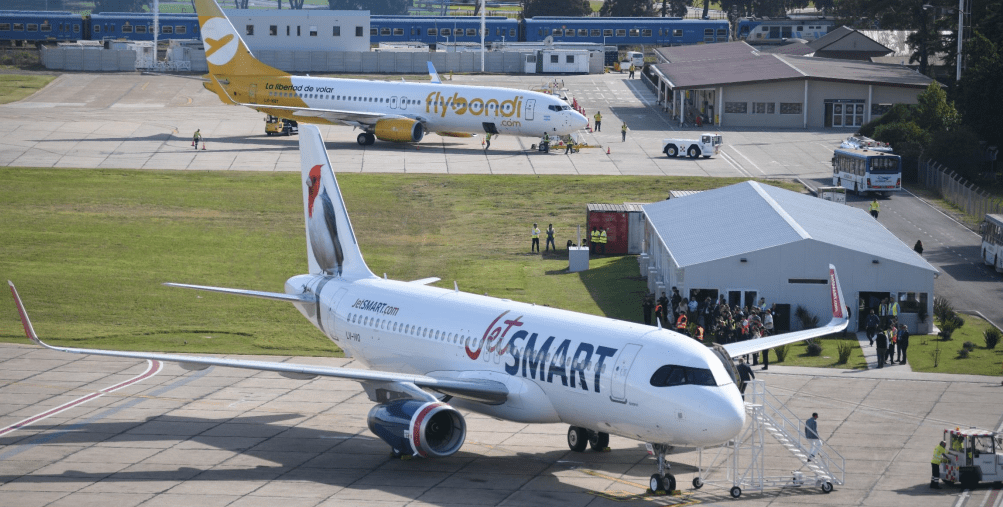
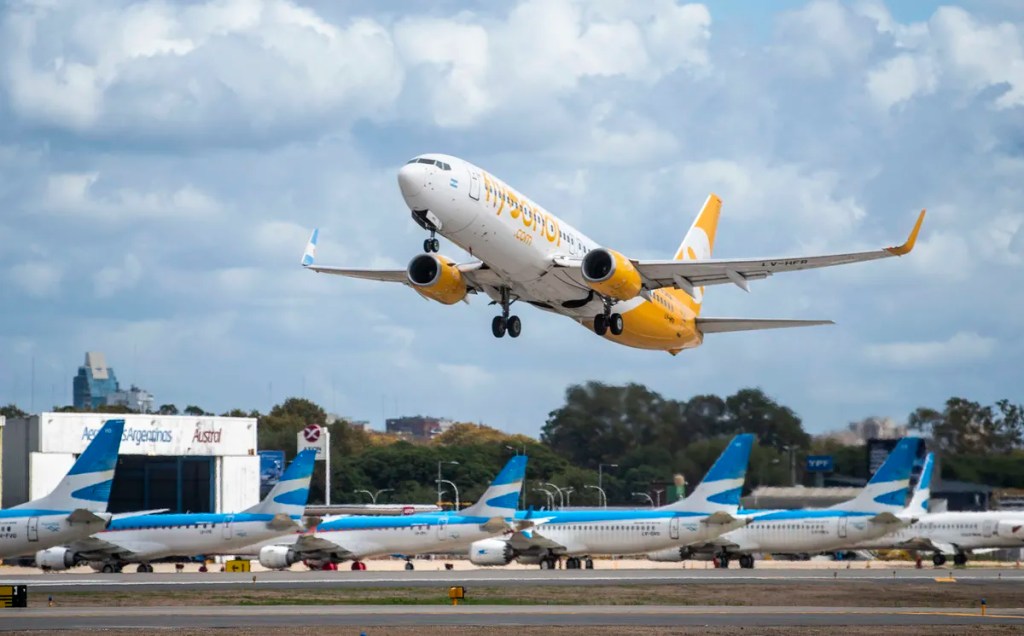
Aerolíneas Argentinas operó el 62% de los vuelos domésticos en Mayo 2024, siguen la aerolínea local de bajo costo Flybondi con el 26% del mercado interno y la aerolínea JetSMART Airlines Argentina con el 11% de la cuota de mercado dooméstico, según los últimos datos disponibles del regulador del ORSNA.

Reglamentación Artículo 110
La reglamentación del Artículo 110 del Código Aeronáutico de argentina permitirá introducir nuevas normativas para aplicarsse en el mercado aéreo argentino en el corto plazo.

El primero de los capítulos del Decreto Nº599/2024, borrará de los requisitos para operar en el país la solicitud de Audiencias Públicas. Es decir, no habrá que tramitar ese permiso necesario, aunque discrecional, que entregaba el Estado. De hecho, la última se celebró durante el Gobierno de Mauricio Macri, que fue la que entregó las licencias con las que vuelan JetSMART Airlines Argentina y Flybondi. Sin audiencias, las rutas se solicitarán por un sistema digital y mucho más ágil, tal como repite la norma en varios pasajes.

Las nuevas normas incluyen un cambio fundamental en el negocio aeronáutico. Cuando estén plenamente en vigencia, tras las reglamentaciones correspondientes, se podrán prestar servicios de cabotaje con aeronaves de matrícula extranjera y hasta tripulación de otra nacionalidad. Es algo muy novedoso para el segmento.

El Certificado de Explotador de Trabajo Aéreo (CETA), uno de los documentos fundamentales para empezar a volar, se dará a la Administración Pública quince días hábiles para que se exprese. Si no lo hace, el solicitante puede pedir un Pronto Despacho y, transcurridos cinco días más, la autoridad deberá emitir en forma automática/digital el CETA.

Operaciones logísticas
La apertura necesaria de liberalización de las operaciones logísticas en los aeropuertos permitirá incorporar nuevos operadores que compitan con Intercargo, anteriormente encargada casi en exclusividad de los servicios de rampa, asistencia y equipaje para todas las líneas aéreas que operan en el país, con excepción de Aerolíneas Argentinas, Flybondi y American Airlines, que operan su propia prestación. Los gremios aeronáuticos del sector tienen capacidad de fuego como para realizar medidas de fuerza que paralicen la operación. Habrá que estar atento a los movimientos gremiales cuando avance la liberalización.

De acuerdo a la regulación vigente hasta que salga el decreto, las aerolíneas tienen la obligación de contratar a Intercargo salvo que se presten ellas mismas el servicio. American Airlines siempre tuvo su personal de tierra. Aerolíneas Argentinas emplea a Aerohandling, una sociedad del grupo que le da servicios a sus aviones. Actuamente, con las operaciones de Intercargo representaban para las demás líneas aéreas desventajas operativas a costos en moneda Dólar en lugar de la moneda nacional Pesos Argentinos. Con el ingreso de nuevos operadores, incluyendo a Intercargo y Aerohandling, tendrían la posibilidad de ofrecer sus servicios a otras líneas.

Ley Defensa Competencia
El segundo título de los tres tiene que ver con la reglamentación del Artículo 110 del Código Aeronáutico, habla de los requisitos para presentar acuerdos de cooperación interempresaria o comerciales, y establece la implementación de la Ley de Defensa de la Competencia para todas las cuestiones que se sucedan. Es decir, si eventualmente hay planteos de monopolio, por caso, ya no intervendrán los varios entes públicos del sector, sino el Tribunal que lo hace con todas las actividades de la economía.

El tercero, finalmente, apunta a igualar los derechos de utilización de las estaciones aeroportuarias, especialmente, en horas pico. Así las cosas, le encomienda a la autoridad la confección de un “Reglamento Transitorio de Asignación de Capacidad y/o Frecuencias para servicios nacionales o internacionales”, a la espera de uno definitivo para el que le otorga 180 días.

Básicamente, se terminarán algunos privilegios que tiene la línea aérea estatal para disponer de los aeropuertos a su antojo. De hecho, se deroga el Decreto Nº879/21, un reglamento hecho a medida de la empresa pública en épocas de manejo de la agrupación de La Cámpora, no solo de la compañía sino del sector aerocomercial. “Se determinará la capacidad y/o frecuencias disponibles deduciendo los servicios presentados ante la Autoridad Aeronáutica por Aerolíneas Argentinas”, decía un artículo relevante de aquella norma. En otras palabras, en la práctica, la aerolínea estatal disponía los slots necesarios para acaparar el mercado en los aeropuertos y el resto era distribuido entre los pocos operadores nacionales.

Perspectivas aviación Argentina
La intruducción de la nueva normativa permitirá cambios estructurales en la aviación comercial avanzando en más libertad e igualdad entre los operadores aéreos. La cultura kichnerista se encuentra bien arraigada en las metodologías y prácticas en la aviación, con su máximo representante Aerolíneas Argentinas. Pero un cambio de cultura de trabajo está cambiando radicalmente, mientras el futuro permitirá conocer las mejoras de los procesos que generarán el atractivo para un mercado golpeado durante décadas y menos desarrollados de América Latina.

New aviation in Argentina

Deep changes in commercial aviation are looming
New aeronautical regulations in Argentina

The Government of the Argentine Republic began deregulating the commercial aviation sector. Through Decree No. 599/2024, officially published on Wednesday, July 10, 2024 in the Official Gazette, the Executive Branch approved the regulations that establish access to commercial aviation markets, repeal regulations and modify the Aeronautical Code. The objective is to continue promoting competition and eliminate obstacles that have been in force since the middle of the last century. The measure impacts commercial aviation authorizations to operate in Argentine territory. These will be granted to carry out internal and international air transport activities for passengers and/or cargo, for regular or non-regular services, carried out with aircraft; for aerial work and for operational airport and ramp services in general.

Argentina’s government on Wednesday published the decree aimed at opening up the country’s aviation sector, inviting foreign airlines to enter the market long dominated by state-owned Aerolíneas Argentinas. The reform should increase the number of routes, flight frequencies and attract more competitors, the Ministry of Transport said in a statement. Companies can now apply to operate as many routes and frequencies as they want, a request that will be subject to security approval, according to the decree. Airlines also now have full control over how much they charge for tickets, the decree states, eliminating a regulation that allowed the government to set a minimum price. In addition, it ends Intercargo’s monopoly, allowing other companies to compete in providing ground services.

The new introduction to commercial aviation will remove barriers to entry for new airlines to start operations in Argentina and deregulate air frequencies and fares.

Regarding logistics operations, the monopoly of Intercargo, the public company that performs all services for local and international airlines at direct costs in international currency (Dollar), will end. This represented a disadvantage for airlines on domestic flights, where such rates were not available to Aerolíneas Argentinas, since it had authorized its own operations management with AeroHandling.

The Market Access Regulations published as an annex list the conditions that, if met, would be a true radical change in the current system: “The regulated activity will be governed by the following principles: Free access to the market for new operators through brief and agile administrative procedures; encouragement of fair competition between the different operators; tariff deregulation; safeguarding operational safety; continuous operational surveillance of authorized services; freedom in the setting of frequencies, if applicable, initially declaring them in their business plan, for analysis subject to strict operational criteria and the need for air traffic to develop in a safe and orderly manner and, finally, limited and efficient interventions by the National Public Administration, of a digital/electronic nature, aimed exclusively at preserving the principles stated above and transparency in the measurement, assignment and use of airport capacity”.

Several guidelines appear that will change the sector. In addition to the commitment to reduce the State’s intervention to a mere role in operational and security matters, the norm defines tariff deregulation, a system that Argentina lost since Kirchnerism came to power. In fact, in those years, the State decided what the minimum and maximum ticket price was. It was called the tariff band and it was the Executive Branch that set the price of each section.

With the so-called “Airplane Revolution” promoted by Guillermo Dietrich in Mauricio Macri’s government, the minimum limit was removed, giving rise to low-cost airlines offering cheaper prices, but no progress was made with the maximum limit allowed. However, in 2021, Alberto Fernández’s administration returned to that band scheme, used in very few markets in the world.

Open Skies
The administration of Libertarian President Javier Milei, who took office in December 2023, has signed a series of Open Skies Agreements with other countries in recent months, allowing their airlines to operate domestic routes in Argentina under some conditions. Currently, Brazil, Chile, Peru, Ecuador, Panama, Uruguay and Canada have signed agreements potentially opening the Argentine market to operators such as GOL Linhas Aéreas, LATAM Airlines and Air Canada. The Ministry of Transport said on Wednesday 10/07 that more such agreements should be signed in the coming months.

Aerolíneas Argentinas operated 62% of domestic flights in May 2024, followed by local low-cost carrier Flybondi with 26% of the domestic market and carrier JetSMART Airlines Argentina with 11% of the domestic market share, according to the latest available data from regulator ORSNA.

Regulation Article 110
The regulation of Article 110 of the Argentine Aeronautical Code will allow the introduction of new regulations to be applied in the Argentine air market in the short term.

The first of the chapters of Decree No. 599/2024 will remove the request for Public Hearings from the requirements to operate in the country. That is, it will not be necessary to process that necessary, although discretionary, permit that the State granted. In fact, the last one was held during the Government of Mauricio Macri, which was the one that granted the licenses with which JetSMART Airlines Argentina and Flybondi fly. Without hearings, the routes will be requested through a digital and much more agile system, as the rule repeats in several passages.

The new rules include a fundamental change in the aeronautical business. When they are fully in force, after the corresponding regulations, cabotage services can be provided with foreign-registered aircraft and even crew of another nationality. This is something very new for the segment.

The Certificate of Operator of Aerial Work (CETA), one of the fundamental documents to start flying, will be given to the Public Administration fifteen working days to express itself. If it does not do so, the applicant can request a Prompt Dispatch and, after five more days, the authority must automatically/digitally issue the CETA.

Logistics operations
The necessary opening of the liberalization of logistics operations at airports will allow the incorporation of new operators that compete with Intercargo, previously almost exclusively in charge of ramp, assistance and baggage services for all airlines operating in the country, with the exception of Aerolíneas Argentinas, Flybondi and American Airlines, which operate their own services. The aeronautical unions of the sector have the firepower to carry out forceful measures that paralyze the operation. We will have to be attentive to the union movements when liberalization advances.

According to the current regulations until the decree is issued, airlines are required to hire Intercargo unless they provide the service themselves. American Airlines always had its own ground staff. Aerolíneas Argentinas employs Aerohandling, a company in the group that provides services to its aircraft. Currently, Intercargo’s operations represented operational disadvantages for other airlines at costs in dollars instead of the national currency, Argentine pesos. With the entry of new operators, including Intercargo and Aerohandling, they would have the possibility of offering their services to other airlines.

Competition Defense Law
The second of the three titles has to do with the regulation of Article 110 of the Aeronautical Code, it speaks of the requirements for presenting inter-company or commercial cooperation agreements, and establishes the implementation of the Competition Defense Law for all issues that arise. That is to say, if there are eventually claims of monopoly, for example, the various public entities of the sector will no longer intervene, but the Court that does so with all the activities of the economy.

The third, finally, aims to equalize the rights of use of the airport stations, especially during peak hours. Thus, it entrusts the authority with the preparation of a «Transitional Regulation of Capacity and/or Frequencies Assignment for national or international services», awaiting a definitive one for which it grants 180 days.

Basically, some privileges that the state airline has to use the airports as it pleases will end. In fact, Decree No. 879/21 is repealed, a regulation made to measure for the public company in times of management of the La Cámpora group, not only of the company but of the commercial aviation sector. “The capacity and/or available frequencies will be determined by deducting the services presented to the Aeronautical Authority by Aerolíneas Argentinas”, said a relevant article of that regulation. In other words, in practice, the state airline had the slots necessary to corner the market at the airports and the rest was distributed among the few national operators.

Perspectives on Argentine aviation
The introduction of the new regulation will allow structural changes in commercial aviation, moving towards more freedom and equality among air operators. The Kirchnerist culture is well rooted in the methodologies and practices in aviation, with its most representative Aerolíneas Argentinas. But a change in work culture is radically changing, while the future will allow us to learn about the improvements in the processes that will generate the appeal for a market that has been hit for decades and is less developed in Latin America.

PUBLISHER: Airgways.com
DBk: Argentina.gob.ar / Airgways.com
AW-POST: 202407101447AR
OWNERSHIP: Airgways Inc.
A\W A I R G W A Y S ®

Boeing declara culpabilidad

AW | 2024 07 08 13:38 | GOVERNMENT / INDUSTRY

Declaración de Boeing culpable fraude FAA

Boeing_Isologo.svg

The Boeing Company acordó declararse culpable de un cargo de conspiración para defraudar a la Federal Aviation Administration (FAA) y al Gobierno de Estados Unidos por su papel en dos accidentes fatales del 737 MAX, dijo el Departamento de Justicia (DOJ) en una presentación judicial el Domingo 07/07 por la noche. El acuerdo evita lo que podrían haber sido consecuencias más graves. Las multas ascienden a UA$ 487 millones de Dólares, una fracción de los US$ 24.800 millones de Dólares que las familias de las víctimas del accidente querían que pagara el fabricante de aviones. Las familias de las víctimas de dos accidentes fatales del 737 MAX se oponen al acuerdo, dijo el DOJ.

La declaración de culpabilidad es un duro golpe a la reputación de Boeing, una compañía que alguna vez fue conocida por la calidad y seguridad de sus aviones comerciales. Más allá de los accidentes fatales de los aviones 737 MAX, la compañía se ha enfrentado a una serie de preguntas sobre la seguridad y la calidad de sus aviones. En enero, un tapón de la puerta de un 737 MAX volado por Alaska Airlines explotó al principio de un vuelo, dejando un enorme agujero en el costado del avión y dañando aún más la reputación de Boeing.

El acuerdo estipula que Boeing tendrá que operar bajo la supervisión de un monitor independiente, una persona elegida por el gobierno, durante un período de tres años. Pero ese descuido y la multa no satisficieron a las familias de las víctimas, según uno de sus abogados.

«Este acuerdo no reconoce que debido a la conspiración de Boeing, 346 personas murieron. Este acuerdo engañoso y generoso claramente no es de interés público», dijo un comunicado de Paul Cassell, Profesor de derecho de la Universidad de Utah que representa a muchos familiares del accidente de Lion Air de 2018 y de las víctimas del accidente de Ethiopian Air de 2019. Las familias buscan un juicio público por los cargos.

DOJ defiende acuerdo
El Departamento de Justicia argumenta que las sanciones que aceptó The Boeing Company fueron las más graves disponibles. Argumentó que también obtuvo otras mejoras, incluida la supervisión de un monitor y la demanda de que Boeing gaste más en seguridad y cumplimiento de las reglas al construir aviones. «Esta resolución protege al público estadounidense. Boeing deberá realizar inversiones históricas para fortalecer e integrar sus programas de cumplimiento y seguridad. Esta condena penal demuestra el compromiso del departamento de responsabilizar a Boeing por su mala conducta», dijo el comunicado del Departamento de Justicia.

La declaración también planteó la posibilidad de más problemas legales para Boeing y sus ejecutivos. Dijo que si bien ninguna persona enfrenta cargos penales como resultado de este acuerdo: «El Departamento de Justicia está resolviendo solo con la compañía, y no proporciona inmunidad a ningún empleado individual, incluidos los ejecutivos corporativos, por ninguna conducta. El Departamento de Justicia está resolviendo con Boeing solo por mala conducta que precedió a los accidentes del 737 MAX, y no proporciona inmunidad para ninguna otra conducta corporativa, incluido el incidente del 1282 de Alaska Airlines».

Los familiares de las víctimas de los dos accidentes aéreos fatales criticaron el acuerdo de culpabilidad el Lunes 08/07 por la mañana.

En Enero de 2021, los Fiscales Federales y Boeing llegaron a un acuerdo para resolver los cargos penales y aplazar cualquier enjuiciamiento sobre el asunto. Durante un período de prueba de tres años que siguió, Boeing acordó mejorar sus problemas de calidad y transparencia con el gobierno. Pero el incidente de Alaska Airlines se produjo pocos días antes de que terminara ese período de prueba, lo que llevó a una serie de investigaciones federales sobre sus prácticas.

En Mayo 2024, el Departamento de Justicia dijo que estaba estudiando la posibilidad de presentar cargos penales contra Boeing una vez más debido a una posible violación de ese acuerdo de Enero de 2021. Boeing había argumentado en sus propios documentos judiciales que no violó el acuerdo y que debería evitarse el enjuiciamiento. La declaración de culpabilidad del domingo por la noche, que se produjo justo antes de la fecha límite de medianoche establecida por el Departamento de Justicia, resolvió ese problema.

Costo Declaración de culpabilidad
Según el acuerdo original de 2021, Boeing había acordado pagar US$ 2.500 millones de Dólares. Pero alrededor del 70% de esa cantidad representaba pagos que Boeing ya había acordado hacer a sus clientes de aerolíneas como compensación por los 20 meses de inmovilización de los aviones. Otros US$ 500 millones de Dólares fueron un fondo para compensar a las víctimas de accidentes. Solo US$ 243,6 millones de Dólares representaban una multa penal para el Gobierno, que se duplicaría después de la nueva declaración de culpabilidad.

Boeing también acordó gastar US$ 455 millones de Dólares en sus programas de cumplimiento y seguridad durante los próximos tres años, lo que, según el Gobierno, representará un aumento del 75% sobre lo que la compañía gastaba anualmente en esos programas.

Los diversos problemas de la compañía han causado profundas pérdidas financieras desde el segundo accidente fatal del 737 MAX. Ha registrado pérdidas operativas básicas de US$ 31.900 millones de Dólares desde el inicio de la inmovilización de veinte meses. También corre el riesgo de perder su calificación crediticia de grado de inversión por primera vez en su historia.

La compañía ahora tiene casi US$ 47.000 millones de Dólares en deuda a largo plazo, y si su calificación de deuda se rebaja a la categoría de bono basura, su costo de pedir dinero prestado se disparará. Pero una multa adicional de cientos de millones, en lugar de miles de millones, sigue siendo asequible para la compañía, a pesar de sus problemas financieros.

Contratos gubernamentales
La compañía evitó otra sanción grave: la pérdida del derecho a hacer negocios con el Gobierno. Tal sanción habría sido un golpe devastador para el fabricante de aviones. Alrededor del 37% de sus ingresos en 2023 provinieron de contratos federales.

Según Richard Aboulafia, Director Gerente de AeroDynamic Advisory, una consultora de gestión aeroespacial y de defensa, la posibilidad de tal sanción era mínima, ya que tanto Boeing como el Gobierno Federal dependen en gran medida el uno del otro.

A pesar de sus problemas en los últimos cinco años, Boeing sigue siendo un componente clave de la economía estadounidense. Sigue siendo el mayor exportador del país y cuenta con casi 150.000 empleados estadounidenses. La compañía estima su impacto económico en US$ 79.000 millones de Dólares, respaldando 1,6 millones de puestos de trabajo directos e indirectos en más de 9.900 proveedores repartidos por los 50 estados. Su único rival importante para aviones comerciales, el fabricante europeo Airbus, tiene una cartera de pedidos de más de 8.000 aviones, lo que significa que cualquier cliente de Boeing que haga un pedido de un avión Airbus hoy en día tendría que esperar casi una década para que se entregue.

Boeing pleads guilty

Boeing pleads guilty to FAA fraud

Department Justice US_Isologotype

The Boeing Company has agreed to plead guilty to one count of conspiracy to defraud the Federal Aviation Administration (FAA) and the U.S. government for its role in two fatal 737 MAX crashes, the Department of Justice (DOJ) said in a court filing Sunday night. The agreement avoids what could have been more serious consequences. The fines amount to US$ 487 million, a fraction of the US$ 24.8 billion that the families of the crash victims wanted the aircraft manufacturer to pay. The families of the victims of two fatal 737 MAX crashes oppose the agreement, the DOJ said.

The guilty plea is a major blow to the reputation of Boeing, a company once known for the quality and safety of its commercial aircraft. Beyond the fatal crashes of 737 MAX planes, the company has faced a number of questions about the safety and quality of its planes. In January, a door stopper on a 737 MAX flown by Alaska Airlines exploded early in a flight, leaving a gaping hole in the side of the plane and further damaging Boeing’s reputation.

The settlement stipulates that Boeing will have to operate under the supervision of an independent monitor —a person chosen by the Government— for a period of three years. But that oversight and the fine did not satisfy the victims’ families, according to one of their lawyers.

«This settlement fails to recognize that because of Boeing’s conspiracy, 346 people died. This deceptive and generous settlement is clearly not in the public interest», said a statement from Paul Cassell, a University of Utah law professor who represents many family members of the 2018 Lion Air crash and victims of the 2019 Ethiopian Air crash. The families are seeking a public trial on the charges.

DOJ defends settlement
The Justice Department argues that the penalties The Boeing Company agreed to were the most severe available. It argued that it also won other improvements, including oversight by a monitor and a demand that Boeing spend more on safety and compliance with rules when building planes. “This resolution protects the American public. Boeing will be required to make historic investments to strengthen and integrate its compliance and safety programs. This criminal conviction demonstrates the department’s commitment to holding Boeing accountable for its misconduct”, the Justice Department statement said.

The statement also raised the possibility of further legal trouble for Boeing and its executives. It said that while no one faces criminal charges as a result of this settlement, “the Department of Justice is settling only with the company, and is not providing immunity to any individual employees, including corporate executives, for any conduct. The Department of Justice is settling with Boeing only for misconduct that preceded the 737 MAX crashes, and is not providing immunity for any other corporate conduct, including the Alaska Airlines 1282 incident”.

AW-Boeing 737 MAX_png (43)

Relatives of victims of the two fatal plane crashes criticized the plea agreement Monday morning.

In January 2021, U.S. Attorneys and Boeing reached an agreement to resolve criminal charges and defer any prosecution over the matter. During a three-year probationary period that followed, Boeing agreed to improve its quality and transparency issues with the Government. But the Alaska Airlines incident came just days before that probationary period ended, leading to a series of federal investigations into its practices.

In May 2024, the Justice Department said it was looking into filing criminal charges against Boeing once again over a potential violation of that January 2021 agreement. Boeing had argued in its own court filings that it did not violate the agreement and should be spared prosecution. Sunday night’s guilty plea, which came just before a midnight deadline set by the Justice Department, settled that issue.

Cost of the plea
Under the original 2021 agreement, Boeing had agreed to pay US$ 2.5 billion. But about 70% of that amount represented payments Boeing had already agreed to make to its airline customers as compensation for the 20-month grounding of the planes. Another US$ 500 million was a fund to compensate crash victims. Only US$ 243.6 million represented a criminal fine for the Government, which would double after the new plea.

Boeing also agreed to spend US$ 455 million on its compliance and safety programs over the next three years, which the Government says will represent a 75% increase over what the company spent annually on those programs.

The company’s various problems have caused deep financial losses since the second fatal 737 MAX crash. It has posted core operating losses of US$ 31.9 billion since the start of the 20-month grounding. It also risks losing its investment-grade credit rating for the first time in its history.

The company now has nearly US$ 47 billion in long-term debt, and if its debt rating is downgraded to junk status, its cost of borrowing money will skyrocket. But an additional fine of hundreds of millions, rather than billions, is still affordable for the company, despite its financial troubles.

Government Contracts
The company avoided another serious penalty: the loss of the right to do business with the Government. Such a penalty would have been a devastating blow to the aircraft maker. About 37% of its revenue in 2023 came from federal contracts.

According to Richard Aboulafia, managing director of AeroDynamic Advisory, an aerospace and defense management consultancy, the chance of such a penalty was slim, as both Boeing and the Federal Government are heavily dependent on each other.

Despite its troubles over the past five years, Boeing remains a key component of the U.S. economy. It remains the country’s largest exporter and employs nearly 150,000 American employees. The company estimates its economic impact at US$ 79 billion, supporting 1.6 million direct and indirect jobs at more than 9,900 suppliers spread across all 50 states. Its only major rival for commercial aircraft, European manufacturer Airbus, has an order book of more than 8,000 planes, meaning that any Boeing customer placing an order for an Airbus plane today would have to wait nearly a decade for it to be delivered.

PUBLISHER: Airgways.com
DBk: Justice.gov / Boeing.com / Airgways.com
AW-POST: 202407081338AR
OWNERSHIP: Airgways Inc.
A\W A I R G W A Y S ®

Argentina firma Cielos Abiertos

AW | 2024 07 07 13:13 | GOVERNMENT / AIRLINES MARKET

Argentina reforma desregulación Aviación Comercial

La República Argentina ha anunciado que firmará el Lunes 8 de Julio de 2024 la reforma de la Aviación Comercial que desarrollará grandes cambios en las políticas aéreas. El borrador del decreto que enmarcará la política de cielos abiertos establecido en el DNU Nº70/2023 está siendo analizado por el Presidente Javier Milei.

El nuevo Ministerio de Desregulación y Transformación del Estado de la Nación Argentina, a cargo de Federico Sturzenegger pone en marcha su primera gran medida y el Lunes 08/07 firmará la reforma del sector aerocomercial que comenzará la modificación del Código Aeronáutico que incluye la reducción de las rutas de Aerolíneas Argentinas que no sean rentables. Esta es una de las primeras grandes medidas que Federico Sturzenegger tiene planeado implementar.

Modificación del Código Aeronáutico
El borrador del decreto que enmarcará la política de cielos abiertos establecido en el DNU 70/2023 está siendo analizado por el Presidente Javier Milei y contiene una serie de modificaciones del Código Aeronáutico como la apertura del acceso a mercados hasta ahora no cubiertos. También se propone la eliminación de la Audiencia Pública, la incorporación de un nuevo régimen de autorizaciones de rutas, cambios en el registro de aeronaves y contratos y la digitalización de trámites. Además, incluye modificaciones sobre la atención al pasajero y en las infracciones aeronáuticas sobre los planes de vuelo y el accionar de los pilotos, así como de los regímenes de capacidad y frecuencias para servicios aéreos, cuestiones sobre la remoción de aeronaves, equipaje y carga y más libertad para operar drones en el ámbito privado.

Las reformas incluidas en el borrador fueron redactadas por Federico Sturzenegger junto a una comisión presidida por Hernán Gómez, Subsecretario de Transporte Aéreo y los juristas Mara Di Loreto y Eduardo Cartasso, además de grupos empresarios, universitarios y autoridades de Nación, entre otros.

Uno de los puntos importantes que incluye la reforma, es la reducción de rutas que considera no rentables en Aerolíneas Argentinas. El Gobierno sostiene que la única forma de mantener estos trayectos es a través de convenios de financiamiento de las provincias interesadas en mantenerlos. Además, se plantea el reordenamiento del Aeropuerto Jorge Newbery y el Aeropuerto Internacional de Ezeiza: se establecerá con qué capacidad cuentan, cuántos pasajeros por hora pueden albergar y cuántos aviones deben ser removidos. En ese sentido, trascendió que Aerolíneas Argentinas deberá dejar cuatro posiciones en Aeroparque, en respuesta a un pedido que realizan desde hace tiempo las empresas low cost, que no podían traer aviones al país por falta de espacio (slots).

Flybondi sostiene que su intención es traer entre cinco y diez aviones, mientras que JetSMART Airlines Argentina buscaría ingresar seis nuevas aeronaves. Ambas aerolíneas continúan con los reclamos para superar las trabas de su operación en Aeroparque.

Los decretos complementan de alguna manera a los acuerdos que el Gobierno denomina cielos abiertos. Hasta ahora se firmaron memorandos con Brasil, Chile, Perú, Ecuador, Uruguay, Canadá y Panamá y el próximo país sería Paraguay, que tendría una empresa interesada en operar cabotaje en el país, lo cual les abriría la puerta a Aerolíneas Argentinas, JetSMART y Flybondi para hacer lo mismo en terreno paraguayo.

Gremios aeronáuticos
Atentos a los cambios aplicados a la actividad, los gremios del ámbito aerocomercial expusieron su oposición a Cielos Abiertos, pues en la instancia del acuerdo firmado por el Gobierno de Javier Milei con su par de Chile. A través de un comunicado emitido a mediados de Mayo 2024, la Asociación de Pilotos de Líneas Aéreas (APLA) que encabeza Pablo Biró no dudó en definir a la política de cielos abiertos como otra muestra más de pérdida de soberanía. «Esta entrega de un recurso público como lo es el control de la actividad aérea en el país tiene graves efectos concretos, perjudicando tanto a trabajadores como a pasajeros. Por un lado, abren los cielos a empresas extranjeras cuyo interés es operar destinos rentables de nuestro país o buscar subsidios para cubrir aquellos puntos que no lo son. Por otro, reducen frecuencias, desfinancian y vacían Aerolíneas Argentinas imposibilitándola de aprovechar este nuevo escenario y comprometiendo su existencia», dijo la organización sindical.

Perspectivas aviación
La profundización de los cambios en la aviación comercial de Argentina permitirá desarrollar un nuevo escenario en el mercado de más capacidad de líneas aéreas y un incremento de las ofertas de rutas a destinos en el país y el exterior que permitirá beneficiar al usuario del transporte aéreo.

Argentina signs Open Skies

Argentina reforms deregulation of Commercial Aviation

The Argentine Republic has announced that it will sign on Monday, July 8, 2024, the reform of Commercial Aviation that will develop major changes in air policies. The draft decree that will frame the open skies policy established in DNU No. 70/2023 is being analyzed by President Javier Milei.

The new Ministry of Deregulation and Transformation of the State of the Argentine Nation, headed by Federico Sturzenegger, is launching its first major measure and on Monday, July 8, it will sign the reform of the commercial aviation sector that will begin the modification of the Aeronautical Code that includes the reduction of Aerolíneas Argentinas routes that are not profitable. This is one of the first major measures that Federico Sturzenegger plans to implement.

Modification of the Aeronautical Code
The draft decree that will frame the open skies policy established in DNU 70/2023 is being analyzed by President Javier Milei and contains a series of modifications to the Aeronautical Code such as the opening of access to markets not covered until now. The elimination of the Public Hearing, the incorporation of a new regime of route authorizations, changes in the registration of aircraft and contracts, and the digitalization of procedures are also proposed. In addition, it includes modifications on passenger service and aeronautical infractions on flight plans and the actions of pilots, as well as capacity and frequency regimes for air services, issues on the removal of aircraft, luggage, and cargo, and more freedom to operate drones in the private sector.

The reforms included in the draft were written by Federico Sturzenegger together with a commission chaired by Hernán Gómez, Undersecretary of Air Transport, and the lawyers Mara Di Loreto and Eduardo Cartasso, as well as business groups, university students, and national authorities, among others.

One of the important points included in the reform is the reduction of routes that it considers unprofitable for Aerolíneas Argentinas. The Government maintains that the only way to maintain these routes is through financing agreements with the provinces interested in maintaining them. In addition, the reorganization of the Jorge Newbery Airport and the Ezeiza International Airport is proposed: their capacity will be established, how many passengers per hour they can accommodate, and how many planes must be removed. In this regard, it was revealed that Aerolíneas Argentinas will have to leave four positions in Aeroparque, in response to a request made for some time by low-cost companies, which could not bring planes to the country due to lack of space (slots).

Flybondi maintains that its intention is to bring between five and ten aircraft, while JetSMART Airlines Argentina would seek to bring in six new aircraft. Both airlines continue with their claims to overcome the obstacles to their operation in Aeroparque.

The decrees complement in some way the agreements that the Government calls open skies. So far, memoranda have been signed with Brazil, Chile, Peru, Ecuador, Uruguay, Canada, and Panama and the next country would be Paraguay, which would have a company interested in operating domestic flights in the country, which would open the door for Aerolíneas Argentinas, JetSMART and Flybondi to do the same on Paraguayan soil.

Aeronautical unions
Attentive to the changes applied to the activity, the unions of the aero-commercial sector expressed their opposition to Open Skies, since in the instance of the agreement signed by the Government of Javier Milei with his counterpart from Chile. Through a statement issued in mid-May 2024, the Association of Airline Pilots (APLA) headed by Pablo Biró did not hesitate to define the open skies policy as yet another example of loss of sovereignty. «This surrender of a public resource such as the control of air activity in the country has serious concrete effects, harming both workers and passengers. On the one hand, they open the skies to foreign companies whose interest is to operate profitable destinations in our country or seek subsidies to cover those points that are not. On the other hand, they reduce frequencies, defund and empty Aerolíneas Argentinas, making it impossible for it to take advantage of this new scenario and compromising its existence», said the union organization.

Aviation Perspectives
The deepening of changes in Argentina’s commercial aviation will allow the development of a new scenario in the market of more airline capacity and an increase in the offers of routes to destinations in the country and abroad that will benefit the user of air transport.

PUBLISHER: Airgways.com
DBk: Argentina.gob.ar / Airgways.com
AW-POST: 202407071313AR
OWNERSHIP: Airgways Inc.
A\W A I R G W A Y S ®
Desafíos futuros de Boeing

AW | 2024 07 07 12:45 | GOVERNMENT / INDUSTRY

Peligros si se declara culpable de cargos penales
Boeing enfrentaría revoque protecciones legales

Boeing_Isologo.svg

The Boeing Company enfrenta nuevos peligros si la Justicia Federal de estados Unidos reviven un cargo penal contra el gigante aeroespacial y la compañía decide declararse culpable, un proceso que aparentemente se suponía que se resolvería este fin de semana.

El gigante de la aviación había estado en la fecha límite del Viernes 05/07 por la noche para aceptar o rechazar una propuesta del Departamento de Justicia (DOJ) que le exigiría declararse culpable de fraude durante la certificación de los aviones de línea 737 MAX. Más de cinco años después de dos accidentes fatales del 737 MAX, Boeing enfrenta un nuevo ajuste de cuentas legal ahora que los fiscales han concluido que la compañía incumplió un acuerdo anterior que abordaba los desastres.

Un Acuerdo de Culpabilidad podría ser rechazado por un juez. Aunque podría pagar multas exhorbitantes, quizás el mayor peligro es el efecto que una condena puede tener en los resultados económicas de Boeing y el futuro comprometido con la relación con los negocios con el Estado. Las condenas penales pueden excluir o suspender el derecho de una empresa a contratar con el gobierno federal y frustrar su capacidad para obtener préstamos, según Eddie Jauregui, Abogado defensor de Holland & Knight y ex-fiscal federal. Esas consecuencias tienen un significado particular para Boeing, que cuenta con el Gobierno Federal como su mayor cliente. La compañía aeroespacial es el mayor exportador de Estados Unidos.

El asunto podría terminar en manos de una agencia ejecutiva conocida como el Comité Interinstitucional de Suspensión e Inhabilitación (ISDC), que tiene el poder de discutir suspensiones e inhabilitaciones en todo el gobierno que pueden poner fin o interrumpir los negocios de una empresa con el Gobierno de los Estados Unidos.

«Las consideraciones son muchas, y son de peso. Creo que el trabajo de los contratos del gobierno es probablemente un componente extremadamente importante para Boeing», dijo Eddie Jáuregui.

La pregunta que se resolverá el Domingo 07/07 es si las acciones de Boeing que condujeron a la explosión de un tapón de puerta de un Boeing 737-9 MAX de Alaska Airlines en Enero 2024 hacen que altos funcionarios del Departamento de Justicia (DOJ) revoquen oficialmente las protecciones legales extendidas a Boeing en un acuerdo de Enjuiciamiento Diferido de Enero de 2021.

Después de las investigaciones sobre dos accidentes de los Boeing 737-8 MAX en 2018 y 2019 que mataron a 346 personas, la compañía de aviación con sede en Arlington, Virginia (VA) admitió que dos de sus antiguos pilotos de prueba del 737 MAX engañaron a la Federal Aviation Administration (FAA) sobre las fallas del Sistema de Control de Vuelo llamado Sistema de Aumento de Características de Maniobra (MCAS).

Los fiscales acordaron presentar una acusación alegando que Boeing conspiró para defraudar al Gobierno Federal siempre y cuando Boeing pasara tres años diseñando, implementando y haciendo cumplir un programa de cumplimiento y ética para prácticas de fabricación y supervisión más seguras.

Acciones del DOJ
Los fiscales estadounidenses han recomendado que el Departamento de Justicia (DOJ) presente cargos penales contra Boeing. Esto se produce tras una reclamación del Departamento de Justicia de que el fabricante de aviones había violado un acuerdo relacionado con dos accidentes mortales que involucraron a su avión 737 MAX y que mataron a 346 personas. Boeing ha negado haber violado el Acuerdo de Enjuiciamiento Diferido.

El Departamento de Justicia tiene hasta el 7 de Julio de 2024 para tomar una decisión final sobre si procesa a la empresa. El Departamento de Justicia se ha negado a hacer comentarios. La recomendación no es una decisión final y se desconocen los detalles de cualquier posible acción penal.

«Esta es una decisión realmente crítica que se avecina. Hay problemas con estos aviones. Estamos viendo problemas con estos aviones y estoy hablando de 737 MAX, 787 y es un reflejo del liderazgo», dijo Ed Pierson, Director Ejecutivo de la Fundación para la Seguridad de la Aviación y ex-Gerente Senior de The Boeing Company.

Los accidentes aéreos, ambos con aviones 737 MAX de Boeing, ocurrieron con seis meses de diferencia. El accidente que involucró a Lion Air de Indonesia ocurrió en Octubre de 2018, seguido de un vuelo de Ethiopian Airlines en Marzo de 2019.

La semana pasada, los familiares de las víctimas instaron a los fiscales a solicitar una multa contra Boeing de US$ 25.000 millones de Dólares y a iniciar un proceso penal. En virtud de un acuerdo alcanzado en 2021, Boeing dijo que pagaría un acuerdo de US$ 2.500 millones de dólares y los fiscales acordaron pedir al Tribunal de Justicia que retirara un cargo penal después de tres años si la compañía cumplía con ciertas estipulaciones establecidas en el Acuerdo de Enjuiciamiento Diferido. Pero en Junio 2024, el Departamento de Justicia dijo que Boeing estaba incumpliendo el acuerdo, afirmando que no había «diseñado, implementado y hecho cumplir un programa de cumplimiento y ética para prevenir y detectar violaciones de las leyes de fraude de Estados Unidos en todas sus operaciones».

La semana pasada, el Presidente Ejecutivo de The Boeing Company, Dave Calhoun, se enfrentó a un interrogatorio de los Senadores estadounidenses. El CEO de Boeing testificó que la compañía había aprendido de los errores del pasado y que el proceso para los denunciantes de los empleados funciona, pero los legisladores aún lo acusaron de no hacer lo suficiente para rectificar una cultura de represalias.

Como parte de una investigación en curso, los denunciantes de Boeing dijeron al Senado en Abril 2024 que los modelos 737 MAX, 787 Dreamliner y 777 tenían serios problemas de producción. La compañía se puso recientemente en el centro de atención cuando el panel de una puerta se cayó de un nuevo avión 737 MAX durante un vuelo de Alaska Airlines en Enero 2024, dejando un enorme agujero.

Dave Calhoun dejará el cargo de Director Ejecutivo a finales de 2024 después de menos de cinco años en el cargo con un paquete salarial de US$ 33 millones de Dólares. También permanecerá en el Consejo de Administración de Boeing. Dave alhoun asumió el cargo de Dennis Muilenburg, quien fue despedido después de los dos accidentes.

Ed Pearson dijo que los cambios en la cúpula de Boeing eran superficiales e incluso cuando Dave Calhoun fue nombrado Director Ejecutivo en 2019, llevaba una década en la compañía. «Están tomando esas decisiones que están afectando a millones y millones de personas durante muchos, muchos años», dijo.

The Boeing Company podría ser procesado penalmente por los accidentes del 737 MAX.

Boeing’s future challenges

Perils if it pleads guilty to criminal charges
Boeing could face revocation of legal protections

The Boeing Company faces new perils if the US Federal Court revives a criminal charge against the aerospace giant and the company decides to plead guilty, a process that was apparently supposed to be resolved this weekend.

The aviation giant had been at the Friday night deadline to accept or reject a proposal from the Department of Justice (DOJ) that would require it to plead guilty to fraud during the certification of the 737 MAX airliners. More than five years after two fatal 737 MAX crashes, Boeing faces a new legal reckoning now that prosecutors have concluded that the company breached an earlier agreement that addressed the disasters.

A Plea Deal could be rejected by a judge. While it could pay exorbitant fines, perhaps the biggest danger is the effect a conviction can have on Boeing’s bottom line and the future compromised relationship with the state’s business. Criminal convictions can preclude or suspend a company’s right to contract with the federal government and thwart its ability to obtain loans, according to Eddie Jauregui, a defense attorney at Holland & Knight and a former federal prosecutor. Those consequences have particular significance for Boeing, which counts the federal government as its largest customer. The aerospace company is the largest U.S. exporter.

The matter could end up in the hands of an executive agency known as the Interagency Suspension and Debarment Committee (ISDC), which has the power to discuss government-wide suspensions and debarments that can end or disrupt a company’s business with the U.S. government.

«The considerations are many, and they are weighty. I think government contract work is probably an extremely important component for Boeing», Eddie Jauregui said.

The question that will be resolved on Sunday 07/07 is whether Boeing’s actions that led to the explosion of a door stopper on an Alaska Airlines Boeing 737-9 MAX in January 2024 caused senior officials at the Department of Justice (DOJ) to officially revoke the legal protections extended to Boeing in a January 2021 Deferred Prosecution Agreement.

Following investigations into two Boeing 737-8 MAX crashes in 2018 and 2019 that killed 346 people, the Arlington, Virginia (VA)-based aviation company admitted that two of its former 737 MAX test pilots misled the Federal Aviation Administration (FAA) about failures in the Flight Control System called the Maneuvering Characteristics Augmentation System (MCAS).

Prosecutors agreed to file an indictment alleging that Boeing conspired to defraud the federal government so long as Boeing spent three years designing, implementing, and enforcing a compliance and ethics program for safer manufacturing and oversight practices.

DOJ actions
US prosecutors have recommended that the Department of Justice (DOJ) bring criminal charges against Boeing. This follows a claim by the DOJ that the aircraft manufacturer had breached an agreement related to two deadly crashes involving its 737 MAX aircraft that killed 346 people. Boeing has denied breaching the Deferred Prosecution Agreement.

The DOJ has until July 7, 2024, to make a final decision on whether to prosecute the company. The DOJ has declined to comment. The recommendation is not a final decision and details of any potential criminal action are unknown.

«This is a really critical decision coming up. There are issues with these airplanes. We’re seeing issues with these airplanes and I’m talking about 737 MAX, 787 and it’s a reflection of leadership», said Ed Pierson, Executive Director of the Aviation Safety Foundation and former Senior Manager at The Boeing Company.

The plane crashes, both involving Boeing 737 MAX jets, occurred six months apart. The crash involving Indonesia’s Lion Air occurred in October 2018, followed by an Ethiopian Airlines flight in March 2019.

Last week, victims’ families urged prosecutors to seek a US$ 25 billion fine against Boeing and to begin criminal proceedings. Under a deal reached in 2021, Boeing said it would pay a US$ 2.5 billion settlement and prosecutors agreed to ask the court to drop a criminal charge after three years if the company complied with certain stipulations set out in the Deferred Prosecution Agreement. But in June 2024, the Justice Department said Boeing was in breach of the agreement, stating that it had failed to “design, implement and enforce a compliance and ethics program to prevent and detect violations of U.S. fraud laws across its operations”.

Last week, The Boeing Company Chief Executive Dave Calhoun faced questioning from U.S. Senators. The Boeing CEO testified that the company had learned from past mistakes and that the process for employee whistleblowers works, but lawmakers still accused him of not doing enough to rectify a culture of retaliation.

As part of an ongoing investigation, Boeing whistleblowers told the Senate in April 2024 that the 737 MAX, 787 Dreamliner, and 777 models had serious production problems. The company was recently thrust into the spotlight when a door panel fell off a new 737 MAX aircraft during an Alaska Airlines flight in January 2024, leaving a gaping hole.

Dave Calhoun will step down as CEO at the end of 2024 after less than five years in the role with a US$ 33 million pay package. He will also remain on Boeing’s Board of Directors. Dave Calhoun took over for Dennis Muilenburg, who was fired after the two crashes.

Ed Pearson said the changes at the top of Boeing were superficial and even when Dave Calhoun was named CEO in 2019, he had been with the company for a decade. «They’re making these decisions that are affecting millions and millions of people for many, many years», he said.

The Boeing Company could be criminally prosecuted for the 737 MAX crashes.

PUBLISHER: Airgways.com
DBk: Justice.gov / Boeing.com / Airgways.com
AW-POST: 2024071245AR
OWNERSHIP: Airgways Inc.
A\W A I R G W A Y S ®
DOJ aproxima sentencia Boeing

AW | 2024 07 05 20:37 | GOVERNMENT / AVIATION ORGANISMS / INDUSTRY

Departamento Justicia EEUU plazo a Boeing por culpabilidad

Boeing_Isologo.svg

El Departamento de Justicia (DOJ) de Estados Unidos ha informado el plazo de acuerdo con The Boeing Company antes del Domingo, 7 de Julio de 2024 por el caso 737 MAX. La Justicia quiere una declaración de culpabilidad por parte del fabricante de aviones The Boeing Company como parte de un acuerdo con la compañía. De lo contrario, el Departamento de Justicia debe presentar cargos penales contra la empresa después del 07/07, que acarrearía un proceso pleno judicial.

Según los abogados que representan a las familias de las víctimas de los dos accidentes fatales del 737 MAX, Lion Air JT601 y Ethiopian Airlines ET302, el Departamento de Justicia está cerca de llegar a un acuerdo con Boeing. Incluye una declaración de culpabilidad a cargos penales, una multa y un monitor corporativo. Las familias de las víctimas dicen que es un tirón de orejas para Boeing. No hay noticias del Departamento de Justicia sobre la posible declaración de culpabilidad. Boeing declinó hacer comentarios.

AW-Boeing 737 MAX_png (43)

Cronología 737 MAX
Estas son las fechas clave en el caso penal del Departamento de Justicia de Estados Unidos contra The Boeing Company por la deficitaria seguridad del 737 MAX luego de los accidentes mortales en 2018 y 2019.

· 29 Octubre 2019: Un Boeing 737-8 MAX operado por Lion Air con vuelo JT601/LNI610 se estrella en el Mar de Java después de doce minutos de despegar, matando a las 189 personas a bordo.

· 10 Marzo 2020: Un Boeing 737-8 MAX operado por Ethiopian Airlines con vuelo ET302 se estrella unos seis minutos después de despegar, matando a las 157 personas a bordo.

· 4 Abril 2020: The Boeing Company reconoce que las fallas en un programa de software llamado Sistema de Aumento de Características de Maniobra (MCAS) jugaron un papel en los accidentes.

· 16 Septiembre 2020: Una investigación del Congreso sobre los accidentes del 737 MAX señala «fallas repetidas y graves por parte de la compañía y los funcionarios de seguridad aérea que involucraron suposiciones técnicas defectuosas por parte de los ingenieros de Boeing, una falta de transparencia por parte de la gerencia de Boeing y una supervisión extremadamente insuficiente por parte de la Administración Federal de Aviación».

· 7 Enero 2021: El Departamento de Justicia (DOJ) anuncia un Acuerdo de Enjuiciamiento Diferido (DPA) con The Boeing Company en el que el fabricante de aviones se compromete a pagar US$ 2.500 millones de Dólares en multas y restitución y a mejorar sus esfuerzos de cumplimiento y control de calidad. El acuerdo está diseñado para expirar en tres años si Boeing cumple con las condiciones.

· 18 Marzo 2022: El Departamento de Justicia comienza un juicio contra el ex piloto de Boeing Mark Forkner, quien fue acusado de engañar a los reguladores de aviación de Estados Unidos durante el proceso de certificación del Boeing 737 MAX. Mark Forkner, el único funcionario de Boeing acusado de un delito, fue absuelto cinco días después.

· 26 Enero 2023: Boeing se declara inocente en una Audiencia Federal en Texas, ya que las familias de las víctimas del 737 MAX argumentan que la DPA debería revisarse y reforzarse a la luz de lo que los abogados de las víctimas llamaron el «crimen corporativo más mortífero en la historia de Estados Unidos».

· 10 Febrero 2023: El Juez de distrito de Estados Unidos, Reed O’Connor, rechazó los argumentos para fortalecer la DPA, concluyendo que el Tribunal carece de autoridad legal para supervisar o revisar sustancialmente el acuerdo entre Boeing y el Departamento de Justicia (DOJ).

· 5 Enero 2024: Un panel de una puerta posterior de un Boeing 737-9 MAX recientemente entregado explota durante el vuelo AS1282 de Alaska Airlines, lo que resulta en un aterrizaje de emergencia y vuelve a poner a Boeing en escrutinio.

: 14 Mayo 2024: El Departamento de Justicia (DOJ) concluye que Boeing incumplió sus obligaciones en virtud de la DPA de 2021, lo que expone a la empresa a un posible enjuiciamiento. Boeing se defiende diciendo que cree que cumple con el acuerdo.

· 12 Junio 2024: Boeing responde a la declaración del Departamento de Justicia, impugnando oficialmente el hallazgo de que violó el acuerdo de 2021.

· 30 Junio 2024: Representantes del Departamento de Justicia informan a las familias sobre un nuevo acuerdo de culpabilidad propuesto que incluye una declaración de culpabilidad de la compañía.

· 5 Julio 2024: Fecha límite para que The Boeing Company acepte la oferta del Departamento de Justicia (DOJ) o se enfrente a un juicio penal.

· 7 Julio 2024: El Departamento de Justicia (DOJ) debe informar al Juez Reed O’Connor, del Estado de Texas, sobre los próximos pasos en el caso de incumplimiento del Acuerdo de Enjuiciamiento Diferido (DPA).

Más de cinco años después de dos accidentes fatales del 737 MAX, The Boeing Company enfrenta un nuevo ajuste legal ahora que los fiscales han concluido que la compañía incumplió un acuerdo anterior que abordaba los desastres. El asediado gigante de la aviación debe decir si acepta un acuerdo propuesto por el Departamento de Justicia (DOJ) que le exigiría declararse culpable de fraude durante la certificación de los aviones 737 MAX, o asumir un proceso judicial que colocaría a la compañía en graves aprietos económicos y de confiabilidad corporativa.

DOJ sets Boeing sentencing deadline

US Justice Department sets Boeing plea deal deadline

Department Justice US_Isologotype

The US Department of Justice (DOJ) has announced the settlement deadline with The Boeing Company by Sunday, July 7, 2024, for the 737 MAX case. The Justice Department wants a guilty plea from aircraft manufacturer The Boeing Company as part of a deal with the company. Otherwise, the Justice Department must file criminal charges against the company after 07/07, which would lead to a full trial.

According to attorneys representing the families of the victims of the two fatal 737 MAX crashes, Lion Air JT601 and Ethiopian Airlines ET302, the Justice Department is close to reaching an agreement with Boeing. It includes a guilty plea to criminal charges, a fine, and a corporate monitor. The victims’ families say it is a slap in the face for Boeing. There is no word from the Justice Department on the possible guilty plea. Boeing declined to comment.

Boeing Safety Timeline
These are the key dates in the US Department of Justice’s criminal case against The Boeing Company over the 737 MAX’s poor safety following fatal crashes in 2018 and 2019.

· October 29, 2019: A Boeing 737-8 MAX operated by Lion Air with flight JT601/LNI610 crashes into the Java Sea twelve minutes after takeoff, killing all 189 people on board.

· March 10, 2020: A Boeing 737-8 MAX operated by Ethiopian Airlines with flight ET302 crashes about six minutes after takeoff, killing all 157 people on board.

· April 4, 2020: The Boeing Company acknowledges that flaws in a software program called the Maneuvering Characteristics Augmentation System (MCAS) played a role in the crashes.

· September 16, 2020: A congressional investigation into the 737 MAX crashes points to «repeated and serious failures by the company and aviation safety officials involving faulty technical assumptions by Boeing engineers, a lack of transparency by Boeing management, and grossly insufficient oversight by the Federal Aviation Administration.»

· January 7, 2021: The Department of Justice (DOJ) announces a Deferred Prosecution Agreement (DPA) with The Boeing Company in which the aircraft manufacturer agrees to pay US$ 2.5 billion in fines and restitution and to improve its compliance and quality control efforts. The agreement is designed to expire in three years if Boeing meets the conditions.

· March 18, 2022: The Justice Department begins a trial against former Boeing pilot Mark Forkner, who was accused of misleading U.S. aviation regulators during the Boeing 737 MAX certification process. Mark Forkner, the only Boeing official charged with a crime, was acquitted five days later.

· January 26, 2023: Boeing pleads not guilty at a federal hearing in Texas, as families of 737 MAX victims argue that the DPA should be reviewed and strengthened in light of what victims’ attorneys called the «deadliest corporate crime in American history».

· February 10, 2023: U.S. District Judge Reed O’Connor rejected arguments to strengthen the DPA, concluding that the Court lacks legal authority to oversee or substantially review the agreement between Boeing and the Department of Justice (DOJ).

· January 5, 2024: A rear door panel on a recently delivered Boeing 737-9 MAX explodes during Alaska Airlines flight AS1282, resulting in an emergency landing and putting Boeing back under scrutiny.

: May 14, 2024: The Department of Justice (DOJ) finds that Boeing breached its obligations under the 2021 DPA, exposing the company to potential prosecution. Boeing defends itself by saying it believes it is in compliance with the agreement.

· June 12, 2024: Boeing responds to the DOJ’s statement, officially contesting the finding that it violated the 2021 agreement.

· June 30, 2024: DOJ representatives inform families of a new proposed plea agreement that includes a guilty plea from the company.

· July 5, 2024: Deadline for The Boeing Company to accept the Department of Justice (DOJ) offer or face criminal prosecution.

· July 7, 2024: The Department of Justice (DOJ) must inform Judge Reed O’Connor of the State of Texas about the next steps in the Deferred Prosecution Agreement (DPA) breach case.

More than five years after two fatal 737 MAX crashes, The Boeing Company faces a new legal reckoning now that prosecutors have concluded that the company breached an earlier agreement addressing the disasters. The embattled aviation giant must say whether it accepts a proposed deal from the Department of Justice (DOJ) that would require it to plead guilty to fraud during the certification of the 737 MAX aircraft or take on a lawsuit that would put the company in serious financial and corporate reliability straits.

AW-Boeing 737 MAX_png (755)

PUBLISHER: Airgways.com
DBk: Justice.gov / Boeing.com / Airgways.com
AW-POST: 202407052037AR
OWNERSHIP: Airgways Inc.
A\W A I R G W A Y S ®
NTSB sanciona a Boeing

AW | 2024 06 27 17:20 | AVIATION ORGANISMS / GOVERNMENT / INDUSTRY / AVIATION SAFETY

Boeing viola descaradamente regulaciones investigación NTSB

NTSB_Isologotype

La Junta Nacional de Seguridad en el Transporte (NTSB) ha sancionado a The Boeing Company después de que el fabricante de aviones compartiera «información de investigación no pública» con los medios de comunicación. La agencia federal emitió una declaración contundente alegando que un ejecutivo de Boeing reveló información «no pública» sobre el accidente del vuelo AS1282 de Alaska Airlines del 5 de Enero de 2024 con la prensa.

En un duro comunicado emitido el Jueves 27/06 por la mañana, la agencia de la NTSB dijo que Boeing había violado descaradamente las regulaciones de investigación de la NTSB. Además de compartir detalles de la investigación con la prensa, la agencia acusa a Boeing de especular sobre las posibles causas del reventón del tapón de la puerta del vuelo AS1282 de un Boeing 737-9 MAX de Alaska Airlinesque transportaba a 174 pasajeros y seis miembros de la tripulación, sufrió un reventón en el aire del panel de una puerta pocos minutos después de que el vuelo saliera de Portland, Oregón. el 05/01. La NTSB dice que las violaciones ocurrieron el Martes 27/06 cuando un ejecutivo de Boeing estaba informando a los medios en la oficina de la compañía en Seattle (WA). Se alega que el individuo «proporcionó información de investigación y dio un análisis de información fáctica previamente publicada». La agencia señala que ambas acciones están prohibidas por un acuerdo que Boeing firmó al inicio de la investigación.

En sus comentarios, reportados por primera vez por The Air Current, la Junta de Seguridad de la NTSB sugiere que la ignorancia no es una excusa, señalando que: «Como parte de muchas investigaciones de la NTSB en las últimas décadas, pocas entidades conocen las reglas mejor que Boeing».

La NTSB dice que después de enterarse de la divulgación no autorizada de información, solicitó información adicional sobre la conferencia de prensa del 25 de Junio de 2024. Boeing entregó a la agencia una transcripción que confirmaba que la compañía proporcionó información a los medios de comunicación que la NTSB no había «verificado ni autorizado para su publicación». La Junta de Seguridad también reveló que «Boeing ofreció opiniones y análisis sobre los factores que sugirió que fueron causales del accidente». La agencia informa además que en la sesión informativa, Boeing «describió la investigación de la NTSB como una búsqueda para localizar al individuo responsable del trabajo de tapón de la puerta». Respondió a esta sugerencia, afirmando que la NTSB «se centra en la causa probable del accidente, sin culpar a ningún individuo ni evaluar la responsabilidad».

Consecuencias infracción
A la luz de las recientes acciones de Boeing, la NTSB dice que el fabricante de aviones mantendrá su estatus de partido. Sin embargo, actualmente no tendrá acceso a la información de investigación que produce la agencia federal mientras continúa su investigación sobre el accidente del 5 de Enero de 2024. Una consecuencia adicional se sentirá en una próxima audiencia de investigación de la NTSB. A diferencia de otras partes presentes, Boeing no podrá hacer preguntas a otros participantes. El evento, al que Boeing está citado, tendrá lugar los días 6 y 7 de Agosto de 2024 en Washington D.C. Finalmente, la NTSB dice que se coordinará con la División de Fraude del Departamento de Justicia «para proporcionar detalles sobre las recientes publicaciones de información de investigación no autorizada de Boeing en la investigación del enchufe de la puerta del 737-9 MAX».

Boeing, respuesta
Boeing reconoció que algunos de sus comentarios en la conferencia de prensa del 25 de Junio de 2024 habían sobrepasado el papel de la NTSB. En su mensaje emitido, expresa: «A medida que continuamos asumiendo la responsabilidad y trabajando de manera transparente, realizamos una sesión informativa en profundidad sobre nuestro Plan de Seguridad y Calidad y compartimos el contexto sobre las lecciones que hemos aprendido del accidente del 5 de Enero [de 2024]. Lamentamos profundamente que algunos de nuestros comentarios, destinados a dejar en claro nuestra responsabilidad en el accidente y explicar las acciones que estamos tomando, sobrepasaron el papel de la NTSB como fuente de información de investigación. Nos disculpamos con la NTSB y estamos listos para responder cualquier pregunta mientras la agencia continúa su investigación», dijo Boeing.

NTSB sanctions Boeing

Boeing blatantly violates regulations in NTSB investigation

The National Transportation Safety Board (NTSB) has sanctioned The Boeing Company after the aircraft manufacturer shared «non-public investigative information» with the media. The federal agency issued a strongly worded statement alleging that a Boeing executive disclosed «non-public» information about the Jan. 5, 2024, crash of Alaska Airlines Flight AS1282 to the press.

In a harsh statement issued Thursday morning, the NTSB agency said Boeing had blatantly violated NTSB investigation regulations. In addition to sharing details of the investigation with the press, the agency accuses Boeing of speculating about the possible causes of the burst door plug on flight AS1282 of an Alaska Airlines Boeing 737-9 MAX that was carrying 174 passengers and six crew members. crew suffered a mid-air door panel burst just minutes after the flight departed Portland, Oregon. on 01/05. The NTSB says the violations occurred on Tuesday 6/27 when a Boeing executive was briefing the media at the company’s Seattle (WA) office. The individual is alleged to have «provided investigative information and given an analysis of previously published factual information». The agency notes that both actions are prohibited by an agreement that Boeing signed at the beginning of the investigation.

Aw-Alaska Airlines_Boeing 737-9 MAX_001

In its comments, first reported by The Air Current, the NTSB Safety Board suggests that ignorance is not an excuse, noting that: «As part of many NTSB investigations over the past decades, few entities are aware of the rules better than Boeing».

The NTSB says that after learning of the unauthorized release of information, it requested additional information about the June 25, 2024 press conference. Boeing provided the agency with a transcript confirming that the company provided information to the media that the NTSB had not «verified or authorized it for publication». The Safety Board also revealed that «Boeing provided opinions and analysis on the factors it suggested were causal to the accident». The agency further reports that in the briefing, Boeing «described the NTSB investigation as a search to locate the individual responsible for the door plug work». He responded to this suggestion, stating that the NTSB «focuses on the probable cause of the accident, without blaming any individual or assessing liability».

Violation consequences
In light of Boeing’s recent actions, the NTSB says the plane maker will maintain its party status. However, it will currently not have access to the investigative information the federal agency produces as it continues its investigation into the January 5, 2024 crash. An additional consequence will be felt at an upcoming NTSB investigative hearing. Unlike other parties present, Boeing will not be able to ask questions of other participants. The event, to which Boeing is scheduled, will take place on August 6 and 7, 2024 in Washington D.C. Finally, the NTSB says it will coordinate with the Department of Justice’s Fraud Division «to provide details about Boeing’s recent releases of unauthorized investigative information in the 737-9 MAX door plug investigation».

Boeing, response
Boeing acknowledged that some of its comments at the June 25, 2024 press conference had overstepped the role of the NTSB. In his message issued, he states: «As we continue to take responsibility and work transparently, we held an in-depth briefing on our Safety and Quality Plan and shared the context of the lessons we have learned from the January 5 accident. [of 2024]. We deeply regret that some of our comments, intended to make clear our responsibility for the accident and explain the actions we are taking, overstepped the NTSB’s role as a source of investigative information. We apologize to the NTSB and we stand ready to answer any questions as the agency continues its investigation», Boeing said.

PUBLISHER: Airgways.com
DBk: Ntsb.gov / Boeing.com / Airgways.com
AW-POST: 202406271720AR
OWNERSHIP: Airgways Inc.
A\W A I R G W A Y S ®

Tesoro EEUU subvenciones aéreas

AW | 2024 06 27 11:17 | GOVERNMENT / AIRLINES

Subvenciones aerolíneas del Tesoro generan más US$ 500 millones

Los contribuyentes recibieron más de US$ 556 millones de Dólares en subvenciones de aerolíneas celebradas a principios de Junio 2024, según un comunicado de prensa del Departamento del Tesoro de Estados Unidos. La serie de subastas fue para acciones ordinarias de once aerolíneas. Las aerolíneas incluidas fueron Alaska Air Group, American Airlines Group Inc., Allegiant Travel Company, Delta Air Lines, Frontier Group Holdings, JetBlue Airways Corporation, Hawaiian Holdings, SkyWest, Southwest Airlines Co., Spirit Airlines y United Airlines Holdings.

El Departamento del Tesoro ayudó a brindar asistencia financiera a varias aerolíneas en medio de la pandemia de COVID-19 a partir de 2020. “Las aerolíneas emitieron estas garantías al Tesoro en 2020 y 2021 como compensación parcial por la asistencia financiera y los préstamos que el Tesoro proporcionó a las aerolíneas en virtud de la Ley de Ayuda, Alivio y Seguridad Económica por el Coronavirus (CARES), la Ley de Asignaciones Consolidadas de 2021 y la Ley del Plan de Rescate Estadounidense de 2021”, dijo la agencia federal.

“La venta de estas garantías por parte del Tesoro es parte de sus continuos esfuerzos pos-pandémicos para recuperar valor para los contribuyentes de una manera ordenada, justa y transparente”, dijo el Portavoz del Tesoro, Christopher Hayden, a The Center Square.

“La asistencia que brindó el Tesoro a través de la legislación de la era de la pandemia salvó una gran cantidad de empleos en la industria de la aviación y permitió que muchos empleados mantuvieran su atención médica durante una época en la que el número de pasajeros de aerolíneas se había reducido en un 60%. Las empresas beneficiarias informaron que utilizaron la asistencia para financiar los salarios y beneficios de más de 640.000 empleados de la aviación, ayudar a mantener la capacidad de infraestructura crítica y facilitar la recuperación de la industria. Además, los beneficiarios informaron que se mantuvieron o crearon más de 360,000 empleos en la aviación gracias a la asistencia federal”, dijo Christopher Hayden a The Center Square.

El Departamento del Tesoro estadounidense anunció originalmente su plan de subastar los warrants de las aerolíneas en Mayo 2024. «Las ganancias de estas ventas proporcionarán retornos adicionales al contribuyente estadounidense de la asistencia financiera y liquidez que el Tesoro proporcionó a estas aerolíneas durante la pandemia», dijo la agencia en su comunicado.

«Además de los ingresos de las subastas de warrants, el Tesoro ha recibido hasta ahora aproximadamente 2.7 millones de dólares en reembolsos de capital e intereses de empresas de aviación y seguridad nacional que recibieron préstamos del Tesoro en virtud de la Ley CARES. De los 35 préstamos que el Tesoro concedió en 2020, 15 prestatarios han reembolsado íntegramente sus préstamos”, expresó Christopher Hayden.

Muchas aerolíneas estadounidenses tuvieron dificultades financieras durante la pandemia de COVID-19 en 2020 y 2021 debido a restricciones de viaje y cancelaciones de vuelos. Muchos vuelos fueron cancelados a principios de 2020 debido al impacto de COVID-19 en los viajes aéreos, según datos de la Oficina de Estadísticas de Transporte (BTS).

La tasa de cancelación de vuelos de Marzo de 2020 —el 17% de los vuelos fueron cancelados— en ese momento fue la más alta desde Septiembre de 2001, cuando se cancelaron el 20% de los vuelos, según un informe de 2020. La tasa de cancelación se superó en abril cuando se cancelaron el 41% de los vuelos. Los niveles de rentabilidad de muchas aerolíneas han aumentado en los últimos años desde que se aliviaron las restricciones de viaje por el COVID-19.

La Asociación de Transporte Aéreo Internacional (IATA) afirmó en un comunicado de prensa desde este mes que sus proyecciones de rentabilidad de las aerolíneas para 2024 se vieron reforzadas respecto a dos de sus previsiones para 2023.

US Treasury air subsidies

Treasury airline subsidies generate more than US$ 500 million

Taxpayers received more than US$ 556 million in airline subsidies held in early June 2024, according to a press release from the U.S. Department of the Treasury. The auction series was for common shares of eleven airlines. The airlines included were Alaska Air Group, American Airlines Group Inc., Allegiant Travel Company, Delta Air Lines, Frontier Group Holdings, JetBlue Airways Corporation, Hawaiian Holdings, SkyWest, Southwest Airlines Co., Spirit Airlines, and United Airlines Holdings.

The Treasury Department helped provide financial assistance to several airlines amid the COVID-19 pandemic starting in 2020. “The airlines issued these guarantees to the Treasury in 2020 and 2021 as partial compensation for the financial assistance and loans that the Treasury provided airlines under the Coronavirus Aid, Relief, and Economic Security (CARES) Act, the Consolidated Appropriations Act of 2021, and the American Rescue Plan Act of 2021,” the federal agency said.

“Treasury’s sale of these guarantees is part of its ongoing post-pandemic efforts to recover value for taxpayers in an orderly, fair, and transparent manner”, Treasury Spokesperson Christopher Hayden told The Center Square.

“The assistance Treasury provided through pandemic-era legislation saved a large number of jobs in the aviation industry and allowed many employees to maintain their health care during a time when passenger numbers airlines had been reduced by 60%. Recipient companies reported using the assistance to fund the salaries and benefits of more than 640,000 aviation employees, help maintain critical infrastructure capacity, and facilitate industry recovery. Additionally, recipients reported that more than 360,000 aviation jobs were maintained or created thanks to federal assistance”, Christopher Hayden told The Center Square.

The US Treasury Department originally announced its plan to auction the airline warrants in May 2024. «The proceeds from these sales will provide additional returns to the US taxpayer from the financial assistance and liquidity that the Treasury provided to these airlines during the pandemic», the agency said in its statement.

«In addition to proceeds from warrant auctions, Treasury has so far received approximately $2.7 million in principal and interest repayments from aviation and national security companies that received Treasury loans under the CARES Act. Of the 35 loans that the Treasury granted in 2020, 15 borrowers have fully repaid their loans”, said Christopher Hayden.

Many U.S. airlines struggled financially during the COVID-19 pandemic in 2020 and 2021 due to travel restrictions and flight cancellations. Many flights were canceled in early 2020 due to the impact of COVID-19 on air travel, according to data from the Bureau of Transportation Statistics (BTS).

The March 2020 flight cancellation rate —17% of flights were canceled— at the time was the highest since September 2001, when 20% of flights were canceled, according to a 2020 report. The rate The cancellation rate was exceeded in April when 41% of flights were canceled. Many airlines’ profitability levels have increased in recent years since COVID-19 travel restrictions were eased.

The International Air Transport Association (IATA) stated in a press release this month that its airline profitability projections for 2024 were reinforced compared to two of its forecasts for 2023.

PUBLISHER: Airgways.com
DBk: Treasury.gov / Iata.org / John Spink / Airgways.com
AW-POST: 202406271117AR
OWNERSHIP: Airgways Inc.
A\W A I R G W A Y S ®
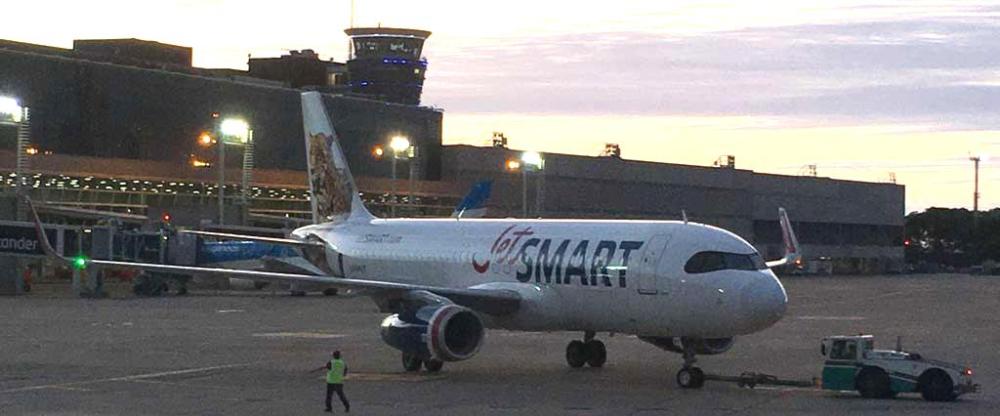
DOJ podría enjuiciar a Boeing

AW | 2024 06 25 07:27 | INDUSTRY / GOVERNMENT / AVIATION SAFETY

Fiscalía recomienda a DOJ acusar a compañía por cargos penales

Los Fiscales Federales recomiendan al Departamento de Justicia (DOJ) de Estados Unidos acusar a The Boeing Company por los accidentes que involucraron al 737 MAX. La Fiscalía tienen hasta el 7 de Julio de 2024 para determinar qué medidas tomar después de determinar que Boeing no cumplió con los términos de un acuerdo de 2021.

Los Fiscales Federales están recomendando a altos funcionarios del Departamento de Justicia que Boeing enfrente cargos penales por no cumplir con los términos de un acuerdo de 2021 que la habría protegido del procesamiento en relación con los accidentes en 10/2018 del vuelo JT-610 de Lion Air en Indonesia y en 03/2019 del vuelo ET-302 de Ethiopian Airlines en Etiopía, que mataron en total a 346 personas.

Los cargos penales son sólo una de varias opciones que el Departamento de Justicia de Estados Unidos está considerando y no se ha tomado una decisión final. Las fuentes consultadas hablaron bajo condición de anonimato para discutir deliberaciones privadas. Boeing declinó hacer comentarios.

Un abogado que representa a las familias de quienes murieron en el accidente de Octubre de 2018 de un avión de Lion Air en Indonesia y un vuelo de Etiopía Airlines en Addis Abeba cinco meses después, dijo que no han recibido noticias de los fiscales sobre cómo pretenden proceder.

“Las familias esperan que el informe sea cierto y, de ser así, esperan que la dirección del departamento siga la recomendación de los fiscales de carrera. En este caso, el procesamiento penal es ciertamente apropiado, ya que Boeing ya tuvo la oportunidad de escapar del procesamiento y no cumplió con sus obligaciones”, dijo Paul G. Cassell, el abogado, profesor de la Universidad de Facultad de Derecho de Utah y ex Juez Federal.

En Mayo 2024, el Departamento de Justicia dijo que Boeing había violado los términos de un “acuerdo de procesamiento diferido” de 2021 que habría permitido a la compañía evitar un proceso penal a cambio de cumplir una serie de condiciones. Desde ese anuncio, los fiscales han estado sopesando cómo seguir adelante. Si bien es posible presentar cargos penales, el gobierno tiene otras opciones, entre ellas llegar a un acuerdo en virtud de un nuevo acuerdo diferido, imponer multas adicionales e imponer otras condiciones, incluido exigir un supervisor independiente para garantizar que Boeing cumpla con sus obligaciones. La supervisión independiente de la empresa no formaba parte del acuerdo de 2021. Los fiscales también podrían optar por un juicio. El departamento enfrenta una fecha límite del 7 de Julio de 2024 para determinar cómo procederá.

En el acuerdo de 2021, Boeing reconoció que dos de sus pilotos técnicos engañaron a los reguladores federales sobre el sistema de software MCAS al que se culpaba de los accidentes y pagó US$ 2.500 millones de Dólares en multas, de los cuales US$ 500 millones de Dólares se destinaron a las familias de aquellos cuyos seres queridos murieron.

Boeing también acordó fortalecer los sistemas internos para detectar y denunciar fraudes. Si la empresa cumpliera los términos del acuerdo, no sería procesada penalmente. El acuerdo expiró apenas dos días después de que un panel de la puerta de un avión 737-9 MAX de Alaska Airlines explotara en pleno vuelo en Enero 2024, lo que desencadenó otra investigación criminal por parte del Gobierno y las autoridades de aviación de la Federal Aviation Administration (FAA) y la NTSB que sigue en curso.

Las familias de las víctimas del accidente quedaron conmocionadas y enojadas por la decisión de los fiscales de permitir que Boeing evitara el procesamiento penal en 2021. Debido a que no se les consideraba víctimas de delitos en el momento en que los fiscales y Boeing negociaron el acuerdo, no fueron consultados y muchos se enteraron de la noticia por informes de los medios. Pero los familiares posteriormente demandaron y ganaron el derecho a que las familias fueran consideradas víctimas de delitos.

La designación significó que los fiscales debían solicitar su opinión sobre acciones importantes relacionadas con el caso. El Departamento de Justicia ha celebrado varias reuniones con familiares, la más reciente el mes pasado en la que los familiares expresaron sus opiniones sobre cómo deberían proceder los fiscales.

En una carta enviada al Departamento de Justicia a principios de este mes, los familiares de las víctimas del accidente dijeron que Boeing debería afrontar US$ 25.000 millones de Dólares en multas adicionales y que el Departamento de Justicia debería iniciar un procesamiento penal agresivo contra la compañía Boeing. Además, dijeron que los ejecutivos de la compañía que estaban en Boeing en el momento de los accidentes, incluido el ex Director Ejecutivo Dennis Muilenburg, deberían ser procesados.

«Si bien la negociación de culpabilidad suele ocurrir en otros casos menos graves y más débiles, en este caso, cualquier concesión adicional a Boeing sería totalmente gratuita e inapropiada», dijeron las familias.

La semana pasada, el Director Ejecutivo de Boeing, David Calhoun, compareció ante miembros del Subcomité Permanente de Investigaciones del Senado en una audiencia polémica en la que fue criticado por aceptar más de US$ 32 millones de Dólares en salarios a pesar del desempeño de Boeing durante su mandato. Apenas unas horas antes de la aparición de David Calhoun, el Subcomité publicó nuevos relatos de denunciantes que decían que Boeing había perdido la pista de cientos de piezas de aviones de calidad inferior y había presionado para eliminar inspectores de calidad pocos meses después del accidente de Lion Air en Indonesia. «Nuestra cultura está lejos de ser perfecta, pero estamos tomando medidas y progresando», dijo David Calhoun a los Legisladores en el Senado de Estados Unidos.

DOJ could prosecute Boeing

Prosecutor’s Office recommends DOJ charge Boeing criminal charges

Federal Prosecutors recommend the United States Department of Justice (DOJ) charge The Boeing Company for the accidents involving the 737 MAX. Prosecutors have until July 7, 2024, to determine what steps to take after determining that Boeing did not comply with the terms of a 2021 agreement.

Federal Prosecutors are recommending to top Justice Department officials that Boeing face criminal charges for failing to comply with the terms of a 2021 agreement that would have protected it from prosecution in connection with the 10/2018 crashes of Lion Flight JT-610. Air in Indonesia and on 03/2019 of Ethiopian Airlines flight ET-302 in Ethiopia, which killed a total of 346 people.

Criminal charges are just one of several options the U.S. Department of Justice is considering and no final decision has been made. The sources consulted spoke on condition of anonymity to discuss private deliberations. Boeing declined to comment.

A lawyer representing the families of those killed in the October 2018 crash of a Lion Air plane in Indonesia and an Ethiopian Airlines flight in Addis Ababa five months later said they have not heard from prosecutors about how they intend to proceed.

“The families hope that the report is true and, if so, they hope that the department’s leadership will follow the recommendation of the career prosecutors. In this case, criminal prosecution is certainly appropriate, since Boeing already had the opportunity to escape prosecution and failed to comply with its obligations”, said Paul G. Cassell, the attorney, a professor at the University of Utah College of Law, and former Federal Judge.

In May 2024, the Justice Department said Boeing had violated the terms of a 2021 “deferred prosecution agreement” that would have allowed the company to avoid criminal prosecution in exchange for meeting a series of conditions. Since that announcement, prosecutors have been weighing how to move forward. While criminal charges may be filed, the government has other options, including settling under a new deferred agreement, imposing additional fines, and imposing other conditions, including requiring an independent monitor to ensure Boeing meets its obligations. Independent oversight of the company was not part of the 2021 agreement. Prosecutors could also opt for a trial. The department faces a deadline of July 7, 2024, to determine how it will proceed.

In the 2021 settlement, Boeing acknowledged that two of its technical pilots misled federal regulators about the MCAS software system blamed for the crashes and paid US$ 2.5 billion in fines, including US$ 500 million. of Dollars went to the families of those whose loved ones died.

Boeing also agreed to strengthen internal systems to detect and report fraud. If the company complied with the terms of the agreement, it would not be criminally prosecuted. The agreement expired just two days after a door panel on an Alaska Airlines 737-9 MAX plane exploded mid-flight in January 2024, triggering another criminal investigation by the government and federal aviation authorities. Aviation Administration (FAA) and the NTSB that is still ongoing.

The families of the crash victims were shocked and angered by prosecutors’ decision to allow Boeing to avoid criminal prosecution in 2021. Because they were not considered crime victims at the time prosecutors and Boeing negotiated the settlement, were not consulted, and many learned of the news from media reports. But family members later sued and won the right to have the families considered crime victims.

The designation meant that prosecutors had to seek his opinion on important actions related to the case. The Justice Department has held several meetings with family members, most recently last month in which family members expressed their opinions on how prosecutors should proceed.

In a letter sent to the Justice Department earlier this month, family members of the crash victims said Boeing should face US$ 25 billion in additional fines and that the Justice Department should pursue aggressive criminal prosecutions against the company. Boeing. Additionally, they said company executives who were at Boeing at the time of the accidents, including former CEO Dennis Muilenburg, should be prosecuted.

«While plea bargaining typically occurs in other less serious and weaker cases, in this case, any additional concessions to Boeing would be entirely gratuitous and inappropriate», the families said.

Last week, Boeing CEO David Calhoun appeared before members of the Senate Permanent Subcommittee on Investigations in a contentious hearing in which he was criticized for accepting more than $32 million in salaries despite Boeing’s performance. during his mandate. Just hours before David Calhoun’s appearance, the Subcommittee published new whistleblower accounts saying that Boeing had lost track of hundreds of substandard airplane parts and had pushed to eliminate quality inspectors just months after the Lion crash Air in Indonesia. «Our culture is far from perfect, but we are taking action and making progress», David Calhoun told lawmakers in the US Senate.

PUBLISHER: Airgways.com
DBk: Senate.gov / Boeing.com / Airgways.com
AW-POST: 202406250727AR
OWNERSHIP: Airgways Inc.
A\W A I R G W A Y S ®
Aerolíneas, Diputados define status

AW | 2024 06 24 14:49 | AIRLINES / GOVERNMENT

Diputados de Argentina definirá la privatización o estatización

La Cámara de Diputados de Argentina define su destino de Aerolíneas Argentinas esta semana a través de la ley Bases. En Mayo 2024, Juan Carlos Romero alertó sobre la imposibilidad del Congreso de intervenir en un futuro si se mantiene el sistema actual como aerolínea estatal. El ejemplo que utilizó en el recinto sobre el entonces Presidente Inácio Lula da Silva y la situación de la aerolínea VARIG de Brasil tras el cese en 2006 como aerolínea propia.

Diputados se prepara esta semana para insistir con la versión original de la Ley Bases y el paquete fiscal, o para aceptar las modificaciones realizadas por el Senado. Aerolíneas Argentinas ingresaría nuevamente en el debate para una eventual privatización que hizo la Cámara Alta del Senado.

El Legislador del peronismo disidente Juan Carlos Romero advirtió en Mayo 2024 sobre la privatización de la línea aérea, ha expresado que con el actual sistema bajo la órbita estatal, la empresa podría ir a la quiebra y dejaría al Congreso sin la posibilidad de intervenir en un futuro próximo. El Senador salteño dijo que el ex-CEO Mariano Recalde entiende sobre la situación de la compañía en medio de una época con una situación financiera muy delicada. Esa compañía le ha costado al país US$ 7.000 millones de Dólares desde que se realizó una estatización forzosa. El Senador por la Provincia de Salta expresó: “Hay un informe de auditoría que dice clarito que en 2022 se la asistió con US$ 6.000 millones; en 2023, con US$ 40.000 millones […]. Este es un informe de Abril. Y ya sabe usted que el famoso equilibrio fiscal de esa compañía del año pasado fue porque vendía pasajes, y mientras a todos los argentinos que exportaban algo –porque vender pasajes es una exportación– les daban un dólar de 300 pesos, a Aerolíneas le daban un Dólar de 1.000 y pico, o el Dólar turístico. Entonces, han hecho una ficción en el balance contable, una cosa de contadores, que le da un equilibrio fiscal que no tuvo. Yo no quiero castigar a Aerolíneas, porque es una empresa espectacular, la gente, pero usted sabe que es una compañía complicada; con diez gremios adentro, es difícil manejarla. Usted sabe que hay que invertir, cada tanto, y el país no está en condiciones de invertir. No estamos diciendo aquí que hay que cerrarla, ni tampoco que la privatización aquella fuera buena: fue un desastre. Fue un desastre. Quiero decir que el modelo de única línea aérea ya no funciona. Cuba lo debe tener, Venezuela tiene una sola línea aérea. Hoy hay competencia, porque hay compañías que encontraron la forma de vender billetes baratos. Y usted sabe que, por mucho tiempo, el gobierno les prohibió a todas las compañías vender billetes más baratos. Hay una franja de precios, que estos últimos años, con el gobierno anterior, estaba en el precio mínimo. Quiere decir que castigaban a una compañía que quisiera vender billetes baratos, y esto no me lo puede desmentir porque así funcionó hasta el año pasado”, expresó Juan Carlos Romero.

Sobre el final de su exposición sobre este tema, el Legislador salteño destacó: “Y les digo algo más a todos ustedes que van a votar en contra de que figure la privatización de Aerolíneas: se equivocan. Lo que le conviene al gobierno es que no autoricemos la privatización. Mi plan era agregar que sea privatización parcial. La mayoría quiere que caiga ese artículo. Al Gobierno le conviene. Porque usted sabe que una sociedad anónima, no digo hoy ni mañana […]. Supongamos que tenga éxito la apertura de los cielos, que se vuelva a abrir Palomar, que vengan compañías a invertir y que Aerolíneas, en vez de 60, como tiene ahora, tenga el 30, yo digo: si sigue perdiendo plata una sociedad anónima, con uno o dos balances con patrimonio neto negativo, con uno o dos balances con falta de financiamiento, eso se llama cesación de pago. Va el Gobierno al Juez y le pide la quiebra, y la quiebra no la autorizamos nosotros; es un hecho concreto que podría darse. En cambio, si ponemos ‘privatización parcial’, lo obligamos a que ese sea el camino. O sea que les estoy diciendo a todos los que van a votar creyendo que protegen a Aerolíneas, que no la están protegiendo”.

El Senador expresó que la situación de Aerolíneas Argentinas podría ser similar a la ex-VARIG de Brasil. Aunque era una compañía privada, era una aerolínea muy subsidiada por el Gobierno Nacional y había que poner US$ 3.000 millones de Dólares en la década de los 90, para luego el Gobierno dejó caer y quebrar.

Aerolíneas, Deputies define status

Deputies of Argentina will define privatization or nationalization

The Chamber of Deputies of Argentina defines the fate of Aerolíneas Argentinas this week through the Bases law. In May 2024, Juan Carlos Romero warned about the impossibility of Congress to intervene in the future if the current system as a state airline is maintained. The example that he used in the room about the then President Inácio Lula da Silva and the situation of the Brazilian airline VARIG after it ceased to operate as its own airline in 2006.

Deputies are preparing this week to insist on the original version of the Base Law and the fiscal package, or to accept the modifications made by the Senate. Aerolíneas Argentinas would once again enter the debate for an eventual privatization carried out by the Upper House of the Senate.

The dissident Peronist Legislator Juan Carlos Romero warned in May 2024 about the privatization of the airline, he has expressed that with the current system under the state orbit, the company could go bankrupt and would leave Congress without the possibility of intervening in a Next future. The Senator from Salta said that former CEO Mariano Recalde understands the situation of the company in the midst of a time with a very delicate financial situation. That company has cost the country US$7 billion since it was forced to nationalize. The Senator for the Province of Salta expressed: “There is an audit report that clearly states that in 2022 it was assisted with US$ 6,000 million; in 2023, with US$ 40,000 million […]. This is a report from April. And you already know that the famous fiscal balance of that company last year was because it sold tickets, and while all the Argentines who exported something –because selling tickets is an export– they gave a dollar of 300 pesos, Aerolíneas was given a 1,000-odd dollar, or the tourist dollar. So, they have made a fiction in the accounting balance, a thing for accountants, which gives it a fiscal balance that it did not have. I don’t want to punish Aerolíneas, because it is a spectacular company, the people, but you know that it is a complicated company; With ten guilds inside, it is difficult to manage it. You know that you have to invest, from time to time, and the country is not in a position to invest. We are not saying here that it should be closed, nor that that privatization was good: it was a disaster. It was a disaster. I mean the single airline model no longer works. Cuba should have it, Venezuela has only one airline. Today there is competition, because there are companies that found a way to sell cheap tickets. And you know that, for a long time, the government prohibited all companies from selling cheaper tickets. There is a price range that in recent years, with the previous government, was at the minimum price. It means that they punished a company that wanted to sell cheap tickets, and they cannot deny this to me because that is how it worked until last year”, said Juan Carlos Romero.

At the end of his presentation on this topic, the Salta Legislator highlighted: “And I say something else to all of you who are going to vote against the privatization of Airlines: you are wrong. What is in the government’s interest is that we do not authorize privatization. My plan was to add that it is partial privatization. Most want that article to drop. It suits the Government. Because you know that a public limited company, I’m not saying today or tomorrow […]. Suppose that the opening of the skies is successful, that Palomar is reopened, that companies come to invest, and that Aerolíneas, instead of 60, as it has now, has 30, I say: if a public limited company continues to lose money, with one or two balances with negative net worth, with one or two balances with lack of financing, that is called default. The Government goes to the Judge and asks for bankruptcy, and we did not authorize bankruptcy; It is a concrete fact that could occur. On the other hand, if we put ‘partial privatization’, we force that to be the path. In other words, I am telling all those who are going to vote believing that they are protecting Aerolíneas, that they are not protecting it”.

The Senator expressed that the situation of Aerolíneas Argentinas could be similar to the ex-VARIG of Brazil. Although it was a private company, it was an airline heavily subsidized by the National Government and US$ 3,000 million had to be invested in the 90s, and then the Government let it fall and go bankrupt.

PUBLISHER: Airgways.com
DBk: Diputados.gob.ar / Aerolineas.com / Airgways.com
AW-POST: 202406241449AR
OWNERSHIP: Airgways Inc.
A\W A I R G W A Y S ®