Bruselas observa pesimismo alianza Iberia-Air Europa
La Comunidad Europea (CE) ha anunciado que la operación de compra por parte de Iberia Líneas Aéreas de Air Europa podría fracasar. Iberia insiste en su pesimismo sobre la compra y en los próximos días anunciará si sigue adelante o da marcha atrás a la adquisición accionaria. Las razones del fracaso es el informe de la Comisión Europea apunta a que no autorizará la compra de la compañía de la familia Hidalgo.
La operación de compra de Air Europa confirma que la Comisión Europea (CE) no tiene intención de permitir la compra al infringir las normas de competencia. Durante las últimas horas Iberia ha repetido su mensaje pesimista sobre la operación, como ha expresado el Presidente de la aerolínea, Javier Sánchez Prieto, en el foro de Preferente celebrado en Octubre 2021 en Madrid. Iberia ha comunicado que decidirá si compra o no Air Europa en los próximos días pero insiste en las negociaciones con Globalia, la compañía matriz de Air Europa, Bruselas y con el Gobierno español. Paralelamente, Iberia insiste en que no está dispuesta a pagar € 500 millones de Euros ante la situación actual de Air Europa, que arrastra una deuda de € 800 millones donde se incluye el rescate de € 475 millones.
Mientras tanto, la Comisión Europea (CE) está ultimando su informe sobre la operación de compra de Air Europa, que si bien el plazo acaba el 4 de Enero de 2022 se prevé adelantarlo antes de fin de 2021. En este punto también existe un total pesimismo y todo apunta a que el dictamen de Bruselas será negativo y no autorizará la operación.
EU approaches Iberia-Air Europa failure
Brussels observes pessimism Iberia-Air Europa alliance
The European Community (EC) has announced that the purchase operation by Iberia Líneas Aéreas of Air Europa could fail. Iberia insists on its pessimism about the purchase and will announce in the next few days whether it will go ahead or reverse the share acquisition. The reasons for the failure is the report of the European Commission indicates that it will not authorize the purchase of the company from the Hidalgo family.
Air Europa’s purchase transaction confirms that the European Commission (EC) has no intention of allowing the purchase by infringing competition rules. During the last hours Iberia has repeated its pessimistic message about the operation, as expressed by the President of the airline, Javier Sánchez Prieto, at the Preferente forum held in October 2021 in Madrid. Iberia has announced that it will decide whether or not to buy Air Europa in the coming days but insists on negotiations with Globalia, the parent company of Air Europa, Brussels and with the Spanish Government. At the same time, Iberia insists that it is not willing to pay € 500 million euros in view of the current situation of Air Europa, which carries a debt of € 800 million which includes the rescue of € 475 million.
Meanwhile, the European Commission (EC) is finalizing its report on the Air Europa purchase operation, which although the deadline ends on January 4, 2022, it is expected to advance it before the end of 2021. At this point there is also a total pessimism and everything indicates that the opinion of Brussels will be negative and will not authorize the operation.
Flybondi afirma momento de hacer inversión en Argentina
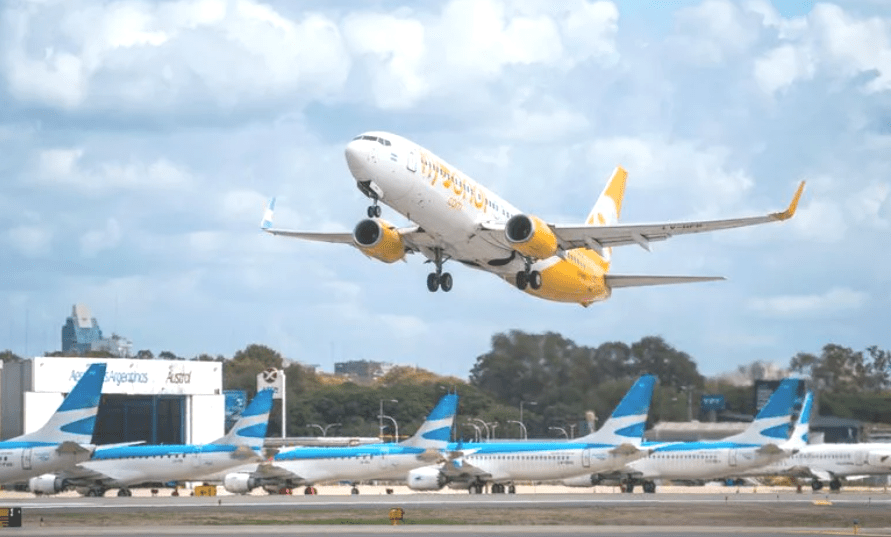
El Director Ejecutivo Mauricio Sana de la aerolínea low cost argentina Flybondi Líneas Aéreas ha expresado tras una reunión con el Jefe de Gabinete sobre las proyecciones de la compañía aérea para el período 2022-2023.
El CEO de Flybondi ha afirmado que es momento de hacer inversiones en Argentina. Mauricio Sana, expresó este Lunes 13/12 que observa un mercado aerocomercial doméstico con tendencia positiva en la Argentina y consideró planificar inversiones en el país. La reunión con el Jefe de Gabinete, Juan Manzur, en la Casa Rosada, sede del Gobierno de Argentina, ha aportado un punto de inflexión para activar los proyectos de la línea aérea de presupuesto.
Mauricio Sana, junto Esteban Tossuti, Director de la compañía aérea, visitaron esta mañana a Juan Manzur, a quien le señalaron que es un momento de crecimiento para los próximos años. «Estamos a las puertas de cumplir cuatro años en la Argentina y vinimos para hablar de lo que se viene en 2022 y 2023; fue una reunión bastante amena, con mucho contenido de lo que significa el movimiento aerocomercial en Argentina», declaró Mauricio Sana en declaraciones formuladas tras el encuentro.
“Es un momento de crecimiento, que es justamente lo que estamos buscando, poder trabajarlo de manera conjunta con el Gobierno y con las autoridades y con los aeropuertos para poder llevarlo a cabo. El argentino ha respondido bastante bien a los viajes pospandemia. Hemos visto factores de ocupación muy altos desde la temporada invernal. El último mes según cifras de ANAC (Administración Nacional de Aviación Civil) la ocupación total del mercado doméstico estuvo por arriba del 90%, con lo cual por ahora son muy positivas, permiten una recuperación pronta del mercado doméstico por lo menos», dijo Mauricio Sana.
Respecto a las perspectivas del mercado internacional, el CEO de Flybondi ha expresado estudiar cómo evoluciona el sistema de salud en la región después de los rebrotes de nuevas variantes de Coronavirus.
Flybondi moment investments
Flybondi affirms time to invest in Argentina
The Executive Director Mauricio Sana of the Argentine low cost airline Flybondi Líneas Aéreas has expressed after a meeting with the Chief of Staff about the projections of the airline for the period 2022-2023.
The CEO of Flybondi has affirmed that it is time to make investments in Argentina. Mauricio Sana, said this Monday 12/13 that he observes a domestic aviation market with a positive trend in Argentina and considered planning investments in the country. The meeting with the Chief of Staff, Juan Manzur, at the Casa Rosada, the seat of the Government of Argentina, has provided a turning point to activate the budget airline projects.
Mauricio Sana, together with Esteban Tossuti, Director of the airline, visited Juan Manzur this morning, to whom they pointed out that it is a moment of growth for the coming years. «We are on the verge of turning four years in Argentina and we came to talk about what is coming in 2022 and 2023; it was a very pleasant meeting, with a lot of content about what the commercial aviation movement means in Argentina», said Mauricio Sana in statements made after the meeting.
“It is a time of growth, which is exactly what we are looking for, to be able to work on it jointly with the Government and with the authorities and with the airports to be able to carry it out. The Argentine has responded quite well to post-pandemic travel. We have seen very high load factors since the winter season. Last month, according to figures from ANAC (National Civil Aviation Administration), the total occupation of the domestic market was above 90%, which for now is very positive, they allow a prompt recovery of the domestic market at least», said Mauricio Fury.
Regarding the prospects of the international market, the CEO of Flybondi has expressed studying how the health system evolves in the region after the outbreaks of new variants of Coronavirus.
AW | 2021 12 11 09:35 | AIRLINES ROUTES / GOVERNMENT
Isleños confirmaron solicitud vuelo a Sudamérica
El Gobierno de las Islas Malvinas/Falklands Islands ha solicitado un vuelo a Sudamérica, después que los isleños perdieron conexión con el continente después que Latam Airlines canceló los servicios entre Chile y las Islas Malvinas. El Gobierno bajo la órbita británica ha solicitado una nueva frecuencia solicitando al Gobierno de Argentina autorización para sobrevolar el espacio aéreo argentino para conectar Chile con las Islas Malvinas.
El gobierno pro británico de las Malvinas confirmó que pidió a Londres que gestione con Argentina la posibilidad de que un avión charter lleve a Sudamérica personas que están en el archipiélago sin poder salir de allí desde el estallido de la pandemia del Coronavirus. En un comunicado de prensa emitido este Viernes 10/12 en el que, sin embargo y sin mencionarlo, no aceptan que el vuelo sea realizado por Aerolíneas Argentinas, tal como solicitó el Canciller Santiago Cafiero. El pedido lo hizo Malvinas a la Argentina vía el Gobierno de Boris Johnson porque el avión charter debe pasar por espacio aéreo argentino para llegar a Chile.
Las Malvinas están sin comunicación aérea con Sudamérica desde Marzo de 2020 cuando Latam Airlines suspendió sus rutas a Mount Pleasant/Puerto Argentino. Había vuelos de Santiago de Chile vía Punta Arenas. Con la pandemia, familias chilenas o mixtas quedaron sin poder volar. La única opción es un vuelo vía Reino Unido. Pero los kelpers desde el fin de la guerra de 1982 no aceptan de ninguna manera que una aerolínea de bandera argentina toque el archipiélago, mientras que es justamente el reclamo de Buenos Aires poder aterrizar en el archipiélago austral.
El Miércoles 08/12 la Cancillería de Argentina emitió un comunicado ofreciendo precisamente que una aerolínea nacional haga esos traslados que necesitan en las Islas Malvinas. El Foreign Office dijo que era decisión de los isleños a los que les da una autodeterminación que Argentina no reconoce como parte de su reclamo de soberanía.
El texto del comunicado de prensa que desde las islas publicaron este Viernes 10/12 dice lo siguiente: «El Gobierno de las Islas Malvinas (Falkland Islands Government/FIG) puede confirmar que ha mantenido conversaciones con el Gobierno del Reino Unido sobre la posibilidad de realizar un vuelo chárter para que los miembros sudamericanos de nuestra comunidad visiten a familiares y amigos durante la temporada festiva. Esto también les dará a las personas la oportunidad de renovar documentos vencidos que sabemos que ha sido una gran preocupación».
Como tal vuelo requeriría el permiso del Gobierno de Argentina para volar sobre su espacio aéreo, y aunque se trata de un asunto delegado reconocido, FIG ha pedido al Gobierno del Reino Unido que negocie esta solicitud bilateral en representación de los isleños. La FIG tiene la esperanza de que esta solicitud sea concedida dado que, debido al Covid-19, hay muchas personas en las Islas Malvinas que no han podido ver a su familia desde antes de que comenzara la pandemia. Como Diciembre es tradicionalmente una época de buena voluntad, recibir los permisos necesarios para este vuelo significaría mucho para muchas personas, tanto en las Islas Malvinas como en América del Sur.
Malvinas requests Frq for South America
Islanders confirmed request for flight to South America
The Government of the Falkland Islands/Malvinas Islands has requested a flight to South America, after the islanders lost connection with the continent after Latam Airlines canceled services between Chile and the Falkland Islands. The Government under the British orbit has requested a new frequency requesting the Government of Argentina authorization to fly over Argentine airspace to connect Chile with the Falkland Islands.
The pro-British government of the Falklands confirmed that it asked London to negotiate with Argentina the possibility of a charter plane taking to South America people who are in the archipelago without being able to leave there since the outbreak of the Coronavirus pandemic. In a press release issued this Friday 12/10 in which, however and without mentioning it, they do not accept that the flight is made by Aerolineas Argentinas, as requested by Foreign Minister Santiago Cafiero. The request was made by the Malvinas to Argentina via the Government of Boris Johnson because the charter plane must pass through Argentine airspace to reach Chile.
The Falklands have been without air communication with South America since March 2020 when Latam Airlines suspended its routes to Mount Pleasant/Puerto Argentino. There were flights from Santiago de Chile via Punta Arenas. With the pandemic, Chilean or mixed families were unable to fly. The only option is a flight via the UK. But the Kelpers since the end of the war in 1982 do not accept in any way that an Argentine flag airline touches the archipelago, while it is precisely the claim of Buenos Aires to be able to land in the southern archipelago.
On Wednesday 12/08 the Argentine Foreign Ministry issued a statement offering precisely that a national airline make those transfers they need in the Falkland Islands. The Foreign Office said it was up to the islanders to give them a self-determination that Argentina does not recognize as part of its claim to sovereignty.
The text of the press release that the islands published this Friday 10/12 reads as follows: «The Government of the Malvinas Islands (Falkland Islands Government/FIG) can confirm that it has held discussions with the Government of the United Kingdom on the possibility of charter for South American members of our community to visit family and friends during the holiday season. This will also give people the opportunity to renew expired documents that we know has been a huge concern».
As such a flight would require the permission of the Government of Argentina to fly over its airspace, and although this is a recognized delegated matter, FIG has asked the Government of the United Kingdom to negotiate this bilateral request on behalf of the islanders. The FIG is hopeful that this request will be granted given that, due to Covid-19, there are many people in the Falkland Islands who have not been able to see their family since before the pandemic began. As December is traditionally a time of goodwill, receiving the necessary permits for this flight would mean a lot to many people, both in the Falkland Islands and in South America.
AW | 2021 12 10 12:10 | INDUSTRY / AIRLINES / GOVERNMENT
Airbus prepara evaluación legal independiente Respuesta desacuerdo clientes sobre degradación superficie A350
En vista de la caracterización errónea en curso de la degradación de la superficie no estructural de su flota de aviones Airbus A350 por parte de uno de sus clientes, se ha hecho necesario que Airbus busque una evaluación legal independiente como una forma de avanzar para resolver el problema de disputa, que las dos partes no han podido resolver durante discusiones directas y abiertas.
La seguridad es la máxima prioridad de Airbus Group. Los hallazgos relacionados con la pintura de la superficie han sido evaluados minuciosamente por Airbus y confirmados por la Agencia Europea de Seguridad Aérea (EASA) que no tienen impacto en la aeronavegabilidad de la flota de A350. El intento de este cliente de tergiversar este tema específico como un problema de aeronavegabilidad representa una amenaza para los protocolos internacionales en materia de seguridad.
Si bien Airbus lamenta la necesidad de seguir ese camino, se ha vuelto necesario defender su posición y reputación. Airbus ha trabajado activamente con sus clientes para minimizar el impacto y cualquier inconveniente causado por esta degradación de la superficie en servicio de la aeronave . Todas estas soluciones han sido rechazadas por el cliente mencionado anteriormente sin una justificación legítima.
El A350 se está desempeñando bien en servicio con una confiabilidad operativa del 99,5% y ha demostrado ser un símbolo de resistencia en la crisis de COVID-19. Está permitiendo que las principales aerolíneas de todo el mundo reinicien sus operaciones internacionales, reconectando y uniendo naciones y continentes nuevamente, a medida que el mundo emerge lentamente de la pandemia. Paralelamente, Airbus está trabajando para restablecer un diálogo constructivo con su cliente sobre este asunto, pero no está dispuesto a aceptar declaraciones inexactas de este tipo para continuar. Además, Airbus desea aclarar que las medidas correctivas propuestas recientemente por EASA causadas por áreas en las que faltan láminas de cobre expandido (ECF) en las alas de trece (13) A350 como resultado de un proceso de producción, que desde entonces ha sido adaptado, son de naturaleza diferente. El número limitado de aeronaves se inspeccionará según la directiva de la EASA.
Airbus A350-customer litigation
Airbus prepares independent legal assessment Customer disagreement response on A350 surface degradation
In view of the ongoing mischaracterization of the non-structural surface degradation of its Airbus A350 aircraft fleet by one of its customers, it has become necessary for Airbus to seek an independent legal assessment as a way forward to resolve the issue. dispute problem, which the two parties have not been able to resolve during direct and open discussions.
Safety is Airbus Group top priority. The findings related to the surface painting have been thoroughly evaluated by Airbus and confirmed by the European Aviation Safety Agency (EASA) that they have no impact on the airworthiness of the A350 fleet. This customer’s attempt to misrepresent this specific issue as an airworthiness issue poses a threat to international security protocols.
While Airbus regrets the need to pursue that path, it has become necessary to defend its position and reputation. Airbus has actively worked with its customers to minimize the impact and any inconvenience caused by this degradation of the aircraft’s in-service surface. All of these solutions have been rejected by the customer mentioned above without a legitimate justification.
The A350 is performing well in service with 99.5% operational reliability and has proven to be a symbol of resilience in the COVID-19 crisis. It is allowing major airlines around the world to restart their international operations, reconnecting and uniting nations and continents again, as the world slowly emerges from the pandemic. In parallel, Airbus is working to reestablish a constructive dialogue with its customer on this matter, but is unwilling to accept inaccurate statements of this kind in order to continue. Furthermore, Airbus would like to clarify that the recently proposed corrective measures by EASA caused by areas missing expanded copper foil (ECF) on the wings of thirteen (13) A350s as a result of a production process, which has since been adapted, are of a different nature. The limited number of aircraft will be inspected according to the EASA directive.
Solicita Gobierno venezolano reactivar vuelos hacia Colombia
Avior Airlines ha pedido al Gobierno de Venezuela reactivar la conectividad con Colombia suspendida desde el 13 de Marzo de 2020 a causa de la pandemia, aunque Venezuela ha autorizado vuelos comerciales especiales hacia España, Chile, Perú, Ecuador y próximamente hacia Argentina y México. “Estamos dispuestos a aportar desde el punto de vista técnico y humano nuestro mayor esfuerzo para un necesario y pronto reinicio de actividades”, señaló Juan Bracamonte, Presidente Ejecutivo de Avior Airlines.
Avior Airlines prevé que en los próximos cuatros años se movilicen 1.65 millones de pasajeros entre Venezuela y Colombia con aerolíneas tanto nacionales como extranjeras y la compañía espera alcanzar los 702.855 pasajeros. La aerolínea ha establecido su itinerario para conectar a Caracas, Maracaibo, Valencia y Porlamar con Bogotá, Medellín y Cali. “Estamos próximos a dar inicio a vuelos hacia Barquisimeto y Puerto Ordaz desde Caracas y muy probablemente El Vigía Porlamar en vuelo directo, volveremos pronto a México, vía Cancún. Asimismo, retomaremos operaciones internacionales desde Barcelona con destino a Santo Domingo, República Dominicana, ampliando así las opciones internacionales”, comentó el ejecutivo. Avior ha sido autorizada para retomar los vuelos entre Caracas y Cancún por el Instituto Nacional de Aviación Civil (INAC) y la Dirección General de Aeronáutica Civil (DGAC).
Avior requests permission flights Colombia
Venezuelan Government requests to reactivate flights Colombia
Avior Airlines has asked the Government of Venezuela to reactivate connectivity with Colombia suspended since March 13, 2020 due to the pandemic, although Venezuela has authorized special commercial flights to Spain, Chile, Peru, Ecuador and soon to Argentina and Mexico. «We are willing to contribute from the technical and human point of view our best effort for a necessary and soon restart of activities», said Juan Bracamonte, Executive President of Avior Airlines.
Avior Airlines foresees that in the next four years 1.65 million passengers will be mobilized between Venezuela and Colombia with both national and foreign airlines and the company expects to reach 702,855 passengers. The airline has established its itinerary to connect Caracas, Maracaibo, Valencia and Porlamar with Bogotá, Medellín and Cali. «We are close to starting flights to Barquisimeto and Puerto Ordaz from Caracas and most likely El Vigía Porlamar in direct flight, we will soon return to Mexico, via Cancun. Likewise, we will resume international operations from Barcelona to Santo Domingo, Dominican Republic, thus expanding the international options”, commented the executive. Avior has been authorized to resume flights between Caracas and Cancun by the National Civil Aviation Institute (INAC) and the General Directorate of Civil Aeronautics (DGAC).
AW | 2021 12 10 10:22 | AIRLINES ALLIANCE / GOVERNMENT
Cuatro países firman MoU de cielos abiertos
La República de Ecuador ha firmado con cuatro países un acuerdo de Cielos Abiertos lo que permitirá el arribo de más aerolíneas y la reactivación del sector turístico en Ecuador. Tanto el sector aéreo como el turístico fueron los más afectados durante la pandemia y esta medida impulsaría su reactivación. La firma de los Memorandos de Entendimiento (MoU) con Estados Unidos, Kuwait, Chile y República Dominicana permitirá una política de cielos abiertos. El pasado Miércoles 08/12, el Ministro de Transporte y Obras Públicas, Marcelo Cabrera ha celebrado el acuerdo con varios países para eliminar las restricciones aéreas entre naciones, permitiendo suprimir las restricciones aéreas con el arribo de nuevas aerolíneas a Ecuador.
Normalmente cuando una aerolínea extranjera tenía planes de ampliar sus frecuencias debía solicitar permisos a las autoridades aeronáuticas de Ecuador y de su país de origen. Estas frecuencias se otorgan acorde con la disponibilidad que existe y hay límites, dependiendo del país. Por ejemplo, Estados Unidos ya tiene asignadas entre sus aerolíneas las 120 frecuencias que pueden operar en Ecuador. Ahora, se desbloquea ese limitante. “Con Estados Unidos es importantísimo. Tenemos un intercambio muy grande y estaba represada la oferta de vuelos acá porque las aerolíneas norteamericanas ya tenían copado el número de frecuencias que había en el anterior convenio, que era de 120 frecuencias semanales. Y había el interés de nuevas aerolíneas a venir, pero no lo podía hacer porque no había frecuencias disponibles y ahora lo que se hace es desbloquear”, explica Marco Subía, Presidente de la Asociación de Representantes de Líneas Aéreas del Ecuador. El sector aéreo registró pérdidas económicas por US$ 600 millones en 2020, según el gremio. Marco Subía menciona que esta medida, además, permitirá potenciar el sector exportador, por el intercambio comercial a través de la carga aérea. “Las flores, frutas tropicales, la carga que sale por avión se verá dinamizada. También, el país está negociando acuerdos de libre comercio. La carga aérea es fundamental. El turismo es como la lluvia, a todos riega, les llegará a los hoteles, taxis, a los operadores turísticos, restaurantes. Es una actividad que llega a casi toda la sociedad”, afirma Marco Subía.
Holbach Muñeton, Presidente de la Federación de Cámaras de Turismo del Ecuador, ve con buenos ojos esta firma de memorandos de entendimiento. Dice que ayudará a dinamizar la economía y por ende al sector, que a la fecha tiene una caída del 50 % comparado con los niveles del 2019. “Esto hará que el Ecuador se dinamice más. Que se impulse esa reactivación porque en este momento la reactivación está dura, todavía no nos hemos levantado. Estamos subsistiendo”, expresa Holbach Muñeton. Estos acuerdos impactarán a los hoteles, restaurantes, operadoras de turismo, agencias de viajes y otros ligados a esa cadena de valor.
La firma con los países es importante, resaltando a Estados Unidos como el mejor cliente, razón por la que en 2019 arribaron 380.000 estadounidenses, según el representante del sector turístico.
La firma del MoU con República Dominicana es atractiva porque existe una aerolínea interesada en establecer una nueva ruta. Con Chile explica que también es esencial. Actualmente, la aerolínea chilena Latam Airlines buscará foirmar parte del beneficio del acuerdo de cielos abiertos.
El MoU con el Reino de Kuwait asegura en el largo plazo la incorporación de nuevas operaciones de líneas aéreas, especialmente en el sector de cargas.
La firma de los Memorandos de Entendimiento (MoU) con los cuatro países se efectivizó en Bogotá durante la XIII Conferencia Internacional de Negocios de Acuerdos Aéreos (ICAN2021). “Este día es importante para el país, los memorandos de cielos abiertos que firmamos unen al Ecuador con el mundo, nuestros socios comerciales están más cerca, esto significa más trabajo”, dijo Marcelo Cabrera. El titular de la cartera de Estado resaltó la unión con Estados Unidos y que se están dando pasos firmes para la reactivación.
Ecuador signs open skies
Four countries sign Open Skies MoU
The Republic of Ecuador has signed an Open Skies agreement with four countries, which will allow the arrival of more airlines and the reactivation of the tourism sector in Ecuador. Both the air and tourism sectors were the most affected during the pandemic and this measure would boost its reactivation. The signing of the Memoranda of Understanding (MoU) with the United States, Kuwait, Chile and the Dominican Republic will allow an open skies policy. Last Wednesday 08/12, the Minister of Transportation and Public Works, Marcelo Cabrera, signed an agreement with several countries to eliminate air restrictions between nations, allowing the abolition of air restrictions with the arrival of new airlines to Ecuador.
Normally, when a foreign airline had plans to expand its frequencies, it had to request permits from the aeronautical authorities of Ecuador and its country of origin. These frequencies are granted according to the availability that exists and there are limits, depending on the country. For example, the United States has already assigned the 120 frequencies that can operate in Ecuador among its airlines. Now, that limitation is unlocked. “With the United States it is extremely important. We have a very large exchange and the offer of flights here was dammed because the North American airlines already had the number of frequencies that were in the previous agreement, which was 120 weekly frequencies. And there was the interest of new airlines to come, but it could not do so because there were no frequencies available and now what is being done is unblocking”, explains Marco Subía, President of the Association of Representatives of Air Lines of Ecuador. The airline sector recorded economic losses of US $ 600 million in 2020, according to the union. Marco Subía mentions that this measure will also allow the export sector to be boosted through commercial exchange through air cargo. “The flowers, tropical fruits, the cargo that leaves by plane will be energized. Also, the country is negotiating free trade agreements. Air cargo is essential. Tourism is like rain, it waters everyone, it will reach hotels, taxis, tour operators, restaurants. It is an activity that reaches almost all of society”, says Marco Subía.
Holbach Muñeton, President of the Federation of Chambers of Tourism of Ecuador, welcomes this signing of memorandums of understanding. He says it will help boost the economy and therefore the sector, which to date has a 50% drop compared to 2019 levels. “This will make Ecuador more dynamic. That reactivation be promoted because at this moment the reactivation is hard, we have not yet gotten up. We are subsisting”, says Holbach Muñeton. These agreements will impact hotels, restaurants, tour operators, travel agencies and others linked to that value chain.
The signature with the countries is important, highlighting the United States as the best client, which is why 380,000 Americans arrived in 2019, according to the representative of the tourism sector.
The signing of the MoU with the Dominican Republic is attractive because there is an airline interested in establishing a new route. With Chile he explains that it is also essential. Currently, the Chilean airline Latam Airlines will seek to sign part of the benefit of the open skies agreement.
The MoU with the Kingdom of Kuwait ensures in the long term the incorporation of new airline operations, especially in the cargo sector.
The signing of the Memoranda of Understanding (MoU) with the four countries took place in Bogotá during the XIII International Conference of Air Agreements Business (ICAN2021). «This day is important for the country, the open skies memoranda that we signed unite Ecuador with the world, our commercial partners are closer, this means more work», said Marcelo Cabrera. The head of the State portfolio highlighted the union with the United States and that firm steps are being taken for reactivation.
Bielorrusia anuncia sanciones a aerolíneas occidentales
Bielorrusia ha anunciado este Lunes 6 de Diciembre de 2021 un embargo a los productos de los países occidentales que adoptaron sanciones contra Minsk y sanciones contra las aerolíneas de los miembros de la Unión Europea (UE) y el Reino Unido. Las medidas de respuesta contra la ilegal presión sancionadora externa de Occidente, mientras que el Gobierno busca defender los intereses nacionales, señala el comunicado de Exteriores.
Minsk considera que las ilegítimas restricciones contra el sector de aviación bielorruso están dictadas por la competencia desleal. “Medidas análogas serán adoptadas por nuestro país en relación a las aerolíneas de la UE y el Reino Unido”, indica el comunicado oficial. A su vez, con el fin de rebatir la presión occidental y fortalecer la seguridad económica, la antigua república soviética proseguirá la senda de la integración económica con Rusia. También ampliará la lista de individuos indeseables que no podrán acceder a territorio bielorruso, que incumbirá a los ciudadanos de países que discriminan a funcionarios, periodistas y representantes de organizaciones del Presidente Alexandr Lukashenko. Minsk también explicó que las medidas pueden ser anuladas si los países que adoptaron sanciones renuncian a la lógica de la Guerra Fría y retoman el camino de la cooperación constructiva.
La pasada semana Minsk acusó a Bruselas de intentar estrangular su economía y de continuar la política de demonización del régimen por la decisión del Consejo de la UE de imponer las primeras sanciones relacionadas con la crisis de migrantes en su frontera, que han sido coordinadas con EEUU, Canadá y el Reino Unido. Las sanciones, que suponen la respuesta de Bruselas a la crisis que estalló el pasado 8 de Noviembre de 2021 con la concentración de varios miles de migrantes en la frontera entre Bielorrusia y Polonia, afectan a funcionarios de alto rango, prominentes miembros del poder judicial, así como a medios de propaganda y once entidades, entre ellas la aerolínea bielorrusa Belavia.
Esta es la quinta ronda de sanciones que la UE impone a Bielorrusia desde las elecciones presidenciales de Agosto de 2020, en las que volvió a imponerse Alexandr Lukashenko y que provocó medidas restrictivas europeas por la ola de represión que desató el régimen contra los manifestantes pacíficos.
Belarus announces restrictions
Belarus announces sanctions on western airlines
Belarus has announced this Monday, December 6, 2021, an embargo on the products of Western countries that adopted sanctions against Minsk and sanctions against the airlines of the members of the European Union (EU) and the United Kingdom. The response measures against the illegal external sanctioning pressure from the West, while the Government seeks to defend national interests, says the Foreign Ministry statement.
Minsk considers that the illegitimate restrictions against the Belarusian aviation sector are dictated by unfair competition. «Similar measures will be adopted by our country in relation to the airlines of the EU and the United Kingdom», indicates the official statement. In turn, in order to counter Western pressure and strengthen economic security, the former Soviet Republic will pursue the path of economic integration with Russia. It will also expand the list of undesirable individuals who will not be able to access Belarusian territory, which will concern citizens of countries that discriminate against officials, journalists and representatives of President Alexandr Lukashenko’s organizations. Minsk also explained that the measures can be canceled if the countries that adopted sanctions renounce the logic of the Cold War and return to the path of constructive cooperation.
Last week, Minsk accused Brussels of trying to strangle its economy and of continuing the policy of demonizing the regime due to the decision of the EU Council to impose the first sanctions related to the migrant crisis on its border, which have been coordinated with the United States, Canada and the United Kingdom. The sanctions, which represent Brussels’ response to the crisis that erupted on November 8, 2021 with the concentration of several thousand migrants on the border between Belarus and Poland, affect high-ranking officials, prominent members of the judiciary, as well as the propaganda media and eleven entities, including the Belarusian airline Belavia.
This is the fifth round of sanctions that the EU has imposed on Belarus since the presidential elections of August 2020, in which Alexandr Lukashenko prevailed again and which provoked European restrictive measures due to the wave of repression unleashed by the regime against peaceful protesters.
La Federación Rusia dijo que protestará oficialmente ante Estados Unidos por un incidente sobre el Mar Negro el Sábado 04/12, cuando aviones civiles tuvieron que desviarse de sus rutas debido a un avión espía estadounidense. «El aumento de la actividad de aviones de combate de Estados Unidos y la OTAN cerca de las fronteras rusas crea riesgos de incidentes peligrosos para la aviación civil. Si esta vez se evitara una catástrofe sobre el Mar Negro, esto no significa que Estados Unidos y la OTAN pudieran arriesgar la vida de las personas en el futuro sin castigo», dijo el Domingo 05/12 la portavoz del Ministerio de Relaciones Exteriores de Rusia, Maria Zakharova, en su página de Facebook.
Según la agencia de aviación civil de Rusia, dos aviones de pasajeros tuvieron que desviarse y cambiar de altitud porque un avión de vigilancia de la OTAN cruzó sus rutas e ignoró las señales de las autoridades de seguridad aérea rusas. Un vuelo era Aeroflot de Tel Aviv a Moscú y el otro era un avión maltés que volaba desde el balneario del Mar Negro de Sochi a Macedonia del Norte.
El Presidente ruso, Vladimir Putin, y el Presidente de Estados Unidos, Joe Biden, planean realizar una videollamada el Martes 07/12, después de semanas de escalada de tensión por la acumulación militar rusa en la frontera con Ucrania y las actividades militares de la OTAN alrededor del Mar Negro. Si bien la inteligencia estadounidense había concluido que el Kremlin estaba planeando una ofensiva contra Ucrania tan pronto como el próximo año con un estimado de 175,000 efectivos, Rusia advirtió a Occidente que no cruzara la línea roja de seguridad del Kremlin y evitara la expansión de la infraestructura militar occidental en Ucrania
Russia denounces Black Sea espionage
US spy planes threaten civil aviation
The Russian Federation said it will officially protest to the United States over an incident over the Black Sea on Saturday 04/12, when civilian planes had to deviate from their routes due to a US spy plane. «Increased activity by US and NATO fighter jets near Russian borders creates dangerous incident risks for civil aviation. If a catastrophe over the Black Sea were prevented this time, this does not mean that the United States and NATO could risk people’s lives in the future without punishment», said on Sunday 05/12 Russian Foreign Ministry spokeswoman Maria Zakharova on her Facebook page.
According to Russia’s civil aviation agency, two airliners had to veer off and change altitude because a NATO surveillance plane crossed their routes and ignored signals from Russian aviation security authorities. One flight was Aeroflot from Tel Aviv to Moscow and the other was a Maltese plane flying from the Black Sea resort of Sochi to North Macedonia.
Russian President Vladimir Putin and United States President Joe Biden plan to hold a video call on Tuesday 07/12, after weeks of escalating tension over the Russian military build-up on the border with Ukraine and the military activities of the NATO around the Black Sea. While US intelligence had concluded that the Kremlin was planning an offensive against Ukraine as early as next year with an estimated 175,000 troops, Russia warned the West not to cross the Kremlin’s security red line and avoid infrastructure expansion. Western military in Ukraine.
AW | 2021 12 05 20:27 | AVIATION ORGANISMS / GOVERNMENT
Respuesta gobiernos a Omicron amenaza recuperación emergente
La Asociación Internacional de Transporte Aéreo (IATA) anunció que la recuperación de los viajes aéreos continuó en octubre de 2021 con mejoras de amplia base en los mercados nacionales e internacionales. También advirtió que la imposición de prohibiciones de viaje por parte de los gobiernos, en contra del consejo de la OMS, podría amenazar la recuperación del sector. Debido a que las comparaciones entre los resultados mensuales de 2021 y 2020 están distorsionadas por el impacto extraordinario de COVID-19, a menos que se indique lo contrario, todas las comparaciones son con octubre de 2019, que siguió un patrón de demanda normal.
La demanda total de viajes aéreos en Octubre de 2021 (medida en ingresos por pasajero-kilómetro o RPK) se redujo un 49,4% en comparación con Octubre 2019. Esto mejoró con respecto a la caída del 53,3% registrada en Septiembre de 2021, en comparación con dos años antes. Los mercados nacionales bajaron un 21,6% en comparación con Octubre 019, mejorando la disminución del 24,2% registrada en Septiembre frente a septiembre de 2019. La demanda internacional de pasajeros en octubre fue un 65,5% inferior a Octubre de 2019, en comparación con una disminución del 69,0% para septiembre en comparación con el período de 2019, con todas las regiones mostrando una mejora. «El desempeño del tráfico de Octubre refuerza que las personas viajarán cuando se les permita. Desafortunadamente, las respuestas del gobierno a la aparición de la variante Omicron están poniendo en riesgo la conectividad global que tanto tiempo ha llevado reconstruir», dijo Willie Walsh, Director General de IATA.
Mercados Internacionales de Pasajeros
El tráfico aéreo internacional en el mercado de Europa en Octubre 2021 disminuyó un 50,6% en comparación con Octubre de 2019, mucho mejor que la caída del 56,5% en Septiembre 2021 en comparación con Septiembre de 2019. La capacidad cayó un 41,3% y el factor de carga cayó 13,7 puntos porcentuales hasta el 72,5%. Las aerolíneas de Asia-Pacífico vieron caer su tráfico internacional de Octubre un 92,8% en comparación con Octubre de 2019, mejorando fraccionalmente con respecto a la disminución del 93,1% registrada para Septiembre de 2021 en comparación con hace dos años. La capacidad cayó un 83,8% y el factor de carga bajó 44,0 puntos porcentuales a 35,7%, el más bajo entre las regiones con diferencia. Las aerolíneas de Oriente Medio tuvieron una caída de la demanda del 60,3% en Octubre 2021 en comparación con octubre de 2019, un gran salto sobre la caída del tráfico del 67,1% registrada en Septiembre contra Septiembre de 2019. La capacidad disminuyó un 49,1%, y el factor de carga cayó 16,1 puntos porcentuales a 57,5%. Las aerolíneas norteamericanas experimentaron una caída del tráfico del 57,0% en Octubre 2021 en comparación con el período de 2019, mejorada desde una disminución del 61,4% en Septiembre 2021 en comparación con el mismo mes de 2019. La capacidad cayó un 43,2%, y el factor de carga cayó 20,0 puntos porcentuales a 62,4%. Las aerolíneas latinoamericanas experimentaron una caída del 55,1% en el tráfico de Octubre 2021, en comparación con el mismo mes interanual de 2019. En Septiembre 2021, el tráfico bajó un 61,4% en comparación con hace dos años. La capacidad de 10/2021 cayó 52.5% y el factor de carga cayó 4.3 puntos porcentuales a 76.9%, que fue el factor de carga más alto entre las regiones por décimo tercer mes consecutivo. El tráfico de las aerolíneas africanas cayó un 60,2% en Octubre 2021 en comparación con hace dos años. El tráfico en Septiembre bajó un 62,1% durante el período correspondiente de 2019. La capacidad de Octubre 2021 bajó un 49,0% y el factor de carga disminuyó 15,2 puntos porcentuales a 54,1%. El mercado interno de la India experimentó una disminución del 27,0% en la demanda de Octubre 2021 en comparación con Octubre de 2019, una gran mejora desde una caída del 40,5% en Septiembre tras la flexibilización de algunas medidas de control. En la Federación Rusia el tráfico doméstico de Octubre 2021 subió un 24% en comparación con Octubre de 2019, lo que suspendió una desaceleración desde el crecimiento del 29,3% registrado en Septiembre de 2021 con respecto al período de hace dos años, atribuible a una fuerte ola de COVID-19 y el inicio de la temporada de viajes de invierno.
Perspectivas aéreas
«El levantamiento de las restricciones de Estados Unidos a los viajes desde unos 33 países el mes pasado aumentó las esperanzas de que un aumento en la demanda de viajes reprimida impulsaría el tráfico durante el próximo invierno del hemisferio norte. Pero la aparición de la variante de Omicron indujo en pánico a muchos gobiernos para que una vez más restringieran o eliminaran por completo la libertad de viajar, a pesar de que la OMS claramente aconsejó que «las prohibiciones generales de viaje no evitarán la propagación internacional, y suman una pesada carga para las vidas y los medios de subsistencia. La lógica del consejo de la OMS fue evidente a los pocos días de la identificación de Omicron en Sudáfrica, con su presencia ya confirmada en todos los continentes. Las prohibiciones de viaje mal aconsejadas son tan ineficaces como cerrar la puerta del establo después de que el caballo se haya atornillado», dijo Willie Walsh.
Específicamente, la IATA instó a los gobiernos a centrarse en tres áreas clave: Protocolos de salud simplificados, Soluciones digitales para procesar credenciales de salud, Medidas de COVID-19 proporcionadas a los niveles de riesgo con un proceso de revisión continua. «Además, los gobiernos deben abordar la terrible disparidad en las tasas de vacunación que ha visto al mundo desarrollado ofrecer refuerzos en un momento en que menos del 10% del continente africano está completamente vacunado», dijo Willie Walsh.
IATA aviation outlook
Governments response to Omicron threatens emerging recovery
The International Air Transport Association (IATA) announced that the recovery in air travel continued in October 2021 with broad-based improvements in domestic and international markets. He also warned that the imposition of travel bans by governments, against the advice of the WHO, could threaten the recovery of the sector. Because comparisons between the 2021 and 2020 monthly results are skewed by the extraordinary impact of COVID-19, unless otherwise noted, all comparisons are to October 2019, which followed a normal demand pattern.
Total demand for air travel in October 2021 (measured in revenue per passenger-kilometer or RPK) was down 49.4% compared to October 2019. This improved from the 53.3% drop recorded in September 2021, compared to two years earlier. Domestic markets were down 21.6% compared to October 019, improving on the 24.2% decrease registered in September compared to September 2019. International passenger demand in October was 65.5% lower than October 2019, compared to a 69.0% decrease for September compared to the 2019 period, with all regions showing an improvement. «The October traffic performance reinforces that people will travel when allowed. Unfortunately, government responses to the emergence of the Omicron variant are putting at risk global connectivity that has taken so long to rebuild», said Willie Walsh, Director IATA General.
1) % of industry RPKs in 2020 2) Change in load factor vs. the same month in 2019 3) Load Factor Level
Note: the seven domestic passenger markets for which broken-down data are avaiable for approximately 46% of global total RPKs and 84% of domestic RPKs.
Note: The total industry and regional growth rates are based on a constant sample of airlines combining reported data and estimates for missing observations. Airline traffic is allocated according to the region in which the carrier is registrated; it should not be considered as regional traffic.
1) Percentage (%) of industry RPKs in 2020 2) Change in load factor vs. the same month in 2019 3) Load Factor Level
Note: the seven domestic passenger markets for which broken-down data are avaiable for approximately 46% of global total RPKs and 84% of domestic RPKs.
Note: The total industry and regional growth rates are based on a constant sample of airlines combining reported data and estimates for missing observations. Airline traffic is allocated according to the region in which the carrier is registrated; it should not be considered as regional traffic.
International Passenger Markets
International air traffic in the European market in October 2021 decreased by 50.6% compared to October 2019, much better than the fall of 56.5% in September 2021 compared to September 2019. Capacity fell by 41 , 3% and the load factor fell 13.7 percentage points to 72.5%. Asia-Pacific airlines saw their October international traffic drop 92.8% compared to October 2019, improving fractionally from the 93.1% decrease recorded for September 2021 compared to two years ago. Capacity fell 83.8% and load factor fell 44.0 percentage points to 35.7%, the lowest among regions by far. Middle Eastern airlines saw a 60.3% drop in demand in October 2021 compared to October 2019, a big jump from the 67.1% drop in traffic recorded in September versus September 2019. Capacity decreased 49.1%, and the load factor fell 16.1 percentage points to 57.5%. North American airlines experienced a 57.0% drop in traffic in October 2021 compared to the 2019 period, improved from a 61.4% decrease in September 2021 compared to the same month in 2019. Capacity fell by 43 , 2%, and the load factor fell 20.0 percentage points to 62.4%. Latin American airlines experienced a 55.1% drop in traffic in October 2021, compared to the same year-on-year month in 2019. In September 2021, traffic was down 61.4% compared to two years ago. 10/2021 capacity fell 52.5% and load factor fell 4.3 percentage points to 76.9%, which was the highest load factor among regions for the 13th consecutive month. African airline traffic fell 60.2% in October 2021 compared to two years ago. Traffic in September decreased 62.1% during the corresponding period of 2019. Capacity in October 2021 decreased 49.0% and load factor decreased 15.2 percentage points to 54.1%. The Indian domestic market saw a 27.0% decrease in demand in October 2021 compared to October 2019, a big improvement from a 40.5% drop in September following the easing of some control measures. In the Russian Federation, domestic traffic in October 2021 rose 24% compared to October 2019, which was a slowdown from the 29.3% growth registered in September 2021 compared to the period two years ago, attributable to a strong wave of COVID-19 and the start of the winter travel season.
Air perspectives
«The lifting of US restrictions on travel from some 33 countries last month raised hopes that an increase in pent-up travel demand would boost traffic during the upcoming Northern Hemisphere winter. But theemergence of the Omicron panicked many governments to once again restrict or completely eliminate freedom to travel, despite the WHO clearly advising that blanket travel bans will not prevent international spread, and put a heavy burden on women. lives and livelihoods. The logic of the WHO advice was evident within days of Omicron’s identification in South Africa, with its presence already confirmed on all continents. Ill-advised travel bans are as ineffective as closing the stable door after the horse has been bolted», Walsh said.
Specifically, IATA urged governments to focus on three key areas: Simplified health protocols, Digital solutions for processing health credentials, COVID-19 measures provided at risk levels with an ongoing review process. «In addition, governments must address the dire disparity in vaccination rates that has seen the developed world offer boosters at a time when less than 10% of the African continent is fully vaccinated», said Willie Walsh.
Manifestaciones continuidad laboral trabajadores Latam Argentina
Los trabajadores de Latam Airlines Argentina volvieron a marchar por reclamos de reinserción laboral este Jueves 02/12 para lograr que las firmas del sector aeronáutico prioricen su reinserción ante la reanudación plena de la actividad aérea, como se firmó en el Ministerio de Transporte de la República Argentina. Se formó una mesa de diálogo con buenas perspectivas.
La nueva protesta encabezada por los autoconvocados se realizó como las veces anteriores en el Aeropuerto Jorge Newbey, desde horas de la mañana del día Jueves 02/12. La compañía aérea matriz chilena volvió a operar en el país, pese a que se mantiene el conflicto abierto con cerca de 200 trabajadores, que resisten las cesantías iniciadas hace casi veinte meses. Luego de la protesta, se destacó que la fluidez en las negociaciones con las autoridades comenzó a regularizarse, y ya se lograron tres o cuatro audiencias seguidas, lo que consideran un paso positivo.
La protesta es parte del plan de protestas de un grupo de despedidos de Latam Argentina que a comienzos de año 2021 lograron el compromiso de la cartera de Transporte nacional para ser reincorporados a otras empresas del sector aerocomercial una vez que la actividad comenzara a normalizarse, pero que hasta ahora no se ha cumplido. Por eso, le piden al Ministro Alexis Guerrera que cumpla la palabra empeñada. «Retomamos hace un tiempo las audiencias y el canal de diálogo con las autoridades, por ese lado vemos logrando nuestro objetivo», explicó Martín Tomé, vocero del grupo de empleados. A partir de esto, desde hace un tiempo se abrió una mesa de negociación con representantes de los distintos sectores con algunas propuestas. Esta primera oferta fue considerada limitada, pero marca el inicio de un camino que puede terminar con el reclamo de este grupo: la reinserción laboral. En el caso de los tripulantes de cabina desean volver a desempeñar funciones arriba de un avión. «Parte del balance positivo a esta altura del conflicto, a casi dos años después de que comenzara, es lograr algunas propuestas, limitadas, pero que empiezan a mover la posibilidad de retomar actividades», completó Martín Tomé.
Retorno a los cielos
En los últimos meses, producto de la situación epidemiológica, se fueron liberando los cupos para los vuelos internacionales y de cabotaje, al punto que hoy está prácticamente normalizado el flujo. Esto era una condición para comenzar a reincorporar al personal de Latam. El Ministerio de Transporte informó esta semana que los primeros quince días de Noviembre se produjeron más de cuatrocientos arribos internacionales, lo que muestra esta normalidad de la actividad.
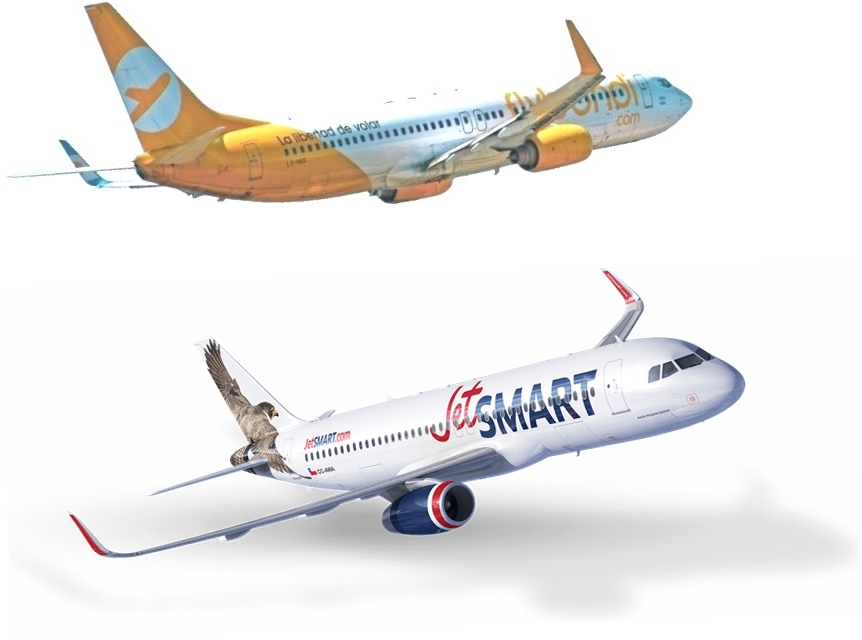
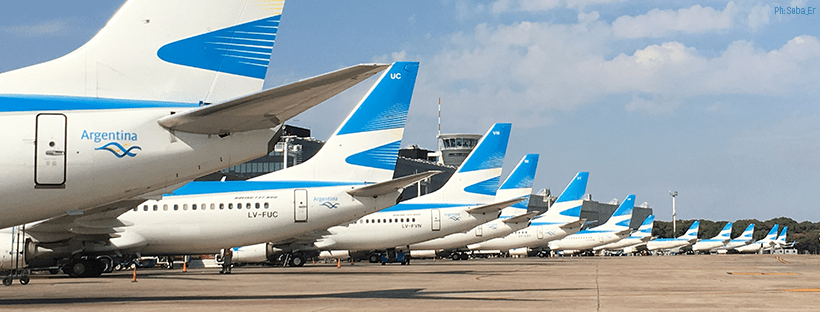
«Hoy hay más pasajeros que en la prepandemia. Latam volvió a operar desde Aeroparque, y desde el interior las rutas más rentables; hacen negocios en dólares y euros, y los trabajadores seguimos en la calle», se quejaron en la convocatoria los despedidos. «Logramos la firma de ocho empresas del sector para reincorporarnos, dependiendo de la vuelva a la actividad. Hoy el flujo supera el de marzo 2020, prepandemia. Muchas compañías están haciendo entrevistas para incorporar personal, priorizando ingresos de gente externa, dejando de lado el compromiso firmado», expresó Martín Tomé. Uno de los ejemplos que pusieron los empleados fue el de JetSmart Airlines Argentina, que hoy está tomando entre 80 y 100 trabajadores nuevos, pese a ser parte del compromiso. Lo mismo pasa con Flybondi líneas Aéreas, que está tomando empleados. En el caso de Aerolíneas Argentinas, que firmó el acuerdo a comienzos de este año, los trabajadores cesanteados afirman que la falta de cumplimiento del compromiso redunda además en una situación de sobrecarga laboral en el personal de la firma de bandera nacional. «La mayor parte del incremento laboral se dirige hacia Aerolíneas Argentinas, donde los trabajadores están sobrecargados, con ritmos extenuantes debido a la falta de personal. El Gobierno tiene la solución al alcance de la mano», dijeron los empleados. «Todas las compañías tienen un panorama de crecimientos, están realizando selección de personal, eso es alentador, nos preocupa que no se cumpla el compromiso asumido», dijo Martín Tomé.
Claims former employees Latam AR
Demonstrations labor continuity workers Latam Argentina
The workers of Latam Airlines Argentina will march again for claims of labor reintegration this Thursday 02/12 to ensure that the firms of the aeronautical sector prioritize their reintegration before the full resumption of the air activity, as signed in the Ministry of Transportation of the Republic Argentina. A dialogue table was formed with good prospects.
The new protest led by the autoconvocados was held as the previous times at Jorge Newbey Airport, from the morning of Thursday 02/12. The Chilean parent airline company returned to operate in the country, despite the fact that the conflict remains open with about 200 workers, who are resisting the layoffs that began almost twenty months ago. After the protest, it was highlighted that the fluidity in the negotiations with the authorities began to be regularized, and three or four hearings in a row have already been achieved, which they consider a positive step.
The protest is part of the protest plan of a group of laid off people from Latam Argentina who at the beginning of 2021 achieved the commitment of the national Transportation portfolio to be reincorporated to other companies in the aviation sector once the activity began to normalize, but that until now has not been fulfilled. For this reason, they ask Minister Alexis Guerrera to keep his word. «Some time ago we resumed the hearings and the channel of dialogue with the authorities, on that side we see achieving our objective», explained Martín Tomé, spokesman for the group of employees. Based on this, a negotiation table was opened for some time with representatives of the different sectors with some proposals. This first offer was considered limited, but it marks the beginning of a path that may end with the claim of this group: labor reintegration. In the case of cabin crew members, they wish to resume their duties on top of an aircraft. «Part of the positive balance at this point in the conflict, almost two years after it began, is to achieve some proposals, limited, but which begin to move the possibility of resuming activities», completed Martín Tomé.
Return to heaven
In recent months, as a result of the epidemiological situation, the quotas for international and domestic flights have been released, to the point that today the flow is practically normalized. This was a condition to start reinstating the Latam staff. The Ministry of Transport reported this week that the first fifteen days of November there were more than four hundred international arrivals, which shows this normality of activity.
«Today there are more passengers than in the prepandemic. Latam returned to operate from Aeroparque, and from the interior the most profitable routes; they do business in dollars and euros, and the workers are still on the street», the dismissed complained in the call. «We managed to sign eight companies in the sector to rejoin, depending on the return to activity. Today the flow exceeds that of March 2020, prepandemic. Many companies are conducting interviews to incorporate personnel, prioritizing income from external people, leaving aside the signed commitment», expressed Martín Tomé. One of the examples given by the employees was that of JetSmart Airlines Argentina, which today is taking on between 80 and 100 new workers, despite being part of the commitment. The same thing happens with Flybondi Airlines, which is taking employees. In the case of Aerolíneas Argentinas, which signed the agreement at the beginning of this year, the laid off workers affirm that the lack of fulfillment of the commitment also results in a situation of work overload in the personnel of the national flag firm. «Most of the labor increase is directed towards Aerolineas Argentinas, where workers are overloaded, with exhausting rates due to lack of personnel. The government has the solution at hand», said the employees. «All companies have a growth outlook, they are selecting personnel, that is encouraging, we are concerned that the commitment assumed will not be fulfilled», said Martín Tomé.