Lion Air JT-610 | Día 18

AW-77000021

AW | 2018 11 15 22:43 | AI INVESTIGATION / AVIATION SAFETY

FAA posible defecto de diseño línea 737 MAX

AW-7007378La Administración Federal de Aviación (FAA) evalúa un posible defecto de diseño en el Boeing 737 MAX después del accidente del vuelo JT-610 de Lion Air. Los analistas, incluidos los antiguos expertos en control de vuelo de Boeing, están preocupados de que un nuevo sistema de control de vuelo automatizado en el 737 MAX de Boeing pueda tener fallos y que la forma en que cambió el manejo del avión pueda haber generado confusión en la cabina del vuelo JT610 de Lion Air.

20150215-logo-faa_1.jpgLa Administración Federal de Aviación (FAA) informó el miércoles que está evaluando si debe exigir a Boeing que corrija una posible falla en el diseño de un nuevo sistema de control de vuelo automatizado introducido para el 737 MAX. También se está investigando si los datos técnicos y la capacitación brindada a los pilotos que hicieron la transición al nuevo modelo de avión fueron los adecuados. Los expertos en control de vuelo creen que la falta de información sobre el nuevo sistema probablemente confundió a los pilotos que volaron el avión Lion Air que se estrelló el 29 Octubre 2018 en Indonesia, matando a las 189 personas a bordo. La agencia de seguridad aérea dijo el miércoles que «la FAA y Boeing continúan evaluando la necesidad de software u otros cambios de diseño en la aeronave, incluidos los procedimientos operativos y la capacitación».

AW-70076888

AOA del vuelo JT610

La investigación del accidente ya ha establecido que las lecturas falsas de un sensor que mide el Ángulo de Ataque del avión (AOA), el ángulo entre el ala y el flujo de aire que se aproxima, podrían haber activado un nuevo sistema de control de vuelo en el Boeing 737-8 MAX que empujó implacablemente la nariz. de la aeronave hacia abajo. El portavoz de la FAA, Greg Martin, dijo que «el ángulo de los valores de ataque utilizados por varios sistemas, incluidos los datos aéreos, los controles de lucha, la advertencia de pérdida, etc., el análisis de seguridad para cada uno de estos sistemas se está revisando actualmente».

Los expertos en control de vuelo dicen que el nuevo sistema podría haber cambiado la sensación del control del avión por lo que los pilotos habían experimentado entrenamiento en simuladores, posiblemente sembrando confusión a bordo del vuelo JT-610.

En una directiva de aeronavegabilidad, la FAA citó un análisis realizado por Boeing de que «si el sistema de control de vuelo recibe una entrada erróneamente alta del sensor de Ángulo de Ataque (AOA), existe la posibilidad de que se repitan los comandos de ajuste de nariz abajo» que girarán el estabilizador horizontal del avión para inclinar la nariz hacia abajo.

Los pilotos de American Airlines y Southwest Airlines, que el lunes expresaron su preocupación por no haber recibido información previa sobre el nuevo sistema de control de vuelo, continúan volando el avión. Se les ha asegurado que un procedimiento estándar que Boeing destacó después del accidente de JT-610 de Lion Air, aconsejan a apagar el sistema si falla y volver rápidamente el avión al vuelo manual.

Aun así, aunque no sea más que un elemento en una serie de eventos que llevaron a la catástrofe del JT-610, el nuevo Sistema de Control de Vuelo del Boeing 737-8 MAX se ha convertido en un tema de gran controversia.

Boeing & Seguridad

El hecho de que la nariz del avión pudiera ser empujada hacia abajo de forma automática y repetida debido a una falsa señal sorprendió a Peter Lemme, un ex ingeniero de Control de Vuelo de Boeing, quien dijo que parece un defecto de diseño.

Boeing insiste en que la generación del Boeing 737 MAX es seguro para volar. El Director Ejecutivo Dennis Muilenburg dijo que «el MAX es muy seguro y dijo que Boeing proporciona toda la información que se necesita para volar de forma segura nuestros aviones».

Del mismo modo, Dwight Schaeffer, un ex ingeniero electrónico de Boeing y Gerente Senior que supervisó el desarrollo de sistemas, incluida la computadora de gestión de paradas del 737, dijo que la breve descripción en la Directiva de Aeronavegabilidad de la FAA lo sorprende. «Por lo general, nunca tiene una sola falla que pueda ponerlo en peligro. Nunca he visto un sistema así», señaló Schaeffer.

Un ex vicepresidente de Boeing que comenzó como ingeniero de aviónica, quien pidió el anonimato, porque como ex ejecutivo dijo que le preocupa que la empresa lo demandara por críticas públicas, dijo que también está sorprendido por la sugerencia en la redacción de la FAA de un solo punto de falla que podría derribar un avión. Pero agregó que no necesariamente lo llamaría un defecto de diseño en sí mismo, siempre que las tripulaciones de vuelo tengan la capacidad de reconocer lo que está sucediendo y entrenar para enfrentarlo.

Boletín Informativo, un punto de controversia

Boeing lanzó un boletín la semana pasada para informar a los pilotos de todo el mundo sobre el nuevo sistema de control de vuelo y exactamente qué hacer para apagarlo si se vuelve loco. Pero la tripulación de Lion Air no tenía esa información y puede haber estado confundida por una diferencia de manejo clave que el sistema podría haber causado durante el vuelo.

Controles del MCAS

Björn Fehrm, un ex piloto de aviones de combate y un ingeniero aeronáutico que ahora es analista de Leeham.net, dijo que la descripción técnica del nuevo sistema de control de vuelo 737 MAX, llamado MCAS (Sistema de Aumento de Características de Maniobra), que Boeing dio a conocer a las aerolíneas. el fin de semana pasado deja en claro que está diseñado para activarse solo en situaciones extremas, cuando el avión está haciendo giros pronunciados que ejercen una gran presión en la estructura del avión o cuando está volando a velocidades tan bajas que está a punto de detenerse. Björn Fehrm dijo que Boeing debe haber agregado este sistema al MAX porque cuando el ángulo de ataque es alto, este modelo es menos estable en comparación con las 737 variantes anteriores. Esto se debe a que el MAX tiene motores más grandes y pesados ​​que también están en voladizo más hacia adelante en el ala para proporcionar más distancia al suelo. Eso cambia el centro de gravedad.

Pero en las circunstancias extremas donde se activa el sistema, cuando el Ángulo de Ataque (AOA) alcanza el rango de 10 a 12% haciendo girar el estabilizador horizontal para inclinar la nariz hacia abajo. Si el alto ángulo de ataque persiste, el sistema repite el comando cada 10 segundos.

El escenario temido en el caso de Lion Air es que el sensor AOA envió señales falsas que engañaron a la computadora para que pensara que el avión estaba en una posición de parada peligrosa, por lo que se activó el MCAS.

La gerencia de Southwest Airlines dijo a sus pilotos que Boeing no incluyó ninguna descripción de MCAS en el manual de vuelo porque un piloto «nunca debería ver el funcionamiento de MCAS» en vuelo normal.

Simulando el Vuelo JT-610

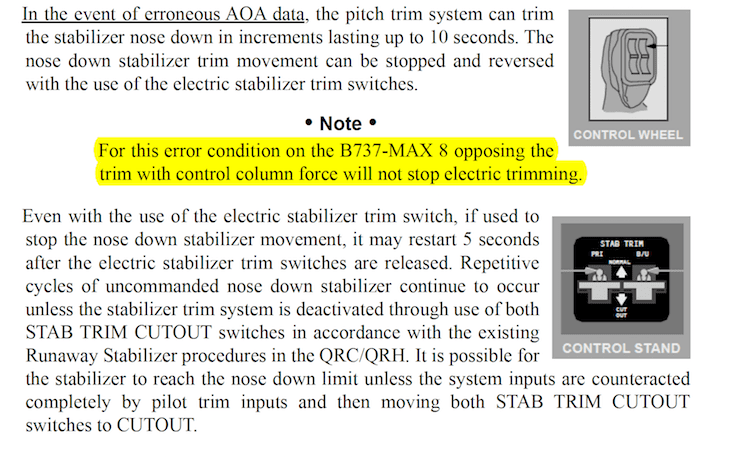
La reacción natural de cualquier piloto cuando la nariz de un avión comienza a inclinarse hacia abajo sin control es tirar del comando de mando hacia atrás y levantar la nariz. En el modo de vuelo normal, eso funcionaría, ya que al jalar el mando de control se activan los interruptores de arranque que detienen cualquier movimiento automático de la cola que tiende a mover la punta del avión hacia abajo. Pero con el MCAS activado, esos interruptores de arranque no funcionarían. El MCAS asume que el comando de mando ya está retrocedido agresivamente y no permitirá que más retroceso contrarreste su acción, que es mantener la nariz hacia abajo. El análisis de Björn Fehrm se confirma en las instrucciones que Boeing envió a los pilotos el fin de semana pasado. El boletín enviado a los pilotos de American Airlines enfatiza que retirar la columna de control no detendrá la acción.

Los pilotos de Lion Air se habrían entrenado en simuladores 737 y habrían aprendido a lo largo de muchos años de experiencia que al tirar hacia atrás del y comando de mando se detiene cualquier maniobra automática de la cola que empuja la nariz hacia abajo. «Encaja en tu memoria sensorial», dijo Fehrm sobre esta forma física de aprendizaje. Pero en el vuelo de Lion Air, si el MCAS estaba activo debido a un sensor defectuoso, los pilotos se habrían retirado y encontrado que el movimiento de la nariz hacia abajo no se detuvo. Björn Fehrm está convencido de que esto llevó a la confusión en la cabina que contribuyó a la pérdida de control. Existe un procedimiento estándar para apagar cualquier control de tono automático, pero de alguna manera los pilotos no reconocieron que eso era lo que estaba sucediendo. El MCAS tenía la información incorrecta y los pilotos reaccionaron a eso. El culpable es el MCAS. Sin embargo, advierte que aún no hay suficiente información para saber que la falla del sensor AOA solo provocó todo lo que sucedió, y que la secuencia completa de eventos que llevó al desastre no estará clara hasta que se complete la investigación. «Puede que no sea tan simple como un solo sensor», sentenció el ingeniero aeronáutico Björn Fehrm. Mientras tanto, Fehrm dijo que la notificación mundial a los pilotos sobre el MCAS y el énfasis en el procedimiento a seguir si el recorte de la nariz sale mal, significa que el Boeing 737 MAX está hoy perfectamente seguro para volar.

Sentimiento en Boeing

Esta semana, en Seattle, alrededor de 400 profesionales de la aviación de todo el mundo se reunieron para la Cumbre Internacional de Seguridad Aérea anual organizada por la Fundación de Seguridad de Vuelo (FSF). Cuando el Presidente de la junta de la FSF, John Hamilton, Vicepresidente de Ingeniería en Boeing Commercial Airplanes y ex ingeniero Jefe de Proyectos para el 737, dio un discurso de apertura el lunes, recordó su propia experiencia personal de profundo temor por un accidente de avión y lo utilizó para enfatizar cómo reacciona la gente en Boeing. La esposa de Hamilton es una azafata de Alaska Airlines que, el 31 Enero 2000, salía de Puerto Vallarta en México. Cuando Hamilton escuchó que el vuelo AS261 de un MD-83 rumbo a Seattle se había estrellado, temió que ella estuviera entre los 88 muertos. Más tarde descubrió que ella estaba en un vuelo diferente. Pero después de su alivio personal, dijo que vio cómo ese accidente resonó en Seattle y en la comunidad de aviación. “Lo que hacemos todos los días importa. El trabajo que hacemos toca tantas vidas. Todo el mundo en Boeing está profundamente triste por la pérdida del vuelo JT-610 de Lion Air», expresó John Hamilton.

Recordó que cuando se dirigió al Departamento de Ingeniería del Programa 737, «yo fui la persona responsable en última instancia de la seguridad de ese producto. En cada decisión que tomé, tuve que pensar con cuidado ya que tantas vidas dependen de ese resultado». Dijo que Boeing, junto con los reguladores de seguridad, investigará minuciosamente el accidente del vuelo JT-610 de Lion Air y aprenderá lo que podemos hacer para asegurarnos de que nunca vuelva a suceder.AW-Icon-TXT

Resultado de imagen para LIon Air Boeing 737 MAX 8 PK-LQP

Lion Air JT-610 | Day 18

FAA possible design flaw line 737 MAX

The Federal Aviation Administration (FAA) assesses a possible design flaw in the Boeing 737 MAX after the crash of Lion Air‘s JT-610 flight. Analysts, including Boeing’s former flight control experts, are concerned that a new automated flight control system on the Boeing 737 MAX may have failures and that the way the aircraft’s handling changed may have caused confusion. in the cockpit of Lion Air’s JT610 flight.

The Federal Aviation Administration (FAA) reported Wednesday that it is evaluating whether to require Boeing to correct a possible flaw in the design of a new automated flight control system introduced for the 737 MAX. It is also being investigated whether the technical data and the training provided to the pilots who made the transition to the new aircraft model were adequate. Flight control experts believe that the lack of information about the new system probably confused the pilots who flew the Lion Air plane that crashed on 29 October 2018 in Indonesia, killing the 189 people on board. The air safety agency said Wednesday that «the FAA and Boeing continue to assess the need for software or other design changes to the aircraft, including operating procedures and training».

AW-70076887

AOA of flight JT610

The accident investigation has already established that false readings from a sensor that measures the plane’s attack angle (AOA), the angle between the wing and the approaching air flow, could have triggered a new flight control system in the Boeing 737-8 MAX that pushed the nose relentlessly. of the aircraft down. FAA spokesman Greg Martin said that «the angle of attack values ​​used by various systems, including air data, wrestling controls, loss warning, etc., safety analysis for each of these systems are currently being reviewed».

Flight control experts say that the new system could have changed the feeling of airplane control so the pilots had experienced simulator training, possibly sowing confusion aboard the JT-610 flight.

In an airworthiness directive, the FAA cited an analysis by Boeing that «if the flight control system receives an erroneously high input from the Attack Angle Sensor (AOA), there is a possibility that the adjustment commands will be repeated nose down» that will rotate the plane’s horizontal stabilizer to tilt the nose down.

The pilots of American Airlines and Southwest Airlines, who on Monday expressed concern about not having received prior information about the new flight control system, continue to fly the plane. They have been assured that a standard procedure that Boeing highlighted after the JT-610 accident of Lion Air, advise to shutdown the system if it fails and quickly return the aircraft to manual flight.

Even so, although it is only one element in a series of events that led to the catastrophe of the JT-610, the new Flight Control System of the Boeing 737-8 MAX has become a subject of great controversy.

Boeing & Security

The fact that the nose of the plane could be pushed down automatically and repeated due to a false signal surprised Peter Lemme, a former Boeing Flight Control engineer, who said it looks like a design flaw.

Boeing insists that the generation of the Boeing 737 MAX is safe to fly. Executive Director Dennis Muilenburg said that «MAX is very safe and said that Boeing provides all the information it takes to fly our planes safely».

Similarly, Dwight Schaeffer, a former Boeing electronics engineer and Senior Manager who oversaw system development, including the 737’s stop management computer, said the brief description in the FAA’s Airworthiness Directive surprises him. «Usually, he never has a single fault that could put him in danger, I’ve never seen such a system», Schaeffer said.

A former vice president of Boeing who began as an avionics engineer, who requested anonymity, because as a former executive he said he was worried that the company would sue him for public criticism, said he was also surprised by the suggestion in the FAA’s editorial office of a only point of failure that could knock down an airplane. But he added that he would not necessarily call it a design flaw in itself, as long as the flight crews have the ability to recognize what is happening and to train to face it.

Informative Bulletin, a point of controversy

Boeing launched a newsletter last week to inform pilots around the world about the new flight control system and exactly what to do to turn it off if it goes crazy. But the Lion Air crew did not have that information and may have been confused by a key driving difference that the system could have caused during the flight.

MCAS controls

Björn Fehrm, a former fighter aircraft pilot and an aeronautical engineer who is now an analyst at Leeham.net, said the technical description of the new 737 MAX flight control system, called MCAS (Maneuvering Feature Enhancement System), that Boeing announced to the airlines. last weekend makes it clear that it is designed to activate only in extreme situations, when the plane is making sharp turns that exert a great pressure on the structure of the plane or when it is flying at such low speeds that it is about to stop. Björn Fehrm said that Boeing must have added this system to MAX because when the angle of attack is high, this model is less stable compared to the previous 737 variants. This is because the MAX has larger and heavier engines that are also cantilevered further forward in the wing to provide more ground clearance. That changes the center of gravity.

But in the extreme circumstances where the system is activated, when the Attack of Angle (AOA) reaches the range of 10 to 12% by turning the horizontal stabilizer to tilt the nose down. If the high angle of attack persists, the system repeats the command every 10 seconds.

The dreaded scenario in the case of Lion Air is that the AOA sensor sent false signals that tricked the computer into thinking that the aircraft was in a dangerous stopping position, so the MCAS was activated.

Southwest Airlines management told its pilots that Boeing did not include any description of MCAS in the flight manual because a pilot «should never see the operation of MCAS» in normal flight.

Resultado de imagen para LIon Air JT 610

Simulating the Flight JT-610

The natural reaction of any pilot when the nose of a plane begins to tilt down without control is to pull the command command back and raise the nose. In normal flight mode, that would work, since pulling the control knob activates the start switches that stop any automatic movement of the tail that tends to move the tip of the plane down. But with the MCAS activated, those start switches would not work. The MCAS assumes that the command command is already aggressively backed down and will not allow further recoil to counteract its action, which is to keep the nose down. Björn Fehrm’s analysis is confirmed in the instructions that Boeing sent to pilots last weekend. The bulletin sent to American Airlines pilots emphasizes that removing the control column will not stop the action.

The Lion Air pilots would have trained in 737 simulators and would have learned over many years of experience that when pulling back the command command stops any automatic maneuvering of the tail that pushes the nose down. «It fits your sensory memory», Fehrm said of this physical form of learning. But in the Lion Air flight, if the MCAS was active due to a faulty sensor, the pilots would have retreated and found that the nose down movement did not stop. Björn Fehrm is convinced that this led to confusion in the cabin that contributed to the loss of control. There is a standard procedure for turning off any automatic tone control, but somehow the pilots did not recognize that that was what was happening. The MCAS had the wrong information and the pilots reacted to that. The culprit is the MCAS. However, he cautions that there is not enough information yet to know that the AOA sensor failure alone caused everything that happened, and that the entire sequence of events that led to the disaster will not be clear until the investigation is complete. «It may not be as simple as a single sensor», said aeronautical engineer Björn Ferhm. Meanwhile, Fehrm said that the worldwide notification to pilots about the MCAS and the emphasis on the procedure to follow if nose trimming goes wrong means that the Boeing 737 MAX is perfectly safe to fly today.

Feeling in Boeing

This week, in Seattle, around 400 aviation professionals from around the world gathered for the annual International Air Safety Summit organized by the Flight Safety Resultado de imagen para alaska MD-83 Foundation (FSF). When the Chairman of the FSF board, John Hamilton, Vice President of Engineering at Boeing Commercial Airplanes and former Chief Project Engineer for the 737, gave an opening speech on Monday, he recalled his own personal experience of deep fear of an accident plane and used it to emphasize how people react in Boeing. Hamilton’s wife is an Alaska Airlines stewardess who, on January 31, 2000, left Puerto Vallarta in Mexico. When Hamilton heard that the AS261 flight of an MD-83 bound for Seattle had crashed, he feared that she was among the 88 dead. Later he discovered that she was on a different flight. But after his personal relief, he said he saw how that accident resonated in Seattle and in the aviation community. «What we do every day matters. The work we do touches so many lives. Everyone at Boeing is deeply saddened by the loss of Lion Air’s JT-610 flight», said John Hamilton.

He recalled that when he addressed the Engineering Department of Program 737, «I was the person ultimately responsible for the safety of that product, and in every decision I made, I had to think carefully since so many lives depend on that result», he said Boeing, along with safety regulators, will thoroughly investigate the crash of Lion Air’s JT-610 flight and learn what we can do to make sure it never happens again. A \ W


Ξ A I R G W A Y S Ξ
SOURCE: Airgways.com
DBk: Faa.gov / Ntsb.gov / Boeing.com / Seattletimes.com / Ctpost.com / Airgways.com
AW-POST: 201811152243AR

A\W   A I R G W A Y S ®

SaudiGulf firma por 10 Airbus A320NEO

AW-70000666.jpg

AW | 2018 11 15 20:43 | AIRLINES

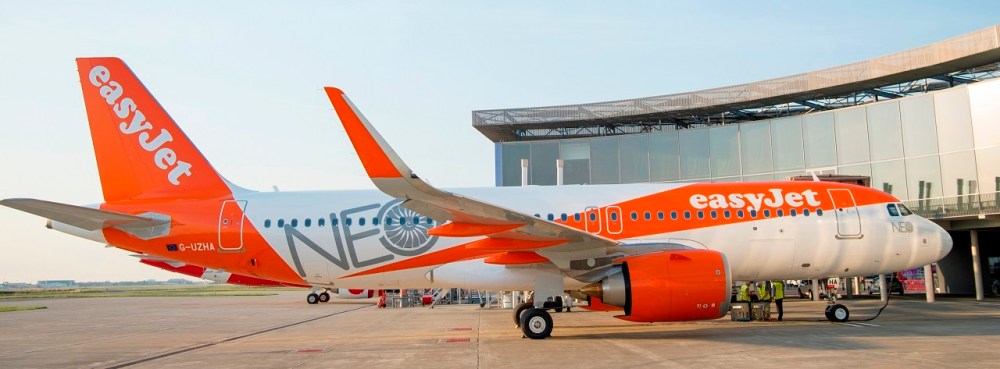
Resultado de imagen para saudigulf airlines A320neoSaudiGulf Airlines incorporará diez aeronaves de la familia A320NEO

Al-Qahtani Aviation, propietaria de SaudiGulf Airlines, ha firmado un acuerdo para comprar diez aviones de la familia Airbus A320NEO. El compromiso se anunció hoy en el Salón Aeronáutico Internacional de Bahrein.

Logo_Airbus_2014.svg

SaudiGulf Airlines actualmente opera una flota de seis aviones A320 desde su centro en Dammam. La aerolínea comenzó a operar en 2016, sirviendo a destinos nacionales en todo el Reino antes de expandirse a las rutas internacionales. En octubre de 2018, la aerolínea lanzó su segundo destino internacional con vuelos a cuatro destinos en Pakistán.

Sheikh Tariq Abdulhadi Al Qahtani, Presidente de Al-Qahtani Aviation y SaudiGulf Airlines, dijo: «Como una línea aérea boutique de servicios premium, estamos encantados de incorporar el A320NEO a nuestra flota. Esta expansión está en consonancia con nuestra intención de ver que el sector de la aviación de Arabia Saudita siga desarrollándose y creciendo en apoyo de la Visión de Arabia Saudita 2030. La familia A320NEO representa una evolución natural de nuestra flota actual de aviones A320 y contribuirá significativamente a la expansión de nuestra red en la región, así como a nivel internacional. Esta orden se complementará con aviones A320NEO adicionales del mercado de arrendamiento”.

Christian Scherer, Director Comercial de Airbus expresó: «Nos sentimos honrados de ampliar nuestra asociación con SaudiGulf Airlines, ya que estamos agregando más A320 a la flota de Airbus de todos nuestros clientes. La familia A320NEO, con su menor costo operativo, mayor eficiencia de combustible y mayor comodidad para el pasajero, seguramente apoyará a SaudiGulf Airlines para lograr sus ambiciosos planes de crecimiento».

La familia A320NEO es el avión de pasillo único más vendido del mundo con más de 6.200 pedidos de más de 100 clientes desde su lanzamiento en 2010. Incorpora las últimas tecnologías, incluidos los motores de nueva generación y los dispositivos de punta de ala Sharklet, que en conjunto suministran más del 15% de combustible. Ahorros desde el primer día y 20% para 2020 con nuevas innovaciones en cabina. El A320NEO también ofrece un rendimiento ambiental significativo con una reducción de casi el 50% en la huella de ruido en comparación con los aviones de la generación anterior.aw-icon-txt-01

Resultado de imagen para saudi gulf airlines A320neo png

SaudiGulf signs for 10 Airbus A320NEO

SaudiGulf Airlines will incorporate ten aircraft of the A320NEO family

Al-Qahtani Aviation, owner of SaudiGulf Airlines, has signed an agreement to buy ten aircraft of the Airbus A320NEO family. The pledge was announced today at the Bahrain International Air Show.

SaudiGulf Airlines currently operates a fleet of six A320 aircraft from its center in Dammam. The airline began operations in 2016, serving national destinations throughout the Kingdom before expanding to international routes. In October 2018, the airline launched its second international destination with flights to four destinations in Pakistan.

Sheikh Tariq Abdulhadi Al Qahtani, Chairman of Al-Qahtani Aviation and SaudiGulf Airlines, said: «As a boutique premium service airline, we are delighted to incorporate the A320NEO into our fleet, which is in line with our intention to see the Saudi Arabia’s aviation sector continue to develop and grow in support of the Vision of Saudi Arabia 2030. The A320NEO family represents a natural evolution of our current fleet of A320 aircraft and will significantly contribute to the expansion of our network in the region, as well as Internationally, this order will be supplemented by additional A320NEO aircraft from the leasing market».

Christian Scherer, Commercial Director of Airbus said: «We are honored to expand our partnership with SaudiGulf Airlines, as we are adding more A320 to the Airbus fleet of all our customers. The A320NEO family, with its lower operating cost, higher efficiency fuel and greater comfort for the passenger, will surely support SaudiGulf Airlines to achieve their ambitious growth plans».

The A320NEO family is the world’s best-selling single aisle aircraft with over 6,200 orders from more than 100 customers since its launch in 2010. It incorporates the latest technologies, including new generation engines and Sharklet wing tip devices, which together they provide more than 15% fuel. Savings from the first day and 20% by 2020 with new innovations in the cabin. The A320NEO also offers significant environmental performance with a nearly 50% reduction in noise footprint compared to previous generation aircraft. A\W


سعودي جلف توقع عقداً لشراء 10 طائرات إيرباص A320NEO

ستقوم الخطوط الجوية العربية السعودية بإدخال عشر طائرات من عائلة A320NEOAW-70099433

القحطاني الطيران، التي تملك طيران السعودية الخليجية الخطوط الجوية، وقعت اتفاقا لشراء عشر طائرات من عائلة Airbus A320NEO. وقد تم الإعلان عن هذا التعهد اليوم في معرض البحرين الدولي للطيران.

تشغل الخطوط الجوية العربية السعودية حالياً أسطولاً من ست طائرات من طراز A320 من مركزها في الدمام. بدأت الشركة عملياتها في عام 2016 ، وتخدم الوجهات الوطنية في جميع أنحاء المملكة قبل التوسع إلى الطرق الدولية. في أكتوبر 2018 ، أطلقت الشركة مقصدها الدولي الثاني مع رحلات إلى أربع وجهات في باكستان.

وقال الشيخ طارق عبد الهادي القحطاني، رئيس مجلس إدارة القحطاني الطيران وطيران السعودية الخليجية الخطوط الجوية «. وخدمة بوتيك قسط شركات الطيران، ونحن سعداء لإضافة A320NEO إلى أسطولنا هذا التوسع يتماشى مع نيتنا أن نرى أن يواصل قطاع الطيران السعودية لتطوير وتنمية في دعم رؤية الأسرة السعودية 2030. A320NEO يمثل التطور الطبيعي للأسطولنا من طائرات A320 وسيسهم بشكل كبير في توسيع شبكتنا في المنطقة و على الصعيد الدولي ، سيتم استكمال هذا الطلب بطائرات إضافية من طراز A320NEO من سوق التأجير».

وقال كريستيان شيرر، المدير التجاري لايرباص: «نحن فخورون لتوسيع شراكتنا مع طيران السعودية الخليجية الخطوط الجوية، ونحن إضافة المزيد من طراز (A320) لأسطول إيرباص من عائلة A320NEO عملائنا مع انخفاض تكاليف التشغيل، وزيادة الكفاءة. الوقود وزيادة راحة الركاب، وبالتأكيد سوف تدعم طيران السعودية الخليجية الخطوط الجوية لتحقيق خطط النمو الطموحة».

عائلة طائرات A320NEO هو الأكثر مبيعا ذات الممر الواحد العالم مع أكثر من 6200 أوامر أكثر من 100 عميل منذ إطلاقها في عام 2010. ويشتمل على أحدث التقنيات، بما في ذلك محركات الجيل الجديد والأجهزة قمة الجناح Sharklet، التي معا أنها توفر أكثر من 15 ٪ وقود. التوفير من اليوم الأول و 20 ٪ بحلول عام 2020 مع ابتكارات جديدة في المقصورة. كما يقدم الطراز A320NEO أداءً بيئيًا بارزًا مع تقليل ضجيج الضوضاء بنسبة 50٪ تقريبًا مقارنةً بطائرات الجيل السابقة. A \ W


Ξ A I R G W A Y S Ξ
SOURCE: Airgways.com
DBk: Airbus.com / Airgways.com / Saudigulfairlines.com
AW-POST: 201811152043AR

A\W   A I R G W A Y S ®

Audiencia NTSB por vuelo SW1380

Imagen relacionada

AW | 2018 11 15 12:14 | AIR INVESTIGATION / AVIATION SAFETY

Seal_of_the_United_States_National_Transportation_Safety_Board.svgLa audiencia de seguridad de la NTSB revela nuevos detalles sobre los daños al motor del vuelo SW1380 de Southwest Airlines

Los inspectores de la Junta Nacional de Seguridad del Transporte (NTSB) identificaron 16 aspas del ventilador del motor CFM CFM56-7B con signos similares de resquebrajarse en el accidente del vuelo SW1380 de April 2018 en Filadelfia de Southwest Airlines que dejó a un pasajero muerto luego de que una aspa se rompiera y dañara la aeronave.

Investigaciones del SW1380

La investigaciones de la NTSB ha estudiado otro vuelo de Southwest Airlines en 2016 que realizó un aterrizaje de emergencia en Pensacola, Florida. Unas seis cuchillas en el motor del vuelo de Pensacola tenían signos de agrietamiento: Otros ocho incidentes en otras aerolíneas, incluidas cuatro en Southwest Airlines, se identificaron durante los años siguientes, según Mark Habedank, un líder de ingeniería de CFM International, que fabrica los motores.

AW-70083651.png

Aunque el número total de aspas agrietadas puede parecer pequeño en comparación con los aproximadamente 15.000 motores CFM56-7B actualmente en servicio, cada uno con 24 aspas, llamó la atención de los funcionarios de la NTSB que supervisaron una audiencia de investigación en Washington, DC, el Miércoles, 14 Noviembre 2018.

A la NTSB llama la atención los incidentes reiterados de fatiga de productos en las aspas de los motores que CFM. «Eso es un montón de cuchillas que se están agrietando.¿Es esto una sorpresa ver que las cuchillas se retiran del servicio mucho antes de la vida de fatiga esperada?», dijo el investigador principal de seguridad de la aviación de la NTSB, John DeLisi.

La audiencia se produjo cuando los investigadores continúan concentrándose en la secuencia de eventos que llevaron a la rotura de una lámina de un fans que dañó la cubierta del motor circundante del Boeing 737-700 durante el vuelo SW1380  de Southwest Airlines de Nueva York a Dallas el 17 Abril 2018.

AW-NTSB70051.jpeg

Los escombros creados por la falla del motor CFM56-7B impactaron sobre el fuselaje, causando la rotura de una ventanilla y la muerte de la pasajera Jennifer Riordan, quien sufrió heridas severas cuando fue succionada parcialmente fuera del avión. Fue la primera muerte en un avión comercial de Estados Unidos desde 2009.

Las entrevistas con la tripulación de vuelo publicadas el miércoles brindaron nuevos detalles sobre los momentos caóticos inmediatamente después de la falla del motor, así como el esfuerzo desesperado de las azafatas y dos pasajeros cercanos para que la pasajera vuelva al avión y realice la respiración cardiopulmonar (RCP). Una azafata describió una cabina «ruidosa y ventosa» que estaba llena de humo y pedazos de escombros cuando ella agarró las manos de los pasajeros y les dijo «que iban a llegar», según un resumen de la entrevista publicado por la NTSB. El avión hizo un aterrizaje de emergencia en Filadelfia, con otros ocho pasajeros que reportaron lesiones menores.

La audiencia es un paso en el proceso de investigación que aún está a unos meses de finalización y tenía como objetivo recopilar más información técnica sobre el diseño, la certificación y el historial de funcionamiento de las aspas, la entrada y los carenados del ventilador del motor que fallaron en el accidente de Abril 2018. La NTSB no ha publicado su informe final sobre la falla del motor del vuelo Southwest del 2016.

Se cree que la hoja que se rompió durante el vuelo SW1380 de Southwest Airlines comenzó a agrietarse ya en 2012, pero la grieta, que mide aproximadamente un dieciseisavo de pulgada, era demasiado pequeña para ser detectada por las pruebas utilizadas en ese momento, según el ingeniero Mark Habedank.

Desde el incidente del vuelo SW1380, las autoridades federales han requerido inspecciones más frecuentes utilizando métodos de corriente eléctrica o ultrasonidos mejorados.

Un representante de CFM dijo que la mayor cantidad de cuchillas agrietadas en la flota de Southwest podría explicarse en parte por la gran cantidad del tipo de motor en la flota de Southwest: el operador de Boeing tiene alrededor del 10 por ciento de los 15.000 motores CFM56-7B en servicio y el hecho de que Southwest tomó muchas de las primeras entregas del motor, que entró en servicio en la década de 1990.

Los investigadores enviaron a representantes del fabricante de aviones Boeing y al fabricante de motores CFM con preguntas sobre los motores que fueron diseñados y certificados hace más de 20 años. La Administración Federal de Aviación (FAA) y Southwest también estuvieron representados en la audiencia.

Los motores de los aviones están diseñados para evitar que los desechos perforen el lado de la carcasa si una pala del ventilador se rompe durante el vuelo, una de las varias condiciones que deben cumplirse durante las pruebas para recibir la certificación. Los investigadores cuestionaron el miércoles si esas pruebas representan adecuadamente el daño potencial causado por los desechos en las estructuras de la entrada y la cubierta que rodean el núcleo del motor y ayudan a dirigir el flujo de aire durante las operaciones normales.

Otros temas abordados incluyeron las fuentes de tensión en las aspas del ventilador, cómo se lubrican y si las piezas deben tener una vida útil máxima antes de ser reemplazadas, algo que no es requerido por las regulaciones actuales. La audiencia del miércoles no tocó otros factores en el accidente, incluido el diseño y el rendimiento de la ventanilla o las acciones de las tripulaciones y los pasajeros después de la despresurización de la cabina.aw-icon-txt-01

AW-GettyImages-910279198.jpg

Hearing per flight SW1380

The NTSB security hearing reveals new details about the damage to the engine of Southwest Airlines flight SW1380

Inspectors from the National Transportation Safety Board (NTSB) identified 16 blades of the CFM engine fan CFM56-7B with similar signs of cracking in the April 2018 Philadelphia accident of flight SW1380 of Southwest Airlines that left a passenger dead after a blade would break and damage the aircraft.

Investigations of the SW1380

The NTSB investigations have studied another Southwest Airlines flight in 2016 that made an emergency landing in Pensacola, Florida. About six blades in the Pensacola flight engine had signs of cracking: Other eight incidents on other airlines, including four on Southwest Airlines, were identified during the following years, according to Mark Habedank, an engineering leader at CFM International, which manufactures the engines.

Although the total number of cracked blades may seem small compared to the approximately 15,000 CFM56-7B engines currently in service, each with 24 blades, it caught the attention of NTSB officials who oversaw a research hearing in Washington, DC, On Wednesday, November 14, 2018.

The NTSB draws attention to the repeated fatigue incidents of products on the blades of the engines that CFM. «That’s a bunch of blades that are cracking. Is this a surprise to see that the blades are removed from service long before the expected fatigue life?», said NTSB Senior Aviation Safety Researcher John DeLisi.

Resultado de imagen para SW 1380 Southwest

The hearing came as researchers continued to focus on the sequence of events that led to the breaking of a fan blade that damaged the engine cover surrounding the Boeing 737-700 during SW1380 Southwest Airlines flight from New York to Dallas on the 17th April 2018.

The debris created by engine failure CFM56-7B impacted the fuselage, causing a window break and the death of passenger Jennifer Riordan, who suffered severe injuries when she was partially sucked out of the plane. It was the first death on a commercial aircraft in the United States since 2009.

The flight crew interviews published on Wednesday provided new details on the chaotic moments immediately after engine failure, as well as the desperate effort of flight attendants and two nearby passengers for the passenger to return to the plane and perform cardiopulmonary breathing (PCB). A stewardess described a «noisy and windy» cabin that was filled with smoke and bits of debris when she grabbed the passengers’ hands and told them «they were going to arrive», according to a summary of the interview published by the NTSB. The plane made an emergency landing in Philadelphia, with eight other passengers reporting minor injuries.

The hearing is a step in the research process that is still a few months to completion and aimed to gather more technical information on the design, certification and operating history of the blades, the intake and the engine fan cowls that failed in the April 2018 accident. The NTSB has not published its final report on the engine failure of the Southwest flight of 2016.

It is believed that the sheet that broke during the SW1380 flight of Southwest Airlines began to crack already in 2012, but the crack, which measures approximately one sixteenth of an inch, was too small to be detected by the tests used at that time, according to the engineer Mark Habedank.

Since the incident of flight SW1380, federal authorities have required more frequent inspections using improved electric current or ultrasonic methods.

A CFM representative said that the greater number of cracked blades in Southwest’s fleet could be explained in part by the large amount of engine type in Southwest’s fleet: the Boeing operator has about 10 percent of the 15,000 CFM56 engines -7B in service and the fact that Southwest took many of the first deliveries of the engine, which entered service in the 1990s.

The researchers sent representatives of the aircraft manufacturer Boeing and the CFM engine manufacturer with questions about the engines that were designed and certified more than 20 years ago. The Federal Aviation Administration (FAA) and Southwest were also represented at the hearing.

Aircraft engines are designed to prevent debris from piercing the side of the carcass if a fan blade breaks during the flight, one of several conditions that must be met during testing to receive certification. The researchers questioned on Wednesday whether those tests adequately represent the potential damage caused by debris in the entrance and roof structures surrounding the engine’s core and help direct airflow during normal operations.

Other topics addressed included sources of tension on the fan blades, how they are lubricated and whether the parts should have a maximum service life before being replaced, something that is not required by current regulations. Wednesday’s hearing did not touch on other factors in the accident, including the design and performance of the window or the actions of crews and passengers after depressurization of the cabin. A\W


Ξ A I R G W A Y S Ξ
SOURCE: Airgways.com
DBk: Ntsb.gov / Dallasnews.com / Usatoday.com / Gettyimages.com
AW-POST: 201811151214AR

A\W   A I R G W A Y S ®

Oferta para adquisición de Jet Airways

Resultado de imagen para jet airways

AW | 2018 11 15 11:18 | AIRLINES

Imagen relacionadaSingapore Airlines también está en la pelea entre Naresh Goyal y Tata Group

Los informes de los medios de comunicación a principios de esta semana sugirieron que Tata Group ya había iniciado su proceso de diligencia debida con el fin de adquirir una participación de control en Jet Airways, que recientemente informó su tercer trimestre de pérdidas consecutivas para el 3Q2018 que finaliza en Septiembre. Aunque Jet Airways ha descartado sistemáticamente el rumor sobre la venta de una participación a Tata Group como especulativa, las conversaciones están acelerando el ritmo y se está realizando una transacción de dos pasos.

La aerolínea con problemas de efectivo podría fusionarse con Tata SIA Airlines Ltd, la empresa conjunta entre Tata y Singapore Airlines, conocida por la marca Vistara, a través de un intercambio de acciones en la primera fase. El promotor de aviones Naresh Goyal, su socio Etihad, Tata Sons y Singapore Airlines se convertirán en socios de la nueva compañía. En el segundo paso del acuerdo, Singapore Airlines podría comprar la participación del 51% de la familia Goyal en la nueva entidad combinada. Si bien Etihad puede optar por continuar con la empresa como accionista minoritario (tiene una participación del 24%), también tendrá una opción de salida.aw-icon-txt-01


AW-700001234.jpgOffer for acquisition of Jet Airways

Singapore Airlines is also in the fight between Naresh Goyal and Tata Group

Media reports earlier this week suggested that Tata Group had already begun its due diligence process in order to acquire a controlling stake in Jet Airways, which recently reported its third quarter of consecutive losses for 3Q2018 that ends in September. Although Jet Airways has systematically ruled out the rumor about selling a stake to the Tata Group as speculative, the talks are picking up the pace and a two-step transaction is underway.

The airline with cash problems could merge with Tata SIA Airlines Ltd, the joint venture between Tata and Singapore Airlines, known by the Vistara brand, through an exchange of shares in the first phase. Aircraft promoter Naresh Goyal, his partner Etihad, Tata Sons and Singapore Airlines will become partners of the new company. In the second step of the agreement, Singapore Airlines could buy the 51% stake of the Goyal family in the new combined entity. Although Etihad may choose to continue with the company as a minority shareholder (it has a 24% stake), it will also have an exit option. A \ W


Ξ A I R G W A Y S Ξ
SOURCE: Airgways.com
DBk: Jetairways.com / Theppointsguy.com
AW-POST: 201811151118AR

A\W   A I R G W A Y S ®

Nuevas sanciones contra IranAir

Resultado de imagen para Iran Air fleets

AW | 2018 11 15 11:03 | AIRLINES / GOVERNMENT

Resultado de imagen para Iran Air logoLas nuevas sanciones a la República islámica de Irán perjudicarán a la aviación comercial

Seis meses después de su retiro del acuerdo nuclear con Irán, Estados Unidos ha vuelto a imponer sanciones a la aerolínea de bandera IranAir, incluidas todas las aeronaves de su flota. La medida se dirigirá directamente a la seguridad de los iraníes comunes y, al mismo tiempo, impondrá una carga adicional a una aerolínea civil que ya está cargada de numerosos problemas en su estructura y modelo de negocio.

A raíz de su retirada del Plan de Acción Integral Conjunto (JCPOA) en Mayo 2018, Estados Unidos ha reanudado las sanciones como parte de una estrategia para obligar a Teherán a aceptar más restricciones en sus programas de misiles nucleares y balísticos y su influencia regional. El 5 Noviembre 2018, Washington impuso sanciones a cientos de entidades y personas relacionadas con las industrias de transporte marítimo, construcción naval, banca, energía y aviación. Este último incluye 67 aviones operados por IranAir, así como la propia aerolínea.

Saj Ahmad, Analista Jefe de StrategicAero Research, expresó: «Es un restablecimiento de todas las sanciones vigentes antes del JCPOA.En última instancia, en el caso de IranAir, el gobierno de los EE. UU. Ve a la aerolínea como un instrumento del gobierno de Irán y, como tal, quiere adoptar medidas punitivas que dificultan la vida de la aerolínea, especialmente porque tiene una flota tan antigua y Ahora no se pueden comprar jets nuevos o incluso usados ​​en cualquier lugar. Lo mismo también parece ser el caso de Aseman Airlines”.

El acuerdo nuclear prometió a la industria de aviación civil de Irán una ruptura con décadas de sanciones unilaterales de Estados Unidos. Después de que se firmó el acuerdo de 2015, IranAir realizó pedidos masivos de 100 Airbus, 80 Boeing y 20 ATR, pero la aerolínea recibió solo tres aviones Airbus y 13 aviones ATR antes de que tales entregas terminaran con la retirada de Estados Unidos del acuerdo nuclear.

Otro transportista iraní, Aseman Airlines, también firmó un contrato para comprar 30 aviones Boeing. Estos fabricantes de aviones, incluido el estadounidense Boeing, habían recibido permisos.de la Oficina de Control de Activos Extranjeros (OFAC) del Departamento del Tesoro de los EEUU para ingresar a dichos acuerdos. Es de destacar que se requieren licencias de la OFAC para la venta de aeronaves a Irán cuya participación en los componentes fabricados en Estados Unidos supera el 10%.

La política de Irán del Gobierno de Estados Unidos ha generado críticas de los países europeos, cuyas compañías de aviación se encontraban entre las que se beneficiaron de la apertura del mercado iraní sin explotar. La Unión Europea se ha movido para reducir el impacto de las sanciones estadounidenses con la esperanza de salvar el acuerdo nuclear, que dice frena las actividades nucleares de Irán. En este sentido, la UE está trabajando en un “Vehículo de propósito especial” para mantener el comercio con Irán.

Estados Unidos había agregado IranAir a su lista negra en 2011, cuatro años antes de la firma del acuerdo nuclear. Tras su retiro del acuerdo, también impuso sanciones a la aerolínea Mahan Air de Irán. En Septiembre 2018, Estados Unidos sancionó a una corporación tailandesa, My Aviation Co. Ltd., por trabajar con Mahan Air, a la que Washington acusa de enviar armas y personal militar a Siria en apoyo del gobierno del Presidente Bashar al-Assad.

El gobierno de los Estados Unidos está creando una situación para tener una mejor mano en las negociaciones potenciales en el futuro con la República Islámica de Irán. Si Irán acepta sus demandas, Estados Unidos volverá al status quo sin otorgarle a Irán ninguna concesión importante, creen desde Irán. Bajo el JCPOA, IranAir esperaba una renovación completa de su flota aérea, en la actualidad continuarán volando sus desfasadas aeronaves sobre los cielos de Medio Oriente.aw-icon-txt-01

AW-110609-Iran-Air.jpg

New sanctions against IranAir

New sanctions against the Islamic Republic of Iran will hurt commercial aviation

Six months after its withdrawal from the nuclear agreement with Iran, the United States has once again imposed sanctions on the IranAir flag carrier, including all aircraft in its fleet. The measure will directly address the security of ordinary Iranians and, at the same time, impose an additional burden on a civil airline that is already burdened with numerous problems in its structure and business model.

Following its withdrawal from the Joint Comprehensive Action Plan (JCPOA) in May 2018, the United States has resumed sanctions as part of a strategy to force Tehran to accept further restrictions on its nuclear and ballistic missile programs and its regional influence. On November 5, 2018, Washington imposed sanctions on hundreds of entities and individuals related to the maritime transport, shipbuilding, banking, energy and aviation industries. The latter includes 67 aircraft operated by IranAir, as well as the airline itself.

Saj Ahmad, Chief Analyst at StrategicAero Research, said: «It is a restoration of all sanctions in place before the JCPOA. Ultimately, in the case of IranAir, the US government sees the airline as an instrument of the The government of Iran, and as such, wants to adopt punitive measures that make the life of the airline difficult, especially because it has such an old fleet and now it is not possible to buy new or even used jets anywhere. case of Aseman Airlines».

The nuclear agreement promised Iran’s civil aviation industry a break with decades of unilateral US sanctions. After the 2015 agreement was signed, IranAir placed massive orders for 100 Airbus, 80 Boeing and 20 ATR, but the airline received only three Airbus aircraft and 13 ATR aircraft before such deliveries ended with the US withdrawal of the agreement. nuclear.

Another Iranian carrier, Aseman Airlines, also signed a contract to buy 30 Boeing aircraft. These aircraft manufacturers, including the American Boeing, had received permits from the Office of Foreign Assets Control (OFAC) of the US Treasury Department to enter into such agreements. It is noteworthy that OFAC licenses are required for the sale of aircraft to Iran whose share in the components manufactured in the United States exceeds 10%.

The Iranian policy of the United States Government has generated criticism from European countries, whose aviation companies were among those that benefited from the opening of the Iranian market without exploding. The European Union has moved to reduce the impact of US sanctions in hopes of saving the nuclear deal, which says it curbs Iran’s nuclear activities. In this regard, the EU is working on a «Special Purpose Vehicle» to maintain trade with Iran.

The United States had added IranAir to its blacklist in 2011, four years before the signing of the nuclear agreement. After his withdrawal from the agreement, he also imposed sanctions on Iran’s Mahan Air airline. In September 2018, the United States sanctioned a Thai corporation, My Aviation Co. Ltd., for working with Mahan Air, which Washington accuses of sending arms and military personnel to Syria in support of the government of President Bashar al-Assad.

The government of the United States is creating a situation to have a better hand in potential negotiations in the future with the Islamic Republic of Iran. If Iran accepts their demands, the United States will return to the status quo without granting Iran any important concession, they believe from Iran. Under the JCPOA, IranAir expected a complete renovation of its air fleet, currently will continue flying its out of phase aircraft over the skies of the Middle East. A \ W

AW-70032344.jpg

عقوبات جديدة ضد إيران إير

وستؤثر العقوبات الجديدة المفروضة على جمهورية إيران الإسلامية في الطيران التجاري

 بعد ستة أشهر من انسحابها من الاتفاقية النووية مع إيران ، فرضت الولايات المتحدة مرة أخرى عقوبات على شركة اير ايران الخطوط الجوية الإيرانية ، بما في ذلك جميع الطائرات في أسطولها. وهذا الاجراء تذهب مباشرة لأمن الإيرانيين العاديين، وفي الوقت نفسه تفرض شركة طيران المدني الإضافية التي محفوف العديد من المشاكل في الحمل هيكل والأعمال نموذجها بالفعل.

بعد انسحابها من خطة عمل مجموعة الشامل (JCPOA) مايو 2018، جددت الولايات المتحدة العقوبات كجزء من استراتيجية لإجبار طهران على قبول المزيد من القيود على صواريخها النووية والبالستية ونفوذها الإقليمي. في 5 نوفمبر 2018 ، فرضت واشنطن عقوبات على المئات من الكيانات والأفراد فيما يتعلق بصناعات النقل البحري والبناء والبنوك والطاقة والطيران. وتشمل الأخيرة 67 طائرة تشغلها شركة إيران إير ، وكذلك شركة الطيران نفسها.

وقال صاج أحمد، كبير المحللين في بحوث StrategicAero،: «إنه لاستعادة جميع العقوبات الحالية قبل المثال JCPOA.En الماضي، في حالة IranAir، ترى الحكومة الأمريكية شركة الطيران كأداة .. الحكومة الإيرانية، وعلى هذا النحو، يريد اتخاذ اجراءات عقابية التي تجعل الحياة صعبة بالنسبة للشركة، خاصة لأنه لديه مثل هذا الاسطول القديم والآن لا يمكن شراء طائرات جديدة أو حتى استخدامها في أي مكان، كما يظهر نفسه ليكون حالة شركة Aseman Airlines «.

وعد الاتفاق النووي صناعة الطيران المدني في إيران بانهيار عقود من العقوبات الأمريكية أحادية الجانب. بعد أن تم توقيع اتفاق في عام 2015، قدم IranAir أوامر ضخمة مقابل 100 ايرباص و 80 بوينغ و 20 ATR، لكنها لم تتلق شركة الطيران فقط ثلاثة ايرباص و 13 طائرة ATR قبل انتهاء عمليات التسليم هذه مع اتفاق انسحاب القوات الامريكية النووية.

كما وقعت شركة إيرانية أخرى ، وهي شركة  اسيمان ايرلاينز ، عقداً لشراء 30 طائرة بوينغ. وقد تلقت شركات تصنيع الطائرات هذه ، بما فيها شركة بوينج الأمريكية ، تصاريح من مكتب مراقبة الأصول الأجنبية (OFAC) التابع لوزارة الخزانة الأمريكية للدخول في مثل هذه الاتفاقيات. ومن الجدير بالذكر أن تراخيص مكتب الإشراف على الممتلكات الأجنبية (OFAC) مطلوبة لبيع الطائرات إلى إيران التي تزيد حصتها في المكونات المصنعة في الولايات المتحدة عن 10٪.

وقد وضعت سياسة إيران من حكومة الولايات المتحدة انتقادات من الدول الأوروبية التي كانت من بين أولئك الذين استفادوا من افتتاح السوق الإيرانية غير مستغلة شركات الطيران. وتحرك الاتحاد الاوروبي للحد من تأثير العقوبات الامريكية على أمل انقاذ الاتفاق النووي الذي يقول انه يحد من أنشطة ايران النووية. في هذا الصدد ، يعمل الاتحاد الأوروبي على «سيارة الغرض الخاص» للحفاظ على التجارة مع إيران.

وكانت الولايات المتحدة قد أضافت إيران إير إلى قائمتها السوداء في عام 2011 ، أي قبل أربع سنوات من توقيع الاتفاقية النووية. بعد انسحابه من الاتفاق ، فرض أيضا عقوبات على شركة الخطوط الجوية الإيرانية ماهان اير. في سبتمبر 2018، سنت الولايات المتحدة شركة التايلاندية، بلدي الطيران المحدودة، للعمل مع ماهان للطيران، التي تتهمها واشنطن بارسال اسلحة والعسكريين إلى سوريا لدعم الرئيس بشار الأسد.

إن حكومة الولايات المتحدة تخلق وضعاً يكون لها يد أفضل في المفاوضات المحتملة في المستقبل مع جمهورية إيران الإسلامية. إذا قبلت إيران مطالبهم ، فإن الولايات المتحدة ستعود إلى الوضع الراهن دون منح إيران أي تنازل مهم ، كما يعتقدون من إيران. تحت JCPOA، يتوقع IranAir تجديد كامل أسطولها حاليا خارج المرحلة طائراتها مواصلة التحليق فوق سماء الشرق الأوسط. A \ W


Ξ A I R G W A Y S Ξ
SOURCE: Airgways.com
DBk: Al-monitor.com
AW-POST: 201811151103AR

A\W   A I R G W A Y S ®

Flybe se pone a la venta

Resultado de imagen para flybe new livery

AW | 2018 11 15 10:17 | AIRLINES

Resultado de imagen para flybe logoFlybe, la mayor aerolínea regional de Europa se pone a la venta

La aerolínea regional británica Flybe ha informado hoy a la Bolsa de Londres que está en conversaciones con operadores estratégicos para vender la compañía. Flybe emitió un ‘profit warning’ recientemente porque su cuenta de resultados se ha visto penalizada por el aumento del precio del petróleo, por la depreciación de la libra y por la caída de la demanda

Los sindicatos han expresado su preocupación por los planes de la aerolínea. El portavoz del Sindicato Unite, Oliver Richardson, ha afirmado que el anuncio es inquietante para los 2.300 trabajadores. “Nuestra primera prioridad será eliminar la incertidumbre que enfrentan nuestros miembros buscando garantías sobre los empleos, el pago y los términos y condiciones tanto de Flybe como de los posibles nuevos propietarios”.

Brian Strutton, Secretario General de la Asociación de Pilotos de Líneas Aéreas Británicas (BALPA), ha afirmado que la venta ha sido un “golpe inesperado” y ha que Flybe es una aerolínea sólida y analizaremos las ofertas para comprar Flybe con mucho cuidado para garantizar que el empleo continuo esté protegido.

Flybe es la última aerolínea con problemas en los últimos meses, especialmente bajo la presión del aumento de los precios del petróleo que provocó la quiebra el mes pasado de la aerolínea chipriota Cobalt Airlines y de la letona, Primera Air.aw-icon-txt-01


AW-70087551.pngFlybe goes on sale

Flybe, the largest regional airline in Europe, goes on sale

British regional airline Flybe has informed the London Stock Exchange today that it is in talks with strategic operators to sell the company. Flybe issued a ‘profit warning’ recently because its income statement has been penalized by the increase in the price of oil, the depreciation of the pound and the fall in demand

The unions have expressed concern about the airline’s plans. The Unite Union spokesman, Oliver Richardson, has stated that the announcement is disturbing for the 2,300 workers. «Our first priority will be to eliminate the uncertainty our members face by seeking guarantees on jobs, payment and the terms and conditions of both Flybe and potential new owners».

Brian Strutton, General Secretary of the British Airline Pilots Association (BALPA), has stated that the sale has been an «unexpected blow» and that Flybe is a solid airline and we will analyze the offers to buy Flybe with great care to guarantee that continuous employment is protected.

Flybe is the latest troubled airline in recent months, especially under the pressure of rising oil prices that caused the bankruptcy last month of the Cypriot airline Cobalt Airlines and the Latvian, Primera Air. A \ W


Right-Arrow-PNG-Image-with-Transparent-Background.pngPROFIT WARNING: Es una advertencia llevada a cabo por una compañía cotizada. En su opinión, sus resultados sufrieron una fuerte disminución de los beneficios, pudiendo incluso entrar en las pérdidas en el ejercicio vigente o en el próximo.
PROFIT WARNING: Is a warning carried out by a listed company. In his opinion, his results suffered a sharp decline in profits, and may even enter losses in the current year or in the next.


Ξ A I R G W A Y S Ξ
SOURCE: Airgways.com
DBk: Flybe.com / Airgways.com / Samchui.com
AW-POST: 201811151017AR

A\W   A I R G W A Y S ®

Problemas Centro Control Córdoba

AW | 2018 11 15 09:57 | AIR TRAFFIC

Aeropuerto Internacional Córdoba sufrió problemas en las comunicaciones por corte fibra óptica

El Aeropuerto Internacional Córdoba (Argentina) sufrió un problema de comunicaciones en el Centro de Control, por lo que todos los vuelos del norte del país se vieron demorados el miércoles por la noche.

Una de las causales sería un corte de fibra óptica a la altura de Serrezuela, cerca de Cruz del Eje. Desde la Empresa Argentina de Navegación Aérea (EANA) informaron que se trabajaba en un plan de contingencia. Tanto personal del Centro de Control Córdoba como la ANAC Argentina están trabajando para reparar los daños ocasionados a la navegación aérea.aw-icon-txt-01


Cordoba Control Center Problems

Córdoba International Airport suffered problems in fiber optic communications

Córdoba International Airport (Argentina) suffered a communications problem at the Control Center, so all flights from the north of the country were delayed on Wednesday night.

One of the causes would be a fiber optic cut at the height of Serrezuela, near Cruz del Eje. From the Argentine Air Navigation Company (EANA) they reported that they were working on a contingency plan. Both personnel of the Control Center Córdoba and ANAC Argentina are working to repair the damage caused to air navigation. A \ W


Ξ A I R G W A Y S Ξ
SOURCE: Airgways.com
DBk: Lavoz.com.ar / Eana.com.ar / Anac.gov.ar
AW-POST: 201811150957AR

A\W   A I R G W A Y S ®

Nuevo paro gremios en Argentina

Resultado de imagen para strike Aeroparque

AW | 2018 11 15 09:46 | AIR TRAFFIC / AVIATION ORGANISMS

Los gremios aeronáuticos vuelven al paro general de transporte este viernes en Argentina

Resultado de imagen para Aeronavegantes logoDemoras y cancelaciones de vuelo para el fin de semana largo. El conflicto que enfrenta gremios aeronáuticos con el gobierno argentino no para de crecer. La Asociación Argentina de Aeronavegantes (AAA) y personal de la Administración Nacional de Aviación Civil (ANAC) realizarán asambleas y retención de tareas.

Resultado de imagen para ATE ANAC logoTras el cese de actividades llevado a cabo el jueves pasado por los principales gremios, que derivó en la cancelación de más de 150 vuelos en Aeroparque, Ezeiza y distintos aeropuertos en el interior de la Argentina, ahora una nueva medida de fuerza volverá a a desarrollarse este viernes, 16 Noviembre 2018.

Voceros de los sindicatos, la Asociación Argentina de Aeronavegantes (AAA) y la representación de la Asociación de Trabajadores del Estado (ATE) en la Administración Nacional de Aviación Civil (ANAC) activarán asambleas que incluirán «quite de colaboración y retención de tareas» desde las 07:00 hs a 11:00 hs. Los gremios ya anticipan que habrá demoras e incluso cancelaciones en los vuelos.

Las aerolíneas

Los motivos del paro gremial es consecuencia de una varios reclamos hasta ahora no atendidos por el Gobierno de Argentina, informando al Ministerio de Transporte con la anticipación suficiente como para que la protesta no se lleve a cabo. Aeronavegantes (AAA) exige desde el cumplimiento de la cláusula gatillo en los salarios de los empleados de Aerolíneas Argentinas hasta la reincorporación de una empleada despedida por la low cost Flybondi Líneas Aéreas. Voceros del gremio sostuvieron a este medio que la compañía tomó esa determinación tras comprobar que se encontraba sindicalizada. «En Flybondi hay un clima muy claro de persecución sindical. Cualquier actividad gremial es mala palabra dentro de la empresa. Se están violando derechos laborales básicos», indicaron a este medio desde AAA. Ante esa acusación, la empresa desmintió que la desvinculación haya respondido a un problema de encuadre sindical, sino que estuvo fundada en «reiterados incumplimientos en la función laboral». Un vocero de Flybondi dijo que en el plantel de la compañía hay personas agremiadas, por lo cual la protesta es infundada.

Aeronavegantes expuso la necesidad de una intervención de la Secretaria de Trabajo para garantizar las fuentes laborales de los tripulantes de la empresa Andes Líneas Aéreas luego del feroz ajuste que anunciara la gerencia de la aerolínea. A fines del mes pasado, la firma notificó su decisión de desprenderse de cuatro aviones Boeing 737-800, además de suspender sus servicios hacia Tucumán. «Teníamos una flota y una estructura pensada para nueve aviones y pasamos a tener una para cinco aeronaves: 40% menos de gente, 40% menos de estructura, 40% de achique de empresa», detalló Bernardo Racedo Aragón, en ese momento Gerente Comercial de la compañía.

El caso de Latam Airlines Argentina, según el sindicato de Aeronavegantes (AAA), reclaman recomposición para las tripulaciones y aseguran que la pauta salarial está por llegar al vencimiento, además de reparar en la ausencia de la cláusula gatillo.

ANAC, opuestos a la tercerización

Por el lado de ATE ANAC (Administración Nacional de Aviación Civil), Marcelo Belelli, coordinador de la organización en el servicio del Ministerio de Transporte, sostuvo que la acción del viernes responde un intento por poner en evidencia el plan del Gobierno de tercerizar algunas de las funciones hasta hoy potestad de la administradora. «Existe una decisión de ceder a privados funciones que hoy corren por cuenta de la ANAC. El Gobierno habla de una revolución de los aviones pero, en la práctica, nunca llevó a cabo un desarrollo estratégico de las áreas del Estado vinculadas con la actividad. En lugar de ampliar la capacidad se está haciendo exactamente lo contrario», expuso. la intención oficial es entregar a privados actividades como el control de la seguridad en la pista, el chequeo de credenciales, la vigilancia operacional en todas sus escalas para, de esa forma, acotar el plantel de operarios de la ANAC en los diferentes aeropuertos del país.

«Hoy tenemos unos 1.000 puestos de trabajo que corren el riesgo de desaparecer si se lleva a cabo el recorte que se viene pensando para la administradora. Lo que predomina es una ausencia total de inversiones en todas las áreas del organismo. Faltan ambulancias, vehículos dentro de los aeropuertos y otros tantos bienes que son clave para la operatoria. La ANAC no incrementó su estructura siendo que tenemos cada vez más vuelos. Eso redunda en una falta de seguridad cada vez más visible», argumentó Marcelo Belelli.

Durante las asambleas del viernes, ATE ANAC también expondrá detalles de lo que interpreta como una maniobra de Transporte para acotar la operatoria de la administradora. En ese sentido, desde el gremio indicaron que además de promover la tercerización de varias acciones, el macrismo también procura fijar mecanismos de «autocontrol» por parte de las empresas que hoy intervienen en este sector. El Coordinador de ATE ANAC concluyó: «Se pretende que las compañías impongan sus propios límites y reglas. Desde los concesionarios de los aeropuertos hasta las firmas que se ocupan de mover las valijas. La intención del Ministerio de Transporte es que la ANAC deje de tener participación en estos controles. Todo este movimiento nos coloca en un escenario de conflicto ineludible».

Conscientes de que la medida del viernes derivará en otra instancia de complicaciones en los vuelos, con lo que esto implica en términos de malestar en los pasajeros, desde AAA y ATE ANAC insistieron en que las asambleas serán consecuencia de la falta de interés de los funcionarios por atender reclamos largamente anticipados.aw-icon-txt-01

AW-700865.JPGNew strike guilds in Argentina

The aeronautical guilds return to the general transport stop this Friday in Argentina

Flight delays and cancellations for the long weekend. The conflict that faces aeronautical guilds with the Argentine government does not stop growing. The Argentine Airnavigators Association (AAA) and personnel of the National Civil Aviation Administration (ANAC) will hold assemblies and retention of tasks.

After the cessation of activities carried out last Thursday by the main unions, which led to the cancellation of more than 150 flights in Aeroparque, Ezeiza and different airports in the interior of Argentina, now a new measure of force will be developed again this Friday, November 16, 2018.

Spokespersons of the unions, the Argentine Aircraft Association (AAA) and the representation of the State Workers Association (ATE) in the National Civil Aviation Administration (ANAC) will activate assemblies that will include «remove collaboration and retention of tasks» from 07:00 to 11:00 hs. The unions already anticipate that there will be delays and even cancellations in the flights.

The airlines

The reasons for the union strike is the result of a number of claims that have not yet been addressed by the Government of Argentina, informing the Ministry of Transportation with sufficient anticipation so that the protest is not carried out. Aeronavegantes (AAA) requires from the fulfillment of the trigger clause in the salaries of the employees of Aerolineas Argentinas until the reinstatement of an employee dismissed by the low cost Flybondi Líneas Aéreas. Spokesmen of the union maintained to this means that the company made that determination after verifying that it was unionized. «In Flybondi there is a very clear climate of trade union persecution, any trade union activity is a bad word within the company, they are violating basic labor rights», they indicated to this media from AAA. Faced with this accusation, the company denied that the dismissal has responded to a union framing problem, but was based on «repeated breaches of the labor function». A spokesman for Flybondi said that there are unionized people on the company’s staff, which is why the protest is unfounded.

Aeronavegantes exposed the need for an intervention by the Secretary of Labor to guarantee the labor sources of the crew of the company Andes Líneas Aéreas after the fierce adjustment announced by the management of the airline. At the end of last month, the company notified its decision to divest four Boeing 737-800 aircraft, in addition to suspending its services to Tucumán. «We had a fleet and a structure designed for nine aircraft and we had one for five aircraft: 40% less people, 40% less structure, 40% of company downsizing», explained Bernardo Racedo Aragón, at that time Commercial Manager of the company.

The case of Latam Airlines Argentina, according to the union of Aeronavegantes (AAA), claim recomposition for the crews and ensure that the salary schedule is about to reach the expiration, in addition to repair the absence of the trigger clause.

ANAC, opposed to outsourcing

On the side of ATE ANAC (National Civil Aviation Administration), Marcelo Belelli, coordinator of the organization in the service of the Ministry of Transportation, said that the action on Friday is an attempt to highlight the government’s plan to outsource some of the the functions until today the administrator’s power. «There is a decision to give in to private functions that are currently the responsibility of the ANAC The Government talks about an aircraft revolution but, in practice, never carried out a strategic development of the areas of the State linked to the activity. Instead of expanding capacity, the exact opposite is being done», he said. the official intention is to deliver private activities such as track safety control, credentials checking, operational surveillance at all its scales to, in this way, limit the ANAC’s workforce in the different airports of the country.

«Today we have about 1,000 jobs that are at risk of disappearing if the cut that is being considered for the administrator is carried out, what predominates is a total absence of investments in all areas of the agency. of the airports and other assets that are key to the operation, the ANAC did not increase its structure, since we have more and more flights, which results in an increasingly visible lack of security», argued Marcelo Belelli.

During the assemblies on Friday, ATE ANAC will also present details of what it interprets as a transport maneuver to limit the operations of the administrator. In this sense, from the union indicated that in addition to promoting the outsourcing of various actions, the macrismo also seeks to establish mechanisms of «self-control» by the companies that today intervene in this sector. The ATE ANAC Coordinator concluded: «It is intended that companies impose their own limits and rules, from the airport concessionaires to the companies that are in charge of moving the bags. The intention of the Ministry of Transportation is that the ANAC stops having participation in these controls, all this movement puts us in a scenario of unavoidable conflict».

Aware that Friday’s action will result in another instance of flight complications, which implies in terms of discomfort in passengers, since AAA and AAC ANAC insisted that the assemblies will be a consequence of the lack of interest of officials for addressing long-anticipated claims. A \ W


Ξ A I R G W A Y S Ξ
SOURCE: Airgways.com
DBk: Aeronavegantes.org.ar / Ate.org.ar / Iprofesional.com / Thebubble.com / Airgways.com
AW-POST: 201811150946AR

A\W   A I R G W A Y S ®

Lion Air JT-610 | Día 17

AW-77000021

AW | 2018 11 14 21:37 | AIR INVESTIGATION / AVIATION SAFETY

AW-7007378.jpgFAA y Boeing estudian la necesidad de cambios en el software 737 MAX después del accidente de Lion Air

La Administración Federal de Aviación de Estados Unidos (FAA) y Boeing están evaluando la necesidad de cambios en el diseño o el software de los 737 MAX. El estudio Boeing-Company-Logose produce tras el mortal accidente del vuelo JT-610 de Lion Air del mes pasado en Indonesia. Los investigadores indonesios dijeron que el sistema de vuelo no describía un sistema diseñado para enfrentar el escenario del accidente. Pidieron más entrenamiento para los pilotos del Boeing 737-8 MAX.

Investigadores indonesios dijeron el lunes que un sistema diseñado para enfrentar el escenario del accidente no se describió en el Manual de Vuelo del nuevo avión Boeing 20150215-logo-faa_1737 MAX. Los procedimientos operativos y la capacitación para el Boeing 737 MAX también podrían cambiar a medida que la FAA y Boeing aprendan más de la investigación, dijo el regulador en un comunicado. Los sindicatos de pilotos de Estados Unidos dijeron más tarde que no estaban al tanto del nuevo sistema antibloqueo.

Seal_of_the_United_States_National_Transportation_Safety_Board.svgLos investigadores se están preparando para publicar su informe preliminar sobre el accidente el 28 o 29 Noviembre 2018, un mes después de que el avión Boeing 737-8 MAX Lion Air se estrellara a gran velocidad en el Mar de Java. Hasta ahora, la atención pública se ha centrado principalmente en los posibles problemas de mantenimiento, incluido un sensor defectuoso denominado Ángulo de Ataque (AOA), un dato vital que se necesita para ayudar a la aeronave a volar en el ángulo correcto a las corrientes de aire y evitar un bloqueo.

Continúan investigaciones JT-610

AW-7765645444El enfoque de la investigación parece estar expandiéndose a la claridad de los procedimientos aprobados por los Estados unidos para ayudar a los pilotos a evitar que el 737 MAX reaccione en exceso ante tal pérdida de datos y los métodos para capacitarlos.

La información recuperada del registrador de datos del avión la semana pasada llevó a la FAA a emitir una advertencia de emergencia a los pilotos de que una computadora en el 737 MAX podría forzar al avión a descender bruscamente durante hasta 10 segundos, incluso en vuelo manual, lo que dificulta que un piloto pueda controlar la aeronave. Los pilotos pueden detener esta respuesta automática presionando dos botones si el sistema se comporta de manera inesperada. Pero se han planteado preguntas acerca de qué tan bien preparados están los pilotos para una reacción tan automática y cuánto tiempo tienen para responder. La FAA negó el martes el informe de que había lanzado una nueva investigación sobre los análisis de seguridad realizados por Boeing en el 737 MAX.

El Presidente Ejecutivo de Boeing, Dennis Muilenburg, dijo el martes que Boeing proporciona «toda la información que se necesita para volar con seguridad nuestros aviones y que el 737 MAX es un avión muy seguro. Esto se debe a miles de horas de pruebas, evaluaciones, simulaciones y el suministro de la información que nuestros pilotos necesitan para operar nuestros aviones de manera segura. En ciertos modos de falla, si hay un ángulo incorrecto de la información de alimentación del sensor de ataque al avión, hay un procedimiento para manejar eso».

La cantidad de Boeing 737 entregados bajó ligeramente de las 61 entregadas en Septiembre 2018 a 43 en Octubre 2018 debido a los problemas persistentes de los proveedores, señalados por un ejecutivo de Boeing la semana pasada.

Presiones sobre Boeing

Boeing enfrentaba una creciente presión el miércoles por el desastre del avión en Indonesia cuando el fabricante no advirtió a los pilotos sobre los peligros potenciales de una nueva característica de seguridad implicada en el Boeing 737 MAX.

El Director de Operaciones de la aerolínea Lion Air, Zwingli Silalahi, dijo: «El manual no les decía a los pilotos que, en ciertas situaciones, el sistema de prevención de pérdida del avión podría provocar automáticamente una respuesta, como bajar la nariz del avión, para evitar o salir de una parada. No tenemos eso en el manual del Boeing 737-8 MAX. Por eso no tenemos la capacitación especial para esa situación específica. El Boletín de Seguridad de Boeing no sugirió capacitación adicional para los pilotos que operan ese avión. No recibimos ninguna información de Boeing ni del regulador sobre la capacitación adicional para nuestros pilotos», dijo.

El resultado de la investigación en curso, realizada por la Comisión Nacional de Transporte de Indonesia (KNKT), la Junta Nacional de Seguridad del Transporte de los Estados Unidos (NTSB) y Boeing, determinaron que era necesaria una capacitación adicional.

Un portavoz de Boeing dijo este miércoles que no podía «discutir detalles específicos de una investigación en curso» y que la compañía «había proporcionado dos actualizaciones para nuestros operadores en todo el mundo que vuelven a enfatizar los procedimientos existentes para estas situaciones. Confiamos en la seguridad del 737 MAX. La seguridad sigue siendo nuestra principal prioridad y es un valor fundamental para todos en Boeing», dijo el vocero.

El Jefe de la Dirección de Aeronavegabilidad y Operaciones Aéreas (DOAAO) del Ministerio de Transporte de Indonesia dijo que la agencia estaba en un proceso de intensas discusiones sobre la capacitación adicional para los pilotos que vuelan los aviones Boeing 737 MAX, pero no dio detalles sobre qué entrenamiento adicional implicaría.

Sensor de Aire

El Boletín Operacional de Boeing, publicado la semana pasada, señaló a las aerolíneas los procedimientos existentes de la tripulación de vuelo para abordar cualquier lectura errónea relacionada con los sensores de Ángulo de Ataque (AOA). Un sensor AOA es un instrumento, similar a una pequeña veleta, que se encuentra fuera del avión justo debajo de la cabina y envía información a sus computadoras sobre el ángulo de la nariz del avión con respecto al aire que se aproxima. El sensor ayuda a determinar en qué ángulo se encuentra respecto al horizonte.

La Administración Federal de Aviación de los Estados Unidos (FAA) emitió posteriormente su propia directiva que aconsejaba a los pilotos sobre cómo responder a problemas similares.

Falta la grabadora de voz

Más de dos semanas después del accidente, las autoridades todavía están buscando la Grabadora de Voz de la Cabina (CVR), que se cree está enterrada bajo un profundo lodo. Si se encuentra, debería revelar lo que sucedió en la cabina en los últimos segundos del vuelo.

Los investigadores ya están examinando el Registrador de Datos de Vuelo (FDR) que fue retirado del lecho marino, unos 30 metros bajo el agua, el 1 de noviembre. Los hallazgos preliminares sugirieron que hubo problemas con el indicador de velocidad del aire en los últimos tres vuelos antes del accidente.

El MCAS del Boeing 737 MAX

Cuando Boeing se dispuso a desarrollar el Boeing 737 MAX, los ingenieros tuvieron que encontrar la manera de de instalar un motor mucho más grande debajo del plano alar. El diseño del nuevo motor LEAP-1B ha obligado al constructor americano mover ligeramente la unidad de potencia principal hacia adelante y arriba y extender el tren de nariz en ocho pulgadas. Esto ha cambiado ligeramente cómo se pilotea el nuevo Boeing 737 MAX.

La reubicación de los motores, más el mayor empuje ha obligado a Boeing a realizar ajustes para corregir la actitud ascendente de la nariz. Boeing introdujo silenciosamente un nuevo sistema para compensar algunas características únicas de vuelos de la generación 737 MAX, la Certificación Parte 25, para ayudar a los pilotos a corregir el Ángulo de Ataque (AOA) de la aeronave cuando de opera manualmente.

AW-MCAS Sys-B737MAX.png

El Maneuvering Characteristics Augmentation System (MCAS) se ha diseñado para abordar el problema, según han detallado ingenieros y pilotos de Boeing. El procedimiento de acción del MCAS es activado sin entrada del piloto y ordena al Estabilizador de Cola actuar contrario a las agujas del reloj para que la aeronave corrija la nariz arriba.

El sistema MCAS se activa cuando el Ángulo de Ataque (AOA) detectado supera un umbral basado en la velocidad y la altitud, eso inclina el Estabilizador Horizontal del Boeing 737 MAX a una velocidad de 27º por segundo. El movimiento del Estabilizador Horizontal dependerá del número de Mach (velocidad): a mayor Mach se mueve más lento, a menor Mach, más rápido.

Las acciones concluyentes en el comportamiento de los Boeing 737 MAX determinan que si el Ángulo de Ataque (AOA) es alto, o si los sensores creen erróneamente que lo está, la función MCAS ordena otro comando de estabilizador incremental de la nariz hacia abajo.

La existencia del Sistema MCAS ha sorprendido a pilotos y sindicatos de aerolíneas. El sistema MCAS no se menciona en el Manual de Operaciones de la Tripulación de Vuelo (FCOM) que representa la carta descriptiva para las operaciones de vuelo y es la base de la documentación para las capacitaciones de los pilotos.aw-icon-txt-01

Resultado de imagen para Lion Air JT 610

Lion Air JT-610 | Day 17

Lion_Air_logoFAA and Boeing study the need for changes in the 737 MAX software after the Lion Air accident

The Federal Aviation Administration of the United States (FAA) and Boeing are evaluating the need for changes in the design or software of the 737 MAX. The study comes after the deadly accident of JT-610 flight of Lion Air last month in Indonesia. Indonesian researchers said the flight system did not describe a system designed to cope with the accident scenario. They asked for more training for the Boeing 737-8 MAX pilots.

Indonesian researchers said on Monday that a system designed to deal with the accident scenario was not described in the Flight Manual of the new Boeing 737 MAX aircraft. Operational procedures and training for the Boeing 737 MAX may also change as the FAA and Boeing learn more from the investigation, the regulator said in a statement. The pilot unions in the United States said later that they were not aware of the new anti-blocking system.

Investigators are preparing to publish their preliminary report on the accident on November 28 or 29, 2018, one month after the Boeing 737-8 MAX Lion Air crashed at high speed in the Java Sea. So far, public attention has focused mainly on possible maintenance issues, including a faulty sensor called the Attack Angle (AOA), a vital piece of information needed to help the aircraft fly at the correct angle to the currents. air and avoid a blockage.

Continues JT-610 investigations

The focus of the investigation seems to be expanding to the clarity of procedures approved by the United States to help pilots avoid the 737 MAX from overreacting to such data loss and methods to train them.

Information retrieved from the plane’s data logger last week prompted the FAA to issue an emergency warning to pilots that a computer on the 737 MAX could force the plane to drop abruptly for up to 10 seconds, even in manual flight, which makes it difficult for a pilot to control the aircraft. Pilots can stop this automatic response by pressing two buttons if the system behaves unexpectedly. But questions have been raised about how well prepared the pilots are for such an automatic reaction and how much time they have to respond. The FAA on Tuesday denied the report that it had launched a new investigation into the safety analyzes conducted by Boeing on the 737 MAX.

Boeing Executive Chairman Dennis Muilenburg said on Tuesday that Boeing provides «all the information needed to safely fly our aircraft and that the 737 MAX is a very safe aircraft this is due to thousands of hours of testing, evaluations , simulations and the provision of the information our pilots need to operate our airplanes safely. In certain failure modes, if there is an incorrect angle of power input information from the aircraft attack sensor, there is a procedure to handle that».

The number of Boeing 737 delivered dropped slightly from the 61 delivered in September 2018 to 43 in October 2018 due to persistent supplier problems, signaled by a Boeing executive last week.

Pressures on Boeing

Boeing faced mounting pressure on Wednesday for the plane crash in Indonesia when the automaker failed to warn pilots of the potential dangers of a new safety feature involved in the Boeing 737 MAX.

The Director of Operations of the Lion Air airline, Zwingli Silalahi, said: «The manual did not tell the pilots that, in certain situations, the aircraft loss prevention system could automatically trigger an answer, such as lowering the nose of the plane , to avoid or leave a stop. We do not have that in the manual of the Boeing 737-8 MAX. That’s why we do not have the special training for that specific situation. The Boeing Safety Bulletin did not suggest additional training for the pilots operating that plane. We did not receive any information from Boeing or the regulator about additional training for our pilots», he said.

The result of the ongoing investigation, conducted by the National Transport Commission of Indonesia (KNKT), the National Transportation Safety Board of the United States (NTSB) and Boeing, determined that additional training was necessary.

A Boeing spokesman said Wednesday that he could not «discuss specific details of an ongoing investigation» and that the company «had provided two updates to our operators around the world that re-emphasize existing procedures for these situations. security of the 737 MAX Security is still our top priority and is a fundamental value for everyone at Boeing», the spokesperson said.

The head of the Directorate of Airworthiness and Air Operations (DOAAO) of the Ministry of Transport of Indonesia said that the agency was in the process of intense discussions about additional training for pilots flying the Boeing 737 MAX aircraft, but did not elaborate on what additional training would it involve?

Air Sensor

The Boeing Operational Bulletin, released last week, signaled to the airlines the «existing flight crew procedures to address any erroneous reading related to the Attack Angle Sensors (AOA). An AOA sensor is an instrument, similar to a small weather vane, that is located outside the plane just below the cockpit and sends information to your computers about the angle of the nose of the plane with respect to the approaching air. The sensor helps determine at what angle it is in relation to the horizon.

The Federal Aviation Administration of the United States (FAA) subsequently issued its own directive advising pilots on how to respond to similar problems.

The voice recorder is missing

More than two weeks after the accident, authorities are still looking for the Voice of the Cabinet Recorder (CVR), which is believed to be buried in deep mud. If found, you should reveal what happened in the cockpit in the last seconds of the flight.

Researchers are already examining the Flight Data Recorder (FDR) that was removed from the seabed, about 30 meters under water, on November 1. Preliminary findings suggested that there were problems with the airspeed indicator on the last three flights before the accident.

The MCAS of the Boeing 737 MAX

When Boeing set out to develop the Boeing 737 MAX, the engineers had to find a way to install a much larger engine below the wing plane. The design of the new LEAP-1B engine has forced the American builder to move the main power unit slightly forward and up and extend the nose train by eight inches. This has changed slightly how the new Boeing 737 MAX is piloted.

The relocation of the engines, plus the greater thrust has forced Boeing to make adjustments to correct the rising attitude of the nose. Boeing quietly introduced a new system to compensate for some unique characteristics of generation 737 MAX flights, the Part 25 Certification, to help pilots correct the Attack Angle (AOA) of the aircraft when operating manually.

The Maneuvering Characteristics Augmentation System (MCAS) has been designed to address the problem, according to detailed Boeing engineers and pilots. The MCAS action procedure is activated without pilot input and commands the Tail Stabilizer to act counterclockwise so that the aircraft corrects the nose up.

boeing-737-max-service-bulletin-AOA.jpegFLIGHT CREW OPERATIONS MANUAL (FCOM) OF BOEING 737-8/9 MAX

The MCAS system is activated when the detected Angle of Attack (AOA) exceeds a threshold based on speed and altitude, that tilts the Horizontal Stabilizer of the Boeing 737 MAX at a speed of 27º per second. The movement of the Horizontal Stabilizer will depend on the Mach number (speed): the higher Mach moves slower, amenor Mach, faster.

The conclusive actions in the behavior of the Boeing 737 MAX determine that if the Attack Angle (AOA) is high, or if the sensors mistakenly believe that it is, the MCAS function orders another incremental stabilizer command from the nose down.

The existence of the MCAS System has surprised airline pilots and unions. The MCAS system is not mentioned in the Flight Crew Operations Manual (FCOM) which represents the descriptive letter for flight operations and is the basis of the documentation for the pilots’ trainings. A \ W

Ξ A I R G W A Y S Ξ
SOURCE: Airgways.com
DBk: Faa.gov / Ntsb.gov / Theaircurrent.com / Boeing.com / Dephub.go.id / Cnn.com / Airgways.com
AW-POST: 201811142137AR

A\W   A I R G W A Y S ®

Perspectiva reorganizar a Bombardier

Resultado de imagen para Bombardier headquarters

AW | 2018 11 14 18:11 | INDUSTRY

Bombardier_logo[1].jpgBombardier Inc. perderá cuarta parte de valor de mercado aéreo

Bombardier Inc. sorprendió al mundo aeroespacial con su reestructuración y venta de unidades de aviación. La mayor compañía aeroespacial de Canadá sorprendió a los inversionistas el 8 Noviembre 2018 al decir que tendría que aprovechar los ingresos de la venta de su Planta de Downsview en Toronto para alcanzar el objetivo de lograr un equilibrio en el flujo de efectivo este año 2018, más o menos US$ 150 millones de dólares. La meta del próximo año 2019 de un flujo de efectivo de equilibrio, más o menos oscila alrededor de los US$ 250 millones.

La crisis del mercado subrayó la preocupación de los inversores por las perspectivas de Bombardier a pesar de la optimista perspectiva para el Director Ejecutivo de Alain Bellemare en una conferencia de inversores el Martes, 13 Noviembre 2018 sus primera aparición pública desde que la compañía perdió una cuarta parte de su valor de mercado luego de reportar las ganancias la semana pasada.

Bombardier, despedir a 5.000

El CEO de Bombardier Inc., Alain Bellemare, está defendiendo su movimiento para despedir a 5.000 trabajadores, 3.000 de ellos en Canadá, citando la eficiencia y dejando la puerta abierta a más recortes laborales en la línea. Los comentarios fueron los primeros que habló de los despidos, o posibles recortes, desde que la aerolínea anunció una importante reestructuración el pasado jueves. El Presidente del constructor canadiense no especificó dónde o cuándo se cortarían las posiciones, aunque Bombardier dijo que 2,500 trabajadores en Quebec y 500 en Ontario perderán sus empleos como parte de su plan de cinco años para controlar los costos, concentrarse en los trenes y los aviones comerciales y reducir La deuda neta a largo plazo de US$ 9 mil millones.

Los líderes sindicales y de la oposición condenaron los despidos anunciados la semana pasada, y algunos exigieron que los ejecutivos renuncien a sus primas salariales. El ministro de Economía e Innovación de Quebec, Pierre Fitzgibbon, convocó a una reunión especial de representantes de la industria y los sindicatos en Montreal el lunes para discutir los despidos y encontrar un camino de regreso al empleo para los trabajadores afectados. Bellemare no asistió, despachando a un par de ejecutivos de Bombardier en su lugar. El anuncio reciente de reestructuración se produce después de los despidos masivos en los últimos tres años, con cerca de 14.500 puestos en todo el mundo en las divisiones aeroespacial y ferroviaria.

AW-7000887100

Programa CSeries

Bombardier acorralado por los compromisos financieros y conflictos con los reguladores de Estados Unidos por la imposición de aranceles aduaneros del orden del 300% al producto importado CS-100 y CS-300, el Programa CSeries se vió amenazado. Bombardier fue empujado a tomar la decisión de realizar una estrategia de mercado para formar un Joint Venture con Airbus para la fabricación del CSeries en la Planta Mobile que Airbus posee en Alabama, Estados Unidos.

La alianza Airbus-Bombardier ha minimizado los impactos que podrían caer sobre el Programa CSeries y a ayudado a Bombardier a continuar salvando al CSeries de la quiebra. Ahora bajo la órbita comercial de Airbus, es parte de un «desprendimiento» de la división del constructor canadiense.

Programa QSeries

Resultado de imagen para Viking Air Ltd.Bombardier anunció la semana pasada la venta del Programa QSeries a Viking Air Ltd., una subsidiaria de Longview Aviation Capital Ltd. por aproximadamente US$ 300 millones de dólares.

El Programa original llamado De Havilland Canadá (DHC) atravesó varios capítulos atravesando por las manos de Boeing, pasando por la venta de los Twin Otter y la flota de turboprop DHC-7 de cuatro hélices, hermano del Programa Dash-8, actual QSeries, hasta llegar a Bombardier. De esta manera, el Programa QSeries se desprende completamente de la matriz Bombardier Inc. La producción de la familia QSeries comprende la línea de aeronaves Q200, Q300 y Q400. Los Q200 y Q300 han estado luchando por alzar las venta muy bajas, mientras que el Q400 continuaba generando modestas órdenes. La compañía con sede en Montreal fabrica aproximadamente de 28 a 30 aviones Q400 al año en su propiedad de Downsview en Toronto, Canadá. Agobiada por la situación del Programa QSeries, Bombardier anuncia lasu venta a Viking Aviation Ltd. de Canadá, incorporando así todas las unidades de la legendaria línea De Havilland Canada.

Mientras, en la compañía Bombardier, el Sindicato se siente traicionado por el desprendimiento del Programa QSeries y los 5.000 despidos forzados de parte de esta división continúa preocupando al sector aeroespacial.

El Jefe de la compañía de Viking Air Ltd. que adquirió el negocio de turbopropulsores QSeries se comprometió a mantener toda la fabricación que ya se encuentra en Canadá dentro del país. La serie Q400 es un ajuste natural para Longview Aviation Capital, dijo el Presidente Ejecutivo David Curtis en una entrevista. «Nos gusta decir: Es el mismo color de la pintura. En otras palabras, los mismos procesos de producción”.

Resultado de imagen para Bombardier CRJ assembly

Programa Canadair CRJ

El Programa CRJ, todavía continúa en casa. Bombardier sopesará asociaciones para Programa CRJ (Canadair Regional Jet). Bombardier Inc. considerará la posibilidad de asociarse para su no rentable programa regional de reactores CRJ, aunque la prioridad actual es ganar nuevos pedidos y trabajar con proveedores para reducir costos.

La compañía aeroespacial canadiense está explorando opciones estratégicas para el Programa CRJ, que una vez produjo la mayor parte de los ingresos de Bombardier. Desde entonces, los trenes y los aviones de negocios han superado a los aviones de línea regionales como los principales motores de ganancias, generando el 88% de las ventas del 3Q2018.

«Podríamos considerar asociarnos si tiene sentido, pero el enfoque principal en este momento es fortalecer el retraso para que tengamos una visión a más largo plazo. Entonces, tal vez podamos hacer algunas mejoras de aviónica y crear más valor para nuestros clientes. Vamos a tratar de hacer que funcione, y veremos a dónde va», dijo el martes el CEO Alain Bellemare en una conferencia de Scotiabank en Toronto. Sus comentarios fueron pensados ​​en parte para calmar la ansiedad del cliente luego de que la compañía dijo la semana pasada que exploraría las opciones para el Programa CRJ.

La directriz de Bombardier ha quitado rumores y puesto paños fríos a la ya atribulada industria aeroespacial canadiense. La creciente preocupación por la cartera de clientes del Programa CRJ inquietó al constructor con sede en Montrèal ha despejar dudas de continuar con la fabricación de la línea CRJ, persiguiendo ganancias a partir de ahora.

Bombardier ha vendido más de 1.900 CRJ desde que se lanzó el programa a principios de la década de 1990, pero la demanda ha caído a un goteo con solo un puñado de pedidos en el último trimestre. La semana pasada, Alain Bellemare notó que Bombardier continúa perdiendo dinero en la fabricación del CRJ y quería ver a los proveedores de piezas para un análisis de reducción de los costos. Así, Bombardier se aferra a su última línea de aviones comerciales.AW-Icon-TXT

AW-70090300.png

Prospects for the restructuring of Bombardier

Bombardier Inc. will lose a quarter of its market value

Bombardier Inc. surprised the aerospace world with its restructuring and sale of aviation units. Canada’s largest aerospace company surprised investors on November 8, 2018 by saying it would have to take advantage of revenues from the sale of its Downsview plant in Toronto to achieve the goal of achieving a balance in cash flow this year 2018, more or less US$ 150 million dollars. The goal for next year 2019 of an equilibrium cash flow, more or less, ranges around US$ 250 million.

The market crisis underscored investors’ concern about Bombardier’s outlook despite the optimistic outlook for Alain Bellemare’s CEO at an investor conference on Tuesday, November 13, 2018 his first public appearance since the company lost a fourth part of its market value after reporting earnings last week.

Bombardier, lay off 5,000

Bombardier Inc. CEO Alain Bellemare is defending his movement to lay off 5,000 workers, 3,000 of them in Canada, citing efficiency and leaving the door open for more job cuts on the line. The comments were the first to talk about the layoffs, or possible cuts, since the airline announced a major restructuring last Thursday. The president of the Canadian manufacturer did not specify where or when the positions would be cut, although Bombardier said that 2,500 workers in Quebec and 500 in Ontario will lose their jobs as part of their five-year plan to control costs, concentrate on trains and airplanes. and reduce the long-term net debt of US$ 9 billion. The announcement comes after the massive layoffs in the last three years, with nearly 14,500 positions worldwide in the aerospace and rail divisions.

Union and opposition leaders condemned the layoffs announced last week, and some demanded that executives give up their salary premiums. Québec Economy and Innovation Minister Pierre Fitzgibbon called a special meeting of industry and union representatives in Montreal on Monday to discuss the layoffs and find a way back to employment for the affected workers. Bellemare did not attend, dispatching a couple of Bombardier executives in her place. The recent restructuring announcement comes after the massive layoffs in the last three years, with nearly 14,500 positions worldwide in the aerospace and rail divisions.

CSeries Program

16655262-14617840150369112Bombardier cornered by financial compromises and conflicts with US regulators for the imposition of customs duties in the order of 300% to the imported product CS-100 and CS-300, the CSeries Program was threatened. Bombardier was pushed to make the decision to carry out a market strategy to form a Joint Venture with Airbus for the manufacture of the CSeries in the Mobile Plant that Airbus owns in Alabama, United States.

The Airbus-Bombardier alliance has minimized the impacts that could fall on the CSeries Program and has helped Bombardier continue to save CSeries from bankruptcy. Now under the commercial orbit of Airbus, is part of a «detachment» of the division of the Canadian manufacturer.

Bombardier-Q400.jpgQSeries Program

Bombardier announced last week the sale of the QSeries Program to Viking Air Ltd., a subsidiary of Longview Aviation Capital Ltd. for approximately US $ 300 million.

The original program called De Havilland Canada (DHC) went through several chapters through the hands of Boeing, including the sale of the Twin Otter and the turboprop fleet DHC-7 with four propellers, brother of the Dash-8 Program, current QSeries, until you reach Bombardier. In this way, the QSeries Program is completely detached from the Bombardier Inc. matrix. The QSeries family’s production comprises the aircraft line Q200, Q300 and Q400. The Q200 and Q300 have been struggling to lift very low sales, while the Q400 continued to generate modest orders. The Montreal-based company produces approximately 28 to 30 Q400 aircraft per year at its Downsview property in Toronto, Canada. Overwhelmed by the situation of the QSeries Program, Bombardier announces its sale to Viking Aviation Ltd. of Canada, incorporating all the units of the legendary De Havilland Canada line.

Meanwhile, in the Bombardier company, the union feels betrayed by the collapse of the QSeries Program and the 5,000 forced dismissals from this division continues to worry the aerospace sector.

The head of the Viking Air Ltd. company that acquired the QSeries turboprop business committed to maintain all of the manufacturing that is already in Canada within the country. The Q400 series is a natural fit for Longview Aviation Capital, said Executive President David Curtis in an interview. «We like to say: It’s the same color as the paint, in other words, the same production processes».

Canadair CRJ Program

The CRJ Program, still continues at home. Bombardier will weigh partnerships for the CRJ Program (Canadair Regional Jet). Bombardier Inc. will consider partnering for its unprofitable regional CRJ reactor program, although the current priority is to win new orders and work with suppliers to reduce costs.

The Canadian aerospace company is exploring strategic options for the CRJ Program, which once produced the bulk of Bombardier’s revenues. Since then, trains and business aircraft have overtaken regional line aircraft as the main profit engines, generating 88% of 3Q2018 sales.

«We could consider partnering if it makes sense, but the main focus at this time is to strengthen the delay so that we have a longer-term vision, so maybe we can make some avionics improvements and create more value for our customers. to make it work, and we’ll see where it’s going», CEO Alain Bellemare said at a Scotiabank conference in Toronto on Tuesday. His comments were intended in part to ease the client’s anxiety after the company said last week it would explore options for the CRJ Program.

The Bombardier directive has removed rumors and put cold packs on the already troubled Canadian aerospace industry. Growing concern about the portfolio of CRJ Program customers worried the constructor based in Montrèal has cleared doubts to continue with the manufacture of the CRJ line, pursuing profits from now on.

Bombardier has sold more than 1,900 CRJs since the program was launched in the early 1990s, but demand has dropped to a trickle with only a handful of orders in the last quarter. Last week, Alain Bellemare noticed that Bombardier continues to lose money in manufacturing the CRJ and wanted to see the parts suppliers for a cost reduction analysis. Thus, Bombardier clings to its last line of commercial aircraft. A \ W

Resultado de imagen para Bombardier CRJ Program

Perspectives de la restructuration de Bombardier

Bombardier Inc. perdra un quart de sa valeur marchande

Bombardier Inc. a surpris le monde de l’aérospatiale en restructurant et en vendant des unités aéronautiques. La plus grande entreprise aérospatiale du Canada a surpris les investisseurs le 8 novembre 2018 en déclarant qu’elle devrait tirer parti des revenus tirés de la vente de son usine de Downsview à Toronto pour atteindre son objectif d’équilibre des flux de trésorerie cette année 2018, plus ou moins US$ 150 millions de dollars. L’objectif pour l’année prochaine 2019 d’un cash-flow à l’équilibre, plus ou moins, se situe autour de US$ 250 millions de dollars.

La crise du marché a mis en lumière l’inquiétude des investisseurs pour les perspectives de Bombardier malgré les perspectives optimistes du président-directeur général d’Alain Bellemare lors d’une conférence investisseurs, le mardi 13 novembre 2018, lors de sa première comparution publique depuis la perte du quatrième une partie de sa valeur marchande après avoir déclaré ses bénéfices la semaine dernière.

Bombardier, licencier 5 000

Le président-directeur général de Bombardier Inc., Alain Bellemare, défend son mouvement de licenciement de 5 000 travailleurs, dont 3 000 au Canada, en invoquant l’efficacité et en laissant la porte ouverte à de nouvelles suppressions d’emplois. Les commentaires ont été les premiers à parler des licenciements, ou des réductions possibles, depuis que la compagnie aérienne a annoncé une restructuration majeure jeudi dernier. Le président du fabricant canadien n’a pas précisé où et quand les postes seraient supprimés, bien que Bombardier ait déclaré que 2 500 travailleurs au Québec et 500 en Ontario perdraient leur emploi dans le cadre de leur plan quinquennal de contrôle des coûts, axé sur les trains et les avions. et réduire la dette nette à long terme de US$ 9 milliards. Cette annonce intervient après les licenciements massifs des trois dernières années, avec près de 14 500 postes dans le monde entier dans les divisions aérospatiale et ferroviaire.

Les dirigeants syndicaux et de l’opposition ont condamné les licenciements annoncés la semaine dernière et certains ont demandé aux dirigeants de renoncer à leurs primes salariales. Le ministre de l’Économie et de l’Innovation du Québec, Pierre Fitzgibbon, a convoqué lundi une réunion spéciale à Montréal des représentants de l’industrie et des syndicats pour discuter des licenciements et trouver un moyen de retrouver des emplois pour les travailleurs touchés. Bellemare n’a pas assisté à la réunion et a envoyé deux cadres de Bombardier à sa place. L’annonce récente de la restructuration fait suite aux licenciements massifs des trois dernières années, avec près de 14 500 postes dans le monde entier dans les divisions aérospatiale et ferroviaire.

Resultado de imagen para Bombardier MontrèalProgramme CSeries

Bombardier a été acculé par des problèmes financiers et des conflits avec les autorités de réglementation américaines pour l’imposition de droits de douane de l’ordre de 300% sur les produits importés CS-100 et CS-300. Le Programme CSeries a été menacé. Bombardier a été poussé à prendre la décision de mettre en œuvre une stratégie de marché visant à former avec Airbus une entreprise Joint Venture pour la fabrication du produit CSeries dans l’usine de téléphonie mobile détenue par Airbus en Alabama, aux États-Unis.

L’alliance Airbus-Bombardier a permis de réduire au minimum les conséquences que pourrait avoir le programme CSeries et a aidé Bombardier à continuer de sauver CSeries de la faillite. Maintenant, sous l’orbite commerciale d’Airbus, fait partie d’un «détachement» de la division du constructeur canadien.

Q400-Bombardier-Viking.jpg

Programme QSeries

Bombardier a annoncé la semaine dernière la vente du Programme QSeries à Viking Corp., une filiale de Longview Aviation Capital Ltd., pour environ 300 millions de dollars américains.

Le programme initial appelé De Havilland Canada (DHC) est passé par plusieurs chapitres entre les mains de Boeing, notamment la vente du Twin Otter et de la flotte d’avions à turbopropulseurs DHC-7 à quatre hélices, frère du Programme Dash-8 de la QSeries actuelle, jusqu’à ce que vous atteigniez Bombardier. Ainsi, le programme QSeries est complètement séparé de la matrice de Bombardier Inc. La production de la famille QSeries comprend les lignes d’avions Q200, Q300 et Q400. Les Q200 et Q300 ont eu du mal à augmenter leurs ventes, tandis que les Q400 ont continué à générer des commandes modestes. La société basée à Montréal produit environ 28 à 30 avions Q400 par an sur sa propriété Downsview à Toronto, au Canada. Bombardier, submergé par la situation du programme QSeries, annonce sa vente à Viking Aviation Ltd. du Canada, intégrant toutes les unités de la légendaire ligne De Havilland Canada.

Pendant ce temps, dans l’entreprise Bombardier, le syndicat se sent trahi par l’effondrement du programme QSeries et les 5 000 licenciements forcés de cette division continuent d’inquiéter le secteur de l’aérospatiale.

Le responsable de la société Viking Air Ltd., qui a acquis l’activité turbopropulseur QSeries, s’est engagé à maintenir l’ensemble de ses sites de fabrication déjà installés au Canada. La série Q400 est un choix naturel pour Longview Aviation Capital, a déclaré le président exécutif, David Curtis, dans une interview. «Nous aimons dire: c’est la même couleur que la peinture, autrement dit, les mêmes processus de production».

Programme CRJ Canadair

Le Programme CRJ se poursuit toujours à la maison. Bombardier évaluera les partenariats pour le Programme CRJ (Canadair Regional Jet). Bombardier Inc. envisagera un partenariat pour son programme régional non rentable de réacteurs CRJ, bien que la priorité actuelle soit de gagner de nouvelles commandes et de travailler avec les fournisseurs pour réduire les coûts.

La société aérospatiale canadienne explore des options stratégiques pour le programme CRJ, qui produisait autrefois l’essentiel des revenus de Bombardier. Depuis lors, les trains et les avions d’affaires ont dépassé les avions des lignes régionales en tant que principaux moteurs du profit, générant 88% des ventes du 3T2018.

AW-CarlosAbella.pngANCIEN BOMBARDIER CRJ-900 PLUNA À AÉROPARQUE, ARGENTINE

«Nous pourrions envisager un partenariat si cela a du sens, mais l’objectif principal à l’heure actuelle est de renforcer le délai afin que nous puissions avoir une vision à long terme, afin que nous puissions peut-être apporter des améliorations à l’avionique et créer davantage de valeur pour nos clients. pour que cela fonctionne et nous verrons où nous en sommes», a déclaré mardi le président-directeur général, Alain Bellemare, à une conférence de la Banque Scotia à Toronto. Ses commentaires visaient en partie à apaiser l’anxiété du client après que la société eut annoncé la semaine dernière qu’elle explorerait les options du Programme CRJ.

La directive de Bombardier a permis d’éliminer les rumeurs et de placer des refroidisseurs sur l’industrie aérospatiale canadienne, déjà en difficulté. Inquiétude croissante à propos du portefeuille de les clients du programme CRJ craignaient que le constructeur basé à Montréal ait dissipé ses doutes quant à la poursuite de la fabrication de la ligne CRJ, poursuivant dès lors des bénéfices.

Bombardier a vendu plus de 1 900 appareils CRJ depuis le lancement du programme au début des années 90, mais la demande a été réduite à néant avec seulement quelques commandes au cours du dernier trimestre. Alain Bellemare a remarqué la semaine dernière que Bombardier continuait de perdre de l’argent dans la fabrication du CRJ et souhaitait consulter les fournisseurs de pièces pour une analyse de réduction des coûts. Bombardier s’accroche ainsi à sa dernière gamme d’avions commerciaux. A \ W


AW-AW.com

AW-Airgways Icon-webΞ A I R G W A Y S Ξ
SOURCE: Airgways.com
DBk: Bombardier.com / Viking.com / Financialpost.com / Bloomberg.com / Thestar.com / Irishtimes.com / Airgways.com
AW-POST: 201811141811AR

A\W   A I R G W A Y S ®