Solicitará nueva orden en Feria Paris Le Bourget Air India alcanza orden acumulada por 570 aviones
Air India, una de las aerolíneas con el mayor crecimiento del mundo, que tiene hasta 570 aviones pedidos acumulados a los dos grandes fabricantes Airbus y Boeing, ha admitido que necesitará formular nuevos pedidos que en las próximas semanas con alrededor de cuarenta aeronaves de fuselaje ancho, que podrían ampliarse. El anuncio probablemente se haga formalmente en el salón de la aviación de Paris Airshow en Le Bourget, París que se celebrará en Junio 2025.
La privatizada Air India admite que está estudiando un nuevo pedido, pendiente de confirmación. Al igual que ocurre con su rival IndiGo, Air India priorizó inicialmente su red de aviones de corto y medio radio para operaciones internas en el subcontinente indio, cuyo crecimiento es exponencial. Pero empieza a vislumbrar que pronto sus viajeros querrán salir de las fronteras y para ello se necesitan aviones de más alcance. De hecho, mientras internamente el aumento de la demanda es del 10 por ciento anual, las salidas del país aumentan entre el 15 y el 20 por ciento.
Actualmente, Air India tiene encargados los siguientes aviones de fuselaje ancho: Airbus A350 (50), Boeing 777X (10), que no tiene fecha de entrega y Boeing 787 Dreamliner (20), lo que permitirá actualizar su flota de aeronaves comerciales.
PUBLISHER: Airgways.com DBk: Airindia.com / Airgways.com AW-POST: 202503212125AR OWNERSHIP: Airgways Inc. A\W A I R G W A Y S ®
Interrupción tráfico por incendio/irrupción eléctrica
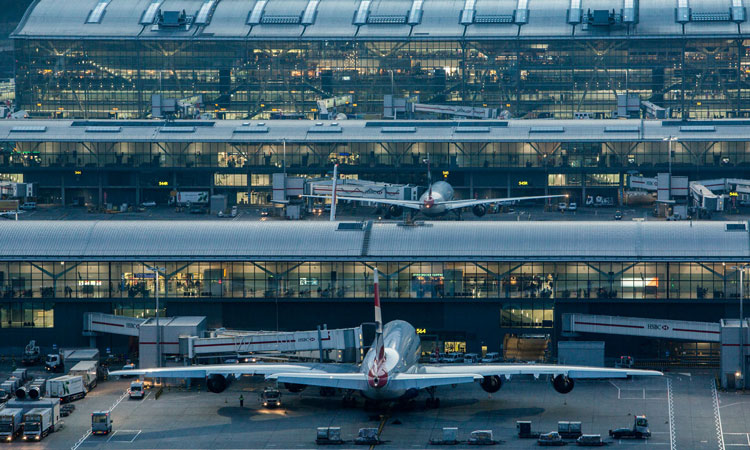
El Aeropuerto London/Heathrow, la aeroestación con más tráfico de Europa, ha cerrado a las operaciones aéreas debido a un incendio desarrollado en la subestación North Hyde en Hayes, en el Oeste de Londres, provocando el corte del suministro eléctrico en la zona. El caos que causó el cierre del aeropuerto en Londres ha afectado a más de 1.300 vuelos según el sitio web de seguimiento Flightradar24. Unos 120 aviones estaban en el aire cuando se anunció el cierre, por lo que tuvieron que ser desviados o volvieron a sus ciudades de origen.
Decenas de miles de pasajeros se vieron afectados. Algunos incluso quedaron atrapados durante horas en las terminales. Las autoridades habían pedido a los pasajeros no trasladarse al aeropuerto y contactar a las aerolíneas para pedir información de sus vuelos. Tras realizarse algunos trabajos para restaurar la energía, se anunció el reinicio paulatino de operaciones. El primer vuelo aterrizó pasadas las 18:00 (GMT), pero no se espera el restablecimiento total hasta el Sábado 22/03.
La causa del incendio en la subestación North Hyde no estaba clara. Por precaución, la unidad antiterrorista de la Policía Metropolitana estaba investigando lo ocurrido, pero señaló que no había indicios de ningún crimen. El incendio se produjo en una subestación eléctrica a poco más de 2 km del Aeropuerto de Heathrow.
¿Qué se sabe de la falla? El primer aviso de emergencia ocurrió sobre las 23:00 del Jueves 21/03 y para las 06:28 de mañana, la Brigada de Bomberos de Londres dijo que el incendio estaba bajo control. La subestación está a poco más de 2 km del aeropuerto.
El Secretario de Energía, Ed Miliband, dijo que el generador de respaldo de la subestación «parecía que hubiera sido averiado». Jonathan Smith, comisionado adjunto de la Brigada de Bomberos de Londres, dijo que el incendio afectó a un transformador que contenía 25.000 litros de aceite refrigerante.
El Director General del Aeropuerto Heathrow, Thomas Woldbye, informó que el aeropuerto cuenta con tres subestaciones y un transformador de respaldo. Sin embargo, explicó que reiniciar el sistema cuando ocurre una falla así lleva mucho tiempo. Tras el incendio, los equipos tuvieron que reconfigurar el suministro del aeropuerto, lo que significa que hubo que reiniciar y probar miles de sistemas. La pérdida de energía es equivalente a la que requiere una ciudad de tamaño mediano. Aseguró que este tipo de fallas están entre lo más grave que puede ocurrir para el funcionamiento de Heathrow.
Dado que Heathrow es un aeropuerto con mucha actividad de pasajeros y comercio internacional, se han planteado dudas sobre si dispone de sistemas de respaldo adecuados en caso de cortes de electricidad.
La falla también afectó zonas aledañas al aeropuerto. Unas 150 personas fueron evacuadas por el humo que se expandió hacia algunos vecindarios y algunas carreteras fueron cerradas. El servicio ferroviario Heathrow Express dijo que estaba ofreciendo un servicio reducido cada media hora para ayudar a los pasajeros a salir de las terminales.
En cuanto a los vuelos desviados, los aeropuertos de Amsterdam y Londres/Gatwick fueron los destinos más comunes. British Airways advirtió de un impacto significativo en sus servicios. Varios aviones de la aerolínea australiana Qantas fueron desviados a París, según la compañía. Por su parte, Cathay Pacific, la principal aerolínea de Hong Kong, canceló todos sus vuelos a Londres.
PUBLISHER: Airgways.com DBk: Heathrow.com / Flightradar24.com / Airgways.com AW-POST: 202503212034AR OWNERSHIP: Airgways Inc. A\W A I R G W A Y S ®
Malaysia Aviation Group anuncia pedido 60 aviones Boeing 737 MAX
The Boeing Company y Malaysia Aviation Group han anunciado el 21/03 un pedido de treinta (30) Boeing 737 MAX desglozando la orden en Boeing 737-8 MAX (18) y Boeing 737-10 MAX (12) para actualizar la flota de Malaysia Airlines con aviones más eficientes en el consumo de combustible.
El pedido, que se registró en Enero de 2025 y se publicó como no identificado en el sitio web de pedidos y entregas de Boeing. La nueva orden permitirá a la aerolínea de bandera de Malasia introducir nuevos asientos reclinables y satisfacer la creciente demanda de viajes en el sudeste asiático, uno de los mercados de aviación comercial de más rápido crecimiento. Se prevé que la flota de aviones de la región crezca casi un 250% en los próximos veinte años, lo que subraya la importancia de la inversión de Malaysia Aviation Group en la versatilidad del 737-8 y la capacidad del 737-10 como el miembro más grande de la familia 737 MAX.
«Esta es una inversión significativa para Malaysia Aviation Group, que nos permite ofrecer ofertas de cabina premium de vanguardia y tecnología de vanguardia a nuestros clientes. La incorporación de estos nuevos aviones no solo mejorará la eficiencia de nuestra flota y aumentará la capacidad de asientos, sino que nos permitirá elevar la experiencia general a bordo, con las necesidades de nuestros pasajeros a la vanguardia», dijo Izham Ismail, Director Gerente de Malaysia Aviation Group.
«El anuncio de hoy representa otro hito en la asociación de larga data de Boeing con Malasia y refleja nuestro compromiso duradero con el sector aeroespacial del país. La oportunidad de introducir más aviones Boeing en Malasia es un motivo de orgullo para nuestros muchos empleados malasios que contribuyen a cada avión que Boeing construye y entrega a clientes de todo el mundo», dijo el Dr. Brendan Nelson AO, Presidente de Boeing Global.
«Nos sentimos honrados de construir sobre nuestra valiosa asociación con Malaysia Aviation Group y apoyarlos en la modernización de su flota. La incorporación del 737-8 y el 737-10 equipará a Malaysia Airlines con la flexibilidad operativa, el rendimiento medioambiental y la capacidad adicional que necesitan para servir mejor a un número creciente de pasajeros», dijo Brad McMullen, Vicepresidente Senior de Ventas Comerciales y Marketing de Boeing.
El Boeing 737 ha sido la columna vertebral de la flota de pasillo único de Malaysia Airlines durante casi sesenta años tras la introducción de su primer 737-100 en 1969. Desde entonces, Malaysia Airlines ha operado casi todas las variantes de la familia 737 y continuará ese legado con este último pedido del 737 MAX de cuarta generación. Con más de 50 aviones 737 en la flota de Malaysia Airlines, la introducción de 737-8 adicionales y el 737-10 ofrece comunalidad operativa y la mejor economía por asiento de su clase, reduciendo el uso de combustible y las emisiones en un 20%.
El tráfico aéreo de pasajeros en el sudeste asiático se triplicará con creces en los próximos veinte años, según lo proyectado en el Commercial Market Outlook de Boeing, el pronóstico de demanda a largo plazo de la compañía para aviones comerciales y servicios. De los más de 4.700 nuevos aviones que se espera que se entreguen a los operadores de la región hasta 2043, casi el 80% serán aviones de pasillo único, como la familia 737 MAX.
La presencia de Boeing en Malasia incluye Boeing Composites Malaysia, la primera planta de fabricación de propiedad total de la compañía en el sudeste asiático con una fuerza laboral totalmente malaya. La instalación proporciona productos compuestos y subconjuntos para todos los aviones comerciales de Boeing, incluido el 737 MAX. Boeing apoya el desarrollo de capacidades aeroespaciales en Malasia a través de capacitación en seguridad, talleres de sostenibilidad, desarrollo de la cadena de suministro, colaboraciones universitarias e iniciativas de apoyo a la comunidad.
PUBLISHER: Airgways.com DBk: Malaysiaairlines.com / Boeing.com / Airgways.com AW-POST: 20250211733AR OWNERSHIP: Airgways Inc. A\W A I R G W A Y S ®
El CEO Daniel Ketchibachian de Aeropuertos Argentina, que administra 35 terminales en el país, ha informado el ambicioso plan de remodelación para seies aeroestaciones con el objetivo de aumentar las capacidades operativas tras la apertura de los Cielos Abiertos y la desregulación del transporte aéreo en Argentina.
El ambicioso plan de inversión destinará US$ 600 millones de Dólares en los próximos años para modernizar aeropuertos clave como Tucumán, Salta, Formosa, Mendoza, Córdoba, Bariloche, Aeroparque y Ezeiza. La estrategia de la empresa apunta a anticiparse a la demanda y facilitar la expansión del tráfico aéreo. “Tenemos un plan que estipula que la Argentina va a seguir creciendo”, afirmó Daniel Ketchibachian, quien recordó que la compañía lleva invertidos US$ 1.000 millones de Dólares en infraestructura.
“Hay un público oportunista que está creciendo, gente que saca un pasaje para pasar tres o cuatro días en Mendoza, por ejemplo, y para ellos la experiencia en el aeropuerto es clave. Su paso por la terminal tiene que ser placentero”, explicó Daniel Ketchibachian. El ejecutivo destacó el potencial de crecimiento del país con un sendero de crecimiento con estabilidad macroeconómica e infraestructura. Daniel Ketchibachian también reveló que mantiene conversaciones con diversas aerolíneas interesadas en volar a la Argentina, aunque admitió que algunas le entusiasman más que otras. “Entre las que yo más anhelo y sueño que ingresen está Azul. Estamos hablando de una de las tres aerolíneas más importantes de Brasil. Después está TAP, que es portuguesa, y también estaría bueno que ingresen jugadores para conectar con Oceanía y China”, señaló.
PUBLISHER: Airgways.com DBk: Aeropuertosargentina.com / Airgways.com AW-POST: 202503211724AR OWNERSHIP: Airgways Inc. A\W A I R G W A Y S ®
Apuesta optimización de recursos y eficiencia operativa
Aerolíneas Argentinas continua con el proceso de reacomodamiento de su sistema de vuelos domésticos adecuando sus rutas para consolidar sus finanzas y continuar fortaleciendo su superávit comercial.
La aerolínea argentina anunció que, a partir de Abril 2025, incrementará su operación en Córdoba con pernocte en el aeropuerto mediterráneo. Esta decisión le brinda la posibilidad de comercializar vuelos matutinos, mayormente demandados por el segmento corporativo para viajes de ida y vuelta en el mismo día, permitiendo despegar desde Córdoba temprano para arribar a Buenos Aires a primera hora. Por esta razón, la línea aérea también incrementó las frecuencias de los vuelos que conectan a la provincia con la Ciudad de Buenos Aires. Actualmente, posee setenta y dos frecuencias semanales (72Frq/S). Además, incorporará a partir de Mayo 2025 cinco vuelos semanales adicionales.
El primer vuelo despegará desde el Aeropuerto Internacional Córdoba/Ambrosio Taravella (COR) a las 06:30 hacia el Aeropuerto Buenos Aires/AEP arribando a las 07:50. A partir de Mayo 2025, se sumará una segunda frecuencia que despegará a las 08:00 y aterrizará en Capital Federal a las 09:20 horas.
La aérea también informó que en Julio 2025 retomará las rutas Córdoba/COR—Posadas/PSS y Córdoba/COR—Resistencia/RES, así como también los vuelos estacionales para la temporada de invierno hacia San Martín de los Andes (CPC). En los tres vuelos Aerolíneas operará una frecuencia diaria directas, sin pasar por Buenos Aires.
Desde su hub en Córdoba, Aerolíneas vuela a doce destinos nacionales sin pasar por Buenos Aires, entre los que se destacan Comodoro Rivadavia (CRD), Ushuaia (USH), El Calafate (FTE), Salta (SLA), Neuquén (NQN), San Juan (UAQ) y Bariloche (BRC), así como también a dos destinos internacionales Punta Cana (PUJ) y Río de Janeiro (GIG), con cuatro frecuencias semanales cada uno.
El CEO de Aerolíneas Argentinas, Fabián Lombardo, expresó referente a las nuevas conexiones: «Se alinea con las políticas nacionales impulsadas desde la Secretaría de Transporte de la Nación, dirigida por Franco Mogetta, orientadas a fortalecer la conectividad regional y optimizar las operaciones aéreas en el interior del país».
El Secretario de Transporte reaccionó a la noticia a través de su cuenta de X: «De la mano de la política de cielos abiertos y numerosas desregulaciones que hemos realizado en pos de abrir el mercado aerocomercial, Aerolíneas Argentinas viene adaptando su oferta para alinearla con la demanda real del mercado, optimizando sus recursos y mejorando la eficiencia operativa».
Además, Aerolíneas Argentinas ha anunciado cambios significativos en sus operaciones desde el Aeropuerto Internacional Rosqario/Islas Malvinas (ROS). A partir del 1 de Abril, la frecuencia de vuelos hacia Río de Janeiro se reducirá a dos vuelos semanales, operando los Lunes y Sábados. Hasta el 31 de Marzo de 2025, la ruta mantendrá su frecuencia diaria.
Además, la compañía ha decidido cancelar definitivamente la ruta que conectaba Rosario con El Calafate (FTE), afectando a quienes planeaban visitar el glaciar Perito Moreno. Asimismo, la conexión con Neuquén (NQN) fue suspendida temporalmente entre el 29 de Diciembre y el 1 de Abril de 2025, impactando a pasajeros de negocios y turismo hacia la región patagónica.
Estos ajustes reflejan los esfuerzos de Aerolíneas Argentinas por optimizar su red de vuelos en un contexto económico desafiante, lo que genera incertidumbre sobre el futuro de otras rutas que podrían verse afectadas por esta reestructuración.
Superávit operativo En Febrero 2025, Aerolíneas anunció su primer superávit operativo desde su reestatización, en 2008. La línea de bandera aseguró haber obtenido un resultado positivo de US$ 20,2 millones en 2024, según se desprendió de una reunión de accionistas, donde, también, se aprobó el balance correspondiente al ejercicio 2023, último período dirigido por La Cámpora hasta el 10 de Diciembre de 2023.
«Con foco en mejoras para la privatización, Aerolíneas reporta en 2024 ganancias operativas por primera vez desde su estatización y confirma pérdidas en balances de 2023», indicó la compañía en un comunicado, a la vez que ya adelantó que no le pedirá plata al Tesoro durante 2025, pues toda la operación se sustentará con ingresos genuinos de la propia empresa.
Futura privatización Los debates en torno a la privatización de la compañía aérea continúan en curso. Ahora, con los números ordenados, el Gobierno tendría aún más intenciones de vender al menos una parte de la compañía. El plan, no obstante, debe lograr el visto bueno del Congreso. Sin embargo, el Ejecutivo sí avanzó con la privatización de una empresa ligada a Aerolíneas Argentinas, Intercargo, mediante un decreto que se publicó en el Boletín Oficial,. La compañía brinda servicios de asistencia en tierra en la mayoría de los aeropuertos argentinos.
PUBLISHER: Airgways.com DBk: Aerolíneas.com / Airgways.com AW-POST: 202503211647AR OWNERSHIP: Airgways Inc. A\W A I R G W A Y S ®
La compañía Azores Airlines ha anunciado el incremento de las operaciones a las Islas Azores en varias rutas proyectadas con el fin de atender el aumento previsto de demanda de cara a la Semana Santa y entre el 11 y el 25 de Abril de 2025, reforzando la ruta entre Oporto (OPO) y Ponta Delgada (PDL) con vuelos adicionales los días 17, 21 y 27 de Abril de 2025, mientras que la ruta entre Lisboa y Pico tendrá un vuelo extra el 25/04. TLa aerolínea posee pasajes adicionales disponibles entre Funchal (FNC) y Ponta Delgada (PDL) los días 11, 18 y 25 de Abril de 2025.
«Estos vuelos adicionales ya están disponibles para reservar en el sitio web de la aerolínea, el centro de contacto, los mostradores de ventas de la compañía y las agencias de viajes», ha expresado la aerolínea azoreana. La aerolínea también mantendrá las conexiones habituales entre las Azores y los tres aeropuertos del continente: Oporto, Lisboa y Faro, así como conexiones regulares con Norteamérica y el continente europeo.
PUBLISHER: Airgways.com DBk: Azoresairlines.pt / Airgways.com AW-POST: 202503200644AR OWNERSHIP: Airgways Inc. A\W A I R G W A Y S ®
AW | 2025 03 19 15:00 | INDUSTRY / AVIATION SAFETY / AVIATION ORGANISMS
Piezas defectuosas por subcontratista italiano Agencia FAA emite Reglamentación NPRM
Los desafíos de The Boeing Company continúan aumentando a medida que la Administración Federal de Aviación (FAA) de Estados Unidos anuncia planes para hacer cumplir las inspecciones obligatorias de los Mamparos de Presión Delantera (FPB) en casi 1.000 Boeing 787 Dreamliners. Este último desarrollo se suma a las luchas continuas del gigante aeroespacial con problemas de calidad y seguridad de producción, intensificando aún más el escrutinio sobre sus procesos de fabricación.
La norma propuesta por la FAA se centra en los defectos estructurales de los 787 Dreamliners. El aviso de Reglamentación Propuesta (NPRM) de la FAA, cuya publicación realizada el 14 de Marzo de 2025, requerirá inspecciones internas y externas detalladas del FPB para identificar posibles grietas por fatiga o daños estructurales. Esta directiva se deriva de las propias recomendaciones de servicio de Boeing emitidas en Octubre de 2024, en las que se destacaban las no conformidades, como los huecos excesivos y las desalineaciones durante el montaje. La FAA ha advertido de que estos defectos podrían dar lugar a condiciones inseguras y ha propuesto medidas correctivas para garantizar la integridad estructural de la aeronave.
El mamparo de presión delantera es un componente crítico responsable de mantener la resistencia estructural del fuselaje y la presurización de la cabina. Los informes revelan que el ensamblaje incorrecto de esta pieza ha resultado en brechas significativas y problemas de tracción.
El mandato de la FAA afectará a aproximadamente 135 Dreamliners en los stados Unidos y a más de 1.000 aviones en todo el mundo. Las inspecciones se llevarán a cabo durante las visitas de mantenimiento pesado de rutina (C-Check), que generalmente ocurren cada 12 años o 24.000 ciclos de vuelo, lo que primero ocurra.
Subcontratista MPS Además del mandato de la FAA, Boeing está lidiando con un escándalo separado que involucra componentes defectuosos en casi 500 aviones Boeing 787. Estas piezas defectuosas, que inicialmente pasaron múltiples auditorías, fueron descubiertas durante una investigación de contaminación italiana.
El caso comenzó en Mayo de 2020 cuando las autoridades italianas arrestaron a dos personas por verter ilegalmente desechos químicos cerca de una fábrica aeroespacial. Esta investigación llevó al descubrimiento de que Manufacturing Process Specification (MPS), un proveedor aeroespacial italiano, había proporcionado miles de piezas de aviones de calidad inferior fabricadas con metales inferiores para los aviones Boeing 787. Esta revelación ha suscitado serias preocupaciones sobre la gestión de la cadena de suministro y los procesos de control de calidad de Boeing, dañando aún más la reputación de la empresa y poniendo de manifiesto los problemas sistémicos en su supervisión de la producción.
Un Sábado por la mañana de Mayo de 2020, agentes de policía italianos atraparon a dos hombres vertiendo residuos químicos en las alcantarillas de la ciudad portuaria de Brindisi, en el sur del país, cerca de una fábrica de componentes de aviones pequeños. Cinco años después, ese caso de contaminación rutinaria se ha convertido en una investigación judicial de gran alcance sobre cómo miles de piezas defectuosas de titanio y aluminio fabricadas en Italia terminaron en casi 500 aviones Boeing 787 aún en uso.
La investigación se centra en cómo el diminuto fabricante de piezas aeronáuticas Manufacturing Process Specification (MPS) presuntamente defraudó a los clientes mediante el uso de metales más baratos y débiles para fabricar accesorios de piso y otras piezas de aviones. Los ejecutivos de la compañía niegan la acusación. Una audiencia preliminar sobre el caso se desarrollará el 15 de Mayo de 2025.
Los reguladores estadounidenses, por su parte, preparan una guía técnica para que las aerolíneas detecten y reemplacen cualquier pieza defectuosa, sin optar por las órdenes de emergencia reservadas para los casos más urgentes.
Pero la precaria cadena de eventos que llevó a los detectives a la supuesta estafa, incluido el hallazgo sorpresivo de contaminación, plantea preguntas más amplias sobre el fracaso del propio sistema de auditoría voluntaria de la industria aeroespacial para detectar componentes de baja calidad.
Los detectives estaban investigando a los propietarios de MPS por la bancarrota de su empresa anterior. Pero después de atrapar a dos trabajadores de MPS arrojando líquidos contaminantes junto a la fábrica, la policía amplió sus investigaciones a las compras de materias primas de la firma de Brindisi, dijeron tres fuentes de investigación. Con la ayuda de los denunciantes, la policía descubrió que MPS y su empresa predecesora habían comprado cantidades muy pequeñas de los metales prescritos necesarios para los aviones 787, incluida una aleación de titanio resistente, cambiando en su lugar a titanio puro más barato y menos resistente, dijeron.
Advierten que la Unión Europea corre el riesgo de convertirse en un vertedero de acero barato desviado del mercado estadounidense, lo que, según dicen, podría acabar con las plantas europeas. Los fiscales alegan que durante cuatro años, las piezas fabricadas con el tipo de metal equivocado fluyeron hacia la cadena de suministro aeroespacial a través del grupo italiano Leonardo SpA, que construye dos secciones de fuselaje para el Boeing 787 en su cercana planta de Grottaglie.
El caso intenta dejar atrás una crisis de seguridad y calidad separada que desencadenó turbulencias financieras y de gestión y despidos. El resto de la industria también está lidiando con problemas esporádicos con piezas rebeldes. A pesar de utilizar metales de baja calidad, el ahora desaparecido MPS pasó auditorías por parte de tres organismos de certificación diferentes o auditores privados entre 2017 y 2021. Ninguna de estas auditorías implicó una revisión física de los accesorios del piso, que son componentes estructurales de un avión.
Si bien la noticia del supuesto interruptor metálico en el subcontratista italiano de Boeing llegó a los titulares internacionales en Octubre de 2021, los detalles del proceso de auditoría de MPS, así como la cantidad de accesorios de piso débiles instalados, no se han informado anteriormente.
Media docena de investigadores, abogados y expertos en certificación dijeron que el caso plantea dudas sobre si los controles, incluidas las auditorías de terceros, son lo suficientemente robustos como para garantizar que las piezas por debajo del nivel del suelo no terminen en aviones comerciales. «Es extremadamente preocupante que no haya habido controles preventivos sobre el tipo de material utilizado para construir estas piezas», dijo Danilo Recine, Vicepresidente del Sindicato de Pilotos ANPAC de Italia.
La FAA no ha dejado en tierra ningún avión 787 por estos motivos, pero emitió un aviso provisorio en 2024, que cuando esté finalizado, requerirá que las aerolíneas inspeccionen los aviones en busca de piezas defectuosas y las reemplacen. La Directiva de Aeronavegabilidad (AD) propuesta cubre potencialmente casi 500 aviones, pero hasta que se lleven a cabo las inspecciones es imposible saber cuántas partes están involucradas en las aeronaves. La FAA declinó dar más detalles. Se limitó a señalar que había finalizado el período para recabar observaciones de las compañías aéreas.
Leonardo SpA dijo en un comunicado que los fiscales lo están tratando como una víctima en el caso. Boeing, a la que también se le ha otorgado el estatus de víctima, se negó a comentar sobre los detalles del caso, pero dijo que «tiene un sistema integral de gestión de calidad, que incluye auditorías de proveedores. Esto complementa las auditorías adicionales realizadas por organismos de certificación, proveedores y otros dentro de la industria», expresó la compañía Boeing.
MPS, y su predecesor Processi Speciali, solían fabricar varias piezas de avión para Leonardo, incluidos los accesorios que conectaban las vigas que soportaban el suelo de la cabina del Boeing 787 con el fuselaje. También abasteció a otras empresas aeroespaciales. Después de realizar inspecciones de materiales en los componentes, los investigadores alegan que MPS fabricó 539 pisos bajo el nivel del suelo para Boeing que fueron suministrados a través de Leonardo, según un documento confidencial preparado por los fiscales. Los accesorios defectuosos terminaron en hasta 477 aviones aún en servicio, según el documento, un puñado más que la población potencial de aviones afectados citada por la FAA.
En el caso de un aterrizaje de emergencia, los accesorios de piso de menor calidad podrían provocar un colapso del piso del avión, dijeron en el documento los expertos aeroespaciales que probaron las piezas en nombre de los fiscales.
La FAA ha planteado un escenario similar en el peor de los casos, agregando que necesitaría múltiples partes adyacentes para fallar simultáneamente.
En su informe final, los fiscales italianos acusan al jefe de calidad de MPS, al propietario de la compañía y a tres familiares de fraude y violación de las reglas de seguridad de los aviones. Otros dos trabajadores están acusados de contaminar el suelo y el agua. «(Ellos) han puesto en peligro la seguridad del vuelo al producir y entregar a Leonardo piezas aeroespaciales estructurales fabricadas, no con aleación de titanio contratada, sino con titanio puro, que tiene una resistencia estructural que es en gran medida inferior a la de la aleación prescrita», dice el informe.
En total, los fiscales han dicho que MPS o su predecesor suministró alrededor de 6.000 piezas utilizando el tipo de metal equivocado, aunque la gran mayoría no son componentes estructurales.
Francesca Conte, abogada del propietario de MPS, dijo que el proveedor había trabajado en asociación con Leonardo y había obtenido todas las certificaciones necesarias. «Si hubiera habido alguna anomalía, habría sido evidente de inmediato», expresó. Francesca Conte y los abogados de los otros acusados dijeron que había pruebas que se presentarían durante el juicio que demostrarían que sus clientes no eran responsables de los presuntos delitos.
Auditorías para subcontratistas Para convertirse en un proveedor de The Boeing Company o Airbus Group los fabricantes de piezas deben ser auditados por sus sistemas de gestión de calidad bajo un capítulo aeroespacial de la organización de estándares globales ISO. Aquellos involucrados en ciertos procesos especiales como la soldadura o la galvanoplastia también necesitan una aprobación con sede en los Estados Unidos llamada NADCAP.
Los registros de la industria muestran que MPS y su predecesor obtuvieron aprobaciones de tres organismos de auditoría bajo el estándar aeroespacial basado en ISO para sistemas de calidad. La última certificación se otorgó en Mayo de 2021.
Leonardo SpA dijo en un comunicado enviado por correo electrónico que se había enterado de problemas con los componentes en MPS a fines de 2020 por parte de la compañía americana Boeing. Cuando se le preguntó cómo investigaba a los contratistas, Leonardo dijo que MPS primero tenía que calificar para ingresar a sus listas de proveedores y a las de Boeing. El grupo dijo que también había llevado a cabo controles posteriores de MPS utilizando documentos puestos a disposición por el proveedor. Las auditorías se llevaron a cabo tanto de forma independiente como en equipos conjuntos con Boeing, agregó la compañía italiana.
«Cualquier comportamiento fraudulento no puede ser detectado por estos controles», dijo Leonardo SpA. Sin embargo, desde el año 2024, la compañía ha comenzado a realizar pruebas adicionales sobre las características químicas y físicas de los componentes significativos. «La falta de controles físicos puntuales desconcertó a la policía. El problema de las piezas defectuosas se descubrió en 2020. Si los controles de calidad hubieran funcionado, no se habría descubierto tan tarde», expresa una fuente anónima consultada.
Regulaciones Bajo el sistema de supervisión voluntaria para la gestión de la calidad, los auditores privados conocidos como organismos de certificación verifican si una empresa aeroespacial tiene los procesos, máquinas y trabajadores calificados adecuados para llevar a cabo sus tareas con los estándares correctos. Por lo general, las pruebas físicas aleatorias solo se incluyen si una empresa necesita un certificado de calidad para productos específicos.
Pero Christopher Paris, fundador de la consultora Oxebridge Quality Resources, dijo que el caso de MPS demuestra la necesidad de una supervisión más estricta de la pirámide de controles, incluyendo no sólo a los auditores independientes, sino también a los organismos de acreditación que los examinan. «Es necesario un marco regulatorio», dijo Oxebridge Quality Resources.
Ninguno de los auditores ni de los diversos organismos de la industria está en el punto de mira de la investigación italiana. Accredia, que es responsable de acreditar a los auditores en Italia, dijo que las reglas existentes eran sólidas y bien estructuradas y enfatizó que el trabajo de las auditorías no es erradicar el crimen. A la cabeza del sistema de controles voluntarios se encuentra el Grupo de Calidad Aeroespacial de la Industria (AIQG), un organismo mundial. El Presidente de IAQG, Eric Jefferies, dijo en un comunicado que está trabajando activamente en actualizaciones de los estándares existentes. «Sin embargo, los resultados de cualquier implementación de un sistema de gestión de la calidad recaen en última instancia en la organización certificada», dijo Eric Jefferies.
Perspectivas Boeing El camino a seguir de Boeing será restaurar la confianza en la industria de la aviación. A medida que Boeing trabaja para abordar estos crecientes desafíos, el último mandato de la FAA y la investigación de piezas defectuosas subrayan la necesidad urgente de que la compañía fortalezca sus protocolos de seguridad y medidas de garantía de calidad. Con las preocupaciones sobre la calidad de la producción y el escrutinio regulatorio en su punto más alto, Boeing debe actuar rápidamente para reconstruir la confianza entre los reguladores, las aerolíneas y los pasajeros.
Las inspecciones obligatorias y las investigaciones en curso sobre piezas de calidad inferior representan una coyuntura crítica para Boeing. La capacidad de la compañía para sortear estos desafíos determinará su futuro en la industria de la aviación y su capacidad para recuperar la confianza de las partes interesadas en todo el mundo.
PUBLISHER: Airgways.com DBk: Faa.gov / Boeing.com / Europa-union.europa.eu / Leonardo.com / Iaqg.org / Oxebridge.com / Anpac.it / Airgways.com AW-POST: 202503191500AR OWNERSHIP: Airgways Inc. A\W A I R G W A Y S ®
Sun Country Airlines busca consolidación mercado low cost
Sun Country Airlines parece estar abierto a ver una consolidación en el mercado de las ultra low cost carriers (ULCC). El 11 de Marzo de 2025, el Presidente y Director Financiero de la compañía, Dave Davis, habló en la conferencia industrial de JP Morgan y dijo que, si bien hay muchos aspectos que hacen de Sun Country Airlines un candidato adecuado para posibles aspiraciones de fusión, también se tendrá que considerar su modelo de negocio único. Así, la aerolínea con sede en el Aeropuerto Internacional de Minneapolis-Saint Paul, en el Estado de Minnesota, ha dejado abierta a diálogo para la consolidación en el mercado ULCC en Estados Unidos.
Entre las diversas formas en que las aerolíneas buscan la optimización y reestructuración del negocio es a través de fusiones con otras aerolíneas de la industria, incluyendo varios factores que entran en juego cuando dos aerolíneas deciden integrar el negocio, y Sun Country Airlines considera que existen muchos aspectos que harían que una sinergia sea funcional.
«Creo que hay muchos aspectos que nos harían encajar bien con otros, pero lo que pasa con el modelo de negocio que puede ser complejo para otros es probablemente el negocio de carga. Es único. Creo que otras aerolíneas que hacen vuelos chárter y un negocio de servicios regulares podrían encajar bien. Encajaríamos mejor con otros operadores que programan de manera similar. Dicho esto, Alaska acaba de comprar Hawaiian Airlines, y Hawaiian tiene un gran acuerdo con Amazon. Eso es probablemente lo que me viene a la mente», expresó Dave Davis.
Dinámica aviación estadounidense El mercado en Estados Unidos continúa su proceso de conversaciones sobre aerolíneas que podrían buscar una fusión, donde el proceso de adquisición de negocios no son siempre exitosas o complementarias unas con otras, pues se consideran varios factores antes de finalizar el acuerdo, incluyendo las aprobaciones de los organismos federales. El ejemplo más reciente es la relación JetBlue Airways-Frontier Airlines para adquirir Spirit Airlines, que no pudieron superar el obstáculo de la aprobación del Gobierno estadounidense.
Aun así, Sun Country Airlines ha demostrado recientemente que no se opone a un acuerdo comercial de este tipo. En la Conferencia Barclays Industrial Select en Febrero 2025, el Director Financiero de la aerolínea, Dave Davis, dijo que Sun Country Airlines podría ver surgir algunas combinaciones. «Creemos que hay combinaciones con Sun Country que tienen sentido y seguimos analizando las cosas. Ciertamente no es nuestro plan base, pero creo que la industria necesita consolidarse en el lado del bajo costo. Parece que se avecinan algunas combinaciones».
Muchos expertos creen que el impulso de la industria podría favorecer los acuerdos de fusión entre aerolíneas, y Sun Country ciertamente parece ser uno de los jugadores que podría participar en una transacción comercial de este tipo, si surge la oportunidad adecuada.
Acerca Sun Country Sun Country Airlines se constituyó el 2 de Julio de 1982, contituyendo una de las aerolíneas más antiguas en el modelo vacacional, mientras que ha girado hacia un acuerdo con Amazon el 17 de Diciembre de 2019 para diversificar sus operaciones, este acuerdo está diseñado para ayudar a estabilizar los ingresos durante las temporadas vacacionales de menor demanda. Sun Country opera actualmente 140 rutas, que incluyen casi 100 aeropuertos en los Estados Unidos, México, América Central, Canadá y el Caribe. La aerolínea se promociona a sí misma como «una nueva generación de aerolínea híbrida de bajo costo, cuya misión es conectar a los huéspedes con sus personas y lugares favoritos, para crear recuerdos para toda la vida y experiencias transformadoras».
PUBLISHER: Airgways.com DBk: Suncountry.com / Airgways.com AW-POST: 202503191235AR OWNERSHIP: Airgways Inc. A\W A I R G W A Y S ®
Japan Airlines había formulado en Marzo de 2023 planes para incorporar a su flota de fuselaje estrecho un pedido de 21 Boeing 737 MAX. En un proceso de actualización, la aerolínea informa que ha decidido aumentar considerablemente este pedido elevando la cifra a 38 aeronaves Boeing 737 MAX de cuarta generación.
Japan Airlines (JAL) ha finalizado un pedido de 38 Boeing 737-8 MAX que se unirán a la flota a partir de 2026. El 737-8 MAX posee una capacidad para transportar entre 162-178 pasajeros, con un alcance de 3.550 millas náuticas, ofreciendo un ahorro de combustible y emisiones de carbono en un 15% en comparación con los aviones de la generación anterior que vuela la aerolínea.
Japan Airlines cuenta actualmente con una flota de aviones de fuselaje estrecho compuesta íntegramente por el fabricante americano The Boeing Company, compuesta por 43 Boeing 737-800, con una antigüedad media de más de 15 años. Estos se utilizan tanto para vuelos nacionales dentro de Japón, como para vuelos internacionales de corta distancia. Los 737-8 MAX reemplazarán a la mayor parte de la flota clásica de 737-800 Next Generation.
Japan Airlines ha publicado algunas cabinas de pasajeros más modernas para el 737 MAX, con una posible configuración de tres clases, con algunos asientos con acceso directo al pasillo y puertas. Mientras tanto, parece que otra versión del 737 MAX estará en un diseño totalmente en clase económica.
Por otra parte, en Marzo de 2024, Japan Airlines realizó un pedido de 11 Airbus A321neo, que se espera que reemplacen principalmente a los Boeing 767 domésticos, para vuelos desde Tokio Haneda (HND).
Japan Airlines poseerá actualmente una flota mixta en la parte de los aviones narrowbodies con Boeing 737 MAX y A321neo, y los widebodies con Boeing 777, 787 y A350, como parte de la renovación de flota impulsada por la aerolínea nipona, permitiendo actualizar sus productos y expender su red de servicios.
PUBLISHER: Airgways.com DBk: Jal.com / Boeing.com / Airgways.com AW-POST: 202503191233AR OWNERSHIP: Airgways Inc. A\W A I R G W A Y S ®











 airgways.com