China piloteando crisis pandémica
AW | 2021 08 10 15:33 | AIRLINES MARKET

Rebrote pandemia derriba temporada verano chino

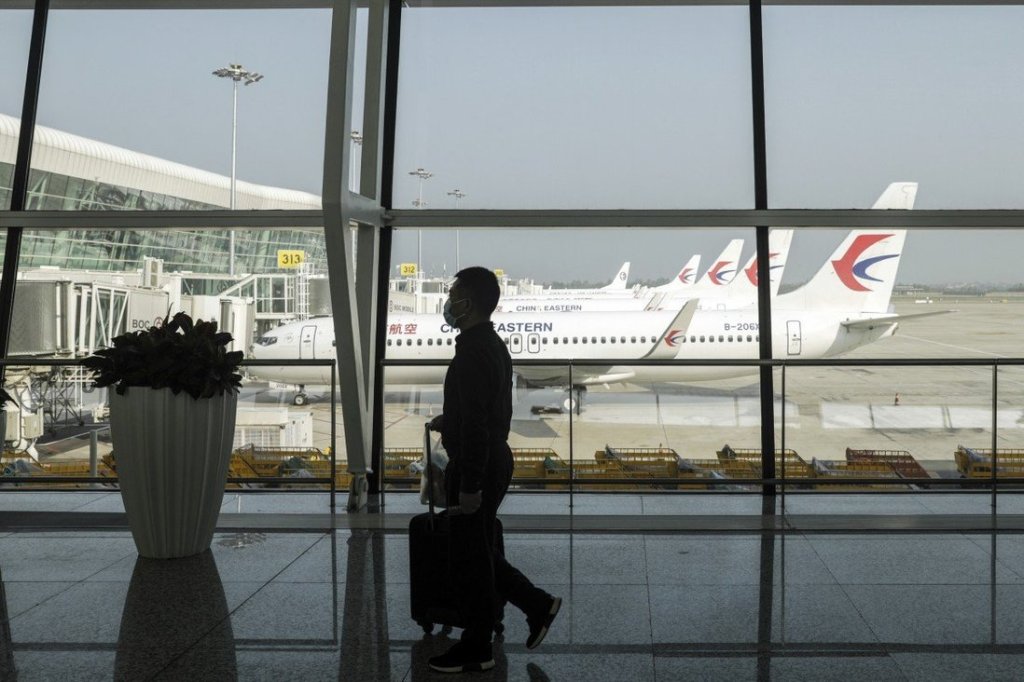
La aviación en la República Popular de China ha reingresado en un nuevo período de epidemia doméstica luego de golpear una vez más a las aerolíneas chinas los rebrotes de las nuevas cepas del virus pandémico. La cuarta temporada alta que la industria perdió en los últimos años, ha desarrollado un impacto significativo en la industria de la aviación civil.

La Administración de Aviación Civil de China (CAAC) anunció el Martes 10/08 que las personas que compraron boletos pueden solicitar un reembolso completo desde el Martes 03/08 hasta el 31/08 después de que una nueva ola de la variante Delta del COVID-19 en toda China. Más de treinta aerolíneas, entre ellas Air China, China Eastern Airlines, China Southern Airlines y Hainan Airlines, cancelaron sus vuelos este Miércoles 04/08 de acuerdo con las órdenes de prevención y control del virus emitidas por muchas ciudades. Según datos de Flight Master, hasta el Miércoles 04/08, los aeropuertos de las principales ciudades habían cancelado entre el 27 por ciento y el 82 por ciento de los vuelos regulares. «El riesgo de la epidemia en todo el país, junto con la política de reembolso de boletos de CAAC, ha llevado la temporada de viajes de verano a un final temprano», expresó Lin Zhijie, un observador del mercado de la aviación comercial.

Antes del brote de Coronavirus, la demanda de vuelos comerciales solía alcanzar su punto máximo entre los meses de Julio y Agosto. Durante el verano boreal de 2019, toda la industria de China operó más de 17.000 vuelos en un día determinado. En contraste, durante el mismo período de 2020, el número de vuelos a nivel nacional se redujo en más del 14 por ciento. Las principales aerolíneas se mostraron en general optimistas para la temporada de viajes de verano de 2021 a principios de Julio 2021. El número total de vuelos previstos para este periodo alcanzó los 960.000, un 2,88 por ciento más que en el mismo periodo de 2019 anterior a la epidemia. Sin embargo, un reciente recrudecimiento de nuevos casos ha puesto trabas a las obras de los transportistas comerciales del país. Los observadores del mercado dijeron que los principales pasajeros de la temporada de viajes de verano son los estudiantes. Debido al último brote, la mayoría de los estudiantes están cancelando sus planes de viaje y se quedan en casa, lo que le cuesta a las aerolíneas la mayoría de los pasajeros. Además, las atracciones turísticas son los destinos más populares durante la temporada de viajes de verano, por lo que el cierre de los principales lugares escénicos ha reducido significativamente las posibilidades de vacaciones.

Desde el último brote de COVID-19 en Nanjing, Zhangjiajie y Zhengzhou, muchas ciudades de China han cerrado lugares escénicos con reuniones grupales prohibidas. «Los beneficios de la primera mitad de la temporada de verano se han recuperado en gran medida. Sin embargo, la segunda mitad terminó temprano, lo que significa que las aerolíneas definitivamente volverán a caer en territorio deficitarios. La gravedad de la epidemia había disminuido este año, pero la repentina propagación ha agregado demasiada incertidumbre a la industria de la aviación civil», dijo Lin Zhijie.

Air China dijo en su informe anual de 2020 que manejó casi 10 millones de reembolsos y cambios de boletos a lo largo del año pasado, con ingresos de ¥ 69.5 mil millones de Yuanes/US$ 10.2 mil millones en 2020, un 48.96 por ciento menos que el año anterior. Ha experimentado su mayor pérdida de ¥ 14.41 mil millones de Yuanes desde que se fue a bolsa. China Southern Airlines ¥ 10.84 mil millones, China Eastern Airlines ¥ 11.84 mil millones y Hainan Airlines también ha reportado pérdidas de ¥ 64 mil millones de Yuanes en 2020.

En el primer trimestre de 2021, estas cuatro principales aerolíneas continuaron con sus pérdidas, con Air China perdiendo US$ 6.2 mil millones, China Southern perdiendo US$ 4 mil millones y Hainan perdiendo US$ 2.6 mil millones. Una temporada de viajes de primavera lenta se ha atribuido como la razón más común de las pérdidas.

CAAC China

El regulador de aviación de China ahora requiere que los miembros de la tripulación tomen más pruebas de ácido nucleico, lo que también limita su capacidad para volar, dijo la persona. Los reguladores se han comprometido a adoptar medidas de prevención mucho más estrictas sobre el terreno detallando las medidas de gestión en el personal de primera línea, realizando pruebas de ácido nucleico más frecuentes entre el personal de servicios de aviación de todos los niveles, por ejemplo, el personal de primera línea que se ocupa de bienes importados y los servicios relacionados con aeronaves deben someterse a pruebas de ácido nucleico cada dos días; ajustar las políticas de cuarentena y vigilancia de la salud de llegadas y mejorar la protección del personal en función de los diferentes trabajos.

Aerolíneas buscan sobrevivir

Las aerolíneas siempre han estado buscando salidas, como el lanzamiento de paquetes sin vuelos y la reasignación de más capacidad a la carga y la carga. Hainan Airlines celebró conjuntamente su primer evento de ventas en vivo de productos en asociación con la plataforma de viajes qunar.com, atrayendo a 430,000 espectadores a ver en línea con ¥ 5 millones de Yuanes de ventas dentro de las dos horas de la transmisión en vivo el 15 de Julio 2021. Hainan Airlines ha lanzado una serie de rutas populares de verano, como Beijing-Chongqing, Guangzhou-Beijing y Beijing-Sanya para compensar las pérdidas provocadas por la epidemia. Estas rutas han sido bien recibidas por los pasajeros, con muchos vuelos que se han vendido.

Los expertos del mercado también piensan que la carga podría ser otra salida, dado que los vuelos de pasajeros están siendo restringidos. El 09/07, China Eastern Air Logistics Co cotizó en la Junta Principal de la Bolsa de Shanghái, convirtiéndose en la primera empresa independiente que cotiza en bolsa en la industria de logística de aviación de China. Además, el entusiasmo mostrado por los aeropuertos locales nacionales por más rutas de carga es alto. A principios de Julio 2021, la Terminal de Carga 3 del Aeropuerto Internacional Changsha Huanghua se puso oficialmente en uso; a finales de Mayo 2021, el Aeropuerto de Ningbo abrió la primera ruta de carga Ningbo-Budapest (Hungría) para conectar mejor las ciudades de Europa. Sin embargo, los observadores del mercado están adoptando una actitud cautelosa hacia la operación después de que algunos empleados del transporte de carga hayan dado positivo en casos del virus pandémico.

China piloting pandemic crisis
Pandemic outbreak brings down Chinese summer season

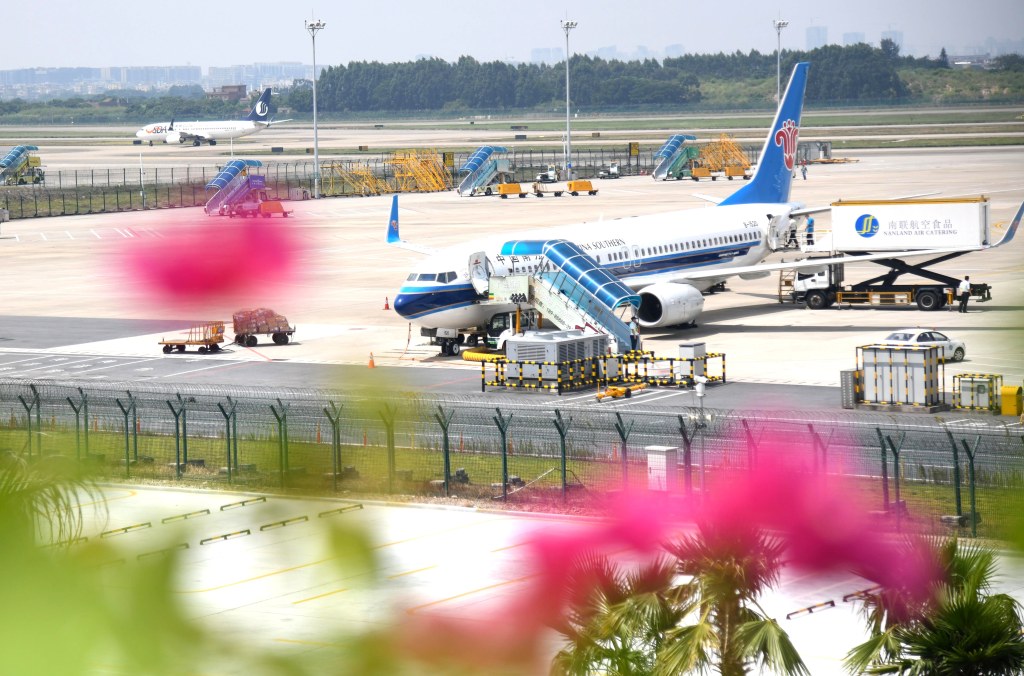
Aviation in the People’s Republic of China has re-entered a new period of domestic epidemic after outbreaks of new strains of the pandemic virus hit Chinese airlines once again. The fourth peak season the industry missed in recent years has developed a significant impact on the civil aviation industry.

The Civil Aviation Administration of China (CAAC) announced on Tuesday 10/08 that ticket holders can apply for a full refund from Tuesday 03/08 to 31/08 after a new wave of the Delta variant of COVID -19 in all of China. More than thirty airlines, including Air China, China Eastern Airlines, China Southern Airlines and Hainan Airlines, canceled their flights this Wednesday 04/08 in accordance with the virus prevention and control orders issued by many cities. According to data from Flight Master, as of Wednesday 04/08, the airports in the main cities had canceled between 27 percent and 82 percent of scheduled flights. «The risk of the epidemic across the country, coupled with CAAC’s ticket refund policy, has brought the summer travel season to an early end», said Lin Zhijie, an observer of the commercial aviation market.

Before the Coronavirus outbreak, demand for commercial flights used to peak between the months of July and August.
During the summer of 2019, the entire industry in China operated more than 17,000 flights on any given day. In contrast, during the same period in 2020, the number of flights domestically dropped by more than 14 percent. Major airlines were generally optimistic for the 2021 summer travel season in early July 2021. The total number of flights planned for this period reached 960,000, 2.88 percent more than in the same period in 2019. prior to the epidemic. However, a recent upsurge of new cases has hampered the works of the commercial carriers of the country. Market watchers said the main passengers for the summer travel season are students. Due to the latest outbreak, most students are canceling their travel plans and staying home, costing the airlines the majority of passengers. In addition, tourist attractions are the most popular destinations during the summer travel season, so the closure of the main scenic spots has significantly reduced the possibilities for vacations.

Since the last COVID-19 outbreak in Nanjing, Zhangjiajie, and Zhengzhou, many cities in China have closed scenic spots with banned group gatherings. «Profits from the first half of the summer season have largely recovered. However, the second half ended early, which means that airlines will definitely slip back into deficit territory. The severity of the epidemic had lessened this year, but the sudden spread has added too much uncertainty to the civil aviation industry», said Lin Zhijie.

Air China said in its 2020 annual report that it handled nearly 10 million refunds and ticket changes over the past year, with revenue of ¥ 69.5 billion Yuan/US$ 10.2 billion in 2020, down 48.96 percent. what the year previous. It has experienced its biggest loss of ¥ 14.41 billion Yuan since going public. China Southern Airlines ¥ 10.84 billion, China Eastern Airlines ¥ 11.84 billion and Hainan Airlines has also reported losses of ¥ 64 billion Yuan in 2020.

In the first quarter of 2021, these top four airlines continued their losses, with Air China losing US$ 6.2 billion, China Southern losing US$ 4 billion and Hainan losing US$ 2.6 billion. A slow spring travel season has been attributed as the most common reason for losses.

CAAC China

China’s aviation regulator now requires crew members to take more nucleic acid tests, which also limits their ability to fly, the person said. Regulators have pledged to adopt much stricter preventive measures on the ground detailing management measures on front-line personnel, conducting more frequent nucleic acid testing among aviation services personnel at all levels, for example, front-line personnel dealing with imported goods and aircraft-related services must undergo nucleic acid testing every two days; adjust the quarantine and health surveillance policies of arrivals and improve the protection of personnel according to the different jobs.

Airlines seek to survive

Airlines have always been looking for departures, such as launching packages without flights and reallocating more capacity to cargo and cargo. Hainan Airlines jointly held its first live product sales event in association with the travel platform qunar.com, attracting 430,000 viewers to watch online with ¥ 5 million of sales within two hours of the live broadcast. the 15 of July 2021. Hainan Airlines has launched a series of popular summer routes, such as Beijing-Chongqing, Guangzhou-Beijing and Beijing-Sanya to offset losses caused by the epidemic. These routes have been well received by passengers, with many flights being sold.

Market experts also think that cargo could be another way out, given that passenger flights are being restricted. On 07/09, China Eastern Air Logistics Co was listed on the Main Board of the Shanghai Stock Exchange, becoming the first independent publicly traded company in China’s aviation logistics industry. In addition, the enthusiasm shown by local national airports for more cargo routes is tall. In early July 2021, Cargo Terminal 3 of Changsha Huanghua International Airport was officially put into use; At the end of May 2021, Ningbo Airport opened the first Ningbo-Budapest (Hungary) cargo route to better connect Europe’s cities. However, market watchers are taking a cautious attitude toward the operation after some freight workers have tested positive for the pandemic virus.

中國試行大流行危機
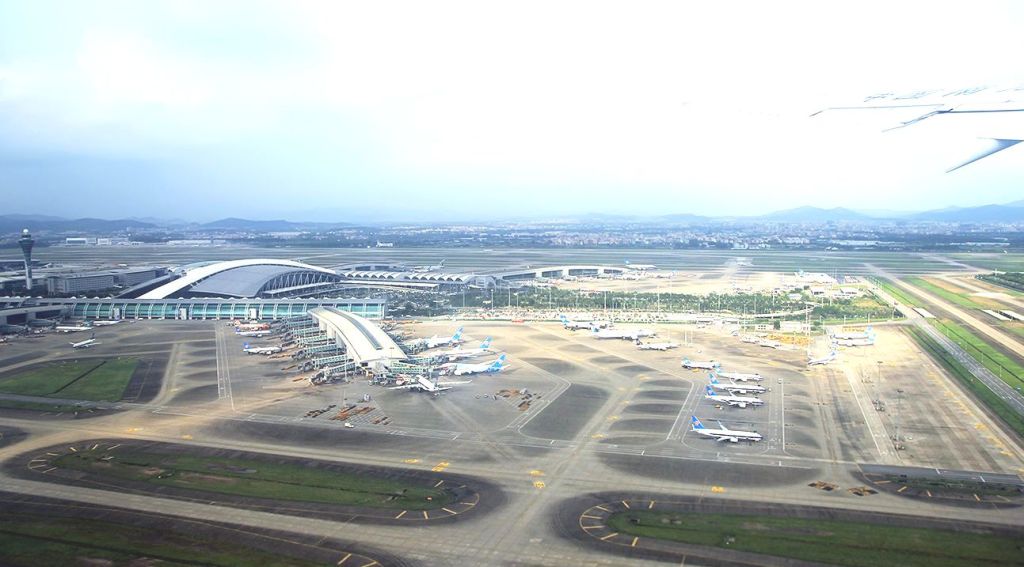
大流行的爆發打倒了中國的夏季

新冠病毒疫情再次襲擊中國航空公司後,中華人民共和國航空業重新進入國內疫情新時期。近年來,行業錯過的第四個旺季對民航業產生了重大影響。

中國民航局 (CAAC) 於 2008 年 10 月 10 日星期二宣布,在全中國掀起新一波 Delta 變體 COVID -19 浪潮後,機票持有人可於 08 年 3 月 3 日至 31 日(星期二)申請全額退款。國航、東航、南航、海航等30餘家航空公司,根據多方發布的疫情防控令,於2008年4月3日星期三取消航班。城市。根據 Flight Master 的數據,截至 08 年 4 月星期三,主要城市的機場取消了 27% 至 82% 的定期航班。民航市場觀察人士林志傑表示:“全國各地的疫情風險,加上民航局的機票退票政策,讓夏季旅遊旺季提前結束»

在冠狀病毒爆發之前,商業航班的需求曾經在 7 月至 8 月之間達到頂峰2019年夏季,中國全行業單日運營航班超過17000架次。相比之下,2020 年同期,國內航班數量下降了 14% 以上。各大航空公司普遍看好2021年7月上旬的2021年夏季旅遊旺季,這一時期計劃的航班總數達到96萬班次,比疫情前的2019年同期增長2.88%。然而,最近新病例的激增阻礙了該國商業承運人的工作國家。市場觀察人士表示,夏季旅遊旺季的主要乘客是學生。由於最近的疫情爆發,大多數學生取消了旅行計劃並呆在家裡,使航空公司損失了大部分乘客。此外,旅遊景點是夏季旅遊旺季最熱門的目的地,因此主要景點的關閉大大減少了度假的可能性。

自上次在南京、張家界和鄭州爆發 COVID-19 以來,中國許多城市都關閉了禁止團體聚會的景點。 “上半年的利潤已經基本回升,但下半年提前結束,意味著航空公司肯定會滑回虧損區域。今年疫情嚴重程度有所減輕,但突然蔓延又加重了給民航業帶來了太多的不確定性”, 林志傑說。

國航在2020年年報中表示,過去一年辦理了近1000萬次退票和改簽,2020年營收695億元人民幣/102億美元,同比下降48.96%以前的。上市以來最大虧損144.1億元。 2020年南航108.4億元、東航118.4億元、海航也虧損640億元。

2021年一季度,這四大航空公司繼續虧損,國航虧損62億美元,南航虧損40億美元,海南虧損26億美元。春季旅遊季節緩慢被認為是造成損失的最常見原因。

中國民航總局

這位知情人士說,中國航空監管機構現在要求機組人員進行更多的核酸檢測,這也限制了他們的飛行能力。監管部門承諾在地面採取更嚴格的預防措施,細化對一線人員的管理措施,對各級航空服務人員進行更頻繁的核酸檢測,例如處理進口貨物和飛機相關的一線人員。服務必須每兩天進行一次核酸檢測;針對不同工作崗位,調整入境檢疫和健康監測政策,完善員工保護。

航空公司尋求生存

航空公司一直在尋找離港機會,例如推出沒有航班的包裹,將更多的運力重新分配給貨運和貨運。海航聯合旅遊平台去哪兒網聯合舉辦首場產品直播銷售活動,直播2小時內吸引43萬觀眾在線觀看,銷售額達500萬元2021年7月,海航開通了北京-重慶、廣州-北京、北京-三亞等夏季熱門航線,以彌補疫情造成的損失。這些航線深受旅客歡迎,許多航班已售出。

市場專家還認為,鑑於客運航班受到限制,貨運可能是另一種出路。 07月9日,東航物流股份有限公司在上海證券交易所主板掛牌上市,成為中國航空物流行業首家獨立上市公司。此外,當地國家機場對更多貨運航線表現出的熱情是 高的。 2021年7月上旬,長沙黃花國際機場3號航站樓正式投入使用; 2021年5月下旬,寧波機場開通了第一條寧波-布達佩斯(匈牙利)貨運航線,更好地連接歐洲城市。然而,在一些貨運工人的大流行病毒檢測呈陽性後,市場觀察人士對該操作持謹慎態度。

PUBLISHER: Airgways.com
DBk: Caac.gov.cn / Globaltimes.cm / Scmp.com / Xinhuanet.com/Deng Hua / Airgways.com
AW-POST: 202108101533AR

A\W   A I R G W A Y S ®
Reino Unido modifica reglas inmigración

AW | 2021 08 08 14:24 | AIRLINES MARKET / GOVERNMENT

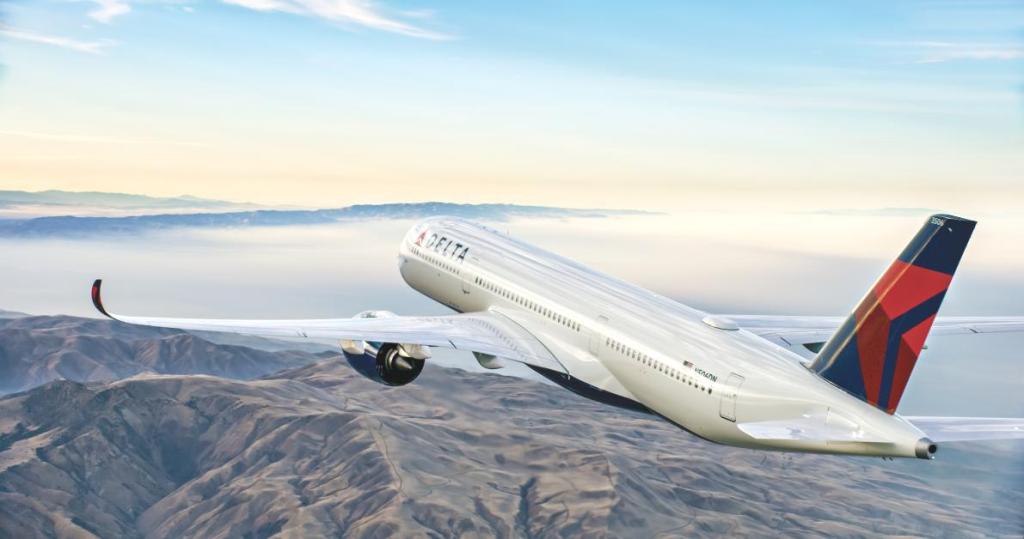
Delta Air Lines modifica vuelos transatlánticos post-pandemia

El Reino Unido está modificando sus reglas de inmigración para permitir que los viajeros de la Unión Europea y Estados Unidos alcancen una la vacunación óptima para poder viajar a Gran Bretaña.

La compañía estadounidense Delta Air Lines planea realizar los siguientes cambios en su red: Seattle–Londres/Heathrow comienza de nuevo tres veces a la semana (3Frq/S) a partir del 7 de Octubre de 2021. Detroit–Londres/Heathrow comienza de nuevo cuatro veces a la semana a partir del 11/11. Nueva York JFK–Londres/Heathrow, aumentando el doble de frecuencia alcanzando a 14 servicios por semana (14Frq/S). Todos los vuelos están equipados con camas planas completas Delta One, Delta Comfort+ y servicio de cabina principal, nuevo contenido premium, WiFi a la compra y pantallas de entretenimiento personal en la parte trasera de los asientos con mensajería móvil gratuita. Opera vuelos en alianza Delta Air Lines–Virgin Atlantic Airways incorporando Boston, Los Ángeles y Miami y Atlanta y Nueva York JFK para una lista de opciones de destinos.

Condiciones ingresos

Para viajar al Reino Unido, los clientes necesitan: Certificado de vacunación y prueba negativa (PCR, LAMP o antígeno) dentro de los tres días de la salida. Comprobar la PCR un par de días antes de la llegada. El Reino Unido ha incluido a los Estados Unidos en la Lista Naranja de Viajes. Para volver a ingresar a los Estados Unidos, los clientes deben proporcionar prueba de una prueba negativa dentro de los tres días posteriores a la salida.

Actualmente, Delta Air Lines posee un producto denominado FlyReady que permite a los clientes que viajan entre los Estados Unidos y el Reino Unido gestionar fácilmente los requisitos de las pruebas y verificar los resultados antes de llegar al aeropuerto, ahorrándoles un tiempo valioso y reduciendo el riesgo de rechazar el embarque. Joe Esposito, Vicepresidente Senior de Planificación de la red de Delta Air Lines, dijo: «La tan esperada reapertura es un paso importante porque las fronteras estaban cerradas a la mayoría de los viajeros hace un año. Estamos interesados en ayudar a los clientes a redescubrir las alegrías de los viajes, mientras que al mismo tiempo hacemos de la salud y la seguridad nuestra prioridad en el cambiante entorno global de viajes».

Vuelos transatlánticos

Con 22 millones de personas y 900.000 toneladas de carga transportadas entre Estados Unidos y el Reino Unido en 2019, el corredor anglo-americano es crucial para los viajes y el comercio internacionales. Las compañías aéreas comenzarán a ajustar sus vuelos a las nuevas normativas impuestas por el Gobierno del Reino Unido para reactivar las frecuencias en el corredor aéreo más importante del mundo, los viajes transatlánticos.

UK modifies immigration rules

Delta modifies post-pandemic transatlantic flights

The United Kingdom is modifying its immigration rules to allow travelers from the European Union and the United States to achieve the optimal vaccination to be able to travel to Great Britain.

The American company Delta Air Lines plans to make the following changes to its network: Seattle–London/Heathrow starts again three times a week (3Frq/S) starting on October 7, 2021. Detroit–London/Heathrow starts again four times a week starting 11/11. New York JFK–London/Heathrow, doubling the frequency reaching 14 services per week (14Frq/S). All flights are equipped with Delta One full flat beds, Delta Comfort+ and main cabin service, new premium content, WiFi for purchase and personal entertainment screens in the back of the seats with free mobile messaging. It operates flights in alliance Delta Air Lines–Virgin Atlantic Airways incorporating Boston, Los Ángeles and Miami and Atlanta and New York JFK for a list of destination options.

Acceptance conditions

To travel to the UK, clients need: Certificate of vaccination and negative test (PCR, LAMP or antigen) within three days of departure. Check the PCR a couple of days before arrival. The United Kingdom has included the United States on the Orange Travel List. To re-enter the United States, customers must provide proof of a negative test within three days of departure.

Delta Air Lines currently has a product called FlyReady that enables customers traveling between the United States and the United Kingdom to easily manage testing requirements and verify results before arriving at the airport, saving them valuable time and reducing risk. to refuse the shipment. Joe Esposito, Delta Air Lines’ Senior Vice President of Network Planning, said: «The long-awaited reopening is an important step because the borders were closed to most travelers a year ago. We are interested in helping customers rediscover the joys of travel, while at the same time making health and safety our priority in the changing global travel environment».

Transatlantic flights

With 22 million people and 900,000 tonnes of cargo transported between the United States and the United Kingdom in 2019, the Anglo-American corridor is crucial for international travel and trade. The airlines will begin to adjust their flights to the new regulations imposed by the United Kingdom Government to reactivate the frequencies in the world’s most important air corridor, transatlantic travel.

PUBLISHER: Airgways.com
DBk: Gov.uk / Delta.com / Airgways.com
AW-POST: 202108081424AR

A\W   A I R G W A Y S ®

Argentina arriesga conectividad

AW | 2021 08 08 13:00 | AIRLINES MARKET / AIR TRAFFIC / GOVERNMENT

Mercado internacional amenazado por mala gestión sanitaria
Argentinos varados exterior sufren desidia

Las compañías aéreas extranjeras que aún operan en Argentina han vuelto a expresar su preocupación por su futuro debido a las restricciones del país al número de vuelos permitidos a través del Aeropuerto Internacional de Ezeiza. «La conectividad del país con el resto del mundo está en riesgo», advirtió el Jueves 05/08 la Asociación Internacional de Transporte Aéreo (IATA). La IATA también señaló que si se mantienen las restricciones, Argentina puede quedar aislada del resto del mundo, lo que podría repercutir en la actividad económica. «Tenemos más de cinco líneas aéreas que no están regresando al mercado argentino y otra media docena que han limitado significativamente su presencia en el país, y no sabemos si volverán», dijo el Vicepresidente de IATA para Las Américas, Peter Cerdá. La situación empeora cada día que las restricciones continúan en pie. El Directivo de IATA destacó que las severas medidas adoptadas por el Gobierno de Argentina provocarán la pérdida de varios puestos de trabajo: «Hasta ahora no hemos tenido ninguna notificación en cuanto a la planificación. Puede que haya un pequeño aumento del número de pasajeros, que actualmente es de mil al día, pero no esperamos ninguna gran noticia de que se vayan a rebajar las restricciones de forma significativa”, expresó Peter Cerdá. Los topes actuales son efectivos desde hace casi dos meses.

El titular de la IATA dijo que mantiene un diálogo abierto con el Ministerio de Transporte y con la agencia de aviación civil ANAC, y que esperaban mantener una reunión con el Jefe de Gabinete, Santiago Cafiero, pero subrayaron la falta de interés del funcionario en trabajar por la recuperación de un sector que podría resultar beneficioso para el país. Peter Cerdá no tiene muchas esperanzas de que la política actual cambie, aunque no descartó que se realicen más vuelos para traer de vuelta a los ciudadanos argentinos y residentes que aún están varados en el exterior.

Incertidumbre de varados

Desde el inicio de la pandemia de Coronavirus en Marzo de 2020, las primeras medidas que se tomaron pusieron foco en las personas que ingresaban al país provenientes del extranjero que estuvieran experimentando los principios de la circulación del virus. El entonces Ministro de Salud Ginés González García decía que esta enfermedad la traían los argentinos que habían vacacionado en el exterior. Ahí comenzaba una larga historia de malas gestiones desde la esfera gubernamental. Al regreso debían cumplir un aislamiento preventivo de unos siete días en principio, y luego se prorrogó hasta diez días de encierro. Medida que se llevó a cabo en varios países del mundo para restringir la circulación de quienes potencialmente podían contagiar.

Los principales desafíos que han tenido distintos gobiernos a través del mundo fue la administración y logística en el tratamiento de circulación del virus entre países. Aquellos países mejor preparados pudieron discriminar la circulación de extranjeros sin abandonar a sus conciudadanos generando medidas de control y protocolo que permitieran el control de los contagios. Sin embargo, el Gobierno de Argentina no tuvo la habilidad de llevar un plan ordenado de rescate de ciudadanos argentinos que quedaban varados y a la deriva en distintas ciudades sin haber tenido la posibilidad de elegir una fecha de regreso cierta. Primero las líneas aéreas y la baja de frecuencias de vuelos hasta las medidas tomadas en la cuarentena del cierre total de las fronteras dejó varados a más de 150.000 argentinos según los propios datos oficiales que aportaba Migraciones en su momento. Las cancelaciones de vuelos y los cambios en las normativas locales de parte del Gobierno generaron un clima de incertidumbre y angustia que tardó mucho tiempo en resolverse por la absoluta improvisación. Nunca el gobierno generó un sistema oficial de información y logística que permitiera regresar bajo un cronograma ordenado a su país. Los diferentes organismos internacionales se hicieron eco de los reclamos.

El plan de vacunación nacional ha demostrado ser un escándalo por su mal gestión. La planificación y las negociaciones han sido muy frustrantes alcanzando hasta la fecha contamos con un 11% de vacunados con las dos dosis entrando al mes de Agosto 2021 y atravesando un invierno crudo y una amenazante nueva cepa Delta.

El 9 de Julio de 2021 el Gobierno nacional prorrogó mediante la Decisión Administrativa Nº 683/2021 el cierre de fronteras y la restricción de accesos al país hasta el día 06/08. Establece que dispondrá los cupos semanales en vuelos de pasajeros para el reingreso al territorio nacional de los argentinos, las argentinas y residentes que se encuentren en el exterior. Sin embargo, mantiene la discrecionalidad del organismo para realizar cambios sobre la marcha, previa intervención de la autoridad sanitaria nacional. De esta manera, ni quienes se encuentran varados en el exterior y que deben regresar al país, ni sus familias, ni ningún otro ciudadano saben cómo seguirá esta situación. Mientras tanto, están en calidad de varados en países que los alberga transitoriamente, asumiendo costos impensados y con la incertidumbre de no estar con los suyos.

El acceso a la información pública es un derecho consagrado en nuestro país que cuenta desde el 2016 con una ley especial que instruye al Estado acerca de cómo entregar la información. Cada uno de los varados está demandando el pleno ejercicio de un derecho humano, cuya restricción no está permitida en el marco de esta pandemia. Es intolerable que cientos y cientos de argentinos y argentinas no puedan saber cuándo regresan a sus casas. Un plan de regresos de los varados, un cronograma de vuelos compartidos con las aerolíneas nos adeuda este gobierno. Conocer y que existan mecanismos claros, ordenados y predecibles para organizar el regreso es un derecho fundamental. La historia vuelve y los errores se repiten. La sensación del eterno retorno a la improvisación y a la desidia. Se niega información pública a los ciudadanos y se les impide que su vida tenga previsibilidad.

Aéreas vs repatriación

Las compañías aéreas advierten que no podrán seguir llenando aviones a la mitad al realizar un esquema de «repatriación» de personas varadas en el extranjero. El Director Felipe Baravalle de la Cámara Aérea JURCA reclamó al Gobierno cubrir los espacios libres en las aeronaves, cuestionando que “no tenemos mucha información ni fuimos participados en esta toma de decisiones. Seguimos con la incertidumbre de ver cómo, cuándo y de qué manera”.

Luego de que la Directora Nacional de Migraciones Florencia Carignano, confirmara que con el nuevo DNU que rige desde este Sábado 07/08 “se podrán habilitar vuelos especiales para acelerar el regreso de argentinos en el exterior”, desde las aerolíneas advirtieron que seguir llenando aviones a la mitad es contraproducente e inviable económicamente. El Director de JURCA expresó: “Si va a haber vuelos especiales por fuera de los cupos es una cosa; y si se va a usar el cupo para traer pasajeros es otra. Hoy los vuelos están operando con cupos de un 40, 50 por ciento de la capacidad de la aeronave. Hay que ver si esos 700 pasajeros que el Gobierno anunció que podrán ser priorizados por razones de urgencia van a ser para llenar espacios libres o van a querer aplicar distintos vuelos. Si se completan los vuelos es mejor porque cubre los costos. Si vamos a tener que seguir operando con vuelos a la mitad seguirá siendo contraproducente e inviable desde lo económico”, indicó Felipe Baravalle.

En cuanto a la ampliación del cupo de personas que pueden ingresar al país, que aumentó a 1.700 por día, el Director de JURCA dijo: “No es una gran diferencia. Son dos aviones más por día, siempre y cuando vengan completos. Tenemos que ver cómo se implementa realmente”. El nuevo cupo regirá hasta el 6 de Septiembre de 2021, fecha en la que aumentara a 16.100 plazas por semana (2.300 por día) si se habilitan nuevos corredores seguros. Dentro de las plazas mencionadas, 700 pasajeros podrán ser priorizados por el Estado por razones de urgencia o para atender cuestiones esenciales impostergables o de representación oficial o diplomática, a los efectos de facilitar su viaje al país. Sigue prohibido el ingreso por frontera terrestre a la Argentina. “Esta medida tendrá como eje los destinos donde se encuentran la mayor cantidad de argentinos y es posible gracias al avance de la campaña de vacunación y a la disminución registrada en el incumplimiento del aislamiento obligatorio para quienes ingresan al país”, explicó Florencia Carignano. La titular de Migraciones recordó que “el 62% de los casos positivos en viajeros se detectó dentro de los primeros cuatro días desde el arribo al país y por eso es fundamental que todos cumplan el aislamiento obligatorio”.

Argentina risks foreign connectivity

International market threatened by poor health management
Argentines stranded abroad suffer neglect

Foreign airlines that still operate in Argentina have once again expressed their concern for its future due to the country’s restrictions on the number of flights allowed through Ezeiza International Airport. «The country’s connectivity with the rest of the world is at risk», the International Air Transport Association (IATA) warned on Thursday 05/08. IATA also noted that if the restrictions are maintained, Argentina may be isolated from the rest of the world, which could affect economic activity. «We have more than five airlines that are not returning to the Argentine market and another half a dozen that have significantly limited their presence in the country, and we do not know if they will return», said IATA Vice President for the Americas, Peter Cerdá. The situation worsens every day that the restrictions continue in place. The IATA Executive stressed that the severe measures adopted by the Government of Argentina will cause the loss of several jobs: «Until now we have not had any notification regarding planning. There may be a small increase in the number of passengers, which it is currently 1,000 a day, but we are not expecting any great news that restrictions will be lowered significantly”. The current caps have been in effect for almost two months.

The IATA head said that he maintains an open dialogue with the Ministry of Transport and with the civil aviation agency ANAC, and that they hoped to hold a meeting with the Chief of Cabinet, Santiago Cafiero, but stressed the lack of interest of the official in working for the recovery of a sector that could be beneficial for the country. Peter Cerdá does not have much hope that current policy will change, although he did not rule out more flights to bring back Argentine citizens and residents who are still stranded abroad.

Stranded uncertainty

Since the beginning of the Coronavirus pandemic in March 2020, the first measures that were taken focused on people entering the country from abroad who were experiencing the principles of the circulation of the virus. The then Minister of Health Ginés González García said that this disease was brought by Argentines who had vacationed abroad. There began a long history of mismanagement from the governmental sphere. Upon return, they had to carry out a preventive isolation of about seven days in principle, and then they were extended up to ten days of confinement. Measure that was carried out in several countries of the world to restrict the movement of those who could potentially infect.

The main challenges that different governments around the world have had was the administration and logistics in dealing with the circulation of the virus between countries. Those best-prepared countries were able to discriminate the movement of foreigners without abandoning their fellow citizens, generating control and protocol measures that would allow the control of infections. However, the Government of Argentina did not have the ability to carry out an orderly rescue plan for Argentine citizens who were stranded and adrift in different cities without having the possibility of choosing a certain return date. First the airlines and the reduction in flight frequencies until the measures taken in the quarantine of the total closure of the borders left more than 150,000 Argentines stranded according to the official data provided by Migrations at the time. Flight cancellations and changes in local regulations by the Government generated a climate of uncertainty and anguish that took a long time to resolve through absolute improvisation. The government never created an official information and logistics system that would allow them to return to their country under an orderly schedule. The different international organizations echoed the claims.

The national vaccination plan has proven to be a scandal because of its mismanagement. The planning and negotiations have been very frustrating, reaching to date we have 11% vaccinated with the two doses entering the month of August 2021 and going through a harsh winter and a threatening new Delta strain.

On July 9, 2021, the national government extended, through Administrative Decision No. 683/2021, the closure of borders and the restriction of access to the country until 08/06. It establishes that it will have the weekly quotas in passenger flights for the re-entry into the national territory of Argentines, Argentines and residents who are abroad. However, it maintains the agency’s discretion to make changes on the fly, after the intervention of the national health authority. In this way, neither those who are stranded abroad and who must return to the country, nor their families, nor any other citizen know how this situation will continue. Meanwhile, they are stranded in countries that host them temporarily, assuming unthinkable costs and with the uncertainty of not being with their own.

Access to public information is a right enshrined in our country that has had a special law since 2016 that instructs the State on how to deliver the information. Each of the stranded is demanding the full exercise of a human right, the restriction of which is not allowed in the framework of this pandemic. It is intolerable that hundreds and hundreds of Argentines cannot know when they return home. This government owes us a plan for the return of the stranded, a schedule of shared flights with the airlines. Knowing and that there are clear, orderly and predictable mechanisms to organize the return is a fundamental right. History returns and mistakes are repeated. The feeling of the eternal return to improvisation and laziness. Citizens are denied public information and their lives are prevented from having predictability.

Airlines vs repatriation

Airlines warn that they will not be able to continue filling planes by half when carrying out a «repatriation» scheme for people stranded abroad. The Director Felipe Baravalle of the JURCA Air Chamber demanded that the Government cover the free spaces in the aircraft, questioning that “we do not have much information nor were we participated in this decision-making. We continue with the uncertainty of seeing how, when and in what way”.

After the National Director of Migration Florencia Carignano, confirmed that with the new DNU that governs from this Saturday 07/08 «it will be possible to enable special flights to accelerate the return of Argentines abroad», from the airlines they warned that they continue to fill airplanes in the middle it is counterproductive and economically unviable. The Director of JURCA expressed: “If there are going to be special flights outside the quotas, it is one thing; and if the quota is going to be used to bring passengers is another. Today the flights are operating with quotas of 40, 50 percent of the capacity of the aircraft. We have to see if those 700 passengers that the Government announced that may be prioritized for urgent reasons are going to be to fill free spaces or they will want to apply different flights. If the flights are completed it is better because it covers the costs. If we are going to have to continue operating with flights in the middle, it will continue to be counterproductive and economically unfeasible”, said Felipe Baravalle.

Regarding the expansion of the quota of people who can enter the country, which increased to 1,700 per day, the Director of JURCA said: “It is not a big difference. There are two more planes a day, as long as they come complete. We have to see how it is actually implemented”. The new quota will be in force until September 6, 2021, when it will increase to 16,100 places per week (2,300 per day) if new safe corridors are enabled. Within the aforementioned places, 700 passengers may be prioritized by the State for reasons of urgency or to attend essential questions that cannot be postponed or of official or diplomatic representation, in order to facilitate their trip to the country. The land border entry into Argentina is still prohibited. «This measure will focus on the destinations where the largest number of Argentines are found and it is possible thanks to the progress of the vaccination campaign and the decrease registered in non-compliance with mandatory isolation for those who enter the country», explained Florencia Carignano. The head of Migration recalled that «62% of positive cases in travelers were detected within the first four days from arrival in the country and that is why it is essential that all comply with mandatory isolation».

PUBLISHER: Airgways.com
DBk: Argentina.gob.ar / Tn.com.ar / Ellitoral.com.ar / Airgways.com
AW-POST: 202108081300AR

A\W   A I R G W A Y S ®

Argentina suma Frq rutas domésticas

AW | 2021 08 06 13:28 | AIRLINES MARKET

Aéreas suman más frecuencias y destinos en Agosto 2021

AW-78808

Las líneas aéreas de la República Argentina suman más frecuencias y destinos en Agosto de 2021. Las compañías que operan vuelos domésticos prevén para este mes un aumento de su cantidad de vuelos y de destinos; mientras que los vuelos internacionales y regionales continúan restringidos ante el avance de las nuevas variantes del Coronavirus, con las aerolíneas extranjeras amenazando con retirar la escala en el país.

Aerolíneas Argentinas expresaron que en Julio 2021 realizaron operaciones con 2.528 vuelos y en Agosto proyectan unos 2.879. Con la incorporación de su tercer avión Boeing 737-8 MAX, la aérea continúa con su programa de activación de flota que permitirá aumentar más destinos en el país.

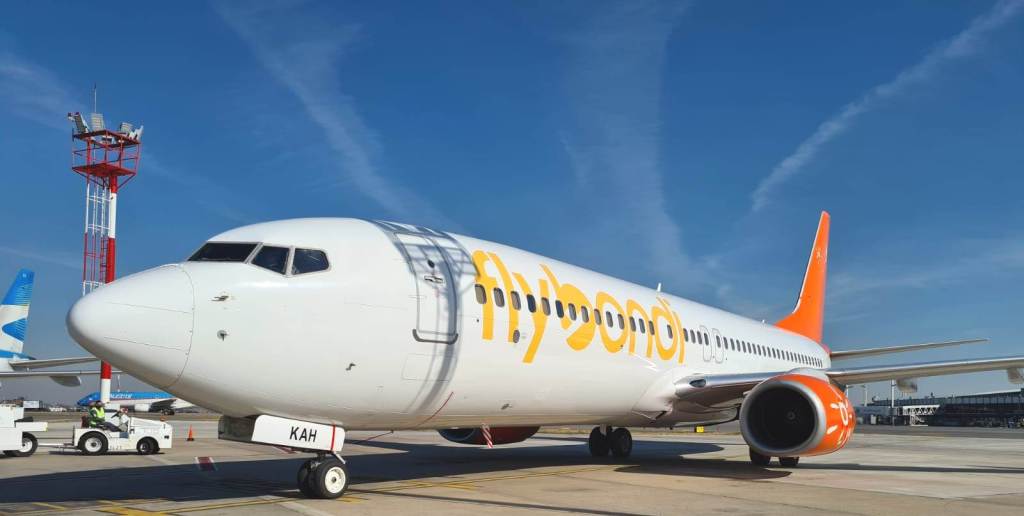
La aerolínea low cost Flybondi Líneas Aéreas también prevé aumentar su oferta de vuelos y frecuencias incorporando 134 vuelos semanales para sus trece destinos nacionales. Para eso, incorporaron un nuevo avión a su flota: un Boeing 737-800 que arribó el 21/07 al Aeropuerto de Ezeiza proveniente de Tucson (TX), Estados Unidos, y comenzó a prestar servicio esta semana con un vuelo inaugural desde Buenos Aires a Córdoba. Según destacaron desde la compañía, buscan recuperar capacidad de oferta y proyectan el ingreso de un cuarto avión para el último trimestre del año (4Q2021). La aerolínea de presupuesto argentina estima reiniciar su operación a destinos regionales a Brasil y Paraguay dependiendo de los estados sanitarios vigentes. “Los resultados de la primera mitad del año 2021 nos permiten ser optimistas con la recuperación del sector en el mediano y largo plazo. En la medida en la que la demanda mantenga la tendencia actual, estamos convencidos de que el camino es sumar conectividad y nuevas opciones para volar en Argentina”, destacó Mauricio Sana, CEO de Flybondi. Durante la temporada de invierno, los destinos más elegidos son Bariloche, Mendoza y Salta.

JetSmart Airlines Argentina, comenzará a volar en Agosto 2021 por primera vez a las ciudades de Posadas y Corrientes, con tres vuelos semanales a cada destino (3Frq/S). Con estos nuevos destinos, la empresa suma quince rutas domésticas. Algunos vuelos conectan distintos puntos del país sin pasar por Buenos Aires. Con el acuerdo de alianza American Airlines y JetSmart Airlines Group, la aerolínea de presupuesto argentina espera aumentar considerablemente el respaldo con este importante acuerdo para el mercado Latinoamericano y beneficiarse de las rutas que ofrece la compañía americana hacia Estados Unidos.

Argentina adds Frq domestic routes

Airlines add more frequencies and destinations in August 2021

The airlines of the Argentine Republic add more frequencies and destinations in August 2021. The companies that operate domestic flights foresee an increase in their number of flights and destinations for this month; while international and regional flights continue to be restricted due to the advance of the new variants of the Coronavirus, with foreign airlines threatening to withdraw the stopover in the country.

Aerolíneas Argentinas stated that in July 2021 they carried out operations with 2,528 flights and in August they project some 2,879. With the incorporation of its third Boeing 737-8 MAX aircraft, the airline continues with its fleet activation program that will allow it to increase more destinations in the country.

The low cost airline Flybondi Líneas Aéreas also plans to increase its offer of flights and frequencies by incorporating 134 weekly flights to its thirteen national destinations. To do so, they incorporated a new aircraft to their fleet: a Boeing 737-800 that arrived at Ezeiza Airport from Tucson (TX), United States, on 07/21, and began service this week with an inaugural flight from Buenos Aires. to Córdoba. As highlighted by the company, they seek to recover supply capacity and project the entry of a fourth aircraft for the last quarter of the year (4Q2021). The Argentine budget airline estimates to restart its operation to regional destinations in Brazil and Paraguay depending on the current health status. “The results of the first half of the year 2021 allow us to be optimistic with the recovery of the sector in the medium and long term. As long as demand maintains the current trend, we are convinced that the way is to add connectivity and new options to fly in Argentina”, highlighted Mauricio Sana, CEO of Flybondi. During the winter season, the most popular destinations are Bariloche, Mendoza and Salta.

JetSmart Airlines Argentina will begin flying in August 2021 for the first time to the cities of Posadas and Corrientes, with three weekly flights to each destination (3Frq/S). With these new destinations, the company adds fifteen domestic routes. Some flights connect different parts of the country without going through Buenos Aires. With the American Airlines and JetSmart Airlines Group alliance agreement, the Argentine budget airline expects to considerably increase support with this important agreement for the Latin American market and to benefit from the routes offered by the American company to the United States.

PUBLISHER: Airgways.com
DBk: Aerolineas.com / Flybondi.com / Jetsmart.com / Airgways.com
AW-POST: 202108061328AR

A\W   A I R G W A Y S ®

Sky Airline busca alianzas

AW | 2021 08 04 19:39 | AIRLINES / AIRLINES MARKET

Low cost busca fortalecer posición mercado Sudamérica

SKY Airline_Isologotype

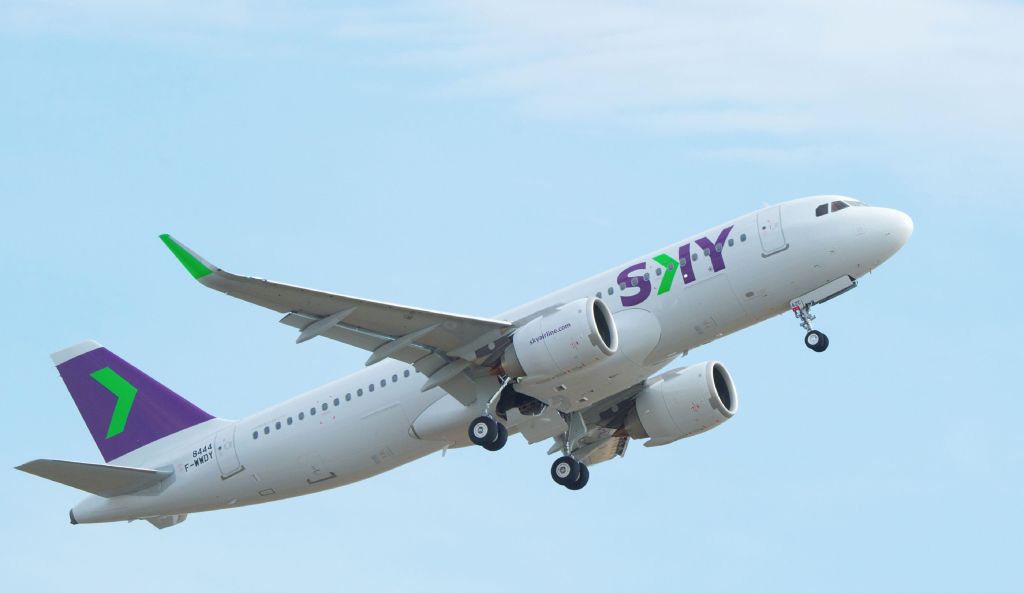
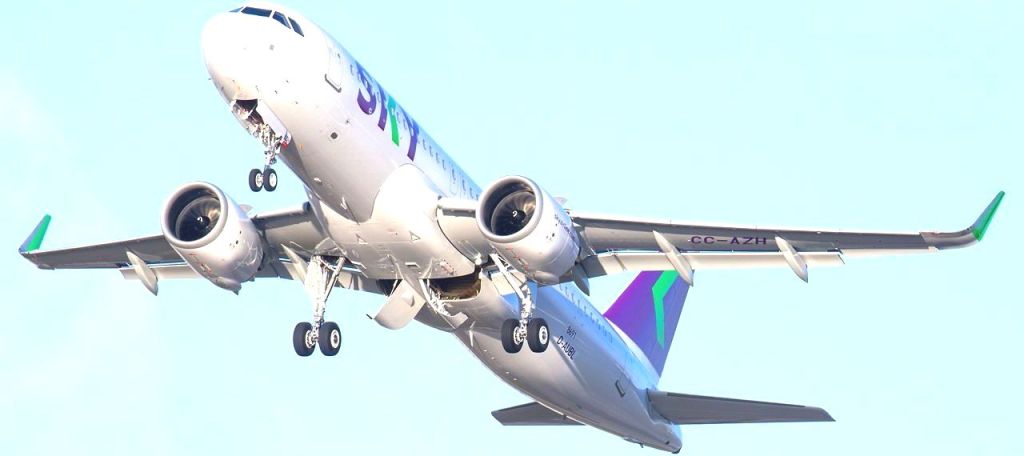
La aerolínea de presupuesto chilena Sky Airline ha estado estudiando alianzas para fortalecer su posicionamiento en el mercado sudamericano. En un movimiento de piezas como un ajedrez, la low cost de la familia Paulmann se encontraría en conversaciones con otras líneas aéreas para estudiar alianzas que profundicen las estrategias en el mercado de la aviación comercial en Sudamérica. Después de un movimiento audaz con el anuncio de la nueva alianza de American Airlines y JetSmart Airlines Group, el tablero de los cielos en la América meridional ha estado moviéndose rápidamente en medio de una crisis sanitarias y de vuelos deprimidos para no dejar espacios hacia una próxima reactivación del mercado.

Sky Airline buscaría fortalecerse con una alianza para su red de servicios en Latinoamérica y mejorar su posicionamiento en los mercados de Argentina, Brasil, Colombia y Perú, impulsado por el avance del acuerdo de American-JetSmart. Las estrategias alcanzadas por la nueva alianza American Airlines-JetSmart Airlines Group propondrían adquirir una participación minoritaria en JetSmart Group que permita a la aerolínea hacer crecer rápidamente su red de bajo costo en América del Sur. Los clientes se beneficiarían de poder acceder a el proggrama de millas AAdvantage en vuelos JetSmart Airlines. Abastecer una amplia conectividad y un sólido programa de lealtad para crear una oferta atractiva para los clientes en América Latina. El acuerdo de código compartido propuesto entre las dos aerolíneas crearía más opciones para los clientes que viajan entre los Estados Unidos y América del Sur.

El mercado en Latinoamérica ha estado estancado a raíz de los efectos de la pandemia y la crisis en el transporte aéreo que ha generado por parte de los gobiernos restricciones en las rutas regionales, pero la noticia del movimiento en el mercado aéreo de la nueva alianza American-JetSmart introducirá un nuevo capítulo del escenario de la aviación comercial en esta parte de la América meridional, donde Sky Airline buscará salir fortalecida.

Sky Airline seeks alliances

Low cost airline seeks to strengthen market position in South America

AW-Sky Airline_A320NEO-00002

Chilean budget airline Sky Airline has been studying alliances to strengthen its position in the South American market. In a movement of pieces like a chess, the low cost of the Paulmann family would be in talks with other airlines to study alliances that deepen the strategies in the commercial aviation market in South America. After a bold move with the announcement of the new American Airlines and JetSmart Airlines Group alliance, the sky dash in South America has been moving rapidly amid a depressed flight and health crisis to leave no room for an upcoming one. market reactivation.

Sky Airline would seek to strengthen itself with an alliance for its service network in Latin America and improve its position in the markets of Argentina, Brazil, Colombia and Peru, driven by the advancement of the American-JetSmart agreement. The strategies achieved by the new American Airlines-JetSmart Airlines Group alliance would propose acquiring a minority stake in JetSmart Group that allows the airline to rapidly grow its low-cost network in South America. Customers would benefit from being able to access the AAdvantage mileage program on JetSmart Airlines flights. Provide extensive connectivity and a strong loyalty program to create an attractive offering for customers in Latin America. The proposed codeshare agreement between the two airlines would create more options for customers traveling between the United States and South America.

The market in Latin America has been stagnant as a result of the effects of the pandemic and the crisis in air transport that has generated restrictions on regional routes by governments, but the news of the movement in the air market of the new American-JetSmart alliance will introduce a new chapter to the commercial aviation scene in this part of South America, where Sky Airline will seek to emerge stronger.

PUBLISHER: Airgways.com
DBk: Skyairline.com / Airgways.com
AW-POST: 202108041939AR

A\W   A I R G W A Y S ®
Perspectivas alianza American-JetSmart

AW | 2021 08 03 00:40 | AIRLINES ALLIANCE / AIRLINES MARKET

Moviendo el tablero aviación en Sudamérica

AW-AA-Jetsmart_Isologotype

Tras el acuerdo entre American Airlines y JetSmart Airlines Group la semana pasada, la aviación post-pandemia continúa atravesando cambios importantes en el mercado aerocomercial. Esta nueva alianza entre dos aerolíneas exitosas permitirá estimular la competitividad en un mercado latinoamericano muy deprimido.

Esta nueva asociación trae una complementación de rutas en toda América, permitiendo al coloso de American Airlines alcanzar un mercado de largas distancias mientras que JetSmart Airlines permitirá enlazar destinos de corto y medio recorrido en América del Sur y el Caribe. El mercado regional de JetSmart Airlines como Chile, Argentina, Colombia hacia destinos sudamericanos complementará a los servicios de American Airlines de sus rutas transversales entre Estados Unidos y Sudamérica como líder indiscutible del mercado de viajes internacionales.

Actualmente, American Airlines tiene una sólida red de rutas hacia América del Sur, mientras que JetSmart Airlines Group es la compañía aérea low cost líder del mercado en Sudamérica con la mejor malla de destinos servidos. American sirve desde su hubs Dallas/Fort Worth (DFW), Miami (MIA) y Nueva York (JFK), hacia Santiago (SCL) en Chile y Buenos Aires (EZE) en Argentina. JetSmart Airlines cubre destinos domésticos en Chile, sirve a destinos internacionales a Lima (LIM) en Perú, en Ecuador, una discreta presencia en Argentina y una excelente red de vuelos en Colombia permitirán conjugar ambas redes de servicios de manera exitosa entre una aerolínea clásica y una compañía de presupuesto con la mayor cobertura de Sudamérica.

JetSmart y American poseen redes de rutas relativamente complementarias en América del Sur, lo que representa un buen movimiento de American Airlines para sus clientes en la región de Sudamérica. Actualmente, la aerolínea tiene la mayor cuota de mercado en la región de todas las principales aerolíneas estadounidenses. Anteriormente, American Airlines poseía alianzas con Latam Airlines Group y GOL Linhas Aéreas lo que le permitía una mejor presencia y beneficios en Sudamérica. Pero la nueva alianza con JetSmart Airlines permitirá expandirse regionalmente en el hemisferio sur.

Con esta nueva asociación, American Airlines ha alcanzado un acuerdo para ingresar a una participación accionaria en JetSmart Airlines Group permitiendo fortalecer la posición de la compañía matriz Indigo Partners LLC de Estados Unidos para posicionarse como una de las próximas aerolíneas líder del mercado de América meridional.

Perspectivas mercado

La estrategia de mercado de American Airlines es proporcionar más conexiones con mejores conexiones servidas con JetSmart Airlines Group. Para la aerolínea de presupuesto sudamericana, es una oportunidad de oro para acelerar los procesos de constitución de más filiales en Colombia y Perú.

Aunque la asociación American-Latam ha sido muy importante, estratégica y exitosa, la próxima alianza American-JetSmart podría desempeñar un papel en el mercado post-pandemia de dimensiones impresionantes que ha llamado a mover el tablero de la aviación comercial en América del Sur.

American-JetSmart alliance perspectives

Acuerdo American-JetSmart |

Moving the board aviation in South America

Following the agreement between American Airlines and JetSmart Airlines Group last week, post-pandemic aviation continues to undergo major changes in the commercial airline market. This new alliance between two successful airlines will stimulate competitiveness in a very depressed Latin American market.

AW-American_JetSmart_tails

This new association brings a complementation of routes throughout the Americas, allowing the colossus of American Airlines to reach a long-haul market while JetSmart Airlines will link short and medium-haul destinations in South America and the Caribbean. The regional market of JetSmart Airlines such as Chile, Argentina, Colombia to South American destinations will complement American Airlines services on its cross routes between the United States and South America as the undisputed leader in the international travel market.

Currently, American Airlines has a solid network of routes to South America, while JetSmart Airlines Group is the market leading low cost airline in South America with the best network of destinations served. American serves from its hubs Dallas/Fort Worth (DFW), Miami (MIA) and New York (JFK), to Santiago (SCL) in Chile and Buenos Aires (EZE) in Argentina. JetSmart Airlines covers domestic destinations in Chile, serves international destinations to Lima (LIM) in Peru, in Ecuador, a discreet presence in Argentina and an excellent flight network in Colombia will allow both service networks to be successfully combined between a classic airline and a budget company with the largest coverage in South America.

JetSmart and American have relatively complementary route networks in South America, which represents a good move for American Airlines for its customers in the South America region. Currently, the airline has the largest market share in the region of all the major US airlines. Previously, American Airlines had alliances with Latam Airlines Group and GOL Linhas Aéreas, which allowed it a better presence and benefits in South America. But the new alliance with JetSmart Airlines will allow regional expansion in the southern hemisphere.

With this new association, American Airlines has reached an agreement to enter a shareholding in JetSmart Airlines Group, strengthening the position of the United States parent company Indigo Partners LLC to position itself as one of the next leading airlines in the South American market.

Market prospects

American Airlines’ market strategy is to provide more connections with better connections served with JetSmart Airlines Group. For the South American budget airline, it is a golden opportunity to accelerate the constitution processes of more subsidiaries in Colombia and Peru.

Although the American-Latam partnership has been very important, strategic and successful, the upcoming American-JetSmart alliance could play a role in the post-pandemic market of impressive dimensions that has called to move the board of commercial aviation in South America.

PUBLISHER: Airgways.com
DBk: Aa.com / Jetsmart.com / Airgways.com
AW-POST: 202108030040AR

A\W   A I R G W A Y S ®

Guerra aeropuertos del Golfo

AW | 2021 08 01 14:47 | GOVERNMENT / AIRLINES MARKET / AIRPORTS

Escenario de competitividad aeroportuaria en Región Golfo Pérsico

Arabia Saudita ha anunciado la creación de una nueva aerolínea, en un intento de arrebatarle a los Emiratos Árabes Unidos el puesto como hub del transporte aéreo de la región. Pero la rivalidad está empezando a ir más allá de las fronteras de los dominios del Golfo Pérsico.

El príncipe heredero y rostro de la monarquía saudí, Mohamed bin Salman, anunció a finales de Julio 2021 sus planes para la creación de una nueva aerolínea bandera nacional saudí, como parte del esfuerzo del reino en convertirse en un ‘hub’ de transporte internacional y logístico, así como para diversificar su economía y reducir su dependencia de los ingresos del petróleo. La nueva aerolínea, con fuerte apoyo estatal y presumiblemente jugosas subvenciones, se enfocará en el público internacional con el objetivo de llegar a 250 destinos internacionales y doblar la capacidad de transporte de carga del Reino. También se construirá un nuevo aeropuerto en Riyad, capital del Reino de Arabia Saudita, desde donde este ambicioso plan empezará a tomar forma.

Arabia Saudí quiere disputar el pastel a su vecino y hermano, Emiratos Árabes Unidos (EAU), el auténtico ‘hub’ del transporte internacional no solo en la región, sino a nivel mundial. Una rivalidad que se está extendiendo más allá de los aeropuertos, en medio de intereses como el petróleo, eje geopolítico, entre otros.

Tras setenta años, Dubái, uno de los principales siete emiratos que forman EAU, era apenas una parada de camelleros y pescadores, con unos 20.000 habitantes y un único hotel. En 1960 se construyó el primer aeropuerto y, siguiendo el sueño del emir, la ciudad creció con él. Ahora, Dubai es una brillante metrópolis de más de tres millones de residentes y probablemente la mayor tasa per cápita de rascacielos, se ha convertido en centro neurálgico del transporte aéreo internacional con uno de los aeropuertos con mayor tráfico del mundo y un rico tejido empresarial de compañías extranjeras. Gran parte del ascenso de Dubái se debe a la aerolínea bandera Emirates Airline, fundada en 1985. «La aerolínea es el eje del éxito de Dubai. Los viajes aéreos pueden hacer o destruir Dubái, su economía depende totalmente de ello», escribe Jim Krane, autor del libro ‘Ciudad de oro: Dubái y el sueño del capitalismo’.

La localización geográfica, a medio camino entre Oriente y Occidente, perfecto para una escala en los trayectos de larga distancia, es una de las razones del éxito de Emirates. Pero también su cercanía con el poder y las ventajas que trae consigo: el CEO de la aerolínea es Ahmed bin Saeed Al Maktoum, tío del actual rey de Dubái y también Director de la Gestión de Aeropuertos, Presidente de la Autoridad de Aviación Civil, incluso de uno de los principales bancos de la ciudad, solo por si acaso Emirates Airline necesitara un préstamo.

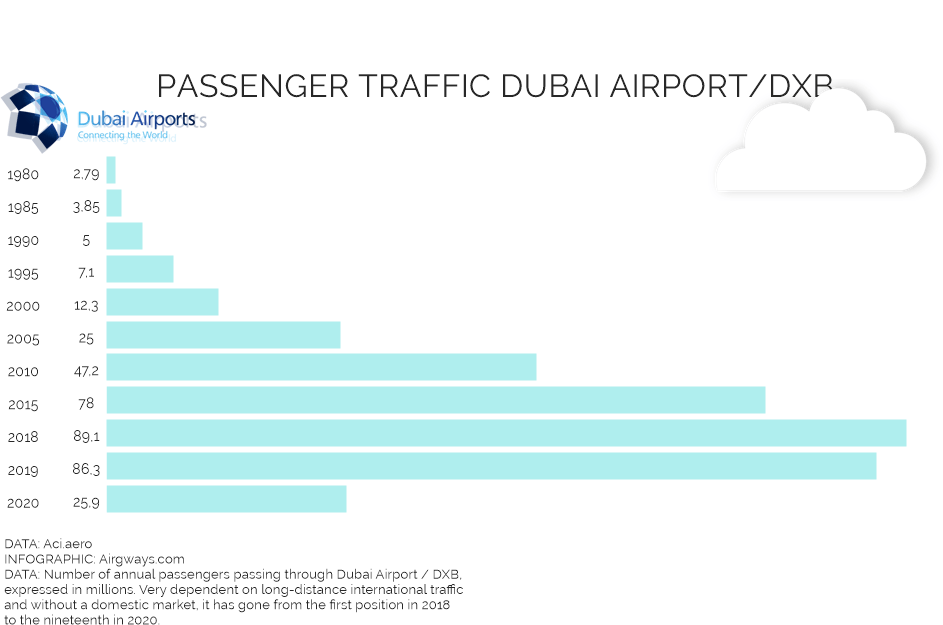
Arabia Saudí, en cambio, no ha conseguido rentabilizar su aerolínea bandera, Saudi Arabian Airlines, en parte porque, en su papel de estatal, se ve atada a tener que dar servicio a ciudades cuasi remotas del país, en rutas no tan lucrativas. Al igual que otros países tras los estragos de la pandemia de coronavirus, el gobierno de Emirates ha tenido que otorgar subvenciones para salvar el abismo económico que ha sufrido la aerolínea en un año de supresiones de servicios aéreos prácticamente en absoluto. El Aeropuerto Riyad obstentaba ser el aeropuerto con mayor tráfico de pasajeros del mundo en 2018 y 2019, por encima de aeropuertos como Pekín, en 2020 cayó hasta la decimonovena posición, con 60 millones de pasajeros menos. En total, la prensa económica recoge al menos US$ 3.100 millones de Dólares en inyecciones gubernamentales en estos dos últimos años.

Emirates Airline y otras aerolíneas bandera del Golfo han sido acusadas, especialmente en Estados Unidos, de competencia desleal y distorsión del mercado en años anteriores, precisamente por esa cercanía al poder, tanto de facilidades económicas como de presión política. En 2010, Canadá denegó mayores permisos de aterrizaje en el Aeropuerto de Toronto y los Emiratos Árabes Unidos reaccionó cerrando el espacio aéreo para un vuelo del ministro de Defensa canadiense, que tuvo que redirigir a medio camino, expulsó de su base en Dubai a las tropas canadienses que operaban en Afganistán y multiplicó las tasas de visados. En este caso las reacciones diplomáticas no funcionaron, pero es un ejemplo de la cercanía política de Saeed Al Maktoum al Gobierno de Emiratos Árabes Unidos.

Rivalidad con Arabia Saudí

Dicen que las peores rivalidades son entre hermanos, y la envolvente de Arabia Saudí en su creciente tensión bajo cuerda con Emiratos no se limita solo a detentar parte del mercado en el tráfico de pasajeros internacional. «Hay opciones para una mayor inversión en infraestructura de transportes del Reino […] Pero competir con Dubái como centro logístico de la región llevará tiempo, los volúmenes de tráfico de carga aérea de EAU son catorce veces superiores a los de Arabia Saudí y, en cualquier caso, podemos decir que Dubái tiene la ventaja de haber sido el primero en moverse [hacia ese tipo de economía]», escribe por su parte James Swanston, Economista para Oriente Medio y Norte de África de Capital Economics. La clave es diversificar la economía y superar la dependencia de los ingresos del petróleo. Un proceso en el que Emiratos Árabes Unidos lleva la delantera, consciente de tener menos reservas que los profundos pozos saudíes y potencial turístico y empresarial. Aunque Arabia Saudí, de la mano de Bin Salman, ha avanzado ya en esa visión 2030, EAU le lleva años de ventaja. «La competencia comercial en la industria de la aviación ha sido siempre feroz, y la competencia regional se está calentando. Hay turbulencias en el horizonte de las relaciones regionales», afirmaba Robert Mogielnicki, investigador del Arab Gulf States Institute. En la economía post-petrolera, no hay suficiente espacio para tanto hub en el Golfo Pérsico Arabia Saudí y Emiratos han sido siempre cercanos aliados, pero Abu Dhabi está intentando construir una política exterior independiente de vecino, incluso en el escenario geopolítico. Aunque Emiratos participó en la ofensiva de Arabia Saudí en Yemen, en 2019 decidió salirse de la coalición. Mucho más pequeño que su hermano Arabia Saudí y con limitada influencia, Emiratos trata de encontrar su propio ritmo en el difícil tablero regional. En 2020, Emiratos fue el primer país árabe en apuntarse a los Acuerdos de Abraham para normalizar relaciones con Israel. Su posición con la Turquía de Recep Tayyip Erdogan, con quien Arabia Saudí mantiene una tensa rivalidad en la zona, también empieza a divergir. Pero la rivalidad también es económica. Su roce más sonado ha sido la OPEP+, cuando Arabia Saudí y Emiratos protagonizaron un fuerte encontronazo sobre las cuotas de producción de petróleo. Arabia Saudí, conservadora, quería mantenerlas. Emiratos, a la luz de los últimos vaivenes del precio del petróleo, quería aumentarla y vender rápidamente, antes de que el crudo termine desbancado por el empujón de las renovables.

En Febrero 2021, Arabia Saudí anunció que a partir de 2024 dejará de dar contratos a empresas extranjeras cuyas sedes regionales no estén localizadas en la propia Arabia Saudí. Un ultimátum especialmente doloroso para Emiratos Árabes Unidos, cuyo crecimiento económico ha dependido en gran medida por sus políticas de free-zones y otras facilidades a empresas extranjeras que se instalaran en el país. Este último mes, también ha modificado sus normas de importación de bienes de otros países del Consejo de Cooperación del Golfo (CCG) para excluir del acuerdo arancelario los productos fabricados por empresas con una plantilla de menos de un 25% de población local o los fabricados en zonas francas de los países del CCG, que no se considerarán de producción local. La norma está públicamente pensada para excluir a los productos fabricados en zonas francas (de Emiratos) que utilizan insumos israelíes, pero ha sido leída sobre todo como un desafío a EAU. Las zonas francas, áreas en las que las empresas extranjeras pueden operar bajo poquísima regulación, es uno de los principales impulsores de la economía de Emiratos, y más aún después de la firma de los Acuerdos de Abraham, que recogía un importante capítulo empresarial entre EAU e Israel.

Perspectivas en el Golfo

En un mundo sacudido por la pandemia de Coronavirus donde la pregunta de cómo viajaremos en el futuro todavía está en el aire, ¿conseguirá Arabia Saudí emular el modelo de negocio de sus vecinos del Golfo, peleando por el mismo pastel? Desde luego, tiene el dinero para ese empujón inicial gracias a las reservas de petróleo. Pero, en unos cielos tan atiborrados y con la competencia al máximo, no se puede simplemente copiar, sino buscar algo original. El riesgo es que Arabia Saudí y Emiratos Árabes Unidos compitan entre sí por las mismas industrias y proyectos de desarrollo. En la economía post-petrolera, no hay suficiente espacio para tanto ‘hub’ en el Golfo Pérsico.

Gulf airports war

Airport competitiveness scenario in the Persian Gulf Region

Saudi Arabia has announced the creation of a new airline, in an attempt to wrest the position of the region’s air transport hub from the United Arab Emirates. But the rivalry is beginning to spread beyond the borders of the Persian Gulf dominions.

The crown prince and face of the Saudi monarchy, Mohamed bin Salman, announced at the end of July 2021 his plans for the creation of a new Saudi national flag airline, as part of the kingdom’s effort to become an international transport hub and logistics, as well as to diversify its economy and reduce its dependence on oil revenues. The new airline, with strong state support and presumably hefty subsidies, will target international audiences with the goal of reaching 250 international destinations and doubling the Kingdom’s cargo carrying capacity. A new airport will also be built in Riyad, capital of the Kingdom of Saudi Arabia, from where this ambitious plan will begin to take shape.

Saudi Arabia wants to dispute the cake with its neighbor and brother, the United Arab Emirates (UAE), the true ‘hub’ of international transport not only in the region, but globally. A rivalry that is spreading beyond the airports, amid interests such as oil, a geopolitical axis, among others.

After seventy years, Dubai, one of the main seven emirates that make up the UAE, was just a stop for camel drivers and fishermen, with about 20,000 inhabitants and a single hotel. In 1960 the first airport was built and, following the emir’s dream, the city grew with him. Now, Dubai is a glittering metropolis of more than three million residents and probably the highest per capita rate of skyscrapers, it has become a hub of international air transport with one of the busiest airports in the world and a rich business fabric of foreign companies. Much of Dubai’s rise is due to the flag carrier Emirates Airline, founded in 1985. «The airline is the linchpin of Dubai’s success. Air travel can make or break Dubai, its economy is totally dependent on it», writes Jim Krane, author of the book ‘City of Gold: Dubai and the dream of capitalism’.

The geographical location, halfway between East and West, perfect for a stopover on long-haul journeys, is one of the reasons for Emirates’ success. But also its closeness to power and the advantages it brings: the CEO of the airline is Ahmed bin Saeed Al Maktoum, uncle of the current King of Dubai and also Director of Airport Management, President of the Civil Aviation Authority, including from one of the city’s major banks, just in case Emirates Airline needed a loan.

Saudi Arabia, on the other hand, has not been able to make profitable its flagship airline, Saudi Arabian Airlines, in part because, in its state role, it is tied to having to serve quasi-remote cities in the country, on not so lucrative routes. Like other countries after the ravages of the coronavirus pandemic, the Emirates government has had to provide subsidies to bridge the economic gulf that the airline has suffered in a year of almost no air service suppressions. Riyad Airport claimed to be the airport with the highest passenger traffic in the world in 2018 and 2019, above airports such as Beijing, in 2020 it fell to the nineteenth position, with 60 million fewer passengers. In total, the economic press has collected at least US$ 3.1 billion in government injections in the last two years.

Emirates Airline and other Gulf flag airlines have been accused, especially in the United States, of unfair competition and market distortion in previous years, precisely because of their proximity to power, both in terms of economic facilities and political pressure. In 2010, Canada denied increased landing permits at Toronto Airport and the United Arab Emirates reacted by closing the airspace for a Canadian Defense Minister flight, which it had to redirect midway, expelled Canadian troops operating in Afghanistan from its base in Dubai and multiplied the visa fees. In this case the diplomatic reactions did not work, but it is an example of the political closeness of Saeed Al Maktoum to the Government of the United Arab Emirates.

Rivalry with Saudi Arabia

They say the worst rivalries are between siblings, and Saudi Arabia’s involvement in its growing underhand tension with the Emirates is not limited to just holding market share in international passenger traffic. «There are options for further investment in the Kingdom’s transport infrastructure […] but competing with Dubai as the region’s logistics hub will take time, the UAE’s air cargo traffic volumes are fourteen times those of Saudi Arabia and In any case, we can say that Dubai has the advantage of having been the first to move [towards this type of economy]», writes James Swanston, Middle East and North Africa Economist at Capital Economics. The key is to diversify the economy and overcome dependence on oil revenues. A process in which the United Arab Emirates is leading, aware of having fewer reserves than the deep Saudi wells and tourism and business potential. Although Saudi Arabia, led by Bin Salman, has already advanced in that 2030 vision, the UAE is years ahead of it. «Business competition in the aviation industry has always been fierce, and regional competition is heating up. There is turmoil on the horizon for regional relations», said Robert Mogielnicki, a researcher at the Arab Gulf States Institute. In the post-oil economy, there is not enough space for both hubs in the Persian Gulf. Saudi Arabia and the Emirates have always been close allies, but Abu Dhabi is trying to build a neighbor-independent foreign policy, even on the geopolitical stage. Although the Emirates participated in Saudi Arabia’s offensive in Yemen, in 2019 it decided to leave the coalition. Much smaller than its brother Saudi Arabia and with limited influence, Emirates tries to find its own rhythm on the difficult regional board. In 2020, the Emirates was the first Arab country to sign up to the Abraham Accords to normalize relations with Israel. His position with Recep Tayyip Erdogan’s Turkey, with whom Saudi Arabia maintains a tense rivalry in the area, is also beginning to diverge. But rivalry is also economic. Its most notorious friction has been OPEC+, when Saudi Arabia and the Emirates staged a strong clash over oil production quotas. Conservative Saudi Arabia wanted to keep them. Emirates, in light of the latest swings in the price of oil, wanted to increase it and sell quickly, before crude ends up being ousted by the push from renewables.

In February 2021, Saudi Arabia announced that as of 2024 it will stop giving contracts to foreign companies whose regional headquarters are not located in Saudi Arabia itself. An especially painful ultimatum for the United Arab Emirates, whose economic growth has largely depended on its free-zone policies and other facilities to foreign companies that will settle in the country. This last month, it has also modified its rules for importing goods from other countries of the Gulf Cooperation Council (GCC) to exclude from the tariff agreement products manufactured by companies with a workforce of less than 25% of the local population or those manufactured in free zones of the GCC countries, which will not be considered locally produced. The rule is publicly intended to exclude products made in (Emirates) free zones that use Israeli inputs, but has been read mostly as a challenge to the UAE. Free zones, areas in which foreign companies can operate under very little regulation, is one of the main drivers of the Emirates economy, and even more so after the signing of the Abraham Agreements, which included an important business chapter between the UAE. and Israel.

Prospects in the Gulf

In a world shaken by the Coronavirus pandemic where the question of how we will travel in the future is still in the air, will Saudi Arabia manage to emulate the business model of its Gulf neighbors, fighting for the same cake? You certainly have the money for that initial push thanks to oil reserves. But, in such crowded skies and with the competition to the maximum, it is not possible to simply copy, but to look for something original. The risk is that Saudi Arabia and the United Arab Emirates will compete with each other for the same industries and development projects. In the post-oil economy, there is not enough room for so much ‘hub’ in the Persian Gulf.

PUBLISHER: Airgways.com
DBk: Gov.sa / U.ae / Aci.aero / Airgways.com
AW-POST: 202108011447AR

A\W   A I R G W A Y S ®

IATA reporta mejora aviación comercial

AW | 2021 07 30 10:47 | AVIATION ORGANISMS / AIRLINES MARKET

Leve repunte de aviación mundial

IATA_Logo.svg

La Asociación de Transporte Aéreo Internacional (IATA) anunció el desempeño de la demanda de pasajeros para Junio de 2021, lo que muestra una mejora muy leve en los mercados de viajes aéreos nacionales e internacionales. La demanda se mantiene significativamente por debajo de los niveles anteriores a COVID-19 debido a las restricciones de viajes internacionales.

Como las comparaciones entre los resultados mensuales de 2021 y 2020 están distorsionadas por el impacto extraordinario de COVID-19, a menos que se indique lo contrario, todas las comparaciones son a Junio de 2019, que siguió un patrón de demanda normal. La demanda total de viajes aéreos en Junio de 2021 (medida en pasajeros-kilómetros de ingresos o RPK) disminuyó un 60,1% en comparación con Junio de 2019. Esa fue una pequeña mejora con respecto a la disminución del 62,9% registrada en Mayo de 2021 en comparación con Mayo de 2019. La demanda internacional de pasajeros en Junio 2021 fue 80,9% inferior a 06/2019, una mejora con respecto al descenso del 85,4% registrado en Mayo de 2021 en comparación con hace dos años. Todas las regiones con la excepción de Asia-Pacífico contribuyeron a la demanda ligeramente mayor. La demanda interna total se redujo un 22,4% en comparación con los niveles anteriores a la crisis (06/2019), una ligera ganancia con respecto a la caída del 23,7% registrada en Mayo de 2021 en comparación con el período de 2019. El desempeño en los mercados domésticos clave se mezcló con Rusia reportando una fuerte expansión mientras que China regresó a territorio negativo.

“Estamos viendo un movimiento en la dirección correcta, particularmente en algunos mercados domésticos clave. Pero la situación de los viajes internacionales está lejos de donde debemos estar. Junio ​​2021 debería ser el comienzo de la temporada alta, pero las aerolíneas llevaban solo el 20% de los niveles de 2019. Eso no es una recuperación, es una crisis continua causada por la inacción del gobierno”, dijo Willie Walsh, Director General de IATA.

El tráfico internacional de Junio 2021 de las aerolíneas de Asia-Pacífico cayó un 94,6% en comparación con Junio de 2019, sin cambios desde el descenso del 94,5% en Mayo de 2021 frente a mayo de 2019. La región tuvo las caídas de tráfico más pronunciadas por undécimo mes consecutivo. La capacidad cayó un 86,7% y el factor de ocupación bajó 48,3 puntos porcentuales hasta el 33,1%, el más bajo entre las regiones.

Los operadores europeos vieron su tráfico internacional de junio disminuir un 77,4% en comparación con junio de 2019, una ganancia de la disminución del 85,5% en mayo en comparación con el mismo mes de 2019. La capacidad disminuyó un 67,3% y el factor de ocupación cayó 27,1 puntos porcentuales hasta el 60,7%.

Las aerolíneas de Oriente Medio registraron una caída de demanda del 79,4% en Junio 2021 en comparación con Junio de 2019, mejorando desde la disminución del 81,3% en Mayo 2021, en comparación con el mismo mes de 2019. La capacidad disminuyó 65,3% y el factor de ocupación se deterioró 31,1 puntos porcentuales a 45,3%.

La demanda de Junio 2021 de las aerolíneas norteamericanas cayó un 69,6% en 06/2021 en comparación con el período de 2019, mejorando desde la caída del 74,2% en Mayo 2021 en comparación con hace dos años. La capacidad se hundió un 57,3% y el factor de ocupación bajó 25,3 puntos porcentuales hasta el 62,6%.

Las aerolíneas latinoamericanas experimentaron una caída del 69,4% en el tráfico de Junio 2021 en comparación con el mismo mes de 2019, mejoró con respecto a la caída del 75,3% en 05/2021 en comparación con Mayo de 2019. La capacidad de Junio 2021 cayó un 64,6% y el factor de ocupación cayó 11,3 puntos porcentuales a 72,7%, que fue el factor de carga más alto entre las regiones por noveno mes consecutivo.

El tráfico de las aerolíneas africanas cayó un 68,2% en 06/2021 en comparación con el mismo mes de hace dos años, una mejora con respecto al descenso del 71,5% en Mayo 2021 en comparación con 05/2019. La capacidad de Junio 2021 se contrajo un 60,0% en comparación con Junio 2019, y el factor de ocupación disminuyó 14,5 puntos porcentuales hasta el 56,5%.

IATA reports very slight improvement

Commercial aviation market slight rebound

The International Air Transport Association (IATA) announced passenger demand performance for June 2021, showing very slight improvement in the domestic and international air travel markets. Demand remains significantly below pre-COVID-19 levels due to international travel restrictions.

As comparisons between 2021 and 2020 monthly results are skewed by the extraordinary impact of COVID-19, unless otherwise noted, all comparisons are to June 2019, which followed a normal demand pattern. Total air travel demand in June 2021 (measured in revenue passenger-kilometers or RPK) decreased by 60.1% compared to June 2019. That was a small improvement over the 62.9% decrease recorded. in May 2021 compared to May 2019. International passenger demand in June 2021 was 80.9% lower than 06/2019, an improvement from the 85.4% decrease recorded in May 2021 compared to ago two years. All regions with the exception of Asia-Pacific contributed to the slightly higher demand. Total domestic demand fell 22.4% compared to pre-crisis levels (06/2019), a slight gain from the 23.7% drop recorded in May 2021 compared to the period of 2019. Performance in key domestic markets mixed with Russia reporting strong expansion while China returned to negative territory.

“We are seeing a move in the right direction, particularly in some key domestic markets. But the international travel situation is far from where we should be. June 2021 should be the start of peak season, but airlines were only at 20% of 2019 levels. That is not a recovery, it is an ongoing crisis caused by government inaction”, said Willie Walsh, Director. IATA General.

June 2021 international traffic for Asia-Pacific airlines fell 94.6% compared to June 2019, unchanged from the 94.5% decrease in May 2021 compared to May 2019. The region had the Steepest traffic drops for the eleventh consecutive month. Capacity fell 86.7% and load factor fell 48.3 percentage points to 33.1%, the lowest among regions.

European operators saw their June international traffic decrease 77.4% compared to June 2019, a gain from the 85.5% decrease in May compared to the same month in 2019. Capacity decreased 67.3 % and the load factor fell 27.1 percentage points to 60.7%.

Middle East airlines reported a 79.4% drop in demand in June 2021 compared to June 2019, improving from the 81.3% decrease in May 2021, compared to the same month in 2019. Capacity decreased 65.3% and the load factor deteriorated 31.1 percentage points to 45.3%.

June 2021 demand from North American airlines fell 69.6% in 06/2021 compared to the 2019 period, improving from the 74.2% drop in May 2021 compared to two years ago. Capacity sank 57.3% and load factor fell 25.3 percentage points to 62.6%.

Latin American airlines experienced a 69.4% drop in traffic in June 2021 compared to the same month in 2019, improved from the 75.3% drop in 05/2021 compared to May 2019. Capacity June 2021 fell 64.6% and load factor fell 11.3 percentage points to 72.7%, which was the highest load factor among the regions for the ninth consecutive month.

African airline traffic fell 68.2% in 06/2021 compared to the same month two years ago, an improvement from the 71.5% decrease in May 2021 compared to 05/2019. The June 2021 capacity contracted 60.0% compared to June 2019, and the load factor decreased 14.5 percentage points to 56.5%.

PUBLISHER: Airgways.com
DBk: Iata.org / Airgways.com
AW-POST: 202107301047AR

A\W   A I R G W A Y S ®

Asia Pacífico restricciones aéreas

AW | 2021 07 30 08:52 | AIRLINES MARKET

Restricciones fronterizas más estrictas suprimen demanda

AAPA_Isologotype

La demanda internacional de pasajeros aéreos en la región de Asia Pacífico se mantuvo reprimida en Junio 2021 por las estrictas restricciones fronterizas en curso, mostraron las cifras preliminares de tráfico publicadas el Jueves 29/07 por la Asociación de Aerolíneas de Asia Pacífico (AAPA). Muchos países registraron un aumento en las transmisiones de Covid-19 causadas por nuevas variantes con suministros de vacunas limitados que dificultan el progreso de la vacunación.

Las aerolíneas de la región transportaron solo 1,4 millones de pasajeros internacionales en Junio, solo el 4,4 por ciento de los 32 millones transportados en el mes correspondiente de 2019. Con la capacidad de asientos disponibles en el 12,9 por ciento de los niveles previos a la pandemia, el factor de carga promedio internacional de pasajeros del 31% registrado en Junio 2021 fue una caída de 51 puntos porcentuales con respecto al del mes correspondiente de 2019. Esta situación ha puesto de relieve los importantes desafíos a los que se enfrentan las compañías aéreas en el segmento de pasajeros, que normalmente representa una parte significativa de los ingresos totales de las compañías aéreas. Mientras tanto, los mercados de carga aérea seguían siendo resistentes, apoyados por la mejora de la confianza empresarial en las economías avanzadas, en particular, los Estados Unidos y Europa. En consecuencia, la demanda internacional de carga aérea medida en toneladas-kilómetro de carga creció un 25,7 por ciento interanual, con volúmenes equivalentes al mismo mes de 2019. La capacidad de carga ofrecida experimentó un aumento interanual del 11,7%, lo que llevó a un aumento de 8,2 puntos porcentuales en el factor medio de carga internacional hasta el 73,3% en el mes.

El Director General de la AAPA, Subhas Menon, dijo que muchas economías asiáticas se enfrentan a nuevos desafíos para controlar la pandemia y avanzar en el despliegue de la vacunación. «Las perspectivas de una recuperación temprana para las aerolíneas asiáticas son escasas a menos que los gobiernos tomen medidas cohesivas para acelerar el despliegue de la vacunación y reabrir las fronteras de forma segura sobre la base de las directrices de la OACI y la OMS», dijo en un comunicado. La Secretaría permanente de la AAPA tiene su sede en Kuala Lumpur, con representación internacional en Bruselas y Washington DC.

En conjunto, las aerolíneas de la región transportan 1.623 millones de pasajeros y 23 millones de toneladas de carga, lo que representa más de un tercio del tráfico mundial de pasajeros y carga aérea, y por lo tanto desempeñan un papel de liderazgo en el desarrollo continuo de la aviación mundial.

Asia Pacific air restrictions

Tighter border restrictions suppress demand

The international demand for air passengers in the Asia Pacific region remained suppressed in June 2021 by the strict border restrictions in progress, showed the preliminary traffic figures published on Thursday 07/29 by the Association of Asia Pacific Airlines (AAPA). Many countries saw an increase in Covid-19 transmissions caused by new variants with limited vaccine supplies hampering the progress of vaccination.

The airlines of the region transported only 1.4 million international passengers in June, only 4.4 percent of the 32 million transported in the corresponding month of 2019. With the available seat capacity at 12.9 percent of levels prior to the pandemic, the international average passenger load factor of 31% recorded in June 2021 was a drop of 51 percentage points compared to the corresponding month of 2019. This situation has highlighted the significant challenges faced by airlines face in the passenger segment, which typically represents a significant part of total airline revenue. Meanwhile, air cargo markets remained resilient, supported by improving business confidence in advanced economies, particularly the United States and Europe. Consequently, the international demand for air cargo measured in ton-kilometers of cargo grew by 25.7 percent year-on-year, with volumes equivalent to the same month of 2019. The cargo capacity offered experienced a year-on-year increase of 11.7%, which which led to an 8.2 percentage point increase in the average international freight factor to 73.3% in the month.

AAPA Director General Subhas Menon said that many Asian economies are facing new challenges in controlling the pandemic and advancing the deployment of vaccination. «The prospects for an early recovery for Asian airlines are slim unless governments take cohesive measures to accelerate the deployment of vaccination and reopen borders safely based on ICAO and WHO guidelines», he said. it’s a statement. The permanent AAPA Secretariat is based in Kuala Lumpur, with international representation in Brussels and Washington DC.

Together, the region’s airlines carry 1,623 million passengers and 23 million tons of cargo, representing more than a third of the world’s passenger and air cargo traffic, and therefore play a leading role in the continued development of world aviation.

PUBLISHER: Airgways.com
DBk: Aapairlines.org / Airgways.com
AW-POST: 202107300852AR

A\W   A I R G W A Y S ®
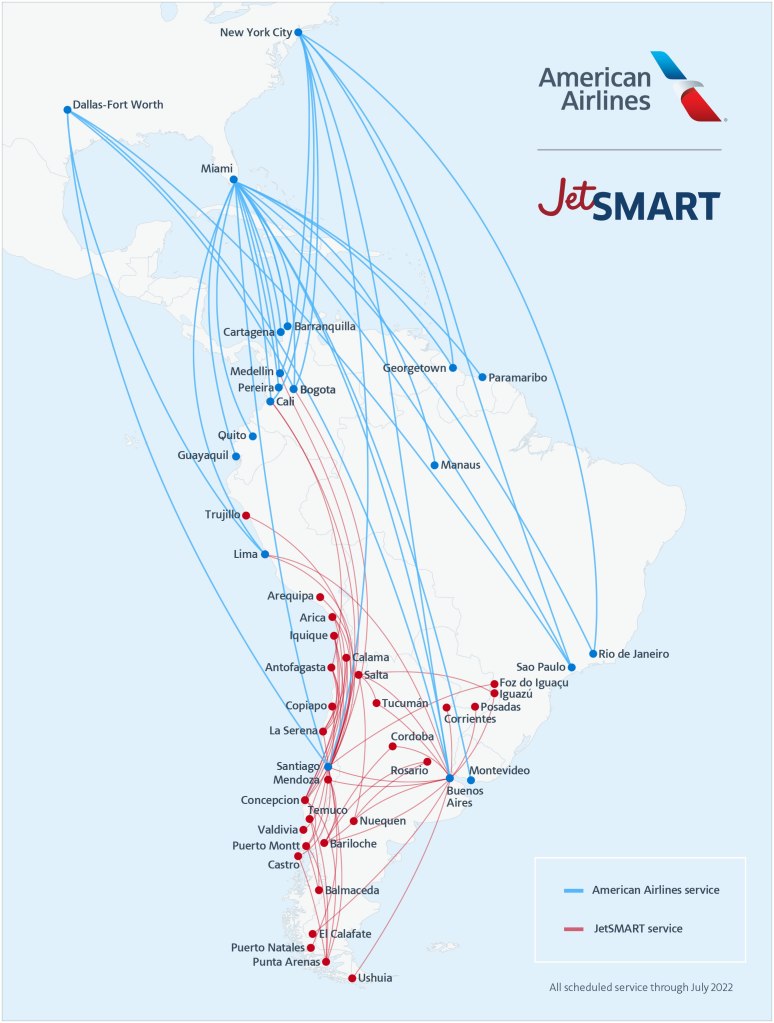
Aéreas argentinas recuperación 2022

AW | 2021 07 25 16:44 | AIRLINES MARKET

Aerolíneas estiman recuperación hacia el 2022

Las aerolíneas locales estiman recuperar en 2022 los niveles de pasajeros que transportaban antes de la pre-pandemia. El inicio de la temporada de vacaciones escolares de invierno ha permitido comenzar a reactivar la operación de Aerolíneas Argentinas, Flybondi Líneas Aéreas y JetSmart Airlines Argentina. En el plano de los vuelos internacionales continúan muy limitados por el cupo de ingreso de pasajeros desde el exterior que representan unos 1.000 por día, lo que representa unos tres o cuatro vuelos diarios, la operación de los vuelos comerciales de cabotaje comenzó a recuperarse por la demanda de las vacaciones de invierno. Las empresas del sector proyectan volver a los niveles pre-pandemia durante el próximo año.

En Junio 2021, aun en temporada baja, los vuelos comerciales de cabotaje registraron 168.000 pasajeros frente a 5.000 del año anterior, cuando había escasas operaciones en medio de las restricciones más duras que decretó el Gobierno nacional por la crisis sanitaria. Con todo, en la pre-pandemia, en Junio de 2019 la cantidad de pasajeros había ascendido a más de un 1.191.000, un récord histórico para ese mes del año, según los datos de la Administración Nacional de Aviación Civil (ANAC). Durante 2021, el mes con más cantidad de pasajeros en vuelos domésticos fue Marzo, con 420.000, muy lejos del máximo de 2020 que se registró en enero, antes de la pandemia, con 1.370.000 pasajeros. Durante 2021, el mes con más cantidad de pasajeros en vuelos domésticos fue marzo, con 420.000, muy lejos del máximo de 2020 que se registró en enero, antes de la pandemia, con 1.370.000 pasajeros.

Sin embargo, el inicio de la temporada de vacaciones escolares de invierno viene haciendo crecer la operación de las tres empresas que operan en el mercado local: Aerolíneas Argentinas, Flybondi y JetSmart. Además de las empresas de vuelos privados como American Jet Líneas Aéreas. Aerolíneas Argentinas ha expresado que con una mejora en la situación epidemiológica, la empresa alcanzaría los niveles prepandemia a mediados de 2022. Actualmente, está operando al 35% de su capacidad operativa. En Junio 2021 tuvo 73% de ocupación. “El cliente compra con cautela y prioriza, en esta etapa, los viajes dentro del país. De acuerdo a lo proyectado, a fin de año estaremos operando al 50%”, indicó la aerolínea de mayor tamaño de Argentina.

Mercado hacia la monopolización

En los últimos años, en la Argentina abandonaron el mercado dos compañías aéreas ante las dificultades económicas y de tintes políticos: Norwegian Air Argentina, que había ingresado en 2018 y a fines de 2019 vendió su operación a Jetsmart Airlines Group; y Latam Airlines Argentina, que dejó de volar en la Argentina en Junio de 2020, luego de 15 años y tras una fuerte presión del Gobierno que ha desarrollado durante los gobiernos kirchneristas. Actualmente, el mercado de vuelos comerciales dentro del país se reparte entre tres empresas de las que poseen a Junio de 2021 el siguiente mercado: Aerolíneas Argentinas con una participación del 69%, Flybondi con el 23%, y JetSmart con el 6%.

La low cost Flybondi acaba de anunciar que sumó un nuevo avión, el tercero, a su flota que comenzará a prestar servicios a fin de Julio, para aumentar su oferta de vuelos y sumar frecuencias. Además, proyecta el ingreso de un cuarto avión para el último trimestre del año, cuando espera reiniciar su operación a destinos internacionales como Brasil y Paraguay, como parte del inicio de la temporada 2021-2022. “Los resultados de la primera mitad del 2021 nos permiten ser optimistas con la recuperación del sector en el mediano y largo plazo. En la medida en la que la demanda mantenga la tendencia actual, estamos convencidos de que el camino es sumar conectividad y nuevas opciones para volar en la Argentina”, contó Mauricio Sana, CEO de Flybondi. La aérea de presupuesto ha desarrollado en 06/2021 un factor de ocupación del 74 por ciento. La empresa comenzó a operar en la Argentina en 2018 y vuela a 13 destinos. Entre el 1 y el 22 de Julio de 2021, hizo unos noventa vuelos semanales. A partir de esta semana, y durante todo Agosto, ofrecerá 134 vuelos en ese período. Los destinos más elegidos hasta el momento son: Bariloche, Mendoza y Salta.

Desde Jetsmart aseguraron que entre Junio y Julio 2021 triplicaron los vuelos locales. “La cantidad de vuelos de julio va a ser similar a la prepandemia, cuando teníamos un solo avión. Julio es un mes de recuperación y creemos que agosto también. Luego, dependerá de las cuestiones sanitarias. La temporada arrancó hace poco. Mayo y Junio fueron meses complejos porque había mucha incertidumbre sobre qué iba a pasar con la temporada. Luego, en Ciudad de Buenos Aires y provincia confirmaron las fechas y eso más las tarifas económicas, porque los vuelos no venían llenos, nos obligó a reacomodarnos”, dijo Darío Ratinoff, Gerente Comercial de la empresa. JetSmart Argentina está volando a todos los destinos que tenía antes de las restricciones impuestas por la crisis sanitaria y sumó vuelos a Calafate, Corrientes y Posadas, que estarán disponibles a partir de agosto. En tanto, cuenta con varias rutas que comunican destinos sin pasar por Buenos Aires: Rosario-Neuquén; Neuquén-Salta; Bariloche-Córdoba; y Mendoza-Bariloche.

Actualmente, los usuarios del transporte aéreo que vuelan dentro del país son en su mayoría familiares o por turismo. El segmento de viajes corporativos, de negocios, es el que más demora en repuntar. Con todo, desde las empresas, aseguran que la campaña de vacunación va a ser clave para que puedan retomarse este tipo de viajes. También hay expectativas por el relanzamiento del programa oficial Previaje, que el Gobierno de Argentina prevé anunciar a mediados de Agosto 2021. El programa consiste en un mecanismo de devolución de 50% de gastos en viajes y turismo que luego pueden volver a ser utilizados en compras en empresas del sector.

El programa anterior se había implementado en Septiembre 2020 y los créditos podían usarse a partir de Enero 2021. Ahora, según anticiparon, los créditos Previaje ya podrán usarse a partir de Diciembre de este año, con lo que se abarca un mes más de la temporada de verano. En esta nueva edición, la propuesta también tendrá más fondos disponibles.

Argentine airlines recovery 2022

Airlines estimate recovery by 2022

Local airlines estimate to recover in 2022 the levels of passengers they transported before the pre-pandemic. The start of the winter school vacation season has allowed Aerolíneas Argentinas, Flybondi Líneas Aéreas and JetSmart Airlines Argentina to begin to reactivate operations. In terms of international flights, they continue to be very limited by the number of passengers entering from abroad, which represents about 1,000 per day, which represents about three or four daily flights, the operation of commercial cabotage flights began to recover due to the demand for winter holidays. The companies in the sector plan to return to pre-pandemic levels during the next year.

In June 2021, even in the low season, commercial domestic flights registered 168,000 passengers compared to 5,000 the previous year, when there were few operations amid the toughest restrictions decreed by the national government due to the health crisis. However, in the prepandemic, in June 2019 the number of passengers had risen to more than 1,191,000, a historical record for that month of the year, according to data from the National Civil Aviation Administration (ANAC). During 2021, the month with the highest number of passengers on domestic flights was March, with 420,000, far from the 2020 maximum that was recorded in January, before the pandemic, with 1,370,000 passengers. During 2021, the month with the highest number of passengers on domestic flights was March, with 420,000, far from the 2020 maximum that was recorded in January, before the pandemic, with 1,370,000 passengers.

However, the start of the winter school vacation season has been making the operations of the three companies that operate in the local market grow: Aerolíneas Argentinas, Flybondi and JetSmart. In addition to private flight companies such as American Jet Líneas Aéreas. Aerolíneas Argentinas has stated that with an improvement in the epidemiological situation, the company would reach pre-pandemic levels in mid-2022. Currently, it is operating at 35% of its operational capacity. In June 2021 it had 73% occupancy. “The client buys with caution and prioritizes, at this stage, travel within the country. According to projections, by the end of the year we will be operating at 50%”, indicated the largest airline in Argentina.

Market towards monopolization

In recent years, two airlines in Argentina left the market due to economic difficulties and political overtones: Norwegian Air Argentina, which had entered in 2018 and at the end of 2019 sold its operation to JetSmart Airlines Group; and Latam Airlines Argentina, which stopped flying in Argentina in June 2020, after 15 years and after strong pressure from the Government that it has developed during the Kirchner Governments. Currently, the commercial flights market within the country is divided between three companies, of which as of June 2021 they have the following market: Aerolíneas Argentinas with a 69% share, Flybondi with 23%, and Jetsmart with 6%.

The low cost Flybondi has just announced that it has added a new aircraft, the third, to its fleet that will begin to provide services at the end of July, to increase its flight offer and add frequencies. In addition, it projects the entry of a fourth aircraft for the last quarter of the year, when it expects to restart its operation to international destinations such as Brazil and Paraguay, as part of the start of the 2021-2022 season. “The results of the first half of 2021 allow us to be optimistic with the recovery of the sector in the medium and long term. To the extent that demand maintains the current trend, we are convinced that the way is to add connectivity and new options to fly in Argentina”, said Mauricio Sana, CEO of Flybondi. The budget airline has developed in 06/2021 a load factor of 74 percent.

The company began operating in Argentina in 2018 and flies to 13 destinations. Between July 1 and 22, 2021, it made about ninety weekly flights. Starting this week, and throughout August, it will offer 134 flights in that period. The most chosen destinations so far are: Bariloche, Mendoza and Salta.

From Jetsmart they assured that between June and July 2021 local flights tripled. “The number of flights in July is going to be similar to the pre-pandemic, when we had only one plane. July is a month of recovery and we believe that August too. Then it will depend on health issues. The season started recently. May and June were complex months because there was a lot of uncertainty about what was going to happen with the season. Then, in the City of Buenos Aires and the province they confirmed the dates and that plus the economic rates, because the flights were not full, it forced us to rearrange ourselves”, said Darío Ratinoff, the company’s Commercial Manager.

JetSmart Argentina is flying to all the destinations it had before the restrictions imposed by the health crisis and added flights to Calafate, Corrientes and Posadas, which will be available from August. Meanwhile, it has several routes that communicate destinations without going through Buenos Aires: Rosario-Neuquén; Neuquén-Salta; Bariloche-Córdoba; and Mendoza-Bariloche.

Currently, the air transport users who fly within the country are mostly family members or for tourism. The corporate and business travel segment is the one that takes the longest to rebound. With everything, from the companies, they assure that the vaccination campaign will be key so that they can resume this type of trip. There are also expectations for the relaunch of the official Previaje program, which the Government of Argentina plans to announce in mid-August 2021. The program consists of a 50% refund mechanism for travel and tourism expenses that can then be used again for purchases. in companies in the sector.

The previous program had been implemented in September 2020 and the credits could be used as of January 2021. Now, as anticipated, the Pre-trip credits can already be used as of December of this year, which covers one more month of the season of summer in this new edition, the proposal will also have more funds available.

PUBLISHER: Airgways.com
DBk: Aerolineas.com / Jetsmart.com / Flybondi.com / Anac.gov.ar / Airgways.com
AW-POST: 202107251644AR

A\W   A I R G W A Y S ®