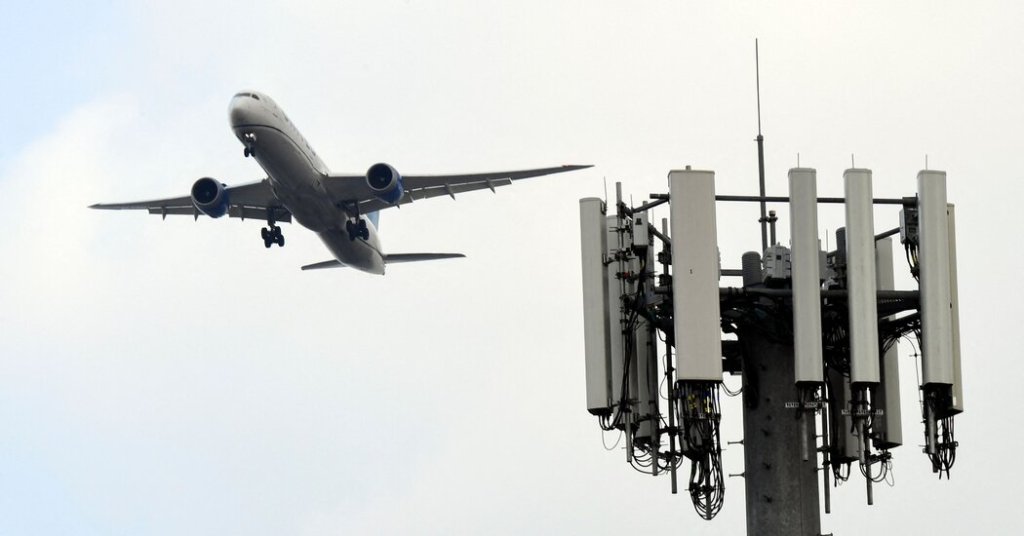
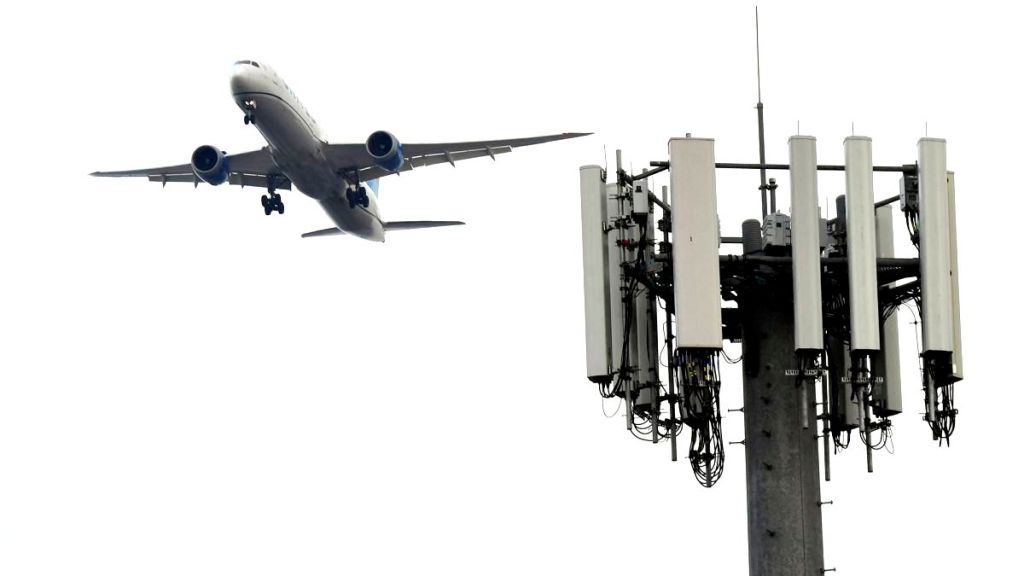
La Administración Federal de Aviación (FAA) ha publicado una actualización relacionada con su disputa con respecto al uso del espectro 5G de banda C de 3700MHz-3800MHz en las cercanías de los aeropuertos de los Estados Unidos. Durante las negociaciones iniciales en enero de este año, Verizon Wireless y AT&T Communications ofrecieron mantener las mitigaciones en su lugar hasta el 5 de julio de 2022, mientras trabajaban con la FAA para comprender mejor los efectos de las señales de banda C en instrumentos de aviación sensibles. Ahora, los dos gigantes móviles han acordado mantener las mitigaciones en su lugar hasta julio de 2023, momento en el que los aviones regionales con altímetros de radio más susceptibles a la interferencia serán modernizados con filtros de radiofrecuencia.
El Administrador interino de la FAA, Billy Nolen, comentó: «Creemos que hemos identificado un camino que continuará permitiendo que la aviación y la banda C inalámbrica 5G coexistan de manera segura. Agradecemos la voluntad de Verizon y AT&T de continuar esta importante y productiva colaboración con la industria de la aviación».
Como se informó anteriormente por CommsUpdate, los problemas se relacionan con las preocupaciones de interferencia percibidas entre las señales 5G en la banda de 3.7GHz-3.98GHz y los altímetros de radio de aeronaves que utilizan espectro de 4.2GHz-4.4GHz. En enero, AT&T y Verizon acordaron crear zonas de amortiguación de seis meses en áreas seleccionadas alrededor de 50 aeropuertos.
FAA updates 5G technology
FAA provides C-Band 5G upgrade
The Federal Aviation Administration (FAA) has released an update related to its dispute regarding the use of 3700MHz-3800MHz C-band 5G spectrum in the vicinity of airports in the United States. During initial negotiations in January of this year, Verizon Wireless and AT&T Communications offered to keep the mitigations in place through July 5, 2022, while working with the FAA to better understand the effects of C-band signals on aviation instruments. sensitive. Now, the two mobile giants have agreed to keep the mitigations in place until July 2023, at which time regional aircraft with radio altimeters most susceptible to interference will be retrofitted with radio frequency filters.
FAA Acting Administrator Billy Nolen commented, «We believe we have identified a path that will continue to allow aviation and 5G Wireless C-Band to coexist safely. We appreciate Verizon and AT&T’s willingness to continue this important and productive collaboration with the aviation industry».
As previously reported by CommsUpdate, the issues relate to perceived interference concerns between 5G signals in the 3.7GHz-3.98GHz band and aircraft radio altimeters using 4.2GHz-4.4GHz spectrum. In January, AT&T and Verizon agreed to create six-month buffer zones in select areas around 50 airports.
PUBLISHER: Airgways.com DBk: Faa.gov / Airgways.com AW-POST: 202206220909AR OWNERSHIP: Airgways Inc. A\W A I R G W A Y S ®
AW | 2022 06 17 10:43 | INDUSTRY / AVIATION TECHNOLOGY
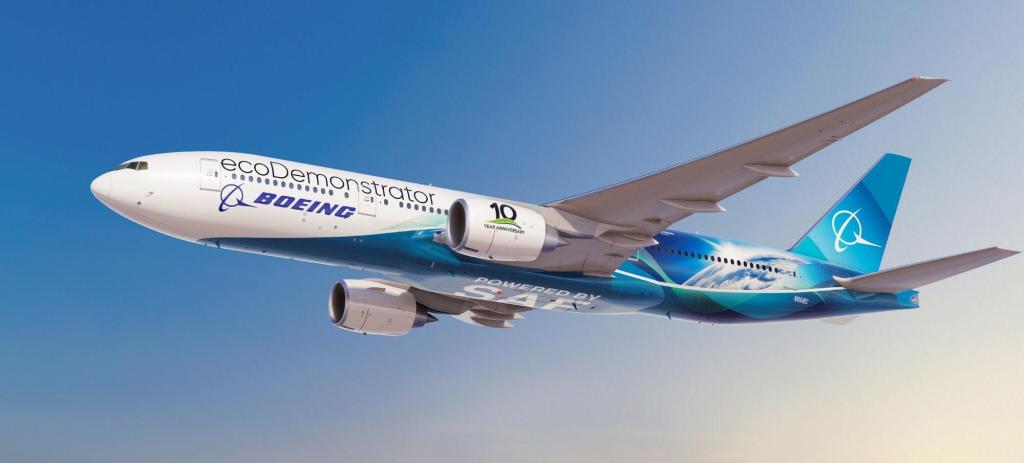
Nuevo programa ecoDemonstrator en 777-200ER Prueba treinta tecnologías sostenibles
The Boeing Company se encuentra introduciendo nuevas tecnologías pro ecológicas en un Boeing 777-200ER denominado Programa ecoDemonstrator utilizando una mezcla 30%/70% de Combustible de Aviación Sostenible (SAF) y combustible de avión convencional. Al mismo tiempo, celebra el décimo aniversario de su programa ecoDemonstrator, con pruebas de 230 proyectos en nueve aviones, incluida la plataforma 2022.
TheBoeing Company presentó el 16/06 su ecoDemonstrator 2022 con una librea que honra una década de pruebas para reducir el uso de combustible, las emisiones y el ruido. El último ecoDemonstrator, un 777-200ER propiedad de Boeing, probará alrededor de 30 nuevas tecnologías destinadas a mejorar la sostenibilidad y la seguridad de la industria aeroespacial, incluido un sistema de conservación del agua y tecnologías para mejorar la eficiencia operativa. «Boeing se compromete a apoyar a nuestros clientes y permitir que la industria de la aviación comercial cumpla con nuestro compromiso compartido de cero emisiones netas de carbono para 2050. Las rigurosas pruebas de nuevas tecnologías del programa ecoDemonstrator mejoran aún más el desempeño ambiental de nuestros productos y servicios y son invaluables para mejorar continuamente la seguridad», dijo Stan Deal, Presidente y CEO de Boeing Commercial Airplanes.
Durante seis meses de pruebas de vuelo y en tierra a partir de este verano, el ecoDemonstrator 2022 evaluará: En colaboración con la NASA, los generadores de vórtice SMART, pequeñas paletas verticales en el ala, que mejoran la eficiencia aerodinámica durante el despegue y el aterrizaje, un sistema para conservar el agua a bordo y reducir el peso, así como el uso de combustible, piezas de aviones y motores fabricadas aditivamente para ayudar a reducir el uso de combustible y los residuos de fabricación, un refrigerante ambientalmente preferido y un nuevo agente extintor de incendios para reducir las emisiones de gases de efecto invernadero, un sistema de visión mejorado para pilotos para mejorar la eficiencia operativa, estudio exhaustivo continuo del impacto del combustible de aviación sostenible hacia la reducción de emisiones. Para todas las pruebas de vuelo, el 777-200ER volará con la combinación más alta aprobada de combustible de aviación sostenible (SAF) disponible. «El programa Boeing ecoDemonstrator reúne los dos ingredientes más importantes para un futuro más sostenible: tecnologías innovadoras y asociaciones con clientes, proveedores, agencias gubernamentales y académicos. Celebramos los éxitos pasados y esperamos continuar con este programa icónico para ayudar a descarbonizar la aviación, juntos», dijo Chris Raymond, Director de Sostenibilidad de Boeing.
Desde sus vuelos iniciales en 2012, el Programa Boeing ecoDemonstrator ha acelerado la innovación sacando nuevas tecnologías del laboratorio y probándolas en un entorno operativo. Incluyendo la plataforma de este año, el programa ha probado alrededor de 230 tecnologías para ayudar a descarbonizar la aviación, mejorar la eficiencia operativa y mejorar la seguridad y la experiencia de los pasajeros. Aproximadamente un tercio de las tecnologías probadas han progresado en los productos y servicios de Boeing.
Boeing ecoDemonstrator Program
New ecoDemonstrator program on 777-200ER Try thirty sustainable technologies
The Boeing Company is introducing new green technologies on a Boeing 777-200ER called the ecoDemonstrator Program using a 30%/70% blend of Sustainable Aviation Fuel (SAF) and conventional jet fuel. At the same time, it celebrates the 10th anniversary of its ecoDemonstrator program, testing 230 projects on nine aircraft, including the 2022 platform.
TheBoeing Company unveiled its 2022 ecoDemonstrator on 06/16 in a livery that honors a decade of testing to reduce fuel use, emissions and noise. The latest ecoDemonstrator, a Boeing-owned 777-200ER, will test some 30 new technologies aimed at improving the sustainability and safety of the aerospace industry, including a water conservation system and technologies to improve operational efficiency. «Boeing is committed to supporting our customers and enabling the commercial aviation industry to meet our shared commitment to net-zero carbon emissions by 2050. The ecoDemonstrator program’s rigorous testing of new technologies further enhances the environmental performance of our products and services and are invaluable in continually improving safety», said Stan Deal, president and CEO of Boeing Commercial Airplanes.
During six months of flight and ground testing beginning this summer, ecoDemonstrator 2022 will evaluate: In collaboration with NASA, SMART vortex generators, small vertical vanes on the wing, which improve aerodynamic efficiency during takeoff and landing. landing gear, a system to conserve water on board and reduce weight and fuel use, additively manufactured aircraft parts and engines to help reduce fuel use and manufacturing waste, an environmentally preferred coolant, and a new fire extinguishing agent to reduce greenhouse gas emissions, an enhanced vision system for pilots to improve operational efficiency, ongoing comprehensive study of the impact of sustainable aviation fuel towards emission reductions, for all flight tests, the 777-200ER will fly on the highest approved blend of sustainable aviation fuel (SAF) available. «The Boeing ecoDemonstrator program brings together the two most important ingredients for a more sustainable future: innovative technologies and partnerships with customers, suppliers, government agencies and academia. We celebrate past successes and look forward to continuing this iconic program to help decarbonize aviation, together», said Chris Raymond, Boeing Chief Sustainability Officer.
Since its initial flights in 2012, the Boeing ecoDemonstrator Program has accelerated innovation by taking new technologies out of the lab and testing them in an operational environment. Including this year’s platform, the program has tested around 230 technologies to help decarbonize aviation, improve operational efficiency, and enhance passenger safety and experience. Approximately one-third of the proven technologies have progressed into Boeing products and services.
Como empresa aeroespacial líder a nivel mundial, Boeing desarrolla, fabrica y presta servicios a aviones comerciales, productos de defensa y sistemas espaciales para clientes en más de 150 países. Como uno de los principales exportadores de Estados Unidos, la compañía aprovecha los talentos de una base de proveedores globales para promover las oportunidades económicas, la sostenibilidad y el impacto en la comunidad. El diverso equipo de Boeing está comprometido a innovar para el futuro, liderar con la sostenibilidad y cultivar una cultura basada en los valores fundamentales de la compañía de seguridad, calidad e integridad. Únete a nuestro equipo y encuentra tu propósito en boeing.com/careers.
As a leading global aerospace company, Boeing develops, manufactures and services commercial aircraft, defense products and space systems for customers in more than 150 countries. As one of America’s leading exporters, the company harnesses the talents of a global supplier base to promote economic opportunity, sustainability and community impact. Boeing’s diverse team is committed to innovating for the future, leading with sustainability and cultivating a culture based on the company’s core values of safety, quality and integrity. Join our team and find your purpose at boeing.com/careers.
PUBLISHER: Airgways.com DBk: Boeing.com / Airgways.com AW-POST: 202206171043AR OWNERSHIP: Airgways Inc. A\W A I R G W A Y S ®
EVE y CAAP diseñarán ecosistema de servicio y soporte para UAM
EVE se ha asociado con el operador aeroportuario Corporación América Airports (CAAP) para diseñar e integrar un ecosistema de servicio y soporte para las operaciones de movilidad aérea urbana (UAM) en Europa y América Latina. Las dos compañías han firmado un memorando de entendimiento (MoU) que, según dicen, «combinará su experiencia y esfuerzos para evaluar la preparación de la infraestructura terrestre para las operaciones eléctricas de despegue y aterrizaje vertical (eVTOL) en los aeropuertos, incluidos los estudios del entorno regulatorio». El ecosistema que las dos compañías planearán conjuntamente incluye el desarrollo de infraestructura y operaciones terrestres, aeropuertos y la integración de diferentes modos de transporte, en línea con los requisitos de las diversas autoridades reguladoras en los seis países donde CAAP opera cincuenta y tres aeropuertos.
Martin Eurnekian, CEO de Corporación América Airports dijo: «Los próximos cinco años probablemente serán decisivos en la forma en que nos movemos desde y a través de las ciudades, y la aviación volverá a desempeñar un papel de liderazgo. CAAP ahora quiere ser un actor clave en el segmento UAM, identificando los desafíos y oportunidades para mejores contextos operativos, de infraestructura y seguros».
EVE también firmó recientemente una carta de intención a principios de este mes con Falcon Air Services de los Emiratos Árabes Unidos, para la provisión de 35 aviones eVTOL para su uso como transporte aéreo urbano en Dubai.
EVE and CAAP UAM support developments
EVE and CAAP will design service and support ecosystem for UAM
EVE has partnered with the airport operator Corporación América Airports (CAAP) to design and integrate a service and support ecosystem for urban air mobility (UAM) operations in Europe and Latin America. The two companies have signed a memorandum of understanding (MoU) that they say will «combine their experience and efforts to assess the readiness of ground infrastructure for electric vertical takeoff and landing (eVTOL) operations at airports, including studies of the regulatory environment». The ecosystem that the two companies will jointly plan includes the development of infrastructure and ground operations, airports, and the integration of different modes of transportation, in line with the requirements of the various regulatory authorities in the six countries where CAAP operates fifty-three airports.
Martin Eurnekian, CEO of Corporación América Airports said: «The next five years will likely be decisive in how we move to and through cities, with aviation once again playing a leading role. CAAP now wants to be a key player in the UAM segment, identifying the challenges and opportunities for better operating, infrastructure and insurance contexts».
EVE also recently signed a letter of intent earlier this month with Falcon Air Services of the United Arab Emirates, for the provision of 35 eVTOL aircraft for use as urban air transport in Dubai.
PUBLISHER: Airgways.com DBk: Eveairmovility.com / Corporacionamerica.com / Airgways.com AW-POST: 202206101832AR OWNERSHIP: Airgways Inc. A\W A I R G W A Y S ®
AW | 2022 06 09 15:40 | AIRLINES / AVIATION TECHNOLOGY / TRAINING
Centro capacitación más grande del mundo en Denver, Colorado
United Airlines anunció que está expandiendo su Centro de Entrenamiento de Vuelo, reconocido como la instalación más grande de su tipo en el mundo, que la aerolínea busca contratar a 10.000 pilotos adicionales para 2030. La aerolínea agregará un nuevo edificio de cuatro pisos en el campus de 23 acres en el vecindario Central Park de Denver (CO) que albergará 12 simuladores de vuelo avanzados adicionales, aulas de capacitación, salas de conferencias y oficinas. Marc Champion, Director General del Centro de Entrenamiento de Vuelo, estuvo acompañado hoy por Toby Enqvist, Vicepresidente Ejecutivo y Director de Clientes de United, Matt Miller, Vicepresidente de Operaciones Aeroportuarias de United en Denver, el Alcalde de Denver Michael Hancock y Phillip Washington, CEO del Aeropuerto Internacional de Denver, se han concertado cita para un evento innovador para iniciar el proyecto de expansión que se espera que se complete antes de finales de 2023.
United Airlines se ha embarcado en un plan agresivo para reclutar y entrenar a miles de pilotos en la próxima década y sigue siendo una opción atractiva para los aviadores porque la aerolínea tiene una de las redes globales más grandes del mundo y vuela más aviones de fuselaje ancho que cualquier otra aerolínea norteamericana. «La expansión de esta instalación de clase mundial le da a United aún más recursos para reclutar y capacitar a la próxima generación de aviadores. Nuestros pilotos son los mejores en la industria y volar sigue siendo una de las mejores carreras sindicales en el mundo: gran salario y beneficios y la oportunidad de capitanear los aviones más grandes a la mayoría de los lugares del mundo», dijo Marc Champion, Director General del Centro de Entrenamiento de Vuelo.
Campus Denver
El campus de United, siete edificios, a lo largo de 550.000 pies cuadrados de espacio de entrenamiento, es la única instalación de capacitación para los 12,000 pilotos activos de la aerolínea y todos los pilotos recién contratados. Cada nueve meses, los pilotos deben visitar el centro de capacitación para mantenerse al día con las certificaciones. En cualquier momento, puede haber hasta 600 pilotos entrenando en las instalaciones. El campus del Centro de Entrenamiento de Vuelo de United actualmente tiene 39 simuladores de vuelo de movimiento completo y 15 dispositivos de entrenamiento fijos: el edificio adicional significa que United pronto tendrá la capacidad de tener un total de 52 simuladores de movimiento completo y 28 dispositivos de entrenamiento fijos.
United espera agregar más de 2.000 nuevos pilotos solo este año y está en camino de contratar a 10,000 pilotos para 2030. La aerolínea planea entrenar a alrededor de 5.000 pilotos para esa fecha a través de United Aviate Academy, la propia escuela de entrenamiento de pilotos de la aerolínea. El objetivo de United es que al menos la mitad de los pilotos entrenados en la United Aviate Academy sean mujeres o personas de color.
United y su sindicato de pilotos Air Line Pilots Association (ALPA) llegaron recientemente a un acuerdo sobre los nuevos términos del contrato, el primero entre las principales aerolíneas estadounidenses. «United Airlines fue la única aerolínea que trabajó con nuestro sindicato de pilotos para llegar a un acuerdo durante COVID. No es sorprendente que ahora seamos la primera aerolínea en obtener un Acuerdo en Principio para un nuevo contrato de piloto líder en la industria», dijo el CEO Scott Kirby en una publicación de LinkedIn.
En toda la compañía, la aerolínea se ha embarcado en un esfuerzo histórico de contratación, planeando contratar a 50.000 personas en los próximos cinco años. Cerca del 90 por ciento de la fuerza laboral nacional de United está sindicalizada, y todos los empleados de la aerolínea, incluso los empleados a tiempo parcial, ganan más que el salario mínimo federal y son elegibles para recibir cobertura médica patrocinada por la compañía, participar en programas de jubilación financiados por la compañía, recibir vacaciones pagadas y beneficios de vuelo para viajar por el mundo. Más de 1.000 de los más de 7.000 empleados de United con sede en Denver trabajan en el Centro de Capacitación de Vuelo de United en roles que incluyen instruir, evaluar, programar, recursos humanos y estándares de vuelo. La instalación demuestra el compromiso de larga data de United con Mile High City. Fue construido originalmente entre 1966-68 como parte del complejo del aeropuerto de Stapleton y ha servido como la principal instalación de entrenamiento de pilotos de United desde entonces. En los últimos cinco años, United ha renovado todas las instalaciones y ha agregado un edificio adicional tan recientemente como en 2020.
En Mayo 2022, United Airlines celebró 85 años de servicio continuo en Denver, Colorado (CO). Actualmente, la aerolínea es la aerolínea más grande en el área de Denver, conecta a los habitantes de Colorado con más lugares del mundo y opera la mayoría de los vuelos y transporta la mayor cantidad de pasajeros en el estado de cualquier aerolínea. United ha invertido 825 millones de dólares para agregar nuevas puertas en el Aeropuerto Internacional de Denver, con varias puertas ya abiertas. La expansión pronto elevará el número total de puertas de united en el aeropuerto a noventa.
United expands flight training center
World’s largest training center in Denver, Colorado
United Airlines announced that it is expanding its Flight Training Center, recognized as the largest facility of its kind in the world, as the airline seeks to hire an additional 10,000 pilots by 2030. The airline will add a new four-story building on campus. 23-acre facility in the Central Park neighborhood of Denver (CO) that will house an additional 12 advanced flight simulators, training classrooms, conference rooms and offices. Marc Champion, General Manager of the Flight Training Center, was joined today by Toby Enqvist, United Executive Vice President and Chief Customer Officer, Matt Miller, United Vice President of Airport Operations Denver, Denver Mayor Michael Hancock and Phillip Washington, CEO of the Denver International Airport, have made an appointment for a groundbreaking event to kick off the expansion project that is expected to be completed before the end of 2023.
United Airlines has embarked on an aggressive plan to recruit and train thousands of pilots over the next decade and remains an attractive option for aviators because the airline has one of the largest global networks in the world and flies more wide-body aircraft. than any other North American airline. «The expansion of this world-class facility gives United even more resources to recruit and train the next generation of Airmen. Our pilots are the best in the industry and flying remains one of the best union careers in the world – great salary and benefits and the opportunity to fly the largest aircraft to most places in the world», said Marc Champion, General Manager of the Flight Training Center.
Denver’s Campus
United’s seven-building campus, spanning 550,000 square feet of training space, is the only training facility for the airline’s 12,000 active pilots and all newly hired pilots. Every nine months, pilots must visit the training center to stay current on certifications. At any one time, there can be as many as 600 pilots training at the facility. The United Flight Training Center campus currently has 39 full-motion flight simulators and 15 fixed training devices, the additional building means that United will soon have the capacity to have a total of 52 full-motion simulators and 28 fixed training devices. fixed training.
United expects to add more than 2,000 new pilots this year alone and is on track to hire 10,000 pilots by 2030. The airline plans to train around 5,000 pilots by then through United Aviate Academy, United’s own pilot training school. The airline. United’s goal is for at least half of the pilots trained at the United Aviate Academy to be women or people of color.
United and its Air Line Pilots Association (ALPA) pilot union recently reached an agreement on new contract terms, the first among major US airlines. “United Airlines was the only airline to work with our pilot union to reach an agreement during COVID. It is not surprising that we are now the first airline to obtain an Agreement in Principle for an industry-leading new pilot contract”, he said. CEO Scott Kirby in a LinkedIn post.
Across the company, the airline has embarked on a historic hiring effort, planning to hire 50,000 people over the next five years. Nearly 90 percent of United’s national workforce is unionized, and all airline employees, including part-timers, earn more than the federal minimum wage and are eligible for company-sponsored health coverage, participate in company-sponsored retirement programs, receive paid vacations and flight benefits to travel the world. More than 1,000 of United’s more than 7,000 Denver-based employees work at the United Flight Training Center in roles that include instructing, evaluating, scheduling, human resources and flight standards. The installation demonstrates United’s longstanding commitment to the Mile High City. It was originally built between 1966-68 as part of the Stapleton Airport complex and has served as United’s main pilot training facility ever since. Over the past five years, United has renovated all facilities and added an additional building as recently as 2020.
In May 2022, United Airlines celebrated 85 years of continuous service in Denver, Colorado (CO). The airline is currently the largest airline in the Denver area, connecting Coloradans to more places around the world and operating the most flights and carrying the most passengers in the state of any airline. United has invested $825 million to add new gates at Denver International Airport, with several gates already open. The expansion will soon bring united’s total number of gates at the airport to ninety.
PUBLISHER: Airgways.com DBk: United.com / Bokapowell.com / Alpa.org / Airgways.com AW-POST: 202206091540AR OWNERSHIP: Airgways Inc. A\W A I R G W A Y S ®
El Aeropuerto Santiago de Chile/Arturo Merino Benítez/SCL lanza un plan pionero de hidrógeno verde. Siguiendo los planes ambientales de Groupe ADP y VINCI Aeropuertos, el Aeropuerto Nuevo Pudahuel ha dado el primer paso para lograr que el principal aeropuerto de Chile, se convierta en el primero de Latinoamérica en incorporar el uso de hidrógeno en sus operaciones. Junto a un grupo de empresas energéticas líderes como Air Liquide, Copec y Colbún, la concesionaria firmó un Memorando de Entendimiento (MoU) con el fin de trabajar en un plan para incorporar este combustible libre de carbono a las operaciones del principal aeropuerto de Chile.
Los accionistas de Nuevo Pudahuel, Groupe ADP y VINCI Airports, han tomado la iniciativa de promover esta energía en todo el mundo, con los primeros desarrollos en Francia y Corea del Sur. El acuerdo para estudiar la posibilidad de convertir a Santiago en un hub de hidrógeno fue firmado por los máximos representantes de Nuevo Pudahuel, Air Liquide, Colbún y Copec en un acto que contó con la participación de los ministros de Obras Públicas, Juan Carlos García; Transportes y Telecomunicaciones, Juan Carlos Muñoz; de Ciencia y Tecnología, Flavio Salazar, el Subsecretario de Energía, Julio Maturana; el Embajador de Francia en Chile, Pascal Teixeira da Silva; y el Vicepresidente de CORFO, José Miguel Benavente, marcando el inicio de una alianza para implementar el hidrógeno de manera pionera en el Aeropuerto de Santiago.
La experiencia complementaria y los conocimientos de cada una de las empresas locales reunirán todos los elementos necesarios para establecer un ecosistema más sostenible dentro del complejo aeroportuario Arturo Merino Benítez. Air Liquide liderará el desarrollo del estudio, en estrecha coordinación con Nuevo Pudahuel. Además, utilizará su experiencia en producción y distribución de hidrógeno para construir y operar un electrolizador para la producción de hidrógeno verde y la cadena de suministro de hidrógeno asociada. Colbún, líder en el sector de generación de energía en Chile, aportará energía renovable al proyecto, al tiempo que garantizará la eficiencia energética de la cadena de valor. Esta energía provendrá tanto de paneles fotovoltaicos que la compañía instalará y operará en el aeropuerto, como de las diversas plantas de energía renovable de Colbún. Copec, el principal operador de estaciones de servicio en Chile, aportará su experiencia en sistemas de almacenamiento y suministro de combustible, además de la proyección de estimar la demanda de hidrógeno que tendrá esta iniciativa, considerando su participación actual en el mercado de combustible de aviación dentro del aeropuerto.
Xavier Lortat-Jacob, Gerente General del Aeropuerto Santiago de Chile, dice que «como concesionaria tenemos un compromiso con el Estado de Chile. Recientemente entregamos una nueva terminal, que aumenta considerablemente la calidad y las áreas para vuelos internacionales. Estamos promoviendo su uso con nuevas rutas y nuevas aerolíneas, pero debemos innovar, asegurándonos de crecer cuidando el medio ambiente. Lo hacemos utilizando esta energía limpia, en cuyo desarrollo nuestros principales accionistas han sido pioneros. El hidrógeno verde nos permitirá apoyar el crecimiento del transporte aéreo en armonía con el medio ambiente».
Air Liquide se encuentra colaborando con socios como Groupe ADP y VINCI Concessions en diferentes proyectos para descarbonizar los sectores de la aviación y los aeropuertos en Francia y Corea del Sur. Alec Young, director general de la compañía en Chile, señala que «Air Liquide está comprometida con la construcción de un futuro más sostenible ayudando a nuestros clientes y a la sociedad a descarbonizar el planeta. Chile tiene vastos recursos renovables y naturales, y Air Liquide se enorgullece de apoyar el establecimiento de ecosistemas de hidrógeno dentro del país. Estamos orgullosos de unirnos a Copec, Colbún y Nuevo Pudahuel en el desarrollo de un ecosistema de hidrógeno en el Aeropuerto Internacional Arturo Merino Benítez de Santiago de Chile que abordará la mitigación de las emisiones de carbono de la industria de la aviación y demostrará el potencial del hidrógeno en la descarbonización de sectores tradicionalmente difíciles de reducir. La urgencia climática nos impone el reto de trabajar en alianzas y buscar la colaboración para acelerar la transición energética, que requerirá combustibles limpios como el hidrógeno verde para descarbonizar nuestra economía».
Esta iniciativa contribuirá específicamente a la meta del Aeropuerto Arturo Merino Benítez de Santiago de Chile de reducir las emisiones de gases de efecto invernadero en un 40 por ciento para 2030 y lograr la neutralidad de carbono para 2050.
Santiago/SCL hydrogen pioneer
SCL at the forefront of green airports
The Santiago de Chile/Arturo Merino Benítez Airport/SCL launches a pioneering green hydrogen plan. Following the environmental plans of Groupe ADP and VINCI Airports, Nuevo Pudahuel Airport has taken the first step towards making Chile’s main airport the first in Latin America to incorporate the use of hydrogen in its operations. Together with a group of leading energy companies such as Air Liquide, Copec and Colbún, the concessionaire signed a Memorandum of Understanding (MoU) in order to work on a plan to incorporate this carbon-free fuel into the operations of Chile’s main airport.
Nuevo Pudahuel’s shareholders, Groupe ADP and VINCI Airports, have taken the initiative to promote this energy throughout the world, with the first developments in France and South Korea. The agreement to study the possibility of turning Santiago into a hydrogen hub was signed by the highest representatives of Nuevo Pudahuel, Air Liquide, Colbún and Copec in an act that included the participation of the Ministers of Public Works, Juan Carlos García; Transport and Telecommunications, Juan Carlos Muñoz; of Science and Technology, Flavio Salazar, the Undersecretary of Energy, Julio Maturana; the Ambassador of France in Chile, Pascal Teixeira da Silva; and the Vice President of CORFO, José Miguel Benavente, marking the beginning of an alliance to implement hydrogen in a pioneering manner at the Santiago Airport.
The complementary experience and knowledge of each of the local companies will bring together all the necessary elements to establish a more sustainable ecosystem within the Arturo Merino Benítez airport complex. Air Liquide will lead the development of the study, in close coordination with Nuevo Pudahuel. In addition, it will use its hydrogen production and distribution expertise to build and operate an electrolyser for green hydrogen production and the associated hydrogen supply chain. Colbún, leader in the energy generation sector in Chile, will provide renewable energy to the project, while guaranteeing the energy efficiency of the value chain. This energy will come both from photovoltaic panels that the company will install and operate at the airport, and from Colbún’s various renewable energy plants. Copec, the main operator of service stations in Chile, will contribute its experience in fuel storage and supply systems, in addition to the projection of estimating the demand for hydrogen that this initiative will have, considering its current participation in the aviation fuel market inside the airport.
Xavier Lortat-Jacob, General Manager of the Santiago de Chile Airport, says that «as a concessionaire we have a commitment to the State of Chile. We recently delivered a new terminal, which considerably increases the quality and the areas for international flights. We are promoting its use with new routes and new airlines, but we must innovate, making sure we grow while caring for the environment. We do so using this clean energy, in whose development our main shareholders have pioneered. Green hydrogen will allow us to support the growth of air transport in harmony with the environment».
Air Liquide is collaborating with partners such as Groupe ADP and VINCI Concessions on different projects to decarbonize the aviation and airport sectors in France and South Korea. Alec Young, general director of the company in Chile, points out that «Air Liquide is committed to building a more sustainable future by helping our customers and society to decarbonize the planet. Chile has vast renewable and natural resources, and Air Liquide is is proud to support the establishment of hydrogen ecosystems within the country We are proud to join Copec, Colbún and Nuevo Pudahuel in the development of a hydrogen ecosystem at the Arturo Merino Benítez International Airport in Santiago de Chile that will address emission mitigation from the aviation industry and will demonstrate the potential of hydrogen in the decarbonization of sectors traditionally difficult to reduce The climate urgency imposes the challenge of working in alliances and seeking collaboration to accelerate the energy transition, which will require clean fuels such as green hydrogen to decarbonise our economy».
This initiative will specifically contribute to the goal of the Arturo Merino Benítez Airport in Santiago de Chile to reduce greenhouse gas emissions by 40 percent by 2030 and achieve carbon neutrality by 2050.
PUBLISHER: Airgways.com DBk: Nuevopudahuel.cl / Alberto Valdés / Airgways.com AW-POST: 202206081558AR OWNERSHIP: Airgways Inc. A\W A I R G W A Y S ®
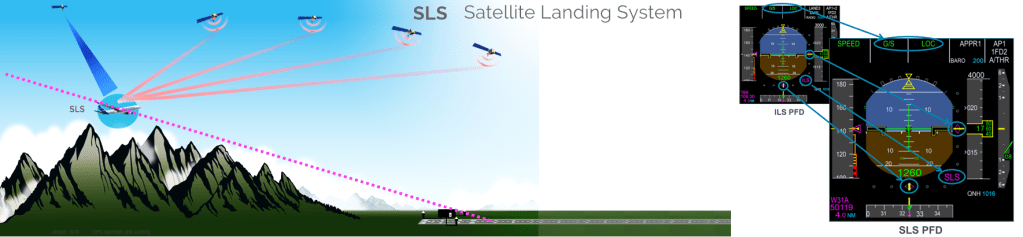
Ampliación capacidad de Sistema Aterrizaje por Satélites (SLS) Aerolínea EasyJet lanzamiento de modalidad
El centro de comunicado de prensa de Airbus Group ha entregado el primer Airbus A320NEO equipado con la última tecnología de Sistema de Aterrizaje por Satélites (SLS) al cliente de larga data lolw cost del Reino Unido EasyJet. La moderna tecnología del SLS permite a los pilotos realizar aproximaciones directas utilizando la precisión del satélite cuando aterrizan en los aeropuertos, sin la necesidad de sistemas terrestres adicionales como *ILS, incluso en condiciones de baja visibilidad, al tiempo que ahorra combustible y reduce las emisiones.
SLS entró en servicio por primera vez en Europa con el A350 en 2015 después de que Airbus fuera pionero con éxito en su desarrollo e introducción de enfoques *CAT1 con el apoyo de la Agencia de la UE para el Programa Espacial (EUSPA), anteriormente conocida como GSA, y la Comisión Europea. Una función SLS también está disponible en las familias de aviones A220 y A330 y en progreso para el A380. «Al utilizar SLS, las aerolíneas se benefician de capacidades operativas mejoradas y eficiencia operativa», dice Philippe Mhun, Director de Programas y Servicios de Airbus. «Estamos muy contentos de ofrecer esta nueva capacidad de gestión del tráfico aéreo ahora en la familia A320, lo que demuestra cómo Airbus mantiene sus aviones a la vanguardia de la tecnología. La introducción de tecnologías basadas en satélites destaca el beneficio de la colaboración interdivisional de Airbus. Dado que Airbus Defence and Space es uno de los líderes mundiales en tecnología satelital, aprovechamos esta experiencia y la aplicamos a la aviación comercial. Agradecemos el excelente apoyo prestado por la EUSPA y la Comisión Europea».
Airbus también está desarrollando la nueva generación de EGNOS, el Sistema Europeo de Aumento Basado en Satélites. «Airbus está comprometido y comprometido con la entrega de la próxima versión del programa para 2027. Los usuarios de SLS se beneficiarán sin problemas del aumento del rendimiento a medida que el servicio esté disponible en destinos europeos adicionales», declaró François Gaullier, Director de Telecomunicaciones y Navegación de Airbus Defence and Space.
David Morgan, Director de Operaciones de Vuelo de EasyJet, dijo: «Estamos entusiasmados con este último desarrollo tecnológico, ya que representa otro paso hacia una mayor mejora de la eficiencia de nuestras operaciones, al tiempo que nos ayuda a reducir el uso de combustible y, por lo tanto, a abordar nuestras emisiones de carbono». Creemos que la modernización del sector de la aviación es un objetivo crucial que requiere el esfuerzo conjunto y coordinado de toda la industria. Estamos comprometidos a apoyar el desarrollo de nuevas tecnologías, junto con nuestros socios en toda la industria, lo que nos permite operar de la manera más eficiente y tecnológicamente avanzada posible para la seguridad de nuestros clientes y la protección de nuestro planeta».
La familia A320NEO incorpora motores de nueva generación y Sharklets, que en conjunto ofrecen al menos un 20 por ciento de ahorro de combustible y CO2, así como una reducción de la huella de ruido del 50 por ciento. A finales de abril de 2022, la familia A320NEO había recibido más de 8.000 pedidos de alrededor de 130 clientes. Desde su entrada en servicio hace seis años, Airbus ha entregado más de 2.200 aviones de la familia A320NEO que contribuyen a un ahorro de 15 millones de toneladas de CO2 en comparación con los aviones de la generación anterior a los que sustituyen.
Airbus expands SLS capacity
Capacity expansion of the Satellite Landing System (SLS) EasyJet airline launch of modality
The Airbus Group press release center has delivered the first Airbus A320NEO equipped with the latest Satellite Landing System (SLS) technology to long-standing UK lolw cost customer EasyJet. Modern SLS technology enables pilots to fly straight-in approaches using satellite precision when landing at airports, without the need for additional ground systems such as *ILS, even in low visibility conditions, while saving fuel and reducing emissions.
SLS first entered service in Europe with the A350 in 2015 after Airbus successfully pioneered its development and introduction of *CAT1 approaches with the support of the EU Space Program Agency (EUSPA), formerly known as SLS. such as GSA, and the European Commission. An SLS feature is also available on the A220 and A330 aircraft families and in progress for the A380. «By using SLS, airlines benefit from improved operational capabilities and operational efficiency», says Philippe Mhun, Director of Programs and Services at Airbus. «We are very pleased to offer this new air traffic management capability now on the A320 Family, demonstrating how Airbus keeps its aircraft at the forefront of technology. The introduction of satellite-based technologies highlights the benefit of cross-divisional collaboration across Airbus. As Airbus Defense and Space is one of the world leaders in satellite technology, we are taking this experience and applying it to commercial aviation. We appreciate the excellent support provided by the EUSPA and the European Commission».
Airbus is also developing the new generation of EGNOS, the European Satellite Based Augmentation System. «Airbus is committed and committed to delivering the next version of the program by 2027. SLS users will seamlessly benefit from increased performance as the service becomes available to additional European destinations», stated François Gaullier, Director of Telecommunications. and Navigation of Airbus Defense and Space.
David Morgan, easyJet’s Director of Flight Operations, said: «We are excited about this latest technological development as it represents another step towards further improving the efficiency of our operations, while helping us reduce fuel use and therefore to address our carbon emissions. We believe that the modernization of the aviation sector is a crucial objective that requires the joint and coordinated effort of the entire industry. We are committed to supporting the development of new technologies, together with our partners across the industry, allowing us to operate in the most efficient and technologically advanced way possible for the safety of our customers and the protection of our planet».
The A320NEO Family incorporates new generation engines and Sharklets, which together deliver at least 20 per cent fuel and CO2 savings, as well as a 50 per cent noise footprint reduction. By the end of April 2022, the A320NEO Family had received more than 8,000 orders from around 130 customers. Since entering service six years ago, Airbus has delivered more than 2,200 A320NEO Family aircraft contributing to savings of 15 million tonnes of CO2 compared to the previous generation aircraft they replace.
ILS: Sistema de aterrizaje por instrumentos es un sistema que funciona enviando ondas de radio desde el extremo de la pista, con aeronaves que lo interceptan utilizando las ondas de radio para guiarlas hacia la pista.
CAT1/2/3: El enfoque de categoría de precisión define la precisión en términos de «Altura de Decisión» y «Rango Visual de la Pista». «CAT3» es el más preciso de estas categorías.
ILS: Instrument Landing System is a system that works by sending radio waves from the end of the runway, with aircraft intercepting it using the radio waves to guide them onto the runway.
CAT1/2/3: The accuracy category approach defines accuracy in terms of «Decision Height» and «Runway Visual Range». «CAT3» is the most accurate of these categories.
PUBLISHER: Airgways.com DBk: Airbus.com / Airgways.com AW-POST: 202206061653AR OWNERSHIP: Airgways Inc. A\W A I R G W A Y S ®
AW | 2022 04 06 19:29 | INDUSTRY / AVIATION TECHNOLOGY
Boeing y Microsoft profundizan su asociación en aviación digital
The Boeing Company y Microsoft Corp. anunciaron el Miércoles 06/04 que están profundizando su asociación estratégica para acelerar la transformación digital de Boeing. A través de la colaboración ampliada, Boeing aprovechará la nube de Microsoft y sus capacidades de inteligencia artificial para actualizar su infraestructura tecnológica y aplicaciones de misión crítica con nuevas soluciones inteligentes basadas en datos, abriendo aún más nuevas formas de trabajar, operar y hacer negocios.
«El anuncio de hoy representa una inversión significativa en el futuro digital de Boeing. Nuestra asociación estratégica con Microsoft nos ayudará a realizar nuestra estrategia en la nube al eliminar las restricciones de infraestructura, escalar adecuadamente para desbloquear la innovación y fortalecer aún más nuestro compromiso con las operaciones sostenibles. El enfoque de asociación demostrado de Microsoft, las tecnologías de nube confiables y la profunda experiencia en la industria nos ayudarán a alcanzar nuestros objetivos de transformación y fortalecerán la base digital de Boeing», dijo Susan Doniz, Directora de Información de Boeing y Vicepresidenta Senior de Tecnología de la Información y Análisis de Datos.
«Boeing y Microsoft han estado trabajando juntos durante más de dos décadas, y esta asociación se basa en esa historia para respaldar el futuro digital de Boeing ayudándolo a optimizar las operaciones y desarrollar soluciones digitales que beneficiarán a la industria de la aviación global. El poder de la nube de Microsoft y sus capacidades de IA servirán como el componente central de la estrategia de aviación digital de Boeing al proporcionar soluciones flexibles, ágiles y escalables que son inteligentes y basadas en datos en una plataforma segura y compatible», dijo Judson Althoff, Vicepresidente Ejecutivo y Director Comercial de Microsoft.
Esta asociación se basa en una larga historia de las empresas que trabajan juntas. Como líder en el sector aeroespacial, Boeing fue uno de los primeros en aprovechar la nube de Microsoft, centralizando muchas de sus aplicaciones de aviación digital líderes en el mercado en Microsoft Azure y utilizando inteligencia artificial para impulsar los resultados de los clientes y agilizar las operaciones. El anuncio de hoy permitirá a Boeing desbloquear el valor tangible y sostenible que se mantiene dentro de su vasto patrimonio de datos y refuerza nuestro compromiso mutuo de liderar la innovación aeroespacial en las próximas décadas.
Boeing–Microsoft Partnership
Boeing and Microsoft deepen their partnership in digital aviation
The Boeing Company and Microsoft Corp. announced on Wednesday 04/06 that they are deepening their strategic partnership to accelerate Boeing’s digital transformation. Through the expanded collaboration, Boeing will leverage Microsoft’s cloud and AI capabilities to upgrade its technology infrastructure and mission-critical applications with new intelligent data-driven solutions, further opening up new ways to work, operate and do business.
«Today’s announcement represents a significant investment in Boeing’s digital future. Our strategic partnership with Microsoft will help us realize our cloud strategy by removing infrastructure constraints, scaling appropriately to unlock innovation and further strengthening our commitment to sustainable operations. Microsoft’s proven partnership approach, trusted cloud technologies and deep industry experience will help us achieve our transformation goals and strengthen Boeing’s digital foundation», said Susan Doniz, Boeing’s chief information officer. and Senior Vice President of Information Technology and Data Analytics.
«Boeing and Microsoft have been working together for more than two decades, and this partnership builds on that history to support Boeing’s digital future by helping it streamline operations and develop digital solutions that will benefit the global aviation industry. The Power Microsoft’s cloud computing and AI capabilities will serve as the core component of Boeing’s digital aviation strategy by providing flexible, agile and scalable solutions that are intelligent and data-driven on a secure and compliant platform», said Judson Althoff, Executive Vice President and Chief Commercial Officer of Microsoft.
This partnership builds on a long history of companies working together. As a leader in aerospace, Boeing was among the first to leverage the Microsoft cloud, centralizing many of its market-leading digital aviation applications in Microsoft Azure and using artificial intelligence to drive customer outcomes and streamline operations. Today’s announcement will enable Boeing to unlock the tangible and sustainable value held within its vast data heritage and reinforces our mutual commitment to lead aerospace innovation for decades to come.
PUBLISHER: Airgways.com DBk: Boeing.com / Microsoft.com / Airgways.com AW-POST: 202204061929AR OWNERSHIP: Airgways Inc. A\W A I R G W A Y S ®
AW | 2022 03 28 22:22 | INDUSTRY / AVIATION TECHNOLOGY
Airbus prueba biocombustible en A380 por primera vez
El fabricante aeroespacial europeo Airbus Group dijo el Lunes 28/03 que ha realizado un primer vuelo de su avión A380 Superjumbo propulsado por Sombustible de Aviación Sostenible (SAF) enun 100%. El primer vuelo es parte de una serie de esfuerzos en curso para ayudar a las aerolíneas a llegar a emisiones neutras en carbono a mediados de siglo. Total Energies proporcionó 29 toneladas de SAF sin mezclar hecho principalmente de aceite de cocina usado, así como otras grasas de desecho. Un segundo vuelo con el mismo avión está programado para llevarse a cabo desde Toulouse al aeropuerto de Niza el martes para probar el uso de SAF durante el despegue y el aterrizaje.
El avión de prueba despegó del Aeropuerto de Blagnac en Toulouse, Francia, el Viernes 25/03 con uno de los cuatro motores Rolls-Royce Trent 900 al 100% SAF. El vuelo duró tres horas. Este es el tercer tipo de avión Airbus que vuela con el 100% de SAF en el último año. El primero fue un Airbus A350 en Marzo de 2021, seguido de un avión A319NEO de pasillo único en Octubre 2021.
La semana pasada, los 14 miembros de la Alianza Oneworld, que incluye American Airlines, Alaska Airlines y Finnair, anunciaron planes para comprar hasta 200 millones de galones de SAF por año al productor de combustibles renovables con sede en Colorado Gevo Inc. Es el segundo compromiso de compra conjunta de este tipo en cuatro meses. La entrega del combustible comenzará en 2027 bajo un acuerdo de cinco años. Gevo también firmó un acuerdo con Delta Air Lines para suministrar 75 millones de galones de SAF por año durante siete años a un precio futuro estimado de US$ 2.8 mil millones. El acuerdo reemplaza un acuerdo de 2019 con Delta para comprar 10 millones de galones por año a medida que Delta se esfuerza por incorporar más SAF en sus operaciones.
El combustible SAF de Gevo se produce utilizando productos de maíz no comestibles que se procesan para crear etanol que luego se convierte en SAF. Se espera que el combustible se produzca en tres instalaciones en desarrollo en el Medio Oeste.
DHL Express también anunció la semana pasada que BP y Neste se han comprometido a proporcionar más de 211 millones de galones de SAF en los próximos cinco años, ayudándole a ahorrar 2 millones de toneladas de CO2 y lograr el objetivo del 30% de uso de SAF para la aviación para 2030.
Perspectivas SAF
Aumentar el uso de SAF sigue siendo un camino clave para lograr la ambición de la industria de cero emisiones netas de carbono para 2050. El informe del plan para la aviación sostenible de la Asociación Internacional de Transporte Aéreo del año pasado indicó que SAF podría contribuir entre el 53% y el 71% de las reducciones de carbono requeridas. Los jets modernos están actualmente certificados para volar con hasta un 50% de mezcla de SAF mezclado con queroseno. Airbus tiene como objetivo lograr la certificación del 100% SAF para finales de esta década.
Los funcionarios de la industria dicen que SAF debe producirse en grandes cantidades para servir como un puente hacia la energía de hidrógeno de combustión limpia. La administración Biden ha establecido un objetivo para que Estados Unidos produzca 3 mil millones de galones de SAF para 2030.
Programa hidrógeno ZEROe
El avión A380 utilizado durante la prueba es el mismo avión revelado el mes pasado que el Demostrador ZEROe de Airbus, un banco de pruebas de vuelo para futuras tecnologías diseñadas para llevar el primer avión de cero emisiones del mundo al mercado para 2035. Airbus firmó un acuerdo de asociación con CFM International, una empresa conjunta entre GE y Safran Aircraft Engines, para colaborar en un importante programa de demostración de hidrógeno programado para comenzar las pruebas a mediados de la década. El objetivo del programa es realizar pruebas en tierra y vuelo con un motor de combustión directa alimentado por hidrógeno. El avión demostrador A380 estará equipado con tanques de hidrógeno líquido. Airbus fabricará los tanques en instalaciones en Francia y Alemania, definirá los requisitos del sistema de propulsión, supervisará las pruebas de vuelo y operará la aeronave. CFM modificará el combustor, el sistema de combustible y el sistema de control de un motor turbofan GE Passport para que funcione con hidrógeno. El motor, que se ensambla en los Estados Unidos, fue seleccionado debido a su tamaño físico, maquinaria turbo avanzada y capacidad de flujo de combustible. Se montará a lo largo del fuselaje trasero del banco de pruebas volador para permitir que las emisiones del motor, incluidas las estelas, se monitoreen por separado de las de los motores que impulsan la aeronave, según Airbus Group.
First biofuel A380
Airbus tests biofuel on A380 for the first time
The European aerospace manufacturer Airbus Group said on Monday 03/28 that it has made a first flight of its A380 Superjumbo aircraft powered by 100% Sustainable Aviation Fuel (SAF). The first flight is part of a series of ongoing efforts to help airlines become carbon neutral by mid-century. Total Energies provided 29 tons of unblended SAF made primarily from used cooking oil as well as other waste fats. A second flight with the same aircraft is scheduled to take place from Toulouse to Nice airport on Tuesday to test the use of SAF during takeoff and landing.
The test aircraft took off from Blagnac Airport in Toulouse, France, on Friday 03/25 with one of four Rolls-Royce Trent 900 engines at 100% SAF. The flight lasted three hours. This is the third type of Airbus aircraft to fly with 100% SAF in the last year. The first was an Airbus A350 in March 2021, followed by an A319NEO single-aisle aircraft in October 2021.
Last week, the 14 members of the Oneworld Alliance, which includes American Airlines, Alaska Airlines and Finnair, announced plans to buy up to 200 million gallons of SAF per year from Colorado-based renewable fuels producer Gevo Inc. It is the second joint purchase commitment of this type in four months. Delivery of the fuel will begin in 2027 under a five-year agreement. Gevo also signed an agreement with Delta Air Lines to supply 75 million gallons of SAF per year for seven years at an estimated future price of US$ 2.8 billion. The agreement replaces a 2019 agreement with Delta to purchase 10 million gallons per year as Delta works to incorporate more SAF into its operations.
Gevo’s SAF fuel is produced using non-edible corn products that are processed to create ethanol which is then converted to SAF. The fuel is expected to be produced at three development facilities in the Midwest.
DHL Express also announced last week that BP and Neste have committed to providing more than 211 million gallons of SAF over the next five years, helping it save 2 million tons of CO2 and achieve the 30% SAF usage target. for aviation by 2030.
SAF Perspectives
Increasing the use of SAF remains a key path to achieving the industry’s ambition of net-zero carbon emissions by 2050. Last year’s International Air Transport Association Plan for Sustainable Aviation report indicated that SAF could contribute among 53% and 71% of the required carbon reductions. Modern jets are currently certified to fly with up to 50% SAF mix mixed with kerosene. Airbus aims to achieve 100% SAF certification by the end of this decade.
Industry officials say SAF must be produced in large numbers to serve as a bridge to clean-burning hydrogen power. The Biden administration has set a goal for the United States to produce 3 billion gallons of SAF by 2030.
ZEROe hydrogen program
The A380 aircraft used during the test is the same aircraft revealed last month as Airbus’ ZEROe Demonstrator, a flight test bed for future technologies designed to bring the world’s first zero-emission aircraft to market by 2035. Airbus signed a partnership agreement with CFM International, a joint venture between GE and Safran Aircraft Engines, to collaborate on a major hydrogen demonstration program scheduled to begin testing in the middle of the decade. The objective of the program is to carry out ground and flight tests with a direct combustion engine fueled by hydrogen. The A380 demonstrator aircraft will be equipped with liquid hydrogen tanks. Airbus will manufacture the tanks at facilities in France and Germany, define propulsion system requirements, oversee flight tests and operate the aircraft. CFM will modify the combustor, fuel system and control system of a GE Passport turbofan engine to run on hydrogen. The engine, which is assembled in the United States, was selected due to its physical size, advanced turbo machinery, and fuel flow capabilities. It will be mounted along the rear fuselage of the flying test bed to allow engine emissions, including contrails, to be monitored separately from those of the engines powering the aircraft, according to Airbus Group.
PUBLISHER: Airgways.com DBk: Airbus.com / Airgways.com AW-POST: 202203282222AR OWNERSHIP: Airgways Inc. A\W A I R G W A Y S ®
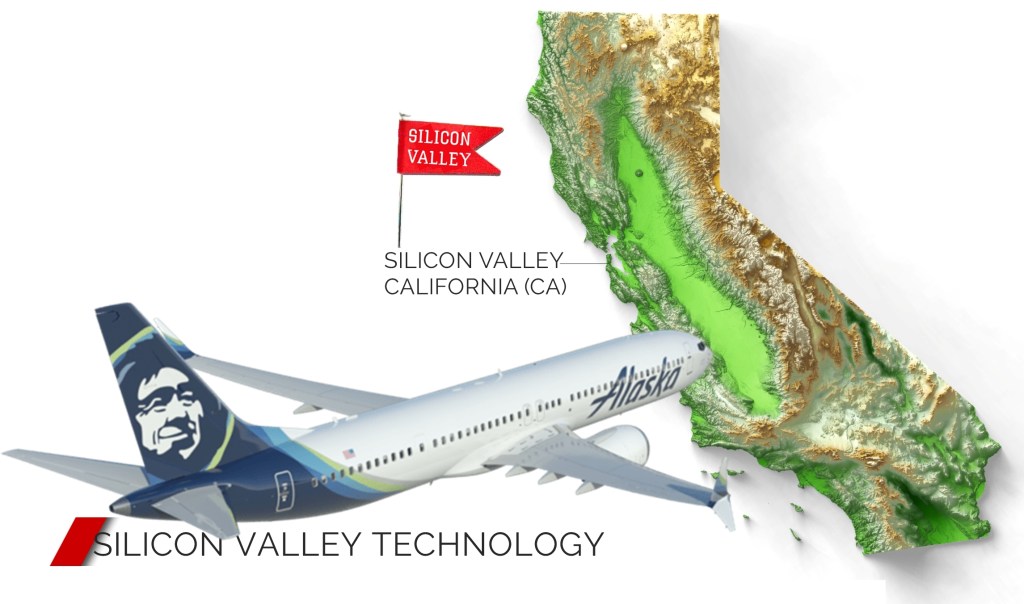
Alaska Airlines lanza tecnología en Silicon Valley Tecnología para optimización experiencia pasajeros
La aerolínea estadounidense Alaska Airlines está probando actualmente una nueva tecnología para optimizar la experiencia de los pasajeros en el Aeropuerto Internacional San José Mineta/SJC. Las nuevas tecnologías están enfocadas para avanzar en la forma en que las personas viajan. La aerolínea ha declarado que planea «modernizar los viajes desde reimaginar el vestíbulo hasta probar tecnología innovadora que agiliza la experiencia del aeropuerto hasta abordar su vuelo con biometría», expresó Alaska Airlines.
«A medida que hacemos crecer nuestra aerolínea y llevamos a más personas a más lugares, estamos buscando formas únicas de crear una experiencia de viaje perfecta para nuestros huéspedes. Estamos utilizando la tecnología para empoderar y equipar a nuestros empleados con las últimas herramientas para ofrecer el servicio más atento para nuestros huéspedes. California es el epicentro de la tecnología y el lugar perfecto para probar estas innovaciones», dijo Charu Jain, Vicepresidente Senior de Merchandising & Innovation.
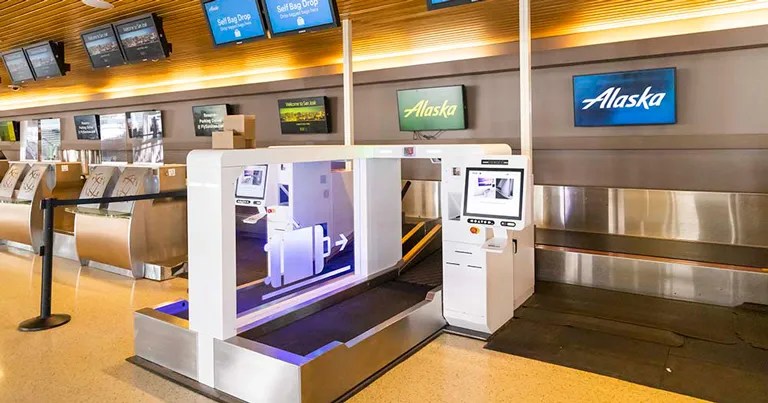
Alaska está introduciendo mesas equipadas con Apple iPad Pro que se pueden usar para escanear tarjetas de embarque, imprimir etiquetas de bolsas y bolsas de etiquetas. Como parte de la incubadora, la aerolínea está probando nueva tecnología en el Aeropuerto Internacional de San José Mineta (SJC), incluido un nuevo sistema de facturación y auto-entrega de equipaje que agilizará el proceso de facturación.
En el Aeropuerto San José Mineta/SJC, Alaska está introduciendo mesas equipadas con Apple iPad Pro que se pueden usar para escanear tarjetas de embarque, imprimir etiquetas de bolsas y bolsas de etiquetas. Para usar los iPads, los pasajeros deben escanear su tarjeta de embarque recibida al momento del check-in, luego imprimir su etiqueta de equipaje, y luego, una vez que su equipaje haya sido etiquetado, pueden dirigirse a la nueva estación de entrega de equipaje de Alaska para dejarlos. Se espera que la nueva mejora reduzca a la mitad el tiempo promedio de 8.5 minutos que pasan en el vestíbulo y brinde a los clientes más oportunidades para evitar áreas congestionadas.
Alaska también está permitiendo a los pasajeros registrarse para su vuelo utilizando la aplicación móvil o el sitio web de la aerolínea, donde también pueden pagar cualquier equipaje facturado y reservar comida para su vuelo. Los agentes de servicio al cliente también están equipados con iPad Mini para poder atender inmediatamente a los clientes en cualquier punto de contacto de Alaska. La aerolínea también ha presentado una nueva estación de entrega de equipaje en el Aeropuerto de San José. «Alaska fue la primera aerolínea en implementar quioscos de autoservicio en los aeropuertos en 2007, y esperamos ser los primeros en eliminarlos. Simplemente porque somos lo mejor posible cuando podemos conocer a los huéspedes donde están y poder cuidarlos en el momento en que ingresan a nuestro espacio», dijo Charu Jain.
La aerolínea utiliza actualmente tecnología biométrica para acelerar el proceso de embarque de vuelos internacionales desde SJC. «El embarque con tecnología biométrica utiliza el reconocimiento facial para verificar la identidad y acortar los procedimientos de seguridad para aquellos pasajeros que optan por los programas. Para los huéspedes que están preocupados por la seguridad, no retenemos ninguna imagen y ofrecemos a nuestros huéspedes la opción de optar por usar datos biométricos. Si bien nunca será obligatorio, creemos que es el futuro de los viajes», expresó Charu Jain. Sam Frost, Agente Principal de Servicio al Cliente de SJC, agregó: «Estoy emocionado de dar forma al futuro de la industria con nuestra nueva tecnología. En última instancia, hará que nuestros huéspedes se sientan más en control de su viaje y alineará nuestra experiencia de huésped con los espacios minoristas de líderes en la industria de la tecnología como Apple y Microsoft».
«El uso de tecnología emergente de Alaska Airlines para mejorar y agilizar la experiencia de los pasajeros en San José Mineta International proporcionará un tránsito más fluido de los pasajeros que llegan a SJC, y creará una puerta de entrada más acogedora a San José», dijo el Alcalde de San José, Sam Liccardo.
Alaska technology test Silicon Valley
Alaska Airlines launches technology in Silicon Valley Technology to optimize passenger experience
US carrier Alaska Airlines is currently testing new technology to optimize the passenger experience at San José Mineta/SJC International Airport. New technologies are focused to advance the way people travel. The airline has stated that it plans to «modernize travel from reimagining the lobby to testing innovative technology that streamlines the airport experience to boarding your flight with biometrics», Alaska Airlines said.
«As we grow our airline and fly more people to more places, we’re looking for unique ways to create a seamless travel experience for our guests. We’re using technology to empower and equip our employees with the latest tools to deliver the more attentive service for our guests. California is the epicenter of technology and the perfect place to test these innovations», said Charu Jain, Senior Vice President of Merchandising & Innovation.
Alaska is introducing tables equipped with the Apple iPad Pro that can be used to scan boarding passes, print bag tags and tag bags. As part of the incubator, the airline is testing new technology at San José Mineta International Airport (SJC), including a new check-in and self-delivery baggage system that will streamline the check-in process.
ALASKA CURRENTLY TESTING NEW PASSENGER EXPERIENCE TECHNOLOGY AT SAN JOSÉ MINETA AIRPORT/SJC
At the San José Mineta/SJC Airport, Alaska is introducing tables equipped with Apple iPad Pro that can be used to scan boarding passes, print bag tags and label bags. To use the iPads, passengers must scan their boarding pass received at check-in, then print their bag tag, and then, once their bag has been tagged, they can proceed to the new bag drop station. from Alaska to drop them off. The new enhancement is expected to cut the 8.5-minute average time spent in the lobby in half and give customers more opportunities to avoid congested areas.
Alaska is also allowing passengers to check in for their flight using the airline’s mobile app or website, where they can also pay for any checked bags and reserve food for their flight. Customer service agents are also equipped with iPad Mini so they can immediately serve customers at any point of contact in Alaska. The airline has also unveiled a new bag drop station at San José Airport. «Alaska was the first airline to implement self-service airport kiosks in 2007, and we hope to be the first to eliminate them. Simply because we are at our best when we can meet guests where they are and take care of them the moment they walk into our space», said Charu Jain.
The airline is currently using biometric technology to expedite the boarding process for international flights from SJC. «Biometric boarding uses facial recognition to verify identity and shorten security procedures for those passengers who opt in to the programs. For guests who are concerned about security, we do not retain any images and offer our guests the option of choosing to use biometrics. While it will never be mandatory, we believe it is the future of travel», said Charu Jain. Sam Frost, Senior Customer Service Agent at SJC, added, «I’m excited to shape the future of the industry with our new technology. Ultimately, it will make our guests feel more in control of their trip and align our experience with the retail spaces of technology industry leaders such as Apple and Microsoft«.
«Alaska Airlines’ use of emerging technology to enhance and streamline the passenger experience at San Jose Mineta International will provide a more seamless flow of passengers arriving at SJC, and create a more welcoming gateway to San Jose», he said. San Jose Mayor Sam Liccardo.
PUBLISHER: Airgways.com DBk: Alaskaair.com / Airgways.com AW-POST: 202203231407AR OWNERSHIP: Airgways Inc. A\W A I R G W A Y S ®
Aerolíneas y operadoras logran acuerdo despliegue de 5G
La Administración Federal de Aviación (FAA) de Estados Unidos ha anunciado un acuerdo con Verizon y AT&T para el despliegue de antenas de red celular 5G de manera que no interfieran con la operación aérea en aeropuertos en todo Estados Unidos. El despliegue de la Banda C 5G enfrentó a las operadoras de telefonía celular y a las aerolíneas de Estados Unidos, que argumentaron que la nueva red, que permite conexiones móviles sustancialmente más rápidas, ponía en riesgo la operación de instrumentos de vuelo como radio-altímetros, usados para determinar qué tan cerca o lejos está un avión del piso.
En medio de críticas de la industria aeronáutica, AT&T y Verizon lanzan la red 5G de Banda C. Las preocupaciones radican en la cercanía de la banda C 5G y la radio-frecunecia utilizada por los instrumentos de vuelo. Mientras la red 5G en la banda C opera entre los 3.7 y los 3.98 GHz, los instrumentos de vuelo funcionan entre los 4.2 y los 4.4 GHz, lo que provocó temores de posibles interferencias con efectos negativos. El acuerdo señala que las operadoras darán información más precisa a la FAA sobre la ubicación de las antenas 5G. Además, tendrán una mayor participación en el análisis de cómo la señal 5G puede interferir con instrumentos de aviación.
“La FAA usó estos datos para determinar que es posible mapear de manera segura y más precisa el tamaño y la forma de las áreas alrededor de los aeropuertos donde se mitigan las señales 5G, reduciendo las zonas donde los operadores inalámbricos posponen las activaciones de sus antenas. Esto permitirá a los proveedores inalámbricos encender más torres de manera segura a medida que implementan el nuevo servicio 5G en los principales mercados de los Estados Unidos», expresó la agencia de la FAA. Nick Ludlum, Director de Comunicación del grupo CTIA, que representa a empresas de telecomunicaciones, comentó que el acuerdo es una señal positiva: “Destaca el progreso notable de la industria de telecomunicaciones, la industria aérea, y de que la FAA y la FCC hacen todo lo posible para robustecer los servicios 5G y mantener seguros los vuelos”.
Agreement airlines and 5G technology
Airlines and operators reach 5G deployment agreement
The Federal Aviation Administration (FAA) of the United States has announced an agreement with Verizon and AT&T for the deployment of 5G cellular network antennas in a way that does not interfere with air operations at airports throughout the United States. The deployment of Band C 5G confronted cell phone operators and airlines in the United States, who argued that the new network, which allows substantially faster mobile connections, put at risk the operation of flight instruments such as radio altimeters, used to determine how close or far an aircraft is from the ground.
Amid criticism from the airline industry, AT&T and Verizon launch C-Band 5G network. Concerns lie in the closeness of C-Band 5G and the radio frequency used by flight instruments. While the 5G network in the C band operates between 3.7 and 3.98 GHz, the flight instruments operate between 4.2 and 4.4 GHz, which raised fears of possible interference with negative effects. The agreement indicates that the operators will give more precise information to the FAA about the location of the 5G antennas. In addition, they will have a greater participation in the analysis of how the 5G signal can interfere with aviation instruments.
“The FAA used this data to determine that it is possible to safely and more accurately map the size and shape of areas around airports where 5G signals are mitigated, reducing the areas where wireless carriers postpone activations of their antennas. This will allow wireless providers to safely power up more towers as they roll out new 5G service in major markets across the United States», said the FAA agency. Nick Ludlum, Director of Communications for the CTIA group, which represents telecommunications companies, commented that the agreement is a positive sign: “It highlights the remarkable progress of the telecommunications industry, the airline industry, and that the FAA and the FCC do everything possible to strengthen 5G services and keep flights safe”.
PUBLISHER: Airgways.com DBk: Faa.gov / Verizon.com / Att.com / Airgways.com AW-POST: 202201291133AR OWNERSHIP: Airgways Inc. A\W A I R G W A Y S ®



























 airgways.com