Airbus Canada es el nuevo nombre oficial de la compañía que desarrolla y ensambla el A220
Airbus Canada® es el nombre oficial de la nueva entidad que desarrollará, ensamblará y comercializará al avión regional A220. La corporación anteriormente denominada CSALP (C Series Aircraft Limited Partnership) refleja el interés mayoritario de Airbus en el programa A220, según el comunicado de prensa de Airbus.
La sede de antiguo CSeries pasará a denominarse Airbus Canadá Limited Partnership celebrando la apertura hoy 1 Junio 2019, como se anunció en Marzo 2019. El nuevo nombre reflejará la participación mayoritaria de Airbus en la asociación se ha formalizado el 1 Julio 2018. La organización adoptará el logotipo de Airbus como el único símbolo de su identidad visual. En las próximas semanas, el nuevo nombre se adoptará formalmente y se adjuntará a la documentación, así como a los artículos de marca de la empresa. Los logotipos de Airbus y Bombardier continuarán mostrándose uno al lado del otro en la fachada de la planta de ensamblaje de Mirabel, reflejando las actividades de producción de este sitio, incluido el montaje de familias de aviones Airbus A220 y Bombardier CRJ.
El proceso de absorción del Programa A220 bajo la marca Airbus, que se había iniciado el 1 Julio 2018 cuando el fabricante europeo adquirió el 50,01% de CSALP a Bombardier. El constructor canadiense conserva una participación accionaria del 31% e Investissement Québec 19%.
Airbus Canada Limited Partnership, con sede en Mirabel, Quebec, es responsable del desarrollo y montaje de los aviones de un solo pasillo Airbus A320. La entidad es propiedad mayoritaria de Airbus SE, que incluye Bombardier Inc. e Investissement Québec (como agente del Gobierno de Quebec). La Corporación emplea a casi 2.200 personas en su centro de producción Mirabel. El segundo sitio de ensamblaje de la A220 en Mobile, Alabama, comenzará a producir aviones para el mercado estadounidense en el tercer trimestre de 2019.
Airbus Canada is born
Airbus Canada is the new official name of the company that develops and assembles the A220
Airbus Canada® is the official name of the new entity that will develop, assemble and market the A220 regional aircraft. The corporation previously named CSALP (C Series Aircraft Limited Partnership) reflects the majority interest of Airbus in the A220 program, according to the Airbus press release.
The former CSeries headquarters will be renamed Airbus Canada Limited Partnership, celebrating the opening today, June 1, 2019, as announced in March 2019. The new name will reflect Airbus’s majority stake in the association, which was formalized on July 1, 2018. The organization will adopt the Airbus logo as the only symbol of its visual identity. In the coming weeks, the new name will be formally adopted and attached to the documentation, as well as to the company’s branded items. The Airbus and Bombardier logos will continue to be displayed side by side on the facade of the Mirabel assembly plant, reflecting the production activities of this site, including the assembly of Airbus A220 and Bombardier CRJ aircraft families.
The process of absorption of the A220 Program under the Airbus brand, which had begun on July 1, 2018 when the European manufacturer acquired 50.01% of CSALP from Bombardier. The Canadian constructor retains a shareholding of 31% and Investissement Québec 19%.
Airbus Canada Limited Partnership, based in Mirabel, Quebec, is responsible for the development and assembly of the single-aisle Airbus A320 aircraft. The entity is majority owned by Airbus SE, which includes Bombardier Inc. and Investissement Québec (as an agent of the Government of Quebec). The Corporation employs almost 2,200 people in its Mirabel production center. The second assembly site of the A220 in Mobile, Alabama, will begin producing aircraft for the US market in the third quarter of 2019.
Né Airbus Canada
Airbus Canada est le nouveau nom officiel de la société qui développe et assemble la A220
Airbus Canada® est le nom officiel de la nouvelle entité qui développera, assemblera et commercialisera l’avion régional A220. La société précédemment nommée CSALP (société en commandite C Series Aircraft Limited) reflète la participation majoritaire d’Airbus dans le programme A220, selon son communiqué de presse.
L’ancien siège social de CSeries sera renommé Société en nom collectif Airbus Canada Limited Partnership. L’ouverture annoncée aujourd’hui, le 1er juin 2019, a été annoncée en mars 2019. Le nouveau nom reflétera la participation majoritaire d’Airbus dans la société, officialisée le 1er juillet 2018. L’organisation adoptera le logo Airbus, seul symbole de son identité visuelle. Dans les semaines à venir, le nouveau nom sera officiellement adopté et joint à la documentation, ainsi qu’aux éléments de la marque. Les logos Airbus et Bombardier continueront d’apparaître côte à côte sur la façade de l’usine d’assemblage de Mirabel, reflétant les activités de production de ce site, y compris l’assemblage des familles d’avions Airbus A220 et Bombardier CRJ.
Le processus d’absorption du programme A220 sous la marque Airbus avait débuté le 1er juillet 2018 lorsque le fabricant européen a acquis 50,01% de CSALP de Bombardier. Le constructeur canadien conserve une participation de 31% et Investissement Québec de 19%.
La société en commandite Airbus Canada, située à Mirabel (Québec), est responsable du développement et de l’assemblage de l’avion A320 à couloir unique. L’entité est détenue majoritairement par Airbus SE, qui comprend Bombardier Inc. et Investissement Québec (en tant que mandataire du gouvernement du Québec). La Société emploie près de 2 200 personnes dans son centre de production de Mirabel. Le deuxième site d’assemblage de l’A220 à Mobile, en Alabama, commencera à produire des avions pour le marché américain à partir du troisième trimestre de 2019. A \ W
Ξ A I R G W A Y S Ξ
SOURCE: Airgways.com
DBk: Airbus.com / Airgways.com
AW-POST: 201906011648AR
El Airbus A220 recibirá la certificación de aeronavegabilidad Rosaviatsiya de Federación Rusia
El Airbus A220 se encuentra en proceso de certificación en Rusia bajo la dirección de Airbus, su fabricante de motores Pratt & Whitney y la autoridad de aviación de Rusia, Rosaviatsiya.
La primer aeronave en certificarse es el modelo Airbus A220-300. La Agencia Federal de Transporte Aéreo Rosaviatsiya ha confirmado a los medios de comunicación que recibió la solicitud y que el Registro de Aviación de la Federación Rusa y los centros de certificación acreditados continúan con sus respectivas funciones de acuerdo con el calendario designado. La certificación del motor PW1500G, que impulsa el A220, también se completará con una solicitud de Pratt & Whitney.
El debut del A220 en el mercado ruso fue posible gracias a un acuerdo técnico para el reconocimiento mutuo de la validez de las aprobaciones de certificación de aeronaves, acordado por Rosaviatsiya y Transport Canada Civil Aviation en Enero 2019. «Este acuerdo técnico hace posible que las autoridades de aviación rusas y canadienses validen los documentos de aprobación en las aeronaves, regula las actividades posteriores a la certificación y las directivas de aeronavegabilidad», afirmó Rosaviatsiya.
Mercado en Rusia
A partir de Mayo 2019, Airbus reportó que el atraso del A220 había superado las 530 unidades. aún así, Airbus predice un pronóstico anual de demanda de aviones de fuselaje estrecho con 100 asientos en el mercado incluyendo a Rusia que podrían alcanzar los 1.000 ejemplares en los próximos 20 años. «Lógicamente, una parte de esta demanda será cubierta por el A220. Confiamos en que esta familia de aviones pueda ser de interés para los clientes rusos», dijo Airbus.
Airbus se muestra confiado que el nuevo jet regional A220 ingrese en el mercado de las aerolíneas rusas y predice que la demanda en la región para aviones de fuselaje estrecho podría ser significativa. “Esperamos tener la certificación A220 en Rusia a mediados de año. Estamos en estrecha cooperación con las autoridades de aviación rusas que nos brindan un apoyo total en todos los asuntos de certificación”, dijo un representante de Airbus.
Airbus A220 will receive certification from Russia
The Airbus A220 will receive the certification of airworthiness Rosaviatsiya of Russian Federation
The Airbus A220 is in the process of certification in Russia under the direction of Airbus, its engine manufacturer Pratt & Whitney and the Russian aviation authority Rosaviatsiya.
The first aircraft to be certified is the Airbus A220-300 model. The Federal Air Transport Agency Rosaviatsiya has confirmed to the media that it received the request and that the Aviation Register of the Russian Federation and the accredited certification centers continue with their respective functions in accordance with the designated calendar. The PW1500G engine certification, which drives the A220, will also be completed with a Pratt & Whitney application.
The A220’s debut on the Russian market was made possible by a technical agreement for the mutual recognition of the validity of aircraft certification approvals, agreed by Rosaviatsiya and Transport Canada Civil Aviation in January 2019. «This technical agreement makes it possible for Russian and Canadian aviation authorities validate the approval documents on aircraft, regulate post-certification activities and airworthiness directives», Rosaviatsiya said.
Market in Russia
As of May 2019, Airbus reported that the delay of the A220 had exceeded 530 units. even so, Airbus predicts an annual demand forecast for narrow-body aircraft with 100 seats in the market including Russia that could reach 1,000 units in the next 20 years. «Logically, part of this demand will be covered by the A220. We are confident that this family of aircraft can be of interest to Russian customers», Airbus said.
Airbus is confident that the new A220 regional jet will enter the Russian airline market and predicts that demand in the region for narrow-body aircraft could be significant. «We hope to have A220 certification in Russia by mid-year. We are in close cooperation with the Russian aviation authorities that give us full support in all certification matters», said an Airbus representative. A \ W
Airbus A220 получит сертификацию из России
Аэробус А220 получит сертификат летной годности Росавиации РФ
Airbus A220 проходит сертификацию в России под руководством Airbus, его производителя двигателей Pratt & Whitney и российского авиационного управления Росавиация.
Первый сертифицированный самолет – модель Аirbus A220-300. Федеральное агентство воздушного транспорта Росавиация подтвердило средствам массовой информации, что оно получило запрос и что Авиационный регистр Российской Федерации и аккредитованные сертификационные центры продолжают выполнять свои соответствующие функции в соответствии с назначенным календарем. Сертификация двигателя PW1500G, которая приводит в движение A220, также будет дополнена заявкой Pratt & Whitney.
Дебют A220 на российском рынке стал возможен благодаря техническому соглашению о взаимном признании действительности сертификатов сертификации воздушных судов, согласованному Росавиацией и Транспортной канадской гражданской авиацией в январе 2019 года. «Это техническое соглашение делает возможным Российские и канадские авиационные власти утверждают документы об одобрении воздушных судов, регулируют деятельность после сертификации и директивы по летной годности», сказали в Росавиации.
Рынок в России
По состоянию на май 2019 года Airbus сообщил, что задержка A220 превысила 530 единиц. несмотря на это, Airbus прогнозирует годовой прогноз спроса на узкофюзеляжные самолеты со 100 местами на рынке, включая Россию, который может достичь 1000 единиц в течение следующих 20 лет. «Логически, часть этого спроса будет покрыта A220. Мы уверены, что это семейство самолетов может быть интересным для российских клиентов», сказал Airbus.
Airbus уверен, что новый региональный самолет A220 появится на российском рынке авиаперевозок, и прогнозирует, что спрос в регионе на узкофюзеляжные самолеты может быть значительным. «Мы надеемся получить сертификацию A220 в России к середине года. Мы тесно сотрудничаем с российскими авиационными властями, которые оказывают нам полную поддержку во всех вопросах сертификации», сказал представитель Airbus. A \ W
Ξ A I R G W A Y S Ξ
SOURCE: Airgways.com
DBk: Airbus.com / Government.ru/en/department/74 / Favt.ru / Fliegerfaust.com / Airgways.com
AW-POST: 201906011548AR
Airbus emite una advertencia sobre la escalada de la disputa entre Estados Unidos y la UE
Airbus emitió una advertencia sobre cualquier escalada de la disputa sobre los subsidios aeronáuticos entre los Estados Unidos y la Unión Europea, y dijo que las tarifas propuestas de tit-to-tat afectarán a la cadena de suministro y al consumidor. Los Estados Unidos y la UE han amenazado con imponer aranceles por valor de miles de millones de dólares en productos que incluyen aeronaves, el último paso en una larga disputa transatlántica en la Organización Mundial de Comercio (WTO).
El Director Comercial de Airbus, Christian Scherer, dijo que las tarifas propuestas “desafían la lógica económica” y dicen que terminarán perjudicando al consumidor. “Lo que sucedería de inmediato sería una represalia, el aumento de las barreras comerciales, el aumento del precio del avión, lo que significa que las aerolíneas tienen costos más altos que luego pasan al consumidor y luego todo se ralentiza”.
La cadena de suministro predominantemente estadounidense de la compañía se vería afectada por el efecto de las tarifas, con aproximadamente el 40% de todas las adquisiciones relacionadas con aeronaves provenientes del Estados Unidos. El mes pasado, el presidente de Estados Unidos, Trump, dijo que su gobierno seguiría adelante con los aranceles para bienes por valor de US$ 11 mil millones, y la United States Trade Representative (USTR) alegó que los subsidios otorgados por la Unión Europea a Airbus han afectado negativamente a Estados Unidos.
Airbus ha estado pidiendo que se ponga fin a la larga disputa, diciendo que la escalada creará una situación de pérdida a ambos lado del Atlántico, tanto para Airbus como para Boeing. “Este reciente movimiento de nuestros colegas en Estados Unidos requiere preocupación, y nuevamente no solo para Airbus, o Airbus y Boeing, sino que pueden estar en una posición de perder-perder si esto pasa, sino para todo el ecosistema, toda la cadena de suministro, en gran parte estadounidense, y el consumidor en general”, dijo Scherer.
Brexit
La próxima salida del Reino Unido de la Unión Europea, Scherer dice que Airbus puede resistir el Brexit, pero tiene sus contingencias en preparación para los cambios en las aduanas y la regulación. “Lo que eso significa es que tenemos que anticipar que, tal vez hacer algunas reservas de reserva, tal vez hacer arreglos para pre-posicionar las piezas, el subconjunto, por lo que no nos afecta una posible desaceleración en el tráfico de mercancías o personas”. El Brexit crea una nueva barrera al comercio, generará mayores costos a través del negocio y su ecosistema.
Airbus warns about subsidies dispute
Airbus issues a warning about the escalation of the dispute between the United States and the EU
Airbus issued a warning about any escalation of the dispute over aeronautical subsidies between the United States and the European Union, and said the proposed tit-to-tat tariffs will affect the supply chain and the consumer. The United States and the EU have threatened to impose tariffs worth billions of dollars on products that include aircraft, the latest step in a long transatlantic dispute at the World Trade Organization (WTO).
The Commercial Director of Airbus, Christian Scherer, said that the proposed tariffs «defy the economic logic» and say that they will end up harming the consumer. «What would happen immediately would be retaliation, the increase of trade barriers, the increase in the price of the plane, which means that airlines have higher costs that then pass to the consumer and then everything slows down».
The company’s predominantly US supply chain would be affected by the effect of tariffs, with approximately 40% of all acquisitions related to aircraft from the United States. Last month, the president of the United States, Trump, said his government would go ahead with tariffs for goods worth US$ 11 billion, and the United States Trade Representative (USTR) alleged that the subsidies granted by the European Union to Airbus have negatively affected the United States.
Airbus has been calling for an end to the long dispute, saying that the escalation will create a loss situation on both sides of the Atlantic, both for Airbus and for Boeing. «This recent movement of our colleagues in the United States requires concern, and again not only for Airbus, or Airbus and Boeing, but may be in a lose-lose position if this happens, but for the entire ecosystem, the whole chain of supply. , largely American, and the consumer in general», said Scherer.
Brexit
The next UK exit from the European Union, Scherer says that Airbus can withstand Brexit, but has its contingencies in preparation for changes in customs and regulation. «What that means is that we have to anticipate that, maybe make some reservation reservations, maybe make arrangements to pre-position the parts, the subset, so that we do not affect a possible deceleration in the traffic of goods or people». The Brexit creates a new barrier to trade, will generate higher costs through the business and its ecosystem. A \ W
Ξ A I R G W A Y S Ξ
SOURCE: Airgways.com
DBk: Airbus.com / Wto.org / Ustr.gov / Dma.org.uk
AW-POST: 201906011432AR
La empresa Embraer inicia proceso de ensamblaje del la línea E175-E2
Embraer ha comenzado la construcción del primer prototipo de la nueva generación E175-E2 (Etapa 2). El nuevo avión regional es una aeronave más económica que la anterior versión, siendo un poco más largo que el actual Embraer 175, con una configuración estándar entre ochenta a noventa pasajeros. El Embraer 175-E2 es el más pequeño de la familia del Programa E2, que además consta de las variantes más grandes: E190-E2 y E195-E2.
Pedidos pendientes
Embraer recibió inicialmente órdenes para el E175-E2 de las aerolíneas regionales SkyWest Airlines y Trans States Airlines (TSA) ambas de Estados Unidos. La orden de SkyWest ha desaparecido de los libros y ah sido cancelada y es cuestionable si Trans States continuará con las órdenes solicitadas para sus E175-E2.
Las Cláusulas de Alcance de Estados Unidos permitirían a este tipo de aeronaves ser rentadas por las aerolíneas regionales, lo que le permitiría al grupo Boeing-Embraer continuar en el segmento de tercer nivel para vuelos domésticos.
El E175-E2 es un sucesor natural del E175, de los cuales más de 750 se vendieron en todo el mundo, siendo KLM Cityhopper el usuario entusiasta de ese tipo en Europa. Los E190-E2/E195-E2 son versiones que se venden razonablemente bien, el interés en el E175-E2 aún no tiene una cartera de pedidos definido, pero Embraer ha decidido lanzar la línea de producción para alcanzar a corto plazo sus primeros clientes.
Embraer starts assembly E175-E2
The Embraer company starts assembly process of the E175-E2 line
Embraer has begun the construction of the first prototype of the new generation E175-E2 (Stage 2). The new regional aircraft is a cheaper aircraft than the previous version, being a little longer than the current Embraer 175, with a standard configuration between eighty and ninety passengers. The Embraer 175-E2 is the smallest of the E2 Program family, which also consists of the largest variants: E190-E2 and E195-E2.
Pending orders
Embraer initially received orders for the E175-E2 from regional airlines SkyWest Airlines and Trans States Airlines (TSA) both from the United States. The SkyWest order has disappeared from the books and has been canceled and it is questionable if Trans States will continue with the requested orders for their E175-E2.
The United States Scope Clauses would allow this type of aircraft to be rented by regional airlines, which would allow the Boeing-Embraer group to continue in the third level segment for domestic flights.
The E175-E2 is a natural successor to the E175, of which more than 750 were sold worldwide, with KLM Cityhopper being the enthusiastic user of that type in Europe. The E190-E2 / E195-E2 are versions that sell reasonably well, the interest in the E175-E2 does not yet have a defined order book, but Embraer has decided to launch the production line to reach short-term its first customers. A \ W
Embraer inicia montagem E175-E2
Empresa Embraer inicia processo de montagem da linha E175-E2
A Embraer iniciou a construção do primeiro protótipo da nova geração E175-E2 (Etapa 2). O novo avião regional é uma aeronave mais econômica do que a versão anterior, sendo ligeiramente mais longo do que o atual Embraer 175, com uma configuração padrão entre oitenta a noventa passageiros. O Embraer 175-E2 é o menor da família de programas E2, que também é composto pelas maiores variantes: E190-E2 e E195-E2.
Pedidos pendentes
Embraer inicialmente recebeu ordens para E175-E2 companhia aérea regional SkyWest Airlines e Trans States Airlines (TSA), ambos dos Estados Unidos. fim SkyWest desapareceu dos livros e ah foi cancelada e é questionável se Trans States continuar com as ordens solicitadas pela sua E175-E2.
As Cláusulas de Escopo dos Estados Unidos permitiriam que esse tipo de aeronave fosse alugado por companhias aéreas regionais, o que permitiria ao grupo Boeing-Embraer continuar no segmento de terceiro nível para voos domésticos.
O E175-E2 é um sucessor natural do E175, dos quais mais de 750 foram vendidos em todo o mundo, sendo o KLM Cityhopper o usuário entusiasta desse tipo na Europa. O E190-E2 / E195-E2 são versões vendeu razoavelmente bem, o interesse na E175-E2 não tem uma carteira de encomendas definidos, mas a Embraer decidiu lançar a linha de produção para alcançar no curto prazo os seus primeiros clientes. A \ W
Ξ A I R G W A Y S Ξ
SOURCE: Airgways.com
DBk: Embraer.com / Airgways.com
AW-POST: 201905311240AR
Airbus inauguró sus nuevas oficinas en Buenos Aires, con la intención de “fortalecer su presencia en Latinoamérica y reafirmar su compromiso con el país”, aseguró Alberto Robles, Jefe de Estrategia de Airbus Internacional de Latinoamérica. Durante el acto de apertura de las nuevas oficinas, el directivo señaló que “esta nueva presencia en la Argentina representa un paso natural para desarrollar aún más las actividades de Airbus en la región. Hay grandes oportunidades para Airbus en América Latina y abrir una oficina en Buenos Aires constituye una medida clave para consolidar nuestros productos en la región, además de seguir dando un apoyo de proximidad a los clientes que operan nuestros productos en el país”.
Airbus está presente desde hace más de 40 años en el país y en 1994 Aerolíneas Argentinas se convirtió en cliente con el A310-300, y hoy la línea de bandera opera una flota de largo alcance compuesta por diez A330 y dos A340. Además, la firma estableció un centro de capacitación de personal y mantenimiento de aviones en el país con Aerolíneas Argentinas, para responder la demanda de su cliente y del mercado.
Con una participación de mercado del 35% de los aviones de pasajeros en servicio, Airbus también está presente en el país a través de Latam Airlines Argentina con sus aviones A320, y desde hace poco tiempo con la aerolínea JetSmart Airlines Argentina, que cuenta con una flota de aeronaves de la familia A320 nuevos.
Paralelamente, los helicópteros de Airbus representan un tercio de la flota del país y están en servicio en las Fuerzas Armadas y otros organismos públicos como la Policía Federal, Gendarmería, Prefectura Naval y varias provincias.
También dispone de un centro de mantenimiento que optimiza la operatividad y disponibilidad de las aeronaves, en tanto que Airbus Defence and Space mantiene desde 2017 un acuerdo con la Fábrica Argentina de Aviones “Brigadier San Martín” (FadeA), para sostener la flota de aeronaves Airbus C212 del Ejército y de la Prefectura Naval Argentina.
Airbus with an office in Argentina
Airbus SE inaugurated a new office in Argentina
Airbus opened its new offices in Buenos Aires, with the intention of «strengthening its presence in Latin America and reaffirming its commitment to the country», said Alberto Robles, Head of Strategy at Airbus International in Latin America. During the opening ceremony of the new offices, the executive said that «this new presence in Argentina represents a natural step to further develop Airbus activities in the region. There are great opportunities for Airbus in Latin America and opening an office in Buenos Aires is a key measure to consolidate our products in the region, in addition to continuing to provide close support to customers that operate our products in the country».
OFFICE OF AIRBUS HEADQUARTERS IN BUENOS AIRES, ARGENTINA
Airbus has been present in the country for more than 40 years and in 1994 Aerolíneas Argentinas became a customer with the A310-300, and today the flag line operates a long-range fleet composed of ten A330 and two A340. In addition, the firm established a training center for personnel and aircraft maintenance in the country with Aerolineas Argentinas, to respond to the demand of its client and the market.
With a market share of 35% of passenger aircraft in service, Airbus is also present in the country through Latam with its A320 aircraft, and recently with the JetSmart airline, which has a fleet of aircraft the A320 family new.
In parallel, Airbus helicopters represent a third of the country’s fleet and are in service in the Armed Forces and other public agencies such as the Federal Police, Gendarmerie, Naval Prefecture and several provinces.
It also has a maintenance center that optimizes the operation and availability of aircraft, while Airbus Defense and Space has maintained an agreement with the Argentine Aircraft Factory «Brigadier San Martín» (FadeA) since 2017 to support the aircraft fleet. Airbus C212 of the Army and of the Argentine Naval Prefecture. A \ W
Ξ A I R G W A Y S Ξ
SOURCE: Airgways.com
DBk: Airbus.com / Airgways.com
AW-POST: 201905291819AR
Airbus celebra el 50º Aniversario del constructor aeronáutico europeo
Airbus Group S.E. (Societas Europaea) se preparó el Miércoles 29 Mayo 2019 para celebrar su 50º Aniversario. La fecha es importante para el fabricante europeo, ya que fue el día 29 Mayo 1969 en el que se firmó el acuerdo de asociación original con Airbus en el Salón Aeronáutico de París en Le Bourget, que marca el lanzamiento del Programa A300B. La compañía actual es el producto de la consolidación en la industria aeroespacial europea que se remonta a la formación del consorcio Airbus Industrie GIE el 18 Diciembre 1970, hace 48 años.
Renace aviación europea
El fabricante de aeronaves europeo se lanzó en una reunión entre los ministros de Francia y Alemania occidental el 29 Mayo 1969, en un intento por reactivar las industrias de aviones en dificultades y sellar la reconciliación de posguerra. Después de luchar para superar la dominación estadounidense del mercado comercial con su avión A300 de doble pasillo, que voló por primera vez en 1972, Airbus finalmente se convirtió en un símbolo mundialmente reconocido de la ambición europea, a pesar de la lucha crónica.
Pero a medida que cumple 50 años, Airbus se ve envuelto en una búsqueda de conciencia y una agitación de la administración en medio de una investigación de corrupción en curso y un impulso de austeridad que ha visto reducido el presupuesto para las celebraciones de cumpleaños y beneficios como la cena ejecutiva reducida.
Airbus, sus 50 años
Airbus invitó al personal de Toulouse a una celebración especial hoy Miércoles 29 Mayo 2019 con un flypast privado para el personal en su base de Toulouse y una publicidad discreta cuando una nueva administración busca una ruptura con el pasado turbulento y teatral de la compañía. El equipo de exhibición de Patrouille de France vuela por las fábricas y la sede central del grupo.
Sin embargo, los empleados dijeron que los planes para una gran campaña de relaciones públicas se han reducido y el personal alemán está siendo invitado a una celebración más íntima. Esto contrasta claramente con una abundante reunión de jefes de estado y cientos de medios en 2005 para marcar al avión más grande del mundo, el A380, que ahora se está reduciendo debido a la débil demanda.
El énfasis ahora está enfocado en el Programa A350 XWB, una aeronave bimotor más ágil, como así en el Programa A320 narrowbodies, que se espera obtenga una nueva variante en el Salón Aeronáutico de París 2019 del próximo mes.
Nueva estructura
El guiño discreto a la herencia de Airbus difiere de un evento de relaciones públicas administrado por el escenario en Toulouse hace una semana, que se centró en la tecnología y los datos futuros frente a 130 periodistas y blogueros. El Presidente Ejecutivo, Guillaume Faury, quien asumió su cargo el mes pasado, rindió homenaje a las generaciones pasadas de empleados de Airbus. «Es justo decir que muchas personas dudaron de nuestras posibilidades de éxito, pero aquí estamos 50 años y 12.000 aviones comerciales», dijo a los periodistas.
Pero los observadores dicen que la silenciosa ceremonia refleja una convicción entre los nuevos líderes de Airbus de que la fecha más importante fue 2012, cuando un sistema turbulento de intercambio de poder entre gobiernos y propietarios industriales dio paso a una estructura más dirigida por el mercado. Los analistas dicen que los esfuerzos por normalizar a la compañía apuntalan el alza de los precios de las acciones, pero algunos que presenciaron su crecimiento lamentan la pérdida de la pasión, ya que los problemas industriales persisten y las ventas fallan, enmascaradas por el momento en una crisis en el rival Boeing.
Airbus ha superado el escepticismo inicial de las aerolíneas, la confusión de los accionistas y las batallas de precios para compartir el control del mercado anual de aviones de US$ 150 mil millones con el rival Boeing, asegurando unos 130.000 empleos. “La idea era unir la experiencia en un solo proyecto. Tuvieron que luchar contra los impulsos reticentes de los gobiernos nacionales que aún no estaban seguros de querer cooperar políticamente», dijo Nicola Clark, autora de» Airbus: Los primeros 50 años».
«La relación franco-alemana finalmente se convirtió en el núcleo de Airbus», dijo. Gran Bretaña y España también se unieron desde el principio. Algunos expertos dicen que la relación de Gran Bretaña con Airbus, con inversiones y retiros sucesivos, refleja su incómoda postura hacia el continente mientras se prepara para salir de la Unión Europea.
Sus familias de aviones comerciales actualmente en producción son A220, A320, A330, A350 XWB y A380. El próximo Salón Aeronáutico de París Air Show 2019 permitirá renovar el futuro del consorcio europeo con una nueva variante de la familia A320NEO.
Airbus se ha diversificado enormemente en el mundo. Airbus tiene varias líneas de montaje finales para diferentes modelos y mercados: Toulouse, Francia A320/A330/A350/A380; Hamburgo, Alemania A318/A319/A320/A321; Sevilla, España (A400M); Tianjin, China A319/A320; Mobile, Alabama, Estados Unidos A319/A320/A321; Mirabel, Canadá A220.
Guillaume Faury, CEO de Airbus dijo: “La historia de Airbus es de ambición y progreso, y ha sido un escaparate de la integración europea. Durante cinco décadas, hemos reunido empresas de aviación civil y de defensa de todo el continente. Durante 50 años, hemos sido pioneros en muchas primicias a través de nuestra pasión e innovación, transformando la industria y ayudando a que la sociedad avance. Airbus es una historia de increíbles hombres y mujeres, una historia de grandes logros en el pasado y, sobre todo, en el futuro».
Ξ Airbus 50th Anniversaries Ξ
Airbus celebrates the 50th Anniversary of the European aeronautical constructor
Airbus Group S.E. (Societas Europaea) was prepared on Wednesday 29 May 2019 to celebrate its 50th Anniversary. The date is important for the European manufacturer, since it was on May 29, 1969 when the original partnership agreement was signed with Airbus at the Paris Air Show in Le Bourget, which marks the launch of the A300B Program. The current company is the product of consolidation in the European aerospace industry that dates back to the formation of the Airbus Industrie GIE consortium on December 18, 1970, 48 years ago.
Renace European aviation
The European aircraft manufacturer was launched at a meeting between the ministers of France and West Germany on May 29, 1969, in an attempt to revive troubled aircraft industries and seal post-war reconciliation. After struggling to overcome the US domination of the commercial market with its double-aisle A300 aircraft, which first flew in 1972, Airbus eventually became a globally recognized symbol of European ambition, despite the chronic struggle.
But as he turns 50, Airbus is embroiled in a search for conscience and turmoil by the administration amid an ongoing corruption investigation and austerity drive that has seen the budget reduced for birthday celebrations and benefits. as the executive dinner reduced.
Airbus, 50 years old
Airbus invited the staff of Toulouse to a special celebration today Wednesday 29 May 2019 with a private flypast for the staff at its base in Toulouse and a discreet publicity when a new administration seeks a break with the turbulent and theatrical past of the company. The Patrouille de France exhibition team flies through the factories and the group’s headquarters.
However, employees said plans for a large public relations campaign have been reduced and German staff is being invited to a more intimate celebration. This contrasts sharply with a plentiful meeting of heads of state and hundreds of media in 2005 to mark the world’s largest aircraft, the A380, which is now shrinking due to weak demand.
The emphasis is now focused on the A350 XWB Program, a more agile twin-engine aircraft, as well as the A320 narrowbodies Program, which is expected to obtain a new variant at the Paris Air Show 2019 next month.
New structure
The discreet nod to the Airbus heritage differs from a public relations event managed by the Toulouse stage a week ago, which focused on technology and future data in front of 130 journalists and bloggers. Executive President Guillaume Faury, who took office last month, paid tribute to past generations of Airbus employees. «It is fair to say that many people doubted our chances of success, but here we are 50 years and 12,000 commercial aircraft», he told reporters.
But observers say the silent ceremony reflects a conviction among Airbus’ new leaders that the most important date was 2012, when a turbulent system of power sharing between governments and industrial owners gave way to a more market-driven structure. Analysts say that efforts to normalize the company are propping up the rise in share prices, but some who witnessed its growth lament the loss of passion, as industrial problems persist and sales fail, masked for the time being. a crisis in the rival Boeing.
Airbus has overcome initial airline skepticism, shareholder confusion and price battles to share control of the $ 150 billion annual aircraft market with rival Boeing, securing some 130,000 jobs. «The idea was to unite the experience in a single project. They had to fight against the reticent impulses of the national governments that were not yet sure of wanting to cooperate politically», said Nicola Clark, author of» Airbus: The first 50 years».
«The Franco-German relationship finally became the core of Airbus», he said. Britain and Spain also joined from the start. Some experts say that Britain’s relationship with Airbus, with investments and successive withdrawals, reflects its uncomfortable position on the continent as it prepares to leave the European Union.
Their families of commercial aircraft currently in production are A220, A320, A330, A350 XWB and A380. The next Paris Air Show 2019 Air Show will allow the future of the European consortium to be renewed with a new variant of the A320NEO family.
Airbus has diversified enormously in the world. Airbus has several final assembly lines for different models and markets: Toulouse, France A320/A330/A350/A380; Hamburg, Germany A318/A319/A320/A321; Seville, Spain A400M; Tianjin, China A319/A320; Mobile, Alabama, United States A319/A320/A321; Mirabel, Canada A220.
Guillaume Faury, CEO of Airbus said: «The history of Airbus is one of ambition and progress, and it has been a showcase for European integration. For five decades, we have gathered civil aviation and defense companies from all over the continent. For 50 years, we have been pioneers in many firsts through our passion and innovation, transforming the industry and helping society advance. Airbus is a story of incredible men and women, a story of great achievements in the past and, above all, in the future». A \ W
Ξ 50ème anniversaire d’Airbus Ξ
Airbus célèbre le 50e anniversaire du constructeur aéronautique européen
Airbus Group S.E. (Societas Europaea) était préparée le mercredi 29 mai 2019 pour célébrer son 50e anniversaire. La date est importante pour le constructeur européen, car c’était le 29 mai 1969, date de la signature de l’accord de partenariat initial avec Airbus lors du salon du Bourget au Bourget, qui marque le lancement du programme A300B. La société actuelle est le produit de la consolidation de l’industrie aérospatiale européenne qui remonte à la formation du consortium Airbus Industrie GIE le 18 décembre 1970, il ya 48 ans.
Renace aviation européenne
L’avionneur européen a été lancé lors d’une réunion des ministres de la France et de l’Allemagne de l’Ouest, le 29 mai 1969, dans le but de relancer les industries aéronautiques en difficulté et de sceller la réconciliation d’après-guerre. Après avoir lutté pour vaincre la domination américaine sur le marché commercial avec son appareil A300 à double allée, lancé pour la première fois en 1972, Airbus est finalement devenu un symbole mondialement reconnu de l’ambition européenne, malgré une lutte chronique.
Alors qu’il a 50 ans, Airbus est impliqué dans une quête de conscience et de troubles de la part de l’administration alors qu’une enquête de corruption et une austérité en cours ont entraîné une réduction du budget alloué aux célébrations de l’anniversaire et aux avantages. comme le dîner exécutif réduit.
Airbus, 50 ans
Mercredi 29 mai 2019, Airbus a invité le personnel de Toulouse à une célébration spéciale avec un défilé privé pour le personnel de son siège à Toulouse et une publicité discrète lorsqu’une nouvelle administration cherche à rompre avec le passé turbulent et théâtral de la société. L’équipe du salon Patrouille de France parcourt les usines et le siège du groupe.
Toutefois, les employés ont indiqué que les projets d’une vaste campagne de relations publiques avaient été réduits et que le personnel allemand était invité à une célébration plus intime. Cela contraste vivement avec la réunion abondante de chefs d’État et de centaines de médias en 2005, qui a marqué le plus gros avion du monde, l’A380, qui est en train de se contracter en raison de la faiblesse de la demande.
AIRBUS ABANDONNE LE PROGRAMME SUPERJUMBO A380
L’accent est maintenant mis sur le programme A350 XWB, un avion bimoteur plus agile, ainsi que sur le programme A320 corps étroit, qui devrait obtenir une nouvelle variante au salon du Bourget 2019 le mois prochain.
Nouvelle structure
Le clin d’œil discret à l’histoire d’Airbus se distingue de l’événement de relations publiques géré par la scène toulousaine il ya une semaine, qui portait sur la technologie et les données futures devant 130 journalistes et blogueurs. Le président exécutif, Guillaume Faury, entré en fonction le mois dernier, a rendu hommage aux générations passées d’employés d’Airbus. «Il est juste de dire que beaucoup de personnes ont douté de nos chances de succès, mais nous avons 50 ans et 12 000 avions commerciaux», a-t-il déclaré à la presse.
Selon les observateurs, la cérémonie silencieuse reflète la conviction des nouveaux dirigeants d’Airbus que la date la plus importante a été 2012, quand un système de partage du pouvoir turbulent entre les gouvernements et les propriétaires industriels a cédé la place à une structure davantage axée sur le marché. Les analystes disent que les efforts de normalisation de la société soutiennent la hausse du prix des actions, mais certains témoins de sa croissance déplorent la perte de passion, alors que les problèmes industriels persistent et que les ventes échouent, masquées pour le moment. une crise chez le rival Boeing.
Airbus a surmonté le scepticisme initial des compagnies aériennes, la confusion entre actionnaires et les luttes de prix pour partager le contrôle du marché annuel des avions, doté de 150 milliards de dollars, avec son rival Boeing, créant ainsi environ 130 000 emplois. «L’idée était de réunir l’expérience dans un seul projet. Ils ont dû lutter contre les pulsions réticentes des gouvernements nationaux qui n’étaient pas encore sûrs de vouloir coopérer politiquement», a déclaré Nicola Clark, auteur de» Airbus: les 50 premières années «.
«Les relations franco-allemandes sont finalement devenues le cœur d’Airbus», a-t-il déclaré. La Grande-Bretagne et l’Espagne ont également adhéré dès le début. Certains experts affirment que les relations entre la Grande-Bretagne et Airbus, avec ses investissements et ses retraits successifs, reflètent sa position inconfortable sur le continent alors qu’elle se prépare à quitter l’Union européenne.
Leurs familles d’avions commerciaux actuellement en production sont A220, A320, A330, A350 XWB et A380. Le prochain Salon du Bourget 2019 permettra au futur consortium européen de se renouveler avec une nouvelle variante de la famille A320NEO.
Airbus s’est énormément diversifié dans le monde. Airbus possède plusieurs chaînes d’assemblage final pour différents modèles et marchés: Toulouse, France A320/A330/A350/A380; Hambourg, Allemagne A318/A319/A320/A321; Séville, Espagne A400M; Tianjin, Chine A319/A320; Mobile, Alabama, États-Unis A319/A320/A321; Mirabel, Canada A220.
Guillaume Faury, PDG d’Airbus, a déclaré: «L’histoire d’Airbus en est une d’ambition et de progrès, et elle a été une vitrine de l’intégration européenne. Pendant cinq décennies, nous avons rassemblé des entreprises de l’aviation civile et de la défense de tout le continent. Depuis 50 ans, nous sommes pionniers dans de nombreuses premières grâce à notre passion et à notre innovation, transformant le secteur et aidant la société à progresser. Airbus est une histoire d’hommes et de femmes incroyables, une histoire de grandes réalisations dans le passé et, surtout, dans le futur». A \ W
Ξ Airbus 50 Jahrestage Ξ
Airbus feiert das 50-jährige Bestehen des europäischen Luftfahrtkonstrukteurs
Airbus Group S.E. (Societas Europaea) wurde am Mittwoch, dem 29. Mai 2019, zum 50-jährigen Jubiläum vorbereitet. Das Datum ist wichtig für die europäischen Hersteller, wie sie am 29. Mai 1969, in dem der ursprüngliche Assoziierungsabkommen mit Airbus auf der Paris Air Show in Le Bourget, die die Einführung des A300B Programm markiert wurde unterzeichnet. Das heutige Unternehmen ist das Ergebnis einer Konsolidierung in der europäischen Luft- und Raumfahrtindustrie, die auf die Gründung des Airbus Industrie GIE-Konsortiums vor dem 18. Dezember 1970 vor 48 Jahren zurückgeht.
Renace European Aviation
Die europäische Flugzeughersteller wurde bei einem Treffen zwischen Ministern von Frankreich und der Bundesrepublik Deutschland am 29. Mai ins Leben gerufen, 1969, in einem Versuch, die notleidende Luftfahrtindustrie wieder zu beleben und Nachkriegs Versöhnung zu versiegeln. Nach dem Kampf US-Vorherrschaft des kommerziellen Markts mit seinen Twin-Aisle-Flugzeugen A300 zu überwinden, die erstmals im Jahr 1972 flogen, wurde Airbus schließlich zu einem weltweit renommierten europäischen Ehrgeiz, trotz des chronischen Kampfes Symbol.
Aber wie es 50 dreht, wird Airbus in der Suche des Gewissens und der Agitation Verwaltung inmitten einer Korruptionsuntersuchung im Gange und Dynamik Spar reduziert wurde für Geburtstagsfeiern und Nutzen des Haushalts beteiligt als das executive dinner reduziert wurde.
Airbus, 50 Jahre alt
Airbus Toulouse eingeladen, das Personal zu einer besonderen Feier Mittwoch, 29. Mai 2019 mit einem eigenen flypast für die Mitarbeiter an der Basis in Toulouse und eine diskreten Werbung, wenn eine neue Regierung einen Bruch mit der Vergangenheit turbulent und Theatergruppe sucht. Das Ausstellungsteam von Patrouille de France fliegt durch die Fabriken und den Hauptsitz der Gruppe.
Die Mitarbeiter gaben jedoch an, dass die Pläne für eine große PR-Kampagne gekürzt wurden und die deutschen Mitarbeiter zu einer intimeren Feier eingeladen werden. Dies steht in scharfem Kontrast mit einer reichlichen Versammlung der Staats- und Hunderte von Medien im Jahr 2005 die weltweit größte Flugzeug, der A380 zu markieren, die nun wegen der schwachen Nachfrage ist rückläufig.
Der Schwerpunkt liegt nun auf dem A350 XWB-Programm konzentriert, agile zweimotorigen Flugzeugen, als auch in den Programm A320 Narrowbodies, erwarteten eine neue Variante bei dem 2019 Paris Air Show im nächsten Monat zu bekommen.
Neue Struktur
Der diskrete Airbus Erbe Zwinkern unterscheidet sich von PR-Event von der Bühne in Toulouse laufen vor einer Woche, die auf Technologie und zukünftige Daten vor 130 Journalisten und Blogger konzentriert. Executive President Guillaume Faury, der im vergangenen Monat sein Amt angetreten hat, würdigte die vergangenen Generationen von Airbus-Mitarbeitern. «Es ist fair zu sagen, dass viele Menschen an unseren Erfolgschancen zweifelten, aber hier sind wir 50 Jahre und 12.000 Verkehrsflugzeuge», sagte er Reportern.
Aber Beobachter sagen, die stille Zeremonie eine Überzeugung unter den neuen Führern des Airbusses widerspiegelt, das das wichtigste Datum 2012 war, als ein turbulenter Systemstromaustausch zwischen Regierungen und der Industrie Eigentümer wich eine Struktur mehr marktgetrieben. Analysten sagen, dass die Bemühungen der Unternehmen unterstützen den Anstieg der Aktienkurse zu normalisieren, aber einige, die ihr Wachstum beklagen den Verlust der Leidenschaft erlebt, da die industrielle Probleme weiterhin bestehen und Vertrieb scheitern, durch die Zeit, maskiert eine Krise im Rivalen Boeing.
Airbus die anfängliche Skepsis der Fluggesellschaften, die Verwirrung der Aktionäre und der Preiskampf überwunden hat mit Rivalen Boeing $ 150 Milliarden Kontrolle der jährlichen Flugzeugmarkt der USA zu teilen, etwa 130.000 Arbeitsplätze zu sichern. «Die Idee war, die Erfahrung in einem einzigen Projekt zu vereinen. Sie hatten den Impuls nur ungern nationalen Regierungen kämpfen waren noch nicht sicher, dass sie politisch zusammenarbeiten wollen», sagte Nicola Clark, Autor des Buches “Airbus. Die ersten 50 Jahre».
«Die deutsch-französischen Beziehungen wurden schließlich zum Kern von Airbus», sagte er. Großbritannien und Spanien haben sich ebenfalls von Anfang an angeschlossen. Einige Experten sagen, dass Großbritanniens Beziehung zu Airbus mit Investitionen und sukzessiven Rücknahmen seine unangenehme Position auf dem Kontinent widerspiegelt, als es sich auf den Austritt aus der Europäischen Union vorbereitet.
Die Familien der derzeit in Produktion befindlichen Verkehrsflugzeuge sind A220, A320, A330, A350 XWB und A380. Auf der nächsten Paris Air Show 2019 wird die Zukunft des europäischen Konsortiums durch eine neue Variante der A320NEO-Familie erneuert.
Airbus hat sich weltweit enorm diversifiziert. Airbus verfügt über mehrere Endmontagelinien für verschiedene Modelle und Märkte: Toulouse, Frankreich A320/A330/A350/A380; Hamburg, Deutschland A318/A319/A320/A321; Sevilla, Spanien (A400M); Tianjin, China A319 / A320; Mobile, Alabama, USA A319/A320/A321; Mirabel, Kanada A220.
Guillaume Faury, CEO von Airbus, sagte: «Die Geschichte von Airbus ist von Ambitionen und Fortschritten geprägt und ein Vorzeigeprojekt für die europäische Integration. Seit fünf Jahrzehnten versammeln wir zivile Luftfahrt- und Verteidigungsunternehmen auf dem ganzen Kontinent. Seit 50 Jahren sind wir durch unsere Leidenschaft und Innovation Vorreiter bei vielen Neuerungen. Wir haben die Branche verändert und der Gesellschaft geholfen, voranzukommen. Airbus ist eine Geschichte von unglaublichen Männern und Frauen, eine Geschichte von großen Erfolgen in der Vergangenheit und vor allem in der Zukunft». A \ W
Ξ A I R G W A Y S Ξ
SOURCE: Airgways.com
DBk: Airbus.com / Airgways.com / Youtube.com
AW-POST: 201905011417AR
El fabricante norteamericano Boeing ingresa a la industria de la aviación comercial en Brasil
The Boeing Company una vez que haga efectiva la adquisición de la división comercial de Embraer, Boeing Brasil Commercial iniciará una nueva etapa de administración del constructor norteamericano con una participación del 80% del paquete accionarial y Embraer el 20%. Así, Boeing ingresará nuevamente al segmento regional de la mano de Embraer a imitación de la alianza establecida Airbus-Bombardier.
Embraer tiene la intención de mantener sus unidades de negocios de defensa y jet ejecutivo y las operaciones de servicios asociados. Sin embargo, los dos fabricantes acordaron una segunda empresa conjunta en la que Embraer debería tener un 51% y Boeing el 49% restante. Esta otra compañía debe continuar desarrollando el transporte táctico KC-390 y los aviones de reabastecimiento en vuelo. El primer KC-390 se entregará a Portugal durante el Salón Aeronáutico de París 2019.
Boeing & Embraer Comercial
El nuevo Joint Venture celebrado entre Boeing y Embraer permitirá ampliar los horizontes de ambas compañías permitiendo alcanzar segmentos para posicionar mejor los productos de ambas factorías incluidos los servicios de soporte posventa de embraer a Boeing por US$ 4,2 mil millones de dólares. La transacción debe ser aprobada por las autoridades de competencia antes de fin de 2019.
Tras la adquisición del área comercial de Embraer, la Boeing administrará la línea de productos E-jets en toda su gama: E175/E190/E195. Aunque el nombre histórico de la empresa brasileña podría desaparecer, Boeing aún no ha anunciado si su catálogo recién adquirido también verá algunas transformaciones, pero se estima cambios sustanciales en la filosofía de trabajo, en las áreas de diseño, marketing, ventas, entre otros. Tras la adquisición similar por parte de Airbus de la división CSeries de Bombardier, el fabricante europeo cambió el nombre de la familia A220 para adaptarse más al resto de su catálogo.
Boeing, regreso al turbohélice
En la década de los 80’s el Gobierno de Canadá había privatizado De Havilland Canadá. En 1986 la Boeing había adquirido parte de la De Havilland Canada para administrar las aeronaves comerciales DHC-7, DHC-8 turbohélice.
En 2017 la Embraer SA había comunicado las intenciones de desarrollar derivados del turbohélice E120 (Emb-120). El Programa E3, o Etapa 3 aplica a los estudios para lanzar nuevas aeronaves del segmento turbohélice. De la mano de la Boeing el Programa E3 ingresará en una etapa de madurez para captar un mercado dominado por Avions Trànsport Regional (ATR) un consorcio entre Francia e Italia, con sus aeronaves estrellas los ATR-42/ATR-72 líderes en venta en el mundo.
Boeing is introduced in Brazil
The North American manufacturer Boeing enters the commercial aviation industry in Brazil
The Boeing Company once the acquisition of the commercial division of Embraer becomes effective, Boeing Brasil Commercial will begin a new stage of administration of the North American constructor with a participation of 80% of the shareholding package and Embraer 20%. Thus, Boeing will enter the regional segment again under the guidance of Embraer in imitation of the established Airbus-Bombardier alliance.
Embraer intends to maintain its defense business units and executive jet and associated service operations. However, the two manufacturers agreed on a second joint venture in which Embraer should have 51% and Boeing the remaining 49%. This other company must continue to develop the tactical transport KC-390 and the refueling aircraft in flight. The first KC-390 will be delivered to Portugal during the Paris Air Show 2019.
Boeing & Embraer Commercial
The new Joint Venture between Boeing and Embraer will broaden the horizons of both companies, allowing them to reach segments to better position the products of both factories, including Boeing’s aftermarket support services for US$ 4.2 billion. The transaction must be approved by the competition authorities before the end of 2019.
After the acquisition of the commercial area of Embraer, the Boeing will manage the E-jets product line in its entire range: E175/E190/E195. Although the historical name of the Brazilian company could disappear, Boeing has not yet announced if its newly acquired catalog will also see some changes, but it is estimated substantial changes in the philosophy of work, in the areas of design, marketing, sales, among others. After the similar acquisition by Airbus of the CSeries division of Bombardier, the European manufacturer changed the name of the A220 family to adapt more to the rest of its catalog.
Boeing, return to the turboprop
In the decade of the 80’s the Government of Canada had privatized De Havilland Canada. In 1986 the Boeing had acquired part of the De Havilland Canada to manage the commercial aircraft DHC-7, DHC-8 turboprop.
In 2017 Embraer SA had announced the intentions to develop derivatives of the E120 turboprop (Emb-120). The E3 Program, or Stage 3, encourages studies to launch new turboprop aircraft. With the help of Boeing, the E3 Program will enter a stage of maturity to capture a market dominated by Avions Trànsport Regional (ATR), a consortium between France and Italy, with its star airplanes the ATR-42 / ATR-72 leaders for sale in the world. A \ W
Boeing é introduzido no Brasil
A fabricante norte-americana Boeing entra no setor de aviação comercial no Brasil
The Boeing Company torna-se eficaz uma vez que a aquisição da divisão comercial da Embraer, Boeing Commercial Brasil vai iniciar uma nova fase de administração de construtor de US com uma participação de 80% e Embraer de 20%. Assim, a Boeing entrará novamente no segmento regional sob a orientação da Embraer em imitação da aliança estabelecida entre a Airbus e a Bombardier.
A Embraer pretende manter suas unidades de negócios de defesa e jatos executivos e operações de serviços associados. No entanto, os dois fabricantes concordaram em uma segunda joint venture em que a Embraer deveria ter 51% e a Boeing os 49% restantes. Esta outra empresa deve continuar a desenvolver o transporte tático KC-390 e o avião de reabastecimento em vôo. O primeiro KC-390 será entregue em Portugal durante o Paris Air Show 2019.
Boeing e Embraer Commercial
O novo acordo de joint venture entre a Boeing ea Embraer irá expandir os horizontes de ambas as empresas, permitindo chegar a segmentos para melhor posicionar os produtos de ambas as fábricas, incluindo pós-venda embraer suporte de serviço Boeing por US$ 4,2 bilhões. A transação deve ser aprovada pelas autoridades de concorrência antes do final de 2019.
Após a aquisição da área comercial da Embraer, a Boeing irá gerenciar a linha de produtos de E-jets em toda a sua gama: E175/E190/E195. Embora o nome histórico da empresa brasileira deve desaparecer, Boeing ainda não anunciou se o seu catálogo recém-adquirida também vai ver algumas mudanças, mas mudanças substanciais são esperados na filosofia de trabalho nas áreas de design, marketing, vendas, entre outros. Após a aquisição similar pela Airbus da divisão CSeries da Bombardier, o fabricante europeu mudou o nome da família A220 para se adaptar mais ao resto do seu catálogo.
Boeing, retorne ao turboélice
Na década de 80, o Governo do Canadá havia privatizado a De Havilland Canada. Em 1986, a Boeing adquiriu parte da De Havilland Canada para administrar os aviões comerciais DHC-7, DHC-8 turboprop.
Em 2017, a Embraer SA anunciou a intenção de desenvolver derivados do turboélice E120 (Emb-120). O Programa E3, ou Estágio 3, incentiva estudos para o lançamento de novas aeronaves turboélice. Programa Mão Boeing E3 vai entrar numa fase de maturidade para capturar um mercado dominado por Avions de Transporte Regional (ATR) de um consórcio entre a França ea Itália, com suas aeronaves estrelas ATR-42/ATR-72 líderes venda no mercado o mundo. A \ W
Ξ A I R G W A Y S Ξ
SOURCE: Airgways.com
DBk: Boeing.com / Embraer.com / Airgways.com
AW-POST: 201905280155AR
La aerolínea neozelandesa Air New Zealand incorporará Boeing 787-10 a su flota
Boeing y Air New Zealand anunciaron el 26 Mayo 2019 los planes de la aerolínea para agregar el modelo Boeing 787-10 Dreamliner. La aeronaves es la serie más grande del modelo con un compromiso de comprar de ocho Boeing 787-10 que han sido valuados en US$ 2.7 mil millones a precios de catálogo. La aerolínea, conocida por su red global y operaciones de largo alcance, dice que el 787-10 complementa su flota actual de 787-9 y 777 al ofrecer más asientos y mayor eficiencia para hacer crecer su negocio.
«Esta es una decisión muy importante para nuestra aerolínea. Con el 787-10 que ofrece aproximadamente un 15 por ciento más de espacio para los clientes y la carga que el 787-9, esta inversión crea la plataforma para nuestra futura dirección estratégica y abre nuevas oportunidades para crecer. El 787-10 es más largo y aún más eficiente en cuanto a consumo de combustible. Sin embargo, el cambio de juego para nosotros ha sido que al trabajar estrechamente con Boeing, nos aseguramos de que el 787-10 satisfaga las necesidades de nuestra red, incluida la capacidad de volar misiones similares. a nuestra actual flota de 777-200», dijo el Director Ejecutivo de Air New Zealand, Christopher Luxon.
El 787-10 es el miembro más grande de la familia Dreamliner súper eficiente y agradable para los pasajeros. Tiene unas dimensiones de 68 metros de largo (224 pies ), puede servir hasta 330 pasajeros en una configuración estándar de dos clases, aproximadamente 40 más que el avión 787-9. Impulsado por un conjunto de nuevas tecnologías y un diseño revolucionario, el 787-10 estableció un nuevo punto de referencia para la eficiencia del combustible y la economía operativa cuando entró en servicio comercial el año pasado. El avión permite a los operadores lograr un 25 por ciento más de eficiencia de combustible por asiento en comparación con los aviones anteriores.
«Air New Zealand es una de las principales compañías de larga distancia del mundo que ha construido una red increíble para conectar el Pacífico Sur con Asia y las Américas. Es un honor para nosotros que Air New Zealand haya elegido crecer su futuro con el 787-10, la aeronave más eficiente que vuela en el cielo hoy. Con el 777 y ahora el 787-9 y el 787-10, Air New Zealand tendrá una familia increíble de personas amplias para atender a sus pasajeros y hacer crecer su red internacional en los próximos años», dijo Ihssane Mounir Vicepresidente Senior de Ventas Comerciales y Marketing de The Boeing Company.
Air New Zealand fue un cliente de lanzamiento global para el 787-9 y hoy opera 13 de la variante Dreamliner. Con otro 787-9 en camino y 787-10 aviones en el futuro, la flota del Dreamliner de la aerolínea crecerá a 22. La flota de aviones de Air New Zealand también incluye siete 777-300ER y ocho 777-200ER, que está reemplazando progresivamente con El pedido de aviones anunciado hoy.
Como parte de sus esfuerzos por mantener una flota eficiente y confiable, Air New Zealand utiliza una serie de soluciones de Boeing Global Services, incluida la gestión de la salud del avión. Esta solución digital aplica el análisis a los datos del avión en tiempo real, proporcionando datos de mantenimiento y herramientas de soporte de decisiones que permiten a los equipos de mantenimiento de aviones aumentar la eficiencia operativa.
Air New Zealand will incorporate Boeing 787-10
The New Zealand airline Air New Zealand will incorporate Boeing 787-10 into its fleet
Boeing and Air New Zealand announced on May 26, 2019 the airline plans to add the Boeing 787-10 Dreamliner model. The aircraft is the largest series of the model with a commitment to buy eight Boeing 787-10 that have been valued at US $ 2.7 billion at catalog prices. The airline, known for its global network and long-range operations, says the 787-10 complements its current fleet of 787-9 and 777 by offering more seats and greater efficiency to grow its business.
«This is a very important decision for our airline, with the 787-10 offering approximately 15 percent more space for customers and cargo than the 787-9, this investment creates the platform for our future strategic direction and opens new opportunities to grow, the 787-10 is longer and even more efficient in terms of fuel consumption, however, the game change for us has been that working closely with Boeing, we make sure the 787-10 satisfies The needs of our network, including the ability to fly similar missions, to our current fleet of 777-200», said Air New Zealand Executive Director Christopher Luxon.
The 787-10 is the largest member of the Dreamliner family super efficient and enjoyable for passengers. It has dimensions of 68 meters long (224 feet), it can serve up to 330 passengers in a standard configuration of two classes, approximately 40 more than the plane 787-9. Powered by a set of new technologies and a revolutionary design, the 787-10 established a new benchmark for fuel efficiency and operational economy when it entered commercial service last year. The aircraft allows operators to achieve 25 percent more fuel efficiency per seat compared to previous aircraft.
«Air New Zealand is one of the world’s leading long distance companies that has built an incredible network to connect the South Pacific with Asia and the Americas, and it is an honor for us that Air New Zealand has chosen to grow its future with the 787- 10, the most efficient aircraft that flies in the sky today With the 777 and now the 787-9 and the 787-10, Air New Zealand will have an amazing family of ample people to serve its passengers and grow its international network in the next few years», said Ihssane Mounir Senior Vice President of Commercial Sales and Marketing at The Boeing Company.
Air New Zealand was a global launch customer for the 787-9 and today operates 13 of the Dreamliner variant. With another 787-9 on the way and 787-10 aircraft in the future, the airline’s Dreamliner fleet will grow to 22. The Air New Zealand aircraft fleet also includes seven 777-300ER and eight 777-200ER, which it is replacing. progressively with The aircraft order announced today.
As part of its efforts to maintain an efficient and reliable fleet, Air New Zealand uses a number of Boeing Global Services solutions, including aircraft health management. This digital solution applies analysis to aircraft data in real time, providing maintenance data and decision support tools that enable aircraft maintenance teams to increase operational efficiency. A \ W
Ξ A I R G W A Y S Ξ
SOURCE: Airgways.com
DBk: Boeing.com / Airnewzealand.com / Airgways.com
AW-POST: 201905280027AR
SalamAir está considerando la posibilidad de adquirir aeronaves adicionales de la familia Airbus A220/A321s. La aerolínea omaní low cost (LCC) está considerando dos nuevos tipos de aviones para unirse a su creciente flota.
La aerolínea low cost con base en el Sultanato de Omán, efectuaría una orden conjunta de aviones en ambos extremos del mercado narrowbodies, los regionales A220 como así los A321 en el más alto segmento de aeronaves de un solo pasillo.
El CEO Mohamed Ahmed de SalamAir expresó: «Estamos evaluando todas las opciones, Existe la ventaja de apegarse a un tipo de avión que se adapte a todos, pero si los planes de negocios prueban que tener una capacidad más pequeña o un mayor alcance generaría ingresos adicionales, por supuesto que lo consideraríamos».
Segmentación mercado
El avión regional A220 más pequeño sería adecuado para rutas domésticas en Omán, mientras que el A321 más grande proporcionaría un mayor alcance o mayor capacidad en las rutas en los períodos pico.
SalamAir tenía programado recibir cinco A320NEO’s más a mediados de 2019, completando un pedido de seis aviones, pero Airbus ha retrasado las entregas. «Deberíamos haber recibido los seis aviones A320NEO antes de este verano, pero solo estamos recibiendo tres antes del verano y tres vienen después del verano. Entonces, una vez que vengan esos aviones, agregaremos más destinos y aumentaremos las frecuencias», dijo el CEO de SalamAir.
La aerolínea no tiene la intención de arrendar aviones para cubrir el déficit, ya que los arrendadores aumentaron los precios como consecuencia de los choques del Boeing 737 MAX y su posterior puesta a tierra, lo que ha llevado a las aerolíneas a buscar capacidad alternativa, dijo.
Salam Air
SalamAir fue fundada en 2016 como el primer bajo costo del Sultanato de Omán y se presentó oficialmente al público el 11 Octubre del mismo año. El 19 Noviembre recibió su primero de tres Airbus A320 (PR-MHI) configurado para 174 asientos. Después de anunciar inicialmente la oferta de vuelos a Dubai, Jeddah y Salalah en Diciembre 2016, solo se pusieron a la venta los vuelos a Dubai y Salalah. El 30 Enero 2017, inició operaciones comerciales con el vuelo OV1 Muscat-Salalah al que, con la llegada del segundo avión, se unió el vuelo Muscat-Dubai el 28 Febrero 2017.
La flota actual de SalamAir comprende aeronaves de la familia Airbus A320 (3) y un solo A320NEO (1). SalamAir con sede en el Aeropuerto Internacional de Mascate, es la segunda aerolínea de Omán.
SalamAir studies to acquire more Airbus
SalamAir acquires fleet of Airbus aircraft
SalamAir is considering the possibility of acquiring additional aircraft from the Airbus A220/A321s family. The low cost Omani airline (LCC) is considering two new types of aircraft to join its growing fleet.
The low cost airline based in the Sultanate of Oman, would make a joint order of aircraft at both ends of the narrowbodies market, the regional A220 as well as the A321 in the highest single-aisle aircraft segment.
CEO Mohamed Ahmed of SalamAir said: «We are evaluating all options, There is the advantage of sticking to a type of aircraft that suits everyone, but if business plans prove that having a smaller capacity or greater reach would generate revenue additional, of course we would consider it».
Market segmentation
The smaller A220 regional aircraft would be suitable for domestic routes in Oman, while the larger A321 would provide greater range or greater capacity on routes in peak periods.
SalamAir was scheduled to receive five more A320NEO’s by mid-2019, completing an order for six aircraft, but Airbus has delayed deliveries. «We should have received the six A320NEO airplanes before this summer, but we are only getting three before the summer and three come after the summer, then, once those planes come, we will add more destinations and increase the frequencies», said the CEO. SalamAir
The airline does not intend to lease planes to cover the deficit, as the lessors raised prices as a result of the crashes of the Boeing 737 MAX and its subsequent grounding, which has led airlines to seek alternative capacity, said.
Salam Air
SalamAir was founded in 2016 as the first low cost of the Sultanate of Oman and was officially presented to the public on October 11 of the same year. On November 19, he received his first of three Airbus A320 (PR-MHI) configured for 174 seats. After initially announcing the offer of flights to Dubai, Jeddah and Salalah in December 2016, only flights to Dubai and Salalah were put on sale. On January 30, 2017, he began commercial operations with the OV1 Muscat-Salalah flight, which, with the arrival of the second plane, was joined by the Muscat-Dubai flight on February 28, 2017.
The current SalamAir fleet comprises aircraft of the Airbus A320 family (3) and a single A320NEO (1). SalamAir based in the Muscat International Airport, is the second airline in Oman. A \ W
SalamAir تدرس للحصول على المزيد من طائرات إيرباص
SalamAir تستحوذ على أسطول طائرات إيرباص
تدرس SalamAir إمكانية شراء طائرات إضافية من عائلة Airbus A220/A321. تدرس شركة الطيران العمانية منخفضة التكلفة نوعين جديدين من الطائرات للانضمام إلى أسطولها المتزايد.
ستقوم شركة الطيران منخفضة التكلفة التي تتخذ من سلطنة عُمان مقراً لها ، بتقديم طلب مشترك للطائرات في كلا طرفي سوق الأضيق الضيقة ، والطائرة A220 الإقليمية فضلاً عن A321 في أعلى قطاع للطائرات ذات الممر الواحد.
وقال محمد أحمد ، الرئيس التنفيذي لشركة SalamAir: «إننا نقوم بتقييم جميع الخيارات ، فهناك ميزة التمسك بنوع من الطائرات يناسب الجميع ، ولكن إذا أثبتت خطط العمل أن وجود سعة أصغر أو مدى أكبر من شأنه أن يولد إيرادات إضافية ، بالطبع سوف ننظر فيه «.
تجزئة السوق
ستكون الطائرة الإقليمية A220 الأصغر مناسبة للطرق المحلية في سلطنة عمان ، في حين ستوفر الطائرة A321 الأكبر نطاقًا أكبر أو أكبر على الطرق في فترات الذروة.
كان من المقرر أن تتلقى SalamAir خمس طائرات A320NEO إضافية بحلول منتصف عام 2019 ، لاستكمال طلب شراء ست طائرات ، لكن شركة Airbus أخرت عمليات التسليم. وقال الرئيس التنفيذي»: كان ينبغي أن نستقبل الطائرات الست من طراز A320neo قبل هذا الصيف ، لكننا نحصل على ثلاث طائرات فقط قبل الصيف ، بينما تأتي ثلاث منها بعد الصيف ، ثم بمجرد وصول هذه الطائرات ، سنضيف المزيد من الوجهات ونزيد عدد الرحلات». SalamAir.
وقال إن شركة الطيران لا تنوي استئجار طائرات لتغطية العجز ، حيث قام المؤجرون برفع الأسعار نتيجة تعطل طائرة بوينغ 737 MAX وما تلاها من أسس ، مما دفع شركات الطيران إلى البحث عن طاقة بديلة. .
سلام اير
تأسست SalamAir في عام 2016 كأول تكلفة منخفضة لسلطنة عمان وتم تقديمها رسميًا للجمهور في 11 أكتوبر من نفس العام. في 19 نوفمبر ، حصل على أول طائرة من طائرات إيرباص A320 (PR-MHI) المكونة من 174 مقعدًا. بعد الإعلان مبدئيًا عن عرض الرحلات إلى دبي وجدة وصلالة في ديسمبر 2016 ، تم طرح رحلات إلى دبي وصلالة فقط. في 30 يناير 2017 ، بدأ العمليات التجارية مع رحلة OV1 مسقط-صلالة ، والتي ، مع وصول الطائرة الثانية ، انضمت إليها رحلة مسقط-دبي في 28 فبراير 2017.
يتكون أسطول SalamAir الحالي من طائرات من عائلة Airbus A320 (3) وطائرة A320NEO واحدة (1). شركة طيران السلام ومقرها مطار مسقط الدولي ، هي شركة الطيران الثانية في سلطنة عمان. A \ W
Ξ A I R G W A Y S Ξ
SOURCE: Airgways.com
DBk: Salamair.com / Airbus.com / Airgways.com
AW-POST: 201905251036AR
Boeing Brasil Commercial es el nuevo nombre del Joint Venture entre Boeing y Embraer
Boeing Brasil Commercial es la nueva designación del ente comercial del Joint Venture efectuado por las empresas The Boeing Company de Estados Unidos y Embraer S.A. de Brasil. La empresa controlada por la estadounidenses tomaría el control del área comercial.
La nueva empresa anteriormente llamada NewCo. formada a partir de la asociación entre Boeing y Embraer se llamará a partir de ahora Boeing Brasil Commercial. La división comercial de la brasileña a Boeing ha seleccionado la denominación bilingüe anglo-portuguesa en la elección del nombre, conservando la letra «s» de Brasil en el idioma portugués.
El anuncio del nuevo nombre se hizo público el Jueves 23 Mayo 2019 al mundo. La sociedad resultante de la fusión entre Embraer y Boeing se llamará Boeing Brasil Commercial. La venta del 80% de la división de aviación comercial del fabricante brasileño de aviones para la estadounidense fue formalizada en febrero de este año.
Boeing-Embraer
El acuerdo de US$ 5.260 millones de dólares (R$ 21.300 millones de reales) se firmó en Diciembre 2018 entre ambas compañías. Para ser aprobada, la venta necesitó pasar por el consejo de las dos empresas y también por el gobierno brasileño, que tenía una acción especial en la compañía, resquicio de la época en que era estatal y daba poder de veto para decisiones como venta. Como un resultado del acuerdo entre las empresas, una compañía conjunta fue rubricada para la comercialización de la aeronave de transporte militar KC-390 desarrollado por Embraer. En esa asociación, la empresa brasileña tendrá el control y el 51% del capital.
Larga negociación
El anuncio de las negociaciones entre las dos gigantes de la aviación comercial, hace poco más de un año, en Diciembre 2017, causó protestas y preocupación entre sindicatos de trabajadores de Embraer y políticos de bandera nacionalista, debido al temor de que todas las instalaciones de la empresa con sede en São José dos Campos fueran cerradas y transferidas a Estados Unidos.
Los jueces de primera instancia también intentaron barrar el negocio acertado entre dos compañías privadas, pero sin éxito. Al final, las negociaciones avanzaron y se acordó la permanencia en el país de las operaciones ya existentes, tanto de investigación y de producción. El tema fue debatido también en la campaña electoral. Después de elegido, Bolsonaro dio declaraciones contradictorias, orando señalando que podría pedir la revisión de los términos del acuerdo, diciendo que aprobaría sin restricciones.
Boeing es la líder en el segmento de aeronaves de medio y gran porte y largo alcance, es decir, a partir de 150 pasajeros. Embraer domina el mercado de aviones comerciales de pequeño porte, con hasta 120 pasajeros. De esta complementariedad surgen argumentos a favor de la combinación: ambas tendrán mayor poder de negociación para la venta de sus aeronaves a las compañías aéreas y para la compra de componentes de proveedores globales. También habrá sinergias en el área de investigación.
Boeing Brasil Commercial is born
Boeing Brasil Commercial is the new name of the Joint Venture between Boeing and Embraer
Boeing Brasil Commercial is the new designation of the commercial entity of the Joint Venture made by the companies The Boeing Company of the United States and Embraer S.A. from Brazil. The company controlled by the Americans would take control of the commercial area.
The new company previously called NewCo. formed from the partnership between Boeing and Embraer will be called Boeing Brasil Commercial from now on. The commercial division of the Brazilian company Boeing has selected the Anglo-Portuguese bilingual denomination in the choice of the name, keeping the letter «s» of Brazil in the Portuguese language.
The announcement of the new name was made public on Thursday 23 May 2019 to the world. The partnership resulting from the merger between Embraer and Boeing will be called Boeing Brasil Commercial. The sale of 80% of the commercial aviation division of the Brazilian aircraft manufacturer for the US company was formalized in February of this year.
Boeing-Embraer
The agreement of US$ 5,260 million dollars (R$ 21,300 million reals) was signed in December 2018 between both companies. To be approved, the sale needed to go through the advice of the two companies and also by the Brazilian government, which had a special action in the company, a glimpse of the era in which it was state and gave veto power for decisions as a sale. As a result of the agreement between the companies, a joint company was initialed for the commercialization of the military transport aircraft KC-390 developed by Embraer. In that association, the Brazilian company will have control and 51% of the capital.
Long negotiation
The announcement of negotiations between the two giants of commercial aviation, just over a year ago, in December 2017, caused protests and concern among Embraer workers’ unions and nationalist flag politicians, due to the fear that all the facilities of the company based in São José dos Campos were closed and transferred to the United States.
The judges of first instance also tried to bar the successful business between two private companies, but without success. In the end, the negotiations advanced and it was agreed that the existing operations, both research and production, would remain in the country. The issue was also debated in the electoral campaign. After being elected, Bolsonaro gave contradictory statements, praying that he could ask for a revision of the terms of the agreement, saying that he would approve without restrictions.
Boeing is the leader in the segment of medium and large and long-range aircraft, that is, from 150 passengers. Embraer dominates the small commercial aircraft market, with up to 120 passengers. From this complementarity arises arguments in favor of the combination: both will have greater bargaining power for the sale of their aircraft to airlines and for the purchase of components from global suppliers. There will also be synergies in the research area. A \ W
Nasce Boeing Brasil Commercial
Boeing Brasil Commercial é o novo nome da Joint Venture entre Boeing e Embraer
A Boeing Brasil Commercial é a nova designação da entidade comercial da Joint Venture feita pelas empresas The Boeing Company dos Estados Unidos e Embraer S.A. do Brasil. A empresa controlada pelos americanos assumiria o controle da área comercial.
A nova empresa anteriormente chamada NewCo. A partir da parceria entre a Boeing e a Embraer, a partir de agora será denominada Comercial Boeing Brasil. A divisão comercial da empresa brasileira Boeing selecionou a denominação bilíngüe anglo-portuguesa na escolha do nome, mantendo a letra «s» do Brasil na língua portuguesa.
O anúncio do novo nome foi divulgado na quinta-feira 23 de maio de 2019 para o mundo. A parceria resultante da fusão entre a Embraer e a Boeing será denominada Boeing Brasil Commercial. A venda de 80% da divisão de aviação comercial da fabricante brasileira de aeronaves para a empresa norte-americana foi formalizada em fevereiro deste ano.
Boeing-Embraer
O acordo de US$ 5.260 milhões de dólares (R$ 21.300 milhões de reais) foi assinado em dezembro de 2018 entre as duas empresas. Para ser aprovada, a venda precisava passar pelo conselho das duas empresas e também pelo governo brasileiro, que tinha uma ação especial na empresa, um vislumbre da época em que era estatal e dava poder de veto às decisões como venda. Como resultado do acordo entre as empresas, uma empresa conjunta foi rubricada para a comercialização da aeronave de transporte militar KC-390, desenvolvida pela Embraer. Nessa associação, a empresa brasileira terá controle e 51% do capital.
Longa negociação
O anúncio de negociações entre os dois gigantes da aviação comercial, há pouco mais de um ano, em dezembro de 2017, causou protestos e preocupações entre os sindicatos de trabalhadores e políticos nacionalistas da Embraer, devido ao temor de que todas as a empresa sediada em São José dos Campos foi fechada e transferida para os Estados Unidos.
Os juízes de primeira instância também tentaram barrar os negócios de sucesso entre duas empresas privadas, mas sem sucesso. No final, as negociações avançaram e ficou acordado que as operações existentes, tanto de pesquisa quanto de produção, permaneceriam no país. A questão também foi debatida na campanha eleitoral. Após ser eleito, Bolsonaro deu declarações contraditórias, rezando para que ele pudesse pedir uma revisão dos termos do acordo, dizendo que aprovaria sem restrições.
A Boeing é líder no segmento de aeronaves de médio e grande porte e longo alcance, ou seja, de 150 passageiros. A Embraer domina o pequeno mercado de aeronaves comerciais, com até 120 passageiros. Dessa complementaridade surgem argumentos a favor da combinação: ambos terão maior poder de barganha para a venda de suas aeronaves às companhias aéreas e para a compra de componentes de fornecedores globais. Também haverá sinergias na área de pesquisa. A \ W
VIDEO
Ξ A I R G W A Y S Ξ
SOURCE: Airgways.com
DBk: Boeing.com / Embraer.com / Airgways.com / Voandojuntas.com.br
AW-POST: 201905241233AR

 Airbus Canada es el nuevo nombre oficial de la compañía que desarrolla y ensambla el A220

 Airbus Canada is born
 Airbus Canada® is the official name of the new entity that will develop, assemble and market the A220 regional aircraft. The corporation previously named CSALP (C Series Aircraft Limited Partnership) reflects the majority interest of Airbus in the A220 program, according to the Airbus press release.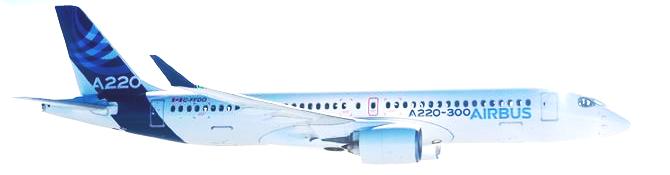
 Né Airbus Canada
![Airbus-logo[1].png](https://airgways.com/wp-content/uploads/2019/06/airbus-logo1.png?w=128) Airbus Canada® est le nom officiel de la nouvelle entité qui développera, assemblera et commercialisera l’avion régional A220. La société précédemment nommée CSALP (société en commandite C Series Aircraft Limited) reflète la participation majoritaire d’Airbus dans le programme A220, selon son communiqué de presse.
Airbus Canada® est le nom officiel de la nouvelle entité qui développera, assemblera et commercialisera l’avion régional A220. La société précédemment nommée CSALP (société en commandite C Series Aircraft Limited) reflète la participation majoritaire d’Airbus dans le programme A220, selon son communiqué de presse. AW | 2019 06 01 15:48 | INDUSTRY
 El Airbus A220 recibirá la certificación de aeronavegabilidad Rosaviatsiya de Federación Rusia
 La primer aeronave en certificarse es el modelo Airbus A220-300. La Agencia Federal de Transporte Aéreo Rosaviatsiya ha confirmado a los medios de comunicación que recibió la solicitud y que el Registro de Aviación de la Federación Rusa y los centros de certificación acreditados continúan con sus respectivas funciones de acuerdo con el calendario designado. La certificación del motor PW1500G, que impulsa el A220, también se completará con una solicitud de Pratt & Whitney.
 Airbus A220 will receive certification from Russia
 The Airbus A220 is in the process of certification in Russia under the direction of Airbus, its engine manufacturer Pratt & Whitney and the Russian aviation authority Rosaviatsiya.
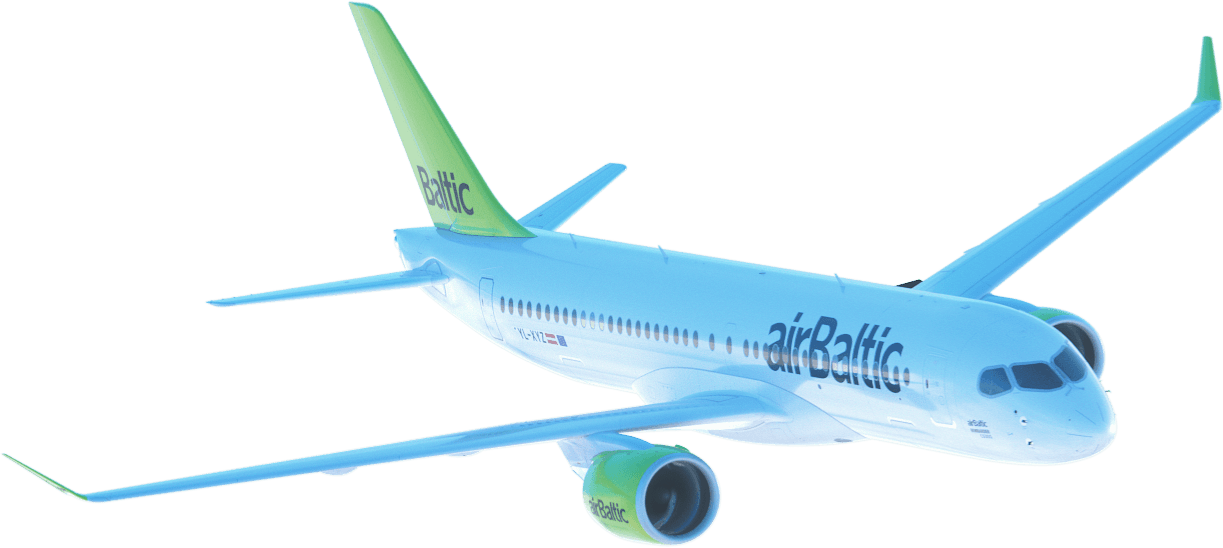 Airbus A220 получит сертификацию из России
 Аэробус А220 получит сертификат летной годности Росавиации РФ
 Первый сертифицированный самолет – модель Аirbus A220-300. Федеральное агентство воздушного транспорта Росавиация подтвердило средствам массовой информации, что оно получило запрос и что Авиационный регистр Российской Федерации и аккредитованные сертификационные центры продолжают выполнять свои соответствующие функции в соответствии с назначенным календарем. Сертификация двигателя PW1500G, которая приводит в движение A220, также будет дополнена заявкой Pratt & Whitney.
 AW | 2019 06 01 14:32 | INDUSTRY / GOVERNMENT
 Airbus emite una advertencia sobre la escalada de la disputa entre Estados Unidos y la UE
 La cadena de suministro predominantemente estadounidense de la compañía se vería afectada por el efecto de las tarifas, con aproximadamente el 40% de todas las adquisiciones relacionadas con aeronaves provenientes del Estados Unidos. El mes pasado, el presidente de Estados Unidos, Trump, dijo que su gobierno seguiría adelante con los aranceles para bienes por valor de US$ 11 mil millones, y la United States Trade Representative (USTR) alegó que los subsidios otorgados por la Unión Europea a Airbus han afectado negativamente a Estados Unidos.
 AW | 2019 05 31 12:40 | INDUSTRY
 La empresa Embraer inicia proceso de ensamblaje del la línea E175-E2
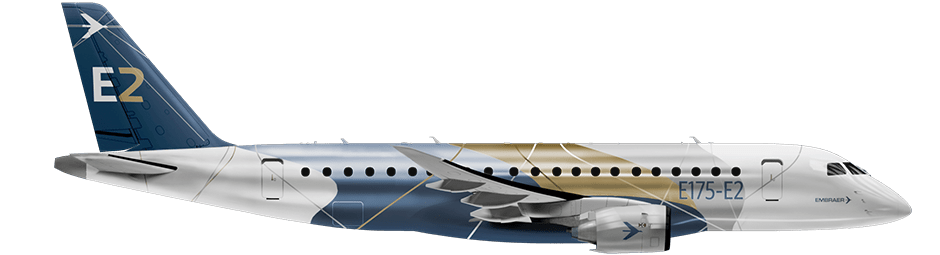 Pedidos pendientes

 Embraer starts assembly E175-E2
 Embraer has begun the construction of the first prototype of the new generation E175-E2 (Stage 2). The new regional aircraft is a cheaper aircraft than the previous version, being a little longer than the current Embraer 175, with a standard configuration between eighty and ninety passengers. The Embraer 175-E2 is the smallest of the E2 Program family, which also consists of the largest variants: E190-E2 and E195-E2.
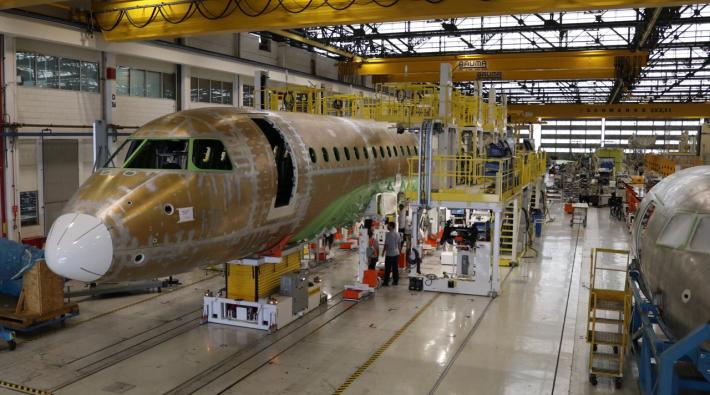 Embraer inicia montagem E175-E2
 Empresa Embraer inicia processo de montagem da linha E175-E2
 AW | 2019 05 29 18:19 | INDUSTRY
 Airbus SE inauguró nueva oficina en Argentina
 aseguró Alberto Robles, Jefe de Estrategia de Airbus Internacional de Latinoamérica. Durante el acto de apertura de las nuevas oficinas, el directivo señaló que “esta nueva presencia en la Argentina representa un paso natural para desarrollar aún más las actividades de Airbus en la región. Hay grandes oportunidades para Airbus en América Latina y abrir una oficina en Buenos Aires constituye una medida clave para consolidar nuestros productos en la región, además de seguir dando un apoyo de proximidad a los clientes que operan nuestros productos en el país”.
 Airbus with an office in Argentina
 OFFICE OF AIRBUS HEADQUARTERS IN BUENOS AIRES, ARGENTINA
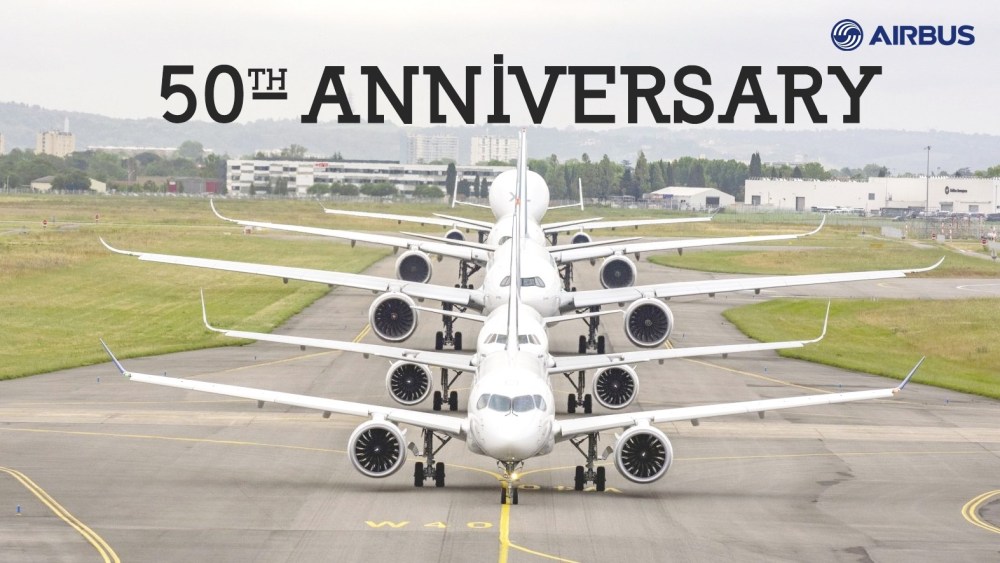 AW | 2019 05 29 18:00 | INDUSTRY
 Airbus celebra el 50º Aniversario del constructor aeronáutico europeo
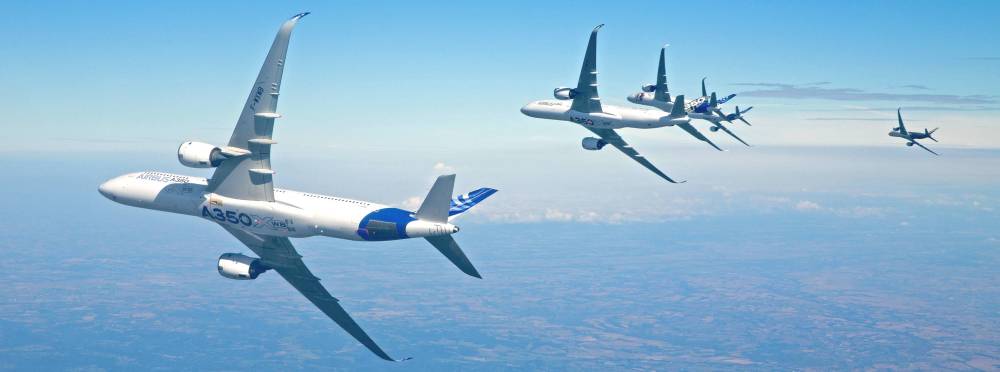 Airbus, sus 50 años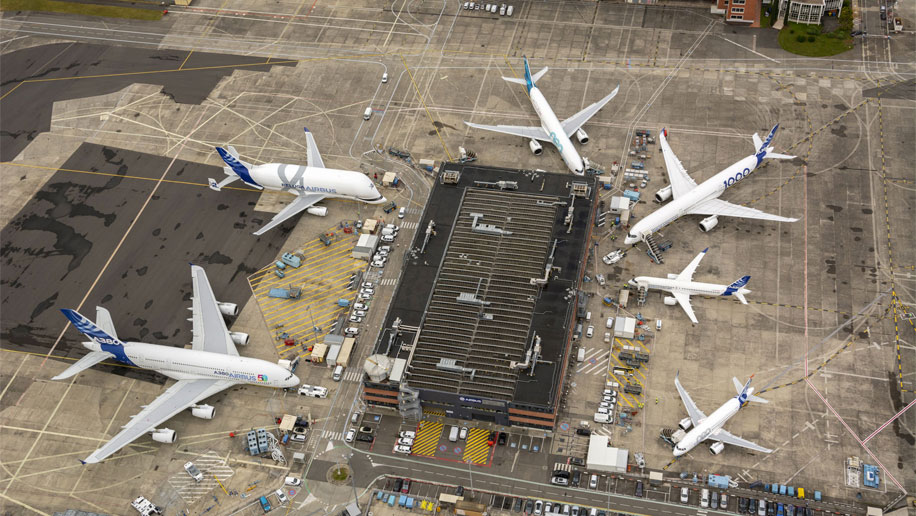
 Airbus celebrates the 50th Anniversary of the European aeronautical constructor
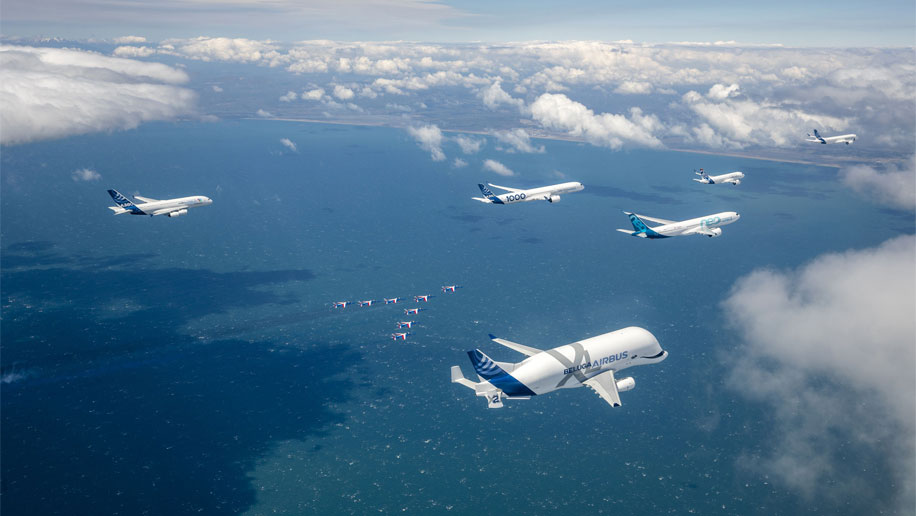 Ξ 50ème anniversaire d’Airbus Ξ
![Airbus-logo[1].png](https://airgways.com/wp-content/uploads/2019/05/airbus-logo1-1.png?w=110) Airbus Group S.E. (Societas Europaea) était préparée le mercredi 29 mai 2019 pour célébrer son 50e anniversaire. La date est importante pour le constructeur européen, car c’était le 29 mai 1969, date de la signature de l’accord de partenariat initial avec Airbus lors du salon du Bourget au Bourget, qui marque le lancement du programme A300B. La société actuelle est le produit de la consolidation de l’industrie aérospatiale européenne qui remonte à la formation du consortium Airbus Industrie GIE le 18 décembre 1970, il ya 48 ans.
Airbus Group S.E. (Societas Europaea) était préparée le mercredi 29 mai 2019 pour célébrer son 50e anniversaire. La date est importante pour le constructeur européen, car c’était le 29 mai 1969, date de la signature de l’accord de partenariat initial avec Airbus lors du salon du Bourget au Bourget, qui marque le lancement du programme A300B. La société actuelle est le produit de la consolidation de l’industrie aérospatiale européenne qui remonte à la formation du consortium Airbus Industrie GIE le 18 décembre 1970, il ya 48 ans. AIRBUS ABANDONNE LE PROGRAMME SUPERJUMBO A380
 Ξ Airbus 50 Jahrestage Ξ
![Airbus-logo[1].png](https://airgways.com/wp-content/uploads/2019/05/airbus-logo1-2.png?w=102) Airbus feiert das 50-jährige Bestehen des europäischen Luftfahrtkonstrukteurs
Airbus feiert das 50-jährige Bestehen des europäischen Luftfahrtkonstrukteurs


 Ξ A I R G W A Y S Ξ
 El fabricante norteamericano Boeing ingresa a la industria de la aviación comercial en Brasil
 Bombardier.
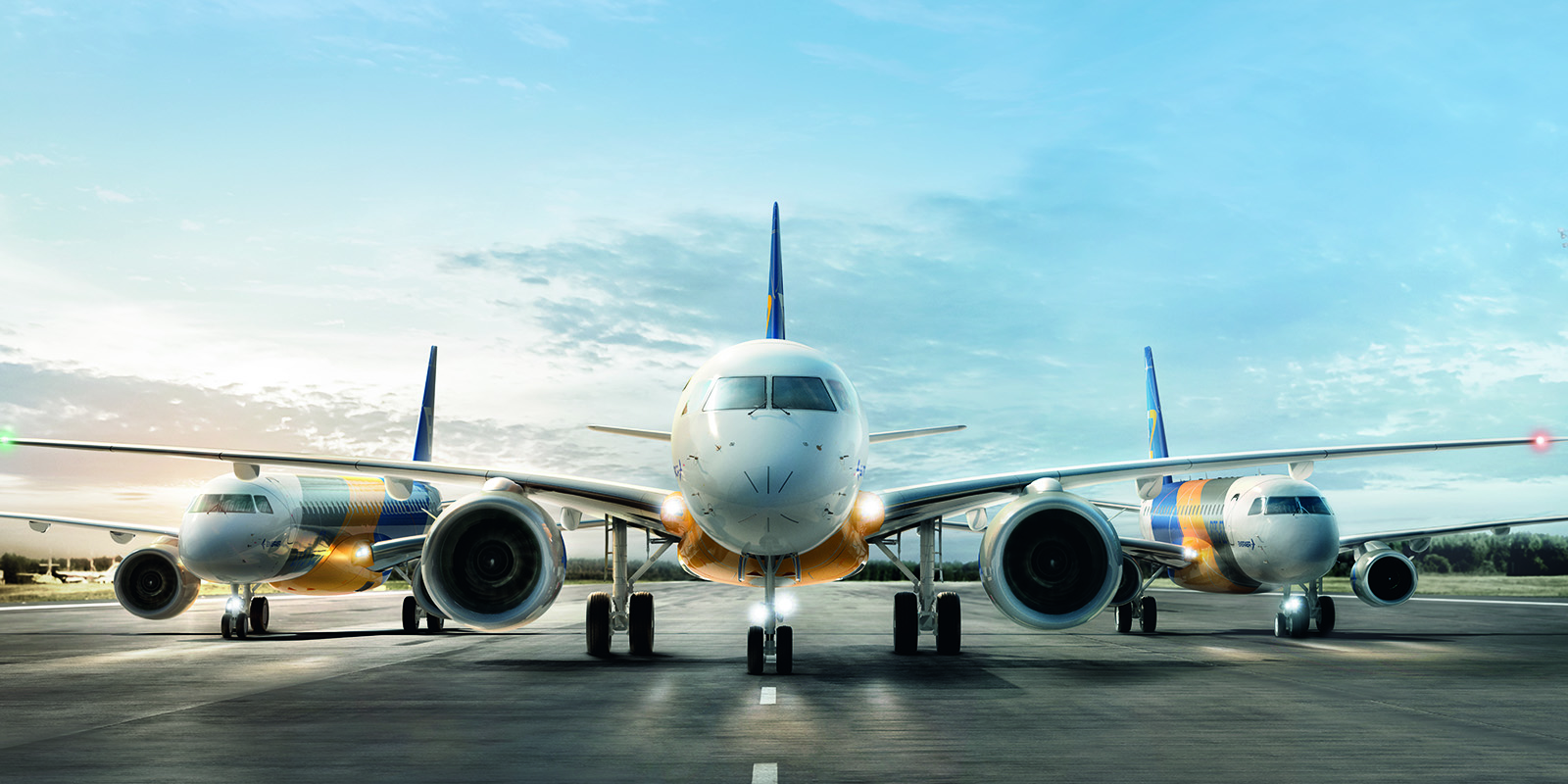 Boeing is introduced in Brazil
 The North American manufacturer Boeing enters the commercial aviation industry in Brazil
 A fabricante norte-americana Boeing entra no setor de aviação comercial no Brasil
 O novo acordo de joint venture entre a Boeing ea Embraer irá expandir os horizontes de ambas as empresas, permitindo chegar a segmentos para melhor posicionar os produtos de ambas as fábricas, incluindo pós-venda embraer suporte de serviço Boeing por US$ 4,2 bilhões. A transação deve ser aprovada pelas autoridades de concorrência antes do final de 2019.
 AW | 2019 05 28 00:27 | AIRLINES / INDUSTRY
 La aerolínea neozelandesa Air New Zealand incorporará Boeing 787-10 a su flota
 sido valuados en US$ 2.7 mil millones a precios de catálogo. La aerolínea, conocida por su red global y operaciones de largo alcance, dice que el 787-10 complementa su flota actual de 787-9 y 777 al ofrecer más asientos y mayor eficiencia para hacer crecer su negocio.
 El 787-10 es el miembro más grande de la familia Dreamliner súper eficiente y agradable para los pasajeros. Tiene unas dimensiones de 68 metros de largo (224 pies ), puede servir hasta 330 pasajeros en una configuración estándar de dos clases, aproximadamente 40 más que el avión 787-9. Impulsado por un conjunto de nuevas tecnologías y un diseño revolucionario, el 787-10 estableció un nuevo punto de referencia para la eficiencia del combustible y la economía operativa cuando entró en servicio comercial el año pasado. El avión permite a los operadores lograr un 25 por ciento más de eficiencia de combustible por asiento en comparación con los aviones anteriores.
 Air New Zealand will incorporate Boeing 787-10
 The New Zealand airline Air New Zealand will incorporate Boeing 787-10 into its fleet
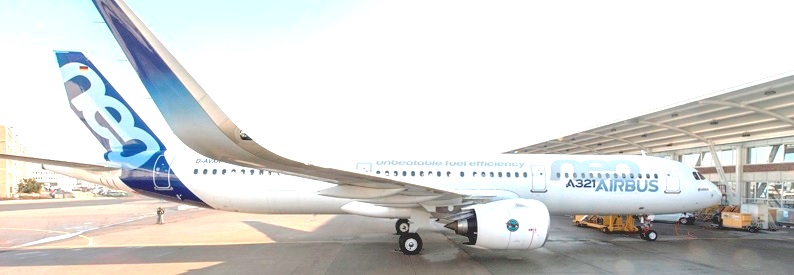 AW | 2019 05 25 10:36 | AIRLINES / INDUSTRY
 SalamAir adquirirá flota de aeronaves Airbus
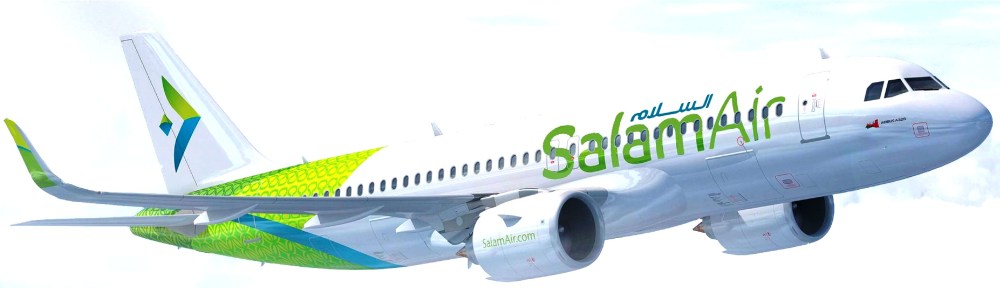 SalamAir studies to acquire more Airbus
 SalamAir is considering the possibility of acquiring additional aircraft from the Airbus A220/A321s family. The low cost Omani airline (LCC) is considering two new types of aircraft to join its growing fleet.
 SalamAir تدرس للحصول على المزيد من طائرات إيرباص
 SalamAir تستحوذ على أسطول طائرات إيرباص
 AW | 2019 05 24 12:33 | INDUSTRY
 Boeing Brasil Commercial es el nuevo nombre del Joint Venture entre Boeing y Embraer
 Boeing-Embraer
 Boeing Brasil Commercial is the new designation of the commercial entity of the Joint Venture made by the companies The Boeing Company of the United States and Embraer S.A. from Brazil. The company controlled by the Americans would take control of the commercial area.
 Nasce Boeing Brasil Commercial
 Boeing Brasil Commercial é o novo nome da Joint Venture entre Boeing e Embraer


 Ξ A I R G W A Y S Ξ
