Boeing revela modificaciones en 737 MAX

Image result for Boeing 737 MAX testAW | 2019 03 28 14:31 | INDUSTRY / AVIATION SAFETY

83731-faaLa FAA todavía no ha emitido las aprobaciones correspondientes a las modificaciones en la MCAS de los Boeing 737 MAX

FK,4923,36,737-max-round-pin

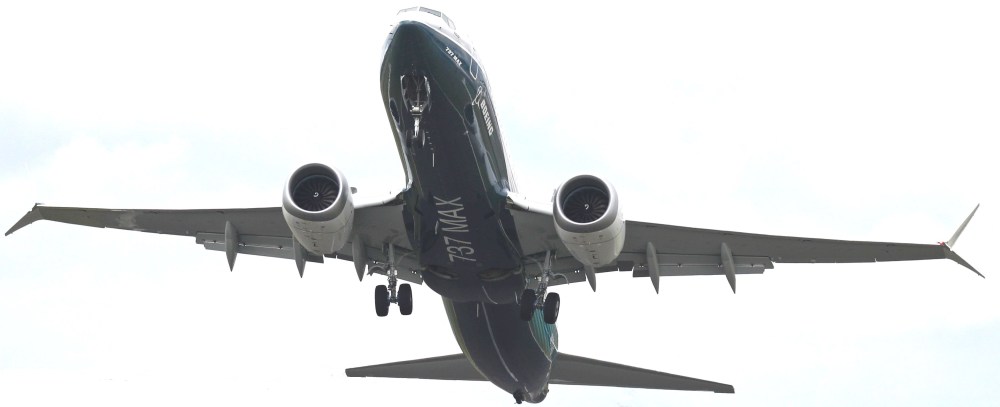
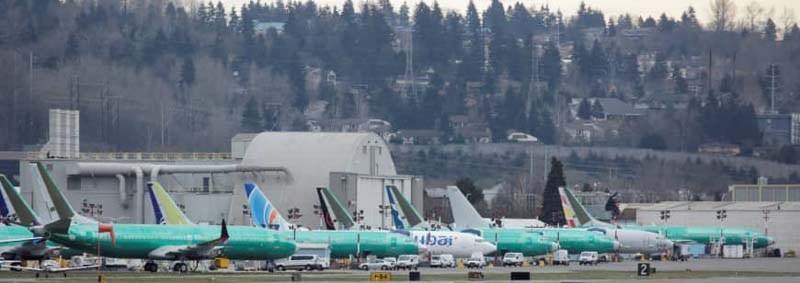
The Boeing Company mostró los cambios en el Sistema de Estabilización MCAS. En una reunión con cientos de periodistas, pilotos y dirigentes de aerolíneas en su sede de Renton, Estados Unidos para mostrar los cambios en su sistema de estabilización MCAS, en una ofensiva para recuperar la confianza perdida. «Vamos a hacer todo para asegurarnos que accidentes como estos no ocurran de nuevo», dijo a la prensa el Vicepresidente de Estrategia de Productos de Boeing, Mike Sinnet.

Dan Elwell, el responsable interino de la Federal Aviation Administration (FAA) de Estados Unidos, deberá explicar a los Senadores estadounidenses por qué su organismo tardó tanto en prohibir los vuelos de los Boeing 737 MAX tras el accidente en el que murieron 157 personas el 10 Marzo 2019 en Etiopía. Esa tardanza levantó sospechas sobre una connivencia entre la agencia estadounidense y Boeing, sobre todo después de que las autoridades chinas y europeas decidieran prohibir rápidamente los vuelos de esos aviones, debido a las similitudes entre el accidente en Etiopía y el que ocurrió el 29 Octubre 2018 en el Mar de Java con la aerolínea Lion Air.

Modificaciones del MCAS

Boeing intenta convencer de que la versión corregida del Sistema de Estabilización MCAS de los 737 MAX, cuestionado por su supuesta responsabilidad en los accidentes, está ahora operativa.

La intervención del sistema será más transparente para la tripulación, y los pilotos podrán desactivarlo más fácilmente en caso de problema, explicó Boeing, que iba a presentar el nuevo MCAS a los profesionales este Miércoles 27 Marzo 2019 para tener su opinión sobre los cambios.

Entre los cambios notables a los controles de vuelo MAX, el sistema de control de vuelo automatizado MCAS del avión ahora recibirá datos de ambos sensores de ángulo de ataque en lugar de solo uno. Además, un funcionario de Boeing dice que las revisiones de la compañía de varios sistemas de control de vuelo en los nuevos aviones 737 MAX no han revelado ningún problema potencial adicional. La revisión ha revisado los análisis de peligros potenciales y mal funcionamiento, y no hemos descubierto nada que nos preocupe en ninguna de esas áreas, dijo el funcionario de Boeing. Esas revisiones continúan y continuarán por algún tiempo.

En la nueva versión del programa, el piloto podrá ver que el MCAS ya no funciona gracias a un sistema de alerta luminosa, que indicará que las dos sondas del aparato emiten datos contradictorios. Boeing informó a las aerolíneas que adquirieron 737 MAX que podían encargar esa opción de forma gratuita. Ésta se instalará posteriormente, si recibe el visto bueno de las autoridades.

Según la compañía, la nueva versión del programa se sometió a cientos de horas de análisis, pruebas en laboratorio, verificaciones en un simulador y dos vuelos de prueba, incluido uno con representantes de la FAA a bordo. «El objetivo es reducir la carga de trabajo de la tripulación en situaciones anormales e impedir que el MCAS se active cuando reciba datos falsos», precisó Boeing.

Boeing también tiene previsto formar mejor a los pilotos para manejar el MCAS y el 737 MAX, cuyo comportamiento cambió mucho por modificaciones sobre los motores. La FAA y otras autoridades regulatorias aún deben certificar esas modificaciones, indicó la compañía.

Revisión de la FAA

La Federal Aviation Administration (FAA) ha comunicado que aún no ha otorgado la aprobación provisional para la actualización de software anti-stall de Boeing anunciada en el Boeing 737 MAX. El regulador dice que ha trabajado con la compañía a lo largo de su cambio de software y «no hemos recibido la mejora completa del software para su revisión y certificación».

También en el testimonio del Senado de Estados Unidos hoy, el jefe interino de la FAA, Daniel Elwell, dijo que costaría US$ 1.800 millones de dólares y que se llevaría a 10 mil nuevos empleados para que la agencia se encargara de todas las certificaciones de aeronaves internamente, respondiendo preguntas sobre cómo se aprueban los nuevos aviones para volar. Elwell también dijo que una alerta a los pilotos de que Boeing estaba haciendo estándar en todos los aviones 737 MAX como parte de una actualización de software no era «crítica para la seguridad». Boeing dejará de cargar esa alerta y otro indicador aún opcional. En un testimonio separado, el Secretario de Transporte dijo que era preocupante que ciertas características de seguridad estuvieran disponibles como opciones en lugar del equipo estándar en los aviones 737 MAX.

Boeing ha programado una reunión informativa para unos 200 pilotos y representantes de aerolíneas en Renton, Washington, sede del complejo de ensamblaje 737, donde se espera que describa los cambios de software que controlan un sistema diseñado para evitar automáticamente un puesto en la mitad del vuelo. Un panel del Senado en Washington, DC también interrogará al jefe interino de la FAA, al inspector general del DOT y al jefe de la NTSB acerca de qué tan exhaustivamente se probó el sistema MCAS y qué se hará para asegurar que cualquier solución funcione.

El responsable de la FAA admitirá, no obstante, que, ante unos sistemas cada vez más complejos, el enfoque de su agencia en materia de supervisión debe cambiar. En una audiencia distinta celebrada el miércoles por la mañana, la Secretaria de Transporte, Elaine Chao, se mostró preocupada ante «cualquier alegación de relaciones demasiado estrechas con cualquier compañía».

Entretanto, la inmovilización de la flota de Boeing 737 MAX tiene un coste importante. La compañía estadounidense Southwest Airlines rebajó este miércoles su previsión de volumen de negocios en el 1Q2019 por culpa de las cancelaciones de vuelos vinculadas a la prohibición del Boeing 737 MAX.AW-Icon-TXT-01

AW-700007378MAX.jpgBoeing unveiled modifications at 737 MAX

The FAA has not yet issued approvals for modifications to the MCAS of the Boeing 737 MAX

Boeing-Company-LogoThe Boeing Company showed the changes in the MCAS Stabilization System. In a meeting with hundreds of journalists, pilots and airline leaders at their headquarters in Renton, United States to show the changes in their MCAS stabilization system, in an offensive to recover lost confidence. «We’re going to do everything to make sure accidents like these do not happen again», Boeing Vice President of Product Strategy Mike Sinnet told reporters.

Dan Elwell, the acting head of the US Federal Aviation Agency (FAA), should explain to US Senators why his agency took so long to ban Boeing 737 MAX flights after the accident in which 157 people died. March 10, 2019 in Ethiopia. That delay raised suspicions about a collusion between the US agency and Boeing, especially after the Chinese and European authorities decided to quickly ban the flights of those planes, due to the similarities between the accident in Ethiopia and the one that occurred on October 29, 2018 in the Java Sea with the airline Lion Air.

Modifications of the MCAS

Boeing tries to convince that the corrected version of the System of Stabilization MCAS of the 737 MAX, questioned by its supposed responsibility in the accidents, is now operative.

The intervention of the system will be more transparent for the crew, and the pilots will be able to deactivate it more easily in case of problem, explained Boeing, who was going to present the new MCAS to the professionals this Wednesday 27 March 2019 to have their opinion about the changes.

Image result for MCAS Boeing 737 MAX

Among the notable changes to the MAX flight controls, the aircraft’s MCAS automated flight control system will now receive data from both attack angle sensors instead of just one. In addition, a Boeing official says that company reviews of several flight control systems on the new 737 MAX aircraft have not revealed any additional potential problems. The review has reviewed the analysis of potential hazards and malfunctions, and we have not discovered anything that worries us in any of those areas, said the Boeing official. Those revisions continue and will continue for some time.

In the new version of the program, the pilot will be able to see that the MCAS no longer works thanks to a system of luminous alert, that will indicate that both probes of the apparatus emit contradictory data. Boeing informed the airlines that they acquired 737 MAX that they could order that option for free. This will be installed later, if it receives the approval of the authorities.

According to the company, the new version of the program underwent hundreds of hours of analysis, laboratory tests, simulator checks and two test flights, including one with representatives of the FAA on board. «The goal is to reduce the workload of the crew in abnormal situations and prevent the MCAS from activating when it receives false data», Boeing said.

Boeing also plans to better train the drivers to operate the MCAS and the 737 MAX, whose behavior changed a lot because of modifications on the engines. The FAA and other regulatory authorities still must certify those modifications, the company said.

Review of the FAA

The Federal Aviation Administration (FAA) has announced that it has not yet granted provisional approval for the Boeing anti-stall software update announced on the Boeing 737 MAX. The regulator says it has worked with the company throughout its software change and «we have not received the complete software upgrade for review and certification».

Also in the testimony of the United States Senate today, the acting head of the FAA, Daniel Elwell, said that it would cost US $ 1,800 million dollars and that it would take 10,000 new employees for the agency to take care of all the certifications of Aircraft internally, answering questions about how new airplanes are approved to fly. Elwell also said that warning pilots that Boeing was making standard on all 737 MAX aircraft as part of a software update was not critical to safety. Boeing will stop loading that alert and another indicator still optional. In a separate testimony, the Transportation Secretary said it was troubling that certain safety features were available as options instead of the standard equipment on the 737 MAX aircraft.

Boeing has scheduled an informational meeting for some 200 airline pilots and representatives in Renton, Washington, home of the 737 assembly complex, where it is expected to describe the software changes that control a system designed to automatically avoid a position in the middle of the flight. A Senate panel in Washington, DC will also question the interim FAA chief, the DOT inspector general and the NTSB chief about how thoroughly the MCAS system was tested and what will be done to ensure that any solution works.

The head of the FAA will admit, nevertheless, that, faced with increasingly complex systems, the focus of his agency on matters of supervision must change. In a separate hearing held on Wednesday morning, the Secretary of Transportation, Elaine Chao, was concerned about «any allegation of too close relations with any company».

Meanwhile, the immobilization of the Boeing 737 MAX fleet has a significant cost. The American company Southwest Airlines lowered its forecast of turnover in the 1Q2019 on Wednesday because of cancellations of flights linked to the prohibition of the Boeing 737 MAX. A\W


video-camera_318-50337.jpg


Ξ A I R G W A Y S Ξ
SOURCE: Airgways.com
DBk: Faa.gov / Boeing.com / Airgways.com / Nbcnews.com
AW-POST: 201903281431AR

A\W   A I R G W A Y S ®

Boeing pierde la línea de la batalla

AW-7000737MAX.jpgAW | 2019 03 27 17:43 | INDUSTRY / AIR INVESTIGATION / AVIATION SAFETY

FK,4923,36,737-max-round-pinBoeing-Logo.svgLa saga de Boeing 737 MAX sirve como un caso de estudio en la incompetencia de la ingeniería y la ética

La Administración de Aviación Civil de China (CAAC) ha suspendido la Certificación de Aeronavegabilidad del Boeing 737-8 MAX, que demoró 15 meses para que Boeing finalmente la obtuviera en Octubre 2017. Airbus contraataca con un formidable pedido de 290 aeronaves A320NEO.

Investigaciones accidentes

Durante las simulaciones de vuelo que recrean los problemas en el fatal accidente del vuelo JT-610 de Lion Air el 29 Octubre 2018, los pilotos descubrieron que tenían menos de 40 segundos para anular el Sistema MCAS del Boeing 737-8 MAX y evitar el desastre. Mientras tanto, el informe preliminar sobre el accidente del vuelo ET-302 del Boeing 737-8 MAX del 10 Marzo 2019 de Ethiopian Airlines probablemente será publicado esta semana, según el Ministerio de Transporte de Etiopía.

FAA

El administrador interino de la FAA, Dan Elwell, le informará a un subcomité de Comercio del Senado que los Boeing 737 MAX de Boeing regresarán al servicio «solo cuando el análisis de los hechos y los datos técnicos de la FAA indiquen que es apropiado». El testimonio de Elwell dice que Boeing presentó por primera vez la actualización del software anti-stall propuesto a la FAA para la certificación este 21 Enero 2019 y que la FAA ha probado «esta mejora al sistema de control de vuelo del Boeing 737 MAX tanto en el simulador como en la aeronave. A medida que el sistema aeroespacial y sus componentes se vuelven cada vez más complejos, sabemos que nuestro enfoque de supervisión debe evolucionar para garantizar que la FAA siga siendo el líder mundial en el logro de la seguridad de la aviación», dijo el testimonio de Elwell, según el informe.

Cuestionado MCAS

Las simulaciones de vuelo que intentaron recrear los problemas que causaron que un avión Boeing 737-8 MAX de Lion Air se estrellara en Indonesia el 29 Octubre 2018 encontraron que los pilotos tenían menos de 40 segundos para anular un sistema automatizado. El sistema automatizado, conocido como MCAS, es el foco de los investigadores que buscan determinar qué sucedió tanto con el avión de Lion Air y el de Ethiopian Airlines ambos del mismo modelo de aeronave.

Presiones competitivas

Han surgido nuevos detalles sobre las presiones competitivas que ejercen los ingenieros de Boeing 737 cuando el fabricante de aeronaves se apresuró a evitar las deserciones de las principales aerolíneas estadounidenses para competir con Airbus. El consorcio europeo estaba desafiando el producto estrella de Boeing con su A320NEO (New Engine Option) actualizado. Según los informes, los operadores estadounidenses como American Airlines se preparaban para cambiar al modo Airbus de mayor alcance.

Ingeniería 737 MAX7378MAX_0[1].png

Boeing respondió con lo que afirmó que era una versión mejorada de su caballo de batalla 737 equipado con un motor LEAP CFM más grande que ofrece un mayor alcance y una mayor eficiencia de combustible. Los motores más grandes requerían que los ingenieros de Boeing los colocaran muy por delante del borde de ataque del ala para lograr la distancia al suelo.

Esa decisión de diseño significaba que el Boeing 737 MAX tendería a subir mientras aceleraba o cuando la aeronave experimentaba un alto ángulo de ataque: el ángulo entre el ala y la dirección de vuelo. La solución propuesta para el problema del lanzamiento, y un medio para lograr la certificación de capacidad de vuelo, fue un sistema de software llamado MCAS.

Los críticos afirman que la colocación del motor convirtió a la serie 737 MAX en un avión fundamentalmente diferente con diferentes características de manejo que requieren un nuevo software operativo y entrenamiento de pilotos. El proceso de recertificación que Boeing intentó evitar por razones competitivas hubiera sido largo y costoso.

En esencia, la respuesta de Boeing al desafío planteado por Airbus fue llevar a la seguridad de los pasajeros a un asiento intermedio en clase económica, mientras que las consideraciones financieras se actualizaron a primera clase, Boeing niega esto.

AW-737-8MAXNG.png

Entre los críticos de Boeing se encuentra Gregory Travis, un veterano ingeniero de software y piloto con experiencia en instrumentos que ha volado simuladores de aviones tan grandes como el Boeing 757. Gregory Travis publicó una crítica condenatoria del fiasco del 737 MAX la semana pasada que concluyó: «Es probable que el MCAS, originalmente agregado con el espíritu de aumentar la seguridad, ahora ha matado a más personas de las que podría haber salvado. No necesita ser arreglado con más complejidad, más software. Necesita ser eliminado, por completo». Gregory Travis dijo que «lo más desconcertante para mí es cómo esto podría haber pasado a un avión comercial con un largo historial de seguridad y confiabilidad, y fue construido por una compañía con una excelente reputación en ingeniería de hardware». El ingeniero expresó que es inequívoco en su evaluación del Boeing 737 MAX: «Es un fuselaje defectuoso. Tiene que arreglar el fuselaje y no puede hacerlo sin mover los motores hacia atrás y alejándolos de su posición actual. El problema de raíz con el diseño del motor hacia adelante es que una vez que la aeronave despega, quiere seguir lanzándose hacia arriba, porque el lanzamiento en un avión aumenta el ángulo de ataque (AOA). Así nació MCAS, donde se implementó el software de computadora de vuelo 737 MAX. Utilizando solo un único sensor de datos, el MCAS fue diseñado para corregir lo que resultó ser un defecto de diseño mortal al bajar el morro hacia abajo basándose en datos de un solo ángulo de sensor de ataque. Travis insiste en que los pilotos de los dos 737 vuelos fatales de MAX no pudieron haber anulado el sistema, sin importar lo fuerte que se pusieran el yugo. La única forma de anular el sistema fue presionando un disyuntor que debería haber sido destacado entre los controles del 737 MAX».

Boeing ha unido motores más grandes a un fuselaje que no ha cambiado de tamaño. Con esta última versión, los nuevos motores apenas despejan la pista en el despegue. Boeing ofreció el sensor de ángulo de ataque único como equipo estándar, y se cargó extra por un segundo junto con un indicador de desacuerdo que permitiría a pilotos del Boeing 737 MAX verificar un sensor defectuoso. Citando esas decisiones, otro observador señaló: «¿Quién diseñaría un sistema con un único punto de falla?».

El análisis de Gregory Travis del diseño del 737 MAX fue alcanzado por la Boeing. La conclusión es que el fabricante propuso resolver un problema de fuselaje con MCAS como una forma menos costosa de obtener la certificación federal. En última instancia, Travis también lamenta lo que él llama «pereza cultural» dentro de la comunidad de desarrollo de software que se está introduciendo en sistemas críticos como las computadoras de vuelo. «Por pereza, quiero decir que cada vez se piensa menos en conseguir un diseño correcto y simple, desde el principio. Lo que debe suceder, creo, es que la responsabilidad se acumule donde se genera».

Incompetencia o falta de ética

Si la historia de advertencia del Boeing 737 MAX es una cuestión de ingeniería ética es prudente hacer las cosas bien a la primera, asegurarse de que los sistemas de misión crítica funcionen con cinco nueves (99.999%) o mayor confiabilidad con redundancia incorporada, sigue siendo una pregunta abierta. «Puede que solo sea una incompetencia de ingeniería», expresa Travis.

Las presiones económicas y competitivas que llevaron a Boeing a ocultar efectivamente la existencia del MCAS como una forma de evitar un largo proceso de recertificación para el Boeing 737 MAX, un proceso que requiere un entrenamiento exhaustivo del piloto en nuevos simuladores caros. Todos habrían aumentado el costo unitario de cada aeronave en millones de dólares, señaló Travis, reduciendo así las posibilidades de Boeing de competir con el Airbus A320NEO.

Las tragedias de Boeing 737 MAX también recuerdan las decisiones de ingeniería que llevaron al desastre del transbordador Challenger en 1986 y al incendio del Apollo 1 en 1967. La prisa de Boeing en responder al desafío de Airbus recuerda a Travis y otros de la maldición del pensamiento grupal llamada «Go Fever» durante el Proyecto Apolo, que finalmente mató a la tripulación del Apolo 1 durante una simulación de la plataforma de lanzamiento. En ese caso, la seguridad de la tripulación fue sacrificada en nombre del horario.

Las decisiones de ingeniería de Boeing, mientras se desarrollaba a toda prisa el 737 MAX, finalmente causaron la muerte de 347 personas. El ingeniero Gregory Travis espera uno de los dos resultados posibles para Boeing: «Veo un escenario en el que ya no venden más de estos aviones. Lo más probable es que continúe con un anuncio en los próximos días de que el fabricante de aviones está arreglando el software MCAS para manejar entradas desde múltiples sensores de ángulo de ataque». De cualquier manera, concluye Gregory Travis, «el software ahora se interpone entre el hombre y la máquina».

AW-7378MAX-0000.jpgBoeing loses the line of battle

Boeing-Company-Logo.jpgThe saga of Boeing 737 MAX serves as a case study in the incompetence of engineering and ethics562

The Civil Aviation Administration of China (CAAC) has suspended the Airworthiness Certification of the Boeing 737-8 MAX, which took 15 months for Boeing to finally obtain it in October 2017. Airbus counterattacks with a formidable order of 290 A320NEO aircraft.

Investigations accidents

During the flight simulations that recreate the problems in the fatal accident of Lion Air’s JT-610 flight on October 29, 2018, the pilots discovered that they had less than 40 seconds to void the MCAS System of the Boeing 737-8 MAX and avoid disaster . Meanwhile, the preliminary report on the crash of ET-302 flight of the Boeing 737-8 MAX on 10 March 2019 from Ethiopian Airlines will probably be published this week, according to the Ethiopian Ministry of Transport.

FAA

FAA interim administrator Dan Elwell will inform a Senate Commerce subcommittee that the Boeing 737 MAX will return to the service «only when the factual analysis and FAA technical data indicate that it is appropriate». Elwell’s testimony says that Boeing presented for the first time the anti-stall software update proposed to the FAA for certification this 21 January 2019 and that the FAA has proven «this improvement to the Boeing 737 MAX flight control system in both the simulator as in the aircraft. «As the aerospace system and its components become increasingly complex, we know that our oversight approach must evolve to ensure that the FAA continues to be the world leader in achieving safety of the aviation», said Elwell’s testimony, according to the report.

Questioned MCAS

Flight simulations that attempted to recreate the problems that caused a Boeing 737-8 MAX aircraft from Lion Air to crash in Indonesia on October 29, 2018 found that pilots had less than 40 seconds to override an automated system. The automated system, known as MCAS, is the focus of researchers seeking to determine what happened to both the Lion Air aircraft and Ethiopian Airlines both of the same aircraft model.

Competitive pressures

New details have emerged about the competitive pressures exerted by Boeing 737 engineers when the aircraft manufacturer rushed to avoid defections from major US airlines to compete with Airbus. The European consortium was challenging Boeing’s flagship product with its updated A320NEO (New Engine Option). According to reports, US operators such as American Airlines were preparing to switch to the longer-range Airbus mode.

Engineering 737 MAX

Boeing responded with what he claimed was an improved version of its 737 workhorse equipped with a larger LEAP CFM engine that offers greater range and greater fuel efficiency. Larger engines required Boeing engineers to place them well in front of the wing’s leading edge to achieve ground clearance.

That design decision meant that the Boeing 737 MAX would tend to climb while accelerating or when the aircraft experienced a high angle of attack: the angle between the wing and the direction of flight. The proposed solution to the launch problem, and a means to achieve flight capacity certification, was a software system called MCAS.AW-737-Comparative.png

Critics say the engine placement made the 737 MAX series a fundamentally different aircraft with different handling characteristics that require new operating software and pilot training. The recertification process that Boeing tried to avoid for competitive reasons would have been long and costly.

In essence, Boeing’s response to the challenge posed by Airbus was to bring passenger safety to an intermediate seat in economy class, while financial considerations were upgraded to first class, Boeing denies this.

AW-70033737.jpgPARA ACOMODAR LOS MOTORES MÁS NUEVOS Y MÁS GRANDES, BOEING ELIGIÓ MOVERLOS MÁS HACIA ADELANTE EN EL ALA. ESTE CAMBIO EN EL DISEÑO TAMBIÉN CAMBIÓ LA AERODINÁMICA DE LA EMBARCACIÓN. PARA COMPENSAR, BOEING AGREGÓ UN SOLO SENSOR Y UNA SOLUCIÓN DE SOFTWARE: MCAS
IN ORDER TO ACCOMMODATE THE NEWER, LARGER ENGINES, BOEING ELECTED TO MOVE THEM FARTHER FORWARD ON THE WING. THIS CHANGE IN DESIGN ALSO CHANGED THE AERODYNAMICS OF THE CRAFT. TO COMPENSATE, BOEING ADDED A SINGLE SENSOR AND A SOFTWARE FIX: MCAS.

Among Boeing’s critics is Gregory Travis, a veteran software engineer and instrument-experienced pilot who has flown simulators of aircraft as big as the Boeing 757. Gregory Travis published a damning critique of the 737 MAX fiasco last week that ended «It’s likely that the MCAS, originally added in the spirit of increasing security, has now killed more people than it could have saved, it does not need to be fixed with more complexity, more software, it needs to be removed, completely. Travis said that «the most disconcerting thing for me is how this could have happened to a commercial aircraft with a long history of safety and reliability, and was built by a company with an excellent reputation in hardware engineering». The engineer said that it is Unmistakable in his evaluation of the Boeing 737 MAX: «It’s a faulty fuselage. You have to fix the fuselage and you can not do it without moving the engines back and away from your current position. The root problem with the design of the forward engine is that once the aircraft takes off, it wants to continue to launch upwards, because the launch in an airplane increases the angle of attack (AOA). This is how MCAS was born, where the 737 MAX flight computer software was implemented. Using only a single data sensor, the MCAS was designed to correct what turned out to be a deadly design flaw by lowering the nose down based on data from a single attack sensor angle. Travis insists that the pilots of MAX’s two 737 fatal flights could not have canceled the system, no matter how strong the yoke was. The only way to override the system was by pressing a circuit breaker that should have been highlighted between the controls of the 737 MAX».

Boeing has joined larger engines to a fuselage that has not changed in size. With this latest version, the new engines barely clear the track at takeoff. Boeing offered the unique attack angle sensor as standard equipment, and was charged extra for one second along with a disagreement indicator that would allow pilots of the Boeing 737 MAX to verify a faulty sensor. Citing those decisions, another observer noted: «Who would design a system with a single point of failure?».

Gregory Travis’s analysis of the design of the 737 MAX was achieved by Boeing. The conclusion is that the manufacturer proposed to solve a fuselage problem with MCAS as a less expensive way to obtain federal certification. Ultimately, Travis also laments what he calls «cultural laziness» within the software development community that is being introduced into critical systems such as flight computers. «By laziness, I mean that every time you think less about getting a correct and simple design, from the beginning, what must happen, I think, is that responsibility accumulates where it is generated».

Incompetence or lack of ethics

If the warning history of the Boeing 737 MAX is a matter of ethical engineering, it is prudent to do things right the first time, make sure mission critical systems work with five nines (99.999%) or higher reliability with built-in redundancy, it remains an open question «It may just be an engineering incompetence», says Travis.

The economic and competitive pressures that led Boeing to effectively conceal the existence of the MCAS as a way to avoid a lengthy recertification process for the Boeing 737 MAX, a process that requires extensive pilot training on expensive new simulators. All would have increased the unit cost of each aircraft by millions of dollars, Travis said, reducing Boeing’s chances of competing with the Airbus A320NEO.

Resultado de imagen para challenger transbordador shuttle pngThe tragedies of Boeing 737 MAX also recall the engineering decisions that led to the 1986 Challenger shuttle disaster and the Apollo 1 fire in 1967. Boeing’s rush to respond to the Airbus challenge reminds Travis and others of the curse of thought group called «Go Fever» during the Apollo Project, which eventually killed the crew of Apollo 1 during a simulation of the launch pad. In that case, the safety of the crew was sacrificed on behalf of the schedule.

The engineering decisions of Boeing, while rapidly developing the 737 MAX, finally caused the death of 347 people. Engineer Gregory Travis expects one of two possible outcomes for Boeing: «I see a scenario in which they no longer sell these aircraft, most likely continuing with an announcement in the coming days that the aircraft manufacturer is fixing MCAS software to handle inputs from multiple angle-of-attack sensors». In any case, concludes Gregory Travis, «software now stands between man and machine». A \ W


AW-AW.com.png

AW-Airgways Icon-web.pngΞ A I R G W A Y S Ξ
SOURCE: Airgways.com
DBk: Eetimes.com / Faa.gov / Boeing.com / Airgways.com
AW-POST: 201903271743AR

A\W   A I R G W A Y S ®


Flota de Fokker continúa volando

AW-7005070100.pngAW | 2019 03 27 14:38 | INDUSTRY

Fokker.svg.pngGKN Fokker Services encontró nuevos operadores en 2018 para 24 aviones Fokker 70/100

La flota global de los aviones holandeses Fokker 50/70/100 sigue siendo alrededor de 400 aviones. Los aviones Fokker 50/70/100 ha demostrado ser confiables, duraderos, silenciosos y cómodos, expresó GKN Aerospace en su presentación de los resultados anuales de Fokker para 2018. El suministro de piezas de repuesto también está asegurado, incluidas modificaciones como el equipo ADS-B Out de última generación. Alrededor de cuatrocientos criadores todavía vuelan alrededor del mundo, después de que la producción cesó en 1996.IMG_0941b (1).jpg

Fokkers en Europa

En Europa, Amapola Flyg AB de Suecia ha incorporado seis Fokker 50 en su inventario. Los suecos operan 22 Fokker 50 como cargueros y aviones de pasajeros. ATS de los Países Bajos había adquirido algunos Fokker 70, que entraría en servicio en 2019. Por otro lado, un Fokker 70 existente vendió ATS a TUS Aviation de Chipre. En Avanti Air en Alemania, incorpora un tercer Fokker 100 que ingresó a la flota para cubrir la creciente demanda de arrendamientos bajo la modalidad wetlease.

Fokkers en Asia

En Filipinas, Leading Edge Air Services Corp. (LEASCOR) compró cuatro Fokker 50 adicionales y trajeron a su flota en seis Fokker 50 para una aerolínea anónima; otro operador no develado compró un Fokker 100.

Latinoamérica

En América Latina compró Fokker 50 de Gran Colombia de Aviación (GCA) de Avs Regional 50. Air Panamá compró un Fokker 100 y ahora tiene cinco de estos jets regionales. Una nueva compañía también compró un Fokker 70, que entrará en servicio en 2019. Air Panamá logró obtener un quinto Fokker 100. La nueva empresa antillana Jetair Caribbean, con sede en Curazao, compró un Fokker 70, que este año 2019.

África

En Kenia, Rudufu Limited Airlines y Silverstone Air Ltd. compraron cada uno un Fokker 50.

«Estos 24 aviones, en su mayoría fueron transacciones de ventas de aeronaves, lo que demuestran la vida económica continua de los aviones Fokker. Combinan un bajo costo de propiedad con una larga vida útil, versatilidad y un soporte al cliente actualizado», dijo Erik Geertsema, Director de Desarrollo de Negocios de Fokker Services. El Departamento de Servicios de Fokker en GKN Aerospace no vende ni presta aeronaves directamente, sino que solo distribuye los contactos entre vendedores y clientes a través de la plataforma FLYFokker. Además, se proporciona servicio técnico al cliente y piezas de repuesto a clientes de todo el mundo.

El mayor operador de la flota Fokkers en el mundo es Australia: Alliance Airlines (24), QantasLink/Network Aviation (17), Virgin Australia Regional Airlines (14) y Skippers Aviation (2). AW-Icon-TXT-01

Resultado de imagen para fokker 50 GCAFleet of Fokker continues flying

Q5aGx_z-_400x400.jpgGKN Fokker Services found new operators in 2018 for 24 Fokker 70/100 aircraft

The global fleet of Dutch planes Fokker 50/70/100 is still around 400 aircraft. The Fokker 50/70/100 aircrafts has proven to be reliable, durable, quiet and comfortable, GKN Aerospace said in its presentation of Fokker’s annual results for 2018. The supply of spare parts is also assured, including modifications such as the ADS-B Out of last generation. Around four hundred breeders still fly around the world, after production ceased in 1996.

Fokkers in Europe

In Europe, Amapola Flyg AB of Sweden has incorporated six Fokker 50 in its inventory. The Swedes operate 22 Fokker 50 as freighters and passenger aircraft. ATS of the Netherlands had acquired some Fokker 70, which would enter service in 2019. On the other hand, an existing Fokker 70 sold ATS to YOUR Aviation of Cyprus. In Avanti Air in Germany, it incorporates a third Fokker 100 that entered the fleet to cover the growing demand for wetlease leases.

Fokkers in Asia

In the Philippines, Leading Edge Air Services Corp. (LEASCOR) bought four additional Fokker 50s and brought their fleet in six Fokker 50s for an anonymous airline; another operator not disclosed bought a Fokker 100.

Latin America

In Latin America he bought Fokker 50 from Gran Colombia de Aviación (GCA) of Avs Regional 50. Air Panama bought a Fokker 100 and now has five of these regional jets. A new company also bought a Fokker 70, which will enter service in 2019. Air Panama managed to obtain a fifth Fokker 100. The new Antillean company Jetair Caribbean, based in Curaçao, bought a Fokker 70, which this year 2019.

Africa

In Kenya, Rudufu and Silverstone each bought a Fokker 50.

«These 24 aircraft were mostly aircraft sales transactions, demonstrating the continued economic life of the Fokker aircraft, combining low cost of ownership with long life, versatility and up-to-date customer support», said Erik. Geertsema, Director of Business Development at Fokker Services. The Fokker Services Department at GKN Aerospace does not sell or lend aircraft directly, but only distributes contacts between vendors and customers through the FLYFokker platform. In addition, customer service and spare parts are provided to customers around the world.

The largest operator in the Fokkers fleet in the world is Australia: Alliance Airlines (24), QantasLink / Network Aviation (17), Virgin Australia Regional Airlines (14) and Skippers Aviation (2). A \ W

Resultado de imagen para fokker 50 Amapola Flyg ABFleet of Fokker blijft vliegen

Resultado de imagen para flyfokkerGKN Fokker Services vond nieuwe exploitanten in 2018 voor 24 Fokker 70/100-vliegtuigenFokker.svg.png

De wereldwijde vloot van Nederlandse vliegtuigen Fokker 50/70/100 bestaat nog steeds uit ongeveer 400 vliegtuigen. De Fokker 70/100 heeft bewezen betrouwbaar, duurzaam, rustig en comfortabel te zijn, GKN Aerospace zei in zijn presentatie van de jaarresultaten over 2018. De Fokker levering van reserveonderdelen is ook voor gezorgd, waaronder wijzigingen zoals ADS-B Van de laatste generatie. Ongeveer vierhonderd fokkers vliegen nog steeds over de hele wereld, nadat de productie in 1996 was gestaakt.

Fokkers in Europa

In Europa heeft Amapola Flyg AB uit Zweden zes Fokker 50 in zijn inventaris opgenomen. De Zweden bedienen 22 Fokker 50 als vracht- en passagiersvliegtuigen. ATS uit Nederland had een aantal Fokker 70 overgenomen, die in 2019 in dienst zou treden. Aan de andere kant verkocht een bestaande Fokker 70 ATS aan YOUR Aviation of Cyprus. In Avanti Air in Duitsland neemt het een derde Fokker 100 op die de vloot invoerde om de groeiende vraag naar wetlease-leaseovereenkomsten te dekken.

Fokkers in Azië

In de Filippijnen kocht Leading Edge Air Services Corp. (LEASCOR) vier extra Fokker 50’s en bracht hun vloot in zes Fokker 50’s voor een anonieme luchtvaartmaatschappij; een andere exploitant die niet werd bekendgemaakt, kocht een Fokker 100.

Latijns-Amerika

In Latijns-Amerika kocht hij Fokker 50 uit Gran Colombia de Aviación (GCA) van Avs Regional 50. Air Panama kocht een Fokker 100 en heeft nu vijf van deze regionale jets. Een nieuw bedrijf kocht ook een Fokker 70, die in 2019 in dienst zal treden. Air Panama wist een vijfde Fokker 100 te bemachtigen. Het nieuwe Antilliaanse bedrijf Jetair Caribbean, gevestigd in Curaçao, kocht een Fokker 70, die dit jaar 2019 is.

Afrika

In Kenia kochten Rudufu en Silverstone elk een Fokker 50.

,,Deze 24 vliegtuigen, waarvan de meeste verkooptransacties vliegtuig, dat de aanhoudende economische levensduur van de Fokker-toestellen aan te tonen waren. Zij combineren een lage cost of ownership met een lange levensduur, veelzijdigheid en customer support bijgewerkt» zei Erik Geertsema, directeur Business Development bij Fokker Services. De afdeling Fokker Services bij GKN Aerospace biedt vliegtuigen verkoopt niet rechtstreeks, maar verdeelt alleen contacten tussen leveranciers en klanten door de FLYFokker platform. Daarnaast worden klantenservice en reserveonderdelen aan klanten over de hele wereld geleverd.

De grootste exploitant van de Fokkers-vloot ter wereld is Australië: Alliance Airlines (24), QantasLink / Network Aviation (17), Virgin Australia Regional Airlines (14) en Skippers Aviation (2). A \ W


Ξ A I R G W A Y S Ξ
SOURCE: Airgways.com
DBk: Flyfokker.com / Luchtvaartnieuws.nl / Amapola.nu / Airgways.com
AW-POST: 201903271438AR

A\W   A I R G W A Y S ®


CAS Holding Company compra 290 A320

5c99f1d3dda4c8ec258b4568.jpg

AW | 2019 03 26 21:43 | INDUSTRY / AIRLINES

logo_airbus (2)CAS Holding Company de China compra 290 aeronaves Airbus A320AW-70099433

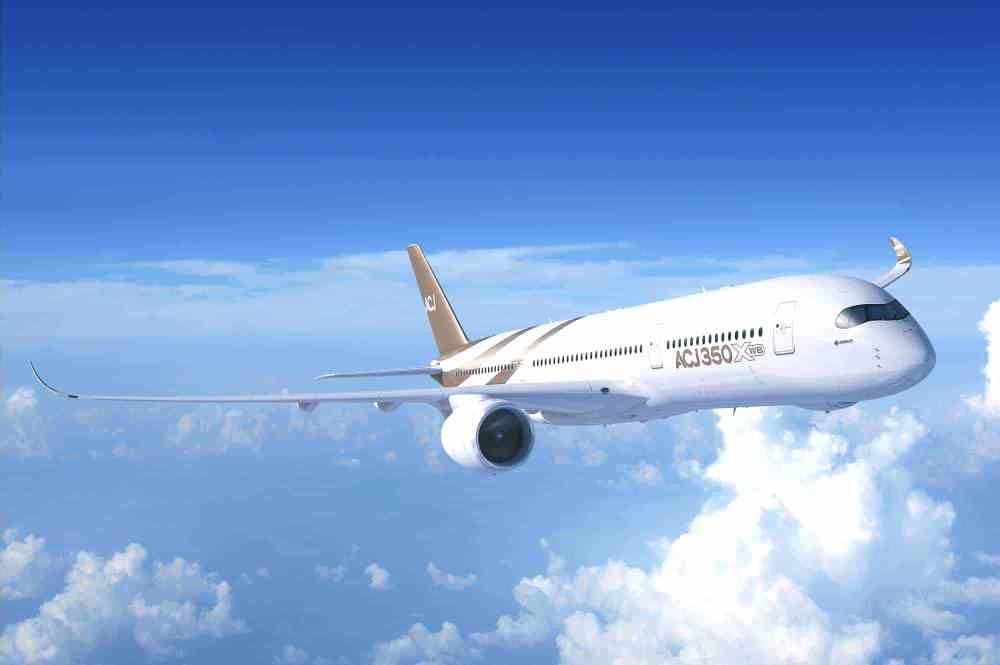
El fabricante europeo Airbus SE y China Aviation Supplies Holding Company (CAS) han anunciado la firma de un acuerdo que comprende la compra por parte de las aerolíneas chinas de un total de 290 aviones Airbus A320. El país asiático anuncia el contrato más grande en 2019 que supera, en precio de catálogo, los € 30.000 millones de euros.

El pedido está compuesto por 290 aviones de la Familia A320. La casualidad ha querido que este pedido se anuncie en el momento en el que el modelo rival estadounidense de este segmento, el 737 MAX, pasa su mayor crisis. Además de los A320, China ha encargado 10 aviones de la Familia A350 XWB, lo que elevaría la cuantía del pedido por encima de los 30.000 millones de euros, a precio de catálogo. El acuerdo fue firmado en París por Guillaume Faury, Presidente de Airbus Commercial Aircraft y futuro CEO de Airbus, y Jia Baojun, Presidente de CAS, en presencia del Presidente chino Xi Jinping y el Presidente francés Emmanuel Macron. «Nos sentimos honrados de apoyar el crecimiento de la aviación civil de China con nuestras principales familias de aeronaves. Nuestra huella en expansión en China demuestra nuestra confianza duradera en el mercado de la región y nuestro compromiso a largo plazo con nuestros socios», dijo Guillaume Faury.

AW-70011044.png

Demanda aviones en China

Según la última proyección del mercado realizada por Airbus, entre el período 2018-2037, China necesitará unos 7.400 nuevos aviones de pasajeros, entre pasajeros y carga. Esta cifra representa más del 19% de la demanda total mundial para este periodo que alcanzaría 37.400 aviones nuevos, según las mismas estimaciones. A fines de enero de 2019, la flota de Airbus en servicio con aerolíneas chinas totalizaba unos 1.730 aviones, de los cuales 1.455 son de la Familia A320, y 17 son aviones de la Familia A350 XWB. Con más de 14.600 aviones de la Familia A320 pedidos y más de 8.600 entregados, el A320 es la familia de aviones de pasillo único con más éxito de Airbus.

La familia A320NEO es, actualmente, el avión de pasillo único más vendido de su segmento con más de 6.500 pedidos de más de 100 clientes desde su lanzamiento en 2010. Su rival, el Boeing 737 MAX acumula 5.100 pedidos. Airbus y Boeing protagonizan una batalla aerocomercial en el sector de los narrowbodies. La amenaza al Boeing 737 MAX está dañando su reputación, mientras que el A320NEO gozo de alto vuelo.AW-Icon-TXT-01

Resultado de imagen para CAS Holding Company buys 290 A320CAS Holding Company buys 290 A320

CAS Holding Company of China buys 290 Airbus A320 aircraft

Resultado de imagen para CAS Holding CompanyThe European manufacturer Airbus SE and China Aviation Supplies Holding Company (CAS) have announced the signing of an agreement comprising the purchase by Chinese airlines of a total of 290 Airbus A320 aircraft. The Asian country announces the largest contract in 2019 that exceeds € 30,000 million in catalog price.

The order is composed of 290 aircraft of the A320 Family. The chance has wanted that this order is announced at the moment in which the American rival model of this segment, the 737 MAX, passes its biggest crisis. In addition to the A320, China has commissioned 10 A350 XWB Family aircraft, which would raise the order amount above 30,000 million euros, at the catalog price. The agreement was signed in Paris by Guillaume Faury, President of Airbus Commercial Aircraft and future CEO of Airbus, and Jia Baojun, President of CAS, in the presence of Chinese President Xi Jinping and French President Emmanuel Macron. «We are honored to support the growth of China’s civil aviation with our major aircraft families, and our expanding footprint in China demonstrates our long-term confidence in the region’s market and our long-term commitment to our partners», said Guillaume. Faury.

Resultado de imagen para CAS Holding CompanySIGNATURE OF THE AGREEMENT BETWEEN AIRBUS AND CAS HOLDING COMPANY

AW-70011045.png

Demand aircraft in China

According to the latest market forecast by Airbus, between 2018-2037, China will need some 7,400 new passenger aircraft, between passengers and cargo. This figure represents more than 19% of the total world demand for this period that would reach 37,400 new aircraft, according to the same estimates. At the end of January 2019, the Airbus fleet in service with Chinese airlines totaled some 1,730 aircraft, of which 1,455 are from the A320 Family, and 17 are A350 XWB Family aircraft. With more than 14,600 A320 Family aircraft ordered and more than 8,600 delivered, the A320 is Airbus’ most successful family of single-aisle aircraft.

The A320NEO family is currently the best-selling single aisle aircraft in its segment with more than 6,500 orders from more than 100 customers since its launch in 2010. Its rival, the Boeing 737 MAX, has 5,100 orders. Airbus and Boeing star in an aerocomercial battle in the narrowbodies sector. The threat to the Boeing 737 MAX is damaging its reputation, while the A320NEO enjoyed high flying. A \ W


Ξ A I R G W A Y S Ξ
SOURCE: Airgways.com
DBk: Airbus.com / Airgways.com
AW-POST: 201903262143AR

A\W   A I R G W A Y S ®

Airbus reconsidera ensamblaje en China

Resultado de imagen para Airbus Tianjin

AW | 2019 03 25 16:37 | INDUSTRY

logo_airbus (2)Airbus reconsidera los procesos de ensamblaje en China

Airbus está considerando si modifica los procesos de ensamblaje de su última generación de aviones A330 en la República de China como parte de una oferta para aumentar su participación de mercado en el mercado de aviación civil de más rápido crecimiento en el mundo.

La multinacional europea está siguiendo una tendencia iniciada por Boeing, que recientemente abrió una nueva planta de terminación en China. A primera vista, la decisión de las dos compañías que dominan el mercado de la aviación civil tiene sentido construir donde viva su mayor cliente. Es especialmente porque China aún no tiene una industria de aviación civil totalmente desarrollada y lista para competir globalmente. Los beneficios son muchos, incluida la buena voluntad y la estima del país que compraría estos aviones. A largo plazo, sin embargo, eso podría resultar ser un error de cálculo costoso. Basándose en su historia reciente, China no tardará mucho en ponerse al día y desplazar en gran medida a ambas empresas en el mercado doméstico de la aviación, además de aprovechar una gran parte de la cuota de mercado global del duopolio corporativo. Por lo tanto, Airbus y Boeing podrían tomar decisiones a corto plazo con consecuencias negativas a largo plazo para su rentabilidad futura.

Dado el formidable avance económico de China, nada de esto debería ser una sorpresa ni para Airbus ni para Boeing. Tampoco debería impactar a los gobiernos occidentales. El problema es que todos han sido guiados históricamente por la ingenua suposición de que el simple hecho de admitir a China en organizaciones como la Organización Mundial del Comercio (OMC) induciría a Beijing, según las palabras de Philip Pan, «finalmente se inclinó a lo que se consideraba las reglas establecidas de la modernización: la prosperidad alimentaría las demandas populares de libertad política y llevaría a China al redil de las naciones democráticas. O la economía china flaquearía bajo el peso del gobierno autoritario y la podredumbre burocrática». China tiene muchos objetivos y metas que son antitéticos a la prosperidad a largo plazo de las empresas y economías occidentales.

Boeing y Airbus podrían convertirse simplemente en los últimos corderos de sacrificio occidentales. Beijing ha apuntado explícitamente a los aviones de fuselaje ancho como uno de sus 10 nuevos sectores prioritarios para la sustitución de importaciones en su documento «Hecho en China 2025», por lo que cualquier ganancia a corto plazo que Airbus y Boeing reciban en términos de obtener pedidos adicionales de China podría ser socavado a largo plazo.

Las transferencias de tecnología resultantes y los menores costos laborales le darán a Pekín un gran salto hacia la competencia directa y, finalmente, el desplazamiento de ambas compañías. Dada la fusión con McDonnell Douglas, Boeing continuará su marcha hacia el hecho de convertirse en una sucursal del Departamento de Defensa de los Estados Unidos a medida que se desploma su participación en el mercado civil, pero Airbus no tiene realmente el lujo de una alternativa militar, dada la relativa escasez de los gastos de defensa europeos.

Boeing está afrontando contratiempos con la línea Boeing 737. La puesta a tierra de los Boeing 737 MAX a nivel mundial se produjo poco después de los problemas iniciales de lanzamiento del Boeing 787 Dreamliner hace unos seis años donde la demoduralización de la producción significaba que Boeing no podía explicar por completo la transmisión y carga de estrés a nivel del sistema. Ilustra los peligros de expandir la manufactura en todo el mundo.

Las compañías estadounidenses como Boeing subestiman constantemente el valor de integrar estrechamente la investigación y el desarrollo y la manufactura, al tiempo que minimizan los riesgos de separarlos.

Al decidir ampliar su producción de A330 en China, Airbus parece estar dispuesto a repetir el error de Boeing, un posible error de cálculo que la mayoría de las empresas de la Unión Europea han evitado en gran medida, porque la UE ha priorizado la manufactura doméstica / desalentado la deslocalización más que sus contrapartes de Estados Unidos.

El mismo Beijing históricamente ha equilibrado sus compras de los principales fabricantes de aviación civil para garantizar que no dependa demasiado de un solo proveedor de aeronaves, lo que significa que Airbus probablemente se beneficiará del vacío creado por el retiro del Boeing 737. El retiro del 737 también complica la resolución del conflicto comercial entre Estados Unidos y China, que parecía estar más cerca de la resolución a la luz de la propuesta de Beijing de comprar US$ 1.2 billones adicionales en exportaciones estadounidenses durante seis años. Las compras de aviones de Boeing figuraron en gran medida en la lista de compras de Beijing.

Los desafíos a más largo plazo se relacionan con la trayectoria de desarrollo económico de China y su correspondiente ascenso en la curva de alta tecnología, que se ha caracterizado en gran medida por políticas mercantilistas de protección y un fuerte subsidio gubernamental. Pero los desafíos a más largo plazo se relacionan con la trayectoria de desarrollo económico de China y su correspondiente ascenso en la curva de alta tecnología, que se ha caracterizado en gran medida por las políticas mercantilistas de protección y el fuerte subsidio gubernamental. En este sentido, el estado chino ha seguido una estrategia de desarrollo nacional descrita por primera vez a mediados del siglo XIX por el economista alemán Friedrich List, quien argumentó que el gobierno nacional debería desempeñar un papel crucial en la promoción, guía y regulación del proceso de desarrollo económico nacional.

China sigue siendo principalmente una economía dominada por el estado, que evita las disciplinas de una economía de libre mercado. Esto significa que tiene la capacidad y la predisposición ideológica para usar la política fiscal nacional como líder de pérdidas, absorbiendo pérdidas mucho más allá de lo que se toleraría en una economía dominada por empresas privadas.

China puede reducir las futuras exportaciones de los Estados Unidos mediante la construcción de su propio competidor para el Boeing 737 y Airbus A320 y también las futuras exportaciones de Europa si Airbus decide construir el A330 en China y China por su parte compra los motores Rolls-Royce ‘Made in China’ para el C929 y el A330.

Tanto los gobiernos occidentales como las corporaciones occidentales han subestimado de manera persistente el poder del modelo de desarrollo económico de China y la correspondiente amenaza económica que representa para la propia afluencia de Occidente. La crítica habitual dirigida contra el modelo de crecimiento chino es que un país que subsidia a sus industrias termina con industrias ineficientes, porque las empresas locales altamente protegidas están protegidas de la competencia global, y finalmente dejan al país que recurre al proteccionismo con productos inferiores. En la práctica, por lo tanto, no hay ninguna razón para que el mismo modelo no funcione con respecto a la aviación civil.AW-Icon-TXT-01

Resultado de imagen para Airbus TianjinAirbus reconsiders assembly in China

Airbus reconsiders assembly processes in China

Airbus LogotypeAirbus is considering whether to modify the assembly processes of its latest generation of A330 aircraft in the Republic of China as part of an offer to increase its market share in the fastest growing civil aviation market in the world.

The European multinational is following a trend initiated by Boeing, which recently opened a new completion plant in China. At first glance, the decision of the two companies that dominate the civil aviation market makes sense to build where their biggest customer lives. It is especially because China still does not have a fully developed civil aviation industry ready to compete globally. The benefits are many, including the goodwill and esteem of the country that would buy these aircraft. In the long term, however, that could turn out to be a costly miscalculation. Based on its recent history, China will not take long to catch up and largely displace both companies in the domestic aviation market, as well as take advantage of a large part of the global market share of the corporate duopoly. Therefore, Airbus and Boeing could make short-term decisions with long-term negative consequences for future profitability.

Given China’s formidable economic progress, none of this should come as a surprise to either Airbus or Boeing. Nor should it impact Western governments. The problem is that all have historically been guided by the naive assumption that simply admitting China into organizations such as the World Trade Organization (WTO) would induce Beijing, in the words of Philip Pan, «finally bowed to what that it was considered the established rules of modernization: prosperity would feed the popular demands of political freedom and would take China to the fold of democratic nations. Or the Chinese economy would falter under the weight of authoritarian government and bureaucratic rot». China has many goals and objectives that are antithetical to the long-term prosperity of Western companies and economies.

Boeing and Airbus could simply become the last Western sacrificial lambs. Beijing has explicitly targeted wide-body aircraft as one of its 10 new priority sectors for import substitution in its «Made in China 2025» document, so any short-term gains that Airbus and Boeing receive in terms of obtaining Additional orders from China could be undermined in the long term.

The resulting technology transfers and lower labor costs will give Beijing a big leap to direct competition and, ultimately, the displacement of both companies. Given the merger with McDonnell Douglas, Boeing will continue its march toward becoming a branch of the United States Department of Defense as its market share plummets, but Airbus does not really have the luxury of a military alternative, given the relative scarcity of European defense spending.

Boeing is facing setbacks with the Boeing 737 line. The grounding of the Boeing 737 MAX worldwide occurred shortly after the initial launch problems of the Boeing 787 Dreamliner about six years ago where the demodulation of the production meant that Boeing did not It could completely explain the transmission and stress load at the system level. It illustrates the dangers of expanding manufacturing throughout the world.

US companies like Boeing constantly underestimate the value of tightly integrating research and development and manufacturing, while minimizing the risks of separating them.

In deciding to expand its A330 production in China, Airbus seems willing to repeat the Boeing error, a possible miscalculation that most European Union companies have largely avoided, because the EU has prioritized domestic manufacturing/discouraged relocation more than its counterparts in the United States.

Beijing itself has historically balanced its purchases from major civil aviation manufacturers to ensure that it does not rely too much on a single aircraft supplier, which means that Airbus will likely benefit from the vacuum created by the withdrawal of the Boeing 737. The withdrawal of the 737 It also complicates the resolution of the trade dispute between the United States and China, which seemed closer to the resolution in light of Beijing’s proposal to buy an additional US $ 1.2 billion in US exports for six years. Boeing aircraft purchases figured heavily on the Beijing shopping list.

The longer-term challenges are related to China’s economic development trajectory and its corresponding rise in the high-tech curve, which has been characterized to a large extent by mercantilist protection policies and a strong government subsidy. But the longer-term challenges are related to China’s economic development trajectory and its corresponding rise in the high-tech curve, which has been characterized to a large extent by mercantilist policies of protection and strong government subsidy. In this regard, the Chinese state has followed a national development strategy first described in the mid-nineteenth century by the German economist Friedrich List, who argued that the national government should play a crucial role in the promotion, guidance and regulation of the process of national economic development.

China is still mainly an economy dominated by the state, which avoids the disciplines of a free market economy. This means that it has the capacity and the ideological predisposition to use national fiscal policy as a loss leader, absorbing losses far beyond what would be tolerated in an economy dominated by private companies.

China can reduce the future exports of the United States by building its own competitor for the Boeing 737 and Airbus A320 and also future European exports if Airbus decides to build the A330 in China and China for its part purchases the Rolls-Royce engines ‘Made in China’ for the C929 and the A330.

Both Western governments and Western corporations have persistently underestimated the power of China’s economic development model and the corresponding economic threat it poses to the very influx of the West. The usual criticism directed against the Chinese growth model is that a country that subsidizes its industries ends up with inefficient industries, because highly protected local companies are protected from global competition, and finally leave the country resorting to protectionism with inferior products. In practice, therefore, there is no reason why the same model does not work with respect to civil aviation. A \ W


Ξ A I R G W A Y S Ξ
SOURCE: Airgways.com
DBk: Asiatimes.com / Welt.de / Stefenchow.com
AW-POST: 201903251637AR

A\W   A I R G W A Y S ®

Airbus 1ra formación empleados Mobile

AW-700837-AL.pngAW | 2019 03 25 13:56 | INDUSTRY / TRAINING

airbus_assembly_logo-001.jpgAirbus Mobile incorpora primera formación empleados

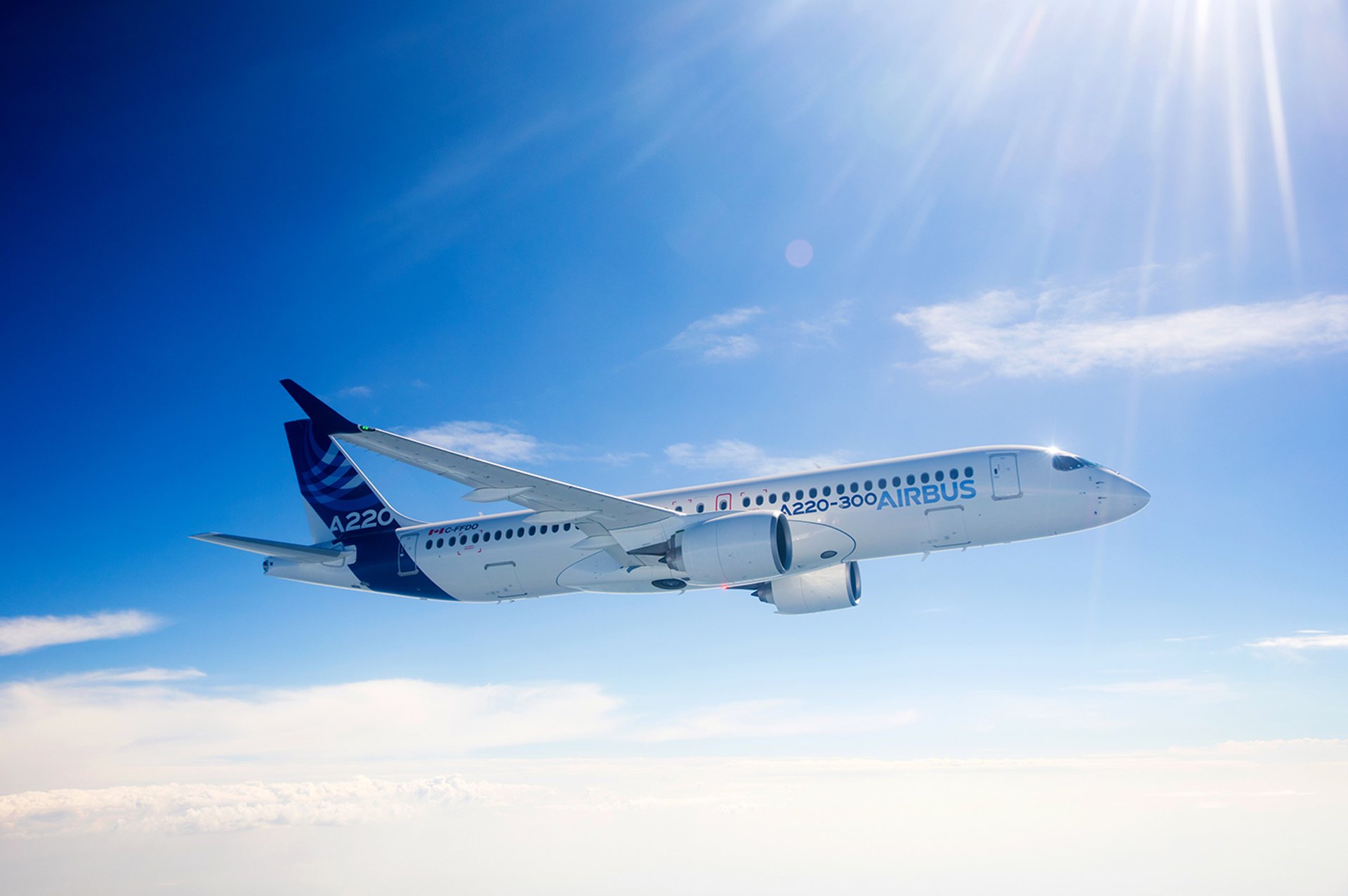
Airbus ha incorporado el primer grupo de empleados reclutados para su línea de ensamblaje Airbus A220. Airbus dijo que los nuevos miembros del equipo A220 se unieron a la nueva orientación de contratación por parte de los actuales empleados de A320 que se transfirieron a la producción de A220 y los colegas recién contratados destinados a la organización de producción de la Familia A320, que está aumentando la cantidad de aviones que produce durante el próximo año.

Los primeros empleados de la nueva línea de ensamblaje de Airbus en Mobile se presentaron a trabajar este Lunes, según ha informado la compañía. La propia línea de montaje se encuentra en las primeras fases de construcción. Cuando esté completo, será uno de los dos sitios en el mundo donde Airbus produce la familia de aviones A220, una línea de jets de un solo pasillo y bimotores que es algo más pequeña que los aviones de la familia A320 que Airbus ya ensambla en Mobile.

La compañía anunció en una publicación en Facebook que un grupo de empleados comenzó la capacitación de orientación para nuevos empleados el lunes en las instalaciones de AIDT en Mobile Aeroplex en Brookley. Después de un mes de capacitación local, el equipo realizará la transición a Mirabel, Quebec (Canadá) para entrenar durante tres meses junto con sus colegas en la organización de la línea de ensamblaje A220 allí.

Los nuevos miembros del equipo A220 se unieron a la nueva orientación de contratación por parte de los actuales empleados de A320 que se transfirieron a la producción de A220 y los colegas recién contratados destinados a la organización de producción de la Familia A320, que está aumentando la cantidad de aviones que produce durante el próximo año. Airbus dice que entre la contratación de la línea A220 y la contratación relacionada con el aumento de la producción en su línea A320, planea agregar unos 600 puestos de trabajo en Mobile a mediados de 2020.

En un desarrollo relacionado, la asociación Airbus-Bombardier para producir el A220 obtuvo un nuevo nombre este mes. La A220 fue desarrollada inicialmente por Bombardier como la CSeries, y cuando Airbus obtuvo una participación mayoritaria en el programa, la asociación se denominó Sociedad Limitada de Aeronaves de la CSeries (CSALP).

Ese nombre se volvió un tanto anticuado cuando Airbus cambió el nombre de la CSeries como la familia A220 para adaptarse a su propia nomenclatura. El 14 Marzo 2019, Airbus anunció que CSALP pronto cambiaría su nombre a Airbus Canada Limited Partnership. El programa utilizará el logotipo de Airbus como su única identidad visual.AW-Icon-TXT-01

A220-300-in-flight-014.jpg

Airbus first training employees in Mobile

Airbus Logotype.pngAirbus Mobile incorporates first training employees

Airbus has incorporated the first group of employees recruited for its Airbus A220 assembly line. Airbus said that the new A220 team members joined the new hiring orientation by the current A320 employees who were transferred to the production of A220 and the newly hired colleagues assigned to the production organization of the A320 Family, that the number of planes that it produces during the next year is increasing.

The first employees of the new Airbus assembly line in Mobile showed up to work this Monday, according to the company. The assembly line itself is in the early stages of construction. When complete, it will be one of the two sites in the world where Airbus produces the A220 family of aircraft, a line of single-aisle and twin-engine jets that is somewhat smaller than the A320 family aircraft that Airbus already assembles in Mobile.

The company announced in a Facebook post that a group of employees began orientation training for new employees on Monday at the AIDT facility at Mobile Aeroplex in Brookley. After a month of local training, the team will transition to Mirabel, Quebec (Canada) to train for three months together with their colleagues in the organization of the A220 assembly line there.

The new A220 team members joined the new hiring orientation from current A320 employees who were transferred to the production of A220 and newly hired colleagues assigned to the production organization of the A320 Family, which is increasing the number of aircraft produced during the next year. Airbus says that between contracting the A220 line and contracting related to the increase in production on its A320 line, it plans to add some 600 jobs at Mobile in mid-2020.

In a related development, the Airbus-Bombardier partnership to produce the A220 gained a new name this month. The A220 was initially developed by Bombardier as the CSeries, and when Airbus obtained a majority stake in the program, the association was named the CSeries Aircraft Limited Company (CSALP).

That name became somewhat dated when Airbus changed the name of the CSeries as the A220 family to adapt to its own nomenclature. On March 14, 2019, Airbus announced that CSALP would soon change its name to Airbus Canada Limited Partnership. The program will use the Airbus logo as its unique visual identity. A \ W


Ξ A I R G W A Y S Ξ
SOURCE: Airgways.com
DBk: Al.com / Airbus.com
AW-POST: 201903251356AR

A\W   A I R G W A Y S ®

Comlux recibe 1er ACJ320NEO

Comlux-ACJ320neo-take-off-.jpg

AW | 2019 03 25 07:33 | AIRLINES / INDUSTRY

Logo_Airbus_2014.svgComlux recibe su primer Airbus ACJ320NEOAW-70099433.jpg

Comlux ha recibido la primera de tres aeronaves Airbus ACJ320NEO equipada para transporte VIP. Es el mayor cliente de la Familia ACJ320NEO, que ya ha ganado un total de 11 órdenes.

“El nuevo ACJ320NEO nos da los medios para ofrecer vuelos sin escalas a aún más del mundo. CFM International ha apoyado Comlux lo largo de los años, y hemos elegido sus nuevos motores, LEAP-1A de bajo consumo y altamente confiable para alimentar la aeronave. Comlux Finalización instalará un interior de la cabina VIP única, utilizando las tecnologías más avanzadas para ofrecer el mejor confort y lujo a nuestros clientes», dice Comlux Presidente Ejecutivo y CEO Richard Gaona.

ACJ320neo_PW_AIB_V16.jpg

La familia ACJ320NEO utiliza nuevos motores y la punta del ala montados Sharklets para ofrecer un ahorro de combustible del 15%, lo que también se traduce en un salto adelante en la gama de operadores de aviones de negocios. La configuración del ACJ320NEO es de 25 pasajeros, cubriendo una autonomía de 13 horas o 6.000 nm/11.100 kilómetros. La versión más pequeña ACJ319NEO puede transportar ocho pasajeros cubriendo 15 horas o 6.750 nm/12.500 kilómetros.

“Los Airbus corporativos ya tienen una reputación para la comodidad, confiabilidad y valor, ya disfrutar de los costos de operación similares los aviones de negocios tradicionales a través de su patrimonio avión, y ahora son aún más económico en sus versiones NEO», dice el Presidente de ACJ Benoit Defforge.

Más de 700 aviones de la Familia A320NEO ya están en servicio con las compañías aéreas y con más de 15.000 pedidos en firme para toda la familia A320, es el claro líder en su clase.

Airbus A320 fue pionera en características que son ahora estándar en la mayoría de los aviones de negocios de nueva generación como fly-by-wire-protección mejorada, mantenimiento centralizado de ahorro de costes y de fibra de carbono para ahorrar peso la garantía de que tiene un futuro largo y exitoso por delante de él. Más de 190 aviones corporativos de Airbus están en servicio en todo el mundo, volando en todos los continentes, incluida la Antártida.AW-Icon-TXT-01

Comlux-ACJ320neo-in-flight-.jpgComlux receives 1st ACJ320NEO

Comlux receives its first Airbus ACJ320NEO

Comlux has received the first of three Airbus ACJ320NEO aircraft equipped for VIP traffic. He is the largest client of the ACJ320NEO Family, which has already won a total of 11 orders.Resultado de imagen para ACJ320neo logo

«The new ACJ320NEO gives us the means to offer nonstop flights to even more of the world. CFM International has supported Comlux over the years, and we have chosen its new low-consumption, highly reliable LEAP-1A engines to power the aircraft. Comlux Completion will install a unique VIP cabin interior, using the most advanced technologies to offer the best comfort and luxury to our customers», says Comlux CEO and CEO Richard Gaona.

The ACJ320NEO family uses new engines and wingtips mounted Sharklets to offer 15% fuel savings, which also translates into a leap forward in the range of business aircraft operators. The configuration of the ACJ320NEO is 25 passengers, covering an autonomy of 13 hours or 6,000 nm / 11,100 kilometers. The smaller version ACJ319NEO can carry eight passengers covering 15 hours or 6,750 nm/12,500 kilometers.

«The corporate Airbus already have a reputation for comfort, reliability and value, and enjoy operating costs similar to traditional business aircraft through their aircraft heritage, and now they are even more economical in their NEO versions», says the President of ACJ Benoit Defforge.

More than 700 aircraft of the A320NEO Family are already in service with airlines and with more than 15,000 firm orders for the entire A320 family, it is the clear leader in its class.

Airbus A320 pioneered features that are now standard in most next-generation business aircraft such as improved fly-by-wire-protection, centralized maintenance of cost savings and carbon fiber to save weight the guarantee that it has a long and successful future ahead of him. More than 190 Airbus corporate aircraft are in service worldwide, flying on all continents, including Antarctica. A \ W


Ξ A I R G W A Y S Ξ
SOURCE: Airgways.com
DBk: Airbus.com / Airgways.com
AW-POST: 201903250733AR

A\W   A I R G W A Y S ®

FAA aprueba software Boeing 737 MAX

Cassidy-Boeing.jpgAW | 2019 03 24 11:07 | AVIATION SAFETY / INDUSTRY

Boeing-Logo.svgFK,4923,36,737-max-round-pinLa FAA aprueba provisionalmente actualización del software para Boeing 737 MAX

La Administración Federal de Aviación de Estados Unidos (FAA) aprobó provisionalmente una actualización del software para los aviones Boeing 737 MAX con el fin de corregir los errores en el sistema de control de vuelo MCAS.

Después del accidente aéreo del vuelo ET-302 de Ethiopian Airlines que involucró a un segundo Boeing 737-8 MAX que mató a 157 personas el 10 Marzo 2019, y que los investigadores dicen que tiene similitudes claras con el accidente del vuelo JT-610 de Lion Air el 29 Octubre 2018, la compañía anunció que dejaría en tierra a todos sus 737-8/9 MAX. Boeing dijo que la suspensión se aplicó a su flota global de 737 MAX por un total de 371 aeronaves. El Departamento de Transporte de Estados Unidos (DOT) ordenó realizar una auditoría sobre la certificación de FAA del modelo Boeing 737 MAX, que últimamente se ve envuelto en un escándalo tras dos accidentes aéreos aparentemente similares en cinco meses.

El fabricante de la aeronave está trabajando en una actualización del sistema después de dos accidentes recientes en un plazo de cinco meses con un Boeing 737-8 MAX, en el que murieron en total 346 personas. Las fuentes en Boeing informan que la actualización de software para el Boeing 737 MAX está lista. Según las fuentes, las delegaciones de tres de las principales líneas aéreas estadounidenses con algunos de los aviones Boeing 737 MAX en su flota fueron invitadas el sábado a la fábrica donde se producen los aviones. Los pilotos de las compañías probarían el nuevo software allí en simuladores. La FAA todavía tiene que aprobar los cambios de software y las instrucciones relacionadas.

Software para MCAS

Una actualización esperada del software para el Sistema de Aumento de Características de Maniobra (MCAS) de Boeing en la aeronave 737 MAX hará que el sistema anti-bloqueo sea menos agresivo y más controlable por los pilotos. Las modificaciones crean una función de prevención de bloqueo más suave, rediseñada para que no supere a otros comandos de la cabina o se produzca un fallo de encendido en función de lecturas defectuosas de un solo sensor. Está diseñado para empujar automáticamente la nariz hacia abajo solo una vez, durante no más de 10 segundos, si la aeronave está en peligro de estancamiento y pérdida de sustentación.

También parte de los próximos cambios anticipados es una mejor capacitación para la tripulación que opera los aviones, que según el Diario incluirá cursos de computación interactivos, así como más información sobre cómo funciona la función MCAS y cómo desactivarla. Los cambios pueden llegar en las próximas semanas. Un portavoz de la FAA le dijo en una declaración que “espera la solución del software a principios de la próxima semana; y lo evaluaremos en su momento”. El nuevo programa comprende que los pilotos recibirán información detallada sobre el sistema automatizado de control de vuelo MCAS, lo que faltaba en los manuales anteriores, según las fuentes.

Directivas de Boeing

El Director General, Presidente de Boeing, Dennis Muilenburg, dijo en un comunicado en el momento que, si bien mantenía «plena confianza en la seguridad del modelo, la suspensión fue emitida por una gran cantidad de precaución. La seguridad es un valor fundamental en Boeing durante el tiempo que hemos estado construyendo aviones; Y siempre lo será. No hay mayor prioridad para nuestra empresa y nuestra industria. Estamos haciendo todo lo posible para comprender la causa de los accidentes en asociación con los investigadores, implementar mejoras de seguridad y ayudar a garantizar que esto no vuelva a suceder».AW-Icon-TXT-01

EEUU indaga certificación 737 MAX

rotate13.png

La investigación sobre cómo dos aviones del mismo modelo Boeing 737-8 MAX pudieron, en cinco meses, accidentarse causando en total 346 víctimas mortales sigue abierta. Responsables de la FAA, la Administración Federal de Aviación, tratan de averiguar si la compañía proporcionó información incompleta o engañosa sobre ese modelo a los reguladores de seguridad aérea y a sus clientes en Estados Unidos. La investigación criminal, que incluye al FBI, se abrió tras el primer siniestro ocurrido en octubre en Indonesia, donde murieron 189 personas que viajaban con Lion Air. Los interrogatorios se centran en el sistema antibloqueo MCAS de estas naves y en cómo fue el proceso de certificación de seguridad. Frente a los recortes presupuestarios y la falta de personal cualificado para analizar las nuevas tecnologías incorporadas a la aeronave, la FAA subcontrató gran parte del proceso de certificación con empleados del propio fabricante estadounidense. La FAA asegura que ese proceso se realizó según las normas. A \ W


boeing-737-max.jpgFAA provisionally approves 737 MAX software

Boeing Logomark WaterThe FAA provisionally approves software update for Boeing 737 MAXFK,4923,36,737-max-round-pin

The Federal Aviation Administration of the United States (FAA) provisionally approved a software update for the Boeing 737 MAX aircraft in order to correct errors in the MCAS flight control system.

After the plane crash of Ethiopian Airlines flight ET-302 that involved a second Boeing 737-8 MAX that killed 157 people on March 10, 2019, and that researchers say has clear similarities with the crash of JT-610 flight Lion Air on October 29, 2018, the company announced that it would leave all its 737-8/9 MAX’s on the ground. Boeing said the suspension was applied to its global fleet of 737 MAX for a total of 371 aircraft. The US Department of Transportation (DOT) has ordered an audit of the FAA certification of the Boeing 737 MAX model, which has recently become embroiled in a scandal following two seemingly similar plane crashes in five months.

The aircraft manufacturer is working on a system update after two recent accidents within five months with a Boeing 737-8 MAX, which killed a total of 346 people. Sources in Boeing report that the software update for the Boeing 737 MAX is ready. According to the sources, the delegations of three of the main US airlines with some of the Boeing 737 MAX aircraft in their fleet were invited on Saturday to the factory where the planes are produced. The pilots of the companies would try the new software there in simulators. The FAA still has to approve the software changes and related instructions.

Software for MCAS

An expected software update for the Boeing Maneuvering Feature Enhancement System (MCAS) on the 737 MAX aircraft will make the anti-lock system less aggressive and more controllable by pilots. Modifications create a smoother lock prevention function, redesigned so that it does not outperform other cab commands, or a misfire occurs based on faulty readings from a single sensor. It is designed to automatically push the nose down only once, for no more than 10 seconds, if the aircraft is in danger of stalling and loss of lift.

Also part of the upcoming anticipated changes is better training for the crew that operates the aircraft, which according to the Journal will include interactive computer courses, as well as more information on how the MCAS function works and how to deactivate it. Changes may arrive in the coming weeks. An FAA spokesman told him in a statement that he «expects the software solution early next week; and we will evaluate it at the time». The new program understands that pilots will receive detailed information about the automated MCAS flight control system, which was lacking in previous manuals, according to the sources.

Boeing directives

The CEO, President of Boeing, Dennis Muilenburg, said in a statement at the time that, while maintaining «full confidence in the safety of the model, the suspension was issued by a large amount of caution. Security is a fundamental value in Boeing during the time that we have been building aircraft, and always will be.There is no higher priority for our company and our industry. We are doing everything we can to understand the cause of accidents in partnership with researchers, implement safety improvements and help to ensure that this does not happen again». A \ W

US investigates 737 MAX certification

The investigation into how two planes of the same model (737 Max, of Boeing) could, in five months, be injured causing a total of 346 fatalities is still open. Responsible for the FAA, the Federal Aviation Administration, they try to find out if the company provided incomplete or misleading information about that model to air safety regulators and their clients in the United States. The criminal investigation, which includes the FBI, was opened after the first incident in October in Indonesia, where 189 people were killed traveling with Lion Air. The interrogations focus on the MCAS anti-lock system of these ships and on how the security certification process went. Faced with budget cuts and the lack of qualified personnel to analyze the new technologies incorporated into the aircraft, the FAA subcontracted a large part of the certification process with employees of the US manufacturer itself. The FAA assures that this process was carried out according to the standards. A \ W


Ξ A I R G W A Y S Ξ
SOURCE: Airgways.com
DBk: Transportation.gov / Faa.gov / Boeing.com / Airgways.com
AW-POST: 201903241107AR

A\W   A I R G W A Y S ®

El largo despegue de la aviación china

AW-70883222.jpgAW | 2019 03 24 10:19 | INDUSTRY

Resultado de imagen para COMAC logoLa industria de la aviación de China ha logrado muchos avances en estos últimos tiempos, peo la menor eficiencia las hace poco competitivas para triunfar fuera de sus fronteras

La industria de la aviación de China ha gastado sumas millonarias en desarrollar su propia industria de aviación, un ambicioso proyecto que se remonta décadas atrás y que ha tomado impulso en los últimos años con la presentación de varias aeronaves de pasajeros entre ellas el COMAC ARJ-21 y el COMAC C-919. Estos modelos tienen cierto recorrido en el potente mercado aeroespacial chino, cuyos principales actores están controlados por el Estado, pero la falta de tecnologías clave para la producción de semejante obra de ingeniería en el país asiático sitúa a la industria autóctona en desventaja frente a los gigantes Boeing y Airbus.

Competencia narrowbodies

Aunque la industria de Boeing esté atravesando dificultades en su línea 737 MAX junto a las dudas del mercado aéreo, muchos han vuelto a poner sobre la mesa en el país asiático las posibilidades comerciales del C-919, en franca competencia con los A320NEO y Boeing 737 MAX. El avión C-919 pretende competir en el segmento narrowbodies donde se encuentera la línea más dura en términos de mercado.

COMAC C-919

El COMAC C-919 continúa en fase de pruebas y se prevé que no trasladará entrará en servicio comercial hasta 2021, una vez consiga la certificación de los reguladores chinos. La empresa dice que ha recibido más de 800 pedidos de esta aeronave, el 95% de los cuales procedentes de aerolíneas chinas, muchas de ellas dominadas por el estado. “Nosotros no determinamos qué marca comprar o cuántos aviones se adquieren; esto depende de la voluntad de las autoridades. No creo que el C-919 pueda desplegarse tan rápidamente. Además de todos los permisos, se necesitan pilotos y tripulaciones que estén entrenados para esta nueva aeronave. Y construir un avión no es lo mismo que construir cientos de ellos por todo lo que implica en términos de servicios de mantenimiento, que ahora no están desarrollados”, admite Chang Waisan, Subdirector del Departamento de Estándares y Operaciones de China Southern Airlines, una de las tres grandes aerolíneas chinas. Solamente por la autoridad del Gobierno de China, el C-919 tendría una enorme proyección en un mercado inmenso y en pleno crecimiento.

El C919 se promociona como un “Made in China”, aunque en realidad solamente la mitad de sus componentes son fabricados en el país asiático. Otros proceden de Estados Unidos y Europa. En cualquier caso, la aeronave es considerada el pináculo de los esfuerzos de este país para construir un gigante de la aviación comercial que haga sombra, algún día, al duopolio que forman Airbus y Boeing.

Futuro aviación china

Algunos expertos consideran que, además de motivos puramente tecnológicos el C-919 es visto como menos eficiente en términos de consumo de combustible que sus modelos homólogos de Airbus y Boeing, el lento avance del sector en China responde a razones organizativas. “La tecnología de la aviación comercial es ridículamente complicada. Los motores, los materiales, pero lo más difícil es juntar todos estos componentes e integrar los sistemas. La organización que se encarga de esto en China es totalmente inadecuada para la tarea: COMAC es hija de AVEC (Corporación de la Industria de Aviación de China), que a su vez es hija del Ejército de Liberación Popular, una institución basada en la jerarquía y el control, características que no favorecen en nada cuando hay que coordinar el trabajo de más de mil empresas distintas”, explica Scott Kennedy, director de Política y Empresa China en el Centro de Estudios Estratégicos Internacionales (CSIS).

Un ejemplo del posible recorrido del C919 lo ilustra el ARJ21, un jet regional desarrollado también por COMAC. Tras obtener la certificación del regulador chino en 2014, solamente 11 de estos modelos surcan actualmente los cielos chinos. Diez de ellos los opera Chengdu Airlines, aerolínea cuyo principal accionista es la propia COMAC. La aeronave no ha obtenido ninguna certificación internacional para ser comercializada en otros mercados. “Los principales reguladores del sector en el mundo son el europeo y el estadounidense y se centran casi exclusivamente en cuestiones de seguridad. China no obtendrá puntos extra por ser China, por ser un país grande o por ser un país en desarrollo. Hay unos estándares, son universales, y hay que cumplir con ellos”, dice Kennedy.

Las dificultades a que se enfrenta la industria de aviación comercial como en el caso de Sukhoi Aircraft, que ante la gran expectativas que ha generado introducir una aeronave regional SSJ-100 en los mercados fuera de la Federación Rusia como fueron los casos de Europa, México e Indonesia, tan pronto transcurrió el tiempo, el soporte logístico ha ocasionado serias dificultades para las aerolíneas que han solicitado la devolución de las aeronaves por problemas técnicos y de soporte.

La industria de la aviación en China ha logrado grandes avances, pero todavía le queda un largo vuelo para conquistar realmente los cielos del mundo. Pocos dudan de que China logrará a medio plazo mejorar sus capacidades tecnológicas y creará aeronaves competitivas. Competir con Airbus y Boeing es una tarea muy difícil. “Es muy probable que en una generación estos aviones mejoren significativamente, pero la industria de la aviación cambia constantemente. Mientras China trata de ponerse al día, en Europa y Estados Unidos ya desarrollan el futuro”, afirma Kennedy.AW-Icon-TXT-01

COMAC_B-001A_May_2017.jpgThe long takeoff of Chinese aviation

China’s aviation industry has made many advances in recent times, but the lower efficiency makes them uncompetitive to succeed outside their borders

China’s aviation industry has spent millions in developing its own aviation industry, an ambitious project that dates back decades and has gained momentum in recent years with the presentation of several passenger aircraft including the COMAC ARJ- 21 and COMAC C-919. These models have some route in the powerful Chinese aerospace market, whose main actors are controlled by the State, but the lack of key technologies for the production of such engineering work in the Asian country puts the indigenous industry at a disadvantage compared to the giants Boeing and Airbus.

Competition narrowbodies

Although the industry of Boeing is going through difficulties in its line 737 MAX along with the doubts of the air market, many have returned to put on the table in the Asian country the commercial possibilities of the C-919, in clear competition with the A320NEO and Boeing 737 MAX. The C-919 aircraft intends to compete in the narrowbodies segment where the hardest line is found in terms of the market.

COMAC C-919

The COMAC C-919 is still in the testing phase and it is expected that it will not be moved into commercial service until 2021, once it has obtained the certification from the Chinese regulators. The company says it has received more than 800 orders for this aircraft, 95% of which came from Chinese airlines, many of them dominated by the state. «We do not determine which brand to buy or how many planes are purchased; This depends on the will of the authorities. I do not think the C-919 can be deployed so quickly. In addition to all permits, pilots and crews are needed who are trained for this new aircraft. And building an airplane is not the same as building hundreds of them for everything it implies in terms of maintenance services, which are now undeveloped», admits Chang Waisan, Deputy Director of the Department of Standards and Operations of China Southern Airlines, one of the three big Chinese airlines. Only by the authority of the Government of China, the C-919 would have a huge projection in a huge and growing market.

The C919 is touted as a «Made in China», although in reality only half of its components are manufactured in the Asian country. Others come from the United States and Europe. In any case, the aircraft is considered the pinnacle of the efforts of this country to build a commercial aviation giant that will overshadow, one day, the duopoly formed by Airbus and Boeing.

Future Chinese aviation

Some experts consider that, in addition to purely technological reasons, the C-919 is seen as less efficient in terms of fuel consumption than its homologous models of Airbus and Boeing, the slow progress of the sector in China responds to organizational reasons. «Commercial aviation technology is ridiculously complicated. The engines, the materials, but the most difficult thing is to gather all these components and integrate the systems. The organization that is responsible for this in China is totally inadequate for the task: COMAC is the daughter of AVEC (China Aviation Industry Corporation), which in turn is the daughter of the People’s Liberation Army, an institution based on the hierarchy and control, characteristics that do not favor anything when you have to coordinate the work of more than a thousand different companies», explains Scott Kennedy, director of China Policy and Enterprise at the Center for International Strategic Studies (CSIS).

An example of the possible route of the C919 is illustrated by the ARJ21, a regional jet also developed by COMAC. After obtaining the certification of the Chinese regulator in 2014, only 11 of these models are currently sailing the Chinese skies. Ten of them are operated by Chengdu Airlines, an airline whose main shareholder is COMAC itself. The aircraft has not obtained any international certification to be marketed in other markets. «The main regulators of the sector in the world are European and American and focus almost exclusively on security issues. China will not get extra points for being China, for being a large country or for being a developing country. There are some standards, they are universal, and you have to comply with them», says Kennedy.

The difficulties facing the commercial aviation industry as in the case of Sukhoi Aircraft, which in view of the great expectations generated by the introduction of a regional aircraft SSJ-100 in markets outside the Russian Federation, such as Europe, Mexico and Indonesia, As soon as the time passed, the logistical support has caused serious difficulties for the airlines that have requested the return of the aircraft due to technical and support problems.

The aviation industry in China has made great progress, but it still has a long flight to really conquer the skies of the world. Few doubt that China will achieve in the medium term to improve its technological capabilities and will create competitive aircraft. Competing with Airbus and Boeing is a very difficult task. «It is very likely that in a generation these aircraft will improve significantly, but the aviation industry is constantly changing. While China tries to catch up, in Europe and the United States they are already developing the future», says Kennedy. A \ W

Resultado de imagen para COMAC ARJ-21 C919中国航空的长期起飞

近年来,中国航空业取得了许多进展,但效率低下使得它们在国外取得成功并不具有竞争力

中国的航空业已经花费了数百万美元来发展自己的航空工业,一个雄心勃勃的项目,可追溯到几十年,并已获得了动力,近年来随着引进数架客机,包括中国商飞ARJ- 21COMAC C-919。这些机型在强大的中国航空市场,其主要球员由国家控制一些旅游,但缺乏关键制造这样的在中国的技术工程工作场所的本土企业处于不利的地位与巨人波音和空客。

竞争狭隘

尽管行业波音在737线MAX疑惑的露天市场atravezando困难,许多人再一次摆上台面在中国的C-919的商业机会,与A320neo和波音737公开竞争MAX。 C-919飞机打算在狭窄车身领域展开竞争,这是市场上最难找到的航线。

COMAC C-919

申诉专员C-919继续测试阶段,预计移动不会进入商业运营,直到2021年曾获得中国监管机构的认证。该公司表示,它已经收到超过800个订单这架飞机,其中95%来自中国的航空公司,其中许多是由政府所主导。 “我们不确定要购买哪个品牌或购买多少架飞机;这取决于当局的意愿。我认为C-919不能如此迅速地部署。除了所有许可证外,还需要为这架新飞机接受过培训的飞行员和机组人员。并建立飞机并不像建造数百他们都在维修服务,这是现在不发达条款意味着同样的» 承认昌Waisan,标准部中国南方航空公司,之一的运营和副主任三大中国航空公司。只有中国政府的权威,C-919才能在庞大且不断增长的市场中有一个巨大的预测。

该C919被吹捧为“中国制造”,但在现实中只有其组件的一半在中国制造的。其他人来自美国和欧洲。在任何情况下,飞机被认为是这个国家的努力,建立一个巨大的商业航空是色调哪天形成双寡头空客和波音的巅峰之作。

未来的中国航空

一些专家认为,除了纯粹的技术原因的C-919被认为是效率较低的燃油消耗比他们的同行空客和波音的机型而言,在中国该行业的进展缓慢响应组织方面的原因。 “商业航空技术非常复杂。引擎,材料,但最困难的是收集所有这些组件并集成系统。负责这个在中国的组织是任务完全不够的:COMAC是AVEC(工业集团公司中国航空),这又是解放军的女儿,一个机构的女儿基于层次和控制功能,不利于任何东西,当涉及到协调一千多不同的公司工作,“斯科特·肯尼迪,在战略和国际问题研究中心(CSIS)中国策略总监和管理说。

ARJ21也是一个可能的C919航线的例子,这是一架由中国商飞开发的区域喷气式飞机。在2014年获得中国监管机构的认证后,目前只有11个型号在中国的天空中航行。其中10家由成都航空公司运营,成都航空公司的主要股东是中国商飞。该飞机尚未获得任何在其他市场上销售的国际认证。 “该行业的主要监管机构是欧洲和美国,并且几乎专注于安全问题。作为一个大国或一个发展中国家,中国不会获得额外积分。有一些标准,它们是普遍的,你必须遵守它们,“肯尼迪说。

考虑到在俄罗斯联邦以外的市场引入区域航空器SSJ-100所带来的巨大期望,苏霍伊航空公司面临商业航空业面临的困难,如欧洲,墨西哥的情况 而印度尼西亚,一旦时间过去,后勤支援就因技术和支援问题要求归还飞机的航空公司造成严重困难。

中国的航空业已经取得了很大的进步,但它仍然有很长的路要走,才能真正征服世界的天空。很少有人怀疑中国将在中期内实现提高技术能力并创造具有竞争力的飞机。与空中客车公司和波音公司竞争是一项非常艰巨的任务。“很可能在一代人中,这些飞机将大幅改进,但航空业正在不断变化。 虽然中国试图赶上,但在欧洲和美国,他们已经在开发未来»,肯尼迪说。A \ W


Ξ A I R G W A Y S Ξ
SOURCE: Airgways.com
DBk: Comac.cc / Shine.cn / Wikimedia.org
AW-POST: 201903241019AR

A\W   A I R G W A Y S ®

IndiGo incorporará 25 A321NEO

AW-70086333.jpg

AW | 2019 03 23 12:12 | AIRLINES / INDUSTRY

IndiGo de la India incorporará 25 Airbus A321NEO a su flota

IndiGo se está preparando para recibir 25 Airbus A321NEO adicionales como parte de los planes para volar a más destinos en el extranjero, incluida China. IndiGo, la aerolínea más grande de la India, recibirá la entrega de las aeronaves A321NEO durante los próximos 12 meses y reconfigurará 15 de ellos con 220 asientos. Estos 15 aviones se utilizarán para volar en rutas de larga distancia a destinos en Europa con una escala en uno de los aeropuertos del Medio Oriente para reabastecerse de combustible y rutas domésticas, incluidas las ciudades de Delhi y Mumbai, dijo el responsable comercial de la aerolínea, William Boulter.

IndiGo tiene un libro de pedidos por 430 aviones de la familia A320NEO, ha actualizado 125 de sus aviones existentes en pedidos a A321NEO’s, que son más eficientes en cuanto a combustible por asiento/kilómetros, pueden volar una distancia más larga y acomodar a más personas. En la actualidad, IndiGo tiene más de 262 aviones en su flota, que incluyen A320, A320NEO, A321NEO y ATR’s.AW-Icon-TXT-01

AW-7000087.jpgIndiGo will incorporate 25 A321NEO

IndiGo of India will incorporate 25 Airbus A321NEO into its fleet

IndiGo is preparing to receive 25 Airbus A321NEO additional as part of plans to fly to more destinations abroad, including China. IndiGo, the largest airline in India, will receive the delivery of the A321NEO aircraft during the next 12 months and will reconfigure 15 of them with 220 seats. These 15 aircraft will be used to fly long-haul routes to destinations in Europe with a stopover at one of the airports in the Middle East for refueling and domestic routes, including the cities of Delhi and Mumbai, the airline’s commercial manager, said William Boulter.

Indigo-A321neo-TW-1546163523.jpgINDIGO WAS THE FIRST AIRLINE OF INDIA TO INCORPORATE THE AIRBUS A321NEO IN DECEMBER 2018

IndiGo has an order book for 430 aircraft of the A320NEO family, has updated 125 of its existing aircraft in orders to A321NEO’s, which are more efficient in terms of fuel per seat / kilometers, can fly a longer distance and accommodate more people . Currently, IndiGo has more than 262 aircraft in its fleet, which include A320, A320NEO, A321NEO and ATR’s. A \ W


Ξ A I R G W A Y S Ξ
SOURCE: Airgways.com
DBk: Goindigo.in / Airbus.com
AW-POST: 201903231212AR

A\W   A I R G W A Y S ®