ATR entrega 1.500 aviones

AW-ATR726001500-JACAW | 2018 11 30 11:50 | INDUSTRY

iDeaATR Aircraft celebra la entrega de la aeronave 1.500

ATR Aircraft, la empresa del consorcio formado por Aérospatiale de Francia y Leonardo (antes Aeritalia) de Italia celebra hoy su entrega de aviones número 1.500 con toda la comunidad de empleados de ATR. El ATR 72-600 se entregó a Japan Air Commuter a fines de Octubre 2018. El consorcio franco-italiano ha marcado hitos para el fabricante de aviones regionales líderes en el mercado, después de la entrega de los 1.000º ATR 72 de Julio 2018 y del número 500º de la ATR Serie 600 en Agosto 2018. Desde su primera entrega, hace más de 30 años, ATR Aircraft se ha convertido en el líder de la aviación regional en la gama de turbopropulsores.

El Director Ejecutivo de ATR Aircraft, Stefano Bortoli, celebró el logro: “Esta es una ocasión trascendental para ATR y un momento de orgullo para todos nuestros colegas, pasados ​​y presentes, que han contribuido a la evolución y el éxito de este fantástico avión. Agradecemos a todos nuestros proveedores, clientes y operadores por acompañarnos en este viaje y esperamos continuar llevando este maravilloso programa hacia el futuro, conectando a más personas en todo el mundo. ATR es el punto de referencia en la aviación regional y tenemos la ambición de seguir desarrollando nuestra contribución y posición en este mercado».

Comienzos prometedores

El primer programa de aviones de la compañía, el ATR 42, se lanzó con la primera entrega al operador regional francés Air Littoral. ATR posteriormente lanzó una versión más grande del avión, el ATR 72, que se entregó por primera vez a Finnair. Desde sus respectivos lanzamientos, el ATR 42 y 72 han evolucionado con importantes mejoras. La última y más moderna versión del avión, la Serie 600, se lanzó en 2009, con la primera entrega a Royal Air Maroc en 2011. Desde 2010, el 75% de las ventas de turbohélices han sido ATR y la compañía tiene actualmente la mayor cuota de mercado de todos los aviones regionales. Se entregaron casi 500 ATR 42, (50 asientos) y más de 1.000 ATR 72 (72 asientos) a más de 200 operadores en 100 países.

El éxito prolongado de ATR Aircraft es una consecuencia de esta política de desarrollar continuamente su producto y esforzarse por ir más allá con su oferta de servicio al cliente. La aeronave ofrece a los operadores una economía inigualable, flexibilidad operativa y aviónica de vanguardia, mientras que los pasajeros pueden disfrutar de la cabina más amplia y cómoda de la aviación regional. Las innovaciones recientes de ATR, como su aviónica Standard 3, ClearVision y Cabinstream aseguran que sus productos continúen siendo los aviones regionales más avanzados del mercado.

ATR continúa fortaleciendo al mismo tiempo su soporte al cliente, innovando nuevos métodos para reducir los costos de mantenimiento directo al tiempo que aumenta su presencia en la capacitación y ofrece un centro de atención al cliente que está abierto full-time.AW-Icon-TXT-01

Resultado de imagen para ATR delivers 1,500 aircraftResultado de imagen para ATR delivers 1,500 aircraft Japan Air CommuterResultado de imagen para ATR delivers 1,500 aircraft Japan Air CommuterAW-ATR7260000300-JACResultado de imagen para ATR delivers 1,500 aircraft Japan Air CommuterATR delivers 1,500 aircraft

ATR Aircraft celebrates the delivery of the 1,500 aircraft

ATR Aircraft, the consortium company formed by Aérospatiale de Francia and Leonardo (formerly Aeritalia) of Italy today celebrates its delivery of 1,500 aircraft with the entire ATR employee community. The ATR 72-600 was delivered to Japan Air Commuter at the end of October 2018. The Franco-Italian consortium has marked milestones for the manufacturer of regional aircraft leaders in the market, after the delivery of the 1,000th ATR 72 of July 2018 and of the 500th number of the 600 Series ATR in August 2018. Since its first delivery, more than 30 years ago, ATR Aircraft has become the regional aviation leader in the turboprop range.

The Executive Director of ATR Aircraft, Stefano Bortoli, celebrated the achievement: «This is a momentous occasion for ATR and a moment of pride for all our colleagues, past and present, who have contributed to the evolution and success of this fantastic airplane. We thank all our suppliers, customers and operators for joining us on this trip and we hope to continue taking this wonderful program to the future, connecting more people around the world. ATR is the reference point in regional aviation and we have the ambition to continue developing our contribution and position in this market».

Promising beginnings

The company’s first aircraft program, the ATR 42, was launched with the first delivery to the French regional operator Air Littoral. ATR subsequently launched a larger version of the plane, the ATR 72, which was delivered to Finnair for the first time. Since their respective launches, the ATR 42 and 72 have evolved with significant improvements. The latest and most modern version of the aircraft, the 600 Series, was launched in 2009, with the first delivery to Royal Air Maroc in 2011. Since 2010, 75% of turbohalic sales have been ATR and the company currently has the largest market share of all regional aircraft. Almost 500 ATR 42 (50 seats) and more than 1,000 ATR 72 (72 seats) were delivered to more than 200 operators in 100 countries.

The prolonged success of ATR Aircraft is a consequence of this policy of continuously developing its product and striving to go further with its customer service offer. The aircraft offers operators unrivaled economy, operational flexibility and state-of-the-art avionics, while passengers can enjoy the widest and most comfortable cabin of regional aviation. The recent innovations of ATR, such as its avionics Standard 3, ClearVision and Cabinstream, ensure that its products continue to be the most advanced regional aircraft on the market.

At the same time, ATR continues to strengthen its customer support, innovating new methods to reduce direct maintenance costs while increasing its presence in training and offering a customer service center that is open full-time. A \ W


Ξ A I R G W A Y S Ξ
SOURCE: Airgways.com
DBk: Atraircraft.com / Washingtonpost.com / Twitter.com/giampaolo_r7
AW-POST: 201811301150AR

A\W   A I R G W A Y S ®

Boeing busca acordar con Embraer

Resultado de imagen para Boeing-Embraer Airgways.com

AW | 2018 11 29 18:01 |INDUSTRY

Boeing-Embraer-Logo.pngBoeing busca cerrar acuerdo con la brasileña Embraer este año pero se acerca cambio de gobierno en Brasil

Boeing inicia una aproximación del futuro presidente de la República de Brasil, Jair Bolsonaro. Aunque la empresa todavía trabaja con la idea de tener, hasta el final del año, el sello del gobierno brasileño, fundamental para la conclusión del negocio, la idea en el gigante estadounidense es empezar a trazar alternativas.

El mayor temor en la compañía, hoy, es retroceder en las negociaciones y perder meses en la negociación, confirmada oficialmente el 21 Diciembre 2017. Los términos finales de la Joint Venture se anunciaron en Julio 2018, y prevé que los estadounidenses tendrán el 80% del segmento de producción de aviones comerciales de la brasileña, mientras que Embraer se quedará con el 20% de las acciones. A pesar de ser un accionista minoritario, el gobierno brasileño tiene la llamada Golden Share de la ex estatal, que da derecho de veto en decisiones de la compañía.

Desde entonces, los detalles se están trabajando. La previsión es que los últimos dos puntos en abierto se celebren en la primera semana de diciembre, pero son cuestiones menores de ajustes. En teoría, el Gobierno de Michel Temer podría dar la aprobación para el negocio hacia final de 2018, que luego aún necesitará ser aprobado por los demás accionistas del fabricante de aviones brasileños en Boeing, la actual directiva ya tiene carta blanca para concluir la transacción y el actual gobierno está tratando de informar a la nueva administración sobre los términos del negocio. Pero, independientemente de eso, la empresa estadounidense quiere estrechar vínculos con el futuro mando de Brasilia.

El temor de los estadounidenses es que, sin la aprobación hasta el final del año, el desenlace de la negociación pueda retrasarse. En un nuevo gobierno lleno de prioridades económicas, la finalización del acuerdo acabe en el cajón o, peor, sea revisado. El gigante estadounidense nunca ocultó que le gustaría que el negocio se terminara rápidamente. En un primer momento, la definición de los términos del acuerdo tardó más de lo esperado y ahora la confirmación del negocio por parte de Brasilia también ocurre en pasos más lentos que lo imaginado. El fuerte sesgo liberal en la economía, anti-privatización y pro-americanos de la gestión que comienza el 1 Enero 2019 dan a los estadounidenses confianza de que el negocio será aprobado.

Los estadounidenses quieren intensificar lazos con la futura administración brasileña. Al mismo tiempo, crece la presión de parte de la sociedad civil-como sindicatos y fiscales- para más garantías del negocio. Hay iniciativas para garantizar que el acuerdo garantice la fabricación de aviones en Brasil y del desarrollo de tecnología en suelo brasileño. Medidas como éstas garantizarían empleos y desarrollo de tecnología estratégica en Brasil, según los postulantes. Para ambos lados del negocio, una rápida conclusión de la licitación militar estadounidense, que puede decidir por la compra de hasta 150 aviones super-tucanes producidos por la compañía brasileña en sociedad con la estadounidense Sierra Nevada, sería un incentivo para que el gobierno brasileño agilizara la conclusión de la compra de la división comercial de la fabricante brasileña por Boeing. Aunque la división militar de Embraer está fuera del negocio, hay cada vez más interés de la empresa de São José dos Campos para relacionarse con los estadounidenses, que van a vender el carguero KC-390, el mayor avión ya producido en Brasil y que puede pasar a ser fabricado también en Estados Unidos, en la planta que la brasileña mantiene en la Florida. Las negociaciones entre Boeing y Embraer llegaron a la pública después de que la europea Airbus se asoció con Bombardier, asumiendo el programa de los aviones C-Series. Bombardier es el gran competidor de Embraer en el mercado de chorros medios, de hasta 150 plazas. Ante la nueva fuerza de los europeos, los estadounidenses buscaban una oportunidad para crecer en chorros regionales, que no operaban, y tener la posibilidad de ofrecer una gama completa de aviones.

Aunque las fuentes de la compañía afirman que las negociaciones comenzaron antes, analistas de mercado vieron el anuncio como una respuesta al negocio Airbus-Bombardier. Para Embraer, sería la forma, según los defensores del negocio, de tener un paraguas poderoso contra nuevas competidores japonesas, chinas y rusas, que están entrando en el segmento de aeronaves de hasta 150 pasajeros. Los críticos, sin embargo, afirman que el negocio limitará la posibilidad de crecimiento de la brasileña, que no intentará en el futuro competir en el mercado de aviones mayores, además de poner en riesgo el desarrollo de una tecnología de punta, dominada por pocas naciones.AW-Icon-TXT-01

Resultado de imagen para Boeing-Embraer Airgways.comBoeing seeks to close deal with Embraer

Boeing seeks to close deal with Brazilian Embraer this year but government change is about to change in Brazil

Boeing begins an approach of the future president of the Republic of Brazil, Jair Bolsonaro. Although the company still works with the idea of ​​having, until the end of the year, the seal of the Brazilian government, fundamental for the conclusion of the business, the idea in the American giant is to begin to draw up alternatives.

The biggest fear in the company today is to step back in the negotiations and lose months in the negotiation, officially confirmed on December 21, 2017. The final terms of the Joint Venture were announced in July 2018, and it predicts that Americans will have 80% of the production segment of Brazilian commercial aircraft, while Embraer will hold 20% of the shares. Despite being a minority shareholder, the Brazilian government has the so-called Golden Share of the former state, which gives right of veto in decisions of the company.Resultado de imagen para Boeing-Embraer Airgways.com

Since then, details are being worked on. The forecast is that the last two points in open are held in the first week of December, but are minor adjustment issues. In theory, the government of Michel Temer could give approval for the business by the end of 2018, which will still need to be approved by the other shareholders of the Brazilian aircraft manufacturer in Boeing, the current directive already has carte blanche to conclude the transaction and the current government is trying to inform the new administration about the terms of business. But, regardless of that, the US company wants to strengthen ties with the future leadership of Brasilia.

The Americans’ fear is that, without approval by the end of the year, the outcome of the negotiation may be delayed. In a new government filled with economic priorities, the conclusion of the agreement ends in the drawer or, worse, be revised. The US giant never concealed that it would like the business to be completed quickly. At first, the definition of the terms of the agreement took longer than expected and now the confirmation of the business by Brasilia also occurs in steps slower than imagined. The strong liberal bias in the economy, anti-privatization and pro-American management that begins on 1 January 2019 give Americans confidence that the business will be approved.

The Americans want to intensify ties with the future Brazilian administration. At the same time, pressure from civil society – such as unions and prosecutors – grows for more business guarantees. There are initiatives to ensure that the agreement guarantees the manufacture of aircraft in Brazil and the development of technology on Brazilian soil. Measures such as these would guarantee jobs and strategic technology development in Brazil, according to the applicants. For both sides of the business, a quick conclusion to the US military bid, which may decide to purchase up to 150 super-toucan aircraft produced by the Brazilian company in partnership with the US-based Sierra Nevada, would be an incentive for the Brazilian government to expedite the conclusion of the purchase of the commercial division of the Brazilian manufacturer by Boeing. Although the military division of Embraer is out of business, there is an increasing interest from the São José dos Campos company to interact with the Americans, who are going to sell the KC-390 freighter, the largest aircraft ever produced in Brazil and that can to be manufactured also in the United States, in the plant that the Brazilian maintains in Florida. Negotiations between Boeing and Embraer reached the public after European Airbus partnered with Bombardier, taking over the C-Series aircraft program. Bombardier is Embraer’s largest competitor in the medium jet market, with up to 150 seats. Faced with the new force of the Europeans, the Americans looked for an opportunity to grow in regional jets, that did not operate, and to have the possibility to offer a complete range of airplanes.

Although company sources say the talks began earlier, market analysts saw the announcement as a response to the Airbus-Bombardier business. For Embraer, it would be the way, according to the defenders of the business, to have a powerful umbrella against new Japanese, Chinese and Russian competitors, who are entering the segment of aircraft of up to 150 passengers. Critics, however, say that the deal will limit Brazil’s growth potential, which will not in the future seek to compete in the larger aircraft market, in addition to jeopardizing the development of state-of-the-art technology dominated by few nations. A \ W


Resultado de imagen para Boeing-Embraer Airgways.comBoeing busca fechar acordo com a Embraer

AW-700899933A Boeing busca fechar acordo com a brasileira Embraer este ano, mas a mudança de governo no Brasil está próxima

A Boeing inicia uma aproximação do futuro presidente da República do Brasil, Jair Bolsonaro. Embora a empresa ainda trabalhe com a idéia de ter, até o final do ano, o selo do governo brasileiro, fundamental para a conclusão dos negócios, a ideia no gigante norte-americano é começar a desenhar alternativas.

O maior medo na empresa, hoje, está de volta nas negociações e perder meses de negociação, confirmou oficialmente em 21 de Dezembro de 2017. Os termos finais da joint venture foi anunciada em Julho 2018, e espera que os americanos terão 80% do segmento de produção de aeronaves comerciais brasileiras, enquanto a Embraer manterá 20% das ações. Apesar de ser acionista minoritário, o governo brasileiro possui a chamada Golden Share do antigo estado, que dá direito de veto nas decisões da empresa.

Desde então, os detalhes estão sendo trabalhados. A previsão é de que os dois últimos pontos abertos sejam realizados na primeira semana de dezembro, mas são questões menores de ajuste. Em teoria, o governo de Michel Temer poderia dar a aprovação para o negócio no final de 2018, então ainda precisa ser aprovada pelo fabricante demais acionistas da brasileira de aeronaves Boeing, a actual directiva já tem carta branca para concluir a transação e O atual governo está tentando informar a nova administração sobre os termos do negócio. Mas, independentemente disso, a empresa americana quer fortalecer os laços com o futuro comando de Brasília.

O medo dos americanos é que, sem aprovação até o final do ano, o resultado da negociação pode ser adiado. Em um novo governo cheio de prioridades econômicas, a finalização do acordo termina na gaveta ou, pior, é revisada. O gigante americano nunca escondeu que gostaria que o negócio terminasse rapidamente. A princípio, a definição dos termos do acordo demorou mais que o esperado e agora a confirmação do negócio por Brasília também ocorre em etapas mais lentas que o imaginado. O forte viés liberal na economia, a anti-privatização e a gestão pró-americana, que começa em 1 Janeiro de 2019, dão aos americanos a confiança de que o negócio será aprovado.

Os americanos querem intensificar os laços com o futuro governo brasileiro. Ao mesmo tempo, cresce a pressão por parte da sociedade civil – como sindicatos e promotores – por mais garantias empresariais. Há iniciativas para garantir que o acordo garanta a fabricação de aeronaves no Brasil e o desenvolvimento de tecnologia em solo brasileiro. Medidas como essas garantiriam empregos e desenvolvimento de tecnologia estratégica no Brasil, segundo os requerentes. Para ambos os lados do negócio, uma conclusão rápida do concurso militar dos Estados Unidos, que pode decidir sobre a compra de 150 aviões super-tucanos produzidos pela empresa brasileira em parceria com a US Sierra Nevada, seria um incentivo para que o governo brasileiro para acelerar a conclusão da compra da divisão comercial da fabricante brasileira pela Boeing. Embora a divisão militar da Embraer está fora do negócio, há um interesse crescente na empresa de São José dos Campos para se relacionar com os americanos, que vai vender o cargueiro KC-390, o maior avião já produzido no Brasil e pode Também deve ser fabricado nos Estados Unidos, na planta que o brasileiro mantém na Flórida. As negociações entre a Boeing e a Embraer vieram a público após a parceria da Airbus com a Bombardier, assumindo o programa de aeronaves da Série-C. A Bombardier é a maior concorrente da Embraer no mercado de jatos médios, com até 150 assentos. Dada a nova força dos europeus, os americanos estavam procurando uma oportunidade para crescer em jatos regionais, que não operavam, e para poder oferecer uma gama completa de aeronaves.

Embora as fontes da empresa afirmem que as negociações começaram mais cedo, os analistas de mercado viram o anúncio como uma resposta aos negócios da Airbus-Bombardier. Para a Embraer, seria o caminho, segundo os defensores dos negócios, para ter um guarda-chuva poderoso contra os novos concorrentes japoneses, chineses e russos, que estão entrando no segmento de aeronaves de até 150 passageiros. Críticos, no entanto, dizem que o negócio limitará a possibilidade de crescimento do brasileiro, que não tentará competir no mercado de aeronaves maiores no futuro, além de comprometer o desenvolvimento de tecnologia de ponta, dominado por poucas nações. A \ W


Ξ A I R G W A Y S Ξ
SOURCE: Airgways.com
DBk: Boeing.com / Embraer.com / Airgways.com
AW-POST: 201811291801AR

A\W   A I R G W A Y S ®

Boeing Nº1.000 con pintura Akzo Nobel

AW-7008AkN0005.jpg

AW | 2018 11 29 17:11 | INDUSTRY / ENGINEERING

Boeing-Logo.svgBoeing ha entregado el avión número 1.000 bajo la pintura de la empresa holandesa Akzo Nobel

Boeing ha superado un hito importante en su asociación de pintura con Akzo Nobel luego de la entrega de su Boeing 787. El avión emblemático se pintó con Imagen relacionadauna librea especial para China Southern Airlines, utilizando la capa base sistema de protección transparente líder en la industria de la compañía. Al mismo tiempo, Boeing recientemente entregó su aeronave número 1.000 que se pintó con el incomparable sistema de pintura Aerodur 3001/3002 de AkzoNobel.

Aerodur 3001/3002 es el sistema de pintura aeroespacial más utilizado en la industria. AkzoNobel lo ha estado suministrando a Boeing desde 2010, y ha estado suministrando una capa base/capa transparente al fabricante de aviones desde 2014.

«Nuestra asociación con Boeing se destaca en la industria y es una gran fuente de orgullo para AkzoNobel. Al celebrar juntos estos importantes hitos, estamos agradecidos por la confianza que Boeing ha depositado en nuestros productos y servicios y felicitamos a Boeing por la entrega de la 787a 787. Aerodur 3001/3002 de Akzo Nobel sigue siendo el único sistema de pintura de capa base/capa transparente que cumple con las especificaciones de pintura de Boeing y esta es una de las razones que impulsan a Akzo Nobel a la posición de liderazgo en el mercado de recubrimientos aeroespaciales. Estamos orgullosos de este logro y continuaremos trabajando con Boeing y nuestros clientes de otras aerolíneas para avanzar en nuestros sistemas de pintura de última generación para garantizar un rendimiento superior ahora y en el futuro», dijo John Griffin, Director de Segmentos Aeroespaciales de la compañía.

El sistema Aerodur se destaca por dos razones principales: menor tiempo de aplicación y mayor durabilidad. Esto se traduce en una reducción drástica del tiempo de inactividad. También proporciona una excelente retención de brillo y color, resistencia superior a químicos y manchas, flexibilidad y rendimiento de intemperie. Lo que explica por qué se ha convertido en un pionero en la industria aeroespacial. Las aerolíneas que una vez solicitaron sistemas de monocapa ahora especifican el sistema de capa base/capa transparente.AW-Icon-TXT-01

Resultado de imagen para Boeing paint AkzoNobelBoeing No. 1 000 with Akzo Nobel paint

Boeing has delivered the 1,000th plane under the painting of the Dutch company Akzo Nobel

Boeing has passed a major milestone in its paint association with Akzo Nobel after the delivery of its Boeing 787. The flagship aircraft was painted with a special livery for China Southern Airlines, using the industry-leading transparent coating base system in the the company. At the same time, Boeing recently delivered its 1,000th aircraft that was painted with the incomparable Akzo Nobel Aerodur 3001/3002 painting system.

Aerodur 3001/3002 is the most widely used aerospace paint system in the industry. AkzoNobel has been supplying it to Boeing since 2010, and has been supplying a base coat/clearcoat to the aircraft manufacturer since 2014.

«Our partnership with Boeing stands out in the industry and is a great source of pride for AkzoNobel. By celebrating these important milestones together, we are grateful for the confidence that Boeing has placed in our products and services and we commend Boeing for the delivery of the 787a 787. Akzo Nobel’s Aerodur 3001/3002 remains the only transparent layer / basecoat paint system that complies with Boeing’s paint specifications and this is one of the reasons driving Akzo Nobel to the market leadership position «We are proud of this achievement and will continue to work with Boeing and our customers from other airlines to advance our state-of-the-art paint systems to ensure superior performance now and in the future», said John Griffin, Director of Aerospace Segments of the company.

The Aerodur system stands out for two main reasons: shorter application time and greater durability. This results in a drastic reduction in downtime. It also provides excellent retention of shine and color, superior resistance to chemicals and stains, flexibility and weatherability. Which explains why he has become a pioneer in the aerospace industry. Airlines that once requested monolayer systems now specify the base layer / clearcoat system. A \ W


Ξ A I R G W A Y S Ξ
SOURCE: Airgways.com
DBk: Boeing.com / Akzonobel.com / Coatingsworld.com / Airgways.com
AW-POST: 201811291711AR

A\W   A I R G W A Y S ®

40º Aniversarios Embraer en Australia

AW-7000344Wk.jpg

AW | 2018 11 29 16:55 |INDUSTRY

embraer logoEmbraer establece 40 años de relaciones en Australia

Hace poco más de 40 años, la decisión inmediata de un padre y su hijo en un espectáculo aéreo a 10.000 millas de su casa resultó crucial para el desarrollo de la relación actual de Australia con la industria de la aviación comercial Embraer. En 1977 dos de los nombres más importantes en la aviación australiana fueron Jack Masling y su hijo Tony habían acumulado una importante presencia regional luego de una decisión del gobierno federal en 1967 de permitir que los operadores de pasajeros de tercer nivel tomaran rutas no rentables para las principales aerolíneas.

En poco tiempo lograron que Masling Aviation, con sede en Cootamundra, NSW, se convirtiera en la cuarta aerolínea de pasajeros más grande del país, brindando conexiones regionales vitales a pueblos y ciudades tan diversas como Young, Nowra, Canberra, Scone, Sydney y Newcastle, con Cessna 402.

Según cuenta la historia, Jack y Tony exploraban las exhibiciones en el Salón Aeronáutico de París cuando se encontraron con un avión que no habían visto antes, construido por un fabricante del que no habían oído hablar. El robusto fuselaje del diseño, la capacidad de los asientos, el rendimiento de doble turbohélice y la gama parecían ideales para su creciente compañía. Con vistas a un mayor crecimiento de su negocio, viajaron por medio mundo en una dirección diferente a la ciudad brasileña de São José dos Campos, tocó la puerta de la sede de la Empresa Brasileira de Aeronáutica y se retiró. Ese avión era el otrora famoso EMB-110 Bandeirante, conocido cariñosamente como «Bandit», construido por el gigante de la aviación ahora tan famoso conocido por todos como Embraer, el tercer fabricante de aviones más grande del mundo después de Boeing y Airbus.

La aeronave EMB-110 se había desarrollado con potencial para uso tanto militar como civil, y el primer avión se entregó al ejército brasileño en 1973, mientras se continuaba el trabajo en otras aplicaciones militares y el potencial de variantes civiles.

Ricardo Pesce, ahora Director Gerente de Embraer Asia Pacific con sede en Singapur, recordó lo que resultó ser un gran avance para el incipiente fabricante de aviones comerciales en el mercado australiano. Graduado en ingeniería aeronáutica, Pesce se unió a Embraer en 1976, cuando la empresa estaba a punto de abrirse camino internacionalmente. «Básicamente, Embraer solo estaba en Brasil produciendo Bandeirantes para la Fuerza Aérea Brasileña», dijo.

La exhibición de Embraer en París Air Show 1977 fue la primera de la compañía en una exhibición aérea en el extranjero con importancia mundial. Pesce dijo que si bien los Maslings no hablaban de una compra en ese momento, él sabía que habían tomado nota del Bandeirante y lo consideraban un avión ideal para Australia.

El Brasilia, que en ese momento representaba el primer enfoque real de Embraer en el desarrollo de un avión lanzado directamente en las aerolíneas, se convirtió en un éxito instantáneo después de entrar en servicio en los Estados Unidos en 1985. Un 30 presurizado con un alcance de más de 1,000 millas náuticas, parecía ser un ajuste ideal para muchas de las rutas regionales de Australia, particularmente en Queensland y Australia Occidental. Tal fue la versatilidad del Bandeirante que el Ejército Australiano de Aviación arrendó en seco cuatro aviones de Flight West durante un período de nueve meses para cubrir la puesta a tierra de sus nómadas bimotores. Luego Australia incorporó al EMB-120 Brasilia turbohélice aumentando la confianza del fabricante en tierras australianas. Tal fue la versatilidad del Bandeirante como del Brasilia que las compañías estaban muy a gusto con las aeronaves. Es un testimonio de la naturaleza duradera tanto de los Bandeirantes como de Brasilias que ambos todavía tienen presencia en Australia.

A mediados de los años 90, Embraer comenzó a trabajar en un avión para llenar un vacío entre los pequeños turbohélices y aviones regionales y los aviones de línea principal. El prototipo de lo que ahora se conoce en todo el mundo como el Embraer E170 salió al aire en 2002 con el primer cliente, LOT de Polonia, que se entregó en 2004.

Resultó un éxito inmediato. Lo que Embraer ahora describe como la primera generación de E-Jets generó varias variantes de 70 a 130 pasajeros: el E170, E175, E190 y E195. Cada uno fue reconocido como un estándar en su categoría de cabinas ergonómicas, de ingeniería avanzada, eficiencia, espaciosas, con asientos de dos por dos y una atractiva economía de operación.

Australia es reconocida por su potencial para aviones nuevos y de segunda mano. Embraer es consciente de que hay más de 100 jets en el segmento de 100 asientos que vuelan en Australia como los Fokker 70 y 100, BAe 146 y Boeing 717. La segunda generación de la serie E2 ofrece un nuevo perfil aerodinámicamente avanzado, sistemas mejorados y productos de aviónica, que incluyen controles de vuelo completos de vuelo por cable de cuarta generación. Ambientalmente, la nueva aeronave produce menos emisiones y menos ruido, y las cifras de Embraer durante las pruebas de vuelo mostraron que el consumo de combustible del E190-E2 fue un 17,3% mejor que el de la generación actual E190.

Un nuevo legado

La historia tiene la costumbre de repetir. La decisión sobre el terreno realizada por los Maslings en 1977 que allanó el camino para el ingreso de Embraer a Australia se duplicó más de 40 años después, con un avance de la industria de Embraer. Como una especie de eco, Australia reconoce la nueva idoneidad de Embraer para el mercado australiano, marcando la importancia de la contribución de Australia al futuro de las operaciones de la industria brasileña.

127695AW-9000.jpgEmbraer 40th Anniversary in Australia

Embraer sets 40 years of relationships in Australia

embraer logo (1)Just over 40 years ago, the immediate decision of a father and son at an air show 10,000 miles from their home was crucial to the development of Australia‘s current relationship with the Embraer commercial aviation industry. In 1977 two of the most important names in Australian aviation were Jack Masling and his son Tony had accumulated a significant regional presence following a 1967 federal government decision to allow third-level passenger operators to take unprofitable routes for main airlines.

In a short time, Masling Aviation, based in Cootamundra, NSW, became the fourth largest passenger airline in the country, providing vital regional connections to towns and cities as diverse as Young, Nowra, Canberra, Scone, Sydney and Newcastle, initially in operation.with Cessna 402.

According to the story, Jack and Tony explored the exhibits at the Paris Air Show when they met a plane they had not seen before, built by a manufacturer they had not heard of. The rugged design fuselage, seating capacity, twin turboprop performance and range seemed ideal for your growing company. With a view to further growth of their business, they traveled half a world in a different direction to the Brazilian city of São José dos Campos, knocked on the door of the Brazilian Aeronautics Company headquarters and retired. That plane was the once famous EMB-110 Bandeirante, affectionately known as «Bandit,» built by the now-famous aviation giant known as Embraer, the world’s third largest aircraft maker after Boeing and Airbus.

The EMB-110 aircraft had been developed with potential for both military and civilian use, and the first aircraft was delivered to the Brazilian Army in 1973 while continuing work on other military applications and the potential for civil variants.

Ricardo Pesce, now Managing Director of Singapore-based Embraer Asia Pacific, recalled what turned out to be a breakthrough for the fledgling commercial aircraft manufacturer in the Australian market. A graduate in aeronautical engineering, Pesce joined Embraer in 1976, when the company was about to make its way internationally. «Basically, Embraer was only in Brazil producing Bandeirantes for the Brazilian Air Force», he said.

The Embraer exhibition at the Paris Air Show 1977 was the company’s first at a world-class air show abroad. Pesce said that while the Maslings did not talk about a purchase at the time, he knew they had taken note of Bandeirante and considered it an ideal airplane for Australia.

Brasilia, which at that time represented Embraer’s first real approach to the development of an airplane launched directly on airlines, became an instant success after entering service in the United States in 1985. A pressurized 30 with a range of more than 1,000 nautical miles, seemed to be an ideal fit for many of Australia’s regional routes, particularly in Queensland and Western Australia. Such was the versatility of the Bandeirante that the Australian Aviation Army leased four Flight West aircraft dry for a period of nine months to cover the grounding of their twin-engine nomads. Then Australia incorporated the EMB-120 Brasilia turbo-propeller increasing the manufacturer’s confidence in Australian lands.

Such was the versatility of the Bandeirante as of Brasilia that the companies were very comfortable with the aircraft. It is a testimony to the enduring nature of both the Bandeirantes and Brasilias that both still have a presence in Australia.

In the mid-1990s, Embraer began working on a plane to fill a gap between small turboprops and regional jets and mainline aircraft. The prototype of what is now known around the world as the E170 was aired in 2002 with the first customer, LOT of Poland, which was delivered in 2004.

It was an immediate success. What Embraer now describes as the first generation of E-Jets generated several variants from 70 to 130 passengers: the E170, E175, E190 and E195. Each was recognized as a standard in its ergonomic cab category, engineered, efficient, spacious, with two-by-two seats and an attractive economy of operation.

Australia is renowned for its potential for new and second-hand aircraft. Embraer is aware that there are more than 100 jets in the segment of 100 seats that fly in Australia like the Fokker 70 and 100, BAe 146 and Boeing 717. The second generation of the E2 series offers a new aerodynamically advanced profile, improved systems and avionics products, which include full-fledged fourth-generation cable flight controls. Environmentally, the new aircraft produces fewer emissions and less noise, and Embraer’s figures during the flight tests showed that fuel consumption of the E190-E2 was 17.3% better than that of the current E190 generation.

A new legacy

History has the habit of repeating. The Maslings’ ground decision in 1977 that paved the way for Embraer’s entry into Australia doubled more than 40 years later, with Embraer’s industry advancing. As a kind of eco, Australia recognizes Embraer’s new suitability for the Australian market, marking the importance of Australia’s contribution to the future of Brazilian industry operations. A \ W


Ξ A I R G W A Y S Ξ
SOURCE: Airgways.com
DBk: Australianaviation.com.au / Wolodymir Nelowkin / Airgways.com / Wikimedia.org
AW-POST: 201811291655AR

A\W   A I R G W A Y S ®

Impacto en el diseño aviones Airbus A320

Imagen relacionadaAW | 2018 11 28 15:55 | INDUSTRY

Resultado de imagen para CFD Computational Fluid Dynamics Research GroupEl Grupo Elemental de República de Sudáfrica de la tecnología dinámica

Investigadores de la Universidad de Ciudad del Cabo (UCT), República de Sudáfrica del Grupo de Investigación de Dinámica de Fluidos Logo_Airbus_2014.svgComputacional Industrial (InCFD) han dejado su marca en el campo del diseño de aviones Airbus A320.

El novedoso software CFD del Grupo Elemental, con su precisión sin precedentes, permitió a Airbus realizar una mejora de diseño en su aeronave A320 que ganó al equipo de investigación el premio a las Mejores Innovaciones en Física de Vuelo para 2017/18. Con base en el Departamento de Ingeniería Mecánica, el grupo de investigación InCFD tiene la tarea de desarrollar tecnología y experiencia de modelado CFD de vanguardia para apoyar expresamente a la industria. Establecida en 2011 por el profesor Arnaud Malan, su primera tarea fue desarrollar una nueva versión del software Elemental CFD de fuerza industrial, que resultó en la adjudicación de la Cátedra SARChI en CFD industrial en 2014. Arnaud Malan, quien ocupa el cargo de Presidente de SARChI, trabajó en Elemental junto con el oficial científico principal, el Dr. Leon Malan y los estudiantes de posgrado Niran Ilangakoon y Bevan Jones. Cooperaron con Francesco Gambioli, un experto en cargas de componentes de ala, que dirigió el proyecto para Airbus.

AW-760000776.pngPrecisión sin precedentes

«La precisión sin precedentes de Elemental permitió un nuevo nivel de comprensión de los efectos del derrame de combustible en la estructura de la aeronave, dando como resultado un componente más ligero y más optimizado del tanque de combustible interno. La precisión sin precedentes de Elemental permitió un nuevo nivel de comprensión de los efectos del derrame de combustible en la estructura de la aeronave», explicó el profesor Arnaud Malan.

El premio, que atrajo varias nominaciones, se entrega anualmente en reconocimiento a las mejores innovaciones en física de vuelo en todas las iniciativas de Airbus en Europa, Estados Unidos e India. Los ganadores son elegidos mediante votación por todos los empleados de Airbus en todas las disciplinas, así como por la comunidad de expertos en física de vuelo. Alrededor de 800 ingenieros físicos de Airbus son elegibles para participar.

Malan dijo que el análisis de derrumbes de combustible era altamente calificado en términos de los votos tanto de los empleados como de los expertos. La nominación al premio señaló que el software novedoso CFD fue instrumental para el proyecto. Esto era testimonio del lema de su grupo de perseguir el desarrollo de herramientas CFD de vanguardia para la industria, a través de una investigación fundamental.AW-Icon-TXT-01

american_Airlines.png

Impact on the Airbus A320 aircraft design

The South African Republic Elemental Group of dynamic technology

Researchers from the University of Cape Town (UCT), Republic of South Africa of the Computational Fluid Dynamics Research Group (InCFD) have made their mark in the field of Airbus A320 aircraft design.

The innovative CFD software of the Elemental Group, with its unprecedented precision, allowed Airbus to carry out a design improvement on its A320 aircraft, which won the Research team the prize for the Best Innovations in Flight Physics for 2017/18. Based in the Department of Mechanical Engineering, the InCFD research group is tasked with developing state-of-the-art CFD modeling technology and experience to expressly support the industry. Established in 2011 by Professor Arnaud Malan, his first task was to develop a new version of the Elemental CFD software of industrial strength, which resulted in the award of the SARChI Chair in industrial CFD in 2014. Arnaud Malan, who holds the position of President of SARChI worked at Elemental along with the chief scientific officer, Dr. Leon Malan and graduate students Niran Ilangakoon and Bevan Jones. They cooperated with Francesco Gambioli, an expert in wing component loads, who led the project for Airbus.

Unprecedented precision

«Elemental’s unprecedented accuracy allowed for a new level of understanding of the effects of fuel spillage on the aircraft structure, resulting in a lighter, more optimized component of the internal fuel tank». The unprecedented precision of Elemental allowed a new level of understanding of the effects of the fuel spill on the structure of the aircraft, «explained Professor Arnaud Malan.

The award, which attracted several nominations, is presented annually in recognition of the best innovations in flight physics in all Airbus initiatives in Europe, the United States and India. The winners are chosen by voting by all Airbus employees in all disciplines, as well as by the community of experts in flight physics. Around 800 Airbus physical engineers are eligible to participate.

Malan said the analysis of fuel collapses was highly qualified in terms of the votes of both employees and experts. The nomination for the award indicated that the novel CFD software was instrumental to the project. This was testimony to his group’s motto of pursuing the development of cutting-edge CFD tools for the industry, through fundamental research. A \ W

AW-A320_family_takeoff.jpgImpak op die Airbus A320 vliegtuigontwerp

Die Suid-Afrikaanse Republiek Elementêre Groep dinamiese tegnologie

AW-A320-000320.jpgNavorsers aan die Universiteit van Kaapstad (UCT), Suid-Afrika Research Group Computational Fluid Dynamics Industrial (InCFD) het hul merk in die gebied van ontwerp Airbus A320 vliegtuie gelaat.

Die innoverende CFD sagteware Elemental Groep, met sy ongekende akkuraatheid, in staat gestel Airbus ontwerp maak ‘n verbetering in sy A320 vliegtuie om die ondersoek span het die toekenning vir die beste innovasies in vlug fisika vir 2017/18. Gebaseer in die Departement Meganiese Ingenieurswese, die navorsingsgroep InCFD het die taak van die ontwikkeling van tegnologie en ondervinding voorpunt-CFD modellering uitdruklik ondersteun die bedryf. in 2011 gestig deur Professor Arnaud Malan, sy eerste taak was om ‘n nuwe weergawe van Elemental CFD sagteware industriële sterkte, wat gelei het tot die toekenning van die voorsitter SARCHI industriële CFD in 2014 Arnaud Malan, wat die posisie van president van hou ontwikkel SARChI het by Elemental gewerk saam met die hoof wetenskaplike beampte, dr Leon Malan, en studeer Niran Ilangakoon en Bevan Jones. Hulle het saamgewerk met Francesco Gambioli, ‘n kenner van vlerkomponentladings, wat die projek vir Airbus gelei het.

Ongekende presisie

,,Die ongekende akkuraatheid Elemental toegelaat om ‘n nuwe vlak van begrip van die effek van die storting brandstof in die vliegtuig struktuur, wat lei tot ‘n ligter en meer optimale interne komponent brandstoftenk. Die ongekende akkuraatheid Elemental toegelaat ‘n nuwe vlak van begrip van die gevolge van die brandstofbesparing op die struktuur van die vliegtuig», het prof. Arnaud Malan verduidelik.

Die toekenning, wat ‘n hele paar nominasies gelok, word jaarliks ​​toegeken ter erkenning van die beste innovasies in vlug fisika in alle inisiatiewe Airbus in Europa, die VSA en Indië. Die wenners word gekies deur alle Airbus-werknemers in alle dissiplines, sowel as deur die gemeenskap van kundiges in vlugfisika, te stem. Ongeveer 800 Airbus fisiese ingenieurs kom in aanmerking vir deelname.

Malan het gesê die ontleding van brandstofinvalle was hoogs gekwalifiseerd in terme van die stemme van beide werknemers en kundiges. Die nominasie vir die toekenning het aangedui dat die nuwe CFD-sagteware instrumenteel was in die projek. Dit was getuienis van sy groep se leuse om die ontwikkeling van voorpunt-CFD-gereedskap vir die bedryf te volg, deur middel van fundamentele navorsing. A \ W


Ξ A I R G W A Y S Ξ
SOURCE: Airgways.com
DBk: News.uct.ac.za / Airbus.com / Airgways.com
AW-POST: 201811281555AR

A\W   A I R G W A Y S ®


Airbus responde al Mercado Medio

Screen-Shot-2017-08-01-at-8.42.36-pm.png

AW | 2018 11 27 14:20 | INDUSTRY

Logo_Airbus_2014.svgLa respuesta del constructor europeo Airbus al desafío del Boeing 797

Airbus ha respondido al nuevo desafío del mercado de rango medio ante la inminente oferta por parte de Boeing del nuevo desarrollo del Boeing 797. La propuesta de Airbus es una versión modificada de su A330NEO de cuerpo ancho (widebody) diseñado para vuelos en distancias medias, en un esfuerzo ampliar la demanda de un nuevo avión en la mitad de mercado medio. La nueva versión del A330NEO de mercado medio emplearía una planta motriz de menor empuje, reduciendo su peso de despegue, entre otras modificaciones, expresó Crawford Hamilton, el Jefe de Marketing de la línea A330, en una entrevista el Lunes en Toulouse, Francia.

La nueva variante estaría enfocada para las rutas de distancias media, pero con un concepto widebody. Boeing, en cambio, apuntaría al mercado con su avión denominado Boeing 797, un desarrollo totalmente nuevo que estaría mejor adaptado a las demandas específicas de las aerolíneas. El próximo avión de Boeing de mercado medio batirá todos los récords de ventas.

Mientras tanto, el A330NEO-MM (Mercado Medio) seguirá siendo un avión más grande. Airbus está tratando de complementar el mercado medio con la nueva versión del A321NEO XLR de autonomía expandida. Lo cierto es que en Airbus reconocen que con un A321NEO mejorado, no alcanza para obtener un avión totalmente de mercado medio, como lo ha sido el Boeing 757 y donde el A330NEO de mercado medio podría no ajustarse muy bien en la mayoría de las compañías aéreas.

Prestaciones A330-MM

El nuevo avión A330NEO (MM) tendrá un Peso Máximo de Despegue de 242t toneladas, con proyecciones de reducción a 200t toneladas, mientras que sus motores Rolls-Royce podrían ser reevaluados para obtener 68.000 libras de empuje. El consorcio europeo no ha aclarado acerca de la capacidad verdadera de pasajeros que transportaría el nuevo A330NEO de mercado medio. Aún así, con un A330NEO-MM y las modificaciones al A321NEO XLR, Airbus apunta a cerrar completamente la brecha entre el pasillo único y el de largo alcance. Los planes para ampliar las capacidades de la A321 XLR están ganando espacio en la cartera de clientes.

Técnicamente, el peso de despegue del A330NEO, que se entregó por primera vez el lunes a la aerolínea TAP Portugal, debería reducirse de las actuales 242t toneladas a alrededor de 200t toneladas. Esto sería posible si el empuje de los motores Rolls-Royce se desacelerara de 72.000 a 68.000 libras de empuje, de modo que se necesitaría menos combustible demandado. Así Airbus lanzaría dos aviones contra un posible Boeing 797 en el segmento de Mercado Medio. Con la versión A321NEO XLR en el segmento superior narrowbodies y la nueva versión del A330NEO-MM en el segmento inferior de los widebodies.

El A330NEO es una versión rediseñada de un modelo que remonta su herencia al modelo A300 original de Airbus, que ha estado luchando por las ventas contra el Boeing 787, un diseño completamente nuevo que utiliza una construcción en gran parte compuesta para reducir el consumo de combustible.

El A330 todavía esté presente en el mercado, eso demostraría que el Boeing 787 falló en su misión, argumentan desde Airbus. En los primeros años, el A330 original se vendió lentamente antes de que la demanda repuntara. Airbus apuntaba al A330NEO como un reemplazo para el Boeing 767, que es de un tamaño similar y discontinuado como aeronave de pasajeros. Airbus había subrayado previamente que estaban esperando las ideas de Boeing en todos sus planes para el segmento Medio del Mercado.

Imagen relacionadaBoeing desarrollando 797

Boeing había retrasado la introducción de un Boeing 797X previsto por muchos expertos hasta 1Q2019, una decisión que tomaría al grupo hasta el próximo año. Desde el constructor americano se mantienen confiados en el producto como diseño totalmente nuevo enfocando las prestaciones a los requerimientos de las aerolíneas. La entrada al mercado de un Boeing 797 se establece para el 2025.

Modificando la Familia A320

Airbus podría modificar en una cuarta generación a la familia A320. Según informes de medios en las ubicaciones de Madrid y Toulouse, Airbus está buscando diseñadores e ingenieros que planifiquen el futuro para la familia A320. Por lo tanto, se especula que de los narrowbodies podrían surgir una aeronave completamente renovada.

Mercado Medio (MoM)

Hasta ahora, Airbus y Boeing se han concentrado principalmente en dos segmentos de la aviación de rango corto y largo alcance. La próxima batalla es el segmento del rango medio con capacidades entre 230 y 260 asientos. El Mercado Medio (MoM) sin dudas será un baluarte para la industria aerocomercial. El último Boeing triunfó en esta área entre 1983 y 2004 con el prestigioso Boeing 757. Los planes para activar el proyecto Boeing 797 está próximo a determinarse públicamente. Los fabricantes Airbus y Boeing han encendido las luces para iniciar los desarrollos de un segmento tan importante como vital, el segmento de aeronaves de mercado medio.AW-Icon-TXT-01

Resultado de imagen para A330neo png

Airbus responds to the Middle Market

The response of the European manufacturer Airbus to the challenge of the Boeing 797

Airbus has responded to the new challenge of the mid-range market with Boeing’s imminent offer of the new development of the Boeing 797. The Airbus proposal is a modified version of its wide-body A330NEO designed for mid-range flights, in an effort to expand the demand for a new aircraft in the middle of the average market. The new version of the mid-market A330NEO would employ a lower-thrust powerplant, reducing its take-off weight, among other modifications, said Crawford Hamilton, the Chief Marketing Officer of the A330 line, in an interview on Monday in Toulouse, France.

The new variant would be focused for medium distance routes, but with a widebody concept. Boeing, on the other hand, would point to the market with its plane called Boeing 797, a totally new development that would be better adapted to the specific demands of the airlines. The next mid-market Boeing aircraft will beat all sales records.

Meanwhile, the A330NEO-MM (Middle Market) will remain a larger aircraft. Airbus is trying to complement the mid-market with the new version of the expanded autonomy A321NEO XLR. The truth is that Airbus recognize that with an improved A321NEO, it is not enough to get a fully mid-market aircraft, as has been the Boeing 757 and where the mid-market A330NEO may not fit very well in most airlines.

Performance A330-MM

The new A330NEO (MM) aircraft will have a Maximum Takeoff Weight of 242t tons, with reduction projections to 200t tons, while its Rolls-Royce engines could be re-evaluated to get 68,000 pounds of thrust. The European consortium has not clarified about the true passenger capacity that would transport the new mid-market A330NEO. Still, with an A330NEO-MM and modifications to the A321NEO XLR, Airbus aims to completely close the gap between the single aisle and the long-haul. Plans to expand the capabilities of the A321 XLR are gaining space in the client portfolio.

Technically, the takeoff weight of the A330 NEO, which was delivered to the airline TAP Portugal for the first time on Monday, should be reduced from the current 242t tons to around 200t tons. This would be possible if the thrust of the Rolls-Royce engines slowed from 72,000 to 68,000 pounds of thrust, so that less fuel would be needed. Thus Airbus would launch two aircraft against a possible Boeing 797 in the Middle Market segment. With the A321NEO XLR version in the upper segment narrowbodies and the new version of the A330NEO-MM in the lower segment of the widebodies.

The A330NEO is a redesigned version of a model that traces its heritage to the original A300 model from Airbus, which has been fighting for sales against the Boeing 787, a completely new design that uses a largely composite construction to reduce fuel consumption .

The A330 is still present in the market, that would show that the Boeing 787 failed in its mission, argue from Airbus. In the early years, the original A330 sold out slowly before the demand rebounded. Airbus was targeting the A330NEO as a replacement for the Boeing 767, which is similar in size and discontinued as a passenger aircraft. Airbus had previously underlined that they were waiting for Boeing’s ideas in all its plans for the Middle Market segment.

Resultado de imagen para Boeing 797Boeing developing 797

Boeing had delayed the introduction of a Boeing 797X planned by many experts until 1Q2019, a decision that would take the group until next year. From the American manufacturer, they are confident in the product as a new design, focusing on the benefits to the requirements of the airlines. The entrance to the market of a Boeing 797 is established for 2025.

Modifying the A320 Family

Airbus could modify the A320 family in a fourth generation. According to media reports at the Madrid and Toulouse locations, Airbus is looking for designers and engineers to plan the future for the A320 family. Therefore, it is speculated that a completely renewed aircraft could emerge from the narrowbodies.

Middle Market (MoM)

So far, Airbus and Boeing have focused mainly on two segments of short and long range aviation. The next battle is the mid-range segment with capacities between 230 and 260 seats. The Middle Market (MoM) will undoubtedly be a bulwark for the aviation industry. The last Boeing triumphed in this area between 1983 and 2004 with the prestigious Boeing 757. Plans to activate the Boeing 797 project are about to be determined publicly. The manufacturers Airbus and Boeing have turned on the lights to start the development of a segment as important as vital, the segment of mid-market aircraft. A \ W


Ξ A I R G W A Y S Ξ
SOURCE: Airgways.com
DBk: Airbus.com / Airgways.com
AW-POST: 201811271420AR

A\W   A I R G W A Y S ®

El desafío del avión de Mercado Medio

Resultado de imagen para Boeing 797 airgways

AW | 2018 11 26 18:08 | INDUSTRY

El próximo avión de mercado medio dominará el escenario mundial

Logo_Airbus_2014.svgBoeing ha dominado el mercado de aeronaves comerciales de rango medio desde la década de los ’80 en adelante cuando el fabricante americano lanza un trabajo dual para presentar al mundo los Boeing 757/767 con capacidades muy superiores en aquellos tiempos.

Boeing-Logo.svgEn el mercado de rango medio, el Boeing 757 ha sido el favorito por mucho tiempo en la mayoría de las aerolíneas, y no ha habido competidor que haya competido a igual. Las reestructuraciones en la industria de la aviación en Boeing y el escaso interés por actualizar los productos existentes, hicieron que el Boeing 757 perdiera mercado por parte de los usuarios.

Airbus ha proyectado una serie de estudios concernientes a valorizar sus productos desde la línea existente de la familia A320CEO/NEO al determinar que el mercado descuidado por Boeing le ha permitido ganar nuevos mercados de manera rápida. A nueva versión del A321NEO XLR permitirá incorporar una cuota de mercado mucho mayor.Resultado de imagen para Boeing 737 max 10

Boeing, a la espera de nuevos clientes que despierten el interés por un avión de concepto nuevo, perdió mucho tiempo. El fabricante se ha transformado industrialmente y ha modificado todos sus sectores de la industria aeroespacial, concentrándose en con mayor énfasis en las líneas de productos 737-787-777. El Boeing 737 goza de un valor de producto sin igual, a pesar de los problemas ocasionados con los sistemas del 737 MAX, ha perdido mercado en el nivel del rango de mercado medio. Aunque Boeing se ha esforzado por «estirar» la célula del 737 llegando al desarrollo del Boeing 737-10 MAX, parece no alcanzar las demandas futuras para un mercado que necesita un concepto diferente.

Los fuselajes del Boeing 737/757 como así los anteriores modelos Boeing 707/727 conservan un diámetro de idénticas proporciones. Boeing ha logrado conservar esta estructura únicamente en la línea 737, pero la línea A320 es sensiblemente mayor. Aunque esto pudiera traer ciertas ventajas para el constructor europeo con respecto a la comodidad para los pasajeros, pudiera no serlo por los costos operativos, por ser un fuselaje de mayores dimensiones que el del Boeing 737.

Resultado de imagen para Boeing 797 airgways.com

La concepción de la familia A320 ha sufrido pocas modificaciones estructurales por ser un avión con un concepto más nuevo pensado en términos prácticos. Ha logrado estirar el fuselaje sin grandes contratiempos. En la caso del Boeing 737, un diseño de finales de los años ’60, ha estructurado la célula en múltiples ocasiones: tren de aterrizaje, caja alojamiento de tren principal y nariz, plano alar, timón de dirección, entre otros detalles menos visuales. Conjugando todas estas modificaciones, el «Baby» Boeing 737, ha logrado adaptarse de manera extraordinaria en todo tipo de vuelos y aeropuertos, aún con menos limitaciones operativas que el Airbus A320.

El vislumbre de un anuncio esperado por parte de Boeing para la próxima feria aeronáutica en el Paris Airshow 2019 podría determinar el lanzamiento de un nuevo avión comercial denominado enfáticamente como Boeing 797.

La estructura del Boeing 737 no puede recibir mayores cambios estructurales para transformarse en una aeronave verdaderamente de rango medio, pero en el caso de Airbus con el A321NEO XLR podría arrebatarle mucho mercado, de hecho ya lo está haciendo. La célula estructural del Boeing 737 no puede ir más allá. El diseño bajo del Boeing 737 pensado para operaciones domésticas con menor uso de infraestructuras aeroportuarias se ha convertido en una limitación para proyectarse como un avión de rango medio como lo fue el Boeing 757 con un fuselaje de iguales dimensiones, pero con un concepto del tren de aterrizaje diferente. Un detalle importante es el plano alar de la línea Boeing 737 y sus limitaciones para incorporar motores de mayores dimensiones. En el caso de la línea 737 MAX, la remotorización con los nuevos CFM LEAP-1B fueron adaptados para alojarse debajo del plano alar, con las consecuentes modificaciones del tren principal y tren de nariz. Pero el diseño del Boeing 737-10 MAX también ha traído modificaciones al tren de aterrizaje principal incorporando un ingenioso desarrollo para ser un poco más largo que sus series correlativas. El nuevo diseño alcanzado de un tren más alto en el modelo MAX 10 permite soportar mejor los decolajes y así no verse limitado por los despegues y los problemas aparejados en el tailstrike.

Aerolíneas & Mercado

La necesidad de poder dominar los mercado de rango medio será el próximo desafío de la industria aerocomercial. En el caso de American Airlines, una aerolínea líder del mercado ve necesario atender los reclamos de mercado medio. Las rutas de alta densidad actualmente están siendo sobredemandadas por Boeing 787, o ampliando las frecuencias en los Boeing 737. En el mercado australiano, un gran ejemplo es la ruta con alto índice de tráfico Sidney-Melbourne: una ruta relativamente corta, densa y servida con alta frecuencia de Boeing 737 y Airbus A320. El próximo avión de mercado medio podría ganar muchos clientes como así más mercado reduciendo los costos operativos de manera sustancial.

Del otro lado del Atlántico, Airbus, se apresuró a señalar que pueden modificar uno de sus propios aviones para llenar el nicho de mercado medio, el anfitrión, el Airbus A321XLR. El nuevo rango de capacidad de la A321NEO es de 4.000 NM, con un peso máximo de despegue de 97t. No se ha confirmado oficialmente, pero esto significaría que podrían llegar al mercado mucho más rápido que Boeing y potencialmente robar una parte significativa de las futuras 4.000 ventas.

El Boeing 797 presentaría dos variantes, el Boeing 797-6X tendría capacidad para 228 pasajeros y tendría un alcance de 5.000 millas náuticas (8.046 KM), y el Boeing 797-7X, que tendría capacidad para 267 en dos clases, pero su alcance sería 4.200 millas náuticas (6.760 KM). Airbus se basará en el A321NEO o A321LR. Actualmente está trabajando en el diseño de un avión, con prestaciones superiores en alcance y capacidades.

AW-700079700.png

El nuevo desarrollo del Boeing 797 permitiría sacar ventajas con respecto a su competidor directo el A321NEO XLR, que es la capacidad de asientos y mejores prestaciones ETOPS. En cuanto a la motorización, es otra ventaja para Boeing ya que contará con un nuevo diseño más potente, pero en el caso del A321NEO XLR será un tanto más lento para buscar la economía. El detalle del consumo de combustible será determinante para muchas aerolíneas.

Los rumores desde el interior de Boeing también han sugerido que la economía es más importante que la comodidad, pero las mejoras recientes, como una mejor presurización, circulación de aire fresco y cabina con control de humedad, estarían dentro de la planificación en el desarrollo del Boeing 797. Será un mini-787 que incorporará la última tecnología alcanzada en la actualidad, conservando detalles del Boeing 787/737 MAX con respecto al cono de cola, amplias ventanillas, cabina del 787 y unos motores más aerodinámicos y ergonométricos al plano alar.

El desafío ha comenzado y los principales actores Airbus y Boeing han salido a la escena. Ambos quieren desarrollar el próximo avión de rango medio capaz de superar lo que en un tiempo fue el esplendoroso y magistral Boeing 757.AW-Icon-TXT-01


Resultado de imagen para a321XLR Airgways.comChallenge of the Middle Market airplane

The next mid-market aircraft will dominate the world stage

Boeing has dominated the mid-range commercial aircraft market from the 1980s onwards, when the American manufacturer launched a dual job to present the Boeing 757/767 to the world with far superior capabilities at that time.

In the mid-range market, the Boeing 757 has long been a favorite on most airlines, and there has been no competitor who has competed the same. The restructuring in the aviation industry in Boeing and the lack of interest in updating existing products, made the Boeing 757 lose market by users.

Airbus has projected a series of studies concerning the value of its products from the existing line of the A320CEO/NEO family, determining that the market neglected by Boeing has allowed it to gain new markets quickly. A new version of the A321NEO XLR will allow incorporating a much larger market share.

Resultado de imagen para Boeing 737MAX 10 landing gear

Boeing, waiting for new customers to arouse interest in a new concept airplane, lost a lot of time. The manufacturer has been industrially transformed and has modified all of its sectors in the aerospace industry, concentrating on the product lines 737-787-777 with greater emphasis. The Boeing 737 has an unparalleled product value, despite the problems caused by the 737 MAX systems, it has lost market at the level of the mid-market range. Although Boeing has endeavored to «stretch» the 737 cell to the development of the Boeing 737-10 MAX, it seems not to meet future demands for a market that needs a different concept.

The fuselages of the Boeing 737/757 as well as the previous models Boeing 707/727 conserve a diameter of identical proportions. Boeing has managed to preserve this structure only on line 737, but the A320 line is significantly higher. Although this could bring certain advantages for the European constructor with respect to the comfort for the passengers, it would not be for the operational costs, because it is a larger fuselage than the Boeing 737.

The conception of the A320 family has undergone few structural modifications because it is an airplane with a new concept thought in practical terms. It has managed to stretch the fuselage without major setbacks. In the case of the Boeing 737, a design of the late ’60s, has structured the cell on multiple occasions: landing gear, main train housing box and nose, wing plane, rudder, among other less visual details. Combining all these modifications, the «Baby» Boeing 737, has managed to adapt me extraordinarily in all types of flights and airports, even with fewer operational limitations than the Airbus A320.

The glimpse of an expected announcement by Boeing for the next air show at the Paris Airshow 2019 could determine the launch of a new commercial aircraft emphatically called Boeing 797.

The structure of the Boeing 737 can not receive major structural fields to become a truly mid-range aircraft, but in the case of Airbus with the A321NEO XLR it could take a lot of market, in fact it is already doing. The structural cell of the Boeing 737 can not go further. The low design of the Boeing 737 designed for domestic operations with less use of airport infrastructure has become a limitation to project as a mid-range aircraft as was the Boeing 757 with a fuselage of equal size, but with a concept of the train of different landing An important detail is the wing plane of the Boeing 737 line and its limitations to incorporate larger engines. In the case of line 737 MAX, the remotorization with the new CFM LEAP-1B was adapted to stay below the wing plane, with the consequent modifications of the main train and nose train. But the design of the Boeing 737-10 MAX has also brought modifications to the main landing gear incorporating an ingenious development to be a little longer than its correlative series. The new design achieved by a higher train in the MAX 10 model allows better support of the decoctions and thus not be limited by the takeoffs and the problems associated with the tailstrike.

Resultado de imagen para a321XLRAirline & Market

The need to dominate the mid-range market will be the next challenge for the aviation industry. In the case of American Airlines, a leading airline in the market sees it necessary to address the demands of the middle market. High-density routes are currently being oversubscribed by Boeing 787, or by expanding the frequencies in the Boeing 737. In the Australian market, a great example is the Sydney-Melbourne high traffic route: a relatively short, dense and served route With high frequency of Boeing 737 and Airbus A320. The next mid-market aircraft could win many customers as well as more market by reducing operating costs substantially.

On the other side of the Atlantic, Airbus, was quick to point out that they can modify one of their own aircraft to fill the middle market niche, the host, the Airbus A321XLR. The new capacity range of the A321NEO is 4,000 NM, with a maximum takeoff weight of 97t. It has not been officially confirmed, but this would mean that they could reach the market much faster than Boeing and potentially steal a significant portion of the future 4,000 sales.

The Boeing 797 would present two variants, the Boeing 797-6X would have capacity for 228 passengers and would have a range of 5,000 nautical miles (8,046 KM), and the Boeing 797-7X, which would have capacity for 267 in two classes, but its scope would be 4,200 nautical miles (6,760 KM). Airbus will be based on the A321NEO or A321LR. He is currently working on the design of an airplane, with superior performance in scope and capabilities.

The new development of the Boeing 797 would allow to take advantages with respect to its direct competitor the A321NEO XLR, which is the seats capacity and better ETOPS features. Regarding the motorization, it is another advantage for Boeing as it will have a new more powerful design, but in the case of the A321NEO XLR it will be a bit slower to look for the economy. The detail of fuel consumption will be decisive for many airlines.

Rumors from inside Boeing have also suggested that economy is more important than comfort, but recent improvements, such as better pressurization, fresh air circulation and cabin with humidity control, would be within the planning in the development of the Boeing 797. It will be a mini-787 that will incorporate the latest technology achieved at present, conserving details of the Boeing 787/737 MAX with respect to the tail cone, wide windows, the 787 cab and more aerodynamic and ergonometric engines to the wing plane.

The challenge has begun and the main actors Airbus and Boeing have come on the scene. Both want to develop the next mid-range aircraft capable of overcoming what was once the magnificent and masterful Boeing 757. A \ W


Ξ A I R G W A Y S Ξ
SOURCE: Airgways.com
DBk: Boeing.com / Airbus.com / Airgways.com
AW-POST: 201811261808AR

A\W   A I R G W A Y S ®

Buscando mercado para MC-21

Resultado de imagen para irkut MC-21

AW | 2018 11 26 15:10 | INDUSTRY

Image result for irkutEl Irkut MC-21 permitirá desarrollarse en un mercado altamente competitivo

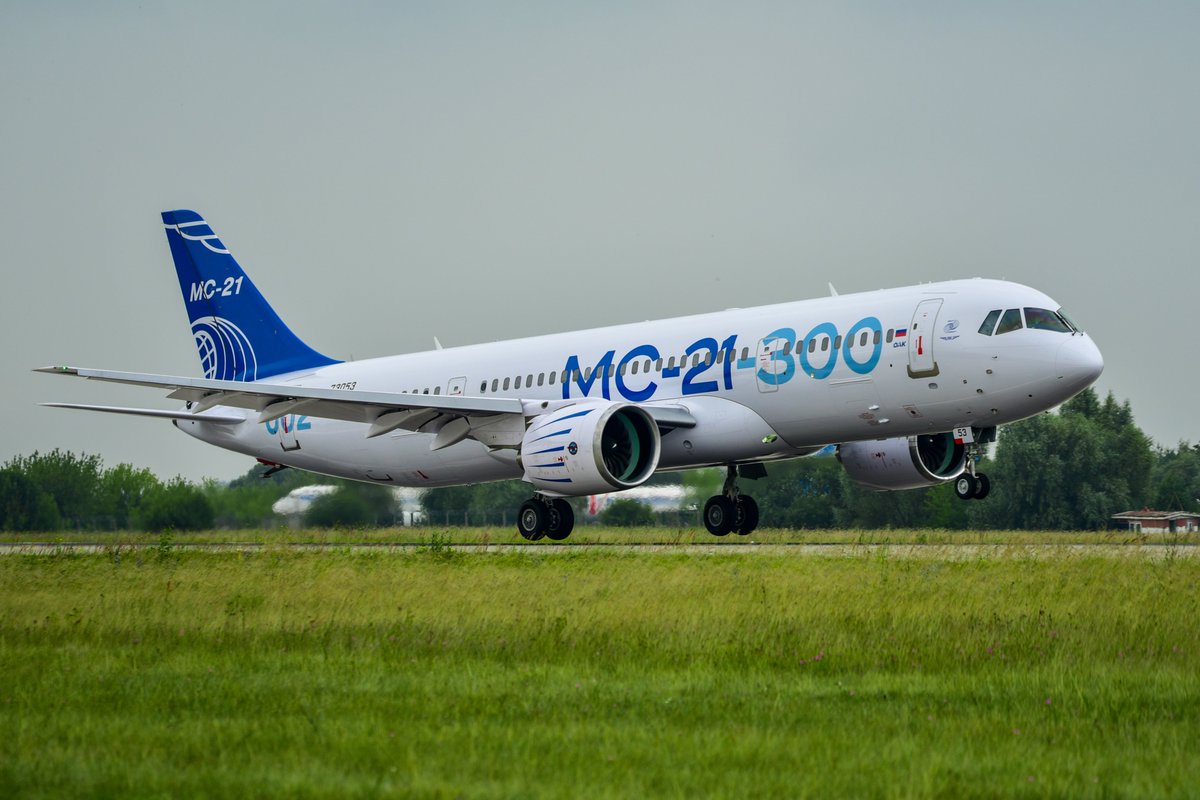
El Irkut MS-21 es un nuevo diseño narrowbodies de aeronave de medio rango de acción que está observándose detenidamente en el mercado mundial. Parece ser un excelente avión que pudiera competir con modelos similares de Airbus y Boeing, pero las ventas fuera de Rusia se verán obstaculizadas por preocupaciones sobre mantenimiento y geopolítica.

d16e518b1ae9f07e262642b03d760369.pngEl Irkut MC-21 es un ruso de pasillo único birreactor avión, desarrollado por United Aircraft Corporation (UAC) y desarrollado por Irkut Corporation y Yakovlev Design Bureau. El diseño inicial comenzó en 2006 y el diseño detallado estaba en curso en 2011. Después de retrasar la introducción programada de 2012 a 2020, Irkut lanzó el primer MC-21-300 el 8 Junio 2016 y el primer avión que voló el 28 Mayo 2017. Un ala de polímero reforzado con fibra de carbono y es impulsado por Pratt & Whitney PW1000G o Aviadvigatel PD-14 turbofans. Con una capacidad de 132–163 pasajeros en dos clases, hasta 165–211 y hasta 6,000–6,400 km (3,200–3,500 nmi), el MC-21-300 estándar será seguido por un MC-21-200 acortado . Para Julio 2018, había recibido 175 pedidos en firme y había registrado casi 150 intenciones.

Resultado de imagen para irkut MC-21 pngMercado para el MC-21

El informe de la consultora Air Insight dijo que los dos modelos MC-21 pueden ser competitivos con el Boeing 737-8 MAX y el Airbus A320NEO. «Los motores Pratt & Whitney GTF, combinados con nuevos materiales, aerodinámica avanzada y los principales sistemas suministrados por proveedores occidentales hacen que el MC-21-300 sea un fuerte competidor potencial para Airbus y Boeing», señala el informe. Aunque la autonomía del MC-21 no coincide con el rango del Boeing 737-8 MAX y el Airbus A320NEO, tiene una economía de asiento superior, dice un informe de Air Insight.

El MC-21 está programado para entrar en servicio en 2020. Es producido por Irkut, una sucursal de United Aircraft Corporation, una corporación aeroespacial y de defensa rusa que es propiedad principalmente del gobierno ruso. Las pruebas de vuelo están en marcha. El MC-21-200 está programado para tener aproximadamente 150 asientos, comparable al Boeing 737-7 MAX y el Airbus A220-300, mientras que el MC-21-300 tiene aproximadamente 175 asientos, comparable al Boeing Boeing 737-8 MAX.

Las ventas de aeronaves parecen enfrentar dos barreras imponentes. Uno es la cuestión del soporte de mantenimiento, un área donde Airbus y Boeing sobresalen. «Un elemento clave para las ventas de exportación será superar una reputación relativamente baja para los aviones rusos con respecto al servicio y soporte». En segundo lugar, las preocupaciones geopolíticas tienden a pesar contra Rusia, tanto porque impactarán las ventas como porque han llevado a sanciones económicas. «Desafortunadamente, la geopolítica y las sanciones económicas han traído dificultades a la economía rusa en general y al financiamiento para Irkut en particular. Con el financiamiento completo, el programa alcanzará fácilmente sus objetivos. Desafortunadamente, eso no ha sido, y puede que no sea el caso en el futuro cercano», señala el informe

El precio competitivo puede ayudar a superar algunas preocupaciones. A pesar de los desafíos, Irkut puede lograr sus objetivos para producir y vender más de 1.000 aviones en los próximos 20 años, con la mayoría vendida en Rusia y otros ex miembros de la URSS. Un cliente potencial es Irán, que necesita nuevos aviones para reemplazar las antiguas flotas de sus aerolíneas. «Estimamos que Irán requiere más de 200 aviones del tamaño MC-21-300. Agregar cualquier crecimiento además del reemplazo solo puede aumentar eso. Además, es probable que Irán también muestre un interés significativo en el potencial MC-21-400», comenta Air Insight. Interjet de México y Peruvian Airlines han expresado interés en el MC-21, pero aún no han realizado pedidos. Aeroflot arrendaría 50 MC-21-300 de Aviakapital por 12 a 18 años.AW-Icon-TXT-01

Los desafíos de vender un producto de la talla del MC-21 requerirá grandes esfuerzos en un segmento muy competitivo dominado por Airbus y Boeing.

Resultado de imagen para irkut MC-21Searching for a market for MC-21

The Irkut MC-21 will allow to develop in a highly competitive market

The Irkut MS-21 is a new narrowbodies aircraft design of mid-range action that is being closely watched in the world market. It seems to be an excellent aircraft that could compete with similar models of Airbus and Boeing, but sales outside of Russia will be hampered by concerns about maintenance and geopolitics.

The Irkut MC-21 is a Russian single-aisle twin-plane aircraft, developed by United Aircraft Corporation (UAC) and developed by Irkut Corporation and Yakovlev Design Bureau. The initial design started in 2006 and the detailed design was underway in 2011. After delaying the scheduled introduction from 2012 to 2020, Irkut launched the first MC-21-300 on June 8, 2016 and the first aircraft that flew on May 28, 2017 A polymer wing reinforced with carbon fiber and is powered by Pratt & Whitney PW1000G or Aviadvigatel PD-14 turbofans. With a capacity of 132-163 passengers in two classes, up to 165-211 and up to 6,000-6,400 km (3,200-3,500 nmi), the standard MC-21-300 will be followed by a shortened MC-21-200. By July 2018, he had received 175 firm orders and had registered almost 150 intentions.

Market for the MC-21

The report from the consultancy Air Insight said that the two MC-21 models can be competitive with the Boeing 737-8 MAX and the Airbus A320NEO. «The Pratt & Whitney GTF engines, combined with new materials, advanced aerodynamics and major systems supplied by Western suppliers, make the MC-21-300 a strong potential competitor for Airbus and Boeing», the report said. Although the autonomy of the MC-21 does not match the range of the Boeing 737-8 MAX and the Airbus A320NEO, it has a higher seat economy, says an Air Insight report.

The MC-21 is scheduled to enter service in 2020. It is produced by Irkut, a branch of United Aircraft Corporation, a Russian aerospace and defense corporation that is owned primarily by the Russian government flight tests are underway. The MC-21-200 is programmed to have approximately 150 seats, comparable to the Boeing 737-7 MAX and the Airbus A220-300, while the MC-21-300 has approximately 175 seats, comparable to the Boeing Boeing 737-8 MAX.

Aircraft sales seem to face two imposing barriers. One is the issue of maintenance support, an area where Airbus and Boeing excel. A key element for export sales will be to overcome a relatively low reputation for Russian aircraft with respect to service and support. Second, geopolitical concerns tend to weigh against Russia, both because they will impact sales and because they have led to economic sanctions. «Unfortunately, geopolitics and economic sanctions have brought difficulties to the Russian economy in general and to financing for Irkut in particular.With full funding, the program will easily achieve its objectives. Unfortunately, that has not been, and it may not be the case in the near future», the report said

The competitive price can help overcome some concerns. Despite the challenges, Irkut can achieve its goals to produce and sell more than 1,000 aircraft in the next 20 years, with the majority sold in Russia and other former members of the USSR. A potential client is Iran, which needs new aircraft to replace the old fleets of its airlines. «We estimate that Iran requires more than 200 aircraft of the MC-21-300 size, adding any growth in addition to the replacement can only increase that, and Iran is also likely to show significant interest in the potential MC-21-400», Air Insight said. Interjet of Mexico and Peruvian Airlines have expressed interest in the MC-21, but have not yet placed orders. Aeroflot would lease 50 MC-21-300 from Aviakapital for 12 to 18 years.

The challenges of selling a product of the size of the MC-21 will require great efforts in a very competitive segment dominated by Airbus and Boeing. A \ W


Ξ A I R G W A Y S Ξ
SOURCE: Airgways.com
DBk: Irkut.com / Airinsight.com
AW-POST: 201811261510AR

A\W   A I R G W A Y S ®

Airbus reanudará entregas a HNA Group

Resultado de imagen para HNA Group building

AW | 2018 11 26 12:31 | INDUSTRY / AIRLINES

Logo_Airbus_2014.svgAirbus Group anuncia el reanudamiento de las entregas al HNA Group de China

Airbus reanudará las entregas de aviones estancados al HNA Group cargado de deudas de China, según un programa de Airbus el Lunes, pero las entregas de más de US$ 1 mil Resultado de imagen para HNA Groupmillones de aviones grandes siguen atrasadas después de meses de disputas sobre pagos atrasados. Airbus está listo para reanudar las entregas de aviones bloqueados al HNA Group que se encontraba cargado de deudas en China.

Airbus dijo el mes pasado que esperaba resolver antes de fin de año un problema comercial no identificado relacionado con los A330 de la generación actual, que luego las fuentes de la industria vincularon a la suspensión de pagos de HNA.

Los visitantes a un centro de entrega de Airbus en Toulouse vieron el lunes al menos dos aviones Airbus A330 y un A320 en posición de traspaso a las aerolíneas afiliadas a HNA Group. Un letrero electrónico dio la bienvenida a la tripulación para una inminente entrega del A320. Sin embargo, otros seis aviones A330 pintados con librea de cola HNA de color rojo fuego permanecieron estacionados a largo plazo en otro lugar de la base de Airbus en Toulouse.

Las compañías que pertenecen al conglomerado de aviación-finanzas de China retrasaron los pagos a principios de este año, lo que llevó a Airbus a suspender las entregas en lugar de intervenir para proporcionar la financiación de la entrega en Julio 2018.

Airbus dijo el mes pasado que esperaba resolver antes de fin de año un problema comercial no identificado que rodea a los aviones A330 de la generación actual, que luego las fuentes de la industria vincularon con la suspensión de pagos de HNA Group. Bajo la presión de Pekín, el HNA Group está vendiendo alrededor de US$ 20 mil millones de activos luego de una ola de adquisiciones de US$ 50 mil millones.AW-Icon-TXT-01

Resultado de imagen para HNA Group buildingAirbus will resume deliveries to HNA Group

Airbus Group announces the resumption of deliveries to China’s HNA Group

Airbus will resume deliveries of stalled aircraft to China’s debt-laden HNA group, according to an Airbus program on Monday, but deliveries of more than US$ 1 billion of large aircraft remain behind after months of disputes over late payments. Airbus is ready to resume deliveries of blocked aircraft to the HNA Group that was loaded with debts in China.

Airbus said last month that it hoped to resolve an unidentified commercial problem related to the A330s of the current generation by the end of the year, which industry sources later linked to HNA’s suspension of payments.

Visitors to an Airbus delivery center in Toulouse saw on Monday at least two Airbus A330 aircraft and one A320 in transfer position to airlines affiliated with HNA Group. An electronic sign welcomed the crew for an imminent delivery of the A320. However, six other A330 aircraft painted in fire-red HNA tail livery remained stationed long-term elsewhere at the Airbus base in Toulouse.

Companies belonging to China’s aviation-finance conglomerate delayed payments earlier this year, prompting Airbus to suspend deliveries instead of intervening to provide financing for delivery in July 2018.

Airbus said last month that it hoped to resolve an unidentified commercial problem surrounding the A330s of the current generation by the end of the year, which industry sources later linked to HNA Group’s suspension of payments. Under pressure from Beijing, the HNA Group is selling around US$ 20 billion of assets after a wave of acquisitions of US$ 50 billion. A \ W


Ξ A I R G W A Y S Ξ
SOURCE: Airgways.com
DBk: Airbus.com / Reuters.com / Cgtn.com
AW-POST: 201811261231AR

A\W   A I R G W A Y S ®

Boeing supera pedidos a Airbus 10/2018

Resultado de imagen para boeing airbus airgways.com

AW | 2018 11 25 12:20 | INDUSTRY

Logo_Airbus_2014.svgBoeing aventaja a Airbus con 302 pedidos de aviones en Octubre 2018

The Boeing Commercial Airplanes ha logrado pedidos para la fabricación de 642 aviones comerciales, frente a los 340 pedidos netos de su rival Airbus Group, según los datos aportados por ambos fabricantes.

Boeing-Logo.svgPedidos

La cartera de aviones de pasajeros de Airbus en todo el mundo sobre pedidos en firme asciende a 18.933 aeronaves, incluidos los jet ejecutivos, frente a los 5.881 pedidos pendientes del constructor estadounidense. Boeing registró hasta el 31 Octubre 2018 un total de 821 encargos brutos de aeronaves comerciales, frente a los 396 pedidos brutos del fabricante europeo Airbus contabilizados también a cierre del mes pasado. Hasta octubre, Airbus recibió un total de 340 pedidos netos de aeronaves valorados a precio de catálogo en US$ 49.720 millones de dólares (€ 43.821 millones de euros), mientras que Boeing registró 642 pedidos netos por valor de US$ 111.581 millones de dólares (€ 98.352 millones de euros).AW-AIR-BOE.jpg

Los narrowbodies Airbus A320NEO cerró acuerdos hasta el 31 Septiembre 2018 con ventas por 206 aviones de pasillo único: A319CEO (92), A319NEO (22), A320NEO (138), A320CEO (7), A321CEO (2), A321NEO (90), A330-200 (3), A330-300 (1), A330-800 (2), A350-900 (39) A380 (14). Por su parte, Boeing contabilizó 642 pedidos netos hasta el 31 Octubre 2018. Boeing 737 (453), Boeing 747 (14), Boeing 767 (38) y Boeing 787 (28). Boeing ha ganado en entregas de aeronaves hasta 10/2018. Formalizó la entrega de 625 nuevos aviones comerciales: Boeing 737 (450), Boeing 747 (5), Boeing 767 (14), Boeing 777 (38) y Boeing 787 (118), lo que supone 41 entregas más que Airbus en los diez primeros meses del año 2018. La firma estadounidense prevé cerrar este año con unas entregas de entre 810 y 815 aviones comerciales. Por su parte, el fabricante europeo Airbus entregó 584 unidades, 472 de pasillo único: A319CEO (4), A320CEO (108), A320NEO (201), A321CEO (80) y A321NEO (69). Mientras que los widebodies totalizaron unos 122 aviones: A220-100 (1) y A220-300 (9), A330-200 (13), A330-300 (21), A350-900 (61), A350-1000 (9) y A380 (8). Airbus mantiene sus estimaciones y espera entregar 800 aviones comerciales todo el 2018.

Cancelaciones

Airbus registró una cancelación de doce unidades del modelo A320CEO, A320NEO (10), del A330-800 (6), del A350-900 (22) y del A380 (6), con lo que dejó de ingresar US$ 13.534 millones de dólares (€ 11.929 millones de euros). Boeing cancelaron pedidos por 179 aeronaves comerciales, Boeing 737 (147), Boeing 777 (7) y del Boeing 787 (26), con lo que dejó de ingresar unos US$ 28.204 millones de dólares (€ 24.863 millones de euros).AW-Icon-TXT-01

Resultado de imagen para boeing airbus

Boeing exceeds orders to Airbus on 10/2018

Boeing leads Airbus with 302 orders for aircraft in October 2018

The Boeing Commercial Airplanes has achieved orders for the manufacture of 642 commercial aircraft, compared to 340 net orders of rival Airbus Group, according to the data provided by both manufacturers.

Orders

Airbus’ passenger plane portfolio worldwide for firm orders amounts to 18,933 aircraft, including executive jet, compared to 5,881 pending orders from the US manufacturer. Boeing registered up to 31 October a total of 821 gross orders of commercial aircraft, compared to 396 gross orders of the European manufacturer Airbus also counted at the end of last month. Up to October, Airbus received a total of 340 net orders of aircraft valued at the list price of US$ 49,720 million dollars (€ 43,821 million euros), while Boeing registered 642 net orders US$ worth 111,581 million dollars (€ 98,352 million euros).

The narrowbodies Airbus A320NEO closed agreements until 31 September 2018 with sales for 206 single-aisle aircraft: A319CEO (92), A319NEO (22), A320NEO (138), A320CEO (7), A321CEO (2), A321NEO (90), A330-200 (3), A330-300 (1), A330-800 (2), A350-900 (39) A380 (14). For its part, Boeing accounted for 642 net orders through October 31, 2018. Boeing 737 (453), Boeing 747 (14), Boeing 767 (38) and Boeing 787 (28). Boeing has won aircraft deliveries up to 10/2018. Formalized the delivery of 625 new commercial aircraft: Boeing 737 (450), Boeing 747 (5), Boeing 767 (14), Boeing 777 (38) and Boeing 787 (118), which represents 41 deliveries more than Airbus in the ten first months of the year 2018. The American company plans to close this year with deliveries of between 810 and 815 commercial aircraft. For its part, the European manufacturer Airbus delivered 584 units, 472 single aisle: A319CEO (4), A320CEO (108), A320NEO (201), A321CEO (80) and A321NEO (69). While the widebodies totaled about 122 aircraft: A220-100 (1) and A220-300 (9), A330-200 (13), A330-300 (21), A350-900 (61), A350-1000 (9) and A380 (8). Airbus maintains its estimates and expects to deliver 800 commercial aircraft throughout 2018.

Cancellations

Airbus registered a cancellation of twelve units of the A320CEO, A320NEO (10), A330-800 (6), A350-900 (22) and A380 (6), which stopped US$ 13,534 million (€ 11,929 million). Boeing canceled orders for 179 commercial aircraft, Boeing 737 (147), Boeing 777 (7) and Boeing 787 (26), which stopped entering US$ 28,204 million (€ 24,863 million). A \ W


Ξ A I R G W A Y S Ξ
SOURCE: Airgways.com
DBk: Airbus.com / Boeing.com / Wikimedia.org / Airgways.com
AW-POST: 201811251220AR

A\W   A I R G W A Y S ®