Lion Air puede convertirse en cliente de lanzamiento del Boeing 737-10 MAX
La aerolínea indonesia Lion Air puede ser un cliente de lanzamiento para el Boeing 737-10 MAX, una versión más grande de la familia de medios de transporte del planemaker que se espera sea lanzada en el Paris Airshow 2017, dijeron tres personas familiarizadas con los planes. La orden puede, sin embargo, incluir algunas mejorasde un modelo más pequeño, dos de ellos dijeron. Las dos compañías se negaron a comentar.
El portavoz del presupuesto indú SpiceJet también está entre los transportistas que se ven como objetivos potenciales para el avión, una versión diseñada para alojar hasta 230 personas y contundente ventas fuertes del Airbus A321NEO, dos de las fuentes dijeron. SpiceJet no pudo ser contactado inmediatamente para hacer comentarios. Lion Air, que es uno de los clientes más grandes de Boeing, ordenó 201 aviones Boeing 737 MAX en 2012 y colocó opciones para otros 150. Tales órdenes normalmente incluyen el derecho a convertir entre diferentes variantes de cada modelo. Otras aerolíneas están buscando el Boeing 737-10 MAX, pero algunas están nerviosas por comprometerse con una nueva variante dada las ventas irregulares de algunos modelos actuales del 737 MAX, cuyo éxito descansa principalmente en las ventas del Boeing 737-8 MAX, las fuentes dijo. Se dice que al menos una compañía de leasing de China está en negociaciones con ambos fabricantes, ya que Airbus intenta interrumpir el lanzamiento, que según las fuentes está planeado para el show aéreo del 19 al 25 de junio. Airbus se negó a comentar sobre las negociaciones en curso.
El jefe de ventas de Airbus, John Leahy, criticó anteriormente al 737-10 MAX como un avión «marginal», lo que implicaría que las ventas serían deficientes. El vicepresidente de marketing de Boeing Randy Tinseth dijo a Reuters que algunas aerolíneas quieren más asientos que las versiones existentes y que el MAX 10 sería 5 por ciento más eficiente que el Airbus A321NEO. Airbus dice que su propio avión es más eficiente. «El 737-10 MAX no es un avión muy grande, estamos enfocados en un avión mejor», dijo Tinseth en el marco de la reunión anual de la Asociación Internacional de Viajes Aéreos en Cancún, México.
Lion Air could launch Boeing 737-10 MAX
Lion Air can become a launch customer for the Boeing 737-10 MAX
Indonesian budget carrier Lion Air may be a launch customer for the Boeing 737-10 MAX, a larger version of the planemaker’s medium-haul family that is expected to be launched at the Paris Airshow 2017, three people familiar with the plans said. The order may, however, include some upgrades from a smaller model, two of them said. The two companies declined to comment.
Indian budget carrier SpiceJet is also among carriers seen as potential targets for the aircraft, a version designed to seat up to 230 people and blunt strong sales of the Airbus A321NEO, two of the sources said. SpiceJet could not immediately be reached for comment. Lion Air, which is one of Boeing’s largest customers, ordered 201 Boeing 737 MAX aircraft in 2012 and placed options for a further 150. Such orders typically include the right to convert between different variants of each model. Other airlines are looking at the Boeing 737-10 MAX, but some are nervous about committing to a new variant given patchy sales of some current models of the 737 MAX, whose success rests mainly on sales of the Boeing 737-8 MAX, the sources said. At least one Chinese leasing company is said to be in negotiations with both manufacturers as Airbus tries to disrupt the launch, which sources say is planned for the June 19-25 air show. Airbus declined to comment on any ongoing negotiations.
Airbus sales chief John Leahy earlier criticized the 737-10 MAX as a «marginal» airplane, implying sales would be poor. Boeing marketing vice president Randy Tinseth told Reuters some airlines want more seats than existing versions and that the MAX 10 would be 5 percent more efficient than the Airbus A321NEO. Airbus says its own plane is more efficient. «It, the 737-10 MAX, is not a me-too airplane. We are focusing on a better airplane,» Tinseth said on the sidelines of the International Air Travel Association annual meeting in Cancun, México. A \ W
Ξ A I R G W A Y S Ξ
SOURCE: Reuters.com
DBk: Boeing.com
AW-POST: 201706052150AR
FAA certifica el motor Pratt & Whitney para Embraer E-Jet E2
El motor PW1900G impulsa los dos aviones más grandes de la segunda generación de la familia de aviones comerciales E-Jets de Embraer. El E190-E2 tomó su primer vuelo en mayo de 2016 y el primer vuelo del E195-E2 fue el 29 de marzo de 2017.
«La validación de la FAA del certificado de tipo de motor PW1900G es un hito clave del programa«, dijo Chris Calio, presidente de Commercial Engines. «El motor proporciona 23.000 libras de empuje y actualmente está alimentando cinco vehículos de prueba en vuelo con más de 900 horas de pruebas de vuelo completadas».
El programa de pruebas de certificación abarcó casi 18 meses e incluyó el nivel del mar, así como pruebas de operabilidad y rendimiento entre el protocolo riguroso que el motor sometió. El motor PW1900G, el cuarto de la familia PurePower a ser certificado, está programado para entrar en servicio al cliente en el E190-E2 en 2018, con el 195-E2 programado para entrar en servicio en 2019.
El programa E-Jet E2 es uno de los dos programas en los que Pratt & Whitney y Embraer trabajan juntos. Pratt & Whitney es parte de la colaboración que suministra el motor V2500-E5 para el Embraer KC-390, que está bajo la campaña de certificación. Pratt & Whitney también suministra la unidad de potencia auxiliar para el programa E-Jet E2.
La familia de motores PurePower de Pratt & Whitney tiene más de 80 clientes, tanto para pedidos anunciados como no anunciados, de más de 30 países. El rendimiento en servicio de la familia de motores PurePower ha demostrado su capacidad para reducir la quema de combustible en un 16 por ciento, las emisiones reguladas en un 50 por ciento y el ruido en un 75 por ciento.
Este comunicado de prensa contiene declaraciones prospectivas sobre futuras oportunidades de negocio. Los resultados reales pueden diferir sustancialmente de los proyectados como resultado de ciertos riesgos e incertidumbres, incluyendo pero no limitados a los cambios en los niveles de demanda en la industria aeroespacial, en los niveles de los viajes aéreos y en el número de aeronaves que se construirán; Desafíos en el diseño, desarrollo, producción, soporte, desempeño y realización de los beneficios anticipados de las tecnologías avanzadas; Así como otros riesgos e incertidumbres, incluyendo pero no limitado a los detallados de vez en cuando en las presentaciones de la Comisión de Valores y Bolsa de United Technologies Corp.
Certifies engine for Embraer E-Jet E2
Pratt & Whitney Certifies Engine for Embraer E-Jet E2 Aircraft with FAA
The PW1900G engine powers the two largest aircraft in Embraer´s second generation of the E-Jets family of commercial aircraft. The E190-E2 took its first flight in May 2016 and the E195-E2‘s first flight was on March 29, 2017.
«The FAA validation of the PW1900G engine type certificate is a key program milestone,» said Chris Calio, president, Commercial Engines. «The engine provides 23,000 pounds of thrust and is currently powering five flight test vehicles with more than 900 hours of flight testing completed.»
The certification test program spanned nearly 18 months and included sea level as well as operability and performance testing among the rigorous protocol the engine underwent. The PW1900G engine, the fourth in the PurePower family to be certified, is scheduled to enter into customer service on the E190-E2 in 2018, with the 195-E2 scheduled to enter service in 2019.
The E-Jet E2 program is one of two programs that Pratt & Whitney and Embraer are working together on. Pratt & Whitney is part of the collaboration which supplies the V2500-E5 engine for the Embraer KC-390, which is under certification campaign. Pratt & Whitney also supplies the auxiliary power unit for the E-Jet E2 program.
The Pratt & Whitney PurePower engine family has more than 80 customers, for both announced and unannounced firm and option orders, from more than 30 countries. In-service performance of the PurePower engine family has demonstrated its ability to reduce fuel burn by 16 percent, regulated emissions by 50 percent and noise foot print by 75 percent.
This press release contains forward-looking statements concerning future business opportunities. Actual results may differ materially from those projected as a result of certain risks and uncertainties, including but not limited to changes in levels of demand in the aerospace industry, in levels of air travel, and in the number of aircraft to be built; challenges in the design, development, production, support, performance and realization of the anticipated benefits of advanced technologies; as well as other risks and uncertainties, including but not limited to those detailed from time to time in United Technologies Corp.’s Securities and Exchange Commission filings. A \ W
Ξ A I R G W A Y S Ξ
SOURCE: Prnewswire.com
DBk: Embraer.com / Wikipedia.org
AW-POST: 201706011550AR
Airbus y China acuerdan impulsar la cooperación en la industria aeronáutica
El consorcio aeronáutico europeo Airbus y China han firmado en Berlín un memorando de entendimiento (MoU) sobre aviación y aeronáutica, con el que se comprometen a fortalecer los lazos comerciales y tecnológicos con la industria aeronáutica del país asiático, en el marco de la visita del primer ministro chino, Li Keqiang.
Con el acuerdo de entendimiento suscrito, Airbus informó que las dos industrias desarrollarán competencias en ingeniería e innovación tecnológica en China como así también impulsarán la integración de suministradores del gigante asiático en la cadena global de suministros de Airbus.
El acuerdo fue firmado por el presidente del negocio de aviones comerciales de Airbus, Fabrice Brégier, y por el Presidente de la Comisión Nacional de Reforma y Desarrollo, He Lifeng,encargada de la planificación económica china.
Airbus Group destacó que el centro de acabado y entrega de aviones de la familia A330 de Tianjin entregará su primer aparato en septiembre de este año. La línea de ensamblaje de la nueva familia de aviones A320 comenzará a trabajar en el A320NEO a finales de año.
Airbus-China cooperation
Airbus and China agree to boost cooperation in the aeronautics industry
The European aeronautical consortium Airbus and China have signed a Memorandum of Understanding (MoU) on aviation and aeronautics in Berlin, with which they commit to strengthen commercial and technological ties with the aviation industry of the Asian country, in the framework of the visit of the Chinese Premier Li Keqiang.
Under the agreement of understanding, Airbus said that the two industries will develop skills in engineering and technological innovation in China as well as boost the integration of suppliers of the Asian giant in the global supply chain of Airbus.
The agreement was signed by President of the Airbus commercial aircraft business Fabrice Brégier and the President of the National Commission for Reform and Development, He Lifeng, in charge of Chinese economic planning.
Airbus Group noted that the Tianjin A330 family aircraft delivery and finishing center will deliver its first aircraft in September this year. The assembly line of the new family of A320 aircraft will begin work on the A320NEO later this year. A \ W
Ξ A I R G W A Y S Ξ
SOURCE: Airgways.com / Airbus.com
DBk: Businesstimes.com
AW-POST: 201706011259AR
Mitsubishi Regional Jet adquiere la certificación de tipo con motores PW1200G
Nagoya, JAPON y West Palm Beach, Fla. EE.UU. Mitsubishi Aircraft Corporation y Pratt & Whitney, una división de United Technologies Corp. anunciaron hoy que el motor PurePower Geared Turbofan PW1200G de Pratt & Whitney ha adquirido con éxito la certificación de tipo de la Administración Federal de Aviación (FAA) de Estados Unidos. Esto viene en los talones de la cuarta aeronave de prueba de vuelo Mitsubishi Regional Jet MRJ-90 que llega al Centro de Pruebas en Vuelo de Moses Lake, apoyando una ocupada 2017 de pruebas e hitos, incluyendo la terminación de las pruebas iniciales de frío y remoción.
El MRJ-70 y el MRJ-90 serán alimentados por dos motores PW1200G. El motor fue optimizado específicamente para el programa MRJ, que a su vez diseñó el ala y la aerodinámica con la PW1200G en mente. La tecnología avanzada de los motores contribuirá a una reducción del 10-20% en los costes operativos en comparación con la actual generación de aviones regionales y un 50% menos en las emisiones reguladas, lo que permitirá al MRJ ofrecer la mejor eficiencia y rendimiento medioambiental.
«La integración del diseño de motores y aeronaves subraya lo crucial que es la colaboración para el éxito de la creación de un avión regional de próxima generación, y estamos muy orgullosos de ser la primera empresa en haber elegido este motor cambiante para MRJ. El equipo de Pratt & Whitney en este importante hito «, dijo Hisakazu Mizutani, presidente de Mitsubishi Aircraft Corporation. «Este logro es el último de una serie de hitos y pruebas de desarrollo que el MRJ ha llevado a cabo, y estamos mirando hacia adelante a la próxima fase de pruebas en nuestros aviones».
«La validación de la FAA del motor PW1200G es un hito para Pratt & Whitney y Mitsubishi Aircraft Corporation», dijo Chris Calio, presidente de Commercial Engines. «El programa de motores PurePower fue lanzado con la confianza de Mitsubishi en nosotros para impulsar su nuevo avión y esperamos continuar colaborando en un exitoso programa MRJ».
Más de 15 pruebas de certificación de nivel de sistema de motor crítico se completaron con éxito para cumplir con los requisitos de certificación de la FAA. Estos datos capturados necesarios para la certificación, incluyendo el rendimiento, el estrés, la resistencia, las emisiones, la acústica, el impacto de las aves y contención de la paleta del ventilador. El motor ha acumulado más de 6.000 horas y 15.000 ciclos como parte de las actividades de desarrollo, certificación y pruebas de vuelo. El motor proporciona 17.000 libras de empuje y actualmente está impulsando cinco vehículos de prueba de vuelo.
Acerca de Pratt & Whitney
Pratt & Whitney es un líder mundial en el diseño, fabricación y servicio de motores de aeronaves y unidades de potencia auxiliar. United Technologies Corp., con sede en Farmington, Connecticut, provee sistemas y servicios de alta tecnología para las industrias de construcción y aeroespacial. Para obtener más información sobre UTC, visite su sitio web en http://www.utc.com, o siga la compañía en Twitter: @UTC.
Acerca de MRJ
Mitsubishi Regional Jet es una familia de aviones de próxima generación de 70 a 90 asientos con el revolucionario motor PurePower® de Pratt & Whitney y la aerodinámica de última generación para reducir drásticamente el consumo de combustible, el ruido y las emisiones, Ventajas y una cabina excepcional diseñada para la comodidad elevada del vuelo del pasajero con los compartimientos grandes de arriba. El MRJ completó su primer vuelo el 11 de noviembre de 2015.
MRJ-90 certification with P&W
Mitsubishi Regional Jet acquires type certification with PW1200G
Nagoya, JAPAN and West Palm Beach, Fla. EE.UU. Mitsubishi Aircraft Corporation and Pratt & Whitney, a division of United Technologies Corp., today announced that Pratt & Whitney’s PurePower Geared Turbofan PW1200G engine has successfully acquired type certification from the Federal Aviation Administration (FAA) of United States. This comes on the heels of the fourth Mitsubishi Regional Jet MRJ-90 Flight Test Aircraft arriving in the Moses Lake Flight Test Center supporting a busy 2017 of testing and milestones, including completion of initial cold and hot soak and natural icing tests.
The MRJ-70 and MRJ-90 will each be powered by two PW1200G engines. The engine was optimized specifically for the MRJ program, which in turn designed the wing and aerodynamics with the PW1200G in mind. The engines’ advanced technology will contribute to a 10-20% reduction in operating costs compared to the current generation of regional aircraft and 50% lower in regulated emissions, enabling the MRJ to offer best-in-class efficiency and environmental performance.
«The integration of the engine and aircraft design underscores just how critical collaboration is to the success of creating a next-generation regional aircraft and we are very proud to be the first company to have selected this game-changing engine for the MRJ. We congratulate the Pratt & Whitney team on this important milestone,» said Hisakazu Mizutani, president, Mitsubishi Aircraft Corporation. «This achievement is the latest in an ongoing series of developmental milestones and tests that the MRJ has conducted, and we are looking ahead to the next phase of testing on our aircraft.»
«The FAA validation of the PW1200G engine is a milestone for Pratt & Whitney and Mitsubishi Aircraft Corporation,» said Chris Calio, president, Commercial Engines. «The PurePower engine program was launched with Mitsubishi’s faith in us to power their new aircraft and we look forward to continue collaborating on a successful MRJ program.»
More than 15 critical engine system level certification tests were successfully completed to meet FAA certification requirements. These captured required data for certification including performance, stress, endurance, emissions, acoustics, bird impact, and fan blade containment. The engine has accumulated more than 6,000 hours and 15,000 cycles as part of development, certification and flight testing activities. The engine provides 17,000 pounds of thrust and is currently powering five flight test vehicles.
About Pratt & Whitney
Pratt & Whitney is a world leader in the design, manufacture and service of aircraft engines and auxiliary power units. United Technologies Corp., based in Farmington, Connecticut, provides high-technology systems and services to the building and aerospace industries. To learn more about UTC, visit its website at http://www.utc.com, or follow the company on Twitter: @UTC.
About MRJ
Mitsubishi Regional Jet is a family of 70~90-seat next-generation aircraft featuring Pratt & Whitney’s revolutionary PurePower® engine and state-of-the-art aerodynamics to drastically reduce fuel consumption, noise, and emissions, while offering top-class operational benefits and an outstanding cabin designed for heightened passenger flying comfort with large overhead bins. The MRJ completed its first flight on November 11, 2015. A \ W
Ξ A I R G W A Y S Ξ
SOURCE: Prnewswire.com
DBk: Mitsubishi Corp.
AW-POST: 201705312044AR
El constructor canadiense Bombardier tiene ante sí el desafío de desarrollar el CS500 ante la presión de la Boeing en sus demandas
Boeing se preocupa por detener el avance de Bombardier ante el lanzamiento del CS500, un concepto de avión de 160-189 pasajero que lo coloca en franca competencia con el Boeing 737 MAX y el Airbus A320NEO.
Las demandas de la Boeing
¿Supone para la Boeing una amenaza el desarrollo de la familia CSeries? Desde Boeing explican: «No, en absoluto, siempre y cuando el fabricante canadiense no ponga en práctica sus planes para estirar la aeronave«. Los estadounidenses están deseosos de evitarlo.
Boeing contraataca a Bombardier. La Boeing reclama que «el fabricante de aviones canadiense no puede basar los C-Series a través de la participación estatal y préstamos estatales a tasas subsidiadas en gran medida», se quejó en una petición ante la autoridad de competencia de los Estados Unidos. «El mercado de 100 a 150 asientos es muy importante para nosotros», dijo el Vice de Boeing, Ray Conner en una reciente audiencia sobre el caso en Washington. Bombardier insta a su compañía con precios de dumping en este negocio. Boeing tiene con el Boeing 737-700, sólo un avión en oferta, que es aproximadamente casi igual en capacidades con el Bombardier CS300.
Boeing alega que Bombardier vendió a la aerolínea norteamericana Delta Air Lines 75 CS100s a razón de $ 19.6m cada aeronave, lo que equivale a «dumping» de precios debido a los «subsidios» del gobierno canadiense recibidos en un rescate. Boeing dijo a la Comisión de Comercio Internacional de Estados Unidos en un comunicado de cierre del 24 de mayo que Bombardier, en esencia, se convertirá en el próximo Airbus si la ITC no hace nada para penalizar a Bombardier golpeando el 79% de los precios en el avión Delta.
Bombardier perdió su mayor oportunidad de desarrollar el CS500 como un avión competitivo para el Boeing 737 y el Airbus A320. Boeing afirma que el CS500 matará al Boeing 737-800. Pero este modelo está programado para salir de la producción en 2019, mucho antes de que el CS500 podría entrar en servicio. El argumento de Boeing supone que el 737 MAX es un avión a largo plazo. En realidad, el nuevo avión pequeño está a la vuelta de la esquina,aunque deberá superar la economía para el desarrollo del CS500.
Los estadounidenses tienen miedo de que los canadienses podrían ampliar su gama de modelos en el futuro. Bombardier habla sobre el desarrollo de los CS500 y CS900. Las dos marcas protegió hace años Bombardier. El documento de las autoridades de competencia de Estados Unidos, el grupo advierte experimentar otra vez lo mismo que con Airbus. Los europeos crecieron de cero siendo un competidor peligroso debido a las ayudas de los gobiernos, tal como Bombardier ahora lo es.
«En la actualidad una extensión del desarrollo de un derivado del CS300, todavía no es un problema. Bombardier primero debe asegurarse de recoger pedidos adicionales para los modelos actuales. Sólo de esta manera, el proyecto C-Series también plantea ganar dinero. Y los canadiensesno podría puede levantar vuelo una evolución del Canadair Series», espresó eldirector del programa, Rob Dewar, porque hace un año dijo «En este momento no es un problema».
The Bombardier Challenge for the CS500
Canadian builder Bombardier faces the challenge of developing the CS500 under pressure from Boeing in its demands
Boeing is concerned about stopping Bombardier‘s advance with the launch of the CS500, a 160-189 passenger aircraft concept that puts it in frank competition with the Boeing 737 MAX and the Airbus A320NEO.
The demands of Boeing Does Boeing pose a threat to the development of the CSeries family? From Boeing explain: «No, not at all, as long as the Canadian manufacturer does not implement their plans to stretch the aircraft.» Americans are eager to avoid it.
Boeing counterattacks Bombardier. Boeing claims that «the Canadian aircraft manufacturer can not base the C-Series through state participation and state loans at heavily subsidized rates,» he complained in a petition to the United States competition authority. «The 100-150 seat market is very important to us,» said Boeing Vice President Ray Conner at a recent hearing on the Washington case. Bombardier urges its company with dumping prices in this business. Boeing has with the Boeing 737-700, only one aircraft on offer, which is about nearly equal in capabilities with the Bombardier CS300.
Boeing claims that Bombardier sold to the American airline Delta Air Lines 75 CS100s at a rate of $ 19.6m each aircraft, which amounts to «dumping» of prices due to Canadian government «subsidies» received in a bailout. Boeing told the US International Trade Commission in a May 24 closing statement that Bombardier will essentially become the next Airbus if the ITC does nothing to penalize Bombardier by hitting 79% of prices on The Delta plane.
Bombardier missed its biggest opportunity to develop the CS500 as a competitive aircraft for the Boeing 737 and the Airbus A320. Boeing says the CS500 will kill the Boeing 737-800. But this model is scheduled to come out of production in 2019, long before the CS500 could go live. Boeing’s argument assumes that the 737 MAX is a long-haul aircraft. In fact, the new small plane is just around the corner, although it must exceed the economy for the development of the CS500.
Americans are afraid that Canadians could expand their range of models in the future. Bombardier talks about the development of CS500 and CS900. The two brands protected Bombardier years ago. The document from the United States competition authorities, the group warns to experience again the same as with Airbus. The Europeans grew from zero being a dangerous competitor due to the aid of the governments, as Bombardier now is it.
«At present, an extension of the development of a derivative of the CS300 is still not a problem.» Bombardier first must make sure to collect additional orders for current models. Canadians could not lift an evolution of the Canadair Series, «said program director Rob Dewar, because a year ago he said» Right now it’s not a problem. » A \ W
Ξ A I R G W A Y S Ξ
SOURCE: Airgways.com / Bombardier.com
DBk: Airgways.com / Bombardier.com
AW-POST: 201705310107AR
El Irkut MC-21 ha efectuado su primer vuelo inaugural en Rusia
El nuevo avión ruso MC-21-300 ha realizado su vuelo inaugural en la ciudad de Irkut, Rusia. Diseñado por Yakovlev Design Bureau y construido por Irkut Corporation
El MC-21-300 es una aeronave de pasillo único y mediano porte diseñado para las aerolíneas locales y para competir directamente con aeronaves del segmento del Airbus 320 y Boeing 737. El Irkut MC 21-300 despegó por primera vez este domingo 28 de mayo 2017 desde las instalaciones de Irkutsk Aviation.
El 28 de mayo de 2017, el vuelo inaugural de los aviones comerciales MC-21-300 tuvo lugar en el aeródromo de Irkutsk Aviation Plant, filial de Irkut Corporation (miembro de la UAC). La duración del vuelo fue de 30 minutos a la altitud de 1000 metros, a la velocidad de 300 km / hora.
El plan de vuelo incluyó la comprobación de la estabilidad en vuelo y controlabilidad, y también la controlabilidad de la planta de energía. Según el programa, durante el vuelo se realizó un acercamiento simulado del aterrizaje, seguido por un vuelo sobre la pista, escalando y girando. Esta técnica es típica para el primer vuelo de nuevos tipos de aeronaves.
El avión fue pilotado por el comandante de la tripulación Oleg Kononenko, piloto de pruebas, el Héroe de Rusia, y el copiloto Roman Taskayev, piloto de pruebas, The Hero of Russia. Oleg Kononenko informó, «la misión de vuelo se lleva a cabo. El vuelo fue en el modo normal. No hay obstáculos que impidan la continuación de las pruebas «.Roman Taskayev señaló que «se confirman las características y los modos operacionales de la planta de energía, todos los sistemas de aeronaves funcionan sin fallos».
Oleg Demchenko, presidente de Irkut Corporation, declaró: «Hoy es el día histórico para nuestro personal y todo el equipo grande, que trabaja en la creación de aviones MC-21. Ponemos las soluciones técnicas más avanzadas en nuestros aviones, para proporcionar mayor comodidad a los pasajeros y atractivas características económicas para las compañías aéreas. Estoy feliz de declarar que el primer vuelo del avión MC-21 ha sido logrado con éxito. ¡Felicito a todos los participantes del proyecto por nuestras vacaciones comunes! »
Yury Slyusar, Presidente de United Aircraft Corporation (UAC), destacó: «MC-21 se crea en una amplia cooperación, donde junto con Irkut participan activamente otras empresas de la United Aircraft Corporation, a saber, Aerocomposite, Ulyanovsk y Voronezh Plantas de aviones, UAC Centro de Integración en Moscú. Esta es una etapa importante en la formación del nuevo modelo industrial UAC. Según nuestras estimaciones, la demanda mundial en el segmento MC-21 será de unos 15.000 nuevos aviones en los próximos 20 años. Estoy seguro de que las aerolíneas apreciarán nuestro nuevo avión «.
MC-21-300 Aviones comerciales de nueva generación
La aeronave de nueva generación MC-21-300 con capacidad de 163 a 211 pasajeros tiene como objetivo el segmento más masivo del mercado de aviación. Los aviones MC-21 proporcionan a los pasajeros un nivel cualitativamente nuevo de confort, debido al mayor diámetro del fuselaje en la categoría de aeronaves de cuerpo estrecho. Esta decisión de diseño amplía considerablemente el espacio privado de cada pasajero, garantiza el libre paso del pasajero y el carro de servicio sobre el pasillo y acorta el tiempo de rotación del aeropuerto. La iluminación natural de la cabina de pasajeros se mejora debido a las grandes ventanas. La presión del aire cómodo y el microclima avanzado se mantendrán en el avión.
El avión MC-21 cuenta con una innovadora cabina piloto ergonómica
Las altas exigencias de confort y eficacia económica de los aviones impulsaron la introducción de soluciones técnicas avanzadas en aerodinámica, construcción de motores y aviónica. El avión MC-21 es superior a las contrapartes existentes en términos de características técnicas de vuelo y eficiencia. Las mejores empresas rusas e internacionales que participan en el programa MC-21 cumplen plenamente con sus obligaciones, al tiempo que presentan sus soluciones de diseño más avanzadas.
El principal contribuyente a la mejora de las características técnicas de vuelo de la aeronave es el ala hecha de materiales compuestos poliméricos, la primera en la palabra desarrollada para aeronaves de cuerpo estrecho con capacidad para más de 130 pasajeros. La proporción de materiales compuestos en el diseño MC-21 superior al 30% es la única para esta categoría de aeronaves.
Por primera vez en la historia de la fabricación de aviones rusos, el avión se ofrece a los clientes con dos opciones de planta de energía – PW1400G de Pratt & Whitney Company (EE.UU.) o PD-14 de United Engine Corporation (Rusia). Los motores de nueva generación ofrecen un consumo de combustible reducido, bajo nivel de ruido y emisiones peligrosas. Los aviones MC-21 cumplen con los requisitos ambientales. La reducción calculada de los costos operacionales directos para MC-21 es 12-15% menor que la de las contrapartes. La cartera inicial de pedidos firmes para 175 aviones MC-21 proporciona la utilización de la capacidad de producción en los próximos años. Todos los contratos firmes son pagados por adelantado.
IRKUT MC-21-300
Capacidad de diseño de dos clases 163 asientos (16 negocios + 147 economía)
Densa capacidad de diseño 211 asientos
Peso máximo de despegue 79.250 kg
Carga útil máxima 22.600 kg
Rango máximo de vuelo: 6.000 km
Dimensiones
Longitud 42.2 m
Alcance del ala 35,9 m
Height 11.5 m
El primer vuelo, tuvo alrededor de 30 minutos de duración, el MC-21 voló a una altitud máxima de aproximadamente 3,200 pies a una velocidad media de 160 nudos para la ejecución de pruebas de estabilidad en vuelo, manejabilidad y motores. Además, la aeronave realizó aproximaciones, toques y despegues, todo acompañado por un Yakovlev Yak-130.
Diseñado para ofrecer una capacidad de entre 163 y 211 pasajeros, el MC-21 contará con opción de motor occidental o ruso, Pratt & Whitney PW1000G o Aviadvigatel PD-14, respectivamente. La apuesta del fabricante en la presentación del avión es su alcance estimado en 6 mil kilómetros y una reducción de entre el 12 y el 15% en el consumo de combustible en comparación con sus competidores.
El Presidente de United Aircraft Corporation, Yuri Slyusar, destacó que en el segmento del MC-21, durante los próximos veinte años, habrá una demanda por al menos de 15 mil nuevas aeronaves. Así, la empresa pretende atraer nuevos clientes para su nuevo avión comercial.
MC-21-300 tiene una cartera de 177 pedidos en firme en diez aerolíneas, de las cuales ochos son rusas. Los únicos operadores extranjeros del avión hasta el momento serán Azerbaijan Airlines, con diez unidades, y Cairo Aviation, con seis.
First flight of the Irkuts MC-21-300
The Irkut MC-21-300 has made its first flight in Rusia
The new Russian aircraft MC-21-300 has made its inaugural flight in the city of Irkut, Russia. Designed by Yakovlev Design Bureau and built by Irkut Corporation
The MC-21-300 is a single and medium-sized aisle aircraft designed for local airlines and to compete directly with Airbus 320 and Boeing 737 aircraft. The Irkut MC 21-300 took off for the first time this Sunday, May 28 2017 from the facilities of Irkutsk Aviation.
On 28 May, 2017, the maiden flight of MC-21-300 commercial aircraft took place at the airfield of Irkutsk Aviation Plant, the affiliate of Irkut Corporation (a UAC member). The duration of the flight was 30 minutes at the altitude of 1000 meters, at the speed of 300 km/hour.
The flight plan included checking of in-flight stability and controllability, and also the controllability of the power plant. According to the program, during the flight a simulated landing approach was performed, followed by a flight over the runway, climbing and turning. This technique is typical for the maiden flight of new types of aircraft.
The aircraft was piloted by the crew commander Oleg Kononenko, test pilot, the Hero of Russia, and the copilot Roman Taskayev, test-pilot, The Hero of Russia. Oleg Kononenko reported, “flight mission is accomplished. The flight went in the normal mode. There are no obstacles revealed preventing the tests continuation”. Roman Taskayev noted, that »characteristics and operational modes of the power plant are confirmed, all aircraft systems operated without glitches.»
Oleg Demchenko, the President of Irkut Corporation, stated, »today is the historic day for our personnel and the whole big team, which works on creation of MC-21 aircraft. We put the most advanced technical solutions in our aircraft, to provide enhanced comfort for passengers and attractive economic characteristics for air carriers. I am happy to declare the maiden flight of the MC-21 aircraft has been successfully accomplished. I congratulate all project participants on our common holiday!»
Yury Slyusar, the President of United Aircraft Corporation (UAC), stressed, »MC-21 is created in a wide cooperation, where together with Irkut, other enterprises of the United Aircraft Corporation are actively participating, namely Aerocomposite company, Ulyanovsk and Voronezh aircraft plants, UAC Integration Center in Moscow. This is an important stage in the formation of the new UAC industrial model. According to our estimates, the global demand in the MC-21 segment will be about 15,000 new aircraft in the next 20 years. I’m sure the airlines will appreciate our new aircraft».
MC-21-300 New Generation Commercial Aircraft
MC-21-300 new generation aircraft with capacity of 163 to 211 passengers targets the most massive segment of aviation market. MC-21 aircraft provides passengers with the qualitatively new level of comfort, due to the biggest fuselage diameter in the category of narrow-body aircraft. This design decision significantly widens private space of each passenger, ensures free passage of passenger and service trolley over the aisle, and shortens airport turnover time. Natural lighting of the passenger cabin is enhanced due to big windows. Comfortable air pressure and advanced microclimate will be maintained in the aircraft.
MC-21 aircraft features an innovative ergonomic pilot cabin
High demands for comfort and economic effectiveness of the aircraft pushed forward introduction of advanced technical solutions in aerodynamics, engine-building, and avionics. MC-21 aircraft is superior to existing counterparts in terms of flight-technical characteristics and efficiency. The best Russian and international companies participating in MC-21 program fully comply with their obligations, while introducing their most advanced design solutions.
The major contributor to the enhancement of flight-technical characteristics of the aircraft is the wing made of polymer composite materials, the first-in-the-word one developed for narrow-body aircraft with the capacity of over 130 passengers. The share of composites in MC-21 design exceeding 30% is the unique for this category of aircraft.
For the first time in the history of Russian aircraft manufacturing, the airliner is offered to the customers with two options of power plant – PW1400G of Pratt & Whitney Company (USA) or PD-14 of United Engine Corporation (Russia). New-generation engines feature reduced fuel consumption, low noise and hazardous emissions. MC-21 aircraft meets prospective environmental requirements. Calculated reduction of direct operational costs for MC-21 is 12-15% lower than for counterparts. The initial portfolio of firm orders for 175 MC-21 aircraft provides utilization of production capacity in the coming years. All firm contracts are prepaid.
MC-21-300 Flight Performance
Two-class layout capacity 163 seats (16 business + 147 economy)
The first flight, about 30 minutes long, the MC-21 flew to a maximum altitude of approximately 3,200 feet at an average speed of 160 knots for the performance of flight stability, maneuverability and engine tests. In addition, the aircraft made approximations, touches and take-offs, all accompanied by a Yakovlev Yak-130.
Designed to offer a capacity of between 163 and 211 passengers, the MC-21 will feature either a Western or Russian engine option, Pratt & Whitney PW1000G or Aviadvigatel PD-14, respectively. The manufacturer’s commitment to the presentation of the aircraft is its estimated range of 6 thousand kilometers and a reduction of between 12 and 15% in fuel consumption compared to its competitors.
United Aircraft Corporation President Yuri Slyusar noted that in the MC-21 segment over the next 20 years there will be a demand for at least 15,000 new aircraft. Thus, the company aims to attract new customers for its new commercial aircraft.
MC-21-300 has a portfolio of 177 firm orders on ten airlines, of which eight are Russian. The only foreign aircraft operators so far will be Azerbaijan Airlines, with ten units, and Cairo Aviation, with six. A \ W
Ξ A I R G W A Y S Ξ
SOURCE: Airgways.com / Irkut.com
DBk: Irkut.com
AW-POST: 201705282043AR
El emblemático «Jumbo» resiste retener la supremacía de los cielos
El «Jumbo» es el avión más emblemático de Boeing que por mucho tiempo ha coronado a las mayores líneas aéreas del mundo. Pero su reinado ha sido eclipsado. Varios factores han atentado su línea, entre ellas el nacimiento del Airbus A380. Dentro de la misma Boeing el lanzamiento del nuevo integrante de la familia, el Boeing 777-300ER, combinado con un cambio en las operaciones de la red con tecnología más confiable en navegación con dos motores (operaciones ETOPS) y los ataques del 11-S, han dado un duro golpe al gigante Boeing 747, pues comenzó a perder su dominio. Los aviones de los cuales más de 1.500 unidades se vendieron y vio entregas alcanzando un máximo de 73 aviones en 1980, ahora ve la producción anual de sólo 6 unidades por año. Aunque Boeing tiene un amortiguador muy suave con los compromisos de United Parcel Services (UPS) y Air Bridge Cargo, es evidente que la planificación del fabricante nunca incorporó un escenario en el que la producción debería ser rentable en tan sólo 6 entregas al año y uno puede cuestionar lo que Boeing espera.
La cartera de pedidos de la línea Boeing 747 hace qué pensar sobre lo que todavía se puede esperar del programa Boeing 747. Por eso, ¿dónde Boeing puede obtener órdenes para el Jumbo? Claramente Boeing no está dependiendo de las órdenes de líneas aéreas que consideran el Airbus A380 un poco demasiado grande. El Airbus A380 es un fuselaje muy problemático en términos de éxito de pedidos ni un caso de éxitos en ventas. El reemplazo enlas ventas del Boeing 747 veine casi exclusivamente del foco principal del mercado de carga.
En el 2013, Boeing realizó un estudio y ese estudio muestra que los cargueros son retirados del servicio cuando llegan a la edad de 30-35 años, sin embargo esto es menor en el caso de aviones de pasajeros, que se sitúan entre los 20-25 Años. El siguiente paso es buscar entre los distintos modelos 747 y ver cuántos de ellos están todavía en uso y qué edad tienen.
Actualmente no hay fuselajes Boeing 747-100 en uso. Mirando el -200, no hay mucho de una flota que necesita ser reemplazado. Los -200s que todavía están activos son aviones cargueros. Muchos aviones fueron puestos en almacenamiento debido a la problemática del aumento del precios del petróleo y la demanda de operaciones de carga aérea se mantuvo bastante baja. Estos aviones han estado almacenados desde hace ya algunos años y, dadas las condiciones del mercado y las tasas habituales de reingreso y edades, es improbable que los aviones que no hayan sido desechados vuelvan a funcionar. Esto significa que estas aeronaves no interferirán con el nuevo Boeing 747, pero también no requerirá reemplazo, ya que la aeronave ha sido eliminada gradualmente con los mínimos del mercado. Quedan 3 Boeing 747-200 en servicio de cargueros, 2 de los cuales operan para aerolíneas iraníes y 1 es operado por una aerolínea china. La edad promedio de estos aviones supera los 31 años, siendo las aeronaves iraníes las más antiguas pero bajas probabilidades de ser reemplazadas mientras que el avión que opera para una aerolínea china tiene sólo 26,7 años. Por lo tanto, hay una fuselaje -200 que necesita reemplazo.
Con el Boeing 747-300, es mucho de lo mismo. Todavía hay 2 aviones en servicio; 1 avión operó vuelos de carguero para TransAVIAexport Airlines y tiene 26,7 años de edad y 1 de 31 años de edad, la célula que opera para Iranian Mahan Air.
EL BOEING 747 FUE POR MUCHO TIEMPO EL AVIÓN INSIGNIA DE LAS COMPAÑÍAS AÉREAS
La oportunidad de reemplazo para las variantes -200 y -300 del Boeing 747 es pequeña. Es poco probable que si alguna vez vemos una venta a Irán que incluya aviones pudieran ser cargueros. Así que el potencial de reemplazo del -200 / -300 es pequeño, donde las compañías aéreas que están buscando el reemplazo de estos dinosaurios jumbo podría estar mirando el Boeing 747-400 como avión de reemplazo.
La Boeing necesita realizar un planteo más profundo sobre la prolongación de su modelo icónico de los cielos, algo que todavía parece tener posibilidades, antes que la tiranía del mercado asesine de manera definitiva el legendario Jumbo.
The reign of the Boeing 747
The emblematic «Jumbo» resists retaining the supremacy of the skies
The «Jumbo» is Boeing’s most iconic aircraft that has long crowned the world’s largest airlines. But his reign has been eclipsed. Several factors have attacked its line, including the birth of the Airbus A380. Within Boeing itself the launch of the new family member, the Boeing 777-300ER, combined with a change in network operations with more reliable technology in navigation with two engines (ETOPS operations) and the 9/11 attacks , Have given a hard blow to the giant Boeing 747, since it began to lose its dominion. The aircraft of which more than 1,500 units were sold and saw deliveries reaching a maximum of 73 aircraft in 1980, now sees annual output of only 6 units per year. Although Boeing has a very soft buffer with United Parcel Services (UPS) and Air Bridge Cargo commitments, it is clear that manufacturer planning never incorporated a scenario in which production should be profitable in as little as 6 deliveries per year and one May question what Boeing expects.
The order book of the Boeing 747 line does what to think about what you can still expect from the Boeing 747 program. So, where can Boeing get orders for the Jumbo? Clearly Boeing is not depending on the orders of airlines that consider the Airbus A380 a little too big. The Airbus A380 is a very problematic fuselage in terms of order success or a case of sales success. The replacement in the sales of the Boeing 747 comes almost exclusively from the main focus of the cargo market.
In 2013, Boeing conducted a study and that study shows that freighters are withdrawn from service when they reach the age of 30-35 years, however this is less for passenger aircraft, which are between 20- 25 years. The next step is to search among the various 747 models and see how many of them are still in use and how old they are.
There are currently no Boeing 747-100 fuselages in use. Looking at the -200, there is not much of a fleet that needs to be replaced. The -200s that are still active are freighter aircraft. Many aircraft were put into storage due to the problem of rising oil prices and demand for air cargo operations remained fairly low. These aircraft have been stored for a number of years and, given market conditions and normal re-entry and age rates, unused aircraft are unlikely to re-operate. This means that these aircraft will not interfere with the new Boeing 747, but will also not require replacement, as the aircraft has been gradually phased out with market minimums. There are 3 Boeing 747-200s in freighter service, 2 of which operate for Iranian airlines and 1 is operated by a Chinese airline. The average age of these aircraft exceeds 31 years, with Iranian aircraft being the oldest but low chances of being replaced while the aircraft operating for a Chinese airline is only 26.7 years. Therefore, there is a fuselage -200 that needs replacement.
With the Boeing 747-300, it’s a lot of the same. There are still 2 aircraft in service; 1 aircraft operated freighter flights for TransAVIAexport Airlines and is 26.7 years old and a 31-year-old cell that operates for Iranian Mahan Air.
The replacement opportunity for the Boeing 747-200 and -300 variants is small. It is unlikely that if we ever see a sale to Iran that includes airplanes they could be freighters. So the replacement potential of the -200 / -300 is small, where airlines that are looking for replacement of these jumbo dinosaurs could be looking at the Boeing 747-400 as a replacement aircraft.
Boeing needs to take a deeper look at the extension of its iconic model of the skies, something that still seems to have possibilities, before the market tyranny definitively assassinates the legendary Jumbo. A \ W
Ξ A I R G W A Y S Ξ
SOURCE: Airgways.com / Seekingalpha.com
DBk: Boeing.com / Esacademic.com / Wikipedia.org
AW-POST: 201705281458AR
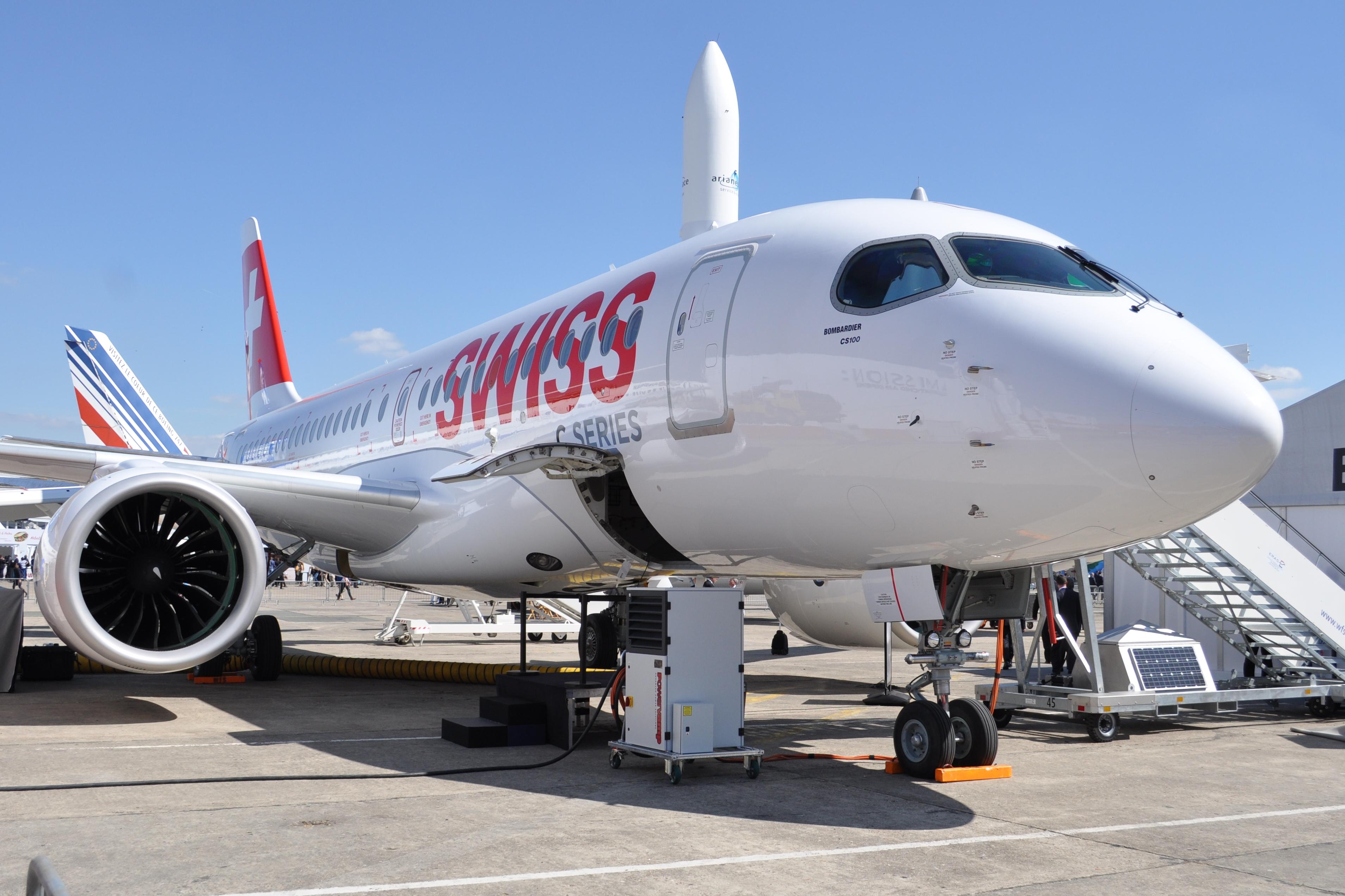
AW | 2017 05 26 21:00 | INDUSTRY Bombardier Inc. dijo el viernes que entregó su primer avión CS300 al cliente Swiss International Air Lines AG, marcando un hito significativo para la familia de aviones de pasajeros CSeries de la constructora canadiense.
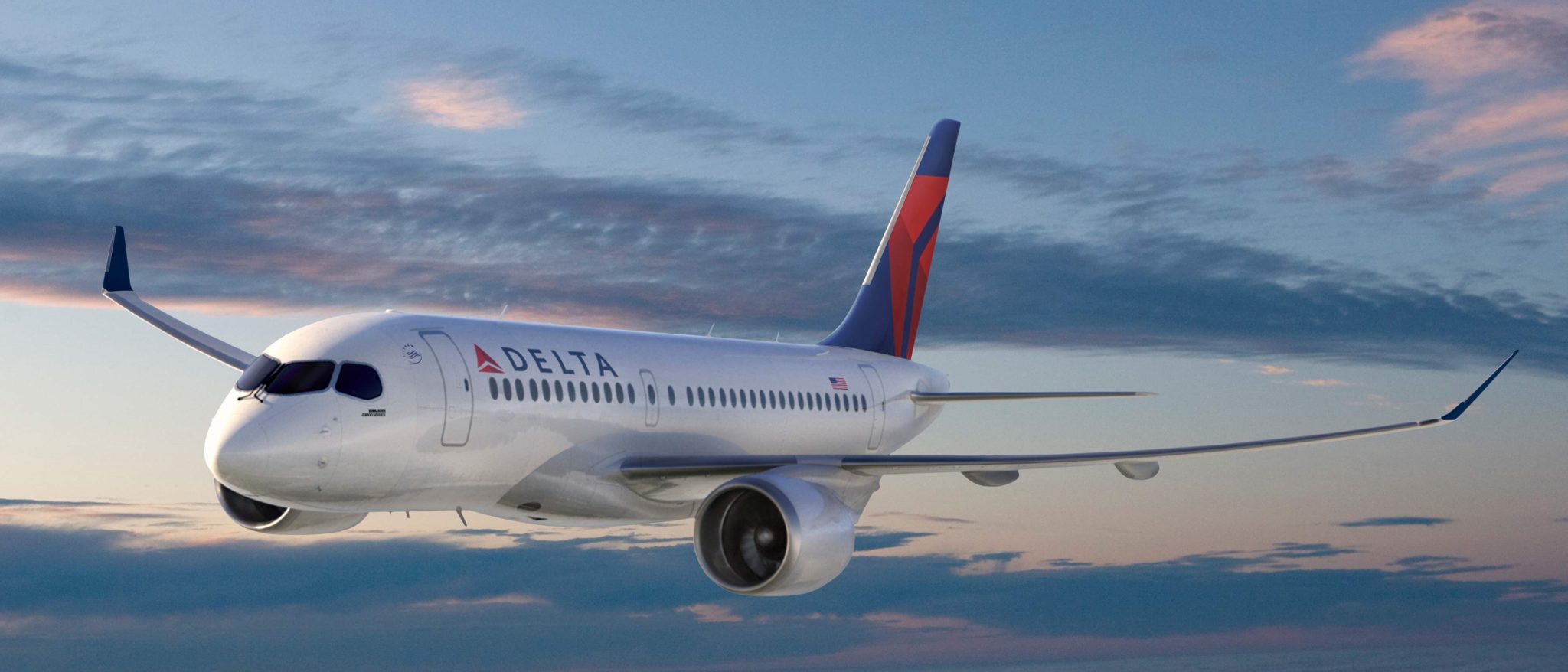
A pesar de que ha ganado elogios por el ahorro de combustible, el CSeries no ha recibido una orden sustancial desde la venta de 75 aviones CS100 a Delta Air Lines hace casi un año.
La entrega del CS300 se prepara para otra pelea de ventas más suaves este año después de un boom de pedido prolongado que alcanzó su máximo en 2014. El CS300 de 130 asientos es más grande que el avión CS100 de 110 asientos de Bombardier. Su vuelo comercial inaugural será desde Ginebra hasta Londres, cuando entre en servicio el 1 de junio, dijo Bombardier.
Se espera que Swiss International tome entrega de 30 aviones CS300 y CS100. Bombardier ha entregado hasta el momento 12 aviones CSeries, nueve de los cuales fueron a Swiss International, dijo el fabricante de planos.
SWISS receives its 1st CS300
Bombardier Inc. said on Friday it delivered its first CS300 aircraft to customer Swiss International Air Lines AG, marking a significant milestone for the Canadian planemaker’s CSeries passenger jet family.
Although it has won accolades for fuel savings, the CSeries has not received a substantial order since the sale of 75 CS100 jets to Delta Air Lines nearly a year ago.
The CS300’s delivery also comes as planemakers are bracing for another bout of softer sales this year after a prolonged order boom peaked in 2014. The 130-seat CS300 is larger than Bombardier’s 110-seat CS100 plane. Its maiden commercial flight will be from Geneva to London, when it enters service on June 1, Bombardier said.
Swiss International is expected to take delivery of 30 CS300 and CS100 aircraft. Bombardier has so far delivered 12 CSeries aircraft, nine of which were to Swiss International, the planemaker said. A \ W
Ξ A I R G W A Y S Ξ
SOURCE: Bnn.ca
DBk: Bombardier.com / Twitter
AW-POST: 201705262100AR
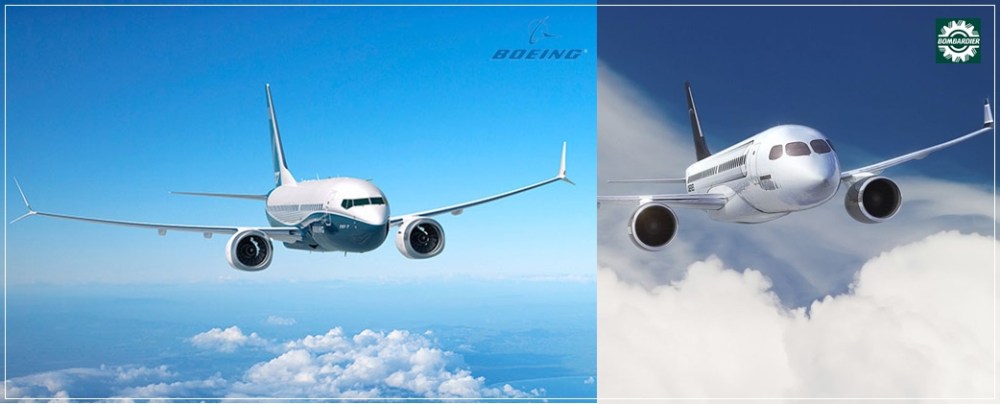
El CSeries de Bombardier y sus agresivas tácticas de ventas amenazan la existencia del Boeing 737-7 MAX y la industria aeroespacial estadounidense, dijo el viernes el vicepresidente de Boeing, Ray Conner, a funcionarios de comercio de Estados Unidos
«El mercado de 100-150 asientos es muy importante para Boeing, y Bombardier estámuy cerca de forzarnos a salir de esto por completo», dijo Conner durante una audiencia celebrada por la Comisión de Comercio Internacional de Estados Unidos el 18 de mayo.
«Sólo tomará una o dos ventas perdidas que involucran a clientes estadounidenses antes de la viabilidad comercial del MAX 7, y por lo tanto el futuro de la industria de Estados Unidos, se vuelve muy dudosa», dijo Conner. Conner y otros representantes de Boeing, Bombardier y Delta Air Lines hablaron en la audiencia sobre si Bombardier violaba las reglas comerciales. El gobierno de Estados Unidos lanzó el examen después de que Boeing presentara una petición el 27 de abril alegando un daño financiero de los subsidios de Bombardier y bajos precios de venta.
Boeing alega que Delta, que compró 75 CS100s en 2016, pagó alrededor de $ 20 millones cada uno para aviones que le costaron a Bombardier $ 33.2 millones cada uno producir. Bombardier fue capaz de hacer el trato porque recibió $ 2,5 mil millones en infusiones de capital gubernamental y miles de millones más en otros subsidios, Boeing alega.
Las tácticas de la aerolínea canadiense han deprimido los precios de los aviones de estrecha estrecha competidores como 737-700 y 737-7 MAX, según Boeing, y agregó que la presión de Bombardier obligó a Boeing a recortar el precio de 737-700 vendido a United Airlines.
Robert Novick, abogado de Boeing, dijo a la Comisión de Comercio: «La forma en que se fijan los precios es más allá de cualquier imaginación razonable». «Si Boeing no puede asegurar órdenes adicionales para el 737-7 MAX, o se ve obligado a vender a precios deprimidos, el programa no tendrá éxito y Boeing será eliminado del mercado de 100 a 150 asientos».
Las investigaciones paralelas de la Comisión de Comercio y el Departamento de Comercio de Estados Unidos están programadas para concluir en noviembre y podrían resultar en aranceles de importación, dijo el Departamento de Comercio. Representantes de Bombardier y Delta rechazaron las reclamaciones de Boeing, insistiendo en que la CSeries no compite con 737 más grandes. Bombardier desarrolló CSeries para cubrir una necesidad que surgió después de que Boeing abandonara el mercado de aproximadamente 100 asientos cuando dejó de fabricar 717 hace una década, dijeron. Boeing 737-700 y 737-7 MAX llevan aproximadamente 126 a 138 asientos, mientras que los CS100 llevan alrededor de 108 asientos.
«Boeing ni siquiera fabrica un producto que compita con el avión que Bombardier ofrece», dijo Peter Lichtenbaum, un abogado que representa a Bombardier. «Las aeronaves no son como el champú, donde obtener un 30% más por un precio comparable es un bono». De hecho, Conner confirmó que debido a las exigencias de precios de Delta, Boeing había discutido inicialmente la venta de 717 de Delta o de Embraer 190s comercializados.
«Boeing no pudo ofrecernos un nuevo avión en el espacio de 100 a 110 asientos que satisfizo nuestras necesidades en el plazo que necesitábamos para ejecutar», dijo el vicepresidente senior de administración de la cadena de suministros de Delta y la flota Gregory May en la audiencia. «Sería erróneo sugerir que Boeing perdió ventas a Delta porque compramos el CS100. Boeing simplemente no estaba en la mezcla».
Mayo también dirigió la tasación, diciendo que las líneas aéreas consiguen generalmente descuentos en el intercambio para los riesgos asociados con ser un cliente inicial de un nuevo avión. «Todos en la industria entienden que el primer cliente de la marquesina está siendo recompensado por ser el primero en evaluar completamente el avión», dijo May. Aunque Bombardier no reveló los precios pagados por Delta, el vicepresidente de operaciones comerciales de Airframer, Ross Mitchell, rechazó la cifra de 20 millones de dólares. «El precio que se ha cotizado está muy lejos, y lo dejaremos en eso», dijo. Gran parte de la audiencia se centró en el número de asientos, con Boeing insistiendo en que el CS100 compite en el segmento de 100 a 150 asientos, y Bombardier y Delta dicen que CSeries ocupa un nicho único más pequeño.
«Un avión de 100 asientos y un avión de 150 asientos no son intercambiables para el propósito de Delta», dijo el vicepresidente de Delta de planificación de la red en las Américas, Joe Esposito. Sin embargo, Conner y otros representantes de Boeing pintaron los recortes de precios de Bombardier como amenazando el «momento comercial» del 737-7 MAX.
«El Boeing 737-7 MAX parece ser peligrosamente cercano a, o tal vez incluso ya bloqueado en un ciclo de impulso comercial tan negativo», dijo Jerry Nickelsburg, un economista de la Universidad de California en Los Ángeles que habló en nombre de Boeing. «Ya es una situación precaria», dijo Conner.
Boeing ha recibido órdenes de sólo 63 737-7 MAX de cinco clientes, y no ha recibido una orden significativa desde 2013, dijo Conner. «Bombardier ha dicho que quiere el 50% de este mercado, que probablemente ganará a los precios que está ofreciendo. Si Bombardier hace eso, estamos buscando perder $ 330 millones de dólares en ingresos cada año «, dice Conner.
CSeries prices threaten viability 737-7 MAX
Bombardier’s CSeries and its aggressive sales tactics threaten the very existence of Boeing’s 737-7 MAX and the US aerospace industry, Boeing’s vice-chairman Ray Conner told US trade officials last week
«The 100-150 seat market matters greatly to Boeing, and Bombardier is very close to forcing us out of this altogether,» Conner said during a hearing held by the United States International Trade Commission on 18 May.
«It will only take one or two lost sales involving US customers before commercial viability of the MAX 7, and therefore the US industry’s very future, becomes very doubtful,» Conner said. Conner and other representatives of Boeing, Bombardier and Delta Air Lines spoke at the hearing into whether Bombardier violated trade rules. The US government launched the examination after Boeing filed a petition on 27 April claiming financial harm from Bombardier’s subsidies and low sales prices.
Boeing alleges that Delta, which purchased 75 CS100s in 2016, paid about $20 million each for aircraft that cost Bombardier $33.2 million each to produce. Bombardier was able to make the deal because it received $2.5 billion in government equity infusions and billions more in other subsidies, Boeing alleges.
The Canadian airframer’s tactics have depressed prices for competing small narrowbody aircraft like 737-700s and 737-7 MAXs, Boeing says, adding that pressure from Bombardier forced Boeing to cut the price of 737-700s it sold to United Airlines.
«The way they’re pricing it is dumped beyond any reasonable imagination,» Robert Novick, an attorney for Boeing, told the Trade Commission. «If Boeing cannot secure additional orders for the 737-7 MAX, or is forced to sell at depressed prices, the programme will not succeed and Boeing will be eliminated from the 100 to 150 seat market.»
Parallel investigations by the Trade Commission and the US Department of Commerce are scheduled to wrap up by November and could result in import duties, the Department of Commerce has said. Representatives from Bombardier and Delta dismissed Boeing’s claims, insisting the CSeries does not compete with larger 737s. Bombardier developed CSeries to fill a need that arose after Boeing abandoned the roughly 100-seat market when it stopped making 717s a decade ago, they said. Boeing’s 737-700 and 737-7 MAX carry roughly 126 to 138 seats, while CS100s carry about 108 seats.
«Boeing doesn’t even make a product that competes with the aircraft Bombardier offered,» said Peter Lichtenbaum, an attorney representing Bombardier. «Aircraft are not like shampoo, where getting 30% more for a comparable price is a bonus.» Indeed, Conner confirmed that due to Delta’s price requirements Boeing initially had discussed selling Delta used 717s or traded-in Embraer 190s.
«Boeing could not offer us a new airplane in the 100- to 110-seat space that met our needs in the timeframe that we needed to execute,» Delta senior vice-president of supply chain management and fleet Gregory May said at the hearing. «It would be wrong to suggest that Boeing lost sales to Delta because we purchased the CS100. Boeing simply was not in the mix.»
May also addressed pricing, saying airlines commonly get discounts in exchange for risks associated with being an initial customer of a new aircraft. «Everyone in the industry understands that the first marquee customer is being rewarded for being the first for fully evaluating the aircraft,» May said. Though Bombardier did not disclose prices paid by Delta, the airframer’s vice-president of commercial operations Ross Mitchell dismissed the $20 million figure. «The price that has been quoted is way off, and we’ll leave it at that,» he said. Much of the hearing focused on seat count, with Boeing insisting the CS100 competes in the 100 to 150 seat segment, and Bombardier and Delta saying CSeries actually occupies a smaller, unique niche.
«A 100-seat plane and 150-seat plane are not interchangeable for Delta’s purpose,» said Delta vice-president of network planning in the Americas Joe Esposito. Still, Conner and other Boeing representatives painted Bombardier’s price cuts as threatening the «commercial momentum» of the 737-7 MAX.
«The Boeing 737-7 MAX appears to be perilously close to, or maybe even already… locked into such a negative commercial momentum cycle,» said Jerry Nickelsburg, a University of California Los Angeles economist who spoke on behalf of Boeing. «It is already a precarious situation,» Conner said.
Boeing has received orders for just 63 737-7 MAXs from five customers, and has not received a significant order since 2013, Conner said. «Bombardier has said it wants 50% of this market, which it will probably win at the prices it is offering. If Bombardier does that, we’re looking at losing $330 million dollars in revenue every year,» Conner says. A\W
Ξ A I R G W A Y S Ξ
SOURCE: Flightglobal.com / Airgways.com
DBk: Businessinsider.com / Boeing.com
AW-POST: 201705252227AR
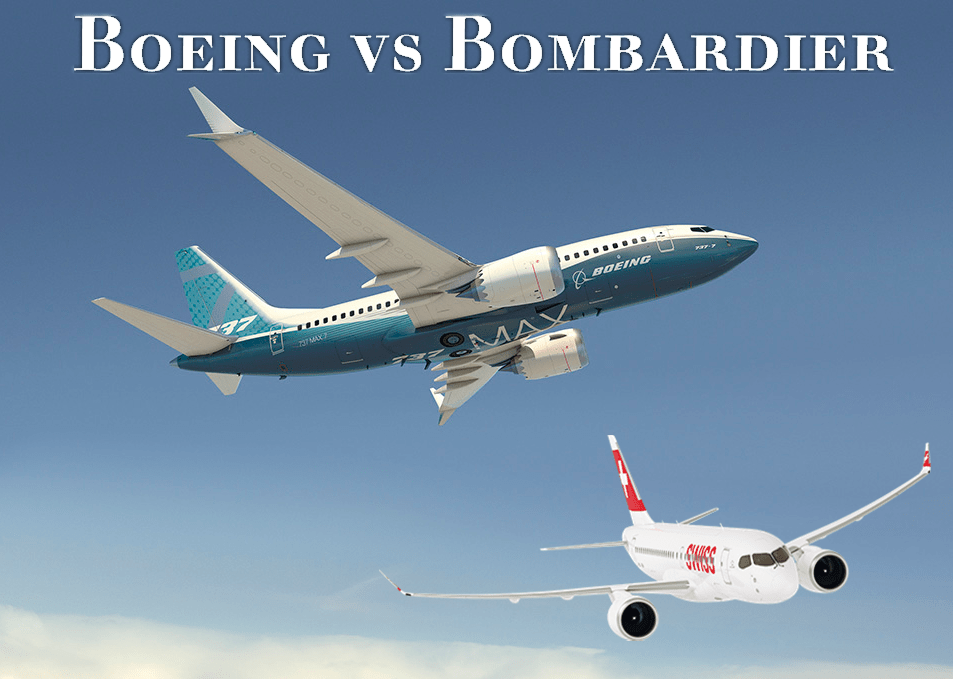
Las autoridades de Estados Unidos inició una investigación anti-dumping sobre las importaciones e aviones comerciales del grupo canadiense Bombardier, y se suma a las crecientes disputas comerciales entre los dos países vecinos
Estados Unidos anunció el jueves el inicio de una investigación anti-dumping sobre las importaciones de aviones comerciales de la canadiense Bombardier, que se suma a las crecientes disputas comerciales entre los dos países vecinos.
Lanzada después de una denuncia de la empresa estadounidense Boeing, la investigación deberá determinar si el fabricante canadiense vende a pérdida sus aviones de 100 y 150 asientos en Estados Unidos y se beneficia de subsidios públicos ilegales, detalló el departamento de Comercio estadounidense en un comunicado. «El mercado estadounidense es el más abierto al mundo pero debemos actuar cuando se rompen las reglas», dijo el secretario de Comercio, Wilbur Ross, en el comunicado.
A finales de abril, Boeing presentó una demanda contra Bombardier, acusándolo de vender sus últimos aviones CSeries por debajo de los costos de producción y de recibir más de 3,000 millones de dólares en subsidios públicos.
US to investigate Bombardier for anti-dumping
The United States authorities initiated an anti-dumping investigation into the commercial aircraft and imports of the Canadian Bombardier group, adding to the growing trade disputes between the two neighboring countries
The United States on Thursday announced the start of an anti-dumping investigation into commercial aircraft imports by Canada’s Bombardier, adding to growing trade disputes between the two neighboring countries.
Launched after a complaint by the US company Boeing, the investigation will determine whether the Canadian manufacturer sells its 100 and 150-seat aircraft in the United States at a loss and benefits from illegal public subsidies, the US Commerce Department said in a statement. «The US market is the most open to the world but we must act when the rules are broken,» Commerce Secretary Wilbur Ross said in the statement.
In late April, Boeing filed a lawsuit against Bombardier, accusing it of selling its latest CSeries aircraft below production costs and receiving more than $ 3 billion in public subsidies. A \ W
Ξ A I R G W A Y S Ξ
SOURCE: Eleconomista.com.mx
DBk: Sseekingalpha.com / AIRGWAYS
AW-POST: 201705192041AR


 737-10 MAX, una versión más grande de la familia de medios de transporte del planemaker que se espera sea lanzada en el Paris Airshow 2017, dijeron tres personas familiarizadas con los planes. La orden puede, sin embargo, incluir algunas mejoras de un modelo más pequeño, dos de ellos dijeron. Las dos compañías se negaron a comentar.






 Bombardier Inc. dijo el viernes que entregó su primer avión CS300 al cliente Swiss International Air Lines AG, marcando un hito significativo para la familia de aviones de pasajeros CSeries de la constructora canadiense.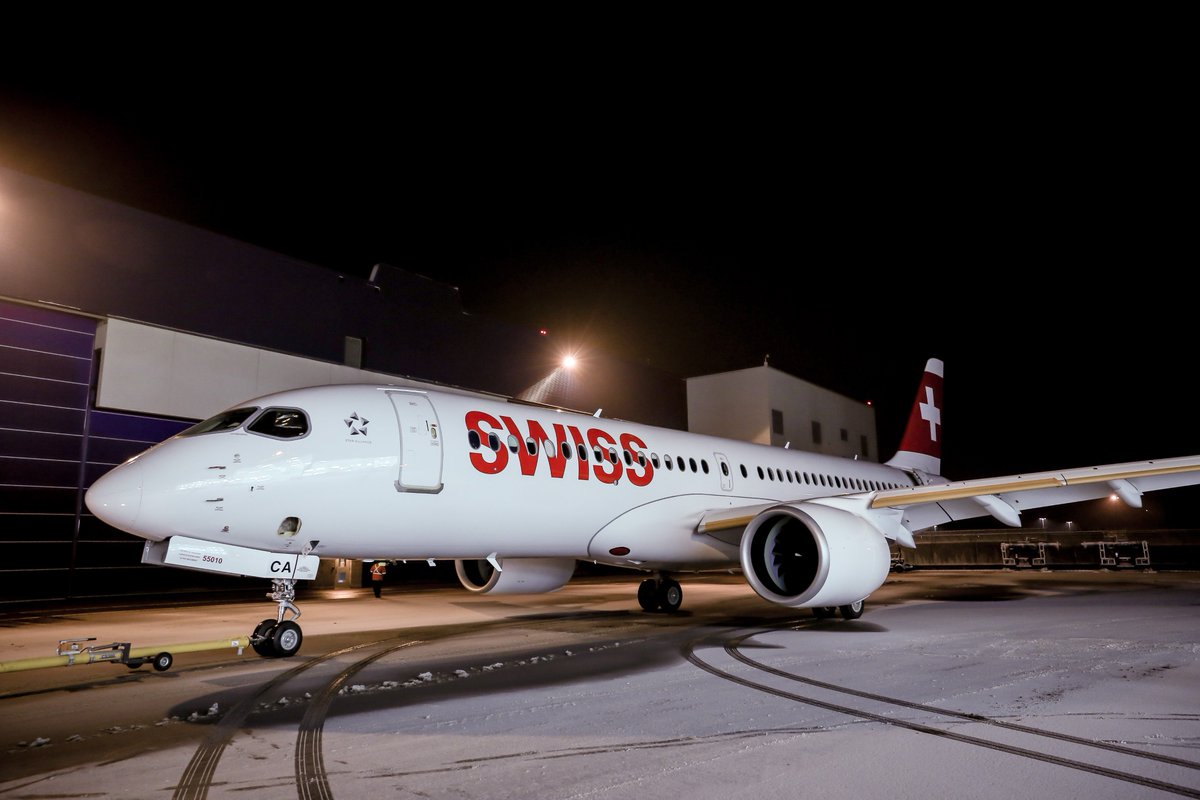



 AW | 2017 05 19 20:41 | INDUSTRY
 Las autoridades de Estados Unidos inició una investigación anti-dumping sobre las importaciones e aviones comerciales del grupo canadiense Bombardier, y se suma a las crecientes disputas comerciales entre los dos países vecinos