Spirit Airlines inaugura Fort Lauderdale-Bucaramanga
Spirit Airlines ha inaugurado su nueva ruta entre el Aeropuerto Internacional de Fort Lauderdale/Hollywood (FLL) y el Aeropuerto Internacional Bucaramanga/Palonegro (BGA), República de Colombia. Será el único vuelo internacional desde Estados Unidos hacia Bucaramanga. El vuelo inaugural este Miércoles 18/11 tocó por primera vez la pista del Aeropuerto Bucaramanga/ Palonegro el primer vuelo directo entre el Estado de Florida y el Estado de Lebrija. La aeronave Airbus A320NEO partió desde territorio americano a las 10:45 a.m. de este mismo día. El retorno Bucaramanga/Fort Lauderdale despagaba a las 03:11 hs. con una duración de 03:24 hs. arribando al Aeropuerto Fort Lauderdale a las 06:35 hs completando el vuelo NK861.
La adición de vuelos a Bucaramanga y Barranquilla posiciona a Spirit como la aerolínea con la mayor cantidad de vuelos directos conectando a los Estados Unidos con Colombia. “Estamos muy complacidos de poder inaugurar esta ruta tan importante para la región de Santander y para nosotros como aerolínea. La apertura de estas dos nuevas rutas es muestra de nuestro compromiso a seguir ofreciendo opciones de vuelo convenientes y flexibles a nuestros Pasajeros, brindando mayor conectividad a los destinos que volamos”, expresó Camilo Martelo, Director de Aeropuertos Internacionales de Spirit Airlines.
«Esta ruta internacional, permitirá conectar a todos los santandereanos y colombianos de una manera más ágil y a menor costo con Norteamérica y el mundo. Así mismo, representa una oportunidad para el sector empresarial ya que casi el 39% de las exportaciones no minero energéticas de Santander se dirigen hacia este mercado. También le apostamos a que Santander se convierta en un destino turístico de clase mundial, ofreciendo un turismo experiencial y de naturaleza, destacando nuestra biodiversidad, variedad gastronómica, atractivos religiosos, municipios con patrimonio cultural material e inmaterial, una oferta institucional en servicios de salud con altos estándares de calidad y escenarios para realizar eventos, convenciones y congresos. El año anterior recibimos cerca de 5.000 visitantes internacionales provenientes de Estados Unidos y no contábamos con este vuelo directo. Estamos totalmente seguros que con esta nueva ruta lograremos aumentar estas cifras y generar progreso, desarrollo y crecimiento para nuestra región”, afirmó el Gobernador de Santander Mauricio Aguilar Hurtado.
Spirit inició su servicio a Colombia en Mayo de 2008, conectando a Fort Lauderdale (FLL) con Cartagena (CTG). La expansión de la aerolínea continuó a lo largo de la siguiente década con vuelos a Bogotá (BOG), Medellín (MDE), Armenia (AXM) y Cali (CLO). Adicionalmente, la aerolínea inauguró su servicio directo desde Orlando (MCO) a Cartagena, Bogotá y Medellín en el 2018. En los últimos 12 años, Spirit ha transportado a más de 3,1 millones de pasajeros entre Colombia y las diferentes ciudades en los Estados Unidos.
“La ruta directa entre Bucaramanga y Fort Lauderdale brinda oportunidades para que los santandereanos generen nuevos negocios. Hoy Estados Unidos es el principal socio comercial de Santander y este vuelo permitirá seguir aprovechando el Tratado de Libre Comercio firmado entre los países para diversificar aún más nuestra canasta exportadora y atraer inversión extranjera. A su vez, fomentará el turismo internacional en Santander”, afirmó Juan Camilo Beltrán Domínguez, Presidente Ejecutivo de la Cámara de Comercio de Bucaramanga.
El 19/09 Spirit fue la primera aerolínea en entrar a Colombia, aterrizando en Cartagena después de seis meses desde el cierre de fronteras. La aerolínea también lideró esfuerzos humanitarios, operando más de 170 vuelos entre Colombia y los Estados Unidos, ayudando a más de 30.000 personas a reunirse con sus familias y seres queridos.
Protocolos de Seguridad
Cuidar a nuestros Pasajeros y Miembros del Equipo es la prioridad absoluta de Spirit. La aerolínea tiene un enfoque de seguridad compuesto de varios protocolos que incluyen un reglamento exigiendo a todos los Pasajeros y Miembros del Equipo que usen cubiertas de tela para la cara. La flota de Spirit está equipada con filtros de partículas en suspensión (HEPA) de última tecnología y de alta eficiencia que capturan 99.97% de las partículas y que filtran el aire de contaminantes cada 3 minutos.
Spirit inaugurates FLL/Bucaramanga
Spirit Airlines opens Fort Lauderdale-Bucaramanga flight
Spirit Airlines has inaugurated its new route between Fort Lauderdale/Hollywood International Airport (FLL) and Bucaramanga/Palonegro International Airport (BGA). It will be the only international flight from the United States to Bucaramanga, Colombia Republic. The inaugural flight this Wednesday 11/18 touched the runway of the Bucaramanga/Palonegro Airport for the first time, the first direct flight between the State of Florida and the State of Lebrija. The Airbus A320NEO aircraft departed from the United States at 10:45 a.m. of this very day. The Bucaramanga/Fort Lauderdale return dispatched at 03:11 am. with a duration of 03:24 hours. arriving at Fort Lauderdale Airport at 06:35 am completing flight NK861.
The addition of flights to Bucaramanga and Barranquilla positions Spirit as the airline with the largest number of direct flights connecting the United States with Colombia. “We are very pleased to be able to inaugurate this very important route for the Santander region and for us as an airline. The opening of these two new routes is a sign of our commitment to continue offering convenient and flexible flight options to our Passengers, providing greater connectivity to the destinations we fly”, said Camilo Martelo, Director of International Airports for Spirit Airlines.
«This international route will allow connecting all Santanderians and Colombians in a more agile way and at a lower cost with North America and the world. Likewise, it represents an opportunity for the business sector since almost 39% of non-mining energy exports from Santander is heading towards this market. We also bet that Santander will become a world-class tourist destination, offering experiential and nature tourism, highlighting our biodiversity, gastronomic variety, religious attractions, municipalities with tangible and intangible cultural heritage, a Institutional offer in health services with high quality standards and scenarios for holding events, conventions and congresses. Last year we received about 5,000 international visitors from the United States and we did not have this direct flight. We are totally sure that with this new route we will be able to increase these figures and generate progress, develop o and growth for our region”, stated the Governor of Santander Mauricio Aguilar Hurtado.
Spirit began its service to Colombia in May 2008, connecting Fort Lauderdale (FLL) with Cartagena (CTG). The airline’s expansion continued over the next decade with flights to Bogotá (BOG), Medellín (MDE), Armenia (AXM) and Cali (CLO). Additionally, the airline inaugurated its direct service from Orlando (MCO) to Cartagena, Bogotá and Medellín in 2018. In the last 12 years, Spirit has transported more than 3.1 million passengers between Colombia and the different cities in the United States. United.
“The direct route between Bucaramanga and Fort Lauderdale provides opportunities for Santander residents to generate new business. Today the United States is Santander’s main commercial partner and this flight will allow us to continue taking advantage of the Free Trade Agreement signed between the countries to further diversify our export basket and attract foreign investment. At the same time, it will promote international tourism in Santander”, said Juan Camilo Beltrán Domínguez, Executive President of the Bucaramanga Chamber of Commerce.
On 09/19 Spirit was the first airline to enter Colombia, landing in Cartagena after six months since the border closure. The airline also led humanitarian efforts, operating more than 170 flights between Colombia and the United States, helping more than 30,000 people to reunite with their families and loved ones.
Security Protocols
Caring for our Passengers and Team Members is Spirit’s top priority. The airline has a security approach comprised of several protocols including a regulation requiring all Passengers and Team Members to wear cloth face covers. Spirit’s fleet is equipped with state-of-the-art, high-efficiency particulate matter (HEPA) filters that capture 99.97% of particulates and filter the air of contaminants every 3 minutes.
General Electric Company ha celebrado este 17/11 sus 25 aniversarios del producto insignia GE90, que ha entregado más de 2.800 motores, pionero de la propulsión superando los 100 millones de horas de vuelo. El 17 de Noviembre de 1995, el GE90 entró en servicio en el Boeing 777, alimentando un vuelo de British Airways entre Londres y Dubái. El motor GE90 ha sido uno de los más fiables de la industria con una tasa de fiabilidad de envío de clase mundial del 99,97 por ciento. En Julio 2020, la familia de motores superó los 100 millones de horas de vuelo. «Estamos emocionados de celebrar otro hito de GE90 y nos gustaría felicitar a todos los involucrados en el éxito del motor. Seguimos entregando estos motores extremadamente confiables y nuestro dedicado equipo de soporte de productos mantendrá el GE90 durante muchos años, proporcionando el máximo valor a lo largo de su ciclo de vida», dijo Mike Kauffman, Gerente General del programa GE90 de GE Aviation.
GE ha entregado más de 2.800 GE90 -94B y ha actualizado motores 115B a 70 operadores de todo el mundo. La familia de motores alimenta todos los modelos Boeing 777 y es la planta motriz exclusiva en el 777-300ER, -200LR y 777F. El motor GE90 se enfrenta a algunas de las demandas más exigentes a diario en un motor a reacción comercial de alto empuje. A pesar de esto, el motor ha logrado la menor carga de mantenimiento hasta la fecha a través del boletín de servicio que termina la aceleración de acciones y los programas de campo basados en análisis. Su arquitectura y diseño mecánico han influido en todos los turboventiladores GE y CFM en los últimos 20 años, desde el popular motor GEnx y el motor CFM LEAP de venta récord hasta el Passport para aviones corporativos y el motor GE9X de próxima generación para el Boeing 777X. El motor GE90 tuvo el récord mundial como el motor a reacción más potente durante 17 años con 127.900 libras de empuje hasta que el nuevo motor GE9X, recién certificado, alcanzó la nueva marca de 134.300 libras.
GE90 celebrates 25 years of service
GE90 has completed its 25th anniversary
General Electric Company celebrated on 11/17 its 25th anniversary of the flagship product GE90, which has delivered more than 2,800 engines, pioneering propulsion exceeding 100 million flight hours. On November 17, 1995, the GE90 entered service on the Boeing 777, fueling a British Airways flight between London and Dubai. The GE90 engine has been one of the most reliable in the industry with a world-class shipping reliability rate of 99.97 percent. In July 2020, the engine family exceeded 100 million flight hours. «We are excited to celebrate another GE90 milestone and would like to congratulate everyone involved in the engine’s success. We continue to deliver these extremely reliable engines and our dedicated product support team will maintain the GE90 for many years to come, providing maximum value throughout. throughout its life cycle», said Mike Kauffman, General Manager of GE Aviation’s GE90 program.
GE has delivered more than 2,800 GE90 -94Bs and upgraded 115B engines to 70 operators around the world. The engine family powers all Boeing 777 models and is the exclusive powerplant on the 777-300ER, -200LR and 777F. The GE90 engine faces some of the toughest demands on a daily basis in a high-thrust commercial jet engine. Despite this, the engine has achieved the lowest maintenance load to date through the service bulletin ending action acceleration and analysis-based field programs. Its architecture and mechanical design have influenced all GE and CFM turbofans over the past 20 years, from the popular GEnx engine and the record-selling CFM LEAP engine to the Passport for corporate jets and the next-generation GE9X engine for the Boeing 777X. . The GE90 engine held the world record as the most powerful jet engine for 17 years with 127,900 pounds of thrust until the newly certified GE9X engine reached the new mark of 134,300 pounds.
Subsidiarias Norwegian Air piden protección contra bancarrota
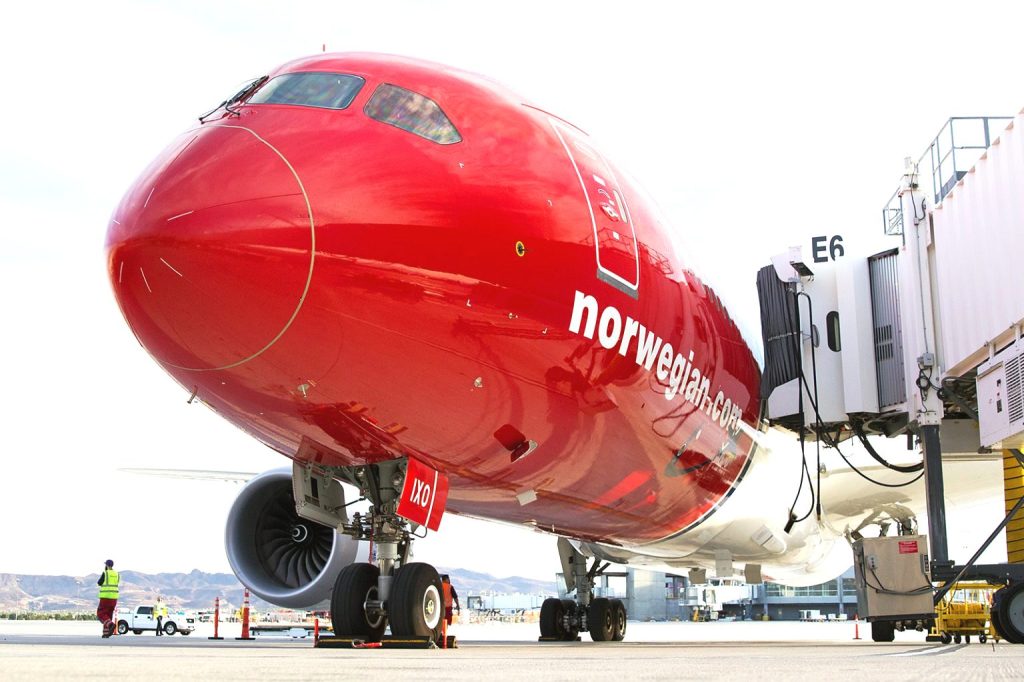
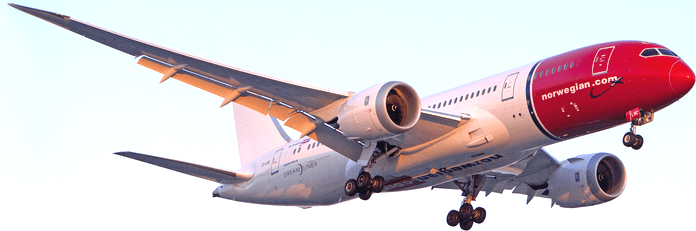
Norwegian Air Shuttle ASA ha anunciado la protección por bancarrota este 18/11 para sus dos aerolíneas irlandesas Norwegian Air InternationalLimited y Arctic Aviation Assets. Tras los embates financieros y la supervivencia, el transbordador aéreo noruego de bajo costo se declaró a la protección por bancarrota en Irlanda el Miércoles 18 de Noviembre de 2020 para dos de sus principales filiales en un intento de protegerse de los acreedores el tiempo suficiente para encontrar una solución para una reestructuración financiera.
El grupo aéreo ha afrontado dificultades económicas antes de la pandemia, al igual que el resto de la industria aérea, se ha visto duramente golpeada por las restricciones destinadas a limitar la propagación del nuevo Coronavirus, lo que ha llevado a complicar aún más el panorama y las perspectivas hacia el futuro. La tercera aerolínea de bajo coste más grande de Europa sufrió un golpe devastador el 09/11, cuando el Gobierno noruego se había negado a inyectar más dinero en efectivo después de conceder a la compañía garantías de NOK 3.000 millones de Coronas (€ 277 millones de uEros) a principios de este año 2020. Como resultado, la aerolínea decidió solicitar protección por bancarrota para dos de sus filiales en Irlanda: Norwegian Air International, que opera un gran número de vuelos internacionales de la compañía en rutas transatlánticas, y Arctic Aviation Assets, que gestiona su flota de aviones. «Buscar protección para reorganizar bajo la ley irlandesa es una decisión que hemos tomado para asegurar el futuro de Norwegian. Nuestro objetivo es encontrar soluciones con nuestros grupos de trabajo que nos permitan emerger como una aerolínea financieramente más fuerte y segura», dijo el Jefe de la aerolínea, Jacob Schram, en un comunicado.
El efecto pandemia en la aviación ha tenido consecuencias nefastas con la reducción de fuerza laboral, acogimiento a protección de quiebras y quiebras declaradas a través del mundo. Las aerolíneas que todavía vuelan han sobrevivido hasta ahora al recortar decenas de miles de puestos de trabajo, pero su situación económica continúa con las defensas bajas a medida que la proyección de los vuelos no repuntan. Después de una caída del 66% en el tráfico aéreo mundial pronosticada este año, se espera que los ingresos de las aerolíneas todavía disminuyan un 46% en 2021 con respecto a 2019, dijo la Asociación Internacional de Transporte Aéreo (IATA) en Octubre 2020, cuando pidió más ayuda para la industria.
Norwegian Air Shuttle ASA ha expresado a principios de este mes de 11/2020 que necesitaba liquidez para pasar el invierno boreal, pero el Gobierno del Reino de Noruega, argumentando que era demasiado arriesgado y potencialmente anticompetitivo, artilló como una ruleta rusa, las consecuencias comienzan a barajar el peor escenario laboral. Norwegian Air ha expresado el 10/11 que ha reportado liquidez por valor de € 318 millones de Euros en sus arcas.
Tormenta perfecta
Norwegian Air Group, que empleaba a 10.000 personas y poseía 140 aviones en servicio a principios de 2020, ahora tiene sólo 600 empleados actualmente en la planilla y seis aviones activos. El Miércoles 18/11, dijo que continuaría sus operaciones mientras proseguía las negociaciones sobre su situación financiera. «Se espera que el proceso de reestructuración tome hasta 5 meses», dijo Jacob Schram en una conferencia de prensa.
La reciente noticia de que varias vacunas COVID-19 pueden estar listas para su distribución el próximo año ha aplaudido a la industria aérea, pero los inversores últimamente han cuestionado las posibilidades de Norwegian Air Shuttle ASA de sobrevivir. Sus acciones se han desplomado casi un 99% desde principios de año. La compañía ha estado luchando desde mucho antes de la pandemia. Un ambicioso programa de expansión lo cerca con una montaña de deudas, que ascendía a NOK 48.500 millones de Coronas a finales de 09/2020, más de 28 veces su valor actual en el mercado.
En un importante programa de reestructuración a principios de este año, los acreedores noruegos, incluidas las empresas de arrendamiento financiero, habían acordado convertir parte de los compromisos financieros de la compañía en capital, convirtiéndolos así en los mayores accionistas del transportista.
Un pionero de bajo costo en el segmento de larga distancia que utilizaba aviones más eficientes en combustible, Norwegian se topó por primera vez con una serie de problemas con los motores Rolls-Royce en sus Boeing 777 Dreamliners. Tampoco ha podido utilizar sus 18 aviones Boeing 737 MAX durante casi dos años después de que fueran puestos en tierra en todo el mundo después de dos accidentes mortales. Irónicamente, su declaración de bancarrota se produce el mismo día que los reguladores aéreos de la FAA de los Estados Unidos aprobaron la recertificación del Boeing 737 MAX para volar de nuevo. Norwegian Air ha entrado en un verdadero torbellino de dificultades presentando un escenario de tormenta perfecta donde la compañía vikinga continúa sobrevolando la situación con verdadera tenacidad y coraje.
Norwegian International welcomes bankruptcy
Subsidiaries Norwegian Air asks for bankruptcy protection
Norwegian Air Shuttle ASA has announced bankruptcy protection on 11/18 for its two Irish airlines Norwegian Air International Limited and Arctic Aviation Assets. Following financial battles and survival, the low-cost Norwegian air shuttle filed for bankruptcy protection in Ireland on Wednesday 18 November 2020 for two of its major subsidiaries in an attempt to protect itself from creditors long enough to find a solution for a financial restructuring.
The airline group has faced economic difficulties before the pandemic, like the rest of the airline industry, it has been hard hit by restrictions aimed at limiting the spread of the new Coronavirus, which has further complicated the outlook and prospects for the future. Europe’s third-largest low-cost airline suffered a devastating blow on 11/09, when the Norwegian government had refused to inject more cash after granting the company guarantees of NOK 3 billion crowns (€ 277 million uEros) earlier this year 2020. As a result, the airline decided to apply for bankruptcy protection for two of its subsidiaries in Ireland: Norwegian Air International, which operates a large number of the company’s international flights on transatlantic routes, and Arctic Aviation Assets , which manages its fleet of aircraft. «Seeking protection to reorganize under Irish law is a decision we have made to secure Norwegian’s future. Our goal is to find solutions with our working groups that will allow us to emerge as a financially stronger and more secure airline», said the Head of the airline, Jacob Schram, in a statement.
The pandemic effect on aviation has had dire consequences with the reduction of the workforce, acceptance of bankruptcy protection and bankruptcies declared throughout the world. The airlines that still fly have survived so far by cutting tens of thousands of jobs, but their economic situation continues with low defenses as flight projections do not pick up. After a 66% drop in global air traffic forecast this year, airline revenues are still expected to decline 46% in 2021 from 2019, the International Air Transport Association (IATA) said in October 2020, when he asked for more help for the industry.
Norwegian Air Shuttle ASA has expressed earlier this month of 11/2020 that it needed liquidity to get through the boreal winter, but the Government of the Kingdom of Norway, arguing that it was too risky and potentially anti-competitive, artillery like a Russian roulette, the consequences begin to wreck the worst work scenario. Norwegian Air has stated on 11/10 that it has reported liquidity worth € 318 million in its coffers.
Perfect storm
Norwegian Air Group, which employed 10,000 people and had 140 aircraft in service at the beginning of 2020, now has only 600 employees currently on the payroll and six active aircraft. On Wednesday 11/18, it said it would continue its operations while continuing negotiations on its financial situation. «The restructuring process is expected to take up to 5 months», Jacob Schram told a news conference.
Recent news that several COVID-19 vaccines may be ready for distribution next year has applauded the airline industry, but investors have lately questioned Norwegian Air Shuttle ASA’s chances of survival. Its shares have plunged nearly 99% since the beginning of the year. The company has been fighting since long before the pandemic. An ambitious expansion program surrounds her with a mountain of debt, which amounted to NOK 48.5 billion crowns at the end of 09/2020, more than 28 times its current market value.
In a major restructuring program earlier this year, Norwegian creditors, including finance leasing companies, had agreed to convert part of the company’s financial commitments into equity, thus making them the carrier’s largest shareholders.
A low-cost pioneer in the long-haul segment using more fuel-efficient aircraft, Norwegian first encountered a series of problems with the Rolls-Royce engines in its Boeing 777 Dreamliners. It has also been unable to use its 18 Boeing 737 MAX aircraft for nearly two years after they were grounded around the world after two fatal accidents. Ironically, his bankruptcy filing comes on the same day that the United States FAA aviation regulators approved the recertification of the Boeing 737 MAX to fly again. Norwegian air has entered a veritable whirlwind of difficulties presenting a perfect storm scenario where the Viking company continues to fly over the situation with true tenacity and courage.
Continúan obras remodelación en Aeropuerto Jorge Newbery
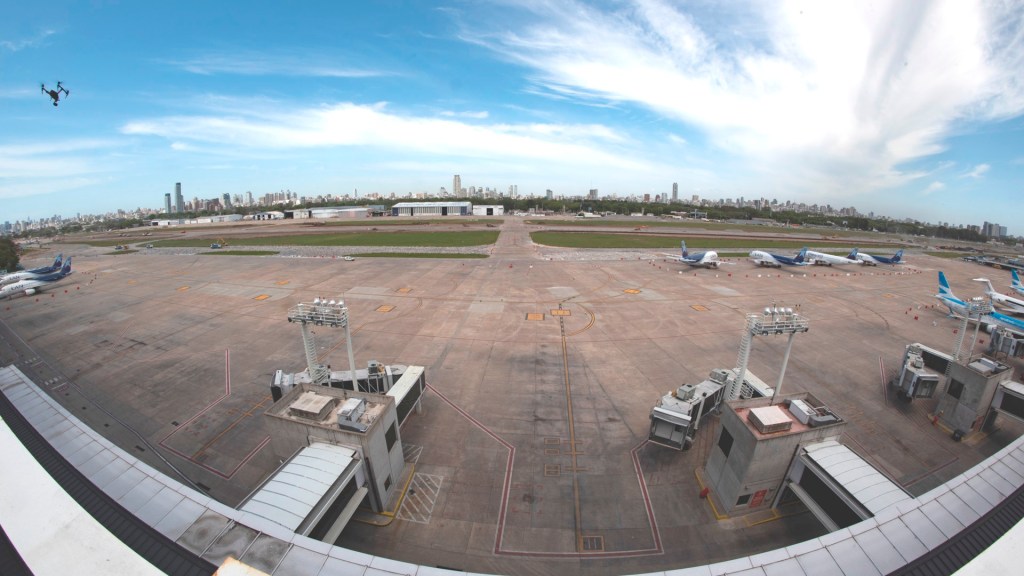
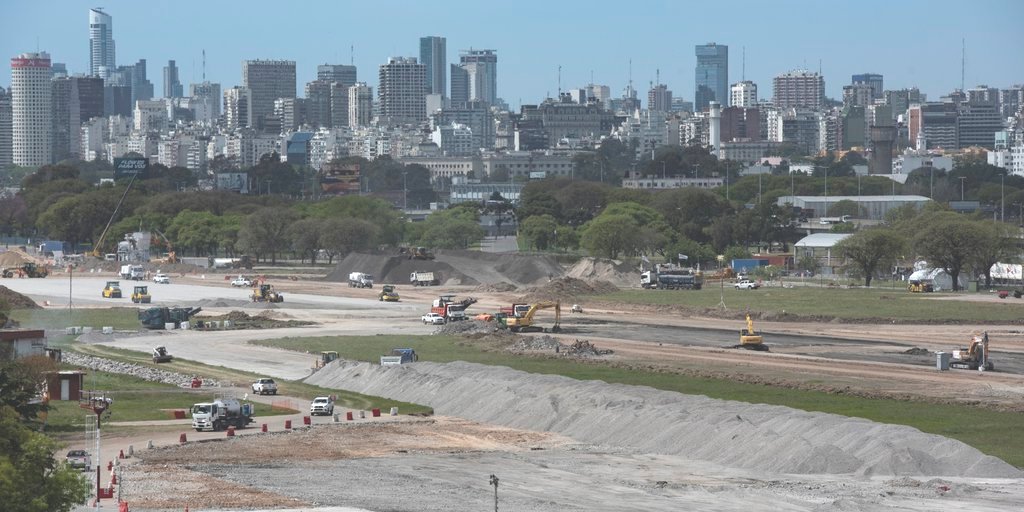
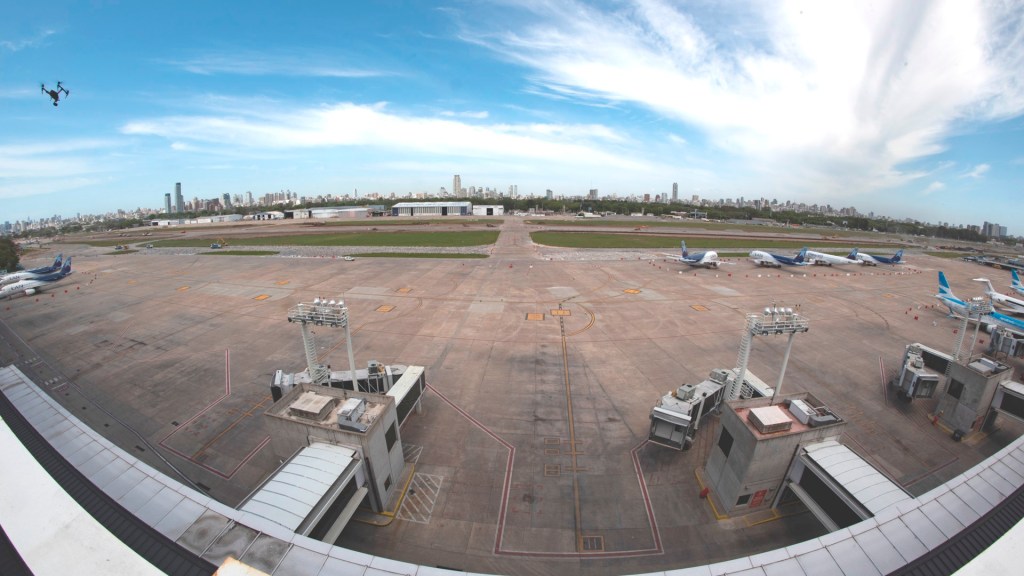
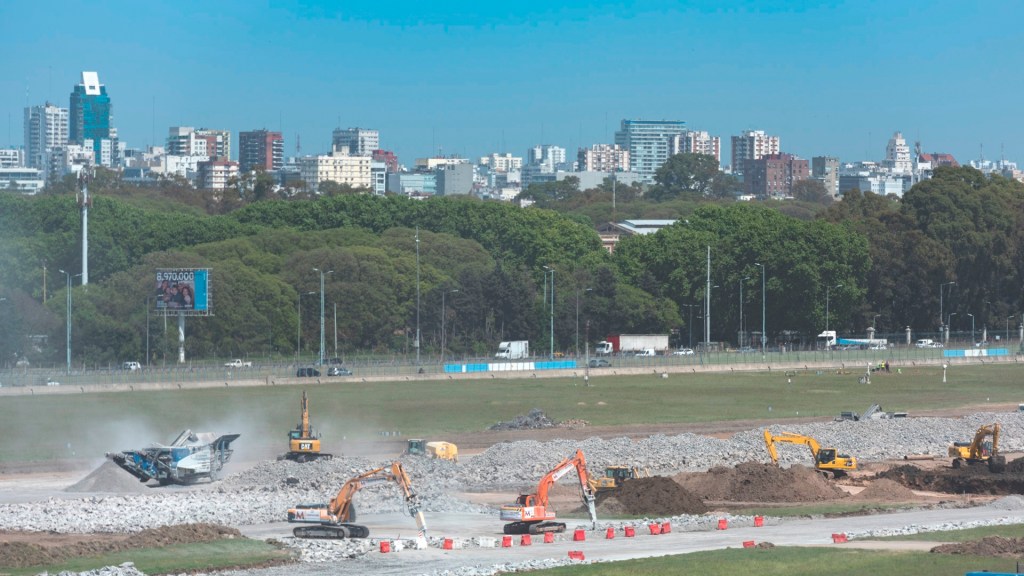
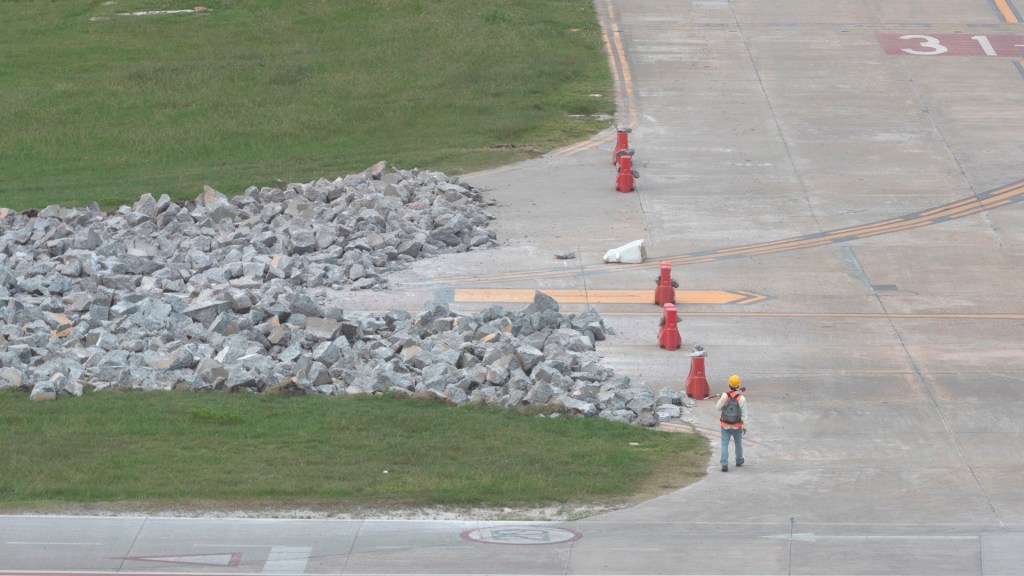
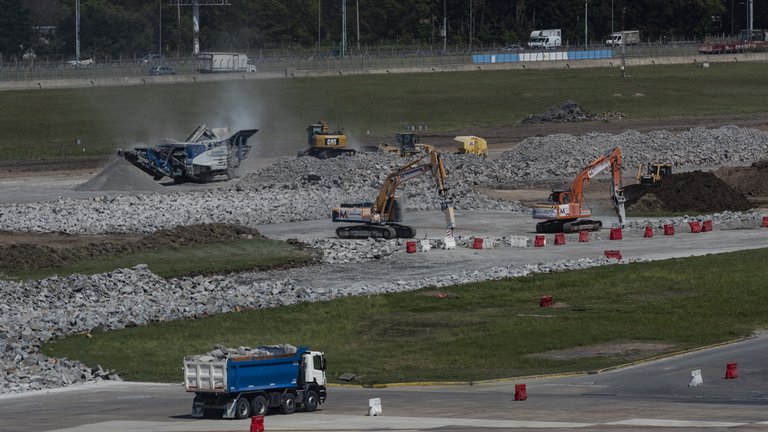
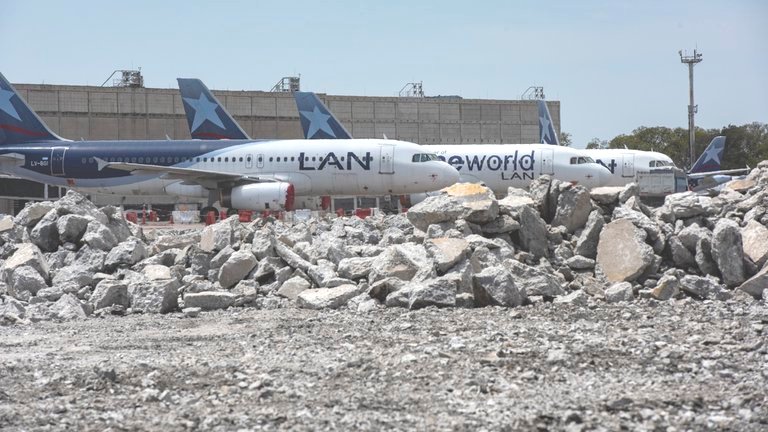
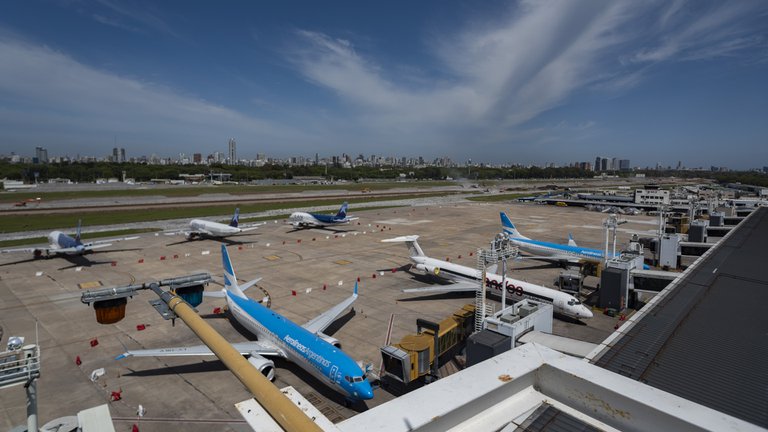
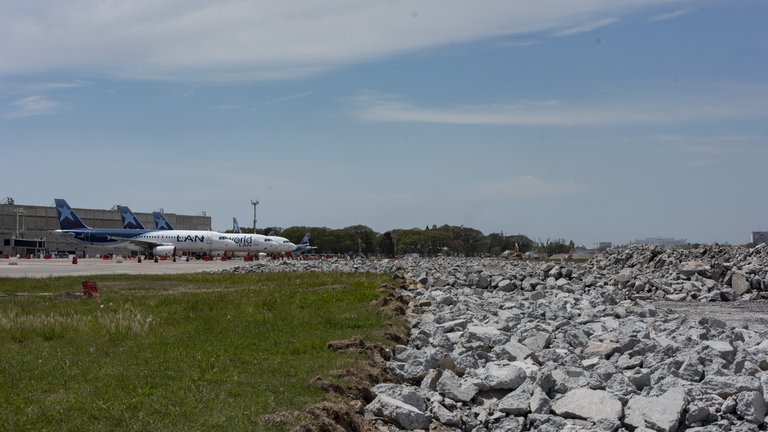
El Aeropuerto Jorge Newbery (AEP/SABE) continúa con las obras proyectadas para aprovechar mejor los espacios de la aeroestación más importante de Argentina por número de tráfico aéreo. Aeropuertos Argentina 2000 (AA2000) continúa con la diagramación de las obras de modernización en la pista y en el sector de la terminal aérea en el que operarán un número mayor de frecuencias a partir de Febrero 2021, cuando reabra la estación aérea para convertirse nuevamente en el aeropuerto regional. Los trabajos en la terminal porteña demandarán una inversión total de unos AR$ 5.000 millones de Pesos.
Las obras en pista y en la terminal comenzaron hace unas semanas, tendrán una duración de entre 4 y 5 meses y se espera que en febrero la terminal funcione nuevamente con normalidad y trazado renovado. Se trata de trabajos financiados por el Fideicomiso de Fortalecimiento del Sistema Nacional de Aeropuertos que administra el Ministerio de Transporte y ejecuta el ORSNA. Aeropuertos Argentina 2000 las lleva adelante.
Líneas aéreas
En el contexto, las líneas aéreas que funcionan desde Aeroparque trasladaron sus operaciones al Aeropuerto Internacional Ezeiza, una terminal que cuenta con capacidad e infraestructura para albergar a todas las empresas que operan en el país, más aún en esta situación particular que implicará la salida gradual de la pandemia. Los vuelos de cabotaje parten de la Terminal C y los internacionales desde la Terminal A.
Pandemia; obras mayores
La planificación de las obras en Aeroparque tenía previsto trabajos de menor mantenimiento que implicaban el cierre temporario de casi dos meses, un plan de menor escala. tras el advenimiento y prolongación de la crisis sanitaria y la afección de las operaciones aéreas en el contexto mundial, se ha aprovechando este momento particular que atraviesa la industria aerocomercial en medio de la pandemia, para solicitar por medio del ORSNA al concesionario aeroportuario AA2000 el estudio de la factibilidad para realizar una obra de mayor envergadura, con vistas a plazos más largos y así mejorar la categoría de la pista actual. “Se aprovechó la parálisis de la industria y la vuelta gradual de operaciones para una obra a largo plazo”, aseguraron desde el concesionario aéreo. Los trabajos en la terminal aérea también son fiscalizados de cerca por la Administración Nacional de Aviación Civil Argentina (ANAC), que participó y aprobó el diseño y será quien realice la habilitación cuando finalice la obra. “Aeroparque se recupera como una cabecera internacional; esto es importante apuntando al crecimiento del turismo receptivo, fundamentalmente de países limítrofes. Es algo que va a posibilitar que miles de turistas internacionales que estaban volcados a Ezeiza pasen a Aeroparque. La gente tenía que hacer combinaciones costosas y muchos vienen desde el exterior para visitar destinos nacionales. Se beneficia la conexión de esos turistas”, explicaron desde el organismo de la ANAC. En el contexto de la pandemia, el ORSNA le solicitó a AA2000 un estudio de la factibilidad para realizar una obra de mayor envergadura que la prevista.
Pista 13/31 Aeroparque
La pista del Aeropuerto Jorge Newbery tiene 2.100 metros y sumará 275 metros hacia el sur y 340 metros hacia el norte, unos 615 metros adicionales, que corresponderán a una nueva longitud de 2.715 metros de largo. Según detallaron en la empresa que pertenece a Corporación América, “la obra viene a complementar la transformación que está viviendo Aeroparque en el contexto de su regionalización, nuevos estacionamientos Sur y subsuelos en tierra ganada al río debajo del nuevo parque costero, check-in, capacidad de la terminal, paseo costero, entre otros”. Los trabajos en la pista permitirán «optimizar las operaciones regionales y mejorar la seguridad y la conectividad con el exterior”, asegura AA2000. Además de la prolongación de la pista en 2.715 metros, se ensanchará 20 metros adicionales, que permitirá optimizar las operaciones regionales y mejorar la seguridad y la conectividad con el exterior.
Plataforma aérea
Las obras también contempla la ampliación de la plataforma aerocomercial para alojar más aeronaves. El Sector Internacionales se encuentra en proyección de sumar 800 m2 de superficie, y se refuncionalizará el sector de partidas internacionales en la terminal de pasajeros, que abarcará una superficie aproximada de 4.630 m2. De esta forma se prioriza un diseño fluido y agradable con foco en la seguridad de los usuarios.
Las obras que se están llevando adelante permitirán mejoras adicionales como albergar operaciones de seis vuelos/hora, cuando anteriormente se operaba un promedio de entre 3,5 a 4 vuelos/hora. Habrá mayor capacidad de procesamiento de pasajeros con la incorporación de un scanner PSA en el sector de Partidas y doce puestos de migraciones. Reordenamiento y mejoramiento de flujos de circulación de pasajeros. Mejoras en distribución de áreas no operativas. Incorporación Gate Flex compartido entre cabotaje e internacional, según requiera la operación, las Puertas 12 y 13 de vuelos nacionales se podrá utilizar para embarcar vuelos internacionales. Ampliación del sector de conexiones. Modernización de las mangas telescópicas. Habrá modificaciones además en el sector de Pre-embarque Internacional, que se diagramó para poder dirigir operaciones de seis vuelos en una unidad horaria. Las cintas de equipajes anteriormente eran tres y se separarán para brindar mayor comodidad. Se quintuplicará la superficie de oficinas para Aduana y Migraciones. En la zona pública de arribos internacionales habrá nuevos locales comerciales.
Entre las mejoras técnicas se detalló que se instalará un nuevo sistema de balizamiento para sumar seguridad operacional en los despegues y aterrizajes. “Se trata de un nuevo sistema de alta intensidad en configuración de Categoría Operacional III, rodajes y salidas rápidas, que incluye luces de eje pista, bordes, umbral y fin de pista, y nuevos sistemas de luces de aproximación en ambas cabeceras. También, se incorporará un nuevo sistema instrumental para el aterrizaje (ILS CAT. III). Dichas instalaciones mejorarán sustancialmente la seguridad de las operaciones y permitirán operar en condiciones de baja visibilidad”, detalló el operador aeroportuario AA2000.
Además, de las obras, Aeroparque es parte, desde comienzos del 2018, del programa global de encuestas ASQ (Airport Service Quality) de ACI (Consejo Internacional de Aeropuertos), en el que el pasajero evalúa entre otras cosas la infraestructura y los servicios de la terminal. “Esta herramienta permite conocer cuáles son las expectativas de los pasajeros que visitan el aeropuerto, y llevar adelante medidas tendientes a mejorar su experiencia”, dijeron en AA2000. Desde esa medición y hasta el primer trimestre de este año, el aeropuerto mejoró su puntuación de satisfacción general, obteniendo un puntaje por parte de los pasajeros de 4,08 sobre 5 en la última medición de satisfacción general. Además, el año pasado, la terminal estrenó un nuevo Centro de Control de Operaciones (CCO). Su objetivo es alcanzar mayor eficiencia en la gestión operativa y centralizar todas las novedades, incidentes y reclamos en un solo sector. El Smart CCO opera las 24 horas los 365 días del año. El CCO tiene acceso a las cámaras de CCTV, los sistemas que controlan las cintas de equipaje (BHS) y aquellos que controlan el aire acondicionado en cada sector, las mangas y los ascensores (BMS). Por otra parte, también está a cargo del sistema de información de vuelos llamado TAMS y todos los datos registrados por los distintos sectores son cargados en un nuevo sistema llamado eRod, desde donde se gestionan los reclamos y se dejan asentados los procedimientos llevados a cabo para solucionarlos. Contará con un equipo de 16 personas para atender todas las consultas que trabaja en turnos de 12 horas y está compuesto por el Gerente del área, 5 jefes y 10 encargados que relevan constantemente las operaciones de la terminal.
Contexto parálisis
El Aeropuerto Jorge Newbery ha aprovechado la puesta a tierra de la aviación comercial para mejorar su posición como aeropuerto regional, perfilando sus operaciones como lo es el Aeropuerto Sao Paulo/Congonhas (CGH). A la par de la misma situación general, otros aeropuertos del mundo aprovecharon la parálisis producida por la crisis del Covid-19 para adelantar trabajos de infraestructura que serían muy difíciles o imposibles de realizar en condiciones de operaciones normales. Es el caso, por ejemplo, del Louisville Muhammad Ali International (SDF), en EEUU, donde se puso en marcha el proyecto SDF Next con una inversión de US$ 400 millones para remodelar y renovar áreas dentro de la terminal y fuera de ella. Otro ejemplo se da en Holanda, en el Aeropuerto Amsterdam/Schiphol (AMS), cuya remodelación se dio en un período de dos meses. Brasil ha abierto un proceso de licitación para recuperar el pavimento de la pista principal del Aeropuerto Sao Paulo/Congonhas (CGH), en la zona sur de la ciudad de San Pablo. La pista principal del ese aeropuerto tiene casi 2 kilómetros de largo y 45 metros de ancho. Durante la renovación, la pista principal permanecerá cerrada y la operación tendrá lugar en la pista auxiliar para aeronaves de menor porte.
Perspectivas Aeroparque
El nuevo aeropuerto remodelado permitirá un mejoramiento exponencial de los recursos de Aeroparque que proyectará nueva pista con mayores longitudes, más plataforma de estacionamiento de aeronaves, mejoramiento de las Terminales aéreas, entre otros muchos detalles importantes para elevar la categoría como aeroestación en un nuevo escenarios aerocomercial en la región de Sudamérica. El Aeropuerto Jorge Newbery estaría en condiciones operativas hacia Febrero 2021 y con él se proyecta un nuevo despegue en la aeroestación más importante de Argentina.
Aeroparque works progress
Remodeling works continue at Jorge Newbery Airport
Jorge Newbery Airport (AEP/SABE) continues with the works planned to make better use of the spaces of the most important air station in Argentina by number of air traffic. Aeropuertos Argentina 2000 (AA2000) continues with the layout of the modernization works on the runway and in the air terminal sector in which a greater number of frequencies will operate as of February 2021, when the air station reopens to become a the regional airport. The works in the Buenos Aires terminal will require a total investment of some AR$ 5,000 million Pesos.
The works on the runway and in the terminal began a few weeks ago, will last between 4 and 5 months and it is expected that in February the terminal will function normally again and with a renewed layout. These are works financed by the Trust for the Strengthening of the National Airport System administered by the Ministry of Transportation and executed by Orsna. Airports Argentina 2000 takes them forward.
Airlines
In the context, the airlines that operate from Aeroparque transferred their operations to the Ezeiza International Airport, a terminal that has the capacity and infrastructure to house all the companies that operate in the country, even more so in this particular situation that will involve gradual departure of the pandemic. Domestic flights depart from Terminal C and international flights from Terminal A.
Pandemic; major works
The planning of the works at Aeroparque had planned minor maintenance works that implied the temporary closure of almost two months, a smaller-scale plan. After the advent and prolongation of the health crisis and the impact of air operations in the world context, this particular moment that the commercial aviation industry is going through in the midst of the pandemic has been used to request through the ORSNA the AA2000 airport concessionaire study of the feasibility to carry out a larger work, with a view to longer terms and thus improve the category of the current track. «They took advantage of the paralysis of the industry and the gradual return to operations for a long-term work», they assured from the air concessionaire. The work at the air terminal is also closely supervised by the Argentine National Civil Aviation Administration (ANAC), which participated and approved the design and will be the one to carry out the authorization when the work is finished. “Aeroparque recovers as an international head; this is important pointing to the growth of receptive tourism, mainly from neighboring countries. It is something that will allow thousands of international tourists who were focused on Ezeiza to go to Aeroparque. People had to make expensive combinations and many come from abroad to visit national destinations. The connection of these tourists benefits”, they explained from the ANAC agency. In the context of the pandemic, the ORSNA asked AA2000 for a feasibility study to carry out a larger project than planned.
Runway 13/31 Aeroparque
The Aeropoerto Jorge Newbery runway is 2,100 meters long and will add 275 meters to the south and 340 meters to the north, an additional 615 meters, which will correspond to a new length of 2,715 meters. As detailed in the company that belongs to Corporación América, “the work complements the transformation that Aeroparque is experiencing in the context of its regionalization, new South parking lots and subsoils on land reclaimed from the river below the new coastal park, check-in, capacity of the terminal, coastal walk, among others”. The works on the runway will allow «optimizing regional operations and improving safety and connectivity with the outside world», says AA2000. In addition to the extension of the runway by 2,715 meters, an additional 20 meters will be widened, which will optimize regional operations and improve safety and connectivity with the outside world.
Aerial platform
The works also include the expansion of the commercial aviation platform to accommodate more aircraft. The International Sector is in the projection of adding 800 m2 of surface, and the international departures sector will be re-functionalized in the passenger terminal, which will cover an approximate surface of 4,630 m2. In this way, a fluid and pleasant design is prioritized with a focus on user safety.
The works that are being carried out will allow additional improvements such as hosting operations of six flights/hour, when previously an average of between 3.5 to 4 flights/hour was operated. There will be greater passenger processing capacity with the incorporation of a PSA scanner in the Departures sector and twelve migration posts. Reordering and improvement of passenger traffic flows. Improvements in the distribution of non-operating areas. Incorporation of Gate Flex shared between domestic and international, as required by the operation, Gates 12 and 13 of domestic flights can be used to board international flights. Expansion of the connections sector. Modernization of the telescopic sleeves. There will also be modifications in the International Pre-shipment sector, which was designed to be able to direct operations of six flights in one hourly unit. The luggage belts were previously three and will be separated for greater comfort. The area of offices for Customs and Immigration will be quintupled. In the public area of international arrivals there will be new commercial premises.
Among the technical improvements, it was detailed that a new beaconing system will be installed to add operational safety during takeoffs and landings. “It is a new high-intensity system in Operational Category III configuration, taxiing and rapid departures, which includes runway center line, edge, threshold and runway end lights, and new approach light systems at both headwaters. Also, a new instrument system for landing (ILS CAT. III) will be incorporated. These facilities will substantially improve the safety of operations and will allow to operate in low visibility conditions”, detailed the airport operator AA2000.
In addition, to the works, Aeroparque is part, since the beginning of 2018, of the global survey program ASQ (Airport Service Quality) of ACI (International Council of Airports), in which the passenger evaluates, among other things, the infrastructure and the services of the terminal. «This tool allows us to know what the expectations of the passengers who visit the airport are, and carry out measures to improve their experience», they said in AA2000. Since that measurement and until the first quarter of this year, the airport improved its overall satisfaction score, obtaining a score by passengers of 4.08 out of 5 in the last general satisfaction measurement. In addition, last year, the terminal opened a new Operations Control Center (CCO). Its objective is to achieve greater efficiency in operational management and centralize all news, incidents and complaints in a single sector. The Smart CCO operates 24 hours a day, 365 days a year. The CCO has access to the CCTV cameras, the systems that control the baggage tapes (BHS) and those that control the air conditioning in each sector, the hoses and the elevators (BMS). On the other hand, it is also in charge of the flight information system called TAMS and all the data registered by the different sectors are loaded into a new system called eRod, from where claims are managed and the procedures carried out for fix them. It will have a team of 16 people to attend to all inquiries that works in 12-hour shifts and is made up of the Area Manager, 5 bosses and 10 managers who constantly review the operations of the terminal.
Paralysis context
Jorge Newbery Airport has taken advantage of the commercial aviation grounding to improve its position as a regional airport, shaping its operations such as the Sao Paulo/Congonhas Airport (CGH). Along with the same general situation, other airports in the world took advantage of the paralysis produced by the Covid-19 crisis to carry out infrastructure works that would be very difficult or impossible to carry out under normal operating conditions. This is the case, for example, of Louisville Muhammad Ali International (SDF), in the US, where the SDF Next project was launched with an investment of US$ 400 million to remodel and renovate areas inside the terminal and outside it. Another example is in the Netherlands, at Amsterdam/Schiphol Airport (AMS), which was refurbished in a period of two months. Brazil has opened a bidding process to restore the pavement of the main runway of the Sao Paulo/Congonhas Airport (CGH), in the southern area of the city of São Paulo. The main runway of that airport is almost 2 kilometers long and 45 meters wide. During the renovation, the main runway will remain closed and the operation will take place on the auxiliary runway for smaller aircraft.
Prospects Aeroparque
The new remodeled airport will allow an exponential improvement of Aeroparque resources that will project a new runway with greater lengths, more aircraft parking apron, improvement of air terminals, among many other important details to raise the category as an aerospace in a new commercial aviation scenarios. in the South America region. Jorge Newbery Airport would be in operational conditions by February 2021 and with it a new takeoff is projected at the most important air station in Argentina.
Nuevas protestas por continuidad del Aeropuerto El Palomar
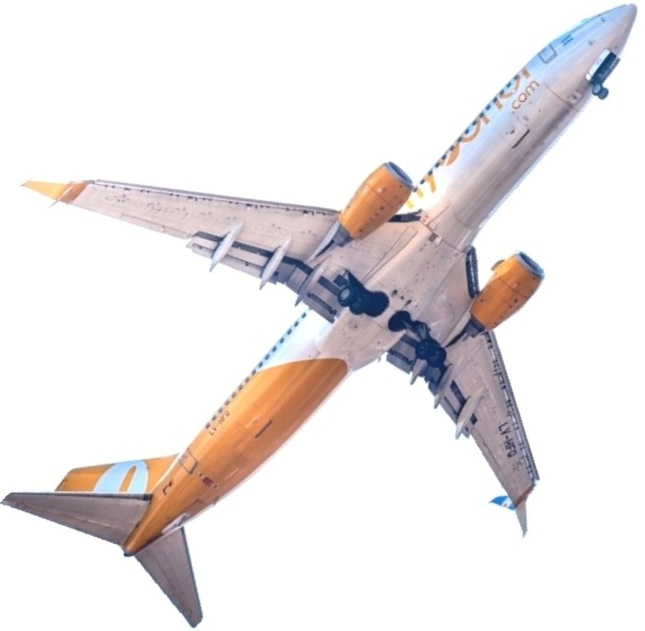
En el marco del conflicto por el cierre del Aeropuerto El Palomar por la postura del Gobierno acerca de la falta de las garantías sanitaria, este Sábado 21 de Noviembre de 2020 desde las 15:00 horas habrá otra nueva movilización por parte de vecinos, quienes solicitarán el retorno de las actividades aerocomerciales en la aeroestación low cost.
Las protestas continúan por la reapertura del aeropuerto con una nueva marcha de vecinos solicitando el retorno de los vuelos de las aerolíneas de presupuesto, porque consideran que han traído actividad a la región. Por parte de las aerolíneas de presupuestos vienen solicitando ante la Justicia Argentina poder volver a operar y reanudar sus actividades comerciales.
Postura gubernamental
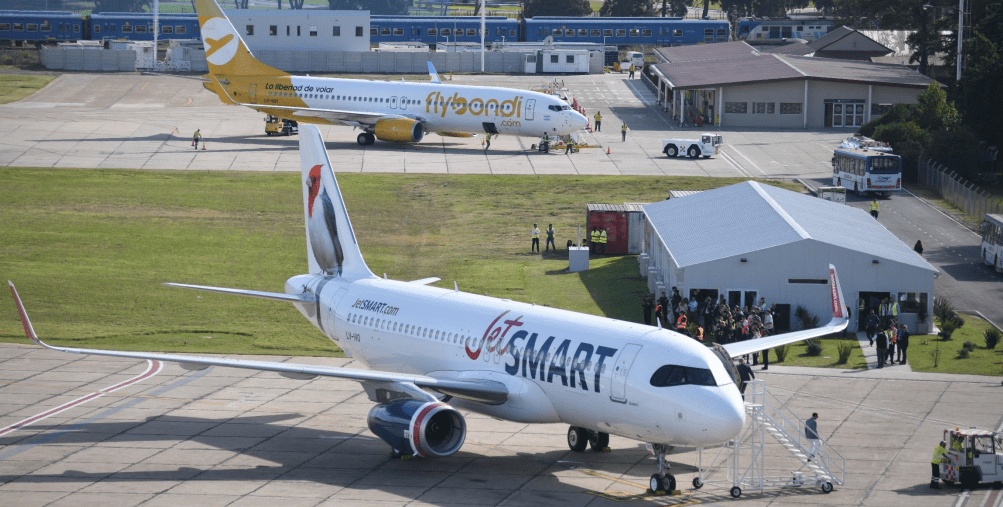
Desde el Organismo Regulador del Sistema Nacional de Aeropuertos (ORSNA) sostuvieron mediante un comunicado dirigido hacia la Administración Nacional de Aviación Civil (ANAC), que el único aeropuerto habilitado para operar en el marco de la pandemia del Coronavirus es el Aeropuerto Internacional Ezeiza, sosteniendo que el Aeropuerto El Palomar no se puede garantizar la seguridad sanitaria por las dimensiones de la Terminal aérea. Ante esta situación, JetSmart Airlines Argentina, una de las compañías que operaba en el aeropuerto ubicado en el Partido de Morón definió reprogramar sus vuelos y comenzar a operar desde Ezeiza, mientras que Flybondi Líneas Aéreas se ha negado a llevar adelante ese cambio y continúa solicitando realizar sus vuelos desde El Palomar, porque considera que su estructura no es compatible económicamente para la empresa y los usuarios con mudar las operaciones a Ezeiza, además de afectar el personal que es oriundo de la Ciudad de El Palomar.
Un grupo de vecinos, nuevamente que se movilizará este Sábado 20/11 en la intersección de las calles Itacumbú y Matienzo, sostienen que el aeropuerto es fuente de trabajo no sólo para los trabajadores de las empresas, sino también para los comercios que se encuentran en las inmediaciones del lugar.
Mobilization 21N for El Palomar
New protests for the continuity of El Palomar Airport
Within the framework of the conflict over the closure of El Palomar Airport due to the Government’s position on the lack of health guarantees, this Saturday, November 21, 2020 from 3:00 p.m. there will be another new mobilization by neighbors, who will request the return of commercial air activities in low cost air stations.
The protests continue over the reopening of the airport with a new march of neighbors requesting the return of flights from budget airlines, because they consider that they have brought activity to the region. On the part of the budget airlines, they have been requesting before the Argentine Justice to be able to operate again and resume their commercial activities.
Government position
From the Regulatory Body of the National Airport System (ORSNA) they sustained through a statement addressed to the National Civil Aviation Administration (ANAC), that the only airport enabled to operate in the framework of the Coronavirus pandemic is the Ezeiza International Airport, holding that El Palomar Airport cannot guarantee health security due to the size of the Air Terminal. Faced with this situation, JetSmart Airlines Argentina, one of the companies that operated at the airport located in the Morón district, decided to reschedule its flights and start operating from Ezeiza, while Flybondi Líneas Aéreas has refused to carry out this change and continues to request make its flights from El Palomar, because it considers that its structure is not economically compatible for the company and the users with moving operations to Ezeiza, in addition to affecting the staff that comes from the City of El Palomar.
A group of neighbors, again who will mobilize this Saturday 20/11 at the intersection of Itacumbú and Matienzo streets, maintain that the airport is a source of work not only for company workers, but also for businesses that are located in the vicinity of the place.
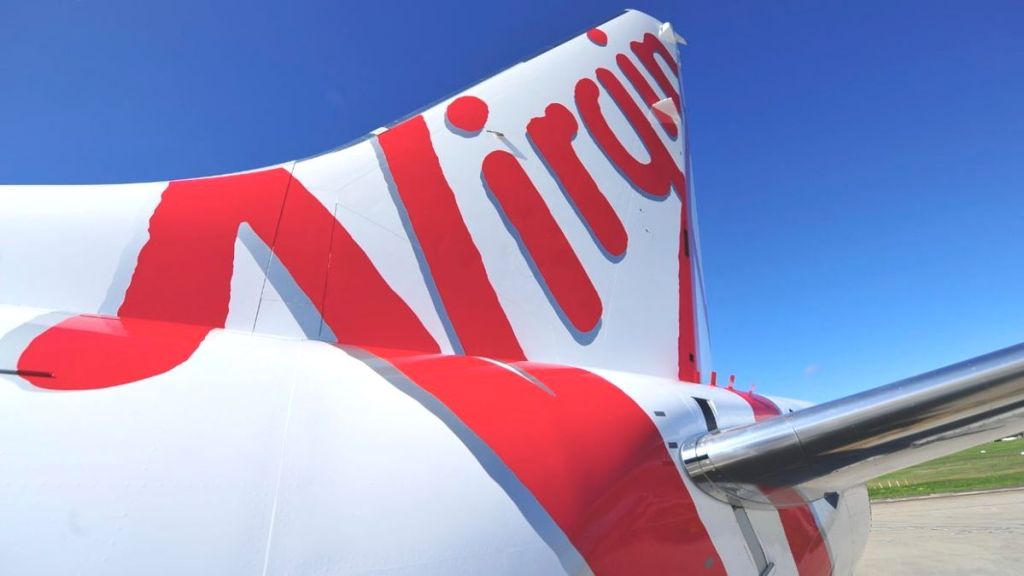
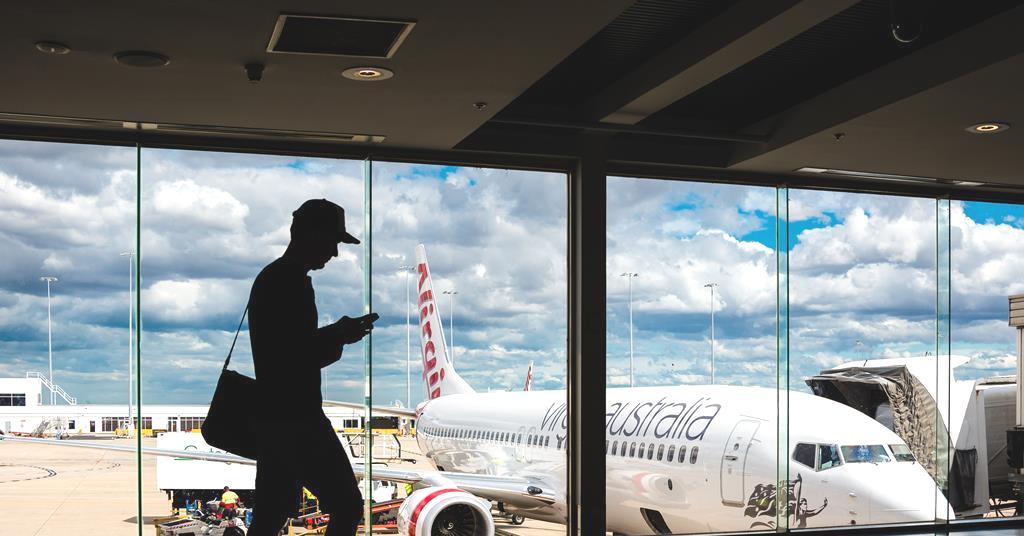
Los cambios de dirección en el management de la estructurada compañía aérea Virgin Australia Airlines enfocarán una aerolínea con acento doméstico. Después de la adquisición por parte del Bain Capital Group, la compañía aérea ha iniciado cambios estructurales de cara a la nueva dimensión del mercado post-pandemia.
La nueva CEO Jayne Hrdlicka que ha asumido sus funciones este Miércoles 18/11, ha lanzado un plan para la renovada línea aérea que contempla cambios en el Programa Velocity Frequent Flyer de la aerolínea para sus 10 millones de miembros, una revisión estratégica de la oferta de clase ejecutiva de la aerolínea, así como su WiFi y entretenimiento a bordo. Reestructurará el inmoviliario, con la supresión de las salas VIP en Darwin, Cairns y Mackay, con las instalaciones de Canberra aún en revisión. La aerolínea también está revisando el número de servicios nacionales y regionales que se ofrecen, con nuevos cambios posibles una vez que las prohibiciones de viaje y los cierres fronterizos estatales se facilitan.
El Martes 17/11, Virgin Australia aprovechó la oportunidad para ser una empresa cotizada en el sector privado cuando se completó la venta de US$ 3.500 millones de Dólares del Grupo Virgin Australia, con las acciones y todo el negocio de la aerolínea transferido a Bain Capital. La nueva CEO ha comunicado que si bien la aerolínea renovada serviría a todos los segmentos del mercado, construiría su propuesta en torno a sus huéspedes más fieles y de larga data, estos incluyen viajeros corporativos conscientes de los precios, pequeñas y medianas empresas, viajeros de ocio premium y turistas. «Australia ya tiene una aerolínea de bajo costo y una aerolínea tradicional de servicio completo, y nosotros tampoco lo seremos. Virgin Australia será una aerolínea de mercado medio para los clientes que buscan una tarifa aérea de gran valor y un mejor servicio», expresó Jayne Hrdlicka.
Reestructuraciones
La compañía Virgin Australia había revelado previamente planes para hacer que alrededor de un tercio de su fuerza de trabajo fuera redundante, con alrededor de 3.000 puestos de trabajo previstos para dar de baja. Estiman unos 6.000 empleados como fuerza laboral. El plan de Bain Capital para la aerolínea también ha visto el final de la marca Tiger Australia, pero la compañía conservará el certificado del operador aéreo para que pueda revivir una aerolínea de bajo costo cuando el mercado nacional de viajes de vacaciones se recupere completamente de la pandemia. Una parte clave del plan de Bain Capital es operar una flota de línea principal con aeronaves Boeing 737, con otros tipos de aeronaves restringidas a rutas regionales y charters.
La aerolínea ha pasado por muchos cambios desde que debutó en 2000 como Virgin Blue, bajo un modelo de aerolínea de bajo costo. Le siguieron más ofertas premium, incluyendo salas VIP y un programa de viajero frecuente. Bajo el ex CEO John Borghetti, una renombrada Virgin Australia, compitiendo con Qantas Airways en 2011 como una aerolínea de servicio completo.
La CEO Jayne Hrdlicka dijo que el entorno de viaje estaba cambiando y también lo estaban las preferencias de los clientes. «Sabemos que los viajeros de ocio, las pequeñas y medianas empresas y muchas empresas están emergiendo de COVID-19 queriendo un mejor valor. Están hambrientos de flexibilidad y elección, una marca de confianza que resuena con sus valores y excelentes precios, junto con las características premium que más valoran. Hemos anunciado un plan que, en última instancia, dará a nuestros clientes lo que valoran sin la etiqueta de gran precio: salas VIP premium, una nueva y fresca oferta de venta al por menor a bordo, una selección de cabinas, una mejor tecnología digital y una experiencia de check-in más optimizada».
Virgin Australia change course
Australian airline to focus on mid-market
The changes of direction in the management of the structured airline Virgin Australia Airlines will focus an airline with a domestic accent. After the acquisition by the Bain Capital Group, the airline has initiated structural changes in the face of the new dimension of the post-pandemic market.
New CEO Jayne Hrdlicka, who took office this Wednesday, 11/18, has launched a plan for the renewed airline that includes changes to the airline’s Velocity Frequent Flyer Program for its 10 million members, a strategic review of the offer. business class of the airline, as well as its WiFi and inflight entertainment. It will restructure real estate, with the elimination of VIP lounges in Darwin, Cairns and Mackay, with the Canberra facility still under review. The airline is also reviewing the number of national and regional services on offer, with further changes possible once travel bans and state border closures are eased.
On Tuesday 11/17, Virgin Australia seized the opportunity to be a privately-listed company when the US$ 3.5 billion sale of the Virgin Australia Group was completed, with the airline’s shares and all business transferred to Bain. Capital. The new CEO has communicated that while the revamped airline would serve all market segments, it would build its proposition around its long-time and loyal guests, these include price-conscious corporate travelers, small and medium-sized businesses, travelers from premium leisure and tourists. «Australia already has a low-cost carrier and a traditional full-service carrier, and neither will we. Virgin Australia will be a mid-market carrier for customers looking for great value airfare and better service», said Jayne Hrdlicka.
Restructuring
The Virgin Australia company had previously unveiled plans to make around a third of its workforce redundant, with around 3,000 jobs slated to drop. They estimate about 6,000 employees as a workforce. Bain Capital’s plan for the airline has also seen the end of the Tiger Australia brand, but the company will retain the air carrier’s certificate so that it can revive a low-cost carrier when the domestic holiday travel market fully recovers from the pandemic. A key part of Bain Capital’s plan is to operate a mainline fleet of Boeing 737 aircraft, with other types of aircraft restricted to regional routes and charters.
The airline has gone through many changes since it debuted in 2000 as Virgin Blue, under a low-cost airline model. More premium offers followed, including lounges and a frequent flyer program. Under former CEO John Borghetti, a renowned Virgin Australia, competing with Qantas Airways in 2011 as a full service airline.
CEO Jayne Hrdlicka said the travel environment was changing and so were customer preferences. «We know that leisure travelers, small and medium-sized businesses, and many businesses are emerging from COVID-19 wanting better value. They are hungry for flexibility and choice, a trusted brand that resonates with their values and great prices, along with the premium features they value the most. We’ve announced a plan that will ultimately give our customers what they value without the big price tag: premium lounges, a fresh new onboard retail offering, a selection of cabins, better digital technology and a more streamlined check-in experience».
AW | 2020 11 18 16:55 | AVIATION ORGANISMS / GOVERNMENT
UE dictamina Sáhara Occidental no forma parte acuerdo aviación
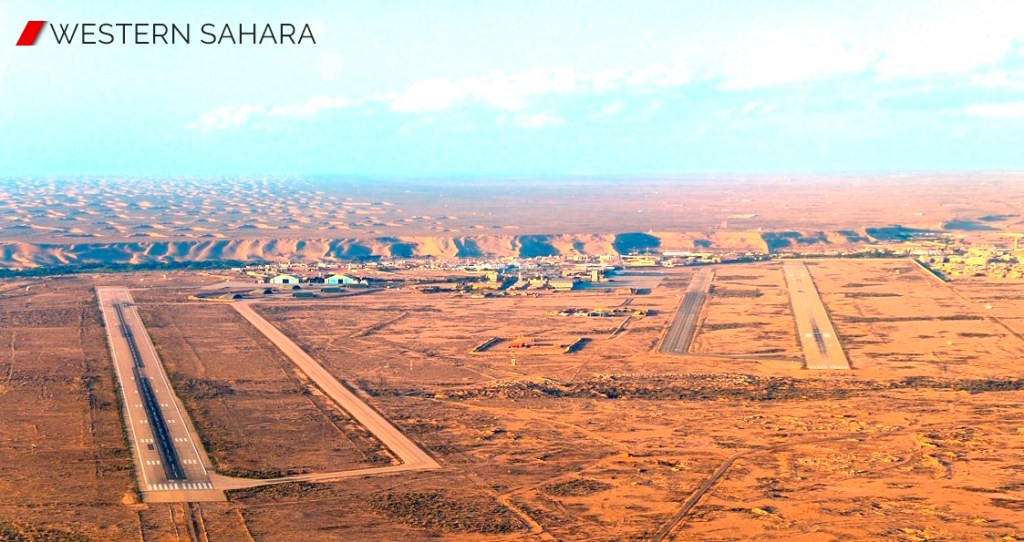
La Comisión de la Unión Europea (UE) ha aclarado este 17/11 que el Sahara Occidental no está cubierto por ningún acuerdo de aviación de la UE y que no busca incluirlo en el acuerdo de aviación entre la UE y Marruecos. Sin embargo, algunas aerolíneas de la UE todavía ofrecen vuelos al territorio, ahora efectivamente una zona de guerra.
Según la Comisión Europea, «no se prevé ninguna negociación para incluir al Sáhara Occidental en un acuerdo de aviación». Esto se aclara en una carta de la Comisión que ha obtenido recientemente Western Sahara Resource Watch (WSRW), el observatorio de recursos naturales del Sáhara Occidental. La carta fue enviada por la Dirección General de Movilidad y Transportes de la Comisión al Diputado europeo irlandés Ciarán Cuffe el 6 de Marzo de 2020. La aclaración se produce en la parte posterior del Tribunal de Justicia de la UE anulando la aplicación del acuerdo de aviación UE-Marruecos al Sáhara Occidental en su sentencia de 30 Noviembre de 2018. La sentencia precisó que el territorio de Marruecos debe entenderse como «la zona geográfica sobre la que el Reino de Marruecos ejerce toda la gama de poderes reconocidos a las entidades soberanas por el derecho internacional, con exclusión de cualquier otro territorio como el del Sáhara Occidental». La Corte agregó que la inclusión del Sáhara Occidental infringe las normas del derecho internacional, «en particular, el principio de libre determinación a que se refiere el Artículo 1 de la Carta de las Naciones Unidas y el principio del efecto relativo de los tratados (Art. 27). La Unión Europea no puede compartir válidamente la intención del Reino de Marruecos de incluir el territorio en cuestión en el ámbito de aplicación del Acuerdo (Art. 33)».
En su forma actual, el Sáhara Occidental no está cubierto por ningún acuerdo de aviación de la UE. No existe un marco legal para regular los servicios aeroportuarios comerciales entre la UE y la última colonia en África. Empresas como Transavia, Air France y Binter, que operan una ruta comercial en el Sáhara Occidental ocupado, lo están haciendo en un vacío legal. La Comisión de la UE es consciente de que esto es muy preocupante para los pasajeros y la tripulación en términos de seguridad, afirmando que la sentencia del TJUE dejó claro que «la definición de territorio contenida en el acuerdo euro-mediterráneo de aviación no cubre el Sáhara Occidental. Siendo así, cualquier aerolínea certificada por un Estado miembro de la UE tiene que cumplir con las normas de la UE relativas, en particular, a la seguridad de sus operaciones, la concesión de licencias a su tripulación y el mantenimiento de su aeronave, independientemente del territorio en el que opera la aerolínea. Los Estados miembros conocen bien la orden».
Sin embargo, a pesar de ello, WSRW señala que Air France, Transavia y Binter todavía ofrecen vuelos al territorio. Además de eso, la guerra estalló en el Sáhara Occidental hace cinco días. El Viernes 13 de Noviembre de 2020, la intervención militar de Marruecos puso fin al alto el fuego de tres décadas en el Sáhara Occidental. En la actualidad, se están produciendo enfrentamientos en diferentes partes del territorio. La posición de la Comisión sobre no renegociar el acuerdo es significativa, ya que en el caso tanto del acuerdo comercial UE-Marruecos como del acuerdo pesquero UE-Marruecos, sí entró en renegociaciones con Marruecos con el fin de incluir una referencia específica al Sáhara Occidental en el ámbito territorial de los acuerdos. La Comisión señaló en la carta al eurodiputado Cuffe que la decisión del Tribunal sobre el acuerdo de aviación no se renovará «como se hizo en el caso de los productos agrícolas y la pesca, que están pendientes ante el Tribunal General».
El Tribunal de Justicia de la Unión Europea había anulado la aplicación de los acuerdos comerciales y pesqueros en el Sáhara Occidental, argumentando que Marruecos no tenía soberanía sobre el territorio, que tiene un estatus separado y distinto de cualquier país del mundo, incluido Marruecos. El Tribunal declaró que el pueblo del Sáhara Occidental debe ser considerado un tercero en los tratos de la UE con Marruecos y debe dar su consentimiento para que dicho trato afecte legalmente a su tierra. Teniendo en cuenta los argumentos de la Corte, es dudoso que la mera inclusión de una referencia rápida al territorio en el ámbito territorial de los acuerdos con Marruecos, sin el consentimiento de los saharauis, se sostenga en la Corte donde los casos están ahora nuevamente pendientes de resolución.
No está claro por qué el enfoque de la UE sobre la sentencia del Tribunal sobre el acuerdo de aviación difiere tan manifiestamente de su respuesta a las sentencias del Tribunal sobre el Acuerdo de Comercio y Pesca. En los dos últimos casos, la UE optó por renegociar estos acuerdos con Marruecos para incluir expresamente al Sáhara Occidental en el ámbito territorial. Ahora, sobre el acuerdo de aviación, esencialmente acepta el fallo. Una razón puede estar en el hecho de que un acuerdo de aviación es un acuerdo mixto, lo que significa que afecta a competencias que son exclusivas de la UE y exclusivas de los Estados miembros. Una modificación de dicho acuerdo no solo tendría que pasar por un proceso de ratificación en las instituciones de la UE, lo que fue suficiente para el acuerdo comercial y pesquero, sino también en cada uno de los Estados miembros de la UE.
EU rules Western Sahara aviation
EU rules Western Sahara is not part of aviation agreement
The Commission of the European Union (EU) has clarified on 11/17 that Western Sahara is not covered by any EU aviation agreement and that it does not seek to include it in the aviation agreement between the EU and Morocco. However, some EU airlines still offer flights to the territory, now effectively a war zone.
According to the European Commission, «no negotiations are foreseen to include Western Sahara in an aviation agreement». This is clarified in a Commission letter recently obtained by Western Sahara Resource Watch (WSRW), the Western Sahara natural resource observatory. The letter was sent by the Commission’s Directorate-General for Mobility and Transport to Irish MEP Ciarán Cuffe on March 6, 2020. The clarification occurs at the back of the EU Court of Justice annulling the application of the aviation agreement EU-Morocco to Western Sahara in its judgment of November 30, 2018. The judgment specified that the territory of Morocco should be understood as «the geographical area over which the Kingdom of Morocco exercises the full range of powers recognized to sovereign entities by the international law, to the exclusion of any other territory such as Western Sahara». The Court added that the inclusion of Western Sahara violates the norms of international law, «in particular, the principle of self-determination referred to in Article 1 of the Charter of the United Nations and the principle of the relative effect of treaties (Art. 27). The European Union cannot validly share the intention of the Kingdom of Morocco to include the territory in question within the scope of the Agreement (Art. 33)».
In its current form, Western Sahara is not covered by any EU aviation agreement. There is no legal framework to regulate commercial airport services between the EU and the last colony in Africa. Companies like Transavia, Air France and Binter, which operate a trade route in occupied Western Sahara, are doing so in a legal vacuum. The EU Commission is aware that this is very worrying for passengers and crew in terms of safety, stating that the CJEU ruling made it clear that «the definition of territory contained in the Euro-Mediterranean aviation agreement does not cover Western Sahara This being the case, any airline certified by an EU Member State has to comply with EU regulations relating, in particular, to the safety of its operations, the licensing of its crew and the maintenance of its aircraft, regardless of the territory in which the airline operates. Member States are well aware of the order».
Despite this, however, WSRW notes that Air France, Transavia and Binter still offer flights to the territory. On top of that, war broke out in Western Sahara five days ago. On Friday, November 13, 2020, the Moroccan military intervention ended the three-decade ceasefire in Western Sahara. At present, clashes are taking place in different parts of the territory. The Commission’s position on not renegotiating the agreement is significant, since in the case of both the EU-Morocco trade agreement and the EU-Morocco fisheries agreement, it did enter into renegotiations with Morocco in order to include a specific reference to Western Sahara in the territorial scope of the agreements. The Commission noted in the letter to MEP Cuffe that the Court’s decision on the aviation agreement will not be renewed «as was done in the case of agricultural products and fisheries, which are pending before the General Cour».
The Court of Justice of the European Union had annulled the application of trade and fisheries agreements in Western Sahara, arguing that Morocco did not have sovereignty over the territory, that it has a status separate and distinct from any country in the world, including Morocco. The Court declared that the people of Western Sahara must be considered a third party in the EU’s dealings with Morocco and must give their consent for such dealings to legally affect their land. Taking into account the arguments of the Court, it is doubtful that the mere inclusion of a quick reference to the territory in the territorial scope of the agreements with Morocco, without the consent of the Sahrawis, is upheld in the Court where the cases are now pending again. resolution.
It is not clear why the EU’s approach to the Court’s judgment on the aviation agreement differs so starkly from its response to the Court’s judgments on the Trade and Fisheries Agreement. In the last two cases, the EU chose to renegotiate these agreements with Morocco to expressly include Western Sahara in the territorial scope. Now, about the aviation deal, you essentially accept the ruling. One reason may lie in the fact that an aviation agreement is a mixed agreement, which means that it affects competences that are exclusive to the EU and exclusive to Member States. A modification of such an agreement would not only have to go through a ratification process in the EU institutions, which was sufficient for the trade and fisheries agreement, but also in each of the EU Member States.
Agencia FAA renueva certificación línea Boeing 737 MAX
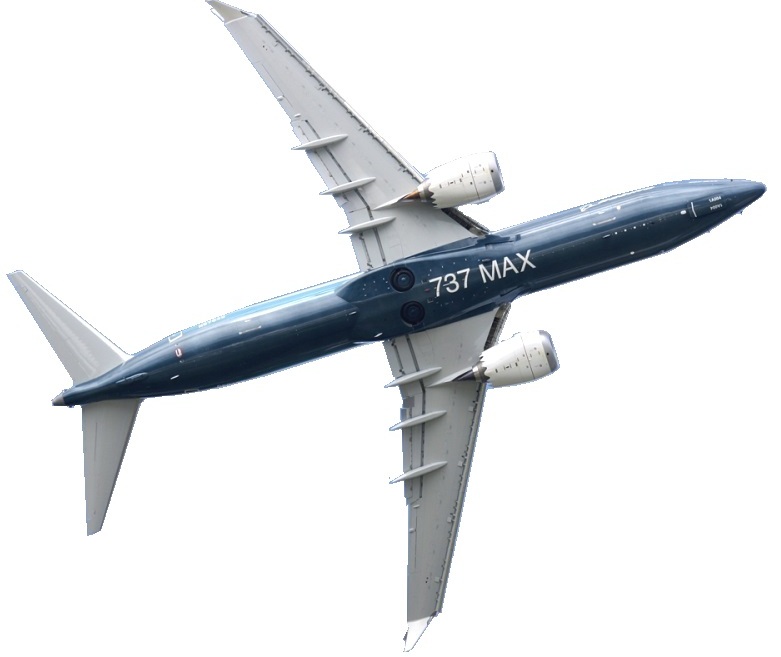
La Federal Aviation Administration (FAA) ha anunciado este 18 de Noviembre de 2020 la aprobación de recertificación del modelo Boeing 737 MAX. El anuncio marca un hito en las habilitaciones y el comienzo para los operadores aéreos para poder retomar las operaciones con este tipo de aeronaves al autorizarse para volar nuevamente. La restauración del Certificado de Aeronavegabilidad del Boeing 737 MAX es el paso más significativo hasta ahora en el esfuerzo de la compañía Boeing por resucitar la aeronave que devastó su reputación y condujo a investigaciones del Congreso que revelaron deficiencias e incluso un engaño absoluto cuando surgieron problemas de seguridad durante el desarrollo del avión.
El regreso a los cielos del avión no será inmediato. Los aviones en tierra deberán reacondicionarse con las mejoras ordenadas por la FAA y los pilotos deberán ser reentrenados en los procedimientos que deberán realizar los cambios necesarios en el avión para que esté en condiciones de volar y reentrenar a las tripulaciones. El problema, sin embargo, era que los nuevos motores eran más grandes, lo que obligaba a un rediseño. Los motores tuvieron que reposicionarse hacia delante de las alas de una manera que les diera más espacio libre sobre la pista. Sin embargo, se descubrió que la nueva ubicación también cambia las características de vuelo del avión bajo ciertas circunstancias. Para compensar, Boeing agregó un software a la computadora de vuelo conocido como Maneuvering Characteristics Augmentation System (MCAS), que funcionaría en segundo plano para que los pilotos de la nueva variante Boeing 737 MAX se sintiera como versiones anteriores del avión. Luego vinieron las investigaciones. Boeing fue salpicado por una serie de revelaciones que pintaban una imagen oscura de errores graves en el desarrollo del 737 MAX que se había apresurado a competir con un avión similar desarrollado por su archirrival Airbus. La investigación descubrió fallas en MCAS y esfuerzos dentro de Boeing para engañar a los reguladores y sus clientes de aerolíneas sobre el avión. Muchas de las deficiencias se detallaron en un informe del Comité de Infraestructura y Transporte de la Cámara en septiembre. Afirmó que los pilotos de prueba de Boeing identificaron problemas de MCAS ya en 2012, incluido el hallazgo de que se necesitaron 10 segundos para lidiar con una activación no ordenada. Se consideró que el problema era potencialmente catastrófico, según el informe.
Activación línea ensamblaje
La línea 737 MAX es la última versión del avión de pasajeros que comprenden las variantes MAX 7, MAX 8, MAX 9, MAX 10. El primer prototipo había volado por primera vez a finales de la década de 1960 y se convirtió en uno de los aviones comerciales más exitosos de la historia. El 737 MAX, la cuarta generación de la afamada línea estaba destinado a aprovechar una nueva generación de motores a reacción que podrían ahorrar más combustible a las aerolíneas. La compañía Boeing ha anunciado que continuaría construyendo las aeronaves, pues todavía cuanta con una enorme cartera de pedidos sin completar para las 4.102 órdenes seleccionadas.
Regulador FAA
El Administrador de la Federal Aviation Administration (FAA) de Estados Unidos, Steve Dickson, ha firmado este 18 de Noviembre de 2020 una orden que allana el camino para que el Boeing 737 MAX vuelva al servicio comercial. La acción del Administrador Dickson siguió un proceso de revisión de seguridad integral y metódica que ha durado veinte meses en completarse. Durante ese tiempo, los empleados de la FAA trabajaron diligentemente para identificar y abordar los problemas de seguridad que jugaron un papel en la trágica pérdida de 346 vidas a bordo del vuelo JT-610 de Lion Air y el vuelo ET-302 de Ethiopian Airlines. A lo largo de nuestro proceso transparente, la FAA ha trabajado estrechamente con los organismos homólogos extranjeros en todos los aspectos de la vuelta al servicio. Además, el Administrador Steve Dickson ha tomado personalmente el entrenamiento recomendado de piloto en el test de vuelo del Boeing 737 MAX, para que pudiera experimentar el manejo de la aeronave de primera mano.
Además de rescindir el pedido que puso en tierra la aeronave, la FAA publicó este 18/11 una Directiva de Aeronavegabilidad (AD) en la que se especifican los cambios de diseño que deben realizarse antes de que la aeronave vuelva al servicio, emitió una Notificación de Aeronave Continua a la Comunidad Internacional (CANIC) y publicó los requisitos de capacitación del 737 MAX. Estas acciones no permiten que el MAX regrese inmediatamente a los cielos. La FAA debe aprobar 737 revisiones del programa de capacitación de pilotos MAX para cada aerolínea estadounidense que opere el MAX y conservará su autoridad para emitir certificados de aeronavegabilidad y certificados de exportación de aeronavegabilidad para todas las nuevas aeronaves 737 MAX fabricadas desde que la FAA emitió la orden de puesta a tierra. Además, las compañías aéreas que han estacionado sus aviones MAX deben tomar las medidas de mantenimiento necesarias para prepararlas para volar de nuevo.
El diseño y certificación de este avión incluyó un nivel sin precedentes de revisiones colaborativas e independientes por parte de las autoridades de aviación de todo el mundo. Esos reguladores han indicado que los cambios en el diseño de Boeing, junto con los cambios en los procedimientos de tripulación y las mejoras de capacitación, les darán la confianza de validar la aeronave como segura para volar en sus respectivos países y regiones. Después de la vuelta al servicio, la FAA continuará trabajando en estrecha colaboración con nuestros socios extranjeros de aviación civil para evaluar cualquier posible mejora adicional para la aeronave. La agencia también llevará a cabo la misma supervisión rigurosa y continua de la seguridad operacional del MAX que proporcionamos para toda la flota comercial de los Estados Unidos.
Perspectivas 737 MAX
La Administración Federal de Aviación ha anulado su orden de puesta a tierra para el avión 737 MAX, lo que permitirá el retorno a los cielos después de que se realicen ciertas modificaciones enlas aeronaves fabricadas. Alrededor de 400 aviones Boeing 737 MAX se encontraban en servicio comercial antes de la puesta a tierra mundial. Mientras que Boeing ha construido y almacenado alrededor de 450 más desde entonces. Todas las aeronaves deberán someterse a mantenimiento y obtener las próximas reconfiguraciones establecidas por el organismo regulador de la FAA. Los pilotos también deben someterse a un entrenamiento obligatorio de simulador.
«Nunca olvidaremos las vidas perdidas en los dos trágicos accidentes que llevaron a la decisión de suspender las operaciones. Estos eventos y las lecciones que hemos aprendido como resultado han remodelado nuestra empresa y centrado aún más nuestra atención en nuestros valores fundamentales de seguridad, calidad e integridad», dijo el CEO de The Boeing Company, David Calhoun, en un comunicado de Miércoles 18/11 ante la audiencia mundial.
Ξ FAA approves 737 MAX recertification Ξ
FAA agency renews Boeing 737 MAX line certification
The Federal Aviation Administration (FAA) has announced this November 18, 2020, the approval of the recertification of the Boeing 737 MAX model. The announcement marks a milestone in qualifications and the beginning for air operators to be able to resume operations with this type of aircraft when they are authorized to fly again. The restoration of the Certificate of Airworthiness for the Boeing 737 MAX is the most significant step yet in the Boeing company’s effort to resurrect the aircraft that devastated its reputation and led to Congressional investigations that revealed deficiencies and even outright hoax when problems arose. safety during aircraft development.
The return to the skies of the troublesome plane will not be immediate. Airplanes on the ground will have to be reconditioned with the improvements ordered by the FAA and pilots will have to be retrained in the procedures that will have to make the necessary changes in the airplane so that it is in condition to fly and retrain the crews. The problem, however, was that the new engines were larger, forcing a redesign. The engines had to be repositioned forward of the wings in a way that gave them more headroom on the runway. However, it was discovered that the new location also changes the flight characteristics of the aircraft under certain circumstances. To compensate, Boeing added software to the flight computer known as the Maneuvering Characteristics Augmentation System (MCAS), which would work in the background to make pilots of the new Boeing 737 MAX variant feel like previous versions of the plane. Then came the investigations. Boeing was peppered with a series of revelations that painted a dark picture of serious flaws in the development of the 737 MAX that had rushed to compete with a similar aircraft developed by archrival Airbus. The investigation uncovered flaws in MCAS and efforts within Boeing to mislead regulators and their airline customers about the plane. Many of the deficiencies were detailed in a report from the House Transportation and Infrastructure Committee in September. It stated that Boeing test pilots identified MCAS issues as early as 2012, including the finding that it took 10 seconds to deal with an unordered activation. The problem was deemed potentially catastrophic, according to the report.
Assembly line activation
The 737 MAX line is the latest version of the airliner comprising the MAX 7, MAX 8, MAX 9, MAX 10 variants. The first prototype had first flown in the late 1960s and became one of the most successful commercial aircraft in history. The 737 MAX, the fourth generation in the famed line, was intended to take advantage of a new generation of jet engines that could save airlines more fuel. The Boeing company has announced that it would continue to build the aircraft, as it still has a huge backlog of unfilled orders for the 4,102 selected orders.
FAA regulator
The Administrator of the Federal Aviation Administration (FAA) of the United States, Steve Dickson, has signed this November 18, 2020 an order that paves the way for the Boeing 737 MAX to return to commercial service. Administrator Dickson’s action followed a comprehensive and methodical security review process that has taken twenty months to complete. During that time, FAA employees worked diligently to identify and address the safety issues that played a role in the tragic loss of 346 lives aboard Lion Air Flight JT-610 and Ethiopian Airlines Flight ET-302. Throughout our transparent process, the FAA has worked closely with foreign counterparts on all aspects of the return to service. In addition, Administrator Steve Dickson has personally taken the recommended pilot training in the Boeing 737 MAX flight test so that he could experience handling the aircraft first-hand.
In addition to rescinding the order that grounded the aircraft, the FAA published on 11/18 an Airworthiness Directive (AD) specifying the design changes that must be made before the aircraft returns to service, issued a Notification of Continuous Aircraft to the International Community (CANIC) and published the 737 MAX training requirements. These actions do not allow the MAX to immediately return to the skies. The FAA must approve 737 reviews of the MAX pilot training program for each U.S. airline that operates the MAX and will retain its authority to issue certificates of airworthiness and export certificates of airworthiness for all new 737 MAX aircraft manufactured since the FAA issued the order of grounding. Additionally, airlines that have parked their MAX aircraft must take the necessary maintenance measures to prepare them to fly again.
The design and certification of this aircraft included an unprecedented level of collaborative and independent reviews by aviation authorities around the world. Those regulators have indicated that Boeing’s design changes, along with changes to crew procedures and training enhancements, will give them the confidence to validate the aircraft as safe to fly in their respective countries and regions. After the return to service, the FAA will continue to work closely with our foreign civil aviation partners to assess any possible further enhancements to the aircraft. The agency will also conduct the same rigorous and ongoing safety oversight of the MAX that we provide for the entire United States commercial fleet.
Perspective 737 MAX
The Federal Aviation Administration has rescinded its grounding order for the 737 MAX aircraft, which will allow a return to the skies after certain modifications are made to the manufactured aircraft. About 400 Boeing 737 MAX aircraft were in commercial service prior to global grounding. While Boeing has built and stored around 450 more since then. All aircraft must undergo maintenance and obtain the next reconfigurations established by the FAA regulatory body. Pilots must also undergo mandatory simulator training.
«We will never forget the lives lost in the two tragic accidents that led to the decision to suspend operations. These events and the lessons we have learned as a result have reshaped our company and further focused our attention on our core values of safety, quality and safety. integrity», said The Boeing Company CEO David Calhoun in a Wednesday 11/18 statement to a global audience.
Primer transportista japonés víctima de la pandemia
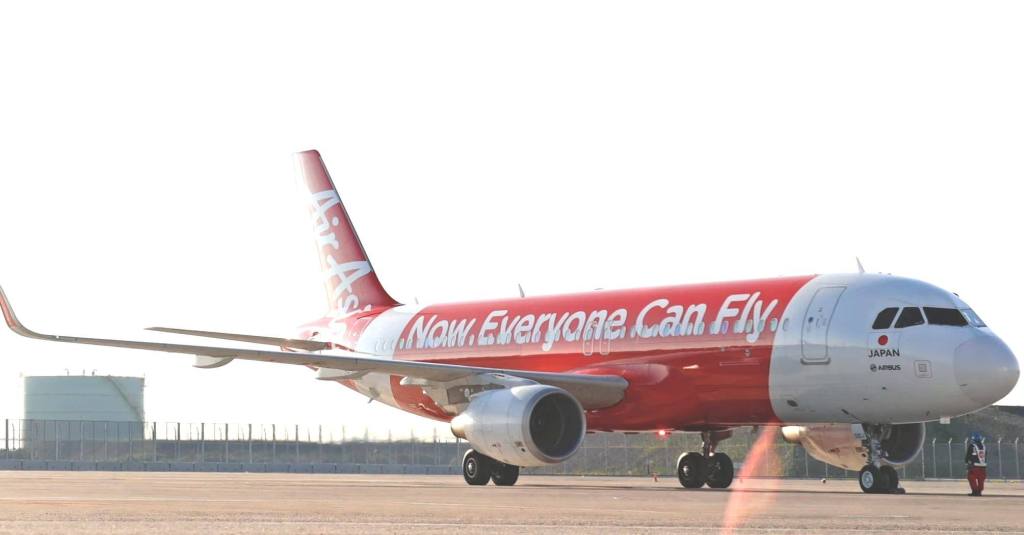
AirAsia Japan ha anunciado la declaración de bancarrota, dejando 23.000 folletos sin reembolsos. El transportista de presupuesto se convierte en la primera víctima de la pandemia de los cielos japoneses. AirAsia Japan se declaró a un proceso de quiebra en el Tribunal de Distrito de Tokio el Martes 17/11 con unos ¥ 21.700 millones de Yenes (US$ 208 millones de Dólares) en pasivos, convirtiéndose en la primera aerolínea en fracasar en el país durante la era COVID-19. La medida se produce después de que la matriz malasia de la compañía de presupuesto, AirAsia, cortara la ayuda a la empresa conjunta japonesa en medio de una recesión mundial de los viajes aéreos. Más de 23.000 clientes no han recibido reembolsos por vuelos cancelados, según Tamotsu Ueno, el Abogado que sirve como administrador de AirAsia Japan. Tamotsu Ueno dijo a los periodistas en conferencia de prensa en el aeropuerto que los reembolsos de clientes no pagados ascienden a algo más de ¥ 500 millones de Yenes. El Director de Operaciones de AirAsia Japan, Jun Aida, dijo que la compañía cooperará con los procedimientos necesarios.
AirAsia dice que proporcionará créditos que se pueden utilizar para vuelos internacionales en aerolíneas de grupo. La compañía planea buscar ayuda de los accionistas, dijo Tamotsu Ueno a una conferencia de prensa. Los inversores incluyen al grupo japonés de comercio electrónico Rakuten, el fabricante de productos de salud y belleza Noevir Holdings, y el operador de la tienda de artículos deportivos Alpen.
AirAsia Japan es la única aerolínea en el país con su centro de operaciones en el Aeropuerto Internacional Chubu Centrair de la zona de Nagoya. Antes de detener los vuelos, la aerolínea operaba rutas nacionales a Sapporo, Sendai y Fukuoka, así como una ruta internacional a la ciudad taiwanesa de Taipei.
La pandemia de coronavirus golpeó antes de que AirAsia Japón tuviera la oportunidad de aumentar la rentabilidad mediante la ampliación de su servicio. La aerolínea sólo tiene tres aviones en arrendamiento. Después de cancelar vuelos a partir de Abril, anunció en Octubre 2020 la interrupción de todas las rutas. La mayoría de sus casi 300 empleados fueron dejados ir el 4 de noviembre, dejando sólo unos 50 para manejar el proceso de liquidación. Ueno dijo que algunos salarios siguen sin pagarse. AirAsia Japan reportó una pérdida neta de unos ¥ 4.700 millones de Yenes por ingresos de aproximadamente ¥ 4.000 millones de Yenes en 2019.
AirAsia Japan declares bankruptcy
First Japanese carrier victim of the pandemic
AirAsia Japan has announced the bankruptcy filing, leaving 23,000 brochures with no refunds. The budget carrier becomes the first victim of the pandemic from the Japanese skies. AirAsia Japan filed for bankruptcy in Tokyo District Court on Tuesday 11/17 with some ¥ 21.7 billion yen (US$ 208 million) in liabilities, becoming the first airline to fail in the country during the COVID-19 era. The move comes after budget company Malaysian parent AirAsia cut aid to the Japanese joint venture amid a global air travel recession. More than 23,000 customers have not received refunds for canceled flights, according to Tamotsu Ueno, the attorney who serves as AirAsia Japan’s administrator. Tamotsu Ueno told reporters at a press conference at the airport that unpaid customer refunds amount to just over ¥ 500 million yen. AirAsia Japan COO Jun Aida said the company will cooperate with the necessary procedures.
AirAsia says it will provide credits that can be used for international flights on group airlines. The company plans to seek help from shareholders, Tamotsu Ueno told a press conference. Investors include Japanese e-commerce group Rakuten, health and beauty products maker Noevir Holdings, and sporting goods store operator Alpen.
AirAsia Japan is the only airline in the country with its hub at Chubu Centrair International Airport in the Nagoya area. Before stopping the flights, the airline operated domestic routes to Sapporo, Sendai and Fukuoka, as well as an international route to the Taiwanese city of Taipei.
The coronavirus pandemic struck before AirAsia Japan had a chance to increase profitability by expanding its service. The airline only has three planes on lease. After canceling flights from April, it announced in October 2020 the interruption of all routes. Most of its nearly 300 employees were let go on November 4, leaving only about 50 to handle the liquidation process. Ueno said that some salaries remain unpaid. AirAsia Japan reported a net loss of about ¥ 4.7 billion yen on revenue of approximately ¥ 4 billion yen in 2019.
AW | 2020 11 18 11:53 | AVIATION ORGANISMS / GOVERNMENT / AIRLINES
ONU continúa programando red de distribución masiva
La Organización de las Naciones Unidas (ONU) está en la etapa de reclutamiento de aerolíneas para entregar vacunas a países no alineados donde la pobreza extrema hace dificultoso el transporte por parte de los propios gobiernos. Este Lunes 16/11 se reunieron 40 operadores de la industria de la aviación comercial para planificar una posible distribución más ágil.
El Fondo de las Naciones Unidas para la Infancia, UNICEF, está intentando reclutar a algunos de los mayores operadores de la industria aérea para que ayuden a distribuir una vacuna contra el coronavirus a las naciones más pobres del mundo. UNICEF, que normalmente proporciona ayuda a los niños, organizó este Lunes 16/11 una teleconferencia con cerca de 40 aerolíneas para hacer planes para el transporte aéreo mundial y para identificar que tareas puede realizar cada parte, según Glyn Hughes, Director Global del segmento de Carga de la Asociación de Transporte Aéreo Internacional (IATA), que ha ayudado a organizar la reunión. UNICEF, que ya es el mayor comprador mundial de vacunas, está liderando los esfuerzos para comprar y distribuir vacunas contra el COVID-19 a 92 países con fondos de la Alianza Mundial para Vacunas e Inmunización (GAVI), que reúne a gobiernos, la Organización Mundial de la Salud y el Banco Mundial. La convocatoria de las aerolíneas surgió tras los positivos resultados de ensayos de fase avanzada que reportaron Pfizer Inc. y Moderna Inc. para dos vacunas diferentes, dijo Hughes en una entrevista.
Vacunas Coronavirus
Normalmente Unicef suministra más de 2.000 millones de vacunas al año. Actualmente, ninguna de las dos empresas ha recibido la aprobación para su uso médico, pero la atención se está centrando en como se puede distribuir una vacuna exitosa, especialmente a países con menos recursos que no cuentan con los medios para realizar grandes compras.
Aerolíneas, papel protagónico
Alrededor de treinta aerolíneas de carga más grandes fueron invitadas a participar en la reunión en línea, ha señalado Glyn Hughes. Entre los asistentes estaban especialistas en despacho express como FedEx Corp. y United Parcel Service Inc. (UPS), y operadores de carga especializados como Cargolux Airlines International SA. Grupos de aerolíneas con grandes divisiones de carga como Deutsche Lufthansa AG también participaron, junto con aerolíneas de pasajeros con experiencia en el traslado de productos especializados como Virgin Atlantic Airways Ltd. Otros participantes incluyeron operadores regionales de África, Latinoamérica y el sudeste asiático, donde se centraran en gran medida las labores.
Los esfuerzos iniciales proporcionarán vacunas para cerca de 20% de las poblaciones locales, comenzando con el personal médico y otros grupos claves, y probablemente utilizando vacunas con requerimientos de temperatura menos exigentes, dijo Glyn Hughes. En tiempos normales, Unicef suministra más de 2.000 millones de vacunas al año, lo que en 2019 tuvo un valor de casi US$ 1.700 millones de dólares.
Un enorme déficit
IATA estima que se necesitará el equivalente a 8.000 aviones de carga Boeing 747 con capacidad para 110 toneladas en el transporte aéreo de vacunas en todo el mundo. La industria cuenta con cerca de 2.000 aviones de carga especializados que generalmente llevan alrededor de la mitad de todos los bienes transportados por aire, mientras que 2.500 aviones de pasajeros están actualmente operando solo en tareas de carga. Pese a todo eso, aún existe un enorme déficit que sólo se puede solucionar mediante la apertura de más rutas por parte de los gobiernos, indico Hughes. Si bien los operadores de carga se encuentran actualmente en su ajetreada temporada de fin de año para el transporte de productos para minoristas, Glyn Hughes dijo que es vital que los aviones estén listos para el próximo año en un periodo en que, de otra forma, algunos estarían sin operar. «Lo último que queremos es que los aviones vuelvan al desierto», concluye Glyn Hughes.
UN seeks to recruit cargo airlines
UN continues to program mass distribution network
The United Nations (UN) is in the stage of recruiting airlines to deliver vaccines to non-aligned countries where extreme poverty makes transportation difficult for governments themselves. This Monday, 11/16, 40 operators from the commercial aviation industry met to plan a possible more agile distribution.
The United Nations Children’s Fund, UNICEF, is trying to recruit some of the biggest operators in the airline industry to help distribute a coronavirus vaccine to the world’s poorest nations. UNICEF, which normally provides help to children, organized a teleconference Monday with about 40 airlines to make plans for global air travel and to identify what tasks each party can perform, according to Glyn Hughes, Global Director of the Cargo segment of the International Air Transport Association (IATA), which has helped organize the meeting. UNICEF, already the world’s largest buyer of vaccines, is leading efforts to purchase and distribute COVID-19 vaccines to 92 countries with funds from the Global Alliance for Vaccines and Immunization (GAVI), which brings together governments, the Organization World Health and the World Bank. The call for the airlines came after positive late-stage trial results reported by Pfizer Inc. and Moderna Inc. for two different vaccines, Hughes said in an interview.
Coronavirus vaccines
Normally UNICEF supplies more than 2 billion vaccines a year. Currently, neither company has received approval for medical use, but attention is turning to how a successful vaccine can be distributed, especially to countries with fewer resources that do not have the means to make large purchases.
Airlines, leading role
About 30 larger cargo airlines were invited to participate in the online meeting, Glyn Hughes said. Among the attendees were express dispatch specialists such as FedEx Corp. and United Parcel Service Inc. (UPS), and specialized cargo operators such as Cargolux Airlines International SA. Groups of airlines with large cargo divisions such as Deutsche Lufthansa AG also participated, along with passenger airlines with experience in moving specialty products such as Virgin Atlantic Airways Ltd. Other participants included regional carriers from Africa, Latin America and Southeast Asia, where They will focus the work to a great extent.
Initial efforts will provide vaccines for about 20% of local populations, beginning with medical personnel and other key groups, and likely using vaccines with less stringent temperature requirements, Glyn Hughes said. In normal times, UNICEF supplies more than 2 billion vaccines a year, which in 2019 was worth almost US$ 1.7 billion.
A huge deficit
IATA estimates that the equivalent of 8,000 Boeing 747 cargo aircraft with a capacity of 110 tonnes will be needed in the air transport of vaccines worldwide. The industry has about 2,000 specialized cargo aircraft that generally carry around half of all goods transported by air, while 2,500 airliners are currently operating cargo only. Despite all this, there is still a huge deficit that can only be solved by opening more routes by governments, Hughes said. While freight operators are currently in their busy end-of-the-year season to transport goods for retailers, Glyn Hughes said it is vital that planes are ready for next year in a time when they would otherwise some would be without operating. «The last thing we want is for the planes to go back to the desert», concludes Glyn Hughes.