Avances accidente C130 FACH

Image result for C130 ChileAW | 2019 12 13 21:21 | AIR INVESTIGATION / AVIATION SAFETY

Chile comienza a identificar restos de víctimas de accidentes aéreos

Los restos de personas muertas en un accidente de avión militar que se cobró 38 vidas, 21 pasajeros y 17 tripulantes, fueron trasladadas el viernes a una base militar en Chile para su identificación. Los restos fueron traídos a bordo de un avión Hércules C-130, al igual que el que se estrelló el lunes en el extremo sur de América del Sur, y entregados a la oficina forense local. Un total de 39 familiares de 11 víctimas del accidente volaron el viernes desde la capital Santiago a Punta Arenas, donde se encuentra la base, para proporcionar muestras de ADN.

Las autoridades dicen que no han descartado nada sobre la causa del accidente. El avión no emitió ninguna señal de emergencia antes de su desaparición, lo que indica que las circunstancias del accidente probablemente fueron abruptas.

La Fuerza Aérea ha dicho que el registro de mantenimiento del avión estaba en orden. También dijo que investigará un mensaje de audio de Whatsapp enviado por un pasajero a familiares que supuestamente dijeron que el avión estaba teniendo problemas eléctricos.

Los escombros del avión se ubicaron en un área de 12 millas cuadradas (30 kilómetros cuadrados) en el Pasaje Drake, un cuerpo de agua sacudido por la tormenta al sur del Cabo de Hornos.

Nuevos hallazgos

FACh informa sobre nuevos hallazgos tras accidente aéreo del Hércules C-130. Las labores de búsqueda, desde la entidad confirmaron que «a mediodía un avión C-130 Institucional arribó a la Base Aérea Chabunco, con los primeros hallazgos de restos humanos y artículos personales los que fueron entregados al Ministerio Público para pericias forenses y confirmar la identidad de las personas que se encuentran desaparecidas». Además, sobre nuevos hallazgos, informaron: «Hoy se detectaron distintos elementos en el mar a 105 kilómetros al sur de los hallazgos anteriores, por lo que se ha dispuesto enfocar en ese sector las misiones de rescate las que en conjunto, a contar de este momento pasan a denominarse Operación Paso Drake». AW-Icon AW001

Image result for C130 ChileProgress accident C130 FACH

Chile begins to identify the remains of victims of air accidents

The remains of people killed in a military plane accident that claimed 38 lives, 21 passengers and 17 crew members, were transferred Friday to a military base in Chile for identification. The remains were brought aboard a Hercules C-130 aircraft, as was the one that crashed on Monday in the southern tip of South America, and delivered to the local forensic office. A total of 39 relatives of 11 accident victims flew Friday from the capital Santiago to Punta Arenas, where the base is located, to provide DNA samples.

Authorities say they have not ruled out anything about the cause of the accident. The plane did not emit any emergency signal before its disappearance, indicating that the circumstances of the accident were probably abrupt.

The Air Force has said the aircraft maintenance record was in order. He also said he will investigate a WhatsApp audio message sent by a passenger to family members who allegedly said the plane was having electrical problems.

The plane’s debris was located in an area of ​​12 square miles (30 square kilometers) in the Drake Passage, a body of water shaken by the storm south of Cape Horn.

LOCALIZATION OF THE HERCULES C-130 IMPACT

New findings

FACh reports new findings after the Hercules C-130 air crash. The search, from the entity, confirmed that «at noon an institutional C-130 plane arrived at the Chabunco Air Base, with the first findings of human remains and personal items that were delivered to the Public Ministry for forensic expertise and confirm the identity of people who are missing». In addition, on new findings, they reported: «Today different elements were detected in the sea 105 kilometers south of the previous findings, so it has been arranged to focus on that sector the rescue missions which together, from this moment they are called Operation Step Drake». AW-Icon AW002


Ξ A I R G W A Y S Ξ
SOURCE: Airgways.com
DBk: FGach.mil.cl
AW-POST: 201912132121AR

A\W   A I R G W A Y S ®

FAA testifica ante Congreso EEUU

Resultado de imagen para US CongressAW | 2019 12 12 08:03 | AIR INVESTIGATION / AVIATION SAFETY / GOVERNMENT

Imagen relacionadaAW-Icon_Boeing 737 MAX.jpgLa FAA ha testificado ante la Comisión de Tansporte del Congreso de Estados Unidos

El Jefe de la Administración Federal de Aviación (FAA), Steve Dickson, ha presentado testimonio ante el Comité de Transporte de la Cámara del Congreso, respondiendo preguntas sobre el proceso de Certificación del Boeing 737 MAX. Un ex-empleado de Boeing convertido en denunciante, Edward Pierson también ha compadecido. Pierson expresó su preocupación por las condiciones en la línea de producción del Boeing 737 en 2018.

AW-Committee Transportation US.jpgLa audiencia del Miércoles 11 Diciembre 2019 es la primera en la que Stephen (Steve) Dickson ha testificado sobre el avión. El CEO de Boeing, Dennis Muilenburg, y el Ingeniero Jefe John Hamilton testificaron ante los comités de la Cámara y el Senado el 29 Octubre 2019.

Steve Dickson, un ex ejecutivo de Delta Air Lines, se hizo cargo de la FAA en Agosto 2019, solo cinco meses después del segundo de dos accidentes mortales del 737 MAX. Lideró la respuesta de la agencia a las críticas sobre la certificación del avión, que se había otorgado en 2017. Durante su declaración de apertura, Dickson confirmó que todavía no se había producido un vuelo de certificación y una revisión final de la documentación del 737 MAX, esencialmente confirmando que el MAX no volverá a volar en 2019.

La audiencia comenzó con una discusión de una revisión interna de la FAA de Noviembre 2018 que, después del primer accidente del 737 MAX, descubrió que el avión tenía una alta probabilidad de accidentes futuros. Sin embargo, a pesar de encontrar una probabilidad de 15 accidentes futuros causados ​​por el diseño del avión, la FAA permitió que el avión continuara volando. Tras el segundo accidente aéreo del vuelo ET-302 de Ethiopian Airlines el 10 Marzo 2019, la FAA puso en tierra al día siguiente toda la flota de los Boeing 737 MAX en el mundo.

BOEING-737-MAX-8Análisis de FAA en 737 MAX

Un estudio encargado por la Administración Federal de Aviación después del primero de dos accidentes fatales que involucraron al Max mostró que el avión probablemente se estrellaría mucho más de lo que normalmente se esperaría, reveló el Miércoles 11/12 ante el Comité d Transpporte del Congreso de Estasdos Unidos. Los hallazgos fueron revelados durante la última de una serie de audiencias sobre los dos accidentes, que han causado una de las mayores crisis en la historia de Boeing.

El análisis realizado por la FAA descubrió que sin intervenciones, podría haber 15 accidentes más durante la vida útil del 737 MAX, atribuible al diseño del avión. El Comité de la Cámara de Transporte e Infraestructura ha expresado: «No sé por qué este avión no estuvo en tierra después del análisis», dijo el representante Peter DeFazio.

«Durante un período de 45 años, tendríamos un nivel de riesgo inaceptable. Entonces tendríamos que tomar medidas para reducir ese riesgo», dijo Dickson. Boeing comenzó a trabajar en una solución para el software MCAS defectuoso después del primer accidente, pero el avión continuó volando durante ese período. Dickson también dijo que se habría sentido cómodo volando en el avión incluso después de ver el análisis, y que ambos volarían el avión y completarían cualquier curso de entrenamiento de pilotos antes de que se le permita volar nuevamente.

Steve Dickson, defendiendo los procesos generales de seguridad y regulación de la FAA, expesó: «El sistema no está roto». Sin embargo, también admitió en respuesta a las preguntas que la FAA había cometido errores en la certificación del avión. También dejó abierta la posibilidad de multar a Boeing en el futuro por no revelar problemas de seguridad con el 737 MAX. «Me reservo el derecho de tomar más medidas y bien podríamos hacerlo».

El ex-empleado de Boeing, Edward Pierson, habló en público por primera vez a principios de esta semana en entrevistas con NBC News y The New York Times. «Lo que presencié de primera mano, el caos y la inestabilidad en la fábrica, es realmente inquietante para mí como alguien que ha estado alrededor de los aviones toda su vida», dijo a The Times.

Durante su declaración de apertura el Miércoles 11/12, Pierson dijo que había tratado de plantear inquietudes, citando la experiencia militar anterior y diciendo que un programa militar con tantas cosas alarmantes no podría continuar. Dijo que le dijeron que «el ejército no es una organización con fines de lucro».

G. Michael Collins, Ingeniero Aeroespacial retirado de la FAA, Dr. Mica Endsley, experto en aviación de la Sociedad de Factores Humanos y Ergonomía, y el Capitán John Cox, presidente y CEO de Sistemas Operativos de Seguridad, también están en el panel con Edward Pierson.

Boeing 787

Otro tema de cuestionamiento fue sobre cómo los gerentes de la FAA aprobaron cambios en las características de protección contra rayos del 787 Dreamliner de Boeing, sobre las objeciones del personal técnico de la agencia. AW-Icon AW001

Resultado de imagen para FAA testifies before US CongressResultado de imagen para FAA testifies before US CongressFAA testifies before US Congress

20150215-logo-faa_1.jpgThe FAA has testified before the United States Congress Transportation CommissionAW-B737-8MAX.jpg

The Chief of the Federal Aviation Administration (FAA), Stephen (Steve) Dickson, has testified before the Transportation Committee of the House of Congress, answering questions about the Boeing 737 MAX Certification process. A former Boeing employee who has become a whistleblower, Edward Pierson has also sympathized. Pierson expressed concern about the conditions in the Boeing 737 production line in 2018.

The hearing on Wednesday 11 December 2019 is the first in which Steve Dickson has testified about the plane. Boeing CEO Dennis Muilenburg and Chief Engineer John Hamilton testified before the House and Senate committees on October 29, 2019.

Steve Dickson, a former Delta Air Lines executive, took over the FAA in August 2019, just five months after the second of two deadly 737 MAX accidents. He led the agency’s response to criticism of the aircraft certification, which had been granted in 2017. During his opening statement, Dickson confirmed that a certification flight and a final review of the 737 MAX documentation had not yet occurred, essentially confirming that the MAX will not fly again in 2019.

The hearing began with a discussion of an internal FAA review of November 2018 that, after the first 737 MAX accident, discovered that the plane had a high probability of future accidents. However, despite finding a probability of 15 future accidents caused by the design of the plane, the FAA allowed the plane to continue flying. After the second plane crash of Ethiopian Airlines flight ET-302 on March 10, 2019, the FAA landed the entire Boeing 737 MAX fleet in the world the next day.

FAA analysis in 737 MAX

AW-708.jpgA study commissioned by the Federal Aviation Administration after the first of two fatal accidents involving Max showed that the plane would probably crash much more than would normally be expected, it revealed on Wednesday 11/12 before the Transportation Committee of the Congress of United States The findings were revealed during the last of a series of hearings on the two accidents, which have caused one of the biggest crises in Boeing’s history.

The FAA analysis found that without interventions, there could be 15 more accidents during the life of the 737 MAX, attributable to the design of the aircraft. The Committee of the Chamber of Transportation and Infrastructure has said: «I don’t know why this plane was not on the ground after the analysis», said representative Peter DeFazio.

«Over a period of 45 years, we would have an unacceptable level of risk. Then we would have to take steps to reduce that risk», said Dickson. Boeing started working on a solution for the faulty MCAS software after the first accident, but the plane continued to fly during that period. Dickson also said he would have felt comfortable flying on the plane even after seeing the analysis, and that both would fly the plane and complete any pilot training course before being allowed to fly again.

Steve Dickson, defending the general safety and regulatory processes of the FAA, said: «The system is not broken». However, he also admitted in response to questions that the FAA had made mistakes in aircraft certification. He also left open the possibility of finding Boeing in the future for not revealing security problems with the 737 MAX. «I reserve the right to take more action and we may well do it».

Former Boeing employee Edward Pierson spoke in public for the first time earlier this week in interviews with NBC News and The New York Times. «What I witnessed firsthand, the chaos and instability in the factory, is really disturbing to me as someone who has been around the airplanes all his life», he told The Times.

During his opening statement on Wednesday 11/12, Pierson said he had tried to raise concerns, citing previous military experience and saying that a military program with so many alarming things could not continue. He said he was told that «the army is not a profit organization».

G. Michael Collins, retired FAA Aerospace Engineer, Dr. Mica Endsley, an aviation expert at the Society of Human Factors and Ergonomics, and Captain John Cox, president, and CEO of Safety Operating Systems, are also on the panel with Edward Pierson

Boeing 787

Another issue of questioning was how the FAA managers approved changes in the lightning protection features of Boeing’s 787 Dreamliner, about the objections of the agency’s technical staff. AW-Icon AW002


Ξ A I R G W A Y S Ξ
SOURCE: Airgways.com
DBk: Transportation.house.gov / Boeing.com / Faa.gov / Seattletimes.com / Ft.com / Airgways.com / Reuters.com / Washingtonian.com
AW-POST: 201912120803AR

A\W   A I R G W A Y S ®


Juicio derribo MH-017 en Marzo 2020

Resultado de imagen para MH17 Boeing 777AW | 2019 12 09 08:21 | AIR INVESTIGATION

Las familias del vuelo MH-017 buscan respuestas mientras los sospechosos se enfrentan a juicio en ausencia

Cuando cuatro sospechosos en el derribo del vuelo MH-017 de Malaysia Airlines sobre la región de Donbass en Ucrania sean juzgados en los Países Bajos el próximo año, muchos familiares esperan respuestas después del atentado al Boeing 777-200ER.

1_jit_met_vlaggen.jpg

El 17 Julio 2014, el vuelo MH-017 de Malaysian Airlines despegó de Amsterdam , con destino a Kuala Lumpur, Malasia. Cuando el Boeing 777 voló sobre el este de Ucrania, cerca de la frontera rusa, fue alcanzado por un misil tierra-aire y se estrelló, matando a las 298 personas a bordo, incluidos 80 niños.

El gobierno holandés cree que Rusia tiene la responsabilidad principal del derribo del vuelo MH17. Ahora, cinco años después del atentado aéreo, el Equipo de Investigación Conjunta (JIT), compuesto por investigadores holandeses, australianos, belgas, malayos y ucranianos, ha identificado cuatro sospechosos principales: tres ciudadanos rusos y uno ucraniano, que se cree están ubicados en Rusia o regiones separatistas en el este de Ucrania. Por lo tanto, serán juzgados en ausencia cuando el caso comience el 9 Marzo 2020.

El juicio podría durar años

Se espera que el proceso dure al menos un año y medio, si los acusados ​​no hacen uso de sus abogados de derecho de contratación. Si lo hacen, el juicio podría prolongarse por muchos años más. AW-Icon AW001

Demolition trial MH-017 in March 2020

Families on flight MH-017 seek answers while suspects face trial in absence

When four suspects in the demolition of Malaysia Airlines flight MH-017 over the Donbass region in Ukraine are tried in the Netherlands next year, many relatives await responses after the attack on the Boeing 777-200ER.

On July 17, 2014, Malaysian Airlines flight MH-017 took off from Amsterdam, bound for Kuala Lumpur, Malaysia. When the Boeing 777 flew over eastern Ukraine, near the Russian border, it was hit by an earth-air missile and crashed, killing the 298 people on board, including 80 children.

The Dutch government believes that Russia has the primary responsibility for the demolition of flight MH17. Now, five years after the air attack, the Joint Investigation Team (JIT), composed of Dutch, Australian, Belgian, Malaysian and Ukrainian investigators, has identified four main suspects: three Russian citizens and one Ukrainian, believed to be located in Russia or separatist regions in eastern Ukraine. Therefore, they will be tried in absentia when the case begins on March 9, 2020.

The trial could last for years

The process is expected to last at least a year and a half if the defendants do not use their hiring law attorneys. If they do, the trial could go on for many more years. AW-Icon AW002


Ξ A I R G W A Y S Ξ
SOURCE: Airgways.com
DBk: Dw.de / Airgways.com
AW-POST: 201912090821AR
A\W A I R G W A Y S ®

FAA requisitos MEL ops 737 MAX

Resultado de imagen para Boeing 737 MAX assembly lineAW | 2019 12 05 15:40 | AIR INVESTIGATION / AVIATION SAFETY

Boeing-Company-LogoAW-Icon_Boeing 737 MAX.jpgFAA emite reglas de equipo actualizadas para el Boeing 737 MAX

La Administración Federal de Aviación (FAA) de los Estados Unidos emitió este Jueves 05/12 nuevas reglas propuestas para las operaciones de las aerolíneas en el Boeing 737 MAX que se adaptan a las correcciones que se están finalizando para el avión puesto en tierra. El público tiene 30 días para comentar sobre el documento, que se publicó en el sitio web de la FAA. En un pequeño paso para devolver el Boeing 737 MAX al servicio, los reguladores estadounidenses están revisando los requisitos sobre cómo las aerolíneas deben operar el avión si se daña el equipo.

AW-700737M002.jpgBoeing está finalizando los cambios a un Sistema de Control de Vuelo vinculado a dos accidentes, en Indonesia y Etiopía, que mataron a 346 personas. El fabricante también está alterando las computadoras de control de vuelo del avión después de que las pruebas mostraron que eran vulnerables a fallas. La compañía debe completar una auditoría de los cambios de software y probar el sistema revisado en simuladores de vuelo con una variedad de pilotos. Además de firmar el rediseño, la FAA está ideando una nueva capacitación de pilotos.

Uno de los pasos más técnicos en el proceso es revisar lo que se conoce como la Lista de Equipo Mínimo (MEL), que establece las condiciones bajo las cuales un operador puede volar la aeronave con una variedad de fallas. Las averías importantes requieren que se repare un avión antes del vuelo, pero las aerolíneas pueden volar con fallas relativamente menores si hay respaldos adecuados y las reparaciones se realizan dentro de un tiempo prescrito.

Anteriormente, las aerolíneas que operaban el 737 MAX podían volar en circunstancias limitadas con solo una de las dos computadoras de control de vuelo del avión en funcionamiento. Cada computadora contiene su propio sistema de respaldo, por lo que la FAA concluyó que no era un peligro para la seguridad volar con solo una por breves períodos.

Sin embargo, Boeing está cambiando el software de la computadora para que en el futuro cada una de las dos computadoras esté constantemente monitoreando a la otra. Los cambios crearán una mayor redundancia para el avión, que se adaptó de versiones anteriores, lo que lo hace más acorde con los aviones más nuevos. Debido a que las dos computadoras dependerán unas de otras, a las aerolíneas no se les debería permitir volar el avión sin ambos sistemas, concluyó la FAA. «La FAA propone que se requieran ambas computadoras de control de vuelo, lo que refleja la nueva arquitectura de software de Boeing que requiere ambas computadoras», dijo la agencia en el documento.

«Esta es una señal positiva del enfoque medido para garantizar el retorno seguro al servicio del 737 Max y el enfoque exhaustivo de la FAA en este proceso», dijo el portavoz de Boeing, Paul Bergman, en un correo electrónico el Jueves 05/12 por la noche.

No está claro cómo la acción de la FAA afectará el momento del regreso del 737 MAX al servicio. Incluso si la agencia aprueba los cambios de software que Boeing está haciendo, el avión no puede volar pasajeros hasta que se finalicen las reglas del equipo, lo que no ocurrirá hasta Enero 2020 como muy pronto. Si bien tales decisiones de la FAA casi nunca son polémicas, es posible que el trabajo de la agencia se ralentice si recibe numerosas opiniones disidentes durante el período de comentarios públicos. AW-Icon AW001

AW-7000877373FAA requirements MEL ops 737 MAX

FAA issues updated equipment rules for the Boeing 737 MAX

Boeing-Logo.svgThe Federal Aviation Administration (FAA) of the United States issued on Thursday 05/12 new proposed rules for the operations of the airlines in the Boeing 737 MAX that adapt to the corrections that are being finalized for the plane laid on the ground. The public has 30 days to comment on the document, which was published on the FAA website. In a small step to return the Boeing 737 MAX to service, US regulators are reviewing the requirements on how airlines should operate the aircraft if the equipment is damaged.

Boeing is finalizing the changes to a Flight Control System linked to two accidents, in Indonesia and Ethiopia, which killed 346 people. The manufacturer is also altering the aircraft’s flight control computers after tests showed they were vulnerable to failures. The company must complete an audit of the software changes and test the revised flight simulator system with a variety of pilots. In addition to signing the redesign, the FAA is devising a new pilot training.

One of the most technical steps in the process is to review what is known as the Minimum Equipment List (MEL), which establishes the conditions under which an operator can fly the aircraft with a variety of failures. Major breakdowns require that a plane be repaired before the flight, but airlines can fly with relatively minor failures if there are adequate backups and repairs are made within a prescribed time.

BI41594 - copia (2)Previously, airlines operating the 737 MAX could fly in limited circumstances with only one of the two flight control computers of the aircraft in operation. Each computer contains its own backup system, so the FAA concluded that it was not a safety hazard to fly with only one for brief periods.

However, Boeing is changing the computer software so that in the future each of the two computers is constantly monitoring the other. The changes will create greater redundancy for the aircraft, which was adapted from previous versions, which makes it more in line with the newer aircraft. Because the two computers will depend on each other, airlines should not be allowed to fly the plane without both systems, the FAA concluded. «The FAA proposes that both flight control computers be required, reflecting the new Boeing software architecture that requires both computers», the agency said in the document.

«This is a positive sign of the approach measured to ensure the safe return to service of the 737 Max and the comprehensive approach of the FAA in this process», Boeing spokesman Paul Bergman said in an email on Thursday 05/12 by the night.

It is not clear how the FAA’s action will affect the time of 737 MAX’s return to service. Even if the agency approves the software changes that Boeing is making, the plane cannot fly passengers until the team rules are finalized, which will not happen until January 2020 at the earliest. While such FAA decisions are almost never controversial, it is possible that the agency’s work will slow down if it receives numerous dissenting opinions during the public comment period. AW-Icon AW002


Ξ A I R G W A Y S Ξ
SOURCE: Airgways.com
DBk: Faa.gov / Boeing.com / Bloomberg.com / Seattletimes.com / Airgways.com
AW-POST: 201912061540AR

A\W   A I R G W A Y S ®

Justicia ordena investigar tragedia Sol

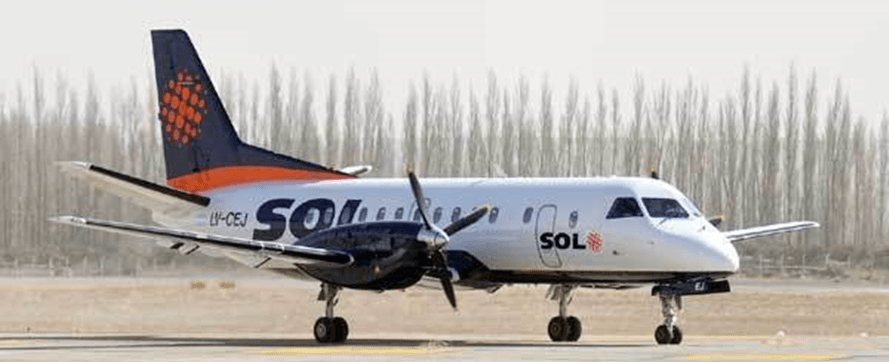
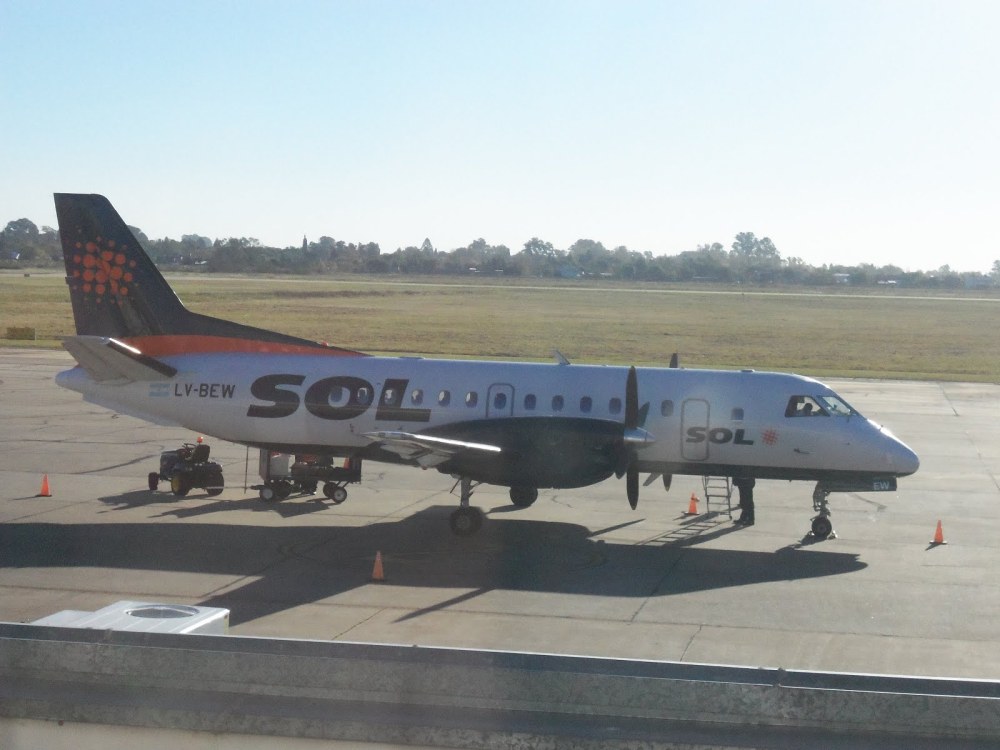
Resultado de imagen para sol líneas aéreas Saab 340 LV-CEJAW | 2019 12 04 12:15 | AIR INVESTIGATION / AVIATION SAFETY

cabezalJusticia Argentina ordena continuar investigaciones tragedia Sol Líneas Aéreas

La Cámara Federal de General Roca, Argentina, ha odenado profundizar el análisis de la tragedia del vuelo 8R5428 (OLS5428) de Sol Líneas Aéreas. La Cámara Federal de Apelaciones de General Roca le ordenó en Junio 2019 a Leonidas Moldes continuar investigando la tragedia del vuelo 8R5428, pero el magistrado se jubiló al mes siguiente, por lo que su reemplazante en el juzgado de Bariloche tendrá entonces un primer desafío, de reordenar la causa de la tragedia de la aeronave SAAB 340A del vuelo 8R5428 en el Paraje Prahuaniyeu, en la Provincia de Río Negro. Los familiares reclaman que de una vez por todas los funcionarios judiciales determinen la responsabilidad de los directivos de Sol S.A. Líneas Aéreas.

Querellantes

Gustavo Fernández, abogado de Marcela Bastit, viuda del Comandante Juan Raffo, planteó ante la Cámara Federal: «El tribunal debió investigar la posible participación dolosa del delito tipificado en el artículo 190 segundo párrafo del Código Penal que castiga al que a sabiendas ejecutare cualquier acto que ponga en peligro la seguridad de una aeronave. Tiene un máximo de pena de 25 años cuando produjera muerte».

Romina Barreto, letrada de Juan Carlos Ruiz, papá de la víctima Juan Manuel, ratificó el planteo de su colega: «Toda la investigación estuvo dirigida a determinar las causas técnicas e inmediatas del accidente, pero la verdadera causa es anterior al vuelo en sí. Esas circunstancias fueron perfectamente descriptas en el informe de la Junta de Investigación (JIAAC) que el tribunal pasó por alto: la aerolínea obligaba a los pilotos a volar una ruta no autorizada, que frecuentemente posee hielo, sin capacitar a los pilotos en hielo, pero, para el juez, la culpa es de la tripulación».

Los abogados de las víctima no tienen dudas: el vuelo 8R5428 nunca debería haber salido. Todo empezó la tarde del 18 Mayo 2011: el piloto Juan Raffo y el copiloto Adriano Bolatti despegaron el SAAB 340A matrícula LV-CEJ a las 20:35 hs desde el Aeropuerto Internacional de Rosario con destino final al Aeropuerto Internacional de Comodoro Rivadavia; hicieron escalas en Córdoba, Mendoza y Neuquén. Raffo y Bolatti aterrizaron a las 22:20 hs en Neuquén, pidieron más combustible y las 23:05 hs, con la tripulación (3) y 19 pasajeros abordo, despegaron hacia Comodoro Rivadavia.

La investigación en crisis

El exjuez Leonidas Moldes comenzó el día siguiente a investigar los pormenores de la tragedia desde que el Saab 340A matrícula LV-CEJ despegó a las 20:35 hs desde Rosario. No centró su análisis en determinar si el avión podía volar. Tampoco consideró las observaciones del informe final de la Junta de Investigación (JIAAC) que respondían ese interrogante. Para el magistrado, fue suficiente la conclusión del informe preliminar de la JIAAC: «Causa: probable inadecuada planificación del vuelo; probable inadecuada decisión operacional del piloto; probable pérdida de la consciencia situacional de la tripulación de la cabina de vuelo; probable complacencia de la tripulación de cabina de vuelo».

El ahora ex-juez Leónidas Moldes resolvió el 7 Mayo 2012, a un año de la tragedia, decretar la falta de mérito a los funcionarios de la aerolínea regional: Horacio Gabriel Angeli (Presidente), Juan Alberto Nyffenegger (Vicepresidente) y Danilo Alberto Pojmaevich (Gerente). El Estudio Jurídico Stella Rinaldis y Asociados que analiza la causa por el momento prefirieron no realizar declaraciones. El juez no consideró trascendental que en el Informe Preliminar, en el que se ha basado su decisión, se haya comtido errores en los datos de la tragedia del avión de Sol Líneas Aéreas. Se observa en el documento judicial errores graves: de fecha del accidente (decía «18 JUN 11»), donde debía decir «18 Mayo 2011»; además el horario del accidente decía «23:50» cuando en resolución del juez indica «23:40») y la cantidad de víctimas fatales donde dice «tripulación y 22 pasajeros» cuando en realidad fueron 3 tripulantes y 19 pasajeros.

AW-Sol_700433.pngInforme Final JIAAC

Del Reporte Final de la JIAAC, el Juez Leónidas Moldes sobreseyó al Gerente, Presidente y Vicepresidente de la empresa al no encontrar relación causal e inmediata con el accidente aéreo. La Junta de Investigación, sin embargo, había enumerado varias claves por las que los querellantes denunciaron que el avión nunca debería haber despegado: «dos Directivas de Aeronavegabilidad (AD) no estaban cumplimentadas al momento del accidente»; en la planilla de entrenamiento del piloto, «no quedó registrado que haya recibido instrucción sobre el sistema de protección contra hielo y lluvia, y sistema anti hielo»; «la asignatura meteorología no fue impartida» en el curso; la empresa «no tenía previsto prácticas simuladas de operación en tiempo frío o cálido» ni era posible en los equipos simuladores al tipo de aeronave «simular el vuelo con formación de hielo».

Informes aeronaves y rutas

La Junta de Investigación ha expresado que la aerolínea solicitó el 29 Junio 2010 a la Administración Nacional de Aviación Civil (ANAC) incorporar a su flota dos SAAB340: una era justamente la de matrícula LV-CEJ, pero «sin equipamiento de comunicación de alta frecuencia (HF)». La ANAC no solo lo aprobó sino que el 3 Marzo 2011, es decir, dos meses antes de la tragedia, resolvió que «ya no era obligatorio el requerimiento de equipo de comunicación de alta frecuencia».

Además, según la información oficial requerida por el juzgado, «la ruta de Neuquén (SAZN) y Comodoro Rivadavia (SAVC), «no figura en la lista de rutas internas autorizadas» sino que la empresa «debía confeccionar cada mes el requerimiento a la SSTA para que fuera autorizada a operar estas rutas como no regular»; y, por último, «los aeródromos de SAZN y SAVC no figuran en la lista de autorizados».

Anteriormente, el Comandante Juan Raffo advirtió sobre el peligro de operar en esa ruta aérea: la Gerencia de Seguridad Operacional reconoció que el piloto puso por escrito en Octubre 2010 la problemática del «engelamiento», es decir la producción de hielo por las bajas temperaturas en ese tramo que provocan inconvenientes para operar el avión. La noche fatal el propio Comandante había expresado su queja en cabina a su compañero el Primer Oficial: «¿Por qué te crees que se cae tanto este avión? ¡No sirve para esta ruta, pero no lo quieren entender!». Sin embargo «el área de Seguridad Operacional no consideró como peligro/amenaza la operación en tiempo frío, engelamiento y fatiga, debido al nivel de experiencia de los comandantes».

Pero esa noche, Juan Raffo y Adiano Bolatti recién se enteraron en pleno vuelo de la probabilidad de sufrir engelamiento. Es que, según la reconstrucción meteorológica, «la oficina meteorológica del aeropuerto de Neuquén estaba cerrada a la hora que pasó el vuelo» y «el Sistema de Visualización Meteorológica Aeronáutica (SAVIMA) estaba fuera de servicio». Los especialistas de la Junta de Investigación JIAAC concluyeron: «probablemente estas dos situaciones contribuyeron a que la información de la situación meteorológica que encontrarían en la ruta no fuera la real».

Las recomendaciones tardías

AW-Sol_70066.pngTal fue la incidencia de este escenario imprevisto que la JIAAC le recomendó al Servicio Meteorológico Nacional (SMN) «contemplar la posibilidad de ampliar los horarios de servicio de las oficinas meteorológicas de aeródromos con el objetivo de cubrir toda la franja horaria de operaciones de los mismo aeródromos». Y a la Fuerza Aérea, le aconsejó «la conveniencia de establecer una red de comunicaciones de alta frecuencia con cobertura nacional permanente», es decir, lo que la ANAC había eliminado de los requisitos para volar dos meses antes de la tragedia. Los especialistas le pidieron a la aerolínea que, «con el objetivo de incrementar el nivel de seguridad de la operaciones, incluyan en el programa SMS de la empresa, al engelamiento severo como un peligro específico, a los efectos de generar las defensas».

El juez de la causa aceptó indagar a los empresarios, el Gerente de Opraciones Danilo Pojmaevich, reconoció que «no impartieron cursos o instrucciones particulares a los pilotos al momento de comenzar a volar la ruta Neuquén-Comodoro Rivadavia». Por su parte, Juan Nyffenegger, Vicepresidente desligó en «la autoridad aeronáutica la habilitación de la ruta aérea», pero admitió que «se sabía de alguna limitación en las comunicaciones y por ese motivo se solicitó la respectiva autorización a la autoridad de control».

La despedida de Moldes

El magistrado no contempló las advertencias de los especialistas ni a las confesiones de los imputados. Leónidas Moldes sobreseyó en Febrero 2019 a Danilo Pojmaevich, Horacio Angeli y Juan Nyffenegger. La Cámara Federal de Apelaciones de General Roca revocó esa decisión en Junio 2019. Al mes siguiente, el juez presentó los papeles para acceder a la jubilación en el Poder Judicial de la Nación.

La causa continúa abierta a cargo del nuevo Juez subrogante Gustavo Zapata, en Bariloche. Primero deberá resolver el planteo de la defensa para dar por extinguida la acción penal: como los empresarios eran acusados de «estrago culposo» del Artículo 189 del Código Penal (CP), con pena máxima de 5 años, sus abogados pidieron cerrar el expediente. Sin embargo, los familiares de las víctimas plantearon el cambio de carátula al Artículo 190 segundo párrafo del CP que castiga al que a sabiendas ejecutare cualquier acto que ponga en peligro la seguridad de una aeronave que terminare con muerte, que tiene un máximo de pena de 25 años, por lo que su plazo de prescripción es de 12 años.

El juez Zapata finalmente deberá reinterpretar el informe final de la Junta de Investigación para responderles a los querellantes si, como denuncian, Juan Raffo y Adriano Bolatti debiesen o no haber piloteado la aeronave turbohélice SAAB 340A matrícula LV-CEJ entre Neuquén y Comodoro Rivadavia cuando caía la noche el 11 Mayo 2011 en la Región Patagonia. Para el ahora ex-juez, Leónidas Moldes, los responsables fueron los comandantes del vuelo 8R5428. AW-Icon AW001

AW-Sol_340A.jpgJustice orders tragedy investigations 8R5428

Justice Argentina orders to continue investigations tragedy SOL Líneas Aéreas

The Federal Chamber of General Roca, Argentina, has ordered to deepen the analysis of the tragedy of the 8R5428 (OLS5428) flight of Sol Líneas Aéreas. The Federal Appeals Chamber of General Roca ordered Leonidas Moldes in June 2019 to continue investigating the tragedy of flight 8R5428, but the magistrate retired the following month, so his replacement in the Bariloche court will then have a first challenge, of reordering the cause of the tragedy of the SAAB 340A aircraft of flight 8R5428 at Prahuaniyeu, in the Province of Río Negro. Family members claim that once and for all judicial officials determine the responsibility of the directors of Sol S.A. Airlines.

Complainants

Gustavo Fernández, lawyer of Marcela Bastit, widow of Commander Juan Raffo, raised before the Federal Chamber: «The court had to investigate the possible fraudulent participation of the offense set forth in article 190 second paragraph of the Criminal Code that punishes those who knowingly execute any act that jeopardizes the safety of an aircraft. It has a maximum penalty of 25 years when it causes death».

Romina Barreto, lawyer of Juan Carlos Ruiz, father of the victim Juan Manuel, ratified her colleague’s statement: «All the investigation was aimed at determining the technical and immediate causes of the accident, but the real cause is prior to the flight itself. These circumstances were perfectly described in the report of the Board of Investigation (JIAAC) that the court ignored: the airline forced the pilots to fly an unauthorized route, which often has ice, without training the pilots on ice, but, for the judge, the fault lies with the crew».

Imagen relacionadaCOMMANDER JUAN RAFFO AND FIRST OFFICIAL ADRIANO BOLATTI

The lawyers of the victims have no doubts: flight 8R5428 should never have left. It all started on the afternoon of May 18, 2011: the Commander Juan Raffo and First Official Adriano Bolatti took off the SAAB 340A registration LV-CEJ at 20:35 hs from Rosario International Airport with final destination to Comodoro Rivadavia International Airport; They made stops in Córdoba, Mendoza, and Neuquén. Raffo and Bolatti landed at 10:20 p.m. in Neuquén, asked for more fuel and 11:05 p.m., with the crew (3) and 19 passengers on board, took off towards Comodoro Rivadavia.

Crisis Research

The former Leónidas Moldes began the next day to investigate the details of the tragedy since the Saab 340A registration LV-CEJ took off at 8:35 p.m. from Rosario. He did not focus his analysis on determining if the plane could fly. Nor did he consider the observations of the final report of the Research Board (JIAAC) that answered that question. For the magistrate, the conclusion of the preliminary report of the JIAAC was sufficient: «Cause: probable improper flight planning; probable improper operational decision of the pilot; probable loss of the situational awareness of the flight cabin crew; probable complacency of the flight cabin crew».

The now ex-judge Leonidas Moldes resolved on May 7, 2012, one year after the tragedy, to decree the lack of merit to the regional airline officials: Horacio Gabriel Angeli (President), Juan Alberto Nyffenegger (Vice President) and Danilo Alberto Pojmaevich (Manager). The Stella Rinaldis and Associates Law Firm that analyzes the case at the moment preferred not to make statements. The judge did not consider it transcendental that in the Preliminary Report, on which his decision has been based, errors have been made in the data of the tragedy of the Sun Airlines plane. There are serious errors in the judicial document: the date of the accident (said «18 JUN 11»), where it should say «18 May 2011»; In addition, the accident schedule read «23:50» when the judge says «23:40») and the number of fatalities where it says «crew and 22 passengers» when there were actually 3 crew members and 19 passengers.

JIAAC Final Report

From the Final Report of the JIAAC, Judge Leónidas Moldes dismissed the Manager, President and Vice President of the company, finding no causal and immediate relationship with the plane crash. The Investigation Board, however, had listed several keys for which the complainants reported that the plane should never have taken off: «two Airworthiness Directives (AD) were not completed at the time of the accident»; on the pilot’s training form, «it was not recorded that he received instruction on the protection system against ice and rain, and anti-ice system»; «the meteorology course was not taught» in the course; The company «had no planned simulated operating practices in cold or warm weather» nor was it possible in the simulator equipment to the type of aircraft «simulate the flight with icing».

Aircraft and route reports

The Research Board has said that the airline requested the National Civil Aviation Administration (ANAC) on June 29, 2010, to incorporate two SAAB340s into its fleet: one was just the one of registration LV-CEJ, but «without high-frequency communication equipment (HF)». The ANAC not only approved it but on March 3, 2011, that is, two months before the tragedy, it resolved that «the requirement for high-frequency communication equipment was no longer mandatory».

In addition, according to the official information required by the court, «the route of Neuquén (SAZN) and Comodoro Rivadavia (SAVC)», does not appear in the list of authorized internal routes «but the company had to prepare the requirement to the monthly SSTA to be authorized to operate these routes as not regular»; and, finally, «the SAZN and SAVC airfields are not listed on the authorized list».

Earlier, Commander Juan Raffo warned about the danger of operating on that air route: the Safety Management acknowledged that the pilot wrote down in October 2010 the problem of «icing», that is, the production of ice due to the low temperatures in that stretch that cause inconvenience to operate the plane. The fatal night the Commander himself had expressed his complaint in the cabin to his companion the First Officer: «Why do you think this plane falls so much? It is not useful for this route, but they do not want to understand it!» However, «the Operational Safety area did not consider the operation in cold weather, icing, and fatigue as a danger/threat, due to the level of experience of the commanders».

But that night, Juan Raffo and Adriano Bolatti just learned in full flight of the probability of suffering icing. It is that, according to the meteorological reconstruction, «the meteorological office of the Neuquén airport was closed at the time the flight passed» and «the Aeronautical Meteorological Visualization System (SAVIMA) was out of service». The specialists of the JIAAC Research Board concluded: «These two situations probably contributed to the fact that the information on the meteorological situation they would find on the route was not the real one».

Late recommendations

Such was the incidence of this unforeseen scenario that the JIAAC recommended to the National Meteorological Service (SMN) «to consider the possibility of extending the hours of service of the meteorological offices of aerodromes with the objective of covering the entire time slot of operations of the same airfields». And he told the Air Force «the advisability of establishing a high-frequency communications network with permanent national coverage», that is, what ANAC had eliminated from the requirements to fly two months before the tragedy. The specialists asked the airline, «in order to increase the level of security of operations, include in the company’s SMS program, severe icing as a specific danger, in order to generate defenses».

The judge of the case agreed to investigate the businessmen, the Options Manager Danilo Pojmaevich, acknowledged that «they did not give courses or instructions to the pilots at the time they started flying the Neuquén-Comodoro Rivadavia route». For his part, Juan Nyffenegger, Vice President, separated in «the aeronautical authority the authorization of the air route», but admitted that «it was known of some limitation in the communications and for that reason, the respective authorization was requested from the control authority».

The farewell of Moldes

The magistrate did not contemplate the warnings of the specialists or the confessions of the accused. Leónidas Moldes dismissed in February 2019 Danilo Pojmaevich, Horacio Angeli and Juan Nyffenegger. The Federal Court of Appeals of General Roca reversed that decision in June 2019. The following month, the judge presented the papers to access retirement in the Judicial Branch of the Nation.

The case is still open by the new subrogant judge Gustavo Zapata, in Bariloche. You must first resolve the defense’s claim to terminate the criminal action: as the businessmen were accused of «guilty damage» of Article 189 of the Criminal Code (CP), with a maximum penalty of 5 years, their lawyers asked to close the file. However, the next of kin of the victims proposed the change of cover to Article 190 second paragraph of the CP that punishes those who knowingly execute any act that endangers the safety of an aircraft that ends with death, which has a maximum penalty of 25 years, so its statute of limitations is 12 years.

Judge Zapata must finally reinterpret the final report of the Board of Investigation to respond to the complainants if, as they denounce, Juan Raffo and Adriano Bolatti should or should not have piloted the SAAB 340A turboprop aircraft registration LV-CEJ between Neuquén and Comodoro Rivadavia when it fell the night on May 11, 2011, in the Patagonia Region. For the now ex-judge, Leonidas Moldes, those responsible were the commanders of flight 8R5428. AW-Icon AW002


Ξ A I R G W A Y S Ξ
SOURCE: Airgways.com
DBk: Tn.com.ar / Airgways.com
AW-POST: 201912041215AR

A\W   A I R G W A Y S ®

FAA testificará Cámara Representantes

Resultado de imagen para Representative  House USAW | 2019 12 02 16:18 | AIR INVESTIGATION / AVIATION SAFETY / GOVERNMENT

Resultado de imagen para Representative  House USEl Jefe de la FAA testificará ante la Cámara de los Representantes de Estados UnidosAW-Icon_Boeing 737 MAX.jpg

El Jefe de la Federal Aviation Administration (FAA), Steve Dickson, testificará en audiencia del 11 Diciembre 2019 en la Cámara de Representantes de los Estados Unidos. El turno de la FAA para compadecer testimonialmente para declarar bajo testimonio el 20150215-logo-faa_111/12 ante un panel de la Cámara de los Estados Unidos sobre el papel desempeñado como órgano fiscalizador del área de desarrollos industriales que involucran el caso del Boeing 737 MAX, las fallas de los procesos de construcción como así también, los incidentes y accidentes que involucraron a estas aeronaves modernas. El administrador Steve Dickson testificará ante el Comité de Infraestructura y Transporte de la Cámara. El comité y la FAA confirmaron el Lunes 02/12 el compromiso declaratorio.

The Boeing Company ha tenido problemas para cumplir con los requisitos necesarios antes de poder obtener la aprobación para reanudar los vuelos del Boeing 737 MAX. La agencia y funcionarios estadounidenses dijeron la semana pasada que es extremadamente improbable, si no imposible, que la agencia FAA apruebe antes de fines de Diciembre 2019 las mejorasa introducidas en el 737 MAX.

Boeing invitación miembros industria

La compañía Boeing está invitando a los miembros de la industria, expertos, analistas y las aerolíneas a sus instalaciones en la fábrica de Renton, WA. (Área de Seattle) esta semana en un esfuerzo por delinear su plan para volver a poner en servicio al asediado 737 MAX después de dos accidentes fatales.

El fabricante está luchando para obtener la aprobación del regulador para devolver los aviones a los cielos, un proceso que espera concluir este mes, pero los reguladores han dicho públicamente varias veces que no tienen un calendario de hormigas. Los aviones han estado en tierra desde mediados de Marzo 2019, ingresando casi a su noveno mes de su puesta a tierra.

Boeing recibirá a los invitados los días Martes 03/12 y Miércoles 04/12, que no incluyen a los medios, y ofrecerá sesiones informativas con los ejecutivos. La invitación, que incluye una visita al centro de entrega de aviones de Boeing y su instalación de producción de la línea 737 MAX en Renton (WA.), ofrece cubrir los gastos de vuelo y hotel. Es el último intento de Boeing para obtener apoyo y reconstruir la confianza pública en los aviones a medida que la conexión a tierra entra en su décimo mes. Las aerolíneas han perdido cientos de millones de dólares y han frenado sus planes de crecimiento debido a la conexión a tierra.

Además de los analistas de la industria, algunos invitados incluyeron representantes de los sindicatos de auxiliares de vuelo. La Asociación de Asistentes de Vuelo, el sindicato de asistentes de vuelo más grande de los Estados Unidos, que representa a las tripulaciones de cabina de United, Alaska Air y otros, está enviando un miembro, dijo una portavoz. Los pilotos y los asistentes de vuelo serán clave para tranquilizar al público sobre los aviones después de la aprobación.

FAA continúa trabajando

El software de control de vuelo que se activó por error en ambos accidentes llevó a Boeing a desarrollar una solución, pero los funcionarios de seguridad del gobierno aún no lo han aprobado. La Administración Federal de Aviación, que está bajo fuego por aprobar por primera vez los aviones en 2017, tomará el paso inusual de revisar cada nuevo 737 MAX antes de que se entreguen a los clientes de las aerolíneas. AW-Icon AW001

AW-737-8MAX.pngFAA Chief will testify House Representatives

Boeing-Logo.svgThe FAA Chief will testify before the House of Representatives of the United States

The Chief of the Federal Aviation Administration (FAA), Steve Dickson, will testify at a hearing on December 11, 2019, in the United States House of Representatives. The FAA’s turn to testify testimonials to testify on testimony on 11/12 before a panel of the United States House on the role played as an oversight body of the industrial development area involving the case of the Boeing 737 MAX, the failures of the construction processes as well as the incidents and accidents that involved these modern aircraft.

Administrator Steve Dickson will testify before the House Infrastructure and Transportation Committee. The committee and the FAA confirmed on Monday 02/12 the declaratory commitment.

The Boeing Company has had trouble meeting the necessary requirements before it can obtain approval to resume the flights of the Boeing 737 MAX. The US agency and officials said last week that it is extremely unlikely, if not impossible, for the FAA agency to approve the improvements introduced in the 737 MAX before the end of December 2019.

boeing-737-max (1)Boeing invitation members industry

The Boeing Company is inviting industry members, experts, analysts and airlines to its facilities at the Renton, WA factory. (Seattle area) this week in an effort to delineate its plan to bring the besieged 737 MAX back into service after two fatal accidents.

The manufacturer is struggling to get approval from the regulator to return the planes to the skies, a process that it hopes to conclude this month, but regulators have said publicly several times that they don’t have an ant calendar. The planes have been on the ground since mid-March 2019, entering almost the ninth month of their grounding.

Boeing will receive the guests on Tuesday 03/12 and Wednesday 04/12, which does not include the media, and will offer briefings with executives. The invitation, which includes a visit to the Boeing aircraft delivery center and its production facility of the 737 MAX line in Renton (WA.), Offers to cover flight and hotel expenses. It is Boeing’s last attempt to gain support and rebuild public confidence in airplanes as the ground connection enters its tenth month. Airlines have lost hundreds of millions of dollars and have slowed their growth plans due to grounding.

In addition to industry analysts, some guests included representatives of the flight attendants unions. The Association of Flight Assistants, the largest union of flight attendants in the United States, representing the cabin crews of United, Alaska Air, and others, is sending a member, a spokeswoman said. Pilots and flight attendants will be key to reassuring the public about airplanes after approval.

FAA continues to work

The flight control software that was activated by mistake in both accidents led Boeing to develop a solution, but government security officials have not yet approved it. The Federal Aviation Administration, which is under fire for first approving airplanes in 2017, will take the unusual step of reviewing every new 737 MAX before they are delivered to airline customers. AW-Icon AW002


Ξ A I R G W A Y S Ξ
SOURCE: Airgways.com
DBk: House.gov / Faa.gov / Boeing.com / Airgways.com
AW-POST: 201912021618AR

A\W   A I R G W A Y S ®

Larga espera del retorno del 737 MAX

Boeing-737-MAX (2).jpgAW | 2019 12  01 21:47 | AIR INVESTIGATION / AVIATION SAFETY

Boeing-Company-LogoAW-Icon_Boeing 737 MAXLa FAA continúa trabajando para devolver al Boeing 737 MAX a los cielos

Después del accidente del segundo avión Boeing 737-8 MAX el 10 Marzo 2019, el vuelo ET-302 de Ethiopian Airlines ha marcado el inicio de la puesta en tierra de los Boeing 737 MAX a nivel mundial. Mientras The Boeing 20150215-logo-faa_1Company se encuentra esperanzada en devolver la aeronave a los cielos para el 1Q2020, desde la Federal Aviation Administration (FAA) sostienen que no recibirán presiones de ningún tipo, más bien se tomarán el impo necesario para que la línea 737 MAX vuelva a ser segura.

Boeing revisa MCAS

Los ingenieros de Boeing comenzaron a diseñar una solución de software para evitar que el Sistema de Control de Vuelo Automático conocido como Sistema de Aumento de las Características de Maniobra (MCAS) se active por error. Inicialmente, Boeing dijo que sería capaz de desarrollar e implementar la solución para el sistema automatizado, en cuestión de semanas. Más tarde revisó eso a varios meses para probar y certificar completamente el nuevo software. Pero en Junio 2019, cuando los ingenieros casi terminaban de diseñar la solución, varios pilotos de Boeing se subieron a un simulador de vuelo para los test. Una falla simulada de la computadora hizo que el avión apuntara hacia abajo, sumergiéndose agresivamente como los aviones en ambos accidentes. El resultado de ese vuelo simulado, una decisión de rediseñar la arquitectura de la computadora de vuelo del 737 MAX, provocó grandes demoras que se prolongaron durante el 3Q2019 y 4Q2019 y ahora amenazan la capacidad de Boeing para entregar aviones, reservar nuevos pedidos y mantener las expectativas de ingresos.

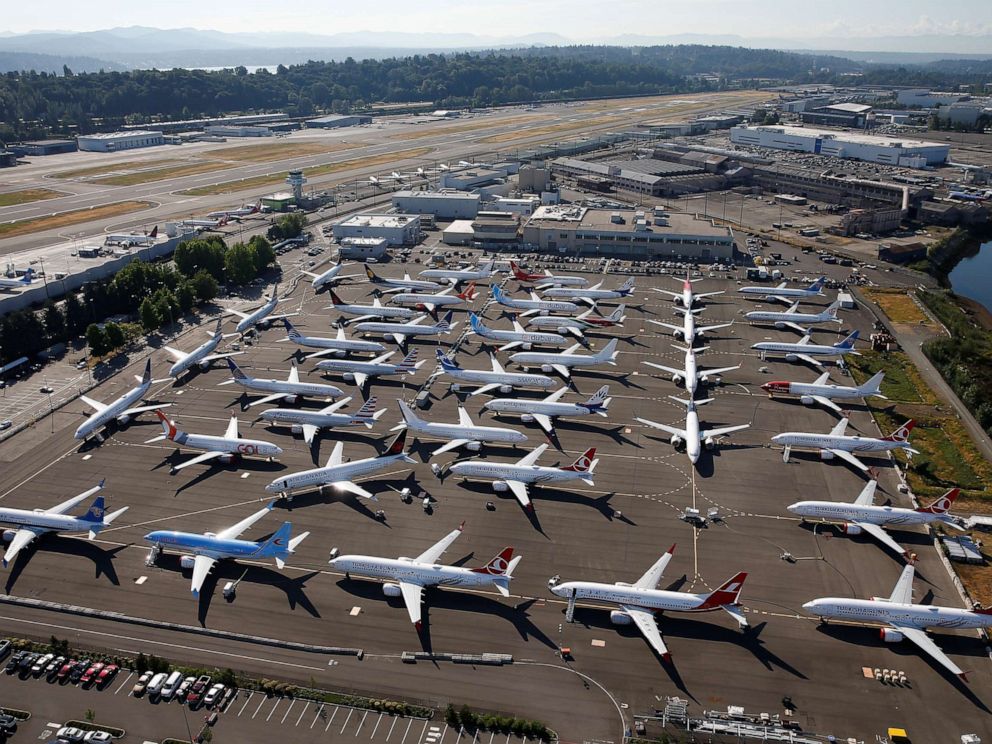
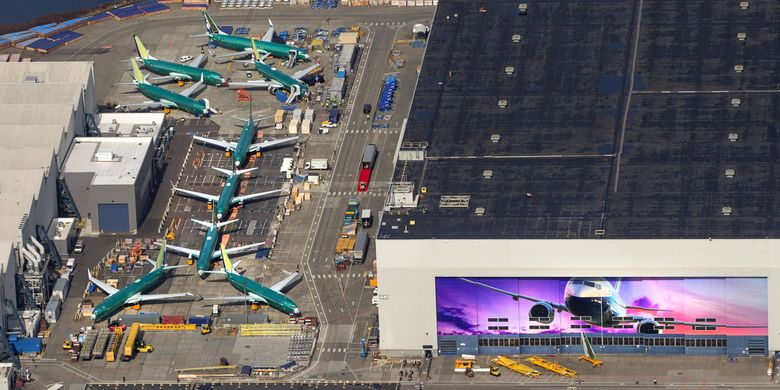
Image result for Boeing 737 MAX groundedBOEING CONTINÚA ALMACENANDO LA PRODUCCIÓN DE LA LÍNEA 737 MAX EN RENTON, WA.

El extenso rediseño, además de tomar más tiempo a los ingenieros, también ha provocado demoras en obtener la autorización de los reguladores, que ahora están observando más de cerca los cambios. En Noviembre 2019, exigieron documentación adicional de Boeing sobre las actualizaciones. Si bien la solución se centró originalmente en MCAS, hubo un escrutinio más detallado de todo el avión después del segundo accidente, incluida la forma en que los pilotos responderían a múltiples alarmas de cabina y lo que sucedería en escenarios de emergencia comunes y extremadamente remotos.

En la prueba que condujo al rediseño de la computadora, Boeing probó lo que sucedería si los rayos gamma del espacio corrompieran los datos en el sistema de control de vuelo del avión, un escenario extraordinariamente improbable, pero que debe abordarse para demostrar a los reguladores de seguridad que el avión puede sobrevivir prácticamente a cualquier posible falla. En el test, el avión se lanzó hacia el suelo, y uno de los pilotos de prueba tuvo dificultades para responder a las diversas alarmas y fallas del sistema a tiempo para controlar el avión.

Rediseñando gestión de vuelo

Boeing ha introducido algunos cambios en la gestión de vuelo, mientras que anteriormente el 737 MAX tenía dos computadoras haciendo cosas separadas donde una operaba sistemas de vuelo y otra estaba en caso de que la primera fallara, el rediseño se ha configurado para monitorearse mutuamente. La configuración original era relativamente anticuada, tomada de las generaciones anteriores del 737, y el cambio está más en línea con el diseño de vuelo moderno.

Antes de la reparación del software, el MCAS podría activarse mediante una sola lectura del sensor. En ambos accidentes, se cree que los sensores fallaron, enviando datos incorrectos a la computadora de vuelo y, sin una verificación redundante, activando el sistema automatizado. El MCAS fue diseñado para compensar que el 737 MAX tenga motores más grandes que las generaciones anteriores del 737, algo que podría hacer que la nariz del avión se voltee hacia arriba y se detenga. En esa situación, el sistema podría apuntar automáticamente hacia abajo para negar el efecto del tamaño del motor. Boeing tiene como objetivo presentar la solución propuesta, y el rediseño de la computadora, a la Administración Federal de Aviación y obtener la certificación del avión para volar nuevamente a fines de 2019. Las aerolíneas estadounidenses continúan retirando el avión de sus horarios hasta al menos Enero 2020.

B-737max.pngEl incidente 737 MAX Southwest

Un avión Boeing 737-8 MAX de la aerolínea Southwest Airlines realizaba un aterrizaje de emergencia en Orlando después de sufrir una falla del motor solo dos semanas después del segundo accidente fatal que involucra aviones similares; como se había informado oportunanmente. La Administración Federal de Aviación dice que un avión Boeing 737 MAX de Southwest Airlines realizó un aterrizaje de emergencia seguro en Marzo 2019 en Orlando, Florida, después de experimentar un aparente problema con el motor. La tripulación declaró una emergencia después de despegar del Aeropuerto Internacional de Orlando alrededor de las 02:50 pm, y aterrizó el avión de manera segura.

La aeronave volaría a Victorville, California, tuvo que hacer un aterrizaje de emergencia 11 minutos después del despegue, informó la Administración Federal de Aviación (FAA) de Estados Unidos. El vuelo no llevaba pasajeros, ya que era un vuelo en ferry, donde sería almacenado hasta el levantamiento de las prohibiciones. Mientras tanto, aún no habría tiempo suficiente para diagnosticar y resolver el problema inherentes al Sistema de Gestión de Vuelo.

Fuerza Aérea ataca

Boeing ha ecibido otra mala noticia por parte de la Fuerza Aérea de los Estados Unidos al advetir que la compañía aroespacial se encuentra en una situación grave después de que se encontraron basura y herramientas en aviones de reabastecimiento de combustible nuevos. Es «simplemente inaceptable» que la basura, las herramientas, las tuercas y los pernos terminen esparcidos dentro de los aviones, por lo que la Fuerza Aérea vigilará a Boeing según el Dr. Will Roper, un alto funcionario de adquisiciones del ejército.

El principal funcionario de adquisición de la Fuerza Aérea lanzó un ataque abrasador contra Boeing después de que se encontraron basura y herramientas dentro de sus nuevos aviones de reabastecimiento de combustible KC-46 en su planta de Everett Washington. La Fuerza Aérea decidió dejar de aceptar los KC-46 de Boeing diciendo que el problema no era con el avión en sí, sino con el proceso establecido para construirlo.

Las entregas del avión se detuvieron el mes pasado cuando se encontraron ‘restos de objetos extraños’ en uno de los aviones. Las entregas ahora se reanudan después de que Boeing ofreció crear un nuevo plan de inspección. El Dr. Roper, Secretario Asistente de la Fuerza Aérea para adquisiciones, tecnología y logística, dejó en claro sus preocupaciones después de visitar la planta Everett Washington de Boeing. «Me fui preocupado, y también me fui pensando que Boeing entiende que tienen una situación grave que requerirá un compromiso de alto nivel de su compañía. Va a tomar más de un año medir y rastrear el desempeño de Boeing hasta que estemos seguros de que sigan sus procedimientos, y tal vez más tiempo antes de que creamos que la cultura de calidad ha regresado», dijo Roper.

El Secretario Asistente para Adquisiciones de la Fuerza Aérea volvió a visitar la planta nuevamente el Lunes 27/11 y logró asegurar una promesa de la compañía para un nuevo plan de inspección que hará que las entregas se reanuden a medida que se completen las inspecciones mejoradas.

El KC-46 desempeña un papel fundamental en el reabastecimiento de combustible de aviones militares en todo el mundo. Seis aviones que ya habían sido recibidos fueron re-inspeccionados por la Fuerza Aérea. «Estamos haciendo inspecciones más estrictas, así que nos sentimos seguros antes de aceptar cualquier avión de Boeing», dijo la portavoz de la Fuerza Aérea Ann Stefanek.

Aunque el descubrimiento de basura y herramientas dentro de los aviones no es el resultado de una falla de diseño, o incluso una preocupación específica de seguridad, los funcionarios de la Fuerza Aérea expresaron que sabían que el momento del problema es excepcionalmente sensible para Boeing después de la puesta a tierra de la línea Boeing 737 MAX.

Will Roper enfatizó que si bien la cuestión del material y los objetos, conocidos como desechos de objetos extraños o FOD, que se dejan dentro de un avión cuando sale de la línea de producción no es un riesgo de diseño o seguridad, es un gran motivo de preocupación a los militares. «El FOD se trata realmente de cada persona, todos los miembros de la fuerza laboral, que siguen esos procedimientos y traen una cultura de disciplina para la seguridad. La cultura es algo en lo que no voy a creer porque tenemos un buen mes, o bien dos meses, que la cultura ha vuelto. Voy a creerlo cuando veo mes tras mes durante mucho tiempo que sí, esas prácticas ahora son cosas que no solo se están haciendo porque tienen que hacerse, sino porque la fuerza laboral dice: «Esto es un producto que entregamos a la Fuerza Aérea»», dijo Roper.

Boeing ahora realizará inspecciones puntuales en el avión n cuestión durante la producción, incluidas áreas específicas de los aviones que pueden sellarse como parte de los procesos de producción. «Ciertamente creo que tendrán que tener un buen equipo» para llevar a cabo el nuevo programa de inspección, dijo Roper.

La compañía aeroespacial necesitará comprometerse más en la línea de trabajo de todas sus áreas tal como había manfestado oportunamente en varias ocasiones. Las presiones a que se somete Boeing son fuertes como se ha visto en la Cámara de los Representantes ante el compadecimiento del CEO de Boeing, Dennis Muilenburg.

AW-777337737.jpgBoeing, optimista

La prioridad de The Boeing Company expresa que sigue confiada del regreso seguro al servicio del Boeing 737 MAX y el apoyo a sus clientes de aerolíneas en este momento difícil. La compañía ha expresado recientemente: «Estamos trabajando estrechamente con la FAA y otras autoridades reguladoras a medida que trabajamos para obtener la certificación y el regreso seguro al servicio comercial, y nos estamos tomando el tiempo para responder a todas sus preguntas. Con el riguroso escrutinio aplicado, estamos seguros de que el MAX será uno de los aviones más seguros para volar. Mientras que la FAA y otras autoridades reguladoras determinarán el momento de la certificación y el regreso al servicio comercial, Boeing continúa buscando la certificación FAA de las actualizaciones de software de control de vuelo MAX durante este trimestre. Según este cronograma, es posible que la reanudación de las entregas MAX a los clientes de las aerolíneas comience en Diciembre, después de la certificación, cuando la FAA emite una Directiva de Aeronavegabilidad (AD) que rescinde la orden de aterrizaje. Paralelamente, estamos trabajando para la validación final de los requisitos de capacitación actualizados, que deben ocurrir antes de que el MAX regrese al servicio comercial, y que ahora esperamos comenzar en Enero».

Hay cinco hitos clave que Boeing debe completar con la FAA antes de volver al servicio:

Sesión de certificación del simulador eCab de la FAA: una evaluación del simulador eCab de varios días con la FAA para garantizar que el sistema de software en general realice su función prevista, tanto normalmente como en presencia de fallas del sistema, que ha sido terminado satisfactoriamente.

Evaluación de la carga de trabajo de la tripulación de la FAA Line Pilots: una sesión de simulador independiente de varios días con pilotos de líneas aéreas para evaluar los factores humanos y la carga de trabajo de la tripulación en diversas condiciones de prueba.

Prueba de vuelo de certificación de la FAA: los pilotos de la FAA llevarán a cabo un vuelo de certificación del software actualizado final.

Presentación final de Boeing a la FAA: después de completar el vuelo de certificación de la FAA, Boeing presentará los entregables y los artefactos finales de la certificación a la FAA para respaldar la certificación del software.

Junta de Evaluación Operativa Conjunta (JOEB) Evaluación de capacitación del simulador: La Junta de Evaluación Operativa Conjunta (JOEB), un organismo multirregulador, lleva a cabo una sesión de simulador de varios días con pilotos reguladores globales para validar los requisitos de capacitación. Después de la sesión del simulador, la Junta de Normalización de Vuelo publicará un informe para un período de comentarios públicos, seguido de la aprobación final de la capacitación.

Boeing y la FAA concluyeron con éxito el primero de estos hitos la semana pasada, y ahora están trabajando para la evaluación de los pilotos de línea de la FAA y la prueba de vuelo de certificación de la FAA.

En cada paso de este proceso, Boeing ha trabajado estrechamente con la FAA y otros reguladores. Proporcionamos documentación detallada, les hicimos volar en los simuladores y les ayudamos a comprender nuestra lógica y el diseño de los nuevos procedimientos, software y material de capacitación propuesto para garantizar que estén completamente satisfechos con la seguridad del avión. La FAA y otras autoridades reguladoras determinarán en última instancia el retorno al servicio en cada jurisdicción relevante. Esto puede incluir un enfoque gradual y el tiempo puede variar según la jurisdicción. AW-Icon AW001

renton_hero_newLong wait for the return of 737 MAX

Boeing-Logo.svgAW-B737-8MAXThe FAA continues to work to return the Boeing 737 MAX to the skies

After the accident of the second Boeing 737-8 MAX aircraft on March 10, 2019, Ethiopian Airlines flight ET-302 marked the beginning of the grounding of the Boeing 737 MAX worldwide. While The Boeing Company is hoping to return the aircraft to the skies by 1Q2020, the Federal Aviation Administration (FAA) maintains that they will not receive pressures of any kind, rather they will take the necessary amount for the 737 MAX line to return to be safe

Boeing reviews MCAS

Boeing engineers began designing a software solution to prevent the Automatic Flight Control System known as Maneuvering Feature Enhancement System (MCAS) from being activated by mistake. Initially, Boeing said it would be able to develop and implement the solution for the automated system, in a matter of weeks. He later reviewed that several months later to fully test and certify the new software. But in June 2019, when engineers almost finished designing the solution, several Boeing pilots got on a flight simulator for the tests. A simulated computer failure caused the plane to point down, aggressively diving like airplanes in both accidents. The result of that simulated flight, a decision to redesign the architecture of the 737 MAX flight computer, caused long delays that lasted during 3Q2019 and 4Q2019 and now threaten Boeing’s ability to deliver aircraft, book new orders and maintain revenue expectations

The extensive redesign, in addition to taking more time for engineers, has also led to delays in obtaining authorization from regulators, who are now watching the changes more closely. In November 2019, they demanded additional Boeing documentation about the updates. While the solution was originally focused on MCAS, there was more detailed scrutiny of the entire plane after the second accident, including how pilots would respond to multiple cabin alarms and what would happen in common and extremely remote emergency scenarios.

In the test that led to the redesign of the computer, Boeing tested what would happen if the gamma rays of space corrupted the data in the aircraft’s flight control system, an extraordinarily unlikely scenario, but that must be addressed to demonstrate to regulators of security that the plane can survive virtually any possible failure. In the test, the plane launched itself to the ground, and one of the test pilots had difficulty responding to the various alarms and system failures in time to control the plane.

Redesigning flight management

Boeing has introduced some changes in flight management, while previously the 737 MAX had two computers doing separate things where one operated flight systems and another was in case the first failed, the redesign has been configured to monitor each other. The original configuration was relatively outdated, taken from previous generations of 737, and the change is more in line with the modern flight design.

Before software repair, the MCAS could be activated by a single sensor reading. In both accidents, the sensors are believed to have failed, sending incorrect data to the flight computer and, without redundant verification, activating the automated system. The MCAS was designed to compensate for the 737 MAX to have larger engines than previous generations of the 737, something that could cause the nose of the plane to turn up and stop. In that situation, the system could automatically point down to deny the effect of engine size. Boeing aims to present the proposed solution, and the redesign of the computer, to the Federal Aviation Administration and obtain the certification of the plane to fly again at the end of 2019. US airlines continue to withdraw the plane from their schedules until at least January 2020.

The 737 MAX Southwest incident

A Southwest Airlines Boeing 737-8 MAX aircraft made an emergency landing in Orlando after suffering an engine failure only two weeks after the second fatal accident involving similar aircraft; as he had been informed opportunely. The Federal Aviation Administration says a Southwest Airlines Boeing 737 MAX plane made a safe emergency landing in March 2019 in Orlando, Florida, after experiencing an apparent engine problem. The crew declared an emergency after taking off from the Orlando International Airport around 02:50 pm, and the plane landed safely.

The aircraft would fly to Victorville, California, had to make an emergency landing 11 minutes after takeoff, the United States Federal Aviation Administration (FAA) reported. The flight did not carry passengers, as it was a ferry flight, where it would be stored until the lifting of the bans. Meanwhile, there would still not be enough time to diagnose and solve the problem inherent in the Flight Management System.

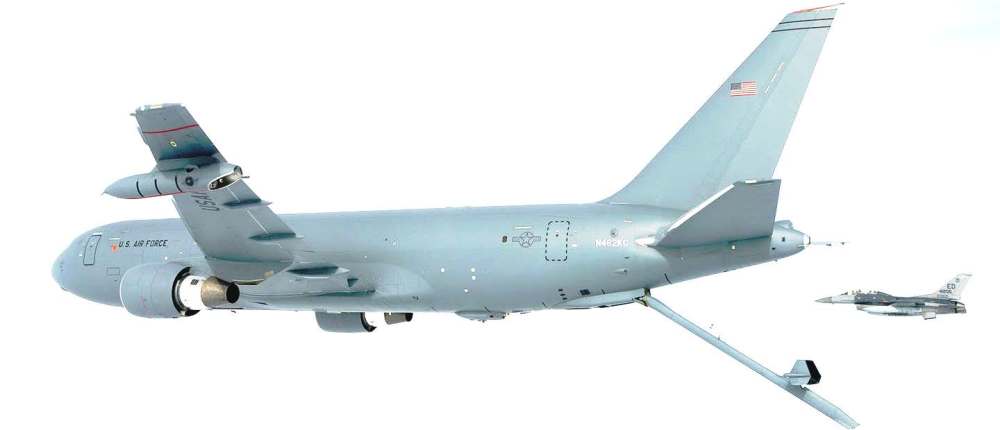
https___api.thedrive.com_wp-content_uploads_2018_08_kc-46-1.jpgAir Force attacks

Boeing has received other bad news from the United States Air Force by warning that the aerospace company is in a serious situation after trash and tools were found in new refueling planes. It is «simply unacceptable» that garbage, tools, nuts, and bolts end up scattered inside the aircraft, so the Air Force will monitor Boeing according to Dr. Will Roper, a senior army procurement officer.

The chief Air Force acquisition official launched a scorching attack on Boeing after garbage and tools were found inside its new KC-46 refueling aircraft at its Everett Washington plant. The Air Force decided to stop accepting the Boeing KC-46 saying that the problem was not with the plane itself, but with the process established to build it.

Deliveries of the plane stopped last month when ‘remains of foreign objects’ were found in one of the planes. Deliveries now resume after Boeing offered to create a new inspection plan. Dr. Roper, Assistant Secretary of the Air Force for procurement, technology, and logistics, made clear his concerns after visiting the Boeing Everett Washington plant. «I was worried, and I was also thinking that Boeing understands that they have a serious situation that will require a high-level commitment from their company. It will take more than a year to measure and track Boeing’s performance until we are sure that they continue their procedures, and maybe longer before we believe that the quality culture has returned», Roper said.

The Assistant Secretary for Air Force Acquisitions re-visited the plant again on Monday 27/11 and managed to secure a promise from the company for a new inspection plan that will cause deliveries to resume as completed inspections are completed.

The KC-46 plays a fundamental role in refueling military aircraft worldwide. Six planes that had already been received were re-inspected by the Air Force. «We are doing stricter inspections, so we felt safe before accepting any Boeing aircraft», said Air Force spokeswoman Ann Stefanek.

Although the discovery of garbage and tools inside the aircraft is not the result of a design flaw, or even a specific safety concern, Air Force officials said they knew the timing of the problem is exceptionally sensitive for Boeing after the grounding of the Boeing 737 MAX line.

Will Roper emphasized that while the issue of material and objects, known as debris from foreign objects or FOD, that are left inside an airplane when it leaves the production line is not a design or safety hazard, it is a great reason of concern to the military. «The FOD is really about every person, all members of the workforce, who follow those procedures and bring a culture of safety discipline. Culture is something I won’t believe because we have a good month, or Well, two months, that culture has returned. I will believe it when I see month after month for a long time that yes, these practices are now things that are not only being done because they have to be done, but because the workforce says: «This is a product that we deliver to the Air Force», said Roper.

Boeing will now carry out punctual inspections on the aircraft in question during production, including specific areas of the aircraft that can be sealed as part of the production processes. «I certainly believe they will have to have a good team» to carry out the new inspection program», Roper said.

The aerospace company will need to engage more in the line of work of all its areas as it had opportunely stated on several occasions. The pressures that Boeing undergoes are strong as seen in the House of Representatives before the sympathy of Boeing CEO Dennis Muilenburg.

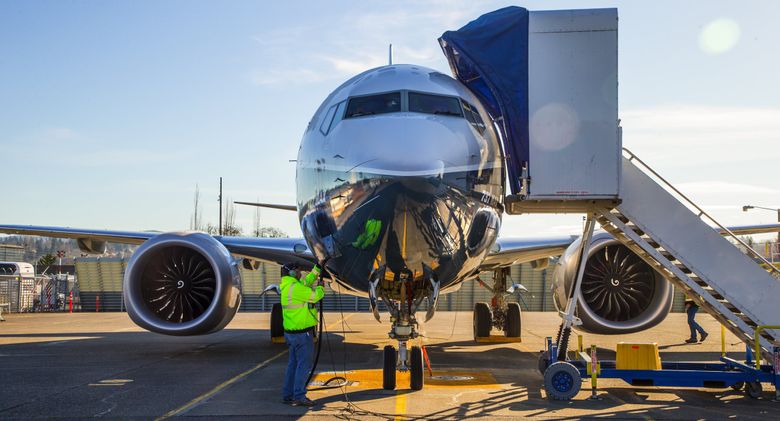
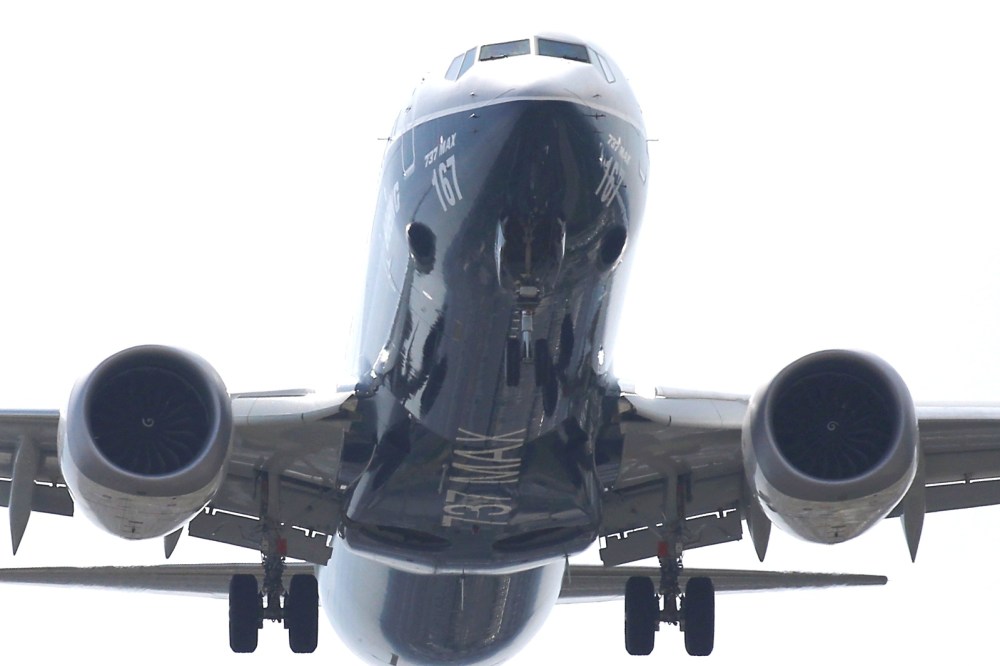
Image result for Boeing 737 MAX front viewBoeing, optimistic

The priority of The Boeing Company expresses that it remains confident of the safe return to service of the Boeing 737 MAX and the support of its airline customers at this AW-700737M001.jpgdifficult time. The company has recently expressed: «We are working closely with the FAA and other regulatory authorities as we work to obtain certification and the safe return to commercial service, and we are taking the time to answer all your questions. With rigorous scrutiny. applied, we are sure that MAX will be one of the safest airplanes to fly in. While the FAA and other regulatory authorities will determine the time of certification and return to commercial service, Boeing continues to seek FAA certification of software updates MAX flight control during this quarter According to this schedule, it is possible that the resumption of MAX deliveries to airline customers will begin in December, after certification, when the FAA issues an Airworthiness Directive (AD) that rescinds the order of At the same time, we are working for the final validation of the requirements updated training, which must occur before the MAX returns to commercial service, and we now expect to start in January».

There are five key milestones that Boeing must complete with the FAA before returning to service:

Certification session of the FAA eCab simulator: an evaluation of the multi-day eCab simulator with the FAA to ensure that the software system, in general, performs its intended function, both normally and in the presence of system failures, which has been successfully completed.

Evaluation of the FAA Line Pilots crew workload: a multi-day independent simulator session with airline pilots to assess human factors and the workload of the crew under various test conditions.

FAA certification flight test: FAA pilots will conduct a final updated software certification flight.

Boeing’s final submission to the FAA: After completing the FAA certification flight, Boeing will submit the deliverables and final certification artifacts to the FAA to support software certification.

Joint Operational Evaluation Board (JOEB) Simulator Training Evaluation: The Joint Operational Evaluation Board (JOEB), a multi-regulatory body, conducts a multi-day simulator session with global regulatory pilots to validate training requirements. After the simulator session, the Flight Standardization Board will publish a report for a public comment period, followed by the final approval of the training.

Boeing and the FAA successfully completed the first of these milestones last week, and are now working for the FAA line pilots’ evaluation and FAA certification flight test.

At each step of this process, Boeing has worked closely with the FAA and other regulators. We provide detailed documentation, fly them into the simulators and help them understand our logic and the design of the new procedures, software and training material proposed to ensure they are completely satisfied with the safety of the aircraft. The FAA and other regulatory authorities will ultimately determine the return to service in each relevant jurisdiction. This may include a gradual approach and the time may vary by jurisdiction. AW-Icon AW002


Ξ A I R G W A Y S Ξ
SOURCE: Airgways.com
DBk: Boeing.com / Faa.gov / Seatletimes.com / Airgways.com / Abcnews.go.com
AW-POST: 201912012147AR

A\W   A I R G W A Y S ®

FAA único emisor certificación 737 MAX

AW-B737-8MAX.jpgAW | 2019 11 27 14:05 | AIR INVESTIGATION / AVIATION SAFETY
Boeinglogo[1]AW-Icon_Boeing 737 MAXBoeing enfrenta nuevo obstáculo para devolver los 737 MAX al servicio

La Administración Federal de Aviación de los Estados Unidos (FAA) ha notificado a The Boeing Company que la agencia será el único emisor de 20150215-logo-faa_1certificados de aeronavegabilidad para todos los nuevos aviones Boeing 737 MAX, un papel que había compartido con el fabricante de aviones americano en el pasado.

El regulador de aviación de Estados Unidos ha informado que regulará la certifucación de manera unilateral de la línea Boeing 737 MAX. La agencia fiscalizadora ha sido criticada por delegar partes de su proceso de certificación de aeronaves a fabricantes de aviones como Boeing. El regulador también repitió que no ha completado su revisión de los cambios de diseño del avión 737 MAX y la capacitación de pilotos asociada. En una carta enviada a Boeing el Martes 26/11, la FAA dijo que «ha determinado que el interés público y la seguridad en el comercio aéreo requieren que la FAA conserve la autoridad para emitir certificados de aeronavegabilidad y exportar certificados de aeronavegabilidad para todos los aviones 737 MAX».

Procesos fiscalización

La agencia dijo que mantendrá la autoridad para emitir los certificados hasta que esté seguro de que Boeing tiene «procesos de verificación y control de calidad totalmente funcionales» y que otros procedimientos de Boeing cumplen con todos los estándares regulatorios.

JATR

La Revisión Técnica de las Autoridades Conjuntas (JATR) fue encargada por la FAA en Abril 2019 para investigar la supervisión y aprobación de la agencia del llamado Sistema Anti-bloqueo MCAS antes de los accidentes fatales en Indonesia y Etiopía. El JATR dijo que la práctica de larga data de la FAA de delegar un alto nivel de tareas de certificación a fabricantes como Boeing necesita una reforma significativa para garantizar una supervisión de seguridad adecuada. En Octubre 2019 el panel internacional de reguladores de seguridad aérea criticó duramente la revisión de la FAA del sistema de seguridad en el avión 737 MAX.

The Boeing Company

«Continuamos siguiendo el ejemplo de la FAA y los reguladores globales. Determinarán cuándo se alcanzan los hitos clave y cuándo se certifican los requisitos de flota y capacitación para que MAX pueda regresar al servicio de manera segura», dijo el portavoz de Boeing, Gordon Johndroe, por correo electrónico. Boeing dijo a principios de 11/2019 que esperaba que la FAA autorizaría a los aviones 737 MAX a volar nuevamente a mediados de Diciembre 2019, aunque no esperaba que la agencia completara su revisión de los requisitos de capacitación revisados ​​hasta Enero 2020.

El 737 MAX, el avión más vendido de Boeing, ha aterrizado en todo el mundo después del accidente de un vuelo ET-302 de Ethiopian Airlines el 10 Marzo 2019, menos de seis meses después de que otro avión del mismo modelo se estrellara en Indonesia.

La compañía todavía tiene muchos obstáculos que completar, incluido un vuelo de prueba de certificación que aún no se ha programado y el trabajo de simulación con pilotos internacionales. Boeing también debe completar una auditoría de documentación de software. AW-Icon AW001

B737-8MAX.jpgFAA single issuer 737 MAX certification

images (2)Boeing faces a new obstacle to return 737 MAX to service

The Federal Aviation Administration of the United States (FAA) has notified The Boeing Company that the agency will be the sole issuer of airworthiness certificates for all-new Boeing 737 MAX aircraft, a role it had shared with the American aircraft manufacturer in the past.

The US aviation regulator has reported that it will regulate the unilateral certification of the Boeing 737 MAX line. The audit agency has been criticized for delegating parts of its aircraft certification process to aircraft manufacturers such as Boeing. The regulator also repeated that he has not completed his review of the design changes of the 737 MAX aircraft and the associated pilot training. In a letter sent to Boeing on Tuesday 26/11, the FAA said that «it has determined that public interest and safety in air commerce require that the FAA retain the authority to issue airworthiness certificates and export airworthiness certificates for all 737 MAX aircraft».

Audit processes

The agency said it will maintain the authority to issue the certificates until it is certain that Boeing has «fully functional quality control and verification processes» and that other Boeing procedures comply with all regulatory standards.

JATR

The Joint Authorities Technical Review (JATR) was commissioned by the FAA in April 2019 to investigate the supervision and approval of the agency of the so-called MCAS Anti-blocking System before fatal accidents in Indonesia and Ethiopia. The JATR said that the FAA’s long-standing practice of delegating a high level of certification tasks to manufacturers such as Boeing needs significant reform to ensure adequate safety supervision. In October 2019, the international panel of air safety regulators strongly criticized the FAA review of the security system on the 737 MAX aircraft.

The Boeing Company

«We continue to follow the FAA and global regulators example. They will determine when key milestones are reached and when fleet and training requirements are certified so that MAX can safely return to service», said Boeing spokesman Gordon Johndroe, by email. Boeing said at the beginning of 11/2019 that it hoped that the FAA would authorize 737 MAX aircraft to fly again in mid-December 2019, although it did not expect the agency to complete its review of the revised training requirements until January 2020.

The 737 MAX, the best-selling Boeing aircraft, has landed worldwide after the crash of an Ethiopian Airlines ET-302 flight on March 10, 2019, less than six months after another plane of the same model crashed in Indonesia.

The company still has many obstacles to complete, including a certification test flight that has not yet been scheduled and simulation work with international pilots. Boeing must also complete a software documentation audit. AW-Icon AW002


Ξ A I R G W A Y S Ξ
SOURCE: Airgways.com
DBk: Faa.gov / Boeing.com / Airgways.com / Theepochtimes.com
AW-POST: 201911271405AR

A\W   A I R G W A Y S ®

Accidente Do-228 de Busy Bee

Resultado de imagen para Busy Bee Do-228 air crashAW | 2019 11 26 14:51 | AIR INVESTIGATION / AVIATION SAFETY

Accidente aéreo aeronave regional en Repúbliuca Democrática del Congo

Un Dornier 228-200, registro 9S-GNH que realizaba el vuelo programado de Goma a Beni en el oeste en la República Democrática del Congo de la aerolínea regional Busy Bee con 17 pasajeros y 2 tripulantes, salía de la Pista 17 de Goma a las 09:10L (07:10Z) pero no pudo subir. Al poco tiempo de despegar la aeronave impactó contra el terreno afectando casas en el área densamente poblada de Birere, justo al sur de la pista. El avión estalló en llamas. Todos los ocupantes perecieron en el accidente, siete muertes ocurrieron en el barrio.

Actualmente se está llevando a cabo una búsqueda de víctimas tanto en el avión como en tierra, se informan varias víctimas mortales y varios sobrevivientes. Una versión de la hoja de carga identifica a 6 pasajeros, otra versión a 11 pasajeros, ambos documentos identifican 9S-GNH como el avión del accidente el 24 Noviembre 2019. Los nombres del primer documento también aparecen en el segundo documento, sin embargo, en un orden diferente.

El aeropuerto informó que el avión partió con 17 pasajeros y 2 tripulantes, todos los ocupantes murieron en el accidente. El gobernador de la Provincia de Kivu del Norte declaró que hasta el momento se han recuperado 25 cuerpos.

El 25 de noviembre de 2019, el Ministerio de Transporte de la República Democrática del Congo dio a conocer los nombres de 26 víctimas mortales, los 19 ocupantes de la aeronave y 7 personas en tierra, e indicó que una persona más en tierra está bajo atención hospitalaria por haber sufrido lesiones graves. Se ha abierto una investigación sobre las circunstancias del accidente, incluidas las posibles causas técnicas. Los observadores en tierra informaron que el avión estaba a una altura muy baja en una actitud inestable rodando a izquierda y derecha, aparentemente incapaz de salir, luego enredado con cables eléctricos y se estrelló contra las casas. AW-Icon AW001

El sitio del accidenteResultado de imagen para Busy Bee Do-228 air crashBusy Bee Do-228 accident

Resultado de imagen para Congo Dem. Republic globe mapRegional aircraft air crash in the Democratic Republic of Congo

A Dornier 228-200, registration 9S-GNH that made the scheduled flight from Goma to Beni in the west in the Democratic Republic of the Congo of the regional airline Busy Bee with 17 passengers and 2 crew, left the Goma Runway 17 at 09: 10L (07: 10Z) but could not climb. Shortly after taking off the aircraft hit the ground affecting houses in the densely populated area of ​​Birere, just south of the runway. The plane burst into flames. All occupants perished in the accident, seven deaths occurred in the neighborhood.

A search for victims is currently being carried out both on the plane and on the ground, several fatalities and several survivors are reported. A version of the cargo sheet identifies 6 passengers, another version 11 passengers, both documents identify 9S-GNH as the plane of the accident on November 24, 2019. The names of the first document also appear in the second document, however, in A different order.

The airport reported that the plane departed with 17 passengers and 2 crew, all occupants died in the accident. The governor of the Province of North Kivu declared that so far 25 bodies have been recovered.

On November 25, 2019, the Ministry of Transportation of the Democratic Republic of the Congo released the names of 26 fatalities, the 19 occupants of the aircraft and 7 people on the ground, and indicated that one more person on the ground is under attention hospital for having suffered serious injuries. An investigation into the circumstances of the accident, including possible technical causes, has been opened. Observers on the ground reported that the plane was at a very low height in an unstable attitude rolling left and right, apparently unable to leave, then entangled with electric wires and crashed into the houses. AW-Icon AW002


Ξ A I R G W A Y S Ξ
SOURCE: Airgways.com
DBk: Avherald.com / Airgways.com / Aviation24.be / Post-gazette.com
AW-POST: 201911261451AR

A\W   A I R G W A Y S ®

Investigaciones derribo MH-017

Image result for MH17 JIT"AW | 2019 11 14 15:11 | AIR INVESTIGATION

Intercepciones telefónicas ruso-ucraniano involucranj en atentado Image result for JIT joint investigation team logo"aéreo del vuelo MH-017

Los investigadores del vuelo MH-017 de Malaysia Airlines dicen que las llamadas telefónicas muestran los lazos de los rebeldes de Ucrania con Rusia. Las intercepciones sugieren que los separatistas buscaron orientación de Rusia antes de que el avión Boeing 777-200ER fuera derribado.

Investigadores dirigidos por los holandeses han publicado nuevas grabaciones de llamadas telefónicas interceptadas que muestran a líderes separatistas en Ucrania que solicitan apoyo militar y orientación política de figuras políticas rusas en el período anterior al derribo de un avión de Malasia que mató a las 298 personas a bordo.

Los capturados en la cinta supuestamente incluyen a Vladislav Surkov, un asistente político de Vladimir Putin, a quien los líderes separatistas han llamado «nuestro hombre en el Kremlin». Los funcionarios de seguridad en las cintas de audio también se refieren a un mandato del ministro de defensa ruso, Sergey Shoigu, para cambiar la jerarquía militar y la coordinación del este de Ucrania con el Director del FSB, Alexander Bortnikov, para entregar ayuda militar, aparentemente incluyendo equipo de visión nocturna y municiones.

Las grabaciones muestran cómo los funcionarios políticos y militares rusos ejercieron el control sobre la política cotidiana en Ucrania, controlada por los separatistas. «El análisis reciente de las declaraciones de testigos y otra información reveló que la influencia rusa en la DPR [la autoproclamada República Popular de Donetsk] fue más allá del apoyo militar y que los lazos entre los funcionarios rusos y los líderes de la DPR parecen estar más cerca», dijo el Equipo de Investigación Conjunto (JIT) dirigido por los holandeses.

En una de las grabaciones, se escucha a Alexander Borodai, el ex líder separatista, diciendo: “Estoy cumpliendo órdenes y protegiendo los intereses de un único estado, la Federación Rusa. Esa es la conclusión». Un teléfono utilizado por Borodai fue apagado el jueves por la tarde. Anteriormente dijo que estaba en contacto con Surkov mientras era el principal funcionario separatista en el este de Ucrania, pero ha negado cualquier papel en el derribo del MH17 en 2014. Rusia también ha negado que haya tenido algún papel en la tragedia.

Conflicto Ruso-ucraniano

El conflicto de Ucrania ha costado más de 14,000 vidas y ha jugado un papel central en los procedimientos de juicio político en Washington, donde Donald Trump ha sido acusado de retener ayuda militar crucial de Ucrania a cambio de una investigación sobre la familia de su rival político, Joe Biden. En una conversación lanzada el 3 Julio 2019 por la investigación, Surkov también le dijo a Borodai que Rusia pronto enviaría refuerzos «listos para el combate» bajo un funcionario, Vladimir Antyufeyev, quien poco después recibió un alto cargo administrativo.

Funcionarios holandeses también dijeron que los líderes separatistas habían recibido teléfonos seguros proporcionados por el servicio de seguridad ruso. Si se confirma, las cintas proporcionarían evidencia documental adicional de que el Kremlin tenía control directo sobre el liderazgo separatista y gestionaba la transferencia de un sistema antiaéreo BUK utilizado para derribar un avión de pasajeros en la atrocidad más impactante de la guerra de cinco años de Ucrania.

Mientras que los lanzamientos anteriores se centraron en aquellos vinculados directamente al sistema de misiles antiaéreos Buk que probablemente se usaron en el ataque, el lanzamiento del jueves se centró en «la jerarquía militar y administrativa que permitió el derribo de MH17 en el este de Ucrania», según el JIT.

Mientras Rusia tenía el control, la burocracia y las cadenas de mando paralelas seguían siendo un problema. En una de las intercepciones, dos combatientes de unidades separadas discuten cómo sus órdenes provienen del FSB y el GRU, el servicio de seguridad federal de Rusia y su agencia de inteligencia militar, respectivamente. En otra llamada, Surkov le dice a Borodai que aún no puede eliminar a un comandante separatista apodado Demon debido a un funcionario de alto rango. «Si fuera ministro, lo resolvería», dice Surkov.

En Junio 2019, el JIT nombró a cuatro separatistas respaldados por Rusia como sus primeros sospechosos. Incluyen al ex comandante separatista Igor Girkin y se cree que todos viven en Rusia o Crimea, la península anexionada por Rusia en 2014. Su primera sesión judicial se llevará a cabo en Marzo 2020. AW-Icon AW001

Image result for MH17 JIT"Demolition investigations MH-017

Russian-Ukrainian telephone interceptions involved in air attack on flight MH-017

Image result for JIT logo MH17"Investigators of Malaysia Airlines flight MH-017 say the phone calls show the ties of Ukrainian rebels with Russia. The interceptions suggest that the separatists sought guidance from Russia before the Boeing 777-200ER plane was shot down.

Researchers led by the Dutch have published new recordings of intercepted phone calls showing separatist leaders in Ukraine seeking military support and political guidance from Russian political figures in the period prior to the demolition of a Malaysian plane that killed the 298 people on board.

Those captured on the tape allegedly include Vladislav Surkov, a political assistant to Vladimir Putin, whom separatist leaders have called «our man in the Kremlin.» Security officials on the audiotapes also refer to a mandate from Russian defense minister Sergey Shoigu to change the military hierarchy and coordination of eastern Ukraine with FSB Director Alexander Bortnikov to deliver military aid, apparently including night vision equipment and ammunition.

The recordings show how Russian political and military officials exercised control over everyday politics in Ukraine, controlled by separatists. «The recent analysis of witness statements and other information revealed that the Russian influence on the DPR [the self-proclaimed People’s Republic of Donetsk] went beyond military support and that ties between Russian officials and DPR leaders appear to be closer», said the Joint Investigation Team (JIT) led by the Dutch.

In one of the recordings, Alexander Borodai, the former separatist leader, is heard saying: “I am fulfilling orders and protecting the interests of a single state, the Russian Federation. That is the conclusion». A telephone used by Borodai was turned off Thursday afternoon. He previously said he was in contact with Surkov while he was the main separatist official in eastern Ukraine, but has denied any role in the demolition of the MH17 in 2014. Russia has also denied that it had any role in the tragedy.

Russian-Ukrainian conflict

The conflict in Ukraine has cost more than 14,000 lives and has played a central role in political trial proceedings in Washington, where Donald Trump has been accused of withholding crucial military aid from Ukraine in exchange for an investigation into the family of his political rival Joe Biden In a conversation launched on July 3, 2019 for the investigation, Surkov also told Borodai that Russia would soon send reinforcements «ready for combat» under an official, Vladimir Antyufeyev, who shortly thereafter received a high administrative position.

Dutch officials also said the separatist leaders had received secure phones provided by the Russian security service. If confirmed, the tapes would provide additional documentary evidence that the Kremlin had direct control over the separatist leadership and managed the transfer of a BUK anti-aircraft system used to shoot down a passenger plane in the most shocking atrocity of Ukraine’s five-year war.

While previous launches focused on those directly linked to the Buk anti-aircraft missile system that was probably used in the attack, Thursday’s launch focused on «the military and administrative hierarchy that allowed the demolition of MH17 in eastern Ukraine», according to JIT.

While Russia was in control, bureaucracy and parallel chains of command remained a problem. In one of the interceptions, two combatants from separate units discuss how their orders come from the FSB and the GRU, the Russian federal security service and their military intelligence agency, respectively. In another call, Surkov tells Borodai that he still can’t eliminate a separatist commander nicknamed Demon because of a high-ranking official. «If I were a minister, I would solve it», says Surkov.

In June 2019, JIT named four Russian-backed separatists as its first suspects. They include former separatist commander Igor Girkin and it is believed that everyone lives in Russia or Crimea, the peninsula annexed by Russia in 2014. His first judicial session will take place in March 2020. AW-Icon AW002


Ξ A I R G W A Y S Ξ
SOURCE: Airgways.com
DBk: Theguardian.com / Europol.europa.eu / Airgways.com
AW-POST: 201911141511AR

A\W   A I R G W A Y S ®