Crecimiento aviación de Brasil

Resultado de imagen para aeroporto congonhas wiki

AW | 2018 04 09 17:50 | AIRLINES MARKET

Las aerolíneas amplían la capacidad de vuelos domésticos e internacionales

El pronóstico para la aviación de Brasil de las tres aerolíneas más grandes de Brasil, Latam Airlines, Azul Linhas Aéreas, Gol Linhas Aéreas aumentarán su capacidad doméstica en 2018 en diferentes mercados, previendo un aumento en la demanda de tráfico aéreo y una fase de expansión estable, luego de experimentar una baja durante la recesión del país desde principios del 2015.

Las tres principales aerolíneas confíanque el mercado interno del país se encuentra en un período de estabilización, con la recuperación de la demanda corporativa. Azul y GOL registraron incrementos en los precios de los tickets a fines de 2017, observando un nivel de tracción de precios en el mercado aéreo.

En cuanto a la capacidad de vuelos internacionaesl desde Brasil, Latam Airlines agregará servicios a Roma, Las Vegas y Boston. En cuanto a la aerolínea low cost Gol Linhas Aéreas inaugurará el servicio desde Fortaleza y Brasilia a Miami y Orlando, empleando para mediados de 2018 vuelos con la nueva incorporación su flota, los Boeing 737-8 MAX. A fines de 2017, Azul Linhas Aéreas ha incorporado un nuevo servicio a los Estedos Unidos en 2018.  AIRWAYS® AW-Icon TXT

Resultado de imagen para aeroporto guarulhos wiki

Aviation growth of Brazil

Airlines expand the capacity of domestic and international flights

The forecast for Brazilian aviation of the three largest airlines in Brazil, Latam Airlines, Azul Linhas Aéreas, Gol Linhas Aéreas, will increase their domestic capacity in 2018 in different markets, foreseeing an increase in air traffic demand and an expansion phase stable, after experiencing a decline during the recession of the country since early 2015.

The three main airlines trust that the domestic market of the country is in a period of stabilization, with the recovery of corporate demand. Azul and GOL recorded increases in ticket prices at the end of 2017, observing a level of price traction in the air market.

As for the capacity of international flights from Brazil, Latam Airlines will add services to Rome, Las Vegas and Boston. As for the low cost airline Gol Linhas Aéreas, it will open the service from Fortaleza and Brasília to Miami and Orlando, using mid-2018 flights with the new incorporation of its fleet, the Boeing 737-8 MAX. At the end of 2017, Azul Linhas Aéreas has incorporated a new service to the United States in 2018. A \ W


Ξ A I R G W A Y S Ξ
SOURCE:  Airgways.com
DBk: Decea.com.br
AW-POST: 2018040917750AR

A\W   A I R G W A Y S ®

El gigante Azul de Brasil

Resultado de imagen para Azul linhas aereas wiki

AW | 2018 04 08 18:47 | AIRLINES MARKET / AIRLINES ROUTES

Resultado de imagen para Azul linhas aereas logoLa gran crecimiento de la aerolínea low cost brasileña Azul Linhas Aéreas incrementa operaciones en Argentina

Los inicios de Azul Linhas Aéreas comenzaron en el 2008 como una empresa joven y pujante, dominada por el mercado aéreo de TAM Linhas Aéreas y Gol Linhas Aéreas. Azul Linhas Aéreas ha crecido posicionándose como la mayor aerolínea con 103 destinos en todo Brasil superando en 10 años a Gol Linhas Aéreas.

La compañia que tiene un fuerte respaldo internacional por medio de el holding de David Neeleman el CEO brasileño-americano que tiene una importante aerolínea en Estados Unidos denominada jetBlue como así acciones en TAP Portugal.

Expansión internacional

Azul comenzó sus operaciones internacionales en 2015 volando a Guyana Francesa, como así otros destinos como Montevideo. Hace dos semanas comenzó a volar la ruta Recife-Córdoba y Recife-Rosario.

La nueva línea aérea con sede en San Pablo, tiene una fuerza laboral de 11.000 empleados. Azul absorbió a la aerolínea regional Trip Linhas Aéreas del Estado de Sao Paulo, acelerando y acortando el proceso de expansión de tres años vista. La actual flota de 124 aviones compuesta actualmente por 33 ATR 72-600, 63 Embraer E190-100 y E195-200, 8 Airbus A330-200 y 20 Airbus A320/CEONEO.

Las previsiones de la flota hacia el futuro es llegar a 160 aviones para 2021.Dentro de los objetivos próximos está la incorporación de el nuevo modelo de la Embraer, el E190-E2 para el año 2019 ampliando la segmentación del mercado regional y doméstico.

Azul se define como una línea aérea de bajo costo de operación, copiando el modelo de su hermana mayor, la estadounidense jetBlue. En pocos años alcanzó el podio como la mayor aerolínea de Brasil. La aerolínea opera en Brasil con 103 destinos en su mapa de rutas, seguida por la Gol con 54 destinos y en tercer puesto está Latam Airlines.

El hub principal de operaciones de Azul está en el Aeropuerto de Viracopos, ubicado a 90 km de San Pablo donde opera más de 500 vuelos diarios. Otros hubs de operaciones que emplea la aerolínea son Belo Horizonte y Recife.

Azul continuará afianzándose en el mercado de Argentina ampliando más frecuencias y nuevos destinos, quizás imitando el modelo de éxito utilizado en Brasil.  AIRWAYS® AW-Icon TXT

Resultado de imagen para Azul linhas aereas wiki

The Azul giant of Brazil

The great growth of the Brazilian low cost airline Azil Linhas Aéreas increases ops in Argentina

The beginnings of Azul Linhas Aéreas began in 2008 as a young and thriving company, dominated by the air market of TAM Linhas Aéreas and Gol Linhas Aéreas. Azul Linhas Aéreas has grown to position itself as the largest airline with 103 destinations in all of Brazil surpassing Gol Linhas Aéreas in 10 years.

The company that has a strong international support through the holding of David Neeleman the Brazilian-American CEO who has a major airline in the United States called jetBlue as well as actions in TAP Portugal.

International expantion

Azul started its international operations in 2015 flying to French Guyana, as well as other destinations such as Montevideo. Two weeks ago the Recife-Córdoba and Recife-Rosario routes began flying.

The new airline based in San Pablo, has a workforce of 11,000 employees. Azul absorbed the regional airline Trip Linhas Aéreas from the State of Sao Paulo, accelerating and shortening the three-year expansion process. The current fleet of 124 aircraft currently consists of 33 ATR 72-600, 63 Embraer E190-100 and E195-200, 8 Airbus A330-200 and 20 Airbus A320 / CEONEO.

The forecasts of the fleet to the future is to reach 160 aircraft by 2021. Within the next objectives is the incorporation of the new model of the Embraer, the E190-E2 for the year 2019 expanding the segmentation of the regional and domestic market.

Azul is defined as a low-cost airline operating, copying the model of its older sister, the American JetBlue. In a few years he reached the podium as the largest airline in Brazil. The airline operates in Brazil with 103 destinations on its route map, followed by the Gol with 54 destinations and in third place is Latam Airlines.

Azul’s main operations hub is at Viracopos Airport, located 90 km from San Pablo where it operates more than 500 daily flights. Other hubs of operations used by the airline are Belo Horizonte and Recife.

Azul will continue to consolidate in the Argentine market, expanding more frequencies and new destinations, perhaps imitating the successful model used in Brazil. A \ W


Ξ A I R G W A Y S Ξ
SOURCE:  Airgways.com
DBk: Voeazul.com.br / Wikimedia.org / Airgways.com
AW-POST: 201804081847AR

A\W   A I R G W A Y S ®

Interés por más aerolíneas en Argentina

AW-70183777.png

AW | 2018 04 06 21:28 | AIRLINES MARKET

Argentina incorporaría más aerolíneas al mercado doméstico impulsadas por la «Revolución de los Aviones»

El mercado de transporte aéreo en Argentina se ha visto impulsado con las políticas de apertura de más rutas aéreas y más líneas aéreas. Actualmente el mercado está dominado por Aerolíneas Argentinas y Austral Líneas Aéreas como así la secunda Latam Airlines.

Boeing 737NG-AR002.pngEl Ministerio de Transporte de Argentina afirmó este miércoles que no tiene que llegarán al país otras compañías aéreas. Entre las aerolíneas que mostraron interés en operaciones domésticas está la brasileña Gol Linhas Aéreas Inteligentes. La aerolínea brasileña Gol y otras compañías aéreas low cost estarían interesadas en operar rutas domésticas en la Argentina. Así lo afirmó el Ministro de Transporte de la Nación, Guillermo Dietrich, durante un foro de la industria FIDAE 2018 realizado este miércoles en Santiago de Chile. Contrariamente, desde la comañía Gol Linhas Aéreas expresaron que por el momento no se incorporarán más rutas para Argentina.

El desembarco de líneas aéreas clásicas y low-cost en la denominada «Revolución de los Aviones» está atravesando por un proceso un tanto lento y desprolijo desde que se inició este proceso. Muchas aerolíneas habían iniciado las tramitaciones para obtener el certificado CESA de explorador aéreo en Argentina entre ellas Alas Mediterráneas, Buenos Aires Internacional Airlines, Alas del Sur, Polar Líneas Aéreas de las que no se tienen avances al respecto. Otras que son constituidas como líneas aéreas como Sapsa, American Jet han movido algunas pocas piezas en el juego del mercado aéreo. En tanto otras como LASA Líneas Aéreas, Flyest Líneas Aéreas y Norwegian Air Argentina están avanzando discretamente en sus procesos de star-up. Las compañías que han permitido desarrollarse más rápido son Andes Líneas Aéreas, Flybondi Líneas Aéreas y Avianca Argentina.  AIRWAYS® AW-Icon TXT

Resultado de imagen para flyest lineas aereas png

Interest for more airlines in Argentina

Argentina would incorporate more airlines to the domestic market driven by the «Revolution of the Aircraft»

The air transport market in Argentina has been driven by the policies of opening more air routes and more airlines. Currently, the market is dominated by Aerolineas Argentinas and Austral Líneas Aéreas, as well as by Latam Airlines.

The Ministry of Transport of Argentina affirmed on Wednesday that other airlines do not aviao-gol.pnghave to arrive in the country. Among the airlines that showed interest in domestic operations is the Brazilian Gol Linhas Aéreas Inteligentes. The Brazilian airline Gol and other low cost airlines would be interested in operating domestic routes in Argentina. This was stated by the Minister of Transportation of the Nation, Guillermo Resultado de imagen para latam airlines A320neo pngDietrich, during a forum of the FIDAE 2018 industry held this Wednesday in Santiago de Chile. Conversely, from the Gol Linhas Aéreas company, they expressed that for the moment no more routes will be incorporated for Argentina.

The disembarkation of classic and low-cost airlines in the so-called «Aircraft Revolution» is going through a somewhat slow and untidy process since this process began. Many airlines had initiated the procedures to obtain the CESA certificate of aerial explorer in Argentina, including the Alas Mediterráneas, Buenos Aires International Airlines, Alas del Sur, Polar Airlines, of which there is no progress in this regard. Others that are constituted as airlines such as Sapsa, American Jet have moved a few pieces in the air market game. Meanwhile, others such as LASA Líneas Aéreas, Flyest Líneas Aéreas and Norwegian Air Argentina are discreetly moving forward in their star-up processes. The companies that have allowed to develop faster are Andes Líneas Aéreas, Flybondi Líneas Aéreas and Avianca Argentina. A \ W


Ξ A I R G W A Y S Ξ
SOURCE:  Airgways.com
DBk: Argentina.gob.ar/transport / Airgways.com
AW-POST: 201804062128AR

A\W   A I R G W A Y S ®


Venezuela la falta de comunicación aérea

Resultado de imagen para Aeropuerto Simon Bolivar aviones

AW | 2018 04 04 15:45 | AIRLINES ROUTES / AIRLINES MARKET

Venezuela atraviesa por una escasez de servicios aéreos en el país

La falta de aviones y el cierre técnico en otras limitó el servicio de las aerolíneas venezolanas, en este fin de semana largo transcurrido

El turismo ha tenido un desafío este fin de semana largo en Venezuela. Al menos un 70% de los pasajeros que esperaban viajar al interior del país en Semana Santa pudieron hacerlo a pesar de la grave escasez de aeronaves.

El diagnóstico de las líneas aéreas en Venezuela producto de la grave crisis político-económica que atraviesa ha permitido poner parches a una situación que continúa complicada.

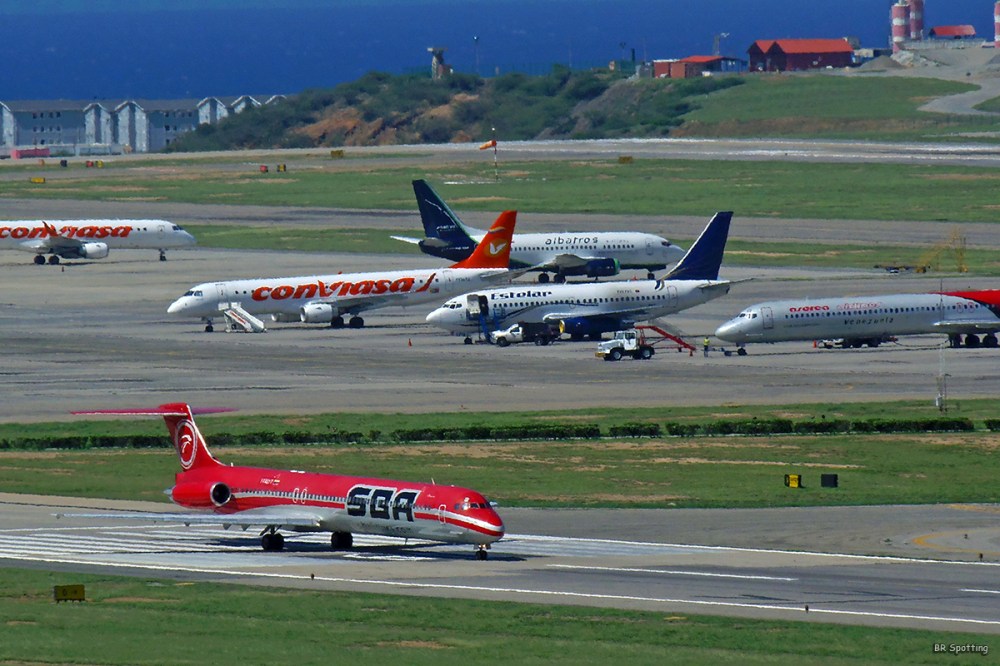
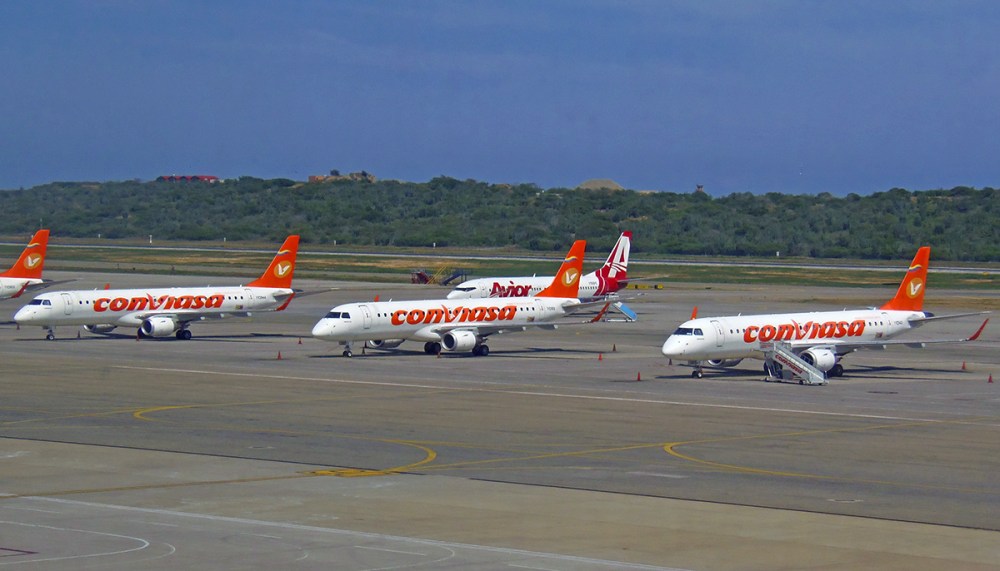
Aserca Airlines y Aeropostal están varadas por cierre técnico. Rutaca Airlines y Venezolana (RAVSA) están a duras penas volando con un solo avión. Aerolínea Estelar Latinoamérica se inclinó a las operaciones internacionales conectando Madrid, Chile, Perú y Argentina, destinando su flota de aviones alquilados a las rutas al exterior. Perla Airlines, posee vuelos a Maiquetía pero sus frecuencias son aisladas y Turpial Airlines tiene su centro de operaciones en Valencia ofreciendo escasos vuelos especiales bajo cargo de fleteamiento.

Allgunas aerolíneas no están atendiendo la lista de espera. Existen vuelos que despegan con hasta con 15 asientos vacíos y no dan cupo a los que están en lista de espera. Al parecer para evitar el sobreprecio, pero igual ocurren irregularidades porque desde la gerencia hasta personal de tráfico incurren en la especulación con los boletos.

Incremento de incidentes aéreos

Expertos en aviación coinciden de la flota de aeronaves en territorio venezolano está sufriendo altos índices de incidentes.

El viernes 14 Febrero 2018 el vuelo 5R310 de Rutaca Airlines había sufrido un incidente aéreo dondo un Boeing 737 debió aterrizar en emergencia en el Aeropuerto José Antonio Anzoátegui de Barcelona, Venezuela.

El 19 Marzo en avión de Estelar Latinoamérica reportó un incidente en el tren de aterrizaje trasero de un Boeing 737-300 en el Aeropuerto de Maiquetía. El vuelo 2918 obligó al aeropuerto a cerrar sus operaciones por un tiempo. Los 139 pasajeros resultaron ilesos.

Estos incidentes como otros que se vienen registrando marca una debacle en el sistema de fiscalización y mantenimiento de los aviones comerciales en Venezuela, que a saber de la alta demanda que han tenido los viajes este fin de semana largo, felizmente no se ha tenido que lamentar serios incidentes.  AIRWAYS® AW-Icon TXT

Resultado de imagen para Aeropuerto Simon Bolivar aviones

Venezuela and the lack of air communication

Venezuela is experiencing a shortage of air services in the country

The lack of airplanes and the technical closure in others limited the service of the Venezuelan airlines, in this long elapsed weekend.

Tourism has had a challenge this long weekend in Venezuela. At least 70% of the passengers who expected to travel to the interior of the country during Holy Week were able to do so despite the serious shortage of aircraft.

The diagnosis of the airlines in Venezuela as a result of the serious political-economic crisis that it has undergone has allowed to patch up a situation that continues to be complicated.

Aserca Airlines and Aeropostal are stranded by technical closure. Rutaca Airlines and Venezolana (RAVSA) are barely flying with just one plane. Estelar Airline Latinoamérica was inclined to international operations connecting Madrid, Chile, Peru and Argentina, allocating its fleet of rented aircraft to routes abroad. Perla Airlines, has flights to Maiquetía but its frequencies are isolated and Turpial Airlines has its operations center in Valencia offering few special flights under freight charge.

Some airlines are not serving the waiting list. There are flights that take off with up to 15 empty seats and do not give space to those who are on the waiting list. Apparently to avoid overpricing, but irregularities still occur because from management to traffic personnel incur speculation with tickets.

Increase in air incidents

Aviation experts agree that the fleet of aircraft in Venezuelan territory is suffering from high incident rates.

On Friday, February 14, 2018, the 5R310 flight of Rutaca Airlines had suffered an air incident. A Boeing 737 had to land in emergency at the José Antonio Anzoátegui Airport in Barcelona, ​​Venezuela.

On March 19, Estelar Latin America’s plane reported an incident on the rear landing gear of a Boeing 737-300 at Maiquetía Airport. Flight 2918 forced the airport to close its operations for a while. The 139 passengers were unharmed.

These incidents, like others that have been recorded, mark a debacle in the system of control and maintenance of commercial aircraft in Venezuela, which, due to the high demand that travel has had this long weekend, fortunately has not had to regret serious incidents. A\W


Ξ A I R G W A Y S Ξ
SOURCE:  Airgways.com
DBk: Brspotting
AW-POST: 201804041545AR

A\W   A I R G W A Y S ®

Guerra por participación en Air India

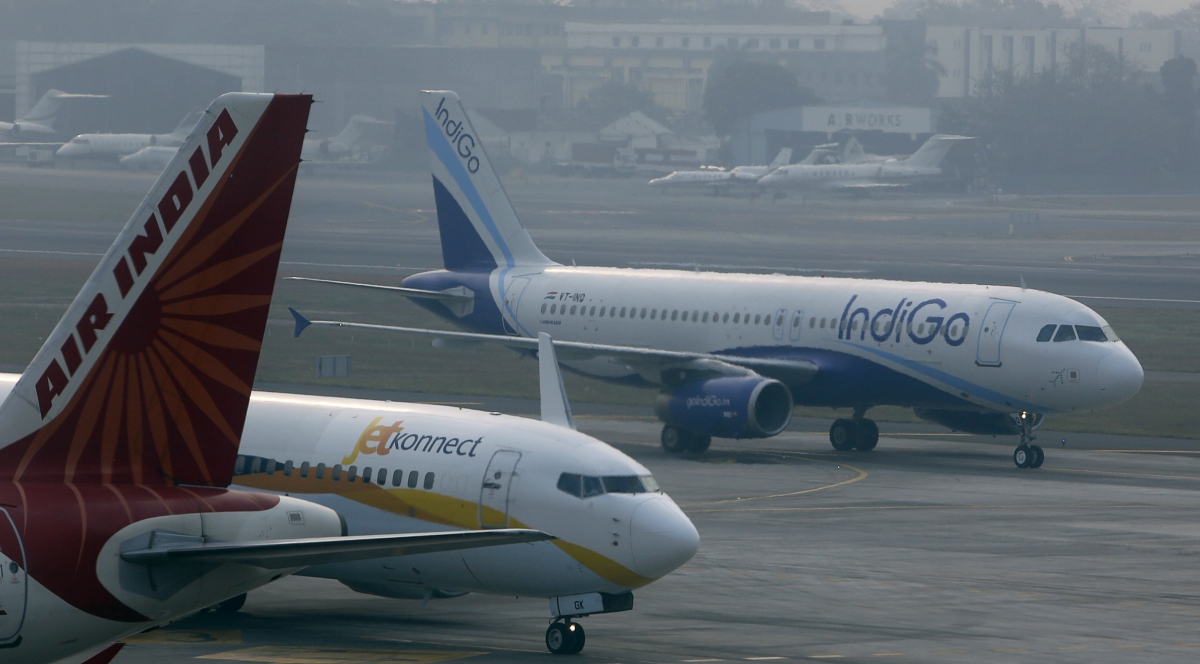
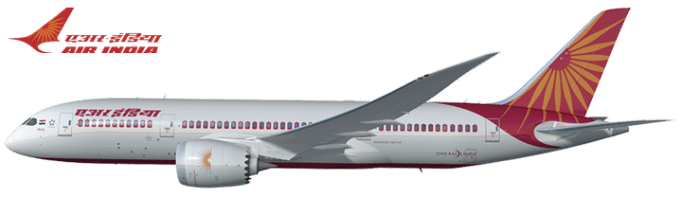
Resultado de imagen para Air India airport

AW | 2018 04 05 11:08 | AIRLINES MARKET

800px-Air_India.svg.pngLas aerolíneas se preparan para una guerra de ofertas por la participación accionaria en Air India

Las aerolíneas IndiGo y Jet Airways de la India están preparadas para luchar por una parte de la aerolínea estatal perdedora Air India mientras se dirige hacia la privatización, buscando una codiciada red de vuelos que conecte a la nación del sur de Asia con el mundo. IndiGo y Jet Airways buscan extender el alcance asegurando la red de operadores estatales con problemas.

El gobierno está vendiendo la mayoría de Air India propensas a retrasos y todas las acciones en una filial de una aerolínea de bajo presupuesto según los planes detallados a fines de marzo.

5776a241b03ff.image.jpg

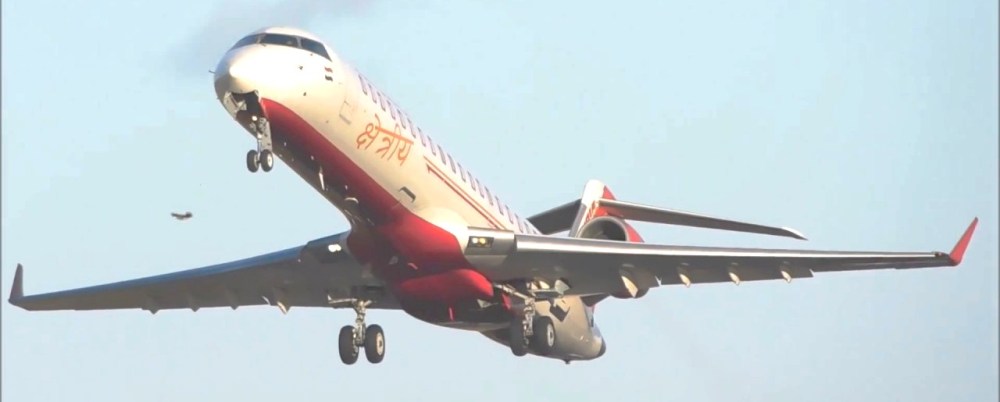
SUBSIDIARIA AIR INDIA REGIONAL

El 76% de las ofertas de Air India valen más de 220 mil millones de rupias (U$S 3,37 mil millones), según una valoración de Air India superior a los 300 mil millones de rupias. Los posibles compradores tienen hasta el 14 de mayo para expresar su interés. Los postores ganadores serán anunciados el 28 de mayo.

Resultado de imagen para indigo airlines logoEl operador de IndiGo, InterGlobe Aviation, no ha ocultado su interés como comprador. Una gran cantidad de vuelos regulares y una reputación de confiabilidad han ganado la aerolínea de bajo costo, que comenzó a operar en 2006, una participación doméstica líder en el mercado de casi 40%. Pero el negocio de IndiGo se limita principalmente a la India. La compra de Air India, con sus Resultado de imagen para jet airways airlines logomáquinas tragamonedas para una serie de rutas internacionales, expandiría el alcance de IndiGo de una sola vez, según el presidente Aditya Ghosh.

El segundo clasificado, Jet Airways, se unirá con Air France-KLM y la aerolínea estadounidense Delta Air Lines en una oferta conjunta, según medios de comunicación indios. Comprar Air India ayudaría a Jet Airways a ampliar su ventaja sobre IndiGo en vuelos internacionales, un segmento donde Jet Airways tiene acuerdos de código compartido con Air France-KLM y Delta.

Resultado de imagen para singapore airlines logoSingapore Airlines también puede entrar en la oferta, ya que el gobierno indio ha permitido a los inversores extranjeros comprar hasta el 49% de Air India. «Tenemos una mente abierta», dijo David Lim, Gerente General de Singapore Airlines para India, llamando a India un mercado estratégico. Se dice que el Grupo Tata de la India, que administra la empresa de bajo costo Vistara Airlines a través de una empresa conjunta con Singapore Airlines, también está interesado.

Imagen relacionada

INDIGO Y JET AIRWAYS SON LOS PRINCIPALES OFERENTES PARA TOMAR EL CONTROL DE AIR INDIA

El precio del gobierno para la participación de Air India podría ser aún mayor, ya que Nueva Delhi no aceptará ofertas por debajo del valor mínimo establecido por los tasadores, según Jayant Sinha, ministro de estado para aviación civil.

India es uno de los mercados más prometedores del mundo para viajes aéreos. Los viajeros aéreos nacionales superaron los 100 millones en 2017 y registraron un crecimiento anual de dos dígitos desde 2015, un recuento que solo supera el tamaño de los EEUU y China. Los operadores aéreos han liderado la expansión en rutas y vuelos domésticos. La competencia de precios ha reducido las tarifas aéreas, lo que ha atraído a más pasajeros al mercado.

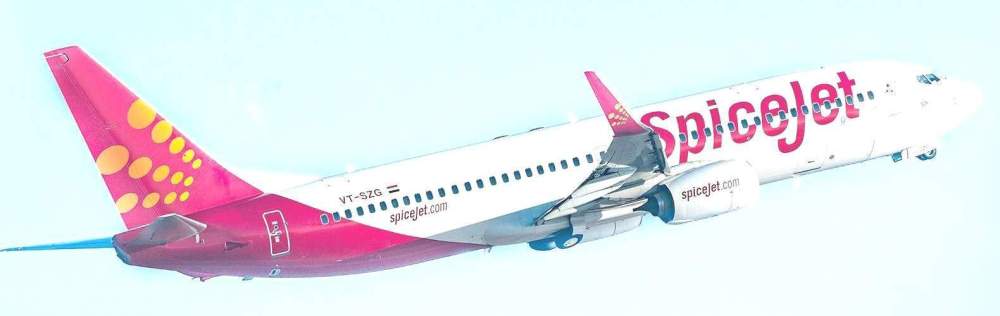
Resultado de imagen para spicejet airlines logoLas ganancias independientes después de impuestos de IndiGo aumentaron más del 70% en el año durante los nueve meses que terminaron en diciembre. La ganancia neta del tercer clasificado SpiceJet subió alrededor del 30%. Mientras tanto, la aerolínea heredada Air India registró una pérdida después de impuestos de 57.600 millones de rupias para el año que finalizó en marzo de 2017, ya que los costos de compensación a los empleados y los beneficios perjudicaron las ganancias, agravando el impacto de una caída en la participación del mercado interno.

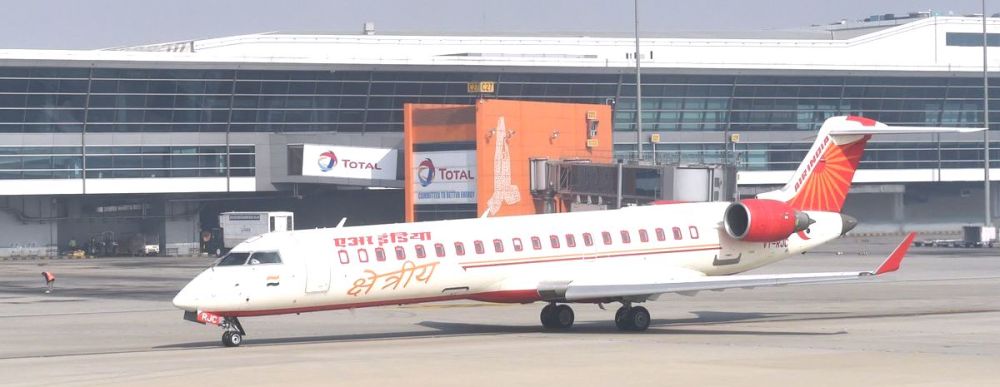
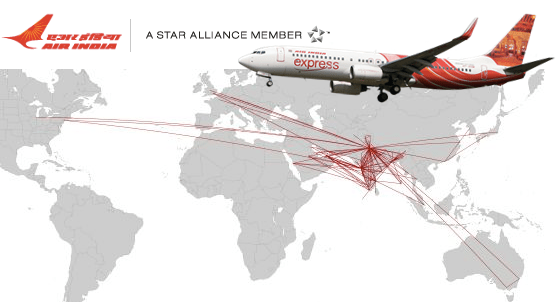
Sin embargo, Air India contaba con una red de vuelos que abarcaba 39 ciudades a fines de 2017, junto con la membresía mundial en Star Alliance. Su servicio internacional, centrado en Oriente Medio y el sudeste de Asia, no tiene paralelo en la India. El operador opera 137 vuelos por semana a Medio Oriente, 68 a Europa y 56 al sudeste asiático, y presta servicios en centros como Dubai, Londres y Bangkok.

AW-700887655.png

El total de viajeros internacionales en rutas hacia y desde India aumentó un 12% en el año en el trimestre de octubre a diciembre. Las rutas de mucho tráfico hacia el Medio Oriente se consideran una de las fuentes de ingresos más importantes de Air India.

Otras empresas de Air India están siendo vendidas por separado, incluyendo un operador regional y operaciones de ingeniería. Celebi Aviation Holding de Turquía ha expresado su interés en las operaciones de asistencia en tierra.

El gobierno de la India inyectó 150 mil millones de rupias en ayuda al operador de la bandera en los tres años hasta marzo de 2016. Privatizar a Air India y sus subsidiarias debería ayudar a aliviar esta carga en el presupuesto nacional.

El gobierno busca distribuir una porción de su participación restante del 24% en Air India a los empleados de la aerolínea después de que se complete la venta masiva, lo que probablemente sitúe a la tenencia del estado por debajo del 20%. Si el valor de Air India aumenta más tarde, también lo hará el valor de las acciones restantes del gobierno. Las deudas en operaciones no esenciales como bienes inmuebles se transferirán a una compañía de propiedad exclusiva del gobierno, lo que facilitará que Air India regrese a territorio rentable. AIRWAYS® AW-Icon TXT

Resultado de imagen para Air India sold

War of interest for participation in Air India

Resultado de imagen para air india pngThe airlines are preparing for a bidding war for the shareholding in Air India

India’s IndiGo and Jet Airways airlines are prepared to fight for a part of losing state airline Air India as it heads towards privatization, seeking a coveted flight network that connects the South Asian nation to the world. IndiGo and Jet Airways seek to extend the reach by securing the network of state operators with problems.

The government is selling the majority of Air Indias prone to delays and all the shares in a subsidiary of a low budget airline according to the plans detailed at the end of March.

76% of Air India’s offers are worth more than 220 billion rupees ($ 3.37 billion), according to an Air India valuation of more than 300 billion rupees. Potential buyers have until May 14 to express their interest. Winning bidders will be announced on May 28.

maxresdefaultAIR INDIA REGIONAL

The operator of IndiGo, InterGlobe Aviation, has not hidden its interest as a buyer. A large number of regular flights and a reputation for reliability have won the low-cost airline, which began operating in 2006, a leading domestic market share of almost 40%. But IndiGo’s business is mainly limited to India. The purchase of Air India, with its slot machines for a number of international routes, would expand IndiGo’s reach in one fell swoop, according to President Aditya Ghosh.

The second-ranked Jet Airways will join Air France-KLM and the US airline Delta Air Lines in a joint bid, according to Indian media. Buying Air India would help Jet Airways expand its lead over IndiGo on international flights, a segment where Jet Airways has codeshare agreements with Air France-KLM and Delta.

Singapore Airlines can also enter the offer, since the Indian government has allowed foreign investors to buy up to 49% of Air India. «We have an open mind», said David Lim, General Manager of Singapore Airlines for India, calling India a strategic market. It is said that the Tata Group from India, which manages the low-cost Vistara company through a joint venture with Singapore Airlines, is also interested.

The government’s price for Air India’s share could be even higher, as New Delhi will not accept offers below the minimum value set by appraisers, according to Jayant Sinha, minister of state for civil aviation.

India is one of the most promising markets in the world for air travel. Domestic air travelers exceeded 100 million in 2017 and recorded double-digit annual growth since 2015, a count that only exceeds the size of the US and China. Air operators have led the expansion in routes and domestic flights. Price competition has reduced air fares, which has attracted more passengers to the market.

SpiceJet1

SPICEJET IS ANOTHER OPERATOR THAT SHOWS INTEREST FOR THE AIR INDIA OFFER

IndiGo’s independent after-tax earnings increased more than 70% in the year during the nine months ending in December. The fourth-place net profit SpiceJet rose around 30%. Meanwhile, the inherited airline Air India posted an after-tax loss of 57.6 billion rupees for the year ending March 2017, as the costs of employee compensation and benefits hurt earnings, compounding the impact of a fall in the domestic market share.

However, Air India had a network of flights covering 39 cities at the end of 2017, along with the worldwide membership in Star Alliance. Its international service, focused on the Middle East and Southeast Asia, is unparalleled in India. The operator operates 137 flights per week to the Middle East, 68 to Europe and 56 to Southeast Asia, and provides services in centers such as Dubai, London and Bangkok.

AW-air-india-route-map.png

The total of international travelers on routes to and from India increased by 12% in the year in the October to December quarter. The high traffic routes to the Middle East are considered one of the most important sources of income for Air India.

Other Air India companies are being sold separately, including a regional operator and engineering operations. Celebi Aviation Holding of Turkey has expressed interest in ground handling operations.

Resultado de imagen para air india pngThe government of India injected 150 billion rupees to help the flag operator in the three years until March 2016. Privatizing Air India and its subsidiaries should help alleviate this burden in the national budget.

The government seeks to distribute a portion of its remaining 24% stake in Air India to airline employees after the mass sale is completed, which is likely to put the state’s holdings below 20%. If the value of Air India increases later, so will the value of the remaining government shares. Debts in non-core operations such as real estate will be transferred to a company owned exclusively by the government, which will make it easier for Air India to return to profitable territory. A \ W


Ξ A I R G W A Y S Ξ
SOURCE:  Airgways.com
DBk: Nikkei.com / Airindia.in / Thnglobal.com / Republicworld.com /Ibtimes.co.in / Indiawest.com
AW-POST: 201804031108AR

A\W   A I R G W A Y S ®


Privatizaciones aerolíneas en el mundo

140713.jpg

AW | 2018 04 02 23:23 | AIRLINES MARKET

Las tendencias en la privatización de las aerolíneas en todo el mundo

Existen dos requisitos como una buena receta para una privatización exitosa son una trayectoria de rentabilidad y ninguna interferencia del gobierno en el funcionamiento de la aerolínea.

Ventajas y desventajas

Una de las ventajas de la privatización está más relacionada a una mayor parte del tiempo asociada con una mayor eficiencia debido al incentivo de beneficio. Las compañías aéreas se asegurarán de que mejoren su eficiencia operativa a fin de reducir sus costos y mejorar sus ganancias.

La privatización reduce la interferencia política del gobierno. El gobierno a veces parece incapaz de tomar decisiones difíciles, especialmente cuando impactan en su posición política, como despidos y recortes salariales que inevitablemente atraerán publicidad negativa.

La privatización insta a mejoras en las líneas aéreas a través de la competitividad. Cuando se privatiza una entidad estatal, pierde su protección del gobierno y se ve obligada a adaptarse al mercado proporcionando mejores servicios o productos para sobrevivir y prosperar.

La privatización puede producir algunas desventajas que pudieran crear monopolios únicos en el mercado. Estos pueden eventualmente buscar aumentar los precios en detrimento del consumidor. Otro factor es la desventaja para los gobiernos pierden dividendos después de la privatización como se ve con las compañías más exitosas que se desarrollan a través de la privatización. Estos dividendos se canalizan a individuos ricos.

AW-77000017.png

Un ejemplo es la aerolínea Air India. El gobierno indio ha decidido vender el 76% de las acciones de la compañía de bandera. Esta no es la primera vez que un gobierno vende una participación en una aerolínea nacional y todo lo que el gobierno tiene que hacer es aprender de las mejores prácticas.

Las privatizaciones

El gráfico muestra las participaciones respectivas de los gobiernos después de que varios gobiernos han vendido sus aerolíneas estatales por medio del traspaso de las acciones del gobierno al sector privado.

La región que ha llevado con éxito el mayor número de privatizaciones de aerolíneas es Europa, casi todas las principales aerolíneas nacionales de Europa Occidental han sido privatizadas. Pero existen casos donde los gobiernos han retenido cierto porcentaje de participaciones como son los casos de las líneas aéreas Finnair, TAP Portugal, SAS y Air France-KLM.

Resultado de imagen para Air France-KLM

Las privatizaciones en Europa Occidental tendieron a seguir la ruta IPO (Oferta Pública Inicial). La privatización de British Airways (BA) por el gobierno del Reino Unido en 1987 es un buen ejemplo. Colin Marshall, contratado en 1983 como CEO de BA, jugó un papel vital en la reforma de la aerolínea antes de que se vendiera.

En Europa Oriental/Central, la mayoría de las líneas aéreas nacionales siguen controladas por el Estado, a pesar de que varias están buscando inversores del sector privado.

Fuera de Europa, el proceso de privatización de las aerolíneas ha tenido resultados mixtos. La venta de Qantas Airways en 1995 por parte de Australia es uno de los ejemplos más exitosos.

El anuncio de BA en 1992 como inversor comercial en una participación del 25% fue seguido por una oferta pública inicial del 75% restante en Qantas que poseía el gobierno australiano. BA vendió su participación en 2004. La privatización de Qantas fue una combinación de dos enfoques: venta de participación a un inversor estratégico y una oferta pública inicial.

La estatización

Japan Airlines se privatizó originalmente en 1987, pero su historia más reciente reveló el ojo vigilante del estado, que rescató a la aerolínea tras su quiebra en 2010. En la lista posterior de 2011 de JAL, el gobierno recuperó el costo del rescate.

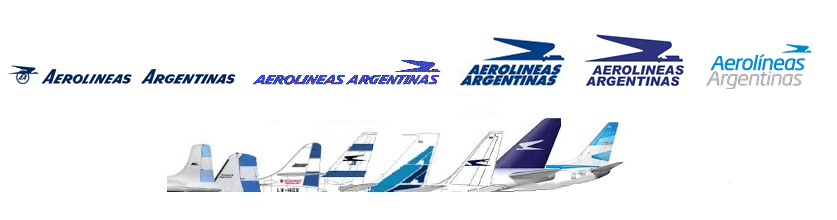
Aerolíneas Argentinas/Austral Líneas Aéreas es un caso emblemático. El Gobierno de Argentina iniciaba un proceso de privatizaciones de empresas del Estado. El Grupo Aerolíneas compuesto por Aerolíneas Argentinas y Austral Líneas Aéreas fue privatizado en 1990.

La privatización de Aerolíneas Argentinas es un caso emblemático de vaciamiento. Primero en la etapa de Iberia Líneas Aéreas de España y luego Gerardo Díaz Ferrán y Antonio Mata, del Grupo Marsans, pasando por un breve período de American Airlines, provocaron en la línea de bandera un deterioro impactante. En 2008, Aerolíneas fue estatizada, frente al incumplimiento en el pago de salarios y a los proveedores y ante la amenaza de desaparición.
AW-700077767 - copia.png

En 1990 la empresa tenía 28 aviones propios y uno alquilado. En 2008, sólo dos aviones propios de alcance internacional y un puñado para cabotaje y 30 alquilados. Las oficinas de Roma, París, Nueva York, Miami, Madrid, Bogotá, Lima y Caracas pasaron a manos españolas. La empresa contaba con tres simuladores de vuelo que eran usados para la capacitación del personal; era la única de América latina con esa tecnología. Se entregaron todos, al igual que las valiosas rutas a Holanda, Francia, Alemania, Inglaterra y Suiza, y las combinaciones a París, Londres y Frankfurt, la red de procesamiento de datos y el sistema de reservas, a favor de Iberia.

En 2008, Aerolíneas registraba un patrimonio negativo de AR$ 2500 millones de pesos y un pasivo de 890 millones de dólares. La flota era la más antigua de la región. Marsans ejecutaba el denominado “canibalismo”, al utilizar repuestos de aeronaves en tierra para poner en condiciones otros aviones. Como la flota era alquilada, generaba un incumplimiento contractual con los prestamistas. Díaz Ferrán y Mata defraudaron a toda la industria aerocomercial.

La venta de Aerolíneas Argentinas es considerada una de las más ruinosas privatizaciones del gobierno del entonces Presidente Carlos S. Menem. En 1990 se vendió la empresa a la estatal española Iberia Líneas Aéreas de España. Como sucedió en la mayoría de las privatizaciones, el Estado nacional absorbió, antes del traspaso, las deudas de la compañía, que ascendían a 868 millones de dólares. Los españoles pagaron sólo 260 millones de dólares en efectivo, que obtuvieron con endeudamiento que se cargó luego a Aerolíneas, y 1610 millones en títulos públicos. El pago a cambio de la deuda fue una política impulsada por los organismos de crédito a través del Plan Brady.

En 1994, el gobierno argentino entregó a su par español, a través de la Sociedad Española de Participaciones Industriales (SEPI), la acción de oro de Aerolíneas, que permitía fiscalizar decisiones estratégicas y la venta de activos. Los españoles vendieron oficinas comerciales en el país y en el exterior, los simuladores de vuelo y las 28 aeronaves que conformaban la flota. Desmantelaron talleres y levantaron decenas de rutas y escalas.

En 2000 se declararon en convocatoria de acreedores, y en octubre de 2001 el gobierno ibérico regaló Aerolíneas al Grupo Marsans. Desembolsó, además, 750 millones de dólares que se debían destinar al armado de un plan de negocios y pagar deudas anteriores. Marsans utilizó ese dinero para hacer crecer otras empresas del grupo. El titular de Aerolíneas Argentinas y de la empresa Air Comet, a cargo de Aerolíneas y Austral, era Antonio Mata, quien está acusado de defraudar al Estado nacional por el vaciamiento y también enfrenta un proceso en la Justicia de su país.

Air Comet tenía en 2001 menos de cinco años de existencia y se limitaba a la operación de vuelos charter al Caribe, Sudamérica y las Islas Canarias, es decir que no operaba vuelos comerciales regulares. “Air Comet se equipó a través de las empresas del Grupo Aerolíneas, obteniendo de ese modo un verdadero enriquecimiento ilícito. Se basaron en los negocios de las empresas del Grupo Aerolíneas para apalancar el crecimiento de unidades de negocios distintas, como Air Comet Europa, Air Comet Chile, Marsans Internacional Argentina y Marsans Internacional Chile”, explicó el gobierno nacional en un trabajo que se presentó ante el Ciadi, donde Marsans demandó al país. “Una vez que vieron agotado su modelo de apropiación y desvío de recursos propios de las empresas del Grupo Aerolíneas, las abandonaron a su suerte en forma absolutamente irresponsable e inaceptable”, completa ese documento. Sobre el final, Marsans dejó de pagar sueldos, la nafta y las tasas aeroportuarias.

Lecciones aprendidas

De las experiencias de muchas aerolíneas en sus procesos de privatización/estatización, es evidente que no hay una solución única para la privatización de las aerolíneas. Las OPI han funcionado bien para las aerolíneas más grandes, mientras que las que necesitan un apoyo más activo de un socio se han desempeñado mejor en una venta comercial.

En líneas generales los dos requisitos enunciados al principio se podría sugerir declinar sobre una privatización exitosa en favor de una trayectoria de rentabilidad y ninguna interferencia de un gobierno burócrata en el funcionamiento de la línea aérea. Pero en un mundo tan complejo ambas recetas pudieran ser útiles a la hora de conservar con vida una aerolínea, pero en la mayoría de los casos a un costo enorme.  AIRWAYS® AW-Icon TXT

Resultado de imagen para Qantas Sydney Airport

The privatizations of airlines in the world

Trends in the privatization of airlines around the world

There are two requirements as a good recipe for a successful privatization are a path of profitability and no interference from the government in the operation of the airline.

Advantages and disadvantages

One of the advantages of privatization is more related to a greater part of the time associated with greater efficiency due to the benefit incentive. The airlines will make sure that they improve their operational efficiency in order to reduce their costs and improve their profits.

Privatization reduces the political interference of the government. The government sometimes seems unable to make difficult decisions, especially when they impact on their political position, such as layoffs and salary cuts that will inevitably attract negative publicity.

Privatization calls for improvements in airlines through competitiveness. When a state entity is privatized, it loses its protection from the government and is forced to adapt to the market by providing better services or products to survive and prosper.

Privatization can produce some disadvantages that could create unique monopolies in the market. These may eventually seek to increase prices to the detriment of the consumer. Another factor is the disadvantage for governments losing dividends after privatization as seen with the most successful companies that are developed through privatization. These dividends are channeled to wealthy individuals.

AW-77000017

An example is the airline Air India. The Indian government has decided to sell 76% of the shares of the flag company. This is not the first time that a government sells a share in a national airline and all the government has to do is learn from the best practices.

The privatizations

The graph shows the respective shareholdings of governments after several governments have sold their state airlines for half of the transfer of government shares to the private sector.

The region that has successfully led the largest number of airline privatizations is Europe, almost all of the major national airlines in Western Europe have been privatized. But there are cases where governments have retained a certain percentage of shares, such as the Finnair, TAP Portugal, SAS and Air France-KLM airlines.

Resultado de imagen para British Airways fleet

Privatizations in Western Europe tended to follow the IPO (Initial Public Offering) route. The privatization of British Airways (BA) by the government of the United Kingdom in 1987 is a good example. Colin Marshall, hired in 1983 as CEO of BA, played a vital role in the reform of the airline before it was sold.

In Eastern / Central Europe, most of the national airlines are still controlled by the State, despite the fact that several are looking for investors from the private sector.

Outside Europe, the privatization process of airlines has had mixed results. The sale of Qantas Airways in 1995 by Australia is one of the most successful examples.

BA’s announcement in 1992 as a commercial investor in a 25% stake was followed by an initial public offering of the remaining 75% in Qantas held by the Australian government. BA sold its stake in 2004. The privatization of Qantas was a combination of two approaches: sale of stake to a strategic investor and initial public offering.

The nationalization

Japan Airlines was originally privatized in 1987, but its more recent history revealed the state’s watchful eye, which rescued the airline after its bankruptcy in 2010. In the 2011 JAL’s subsequent list, the government recovered the cost of the rescue.

Aerolíneas Argentinas / Austral Líneas Aéreas is an emblematic case. The Government of Argentina began a process of privatization of state companies. The Aerolíneas Group, comprised of Aerolíneas Argentinas and Austral Líneas Aéreas, was privatized in 1990.

0024342947.jpg

GRUPO AEROLÍNEAS / AUSTRAL AT THE END OF THE ERA MARSANS

The privatization of Aerolíneas Argentinas is an emblematic case of emptying. First in the stage of Iberia Líneas Aéreas de España and then Gerardo Díaz Ferrán and Antonio Mata, of the Marsans Group, passing through a brief period of American Airlines, caused in the flag line a shocking deterioration. In 2008, Aerolíneas was nationalized, faced with the non-payment of salaries and suppliers and the threat of disappearance.

In 1990 the company had 28 own and one rented aircraft. In 2008, only two aircraft of international scope and a handful for cabotage and 30 rented. The offices in Rome, Paris, New York, Miami, Madrid, Bogotá, Lima and Caracas became Spanish hands. The company had three flight simulators that were used for staff training; it was the only one in Latin America with that technology. All were delivered, as were the valuable routes to Holland, France, Germany, England and Switzerland, and combinations to Paris, London and Frankfurt, the data processing network and the reservation system, in favor of Iberia.

In 2008, Aerolíneas registered a negative equity of AR$ 2,500 million pesos and a liability of 890 million dollars. The fleet was the oldest in the region. Marsans executed the so-called «cannibalism», using spare parts of aircraft on land to put in condition other aircraft. As the fleet was rented, it generated a contractual breach with the lenders. Díaz Ferrán and Mata defrauded the entire aviation industry.

The sale of Aerolíneas Argentinas is considered one of the most ruinous privatizations of the government of then President Carlos S. Menem. In 1990 the company was sold to the Spanish state company Iberia Líneas Aéreas de España. As it happened in the majority of the privatizations, the national State absorbed, before the transfer, the debts of the company, that ascended to 868 million dollars. The Spaniards paid only 260 million dollars in cash, which they obtained with indebtedness that was later charged to Aerolíneas, and 1610 million in public titles. The payment in exchange for the debt was a policy promoted by credit agencies through the Brady Plan.

In 1994, the Argentine government delivered to its Spanish counterpart, through the Spanish Society of Industrial Participations (SEPI), the gold stock of Aerolíneas, which allowed for the control of strategic decisions and the sale of assets. The Spanish sold commercial offices in the country and abroad, flight simulators and the 28 aircraft that made up the fleet. They dismantled workshops and built dozens of routes and stops.
AW-702222455.png

In 2000, they declared themselves in a call for creditors, and in October 2001 the Iberian government gave Airlines to the Marsans Group. It also disbursed U$Sm750 million dollars that had to be used to set up a business plan and pay previous debts. Marsans used that money to grow other companies in the group. The owner of Aerolíneas Argentinas and of the company Air Comet, in charge of Aerolíneas y Austral, was Antonio Mata, who is accused of defrauding the national government for the depletion and also faces a trial in his country’s courts.

Air Comet had less than five years of existence in 2001 and was limited to the operation of charter flights to the Caribbean, South America and the Canary Islands, that is, it did not operate regular commercial flights. «Air Comet was equipped through the companies of the Airlines Group, thus obtaining a true illicit enrichment. They relied on the businesses of the Airlines Group companies to leverage the growth of different business units, such as Air Comet Europe, Air Comet Chile, Marsans International Argentina and Marsans International Chile«, explained the national government in a paper presented before the Ciadi, where Marsans sued the country. «Once they had exhausted their model of appropriation and diversion of own resources of the companies of the Airlines Group, they abandoned them to their fate in an absolutely irresponsible and unacceptable way,» the document completes. In the end, Marsans stopped paying salaries, naphtha and airport taxes.

Learned lessons

From the experiences of many airlines in their privatization / nationalization processes, it is evident that there is no single solution for the privatization of airlines. The IPOs have worked well for the larger airlines, while those that need more active support from a partner have performed better in a commercial sale.

In general terms, the two requirements stated at the beginning could be suggested to decline on a successful privatization in favor of a trajectory of profitability and no interference of a bureaucratic government in the operation of the airline. But in such a complex world both recipes could be useful when it comes to keeping an airline alive, but in most cases at a huge cost. A \ W


Ξ A I R G W A Y S Ξ
SOURCE:  Airgways.com
DBk: Coub.com / Aerolineas.com / Airfreight-logistics.com / Stuart Lawson
AW-POST: 201804022323AR

A\W   A I R G W A Y S ®

Incremento costos ops en Vietnam

Resultado de imagen para vietnam airlines vietjet

AW | 2018 04 02 16:45 | AIRLINES MARKET

El costo de los servicios de las aerolíneas en Vietnam se incrementó a partir de Abril 2018 en concordancia con el plan del Ministerio de Transporte

Resultado de imagen para vietnam airlines png

La aerolínea nacional Vietnam Airlines informó que el precio del ticket para los niños de dos a 12 años de edad aumenta del 75% al 90% del valor del boleto para los adultos. En cambio, los infantiles disfrutan servicios completos como el asiento separado y número de equipajes incluidos, al igual que las personas mayores. La aerolínea Vietjet Air elevó el costo de los servicios de cambio de fecha de vuelo y de nombre de pasajero. A partir del primero de este mes, los aeropuertos nacionales también aplican nuevas tarifas para los servicios aeroportuarios, con un aumento promedio de 25 centavos de dólar cada uno.

A fines de 2017, el precio de los boletos en Vietnam registró un alza notable, debido al aumento de múltiples tarifas de servicios aeroportuarios. Debido al alza del costo de los paisajes aéreos que incluye el precio de los tours, el reciente incremento de las tarifas aeroportuarias afectará de manera negativa a la industria sin humo, expresó un representante de una agencia turística. AIRWAYS® AW-Icon TXT

Resultado de imagen para ho chi minh airport

Increased ops costs in Vietnam

The cost of airline services in Vietnam increased as of April 2018 in accordance with the Ministry of Transport’s plan

Resultado de imagen para vietnam airlines pngThe national airline Vietnam Airlines reported that the ticket price for children aged two to 12 years increased from 75% to 90% of the value of the ticket for adults. In contrast, children enjoy full services such as the separate seat and number of baggage included, as do the elderly. The airline Vietjet Air raised the cost of the services for changing the date of Imagen relacionadaflight and the name of the passenger. As of the first of this month, national airports also apply new rates for airport services, with an average increase of 25 cents each.
At the end of 2017, the price of tickets in Vietnam registered a notable increase, due to the increase of multiple rates of airport services. Due to the rising cost of airscapes that includes the price of the tours, the recent increase in airport fees will negatively affect the smoke-free industry, said a representative of a tourist agency. A \ W


Ξ A I R G W A Y S Ξ
SOURCE:  Airgways.com
DBk: Mt.gov.vn / Flyvietnam.com
AW-POST: 201804021645AR

A\W   A I R G W A Y S ®

La competitividad aérea en Hawaii

Resultado de imagen para hawaiian airlines Airbus A321neo

AW | 2018 04 02 15:10 | AIRLINES MARKET

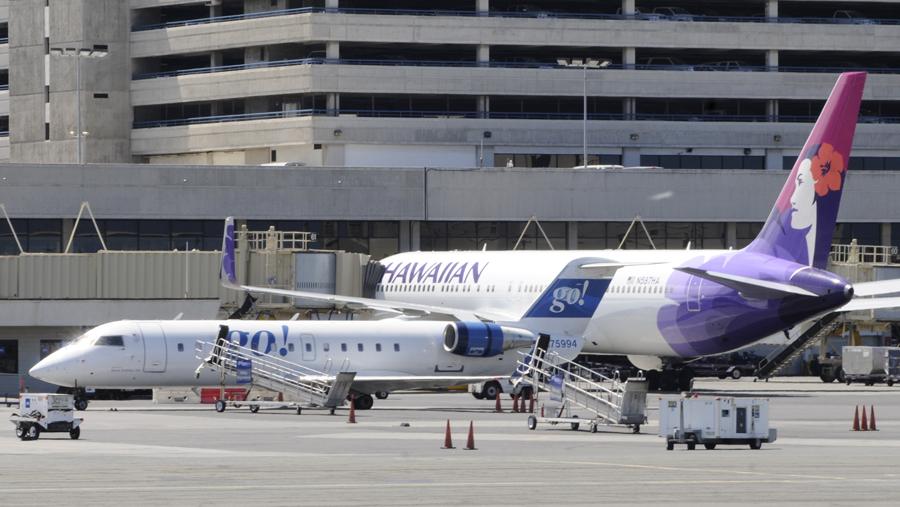
Resultado de imagen para hawaiian airlines pngHawaiian Airlines recupera posición para competir en su propio hogar31n-gxHAnWL

Hawaiian Airlines se había recuperado de solicitudes de quiebra en 1990 y 2000, ha sabido comprender que no está sola en el mercado de líneas aéreas por lo que la competitividad había tocado la puerta de casa con la llegada de Southwest Airlines.

Peter Ingram, asumió como Director General en Hawaiian Airlines y expresó sobre el aumento de la competencia, los planes para expandir el servicio en Asia y la dificultad de comercializar la aerolínea a los inversores cuando su sede se encuentra más cerca de Tokio que de Nueva York. Ingram dice que las aerolíneas están hoy en mejor forma financiera, pero aún son vulnerables a los altibajos económicos.

Resultado de imagen para hawaiian A321neo Png

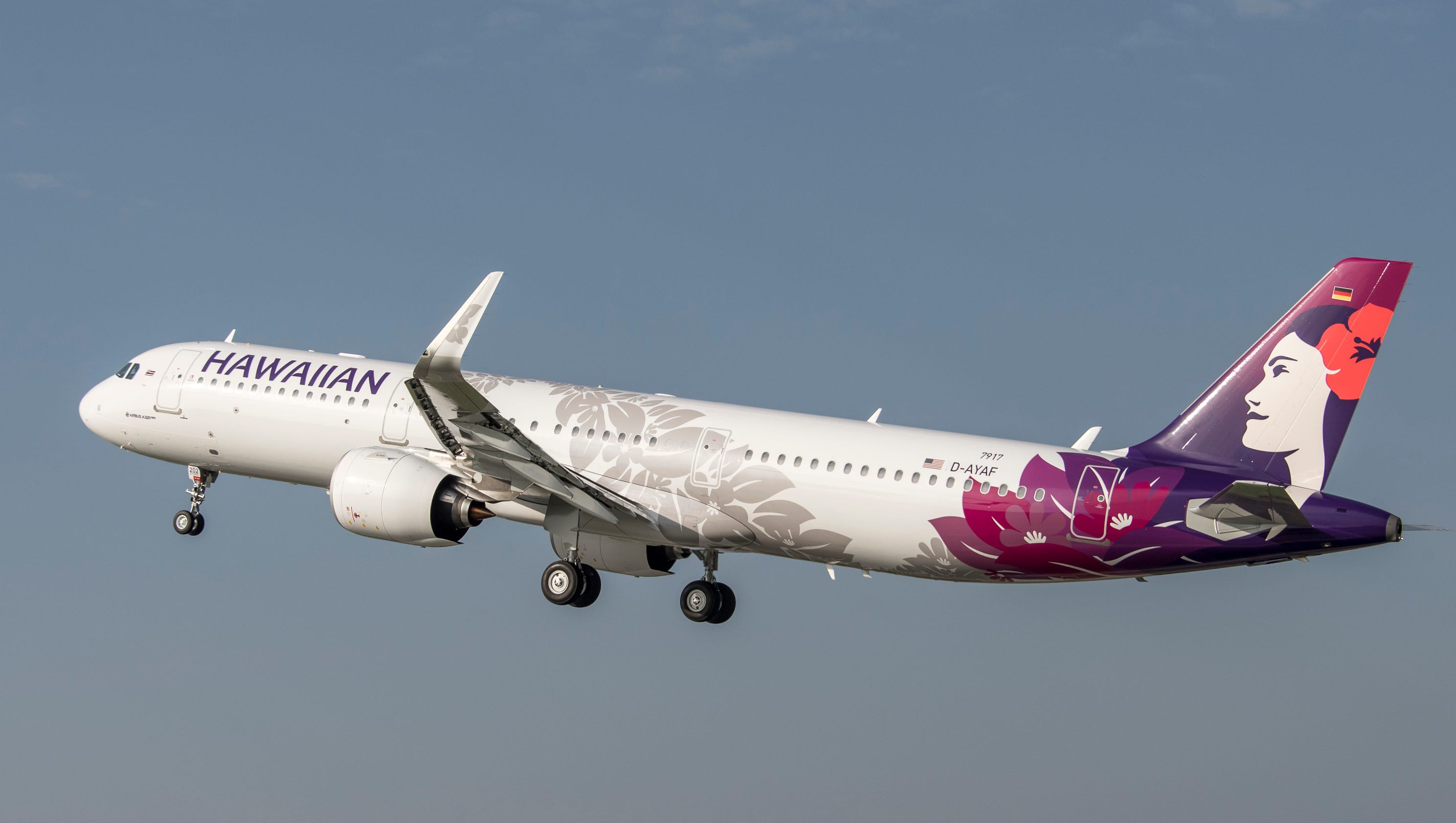
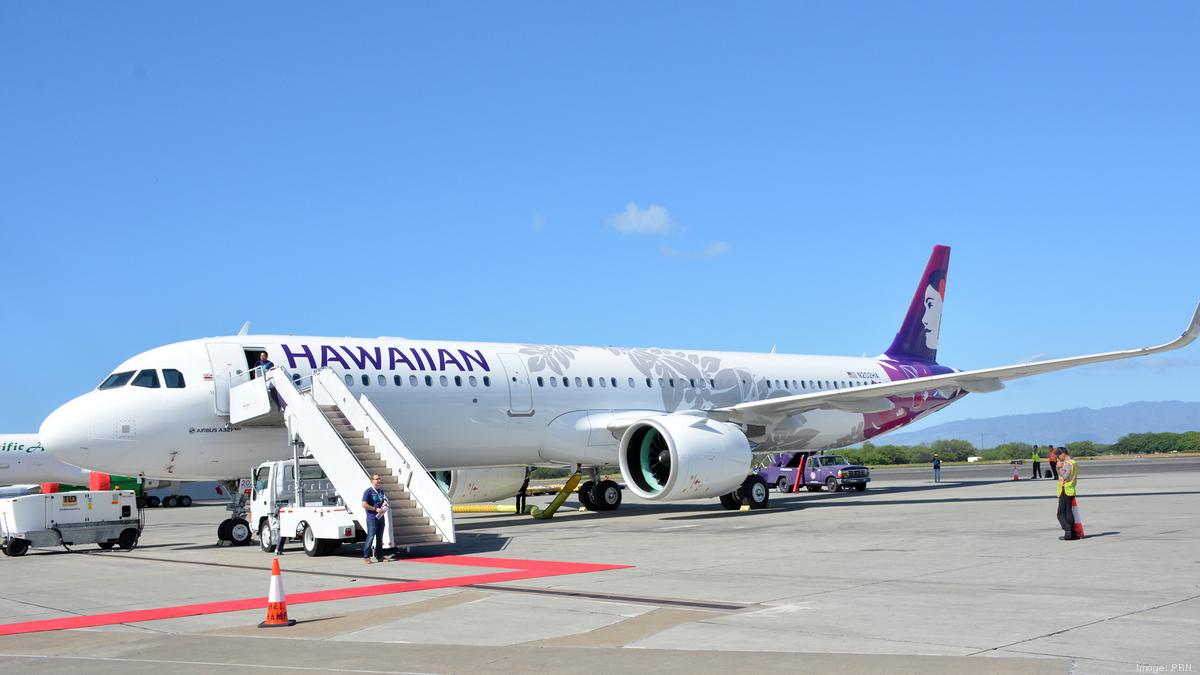
HAWAIIAN AIRLINES INCORPORÓ EL AIRBUS A321NEO

La inversión más significativa e importantes que está haciendo Hawaiian Airlines en este 2018 es haber incorporado a la flota el nuevo Airbus A321NEO como una aeronave transoceánica ideal para la aerolínea hawaiana. La aerolínea ha estado tramitando las demoras de este nuevo avión esencial para la flota de Hawaiian Airlines.

Las grandes oportunidades estratégicas que la compañía posee es nuestra asociación con Japan Airlines, que está alcanzando un hito importante este fin de semana con los primeros vuelos de código compartido (cada aerolínea puede vender asientos en algunos de los vuelos de los otros y compartir los ingresos). Hemos pasado gran parte de los últimos nueve meses negociando los términos de un acuerdo de empresa conjunta.

Resultado de imagen para aloha hawaii pngCompetencia en las islas hawaianas

La llegada de un competidor como Southwest Airlines ha permitido sincronizar los objetivos. La aerolínea con base en Texas es una gran aerolínea con un historial de rentabilidad de más de 40 años, pero realmente Hawaiian no está preocupada como competidor en el mercado. Hace algunos años, Allegiant Airlines comenzó a prestar servicio en Hawaii y muchos analistas de inversiones que cubren nuestras acciones estaban profetizando pérdidas para Hawaiian Airlines. Alaska Airlines ha entrado en el mercado. ATA Airlines estuvo en el mercado como una compañía de bajo costo hace una década. Hay una larga lista de competidores con los que hemos tratado.

En plena época de la crisis financiera mundial, los viajes de placer realmente se sostienen mejor que los viajes de negocios. Es una dinámica muy diferente a la de las personas que toman decisiones individuales sobre sus viajes de placer.

La capitalización de mercado, aunque todavía es muy pequeña en comparación con otras aerolíneas estadounidenses, es mucho más grande de lo que era, lo que nos hace más accesibles para algunos inversionistas de lo que solíamos ser, pero es algo que tenemos que trabaja constantemente.

El mercado aéreo en Hawaii está experimentando una fuerte demanda y al mismo tiempo mejores oportunidades para los usuarios, del que Hawaiian Airlines está esperanzada en poder competir junto a un rival de la talla de Southwest Airlines.  AIRWAYS® AW-Icon TXT

Resultado de imagen para hawaii air market

Air competitiveness in Hawaii

Resultado de imagen para hawaiian A321neo PngHawaiian Airlines recovers position to compete in its own home
Hawaiian Airlines had recovered from bankruptcy applications in 1990 and 2000, has understood that it is not alone in the airline market so that competitiveness had touched the door of home with the arrival of Southwest Airlines.

Peter Ingram, took over as CEO in Hawaiian Airlines and expressed about the increased competition, plans to expand service in Asia and the difficulty of marketing the airline to investors when its headquarters are closer to Tokyo than to New York. Ingram says that airlines are in better financial shape today, but they are still vulnerable to economic ups and downs.

Resultado de imagen para hawaiian A321neo

HAWAIIAN AIRLINES INTRODUCES THE AIRBUS A321NEO, AN IDEAL AIRCRAFT FOR ITS TRANSOCEAN MARKET

The most significant and important investment we are making in Hawaiian Airlines this 2018 is to have incorporated the new Airbus A321NEO into the fleet as an ideal transoceanic aircraft for the Hawaiian airline. The airline has been processing the delays of this new essential aircraft for the Hawaiian Airlines fleet.

The great strategic opportunities that the company has is our partnership with Japan Airlines, which is reaching an important milestone this weekend with the first codeshare flights (each airline can sell seats on some of the flights of the others and share the revenues). We have spent much of the last nine months negotiating the terms of a joint venture agreement.

Compliance on the Hawaiian Islands

AW-766600006

The arrival of a competitor like Southwest Airlines has allowed to synchronize the objectives. The Texas-based airline is a large airline with a track record of more than 40 years, but Hawaiian is not really worried as a competitor in the market. A few years ago, Allegiant Airlines began serving in Hawaii and many investment analysts covering our actions were prophesying losses for Hawaiian Airlines. Alaska Airlines has entered the market. ATA Airlines was in the market as a low-cost carrier a decade ago. There is a long list of competitors that we have dealt with.

In the midst of the global financial crisis, pleasure trips really hold up better than business trips. It is a dynamic very different from that of people who make individual decisions about their pleasure trips.

The market capitalization, although still very small compared to other US airlines, is much larger than it was, which makes us more accessible to some investors than we used to be, but it is something that we have to work constantly.

The airline market in Hawaii is experiencing strong demand and at the same time better opportunities for users, which Hawaiian Airlines is hopeful of being able to compete with a rival of the stature of Southwest Airlines. A \ W


Ξ A I R G W A Y S Ξ
SOURCE:  Airgways.com
DBk: Hawaiianairlines.com / Airbus.com / Bizjournals.com /  Airgways.com
AW-POST: 201804021510AR

A\W   A I R G W A Y S ®

Argentina incrementará parque aéreo

AW-70084477.png

AW | 2018 03 30 16:58 | AIRLINES MARKET

Argentina, movida por la «Revolución de los Aviones» experimentará un aumento de las flotas de aeronaves en las aerolíneas

El parque aéreo de Argentina aumentará el número de aviones en las aerolíneas a lo largo de este año 2018 a las 123 aeronaves que hoy ya están operativas se sumarán otras 33, hasta alcanzar los 160 aviones hacia fin de año.

Se trata de aeronaves que cubrirán las nuevas rutas, que el Gobierno de Argentina ha autorizado el pasado año 2017 a una decena de aerolíneas para hacer tanto vuelos de cabotaje como internacionales. Luego de dos Audiencias Públicas de Aperturas de Rutas, el gobierno argentina otorgó más de 600 nuevas rutas a aerolíneas tradicionales y a las nuevas low cost. Los aviones que están llegando en estos meses corresponden en gran parte al primer lote de rutas que fueron autorizadas en Febrero 2017.

AW-70083771Según datos de la Administración Nacional de Aviación Civil (ANAC), al 31 de Diciembre 2017, habrá un 25% más de aviones con matrícula nacional Lima Victor (LV) destinados a cubrir vuelos regulares. Las aeronaves nuevas o usadas que están llegando son tres Boeing 737-8 MAX de Aerolíneas Argentinas y otros 13 Boeing 737-800 que traerán dos de las low cost, Flybondi y Norwegian Air Argentina.


Andes Líneas Aéreas también sumará sus propios Boeing 737-800 (3), mientras que Avianca Argentina tiene previsto incorporar a su flota otros siete turbohélice ATR 72-600, de 70 pasajeros.

LASA Líneas Aéreas, hasta ahora especializada en cubrir rutas petroleras, está en proceso de incorporar cuatro Embraer ERJ 145, (50 asientos) para operar desde el aeropuerto de Neuquén. La otra es Royal Class, una empresa especializada en vuelos ejecutivos que desde abril comenzará a afectar sus aeronaves Fairchild Metro III, de 19 asientos, para volar regularmente desde Aeroparque a Rafaela y Sunchales (Santa Fe).

«Los nuevos aviones, con las rutas que tienen previsto cubrir, representarán más de 500.000 plazas disponibles cada mes para pasajeros», dijo Tomás Insausti, titular de la ANAC. El año pasado, hubo un total de 27 millones de pasajeros transportados

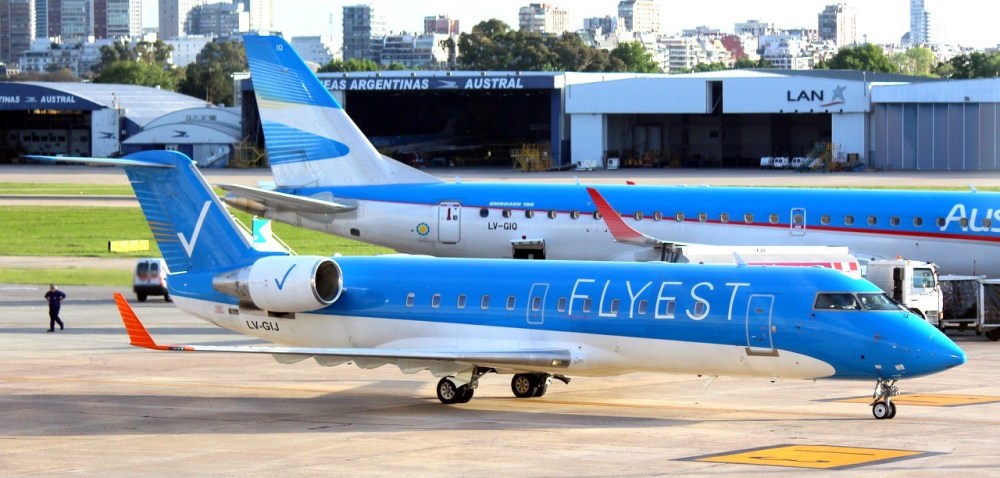
Al momento, en la Argentina hay operativos 123 aviones con la matrícula LV que hacen vuelos regulares: 58 aviones de Aerolíneas Argentinas y otros 26 de Austral Líneas Aéreas, además de 18 de Latam Airlines Argentina y 9 de Andes Líneas Aéreas, cinco de American Jet, dos de Flyest Líneas Aéreas y dos de Avianca Argentina. En Diciembre 2017 se sumó el primer Boeing 737-800 de Flybondi, tiene operativos tres aviones. También aterrizó en el 1Q2018 el primer Boeing B737-800 de Norwegian Air Argentina.

Demanda de pilotos

Un tema aparte es la cantidad de pilotos necesarios para volar todos esos aviones: según la ANAC, harán falta al menos 285 pilotos comerciales afectados a líneas aéreas regulares. En 2017, la plantilla de pilotos ya había crecido un 11,9%: hay 4.218 licencias emitidas en todas las categorías (piloto privado, piloto comercial y comercial de primera, entre otras).

El tema de los pilotos es uno de los frentes que el Gobierno mantiene abierto con los dos gremios que los agrupan, la Asociación de Pilotos de Líneas Aéreas (APLA) y la Unión de Aviadores de Líneas Aéreas (UALA). Los gremios argumentan que la inusual demanda de nuevos pilotos está generando una precarización de ese mercado laboral. «Están saliendo a buscar pilotos comerciales en los aeroclubes», planteó el titular de APLA, Pablo Biró, titular de APLA, uno de los gremios aeronáuticos más enfrentados contra la política aerocomercial de Argentina.

AW-70043387.png

Argentina will increase airspace

Argentina, moved by the «Aircraft Revolution» will experience an increase in aircraft fleets in airlines

The air fleet of Argentina will increase the number of aircraft in the airlines throughout this year 2018 to 123 aircraft that are already operational today will be added another 33, to reach 160 aircraft by the end of the year.

These are aircraft that will cover the new routes, which the Government of Argentina has authorized last year 2017 to a dozen airlines to do both cabotage and international flights. After two Public Hearings of Openings of Routes, the Argentine government granted more than 600 new routes to traditional airlines and the new low cost. The planes that are arriving in these months correspond in large part to the first batch of routes that were authorized in February 2017.

According to data from the National Civil Aviation Administration (ANAC), as of December 31, 2017, there will be 25% more aircraft with national registration Lima Victor (LV) intended to cover regular flights. The new or used aircraft that are arriving are three Boeing 737-8 MAX from Aerolíneas Argentinas and another 13 Boeing 737-800 that will bring two of the low cost, Flybondi and Norwegian Air Argentina.

Andes Líneas Aéreas will also add its own Boeing 737-800 (3), while Avianca Argentina plans to add another seven turboprop ATR 72-600, with 70 passengers, to its fleet.

LASA Líneas Aéreas, until now specialized in covering oil routes, is in the process of incorporating four Embraer ERJ 145, (50 seats) to operate from the Neuquén airport. The other is Royal Class, a company specializing in executive flights that since April will begin to affect its Fairchild Metro III aircraft, with 19 seats, to fly regularly from Aeroparque to Rafaela and Sunchales (Santa Fe).

«The new planes, with the routes they plan to cover, will represent more than 500,000 seats available each month for passengers,» said Tomás Insausti, head of the ANAC. Last year, there were a total of 27 million passengers transported

At the moment, in Argentina there are 123 aircraft operating with LV registration that make regular flights: 58 Aerolíneas Argentinas planes and another 26 from Austral Líneas Aéreas, in addition to 18 from Latam Airlines Argentina and 9 from Andes Líneas Aéreas, five from American Jet, two from Flyest Líneas Aéreas and two from Avianca Argentina. In December 2017 the first Boeing 737-800 of Flybondi was added, it has three aircraft operating. Also landed in 1Q2018 the first Boeing B737-800 of Norwegian Air Argentina.

Pilot demand

A separate issue is the number of pilots needed to fly all those planes: according to the ANAC, it will take at least 285 commercial pilots affected to regular airlines. In 2017, the pilot workforce had already grown by 11.9%: there are 4,218 licenses issued in all categories (private pilot, commercial and commercial pilot, among others).

The theme of the pilots is one of the fronts that the Government keeps open with the two guilds that group them, the Association of Airline Pilots (APLA) and the Union of Airline Aviators (UALA). The unions argue that the unusual demand for new pilots is generating a precariousness of that labor market. «They are going out to look for commercial pilots in the aeroclubs», said the head of APLA, Pablo Biró, head of APLA, one of the most confronted aviation unions against Argentina’s commercial airline policy. A \ W


Ξ A I R G W A Y S Ξ
SOURCE:  Airgways.com
DBk: Anac.gov.ar / Airgways.com / Apla.org.ar
AW-POST: 201803301658AR

A\W   A I R G W A Y S ®

Brexit y el acuerdo con la UE

Resultado de imagen para Ryanair Brexit

AW | 2018 03 29 13:03 | AIRLINES MARKET

Resultado de imagen para Brexit logoUn borrador del acuerdo de Brexit sugiere que el crédito es positivo para los aeropuertos del Reino Unido, pero que la incertidumbre de la aviación permanece
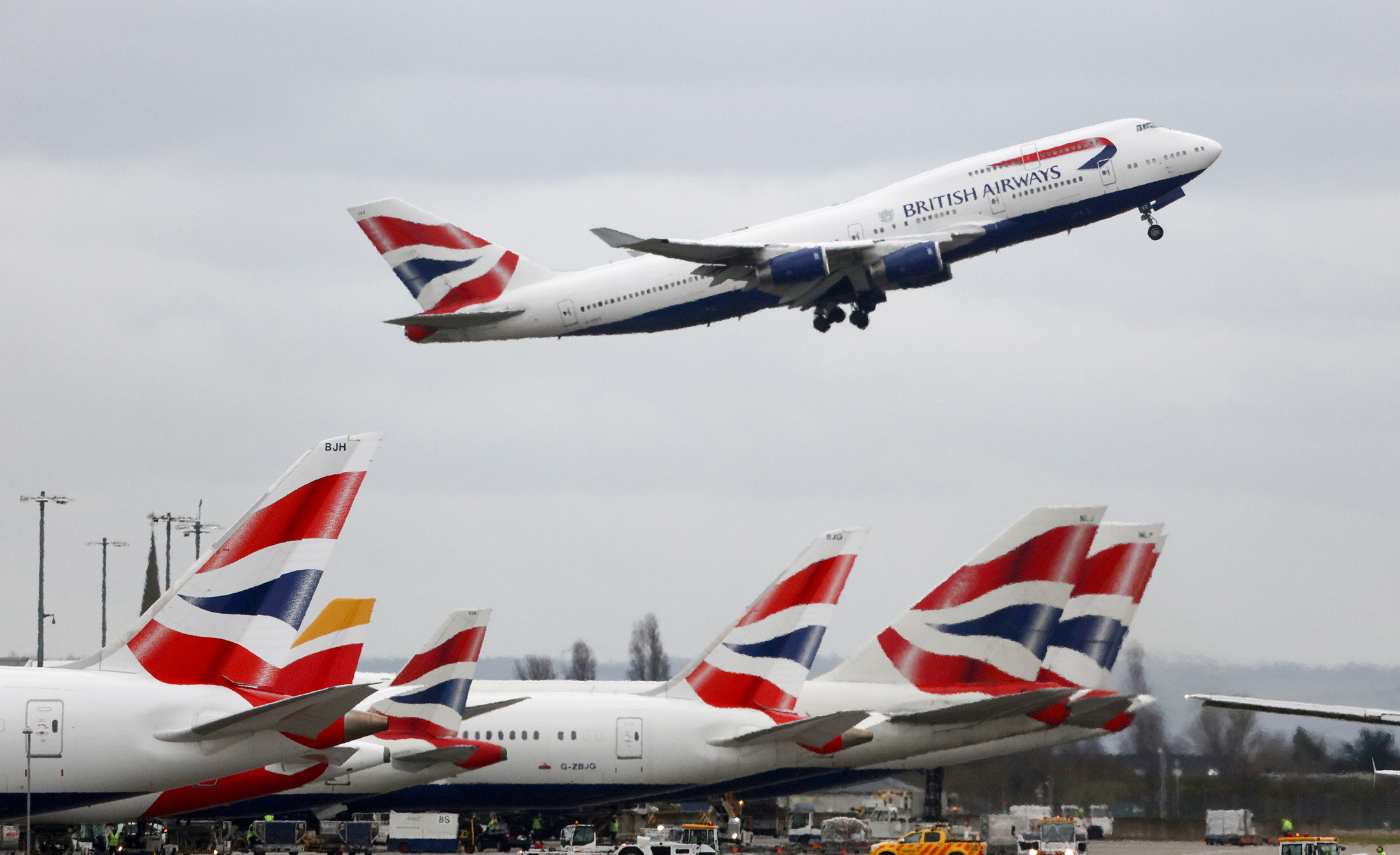
A falta de un año para el retiro del Reino Unido de la UE todavía se debe revisar los efectos en las aerolíneas. Ha pasado un año desde que la Primera Ministra Theresa May activó el artículo 50 confirmando Brexit y anunciando que el Reino Unido definitivamente dejará la Unión Europea. Debido a la salida el 29 Marzo 2019, dentro de un año, la incertidumbre sobre la posición del Reino Unido dentro de la UE aún se mantiene alta.

El Brexit ha causado preocupación por la industria de la aviación, ya que los derechos de los pasajeros y las aerolíneas siguen sin estar claros. Si aún no se llega a un acuerdo, los pasajeros que esperan volar el próximo año quedan sin protección de la UE y las aerolíneas corren el riesgo de no recibir permiso para ingresar a cierto espacio aéreo.

En una conferencia de prensa en Marzo, el CMO de Ryanair, Kenny Jacobs, explicó por qué el interrogante que se cierne sobre Brexit era motivo de preocupación para la aerolínea. «Hay incertidumbre para cualquier negocio en términos de tomar decisiones de inversión, ya sean fabricantes de autos o supermercados, o donde basas el avión si eres una aerolínea. Esta incertidumbre es más negativa para las empresas que las ganancias a corto plazo». Aunque la aerolínea ha dejado en claro que no esperan aterrizar sobre el tema, a partir de septiembre, la aerolínea de bajo costo venderá 2019 con una advertencia de Brexit. «Todo el mundo dice que todo estará bien en la noche una vez que nos acerquemos a abril de 2019. No creo que pueda dar eso por sentado». A partir de Septiembre 2018, los pasajeros que reserven con Ryanair deben esperar la siguiente advertencia en los boletos: «Este vuelo está sujeto al entorno reglamentario que permite que el vuelo tenga lugar».  AIRWAYS® AW-Icon TXT

Resultado de imagen para airlines Brexit

Brexit and the agreement with the EU

A draft of the Brexit agreement suggests that the credit is positive for UK airports, but that the uncertainty of aviation remains

In the absence of a year for the UK’s withdrawal from the EU, the effects on the airlines must still be reviewed. It has been a year since Prime Minister Theresa May activated Article 50 confirming Brexit and announcing that the UK will definitely leave the European Union. Due to the departure on March 29, 2019, within a year, the uncertainty about the position of the United Kingdom within the EU still remains high.

The Brexit has caused concern for the aviation industry, as the rights of passengers and airlines remain unclear. If an agreement is not yet reached, passengers waiting to fly next year are left unprotected by the EU and airlines risk not receiving permission to enter a certain airspace.

At a press conference in March, the Ryanair CMO, Kenny Jacobs, explained why the question hanging over Brexit was a concern for the airline. «There is uncertainty for any business in terms of making investment decisions, whether they are car manufacturers or supermarkets, or where you base the plane if you are an airline, and this uncertainty is more negative for companies than short-term profits». Although the airline has made it clear that they do not expect to land on the issue, starting in September, the low-cost airline will sell 2019 with a Brexit warning. «Everyone says everything will be fine at night once we get closer to April 2019. I do not think I can take that for granted». As of September 2018, passengers who book with Ryanair must wait for the following warning on the tickets: «This flight is subject to the regulatory environment that allows the flight to take place».  A \ W


Ξ A I R G W A Y S Ξ
SOURCE:  Airgways.com
DBk: Bloomberg.com
AW-POST: 201803291303AR

A\W   A I R G W A Y S ®