Aerolíneas sudeste asiático incrementan vuelos non-stop a EEUU

AW | 2018 02 06 09:10 | AIRLINES MARKET

Incremento de vuelos Asia-EEUU a pesar de los desafíos de rentabilidad

El mercado de vuelos entre el sudeste de Asia y los Estados Unidos es altamente competitivo y consiste principalmente en opciones que implican una parada en los países del norte de Asia o Medio Oriente debido a las distancias involucradas.

La nueva tecnología en aviación comercial establece nuevas oportunidades de volar sin escalas con una economía mucho más eficiente. Los aviones Boeing 787 y Airbus A350 tienen una autonomía mejorada y una relación costos/pasajeros más eficientes, han mejorado la economía de los vuelos.

Mercado Asia-EEUU

Vietnam Airlines está luchando por ser rentable la conexión sin escalas entre Vietnam y Estados Unidos debido a la falta de demanda de los viajeros de negocios, pero puede lanzar esas rutas de todos modos el próximo año, dijo el Gerente General de la compañía.

Thai Airways International y Malaysia Airlines, están tratando de equilibrar los deseos de crecimiento del gobierno con lo que es mejor para la salud financiera de las aerolíneas en un mercado competitivo.

Singapure Airlines planea reanudar vuelos incluso más largos a Los Ángeles y Nueva York a finales de este año después de un paréntesis de cinco años, lo que ayuda a cerrar una brecha en su capacidad de Estados Unidos en relación con competidores como Cathay Pacific Airways y Emirates. La aerolínea tiene una reputación de calidad y una cantidad sustancial de viajes de negocios desde y hacia la ciudad-estado, mejorando su capacidad para configurar aviones con un alto número de asientos premium.

«Con Vietnam, Tailandia, Malasia, simplemente no se puede salir con la carga de la prima necesaria en comparación con las paradas únicas, que ahora tienen un precio muy agresivo, debido a la intensa competencia en el mercado del sudeste de Asia y los EE. UU. detener vuelos rentables», dijo Brendan Sobie, analista jefe de CAPA Center for Aviation. AIRWAYS® AW-Icon TXT

Resultado de imagen para airlines of South Asia

Southeast Asian Airlines non-stop flights to the US

Increase in Asia-US flights despite the challenges of profitability

The flight market between Southeast Asia and the United States is highly competitive and consists mainly of options that involve a stop in the countries of North Asia or the Middle East due to the distances involved.

The new technology in commercial aviation establishes new opportunities to fly nonstop with a much more efficient economy. The Boeing 787 and Airbus A350 aircraft have improved autonomy and a more efficient cost / passenger ratio, they have improved the economy of the flights.

Asia-US Market

Vietnam Airlines is struggling to be profitable nonstop connection between Vietnam and the United States due to lack of demand from business travelers, but can launch those routes anyway next year, said the company’s CEO.

Thai Airways International and Malaysia Airlines are trying to balance the growth wishes of the government with what is best for the financial health of airlines in a competitive market.

Singapure Airlines plans to resume even longer flights to Los Angeles and New York later this year after a five-year hiatus, which helps close a gap in its US capacity relative to competitors such as Cathay Pacific Airways and Emirates. . The airline has a reputation for quality and a substantial amount of business travel to and from the city-state, improving its ability to configure aircraft with a high number of premium seats.

«With Vietnam, Thailand, Malaysia, you simply can not get away with the burden of the necessary premium compared to single stops, which now have a very aggressive price, due to intense competition in the market of Southeast Asia and the US. «Stop profitable flights,» said Brendan Sobie, chief analyst at the CAPA Center for Aviation. A \ W


Ξ A I R G W A Y S Ξ
SOURCE:  Airgways.com
DBk: Ainonline.com / Whispir.com
AW-POST: 201802060910AR

A\W   A I R G W A Y S ®

Puntualidad aerolíneas de Indonesia

AW | 2018 02 04 21:05 | AIRLINES MARKET

Las aerolíneas de la República de Indonesia ha mejorado su nivel de puntualidad

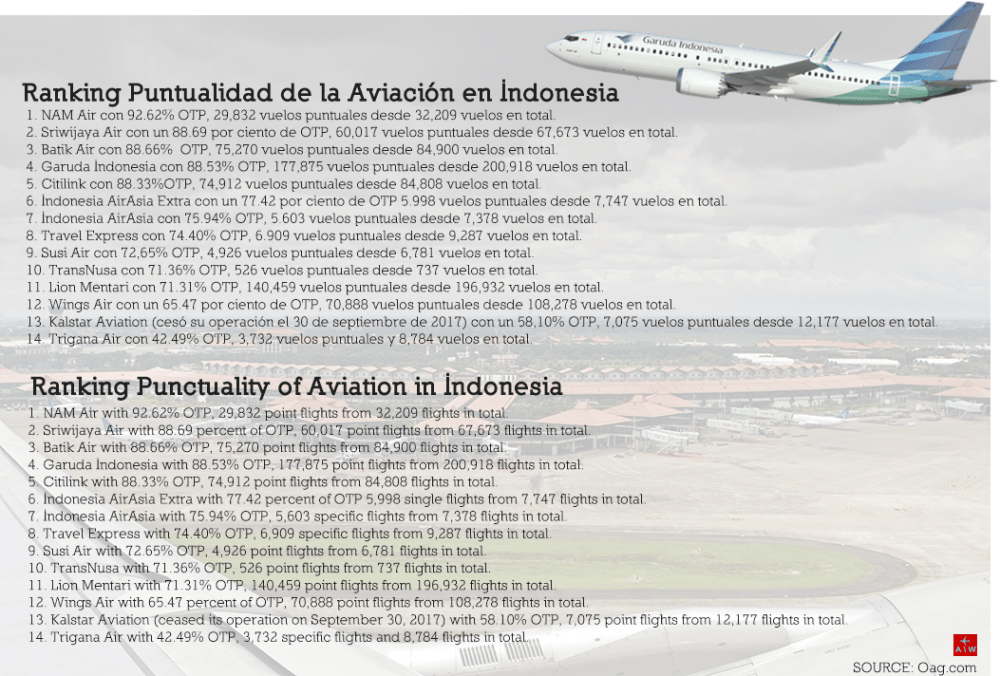
Las aerolíneas de Indonesia tienen buenos puntajes de desempeño a tiempo, superiores al 85% durante el año 2017, alcanzando puntos de más del 90%.

La aerolínea NAM Air registró una OTP (On Time Performance) de 92.62 % con 29,832 vuelos puntuales, seguida de Sriwijaya Air en el segundo lugar con 88.69% y Batik Air en el tercer lugar con 88.66% de puntualidad de despacho. El cuarto lugar lo ocupa Garuda Indonesia, operador de bandera, con una OTP de 88.53%, seguido de Citilink en el quinto lugar con 88.33 %.

Los números de OTP se consideran elevados y han cumplido el objetivo mínimo previamente planificado que se acordó. Garuda, que anteriormente ocupaba el primer puesto con la mayor OTP, tuvo que pasar al puesto número cinco debido a una perturbación en la programación de la tripulación hace un tiempo.

AW-70087775.png

La Dirección General de Aviación Civil del Ministerio de Transporte, Agus Santoso, dijo que esto refleja la creciente calidad de las aerolíneas para sus pasajeros. Esto puede elevar el nivel de confianza de los pasajeros hacia las aerolíneas, lo que tiene un impacto positivo en el negocio de la aviación. «La puntualidad es una forma importante de servicio a los pasajeros, ya que compran tiempo de vuelo además de comprar la ruta. El embarque de los vuelos a tiempo significa que los pasajeros también pueden ir a tiempo con sus horarios «, dijo Agus.

A lo largo de 2017, la Dirección General de Aviación Civil registró 828.608 vuelos nacionales. El número indica un aumento del 8.5% de 763.522 vuelos en 2016.

Mientras tanto, la OTP en 2017 alcanzó el 80.14 por ciento o 664,024 vuelos puntuales de los 828,609 vuelos en total. Hubo una disminución del 2.5 por ciento desde 2016 donde la OTP alcanzó el 82.67 por ciento o 631,216 vuelos puntuales de un total de 763,522 vuelos. Las líneas aéreas nacionales con buenos registros de OTP junto con el número de vuelos a tiempo se enumeran a continuación. AIRWAYS® AW-Icon TXT

Indonesian airlines punctuality

Airlines of the Republic of Indonesia has improved its level of punctuality

Indonesian airlines have good performance scores on time, over 85% during 2017, reaching points of more than 90%.

The airline NAM Air registered an OTP (On Time Performance) of 92.62% with 29,832 specific flights, followed by Sriwijaya Air in second place with 88.69% and Batik Air in third place with 88.66% of dispatch punctuality. The fourth place is occupied by Garuda Indonesia, flag operator, with an OTP of 88.53%, followed by Citilink in fifth place with 88.33%.

The OTP numbers are considered high and have met the previously planned minimum target that was agreed upon. Garuda, who previously occupied the first position with the largest OTP, had to move to number five due to a disturbance in the crew’s programming some time ago.

The General Directorate of Civil Aviation of the Ministry of Transport, Agus Santoso, said that this reflects the growing quality of the airlines for its passengers. This can raise the level of confidence of the passengers towards the airlines, which has a positive impact on the aviation business. «Punctuality is an important form of service to passengers, since they buy flight time in addition to buying the route. Boarding flights on time means passengers can also go on time with their schedules», Agus said.

Throughout 2017, the General Directorate of Civil Aviation registered 828,608 domestic flights. The number indicates an increase of 8.5% from 763,522 flights in 2016.

Meanwhile, the OTP in 2017 reached 80.14 percent or 664,024 point flights out of the 828,609 flights in total. There was a decrease of 2.5 percent since 2016 where the OTP reached 82.67 percent or 631,216 point flights out of a total of 763,522 flights. National airlines with good OTP records along with the number of flights on time are listed below. A\W


Ξ A I R G W A Y S Ξ
SOURCE:  Airgways.com
DBk: Oag.com / Dephub.go.id / Urbanescapades.in
AW-POST: 201802042105AR

A\W   A I R G W A Y S ®

Aerolíneas solicitan licencias en Pakistán

Resultado de imagen para Askari Air, Air Siyal, Go Green, Liberty Air y Afeef Zara Airways

AW | 2018 01 29 13:22 | AIRLINES MARKET

Cinco líneas aéreas han realizado trámites para operar en Pakistán

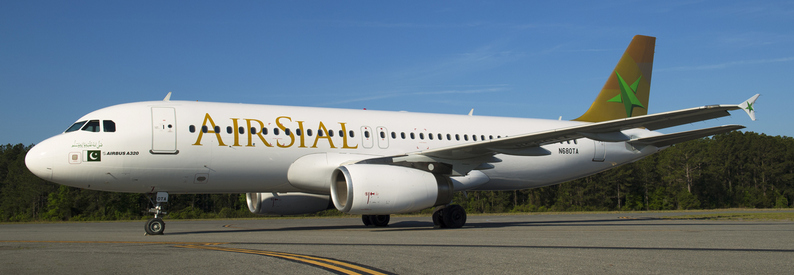
Unas cinco aerolíneas han solicitado la licencia de explotador aéreo de transporte público regular a la Autoridad de Aviación Civil de Pakistán (CAA) para iniciar operaciones comerciales en la República de Pakistán.

Las nuevas aerolíneas Askari Air, Air Siyal, Go Green, Liberty Air y Afeef Zara Airways, han solicitado la licencia de explotador aéreo tomando un mercado del alrededor del 9% anual y probablemente mantenga el mismo ritmo hasta 2020 según pronóstico de la Asociación Internacional de Transporte Aéreo (IATA).

Las nuevas aerolíneas permitirán una mejor competitividad en el mercado de Pakistán beneficiando a los usuarios con una mejora en las tarifas aéreas.

Resultado de imagen para Askari Air, Air Siyal, Go Green, Liberty Air y Afeef Zara Airways

El tráfico aéreo de Pakistán se ha disparado hasta 40% en los últimos cinco años a 20 millones de pasajeros, y continuamente está observando una tendencia al alza debido a la mejora de la situación de la ley y el orden en el país, que atrae más turistas al país.

La mayoría de los nuevos operadores aéreos tendrán destinos lejanos y de baja rentabilidad, incluidos Gwadar, Turbat, Panjgur, Khuzdar, Dalbandin, Zhob (Provincia de Balochistán), Rawalakot, Skardu, Chitral, Gilgit, Bannu y Parachinar.

Para estas regiones remotas, los nuevos operadores traerán aviones adecuados para aeropuertos pequeños. Se espera que la entrada de nuevas aerolíneas en el espacio aéreo de Pakistán aumente aún más los desafíos de la aerolínea nacional panameña Pakistan International Airlines, que fue el único operador en la mayoría de estas rutas en el pasado. AIRWAYS® AW-Icon TXT

Resultado de imagen para Askari Air

Airlines request licenses in Pakistan

Five airlines have completed procedures to operate in Pakistan

Some five airlines have applied for the regular public transport air operator license to the Civil Aviation Authority of Pakistan (CAA) to start commercial operations in the Republic of Pakistan.

The new airlines Askari Air, Air Siyal, Go Green, Liberty Air and Afeef Zara Airways, have applied for the license of air operator taking a market of around 9% per year and probably keep the same pace until 2020 according to the International Association’s forecast. Air transport (IATA).

The new airlines will allow a better competitiveness in the Pakistani market, benefiting users with an improvement in air fares.

Pakistan’s air traffic has shot up to 40% in the last five years to 20 million passengers, and is continuously seeing an upward trend due to the improvement of the law and order situation in the country, which attracts more tourists to the country.

Most new air operators will have faraway destinations and low profitability, including Gwadar, Turbat, Panjgur, Khuzdar, Dalbandin, Zhob (Province of Balochistan), Rawalakot, Skardu, Chitral, Gilgit, Bannu and Parachinar.

For these remote regions, the new operators will bring suitable aircraft for small airports. The arrival of new airlines in Pakistan’s airspace is expected to further increase the challenges of Panamanian national carrier Pakistan International Airlines, which was the only operator on most of these routes in the past. A \ W


Ξ A I R G W A Y S Ξ
SOURCE:  Airgways.com
DBk: Caapakistan.com.pk
AW-POST: 201801291322AR

A\W   A I R G W A Y S ®

Air India interés adquisición 49%

Imagen relacionadaAW | 2018 01 28 15:33 | AIRLINES MARKET

Resultado de imagen para Air IndiaUn inversor extranjero ha expresado interés en adquirir el 49% de Air India

El Secretario de Aviación, RN Choubey, dijo que esta compañía ha dado una «expresión de interés no solicitada para el brazo de la aerolínea de Air India». Si bien la identidad de este inversor no se revela en este momento, Singapore Airlines (SIA) se encuentra entre las aerolíneas extranjeras que han mostrado interés en el proceso de desinversión de Air India. Qatar Airways es la otra aerolínea grande que quiere comenzar una línea aérea doméstica en India y por mucho tiempo ha querido adquirir una participación en IndiGo. Incidentalmente, IndiGo ha dado una expresión formal de interés para la rama de aerolíneas de Air India, especialmente las operaciones internacionales de Air India y Air India Express.

Es probable que el nuevo inversor sea una aerolínea, pues el gobierno de la India permitió a aerolíneas extranjeras invertir hasta el 49% en Air India, allanando el camino para que los jugadores indios se unan a líneas aéreas extranjeras para ofertar por él. «Las líneas aéreas extranjeras también pueden invertir hasta un 49% en la ruta de aprobación del gobierno en Amnistía Internacional. La propiedad y el control sustancial ( SOEC ) de Air India seguirán siendo propiedad de Indian National. La (s) inversión (es) extranjera (s) en AI, incluidas las extranjeras las líneas aéreas no excederán el 49%, ni directa ni indirectamente», dijo el gobierno en un comunicado el 10 de enero 2018.

Esta decisión eliminó la confusión causada por una política de inversión extranjera directa (IED) consolidada lanzada en agosto pasado que decía que, si bien los operadores extranjeros pueden poseer hasta un 49% de participación en transportistas indios, esto «no era aplicable» a AI. La cláusula SOEC significa que las líneas aéreas extranjeras tienen hasta un 49% de participación en un operador JV indio con un socio indio que tiene al menos un 51% de participación en él. Este modelo es seguido por las dos aerolíneas Tata JV, donde Singapore Airlines y AirAsia Berhad tienen una participación del 49% en Vistara y AirAsia India, respectivamente.

La Organización de Aviación Civil Internacional (OACI) dice que la SOEC de una línea aérea debe estar con los nacionales de un país si dicha aerolínea desea volar fuera de ese país. La cuestión de que SOEC sea con los indios surge en dos ocasiones -expedir licencias y luego otorgar derechos bilaterales que tiene India- a su aerolínea por volar al extranjero. AIRWAYS® AW-Icon TXT

Resultado de imagen para Air India

Air India interest acquisition 49%

A foreign investor has expressed interest in acquiring 49% of Air India

The Secretary of Aviation, RN Choubey, said that this company has given an «unsolicited expression of interest to the arm of the airline of Air India». While the identity of this investor is not revealed at this time, Singapore Airlines (SIA) is among the foreign airlines that have shown interest in the divestment process of Air India. Qatar Airways is the other large airline that wants to start a domestic airline in India and has long wanted to acquire a stake in IndiGo. Incidentally, IndiGo has given a formal expression of interest to the airline branch of Air India, especially the international operations of Air India and Air India Express.

The new investor is likely to be an airline, as the government of India allowed foreign airlines to invest up to 49% in Air India, paving the way for Indian players to join foreign airlines to bid for it. «Foreign airlines can also invest up to 49% on the government’s approval route at Amnesty International, and the ownership and substantial control (SOEC) of Air India will remain the property of Indian National. Foreign (s) in AI, including foreign airlines will not exceed 49%, neither directly nor indirectly», the government said in a statement on January 10, 2018.

This decision eliminated the confusion caused by a consolidated foreign direct investment (FDI) policy launched last August that said that, although foreign operators can hold up to 49% participation in Indian carriers, this «was not applicable» to AI . The SOEC clause means that foreign airlines have up to 49% stake in an Indian JV operator with an Indian partner that has at least a 51% stake in it. This model is followed by the two Tata JV airlines, where Singapore Airlines and AirAsia Berhad have a 49% stake in Vistara and AirAsia India, respectively.

The International Civil Aviation Organization (ICAO) says that the SOEC of an airline must be with the nationals of a country if that airline wishes to fly out of that country. The issue of SOEC being with the Indians arises twice -expelling licenses and then granting bilateral rights that India has- to its airline for flying abroad. A \ W


Ξ A I R G W A Y S Ξ
SOURCE:  Airgways.com
DBk: Newindianexpress.com / Standard.co.uk
AW-POST: 201801281533AR

A\W   A I R G W A Y S ®

Incremento tarifas aéreas en EEUU

AW | 2018 01 27 15:17 | AIRLINES MARKET

Las tarifas aéreas podrían sufrir un aumento en 2018 debido a mayores costos de combustible

Las tarifas aéreas podrían estar subiendo este año, impulsadas por el creciente costo del barril de petróleo. Las aerolíneas dicen que deben recuperar los costos de combustible significativamente más altos descritos en los informes y proyecciones de ganancias de Enero 2018.

El precio del crudo creció abruptamente el año pasado, llegando a $ 70 por barril esta semana. Debido a que el combustible para aviones es uno de los mayores gastos individuales que enfrentan las aerolíneas, el aumento costó a las aerolíneas miles de millones de dólares más el año pasado.

Las aerolíneas generaron ganancias récord en los últimos años, mientras que las tarifas se mantuvieron bajas, ayudado por el precio del barril de petróleo Brent cayendo por debajo de U$S 30 por barril en enero de 2016. La caída proporcionó una enorme ruptura de costos después de alcanzar los U$S 140 por barril en 2008 y U$S 125 en 2012.

«Creo que lo más importante que tenemos a nuestro favor en 2018 es una economía fuerte con mucho optimismo», dijo el gerente general de Delta Air Lines, Ed Bastian. «Así que ese es el enfoque principal en términos de poder recuperar los costos del combustible». American Airlines informó el jueves que los gastos de combustible consolidados crecieron un 23.5% el año pasado. Derek Kerr, director financiero, dijo que la aerolínea proyecta otro aumento de 24.1% este año, o U$S 1.800 millones más por combustible. El presidente de United Airlines, Scott Kirby, proyectó el martes un viento en contra de 1.600 millones de dólares este año por los mayores costos del combustible. Delta Air Lines reportó el 11 de enero un aumento de U$S 349 millones en gastos de combustible durante los últimos tres meses del año pasado, que fue un 23% más alto que el año anterior, según Paul Jacobson, director financiero.

Los ejecutivos de las aerolíneas dijeron que eran rentables con U$S 100 por barril de petróleo y podrían volver a hacerlo. Pero la pregunta abierta para cada aerolínea durante las llamadas de ganancias con los analistas de inversión fue si los transportistas podrían recuperar esos costos crecientes este año a través de precios de boleto más altos. El Gerente General de United Airlines, Doug Parker, dijo que las tarifas aéreas suelen estar a la zaga de las fuertes fluctuaciones en los precios del petróleo.

Los analistas reaccionaron con escepticismo ante las propuestas de que las aerolíneas puedan recuperar los mayores costos de combustible debido a la preocupación de que los transportistas agreguen demasiados vuelos y asientos para evitar una guerra de tarifas. Pero los ejecutivos de las aerolíneas dijeron que han sido rentables con precios de combustible mucho más altos y podrían volver a hacerlo. AIRWAYS® AW-Icon TXT

Increase air fares in the US

Air fares could suffer an increase in 2018 due to higher fuel costs

Air fares may be rising this year, driven by the rising cost of a barrel of oil. The airlines say they must recover the significantly higher fuel costs described in the January 2018 earnings reports and projections.

The price of crude rose sharply last year, reaching $ 70 per barrel this week. Because jet fuel is one of the biggest single expenses airlines face, the increase cost airlines billions more over the past year.

Airlines generated record profits in recent years, while rates remained low, helped by the price of a barrel of Brent oil falling below $ 30 per barrel in January 2016. The drop provided a huge cost break after reach $ 140 per barrel in 2008 and $ 125 in 2012.

«I think the most important thing that we have in our favor in 2018 is a strong economy with a lot of optimism,» said Delta Air Lines General Manager Ed Bastian. So that’s the main focus in terms of being able to recover fuel costs». American Airlines reported Thursday that consolidated fuel expenses grew 23.5% last year. Derek Kerr, chief financial officer, said the airline projects another 24.1% increase this year, or $ 1.8 billion more for fuel. The President of United Airlines, Scott Kirby, projected on Tuesday a wind against 1,600 million dollars this year due to higher fuel costs. Delta Air Lines reported an increase of $ 349 million in fuel costs on January 11 during the last three months of last year, which was 23% higher than the previous year, according to Paul Jacobson, CFO.

The executives of the airlines said that they were profitable with $ 100 per barrel of oil and could do it again. But the open question for each airline during earnings calls with investment analysts was whether carriers could recover those rising costs this year through higher ticket prices. United Airlines General Manager Doug Parker said air fares are often behind strong fluctuations in oil prices.

Analysts reacted with skepticism to proposals that airlines can recoup higher fuel costs due to concern that carriers add too many flights and seats to avoid a rate war. But airline executives said they have been profitable with much higher fuel prices and could do so again. A \ W


Ξ A I R G W A Y S Ξ
SOURCE:  Airgways.com
DBk: Usatoday.com / Latimes.com
AW-POST: 201801271517AR

A\W   A I R G W A Y S ®

Reino Unido espera acuerdo post-Brexit

AW | 2018 01 26 16:41 | AIRLINES MARKET

Resultado de imagen para Brexit logoEl Reino Unido está a la espera de un acuerdo sobre aviación después de la salida del Brexit

El Secretario de Transporte del Reino Unido, Chris Grayling, ha expresado su confianza de que el país puede obtener acuerdos sobre aviación después de la salida del Bexit.

Chris Grayling dice que las conversaciones formales sobre la futura relación económica entre el Reino Unido y la UE comenzarán muy pronto y que un futuro marco para la aviación será una parte central de ellas.

La expansión planificada de Londres Heathrow y las demandas de las aerolíneas de toda Europa para acceder al aeropuerto le dan al Reino Unido cartas fuertes para las negociaciones.

El gobierno del Reino Unido está trabajando arduamente para desarrollar acuerdos a medida del Reino Unido para reemplazar los acuerdos de cielos abiertos organizados por la UE con los EEUU y Canadá. Las conversaciones con los funcionarios de los Estados Unidos tendrán lugar en las próximas semanas. Está trabajando en una nueva estrategia de aviación para el Reino Unido, y Grayling dice que la recientemente designada ministra de aviación Elizabeth Sugg estará encabezando la formulación de las políticas. Grayling indica que la estrategia pretende ser un plan amplio para el crecimiento sostenible de la aviación durante los próximos 30 años y más.  AIRWAYS® AW-Icon TXT

United Kingdom awaits post-Brexit aviation agreement

Resultado de imagen para UK map pngThe United Kingdom is waiting for an agreement on aviation after the departure of Brexit

The Secretary of Transportation of the United Kingdom, Chris Grayling, has expressed confidence that the country can obtain agreements on aviation after the departure of Bexit.

Chris Grayling says that formal talks about the future economic relationship between the United Kingdom and the EU will begin very soon and that a future framework for aviation will be a central part of them.

The planned expansion of London Heathrow and the demands of airlines across Europe to access the airport give the United Kingdom strong letters for negotiations.

The UK government is working hard to develop tailor-made UK agreements to replace open skies agreements organized by the EU with the US and Canada. The conversations with the officials of the United States will take place in the coming weeks. He is working on a new aviation strategy for the United Kingdom, and Grayling says that newly appointed aviation minister Elizabeth Sugg will be leading the policy formulation. Grayling says the strategy is intended to be a broad plan for sustainable aviation growth over the next 30 years and more. A \ W


Ξ A I R G W A Y S Ξ
SOURCE:  Airgways.com
DBk: Ft.com / Theneweuropean.co.uk
AW-POST: 201801261641AR

A\W   A I R G W A Y S ®

Dificultades del Grupo HNA

Resultado de imagen para HNA Group airlines

AW | 2018 01 16 15:17 | AIRLINES MARKET

Resultado de imagen para HNA GroupAerolíneas afiliadas al Grupo HNA de China están retrasando los pagos de arriendo de aviones a arrendadores

Algunas compañías aéreas del Grupo HNA están atravezando dificultades en el pago de alquiler de aeronaves al Export-Import Bank of China (EXIM), que es un financiero a largo plazo del grupo, ha formado un equipo para manejar los problemas de liquidez del conglomerado.

Los ejecutivos de las unidades de arrendamiento de los prestamistas chinos, incluyendo el Banco de China, China Minsheng Banking Corp y el Banco de Comunicaciones han mantenido conversaciones con algunas aerolíneas vinculadas a HNA para recuperar los pagos.

«Algunos pagos se han retrasado en más de dos meses», dijo un alto ejecutivo de Pekín en un arrendador chino. Dijo que las aerolíneas de HNA le habían informado al arrendador que los pagos se realizarían pronto, ya que esperaban que los bancos respaldasen a HNA en los próximos meses.

HNA, un conglomerado de servicios de aviación a servicios financieros. «HNA y sus subsidiarias mantienen operaciones estables y están en el proceso de pagar gradualmente las tarifas de cada arrendador según lo planeado».

Los U$S 50 millones de dólares que HNA realizó durante los últimos dos años, que incluyeron inversiones en Deutsche Bank y en el grupo de hoteles Hilton, han provocado un intenso escrutinio de su propiedad opaca y el uso del apalancamiento.

En Junio 2017, el gobierno chino le dijo a los principales bancos que revisen su exposición crediticia a HNA y un puñado de otras compañías no estatales, presionando sus finanzas.

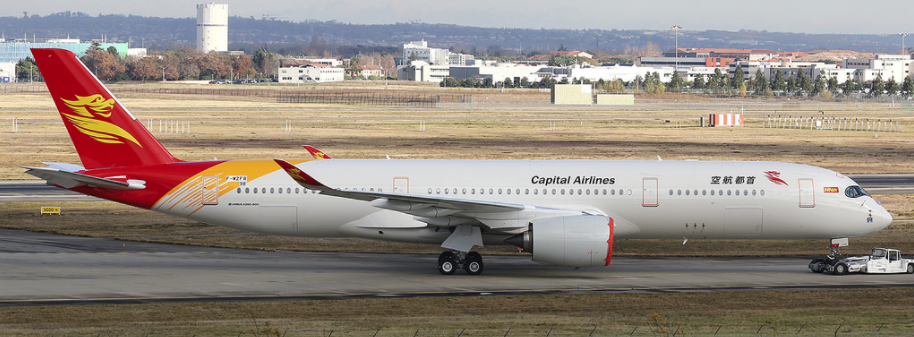
AIRBUS A350-900 DE LA COMOAÑÍA CHINA CAPITAL AIRLINES DEL HNA GROUP

Algunas de las fuentes de los arrendadores y los bancos dijeron que el buque insignia de HNA, Hainan Airlines, y las más pequeñas, incluidas Lucky Air y Capital Airlines, habían omitido pagos, mientras que Tianjin Airlines intentaba extender el plazo para los pagos vencidos este año. Lucky Air, Capital Airlines y Tianjin Airlines dijeron en declaraciones por separado que mantenían buenas relaciones con sus respectivos arrendadores y operaban de manera segura y estable. Hainan Airlines suspendió sus operaciones el 10 de Enero 2018 en espera de un anuncio. El motivo de la suspensión de acciones no está claro. Tianjin Airlines le pidió a un arrendador chino que demore los pagos de alquiler de junio por tres aviones, dijo una fuente con conocimiento directo. Otra fuente dijo que una aerolínea afiliada a HNA le dijo al Bank of Communications Financial Leasing que no pagará los pagos de alquiler que vencen en Enero 2018, no identificando la compañía.

En las últimas semanas, los ejecutivos de algunos arrendadores internacionales han viajado a China para reunirse con ejecutivos de las aerolíneas afiliadas a HNA y elaborar un plan de pago, dijeron las fuentes. «Este es un problema generalizado entre muchos arrendadores, pero entienden que mucho depende de si los bancos vuelven a abrir sus fondos para HNA y los arrendadores están apostando a eso», dijo un financiero de un banco europeo.

En Noviembre 2017, Airfinance Journal informó sobre las demoras en los pagos de arrendamiento y los problemas se han intensificado desde entonces, dijeron las fuentes.

Sin embargo, Robert Martin, director ejecutivo de BOC Aviation Ltd, dijo que su compañía, la unidad de leasing del Banco de China, no tuvo problemas en los pagos de arrendamiento por parte de las aerolíneas vinculadas a HNA. «BOC Aviation tiene un enfoque muy fuerte en la gestión de cuentas por cobrar y cerramos 2017 con una tasa de cobro del 99,9%. Esto incluyó a las filiales de aerolíneas del Grupo HNA», dijo Martin en un correo electrónico.

Enfrentada a una serie de obligaciones de pago y preocupaciones sobre el aumento de los costos de financiamiento, HNA tuvo su calificación crediticia degradada en noviembre por S & P Global Ratings, como resultado de su política financiera agresiva.

Subrayando la creciente preocupación de los prestamistas por las obligaciones de pago del grupo, EXIM, con sede en Pekín, estableció un equipo este mes para manejar la deuda de HNA, que el conglomerado está luchando por devolver, dijeron fuentes bancarias. HNA ha prometido pagar todos los pagos atrasados ​​pendientes para fines de Enero 2018. EXIM no respondió a la solicitud de comentarios.

El equipo de HNA de EXIM se creó después de las reuniones en la sede central del conglomerado en Hainan, en el sur de China, a fines del año pasado, cuando HNA solicitó nuevos préstamos para cubrir la deuda existente.

HNA también ha estado tratando de reorganizar sus compromisos de deuda con otros prestamistas, dijeron las fuentes bancarias. HNA Group tiene 223 aviones en arrendamientos financieros u operativos, según los informes financieros a fines de junio, que representan alrededor del 62 por ciento de su flota.

Muchos arrendamientos de aviones en China son arrendamientos de pleno recurso, dijo David Yu, profesor y especialista en arrendamiento de aeronaves en la Universidad de Nueva York en Shanghai. Esto significa que los arrendadores están al acecho del dinero que los bancos les han prestado para adquirir los aviones, poniéndolos en riesgo de incumplimiento, dijo.

Dependiendo de los términos de los préstamos, los prestamistas podrían tomar medidas que incluyen solicitar el reembolso anticipado de préstamos para embargar aviones para la venta. Pero los arrendadores de las aerolíneas HNA no habían tomado ninguna medida para apoderarse de ningún avión, ya que confiaban en recibir los pagos, dijeron las fuentes. AIRWAYS® AW-Icon TXT

Difficulties of the HNA Group

Resultado de imagen para HNA Group PNGAirlines affiliated with China’s HNA Group are delaying aircraft lease payments to lessors

Some airlines of the HNA Group are experiencing difficulties in the payment of aircraft rental to the Export-Import Bank of China (EXIM), which is a long-term financial group, has formed a team to handle the liquidity problems of the conglomerate.

Executives from the leasing units of Chinese lenders, including the Bank of China, China Minsheng Banking Corp and the Communications Bank have held talks with some airlines linked to HNA to recover payments.

«Some payments have been delayed for more than two months», said a senior Beijing executive at a Chinese landlord. He said HNA airlines had informed the landlord that payments would be made soon, as they expected the banks to support HNA in the coming months.

HNA, a conglomerate of aviation services to financial services. «HNA and its subsidiaries maintain stable operations and are in the process of gradually paying each landlord’s fees as planned».

The US $ 50 million that HNA made over the past two years, which included investments in Deutsche Bank and the Hilton hotel group, has led to intense scrutiny of its opaque ownership and the use of leverage.

In June 2017, the Chinese government told major banks to review their credit exposure to HNA and a handful of other non-state companies, pressing their finances.

Some sources from the lessors and banks said that HNA’s flagship, Hainan Airlines, and the smaller ones, including Lucky Air and Capital Airlines, had missed payments, while Tianjin Airlines was trying to extend the deadline for payments due this year. year. Lucky Air, Capital Airlines and Tianjin Airlines said in separate statements that they maintained good relations with their respective lessors and operated in a safe and stable manner. Hainan Airlines suspended operations on January 10, 2018 pending an announcement. The reason for the suspension of shares is not clear. Tianjin Airlines has asked a Chinese landlord to delay June rental payments for three planes, a source with direct knowledge said. Another source said that an airline affiliated with HNA told Bank of Communications Financial Leasing that it will not pay rent payments due in January 2018, not identifying the company.

In recent weeks, executives of some international landlords have traveled to China to meet with executives of airlines affiliated with HNA and draw up a payment plan, the sources said. «This is a widespread problem among many landlords, but they understand that a lot depends on whether banks reopen their funds for HNA and landlords are betting on that», said a financier at a European bank.

In November 2017, Airfinance Journal reported delays in lease payments and problems have intensified since then, the sources said.

However, Robert Martin, executive director of BOC Aviation Ltd, said that his company, the leasing unit of the Bank of China, had no problems in lease payments by airlines linked to HNA. «BOC Aviation has a very strong focus on the management of accounts receivable and we closed 2017 with a collection rate of 99.9%, which included the airline subsidiaries of the HNA Group», Martin said in an email.

Faced with a series of payment obligations and concerns about the increase in financing costs, HNA had its credit rating downgraded in November by S & P Global Ratings, as a result of its aggressive financial policy.

Underscoring the lenders’ growing concern about the group’s payment obligations, EXIM, based in Beijing, set up a team this month to handle HNA’s debt, which the conglomerate is struggling to repay, banking sources said. HNA has promised to pay all outstanding arrears by the end of January 2018. EXIM did not respond to the request for comment.

The EXIM HNA team was created after meetings at the conglomerate headquarters in Hainan, southern China, late last year, when HNA applied for new loans to cover the existing debt.

HNA has also been trying to reorganize its debt commitments with other lenders, the banking sources said. HNA Group has 223 aircraft in financial or operational leases, according to financial reports at the end of June, which represent about 62 percent of its fleet.

Many aircraft leases in China are full-fledged leases, said David Yu, professor and aircraft leasing specialist at New York University in Shanghai. This means that landlords are on the lookout for the money that banks have lent them to acquire the planes, putting them at risk of default, he said.

Depending on the terms of the loans, the lenders could take measures that include requesting the early repayment of loans to seize aircraft for sale. But the lessors of the HNA airlines had not taken any action to seize any plane, as they were confident they would receive the payments, the sources said. A \ W


Ξ A I R G W A Y S Ξ
SOURCE:  Airgways.com
DBk: Airgways.com / Chinadaily.com.cn / Jimcdn.com / Scalemodelstore.com
AW-POST: 201801161517AR

A\W   A I R G W A Y S ®

Servicios aéreos comunidades pequeñas de Estados Unidos

AW | 2018 01 16 14:51 | AIRLINES MARKET

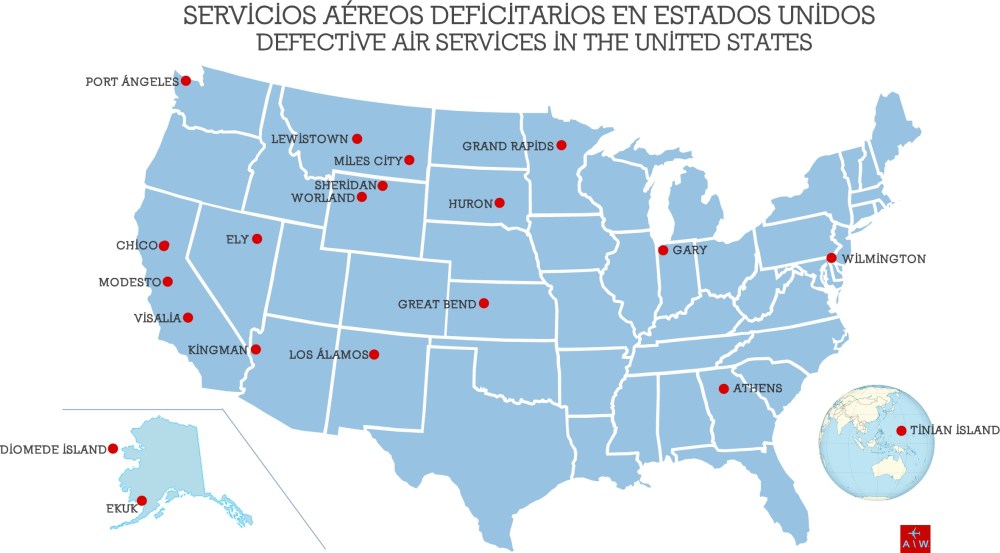
En EEUU existen alrededor de veinte comunidades donde el servicio aéreo atraviesa dificultades o prácticamente es nula

Un programa federal llamado Essential Air Service, lanzado después de la desregulación de la industria aeronáutica en 1978, ofrece subsidios a las aerolíneas que prestan servicios a los aeropuertos comunitarios pequeños.

Los cierres surgieron a partir de las lecciones aprendidas por la industria aeronáutica durante los difíciles años financieros, culminados por la última recesión. En 91 otros aeropuertos pequeños a nivel nacional, el número de salidas se redujo en al menos la mitad en ese mismo período, incluido el Aeropuerto Internacional de Yuma en Arizona, el Aeropuerto Municipal Barnstable en Hyannis, Massachusetts y el Aeropuerto Branson en Missouri, según los datos. «A medida que los aeropuertos pierden frecuencia y destinos, las comunidades experimentan una disminución en la conectividad, lo que debilita su vínculo con la economía global», dijo Faye Malarkey Black, presidenta de la Asociación Regional de Aerolíneas.

Las aerolíneas comenzaron a fusionarse y ajustarse, lo que llevó a reducir o eliminar el servicio a muchas comunidades pequeñas que dependen de aviones turbohélice que transportan tan solo 50 pasajeros. En cambio, las aerolíneas han invertido en la estrategia más rentable de agregar grandes aviones, repletos de asientos estrechos, a las rutas que conectan los aeropuertos de la gran ciudad.

«Cuando estás en Southwest, ¿por qué ir a Visalia cuando puedes volar desde Burbank y conseguir más negocios allí?», Dijo Mario Cifuentes, subdirector municipal de Visalia, que perdió todo el servicio aéreo comercial en 2016 cuando era la única aerolínea de la ciudad. SeaPort Airlines, se declaró en bancarrota.

Dichas decisiones de ruta han jugado un papel importante en las ganancias casi récord de las aerolíneas de EE.UU., Al igual que la creciente demanda de viajes, los bajos precios del combustible y los fuertes ingresos de las tarifas de pasajeros por equipaje facturado, alimentos, bebidas y entretenimiento.

De hecho, tantos ejecutivos de aerolíneas en una reunión de un grupo comercial de 2015 prometieron mantenerse «disciplinados» sobre la adición de vuelos para no perjudicar las ganancias que indignaron a los legisladores, una investigación antimonopolio federal y una oleada de demandas de consumidores.

Los representantes de la industria admiten que algunas comunidades pequeñas han perdido el servicio durante los últimos años, pero han negado repetidamente cualquier colusión para reducir los vuelos y aumentar los precios.

La Asociación Regional de Aerolíneas dijo que un factor en las reducciones de servicio es una escasez de pilotos en todo el país, que se desarrolló después de una ley federal de 2013 que exige capacitación adicional y nuevas pruebas para los pilotos que desean volar aviones comerciales. Una caída de Colgan Air en 2009 cerca de Buffalo, Nueva York, provocó las nuevas reglas, que incluyen requisitos para que los pilotos descansen más entre turnos.

El grupo ha pedido al Administración Federal de Aviación (FAA) abordar la escasez de pilotos mediante el reconocimiento de los cursos de aviación existentes para cumplir con los nuevos requisitos de capacitación de pilotos y proporcionar más apoyo financiero para los pilotos aspirantes.
about-us-american-family-insurance

Pequeños aeropuertos de California

Enterprise Rent-A-Car se hizo cargo de la terminal del Aeropuerto Municipal de Visalia y alquila automóviles y camiones de la instalación.

Durante 35 años, Transfer Flow Inc. ha estado fabricando tanques de combustible de posventa para camionetas fuera de Chico, California, lo que significa que los empleados deben hacer viajes regulares desde la tranquila ciudad universitaria para reunirse con clientes y posibles socios comerciales.

Eso se ha vuelto especialmente difícil desde que terminó el servicio aéreo comercial regular en el Aeropuerto Municipal de Chico en 2014. Ahora los representantes de la compañía tienen que manejar hasta cuatro horas para tomar un vuelo desde el Aeropuerto Internacional de Sacramento para reunirse con clientes de Ford, Nissan y otros fabricantes de automóviles.

«Lo que más nos duele es que demora un poco nuestro crecimiento. Tener una conexión con el mundo exterior es una necesidad real», dijo Ben Winter, director de desarrollo de negocios de Transfer Flow.

Chico, con una población de 92,000 habitantes, es una de las 20 pequeñas comunidades en los EE. UU. Que pierde el servicio aéreo comercial regular en los últimos cuatro años, según datos de la Regional Airline Assn., Un grupo comercial de transportistas que prestan servicios a aeropuertos más pequeños. En California, los vuelos comerciales terminaron en tres ciudades, Chico, Modesto y Visalia, más que en cualquier otro estado.

La mayoría de las pequeñas comunidades que han perdido el servicio en los últimos cuatro años se encuentran en el oeste y el medio oeste, con California, Montana, Washington y Wyoming recibiendo los mayores éxitos.

En California, los líderes empresariales en Visalia, Chico y Modesto dicen que la pérdida del servicio aéreo comercial regular ha hecho que sea más difícil conectarse con compañías externas para formar asociaciones y expandir.

La pequeña ciudad agrícola de Modesto, en el centro de California, tiene una de las tasas de desempleo más altas del estado. Sus granjas fueron golpeadas duramente por la sequía de cuatro años del estado. El aeropuerto municipal de la ciudad perdió sus vuelos comerciales regulares cuando SkyWest Airlines se retiró en 2014, lo que obligó a los locales que quieren volar a conducir 90 millas al sur para tomar un vuelo desde Fresno o 92 millas al oeste de San Francisco. Desde entonces, la comunidad de 212,000 residentes ha intentado reiteradamente persuadir a otros transportistas para que sirvan a Modesto, esperando que el servicio regular pueda ayudar a atraer nuevas compañías para echar raíces en la ciudad, dijo Cecil Russell, director ejecutivo de la cámara de comercio de la ciudad. «Hemos estado buscando algo para elevarnos y atraer a las grandes empresas para que vengan aquí», dijo.

Dan Gonzales, fundador y presidente de Fifth Sun, un fabricante de ropa en Chico, dijo que el recorte en el servicio de aerolíneas a su ciudad también lo ha puesto en desventaja con respecto a sus competidores. «Un aeropuerto es una especie de salvavidas para otras áreas del estado y otras áreas de la nación», dijo, y agregó que cree que perdió un reciente acuerdo de asociación comercial con Amazon debido a su ubicación remota y la falta de servicio aéreo en Chico.

Algunos líderes empresariales dicen que se han adaptado al corte en el servicio aéreo. «Es una de esas cosas de las que hemos prescindido y nos resignamos a que no vuelva», dijo Gail Zurek, presidenta de la Cámara de Comercio de Visalia, donde el servicio comercial regular finalizó en 2016. Señaló que muchos de Las grandes compañías agrícolas de Visalia alquilan o poseen aviones privados para volar fuera del aeropuerto de la ciudad. Para llenar el vacío de transporte, la ciudad de Visalia lanzó un servicio de autobús de enlace en 2015 que conecta Visalia con el aeropuerto internacional de Fresno-Yosemite por $ 10 por trayecto. El viaje dura aproximadamente una hora.

Un programa federal llamado Essential Air Service, lanzado después de la desregulación de la industria aeronáutica en 1978, ofrece subsidios a las aerolíneas que prestan servicios a los aeropuertos comunitarios pequeños. Al aceptar dejar de solicitar los subsidios por 10 años, Visalia calificó para una subvención de $ 3.7 millones para realizar mejoras en el aeropuerto, dijo Cifuentes.

Un grupo comercial que representa a los principales operadores del país dice que las tendencias económicas hacen que sea factible agregar servicios en el futuro. «Las aerolíneas han reestructurado acuerdos con sus socios regionales para ser más económicos y, gracias a la mejora de las ganancias, las aerolíneas han podido comprar y recibir nuevos aviones más eficientes», dijo Alison McAfee, una portavoz de Airlines for America.

United Airlines recientemente anunció planes para expandir el servicio, comenzando en junio, a varias comunidades pequeñas como Eureka, (California), Appleton, (Wisconsin) y Akron, (Ohio).

Durante una reciente conferencia telefónica con analistas, el presidente de United Airlines, Scott Kirby, dijo que la compañía espera atraer a los viajeros desde los principales centros de distribución de aerolíneas y aeropuertos más pequeños como Des Moines. «Y ganar su parte en Des Moines no se trata de transportar gente de Des Moines a Chicago, se trata de transportar gente de Des Moines al mundo», dijo.

El analista de la industria Seth Kaplan, socio gerente de Airline Weekly, dijo que el anuncio de United Airlines podría indicar un cambio en las comunidades pequeñas. «Todavía es difícil ser un aeropuerto pequeño, pero en realidad hay signos de esperanza»AIRWAYS® AW-Icon TXT

Reduction of air services in small communities in the United States

In the USA there are around twenty communities where the air service is experiencing difficulties or is practically null

A federal program called Essential Air Service, launched after the deregulation of the aeronautical industry in 1978, offers subsidies to airlines that provide services to small community airports.

The closures arose from the lessons learned by the aeronautical industry during the difficult financial years, culminated by the last recession. In 91 other small airports nationwide, the number of departures was reduced by at least half in that same period, including the Yuma International Airport in Arizona, the Barnstable Municipal Airport in Hyannis, Massachusetts and the Branson Airport in Missouri, according to the data. «As airports lose frequency and destinations, communities experience a decline in connectivity, which weakens their link to the global economy», said Faye Malarkey Black, president of the Regional Airlines Association.

The airlines began to merge and adjust, which led to reducing or eliminating the service to many small communities that depend on turboprop aircraft that carry only 50 passengers. Instead, airlines have invested in the most profitable strategy of adding large airplanes, replete with narrow seats, to the routes that connect the airports of the big city.

«When you’re in Southwest, why go to Visalia when you can fly from Burbank and get more business there?», said Mario Cifuentes, Visalia’s deputy city manager, who lost all commercial air service in 2016 when it was the only airline in the country city. SeaPort Airlines, declared bankruptcy.

These route decisions have played an important role in the almost record earnings of US airlines, like the increasing demand of trips, the low prices of the fuel and the strong income of the tariffs of passengers by checked luggage, food, drinks and entertainment.

In fact, many airline executives at a meeting of a business group in 2015 promised to remain «disciplined» about adding flights so as not to hurt the profits that outraged the legislators, a federal antitrust investigation and a wave of consumer demands.

Industry representatives admit that some small communities have lost service in recent years, but have repeatedly denied any collusion to reduce flights and increase prices.

The Regional Airline Assn. he said one factor in the service reductions is a shortage of pilots across the country, which developed after a federal law in 2013 that requires additional training and new tests for pilots who wish to fly commercial aircraft. A fall of Colgan Air in 2009 near Buffalo, New York, prompted the new rules, which include requirements for pilots to rest more between shifts.

The group has asked the Federal Aviation Administration (FAA) to address the shortage of pilots by recognizing existing aviation courses to meet the new training requirements for pilots and provide more financial support for aspiring pilots.

about-us-american-family-insurance

Small airports in California

Enterprise Rent-A-Car took over the terminal of the Visalia Municipal Airport and rents cars and trucks from the facility.

For 35 years, Transfer Flow Inc. has been manufacturing aftermarket fuel tanks for trucks outside of Chico, California, which means that employees must make regular trips from the quiet university town to meet with customers and potential business partners.

That has become especially difficult since regular commercial air service ended at the Chico Municipal Airport in 2014. Now company representatives have to drive up to four hours to take a flight from Sacramento International Airport to meet with clients from Ford, Nissan and other car manufacturers.

«What hurts us the most is that it slows our growth a bit, having a connection with the outside world is a real need», said Ben Winter, business development director at Transfer Flow.

Chico, with a population of 92,000, is one of 20 small communities in the US. UU Losing regular commercial air service in the last four years, according to data from the Regional Airline Assn., A commercial group of carriers that provide services to smaller airports. In California, commercial flights ended in three cities, Chico, Modesto and Visalia, more than in any other state.

Most of the small communities that have lost service in the last four years are in the west and midwest, with California, Montana, Washington and Wyoming receiving the greatest success.

In California, business leaders in Visalia, Chico and Modesto say that the loss of regular commercial air service has made it more difficult to connect with outside companies to form partnerships and expand.

The small agricultural town of Modesto, in central California, has one of the highest unemployment rates in the state. Their farms were hit hard by the state’s four-year drought. The city’s municipal airport lost its regular commercial flights when SkyWest Airlines retired in 2014, forcing locals who want to fly to drive 90 miles south to take a flight from Fresno or 92 miles west of San Francisco. Since then, the community of 212,000 residents has repeatedly tried to persuade other carriers to serve Modesto, hoping that regular service can help attract new companies to take root in the city, said Cecil Russell, executive director of the chamber of commerce. of the city. «We’ve been looking for something to elevate ourselves and attract big companies to come here», he said.

Dan Gonzales, founder and president of Fifth Sun, a clothing manufacturer in Chico, said the cut in airline service to his city has also put him at a disadvantage compared to his competitors. «An airport is a kind of lifeline for other areas of the state and other areas of the nation», he said, adding that he believes he lost a recent trade association agreement with Amazon because of its remote location and lack of air service in Chico.

Some business leaders say they have adapted to the cut in air service. «It’s one of those things that we have dispensed with and we resign ourselves to not coming back», said Gail Zurek, president of the Chamber of Commerce of Visalia, where the regular commercial service ended in 2016. She pointed out that many of the large agricultural companies of Visalia rent or own private planes to fly out of the city’s airport. To fill the transportation gap, the city of Visalia launched a shuttle bus service in 2015 that connects Visalia with the Fresno-Yosemite International Airport for $ 10 each way. The trip takes approximately one hour.

A federal program called Essential Air Service, launched after the deregulation of the aeronautical industry in 1978, offers subsidies to airlines that provide services to small community airports. By agreeing to stop applying for subsidies for 10 years, Visalia qualified for a $ 3.7 million grant to make improvements at the airport, Cifuentes said.

A business group representing the country’s leading operators says that economic trends make it feasible to add services in the future. «Airlines have restructured agreements with their regional partners to be more economical and, thanks to improved profits, airlines have been able to buy and receive new, more efficient aircraft», said Alison McAfee, a spokeswoman for Airlines for America.

United Airlines recently announced plans to expand service, beginning in June, to several small communities such as Eureka, California, Appleton, Wis., and Akron, Ohio.

During a recent conference call with analysts, United Airlines President Scott Kirby said the company hopes to attract travelers from major distribution centers of smaller airlines and airports such as Des Moines. «And winning your part in Des Moines is not about transporting people from Des Moines to Chicago, it’s about transporting people from Des Moines to the world», he said.

Industry analyst Seth Kaplan, managing partner of Airline Weekly, said the United Airlines announcement could indicate a change in small communities. «It’s still difficult to be a small airport, but in reality there are signs of hope». A \ W


Ξ A I R G W A Y S Ξ
SOURCE:  Airgways.com
DBk: Latimes.com / Modbee.com / Yellowstonepark.com
AW-POST: 201801161451AR

A\W   A I R G W A Y S ®

Brunei observa crecimiento de aviación

AW | 2018 01 15 14:14 | AIRLINES MARKET

Brunei podría convertirse en uno de los mercados de más rápido crecimiento en el sudeste asiático y Asia en general en 2018

El mercado de aviación más pequeño de del mercado de Asean, Brunei, que consta de menos de 2 millones de pasajeros anuales, ha experimentado la tasa de crecimiento más lenta del bloque en los últimos 10 años.

Resultado de imagen para Brunei Royal logoEn un esfuerzo por estimular el sector, Royal Brunei Airlines (RBA) se está embarcando en un ambicioso plan de expansión. La compañía nacional apunta a recibir ocho aviones este año y aumentar de 10 a 14 aviones.

Brunei no ha sido sorpresivamente incluido en el nivel de asesoramiento más bajo para riesgos de seguridad y protección en una clasificación de «seguridad» de cuatro puntos extraña del gobierno de EEUU. Aprovechando la «seguridad» de Brunei, el número de asientos de RBA se incrementará en casi un 40%, centrándose en impulsar las visitas turísticas desde China y otros países del noreste de Asia. Sin embargo, los vuelos directos a Beijing se pospusieron hasta principios de 2018 debido a la «complejidad de las rutas internacionales», dijo RBA el mes pasado. «Debido a la inesperada complejidad de las rutas internacionales, nuestros vuelos directos a Beijing se pospondrán a principios del próximo año», dijo el presidente ejecutivo de RBA, Karam Chand, citado por la agencia de noticias estatal Xinhua.

En un esfuerzo por estimular el interés superior en Brunei, la aerolínea también ha inaugurado su Sky Lounge de lujo con capacidad para 120 personas en el Aeropuerto Internacional de Brunei (BIA).

Chand dijo: «En Royal Brunei Airlines creemos que la experiencia de servicio desde la búsqueda de opciones de vacaciones, reservas, servicio en el aeropuerto y en vuelo es nuestra fortaleza clave y continuamente nos esforzamos por innovar y mejorar la experiencia del huésped en cada punto de contacto».

El mercado global de Brunei, que está dominado por Royal Brunei, podría crecer en un 30% una vez que se entreguen todas las aeronaves. Brunei desea aumentar las cifras de turismo, particularmente del norte de Asia, pero el tráfico de tránsito también crecerá inevitablemente a medida que se inyecte capacidad adicional. AIRWAYS® AW-Icon TXT


Brunei notes aviation growth

Resultado de imagen para Brunei globe map pngBrunei could become one of the fastest growing markets in Southeast Asia and Asia in general by 2018

The smallest aviation market in the Asean market, Brunei, which consists of less than 2 million passengers per year, has experienced the slowest growth rate of the block in the last 10 years.

In an effort to stimulate the sector, Royal Brunei Airlines (RBA) is embarking on an ambitious expansion plan. The national company aims to receive eight aircraft this year and increase from 10 to 14 aircraft.

Brunei has not surprisingly been included in the lowest level of advice for security and safety risks in a four-point «security» classification by the US government. Taking advantage of the «security» of Brunei, the number of seats of RBA will increase by almost 40%, focusing on boosting tourist visits from China and other countries of Northeast Asia. However, direct flights to Beijing were postponed until early 2018 due to the «complexity of international routes», RBA said last month. «Due to the unexpected complexity of international routes, our direct flights to Beijing will be postponed at the beginning of next year», RBA Chief Executive Karam Chand was quoted as saying by the state news agency Xinhua.

In an effort to stimulate superior interest in Brunei, the airline has also opened its luxury Sky Lounge with capacity for 120 people at the Brunei International Airport (BIA).

Chand said: «At Royal Brunei Airlines we believe that the service experience from the search for vacation options, reservations, service at the airport and in flight is our key strength and we continuously strive to innovate and improve the guest experience at every point contact».

Brunei’s global market, which is dominated by Royal Brunei, could grow by 30% once all aircraft are delivered. Brunei wants to increase tourism figures, particularly from North Asia, but transit traffic will also inevitably grow as additional capacity is injected. A \ W


Ξ A I R G W A Y S Ξ
SOURCE:  Airgways.com
DBk: Navjot-singh.com / Eturbonews.com / Airportia.com
AW-POST: 201801151414AR

A\W   A I R G W A Y S ®

Liberalización tarifas en China

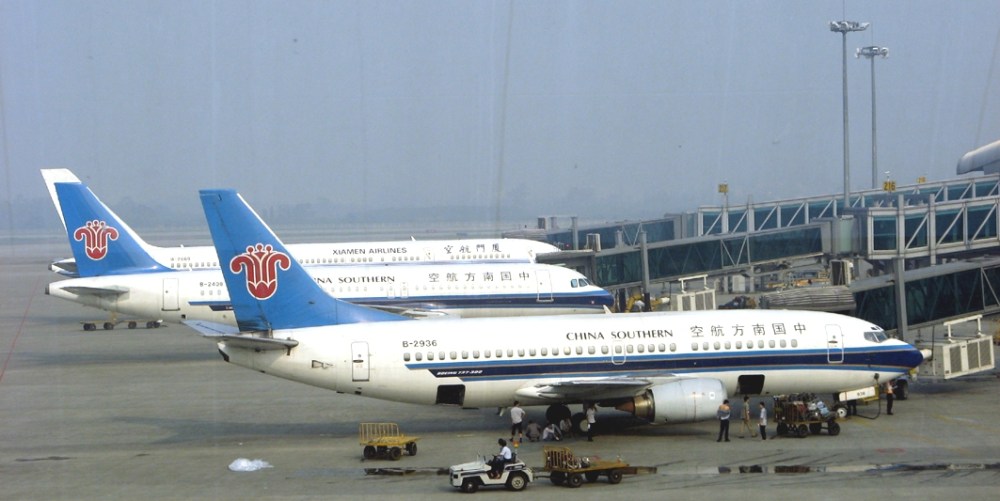
Baiyun_airport_planes.jpg

AW | 2018 01 13 21:07 | AIRLINES MARKET

Resultado de imagen para China pngEl Gobierno de Chino desea tener más preponderancia en el mercado de la aviación comercial

Las nuevas reglas permitirán regularizar las tarifas, hacer más rentables las rutas y permitir diversificarse. El Gobierno de China espera que menos aerolíneas soliciten subsidios del Estado.

Resultado de imagen para China pngLa Administración de Aviación Civil de China (CAAC) anunció la semana pasada nuevas reglas de precios para vuelos nacionales. Esta nueva normativa permitirá a las aerolíneas chinas poder decidir sus propios precios en rutas nacionales, es decir, si la misma ruta es operada por al menos cinco aerolíneas diferentes. Los inversores esperan que esto ayude a aumentar la rentabilidad entre las aerolíneas chinas, que hasta ahora se han enfrentado al estricto control gubernamental de las tarifas.

Resultado de imagen para china aircraft png

El movimiento sigue la promesa del gobierno chino de convertirse en un jugador más activo en la aviación china, con la esperanza de mejorar la calidad y la eficiencia en la industria de la aviación del país.

Resultado de imagen para air china pngDe acuerdo con CAAC, las regulaciones actualizadas deberían aplicarse a al menos 306 rutas, donde cinco o más aerolíneas operan actualmente vuelos. En otras palabras, una gran mayoría de las rutas nacionales de vuelo operadas desde las ciudades chinas de primer y segundo nivel ahora disfrutarán de la liberalización de tarifas.
Las aerolíneas chinas y sus inversores celebran las nuevas reglas, ya que abren el campo de juego para los precios de las tarifas elevadas en las rutas de gran demanda, como los vuelos entre las ciudades de primer nivel de China. Con los aeropuertos en las ciudades de primer nivel de China cada vez más congestionados , la liberalización de tarifas para tales rutas es particularmente bienvenida ya que las aerolíneas encuentran dificultades en el lanzamiento de más vuelos entre, por ejemplo, Beijing y Shanghai, debido a que los aeropuertos ya sobrepasan la capacidad.

edea0c9e-b0c2-433c-a817-5967cce9a278-original.png

Como se espera que la medida aumente las ganancias de las aerolíneas, CAAC también puede ayudar indirectamente a las aerolíneas chinas a depender menos de los subsidios gubernamentales para sus resultados, lo que podría ser crítico en caso de que los subsidios del gobierno local a las aerolíneas comiencen a agotarse en China. Con una mayor participación de las ganancias de las aerolíneas provenientes de las actividades comerciales reales en lugar de los regalos del gobierno, las aerolíneas chinas también estarán menos expuestas al creciente problema de la creciente deuda del gobierno local.

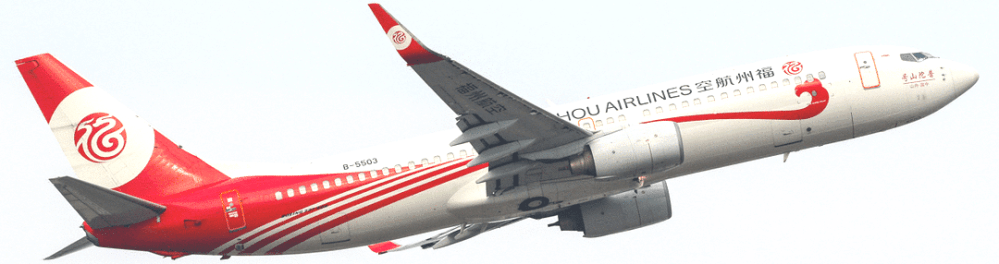
El gobierno chino espera que la medida mejore la calidad y la eficiencia de las aerolíneas chinas, no está claro en qué medida las nuevas reglas tendrán éxito en el logro de estos objetivos. En la actualidad, los subsidios del gobierno local son en gran medida responsables de las líneas aéreas chinas que operan lo que de otro modo serían rutas no rentables, principalmente desde y hacia las ciudades de menor nivel en toda China. Además, las nuevas reglas ayudarán a mejorar la calidad del servicio entre las aerolíneas chinas. Con una mayor rentabilidad, tendría sentido que algunas de las ganancias inesperadas de las aerolíneas se reinvertirían en iniciativas que mejorarían el servicio al cliente y la comodidad en la industria de la aviación china. En la actualidad, Hainan Airlines es la única aerolínea china con una calificación Skytrax de cinco estrellas, con la mayoría de las aerolíneas chinas clasificándose notoriamente malas en el ranking de clientes.

La nueva normativa tenderá a mejorar la eficiencia general y la calidad del servicio sería mejorar la puntualidad de las aerolíneas chinas. En el último informe de puntualidad del analista de aviación OAG, los principales beneficiarios de las nuevas normas, los transportistas estatales Air China, China Eastern Airlines y China Southern Airlines se ubicaron en el tercer lugar entre los mega operadores a nivel mundial.

Las aerolíneas chinas han acogido con satisfacción la nueva normativa que permitirá una mayor liberalización en la industria de la aviación china, los cambios más recientes apuntarán a aumentar los beneficios de las aerolíneas estatales de China pero que deberán estar a la altura de la calidad del servicio prestado.  AIRWAYS® AW-Icon TXT

Liberalization rates in China

Imagen relacionadaThe Chinese Government wishes to have a greater preponderance in the commercial aviation market

The new rules will make it possible to regularize rates, make routes more profitable and allow diversification. China’s government expects fewer airlines to apply for state subsidies.

The Civil Aviation Administration of China (CAAC) announced last week new pricing rules for domestic flights. This new regulation will allow Chinese airlines to decide their own prices on domestic routes, that is, if the same route is operated by at least five different airlines. Investors hope that this will help increase profitability among Chinese airlines, which have so far faced strict government control of tariffs.

The move follows the Chinese government’s promise to become a more active player in Chinese aviation, hoping to improve the quality and efficiency in the country’s aviation industry.

According to CAAC, updated regulations should apply to at least 306 routes, where five or more airlines currently operate flights. In other words, a large majority of the national flight routes operated from Chinese first and second tier cities will now enjoy tariff liberalization.

Chinese airlines and their investors celebrate the new rules, as they open the playing field for the prices of high fares on high-demand routes, such as flights between China’s top-tier cities. With airports in China’s top tier cities becoming increasingly congested, tariff liberalization for such routes is particularly welcome as airlines find it difficult to launch more flights between, say, Beijing and Shanghai, because Airports already exceed capacity.

As the measure is expected to increase airline profits, CAAC can also indirectly help Chinese airlines to rely less on government subsidies for their results, which could be critical in the event that local government subsidies to airlines begin to run out in China. With a greater share of airline profits coming from actual business activities instead of government gifts, Chinese airlines will also be less exposed to the growing problem of growing local government debt.

The Chinese government expects the measure to improve the quality and efficiency of Chinese airlines, it is not clear to what extent the new rules will succeed in achieving these objectives. Currently, local government subsidies are largely responsible for Chinese airlines operating what would otherwise be unprofitable routes, mainly to and from lower-tier cities throughout China. In addition, the new rules will help improve the quality of service among Chinese airlines. With greater profitability, it would make sense that some of the airline’s windfalls would be reinvested in initiatives that would improve customer service and comfort in the Chinese aviation industry. Currently, Hainan Airlines is the only Chinese airline with a five-star Skytrax rating, with the majority of Chinese airlines ranking notoriously bad in the customer ranking.

The new regulations will tend to improve overall efficiency and the quality of service would improve the timeliness of Chinese airlines. In the latest report of punctuality of the aviation analyst OAG, the main beneficiaries of the new rules, the state carriers Air China, China Eastern Airlines and China Southern Airlines were in third place among the mega operators worldwide.

Chinese airlines have welcomed the new regulations that will allow greater liberalization in the Chinese aviation industry, the most recent changes will aim to increase the benefits of Chinese state airlines but that should be up to the quality of service borrowed. A \ W


Ξ A I R G W A Y S Ξ
SOURCE:  Airgways.com
DBk: Caac.gov.cn/en/SY / Wikimedia.org / Pinterest.com / Nanshanjet.com
AW-POST: 201801132107AR

A\W   A I R G W A Y S ®