Cláusula de Alcance en aviación regional

AW7006533

AW | 2017 10 10 12:44 | INDUSTRY / AIRLINES MARKET

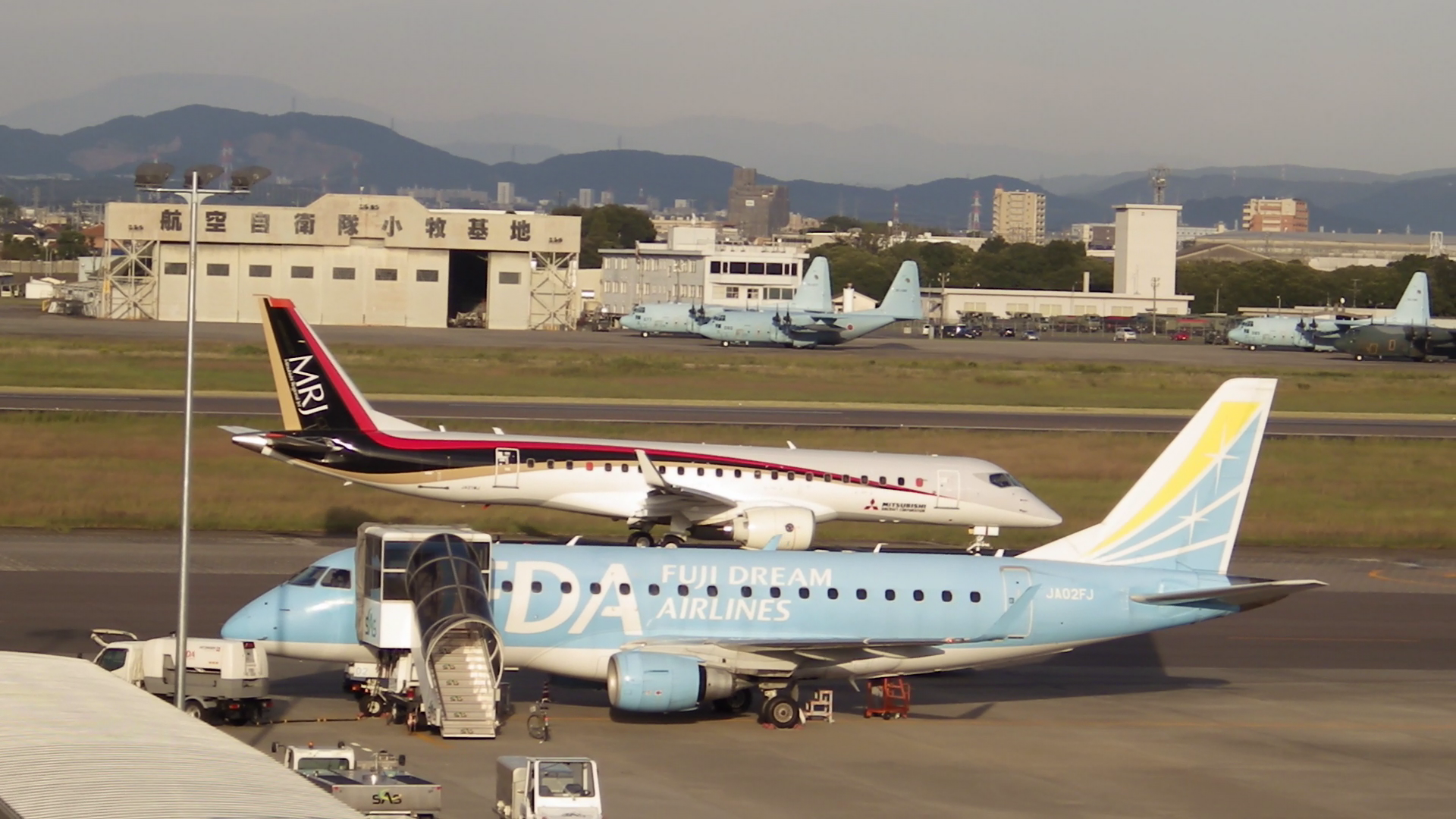
Embraer y Mitsubishi no podrían expandir sus ventas a Estados Unidos por las «Cláusula de Alcance» para las aeronaves Embraer E175-E2 y Mitsubishi MRJ-90

Los pilotos de las principales aerolíneas esperan mantener las reglas vigentes en su nuevo contrato de trabajo que impiden que la aerolínea estadounidense vuelen aviones por encima de un cierto peso en rutas regionales. Esto representa un golpe a Embraer S.A. y Mitsubishi Heavy Industries Ltd., cuyos últimos modelos superan ese límite, imposibilitando las ventas en el mercado estadounidense, como aeronaves regionales.

El nuevo contrato de trabajo de los pilotos mantendrá lo que se conoce como una «Cláusula de Alcance», que restringe aviones de más de 86.000 libras y con más de 76 asientos en rutas regionales. Los resultados de la votación sobre el nuevo contrato se esperan el 1 de diciembre 2017.

La cláusula protege efectivamente puestos de trabajo piloto bien remunerados en las principales aerolíneas, ya que impide a la compañía utilizar aviones más grandes en rutas regionales subcontratadas, que generalmente pagan menos y tienen condiciones de trabajo inferiores.

Embraer & Mitsubishi pelean el mercado EEUU

Cuando la ingieniería de Embraer y Mitsubishi diseñaron sus últimos aviones regionales, con motores más pesados ​​pero más eficientes, esperaban que la cláusula de alcance se hubiera cancelado, pero los sindicatos han logrado mantenerla.

Resultado de imagen para Embraer E175 E2 pngEl voto de Delta seguirá las decisiones similares de los sindicatos de American Airlines Group Inc. y United Continental Holdings Inc. a principios de este año como en 2015. La oposición de los pilotos a las cláusulas de alcance es un problema para la aeronave regional Embraer E175-E2 que se entregará en 2020 y el avión Mitsubishi MRJ90, programado para entrega a mediados de 2018, que exceden ambos el límite de peso.

Resultado de imagen para MRJ90 pngEl analista Darryl Genovesi dijo que era improbable que las aerolíneas volaran el Embraer E175-E2 sólo en rutas principales, debido a mayores costos. «Esto pone en riesgo la viabilidad del E175-E2, ya que la mayor parte de la demanda se origina en las tres aerolíneas», Delta Air Lines, United Airlines y American Airlines, escribió Genovesi en una nota a los clientes.

El operador regional SkyWest Inc, que opera vuelos para Delta, entre otros, es el cliente de lanzamiento del E175-E2, con 100 pedidos firmes. En un comunicado, Embraer dijo que su actual E-175 domina el mercado de 70 plazas, donde tiene el 84% de la cuota de mercado y el fabricante brasileño seguirá vendiendo ese avión a partir de 2020 si las cláusulas de alcance no cambian. Sin embargo, el comunicado dice: «Embraer cree que las cláusulas de alcance se relajarán en el futuro a medida que aumenten los precios de los combustibles y las aerolíneas busquen productos más eficientes».

En septiembre, la compañía Mitsubishi dijo que está trabajando con los clientes para tratar problemas de peso para el MRJ90, con un peso total de 1.323 libras, que lo convierte en un avión demasiado pesado para operaciones regionales en EEUU con la «Cláusula de Alcance», imposibilitando poder obtener un contrato con Eastern Airlines de Florida.

Bombardier contraataca

Los sindicatos de pilotos estadounidenses han tomado una línea cada vez más dura en las demandas salariales más altas y están haciendo menos concesiones a las compañías estadounidenses. Sin embargo, su posición actual en contra de las cláusulas cambiantes podría ser una bendición para la rival canadiense Bombardier Inc, que lo ve como una oportunidad para aumentar las ventas de su CRJ-900, que se ajusta a los límites de peso actuales.

El presidente ejecutivo de Mesa Air Group Inc, Jonathan Ornstein, dijo que no comprará nuevos aviones que no cumplan con las cláusulas de alcance ya que no cree que los límites actuales serán cambiados en el futuro cercano. En lugar de eso, la aerolínea regional con sede en Arizona comprará más generación actual del E-175, junto con CRJ900 adicionales para reemplazar 38 aviones regionales que se eliminarán gradualmente durante los próximos cuatro años. «No creo que haya ninguna posibilidad de que los pilotos cambien sus requisitos de peso», dijo Ornstein.

Desafortunadamente tanto para Embraer como para Mitsubishi, la mayor parte del interés en el E175 – E2 y el MRJ90 provienen de aerolíneas regionales de EE.UU., prácticamente ninguna de las cuales puede operar esos aviones sin cambios en la cláusula de alcance. Sin embargo, Embraer insiste en que el interés en el actual E175 sigue siendo fuerte en América del Norte, y Mitsubishi dice que sus grandes clientes de EE.UU. pueden optar por cambiar sus pedidos de MRJ -90s a la menor MRJ -70s, ahora programado para EIS en 2019. Mitsubishi espera entregarán el primer MRJ -90 a All Nippon Airways de Japón a mediados de 2018.

Embraer ha vendido más de 330 E175 a aerolíneas en Norteamérica desde enero de 2013, representando más del 80% de todas las órdenes en el segmento de 76 asientos, según la compañía. En tanto, Mitsubishi necesita ingresar a un mercado nuevo con su nueva aeronave regional MRJ-90, pero si la Cláusula de Alcance se mantiene, podrá ofrecer su modelo mas pequeño, el MRJ-70 para poder obstentar un jugoso contrato de las principales aerolíneas regionales de Estados Unidos. AIRWAYS® AW-Icon TXT

The Scope Clauses in regional aviation

Embraer and Mitsubishi could not expand sales to the United States under the «Scope Clause» for Embraer E175-E2 and Mitsubishi MRJ-90 aircraft

The pilots of the main airlines hope to maintain the rules in force in their new work contract that prevent the US airline from flying over a certain weight on regional routes. This represents a blow to Embraer S.A. and Mitsubishi Heavy Industries Ltd., whose latest models exceed this limit, precluding sales in the US market, such as regional aircraft.

The new work contract for pilots will maintain what is known as a «Scope Clauses», which restricts aircraft over 86,000 pounds and with more than 76 seats on regional routes. The results of the vote on the new contract are expected on December 1, 2017.

The clause effectively protects well-paid pilot jobs in major airlines, as it prevents the company from using larger aircraft on regional outsourced routes, which generally pay less and have lower working conditions.

Embraer & Mitsubishi fight the US market

When Embraer and Mitsubishi’s engineers designed their latest regional aircraft, with heavier but more efficient engines, they expected the scope clause to be canceled, but the unions have managed to maintain it.

Delta’s vote will follow the similar decisions of the unions of American Airlines Group Inc. and United Continental Holdings Inc. earlier this year as in 2015. The opposition of the pilots to the scope clauses is a problem for the regional aircraft Embraer E175-E2 from Embraer to be delivered in 2020 and Mitsubishi‘s MRJ90 aircraft, scheduled for delivery in mid-2018, both exceeding the weight limit.

UBS downgraded Embraer to a «sell» rating this week. Analyst Darryl Genovesi said airlines were unlikely to fly the Embraer E175-E2 only on main routes because of higher costs. «This puts the viability of the E175-E2 at risk, since most of the demand originates from the three airlines», Delta Air Lines, United Airlines and American Airlines, Genovesi wrote in a note to customers.

Regional operator SkyWest Inc, which operates flights to Delta, among others, is the launch customer of the E175-E2, with 100 firm orders. In a statement, Embraer said that its current E-175 dominates the market for 70 seats, where it has 84% ​​of market share and the Brazilian manufacturer will continue to sell that aircraft from 2020 if the scope clauses do not change. However, the statement said: «Embraer believes that the scope clauses will relax in the future as fuel prices rise and airlines look for more efficient products.»

In September, Mitsubishi said it is working with customers to address weight issues for the MRJ90, with a total weight of 1,323 pounds, which makes it an over-heavy aircraft for regional operations in the US with the «Scope Clauses», making it impossible to obtain a contract with Eastern Airlines of Florida.

Bombardier counterattacks

US Pilot Unions have taken an increasingly hard line in higher wage demands and are making fewer concessions to US companies. However, its current position against changing clauses could be a boon to Canadian rival Bombardier Inc, which sees it as an opportunity to boost sales of its CRJ-900, which fits current weight limits.

Mesa Air Group Inc chief executive Jonathan Ornstein said he will not buy new aircraft that do not comply with the scope clauses as he does not believe the current limits will be changed in the near future. Instead, the Arizona-based regional airline will buy more of the current generation of the E-175 along with additional CRJ900 to replace 38 regional jets that will phase out over the next four years. «I do not think there’s any chance that the drivers will change their weight requirements,» Ornstein said.

Unfortunately for both Embraer and Mitsubishi, most of the interest in the E175-E2 and the MRJ90 come from US regional airlines, virtually none of which can operate those aircraft without changes in the scope clause. However, Embraer insists that interest in the current E175 is still strong in North America, and Mitsubishi says its major US customers are. they can choose to switch their orders from MRJ-90s to the smaller MRJ-70s, now scheduled for EIS in 2019. Mitsubishi expects to deliver the first MRJ-90 to Japan’s All Nippon Airways in mid-2018.

Embraer has sold more than 330 E175 to airlines in North America since January 2013, representing more than 80% of all orders in the 76-seat segment, according to the company. Meanwhile, Mitsubishi needs to enter a new market with its new MRJ-90 regional aircraft, but if the Reach Clause is maintained, it will be able to offer its smaller model, the MRJ-70 to be able to obstruct a juicy contract of the main regional airlines of the United States. A \ W


Ξ A I R G W A Y S Ξ
SOURCE:  Airgways.com
DBk:  Wikimedia.org / Airgways.com
AW-POST: 201710101244AR

A\W   A I R G W A Y S ®

Aumento tráfico en Argentina

AW-7008567

AW | 2017 10 09 11:37 | AIRLINES MARKET

ANAC Argentina observa un aumento de tráfico de pasajeros

Desde la Dirección de Estudios de Mercado y Estadísticas, dependiente de la Dirección Nacional de Transporte Aéreo de la Administración Nacional de Aviación Civil (ANAC), han comunicado las cifras correspondientes a los índices de puntualidad y tráfico en Argentina.

La puntualidad en Argentina
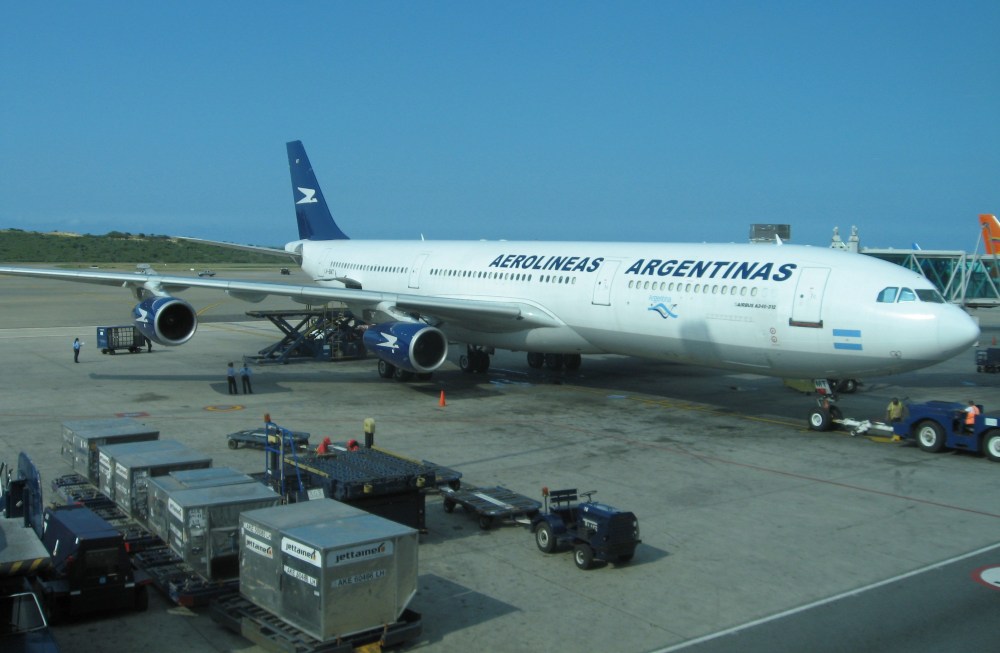
El índice de puntualidad de las compañías aéreas en Argentina en el sector de vuelos domésticos ha tenido algunos avances y otros retrocesos. Aerolíneas Argentinas obtuvo en 95% de despacho de puntualidad sobre 12.030 vuelos en el 1Q2017, mientras que en el 2Q2017 tuvo un decrecimiento del 85% sobre 5.015 vuelos de cabotaje. En cuanto a Austral Líneas Aéreas tuvo un despacho de puntualidad de 93% sobre 10.601 vuelos domésticos en el 1Q2017 mientras que el el 2Q2017 una disminución del 84% sobre 10.150 vuelos de cabotaje. Latam Airlines Argentina consigió un 70% en el 1Q2017 sobre 6.395 vuelos en el interior de Argentina frente al 2Q2017 de un 87% sobre 5.015 vuelos de cabotaje.

  infoanacweb-01infoanac-julio-ultimo-enviar

Transporte internacional
Entre los mayores transportistas que arriban a Argentina se observa algunas compañías con un leve retroceso mientras que en otros una mejora sustancial.

Destinos y frecuencias
En agosto de 2017 las aerolíneas han servido destinos nacionales en las 22 provincias más Ciudad de Buenos Aires en 37 aeropuertos de Argentina realizadas en 5.268 frecuencias programadas. En el plano internacional, se han conectado 25 paises en 44 aeropuertos del exterior con 3.846 frecuencias establecidas.

Tráfico de pasajeros
El número de estadísticas de tráfico de pasajeros ha tenido un incremento notable de 2.077.743 pax transportados en Agosto 2016 en vuelos regulares / no regulares sobre un aumento en Agosto 2017 de 2.383.048 pax representando un aumento interanual del 15%. AIRWAYS® AW-Icon TXT

agostoweb-01

AW-70086444

Increase traffic in Argentina

ANAC Argentina sees increased passenger traffic

From the Directorate of Market and Statistics Studies, which reports to the National Air Transport Administration of the National Civil Aviation Administration (ANAC), they have reported the figures for punctuality and traffic indices in Argentina.

Punctuality in Argentina
The punctuality index of the airlines in Argentina in the sector of domestic flights has had some progress and other setbacks. Aerolíneas Argentinas obtained 95% of punctuality clearance on 12,030 flights in 1Q2017, while in 2Q2017 it had an 85% decrease on 5,015 cabotage flights. As for Austral Líneas Aéreas had a punctuality clearance of 93% on 10,601 domestic flights in 1Q2017 while on 2Q2017 an 84% decrease on 10,150 cabotage flights. Latam Airlines Argentina achieved 70% in 1Q2017 over 6,395 flights in the interior of Argentina compared to 2Q2017 of 87% over 5,015 cabotage flights.

International transport
Among the major transporters arriving in Argentina are some companies with a slight decline while in others a substantial improvement.

Destinations and frequencies
In August 2017 the airlines have served national destinations in the 22 provinces plus Buenos Aires City in 37 airports in Argentina performed on 5,268 frequencies scheduled. At the international level, 25 countries have been connected in 44 foreign airports with 3,846 established frequencies.

Passenger traffic
The number of passenger traffic statistics has seen a notable increase of 2,077,743 pax transported in August 2016 on scheduled / non-scheduled flights, with a rise of August 23rd of 2,383,048 pax, representing a year-on-year increase of 15%. A \ W


Ξ A I R G W A Y S Ξ
SOURCE:  Airgways.com
DBk:  Anac.gob.ar
AW-POST: 201710091137AR

A\W   A I R G W A Y S ®

Las turbulencias del mundo lowcost

AW-ReporterAW | 2017 10 09 10:50 | AIRLINES MARKET

Los vaivenes del mercado de las aerolíneas low-cost

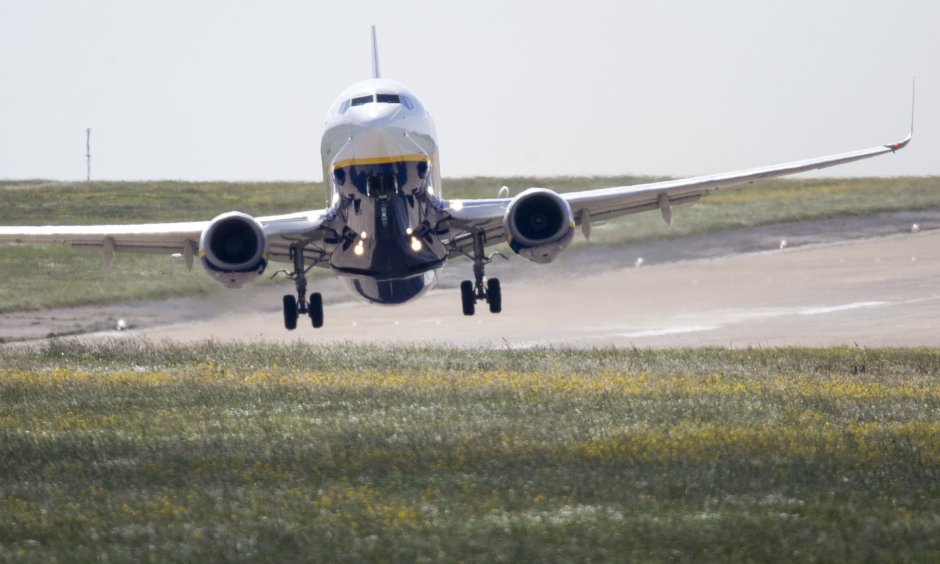
En un lapso de dos semanas, la aerolínea reina del low cost, Ryanair, ha vaciado el espacio aéreo europeo de 20.000 vuelos para los próximos seis meses. Este hecho insólito ha constituido su mayor crisis hasta el momento y puesto en evidencia que en un mercado tan competitivo, con estructuras de costes tan ajustadas y en época de escasez de tripulaciones cualificadas, cualquier fallo se paga.

No obstante, lo que podría haber supuesto el comienzo del fin para casi cualquier aerolínea sin esos costes ajustados al milímetro, tocará levemente a la irlandesa pero no la herirá. Su propio consejero delegado, Michael O’Leary, cifró las pérdidas por sus primeros 2.000 vuelos cancelados (los de septiembre y octubre) en 25 millones de euros, un desastre pero razonablemente pequeño en el contexto de los más de 2.500 vuelos que opera la aerolínea cada día.

Dejando de lado las posibles multas si las autoridades aéreas comprueban vulneraciones de los derechos de los pasajeros en España la Agencia Estatal de Seguridad Aérea (AESA) podría imponerle dentro un año hasta nueve millones de euros- la eliminación de algunos vuelos para la temporada de invierno podría incluso haberle beneficiado. Y no sólo porque Ryanair haya certificado ya que con las anulaciones de septiembre ha mejorado su puntualidad hasta situarla en el 97%, lo que de por si ya redunda en un recorte de los costes.

Algunas fuentes del sector valoran la posibilidad de que, dado que la mayoría de los vuelos cancelados no forma parte de las rutas con mayores tasas de ocupación de Ryanair y teniendo en cuenta que los criterios de rentabilidad en el sector pasan por llenar los aviones para optimizar gastos varios como el del combustible, la maniobra le habría podido granjear un ahorro.

Salvo que el hecho se desmadre y la aboque a una nueva crisis de imagen como la que le ocasionaron temas como ir justo de carburante o el trato poco correcto a los pasajeros a la que puso fin hace alrededor de tres años su actual director de Marketing, no le dará a alas a la competencia. Al menos de momento. Su cancelación masiva no supondrá beneficios significativamente reseñables a largo plazo para sus competidores, más allá de la obtención por parte de Norwegian Air Shuttle de los 180/140 pilotos fugados de la irlandesa.De entrada, Willie Walsh, consejero delegado del grupo IAG Group, British Airways, Iberia, Vueling y Air Lingus, aseguraba el jueves que la capacidad para adaptarse a los cambios de Ryanair le podría ayudar a salir incluso reforzada de las cancelaciones porque podría optar por reformar su modelo de negocio. Eso la haría aún más competitiva, reconocía acongojado. Y es que el mercado es tan competitivo que el rey es quien logra la mejor reducción de costes. En este espacio aéreo aún por convertirse en Cielo Único Europeo, unas aerolíneas nacen y otras desaparecen. Y el mercado de las de bajo coste está en un momento candente, que nadie quiere perderse.

Ryanair e easyJet, las dos grandes del mercado, eran a mediados de los 90 un germen que las aerolíneas tradicionales no vieron como auténticos competidores. La irlandesa baraja cifras hoy de 110 millones de pasajeros anuales (dato de 2016), mientras que easyJet, la segunda en público en Europa, cuenta 80 millones de pasajeros anuales. Ambas con estructuras de plantilla muy livianas, aunque con divergentes modelos de contratación laboral. También Vueling nació low cost pero encontró luego el modo de competir en una mejor posición de fuerza uniéndose al holding IAG.

Con un negocio netamente low cost, las dos grandes comenzaron operando como es de rigor en su modelo en aeropuertos secundarios y destinos directos entre ciudades. Con precios imbatibles crearon una demanda que antes no existía.

Las sucesoras o los híbridos como Iberia Express, Eurowings, Transavia, entre otras, nacieron en respuesta a las demandas del mercado. Grandes aerolíneas europeas habían optado por aunar esfuerzos y formar los tres grandes grupos del panorama actual: IAG, Air France-KLM y Lufthansa Group, con el fin de sobrevivir a la crisis y hacer frente a la feroz competencia de las low cost, no tuvieron más remedio que sanearse y ajustar sus costes.

La creación de filiales low cost fue la opción escogida para mejorar las cifras de las matrices. A ellas trasladaron tripulaciones con costes laborales menores, lo que, entre otras cosas y grosso modo les permitió ofrecer precios competitivos para ganar o recuperar clientes.

Parece que fue hace mucho pero hace apenas unos cinco años que nacieron realmente estas aerolíneas que, en general, tal y como señala Iberia Express, desarrollan un modelo híbrido: Nutrirse de pasajeros del largo radio de la red Iberia para competir en el corto y medio rango con el low cost puro, y a la vez ofrecer un servicio diferenciado.

Norwegian vio la viabilidad de trasladar el modelo low cost, salvando las distancias, a los viajes intercontinentales. Les dio pie a un pedido de nuevos aviones más eficientes cuyo menor consumo y mayor ligereza les ha permitido ampliar la capacidad por aparato más número de asientos y un mayor rendimiento. La gran ventaja es poder operar vuelos punto a punto, es decir sin escalas, señala el portavoz de la aerolínea noruega en España, Alfons Claver, puenteando los hubs, centros aeroportuarios de conexiones, que elevan los costes de la operativa. En esas distancias es más complicado sacar partido a los aviones para potenciar la rentabilidad, pero Norwegian ve una ventaja en poder ser la mejor opción tanto para el pasajero vacacional como para el de negocios, dado especialmente la reducción en los presupuestos destinados a viajes por parte de las empresas. La paquetización de los servicios, es decir, que cada cliente escoja con qué comodidades viajar y pague en función de ellas pero partiendo de un precio bajo, es dónde la escandinava sitúa su gran ventaja. El potencial de este mercado ha atraído a otras, como Wow Air.

IAG no quiso perder tiempo. Hace medio año creó una marca que opera la compañía Iberia y que compite en tarifas y algunos destinos de larga distancia. Air France-KLM ha querido quedarse de brazos cruzados y arriesgarse a perder el tren del largo radio a bajo coste. Y, aunque ya contaba con la filial low cost Transavia, ha lanzado la marca Joon, que anuncia vuelos de media y larga distancia. Level tiene vocación de aerolínea, mientras que sin haber iniciado aún sus vuelos el objetivo de Joon es más difuso, pero sugiere una nueva forma de operar en mercados, conquistados o nuevos, con menores costes.

Pero no todas logran hacer magia en sus estructuras de costes, y algunas, incluso veteranas en la aviación, caen presas de la cada vez más feroz competencia por ofrecer la mejor tarifa y pese a ello ser rentables. Air Berlin o esta misma semana la británica Monarch Airlines con 50 años a sus espaldas, aunque primeriza en su aventura low cost, entre otras, no han conseguido equilibrar sus balances.

Con Air Berlin, y Alitalia, al contrario que en el caso de Monarch, en el que el Gobierno británico decidió no intervenir, hay más en juego de lo que parece. Sus restos son ahora la presa por la que han mostrado interés casi todas las aerolíneas del panorama europeo. Y cuando los gobiernos intentan mantener la primacía de la compañía de casa en el propio campo siempre hay claras favoritas, como Lufthansa.

La última idea para mejorar la ocupación son las alianzas de alimentación, que permiten que compañías low cost operen cortas y medias distancias para alimentar las rutas largas. En algunos casos obedecen a sinergias del grupo, como Vueling con Level; en otros casos a acuerdos. Otros acuerdos de desplegan en plataformas sin exclusividad, easyJet-Norwegian, que posibilitan trasvases de pasajeros entre aerolíneas.

La viabilidad del modelo low cost afronta divergencias, que el propio mercado está señalando y que las aerolíneas de bajo costo están afrontando con verdadero desafío. AIRWAYS® AW-Icon TXT

The turbulences of the world of the lowcost

The ups and downs of the low-cost airlines market

Within two weeks, the airline’s low-cost airline, Ryanair, has emptied European airspace of 20,000 flights for the next six months. This unusual event has constituted its greatest crisis so far and has shown that in a market so competitive, with such tight cost structures and in times of shortage of qualified crews, any failure is paid.

However, what could have meant the beginning of the end for almost any airline without those costs adjusted to the millimeter, will touch to the Irish one but it will not hurt it. His own CEO, Michael O’Leary, credited losses for his first 2,000 canceled flights (September and October) at € 25 million, a disaster but reasonably small in the context of more than 2,500 flights which operates the airline every day.

Leaving aside possible fines if the authorities verify violations of the rights of passengers in Spain the State Agency of Aviation Safety (AESA) could impose within a year up to nine million euros the elimination of some flights for the season of winter might even have benefited him. And not only because Ryanair has already certified that with the cancellations of September has improved its punctuality to 97%, which in itself already results in a cut in costs.

Some sources in the sector value the possibility that, since most canceled flights are not part of routes with higher occupancy rates of Ryanair and taking into account that the criteria of profitability in the sector happen to fill the aircraft to optimize miscellaneous expenses such as that of fuel, the maneuver could have earned him savings.

Except that the event is disheartened and a new image crisis such as that caused by issues such as fair fuel or improper treatment of passengers which ended about three years ago its current Director of Marketing, will not give wings to the competition. At least for now. Its massive cancellation will not give significantly long-term benefits to its competitors, beyond the Norwegian Air Shuttle‘s acquisition of the 180/140 runaway riders from the Irish. From the outset, Willie Walsh, CEO of the IAG Group: British Airways, Iberia, Vueling and Air Lingus, said on Thursday that Ryanair’s ability to adapt to change could help it get even reinforced from cancellations because it could choose to reform its business model. That would make her even more competitive, he admitted, distressed. And is that the market is so competitive that the king is the one who achieves the best cost reduction. In this airspace still to become Single European Sky, some airlines are born and others disappear. And the low-cost market is in a burning moment, that nobody wants to get lost.

Ryanair and easyJet, the two largest on the market, were in the mid-1990s a seed that traditional airlines did not see as real competitors. The Irish pack now numbers 110 million passengers annually (data for 2016), while easyJet, the second in public in Europe, has 80 million passengers per year. Both of them had very light workforce structures, albeit with divergent labor recruitment models. Vueling was also born low cost but then found a way to compete in a better position of strength by joining the holding company IAG.

With a low cost business, the two big ones started operating as is strictly in their model in secondary airports and direct destinations between cities. With unbeatable prices created a demand that before did not exist.

Successors or hybrids such as Iberia Express, Eurowings, Transavia, among others, were born in response to the demands of the market. Large European airlines had chosen to join forces and form the three main groups of the current panorama: IAG, Air France-KLM and Lufthansa Group, in order to survive the crisis and to face the fierce competition of the low cost, they did not have more remedy than to heal itself and adjust its costs.

The creation of low cost subsidiaries was the chosen option to improve the numbers of the matrices. They transferred crews with lower labor costs, which, among other things and roughly allowed them to offer competitive prices to win or recover customers.

It seems that it was a long time ago but only five years ago that these airlines were really born, in general, as Iberia Express points out, they develop a hybrid model: Nourishing passengers from the long radius of the Iberia network to compete in the short and medium range with the pure low cost, and at the same time offer a differentiated service.

Norwegian saw the feasibility of moving the low cost model, bridging distances, to intercontinental travel. It gave rise to a request for new, more efficient aircraft whose lower consumption and greater lightness has allowed them to expand capacity per unit plus number of seats and higher performance. The great advantage is to be able to operate point-to-point flights, that is to say non-stop, says Norwegian airline spokesman Alfons Claver, bridging the hubs, airport hubs, which increase the costs of operations. At these distances it is more complicated to take advantage of the aircraft to boost profitability, but Norwegian sees an advantage in being able to be the best option for both the holiday and business traveler, especially given the reduction in budgets for travel by of companies. The bundling of services, that is to say, that each client chooses with what comforts to travel and pay according to them but starting from a low price, is where the Scandinavian places its great advantage. The potential of this market has attracted others, such as Wow Air.

IAG did not want to waste time. A half year ago created a brand that operates the company Iberia and competes in rates and some long distance destinations. Air France-KLM wanted to sit idly by and risk losing the long-haul radio train at low cost. And, although it already had the subsidiary low cost Transavia, it has launched the mark Joon, that announces flights of medium and long distance. Level has an airline vocation, while without having started its flights, Joon’s goal is more diffused, but suggests a new way of operating in markets, conquered or new, with lower costs.

But not all are able to make magic in their cost structures, and some, even veterans in aviation, fall prey to the fiercest competition to offer the best rate and yet be profitable. Air Berlin or this week Briton Monarch with 50 years behind her, although first in her adventure low cost, among others, have failed to balance their balance sheets.

nintchdbpict000345902883.jpg

With Air Berlin, and Alitalia, unlike in the case of Monarch, in which the British Government decided not to intervene, there is more at stake than it seems. Their remains are now the prey that have shown interest almost all airlines in the European scene. And when governments try to maintain the primacy of the home company in the field itself there are always clear favorites like Lufthansa.

The last idea to improve the occupation is the food alliances, which allow low cost companies to operate short and medium distances to feed the long routes. In some cases they obey synergies of the group, such as Vueling with Level; in other cases to agreements. Other agreements are deployed on non-exclusive platforms, easyJet-Norwegian, which allow for passenger transfers between airlines.

The viability of the low cost model faces divergences, which the market itself is pointing out and that low-cost airlines are facing with real challenge. A \ W


AW-Airgways.com-Jet

AW-Airgways Icon-webΞ A I R G W A Y S Ξ
SOURCE:  Airgways.com
DBk:  Airgways.com / Eurotopics.net / Businesstimes.com.sg / Reuters.com / Thesun.co.uk
AW-POST: 201710091050AR

A\W   A I R G W A Y S ®

IATA descarta Venezuela pague deuda a aerolíneas extranjeras

AW-775440077.jpg

AW | 2017 10 05 13:07 | AIRLINES MARKET

La deuda asciende a U$D 3.800 millones de dólares que mantiene con varias aerolíneas internacionales

La Asociación de Transporte Aéreo Internacional (IATA) ha comunicado que descarta que el Gobierno de Venezuela tenga el compromiso de honrar la deuda con las aerolíneas internacionales a corto plazo. El monto de la deuda con las extranjeras asciende a U$D 3.800 millones de dólares.

“No vemos ninguna solución a corto plazo ni voluntad del Gobierno para solucionar los percances que tenemos en este momento”, reconoció hoy miércoles el vicepresidente de IATA para las Américas, Peter Cerdá, durante la presentación de un estudio sobre la contribución de la industria aérea en Panamá.

Venezuela se rige desde 2003 por un sistema de control de cambio que deja en manos del Estado la compraventa de divisas. Las compañías aéreas llevan tres años tratando de cambiar a dólares los ingresos que generan por la venta de boletos en Venezuela, pero el Gobierno no tiene divisas suficientes y muchas han decidido abandonar el país. Entre las compañías han decidido salir del mercado venezolano se encuentran Aerolíneas Argentinas, United Airlines, Air Canadá, Lufthansa, Alitalia, Latam Airlines, Tiara Air, GOL Linhas Aéreas, Delta Air Lines, Avianca y Aeroméxico.  AIRWAYS® AW-Icon TXT

IATA rules Venezuela to pay debt to airlines

The debt amounts to US$ 3.8 billion that it maintains with several international airlines

The International Air Transport Association (IATA) has announced that it has ruled out that the Venezuelan Government is committed to honoring the debt with the international airlines in the short term. The amount of debt with foreigners amounts to US$ 3.8 billion.

«We do not see any short-term solution or the will of the Government to solve the mishaps we have at the moment,» IATA Vice-President for the Americas, Peter Cerdá, acknowledged Wednesday during the presentation of a study on the contribution of the airline industry In Panama.

Venezuela has been governed since 2003 by a system of exchange control that leaves the sale of foreign currency to the State. The airlines have been trying to change the revenue they generate from selling tickets in Venezuela for three years, but the government does not have enough money and many have decided to leave the country. Among the companies that have decided to leave the Venezuelan market are Aerolíneas Argentinas, United Airlines, Air Canada, Lufthansa, Alitalia, Latam Airlines, Tiara Air, GOL Linhas Aéreas, Delta Air Lines, Avianca and Aeroméxico. A \ W


Ξ A I R G W A Y S Ξ
SOURCE:  Airgways.com
DBk:  Mercopress.com / Airgways.com
AW-POST: 201710051307AR

A\W   A I R G W A Y S ®

Aumento flujo pax interior en Argentina

AW-70087782.png

AW | 2017 10 05 11:50 | AIRLINES MARKET

Hasta el 2Q2017 Argentina transportó 1,2 millones de pax a destinos al exterior sin pasar por Buenos Aires

La mayor parte de esos vuelos directos son operados por aerolíneas extranjeras. Aerolíneas/Austral sólo tienen vuelos directos desde Córdoba con tres ciudades de Brasil y, desde el mes pasado, entre Córdoba y Santiago de Chile, mientras que Latam Argentina opera las dos nuevas rutas hacia Santiago desde Tucumán, Neuquén y San Juan. El resto corresponde a Gol, Copa Airlines y las filiales de Latam de Chile, Perú y Brasil. Hay rutas internacionales otorgadas a TACA-Avianca, Sky Airline, Air Europa, Amaszonas y Boliviana de Aviación (BoA).

Desde interior argentino al exterior

Existen 26 destinos desde el interior de Argentina que vuelan al extranjero desde aeropuertos del interior que no pasan por Buenos Aires. Sólo en los primeros siete meses del año volaron casi 1,2 millones de personas al exterior desde cuatro aeropuertos del interior: Córdoba, Rosario, Salta y Mendoza. Ahora no sólo se sumaron otros tres aeropuertos, sino que hay también nuevas rutas directas a Chile, Perú y Bolivia. Córdoba es la que tiene más vuelos al extranjero, con nueve rutas, seguida por Rosario (5), Salta (4) y Mendoza (4). Tucumán (2), además de la ruta a Santiago de Chile, tiene vuelos a Lima. AIRWAYS® AW-Icon TXT

Increase in pax flow in Argentina

Until 2Q2017 Argentina transported 1.2 million pax to destinations abroad without passing through Buenos Aires

Most of these direct flights are operated by foreign airlines. Airlines / Austral only have direct flights from Cordoba with three cities in Brazil and, since last month, between Córdoba and Santiago de Chile, while Latam Argentina operates the two new routes to Santiago from Tucumán, Neuquén and San Juan. The remainder corresponds to Gol, Copa Airlines and the subsidiaries of Latam of Chile, Peru and Brazil. There are international routes granted to TACA-Avianca, Sky Airline, Air Europa, Amaszonas and Boliviana de Aviación (BoA).

From the Argentinean interior to the exterior

There are 26 destinations from the interior of Argentina that fly abroad from airports in the interior that do not pass through Buenos Aires. Only in the first seven months of the year almost 1.2 million people flew abroad from four airports in the interior: Cordoba, Rosario, Salta and Mendoza. Not only were three other airports added, but there are also new direct routes to Chile, Peru and Bolivia. Córdoba has the most flights abroad, with nine routes, followed by Rosario (5), Salta (4) and Mendoza (4). Tucumán (2), in addition to the route to Santiago de Chile, has flights to Lima. A \ W


Ξ A I R G W A Y S Ξ
SOURCE:  Airgways.com
DBk:  Airgways.com
AW-POST: 201710051150AR

A\W   A I R G W A Y S ®

Movimientos en mercado aéreo argentino

AW-70089771.png

AW | 2017 09 25 12:26 | AIRLINES MARKET

El mercado aéreo argentino sigue reconfigurándose, algunas de las empresas ya autorizadas para empezar a operar o para sumar rutas reorganizan sus estrategias

La aerolínea Flybondi, que tiene el objetivo de convertirse en la primera low cost nacional, no iniciará sus vuelos con la ruta Córdoba-Buenos Aires, como estaba previsto, sino que iniciará sus vuelos comerciales uniendo Córdoba-Mendoza. Flybondi, dijo que el primer avión, un Boeing 737-800, adquirido en leasing, lo recibirán a fines de octubre y tendrá base en el Aeropuerto Ambrosio Taravella de Córdoba. A diferencia del plan original, comenzarán a volar desde allí a Mendoza y no a Buenos Aires.

La razón del cambio es que entienden que a fines de enero podrían operar desde El Palomar, donde la inversión a realizar ronda los US$ 30 millones. «Aeroparque no sólo tiene más costos, sino que no es nuestra estrategia; preferimos directamente arrancar en el otro aeropuerto para no dar un mensaje confuso a los clientes.»

Espera, en dos semanas, tener definiciones sobre la estación aérea bonaerense, que será base del segundo avión que recibirán a fines de noviembre. En lo que queda de este año analizan qué otras rutas sumarán desde Córdoba; podrían ser Iguazú y Bariloche.

Flybondi tiene autorizadas 43 rutas de cabotaje y 42 internacionales por 15 años. Cook esperaba cobrar $ 500 el tramo Córdoba-Buenos Aires, pero la tarifa mínima establecida por el Gobierno es de $ 788. «Para nosotros es un tema muy importante. Vamos a seguir batallando, estamos hablando mucho con las autoridades y averiguando alternativas, insistió el CEO. La Argentina es el único país del mundo que tiene una tarifa mínima; es una locura. Puede estar 20% más baja con 10 días de anticipación, pero es absolutamente clave que nos dejen vender al precio que hace sentido; tenemos costos más bajos, somos rentables a precios más bajos.»

Reiteró que la clave es la relación entre precio y volumen; mientras más baja la tarifa, más demanda: «Si no podemos bajar el precio, el crecimiento será menor, no se duplica el mercado sin tarifas bajas; crecer al 15% no es duplicarlo».

Norwegian Air Argentina, aerolínea local del grupo Norwegian, tiene planes de volar en el país entre fines de este año y principios del próximo. «El equipo sigue creciendo; seguimos tomando gente», dijeron. La nuieva línea aérea lowcost ha solicitado 156 rutas.

Andes Líneas Aéreas ha incorporado recientemente dos Boeing 737-800 a su flota, redujo a una frecuencia la ruta Córdoba-Buenos Aires para poder cumplir con los horarios y en el primer trimestre de 2018 incorporará tres nuevos destinos desde Buenos Aires.

Bernardo Racedo Aragón, gerente de Ventas de Andes, explicó que a comienzos del año próximo sumarán, desde Buenos Aires, vuelos a Comodoro Rivadavia, Neuquén y Tucumán. Hoy cuentan con siete aviones y suman en estos días diez comandantes y más tripulantes. Con pasajes de $ 788 para el tramo Córdoba-Buenos Aires, apuntó que tienen «muchas ventas en la web y de último momento». Es que en las otras líneas que cubren la ruta -Aerolíneas Argentinas y Latam- el precio sube a medida que el vuelo se acerca.

Todavía no tienen precisión sobre cuándo operarán las tres rutas internacionales que ya tienen autorizadas (Lima, San Pablo y Santiago de Chile). «Vamos planificando y ordenándonos para ser competitivos y cumplir con lo que anunciamos», señaló Racedo Aragón.

Amaszonas con planes de expansión en el mercado argentino y sudamericano postergó hasta diciembre el vuelo Córdoba-Santa Cruz de la Sierra (Bolivia); estaba anunciado para mediados de este mes. En la empresa indicaron que la demora se debe a que le faltan algunas autorizaciones aeroportuarias locales. AIRWAYS® AW-Icon TXT

Clarin.com 07767677.jpg

Movements in Argentinean air market

The Argentine air market continues to be reconfigured, some of the companies already authorized to start operations or to add routes reorganize their strategies

The airline Flybondi, which aims to become the first national low cost, will not start flights with the Córdoba-Buenos Aires route, as planned, but will start commercial flights connecting Córdoba-Mendoza. Flybondi said that the first aircraft, a Boeing 737-800, acquired in leasing, will receive it at the end of October and will be based at the Ambrosio Taravella Airport in Cordoba. Unlike the original plan, they will begin to fly from there to Mendoza and not to Buenos Aires.

The reason for the change is that they understand that by the end of January they could operate from El Palomar, where the investment to be made is around US $ 30 million. «Aeroparque not only has more costs, but is not our strategy, we prefer to start directly at the other airport to not give a confusing message to customers.»

It waits, in two weeks, to have definitions on the Buenosairean air station, that will be base of the second airplane that will receive in the end of November. In the remainder of this year they analyze what other routes will add from Cordoba; could be Iguazú and Bariloche.

Flybondi has authorized 43 cabotage routes and 42 international routes for 15 years. Cook expected to collect $ 500 for the Córdoba-Buenos Aires section, but the minimum rate set by the government is $ 788. «For us it is a very important issue. We will continue to struggle, we are talking a lot with authorities and finding alternatives, he insisted the CEO Argentina is the only country in the world that has a minimum rate, it’s crazy, it may be 20% lower with 10 days in advance, but it’s absolutely key that let us sell at the price that makes sense, we have more costs low, we are profitable at lower prices».

He reiterated that the key is the relationship between price and volume; the lower the rate, the more demand: «If we can not lower the price, the growth will be lower, the market is not doubled without low tariffs, growing at 15% is not duplicating it.»

Norwegian Air Argentina, the Norwegian airline’s local airline, plans to fly in the country between the end of this year and the beginning of next year. «The team continues to grow, we continue to take people,» they said. The new lowcost airline has requested 156 routes.

Andes Líneas Aéreas has recently added two Boeing 737-800 to its fleet, reduced the Córdoba-Buenos Aires route to a frequency in order to comply with the schedules and in the first quarter of 2018 will incorporate three new destinations from Buenos Aires.

Bernardo Racedo Aragón, sales manager of the Andes, explained that at the beginning of next year will add, from Buenos Aires, flights to Comodoro Rivadavia, Neuquén and Tucumán. Today they have seven airplanes and these days they add ten commanders and more crew. With tickets of $ 788 for the Córdoba-Buenos Aires section, he said that they have «many sales on the web and last minute». It is that in the other lines that cover the route -Aires Argentinas and Latam- the price rises as the flight approaches.

They still do not know when they will operate the three international routes they already have authorized (Lima, San Pablo and Santiago de Chile). «Let’s plan and order to be competitive and comply with what we announce,» said Racedo Aragón.

Amaszonas with plans of expansion in the Argentine and South American market postponed until December the flight Córdoba-Santa Cruz de la Sierra (Bolivia); was announced by the middle of this month. In the company indicated that the delay is due to lacking some local airport authorizations. A \ W


Ξ A I R G W A Y S Ξ
SOURCE:  Airgways.com
DBk:  Airgways.com / Clarin.com
AW-POST: 201709251226AR

A\W   A I R G W A Y S ®

Mayores beneficios aéreos en India

Resultado de imagen para Air India Jet Airways SpiceJet

AW | 2017 09 25 12:05 | AIRLINES MARKET

En el primer trimestre del año 2017, la mayor aerolínea del país, Air India, obtuvo los mejores ingresos. Varias emprpresas en el último ejercicio esperan recuperarse de las pérdidas financieras que enfrentan las aerolíneas en el país. En el último año fiscal, los mejores jugadores privados como Jet Airways, SpiceJet cayó un 4%.

Durante los tres primeros meses del año fiscal en curso, las tres empresas obtuvieron ganancias enormes. El beneficio neto de Indigo fue de Rs 811 crore. Un 37% más que el año anterior. El beneficio de SpiceJet subió 18% a Rs 175 crore. Las ganancias de Jet Airways subieron casi hasta duplicar a Rs 54 crore. El sector de la aviación ha sido una buena señal ya que la disponibilidad de los precios del combustible ha aumentado en el país. El costo de operación para las compañías aéreas aumentó, pero el aumento en el número de pasajeros.  AIRWAYS® AW-Icon TXT

Greater air benefits in India

In the first quarter of 2017, the country’s largest airline, Air India, earned the best revenue. Several companies in the last year expect to recover from the financial losses facing airlines in the country. In the last fiscal year, the best private players like Jet Airways, SpiceJet fell 4%.

During the first three months of the current fiscal year, the three companies made huge profits. Indigo’s net profit was Rs 811 crore. 37% more than the previous year. The SpiceJet profit rose 18% to Rs 175 crore. Jet Airways’ profit rose almost to double to Rs 54 crore. The aviation sector has been a good sign as the availability of fuel prices has increased in the country. The operating cost for airlines increased, but the increase in the number of passengers. A \ W


Ξ A I R G W A Y S Ξ
SOURCE:  Airgways.com
DBk:  Ibtimes.co.in
AW-POST: 201709251205AR

A\W   A I R G W A Y S ®

La crisis aérea en Venezuela afecta a las aerolíneas y aeropuertos

AW | 2017 09 18 20:13 | AIRLINES MARKET / GOVERNMENT

La reducción del número vuelos de líneas aéreas en 2013 era de 352 vuelos disponibles en aerolíneas internacionales cada semana, en Agosto 2017 la cantidad de frecuencias cayó a 121 vuelos diarios

La Asociación Internacional de Transporte Aéreo (IATA), informó mediante el vicepresidente regional de las Américas, Peter Cerdá, un informe emitido a fines de Julio 2017, entregaba un lapidario balance del sector en Venezuela. “Desafortunadamente, (el país) está desconectándose del mundo en cuanto a la conectividad aérea se refiere”, advertía. “El gobierno de Venezuela no está cumpliendo con los requisitos necesarios para que esto ocurra (la conectividad aérea robusta), como la retención de US$ 3.800 millones que pertenecen a las aerolíneas o un sistema de venta de combustible que perjudica a las aerolíneas internacionales en Venezuela”, dijo Cerdá.

Un panorama desolador que no ha hecho más que empeorar durante el gobierno del Presidente Nicolás Maduro, quien en mayo de 2014 advertía así a las compañías aéreas: “No tienen ninguna excusa las aerolíneas para reducir sus vuelos a Venezuela. Aerolínea que reduzca, tomaré medidas severas. Aerolínea que se vaya del país, no vuelve mientras seamos gobierno”.

Un reciente estudio publicado por la revista digital Prodavinci que deja en evidencia la drástica caída en el número de aerolíneas internacionales que operan en Venezuela y el déficit de asientos disponibles y rutas directas para salir hacia otro país, ha sido una advertencia palpable. Esto se tradujo en la partida de varias compañías extranjeras. El informe de Prodavinci asegura que 14 de 31 aerolíneas internacionales se han retirado de Venezuela desde 2013. Más de 70% atribuyó la decisión a que no pueden repatriar ganancias y a la crisis económica.

El éxodo de líneas aéreas internacionales comenzó en 2014 cuando los precios del petróleo, fuente del 96% de las divisas del país- empezaron a derrumbarse. Esto ocasionó, explica France Presse, una sequía de dólares que el gobierno monopoliza desde 2003 mediante un control de cambios y la acumulación de deudas con las aerolíneas, según la IATA.

Entre 2014 y 2015 salieron del país Air Canada, Aeroméxico, Alitalia, Lan (Chile), Tam (Brasil), Tiara (Aruba) y Gol (Brasil); en 2016 la estadounidense Dynamic y la alemana Lufthansa; y este año United, Delta (Estados Unidos) y Avianca.

Humberto Figuera, presidente de la Asociación de Líneas Aéreas de Venezuela (ALAV), resume así las razones del éxodo de las compañías aéreas internacionales. “Las aerolíneas no han podido repatriar sus ganancias que son cerca de US$ 3.800 millones. Eso afecta en mayor medida a las que tienen menos músculo financiero”. Además, “muchas aerolíneas alegan que su retiro se debe a las condiciones de inseguridad en el aeropuerto de Maiquetía y el país”.

Asimismo, Figuera explica que “los costos de operar hacia Venezuela son altos, ya que las líneas aéreas deben hacer inversiones en materia de seguridad para resguardar que sus aviones no sean utilizados para transportar algún tipo de sustancia no autorizada”. Por último, el directivo de la ALAV afirma que “hay una reducción significativa de pasajeros porque se venden los boletos en divisas”. Imposibilitadas de repatriar sus ganancias, la mayoría de las compañías aéreas dejó de vender pasajes en bolívares en 2016, según una fuente de la industria, y solo oferta en línea para pago en dólares.

De acuerdo con el informe de Prodavinci, el déficit de vuelos y de butacas disponibles es creciente. Por ejemplo, en diciembre de 2013 había disponibles 352 vuelos en aerolíneas internacionales cada semana. La frecuencia cayó a 121 en agosto de 2017.

En el mismo período, la oferta semanal de butacas desde Venezuela para destinos internacionales en aerolíneas extranjeras pasó de 57.105 a 19.377 en la actualidad. Si estas cifras se traducen a tasas, entonces se puede decir que si mientras en 2013 Venezuela ofrecía 192 asientos en vuelos internacionales por cada 100.000 habitantes, en 2017 ésta se redujo a apenas 72 butacas por cada 100.000 habitantes.

El informe de Prodavinci también comparó la tasa de butacas ofrecidas por Venezuela con otros países de la región. Citando cifras del Banco Mundial y del sitio Flightradar24.com, el reporte señala que en la semana comprendida entre el 16 y el 22 de agosto pasado el aeropuerto internacional Maiquetía Simón Bolívar de Caracas ofrecía 94 asientos por cada 100.000 habitantes en vuelos internacionales. Una tasa bastante inferior a la de los aeropuertos El Dorado de Bogotá (466,9) o Jorge Chávez de Lima (431,6).

Incluso, según consigna el sitio Efecto Cocuyo, el pasado 9 de agosto mientras nueve vuelos salieron de Maiquetía, 11 despegaron del aeropuerto Toussaint Louvertuve de Puerto Príncipe y 19 del José Martí de La Habana.  AIRWAYS® AW-Icon TXT

AW-775440077.jpg

Venezuela crisis affects airports

The reduction in the number of airline flights in 2013 was 352 flights available in international airlines each week, in August 2017 the number of frequencies dropped to 121 daily flights

The International Air Transport Association (IATA), informed by the regional vice president of the Americas, Peter Cerdá, a report issued at the end of July 2017, delivered a lapidary balance of the sector in Venezuela. «Unfortunately, (the country) is disconnecting itself from the world in terms of air connectivity,» he warned. «The Venezuelan government is not meeting the necessary requirements for this to happen (robust air connectivity), such as the retention of US $ 3.8 billion owned by airlines or a fuel sales system that harms international airlines in Venezuela», said Cerdá.

A bleak picture that has only worsened during the administration of President Nicolas Maduro, who in May 2014 warned airlines: «They have no excuse for airlines to reduce their flights to Venezuela. Airline to reduce, I will take severe measures. Airline that leaves the country, does not return while we are government».

A recent study published by the digital magazine Prodavinci reveals the drastic drop in the number of international airlines operating in Venezuela and the deficit of available seats and direct routes to go to another country has been a palpable warning. This resulted in the departure of several foreign companies. The Prodavinci report says that 14 of 31 international airlines have withdrawn from Venezuela since 2013. More than 70% attributed the decision to not being able to repatriate profits and the economic crisis.

The exodus of international airlines began in 2014 when oil prices, a source of 96% of the country’s currencies, began to collapse. This caused, says France Presse, a drought of dollars that the government monopolizes since 2003 through a control of changes and the accumulation of debts with the airlines, according to the IATA.

Between 2014 and 2015 Air Canada, Aeroméxico, Alitalia, Lan (Chile), Tam (Brazil), Tiara (Aruba) and Gol (Brazil) left the country; in 2016 the American Dynamic and the German Lufthansa; and this year United, Delta (United States) and Avianca.

Humberto Figuera, president of the Association of Venezuelan Airlines (ALAV), summarizes the reasons for the exodus of international airlines. «The airlines have not been able to repatriate their earnings that are about US $ 3.8 billion. That affects to a greater extent those who have less financial muscle«. In addition, «many airlines claim that their retirement is due to the conditions of insecurity in the airport of Maiquetía and the country.»

Likewise, Figuera explains that «the costs of operating to Venezuela are high, as airlines must make investments in security to ensure that their aircraft are not used to transport some type of unauthorized substance.» Finally, the director of the ALAV states that «there is a significant reduction of passengers because the tickets are sold in foreign currency.» Unable to repatriate their profits, most airlines stopped selling tickets in bolivars in 2016, according to an industry source, and only offer online for dollar payments.

According to the Prodavinci report, the shortage of available flights and seats is increasing. For example, in December 2013 there were 352 flights available in international airlines each week. The frequency dropped to 121 in August 2017.

In the same period, the weekly supply of seats from Venezuela to international destinations in foreign airlines went from 57,105 to 19,377 today. If these figures are translated at rates, then it can be said that while in 2013 Venezuela offered 192 seats on international flights per 100,000 inhabitants, in 2017 it fell to just 72 seats per 100,000 inhabitants.

The Prodavinci report also compared the rate of seats offered by Venezuela with other countries in the region. Citing figures from the World Bank and the site Flightradar24.com, the report points out that in the week between August 16 and 22, Caracas’s Maiquetia Simón Bolívar International Airport offered 94 seats per 100,000 inhabitants on international flights. A much lower rate than the airports of El Dorado in Bogotá (466.9) or Jorge Chávez in Lima (431.6).

According to the Cocuyo Effect website, on August 9, as nine flights left Maiquetia, 11 took off from Toussaint Louvertuve airport in Port-au-Prince and 19 from José Martí airport in Havana. A \ W


Ξ A I R G W A Y S Ξ
SOURCE:  Airgways.com
DBk:  Finanzasdigital.com / Airgways.com
AW-POST: 201709182013AR

A\W   A I R G W A Y S ®

Debilitamiento beneficios aerolíneas EU

AW | 2017 09 18 18:57 | AIRLINES MARKET

Las aerolíneas clásicas y lowcost estadounidenses impulsan el descuento generalizado lo que genera un debilitamiento de los beneficios

Muchas de las principales aerolíneas estadounidenses se enfrentaban a un debilitamiento de las condiciones de ingresos antes de la llegada del efectos pos-huracanes Harvey e Irma golpearan la región.

Esas tormentas están haciendo que las estimaciones de ingresos disminuyan, lo que está generando una guerra de tarifas bajaas. Delta Air Lines, United Airlines, Southwest Airlines y Spirit Airlines están entre las aerolíneas que han emitido revisiones a la baja de su previsión de ingresos unitarios para el 3Q2017, impulsada en parte por lo que esas compañías consideran como un descuento generalizado de tarifas.

American Airlines y United Airlines han estado combinando agresivamente las tarifas de las aerolíneas de bajo coste y continúan su compromiso de igualar los precios como una estrategia para defender sus respectivos hubs. Al mismo tiempo, Spirit está evaluando su estrategia de precios después de centrarse más en su gestión de rendimiento durante los últimos nueve meses.

El resultado parece ser una gran cantidad de revueltas de precios en el mercado estadounidense a medida que los nuevos niveles de precios introducidos por las tres grandes aerolíneas de la red global del país se apoderan y las tiendas de descuento se ajustan a la nueva realidad de la agresiva igualación de precios. Los éxitos de los ingresos por las tormentas, junto con las maniobras de precios competitivos, están templando las expectativas a medida que los precios del petróleo comienzan a subir. AIRWAYS® AW-Icon TXT

US airlines weakening profits

Classic and low-cost US airlines push the generalized discount which generates a weakening of the benefits

Many of the major US airlines were facing a weakening of revenue conditions before the advent of post-hurricane effects Harvey and Irma hit the region.

Those storms are causing revenue estimates to decline, which is generating a low rate war. Delta Air Lines, United Airlines, Southwest Airlines and Spirit Airlines are among the airlines that have issued downward revisions of their unit revenue forecast for 3Q2017, driven in part by what these companies regard as a generalized tariff discount.

American Airlines and United Airlines have been aggressively combining low fare rates and continue their commitment to match prices as a strategy to defend their hubs. At the same time, Spirit is evaluating its pricing strategy after focusing more on its performance management over the past nine months.

The result seems to be a lot of price spikes in the US market as the new price levels introduced by the three big airlines of the country’s global network take over and discount stores adjust to the new reality of the aggressive price equalization. Storm revenue successes, coupled with competitive price maneuvers, are tempering expectations as oil prices begin to rise. A \ W


Ξ A I R G W A Y S Ξ
SOURCE:  Airgways.com
DBk:  Reuters.com / Skift.com
AW-POST: 201709181857AR

A\W   A I R G W A Y S ®

Transporte aéreo record en Julio 2017

boeing-737-MAX-10-3.jpg

AW | 2017 09 09 13:57 | AIRLINES MARKET

Las aerolíneas alcanzan una ocupación record en julio 2017

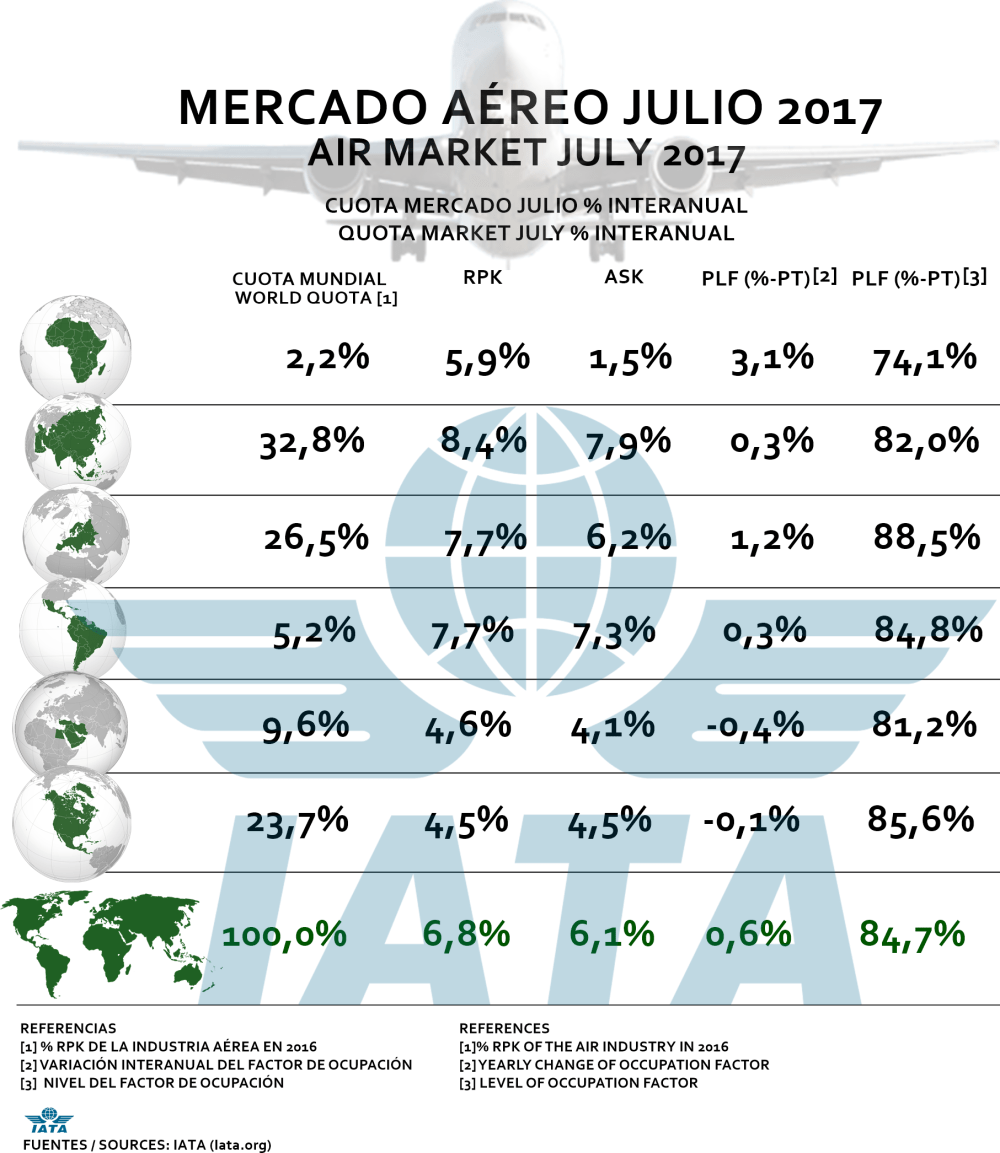
El factor de ocupación de pasajeros en las aerolíneas alcanza un récord en julio de un 84,7%, según el último informe de la Asociación de Transporte Aéreo Internacional (IATA). Todas las regiones registraron un sólido crecimiento y una mejora respecto al ejercicio anterior.

La demanda de pasajeros internacionales (RPK) ha aumentado un 6,8% respecto a julio de 2016; sin embargo, la capacidad había sido incrementada en menor proporción con un 6,1% más, por lo que el factor de ocupación alcanzó un máximo histórico este mes, con una subida de 0,6 puntos porcentuales, hasta el 84,7%.

“El deseo de volar se mantiene fuerte, como señala el factor de ocupación alcanzado en julio. Sin embargo, el aumento de los costes reduce el impacto positivo del abaratamiento de las tarifas aéreas y sugiere un contexto más moderado para la demanda», dijo Alexandre de Juniac, consejero delegado de la IATA, al anunciar el último informe mensual de la industria.

Mercados internacionales


AW-70087707.pngLas aerolíneas europeas experimentaron un aumento de la demanda del 7,5% interanual, frente al 8,8% de junio. La capacidad subió un 5,9% y el factor de ocupación subió 1,3 puntos porcentuales, hasta el 88,7%, el más alto respecto a las demás regiones. El contexto económico en Europa se ha fortalecido, pero los datos desestacionalizados muestran una demanda más moderada desde el pasado mes de febrero.

Las aerolíneas latinoamericanas lideraron el crecimiento con una subida interanual del 10,5%. La capacidad aumentó casi al mismo ritmo (10%) y el factor de ocupación subió 0,4 puntos porcentuales, hasta el 84,9%. Continúa la tendencia alcista de los viajes entre Norteamérica y Centroamérica; el tráfico entre el norte y el sur del continente americano también ha comenzado a mostrar signos positivos de crecimiento, en parte gracias a un contexto económico más saludable −aunque todavía frágil− de Brasil.

Las aerolíneas asiáticas registraron un incremento de los RPK internacionales de un 5,9% interanual, pero retrocedieron respecto al 8,8% de junio. También en esta región la demanda se está moderando. La capacidad aumentó 6,7% y el factor de ocupación cayó 0.6 puntos porcentuales, hasta 81%.

Las aerolíneas de Oriente Próximo registraron un aumento de los RPK internacionales del 4,5% interanual. La demanda interanual mejoró en julio respecto al 3,6% observado en junio, pero sigue estando muy lejos del 11,2% promedio del último quinquenio. El segmento de mercado entre Oriente Medio y Norteamérica se ve afectado por la prohibición del transporte de grandes dispositivos electrónicos en cabina, recientemente levantada, y la prohibición de entrada de viajeros a EEUU. El crecimiento del tráfico entre Oriente Medio y Estados Unidos ya se había desacelerado a principios de 2017, en consonancia con un menor ritmo de expansión de los servicios sin escala de las principales aerolíneas de la región. La capacidad de julio subió un 3,6% y el factor de ocupación subió 0,7 puntos porcentuales, hasta el 81,5%.

Las aerolíneas norteamericanas registraron un aumento en su demanda de un 3,5% interanual. El desempeño de julio fue inferior al 4,4% de junio, aunque superó el promedio del último quinquenio (2,9%). El escenario económico relativamente sólido sigue estimulando los viajes internacionales; por el contrario, las medidas adicionales de seguridad para entrar en EEUU parecen estar frenando las visitas al país. La capacidad de julio aumentó un 3,8%, por lo que el factor de ocupación se contrajo 0,3 puntos porcentuales, hasta el 85,9%.

Las aerolíneas africanas experimentaron un aumento del tráfico internacional de pasajeros del 6,5% internacional, frente al 9,8% registrado en junio. La capacidad subió un 1,7%, y el factor de ocupación lo hizo 3,4 puntos porcentuales, hasta el 74,1%. El panorama económico de las dos mayores economías de la región sigue siendo divergente: mientras continúa la recesión en Sudáfrica, la confianza empresarial alcanza un máximo de dos años en Nigeria.  AIRWAYS® AW-Icon TXT

Record air transport in July 2017

Airlines reach record occupancy in July 2017

The passenger load factor in the airlines reaches a record in July of 84.7%, according to the latest report of the International Air Transport Association (IATA). All regions recorded solid growth and an improvement over the previous year.

International passenger demand (RPK) has increased by 6.8% compared to July 2016; however, capacity had been increased in a smaller proportion with a 6.1% increase, so that the load factor reached a historic high this month, with a rise of 0.6 percentage points, to 84.7%.

«The desire to fly remains strong, as noted by the occupation factor reached in July. However, rising costs reduce the positive impact of lower air fares and suggests a more moderate demand environment», said Alexandre de Juniac, CEO of IATA, announcing the industry’s latest monthly report.

International Markets

AW-70087707.pngEuropean airlines experienced an increase in demand of 7.5% year-on-year, compared to 8.8% in June. Capacity rose by 5.9% and the load factor increased by 1.3 percentage points, to 88.7%, the highest relative to the other regions. The economic context in Europe has strengthened, but the seasonally adjusted data show a more moderate demand since last February.

Latin American airlines led growth with a year-on-year increase of 10.5%. Capacity increased almost at the same rate (10%) and the load factor rose by 0.4 percentage points, to 84.9%. The upward trend in travel between North America and Central America continues; traffic between the north and south of the American continent has also begun to show positive signs of growth, partly thanks to a healthier yet fragile economic context in Brazil.

Asian airlines recorded an increase of 5.9% year-on-year in international RPK, but fell back from 8.8% in June. Demand in this region is also moderating. Capacity increased by 6.7% and the load factor fell by 0.6 percentage points to 81%.

Middle East airlines recorded an increase of international RPKs of 4.5% year-on-year. Year-on-year demand improved in July from 3.6% in June, but is still far behind the average of 11.2% in the last five-year period. The market segment between the Middle East and North America is affected by the ban on the transport of large electronic devices in a cabin – recently lifted – and the ban on travelers entering the US. Traffic growth between the Middle East and the United States had already slowed in early 2017, in line with a slower pace of expansion of non-stop services of the region’s main airlines. July’s capacity rose 3.6% and the load factor rose 0.7 percentage points to 81.5%.

US airlines recorded an increase in demand of 3.5% year-on-year. July’s performance was lower than the 4.4% in June, although it exceeded the average of the last five-year period (2.9%). The relatively strong economic scenario continues to stimulate international travel; on the contrary, additional security measures to enter the US seem to be curbing visits to the country. July capacity increased by 3.8%, so the load factor contracted 0.3 percentage points, to 85.9%.

African airlines experienced an increase in international passenger traffic of 6.5%, compared to 9.8% in June. Capacity rose by 1.7%, and the load factor was 3.4 percentage points, to 74.1%. The economic landscape of the two largest economies in the region remains divergent: while the recession continues in South Africa, business confidence reaches a two-year high in Nigeria. A \ W


Ξ A I R G W A Y S Ξ
SOURCE:  Airgways.com
DBk:  Hosteltur.com / Iata.org / Boeing.com
AW-POST: 201709091357AR

A\W   A I R G W A Y S ®